The skin in systemic disease
‫د‬
.
‫رعد‬
‫الطلفاح‬
The skin and internal malignancy
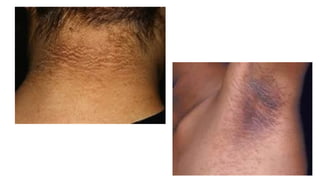
Acanthosis nigricans
It is a velvety thickening and pigmentation of the major
flexures caused by:
 Obesity
 Metabolic syndrome (including type 2 diabetes with
insulin resistance)
 Drugs: as nicotinic acid used to treat hyperlipidaemia
 The chances are high that a malignant tumour is
present, usually within the abdominal cavity.
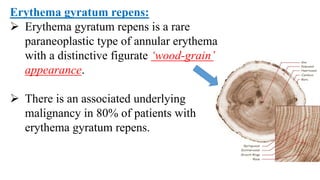
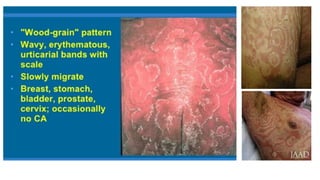
Erythema gyratum repens:
 Erythema gyratum repens is a rare
paraneoplastic type of annular erythema
with a distinctive figurate ‘wood-grain’
appearance.
 There is an associated underlying
malignancy in 80% of patients with
erythema gyratum repens.
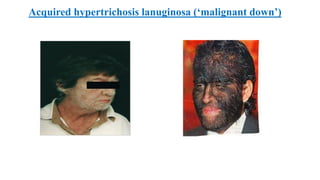
Acquired hypertrichosis lanuginosa (‘malignant down’)
Lanugo hairs are normally present from the third month of fetal life
through to the end of gestation and are shed almost completely before
birth.
Acquired hypertrichosis lanuginosa is a very rare condition
characterised by the rapid growth of long, fine, lanugo-
type hair particularly around the eyebrows, forehead, ears and
nose in adulthood.
The cause of hypertrichosis lanuginosa acquisita is unknown,
but it is thought to be in response to hormones or substances
released by the tumour.
The most frequently associated cancers include: cancer of lung,
breast , uterus , bladder, colon , rectum, and lymphoma.
However in some cases it may be the presenting sign of a tumour
and can appear up to 2 years prior to diagnosis of cancer.
Necrolytic migratory erythema
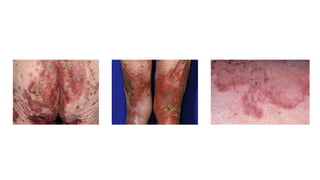
is a figurate erythema with a moving crusted edge it signals the
presence of a glucagon-secreting tumour of the pancreas.
Necrolytic migratory erythema may affect any site but it most
often affects the genital and anal region, the buttocks, groin and
lower legs.
The rash fluctuates in severity. Initially there is a ring-shaped red
area that blisters, erodes and crusts over. It can be quite itchy and
painful. As it heals, it may leave behind a brown mark.
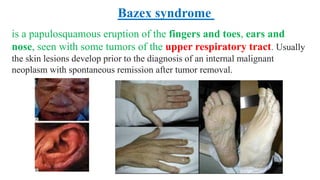
is a papulosquamous eruption of the fingers and toes, ears and
nose, seen with some tumors of the upper respiratory tract. Usually
the skin lesions develop prior to the diagnosis of an internal malignant
neoplasm with spontaneous remission after tumor removal.
Bazex syndrome
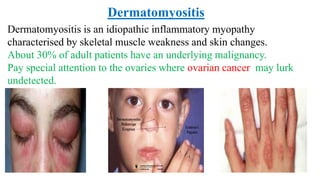
Dermatomyositis is an idiopathic inflammatory myopathy
characterised by skeletal muscle weakness and skin changes.
About 30% of adult patients have an underlying malignancy.
Pay special attention to the ovaries where ovarian cancer may lurk
undetected.
Dermatomyositis
Generalized pruritus
Malignancy-associated pruritus can be the result of a neoplasm's
local effect on tissue or due to the systemic reaction to malignancy.
A systemic reaction to malignancy has been termed 'paraneoplastic
itch' and can be the first sign of an underlying malignancy.
Paraneoplastic itch is most commonly caused by:
lymphoma
the migratory type associated with carcinomas of the pancreas.
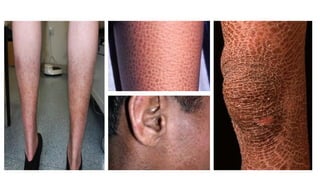
Acquired ichthyosis (AI) is a non-hereditary cutaneous
disorder characterized by dry, rough skin with prominent scaling
that involves significant portions of the body. It has been associated
with malignancies especially lymphomas
autoimmune/inflammatory, metabolic, endocrine, and infectious
diseases; and medication use.
Acquired ichthyosis
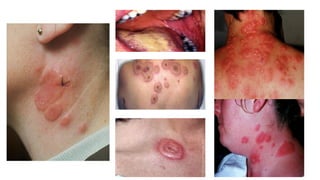
Acute febrile neutrophilic dermatosis is an uncommon skin
condition characterised by fever and inflamed or blistered skin
and mucosal lesions.
Neutrophilic dermatoses are autoinflammatory conditions often
associated with systemic disease.
The most important internal association is with myeloproliferative
disorders especially AML.
Other malignancies include cancer of the bowel, genitourinary
or breast.
Acute febrile neutrophilic dermatosis (Sweet’s syndrome):
The classic triad found in association with the red oedematous
plaques consists of:
-fever,
-raised erythrocyte sedimentation rate (ESR), and
-raised blood neutrophil count.
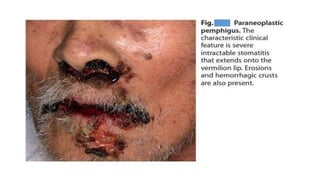
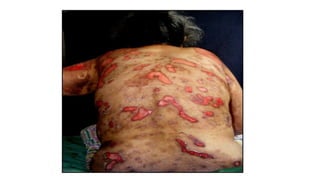
Paraneoplastic pemphigus
similar to pemphigus vulgaris but with extensive and persistent
mucosal ulceration.
It is associated with myeloproliferative malignancies as well as
underlying carcinomas.
Paraneoplastic pemphigus is associated with underlying
neoplasms, both malignant and benign. The most commonly
associated neoplasms are non-Hodgkin lymphoma (40%), chronic
lymphocytic leukemia (30%), Castleman’s disease (10% in
adults), malignant and benign thymomas (6%), sarcomas (6%)
and Waldenström’s macroglobulinemia (6%).
Others:
Acne seen with some adrenal tumours
Flushing in the carcinoid syndrome
Jaundice with a bile duct carcinoma
The skin and diabetes mellitus
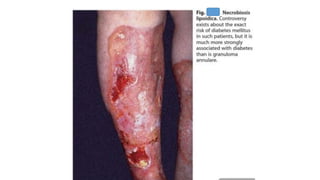
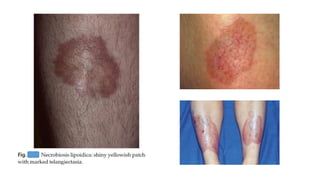
Necrobiosis lipoidica.
Less than 3% of diabetics have necrobiosis, but 11–62% of
patients with necrobiosis will have diabetes.
Non-diabetic necrobiosis patients should be screened for
diabetes as some will have impaired glucose tolerance or diabetes,
and some will become diabetic later.
The association is with both type 1 and type 2 diabetes.
The lesions appear as one or more discoloured areas on the
fronts of the shins
Early plaques are violaceous but atrophy as the inflammation
goes on and are then shiny, atrophic and brown–red or slightly
yellow.
The underlying blood vessels are easily seen through the atrophic
skin and the margin may be erythematous or violet.
Minor knocks or biopsy can lead to slow-healing ulcers.
Treatment:
No treatment is reliably helpful, the atrophy is permanent
the best one can expect from medical treatments is halting of
disease progression.
A strong topical corticosteroid applied to the edge of an
enlarging lesion may halt its expansion.
There is little evidence that good control of the diabetes will help
the necrobiosis.
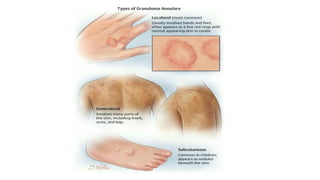
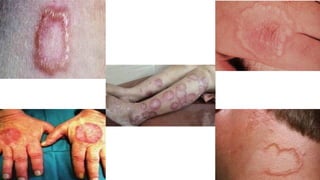
Granuloma Annulare(G.A.):
Granuloma annulare is a cutaneous granulomatous
disease that is not caused by an infection. It is the most
common non-infectious granulomatous disease.
The disease is benign and often self-limited. Granuloma
annulare usually presents as erythematous plaques or
papules arranged in an annular configuration on the
upper extremities.
In addition to the more common presentation, termed
localized granuloma annulare, other clinical variants of
granuloma annulare include generalized, perforating, patch,
and subcutaneous.
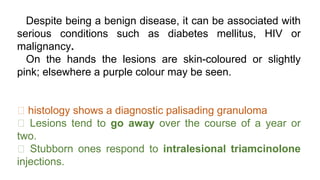
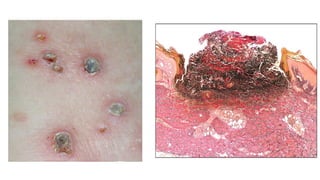
Despite being a benign disease, it can be associated with
serious conditions such as diabetes mellitus, HIV or
malignancy.
On the hands the lesions are skin-coloured or slightly
pink; elsewhere a purple colour may be seen.
histology shows a diagnostic palisading granuloma
Lesions tend to go away over the course of a year or
two.
Stubborn ones respond to intralesional triamcinolone
injections.
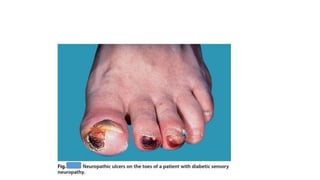
Neuropathic Ulcers
Is a skin sore with full thickness skin loss on the foot due
to neuropathic and/or vascularcomplications in patients with type 1 or
type 2 diabetes mellitus.
Diabetic foot ulcer has an annual incidence of 2–6% and affects up to
34% of diabetic patients during their lifetime.
Risk factors for developing a diabetic foot ulcer include:
•Type 2 diabetes being more common than type 1
•A duration of diabetes of at least 10 years
•Poor diabetic control and high Hb A1c
•Being male
•A past history of diabetic foot ulcer.
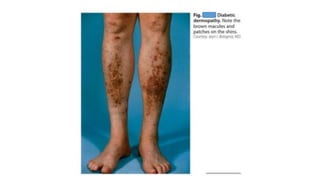
Diabetic dermopathy:
In about 50% of type 1 diabetics,
multiple small (0.5–1 cm in diameter)
slightly sunken brownish scars can be found on
the limbs, most obviously over the shins.
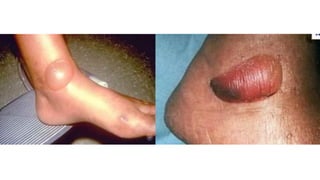
Diabetic bullae “Bullosis diabeticorum”:
 are blister-like lesions that occur spontaneously on the feet
and hands of diabetic patients. Although rare, diabetic
bullae are a distinct marker for diabetes.
 Diabetic bullae are more common in men than women
 They are prevalent between the ages of 17 and 84 years.
 They are also more common in patients who have long-
standing diabetes or multiple diabetic complications,
particularly neuropathy.
 The blisters are painless and can be from 0.5–17 centimetres in
size. They often have an irregular shape. Two types of diabetic
bullae have been defined.
Intraepidermal bullae — these are blisters filled with clear, sterile
viscous fluid and normally heal spontaneously within 2–5 weeks
without scarring and atrophy.
Subepidermal bullae — these are less common and may be filled
with blood. Healed blisters may show scarring and atrophy.
In most cases, diabetic bullae heal spontaneously without treatment.
Patients should make sure the blister remains unbroken to avoid
secondary infection.
Others:
Candidal infections
Staphylococcal infections
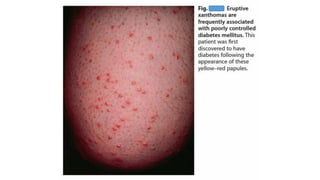
Vitiligo Eruptive xanthomas
Stiff thick skin (diabetic sclerodactyly or cheiroarthropathy),
on the fingers and hands, demonstrated by the ‘prayer sign’ in
which the fingers and palms cannot be opposed properly
Atherosclerosis with ischaemia or gangrene of feet.
foot ulcers.
The skin in liver disease
Pruritus
This is related to obstructive jaundice and may precede it
Pigmentation
With bile pigments and sometimes melanin
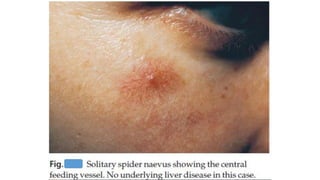
Spider naevi
These are often multiple in chronic liver disease
Palmar erythema
White nails
These associate with hypoalbuminaemia
Lichen planus and cryoglobulinaemia with hepatitis C infection.
Polyarteritis nodosa with hepatitis B infection.
Porphyria cutanea tarda .
Xanthomas With primary biliary cirrhosis
Hair loss and generalized asteatotic eczema may occur in
alcoholics with cirrhosis who have become zinc deficient
The skin in renal disease
Pruritus and a generally dry skin.
Pigmentation :
A yellowish colour and pallor from anaemia.
Half-and-half nail:
The proximal half is white and the distal half is pink or
brownish.
Perforating disorders
Small papules in which collagen or elastic fibres are being
extruded through the epidermis.
Pseudoporphyria
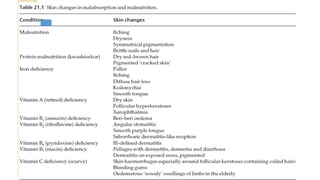
Malabsorption and malnutrition
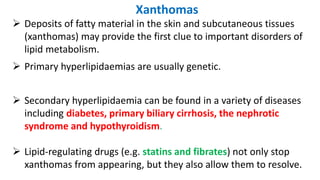
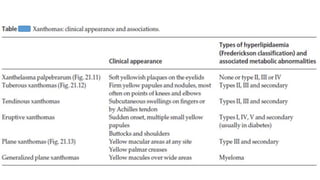
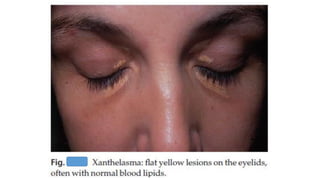
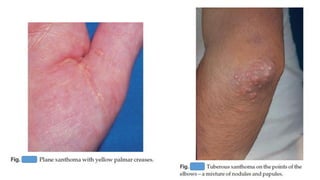
 Deposits of fatty material in the skin and subcutaneous tissues
(xanthomas) may provide the first clue to important disorders of
lipid metabolism.
 Primary hyperlipidaemias are usually genetic.
 Secondary hyperlipidaemia can be found in a variety of diseases
including diabetes, primary biliary cirrhosis, the nephrotic
syndrome and hypothyroidism.
 Lipid-regulating drugs (e.g. statins and fibrates) not only stop
xanthomas from appearing, but they also allow them to resolve.
Xanthomas
Generalized Pruritus
Generalized pruritus
Pruritus is a symptom with many causes, but not a disease in its
own right.
Itchy patients fall into two groups:
1. those whose pruritus is caused simply by surface causes (e.g.
eczema, lichen planus and scabies)
2. those who may or may not have an internal cause for their itching.
These patients require a
detailed physical examination, including a careful search for
lymphadenopathy
Investigations including a full blood count, iron status, urea and
electrolytes, liver function tests, thyroid function tests and a chest X-
ray
Causes
Liver disease
Itching signals biliary obstruction.
It is an early symptom of primary biliary cirrhosis.
Cholestyramine may help cholestatic pruritus, possibly by
promoting the elimination of bile salts.
Other treatments include naltrexone, rifampicin and ultraviolet B.
Chronic renal failure
Ultraviolet B phototherapy, naltrexone or administration of oral
activated charcoal may help.
Iron deficiency
Treatment with iron may help the itching.
Polycythaemia
 The itching here is usually triggered by a hot bath; it has a curious
pricking quality and lasts about an hour.
Thyroid disease
 Itching and urticaria may occur in hyperthyroidism.
 The dry skin of hypothyroidism may also be itchy.
Diabetes
Internal malignancy
 The prevalence of itching in Hodgkin’s disease may be as high as
30%.
 It may be unbearable, yet the skin often looks normal.
 Pruritus may occur long before other manifestations of the disease.
 Itching is uncommon in carcinomatosis.
Neurological disease
 Paroxysmal pruritus has been recorded in multiple sclerosis and in
neurofibromatosis.
 Brain tumours infiltrating the floor of the fourth ventricle may
cause a fierce persistent itching of the nostrils.
Diffuse scleroderma
 may start as itching associated with increasing pigmentation and
early signs of sclerosis.
 Itching is usually severe
The skin of the elderly
may itch because it is too dry, or because it is being irritated.
Pregnancy
Drugs
Treatment
Treatment of underlying cause
Sedative antihistamines
Skin moisturizers, and the avoidance of rough clothing,
overheating and vasodilatation, including that brought on
by alcohol.
Ultraviolet B often helps all kinds of itching, including
the itching associated with chronic renal and liver disease.
Local applications include calamine and mixtures
containing small amounts of menthol or phenol
END

The skin and systemic diseaseد.رعد الطلفاح.pdf

  • 1.
    The skin insystemic disease ‫د‬ . ‫رعد‬ ‫الطلفاح‬
  • 2.
    The skin andinternal malignancy
  • 3.
    Acanthosis nigricans It isa velvety thickening and pigmentation of the major flexures caused by:  Obesity  Metabolic syndrome (including type 2 diabetes with insulin resistance)  Drugs: as nicotinic acid used to treat hyperlipidaemia  The chances are high that a malignant tumour is present, usually within the abdominal cavity.
  • 5.
    Erythema gyratum repens: Erythema gyratum repens is a rare paraneoplastic type of annular erythema with a distinctive figurate ‘wood-grain’ appearance.  There is an associated underlying malignancy in 80% of patients with erythema gyratum repens.
  • 7.
    Acquired hypertrichosis lanuginosa(‘malignant down’)
  • 8.
    Lanugo hairs arenormally present from the third month of fetal life through to the end of gestation and are shed almost completely before birth. Acquired hypertrichosis lanuginosa is a very rare condition characterised by the rapid growth of long, fine, lanugo- type hair particularly around the eyebrows, forehead, ears and nose in adulthood.
  • 9.
    The cause ofhypertrichosis lanuginosa acquisita is unknown, but it is thought to be in response to hormones or substances released by the tumour. The most frequently associated cancers include: cancer of lung, breast , uterus , bladder, colon , rectum, and lymphoma. However in some cases it may be the presenting sign of a tumour and can appear up to 2 years prior to diagnosis of cancer.
  • 10.
    Necrolytic migratory erythema isa figurate erythema with a moving crusted edge it signals the presence of a glucagon-secreting tumour of the pancreas. Necrolytic migratory erythema may affect any site but it most often affects the genital and anal region, the buttocks, groin and lower legs. The rash fluctuates in severity. Initially there is a ring-shaped red area that blisters, erodes and crusts over. It can be quite itchy and painful. As it heals, it may leave behind a brown mark.
  • 12.
    is a papulosquamouseruption of the fingers and toes, ears and nose, seen with some tumors of the upper respiratory tract. Usually the skin lesions develop prior to the diagnosis of an internal malignant neoplasm with spontaneous remission after tumor removal. Bazex syndrome
  • 13.
    Dermatomyositis is anidiopathic inflammatory myopathy characterised by skeletal muscle weakness and skin changes. About 30% of adult patients have an underlying malignancy. Pay special attention to the ovaries where ovarian cancer may lurk undetected. Dermatomyositis
  • 14.
    Generalized pruritus Malignancy-associated prurituscan be the result of a neoplasm's local effect on tissue or due to the systemic reaction to malignancy. A systemic reaction to malignancy has been termed 'paraneoplastic itch' and can be the first sign of an underlying malignancy. Paraneoplastic itch is most commonly caused by: lymphoma the migratory type associated with carcinomas of the pancreas.
  • 15.
    Acquired ichthyosis (AI)is a non-hereditary cutaneous disorder characterized by dry, rough skin with prominent scaling that involves significant portions of the body. It has been associated with malignancies especially lymphomas autoimmune/inflammatory, metabolic, endocrine, and infectious diseases; and medication use. Acquired ichthyosis
  • 17.
    Acute febrile neutrophilicdermatosis is an uncommon skin condition characterised by fever and inflamed or blistered skin and mucosal lesions. Neutrophilic dermatoses are autoinflammatory conditions often associated with systemic disease. The most important internal association is with myeloproliferative disorders especially AML. Other malignancies include cancer of the bowel, genitourinary or breast. Acute febrile neutrophilic dermatosis (Sweet’s syndrome):
  • 19.
    The classic triadfound in association with the red oedematous plaques consists of: -fever, -raised erythrocyte sedimentation rate (ESR), and -raised blood neutrophil count.
  • 20.
    Paraneoplastic pemphigus similar topemphigus vulgaris but with extensive and persistent mucosal ulceration. It is associated with myeloproliferative malignancies as well as underlying carcinomas. Paraneoplastic pemphigus is associated with underlying neoplasms, both malignant and benign. The most commonly associated neoplasms are non-Hodgkin lymphoma (40%), chronic lymphocytic leukemia (30%), Castleman’s disease (10% in adults), malignant and benign thymomas (6%), sarcomas (6%) and Waldenström’s macroglobulinemia (6%).
  • 23.
    Others: Acne seen withsome adrenal tumours Flushing in the carcinoid syndrome Jaundice with a bile duct carcinoma
  • 24.
    The skin anddiabetes mellitus
  • 25.
    Necrobiosis lipoidica. Less than3% of diabetics have necrobiosis, but 11–62% of patients with necrobiosis will have diabetes. Non-diabetic necrobiosis patients should be screened for diabetes as some will have impaired glucose tolerance or diabetes, and some will become diabetic later. The association is with both type 1 and type 2 diabetes. The lesions appear as one or more discoloured areas on the fronts of the shins Early plaques are violaceous but atrophy as the inflammation goes on and are then shiny, atrophic and brown–red or slightly yellow.
  • 26.
    The underlying bloodvessels are easily seen through the atrophic skin and the margin may be erythematous or violet. Minor knocks or biopsy can lead to slow-healing ulcers. Treatment: No treatment is reliably helpful, the atrophy is permanent the best one can expect from medical treatments is halting of disease progression. A strong topical corticosteroid applied to the edge of an enlarging lesion may halt its expansion. There is little evidence that good control of the diabetes will help the necrobiosis.
  • 29.
    Granuloma Annulare(G.A.): Granuloma annulareis a cutaneous granulomatous disease that is not caused by an infection. It is the most common non-infectious granulomatous disease. The disease is benign and often self-limited. Granuloma annulare usually presents as erythematous plaques or papules arranged in an annular configuration on the upper extremities. In addition to the more common presentation, termed localized granuloma annulare, other clinical variants of granuloma annulare include generalized, perforating, patch, and subcutaneous.
  • 30.
    Despite being abenign disease, it can be associated with serious conditions such as diabetes mellitus, HIV or malignancy. On the hands the lesions are skin-coloured or slightly pink; elsewhere a purple colour may be seen. histology shows a diagnostic palisading granuloma Lesions tend to go away over the course of a year or two. Stubborn ones respond to intralesional triamcinolone injections.
  • 33.
    Neuropathic Ulcers Is askin sore with full thickness skin loss on the foot due to neuropathic and/or vascularcomplications in patients with type 1 or type 2 diabetes mellitus. Diabetic foot ulcer has an annual incidence of 2–6% and affects up to 34% of diabetic patients during their lifetime. Risk factors for developing a diabetic foot ulcer include: •Type 2 diabetes being more common than type 1 •A duration of diabetes of at least 10 years •Poor diabetic control and high Hb A1c •Being male •A past history of diabetic foot ulcer.
  • 35.
    Diabetic dermopathy: In about50% of type 1 diabetics, multiple small (0.5–1 cm in diameter) slightly sunken brownish scars can be found on the limbs, most obviously over the shins.
  • 37.
    Diabetic bullae “Bullosisdiabeticorum”:  are blister-like lesions that occur spontaneously on the feet and hands of diabetic patients. Although rare, diabetic bullae are a distinct marker for diabetes.  Diabetic bullae are more common in men than women  They are prevalent between the ages of 17 and 84 years.  They are also more common in patients who have long- standing diabetes or multiple diabetic complications, particularly neuropathy.
  • 38.
     The blistersare painless and can be from 0.5–17 centimetres in size. They often have an irregular shape. Two types of diabetic bullae have been defined. Intraepidermal bullae — these are blisters filled with clear, sterile viscous fluid and normally heal spontaneously within 2–5 weeks without scarring and atrophy. Subepidermal bullae — these are less common and may be filled with blood. Healed blisters may show scarring and atrophy. In most cases, diabetic bullae heal spontaneously without treatment. Patients should make sure the blister remains unbroken to avoid secondary infection.
  • 40.
    Others: Candidal infections Staphylococcal infections VitiligoEruptive xanthomas Stiff thick skin (diabetic sclerodactyly or cheiroarthropathy), on the fingers and hands, demonstrated by the ‘prayer sign’ in which the fingers and palms cannot be opposed properly Atherosclerosis with ischaemia or gangrene of feet. foot ulcers.
  • 41.
    The skin inliver disease
  • 42.
    Pruritus This is relatedto obstructive jaundice and may precede it Pigmentation With bile pigments and sometimes melanin Spider naevi These are often multiple in chronic liver disease Palmar erythema White nails These associate with hypoalbuminaemia
  • 43.
    Lichen planus andcryoglobulinaemia with hepatitis C infection. Polyarteritis nodosa with hepatitis B infection. Porphyria cutanea tarda . Xanthomas With primary biliary cirrhosis Hair loss and generalized asteatotic eczema may occur in alcoholics with cirrhosis who have become zinc deficient
  • 45.
    The skin inrenal disease Pruritus and a generally dry skin. Pigmentation : A yellowish colour and pallor from anaemia. Half-and-half nail: The proximal half is white and the distal half is pink or brownish. Perforating disorders Small papules in which collagen or elastic fibres are being extruded through the epidermis. Pseudoporphyria
  • 47.
  • 50.
     Deposits offatty material in the skin and subcutaneous tissues (xanthomas) may provide the first clue to important disorders of lipid metabolism.  Primary hyperlipidaemias are usually genetic.  Secondary hyperlipidaemia can be found in a variety of diseases including diabetes, primary biliary cirrhosis, the nephrotic syndrome and hypothyroidism.  Lipid-regulating drugs (e.g. statins and fibrates) not only stop xanthomas from appearing, but they also allow them to resolve. Xanthomas
  • 55.
  • 56.
    Generalized pruritus Pruritus isa symptom with many causes, but not a disease in its own right. Itchy patients fall into two groups: 1. those whose pruritus is caused simply by surface causes (e.g. eczema, lichen planus and scabies) 2. those who may or may not have an internal cause for their itching. These patients require a detailed physical examination, including a careful search for lymphadenopathy Investigations including a full blood count, iron status, urea and electrolytes, liver function tests, thyroid function tests and a chest X- ray
  • 57.
    Causes Liver disease Itching signalsbiliary obstruction. It is an early symptom of primary biliary cirrhosis. Cholestyramine may help cholestatic pruritus, possibly by promoting the elimination of bile salts. Other treatments include naltrexone, rifampicin and ultraviolet B. Chronic renal failure Ultraviolet B phototherapy, naltrexone or administration of oral activated charcoal may help. Iron deficiency Treatment with iron may help the itching.
  • 58.
    Polycythaemia  The itchinghere is usually triggered by a hot bath; it has a curious pricking quality and lasts about an hour. Thyroid disease  Itching and urticaria may occur in hyperthyroidism.  The dry skin of hypothyroidism may also be itchy. Diabetes Internal malignancy  The prevalence of itching in Hodgkin’s disease may be as high as 30%.  It may be unbearable, yet the skin often looks normal.  Pruritus may occur long before other manifestations of the disease.  Itching is uncommon in carcinomatosis.
  • 59.
    Neurological disease  Paroxysmalpruritus has been recorded in multiple sclerosis and in neurofibromatosis.  Brain tumours infiltrating the floor of the fourth ventricle may cause a fierce persistent itching of the nostrils. Diffuse scleroderma  may start as itching associated with increasing pigmentation and early signs of sclerosis.  Itching is usually severe The skin of the elderly may itch because it is too dry, or because it is being irritated. Pregnancy Drugs
  • 60.
    Treatment Treatment of underlyingcause Sedative antihistamines Skin moisturizers, and the avoidance of rough clothing, overheating and vasodilatation, including that brought on by alcohol. Ultraviolet B often helps all kinds of itching, including the itching associated with chronic renal and liver disease. Local applications include calamine and mixtures containing small amounts of menthol or phenol
  • 61.