The 
Psychology 
of 
Programming 
“Summer 
colours” 
by 
Beshef. 
Shared 
under 
Crea;ve 
Commons 
2.0
Dr. 
Sallyann 
Freudenberg 
“Summer 
colours” 
by 
Beshef. 
Shared 
under 
Crea;ve 
Commons 
2.0
Dr. 
Temple 
Grandin 
HBO 
movie 
trailer 
Temple 
at 
Google 
1 
Temple 
at 
Google 
2
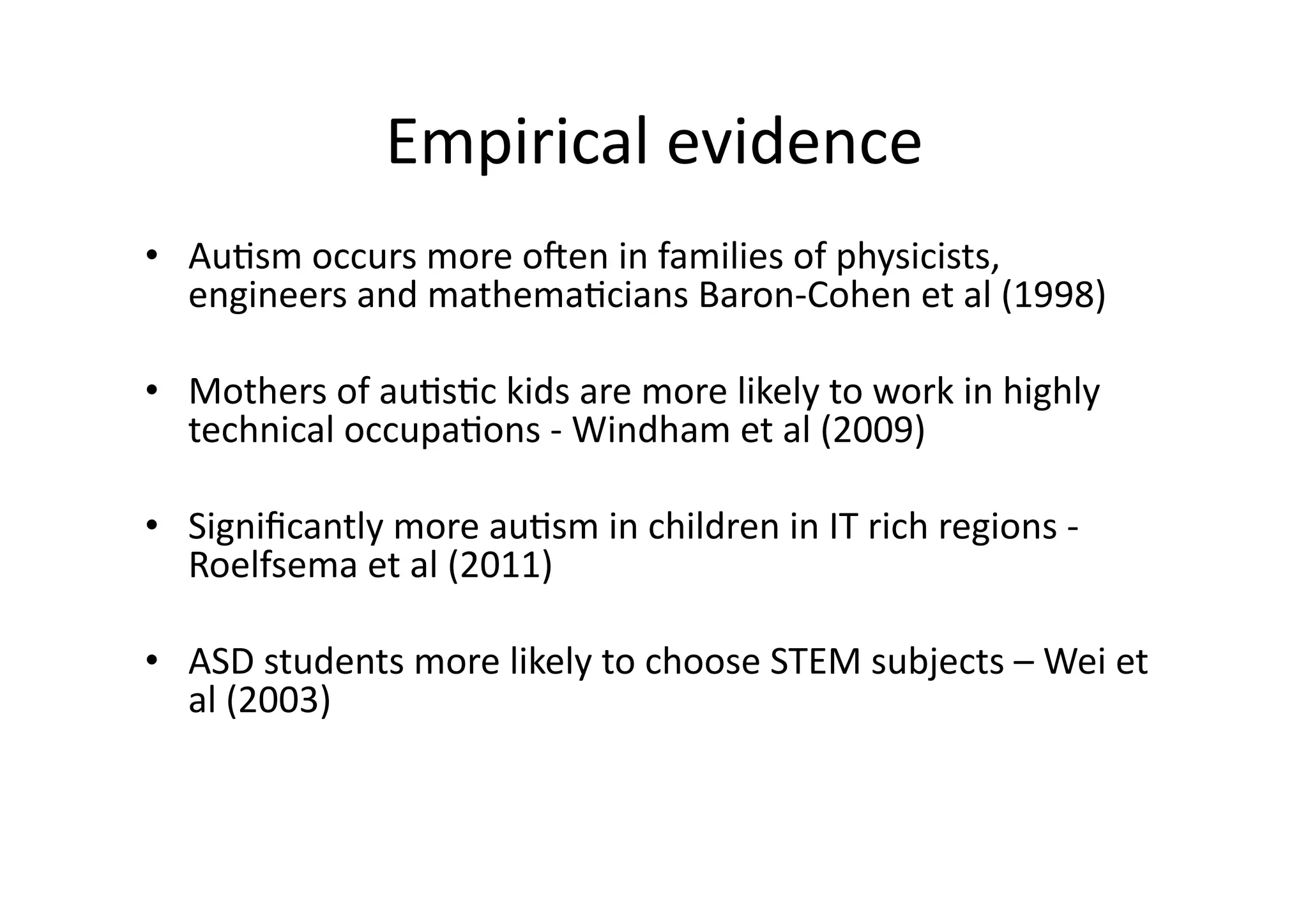
Empirical 
evidence 
• Au;sm 
occurs 
more 
oIen 
in 
families 
of 
physicists, 
engineers 
and 
mathema;cians 
Baron-­‐Cohen 
et 
al 
(1998) 
• Mothers 
of 
au;s;c 
kids 
are 
more 
likely 
to 
work 
in 
highly 
technical 
occupa;ons 
-­‐ 
Windham 
et 
al 
(2009) 
• Significantly 
more 
au;sm 
in 
children 
in 
IT 
rich 
regions 
-­‐ 
Roelfsema 
et 
al 
(2011) 
• ASD 
students 
more 
likely 
to 
choose 
STEM 
subjects 
– 
Wei 
et 
al 
(2003)
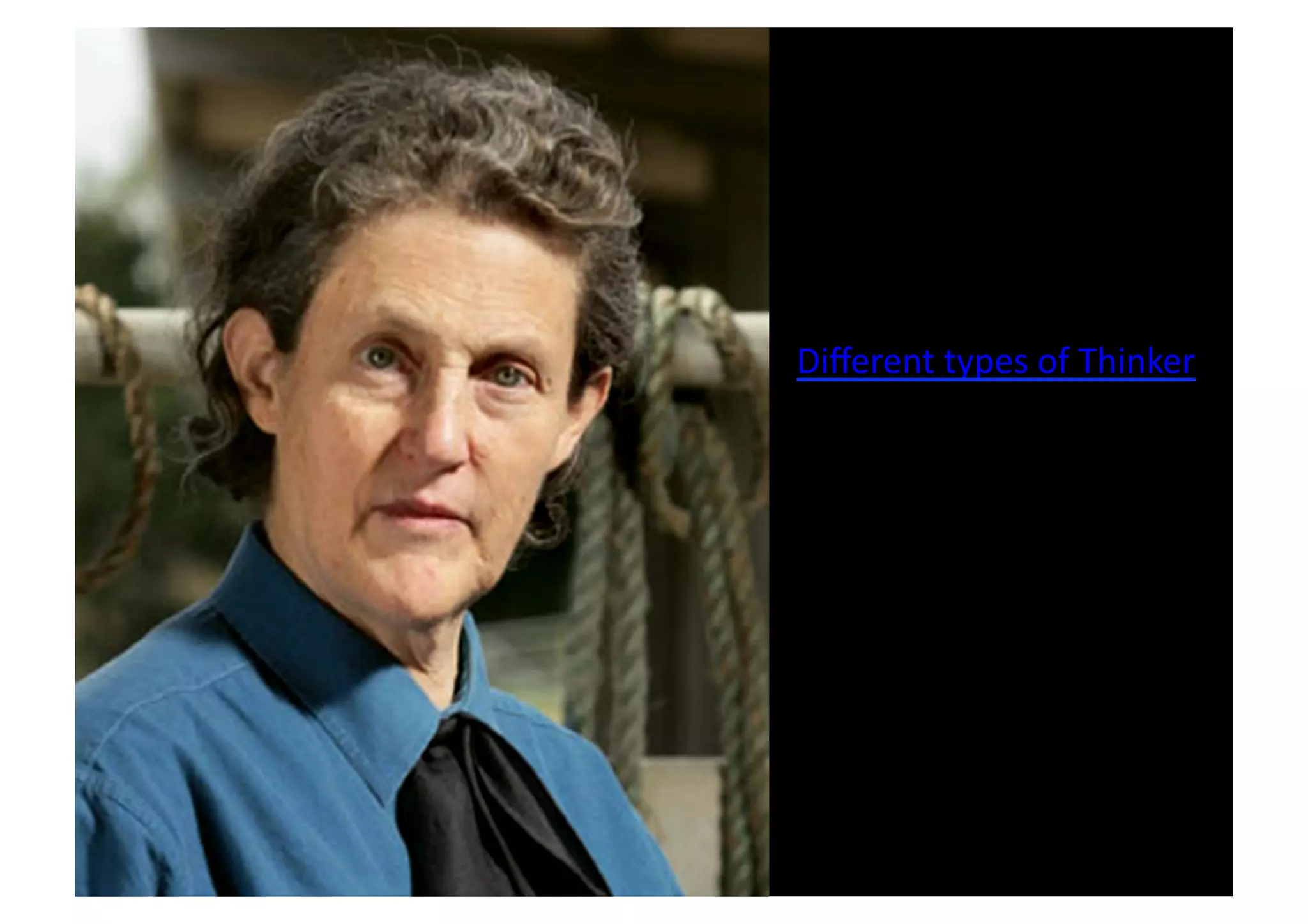
Different 
types 
of 
Thinker
Historical 
Studies 
of 
Programmers 
“My 
mouse 
isn’t 
working 
right” 
by 
Nina 
Ma]hews 
Photography. 
Shared 
under 
Crea;ve 
Commons 
2.0.
Chunking 
“Lost 
Ba]le?” 
by 
Elvind 
Barstad 
Waaler, 
shared 
under 
Crea;ve 
Commons 
2.0
Beacons 
“Peggy’s 
Lights 
Up” 
by 
Dennis 
Jarvis 
via 
Crea;ve 
Commons 
2.0
Schema 
“Time 
passages” 
by 
Robert 
S. 
Donovan. 
Shared 
under 
Crea;ve 
Commons 
2.0
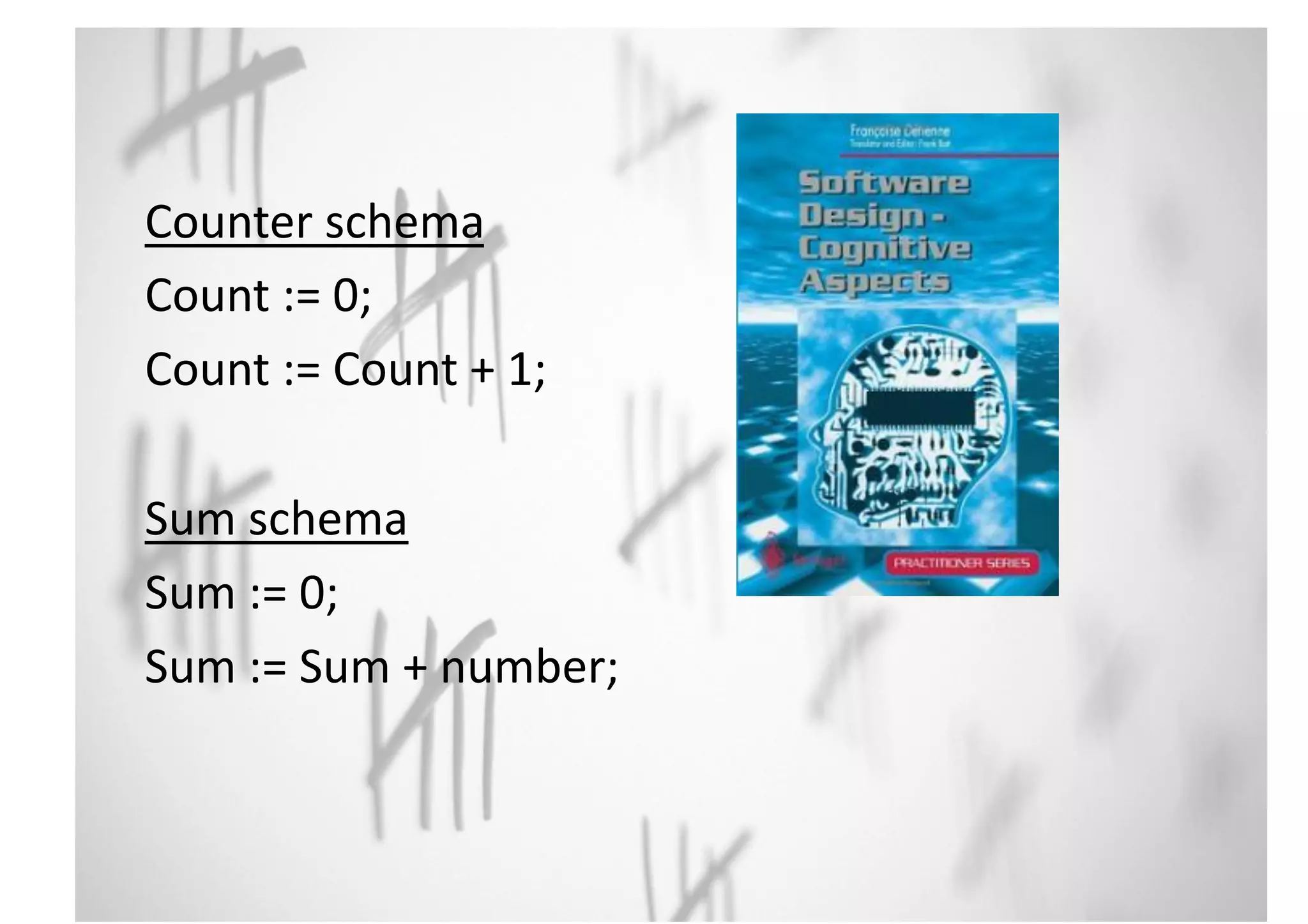
Counter 
schema 
Count 
:= 
0; 
Count 
:= 
Count 
+ 
1; 
Sum 
schema 
Sum 
:= 
0; 
Sum 
:= 
Sum 
+ 
number;
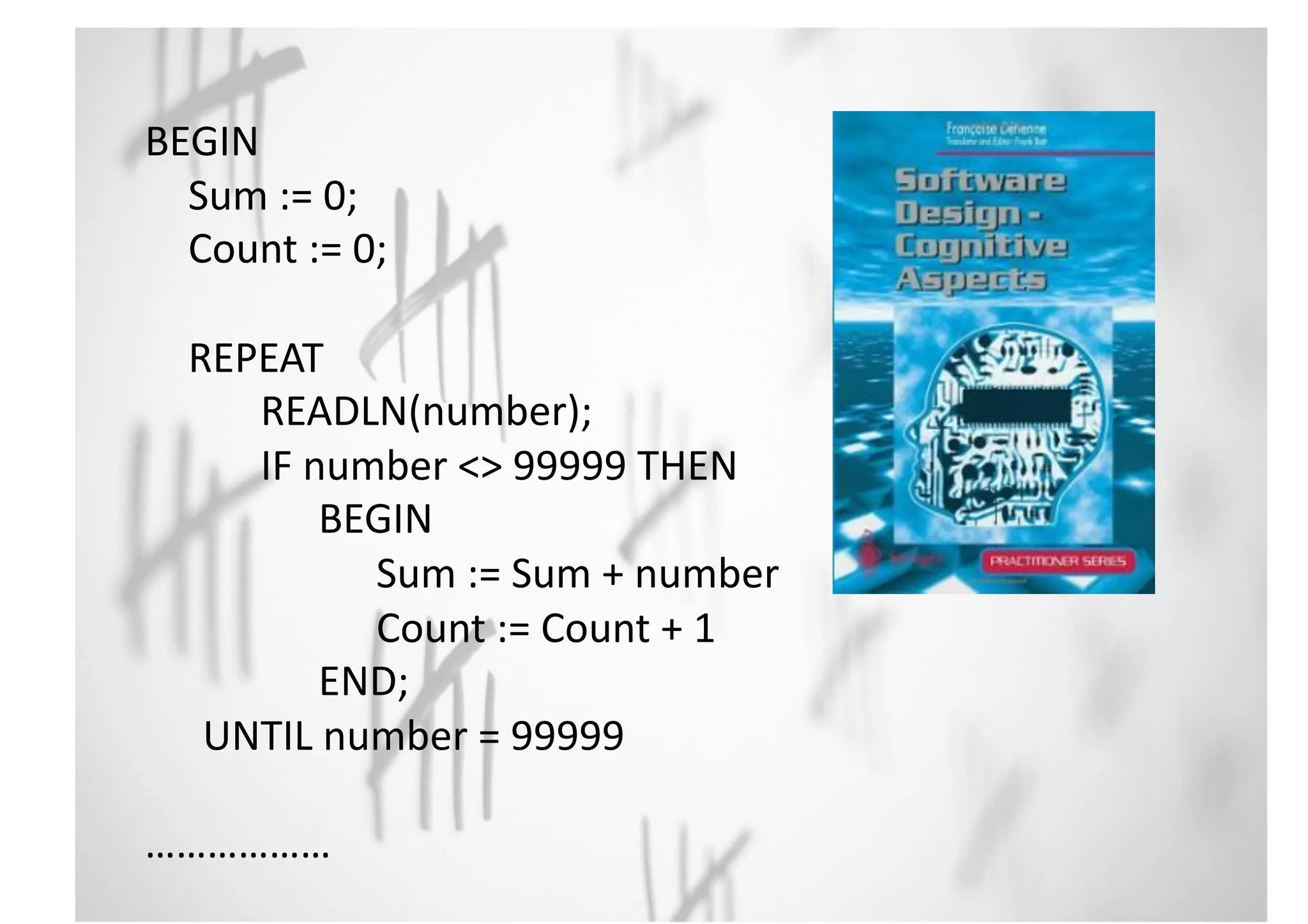
BEGIN 
Sum 
:= 
0; 
Count 
:= 
0; 
REPEAT 
READLN(number); 
IF 
number 
<> 
99999 
THEN 
BEGIN 
Sum 
:= 
Sum 
+ 
number 
Count 
:= 
Count 
+ 
1 
END; 
UNTIL 
number 
= 
99999 
………………
BEGIN 
Sum 
:= 
0; 
Count 
:= 
0; 
REPEAT 
READLN(number); 
IF 
number 
<> 
99999 
THEN 
BEGIN 
Sum 
:= 
Sum 
+ 
number 
Count 
:= 
Count 
+ 
1 
END; 
UNTIL 
number 
= 
99999 
………………
Hierarchical 
Decomposi;on 
“58.365” 
by 
Romana 
Klee. 
Shared 
under 
Crea;ve 
Commons 
2.0
Tacit 
knowledge 
Image 
by 
epSos.de 
shared 
under 
Crea;ve 
Commons 
2.0
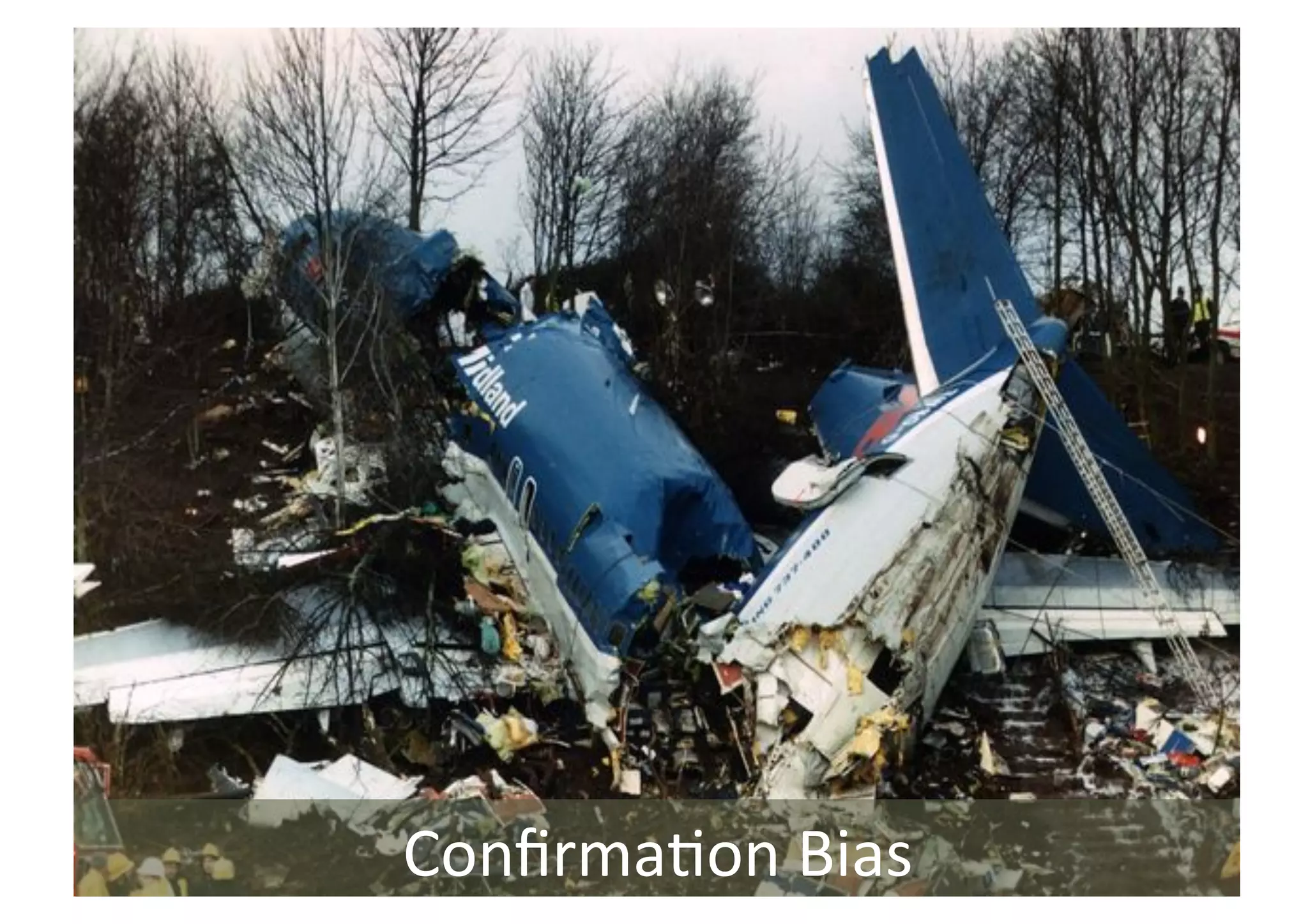
Confirma;on 
Bias
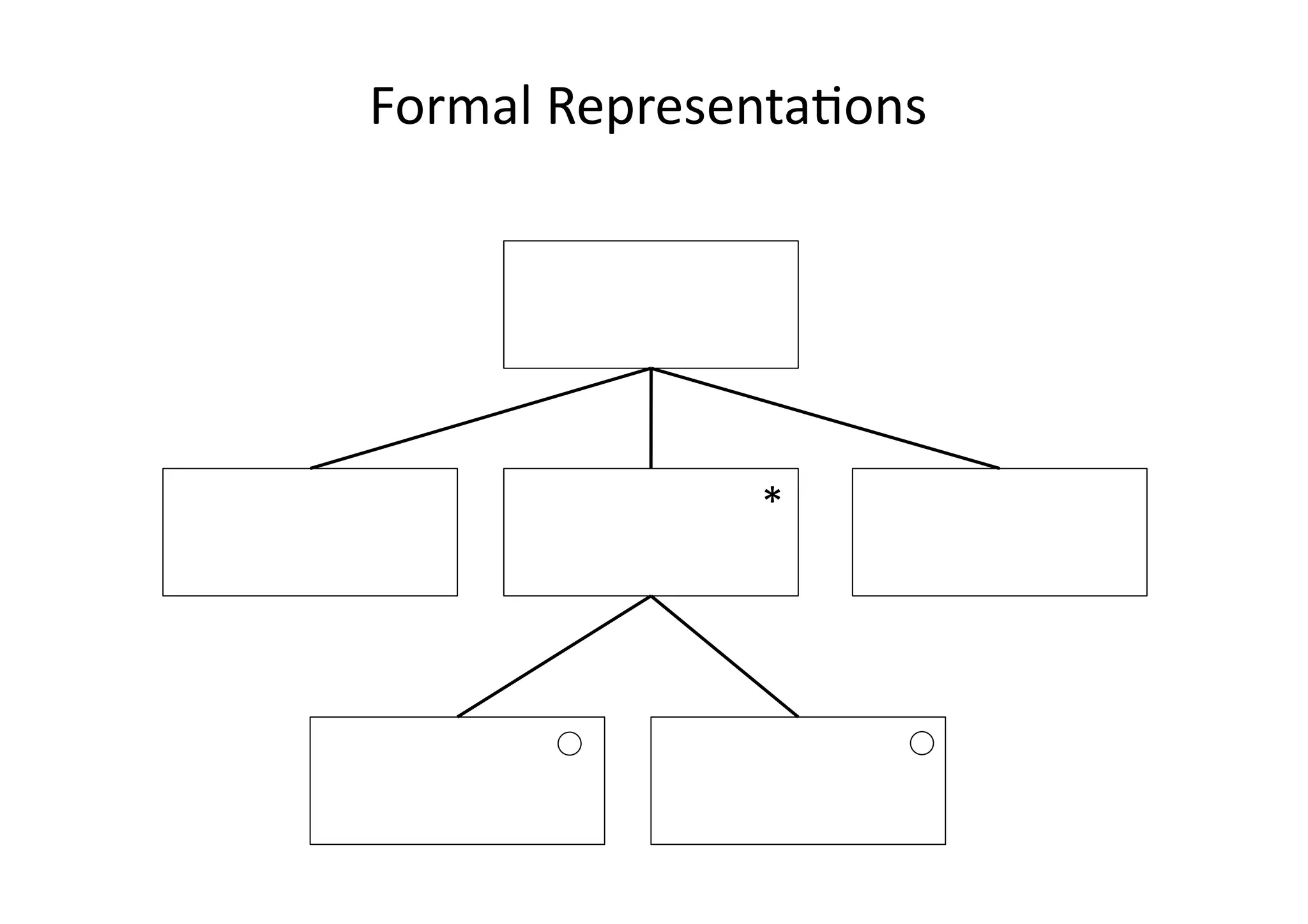
Formal 
Representa;ons 
*
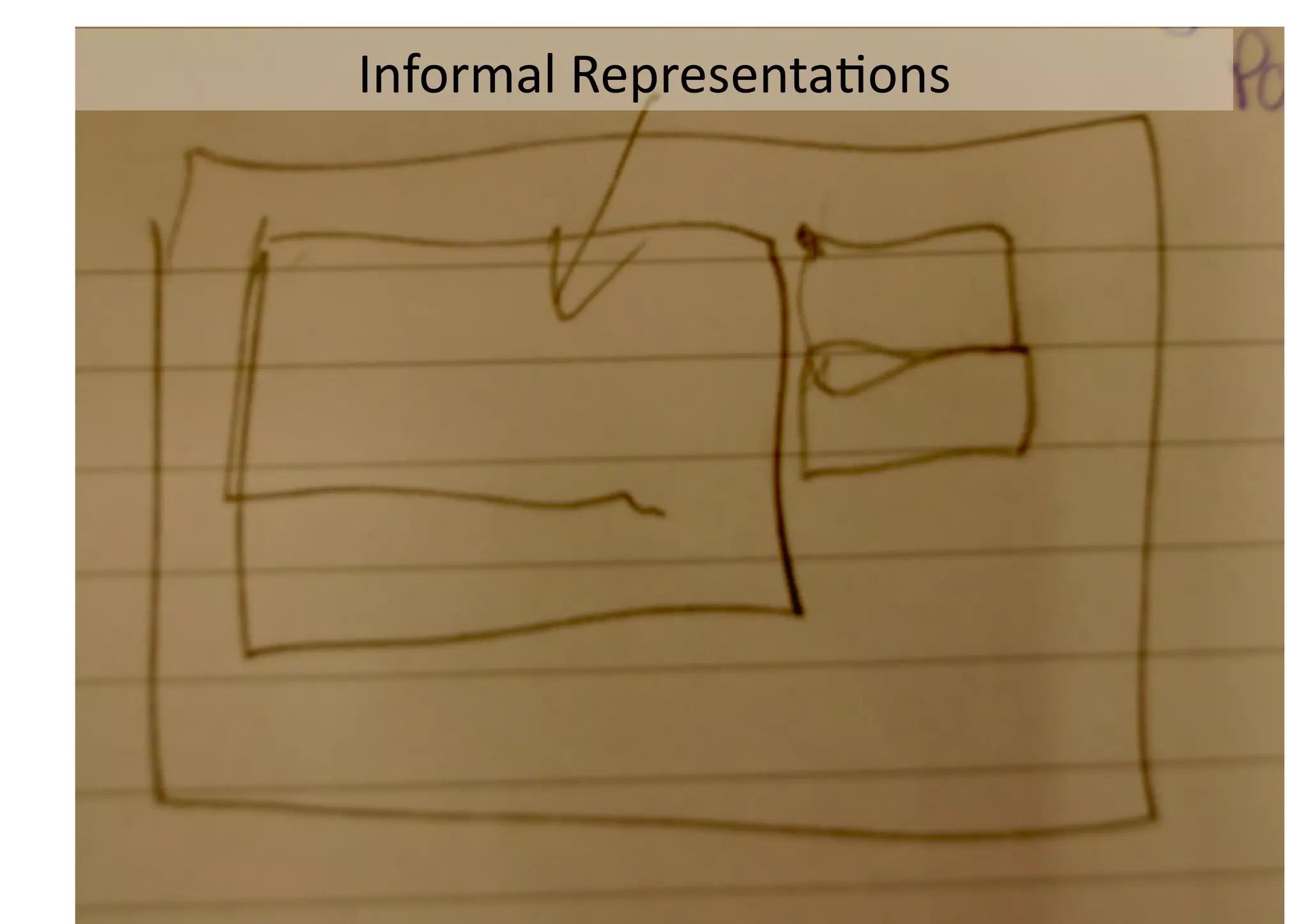
Informal 
Representa;ons
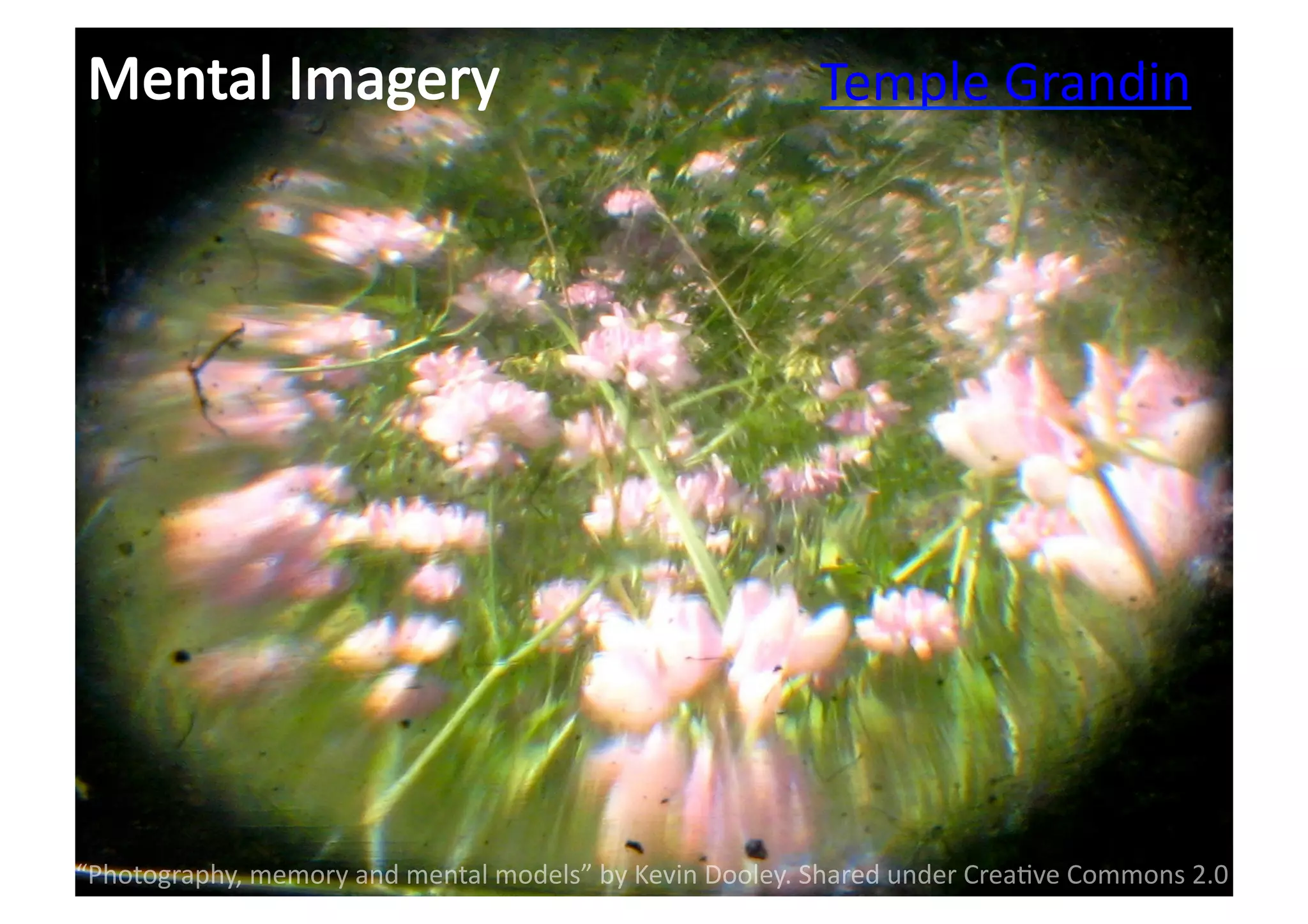
Temple 
Grandin 
“Photography, 
memory 
and 
mental 
models” 
by 
Kevin 
Dooley. 
Shared 
under 
Crea;ve 
Commons 
2.0
“Photography, 
memory 
and 
mental 
models” 
by 
Kevin 
Dooley. 
Shared 
under 
Crea;ve 
Commons 
2.0
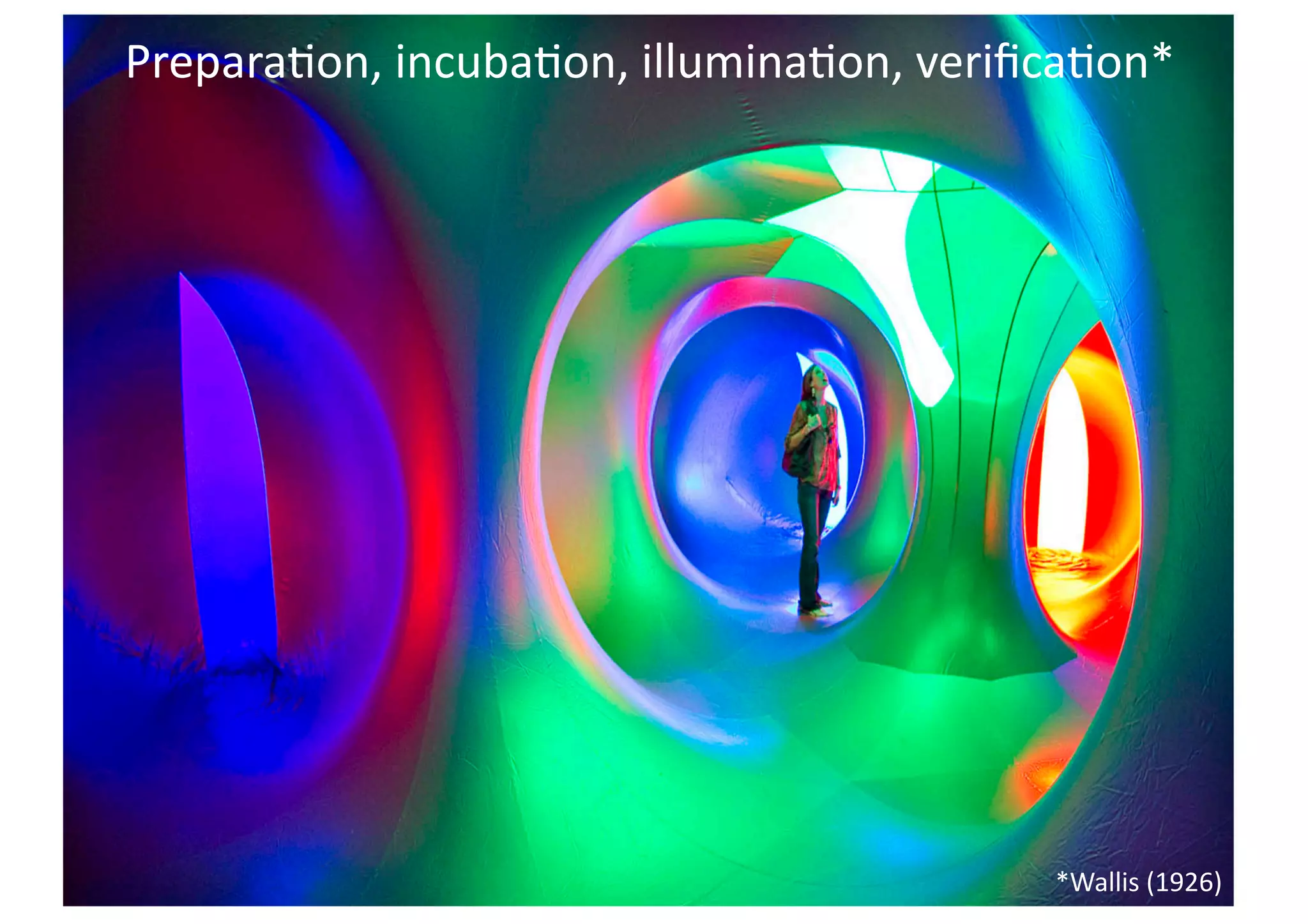
Prepara;on, 
incuba;on, 
illumina;on, 
verifica;on* 
*Wallis 
(1926)
Luminarium
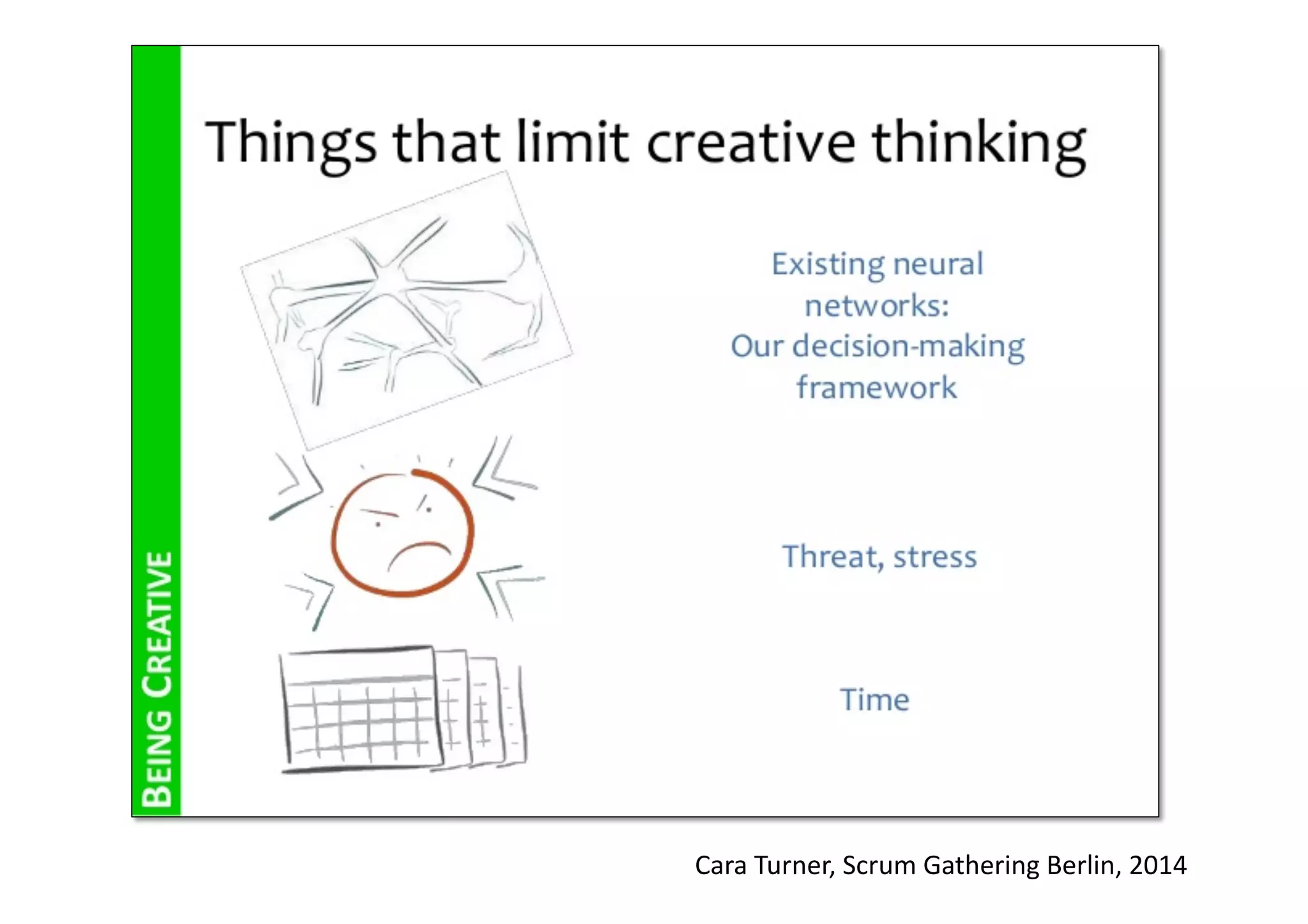
Things 
that 
limit 
crea;vity
Cara 
Turner, 
Scrum 
Gathering 
Berlin, 
2014
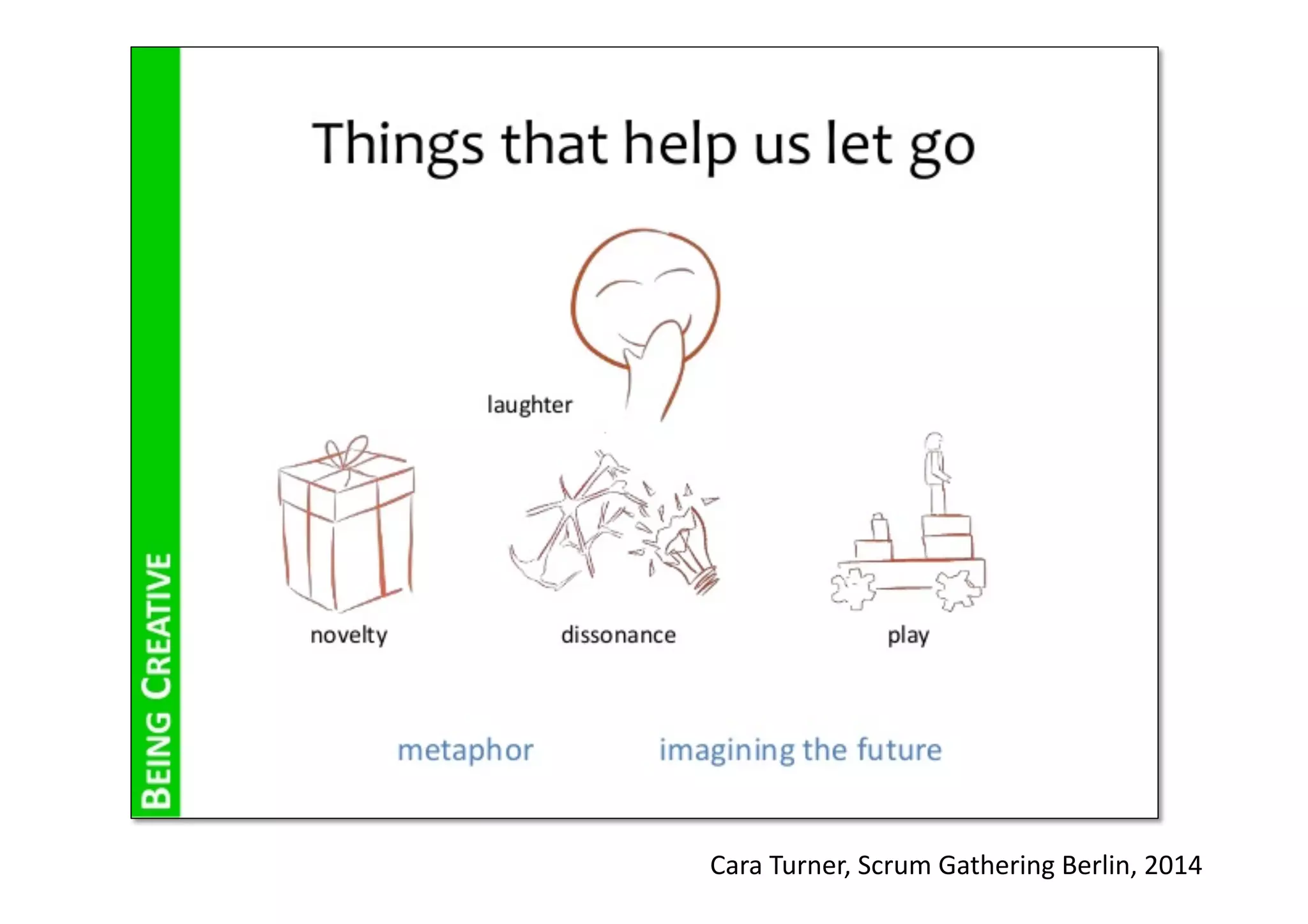
Things 
that 
foster 
crea;vity
Cara 
Turner, 
Scrum 
Gathering 
Berlin, 
2014
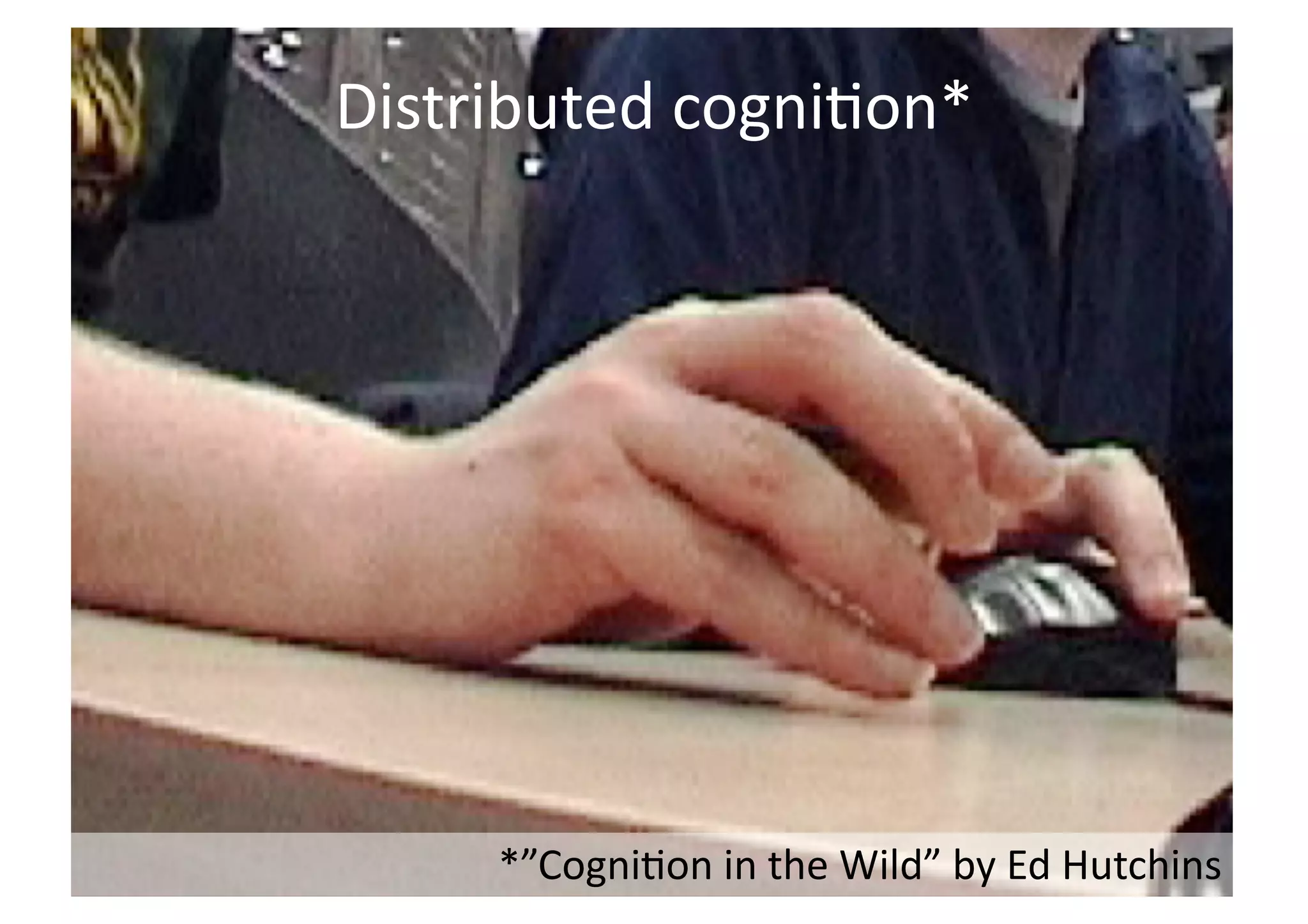
Distributed 
cogni;on* 
*”Cogni;on 
in 
the 
Wild” 
by 
Ed 
Hutchins
Peripheral 
Awareness
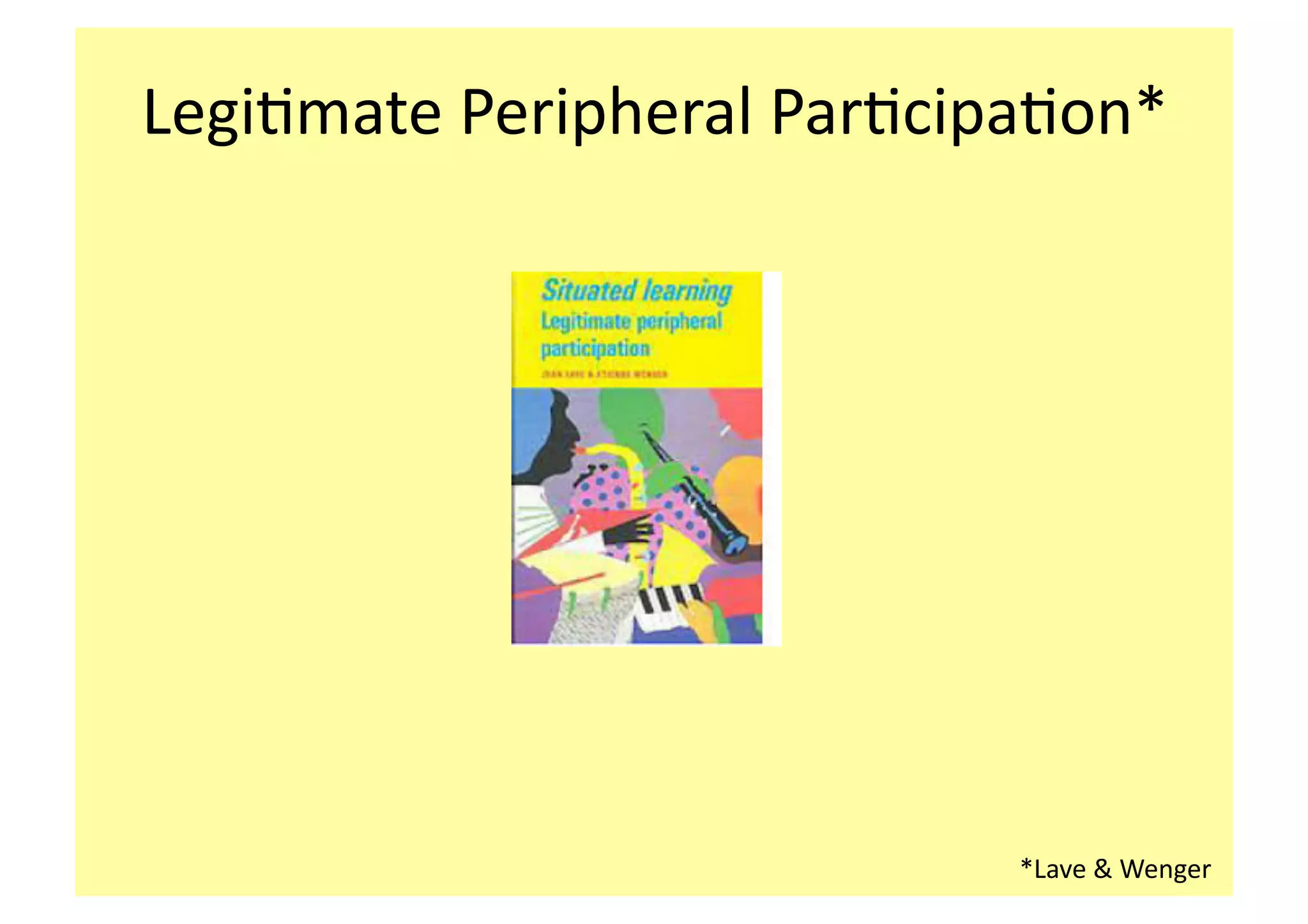
Legi;mate 
Peripheral 
Par;cipa;on* 
*Lave 
& 
Wenger
Thank 
you
“Au;sm 
occurs 
more 
oIen 
in 
families 
of 
physicists, 
engineers, 
and 
mathema;cians”, 
Baron-­‐Cohen 
S., 
Bolton 
P., 
Wheelwright 
S., 
Scahill 
V., 
Short 
L., 
Mead 
G., 
and 
Smith 
A. 
in 
Au;sm, 
1998, 
p.296-­‐301 
“Au;sm 
spectrum 
disorders 
in 
rela;on 
to 
parental 
occupa;on 
in 
technical 
fields”, 
Windham 
GC1, 
Fessel 
K, 
Grether 
JK., 
Official 
Journal 
for 
the 
Interna;onal 
Society 
for 
Au;sm 
Research, 
2009 
Aug;2(4), 
p.183-­‐91. 
“Are 
au;sm 
spectrum 
condi;ons 
more 
prevalent 
in 
an 
informa;on-­‐technology 
region? 
A 
school-­‐based 
study 
of 
three 
regions 
in 
the 
Netherlands”, 
Roelfsema, 
Mar;ne 
T.; 
Hoekstra, 
Rosa 
A.; 
Allison, 
Carrie; 
Wheelwright, 
Sally; 
Brayne, 
Carol; 
Ma]hews, 
Fiona 
E. 
and 
Baron-­‐Cohen, 
Simon 
(2012). 
Journal 
of 
Au;sm 
and 
Developmental 
Disorders, 
42(5) 
pp. 
734–739. 
“The 
Au;s;c 
Brain: 
Thinking 
across 
the 
spectrum”, 
Dr. 
Temple 
Grandin 
and 
Richard 
Panek. 
Published 
by 
Houghton 
Mifflin 
2013. 
“The 
magical 
number 
seven, 
plus 
or 
minus 
two: 
Some 
limits 
on 
our 
capacity 
for 
processing 
informa;on”. 
Miller 
G.A. 
(1956), 
Psychological 
Review 
63(2): 
81-­‐97. 
“Percep;on 
in 
chess”, 
Chase, 
W. 
and 
Simon, 
H.A., 
(1973). 
Cogni;ve 
Psychology 
4, 
p.55-­‐81. 
"Chunks: 
A 
Basis 
for 
Complexity 
Measurement”. 
J.S. 
Davis 
(1984), 
Informa;on 
Processing 
and 
management, 
Vol. 
20, 
nos. 
1-­‐2, 
p.119-­‐127. 
“Towards 
a 
theory 
of 
the 
comprehension 
of 
computer 
programs”, 
Brooks, 
R. 
(1983), 
Interna;onal 
Journal 
of 
Man-­‐Machine 
Studies, 
18, 
p.543-­‐554. 
“SoIware 
Design: 
Cogni;ve 
Aspects”, 
De;enne, 
F 
(2002). 
Published 
by 
Springer.
“Characterizing 
the 
program 
design 
ac;vity, 
neither 
strictly 
top-­‐down 
nor 
globally 
opportunis;c” 
– 
Davies 
(1991). 
Behaviour 
and 
Informa;on 
Technology 
10(3). 
“Developing 
the 
a]tributes 
of 
medical 
professional 
judgement 
and 
competence: 
a 
review 
of 
the 
literature”, 
Eraut, 
M. 
and 
Du 
Boulay, 
B. 
(2000), 
Cogni;ve 
Sciences 
Research 
Paper 
518, 
University 
of 
Sussex. 
“When 
mental 
models 
go 
wrong: 
co-­‐occurrences 
in 
dynamic, 
cri;cal 
systems”, 
Besnard, 
D., 
Greathead, 
D., 
Baxter, 
G. 
(2004). 
Interna;onal 
Journal 
for 
Human-­‐Computer 
Studies 
60. 
p117-­‐128. 
(Kegworth 
air 
disaster). 
“Formality 
in 
sketches 
and 
visual 
representa;on: 
Some 
informal 
reflec;ons”, 
Blackwell, 
A.F., 
Church, 
L., 
Plimmer, 
B. 
and 
Gray, 
D. 
(2008) 
Workshop 
at 
VL/HCC 
2008, 
p.11-­‐18. 
“Mental 
imagery 
in 
program 
design 
and 
visual 
programming”, 
Petre 
M. 
and 
Blackwell 
(1999), 
A.F., 
Interna;onal 
Journal 
of 
Human-­‐Computer 
Studies 
51(1), 
p.7-­‐30. 
“The 
Art 
of 
Thought”, 
Wallas, 
G., 
(1926), 
Published 
by 
Jonathan 
Cape. 
“Cogni;on 
in 
the 
Wild”, 
Ed 
Hutchins 
(1996), 
Published 
by 
MIT 
Press. 
“Pair 
Programming 
and 
the 
re-­‐appropria;on 
of 
individual 
tools 
for 
collabora;ve 
soIware 
development”, 
Bryant, 
S., 
Romero, 
P., 
Du 
Boulay, 
B., 
(2006), 
Proceedings 
of 
the 
2006 
conference 
on 
Coopera;ve 
Systems 
Design, 
p.55-­‐70. 
“Situated 
Learning: 
Legi;mate 
Peripheral 
Par;cipa;on”, 
Lave, 
J. 
and 
Wenger 
E., 
(1991). 
Published 
by 
University 
of 
Cambridge 
Press.

The Psychology of Programming

  • 1.
    The Psychology of Programming “Summer colours” by Beshef. Shared under Crea;ve Commons 2.0
  • 2.
    Dr. Sallyann Freudenberg “Summer colours” by Beshef. Shared under Crea;ve Commons 2.0
  • 3.
    Dr. Temple Grandin HBO movie trailer Temple at Google 1 Temple at Google 2
  • 4.
    Empirical evidence •Au;sm occurs more oIen in families of physicists, engineers and mathema;cians Baron-­‐Cohen et al (1998) • Mothers of au;s;c kids are more likely to work in highly technical occupa;ons -­‐ Windham et al (2009) • Significantly more au;sm in children in IT rich regions -­‐ Roelfsema et al (2011) • ASD students more likely to choose STEM subjects – Wei et al (2003)
  • 5.
  • 6.
    Historical Studies of Programmers “My mouse isn’t working right” by Nina Ma]hews Photography. Shared under Crea;ve Commons 2.0.
  • 7.
    Chunking “Lost Ba]le?” by Elvind Barstad Waaler, shared under Crea;ve Commons 2.0
  • 8.
    Beacons “Peggy’s Lights Up” by Dennis Jarvis via Crea;ve Commons 2.0
  • 9.
    Schema “Time passages” by Robert S. Donovan. Shared under Crea;ve Commons 2.0
  • 10.
    Counter schema Count := 0; Count := Count + 1; Sum schema Sum := 0; Sum := Sum + number;
  • 11.
    BEGIN Sum := 0; Count := 0; REPEAT READLN(number); IF number <> 99999 THEN BEGIN Sum := Sum + number Count := Count + 1 END; UNTIL number = 99999 ………………
  • 12.
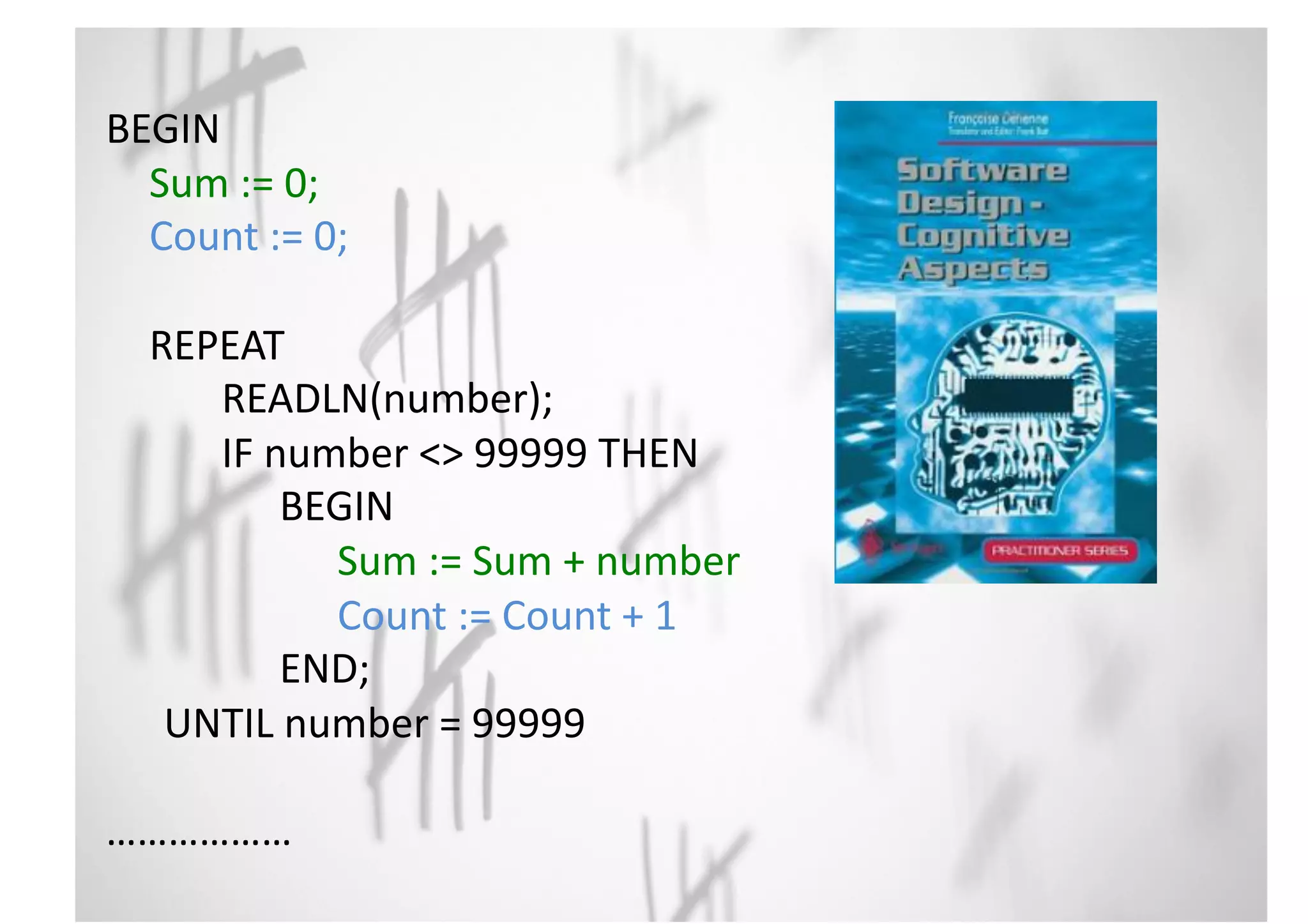
    BEGIN Sum := 0; Count := 0; REPEAT READLN(number); IF number <> 99999 THEN BEGIN Sum := Sum + number Count := Count + 1 END; UNTIL number = 99999 ………………
  • 13.
    Hierarchical Decomposi;on “58.365” by Romana Klee. Shared under Crea;ve Commons 2.0
  • 14.
    Tacit knowledge Image by epSos.de shared under Crea;ve Commons 2.0
  • 15.
  • 16.
  • 17.
  • 18.
    Temple Grandin “Photography, memory and mental models” by Kevin Dooley. Shared under Crea;ve Commons 2.0
  • 19.
    “Photography, memory and mental models” by Kevin Dooley. Shared under Crea;ve Commons 2.0
  • 20.
    Prepara;on, incuba;on, illumina;on, verifica;on* *Wallis (1926)
  • 21.
  • 22.
  • 23.
    Cara Turner, Scrum Gathering Berlin, 2014
  • 24.
  • 25.
    Cara Turner, Scrum Gathering Berlin, 2014
  • 26.
    Distributed cogni;on* *”Cogni;on in the Wild” by Ed Hutchins
  • 27.
  • 28.
  • 29.
  • 30.
    “Au;sm occurs more oIen in families of physicists, engineers, and mathema;cians”, Baron-­‐Cohen S., Bolton P., Wheelwright S., Scahill V., Short L., Mead G., and Smith A. in Au;sm, 1998, p.296-­‐301 “Au;sm spectrum disorders in rela;on to parental occupa;on in technical fields”, Windham GC1, Fessel K, Grether JK., Official Journal for the Interna;onal Society for Au;sm Research, 2009 Aug;2(4), p.183-­‐91. “Are au;sm spectrum condi;ons more prevalent in an informa;on-­‐technology region? A school-­‐based study of three regions in the Netherlands”, Roelfsema, Mar;ne T.; Hoekstra, Rosa A.; Allison, Carrie; Wheelwright, Sally; Brayne, Carol; Ma]hews, Fiona E. and Baron-­‐Cohen, Simon (2012). Journal of Au;sm and Developmental Disorders, 42(5) pp. 734–739. “The Au;s;c Brain: Thinking across the spectrum”, Dr. Temple Grandin and Richard Panek. Published by Houghton Mifflin 2013. “The magical number seven, plus or minus two: Some limits on our capacity for processing informa;on”. Miller G.A. (1956), Psychological Review 63(2): 81-­‐97. “Percep;on in chess”, Chase, W. and Simon, H.A., (1973). Cogni;ve Psychology 4, p.55-­‐81. "Chunks: A Basis for Complexity Measurement”. J.S. Davis (1984), Informa;on Processing and management, Vol. 20, nos. 1-­‐2, p.119-­‐127. “Towards a theory of the comprehension of computer programs”, Brooks, R. (1983), Interna;onal Journal of Man-­‐Machine Studies, 18, p.543-­‐554. “SoIware Design: Cogni;ve Aspects”, De;enne, F (2002). Published by Springer.
  • 31.
    “Characterizing the program design ac;vity, neither strictly top-­‐down nor globally opportunis;c” – Davies (1991). Behaviour and Informa;on Technology 10(3). “Developing the a]tributes of medical professional judgement and competence: a review of the literature”, Eraut, M. and Du Boulay, B. (2000), Cogni;ve Sciences Research Paper 518, University of Sussex. “When mental models go wrong: co-­‐occurrences in dynamic, cri;cal systems”, Besnard, D., Greathead, D., Baxter, G. (2004). Interna;onal Journal for Human-­‐Computer Studies 60. p117-­‐128. (Kegworth air disaster). “Formality in sketches and visual representa;on: Some informal reflec;ons”, Blackwell, A.F., Church, L., Plimmer, B. and Gray, D. (2008) Workshop at VL/HCC 2008, p.11-­‐18. “Mental imagery in program design and visual programming”, Petre M. and Blackwell (1999), A.F., Interna;onal Journal of Human-­‐Computer Studies 51(1), p.7-­‐30. “The Art of Thought”, Wallas, G., (1926), Published by Jonathan Cape. “Cogni;on in the Wild”, Ed Hutchins (1996), Published by MIT Press. “Pair Programming and the re-­‐appropria;on of individual tools for collabora;ve soIware development”, Bryant, S., Romero, P., Du Boulay, B., (2006), Proceedings of the 2006 conference on Coopera;ve Systems Design, p.55-­‐70. “Situated Learning: Legi;mate Peripheral Par;cipa;on”, Lave, J. and Wenger E., (1991). Published by University of Cambridge Press.