The productivity
checklist: Improve
the picking process
by making your
warehouse do more
What is holding back
productivity?
2
three
Warehouse productivity is
often limited by
factors...
3
4
1.
Suboptimal warehouse
layout
2.
Lack of appropriate
equipment and systems
3.
Inefficient picking
methods
Suboptimal warehouse
layout can come in the
form of best-selling
items not being stored
in the most accessible
locations, shelves
not being filled to
capacity, or items that
are commonly ordered
together not being
located near one another.
5
6
Poor warehouse layout can have numerous
repercussions, the main being…
Unnecessarily
long travel
times
A lack of usable
storage space
Stock damage
due to items not
being stored in
appropriate areas
7
With regards to warehouse operations,
a lack of appropriate equipment and
systems can refer to:
7
8
Relying on spreadsheets
or paper-based
processes that give an
incomplete or inaccurate
overview of warehouse
productivity and
performance.
9
Equipment, such as
forklifts, being in the
wrong place or not
correctly assigned to the
required, qualified staff.
10
Inappropriate equipment and systems
can create numerous problems
internally. Some common ones include…
10
11
Difficulty
identifying
areas for
improvement
Higher labour
and energy
costs
More health
and safety risks
Operators
wasting time
searching for
orders, thereby
hindering
productivity
12
Inefficient
picking methods
lead to overlong
order journeys
and travel time,
and operators
attempting to
pick more orders
than it is possible
to fulfil.
12
13
This can have a serious internal impact on
warehouse operations, resulting in…
Operator
fatigue and
frustration
Higher rate of
mispicks and
errors
Customer
complaints
14
What picking
strategies are there?
14
15
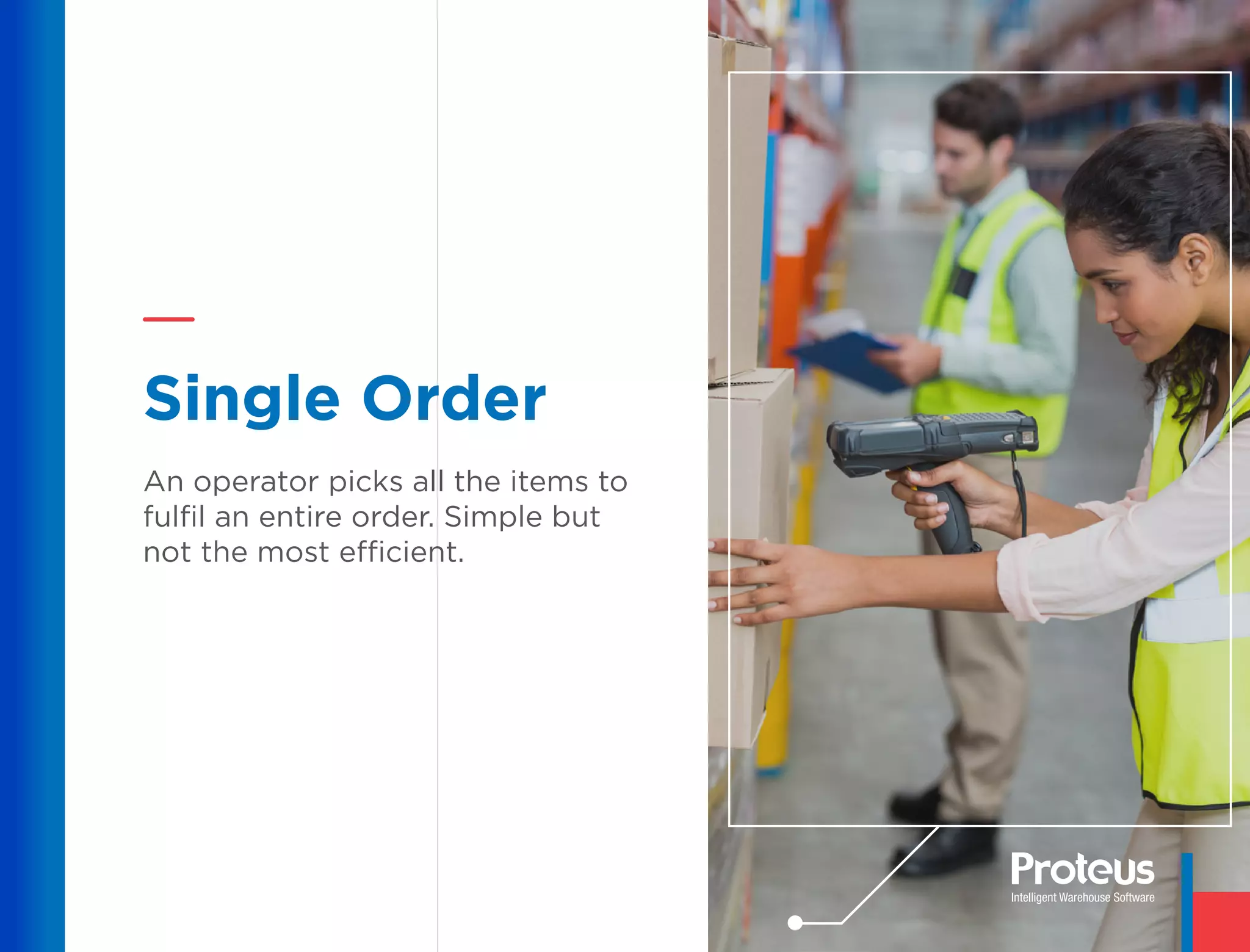
An operator picks all the items to
fulfil an entire order. Simple but
not the most efficient.
Single Order
16
The warehouse is divided into
multiple zones and workers
pick only their designated
zone. Ideal if you have
different storage system
requirements. With zone
picking, orders are managed in
two ways:
Zone
17
Orders are passed from zone
to zone until complete.
Pick and pass
18
Items are picked in different
zones at the same time and
sent for consolidation.
Consolidation
19
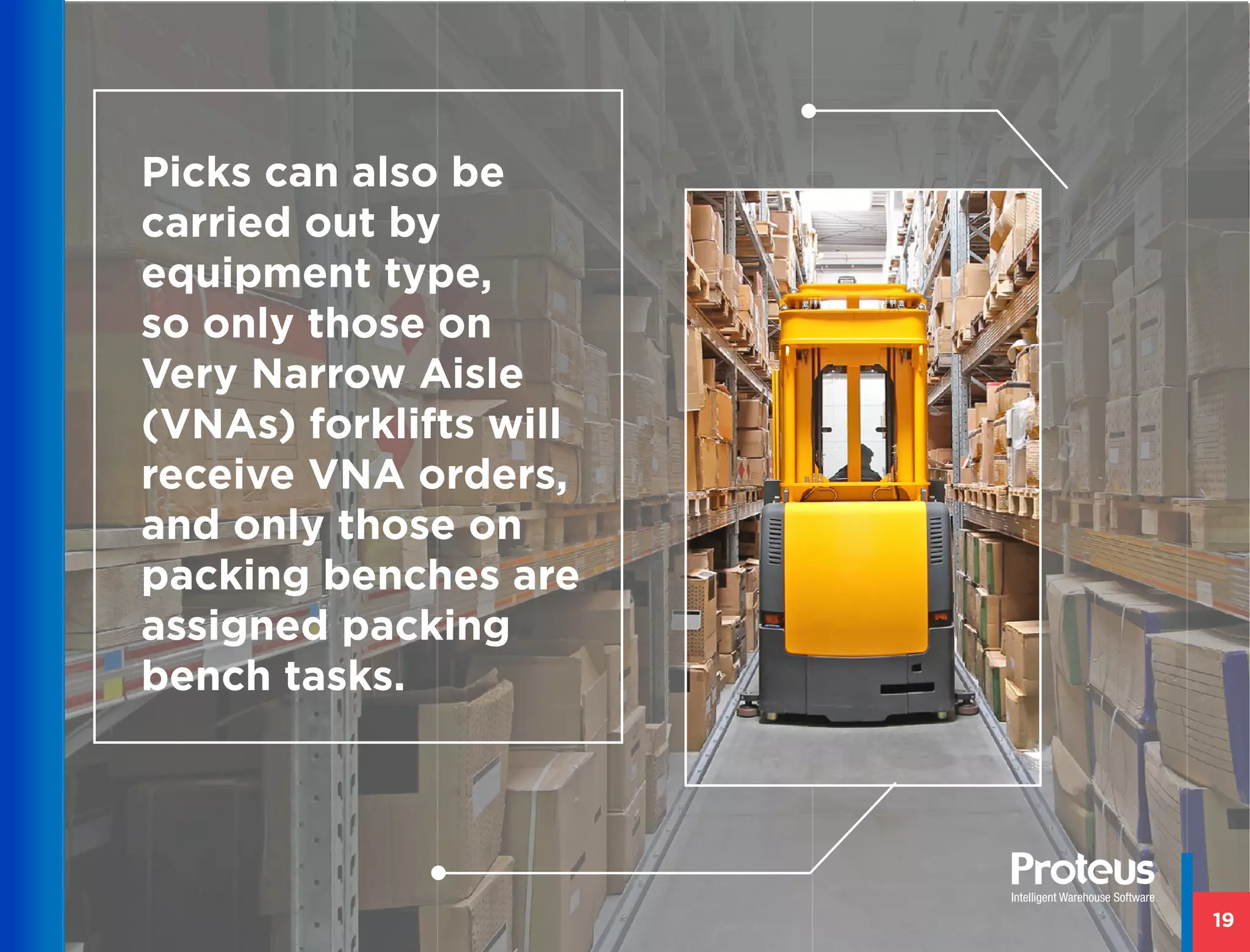
Picks can also be
carried out by
equipment type,
so only those on
Very Narrow Aisle
(VNAs) forklifts will
receive VNA orders,
and only those on
packing benches are
assigned packing
bench tasks.
19
20
The warehouse receives products
in bulk that are not intended to
be kept in inventory for more
than a cycle. A WMS can help
to ensure that this inventory is
depleted after order picking for
a specific cycle. Productivity
improves as this process is
efficient and accurate.
Pick-to-zero
(PTZ)
20
21
An operator picks more than one
order at the same time. This means
that the same item for multiple orders
can be picked in one trip, reducing
order journeys. This method works
best for small orders and stock items.
Multi-line orders
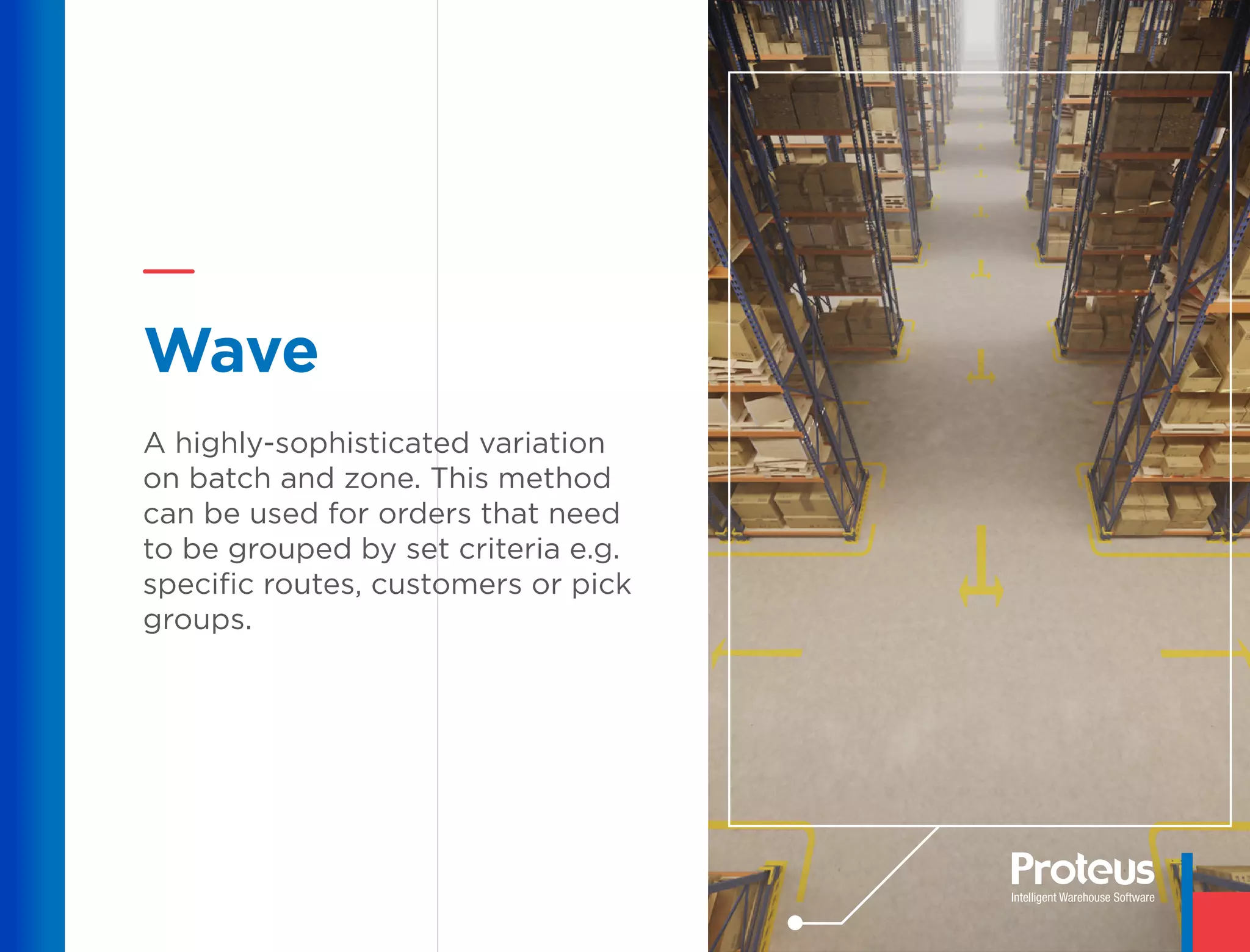
22
A highly-sophisticated variation
on batch and zone. This method
can be used for orders that need
to be grouped by set criteria e.g.
specific routes, customers or pick
groups.
Wave
23
Single and zone methods can be enhanced
by using a Warehouse Management System
(WMS), but multi-line, consolidation and
wave are only possible with a WMS.
23
24
Why consider a WMS?
24
25
Warehouse
management
systems improve
productivity by
suggesting the
best routes and
methods for
picking.
25
26
30%
According to Internet Retailing and
eDelivery, retailers that implement a
WMS see improvements in productivity
and efficiency upwards of
26
27
A WMS will help you to
maximise the space in your
warehouse and use the right
equipment and systems to
improve productivity.
It will also improve
accuracy and
operator ergonomics
at the same time.
27
28
How does a WMS improve
picking processes?
28
29
A WMS can be used to assess
efficiency of current pick
processes to identify areas for
improvement.
Analysis and
review
30
A WMS can deliver insights
that will help you to maximise
warehouse layout and improve
picking routes.
Warehouse
mapping
30
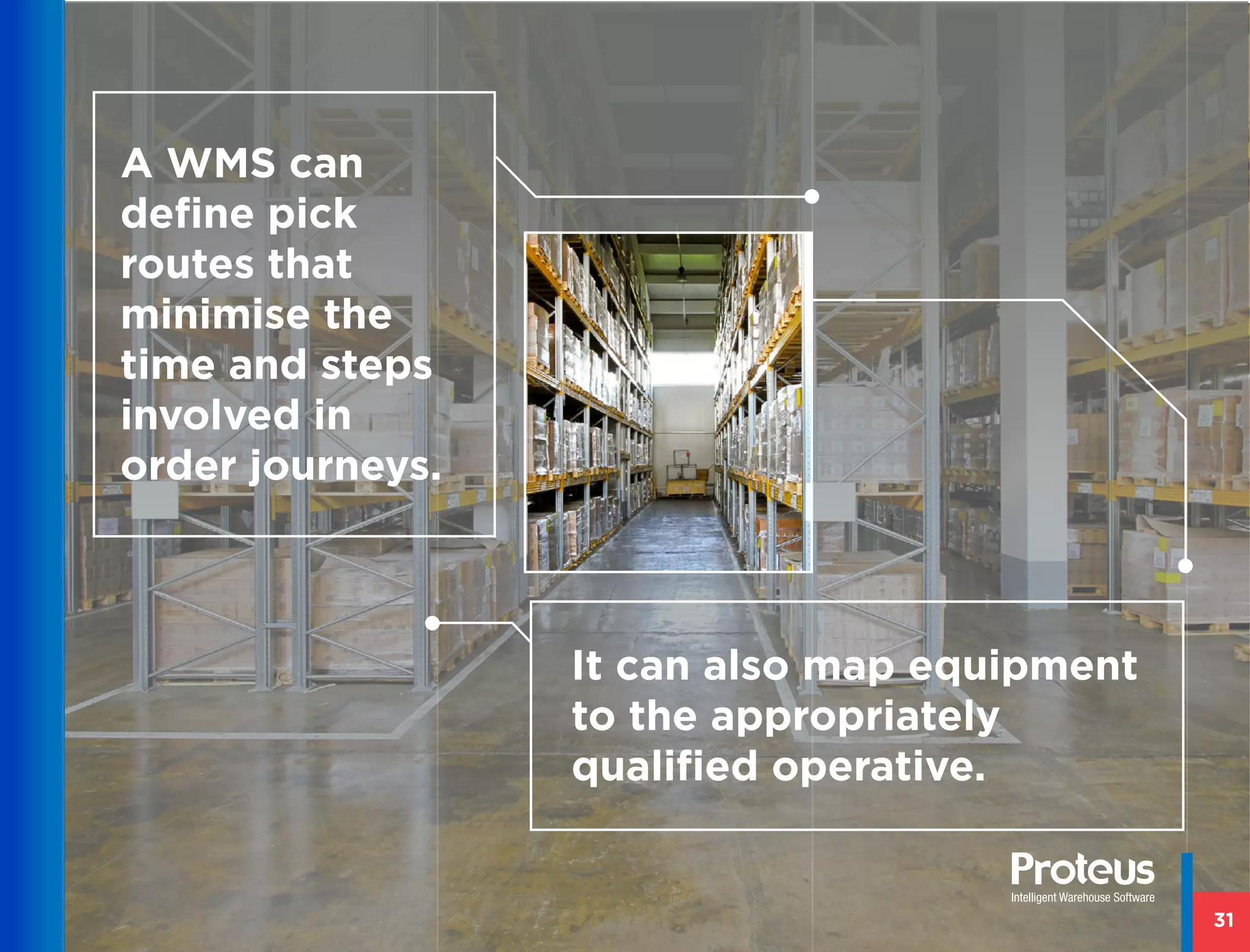
31
A WMS can
define pick
routes that
minimise the
time and steps
involved in
order journeys.
31
It can also map equipment
to the appropriately
qualified operative.
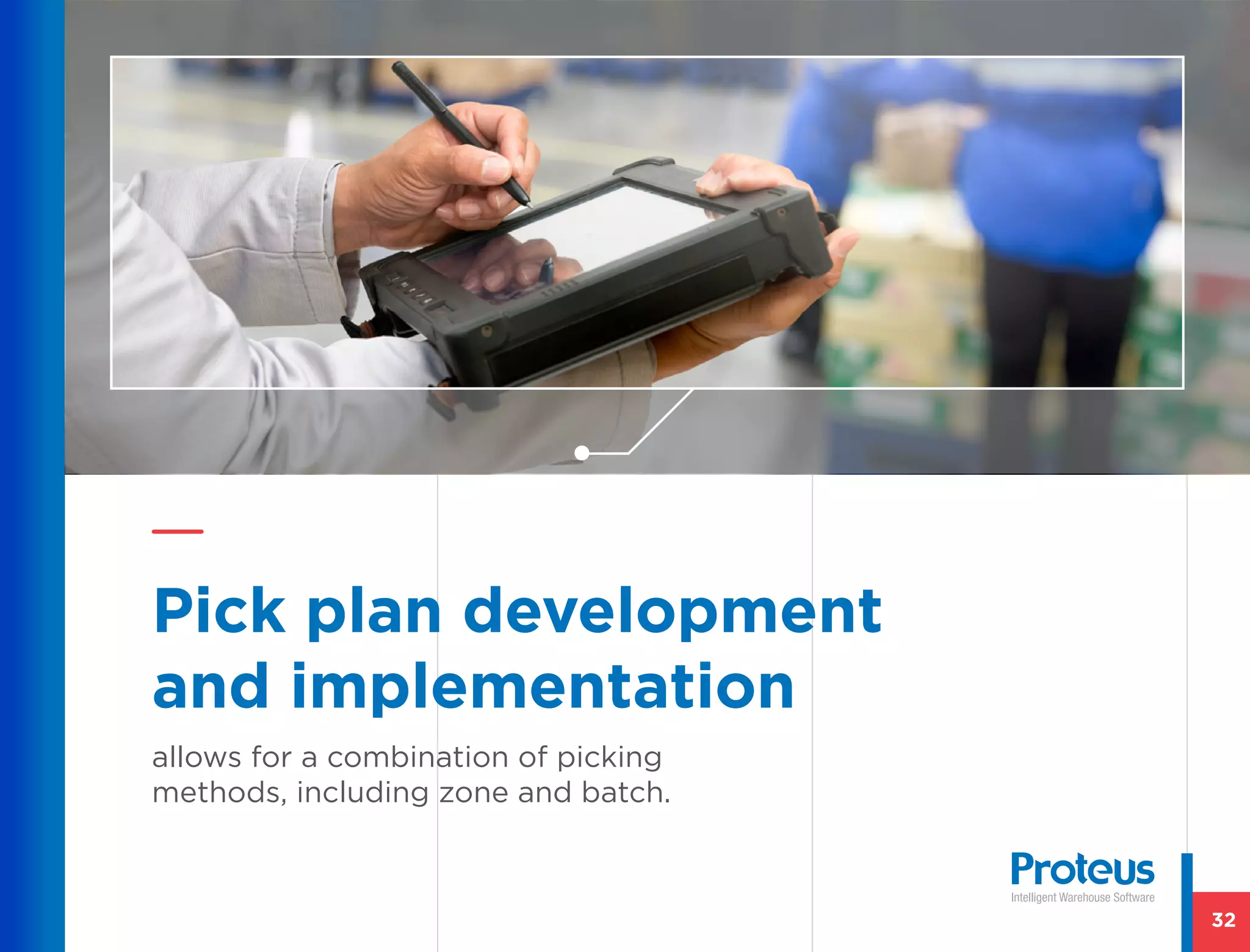
32
allows for a combination of picking
methods, including zone and batch.
Pick plan development
and implementation
33
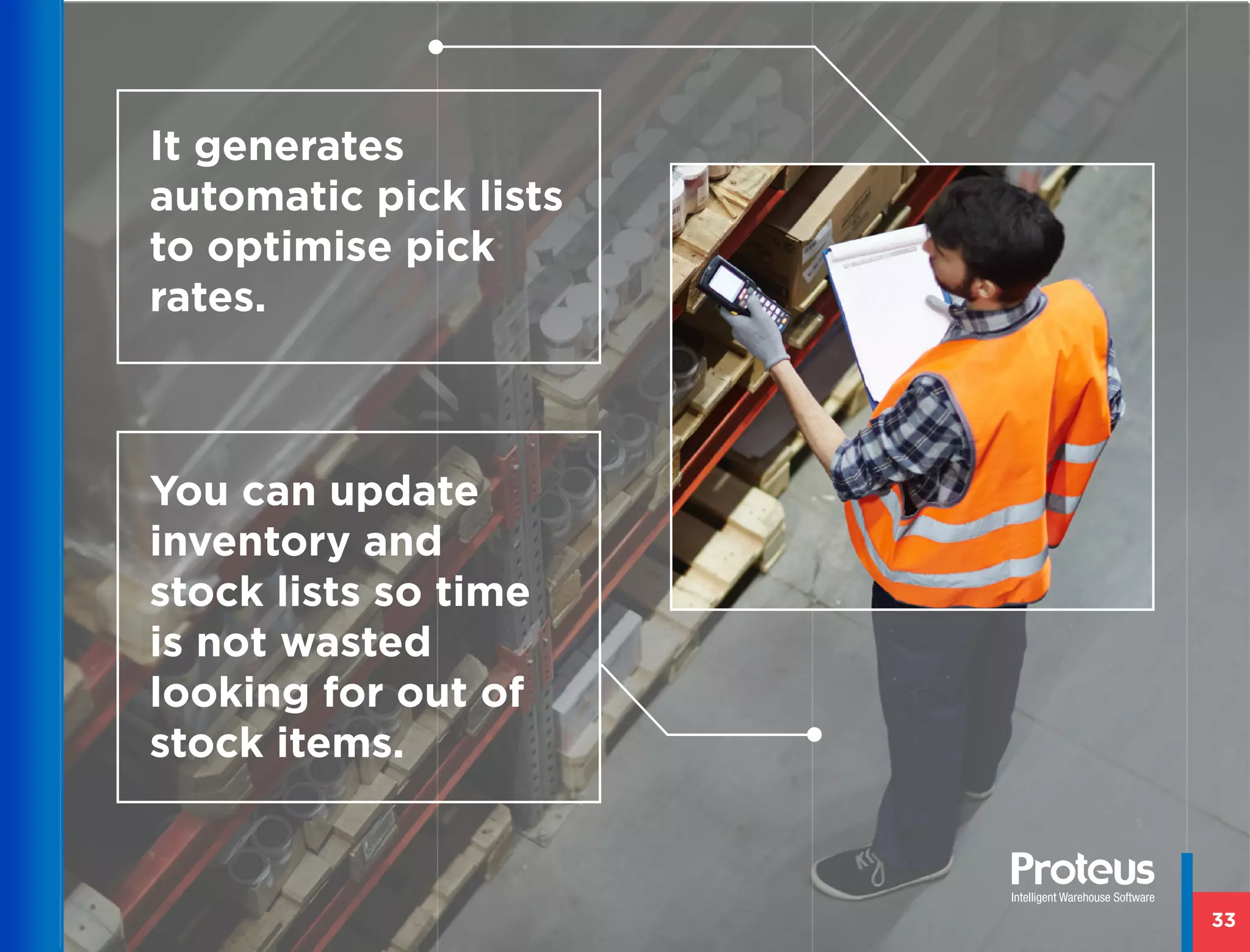
It generates
automatic pick lists
to optimise pick
rates.
33
You can update
inventory and
stock lists so time
is not wasted
looking for out of
stock items.
34
WMS integrates
technologies
such as bar code
scanning to
improve picking
efficiency.
34
35
Custom reports help you to
monitor KPIs including covering
pick rates, task rates and
operator performance.
Monitoring
and reporting
35
3636
Predictive reports
help you plan
and maximise
warehouse
productivity.
37
Learn more about how you can empower your warehouse staff to achieve more in less time.
Raise the level of your internal performance by downloading
The Intelligent Warehouse Manual: How to realign your
people and processes to increase warehouse productivity
Download now

The productivity checklist: Improve picking process by making your warehouse do more

  • 1.
    The productivity checklist: Improve thepicking process by making your warehouse do more
  • 2.
    What is holdingback productivity? 2
  • 3.
  • 4.
    4 1. Suboptimal warehouse layout 2. Lack ofappropriate equipment and systems 3. Inefficient picking methods
  • 5.
    Suboptimal warehouse layout cancome in the form of best-selling items not being stored in the most accessible locations, shelves not being filled to capacity, or items that are commonly ordered together not being located near one another. 5
  • 6.
    6 Poor warehouse layoutcan have numerous repercussions, the main being… Unnecessarily long travel times A lack of usable storage space Stock damage due to items not being stored in appropriate areas
  • 7.
    7 With regards towarehouse operations, a lack of appropriate equipment and systems can refer to: 7
  • 8.
    8 Relying on spreadsheets orpaper-based processes that give an incomplete or inaccurate overview of warehouse productivity and performance.
  • 9.
    9 Equipment, such as forklifts,being in the wrong place or not correctly assigned to the required, qualified staff.
  • 10.
    10 Inappropriate equipment andsystems can create numerous problems internally. Some common ones include… 10
  • 11.
    11 Difficulty identifying areas for improvement Higher labour andenergy costs More health and safety risks Operators wasting time searching for orders, thereby hindering productivity
  • 12.
    12 Inefficient picking methods lead tooverlong order journeys and travel time, and operators attempting to pick more orders than it is possible to fulfil. 12
  • 13.
    13 This can havea serious internal impact on warehouse operations, resulting in… Operator fatigue and frustration Higher rate of mispicks and errors Customer complaints
  • 14.
  • 15.
    15 An operator picksall the items to fulfil an entire order. Simple but not the most efficient. Single Order
  • 16.
    16 The warehouse isdivided into multiple zones and workers pick only their designated zone. Ideal if you have different storage system requirements. With zone picking, orders are managed in two ways: Zone
  • 17.
    17 Orders are passedfrom zone to zone until complete. Pick and pass
  • 18.
    18 Items are pickedin different zones at the same time and sent for consolidation. Consolidation
  • 19.
    19 Picks can alsobe carried out by equipment type, so only those on Very Narrow Aisle (VNAs) forklifts will receive VNA orders, and only those on packing benches are assigned packing bench tasks. 19
  • 20.
    20 The warehouse receivesproducts in bulk that are not intended to be kept in inventory for more than a cycle. A WMS can help to ensure that this inventory is depleted after order picking for a specific cycle. Productivity improves as this process is efficient and accurate. Pick-to-zero (PTZ) 20
  • 21.
    21 An operator picksmore than one order at the same time. This means that the same item for multiple orders can be picked in one trip, reducing order journeys. This method works best for small orders and stock items. Multi-line orders
  • 22.
    22 A highly-sophisticated variation onbatch and zone. This method can be used for orders that need to be grouped by set criteria e.g. specific routes, customers or pick groups. Wave
  • 23.
    23 Single and zonemethods can be enhanced by using a Warehouse Management System (WMS), but multi-line, consolidation and wave are only possible with a WMS. 23
  • 24.
  • 25.
    25 Warehouse management systems improve productivity by suggestingthe best routes and methods for picking. 25
  • 26.
    26 30% According to InternetRetailing and eDelivery, retailers that implement a WMS see improvements in productivity and efficiency upwards of 26
  • 27.
    27 A WMS willhelp you to maximise the space in your warehouse and use the right equipment and systems to improve productivity. It will also improve accuracy and operator ergonomics at the same time. 27
  • 28.
    28 How does aWMS improve picking processes? 28
  • 29.
    29 A WMS canbe used to assess efficiency of current pick processes to identify areas for improvement. Analysis and review
  • 30.
    30 A WMS candeliver insights that will help you to maximise warehouse layout and improve picking routes. Warehouse mapping 30
  • 31.
    31 A WMS can definepick routes that minimise the time and steps involved in order journeys. 31 It can also map equipment to the appropriately qualified operative.
  • 32.
    32 allows for acombination of picking methods, including zone and batch. Pick plan development and implementation
  • 33.
    33 It generates automatic picklists to optimise pick rates. 33 You can update inventory and stock lists so time is not wasted looking for out of stock items.
  • 34.
    34 WMS integrates technologies such asbar code scanning to improve picking efficiency. 34
  • 35.
    35 Custom reports helpyou to monitor KPIs including covering pick rates, task rates and operator performance. Monitoring and reporting 35
  • 36.
    3636 Predictive reports help youplan and maximise warehouse productivity.
  • 37.
    37 Learn more abouthow you can empower your warehouse staff to achieve more in less time. Raise the level of your internal performance by downloading The Intelligent Warehouse Manual: How to realign your people and processes to increase warehouse productivity Download now