“
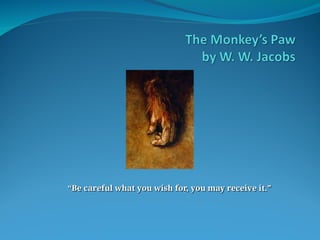
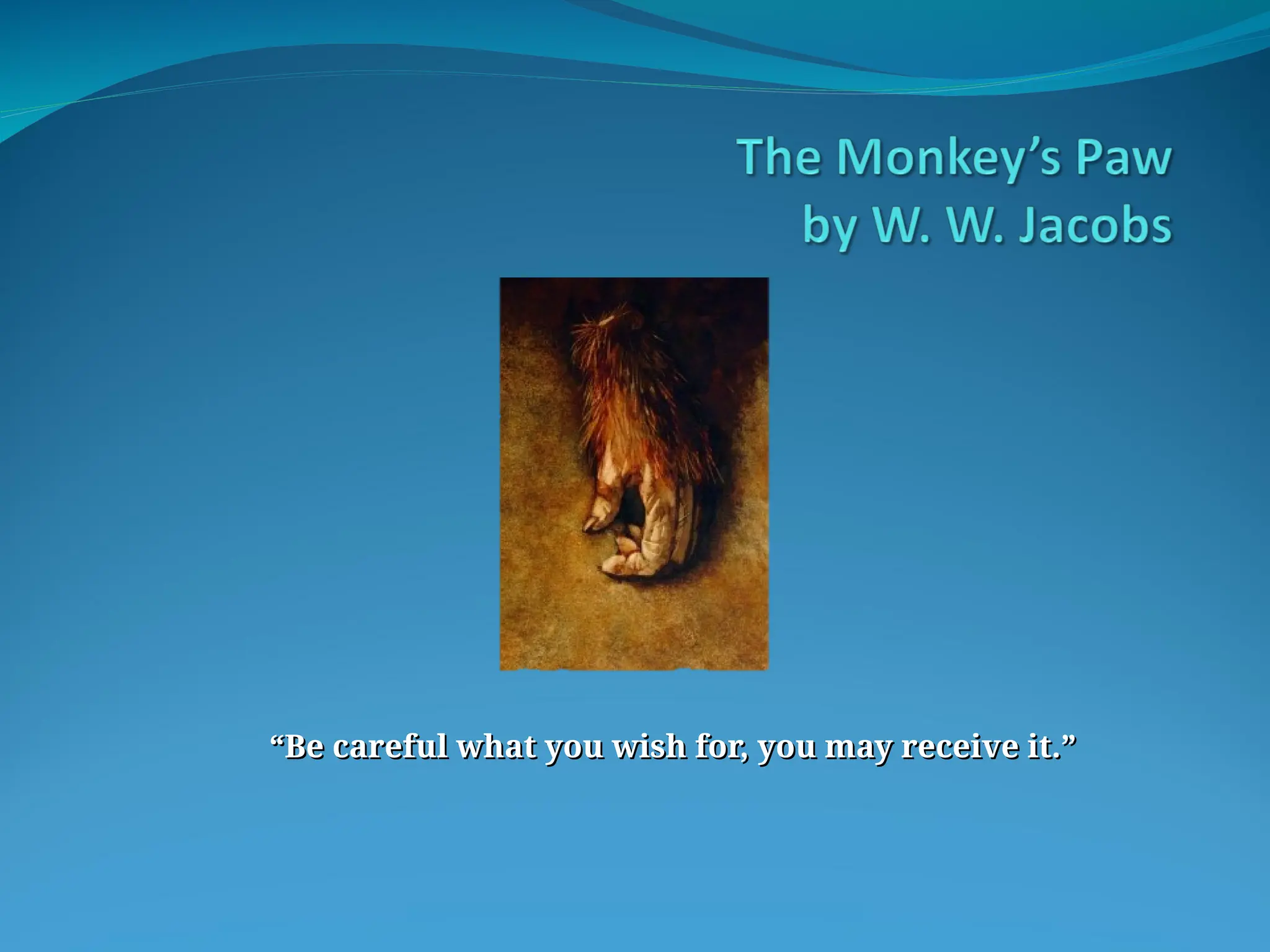
“Be careful what you wish for, you may receive it.”
Be careful what you wish for, you may receive it.”
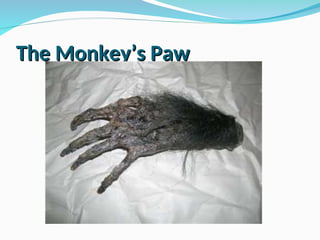
The Monkey’s Paw
The Monkey’s Paw
 Author: William Wymark Jacobs
 Born September 8th
, 1863
 Civil clerk in the Post Office Savings Bank of
London in 1879
 Published first short story in 1885
 Majority of work was humorous in tone
 “The Monkey’s Paw” (1902) is his most macabre
and horrifying tale, and the most popular
 Died September 1st
, 1943
The Monkey’s Paw
The Monkey’s Paw
Do you agree or disagree with the following
statements and why?
statements and why?
1. One should be content with his or her life as it is.
2. People should not play games with fate.
3. You should never be afraid to be the master of
your destiny.
4. Nothing is ever truly free.
The Monkey’s Paw
The Monkey’s Paw
Author Notes
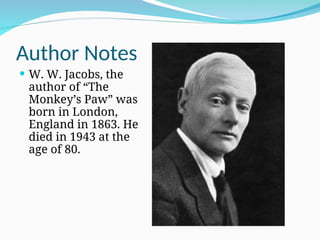
 W. W. Jacobs, the
author of “The
Monkey’s Paw” was
born in London,
England in 1863. He
died in 1943 at the
age of 80.
Author Notes
 When he was young, he listened to tales told by
sailors he met at his dockside house where he
lived with his father.
 These were stories about everyday life disrupted
by strange and fantastic events.
Culture and Context
Literary Focus: Foreshadowing
 At the outset of the story, the Sergeant Major
gives important clues about upcoming events
well before the conclusion of the story. Practice
your foreshadowing detective skills and locate
some places of foreshadowing as the Sergeant
Major visits with the family.
Theme
 Unchecked greed only leads to unhappiness, no
matter how much more one asks for. Intense
desire also often leads to unfulfilled expectations
or unintended consequences as with Herbert’s
unexpected death and rise from the grave as a
living corpse. Put simply, Jacobs is reminding
readers to be careful what they wish for because
it may just come true.
Monkey’s Paw as a Symbol
 The monkey’s paw is a symbol of desire and
greed—everything that its owner could possibly
wish for and the unrestricted ability to make it
happen. This power makes the paw alluring,
even to unselfish people who desire nothing and
have everything they need.
Thank you
Prepared by:
Shivani

The Monkey's Paw Powerpoint Presentation

  • 1.
    “ “Be careful whatyou wish for, you may receive it.” Be careful what you wish for, you may receive it.”
  • 2.
    The Monkey’s Paw TheMonkey’s Paw  Author: William Wymark Jacobs  Born September 8th , 1863  Civil clerk in the Post Office Savings Bank of London in 1879  Published first short story in 1885  Majority of work was humorous in tone  “The Monkey’s Paw” (1902) is his most macabre and horrifying tale, and the most popular  Died September 1st , 1943
  • 3.
    The Monkey’s Paw TheMonkey’s Paw Do you agree or disagree with the following Do you agree or disagree with the following statements and why? statements and why? 1. One should be content with his or her life as it is. 2. People should not play games with fate. 3. You should never be afraid to be the master of your destiny. 4. Nothing is ever truly free.
  • 4.
    The Monkey’s Paw TheMonkey’s Paw
  • 5.
    Author Notes  W.W. Jacobs, the author of “The Monkey’s Paw” was born in London, England in 1863. He died in 1943 at the age of 80.
  • 6.
    Author Notes  Whenhe was young, he listened to tales told by sailors he met at his dockside house where he lived with his father.  These were stories about everyday life disrupted by strange and fantastic events.
  • 7.
  • 8.
    Literary Focus: Foreshadowing At the outset of the story, the Sergeant Major gives important clues about upcoming events well before the conclusion of the story. Practice your foreshadowing detective skills and locate some places of foreshadowing as the Sergeant Major visits with the family.
  • 9.
    Theme  Unchecked greedonly leads to unhappiness, no matter how much more one asks for. Intense desire also often leads to unfulfilled expectations or unintended consequences as with Herbert’s unexpected death and rise from the grave as a living corpse. Put simply, Jacobs is reminding readers to be careful what they wish for because it may just come true.
  • 10.
    Monkey’s Paw asa Symbol  The monkey’s paw is a symbol of desire and greed—everything that its owner could possibly wish for and the unrestricted ability to make it happen. This power makes the paw alluring, even to unselfish people who desire nothing and have everything they need.
  • 11.