The essential guide to organizational design

Editor's Notes

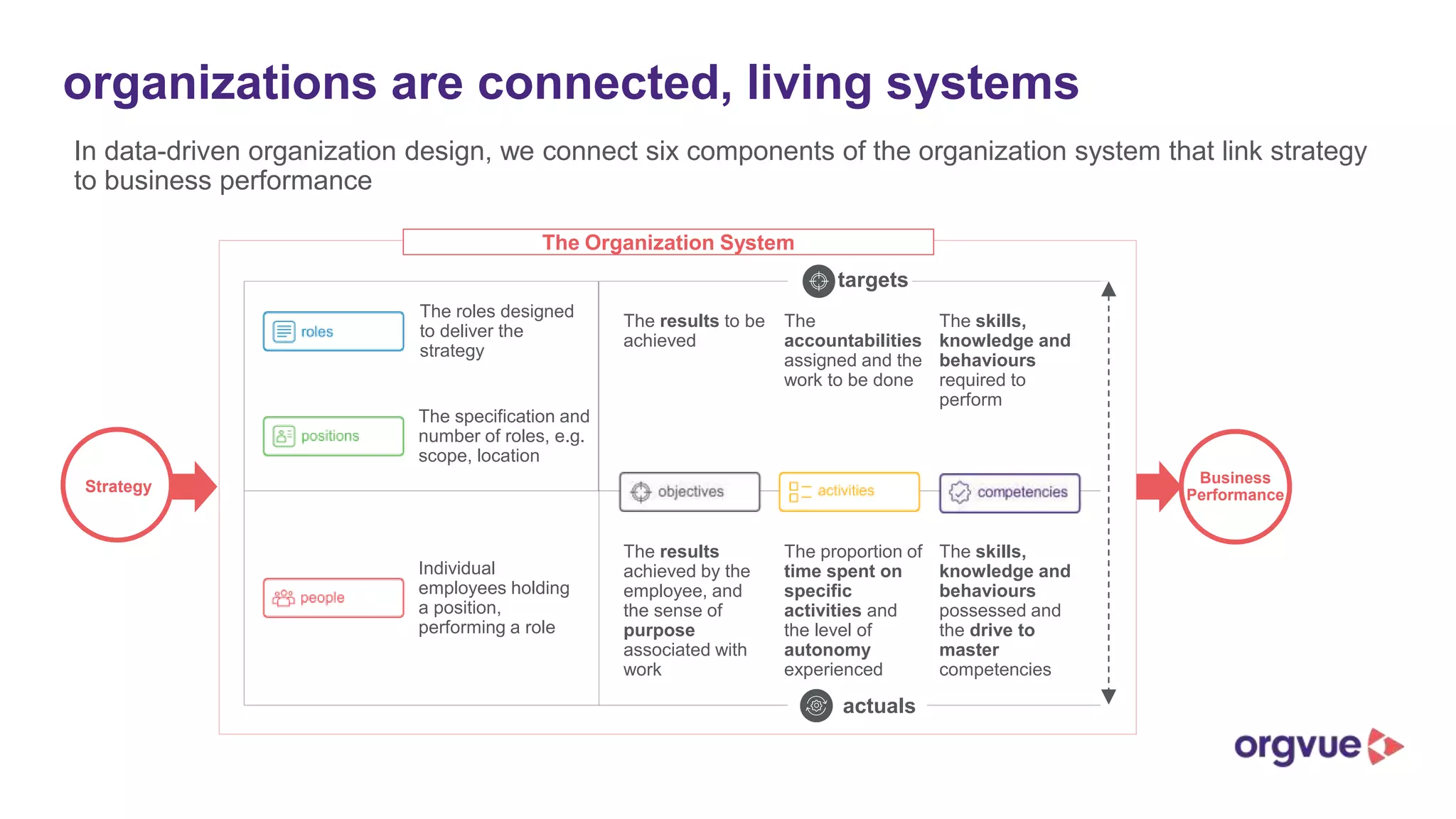
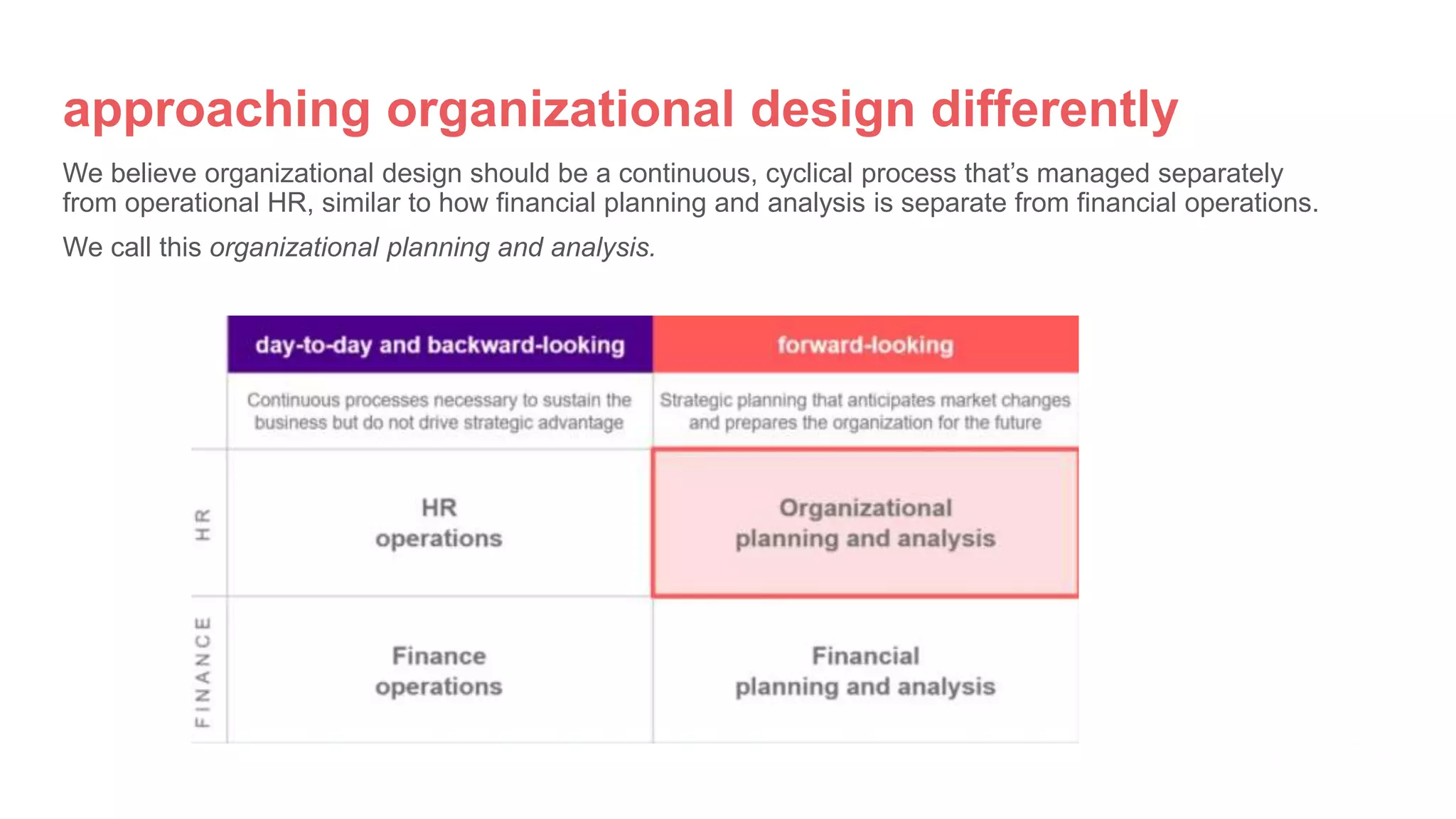
  • #3 The first Foundation of Data Driven Organization Design is that the Organization is a System, In this section, we will understand Why organization design is fundamental for strategy execution; The six components of the organization system; How the Organization System provides a framework for Data-Driven Organization Design; Typical challenges and limitations when organizations evolve without Data-Driven Design; Why enabling technology is needed for managing the effectiveness of the organization system.
  • #4 Imagine a world where the business strategy and workforce strategy are truly aligned, where the organization flexes when the business is affected by disruption. A world where your workforce plan works in harmony with the finance plan and it goes down to the people, positions and roles detail - there are no discrepancies, no disputes on headcount or costs. But there is more dialogue on the value of employees who are truly at the heart of success for your business.
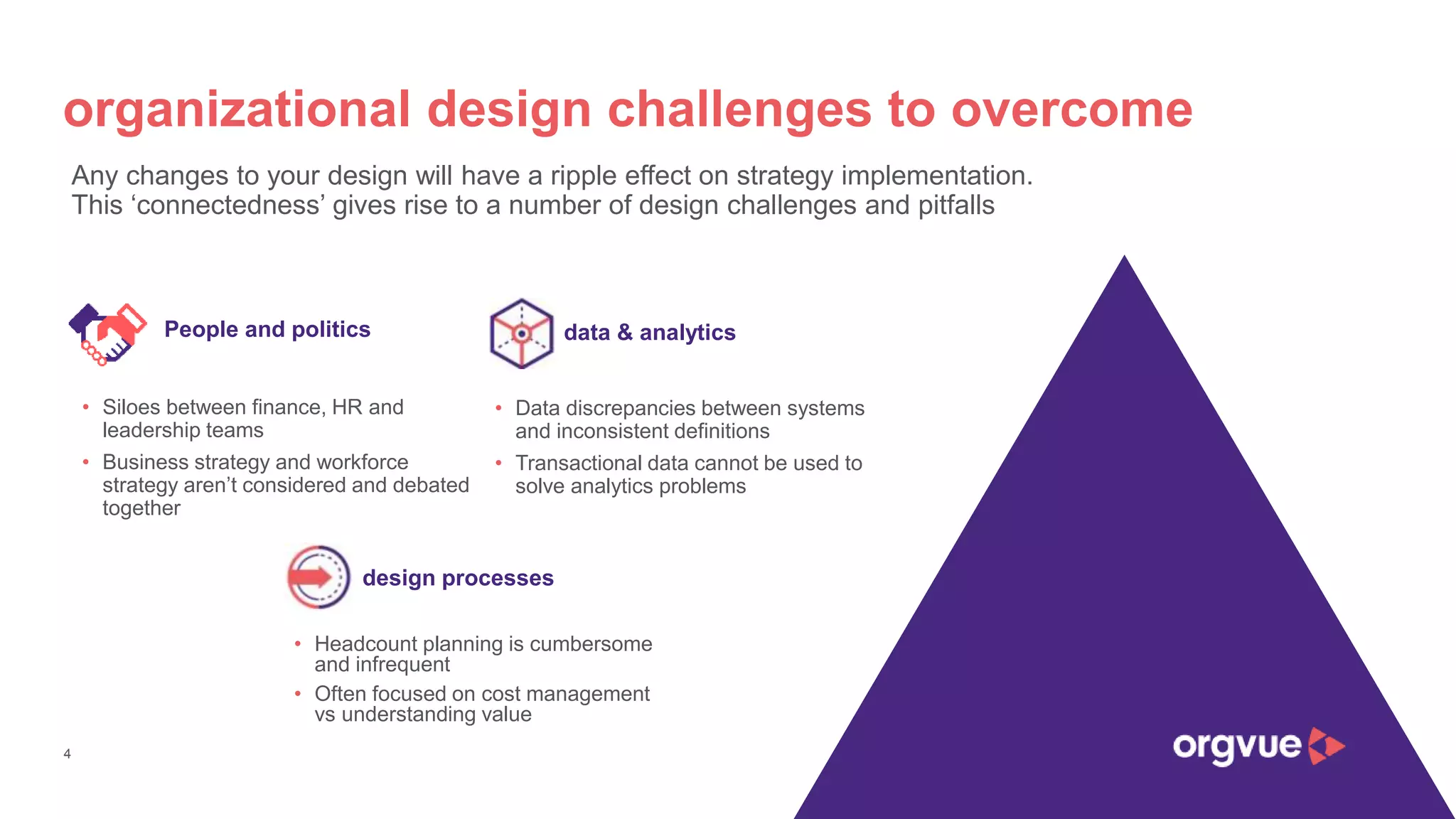
  • #5 Because it’s HARD ! There are many factors that make planning very difficult: Would you agree?
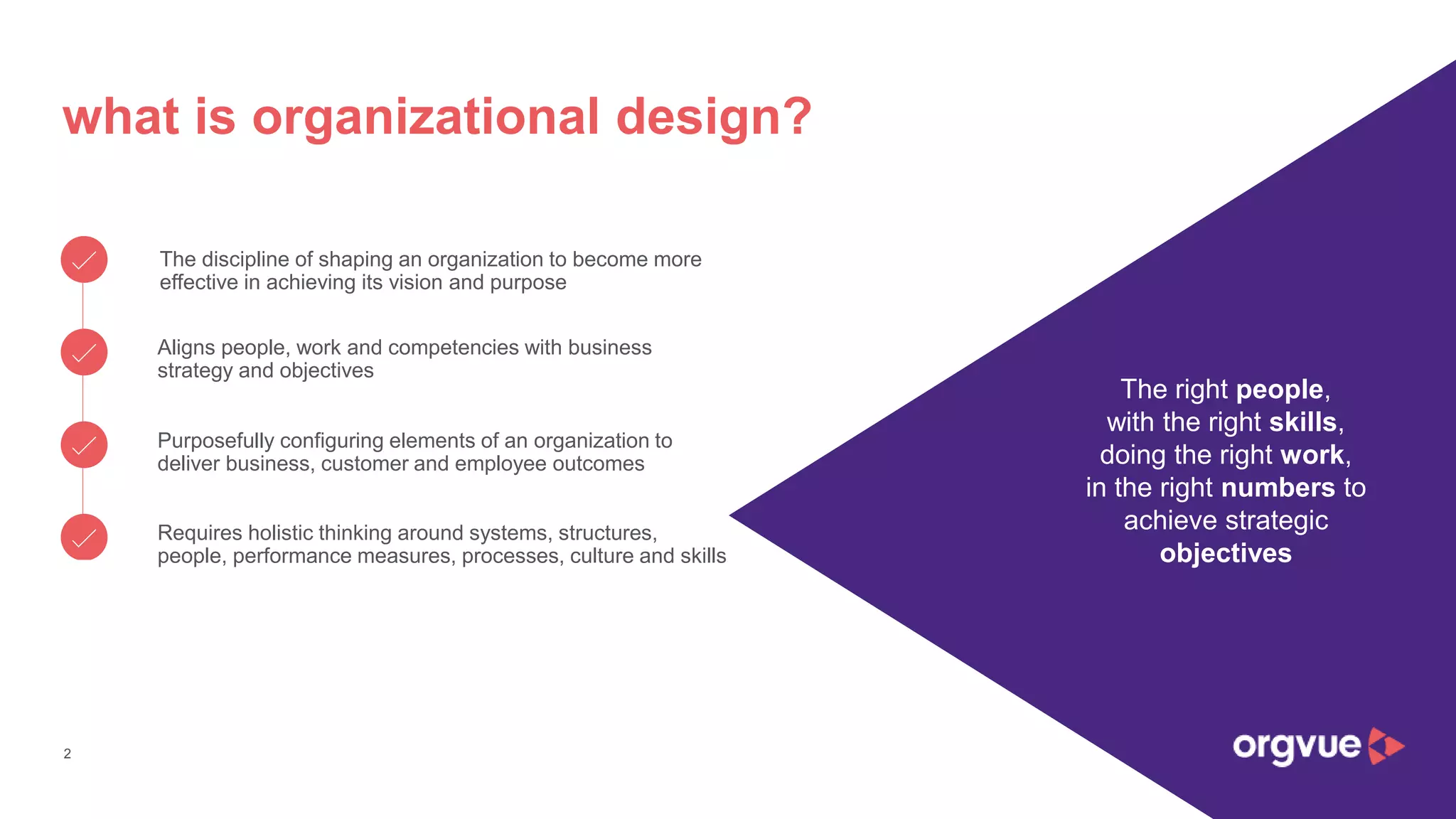
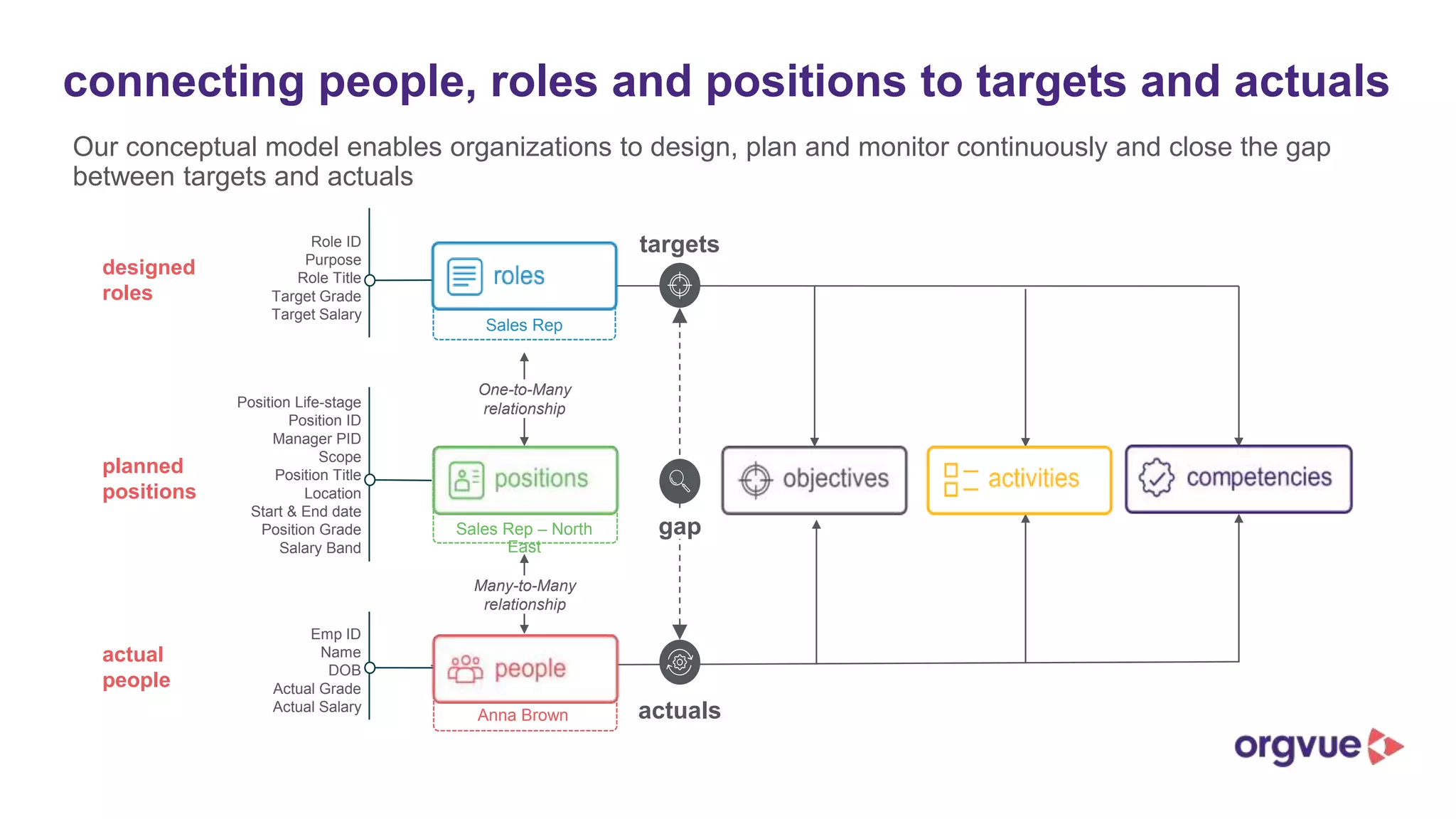
  • #6 But we know that in reality, target designs may not be reflected by reality. There’s often a gap between targets and The actual results achieved by people in positions performing roles. The actual activities consuming employees’ time; The actual skills, knowledge an behaviours possessed and demonstrated by employees; In Data-Driven Organization Design, gaps between targets and actuals are be visualized, Analyzed, planned and managed on an ongoing basis to maintain organization effectiveness and efficiency. Ensuring the right people, with the right skills, are doing the right work in the right numbers to achieve strategic objectives.
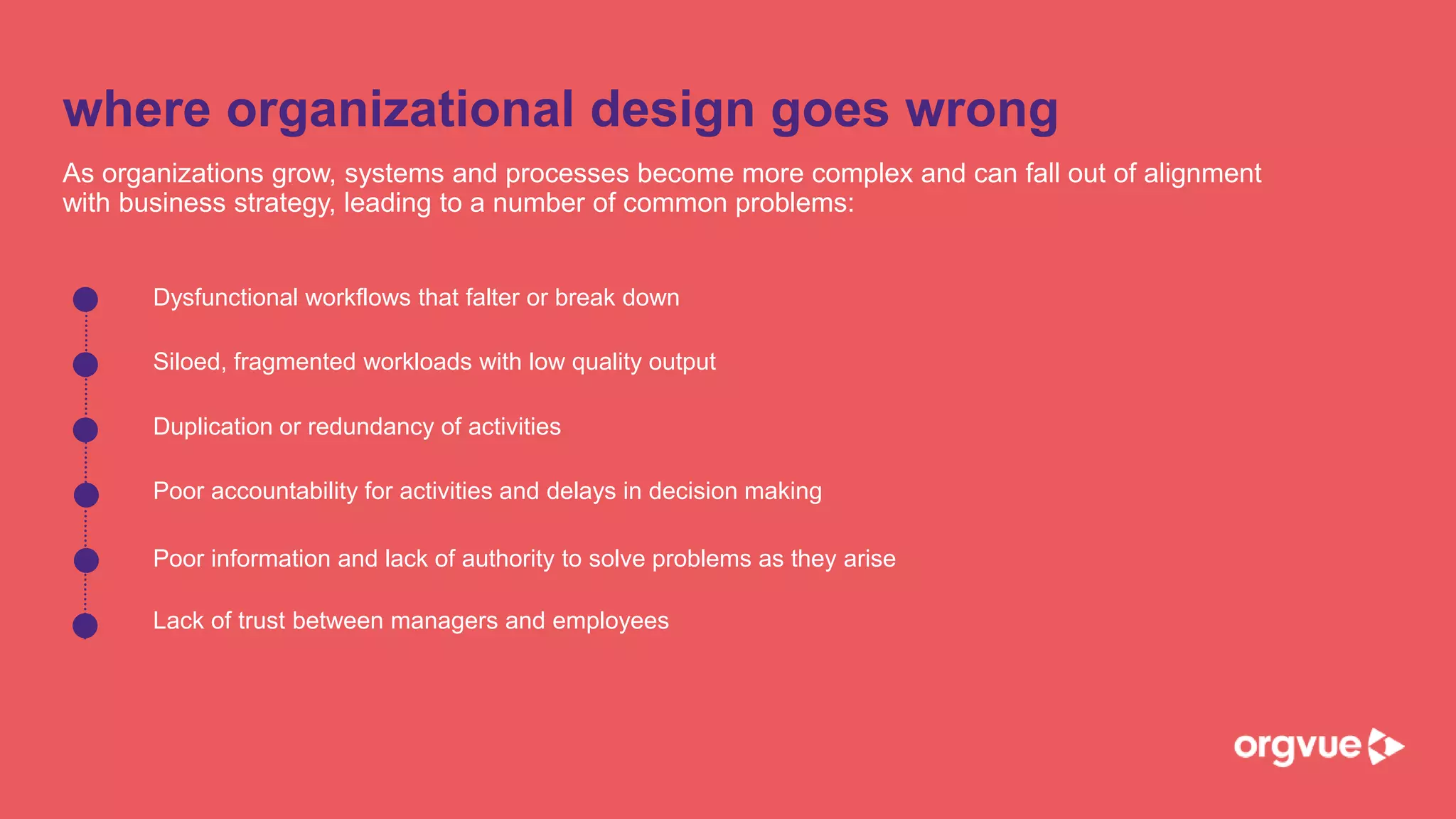
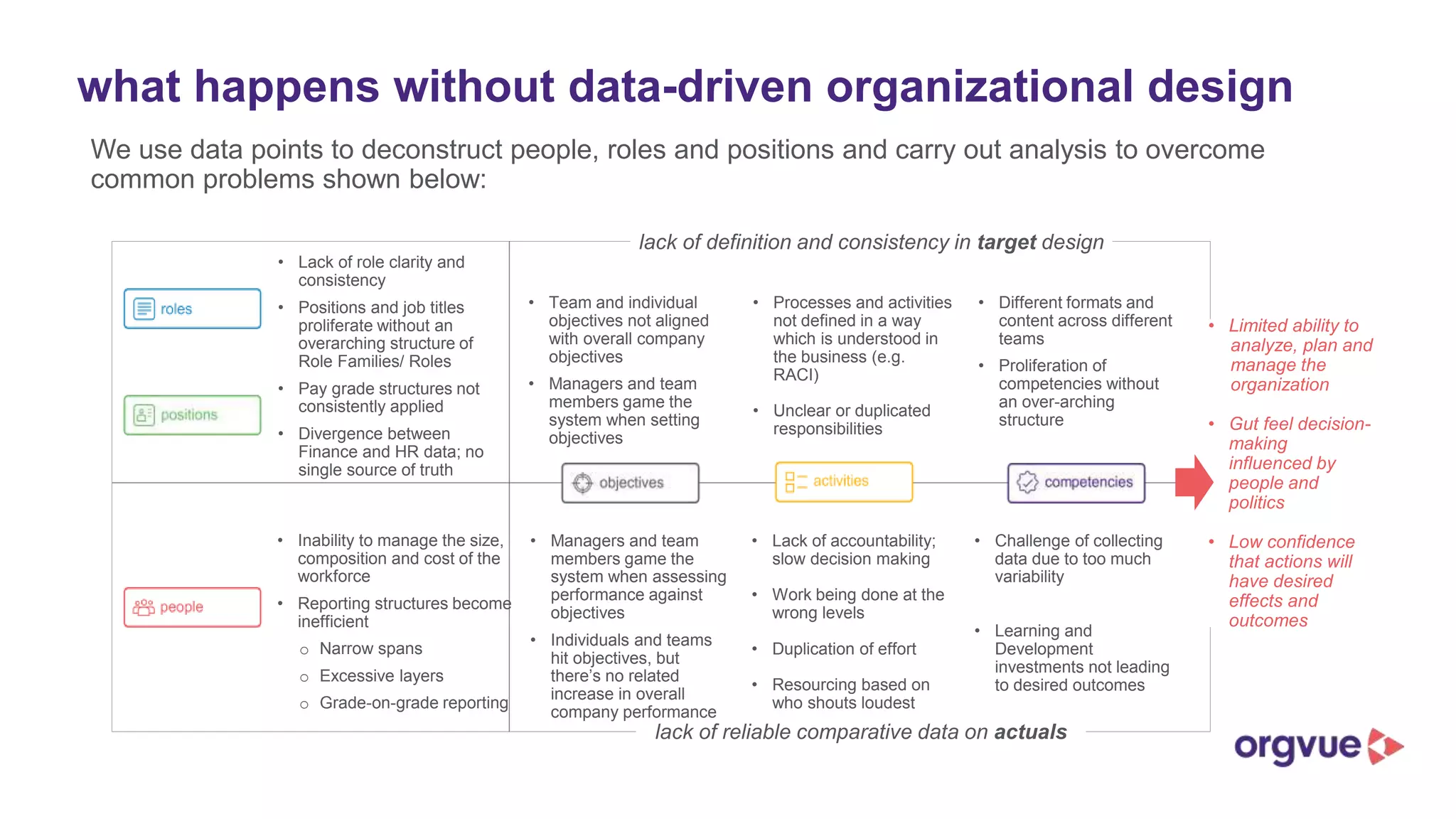
  • #7 Let’s imagine a world of organization design without a data-driven approach, this world may not be too different from yours! We won’t go through each of these; these are just a few illustrations, there are many others we could have included. The key point is that organizations evolve over time to lose fitness. Without designing and maintaining clearly defined roles, proliferation and variation results in huge complexity. The organization system becomes impossible to manage. Decisions are made on gut feel often heavily influenced by people, personalities and politics. Those with the unenviable task of managing organization effectiveness and efficiency have low confidence that the actions they are taking will have the desired outcomes. Data-Driven Organization Design brings transparency on the hidden truths in the organization enabling timely decisions to be taken with confidence.
  • #8 Despite the simplicity of this framework, the inherent complexity of organizations means that the right technology is needed is needed to enable Data-Driven Organization Design. It’s just not possible in static packages such as Excel or PowerPoint. Content is out of date before it’s complete. We need to link data across each component to be able to Analyze, plan and manage the organization as a whole. We’ll look at how data is linked to connect the organization system in the following section. But for now, just bear in mind that each component of the organization system is a dataset in OrgVue.
  • #9 Imagine a world where the business strategy and workforce strategy are truly aligned, where the organization flexes when the business is affected by disruption. A world where your workforce plan works in harmony with the finance plan and it goes down to the people, positions and roles detail - there are no discrepancies, no disputes on headcount or costs. But there is more dialogue on the value of employees who are truly at the heart of success for your business.
  • #10 Imagine a world where the business strategy and workforce strategy are truly aligned, where the organization flexes when the business is affected by disruption. A world where your workforce plan works in harmony with the finance plan and it goes down to the people, positions and roles detail - there are no discrepancies, no disputes on headcount or costs. But there is more dialogue on the value of employees who are truly at the heart of success for your business.
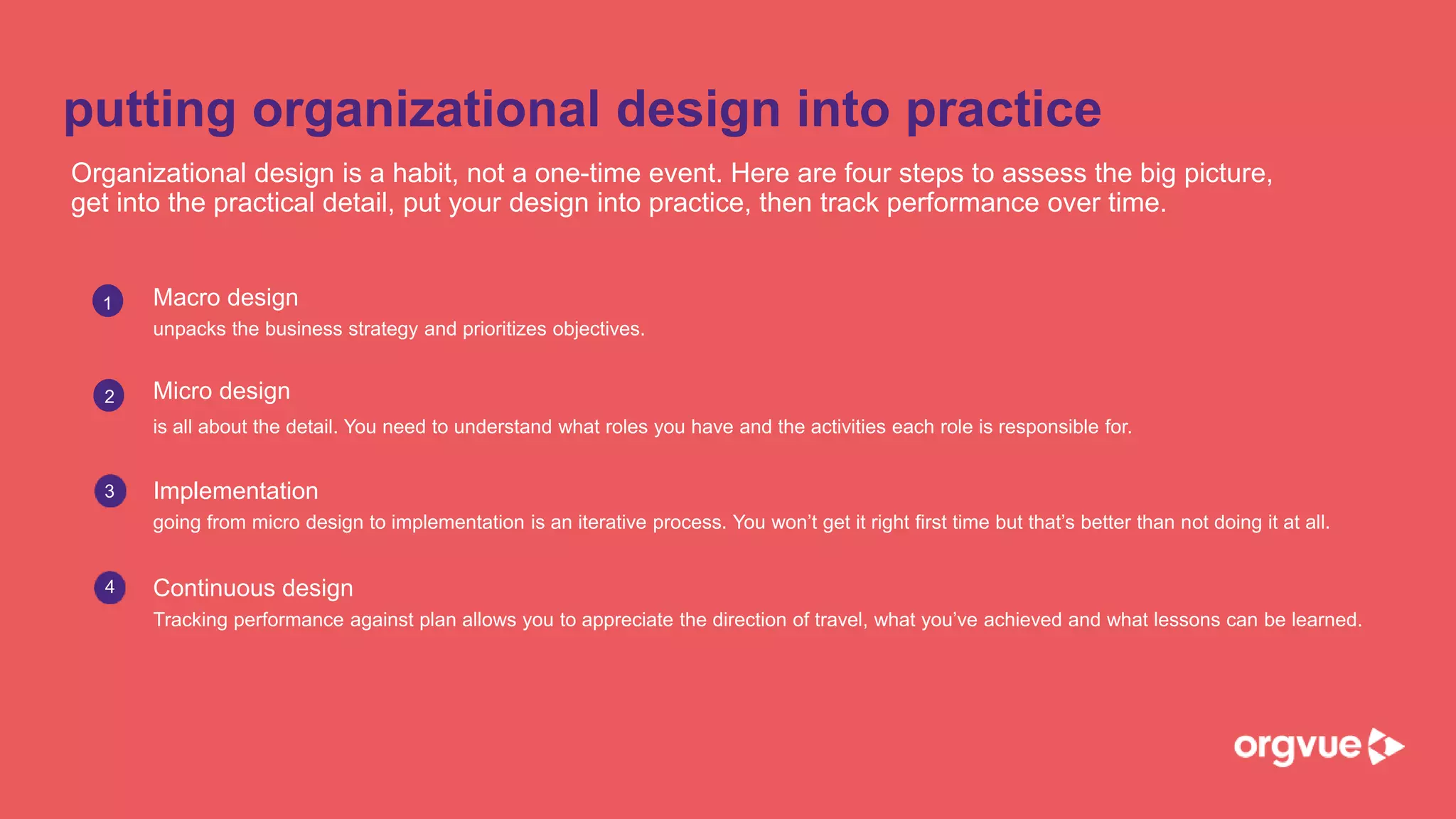
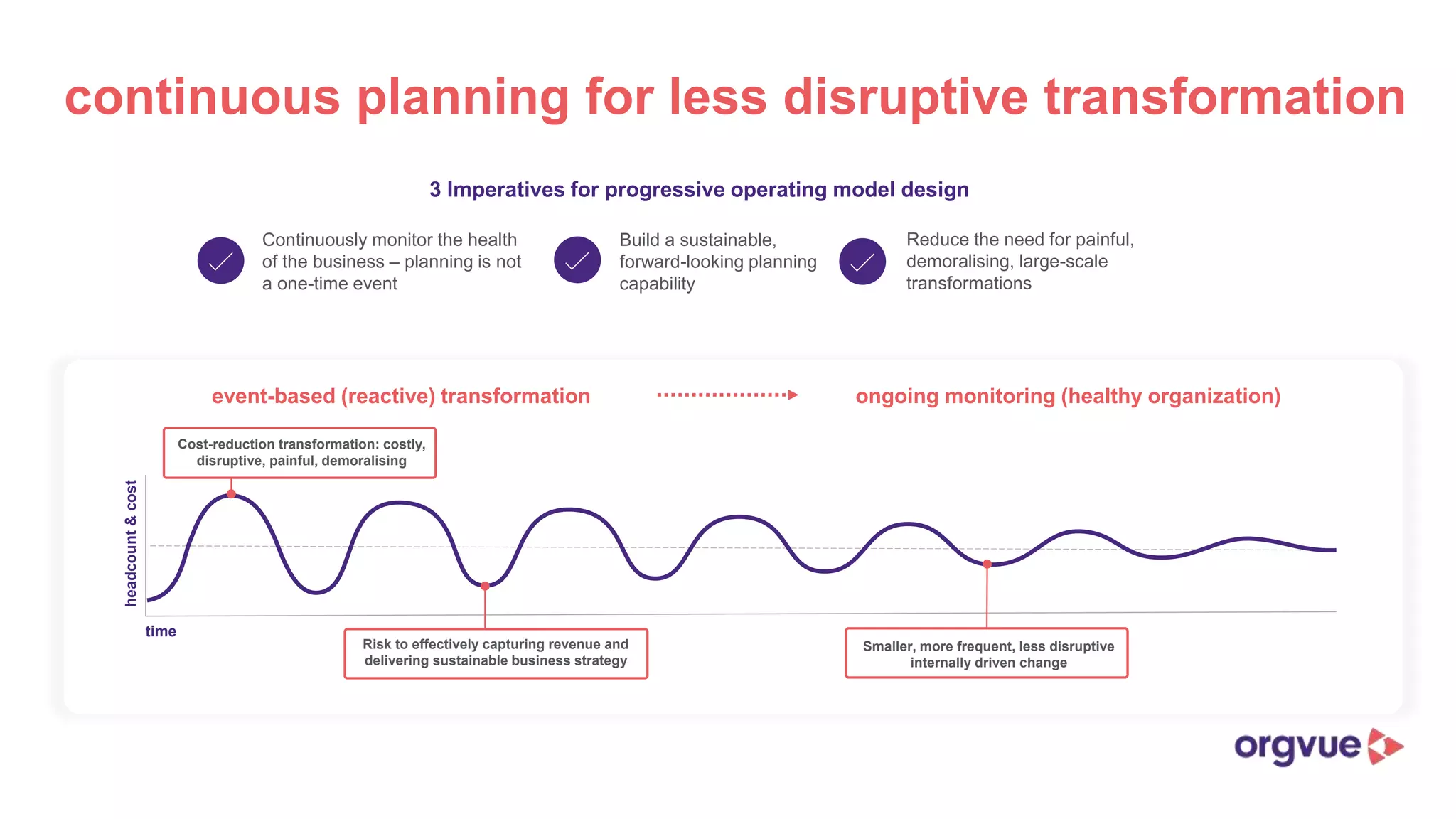
  • #11 . Moving from an event-based activity/need to building a muscle in-house to smooth out the waves of disruption. Disruption creates loss of productivity and therefore business results. Just like any effort to get healthy. Creating good habits, smaller, incremental changes lead to growth, sustainability and success.