The Cycle Of Erosion In Different Climates
Reprint 2020 Pierre Birot C Ian Jackson Keith M
Clayton download
https://ebookbell.com/product/the-cycle-of-erosion-in-different-
climates-reprint-2020-pierre-birot-c-ian-jackson-keith-m-
clayton-51821302
Explore and download more ebooks at ebookbell.com
Here are some recommended products that we believe you will be
interested in. You can click the link to download.
The Cycle Of Deviant Behavior Investigating Intergenerational
Parallelism Longitudinal Research In The Social And Behavioral
Sciences An Interdisciplinary Series 1st Edition Howard B Kaplan
https://ebookbell.com/product/the-cycle-of-deviant-behavior-
investigating-intergenerational-parallelism-longitudinal-research-in-
the-social-and-behavioral-sciences-an-interdisciplinary-series-1st-
edition-howard-b-kaplan-2017056
The Cycle Of The Gift Family Wealth And Wisdom 1st Edition James E
Hughes Jr
https://ebookbell.com/product/the-cycle-of-the-gift-family-wealth-and-
wisdom-1st-edition-james-e-hughes-jr-4341246
The Cycle Of Excellence Using Deliberate Practice To Improve
Supervision And Training 1st Goodyear
https://ebookbell.com/product/the-cycle-of-excellence-using-
deliberate-practice-to-improve-supervision-and-training-1st-
goodyear-5913638
The Cycle Of Cosmic Catastrophes Richard Firestone Allen West
https://ebookbell.com/product/the-cycle-of-cosmic-catastrophes-
richard-firestone-allen-west-6713306
The Cycle Of Juvenile Justice 2nd Edition Thomas J Bernard Megan C
Kurlychek
https://ebookbell.com/product/the-cycle-of-juvenile-justice-2nd-
edition-thomas-j-bernard-megan-c-kurlychek-1647980
The Cycle Of Leadership How Great Leaders Teach Their Companies To Win
1st Edition Noel M Tichy
https://ebookbell.com/product/the-cycle-of-leadership-how-great-
leaders-teach-their-companies-to-win-1st-edition-noel-m-tichy-1987802
The Cycle Of War And The Coronavirus Martin A Armstrong
https://ebookbell.com/product/the-cycle-of-war-and-the-coronavirus-
martin-a-armstrong-232152196
The Cycle Of Arawn The Complete Epic Fantasy Trilogy Edward W
Robertson
https://ebookbell.com/product/the-cycle-of-arawn-the-complete-epic-
fantasy-trilogy-edward-w-robertson-47868328
The Cycle Of Fire Janny Wurts
https://ebookbell.com/product/the-cycle-of-fire-janny-wurts-48665740
The cycle of erosion in different climates
Pierre Birot
The cycle of
erosion in
different climates
Translated by C. IAN JACKSON
and KEITH M. CLAYTON
UNIVERSITY OF CALIFORNIA PRESS
Berkeley and Los Angeles 1968
University of California Press
Berkeley and Los Angeles
First English Language Edition 1968
Published in Great Britain by B. T. Batsford Ltd
Originally published in Rio de Janeiro
under the title Le cycle d'érosion sous les différents climats
© Centro de Pesquisas de Geografia do Brasil,
Faculdade Nacional de Filosoiia, University of Brazil, 1
Library of Congress Catalog Card Number: 68-19704
Printed in Great Britain
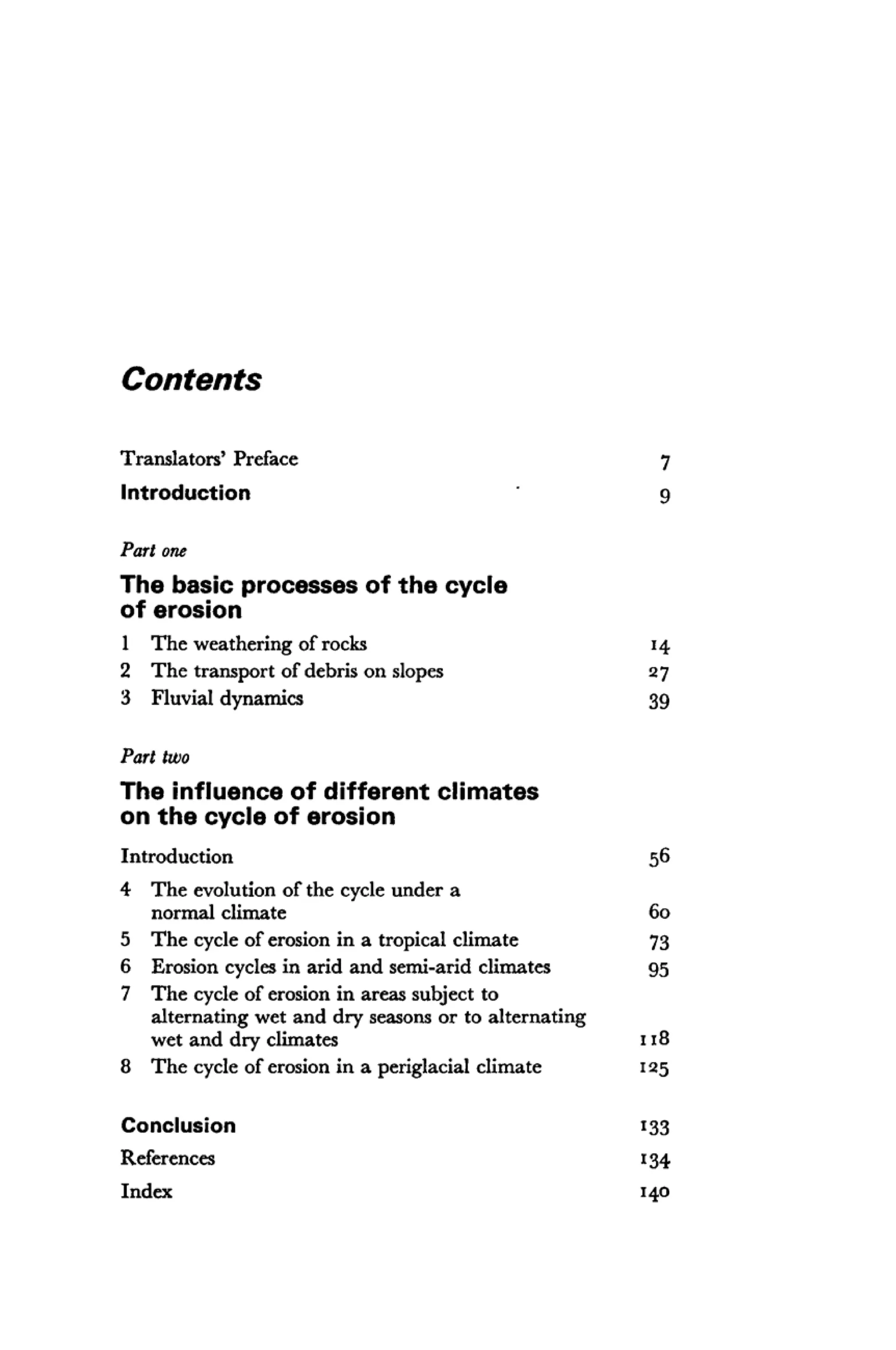
Contents
Translators' Preface 7
Introduction g
Part one
The basic processes of the cycle
of erosion
1 The weathering of rocks 14
2 The transport of debris on slopes 27
3 Fluvial dynamics 39
Part two
The influence of different climates
on the cycle of erosion
Introduction 56
4 The evolution of the cycle under a
normal climate 60
5 The cycle of erosion in a tropical climate 73
6 Erosion cycles in arid and semi-arid climates 95
7 The cycle of erosion in areas subject to
alternating wet and dry seasons or to alternating
wet and dry climates 118
8 The cycle of erosion in a periglacial climate 125
Conclusion 133
References 134
Index 140
Translators' Preface
This book owes its origin to a series of lectures given in Brazil by Pro-
fessor Birot after the Rio de Janeiro meeting of the International
Geographical Congress, 1956. A manuscript translation of the book
has been used in teaching for several years and has helped to remedy
the considerable shortage of work in English on the development of
landforms in the various climatic regions. This climato-morphology
has come to dominate continental European work, but despite the
earlier attempt by Peltier to formulate a general scheme of morpho-
genetic regions, the literature in English remains very limited. The
geomorphology that is taught in Britain is viewed as becoming in-
creasingly conservative by continental workers, although this must
in part stem from an inadequate appreciation of the current litera-
ture. Conversely, many geomorphologists in Britain regard the
current continental predilection for identifying relics of earlier cli-
matic régimes on the basis of landform alone, as of questionable
validity.
It seems to us that a particular attraction of Professor Birot's book
is that it represents the viewpoint of climato-morphology in a res-
trained and thoughtful manner, and seeks to relate it to the tradi-
tional (Davisian) outlook of the subject. By taking the best of what is
new, and the most tested and trusted of what is old, Professor Birot
has produced a geomorphology that will be found stimulating and
satisfying. He has thoroughly revised the original text for this
English translation, so that this is a fully up-to-date presentation of
the views of this most distinguished French geomorphologist. We are
delighted to thank him for all the work he has put into this new
version of his book. The diagrams have been redrawn by Mrs S. M.
Weston and Mrs Jeannemarie Stanton, and one new diagram has
been added. The bibliography has been brought up-to-date by
Professor Birot: it will be found a useful guide to the continental
8 T R A N S L A T O R S ' P R E F A C E
literature, and an interesting commentary on the relative contribution
of English-language sources to the several chapters of the book. We
have conceived the translation as the communication of Professor
Birot's ideas to an English audience, so that the English text follows
the original French quite closely. However, terms such as glacis which
have no direct or simple connotation in English have not been rigo-
rously translated by the same term throughout the book: instead
every effort has been made to convey to an English reader the sense
of the original in a terminology that he himself might use.
Despite repeated protestations to the contrary, international com-
munication in geomorphology is at a low level, and all too few
geomorphologists overcome the barriers of language, terminology
and conceptual outlook that divide us. We hope that the translation
of this book may be a step in the right direction.
C.I.J.
K.M.C.
Introduction
The concept of a cycle of erosion expresses the evolution of slopes
towards a level surface. Our purpose is to study this sequence of
events in different climates.
At the outset it must be recognised that the term ' cycle' has itself
been criticised. The word suggests an evolution that returns to its
point of origin. But the Davisian 'cycle' begins with youth, passes
through maturity and arrives at old age. It is hence an evolution that
takes place in one direction only. Such criticism is certainly justified
when one is dealing with the first cycle of erosion to affect a region,
for example in the case of mountains which are geologically very
young. However, the idea of a cycle is rigorously exact in all those
cases where the area concerned has previously passed through seni-
lity, or even through the stage of'maturity'. This is the case for the
greater part of the land area of the world. All the ancient shields, all
the folded mountain ranges of Mesozoic age (which are much more
extensive than are Tertiary ranges), and even Tertiary ranges, have
been planed at least once in their existence. We can suggest as an
approximate, but fairly reliable, rule that any chain which was folded
before the Miocene has already been base-levelled. One can therefore
say that, over the greater part of the earth's surface, the landscape has
at some time passed through old age; and that following this, re-
newed uplift has occurred, initiating new cycles.
The other fundamental objection currently made against the
Davisian concept is the idea that in many cases orogenic movements
and erosion have been contemporaneous and of roughly equal order
of magnitude, so that the structures have been eroded in statu
nascendi. But this is only important in areas of pronounced structural
instability. Usually the earth movements come to an end, and then
the cycle of erosion proceeds without having passed through the stage
of youth in the sense in which we shall later define it.
10 INTRODUCTION
In a first attempt to study the subject we shall begin in the middle
of the evolutionary process (at the stage we may provisionally call
maturity), by examining the simplest landscape which is possible.
We are concerned, then, with a dendritic drainage pattern with inter-
fluves which decline towards the streams.
The relief is composed of slopes of varying inclination. These slopes
are generally convex in their upper part and concave in their lower
part. They are covered by a layer of detritus, the thickness of which
is approximately constant from top to bottom, and which is protected
by a continuous plant cover. This may be herbaceous; more usually
it is a tree cover with an undergrowth of herbaceous species. This is
what one may call a 'normal' bioclimatic condition, and it implies a
fairly humid climate. Obviously reservations may be made about
this terminology; nevertheless it is the usual one and remains useful.
We shall use the word 'soil' to describe this detrital cover; this is a
useful convention and shorter than the alternative 'cover of detritus'.
It is true that pedologists apply the term soil to the layer inhabited by
organisms; thus in humid tropical regions it is relatively thin. This
definition causes pedologists many problems because in fact they do
not know at what level in the soil the action of life stops: micro-
organisms may appear well below the humus level. It seems prefer-
able to treat the decomposed layer as a whole from the completely
fresh rock up to the surface. This is in the interests of pedology as
much as of geomorphology. The word' soil', then, will be used for the
detrital cover in the broad sense of the word.
The soil thickness also varies with the stage reached by the cycle of
erosion. In the stage of maturity, which we are considering at present,
its thickness is extremely variable, from a few decimetres in tem-
perate regions, to several decametres in tropical regions. The further
the cycle has progressed, the thicker the soil will be. The soil thickness
expresses a balance sheet involving the rate of decomposition of the
rock (the Aufbereitung of Walther Penck) and the speed of removal of
debris on the slopes; these are the two processes which model the
slope and which will be the subject of the following chapters. The
presence of a soil immediately shows that this balance is positive and
that its absolute value increases as the cycle of erosion progresses.
Slopes will decline, and as the effectiveness of the agents of transport
depends on the angle of slope, the thickness of the soil will increase as
the rate of decomposition exceeds the speed of transport.
It must be added that as the slope declines, there will be a corres-
ponding decrease in the speed of movement of water across it. The
INTRODUCTION II
presence of water is an essential and indispensable factor in the de-
composition of rocks; temperature changes alone are insufficient.
Despite opinions to the contrary, water is the limiting factor in de-
composition, even in humid tropical climates. An equilibrium is thus
established in which climate affects both its elements, the rate of
weathering and the speed of transport.
These agents of transportation move the debris as far as the river
bed where, in the conditions of maturity, 'linear' erosion is con-
cerned essentially with its removal. There is also erosion from the bed
itself of previously weathered material, the thickness of which does
not exceed that of the soil on the slopes. The profile of the bed is thus
a provisional profile of equilibrium as described by H. Baulig. Its
slope depends only upon the 'necessity' to remove the load provided
by the slopes.
This concept of equilibrium allows for small oscillations which may
be annual or more frequent, and which lead to temporary displace-
ment on either side of the mean condition. If a catastrophic event
occurs, for example the destruction of the forest cover by fire (which
could well be a natural occurrence started by lightning), or a sudden
landslip, there may be a very rapid increase in the alluvial load
carried by the river. At first the discharge and slope of the river are
unable to remove this increased load and temporary, localised de-
position will occur. In subsequent years equilibrium will be re-estab-
lished. By contrast, if we suppose an increase in discharge as the
result of a particularly wet year without affecting the forest and so
avoiding any appreciable increase in the amount of material supplied
by the slopes, the ability of the stream to transport material will be
increased, and the stream may incise itself a few decimetres, or even
as much as a metre. Again this is a temporary oscillation, and the
experience of European engineers in the control of rivers is that the
bed of the stream does not alter. When the reasons for this stability
of the river bed are investigated they are found to be twofold. In the
first place it is the result of climatic oscillation on either side of a
mean value. There is in addition a more fundamental cause for this
stability, a type of automatic regulation of the regime. As in some
other physical phenomena, any disturbance sets in train a series of
events that tend to cancel its effects. Thus the compression of a gas
causes heating which tends automatically to lead to expansion. We
may suggest as an example a landslide, causing a section of forested
slope to slip down and block the course of a river, so forming a lake on
the upstream side. This initiates a series of changes that work to
12 I N T R O D U C T I O N
re-establish the profile of equilibrium: (i) alluvial material brought
into the lake by the stream fills it, restoring surface flow; (2) head-
ward erosion at the barrier takes place automatically; the slope here
is steeper than before the slide and so the river will incise itself.
But a profile of equilibrium is only provisional. As the angle of
slope decreases (an automatic result of any cessation of downcutting
by the river), the load carried will decrease both in amount and in
size. The stream will find itself to be underloaded; it will then cut
down into previously decomposed rock, until the reduced slope (since
the lower point at the river mouth is fixed) permits the stream to
transport exacdy the new load—a load increased to some extent as a
result of the incision itself. Thus equilibrium is established again.
Naturally this alluvial material must not be so thick that it exceeds
the height difference between the river banks and the floor of the bed;
otherwise deposition will occur. Outcropping of fresh rock, whether
on the slopes or on the river bed, is a characteristic of youthfulness
under these particular bioclimatic conditions.
To understand how the stage of maturity is reached, and how
continuing evolution leads to senility, it is necessary to examine
systematically the three fundamental processes, which are: (1) the
decomposition of rock into detritus; (2) the transport of this detritus
on slopes; and (3) the transport of this detritus in the river bed and the
erosion of the river bed itself. So as to select homogeneous initial
conditions, we shall mainly be concerned with a comparison of relief
features developed on crystalline rocks.
1 The weathering of rocks
It is possible to recognise two methods that can be used in the study
of weathering processes; they are in many ways complementary to
each other. The first method is the static or pedological approach.
The profile from fresh rock to the soil surface shows a series of tran-
sitions, the size of the material of successive horizons becoming in-
creasingly smaller towards the surface. Each horizon may be studied
systematically. Granulometric analysis will give the distribution of
the various fractions as a function ofweight and this may be plotted on
a graph. Petrographic analysis can be used to determine the propor-
tion of fragments of fresh rock or minerals compared with those finer
mineral fragments which have suffered chemical decomposition. Of
these altered minerals, the gels and clays are particularly important.
The gels are flocculated colloidal solutions, in which the constituent
micelles are attracted towards each other although not assuming a
crystalline state. The clays may also be colloidal in character, but
show a microcrystalline structure. Comparison of successive horizons
makes it possible to reconstruct the sequence of events in the weather-
ing of the rock. This approach cannot give precise conclusions about
the mechanisms involved; for example there are several explanations
that might be used to account for the alteration of fresh granite,
through kaolin, to laterite. Again, the normal sequence of horizons is
likely to be disturbed in a soil developed on a slope. On the other
hand, horizontal surfaces pose the difficulty that their soils are often
polygenetic; in other words they have developed under a sequence of
different climates.
There is consequently a need to employ the second method, the
use of experiments. This consists of subjecting samples of fresh rock
to different treatments in the laboratory: these may include altera-
tions of temperature or of moisture, the action of various acid or
alkaline waters, or of those carrying humus extracts. This experimen-
T H E W E A T H E R I N G OF R O C K S 15
tal method has the advantage that it establishes the mechanism of
rock decomposition. Nevertheless, there is the difficulty that even if
the rock can be decomposed by subjecting it to conditions similar to
those of the particular climate with which we are concerned, it cannot
be certain that these processes are exactly those found under natural
conditions. If, for example, granite is subjected to alternations of oven
drying at a temperature of 70°C. and chilling in water at 20°C., this
will cause some decomposition of the rock and the creation of
a thin zone of alteration (arène). The climatic conditions which
have been achieved in this experiment are those found in tropical
regions with a long dry season; but we cannot be sure that the pro-
cesses are exacdy similar to those found under natural conditions
where, for example, organic activity might be of importance. It must
be remembered that there are problems of convergence, that is to say,
similar effects may be the result of very different causes. It is impor-
tant to use the static method, the approach of classical pedology,
alongside that of experimental dynamics.
The factors of weathering
Before weathering processes can be classified, it is necessary to
establish whether disintegration can occur without the presence
of water. This is commonly accepted; disintegration as a result of
temperature changes is often regarded as important even under
completely dry conditions. These temperature changes are con-
sidered essential in granular disintegration, in rock shattering and in
exfoliation.
Granular disintegration has often been attributed to the fact that the
various minerals of a rock differ in conductivity, in their coefficients
of expansion and in their ability to absorb heat; whether the rock
forms by cooling (as in the case of granite) or by sedimentary cemen-
tation (as in sandstone). With these differences in their physical be-
haviour, the diurnal rise in temperature and resulting expansion of
the minerals vary, and this is thought to lead to the loosening of the
grains. However, both observation and experiments yield results
which are unfavourable to this concept. In particular, examination of
ancient monuments has shown that disintegration is at a maximum
on the shaded walls of the monument (i.e. those that retain the most
moisture) and not on the sides exposed to the sun. Laboratory
i6 T H E BASIC P R O C E S S E S
experiments conducted by Griggs have been equally impressive.
Granite fragments were exposed to 90,000 alternations of temperature
of over ioo°G. by rotating them in an apparatus that exposed them
first to heat from an electric element, and then to a cooling current of
fresh air. These pebbles remained completely intact and comparison
of photographs taken before and after the experiment showed no
trace of crystal fracture, or even any sign of cracks. The author's ex-
periments (Birot, 1951, 1954) have led to the same conclusion; the
alteration of granite implies the presence of water. It is true that
temperature variations play a considerable role, but only because
they increase the permeability of the rock, so aiding the penetration
of water. This permeability can be meas-
ured by the speed of penetration of a
colouring matter (such as methylene
blue); the penetration has been tripled for
rocks which have undergone a daily vari-
ation in temperature of over 7o°C. over a
period of four months. The conclusion is
that it is impossible to continue to use the
theory of granular disintegration in its
original form (as used, for example, by B.
Popoff to explain the existence of tafoni).
The problem arises in a still more com-
plex form when the theory of thermal
exfoliation is applied to homogeneous
rocks. This invokes the contrast between
the superficial rock slab which undergoes
diurnal or annual variations in tempera-
ture and so expands and contracts, and the
deeper part of the rock which shows prac-
tically no temperature variation. This is
— c . - used to explain the development of a
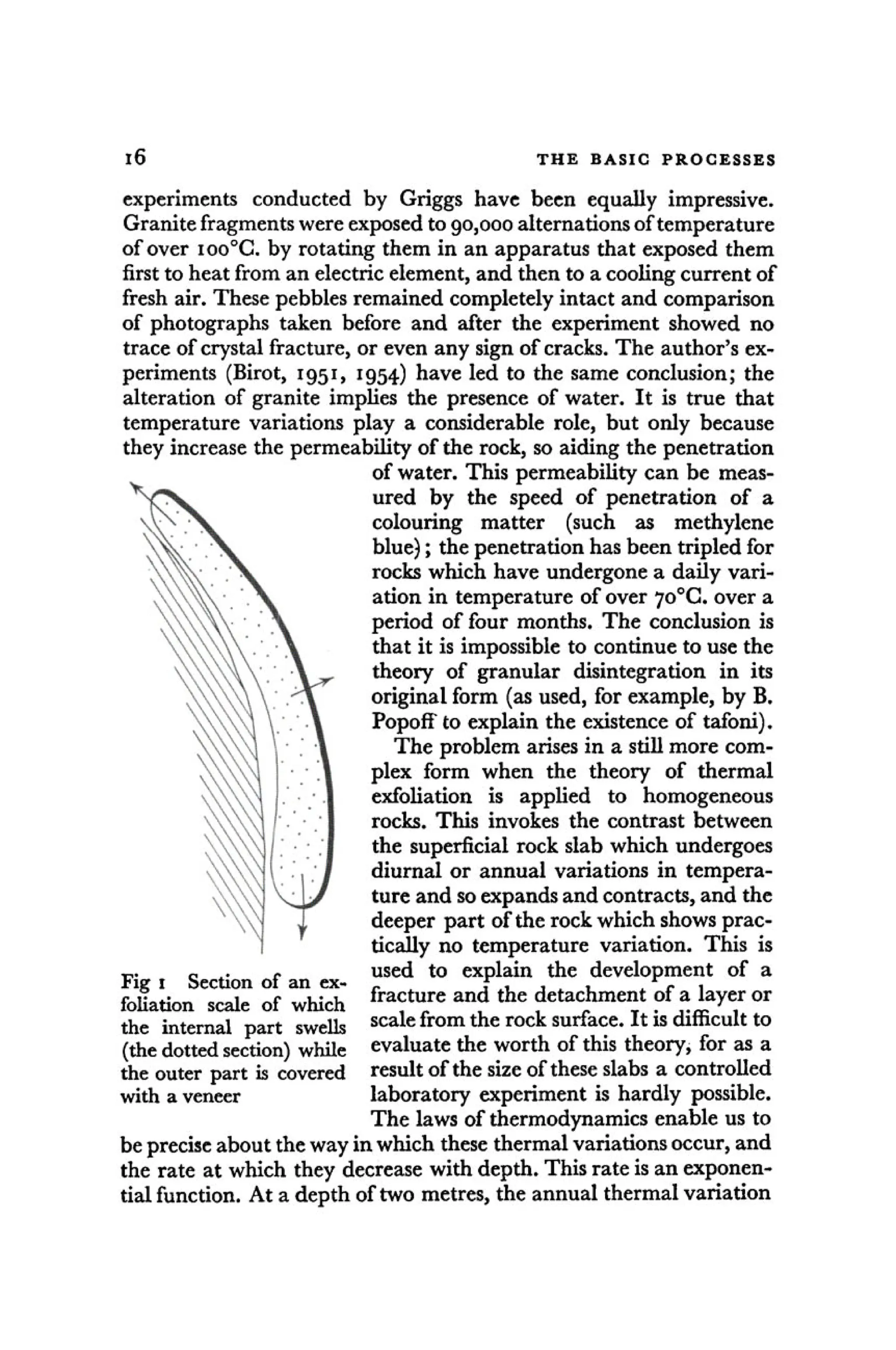
Fig 1 Section of an ex- _ ^ f . , , , r
c ,
foliation scale of which f r a ft u /e a n ? t h e detachment of a layer or
the internal part swells s c a l e f r o m t h e r o c k surface. It is difficult to
(the dotted section) while evaluate the worth of this theory, for as a
the outer part is covered result of the size of these slabs a controlled
with a veneer laboratory experiment is hardly possible.
The laws of thermodynamics enable us to
be precise about the way in which these thermal variations occur, and
the rate at which they decrease with depth. This rate is an exponen-
tial function. At a depth of two metres, the annual thermal variation
Random documents with unrelated
content Scribd suggests to you:
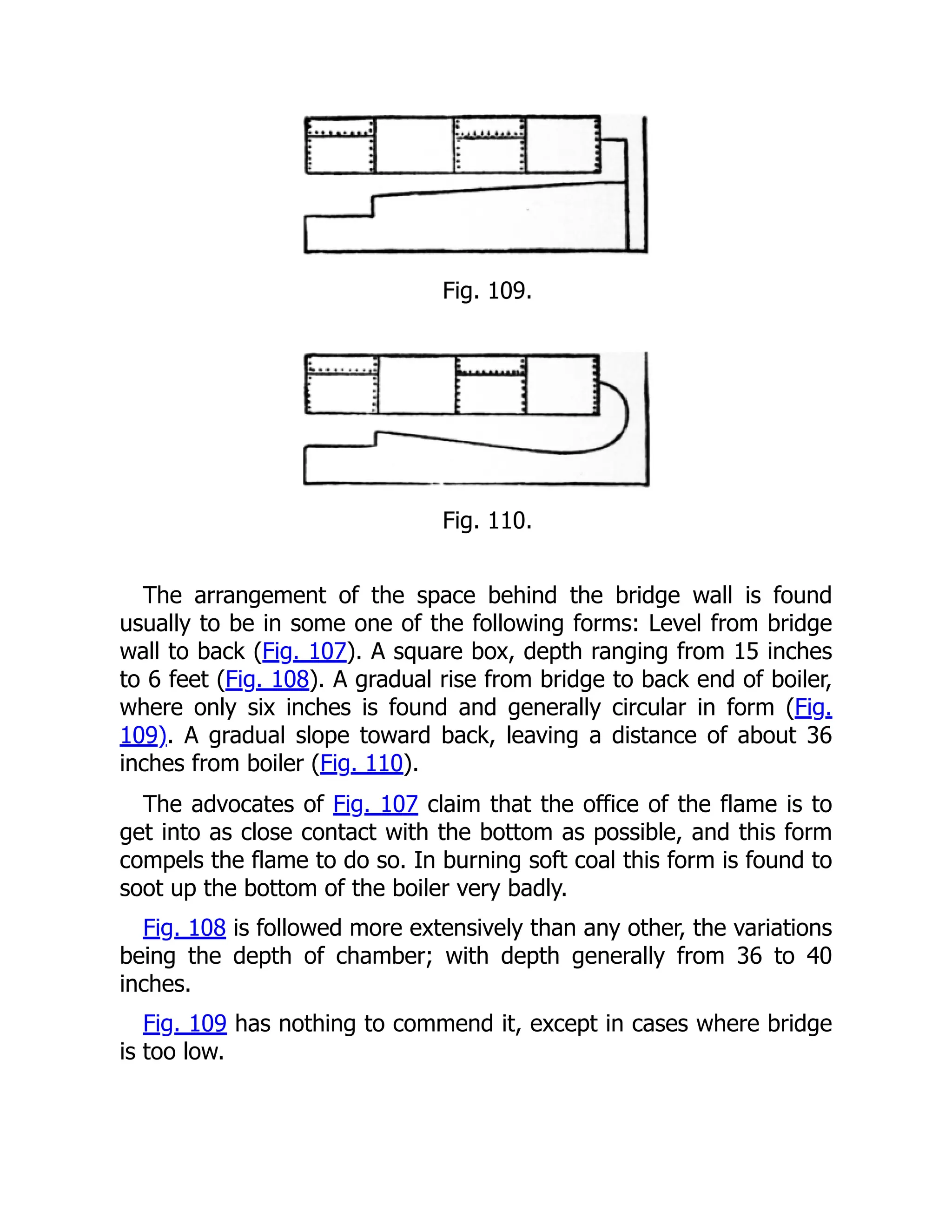
Fig. 109.
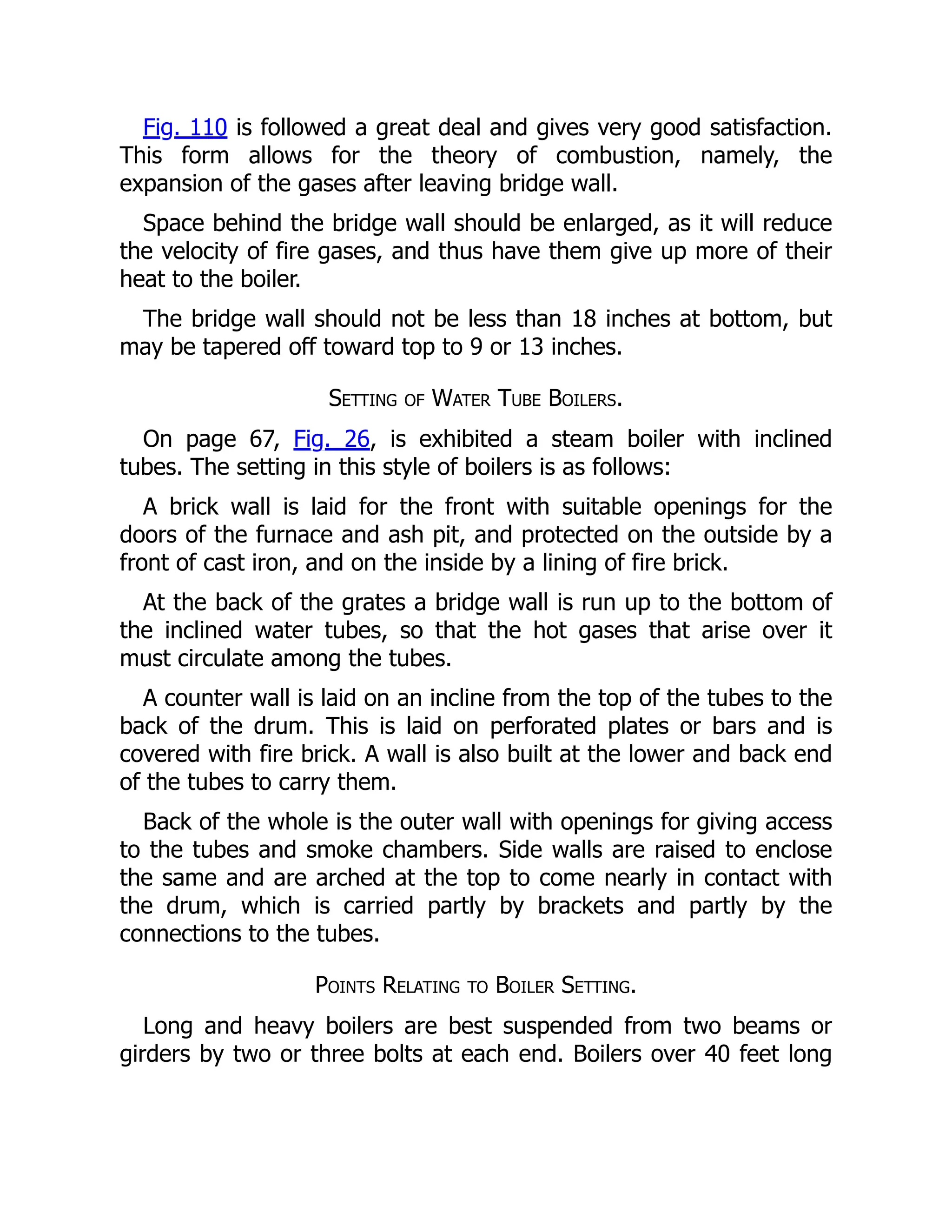
Fig. 110.
The arrangement of the space behind the bridge wall is found
usually to be in some one of the following forms: Level from bridge
wall to back (Fig. 107). A square box, depth ranging from 15 inches
to 6 feet (Fig. 108). A gradual rise from bridge to back end of boiler,
where only six inches is found and generally circular in form (Fig.
109). A gradual slope toward back, leaving a distance of about 36
inches from boiler (Fig. 110).
The advocates of Fig. 107 claim that the office of the flame is to
get into as close contact with the bottom as possible, and this form
compels the flame to do so. In burning soft coal this form is found to
soot up the bottom of the boiler very badly.
Fig. 108 is followed more extensively than any other, the variations
being the depth of chamber; with depth generally from 36 to 40
inches.
Fig. 109 has nothing to commend it, except in cases where bridge
is too low.
Fig. 110 is followed a great deal and gives very good satisfaction.
This form allows for the theory of combustion, namely, the
expansion of the gases after leaving bridge wall.
Space behind the bridge wall should be enlarged, as it will reduce
the velocity of fire gases, and thus have them give up more of their
heat to the boiler.
The bridge wall should not be less than 18 inches at bottom, but
may be tapered off toward top to 9 or 13 inches.
Setting of Water Tube Boilers.
On page 67, Fig. 26, is exhibited a steam boiler with inclined
tubes. The setting in this style of boilers is as follows:
A brick wall is laid for the front with suitable openings for the
doors of the furnace and ash pit, and protected on the outside by a
front of cast iron, and on the inside by a lining of fire brick.
At the back of the grates a bridge wall is run up to the bottom of
the inclined water tubes, so that the hot gases that arise over it
must circulate among the tubes.
A counter wall is laid on an incline from the top of the tubes to the
back of the drum. This is laid on perforated plates or bars and is
covered with fire brick. A wall is also built at the lower and back end
of the tubes to carry them.
Back of the whole is the outer wall with openings for giving access
to the tubes and smoke chambers. Side walls are raised to enclose
the same and are arched at the top to come nearly in contact with
the drum, which is carried partly by brackets and partly by the
connections to the tubes.
Points Relating to Boiler Setting.
Long and heavy boilers are best suspended from two beams or
girders by two or three bolts at each end. Boilers over 40 feet long
should have three or even four sets of hangers, as the case may
require.
Side brackets resting on masonry may be used for short boilers. If
used on long boilers, side plates or expansion rollers should be used
at one end of boiler. There ought to be not more than two brackets
on one side, so divided that the distance between them is about
three-fifths of the total length of the boiler, or the distance from
ends of boiler to center of bracket is equal to one-fifth the length of
boiler.
The side walls in boiler-setting should not be less than twenty
inches with a two inch air space; the rear wall may vary from 12 to
16 inches according to the size of the boiler; the front wall 9 inches
and the bridge wall may be from 18 to 24 and perfectly straight
across the rear of the furnace. If the boilers are supported by side
walls, the outside walls should be not less than 13 inches thick and
have pilasters where the boiler is resting.
Flues touching the boiler above the water space should be
emphatically condemned.
Unless the boiler walls are very heavy, they should be stayed by
cast or wrought iron bunch stays, held together by rods at tops and
bottoms.
It is dangerous to have large spaces in which gases may collect
for sudden ignition, producing the so-called “back draft.”
Connections between the rear end of the boiler and brickwork is
best made with cast-iron plates or fire-brick, suspended, when
boilers are suspended, as the expansion and contraction will destroy
an arch in a short time. If resting on mud-drum stand, this
connection can be arched, as in this case the rear end of boiler will
remain stationary.
If the draughts from the different boilers come in the same
direction, or nearly so, no special provision is necessary, but if the
draught enters from directly opposite directions a centre wall should
be provided.
An advantage claimed for water in the ash pit is: by the dropping
of hot ashes and cinders from the grate into the water, steam is
generated, which, in passing through the hot coal lying on the grate,
is there divided into oxygen and hydrogen, thus helping the
combustion.
A dry brick will absorb a pound of water, and it is the water in the
mortar that causes it to set, and harden. To prevent this loss of the
water of crystalization, and give it time to harden and adhere to the
brick, the brick must be well saturated with water, before they are
laid.
Whenever steam is allowed to come in contact with mortar or
cement an injurious effect is produced. The action of the steam is
much more rapid than that of air and water, or water alone, when in
abundance, as the effect of the steam in every case is to soften the
mortar and penetrate to a greater depth than water could possibly
do.
The distance between the rear head of the boiler and brickwork
should not be less than 12 inches.
In setting steam boilers, allowance must be made for the
expansion and contraction of the structure and this is usually done
by placing rollers under the rear lug or side bearing of the boiler.
Care should be exercised that the boiler rests are always in good
condition so that they may move freely and not place the boiler in
any danger of sticking and buckling.
Kindling a Furnace Fire.
In kindling a coal fire in a furnace the phosphorus of a match
inflames at so low a temperature (150 degrees Fahr.) that mere
friction ignites it, and in burning (combining with oxygen of the air)
it gives out heat enough to raise the sulphur of the match to the
temperature of ignition (500 degrees Fahr.), which, combining in its
turn with the oxygen of the atmosphere, gives out sufficient heat to
raise the temperature of the wood to the point of ignition (800
degrees Fahr.), and at this temperature the wood combines with
oxygen supplied by the air, giving out a temperature sufficient to
raise the coal to the point of ignition (1000 degrees Fahr.), and the
coal then combines with the free oxygen of the air, the ensuing
temperature in the furnace varying, according to circumstances,
from 3000 degrees to 4000 degrees Fahr. Thus we see that the
ignition of the coal is the last of a series of progressive steps, each
increasing in temperature.
And in each step it will be noted that a combination of oxygen is
the essential connecting link and that the oxygen is supplied in each
instance at the same average temperature—this fact contains a
“point” relating to supplying furnaces with so called “hot air.”
Sawdust Furnace.
Referring also to page 33 for information relating to the burning of
sawdust and shavings S. S. Ingham, in the Stationary Engineer, says
upon this important matter:
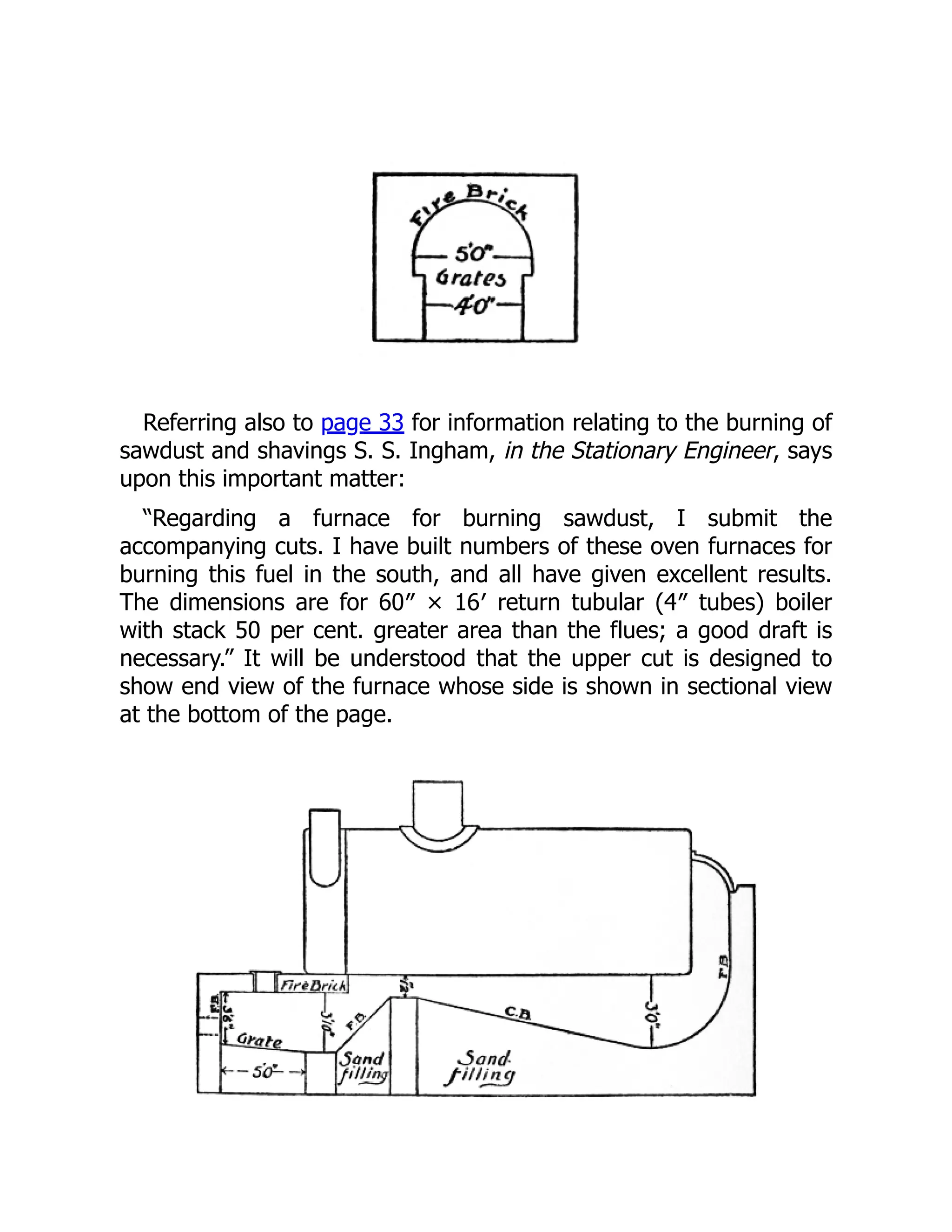
“Regarding a furnace for burning sawdust, I submit the
accompanying cuts. I have built numbers of these oven furnaces for
burning this fuel in the south, and all have given excellent results.
The dimensions are for 60″ × 16′ return tubular (4″ tubes) boiler
with stack 50 per cent. greater area than the flues; a good draft is
necessary.” It will be understood that the upper cut is designed to
show end view of the furnace whose side is shown in sectional view
at the bottom of the page.
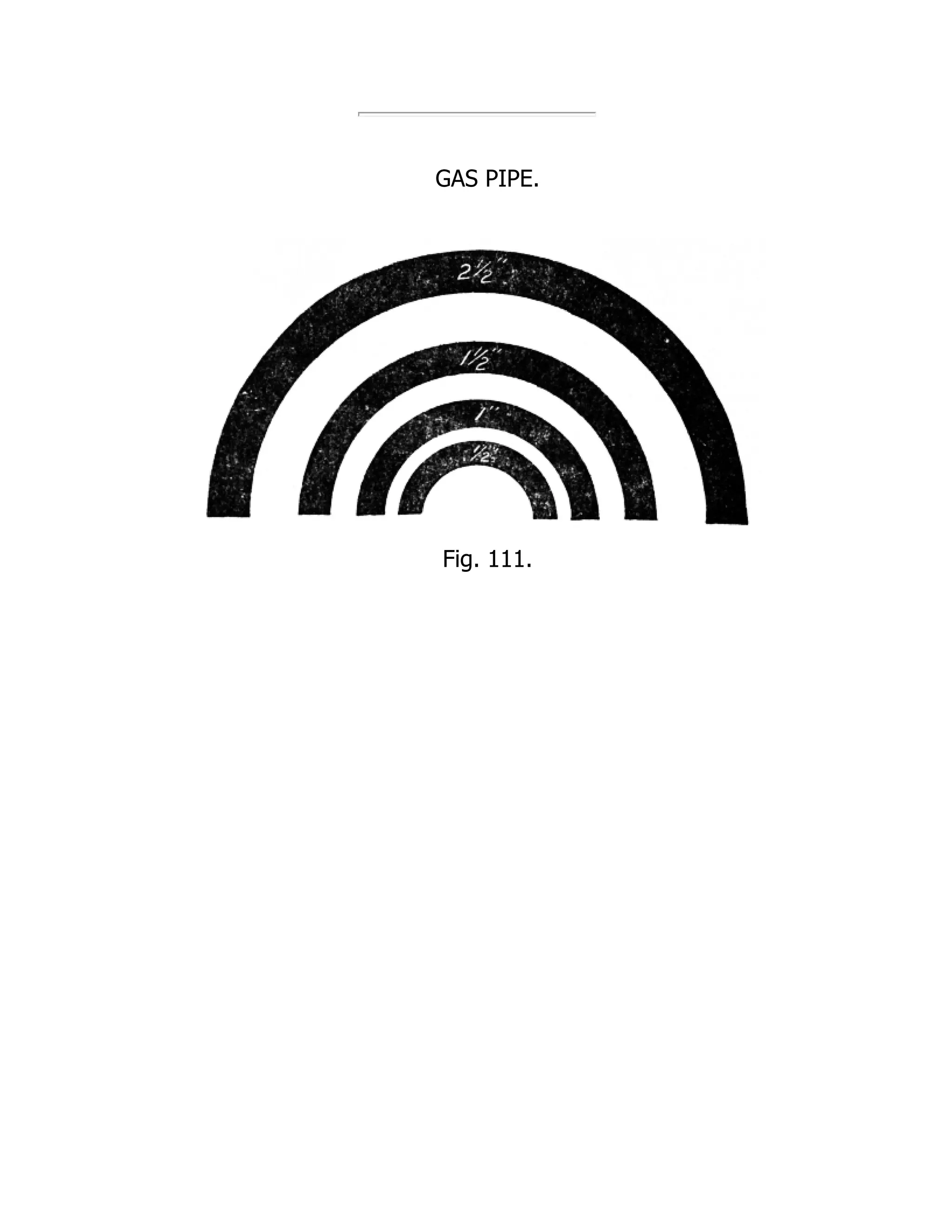
GAS PIPE.
Fig. 111.
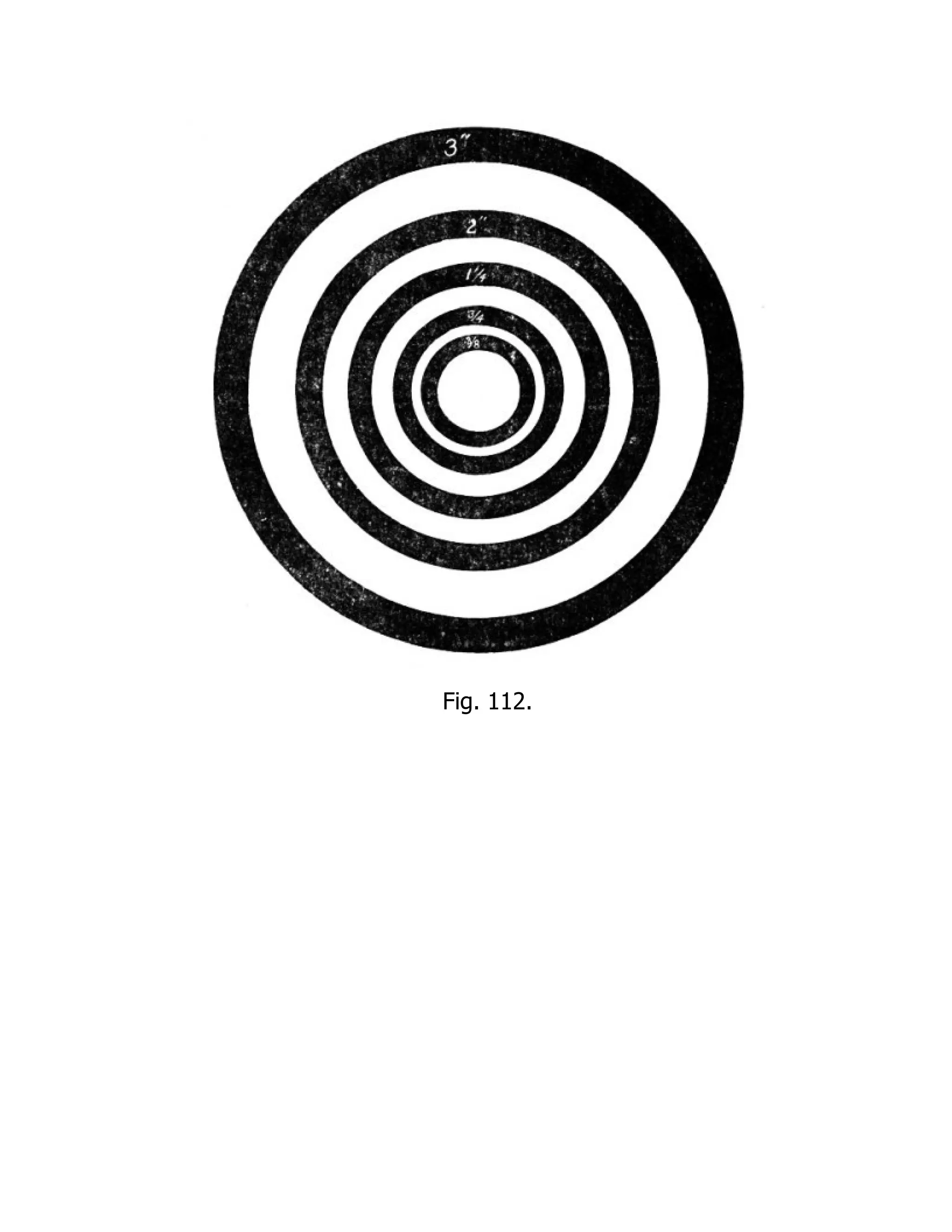
Fig. 112.
PIPES AND PIPING.
Next in importance after the skill necessary for the steam
generator and the engine, is the proper arrangement and care and
management of the pipes and valves belonging to a steam plant.
It is the first thing an engineer does in taking charge of a new
place, to ascertain the exact course and operation of the water,
steam, drain and other pipes.
Examiners for licensing marine and land engineers base their
questions much more to ascertain the applicant’s knowledge of
piping than is generally known; hence the importance of the “points”
in the succeeding pages relating to this subject.
Pipes are used for very many purposes in connection with the
boiler room, and of course vary in size, in material and in strength,
according to the purposes for which they are designed. There are
pipes for conveying and delivering illuminating gas; pipes for
conveying and delivering drinking water, and for fire purposes; pipes
for draining and carrying off sewage and surface water; pipes for
delivering hot water under high pressure, for heating purposes and
power; pipes for delivering live steam under pressure, for heating
purposes and power; pipes for delivering compressed air, for
purposes of power and ventilation; pipes for conveying mineral oils,
etc.
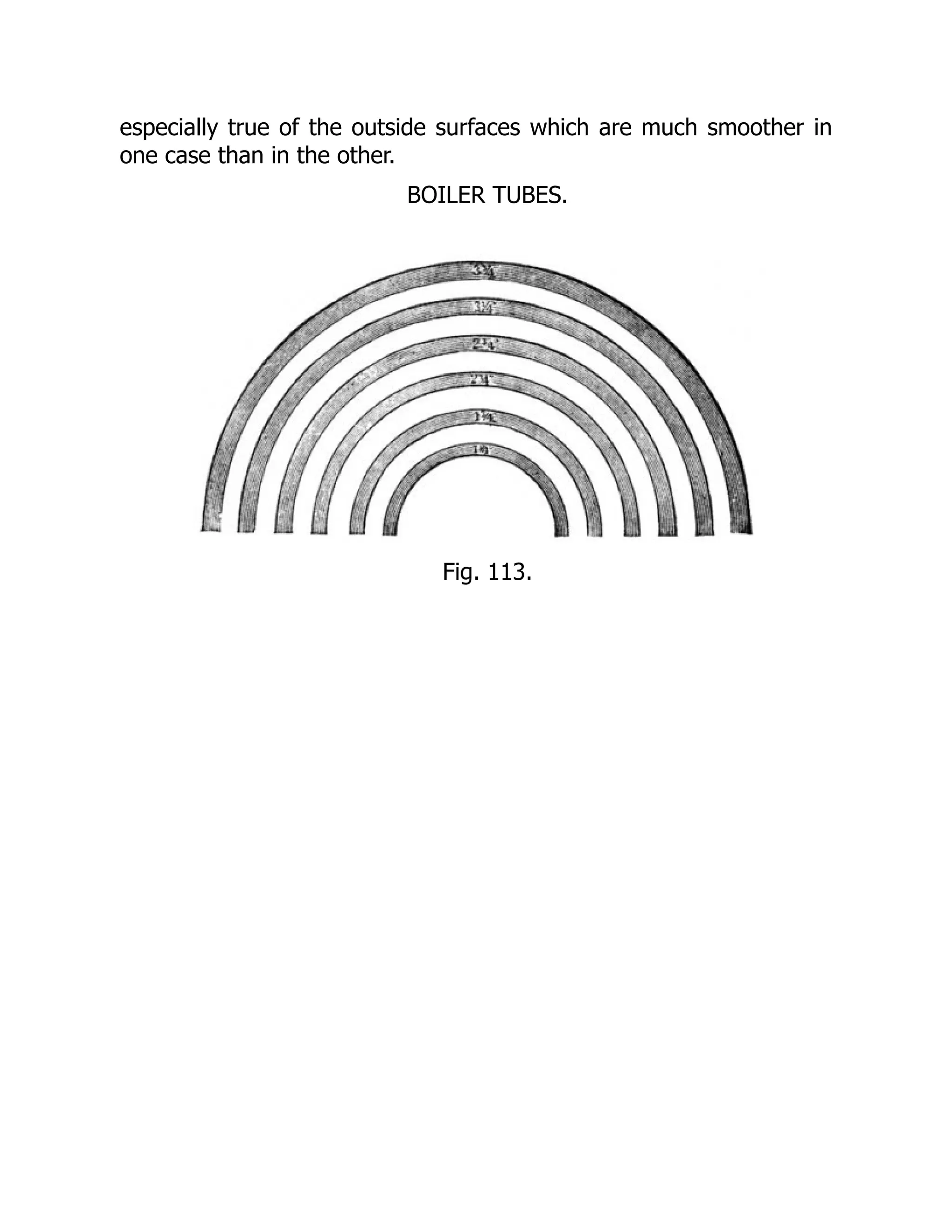
In Figs. 111, 112 113 and 114 are given approximate sizes of gas
pipe and boiler tubes, taken from the catalogue of one of the oldest
steamfitting establishments in the country. It will be observed that
the size of gas pipe is computed from the internal diameter, while
boiler tubes are estimated from the outside: thus, 3 in. gas pipe has
an external diameter of 31
⁄2 inches, while 3 in. boiler tubes have an
outside diameter of 3 inches only. It may be noted that boiler-tubes
are made much more accurately as to size than gas pipe; this is
especially true of the outside surfaces which are much smoother in
one case than in the other.
BOILER TUBES.
Fig. 113.
Fig. 114.
SURFACES AND CAPACITIES OF PIPES.
Sizes of Pipes.
1⁄2
in.
3⁄4
in.
1
in.
11⁄4
in.
11⁄2
in.
2
in.
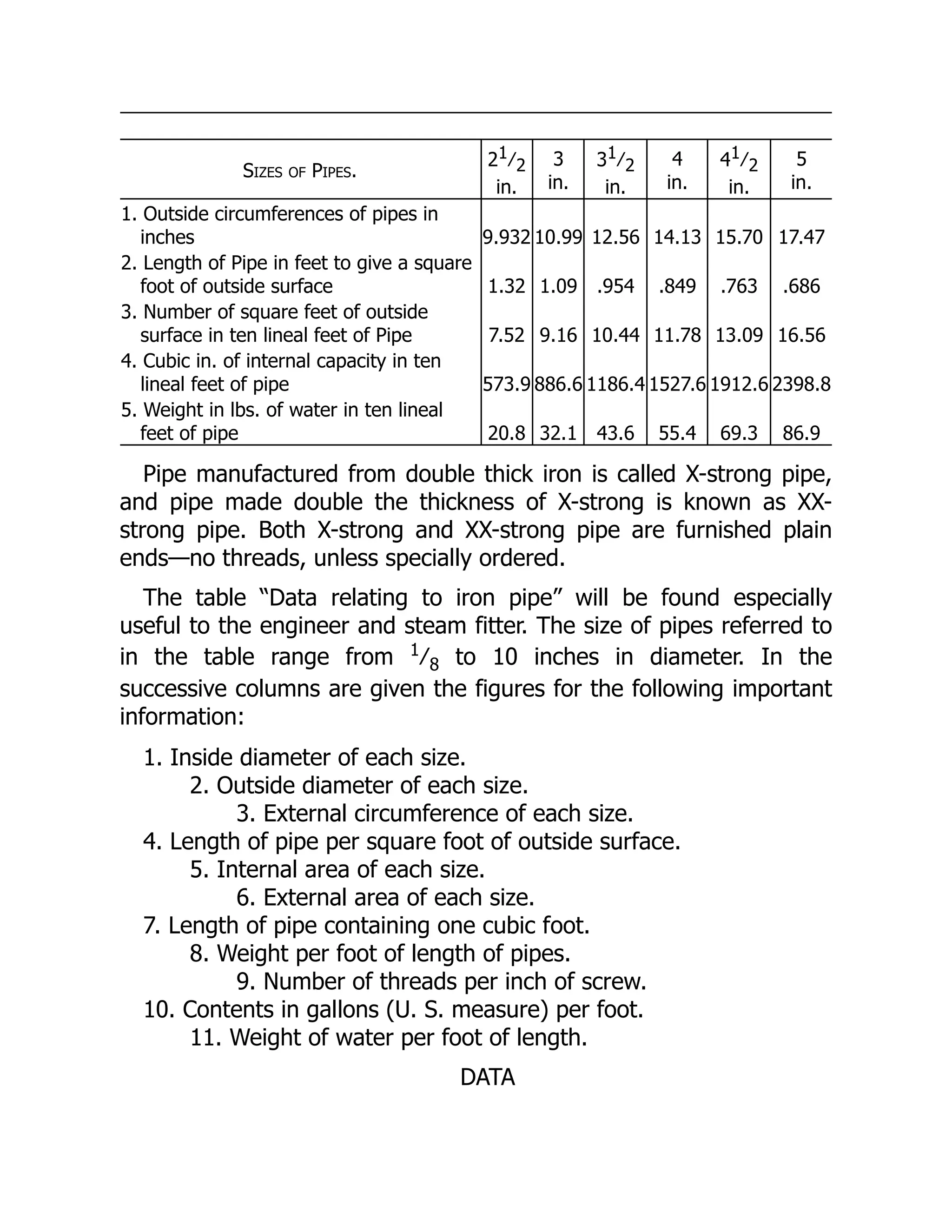
1. Outside circumferences of pipes in
inches 2.652 3.299 4.136 5.215 5.969 7.461
2. Length of Pipe in feet to give a square
foot of outside surface 4.52 3.63 2.90 2.30 2.01 1.61
3. Number of square feet of outside
surface in ten lineal feet of Pipe 2.21 2.74 3.44 4.34 4.97 6.21
4. Cubic in. of internal capacity in ten
lineal feet of pipe 36.5 63.9 103.5 179.5 244.5 402.6
5. Weight in lbs. of water in ten lineal
feet of pipe 1.38 2.31 3.75 6.5 8.8 14.6
Sizes of Pipes.
21⁄2
in.
3
in.
31⁄2
in.
4
in.
41⁄2
in.
5
in.
1. Outside circumferences of pipes in
inches 9.932 10.99 12.56 14.13 15.70 17.47
2. Length of Pipe in feet to give a square
foot of outside surface 1.32 1.09 .954 .849 .763 .686
3. Number of square feet of outside
surface in ten lineal feet of Pipe 7.52 9.16 10.44 11.78 13.09 16.56
4. Cubic in. of internal capacity in ten
lineal feet of pipe 573.9 886.6 1186.4 1527.6 1912.6 2398.8
5. Weight in lbs. of water in ten lineal
feet of pipe 20.8 32.1 43.6 55.4 69.3 86.9
Pipe manufactured from double thick iron is called X-strong pipe,
and pipe made double the thickness of X-strong is known as XX-
strong pipe. Both X-strong and XX-strong pipe are furnished plain
ends—no threads, unless specially ordered.
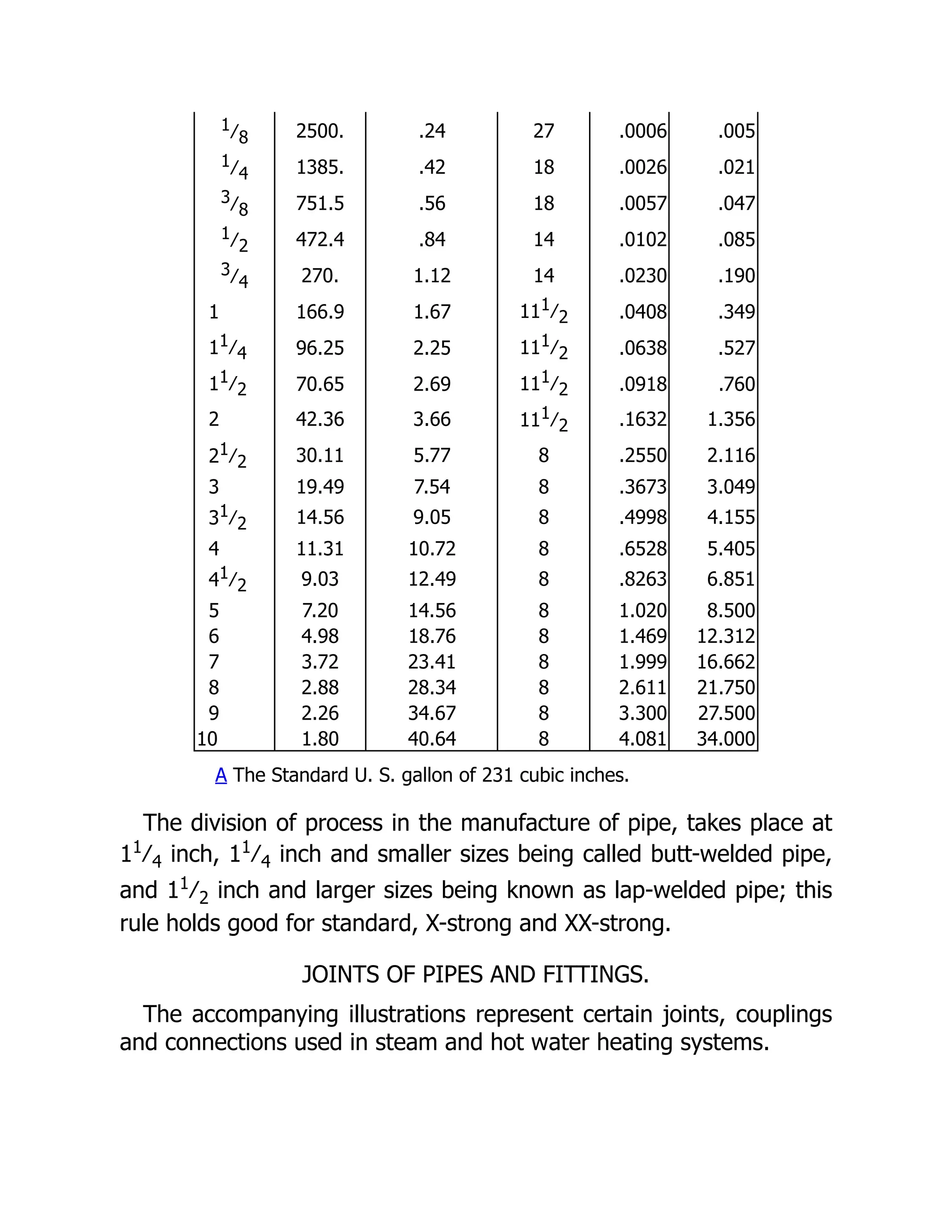
The table “Data relating to iron pipe” will be found especially
useful to the engineer and steam fitter. The size of pipes referred to
in the table range from 1
⁄8 to 10 inches in diameter. In the
successive columns are given the figures for the following important
information:
1. Inside diameter of each size.
2. Outside diameter of each size.
3. External circumference of each size.
4. Length of pipe per square foot of outside surface.
5. Internal area of each size.
6. External area of each size.
7. Length of pipe containing one cubic foot.
8. Weight per foot of length of pipes.
9. Number of threads per inch of screw.
10. Contents in gallons (U. S. measure) per foot.
11. Weight of water per foot of length.
DATA
Relating to Iron Pipe.
Inside
Diameter.
Outside
Diameter.
External
Circumference.
Length of
Pipe per
sq. ft.
of Outside
Surface.
Internal
Area.
External
Area.
Inches. Inches. Inches. Feet. Inches. Inches.
1⁄8 .40 1.272 9.44 .012 .129
1⁄4 .54 1.696 7.075 .049 .229
3⁄8 .67 2.121 5.657 .110 .358
1⁄2 .84 2.652 4.502 .196 .554
3⁄4 1.05 3.299 3.637 .441 .866
1 1.31 4.134 2.903 .785 1.357
11⁄4 1.66 5.215 2.301 1.227 2.164
11⁄2 1.9 5.969 2.01 1.767 2.835
2 2.37 7.461 1.611 3.141 4.430
21⁄2 2.87 9.032 1.328 4.908 6.491
3 3.5 10.996 1.091 7.068 9.621
31⁄2 4. 12.566 .955 9.621 12.566
4 4.5 14.137 .849 12.566 15.904
41⁄2 5. 15.708 .765 15.904 19.635
5 5.56 17.475 .629 19.635 24.299
6 6.62 20.813 .577 28.274 34.471
7 7.62 23.954 .505 38.484 45.663
8 8.62 27.096 .444 50.265 58.426
9 9.68 30.443 .394 63.617 73.715
10 10.75 33.000 .355 78.540 90.792
Inside
Diameter.
Length
of Pipe
containing
one Cubic
Foot.
Weight
per ft.
of
Length.
No. of
Threads
per inch
of Screw.
Contents
in
GallonsA
per foot.
Weight of
Water per
foot of
Length.
Inches. Feet. Lbs. Lbs.
1⁄8 2500. .24 27 .0006 .005
1⁄4 1385. .42 18 .0026 .021
3⁄8 751.5 .56 18 .0057 .047
1⁄2 472.4 .84 14 .0102 .085
3⁄4 270. 1.12 14 .0230 .190
1 166.9 1.67 111⁄2 .0408 .349
11⁄4 96.25 2.25 111⁄2 .0638 .527
11⁄2 70.65 2.69 111⁄2 .0918 .760
2 42.36 3.66 111⁄2 .1632 1.356
21⁄2 30.11 5.77 8 .2550 2.116
3 19.49 7.54 8 .3673 3.049
31⁄2 14.56 9.05 8 .4998 4.155
4 11.31 10.72 8 .6528 5.405
41⁄2 9.03 12.49 8 .8263 6.851
5 7.20 14.56 8 1.020 8.500
6 4.98 18.76 8 1.469 12.312
7 3.72 23.41 8 1.999 16.662
8 2.88 28.34 8 2.611 21.750
9 2.26 34.67 8 3.300 27.500
10 1.80 40.64 8 4.081 34.000
A The Standard U. S. gallon of 231 cubic inches.
The division of process in the manufacture of pipe, takes place at
11
⁄4 inch, 11
⁄4 inch and smaller sizes being called butt-welded pipe,
and 11
⁄2 inch and larger sizes being known as lap-welded pipe; this
rule holds good for standard, X-strong and XX-strong.
JOINTS OF PIPES AND FITTINGS.
The accompanying illustrations represent certain joints, couplings
and connections used in steam and hot water heating systems.
Fig. 115.
Fig. 116.
For many years in the matter of pipe joints there has been little
change. The cast-iron hub and spigot joint, Fig. 115, caulked with
iron borings, is probably the oldest kind of joint. This is still generally
adopted in hot water heating of a certain class, and was formerly
used with low-pressure steam. A fairly regular smooth internal
service is obtained, and once made tight is very durable. Cast-iron
flanged pipes have also been a long time in use. These joints are
made with a wrought-iron ring gasket, wrapped closely with yarn,
Fig. 116, which is sometimes dipped in a mixture of red and white
lead. It is placed between the flanges, it being of such a diameter as
to fit within the bolts by which the joint was screwed up and a nest
or iron joint, B B, caulked outside the annular gasket between the
faces of the flanges.
The next step in cast-iron flange pipe joints was the facing or
turning up of the flanges and the use of a gasket of rubber, copper,
paper or cement, with bolts for drawing the faces together. These
joints for cast-iron pipes have not been changed excepting for some
classes of work where a lip and recess, Fig. 117, formed on opposite
flanges, which makes the internal surfaces smooth and aid in
preventing the gaskets from being blown out.
Fig. 117.
Fig. 118.
Fig. 119.
Fig. 120.
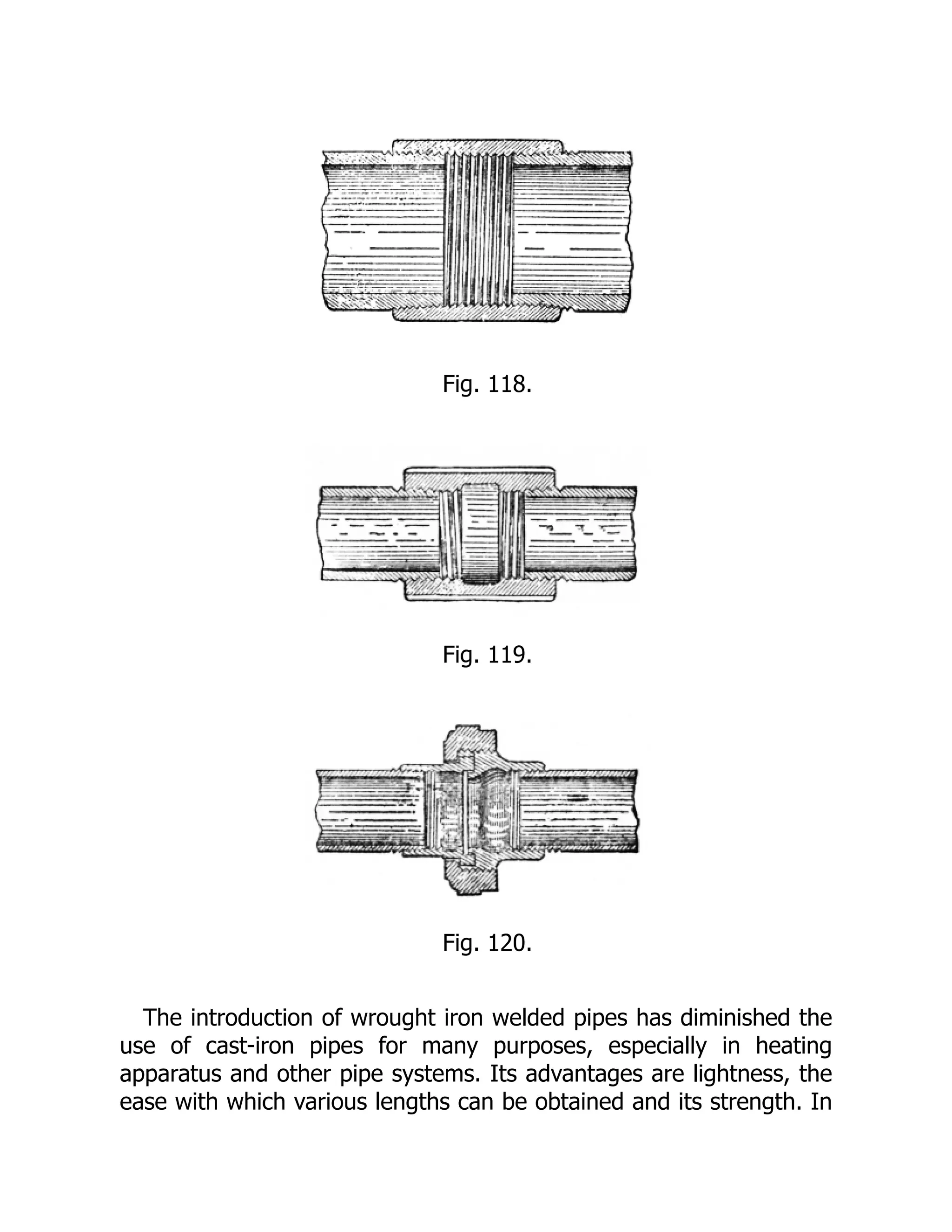
The introduction of wrought iron welded pipes has diminished the
use of cast-iron pipes for many purposes, especially in heating
apparatus and other pipe systems. Its advantages are lightness, the
ease with which various lengths can be obtained and its strength. In
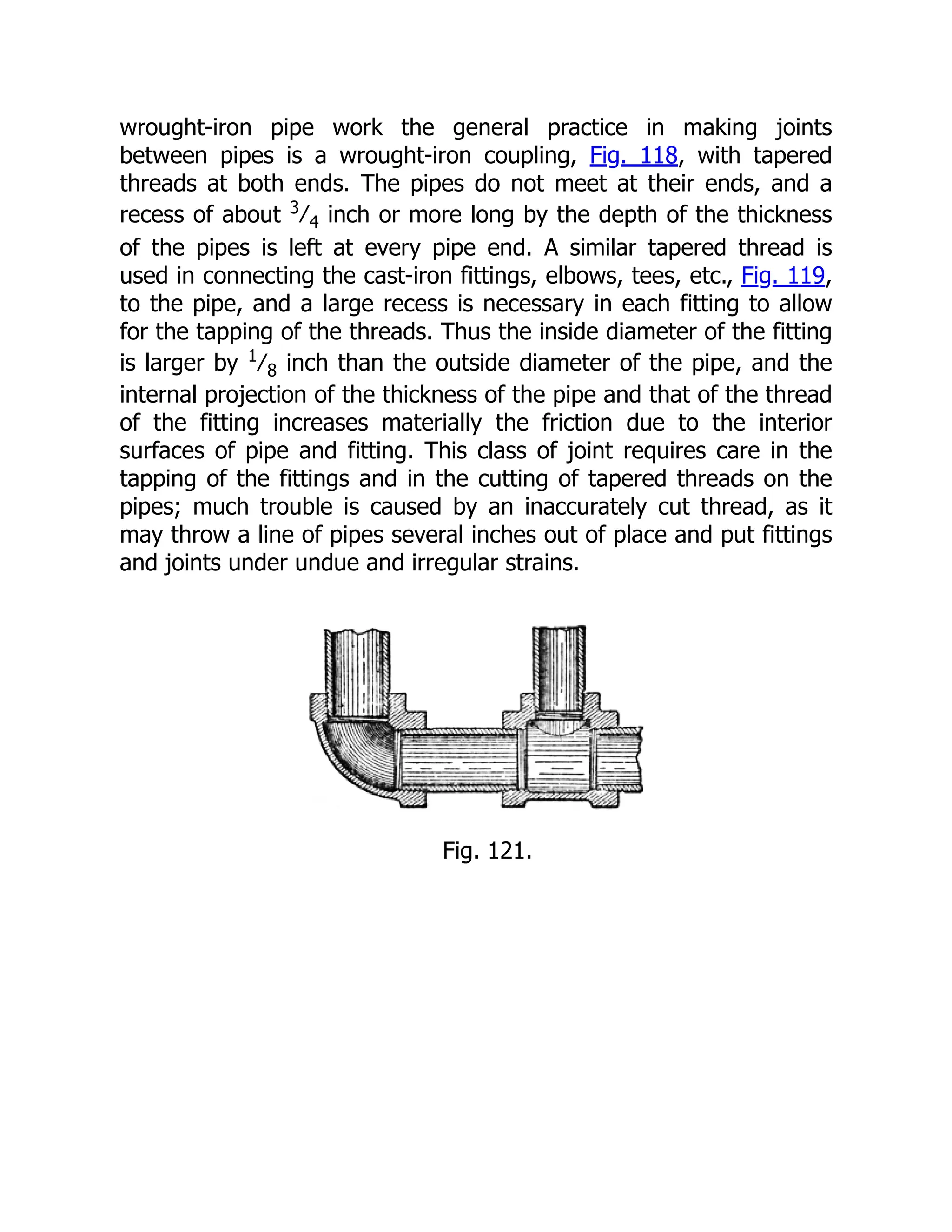
wrought-iron pipe work the general practice in making joints
between pipes is a wrought-iron coupling, Fig. 118, with tapered
threads at both ends. The pipes do not meet at their ends, and a
recess of about 3
⁄4 inch or more long by the depth of the thickness
of the pipes is left at every pipe end. A similar tapered thread is
used in connecting the cast-iron fittings, elbows, tees, etc., Fig. 119,
to the pipe, and a large recess is necessary in each fitting to allow
for the tapping of the threads. Thus the inside diameter of the fitting
is larger by 1
⁄8 inch than the outside diameter of the pipe, and the
internal projection of the thickness of the pipe and that of the thread
of the fitting increases materially the friction due to the interior
surfaces of pipe and fitting. This class of joint requires care in the
tapping of the fittings and in the cutting of tapered threads on the
pipes; much trouble is caused by an inaccurately cut thread, as it
may throw a line of pipes several inches out of place and put fittings
and joints under undue and irregular strains.
Fig. 121.
Fig. 122.
The right and left threaded nipple, Fig. 119, is used as a finishing
connection joint and between fittings. Space equal to the length of
the two threads is required between the two fittings to be connected
in order to enter the nipple, and one or both fittings should be free
to move in a straight line when the nipple is being screwed up. To
make up this joint time and care are necessary. The right threaded
end on nipple should be first firmly screwed with the tongs or
wrench into the right threaded end of fitting, then slacked out and
screwed up again by hand until tight, when it is screwed back by
hand, at the same time counting the number of threads it has
entered by hand. The same is done with the left threaded end of
nipple and fitting. If the right and left threads of nipple have counted
the same number of threads, each thread, when making the joint
up, should enter the fittings at the same time if possible, and
particular care must be taken that the fittings are exactly opposite,
to facilitate catching on, prevent crossing threads, and that no
irregular strain comes on the nipple while being screwed up.
In screwing up these nipples the coupling has to be turned with
flats on the external surface to fit an internal wrench: in such cases
the thread on nipple has one continuous taper. These special
couplings are marked with ribs on the outside to distinguish them.
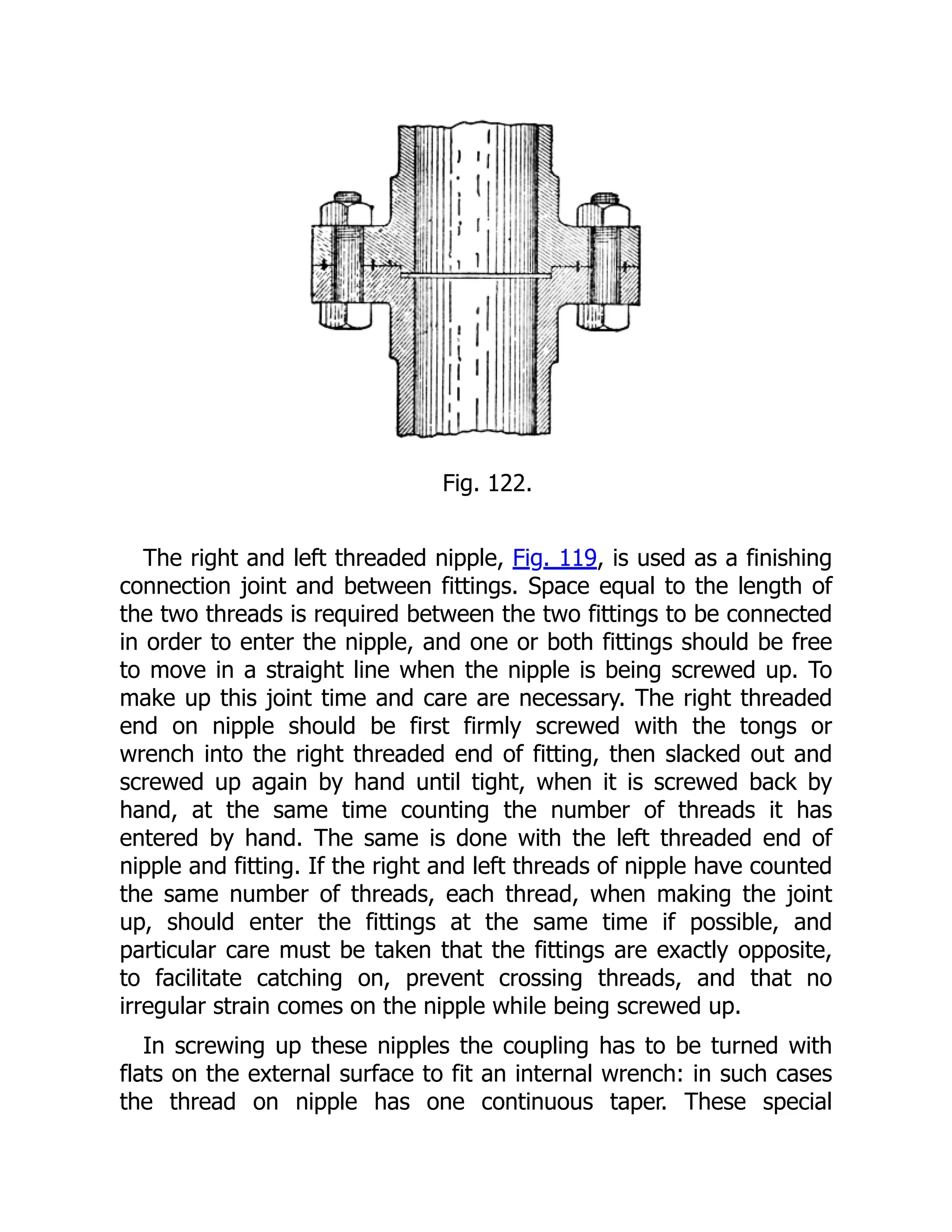
Fig. 120 represents another joint in wrought-iron piping known as
the “union” composed of three pieces of the washer. Unions are also
made with ground joints, and the washer dispensed with. Radiator
valves are now generally connected by them, but if the hole in the
radiator is not tapped accurately, the union when drawn up will not
be tight, or if tight, the valve will not be straight.
Fig. 121 shows right and left threaded nipple connecting elbow
and tee with wrought-iron pipes.
The flange union, Fig. 122, is another joint generally used on
wrought-iron pipes above 4 or 5 inches in diameter in making
connections to valves, etc., and on smaller pipes in positions where it
is a convenient joint. This joint consists of two circular cast-iron
flanges with the requisite number of holes for bolts, and central hole
tapped tapered to receive thread of pipe. The abutting faces of the
flanges are generally turned and the holding bolts fitted into the
holes.
STEAM AND HOT WATER HEATING.
The heating by means of pipes through which are conveyed hot
water and steam is a science by itself and yet one claiming some
degree of familiarity by all engineers, steam users, and architects.
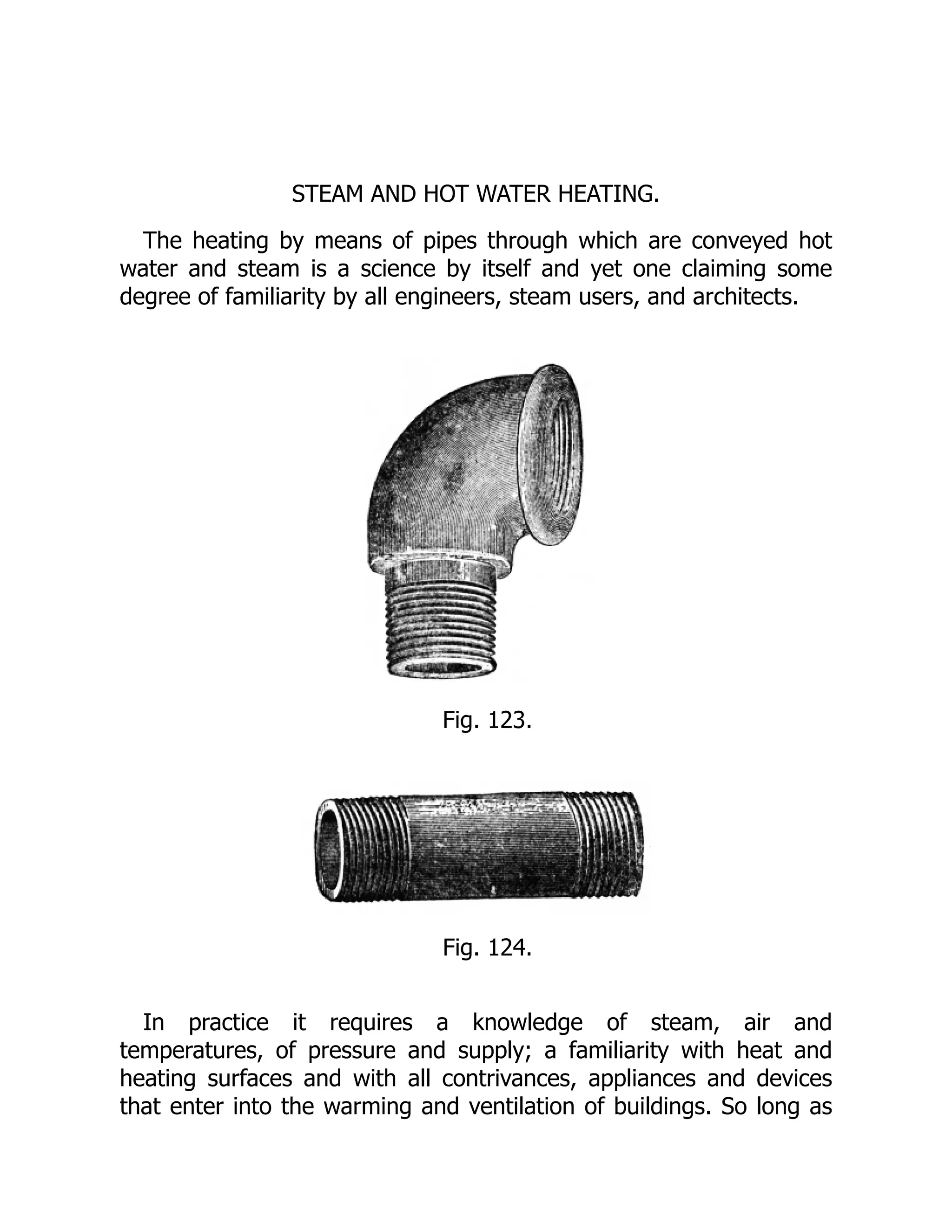
Fig. 123.
Fig. 124.
In practice it requires a knowledge of steam, air and
temperatures, of pressure and supply; a familiarity with heat and
heating surfaces and with all contrivances, appliances and devices
that enter into the warming and ventilation of buildings. So long as
factories, public and private buildings are erected, so long will
warming and ventilation keep progress with steam engineering and
remain a part of the general mechanical science required of the
supervisory and practical engineer.
In what is called the system of open circulation, a supply main
conveys the steam to the radiating surfaces, whence a return main
conducts the condensed water either into an open tank for feeding
the boiler, or into a drain to run to waste, the boiler being fed from
some other source; the system of what is called closed circulation is
carried out either with separate supply and return mains, both of
which extend to the furthest distance to which the heat has to be
distributed, or else with a single main, which answers at once for
both the supply and the return, either with or without a longitudinal
partition inside it for separating the outward current of steam supply
from the return current of condensed water.
In either case suitable traps have to be provided on the return
main, for preserving the steam pressure within the supply main and
radiators. These two systems, in any of their modifications, may also
be combined, as is most generally done in any extensive warming
apparatus.
The system of closed circulation requires the boiler to be placed so
low as will allow all the return pipes to drain freely back to it above
its water-level. This condition has been modified mechanically by the
automatic “trap,” a device frequently employed for lifting from a
lower level, part or all of the condensed water, and delivering it into
the boiler; it is, in fact, a displacement pump.
The same result has been attained by draining into a closed tank,
placed low enough to accommodate all the return pipes, and made
strong enough to stand the full boiler pressure with safety, and then
employing a steam pump, either reciprocating or centrifugal, to raise
the water from this tank to the proper level for enabling it to flow
back into the boiler, the whole of the circulation being closed from
communication with the atmosphere.
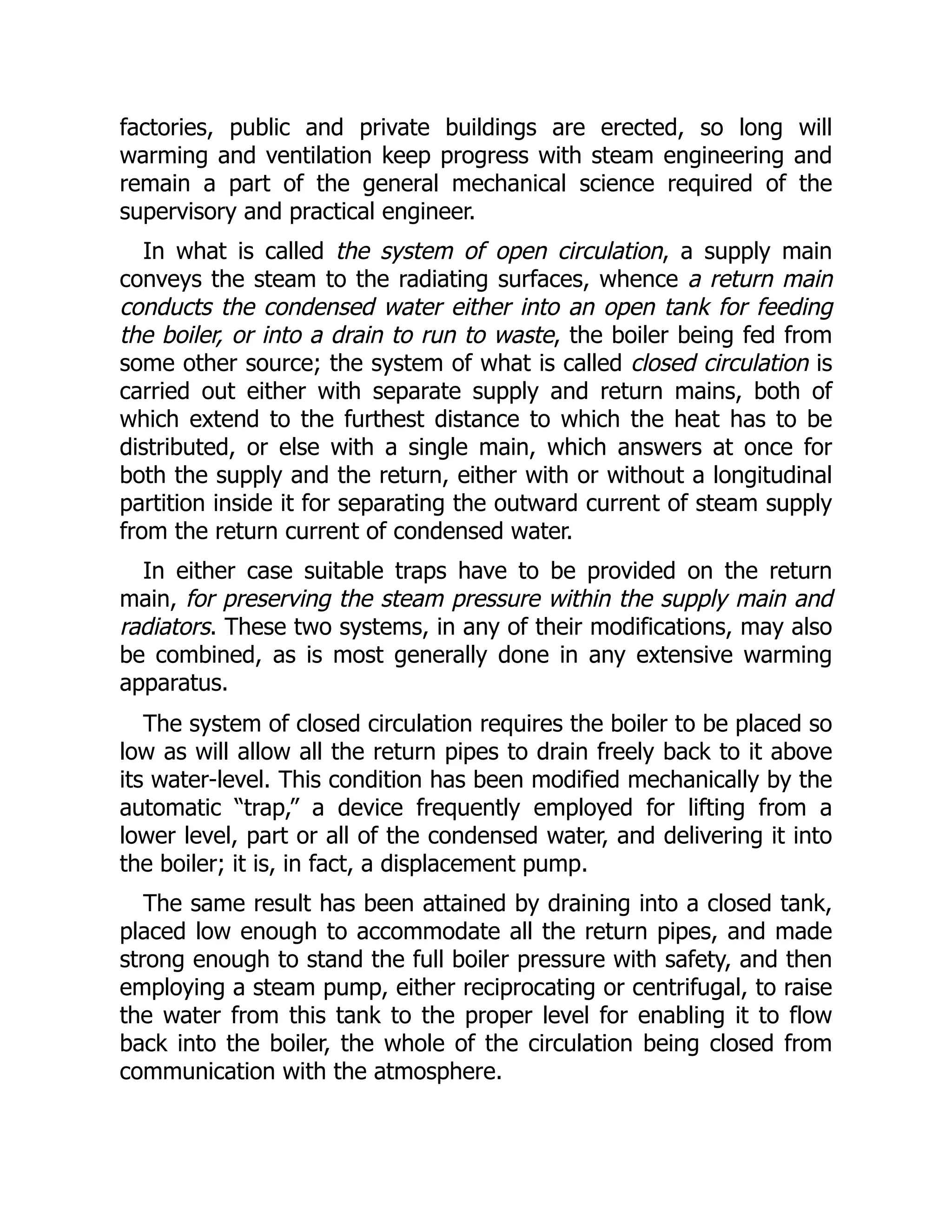
Fig. 125.
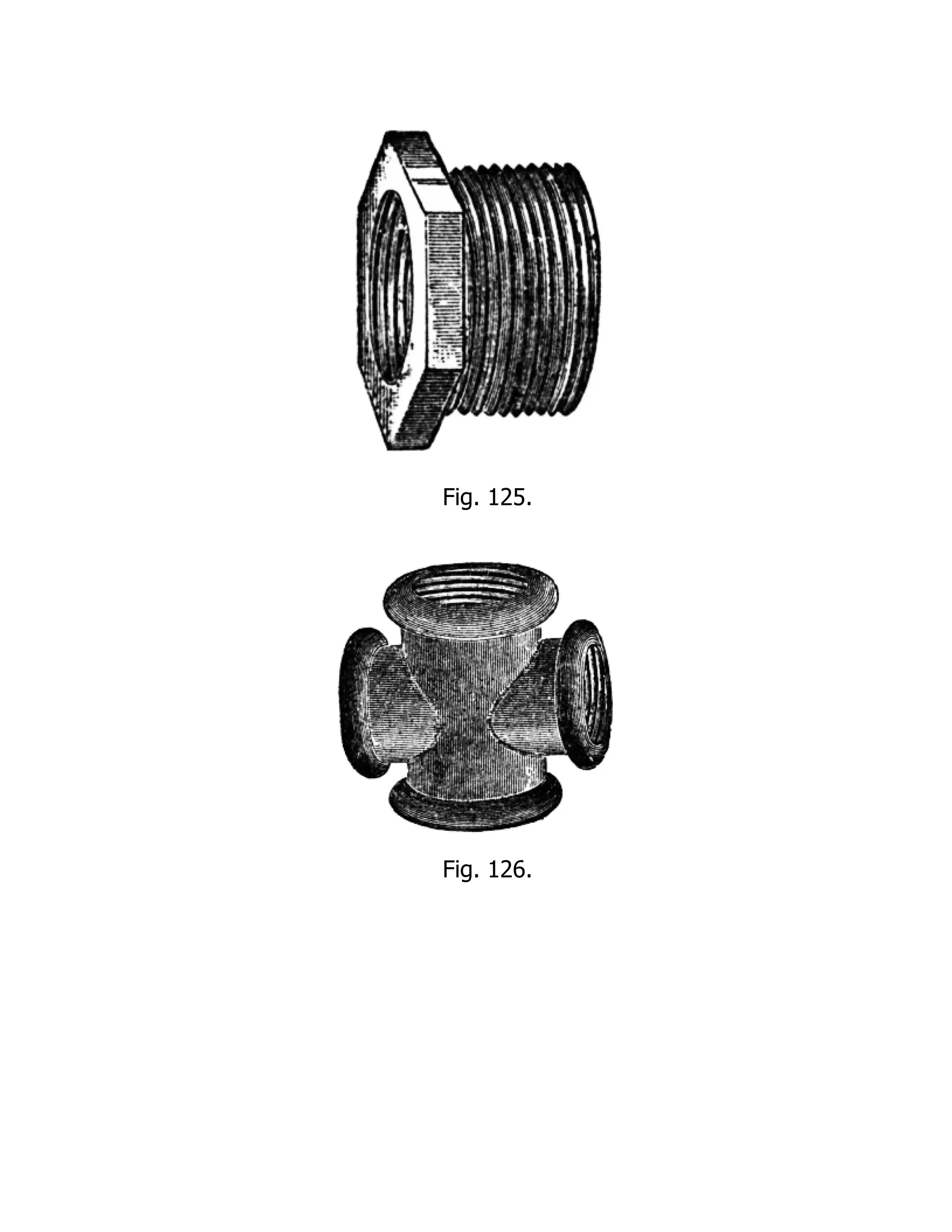
Fig. 126.
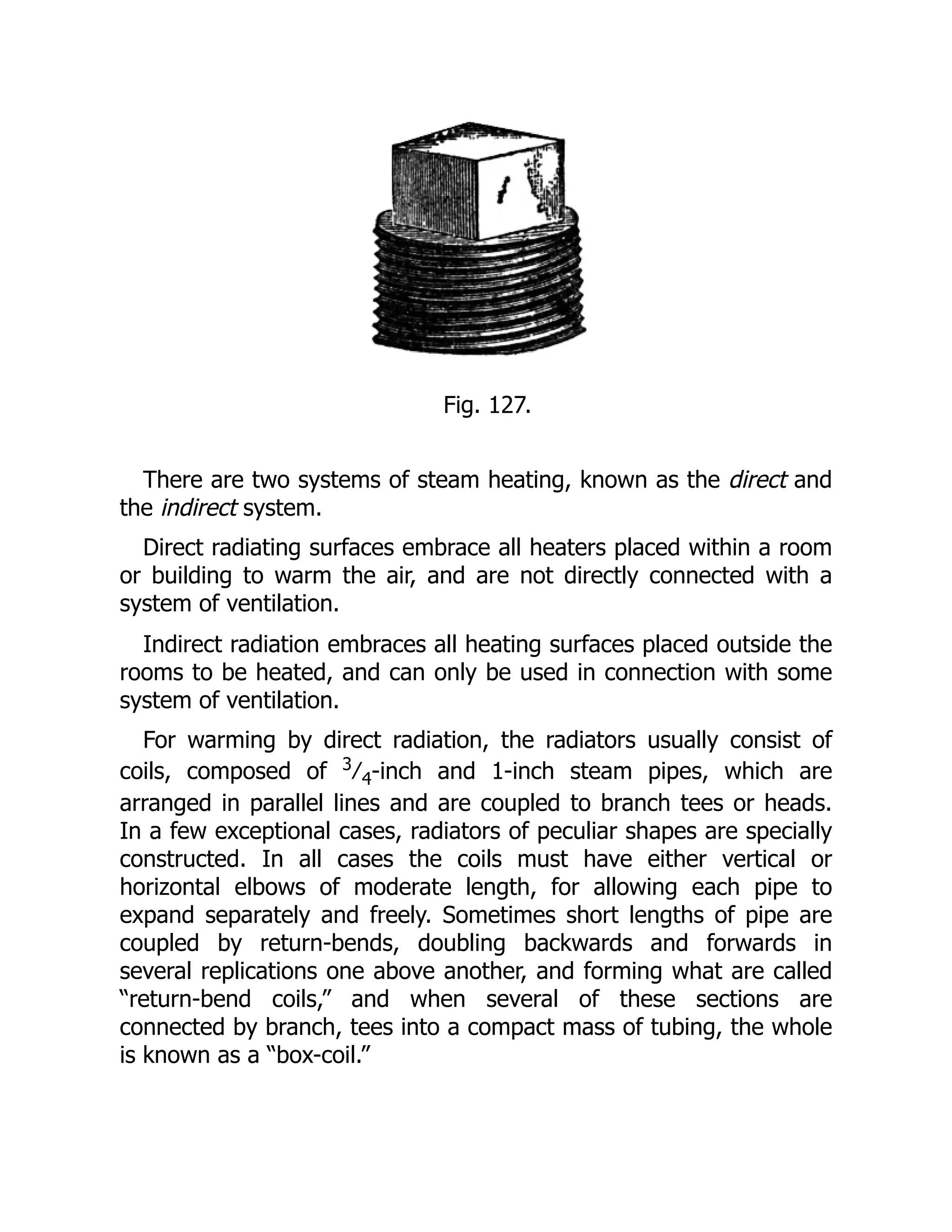
Fig. 127.
There are two systems of steam heating, known as the direct and
the indirect system.
Direct radiating surfaces embrace all heaters placed within a room
or building to warm the air, and are not directly connected with a
system of ventilation.
Indirect radiation embraces all heating surfaces placed outside the
rooms to be heated, and can only be used in connection with some
system of ventilation.
For warming by direct radiation, the radiators usually consist of
coils, composed of 3
⁄4-inch and 1-inch steam pipes, which are
arranged in parallel lines and are coupled to branch tees or heads.
In a few exceptional cases, radiators of peculiar shapes are specially
constructed. In all cases the coils must have either vertical or
horizontal elbows of moderate length, for allowing each pipe to
expand separately and freely. Sometimes short lengths of pipe are
coupled by return-bends, doubling backwards and forwards in
several replications one above another, and forming what are called
“return-bend coils,” and when several of these sections are
connected by branch, tees into a compact mass of tubing, the whole
is known as a “box-coil.”
Steam and Hot Water heating have long been acknowledged as
altogether most practical and economical in every way—and their
universal adoption in all the better class of buildings throughout the
country is positive proof of their superiority.
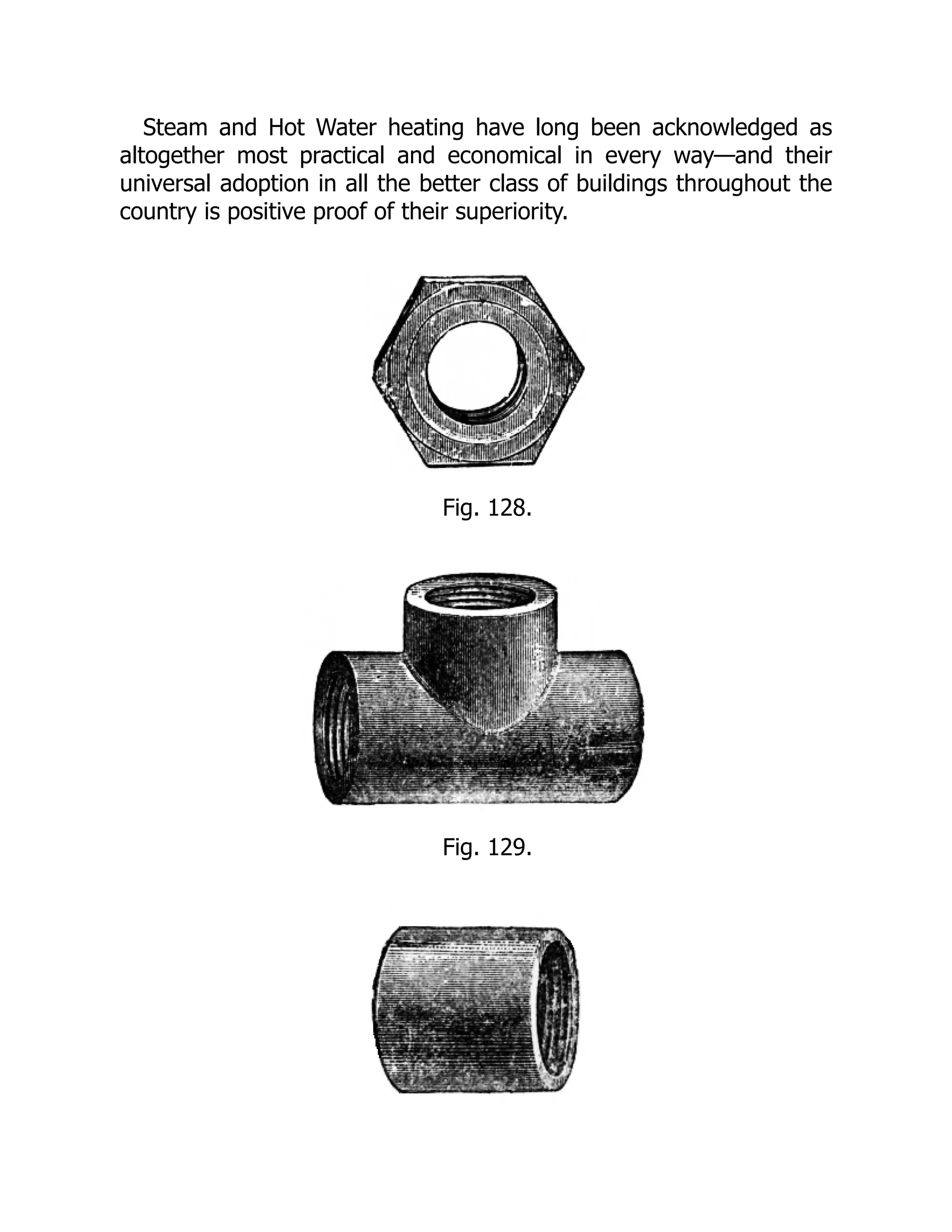
Fig. 128.
Fig. 129.
Fig. 130.
The heat from steam is almost exactly identical with that from hot
water, and few can distinguish between the two systems when
properly erected.
They are both healthful, economical and satisfactory methods of
warming. They give no gas, dust nor smoke; are automatically
regulated, and therefore allow of an even and constant temperature
throughout the house, whatever be the condition of the weather
outside.
The circulation of the steam through the warming pipes is effected
in an almost unlimited variety of ways, and the cause producing the
circulation throughout the pipes of the warming apparatus is solely
the difference of pressure which results from the more or less rapid
condensation of the steam in contact with the radiating surfaces.
A partial vacuum is formed by this difference of pressure within
the radiating portions of the apparatus, and the column of steam or
of water equivalent to this diminution of pressure, constitutes the
effective head producing the flow of steam from the boiler, at the
same time the return current of condensed water is determined by
the downward inclination of the pipes for the return course.
Points Relating to Steam Heating.
No two pipes should discharge into a T from opposite directions,
thus retarding the motion of both or one of the returning currents.
This is called “butting” and is one of the most vexatious things to
encounter in pipe fitting.
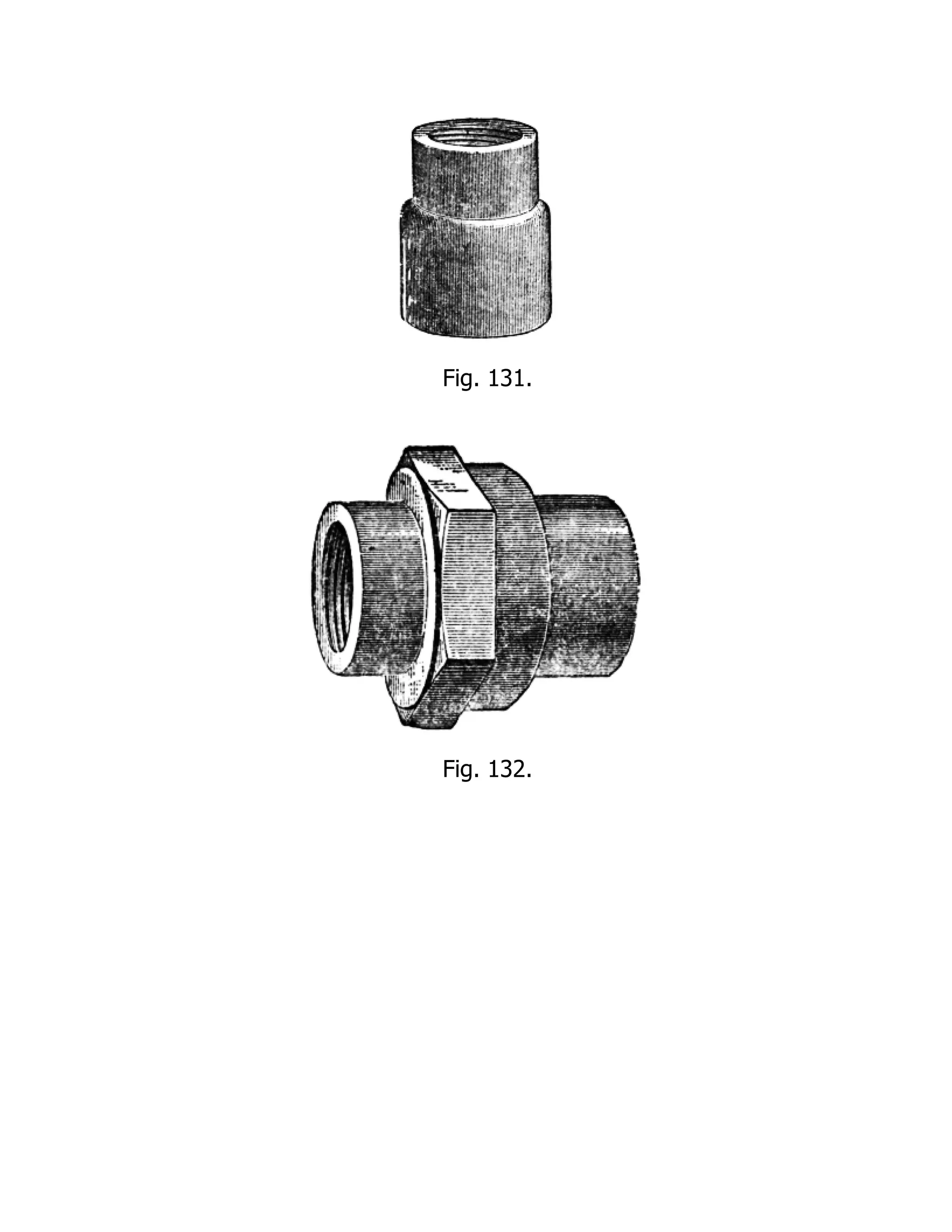
Fig. 131.
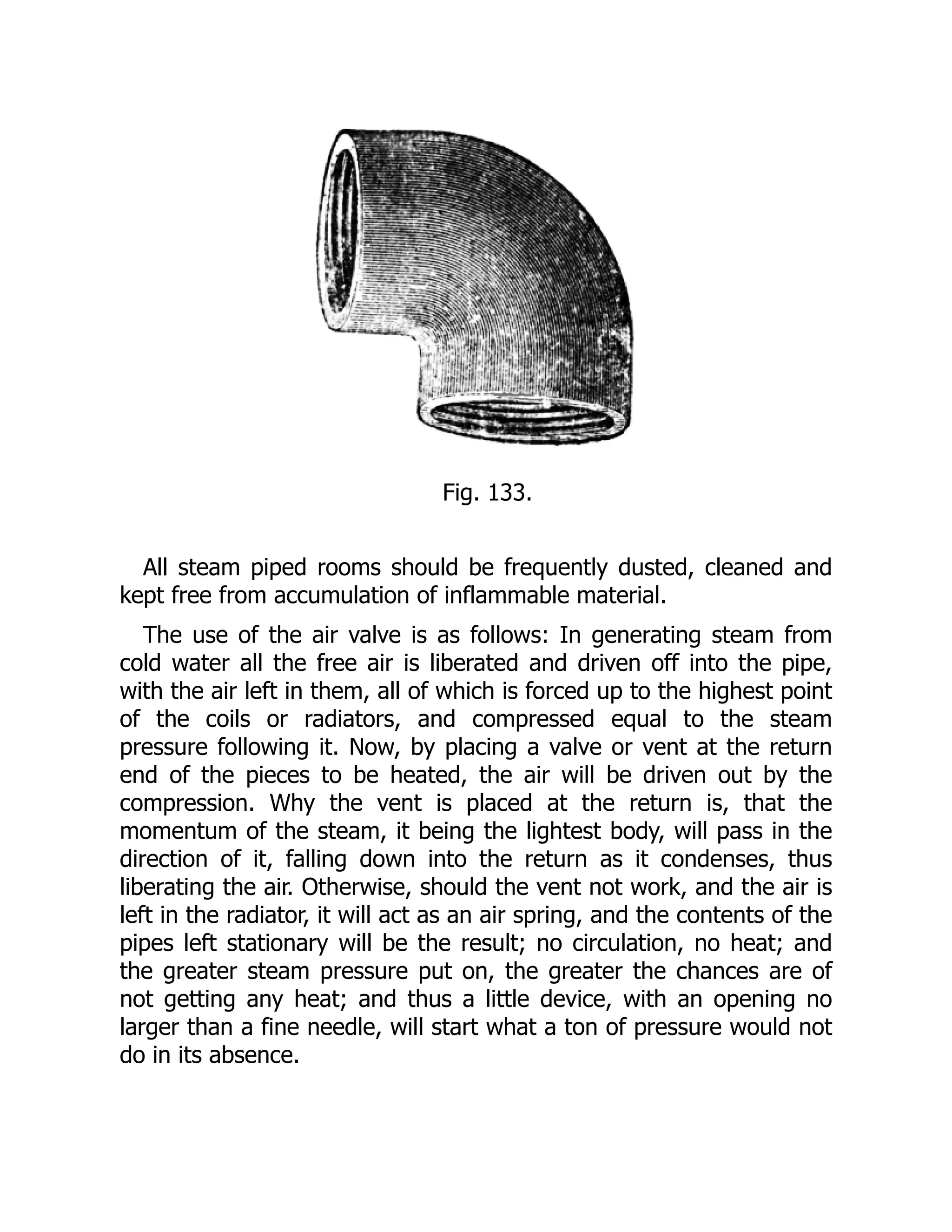
Fig. 132.
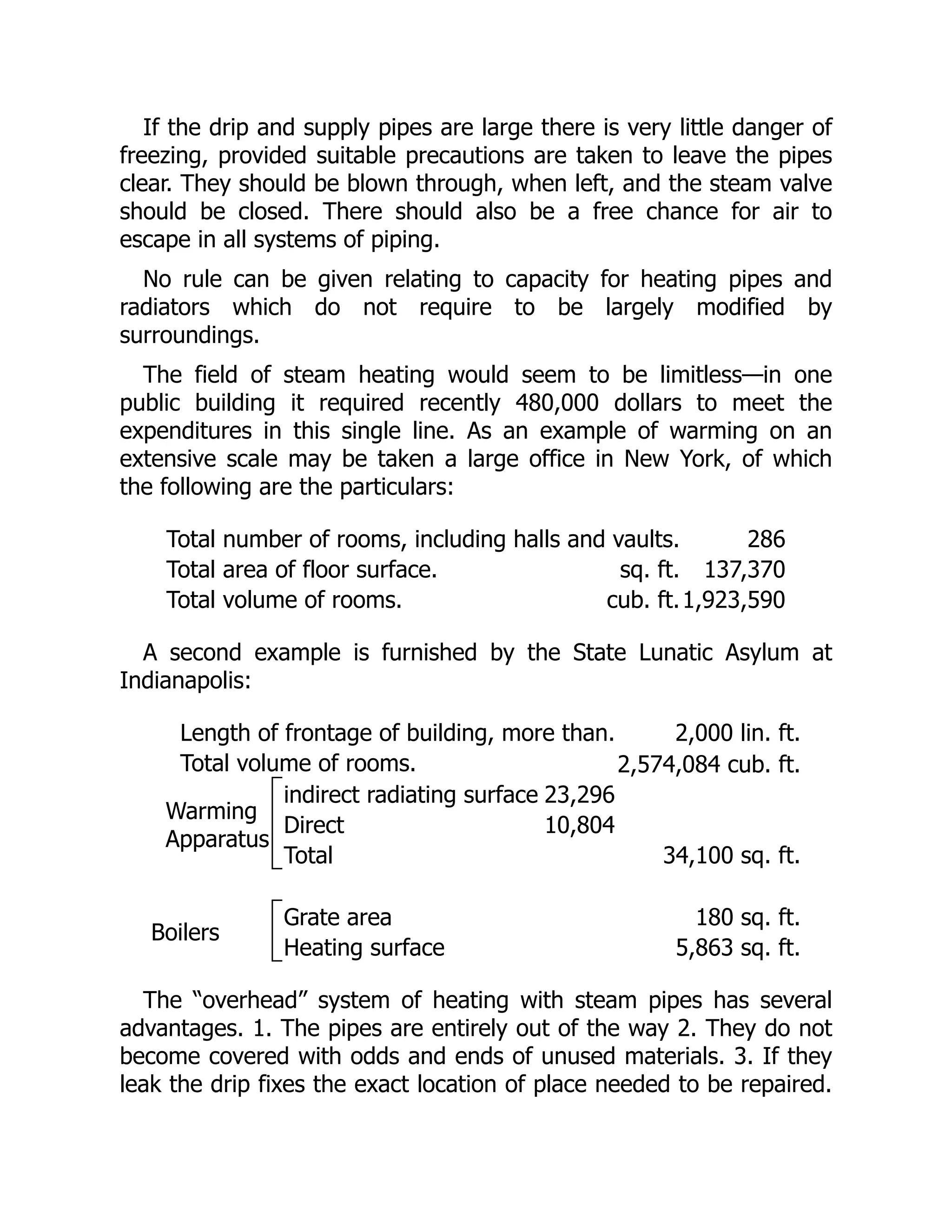
Fig. 133.
All steam piped rooms should be frequently dusted, cleaned and
kept free from accumulation of inflammable material.
The use of the air valve is as follows: In generating steam from
cold water all the free air is liberated and driven off into the pipe,
with the air left in them, all of which is forced up to the highest point
of the coils or radiators, and compressed equal to the steam
pressure following it. Now, by placing a valve or vent at the return
end of the pieces to be heated, the air will be driven out by the
compression. Why the vent is placed at the return is, that the
momentum of the steam, it being the lightest body, will pass in the
direction of it, falling down into the return as it condenses, thus
liberating the air. Otherwise, should the vent not work, and the air is
left in the radiator, it will act as an air spring, and the contents of the
pipes left stationary will be the result; no circulation, no heat; and
the greater steam pressure put on, the greater the chances are of
not getting any heat; and thus a little device, with an opening no
larger than a fine needle, will start what a ton of pressure would not
do in its absence.
If the drip and supply pipes are large there is very little danger of
freezing, provided suitable precautions are taken to leave the pipes
clear. They should be blown through, when left, and the steam valve
should be closed. There should also be a free chance for air to
escape in all systems of piping.
No rule can be given relating to capacity for heating pipes and
radiators which do not require to be largely modified by
surroundings.
The field of steam heating would seem to be limitless—in one
public building it required recently 480,000 dollars to meet the
expenditures in this single line. As an example of warming on an
extensive scale may be taken a large office in New York, of which
the following are the particulars:
Total number of rooms, including halls and vaults. 286
Total area of floor surface. sq. ft. 137,370
Total volume of rooms. cub. ft.1,923,590
A second example is furnished by the State Lunatic Asylum at
Indianapolis:
Length of frontage of building, more than. 2,000 lin. ft.
Total volume of rooms. 2,574,084 cub. ft.
Warming
Apparatus
indirect radiating surface 23,296
Direct 10,804
Total 34,100 sq. ft.
Boilers
Grate area 180 sq. ft.
Heating surface 5,863 sq. ft.
The “overhead” system of heating with steam pipes has several
advantages. 1. The pipes are entirely out of the way 2. They do not
become covered with odds and ends of unused materials. 3. If they
leak the drip fixes the exact location of place needed to be repaired.
4. The room occupied overhead cannot be well otherwise utilized,
hence in shops the system has proved efficient.
But for offices or store rooms the overhead system is not
approved of owing to the heat beating down upon the occupants
and causing headache.
When overhead heating pipes are used, they should not be hung
too near the ceiling. If the room be a high one, it is better to hang
them below, rather than above, the level of the belts running across
the room, and they should not be less than three or four feet from
the wall.
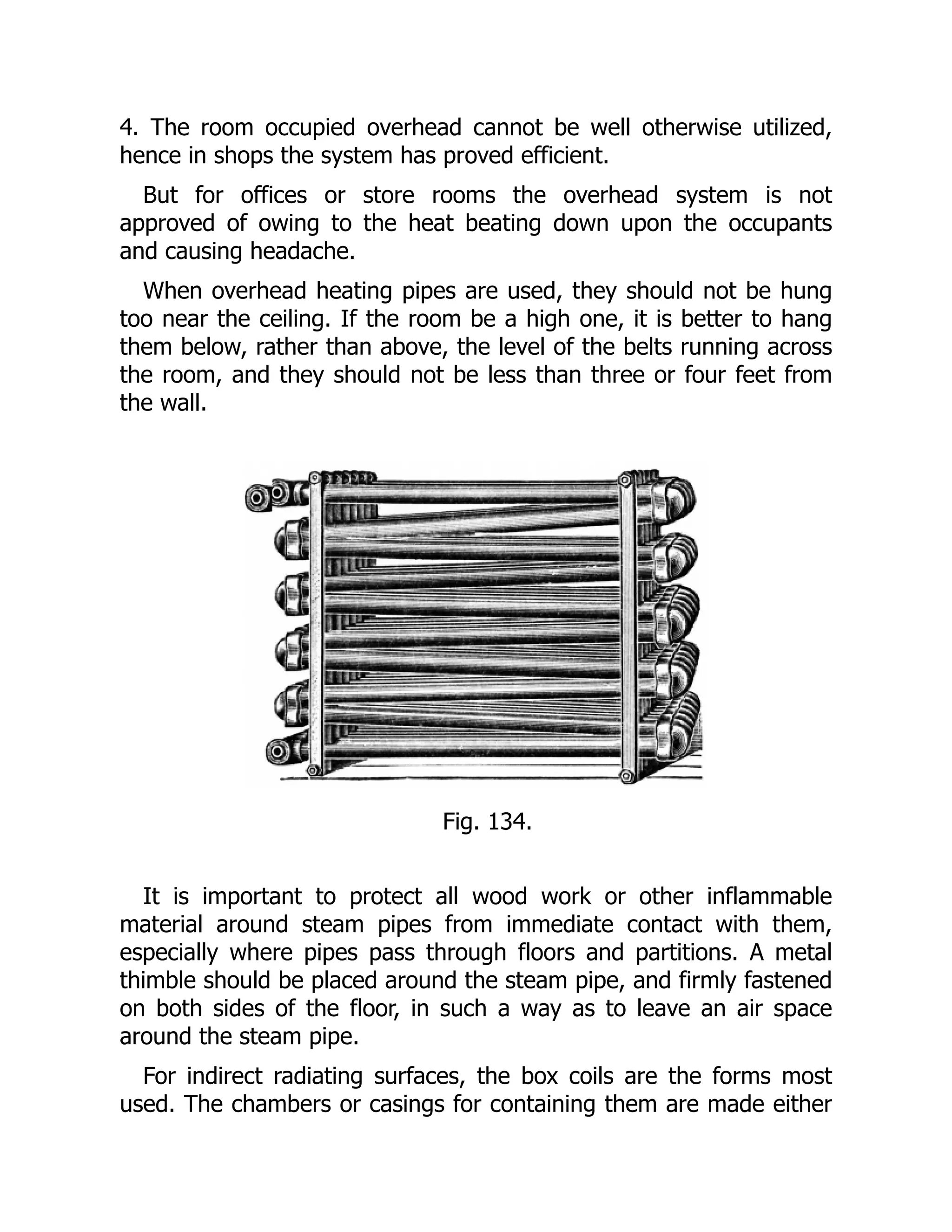
Fig. 134.
It is important to protect all wood work or other inflammable
material around steam pipes from immediate contact with them,
especially where pipes pass through floors and partitions. A metal
thimble should be placed around the steam pipe, and firmly fastened
on both sides of the floor, in such a way as to leave an air space
around the steam pipe.
For indirect radiating surfaces, the box coils are the forms most
used. The chambers or casings for containing them are made either
of brickwork, or often of galvanized sheet-iron of No. 26 gauge, with
folded joints. The coils are suspended freely within the chambers,
which are themselves attached to the walls containing the air inlet
flues. Besides coils of wrought iron tubes, cast-iron tablets or hollow
slabs, having vertical surfaces with projecting studs or ribs, have
been extensively used for the radiating surfaces.
As the amount of heat given off from the radiator cannot be
satisfactorily controlled by throttling the steam supply, it is usual to
divide all radiators into sections, each of which can be shut off from
the supply and return mains, separately from the rest of the
sections. This method of regulation applies to radiators for indirect
heating as well as for direct.
Vertical pipe coils, constitute a distinctive form of radiator now
largely used. In these a number of short upright 1-inch tubes, from
two feet 8 inches to 2 feet 10 inches long, are screwed into a hollow
cast iron base or box; and are either connected together in pairs by
return-bends at their upper ends, or else each tube stands singly
with its upper end closed, and having a hoop iron partition extending
up inside it from the bottom to nearly the top. The supply of steam
is admitted into the bottom casting; and the steam on entering,
being lighter than the air, ascends through one leg of each siphon
pipe and descends through the other, while the condensed water
trickles down either leg, and with it the displaced air sinks also into
the bottom box. For getting rid of the air, a trap is provided, having
an outlet controlled by metallic rods; as soon as all the air has
escaped and the rods become heated by the presence of unmixed
steam, their expansion closes the outlet.
A thorough drainage of steam pipes will effectually prevent
cracking and pounding noises.
The windward side of buildings require more radiating surface
than does the sheltered side.
When floor radiators are used, their location should be determined
by circumstances; the best situations are usually near the walls of
the room, in front of the windows. The cold air, which always creates
an indraft around the window frames, is thus, to some extent,
warmed as it passes over the the radiators, and also assists in the
general circulation.
Water of condensation will freeze quicker than water that has not
been evaporated, for the reason that it has parted with all its air and
is therefore solid.
Whatever the size of the circulating pipes, the supply and drip
pipes should be large, to insure good circulation; the drip pipes
especially so. This is also the more necessary when the pipes are
exposed, or when there is danger of freezing after the steam is shut
off.
It is important to see that no blisters or ragged pipes go into the
returns, and also to make sure that the ends are not “burred in” with
a dull pipe cutter wheel so as to form a place of lodgment for loose
matter in the pipe to stop against.
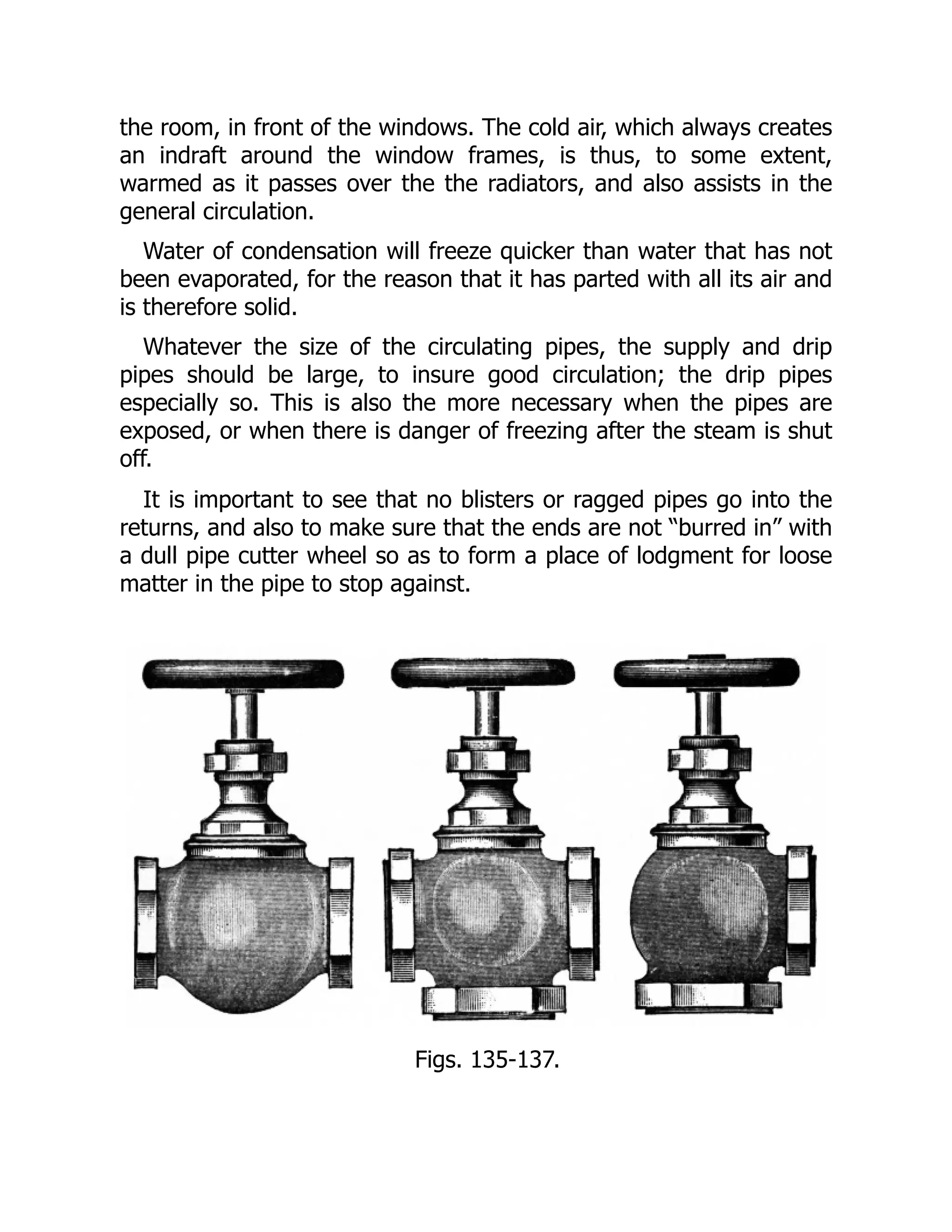
Figs. 135-137.
Experiments recently made on the strength of bent pipes have
developed some things not commonly known, or at least not
recognized, that is, the strain on the inside of the angles, due to the
effort of the pipes to straighten themselves under pressure. The
problem is one of considerable intricacy, resolvable, however, by
computation, and is a good one for practice. In the experiment
referred to, a copper pipe of 63
⁄4 in. bore, 3
⁄16 in. thick, was used.
The angle was 90 degrees, and the legs about 16 in. long from the
center. At a pressure of 912 pounds to an inch, the deflection of the
pipe was nearly 3
⁄8 in., showing an enormous strain on the inner
side, in addition to the pressure.
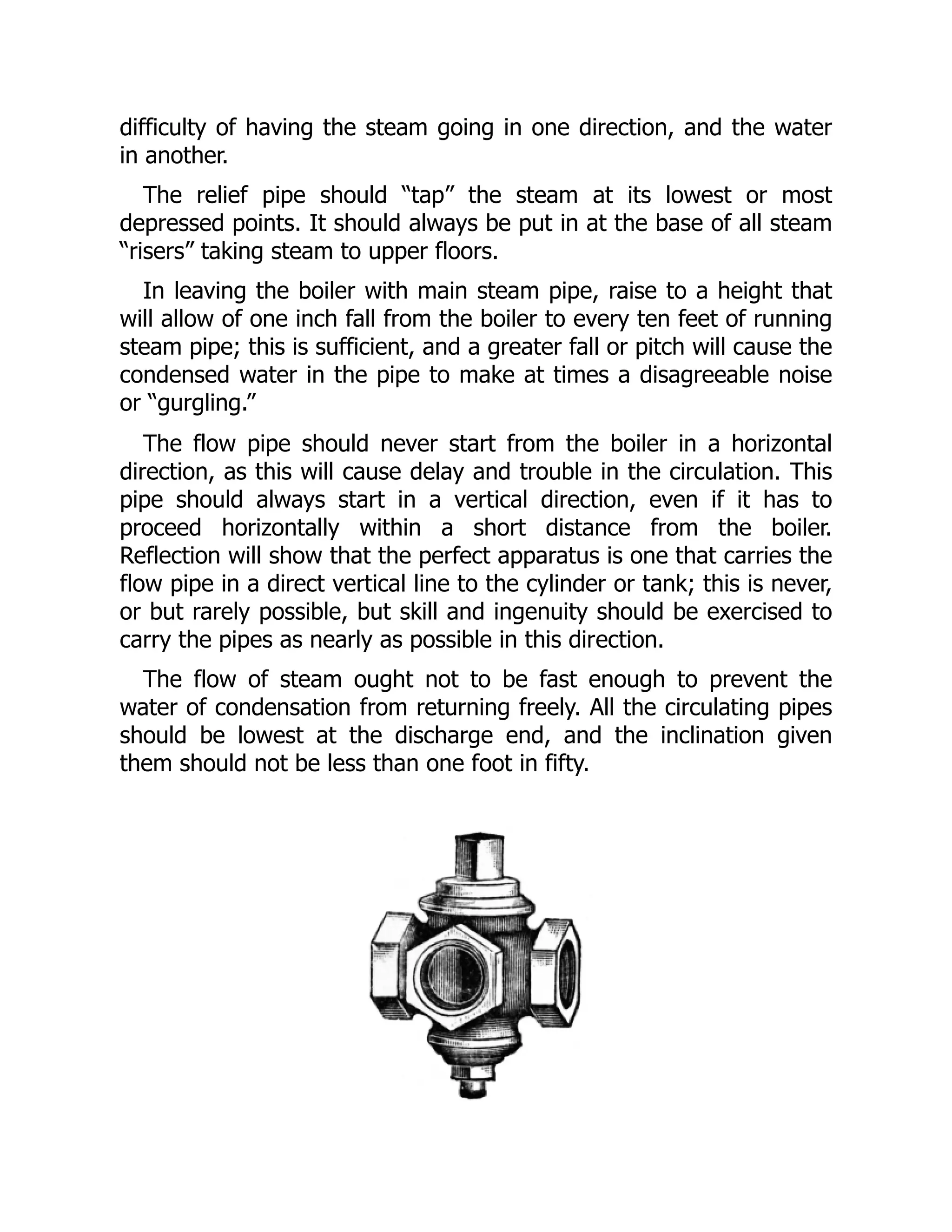
Steam valves should be connected in such a manner that the valve
closes against the constant steam pressure.
Interesting experiments show that the loss by condensation in
carrying steam one mile is 5 per cent. of the capacity of the main,
and a steam pressure of seventy-five pounds carried in five miles of
mains, ending at a point one-half mile from the boiler house only
shows a loss of pressure of two pounds.
In steam warming it is necessary to bring the water to a boiling
point to get any heat whatever; in hot water warming, a low
temperature will radiate a corresponding amount of heat.
Never use a valve in putting in a low pressure apparatus if it is
possible to get along without it. All the valves or cocks that are
actually required in a well-proportioned low pressure apparatus are,
a cock to blow off the water and clean out the return pipes, another
to turn on the feed water. Of course the safety valves, gauge cocks,
and those to shut fire regulators and such as are a part of the boiler,
are not included in this “point.”
The most important thing in connecting the relief to return pipes
is, that it should always be carried down below the line, the same as
all vertical return pipes. In connecting the reliefs, so that the lower
opening can at any time be exposed to the steam, there will be the
difficulty of having the steam going in one direction, and the water
in another.
The relief pipe should “tap” the steam at its lowest or most
depressed points. It should always be put in at the base of all steam
“risers” taking steam to upper floors.
In leaving the boiler with main steam pipe, raise to a height that
will allow of one inch fall from the boiler to every ten feet of running
steam pipe; this is sufficient, and a greater fall or pitch will cause the
condensed water in the pipe to make at times a disagreeable noise
or “gurgling.”
The flow pipe should never start from the boiler in a horizontal
direction, as this will cause delay and trouble in the circulation. This
pipe should always start in a vertical direction, even if it has to
proceed horizontally within a short distance from the boiler.
Reflection will show that the perfect apparatus is one that carries the
flow pipe in a direct vertical line to the cylinder or tank; this is never,
or but rarely possible, but skill and ingenuity should be exercised to
carry the pipes as nearly as possible in this direction.
The flow of steam ought not to be fast enough to prevent the
water of condensation from returning freely. All the circulating pipes
should be lowest at the discharge end, and the inclination given
them should not be less than one foot in fifty.
Welcome to our website – the perfect destination for book lovers and
knowledge seekers. We believe that every book holds a new world,
offering opportunities for learning, discovery, and personal growth.
That’s why we are dedicated to bringing you a diverse collection of
books, ranging from classic literature and specialized publications to
self-development guides and children's books.
More than just a book-buying platform, we strive to be a bridge
connecting you with timeless cultural and intellectual values. With an
elegant, user-friendly interface and a smart search system, you can
quickly find the books that best suit your interests. Additionally,
our special promotions and home delivery services help you save time
and fully enjoy the joy of reading.
Join us on a journey of knowledge exploration, passion nurturing, and
personal growth every day!
ebookbell.com

The Cycle Of Erosion In Different Climates Reprint 2020 Pierre Birot C Ian Jackson Keith M Clayton


  • 1.
    The Cycle OfErosion In Different Climates Reprint 2020 Pierre Birot C Ian Jackson Keith M Clayton download https://ebookbell.com/product/the-cycle-of-erosion-in-different- climates-reprint-2020-pierre-birot-c-ian-jackson-keith-m- clayton-51821302 Explore and download more ebooks at ebookbell.com

  • 2.
    Here are somerecommended products that we believe you will be interested in. You can click the link to download. The Cycle Of Deviant Behavior Investigating Intergenerational Parallelism Longitudinal Research In The Social And Behavioral Sciences An Interdisciplinary Series 1st Edition Howard B Kaplan https://ebookbell.com/product/the-cycle-of-deviant-behavior- investigating-intergenerational-parallelism-longitudinal-research-in- the-social-and-behavioral-sciences-an-interdisciplinary-series-1st- edition-howard-b-kaplan-2017056 The Cycle Of The Gift Family Wealth And Wisdom 1st Edition James E Hughes Jr https://ebookbell.com/product/the-cycle-of-the-gift-family-wealth-and- wisdom-1st-edition-james-e-hughes-jr-4341246 The Cycle Of Excellence Using Deliberate Practice To Improve Supervision And Training 1st Goodyear https://ebookbell.com/product/the-cycle-of-excellence-using- deliberate-practice-to-improve-supervision-and-training-1st- goodyear-5913638 The Cycle Of Cosmic Catastrophes Richard Firestone Allen West https://ebookbell.com/product/the-cycle-of-cosmic-catastrophes- richard-firestone-allen-west-6713306
  • 3.
    The Cycle OfJuvenile Justice 2nd Edition Thomas J Bernard Megan C Kurlychek https://ebookbell.com/product/the-cycle-of-juvenile-justice-2nd- edition-thomas-j-bernard-megan-c-kurlychek-1647980 The Cycle Of Leadership How Great Leaders Teach Their Companies To Win 1st Edition Noel M Tichy https://ebookbell.com/product/the-cycle-of-leadership-how-great- leaders-teach-their-companies-to-win-1st-edition-noel-m-tichy-1987802 The Cycle Of War And The Coronavirus Martin A Armstrong https://ebookbell.com/product/the-cycle-of-war-and-the-coronavirus- martin-a-armstrong-232152196 The Cycle Of Arawn The Complete Epic Fantasy Trilogy Edward W Robertson https://ebookbell.com/product/the-cycle-of-arawn-the-complete-epic- fantasy-trilogy-edward-w-robertson-47868328 The Cycle Of Fire Janny Wurts https://ebookbell.com/product/the-cycle-of-fire-janny-wurts-48665740
  • 5.
    The cycle oferosion in different climates
  • 7.
    Pierre Birot The cycleof erosion in different climates Translated by C. IAN JACKSON and KEITH M. CLAYTON UNIVERSITY OF CALIFORNIA PRESS Berkeley and Los Angeles 1968
  • 8.
    University of CaliforniaPress Berkeley and Los Angeles First English Language Edition 1968 Published in Great Britain by B. T. Batsford Ltd Originally published in Rio de Janeiro under the title Le cycle d'érosion sous les différents climats © Centro de Pesquisas de Geografia do Brasil, Faculdade Nacional de Filosoiia, University of Brazil, 1 Library of Congress Catalog Card Number: 68-19704 Printed in Great Britain
  • 9.
    Contents Translators' Preface 7 Introductiong Part one The basic processes of the cycle of erosion 1 The weathering of rocks 14 2 The transport of debris on slopes 27 3 Fluvial dynamics 39 Part two The influence of different climates on the cycle of erosion Introduction 56 4 The evolution of the cycle under a normal climate 60 5 The cycle of erosion in a tropical climate 73 6 Erosion cycles in arid and semi-arid climates 95 7 The cycle of erosion in areas subject to alternating wet and dry seasons or to alternating wet and dry climates 118 8 The cycle of erosion in a periglacial climate 125 Conclusion 133 References 134 Index 140
  • 11.
    Translators' Preface This bookowes its origin to a series of lectures given in Brazil by Pro- fessor Birot after the Rio de Janeiro meeting of the International Geographical Congress, 1956. A manuscript translation of the book has been used in teaching for several years and has helped to remedy the considerable shortage of work in English on the development of landforms in the various climatic regions. This climato-morphology has come to dominate continental European work, but despite the earlier attempt by Peltier to formulate a general scheme of morpho- genetic regions, the literature in English remains very limited. The geomorphology that is taught in Britain is viewed as becoming in- creasingly conservative by continental workers, although this must in part stem from an inadequate appreciation of the current litera- ture. Conversely, many geomorphologists in Britain regard the current continental predilection for identifying relics of earlier cli- matic régimes on the basis of landform alone, as of questionable validity. It seems to us that a particular attraction of Professor Birot's book is that it represents the viewpoint of climato-morphology in a res- trained and thoughtful manner, and seeks to relate it to the tradi- tional (Davisian) outlook of the subject. By taking the best of what is new, and the most tested and trusted of what is old, Professor Birot has produced a geomorphology that will be found stimulating and satisfying. He has thoroughly revised the original text for this English translation, so that this is a fully up-to-date presentation of the views of this most distinguished French geomorphologist. We are delighted to thank him for all the work he has put into this new version of his book. The diagrams have been redrawn by Mrs S. M. Weston and Mrs Jeannemarie Stanton, and one new diagram has been added. The bibliography has been brought up-to-date by Professor Birot: it will be found a useful guide to the continental
  • 12.
    8 T RA N S L A T O R S ' P R E F A C E literature, and an interesting commentary on the relative contribution of English-language sources to the several chapters of the book. We have conceived the translation as the communication of Professor Birot's ideas to an English audience, so that the English text follows the original French quite closely. However, terms such as glacis which have no direct or simple connotation in English have not been rigo- rously translated by the same term throughout the book: instead every effort has been made to convey to an English reader the sense of the original in a terminology that he himself might use. Despite repeated protestations to the contrary, international com- munication in geomorphology is at a low level, and all too few geomorphologists overcome the barriers of language, terminology and conceptual outlook that divide us. We hope that the translation of this book may be a step in the right direction. C.I.J. K.M.C.
  • 13.
    Introduction The concept ofa cycle of erosion expresses the evolution of slopes towards a level surface. Our purpose is to study this sequence of events in different climates. At the outset it must be recognised that the term ' cycle' has itself been criticised. The word suggests an evolution that returns to its point of origin. But the Davisian 'cycle' begins with youth, passes through maturity and arrives at old age. It is hence an evolution that takes place in one direction only. Such criticism is certainly justified when one is dealing with the first cycle of erosion to affect a region, for example in the case of mountains which are geologically very young. However, the idea of a cycle is rigorously exact in all those cases where the area concerned has previously passed through seni- lity, or even through the stage of'maturity'. This is the case for the greater part of the land area of the world. All the ancient shields, all the folded mountain ranges of Mesozoic age (which are much more extensive than are Tertiary ranges), and even Tertiary ranges, have been planed at least once in their existence. We can suggest as an approximate, but fairly reliable, rule that any chain which was folded before the Miocene has already been base-levelled. One can therefore say that, over the greater part of the earth's surface, the landscape has at some time passed through old age; and that following this, re- newed uplift has occurred, initiating new cycles. The other fundamental objection currently made against the Davisian concept is the idea that in many cases orogenic movements and erosion have been contemporaneous and of roughly equal order of magnitude, so that the structures have been eroded in statu nascendi. But this is only important in areas of pronounced structural instability. Usually the earth movements come to an end, and then the cycle of erosion proceeds without having passed through the stage of youth in the sense in which we shall later define it.
  • 14.
    10 INTRODUCTION In afirst attempt to study the subject we shall begin in the middle of the evolutionary process (at the stage we may provisionally call maturity), by examining the simplest landscape which is possible. We are concerned, then, with a dendritic drainage pattern with inter- fluves which decline towards the streams. The relief is composed of slopes of varying inclination. These slopes are generally convex in their upper part and concave in their lower part. They are covered by a layer of detritus, the thickness of which is approximately constant from top to bottom, and which is protected by a continuous plant cover. This may be herbaceous; more usually it is a tree cover with an undergrowth of herbaceous species. This is what one may call a 'normal' bioclimatic condition, and it implies a fairly humid climate. Obviously reservations may be made about this terminology; nevertheless it is the usual one and remains useful. We shall use the word 'soil' to describe this detrital cover; this is a useful convention and shorter than the alternative 'cover of detritus'. It is true that pedologists apply the term soil to the layer inhabited by organisms; thus in humid tropical regions it is relatively thin. This definition causes pedologists many problems because in fact they do not know at what level in the soil the action of life stops: micro- organisms may appear well below the humus level. It seems prefer- able to treat the decomposed layer as a whole from the completely fresh rock up to the surface. This is in the interests of pedology as much as of geomorphology. The word' soil', then, will be used for the detrital cover in the broad sense of the word. The soil thickness also varies with the stage reached by the cycle of erosion. In the stage of maturity, which we are considering at present, its thickness is extremely variable, from a few decimetres in tem- perate regions, to several decametres in tropical regions. The further the cycle has progressed, the thicker the soil will be. The soil thickness expresses a balance sheet involving the rate of decomposition of the rock (the Aufbereitung of Walther Penck) and the speed of removal of debris on the slopes; these are the two processes which model the slope and which will be the subject of the following chapters. The presence of a soil immediately shows that this balance is positive and that its absolute value increases as the cycle of erosion progresses. Slopes will decline, and as the effectiveness of the agents of transport depends on the angle of slope, the thickness of the soil will increase as the rate of decomposition exceeds the speed of transport. It must be added that as the slope declines, there will be a corres- ponding decrease in the speed of movement of water across it. The
  • 15.
    INTRODUCTION II presence ofwater is an essential and indispensable factor in the de- composition of rocks; temperature changes alone are insufficient. Despite opinions to the contrary, water is the limiting factor in de- composition, even in humid tropical climates. An equilibrium is thus established in which climate affects both its elements, the rate of weathering and the speed of transport. These agents of transportation move the debris as far as the river bed where, in the conditions of maturity, 'linear' erosion is con- cerned essentially with its removal. There is also erosion from the bed itself of previously weathered material, the thickness of which does not exceed that of the soil on the slopes. The profile of the bed is thus a provisional profile of equilibrium as described by H. Baulig. Its slope depends only upon the 'necessity' to remove the load provided by the slopes. This concept of equilibrium allows for small oscillations which may be annual or more frequent, and which lead to temporary displace- ment on either side of the mean condition. If a catastrophic event occurs, for example the destruction of the forest cover by fire (which could well be a natural occurrence started by lightning), or a sudden landslip, there may be a very rapid increase in the alluvial load carried by the river. At first the discharge and slope of the river are unable to remove this increased load and temporary, localised de- position will occur. In subsequent years equilibrium will be re-estab- lished. By contrast, if we suppose an increase in discharge as the result of a particularly wet year without affecting the forest and so avoiding any appreciable increase in the amount of material supplied by the slopes, the ability of the stream to transport material will be increased, and the stream may incise itself a few decimetres, or even as much as a metre. Again this is a temporary oscillation, and the experience of European engineers in the control of rivers is that the bed of the stream does not alter. When the reasons for this stability of the river bed are investigated they are found to be twofold. In the first place it is the result of climatic oscillation on either side of a mean value. There is in addition a more fundamental cause for this stability, a type of automatic regulation of the regime. As in some other physical phenomena, any disturbance sets in train a series of events that tend to cancel its effects. Thus the compression of a gas causes heating which tends automatically to lead to expansion. We may suggest as an example a landslide, causing a section of forested slope to slip down and block the course of a river, so forming a lake on the upstream side. This initiates a series of changes that work to
  • 16.
    12 I NT R O D U C T I O N re-establish the profile of equilibrium: (i) alluvial material brought into the lake by the stream fills it, restoring surface flow; (2) head- ward erosion at the barrier takes place automatically; the slope here is steeper than before the slide and so the river will incise itself. But a profile of equilibrium is only provisional. As the angle of slope decreases (an automatic result of any cessation of downcutting by the river), the load carried will decrease both in amount and in size. The stream will find itself to be underloaded; it will then cut down into previously decomposed rock, until the reduced slope (since the lower point at the river mouth is fixed) permits the stream to transport exacdy the new load—a load increased to some extent as a result of the incision itself. Thus equilibrium is established again. Naturally this alluvial material must not be so thick that it exceeds the height difference between the river banks and the floor of the bed; otherwise deposition will occur. Outcropping of fresh rock, whether on the slopes or on the river bed, is a characteristic of youthfulness under these particular bioclimatic conditions. To understand how the stage of maturity is reached, and how continuing evolution leads to senility, it is necessary to examine systematically the three fundamental processes, which are: (1) the decomposition of rock into detritus; (2) the transport of this detritus on slopes; and (3) the transport of this detritus in the river bed and the erosion of the river bed itself. So as to select homogeneous initial conditions, we shall mainly be concerned with a comparison of relief features developed on crystalline rocks.
  • 17.
    1 The weatheringof rocks It is possible to recognise two methods that can be used in the study of weathering processes; they are in many ways complementary to each other. The first method is the static or pedological approach. The profile from fresh rock to the soil surface shows a series of tran- sitions, the size of the material of successive horizons becoming in- creasingly smaller towards the surface. Each horizon may be studied systematically. Granulometric analysis will give the distribution of the various fractions as a function ofweight and this may be plotted on a graph. Petrographic analysis can be used to determine the propor- tion of fragments of fresh rock or minerals compared with those finer mineral fragments which have suffered chemical decomposition. Of these altered minerals, the gels and clays are particularly important. The gels are flocculated colloidal solutions, in which the constituent micelles are attracted towards each other although not assuming a crystalline state. The clays may also be colloidal in character, but show a microcrystalline structure. Comparison of successive horizons makes it possible to reconstruct the sequence of events in the weather- ing of the rock. This approach cannot give precise conclusions about the mechanisms involved; for example there are several explanations that might be used to account for the alteration of fresh granite, through kaolin, to laterite. Again, the normal sequence of horizons is likely to be disturbed in a soil developed on a slope. On the other hand, horizontal surfaces pose the difficulty that their soils are often polygenetic; in other words they have developed under a sequence of different climates. There is consequently a need to employ the second method, the use of experiments. This consists of subjecting samples of fresh rock to different treatments in the laboratory: these may include altera- tions of temperature or of moisture, the action of various acid or alkaline waters, or of those carrying humus extracts. This experimen-
  • 18.
    T H EW E A T H E R I N G OF R O C K S 15 tal method has the advantage that it establishes the mechanism of rock decomposition. Nevertheless, there is the difficulty that even if the rock can be decomposed by subjecting it to conditions similar to those of the particular climate with which we are concerned, it cannot be certain that these processes are exactly those found under natural conditions. If, for example, granite is subjected to alternations of oven drying at a temperature of 70°C. and chilling in water at 20°C., this will cause some decomposition of the rock and the creation of a thin zone of alteration (arène). The climatic conditions which have been achieved in this experiment are those found in tropical regions with a long dry season; but we cannot be sure that the pro- cesses are exacdy similar to those found under natural conditions where, for example, organic activity might be of importance. It must be remembered that there are problems of convergence, that is to say, similar effects may be the result of very different causes. It is impor- tant to use the static method, the approach of classical pedology, alongside that of experimental dynamics. The factors of weathering Before weathering processes can be classified, it is necessary to establish whether disintegration can occur without the presence of water. This is commonly accepted; disintegration as a result of temperature changes is often regarded as important even under completely dry conditions. These temperature changes are con- sidered essential in granular disintegration, in rock shattering and in exfoliation. Granular disintegration has often been attributed to the fact that the various minerals of a rock differ in conductivity, in their coefficients of expansion and in their ability to absorb heat; whether the rock forms by cooling (as in the case of granite) or by sedimentary cemen- tation (as in sandstone). With these differences in their physical be- haviour, the diurnal rise in temperature and resulting expansion of the minerals vary, and this is thought to lead to the loosening of the grains. However, both observation and experiments yield results which are unfavourable to this concept. In particular, examination of ancient monuments has shown that disintegration is at a maximum on the shaded walls of the monument (i.e. those that retain the most moisture) and not on the sides exposed to the sun. Laboratory
  • 19.
    i6 T HE BASIC P R O C E S S E S experiments conducted by Griggs have been equally impressive. Granite fragments were exposed to 90,000 alternations of temperature of over ioo°G. by rotating them in an apparatus that exposed them first to heat from an electric element, and then to a cooling current of fresh air. These pebbles remained completely intact and comparison of photographs taken before and after the experiment showed no trace of crystal fracture, or even any sign of cracks. The author's ex- periments (Birot, 1951, 1954) have led to the same conclusion; the alteration of granite implies the presence of water. It is true that temperature variations play a considerable role, but only because they increase the permeability of the rock, so aiding the penetration of water. This permeability can be meas- ured by the speed of penetration of a colouring matter (such as methylene blue); the penetration has been tripled for rocks which have undergone a daily vari- ation in temperature of over 7o°C. over a period of four months. The conclusion is that it is impossible to continue to use the theory of granular disintegration in its original form (as used, for example, by B. Popoff to explain the existence of tafoni). The problem arises in a still more com- plex form when the theory of thermal exfoliation is applied to homogeneous rocks. This invokes the contrast between the superficial rock slab which undergoes diurnal or annual variations in tempera- ture and so expands and contracts, and the deeper part of the rock which shows prac- tically no temperature variation. This is — c . - used to explain the development of a Fig 1 Section of an ex- _ ^ f . , , , r c , foliation scale of which f r a ft u /e a n ? t h e detachment of a layer or the internal part swells s c a l e f r o m t h e r o c k surface. It is difficult to (the dotted section) while evaluate the worth of this theory, for as a the outer part is covered result of the size of these slabs a controlled with a veneer laboratory experiment is hardly possible. The laws of thermodynamics enable us to be precise about the way in which these thermal variations occur, and the rate at which they decrease with depth. This rate is an exponen- tial function. At a depth of two metres, the annual thermal variation
  • 20.
    Random documents withunrelated content Scribd suggests to you:
  • 21.
    Fig. 109. Fig. 110. Thearrangement of the space behind the bridge wall is found usually to be in some one of the following forms: Level from bridge wall to back (Fig. 107). A square box, depth ranging from 15 inches to 6 feet (Fig. 108). A gradual rise from bridge to back end of boiler, where only six inches is found and generally circular in form (Fig. 109). A gradual slope toward back, leaving a distance of about 36 inches from boiler (Fig. 110). The advocates of Fig. 107 claim that the office of the flame is to get into as close contact with the bottom as possible, and this form compels the flame to do so. In burning soft coal this form is found to soot up the bottom of the boiler very badly. Fig. 108 is followed more extensively than any other, the variations being the depth of chamber; with depth generally from 36 to 40 inches. Fig. 109 has nothing to commend it, except in cases where bridge is too low.
  • 22.
    Fig. 110 isfollowed a great deal and gives very good satisfaction. This form allows for the theory of combustion, namely, the expansion of the gases after leaving bridge wall. Space behind the bridge wall should be enlarged, as it will reduce the velocity of fire gases, and thus have them give up more of their heat to the boiler. The bridge wall should not be less than 18 inches at bottom, but may be tapered off toward top to 9 or 13 inches. Setting of Water Tube Boilers. On page 67, Fig. 26, is exhibited a steam boiler with inclined tubes. The setting in this style of boilers is as follows: A brick wall is laid for the front with suitable openings for the doors of the furnace and ash pit, and protected on the outside by a front of cast iron, and on the inside by a lining of fire brick. At the back of the grates a bridge wall is run up to the bottom of the inclined water tubes, so that the hot gases that arise over it must circulate among the tubes. A counter wall is laid on an incline from the top of the tubes to the back of the drum. This is laid on perforated plates or bars and is covered with fire brick. A wall is also built at the lower and back end of the tubes to carry them. Back of the whole is the outer wall with openings for giving access to the tubes and smoke chambers. Side walls are raised to enclose the same and are arched at the top to come nearly in contact with the drum, which is carried partly by brackets and partly by the connections to the tubes. Points Relating to Boiler Setting. Long and heavy boilers are best suspended from two beams or girders by two or three bolts at each end. Boilers over 40 feet long
  • 23.
    should have threeor even four sets of hangers, as the case may require. Side brackets resting on masonry may be used for short boilers. If used on long boilers, side plates or expansion rollers should be used at one end of boiler. There ought to be not more than two brackets on one side, so divided that the distance between them is about three-fifths of the total length of the boiler, or the distance from ends of boiler to center of bracket is equal to one-fifth the length of boiler. The side walls in boiler-setting should not be less than twenty inches with a two inch air space; the rear wall may vary from 12 to 16 inches according to the size of the boiler; the front wall 9 inches and the bridge wall may be from 18 to 24 and perfectly straight across the rear of the furnace. If the boilers are supported by side walls, the outside walls should be not less than 13 inches thick and have pilasters where the boiler is resting. Flues touching the boiler above the water space should be emphatically condemned. Unless the boiler walls are very heavy, they should be stayed by cast or wrought iron bunch stays, held together by rods at tops and bottoms. It is dangerous to have large spaces in which gases may collect for sudden ignition, producing the so-called “back draft.” Connections between the rear end of the boiler and brickwork is best made with cast-iron plates or fire-brick, suspended, when boilers are suspended, as the expansion and contraction will destroy an arch in a short time. If resting on mud-drum stand, this connection can be arched, as in this case the rear end of boiler will remain stationary. If the draughts from the different boilers come in the same direction, or nearly so, no special provision is necessary, but if the draught enters from directly opposite directions a centre wall should be provided.
  • 24.
    An advantage claimedfor water in the ash pit is: by the dropping of hot ashes and cinders from the grate into the water, steam is generated, which, in passing through the hot coal lying on the grate, is there divided into oxygen and hydrogen, thus helping the combustion. A dry brick will absorb a pound of water, and it is the water in the mortar that causes it to set, and harden. To prevent this loss of the water of crystalization, and give it time to harden and adhere to the brick, the brick must be well saturated with water, before they are laid. Whenever steam is allowed to come in contact with mortar or cement an injurious effect is produced. The action of the steam is much more rapid than that of air and water, or water alone, when in abundance, as the effect of the steam in every case is to soften the mortar and penetrate to a greater depth than water could possibly do. The distance between the rear head of the boiler and brickwork should not be less than 12 inches. In setting steam boilers, allowance must be made for the expansion and contraction of the structure and this is usually done by placing rollers under the rear lug or side bearing of the boiler. Care should be exercised that the boiler rests are always in good condition so that they may move freely and not place the boiler in any danger of sticking and buckling.
  • 25.
    Kindling a FurnaceFire. In kindling a coal fire in a furnace the phosphorus of a match inflames at so low a temperature (150 degrees Fahr.) that mere friction ignites it, and in burning (combining with oxygen of the air) it gives out heat enough to raise the sulphur of the match to the temperature of ignition (500 degrees Fahr.), which, combining in its turn with the oxygen of the atmosphere, gives out sufficient heat to raise the temperature of the wood to the point of ignition (800 degrees Fahr.), and at this temperature the wood combines with oxygen supplied by the air, giving out a temperature sufficient to raise the coal to the point of ignition (1000 degrees Fahr.), and the coal then combines with the free oxygen of the air, the ensuing temperature in the furnace varying, according to circumstances, from 3000 degrees to 4000 degrees Fahr. Thus we see that the ignition of the coal is the last of a series of progressive steps, each increasing in temperature. And in each step it will be noted that a combination of oxygen is the essential connecting link and that the oxygen is supplied in each instance at the same average temperature—this fact contains a “point” relating to supplying furnaces with so called “hot air.” Sawdust Furnace.
  • 26.
    Referring also topage 33 for information relating to the burning of sawdust and shavings S. S. Ingham, in the Stationary Engineer, says upon this important matter: “Regarding a furnace for burning sawdust, I submit the accompanying cuts. I have built numbers of these oven furnaces for burning this fuel in the south, and all have given excellent results. The dimensions are for 60″ × 16′ return tubular (4″ tubes) boiler with stack 50 per cent. greater area than the flues; a good draft is necessary.” It will be understood that the upper cut is designed to show end view of the furnace whose side is shown in sectional view at the bottom of the page.
  • 27.
  • 28.
  • 29.
    PIPES AND PIPING. Nextin importance after the skill necessary for the steam generator and the engine, is the proper arrangement and care and management of the pipes and valves belonging to a steam plant. It is the first thing an engineer does in taking charge of a new place, to ascertain the exact course and operation of the water, steam, drain and other pipes. Examiners for licensing marine and land engineers base their questions much more to ascertain the applicant’s knowledge of piping than is generally known; hence the importance of the “points” in the succeeding pages relating to this subject. Pipes are used for very many purposes in connection with the boiler room, and of course vary in size, in material and in strength, according to the purposes for which they are designed. There are pipes for conveying and delivering illuminating gas; pipes for conveying and delivering drinking water, and for fire purposes; pipes for draining and carrying off sewage and surface water; pipes for delivering hot water under high pressure, for heating purposes and power; pipes for delivering live steam under pressure, for heating purposes and power; pipes for delivering compressed air, for purposes of power and ventilation; pipes for conveying mineral oils, etc. In Figs. 111, 112 113 and 114 are given approximate sizes of gas pipe and boiler tubes, taken from the catalogue of one of the oldest steamfitting establishments in the country. It will be observed that the size of gas pipe is computed from the internal diameter, while boiler tubes are estimated from the outside: thus, 3 in. gas pipe has an external diameter of 31 ⁄2 inches, while 3 in. boiler tubes have an outside diameter of 3 inches only. It may be noted that boiler-tubes are made much more accurately as to size than gas pipe; this is
  • 30.
    especially true ofthe outside surfaces which are much smoother in one case than in the other. BOILER TUBES. Fig. 113.
  • 31.
    Fig. 114. SURFACES ANDCAPACITIES OF PIPES. Sizes of Pipes. 1⁄2 in. 3⁄4 in. 1 in. 11⁄4 in. 11⁄2 in. 2 in. 1. Outside circumferences of pipes in inches 2.652 3.299 4.136 5.215 5.969 7.461 2. Length of Pipe in feet to give a square foot of outside surface 4.52 3.63 2.90 2.30 2.01 1.61 3. Number of square feet of outside surface in ten lineal feet of Pipe 2.21 2.74 3.44 4.34 4.97 6.21 4. Cubic in. of internal capacity in ten lineal feet of pipe 36.5 63.9 103.5 179.5 244.5 402.6 5. Weight in lbs. of water in ten lineal feet of pipe 1.38 2.31 3.75 6.5 8.8 14.6
  • 32.
    Sizes of Pipes. 21⁄2 in. 3 in. 31⁄2 in. 4 in. 41⁄2 in. 5 in. 1.Outside circumferences of pipes in inches 9.932 10.99 12.56 14.13 15.70 17.47 2. Length of Pipe in feet to give a square foot of outside surface 1.32 1.09 .954 .849 .763 .686 3. Number of square feet of outside surface in ten lineal feet of Pipe 7.52 9.16 10.44 11.78 13.09 16.56 4. Cubic in. of internal capacity in ten lineal feet of pipe 573.9 886.6 1186.4 1527.6 1912.6 2398.8 5. Weight in lbs. of water in ten lineal feet of pipe 20.8 32.1 43.6 55.4 69.3 86.9 Pipe manufactured from double thick iron is called X-strong pipe, and pipe made double the thickness of X-strong is known as XX- strong pipe. Both X-strong and XX-strong pipe are furnished plain ends—no threads, unless specially ordered. The table “Data relating to iron pipe” will be found especially useful to the engineer and steam fitter. The size of pipes referred to in the table range from 1 ⁄8 to 10 inches in diameter. In the successive columns are given the figures for the following important information: 1. Inside diameter of each size. 2. Outside diameter of each size. 3. External circumference of each size. 4. Length of pipe per square foot of outside surface. 5. Internal area of each size. 6. External area of each size. 7. Length of pipe containing one cubic foot. 8. Weight per foot of length of pipes. 9. Number of threads per inch of screw. 10. Contents in gallons (U. S. measure) per foot. 11. Weight of water per foot of length. DATA
  • 33.
    Relating to IronPipe. Inside Diameter. Outside Diameter. External Circumference. Length of Pipe per sq. ft. of Outside Surface. Internal Area. External Area. Inches. Inches. Inches. Feet. Inches. Inches. 1⁄8 .40 1.272 9.44 .012 .129 1⁄4 .54 1.696 7.075 .049 .229 3⁄8 .67 2.121 5.657 .110 .358 1⁄2 .84 2.652 4.502 .196 .554 3⁄4 1.05 3.299 3.637 .441 .866 1 1.31 4.134 2.903 .785 1.357 11⁄4 1.66 5.215 2.301 1.227 2.164 11⁄2 1.9 5.969 2.01 1.767 2.835 2 2.37 7.461 1.611 3.141 4.430 21⁄2 2.87 9.032 1.328 4.908 6.491 3 3.5 10.996 1.091 7.068 9.621 31⁄2 4. 12.566 .955 9.621 12.566 4 4.5 14.137 .849 12.566 15.904 41⁄2 5. 15.708 .765 15.904 19.635 5 5.56 17.475 .629 19.635 24.299 6 6.62 20.813 .577 28.274 34.471 7 7.62 23.954 .505 38.484 45.663 8 8.62 27.096 .444 50.265 58.426 9 9.68 30.443 .394 63.617 73.715 10 10.75 33.000 .355 78.540 90.792 Inside Diameter. Length of Pipe containing one Cubic Foot. Weight per ft. of Length. No. of Threads per inch of Screw. Contents in GallonsA per foot. Weight of Water per foot of Length. Inches. Feet. Lbs. Lbs.
  • 34.
    1⁄8 2500. .2427 .0006 .005 1⁄4 1385. .42 18 .0026 .021 3⁄8 751.5 .56 18 .0057 .047 1⁄2 472.4 .84 14 .0102 .085 3⁄4 270. 1.12 14 .0230 .190 1 166.9 1.67 111⁄2 .0408 .349 11⁄4 96.25 2.25 111⁄2 .0638 .527 11⁄2 70.65 2.69 111⁄2 .0918 .760 2 42.36 3.66 111⁄2 .1632 1.356 21⁄2 30.11 5.77 8 .2550 2.116 3 19.49 7.54 8 .3673 3.049 31⁄2 14.56 9.05 8 .4998 4.155 4 11.31 10.72 8 .6528 5.405 41⁄2 9.03 12.49 8 .8263 6.851 5 7.20 14.56 8 1.020 8.500 6 4.98 18.76 8 1.469 12.312 7 3.72 23.41 8 1.999 16.662 8 2.88 28.34 8 2.611 21.750 9 2.26 34.67 8 3.300 27.500 10 1.80 40.64 8 4.081 34.000 A The Standard U. S. gallon of 231 cubic inches. The division of process in the manufacture of pipe, takes place at 11 ⁄4 inch, 11 ⁄4 inch and smaller sizes being called butt-welded pipe, and 11 ⁄2 inch and larger sizes being known as lap-welded pipe; this rule holds good for standard, X-strong and XX-strong. JOINTS OF PIPES AND FITTINGS. The accompanying illustrations represent certain joints, couplings and connections used in steam and hot water heating systems.
  • 35.
    Fig. 115. Fig. 116. Formany years in the matter of pipe joints there has been little change. The cast-iron hub and spigot joint, Fig. 115, caulked with iron borings, is probably the oldest kind of joint. This is still generally
  • 36.
    adopted in hotwater heating of a certain class, and was formerly used with low-pressure steam. A fairly regular smooth internal service is obtained, and once made tight is very durable. Cast-iron flanged pipes have also been a long time in use. These joints are made with a wrought-iron ring gasket, wrapped closely with yarn, Fig. 116, which is sometimes dipped in a mixture of red and white lead. It is placed between the flanges, it being of such a diameter as to fit within the bolts by which the joint was screwed up and a nest or iron joint, B B, caulked outside the annular gasket between the faces of the flanges. The next step in cast-iron flange pipe joints was the facing or turning up of the flanges and the use of a gasket of rubber, copper, paper or cement, with bolts for drawing the faces together. These joints for cast-iron pipes have not been changed excepting for some classes of work where a lip and recess, Fig. 117, formed on opposite flanges, which makes the internal surfaces smooth and aid in preventing the gaskets from being blown out. Fig. 117.
  • 37.
    Fig. 118. Fig. 119. Fig.120. The introduction of wrought iron welded pipes has diminished the use of cast-iron pipes for many purposes, especially in heating apparatus and other pipe systems. Its advantages are lightness, the ease with which various lengths can be obtained and its strength. In
  • 38.
    wrought-iron pipe workthe general practice in making joints between pipes is a wrought-iron coupling, Fig. 118, with tapered threads at both ends. The pipes do not meet at their ends, and a recess of about 3 ⁄4 inch or more long by the depth of the thickness of the pipes is left at every pipe end. A similar tapered thread is used in connecting the cast-iron fittings, elbows, tees, etc., Fig. 119, to the pipe, and a large recess is necessary in each fitting to allow for the tapping of the threads. Thus the inside diameter of the fitting is larger by 1 ⁄8 inch than the outside diameter of the pipe, and the internal projection of the thickness of the pipe and that of the thread of the fitting increases materially the friction due to the interior surfaces of pipe and fitting. This class of joint requires care in the tapping of the fittings and in the cutting of tapered threads on the pipes; much trouble is caused by an inaccurately cut thread, as it may throw a line of pipes several inches out of place and put fittings and joints under undue and irregular strains. Fig. 121.
  • 39.
    Fig. 122. The rightand left threaded nipple, Fig. 119, is used as a finishing connection joint and between fittings. Space equal to the length of the two threads is required between the two fittings to be connected in order to enter the nipple, and one or both fittings should be free to move in a straight line when the nipple is being screwed up. To make up this joint time and care are necessary. The right threaded end on nipple should be first firmly screwed with the tongs or wrench into the right threaded end of fitting, then slacked out and screwed up again by hand until tight, when it is screwed back by hand, at the same time counting the number of threads it has entered by hand. The same is done with the left threaded end of nipple and fitting. If the right and left threads of nipple have counted the same number of threads, each thread, when making the joint up, should enter the fittings at the same time if possible, and particular care must be taken that the fittings are exactly opposite, to facilitate catching on, prevent crossing threads, and that no irregular strain comes on the nipple while being screwed up. In screwing up these nipples the coupling has to be turned with flats on the external surface to fit an internal wrench: in such cases the thread on nipple has one continuous taper. These special
  • 40.
    couplings are markedwith ribs on the outside to distinguish them. Fig. 120 represents another joint in wrought-iron piping known as the “union” composed of three pieces of the washer. Unions are also made with ground joints, and the washer dispensed with. Radiator valves are now generally connected by them, but if the hole in the radiator is not tapped accurately, the union when drawn up will not be tight, or if tight, the valve will not be straight. Fig. 121 shows right and left threaded nipple connecting elbow and tee with wrought-iron pipes. The flange union, Fig. 122, is another joint generally used on wrought-iron pipes above 4 or 5 inches in diameter in making connections to valves, etc., and on smaller pipes in positions where it is a convenient joint. This joint consists of two circular cast-iron flanges with the requisite number of holes for bolts, and central hole tapped tapered to receive thread of pipe. The abutting faces of the flanges are generally turned and the holding bolts fitted into the holes.
  • 41.
    STEAM AND HOTWATER HEATING. The heating by means of pipes through which are conveyed hot water and steam is a science by itself and yet one claiming some degree of familiarity by all engineers, steam users, and architects. Fig. 123. Fig. 124. In practice it requires a knowledge of steam, air and temperatures, of pressure and supply; a familiarity with heat and heating surfaces and with all contrivances, appliances and devices that enter into the warming and ventilation of buildings. So long as
  • 42.
    factories, public andprivate buildings are erected, so long will warming and ventilation keep progress with steam engineering and remain a part of the general mechanical science required of the supervisory and practical engineer. In what is called the system of open circulation, a supply main conveys the steam to the radiating surfaces, whence a return main conducts the condensed water either into an open tank for feeding the boiler, or into a drain to run to waste, the boiler being fed from some other source; the system of what is called closed circulation is carried out either with separate supply and return mains, both of which extend to the furthest distance to which the heat has to be distributed, or else with a single main, which answers at once for both the supply and the return, either with or without a longitudinal partition inside it for separating the outward current of steam supply from the return current of condensed water. In either case suitable traps have to be provided on the return main, for preserving the steam pressure within the supply main and radiators. These two systems, in any of their modifications, may also be combined, as is most generally done in any extensive warming apparatus. The system of closed circulation requires the boiler to be placed so low as will allow all the return pipes to drain freely back to it above its water-level. This condition has been modified mechanically by the automatic “trap,” a device frequently employed for lifting from a lower level, part or all of the condensed water, and delivering it into the boiler; it is, in fact, a displacement pump. The same result has been attained by draining into a closed tank, placed low enough to accommodate all the return pipes, and made strong enough to stand the full boiler pressure with safety, and then employing a steam pump, either reciprocating or centrifugal, to raise the water from this tank to the proper level for enabling it to flow back into the boiler, the whole of the circulation being closed from communication with the atmosphere.
  • 43.
  • 44.
    Fig. 127. There aretwo systems of steam heating, known as the direct and the indirect system. Direct radiating surfaces embrace all heaters placed within a room or building to warm the air, and are not directly connected with a system of ventilation. Indirect radiation embraces all heating surfaces placed outside the rooms to be heated, and can only be used in connection with some system of ventilation. For warming by direct radiation, the radiators usually consist of coils, composed of 3 ⁄4-inch and 1-inch steam pipes, which are arranged in parallel lines and are coupled to branch tees or heads. In a few exceptional cases, radiators of peculiar shapes are specially constructed. In all cases the coils must have either vertical or horizontal elbows of moderate length, for allowing each pipe to expand separately and freely. Sometimes short lengths of pipe are coupled by return-bends, doubling backwards and forwards in several replications one above another, and forming what are called “return-bend coils,” and when several of these sections are connected by branch, tees into a compact mass of tubing, the whole is known as a “box-coil.”
  • 45.
    Steam and HotWater heating have long been acknowledged as altogether most practical and economical in every way—and their universal adoption in all the better class of buildings throughout the country is positive proof of their superiority. Fig. 128. Fig. 129.
  • 46.
    Fig. 130. The heatfrom steam is almost exactly identical with that from hot water, and few can distinguish between the two systems when properly erected. They are both healthful, economical and satisfactory methods of warming. They give no gas, dust nor smoke; are automatically regulated, and therefore allow of an even and constant temperature throughout the house, whatever be the condition of the weather outside. The circulation of the steam through the warming pipes is effected in an almost unlimited variety of ways, and the cause producing the circulation throughout the pipes of the warming apparatus is solely the difference of pressure which results from the more or less rapid condensation of the steam in contact with the radiating surfaces. A partial vacuum is formed by this difference of pressure within the radiating portions of the apparatus, and the column of steam or of water equivalent to this diminution of pressure, constitutes the effective head producing the flow of steam from the boiler, at the same time the return current of condensed water is determined by the downward inclination of the pipes for the return course. Points Relating to Steam Heating. No two pipes should discharge into a T from opposite directions, thus retarding the motion of both or one of the returning currents. This is called “butting” and is one of the most vexatious things to encounter in pipe fitting.
  • 47.
  • 48.
    Fig. 133. All steampiped rooms should be frequently dusted, cleaned and kept free from accumulation of inflammable material. The use of the air valve is as follows: In generating steam from cold water all the free air is liberated and driven off into the pipe, with the air left in them, all of which is forced up to the highest point of the coils or radiators, and compressed equal to the steam pressure following it. Now, by placing a valve or vent at the return end of the pieces to be heated, the air will be driven out by the compression. Why the vent is placed at the return is, that the momentum of the steam, it being the lightest body, will pass in the direction of it, falling down into the return as it condenses, thus liberating the air. Otherwise, should the vent not work, and the air is left in the radiator, it will act as an air spring, and the contents of the pipes left stationary will be the result; no circulation, no heat; and the greater steam pressure put on, the greater the chances are of not getting any heat; and thus a little device, with an opening no larger than a fine needle, will start what a ton of pressure would not do in its absence.
  • 49.
    If the dripand supply pipes are large there is very little danger of freezing, provided suitable precautions are taken to leave the pipes clear. They should be blown through, when left, and the steam valve should be closed. There should also be a free chance for air to escape in all systems of piping. No rule can be given relating to capacity for heating pipes and radiators which do not require to be largely modified by surroundings. The field of steam heating would seem to be limitless—in one public building it required recently 480,000 dollars to meet the expenditures in this single line. As an example of warming on an extensive scale may be taken a large office in New York, of which the following are the particulars: Total number of rooms, including halls and vaults. 286 Total area of floor surface. sq. ft. 137,370 Total volume of rooms. cub. ft.1,923,590 A second example is furnished by the State Lunatic Asylum at Indianapolis: Length of frontage of building, more than. 2,000 lin. ft. Total volume of rooms. 2,574,084 cub. ft. Warming Apparatus indirect radiating surface 23,296 Direct 10,804 Total 34,100 sq. ft. Boilers Grate area 180 sq. ft. Heating surface 5,863 sq. ft. The “overhead” system of heating with steam pipes has several advantages. 1. The pipes are entirely out of the way 2. They do not become covered with odds and ends of unused materials. 3. If they leak the drip fixes the exact location of place needed to be repaired.
  • 50.
    4. The roomoccupied overhead cannot be well otherwise utilized, hence in shops the system has proved efficient. But for offices or store rooms the overhead system is not approved of owing to the heat beating down upon the occupants and causing headache. When overhead heating pipes are used, they should not be hung too near the ceiling. If the room be a high one, it is better to hang them below, rather than above, the level of the belts running across the room, and they should not be less than three or four feet from the wall. Fig. 134. It is important to protect all wood work or other inflammable material around steam pipes from immediate contact with them, especially where pipes pass through floors and partitions. A metal thimble should be placed around the steam pipe, and firmly fastened on both sides of the floor, in such a way as to leave an air space around the steam pipe. For indirect radiating surfaces, the box coils are the forms most used. The chambers or casings for containing them are made either
  • 51.
    of brickwork, oroften of galvanized sheet-iron of No. 26 gauge, with folded joints. The coils are suspended freely within the chambers, which are themselves attached to the walls containing the air inlet flues. Besides coils of wrought iron tubes, cast-iron tablets or hollow slabs, having vertical surfaces with projecting studs or ribs, have been extensively used for the radiating surfaces. As the amount of heat given off from the radiator cannot be satisfactorily controlled by throttling the steam supply, it is usual to divide all radiators into sections, each of which can be shut off from the supply and return mains, separately from the rest of the sections. This method of regulation applies to radiators for indirect heating as well as for direct. Vertical pipe coils, constitute a distinctive form of radiator now largely used. In these a number of short upright 1-inch tubes, from two feet 8 inches to 2 feet 10 inches long, are screwed into a hollow cast iron base or box; and are either connected together in pairs by return-bends at their upper ends, or else each tube stands singly with its upper end closed, and having a hoop iron partition extending up inside it from the bottom to nearly the top. The supply of steam is admitted into the bottom casting; and the steam on entering, being lighter than the air, ascends through one leg of each siphon pipe and descends through the other, while the condensed water trickles down either leg, and with it the displaced air sinks also into the bottom box. For getting rid of the air, a trap is provided, having an outlet controlled by metallic rods; as soon as all the air has escaped and the rods become heated by the presence of unmixed steam, their expansion closes the outlet. A thorough drainage of steam pipes will effectually prevent cracking and pounding noises. The windward side of buildings require more radiating surface than does the sheltered side. When floor radiators are used, their location should be determined by circumstances; the best situations are usually near the walls of
  • 52.
    the room, infront of the windows. The cold air, which always creates an indraft around the window frames, is thus, to some extent, warmed as it passes over the the radiators, and also assists in the general circulation. Water of condensation will freeze quicker than water that has not been evaporated, for the reason that it has parted with all its air and is therefore solid. Whatever the size of the circulating pipes, the supply and drip pipes should be large, to insure good circulation; the drip pipes especially so. This is also the more necessary when the pipes are exposed, or when there is danger of freezing after the steam is shut off. It is important to see that no blisters or ragged pipes go into the returns, and also to make sure that the ends are not “burred in” with a dull pipe cutter wheel so as to form a place of lodgment for loose matter in the pipe to stop against. Figs. 135-137.
  • 53.
    Experiments recently madeon the strength of bent pipes have developed some things not commonly known, or at least not recognized, that is, the strain on the inside of the angles, due to the effort of the pipes to straighten themselves under pressure. The problem is one of considerable intricacy, resolvable, however, by computation, and is a good one for practice. In the experiment referred to, a copper pipe of 63 ⁄4 in. bore, 3 ⁄16 in. thick, was used. The angle was 90 degrees, and the legs about 16 in. long from the center. At a pressure of 912 pounds to an inch, the deflection of the pipe was nearly 3 ⁄8 in., showing an enormous strain on the inner side, in addition to the pressure. Steam valves should be connected in such a manner that the valve closes against the constant steam pressure. Interesting experiments show that the loss by condensation in carrying steam one mile is 5 per cent. of the capacity of the main, and a steam pressure of seventy-five pounds carried in five miles of mains, ending at a point one-half mile from the boiler house only shows a loss of pressure of two pounds. In steam warming it is necessary to bring the water to a boiling point to get any heat whatever; in hot water warming, a low temperature will radiate a corresponding amount of heat. Never use a valve in putting in a low pressure apparatus if it is possible to get along without it. All the valves or cocks that are actually required in a well-proportioned low pressure apparatus are, a cock to blow off the water and clean out the return pipes, another to turn on the feed water. Of course the safety valves, gauge cocks, and those to shut fire regulators and such as are a part of the boiler, are not included in this “point.” The most important thing in connecting the relief to return pipes is, that it should always be carried down below the line, the same as all vertical return pipes. In connecting the reliefs, so that the lower opening can at any time be exposed to the steam, there will be the
  • 54.
    difficulty of havingthe steam going in one direction, and the water in another. The relief pipe should “tap” the steam at its lowest or most depressed points. It should always be put in at the base of all steam “risers” taking steam to upper floors. In leaving the boiler with main steam pipe, raise to a height that will allow of one inch fall from the boiler to every ten feet of running steam pipe; this is sufficient, and a greater fall or pitch will cause the condensed water in the pipe to make at times a disagreeable noise or “gurgling.” The flow pipe should never start from the boiler in a horizontal direction, as this will cause delay and trouble in the circulation. This pipe should always start in a vertical direction, even if it has to proceed horizontally within a short distance from the boiler. Reflection will show that the perfect apparatus is one that carries the flow pipe in a direct vertical line to the cylinder or tank; this is never, or but rarely possible, but skill and ingenuity should be exercised to carry the pipes as nearly as possible in this direction. The flow of steam ought not to be fast enough to prevent the water of condensation from returning freely. All the circulating pipes should be lowest at the discharge end, and the inclination given them should not be less than one foot in fifty.
  • 55.
    Welcome to ourwebsite – the perfect destination for book lovers and knowledge seekers. We believe that every book holds a new world, offering opportunities for learning, discovery, and personal growth. That’s why we are dedicated to bringing you a diverse collection of books, ranging from classic literature and specialized publications to self-development guides and children's books. More than just a book-buying platform, we strive to be a bridge connecting you with timeless cultural and intellectual values. With an elegant, user-friendly interface and a smart search system, you can quickly find the books that best suit your interests. Additionally, our special promotions and home delivery services help you save time and fully enjoy the joy of reading. Join us on a journey of knowledge exploration, passion nurturing, and personal growth every day! ebookbell.com