Puberty – Normal and
Abnormal
For UG-2014
Puberty
• Disorders of puberty constitute one of
most common referrals to paediatric
endocrine clinics
• Careful history and examination
paramount
• Ensure sensitivity at all times
• Chaperone during pubertal examination
Puberty
• Physiological transition from childhood to
reproductive maturity
• Associated with:
– Growth spurt
– Appearance of both primary and secondary
sexual characteristics in children
– Occurs between 8 and 14yrs in girls
– Occurs between 9 and 14yrs in boys
Puberty
• Important to understand
– Range of normal
– Population differences
Normal Puberty: Endocrine control
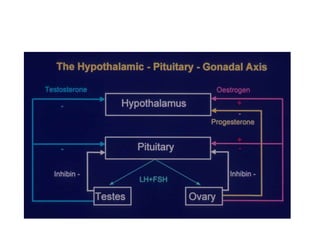
• Onset of puberty signalled by the secretion of pulses of
Gonadotrophin Releasing Hormone (GnRH)
• Prior to puberty: hormonal feedback / central neural
suppression of GnRH release suppress onset of puberty
• Hypothalamo-pituitary-gonadal axis starts working in
foetus. After birth, sex hormones and gonadotrophins
(FSH, LH) found in adult levels
• Levels reduce in months after birth; pulsatile GnRH
reduces in childhood and increases in frequency and
amplitude before puberty
• For 2 yrs before puberty, rise in adrenal androgens
early pubic hair and spots
Physiology of Puberty
• Activation of the hypothalamic – pituitary –
gonadal axis
– Induces and enhances progressive ovarian
and testicular sex hormone secretion
– Responsible for the profound biological,
morphological and psychological changes
which adolescents experience
Influencing Factors
• Genetics: 50-80% of variation in pubertal timing
• Environmental factors e.g. nutritional status
• Leptin → regulates appetite and metabolism
through hypothalmus. Permissive role in
regulation of timing of puberty
• Adrenarche: development of pubic and axillary
hair, body odour and acne
Adrenal Steroids
• DHEA, DHEA-S, Androstenedione
– Begins before rise in gonadotrophin secretion
– Responsible for appearance of axillary hair ad
in part for appearance of pubic hair
(adrenarche)
Physical Changes
• 5 stages from childhood to full maturity
• Marshall and Tanner (P1 – P5)
• Reflect progression in changes of the
external genitalia and of sexual hair
• Secondary sexual characteristics
– Mean age 10.5yrs in girls
– Mean age 11.5 – 12yrs in boys
Puberty: Girls
• Breast enlargement usually first sign.
• Thelarche
• Often unilateral
• Menarche usually 2-3 yrs after breast
development
• Growth spurt peaks before menarche
• Pubic and axillary hair growth: sign of adrenal
androgen secretion
• Starts at similar stage of apocrine gland sweat
production and associated with adult body odour
Examination: Girls
• Examine in supine position. Helps differentiate
between true breast enlargement vs adiposity
• Genital exam: pubic hair, changes in vaginal
mucosa.
• Cliteromegaly suggests androgen excess and
virilisation
• Mild acne normal in early puberty but rapid
onset and progression may suggest androgen
excess
• Vaginal exam only if sexually active
• NEVER rectal exam
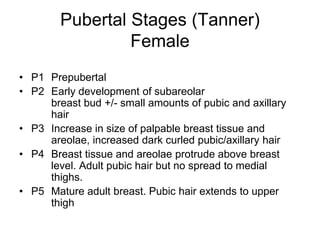
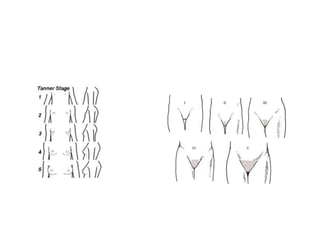
Pubertal Stages (Tanner)
Female
• P1 Prepubertal
• P2 Early development of subareolar
breast bud +/- small amounts of pubic and axillary
hair
• P3 Increase in size of palpable breast tissue and
areolae, increased dark curled pubic/axillary hair
• P4 Breast tissue and areolae protrude above breast
level. Adult pubic hair but no spread to medial
thighs.
• P5 Mature adult breast. Pubic hair extends to upper
thigh
Menarche
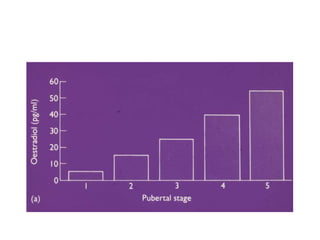
• During puberty oestradiol levels fluctuate widely
(reflecting successive waves of follicular
development that fail to reach ovulatory stage)
• Endometrium affected by oestradiol. Undergoes
cycles of proliferation and regression until point
where withdrawal of oestrogen results in the first
menstrual bleed (menarche)
• Increase of only 4% of final height after
menarche
Ovarian development
• Rising levels of plasma gonadotrophins
• Stimulate ovary to produce increasing
amounts of oestradiol
• Oestradiol ► secondary sex characteristics
– Breast growth and development
– Reproductive organ growth and development
– Fat redistribution (hips,breasts)
– Bone Maturation
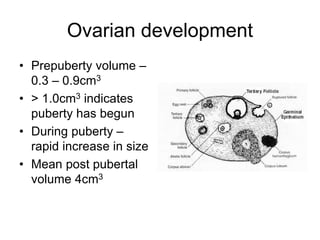
Ovarian development
• Prepuberty volume –
0.3 – 0.9cm3
• > 1.0cm3 indicates
puberty has begun
• During puberty –
rapid increase in size
• Mean post pubertal
volume 4cm3
Ovulation
• First ovulation occurs 6 – 9 mths after
menarche
• Plasma progesterone remains at low
levels even if secondary sexual
characteristics have appeared
• Rising progesterone after usually ►
ovulation
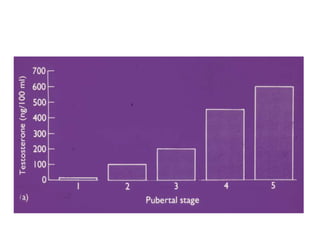
• Plasma testosterone rise during puberty
(not as much as in male)
Development of Uterus
• Prepubertal uterus is tear-drop shaped
• Neck and isthmus account for up to 66%
of uterine volume
• Following production of oestrogens –
uterus becomes pear shaped
• Uterine body increases in length (max 5 –
8cm) and thickness (proportionately more
than cervix)
Puberty: Boys
• First signs often go unnoticed
• Testicular enlargement (12-13 yrs)
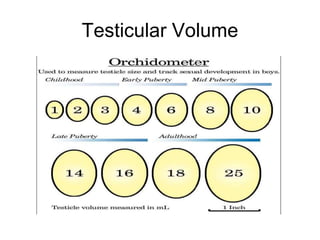
• Prepubertal testis – 2mls diameter
• Puberty begins when volume reaches
4mls
• Penile and scrotal enlargement occur
approx 1 yr after testicular enlargement.
Pubic hair appears at same time
Pubertal Growth Spurt: Boys
• Occurs later than in females
• Testosterone less of a stimulus to GH
responsiveness than oestradiol
• Testosterone required in larger
concentrations to produce same anabolic
effect
• Greater and later growth spurt in boys
Examination: Boys
• Testicular growth: associated with enlargement of
seminiferous tubules, epididymis, seminal vesicles and
prostate
• Testicular enlargement: FSH dependant
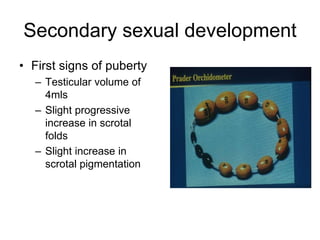
• Prader orchidometer: assessment of testicular volume
• Signs of androgen excess without commensurate
increase in testicular volume: worrisome e.g CAH,
testicular tumour
• Penile growth, scrotal changes, pubic hair occur 1-2 yrs
after testicular enlargement
• 50% of males varying degrees of breast hypertrophy
• Later signs: growth spurt, acne, voice deepening, facial
hair
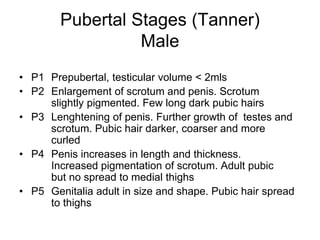
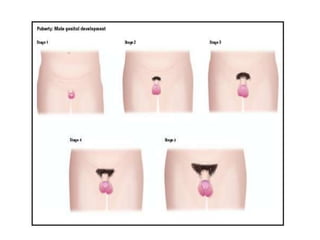
Pubertal Stages (Tanner)
Male
• P1 Prepubertal, testicular volume < 2mls
• P2 Enlargement of scrotum and penis. Scrotum
slightly pigmented. Few long dark pubic hairs
• P3 Lenghtening of penis. Further growth of testes and
scrotum. Pubic hair darker, coarser and more
curled
• P4 Penis increases in length and thickness.
Increased pigmentation of scrotum. Adult pubic
but no spread to medial thighs
• P5 Genitalia adult in size and shape. Pubic hair spread
to thighs
Secondary sexual development
• First signs of puberty
– Testicular volume of
4mls
– Slight progressive
increase in scrotal
folds
– Slight increase in
scrotal pigmentation
Testicular Volume
Final height
• Puberty usually
completed within 3 - 4
yrs of onset
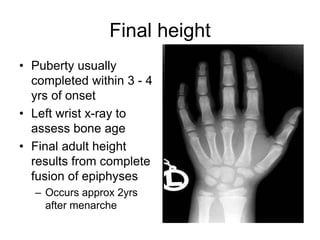
• Left wrist x-ray to
assess bone age
• Final adult height
results from complete
fusion of epiphyses
– Occurs approx 2yrs
after menarche
Assessment of abnormal puberty
• Many causes
• Aim of assessment: determine whether
underlying pathological abnormality vs
constitutional and benign pubertal
changes
• NB: recognise abnormal timing and
progression of puberty
What is abnormal?
• Delayed Puberty
• Early or Precocious Puberty
– More common in females
– Uncommon in males (usually pathological)
– < 8yrs in females
– < 9yrs in males
– May be associated with a growth spurt
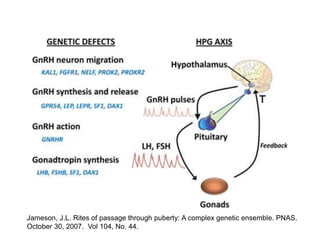
Jameson, J.L. Rites of passage through puberty: A complex genetic ensemble. PNAS.
October 30, 2007. Vol 104, No. 44.
• NR0B1 gene is involved in development &
function of the adrenal gland & HPG axis for
gonadotropin secretion
• GPR54 gene mutations affect GnRH release
(these patients do respond to exogenous GnRH)
• PROP1 mutations lead to problems in
differentiation of gonadotropicc, somatotropic,
lactotropic & thyrotropic cells.
Pubertal Delay
• Based on statistical norms (>2 SD from
the population mean)
• Pubertal delay is most often seen in males
– Present far more often than females as delay
causes more significant psychosocial
implications
• Most commonly no pathology present
Timing of Puberty
• Consider pubertal delay if:
– No breast development by age 13 in a female
– No menses by age 15 in a female
– Testicular size < 2.5cm or 4mL or pubic hair is not
present by age 14 in a male
• Consider precocious puberty if:
– Breast development before age 8 or menarche before
age 10 in females
– Testes volume > 3ml before 9 years.
– Pubic hair development before 8 years in females,
and 9 years in males
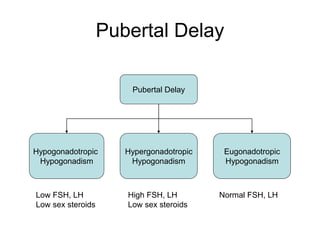
Pubertal Delay
Pubertal Delay
Hypogonadotropic
Hypogonadism
Hypergonadotropic
Hypogonadism
Eugonadotropic
Hypogonadism
Low FSH, LH
Low sex steroids
High FSH, LH
Low sex steroids
Normal FSH, LH
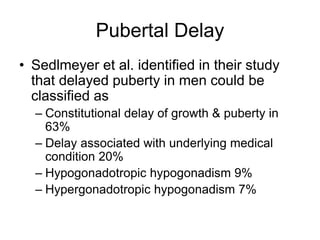
Pubertal Delay
• Sedlmeyer et al. identified in their study
that delayed puberty in men could be
classified as
– Constitutional delay of growth & puberty in
63%
– Delay associated with underlying medical
condition 20%
– Hypogonadotropic hypogonadism 9%
– Hypergonadotropic hypogonadism 7%
Hypogonadotropic Hypogonadism
• Constitutional Delay of Puberty
• Malnutrition
• Excessive Exercise
• Growth Hormone Deficiency
• Isolated Gonadotropin Deficiency
• Endocrine Causes
• Miscellaneous syndrome complexes
• Brain tumors
– Craniopharyngioma, astrocytomas, gliomas, histiocytosis X,
germinomas, prolactinomas
• Iron overload (pituitary damage)
• GnRH receptor abnormalities
Constitutional Delay of Puberty
• Most common cause of pubertal delay
• Delayed puberty often found in siblings or
parents
• Diagnosis of exclusion
• Bone age is delayed & consistent with degree of
pubertal maturation (usually delayed by 2yrs or
more
• Often associated with constitutional short stature
Constitutional Delay of Puberty
cont’d…
• Progressive height gain, but along lower
limits of normal (contrast to isolated
gonadotropin deficiency which has normal
growth, but no pubertal growth spurt)
• Early morning testosterone levels >
0.7nmol/L predict puberty within 15
months (Wu et al)
Constitutional Delay of Puberty
cont’d…
• Differentiated by pathological gonadotropin
deficiency by observation over time (no definitive
test available)
– GnRH stimulation test occasionally used, but not
conclusive
• HPG axis responds to GnRH more strongly if it has already
been exposed to this (reflects previous stimulation)
– hCG stimulation test can also be undertaken (Degros
et al)
• Stimulated testosterone < 3 nmol/L suggestive of
hypogonadotropic hypogonadism
• Stimulated testosterone >9 nmol/L suggestive of CDGP
Kallman Syndrome
• A syndrome of isolated gonadotropin deficiency
• 1/10,000 males, 1/50,000 females
• Present with ANOSMIA or HYPOSMIA
• Can be difficult to differentiate from constitutional
delay
• KAL-1 gene encodes protein (anosmin) required
for GnRH neurons to migrate from olfactory
placode to cribiform plate
• Can also be associated with harelip, cleft palate,
and congenital deafness
Idiopathic Hypogonadotropic
hypogonadism
• Males often have eunochoid body proportions
(upper-to-lower segment ratio of < 1)
• Can be sporadic or familial
• Can be related to problems in the receptor for
GnRH
• Can present as infant with micropenis &
cryptorchidism. These infants will not show
normal gonadotropin increase in the first few
weeks of life
Excessive exercise
• Questions as to whether lack of puberty
related to low body weight or more as a
direct effect of exercise
– Interruption of training in ballet dancers,
runners
Syndromes Associated with Pubertal
Delay
• Prader-Willi syndrome
• Laurence Moon syndrome
• Septo-optic dysplasia
• Bardet-Biedl syndrome
Panhypopituitarism
• Pubertal delay is usually not presentation
(present with short stature earlier)
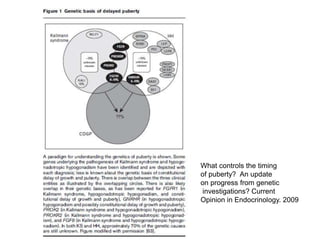
What controls the timing
of puberty? An update
on progress from genetic
investigations? Current
Opinion in Endocrinology. 2009
Hypergonadotropic hypogonadism
• Gonadal damage secondary to
chemotherapy/radiation
• Enzyme defects in the gonads
• Androgen insensitivity
• Ovarian/testicular dysgenesis (causes of
gonadal failure)
Gonadal Failure (bilateral)
• In these cases, circulating levels of LH & FSH are high
(hypergonadotropic hypogonadism)
• Congenital
– Turner Syndrome
– Klinefelter’s Syndrome
– Complete androgen insensitivity
• Acquired
– Chemotherapy/Radiation/Surgery
– Postinfectious (ie. mumps orchitis, coxsackievirus infection, dengue,
shigella, malaria, varicella)
– Testicular torsion
– Autoimmune/metabolic (autoimmune polyglandular syndromes)
– “Vanishing Testes syndrome”
– “Resistant Ovaries syndomre” (gonadatropin receptor problems)
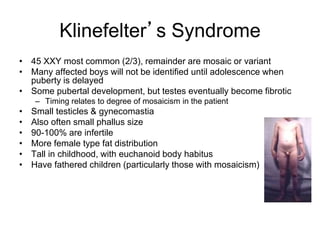
Klinefelter’s Syndrome
• 45 XXY most common (2/3), remainder are mosaic or variant
• Many affected boys will not be identified until adolescence when
puberty is delayed
• Some pubertal development, but testes eventually become fibrotic
– Timing relates to degree of mosaicism in the patient
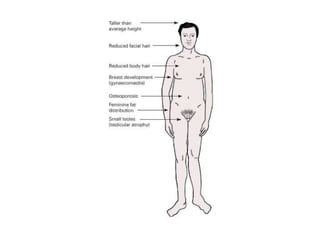
• Small testicles & gynecomastia
• Also often small phallus size
• 90-100% are infertile
• More female type fat distribution
• Tall in childhood, with euchanoid body habitus
• Have fathered children (particularly those with mosaicism)
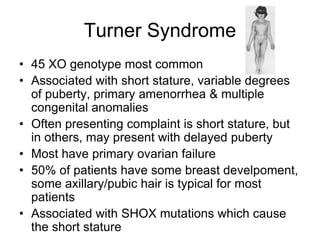
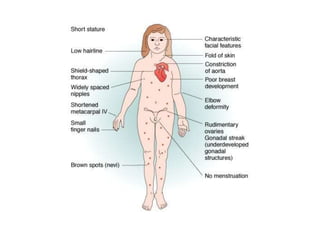
Turner Syndrome
• 45 XO genotype most common
• Associated with short stature, variable degrees
of puberty, primary amenorrhea & multiple
congenital anomalies
• Often presenting complaint is short stature, but
in others, may present with delayed puberty
• Most have primary ovarian failure
• 50% of patients have some breast develpoment,
some axillary/pubic hair is typical for most
patients
• Associated with SHOX mutations which cause
the short stature
Turner syndrome cont’d…
• Residual ovarian function can cause
breast development in 15-25%, menarche
in 5-10% & pregnancy in 1-3%
Receptor Defects
• LH gene defects and FSH gene defects
can result in high levels of FSH & LH with
low sex steroids
• Secondary sex characteristics are driven
by LH effects, can have FSH receptor
defect & normal secondary sex
characteristics
Eugonadotropic pubertal delay
• Congenital Anatomic Anomalies
– Imperforate hymen
– Vaginal atresia
– Vaginal aplasia
• PCOS
• Hyperprolactinemia
• In this case, secondary sex characteristics
are normal
• May have cyclic lower abdominal pain
Chronic Illness
• Can affect underlying genetic potential
• May limit adequate nutrition (ie.
inflammatory bowel disease, cystic
fibrosis)
• May be associated with glucocorticoid use,
chemotherapy or radiation
Other Endocrine Causes
• Hypothyroidism
– Interferes with gonadotropin secretion (affects
pulsatile secretion of LH)
• Hyperprolactinemia
– Interfere with gonadotropin production
**prolactinomas may not always be visible on
imaging**
Investigating Delayed Puberty
• Investigations depend on clinical presentation,
but may include
– Bone age
– Hormone levels (IGF-1, FSH, LH, estradiol,
testosterone, DHEAS, prolactin, TSH)
– Karyotype
– Hormone stimulation tests
• GnRH stimulation test
• GH stimulation test
– Imaging
• MRI if gonadotropins high & no obvious cause of
hypogonadotropic hypogonadism
Psychological Distress in Pubertal
Delay
• Much has been written about psychological distress in
males with delayed puberty
• Self-Esteem & Sexuality in girls with Turner Syndrome
has been studied
– Generally had low self-esteem scores (general & social)
– Lifetime sexual experience associated with overall SEI score
– Increasing sexual experience had no effect (all-or-none
phenomenon)
– Ross et al. -> initiation of estrogen therapy associated with
increased self-esteem in girls with Turner syndrome
Psychosocial Adjustment in Turner Syndrome. Journal of Clinical
And Endocriological Metabolism. 2006.
Stimulating Puberty in Males
• Should be begun at 12yrs of age
• Multiple indications
• For CDGP
– Indicated in those boys with psychological distress
(who have poor body image, low self-esteem, are
becoming socially withdrawn, or are subjected to
teasing or bullying)
• Time of therapy initiation may vary (if GH
deficiency present, delay starting to optimize
height achievement)
• Testosterone supplementation may help with
bone mineral density
• Exogenous testosterone
– Does not increase testicular size (normal puberty continues to
progress)
– Causes virilization (increased phallic size & scrotal rugae)
– Accelerates development of secondary sex characteristics to
avoid psychosocial complications
– Should be used only if bone age is delayed, and introducted
at approx. normal time of development
– Also stimulates growth spurt
– Side effects
• Local discomfort at site of injection
• priapism
Androgen Supplementation
• Testosterone
– IM Injections (once puberty has begun)
• Doses of 50-200mg IM using testosterone esters have been
used for periods of 6-12 months
• Depot testosterone like this results in high testosterone peaks &
a duration of action of 2-3 weeks
• Theoretic advantage for negative feedback on HPG axis to be
alleviated with “wearing off” of exogenous testosterone
– Oral
• Associated with more gradual effects
• Testosterone undecanoate 40mg po qdaily
• Oxandrolone 2.5mg po qdaily
– Gels, transdermal patches, etc. have not been
studied as well in boys & dosing is less predictable
• hCG
– Can also use to stimulate development of
secondary sexual characteristics
– Increases testicular size
– Can be used to stimulate fertility
– 200-500 units qalt days
Stimulating Puberty in Females
• Estrogen Replacement
– Increased gradually to adult replacement
levels (as puberty is normally a slow process)
– Aims:
• Attainment of secondary sexual characteristics
• Attainment of menses
• Stimulation of pubertal growth spurt
• Acquisition of bone mineral mass
• Uterine development
Estrogen Replacement in Females
– Initiate replacement at age 10-12 yrs & should continue over
course of normal puberty (approx. 3 yrs)
– Effect of estrogen on growth plate is dose dependent
• Higher doses stimulate epiphyseal growth plate closure
– Once dose of 10-15mcg of ethinyloestradiol has been reached,
breakthrough bleeding becomes apparent – once this occurs,
progesterone should be added on a cyclic basis to prevent
endometrial hyperplasia
– Dosing
• 0.3mg conjugated estrogen daily
• 5mcg of ethinyl estradiol daily
• Transdermal estrogen 25mcg twice weekly
• Increase q6-12 months until maximum (20 mcg)
• Suggested dosing increments
– Ethinyloestradiol
• 2mcg/day X 6 months
• 4 mcg/day X 6 months
• 6 mcg/day X 6 months
• 10 mcg/day X 6 months
• 15 mcg/day X 6 months
– 17-estradiol
• 5mcg/day po
• 10 mcg/day po
• 15 mcg/day po
• 20 mcg/day po
– Introduce progesterone once breakthrough bleeding has
occurred, after this point can switch to an oral contraceptive pill
Estrogen Side Effects
• Thromboembolism
• Endothelial dysfunction
• Hyperlipidemia
• Increased risk of breast & gynecological
malignancy
• Increased risk of gallstones
Achieving Fertility
• May require pulses of GnRH in females
• hCG in males 1-2 times/week helps to
maintain spermatogenesis
– 1200-5000 IU hCG IM 3 times weekly
– 12.5-150 hMG IM 3 times weekly
Assessment 1
• Full history of previous growth and
development
• Record timing and sequence of physical
milestones and behavioural changes of
puberty
• Full medical and surgical history
• If underweight: take full nutritional history
• Family hx of early or delayed puberty
• Family hx of any genetic disease
Assessment 2
• Plot height, weight, BMI and growth
velocity
• Compare with old measurements if
available
• Examine all systems: endocrine /
neurology NB
• Optic fundi, visual fields, sense of smell
• Genitalia, body habitus, stage of puberty
Delayed Puberty:
Hypogonadotrophic
• Constitutional (familial, sporadic)
• Chronic illness (CF, Crohns Disease, Renal failure)
• Malnutrition (Anorexia, CF, coeliac disease)
• Exercise
• PCOS
• Tumours of pituitary/hypothalamus (craniopharyngioma)
• Hypothalamic syndromes (PWS, Laurence-Moon-Biedl)
• Hypothyroidism
• Suppression 20 to hyperthyroidism, hyperprolactinemia,
Cushing Syndrome, CAH
• Panhypopituitarism
Delayed Puberty:
Hypergonadotrophic
• Congenital
– Turner Syndrome
– Klinefelters Syndrome
• Acquired
– Irradiation / Chemotherapy
– Surgery
– Testicular torsion, trauma
– Infection
– Autoimmunity
Precocious Puberty
• Onset of secondary sexual characteristics
< 8yrs in girls and < 9yrs in boys
• 5 times more common in girls
• Usually benign central process – girls
• Pathological in ~ 50% in boys
Precocious puberty
Defined as the onset of secondary sexual
characteristics before 8 yr age in girls and 9 yr
in boys.
Classification of precocious puberty
 True precocious puberty ( central or gonadotropin-
dependent = CPP)
 Precocious pseudopuberty ( peripheral,
gonadoptropin independent (PPP)
 Mixed type
Conditions causing central precocious
puberty
• Idiopathic
• organic brain lesions
(inflamation, malformation, trauma, chemotherapy,
radiotherapy, brain tumor)
• Hypothyroidism
Conditions causing precocious
pseudopuberty in females
• Iso sexual ( feminizing ) conditions
Mc cune – Albrightsyndrome
Autonomous ovarian cyst
Ovarian tumors
Feminizing adrenocortical tumor
Exogenous estrogens
cont
• Hetrosexual (masculinizing)
Congenital adrenal hyperplasia
Adrenal tumor
Ovarian tumor
Glucocorticoid receptor defect
Exogenous androgens.
Conditions causing precocious
pseudopuberty in males
• Isosexual
congenital adrenal hyperplasia
Adrenocortical tumor
Leydig cell tumor
Familial male precocious puberty
HCG secreting tumor
Teratoma
cont
Glucocorticoid receptor defect
Exogenous androgen
• Hertrosexual
Feminizing adrenocortical tumor
Exogenous estrogens
Approach to patient with precocious
puberty
• History
(Medication )
(family history of precocious puberty)
• Physical examination
(Wt, Ht, Eye, Thyroid, abdomen, tests)
• paraclinical findings
• bone age
cont
• Estradial
• Testosterone
• LH
• FSH
• GnRH stimulation test
(LH/FSH> 1)
(LH>5- 10 IU/L)
• Sonography
(ovaries, Uterus, adrenal glands, testes)
• MRI of brain
(MRI of hypothalamus and hypophysis)
cont
The goals of treatment for CPP
1. Improvement of adult height
2. Prevention of social and psychological
problems.
Treatment of CPP
GnRH analogues
GnRH antagonist
Aromatize inhibitors
Indications for therapy with GnRH
agonist
• True precocious puberty in males
• Rapid progressive CPP in girls
• To stop puberty because of social and
psychological reasons
The effect of GnRH agonist therapy on:
• Growth
• Skeletal age
• Pubertal development
• Hormones
Treatment is effective if:
1. Serum sex hormone concentration
decrease to prepubertal levels
( testosterone < 20ng/ dL in boys estradial
< 10pg/mL in girls)
1. Serum FSH and LH < 1 IU/L
2. LH/FSH < 1
Physiological status after completion
of therapy
• Growth rate
• Bone density
• Pubertal development
• Hormones
• Fertility
Premature thelarche / pubarche
• Thelarche – beginning of breast development
• Pubarche – first appearance of pubic hair
– (more common in certain populations e.g asian / afro-caribbean )
• More common than true precocious puberty
• Benign variants
– breast development in girls < 3yrs with spontaneous regression
– Pubic hair in boys and girls < 7yrs due to adrenal androgen
secretion in middle childhood
– NB Examination normal or may be slight advance in growth
curve
Precocious Puberty
Gonadotrophin dependant
• Idiopathic (sporadic / familial)
• Congenital (Hydrocephalus)
• Acquired (irradiation/surgery/infection)
• Tumours (hamartomas/gliomas)
• Hypothyroidism
• Russell Silver Syndrome
• Mc Cune Albright Syndrome
Precocious Puberty
Gonadotrophin Independant
• Normal pattern of puberty absent
– Virilisation of female (CAH)
– Feminisation of a boy (oestrogen producing
leydig tumour)
– Adrenal Tumour
– Ovarian Tumour
Investigations
• Blood Tests (first line)
– FBC
– U&E
– LFT’s
– TFT’s
– FSH/LH
– Oest/Testosterone
– 17 OHP / 11 DOC
– Adrenal androgens
– Prolactin
• Second line
– GnRH assay
– Beta –HCG
– Karyotype if indicated
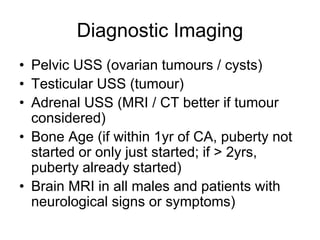
Diagnostic Imaging
• Pelvic USS (ovarian tumours / cysts)
• Testicular USS (tumour)
• Adrenal USS (MRI / CT better if tumour
considered)
• Bone Age (if within 1yr of CA, puberty not
started or only just started; if > 2yrs,
puberty already started)
• Brain MRI in all males and patients with
neurological signs or symptoms)
Management
• Treat systemic disease
• Psychological support
• Promote puberty / growth if necessary
– Low dose testosterone
– Ethinyloestradiol
Issues
• Treatment of the cause e.g. cranial
neoplasm
• Behavioural difficulties – psychology
• Reduce rate of skeletal maturation (early
growth spurt may result in early epiphyseal
closure and reduced final adult height)
– Halt or slow puberty (GnRH analogue)
– Inhibit action of excess sex steroids
Growth and Puberty
• GH plays role in pubertal development
• Amplifies ovarian response to gonadotrophins
• IGF-1 enhances gonadotrophin effect on
granulosa cells
• Isolated GH deficiency associated with pubertal
delay, diminished Leydig cell function and
decreased response to chorionic
gonadotrophins
• GH administration can restore testicular
responsiveness to LH and Leydig Cell
steroidogenesis
Growth and Puberty
• Growth hormone-releasing factor (GRF) levels
and GH secretion increase considerably during
puberty, mainly at night
• Amplitude of GH peaks increases in early
puberty – growth spurt
• IGF-1 ►important modulator of growth during
childhood and adolescence
• Adrenal androgens have little physiological role
in normal growth
Thelarche
• Absence of a growth
spurt and axillary or
pubic hair
differentiates
thelarche from
precocious puberty
Ambiguous genitalia
• Range of presentations
– Inadequately developed male to virilised female
• Most common cause is Congenital Adrenal
Hyperplasia → virilised female
• Urgent identification as can cause adrenal
failure in neonatal period
• Do not ascribe sex immediately
• Identify cause of intersex
• Karyotype does not indicate the sex of rearing
• Family counselling imperative
• Early surgery now less popular
Thank You

THE CHANGES THAT YOUR BODY UNDERGOES. UNDERSTANDING PUBERTY

  • 1.
    Puberty – Normaland Abnormal For UG-2014
  • 2.
    Puberty • Disorders ofpuberty constitute one of most common referrals to paediatric endocrine clinics • Careful history and examination paramount • Ensure sensitivity at all times • Chaperone during pubertal examination
  • 3.
    Puberty • Physiological transitionfrom childhood to reproductive maturity • Associated with: – Growth spurt – Appearance of both primary and secondary sexual characteristics in children – Occurs between 8 and 14yrs in girls – Occurs between 9 and 14yrs in boys
  • 4.
    Puberty • Important tounderstand – Range of normal – Population differences
  • 5.
    Normal Puberty: Endocrinecontrol • Onset of puberty signalled by the secretion of pulses of Gonadotrophin Releasing Hormone (GnRH) • Prior to puberty: hormonal feedback / central neural suppression of GnRH release suppress onset of puberty • Hypothalamo-pituitary-gonadal axis starts working in foetus. After birth, sex hormones and gonadotrophins (FSH, LH) found in adult levels • Levels reduce in months after birth; pulsatile GnRH reduces in childhood and increases in frequency and amplitude before puberty • For 2 yrs before puberty, rise in adrenal androgens early pubic hair and spots
  • 7.
    Physiology of Puberty •Activation of the hypothalamic – pituitary – gonadal axis – Induces and enhances progressive ovarian and testicular sex hormone secretion – Responsible for the profound biological, morphological and psychological changes which adolescents experience
  • 8.
    Influencing Factors • Genetics:50-80% of variation in pubertal timing • Environmental factors e.g. nutritional status • Leptin → regulates appetite and metabolism through hypothalmus. Permissive role in regulation of timing of puberty • Adrenarche: development of pubic and axillary hair, body odour and acne
  • 9.
    Adrenal Steroids • DHEA,DHEA-S, Androstenedione – Begins before rise in gonadotrophin secretion – Responsible for appearance of axillary hair ad in part for appearance of pubic hair (adrenarche)
  • 11.
    Physical Changes • 5stages from childhood to full maturity • Marshall and Tanner (P1 – P5) • Reflect progression in changes of the external genitalia and of sexual hair • Secondary sexual characteristics – Mean age 10.5yrs in girls – Mean age 11.5 – 12yrs in boys
  • 12.
    Puberty: Girls • Breastenlargement usually first sign. • Thelarche • Often unilateral • Menarche usually 2-3 yrs after breast development • Growth spurt peaks before menarche • Pubic and axillary hair growth: sign of adrenal androgen secretion • Starts at similar stage of apocrine gland sweat production and associated with adult body odour
  • 13.
    Examination: Girls • Examinein supine position. Helps differentiate between true breast enlargement vs adiposity • Genital exam: pubic hair, changes in vaginal mucosa. • Cliteromegaly suggests androgen excess and virilisation • Mild acne normal in early puberty but rapid onset and progression may suggest androgen excess • Vaginal exam only if sexually active • NEVER rectal exam
  • 14.
    Pubertal Stages (Tanner) Female •P1 Prepubertal • P2 Early development of subareolar breast bud +/- small amounts of pubic and axillary hair • P3 Increase in size of palpable breast tissue and areolae, increased dark curled pubic/axillary hair • P4 Breast tissue and areolae protrude above breast level. Adult pubic hair but no spread to medial thighs. • P5 Mature adult breast. Pubic hair extends to upper thigh
  • 16.
    Menarche • During pubertyoestradiol levels fluctuate widely (reflecting successive waves of follicular development that fail to reach ovulatory stage) • Endometrium affected by oestradiol. Undergoes cycles of proliferation and regression until point where withdrawal of oestrogen results in the first menstrual bleed (menarche) • Increase of only 4% of final height after menarche
  • 17.
    Ovarian development • Risinglevels of plasma gonadotrophins • Stimulate ovary to produce increasing amounts of oestradiol • Oestradiol ► secondary sex characteristics – Breast growth and development – Reproductive organ growth and development – Fat redistribution (hips,breasts) – Bone Maturation
  • 18.
    Ovarian development • Prepubertyvolume – 0.3 – 0.9cm3 • > 1.0cm3 indicates puberty has begun • During puberty – rapid increase in size • Mean post pubertal volume 4cm3
  • 19.
    Ovulation • First ovulationoccurs 6 – 9 mths after menarche • Plasma progesterone remains at low levels even if secondary sexual characteristics have appeared • Rising progesterone after usually ► ovulation • Plasma testosterone rise during puberty (not as much as in male)
  • 20.
    Development of Uterus •Prepubertal uterus is tear-drop shaped • Neck and isthmus account for up to 66% of uterine volume • Following production of oestrogens – uterus becomes pear shaped • Uterine body increases in length (max 5 – 8cm) and thickness (proportionately more than cervix)
  • 22.
    Puberty: Boys • Firstsigns often go unnoticed • Testicular enlargement (12-13 yrs) • Prepubertal testis – 2mls diameter • Puberty begins when volume reaches 4mls • Penile and scrotal enlargement occur approx 1 yr after testicular enlargement. Pubic hair appears at same time
  • 23.
    Pubertal Growth Spurt:Boys • Occurs later than in females • Testosterone less of a stimulus to GH responsiveness than oestradiol • Testosterone required in larger concentrations to produce same anabolic effect • Greater and later growth spurt in boys
  • 24.
    Examination: Boys • Testiculargrowth: associated with enlargement of seminiferous tubules, epididymis, seminal vesicles and prostate • Testicular enlargement: FSH dependant • Prader orchidometer: assessment of testicular volume • Signs of androgen excess without commensurate increase in testicular volume: worrisome e.g CAH, testicular tumour • Penile growth, scrotal changes, pubic hair occur 1-2 yrs after testicular enlargement • 50% of males varying degrees of breast hypertrophy • Later signs: growth spurt, acne, voice deepening, facial hair
  • 25.
    Pubertal Stages (Tanner) Male •P1 Prepubertal, testicular volume < 2mls • P2 Enlargement of scrotum and penis. Scrotum slightly pigmented. Few long dark pubic hairs • P3 Lenghtening of penis. Further growth of testes and scrotum. Pubic hair darker, coarser and more curled • P4 Penis increases in length and thickness. Increased pigmentation of scrotum. Adult pubic but no spread to medial thighs • P5 Genitalia adult in size and shape. Pubic hair spread to thighs
  • 27.
    Secondary sexual development •First signs of puberty – Testicular volume of 4mls – Slight progressive increase in scrotal folds – Slight increase in scrotal pigmentation
  • 28.
  • 30.
    Final height • Pubertyusually completed within 3 - 4 yrs of onset • Left wrist x-ray to assess bone age • Final adult height results from complete fusion of epiphyses – Occurs approx 2yrs after menarche
  • 31.
    Assessment of abnormalpuberty • Many causes • Aim of assessment: determine whether underlying pathological abnormality vs constitutional and benign pubertal changes • NB: recognise abnormal timing and progression of puberty
  • 32.
    What is abnormal? •Delayed Puberty • Early or Precocious Puberty – More common in females – Uncommon in males (usually pathological) – < 8yrs in females – < 9yrs in males – May be associated with a growth spurt
  • 33.
    Jameson, J.L. Ritesof passage through puberty: A complex genetic ensemble. PNAS. October 30, 2007. Vol 104, No. 44.
  • 34.
    • NR0B1 geneis involved in development & function of the adrenal gland & HPG axis for gonadotropin secretion • GPR54 gene mutations affect GnRH release (these patients do respond to exogenous GnRH) • PROP1 mutations lead to problems in differentiation of gonadotropicc, somatotropic, lactotropic & thyrotropic cells.
  • 35.
    Pubertal Delay • Basedon statistical norms (>2 SD from the population mean) • Pubertal delay is most often seen in males – Present far more often than females as delay causes more significant psychosocial implications • Most commonly no pathology present
  • 36.
    Timing of Puberty •Consider pubertal delay if: – No breast development by age 13 in a female – No menses by age 15 in a female – Testicular size < 2.5cm or 4mL or pubic hair is not present by age 14 in a male • Consider precocious puberty if: – Breast development before age 8 or menarche before age 10 in females – Testes volume > 3ml before 9 years. – Pubic hair development before 8 years in females, and 9 years in males
  • 37.
  • 38.
    Pubertal Delay • Sedlmeyeret al. identified in their study that delayed puberty in men could be classified as – Constitutional delay of growth & puberty in 63% – Delay associated with underlying medical condition 20% – Hypogonadotropic hypogonadism 9% – Hypergonadotropic hypogonadism 7%
  • 39.
    Hypogonadotropic Hypogonadism • ConstitutionalDelay of Puberty • Malnutrition • Excessive Exercise • Growth Hormone Deficiency • Isolated Gonadotropin Deficiency • Endocrine Causes • Miscellaneous syndrome complexes • Brain tumors – Craniopharyngioma, astrocytomas, gliomas, histiocytosis X, germinomas, prolactinomas • Iron overload (pituitary damage) • GnRH receptor abnormalities
  • 40.
    Constitutional Delay ofPuberty • Most common cause of pubertal delay • Delayed puberty often found in siblings or parents • Diagnosis of exclusion • Bone age is delayed & consistent with degree of pubertal maturation (usually delayed by 2yrs or more • Often associated with constitutional short stature
  • 41.
    Constitutional Delay ofPuberty cont’d… • Progressive height gain, but along lower limits of normal (contrast to isolated gonadotropin deficiency which has normal growth, but no pubertal growth spurt) • Early morning testosterone levels > 0.7nmol/L predict puberty within 15 months (Wu et al)
  • 42.
    Constitutional Delay ofPuberty cont’d… • Differentiated by pathological gonadotropin deficiency by observation over time (no definitive test available) – GnRH stimulation test occasionally used, but not conclusive • HPG axis responds to GnRH more strongly if it has already been exposed to this (reflects previous stimulation) – hCG stimulation test can also be undertaken (Degros et al) • Stimulated testosterone < 3 nmol/L suggestive of hypogonadotropic hypogonadism • Stimulated testosterone >9 nmol/L suggestive of CDGP
  • 44.
    Kallman Syndrome • Asyndrome of isolated gonadotropin deficiency • 1/10,000 males, 1/50,000 females • Present with ANOSMIA or HYPOSMIA • Can be difficult to differentiate from constitutional delay • KAL-1 gene encodes protein (anosmin) required for GnRH neurons to migrate from olfactory placode to cribiform plate • Can also be associated with harelip, cleft palate, and congenital deafness
  • 45.
    Idiopathic Hypogonadotropic hypogonadism • Malesoften have eunochoid body proportions (upper-to-lower segment ratio of < 1) • Can be sporadic or familial • Can be related to problems in the receptor for GnRH • Can present as infant with micropenis & cryptorchidism. These infants will not show normal gonadotropin increase in the first few weeks of life
  • 46.
    Excessive exercise • Questionsas to whether lack of puberty related to low body weight or more as a direct effect of exercise – Interruption of training in ballet dancers, runners
  • 47.
    Syndromes Associated withPubertal Delay • Prader-Willi syndrome • Laurence Moon syndrome • Septo-optic dysplasia • Bardet-Biedl syndrome
  • 48.
    Panhypopituitarism • Pubertal delayis usually not presentation (present with short stature earlier)
  • 49.
    What controls thetiming of puberty? An update on progress from genetic investigations? Current Opinion in Endocrinology. 2009
  • 50.
    Hypergonadotropic hypogonadism • Gonadaldamage secondary to chemotherapy/radiation • Enzyme defects in the gonads • Androgen insensitivity • Ovarian/testicular dysgenesis (causes of gonadal failure)
  • 51.
    Gonadal Failure (bilateral) •In these cases, circulating levels of LH & FSH are high (hypergonadotropic hypogonadism) • Congenital – Turner Syndrome – Klinefelter’s Syndrome – Complete androgen insensitivity • Acquired – Chemotherapy/Radiation/Surgery – Postinfectious (ie. mumps orchitis, coxsackievirus infection, dengue, shigella, malaria, varicella) – Testicular torsion – Autoimmune/metabolic (autoimmune polyglandular syndromes) – “Vanishing Testes syndrome” – “Resistant Ovaries syndomre” (gonadatropin receptor problems)
  • 52.
    Klinefelter’s Syndrome • 45XXY most common (2/3), remainder are mosaic or variant • Many affected boys will not be identified until adolescence when puberty is delayed • Some pubertal development, but testes eventually become fibrotic – Timing relates to degree of mosaicism in the patient • Small testicles & gynecomastia • Also often small phallus size • 90-100% are infertile • More female type fat distribution • Tall in childhood, with euchanoid body habitus • Have fathered children (particularly those with mosaicism)
  • 54.
    Turner Syndrome • 45XO genotype most common • Associated with short stature, variable degrees of puberty, primary amenorrhea & multiple congenital anomalies • Often presenting complaint is short stature, but in others, may present with delayed puberty • Most have primary ovarian failure • 50% of patients have some breast develpoment, some axillary/pubic hair is typical for most patients • Associated with SHOX mutations which cause the short stature
  • 55.
    Turner syndrome cont’d… •Residual ovarian function can cause breast development in 15-25%, menarche in 5-10% & pregnancy in 1-3%
  • 57.
    Receptor Defects • LHgene defects and FSH gene defects can result in high levels of FSH & LH with low sex steroids • Secondary sex characteristics are driven by LH effects, can have FSH receptor defect & normal secondary sex characteristics
  • 58.
    Eugonadotropic pubertal delay •Congenital Anatomic Anomalies – Imperforate hymen – Vaginal atresia – Vaginal aplasia • PCOS • Hyperprolactinemia
  • 59.
    • In thiscase, secondary sex characteristics are normal • May have cyclic lower abdominal pain
  • 60.
    Chronic Illness • Canaffect underlying genetic potential • May limit adequate nutrition (ie. inflammatory bowel disease, cystic fibrosis) • May be associated with glucocorticoid use, chemotherapy or radiation
  • 61.
    Other Endocrine Causes •Hypothyroidism – Interferes with gonadotropin secretion (affects pulsatile secretion of LH) • Hyperprolactinemia – Interfere with gonadotropin production **prolactinomas may not always be visible on imaging**
  • 62.
    Investigating Delayed Puberty •Investigations depend on clinical presentation, but may include – Bone age – Hormone levels (IGF-1, FSH, LH, estradiol, testosterone, DHEAS, prolactin, TSH) – Karyotype – Hormone stimulation tests • GnRH stimulation test • GH stimulation test – Imaging • MRI if gonadotropins high & no obvious cause of hypogonadotropic hypogonadism
  • 63.
    Psychological Distress inPubertal Delay • Much has been written about psychological distress in males with delayed puberty • Self-Esteem & Sexuality in girls with Turner Syndrome has been studied – Generally had low self-esteem scores (general & social) – Lifetime sexual experience associated with overall SEI score – Increasing sexual experience had no effect (all-or-none phenomenon) – Ross et al. -> initiation of estrogen therapy associated with increased self-esteem in girls with Turner syndrome Psychosocial Adjustment in Turner Syndrome. Journal of Clinical And Endocriological Metabolism. 2006.
  • 64.
    Stimulating Puberty inMales • Should be begun at 12yrs of age • Multiple indications • For CDGP – Indicated in those boys with psychological distress (who have poor body image, low self-esteem, are becoming socially withdrawn, or are subjected to teasing or bullying) • Time of therapy initiation may vary (if GH deficiency present, delay starting to optimize height achievement) • Testosterone supplementation may help with bone mineral density
  • 65.
    • Exogenous testosterone –Does not increase testicular size (normal puberty continues to progress) – Causes virilization (increased phallic size & scrotal rugae) – Accelerates development of secondary sex characteristics to avoid psychosocial complications – Should be used only if bone age is delayed, and introducted at approx. normal time of development – Also stimulates growth spurt – Side effects • Local discomfort at site of injection • priapism
  • 66.
    Androgen Supplementation • Testosterone –IM Injections (once puberty has begun) • Doses of 50-200mg IM using testosterone esters have been used for periods of 6-12 months • Depot testosterone like this results in high testosterone peaks & a duration of action of 2-3 weeks • Theoretic advantage for negative feedback on HPG axis to be alleviated with “wearing off” of exogenous testosterone – Oral • Associated with more gradual effects • Testosterone undecanoate 40mg po qdaily • Oxandrolone 2.5mg po qdaily – Gels, transdermal patches, etc. have not been studied as well in boys & dosing is less predictable
  • 67.
    • hCG – Canalso use to stimulate development of secondary sexual characteristics – Increases testicular size – Can be used to stimulate fertility – 200-500 units qalt days
  • 68.
    Stimulating Puberty inFemales • Estrogen Replacement – Increased gradually to adult replacement levels (as puberty is normally a slow process) – Aims: • Attainment of secondary sexual characteristics • Attainment of menses • Stimulation of pubertal growth spurt • Acquisition of bone mineral mass • Uterine development
  • 69.
    Estrogen Replacement inFemales – Initiate replacement at age 10-12 yrs & should continue over course of normal puberty (approx. 3 yrs) – Effect of estrogen on growth plate is dose dependent • Higher doses stimulate epiphyseal growth plate closure – Once dose of 10-15mcg of ethinyloestradiol has been reached, breakthrough bleeding becomes apparent – once this occurs, progesterone should be added on a cyclic basis to prevent endometrial hyperplasia – Dosing • 0.3mg conjugated estrogen daily • 5mcg of ethinyl estradiol daily • Transdermal estrogen 25mcg twice weekly • Increase q6-12 months until maximum (20 mcg)
  • 70.
    • Suggested dosingincrements – Ethinyloestradiol • 2mcg/day X 6 months • 4 mcg/day X 6 months • 6 mcg/day X 6 months • 10 mcg/day X 6 months • 15 mcg/day X 6 months – 17-estradiol • 5mcg/day po • 10 mcg/day po • 15 mcg/day po • 20 mcg/day po – Introduce progesterone once breakthrough bleeding has occurred, after this point can switch to an oral contraceptive pill
  • 71.
    Estrogen Side Effects •Thromboembolism • Endothelial dysfunction • Hyperlipidemia • Increased risk of breast & gynecological malignancy • Increased risk of gallstones
  • 72.
    Achieving Fertility • Mayrequire pulses of GnRH in females • hCG in males 1-2 times/week helps to maintain spermatogenesis – 1200-5000 IU hCG IM 3 times weekly – 12.5-150 hMG IM 3 times weekly
  • 73.
    Assessment 1 • Fullhistory of previous growth and development • Record timing and sequence of physical milestones and behavioural changes of puberty • Full medical and surgical history • If underweight: take full nutritional history • Family hx of early or delayed puberty • Family hx of any genetic disease
  • 74.
    Assessment 2 • Plotheight, weight, BMI and growth velocity • Compare with old measurements if available • Examine all systems: endocrine / neurology NB • Optic fundi, visual fields, sense of smell • Genitalia, body habitus, stage of puberty
  • 75.
    Delayed Puberty: Hypogonadotrophic • Constitutional(familial, sporadic) • Chronic illness (CF, Crohns Disease, Renal failure) • Malnutrition (Anorexia, CF, coeliac disease) • Exercise • PCOS • Tumours of pituitary/hypothalamus (craniopharyngioma) • Hypothalamic syndromes (PWS, Laurence-Moon-Biedl) • Hypothyroidism • Suppression 20 to hyperthyroidism, hyperprolactinemia, Cushing Syndrome, CAH • Panhypopituitarism
  • 76.
    Delayed Puberty: Hypergonadotrophic • Congenital –Turner Syndrome – Klinefelters Syndrome • Acquired – Irradiation / Chemotherapy – Surgery – Testicular torsion, trauma – Infection – Autoimmunity
  • 77.
    Precocious Puberty • Onsetof secondary sexual characteristics < 8yrs in girls and < 9yrs in boys • 5 times more common in girls • Usually benign central process – girls • Pathological in ~ 50% in boys
  • 78.
    Precocious puberty Defined asthe onset of secondary sexual characteristics before 8 yr age in girls and 9 yr in boys.
  • 79.
    Classification of precociouspuberty  True precocious puberty ( central or gonadotropin- dependent = CPP)  Precocious pseudopuberty ( peripheral, gonadoptropin independent (PPP)  Mixed type
  • 80.
    Conditions causing centralprecocious puberty • Idiopathic • organic brain lesions (inflamation, malformation, trauma, chemotherapy, radiotherapy, brain tumor) • Hypothyroidism
  • 81.
    Conditions causing precocious pseudopubertyin females • Iso sexual ( feminizing ) conditions Mc cune – Albrightsyndrome Autonomous ovarian cyst Ovarian tumors Feminizing adrenocortical tumor Exogenous estrogens cont
  • 82.
    • Hetrosexual (masculinizing) Congenitaladrenal hyperplasia Adrenal tumor Ovarian tumor Glucocorticoid receptor defect Exogenous androgens.
  • 83.
    Conditions causing precocious pseudopubertyin males • Isosexual congenital adrenal hyperplasia Adrenocortical tumor Leydig cell tumor Familial male precocious puberty HCG secreting tumor Teratoma cont
  • 84.
    Glucocorticoid receptor defect Exogenousandrogen • Hertrosexual Feminizing adrenocortical tumor Exogenous estrogens
  • 85.
    Approach to patientwith precocious puberty • History (Medication ) (family history of precocious puberty) • Physical examination (Wt, Ht, Eye, Thyroid, abdomen, tests) • paraclinical findings • bone age cont
  • 86.
    • Estradial • Testosterone •LH • FSH • GnRH stimulation test (LH/FSH> 1) (LH>5- 10 IU/L) • Sonography (ovaries, Uterus, adrenal glands, testes) • MRI of brain (MRI of hypothalamus and hypophysis) cont
  • 87.
    The goals oftreatment for CPP 1. Improvement of adult height 2. Prevention of social and psychological problems.
  • 88.
    Treatment of CPP GnRHanalogues GnRH antagonist Aromatize inhibitors
  • 89.
    Indications for therapywith GnRH agonist • True precocious puberty in males • Rapid progressive CPP in girls • To stop puberty because of social and psychological reasons
  • 90.
    The effect ofGnRH agonist therapy on: • Growth • Skeletal age • Pubertal development • Hormones
  • 91.
    Treatment is effectiveif: 1. Serum sex hormone concentration decrease to prepubertal levels ( testosterone < 20ng/ dL in boys estradial < 10pg/mL in girls) 1. Serum FSH and LH < 1 IU/L 2. LH/FSH < 1
  • 92.
    Physiological status aftercompletion of therapy • Growth rate • Bone density • Pubertal development • Hormones • Fertility
  • 93.
    Premature thelarche /pubarche • Thelarche – beginning of breast development • Pubarche – first appearance of pubic hair – (more common in certain populations e.g asian / afro-caribbean ) • More common than true precocious puberty • Benign variants – breast development in girls < 3yrs with spontaneous regression – Pubic hair in boys and girls < 7yrs due to adrenal androgen secretion in middle childhood – NB Examination normal or may be slight advance in growth curve
  • 94.
    Precocious Puberty Gonadotrophin dependant •Idiopathic (sporadic / familial) • Congenital (Hydrocephalus) • Acquired (irradiation/surgery/infection) • Tumours (hamartomas/gliomas) • Hypothyroidism • Russell Silver Syndrome • Mc Cune Albright Syndrome
  • 95.
    Precocious Puberty Gonadotrophin Independant •Normal pattern of puberty absent – Virilisation of female (CAH) – Feminisation of a boy (oestrogen producing leydig tumour) – Adrenal Tumour – Ovarian Tumour
  • 96.
    Investigations • Blood Tests(first line) – FBC – U&E – LFT’s – TFT’s – FSH/LH – Oest/Testosterone – 17 OHP / 11 DOC – Adrenal androgens – Prolactin • Second line – GnRH assay – Beta –HCG – Karyotype if indicated
  • 97.
    Diagnostic Imaging • PelvicUSS (ovarian tumours / cysts) • Testicular USS (tumour) • Adrenal USS (MRI / CT better if tumour considered) • Bone Age (if within 1yr of CA, puberty not started or only just started; if > 2yrs, puberty already started) • Brain MRI in all males and patients with neurological signs or symptoms)
  • 98.
    Management • Treat systemicdisease • Psychological support • Promote puberty / growth if necessary – Low dose testosterone – Ethinyloestradiol
  • 99.
    Issues • Treatment ofthe cause e.g. cranial neoplasm • Behavioural difficulties – psychology • Reduce rate of skeletal maturation (early growth spurt may result in early epiphyseal closure and reduced final adult height) – Halt or slow puberty (GnRH analogue) – Inhibit action of excess sex steroids
  • 100.
    Growth and Puberty •GH plays role in pubertal development • Amplifies ovarian response to gonadotrophins • IGF-1 enhances gonadotrophin effect on granulosa cells • Isolated GH deficiency associated with pubertal delay, diminished Leydig cell function and decreased response to chorionic gonadotrophins • GH administration can restore testicular responsiveness to LH and Leydig Cell steroidogenesis
  • 101.
    Growth and Puberty •Growth hormone-releasing factor (GRF) levels and GH secretion increase considerably during puberty, mainly at night • Amplitude of GH peaks increases in early puberty – growth spurt • IGF-1 ►important modulator of growth during childhood and adolescence • Adrenal androgens have little physiological role in normal growth
  • 102.
    Thelarche • Absence ofa growth spurt and axillary or pubic hair differentiates thelarche from precocious puberty
  • 103.
    Ambiguous genitalia • Rangeof presentations – Inadequately developed male to virilised female • Most common cause is Congenital Adrenal Hyperplasia → virilised female • Urgent identification as can cause adrenal failure in neonatal period • Do not ascribe sex immediately • Identify cause of intersex • Karyotype does not indicate the sex of rearing • Family counselling imperative • Early surgery now less popular
  • 104.