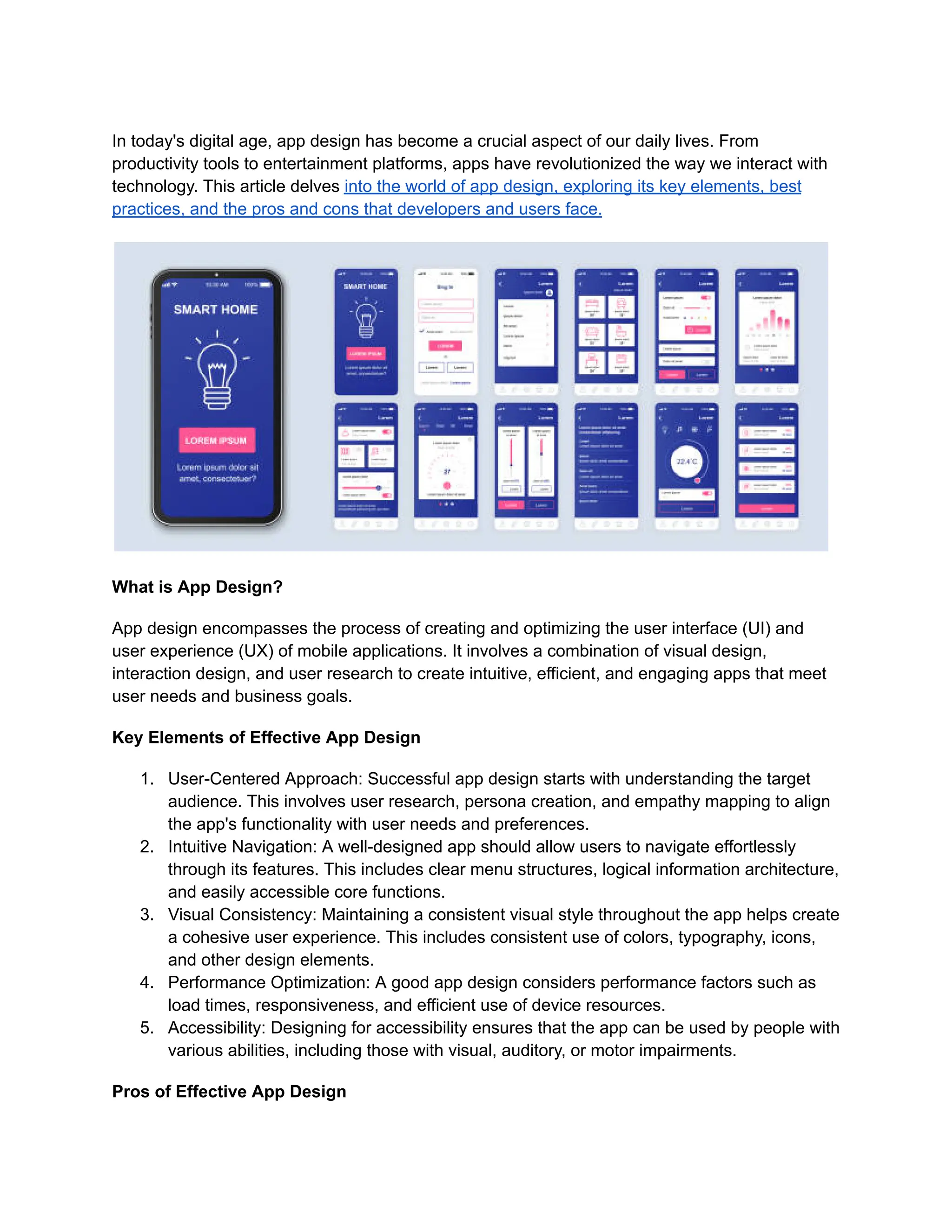
In today's digital age, app design has become a crucial aspect of our daily lives. From
productivity tools to entertainment platforms, apps have revolutionized the way we interact with
technology. This article delves into the world of app design, exploring its key elements, best
practices, and the pros and cons that developers and users face.
What is App Design?
App design encompasses the process of creating and optimizing the user interface (UI) and
user experience (UX) of mobile applications. It involves a combination of visual design,
interaction design, and user research to create intuitive, efficient, and engaging apps that meet
user needs and business goals.
Key Elements of Effective App Design
1. User-Centered Approach: Successful app design starts with understanding the target
audience. This involves user research, persona creation, and empathy mapping to align
the app's functionality with user needs and preferences.
2. Intuitive Navigation: A well-designed app should allow users to navigate effortlessly
through its features. This includes clear menu structures, logical information architecture,
and easily accessible core functions.
3. Visual Consistency: Maintaining a consistent visual style throughout the app helps create
a cohesive user experience. This includes consistent use of colors, typography, icons,
and other design elements.
4. Performance Optimization: A good app design considers performance factors such as
load times, responsiveness, and efficient use of device resources.
5. Accessibility: Designing for accessibility ensures that the app can be used by people with
various abilities, including those with visual, auditory, or motor impairments.
Pros of Effective App Design
1. Enhanced User Experience: A well-designed app provides a smooth, enjoyable
experience that keeps users engaged and coming back.
2. Increased User Retention: Intuitive design and easy navigation can lead to higher user
retention rates, as users are more likely to continue using an app that meets their needs
efficiently.
3. Brand Recognition: Consistent and appealing visual design can strengthen brand
identity and make the app more memorable to users.
4. Competitive Advantage: In a crowded app marketplace, superior design can set an app
apart from competitors and attract more users.
5. Improved Efficiency: Well-designed apps can help users accomplish tasks more quickly
and easily, leading to increased productivity.
6. Higher Conversion Rates: For e-commerce or subscription-based apps, good design can
lead to higher conversion rates by making the purchasing process smooth and intuitive.
7. Reduced Support Costs: Intuitive design can reduce the need for customer support by
making the app easier to use and understand.
Cons and Challenges in App Design
1. Time and Resource Intensive: Creating a high-quality app design requires significant
time, effort, and often a team of skilled professionals, which can be costly.
2. Balancing Aesthetics and Functionality: Sometimes, there's a tension between creating a
visually appealing design and maintaining optimal functionality. Striking the right balance
can be challenging.
3. Device Fragmentation: With a wide variety of devices and screen sizes available,
ensuring consistent design across all platforms can be complex and time-consuming.
4. Keeping Up with Design Trends: App design trends evolve rapidly, and staying current
while maintaining a unique identity can be challenging.
5. User Resistance to Change: Major design updates can sometimes face resistance from
users who have grown accustomed to the previous version.
6. Accessibility Challenges: Designing for accessibility can add complexity to the design
process and may sometimes conflict with certain aesthetic choices.
7. Performance Trade-offs: Highly designed apps with advanced graphics or animations
may face performance issues on older or less powerful devices.
Best Practices in App Design
1. Prioritize Simplicity: Keep the design clean and focused on core functionalities. Avoid
cluttering the interface with unnecessary elements.
2. Use Familiar Patterns: Utilize established design patterns that users are already familiar
with to reduce the learning curve.
3. Optimize for One-Handed Use: With increasing screen sizes, design layouts that allow
for comfortable one-handed operation when possible.
4. Provide Clear Feedback: Use visual, auditory, or haptic feedback to confirm user actions
and system status.
5. Implement Effective Onboarding: Guide new users through the app's key features with
an intuitive onboarding process.
6. Optimize for Speed: Prioritize fast load times and smooth transitions between screens.
7. Use Progressive Disclosure: Present information and options to users gradually to avoid
overwhelming them.
8. Test Thoroughly: Conduct extensive user testing to identify and address usability issues
before launch.
The Future of App Design
As technology continues to evolve, so does the field of app design. Some emerging trends and
considerations include:
1. AI and Machine Learning Integration: Apps are increasingly incorporating AI to
personalize user experiences and provide smarter, more contextual interactions.
2. Voice and Gesture Interfaces: As voice assistants and gesture control become more
prevalent, app designs will need to adapt to these new interaction methods.
3. Augmented Reality (AR) and Virtual Reality (VR): The growing adoption of AR and VR
technologies will open new possibilities and challenges for app designers.
4. 5G and Enhanced Connectivity: Faster network speeds will enable more sophisticated
app features and designs, but also raise user expectations for performance.
5. Privacy and Security by Design: With increasing concerns about data privacy, designing
apps with built-in privacy and security features will become even more critical.
Conclusion
App design is a dynamic and multifaceted field that plays a crucial role in shaping our digital
experiences. While it offers numerous benefits, including enhanced user experiences, increased
efficiency, and competitive advantages, it also presents challenges such as resource
intensiveness, device fragmentation, and the need to balance aesthetics with functionality.
As the digital landscape continues to evolve, app designers must stay adaptable, embracing
new technologies and user expectations while adhering to core principles of usability and
accessibility. By focusing on user-centered design, maintaining simplicity, and leveraging
emerging technologies thoughtfully, designers can create apps that not only meet current needs
but also pave the way for future innovations in digital interaction.
Ultimately, successful app design is about creating experiences that seamlessly integrate into
users' lives, providing value and delight in equal measure. As we look to the future, the art and
science of app design will undoubtedly continue to play a pivotal role in shaping our increasingly
digital world.
CLICK HERE TO GET STARTED

The Art and Science of App Design_ A Comprehensive Review.pdf

  • 1.
    In today's digitalage, app design has become a crucial aspect of our daily lives. From productivity tools to entertainment platforms, apps have revolutionized the way we interact with technology. This article delves into the world of app design, exploring its key elements, best practices, and the pros and cons that developers and users face. What is App Design? App design encompasses the process of creating and optimizing the user interface (UI) and user experience (UX) of mobile applications. It involves a combination of visual design, interaction design, and user research to create intuitive, efficient, and engaging apps that meet user needs and business goals. Key Elements of Effective App Design 1. User-Centered Approach: Successful app design starts with understanding the target audience. This involves user research, persona creation, and empathy mapping to align the app's functionality with user needs and preferences. 2. Intuitive Navigation: A well-designed app should allow users to navigate effortlessly through its features. This includes clear menu structures, logical information architecture, and easily accessible core functions. 3. Visual Consistency: Maintaining a consistent visual style throughout the app helps create a cohesive user experience. This includes consistent use of colors, typography, icons, and other design elements. 4. Performance Optimization: A good app design considers performance factors such as load times, responsiveness, and efficient use of device resources. 5. Accessibility: Designing for accessibility ensures that the app can be used by people with various abilities, including those with visual, auditory, or motor impairments. Pros of Effective App Design
  • 2.
    1. Enhanced UserExperience: A well-designed app provides a smooth, enjoyable experience that keeps users engaged and coming back. 2. Increased User Retention: Intuitive design and easy navigation can lead to higher user retention rates, as users are more likely to continue using an app that meets their needs efficiently. 3. Brand Recognition: Consistent and appealing visual design can strengthen brand identity and make the app more memorable to users. 4. Competitive Advantage: In a crowded app marketplace, superior design can set an app apart from competitors and attract more users. 5. Improved Efficiency: Well-designed apps can help users accomplish tasks more quickly and easily, leading to increased productivity. 6. Higher Conversion Rates: For e-commerce or subscription-based apps, good design can lead to higher conversion rates by making the purchasing process smooth and intuitive. 7. Reduced Support Costs: Intuitive design can reduce the need for customer support by making the app easier to use and understand. Cons and Challenges in App Design 1. Time and Resource Intensive: Creating a high-quality app design requires significant time, effort, and often a team of skilled professionals, which can be costly. 2. Balancing Aesthetics and Functionality: Sometimes, there's a tension between creating a visually appealing design and maintaining optimal functionality. Striking the right balance can be challenging. 3. Device Fragmentation: With a wide variety of devices and screen sizes available, ensuring consistent design across all platforms can be complex and time-consuming. 4. Keeping Up with Design Trends: App design trends evolve rapidly, and staying current while maintaining a unique identity can be challenging. 5. User Resistance to Change: Major design updates can sometimes face resistance from users who have grown accustomed to the previous version. 6. Accessibility Challenges: Designing for accessibility can add complexity to the design process and may sometimes conflict with certain aesthetic choices. 7. Performance Trade-offs: Highly designed apps with advanced graphics or animations may face performance issues on older or less powerful devices. Best Practices in App Design 1. Prioritize Simplicity: Keep the design clean and focused on core functionalities. Avoid cluttering the interface with unnecessary elements. 2. Use Familiar Patterns: Utilize established design patterns that users are already familiar with to reduce the learning curve. 3. Optimize for One-Handed Use: With increasing screen sizes, design layouts that allow for comfortable one-handed operation when possible. 4. Provide Clear Feedback: Use visual, auditory, or haptic feedback to confirm user actions and system status.
  • 3.
    5. Implement EffectiveOnboarding: Guide new users through the app's key features with an intuitive onboarding process. 6. Optimize for Speed: Prioritize fast load times and smooth transitions between screens. 7. Use Progressive Disclosure: Present information and options to users gradually to avoid overwhelming them. 8. Test Thoroughly: Conduct extensive user testing to identify and address usability issues before launch. The Future of App Design As technology continues to evolve, so does the field of app design. Some emerging trends and considerations include: 1. AI and Machine Learning Integration: Apps are increasingly incorporating AI to personalize user experiences and provide smarter, more contextual interactions. 2. Voice and Gesture Interfaces: As voice assistants and gesture control become more prevalent, app designs will need to adapt to these new interaction methods. 3. Augmented Reality (AR) and Virtual Reality (VR): The growing adoption of AR and VR technologies will open new possibilities and challenges for app designers. 4. 5G and Enhanced Connectivity: Faster network speeds will enable more sophisticated app features and designs, but also raise user expectations for performance. 5. Privacy and Security by Design: With increasing concerns about data privacy, designing apps with built-in privacy and security features will become even more critical. Conclusion App design is a dynamic and multifaceted field that plays a crucial role in shaping our digital experiences. While it offers numerous benefits, including enhanced user experiences, increased efficiency, and competitive advantages, it also presents challenges such as resource intensiveness, device fragmentation, and the need to balance aesthetics with functionality. As the digital landscape continues to evolve, app designers must stay adaptable, embracing new technologies and user expectations while adhering to core principles of usability and accessibility. By focusing on user-centered design, maintaining simplicity, and leveraging emerging technologies thoughtfully, designers can create apps that not only meet current needs but also pave the way for future innovations in digital interaction. Ultimately, successful app design is about creating experiences that seamlessly integrate into users' lives, providing value and delight in equal measure. As we look to the future, the art and science of app design will undoubtedly continue to play a pivotal role in shaping our increasingly digital world. CLICK HERE TO GET STARTED