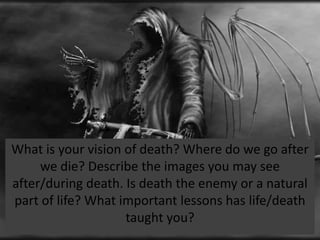
What is your vision of death? Where do we go after
     we die? Describe the images you may see
after/during death. Is death the enemy or a natural
part of life? What important lessons has life/death
                    taught you?
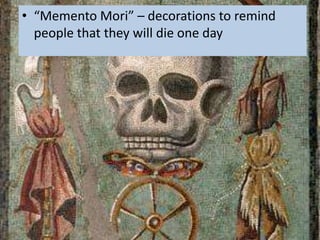
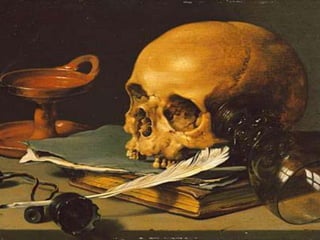
• “Memento Mori” – decorations to remind
  people that they will die one day
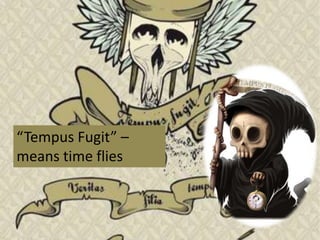
“Tempus Fugit” –
means time flies
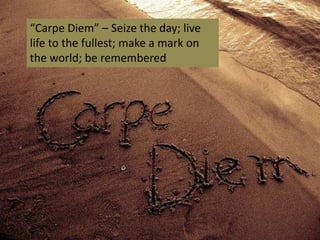
“Carpe Diem” – Seize the day; live
life to the fullest; make a mark on
the world; be remembered
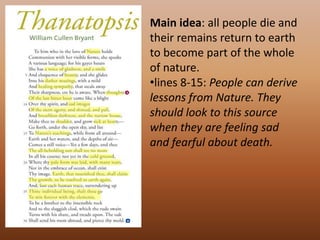
Main idea: all people die and
their remains return to earth
to become part of the whole
of nature.
•lines 8-15: People can derive
lessons from Nature. They
should look to this source
when they are feeling sad
and fearful about death.
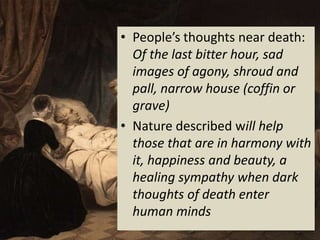
• People’s thoughts near death:
  Of the last bitter hour, sad
  images of agony, shroud and
  pall, narrow house (coffin or
  grave)
• Nature described will help
  those that are in harmony with
  it, happiness and beauty, a
  healing sympathy when dark
  thoughts of death enter
  human minds
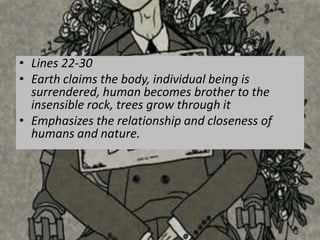
• Lines 22-30
• Earth claims the body, individual being is
  surrendered, human becomes brother to the
  insensible rock, trees grow through it
• Emphasizes the relationship and closeness of
  humans and nature.
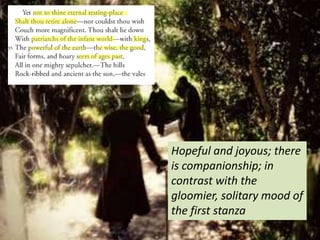
Hopeful and joyous; there
is companionship; in
contrast with the
gloomier, solitary mood of
the first stanza
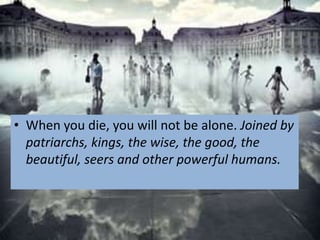
• When you die, you will not be alone. Joined by
  patriarchs, kings, the wise, the good, the
  beautiful, seers and other powerful humans.
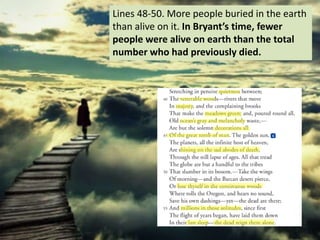
Lines 48-50. More people buried in the earth
than alive on it. In Bryant’s time, fewer
people were alive on earth than the total
number who had previously died.
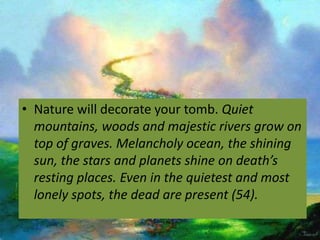
• Nature will decorate your tomb. Quiet
  mountains, woods and majestic rivers grow on
  top of graves. Melancholy ocean, the shining
  sun, the stars and planets shine on death’s
  resting places. Even in the quietest and most
  lonely spots, the dead are present (54).
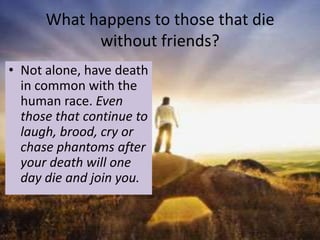
What happens to those that die
            without friends?
• Not alone, have death
  in common with the
  human race. Even
  those that continue to
  laugh, brood, cry or
  chase phantoms after
  your death will one
  day die and join you.
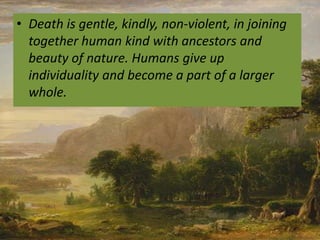
• Death is gentle, kindly, non-violent, in joining
  together human kind with ancestors and
  beauty of nature. Humans give up
  individuality and become a part of a larger
  whole.
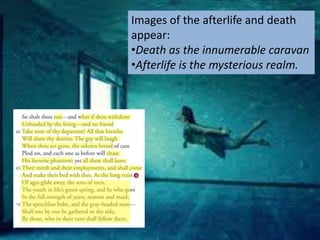
Images of the afterlife and death
appear:
•Death as the innumerable caravan
•Afterlife is the mysterious realm.
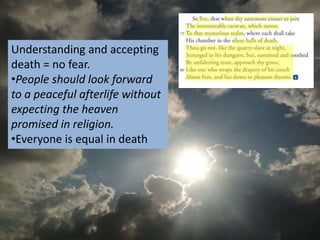
Understanding and accepting
death = no fear.
•People should look forward
to a peaceful afterlife without
expecting the heaven
promised in religion.
•Everyone is equal in death
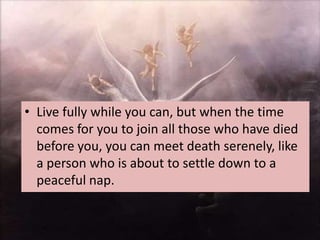
• Live fully while you can, but when the time
  comes for you to join all those who have died
  before you, you can meet death serenely, like
  a person who is about to settle down to a
  peaceful nap.

Thanatopsis - William Cullen Bryant

  • 1.
    What is yourvision of death? Where do we go after we die? Describe the images you may see after/during death. Is death the enemy or a natural part of life? What important lessons has life/death taught you?
  • 3.
    • “Memento Mori”– decorations to remind people that they will die one day
  • 5.
  • 6.
    “Carpe Diem” –Seize the day; live life to the fullest; make a mark on the world; be remembered
  • 7.
    Main idea: allpeople die and their remains return to earth to become part of the whole of nature. •lines 8-15: People can derive lessons from Nature. They should look to this source when they are feeling sad and fearful about death.
  • 8.
    • People’s thoughtsnear death: Of the last bitter hour, sad images of agony, shroud and pall, narrow house (coffin or grave) • Nature described will help those that are in harmony with it, happiness and beauty, a healing sympathy when dark thoughts of death enter human minds
  • 9.
    • Lines 22-30 •Earth claims the body, individual being is surrendered, human becomes brother to the insensible rock, trees grow through it • Emphasizes the relationship and closeness of humans and nature.
  • 10.
    Hopeful and joyous;there is companionship; in contrast with the gloomier, solitary mood of the first stanza
  • 11.
    • When youdie, you will not be alone. Joined by patriarchs, kings, the wise, the good, the beautiful, seers and other powerful humans.
  • 12.
    Lines 48-50. Morepeople buried in the earth than alive on it. In Bryant’s time, fewer people were alive on earth than the total number who had previously died.
  • 13.
    • Nature willdecorate your tomb. Quiet mountains, woods and majestic rivers grow on top of graves. Melancholy ocean, the shining sun, the stars and planets shine on death’s resting places. Even in the quietest and most lonely spots, the dead are present (54).
  • 14.
    What happens tothose that die without friends? • Not alone, have death in common with the human race. Even those that continue to laugh, brood, cry or chase phantoms after your death will one day die and join you.
  • 15.
    • Death isgentle, kindly, non-violent, in joining together human kind with ancestors and beauty of nature. Humans give up individuality and become a part of a larger whole.
  • 16.
    Images of theafterlife and death appear: •Death as the innumerable caravan •Afterlife is the mysterious realm.
  • 17.
    Understanding and accepting death= no fear. •People should look forward to a peaceful afterlife without expecting the heaven promised in religion. •Everyone is equal in death
  • 18.
    • Live fullywhile you can, but when the time comes for you to join all those who have died before you, you can meet death serenely, like a person who is about to settle down to a peaceful nap.