Testing Workshop
 Author:    Michael Dunstan
            <michael@elyt.com>
 Version:   1.2
 Licence:   Creative Commons
            Attribution-Share
            Alike 3.0
Other hands-on
introductions to testing
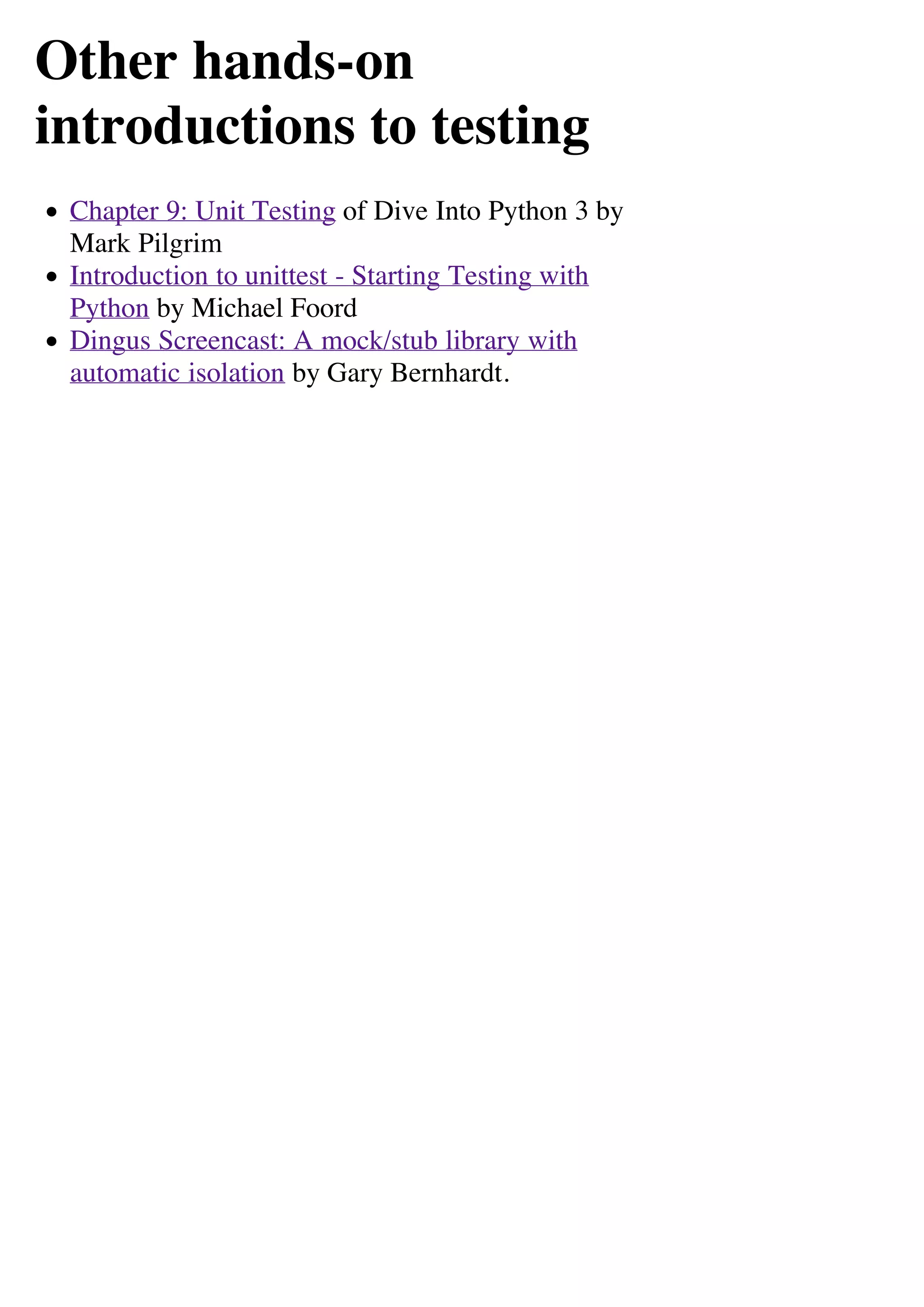
 Chapter 9: Unit Testing of Dive Into Python 3 by
 Mark Pilgrim
 Introduction to unittest - Starting Testing with
 Python by Michael Foord
 Dingus Screencast: A mock/stub library with
 automatic isolation by Gary Bernhardt.
virtualenv
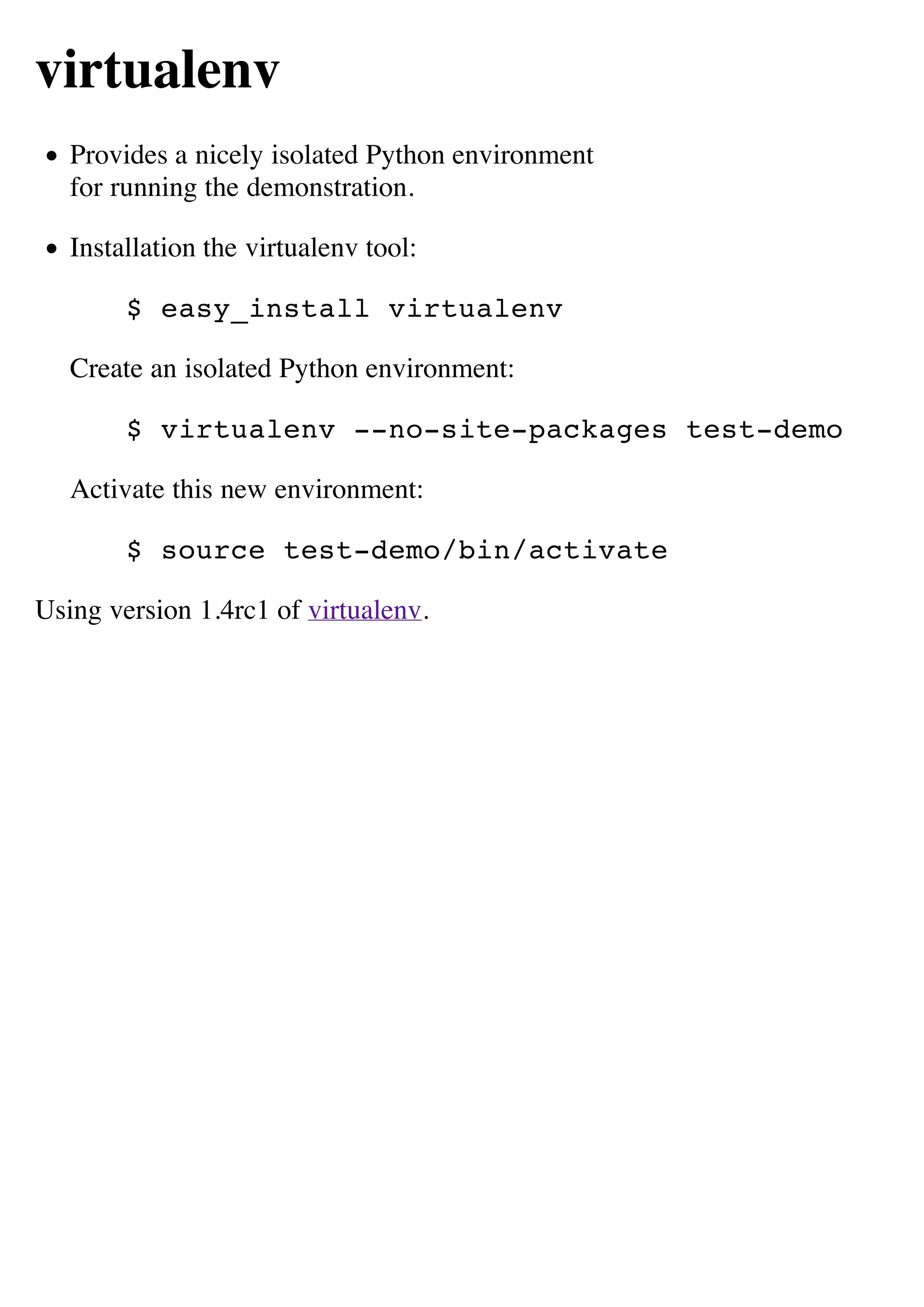
   Provides a nicely isolated Python environment
   for running the demonstration.

   Installation the virtualenv tool:

        $ easy_install virtualenv

   Create an isolated Python environment:

        $ virtualenv --no-site-packages test-demo

   Activate this new environment:

        $ source test-demo/bin/activate

Using version 1.4rc1 of virtualenv.
nose
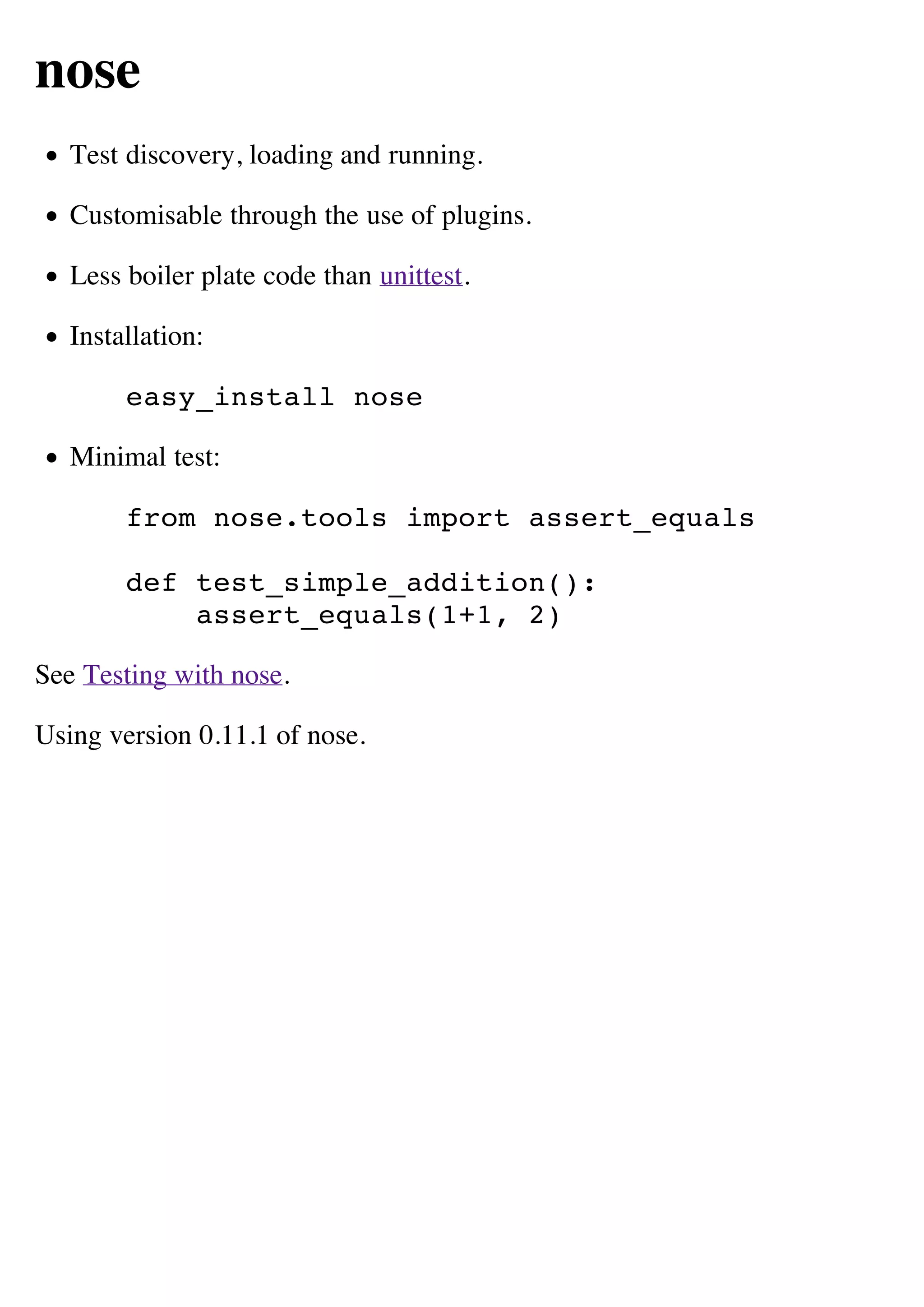
   Test discovery, loading and running.

   Customisable through the use of plugins.

   Less boiler plate code than unittest.

   Installation:

        easy_install nose

   Minimal test:

        from nose.tools import assert_equals

        def test_simple_addition():
            assert_equals(1+1, 2)

See Testing with nose.

Using version 0.11.1 of nose.
FizzBuzz
Exercise: play the FizzBuzz game. Write a program
that:

  Prints the numbers from 1 to 100.
  But for multiples of 3 print "Fizz" instead of the
  number.
  And for the multiples of 5 print "Buzz".
  For numbers which are multiples of both 3 and 5
  print "FizzBuzz".
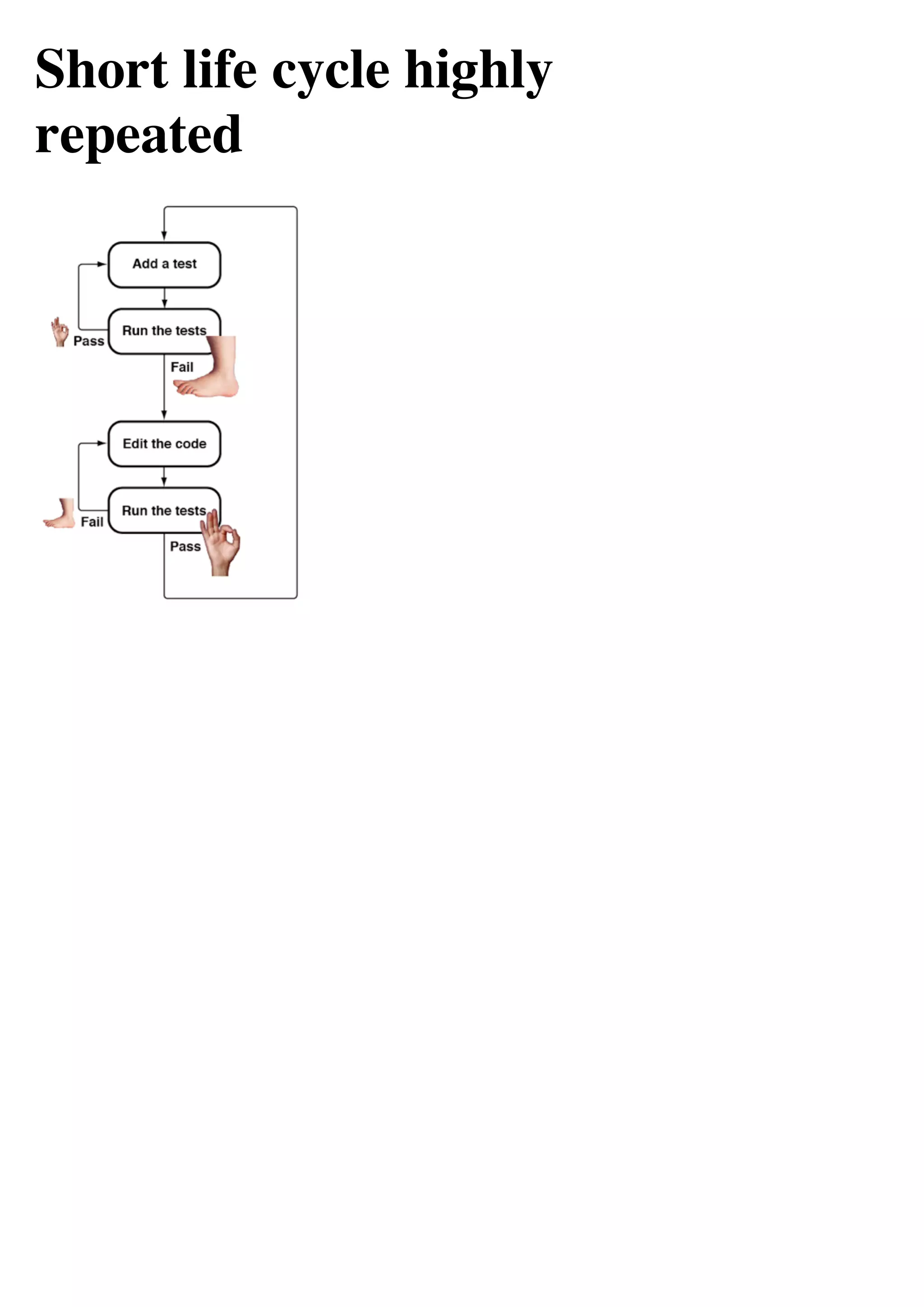
Short life cycle highly
repeated
NoseGrowl
 Example of using a nose plugin.

 Hooks into system wide notification tool. Growl
 on OS X.

 Installation:

      easy_install NoseGrowl

 Usage

    nosetests --with-growl
setup.cfg
 Put all your regular command line options into a
 config file setup.cfg:

     [nosetests]
     verbose=True
     with-growl=1
doctest
   Execute code samples:

        >>> a = 1
        >>> b = 2
        >>> a + b
        3

   Include doctests in test runs using:

        [nosetests]
        ...
        with-doctest=True
        doctest-extension=txt

   Which also picks up doctests from files such as
   README.txt

See doctest.
doctest options
   Inline comments in the doctest:

        >>> print('Hello world') #doctest: +ELLIPSIS
        Hello ...d

   Other useful options include:

        #doctest: +REPORT_UDIFF
        #doctest: +NORMALIZE_WHITESPACE

See doctest - Option Flags and Directives.
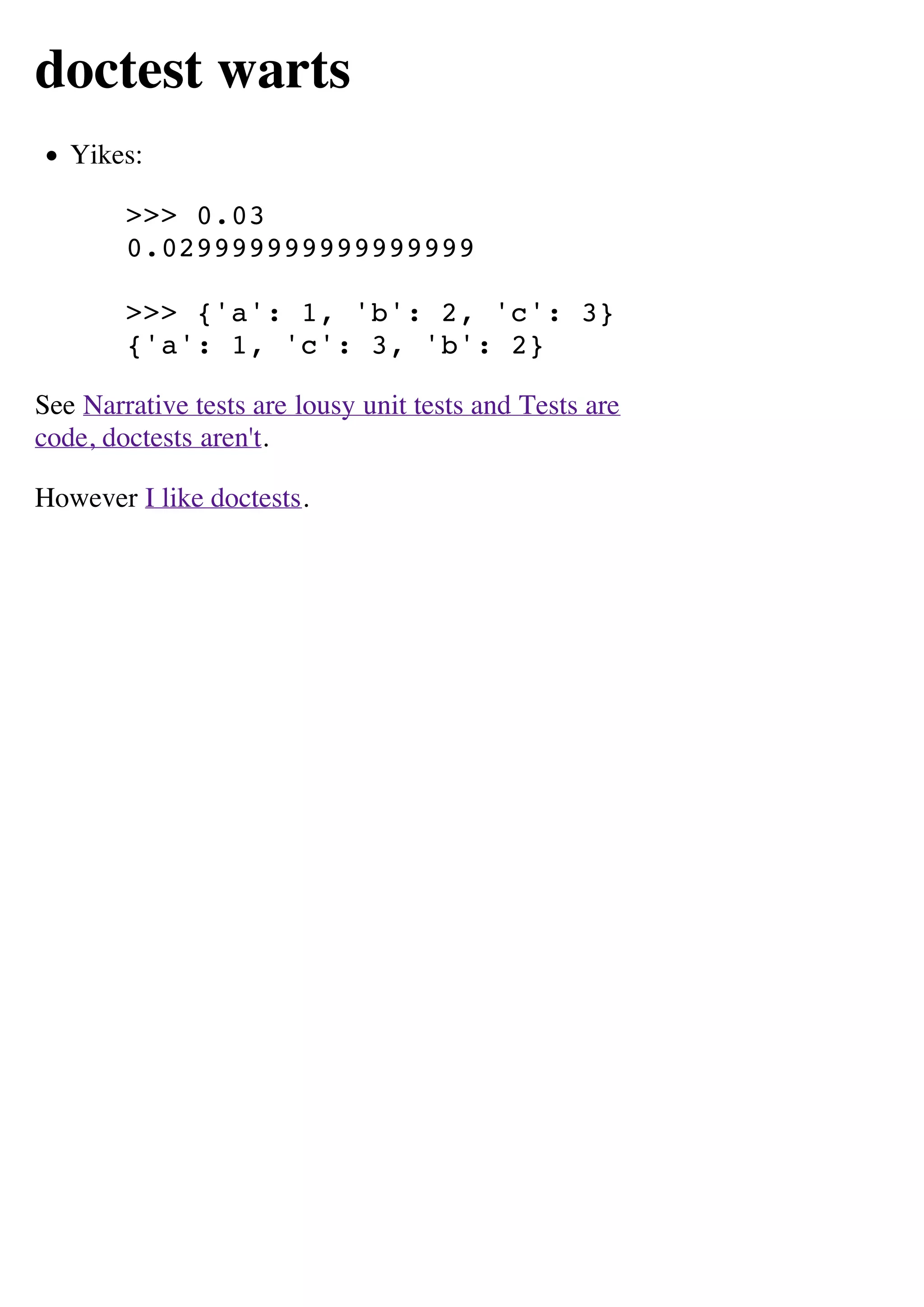
doctest warts
   Yikes:

        >>> 0.03
        0.029999999999999999

        >>> {'a': 1, 'b': 2, 'c': 3}
        {'a': 1, 'c': 3, 'b': 2}

See Narrative tests are lousy unit tests and Tests are
code, doctests aren't.

However I like doctests.
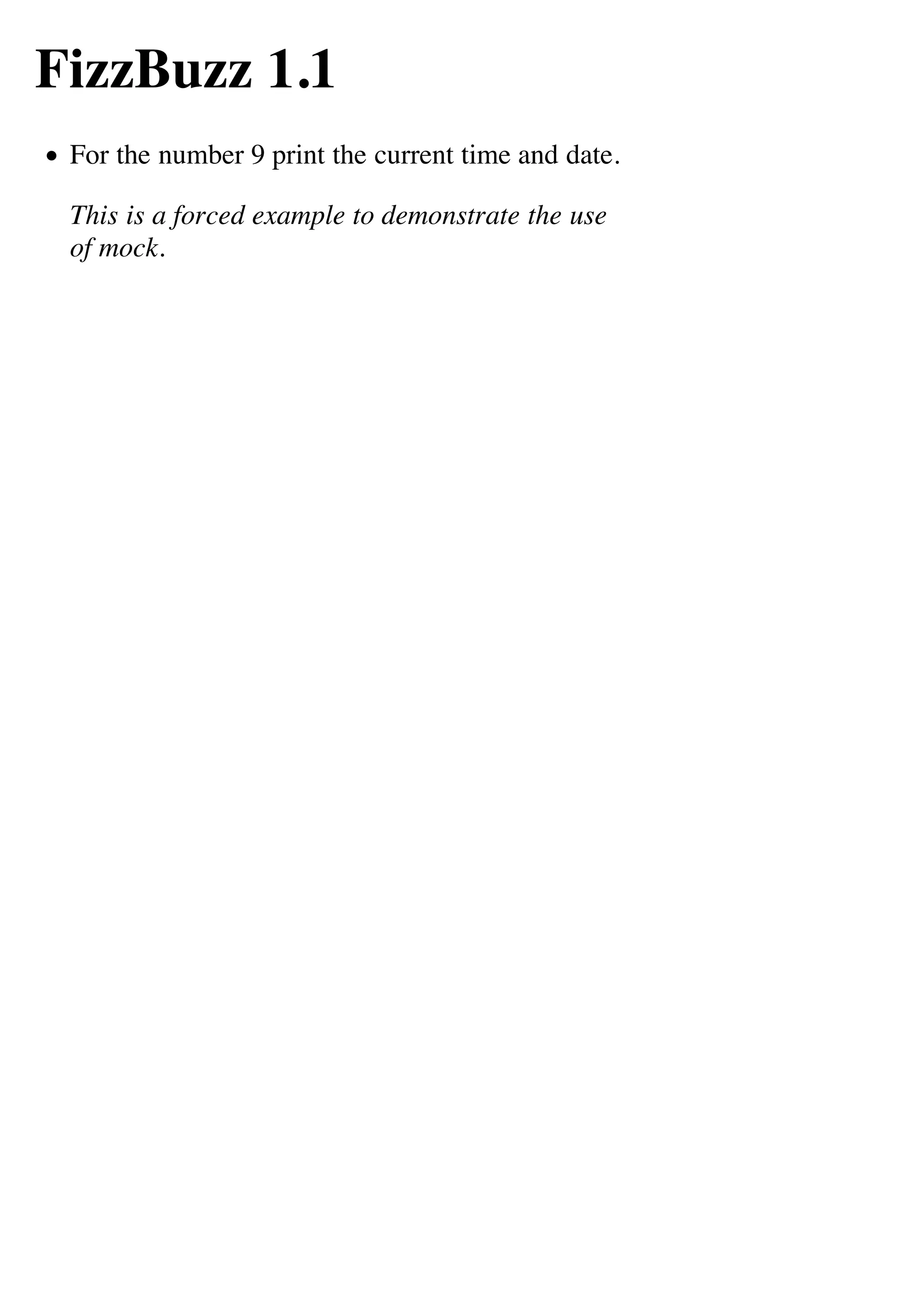
FizzBuzz 1.1
 For the number 9 print the current time and date.

 This is a forced example to demonstrate the use
 of mock.
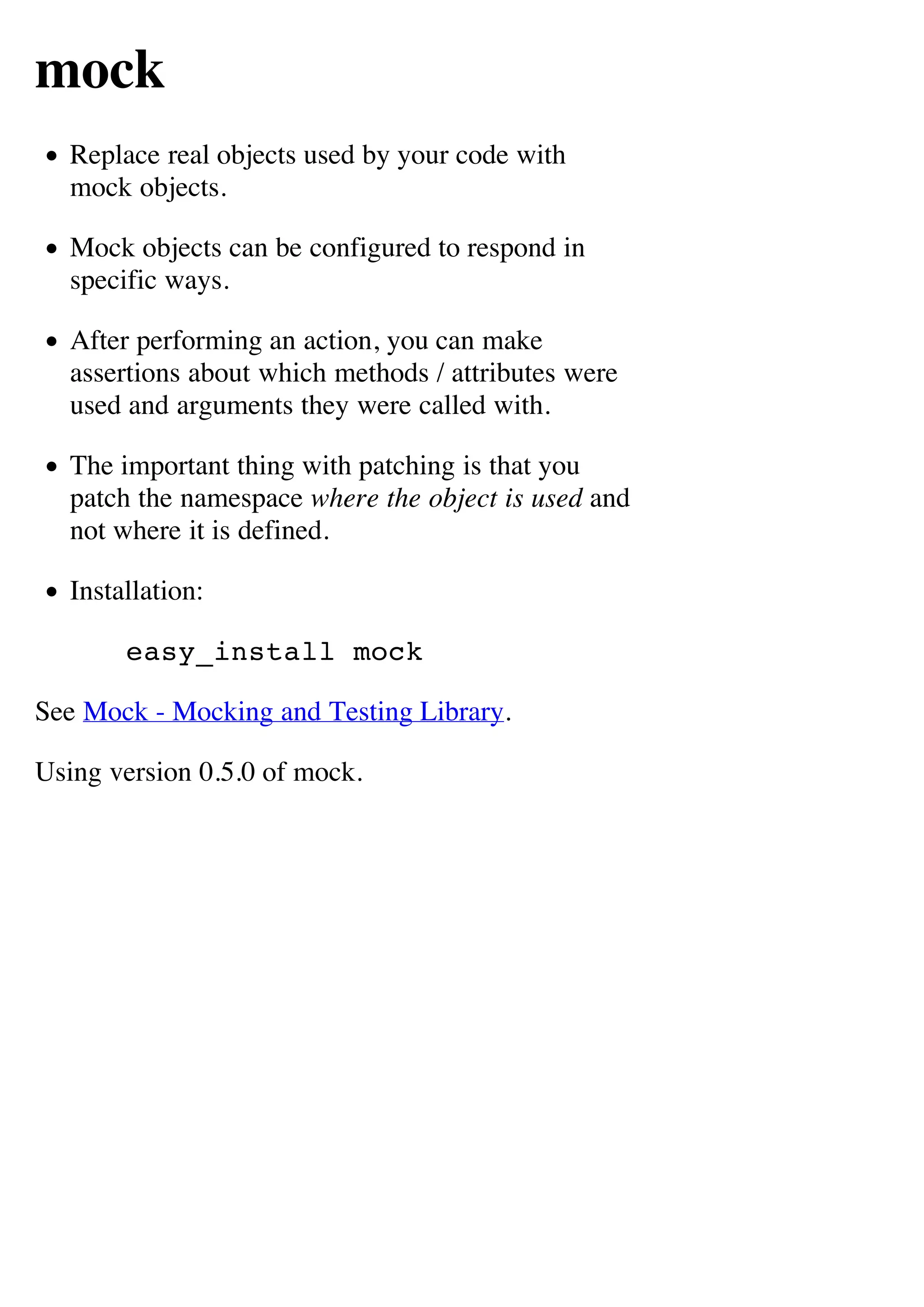
mock
  Replace real objects used by your code with
  mock objects.

  Mock objects can be configured to respond in
  specific ways.

  After performing an action, you can make
  assertions about which methods / attributes were
  used and arguments they were called with.

  The important thing with patching is that you
  patch the namespace where the object is used and
  not where it is defined.

  Installation:

       easy_install mock

See Mock - Mocking and Testing Library.

Using version 0.5.0 of mock.
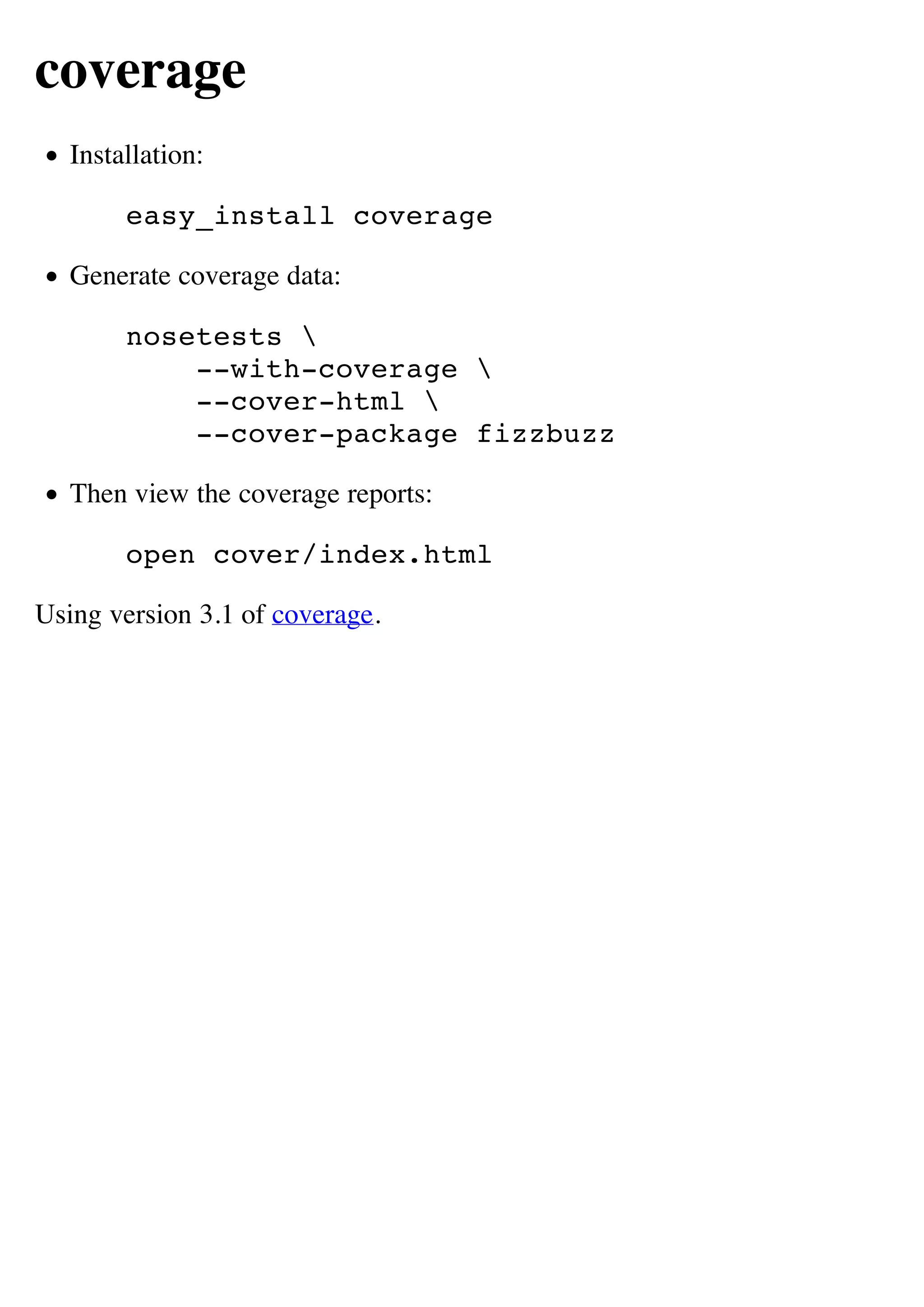
coverage
   Installation:

        easy_install coverage

   Generate coverage data:

        nosetests 
            --with-coverage 
            --cover-html 
            --cover-package fizzbuzz

   Then view the coverage reports:

        open cover/index.html

Using version 3.1 of coverage.
Test metrics
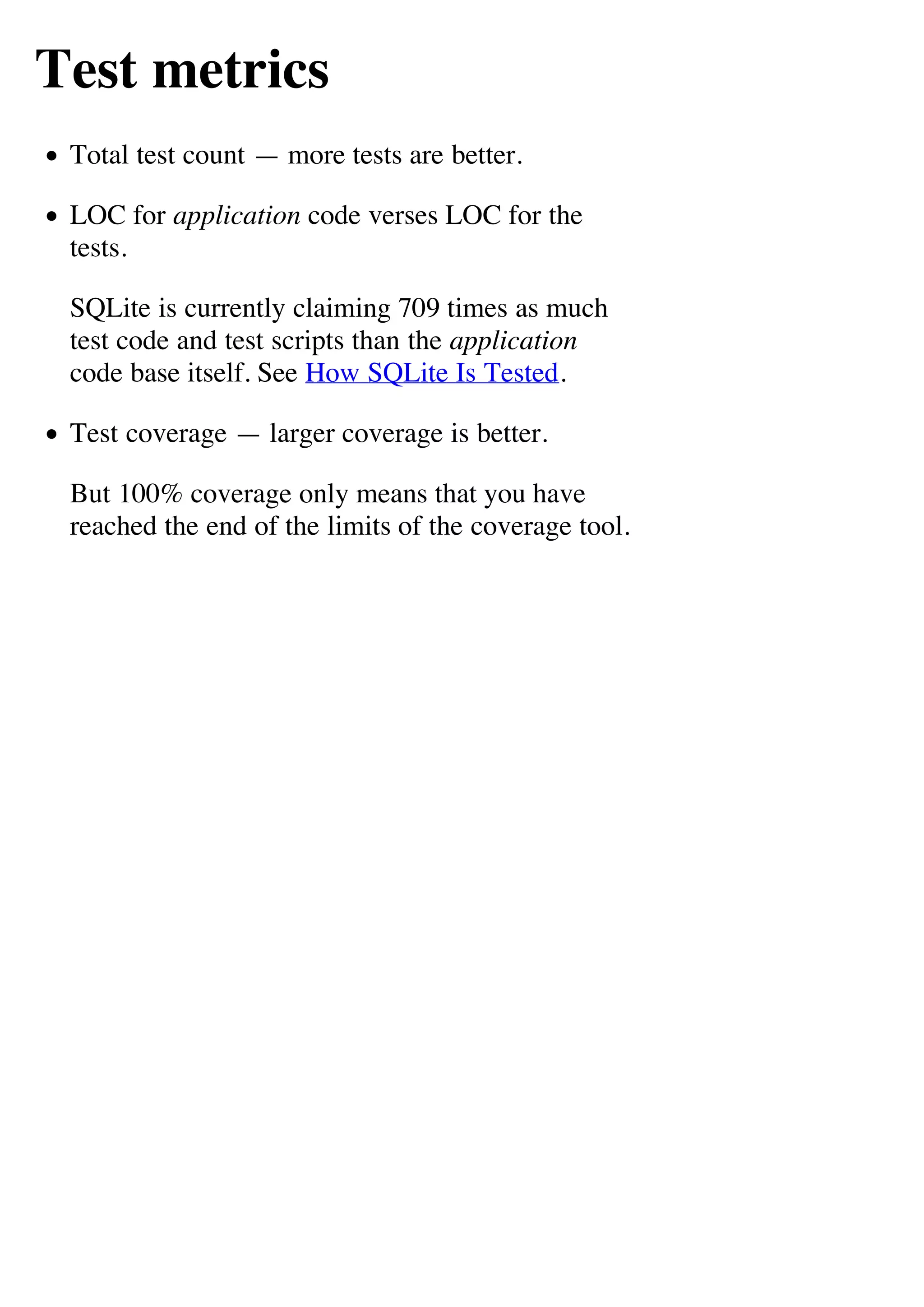
 Total test count — more tests are better.

 LOC for application code verses LOC for the
 tests.

 SQLite is currently claiming 709 times as much
 test code and test scripts than the application
 code base itself. See How SQLite Is Tested.

 Test coverage — larger coverage is better.

 But 100% coverage only means that you have
 reached the end of the limits of the coverage tool.
FizzBuzz code
 See http://bitbucket.org/dunny/fizzbuzz/src/

Testing Workshop

  • 1.
    Testing Workshop Author: Michael Dunstan <michael@elyt.com> Version: 1.2 Licence: Creative Commons Attribution-Share Alike 3.0
  • 2.
    Other hands-on introductions totesting Chapter 9: Unit Testing of Dive Into Python 3 by Mark Pilgrim Introduction to unittest - Starting Testing with Python by Michael Foord Dingus Screencast: A mock/stub library with automatic isolation by Gary Bernhardt.
  • 3.
    virtualenv Provides a nicely isolated Python environment for running the demonstration. Installation the virtualenv tool: $ easy_install virtualenv Create an isolated Python environment: $ virtualenv --no-site-packages test-demo Activate this new environment: $ source test-demo/bin/activate Using version 1.4rc1 of virtualenv.
  • 4.
    nose Test discovery, loading and running. Customisable through the use of plugins. Less boiler plate code than unittest. Installation: easy_install nose Minimal test: from nose.tools import assert_equals def test_simple_addition(): assert_equals(1+1, 2) See Testing with nose. Using version 0.11.1 of nose.
  • 5.
    FizzBuzz Exercise: play theFizzBuzz game. Write a program that: Prints the numbers from 1 to 100. But for multiples of 3 print "Fizz" instead of the number. And for the multiples of 5 print "Buzz". For numbers which are multiples of both 3 and 5 print "FizzBuzz".
  • 6.
    Short life cyclehighly repeated
  • 7.
    NoseGrowl Example ofusing a nose plugin. Hooks into system wide notification tool. Growl on OS X. Installation: easy_install NoseGrowl Usage nosetests --with-growl
  • 8.
    setup.cfg Put allyour regular command line options into a config file setup.cfg: [nosetests] verbose=True with-growl=1
  • 9.
    doctest Execute code samples: >>> a = 1 >>> b = 2 >>> a + b 3 Include doctests in test runs using: [nosetests] ... with-doctest=True doctest-extension=txt Which also picks up doctests from files such as README.txt See doctest.
  • 10.
    doctest options Inline comments in the doctest: >>> print('Hello world') #doctest: +ELLIPSIS Hello ...d Other useful options include: #doctest: +REPORT_UDIFF #doctest: +NORMALIZE_WHITESPACE See doctest - Option Flags and Directives.
  • 11.
    doctest warts Yikes: >>> 0.03 0.029999999999999999 >>> {'a': 1, 'b': 2, 'c': 3} {'a': 1, 'c': 3, 'b': 2} See Narrative tests are lousy unit tests and Tests are code, doctests aren't. However I like doctests.
  • 12.
    FizzBuzz 1.1 Forthe number 9 print the current time and date. This is a forced example to demonstrate the use of mock.
  • 13.
    mock Replacereal objects used by your code with mock objects. Mock objects can be configured to respond in specific ways. After performing an action, you can make assertions about which methods / attributes were used and arguments they were called with. The important thing with patching is that you patch the namespace where the object is used and not where it is defined. Installation: easy_install mock See Mock - Mocking and Testing Library. Using version 0.5.0 of mock.
  • 14.
    coverage Installation: easy_install coverage Generate coverage data: nosetests --with-coverage --cover-html --cover-package fizzbuzz Then view the coverage reports: open cover/index.html Using version 3.1 of coverage.
  • 15.
    Test metrics Totaltest count — more tests are better. LOC for application code verses LOC for the tests. SQLite is currently claiming 709 times as much test code and test scripts than the application code base itself. See How SQLite Is Tested. Test coverage — larger coverage is better. But 100% coverage only means that you have reached the end of the limits of the coverage tool.
  • 16.
    FizzBuzz code Seehttp://bitbucket.org/dunny/fizzbuzz/src/