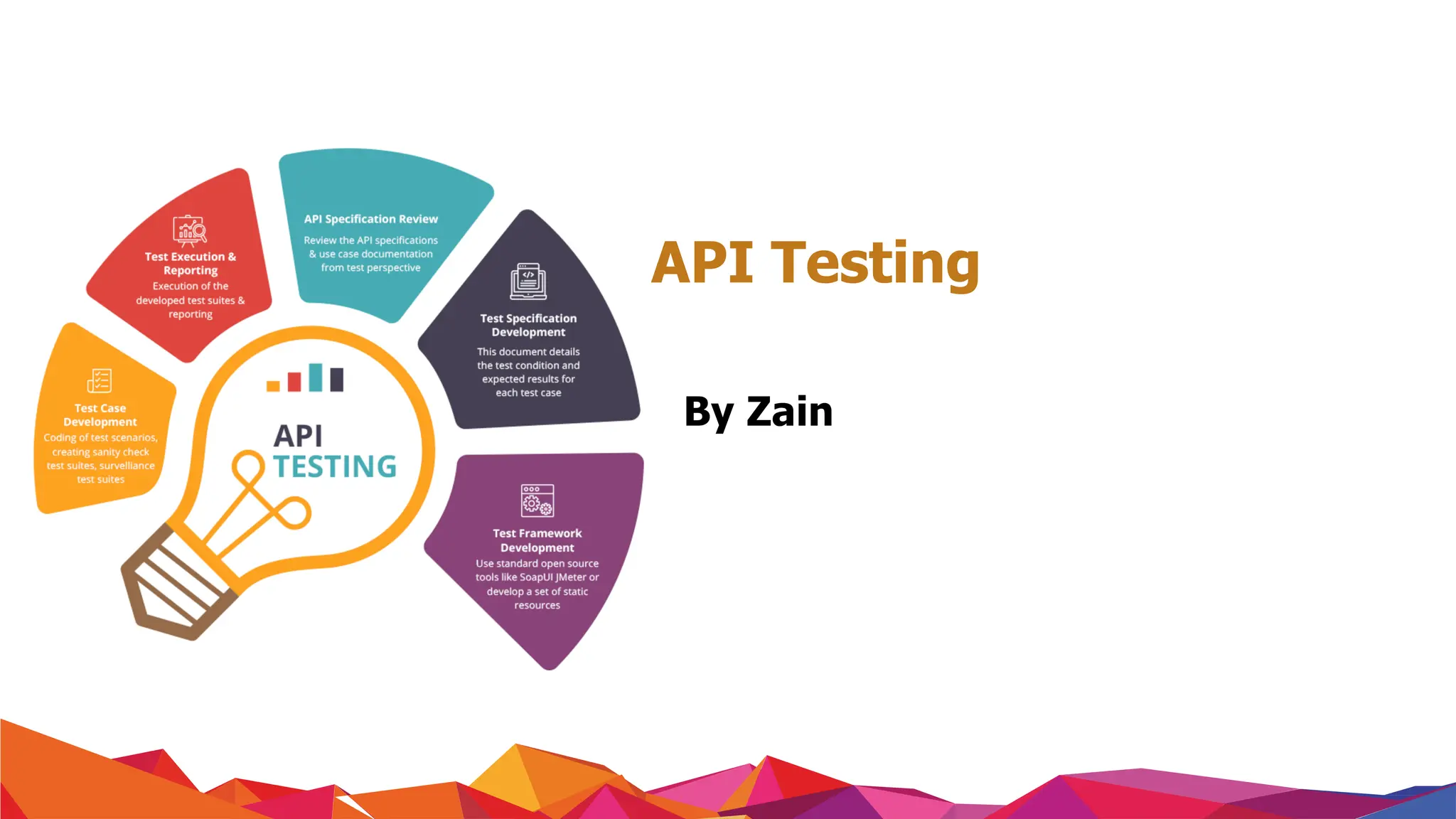
API Testing
By Zain
Agenda of API Testing
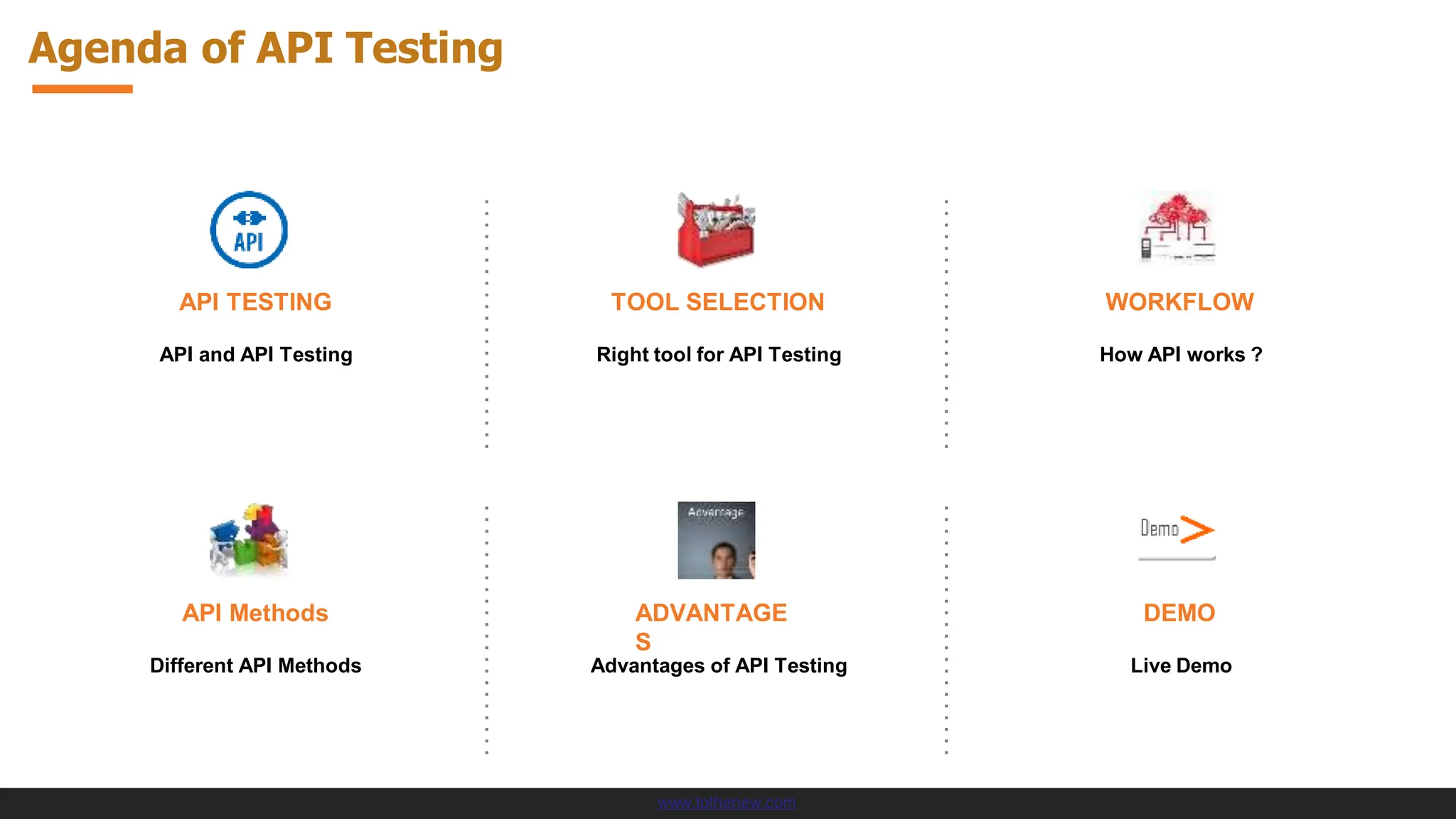
API TESTING TOOL SELECTION WORKFLOW
API and API Testing Right tool for API Testing How API works ?
API Methods ADVANTAGE
S
DEMO
Different API Methods Advantages of API Testing Live Demo
www.tothenew.com
What is API?
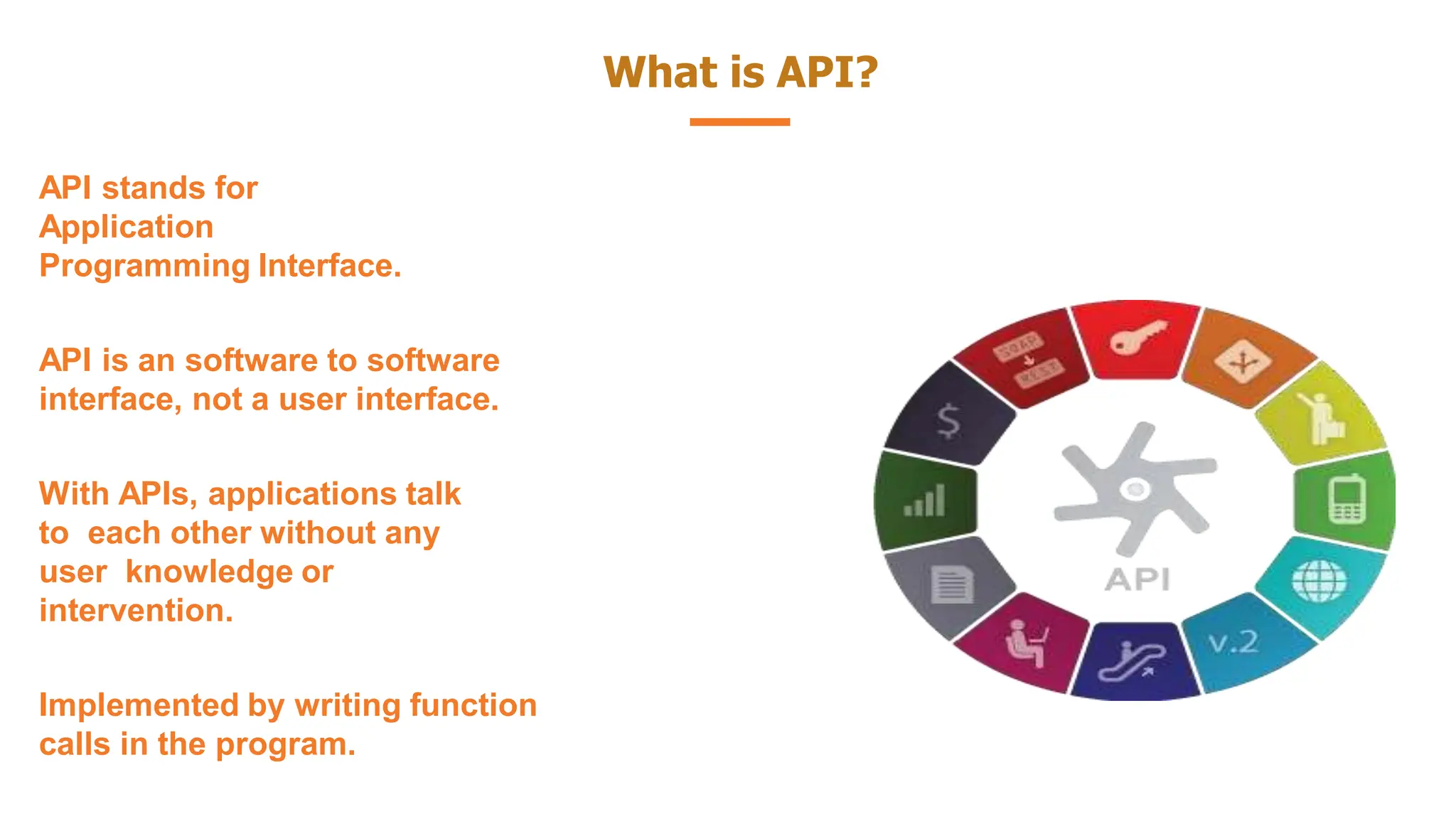
API stands for
Application
Programming Interface.
API is an software to software
interface, not a user interface.
With APIs, applications talk
to each other without any
user knowledge or
intervention.
Implemented by writing function
calls in the program.
What is API Testing?
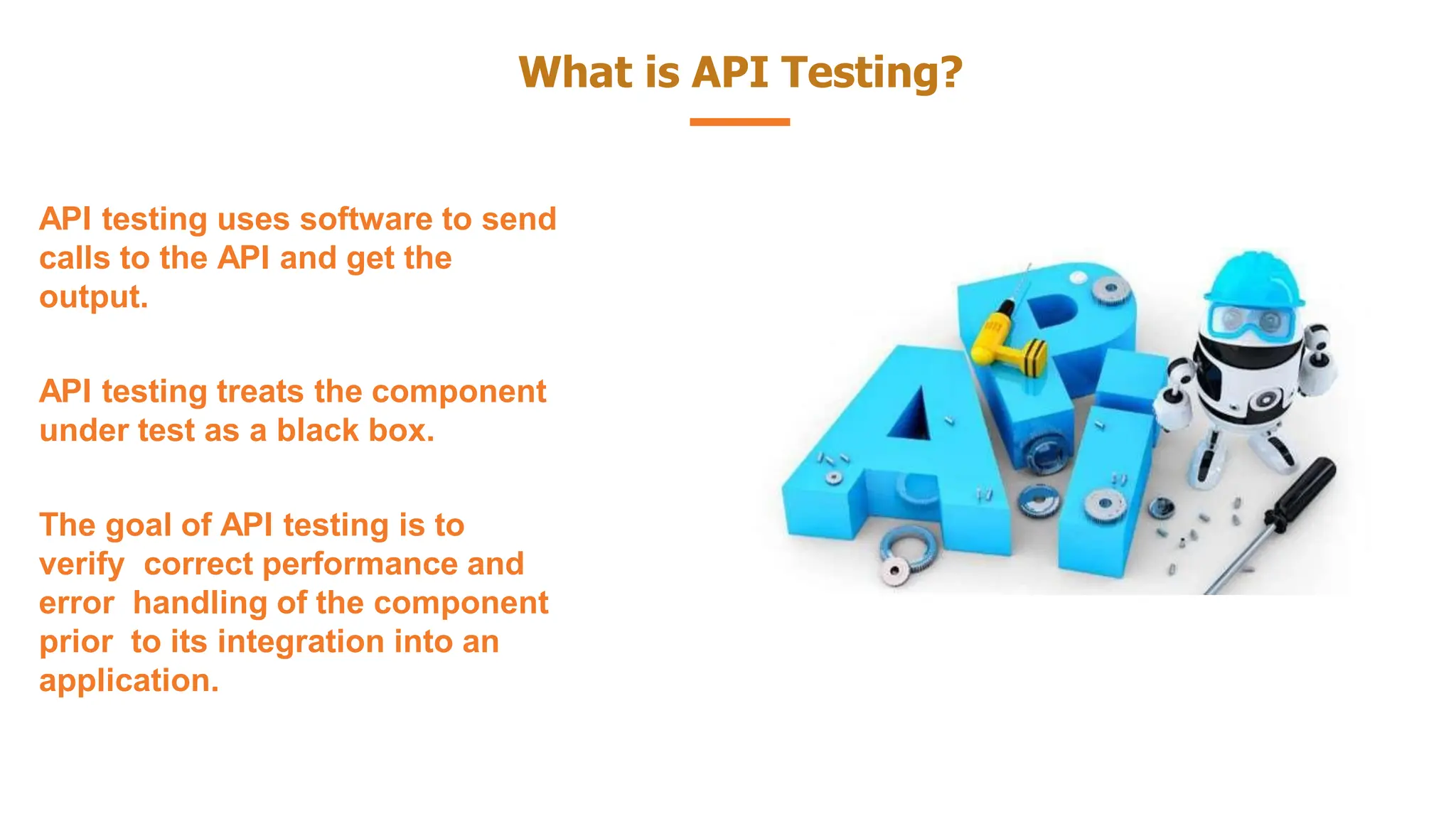
API testing uses software to send
calls to the API and get the
output.
API testing treats the component
under test as a black box.
The goal of API testing is to
verify correct performance and
error handling of the component
prior to its integration into an
application.
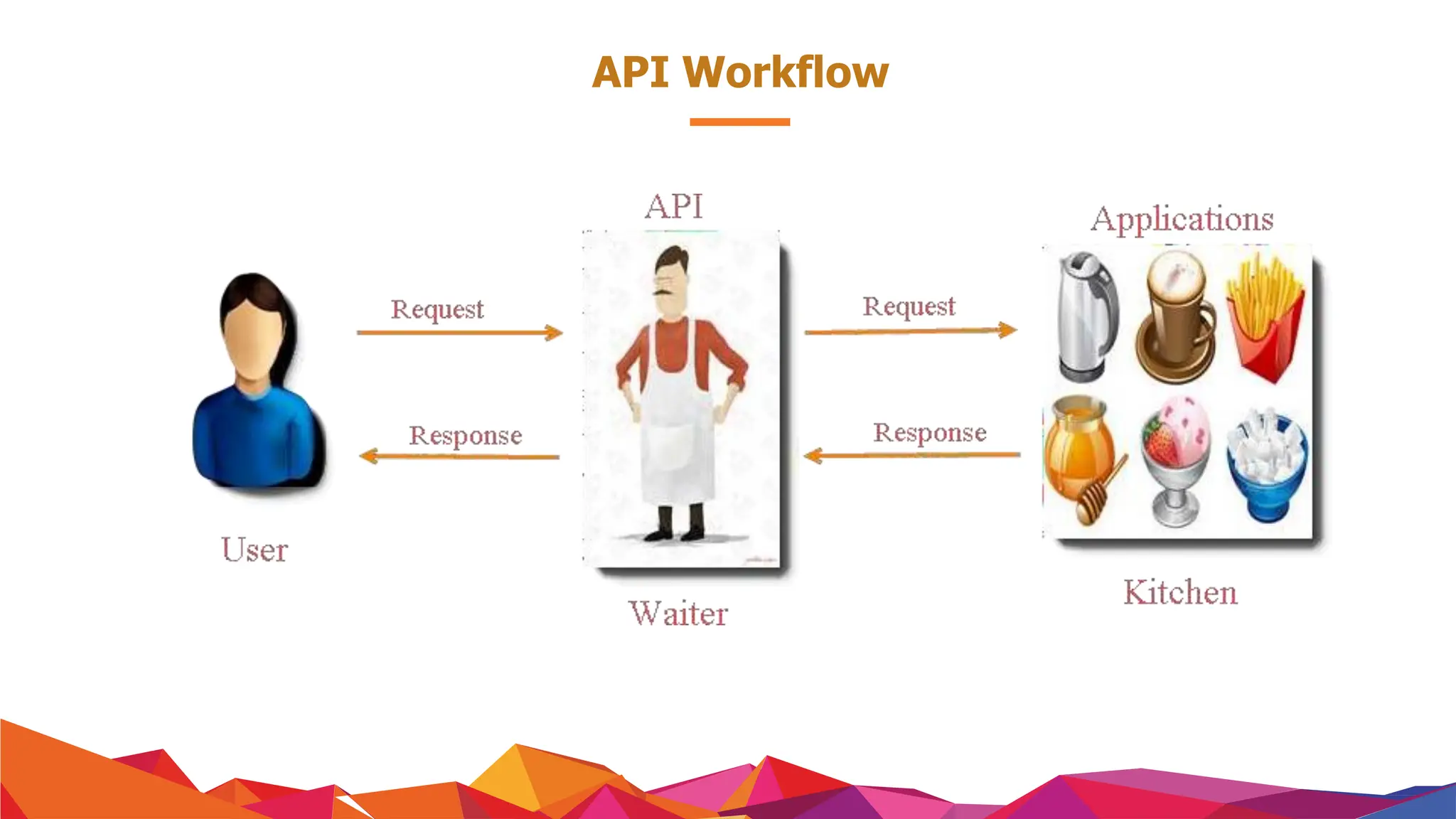
API Workflow
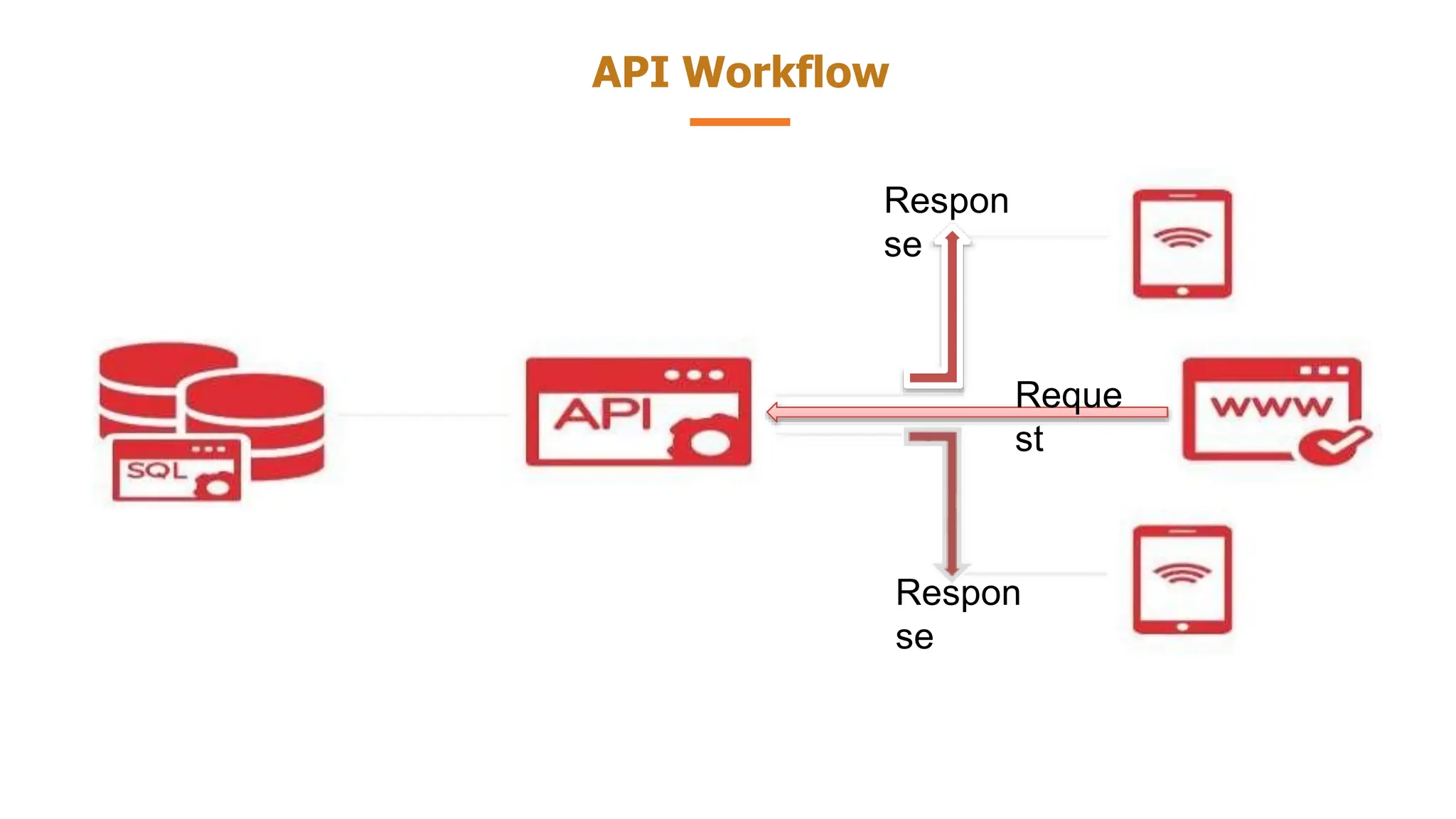
API Workflow
Respon
se
Respon
se
Reque
st
REST API
REST – stands for Representational State Transfer.
⮚ It is a set of functions to which the developers performs requests and
receive responses. In REST API interaction is made via HTTP
protocol.
⮚ REST also allows computers to talk to each other over a network.
⮚ It involves using HTTP methods to send and receive messages, and does
not require a strict message definition, unlike Web services.
⮚ REST messages often take the form of XML, or JavaScript Object
Notation (JSON).
HTTP Methods
4 Commonly Used Methods:-
GET : - Provides a read only access to a resource.
POST :- Used to update an existing resource or create a new resource.
PUT :- Used to create a new resource.
DELETE :- Used to Remove a resource.
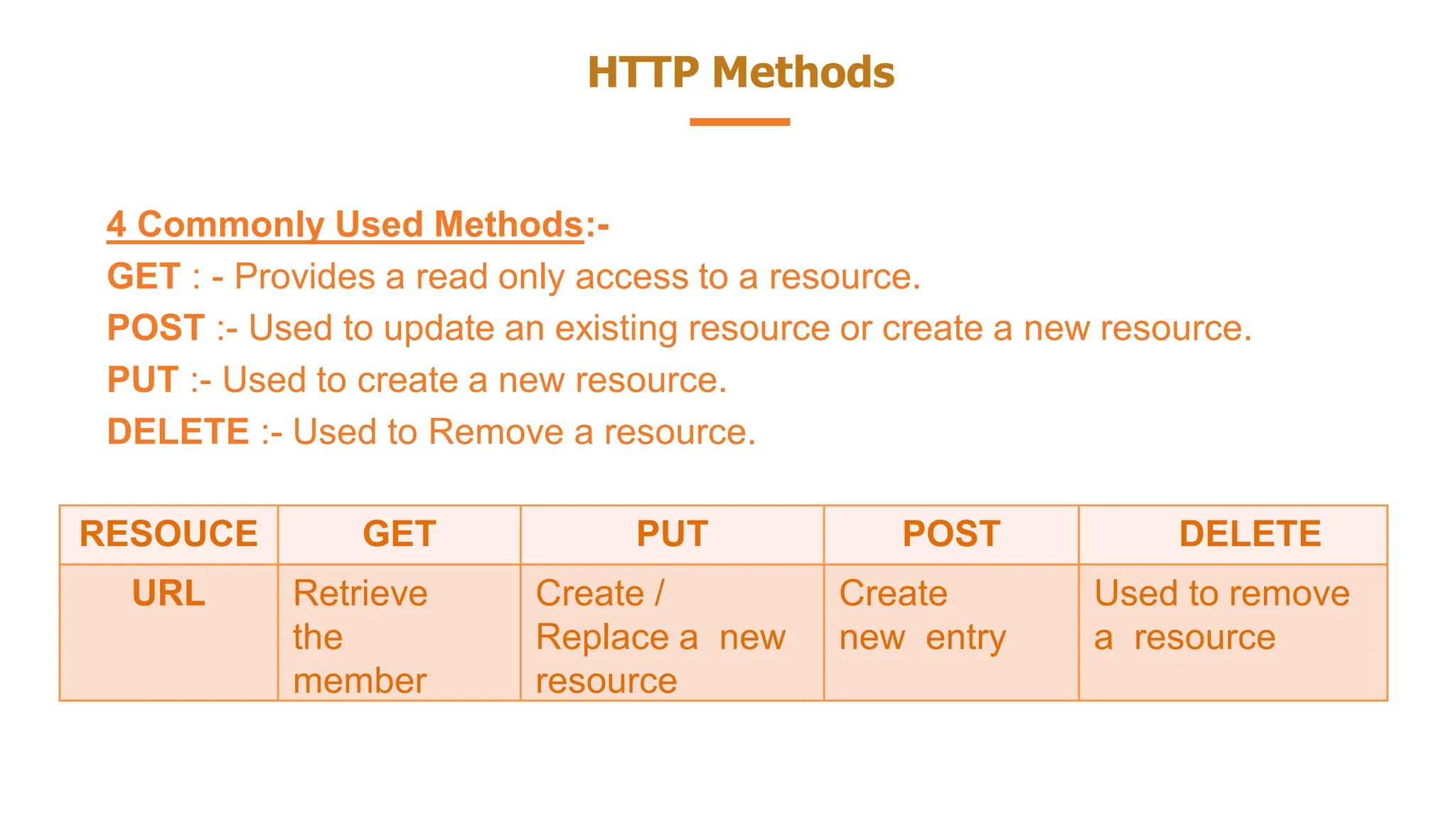
RESOUCE GET PUT POST DELETE
URL Retrieve
the
member
Create /
Replace a new
resource
Create
new entry
Used to remove
a resource
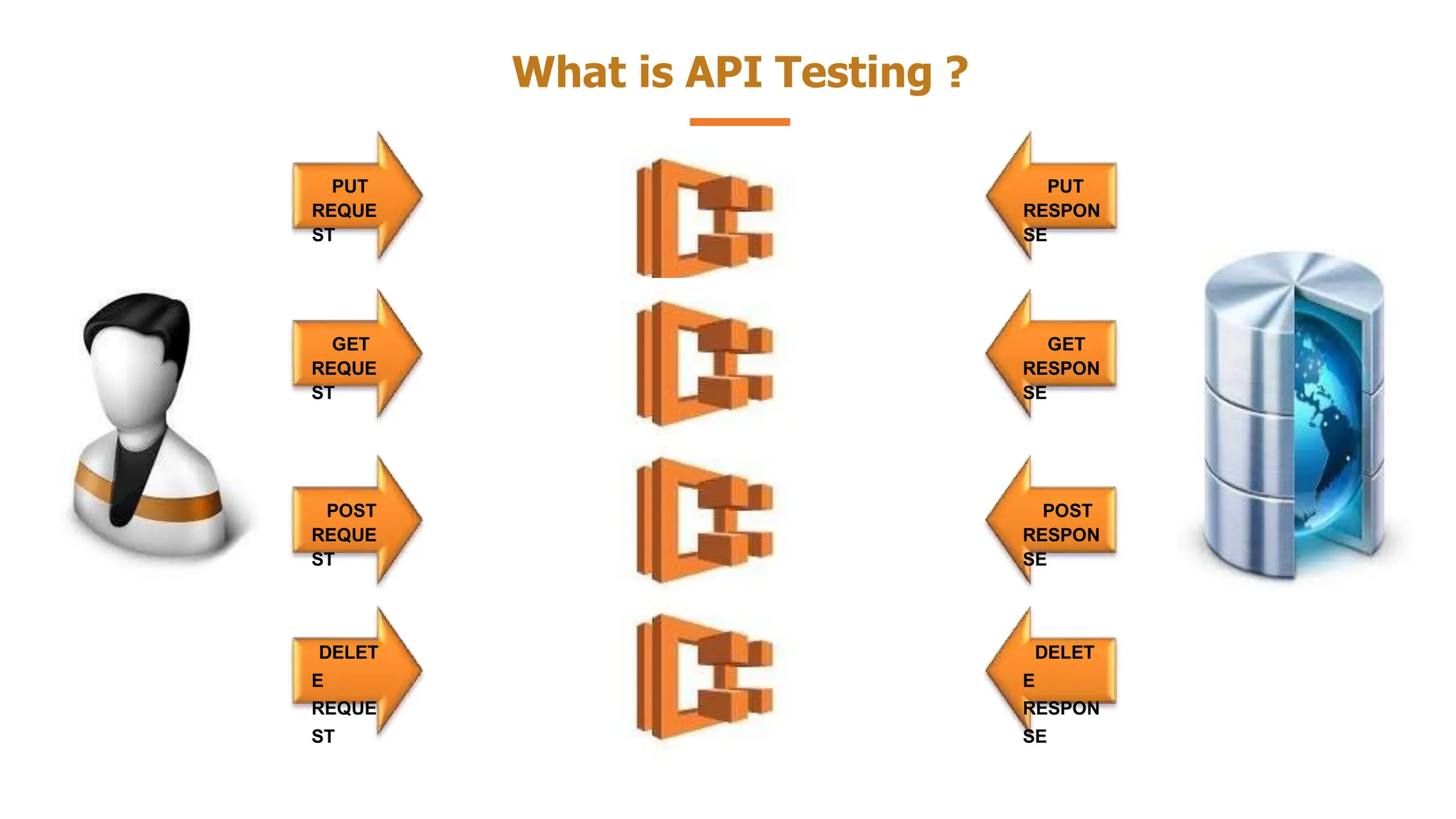
PUT
REQUE
ST
PUT
RESPON
SE
What is API Testing ?
GET
REQUE
ST
GET
RESPON
SE
POST
REQUE
ST
POST
RESPON
SE
DELET
E
REQUE
ST
DELET
E
RESPON
SE
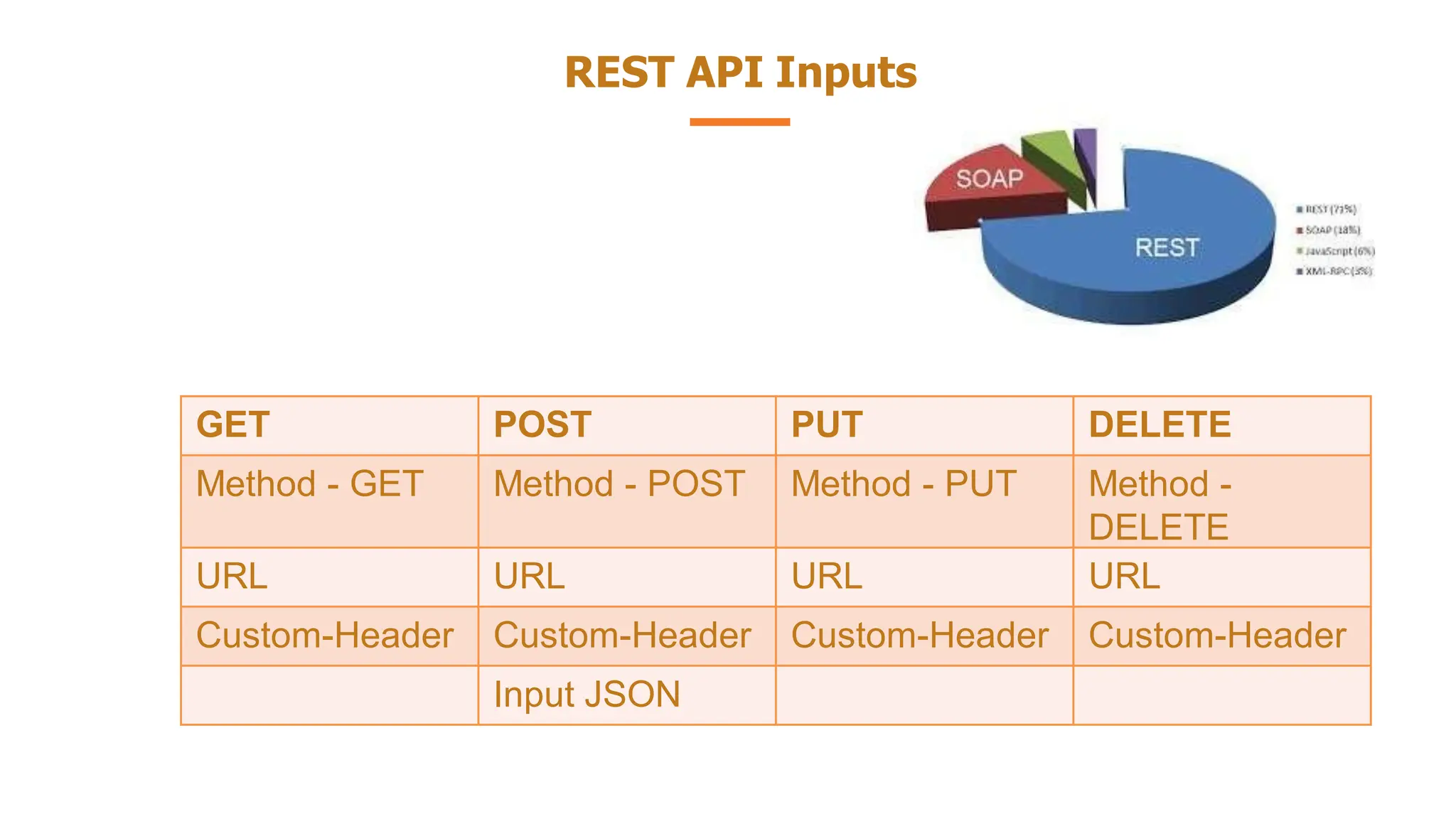
REST API Inputs
GET POST PUT DELETE
Method - GET Method - POST Method - PUT Method -
DELETE
URL URL URL URL
Custom-Header Custom-Header Custom-Header Custom-Header
Input JSON
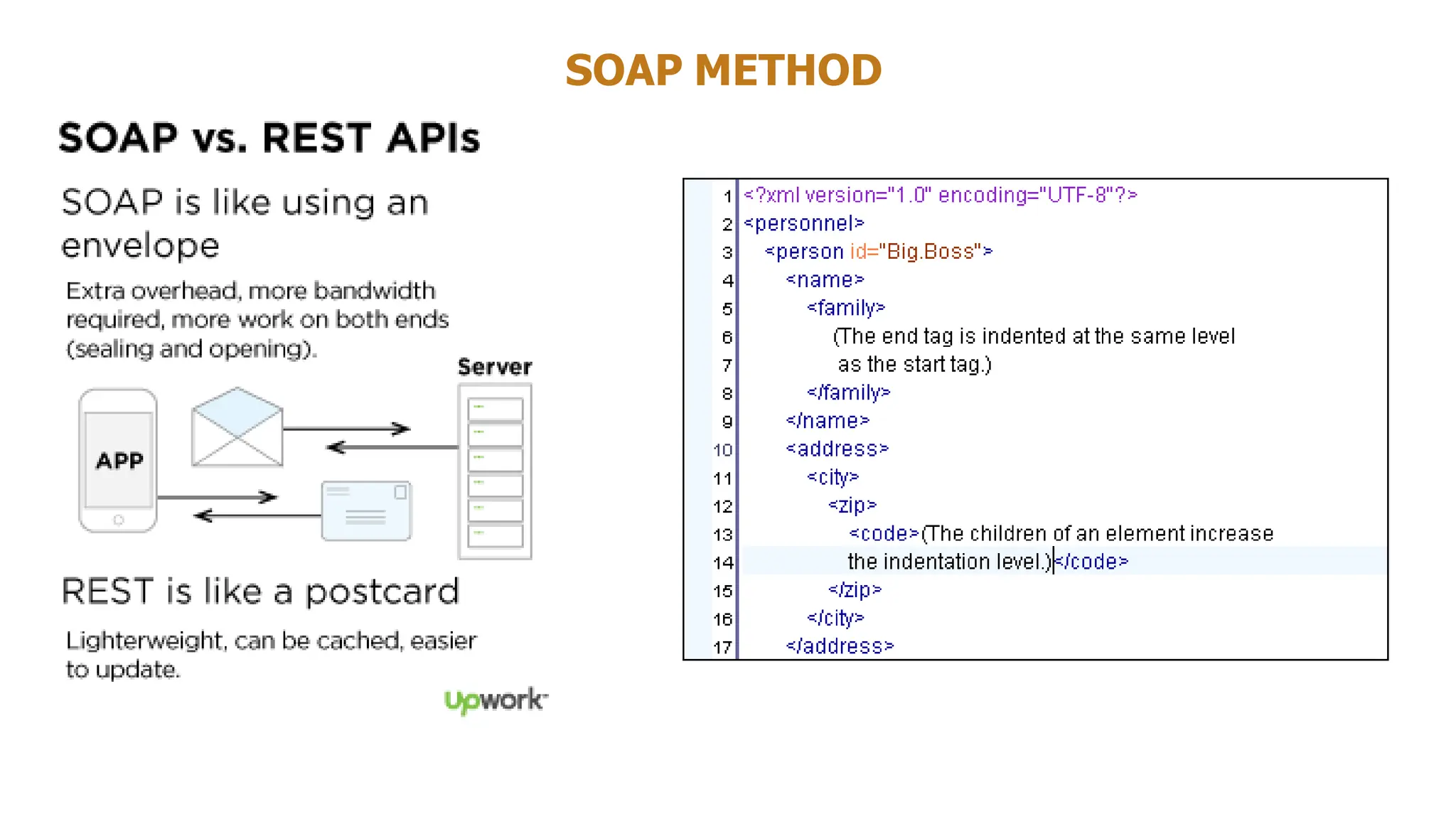
SOAP METHOD
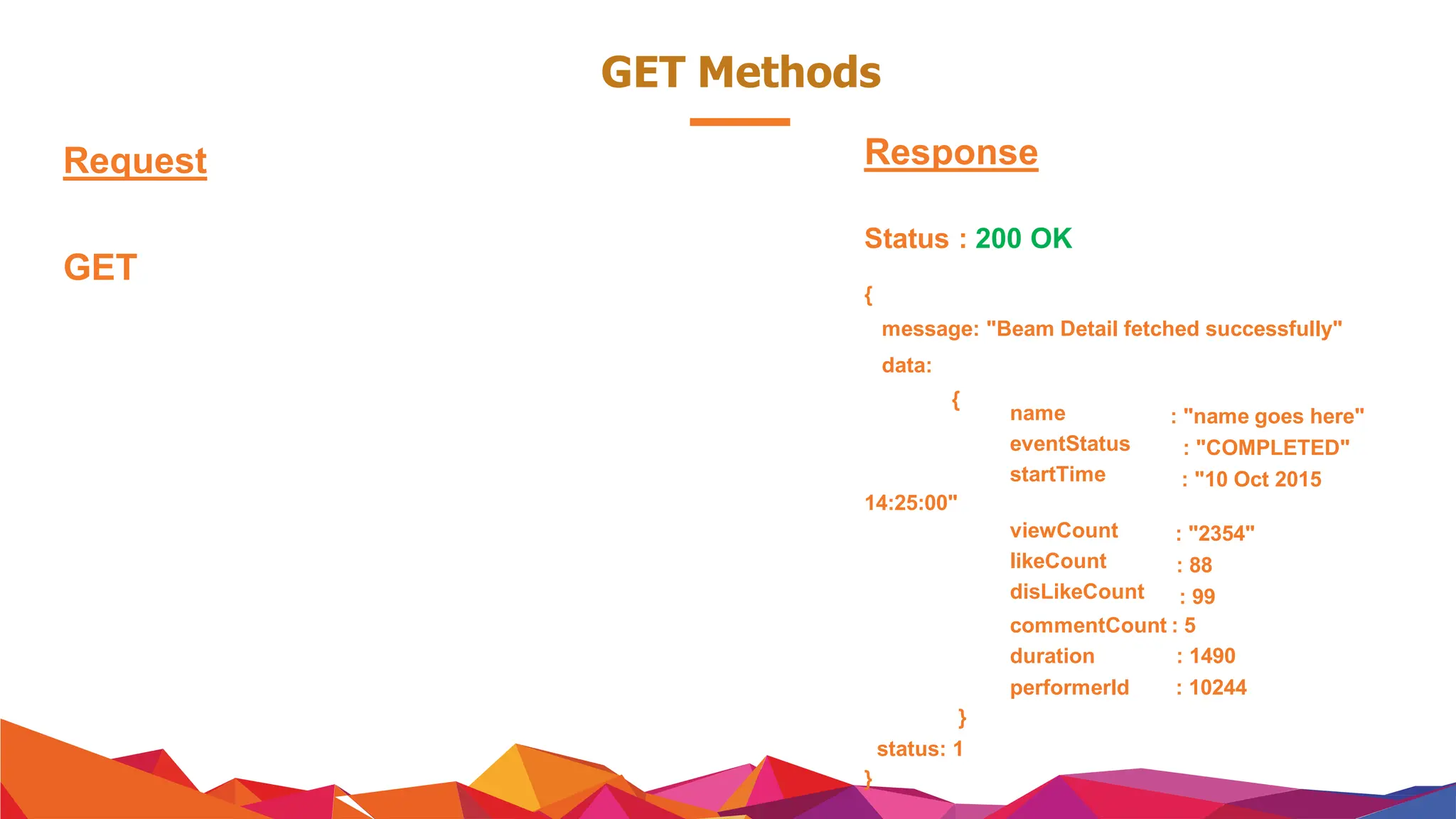
GET Methods
Request
GET
Response
Status : 200 OK
{
message: "Beam Detail fetched successfully"
data:
{
name
eventStatus
startTime
: "name goes here"
: "COMPLETED"
: "10 Oct 2015
14:25:00"
viewCount
likeCount
disLikeCount
: "2354"
: 88
: 99
commentCount : 5
duration
performerId
: 1490
: 10244
}
status: 1
}
POST Methods
"code": 10001
}
Request
POST
"email“
"password“
"medium“
"apiVersion“
"appKey“
: "zainsch707@gmail.com",
: "admin",
: "MANUAL",
: "1.0",
: "myAppKey",
"actionName“ : "login"
}
Response
Status : 200 OK
{
"status": 1,
"message": "Login successfully",
"data": {
"access_token": "rcd676up5kit3akd93a",
"email": "admn.famelive@gmail.com",
"roles": "[ROLE_USER]",
"userId": "1",
"isAccountVerified": true,
"timeZoneName": "GMT +05:30 - New York",
"timeZoneId": 8,
"fameName": "admin.famelive",
"imageName": "zsdasdaw",
"userChannel": "a468784e6e2a9874619e7f",
},
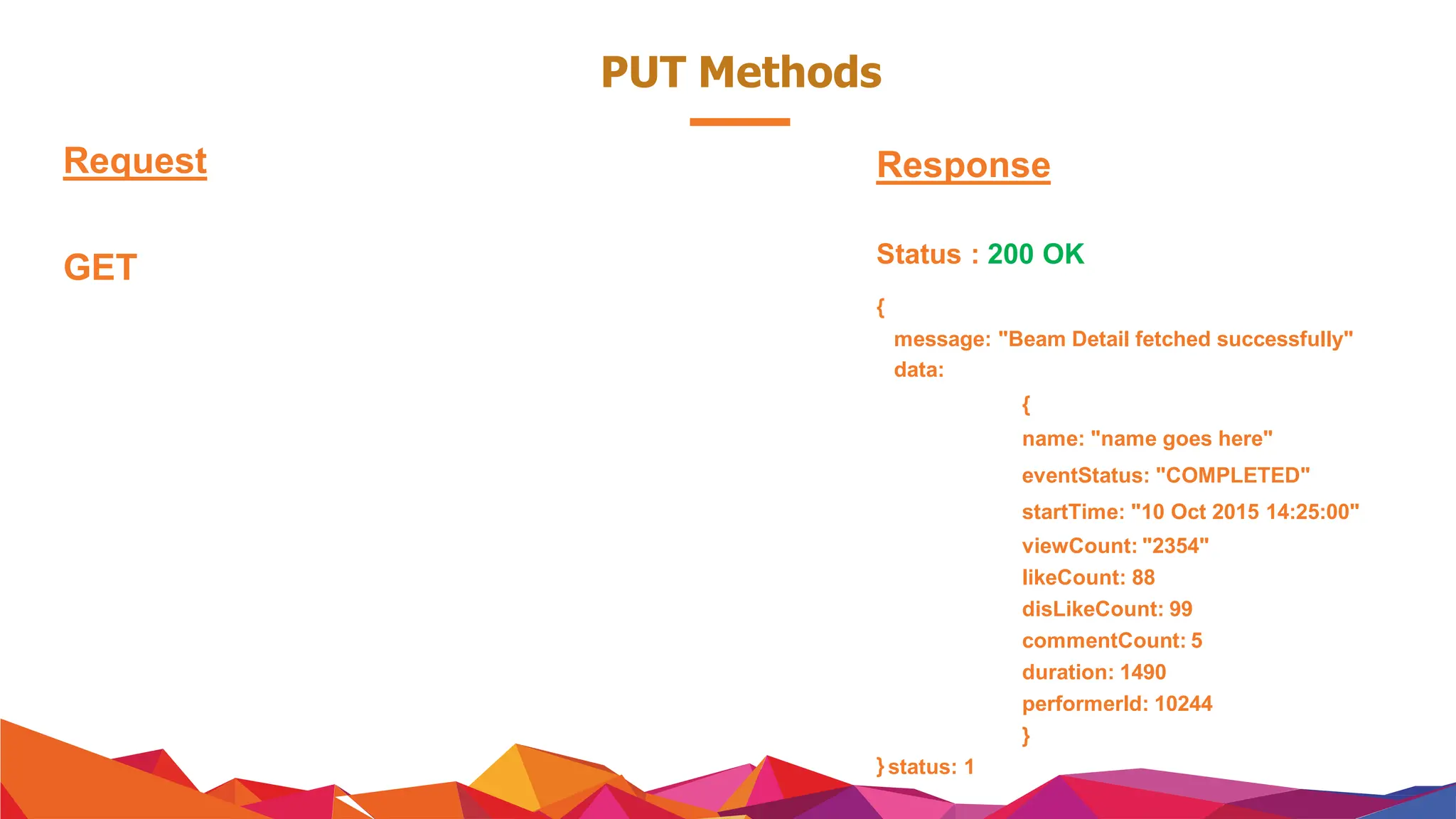
PUT Methods
Request
GET
{
Response
Status : 200 OK
message: "Beam Detail fetched successfully"
data:
{
name: "name goes here"
eventStatus: "COMPLETED"
startTime: "10 Oct 2015 14:25:00"
viewCount: "2354"
likeCount: 88
disLikeCount: 99
commentCount: 5
duration: 1490
performerId: 10244
}
status: 1
}
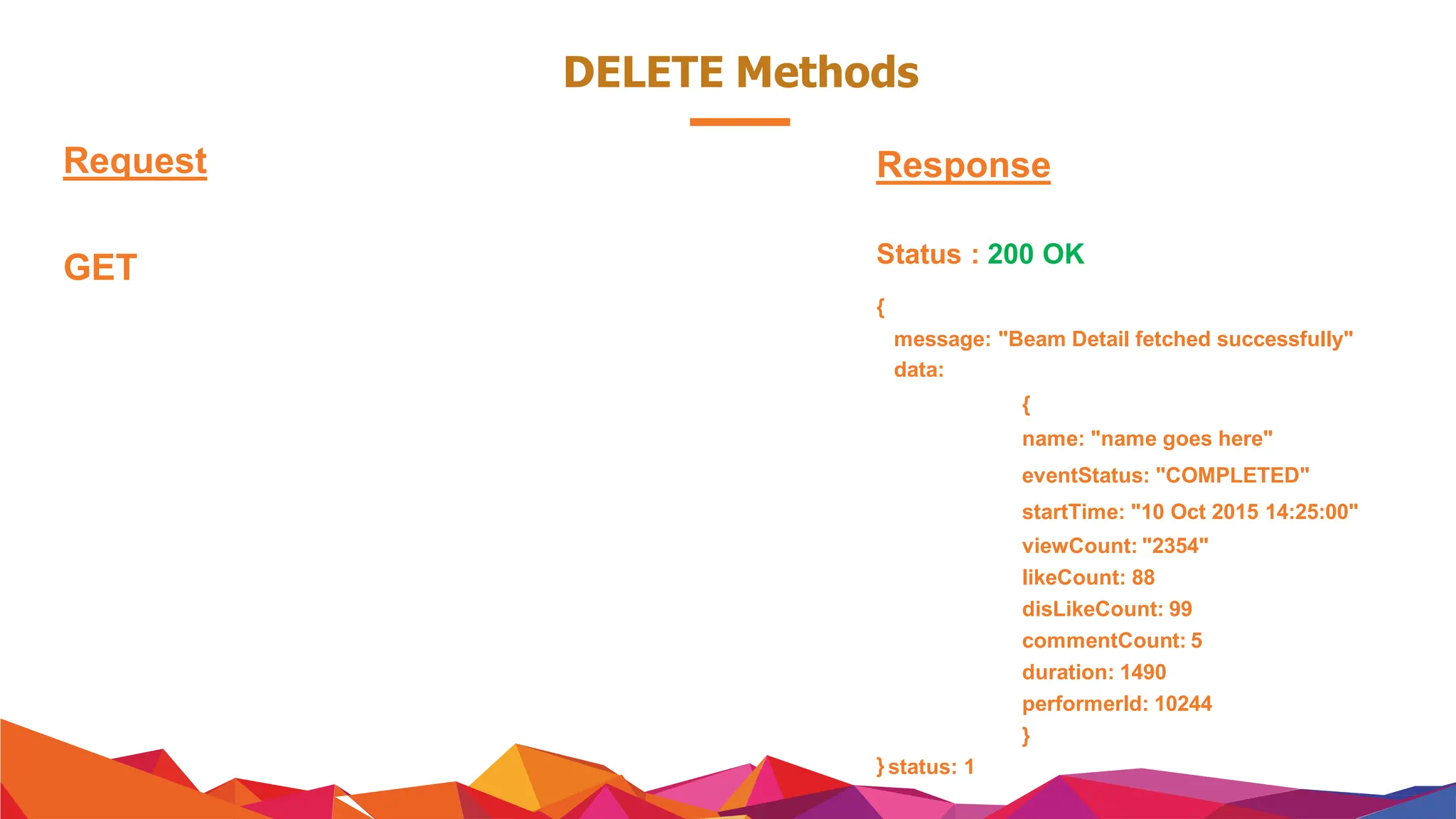
DELETE Methods
Request
GET
{
Response
Status : 200 OK
message: "Beam Detail fetched successfully"
data:
{
name: "name goes here"
eventStatus: "COMPLETED"
startTime: "10 Oct 2015 14:25:00"
viewCount: "2354"
likeCount: 88
disLikeCount: 99
commentCount: 5
duration: 1490
performerId: 10244
}
status: 1
}
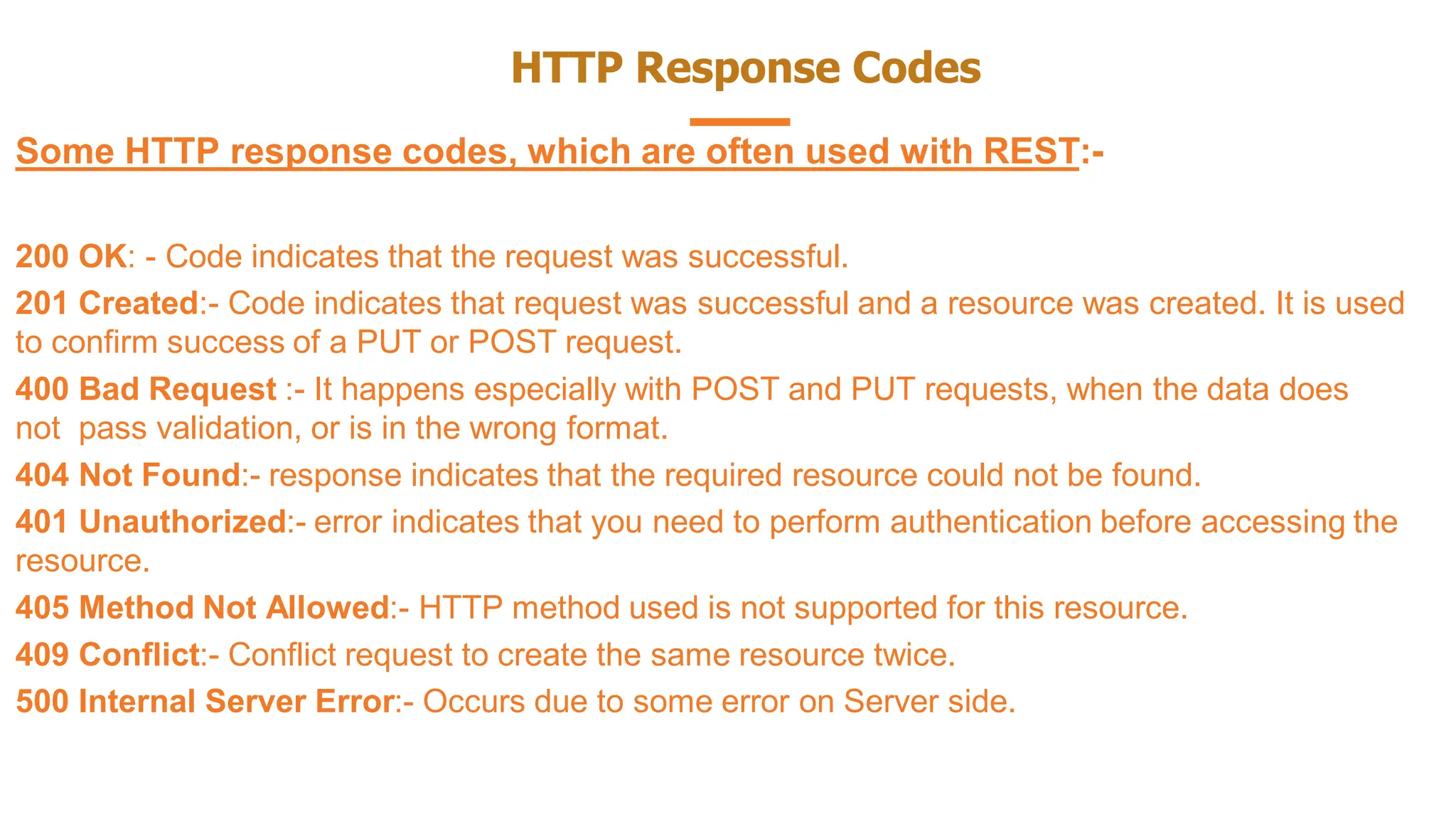
HTTP Response Codes
Some HTTP response codes, which are often used with REST:-
200 OK: - Code indicates that the request was successful.
201 Created:- Code indicates that request was successful and a resource was created. It is used
to confirm success of a PUT or POST request.
400 Bad Request :- It happens especially with POST and PUT requests, when the data does
not pass validation, or is in the wrong format.
404 Not Found:- response indicates that the required resource could not be found.
401 Unauthorized:- error indicates that you need to perform authentication before accessing the
resource.
405 Method Not Allowed:- HTTP method used is not supported for this resource.
409 Conflict:- Conflict request to create the same resource twice.
500 Internal Server Error:- Occurs due to some error on Server side.
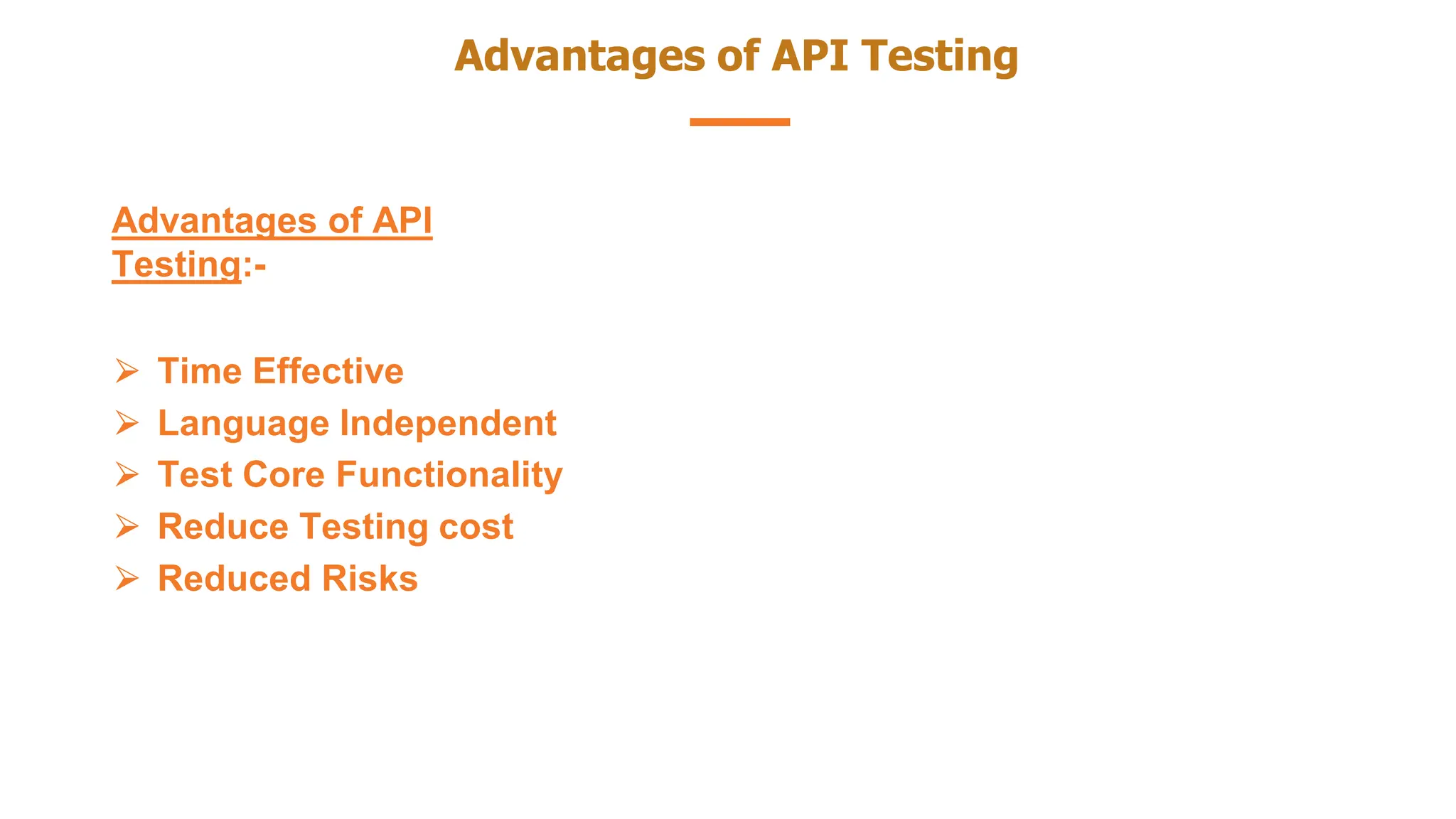
Advantages of API Testing
Advantages of API
Testing:-
⮚ Time Effective
⮚ Language Independent
⮚ Test Core Functionality
⮚ Reduce Testing cost
⮚ Reduced Risks
Common Types of Tests in API Testing
Common API Bugs:-
⮚ Verify if API doesn’t return any response.
⮚ Based on input request, return request should be checked.
⮚ Verification of the API whether it triggers some other event or
calls another API
⮚ Verification of the API whether it is updating any data structure
⮚ Delayed in API Response time
⮚ Response Data is not structured
⮚ Difficulty in connecting and getting response from API
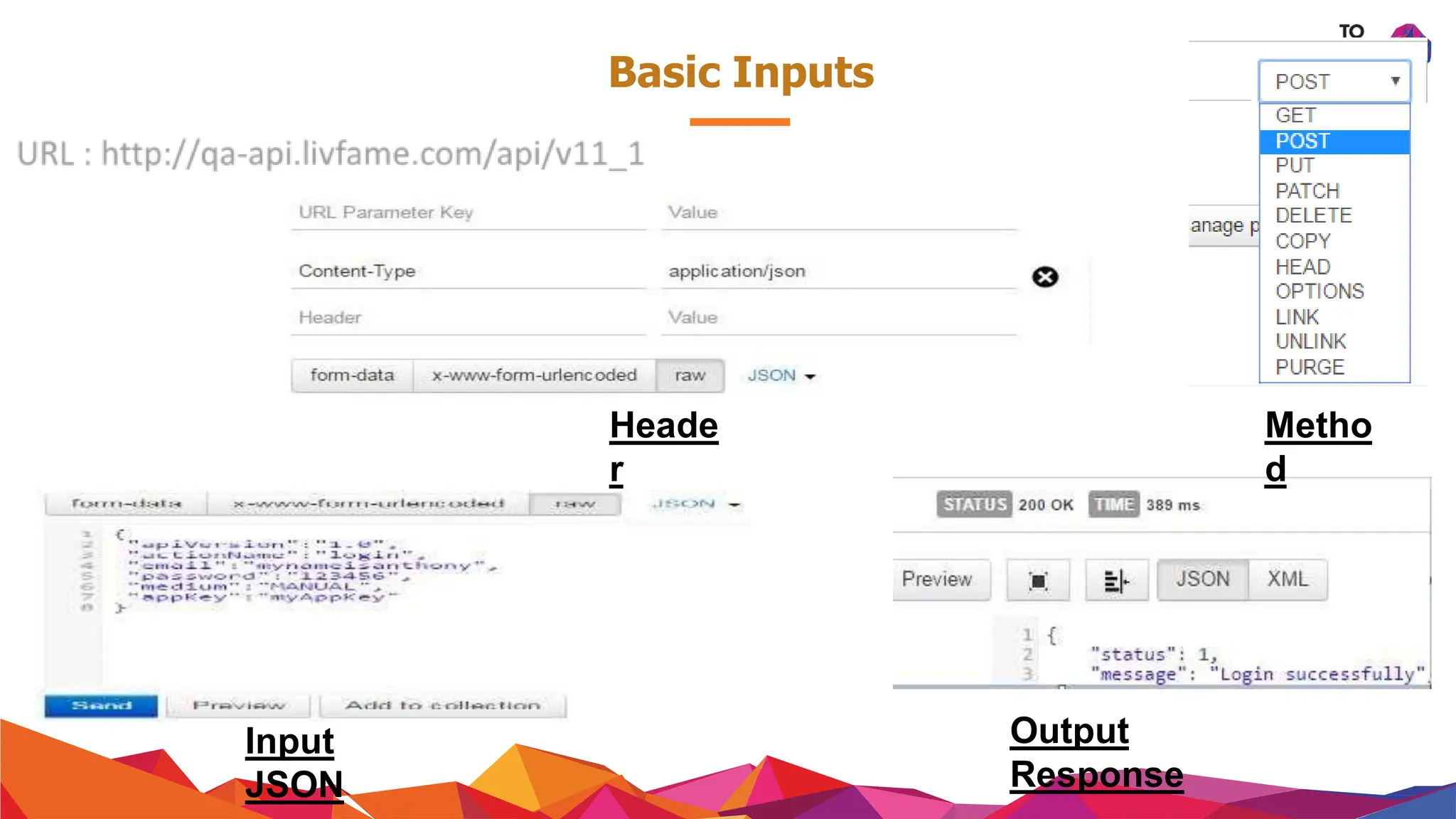
Basic Inputs
Heade
r
Metho
d
Output
Response
Input
JSON

TEST PPTBCHDBHBHBHVBHJEFVHJVBFHVBFHVBHFVBFHVHFVBFHVBHFVBFHVBFHVBFVBFVBHVBVBFHVB

  • 1.
  • 2.
    Agenda of APITesting API TESTING TOOL SELECTION WORKFLOW API and API Testing Right tool for API Testing How API works ? API Methods ADVANTAGE S DEMO Different API Methods Advantages of API Testing Live Demo www.tothenew.com
  • 3.
    What is API? APIstands for Application Programming Interface. API is an software to software interface, not a user interface. With APIs, applications talk to each other without any user knowledge or intervention. Implemented by writing function calls in the program.
  • 4.
    What is APITesting? API testing uses software to send calls to the API and get the output. API testing treats the component under test as a black box. The goal of API testing is to verify correct performance and error handling of the component prior to its integration into an application.
  • 5.
  • 6.
  • 7.
    REST API REST –stands for Representational State Transfer. ⮚ It is a set of functions to which the developers performs requests and receive responses. In REST API interaction is made via HTTP protocol. ⮚ REST also allows computers to talk to each other over a network. ⮚ It involves using HTTP methods to send and receive messages, and does not require a strict message definition, unlike Web services. ⮚ REST messages often take the form of XML, or JavaScript Object Notation (JSON).
  • 8.
    HTTP Methods 4 CommonlyUsed Methods:- GET : - Provides a read only access to a resource. POST :- Used to update an existing resource or create a new resource. PUT :- Used to create a new resource. DELETE :- Used to Remove a resource. RESOUCE GET PUT POST DELETE URL Retrieve the member Create / Replace a new resource Create new entry Used to remove a resource
  • 9.
    PUT REQUE ST PUT RESPON SE What is APITesting ? GET REQUE ST GET RESPON SE POST REQUE ST POST RESPON SE DELET E REQUE ST DELET E RESPON SE
  • 10.
    REST API Inputs GETPOST PUT DELETE Method - GET Method - POST Method - PUT Method - DELETE URL URL URL URL Custom-Header Custom-Header Custom-Header Custom-Header Input JSON
  • 11.
  • 12.
    GET Methods Request GET Response Status :200 OK { message: "Beam Detail fetched successfully" data: { name eventStatus startTime : "name goes here" : "COMPLETED" : "10 Oct 2015 14:25:00" viewCount likeCount disLikeCount : "2354" : 88 : 99 commentCount : 5 duration performerId : 1490 : 10244 } status: 1 }
  • 13.
    POST Methods "code": 10001 } Request POST "email“ "password“ "medium“ "apiVersion“ "appKey“ :"zainsch707@gmail.com", : "admin", : "MANUAL", : "1.0", : "myAppKey", "actionName“ : "login" } Response Status : 200 OK { "status": 1, "message": "Login successfully", "data": { "access_token": "rcd676up5kit3akd93a", "email": "admn.famelive@gmail.com", "roles": "[ROLE_USER]", "userId": "1", "isAccountVerified": true, "timeZoneName": "GMT +05:30 - New York", "timeZoneId": 8, "fameName": "admin.famelive", "imageName": "zsdasdaw", "userChannel": "a468784e6e2a9874619e7f", },
  • 14.
    PUT Methods Request GET { Response Status :200 OK message: "Beam Detail fetched successfully" data: { name: "name goes here" eventStatus: "COMPLETED" startTime: "10 Oct 2015 14:25:00" viewCount: "2354" likeCount: 88 disLikeCount: 99 commentCount: 5 duration: 1490 performerId: 10244 } status: 1 }
  • 15.
    DELETE Methods Request GET { Response Status :200 OK message: "Beam Detail fetched successfully" data: { name: "name goes here" eventStatus: "COMPLETED" startTime: "10 Oct 2015 14:25:00" viewCount: "2354" likeCount: 88 disLikeCount: 99 commentCount: 5 duration: 1490 performerId: 10244 } status: 1 }
  • 16.
    HTTP Response Codes SomeHTTP response codes, which are often used with REST:- 200 OK: - Code indicates that the request was successful. 201 Created:- Code indicates that request was successful and a resource was created. It is used to confirm success of a PUT or POST request. 400 Bad Request :- It happens especially with POST and PUT requests, when the data does not pass validation, or is in the wrong format. 404 Not Found:- response indicates that the required resource could not be found. 401 Unauthorized:- error indicates that you need to perform authentication before accessing the resource. 405 Method Not Allowed:- HTTP method used is not supported for this resource. 409 Conflict:- Conflict request to create the same resource twice. 500 Internal Server Error:- Occurs due to some error on Server side.
  • 17.
    Advantages of APITesting Advantages of API Testing:- ⮚ Time Effective ⮚ Language Independent ⮚ Test Core Functionality ⮚ Reduce Testing cost ⮚ Reduced Risks
  • 18.
    Common Types ofTests in API Testing Common API Bugs:- ⮚ Verify if API doesn’t return any response. ⮚ Based on input request, return request should be checked. ⮚ Verification of the API whether it triggers some other event or calls another API ⮚ Verification of the API whether it is updating any data structure ⮚ Delayed in API Response time ⮚ Response Data is not structured ⮚ Difficulty in connecting and getting response from API
  • 19.