Dr Chris Stout
Center for Global Initiatives
&
College of Medicine
University of Illinois, Chicago
Technologies, Organizations
and Tools for Global
Psychologists in
Humanitarian Intervention
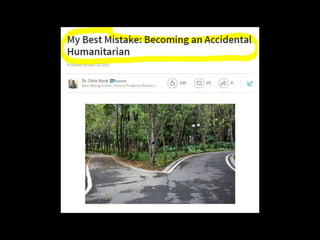
Let me start with my story.
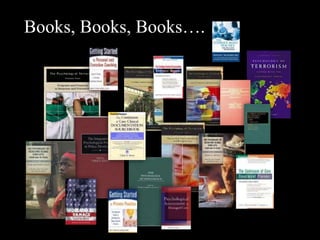
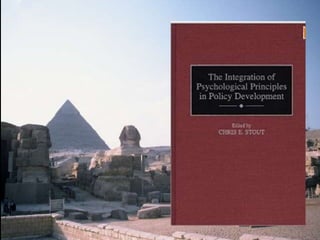
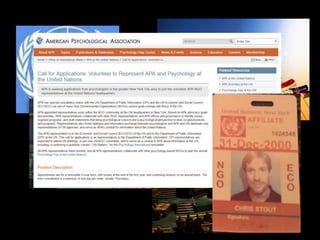
Books, Books, Books….
While the academic side was important
(and great), I wanted to go into the
field.
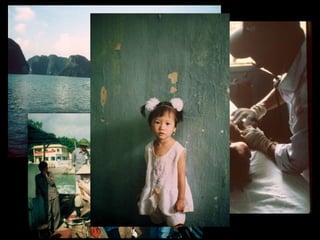
On my first international medical
mission, I saw what the diseases of
poverty look like…
Halong Bay, Vietnam
“Diseases of Poverty” refers to ills that
are the result of neglect in poverty
stricken communities.
As for prevalence…
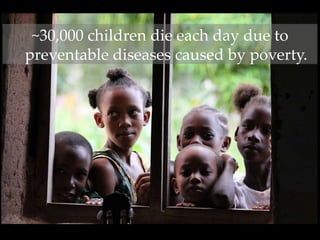
~30,000 children die each day due to
preventable diseases caused by poverty.
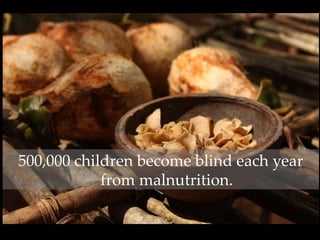
500,000 children become blind each year
from malnutrition.
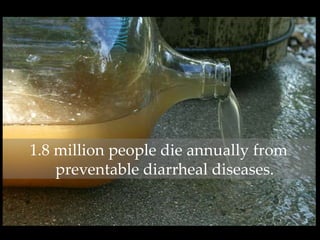
1.8 million people die annually from
preventable diarrheal diseases.
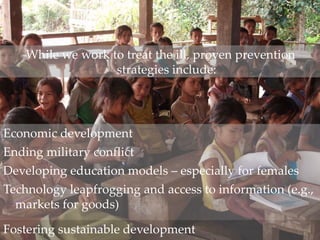
While we work to treat the ill, proven prevention
strategies include:
Economic development
Ending military conflict
Developing education models – especially for females
Technology leapfrogging and access to information (e.g.,
markets for goods)
Fostering sustainable development
Sometimes one passion can
pivot to another
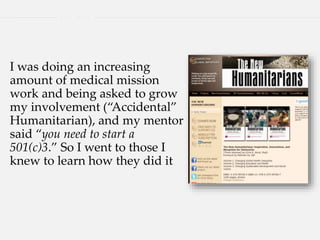
I was doing an increasing
amount of medical mission
work and being asked to grow
my involvement (“Accidental”
Humanitarian), and my mentor
said “you need to start a
501(c)3.” So I went to those I
knew to learn how they did it
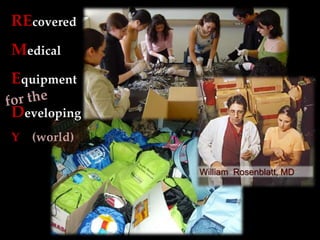
William Rosenblatt, MD
REcovered
Medical
Equipment
Developing
Y (world)
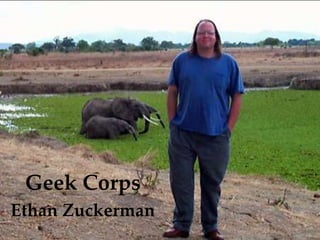
Geek Corps
Ethan Zuckerman
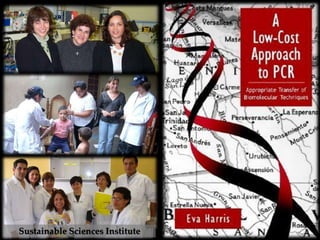
Sustainable Sciences Institute
.
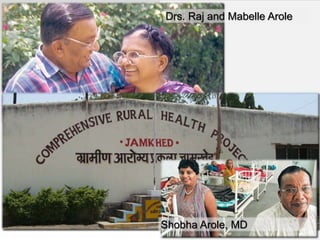
Drs. Raj and Mabelle Arole
Shobha Arole, MD
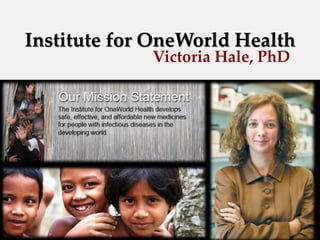
Institute for OneWorld Health
Victoria Hale, PhD
Scojo Foundation.
Marie Charles, MD
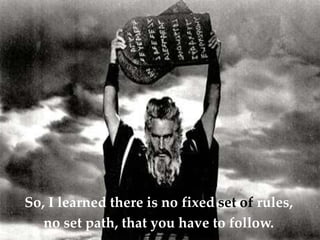
So, I learned there is no fixed set of rules,
no set path, that you have to follow.
I want to tell you about my experience
with starting a non-profit, the big
problem we experienced, and the pivot
we made…
So our pivot was to focus on one key
project, and share what we had learned
with others to help them accelerate and
reduce friction in doing humanitarian
work.
In other words, to open-source
humanitarian intervention!
The basic idea is that doing good work and
helping others shouldn’t be so hard…
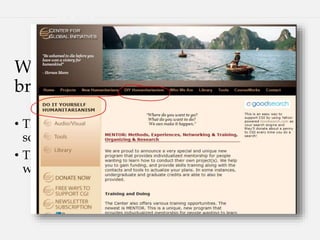
We found that those folks generally
broke into two categories:
• Those wanting to start their own non-profit/NGO,
so we coach and teach how-to, and
• Those just wanting to do the work or a project, so
we help and act as a fiscal intermediary.
Regardless of which camp you are
in, the following tools may be of
interest, and they all are freely
available…
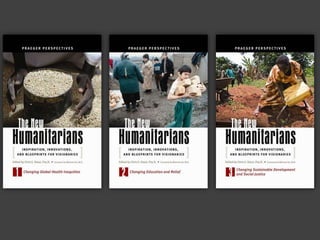
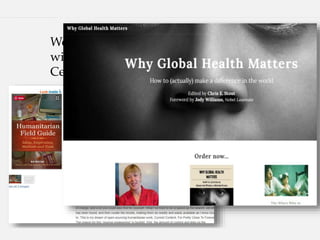
We also produced two books so far,
with royalties going to support the
Center as well as support our mission.
We developed a podcast to highlight
interesting people that all have a
humanitarian aspect to their lives or
work.
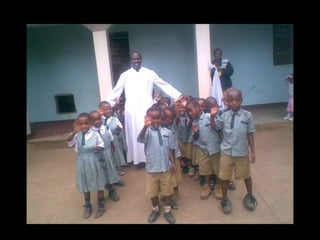
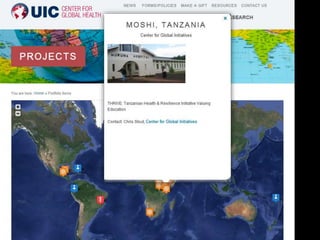
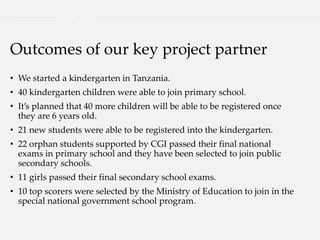
Outcomes of our key project partner
• We started a kindergarten in Tanzania.
• 40 kindergarten children were able to join primary school.
• It’s planned that 40 more children will be able to be registered once
they are 6 years old.
• 21 new students were able to be registered into the kindergarten.
• 22 orphan students supported by CGI passed their final national
exams in primary school and they have been selected to join public
secondary schools.
• 11 girls passed their final secondary school exams.
• 10 top scorers were selected by the Ministry of Education to join in the
special national government school program.
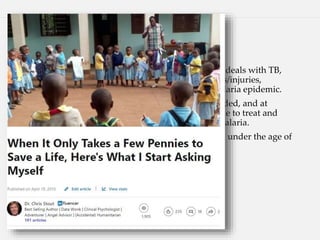
“73 Cents a Life”
• Huruma Designated Hospital and Kibosho Hospital deals with TB,
pneumonia, immunosuppression, diabetes, accidents/injuries,
hypertension, and one season, a particularly bad malaria epidemic.
• We were able to procure the proper medications needed, and at
follow-up, we learned that our partners had been able to treat and
thus help prevent over 4,100 people from dying of malaria.
• Twenty-eight percent of those infected were children under the age of
five — an even more vulnerable group.
• When calculating the cost, it averaged out to...
• 73 cents a life.
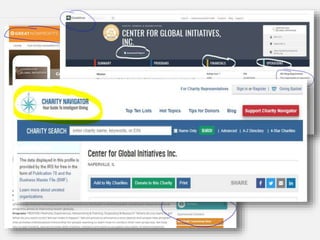
In terms third party cred:
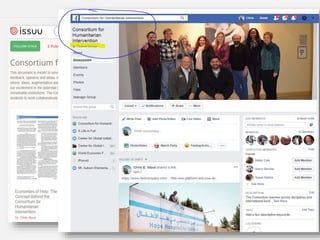
What’s next?
Consortium for Humanitarian Intervention
THANKS
KEEP IN TOUCH
GO DO
For Having Me
DrChrisStout.com
CenterForGlobalInitiatives.org
Great Things…!

Technologies, Organizations and Tools for Global Psychologists in Humanitarian Intervention

  • 1.
    Dr Chris Stout Centerfor Global Initiatives & College of Medicine University of Illinois, Chicago Technologies, Organizations and Tools for Global Psychologists in Humanitarian Intervention
  • 2.
    Let me startwith my story.
  • 4.
  • 8.
    While the academicside was important (and great), I wanted to go into the field. On my first international medical mission, I saw what the diseases of poverty look like…
  • 9.
  • 10.
    “Diseases of Poverty”refers to ills that are the result of neglect in poverty stricken communities. As for prevalence…
  • 11.
    ~30,000 children dieeach day due to preventable diseases caused by poverty.
  • 12.
    500,000 children becomeblind each year from malnutrition.
  • 13.
    1.8 million peopledie annually from preventable diarrheal diseases.
  • 14.
    While we workto treat the ill, proven prevention strategies include: Economic development Ending military conflict Developing education models – especially for females Technology leapfrogging and access to information (e.g., markets for goods) Fostering sustainable development
  • 15.
    Sometimes one passioncan pivot to another
  • 19.
    I was doingan increasing amount of medical mission work and being asked to grow my involvement (“Accidental” Humanitarian), and my mentor said “you need to start a 501(c)3.” So I went to those I knew to learn how they did it
  • 21.
  • 22.
  • 23.
  • 24.
    . Drs. Raj andMabelle Arole Shobha Arole, MD
  • 25.
    Institute for OneWorldHealth Victoria Hale, PhD
  • 26.
  • 27.
  • 28.
    So, I learnedthere is no fixed set of rules, no set path, that you have to follow.
  • 30.
    I want totell you about my experience with starting a non-profit, the big problem we experienced, and the pivot we made…
  • 31.
    So our pivotwas to focus on one key project, and share what we had learned with others to help them accelerate and reduce friction in doing humanitarian work. In other words, to open-source humanitarian intervention!
  • 32.
    The basic ideais that doing good work and helping others shouldn’t be so hard…
  • 33.
    We found thatthose folks generally broke into two categories: • Those wanting to start their own non-profit/NGO, so we coach and teach how-to, and • Those just wanting to do the work or a project, so we help and act as a fiscal intermediary.
  • 34.
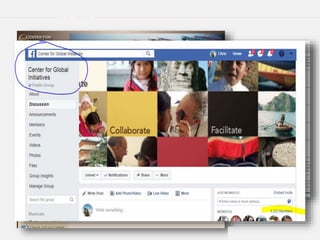
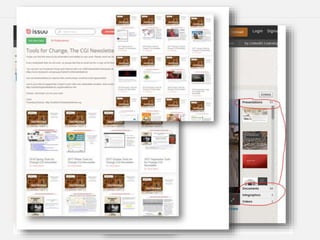
    Regardless of whichcamp you are in, the following tools may be of interest, and they all are freely available…
  • 37.
    We also producedtwo books so far, with royalties going to support the Center as well as support our mission.
  • 38.
    We developed apodcast to highlight interesting people that all have a humanitarian aspect to their lives or work.
  • 39.
    Outcomes of ourkey project partner • We started a kindergarten in Tanzania. • 40 kindergarten children were able to join primary school. • It’s planned that 40 more children will be able to be registered once they are 6 years old. • 21 new students were able to be registered into the kindergarten. • 22 orphan students supported by CGI passed their final national exams in primary school and they have been selected to join public secondary schools. • 11 girls passed their final secondary school exams. • 10 top scorers were selected by the Ministry of Education to join in the special national government school program.
  • 40.
    “73 Cents aLife” • Huruma Designated Hospital and Kibosho Hospital deals with TB, pneumonia, immunosuppression, diabetes, accidents/injuries, hypertension, and one season, a particularly bad malaria epidemic. • We were able to procure the proper medications needed, and at follow-up, we learned that our partners had been able to treat and thus help prevent over 4,100 people from dying of malaria. • Twenty-eight percent of those infected were children under the age of five — an even more vulnerable group. • When calculating the cost, it averaged out to... • 73 cents a life.
  • 41.
    In terms thirdparty cred:
  • 42.
    What’s next? Consortium forHumanitarian Intervention
  • 43.
    THANKS KEEP IN TOUCH GODO For Having Me DrChrisStout.com CenterForGlobalInitiatives.org Great Things…!

Editor's Notes

  • #12 Image from https://pixabay.com/en/children-africa-window-smile-223023/ CC0 Public Domain. Free for commercial use. No attribution required. 
  • #13 Image from https://pixabay.com/en/food-africa-kenya-poor-bowl-16920/ CC0 Public Domain. Free for commercial use. No attribution required.
  • #14 Image from https://commons.wikimedia.org/wiki/File:2008-09-20_Dirty_water_spilling_from_a_bottle.jpg This file is licensed under the Creative Commons Attribution-Share Alike 4.0 International, 3.0 Unported, 2.5 Generic, 2.0 Genericand 1.0 Generic license.