Technical and Behavioral Global Asset Allocation Model (MATC)
GOAL : ASSET ALLOCATION FOR AN EVOLVING WORLDAn allocation model dedicated to the management of a large panel of global and flexible multi asset funds
Goal: Capital appreciation and preservation for various risk profiles.
Approach: Diversified and systematic management based upon trend following technical and behavioral indicators.
Tool: Responsive management by a daily dynamic adjustment of the exposure for the different markets depending on the ‘Momentum’ and on the global behavioral state (Market sentiment, risk aversion, excess).2
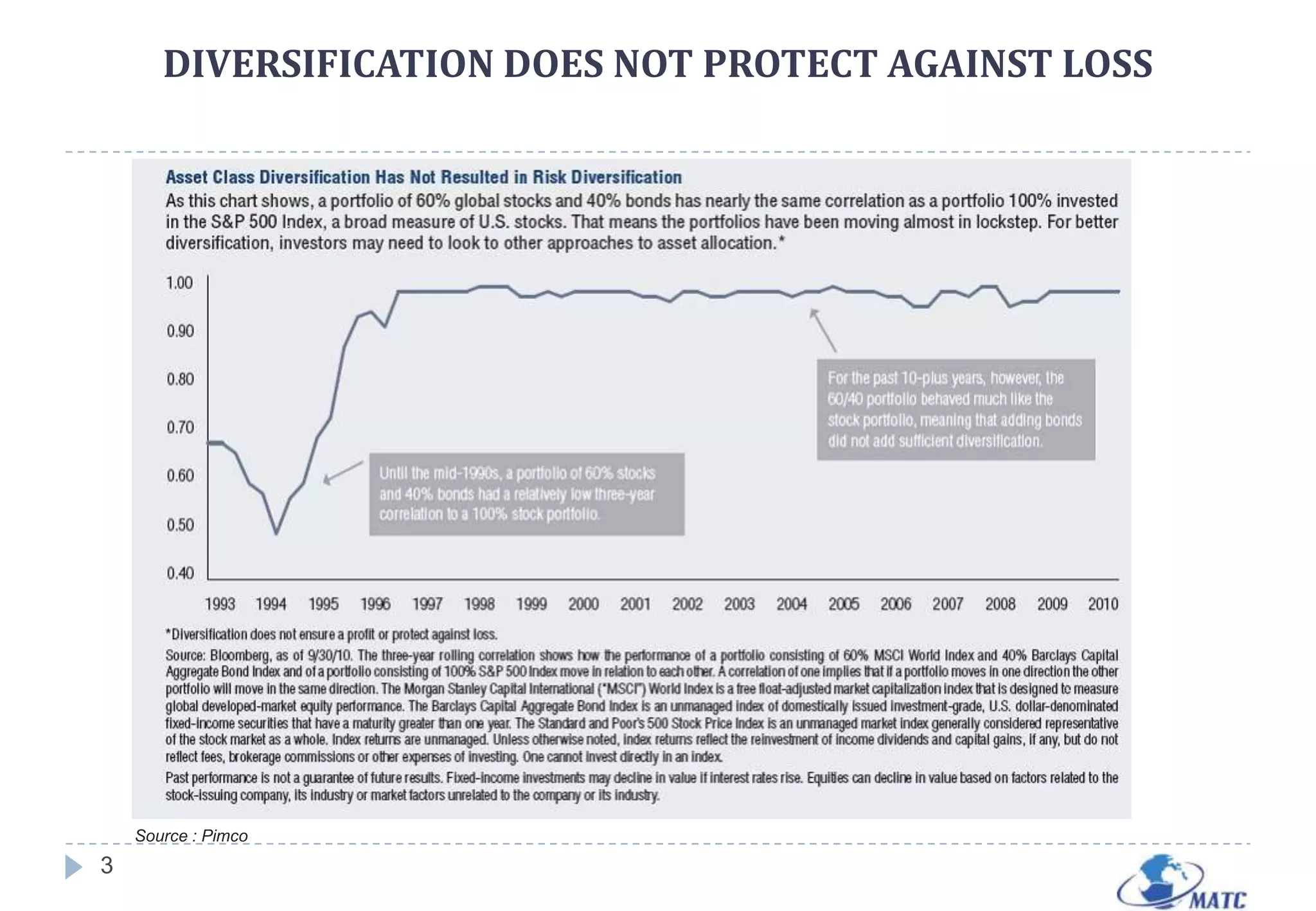
DIVERSIFICATION DOES NOT PROTECT AGAINST LOSS3Source : Pimco
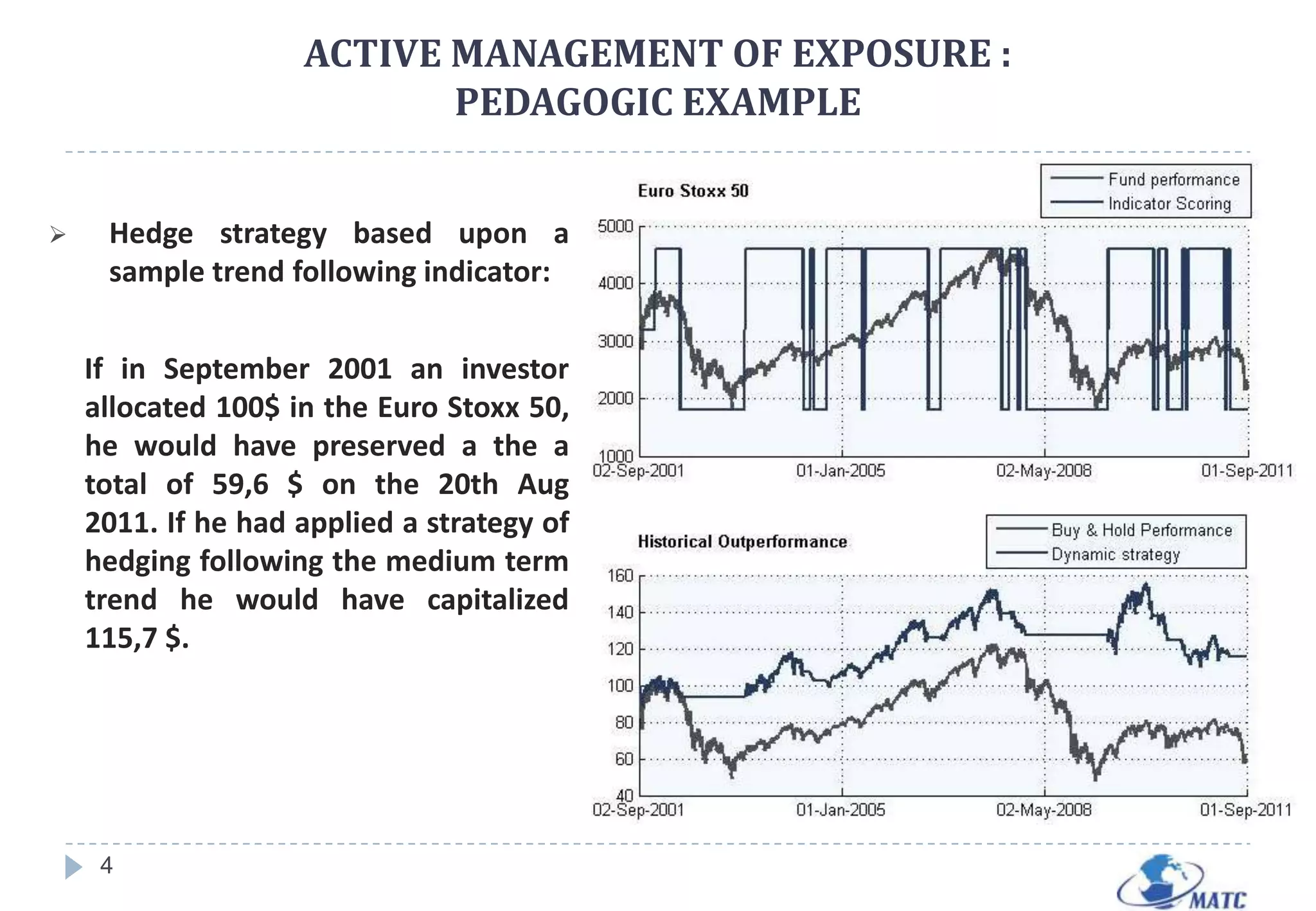
ACTIVE MANAGEMENT OF EXPOSURE : PEDAGOGIC EXAMPLEHedge strategy based upon a sample trend following indicator:     If in September 2001 an investor allocated 100$ in the Euro Stoxx 50, he would have preserved a the a total of 59,6 $ on the 20th Aug 2011. If he had applied a strategy of hedging following the medium term trend he would have capitalized 115,7 $.4
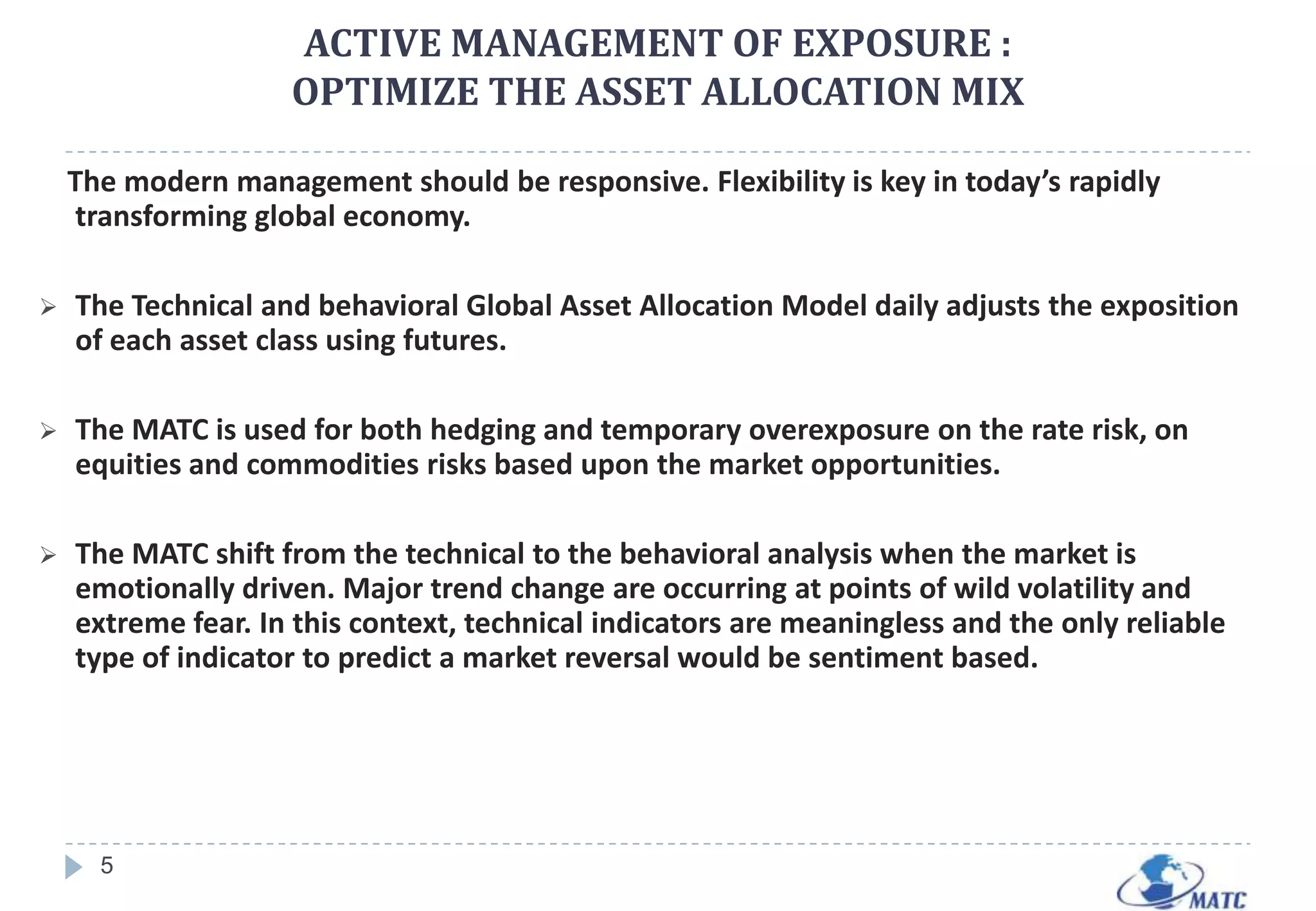
ACTIVE MANAGEMENT OF EXPOSURE : OPTIMIZE THE ASSET ALLOCATION MIXThe modern management should be responsive. Flexibility is key in today’s rapidly transforming global economy.The Technical and behavioral Global Asset Allocation Model daily adjusts the exposition of each asset class using futures.
The MATC is used for both hedging and temporary overexposure on the rate risk, on equities and commodities risks based upon the market opportunities.
The MATC shift from the technical to the behavioral analysis when the market is emotionally driven. Major trend change are occurring at points of wild volatility and extreme fear. In this context, technical indicators are meaningless and the only reliable type of indicator to predict a market reversal would be sentiment based.5
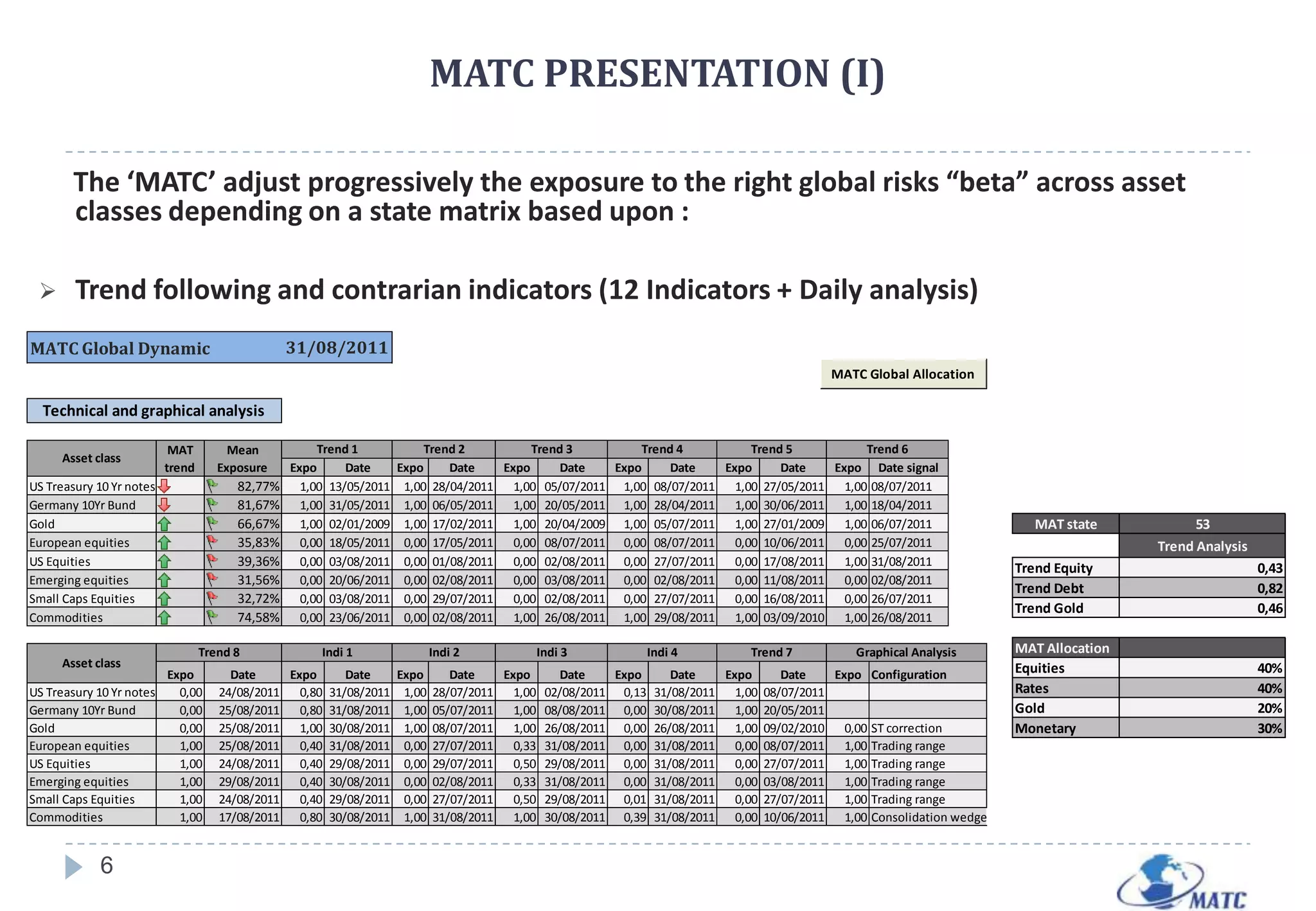
MATC PRESENTATION (I)     The ‘MATC’ adjust progressively the exposure to the right global risks “beta” across asset classes depending on a state matrix based upon : Trend following and contrarian indicators (12 Indicators + Daily analysis)6
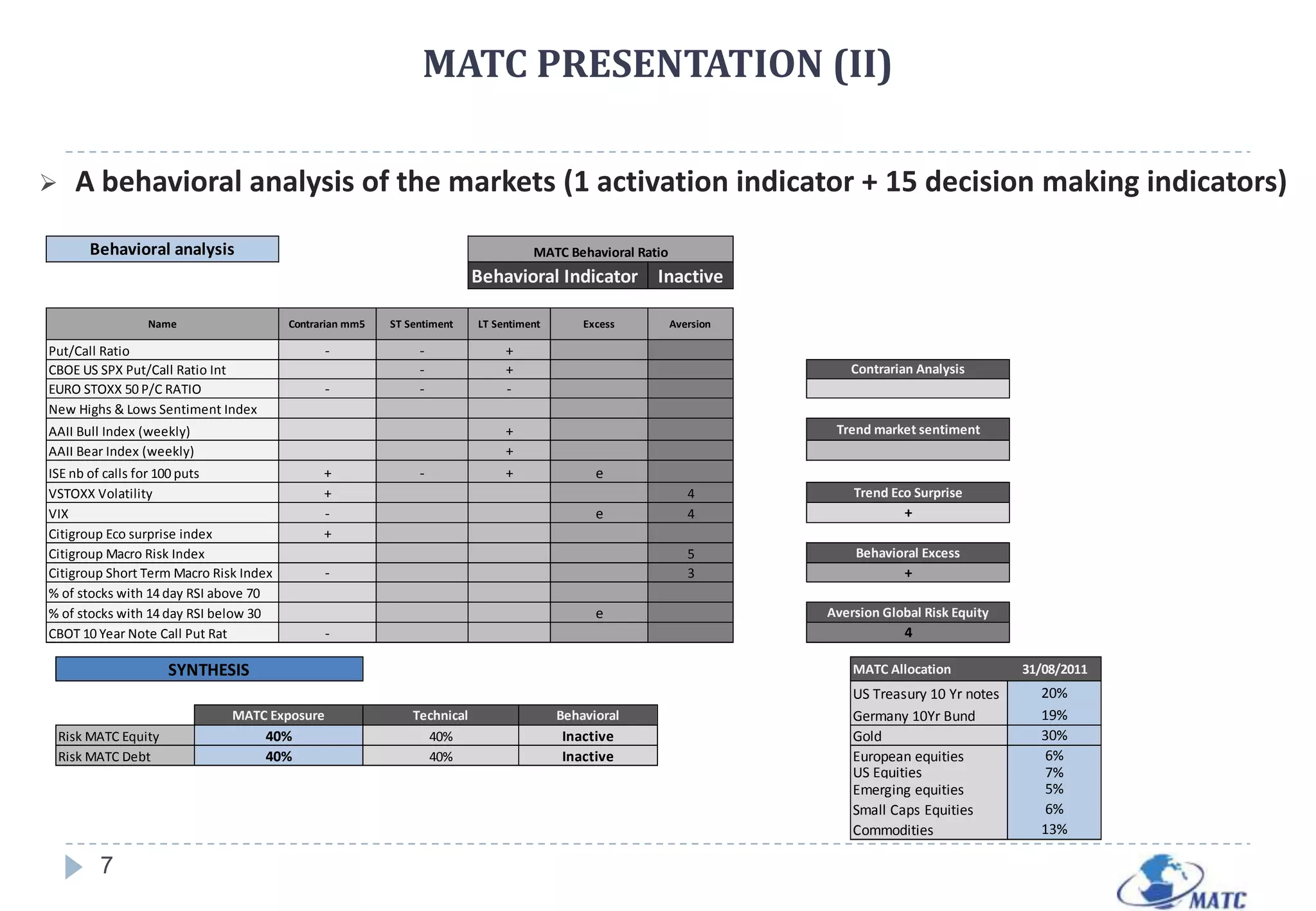
MATC PRESENTATION (II)A behavioral analysis of the markets (1 activation indicator + 15 decision making indicators)7
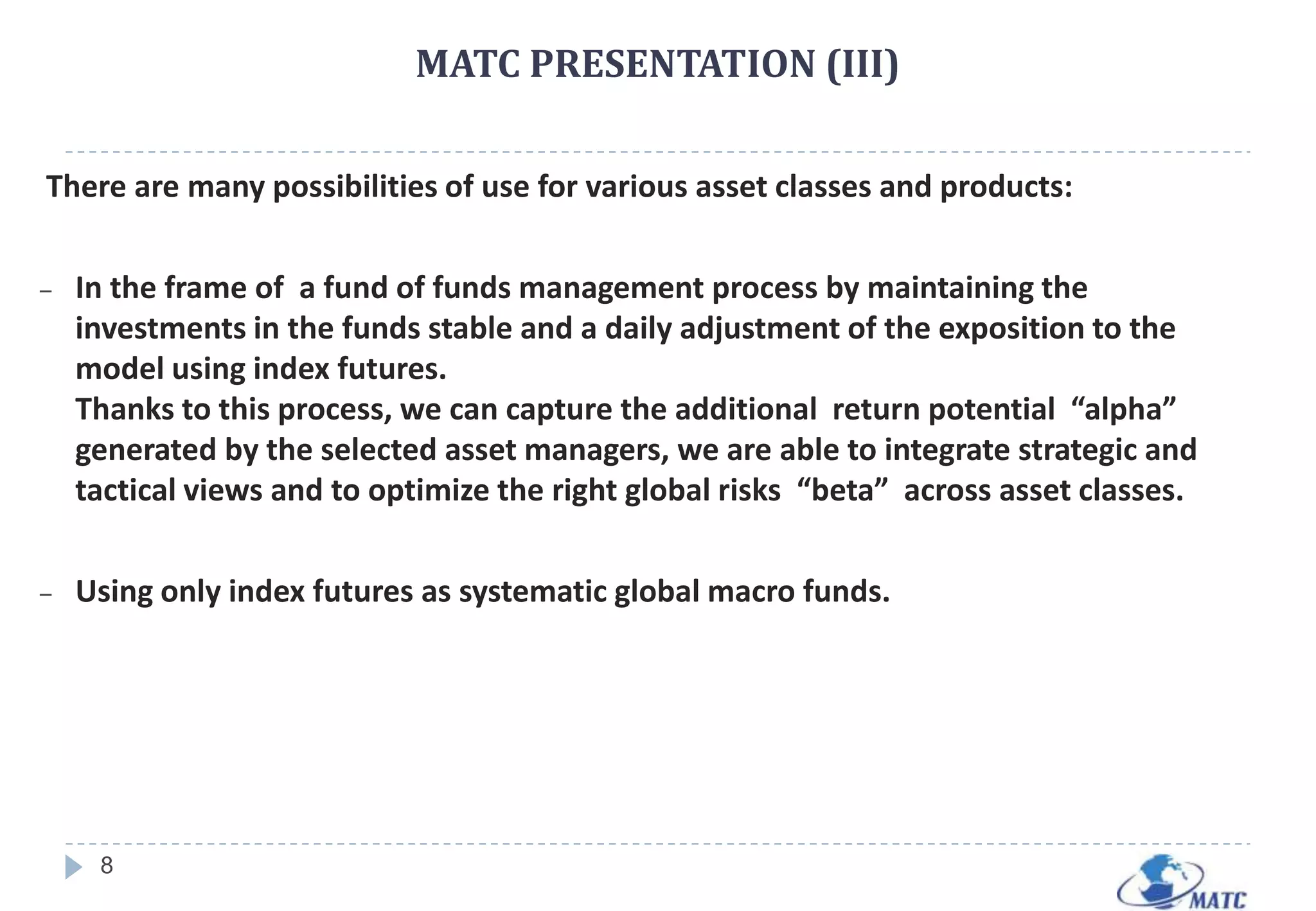
MATC PRESENTATION (III) There are many possibilities of use for various asset classes and products:In the frame of  a fund of funds management process by maintaining the investments in the funds stable and a daily adjustment of the exposition to the model using index futures. Thanks to this process, we can capture the additional  return potential  “alpha” generated by the selected asset managers, we are able to integrate strategic and tactical views and to optimize the right global risks  “beta”  across asset classes. Using only index futures as systematic global macro funds.8
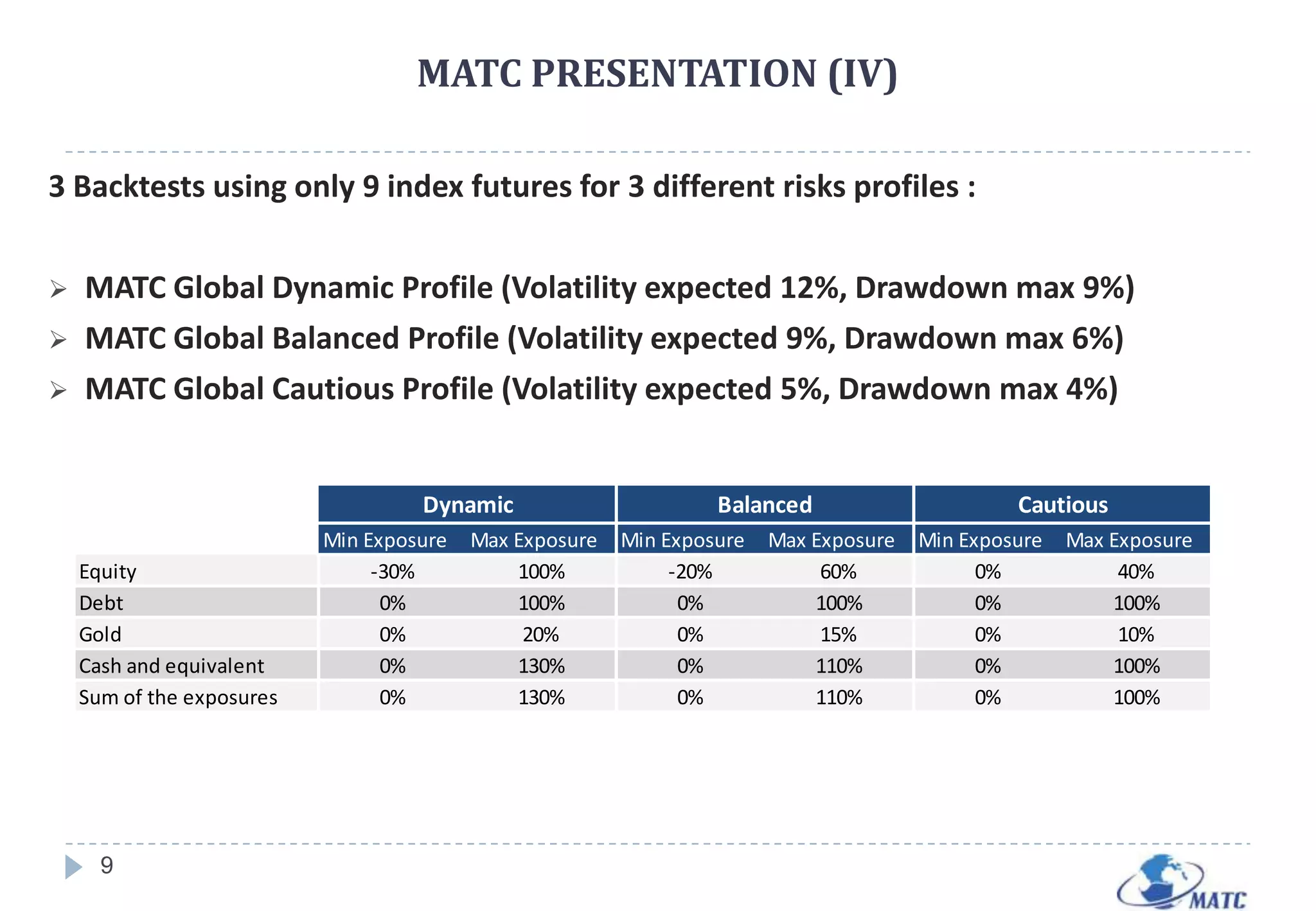
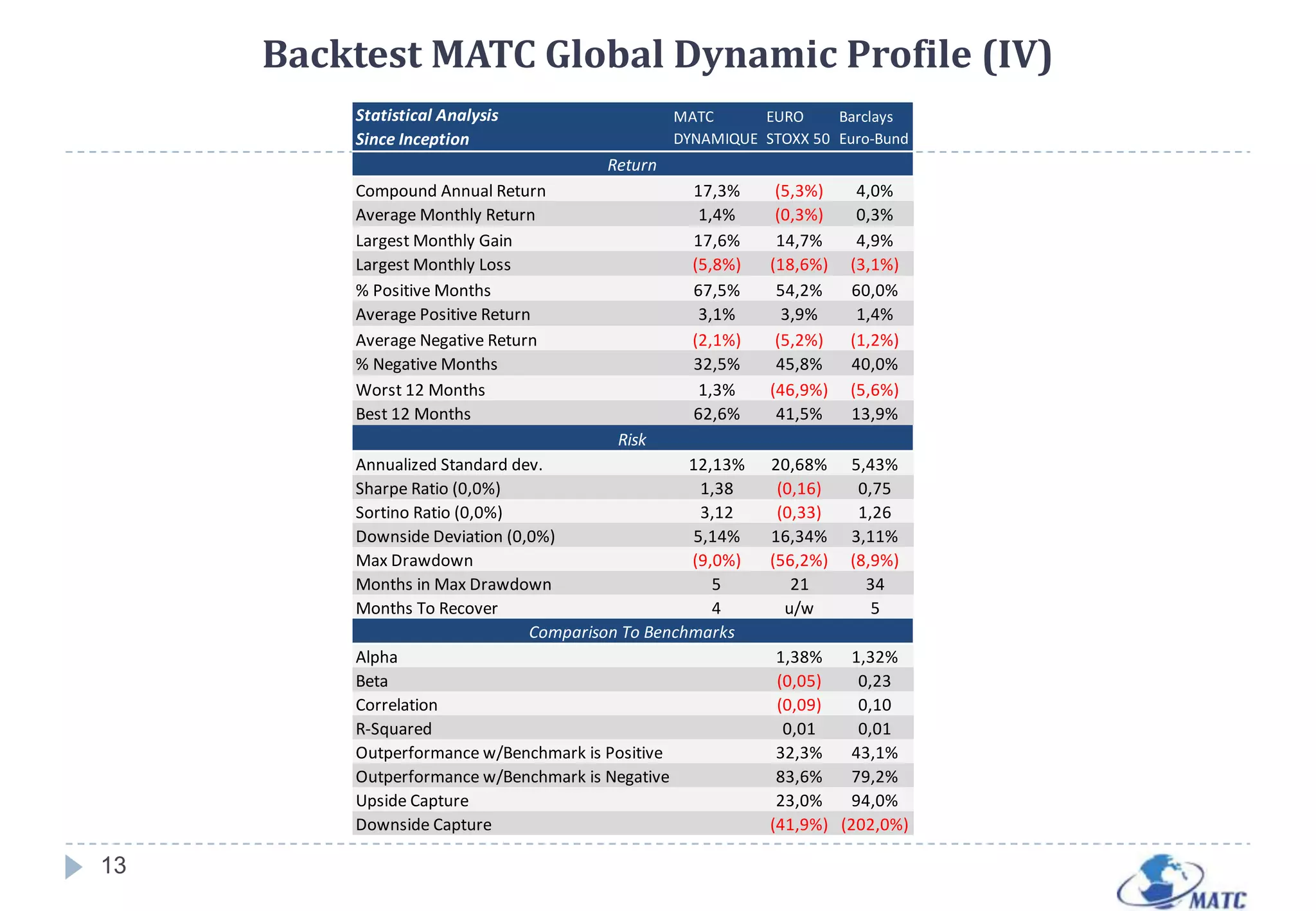
MATC PRESENTATION (IV)3 Backtests using only 9 index futures for 3 different risks profiles :MATC Global Dynamic Profile (Volatility expected 12%, Drawdown max 9%)
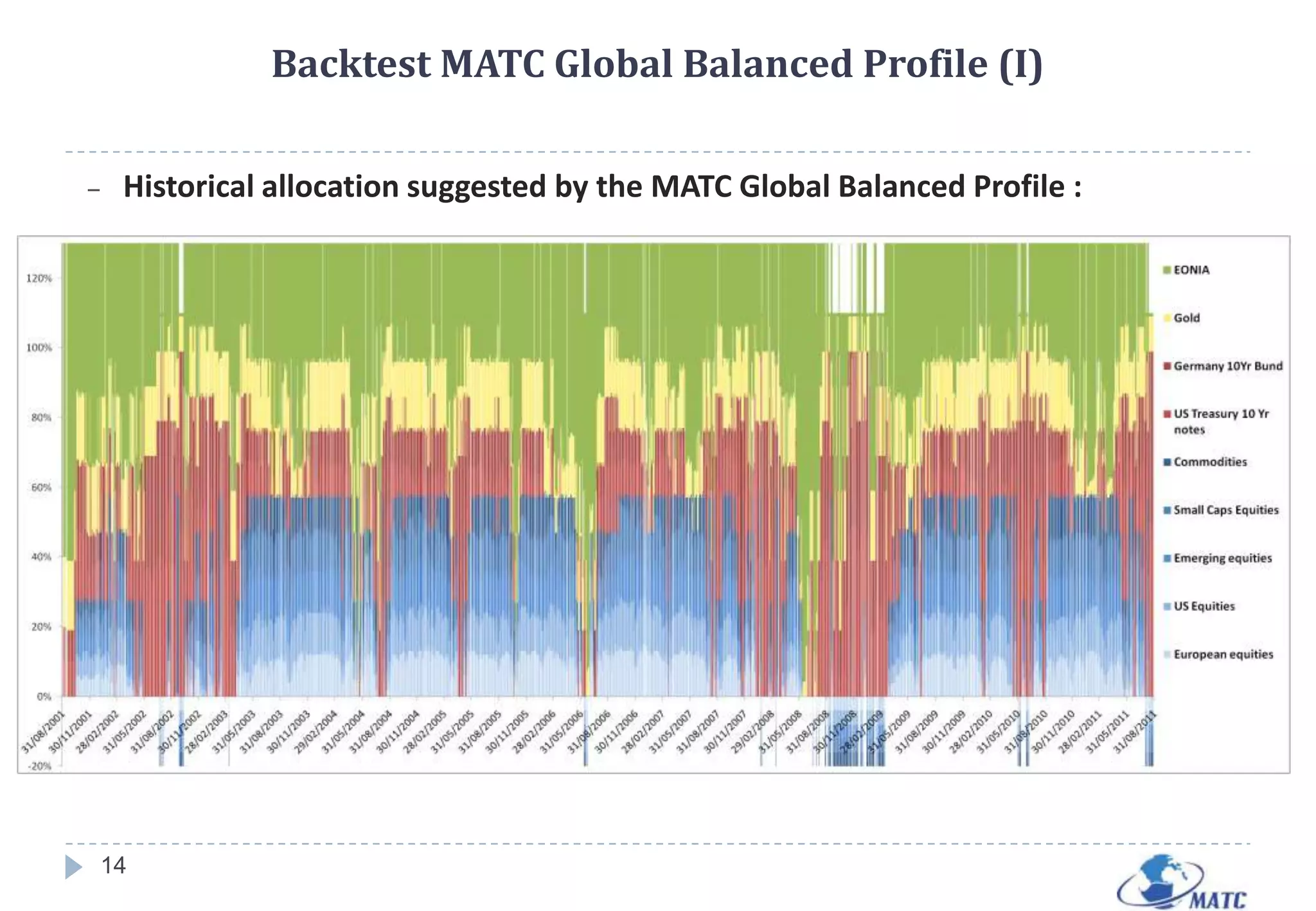
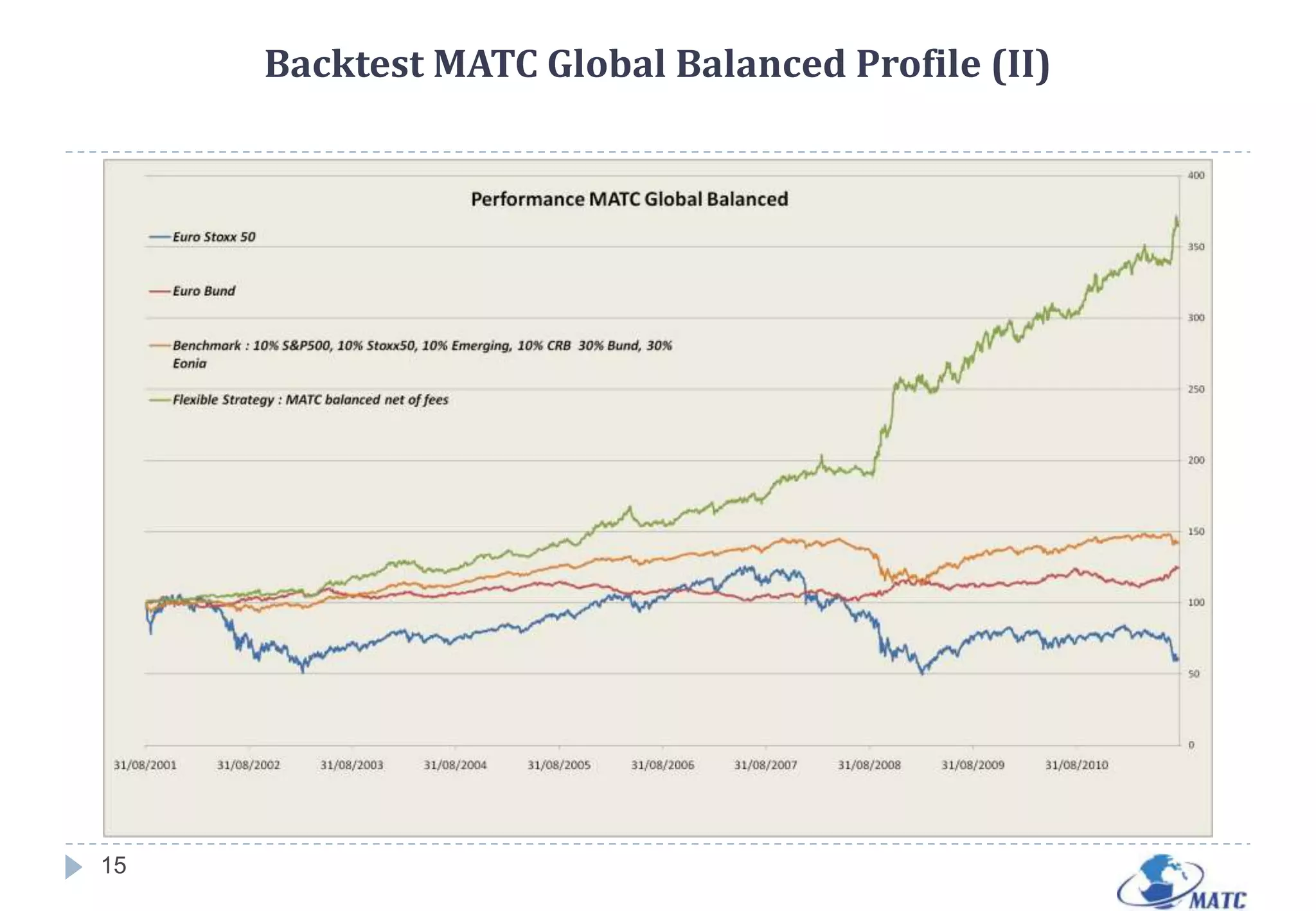
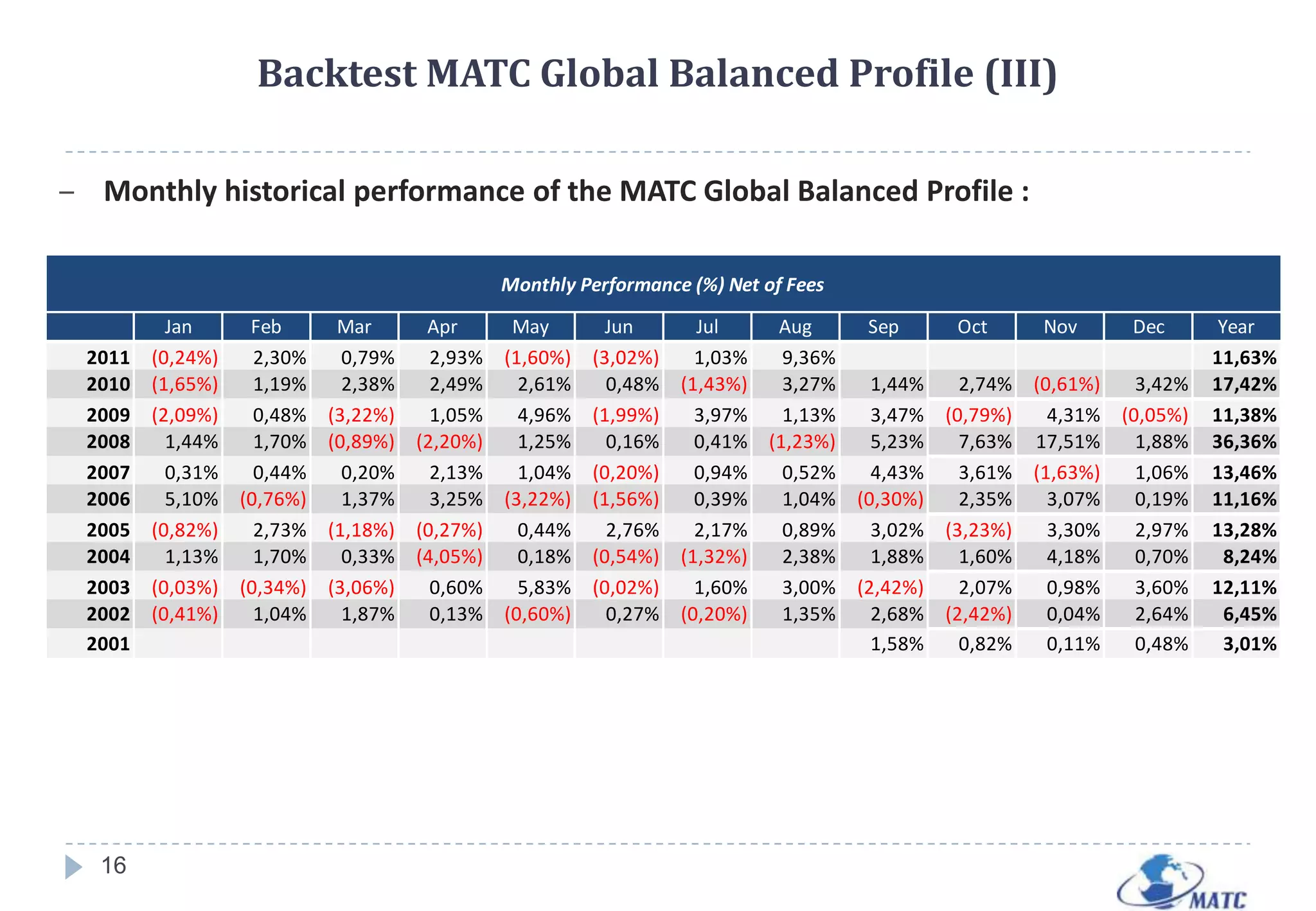
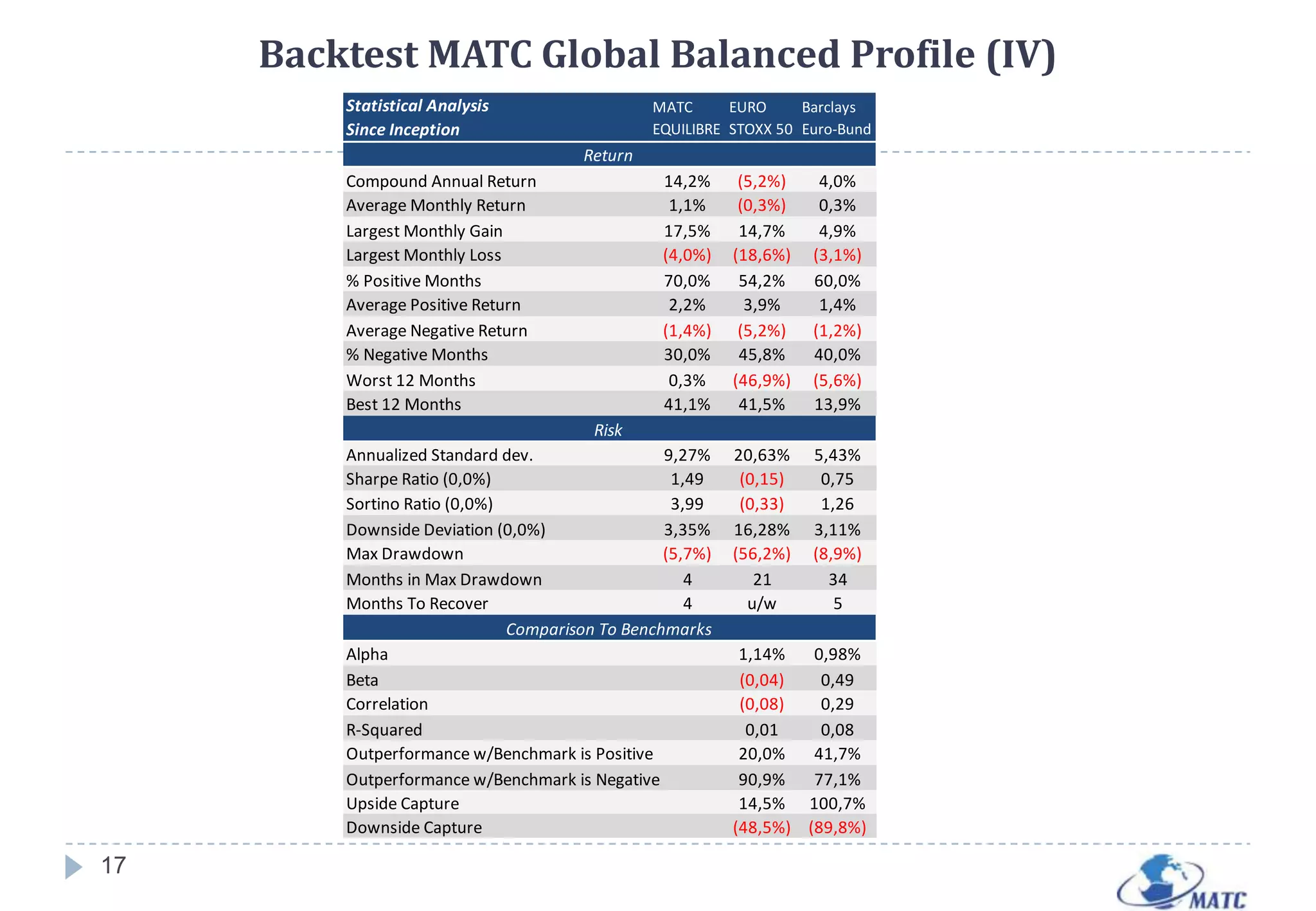
MATC Global Balanced Profile (Volatility expected 9%, Drawdown max 6%)
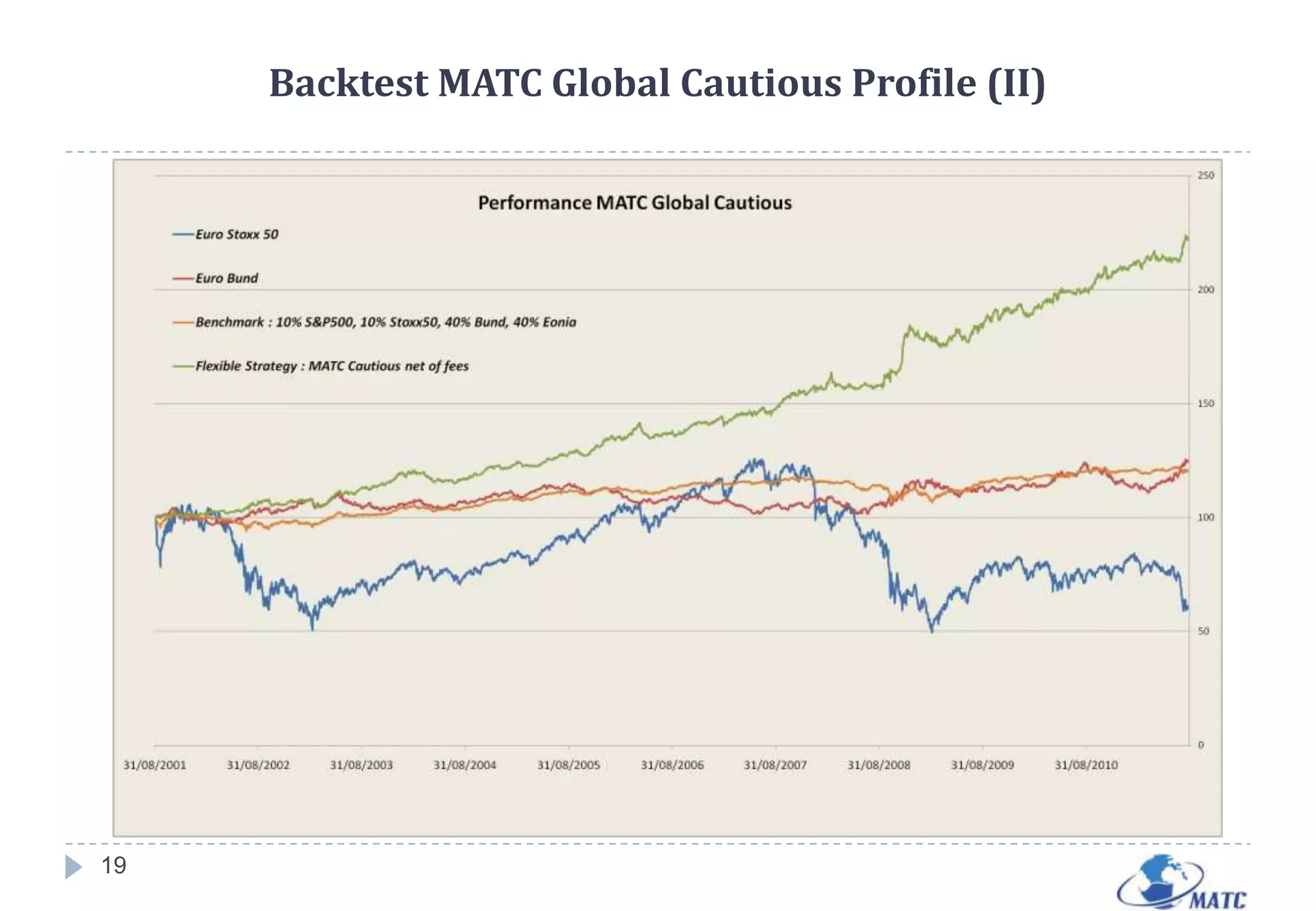
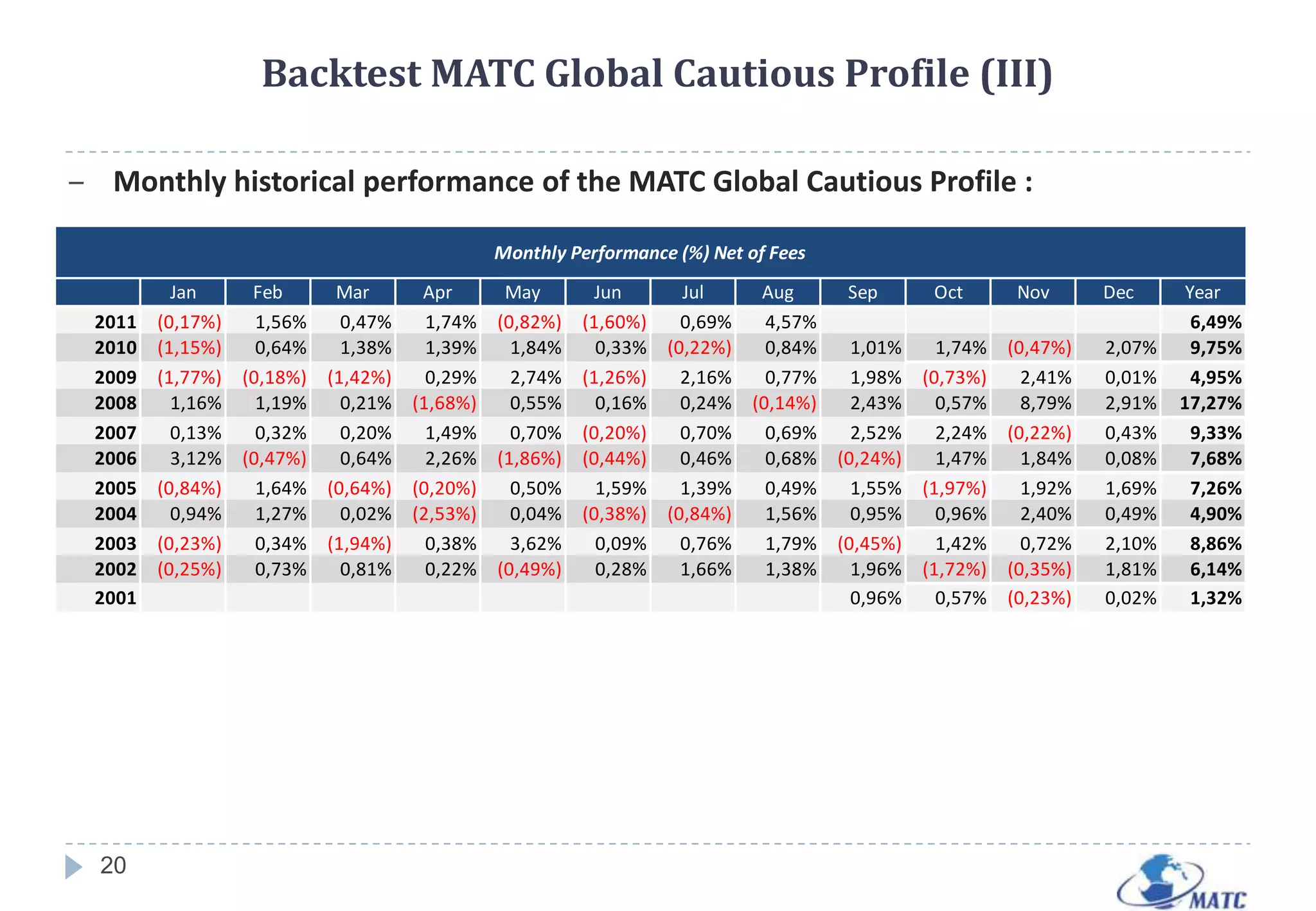
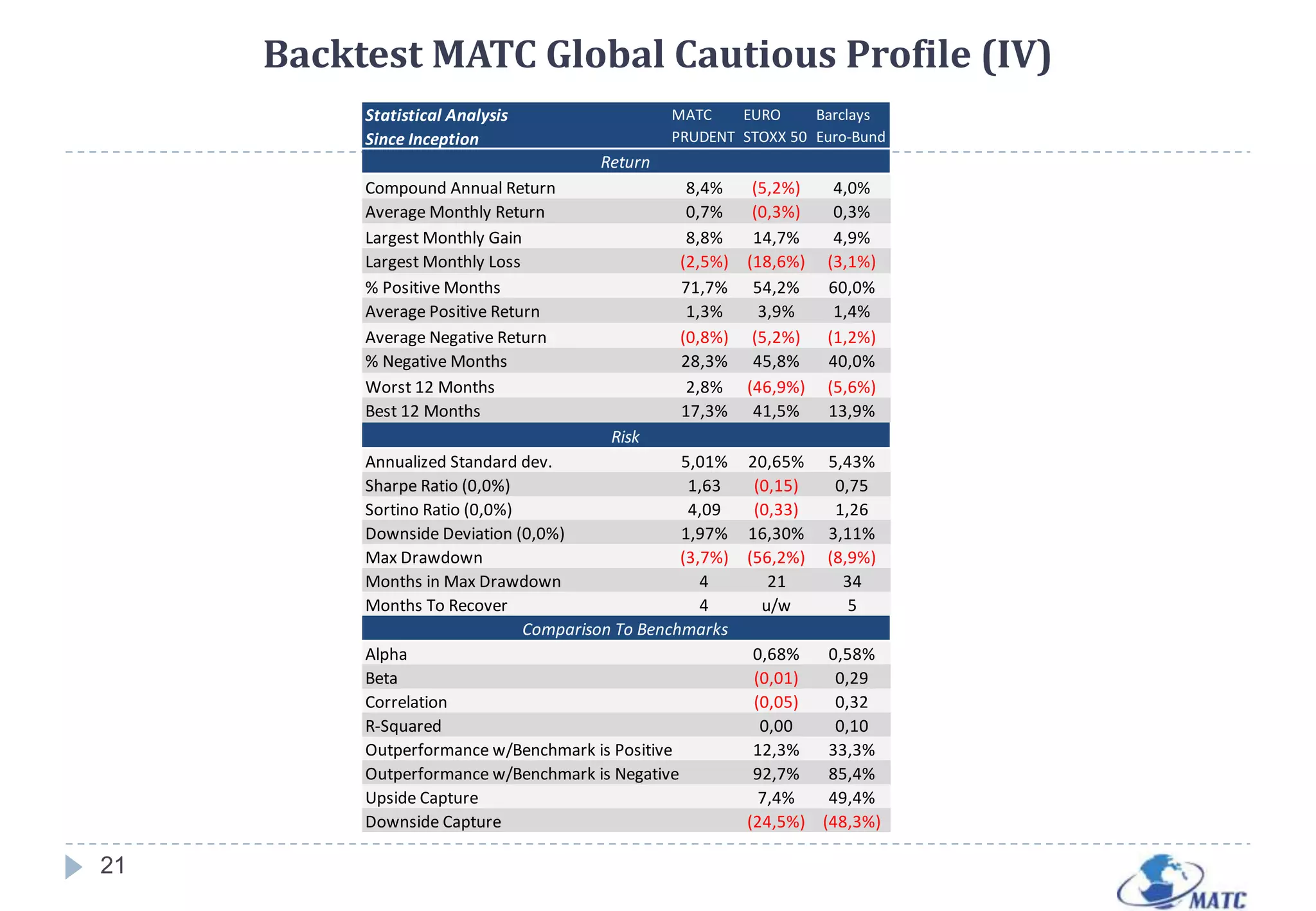
MATC Global Cautious Profile (Volatility expected 5%, Drawdown max 4%)9
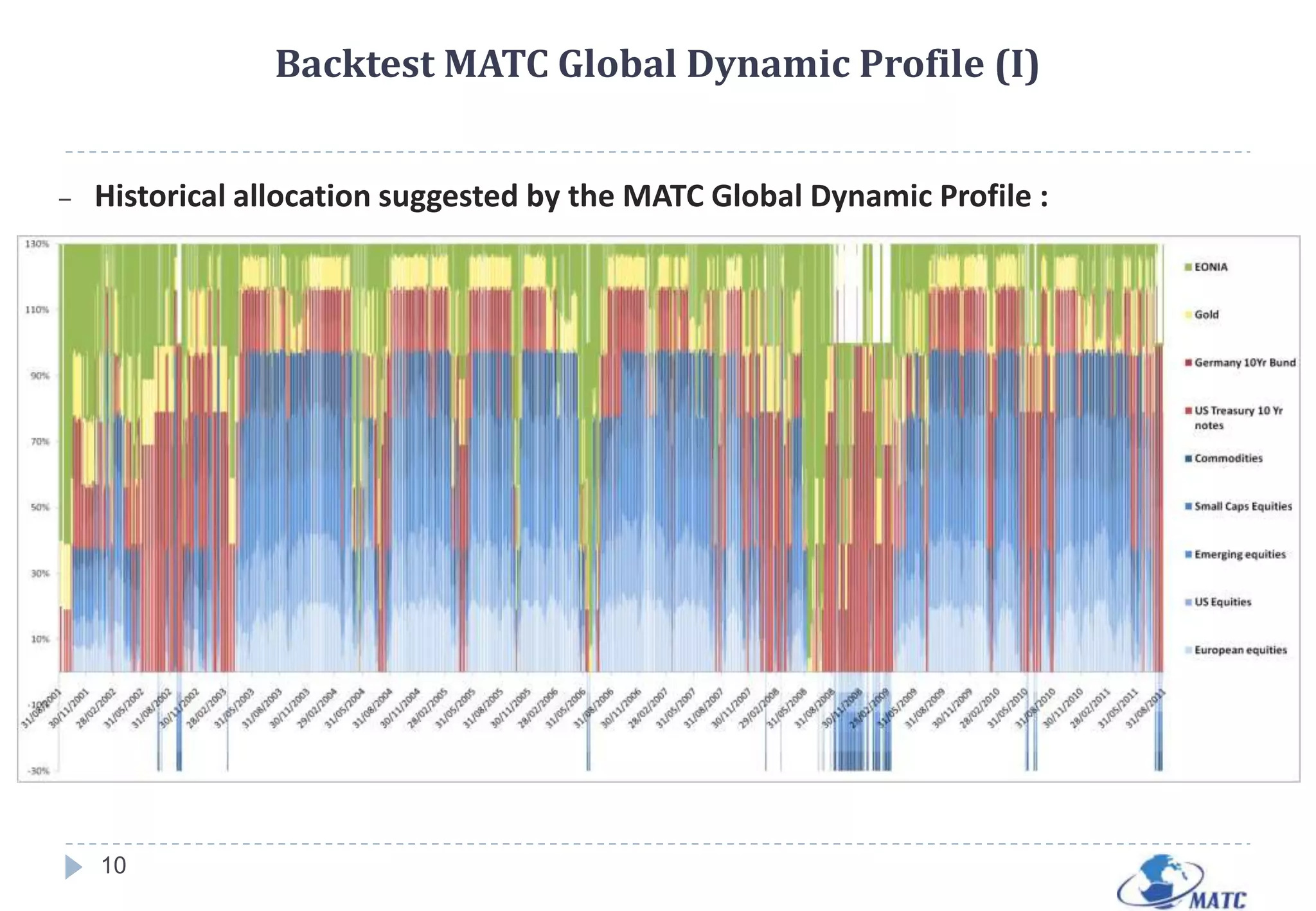
Backtest MATC Global Dynamic Profile (I)Historical allocation suggested by the MATC Global Dynamic Profile :10
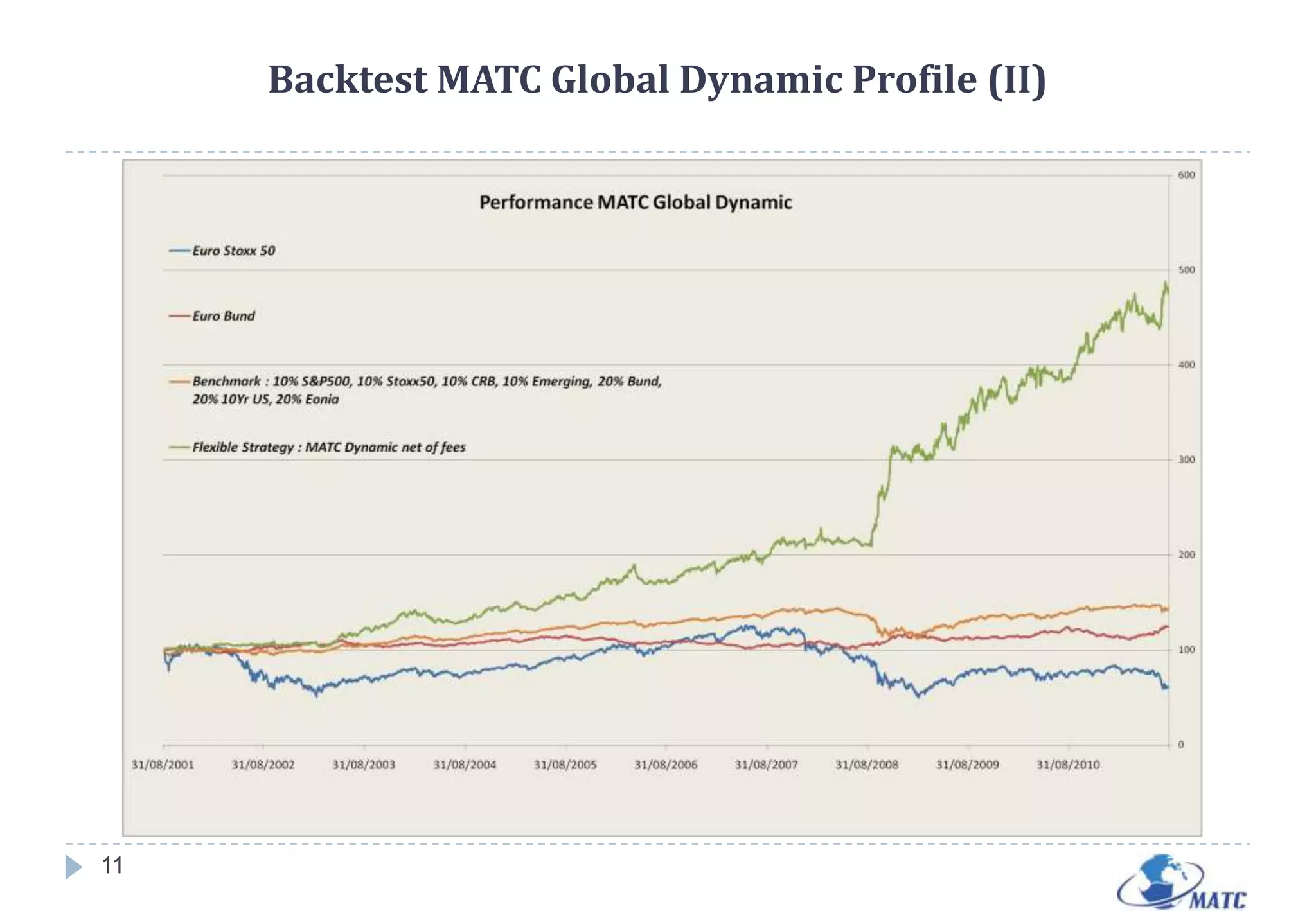
Backtest MATC Global Dynamic Profile (II)11
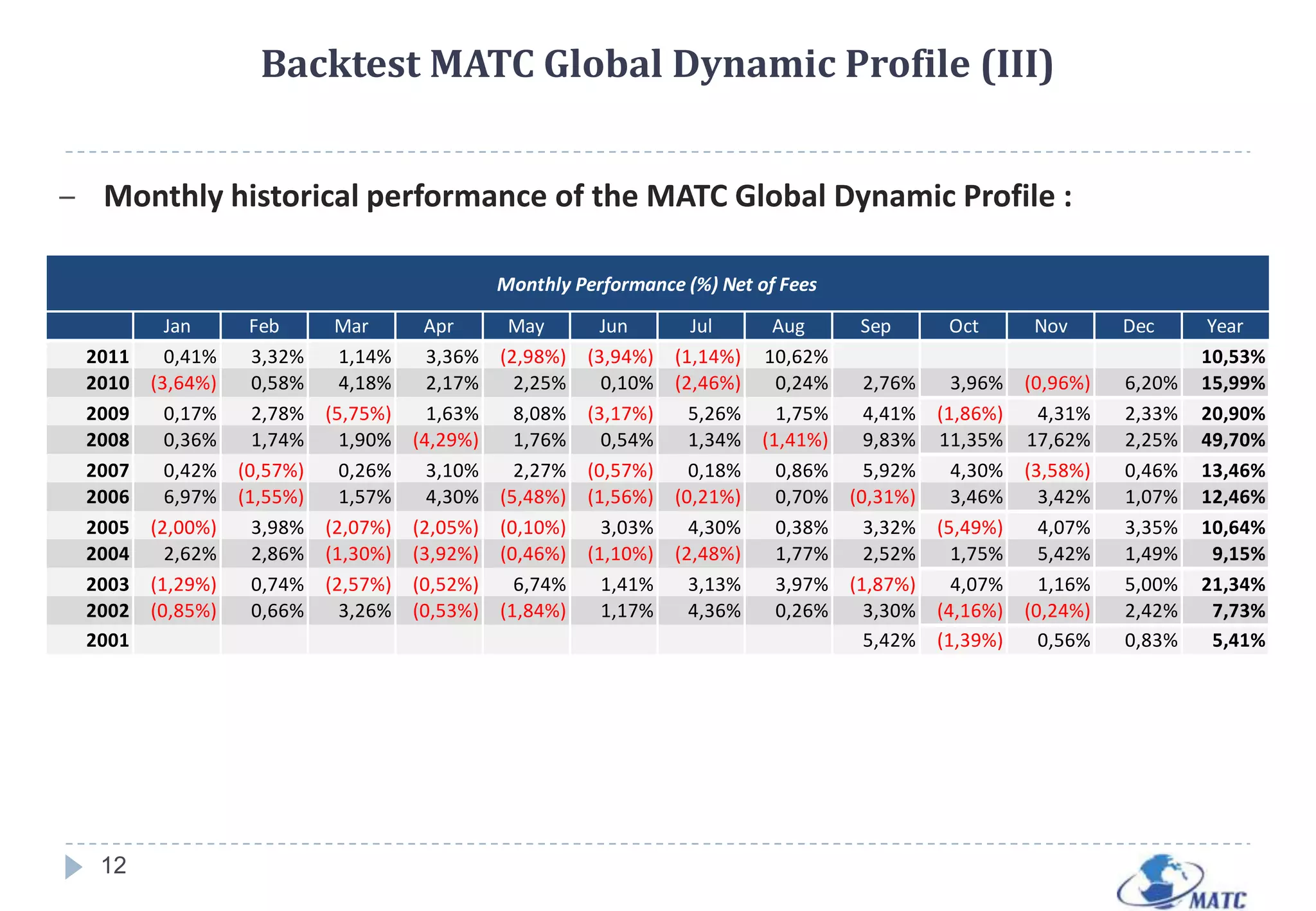
Backtest MATC Global Dynamic Profile (III)12Monthly historical performance of the MATC Global Dynamic Profile :Backtest MATC Global Dynamic Profile (IV)13
Backtest MATC Global Balanced Profile (I)Historical allocation suggested by the MATC Global Balanced Profile :14
Backtest MATC Global Balanced Profile (II)15
Backtest MATC Global Balanced Profile (III)16Monthly historical performance of the MATC Global Balanced Profile :Backtest MATC Global Balanced Profile (IV)17
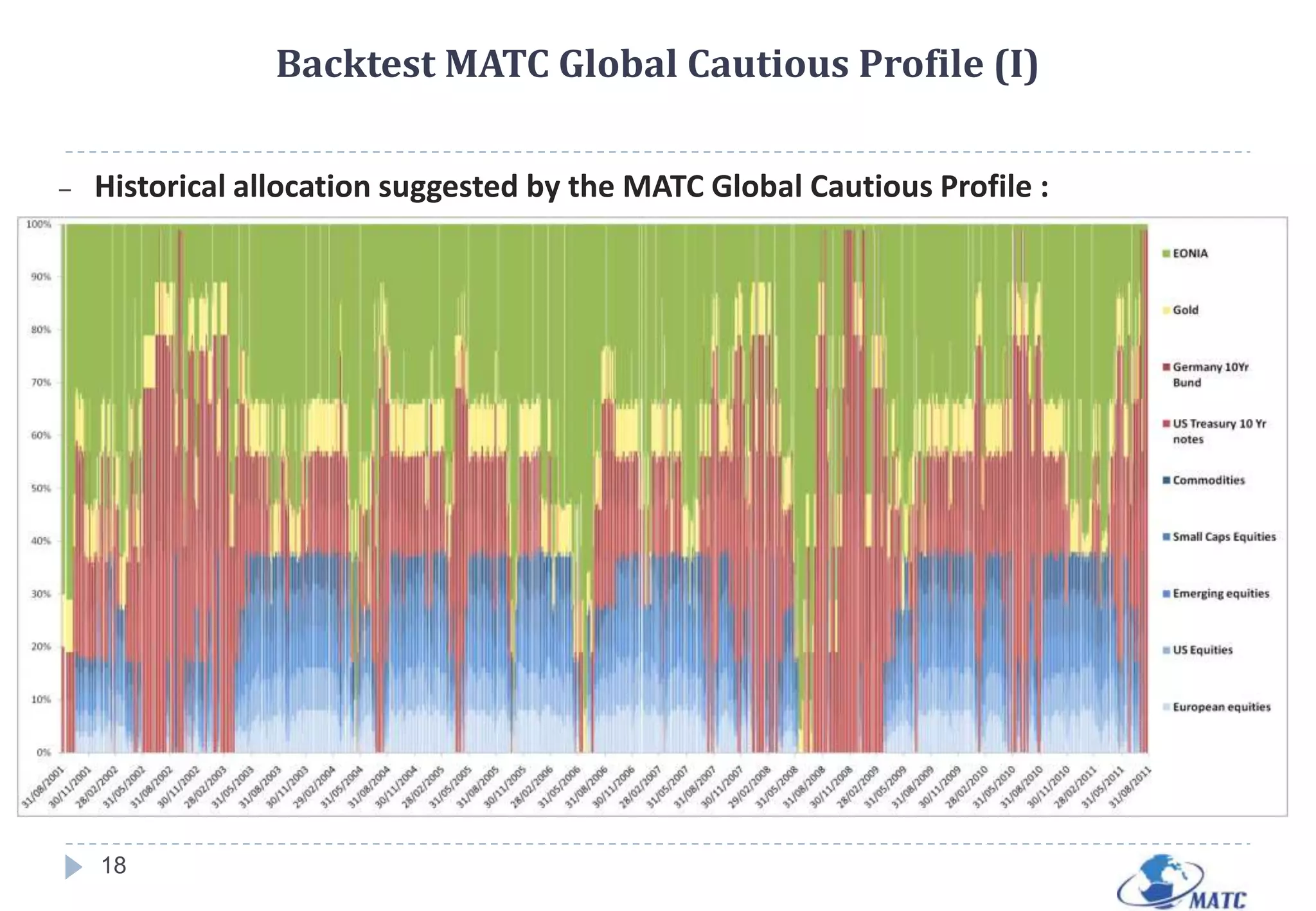
Backtest MATC Global Cautious Profile (I)Historical allocation suggested by the MATC Global Cautious Profile :18

Technical and behavioral Global Asset Allocation Model

  • 1.
    Technical and BehavioralGlobal Asset Allocation Model (MATC)
  • 2.
    GOAL : ASSETALLOCATION FOR AN EVOLVING WORLDAn allocation model dedicated to the management of a large panel of global and flexible multi asset funds
  • 3.
    Goal: Capital appreciationand preservation for various risk profiles.
  • 4.
    Approach: Diversified andsystematic management based upon trend following technical and behavioral indicators.
  • 5.
    Tool: Responsive managementby a daily dynamic adjustment of the exposure for the different markets depending on the ‘Momentum’ and on the global behavioral state (Market sentiment, risk aversion, excess).2
  • 6.
    DIVERSIFICATION DOES NOTPROTECT AGAINST LOSS3Source : Pimco
  • 7.
    ACTIVE MANAGEMENT OFEXPOSURE : PEDAGOGIC EXAMPLEHedge strategy based upon a sample trend following indicator: If in September 2001 an investor allocated 100$ in the Euro Stoxx 50, he would have preserved a the a total of 59,6 $ on the 20th Aug 2011. If he had applied a strategy of hedging following the medium term trend he would have capitalized 115,7 $.4
  • 8.
    ACTIVE MANAGEMENT OFEXPOSURE : OPTIMIZE THE ASSET ALLOCATION MIXThe modern management should be responsive. Flexibility is key in today’s rapidly transforming global economy.The Technical and behavioral Global Asset Allocation Model daily adjusts the exposition of each asset class using futures.
  • 9.
    The MATC isused for both hedging and temporary overexposure on the rate risk, on equities and commodities risks based upon the market opportunities.
  • 10.
    The MATC shiftfrom the technical to the behavioral analysis when the market is emotionally driven. Major trend change are occurring at points of wild volatility and extreme fear. In this context, technical indicators are meaningless and the only reliable type of indicator to predict a market reversal would be sentiment based.5
  • 11.
    MATC PRESENTATION (I) The ‘MATC’ adjust progressively the exposure to the right global risks “beta” across asset classes depending on a state matrix based upon : Trend following and contrarian indicators (12 Indicators + Daily analysis)6
  • 12.
    MATC PRESENTATION (II)Abehavioral analysis of the markets (1 activation indicator + 15 decision making indicators)7
  • 13.
    MATC PRESENTATION (III)There are many possibilities of use for various asset classes and products:In the frame of a fund of funds management process by maintaining the investments in the funds stable and a daily adjustment of the exposition to the model using index futures. Thanks to this process, we can capture the additional return potential “alpha” generated by the selected asset managers, we are able to integrate strategic and tactical views and to optimize the right global risks “beta” across asset classes. Using only index futures as systematic global macro funds.8
  • 14.
    MATC PRESENTATION (IV)3Backtests using only 9 index futures for 3 different risks profiles :MATC Global Dynamic Profile (Volatility expected 12%, Drawdown max 9%)
  • 15.
    MATC Global BalancedProfile (Volatility expected 9%, Drawdown max 6%)
  • 16.
    MATC Global CautiousProfile (Volatility expected 5%, Drawdown max 4%)9
  • 17.
    Backtest MATC GlobalDynamic Profile (I)Historical allocation suggested by the MATC Global Dynamic Profile :10
  • 18.
    Backtest MATC GlobalDynamic Profile (II)11
  • 19.
    Backtest MATC GlobalDynamic Profile (III)12Monthly historical performance of the MATC Global Dynamic Profile :Backtest MATC Global Dynamic Profile (IV)13
  • 20.
    Backtest MATC GlobalBalanced Profile (I)Historical allocation suggested by the MATC Global Balanced Profile :14
  • 21.
    Backtest MATC GlobalBalanced Profile (II)15
  • 22.
    Backtest MATC GlobalBalanced Profile (III)16Monthly historical performance of the MATC Global Balanced Profile :Backtest MATC Global Balanced Profile (IV)17
  • 23.
    Backtest MATC GlobalCautious Profile (I)Historical allocation suggested by the MATC Global Cautious Profile :18
  • 24.
    Backtest MATC GlobalCautious Profile (II)19
  • 25.
    Backtest MATC GlobalCautious Profile (III)20Monthly historical performance of the MATC Global Cautious Profile :Backtest MATC Global Cautious Profile (IV)21
  • 26.
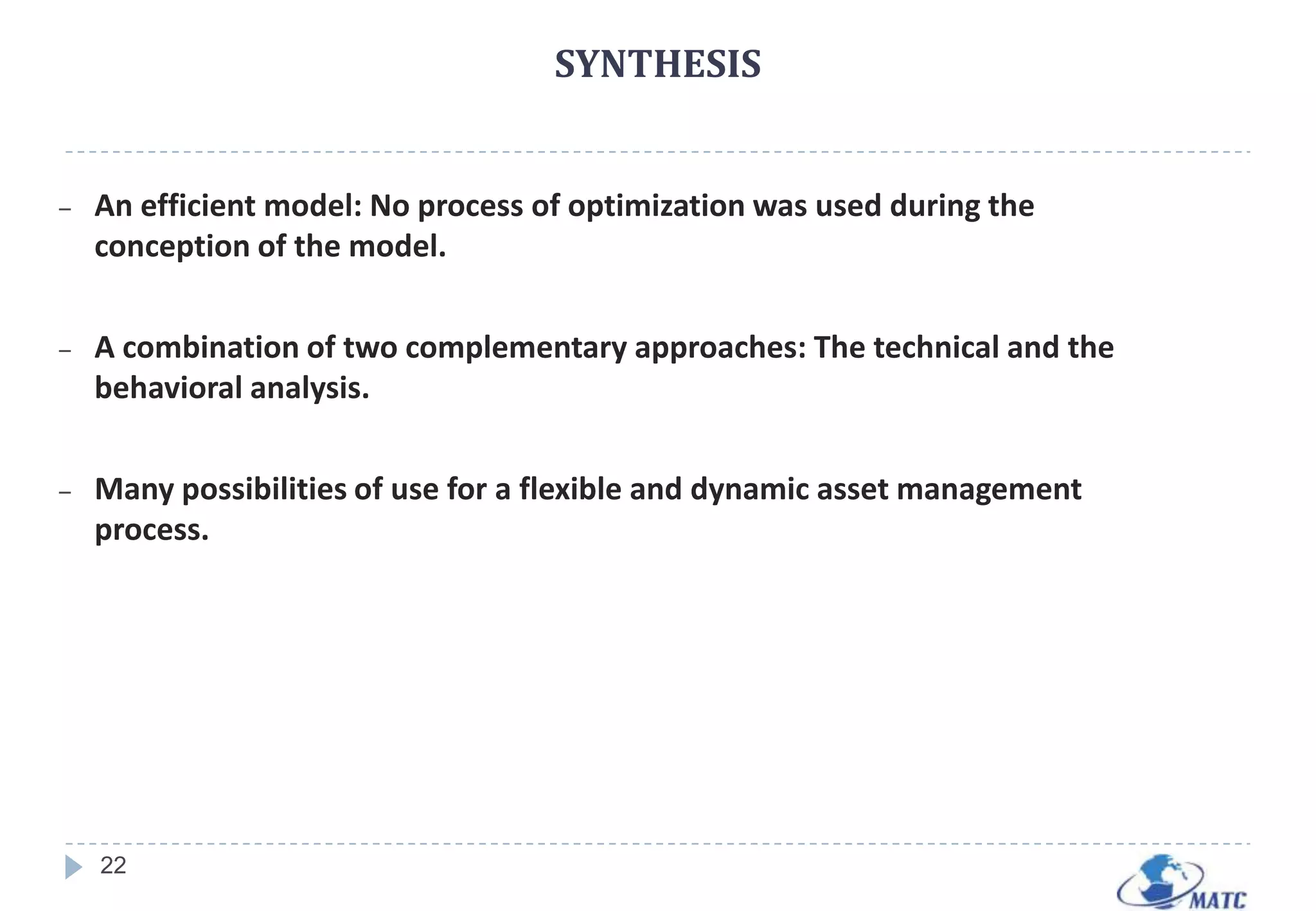
    SYNTHESISAn efficient model:No process of optimization was used during the conception of the model.A combination of two complementary approaches: The technical and the behavioral analysis.Many possibilities of use for a flexible and dynamic asset management process.22
  • 27.
    CONTACT23 AmineBennis Global quantitative fund manager and structurer of diversified portfolios Tel : +33 (0)7 88 00 34 72 Mail : amine__bennis@hotmail.com Adress : 109 Rue de Rennes, 75006, Paris Profile : http://www.linkedin.com/in/aminebennis