Topic 2 –
Teaching Code
of Ethic and
Accountability
Concept
of Ethics
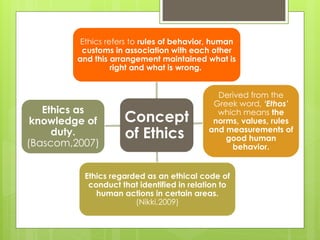
Ethics refers to rules of behavior, human
customs in association with each other
and this arrangement maintained what is
right and what is wrong.
Derived from the
Greek word, ‘Ethos’
which means the
norms, values, rules
and measurements of
good human
behavior.
Ethics regarded as an ethical code of
conduct that identified in relation to
human actions in certain areas.
(Nikki,2009)
Ethics as
knowledge of
duty.
(Bascom,2007)
Professions of Ethics Code
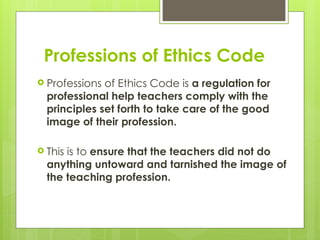
 Professions of Ethics Code is a regulation for
professional help teachers comply with the
principles set forth to take care of the good
image of their profession.
 This is to ensure that the teachers did not do
anything untoward and tarnished the image of
the teaching profession.
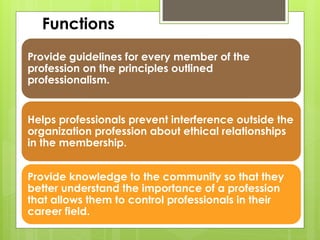
Provide guidelines for every member of the
profession on the principles outlined
professionalism.
Helps professionals prevent interference outside the
organization profession about ethical relationships
in the membership.
Provide knowledge to the community so that they
better understand the importance of a profession
that allows them to control professionals in their
career field.
Functions
Code of Ethics Training Malaysia
 Teaching Code of Ethics is provided in the form
of a pledge that al teachers will observe and
protect the image of the teaching profession.
 Involves the responsibility towards :
 Students
 Parents
 Society and Country
 Colleagues and the Teaching profession
 Responsibility towards the student
 More concern of the welfare and safety of our
students from other things.
 Be fair to all students.
 Keep your professional or confidential information
about students unless they are entitled to know .
 To assist or teach students in the classroom itself or in
the subject, the subject being taught in the
classroom without any charges.
 Be a role model and good example by
demonstrate how to dress, speech and behaviors.
 Maintain and improve professional competence
through study tours and attending professional
courses, conferences, meetings or seminars for
teaching us to achieve the highest quality.
 Responsibility towards the parents
 Respect the primary responsibility of parents towards
their children. Strive to establish friendly relations and
cooperation between educational institutions and
households.
 Consider all the information provided by the parents as
confidential and will not disclose it to anyone except
to those who are entitled to know.
 Provide information to parents in the interest of their
children ad to use the information received carefully
and sensibly.
 Refrain fro using or affected by the social and
economic position of the parents.
 Prevent yourself from saying things or doing things that
can affect the belief of students to parents or
guardian.
 Responsibility towards society and country
 Prevent yourself from spreading the teachings that
could damage the interests of students, the
community, the nation or the opposite of the
Rukun Negara.
 Foster in the students attitudes and values that can
help and guide them to become loyal, responsible
and helpful citizens, respectful or differences of
culture, race and religion.
 Respect the communities in which we serve and
meet all responsibilities as citizen and is always
willing to participate in any community activities.
 Promote cooperation and understanding
between teachers and parents as well as an
educational institutions and the community.
 Responsibility towards the Colleagues and the
Teaching profession
 Refrain from making any statements or comments
that could discredit a teacher in front of students
or their parents or do something that can
degrade a teacher.
 Do not engage in activities that could affect our
efficiency as a teacher.
 Strive to fully discharge our responsibilities
diligently and earnestly and keep it in line with the
professional and social progress.
 Always ready to help the colleagues, especially
those who are new to the teaching profession.
 Be a member of teachers organization.
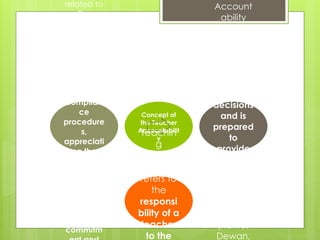
Concept of
the Teacher
Accountabilit
y
Account
ability
means to
be
responsib
le to
someone
or for any
actions,
decisions
and is
prepared
to
provide
an
explanati
on and
justificati
on
required.
(Kamus
Dewan,
Teachin
g
account
ability
refers to
the
responsi
bility of a
teacher
to the
related to
the
implement
ation of
extracurri
cular
activities
and
curriculum
,
complian
ce
procedure
s,
appreciati
ng the
work
ethic,
responsibil
ity and
perform
duties with
full of
commitm
Teacher Accountability
 Involves the accountability towards :
 Students
 Parents
 Community and Country
 Colleagues and the Teaching profession
 Accountability towards student
 Require teachers to educate students to a level
of excellence in academic achievement as
well as their potential to form a whole that
produce students with a balanced and
harmonious intellectually, spiritually,
emotionally, socially and physically.
 Educate students to a high moral level and to
be a good and useful citizens.
 Need to develop a range of skills in order to
accelerate student learning and to create a
classroom environment that is conducive, safe
and appropriate socio emotion atmospehere.
 Accountability towards parents
 Teachers entrusted by the school administration
and parents to perform the task to ensure that
their children be a useful to society and the
nation.
 Establish good relationship with parents to
support parents in whatever problems
associated with personal and academic
achievement.
 Accountability towards community and country
 Teachers have the responsibility of fulfilling the
country as Malaysians based on the principles
enshrined in the National Principles.
 As agents of change in society, teachers need to
constantly update oneself by bringing changes to
students and giving future generations a dynamic
and proactive in line with the aspirations of the
National Education Philosophy and Vision 2020.
 Need to adapt and adopt an attitude of modesty
while participating in social activities in the
community place of work in order to create
harmony between the school and the community.
 Accountability towards colleagues and the teaching
profession
 Have to established god relationships among
colleagues and held each other in the professional
held by them.
 Respect the teaching profession and always see to
discharge their duties properly.
 Increase professionalism to the acquisition of
knowledge and skills in science education such as
educational psychology, pedagogy, sociology of
education, technology in teaching and assessment
in order to find alternatives to help students learn
effectively.
Teacher Integrity
 Integrity refers to sincerity and honesty. (Nilsen, 2004)
 Integrity based on ethics and ethical reflection.
 The integrity of the teacher as public servant means
that teacher needs to implement trust and powers
entrusted by the public interest. Public servant should
not be abused his power for personal, family,
relatives or kin. As a public servant, he must be
transparent and sincere and undertake responsibility
for his boss, subordinates and to the other party.
(Malaysian Institute of Integrity, 2004)

Teaching Code of Ethic and Accountability

  • 1.
    Topic 2 – TeachingCode of Ethic and Accountability
  • 2.
    Concept of Ethics Ethics refersto rules of behavior, human customs in association with each other and this arrangement maintained what is right and what is wrong. Derived from the Greek word, ‘Ethos’ which means the norms, values, rules and measurements of good human behavior. Ethics regarded as an ethical code of conduct that identified in relation to human actions in certain areas. (Nikki,2009) Ethics as knowledge of duty. (Bascom,2007)
  • 3.
    Professions of EthicsCode  Professions of Ethics Code is a regulation for professional help teachers comply with the principles set forth to take care of the good image of their profession.  This is to ensure that the teachers did not do anything untoward and tarnished the image of the teaching profession.
  • 4.
    Provide guidelines forevery member of the profession on the principles outlined professionalism. Helps professionals prevent interference outside the organization profession about ethical relationships in the membership. Provide knowledge to the community so that they better understand the importance of a profession that allows them to control professionals in their career field. Functions
  • 5.
    Code of EthicsTraining Malaysia  Teaching Code of Ethics is provided in the form of a pledge that al teachers will observe and protect the image of the teaching profession.  Involves the responsibility towards :  Students  Parents  Society and Country  Colleagues and the Teaching profession
  • 6.
     Responsibility towardsthe student  More concern of the welfare and safety of our students from other things.  Be fair to all students.  Keep your professional or confidential information about students unless they are entitled to know .  To assist or teach students in the classroom itself or in the subject, the subject being taught in the classroom without any charges.  Be a role model and good example by demonstrate how to dress, speech and behaviors.  Maintain and improve professional competence through study tours and attending professional courses, conferences, meetings or seminars for teaching us to achieve the highest quality.
  • 7.
     Responsibility towardsthe parents  Respect the primary responsibility of parents towards their children. Strive to establish friendly relations and cooperation between educational institutions and households.  Consider all the information provided by the parents as confidential and will not disclose it to anyone except to those who are entitled to know.  Provide information to parents in the interest of their children ad to use the information received carefully and sensibly.  Refrain fro using or affected by the social and economic position of the parents.  Prevent yourself from saying things or doing things that can affect the belief of students to parents or guardian.
  • 8.
     Responsibility towardssociety and country  Prevent yourself from spreading the teachings that could damage the interests of students, the community, the nation or the opposite of the Rukun Negara.  Foster in the students attitudes and values that can help and guide them to become loyal, responsible and helpful citizens, respectful or differences of culture, race and religion.  Respect the communities in which we serve and meet all responsibilities as citizen and is always willing to participate in any community activities.  Promote cooperation and understanding between teachers and parents as well as an educational institutions and the community.
  • 9.
     Responsibility towardsthe Colleagues and the Teaching profession  Refrain from making any statements or comments that could discredit a teacher in front of students or their parents or do something that can degrade a teacher.  Do not engage in activities that could affect our efficiency as a teacher.  Strive to fully discharge our responsibilities diligently and earnestly and keep it in line with the professional and social progress.  Always ready to help the colleagues, especially those who are new to the teaching profession.  Be a member of teachers organization.
  • 10.
    Concept of the Teacher Accountabilit y Account ability meansto be responsib le to someone or for any actions, decisions and is prepared to provide an explanati on and justificati on required. (Kamus Dewan, Teachin g account ability refers to the responsi bility of a teacher to the related to the implement ation of extracurri cular activities and curriculum , complian ce procedure s, appreciati ng the work ethic, responsibil ity and perform duties with full of commitm
  • 11.
    Teacher Accountability  Involvesthe accountability towards :  Students  Parents  Community and Country  Colleagues and the Teaching profession
  • 12.
     Accountability towardsstudent  Require teachers to educate students to a level of excellence in academic achievement as well as their potential to form a whole that produce students with a balanced and harmonious intellectually, spiritually, emotionally, socially and physically.  Educate students to a high moral level and to be a good and useful citizens.  Need to develop a range of skills in order to accelerate student learning and to create a classroom environment that is conducive, safe and appropriate socio emotion atmospehere.
  • 13.
     Accountability towardsparents  Teachers entrusted by the school administration and parents to perform the task to ensure that their children be a useful to society and the nation.  Establish good relationship with parents to support parents in whatever problems associated with personal and academic achievement.
  • 14.
     Accountability towardscommunity and country  Teachers have the responsibility of fulfilling the country as Malaysians based on the principles enshrined in the National Principles.  As agents of change in society, teachers need to constantly update oneself by bringing changes to students and giving future generations a dynamic and proactive in line with the aspirations of the National Education Philosophy and Vision 2020.  Need to adapt and adopt an attitude of modesty while participating in social activities in the community place of work in order to create harmony between the school and the community.
  • 15.
     Accountability towardscolleagues and the teaching profession  Have to established god relationships among colleagues and held each other in the professional held by them.  Respect the teaching profession and always see to discharge their duties properly.  Increase professionalism to the acquisition of knowledge and skills in science education such as educational psychology, pedagogy, sociology of education, technology in teaching and assessment in order to find alternatives to help students learn effectively.
  • 16.
    Teacher Integrity  Integrityrefers to sincerity and honesty. (Nilsen, 2004)  Integrity based on ethics and ethical reflection.  The integrity of the teacher as public servant means that teacher needs to implement trust and powers entrusted by the public interest. Public servant should not be abused his power for personal, family, relatives or kin. As a public servant, he must be transparent and sincere and undertake responsibility for his boss, subordinates and to the other party. (Malaysian Institute of Integrity, 2004)