FIRST AID XX_XX_XXv1
Risk Management Page 1 of 5
Duration 15 mins Methodology  Discussion
 Demonstrations
 Q & A
 Real life examples
Aides  Near miss cards
 Accidentandincident
reports
(blank & completed
Assessment  Q & A
 Complete a near miss
card
Introduction
First aid is what it states and is to provide onsite care and treatmentthat will hopefully save a
life, prevent the casualty’s condition from getting worse and promote recovery before the
emergency services arrive at the scene.
What are the main aims of first aid?
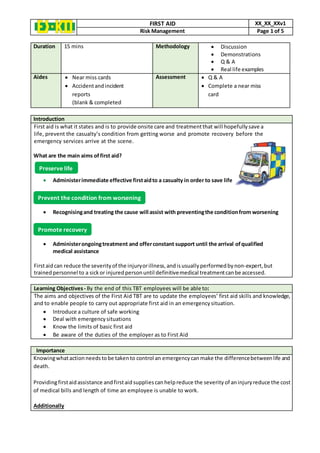
 Administerimmediate effective firstaidto a casualty in order to save life
 Recognisingand treating the cause will assist with preventingthe conditionfrom worsening
 Administerongoingtreatment and offerconstant support until the arrival ofqualified
medical assistance
Firstaidcan reduce the severity of the injuryorillness,andisusuallyperformedbynon‐expert,but
trainedpersonnel to a sickor injuredpersonuntil definitivemedical treatmentcanbe accessed.
Learning Objectives - By the end of this TBT employees will be able to:
The aims and objectives of the First Aid TBT are to update the employees’ first aid skills and knowledge,
and to enable people to carry out appropriate first aid in an emergencysituation.
 Introduce a culture of safe working
 Deal with emergency situations
 Know the limits of basic first aid
 Be aware of the duties of the employer as to First Aid
Importance
Knowingwhatactionneedstobe takento control an emergencycanmake the differencebetweenlife and
death.
Providingfirstaidassistance andfirstaidsuppliescan helpreduce the severity of aninjuryreduce the cost
of medical bills and length of time an employee is unable to work.
Additionally
Preserve life
Prevent the condition from worsening
Promote recovery
FIRST AID XX_XX_XXv1
Risk Management Page 2 of 5
 Employees gainsafety&healthawareness
 Helpsreduce lostworkingdaysbyemployeesinjuredatwork
 Promotesa muchsaferwork environment,whichcanleadtoa bettercompanyculture,
better employee morale and saves costs.
Regulationsand requirements
 UK HSE
 USA OSHA
 ILO (InternationalLabourOffice)
 In countryLabour departments
Information,Advice & Guidance
What is covered
 Injuries –burns,bleeding,brokenbones,eyes,anddamagestothe musclesandtissues
 Breathingissues –asthmaand choking
 Heart conditions –angina,cardiac arrestand heartattacks
 Otherconditionsandillness –flu,sickness,bitesandstings
First Aid Kits
Risk assessments identify all hazards and risks within the workplace, management then supply
first aid kits based on the needs of the risk assessment.
All departments are to have designated, labelled First Aid kits specific to the tasks of the
operational activities and findings of the risk assessments.
Where remote working is conducted either a mobile kit is carried in the vehicles or each
vehicle is equipped individually.
All kits are checkedon a monthly basisandrecorded,anydiscrepanciesshortages are reported
and replaced immediately.
Before first aid
 Alwaysmake sure youknowwhere thefirstaidkitiskept.Knowwhothe firstaider,emergency
first aiders and appointed persons are.
 Have a small travellingfirstaidkitif youare workingina small groupawayfrom the mainsite
or if you are using potentially dangerous tools or machinery.
 Make sure you know what the procedure is for calling the emergency services.
What to do when needed
FIRST AID XX_XX_XXv1
Risk Management Page 3 of 5
 Always try to remain calm
 Take charge of the situation
 Conduct a scene survey to check for hazards, do nut rush in become a casualty yourself
 Ensure the safety of yourself, bystanders, and others
 Get information about what has happened from bystanders and the casualty
 Fully brief the emergency services, call or send someone for medical help, ensure theyusing
acronym below
 If it is safe to do so, remove the hazard from the casualty. IE; take the knife away
 Never move the casualty unless the casualty is in immediate danger
 Stay with the casualty and give them reassurance, talk to them.
 Never give drinks or food to the casualty.
 Only moisten their lips
 Nevergive the casualtymedicationunlessittheirownie; for asthma,nevergive paracetamol
of other pain relief, it may hide what is wrong if it is internally
 Don’t allow them to smoke.
Get consent
Before starting any treatment the first-aider should ask for and receive the casualty’s
consent to treatment.
If casualties are unable to give their consent due to their injuries or because they are
unresponsive you can assume their consent to treatment!
Remember! If you have not contacted the emergency services then they will not arrive!
FIRST AID XX_XX_XXv1
Risk Management Page 4 of 5
Responsibility
Supervisor’s
 Planwork effectively
 Ensure your teamis workinginaccordance withsafetyprocedures,standards,instructionsand
training
 Ensure emergencycontactinformationisclearlydisplayedandaccessible atall times
 Take responsibility andaccountability
 Call ambulance whenaskedto
Site Manager’s
 Appoint competent people to be first aiders
 Ensure training of the required number of first aiders is accommodated
 Procure and maintain first aid equipment
 Ensure emergency contact information is available and displayed in each department
 Reviewingthe task/resources available
 Call ambulance whenaskedto
QHSE Officers
 Conductfirstaidrisk assessmentstoidentifyneeds
 Trainingof firstaiders
 Take responsibility andaccountability
Safety representatives
 TBT Trainingof all staff
 Checkthe locationof the firstaid kitdaily,make sure itisaccessible atall times
 Checkthe contentsof firstaid kitseachmonthagainstthe checklist
 Call ambulance
First aiders
 Neverputyourself indanger–don’tbecome the casualty
 Respond promptly whenrequested
 Provide firstaidonly withinareasoftrainingandcompetence
 Knowhow to summonadditional helpwhenneeded
 Reportincidentsandactions taken
 Complywiththe lawat all times
 Call ambulance
Each employee is responsible totake into account the following
 Call for help soonest
 Never perform first aid unless you are trained
 Do not tamper/remove items from first aid kits
 Help when asked to do so
 Work in accordance with safety procedures, standards, instructions and training
 Call ambulance whenaskedto
FIRST AID XX_XX_XXv1
Risk Management Page 5 of 5
Questions:
1. What are the aimsof firstaid?
2. How dowe knowwhatfirstaidequipmenttoprovide?
3. Whenwouldyoumove the casualty?
4. What should younevergive tothe casualty?
5. Who do we reportto?
6. As workersname 3 thingswe are responsible for.
Summary – Brieflyre-iterate the mainpoints
1. Firstcan save a life,butdon’tbecome the casualtyyourself
2. Neve give firstaidwithoutconsentfromthe casualty
3. Make sure the emergencycontactdetailsforyoursite andwhere the firstaidkitand first
aidersare
4. Nevergive medicinesordrugsunlesstheybelongtothe casualty
5. Alwaysknowyourresponsibilities.

Tbt first aid

  • 1.
    FIRST AID XX_XX_XXv1 RiskManagement Page 1 of 5 Duration 15 mins Methodology  Discussion  Demonstrations  Q & A  Real life examples Aides  Near miss cards  Accidentandincident reports (blank & completed Assessment  Q & A  Complete a near miss card Introduction First aid is what it states and is to provide onsite care and treatmentthat will hopefully save a life, prevent the casualty’s condition from getting worse and promote recovery before the emergency services arrive at the scene. What are the main aims of first aid?  Administerimmediate effective firstaidto a casualty in order to save life  Recognisingand treating the cause will assist with preventingthe conditionfrom worsening  Administerongoingtreatment and offerconstant support until the arrival ofqualified medical assistance Firstaidcan reduce the severity of the injuryorillness,andisusuallyperformedbynon‐expert,but trainedpersonnel to a sickor injuredpersonuntil definitivemedical treatmentcanbe accessed. Learning Objectives - By the end of this TBT employees will be able to: The aims and objectives of the First Aid TBT are to update the employees’ first aid skills and knowledge, and to enable people to carry out appropriate first aid in an emergencysituation.  Introduce a culture of safe working  Deal with emergency situations  Know the limits of basic first aid  Be aware of the duties of the employer as to First Aid Importance Knowingwhatactionneedstobe takento control an emergencycanmake the differencebetweenlife and death. Providingfirstaidassistance andfirstaidsuppliescan helpreduce the severity of aninjuryreduce the cost of medical bills and length of time an employee is unable to work. Additionally Preserve life Prevent the condition from worsening Promote recovery
  • 2.
    FIRST AID XX_XX_XXv1 RiskManagement Page 2 of 5  Employees gainsafety&healthawareness  Helpsreduce lostworkingdaysbyemployeesinjuredatwork  Promotesa muchsaferwork environment,whichcanleadtoa bettercompanyculture, better employee morale and saves costs. Regulationsand requirements  UK HSE  USA OSHA  ILO (InternationalLabourOffice)  In countryLabour departments Information,Advice & Guidance What is covered  Injuries –burns,bleeding,brokenbones,eyes,anddamagestothe musclesandtissues  Breathingissues –asthmaand choking  Heart conditions –angina,cardiac arrestand heartattacks  Otherconditionsandillness –flu,sickness,bitesandstings First Aid Kits Risk assessments identify all hazards and risks within the workplace, management then supply first aid kits based on the needs of the risk assessment. All departments are to have designated, labelled First Aid kits specific to the tasks of the operational activities and findings of the risk assessments. Where remote working is conducted either a mobile kit is carried in the vehicles or each vehicle is equipped individually. All kits are checkedon a monthly basisandrecorded,anydiscrepanciesshortages are reported and replaced immediately. Before first aid  Alwaysmake sure youknowwhere thefirstaidkitiskept.Knowwhothe firstaider,emergency first aiders and appointed persons are.  Have a small travellingfirstaidkitif youare workingina small groupawayfrom the mainsite or if you are using potentially dangerous tools or machinery.  Make sure you know what the procedure is for calling the emergency services. What to do when needed
  • 3.
    FIRST AID XX_XX_XXv1 RiskManagement Page 3 of 5  Always try to remain calm  Take charge of the situation  Conduct a scene survey to check for hazards, do nut rush in become a casualty yourself  Ensure the safety of yourself, bystanders, and others  Get information about what has happened from bystanders and the casualty  Fully brief the emergency services, call or send someone for medical help, ensure theyusing acronym below  If it is safe to do so, remove the hazard from the casualty. IE; take the knife away  Never move the casualty unless the casualty is in immediate danger  Stay with the casualty and give them reassurance, talk to them.  Never give drinks or food to the casualty.  Only moisten their lips  Nevergive the casualtymedicationunlessittheirownie; for asthma,nevergive paracetamol of other pain relief, it may hide what is wrong if it is internally  Don’t allow them to smoke. Get consent Before starting any treatment the first-aider should ask for and receive the casualty’s consent to treatment. If casualties are unable to give their consent due to their injuries or because they are unresponsive you can assume their consent to treatment! Remember! If you have not contacted the emergency services then they will not arrive!
  • 4.
    FIRST AID XX_XX_XXv1 RiskManagement Page 4 of 5 Responsibility Supervisor’s  Planwork effectively  Ensure your teamis workinginaccordance withsafetyprocedures,standards,instructionsand training  Ensure emergencycontactinformationisclearlydisplayedandaccessible atall times  Take responsibility andaccountability  Call ambulance whenaskedto Site Manager’s  Appoint competent people to be first aiders  Ensure training of the required number of first aiders is accommodated  Procure and maintain first aid equipment  Ensure emergency contact information is available and displayed in each department  Reviewingthe task/resources available  Call ambulance whenaskedto QHSE Officers  Conductfirstaidrisk assessmentstoidentifyneeds  Trainingof firstaiders  Take responsibility andaccountability Safety representatives  TBT Trainingof all staff  Checkthe locationof the firstaid kitdaily,make sure itisaccessible atall times  Checkthe contentsof firstaid kitseachmonthagainstthe checklist  Call ambulance First aiders  Neverputyourself indanger–don’tbecome the casualty  Respond promptly whenrequested  Provide firstaidonly withinareasoftrainingandcompetence  Knowhow to summonadditional helpwhenneeded  Reportincidentsandactions taken  Complywiththe lawat all times  Call ambulance Each employee is responsible totake into account the following  Call for help soonest  Never perform first aid unless you are trained  Do not tamper/remove items from first aid kits  Help when asked to do so  Work in accordance with safety procedures, standards, instructions and training  Call ambulance whenaskedto
  • 5.
    FIRST AID XX_XX_XXv1 RiskManagement Page 5 of 5 Questions: 1. What are the aimsof firstaid? 2. How dowe knowwhatfirstaidequipmenttoprovide? 3. Whenwouldyoumove the casualty? 4. What should younevergive tothe casualty? 5. Who do we reportto? 6. As workersname 3 thingswe are responsible for. Summary – Brieflyre-iterate the mainpoints 1. Firstcan save a life,butdon’tbecome the casualtyyourself 2. Neve give firstaidwithoutconsentfromthe casualty 3. Make sure the emergencycontactdetailsforyoursite andwhere the firstaidkitand first aidersare 4. Nevergive medicinesordrugsunlesstheybelongtothe casualty 5. Alwaysknowyourresponsibilities.