Taking on the Healthcare Data ChallengeBalancing storage costs with compliance and access requirements
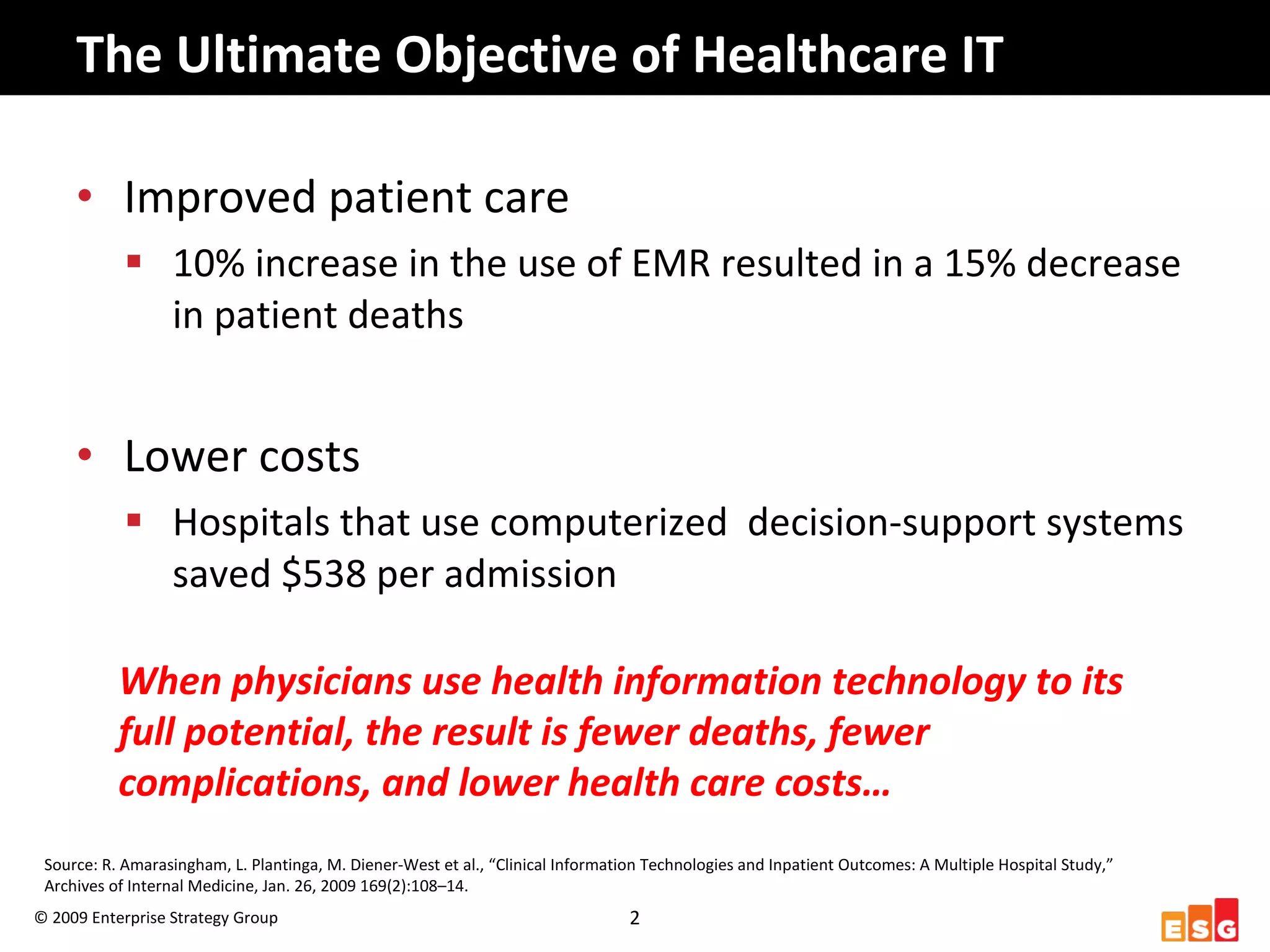
The Ultimate Objective of Healthcare IT© 2009 Enterprise Strategy Group2Improved patient care
10% increase in the use of EMR resulted in a 15% decrease in patient deaths
Lower costs
Hospitals that use computerized  decision-support systems saved $538 per admissionWhen physicians use health information technology to its full potential, the result is fewer deaths, fewer complications, and lower health care costs…Source: R. Amarasingham, L. Plantinga, M. Diener-West et al., “Clinical Information Technologies and Inpatient Outcomes: A Multiple Hospital Study,” Archives of Internal Medicine, Jan. 26, 2009 169(2):108–14.
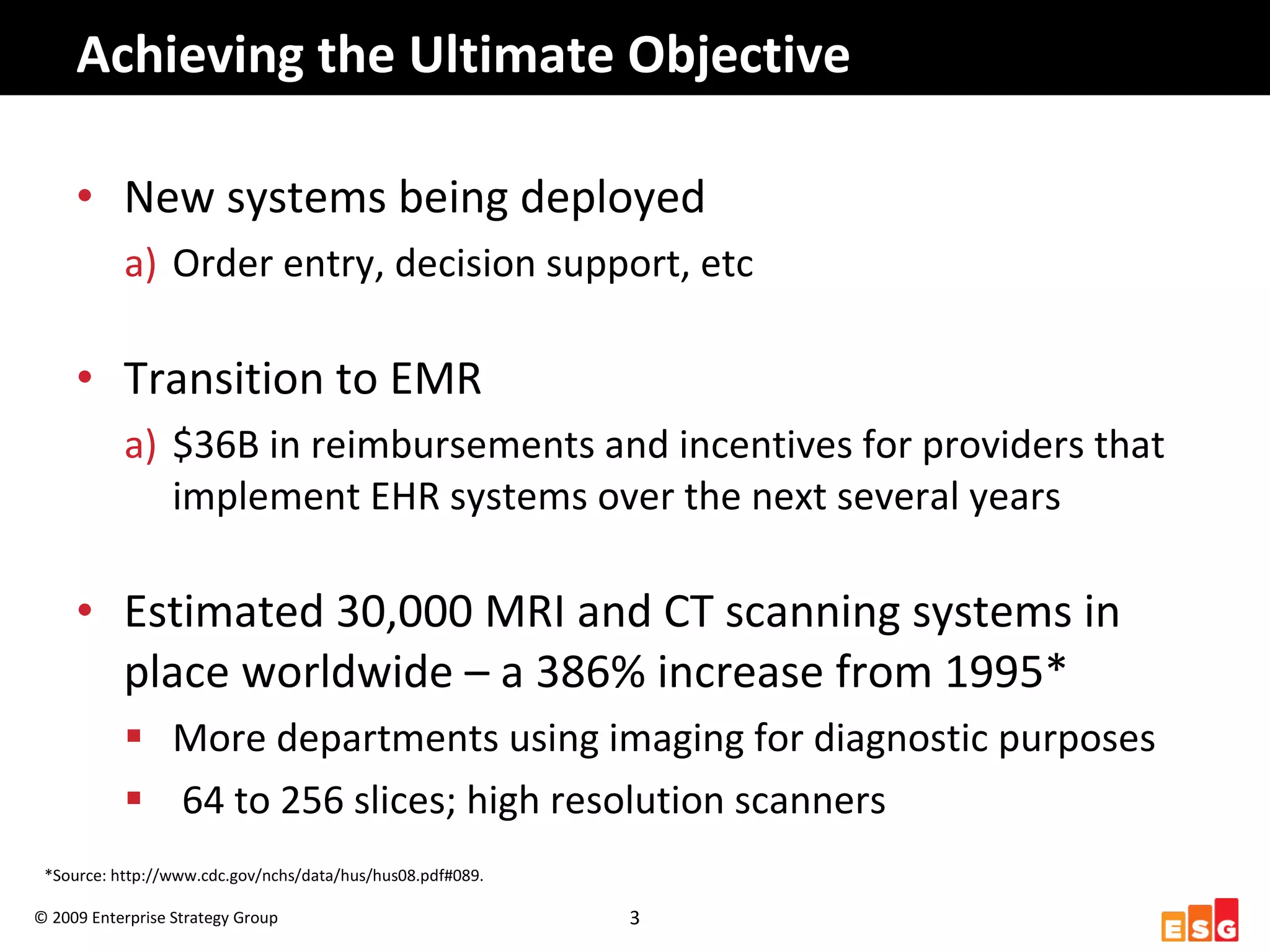
Achieving the Ultimate Objective© 2009 Enterprise Strategy Group3New systems being deployed
Order entry, decision support, etc
Transition to EMR
$36B in reimbursements and incentives for providers that implement EHR systems over the next several years
Estimated 30,000 MRI and CT scanning systems in place worldwide – a 386% increase from 1995*
More departments using imaging for diagnostic purposes
 64 to 256 slices; high resolution scanners*Source: http://www.cdc.gov/nchs/data/hus/hus08.pdf#089.
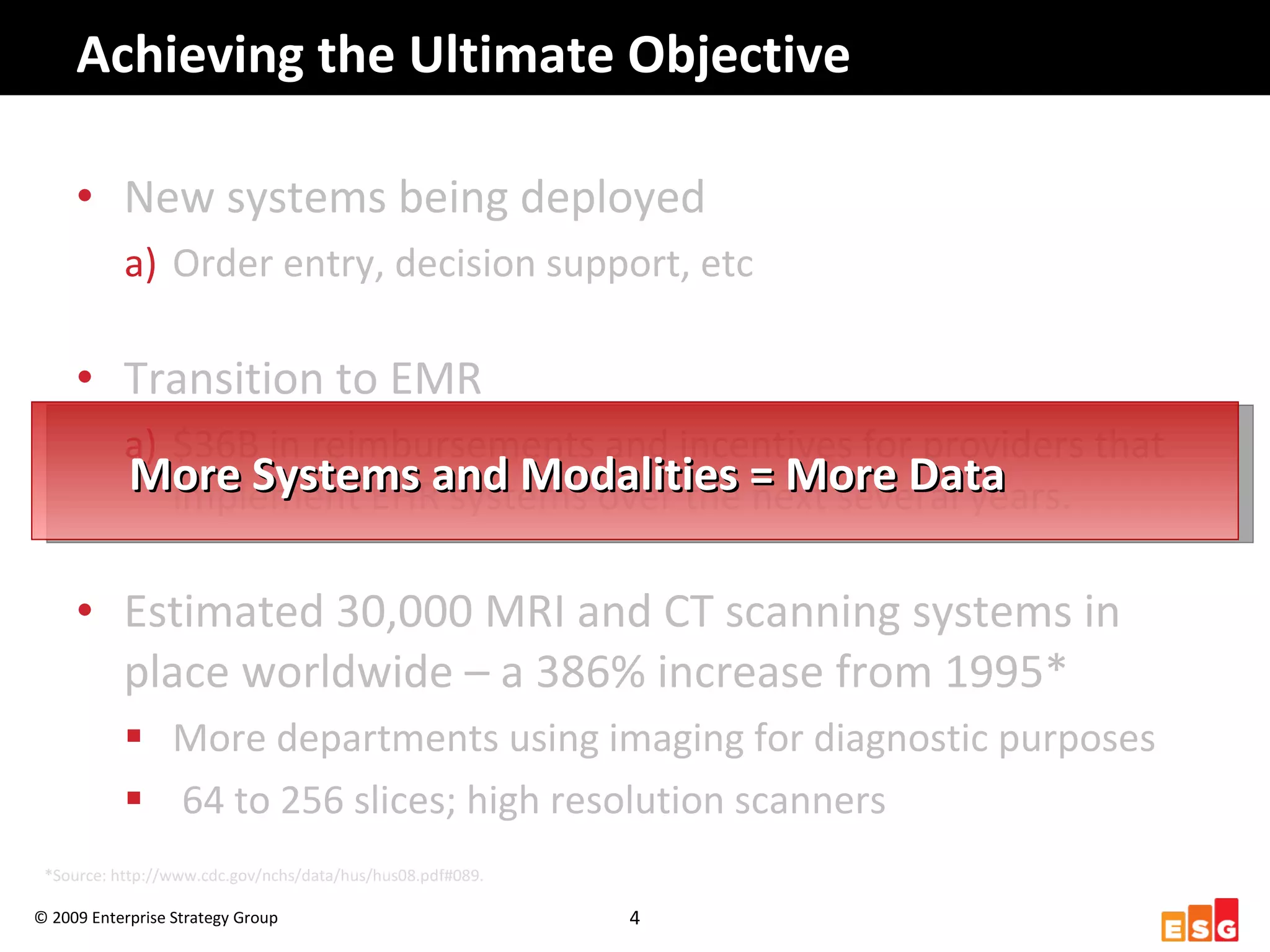
Achieving the Ultimate Objective© 2009 Enterprise Strategy Group4New systems being deployedOrder entry, decision support, etcTransition to EMR$36B in reimbursements and incentives for providers that implement EHR systems over the next several years.Estimated 30,000 MRI and CT scanning systems in place worldwide – a 386% increase from 1995*More departments using imaging for diagnostic purposes 64 to 256 slices; high resolution scannersMore Systems and Modalities = More Data*Source: http://www.cdc.gov/nchs/data/hus/hus08.pdf#089.
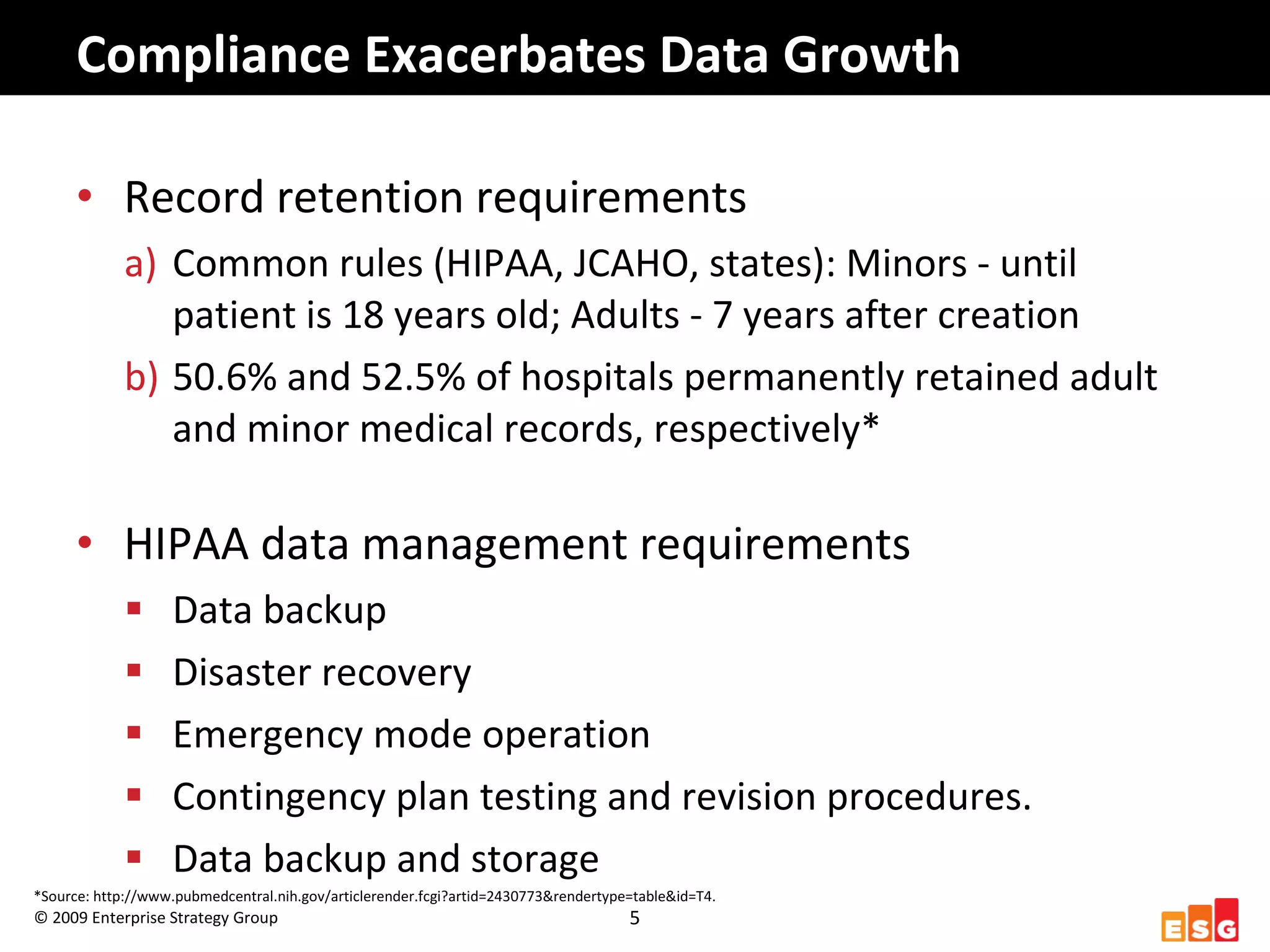
Compliance Exacerbates Data Growth© 2009 Enterprise Strategy Group5Record retention requirements
Common rules (HIPAA, JCAHO, states): Minors - until patient is 18 years old; Adults - 7 years after creation
50.6% and 52.5% of hospitals permanently retained adult and minor medical records, respectively*
HIPAA data management requirements
Data backup
Disaster recovery
Emergency mode operation
Contingency plan testing and revision procedures.
Data backup and storage*Source: http://www.pubmedcentral.nih.gov/articlerender.fcgi?artid=2430773&rendertype=table&id=T4.
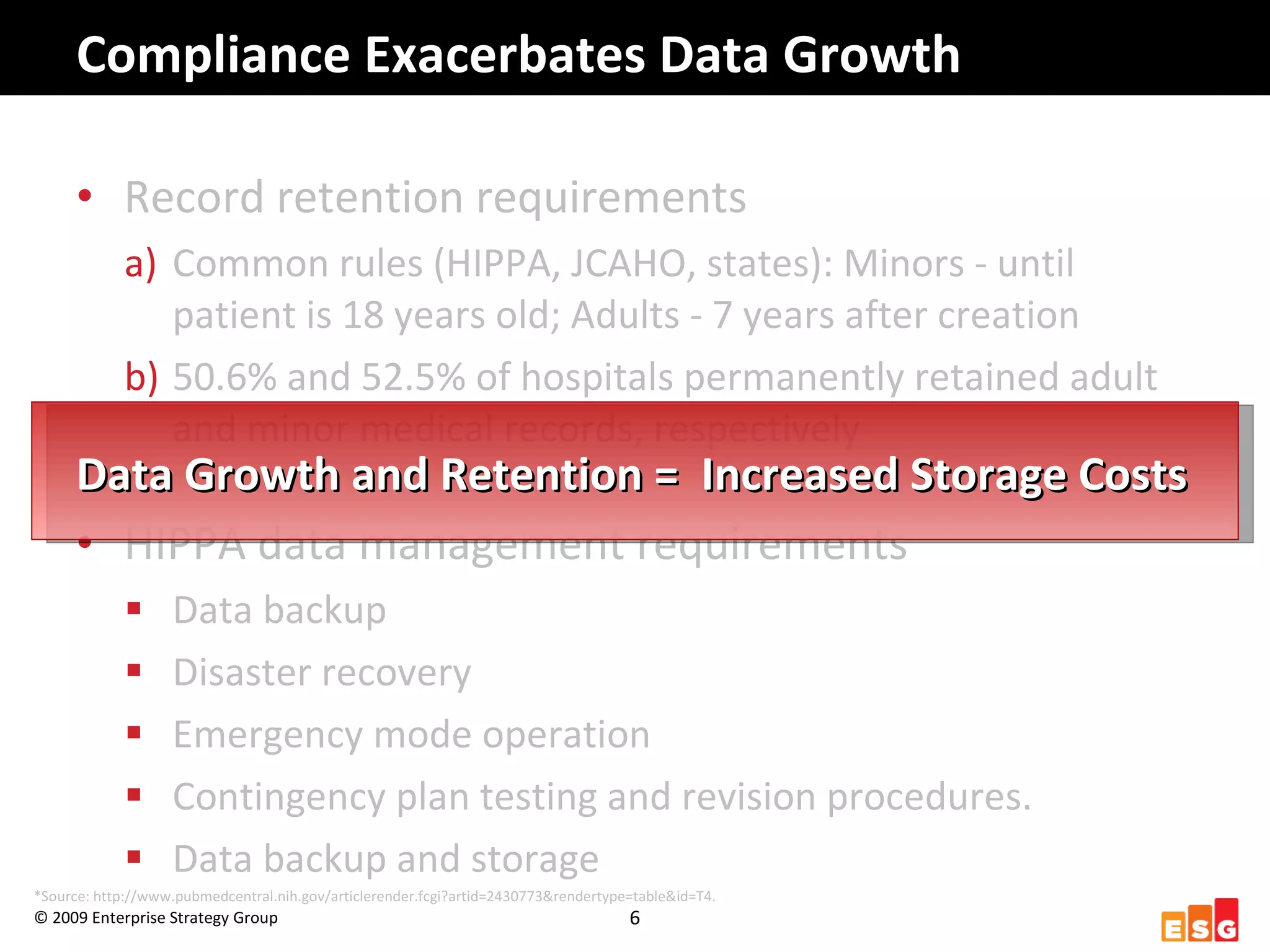
Compliance Exacerbates Data Growth© 2009 Enterprise Strategy Group6Record retention requirementsCommon rules (HIPPA, JCAHO, states): Minors - until patient is 18 years old; Adults - 7 years after creation50.6% and 52.5% of hospitals permanently retained adult and minor medical records, respectivelyHIPPA data management requirementsData backupDisaster recoveryEmergency mode operationContingency plan testing and revision procedures.  Data backup and storageData Growth and Retention =  Increased Storage Costs *Source: http://www.pubmedcentral.nih.gov/articlerender.fcgi?artid=2430773&rendertype=table&id=T4.
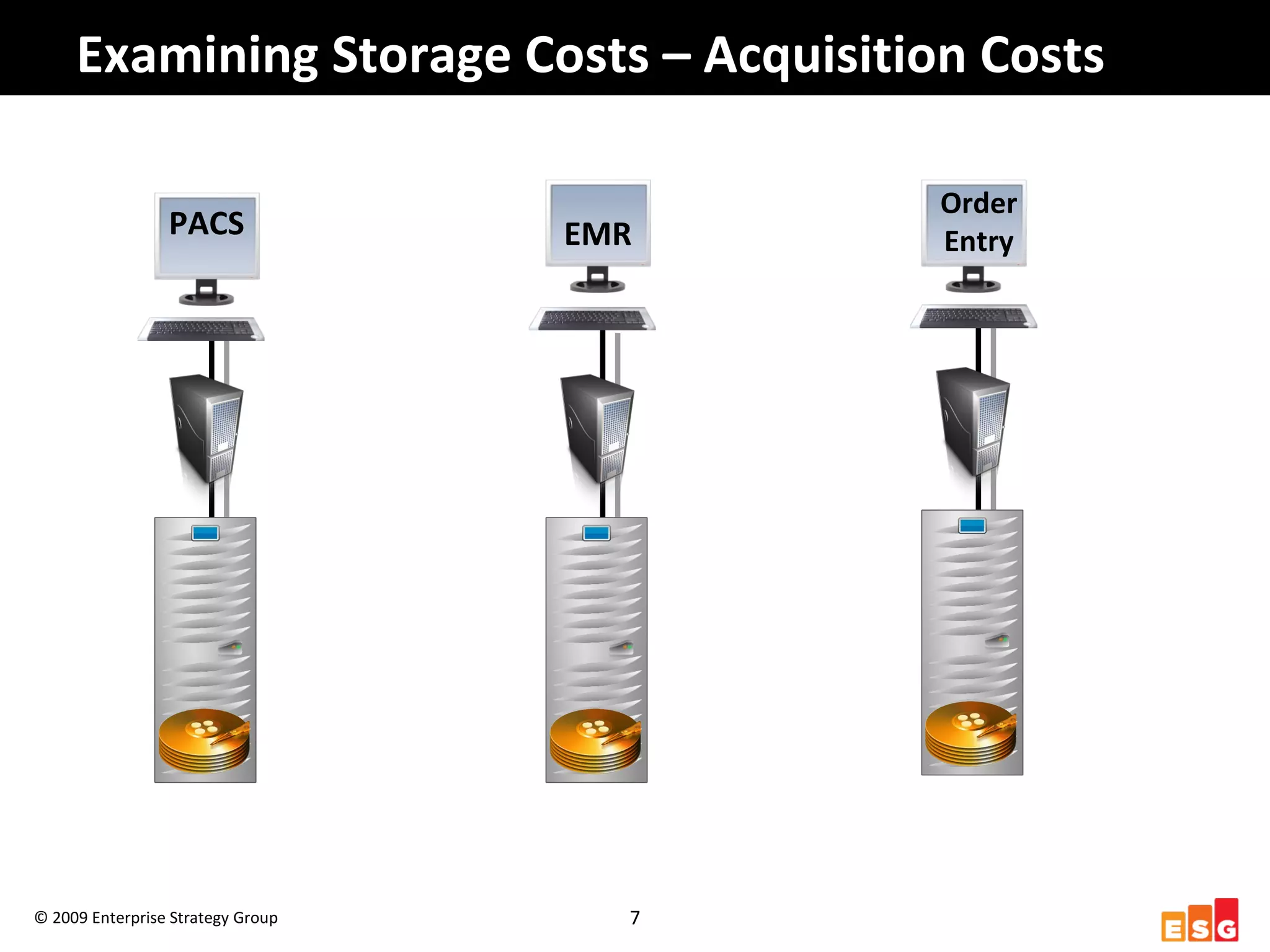
Examining Storage Costs – Acquisition Costs© 2009 Enterprise Strategy Group7OrderEntryPACSEMR
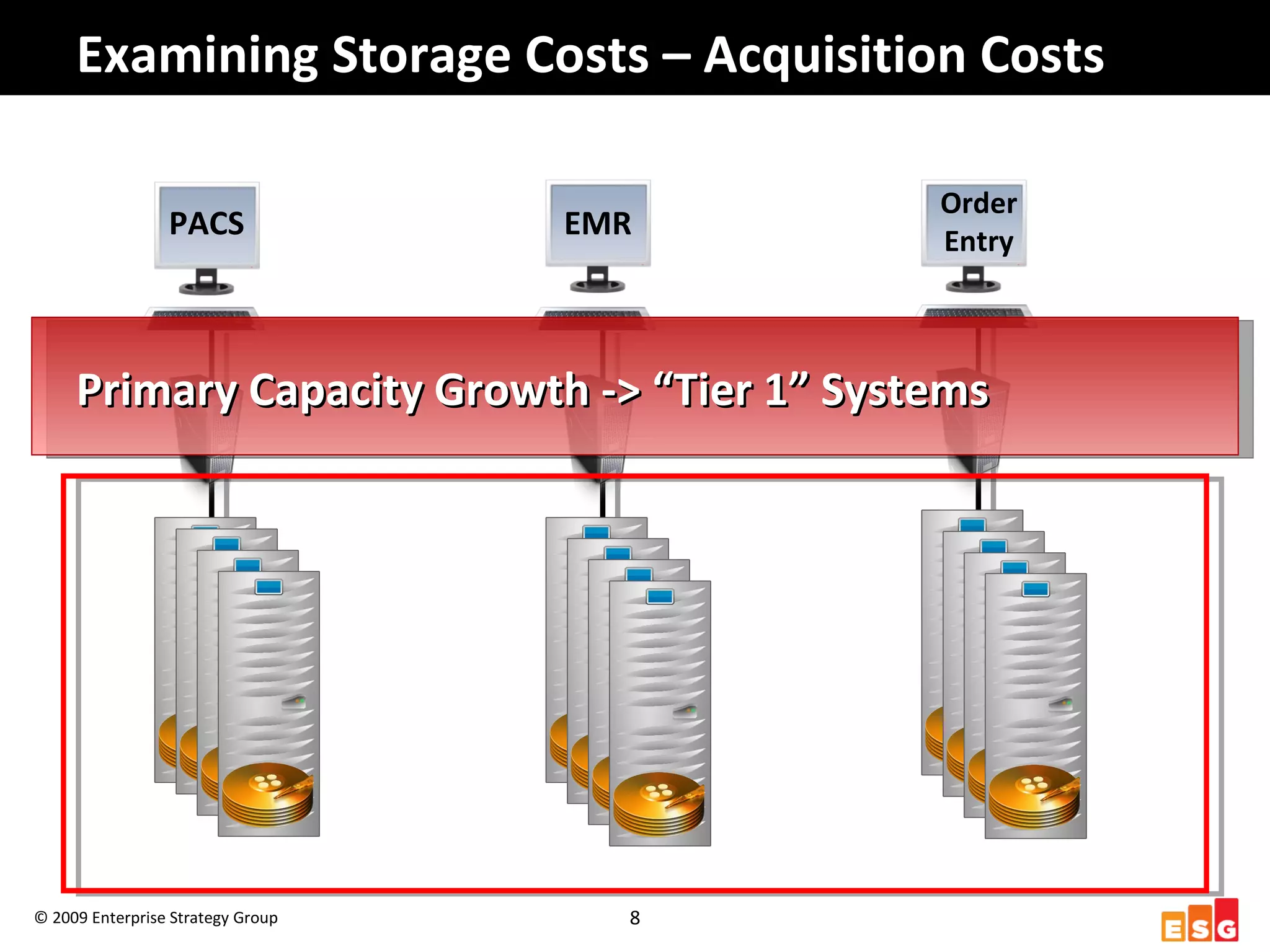
Examining Storage Costs – Acquisition Costs© 2009 Enterprise Strategy Group8OrderEntryPACSEMRPrimary Capacity Growth -> “Tier 1” Systems
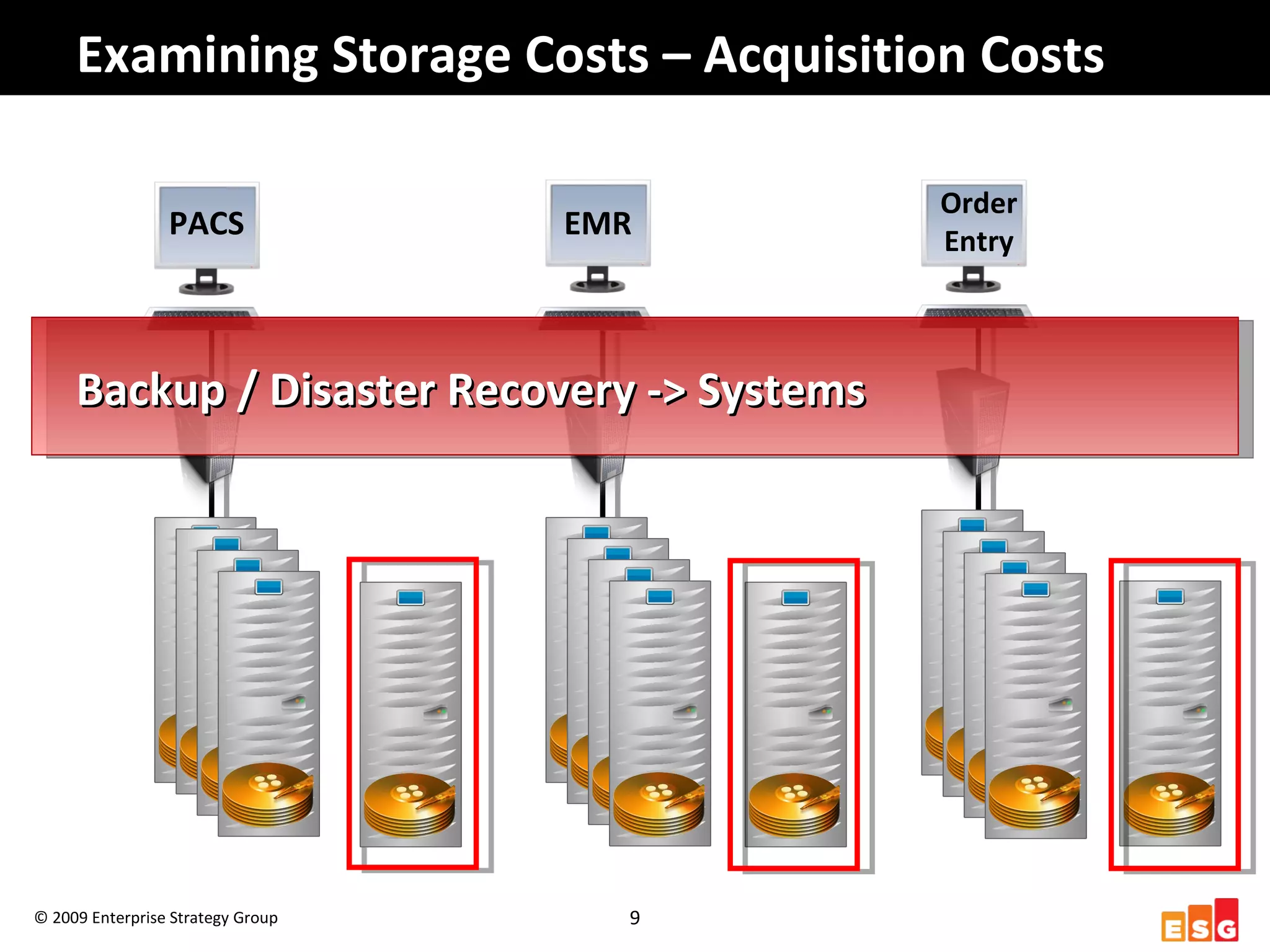
Examining Storage Costs – Acquisition Costs© 2009 Enterprise Strategy Group9OrderEntryPACSEMRBackup / Disaster Recovery -> Systems
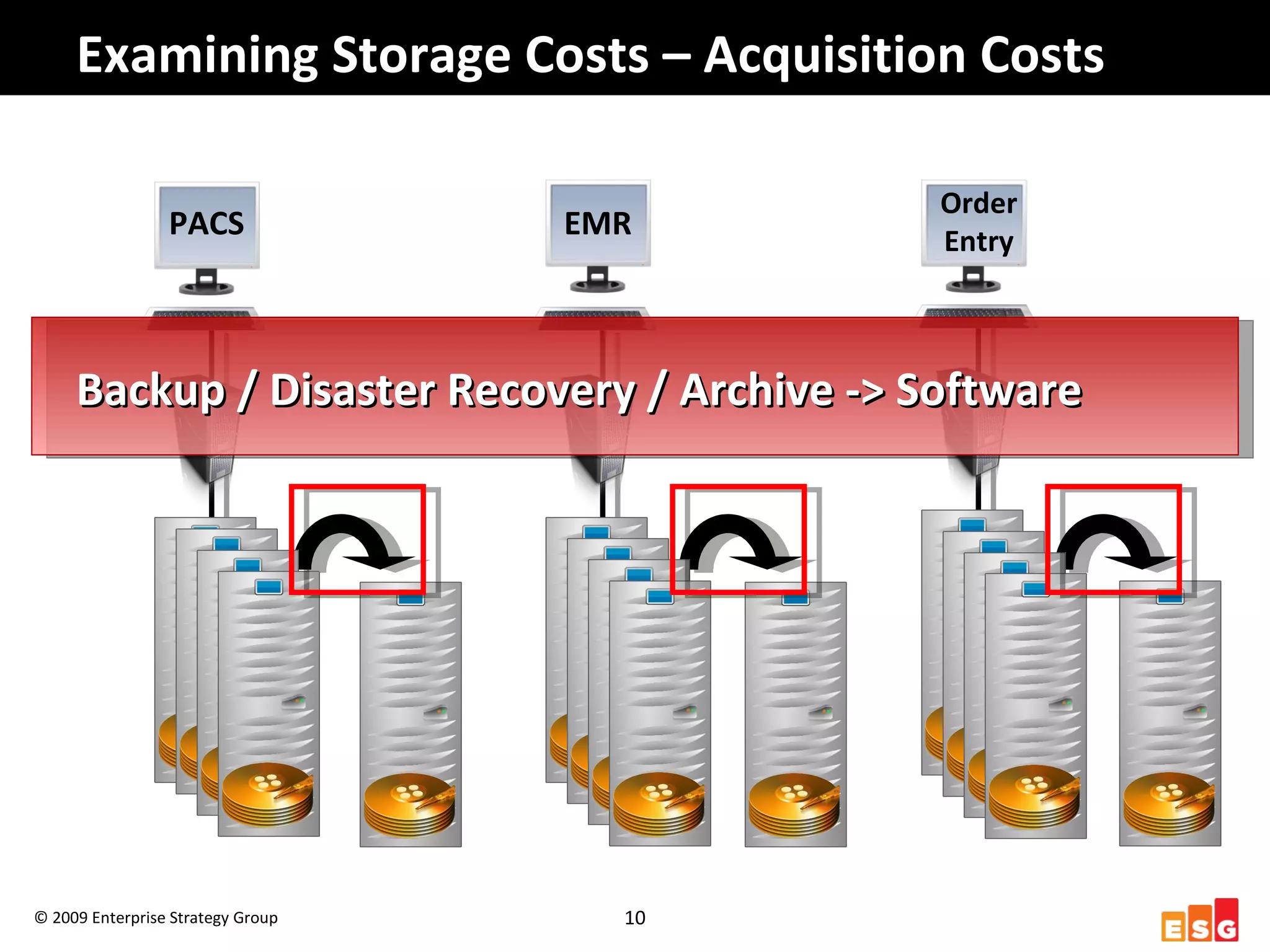
Examining Storage Costs – Acquisition Costs© 2009 Enterprise Strategy Group10OrderEntryPACSEMRBackup / Disaster Recovery / Archive -> Software
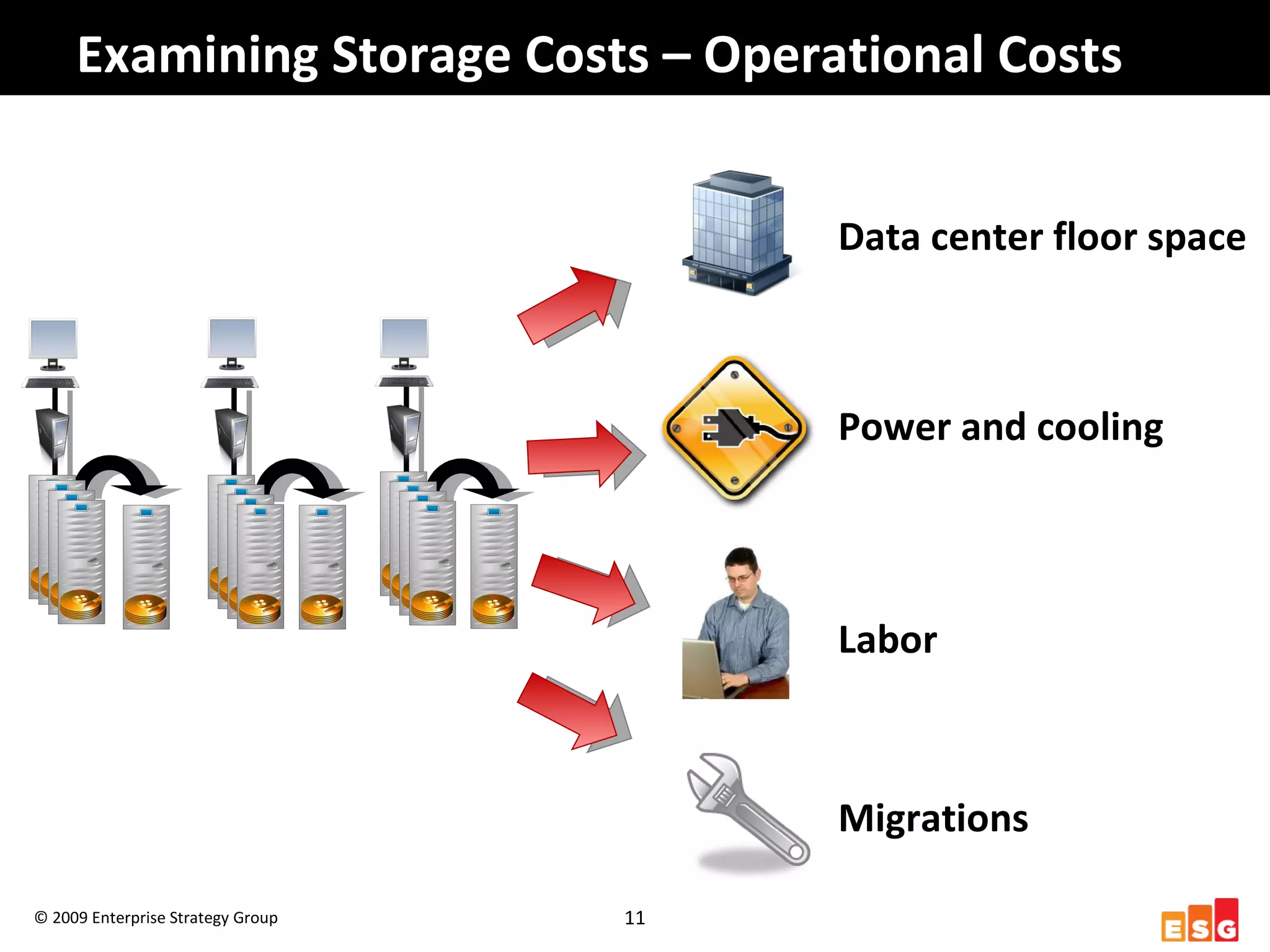
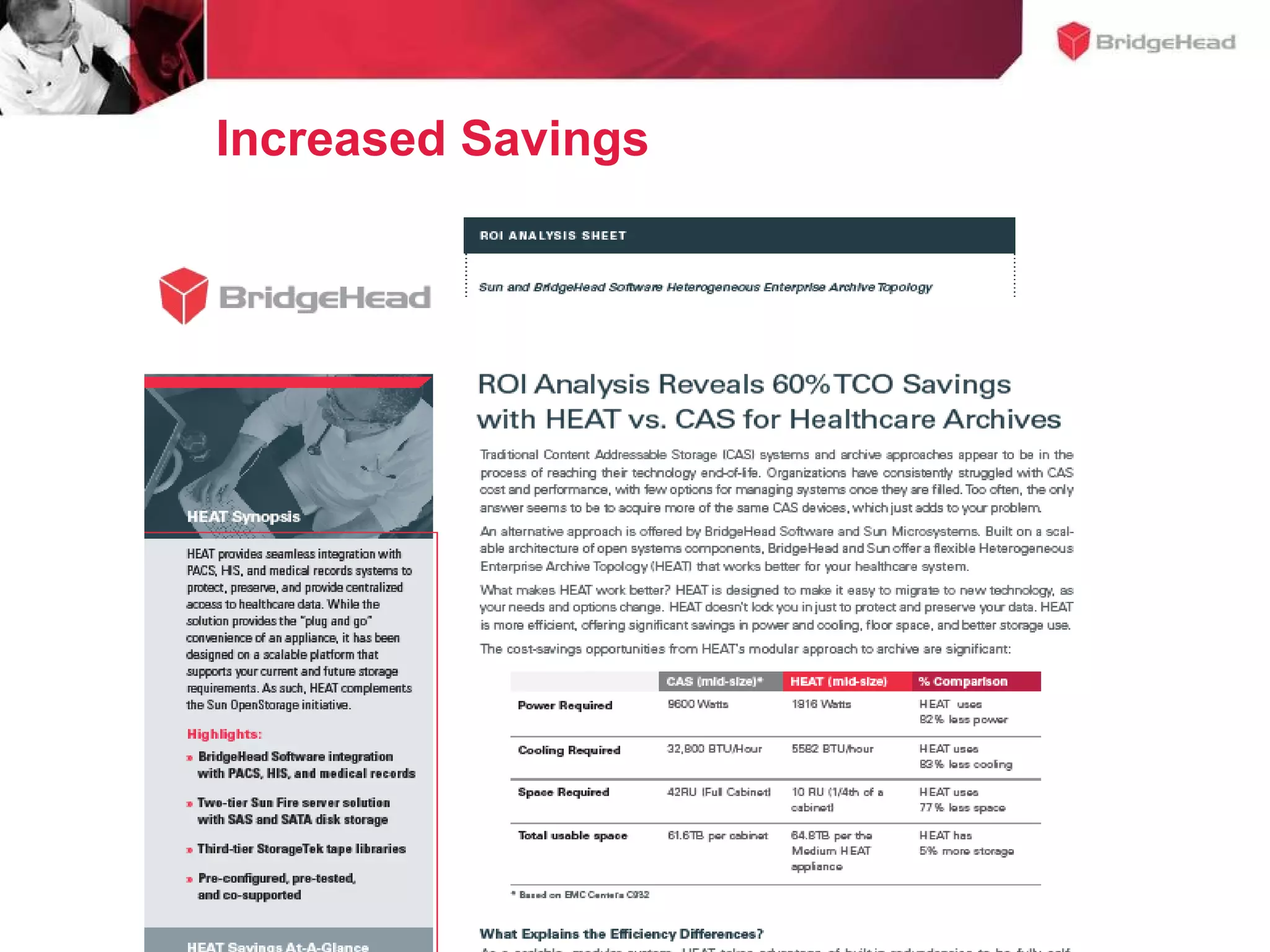
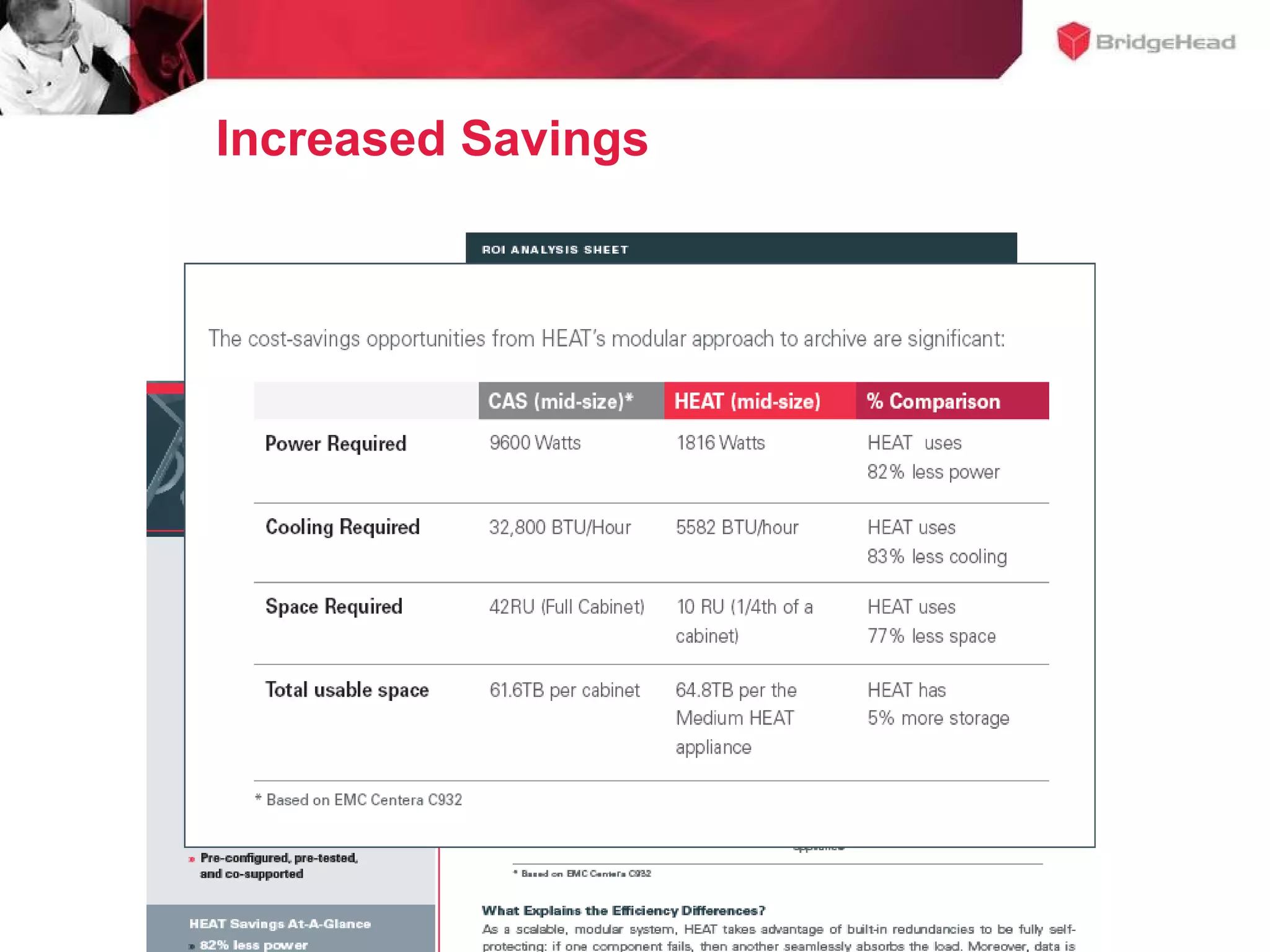
Examining Storage Costs – Operational Costs© 2009 Enterprise Strategy Group11Data center floor spacePower and coolingLaborMigrations
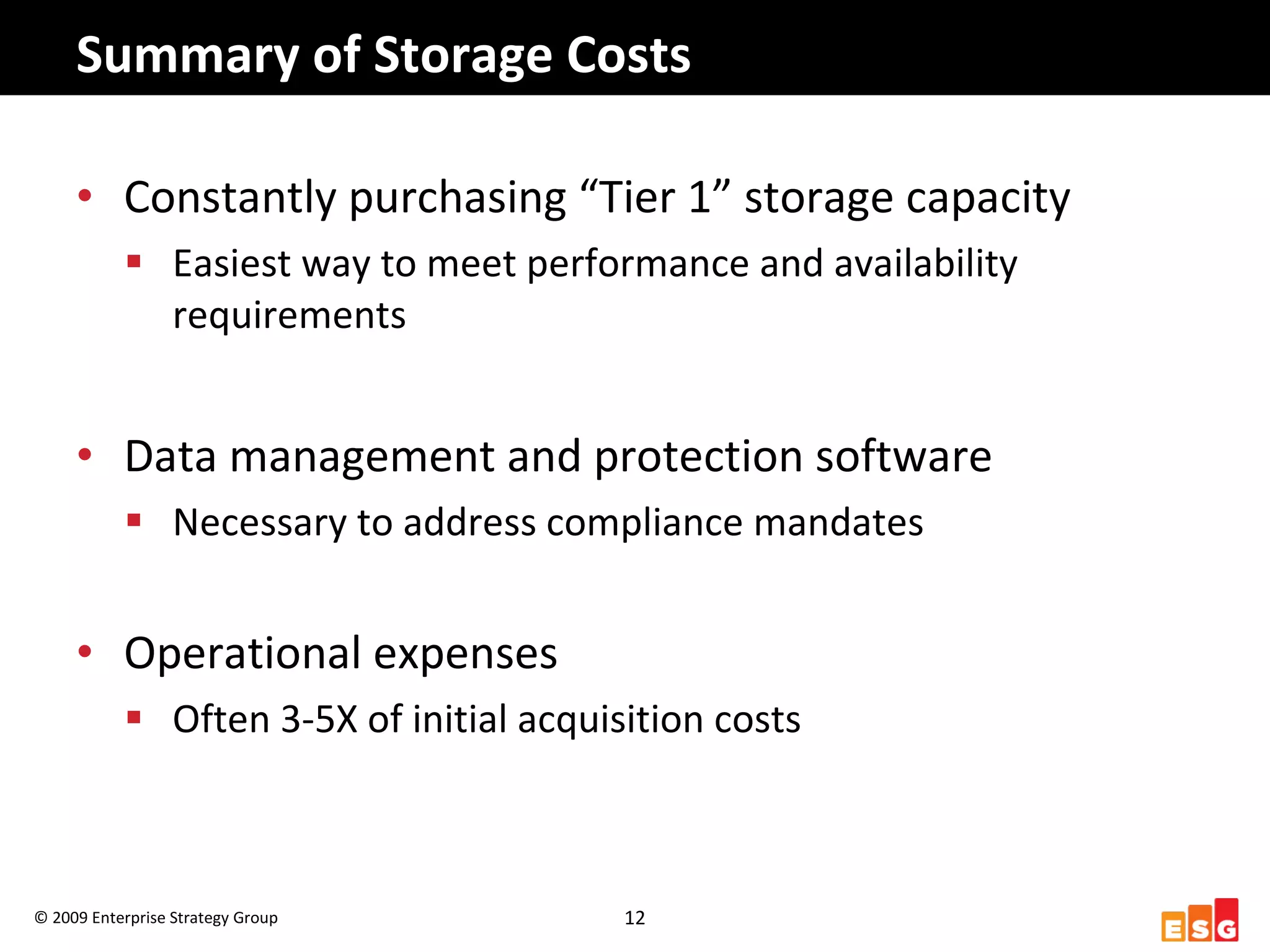
Summary of Storage Costs© 2009 Enterprise Strategy Group12Constantly purchasing “Tier 1” storage capacity

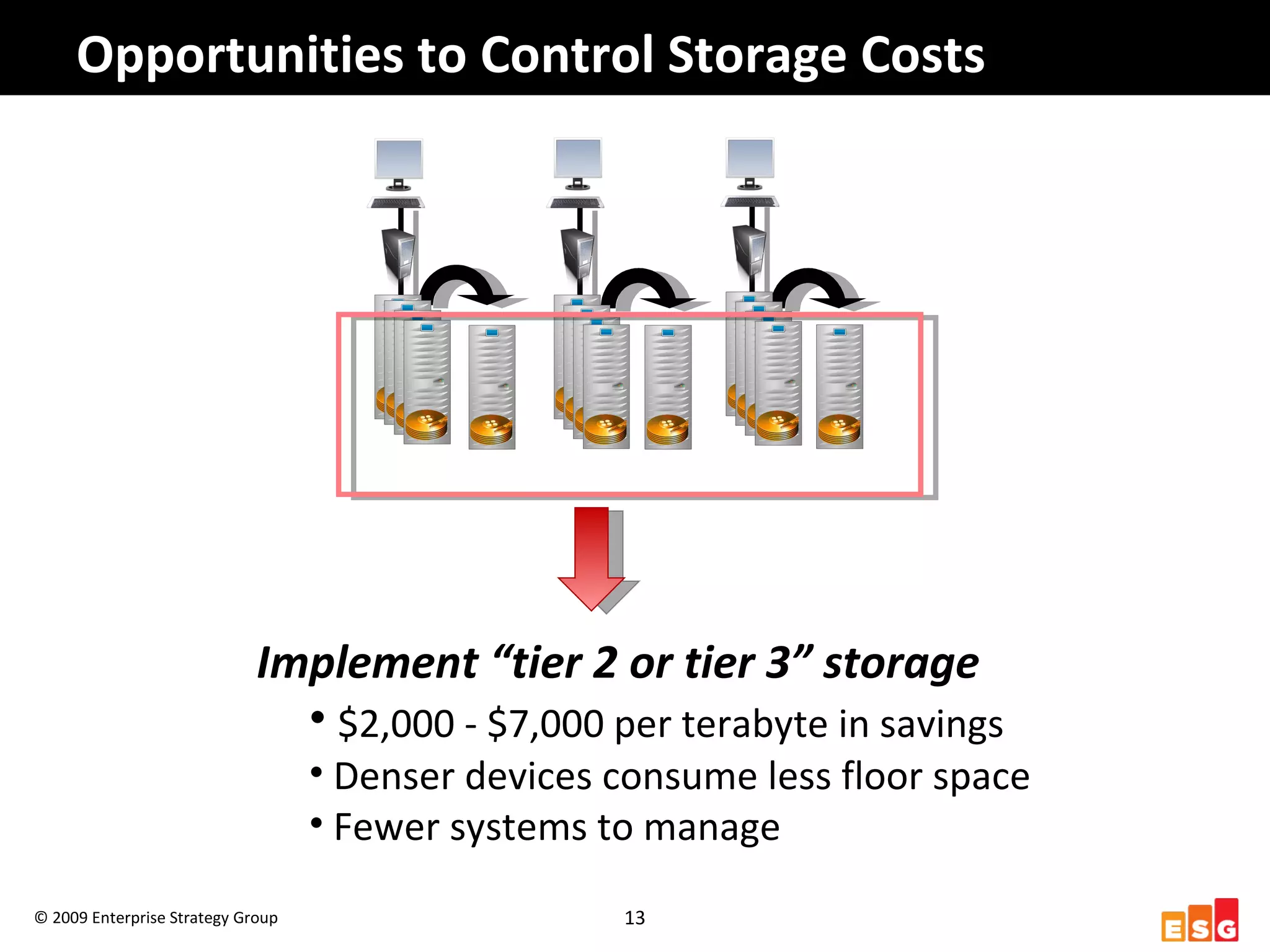
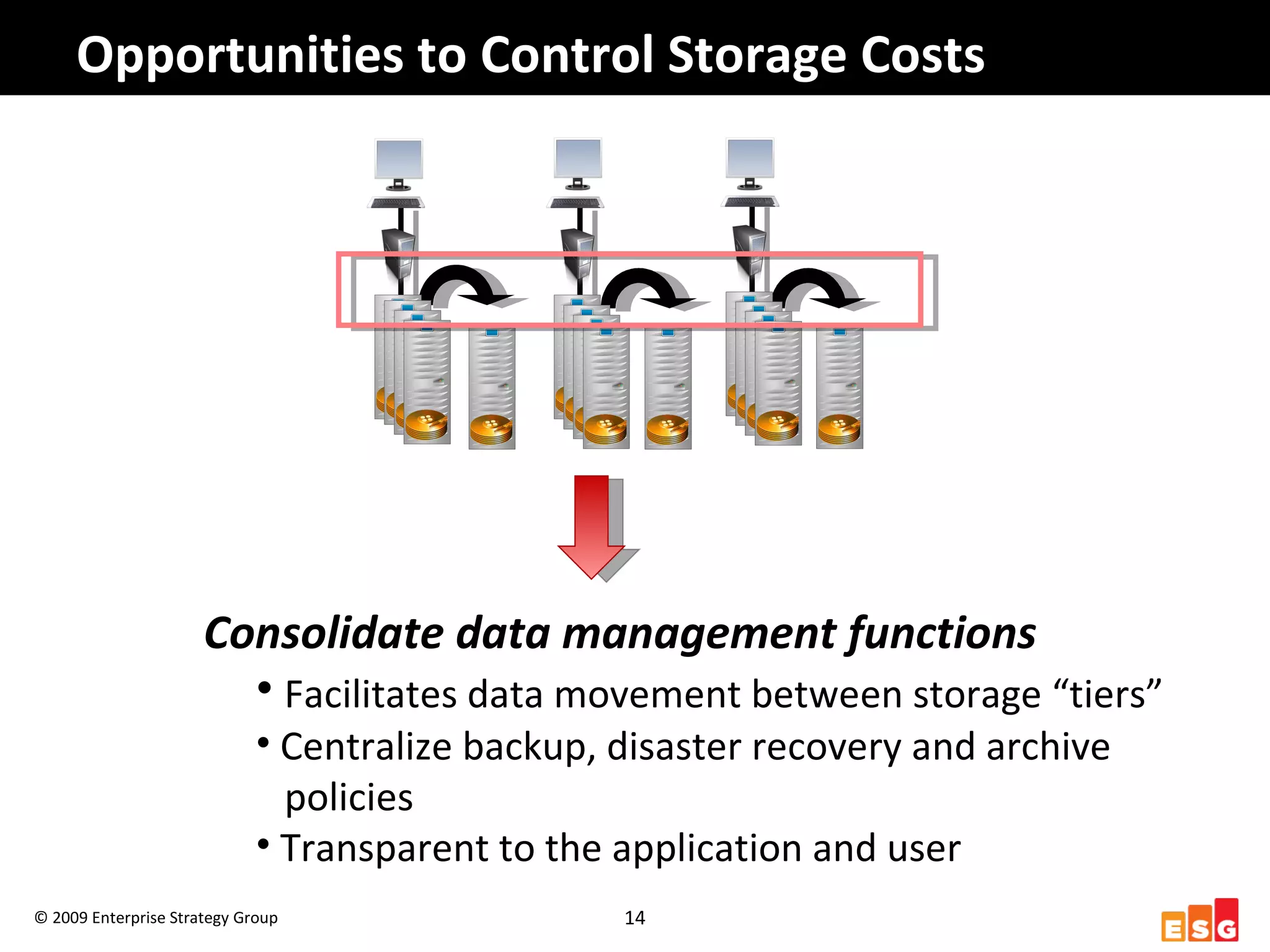
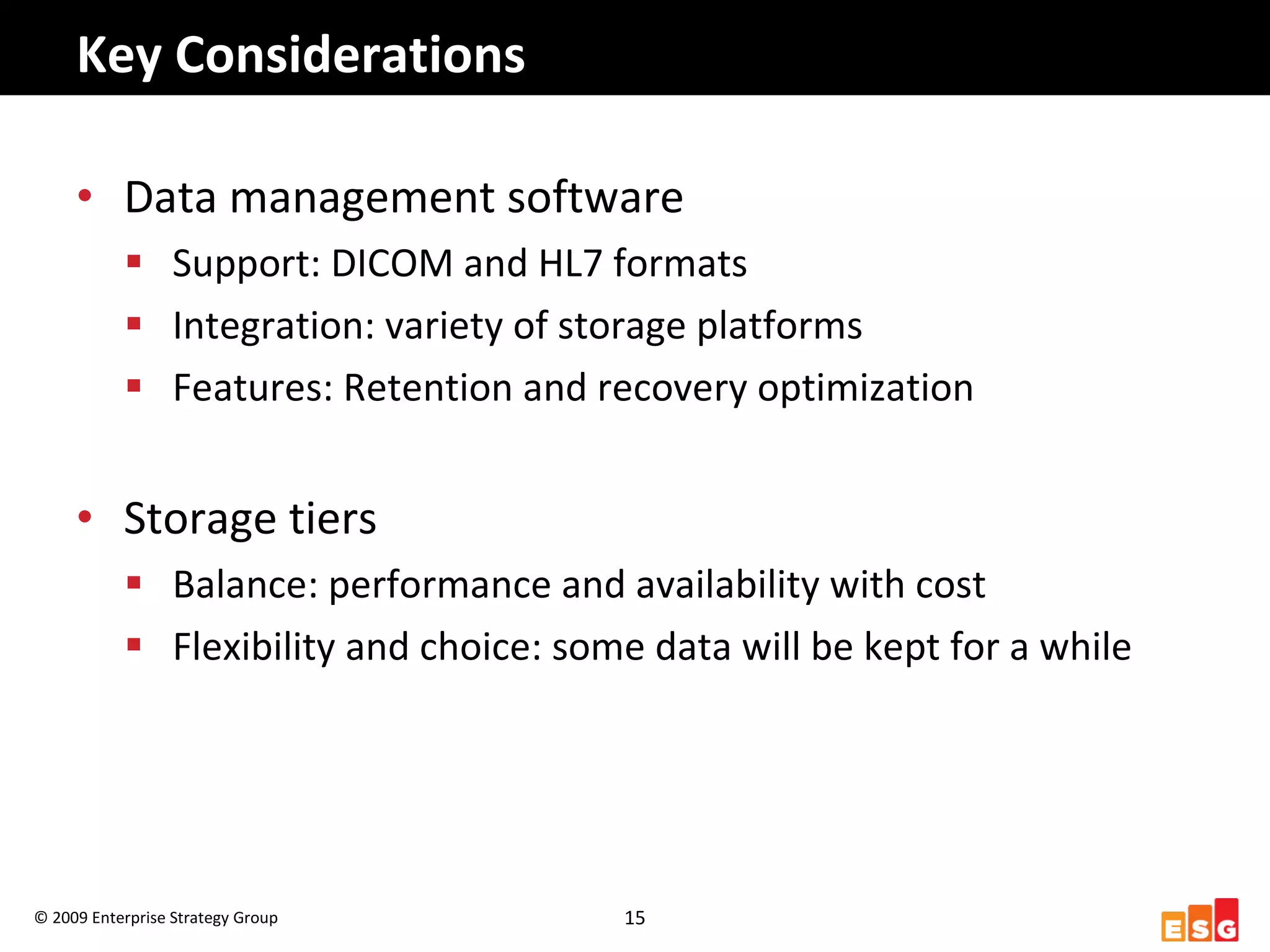
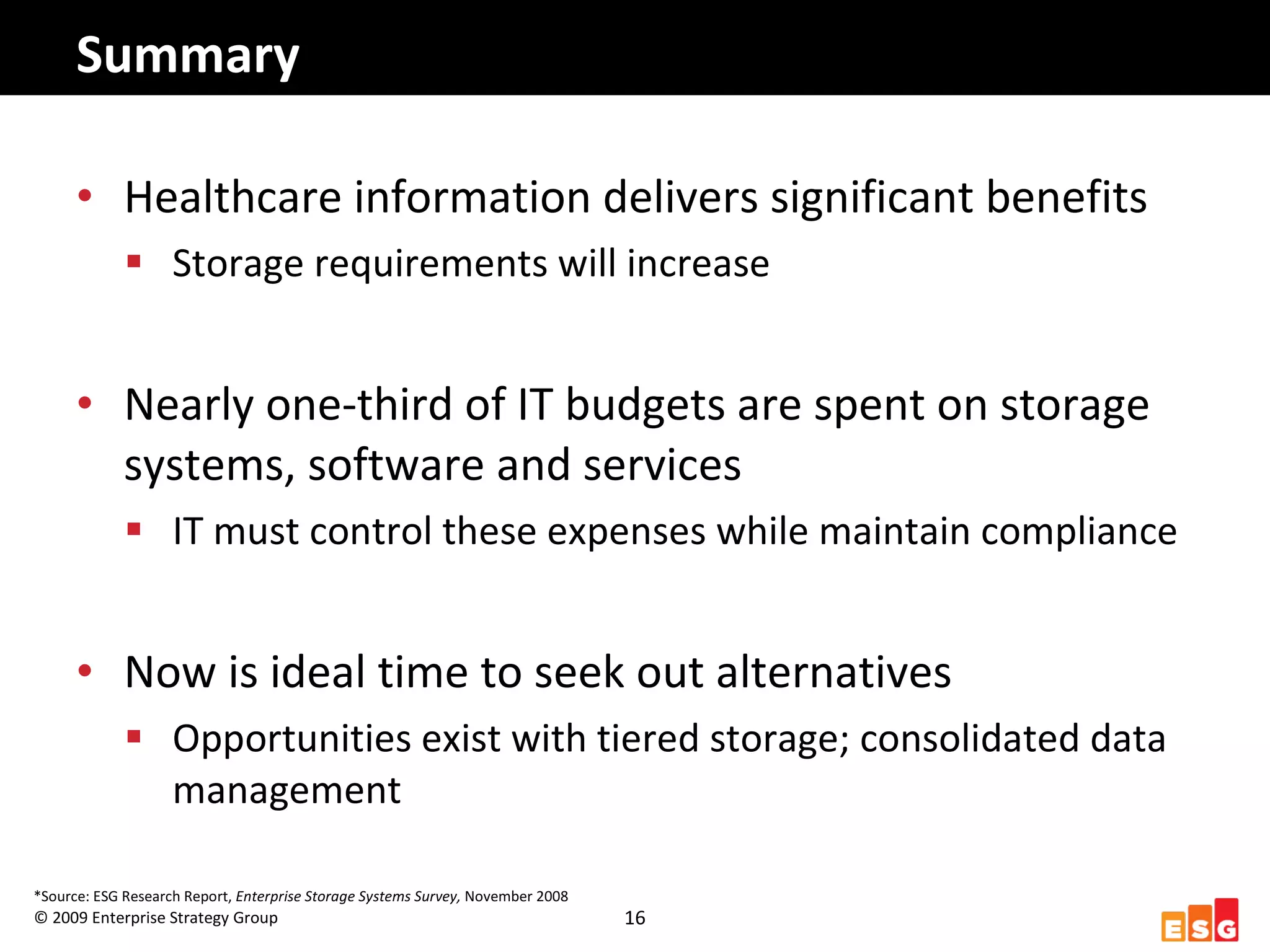
Taking on the Healthcare Data Management Challenge

Editor's Notes

  • #28 Please contact us for a copy of the ROI analysis