SUSTAINABLE METHODS
This Photo by Unknown Author is licensed under CC BY-NC
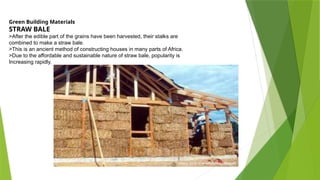
Green Building Materials
STRAW BALE
>After the edible part of the grains have been harvested, their stalks are
combined to make a straw bale.
>This is an ancient method of constructing houses in many parts of Africa.
>Due to the affordable and sustainable nature of straw bale, popularity is
Increasing rapidly.
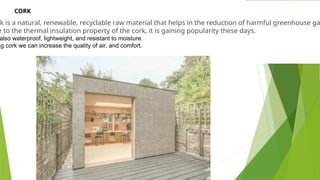
k is a natural, renewable, recyclable raw material that helps in the reduction of harmful greenhouse ga
e to the thermal insulation property of the cork, it is gaining popularity these days.
also waterproof, lightweight, and resistant to moisture.
ng cork we can increase the quality of air, and comfort.
CORK
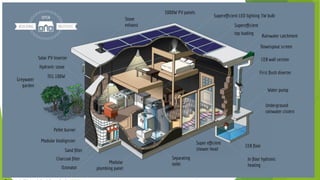
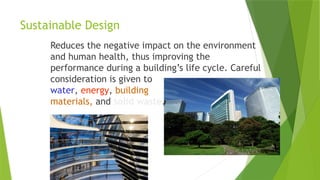
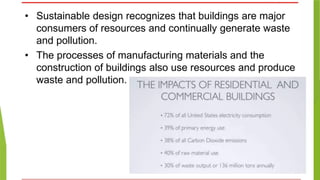
Sustainable Design
Reduces the negative impact on the environment
and human health, thus improving the
performance during a building’s life cycle. Careful
consideration is given to
water, energy, building
materials, and solid waste.
Principles of Sustainability
in Architecture
 Economy of Resources - Reduce, recycle, and reuse natural resources
 Life Cycle Design - Structured methodology for the building process
 Humane Design - Harmony between humans and nature
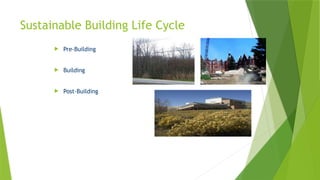
Sustainable Building Life Cycle
 Pre-Building
 Building
 Post-Building
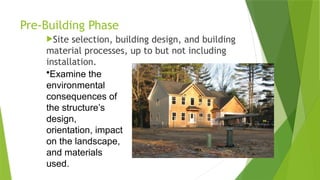
Pre-Building Phase
Site selection, building design, and building
material processes, up to but not including
installation.
•Examine the
environmental
consequences of
the structure’s
design,
orientation, impact
on the landscape,
and materials
used.
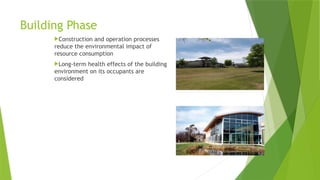
Building Phase
Construction and operation processes
reduce the environmental impact of
resource consumption
Long-term health effects of the building
environment on its occupants are
considered
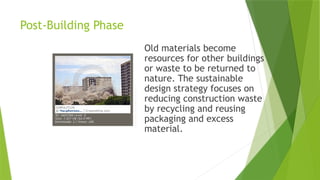
Post-Building Phase
Old materials become
resources for other buildings
or waste to be returned to
nature. The sustainable
design strategy focuses on
reducing construction waste
by recycling and reusing
packaging and excess
material.
SUSTAINABLE METHODS use this method.pptx

SUSTAINABLE METHODS use this method.pptx

  • 1.
  • 7.
    This Photo byUnknown Author is licensed under CC BY-NC
  • 13.
    Green Building Materials STRAWBALE >After the edible part of the grains have been harvested, their stalks are combined to make a straw bale. >This is an ancient method of constructing houses in many parts of Africa. >Due to the affordable and sustainable nature of straw bale, popularity is Increasing rapidly.
  • 18.
    k is anatural, renewable, recyclable raw material that helps in the reduction of harmful greenhouse ga e to the thermal insulation property of the cork, it is gaining popularity these days. also waterproof, lightweight, and resistant to moisture. ng cork we can increase the quality of air, and comfort. CORK
  • 23.
    Sustainable Design Reduces thenegative impact on the environment and human health, thus improving the performance during a building’s life cycle. Careful consideration is given to water, energy, building materials, and solid waste.
  • 24.
    Principles of Sustainability inArchitecture  Economy of Resources - Reduce, recycle, and reuse natural resources  Life Cycle Design - Structured methodology for the building process  Humane Design - Harmony between humans and nature
  • 26.
    Sustainable Building LifeCycle  Pre-Building  Building  Post-Building
  • 27.
    Pre-Building Phase Site selection,building design, and building material processes, up to but not including installation. •Examine the environmental consequences of the structure’s design, orientation, impact on the landscape, and materials used.
  • 28.
    Building Phase Construction andoperation processes reduce the environmental impact of resource consumption Long-term health effects of the building environment on its occupants are considered
  • 29.
    Post-Building Phase Old materialsbecome resources for other buildings or waste to be returned to nature. The sustainable design strategy focuses on reducing construction waste by recycling and reusing packaging and excess material.

Editor's Notes

  • #23Ā The goal when designing a sustainable building is to design and create a structure that operates in harmony with the environment and its occupants. Natural resources are carefully considered in all phases of the structure.
  • #24Ā Economy of Resources Analysis of building inputs and outputs of natural resources require new methods and strategies to maximize all resources. Life Cycle Design Building may cost more up front, but savings is achieved over the life of the building. This may be achieved through passive heating and cooling, insulation, alternative sources of energy, energy–efficient equipment, and appliances. Humane Design Focuses on the interactions between humans preserving natural conditions. This may include integration of public transportation, natural light through windows, operable windows for fresh air, and non-toxic materials.
  • #26Ā Pre-Building Phase How building materials impact the environment: harvesting trees could result in deforestation; mining mineral resources (iron for steel; bauxite for aluminum; sand, gravel, and limestone for concrete) disturbs the natural environment; even the transport of these materials can be a highly polluting activity, depending on their weight and distance from the site. The manufacturing of building products also requires energy and creates environmental pollution: for example, a high level of energy is required to manufacture steel or aluminum products. Building Phase The operation of the building life cycle considers natural resources, its carbon footprint, and operating costs. Post-Building Phase Old materials become resources for other building or waste to be returned to nature. The sustainable-design strategy focuses on reducing construction waste (which currently comprises 60% of the solid waste in landfills) by recycling and reusing buildings and building materials.
  • #27Ā Neighborhood and cities can benefit by proper planning. Consideration of water demands and building material during the planning phase. Creative architects and planners can use the natural resources provided by the building site.
  • #28Ā Reduced energy consumption and the comfort of building occupants are two criteria that architects consider most during the life of the structure.
  • #29Ā The sustainable design strategy focuses on reducing construction waste (which currently comprises 60% of he solid waste in landfills) by recycling and reusing buildings and building materials.