1.FIRE
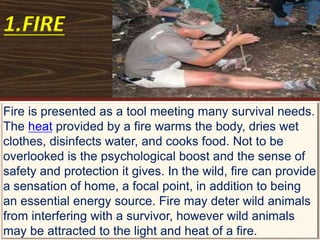
Fire is presented as a tool meeting many survival needs.
The heat provided by a fire warms the body, dries wet
clothes, disinfects water, and cooks food. Not to be
overlooked is the psychological boost and the sense of
safety and protection it gives. In the wild, fire can provide
a sensation of home, a focal point, in addition to being
an essential energy source. Fire may deter wild animals
from interfering with a survivor, however wild animals
may be attracted to the light and heat of a fire.
Making fire is recognized in the sources as
significantly increasing the ability to survive
physically and mentally. Lighting a fire without a
lighter or matches, e.g. by using natural flint and
steel with tinder, is a frequent subject of both
books on survival and in survival courses. There
is an emphasis placed on practicing fire-making
skills before venturing into the wilderness.
Producing fire under adverse conditions has
been made much easier by the introduction of
tools such as the solar spark lighter and the fire
piston.
First aid
Bites
Bone fractures
Burns
Headache
Heart attack
Hemorrhage
Hypothermia hyperthermia
Infection
Poisoning poisonous
plants fungi
Sprains ankle
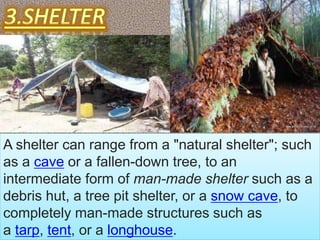
A shelter can range from a "natural shelter"; such
as a cave or a fallen-down tree, to an
intermediate form of man-made shelter such as a
debris hut, a tree pit shelter, or a snow cave, to
completely man-made structures such as
a tarp, tent, or a longhouse.
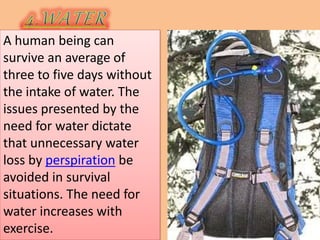
A human being can
survive an average of
three to five days without
the intake of water. The
issues presented by the
need for water dictate
that unnecessary water
loss by perspiration be
avoided in survival
situations. The need for
water increases with
exercise.
A lack of water causes dehydration, which may result
in lethargy, headaches, dizziness, confusion, and
eventually death. Even mild dehydration
reduces endurance and impairs concentration, which is
dangerous in a survival situation where clear thinking is
essential. Dark yellow or brown urine is a diagnostic
indicator of dehydration. To avoid dehydration, a high
priority is typically assigned to locating a supply of
drinking water and making provision to render that water
as safe as possible. Recent thinking is that boiling or
commercial filters are significantly safer than use of
chemicals, with the exception of chlorine dioxide
Culinary root tubers, fruit, edible mushrooms, edible nuts, edible
beans, edible cereals or edible leaves, edible moss, edible
cacti and algaecan be searched and if needed, prepared (mostly
by boiling). With the exception of leaves, these foods are relatively
high in calories, providing some energy to the body. Plants are
some of the easiest food sources to find in the jungle, forest or
desert because they're stationary and can thus be had without
exerting much effort. Skills, and equipment (such as bows, snares
and nets) necessary to gather animal food in the wild
include animal trapping, hunting, fishing.
Focusing on survival until rescued by presumed searchers,
the Boy Scouts of America especially discourages foraging for
wild foods on the grounds that the knowledge and skills needed
are unlikely to be possessed by those finding themselves in a
wilderness survival situation, making the risks (including use of
energy) outweigh the benefits.
Survival situations can often be resolved by
finding a way to safety, or a more suitable
location to wait for rescue. Types of navigation
include:
•Celestial navigation, using the sun and the night
sky to locate the cardinal directions and to
maintain course of travel
•Using a map, compass or GPS receiver
•Dead reckoning
•Natural navigation, using the condition of
surrounding natural objects (i.e. moss on a tree,
snow on a hill, direction of running water, etc.)[15]
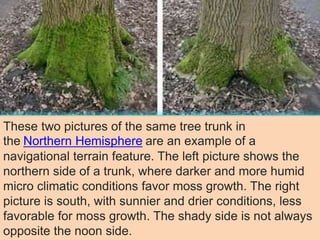
These two pictures of the same tree trunk in
the Northern Hemisphere are an example of a
navigational terrain feature. The left picture shows the
northern side of a trunk, where darker and more humid
micro climatic conditions favor moss growth. The right
picture is south, with sunnier and drier conditions, less
favorable for moss growth. The shady side is not always
opposite the noon side.
The mind and its processes are critical to survival. The will to live
in a life and death situation often separates those that live and
those that do not. Stories of heroic feats of survival by regular
people with little or no training but a strong will to live are not
uncommon. Among them is Juliane Koepcke, who was the sole
survivor among the 93 passengers when her plane crashed in the
jungle of Peru. Situations can be stressful to the level that even
trained experts may be mentally affected. One should be mentally
and physically tough during a disaster.
To the extent that stress results from testing human limits, the
benefits of learning to function under stress and determining those
limits may outweigh the downside of stress.There are certain
strategies and mental tools that can help people cope better in a
survival situation, including focusing on manageable tasks, having
a Plan B available and recognizing denial.
Survival skills
Survival skills
Survival skills
Survival skills

Survival skills

  • 8.
    1.FIRE Fire is presentedas a tool meeting many survival needs. The heat provided by a fire warms the body, dries wet clothes, disinfects water, and cooks food. Not to be overlooked is the psychological boost and the sense of safety and protection it gives. In the wild, fire can provide a sensation of home, a focal point, in addition to being an essential energy source. Fire may deter wild animals from interfering with a survivor, however wild animals may be attracted to the light and heat of a fire.
  • 9.
    Making fire isrecognized in the sources as significantly increasing the ability to survive physically and mentally. Lighting a fire without a lighter or matches, e.g. by using natural flint and steel with tinder, is a frequent subject of both books on survival and in survival courses. There is an emphasis placed on practicing fire-making skills before venturing into the wilderness. Producing fire under adverse conditions has been made much easier by the introduction of tools such as the solar spark lighter and the fire piston.
  • 10.
    First aid Bites Bone fractures Burns Headache Heartattack Hemorrhage Hypothermia hyperthermia Infection Poisoning poisonous plants fungi Sprains ankle
  • 11.
    A shelter canrange from a "natural shelter"; such as a cave or a fallen-down tree, to an intermediate form of man-made shelter such as a debris hut, a tree pit shelter, or a snow cave, to completely man-made structures such as a tarp, tent, or a longhouse.
  • 13.
    A human beingcan survive an average of three to five days without the intake of water. The issues presented by the need for water dictate that unnecessary water loss by perspiration be avoided in survival situations. The need for water increases with exercise.
  • 14.
    A lack ofwater causes dehydration, which may result in lethargy, headaches, dizziness, confusion, and eventually death. Even mild dehydration reduces endurance and impairs concentration, which is dangerous in a survival situation where clear thinking is essential. Dark yellow or brown urine is a diagnostic indicator of dehydration. To avoid dehydration, a high priority is typically assigned to locating a supply of drinking water and making provision to render that water as safe as possible. Recent thinking is that boiling or commercial filters are significantly safer than use of chemicals, with the exception of chlorine dioxide
  • 15.
    Culinary root tubers,fruit, edible mushrooms, edible nuts, edible beans, edible cereals or edible leaves, edible moss, edible cacti and algaecan be searched and if needed, prepared (mostly by boiling). With the exception of leaves, these foods are relatively high in calories, providing some energy to the body. Plants are some of the easiest food sources to find in the jungle, forest or desert because they're stationary and can thus be had without exerting much effort. Skills, and equipment (such as bows, snares and nets) necessary to gather animal food in the wild include animal trapping, hunting, fishing. Focusing on survival until rescued by presumed searchers, the Boy Scouts of America especially discourages foraging for wild foods on the grounds that the knowledge and skills needed are unlikely to be possessed by those finding themselves in a wilderness survival situation, making the risks (including use of energy) outweigh the benefits.
  • 17.
    Survival situations canoften be resolved by finding a way to safety, or a more suitable location to wait for rescue. Types of navigation include: •Celestial navigation, using the sun and the night sky to locate the cardinal directions and to maintain course of travel •Using a map, compass or GPS receiver •Dead reckoning •Natural navigation, using the condition of surrounding natural objects (i.e. moss on a tree, snow on a hill, direction of running water, etc.)[15]
  • 18.
    These two picturesof the same tree trunk in the Northern Hemisphere are an example of a navigational terrain feature. The left picture shows the northern side of a trunk, where darker and more humid micro climatic conditions favor moss growth. The right picture is south, with sunnier and drier conditions, less favorable for moss growth. The shady side is not always opposite the noon side.
  • 19.
    The mind andits processes are critical to survival. The will to live in a life and death situation often separates those that live and those that do not. Stories of heroic feats of survival by regular people with little or no training but a strong will to live are not uncommon. Among them is Juliane Koepcke, who was the sole survivor among the 93 passengers when her plane crashed in the jungle of Peru. Situations can be stressful to the level that even trained experts may be mentally affected. One should be mentally and physically tough during a disaster. To the extent that stress results from testing human limits, the benefits of learning to function under stress and determining those limits may outweigh the downside of stress.There are certain strategies and mental tools that can help people cope better in a survival situation, including focusing on manageable tasks, having a Plan B available and recognizing denial.