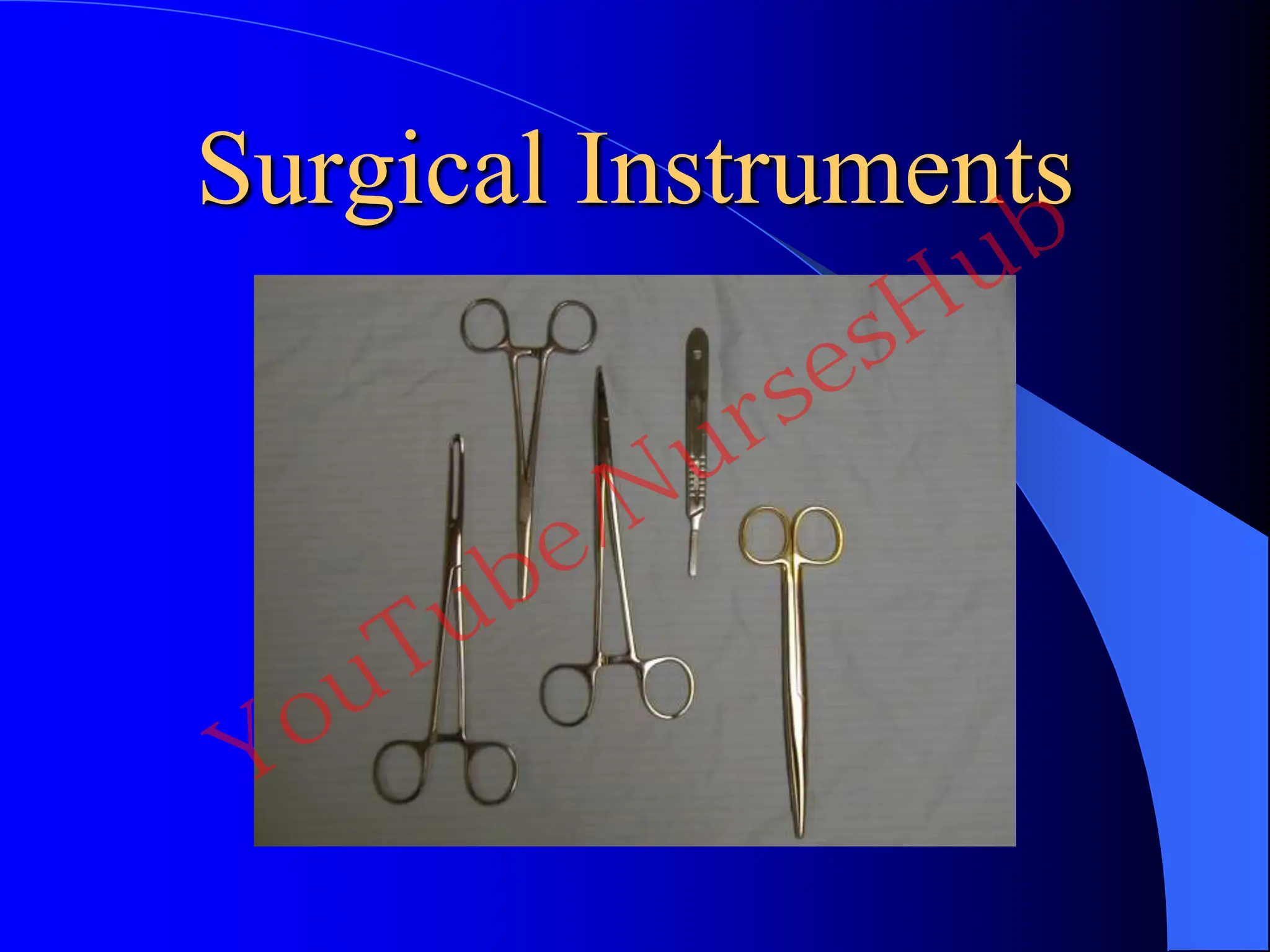
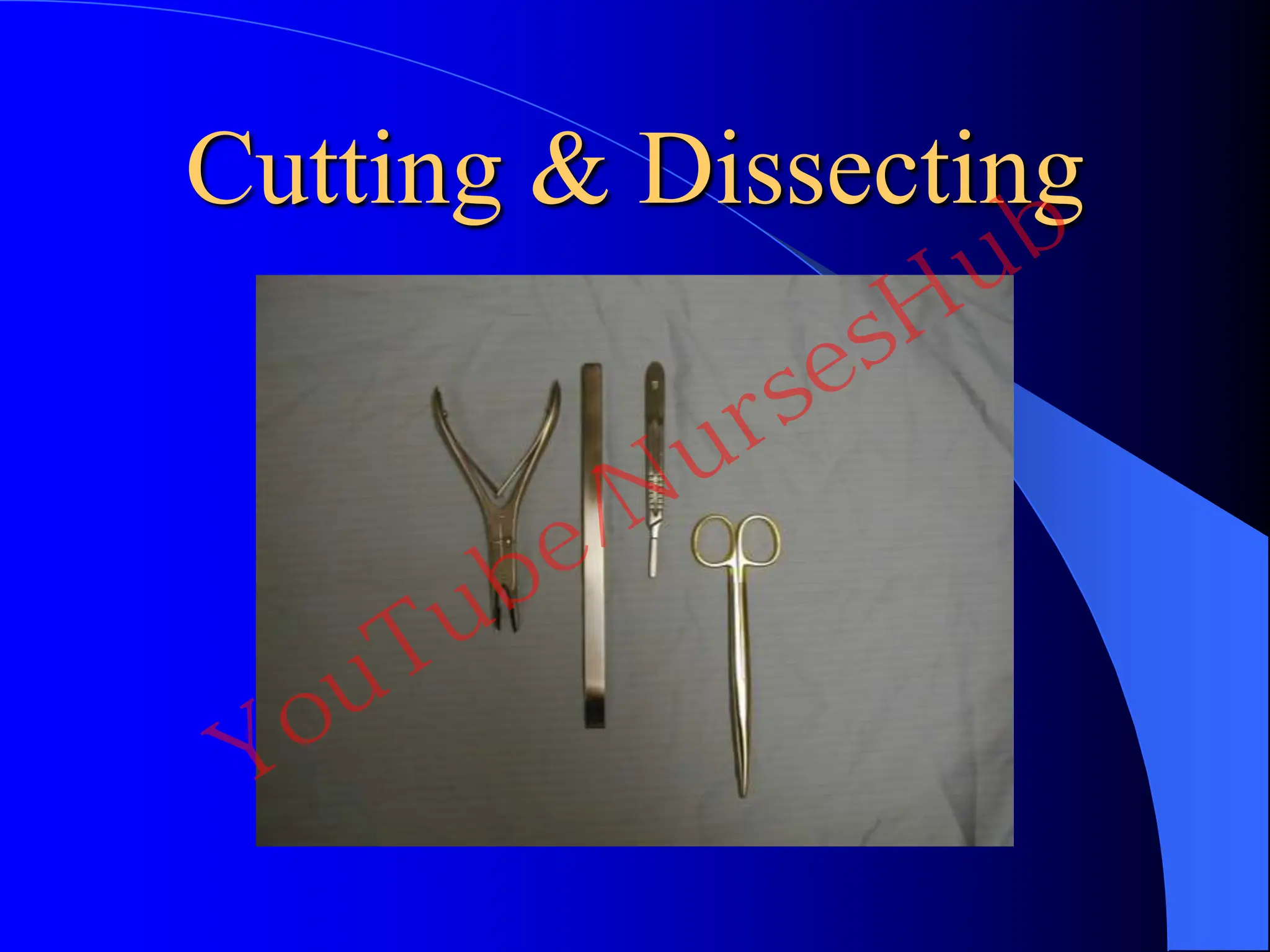
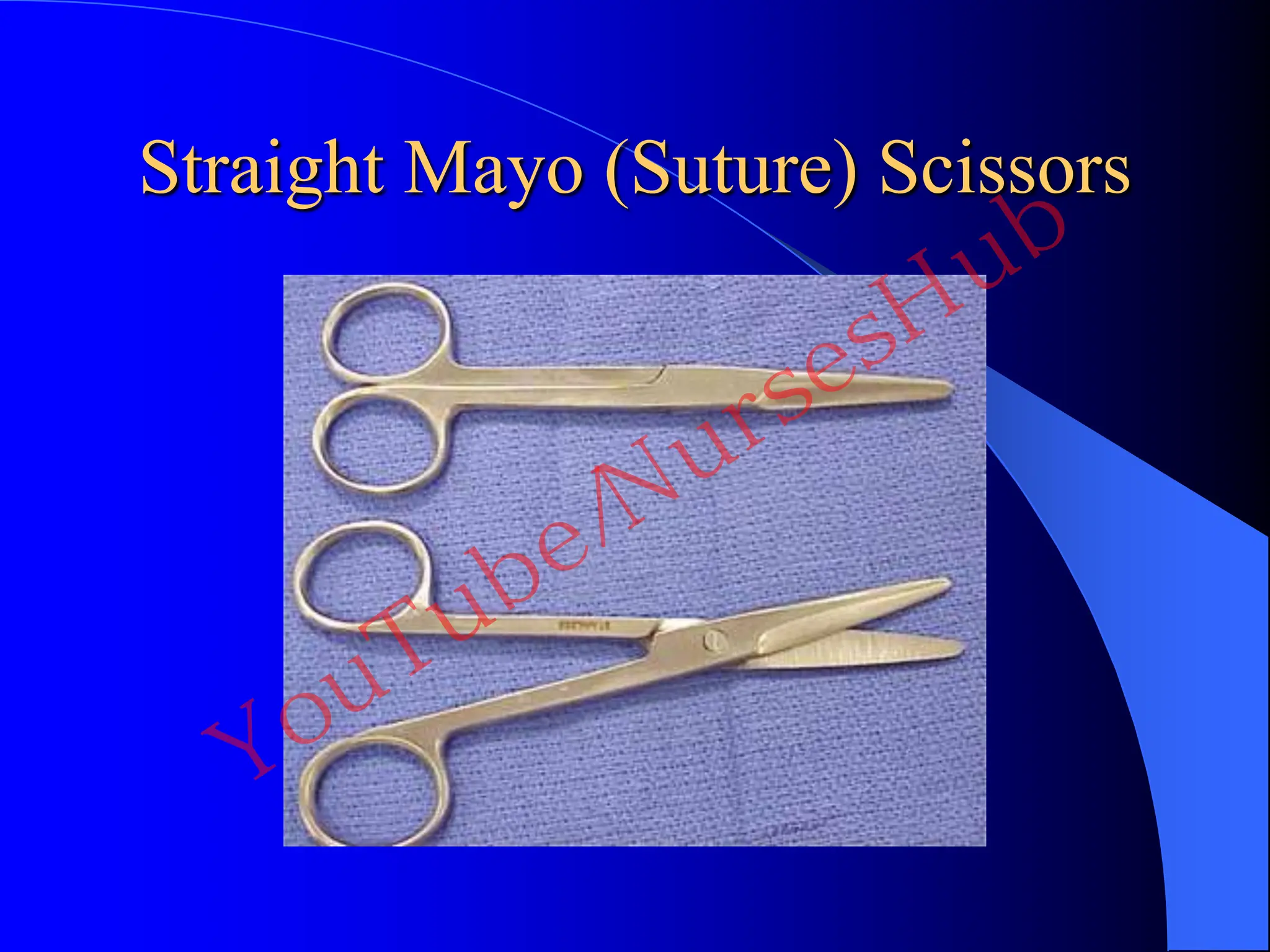
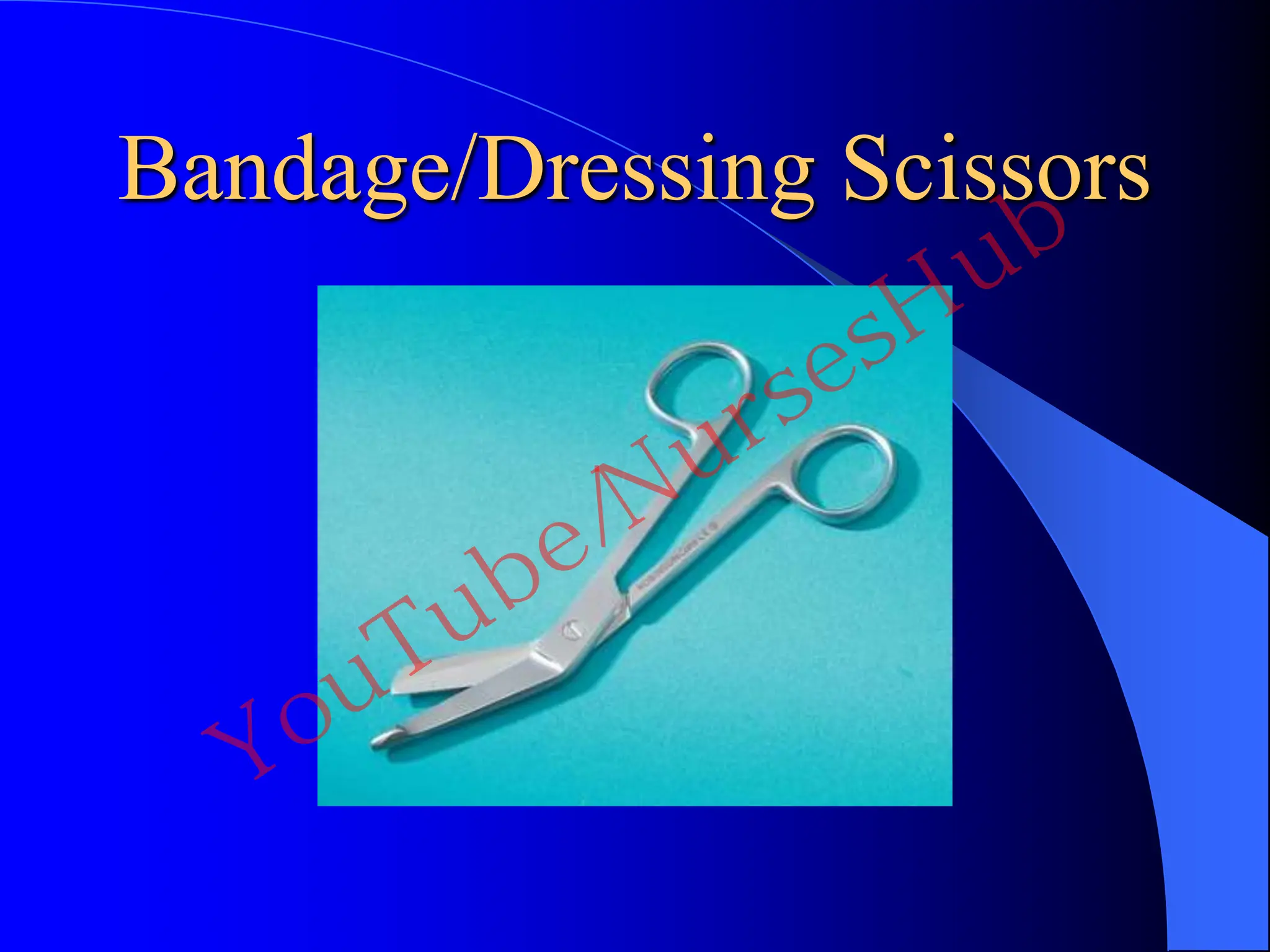
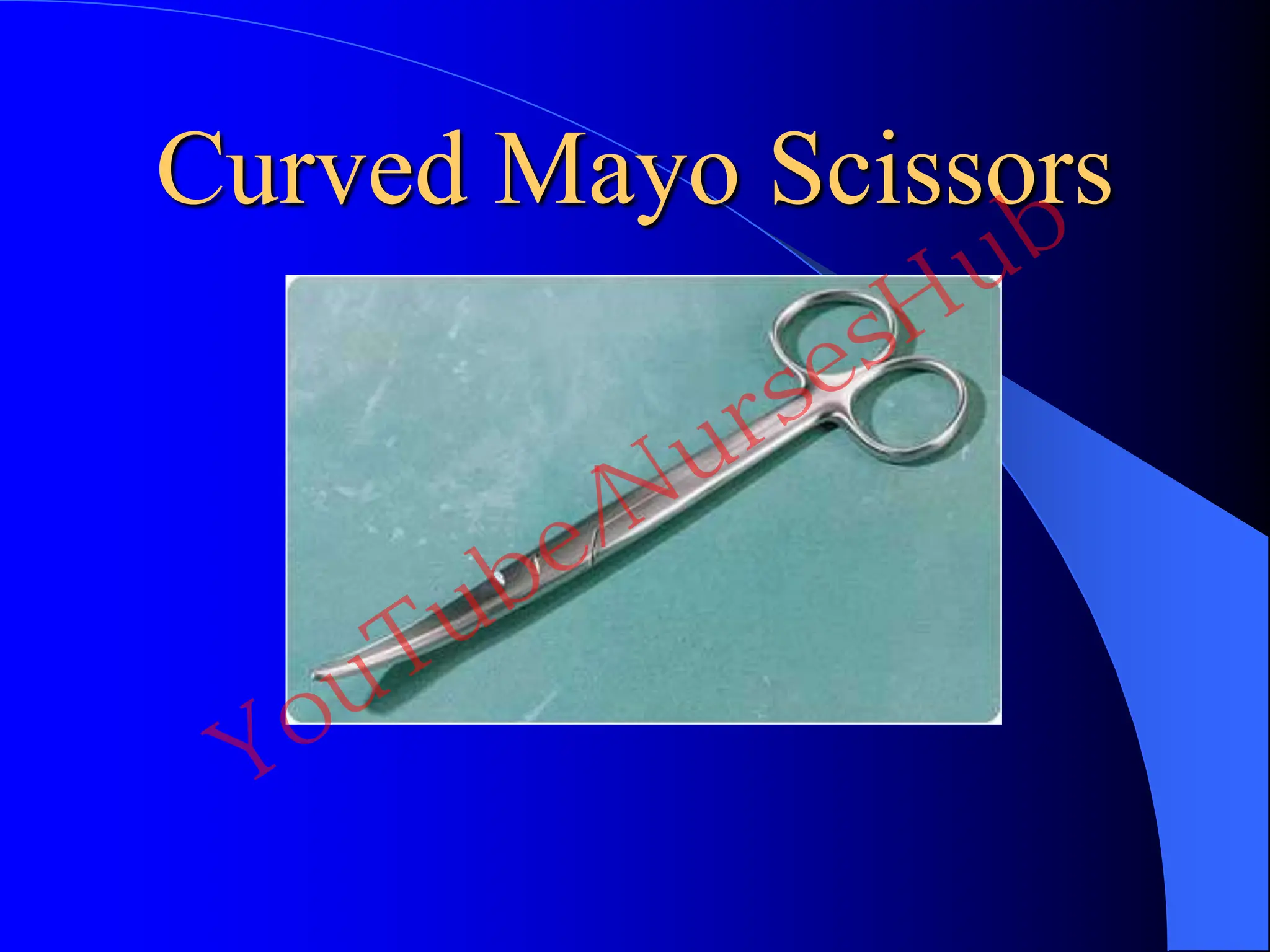
Cutting & Dissecting
Cutting instruments have sharp edges.
They are used to dissect, incise,
separate, or excise tissue.
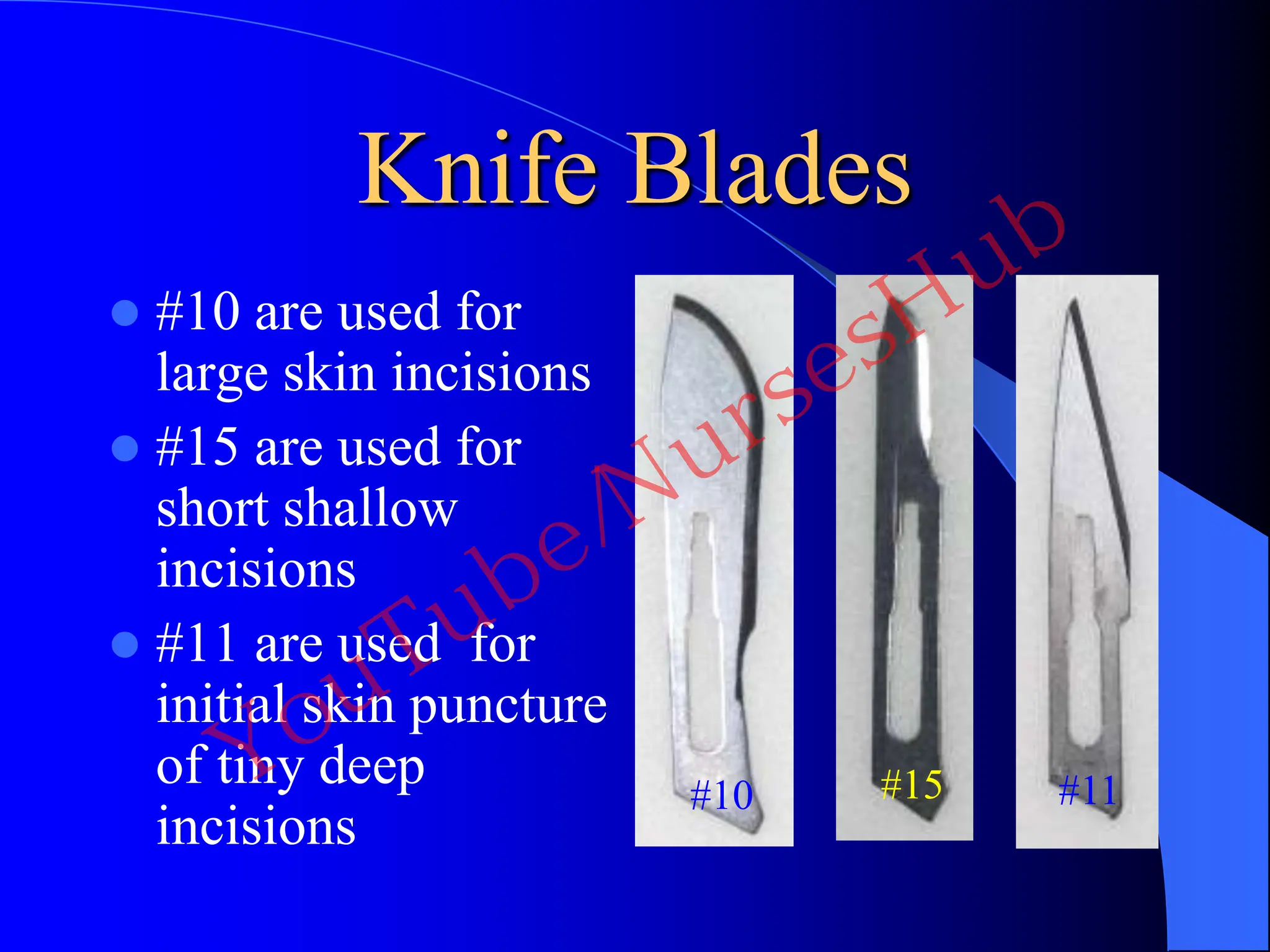
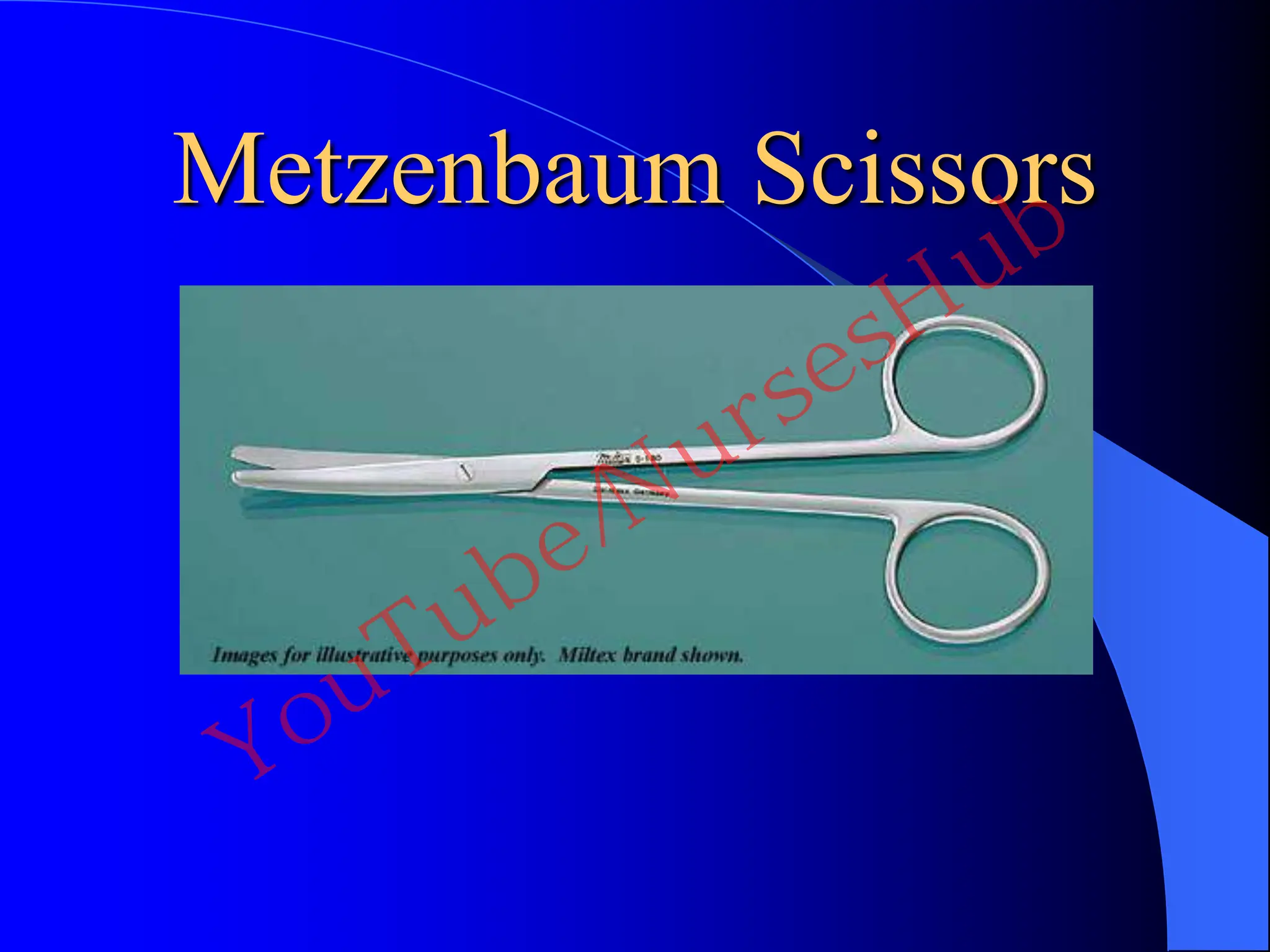
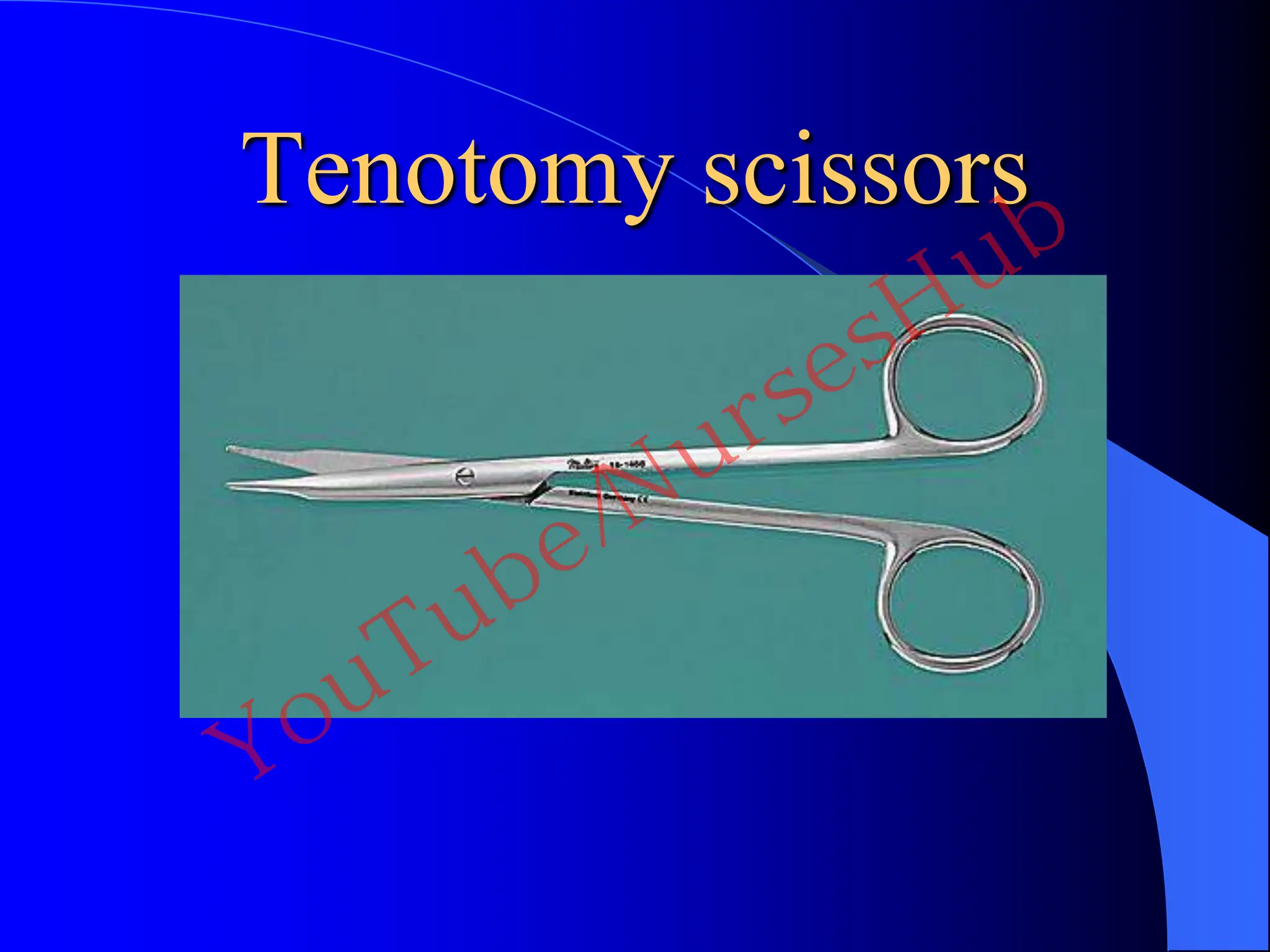
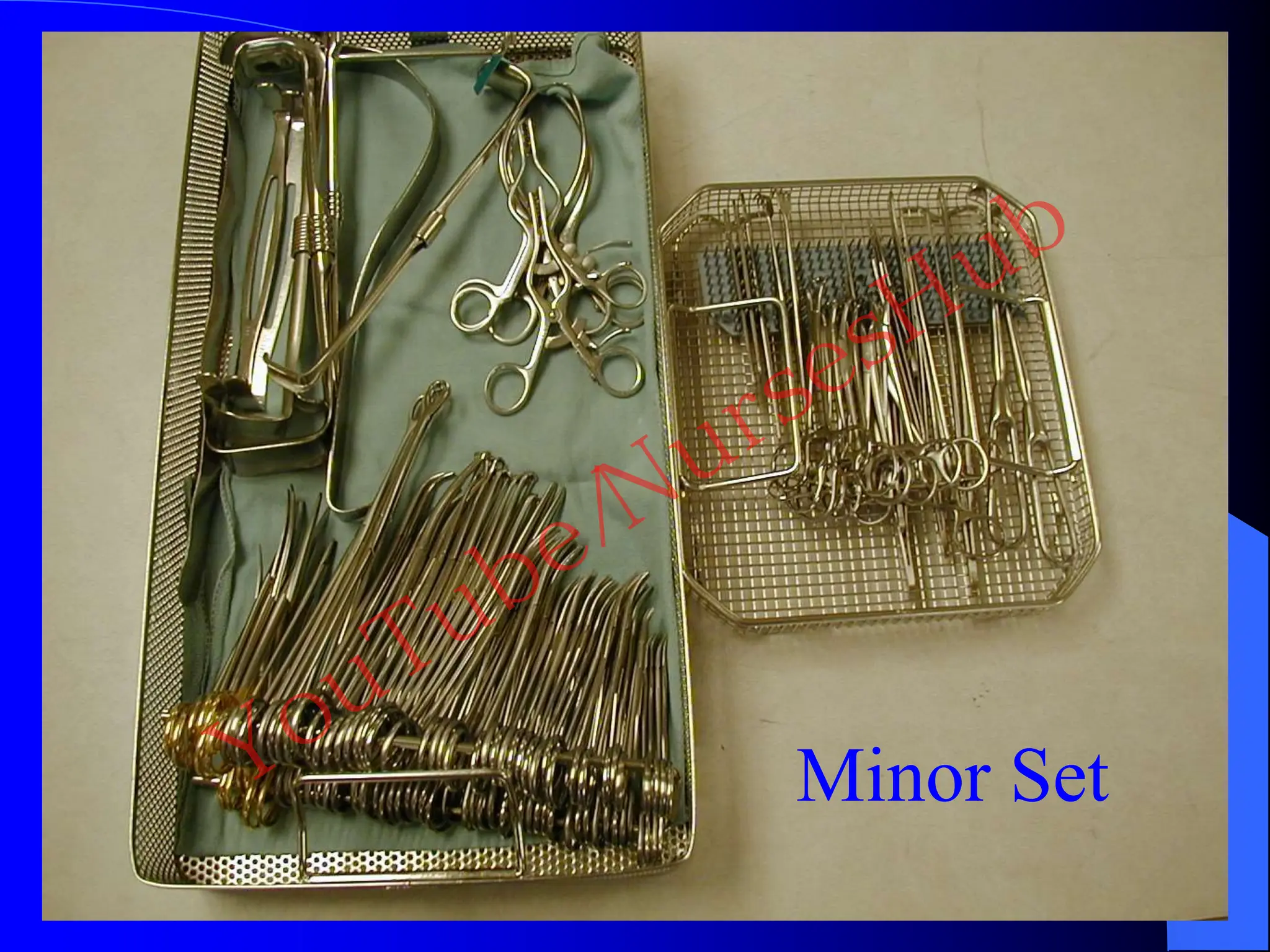
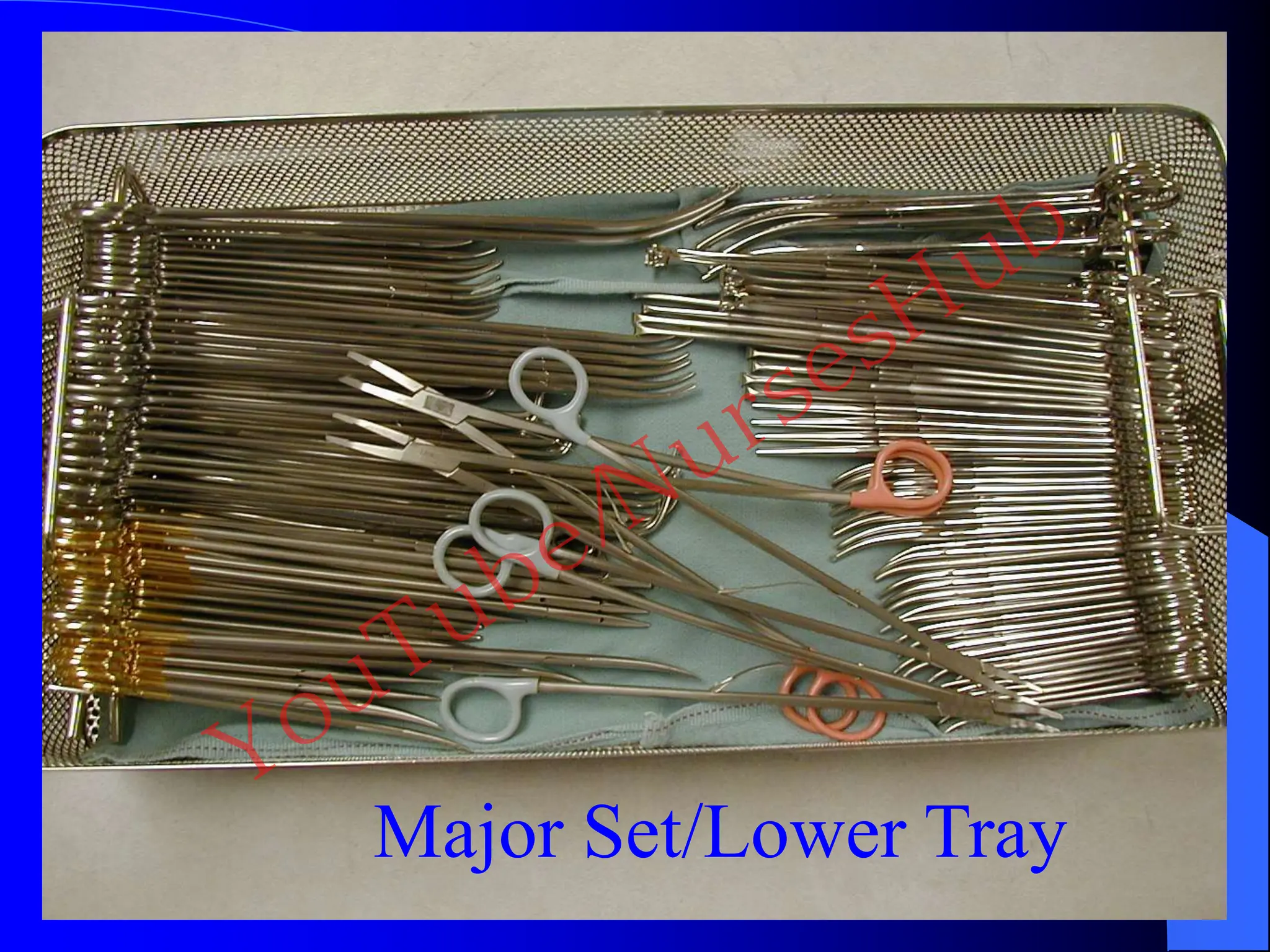
Most instrument sets will include #3
and #7 knife handles & suture, curved
mayo, metz and tenotomy scissors.
YouTube/NursesHub
6.
Knife Handles
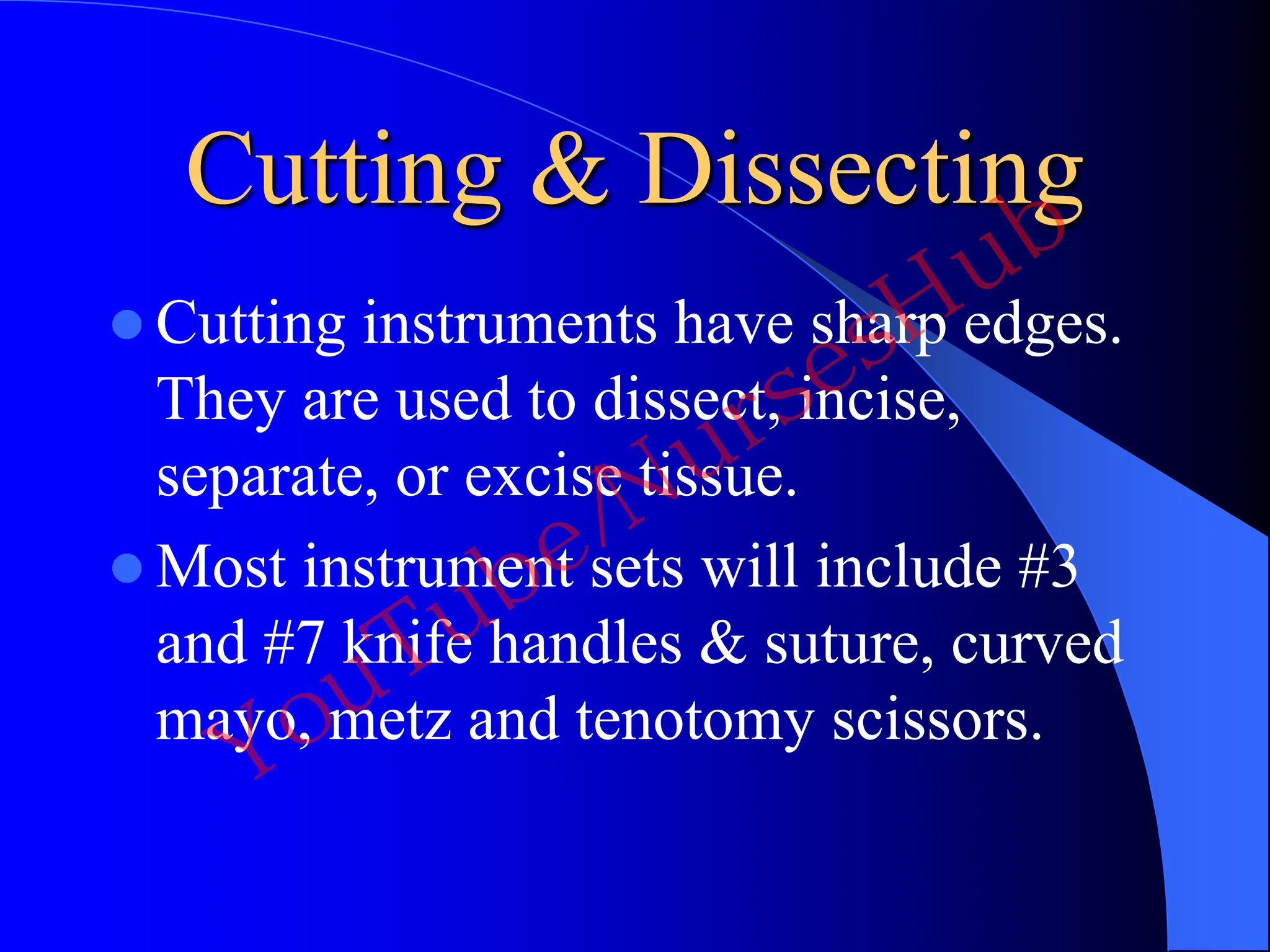
Comein various
widths & lengths
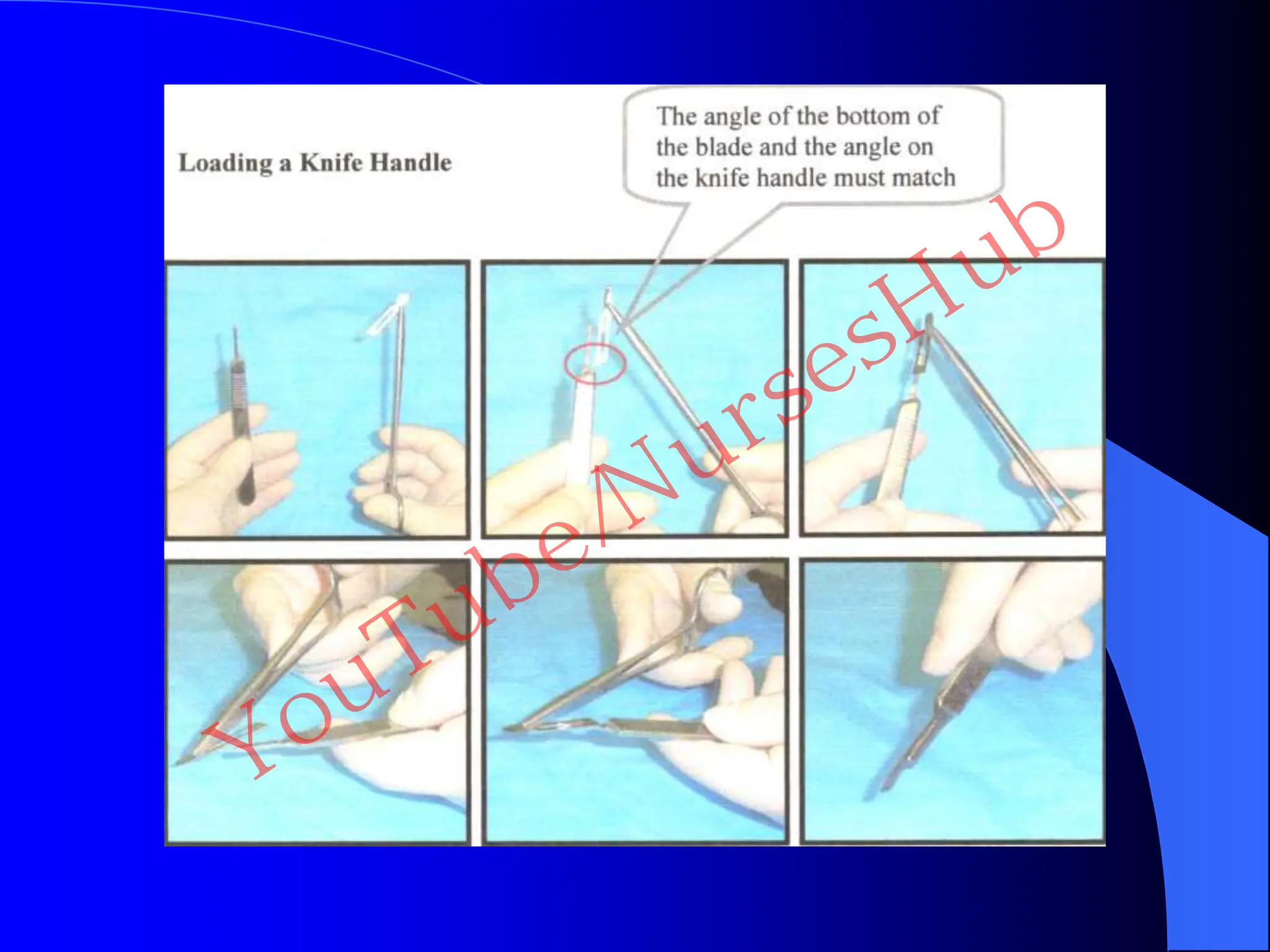
Blades are attached
by slipping the slit
in the blade into the
groove on the
handle
#7 #4 #3
YouTube/NursesHub
7.
Knife Blades
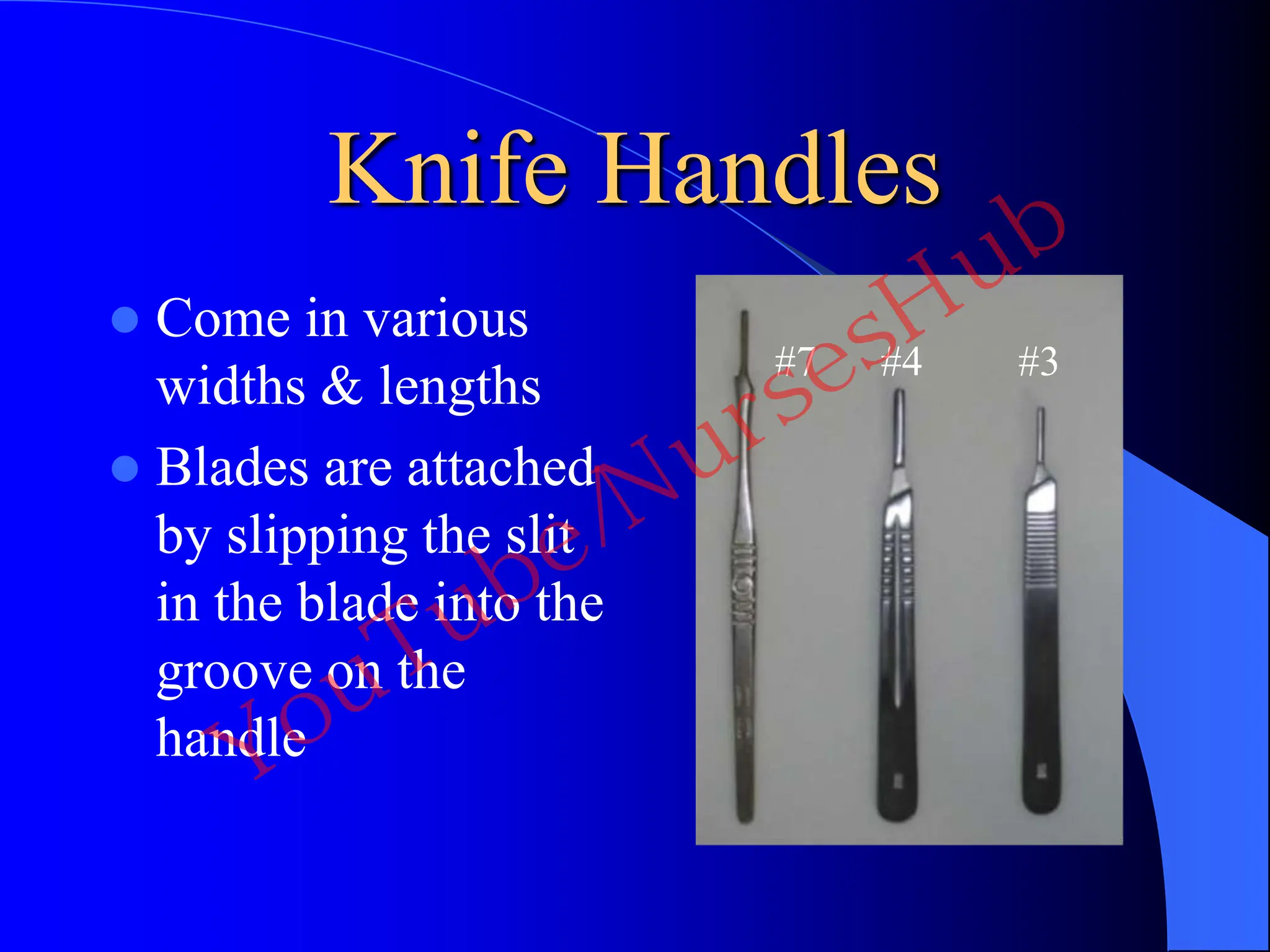
Bladeswith
numeric prefix of
“1” (e.g., 10, 11,
12, 15) fit #3 or #7
handles
Blades with the
numeric prefix “2”
(e.g., 20, 21, 22, 23,
24) fit #4 handles
YouTube/NursesHub
8.
Knife Blades
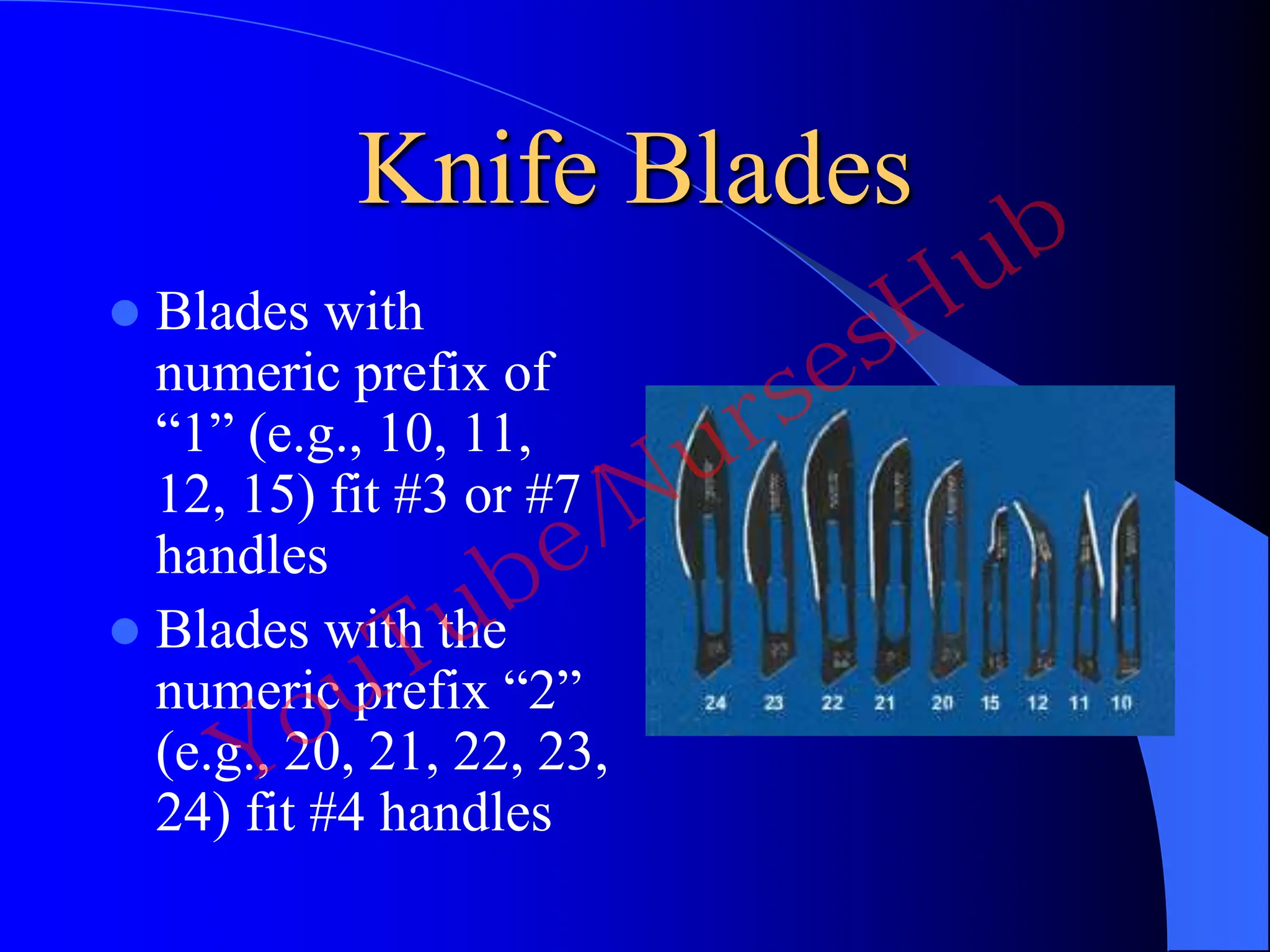
#10are used for
large skin incisions
#15 are used for
short shallow
incisions
#11 are used for
initial skin puncture
of tiny deep
incisions
#10 #15 #11
YouTube/NursesHub
9.
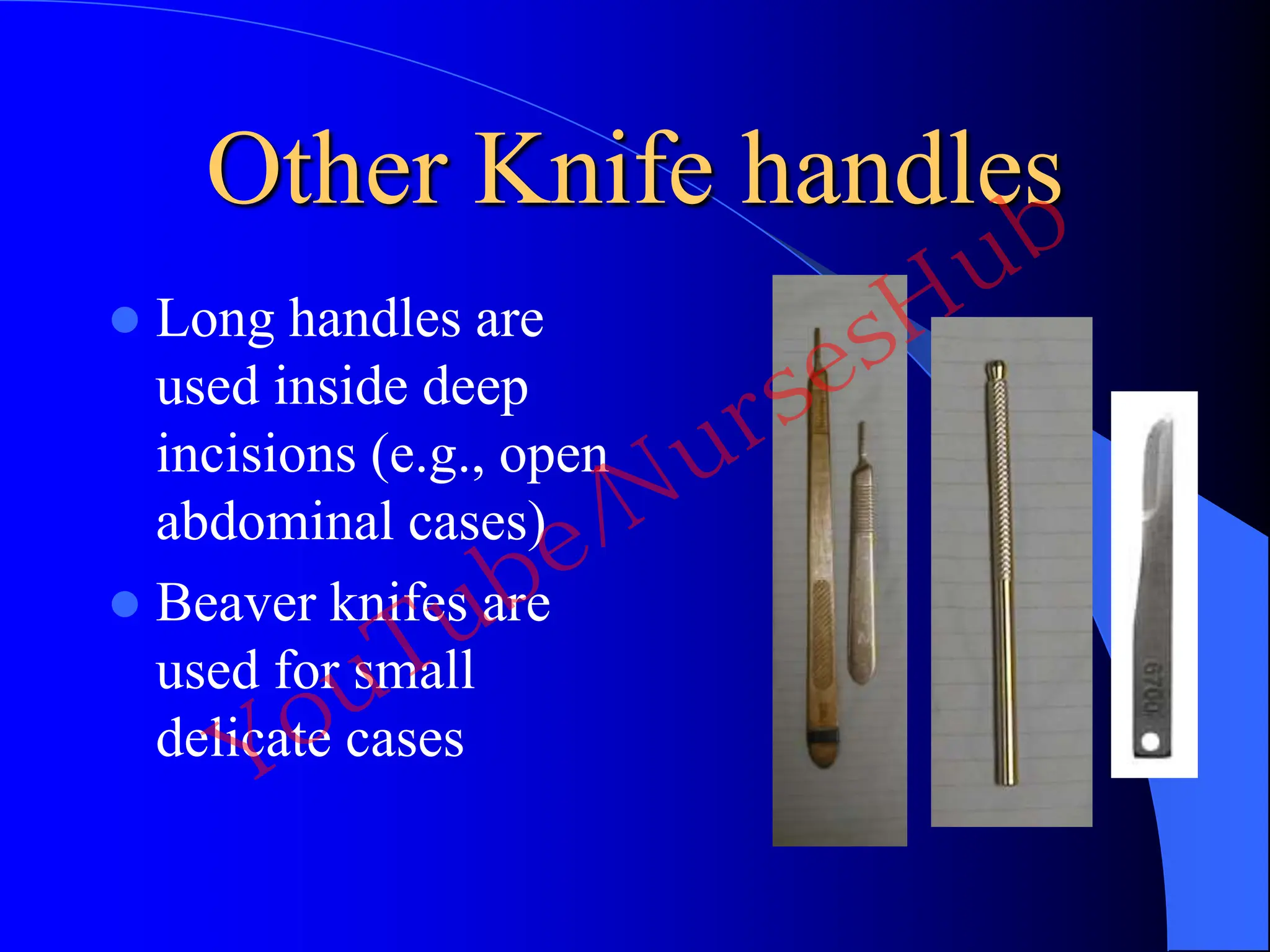
Other Knife handles
Long handles are
used inside deep
incisions (e.g., open
abdominal cases)
Beaver knifes are
used for small
delicate cases
YouTube/NursesHub
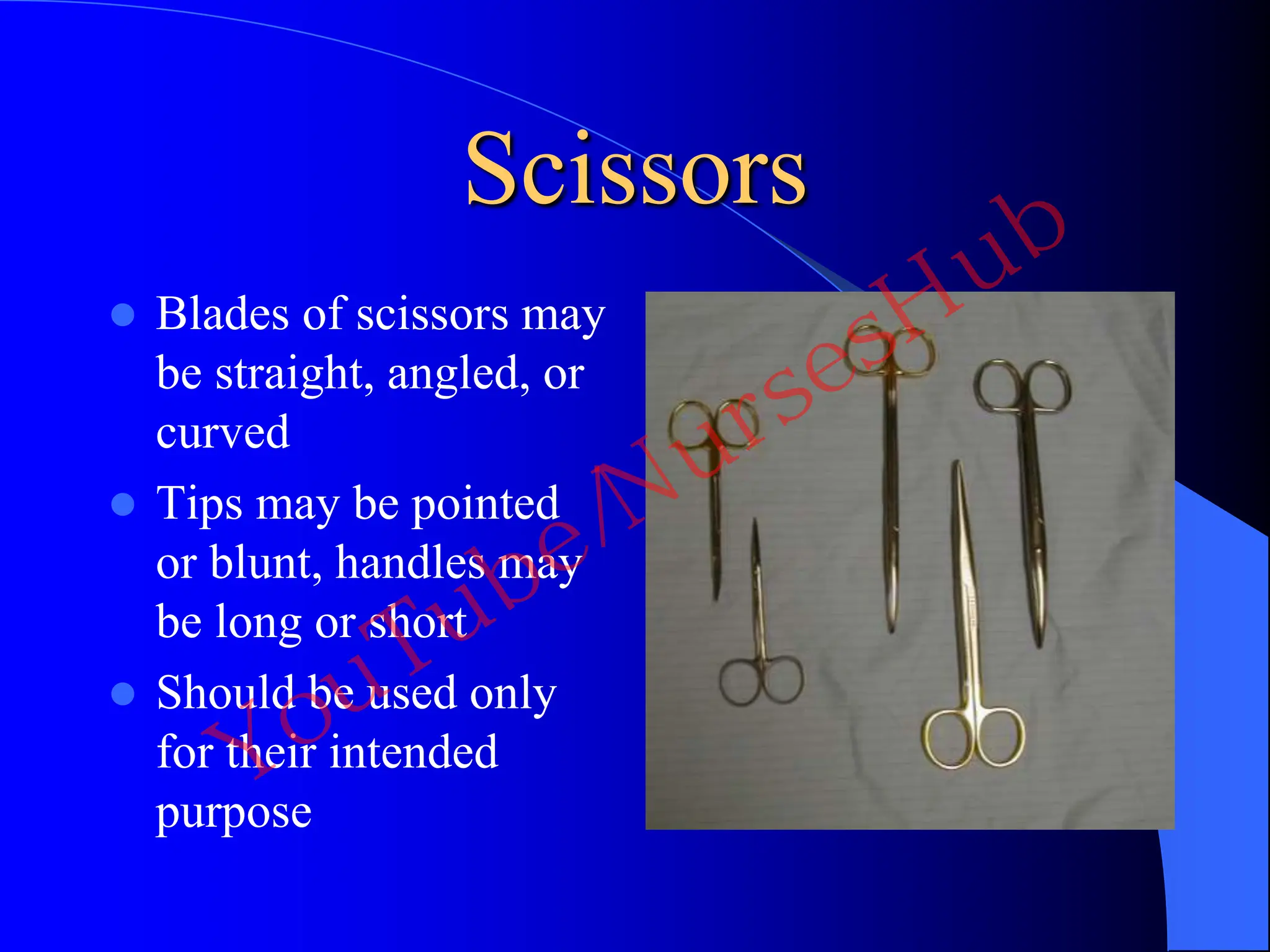
Scissors
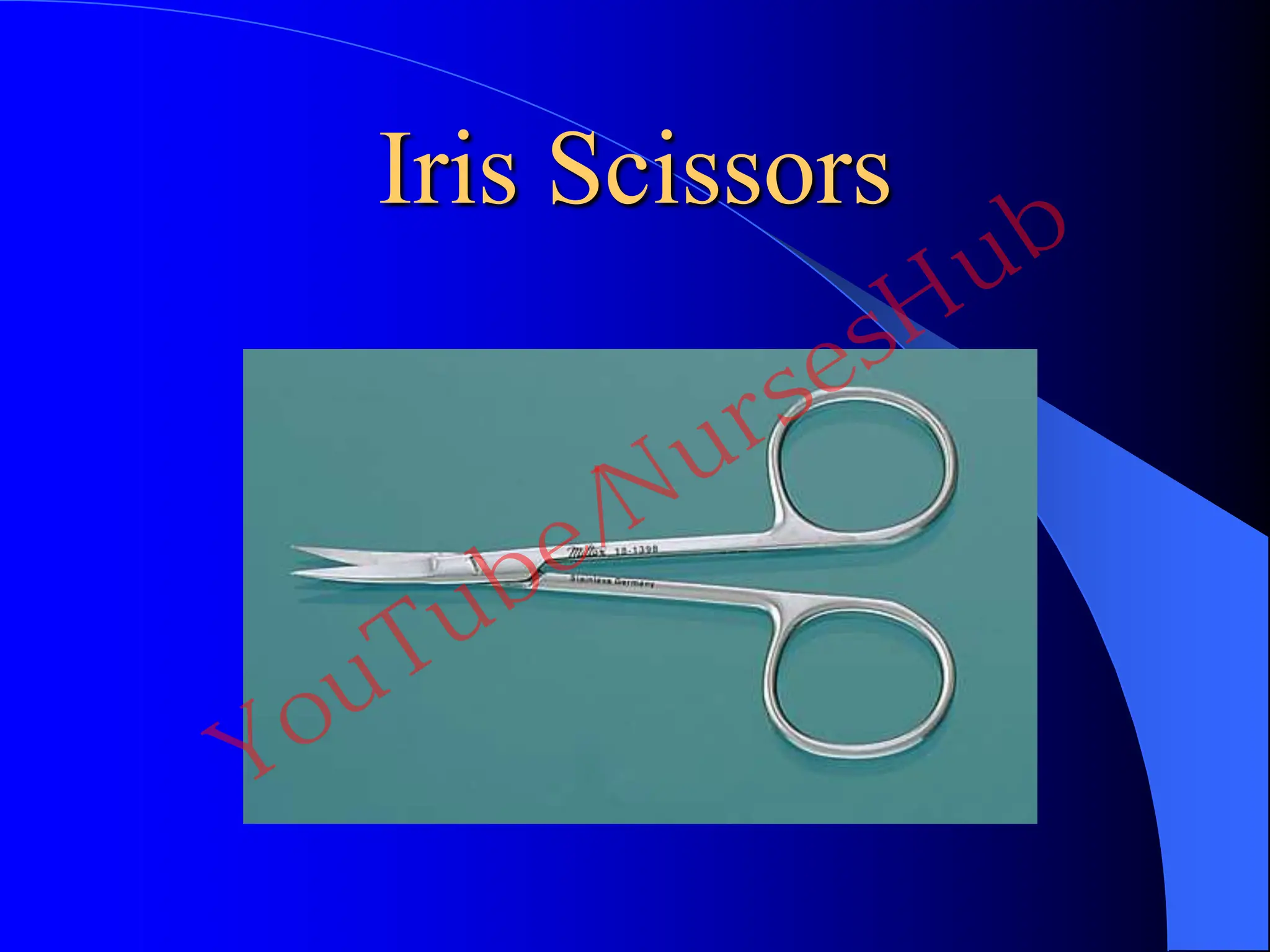
Blades ofscissors may
be straight, angled, or
curved
Tips may be pointed
or blunt, handles may
be long or short
Should be used only
for their intended
purpose
YouTube/NursesHub
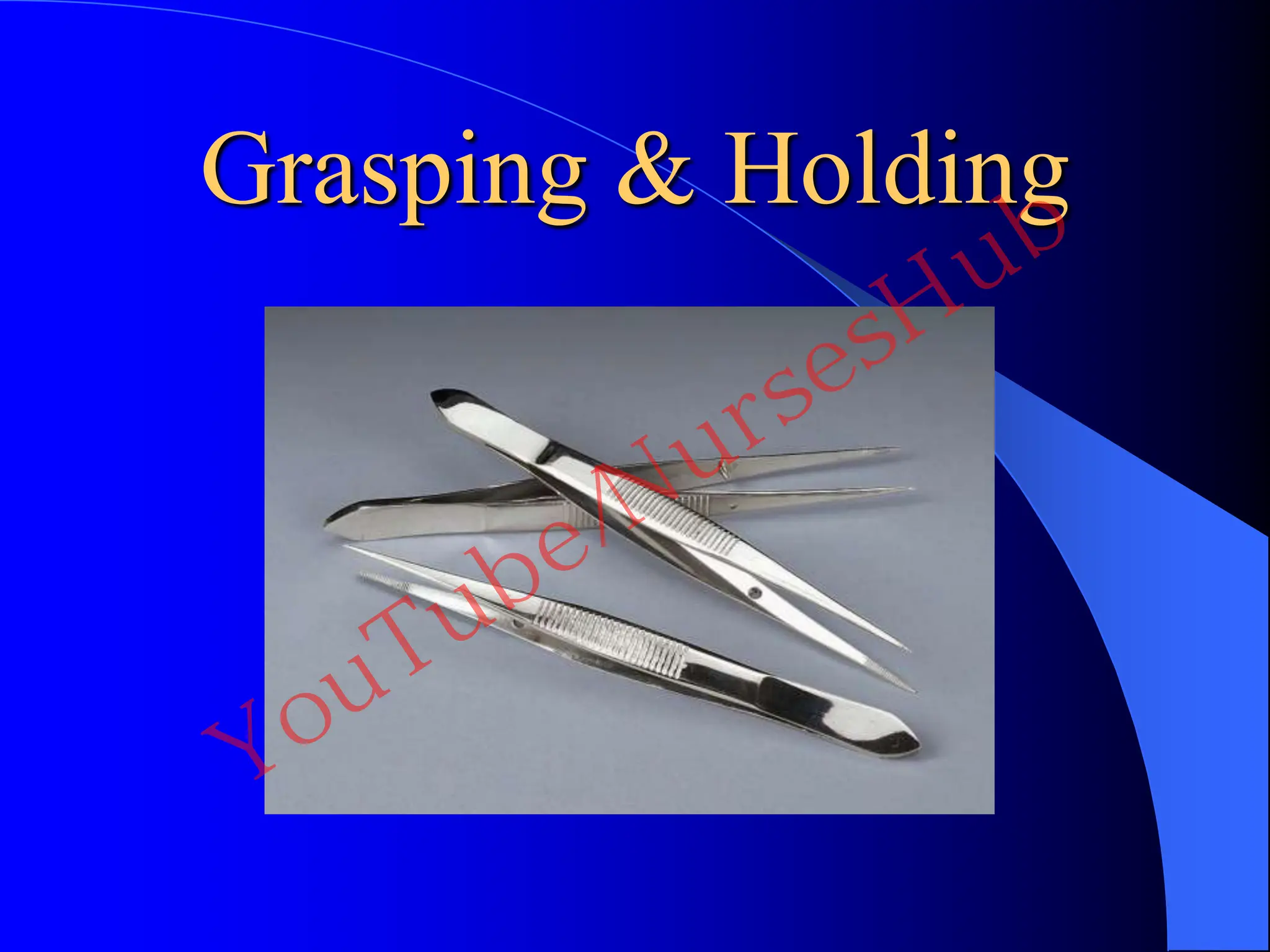
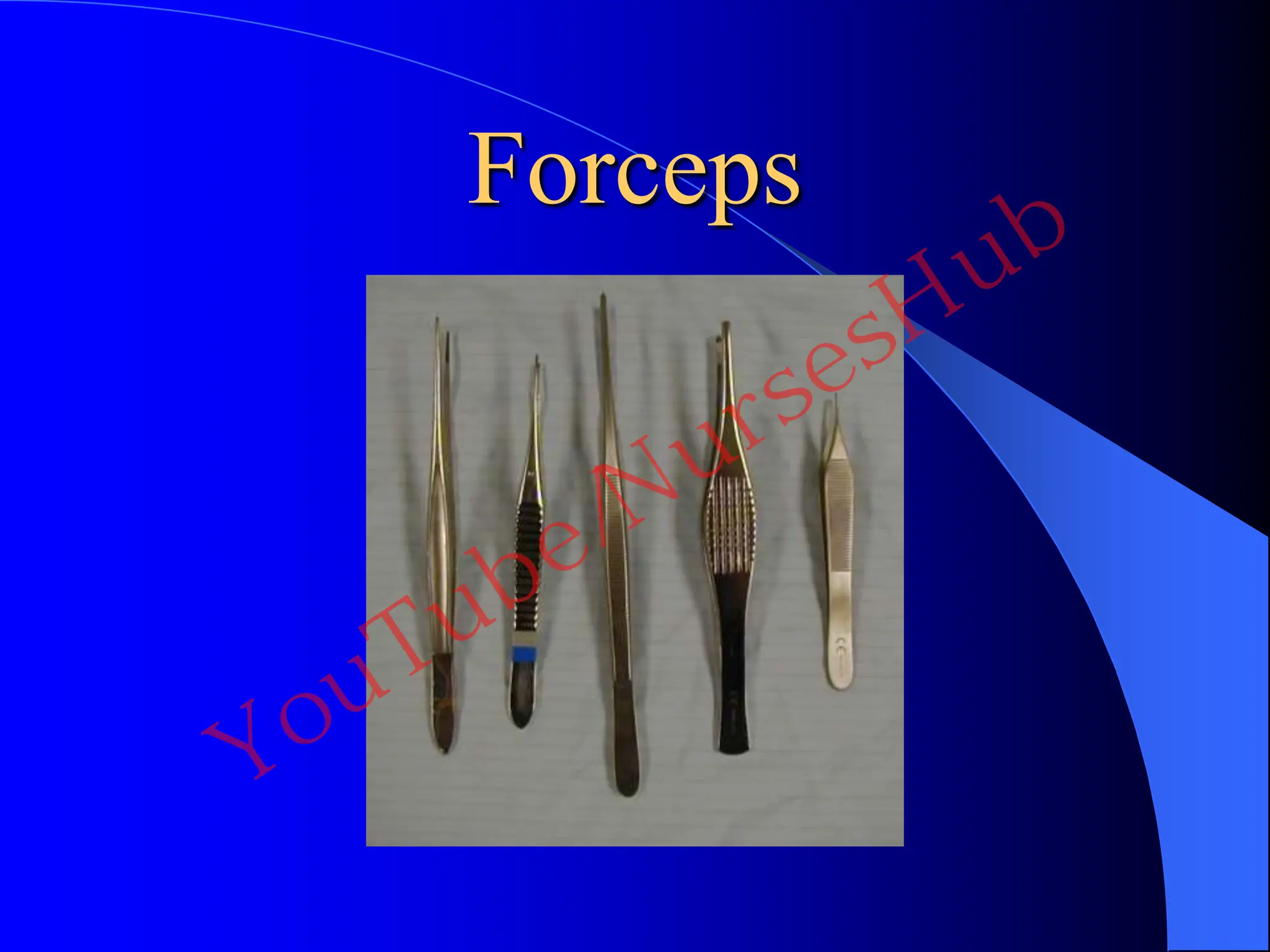
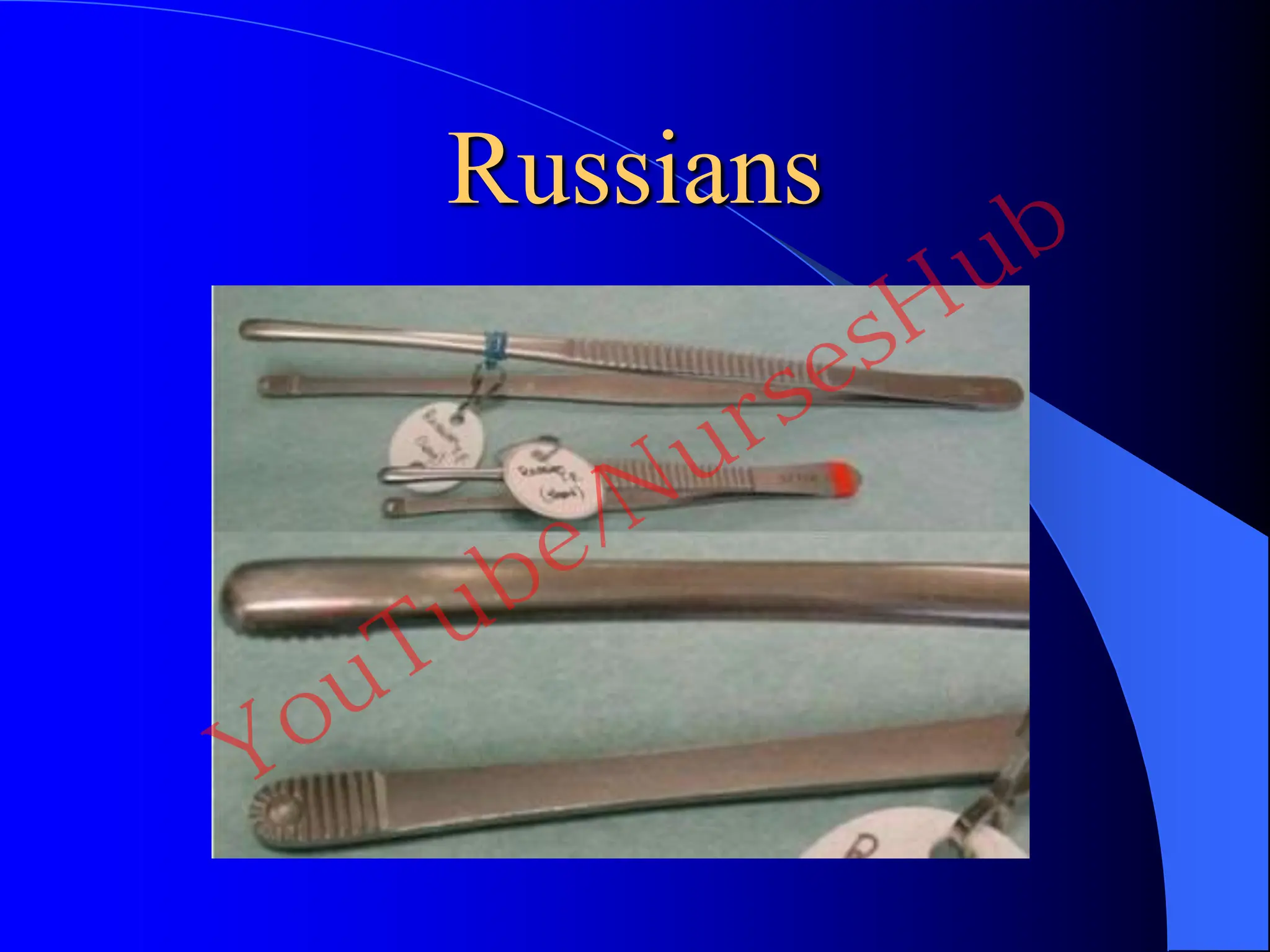
Grasping & Holding
Theseinstruments are used to
grasp tissue and hold it in place
without injuring surrounding
tissues
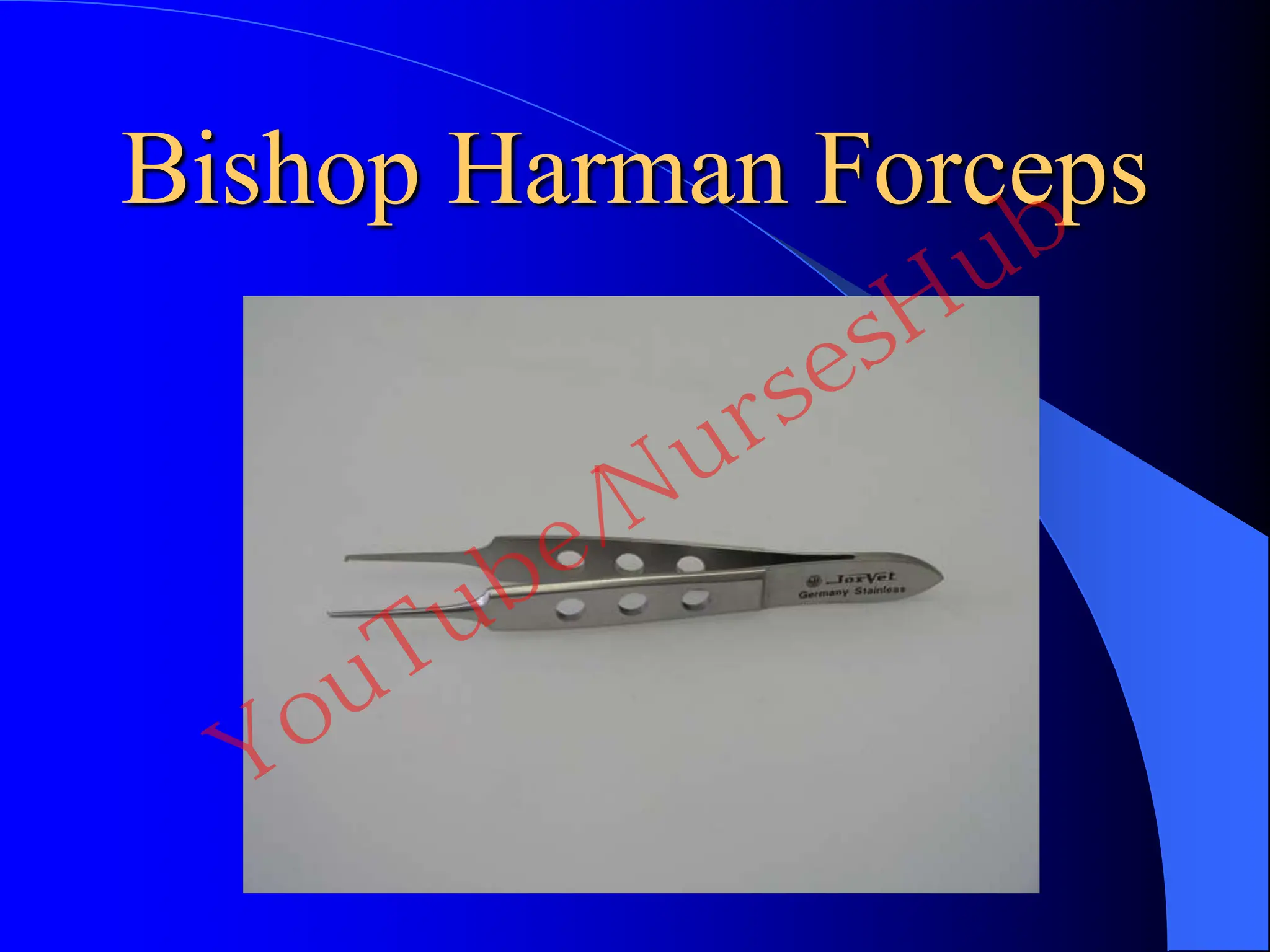
Forceps can be ringed or the
thumbed variety
YouTube/NursesHub
28.
Grasping & Holding
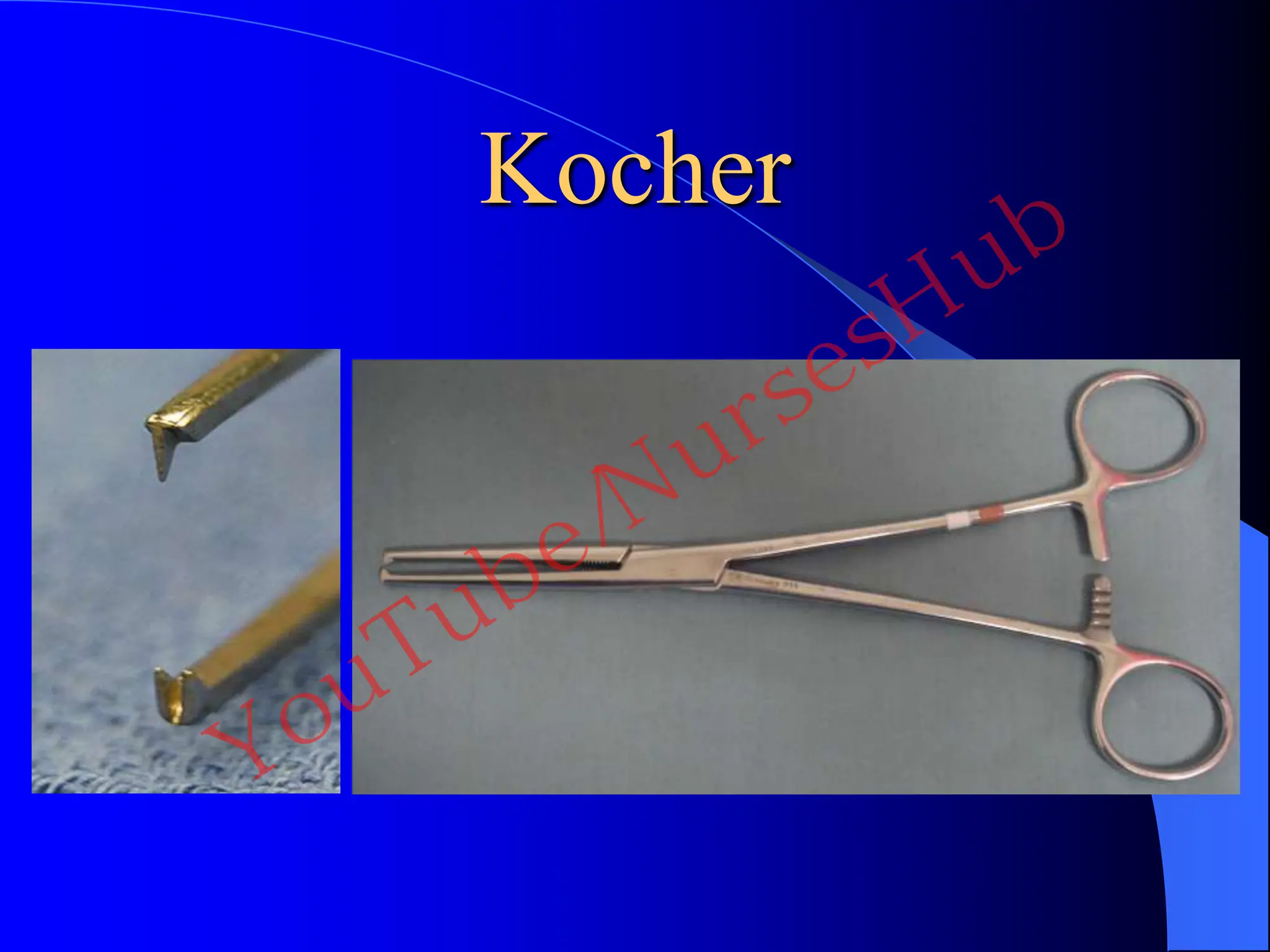
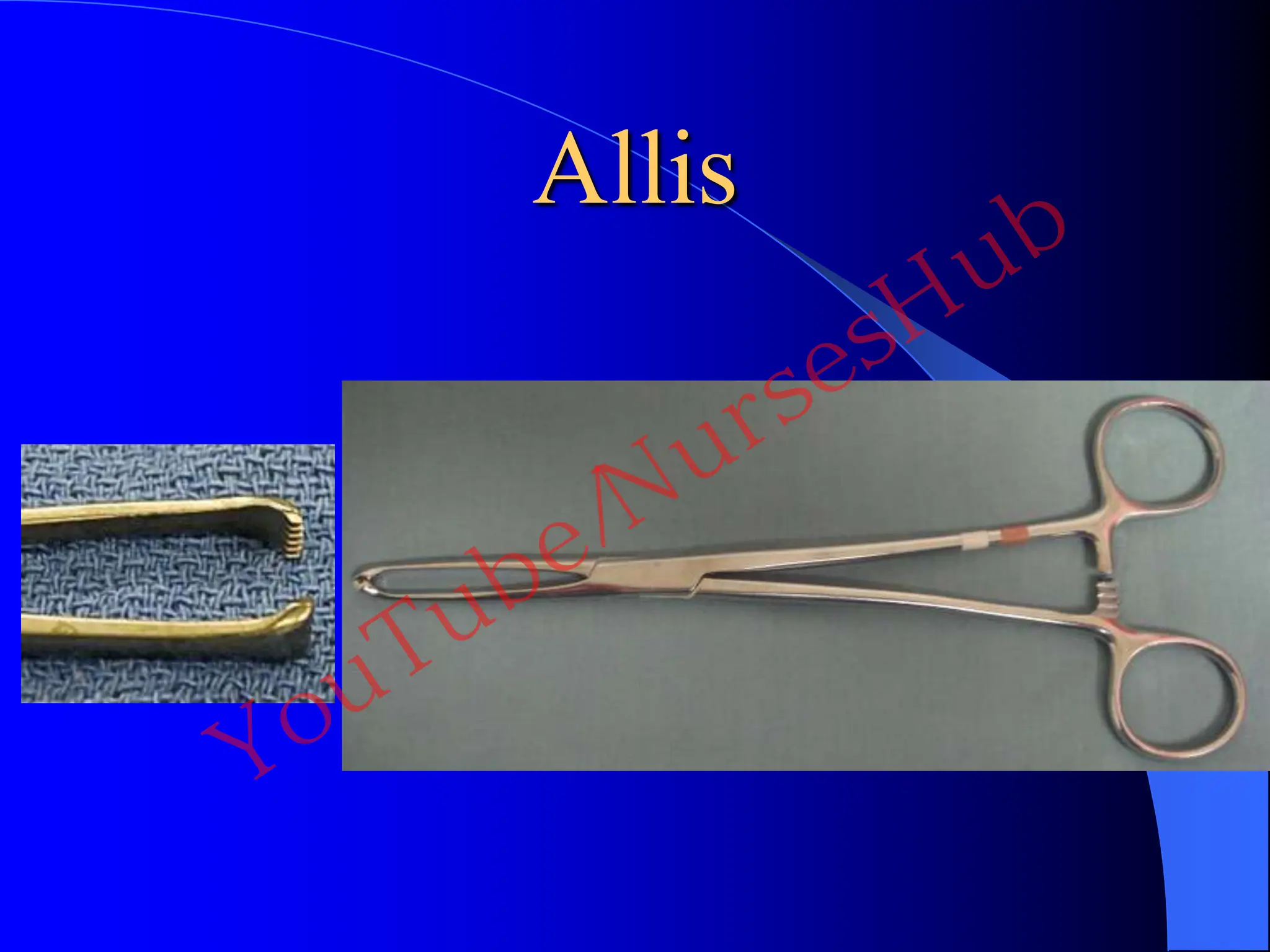
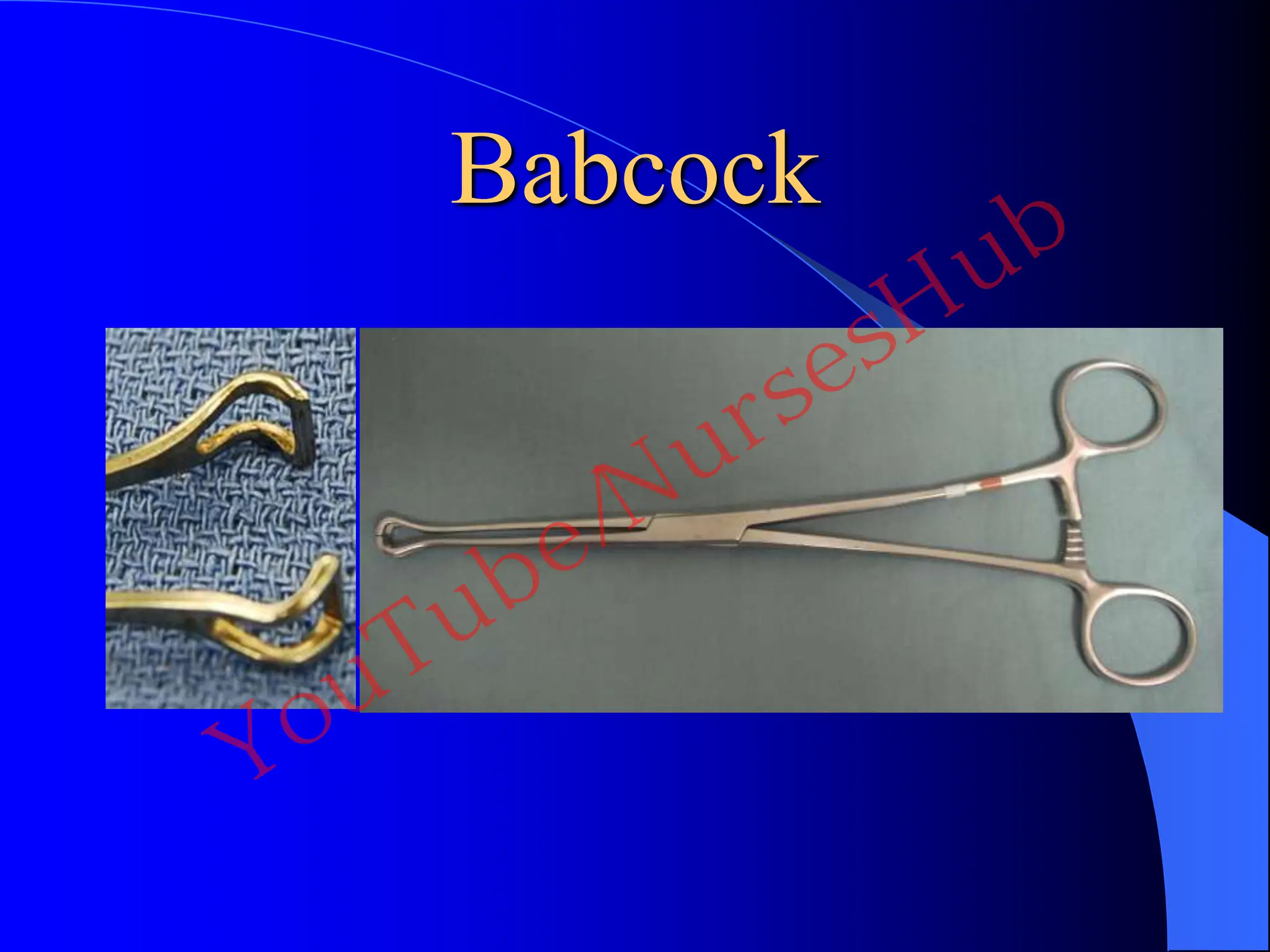
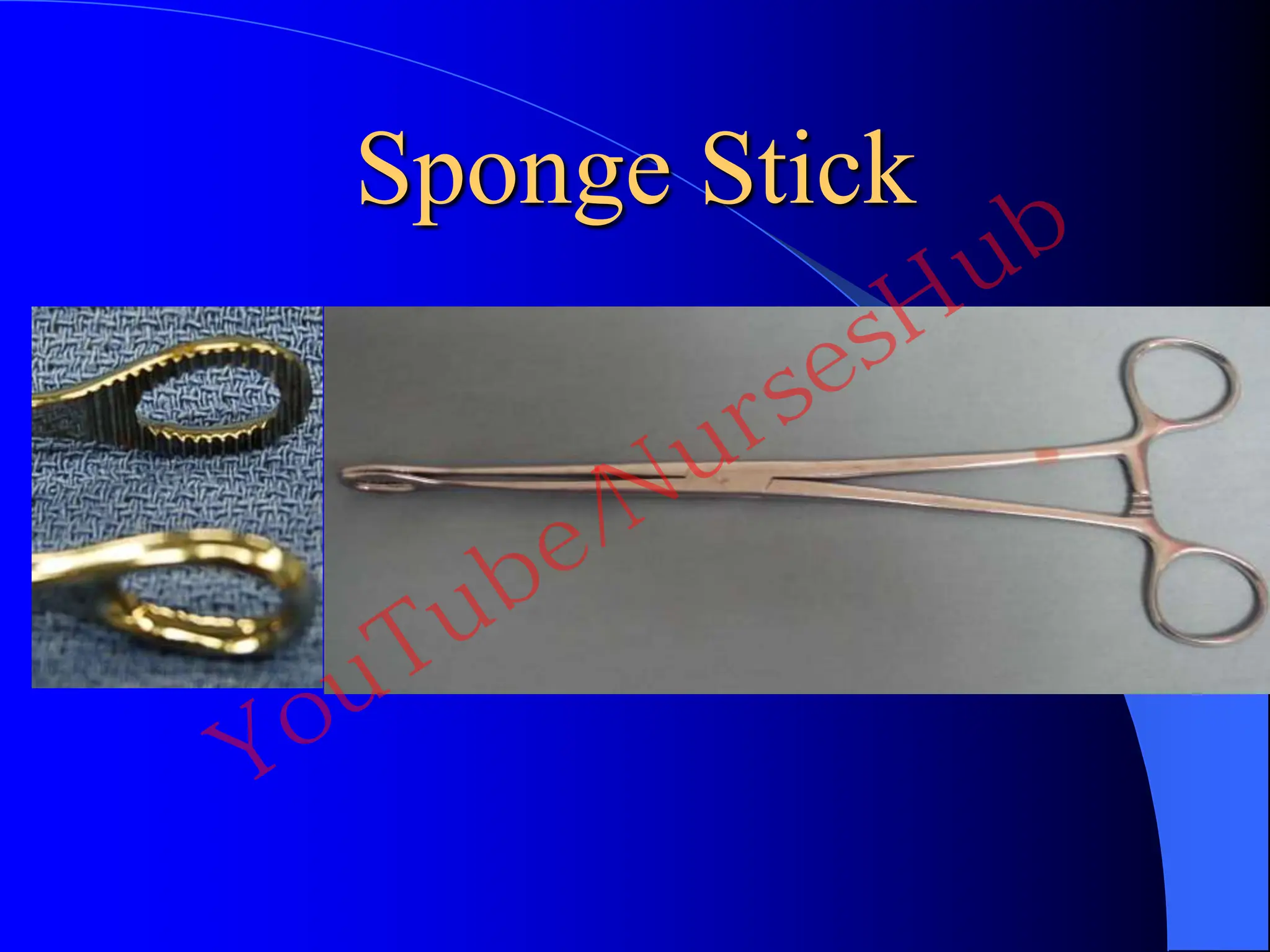
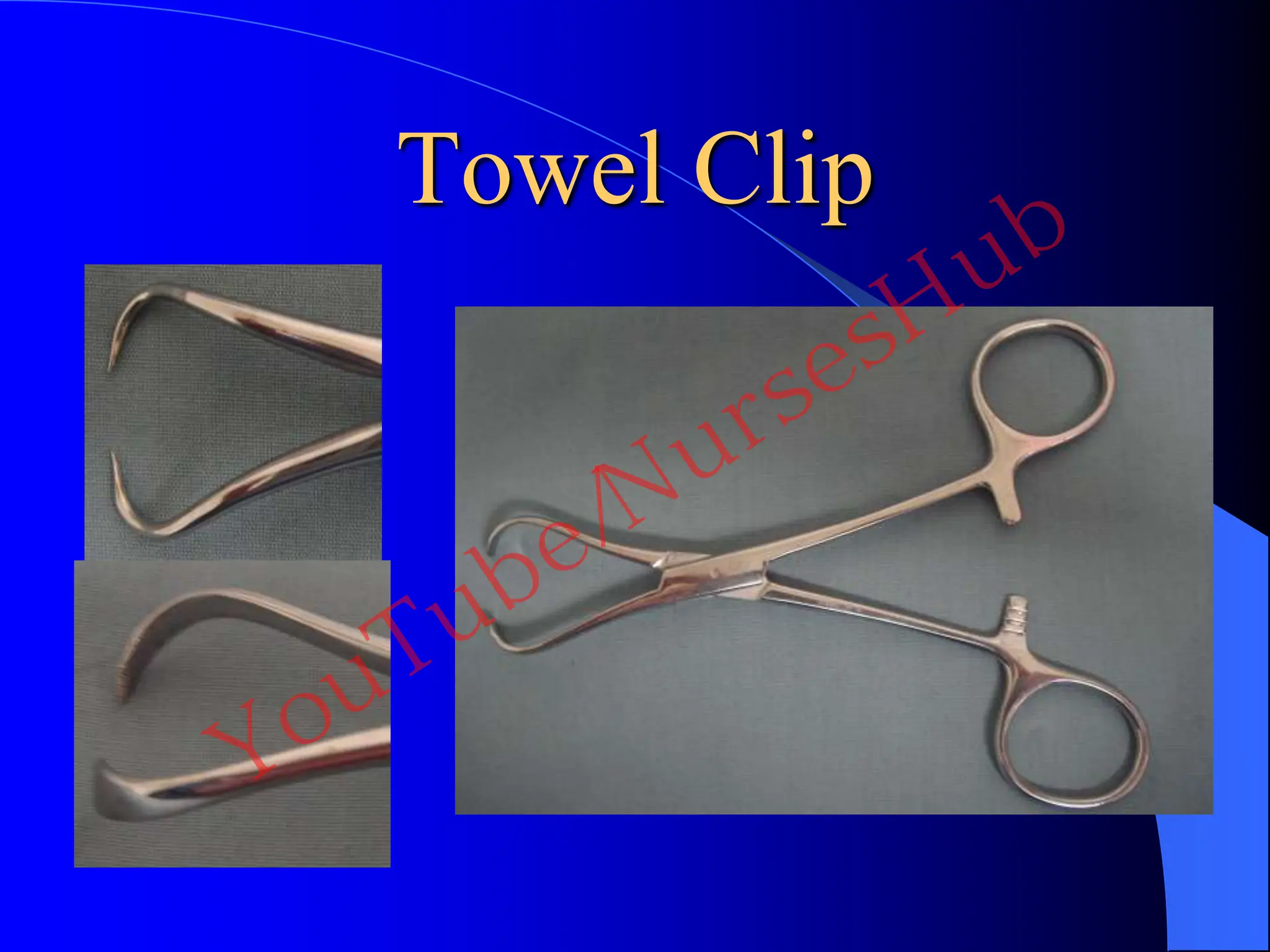
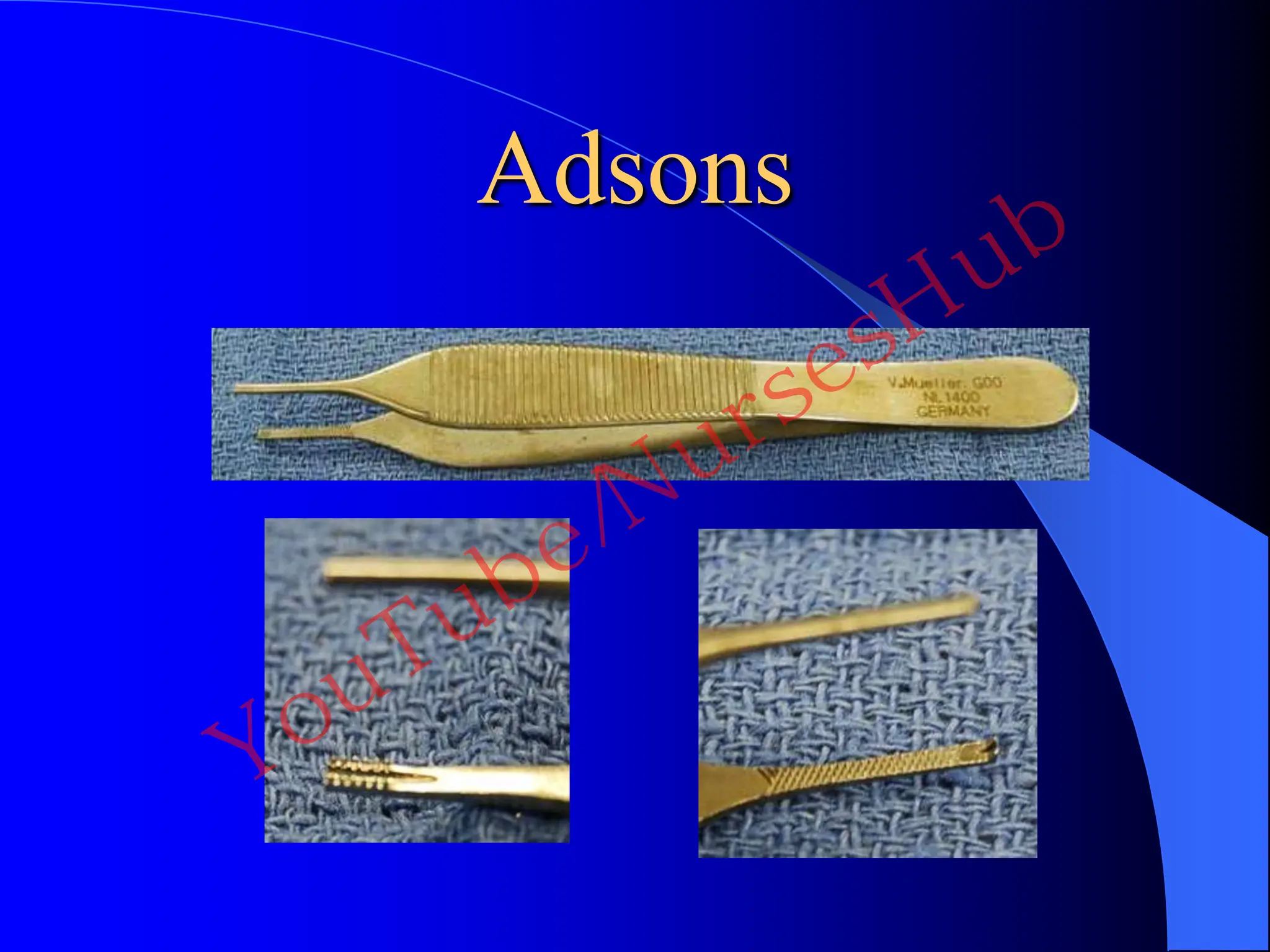
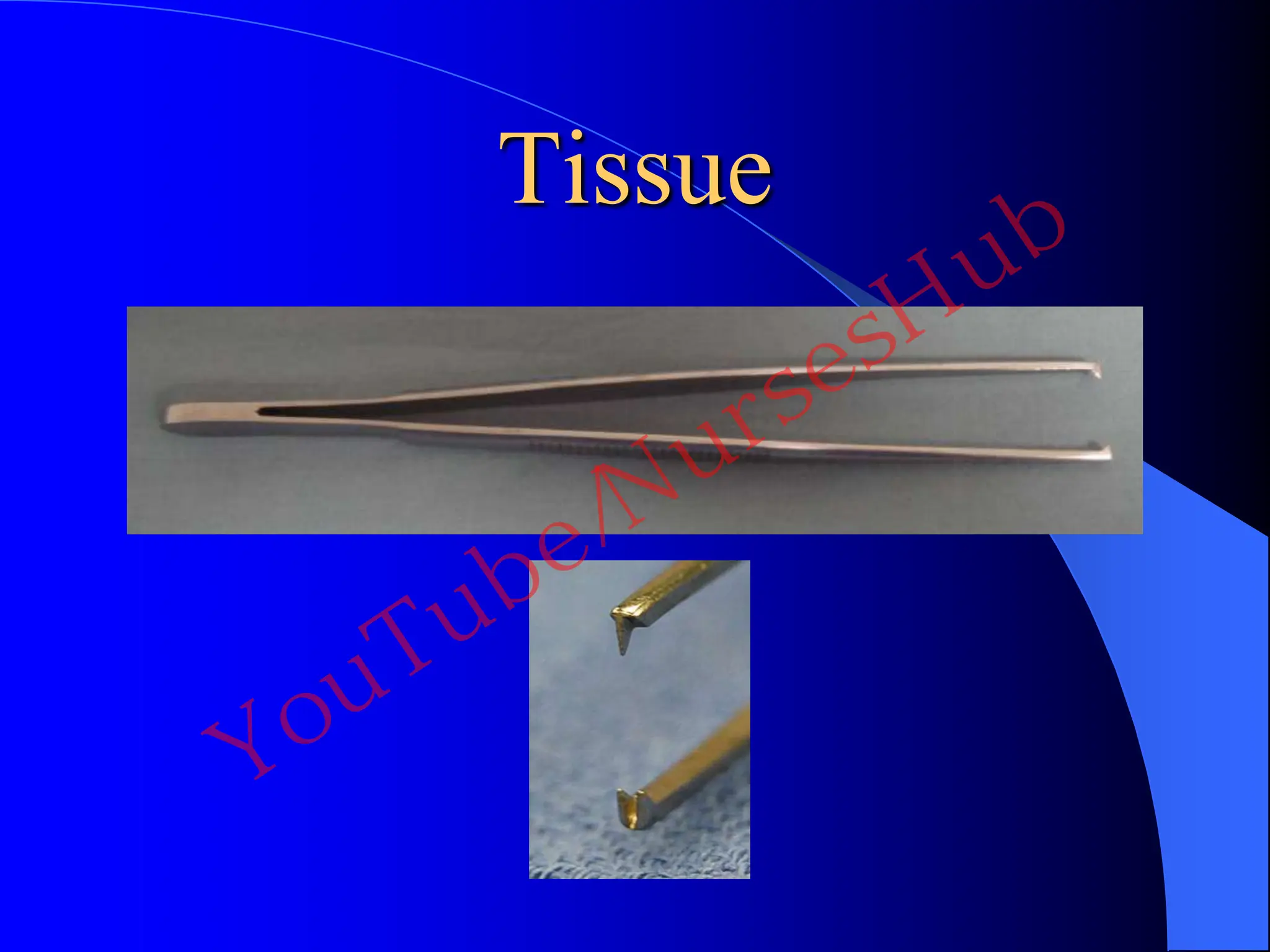
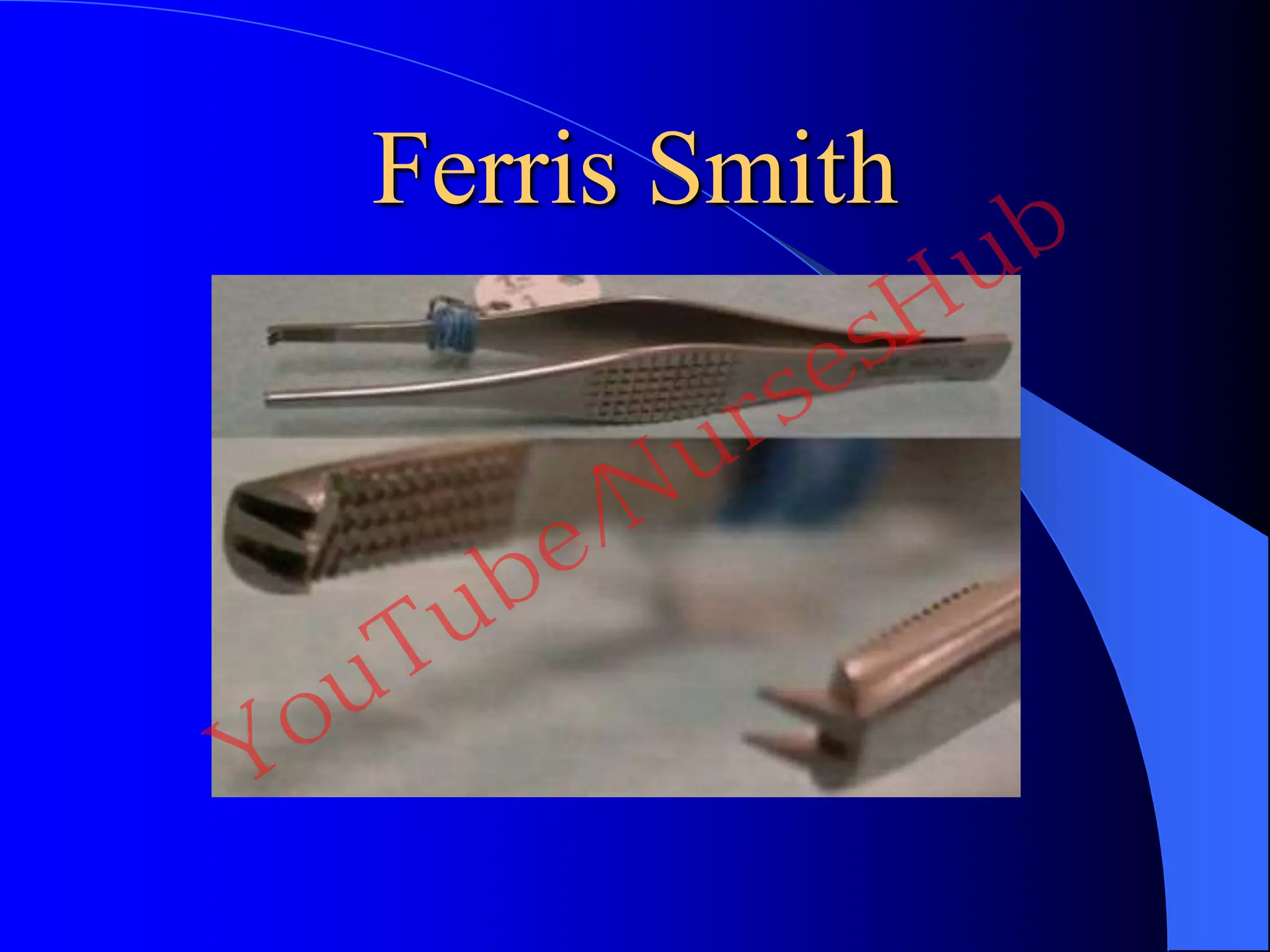
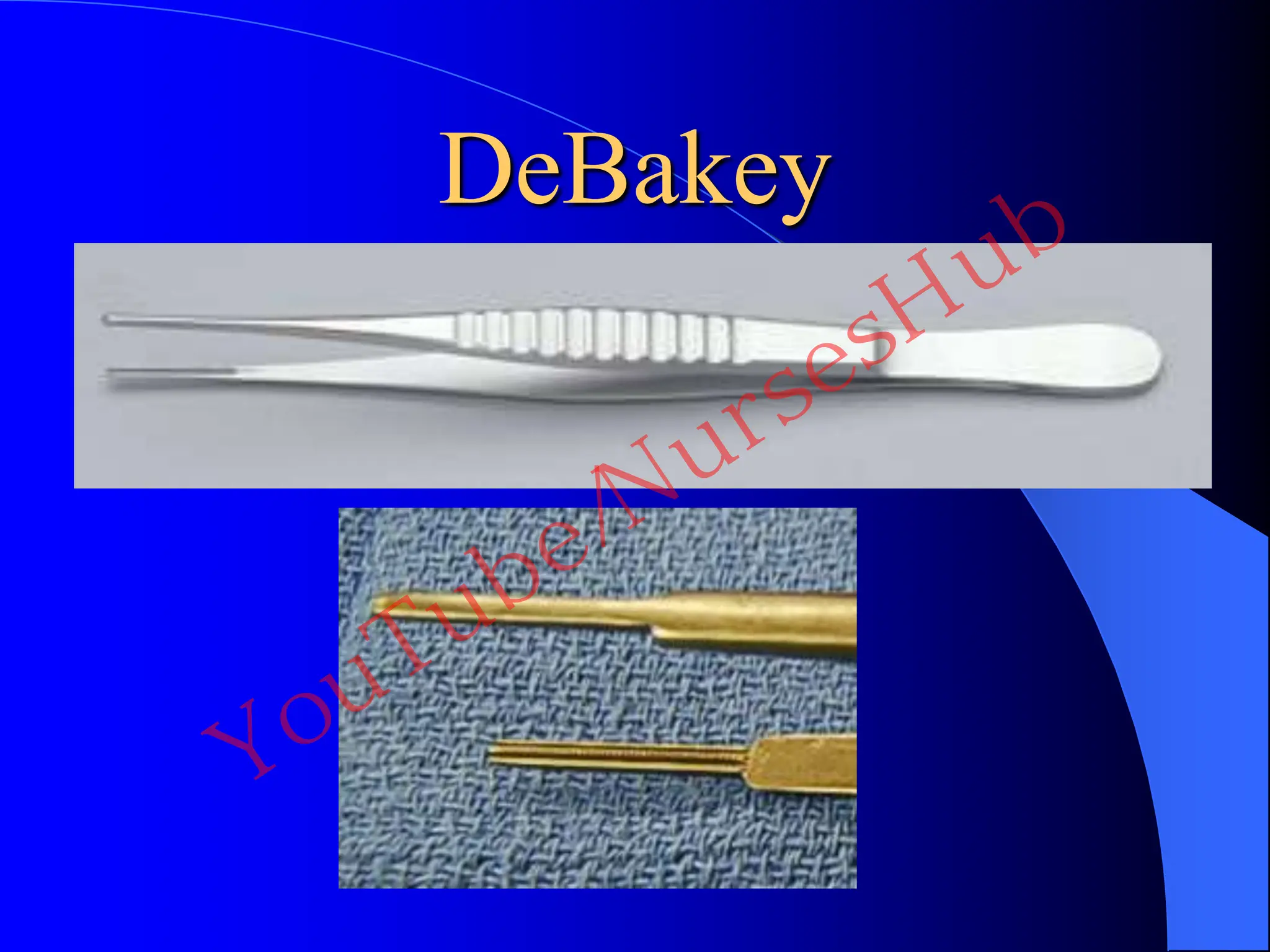
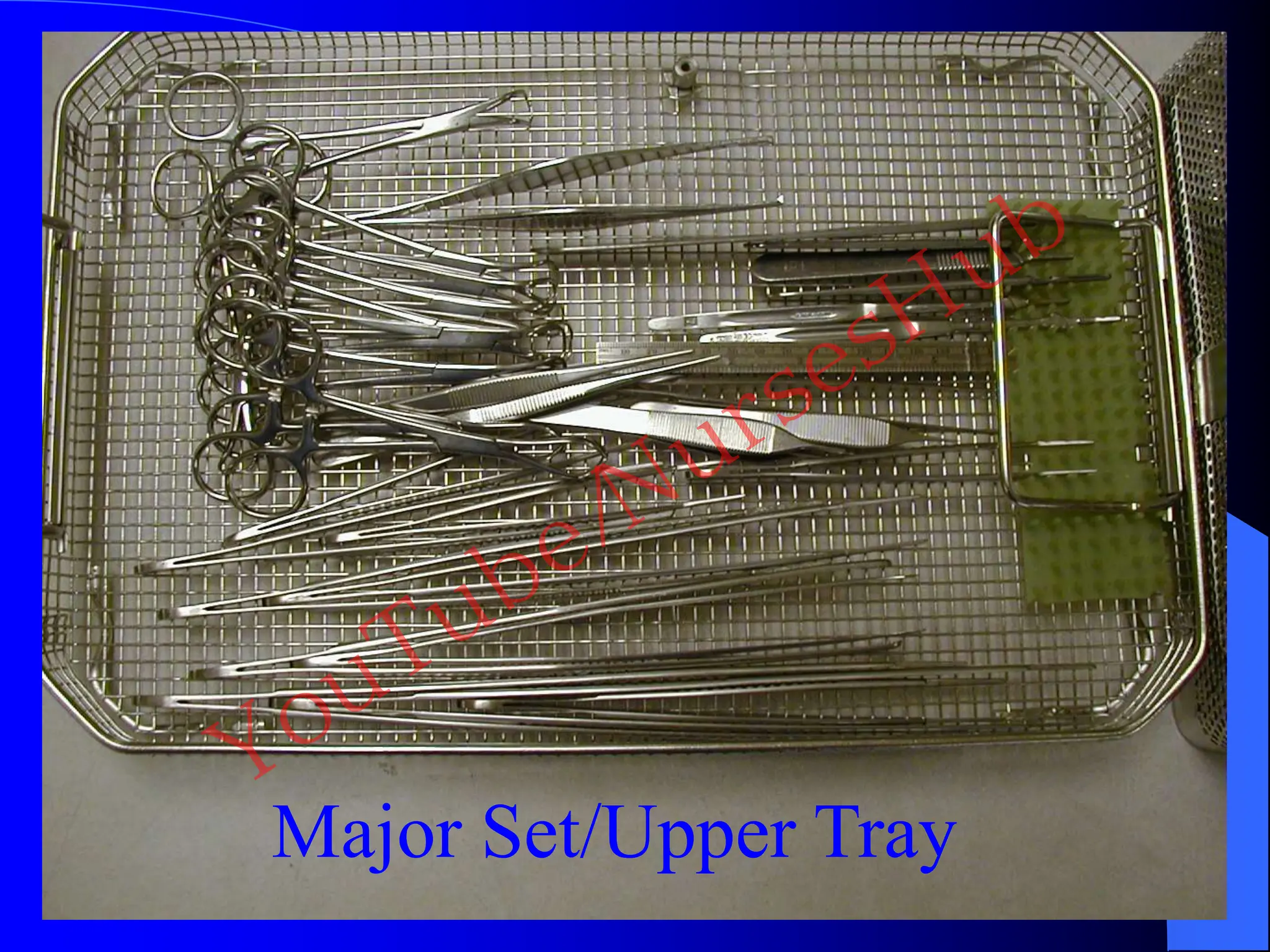
Mostinstrument sets will include
kocher, allis, babcock, adson,
tissue, debakey forceps, sponge
sticks & towel clips.
YouTube/NursesHub
Clamping & Occluding
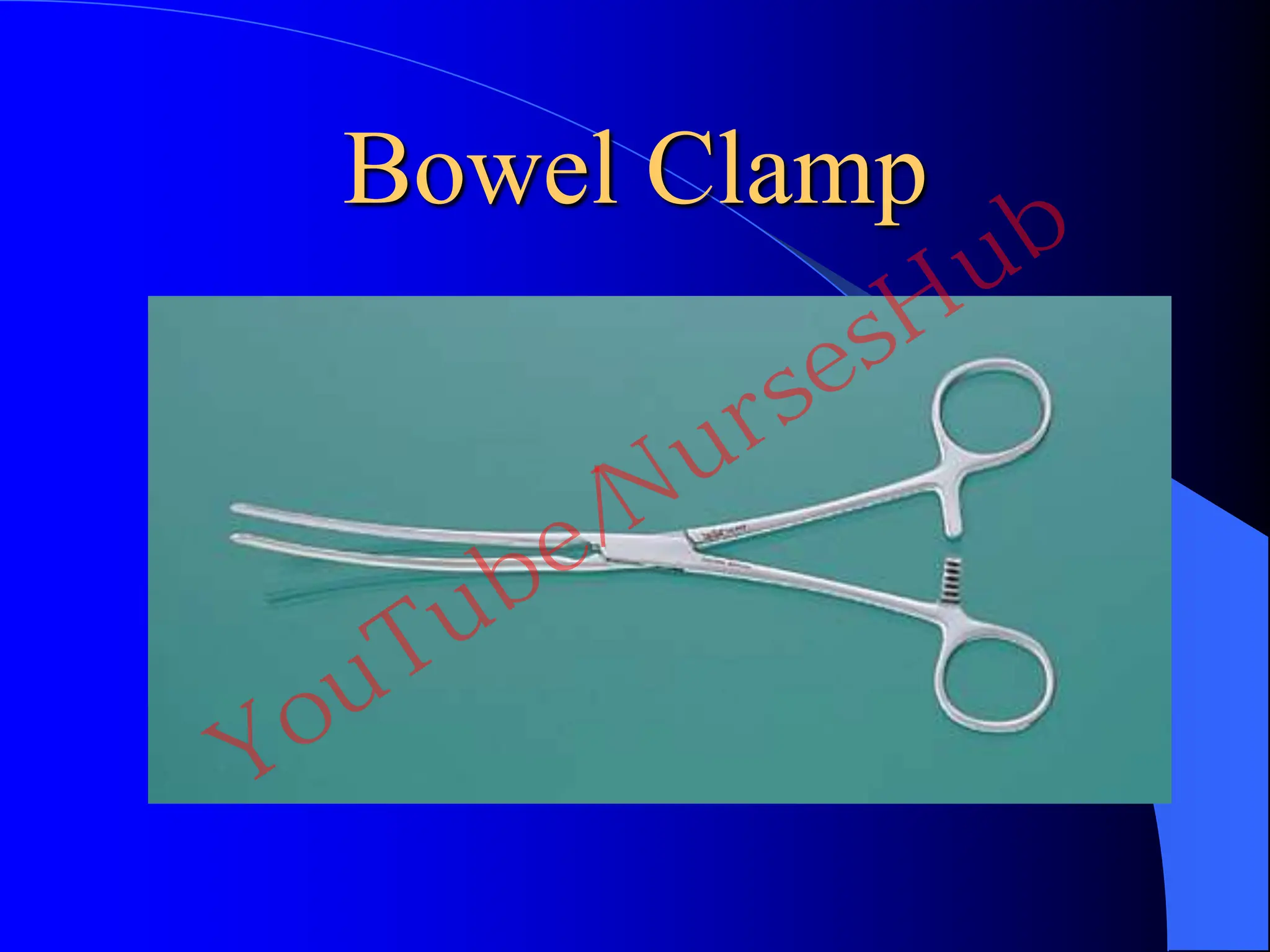
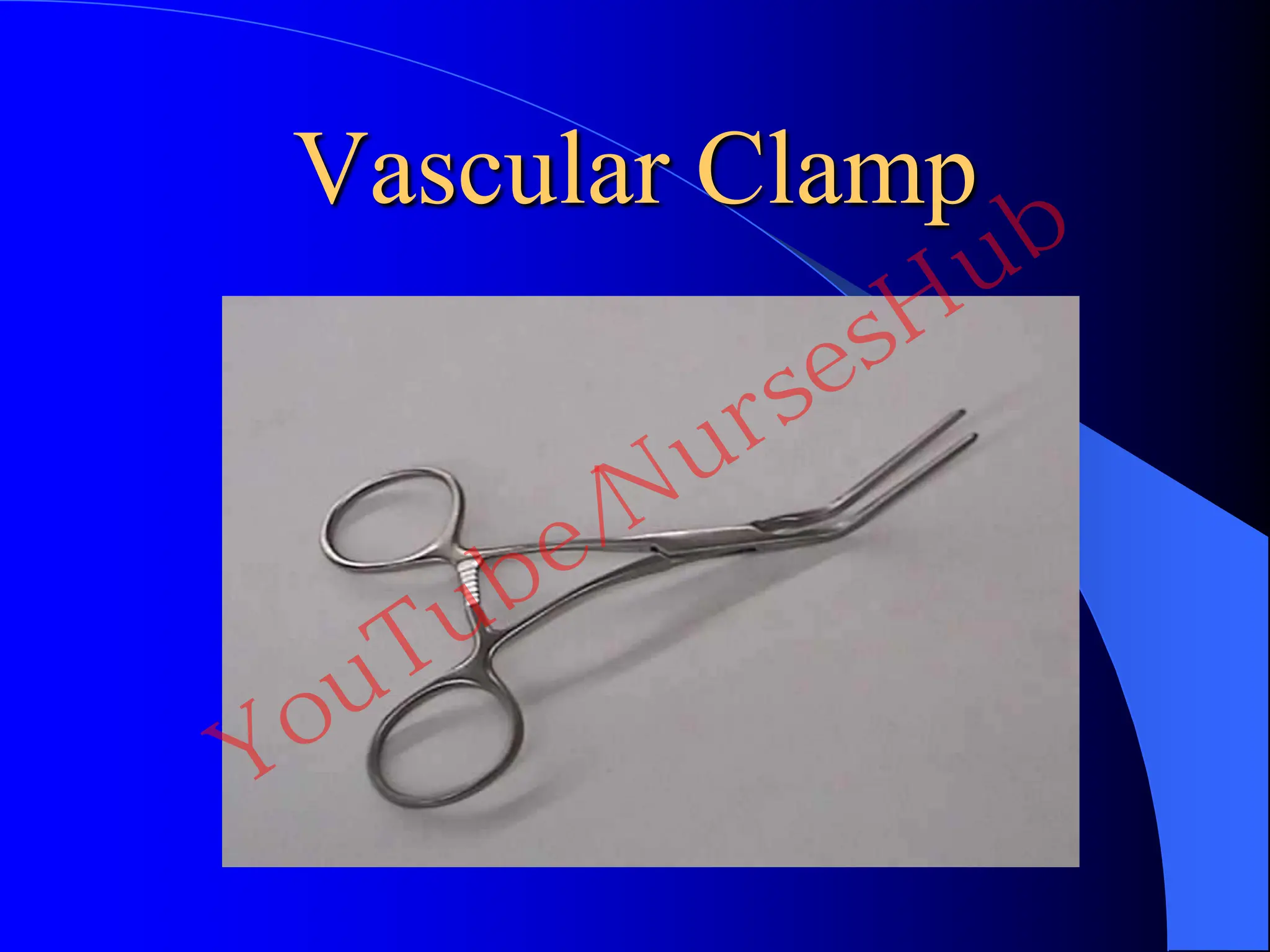
Theseinstruments are used to
apply pressure
Some clamps are designed to crush
the structure when applied
Others are noncrushing and are
used to occlude or secure tissue
YouTube/NursesHub
42.
Clamping & Occluding
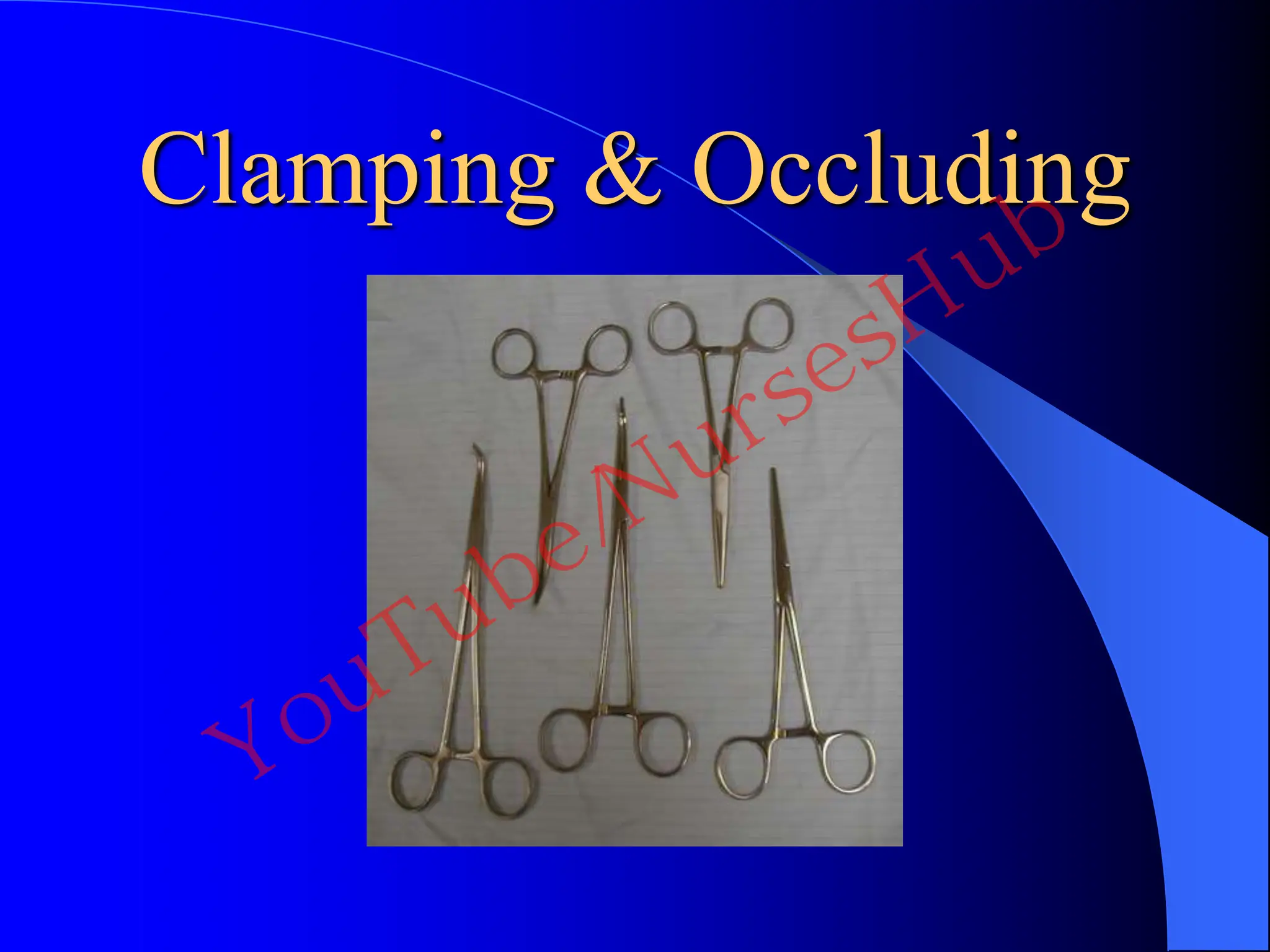
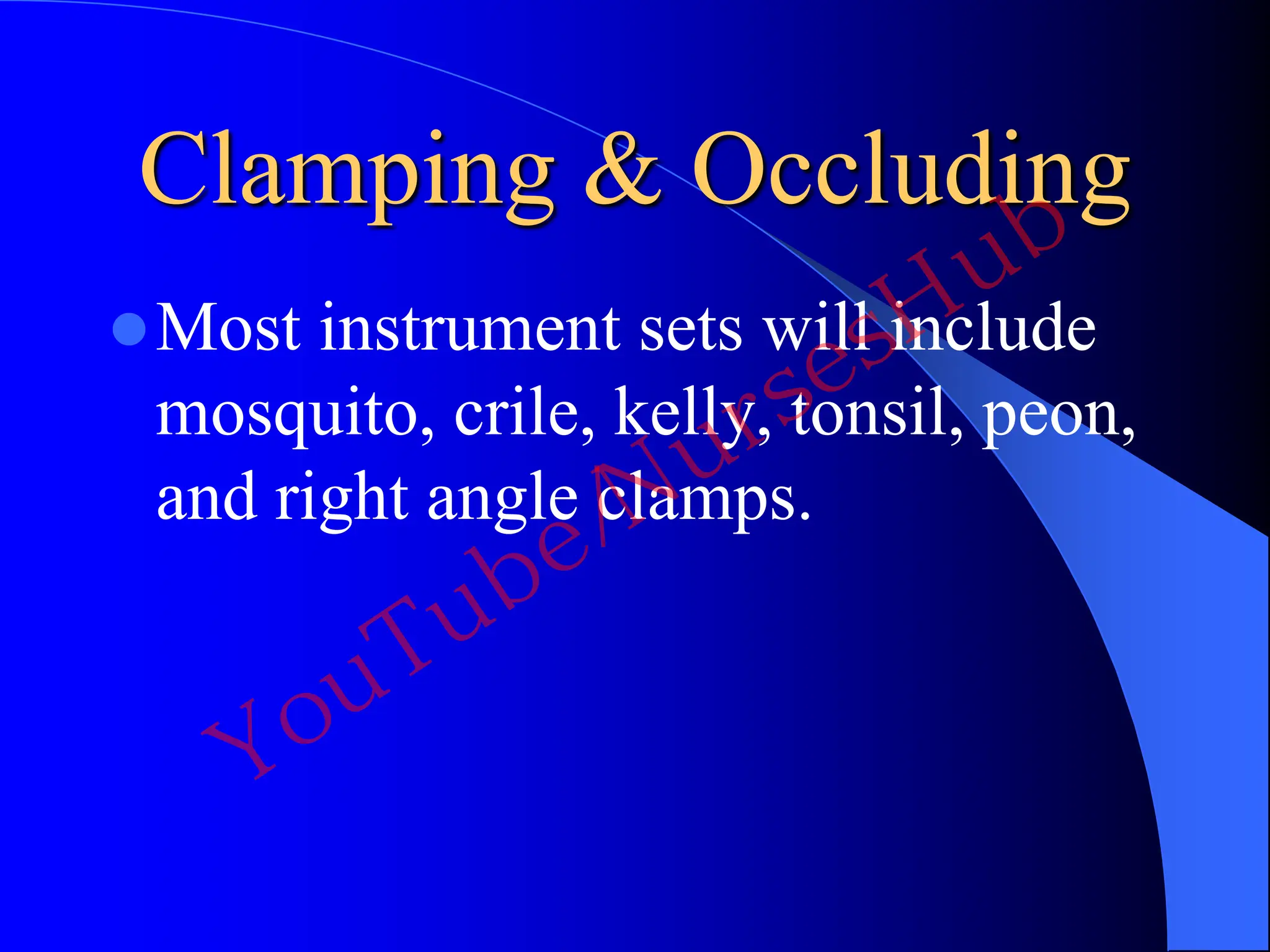
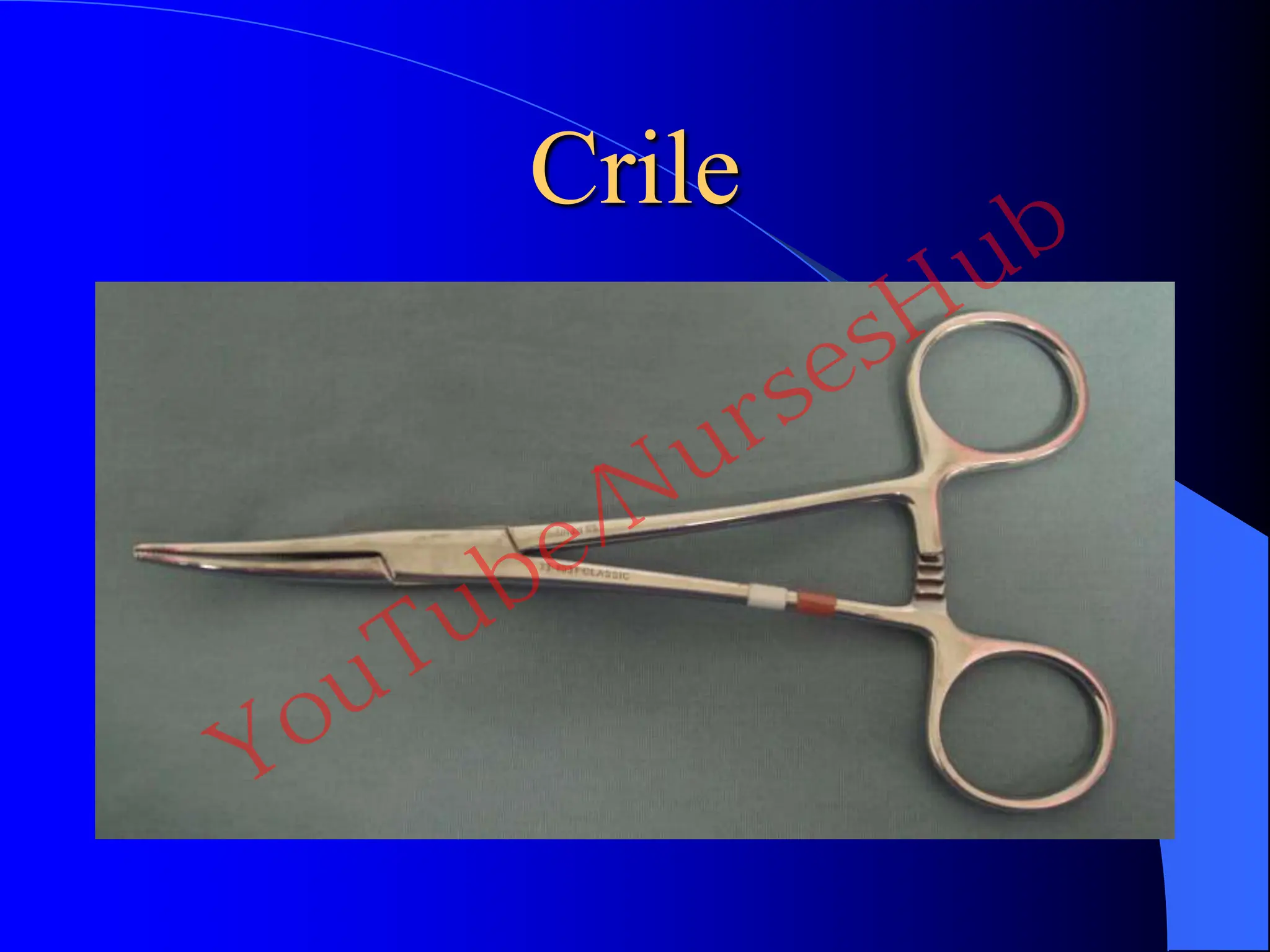
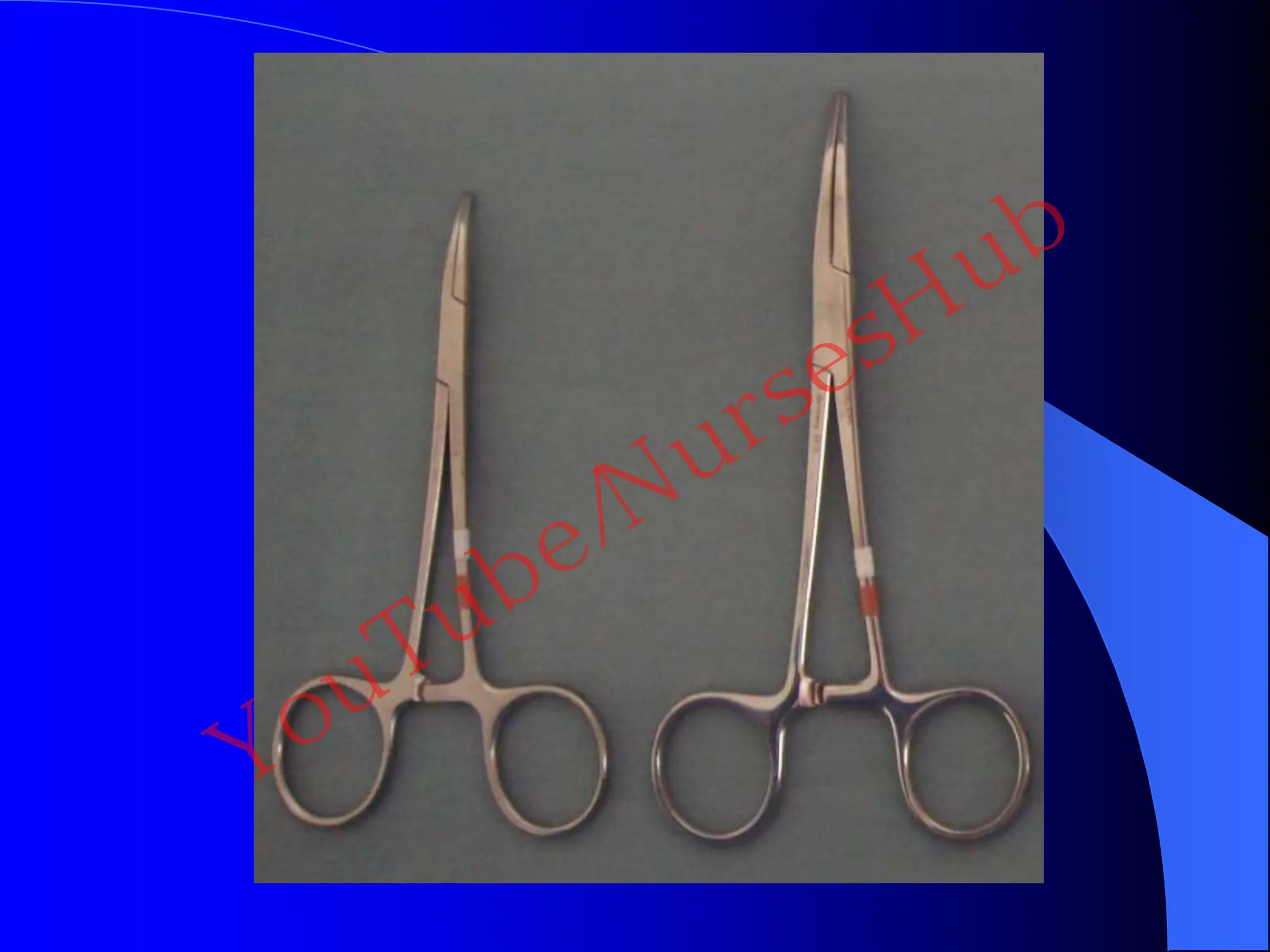
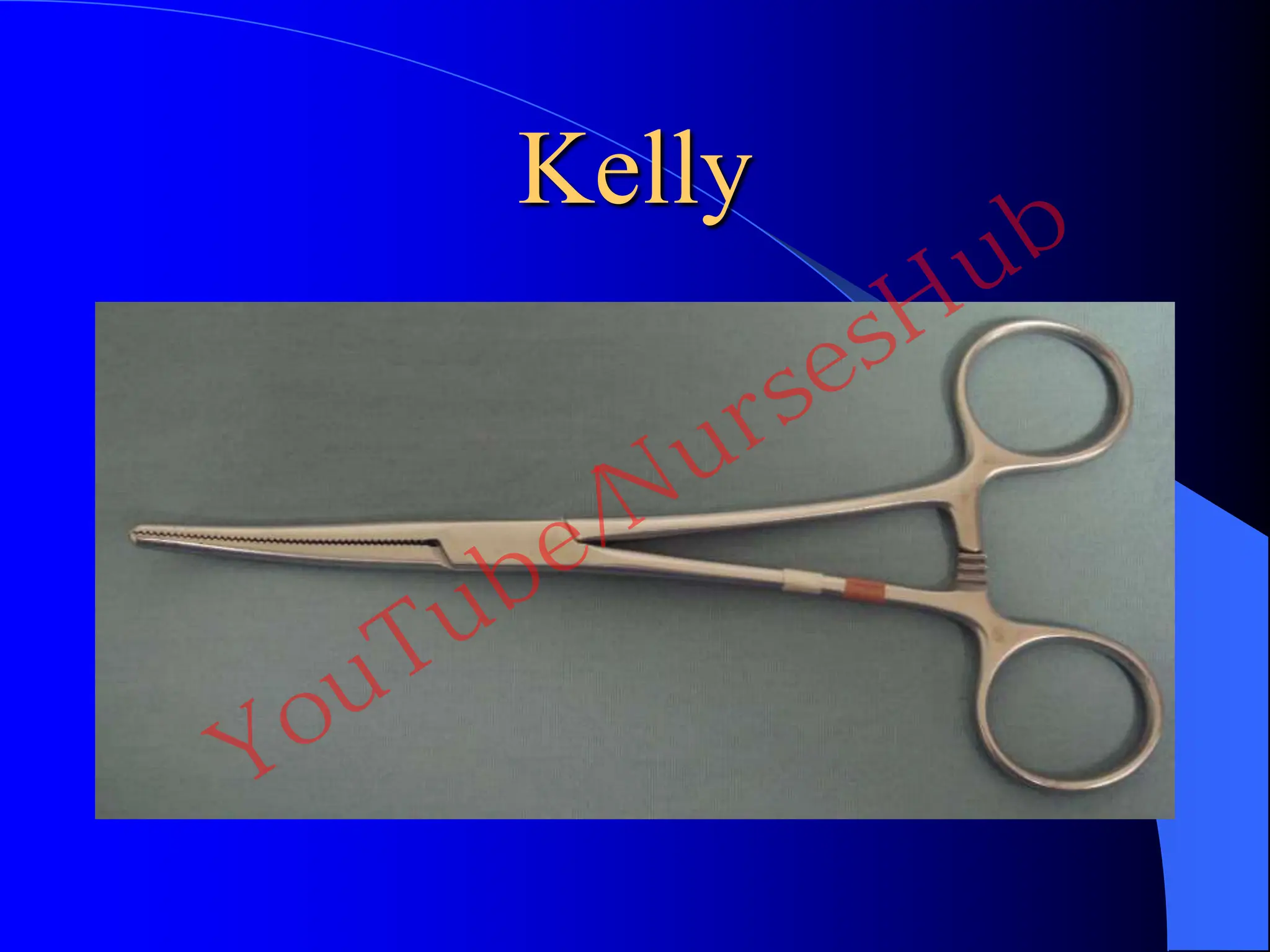
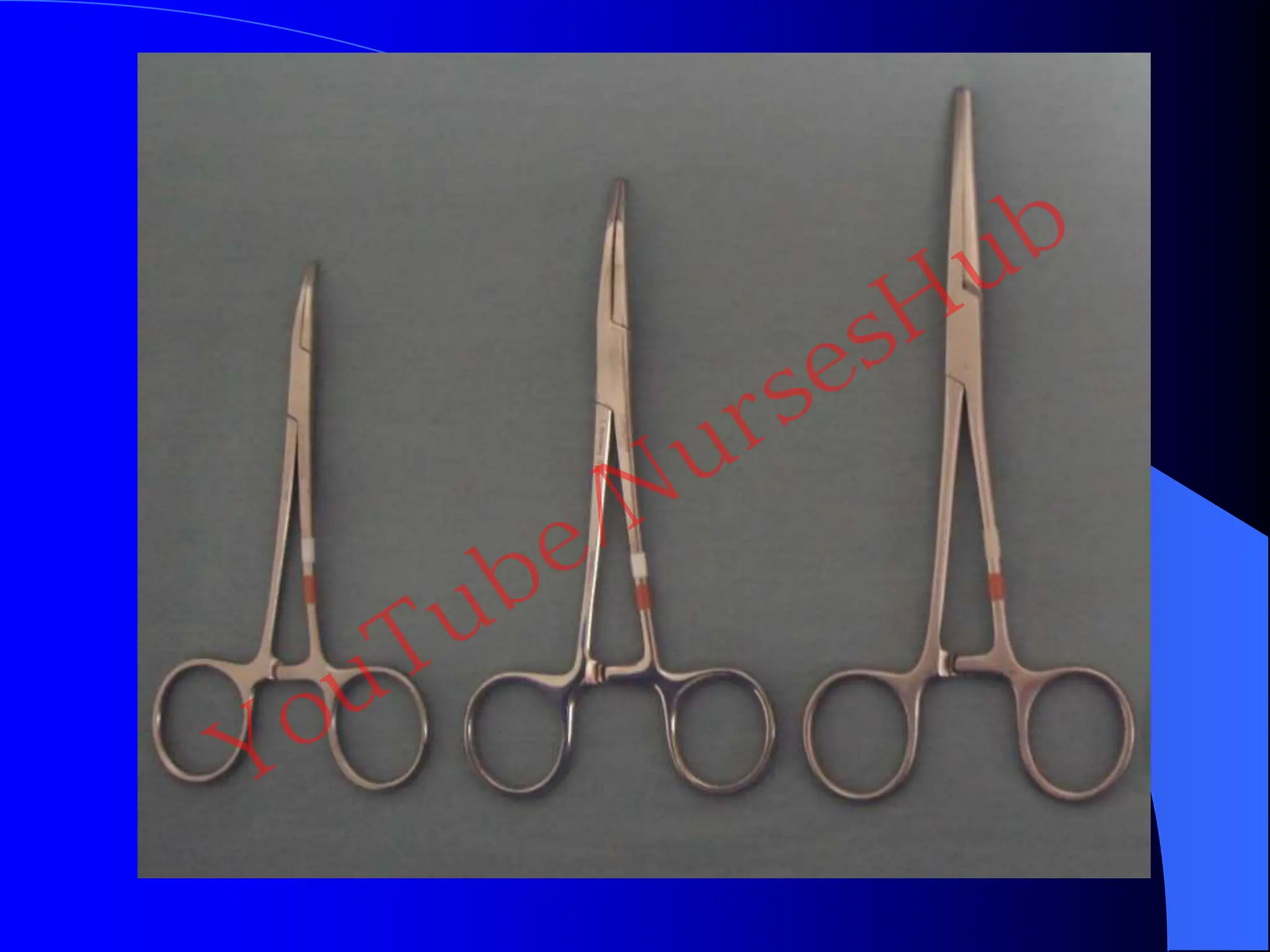
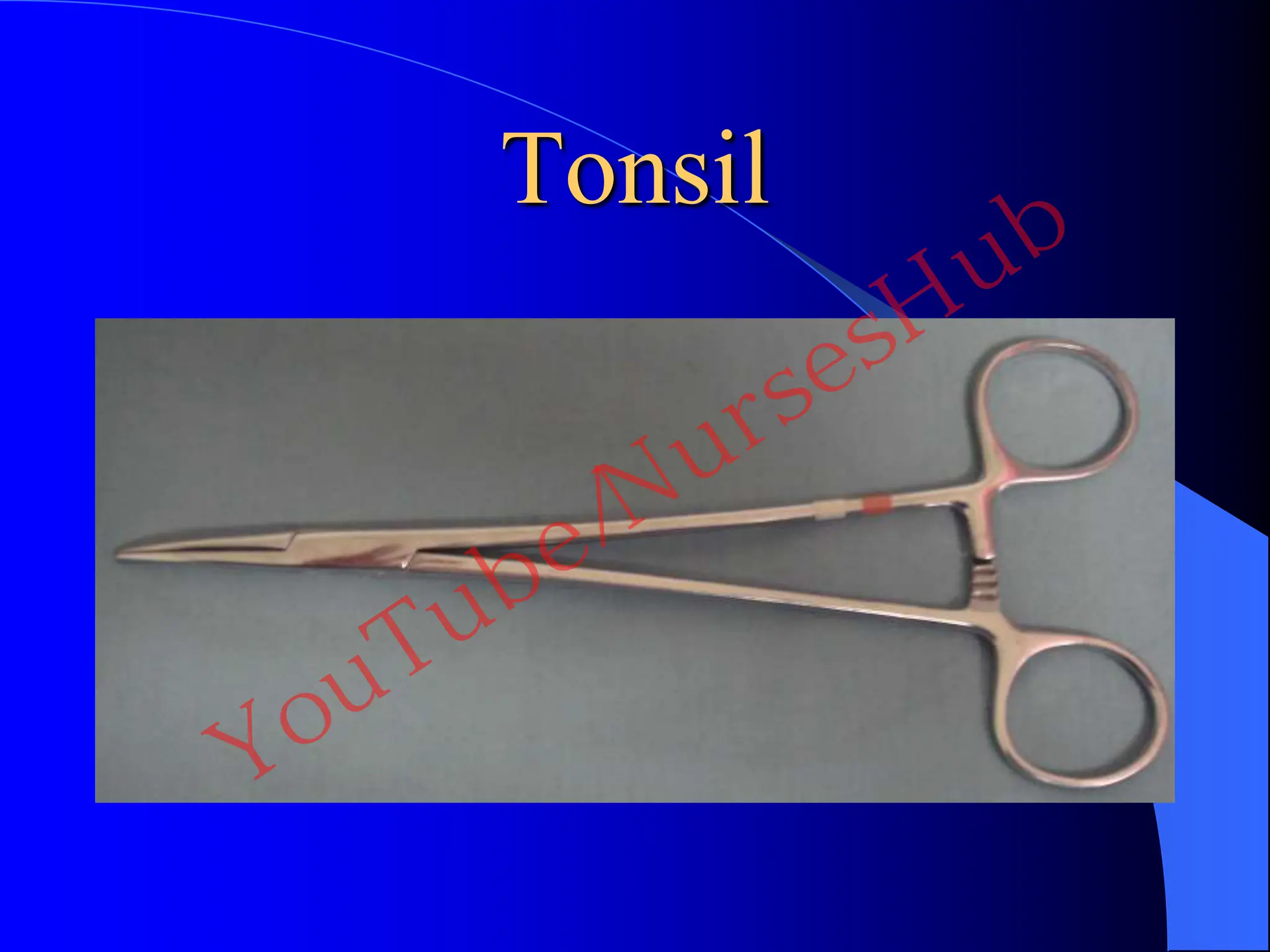
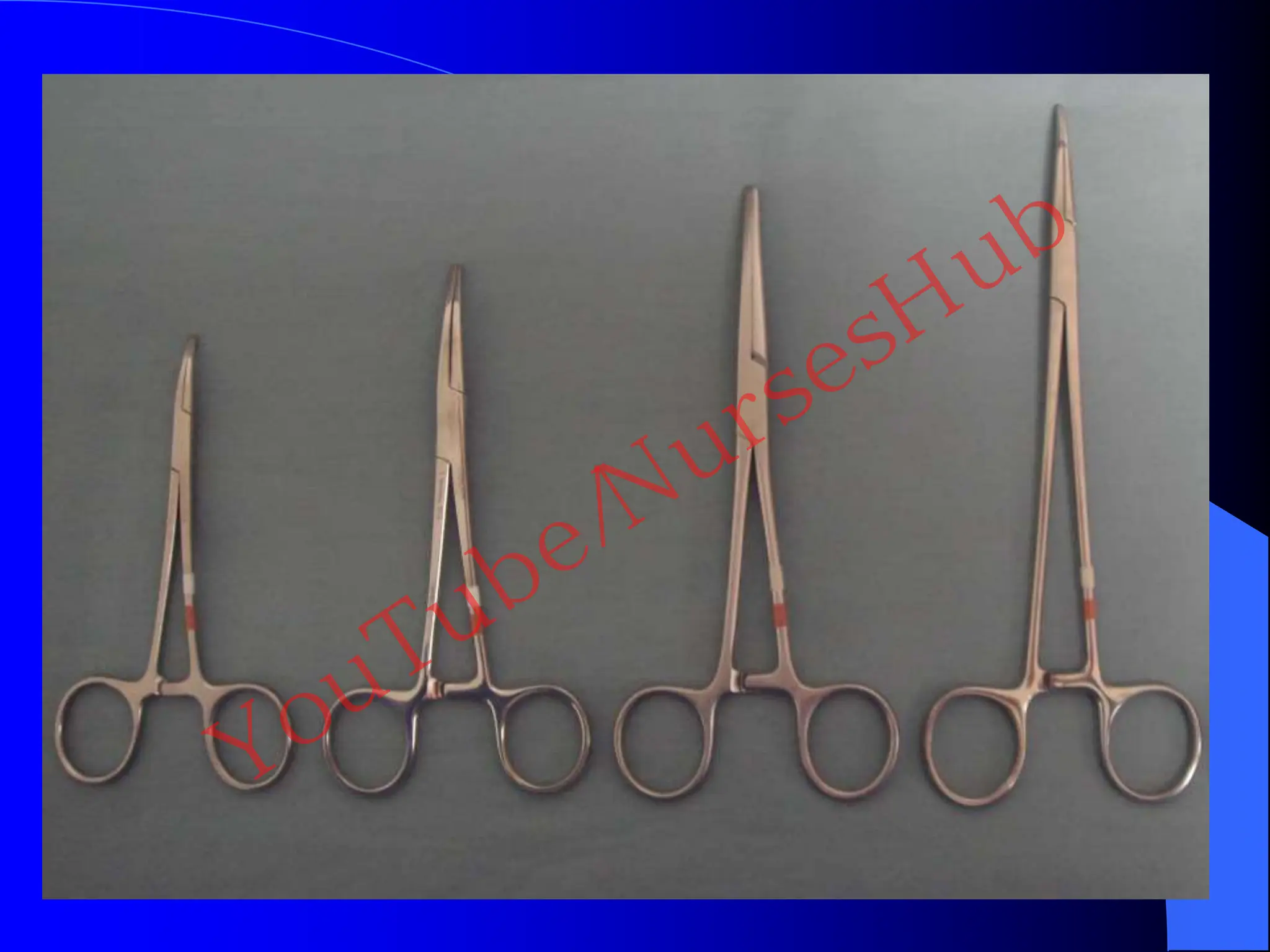
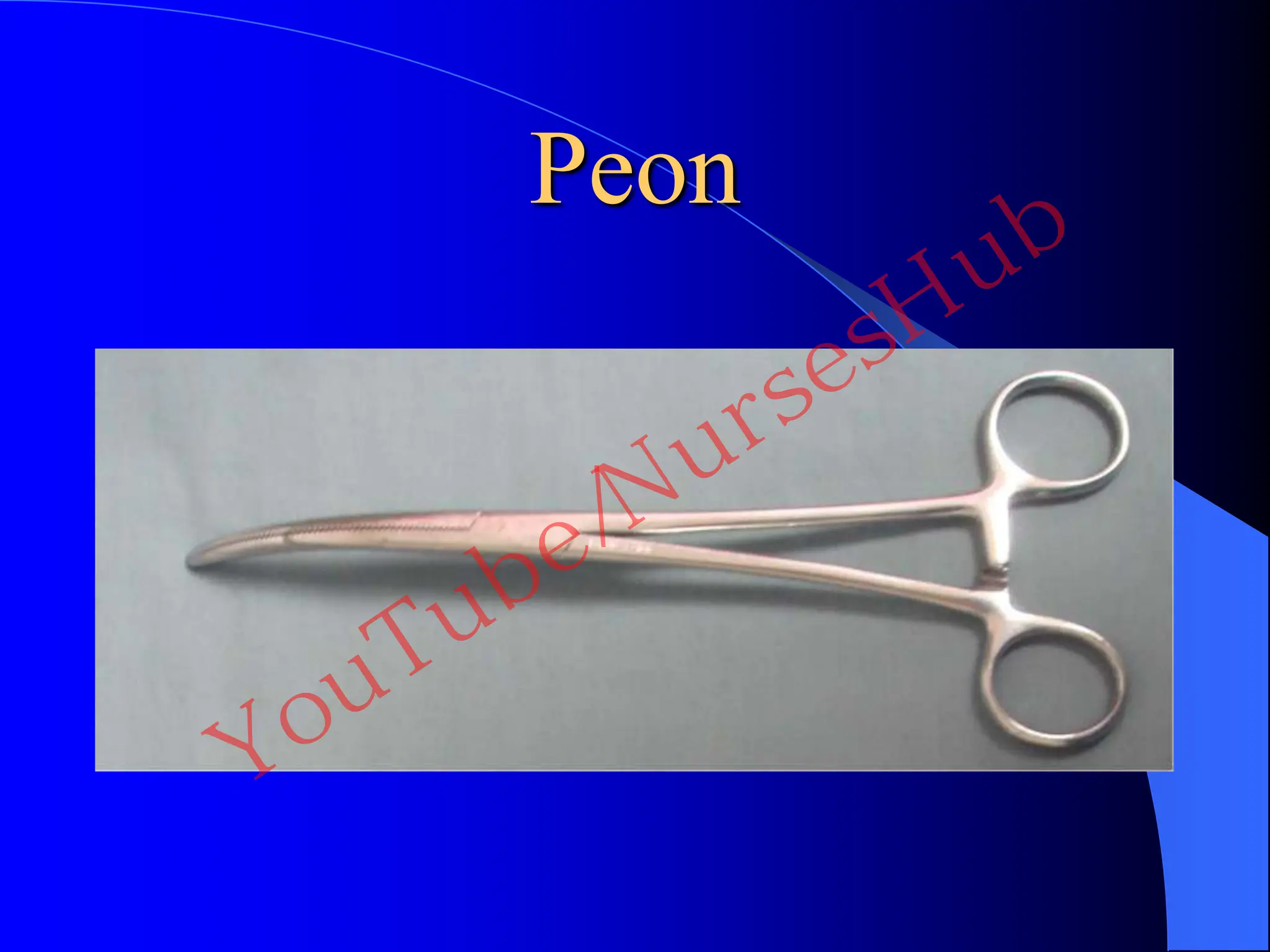
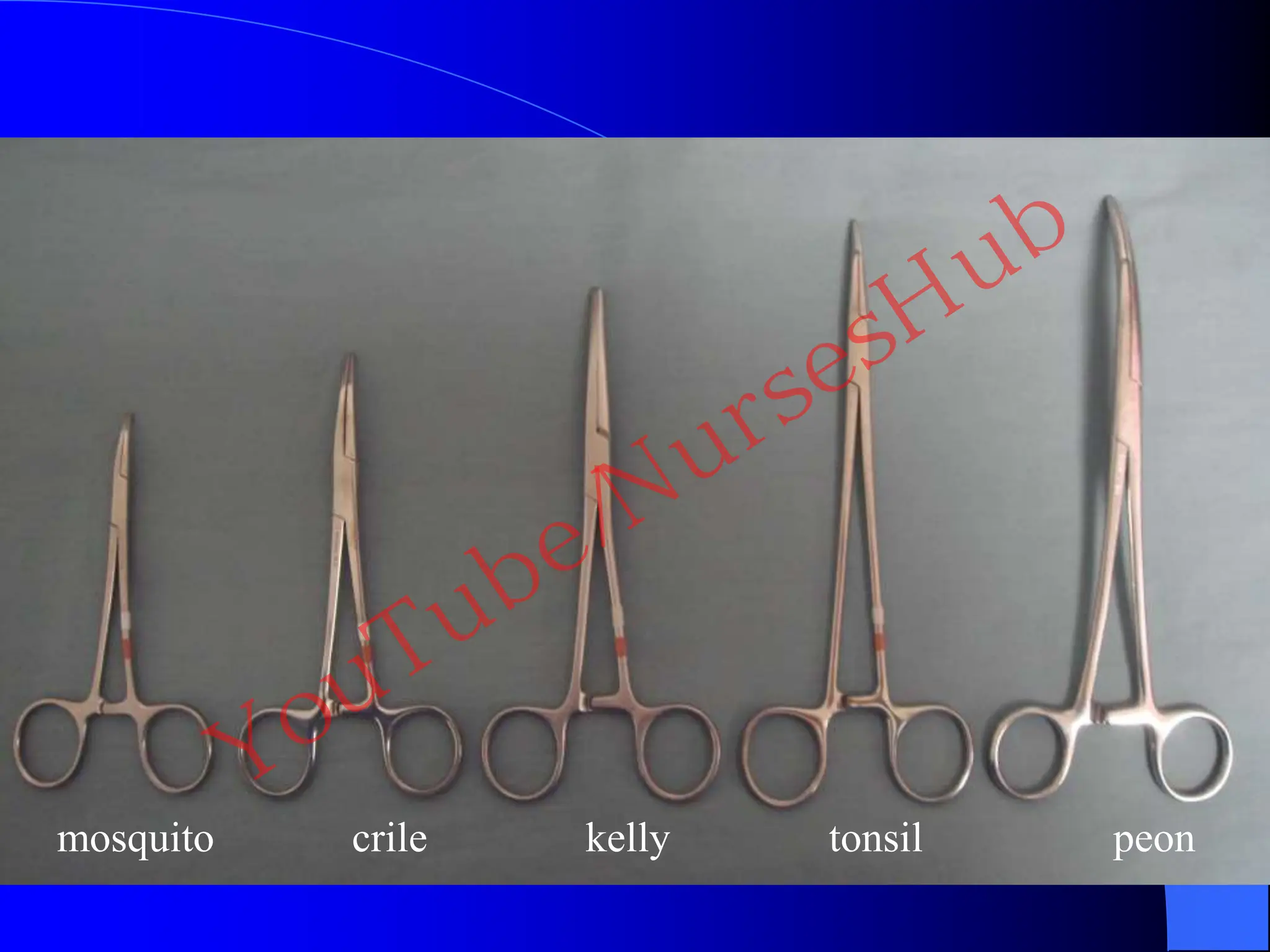
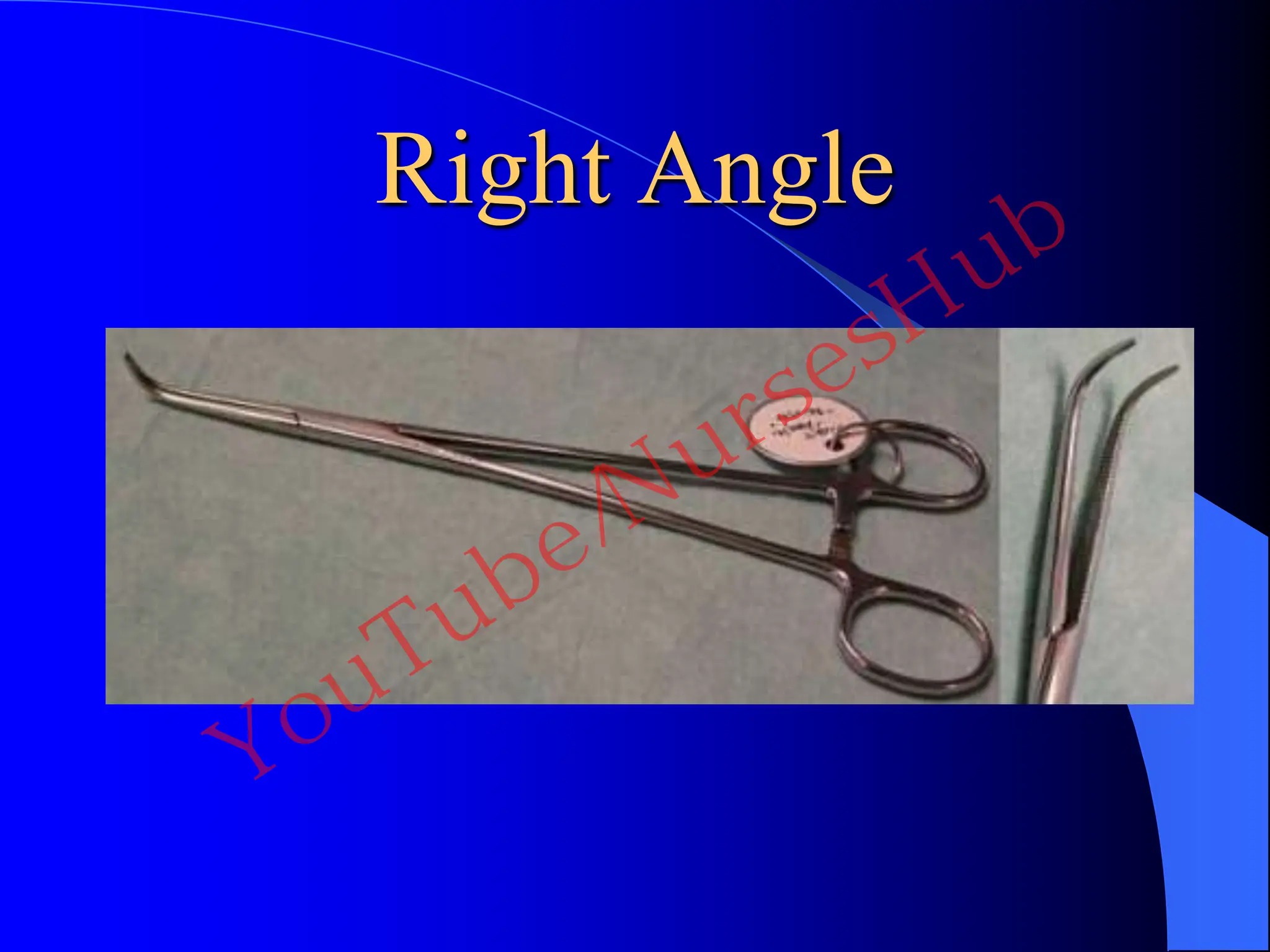
Mostinstrument sets will include
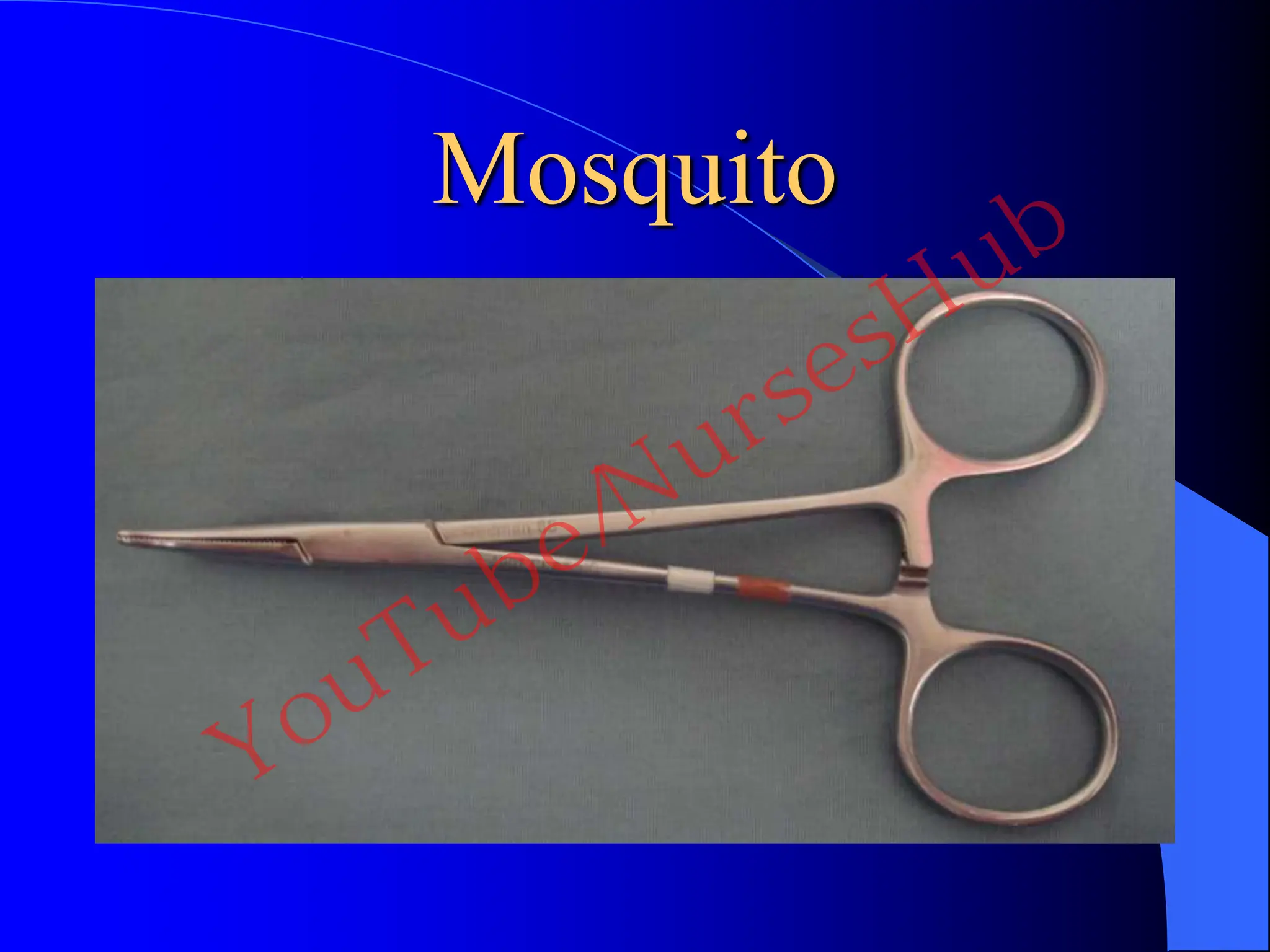
mosquito, crile, kelly, tonsil, peon,
and right angle clamps.
YouTube/NursesHub
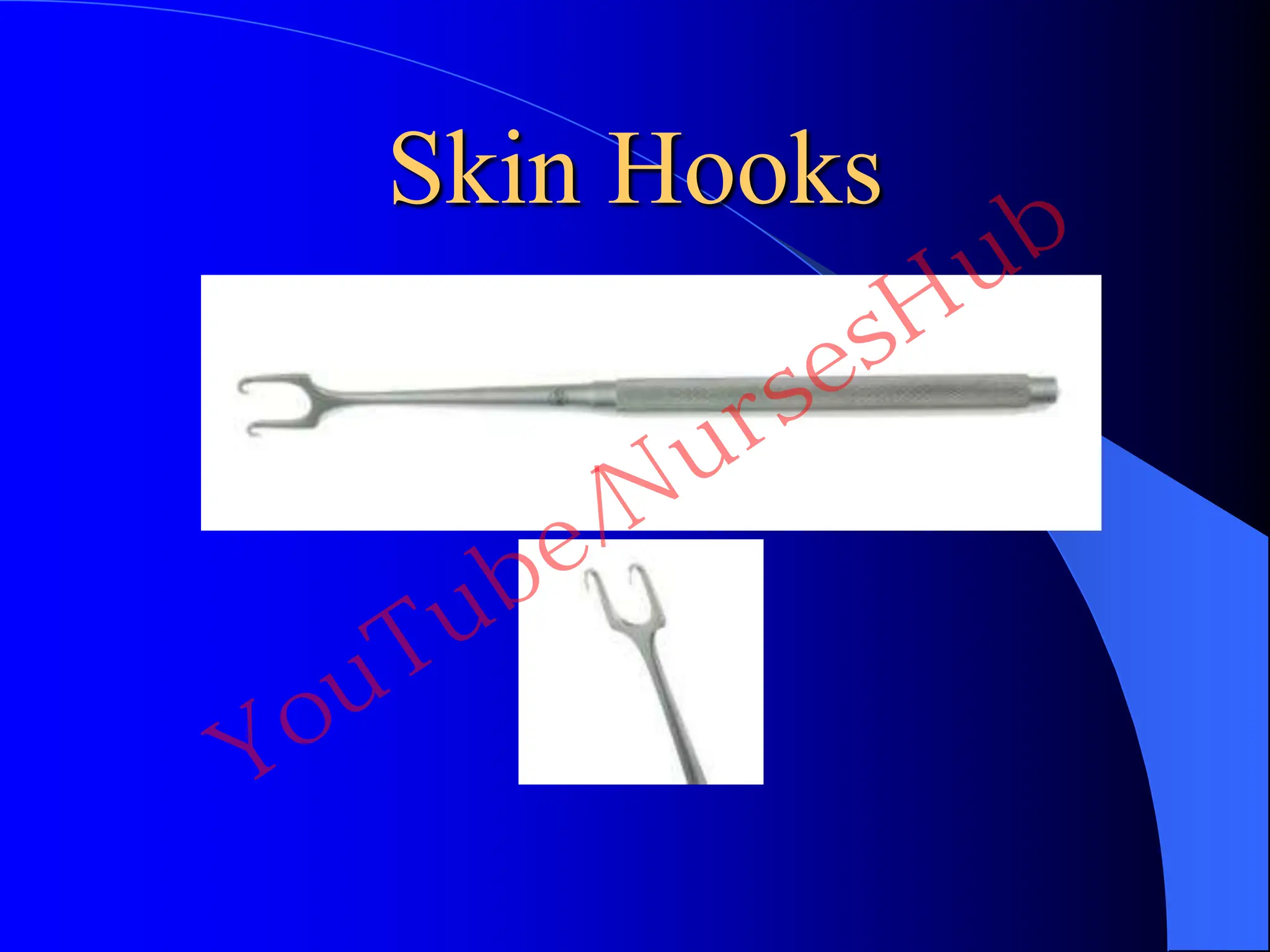
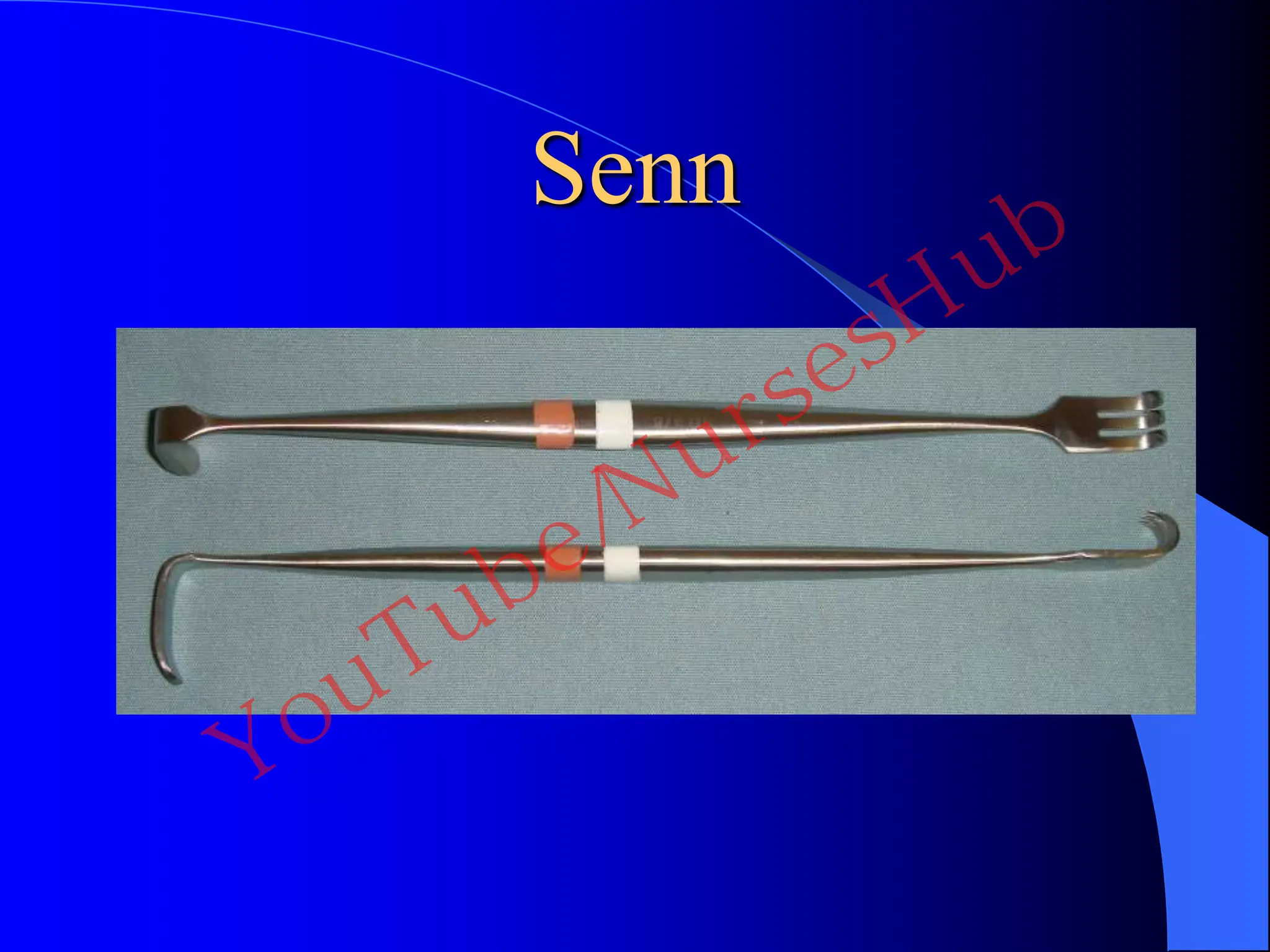
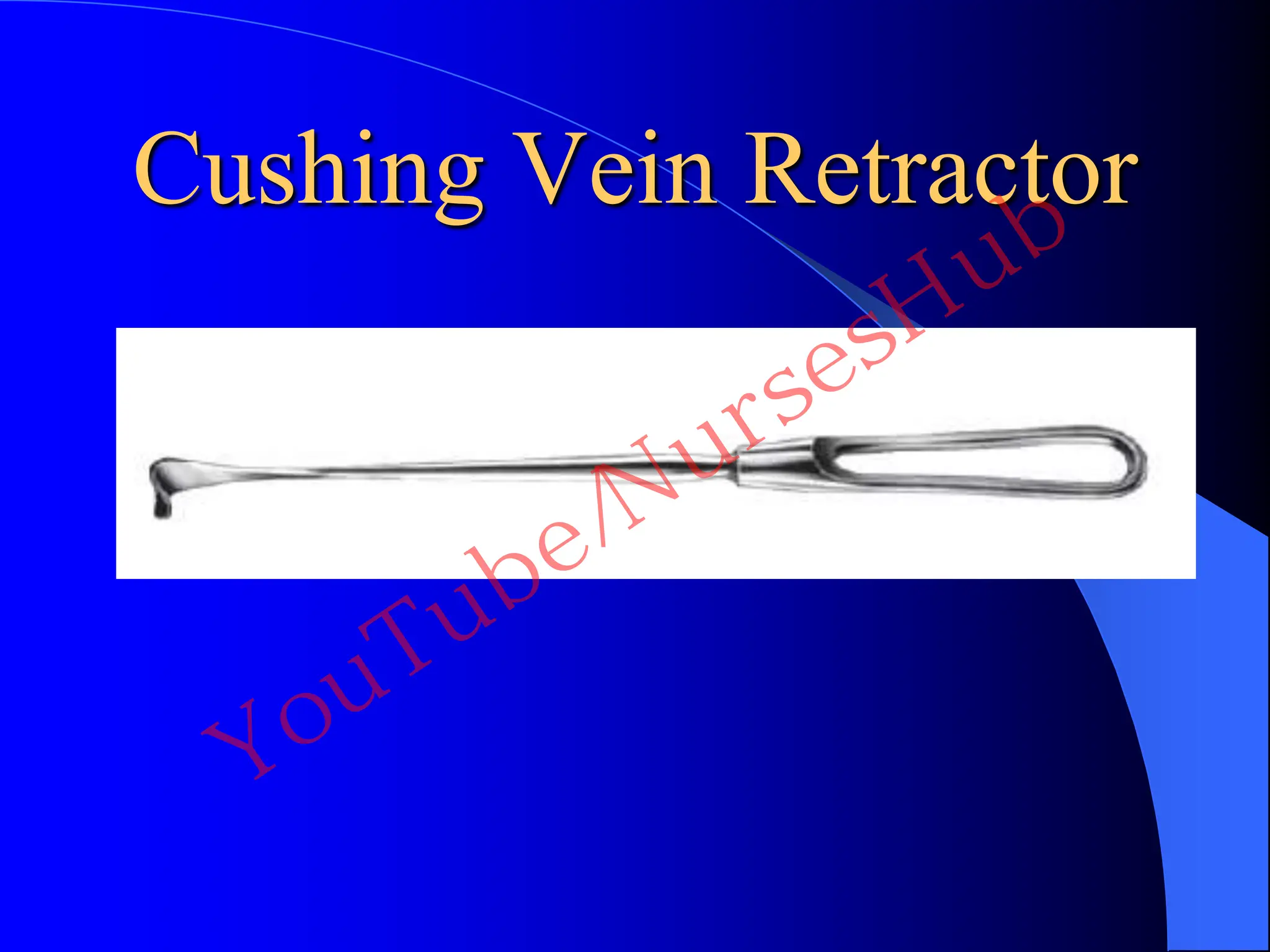
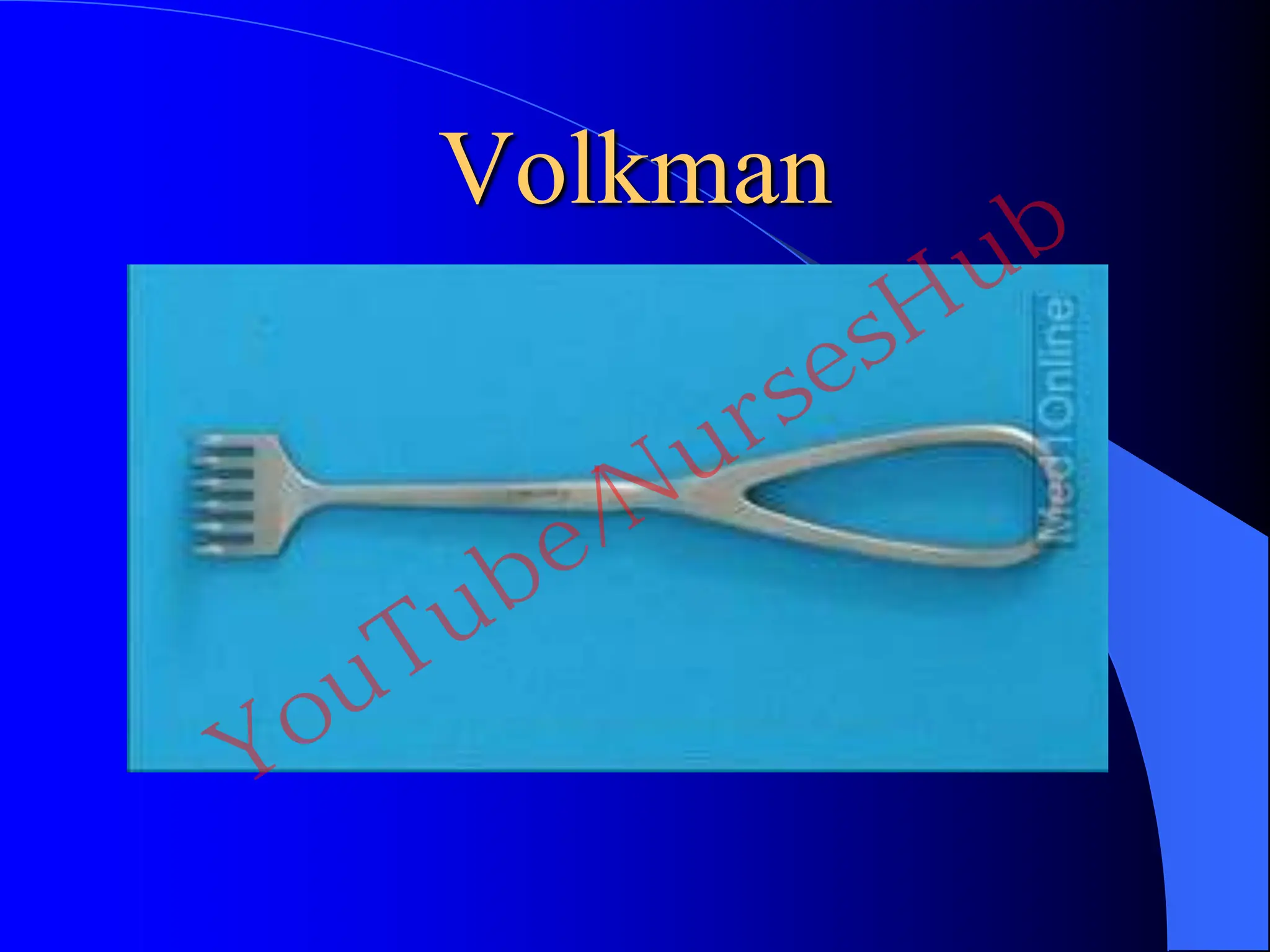
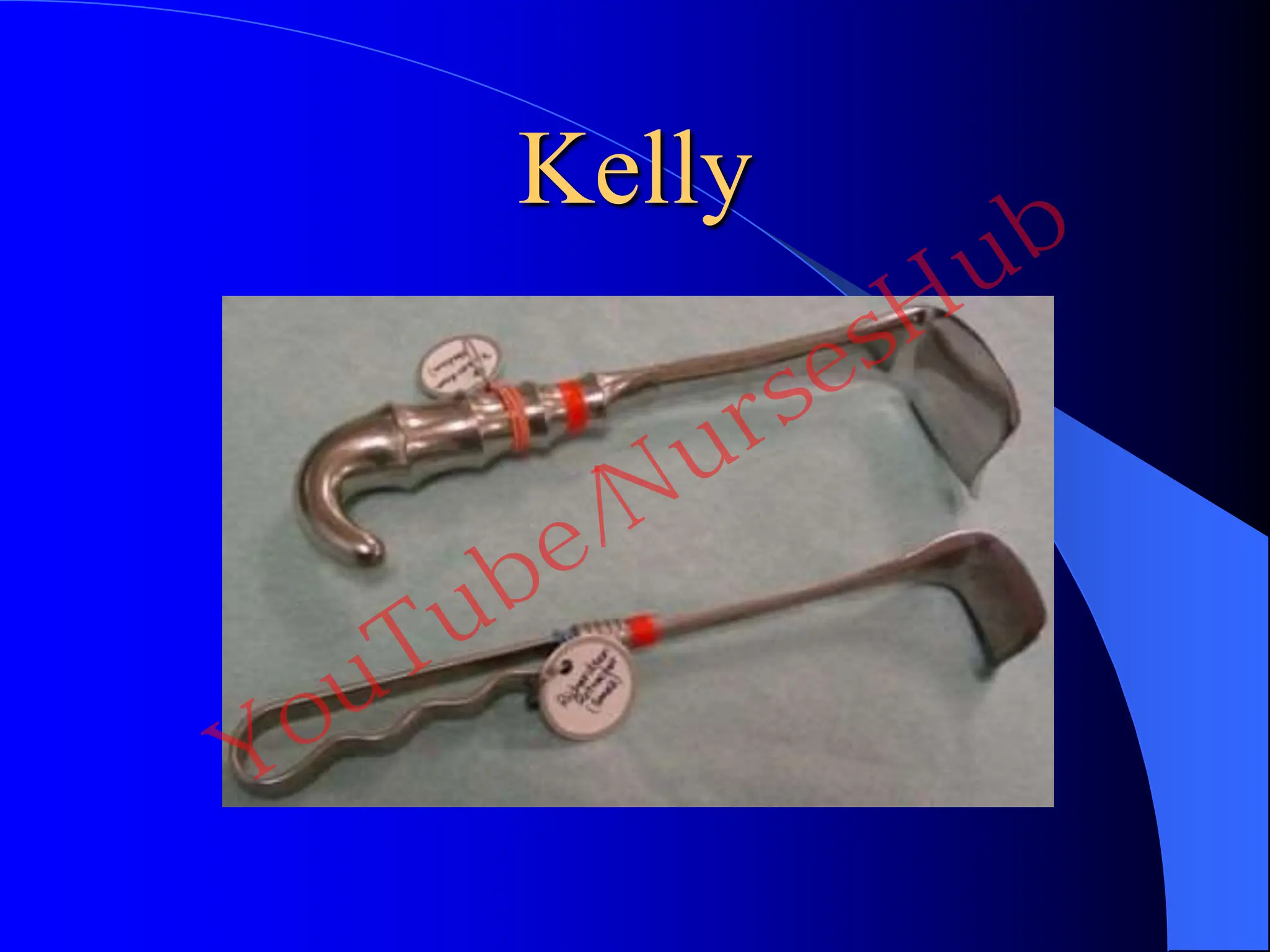
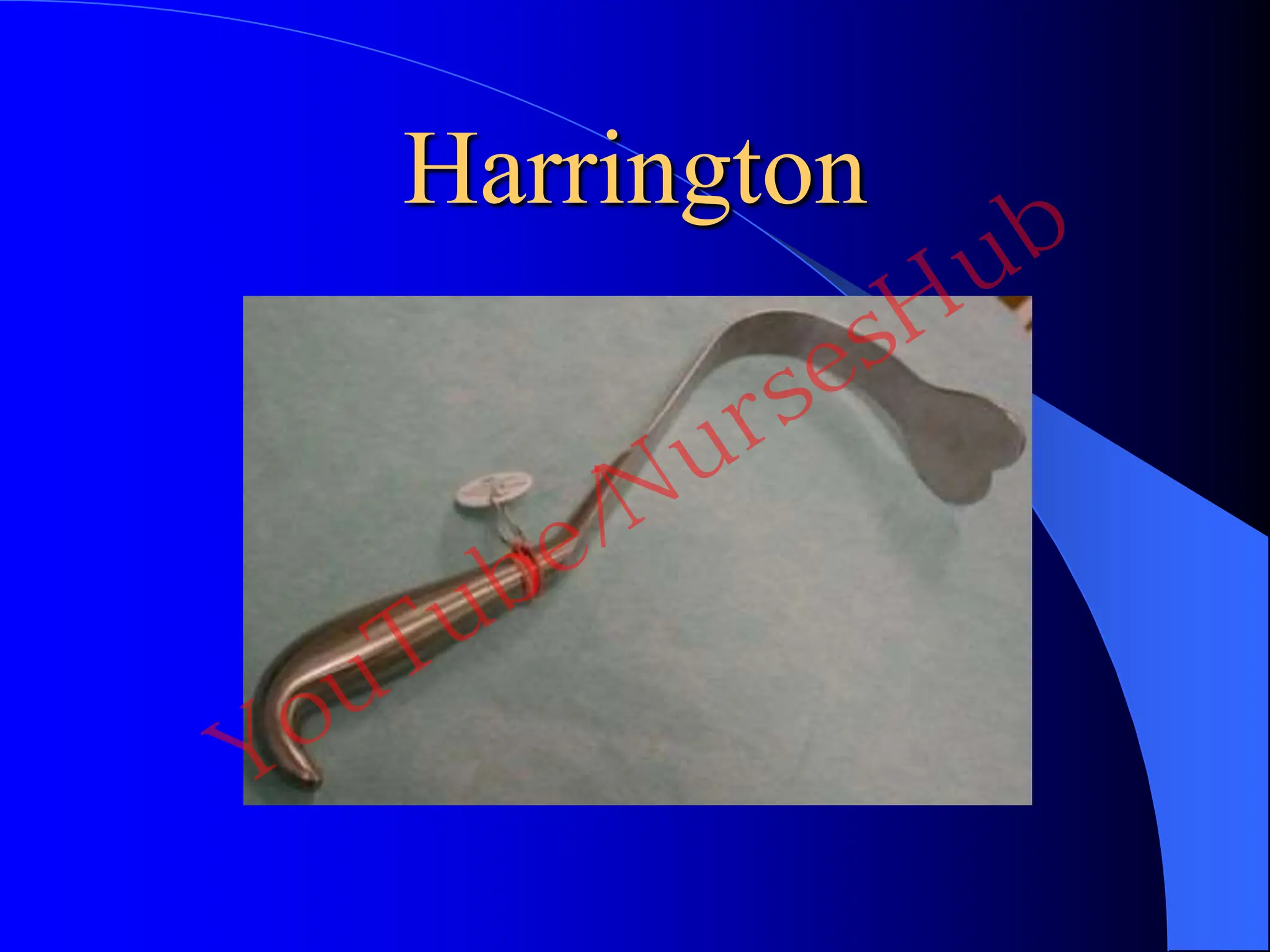
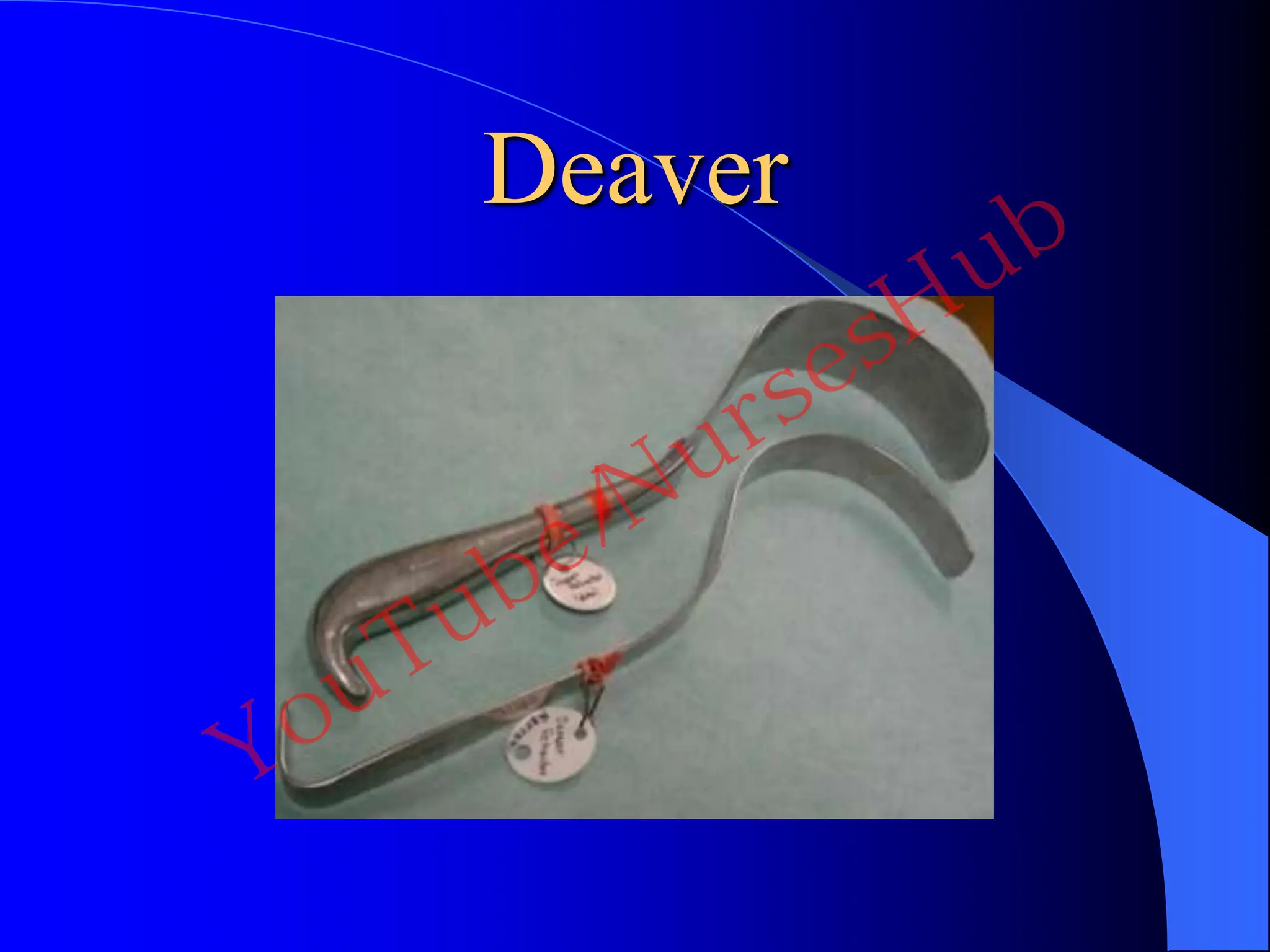
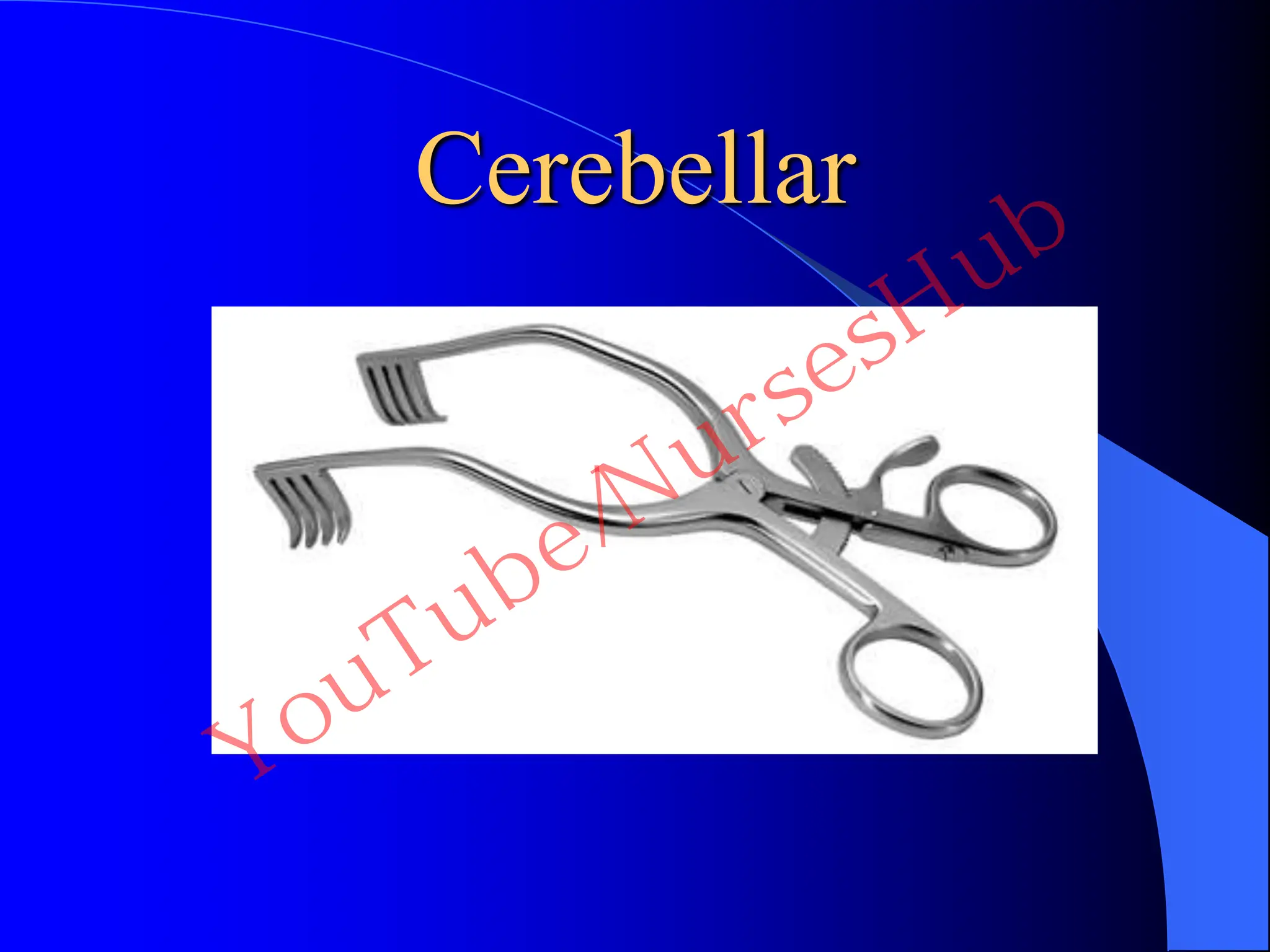
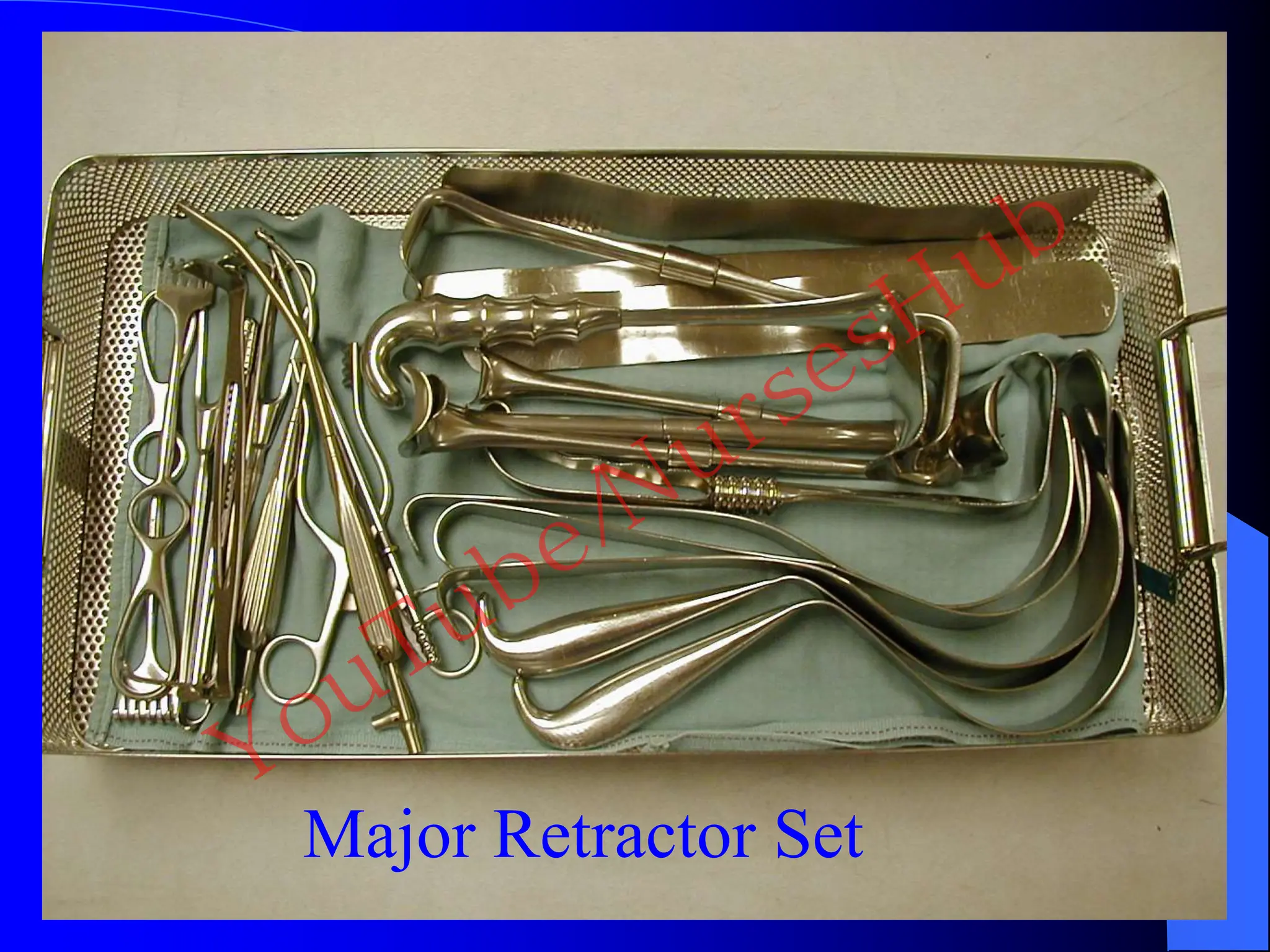
Exposing and Retracting
Usedto pull Soft tissue and muscle
aside to expose surgical site
2 types:
–Hand held
–Self retaining
YouTube/NursesHub
60.
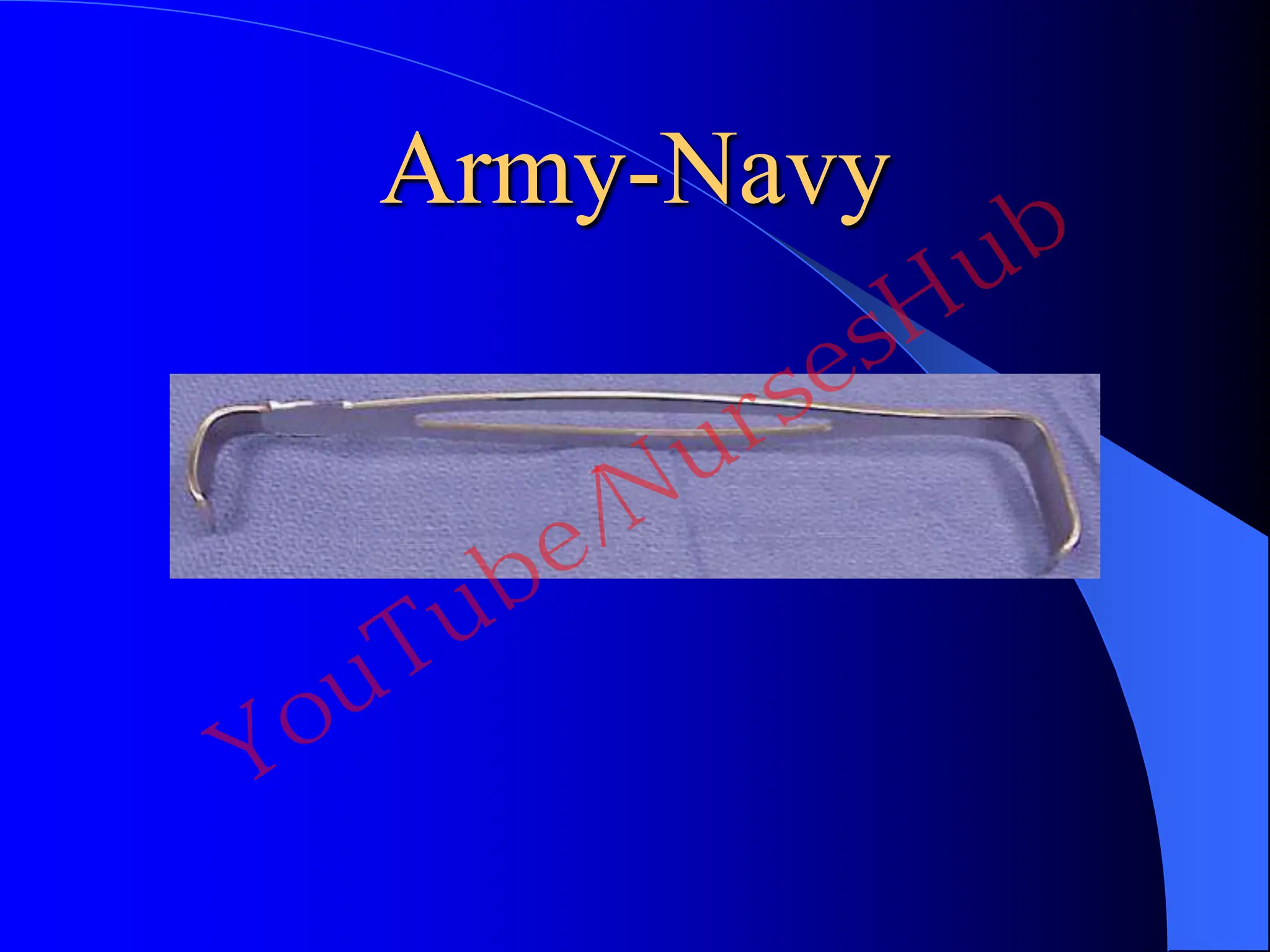
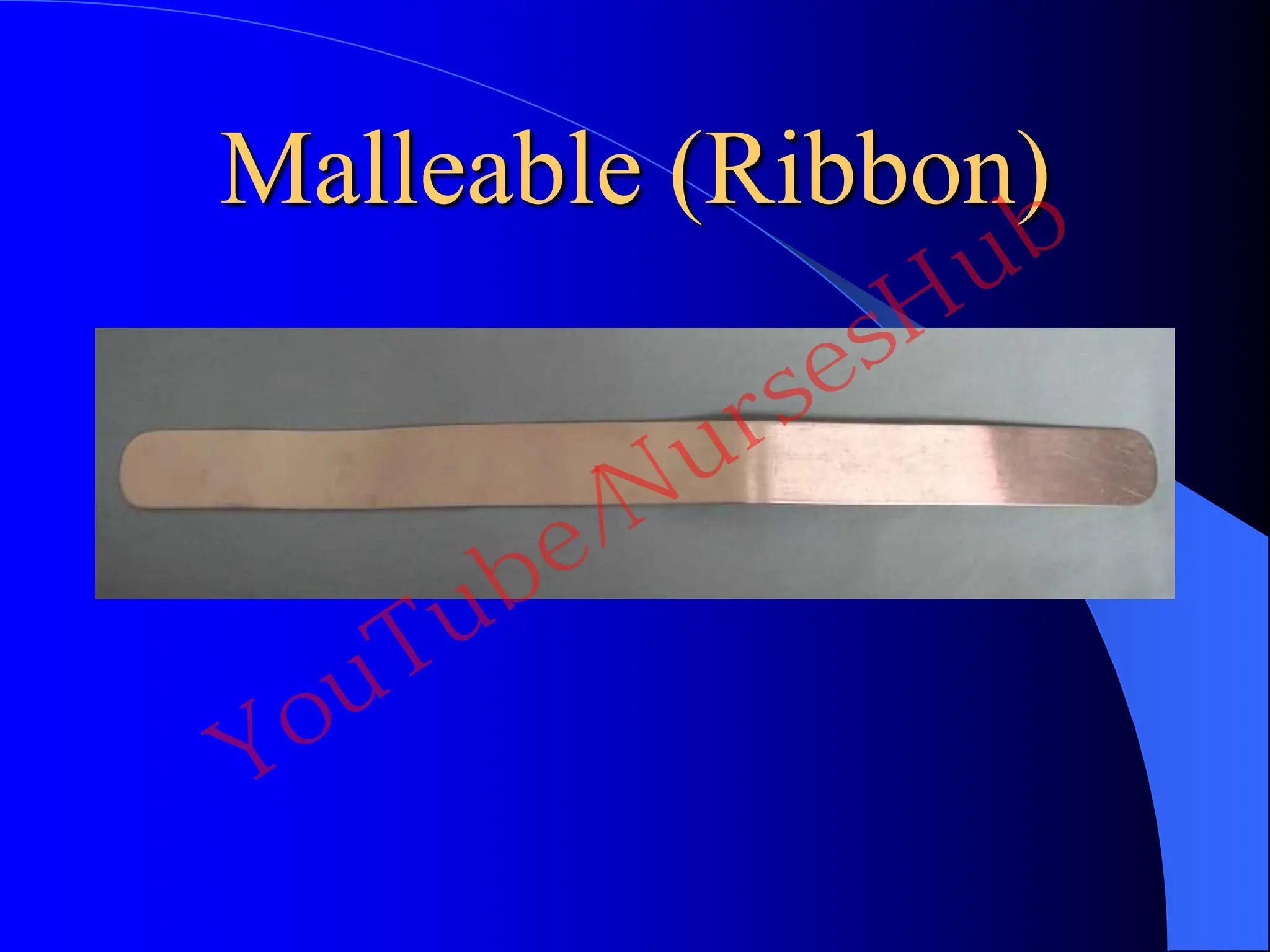
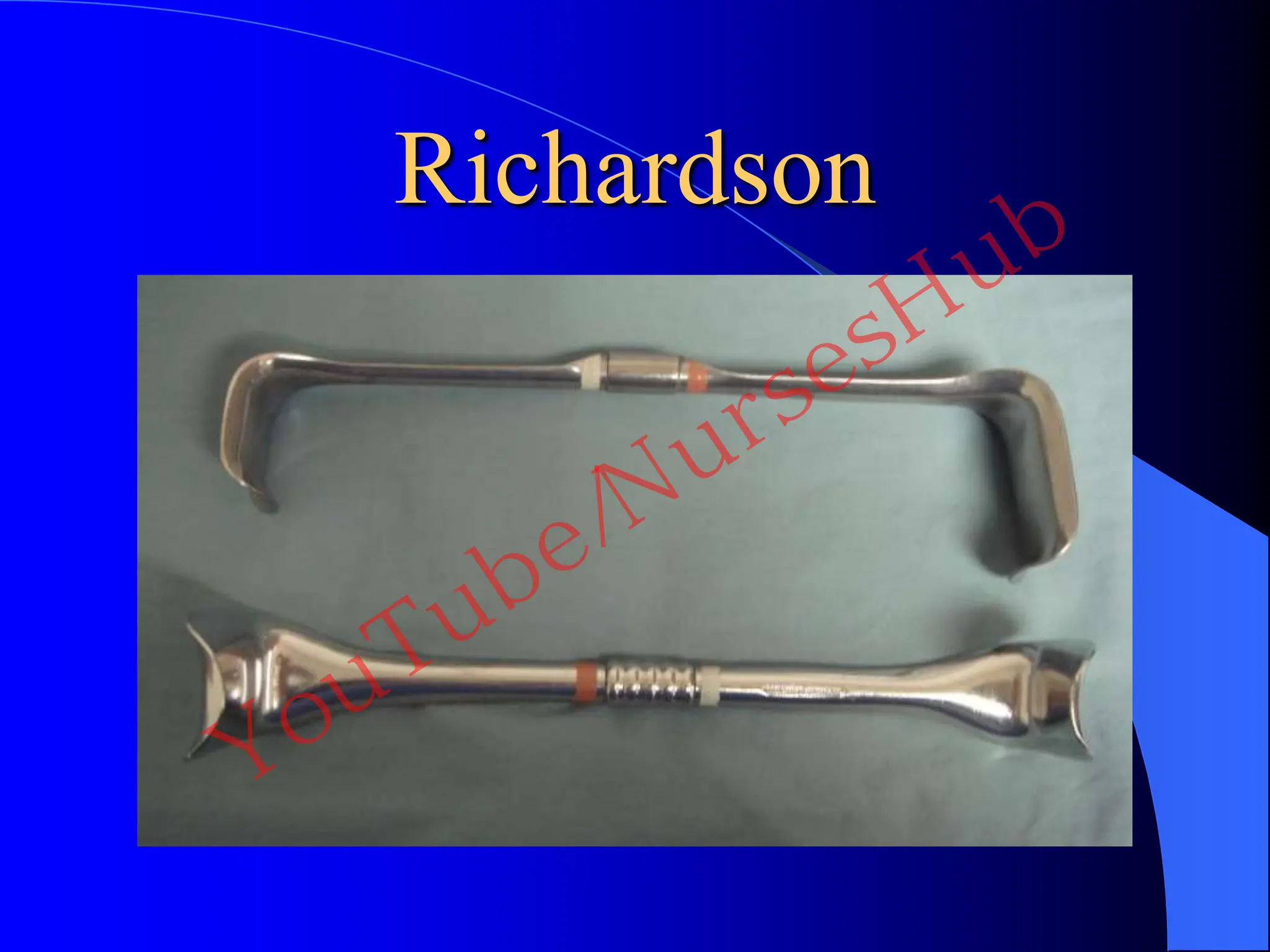
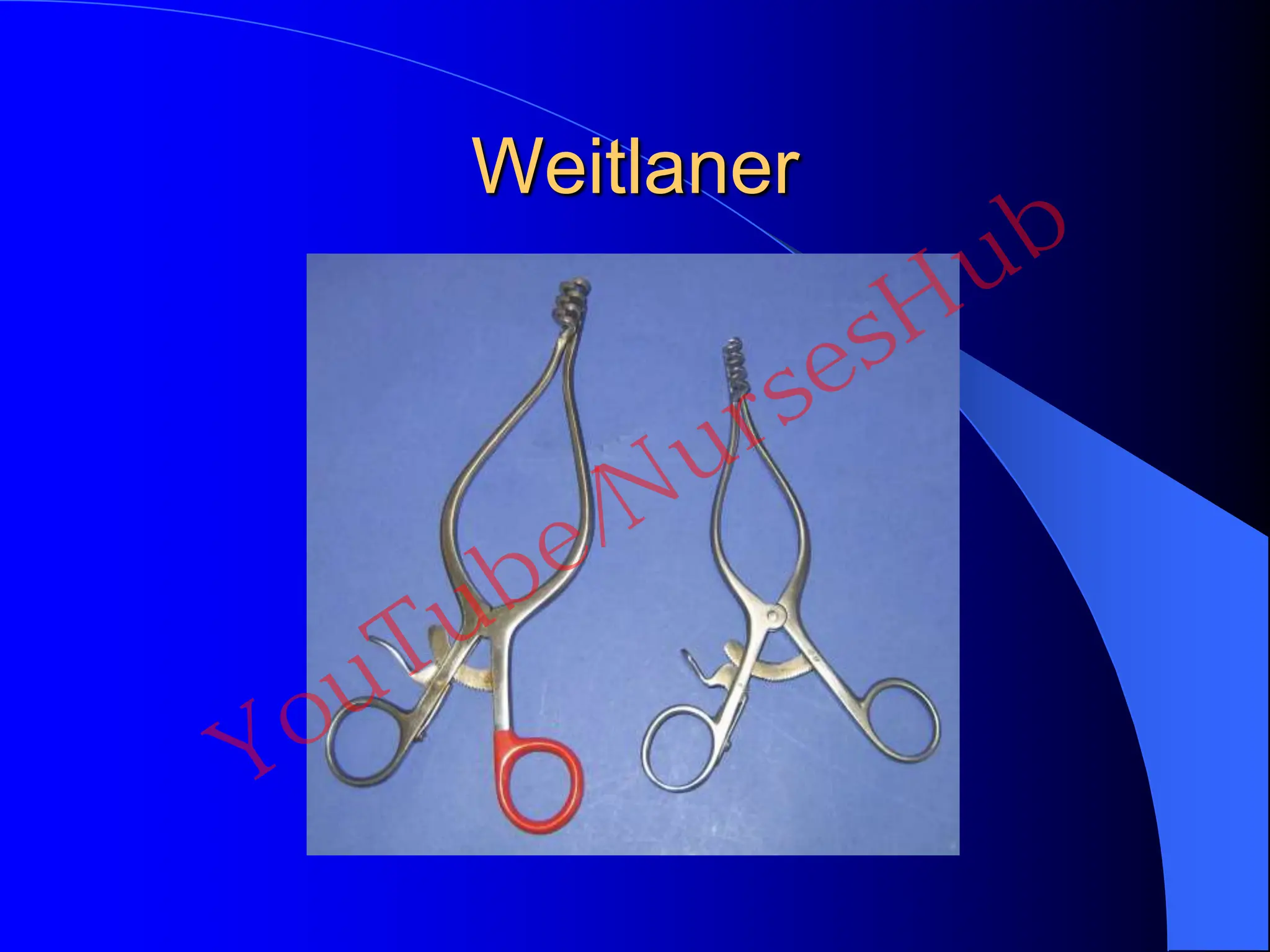
Exposing and Retracting
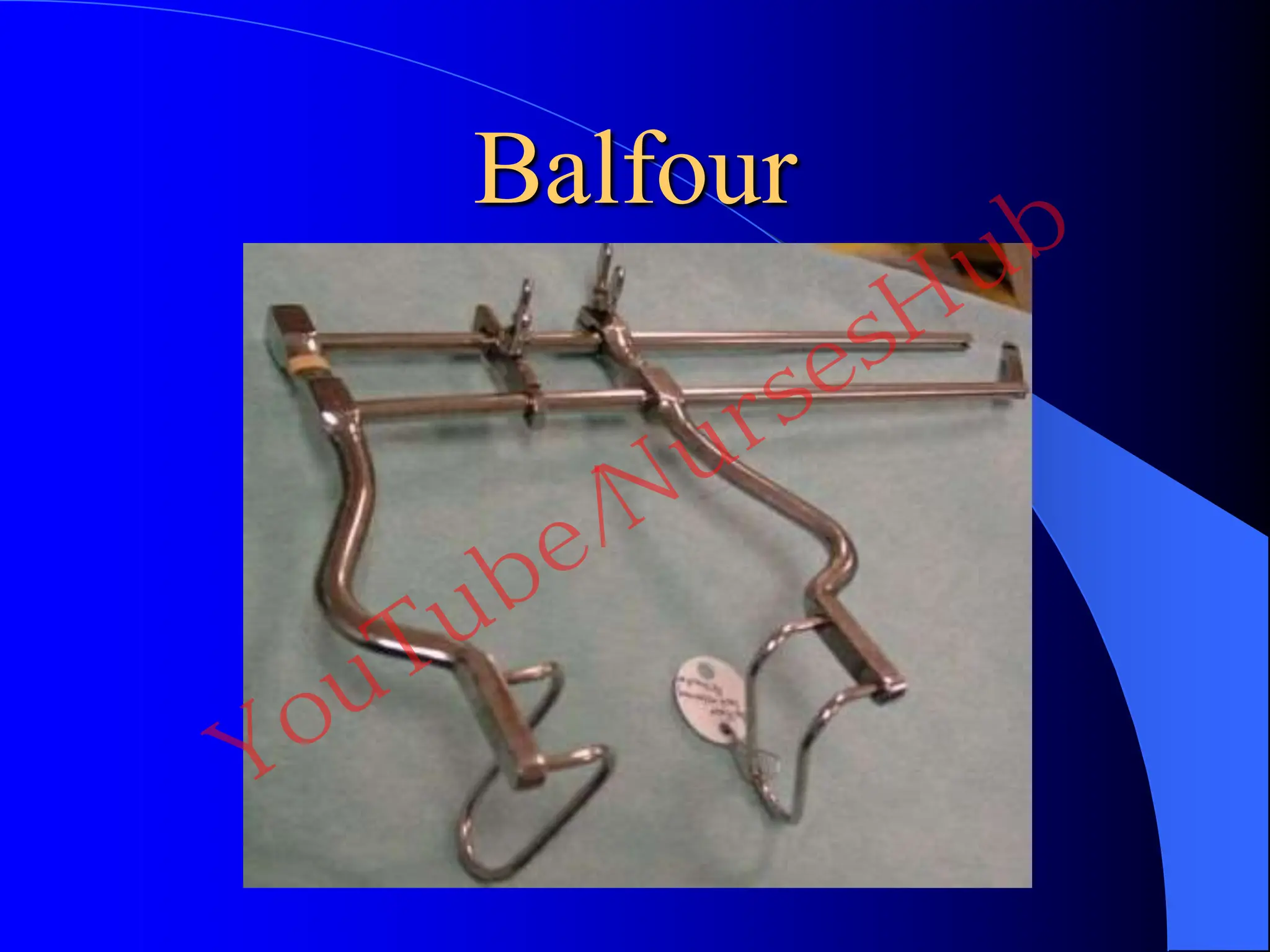
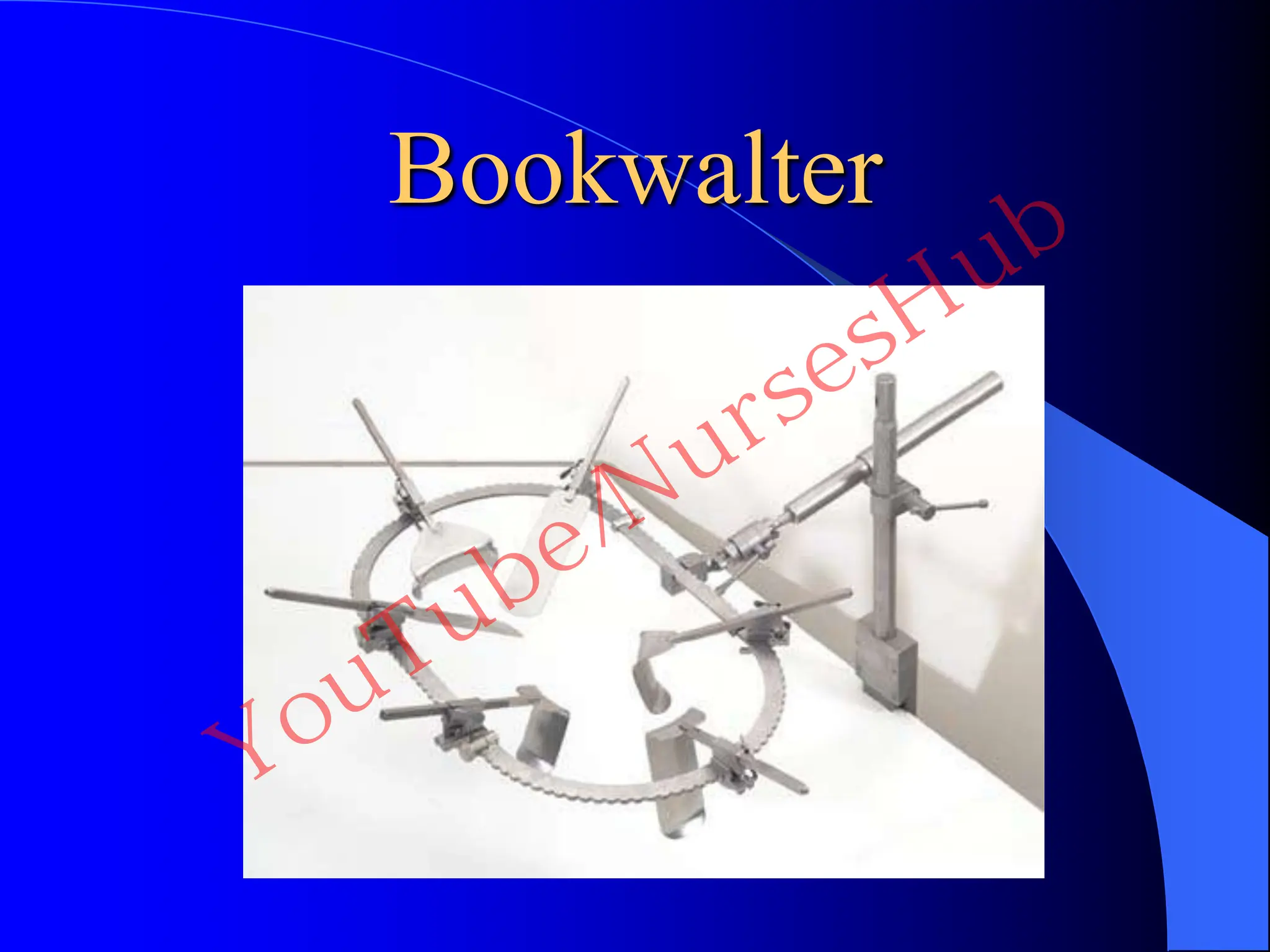
Mostinstrument sets will include
small hand held , army-navy,
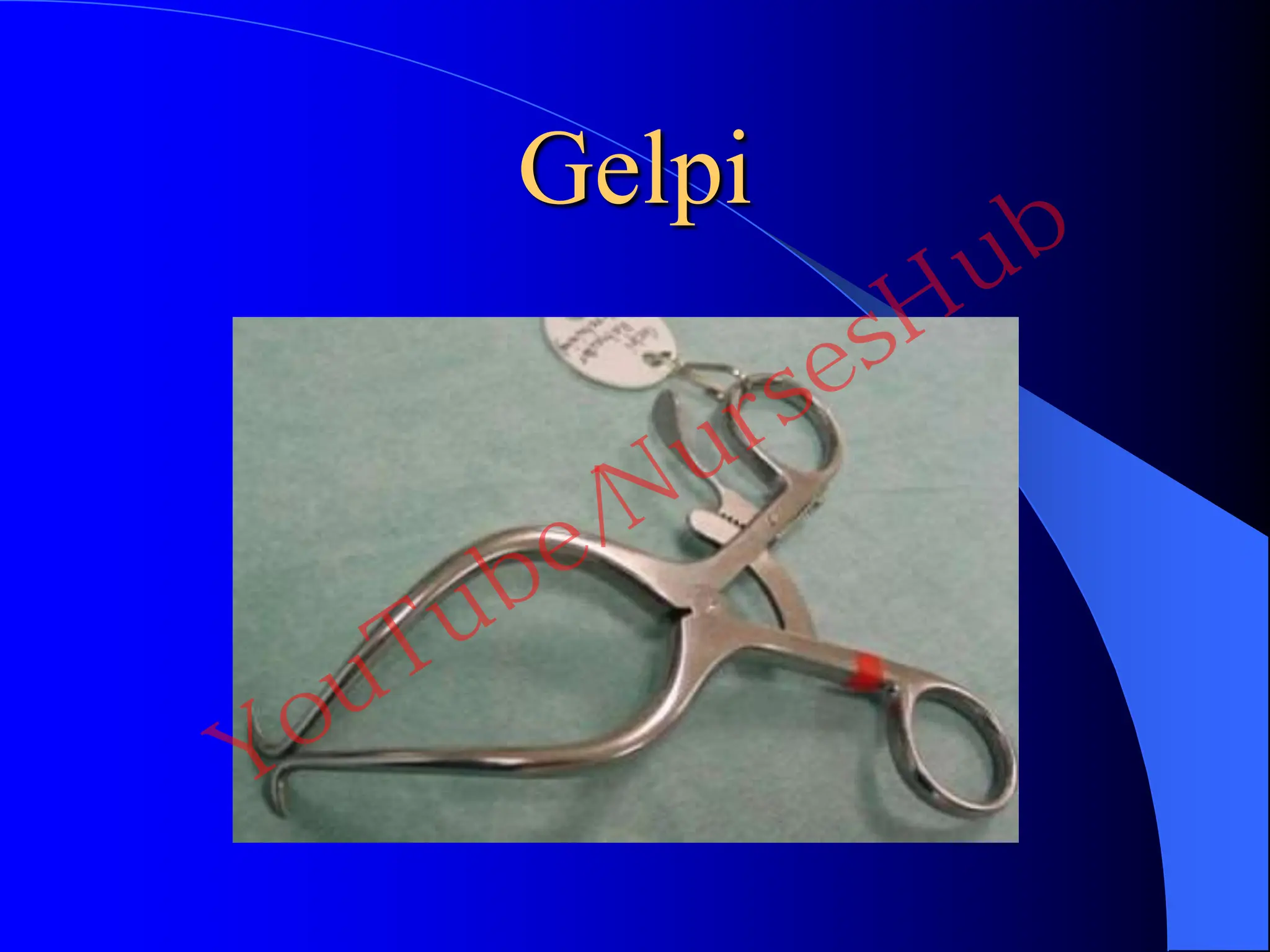
malleable, weitlaner, and
richardson retractors.
YouTube/NursesHub
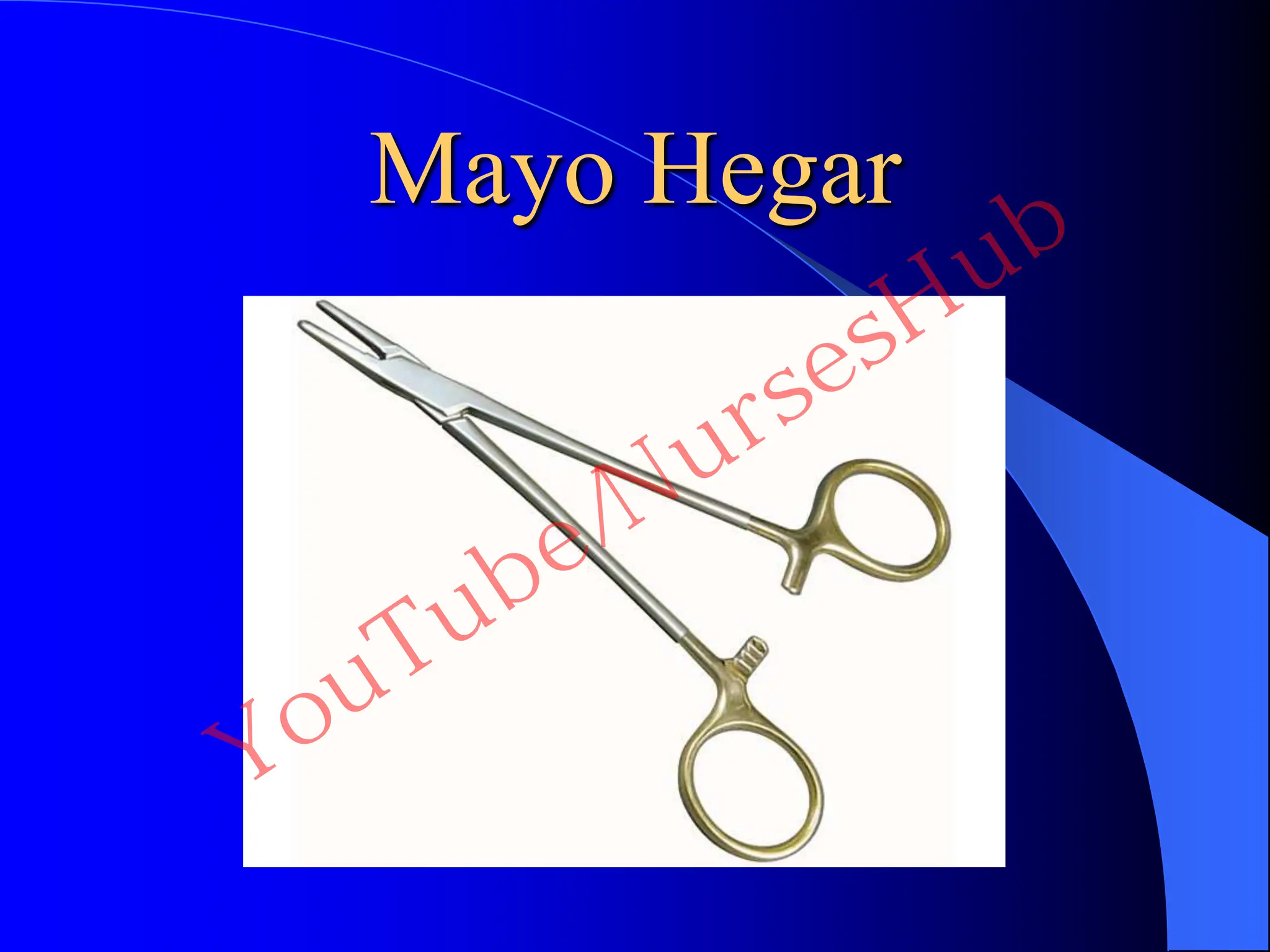
Suturing and Stapling
Needleholder sizes vary according
to type of needle used
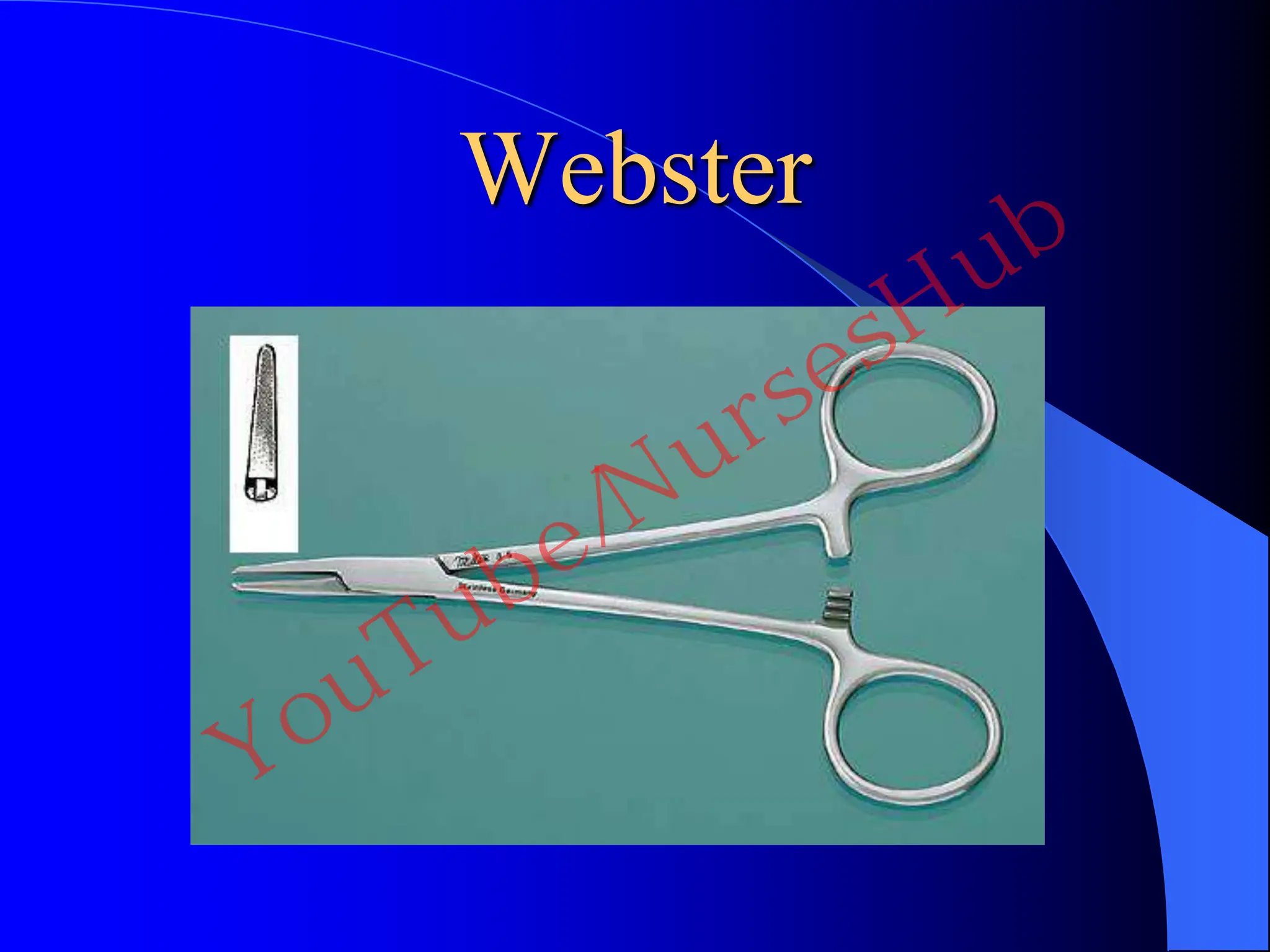
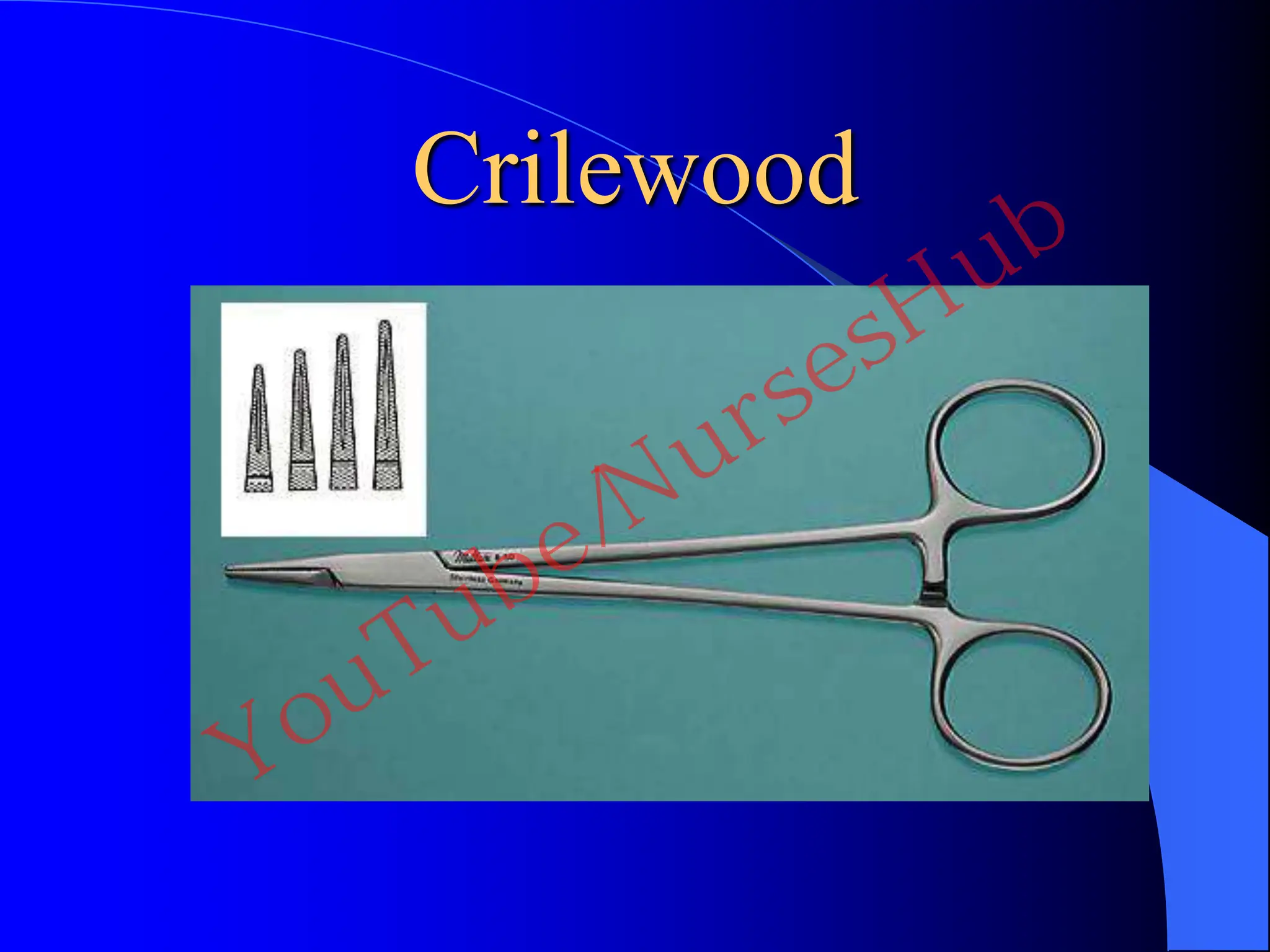
Most instrument sets will have
webster, crilewood, and mayo
hegar type needle holders.
YouTube/NursesHub
80.
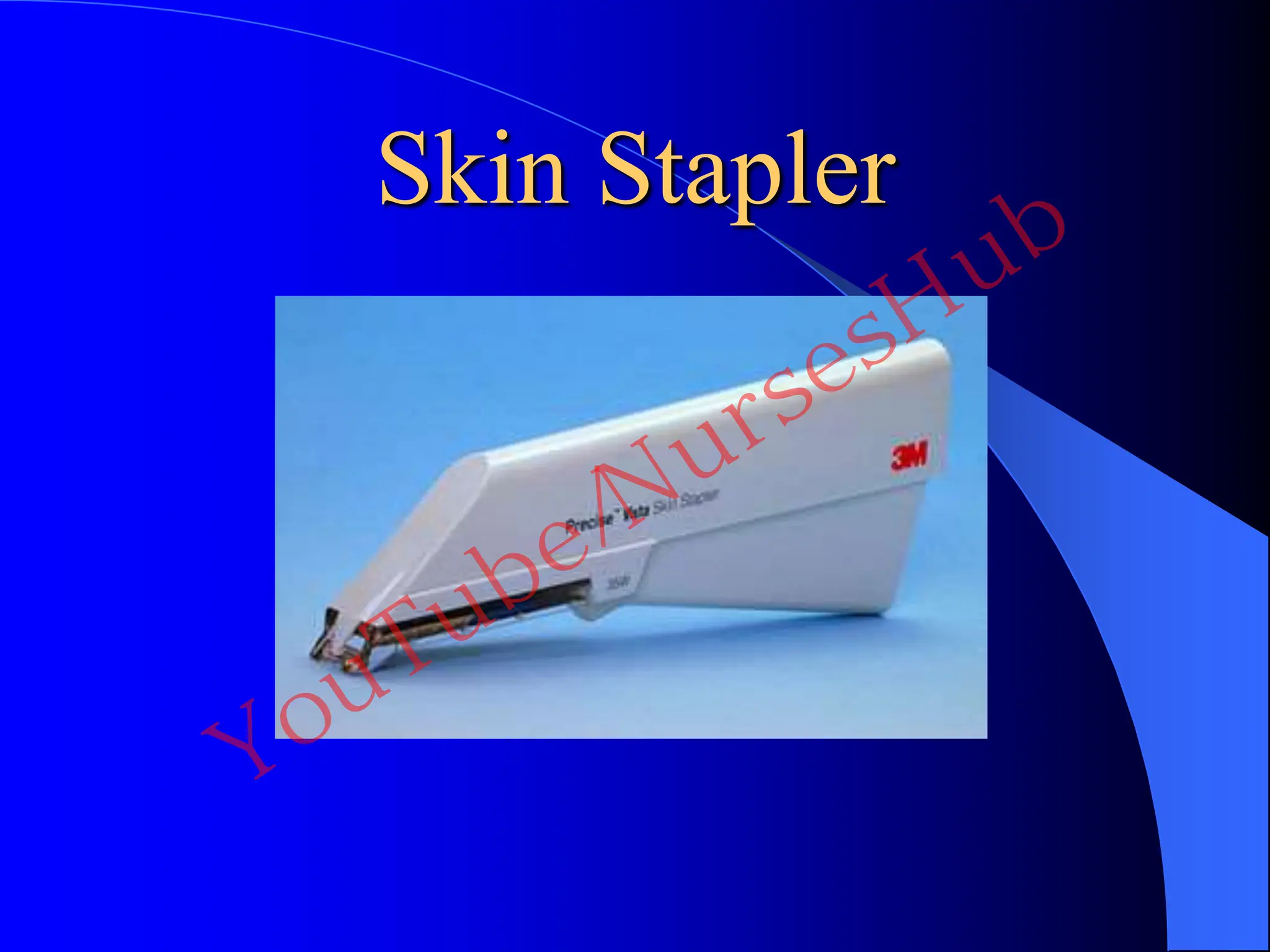
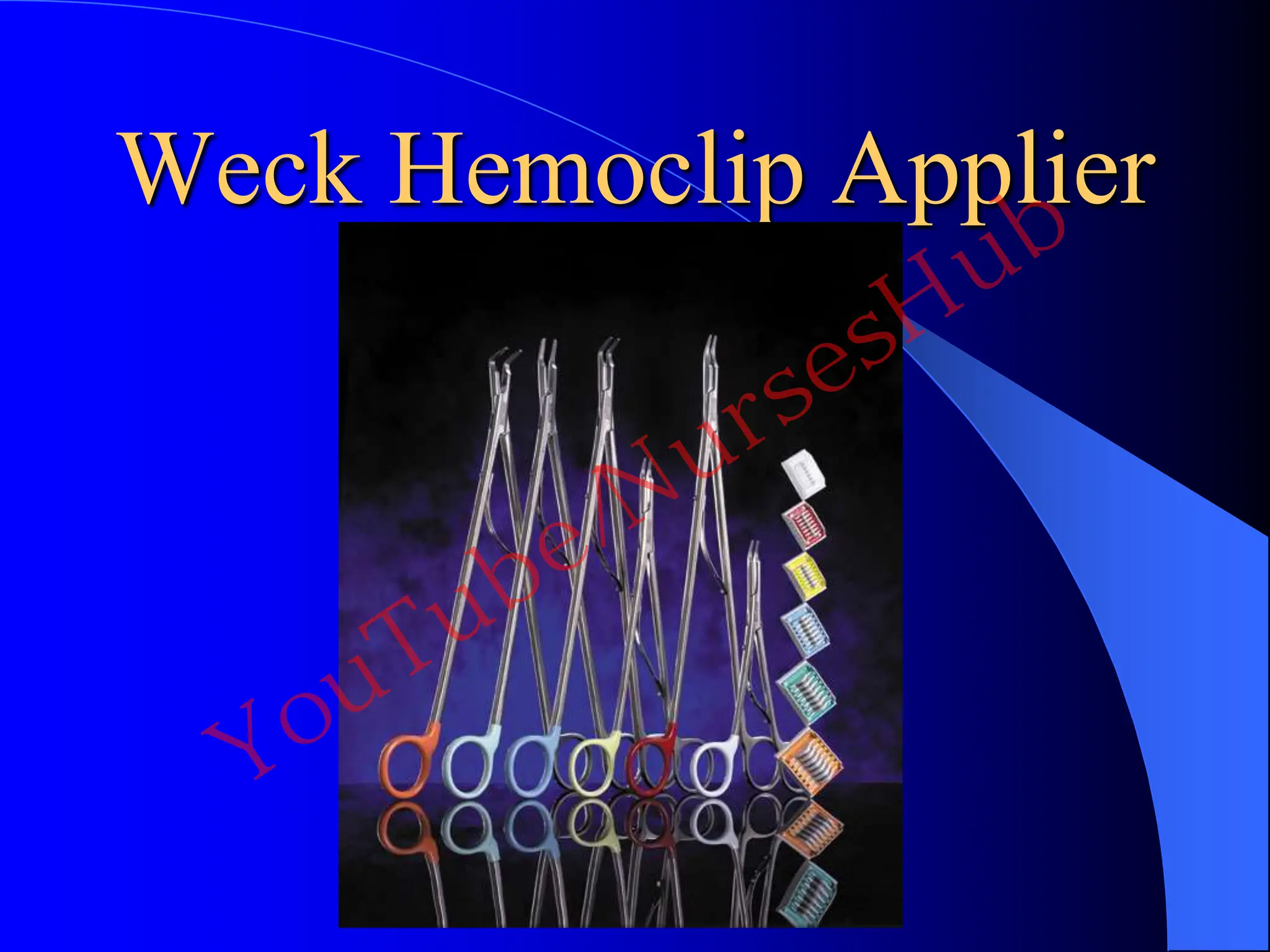
Suturing and Stapling
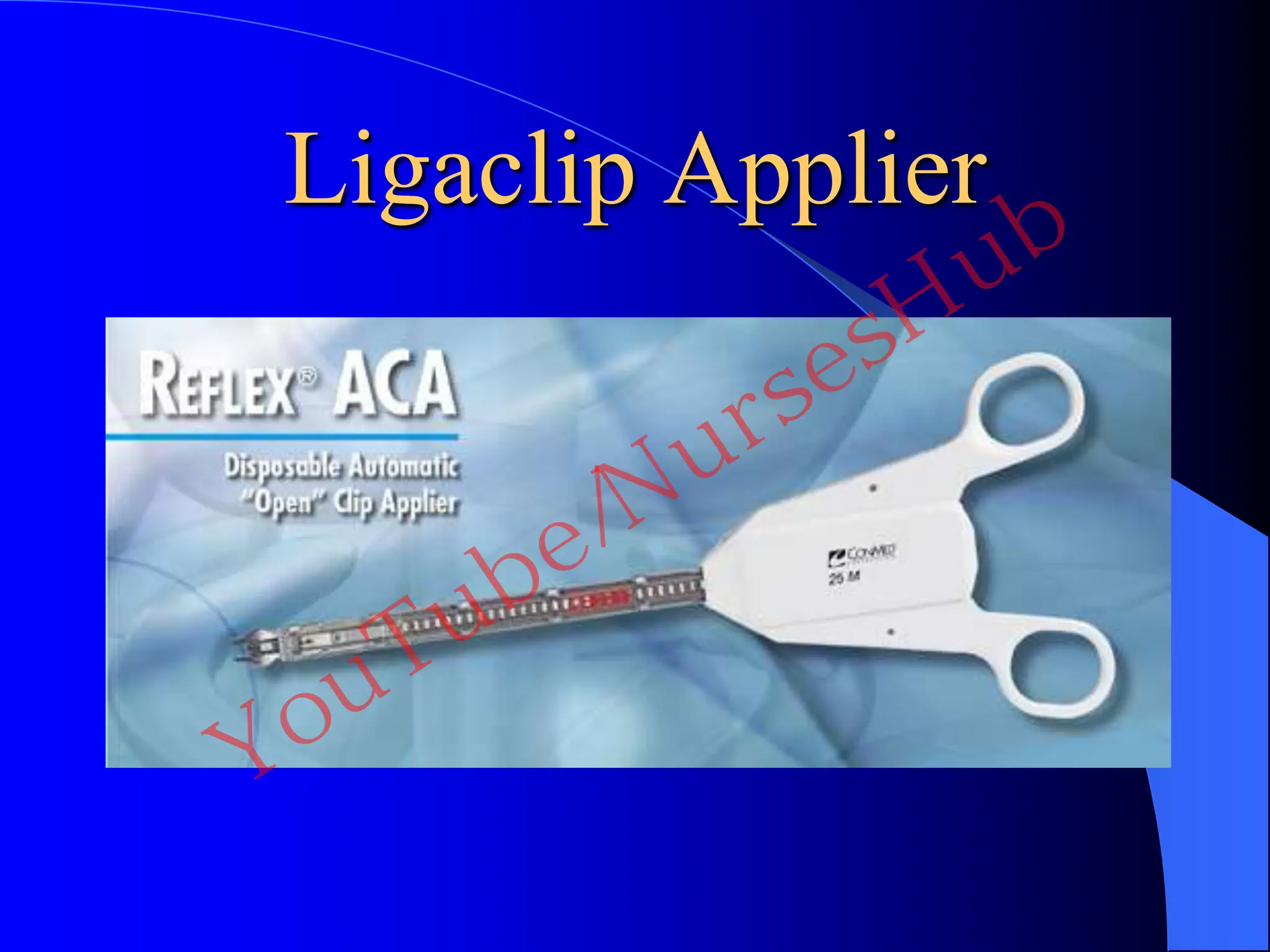
Clipappliers place individual
staples, available in reusable and
disposable
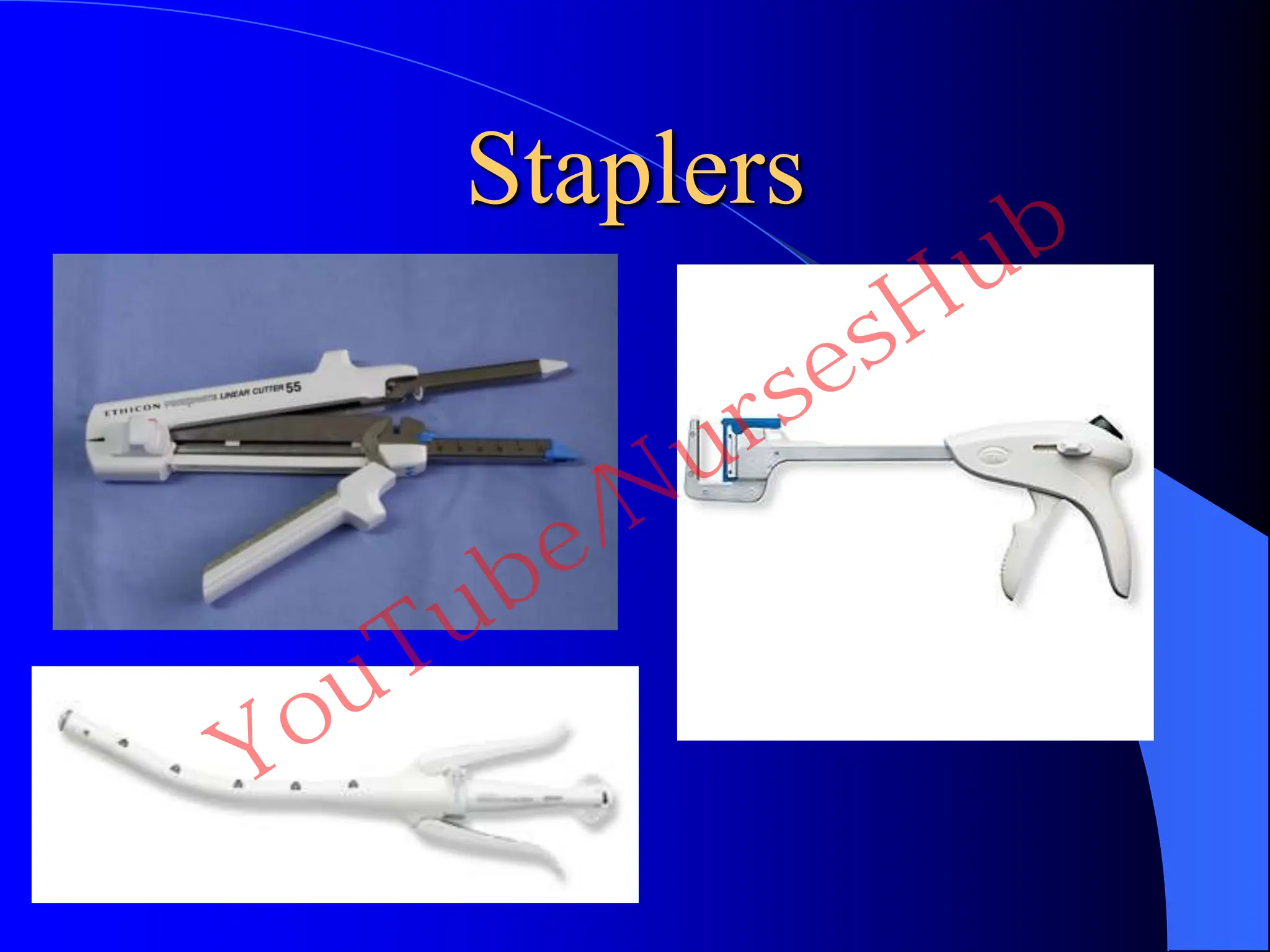
Disposable staplers
YouTube/NursesHub
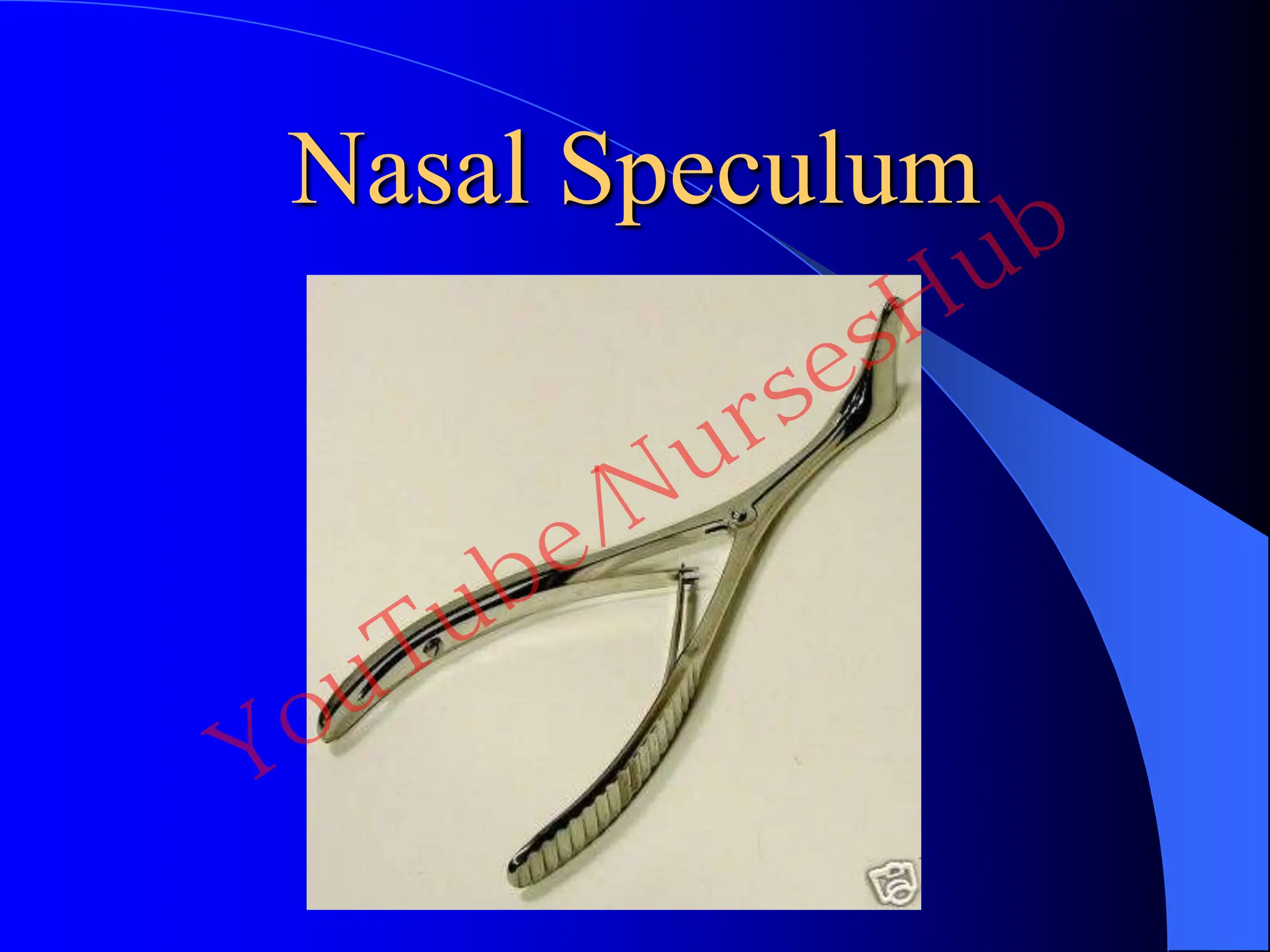
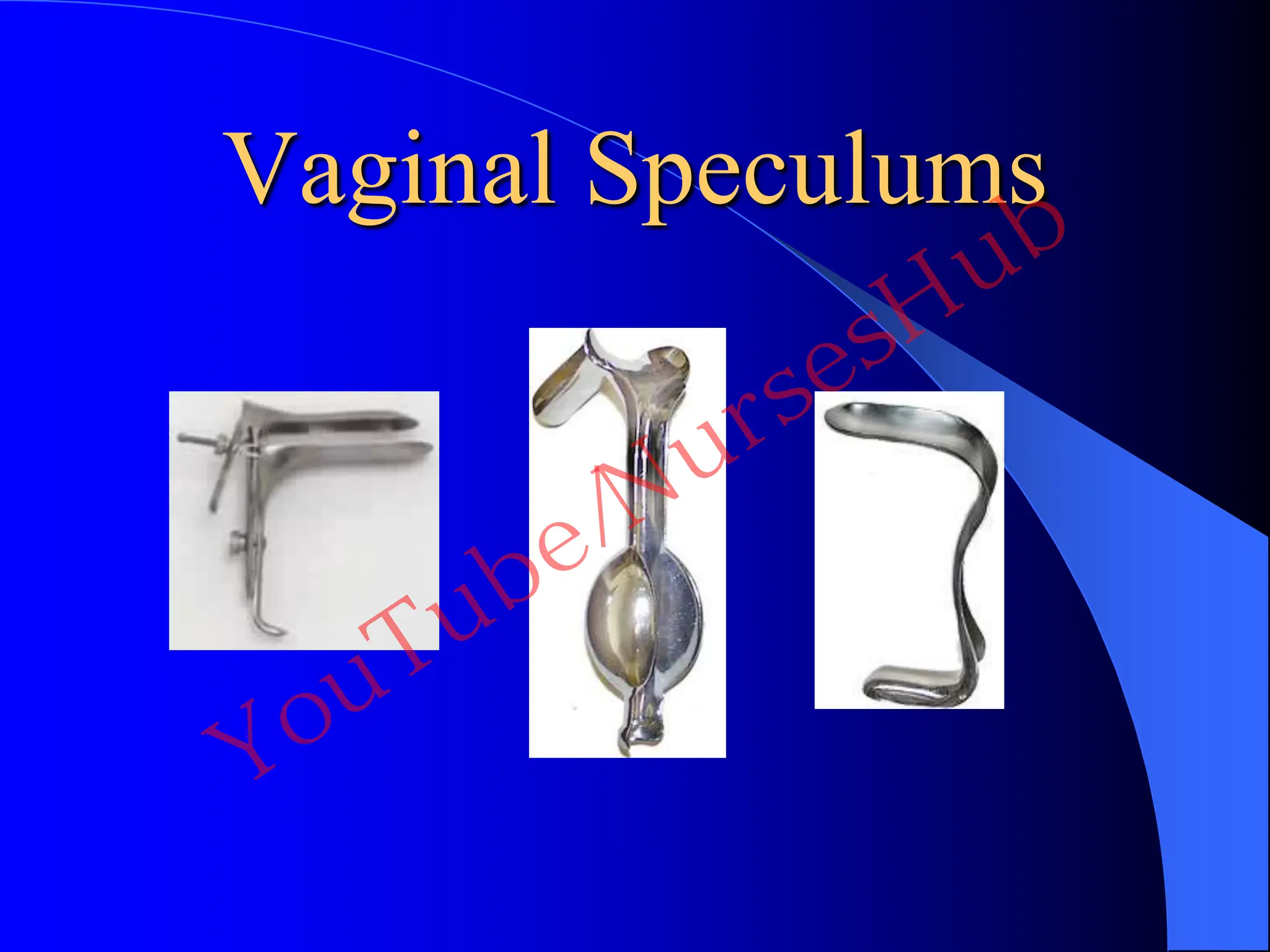
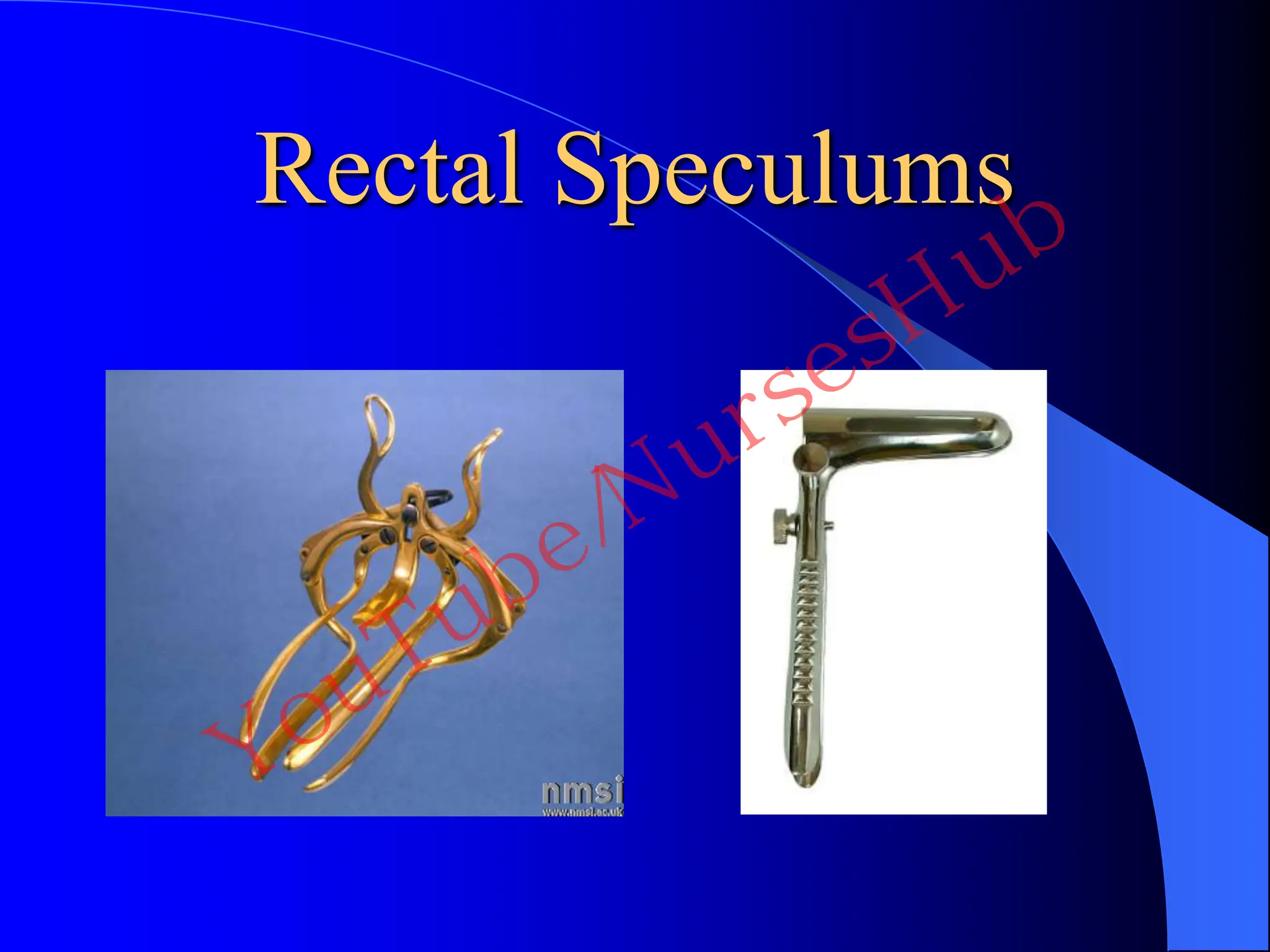
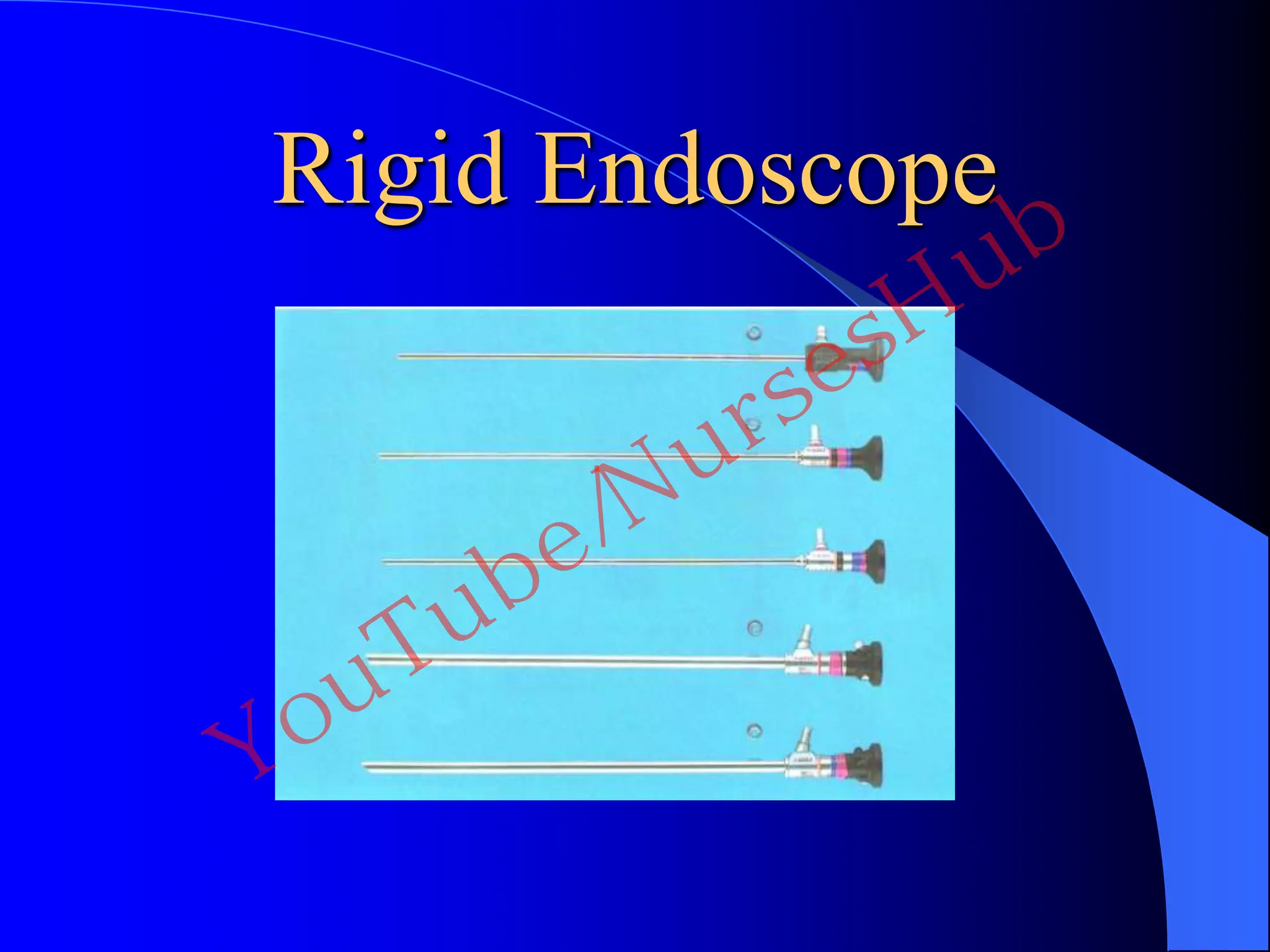
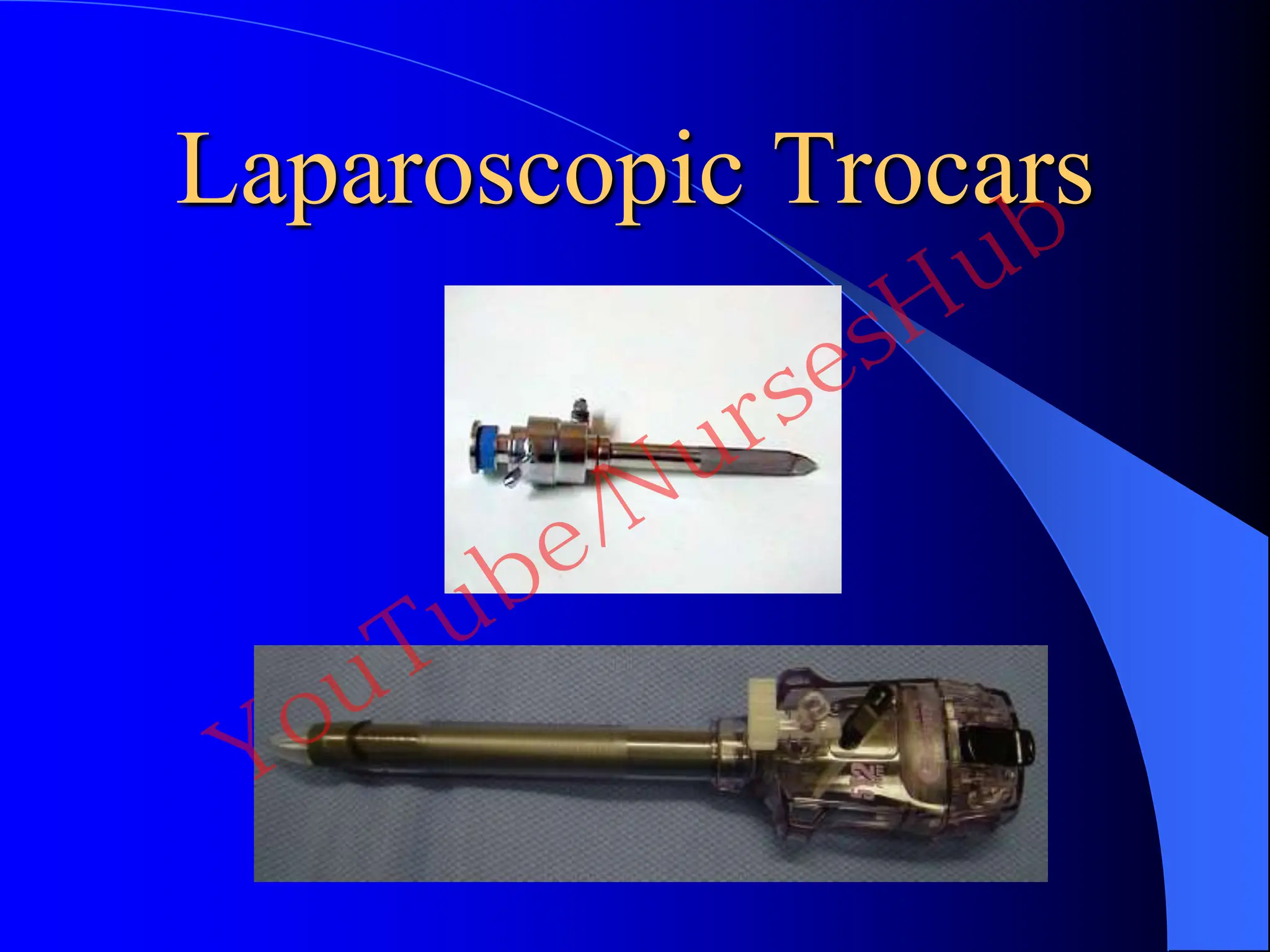
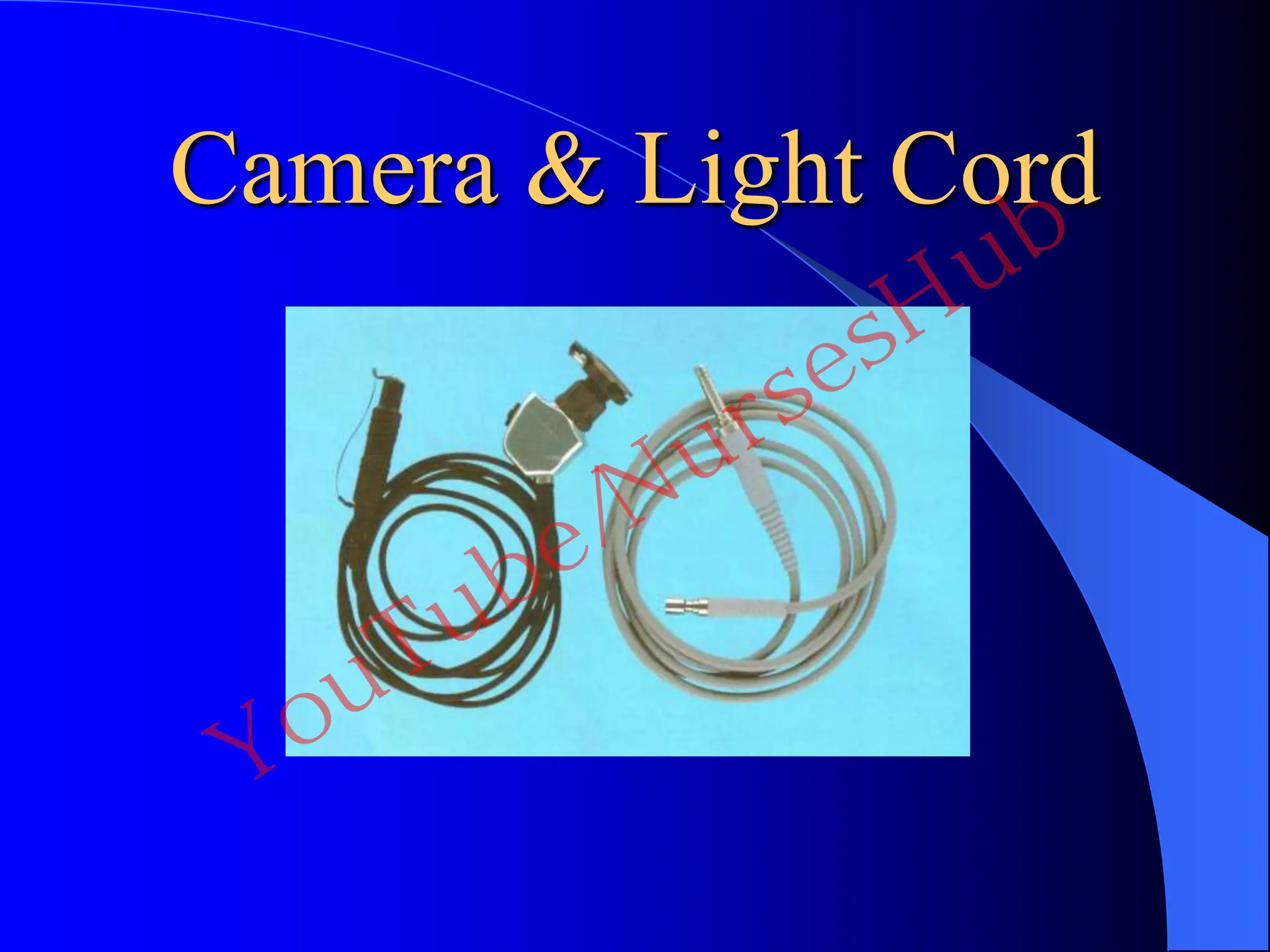
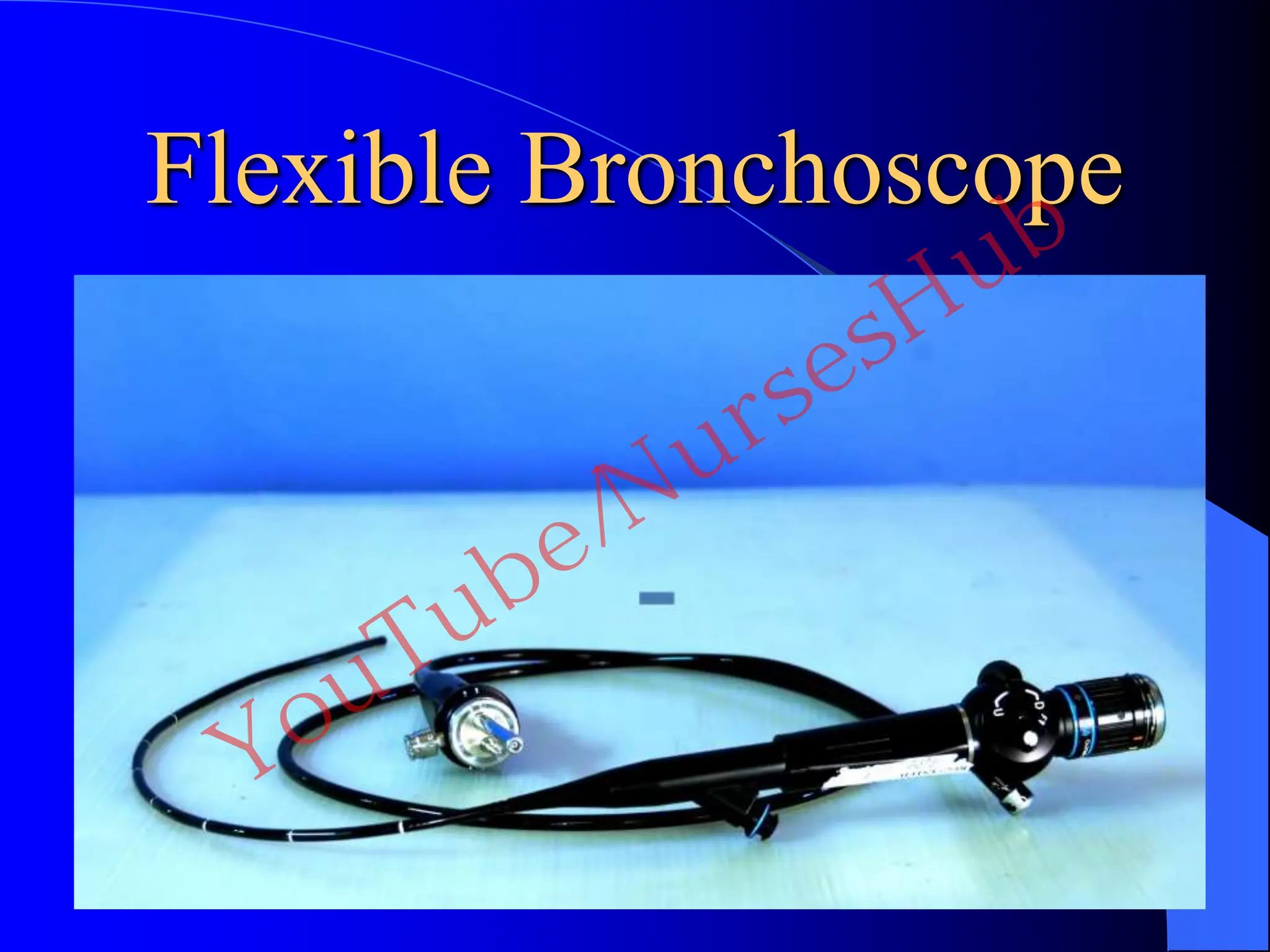
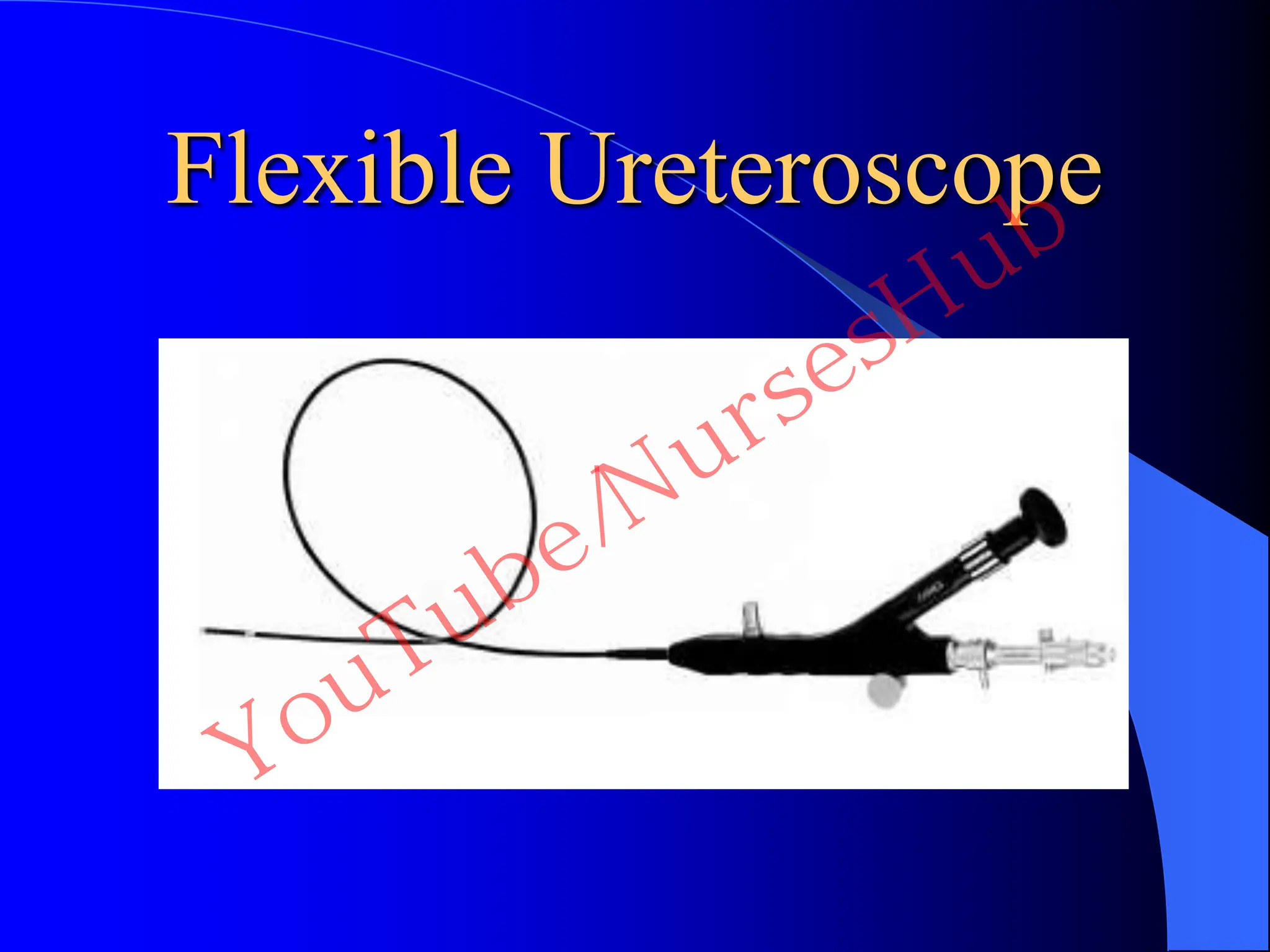
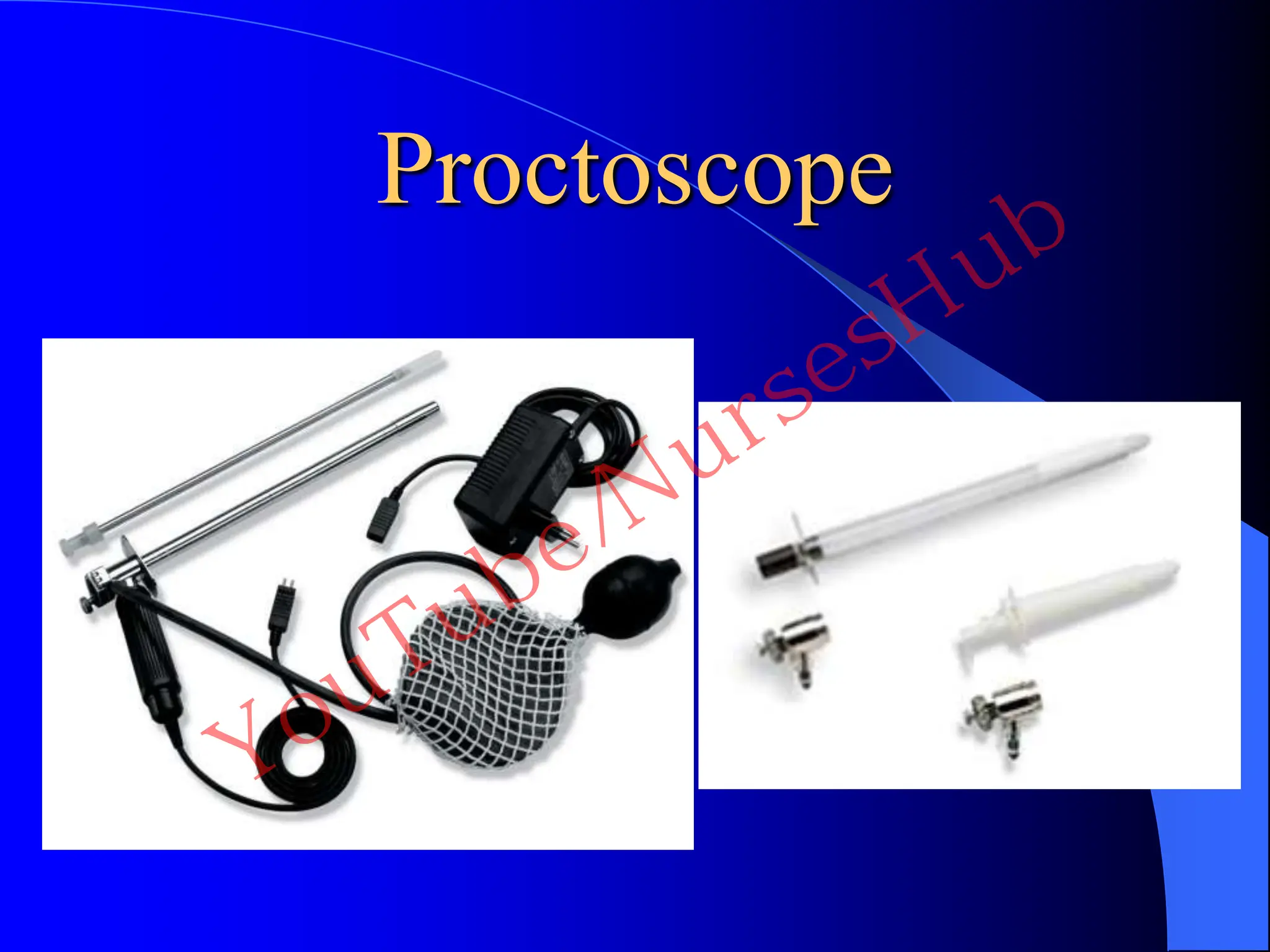
Viewing
Surgeons can examinebody
cavities, hallow organs, or
structures with viewing
instruments
Procedures may be performed
through them
YouTube/NursesHub
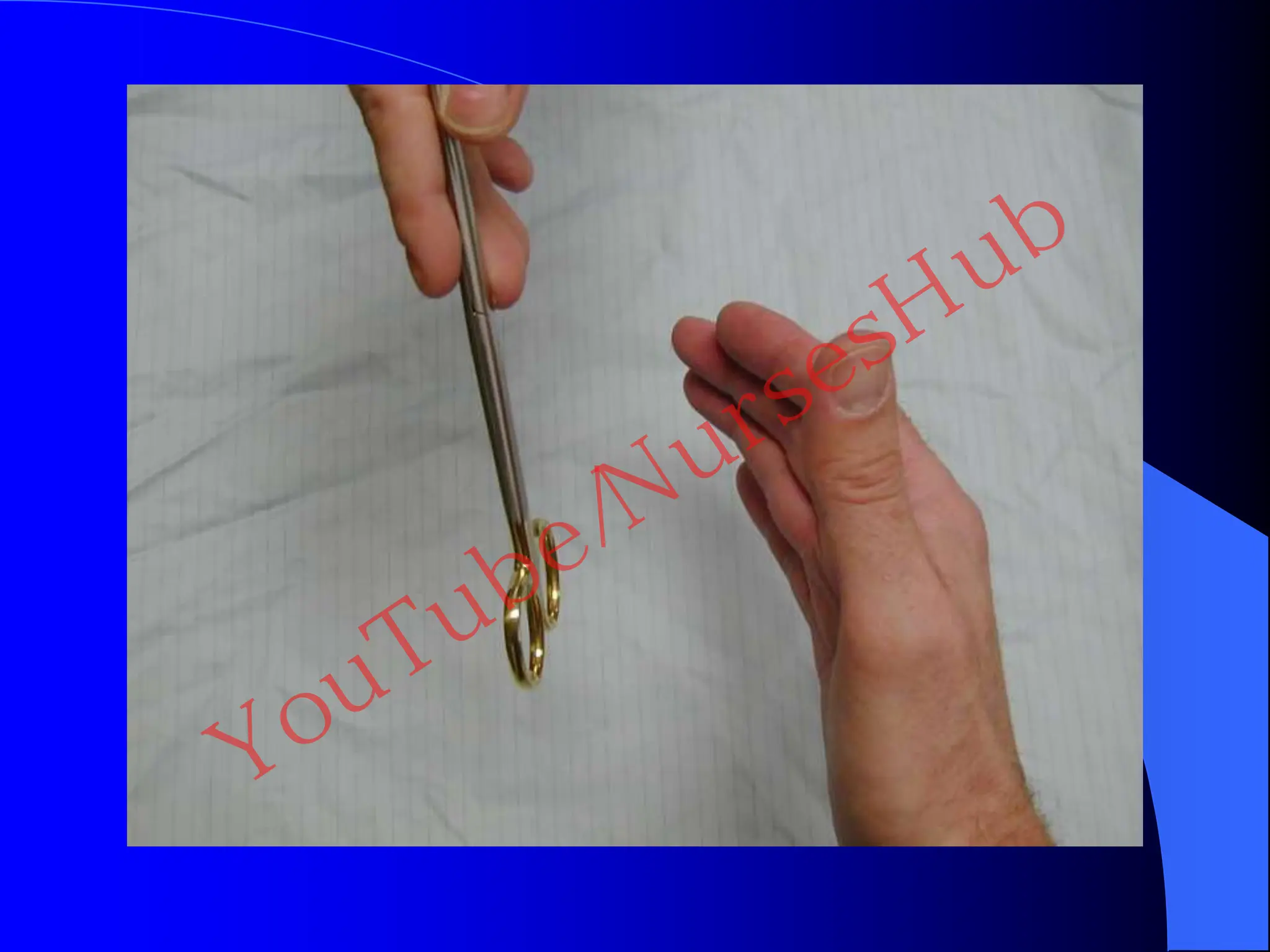
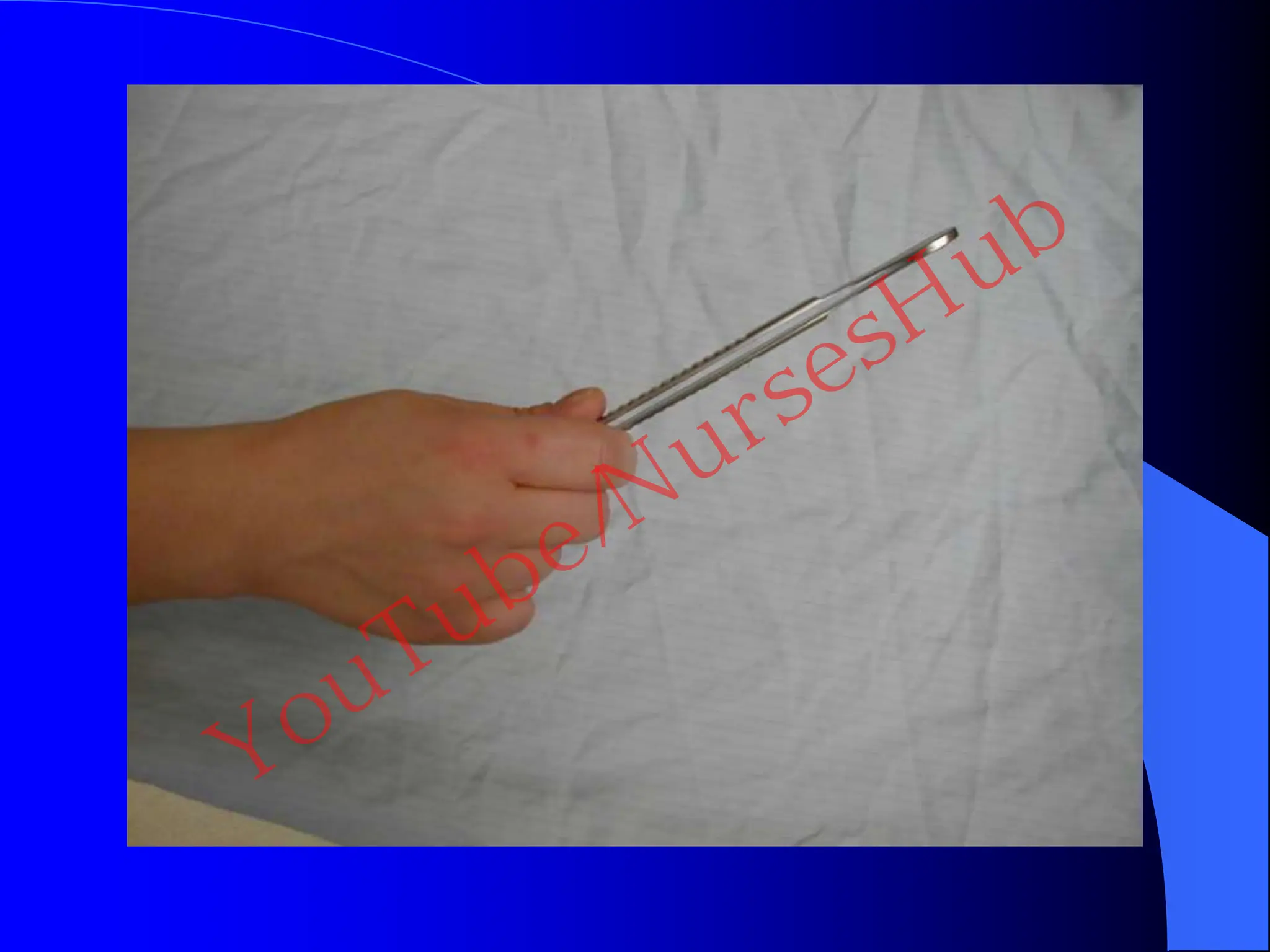
Handling instruments
Instrumentsare placed firmly into the
surgeon’s palm in such a manner that it is
ready of immediate use.
Ringed instruments are handed with the box
locks closed.
Curved instruments are passed with the
curve in the direction of intended use.
YouTube/NursesHub
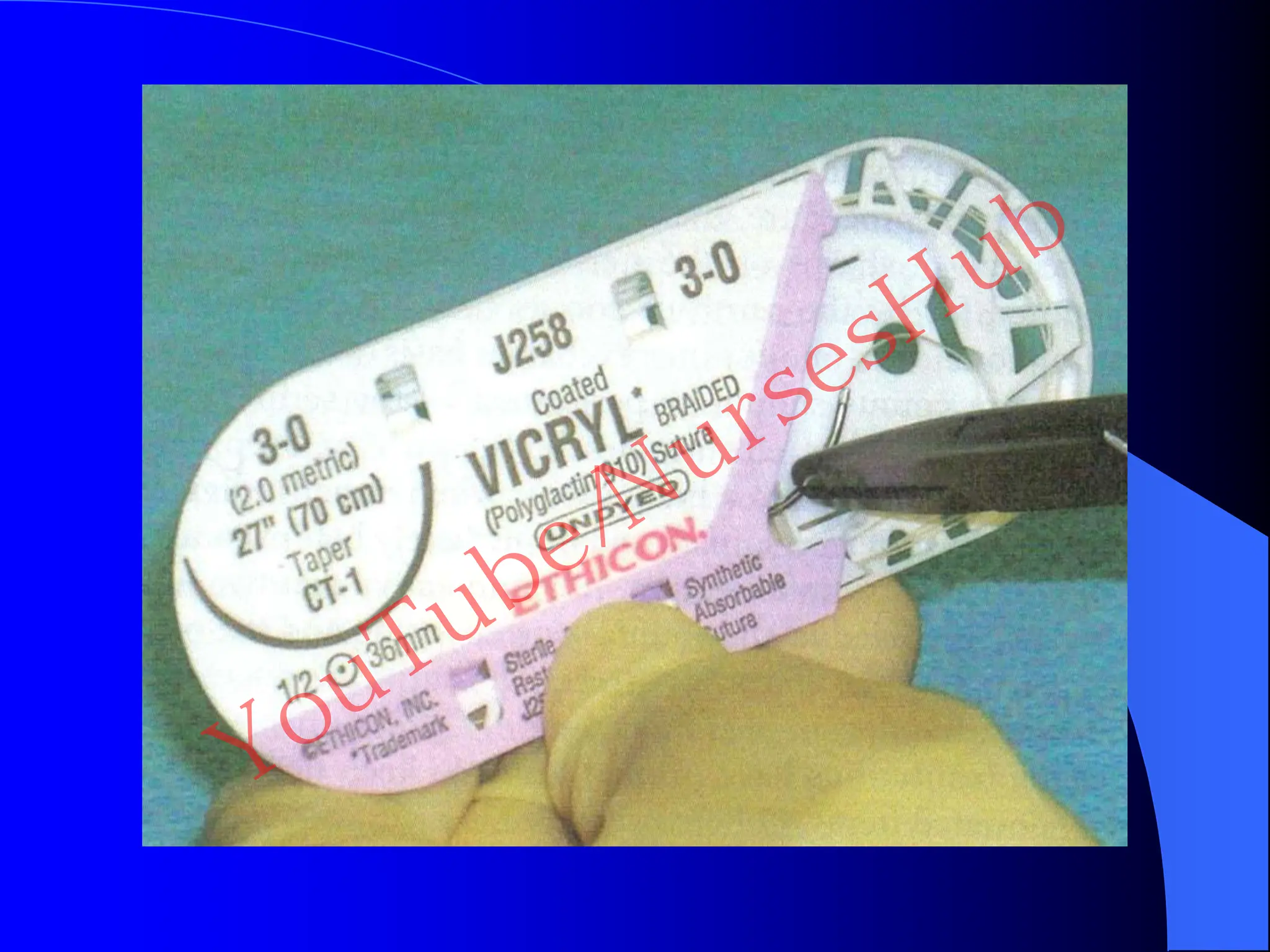
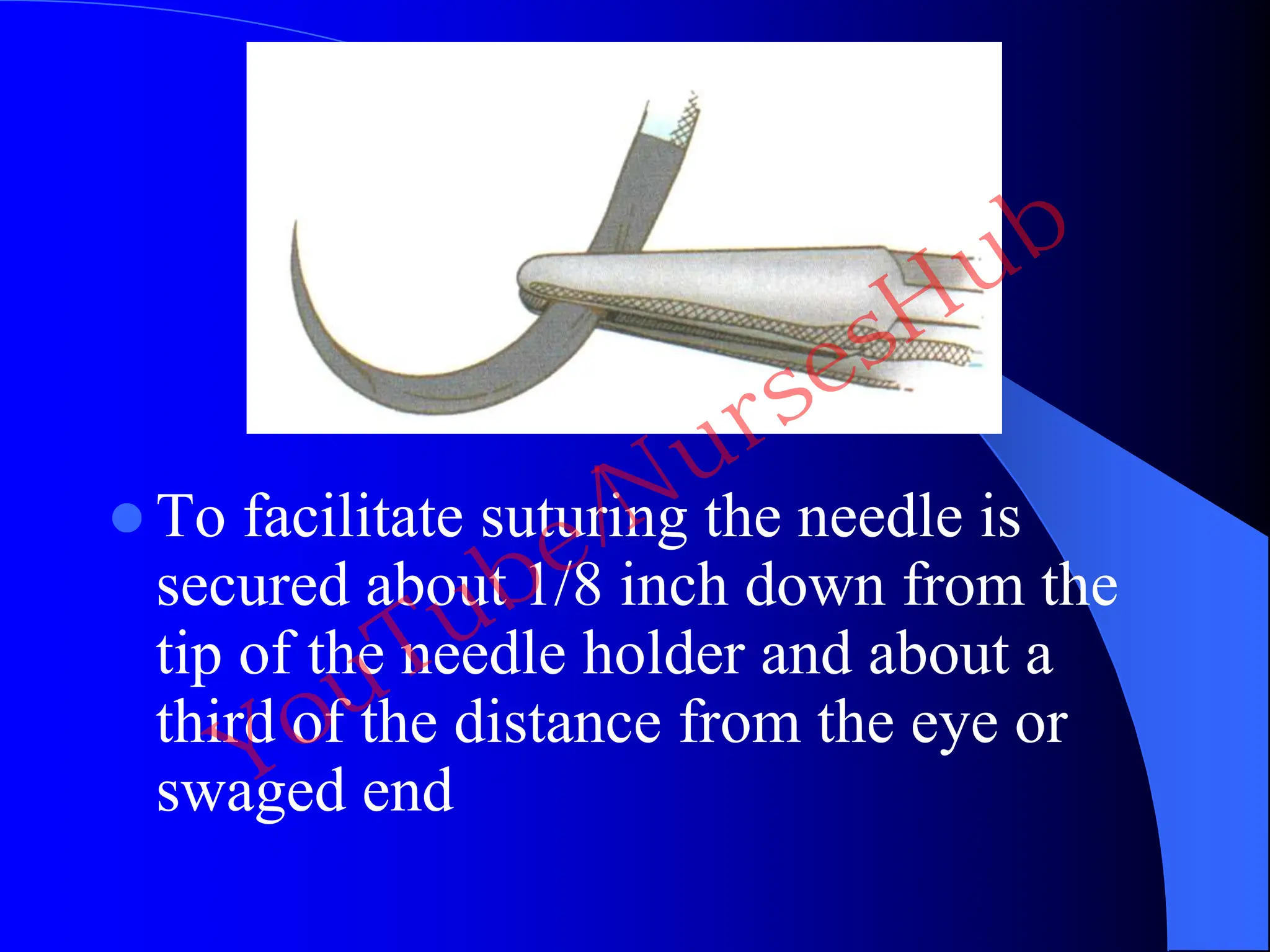
To facilitatesuturing the needle is
secured about 1/8 inch down from the
tip of the needle holder and about a
third of the distance from the eye or
swaged end
YouTube/NursesHub
139.
Care of Instruments
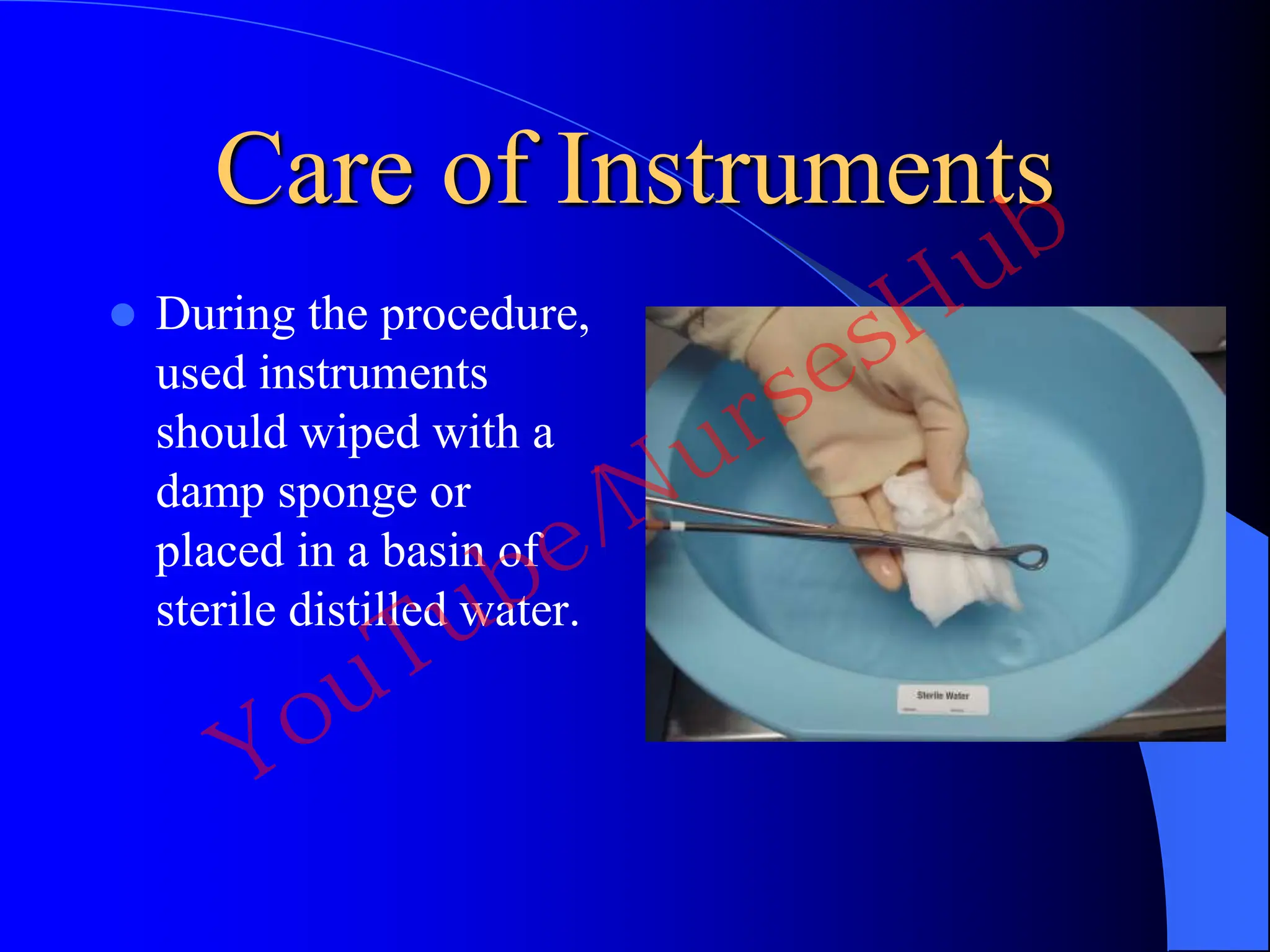
During the procedure,
used instruments
should wiped with a
damp sponge or
placed in a basin of
sterile distilled water.
YouTube/NursesHub
140.
Care of Instruments
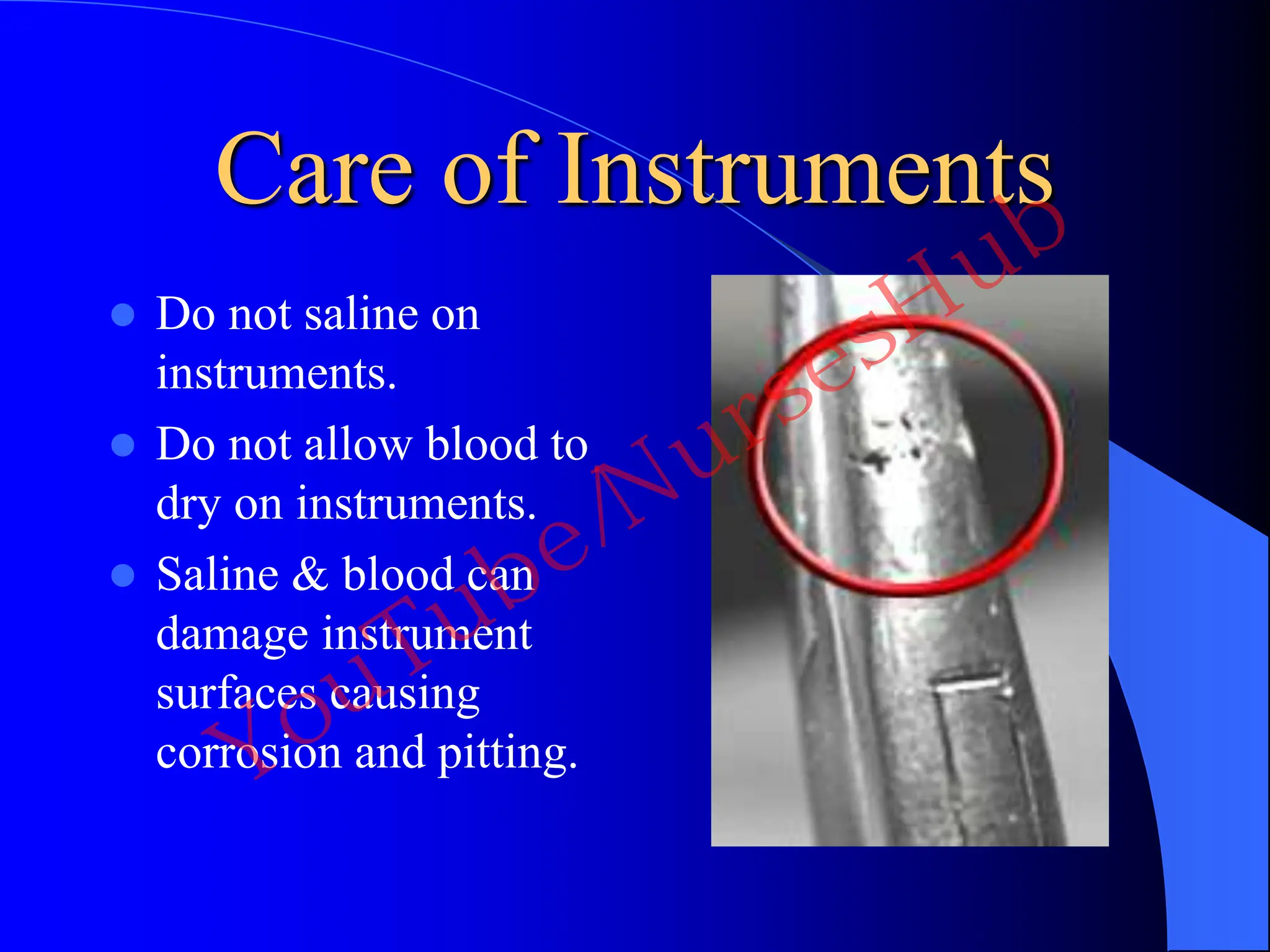
Do not saline on
instruments.
Do not allow blood to
dry on instruments.
Saline & blood can
damage instrument
surfaces causing
corrosion and pitting.
YouTube/NursesHub
141.
Care of Instruments
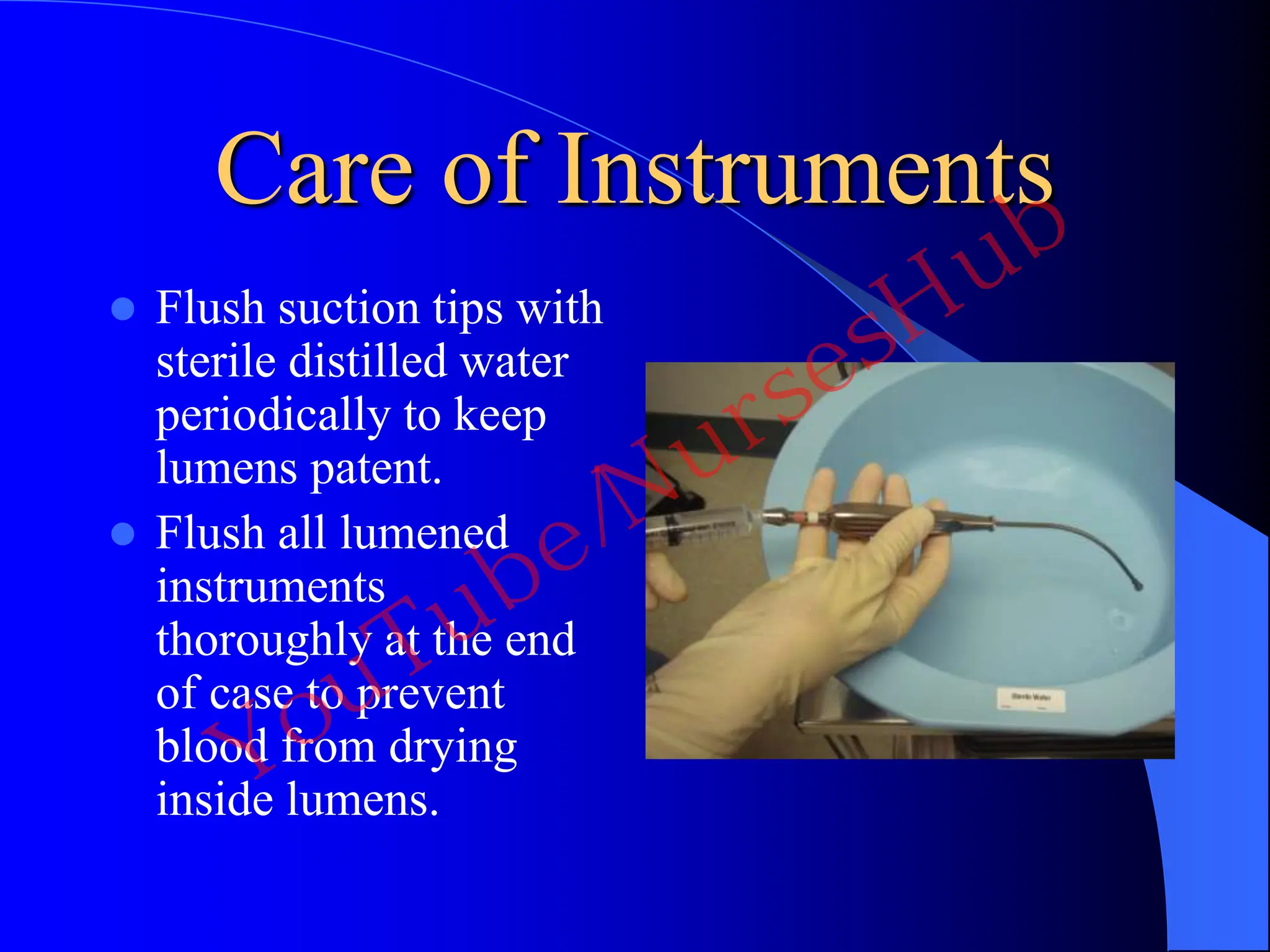
Flush suction tips with
sterile distilled water
periodically to keep
lumens patent.
Flush all lumened
instruments
thoroughly at the end
of case to prevent
blood from drying
inside lumens.
YouTube/NursesHub
142.
Care of Instruments
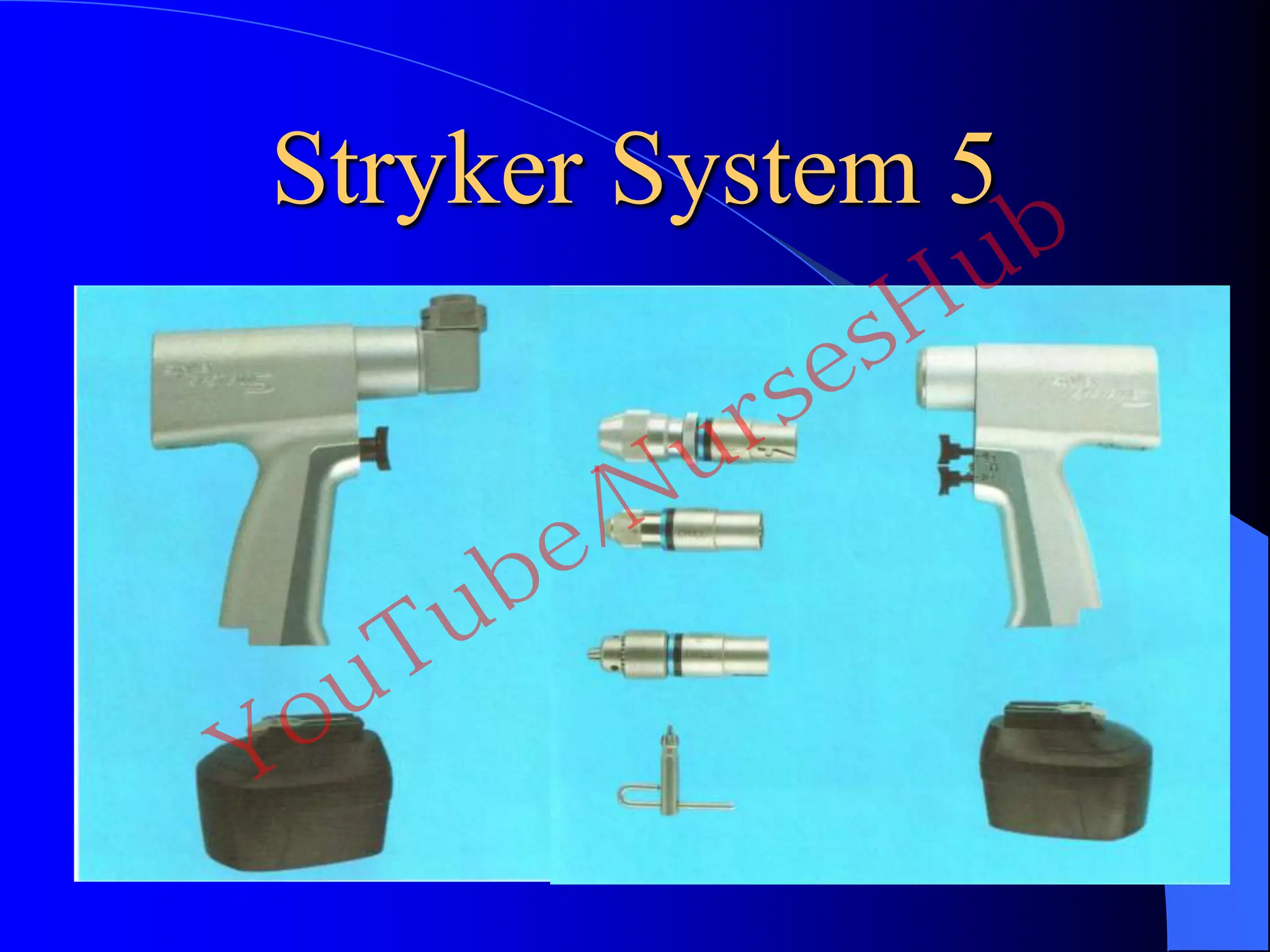
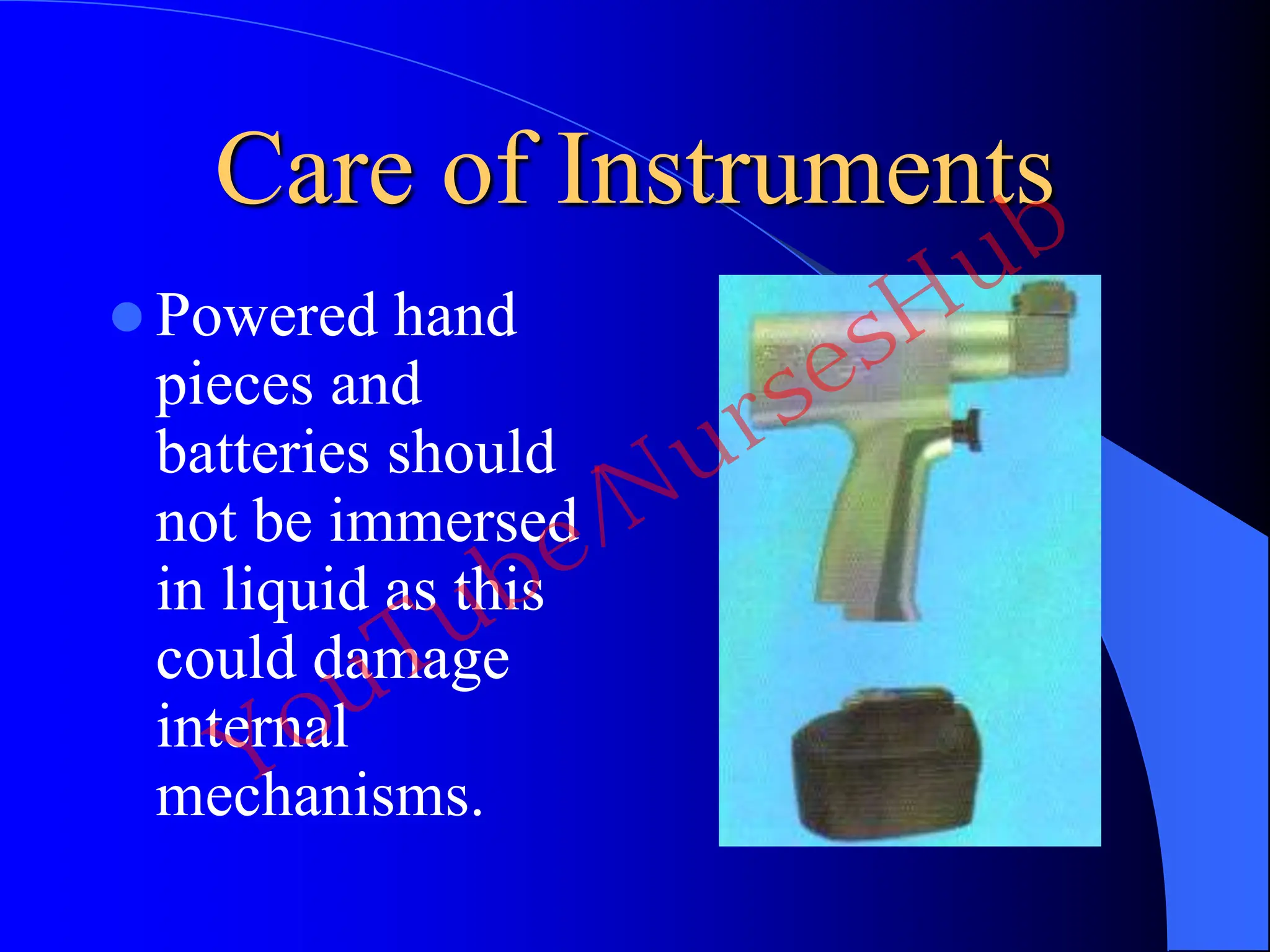
Powered hand
pieces and
batteries should
not be immersed
in liquid as this
could damage
internal
mechanisms.
YouTube/NursesHub