SUPERVISED LEARNING AND
SPEECH RECOGNITION
BY
PALLAVI.N
CONTENTS
>SUPERVISED LEARNING
>HOW IT WORKS
>EVALUATING SUPERVISED LEARNING
> EXAMPLES
>SPEECH RECOGNITION
SUPERVISED LEARNING
Supervised learning, also known as supervised
machine learning, is a subcategory of machine
learning and artificial intelligence.
It is defined by its use of labeled data sets to train
algorithms that to classify data or predict outcomes
accurately.
HOW IT WORKS
 Supervised learning uses a training set to teach
models to yield the desired output.
 This training dataset includes inputs and correct
outputs, which allow the model to learn over
time.
 The data used in supervised learning is labeled
— meaning that it contains examples of both
inputs (called features) and correct outputs
(labels).
 The algorithms analyze a large dataset of these
training pairs to infer what a desired output
value would be when asked to make a
prediction on new data.based on the previous
knowledge it has learned.
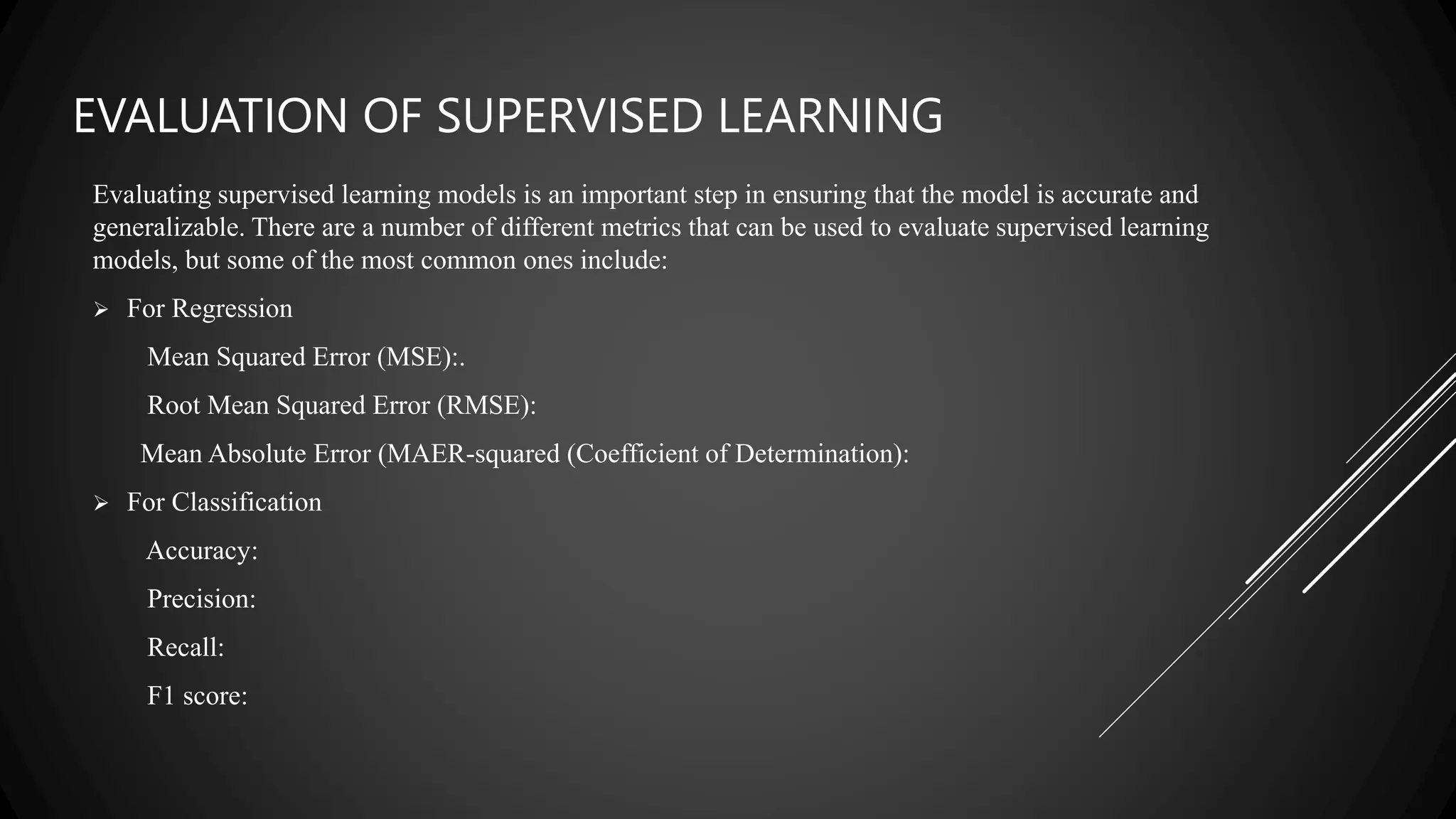
EVALUATION OF SUPERVISED LEARNING
Evaluating supervised learning models is an important step in ensuring that the model is accurate and
generalizable. There are a number of different metrics that can be used to evaluate supervised learning
models, but some of the most common ones include:
 For Regression
Mean Squared Error (MSE):.
Root Mean Squared Error (RMSE):
Mean Absolute Error (MAER-squared (Coefficient of Determination):
 For Classification
Accuracy:
Precision:
Recall:
F1 score:
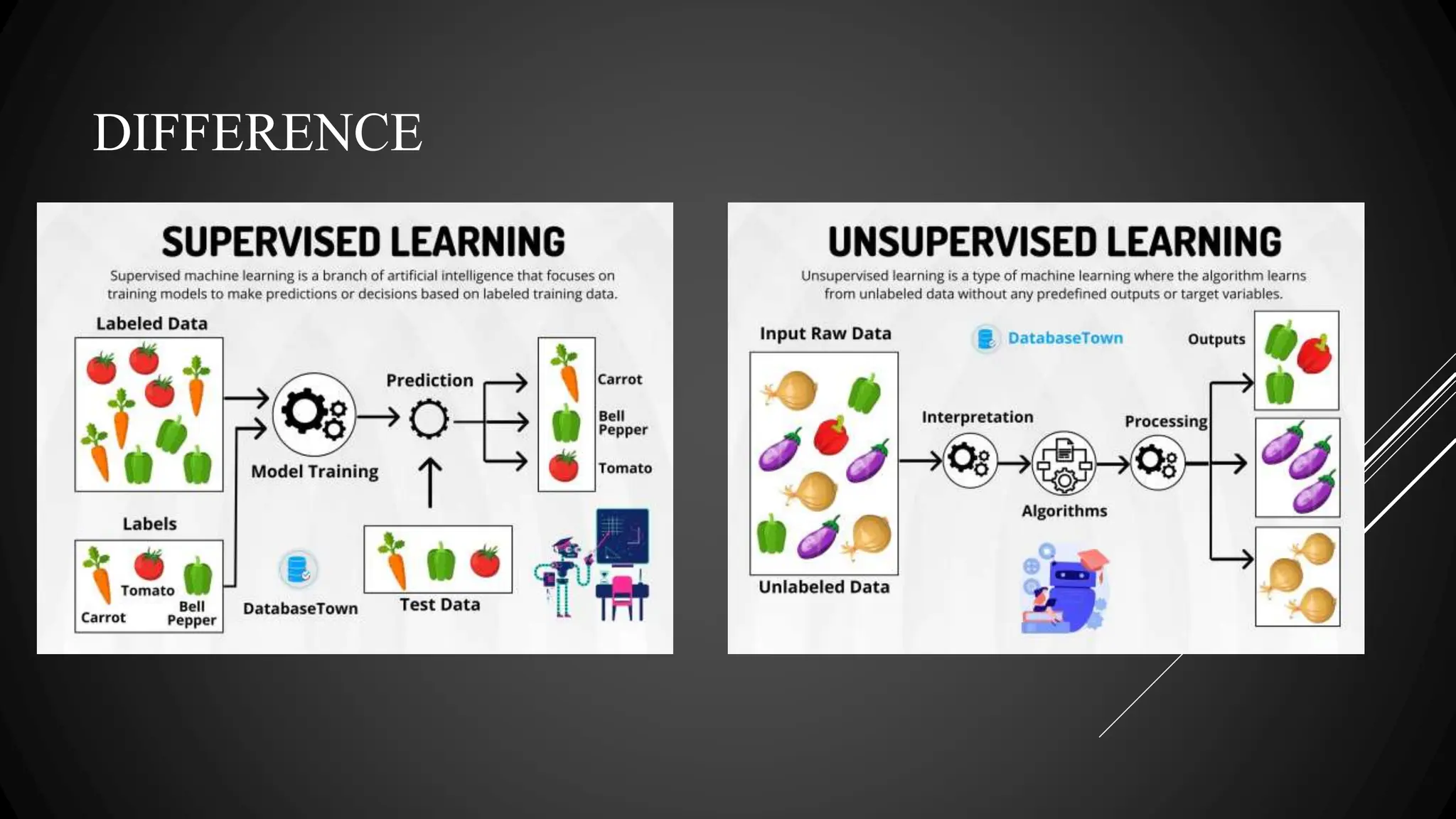
DIFFERENCE
• The process of converting an acoustic
signal , captured by a microphone or
telephone ,to a set of words
SPEECH RECOGNITION
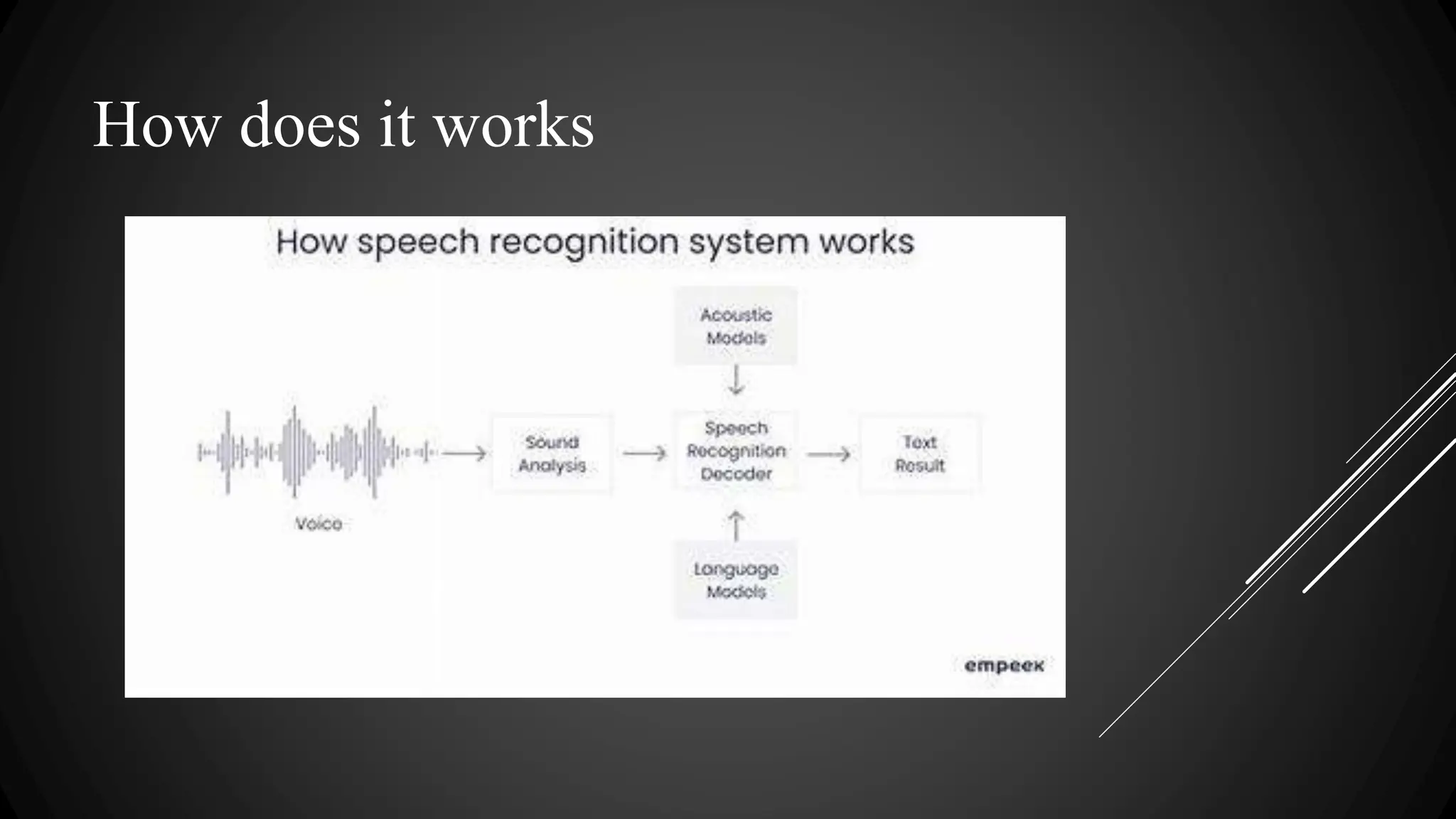
How does it works
TYPES
Speaker –dependent
Speaker-independent
THANK YOU

Supervised Learning and Speech Recognition.pptx

  • 1.
    SUPERVISED LEARNING AND SPEECHRECOGNITION BY PALLAVI.N
  • 2.
    CONTENTS >SUPERVISED LEARNING >HOW ITWORKS >EVALUATING SUPERVISED LEARNING > EXAMPLES >SPEECH RECOGNITION
  • 3.
    SUPERVISED LEARNING Supervised learning,also known as supervised machine learning, is a subcategory of machine learning and artificial intelligence. It is defined by its use of labeled data sets to train algorithms that to classify data or predict outcomes accurately.
  • 4.
    HOW IT WORKS Supervised learning uses a training set to teach models to yield the desired output.  This training dataset includes inputs and correct outputs, which allow the model to learn over time.  The data used in supervised learning is labeled — meaning that it contains examples of both inputs (called features) and correct outputs (labels).  The algorithms analyze a large dataset of these training pairs to infer what a desired output value would be when asked to make a prediction on new data.based on the previous knowledge it has learned.
  • 5.
    EVALUATION OF SUPERVISEDLEARNING Evaluating supervised learning models is an important step in ensuring that the model is accurate and generalizable. There are a number of different metrics that can be used to evaluate supervised learning models, but some of the most common ones include:  For Regression Mean Squared Error (MSE):. Root Mean Squared Error (RMSE): Mean Absolute Error (MAER-squared (Coefficient of Determination):  For Classification Accuracy: Precision: Recall: F1 score:
  • 6.
  • 7.
    • The processof converting an acoustic signal , captured by a microphone or telephone ,to a set of words SPEECH RECOGNITION
  • 8.
  • 9.
  • 10.