Subcutaneous
wounds
(Bruises and
Muscle
Contusions)
Lecturer
Mohammed Saleem Alnajjar
This Photo by Unknown Author is licensed under CC BY-SA
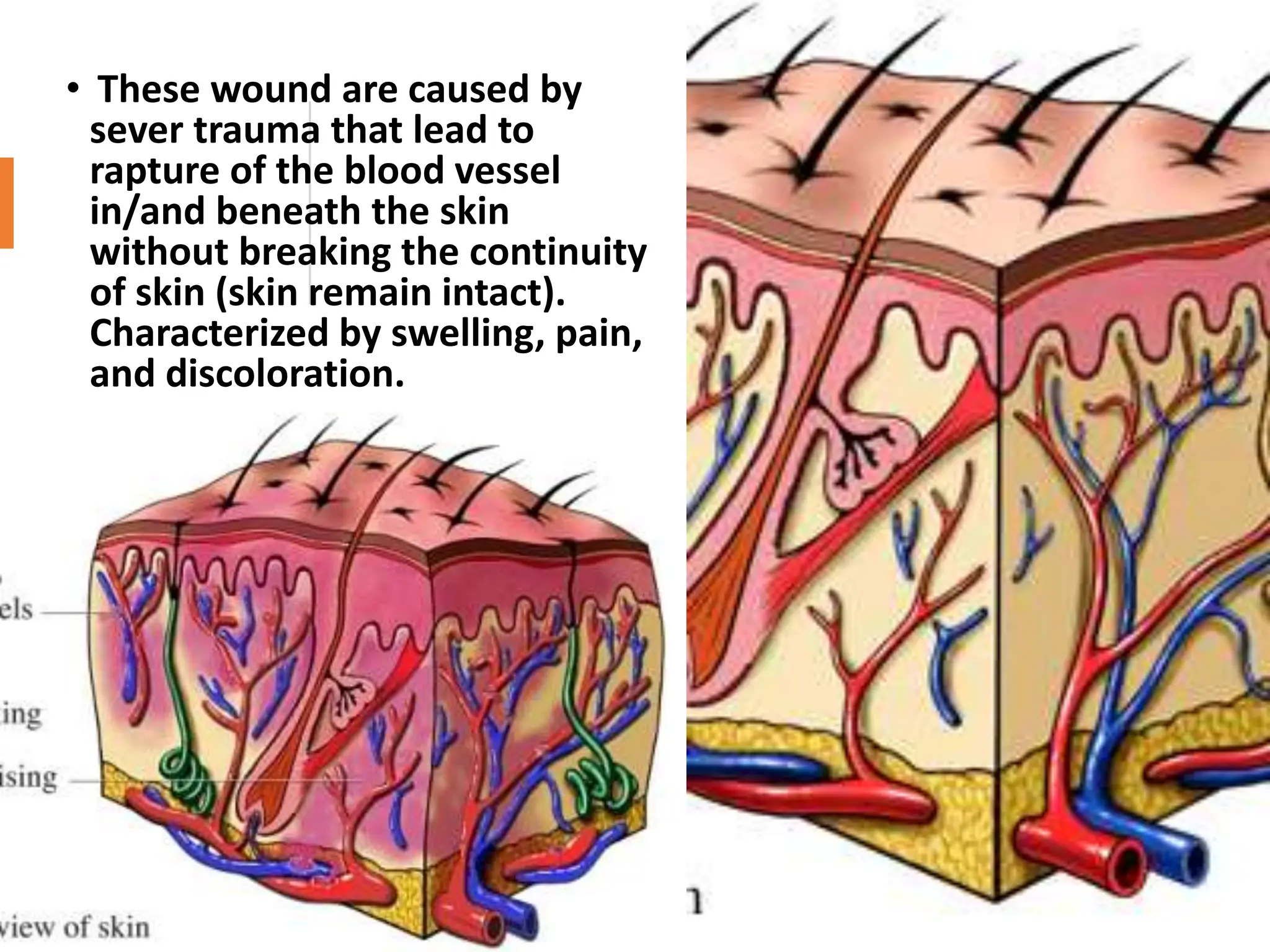
• These wound are caused by
sever trauma that lead to
rapture of the blood vessel
in/and beneath the skin
without breaking the continuity
of skin (skin remain intact).
Characterized by swelling, pain,
and discoloration.
Skin (muscle fibers and
connective tissue) are
crushed but the skin does
not break or rupture. blood
from the ruptured
capillaries leaks out under
the skin and pools, causing
the area to swell and form
a red or purplish.
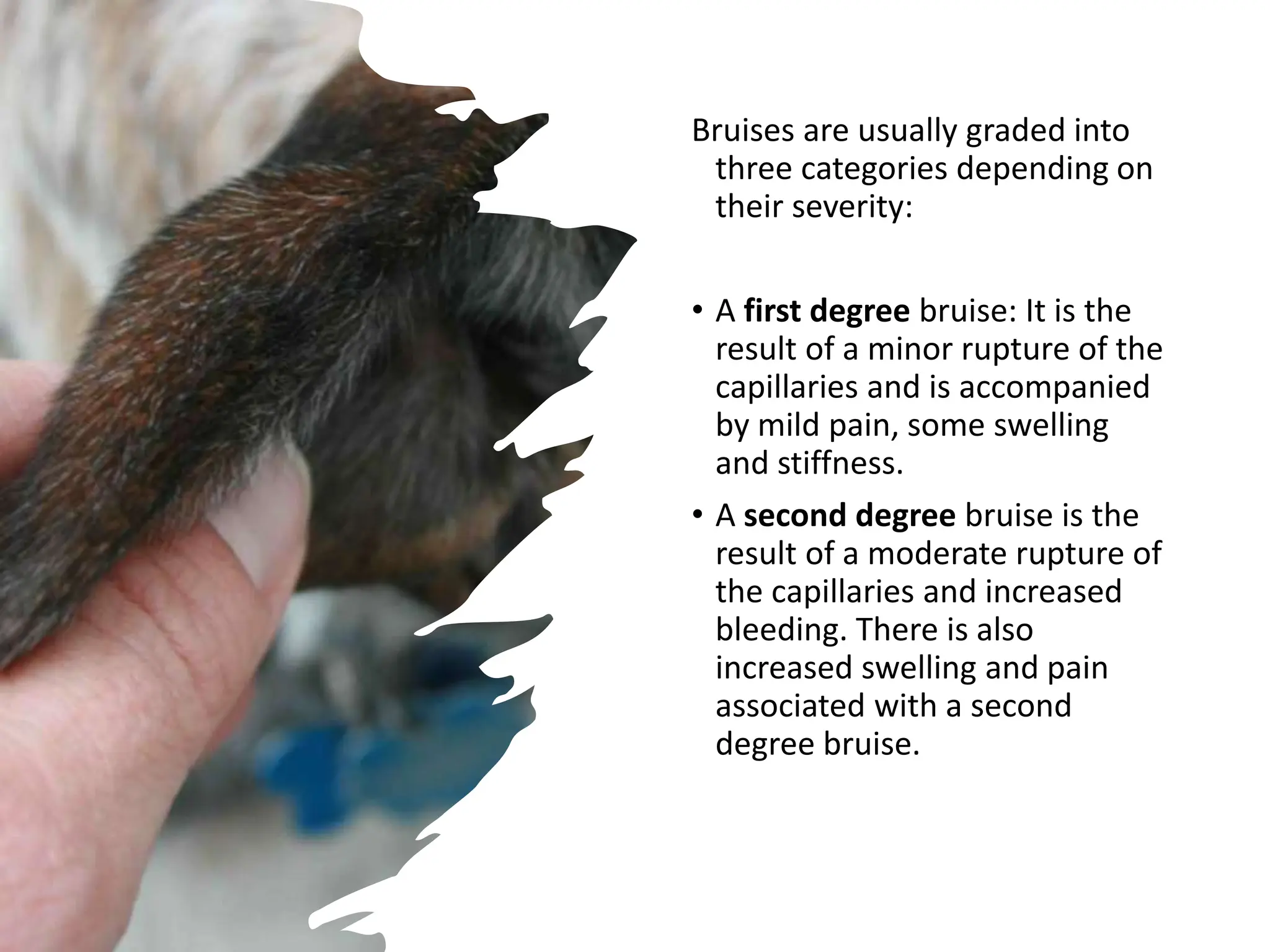
Bruises are usually graded into
three categories depending on
their severity:
• A first degree bruise: It is the
result of a minor rupture of the
capillaries and is accompanied
by mild pain, some swelling
and stiffness.
• A second degree bruise is the
result of a moderate rupture of
the capillaries and increased
bleeding. There is also
increased swelling and pain
associated with a second
degree bruise.
A third degree bruise is the most severe
one, which result in of a major rupture
of the capillaries and will result in
massive swelling, and severe pain.
Thrombosis of blood vessel underneath
to the skin part ,the skin will under go
necrosis and sluff off
Depending on the severity of trauma
shock or damage to the internal organs
may occurs .
A contusion to motor nerve may occur
leading to temporary paralysis .
Treatment
• First degree contusion treated by
cold application on the area.
• Second degree contusion treatedd
by aspirate the blood under
aseptic condition and it is
preferred to postpone the
aspiration for several day to allow
coagulation of blood and clot
formation after the aspiration a
pressure bandage if feasible to
obliterate dead space between
skin and subcutaneous tissue.
Treatment
• Third degree contusion treated by hot
application to stimulate blood
circulation to the area and to prevent
gangrene of the contused tissue.
• Removal of all necrotic and
gangrenous tissues under aseptic
precautions
• Application of topical agents.

Subcutaneous wounds bruises and Contusions .pptx

  • 1.
    Subcutaneous wounds (Bruises and Muscle Contusions) Lecturer Mohammed SaleemAlnajjar This Photo by Unknown Author is licensed under CC BY-SA
  • 2.
    • These woundare caused by sever trauma that lead to rapture of the blood vessel in/and beneath the skin without breaking the continuity of skin (skin remain intact). Characterized by swelling, pain, and discoloration.
  • 3.
    Skin (muscle fibersand connective tissue) are crushed but the skin does not break or rupture. blood from the ruptured capillaries leaks out under the skin and pools, causing the area to swell and form a red or purplish.
  • 7.
    Bruises are usuallygraded into three categories depending on their severity: • A first degree bruise: It is the result of a minor rupture of the capillaries and is accompanied by mild pain, some swelling and stiffness. • A second degree bruise is the result of a moderate rupture of the capillaries and increased bleeding. There is also increased swelling and pain associated with a second degree bruise.
  • 8.
    A third degreebruise is the most severe one, which result in of a major rupture of the capillaries and will result in massive swelling, and severe pain. Thrombosis of blood vessel underneath to the skin part ,the skin will under go necrosis and sluff off Depending on the severity of trauma shock or damage to the internal organs may occurs . A contusion to motor nerve may occur leading to temporary paralysis .
  • 9.
    Treatment • First degreecontusion treated by cold application on the area. • Second degree contusion treatedd by aspirate the blood under aseptic condition and it is preferred to postpone the aspiration for several day to allow coagulation of blood and clot formation after the aspiration a pressure bandage if feasible to obliterate dead space between skin and subcutaneous tissue.
  • 10.
    Treatment • Third degreecontusion treated by hot application to stimulate blood circulation to the area and to prevent gangrene of the contused tissue. • Removal of all necrotic and gangrenous tissues under aseptic precautions • Application of topical agents.