on the Block 
GBS Instructional Coaches, 2014
• Take turns quizzing each other 
– Praise or coach based on response 
• Trade cards 
• Find new partner 
• Quiz 5 people then return to seat
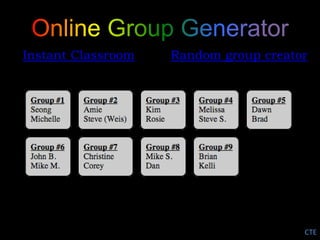
Instant Classroom Random group creator 
Social Studies
Instant Classroom Random group creator 
CTE
• Take turns quizzing each other 
– Praise or coach based on response 
• Trade cards 
• Find new partner 
• Quiz 5 people then return to seat
Movement 
Stretch 
Break 
Grouping Activity
Movement 
Stretch 
Break 
Grouping Activity
• Instant Classroom 
• Random group creator
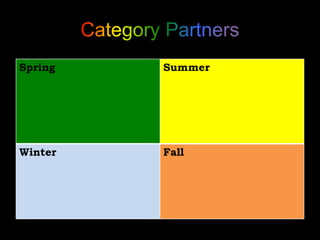
Spring Summer 
Winter Fall
Movement 
Stretch 
Break 
Grouping Activity
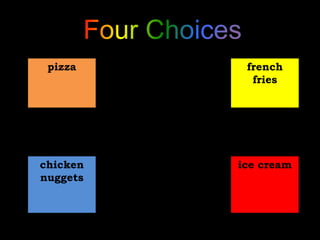
pizza french 
fries 
chicken 
nuggets 
ice cream
• Take turns quizzing each other 
– Praise or coach based on response 
• Trade cards 
• Find new partner 
• Quiz 5 people then return to seat
1. One thing you already do 
that this reminded you 
about. 
1. One new thing from today 
you might like to try.

Student Movement on a Block Schedule

Editor's Notes

  • #2 Welcome. Idea of movement has come up right away, we’re getting a lot questions about it, noticed in our own planning have to think about it more. Going to spend next 20 min or so talking about ways we’ve found to get kids up and moving. Not the ONLY thing to come up with new schedule (also collaboration, class discussion, pacing, downtime) Here to give a quick overview of MANY ways to incorporate movement into class. If you want to learn more about any of them, we can give you pages from the books where we found them, we can work together together to implement them in your class. Today’s presentation is NOT meant to make anyone an expert on any of these strategies.
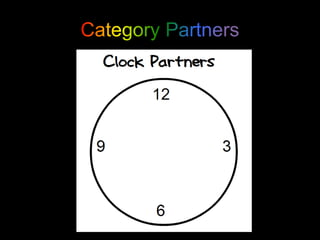
  • #4 Use to get first partners for Quiz Quiz Trade
  • #5 Use to get first partners for Quiz Quiz Trade
  • #7 Overview of 3 categories Put a star next to any you hear if you want to learn more – I’ll be going too fast for you to really know any of them, just get a taste of if you want to hear more.
  • #8 Over of book – written by Naperville math teacher, each activity crosses MIDLINE of body, which increases connections between right and left hemispheres of brain, helps get brain more active and ready for next part of class
  • #9 Grouping - PRE-PLANNED, Structured way to group students so they get out of their seats.
  • #10 Use to get first partners for Quiz Quiz Trade
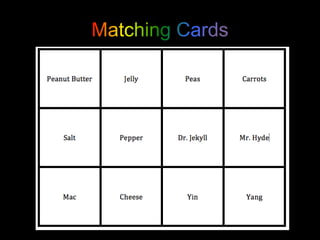
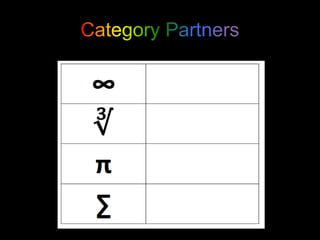
  • #11 Find your pair Might have to throw in a group of 3 – Bacon, Lettuce, Tomato (can be content-based)
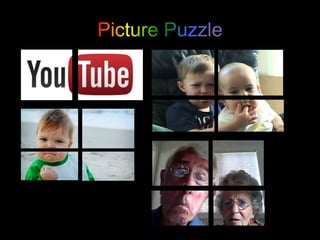
  • #12 Cut up a picture and pass out each piece. Groups of 2-4 find each other . (You-Tube is for group of 2)
  • #13 Find your 3 o’clock partner (can assign one but allow others to be choice)
  • #14 Create four partnerships – can keep for a day, a week, a full quarter, etc.
  • #15 Can be CONTENT-BASED Can be as RANDOM or as PRE-ARRANGED as you wish (maybe assign ONE of the partners and the rest are choice, etc.)
  • #16 TIME FOR A BRAIN BREAK – Different direction circles (page 4 in book)
  • #17 The movement IS the lesson, is an inherent part of the learning, not just a transition
  • #18 When you want students to hear a few different opinions, or practice both sides of an argument. Can use SAME cards as QUIZ QUIZ TRADE
  • #19 Teacher states facts, student move to side of the room that is either Agree or Disagree. Call on 2-4 students to explain their position or have them discuss why in their current group and then present argument to other side. (NOT FOR RIGHT/WRONG – works for OPINION when it’s a matter of interpreting evidence) OR have many different statements and they move several times.
  • #20 Multiple choice question with four possible answers, each corner is a choice. NOT GOOD FOR RIGHT/WRONG – better for opinion.
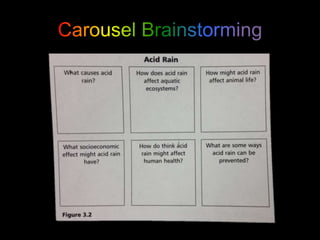
  • #21 1. Teacher prepares a series of questions about a topic, word, concept students are about to study or research. 2. Hang up questions around the room on chart paper, or at different groups of desks/tables. 3. Have students take a marker and add a response to each question, OR have groups rotate to different questions and one recorder adds what the group knows, then whole group switches together. 4. Whole-class discussion of responses. 5. Might revisit after research to change/refute/confirm original responses
  • #22 Students explore multiple texts or images that are placed around the room: - Student work - multiple historical documents - images - a collection of quotations Distribute around room (walls or tables) Viewing instructions : informal notes complete graphic organizer compile list of questions identify similarities and differences tour the room, then sit and respond can be individual or with partner or in small groups must distribute around room, no clustering in large groups
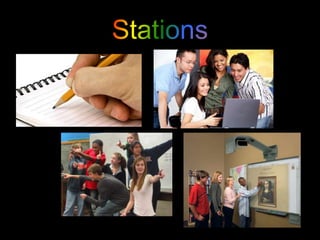
  • #23 Think of times you have students pass materials - INSTEAD, keep materials stationary and move kids around them. Voila, stations. Could print directions at each station for that activity, or explain all of them ahead of time. EXAMPLE: Math problems with different situations. Instead of kids flipping pages around looking for each situation, print and post around the room. Pictured: Can use stations that incorporate the SMARTboard or whiteboard as a station, a writing station, one using Chromebooks, one as a group activity (like a tableau), then all have to stop and see what each other are doing, then move to next station.
  • #24 Can be for VOCAB or REVIEW QUESTIONS before a quiz or test
  • #25 (turn-to-your-partner is NOT the same as Think/Pair/Share – for more on that ask me later) One thing you ALREADY do that this made you think about. One NEW thing you might try. USE INSTANT CLASSROOM AGAIN - Random Name generator (question mark icon). To call on 2-3 people. Can be something you heard from partner or your own response.