PRESENTED BY
GROUP 6
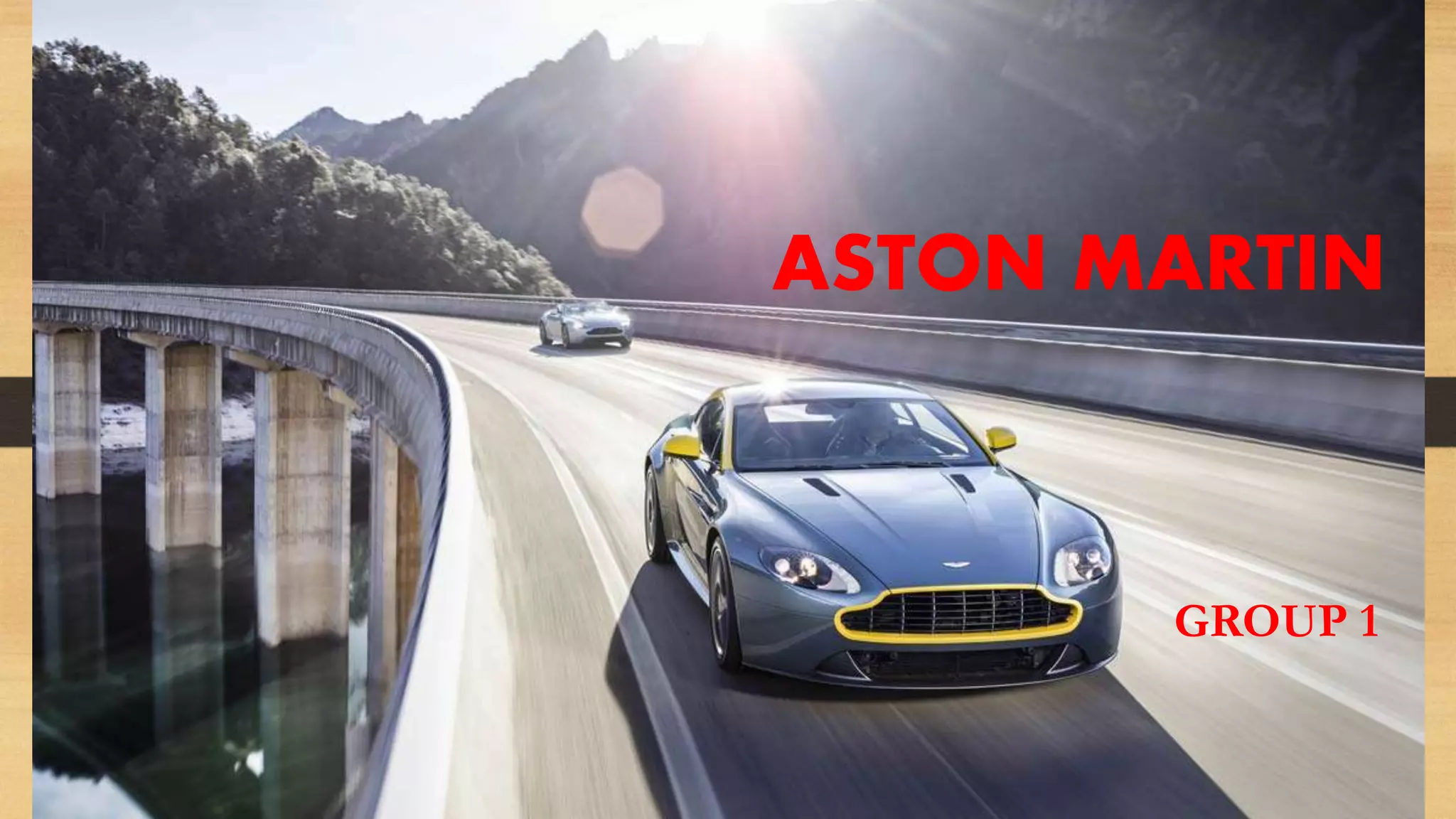
ASTON MARTIN
GROUP 1
Aston Martin: A Brief History
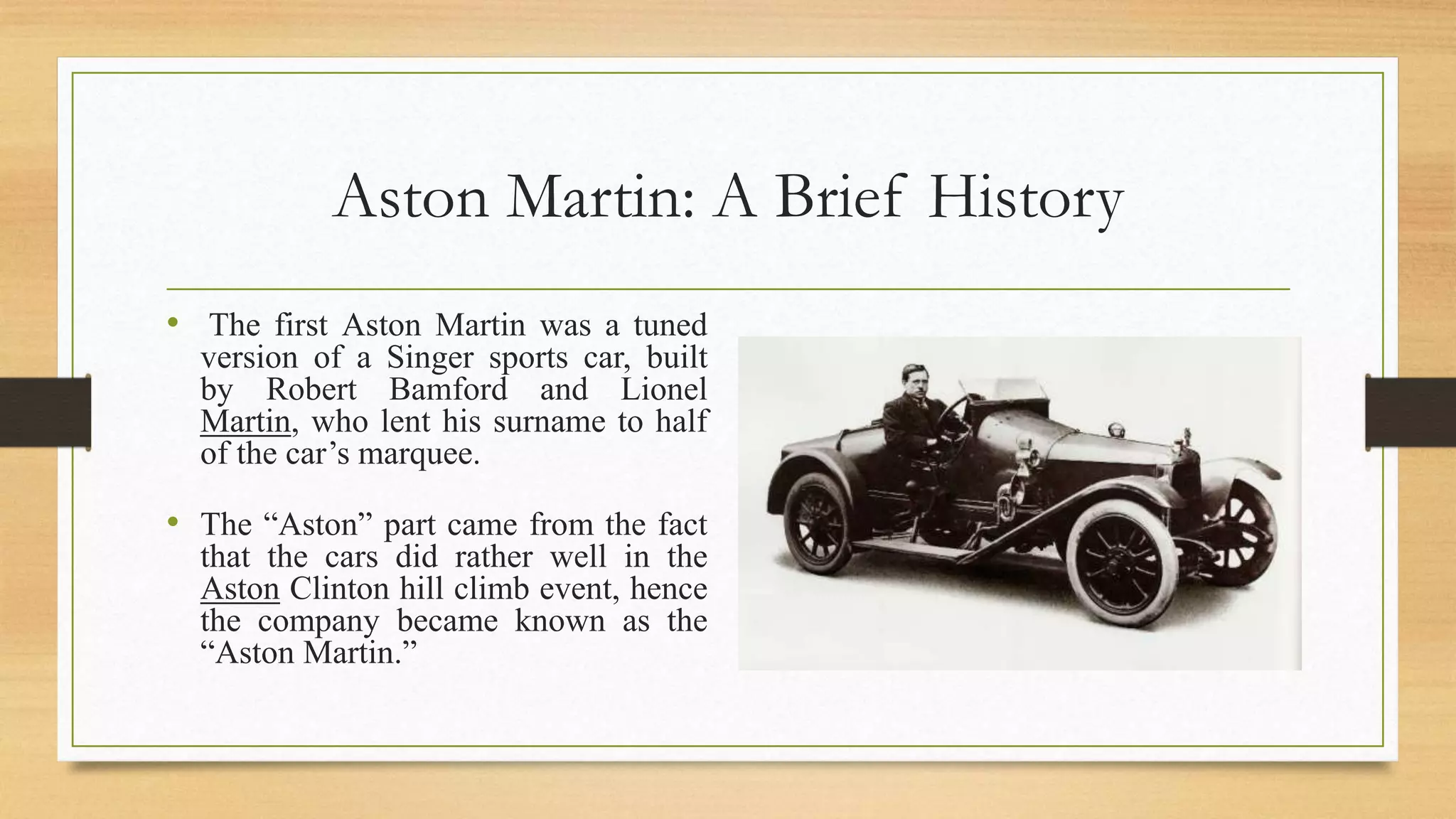
• The first Aston Martin was a tuned
version of a Singer sports car, built
by Robert Bamford and Lionel
Martin, who lent his surname to half
of the car’s marquee.
• The “Aston” part came from the fact
that the cars did rather well in the
Aston Clinton hill climb event, hence
the company became known as the
“Aston Martin.”
• Aston Martin was bought by a David Brown, a tractor and gear manufacturer in
1948.
• David Brown was a racing car enthusiast who built his fortune from his other
businesses which allowed him to indulge his passion for sports cars.
• The Two Liter Sports was David Brown’s first Aston Martin. It was extremely
expensive at £1498 and by May 1950 only 15 vehicle were sold.
• A stripped out version of the car won the 1948 Spa 24 Hour Race. It also wore
what was to become the famous Aston Martin grille.
• Notice the similarity with David Brown’s initials on this and following models to
date.
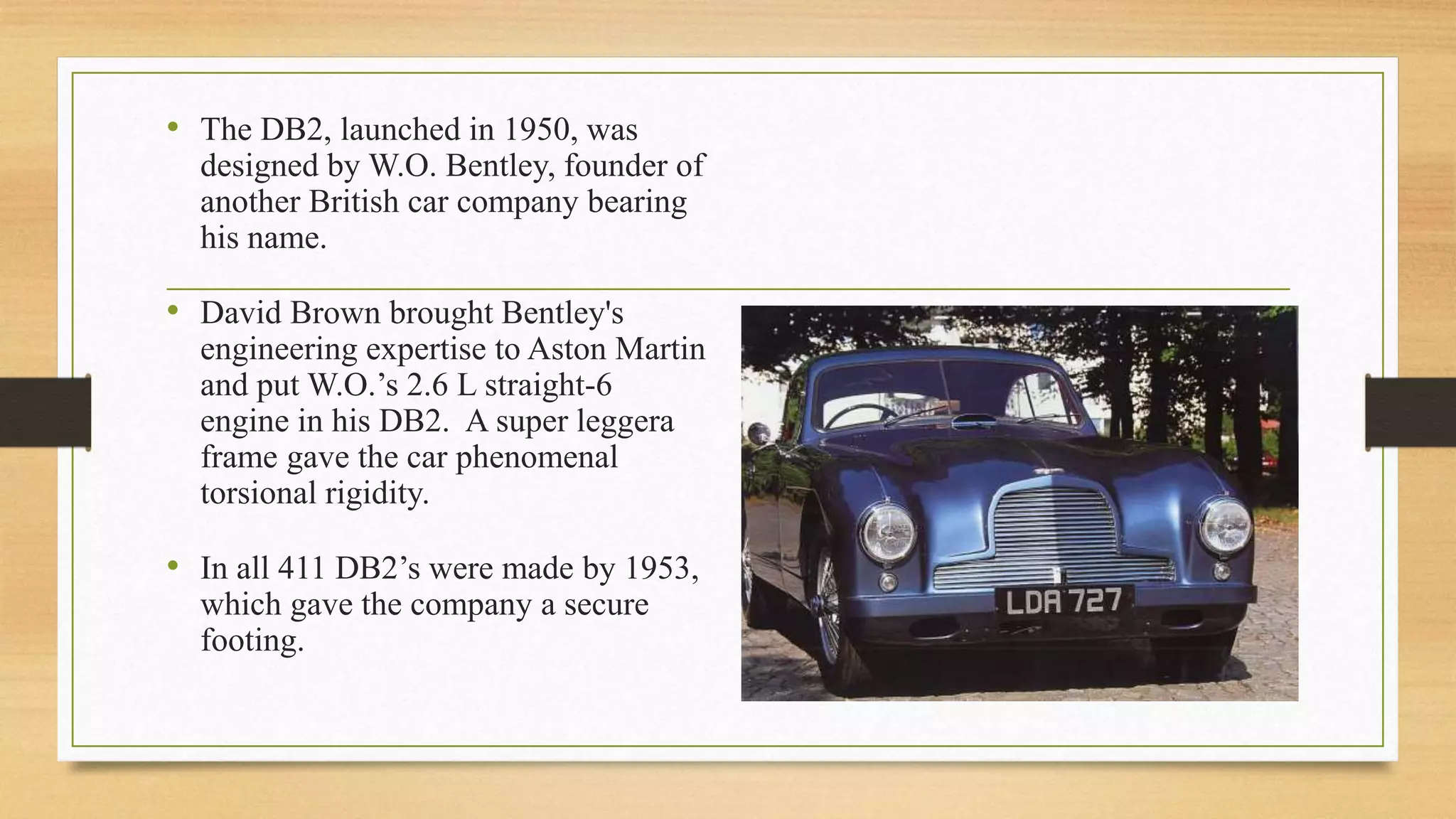
• The DB2, launched in 1950, was
designed by W.O. Bentley, founder of
another British car company bearing
his name.
• David Brown brought Bentley's
engineering expertise to Aston Martin
and put W.O.’s 2.6 L straight-6
engine in his DB2. A super leggera
frame gave the car phenomenal
torsional rigidity.
• In all 411 DB2’s were made by 1953,
which gave the company a secure
footing.
Aston Martin’s strategy for growth and
profitability
• While the headline investment figure will help refuel Aston Martin’s
technology assets and the development of new models, the most immediate
opportunities lie in tackling the booming luxury markets in China, India and
the Middle-East.
• Of four rivals, Bentley, Porsche, and Ferrari have been most successful in
cracking the world’s fastest growing market, with Lamborghini and Aston
Martin faring less well – although the United States and China are now
Lamborghini’s largest markets.
• Aston Martin’s financial limitations during the past three years (during which
time it reduced its workforce by 30 percent), the company has not been idle
• Developing some of the industry’s most sophisticated customer
management processes and an engagement experience that they believe is
second to none
THANK YOU

Strategy Analysis on Aston Martin

  • 1.
  • 2.
    Aston Martin: ABrief History • The first Aston Martin was a tuned version of a Singer sports car, built by Robert Bamford and Lionel Martin, who lent his surname to half of the car’s marquee. • The “Aston” part came from the fact that the cars did rather well in the Aston Clinton hill climb event, hence the company became known as the “Aston Martin.”
  • 3.
    • Aston Martinwas bought by a David Brown, a tractor and gear manufacturer in 1948. • David Brown was a racing car enthusiast who built his fortune from his other businesses which allowed him to indulge his passion for sports cars. • The Two Liter Sports was David Brown’s first Aston Martin. It was extremely expensive at £1498 and by May 1950 only 15 vehicle were sold. • A stripped out version of the car won the 1948 Spa 24 Hour Race. It also wore what was to become the famous Aston Martin grille. • Notice the similarity with David Brown’s initials on this and following models to date.
  • 4.
    • The DB2,launched in 1950, was designed by W.O. Bentley, founder of another British car company bearing his name. • David Brown brought Bentley's engineering expertise to Aston Martin and put W.O.’s 2.6 L straight-6 engine in his DB2. A super leggera frame gave the car phenomenal torsional rigidity. • In all 411 DB2’s were made by 1953, which gave the company a secure footing.
  • 6.
    Aston Martin’s strategyfor growth and profitability • While the headline investment figure will help refuel Aston Martin’s technology assets and the development of new models, the most immediate opportunities lie in tackling the booming luxury markets in China, India and the Middle-East. • Of four rivals, Bentley, Porsche, and Ferrari have been most successful in cracking the world’s fastest growing market, with Lamborghini and Aston Martin faring less well – although the United States and China are now Lamborghini’s largest markets.
  • 7.
    • Aston Martin’sfinancial limitations during the past three years (during which time it reduced its workforce by 30 percent), the company has not been idle • Developing some of the industry’s most sophisticated customer management processes and an engagement experience that they believe is second to none
  • 10.