Stop Telling Everyone
Everything
Have you ever shared something personal and later wished
you hadn’t? We live in a world that pushes for transparency,
but here's the truth - not everything needs to be shared.
You may have heard or read this quote somewhere before,
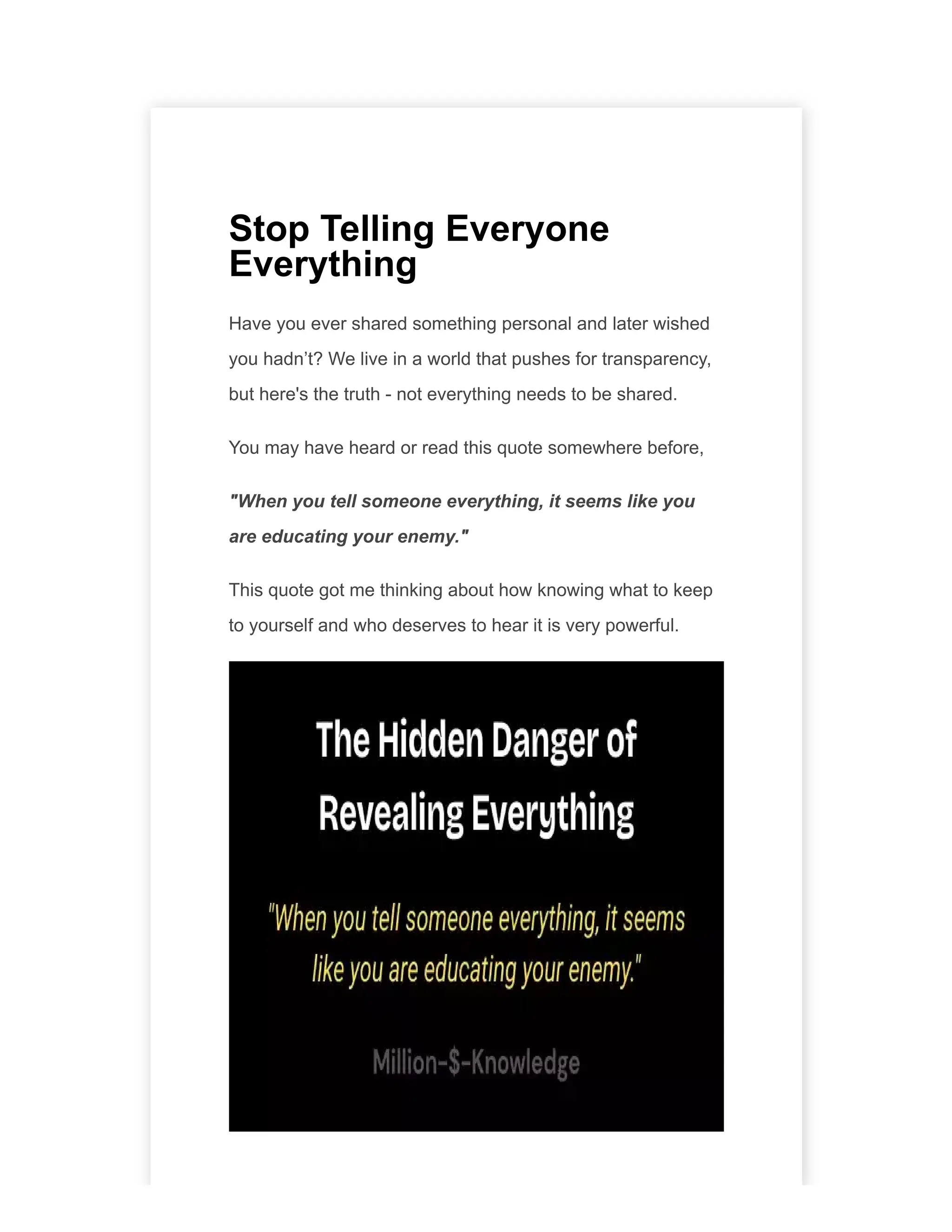
"When you tell someone everything, it seems like you
are educating your enemy."
This quote got me thinking about how knowing what to keep
to yourself and who deserves to hear it is very powerful.
🔖Table of Contents:
1. Introduction
2. Why do I say not everything needs to be shared?
3. Conclusion
------------------------------------------------------
Why did I say that not everything
needs to be shared?
The truth is that sharing too much information can backfire.
We have all been in this situation, telling too much to the
wrong person and later suffering the consequences. Perhaps
it was a colleague at work who took your vulnerability as a
sign of weakness or a friend who shared your secrets with
others.
The feeling of betrayal can linger and make you question
your decision. It's not about keeping secrets, but about
protecting your peace.
Maintaining boundaries isn't about building walls; it's about
protecting your power. Establishing these boundaries creates
a safe space for you where you can flourish and nurture your
emotional well-being. It promotes healthy relationships where
trust and respect thrive.
For each story you choose to share, consider what you are
leaving out. Is sharing worth the potential risk? Sometimes,
holding back is the wisest move.
Strategic silence can give you power and influence,
especially when you're dealing with the wrong people or
situations. It can be incredibly empowering to decide when
to share and when to stay silent. Think of it like a game of
chess; the moves you make should be thoughtful and
strategic.
Before sharing, ask yourself:
👉 Is this person the right person to hear this?
👉 Will this help or harm me?
The answers can lead to a healthy boundary, which
preserves your emotional equity.
Also, consider the psychological aspects of sharing personal
details. People often share to gain validation, connection, or
sympathy. While these intentions are not inherently wrong,
they can blur the boundaries of privacy and lead you to
expose yourself more than necessary. In a world dominated
by social media, where sharing has become the norm, it is
important to remember that not every thought and
emotion deserves an audience. The more you share, the
more you make yourself vulnerable. And when vulnerabilities
are mismanaged, exploitation can occur.
Adopt the art of discretion. Think of it like a treasure trove
that holds your most valuable insights, feelings, and
experiences. Do you want to open that treasure to
everyone, or do you want to be selective about who can
use it? This selective sharing allows you to organize your
conversations and choose the people who deserve your
trust. It’s about nurturing the connections that matter most
rather than spreading your energy across a crowded space
where your voice can easily be drowned out.
Recognize that silence holds immense power. The ability to
understand when to speak and when to remain silent is a
skill that can significantly impact your relationships.
Sometimes, the deepest messages can be expressed
without words. Take comfort knowing you are in control of
your story. Choose wisely who will read your life chapters.
Closing Thoughts
Let me leave you with this…
Not everyone you talk to is your well-wisher; some are just
silent spectators waiting for a mistake. When you reveal
secrets, you are not just opening up… many times, you are
unwittingly giving your heart to someone who may not
deserve it.
It's not about being secretive, it's about being selective.
Because your dreams, your thoughts, your plans – they are
sacred. And sacred things are protected, not broadcasted.
So, the next time you feel the urge to reveal secrets – stop.
Ask yourself,
👉 Is this being said out of clarity or emotion?
👉 Am I sharing to connect, or am I exposing myself to being
misunderstood or misused?
Truth shared at the wrong time, with the wrong person,
becomes a weapon – not wisdom.
Protect your voice.
Protect your vision.
And most importantly, protect your silence.
Because silence, when chosen wisely, is not weakness – it is
self-control.
-------------------------------------------------------
READ MORE:
🔖 Which habit changes everything?
🔖 Learn the best way to stop an argument
🔖 The 80/20 Rule: How to work smarter, not harder
🔖 How can you manage to be silent but not ignorant?
🔖 The connection between self-control and emotional
acceptance

Stop telling everything to everyone from now.pdf

  • 1.
    Stop Telling Everyone Everything Haveyou ever shared something personal and later wished you hadn’t? We live in a world that pushes for transparency, but here's the truth - not everything needs to be shared. You may have heard or read this quote somewhere before, "When you tell someone everything, it seems like you are educating your enemy." This quote got me thinking about how knowing what to keep to yourself and who deserves to hear it is very powerful.
  • 2.
    🔖Table of Contents: 1.Introduction 2. Why do I say not everything needs to be shared? 3. Conclusion ------------------------------------------------------ Why did I say that not everything needs to be shared? The truth is that sharing too much information can backfire. We have all been in this situation, telling too much to the wrong person and later suffering the consequences. Perhaps it was a colleague at work who took your vulnerability as a sign of weakness or a friend who shared your secrets with others. The feeling of betrayal can linger and make you question your decision. It's not about keeping secrets, but about protecting your peace. Maintaining boundaries isn't about building walls; it's about protecting your power. Establishing these boundaries creates a safe space for you where you can flourish and nurture your emotional well-being. It promotes healthy relationships where trust and respect thrive. For each story you choose to share, consider what you are leaving out. Is sharing worth the potential risk? Sometimes, holding back is the wisest move. Strategic silence can give you power and influence, especially when you're dealing with the wrong people or situations. It can be incredibly empowering to decide when
  • 3.
    to share andwhen to stay silent. Think of it like a game of chess; the moves you make should be thoughtful and strategic. Before sharing, ask yourself: 👉 Is this person the right person to hear this? 👉 Will this help or harm me? The answers can lead to a healthy boundary, which preserves your emotional equity. Also, consider the psychological aspects of sharing personal details. People often share to gain validation, connection, or sympathy. While these intentions are not inherently wrong, they can blur the boundaries of privacy and lead you to expose yourself more than necessary. In a world dominated by social media, where sharing has become the norm, it is important to remember that not every thought and emotion deserves an audience. The more you share, the more you make yourself vulnerable. And when vulnerabilities are mismanaged, exploitation can occur. Adopt the art of discretion. Think of it like a treasure trove that holds your most valuable insights, feelings, and experiences. Do you want to open that treasure to everyone, or do you want to be selective about who can use it? This selective sharing allows you to organize your conversations and choose the people who deserve your trust. It’s about nurturing the connections that matter most rather than spreading your energy across a crowded space where your voice can easily be drowned out.
  • 4.
    Recognize that silenceholds immense power. The ability to understand when to speak and when to remain silent is a skill that can significantly impact your relationships. Sometimes, the deepest messages can be expressed without words. Take comfort knowing you are in control of your story. Choose wisely who will read your life chapters. Closing Thoughts Let me leave you with this… Not everyone you talk to is your well-wisher; some are just silent spectators waiting for a mistake. When you reveal secrets, you are not just opening up… many times, you are unwittingly giving your heart to someone who may not deserve it. It's not about being secretive, it's about being selective. Because your dreams, your thoughts, your plans – they are sacred. And sacred things are protected, not broadcasted. So, the next time you feel the urge to reveal secrets – stop. Ask yourself, 👉 Is this being said out of clarity or emotion? 👉 Am I sharing to connect, or am I exposing myself to being misunderstood or misused? Truth shared at the wrong time, with the wrong person, becomes a weapon – not wisdom. Protect your voice.
  • 5.
    Protect your vision. Andmost importantly, protect your silence. Because silence, when chosen wisely, is not weakness – it is self-control. ------------------------------------------------------- READ MORE: 🔖 Which habit changes everything? 🔖 Learn the best way to stop an argument 🔖 The 80/20 Rule: How to work smarter, not harder 🔖 How can you manage to be silent but not ignorant? 🔖 The connection between self-control and emotional acceptance