Sterilization
What is sterilization
 The complete destruction of all forms
of microbial life from the substance
which is being sterilized.
 Sterilant:
It is an agent( may be a physical or
chemical) that destroys or eliminate all
forms of microbial life from the
sterilization substance.
Methods of Sterilization;
1. Physical method
2. Chemical method
1. Physical Method:
 Sunlight
 Drying
 Dry heat – flaming, incineration and hot air
 Moist heat- pasteurization, boiling and
steam under pressure.
 Filtration
 Radiation
Sunlight:
Sunlight contains U.V.
Rays and other heat Rays that
has bactericidal activity under
natural conditions.
Drying :
Drying in air has deleterious effects on
many bacteria.
Dry heat :
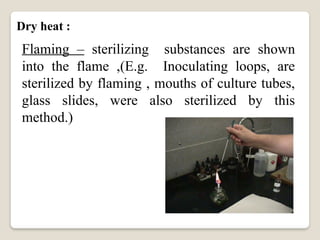
Flaming – sterilizing substances are shown
into the flame ,(E.g. Inoculating loops, are
sterilized by flaming , mouths of culture tubes,
glass slides, were also sterilized by this
method.)
Incineration- Materials were directly
burnt by fire, E.g. Hospital wastages,
dressings, pathological material were
directly burnt into fire.
Hot air – sterilization by applying hot air to the
substances, and this is the most widely used method of
sterilization. It is by means of Hot air oven. A holding
period of 160 C for 1 hour is used.
⁰
This method is used to sterilize glass wares, foreceps,
scissors, all glass syringes etc.
Moist heat
Pasteurization – heating the substance at the temperature of
63⁰C for 30 minutes or 72⁰C for 15 to20 seconds (flash
process). Mostly milk is sterilized by this method.
Boiling - boiling the substance at 100⁰C for 10 to 30
minutes can effectively sterilize the materials.
Steam under pressure-
applying moist heat with pressure
especially at 121 C at 15lbs
⁰
pressure (Autoclaving) by an
instrument called Autoclave. This
is most effective method of
sterilization. E.g. Microbiological
media, glass wares can be
sterilized by this method.
Filtration:
Heat sensitive substances especially solutions can be
sterilized by filtering the substance by Membrane filter in
which the pore size is less than 0.22µm. so that the
microorganism cannot penetrate the filter.
Radiation:
U.V. rays, X-rays, gamma rays were also
used in sterilization. U.V rays is used for
sterilization of hospital wards, operation theatres,
intensive care units, inoculation rooms etc.
Chemical Methods
1. Alcohols
2. Aldehydes
3. Halogens
4. Gases
 Alcohols
Alcohols such as ethyl alcohol and isopropyl
alcohol were used at concentration of 60 -70% in
water is used as skin antiseptic.
 Aldehydes
Formaldehyde and Glutaraldehyde were very
active against bacteria and viruses. Formaldehydes
were used in the preservation of anatomical
specimen.
 Halogens
Iodine mixed with alcohol were used as
skin disinfectant. It is very active against
bacteria
Similarly chlorine is also used as
disinfectant, in water supplies, food and
dairy industries for many years. It is very
active against bacteria.
Gases
Ethylene oxide gas – it is used to sterilize heat
sensitive materials, surgical equipments,
sutures, cannulas, syringes, gloves etc.
Formaldehyde gas- it is used to fumigate
laboratory, operations theatres and other
rooms.

sterilization Full method & explanation.

  • 1.
  • 2.
    What is sterilization The complete destruction of all forms of microbial life from the substance which is being sterilized.  Sterilant: It is an agent( may be a physical or chemical) that destroys or eliminate all forms of microbial life from the sterilization substance.
  • 3.
    Methods of Sterilization; 1.Physical method 2. Chemical method 1. Physical Method:  Sunlight  Drying  Dry heat – flaming, incineration and hot air  Moist heat- pasteurization, boiling and steam under pressure.  Filtration  Radiation
  • 4.
    Sunlight: Sunlight contains U.V. Raysand other heat Rays that has bactericidal activity under natural conditions. Drying : Drying in air has deleterious effects on many bacteria.
  • 5.
    Dry heat : Flaming– sterilizing substances are shown into the flame ,(E.g. Inoculating loops, are sterilized by flaming , mouths of culture tubes, glass slides, were also sterilized by this method.)
  • 6.
    Incineration- Materials weredirectly burnt by fire, E.g. Hospital wastages, dressings, pathological material were directly burnt into fire.
  • 7.
    Hot air –sterilization by applying hot air to the substances, and this is the most widely used method of sterilization. It is by means of Hot air oven. A holding period of 160 C for 1 hour is used. ⁰ This method is used to sterilize glass wares, foreceps, scissors, all glass syringes etc.
  • 8.
    Moist heat Pasteurization –heating the substance at the temperature of 63⁰C for 30 minutes or 72⁰C for 15 to20 seconds (flash process). Mostly milk is sterilized by this method. Boiling - boiling the substance at 100⁰C for 10 to 30 minutes can effectively sterilize the materials. Steam under pressure- applying moist heat with pressure especially at 121 C at 15lbs ⁰ pressure (Autoclaving) by an instrument called Autoclave. This is most effective method of sterilization. E.g. Microbiological media, glass wares can be sterilized by this method.
  • 9.
    Filtration: Heat sensitive substancesespecially solutions can be sterilized by filtering the substance by Membrane filter in which the pore size is less than 0.22µm. so that the microorganism cannot penetrate the filter.
  • 10.
    Radiation: U.V. rays, X-rays,gamma rays were also used in sterilization. U.V rays is used for sterilization of hospital wards, operation theatres, intensive care units, inoculation rooms etc.
  • 11.
    Chemical Methods 1. Alcohols 2.Aldehydes 3. Halogens 4. Gases
  • 12.
     Alcohols Alcohols suchas ethyl alcohol and isopropyl alcohol were used at concentration of 60 -70% in water is used as skin antiseptic.  Aldehydes Formaldehyde and Glutaraldehyde were very active against bacteria and viruses. Formaldehydes were used in the preservation of anatomical specimen.
  • 13.
     Halogens Iodine mixedwith alcohol were used as skin disinfectant. It is very active against bacteria Similarly chlorine is also used as disinfectant, in water supplies, food and dairy industries for many years. It is very active against bacteria.
  • 14.
    Gases Ethylene oxide gas– it is used to sterilize heat sensitive materials, surgical equipments, sutures, cannulas, syringes, gloves etc. Formaldehyde gas- it is used to fumigate laboratory, operations theatres and other rooms.