DATE:22.11.2021
DAY:MONDAY
ENVIRONMENTAL AND AGRICULTURAL MICROBIOLOGY
IF U CAN’T…..WHO CAN..??
SYNOPSIS
❖INTRODUCTION
❖PARTS OF WHEAT
❖WHEAT GROWING AREA IN INDIA
❖SCIENTIFIC CLASSIFICATION
❖STEM RUST OF WHEAT
❖PATHOLOGY
❖LIFE CYCLE
❖SYMPTOMS
❖FAVORABLE CONDITION AND HOST
❖MANAGEMENT
❖CONCULUTION
INTRODUCTION:
➢Stem rust, also known as cereal rust, black
rust, red rust or red dust, is caused by the
fungus Puccinia graminis, which causes
significant disease in cereal crops.
➢Crop species that are affected by the
disease include bread wheat, durum wheat,
barley and triticale
PARTS OF WHEAT
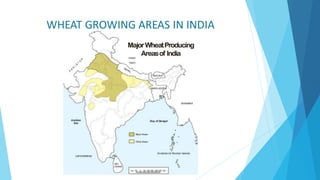
WHEAT GROWING AREAS IN INDIA
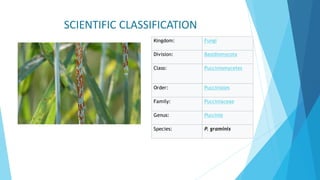
SCIENTIFIC CLASSIFICATION
Kingdom: Fungi
Division: Basidiomycota
Class: Pucciniomycetes
Order: Pucciniales
Family: Pucciniaceae
Genus: Puccinia
Species: P. graminis
STEM RUST OF WHEAT
➢Most destructive wheat disease
➢Severe grain shriveling
➢Masses of pustules on leaves & stems containing
brick red spores
➢Rust infested plants transpire much more water
than normal.
➢Most important disease of wheat, globally!
➢Drastically reduces growth and yield, up to 70%!.
➢Brittle stems can fall over or "lodge" hampering
mechanical harvest.
PATHOLOGY
➢ Fungus absorbs nutrients that would otherwise be used for
grain development.
➢ Pustules break through epidermis, which disrupt the plant's
control of transpiration and can lead to dessication and
infection by other fungi.
➢ Interference with plant vascular tissue leads to shriveled
grains.
➢ The fungus weakens the stems, which can lead to lodging
(falling over). In severe cases lodging can make mechanical
harvesting impossible.
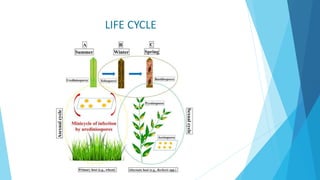
LIFE CYCLE
Up to five spore Spore stages of Puccinia graminis:
Stage 1:
Spermogonium. Produces spermatia and receptive
hyphae.
Stage 2:
Aeciums produce aeciospores.
Stage 3:
Uredium produce urediospores.
Stage 4:
Telium produce teliospores.
Stage 5:
Basidium produceages.
SYMPTOMS
➢Reddish brown pustules.
➢Large number of uredo spores are released
➢Brownish appearance even from distance.
➢Towards end black telia are produced for this
reason it is called black rust.
➢The site of infection is visible symptom of disease
FAVOURABLE CONDITION AND HOST
TEMPERATURE
➢ 23-25 C
➢ At the temperature large number of
teliospores are produced
HOST
➢ Berberis
➢ Mahonia
MANAGEMENT
➢Variety choice.
➢Fungicide
➢Culture practices
➢Earlier wheat maturing varieties.
CONCULUSION
➢Wheat is the sixth most important crop
➢Grown yearly on 220.4 million hectares
➢Possess net worth more than 22 billion dollars
➢world trade in wheat is greater than for all other crop combined
➢ losses upto 60 to 70%
• The Chairman
• The SecretaryManagement Committee
• The Principal of Sri Paramakalyani College
• The Head - Department of Microbiology
• The Staff Members - Department of Microbiology
THANKS TO

STEM RUST OF WHEAT.pdf

  • 2.
    DATE:22.11.2021 DAY:MONDAY ENVIRONMENTAL AND AGRICULTURALMICROBIOLOGY IF U CAN’T…..WHO CAN..??
  • 3.
    SYNOPSIS ❖INTRODUCTION ❖PARTS OF WHEAT ❖WHEATGROWING AREA IN INDIA ❖SCIENTIFIC CLASSIFICATION ❖STEM RUST OF WHEAT ❖PATHOLOGY ❖LIFE CYCLE ❖SYMPTOMS ❖FAVORABLE CONDITION AND HOST ❖MANAGEMENT ❖CONCULUTION
  • 4.
    INTRODUCTION: ➢Stem rust, alsoknown as cereal rust, black rust, red rust or red dust, is caused by the fungus Puccinia graminis, which causes significant disease in cereal crops. ➢Crop species that are affected by the disease include bread wheat, durum wheat, barley and triticale
  • 5.
  • 6.
  • 7.
    SCIENTIFIC CLASSIFICATION Kingdom: Fungi Division:Basidiomycota Class: Pucciniomycetes Order: Pucciniales Family: Pucciniaceae Genus: Puccinia Species: P. graminis
  • 8.
    STEM RUST OFWHEAT ➢Most destructive wheat disease ➢Severe grain shriveling ➢Masses of pustules on leaves & stems containing brick red spores ➢Rust infested plants transpire much more water than normal. ➢Most important disease of wheat, globally! ➢Drastically reduces growth and yield, up to 70%!. ➢Brittle stems can fall over or "lodge" hampering mechanical harvest.
  • 9.
    PATHOLOGY ➢ Fungus absorbsnutrients that would otherwise be used for grain development. ➢ Pustules break through epidermis, which disrupt the plant's control of transpiration and can lead to dessication and infection by other fungi. ➢ Interference with plant vascular tissue leads to shriveled grains. ➢ The fungus weakens the stems, which can lead to lodging (falling over). In severe cases lodging can make mechanical harvesting impossible.
  • 10.
  • 11.
    Up to fivespore Spore stages of Puccinia graminis: Stage 1: Spermogonium. Produces spermatia and receptive hyphae. Stage 2: Aeciums produce aeciospores. Stage 3: Uredium produce urediospores. Stage 4: Telium produce teliospores. Stage 5: Basidium produceages.
  • 12.
    SYMPTOMS ➢Reddish brown pustules. ➢Largenumber of uredo spores are released ➢Brownish appearance even from distance. ➢Towards end black telia are produced for this reason it is called black rust. ➢The site of infection is visible symptom of disease
  • 13.
    FAVOURABLE CONDITION ANDHOST TEMPERATURE ➢ 23-25 C ➢ At the temperature large number of teliospores are produced HOST ➢ Berberis ➢ Mahonia
  • 14.
  • 15.
    CONCULUSION ➢Wheat is thesixth most important crop ➢Grown yearly on 220.4 million hectares ➢Possess net worth more than 22 billion dollars ➢world trade in wheat is greater than for all other crop combined ➢ losses upto 60 to 70%
  • 16.
    • The Chairman •The SecretaryManagement Committee • The Principal of Sri Paramakalyani College • The Head - Department of Microbiology • The Staff Members - Department of Microbiology THANKS TO