Stem-CellsMace Camhe & Mark Neelman per.9
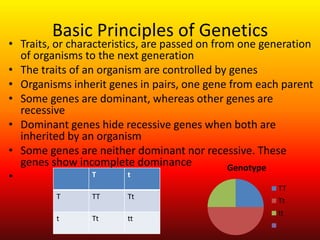
Basic Principles of GeneticsTraits, or characteristics, are passed on from one generation of organisms to the next generation
The traits of an organism are controlled by genes
Organisms inherit genes in pairs, one gene from each parent
Some genes are dominant, whereas other genes are recessive
Dominant genes hide recessive genes when both are inherited by an organism
Some genes are neither dominant nor recessive. These genes show incomplete dominanceThe Human Genome ProjectStarted in 1990
13 year project, completed in 2003
Goal of HGP was to identify all genes in human DNA
Current and potential applications of genome research includes Molecular medicine, Energy sources and environmental applications, Risk assessment , Bioarchaeology, anthropology, evolution, and human migration, DNA forensics (identification) and Agriculture, livestock breeding, and bioprocessing
GINA protects Americans from discrimination based on information derived from genetic tests. It forbids insurance companies from discriminating through reduced coverage or pricing and prohibits employers from making adverse employment decisions based on a person’s genetic code. In addition, insurers and employers are not allowed under the law to request or demand a genetic test. Genetic DisordersGenetic disorders are caused by mutations or changes in a persons DNA. What it means to be single gene is that you may have many problems in your body.An example is Cystic Fibrosis. The body produces abnormally thick mucus in the lungs and intestines. This fills the lungs and it is hard to breathe.Another example is Hemophilia. The persons blood clots very slowly or not at all. People with this disorder do not produce one of the proteins needed for normal blood clotting.Doctors today use tools such as amniocentesis and karyotypes to help detect genetic disorders.
Genetic Disorders Compare & ContrastSingle Gene disorders are caused by alteration or mutation of a specific gene in the affected person’s DNA.Multifactorial disorders are caused by mutations in multiple genes, which may interact with environmental factors.Chromosome abnormality reflects the number of chromosomes or a structural abnormality in one or more chromosomesThese disorders are caused by different things.
Genetic Disorders Compare & Contrast 2 The thing that these disorders share is the fact that they all affect the life of a human. They also affect the DNA. Single Gene disorder mutates a gene in the DNA. Multifactorial disorder mutates multiple genes in the DNAChromosome abnormality reflects the multiple genes or not the right number of chromosomes a human needs.

Stem cells

  • 1.
    Stem-CellsMace Camhe &Mark Neelman per.9
  • 2.
    Basic Principles ofGeneticsTraits, or characteristics, are passed on from one generation of organisms to the next generation
  • 3.
    The traits ofan organism are controlled by genes
  • 4.
    Organisms inherit genesin pairs, one gene from each parent
  • 5.
    Some genes aredominant, whereas other genes are recessive
  • 6.
    Dominant genes hiderecessive genes when both are inherited by an organism
  • 7.
    Some genes areneither dominant nor recessive. These genes show incomplete dominanceThe Human Genome ProjectStarted in 1990
  • 8.
    13 year project,completed in 2003
  • 9.
    Goal of HGPwas to identify all genes in human DNA
  • 10.
    Current and potentialapplications of genome research includes Molecular medicine, Energy sources and environmental applications, Risk assessment , Bioarchaeology, anthropology, evolution, and human migration, DNA forensics (identification) and Agriculture, livestock breeding, and bioprocessing
  • 11.
    GINA protects Americansfrom discrimination based on information derived from genetic tests. It forbids insurance companies from discriminating through reduced coverage or pricing and prohibits employers from making adverse employment decisions based on a person’s genetic code. In addition, insurers and employers are not allowed under the law to request or demand a genetic test. Genetic DisordersGenetic disorders are caused by mutations or changes in a persons DNA. What it means to be single gene is that you may have many problems in your body.An example is Cystic Fibrosis. The body produces abnormally thick mucus in the lungs and intestines. This fills the lungs and it is hard to breathe.Another example is Hemophilia. The persons blood clots very slowly or not at all. People with this disorder do not produce one of the proteins needed for normal blood clotting.Doctors today use tools such as amniocentesis and karyotypes to help detect genetic disorders.
  • 12.
    Genetic Disorders Compare& ContrastSingle Gene disorders are caused by alteration or mutation of a specific gene in the affected person’s DNA.Multifactorial disorders are caused by mutations in multiple genes, which may interact with environmental factors.Chromosome abnormality reflects the number of chromosomes or a structural abnormality in one or more chromosomesThese disorders are caused by different things.
  • 13.
    Genetic Disorders Compare& Contrast 2 The thing that these disorders share is the fact that they all affect the life of a human. They also affect the DNA. Single Gene disorder mutates a gene in the DNA. Multifactorial disorder mutates multiple genes in the DNAChromosome abnormality reflects the multiple genes or not the right number of chromosomes a human needs.