Kindergarten Math
Intervention
Research Question #1: -Are the
differences between the gains made by the
MMT group and those made by the control
group statistically significant?
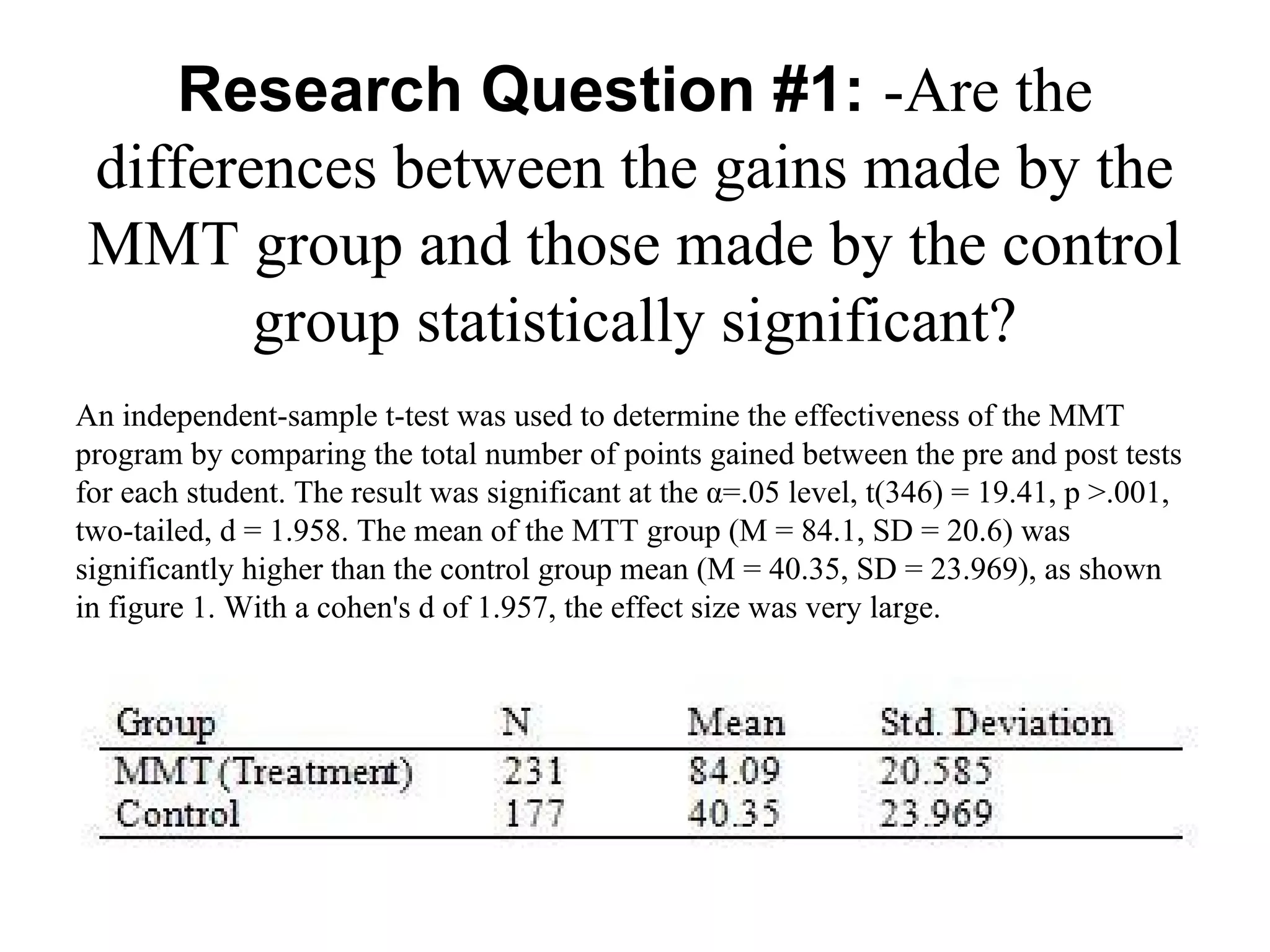
An independent-sample t-test was used to determine the effectiveness of the MMT
program by comparing the total number of points gained between the pre and post tests
for each student. The result was significant at the α=.05 level, t(346) = 19.41, p >.001,
two-tailed, d = 1.958. The mean of the MTT group (M = 84.1, SD = 20.6) was
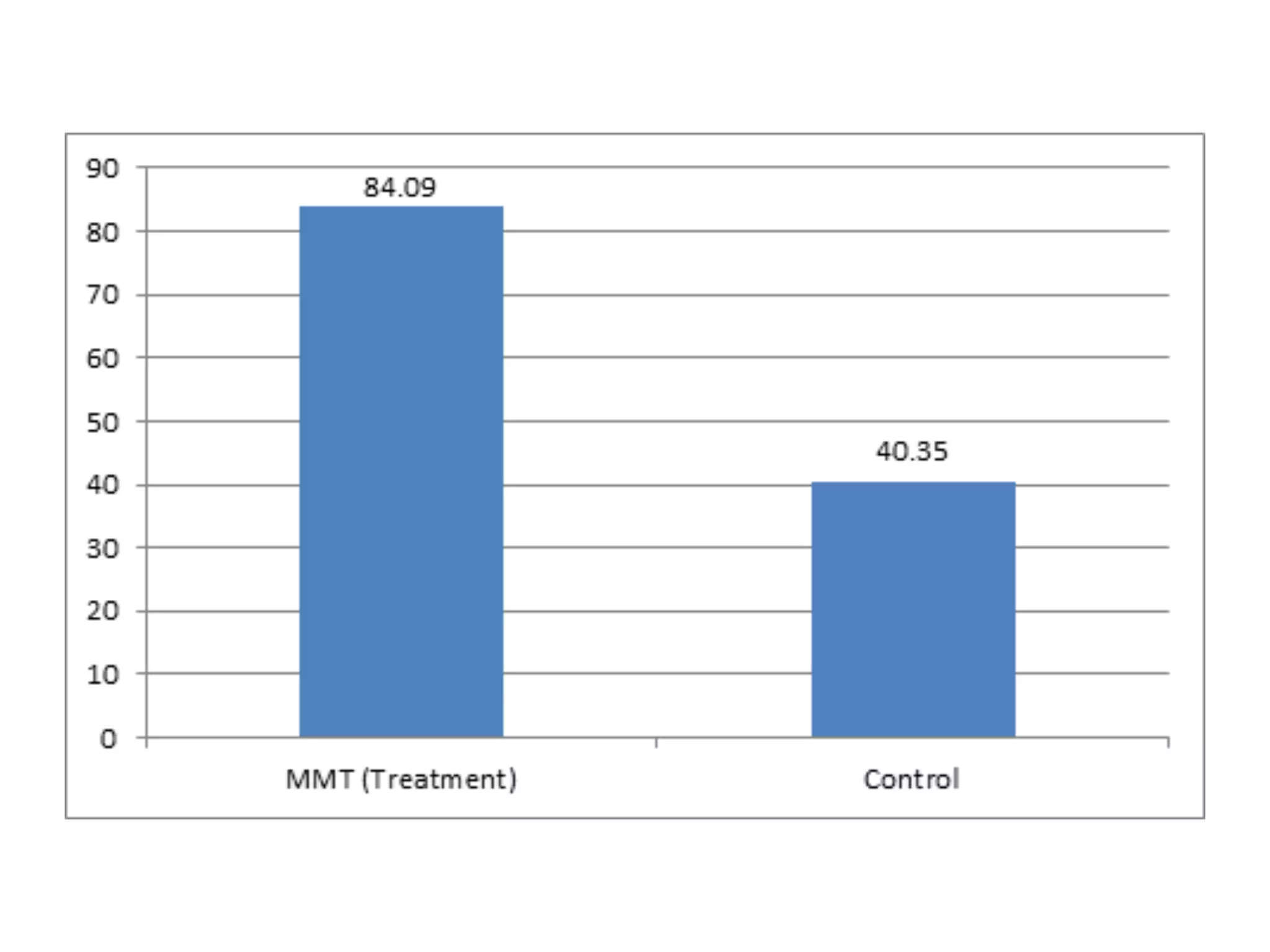
significantly higher than the control group mean (M = 40.35, SD = 23.969), as shown
in figure 1. With a cohen's d of 1.957, the effect size was very large.
Research Question #2: Is overall
class rating equally distributed
across SES?
Research Question #2: Is overall
class rating equally distributed
across SES?
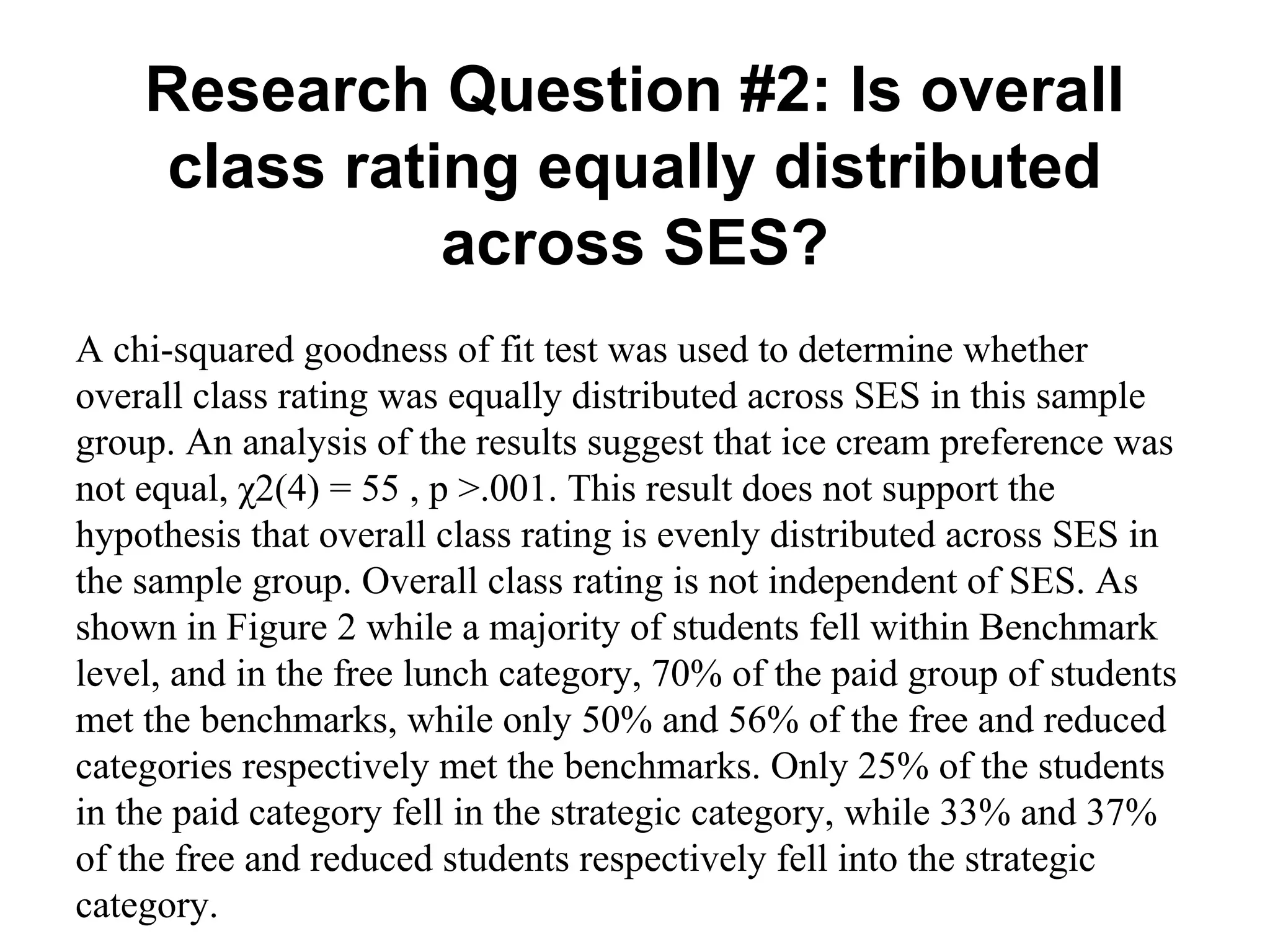
A chi-squared goodness of fit test was used to determine whether
overall class rating was equally distributed across SES in this sample
group. An analysis of the results suggest that ice cream preference was
not equal, χ2(4) = 55 , p >.001. This result does not support the
hypothesis that overall class rating is evenly distributed across SES in
the sample group. Overall class rating is not independent of SES. As
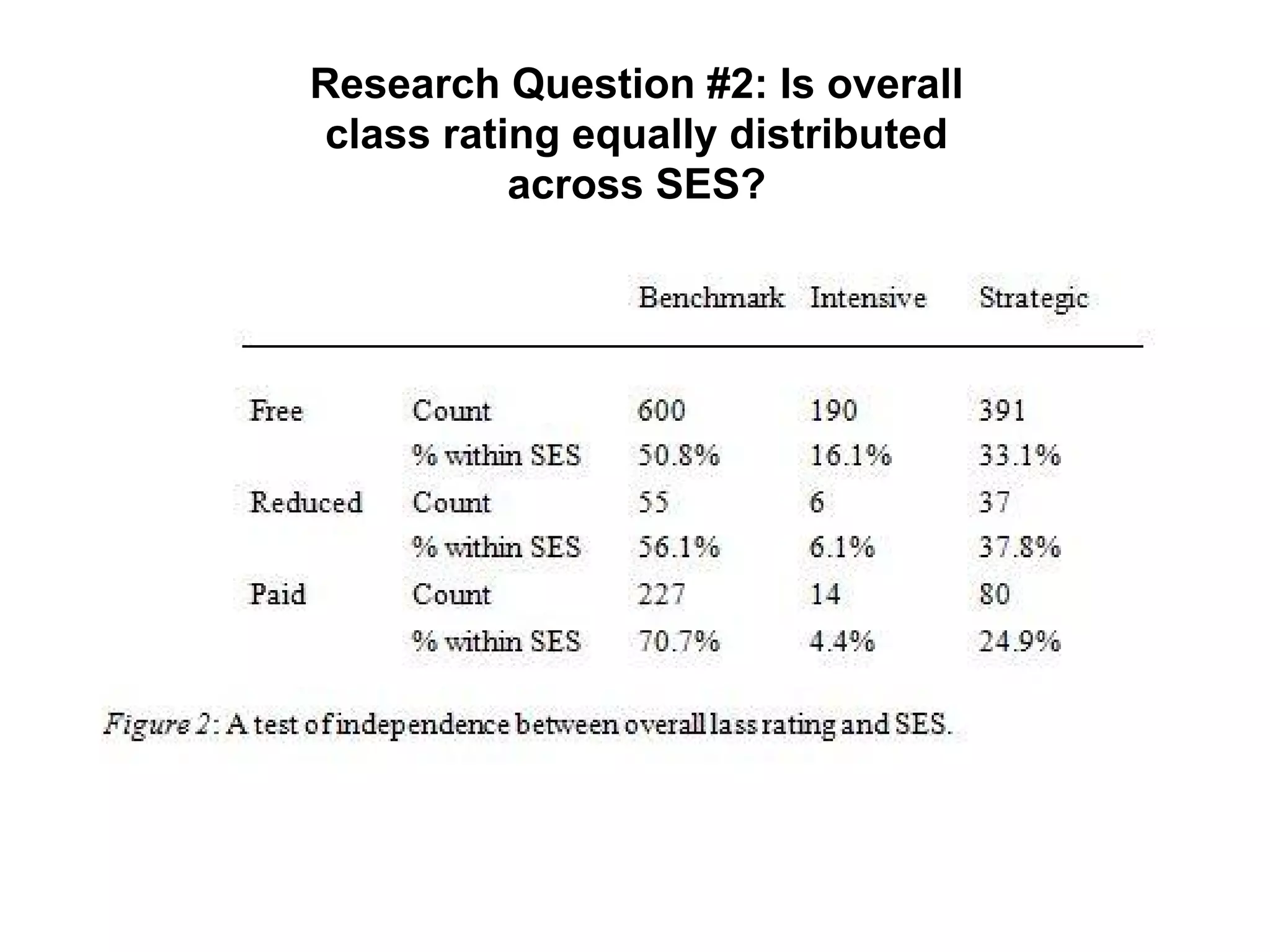
shown in Figure 2 while a majority of students fell within Benchmark
level, and in the free lunch category, 70% of the paid group of students
met the benchmarks, while only 50% and 56% of the free and reduced
categories respectively met the benchmarks. Only 25% of the students
in the paid category fell in the strategic category, while 33% and 37%
of the free and reduced students respectively fell into the strategic
category.
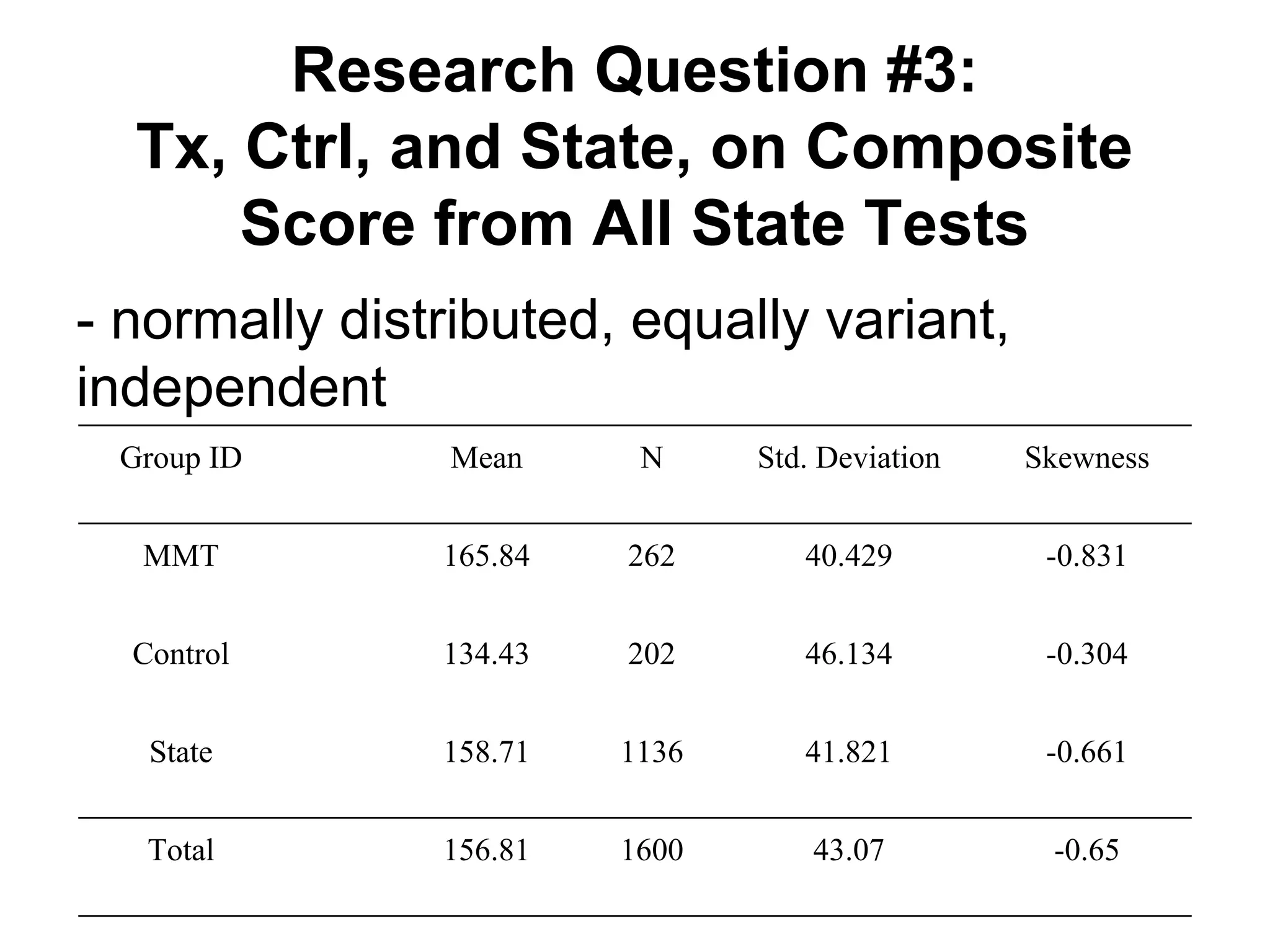
Research Question #3:
Tx, Ctrl, and State, on Composite
Score from All State Tests
- normally distributed, equally variant,
independent
Group ID

Mean

N

Std. Deviation

Skewness

MMT

165.84

262

40.429

-0.831

Control

134.43

202

46.134

-0.304

State

158.71

1136

41.821

-0.661

Total

156.81

1600

43.07

-0.65
Research Question #3:
Tx, Ctrl, and State, on Composite
Score from All State Tests (cont'd)
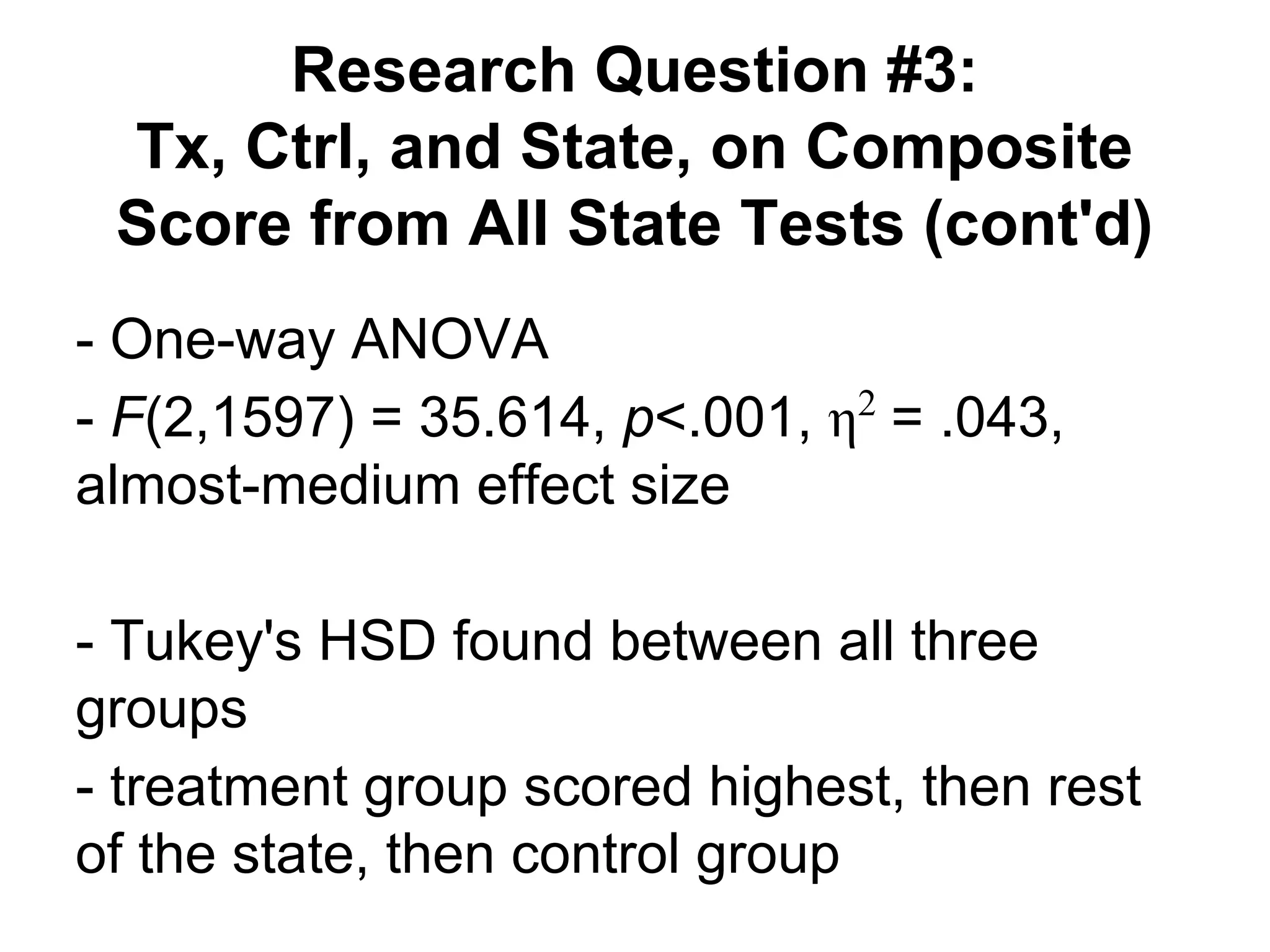
- One-way ANOVA
- F(2,1597) = 35.614, p<.001, η2 = .043,
almost-medium effect size
- Tukey's HSD found between all three
groups
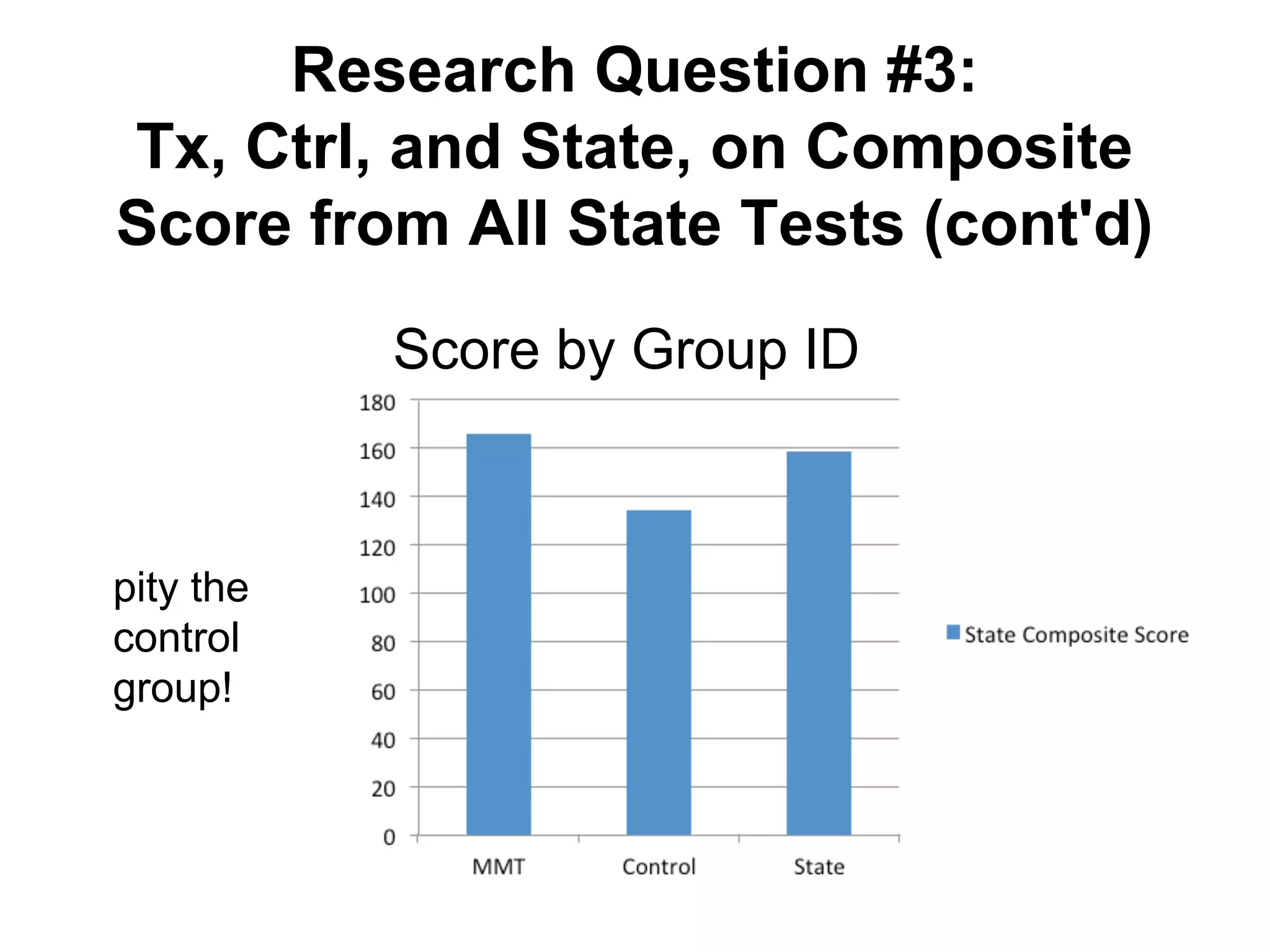
- treatment group scored highest, then rest
of the state, then control group
Research Question #3:
Tx, Ctrl, and State, on Composite
Score from All State Tests (cont'd)
Score by Group ID

pity the
control
group!
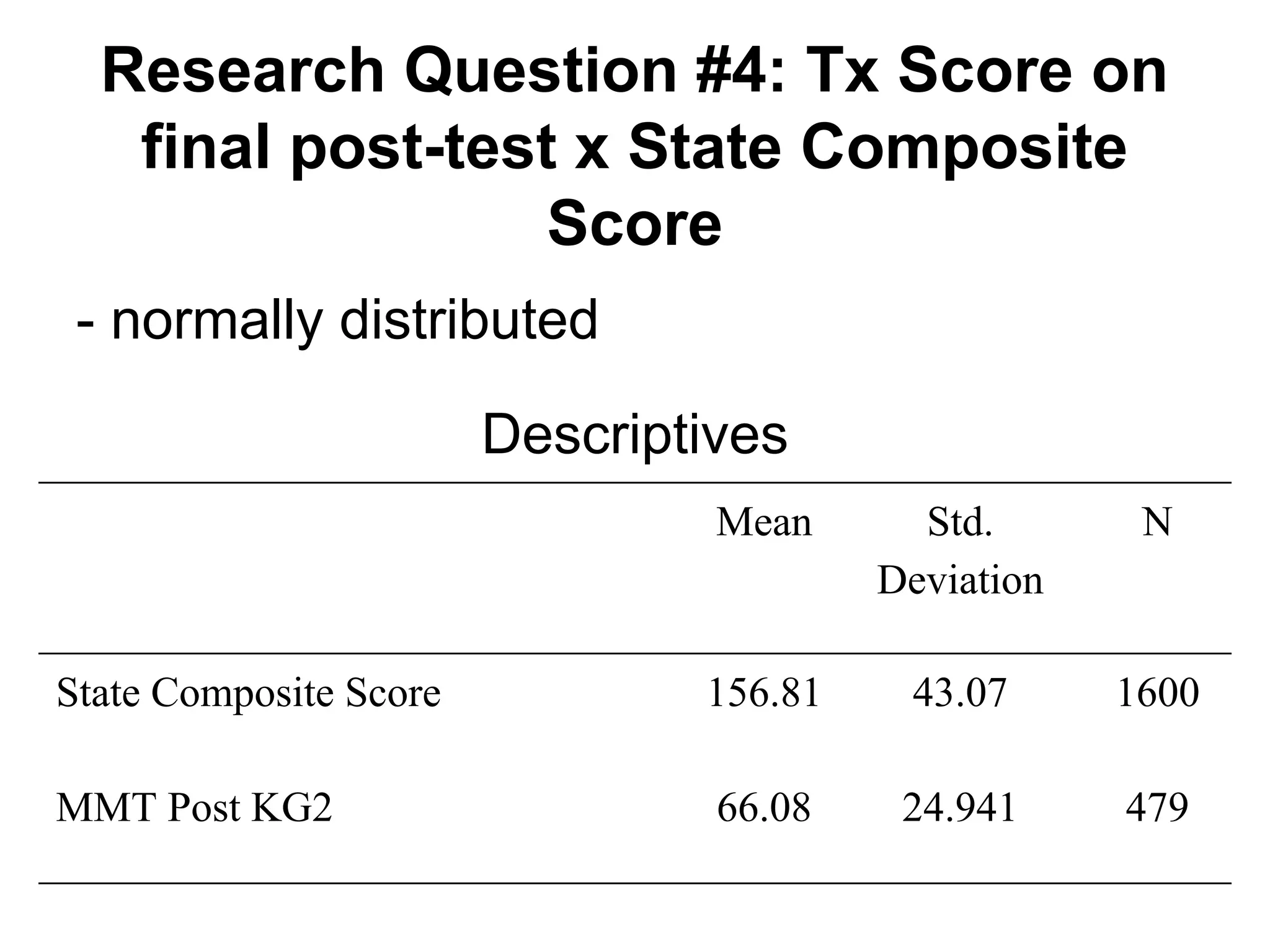
Research Question #4: Tx Score on
final post-test x State Composite
Score
- normally distributed
Descriptives
Mean

Std.
Deviation

N

State Composite Score

156.81

43.07

1600

MMT Post KG2

66.08

24.941

479
Research Question #4: Tx Score on
final post-test x State Composite
Score (cont'd)
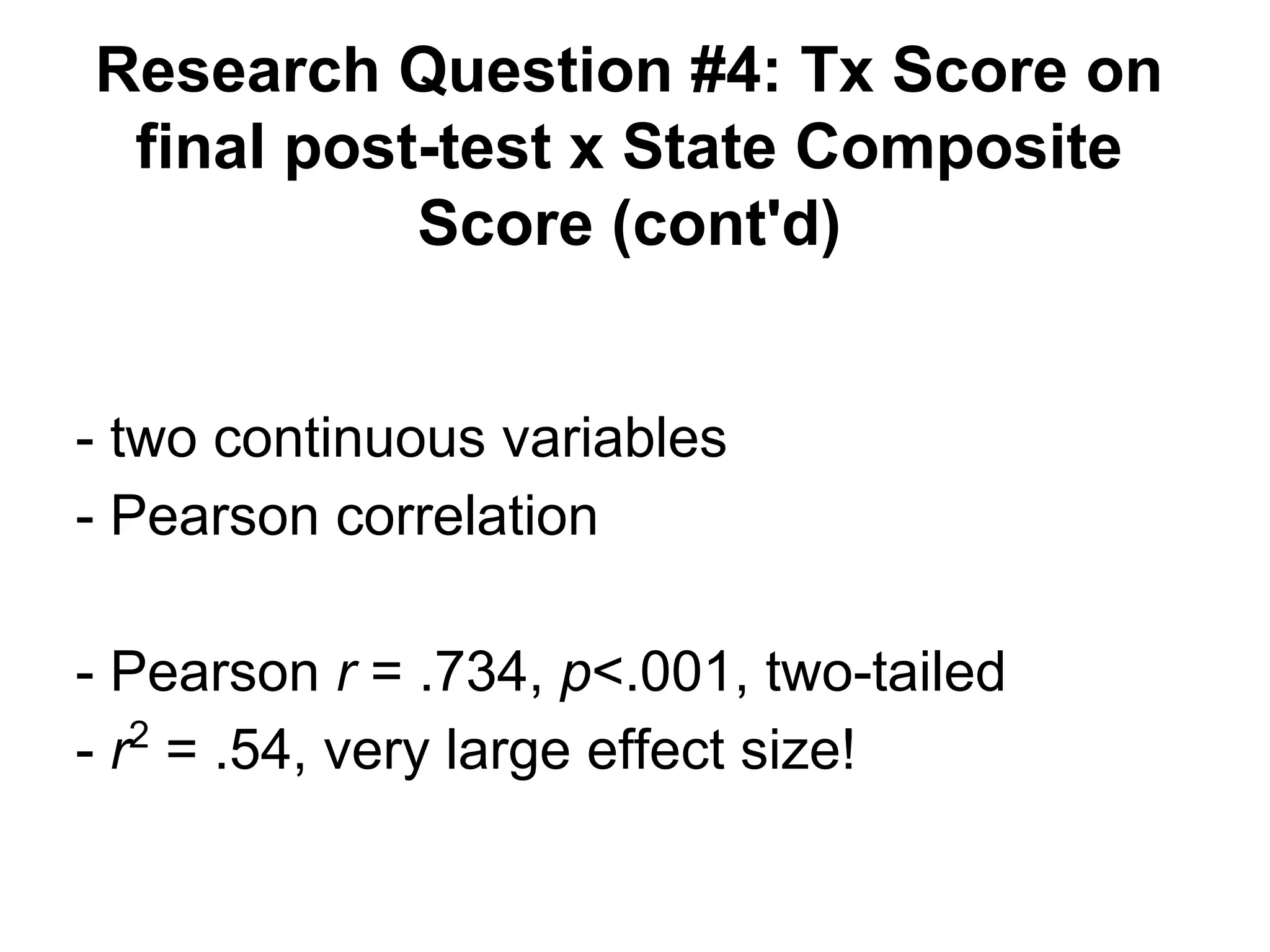
- two continuous variables
- Pearson correlation
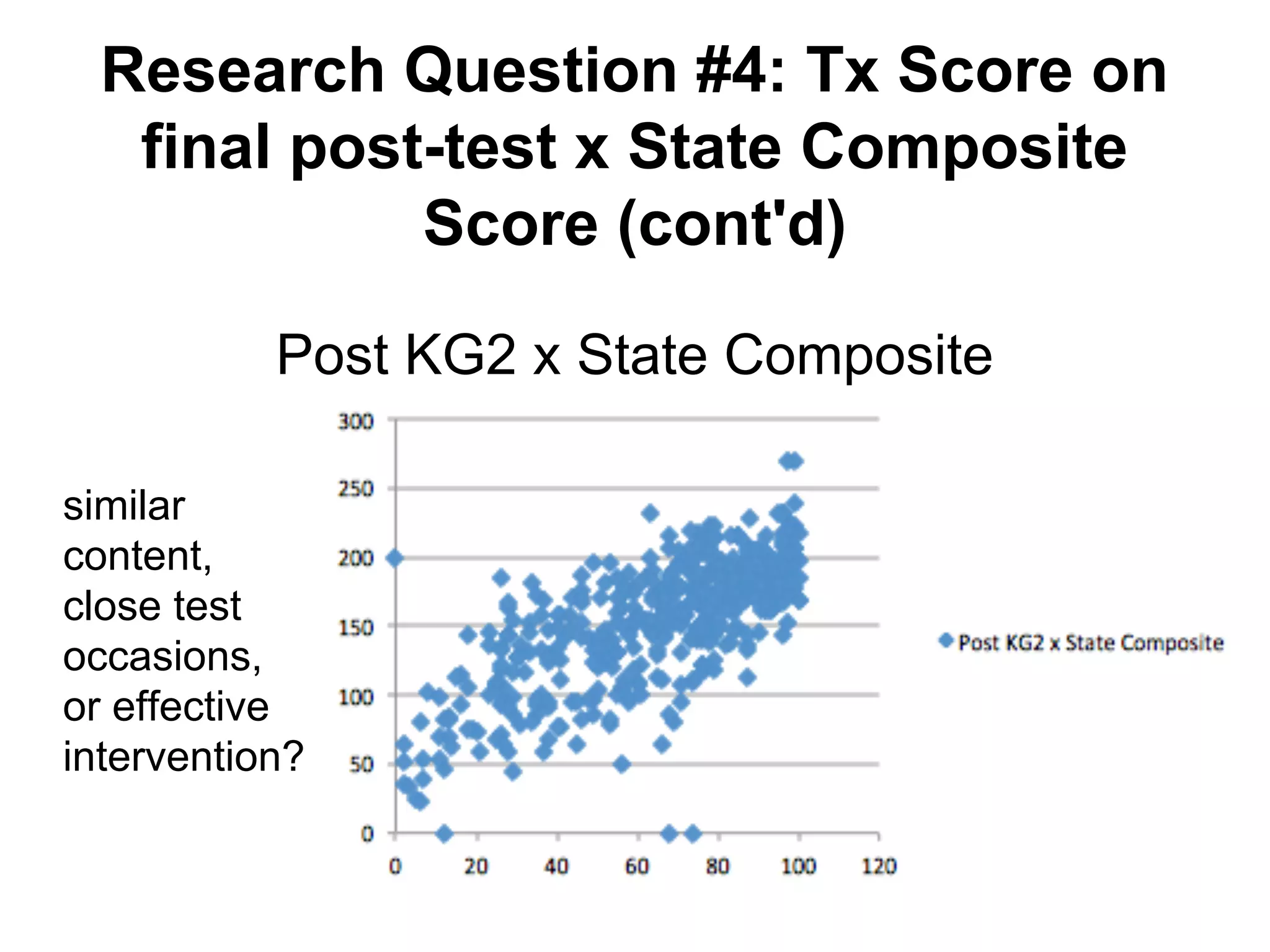
- Pearson r = .734, p<.001, two-tailed
- r2 = .54, very large effect size!
Research Question #4: Tx Score on
final post-test x State Composite
Score (cont'd)
Post KG2 x State Composite
similar
content,
close test
occasions,
or effective
intervention?

Stats presentation

  • 1.
  • 2.
    Research Question #1:-Are the differences between the gains made by the MMT group and those made by the control group statistically significant? An independent-sample t-test was used to determine the effectiveness of the MMT program by comparing the total number of points gained between the pre and post tests for each student. The result was significant at the α=.05 level, t(346) = 19.41, p >.001, two-tailed, d = 1.958. The mean of the MTT group (M = 84.1, SD = 20.6) was significantly higher than the control group mean (M = 40.35, SD = 23.969), as shown in figure 1. With a cohen's d of 1.957, the effect size was very large.
  • 4.
    Research Question #2:Is overall class rating equally distributed across SES?
  • 5.
    Research Question #2:Is overall class rating equally distributed across SES? A chi-squared goodness of fit test was used to determine whether overall class rating was equally distributed across SES in this sample group. An analysis of the results suggest that ice cream preference was not equal, χ2(4) = 55 , p >.001. This result does not support the hypothesis that overall class rating is evenly distributed across SES in the sample group. Overall class rating is not independent of SES. As shown in Figure 2 while a majority of students fell within Benchmark level, and in the free lunch category, 70% of the paid group of students met the benchmarks, while only 50% and 56% of the free and reduced categories respectively met the benchmarks. Only 25% of the students in the paid category fell in the strategic category, while 33% and 37% of the free and reduced students respectively fell into the strategic category.
  • 6.
    Research Question #3: Tx,Ctrl, and State, on Composite Score from All State Tests - normally distributed, equally variant, independent Group ID Mean N Std. Deviation Skewness MMT 165.84 262 40.429 -0.831 Control 134.43 202 46.134 -0.304 State 158.71 1136 41.821 -0.661 Total 156.81 1600 43.07 -0.65
  • 7.
    Research Question #3: Tx,Ctrl, and State, on Composite Score from All State Tests (cont'd) - One-way ANOVA - F(2,1597) = 35.614, p<.001, η2 = .043, almost-medium effect size - Tukey's HSD found between all three groups - treatment group scored highest, then rest of the state, then control group
  • 8.
    Research Question #3: Tx,Ctrl, and State, on Composite Score from All State Tests (cont'd) Score by Group ID pity the control group!
  • 9.
    Research Question #4:Tx Score on final post-test x State Composite Score - normally distributed Descriptives Mean Std. Deviation N State Composite Score 156.81 43.07 1600 MMT Post KG2 66.08 24.941 479
  • 10.
    Research Question #4:Tx Score on final post-test x State Composite Score (cont'd) - two continuous variables - Pearson correlation - Pearson r = .734, p<.001, two-tailed - r2 = .54, very large effect size!
  • 11.
    Research Question #4:Tx Score on final post-test x State Composite Score (cont'd) Post KG2 x State Composite similar content, close test occasions, or effective intervention?