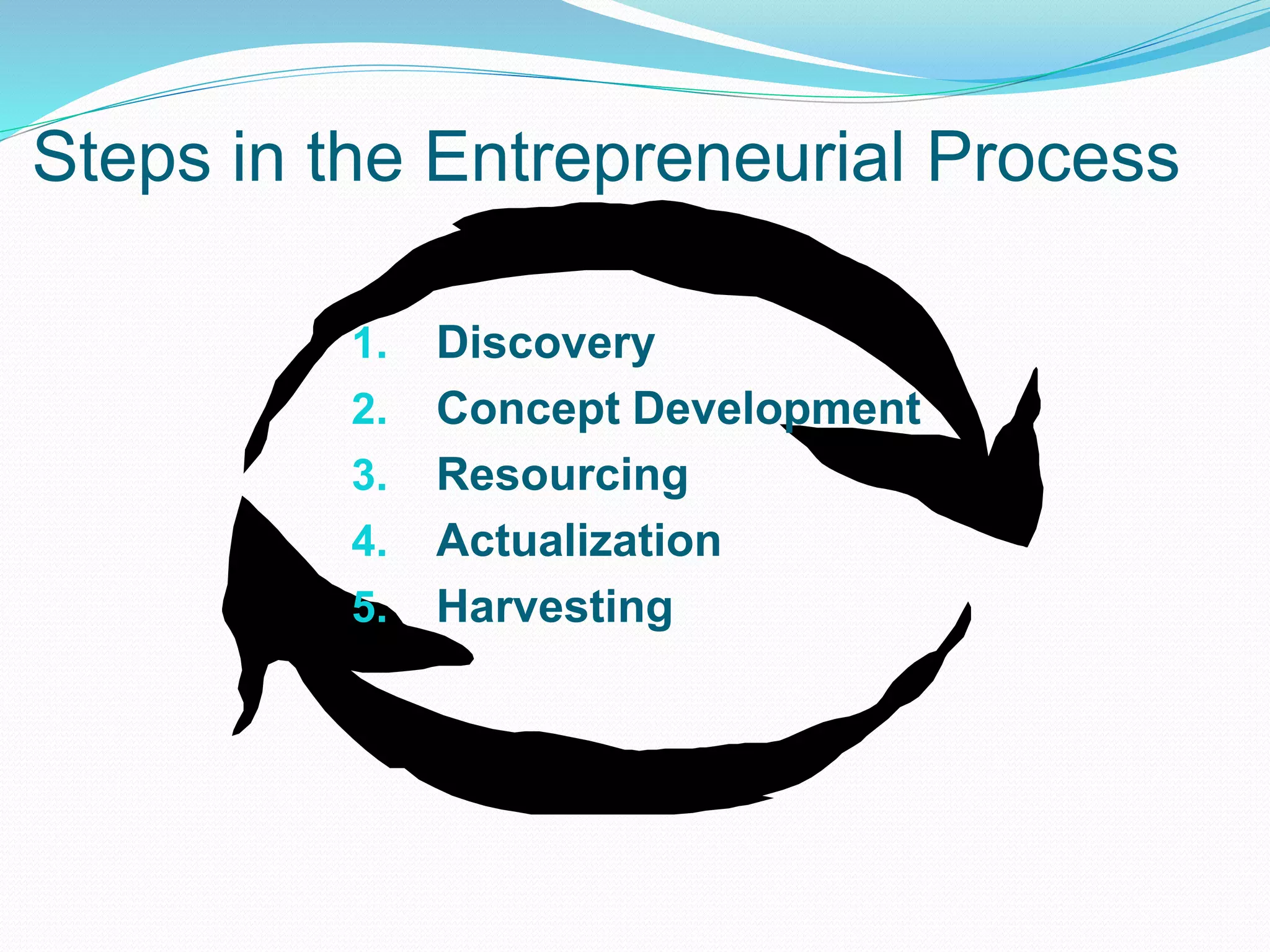
Steps in the Entrepreneurial Process
1. Discovery
2. Concept Development
3. Resourcing
4. Actualization
5. Harvesting
Steps in the Entrepreneurial Process
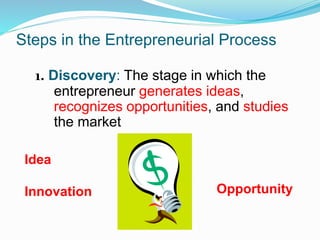
1. Discovery: The stage in which the
entrepreneur generates ideas,
recognizes opportunities, and studies
the market
Idea
Opportunity
Innovation
What is An Idea, Opportunity and Innovation?
2-3
An idea is a concept for a product or service that doesnít
exist or is not currently available in a market niche. It
may be a brand-new concept or an improvement of a
current product or service.
In contrast, an opportunity is an idea for a new product or
service with a market that is willing to pay for that
product or service so that it can form the basis of a
profitable business.
Innovation is the process of making changes to something
that adds value to customers.
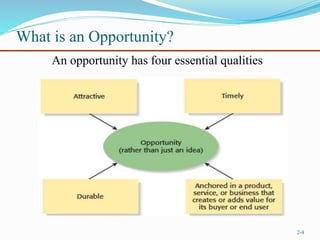
What is an Opportunity?
2-4
An opportunity has four essential qualities
Three Ways to Identify an Opportunity
2-5
Jeans/Electric cars Electric cars
Energy problem
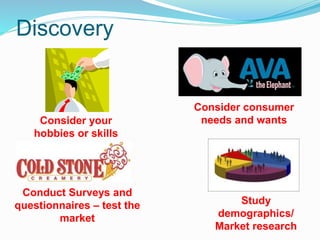
Discovery
Consider your
hobbies or skills
Consider consumer
needs and wants
Conduct Surveys and
questionnaires – test the
market
Study
demographics/
Market research
Steps in the Entrepreneurial Process
2. Concept Development:
 Develop a business plan: a
detailed proposal describing the
business idea
Executive summary
Objective
Mission Statement
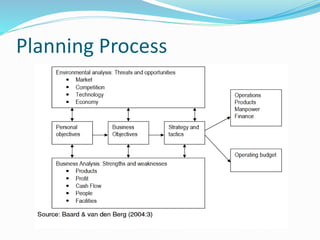
Planning Process
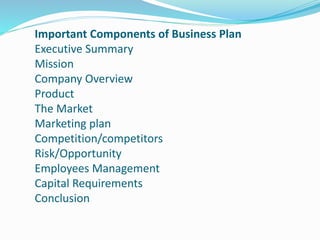
Important Components of Business Plan
Executive Summary
Mission
Company Overview
Product
The Market
Marketing plan
Competition/competitors
Risk/Opportunity
Employees Management
Capital Requirements
Conclusion
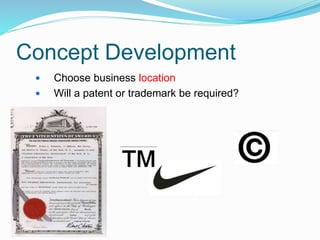
Concept Development
 Choose business location
 Will a patent or trademark be required?
A trademark is a word, phrase, symbol or design, or a combination
of words, phrases, symbols or designs, that identifies and
distinguishes the source of the goods of one party from those of
others
A copyright protects works of authorship, such as writings, music,
and works of art that have been tangibly expressed.
A patent for an invention is the grant of a property right to the
inventor, issued by the Patent and Trademark Office
Steps in the Entrepreneurial Process
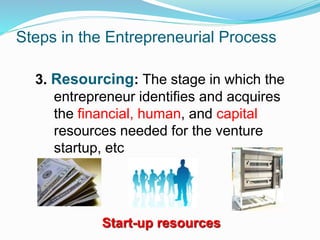
3. Resourcing: The stage in which the
entrepreneur identifies and acquires
the financial, human, and capital
resources needed for the venture
startup, etc
Start-up resources
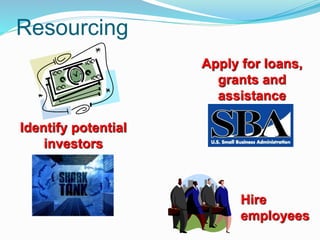
Resourcing
Identify potential
investors
Hire
employees
Apply for loans,
grants and
assistance
Steps in the Entrepreneurial
Process
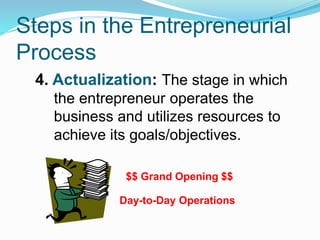
4. Actualization: The stage in which
the entrepreneur operates the
business and utilizes resources to
achieve its goals/objectives.
$$ Grand Opening $$
Day-to-Day Operations
Steps in the Entrepreneurial
Process
5. Harvesting: The stage in which the
entrepreneur decides on business’s
future growth/ development, or
demise
What is your 5-year or 10-year plan?
Consider adding locations or providing different
products/services
Will you go public?

Stages of enterprise process.ppt

  • 1.
    Steps in theEntrepreneurial Process 1. Discovery 2. Concept Development 3. Resourcing 4. Actualization 5. Harvesting
  • 2.
    Steps in theEntrepreneurial Process 1. Discovery: The stage in which the entrepreneur generates ideas, recognizes opportunities, and studies the market Idea Opportunity Innovation
  • 3.
    What is AnIdea, Opportunity and Innovation? 2-3 An idea is a concept for a product or service that doesnít exist or is not currently available in a market niche. It may be a brand-new concept or an improvement of a current product or service. In contrast, an opportunity is an idea for a new product or service with a market that is willing to pay for that product or service so that it can form the basis of a profitable business. Innovation is the process of making changes to something that adds value to customers.
  • 4.
    What is anOpportunity? 2-4 An opportunity has four essential qualities
  • 5.
    Three Ways toIdentify an Opportunity 2-5 Jeans/Electric cars Electric cars Energy problem
  • 6.
    Discovery Consider your hobbies orskills Consider consumer needs and wants Conduct Surveys and questionnaires – test the market Study demographics/ Market research
  • 7.
    Steps in theEntrepreneurial Process 2. Concept Development:  Develop a business plan: a detailed proposal describing the business idea Executive summary Objective Mission Statement
  • 8.
  • 9.
    Important Components ofBusiness Plan Executive Summary Mission Company Overview Product The Market Marketing plan Competition/competitors Risk/Opportunity Employees Management Capital Requirements Conclusion
  • 10.
    Concept Development  Choosebusiness location  Will a patent or trademark be required?
  • 11.
    A trademark isa word, phrase, symbol or design, or a combination of words, phrases, symbols or designs, that identifies and distinguishes the source of the goods of one party from those of others A copyright protects works of authorship, such as writings, music, and works of art that have been tangibly expressed. A patent for an invention is the grant of a property right to the inventor, issued by the Patent and Trademark Office
  • 12.
    Steps in theEntrepreneurial Process 3. Resourcing: The stage in which the entrepreneur identifies and acquires the financial, human, and capital resources needed for the venture startup, etc Start-up resources
  • 13.
  • 14.
    Steps in theEntrepreneurial Process 4. Actualization: The stage in which the entrepreneur operates the business and utilizes resources to achieve its goals/objectives. $$ Grand Opening $$ Day-to-Day Operations
  • 15.
    Steps in theEntrepreneurial Process 5. Harvesting: The stage in which the entrepreneur decides on business’s future growth/ development, or demise What is your 5-year or 10-year plan? Consider adding locations or providing different products/services Will you go public?