Spatial Database Systems Design Implementation
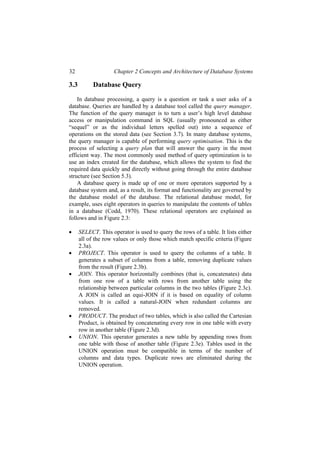
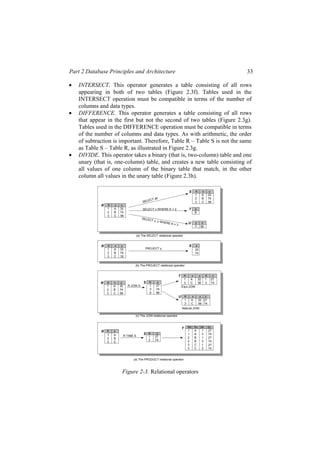
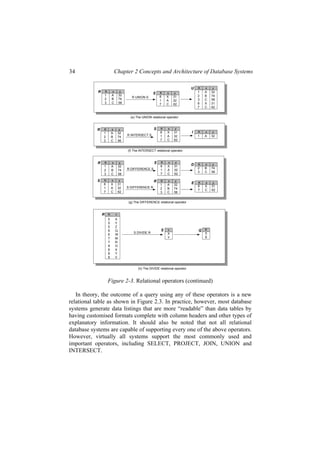
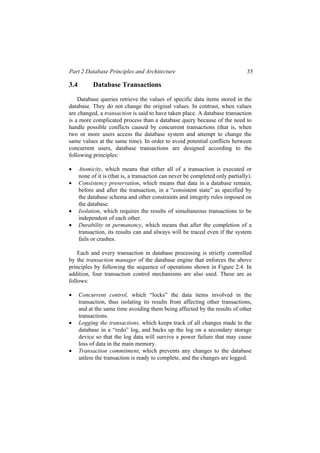
And Project Management 1st Edition Albert Kw
Yeung download
https://ebookbell.com/product/spatial-database-systems-design-
implementation-and-project-management-1st-edition-albert-kw-
yeung-984468
Explore and download more ebooks at ebookbell.com
Here are some recommended products that we believe you will be
interested in. You can click the link to download.
Spatial Database Systems Design Implementation And Project Management
2007th Edition Albert Kw Yeung
https://ebookbell.com/product/spatial-database-systems-design-
implementation-and-project-management-2007th-edition-albert-kw-
yeung-6808658
Spatial Databases With Application To Gis The Morgan Kaufmann Series
In Data Management Systems 1st Philippe Rigaux
https://ebookbell.com/product/spatial-databases-with-application-to-
gis-the-morgan-kaufmann-series-in-data-management-systems-1st-
philippe-rigaux-2186934
Spatial Database For Gps Wildlife Tracking Data A Practical Guide To
Creating A Data Management System With Postgresqlpostgis And R 1st
Edition Ferdinando Urbano
https://ebookbell.com/product/spatial-database-for-gps-wildlife-
tracking-data-a-practical-guide-to-creating-a-data-management-system-
with-postgresqlpostgis-and-r-1st-edition-ferdinando-urbano-4662414
Pro Oracle Spatial For Oracle Database 11g Ravikanth V Kothuri
https://ebookbell.com/product/pro-oracle-spatial-for-oracle-
database-11g-ravikanth-v-kothuri-5473684
Spatial Databases Technologies Techniques And Trends Yannis
Manolopoulos
https://ebookbell.com/product/spatial-databases-technologies-
techniques-and-trends-yannis-manolopoulos-2206322
Spatial Databases A Tour 1st Edition Shashi Shekhar Sanjay Chawla
https://ebookbell.com/product/spatial-databases-a-tour-1st-edition-
shashi-shekhar-sanjay-chawla-2095138
Spatial Network Big Databases Queries Storage Methods Kwangsoo Yang
https://ebookbell.com/product/spatial-network-big-databases-queries-
storage-methods-kwangsoo-yang-5771286
Advances In Spatial And Temporal Databases 12th International
Symposium Sstd 2011 Minneapolis Mn Usa August 2426 2011 Proceedings
1st Edition Erik Hoel Auth
https://ebookbell.com/product/advances-in-spatial-and-temporal-
databases-12th-international-symposium-sstd-2011-minneapolis-mn-usa-
august-2426-2011-proceedings-1st-edition-erik-hoel-auth-2452318
Advances In Spatial And Temporal Databases 11th International
Symposium Sstd 2009 Aalborg Denmark July 810 2009 Proceedings 1st
Edition Mor Naaman Auth
https://ebookbell.com/product/advances-in-spatial-and-temporal-
databases-11th-international-symposium-sstd-2009-aalborg-denmark-
july-810-2009-proceedings-1st-edition-mor-naaman-auth-2530608
Spatial Database Systems
The GeoJournal Library
VOLUME 87
Managing E ditor Max Barlow, Toronto, Canada
Founding Series E ditor
Wolf Tietze, Helmstedt, Germany
E ditorial Board Paul Claval, France
Yehuda Gradus, Israel
Sam Ock Park, South Korea
Herman van der Wusten, The Netherlands
:
:
:
Spatial Database Systems
Design, Implementation and Project
Management
ALBERT K.W. YEUNG
Ontario Police College, Aylmer West, Ontario, Canada
and
G. B H
niversity of Waterloo, Ontario, Canada
By
RENT ALL
U
A C.I.P. Catalogue record for this book is available from the Library of Congress.
ISBN-10 1-4020-5393-2 (PB)
ISBN-13 978-1-4020-5393-1 (PB)
ISBN-10 1-4020-5391-6 (HB)
ISBN-13 978-1-4020-5391-7 (HB)
ISBN-10 1-4020-5392-4 (e-book)
ISBN-13 978-1-4020-5392-4 (e-book)
Published by Springer,
P.O. Box 17, 3300 AA Dordrecht, The Netherlands.
www.springer.com
Printed on acid-free paper
All Rights Reserved
© 2007 Springer
No part of this work may be reproduced, stored in a retrieval system, or transmitted
in any form or by any means, electronic, mechanical, photocopying, microfilming, recording
or otherwise, without written permission from the Publisher, with the exception
of any material supplied specifically for the purpose of being entered
and executed on a computer system, for exclusive use by the purchaser of the work.
Dedication
To our families:
Agnes Yuk-Lan, David Lik-
Hang, Peter Lik-Yeen and
Wen-Ying Yeung.
Pat, Snow, Masha, Aaron
Hall and Rhondda Martin.
, Elise
vii
Contents
Preface
PART 1: INTRODUCTION 1
1. The Current Status of Spatial Information Technology 3
PART 2: DATABASE PRINCIPLES AND ARCHITECTURE 19
2. Concepts and Architecture of Database Systems 21
3. Database Models and Data Modelling 55
4. Spatial Data and Spatial Database Systems 93
5. Spatial Data Standards and Metadata 129
6. Spatial Data Sharing, Data Warehousing and Database Federation 175
PART 3: SPATIAL DATABASE IMPLEMENTATION AND
PROJECT MANAGEMENT 217
7. User Education and Legal Issues of Spatial Database Systems 219
8. User Needs Assessment and Multi-user Spatial Solutions 261
9. Project Management for Spatial Database Implementation 315
Dedication v
ix
viii
10. Web-enabled Spatial Database Systems 367
11. Spatial Data Mining and Decision Support Systems 409
PART 4: THE FUTURE 469
12. Trends of Spatial Database Systems 471
Glossary of Terms 523
Index
Contents
547
ix
Preface
The decision to write this book was motivated by a number of factors.
First, although several useful textbooks on spatial databases have recently
been published, this is an area of spatial information science that has lagged
somewhat behind the rapid advances of the technology and the profusion of
books on domain-specific applications. Second, much of the information
pertaining to spatial database technologies is only available in scattered
journal papers and conference proceedings, and prior to this book no single
effort has been made to sift through this expansive literature and unite the
key contributions in a single volume. The tasks of sourcing and coherently
integrating relevant contributions is daunting for students, many of whom
have a substantial number of competing demands placed on them. This book
should make the task of knowledge building less daunting. Third, and
perhaps most importantly, an apparent trend in many spatial information
science programs is to focus, from first or second year undergraduate
through to fourth year courses, on learning to work confidently and
independently with increasingly complex software tools. Hence, many
courses are technical in nature, and while they continue to produce
technically adept students, knowledge of the broader aspects of spatial
databases is often not as complete as it might be among graduates. Some
programs have sought to address this by introducing courses that focus on
spatial data management. However, these courses are largely unsupported by
a relevant and contemporary textbook.
This book seeks to fill the void on topics that must be mastered in
initiating, implementing, and managing a spatial database project. Since the
mid-1990s the application-driven paradigm of GIS has gradually evolved
into the database-centric paradigm that is at the heart of the approach
x Preface
adopted in this book. Hence, in addition to updating approaches to planning,
designing, and implementing GIS as a technological infrastructure within an
organisation, the book concentrates specifically on spatial databases as an
institutional resource, a commodity, and a knowledge base for decision
making. This provides the basis for a comprehensive and balanced
discussion of recent advances in the concepts and technology that underlie
the current data-based and user-centric approach to spatial information.
The approach that is adopted in this book allows a transparent integration
of spatial information with mainstream information technology. Since all
major database vendors currently offer spatial information capabilities and
functions in their products, it is important for students of spatial databases as
well as practitioners to have a sound grasp of the possibilities these systems
offer. At the same time, GIS vendors have also largely re-designed and re-
built their products by taking advantage of the concepts and techniques of
processing spatial data within a database environment. This new approach is
heavily dependent on the development and use of standards, which figure
prominently in many parts of the text. Importantly, this retooling of the
spatial information marketplace does not automatically assume the demise of
conventional GIS. On the contrary, GIS software has, itself, moved into a
new era of usage where many non-traditional users are finding new
applications and, at the same time, creating new domain-specific spatial data
models.
The book is intended for students of spatial information science as well
as professionals already in the workplace. The bond between between these
two groups of users is their common interest in the state of the art of spatial
database systems. The level of the discussion assumes that readers have
already completed at least one technical course in GIS, preferably two, and
hence have a good understanding of the concepts of acquiring, characterising
and applying spatial data, the techniques of geo-referencing and positioning,
as well as domain-specific spatial analysis and spatial data modelling. The
book’s audience is likely to span a wide variety of academic disciplines in
the humanities, the sciences and in various fields of engineering. Such
heterogeneity made it a challenge to write technical content that is accessible
to readers with varying technical knowledge and skills. Hence, spatial
database concepts and techniques are explained using a relatively non-
technical approach. Despite this, a sound basic understanding of computing and
data processing is required in order to master the material covered in several
of the chapters.
The content of the book is organised so that it can be used either for an
intensive half year course, or for two sequential half year courses that could
also be offered as a single full year course. In the first case, the ten
substantive chapters (2 through 11) could be used in a half year senior
Preface xi
Alternatively, the text could be used to support a full-year course of 26
weeks at third or fourth year undergraduate level or two thirteen-week linked
courses, that span a third and fourth year undergraduate program. In this
context, Parts 1 and 2 or Chapters 1 through 6 would cover the first course
with a title of Spatial Database Principles and Architecture, and Chapters 7
through 12 would cover the second course with the title of Part 3 to focus on
Spatial Database Implementation and Project Management. In each of these
scenarios (a full-year course, or two thirteen-week courses) each chapter
would occupy two weeks or approximately six hours of lectures with
examples.
To supplement and substantiate the materials presented in the book, and
in keeping with the course structures noted above, an accompanying Web site
(http://www.springer.com/1-4020-5391-6) has been developed that instructors
instructional materials such as PowerPoint slides, additional reference
materials and learning resources, as well as case studies and exemplary
spatial database systems in use in government, business and academic
research. Spatial database systems is essentially a technical subject that can
be approached most effectively by reading and practising. Hence we have
also developed and posted to the Web site several project/laboratory
assignments.
It is important to reiterate that this text is targeted not only at tertiary-
level instruction, but also at practitioners in various professions that use
spatial information technology. The text provides a highly functional
conceptual framework for constructing technical solutions to address issues
commonly encountered in the workplace. These include, for example, the
role and characteristics of spatial metadata, the considerations and
implications of the law and associated principles such as liability and
intellectual property in spatial data use and distribution, the process of
assessing spatial data needs within an organisation and starting a spatial
database project from first principles, as well as the writing of and
responding to business cases and request for proposal (RFP) documents. In
addition, the adherence to principles of best practice in spatial databases as
well as the use of quality control and quality assurance are essential
undergraduate or graduate spatial database course with each chapter
occupying approximately a single week in the body of a thirteen week
semester. Chapters 1 and 12 serve as the book ends in a single semester
course to introduce the approach at the outset and to conclude the course
with a week for wrap up discussion at the end. Use of the text for a single
course of this nature assumes a relatively high level of technical knowledge
on the part of students, as the material included in each chapter is relatively
wide-ranging and often technical in nature.
and students using this book are encouraged to use. This Web site includes
xii Preface
knowledge components for spatial database sponsors, administrators, project
managers and developers. For all users of the text, whether undergraduate or
graduate students or practitioners, each chapter is referenced with a wide
range of key and recent sources. We have not included in the text specific
case studies in any detail, and have rather relied on the associated Web site to
present these materials.
To conclude this Preface, we wish to thank all people who have given us
encouragement and support in one way or another during the course of
writing this book. Our thanks must first go to Ms. Evelien Bakker, our Editor
from Springer. Her patience and perseverance with busy schedules and
unavoidable delays in writing is sincerely appreciated. Dr. Yeung wishes to
thank Director Rudy Gheysen and Deputy Director Bill Stephens of the
Ontario Police College, for their interest in this book project. Dr. Hall wishes
to note his thanks to the University of Canterbury, Christchurch, New
Zealand and the Department of Information Science at the University of
Otago, Dunedin, New Zealand where parts of the manuscript were written.
Dr. Hall also wishes to acknowledge the camaraderie and stimulating
discussions in all aspects of spatial databases and their applications provided
by successive years of graduate students at the University of Waterloo.
This book has benefited from review by a number of individuals, some of
whom read and commented on the manuscript at various stages throughout
and others who provided encouraging comments and gave us useful
suggestions to improve the presentation of materials upon completion of the
first full draft. In this regard we extend our thanks to Mr. Stephen Adaran
(Ontario Police College), Prof. Yvan Bédard (Laval University), Dr. Don
Boyes (University of Toronto), Dr. Dongmei Chen (Queen’s University at
Kingston), Dr. Rob Feick (University of Waterloo), Prof. Piotr Jankowski
(San Diego State University), Prof. Ian Masser, Mr. Fraser Moffatt (Canada
Border Services Agency), Dr. Tony Moore (University of Otago), Prof.
Nigel Waters (University of Calgary), Dr. Michael Sawada (University of
Ottawa), and Mr. Lawton Tam (formerly of the Ministry of Transportation
of Ontario).
We wish to reserve the final words for our families. The production of
any textbook is as much a matter of time-intensive labour as the fulfilment
of a perceived need in the inventory of instructional and reference materials
in a given field. The act of satisfying this need requires not only experience
and knowledge but also substantial support on the part of others. In this
context we wish to extend our heart-felt thanks to our families, to whom this
book is dedicated.
PART 1
INTRODUCTION
3
Chapter 1
THE CURRENT STATUS OF SPATIAL
INFORMATION TECHNOLOGY
1. INTRODUCTION
In the world of information technology, it is fair to state that the only
constants are change and growth. Judging from the developments in the field
of spatial information technology in the last several years, this is definitely
not an overstatement. Since the inception of the idea of using the computer
for cartography and mapping in the 1950s, newer hardware and software
tools have evolved to enable users of spatial information to operate more
easily and extend constantly the frontiers of knowledge. New concepts of
and techniques for using spatial information have paralleled the advances in
hardware and software, and cumulatively these have accelerated the uptake
of related information technologies.
The pervasive proliferation of spatial information during the past decade
contrasts sharply with the earlier era, which prevailed until the early 1990s.
This era was characterised by the umbrella term of geographic information
systems (GIS) as a highly specialised technology of interest primarily to
professional users and researchers for specific applications. One of the major
driving forces behind the recent popularisation of spatial information is the
increasing availability of spatial data from government and commercial
sources, distributed via the Internet through such mechanisms as spatial data
depots, digital geolibraries and spatial data warehouses and clearinghouses.
Another major driving force is the growing awareness of the importance of
spatial information by all sectors of modern society. Policy makers in the
public sector, for example, have embraced the notion that spatial information
is an important requirement of good governance, a fundamental aspect of the
4 Chapter 1 The Current Status of Spatial Information Technology
economy, and access to this information is a civil right that enables citizens
to participate in public affairs. At the same time, commercial organisations
including hardware and software developers, data collectors and providers,
and information service providers all see spatial information as a business
opportunity bounded only by their vision. Users of spatial information are no
longer limited to professionals and researchers, but include people who plan
their travel itinerary using an on-line map service on the Internet, who check
the weather conditions on a specialty television channel, who search for a
new home in an on-line multiple listing service (MLS), and who access
geographically referenced information about their communities, the
environment, and national and internation affairs on the World Wide Web.
The changes in the collection, management and use of spatial information
noted above would probably not have happened, at least not to the extent
that is evident, without the power of spatial databases. This book charts the
use of spatial information by using a holistic data-based and user-centric
approach instead of the conventional application-driven and GIS-centric
approach. The approach embraces database development and management,
data access policies and interchange, standards and metadata,
commodification and liability of spatial data services, spatial knowledge
discovery and decision support, all of which are addressed in the following
chapters. From the perspective of training and education, this
conceptualisation implies that the traditional approach, which viewed GIS in
terms of data management, cartography and spatial analysis, must be
broadened to accommodate the growing realisation of spatial information as
an institutional resource, a commodity, and a knowledge base for decision
making. In essence, this new view of spatial information was one of the main
motivations for writing this book.
This introductory chapter seeks to provide a conceptual framework for
the purpose, content and structure of the book. It first overviews recent
advances in the concepts and technology of the new approach to spatial
information. The knowledge and skills required to design, implement and
manage a spatial database are discussed. The organisation of the book is then
introduced by giving a brief description of each chapter and the threads that
are unwound among individual chapters.
2. ADVANCES OF SPATIAL INFORMATION
CONCEPTS AND TECHNOLOGY
The design and implementation of spatial information technology largely
depends upon the trends that have characterised information technology (IT)
in general. The concepts and techniques used in spatial database systems
Part 1 Introduction 5
today are drawn largely from the general principles and methods of database
systems that evolved in the past decade. These have brought spatial
information, which until the mid-1990s was still widely perceived as a stand-
alone technology, into the mainstream of IT. They have also turned project-
specific GIS applications toward the multi-purpose database world of an
enterprise information infrastructure that supports both day-to-day business
needs as well as management decision making. It is now data and users, not
applications or technology, that drive the use of spatial information in an
organisation, leading to the data-based and user-centric approach to spatial
information that characterises current practices in the implementation of
spatial database systems.
2.1 A New Metaphor of Spatial Information
Spatial information was traditionally approached from three perspectives,
namely spatial data management, cartography, and spatial analysis. These
perspectives can be described as the instrumental or tool-oriented view of
spatial information. Sui and Goodchild (2001) contended that such a view of
spatial information is fundamentally inadequate to capture the essence of
spatial information technology and its social implications. They suggested
that, justifiably, spatial information should also be conceived from the
perspective of media, where media are generally defined as the means of
communicating information to the general public. The concept of media also
includes mass media, which refer to the instruments of mass communication
that take place in modern society, where information can reach a large
number of people within a short period of time.
On the basis of the traditional views of spatial information and the
proposition of Sui and Goodchild, a new conceptualisation of spatial
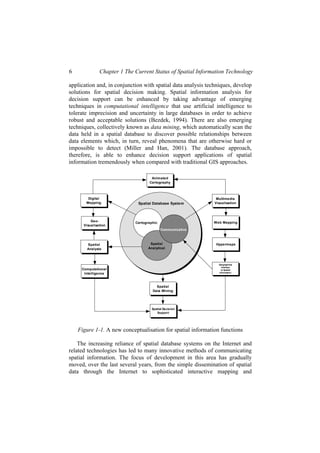
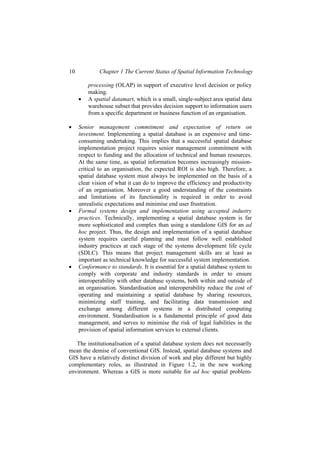
information has evolved, as shown in Figure 1.1. At the core of this
conceptualisation there are four functional aspects of spatial information,
namely database systems, cartography, communication, and spatial analysis,
each of which serves one or more specific but interrelated application
domain denoted by the rectangular boxes in the diagram.
The spatial database component plays a central and critical role in the
new metaphor of spatial information. Typical spatial information
applications today are both data- and computation-intensive, and require the
storage of a huge volume of traditional (alphanumeric) and non-traditional
(geometric objects, images, time series) data sets. None of the data
management, spatial analysis and mapping functions will work efficiently
without a powerful spatial database system behind them.
Powered by its spatial indexing and data processing capabilities, a spatial
database system can quickly assemble data relevant for use in a particular
6 Chapter 1 The Current Status of Spatial Information Technology
application and, in conjunction with spatial data analysis techniques, develop
solutions for spatial decision making. Spatial information analysis for
decision support can be enhanced by taking advantage of emerging
techniques in computational intelligence that use artificial intelligence to
tolerate imprecision and uncertainty in large databases in order to achieve
robust and acceptable solutions (Bezdek, 1994). There are also emerging
techniques, collectively known as data mining, which automatically scan the
data held in a spatial database to discover possible relationships between
data elements which, in turn, reveal phenomena that are otherwise hard or
impossible to detect (Miller and Han, 2001). The database approach,
therefore, is able to enhance decision support applications of spatial
information tremendously when compared with traditional GIS approaches.
Spatial Database System
Cartographic
Spatial
Analytical
Communicative
Digital
Mapping
Spatial
Analysis
Computational
Intelligence
Multimedia
Visualisation
Hypermaps
Geographical
interface
to Spatial
Information
Spatial Decision
Support
Animated
Cartography
Geo-
Visualisation
Web Mapping
Spatial
Data Mining
Figure 1-1. A new conceptualisation for spatial information functions
The increasing reliance of spatial database systems on the Internet and
related technologies has led to many innovative methods of communicating
spatial information. The focus of development in this area has gradually
moved, over the last several years, from the simple dissemination of spatial
data through the Internet to sophisticated interactive mapping and
Part 1 Introduction 7
interoperable spatial data processing, realising the concept of “GIS as new
media” proposed by Sui and Goodchild and noted above.
At present, spatial database systems are used in relatively sophisticated
ways that go well beyond the simple management, display, and analysis of
geographically referenced information. A typical spatial database system is
enhanced by capabilities to manipulate new data types and models, complex
data structures including spatial indexing, and sophisticated algorithms and
operators for efficient data processing. As noted earlier, these capabilities are
a far cry from the conventional file-based approaches of GIS that dominated
the world of spatial data into the early 1990s. As shown in Figure 1.1, the
database approach has brought the conventional and emerging functions of
spatial information closer together. This approach not only articulates the use
of spatial information within the conventional application domains
themselves, but it also provides the necessary bridge that enables
interoperable applications within mainstream information technology.
2.2 The Merging of Spatial Information with
Mainstream Information Technology
The move to use a database approach for spatial information started in
the early 1990s (Black, 1996). This involved considerable effort and
commitment on the part of both conventional GIS and database software
vendors. It also engendered many mergers, partnerships and joint
development projects among companies, as well as the formation of industry
consortia that brought government, commercial and research organisations
together to define and work toward common goals. Today, practically all
major database vendors offer spatial information capabilities and functions
in their products. At the same time, GIS vendors have also largely re-
designed and re-built their products by taking advantage of the concepts and
techniques of processing spatial data within a database environment.
A typical spatial database system today is an ordinary commercial
database with additional capabilities and functions to handle spatial data.
These capabilities and functions include:
• Spatial data types. Spatial data are stored either as special data types
following the Open Geospatial Consortium (OGC, 1999) definition of
“simple features” or as a binary large object (BLOB) in a database. An
OGC simple feature is defined in a database and is, therefore, handled
completely within the functionality of the database itself. A BLOB, on
the other hand, is a generic data type into which any binary data can be
stored and, as a result, spatial data stored in this form must be indexed
8 Chapter 1 The Current Status of Spatial Information Technology
and manipulated using add-on software components to the spatial
database.
• Spatial indexing. This is a mechanism to facilitate access to a spatial
database by means of stored coordinates in two-dimensional space.
There are many different indexing options, such as the R-tree, quadtree
and B-tree, each of which has its strengths and weaknesses depending on
the specific data format and application need.
• Spatial operators. These refer to the suite of data processing functions
and processes that can be achieved through use of structured query
language (SQL) to query and retrieve selected database contents, join
database tables according to specific spatial and non-spatial criteria, and
generate the results of processing in specific formats.
• Spatial application routines. These include a variety of software
components for specific database application functions such as spatial
data loading, versioning and long transaction control, performance
tuning, database backup and replication.
There are now several database options available that offer spatial
information processing capabilities and functions. Oracle was arguably the
first database vendor to add spatial capabilities to its core products. In
September 1995, Oracle and the Environmental Systems Research Institute
(ESRI) agreed to integrate the Oracle 7 Spatial Option with two of ESRI’s
products, namely Spatial Database Engine (SDE) and ArcView GIS. Since
then, Oracle has formed partnerships or joint-development agreements with
several other GIS companies including Intergraph, MapInfo and GE
Smallworld Systems. At the same time, Oracle also has perused its own
internal development strategy that resulted in the creation of a structure for
spatial data and the implementation of spatial operators by extending SQL to
allow a wide range of spatial data processing functions within an Oracle
database system.
Other key players in the database industry such as IBM, Sybase and
Microsoft have all entered into partnership with GIS software vendors to
develop spatial functionality, or developed their own capabilities, typically
through extensions to their database products. In April 2001, IBM acquired
Informix, notable for its spatial capabilities, and aggressively developed and
extended the spatial capabilities of its own flagship database product called
DB2. Sybase and Microsoft adopted a different approach that focused on
partnering with GIS software vendors to add spatial database capabilities to
their products. Sybase, for example, worked with Autometric to develop a
suite of spatial database functions called Spatial Query Server (SQS) that can
be implemented on a Sybase database system. Microsoft’s database
products, Access and SQL Server, are successfully implemented to provide
Part 1 Introduction 9
database capabilities for the GIS software products of ESRI, MapInfo,
Intergraph, Autodesk and several other companies.
Using the database approach to spatial information provides basic
benefits such as centralising spatial and non-spatial business data in a single
system for more efficient processing. It also increases the return on
investment (ROI) by leveraging the skills of IT personnel. By merging
spatial databases with mainstream IT, an information technology department
can manage both spatial and non-spatial data at the same time by sharing the
same resources and by administering the two types of database systems
using the same security, optimisation and backup protocols and procedures.
However, although the operating environment for spatial and non-spatial
databases is similar, there are fundamental differences between the
knowledge and skills required to work with these two different types of data
and databases. This implies the requirement of regular IT staff for training in
spatial information concepts and methods, and the need for spatial
information staff to be familiar with the principles and techniques of
operating the spatial database within the corporate database system.
2.3 Institutionalisation of Spatial Database Systems
The merging of spatial information with mainstream IT has led naturally
to the institutionalisation of spatial database systems. This means that instead
of using spatial information in ad hoc projects that have little connection
between them, spatial databases are now implemented as permanent and
integral components of corporate IT infrastructures with the explicit mandate
to serve the long-term business goals of organisations.
An institutionalised spatial database system has the following
characteristics:
• Serveing the business goals of an organisation as a whole rather than
individual departments. The objective of implementing a spatial
database is to provide the necessary information support for the day-to-
day operation of an organisation as well as for executive decision or
policy making. Depending on the information needs of an organisation,
spatial database systems can be set up differently using a combination of
system architectures. These include:
• An operational spatial database system optimised for on-line
transaction processing (OLTP) in support of daily business
operations.
• A spatial data warehouse formed by centralising the repositories of
legacy spatial data structured and optimised for on-line analytical
10 Chapter 1 The Current Status of Spatial Information Technology
processing (OLAP) in support of executive level decision or policy
making.
• A spatial datamart, which is a small, single-subject area spatial data
warehouse subset that provides decision support to information users
from a specific department or business function of an organisation.
• Senior management commitment and expectation of return on
investment. Implementing a spatial database is an expensive and time-
consuming undertaking. This implies that a successful spatial database
implementation project requires senior management commitment with
respect to funding and the allocation of technical and human resources.
At the same time, as spatial information becomes increasingly mission-
critical to an organisation, the expected ROI is also high. Therefore, a
spatial database system must always be implemented on the basis of a
clear vision of what it can do to improve the efficiency and productivity
of an organisation. Moreover a good understanding of the constraints
and limitations of its functionality is required in order to avoid
unrealistic expectations and minimise end user frustration.
• Formal systems design and implementation using accepted industry
practices. Technically, implementing a spatial database system is far
more sophisticated and complex than using a standalone GIS for an ad
hoc project. Thus, the design and implementation of a spatial database
system requires careful planning and must follow well established
industry practices at each stage of the systems development life cycle
(SDLC). This means that project management skills are at least as
important as technical knowledge for successful system implementation.
• Conformance to standards. It is essential for a spatial database system to
comply with corporate and industry standards in order to ensure
interoperability with other database systems, both within and outside of
an organisation. Standardisation and interoperability reduce the cost of
operating and maintaining a spatial database by sharing resources,
minimizing staff training, and facilitating data transmission and
exchange among different systems in a distributed computing
environment. Standardisation is a fundamental principle of good data
management, and serves to minimise the risk of legal liabilities in the
provision of spatial information services to external clients.
The institutionalisation of a spatial database system does not necessarily
mean the demise of conventional GIS. Instead, spatial database systems and
GIS have a relatively distinct division of work and play different but highly
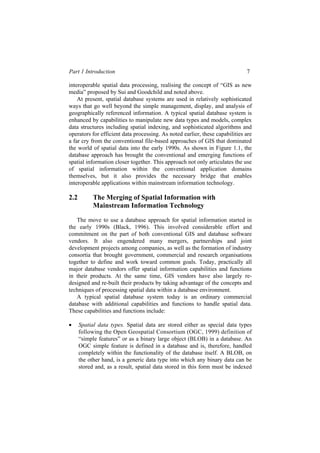
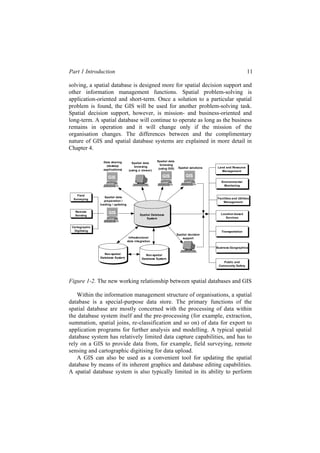
complementary roles, as illustrated in Figure 1.2, in the new working
environment. Whereas a GIS is more suitable for ad hoc spatial problem-
Part 1 Introduction 11
solving, a spatial database is designed more for spatial decision support and
other information management functions. Spatial problem-solving is
application-oriented and short-term. Once a solution to a particular spatial
problem is found, the GIS will be used for another problem-solving task.
Spatial decision support, however, is mission- and business-oriented and
long-term. A spatial database will continue to operate as long as the business
remains in operation and it will change only if the mission of the
organisation changes. The differences between and the complimentary
nature of GIS and spatial database systems are explained in more detail in
Chapter 4.
Spatial Database
System
GIS
Field
Surveying
Remote
Sensing
Cartographic
Digitising
GIS GIS
Non-spatial
Database System
Spatial data
preparation /
loading / updating
Spatial data
browsing
(using a viewer)
Spatial data
browsing
(using GIS)
Spatial decision
support
GIS
Data sharing
(desktop
applications)
Infrastructural
data integration
Land and Resource
Management
Environmental
Monitoring
Facilities and Utilities
Management
Location-based
Services
Transportation
Business Geographics
Public and
Community Safety
Spatial solutions
Non-spatial
Database System
Figure 1-2. The new working relationship between spatial databases and GIS
Within the information management structure of organisations, a spatial
database is a special-purpose data store. The primary functions of the
spatial database are mostly concerned with the processing of data within
the database system itself and the pre-processing (for example, extraction,
summation, spatial joins, re-classification and so on) of data for export to
application programs for further analysis and modelling. A typical spatial
database system has relatively limited data capture capabilities, and has to
rely on a GIS to provide data from, for example, field surveying, remote
sensing and cartographic digitising for data upload.
A GIS can also be used as a convenient tool for updating the spatial
database by means of its inherent graphics and database editing capabilities.
A spatial database system is also typically limited in its ability to perform
12 Chapter 1 The Current Status of Spatial Information Technology
sophisticated spatial analysis and modelling. It has to rely on the analytical
functions of a GIS and related spatial analysis software to turn its data into
useful information for different application domains. In many cases, a spatial
database is implemented as a data warehouse that provides the geographical
referencing framework for spatial data used in GIS applications on desktop
computers (see Chapter 6).
It is also important to note that a spatial database can often be used
without a GIS. Although many people use desktop GIS to view spatial
data, new developments in Internet technology and forms of data
representation and presentation (for example, Geography Markup Language
[GML] and Scaleable Vector Graphics [SVG]) have made it possible to view
spatial information in a remote spatial database with the use of an Internet
browser. Processes for data integration and transfer between spatial and non-
spatial databases do not normally require the use of a GIS. Similarly, spatial
decision support is possible without a GIS, but this is achieved with the loss
of GIS-based data visualisation.
2.4 A Data-based and User-centric Approach to Spatial
Information
Spatial database systems represent a data-based and user-centric
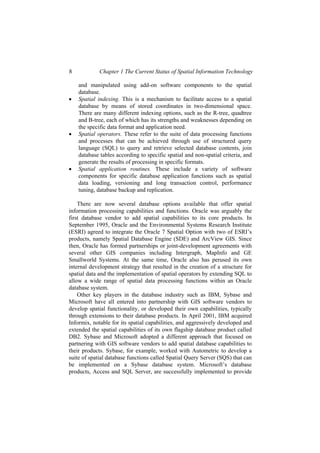
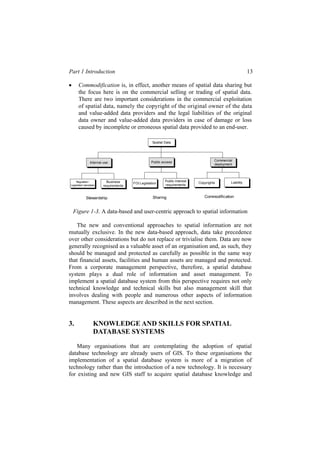
approach to spatial information. Such an approach has three dimensions,
namely stewardship, sharing and commodification, as shown in Figure 1.3.
These components are described as follows:
• Stewardship is concerned mainly with the internal use of spatial
information. Some organisations, in particular those in the public sector,
are mandated by regulations or legislation to collect and maintain a
spatial database as part of their business functions. In such cases, the
objectives and content of the database are tightly coupled with the
respective business requirements and goals of the organisation.
Examples of such spatial databases abound, including land title
registration systems, forestry resource inventories, censuses of
population and housing, inventories of highways and other public
infrastructure such as water mains, electricity and gas distribution
systems, and so on.
• Sharing is a fundamental principle of spatial database systems because
this is the most effective way to minimise the cost and time required for
implementing a spatial database. The primary concern of spatial data
sharing is public access, which entails a delicate balance between the
protection of privacy under freedom of information (FOI) legislation
and the public’s right to access information.
Part 1 Introduction 13
• Commodification is, in effect, another means of spatial data sharing but
the focus here is on the commercial selling or trading of spatial data.
There are two important considerations in the commercial exploitation
of spatial data, namely the copyright of the original owner of the data
and value-added data providers and the legal liabilities of the original
data owner and value-added data providers in case of damage or loss
caused by incomplete or erroneous spatial data provided to an end-user.
Spatial Data
Internal use Public access
Commercial
deployment
Business
requirements
FOI Legislation
Public interest
requirements
Copyrights Liability
Stewardship Sharing Commodification
Regulated /
Legislated mandates
Figure 1-3. A data-based and user-centric approach to spatial information
The new and conventional approaches to spatial information are not
mutually exclusive. In the new data-based approach, data take precedence
over other considerations but do not replace or trivialise them. Data are now
generally recognised as a valuable asset of an organisation and, as such, they
should be managed and protected as carefully as possible in the same way
that financial assets, facilities and human assets are managed and protected.
From a corporate management perspective, therefore, a spatial database
system plays a dual role of information and asset management. To
implement a spatial database system from this perspective requires not only
technical knowledge and technical skills but also management skill that
involves dealing with people and numerous other aspects of information
management. These aspects are described in the next section.
3. KNOWLEDGE AND SKILLS FOR SPATIAL
DATABASE SYSTEMS
Many organisations that are contemplating the adoption of spatial
database technology are already users of GIS. To these organisations the
implementation of a spatial database system is more of a migration of
technology rather than the introduction of a new technology. It is necessary
for existing and new GIS staff to acquire spatial database knowledge and
14 Chapter 1 The Current Status of Spatial Information Technology
skills in order to participate actively and productively in the transition to the
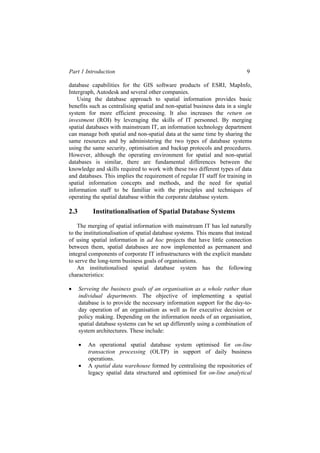
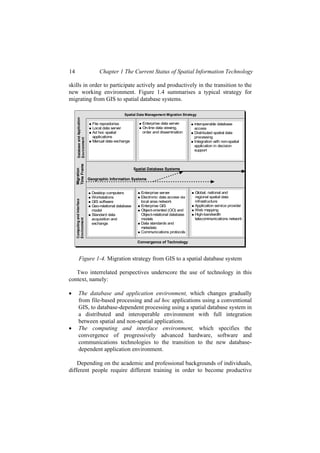
new working environment. Figure 1.4 summarises a typical strategy for
migrating from GIS to spatial database systems.
Spatial Data Management Migration Strategy
Convergence of Technology
Database
and
Application
Environment
Computing
and
Interface
Environment
File repositories
Local data server
Ad hoc spatial
applications
Manual data exchange
Enterprise data server
On-line data viewing,
order and dissemination
Interoperable database
access
Distributed spatial data
processing
Integration with non-spatial
application in decision
support
Desktop computers
Workstations
GIS software
Geo-relational database
model
Standard data
acquisition and
exchange
Enterprise server
Electronic data access via
local area network
Enterprise GIS
Object-oriented (OO) and
Object-relational database
models
Data standards and
metadata
Communications protocols
Global, national and
regional spatial data
infrastructure
Application service provider
Web mapping
High-bandwidth
telecommunications network
Geographic Information Systems
Spatial Database Systems
Migration
Time
Frame
Figure 1-4. Migration strategy from GIS to a spatial database system
Two interrelated perspectives underscore the use of technology in this
context, namely:
• The database and application environment, which changes gradually
from file-based processing and ad hoc applications using a conventional
GIS, to database-dependent processing using a spatial database system in
a distributed and interoperable environment with full integration
between spatial and non-spatial applications.
• The computing and interface environment, which specifies the
convergence of progressively advanced hardware, software and
communications technologies to the transition to the new database-
dependent application environment.
Depending on the academic and professional backgrounds of individuals,
different people require different training in order to become productive
Part 1 Introduction 15
members of a spatial database project team. A fundamental requirement of
everyone involved in the design and implementation of a spatial database
system is to have a working knowledge of the following major areas:
• Project management principles and skills. The design and
implementation of a spatial database requires the coordination of a wide
range of tasks that include financial and human resources management,
procurement of hardware, software and consulting services, database
creation and loading, user training and on-going systems support and
maintenance. A good understanding of the principles and skills of
project management is important not only for the project manager but
for all members of the project team so that everyone knows exactly his
or her respective role with respect to the entire project (see Chapter 9).
• Decision support applications of spatial databases. Spatial decision
support not only requires access to data currently residing in the
database, but also access to legacy data. The growing interest in legacy
data has led to the development of spatial data warehouses and data
marts. In order to assist end users to use spatial databases for decision
making purposes, a good understanding of the design and architecture of
spatial data warehouses and data marts is important, and so is a working
knowledge of the principles and techniques of decision support using a
spatial database (see Chapter 11).
4. ORGANISATION AND OVERVIEW OF THIS
BOOK
This book is organised around three substantive themes with a part of the
book devoted to each theme, namely (i) database principles and architecture,
(ii) spatial database implementation and project management, and (iii) trends
of future developments.
Part 2 contains five chapters that cover the general concepts of database
systems and spatial database systems with the aim to provide a solid
foundation for the study of spatial database design and implementation. It
starts with Chapter 2 which sets the tone for the remainder of the book by
giving a comprehensive and concise introduction to the terminology,
concepts and techniques of database systems as the technology stands today.
Chapter 3 advances the discussion by focusing on the principles and methods
of modelling in database design within the context of the systems
development life cycle. Emphasis is placed on building a robust, durable and
extensible database design before implementation is initiated.
16 Chapter 1 The Current Status of Spatial Information Technology
Based on the foundation of the discussion in Chapters 2 and 3, Chapter 4
focuses on the representation of spatial data in a database environment.
Spatial data types are defined and the concepts of geometry and topology are
introduced. This chapter also explains in detail spatial operators as they are
used in the conventional database environment.
Chapter 5 provides an overview of data standards and metadata, and their
deployment in spatial database design and implementation. Discussion in
this chapter provides the context for the study of spatial data sharing in
Chapter 6. This final chapter of Part 2 explains database integration as a
design methodology using emerging concepts and techniques such as
ontology, data mediation, data warehousing, data marts, and database
federation.
Part 3 of the book focuses on aspects of spatial database implementation
and project management. It begins with Chapter 7 which considers human
and non-technical aspects of spatial databases that include user education
and legal issues surrounding spatial data ownership and the use of spatial
information by organisations and individuals.
Chapter 8 addresses the concepts and methods of user needs assessment
in spatial database implementation. The approach is founded on best practice
in information system development including data orientation, user-centric
design via joint application development, continuous quality assurance,
iterative development, detailed documentation of project activities, focus on
architecture and infrastructure, and adherence to standards. Chapter 9
focuses on the principles and best practices of project management. The
concept of the project management life cycle is introduced and the skills
required to shepherd a spatial database project through its five phases are
explained in detail.
No discussion of spatial databases is complete without considering the
emergent role of the Internet and related technologies. Chapter 10 discusses
spatial database systems in the Internet environment. The discussion covers
both the architecture and technical implementation of Web-enabled spatial
database systems. Chapter 11 completes Part 3 by reviewing the concepts
and techniques of spatial data mining and decision support, and
demonstrating their use in selected application domains of spatial
information.
Chapter 12, the only chapter in Part 4, reviews trends in spatial database
systems design and implementation from the perspectives of technology,
data, application and people. Since the only constant in this rapidly evolving
field is indeed change, the trends reviewed in the final chapter conclude with
a speculative summary of likely developments in spatial database systems in
the foreseeable future.
Part 1 Introduction 17
To assist readers who may feel overwhelmed by the numerous technical
terms that they will encounter in the text, an abbreviated Glossary is
included at the end of the book. The full Glossary, which provides
definitions of all terms in italics in the text, can be found in the accom-
addition, the book Web site includes a rich resource of links and updated
reference materials. It also contains suggestions for practical assignments
and review questions that aim to reinforce the learning process. Instructors
and students are encouraged to make use of the maerials in this Web site to
assist in their study.
5. REFERENCES
Bezdek, J.C. (1994) “What is Computational Intelligence?”, in
Computational Intelligence Intimating Life by Zurada, J.M., R.J. Mark II
and C.J. Robinson (Eds.), New York, NY: IEEE.
Black, J.D. (1996) “Fusing RDBMS and GIS”, GIS World, Vol. 9, No. 7.
Dolton, L.M. and Lowe, J.W. (2001) “Prospecting Spatial Database
Offerings”, Geospatial Solutions, Vol. 11, No. 10.
Limp, W.F. (2001) “From the Back Rom to the Glass Room: Spatial
Database Break Computing Barriers Enterprise Wide”, GEOWorld, Vol.
14, No. 8.
Lutz, D. (2000) “Take Advantage of That Spatial Database!”, GEOWorld,
Vol. 13, No.8.
Miller, H. and Han, J. (Eds.) (2002) Geographic Data Mining and
Knowledge Discovery, London: Taylor & Francis.
OGC (1999) Simple Features Specification for SQL, Wayland, MA: Open
Geospatial Consortium (formerly called the Open GIS Consortium).
Sui, D.Z. and Goodchild, M.F. (2001) “GIS as Media?”, Guest Editorial,
International Journal of Geographical Information Science, Vol. 15,
No. 5, pp. 387-390.
panying Web site of this book (http://www.springer.com/1-4020-5391-6). In
PART 2
DATABASE PRINCIPLES AND
ARCHITECTURE
21
Chapter 2
CONCEPTS AND ARCHITECTURE OF
DATABASE SYSTEMS
1. INTRODUCTION
The processing and analysis of spatial data are becoming increasingly
dependent on the use of database management systems (DBMS) rather than
conventional GIS. This approach to handling spatial data facilitates cost-
effective data management using the capabilities of DBMS such as systems
security, database integrity, backup and recovery, data replication and, more
importantly, a close integration with mainstream business computing
environments. Hence, contemporary spatial data processing is implemented
more as a component of an organisation’s corporate information technology
(IT) infrastructure than as a traditional stand alone departmental application.
The use of DBMS has not only changed the fundamental concepts of
spatial data and their management, but it has also created a demand for new
skills and a new breed of spatial data managers and users, who are expected
to be competent in the principles and methods of relatively complex
database technologies. This chapter provides a concise, yet comprehensive
introduction to the working principles of DBMS. It describes their
construction in terms of hardware/software configurations, data structures
and data processing operators. The discussion focuses on generic DBMS
principles that serve as the theoretical and technical foundation for the study
of database models and spatial databases in Chapters 3 and 4 respectively.
22 Chapter 2 Concepts and Architecture of Database Systems
2. DATABASES AND DATABASE SYSTEMS
The terminology used in the database literature is often confusing due to
a lack of commonly accepted definitions. Even commonly used terms such
as “data file”, “data model” and “database system” are often defined
differently in different database books. Hence, it is important to provide a set
of commonly accepted definitions of database terms and processes for this
book.
2.1 Database Terminology
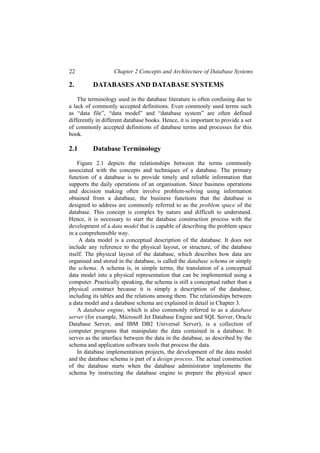
Figure 2.1 depicts the relationships between the terms commonly
associated with the concepts and techniques of a database. The primary
function of a database is to provide timely and reliable information that
supports the daily operations of an organisation. Since business operations
and decision making often involve problem-solving using information
obtained from a database, the business functions that the database is
designed to address are commonly referred to as the problem space of the
database. This concept is complex by nature and difficult to understand.
Hence, it is necessary to start the database construction process with the
development of a data model that is capable of describing the problem space
in a comprehensible way.
A data model is a conceptual description of the database. It does not
include any reference to the physical layout, or structure, of the database
itself. The physical layout of the database, which describes how data are
organised and stored in the database, is called the database schema or simply
the schema. A schema is, in simple terms, the translation of a conceptual
data model into a physical representation that can be implemented using a
computer. Practically speaking, the schema is still a conceptual rather than a
physical construct because it is simply a description of the database,
including its tables and the relations among them. The relationships between
a data model and a database schema are explained in detail in Chapter 3.
A database engine, which is also commonly referred to as a database
server (for example, Microsoft Jet Database Engine and SQL Server, Oracle
Database Server, and IBM DB2 Universal Server), is a collection of
computer programs that manipulate the data contained in a database. It
serves as the interface between the data in the database, as described by the
schema and application software tools that process the data.
In database implementation projects, the development of the data model
and the database schema is part of a design process. The actual construction
of the database starts when the database administrator implements the
schema by instructing the database engine to prepare the physical space
Part 2 Database Principles and Architecture 23
where the database will reside on the computer’s hard drive. This
combination of physical structure and data is formally defined as a database
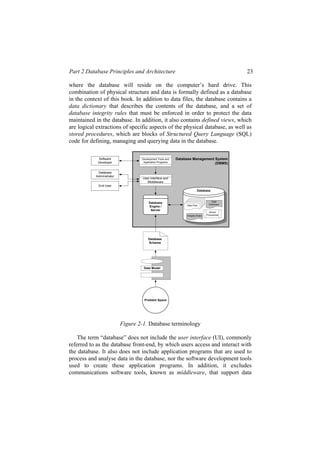
in the context of this book. In addition to data files, the database contains a
data dictionary that describes the contents of the database, and a set of
database integrity rules that must be enforced in order to protect the data
maintained in the database. In addition, it also contains defined views, which
are logical extractions of specific aspects of the physical database, as well as
stored procedures, which are blocks of Structured Query Language (SQL)
code for defining, managing and querying data in the database.
Software
Developer
Database
Administrator
Database Management System
(DBMS)
Development Tools and
Application Programs
End User
User Interface and
Middleware
Database
Engine /
Server
Database
Data Files Data
Dictionary
Integrity Rules
Stored
Procedures
Data Model
Database
Schema
Problem Space
Data Files
Data Files
Data Files
Data Files
Figure 2-1. Database terminology
The term “database” does not include the user interface (UI), commonly
referred to as the database front-end, by which users access and interact with
the database. It also does not include application programs that are used to
process and analyse data in the database, nor the software development tools
used to create these application programs. In addition, it excludes
communications software tools, known as middleware, that support data
24 Chapter 2 Concepts and Architecture of Database Systems
transmission and database processing over local area, wide area, or global
communications networks. To describe a database and its associated
components (the database engine, user interfaces, application programs and
middleware) the terms database management system (DBMS), database
system, or information system are commonly used. In this book, the term
“database system” is used because it is more popular than “database
management system” in today’s computing parlance.
Some authors, notably Date (2004) and Elmasri and Navathe (2003),
expand the definition of database systems to include people as an integral
component. The human component of a database system normally includes
the database administrator, who is responsible for the implementation and
maintenance of the database system, and end users who use the system for
business decision making and operations. In addition, the human component
also includes software developers who design and construct software tools
for the application of the database system. This more embracing or holistic
definition of database systems is adopted in this book because, from a
systems implementation perspective, people typically play a crucial role in
determining the success or failure of an implementation.
2.2 Computer data organisation and database
The evolution of database systems is closely tied to the changing
methods of electronic data processing. In the early days of computer data
processing, data were organised as independent data files. Access to data
files was achieved by defining how data were stored and retrieved, using
high-level programming languages such as the Common Business Oriented
Language (COBOL) or Programming Language One (PL/I). To illustrate
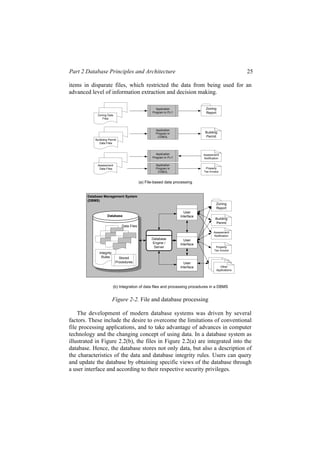
this, Figure 2.2(a) shows how individual data files were managed and used
in file processing systems. In these systems, a particular application program
was developed specifically to manage each individual data file and to
generate special reports by manipulating the data contained in each data file.
File processing systems were simple in concept and their data
management functionality was rather limited in practice. One of their major
drawbacks was the tight coupling between data files and applications. In file-
based data processing, all application programs were purpose-built for
specific files. This was often a very time-consuming and expensive task.
Whenever a change was required in an application due to changes in
business functions, the data file had to be changed as well. Also, since
different data files tended to have different structures and storage formats, it
was difficult to form connections between data from different data files
without extensive application programming and format conversion. As a
result, it was practically impossible to represent relationships among data
Part 2 Database Principles and Architecture 25
items in disparate files, which restricted the data from being used for an
advanced level of information extraction and decision making.
Zoning Data
Files
Buildidng Permit
Data Files
Assessment
Data Files
Application
Program in PL/1
Application
Program in PL/1
Application
Program in
COBOL
Application
Program in
COBOL
(a) File-based data processing
Database Management System
(DBMS)
Database
Data Files
Integrity
Rules Stored
Procedures
Database
Engine /
Server
User
Interface
User
Interface
(b) Integration of data files and processing procedures in a DBMS
Zoning
Report
Zoning
Report
Building
Permit
Building
Permit
Assessment
Notification
Assessment
Notification
Property
Tax Invoice
Property
Tax Invoice
User
Interface
Other
Applications
Other
Applications
Other
Applications
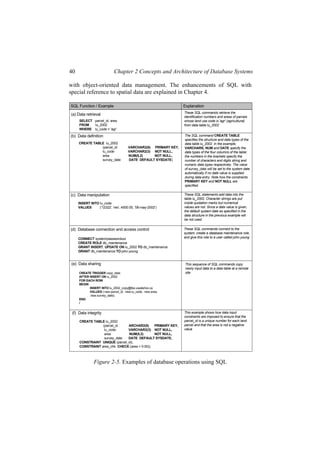
Figure 2-2. File and database processing
The development of modern database systems was driven by several
factors. These include the desire to overcome the limitations of conventional
file processing applications, and to take advantage of advances in computer
technology and the changing concept of using data. In a database system as
illustrated in Figure 2.2(b), the files in Figure 2.2(a) are integrated into the
database. Hence, the database stores not only data, but also a description of
the characteristics of the data and database integrity rules. Users can query
and update the database by obtaining specific views of the database through
a user interface and according to their respective security privileges.
26 Chapter 2 Concepts and Architecture of Database Systems
Database processing differs from conventional file-based data processing
in that it separates data from applications. This means that any changes that
occur in business functions will necessitate changes in application programs
only, and the database itself can remain intact as all data files are treated as
an integrated whole. Since the data files are created by a single database
system, all of the data are compatible. This allows data from different
business functions within an organisation to be managed and manipulated in
an integrated manner. Hence, today’s database systems comprise complex
hardware and software systems that serve as a total data library capable of
managing conventional text-based and numerical data as well as raster
images, vector graphics and multimedia files. More advanced database
systems also include data analysis functions to support business decision
making (see Chapter 11).
The database processing approach has changed not only the way data are
organised in a computer, but also in the ways data are used. A database is
perceived not merely as a collection of data files, but as an important asset
for an organisation. As such, it must be managed in the same ways human,
financial and technical resources are managed.
Modern database systems provide the essential tools for information
resource or asset management in business, education and government. Up
until the early 1970s, database processing was only found in the largest
business corporations and government departments. Today, database
processing has become an integral part of IT, and is used in practically every
aspect of modern society. Every year, database processing generates billions
of dollars of business revenue in software and hardware development,
database construction and implementation, as well as in management and
consulting services. It is the most important sector of the computer and IT
industries.
2.3 Classification of database systems
Database systems can be classified in a variety of ways according to
different criteria (see Table 2.1). Conventionally, they were classified
according to the different data models on which they were built. These
models fell into three categories that characterise the evolution of database
systems, namely hierarchical, network and relational. A fourth class called
object-oriented database systems emerged in the 1990s as a result of the
advances in what is now commonly known as object-orientation technology.
More recently, hybrid systems have been developed by taking advantage of
relational and objected-oriented concepts and techniques. Such systems are
commonly referred to as object-relational database systems.
Part 2 Database Principles and Architecture 27
Table 2-1. Classification of database systems
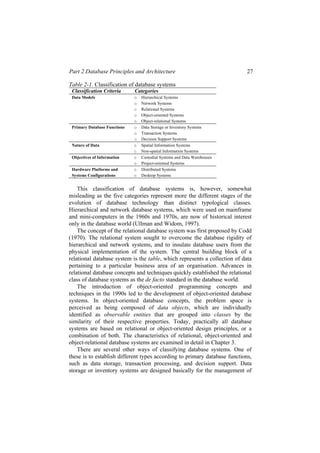
Classification Criteria Categories
Data Models o Hierarchical Systems
o Network Systems
o Relational Systems
o Object-oriented Systems
o Object-relational Systems
Primary Database Functions o Data Storage or Inventory Systems
o Transaction Systems
o Decision Support Systems
Nature of Data o Spatial Information Systems
o Non-spatial Information Systems
Objectives of Information o Custodial Systems and Data Warehouses
o Project-oriented Systems
Hardware Platforms and
Systems Configurations
o Distributed Systems
o Desktop Systems
This classification of database systems is, however, somewhat
misleading as the five categories represent more the different stages of the
evolution of database technology than distinct typological classes.
Hierarchical and network database systems, which were used on mainframe
and mini-computers in the 1960s and 1970s, are now of historical interest
only in the database world (Ullman and Widom, 1997).
The concept of the relational database system was first proposed by Codd
(1970). The relational system sought to overcome the database rigidity of
hierarchical and network systems, and to insulate database users from the
physical implementation of the system. The central building block of a
relational database system is the table, which represents a collection of data
pertaining to a particular business area of an organisation. Advances in
relational database concepts and techniques quickly established the relational
class of database systems as the de facto standard in the database world.
The introduction of object-oriented programming concepts and
techniques in the 1990s led to the development of object-oriented database
systems. In object-oriented database concepts, the problem space is
perceived as being composed of data objects, which are individually
identified as observable entities that are grouped into classes by the
similarity of their respective properties. Today, practically all database
systems are based on relational or object-oriented design principles, or a
combination of both. The characteristics of relational, object-oriented and
object-relational database systems are examined in detail in Chapter 3.
There are several other ways of classifying database systems. One of
these is to establish different types according to primary database functions,
such as data storage, transaction processing, and decision support. Data
storage or inventory systems are designed basically for the management of
28 Chapter 2 Concepts and Architecture of Database Systems
large volumes of relatively static data. Natural resource inventories and land
information systems are typical examples of this class of database system.
Transaction processing systems, such as banking and airline seat reservation
systems, are designed to serve business functions that require frequent
changes in the database. These systems are driven by very powerful
computer processors for instantaneous access to and modification of the
database contents, and are capable of serving many users concurrently.
Decision support systems are designed to help end users make logical
decisions on semi-structured and structured decision problems. The domain
and architectures of decision support systems vary widely ranging from
relatively simple systems that serve the operational needs of a particular
function such as wildlife management or land use permit processing, to
highly complex management information systems (MIS) that provide
summary information from all of the data files in a corporate database for
senior decision making.
Another way of classifying database systems is to use the characteristics
of the data in the database as the principal criterion of classification.
Database systems classified in this way can be labelled either as spatial or
non-spatial in terms of their contents. The former includes GIS database
systems designed to process location-based data pertaining to land resources,
the natural environment, as well as human activities associated with
resources and the environment. The latter includes a wide variety of systems
in domains such as banking, accounting, human resources management and
customer records systems. Historically, spatial and non-spatial database
systems were developed independently of one another. However, in recent
years, these two types of systems have become increasingly integrated into a
single corporate or enterprise database, sharing the same data and computing
resources. As a result, although spatial database systems are still perceived
as a special type of information system the conventional boundary between
spatial and non-spatial database systems is rapidly disappearing.
It is also possible to classify database systems into custodial and project-
oriented systems according to the objectives of an implementation. Custodial
systems are large-scale, domain-specific data stores set up to serve the long-
term information needs of an organisation or a community of users.
National, provincial, and regional natural resource inventories and
topographic mapping systems are typical examples of custodial database
systems. Many custodial database systems are now constructed on various
interpretations of the concepts of data warehousing. In this context, a data
warehouse is different from a conventional database in that it is not only a
data repository and an information management tool, but it also represents a
new approach of managing and thinking about data (see Chapter 6).
Part 2 Database Principles and Architecture 29
Project-oriented database systems, as the name implies, are systems
created to serve a particular function or event that lasts for a relatively short
period of time. Once the objectives of the function or event are achieved, the
database will cease to operate. Typical examples include those set up for
university-based research projects and environmental assessment exercises
by government agencies associated with particular land development
proposals. Unlike custodial systems, these project-oriented systems are ad
hoc applications and have a comparatively short operation life span.
It should be noted that the above database system types are not mutually
exclusive of one another. Database systems are generally relatively complex
systems whose characteristics transcend the boundaries of different
classification schemes. For example, a spatial database system can be
designed as a data repository, a transactional system, or a spatial decision
support system and can contain equal aspects of all three functions. It can be
constructed using a derivative of the relational data model such as geo-
relational data model, the object-oriented, or object-relational data models.
At the same time, depending on the purpose of the system, it can be
implemented as a custodial system or a project-oriented system.
3. DATABASE OPERATIONS
Database systems require several processes and procedures to operate in
an articulate manner. The working principles of database systems are
explained in the following sections by examining the characteristics and
requirements of the major data processing operations in a typical database.
3.1 Database Storage and Manipulation
Contemporary database systems are characterised by the large volumes
of data they are designed and required to handle. Banking and retailing
systems, for example, often store terabytes (1,000 gigabytes, or 1012
bytes)
of data recording details of every transaction or sale over a long period of
time. Remote sensing databases that store satellite imagery may require
several petabytes (1,000 terabytes, or 1015
bytes) to store the images
acquired in a single year.
In order to accommodate this huge volume of data, database systems
store data in arrays of disks, called secondary storage devices. When data
are required by a query, they are read into the Central Processing Unit
(CPU), which is called the primary storage. Some large database systems
require the use of tertiary storage devices that have terabyte storage
capacities. Unlike secondary storage devices, tertiary storage devices cannot
30 Chapter 2 Concepts and Architecture of Database Systems
be accessed directly by the reading device of the computer. When data in
tertiary storage are required, the storage medium (for example, a digital
video disk [DVD]) is retrieved and loaded into the data reader, and the data
are transferred onto the secondary storage device. The typical access time for
data in secondary storage devices is 10 to 20 milliseconds, whereas it
commonly takes several seconds to access data on tertiary storage devices.
Both secondary and tertiary storage devices are divided into disk blocks.
These are regions of contiguous storage locations containing 4,000 to 16,000
bytes of data. Data are transmitted between secondary or tertiary storage
devices and the main memory by disk blocks, not by data files (see Section
5.2). Database systems control the storage of and access to data in the
storage devices by means of the database engine, as noted Section 2.1. There
are two pieces of data manipulation software in the database engine:
• The buffer manager handles the main memory by allocating the data
read from secondary storage devices to a specific page in the main
memory. It re-uses the page by allocating it to new data coming into the
main memory if the existing data are no longer required.
• The file manager keeps track of the location of data files and their
relationships with the disk blocks. When a specific data file is required,
the file manager locates the disk block(s) in the secondary storage device
containing the file, and sends them to the buffer manager which then
allocates the block(s) of data to a main memory page.
The use of the database engine separates the users from the physical
implementation of the database, and provides them with the processes that
are needed to access the database contents. The separation of applications
from databases is fundamental to all contemporary database design
principles. It allows different groups of users to access different parts of the
database, each using his/her own interface that is designed to do exactly
what is required of the data. All application programs accessing the actual
data files are coordinated and controlled centrally by the database engine,
and the rules of database integrity and validity can be enforced relatively
easily, as explained in the next section.
3.2 Database Security and Integrity Constraints
Closely related to database storage and manipulation are the concepts and
methods of database security and integrity constraints that are designed to
protect the data in the database from being corrupted, compromised, or
destroyed.
Part 2 Database Principles and Architecture 31
In the context of database management, security refers to all rules and
measures that are enforced to protect the database against unauthorised use,
and/or modification or destruction of database contents. Modern database
systems typically provide two forms of data security:
• Discretionary security, also known as privileges, controls the ability of
users to access specific data files, records or fields in a particular mode
(for example read-only, read-write).
• Mandatory security, classifies users and data into different security
levels, and then implements the appropriate security measures to allow
users within a particular security level to access the data of the level that
they are allowed to access.
Although database integrity constraints are also designed to protect the
database, they are distinct concepts and different techniques are used for
their implementation. Instead of protecting the data from unauthorised
access and physical destruction, integrity constraints are applied in database
systems to protect the intangible “value” of the data by safeguarding their
accuracy, correctness and validity. Database integrity constraints are
enforced by applying certain rules, called business rules, which govern both
the structure and the use of the data in the database. Since the accuracy,
correctness and validity of the data must be maintained from the time they
are created, it is necessary to apply integrity constraints even before the data
are populated into the database. Therefore, integrity constraints are always
identified during the data modelling process and, as a result, they form an
integral part of the database schema and must be enforced during the data
collection process.
Business rules are application-specific. This implies that different
database systems tend to have different, and possibly unique, integrity
constraints. There are, however, constraints that are common to all
databases. These include:
• Domain constraints, which specify the types of data values such as
numeric, character or string, Boolean, date and time, and user-defined.
• Key and relationship constraints, which govern the use of entities as
primary, secondary and foreign keys in data tables.
• Semantic integrity constraints, which are written rules stating what is
allowed and not allowed in both data structure and data management.
The concepts of identifying and developing integrity rules and constraints
are discussed in detail in the context of their application to data modelling in
Chapter 3.
32 Chapter 2 Concepts and Architecture of Database Systems
3.3 Database Query
In database processing, a query is a question or task a user asks of a
database. Queries are handled by a database tool called the query manager.
The function of the query manager is to turn a user’s high level database
access or manipulation command in SQL (usually pronounced as either
“sequel” or as the individual letters spelled out) into a sequence of
operations on the stored data (see Section 3.7). In many database systems,
the query manager is capable of performing query optimisation. This is the
process of selecting a query plan that will answer the query in the most
efficient way. The most commonly used method of query optimization is to
use an index created for the database, which allows the system to find the
required data quickly and directly without going through the entire database
structure (see Section 5.3).
A database query is made up of one or more operators supported by a
database system and, as a result, its format and functionality are governed by
the database model of the database. The relational database model, for
example, uses eight operators in queries to manipulate the contents of tables
in a database (Codd, 1970). These relational operators are explained as
follows and in Figure 2.3:
• SELECT. This operator is used to query the rows of a table. It lists either
all of the row values or only those which match specific criteria (Figure
2.3a).
• PROJECT. This operator is used to query the columns of a table. It
generates a subset of columns from a table, removing duplicate values
from the result (Figure 2.3b).
• JOIN. This operator horizontally combines (that is, concatenates) data
from one row of a table with rows from another table using the
relationship between particular columns in the two tables (Figure 2.3c).
A JOIN is called an equi-JOIN if it is based on equality of column
values. It is called a natural-JOIN when redundant columns are
removed.
• PRODUCT. The product of two tables, which is also called the Cartesian
Product, is obtained by concatenating every row in one table with every
row in another table (Figure 2.3d).
• UNION. This operator generates a new table by appending rows from
one table with those of another table (Figure 2.3e). Tables used in the
UNION operation must be compatible in terms of the number of
columns and data types. Duplicate rows are eliminated during the
UNION operation.
Part 2 Database Principles and Architecture 33
• INTERSECT. This operator generates a table consisting of all rows
appearing in both of two tables (Figure 2.3f). Tables used in the
INTERSECT operation must be compatible in terms of the number of
columns and data types.
• DIFFERENCE. This operator generates a table consisting of all rows
that appear in the first but not the second of two tables (Figure 2.3g).
Tables used in the DIFFERENCE operation must be compatible in terms
of the number of columns and data types. As with arithmetic, the order
of subtraction is important. Therefore, Table R – Table S is not the same
as Table S – Table R, as illustrated in Figure 2.3g.
• DIVIDE. This operator takes a binary (that is, two-column) table and one
unary (that is, one-column) table, and creates a new table consisting of
all values of one column of the binary table that match, in the other
column all values in the unary table (Figure 2.3h).
K x y
1 A 32
2 B 74
3 C 56
R
K x y
1 A 32
2 B 74
3 C 56
S
SELECT all
T x
B
SELECT x WHERE K = 2
SELECT x, y WHERE K = 3
x y
C 56
U
(a) The SELECT relational operator
K x y
1 A 32
2 B 74
3 C 32
R y
32
74
S
PROJECT y
(b) The PROJECT relational operator
K x y
1 A 32
2 B 74
3 C 56
R K z
1 27
3 74
9 88
S
K x y K z
1 A 32 1 27
3 C 56 3 74
T
K x y z
1 A 32 27
3 C 56 74
U
R JOIN S Equi-JOIN
Natural JOIN
(c) The JOIN relational operator
K x
1 A
2 B
3 C
R
RK Rx SK Sz
1 A
1 A
2 B
2 B
3 C
3 C
T
1 27
3 74
1 27
3 74
1 27
3 74
K z
1 27
3 74
S
R TIME S
(d) The PRODUCT relational operator
Figure 2-3. Relational operators
34 Chapter 2 Concepts and Architecture of Database Systems
(e) The UNION relational operator
(g) The DIFFERENCE relational operator
(h) The DIVIDE relational operator
R UNION S
K x y
1 A 32
2 B 74
3 C 56
R K x y
8 X 31
1 A 32
7 C 62
S
K x y
1 A 32
2 B 74
3 C 56
8 X 31
7 C 62
U
K x y
1 A 32
2 B 74
3 C 56
R K x y
8 X 31
1 A 32
7 C 62
S
K x y
1 A 32
I
(f) The INTERSECT relational operator
R INTERSECT S
K x y
1 A 32
2 B 74
3 C 56
R
K x y
1 A 32
2 B 74
3 C 56
R
K x y
8 X 31
1 A 32
7 C 62
S
R DIFFERENCE S
S DIFFERENCE R
K x y
2 B 74
3 C 56
D
K x y
E
8 X 31
7 C 62
K x y
8 X 31
1 A 32
7 C 62
S
v
X
Y
K
5
8
5 X
5 Y
5 Z
6 Q
6 W
7 M
7 N
8 G
8 X
8 Y
8 V
K v
S DIVIDE R
R
S Q
Figure 2-3. Relational operators (continued)
In theory, the outcome of a query using any of these operators is a new
relational table as shown in Figure 2.3. In practice, however, most database
systems generate data listings that are more “readable” than data tables by
having customised formats complete with column headers and other types of
explanatory information. It should also be noted that not all relational
database systems are capable of supporting every one of the above operators.
However, virtually all systems support the most commonly used and
important operators, including SELECT, PROJECT, JOIN, UNION and
INTERSECT.
Part 2 Database Principles and Architecture 35
3.4 Database Transactions
Database queries retrieve the values of specific data items stored in the
database. They do not change the original values. In contrast, when values
are changed, a transaction is said to have taken place. A database transaction
is a more complicated process than a database query because of the need to
handle possible conflicts caused by concurrent transactions (that is, when
two or more users access the database system and attempt to change the
same values at the same time). In order to avoid potential conflicts between
concurrent users, database transactions are designed according to the
following principles:
• Atomicity, which means that either all of a transaction is executed or
none of it is (that is, a transaction can never be completed only partially).
• Consistency preservation, which means that data in a database remain,
before and after the transaction, in a “consistent state” as specified by
the database schema and other constraints and integrity rules imposed on
the database.
• Isolation, which requires the results of simultaneous transactions to be
independent of each other.
• Durability or permanency, which means that after the completion of a
transaction, its results can and always will be traced even if the system
fails or crashes.
Each and every transaction in database processing is strictly controlled
by the transaction manager of the database engine that enforces the above
principles by following the sequence of operations shown in Figure 2.4. In
addition, four transaction control mechanisms are also used. These are as
follows:
• Concurrent control, which “locks” the data items involved in the
transaction, thus isolating its results from affecting other transactions,
and at the same time avoiding them being affected by the results of other
transactions.
• Logging the transactions, which keeps track of all changes made to the
database in a “redo” log, and backs up the log on a secondary storage
device so that the log data will survive a power failure that may cause
loss of data in the main memory.
• Transaction commitment, which prevents any changes to the database
unless the transaction is ready to complete, and the changes are logged.
36 Chapter 2 Concepts and Architecture of Database Systems
• Rollback, which allows the database to “undo” an incomplete transaction
process and return to its original consistent state if and when the system
fails before the transaction is complete.
Database
Main Memory
Redo Log
Buffer
Shared
Memory
Database
Buffer Cache
Redo Log
Control Files
Retrieve data
Lock
Update
Save update
Process update
Write to log
Record update
Commit
Committed
Unlock
Server
Computer
2
4
8
3
6 5
7
2
Lock
Unlock
Backup
Retrieve data
9
1
Client Computer
Database
Engine
1
10
10
Figure 2-4. Steps in a database transaction
3.5 Database Backup and Recovery
The methods of logging, transaction commitment and rollback described
in the previous section are designed to handle relatively minor disruptions to
data processing that prevent a transaction from completing. These data
recovery techniques work well as long as the transaction log is not lost due
to disruptions such as power failure or improper shut down of the database.
However, if a more catastrophic failure such as a disk crash occurs, then
more sophisticated procedures are required to restore the database to its
consistent state prior to the failure. The standard database management
procedure in these cases is to use the backup and recovery manager of the
database system to copy periodically the entire database and the transaction
log on to an external storage medium such as magnetic tape, CD-ROM and
DVD. In the case of critical data, a second copy of the backup is often made
and stored in a secure site away from the place where the database system is
housed, for example, in another building.
The frequency of backup can be daily or weekly, depending on the nature
of the database applications and the importance of the data. Some database
Part 2 Database Principles and Architecture 37
systems allow hot backup which takes place while the database system is in
operation. A hot backup can be used to recover the database to the point in
time of the system failure. In systems where only cold backup is allowed, the
database must be shut down during the backup process. Database recovery
from a cold backup will only restore the database to the time when the last
backup was made.
In database management, it is common practice to back up the
transaction log more frequently than the entire database because the size of
the log is substantially smaller than the database. This approach actually
allows the database to be recovered not only to the date of the system failure,
but to the date of the backup of the transaction log. After a system crash, the
database backup tape is first loaded into the computer to reconstruct the
database to the date of the latest database backup. The backup tape of the
transaction log is then used to re-create all the transactions that it stores to
the latest date of the transaction log backup.
3.6 Database Replication and Synchronisation
Database replication is the process of making a copy, or replica, of a
database onto one or more additional computers that may be located at
different sites. The computers that the database is replicated to are called
replication servers. Many organisations require the use of database replicas
in distributed database systems to support their business needs:
• To improve system performance by allowing users in satellite offices to
use a local replica of the database rather than to communicate directly to
the central database server.
• To improve database availability by ensuring that data always remain
accessible when the database server is shut down, for example, for
systems maintenance.
Ideally, database replication should be “transparent” to the user, meaning
that they can use the replica as if it were the master database. In practice,
however, transparent replication is not easy to implement because it is
relatively difficult to keep the master database and the replicas synchronised.
A database replication environment requires the master database server as
well as all replication servers to be running in order to “commit” a
transaction on all the systems simultaneously. The transaction will fail if any
one of the systems is unavailable at the particular instance of the transaction
commitment. Various methods have been proposed to overcome this
problem but none of these has appeared to satisfy completely the principles
of database transaction as noted in Section 3.5 (Date, 2004).
38 Chapter 2 Concepts and Architecture of Database Systems
3.7 Structured Query Language (SQL)
In database processing the user uses SQL to interact with the computer.
Originally designed and developed to retrieve data from relational databases,
SQL is now the standard language for querying as well as managing both
relational and object-relational databases. Since its adoption by the
American National Standard Institute (ANSI) as a standard database
language in 1986, SQL was formally accepted as an international standard
by the International Organization for Standardisation (ISO) and the
International Electrotechnical Commission (IEC). It has also been adopted as
a Federal Information Processing Standard (FIPS) of the United States
Federal Government.
SQL is a non-procedural computer language because it does not have IF
statements for testing conditions, nor does it contain WHILE, FOR, GOTO
and CASE statements for program structuring and flow control. It is best
described as a database sub-language used specifically to create statements
for database query and management by means of approximately two hundred
reserved words. These statements resemble sentences in the English
language. They include “noise” words that do not add meaning to the
statements but make them read more naturally.
SQL statements can be used in one of the following five ways:
• Interactive processing, through a command-line user interface (for
example, “sqlplus” of Oracle, “db2i” of DB2, and the open source
“psql” of PostgreSQL and “mysql” of MySQL).
• Embedded in a high-level computer language, such as COBOL,
FORTRAN, PL/1, C++ and Java, to provide the necessary facilities for
application programs written in a high-level language to query a
database.
• Using a call level interface (CLI), which consists of routines
implemented at the operating system level (as opposed to the application
program level in the case of embedded SQL noted above). A CLI can be
invoked to process SQL statements from programming languages, such
as C++ and Visual Basic (VB), at execution time to connect to a
database, extract data from data tables, obtain data processing status
information, and present the results of a database query.
• Using two standard Java application programming interface (API)
protocols, namely Java Database Connectivity (JDBC) and embedded
SQL for Java (SQLJ), to create Java applications and applets that are
able to extract data from a database.
• In stand-alone application program modules in the form of stored
procedures (blocks of code that perform one or more data processing
Part 2 Database Principles and Architecture 39
actions), functions (blocks of code that take parameters to be invoked in
a procedure), or packages (a collection of stored procedures and
functions grouped together under one module name). These program
modules are created by adding programming structure, flow control and
subroutines to the conventional SQL processing environment. A good
example is Oracle’s Procedural Language Extensions to SQL (PL/SQL).
SQL statements specify what tasks must be done, but not how they are
done, in database operations. To query a database, for example, it is not
necessary for a user to know exactly how the database is structured or the
complex procedures that take place to obtain the required results. When the
database engine receives SQL statements in one of the above forms, its
query manager transforms the statements into a sequence of internal
operations that optimise data retrieval and present the query results as
specified. Therefore, SQL is relatively easy to learn and use. Figure 2.5
illustrates how SQL is used in typical database operations that include:
• Database query, which allows a user to retrieve data stored in a database
(Figure 2.5a).
• Data definition, which helps a user to organise data and establish their
relationships in the database (Figure 2.5b).
• Data manipulation, which allows a user to modify the contents of a
database by inserting new data, removing old data and changing the
values of existing data (Figure 2.5c).
• Database connection and access control, which enforce database
security measures by enabling/disabling a user’s privilege to access or
modify a database or a part of it (Figure 2.5d).
• Data sharing, which coordinates data replication (Figure 2.5e) and
controls concurrent access to a database.
• Data integrity, which defines integrity constraints that protect a database
from corruption due to inconsistent data input, database update or
systems failure (Figure 2.5f).
Under the auspices of the various national and international
standardisation organisations noted above, SQL is continuously evolving
in order to take advantage of advancing computing technologies and to
respond to changing user needs. Development is currently underway to
enhance SQL into a computationally complete language. Enhancements in
the new SQL standard, called SQL3, which were published by ANSI and
OSI in 1992, include user-defined data types, multimedia objects,
distributed data processing support and other facilities normally associated
40 Chapter 2 Concepts and Architecture of Database Systems
with object-oriented data management. The enhancements of SQL with
special reference to spatial data are explained in Chapter 4.
SELECT parcel_id, area
FROM lu_2002
WHERE lu_code = 'agr'
CREATE TABLE lu_2002
(parcel_id VARCHAR2(8) PRIMARY KEY,
lu_code VARCHAR2(3) NOT NULL,
area NUM(8,2) NOT NULL,
survey_date DATE DEFAULT SYSDATE)
INSERT INTO lu_code
VALUES ('12322', 'res', 4500.00, '06-may-2002')
CONNECT system/passwordxxx
CREATE ROLE db_maintenance
GRANT INSERT, UPDATE ON lu_2002 TO db_maintenance
GRANT db_maintenance TO john.young
CREATE TRIGGER copy_data
AFTER INSERT ON lu_2002
FOR EACH ROW
BEGIN
INSERT INTO lu_2002_copy@fes.uwaterloo.ca
VALUES (:new.parcel_id, :new.lu_code, :new.area,
:new.survey_date);
END;
/
CREATE TABLE lu_2002
(parcel_id ARCHAR2(8) PRIMARY KEY,
lu_code VARCHAR2(3) NOT NULL,
area NUM(8,2) NOT NULL,
survey_date DATE DEFAULT SYSDATE,
CONSTRAINT UNIQUE (parcel_id),
CONSTRAINT area_chk CHECK (area > 0.00)).
SQL Function / Example Explanation
(a) Data retrieval These SQL commands retrieve the
identification numbers and areas of parcels
whose land use code is 'agr' (agricultural)
from data table lu_2002
(b) Data definition The SQL command CREATE TABLE
specifies the structure and data types of the
data table lu_2002. In the example,
VARCHARS, NUM and DATE specify the
data types of the four columns of the table;
the numbers in the brackets specify the
number of characters and digits string and
numeric data types respectively. The value
of survey_date will be set to the system date
automatically if no date value is supplied
duirng data entry. Note how the constraints
PRIMARY KEY and NOT NULL are
specified.
(c) Data manipulation These SQL statements add data into the
table lu_2002. Character strings are put
inside quotation marks but numerical
values are not. Since a date value is given,
the default system date as specified in the
data structure in the previous example will
be not used.
(d) Database connection and access control These SQL commands connect to the
system, create a database maintenance role,
and give this role to a user called john.young
This sequence of SQL commands copy
newly input data to a data table at a remote
site
(e) Data sharing
(f) Data integrity This example shows how data input
constraints are imposed to ensure that the
parcel_id is a unique number for each land
parcel and that the area is not a negative
value
Figure 2-5. Examples of database operations using SQL
Part 2 Database Principles and Architecture 41
4. HARDWARE AND SOFTWARE ARCHITECTURE
Database systems can be implemented on different computer platforms
ranging from a single desktop personal computer to a cluster of computers
and workstations in a networked environment. Since it is practically
impossible to describe all types of system configurations, the discussion is
limited to central and distributed architectures using the client/server mode
of processing on which most database systems in academic, commercial and
government organisations are implemented.
4.1 Centralised and Distributed Database Architecture
Early generations of database systems were developed during the
mainframe era when a single mainframe computer served hundreds of
terminals. Mainframe-based database systems contained the database,
managed database operations and stored applications all in one computer.
This centralised database architecture dominated relational database systems
when they were first introduced.
Figure 2.6 illustrates the configuration of a centralised database system in
which all processing is done in a single computer, and all data are stored in
the same computer’s secondary memory. A centralised database system
usually runs under a time-sharing and multitasking operating environment,
which allows several processors to run concurrently on a single CPU. Users
access the database via “dumb” terminals connected to it locally or over a
telephone line. A dumb terminal, as its name implies, is used only as a
means to query the database and display the results. It does not contain any
application programs or data retrieved from the database. All database
input/output (I/O), concurrent control and applications are done on the host
computer.
The advent of microcomputers and advances in communications
technologies in the 1990s rapidly changed the hardware configuration of
database systems. Most database systems today are constructed on the
concept of distributed processing which separates database operations from
data storage functions. Figure 2.7 shows the configuration of a distributed
database system that typically includes the following components:
• Computers, operating system and database system software that form
individual sites, also called nodes, of the system.
• Network cards and software that are installed in the computers to enable
them to interact and exchange data with one another regardless of their
respective configurations.
Exploring the Variety of Random
Documents with Different Content
The Project Gutenberg eBook of The Project
Gutenberg Collection of Works by Freethinkers
This ebook is for the use of anyone anywhere in the United
States and most other parts of the world at no cost and with
almost no restrictions whatsoever. You may copy it, give it away
or re-use it under the terms of the Project Gutenberg License
included with this ebook or online at www.gutenberg.org. If you
are not located in the United States, you will have to check the
laws of the country where you are located before using this
eBook.
Title: The Project Gutenberg Collection of Works by Freethinkers
Author: Various
Editor: David Widger
Release date: November 23, 2012 [eBook #41450]
Most recently updated: October 23, 2024
Language: English
Credits: Produced by David Widger
*** START OF THE PROJECT GUTENBERG EBOOK THE PROJECT
GUTENBERG COLLECTION OF WORKS BY FREETHINKERS ***
THE PROJECT GUTENBERG
COLLECTION
OF WORKS BY
FREETHINKERS
With a Linked On-line Index — Plus
an Off-line Linked Index to the
Complete set when it is
Downloaded to a Computer
One Hundred and Fifty-Seven Volumes — Plus
Indexes to Fifteen other Complete Sets
By Ninety Authors
Edited by David Widger
Project Gutenberg Editions
THOMAS PAINE
Click on the ## before each title to go directly to a
linked index of the detailed chapters and illustrations
## VOLUME ONE
## VOLUME TWO
## VOLUME THREE
## VOLUME FOUR
ROBERT G. INGERSOLL
VOLUME
I.
VOLUME
II.
VOLUME
III.
VOLUME
IV.
VOLUME
V.
VOLUME
VI.
VOLUME
VII.
VOLUME
VIII.
VOLUME
IX.
VOLUME
X.
VOLUME
XI.
VOLUME
XII.
VOLTAIRE
Voltaire's Philosophical Dictionary
Vol. 1
Vol. 2
Vol. 3
Vol. 4
Vol. 5
Vol. 6
Vol. 7
Vol. 8
Vol. 9
Vol. 10
Hall Caine
John
Galsworthy
Edward Gibbon
Thomas Huxley
Thomas
Jefferson
Montaigne
Queen of
Navarre
Rabelais
Rousseau
Antoine de la
Sale
George B.
Shaw
Mark Twain
Voltaire
Emile Zola
Ambroise
Bierce
Click on the ## before many of the titles to
view a linked
table of contents for that volume.
Click on the title itself to open the original
online file.
## Creed And Deed By Felix Adler (1851 - 1933)
## Monks, Popes, and their
Intrigues
By John Alberger (circa 1850)
## Reason, The Only Oracle
of Man
By Ethan Allen (1737 - 1789)
Letter To Sir Samuel Shepherd By Anonymous (--)
The Life of David By Anonymous (--)
The Doubts Of Infidels By Anonymous (--)
The Miraculous Conception By Anonymous (--)
## Thoughts on the
Christian Religion
By Anonymous (--)
Christian Mystery By Anonymous (--)
The Gospel of Evolution
By Edward Aveling (1849 -
1898)
## My Path to Atheism By Annie Besant (1847 - 1933)
What it is Blasphemy to Deny By Annie Besant (1847 - 1933)
## God and my Neighbour
by Robert Blatchford (1851-
1943)
## The Decameron by Giovanni Boccaccio ()
## Life of St. Paul
by Nicolas-Antoine
Boulanger (1722-1759)
## Christianity Unveiled
by Nicolas-Antoine
Boulanger (1722-1759)
## Ancient and Modern
Freethinkers
By Bradlaugh, Collins and
Watts (--)
Humanity's Gain from Unbelief
By Charles Bradlaugh (1833 -
1891)
## Impeachment of The
House of Brunswick
By Charles Bradlaugh (1833 -
1891)
## The Bible: what it is
By Charles Bradlaugh (1833 -
1891)
When Were Our Gospels
Written?
By Charles Bradlaugh (1833 -
1891)
## Heresy: Its Utility And
Morality
By Charles Bradlaugh (1833 -
1891)
## A Few Words About the
Devil
By Charles Bradlaugh (1833 -
1891)
Some Objections To Socialism
By Charles Bradlaugh (1833 -
1891)
## Theological Essays
By Charles Bradlaugh (1833 -
1891)
## L'Histoire Des Vaudois By J. Bresse (--)
## Bacon And Shakspere By William Henry Burr (--)
## The Battle of The Press By T. Carlile Campbell (--)
Address to Men of Science By Richard Carlile (1790 - 1843)
Life of Thomas Paine By Richard Carlile (1790 - 1843)
Church Reform By Richard Carlile (1790 - 1843)
## Society for the
Suppression of Vice
By Richard Carlile (1790 - 1843)
## Pagan and Christian
Creeds
by Edward Carpenter (1844-
1929)
Marriage In Free Society
by Edward Carpenter (1844-
1929)
## Supernatural Religion,
Vol. I.
By Walter Richard Cassels
(1826 - 1907)
## Supernatural Religion,
Vol. II.
By Walter Richard Cassels
(1826 - 1907)
## Supernatural Religion,
Vol. III.
By Walter Richard Cassels
(1826 - 1907)
## A Grammar of
Freethought
By Chapman Cohen (1868 -
1954)
## The Life Of Thomas
Paine, Vol. I.
By Moncure D. Conway (1832
- 1907)
## The Life Of Thomas
Paine, Vol. II.
By Moncure D. Conway (1832
- 1907)
## Biblical Extracts By Robert Cooper (--)
## The Power Of The Popes
By Pierre Claude François
Daunou (1761 - 1840)
## On the Origin of Species,
Ed. 1
by Charles Darwin (1809 - 1882)
## On the Origin of Species,
Ed. 6
by Charles Darwin (1809 - 1882)
## Religion and Science
by John William Draper (1811-
1882)
In Praise of Folly
By Desiderius Erasmus (1466?
- 1536)
## Tales and Novels
By Jean de la Fontaine (1621 -
1695)
## Prisoner for Blasphemy
by George William Foote
(1850-1915)
## Flowers of Freethought,
I
By George W. Foote (1850-
1915)
## Flowers of Freethought,
II
By George W. Foote (1850-
1915)
## Arrows of Freethought
By George W. Foote (1850-
1915)
## Bible Romances
By George W. Foote (1850-
1915)
Comic Bible Sketches
By George W. Foote (1850-
1915)
Reminiscences of Charles
Bradlaugh
By George W. Foote (1850-
1915)
## The Book Of God
By George W. Foote (1850-
1915)
## Satires And Profanities
By George W. Foote (1850-
1915)
Salvation Syrup
By George W. Foote (1850-
1915)
## Voltaire: A Sketch of his
Life
By George W. Foote (1850-
1915)
Watson Refuted By Samuel Francis (1850-1915)
## God-Idea of the Ancients By Eliza Burt Gamble ( )
## Men, Women, and Gods
By Helen H. Gardener (1853-
1925)
## Rule of the Monk
By Giuseppe Garibaldi (1807 -
1882)
## Sixteen Crucified Saviors By Kersey Graves (1813 - 1883)
## Leviathan
By Thomas Hobbes (1588 -
1679)
## Auricular Confession +
Nunneries
By William Hogan (circa 1795)
## Popery! As it Was and Is By William Hogan (circa 1795)
## Good Sense
by Baron D'Holbach (1723-
1789)
## Letters To Eugenia
By Paul Henri Thiry Holbach
(1723-1789)
## Liberty In The
Nineteenth Century
by Frederic May Holland (--)
## Bygones, Vol. 1
By George Jacob Holyoake
(1817 - 1906)
## Bygones, Vol. 2
By George Jacob Holyoake
(1817 - 1906)
## Principles Of Secularism
By George Jacob Holyoake
(1817 - 1906)
The Limits Of Atheism
By George Jacob Holyoake
(1817 - 1906)
## Last Trial For Atheism
By George Jacob Holyoake
(1817 - 1906)
## A Logic of Facts
By George Jacob Holyoake
(1817 - 1906)
## English Secularism
By George Jacob Holyoake
(1817 - 1906)
## Life of Richard Carlile
By George Jacob Holyoake
(1817 - 1906)
Ludicrous Christianity By Austin Holyoak (--)
## The Ghosts
By Robert G. Ingersoll (1833 -
1899)
Hell
By Robert G. Ingersoll (1833 -
1899)
## About The Holy Bible
By Robert G. Ingersoll (1833 -
1899)
Oration on Thomas Paine
By Robert G. Ingersoll (1833 -
1899)
The Christian Religion
By Robert G. Ingersoll (1833 -
1899)
Heretics And Heresies
By Robert G. Ingersoll (1833 -
1899)
Humboldt
By Robert G. Ingersoll (1833 -
1899)
Individuality
By Robert G. Ingersoll (1833 -
1899)
## Mistakes of Moses
By Robert G. Ingersoll (1833 -
1899)
Thomas Paine-A Lecture
By Robert G. Ingersoll (1833 -
1899)
Trial of C. B. Reynolds
By Robert G. Ingersoll (1833 -
1899)
Shakespeare
By Robert G. Ingersoll (1833 -
1899)
## Ingersollia
By Robert G. Ingersoll (1833 -
1899)
The Gods
By Robert G. Ingersoll (1833 -
1899)
Ancient Faiths And Modern By Thomas Inman (1820-1876)
Ancient Pagan Symbolism By Thomas Inman (1820-1876)
## Fruits of Philosophy
By Charles Knowlton (1800 -
1850)
## Myth, Ritual, and
Religion, Vol. 1
by Andrew Lang (1844 - 1912)
## Myth, Ritual, and
Religion, Vol. 2
by Andrew Lang (1844 - 1912)
Tyanny of God (produced by
Distributed Proofreaders)
by Joseph Lewis (1889 - 1968)
## The Story of the
Mormons
by William Alexander Linn
(1886-1944)
## Supernatural Claims of
Christianity
by Lionel Lisle ( )
## The Story of Mankind
By Hendrik van Loon (1882 -
1944)
## Superstition In All Ages by Jean Meslier (1664-1729)
## Religion In The Heavens by Logan Mitchell (--)
Exempting the Churches by James F. Morton, Jr (--)
Nature and the Gods By Arthur B. Moss ( )
## Friends of Free
Discussion
By Benjamin Offen ( )
## The Non-Christian Cross By John Denham Parsons ( )
Character Of The Jew Books By Philanthropos ( )
Character Of a Priest By Philanthropos ( )
Ingersoll in Canada By Allen Pringle ( )
Anthem by Ayn Rand (1905-1982)
The Christ Of Paul By George Reber ( )
## Bygone Beliefs
by H. Stanley Redgrove (1887-
1943)
## Lincoln: Was He A
Christian?
By John B. Remsburg ( )
The Christian Sabbath By John E. Remsburg ( )
## Thomas Paine, The
Apostle of Liberty
By John E. Remsburg ( )
## Maxims
of Duc De La Rochefoucauld
(1613-1680)
## The Holy Coat Of Treves By John Ronge ( )
## On The Prospects Of
Christianity
By George B. Shaw (1856 -
1950)
The Wandering Jew By Eugene Sue (1804 - 1857)
## Arguments of Celsus By Thomas Taylor (1858 - 1938)
The Innocents Abroad By Mark Twain (1835 - 1910)
## The Entire Forbidden
Gospels
by Archbishop William
Wake (1657 - 1737)
## Is The Bible Worth
Reading
by Lemuel K. Washburn ( )
## The Eliminator; or,
Skeleton Keys
by R. B. Westbrook ( )
A Biographical Dictionary of
Freethinkers
By Joseph Mazzini Wheeler
(--)
## Frauds and Follies of the
Fathers
By Joseph M. Wheeler ( )
## Bible Studies By Joseph M. Wheeler ( )
The Christian Doctrine of Hell By Joseph M. Wheeler ( )
## Warfare of Science with
Theology
by Andrew Dickson White
(1832 - 1918)
## The Ruins
by C. F. [Constantin
Francois de] Volney
(1757-1820)
Letter To Sir Samuel
Shepherd
By Anonymous (--)
The Life of David By Anonymous (--)
The Doubts Of Infidels By Anonymous (--)
The Miraculous Conception By Anonymous (--)
Christian Mystery By Anonymous (--)
What it is Blasphemy to Deny By Annie Besant (1847 - 1933)
Humanity's Gain from
Unbelief
By Charles Bradlaugh (1833 -
1891)
When Were Our Gospels
Written?
By Charles Bradlaugh (1833 -
1891)
Some Objections To Socialism
By Charles Bradlaugh (1833 -
1891)
Address to Men of Science By Richard Carlile (1790 - 1843)
Life of Thomas Paine By Richard Carlile (1790 - 1843)
Church Reform By Richard Carlile (1790 - 1843)
Marriage In Free Society
by Edward Carpenter (1844-
1929)
In Praise of Folly
By Desiderius Erasmus (1466? -
1536)
Comic Bible Sketches By George W. Foote (1850-1915)
Reminiscences of Charles
Bradlaugh
By George W. Foote (1850-1915)
Salvation Syrup By George W. Foote (1850-1915)
Watson Refuted By Samuel Francis (1850-1915)
The Limits Of Atheism
By George Jacob Holyoake
(1817 - 1906)
Ludicrous Christianity By Austin Holyoak (--)
Hell
By Robert G. Ingersoll (1833 -
1899)
Oration on Thomas Paine
By Robert G. Ingersoll (1833 -
1899)
The Christian Religion
By Robert G. Ingersoll (1833 -
1899)
Heretics And Heresies
By Robert G. Ingersoll (1833 -
1899)
Humboldt
By Robert G. Ingersoll (1833 -
1899)
Individuality
By Robert G. Ingersoll (1833 -
1899)
Thomas Paine-A Lecture
By Robert G. Ingersoll (1833 -
1899)
Trial of C. B. Reynolds
By Robert G. Ingersoll (1833 -
1899)
The Gods
By Robert G. Ingersoll (1833 -
1899)
Ancient Pagan Symbolism By Thomas Inman (1820-1876)
Character Of a Priest By Philanthropos ( )
The Christian Sabbath By John E. Remsburg ( )
The Christian Doctrine of Hell By Joseph M. Wheeler ( )
TABLES OF CONTENTS
CREED AND DEED
A SERIES OF DISCOURSES
By Felix Adler
1880
CONTENTS
PREFATORY NOTICE.
CREED AND DEED
I. IMMORTALITY
II. RELIGION
III. THE NEW IDEAL
IV. THE PRIESTS OF THE IDEAL
V. THE FORM OF THE NEW IDEAL
. A NEW ORDER
VI. THE RELIGIOUS CONSERVATISM OF WOMEN.
VII. OUR CONSOLATIONS
VIII. SPINOZA
IX. THE FOUNDER OF CHRISTIANITY
X. THE FIRST ANNIVERSARY DISCOURSE
APPENDIX
I. THE EVOLUTION OF HEBREW RELIGION
II. REFORMED JUDAISM
. THE PURITY OF THEIR DOMESTIC RELATIONS
. THE SCHOOLS
. THE DEMOCRATIC ORGANIZATION OF THE SYNAGOGUE
. THE INFLUENCE OF PERSECUTION
III. REFORMED JUDAISM
. THE BIBLE
. SOCIAL STANDING.
. PARIS, THE NEW JERUSALEM
. THE LITURGY
. "HEP-HEP"
. THE SCIENCE OF JUDAISM
. SCIENTIFIC THEOLOGY
. PRINCIPLES
. PROSPECTS
MONKS, POPES, AND THEIR
POLITICAL INTRIGUES
By John Alberger
"Like lambs have we crept into power; like wolves
have we used it; like dogs have we been driven out;
like eagles shall we renew our youth."—St. Francis
Borgia.
"Eternal vigilance is the price of liberty."—
Washington.
CONTENTS
PREFACE
MONKS, POPES, AND THEIR POLITICAL INTRIGUES
CHAPTER I. CATHOLICISM A POLITICAL ORGANIZATION
CHAPTER II. THE POLITICAL MACHINERY OF THE PAPAL POWER
CHAPTER
III.
THE MONASTIC VOW OF PERPETUAL SOLITUDE
CHAPTER IV. THE MONASTIC VOW OF PERPETUAL SILENCE
CHAPTER V. THE MONASTIC VOW OF SILENT CONTEMPLATION
CHAPTER VI. THE MONASTIC VOW OF POVERTY
CHAPTER
VII.
MONASTIC VOW OF CELIBACY
CHAPTER
VIII.
MONASTIC VOW OF UNCONDITIONAL OBEDIENCE
CHAPTER IX.
PAGAN ORIGIN OF THE MONASTIC ORDERS.—
CONCLUDING REMARKS
CHAPTER X.
POPES, THEIR PRETENSIONS, ELECTIONS,
CHARACTER, AND ADMINISTRATIONS
CHAPTER XI. THE PAPAL MONARCHY
CHAPTER
XII.
PAPAL POLITICAL INTRIGUES IN ENGLAND
CHAPTER
XIII.
PAPAL POLITICAL INTRIGUES IN FRANCE
CHAPTER
XIV.
PAPAL POLITICAL INTRIGUES IN GERMANY
CHAPTER
XV.
PAPAL POLITICAL INTRIGUES IN PORTUGAL AND
SPAIN
CHAPTER
XVI.
PAPAL INTRIGUES RESPECTING THE UNITED STATES
REASON,
THE ONLY ORACLE OF MAN;
OR A COMPENDIUS SYSTEM OF NATURAL
RELIGION.
By Col. Ethan Allen
CONTENTS
REASON
INTRODUCTION.
PREFACE.
ORACLES OF REASON
CHAPTER I.
SECTION I. THE DUTY OF REFORMING MANKIND FROM
SUPERSTITION AND ERROR...
SECTION II. OF THE BEING OF A GOD
SECTION III. THE MANNER OF DISCOVERING THE MORAL
PERFECTIONS...
SECTION IV. THE CAUSE OF IDOLATRY, AND THE REMEDY OF IT
CHAPTER II.
SECTION I. OF THE ETERNITY OF CREATION
SECTION II. OBSERVATIONS OF MOSES'S ACCOUNT OF CREATION
SECTION III. OF THE ETERNITY AND INFINITUDE OF DIVINE
PROVIDENCE
SECTION IV. THE PROVIDENCE OF GOD DOES NOT INTERFERE...
CHAPTER III.
SECTION I. THE DOCTRINE OF THE INFINITY OF EVIL AND OF
SIN CONSIDERED
SECTION II. THE MORAL GOVERNMENT OF GOD AS
INCOMPATIBLE...
SECTION III. HUMAN LIBERTY, AGENCY AND ACCOUNTABILITY,
CANNOT...
SECTION IV. OF PHYSICAL EVILS.
CHAPTER IV.
SECTION I. SPECULATION ON THE DOCTRINE OF THE
DEPRAVITY...
SECTION II. CONTAINING A DISQUISITION OF THE LAW OF
NATURE...
CHAPTER V.
SECTION I. ARGUMENTATIVE REFLECTIONS ON SUPERNATURAL...
SECTION II. CONTAINING OBSERVATIONS ON THE
PROVIDENCE...
CHAPTER VI.
SECTION I. OF MIRACLES
SECTION II. A SUCCESSION OF KNOWLEDGE, OR OF THE
EXERTION OF POWER...
SECTION III. RARE AND WONDERFUL PHENOMENA NO EVIDENCE
OF MIRACLES...
SECTION IV. PRAYER CANNOT BE ATTENDED WITH MIRACULOUS
CONSEQUENCES
CHAPTER VII.
SECTION I. THE VAGUENESS AND UNINTELLIGIBLENESS OF THE
PROPHECIES...
SECTION II. THE CONTENTIONS WHICH SUBSISTED BETWEEN
THE PROPHETS...
CHAPTER VIII.
SECTION I. OF THE NATURE OF FAITH AND WHEREIN IT
CONSISTS
SECTION II. OF THE TRADITIONS OF OUR FOREFATHERS
SECTION III. OUR FAITH IS GOVERNED BY OUR REASONINGS...
CHAPTER IX.
SECTION I. A TRINITY OF PERSONS CANNOT EXIST IN THE
DIVINE ESSENCE...
SECTION IX. ESSENCE BEING THE CAUSE OF IDENTITY...
SECTION III. THE IMPERFECTION OF KNOWLEDGE...
CHAPTER X.
SECTION I. OBSERVATIONS ON THE STATE OF MAN, IN MOSES'S
PARADISE...
SECTION II. POINTING OUT THE NATURAL IMPOSSIBILITY OF ALL
AND EVERY...
SECTION III. OF THE ORIGIN OF THE DEVIL OR OF MORAL EVIL...
CHAPTER XI.
SECTION I. IMPUTATION CANNOT CHANGE, ALIENATE OR
TRANSFER...
SECTION II. THE MORAL RECTITUDE OF THINGS FORECLOSES...
SECTION III. CONTAINING REMARKS ON THE ATONEMENT...
SECTION IV. REMARKS ON REDEMPTION, WROUGHT OUT BY
INFLICTING...
CHAPTER XII.
SECTION II. THE VARIETY OF ANNOTATIONS AND EXPOSITIONS...
SECTION III. ON THE COMPILING OP THE MANUSCRIPTS OF THE
SCRIPTURES...
CHAPTER XIII.
SECTION II. OF THE IMPORTANCE OF THE EXERCISE OF
REASON...
THOUGHTS ON THE
CHRISTIAN RELIGION BY A
DEIST
TO WHICH ARE ADDED, A FEW IDEAS ON
MIRACULOUS CONVERSION, AND RELIGION
IN GENERAL.
By A Theophilanthropist
CONTENTS
THOUGHTS ON THE CHRISTIAN RELIGION BY A DEIST
ON MIRACULOUS CONVERSIONS.
A FEW IDEAS ON THE CHRISTIAN RELIGION.
DEISM EXAMINED
MY PATH TO ATHEISM
By Annie Besant
CONTENTS
PREFACE TO FIRST EDITION.
ON THE DEITY OF JESUS OF NAZARETH
A COMPARISON BETWEEN THE FOURTH GOSPEL AND THE THREE
SYNOPTICS
ON THE ATONEMENT.
ON THE MEDIATION AND SALVATION OF ECCLESIASTICAL
CHRISTIANITY.
ON ETERNAL TORTURE.
ON INSPIRATION
ON THE RELIGIOUS EDUCATION OF CHILDREN.
NATURAL RELIGION VERSUS REVEALED RELIGION.
ON THE NATURE AND THE EXISTENCE OF GOD.
EUTHANASIA.
ON PRAYER.
CONSTRUCTIVE RATIONALISM.
THE BEAUTIES OF THE PRAYER-BOOK.
MORNING PRAYER.
EVENING PRAYER.
THE LITANY.
PRAYERS AND THANKSGIVINGS UPON SEVERAL OCCASIONS.
THE COMMUNION SERVICE.
Welcome to our website – the perfect destination for book lovers and
knowledge seekers. We believe that every book holds a new world,
offering opportunities for learning, discovery, and personal growth.
That’s why we are dedicated to bringing you a diverse collection of
books, ranging from classic literature and specialized publications to
self-development guides and children's books.
More than just a book-buying platform, we strive to be a bridge
connecting you with timeless cultural and intellectual values. With an
elegant, user-friendly interface and a smart search system, you can
quickly find the books that best suit your interests. Additionally,
our special promotions and home delivery services help you save time
and fully enjoy the joy of reading.
Join us on a journey of knowledge exploration, passion nurturing, and
personal growth every day!
ebookbell.com

Spatial Database Systems Design Implementation And Project Management 1st Edition Albert Kw Yeung

  • 1.
    Spatial Database SystemsDesign Implementation And Project Management 1st Edition Albert Kw Yeung download https://ebookbell.com/product/spatial-database-systems-design- implementation-and-project-management-1st-edition-albert-kw- yeung-984468 Explore and download more ebooks at ebookbell.com
  • 2.
    Here are somerecommended products that we believe you will be interested in. You can click the link to download. Spatial Database Systems Design Implementation And Project Management 2007th Edition Albert Kw Yeung https://ebookbell.com/product/spatial-database-systems-design- implementation-and-project-management-2007th-edition-albert-kw- yeung-6808658 Spatial Databases With Application To Gis The Morgan Kaufmann Series In Data Management Systems 1st Philippe Rigaux https://ebookbell.com/product/spatial-databases-with-application-to- gis-the-morgan-kaufmann-series-in-data-management-systems-1st- philippe-rigaux-2186934 Spatial Database For Gps Wildlife Tracking Data A Practical Guide To Creating A Data Management System With Postgresqlpostgis And R 1st Edition Ferdinando Urbano https://ebookbell.com/product/spatial-database-for-gps-wildlife- tracking-data-a-practical-guide-to-creating-a-data-management-system- with-postgresqlpostgis-and-r-1st-edition-ferdinando-urbano-4662414 Pro Oracle Spatial For Oracle Database 11g Ravikanth V Kothuri https://ebookbell.com/product/pro-oracle-spatial-for-oracle- database-11g-ravikanth-v-kothuri-5473684
  • 3.
    Spatial Databases TechnologiesTechniques And Trends Yannis Manolopoulos https://ebookbell.com/product/spatial-databases-technologies- techniques-and-trends-yannis-manolopoulos-2206322 Spatial Databases A Tour 1st Edition Shashi Shekhar Sanjay Chawla https://ebookbell.com/product/spatial-databases-a-tour-1st-edition- shashi-shekhar-sanjay-chawla-2095138 Spatial Network Big Databases Queries Storage Methods Kwangsoo Yang https://ebookbell.com/product/spatial-network-big-databases-queries- storage-methods-kwangsoo-yang-5771286 Advances In Spatial And Temporal Databases 12th International Symposium Sstd 2011 Minneapolis Mn Usa August 2426 2011 Proceedings 1st Edition Erik Hoel Auth https://ebookbell.com/product/advances-in-spatial-and-temporal- databases-12th-international-symposium-sstd-2011-minneapolis-mn-usa- august-2426-2011-proceedings-1st-edition-erik-hoel-auth-2452318 Advances In Spatial And Temporal Databases 11th International Symposium Sstd 2009 Aalborg Denmark July 810 2009 Proceedings 1st Edition Mor Naaman Auth https://ebookbell.com/product/advances-in-spatial-and-temporal- databases-11th-international-symposium-sstd-2009-aalborg-denmark- july-810-2009-proceedings-1st-edition-mor-naaman-auth-2530608
  • 6.
  • 7.
    The GeoJournal Library VOLUME87 Managing E ditor Max Barlow, Toronto, Canada Founding Series E ditor Wolf Tietze, Helmstedt, Germany E ditorial Board Paul Claval, France Yehuda Gradus, Israel Sam Ock Park, South Korea Herman van der Wusten, The Netherlands : : :
  • 8.
    Spatial Database Systems Design,Implementation and Project Management ALBERT K.W. YEUNG Ontario Police College, Aylmer West, Ontario, Canada and G. B H niversity of Waterloo, Ontario, Canada By RENT ALL U
  • 9.
    A C.I.P. Cataloguerecord for this book is available from the Library of Congress. ISBN-10 1-4020-5393-2 (PB) ISBN-13 978-1-4020-5393-1 (PB) ISBN-10 1-4020-5391-6 (HB) ISBN-13 978-1-4020-5391-7 (HB) ISBN-10 1-4020-5392-4 (e-book) ISBN-13 978-1-4020-5392-4 (e-book) Published by Springer, P.O. Box 17, 3300 AA Dordrecht, The Netherlands. www.springer.com Printed on acid-free paper All Rights Reserved © 2007 Springer No part of this work may be reproduced, stored in a retrieval system, or transmitted in any form or by any means, electronic, mechanical, photocopying, microfilming, recording or otherwise, without written permission from the Publisher, with the exception of any material supplied specifically for the purpose of being entered and executed on a computer system, for exclusive use by the purchaser of the work.
  • 10.
    Dedication To our families: AgnesYuk-Lan, David Lik- Hang, Peter Lik-Yeen and Wen-Ying Yeung. Pat, Snow, Masha, Aaron Hall and Rhondda Martin. , Elise
  • 11.
    vii Contents Preface PART 1: INTRODUCTION1 1. The Current Status of Spatial Information Technology 3 PART 2: DATABASE PRINCIPLES AND ARCHITECTURE 19 2. Concepts and Architecture of Database Systems 21 3. Database Models and Data Modelling 55 4. Spatial Data and Spatial Database Systems 93 5. Spatial Data Standards and Metadata 129 6. Spatial Data Sharing, Data Warehousing and Database Federation 175 PART 3: SPATIAL DATABASE IMPLEMENTATION AND PROJECT MANAGEMENT 217 7. User Education and Legal Issues of Spatial Database Systems 219 8. User Needs Assessment and Multi-user Spatial Solutions 261 9. Project Management for Spatial Database Implementation 315 Dedication v ix
  • 12.
    viii 10. Web-enabled SpatialDatabase Systems 367 11. Spatial Data Mining and Decision Support Systems 409 PART 4: THE FUTURE 469 12. Trends of Spatial Database Systems 471 Glossary of Terms 523 Index Contents 547
  • 13.
    ix Preface The decision towrite this book was motivated by a number of factors. First, although several useful textbooks on spatial databases have recently been published, this is an area of spatial information science that has lagged somewhat behind the rapid advances of the technology and the profusion of books on domain-specific applications. Second, much of the information pertaining to spatial database technologies is only available in scattered journal papers and conference proceedings, and prior to this book no single effort has been made to sift through this expansive literature and unite the key contributions in a single volume. The tasks of sourcing and coherently integrating relevant contributions is daunting for students, many of whom have a substantial number of competing demands placed on them. This book should make the task of knowledge building less daunting. Third, and perhaps most importantly, an apparent trend in many spatial information science programs is to focus, from first or second year undergraduate through to fourth year courses, on learning to work confidently and independently with increasingly complex software tools. Hence, many courses are technical in nature, and while they continue to produce technically adept students, knowledge of the broader aspects of spatial databases is often not as complete as it might be among graduates. Some programs have sought to address this by introducing courses that focus on spatial data management. However, these courses are largely unsupported by a relevant and contemporary textbook. This book seeks to fill the void on topics that must be mastered in initiating, implementing, and managing a spatial database project. Since the mid-1990s the application-driven paradigm of GIS has gradually evolved into the database-centric paradigm that is at the heart of the approach
  • 14.
    x Preface adopted inthis book. Hence, in addition to updating approaches to planning, designing, and implementing GIS as a technological infrastructure within an organisation, the book concentrates specifically on spatial databases as an institutional resource, a commodity, and a knowledge base for decision making. This provides the basis for a comprehensive and balanced discussion of recent advances in the concepts and technology that underlie the current data-based and user-centric approach to spatial information. The approach that is adopted in this book allows a transparent integration of spatial information with mainstream information technology. Since all major database vendors currently offer spatial information capabilities and functions in their products, it is important for students of spatial databases as well as practitioners to have a sound grasp of the possibilities these systems offer. At the same time, GIS vendors have also largely re-designed and re- built their products by taking advantage of the concepts and techniques of processing spatial data within a database environment. This new approach is heavily dependent on the development and use of standards, which figure prominently in many parts of the text. Importantly, this retooling of the spatial information marketplace does not automatically assume the demise of conventional GIS. On the contrary, GIS software has, itself, moved into a new era of usage where many non-traditional users are finding new applications and, at the same time, creating new domain-specific spatial data models. The book is intended for students of spatial information science as well as professionals already in the workplace. The bond between between these two groups of users is their common interest in the state of the art of spatial database systems. The level of the discussion assumes that readers have already completed at least one technical course in GIS, preferably two, and hence have a good understanding of the concepts of acquiring, characterising and applying spatial data, the techniques of geo-referencing and positioning, as well as domain-specific spatial analysis and spatial data modelling. The book’s audience is likely to span a wide variety of academic disciplines in the humanities, the sciences and in various fields of engineering. Such heterogeneity made it a challenge to write technical content that is accessible to readers with varying technical knowledge and skills. Hence, spatial database concepts and techniques are explained using a relatively non- technical approach. Despite this, a sound basic understanding of computing and data processing is required in order to master the material covered in several of the chapters. The content of the book is organised so that it can be used either for an intensive half year course, or for two sequential half year courses that could also be offered as a single full year course. In the first case, the ten substantive chapters (2 through 11) could be used in a half year senior
  • 15.
    Preface xi Alternatively, thetext could be used to support a full-year course of 26 weeks at third or fourth year undergraduate level or two thirteen-week linked courses, that span a third and fourth year undergraduate program. In this context, Parts 1 and 2 or Chapters 1 through 6 would cover the first course with a title of Spatial Database Principles and Architecture, and Chapters 7 through 12 would cover the second course with the title of Part 3 to focus on Spatial Database Implementation and Project Management. In each of these scenarios (a full-year course, or two thirteen-week courses) each chapter would occupy two weeks or approximately six hours of lectures with examples. To supplement and substantiate the materials presented in the book, and in keeping with the course structures noted above, an accompanying Web site (http://www.springer.com/1-4020-5391-6) has been developed that instructors instructional materials such as PowerPoint slides, additional reference materials and learning resources, as well as case studies and exemplary spatial database systems in use in government, business and academic research. Spatial database systems is essentially a technical subject that can be approached most effectively by reading and practising. Hence we have also developed and posted to the Web site several project/laboratory assignments. It is important to reiterate that this text is targeted not only at tertiary- level instruction, but also at practitioners in various professions that use spatial information technology. The text provides a highly functional conceptual framework for constructing technical solutions to address issues commonly encountered in the workplace. These include, for example, the role and characteristics of spatial metadata, the considerations and implications of the law and associated principles such as liability and intellectual property in spatial data use and distribution, the process of assessing spatial data needs within an organisation and starting a spatial database project from first principles, as well as the writing of and responding to business cases and request for proposal (RFP) documents. In addition, the adherence to principles of best practice in spatial databases as well as the use of quality control and quality assurance are essential undergraduate or graduate spatial database course with each chapter occupying approximately a single week in the body of a thirteen week semester. Chapters 1 and 12 serve as the book ends in a single semester course to introduce the approach at the outset and to conclude the course with a week for wrap up discussion at the end. Use of the text for a single course of this nature assumes a relatively high level of technical knowledge on the part of students, as the material included in each chapter is relatively wide-ranging and often technical in nature. and students using this book are encouraged to use. This Web site includes
  • 16.
    xii Preface knowledge componentsfor spatial database sponsors, administrators, project managers and developers. For all users of the text, whether undergraduate or graduate students or practitioners, each chapter is referenced with a wide range of key and recent sources. We have not included in the text specific case studies in any detail, and have rather relied on the associated Web site to present these materials. To conclude this Preface, we wish to thank all people who have given us encouragement and support in one way or another during the course of writing this book. Our thanks must first go to Ms. Evelien Bakker, our Editor from Springer. Her patience and perseverance with busy schedules and unavoidable delays in writing is sincerely appreciated. Dr. Yeung wishes to thank Director Rudy Gheysen and Deputy Director Bill Stephens of the Ontario Police College, for their interest in this book project. Dr. Hall wishes to note his thanks to the University of Canterbury, Christchurch, New Zealand and the Department of Information Science at the University of Otago, Dunedin, New Zealand where parts of the manuscript were written. Dr. Hall also wishes to acknowledge the camaraderie and stimulating discussions in all aspects of spatial databases and their applications provided by successive years of graduate students at the University of Waterloo. This book has benefited from review by a number of individuals, some of whom read and commented on the manuscript at various stages throughout and others who provided encouraging comments and gave us useful suggestions to improve the presentation of materials upon completion of the first full draft. In this regard we extend our thanks to Mr. Stephen Adaran (Ontario Police College), Prof. Yvan Bédard (Laval University), Dr. Don Boyes (University of Toronto), Dr. Dongmei Chen (Queen’s University at Kingston), Dr. Rob Feick (University of Waterloo), Prof. Piotr Jankowski (San Diego State University), Prof. Ian Masser, Mr. Fraser Moffatt (Canada Border Services Agency), Dr. Tony Moore (University of Otago), Prof. Nigel Waters (University of Calgary), Dr. Michael Sawada (University of Ottawa), and Mr. Lawton Tam (formerly of the Ministry of Transportation of Ontario). We wish to reserve the final words for our families. The production of any textbook is as much a matter of time-intensive labour as the fulfilment of a perceived need in the inventory of instructional and reference materials in a given field. The act of satisfying this need requires not only experience and knowledge but also substantial support on the part of others. In this context we wish to extend our heart-felt thanks to our families, to whom this book is dedicated.
  • 17.
  • 18.
    3 Chapter 1 THE CURRENTSTATUS OF SPATIAL INFORMATION TECHNOLOGY 1. INTRODUCTION In the world of information technology, it is fair to state that the only constants are change and growth. Judging from the developments in the field of spatial information technology in the last several years, this is definitely not an overstatement. Since the inception of the idea of using the computer for cartography and mapping in the 1950s, newer hardware and software tools have evolved to enable users of spatial information to operate more easily and extend constantly the frontiers of knowledge. New concepts of and techniques for using spatial information have paralleled the advances in hardware and software, and cumulatively these have accelerated the uptake of related information technologies. The pervasive proliferation of spatial information during the past decade contrasts sharply with the earlier era, which prevailed until the early 1990s. This era was characterised by the umbrella term of geographic information systems (GIS) as a highly specialised technology of interest primarily to professional users and researchers for specific applications. One of the major driving forces behind the recent popularisation of spatial information is the increasing availability of spatial data from government and commercial sources, distributed via the Internet through such mechanisms as spatial data depots, digital geolibraries and spatial data warehouses and clearinghouses. Another major driving force is the growing awareness of the importance of spatial information by all sectors of modern society. Policy makers in the public sector, for example, have embraced the notion that spatial information is an important requirement of good governance, a fundamental aspect of the
  • 19.
    4 Chapter 1The Current Status of Spatial Information Technology economy, and access to this information is a civil right that enables citizens to participate in public affairs. At the same time, commercial organisations including hardware and software developers, data collectors and providers, and information service providers all see spatial information as a business opportunity bounded only by their vision. Users of spatial information are no longer limited to professionals and researchers, but include people who plan their travel itinerary using an on-line map service on the Internet, who check the weather conditions on a specialty television channel, who search for a new home in an on-line multiple listing service (MLS), and who access geographically referenced information about their communities, the environment, and national and internation affairs on the World Wide Web. The changes in the collection, management and use of spatial information noted above would probably not have happened, at least not to the extent that is evident, without the power of spatial databases. This book charts the use of spatial information by using a holistic data-based and user-centric approach instead of the conventional application-driven and GIS-centric approach. The approach embraces database development and management, data access policies and interchange, standards and metadata, commodification and liability of spatial data services, spatial knowledge discovery and decision support, all of which are addressed in the following chapters. From the perspective of training and education, this conceptualisation implies that the traditional approach, which viewed GIS in terms of data management, cartography and spatial analysis, must be broadened to accommodate the growing realisation of spatial information as an institutional resource, a commodity, and a knowledge base for decision making. In essence, this new view of spatial information was one of the main motivations for writing this book. This introductory chapter seeks to provide a conceptual framework for the purpose, content and structure of the book. It first overviews recent advances in the concepts and technology of the new approach to spatial information. The knowledge and skills required to design, implement and manage a spatial database are discussed. The organisation of the book is then introduced by giving a brief description of each chapter and the threads that are unwound among individual chapters. 2. ADVANCES OF SPATIAL INFORMATION CONCEPTS AND TECHNOLOGY The design and implementation of spatial information technology largely depends upon the trends that have characterised information technology (IT) in general. The concepts and techniques used in spatial database systems
  • 20.
    Part 1 Introduction5 today are drawn largely from the general principles and methods of database systems that evolved in the past decade. These have brought spatial information, which until the mid-1990s was still widely perceived as a stand- alone technology, into the mainstream of IT. They have also turned project- specific GIS applications toward the multi-purpose database world of an enterprise information infrastructure that supports both day-to-day business needs as well as management decision making. It is now data and users, not applications or technology, that drive the use of spatial information in an organisation, leading to the data-based and user-centric approach to spatial information that characterises current practices in the implementation of spatial database systems. 2.1 A New Metaphor of Spatial Information Spatial information was traditionally approached from three perspectives, namely spatial data management, cartography, and spatial analysis. These perspectives can be described as the instrumental or tool-oriented view of spatial information. Sui and Goodchild (2001) contended that such a view of spatial information is fundamentally inadequate to capture the essence of spatial information technology and its social implications. They suggested that, justifiably, spatial information should also be conceived from the perspective of media, where media are generally defined as the means of communicating information to the general public. The concept of media also includes mass media, which refer to the instruments of mass communication that take place in modern society, where information can reach a large number of people within a short period of time. On the basis of the traditional views of spatial information and the proposition of Sui and Goodchild, a new conceptualisation of spatial information has evolved, as shown in Figure 1.1. At the core of this conceptualisation there are four functional aspects of spatial information, namely database systems, cartography, communication, and spatial analysis, each of which serves one or more specific but interrelated application domain denoted by the rectangular boxes in the diagram. The spatial database component plays a central and critical role in the new metaphor of spatial information. Typical spatial information applications today are both data- and computation-intensive, and require the storage of a huge volume of traditional (alphanumeric) and non-traditional (geometric objects, images, time series) data sets. None of the data management, spatial analysis and mapping functions will work efficiently without a powerful spatial database system behind them. Powered by its spatial indexing and data processing capabilities, a spatial database system can quickly assemble data relevant for use in a particular
  • 21.
    6 Chapter 1The Current Status of Spatial Information Technology application and, in conjunction with spatial data analysis techniques, develop solutions for spatial decision making. Spatial information analysis for decision support can be enhanced by taking advantage of emerging techniques in computational intelligence that use artificial intelligence to tolerate imprecision and uncertainty in large databases in order to achieve robust and acceptable solutions (Bezdek, 1994). There are also emerging techniques, collectively known as data mining, which automatically scan the data held in a spatial database to discover possible relationships between data elements which, in turn, reveal phenomena that are otherwise hard or impossible to detect (Miller and Han, 2001). The database approach, therefore, is able to enhance decision support applications of spatial information tremendously when compared with traditional GIS approaches. Spatial Database System Cartographic Spatial Analytical Communicative Digital Mapping Spatial Analysis Computational Intelligence Multimedia Visualisation Hypermaps Geographical interface to Spatial Information Spatial Decision Support Animated Cartography Geo- Visualisation Web Mapping Spatial Data Mining Figure 1-1. A new conceptualisation for spatial information functions The increasing reliance of spatial database systems on the Internet and related technologies has led to many innovative methods of communicating spatial information. The focus of development in this area has gradually moved, over the last several years, from the simple dissemination of spatial data through the Internet to sophisticated interactive mapping and
  • 22.
    Part 1 Introduction7 interoperable spatial data processing, realising the concept of “GIS as new media” proposed by Sui and Goodchild and noted above. At present, spatial database systems are used in relatively sophisticated ways that go well beyond the simple management, display, and analysis of geographically referenced information. A typical spatial database system is enhanced by capabilities to manipulate new data types and models, complex data structures including spatial indexing, and sophisticated algorithms and operators for efficient data processing. As noted earlier, these capabilities are a far cry from the conventional file-based approaches of GIS that dominated the world of spatial data into the early 1990s. As shown in Figure 1.1, the database approach has brought the conventional and emerging functions of spatial information closer together. This approach not only articulates the use of spatial information within the conventional application domains themselves, but it also provides the necessary bridge that enables interoperable applications within mainstream information technology. 2.2 The Merging of Spatial Information with Mainstream Information Technology The move to use a database approach for spatial information started in the early 1990s (Black, 1996). This involved considerable effort and commitment on the part of both conventional GIS and database software vendors. It also engendered many mergers, partnerships and joint development projects among companies, as well as the formation of industry consortia that brought government, commercial and research organisations together to define and work toward common goals. Today, practically all major database vendors offer spatial information capabilities and functions in their products. At the same time, GIS vendors have also largely re- designed and re-built their products by taking advantage of the concepts and techniques of processing spatial data within a database environment. A typical spatial database system today is an ordinary commercial database with additional capabilities and functions to handle spatial data. These capabilities and functions include: • Spatial data types. Spatial data are stored either as special data types following the Open Geospatial Consortium (OGC, 1999) definition of “simple features” or as a binary large object (BLOB) in a database. An OGC simple feature is defined in a database and is, therefore, handled completely within the functionality of the database itself. A BLOB, on the other hand, is a generic data type into which any binary data can be stored and, as a result, spatial data stored in this form must be indexed
  • 23.
    8 Chapter 1The Current Status of Spatial Information Technology and manipulated using add-on software components to the spatial database. • Spatial indexing. This is a mechanism to facilitate access to a spatial database by means of stored coordinates in two-dimensional space. There are many different indexing options, such as the R-tree, quadtree and B-tree, each of which has its strengths and weaknesses depending on the specific data format and application need. • Spatial operators. These refer to the suite of data processing functions and processes that can be achieved through use of structured query language (SQL) to query and retrieve selected database contents, join database tables according to specific spatial and non-spatial criteria, and generate the results of processing in specific formats. • Spatial application routines. These include a variety of software components for specific database application functions such as spatial data loading, versioning and long transaction control, performance tuning, database backup and replication. There are now several database options available that offer spatial information processing capabilities and functions. Oracle was arguably the first database vendor to add spatial capabilities to its core products. In September 1995, Oracle and the Environmental Systems Research Institute (ESRI) agreed to integrate the Oracle 7 Spatial Option with two of ESRI’s products, namely Spatial Database Engine (SDE) and ArcView GIS. Since then, Oracle has formed partnerships or joint-development agreements with several other GIS companies including Intergraph, MapInfo and GE Smallworld Systems. At the same time, Oracle also has perused its own internal development strategy that resulted in the creation of a structure for spatial data and the implementation of spatial operators by extending SQL to allow a wide range of spatial data processing functions within an Oracle database system. Other key players in the database industry such as IBM, Sybase and Microsoft have all entered into partnership with GIS software vendors to develop spatial functionality, or developed their own capabilities, typically through extensions to their database products. In April 2001, IBM acquired Informix, notable for its spatial capabilities, and aggressively developed and extended the spatial capabilities of its own flagship database product called DB2. Sybase and Microsoft adopted a different approach that focused on partnering with GIS software vendors to add spatial database capabilities to their products. Sybase, for example, worked with Autometric to develop a suite of spatial database functions called Spatial Query Server (SQS) that can be implemented on a Sybase database system. Microsoft’s database products, Access and SQL Server, are successfully implemented to provide
  • 24.
    Part 1 Introduction9 database capabilities for the GIS software products of ESRI, MapInfo, Intergraph, Autodesk and several other companies. Using the database approach to spatial information provides basic benefits such as centralising spatial and non-spatial business data in a single system for more efficient processing. It also increases the return on investment (ROI) by leveraging the skills of IT personnel. By merging spatial databases with mainstream IT, an information technology department can manage both spatial and non-spatial data at the same time by sharing the same resources and by administering the two types of database systems using the same security, optimisation and backup protocols and procedures. However, although the operating environment for spatial and non-spatial databases is similar, there are fundamental differences between the knowledge and skills required to work with these two different types of data and databases. This implies the requirement of regular IT staff for training in spatial information concepts and methods, and the need for spatial information staff to be familiar with the principles and techniques of operating the spatial database within the corporate database system. 2.3 Institutionalisation of Spatial Database Systems The merging of spatial information with mainstream IT has led naturally to the institutionalisation of spatial database systems. This means that instead of using spatial information in ad hoc projects that have little connection between them, spatial databases are now implemented as permanent and integral components of corporate IT infrastructures with the explicit mandate to serve the long-term business goals of organisations. An institutionalised spatial database system has the following characteristics: • Serveing the business goals of an organisation as a whole rather than individual departments. The objective of implementing a spatial database is to provide the necessary information support for the day-to- day operation of an organisation as well as for executive decision or policy making. Depending on the information needs of an organisation, spatial database systems can be set up differently using a combination of system architectures. These include: • An operational spatial database system optimised for on-line transaction processing (OLTP) in support of daily business operations. • A spatial data warehouse formed by centralising the repositories of legacy spatial data structured and optimised for on-line analytical
  • 25.
    10 Chapter 1The Current Status of Spatial Information Technology processing (OLAP) in support of executive level decision or policy making. • A spatial datamart, which is a small, single-subject area spatial data warehouse subset that provides decision support to information users from a specific department or business function of an organisation. • Senior management commitment and expectation of return on investment. Implementing a spatial database is an expensive and time- consuming undertaking. This implies that a successful spatial database implementation project requires senior management commitment with respect to funding and the allocation of technical and human resources. At the same time, as spatial information becomes increasingly mission- critical to an organisation, the expected ROI is also high. Therefore, a spatial database system must always be implemented on the basis of a clear vision of what it can do to improve the efficiency and productivity of an organisation. Moreover a good understanding of the constraints and limitations of its functionality is required in order to avoid unrealistic expectations and minimise end user frustration. • Formal systems design and implementation using accepted industry practices. Technically, implementing a spatial database system is far more sophisticated and complex than using a standalone GIS for an ad hoc project. Thus, the design and implementation of a spatial database system requires careful planning and must follow well established industry practices at each stage of the systems development life cycle (SDLC). This means that project management skills are at least as important as technical knowledge for successful system implementation. • Conformance to standards. It is essential for a spatial database system to comply with corporate and industry standards in order to ensure interoperability with other database systems, both within and outside of an organisation. Standardisation and interoperability reduce the cost of operating and maintaining a spatial database by sharing resources, minimizing staff training, and facilitating data transmission and exchange among different systems in a distributed computing environment. Standardisation is a fundamental principle of good data management, and serves to minimise the risk of legal liabilities in the provision of spatial information services to external clients. The institutionalisation of a spatial database system does not necessarily mean the demise of conventional GIS. Instead, spatial database systems and GIS have a relatively distinct division of work and play different but highly complementary roles, as illustrated in Figure 1.2, in the new working environment. Whereas a GIS is more suitable for ad hoc spatial problem-
  • 26.
    Part 1 Introduction11 solving, a spatial database is designed more for spatial decision support and other information management functions. Spatial problem-solving is application-oriented and short-term. Once a solution to a particular spatial problem is found, the GIS will be used for another problem-solving task. Spatial decision support, however, is mission- and business-oriented and long-term. A spatial database will continue to operate as long as the business remains in operation and it will change only if the mission of the organisation changes. The differences between and the complimentary nature of GIS and spatial database systems are explained in more detail in Chapter 4. Spatial Database System GIS Field Surveying Remote Sensing Cartographic Digitising GIS GIS Non-spatial Database System Spatial data preparation / loading / updating Spatial data browsing (using a viewer) Spatial data browsing (using GIS) Spatial decision support GIS Data sharing (desktop applications) Infrastructural data integration Land and Resource Management Environmental Monitoring Facilities and Utilities Management Location-based Services Transportation Business Geographics Public and Community Safety Spatial solutions Non-spatial Database System Figure 1-2. The new working relationship between spatial databases and GIS Within the information management structure of organisations, a spatial database is a special-purpose data store. The primary functions of the spatial database are mostly concerned with the processing of data within the database system itself and the pre-processing (for example, extraction, summation, spatial joins, re-classification and so on) of data for export to application programs for further analysis and modelling. A typical spatial database system has relatively limited data capture capabilities, and has to rely on a GIS to provide data from, for example, field surveying, remote sensing and cartographic digitising for data upload. A GIS can also be used as a convenient tool for updating the spatial database by means of its inherent graphics and database editing capabilities. A spatial database system is also typically limited in its ability to perform
  • 27.
    12 Chapter 1The Current Status of Spatial Information Technology sophisticated spatial analysis and modelling. It has to rely on the analytical functions of a GIS and related spatial analysis software to turn its data into useful information for different application domains. In many cases, a spatial database is implemented as a data warehouse that provides the geographical referencing framework for spatial data used in GIS applications on desktop computers (see Chapter 6). It is also important to note that a spatial database can often be used without a GIS. Although many people use desktop GIS to view spatial data, new developments in Internet technology and forms of data representation and presentation (for example, Geography Markup Language [GML] and Scaleable Vector Graphics [SVG]) have made it possible to view spatial information in a remote spatial database with the use of an Internet browser. Processes for data integration and transfer between spatial and non- spatial databases do not normally require the use of a GIS. Similarly, spatial decision support is possible without a GIS, but this is achieved with the loss of GIS-based data visualisation. 2.4 A Data-based and User-centric Approach to Spatial Information Spatial database systems represent a data-based and user-centric approach to spatial information. Such an approach has three dimensions, namely stewardship, sharing and commodification, as shown in Figure 1.3. These components are described as follows: • Stewardship is concerned mainly with the internal use of spatial information. Some organisations, in particular those in the public sector, are mandated by regulations or legislation to collect and maintain a spatial database as part of their business functions. In such cases, the objectives and content of the database are tightly coupled with the respective business requirements and goals of the organisation. Examples of such spatial databases abound, including land title registration systems, forestry resource inventories, censuses of population and housing, inventories of highways and other public infrastructure such as water mains, electricity and gas distribution systems, and so on. • Sharing is a fundamental principle of spatial database systems because this is the most effective way to minimise the cost and time required for implementing a spatial database. The primary concern of spatial data sharing is public access, which entails a delicate balance between the protection of privacy under freedom of information (FOI) legislation and the public’s right to access information.
  • 28.
    Part 1 Introduction13 • Commodification is, in effect, another means of spatial data sharing but the focus here is on the commercial selling or trading of spatial data. There are two important considerations in the commercial exploitation of spatial data, namely the copyright of the original owner of the data and value-added data providers and the legal liabilities of the original data owner and value-added data providers in case of damage or loss caused by incomplete or erroneous spatial data provided to an end-user. Spatial Data Internal use Public access Commercial deployment Business requirements FOI Legislation Public interest requirements Copyrights Liability Stewardship Sharing Commodification Regulated / Legislated mandates Figure 1-3. A data-based and user-centric approach to spatial information The new and conventional approaches to spatial information are not mutually exclusive. In the new data-based approach, data take precedence over other considerations but do not replace or trivialise them. Data are now generally recognised as a valuable asset of an organisation and, as such, they should be managed and protected as carefully as possible in the same way that financial assets, facilities and human assets are managed and protected. From a corporate management perspective, therefore, a spatial database system plays a dual role of information and asset management. To implement a spatial database system from this perspective requires not only technical knowledge and technical skills but also management skill that involves dealing with people and numerous other aspects of information management. These aspects are described in the next section. 3. KNOWLEDGE AND SKILLS FOR SPATIAL DATABASE SYSTEMS Many organisations that are contemplating the adoption of spatial database technology are already users of GIS. To these organisations the implementation of a spatial database system is more of a migration of technology rather than the introduction of a new technology. It is necessary for existing and new GIS staff to acquire spatial database knowledge and
  • 29.
    14 Chapter 1The Current Status of Spatial Information Technology skills in order to participate actively and productively in the transition to the new working environment. Figure 1.4 summarises a typical strategy for migrating from GIS to spatial database systems. Spatial Data Management Migration Strategy Convergence of Technology Database and Application Environment Computing and Interface Environment File repositories Local data server Ad hoc spatial applications Manual data exchange Enterprise data server On-line data viewing, order and dissemination Interoperable database access Distributed spatial data processing Integration with non-spatial application in decision support Desktop computers Workstations GIS software Geo-relational database model Standard data acquisition and exchange Enterprise server Electronic data access via local area network Enterprise GIS Object-oriented (OO) and Object-relational database models Data standards and metadata Communications protocols Global, national and regional spatial data infrastructure Application service provider Web mapping High-bandwidth telecommunications network Geographic Information Systems Spatial Database Systems Migration Time Frame Figure 1-4. Migration strategy from GIS to a spatial database system Two interrelated perspectives underscore the use of technology in this context, namely: • The database and application environment, which changes gradually from file-based processing and ad hoc applications using a conventional GIS, to database-dependent processing using a spatial database system in a distributed and interoperable environment with full integration between spatial and non-spatial applications. • The computing and interface environment, which specifies the convergence of progressively advanced hardware, software and communications technologies to the transition to the new database- dependent application environment. Depending on the academic and professional backgrounds of individuals, different people require different training in order to become productive
  • 30.
    Part 1 Introduction15 members of a spatial database project team. A fundamental requirement of everyone involved in the design and implementation of a spatial database system is to have a working knowledge of the following major areas: • Project management principles and skills. The design and implementation of a spatial database requires the coordination of a wide range of tasks that include financial and human resources management, procurement of hardware, software and consulting services, database creation and loading, user training and on-going systems support and maintenance. A good understanding of the principles and skills of project management is important not only for the project manager but for all members of the project team so that everyone knows exactly his or her respective role with respect to the entire project (see Chapter 9). • Decision support applications of spatial databases. Spatial decision support not only requires access to data currently residing in the database, but also access to legacy data. The growing interest in legacy data has led to the development of spatial data warehouses and data marts. In order to assist end users to use spatial databases for decision making purposes, a good understanding of the design and architecture of spatial data warehouses and data marts is important, and so is a working knowledge of the principles and techniques of decision support using a spatial database (see Chapter 11). 4. ORGANISATION AND OVERVIEW OF THIS BOOK This book is organised around three substantive themes with a part of the book devoted to each theme, namely (i) database principles and architecture, (ii) spatial database implementation and project management, and (iii) trends of future developments. Part 2 contains five chapters that cover the general concepts of database systems and spatial database systems with the aim to provide a solid foundation for the study of spatial database design and implementation. It starts with Chapter 2 which sets the tone for the remainder of the book by giving a comprehensive and concise introduction to the terminology, concepts and techniques of database systems as the technology stands today. Chapter 3 advances the discussion by focusing on the principles and methods of modelling in database design within the context of the systems development life cycle. Emphasis is placed on building a robust, durable and extensible database design before implementation is initiated.
  • 31.
    16 Chapter 1The Current Status of Spatial Information Technology Based on the foundation of the discussion in Chapters 2 and 3, Chapter 4 focuses on the representation of spatial data in a database environment. Spatial data types are defined and the concepts of geometry and topology are introduced. This chapter also explains in detail spatial operators as they are used in the conventional database environment. Chapter 5 provides an overview of data standards and metadata, and their deployment in spatial database design and implementation. Discussion in this chapter provides the context for the study of spatial data sharing in Chapter 6. This final chapter of Part 2 explains database integration as a design methodology using emerging concepts and techniques such as ontology, data mediation, data warehousing, data marts, and database federation. Part 3 of the book focuses on aspects of spatial database implementation and project management. It begins with Chapter 7 which considers human and non-technical aspects of spatial databases that include user education and legal issues surrounding spatial data ownership and the use of spatial information by organisations and individuals. Chapter 8 addresses the concepts and methods of user needs assessment in spatial database implementation. The approach is founded on best practice in information system development including data orientation, user-centric design via joint application development, continuous quality assurance, iterative development, detailed documentation of project activities, focus on architecture and infrastructure, and adherence to standards. Chapter 9 focuses on the principles and best practices of project management. The concept of the project management life cycle is introduced and the skills required to shepherd a spatial database project through its five phases are explained in detail. No discussion of spatial databases is complete without considering the emergent role of the Internet and related technologies. Chapter 10 discusses spatial database systems in the Internet environment. The discussion covers both the architecture and technical implementation of Web-enabled spatial database systems. Chapter 11 completes Part 3 by reviewing the concepts and techniques of spatial data mining and decision support, and demonstrating their use in selected application domains of spatial information. Chapter 12, the only chapter in Part 4, reviews trends in spatial database systems design and implementation from the perspectives of technology, data, application and people. Since the only constant in this rapidly evolving field is indeed change, the trends reviewed in the final chapter conclude with a speculative summary of likely developments in spatial database systems in the foreseeable future.
  • 32.
    Part 1 Introduction17 To assist readers who may feel overwhelmed by the numerous technical terms that they will encounter in the text, an abbreviated Glossary is included at the end of the book. The full Glossary, which provides definitions of all terms in italics in the text, can be found in the accom- addition, the book Web site includes a rich resource of links and updated reference materials. It also contains suggestions for practical assignments and review questions that aim to reinforce the learning process. Instructors and students are encouraged to make use of the maerials in this Web site to assist in their study. 5. REFERENCES Bezdek, J.C. (1994) “What is Computational Intelligence?”, in Computational Intelligence Intimating Life by Zurada, J.M., R.J. Mark II and C.J. Robinson (Eds.), New York, NY: IEEE. Black, J.D. (1996) “Fusing RDBMS and GIS”, GIS World, Vol. 9, No. 7. Dolton, L.M. and Lowe, J.W. (2001) “Prospecting Spatial Database Offerings”, Geospatial Solutions, Vol. 11, No. 10. Limp, W.F. (2001) “From the Back Rom to the Glass Room: Spatial Database Break Computing Barriers Enterprise Wide”, GEOWorld, Vol. 14, No. 8. Lutz, D. (2000) “Take Advantage of That Spatial Database!”, GEOWorld, Vol. 13, No.8. Miller, H. and Han, J. (Eds.) (2002) Geographic Data Mining and Knowledge Discovery, London: Taylor & Francis. OGC (1999) Simple Features Specification for SQL, Wayland, MA: Open Geospatial Consortium (formerly called the Open GIS Consortium). Sui, D.Z. and Goodchild, M.F. (2001) “GIS as Media?”, Guest Editorial, International Journal of Geographical Information Science, Vol. 15, No. 5, pp. 387-390. panying Web site of this book (http://www.springer.com/1-4020-5391-6). In
  • 33.
  • 34.
    21 Chapter 2 CONCEPTS ANDARCHITECTURE OF DATABASE SYSTEMS 1. INTRODUCTION The processing and analysis of spatial data are becoming increasingly dependent on the use of database management systems (DBMS) rather than conventional GIS. This approach to handling spatial data facilitates cost- effective data management using the capabilities of DBMS such as systems security, database integrity, backup and recovery, data replication and, more importantly, a close integration with mainstream business computing environments. Hence, contemporary spatial data processing is implemented more as a component of an organisation’s corporate information technology (IT) infrastructure than as a traditional stand alone departmental application. The use of DBMS has not only changed the fundamental concepts of spatial data and their management, but it has also created a demand for new skills and a new breed of spatial data managers and users, who are expected to be competent in the principles and methods of relatively complex database technologies. This chapter provides a concise, yet comprehensive introduction to the working principles of DBMS. It describes their construction in terms of hardware/software configurations, data structures and data processing operators. The discussion focuses on generic DBMS principles that serve as the theoretical and technical foundation for the study of database models and spatial databases in Chapters 3 and 4 respectively.
  • 35.
    22 Chapter 2Concepts and Architecture of Database Systems 2. DATABASES AND DATABASE SYSTEMS The terminology used in the database literature is often confusing due to a lack of commonly accepted definitions. Even commonly used terms such as “data file”, “data model” and “database system” are often defined differently in different database books. Hence, it is important to provide a set of commonly accepted definitions of database terms and processes for this book. 2.1 Database Terminology Figure 2.1 depicts the relationships between the terms commonly associated with the concepts and techniques of a database. The primary function of a database is to provide timely and reliable information that supports the daily operations of an organisation. Since business operations and decision making often involve problem-solving using information obtained from a database, the business functions that the database is designed to address are commonly referred to as the problem space of the database. This concept is complex by nature and difficult to understand. Hence, it is necessary to start the database construction process with the development of a data model that is capable of describing the problem space in a comprehensible way. A data model is a conceptual description of the database. It does not include any reference to the physical layout, or structure, of the database itself. The physical layout of the database, which describes how data are organised and stored in the database, is called the database schema or simply the schema. A schema is, in simple terms, the translation of a conceptual data model into a physical representation that can be implemented using a computer. Practically speaking, the schema is still a conceptual rather than a physical construct because it is simply a description of the database, including its tables and the relations among them. The relationships between a data model and a database schema are explained in detail in Chapter 3. A database engine, which is also commonly referred to as a database server (for example, Microsoft Jet Database Engine and SQL Server, Oracle Database Server, and IBM DB2 Universal Server), is a collection of computer programs that manipulate the data contained in a database. It serves as the interface between the data in the database, as described by the schema and application software tools that process the data. In database implementation projects, the development of the data model and the database schema is part of a design process. The actual construction of the database starts when the database administrator implements the schema by instructing the database engine to prepare the physical space
  • 36.
    Part 2 DatabasePrinciples and Architecture 23 where the database will reside on the computer’s hard drive. This combination of physical structure and data is formally defined as a database in the context of this book. In addition to data files, the database contains a data dictionary that describes the contents of the database, and a set of database integrity rules that must be enforced in order to protect the data maintained in the database. In addition, it also contains defined views, which are logical extractions of specific aspects of the physical database, as well as stored procedures, which are blocks of Structured Query Language (SQL) code for defining, managing and querying data in the database. Software Developer Database Administrator Database Management System (DBMS) Development Tools and Application Programs End User User Interface and Middleware Database Engine / Server Database Data Files Data Dictionary Integrity Rules Stored Procedures Data Model Database Schema Problem Space Data Files Data Files Data Files Data Files Figure 2-1. Database terminology The term “database” does not include the user interface (UI), commonly referred to as the database front-end, by which users access and interact with the database. It also does not include application programs that are used to process and analyse data in the database, nor the software development tools used to create these application programs. In addition, it excludes communications software tools, known as middleware, that support data
  • 37.
    24 Chapter 2Concepts and Architecture of Database Systems transmission and database processing over local area, wide area, or global communications networks. To describe a database and its associated components (the database engine, user interfaces, application programs and middleware) the terms database management system (DBMS), database system, or information system are commonly used. In this book, the term “database system” is used because it is more popular than “database management system” in today’s computing parlance. Some authors, notably Date (2004) and Elmasri and Navathe (2003), expand the definition of database systems to include people as an integral component. The human component of a database system normally includes the database administrator, who is responsible for the implementation and maintenance of the database system, and end users who use the system for business decision making and operations. In addition, the human component also includes software developers who design and construct software tools for the application of the database system. This more embracing or holistic definition of database systems is adopted in this book because, from a systems implementation perspective, people typically play a crucial role in determining the success or failure of an implementation. 2.2 Computer data organisation and database The evolution of database systems is closely tied to the changing methods of electronic data processing. In the early days of computer data processing, data were organised as independent data files. Access to data files was achieved by defining how data were stored and retrieved, using high-level programming languages such as the Common Business Oriented Language (COBOL) or Programming Language One (PL/I). To illustrate this, Figure 2.2(a) shows how individual data files were managed and used in file processing systems. In these systems, a particular application program was developed specifically to manage each individual data file and to generate special reports by manipulating the data contained in each data file. File processing systems were simple in concept and their data management functionality was rather limited in practice. One of their major drawbacks was the tight coupling between data files and applications. In file- based data processing, all application programs were purpose-built for specific files. This was often a very time-consuming and expensive task. Whenever a change was required in an application due to changes in business functions, the data file had to be changed as well. Also, since different data files tended to have different structures and storage formats, it was difficult to form connections between data from different data files without extensive application programming and format conversion. As a result, it was practically impossible to represent relationships among data
  • 38.
    Part 2 DatabasePrinciples and Architecture 25 items in disparate files, which restricted the data from being used for an advanced level of information extraction and decision making. Zoning Data Files Buildidng Permit Data Files Assessment Data Files Application Program in PL/1 Application Program in PL/1 Application Program in COBOL Application Program in COBOL (a) File-based data processing Database Management System (DBMS) Database Data Files Integrity Rules Stored Procedures Database Engine / Server User Interface User Interface (b) Integration of data files and processing procedures in a DBMS Zoning Report Zoning Report Building Permit Building Permit Assessment Notification Assessment Notification Property Tax Invoice Property Tax Invoice User Interface Other Applications Other Applications Other Applications Figure 2-2. File and database processing The development of modern database systems was driven by several factors. These include the desire to overcome the limitations of conventional file processing applications, and to take advantage of advances in computer technology and the changing concept of using data. In a database system as illustrated in Figure 2.2(b), the files in Figure 2.2(a) are integrated into the database. Hence, the database stores not only data, but also a description of the characteristics of the data and database integrity rules. Users can query and update the database by obtaining specific views of the database through a user interface and according to their respective security privileges.
  • 39.
    26 Chapter 2Concepts and Architecture of Database Systems Database processing differs from conventional file-based data processing in that it separates data from applications. This means that any changes that occur in business functions will necessitate changes in application programs only, and the database itself can remain intact as all data files are treated as an integrated whole. Since the data files are created by a single database system, all of the data are compatible. This allows data from different business functions within an organisation to be managed and manipulated in an integrated manner. Hence, today’s database systems comprise complex hardware and software systems that serve as a total data library capable of managing conventional text-based and numerical data as well as raster images, vector graphics and multimedia files. More advanced database systems also include data analysis functions to support business decision making (see Chapter 11). The database processing approach has changed not only the way data are organised in a computer, but also in the ways data are used. A database is perceived not merely as a collection of data files, but as an important asset for an organisation. As such, it must be managed in the same ways human, financial and technical resources are managed. Modern database systems provide the essential tools for information resource or asset management in business, education and government. Up until the early 1970s, database processing was only found in the largest business corporations and government departments. Today, database processing has become an integral part of IT, and is used in practically every aspect of modern society. Every year, database processing generates billions of dollars of business revenue in software and hardware development, database construction and implementation, as well as in management and consulting services. It is the most important sector of the computer and IT industries. 2.3 Classification of database systems Database systems can be classified in a variety of ways according to different criteria (see Table 2.1). Conventionally, they were classified according to the different data models on which they were built. These models fell into three categories that characterise the evolution of database systems, namely hierarchical, network and relational. A fourth class called object-oriented database systems emerged in the 1990s as a result of the advances in what is now commonly known as object-orientation technology. More recently, hybrid systems have been developed by taking advantage of relational and objected-oriented concepts and techniques. Such systems are commonly referred to as object-relational database systems.
  • 40.
    Part 2 DatabasePrinciples and Architecture 27 Table 2-1. Classification of database systems Classification Criteria Categories Data Models o Hierarchical Systems o Network Systems o Relational Systems o Object-oriented Systems o Object-relational Systems Primary Database Functions o Data Storage or Inventory Systems o Transaction Systems o Decision Support Systems Nature of Data o Spatial Information Systems o Non-spatial Information Systems Objectives of Information o Custodial Systems and Data Warehouses o Project-oriented Systems Hardware Platforms and Systems Configurations o Distributed Systems o Desktop Systems This classification of database systems is, however, somewhat misleading as the five categories represent more the different stages of the evolution of database technology than distinct typological classes. Hierarchical and network database systems, which were used on mainframe and mini-computers in the 1960s and 1970s, are now of historical interest only in the database world (Ullman and Widom, 1997). The concept of the relational database system was first proposed by Codd (1970). The relational system sought to overcome the database rigidity of hierarchical and network systems, and to insulate database users from the physical implementation of the system. The central building block of a relational database system is the table, which represents a collection of data pertaining to a particular business area of an organisation. Advances in relational database concepts and techniques quickly established the relational class of database systems as the de facto standard in the database world. The introduction of object-oriented programming concepts and techniques in the 1990s led to the development of object-oriented database systems. In object-oriented database concepts, the problem space is perceived as being composed of data objects, which are individually identified as observable entities that are grouped into classes by the similarity of their respective properties. Today, practically all database systems are based on relational or object-oriented design principles, or a combination of both. The characteristics of relational, object-oriented and object-relational database systems are examined in detail in Chapter 3. There are several other ways of classifying database systems. One of these is to establish different types according to primary database functions, such as data storage, transaction processing, and decision support. Data storage or inventory systems are designed basically for the management of
  • 41.
    28 Chapter 2Concepts and Architecture of Database Systems large volumes of relatively static data. Natural resource inventories and land information systems are typical examples of this class of database system. Transaction processing systems, such as banking and airline seat reservation systems, are designed to serve business functions that require frequent changes in the database. These systems are driven by very powerful computer processors for instantaneous access to and modification of the database contents, and are capable of serving many users concurrently. Decision support systems are designed to help end users make logical decisions on semi-structured and structured decision problems. The domain and architectures of decision support systems vary widely ranging from relatively simple systems that serve the operational needs of a particular function such as wildlife management or land use permit processing, to highly complex management information systems (MIS) that provide summary information from all of the data files in a corporate database for senior decision making. Another way of classifying database systems is to use the characteristics of the data in the database as the principal criterion of classification. Database systems classified in this way can be labelled either as spatial or non-spatial in terms of their contents. The former includes GIS database systems designed to process location-based data pertaining to land resources, the natural environment, as well as human activities associated with resources and the environment. The latter includes a wide variety of systems in domains such as banking, accounting, human resources management and customer records systems. Historically, spatial and non-spatial database systems were developed independently of one another. However, in recent years, these two types of systems have become increasingly integrated into a single corporate or enterprise database, sharing the same data and computing resources. As a result, although spatial database systems are still perceived as a special type of information system the conventional boundary between spatial and non-spatial database systems is rapidly disappearing. It is also possible to classify database systems into custodial and project- oriented systems according to the objectives of an implementation. Custodial systems are large-scale, domain-specific data stores set up to serve the long- term information needs of an organisation or a community of users. National, provincial, and regional natural resource inventories and topographic mapping systems are typical examples of custodial database systems. Many custodial database systems are now constructed on various interpretations of the concepts of data warehousing. In this context, a data warehouse is different from a conventional database in that it is not only a data repository and an information management tool, but it also represents a new approach of managing and thinking about data (see Chapter 6).
  • 42.
    Part 2 DatabasePrinciples and Architecture 29 Project-oriented database systems, as the name implies, are systems created to serve a particular function or event that lasts for a relatively short period of time. Once the objectives of the function or event are achieved, the database will cease to operate. Typical examples include those set up for university-based research projects and environmental assessment exercises by government agencies associated with particular land development proposals. Unlike custodial systems, these project-oriented systems are ad hoc applications and have a comparatively short operation life span. It should be noted that the above database system types are not mutually exclusive of one another. Database systems are generally relatively complex systems whose characteristics transcend the boundaries of different classification schemes. For example, a spatial database system can be designed as a data repository, a transactional system, or a spatial decision support system and can contain equal aspects of all three functions. It can be constructed using a derivative of the relational data model such as geo- relational data model, the object-oriented, or object-relational data models. At the same time, depending on the purpose of the system, it can be implemented as a custodial system or a project-oriented system. 3. DATABASE OPERATIONS Database systems require several processes and procedures to operate in an articulate manner. The working principles of database systems are explained in the following sections by examining the characteristics and requirements of the major data processing operations in a typical database. 3.1 Database Storage and Manipulation Contemporary database systems are characterised by the large volumes of data they are designed and required to handle. Banking and retailing systems, for example, often store terabytes (1,000 gigabytes, or 1012 bytes) of data recording details of every transaction or sale over a long period of time. Remote sensing databases that store satellite imagery may require several petabytes (1,000 terabytes, or 1015 bytes) to store the images acquired in a single year. In order to accommodate this huge volume of data, database systems store data in arrays of disks, called secondary storage devices. When data are required by a query, they are read into the Central Processing Unit (CPU), which is called the primary storage. Some large database systems require the use of tertiary storage devices that have terabyte storage capacities. Unlike secondary storage devices, tertiary storage devices cannot
  • 43.
    30 Chapter 2Concepts and Architecture of Database Systems be accessed directly by the reading device of the computer. When data in tertiary storage are required, the storage medium (for example, a digital video disk [DVD]) is retrieved and loaded into the data reader, and the data are transferred onto the secondary storage device. The typical access time for data in secondary storage devices is 10 to 20 milliseconds, whereas it commonly takes several seconds to access data on tertiary storage devices. Both secondary and tertiary storage devices are divided into disk blocks. These are regions of contiguous storage locations containing 4,000 to 16,000 bytes of data. Data are transmitted between secondary or tertiary storage devices and the main memory by disk blocks, not by data files (see Section 5.2). Database systems control the storage of and access to data in the storage devices by means of the database engine, as noted Section 2.1. There are two pieces of data manipulation software in the database engine: • The buffer manager handles the main memory by allocating the data read from secondary storage devices to a specific page in the main memory. It re-uses the page by allocating it to new data coming into the main memory if the existing data are no longer required. • The file manager keeps track of the location of data files and their relationships with the disk blocks. When a specific data file is required, the file manager locates the disk block(s) in the secondary storage device containing the file, and sends them to the buffer manager which then allocates the block(s) of data to a main memory page. The use of the database engine separates the users from the physical implementation of the database, and provides them with the processes that are needed to access the database contents. The separation of applications from databases is fundamental to all contemporary database design principles. It allows different groups of users to access different parts of the database, each using his/her own interface that is designed to do exactly what is required of the data. All application programs accessing the actual data files are coordinated and controlled centrally by the database engine, and the rules of database integrity and validity can be enforced relatively easily, as explained in the next section. 3.2 Database Security and Integrity Constraints Closely related to database storage and manipulation are the concepts and methods of database security and integrity constraints that are designed to protect the data in the database from being corrupted, compromised, or destroyed.
  • 44.
    Part 2 DatabasePrinciples and Architecture 31 In the context of database management, security refers to all rules and measures that are enforced to protect the database against unauthorised use, and/or modification or destruction of database contents. Modern database systems typically provide two forms of data security: • Discretionary security, also known as privileges, controls the ability of users to access specific data files, records or fields in a particular mode (for example read-only, read-write). • Mandatory security, classifies users and data into different security levels, and then implements the appropriate security measures to allow users within a particular security level to access the data of the level that they are allowed to access. Although database integrity constraints are also designed to protect the database, they are distinct concepts and different techniques are used for their implementation. Instead of protecting the data from unauthorised access and physical destruction, integrity constraints are applied in database systems to protect the intangible “value” of the data by safeguarding their accuracy, correctness and validity. Database integrity constraints are enforced by applying certain rules, called business rules, which govern both the structure and the use of the data in the database. Since the accuracy, correctness and validity of the data must be maintained from the time they are created, it is necessary to apply integrity constraints even before the data are populated into the database. Therefore, integrity constraints are always identified during the data modelling process and, as a result, they form an integral part of the database schema and must be enforced during the data collection process. Business rules are application-specific. This implies that different database systems tend to have different, and possibly unique, integrity constraints. There are, however, constraints that are common to all databases. These include: • Domain constraints, which specify the types of data values such as numeric, character or string, Boolean, date and time, and user-defined. • Key and relationship constraints, which govern the use of entities as primary, secondary and foreign keys in data tables. • Semantic integrity constraints, which are written rules stating what is allowed and not allowed in both data structure and data management. The concepts of identifying and developing integrity rules and constraints are discussed in detail in the context of their application to data modelling in Chapter 3.
  • 45.
    32 Chapter 2Concepts and Architecture of Database Systems 3.3 Database Query In database processing, a query is a question or task a user asks of a database. Queries are handled by a database tool called the query manager. The function of the query manager is to turn a user’s high level database access or manipulation command in SQL (usually pronounced as either “sequel” or as the individual letters spelled out) into a sequence of operations on the stored data (see Section 3.7). In many database systems, the query manager is capable of performing query optimisation. This is the process of selecting a query plan that will answer the query in the most efficient way. The most commonly used method of query optimization is to use an index created for the database, which allows the system to find the required data quickly and directly without going through the entire database structure (see Section 5.3). A database query is made up of one or more operators supported by a database system and, as a result, its format and functionality are governed by the database model of the database. The relational database model, for example, uses eight operators in queries to manipulate the contents of tables in a database (Codd, 1970). These relational operators are explained as follows and in Figure 2.3: • SELECT. This operator is used to query the rows of a table. It lists either all of the row values or only those which match specific criteria (Figure 2.3a). • PROJECT. This operator is used to query the columns of a table. It generates a subset of columns from a table, removing duplicate values from the result (Figure 2.3b). • JOIN. This operator horizontally combines (that is, concatenates) data from one row of a table with rows from another table using the relationship between particular columns in the two tables (Figure 2.3c). A JOIN is called an equi-JOIN if it is based on equality of column values. It is called a natural-JOIN when redundant columns are removed. • PRODUCT. The product of two tables, which is also called the Cartesian Product, is obtained by concatenating every row in one table with every row in another table (Figure 2.3d). • UNION. This operator generates a new table by appending rows from one table with those of another table (Figure 2.3e). Tables used in the UNION operation must be compatible in terms of the number of columns and data types. Duplicate rows are eliminated during the UNION operation.
  • 46.
    Part 2 DatabasePrinciples and Architecture 33 • INTERSECT. This operator generates a table consisting of all rows appearing in both of two tables (Figure 2.3f). Tables used in the INTERSECT operation must be compatible in terms of the number of columns and data types. • DIFFERENCE. This operator generates a table consisting of all rows that appear in the first but not the second of two tables (Figure 2.3g). Tables used in the DIFFERENCE operation must be compatible in terms of the number of columns and data types. As with arithmetic, the order of subtraction is important. Therefore, Table R – Table S is not the same as Table S – Table R, as illustrated in Figure 2.3g. • DIVIDE. This operator takes a binary (that is, two-column) table and one unary (that is, one-column) table, and creates a new table consisting of all values of one column of the binary table that match, in the other column all values in the unary table (Figure 2.3h). K x y 1 A 32 2 B 74 3 C 56 R K x y 1 A 32 2 B 74 3 C 56 S SELECT all T x B SELECT x WHERE K = 2 SELECT x, y WHERE K = 3 x y C 56 U (a) The SELECT relational operator K x y 1 A 32 2 B 74 3 C 32 R y 32 74 S PROJECT y (b) The PROJECT relational operator K x y 1 A 32 2 B 74 3 C 56 R K z 1 27 3 74 9 88 S K x y K z 1 A 32 1 27 3 C 56 3 74 T K x y z 1 A 32 27 3 C 56 74 U R JOIN S Equi-JOIN Natural JOIN (c) The JOIN relational operator K x 1 A 2 B 3 C R RK Rx SK Sz 1 A 1 A 2 B 2 B 3 C 3 C T 1 27 3 74 1 27 3 74 1 27 3 74 K z 1 27 3 74 S R TIME S (d) The PRODUCT relational operator Figure 2-3. Relational operators
  • 47.
    34 Chapter 2Concepts and Architecture of Database Systems (e) The UNION relational operator (g) The DIFFERENCE relational operator (h) The DIVIDE relational operator R UNION S K x y 1 A 32 2 B 74 3 C 56 R K x y 8 X 31 1 A 32 7 C 62 S K x y 1 A 32 2 B 74 3 C 56 8 X 31 7 C 62 U K x y 1 A 32 2 B 74 3 C 56 R K x y 8 X 31 1 A 32 7 C 62 S K x y 1 A 32 I (f) The INTERSECT relational operator R INTERSECT S K x y 1 A 32 2 B 74 3 C 56 R K x y 1 A 32 2 B 74 3 C 56 R K x y 8 X 31 1 A 32 7 C 62 S R DIFFERENCE S S DIFFERENCE R K x y 2 B 74 3 C 56 D K x y E 8 X 31 7 C 62 K x y 8 X 31 1 A 32 7 C 62 S v X Y K 5 8 5 X 5 Y 5 Z 6 Q 6 W 7 M 7 N 8 G 8 X 8 Y 8 V K v S DIVIDE R R S Q Figure 2-3. Relational operators (continued) In theory, the outcome of a query using any of these operators is a new relational table as shown in Figure 2.3. In practice, however, most database systems generate data listings that are more “readable” than data tables by having customised formats complete with column headers and other types of explanatory information. It should also be noted that not all relational database systems are capable of supporting every one of the above operators. However, virtually all systems support the most commonly used and important operators, including SELECT, PROJECT, JOIN, UNION and INTERSECT.
  • 48.
    Part 2 DatabasePrinciples and Architecture 35 3.4 Database Transactions Database queries retrieve the values of specific data items stored in the database. They do not change the original values. In contrast, when values are changed, a transaction is said to have taken place. A database transaction is a more complicated process than a database query because of the need to handle possible conflicts caused by concurrent transactions (that is, when two or more users access the database system and attempt to change the same values at the same time). In order to avoid potential conflicts between concurrent users, database transactions are designed according to the following principles: • Atomicity, which means that either all of a transaction is executed or none of it is (that is, a transaction can never be completed only partially). • Consistency preservation, which means that data in a database remain, before and after the transaction, in a “consistent state” as specified by the database schema and other constraints and integrity rules imposed on the database. • Isolation, which requires the results of simultaneous transactions to be independent of each other. • Durability or permanency, which means that after the completion of a transaction, its results can and always will be traced even if the system fails or crashes. Each and every transaction in database processing is strictly controlled by the transaction manager of the database engine that enforces the above principles by following the sequence of operations shown in Figure 2.4. In addition, four transaction control mechanisms are also used. These are as follows: • Concurrent control, which “locks” the data items involved in the transaction, thus isolating its results from affecting other transactions, and at the same time avoiding them being affected by the results of other transactions. • Logging the transactions, which keeps track of all changes made to the database in a “redo” log, and backs up the log on a secondary storage device so that the log data will survive a power failure that may cause loss of data in the main memory. • Transaction commitment, which prevents any changes to the database unless the transaction is ready to complete, and the changes are logged.
  • 49.
    36 Chapter 2Concepts and Architecture of Database Systems • Rollback, which allows the database to “undo” an incomplete transaction process and return to its original consistent state if and when the system fails before the transaction is complete. Database Main Memory Redo Log Buffer Shared Memory Database Buffer Cache Redo Log Control Files Retrieve data Lock Update Save update Process update Write to log Record update Commit Committed Unlock Server Computer 2 4 8 3 6 5 7 2 Lock Unlock Backup Retrieve data 9 1 Client Computer Database Engine 1 10 10 Figure 2-4. Steps in a database transaction 3.5 Database Backup and Recovery The methods of logging, transaction commitment and rollback described in the previous section are designed to handle relatively minor disruptions to data processing that prevent a transaction from completing. These data recovery techniques work well as long as the transaction log is not lost due to disruptions such as power failure or improper shut down of the database. However, if a more catastrophic failure such as a disk crash occurs, then more sophisticated procedures are required to restore the database to its consistent state prior to the failure. The standard database management procedure in these cases is to use the backup and recovery manager of the database system to copy periodically the entire database and the transaction log on to an external storage medium such as magnetic tape, CD-ROM and DVD. In the case of critical data, a second copy of the backup is often made and stored in a secure site away from the place where the database system is housed, for example, in another building. The frequency of backup can be daily or weekly, depending on the nature of the database applications and the importance of the data. Some database
  • 50.
    Part 2 DatabasePrinciples and Architecture 37 systems allow hot backup which takes place while the database system is in operation. A hot backup can be used to recover the database to the point in time of the system failure. In systems where only cold backup is allowed, the database must be shut down during the backup process. Database recovery from a cold backup will only restore the database to the time when the last backup was made. In database management, it is common practice to back up the transaction log more frequently than the entire database because the size of the log is substantially smaller than the database. This approach actually allows the database to be recovered not only to the date of the system failure, but to the date of the backup of the transaction log. After a system crash, the database backup tape is first loaded into the computer to reconstruct the database to the date of the latest database backup. The backup tape of the transaction log is then used to re-create all the transactions that it stores to the latest date of the transaction log backup. 3.6 Database Replication and Synchronisation Database replication is the process of making a copy, or replica, of a database onto one or more additional computers that may be located at different sites. The computers that the database is replicated to are called replication servers. Many organisations require the use of database replicas in distributed database systems to support their business needs: • To improve system performance by allowing users in satellite offices to use a local replica of the database rather than to communicate directly to the central database server. • To improve database availability by ensuring that data always remain accessible when the database server is shut down, for example, for systems maintenance. Ideally, database replication should be “transparent” to the user, meaning that they can use the replica as if it were the master database. In practice, however, transparent replication is not easy to implement because it is relatively difficult to keep the master database and the replicas synchronised. A database replication environment requires the master database server as well as all replication servers to be running in order to “commit” a transaction on all the systems simultaneously. The transaction will fail if any one of the systems is unavailable at the particular instance of the transaction commitment. Various methods have been proposed to overcome this problem but none of these has appeared to satisfy completely the principles of database transaction as noted in Section 3.5 (Date, 2004).
  • 51.
    38 Chapter 2Concepts and Architecture of Database Systems 3.7 Structured Query Language (SQL) In database processing the user uses SQL to interact with the computer. Originally designed and developed to retrieve data from relational databases, SQL is now the standard language for querying as well as managing both relational and object-relational databases. Since its adoption by the American National Standard Institute (ANSI) as a standard database language in 1986, SQL was formally accepted as an international standard by the International Organization for Standardisation (ISO) and the International Electrotechnical Commission (IEC). It has also been adopted as a Federal Information Processing Standard (FIPS) of the United States Federal Government. SQL is a non-procedural computer language because it does not have IF statements for testing conditions, nor does it contain WHILE, FOR, GOTO and CASE statements for program structuring and flow control. It is best described as a database sub-language used specifically to create statements for database query and management by means of approximately two hundred reserved words. These statements resemble sentences in the English language. They include “noise” words that do not add meaning to the statements but make them read more naturally. SQL statements can be used in one of the following five ways: • Interactive processing, through a command-line user interface (for example, “sqlplus” of Oracle, “db2i” of DB2, and the open source “psql” of PostgreSQL and “mysql” of MySQL). • Embedded in a high-level computer language, such as COBOL, FORTRAN, PL/1, C++ and Java, to provide the necessary facilities for application programs written in a high-level language to query a database. • Using a call level interface (CLI), which consists of routines implemented at the operating system level (as opposed to the application program level in the case of embedded SQL noted above). A CLI can be invoked to process SQL statements from programming languages, such as C++ and Visual Basic (VB), at execution time to connect to a database, extract data from data tables, obtain data processing status information, and present the results of a database query. • Using two standard Java application programming interface (API) protocols, namely Java Database Connectivity (JDBC) and embedded SQL for Java (SQLJ), to create Java applications and applets that are able to extract data from a database. • In stand-alone application program modules in the form of stored procedures (blocks of code that perform one or more data processing
  • 52.
    Part 2 DatabasePrinciples and Architecture 39 actions), functions (blocks of code that take parameters to be invoked in a procedure), or packages (a collection of stored procedures and functions grouped together under one module name). These program modules are created by adding programming structure, flow control and subroutines to the conventional SQL processing environment. A good example is Oracle’s Procedural Language Extensions to SQL (PL/SQL). SQL statements specify what tasks must be done, but not how they are done, in database operations. To query a database, for example, it is not necessary for a user to know exactly how the database is structured or the complex procedures that take place to obtain the required results. When the database engine receives SQL statements in one of the above forms, its query manager transforms the statements into a sequence of internal operations that optimise data retrieval and present the query results as specified. Therefore, SQL is relatively easy to learn and use. Figure 2.5 illustrates how SQL is used in typical database operations that include: • Database query, which allows a user to retrieve data stored in a database (Figure 2.5a). • Data definition, which helps a user to organise data and establish their relationships in the database (Figure 2.5b). • Data manipulation, which allows a user to modify the contents of a database by inserting new data, removing old data and changing the values of existing data (Figure 2.5c). • Database connection and access control, which enforce database security measures by enabling/disabling a user’s privilege to access or modify a database or a part of it (Figure 2.5d). • Data sharing, which coordinates data replication (Figure 2.5e) and controls concurrent access to a database. • Data integrity, which defines integrity constraints that protect a database from corruption due to inconsistent data input, database update or systems failure (Figure 2.5f). Under the auspices of the various national and international standardisation organisations noted above, SQL is continuously evolving in order to take advantage of advancing computing technologies and to respond to changing user needs. Development is currently underway to enhance SQL into a computationally complete language. Enhancements in the new SQL standard, called SQL3, which were published by ANSI and OSI in 1992, include user-defined data types, multimedia objects, distributed data processing support and other facilities normally associated
  • 53.
    40 Chapter 2Concepts and Architecture of Database Systems with object-oriented data management. The enhancements of SQL with special reference to spatial data are explained in Chapter 4. SELECT parcel_id, area FROM lu_2002 WHERE lu_code = 'agr' CREATE TABLE lu_2002 (parcel_id VARCHAR2(8) PRIMARY KEY, lu_code VARCHAR2(3) NOT NULL, area NUM(8,2) NOT NULL, survey_date DATE DEFAULT SYSDATE) INSERT INTO lu_code VALUES ('12322', 'res', 4500.00, '06-may-2002') CONNECT system/passwordxxx CREATE ROLE db_maintenance GRANT INSERT, UPDATE ON lu_2002 TO db_maintenance GRANT db_maintenance TO john.young CREATE TRIGGER copy_data AFTER INSERT ON lu_2002 FOR EACH ROW BEGIN INSERT INTO lu_2002_copy@fes.uwaterloo.ca VALUES (:new.parcel_id, :new.lu_code, :new.area, :new.survey_date); END; / CREATE TABLE lu_2002 (parcel_id ARCHAR2(8) PRIMARY KEY, lu_code VARCHAR2(3) NOT NULL, area NUM(8,2) NOT NULL, survey_date DATE DEFAULT SYSDATE, CONSTRAINT UNIQUE (parcel_id), CONSTRAINT area_chk CHECK (area > 0.00)). SQL Function / Example Explanation (a) Data retrieval These SQL commands retrieve the identification numbers and areas of parcels whose land use code is 'agr' (agricultural) from data table lu_2002 (b) Data definition The SQL command CREATE TABLE specifies the structure and data types of the data table lu_2002. In the example, VARCHARS, NUM and DATE specify the data types of the four columns of the table; the numbers in the brackets specify the number of characters and digits string and numeric data types respectively. The value of survey_date will be set to the system date automatically if no date value is supplied duirng data entry. Note how the constraints PRIMARY KEY and NOT NULL are specified. (c) Data manipulation These SQL statements add data into the table lu_2002. Character strings are put inside quotation marks but numerical values are not. Since a date value is given, the default system date as specified in the data structure in the previous example will be not used. (d) Database connection and access control These SQL commands connect to the system, create a database maintenance role, and give this role to a user called john.young This sequence of SQL commands copy newly input data to a data table at a remote site (e) Data sharing (f) Data integrity This example shows how data input constraints are imposed to ensure that the parcel_id is a unique number for each land parcel and that the area is not a negative value Figure 2-5. Examples of database operations using SQL
  • 54.
    Part 2 DatabasePrinciples and Architecture 41 4. HARDWARE AND SOFTWARE ARCHITECTURE Database systems can be implemented on different computer platforms ranging from a single desktop personal computer to a cluster of computers and workstations in a networked environment. Since it is practically impossible to describe all types of system configurations, the discussion is limited to central and distributed architectures using the client/server mode of processing on which most database systems in academic, commercial and government organisations are implemented. 4.1 Centralised and Distributed Database Architecture Early generations of database systems were developed during the mainframe era when a single mainframe computer served hundreds of terminals. Mainframe-based database systems contained the database, managed database operations and stored applications all in one computer. This centralised database architecture dominated relational database systems when they were first introduced. Figure 2.6 illustrates the configuration of a centralised database system in which all processing is done in a single computer, and all data are stored in the same computer’s secondary memory. A centralised database system usually runs under a time-sharing and multitasking operating environment, which allows several processors to run concurrently on a single CPU. Users access the database via “dumb” terminals connected to it locally or over a telephone line. A dumb terminal, as its name implies, is used only as a means to query the database and display the results. It does not contain any application programs or data retrieved from the database. All database input/output (I/O), concurrent control and applications are done on the host computer. The advent of microcomputers and advances in communications technologies in the 1990s rapidly changed the hardware configuration of database systems. Most database systems today are constructed on the concept of distributed processing which separates database operations from data storage functions. Figure 2.7 shows the configuration of a distributed database system that typically includes the following components: • Computers, operating system and database system software that form individual sites, also called nodes, of the system. • Network cards and software that are installed in the computers to enable them to interact and exchange data with one another regardless of their respective configurations.
  • 55.
    Exploring the Varietyof Random Documents with Different Content
  • 59.
    The Project GutenbergeBook of The Project Gutenberg Collection of Works by Freethinkers
  • 60.
    This ebook isfor the use of anyone anywhere in the United States and most other parts of the world at no cost and with almost no restrictions whatsoever. You may copy it, give it away or re-use it under the terms of the Project Gutenberg License included with this ebook or online at www.gutenberg.org. If you are not located in the United States, you will have to check the laws of the country where you are located before using this eBook. Title: The Project Gutenberg Collection of Works by Freethinkers Author: Various Editor: David Widger Release date: November 23, 2012 [eBook #41450] Most recently updated: October 23, 2024 Language: English Credits: Produced by David Widger *** START OF THE PROJECT GUTENBERG EBOOK THE PROJECT GUTENBERG COLLECTION OF WORKS BY FREETHINKERS ***
  • 62.
  • 63.
  • 64.
    With a LinkedOn-line Index — Plus an Off-line Linked Index to the Complete set when it is Downloaded to a Computer One Hundred and Fifty-Seven Volumes — Plus Indexes to Fifteen other Complete Sets By Ninety Authors Edited by David Widger Project Gutenberg Editions
  • 65.
    THOMAS PAINE Click onthe ## before each title to go directly to a linked index of the detailed chapters and illustrations ## VOLUME ONE ## VOLUME TWO ## VOLUME THREE ## VOLUME FOUR
  • 66.
  • 67.
    VOLTAIRE Voltaire's Philosophical Dictionary Vol.1 Vol. 2 Vol. 3 Vol. 4 Vol. 5 Vol. 6 Vol. 7 Vol. 8 Vol. 9 Vol. 10 Hall Caine John Galsworthy Edward Gibbon Thomas Huxley Thomas Jefferson Montaigne Queen of Navarre Rabelais Rousseau Antoine de la Sale George B. Shaw Mark Twain Voltaire Emile Zola Ambroise Bierce
  • 68.
    Click on the## before many of the titles to view a linked table of contents for that volume. Click on the title itself to open the original online file. ## Creed And Deed By Felix Adler (1851 - 1933) ## Monks, Popes, and their Intrigues By John Alberger (circa 1850) ## Reason, The Only Oracle of Man By Ethan Allen (1737 - 1789) Letter To Sir Samuel Shepherd By Anonymous (--) The Life of David By Anonymous (--) The Doubts Of Infidels By Anonymous (--) The Miraculous Conception By Anonymous (--) ## Thoughts on the Christian Religion By Anonymous (--) Christian Mystery By Anonymous (--) The Gospel of Evolution By Edward Aveling (1849 - 1898) ## My Path to Atheism By Annie Besant (1847 - 1933) What it is Blasphemy to Deny By Annie Besant (1847 - 1933) ## God and my Neighbour by Robert Blatchford (1851- 1943) ## The Decameron by Giovanni Boccaccio () ## Life of St. Paul by Nicolas-Antoine Boulanger (1722-1759)
  • 69.
    ## Christianity Unveiled byNicolas-Antoine Boulanger (1722-1759) ## Ancient and Modern Freethinkers By Bradlaugh, Collins and Watts (--) Humanity's Gain from Unbelief By Charles Bradlaugh (1833 - 1891) ## Impeachment of The House of Brunswick By Charles Bradlaugh (1833 - 1891) ## The Bible: what it is By Charles Bradlaugh (1833 - 1891) When Were Our Gospels Written? By Charles Bradlaugh (1833 - 1891) ## Heresy: Its Utility And Morality By Charles Bradlaugh (1833 - 1891) ## A Few Words About the Devil By Charles Bradlaugh (1833 - 1891) Some Objections To Socialism By Charles Bradlaugh (1833 - 1891) ## Theological Essays By Charles Bradlaugh (1833 - 1891) ## L'Histoire Des Vaudois By J. Bresse (--) ## Bacon And Shakspere By William Henry Burr (--) ## The Battle of The Press By T. Carlile Campbell (--) Address to Men of Science By Richard Carlile (1790 - 1843) Life of Thomas Paine By Richard Carlile (1790 - 1843) Church Reform By Richard Carlile (1790 - 1843) ## Society for the Suppression of Vice By Richard Carlile (1790 - 1843) ## Pagan and Christian Creeds by Edward Carpenter (1844- 1929)
  • 70.
    Marriage In FreeSociety by Edward Carpenter (1844- 1929) ## Supernatural Religion, Vol. I. By Walter Richard Cassels (1826 - 1907) ## Supernatural Religion, Vol. II. By Walter Richard Cassels (1826 - 1907) ## Supernatural Religion, Vol. III. By Walter Richard Cassels (1826 - 1907) ## A Grammar of Freethought By Chapman Cohen (1868 - 1954) ## The Life Of Thomas Paine, Vol. I. By Moncure D. Conway (1832 - 1907) ## The Life Of Thomas Paine, Vol. II. By Moncure D. Conway (1832 - 1907) ## Biblical Extracts By Robert Cooper (--) ## The Power Of The Popes By Pierre Claude François Daunou (1761 - 1840) ## On the Origin of Species, Ed. 1 by Charles Darwin (1809 - 1882) ## On the Origin of Species, Ed. 6 by Charles Darwin (1809 - 1882) ## Religion and Science by John William Draper (1811- 1882) In Praise of Folly By Desiderius Erasmus (1466? - 1536) ## Tales and Novels By Jean de la Fontaine (1621 - 1695) ## Prisoner for Blasphemy by George William Foote (1850-1915)
  • 71.
    ## Flowers ofFreethought, I By George W. Foote (1850- 1915) ## Flowers of Freethought, II By George W. Foote (1850- 1915) ## Arrows of Freethought By George W. Foote (1850- 1915) ## Bible Romances By George W. Foote (1850- 1915) Comic Bible Sketches By George W. Foote (1850- 1915) Reminiscences of Charles Bradlaugh By George W. Foote (1850- 1915) ## The Book Of God By George W. Foote (1850- 1915) ## Satires And Profanities By George W. Foote (1850- 1915) Salvation Syrup By George W. Foote (1850- 1915) ## Voltaire: A Sketch of his Life By George W. Foote (1850- 1915) Watson Refuted By Samuel Francis (1850-1915) ## God-Idea of the Ancients By Eliza Burt Gamble ( ) ## Men, Women, and Gods By Helen H. Gardener (1853- 1925) ## Rule of the Monk By Giuseppe Garibaldi (1807 - 1882) ## Sixteen Crucified Saviors By Kersey Graves (1813 - 1883) ## Leviathan By Thomas Hobbes (1588 - 1679) ## Auricular Confession + Nunneries By William Hogan (circa 1795)
  • 72.
    ## Popery! Asit Was and Is By William Hogan (circa 1795) ## Good Sense by Baron D'Holbach (1723- 1789) ## Letters To Eugenia By Paul Henri Thiry Holbach (1723-1789) ## Liberty In The Nineteenth Century by Frederic May Holland (--) ## Bygones, Vol. 1 By George Jacob Holyoake (1817 - 1906) ## Bygones, Vol. 2 By George Jacob Holyoake (1817 - 1906) ## Principles Of Secularism By George Jacob Holyoake (1817 - 1906) The Limits Of Atheism By George Jacob Holyoake (1817 - 1906) ## Last Trial For Atheism By George Jacob Holyoake (1817 - 1906) ## A Logic of Facts By George Jacob Holyoake (1817 - 1906) ## English Secularism By George Jacob Holyoake (1817 - 1906) ## Life of Richard Carlile By George Jacob Holyoake (1817 - 1906) Ludicrous Christianity By Austin Holyoak (--) ## The Ghosts By Robert G. Ingersoll (1833 - 1899) Hell By Robert G. Ingersoll (1833 - 1899) ## About The Holy Bible By Robert G. Ingersoll (1833 - 1899) Oration on Thomas Paine By Robert G. Ingersoll (1833 - 1899)
  • 73.
    The Christian Religion ByRobert G. Ingersoll (1833 - 1899) Heretics And Heresies By Robert G. Ingersoll (1833 - 1899) Humboldt By Robert G. Ingersoll (1833 - 1899) Individuality By Robert G. Ingersoll (1833 - 1899) ## Mistakes of Moses By Robert G. Ingersoll (1833 - 1899) Thomas Paine-A Lecture By Robert G. Ingersoll (1833 - 1899) Trial of C. B. Reynolds By Robert G. Ingersoll (1833 - 1899) Shakespeare By Robert G. Ingersoll (1833 - 1899) ## Ingersollia By Robert G. Ingersoll (1833 - 1899) The Gods By Robert G. Ingersoll (1833 - 1899) Ancient Faiths And Modern By Thomas Inman (1820-1876) Ancient Pagan Symbolism By Thomas Inman (1820-1876) ## Fruits of Philosophy By Charles Knowlton (1800 - 1850) ## Myth, Ritual, and Religion, Vol. 1 by Andrew Lang (1844 - 1912) ## Myth, Ritual, and Religion, Vol. 2 by Andrew Lang (1844 - 1912) Tyanny of God (produced by Distributed Proofreaders) by Joseph Lewis (1889 - 1968) ## The Story of the Mormons by William Alexander Linn (1886-1944)
  • 74.
    ## Supernatural Claimsof Christianity by Lionel Lisle ( ) ## The Story of Mankind By Hendrik van Loon (1882 - 1944) ## Superstition In All Ages by Jean Meslier (1664-1729) ## Religion In The Heavens by Logan Mitchell (--) Exempting the Churches by James F. Morton, Jr (--) Nature and the Gods By Arthur B. Moss ( ) ## Friends of Free Discussion By Benjamin Offen ( ) ## The Non-Christian Cross By John Denham Parsons ( ) Character Of The Jew Books By Philanthropos ( ) Character Of a Priest By Philanthropos ( ) Ingersoll in Canada By Allen Pringle ( ) Anthem by Ayn Rand (1905-1982) The Christ Of Paul By George Reber ( ) ## Bygone Beliefs by H. Stanley Redgrove (1887- 1943) ## Lincoln: Was He A Christian? By John B. Remsburg ( ) The Christian Sabbath By John E. Remsburg ( ) ## Thomas Paine, The Apostle of Liberty By John E. Remsburg ( ) ## Maxims of Duc De La Rochefoucauld (1613-1680) ## The Holy Coat Of Treves By John Ronge ( ) ## On The Prospects Of Christianity By George B. Shaw (1856 - 1950) The Wandering Jew By Eugene Sue (1804 - 1857)
  • 75.
    ## Arguments ofCelsus By Thomas Taylor (1858 - 1938) The Innocents Abroad By Mark Twain (1835 - 1910) ## The Entire Forbidden Gospels by Archbishop William Wake (1657 - 1737) ## Is The Bible Worth Reading by Lemuel K. Washburn ( ) ## The Eliminator; or, Skeleton Keys by R. B. Westbrook ( ) A Biographical Dictionary of Freethinkers By Joseph Mazzini Wheeler (--) ## Frauds and Follies of the Fathers By Joseph M. Wheeler ( ) ## Bible Studies By Joseph M. Wheeler ( ) The Christian Doctrine of Hell By Joseph M. Wheeler ( ) ## Warfare of Science with Theology by Andrew Dickson White (1832 - 1918) ## The Ruins by C. F. [Constantin Francois de] Volney (1757-1820) Letter To Sir Samuel Shepherd By Anonymous (--) The Life of David By Anonymous (--) The Doubts Of Infidels By Anonymous (--) The Miraculous Conception By Anonymous (--) Christian Mystery By Anonymous (--) What it is Blasphemy to Deny By Annie Besant (1847 - 1933) Humanity's Gain from Unbelief By Charles Bradlaugh (1833 - 1891)
  • 76.
    When Were OurGospels Written? By Charles Bradlaugh (1833 - 1891) Some Objections To Socialism By Charles Bradlaugh (1833 - 1891) Address to Men of Science By Richard Carlile (1790 - 1843) Life of Thomas Paine By Richard Carlile (1790 - 1843) Church Reform By Richard Carlile (1790 - 1843) Marriage In Free Society by Edward Carpenter (1844- 1929) In Praise of Folly By Desiderius Erasmus (1466? - 1536) Comic Bible Sketches By George W. Foote (1850-1915) Reminiscences of Charles Bradlaugh By George W. Foote (1850-1915) Salvation Syrup By George W. Foote (1850-1915) Watson Refuted By Samuel Francis (1850-1915) The Limits Of Atheism By George Jacob Holyoake (1817 - 1906) Ludicrous Christianity By Austin Holyoak (--) Hell By Robert G. Ingersoll (1833 - 1899) Oration on Thomas Paine By Robert G. Ingersoll (1833 - 1899) The Christian Religion By Robert G. Ingersoll (1833 - 1899) Heretics And Heresies By Robert G. Ingersoll (1833 - 1899) Humboldt By Robert G. Ingersoll (1833 - 1899) Individuality By Robert G. Ingersoll (1833 - 1899)
  • 77.
    Thomas Paine-A Lecture ByRobert G. Ingersoll (1833 - 1899) Trial of C. B. Reynolds By Robert G. Ingersoll (1833 - 1899) The Gods By Robert G. Ingersoll (1833 - 1899) Ancient Pagan Symbolism By Thomas Inman (1820-1876) Character Of a Priest By Philanthropos ( ) The Christian Sabbath By John E. Remsburg ( ) The Christian Doctrine of Hell By Joseph M. Wheeler ( )
  • 78.
    TABLES OF CONTENTS CREEDAND DEED A SERIES OF DISCOURSES
  • 79.
    By Felix Adler 1880 CONTENTS PREFATORYNOTICE. CREED AND DEED I. IMMORTALITY II. RELIGION III. THE NEW IDEAL IV. THE PRIESTS OF THE IDEAL V. THE FORM OF THE NEW IDEAL . A NEW ORDER VI. THE RELIGIOUS CONSERVATISM OF WOMEN. VII. OUR CONSOLATIONS VIII. SPINOZA IX. THE FOUNDER OF CHRISTIANITY X. THE FIRST ANNIVERSARY DISCOURSE APPENDIX I. THE EVOLUTION OF HEBREW RELIGION II. REFORMED JUDAISM . THE PURITY OF THEIR DOMESTIC RELATIONS . THE SCHOOLS
  • 80.
    . THE DEMOCRATICORGANIZATION OF THE SYNAGOGUE . THE INFLUENCE OF PERSECUTION III. REFORMED JUDAISM . THE BIBLE . SOCIAL STANDING. . PARIS, THE NEW JERUSALEM . THE LITURGY . "HEP-HEP" . THE SCIENCE OF JUDAISM . SCIENTIFIC THEOLOGY . PRINCIPLES . PROSPECTS MONKS, POPES, AND THEIR POLITICAL INTRIGUES
  • 81.
    By John Alberger "Likelambs have we crept into power; like wolves have we used it; like dogs have we been driven out; like eagles shall we renew our youth."—St. Francis Borgia. "Eternal vigilance is the price of liberty."— Washington. CONTENTS PREFACE MONKS, POPES, AND THEIR POLITICAL INTRIGUES CHAPTER I. CATHOLICISM A POLITICAL ORGANIZATION CHAPTER II. THE POLITICAL MACHINERY OF THE PAPAL POWER CHAPTER III. THE MONASTIC VOW OF PERPETUAL SOLITUDE CHAPTER IV. THE MONASTIC VOW OF PERPETUAL SILENCE CHAPTER V. THE MONASTIC VOW OF SILENT CONTEMPLATION CHAPTER VI. THE MONASTIC VOW OF POVERTY CHAPTER VII. MONASTIC VOW OF CELIBACY CHAPTER VIII. MONASTIC VOW OF UNCONDITIONAL OBEDIENCE CHAPTER IX. PAGAN ORIGIN OF THE MONASTIC ORDERS.— CONCLUDING REMARKS
  • 82.
    CHAPTER X. POPES, THEIRPRETENSIONS, ELECTIONS, CHARACTER, AND ADMINISTRATIONS CHAPTER XI. THE PAPAL MONARCHY CHAPTER XII. PAPAL POLITICAL INTRIGUES IN ENGLAND CHAPTER XIII. PAPAL POLITICAL INTRIGUES IN FRANCE CHAPTER XIV. PAPAL POLITICAL INTRIGUES IN GERMANY CHAPTER XV. PAPAL POLITICAL INTRIGUES IN PORTUGAL AND SPAIN CHAPTER XVI. PAPAL INTRIGUES RESPECTING THE UNITED STATES REASON, THE ONLY ORACLE OF MAN; OR A COMPENDIUS SYSTEM OF NATURAL RELIGION.
  • 83.
    By Col. EthanAllen CONTENTS REASON INTRODUCTION. PREFACE. ORACLES OF REASON CHAPTER I. SECTION I. THE DUTY OF REFORMING MANKIND FROM SUPERSTITION AND ERROR... SECTION II. OF THE BEING OF A GOD SECTION III. THE MANNER OF DISCOVERING THE MORAL PERFECTIONS... SECTION IV. THE CAUSE OF IDOLATRY, AND THE REMEDY OF IT CHAPTER II. SECTION I. OF THE ETERNITY OF CREATION SECTION II. OBSERVATIONS OF MOSES'S ACCOUNT OF CREATION SECTION III. OF THE ETERNITY AND INFINITUDE OF DIVINE PROVIDENCE SECTION IV. THE PROVIDENCE OF GOD DOES NOT INTERFERE... CHAPTER III. SECTION I. THE DOCTRINE OF THE INFINITY OF EVIL AND OF SIN CONSIDERED SECTION II. THE MORAL GOVERNMENT OF GOD AS INCOMPATIBLE...
  • 84.
    SECTION III. HUMANLIBERTY, AGENCY AND ACCOUNTABILITY, CANNOT... SECTION IV. OF PHYSICAL EVILS. CHAPTER IV. SECTION I. SPECULATION ON THE DOCTRINE OF THE DEPRAVITY... SECTION II. CONTAINING A DISQUISITION OF THE LAW OF NATURE... CHAPTER V. SECTION I. ARGUMENTATIVE REFLECTIONS ON SUPERNATURAL... SECTION II. CONTAINING OBSERVATIONS ON THE PROVIDENCE... CHAPTER VI. SECTION I. OF MIRACLES SECTION II. A SUCCESSION OF KNOWLEDGE, OR OF THE EXERTION OF POWER... SECTION III. RARE AND WONDERFUL PHENOMENA NO EVIDENCE OF MIRACLES... SECTION IV. PRAYER CANNOT BE ATTENDED WITH MIRACULOUS CONSEQUENCES CHAPTER VII. SECTION I. THE VAGUENESS AND UNINTELLIGIBLENESS OF THE PROPHECIES... SECTION II. THE CONTENTIONS WHICH SUBSISTED BETWEEN THE PROPHETS... CHAPTER VIII. SECTION I. OF THE NATURE OF FAITH AND WHEREIN IT CONSISTS SECTION II. OF THE TRADITIONS OF OUR FOREFATHERS SECTION III. OUR FAITH IS GOVERNED BY OUR REASONINGS... CHAPTER IX.
  • 85.
    SECTION I. ATRINITY OF PERSONS CANNOT EXIST IN THE DIVINE ESSENCE... SECTION IX. ESSENCE BEING THE CAUSE OF IDENTITY... SECTION III. THE IMPERFECTION OF KNOWLEDGE... CHAPTER X. SECTION I. OBSERVATIONS ON THE STATE OF MAN, IN MOSES'S PARADISE... SECTION II. POINTING OUT THE NATURAL IMPOSSIBILITY OF ALL AND EVERY... SECTION III. OF THE ORIGIN OF THE DEVIL OR OF MORAL EVIL... CHAPTER XI. SECTION I. IMPUTATION CANNOT CHANGE, ALIENATE OR TRANSFER... SECTION II. THE MORAL RECTITUDE OF THINGS FORECLOSES... SECTION III. CONTAINING REMARKS ON THE ATONEMENT... SECTION IV. REMARKS ON REDEMPTION, WROUGHT OUT BY INFLICTING... CHAPTER XII. SECTION II. THE VARIETY OF ANNOTATIONS AND EXPOSITIONS... SECTION III. ON THE COMPILING OP THE MANUSCRIPTS OF THE SCRIPTURES... CHAPTER XIII. SECTION II. OF THE IMPORTANCE OF THE EXERCISE OF REASON...
  • 86.
    THOUGHTS ON THE CHRISTIANRELIGION BY A DEIST TO WHICH ARE ADDED, A FEW IDEAS ON MIRACULOUS CONVERSION, AND RELIGION IN GENERAL.
  • 87.
    By A Theophilanthropist CONTENTS THOUGHTSON THE CHRISTIAN RELIGION BY A DEIST ON MIRACULOUS CONVERSIONS. A FEW IDEAS ON THE CHRISTIAN RELIGION. DEISM EXAMINED MY PATH TO ATHEISM
  • 88.
    By Annie Besant CONTENTS PREFACETO FIRST EDITION. ON THE DEITY OF JESUS OF NAZARETH A COMPARISON BETWEEN THE FOURTH GOSPEL AND THE THREE SYNOPTICS ON THE ATONEMENT. ON THE MEDIATION AND SALVATION OF ECCLESIASTICAL CHRISTIANITY. ON ETERNAL TORTURE. ON INSPIRATION ON THE RELIGIOUS EDUCATION OF CHILDREN. NATURAL RELIGION VERSUS REVEALED RELIGION. ON THE NATURE AND THE EXISTENCE OF GOD. EUTHANASIA. ON PRAYER. CONSTRUCTIVE RATIONALISM. THE BEAUTIES OF THE PRAYER-BOOK. MORNING PRAYER. EVENING PRAYER. THE LITANY. PRAYERS AND THANKSGIVINGS UPON SEVERAL OCCASIONS. THE COMMUNION SERVICE.
  • 89.
    Welcome to ourwebsite – the perfect destination for book lovers and knowledge seekers. We believe that every book holds a new world, offering opportunities for learning, discovery, and personal growth. That’s why we are dedicated to bringing you a diverse collection of books, ranging from classic literature and specialized publications to self-development guides and children's books. More than just a book-buying platform, we strive to be a bridge connecting you with timeless cultural and intellectual values. With an elegant, user-friendly interface and a smart search system, you can quickly find the books that best suit your interests. Additionally, our special promotions and home delivery services help you save time and fully enjoy the joy of reading. Join us on a journey of knowledge exploration, passion nurturing, and personal growth every day! ebookbell.com