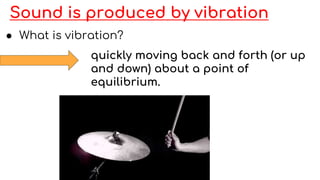
Sound is produced by vibration. Vibrations cause fluctuations in air pressure that we hear as sound. The ear detects these fluctuations and the brain interprets them as sound. Sound travels through solids, liquids, and gases as a longitudinal wave of pressure variations. The speed of sound depends on the medium - it is fastest in solids and slowest in gases. Humans can typically hear sounds between 20-20,000 Hz. Loudness depends on amplitude - higher amplitudes are louder sounds. Noise pollution from sources like vehicles and construction can damage hearing and cause health issues if excessive.