cocktail d’expérience informatiques
             Genève 3 & 4 octobre 2011
                   Seconde édition


Auteur    Pieter HINTJENS
  Track   Incubateur
Session   Social Architecture
          101, Messing with
          People for Fun &
          Profit
Social Architecture 101

Messing with People for Fun & Profit
                by
          Pieter Hintjens

         3 September, 2011


       SoftwareAndSilicon.com
Questions
●   How can we be so stupid (for smart apes)?
●   How come the same people, organized
    differently, can be 1000x more or less effective?
●   What makes the difference?
●   Can we understand what's going on?
●   Can we use this knowledge for benefit?


               SoftwareAndSilicon.com
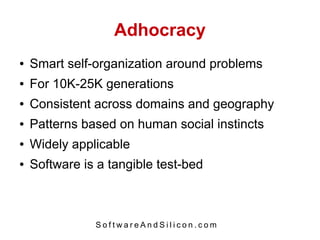
Adhocracy
●   Smart self-organization around problems
●   For 10K-25K generations
●   Consistent across domains and geography
●   Patterns based on human social instincts
●   Widely applicable
●   Software is a tangible test-bed


               SoftwareAndSilicon.com
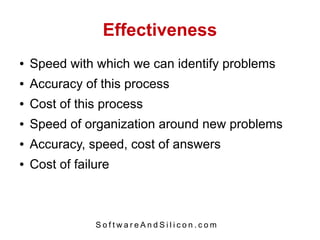
Effectiveness
●   Speed with which we can identify problems
●   Accuracy of this process
●   Cost of this process
●   Speed of organization around new problems
●   Accuracy, speed, cost of answers
●   Cost of failure


                SoftwareAndSilicon.com
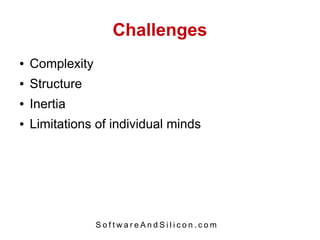
Challenges
●   Complexity
●   Structure
●   Inertia
●   Limitations of individual minds


                 SoftwareAndSilicon.com
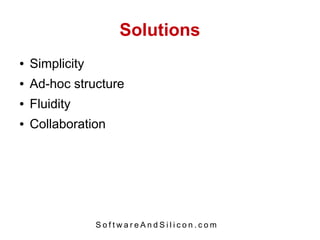
Solutions
●   Simplicity
●   Ad-hoc structure
●   Fluidity
●   Collaboration


                 SoftwareAndSilicon.com
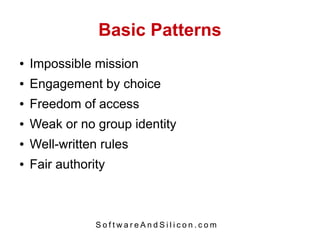
Basic Patterns
●   Impossible mission
●   Engagement by choice
●   Freedom of access
●   Weak or no group identity
●   Well-written rules
●   Fair authority


                SoftwareAndSilicon.com
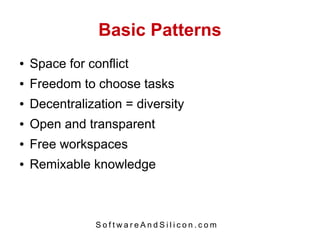
Basic Patterns
●   Space for conflict
●   Freedom to choose tasks
●   Decentralization = diversity
●   Open and transparent
●   Free workspaces
●   Remixable knowledge


                SoftwareAndSilicon.com
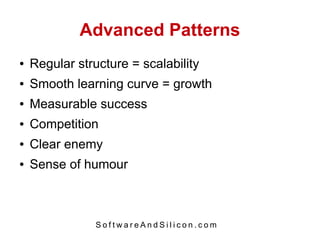
Advanced Patterns
●   Regular structure = scalability
●   Smooth learning curve = growth
●   Measurable success
●   Competition
●   Clear enemy
●   Sense of humour


                SoftwareAndSilicon.com
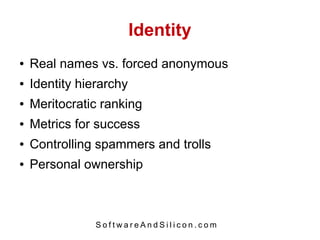
Identity
●   Real names vs. forced anonymous
●   Identity hierarchy
●   Meritocratic ranking
●   Metrics for success
●   Controlling spammers and trolls
●   Personal ownership


                SoftwareAndSilicon.com
Core Architecture Process
●   Define a compelling mission
●   Create structures for collaboration
●   Invest in core 'seed' product
●   Feed structures with short term problems
●   Create competition for status
●   Promote most active participants
●   Develop codes for knowledge sharing
●   Act as benevolent dictator
               SoftwareAndSilicon.com
Less is More
●   Do the least that probably works
●   Perfection precludes participation
●   Use free cloud services
●   Use existing legal frameworks
●   Power structures are liquid cement


               SoftwareAndSilicon.com
Applications & Examples
●   Open source communities
●   “Radical management”
●   Political flash crowds (not movements)
●   Science (human genome project)
●   Wikipedia
●   The Web in general


                SoftwareAndSilicon.com
Next Steps
●   Read the book & think about it
●   Tweet about it before lunchtime
●   Apply to the groups you're involved in
●   Use for your own new groups

●   Thank you for being here!


               SoftwareAndSilicon.com

soft-shake.ch - An introduction to social architecture

  • 1.
    cocktail d’expérience informatiques Genève 3 & 4 octobre 2011 Seconde édition Auteur Pieter HINTJENS Track Incubateur Session Social Architecture 101, Messing with People for Fun & Profit
  • 3.
    Social Architecture 101 Messingwith People for Fun & Profit by Pieter Hintjens 3 September, 2011 SoftwareAndSilicon.com
  • 4.
    Questions ● How can we be so stupid (for smart apes)? ● How come the same people, organized differently, can be 1000x more or less effective? ● What makes the difference? ● Can we understand what's going on? ● Can we use this knowledge for benefit? SoftwareAndSilicon.com
  • 5.
    Adhocracy ● Smart self-organization around problems ● For 10K-25K generations ● Consistent across domains and geography ● Patterns based on human social instincts ● Widely applicable ● Software is a tangible test-bed SoftwareAndSilicon.com
  • 6.
    Effectiveness ● Speed with which we can identify problems ● Accuracy of this process ● Cost of this process ● Speed of organization around new problems ● Accuracy, speed, cost of answers ● Cost of failure SoftwareAndSilicon.com
  • 7.
    Challenges ● Complexity ● Structure ● Inertia ● Limitations of individual minds SoftwareAndSilicon.com
  • 8.
    Solutions ● Simplicity ● Ad-hoc structure ● Fluidity ● Collaboration SoftwareAndSilicon.com
  • 9.
    Basic Patterns ● Impossible mission ● Engagement by choice ● Freedom of access ● Weak or no group identity ● Well-written rules ● Fair authority SoftwareAndSilicon.com
  • 10.
    Basic Patterns ● Space for conflict ● Freedom to choose tasks ● Decentralization = diversity ● Open and transparent ● Free workspaces ● Remixable knowledge SoftwareAndSilicon.com
  • 11.
    Advanced Patterns ● Regular structure = scalability ● Smooth learning curve = growth ● Measurable success ● Competition ● Clear enemy ● Sense of humour SoftwareAndSilicon.com
  • 12.
    Identity ● Real names vs. forced anonymous ● Identity hierarchy ● Meritocratic ranking ● Metrics for success ● Controlling spammers and trolls ● Personal ownership SoftwareAndSilicon.com
  • 13.
    Core Architecture Process ● Define a compelling mission ● Create structures for collaboration ● Invest in core 'seed' product ● Feed structures with short term problems ● Create competition for status ● Promote most active participants ● Develop codes for knowledge sharing ● Act as benevolent dictator SoftwareAndSilicon.com
  • 14.
    Less is More ● Do the least that probably works ● Perfection precludes participation ● Use free cloud services ● Use existing legal frameworks ● Power structures are liquid cement SoftwareAndSilicon.com
  • 15.
    Applications & Examples ● Open source communities ● “Radical management” ● Political flash crowds (not movements) ● Science (human genome project) ● Wikipedia ● The Web in general SoftwareAndSilicon.com
  • 16.
    Next Steps ● Read the book & think about it ● Tweet about it before lunchtime ● Apply to the groups you're involved in ● Use for your own new groups ● Thank you for being here! SoftwareAndSilicon.com