Introduction to Solar Energy
◦ Solar energy is the power obtained from the sun’s radiation.
◦ It is a renewable and sustainable energy source.
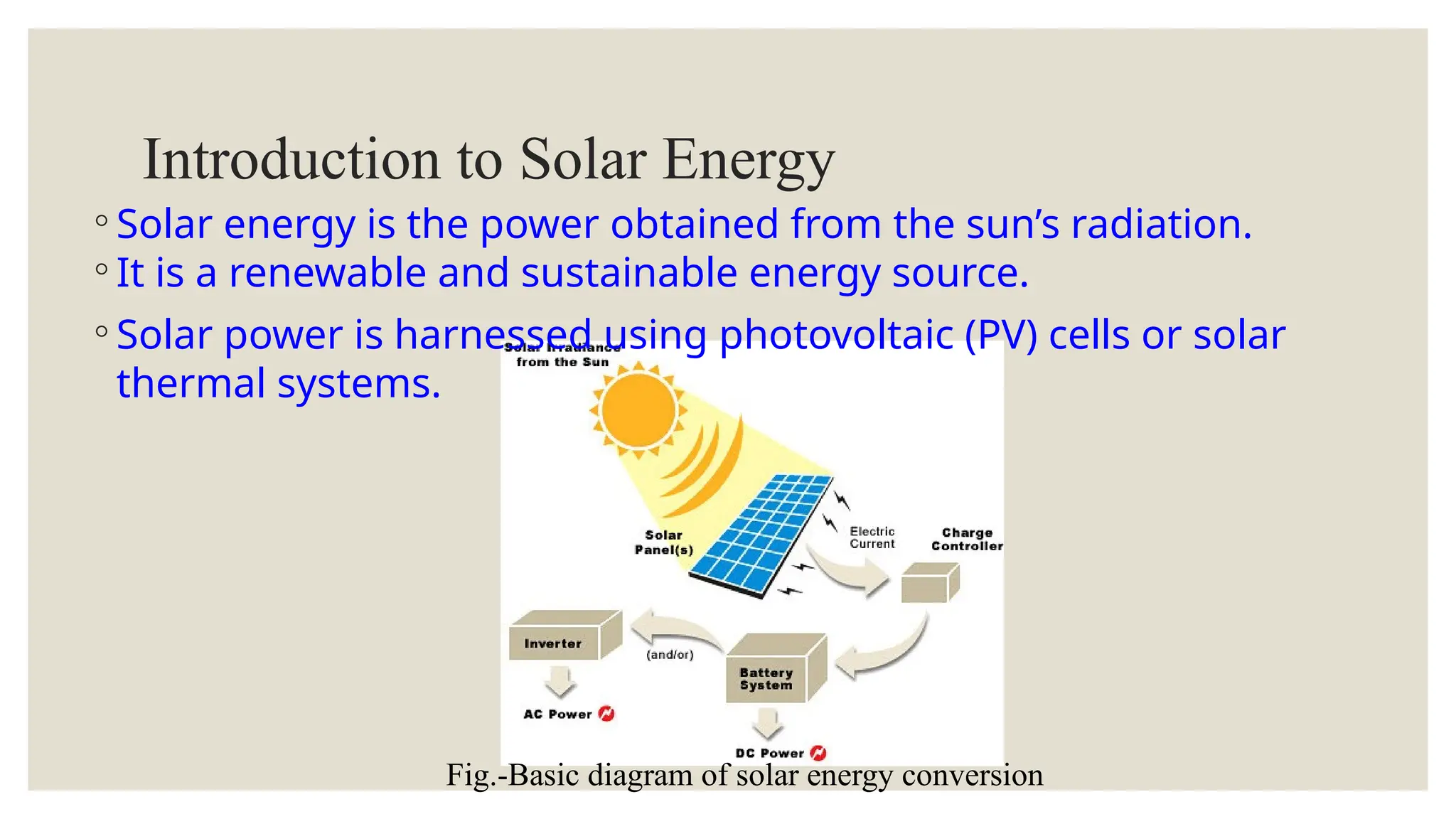
◦ Solar power is harnessed using photovoltaic (PV) cells or solar
thermal systems.
Fig.-Basic diagram of solar energy conversion
How Solar Energy Works
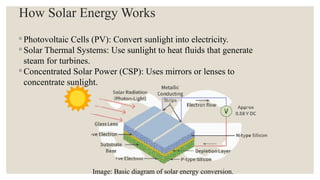
◦ Photovoltaic Cells (PV): Convert sunlight into electricity.
◦ Solar Thermal Systems: Use sunlight to heat fluids that generate
steam for turbines.
◦ Concentrated Solar Power (CSP): Uses mirrors or lenses to
concentrate sunlight.
Image: Basic diagram of solar energy conversion.
Benefits of Solar Energy
Renewable and abundant
Reduces electricity bills
Low maintenance costs
Reduces carbon footprint
Energy independence
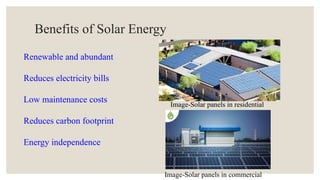
Image-Solar panels in residential
Image-Solar panels in commercial
Types of Solar Panels
Applications of Solar Energy
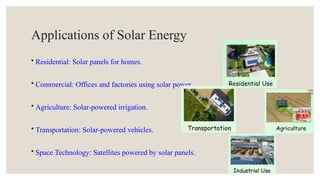
 Residential: Solar panels for homes.
 Commercial: Offices and factories using solar power.
 Agriculture: Solar-powered irrigation.
 Transportation: Solar-powered vehicles.
 Space Technology: Satellites powered by solar panels.
Challenges of Solar Energy
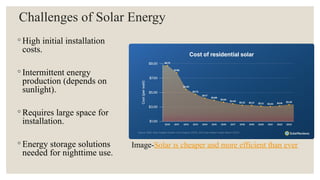
◦ High initial installation
costs.
◦ Intermittent energy
production (depends on
sunlight).
◦ Requires large space for
installation.
◦ Energy storage solutions
needed for nighttime use.
Image-Solar is cheaper and more efficient than ever
Future of Solar Energy
◦ Advances in solar panel efficiency.
◦ Development of better energy storage
solutions.
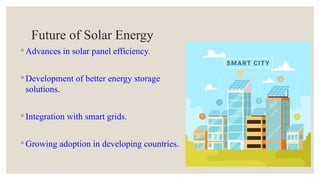
◦ Integration with smart grids.
◦ Growing adoption in developing countries.
Perovskite Solar Cells
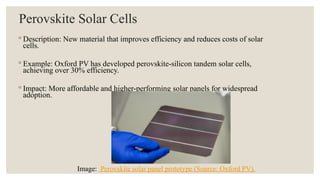
◦ Description: New material that improves efficiency and reduces costs of solar
cells.
◦ Example: Oxford PV has developed perovskite-silicon tandem solar cells,
achieving over 30% efficiency.
◦ Impact: More affordable and higher-performing solar panels for widespread
adoption.
Image: Perovskite solar panel prototype (Source: Oxford PV).
Bifacial Solar Panels
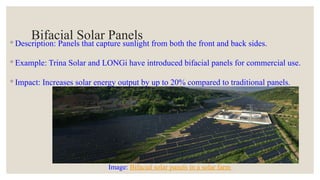
◦ Description: Panels that capture sunlight from both the front and back sides.
◦ Example: Trina Solar and LONGi have introduced bifacial panels for commercial use.
◦ Impact: Increases solar energy output by up to 20% compared to traditional panels.
Image: Bifacial solar panels in a solar farm
Solar Paint
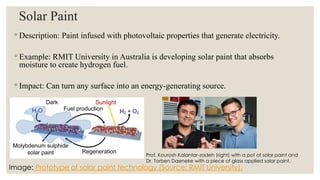
◦ Description: Paint infused with photovoltaic properties that generate electricity.
◦ Example: RMIT University in Australia is developing solar paint that absorbs
moisture to create hydrogen fuel.
◦ Impact: Can turn any surface into an energy-generating source.
Image: Prototype of solar paint technology (Source: RMIT University).
Prof. Kourosh Kalantar-zadeh (right) with a pot of solar paint and
Dr. Torben Daeneke with a piece of glass applied solar paint.
Space-Based Solar Power (SBSP)
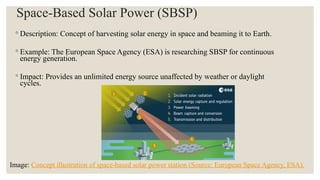
◦ Description: Concept of harvesting solar energy in space and beaming it to Earth.
◦ Example: The European Space Agency (ESA) is researching SBSP for continuous
energy generation.
◦ Impact: Provides an unlimited energy source unaffected by weather or daylight
cycles.
Image: Concept illustration of space-based solar power station (Source: European Space Agency, ESA).
Solar Roads
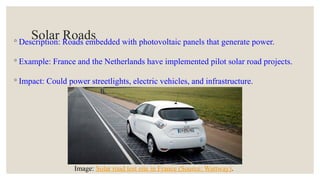
◦ Description: Roads embedded with photovoltaic panels that generate power.
◦ Example: France and the Netherlands have implemented pilot solar road projects.
◦ Impact: Could power streetlights, electric vehicles, and infrastructure.
Image: Solar road test site in France (Source: Wattway).
Any
queries??

Solar Energy and introduce in technology.pptx

  • 1.
    Introduction to SolarEnergy ◦ Solar energy is the power obtained from the sun’s radiation. ◦ It is a renewable and sustainable energy source. ◦ Solar power is harnessed using photovoltaic (PV) cells or solar thermal systems. Fig.-Basic diagram of solar energy conversion
  • 2.
    How Solar EnergyWorks ◦ Photovoltaic Cells (PV): Convert sunlight into electricity. ◦ Solar Thermal Systems: Use sunlight to heat fluids that generate steam for turbines. ◦ Concentrated Solar Power (CSP): Uses mirrors or lenses to concentrate sunlight. Image: Basic diagram of solar energy conversion.
  • 3.
    Benefits of SolarEnergy Renewable and abundant Reduces electricity bills Low maintenance costs Reduces carbon footprint Energy independence Image-Solar panels in residential Image-Solar panels in commercial
  • 4.
  • 5.
    Applications of SolarEnergy  Residential: Solar panels for homes.  Commercial: Offices and factories using solar power.  Agriculture: Solar-powered irrigation.  Transportation: Solar-powered vehicles.  Space Technology: Satellites powered by solar panels.
  • 6.
    Challenges of SolarEnergy ◦ High initial installation costs. ◦ Intermittent energy production (depends on sunlight). ◦ Requires large space for installation. ◦ Energy storage solutions needed for nighttime use. Image-Solar is cheaper and more efficient than ever
  • 7.
    Future of SolarEnergy ◦ Advances in solar panel efficiency. ◦ Development of better energy storage solutions. ◦ Integration with smart grids. ◦ Growing adoption in developing countries.
  • 8.
    Perovskite Solar Cells ◦Description: New material that improves efficiency and reduces costs of solar cells. ◦ Example: Oxford PV has developed perovskite-silicon tandem solar cells, achieving over 30% efficiency. ◦ Impact: More affordable and higher-performing solar panels for widespread adoption. Image: Perovskite solar panel prototype (Source: Oxford PV).
  • 9.
    Bifacial Solar Panels ◦Description: Panels that capture sunlight from both the front and back sides. ◦ Example: Trina Solar and LONGi have introduced bifacial panels for commercial use. ◦ Impact: Increases solar energy output by up to 20% compared to traditional panels. Image: Bifacial solar panels in a solar farm
  • 10.
    Solar Paint ◦ Description:Paint infused with photovoltaic properties that generate electricity. ◦ Example: RMIT University in Australia is developing solar paint that absorbs moisture to create hydrogen fuel. ◦ Impact: Can turn any surface into an energy-generating source. Image: Prototype of solar paint technology (Source: RMIT University). Prof. Kourosh Kalantar-zadeh (right) with a pot of solar paint and Dr. Torben Daeneke with a piece of glass applied solar paint.
  • 11.
    Space-Based Solar Power(SBSP) ◦ Description: Concept of harvesting solar energy in space and beaming it to Earth. ◦ Example: The European Space Agency (ESA) is researching SBSP for continuous energy generation. ◦ Impact: Provides an unlimited energy source unaffected by weather or daylight cycles. Image: Concept illustration of space-based solar power station (Source: European Space Agency, ESA).
  • 12.
    Solar Roads ◦ Description:Roads embedded with photovoltaic panels that generate power. ◦ Example: France and the Netherlands have implemented pilot solar road projects. ◦ Impact: Could power streetlights, electric vehicles, and infrastructure. Image: Solar road test site in France (Source: Wattway).
  • 13.