Mastering the Art of Soft
Skills: Key to Exceptional
Customer Service for
Executives
• Introduction
In the business world, soft skills are increasingly becoming
essential for executives to deliver exceptional customer
service. To stand out, it is crucial to master the art of
e ective communication, active listening, emotional
intelligence, and problem-solving skills. This mastery can
help create lasting relationships that enhance customer
loyalty, resulting in a successful business.
• Why Soft Skills
are Important
for Customer
Service
E ective Communication
Soft Skills such as e ective communication play a vital role
in excellent customer service. It includes the ability to
deliver information clearly and with empathy to customers.
Active Listening
Active listening is crucial in understanding customer needs,
building rapport, and defusing potentially upset customers.
Emotional Intelligence
Emotional intelligence skills, including empathy,
self-awareness, and emotional regulation, help to develop a
deeper understanding of customer situations and tailor
solutions.
Problem-Solving Skills
With strong problem-solving skills, executives can provide
prompt solutions to customer grievances, resulting in happy
and satis ed customers.
• Active Listening
Mastering Active Listening
Active listening is not just about hearing, but understanding
customers to provide personalized solutions. It involves
asking questions, paraphrasing, and re ecting to ensure
customers feel heard and valued.
Empathy Development
Developing empathy skills means putting yourself in the
customer's shoes to fully understand their emotions and
needs. It enables you to build trust and rapport with
customers.
E ective Problem-Solving
Problem-solving requires analytical and critical thinking to
provide quick and e ective solutions. Learn to identify the
root cause, devise a plan, and implement it to resolve
customer issues.
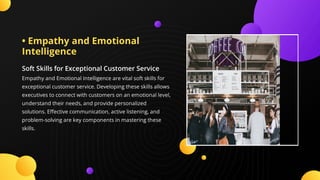
• Empathy and Emotional
Intelligence
Soft Skills for Exceptional Customer Service
Empathy and Emotional Intelligence are vital soft skills for
exceptional customer service. Developing these skills allows
executives to connect with customers on an emotional level,
understand their needs, and provide personalized
solutions. E ective communication, active listening, and
problem-solving are key components in mastering these
skills.
• Communication Skills
E ective Communication Skills
Clear and concise communication is crucial in providing
exceptional customer service. Active listening, using positive
language, and adapting communication styles to t the
customer's needs are essential in building strong
connections and understanding customer needs.
Non-Verbal Communication
Non-verbal cues, such as body language, eye contact, and
tone of voice, can convey empathy and provide a
personalized touch to customer interactions. Mastering
non-verbal communication is a key component in
developing emotional intelligence and connecting with
customers.
• Time Management
Time Management for Exceptional Customer
Service
Managing time is crucial in providing exceptional customer
service. E ective time management helps executives handle
customer requests promptly and e ciently, ensuring
customer satisfaction. It also ensures that executives can
prioritize and dedicate the necessary time to each
customer, thus mastering the art of soft skills in customer
service.
• Problem-Solving and
Decision-Making Skills
Problem-solving and decision-making skills are essential for
exceptional customer service. Executives must be able to
identify and solve problems quickly and e ciently, while
making informed decisions that prioritize customer
satisfaction. Mastering these soft skills can go a long way in
providing exceptional customer service.
• Dealing with Di cult
Customers
E ective Communication is Key
Soft skills are crucial when dealing with di cult customers.
Listening actively, showing empathy and nding a common
ground can help turn the situation around.
Maintain Professionalism
It's important to maintain a calm and professional attitude
even in tense situations. Avoid taking things personally and
focus on nding a solution that satis es the customer.
Patience is a Virtue
When dealing with di cult customers, it's important to
remain patient. Don't rush the conversation, take time to
understand their concerns and work towards a mutually
bene cial outcome.
• Setting Expectations and
Following Up
Setting Expectations
Setting clear expectations for both parties can help avoid
misunderstandings and disappointment. Clearly
communicate what the customer can expect and what you
can provide.
Following Up
Following up after resolving the issue shows that you care
about their satisfaction. It also provides an opportunity for
feedback and to build a lasting relationship with the
customer.
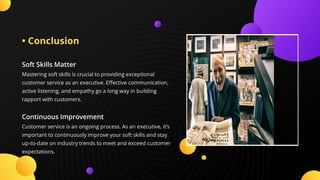
• Conclusion
Soft Skills Matter
Mastering soft skills is crucial to providing exceptional
customer service as an executive. E ective communication,
active listening, and empathy go a long way in building
rapport with customers.
Continuous Improvement
Customer service is an ongoing process. As an executive, it’s
important to continuously improve your soft skills and stay
up-to-date on industry trends to meet and exceed customer
expectations.

Soft Skills Training - PPT.pdf

  • 1.
    Mastering the Artof Soft Skills: Key to Exceptional Customer Service for Executives
  • 2.
    • Introduction In thebusiness world, soft skills are increasingly becoming essential for executives to deliver exceptional customer service. To stand out, it is crucial to master the art of e ective communication, active listening, emotional intelligence, and problem-solving skills. This mastery can help create lasting relationships that enhance customer loyalty, resulting in a successful business.
  • 3.
    • Why SoftSkills are Important for Customer Service E ective Communication Soft Skills such as e ective communication play a vital role in excellent customer service. It includes the ability to deliver information clearly and with empathy to customers. Active Listening Active listening is crucial in understanding customer needs, building rapport, and defusing potentially upset customers. Emotional Intelligence Emotional intelligence skills, including empathy, self-awareness, and emotional regulation, help to develop a deeper understanding of customer situations and tailor solutions. Problem-Solving Skills With strong problem-solving skills, executives can provide prompt solutions to customer grievances, resulting in happy and satis ed customers.
  • 4.
    • Active Listening MasteringActive Listening Active listening is not just about hearing, but understanding customers to provide personalized solutions. It involves asking questions, paraphrasing, and re ecting to ensure customers feel heard and valued. Empathy Development Developing empathy skills means putting yourself in the customer's shoes to fully understand their emotions and needs. It enables you to build trust and rapport with customers. E ective Problem-Solving Problem-solving requires analytical and critical thinking to provide quick and e ective solutions. Learn to identify the root cause, devise a plan, and implement it to resolve customer issues.
  • 5.
    • Empathy andEmotional Intelligence Soft Skills for Exceptional Customer Service Empathy and Emotional Intelligence are vital soft skills for exceptional customer service. Developing these skills allows executives to connect with customers on an emotional level, understand their needs, and provide personalized solutions. E ective communication, active listening, and problem-solving are key components in mastering these skills.
  • 6.
    • Communication Skills Eective Communication Skills Clear and concise communication is crucial in providing exceptional customer service. Active listening, using positive language, and adapting communication styles to t the customer's needs are essential in building strong connections and understanding customer needs. Non-Verbal Communication Non-verbal cues, such as body language, eye contact, and tone of voice, can convey empathy and provide a personalized touch to customer interactions. Mastering non-verbal communication is a key component in developing emotional intelligence and connecting with customers.
  • 7.
    • Time Management TimeManagement for Exceptional Customer Service Managing time is crucial in providing exceptional customer service. E ective time management helps executives handle customer requests promptly and e ciently, ensuring customer satisfaction. It also ensures that executives can prioritize and dedicate the necessary time to each customer, thus mastering the art of soft skills in customer service.
  • 8.
    • Problem-Solving and Decision-MakingSkills Problem-solving and decision-making skills are essential for exceptional customer service. Executives must be able to identify and solve problems quickly and e ciently, while making informed decisions that prioritize customer satisfaction. Mastering these soft skills can go a long way in providing exceptional customer service.
  • 9.
    • Dealing withDi cult Customers E ective Communication is Key Soft skills are crucial when dealing with di cult customers. Listening actively, showing empathy and nding a common ground can help turn the situation around. Maintain Professionalism It's important to maintain a calm and professional attitude even in tense situations. Avoid taking things personally and focus on nding a solution that satis es the customer. Patience is a Virtue When dealing with di cult customers, it's important to remain patient. Don't rush the conversation, take time to understand their concerns and work towards a mutually bene cial outcome.
  • 10.
    • Setting Expectationsand Following Up Setting Expectations Setting clear expectations for both parties can help avoid misunderstandings and disappointment. Clearly communicate what the customer can expect and what you can provide. Following Up Following up after resolving the issue shows that you care about their satisfaction. It also provides an opportunity for feedback and to build a lasting relationship with the customer.
  • 11.
    • Conclusion Soft SkillsMatter Mastering soft skills is crucial to providing exceptional customer service as an executive. E ective communication, active listening, and empathy go a long way in building rapport with customers. Continuous Improvement Customer service is an ongoing process. As an executive, it’s important to continuously improve your soft skills and stay up-to-date on industry trends to meet and exceed customer expectations.