






So You Think You Can   SEE   it

                         Ying
Please look at these pictures first…
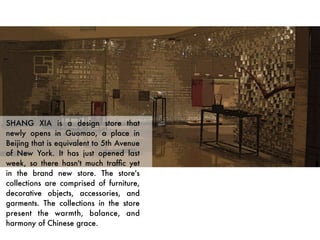
SHANG XIA is a design store that
newly opens in Guomao, a place in
Beijing that is equivalent to 5th Avenue
of New York. It has just opened last
week, so there hasn't much traffic yet
in the brand new store. The store's
collections are comprised of furniture,
decorative objects, accessories, and
garments. The collections in the store
present the warmth, balance, and
harmony of Chinese grace. 
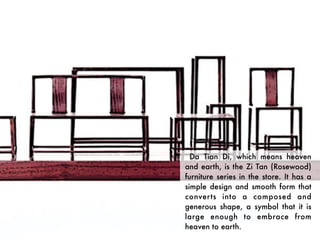
Da Tian Di, which means heaven
and earth, is the Zi Tan (Rosewood)
furniture series in the store. It has a
simple design and smooth form that
converts into a composed and
generous shape, a symbol that it is
large enough to embrace from
heaven to earth.
The main hue of the store is
brown, tiles on the wall and
ornaments inside are
harmoniously consistent. The light
makes the store bright and
modern.
Shopping assistants are mostly good-looking,
elegant, and warm-hearted.
How do you feel about the store?
What if I tell you…
Founded in 2008, SHANG XIA is a
brand for art of living that promises a
unique encounter with the heritage of
Chinese design and craftsmanship.
Together with the celebrated Hermes
Group, renewed designer Jiang Qiong
Er established Shang Xia with a mission
to create a 21st century lifestyle
founded on a finest of Chinese design
traditions.
Building on 5,000 years of unique
inheritance, and in the spirit of dialogue
between tradition and modernity, these
collectibles convey messages of
tradition, guardianship and
remembrance. 
Uniquely,  SHANG XIA creates an
annual series of limited edition "cultural
objects".
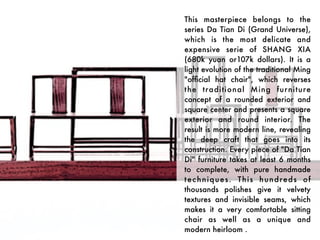
This masterpiece belongs to the
series Da Tian Di  (Grand Universe),
which is the most delicate and
expensive serie of SHANG XIA
(680k yuan or107k dollars). It is a
light evolution of the traditional Ming
"official hat chair", which reverses
t he traditional Ming fur niture
concept of a rounded exterior and
square center and presents a square
exterior and round interior. The
result is more modern line, revealing
the deep craft that goes into its
construction. Every piece of "Da Tian
Di" furniture takes at least 6 months
to complete, with pure handmade
t e c h n i q u e s .  T h i s h u n d r e d s o f
thousands polishes give it velvety
textures and invisible seams, which
makes it a very comfortable sitting
chair as well as a unique and
modern heirloom .
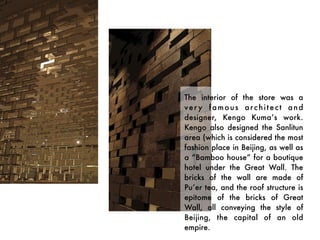
The interior of the store was a
ver y famous arc hitect and
designer, Kengo Kuma’s work.
Kengo also designed the Sanlitun
area (which is considered the most
fashion place in Beijing, as well as
a “Bamboo house” for a boutique
hotel under the Great Wall. The
bricks of the wall are made of
Pu’er tea, and the roof structure is
epitome of the bricks of Great
Wall, all conveying the style of
Beijing, the capital of an old
empire.
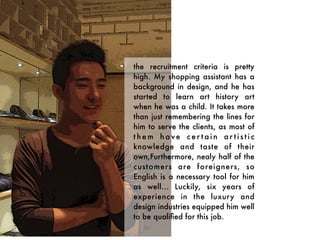
the recruitment criteria is pretty
high. My shopping assistant has a
background in design, and he has
started to learn art history art
when he was a child. It takes more
than just remembering the lines for
him to serve the clients, as most of
them have cer tain ar tistic
knowledge and taste of their
own,Furthermore, nealy half of the
customers are foreigners, so
English is a necessary tool for him
as well... Luckily, six years of
experience in the luxury and
design industries equipped him well
to be qualified for this job.
Do you feel something else now ?
It is hard to define exactly how the words have
changed the object but undoubtedly they have.
Each object has become part of an argument
which has little to do with its original physical
appearance. It has acquired a new kind of
impressiveness.
Not because of what it shows, but because of
the meaning of it, the story behind it, the fame
on it, or even the market value of it. To dismiss
such feelings as naïve or artificial would be
quite wrong.
Everything we see could become impressive,
mysterious,
because of these additional characteristics.
Now have a look at these pictures…
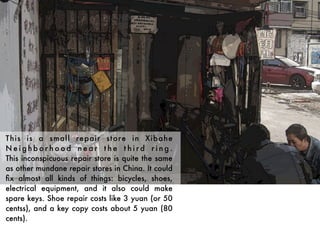
This is a small repair store in Xibahe
Neighborhood near the third ring.
This inconspicuous repair store is quite the same
as other mundane repair stores in China. It could
fix almost all kinds of things: bicycles, shoes,
electrical equipment, and it also could make
spare keys. Shoe repair costs like 3 yuan (or 50
centss), and a key copy costs about 5 yuan (80
cents).
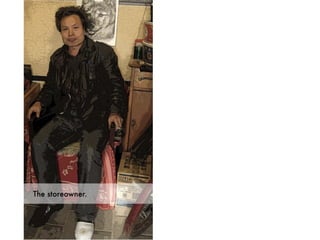
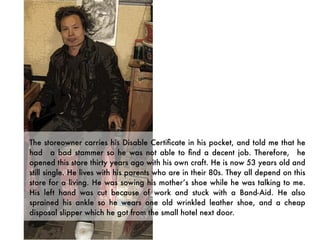
The storeowner.
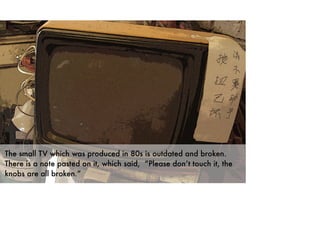
There is a mini-TV in the store.
What if I tell you…
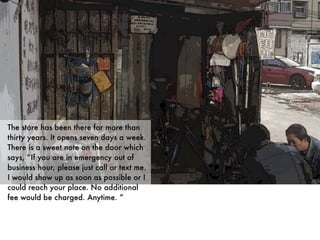
The store has been there for more than
thirty years. It opens seven days a week.
There is a sweet note on the door which
says, “If you are in emergency out of
business hour, please just call or text me.
I would show up as soon as possible or I
could reach your place. No additional
fee would be charged. Anytime. ”
The storeowner carries his Disable Certificate in his pocket, and told me that he
had a bad stammer so he was not able to find a decent job. Therefore, he
opened this store thirty years ago with his own craft. He is now 53 years old and
still single. He lives with his parents who are in their 80s. They all depend on this
store for a living. He was sowing his mother’s shoe while he was talking to me.
His left hand was cut because of work and stuck with a Band-Aid. He also
sprained his ankle so he wears one old wrinkled leather shoe, and a cheap
disposal slipper which he got from the small hotel next door.
The small TV which was produced in 80s is outdated and broken.
There is a note pasted on it, which said, “Please don’t touch it, the
knobs are all broken.”
Do you feel something else now ?
The relationship between what we see and
what we know is never settled. After knowing
the misery of the storeowner, the images now
illustrate the new sentences.
Even though the images are still the same, but
the explanation, the knowledge will change the
way you see them and feel them, which never
quite fit the images themselves.
We never just look at one thing; we are always
looking at the relation between things and
ourselves. What we see is always subjective.

If you want to open your eye, you need to
open your mind first.
Thank you!

               Ying Peng

        So do you really SEE me from this photo?

So you think you can see it

  • 1.
    So You ThinkYou Can SEE it Ying
  • 2.
    Please look atthese pictures first…
  • 3.
    SHANG XIA isa design store that newly opens in Guomao, a place in Beijing that is equivalent to 5th Avenue of New York. It has just opened last week, so there hasn't much traffic yet in the brand new store. The store's collections are comprised of furniture, decorative objects, accessories, and garments. The collections in the store present the warmth, balance, and harmony of Chinese grace. 
  • 4.
    Da Tian Di,which means heaven and earth, is the Zi Tan (Rosewood) furniture series in the store. It has a simple design and smooth form that converts into a composed and generous shape, a symbol that it is large enough to embrace from heaven to earth.
  • 5.
    The main hueof the store is brown, tiles on the wall and ornaments inside are harmoniously consistent. The light makes the store bright and modern.
  • 6.
    Shopping assistants aremostly good-looking, elegant, and warm-hearted.
  • 7.
    How do youfeel about the store?
  • 8.
    What if Itell you…
  • 9.
    Founded in 2008,SHANG XIA is a brand for art of living that promises a unique encounter with the heritage of Chinese design and craftsmanship. Together with the celebrated Hermes Group, renewed designer Jiang Qiong Er established Shang Xia with a mission to create a 21st century lifestyle founded on a finest of Chinese design traditions. Building on 5,000 years of unique inheritance, and in the spirit of dialogue between tradition and modernity, these collectibles convey messages of tradition, guardianship and remembrance.  Uniquely,  SHANG XIA creates an annual series of limited edition "cultural objects".
  • 10.
    This masterpiece belongsto the series Da Tian Di  (Grand Universe), which is the most delicate and expensive serie of SHANG XIA (680k yuan or107k dollars). It is a light evolution of the traditional Ming "official hat chair", which reverses t he traditional Ming fur niture concept of a rounded exterior and square center and presents a square exterior and round interior. The result is more modern line, revealing the deep craft that goes into its construction. Every piece of "Da Tian Di" furniture takes at least 6 months to complete, with pure handmade t e c h n i q u e s .  T h i s h u n d r e d s o f thousands polishes give it velvety textures and invisible seams, which makes it a very comfortable sitting chair as well as a unique and modern heirloom .
  • 11.
    The interior ofthe store was a ver y famous arc hitect and designer, Kengo Kuma’s work. Kengo also designed the Sanlitun area (which is considered the most fashion place in Beijing, as well as a “Bamboo house” for a boutique hotel under the Great Wall. The bricks of the wall are made of Pu’er tea, and the roof structure is epitome of the bricks of Great Wall, all conveying the style of Beijing, the capital of an old empire.
  • 12.
    the recruitment criteriais pretty high. My shopping assistant has a background in design, and he has started to learn art history art when he was a child. It takes more than just remembering the lines for him to serve the clients, as most of them have cer tain ar tistic knowledge and taste of their own,Furthermore, nealy half of the customers are foreigners, so English is a necessary tool for him as well... Luckily, six years of experience in the luxury and design industries equipped him well to be qualified for this job.
  • 13.
    Do you feelsomething else now ?
  • 14.
    It is hardto define exactly how the words have changed the object but undoubtedly they have. Each object has become part of an argument which has little to do with its original physical appearance. It has acquired a new kind of impressiveness.
  • 15.
    Not because ofwhat it shows, but because of the meaning of it, the story behind it, the fame on it, or even the market value of it. To dismiss such feelings as naïve or artificial would be quite wrong.
  • 16.
    Everything we seecould become impressive, mysterious, because of these additional characteristics.
  • 17.
    Now have alook at these pictures…
  • 18.
    This is asmall repair store in Xibahe Neighborhood near the third ring. This inconspicuous repair store is quite the same as other mundane repair stores in China. It could fix almost all kinds of things: bicycles, shoes, electrical equipment, and it also could make spare keys. Shoe repair costs like 3 yuan (or 50 centss), and a key copy costs about 5 yuan (80 cents).
  • 19.
  • 20.
    There is amini-TV in the store.
  • 21.
    What if Itell you…
  • 22.
    The store hasbeen there for more than thirty years. It opens seven days a week. There is a sweet note on the door which says, “If you are in emergency out of business hour, please just call or text me. I would show up as soon as possible or I could reach your place. No additional fee would be charged. Anytime. ”
  • 23.
    The storeowner carrieshis Disable Certificate in his pocket, and told me that he had a bad stammer so he was not able to find a decent job. Therefore, he opened this store thirty years ago with his own craft. He is now 53 years old and still single. He lives with his parents who are in their 80s. They all depend on this store for a living. He was sowing his mother’s shoe while he was talking to me. His left hand was cut because of work and stuck with a Band-Aid. He also sprained his ankle so he wears one old wrinkled leather shoe, and a cheap disposal slipper which he got from the small hotel next door.
  • 24.
    The small TVwhich was produced in 80s is outdated and broken. There is a note pasted on it, which said, “Please don’t touch it, the knobs are all broken.”
  • 25.
    Do you feelsomething else now ?
  • 26.
    The relationship betweenwhat we see and what we know is never settled. After knowing the misery of the storeowner, the images now illustrate the new sentences. Even though the images are still the same, but the explanation, the knowledge will change the way you see them and feel them, which never quite fit the images themselves.
  • 27.
    We never justlook at one thing; we are always looking at the relation between things and ourselves. What we see is always subjective. If you want to open your eye, you need to open your mind first.
  • 28.
    Thank you! Ying Peng So do you really SEE me from this photo?