Sector manufacturing
         (furniture) of
      Malaysian industry
Ainur         Asyirah       Md    Bakri
SEH110003
Nur Liyana Diyanah Mohd Nasser
SEH110021
Siti       Munirah        Abd    Rashid
SEW090029
-It starts since the development of non-nomadic cultures
-It survives from the Neolithic Period and later in antiquity in
the form of paintings, such as the wall Murals discovered
at Pompeii.
-It divide into Neolithic period,Classical world,Early Modern
World, and modernism
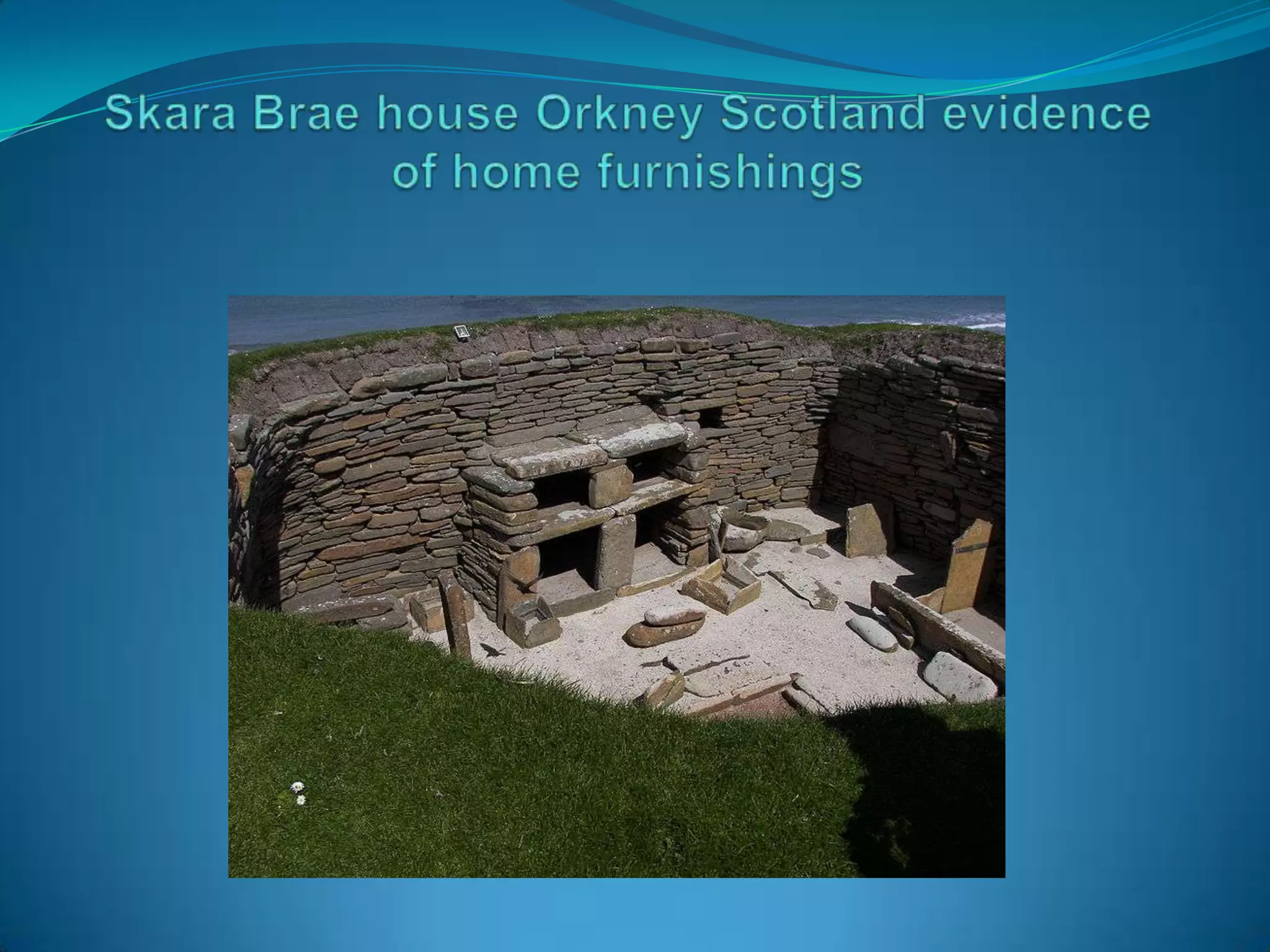
-Example: a range of unique stone furniture in Skara Brae,
a Neolithic village in Orkney.
-The site dates from 3100–2500 BC
 -The people of Skara Brae were build with stone, a readily
available material that could be worked easily and turned into
items for use within the household.
-Each house was equipped with an of stone furniture, ranging
from cupboards, dressers and beds to shelves, stone seats,
 - The stone dresser is the most important ,it symbolically faces the
entrance in each house
-It occur from the 8th-century BC Phrygian tumulus, the Midas
Mound, in Gordion, Turkey.
-Pieces found here include tables and serving stands.
-There are also surviving works from the 9th-8th-century
BC Assyrian palace of Nimrud.
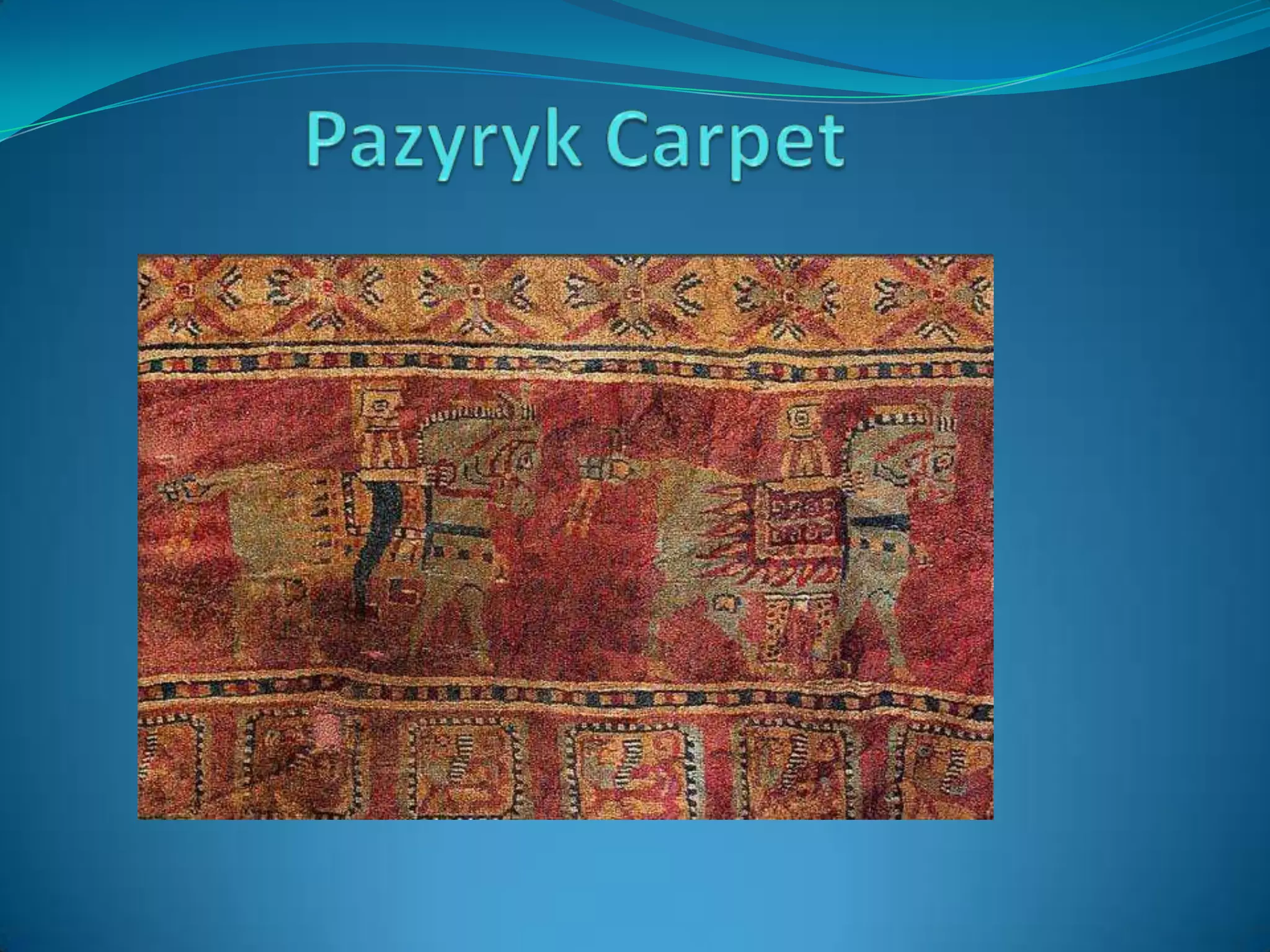
-The earliest surviving carpet, the Pazyryk Carpet was discovered
in a frozen tomb in Siberia
 - It has been dated between the 6th and 3rd century BC
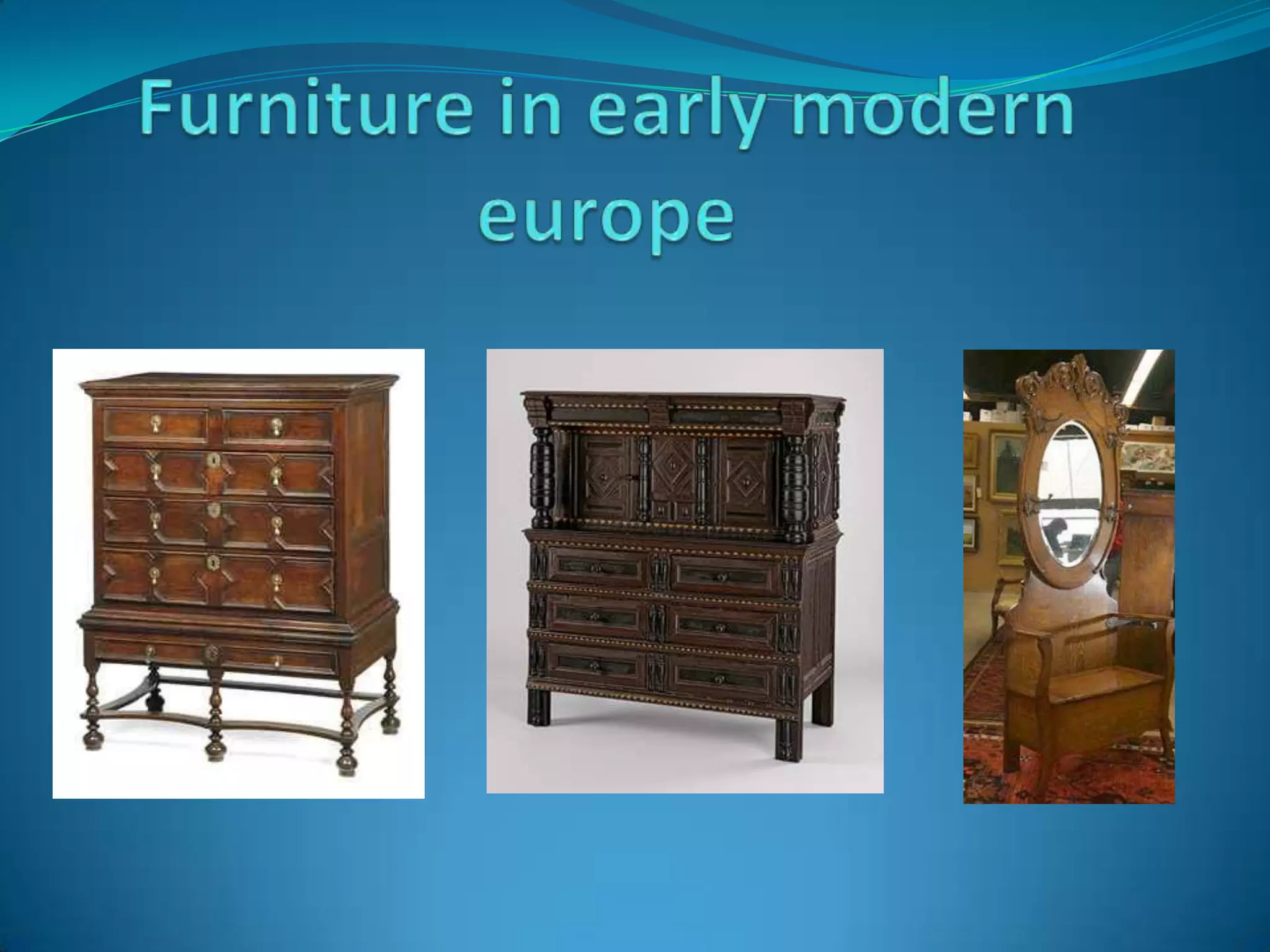
-The furniture of the Middle Ages was usually
heavy, oak, and ornamented with carved designs.
-Occur in the Italian Renaissance of the 14th and 15th
century marked a rebirth in design
- Inspired by the Greco-Roman tradition.
-A similar explosion of design, and renaissance of
culture in general, occurred in Northern Europe,
starting in the 14th century.
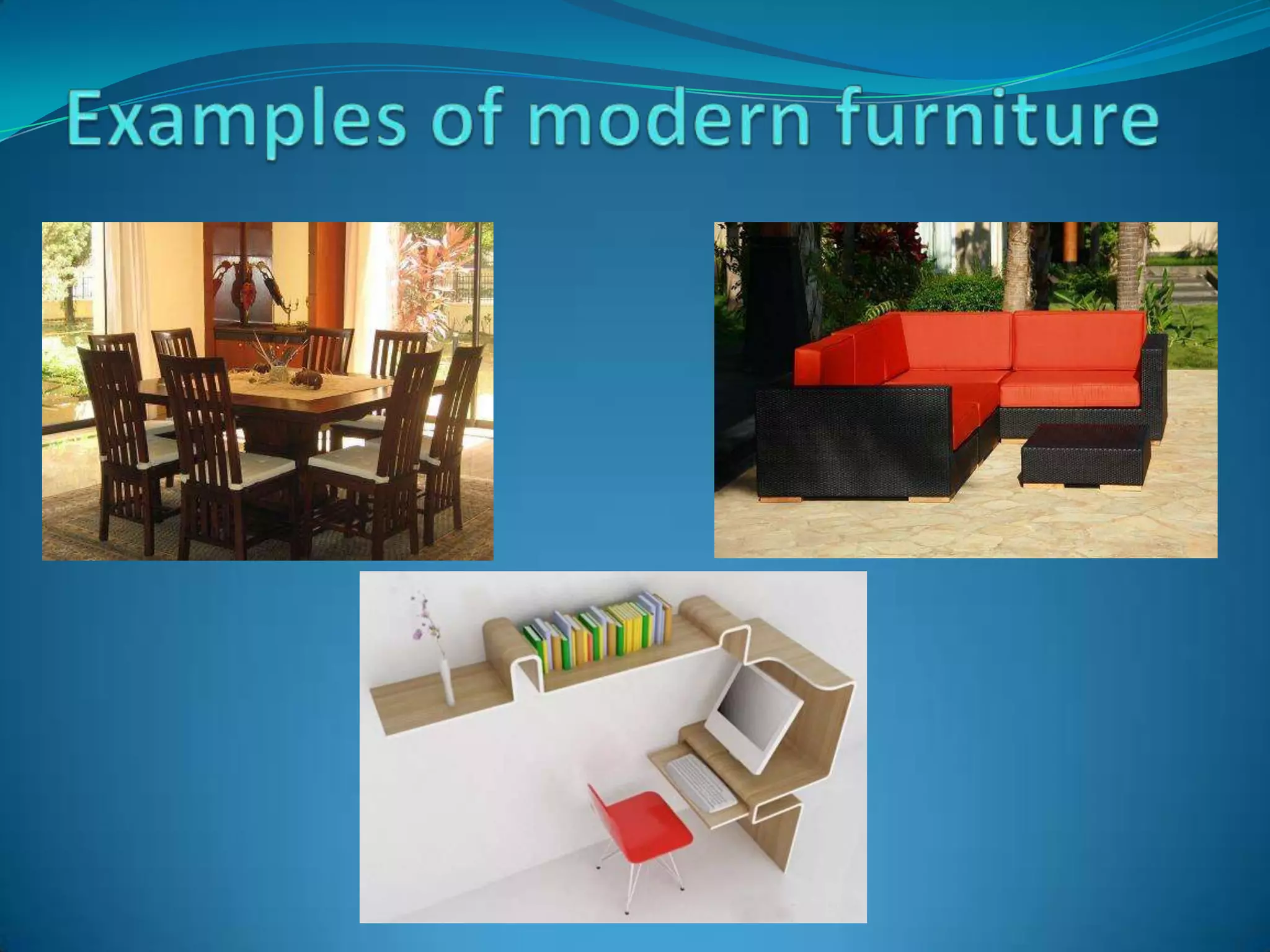
-The first three-quarters of the 20th century
-It born from the Bauhaus and Art Deco/Streamline
styles came the post World War II "Mid-Century
Modern" style
- Using materials developed during the war, lamenated
plywood, plastics and fiberglass.
-Postmodern design, intersecting the Pop art movement,
gained steam in the 1960s and 70s, promoted in the 80s
by groups such as the Italy-based Memphis
movement. Transitional furniture is intended to fill a
place between Traditional and Modern tastes.
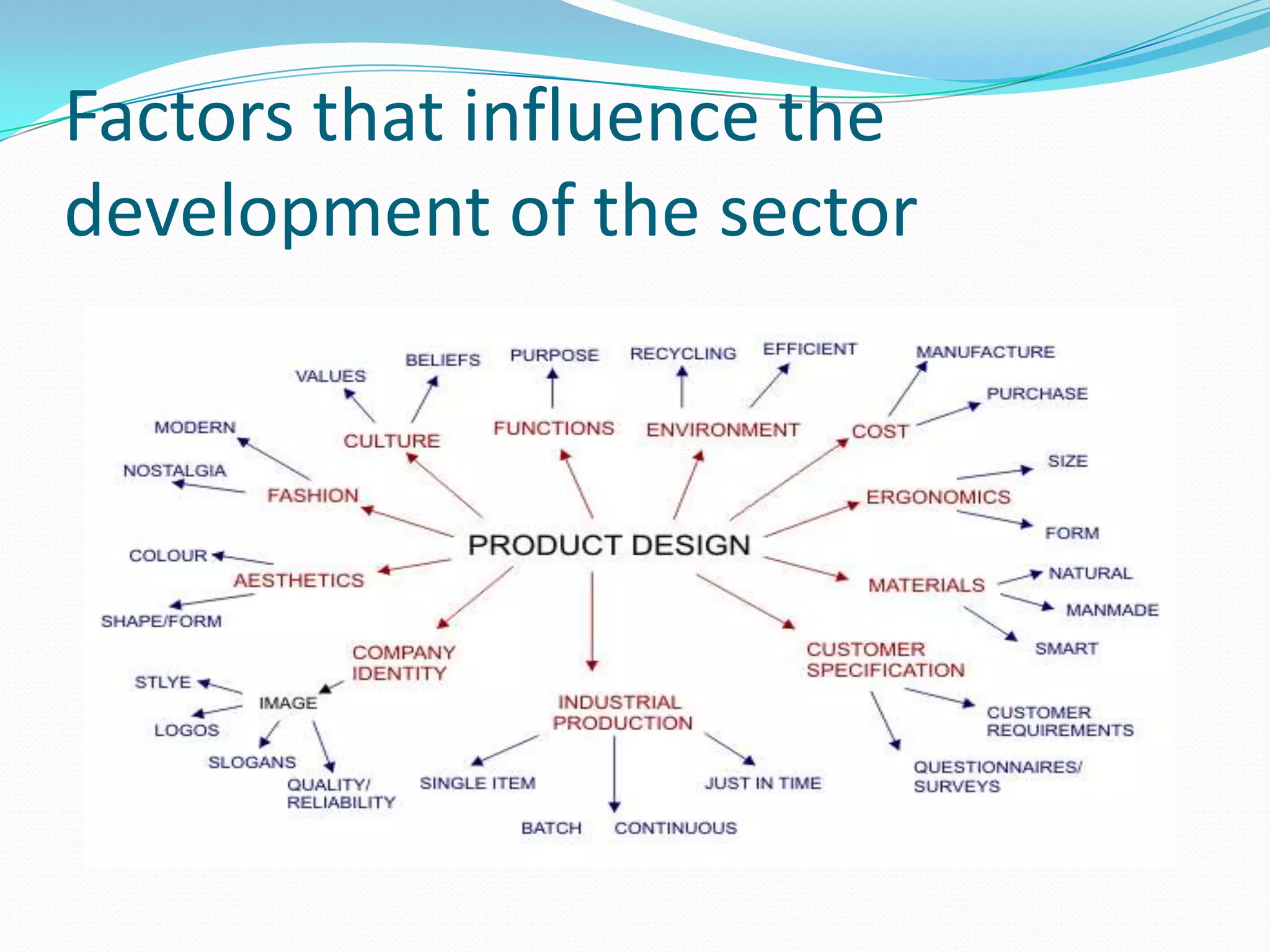
Factors that influence the
development of the sector
 COST
The cost of the materials and labour required to manufacture the
product.
The price potential customers are prepared to pay for the product.

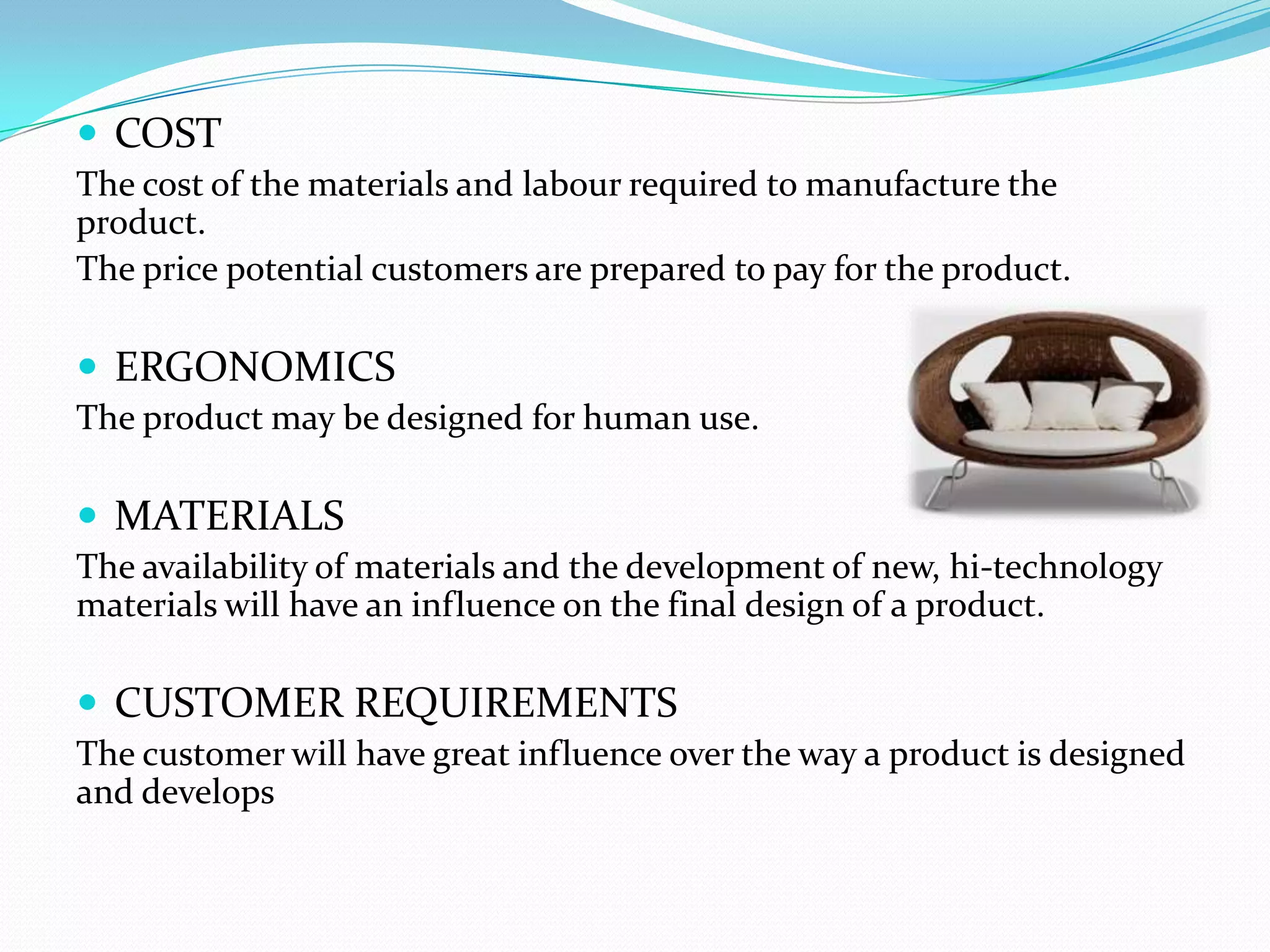
 ERGONOMICS
The product may be designed for human use.

 MATERIALS
The availability of materials and the development of new, hi-technology
materials will have an influence on the final design of a product.

 CUSTOMER REQUIREMENTS
The customer will have great influence over the way a product is designed
and develops
 INDUSTRIAL PRODUCTION
When designing a product the most desirable production technique may
influence the way the final product looks.

 COMPANY IDENTITY
The product may have to display the company image. Most companies are
proud of their public image. This may determine the colour scheme
applied to the product, the way it looks or even the materials that are used
in its manufacture (i.e. recycled materials).

 AESTHETICS
The shape and form of the product may determine the layout of circuits
or mechanisms.

 FASHION
The fashion of the time influences the design of products. Usually people
want to buy up to date items not ones based on 'last years look'.
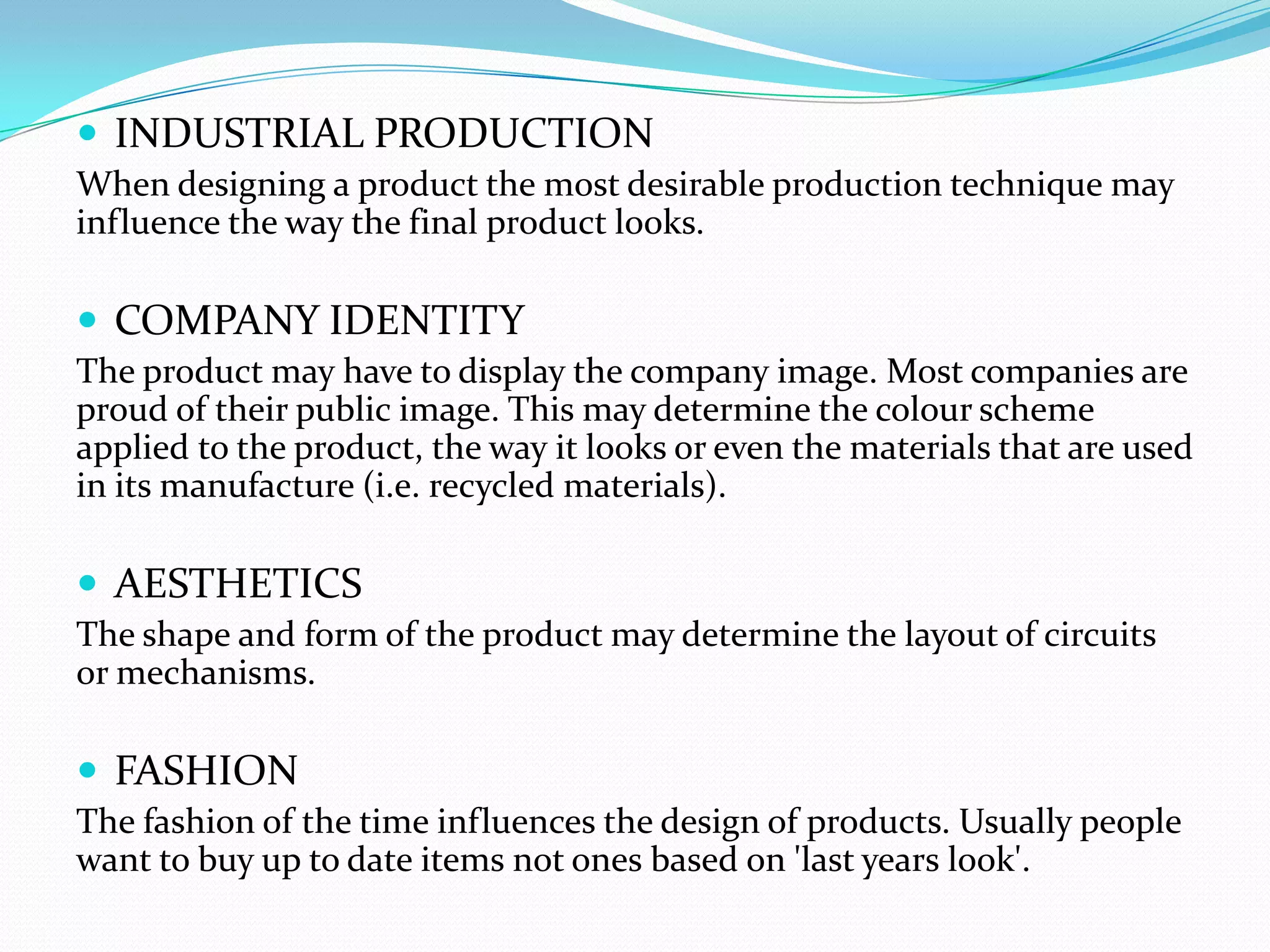
 CULTURE
Some products are aimed at different cultures and countries.


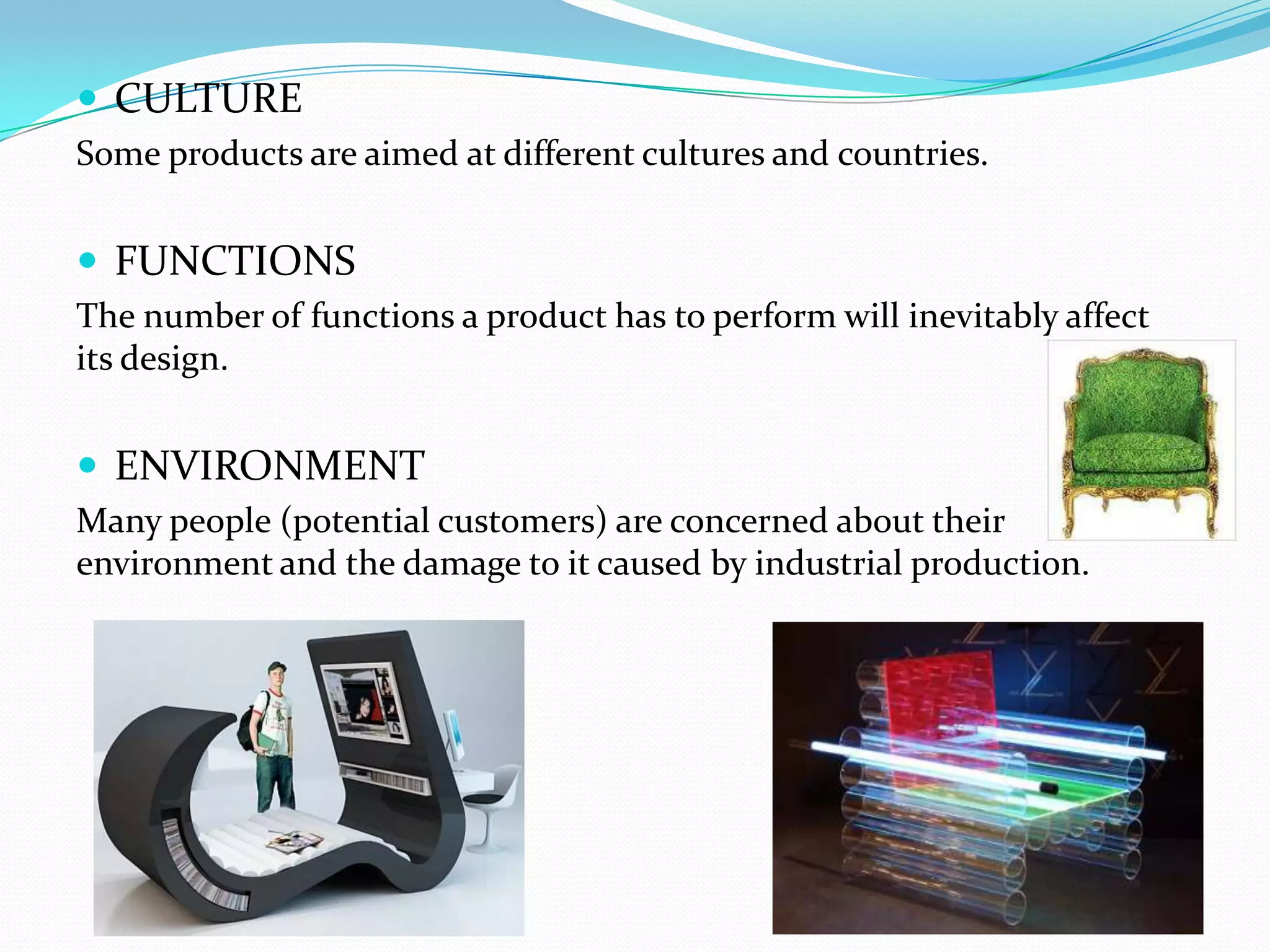
 FUNCTIONS
The number of functions a product has to perform will inevitably affect
its design.


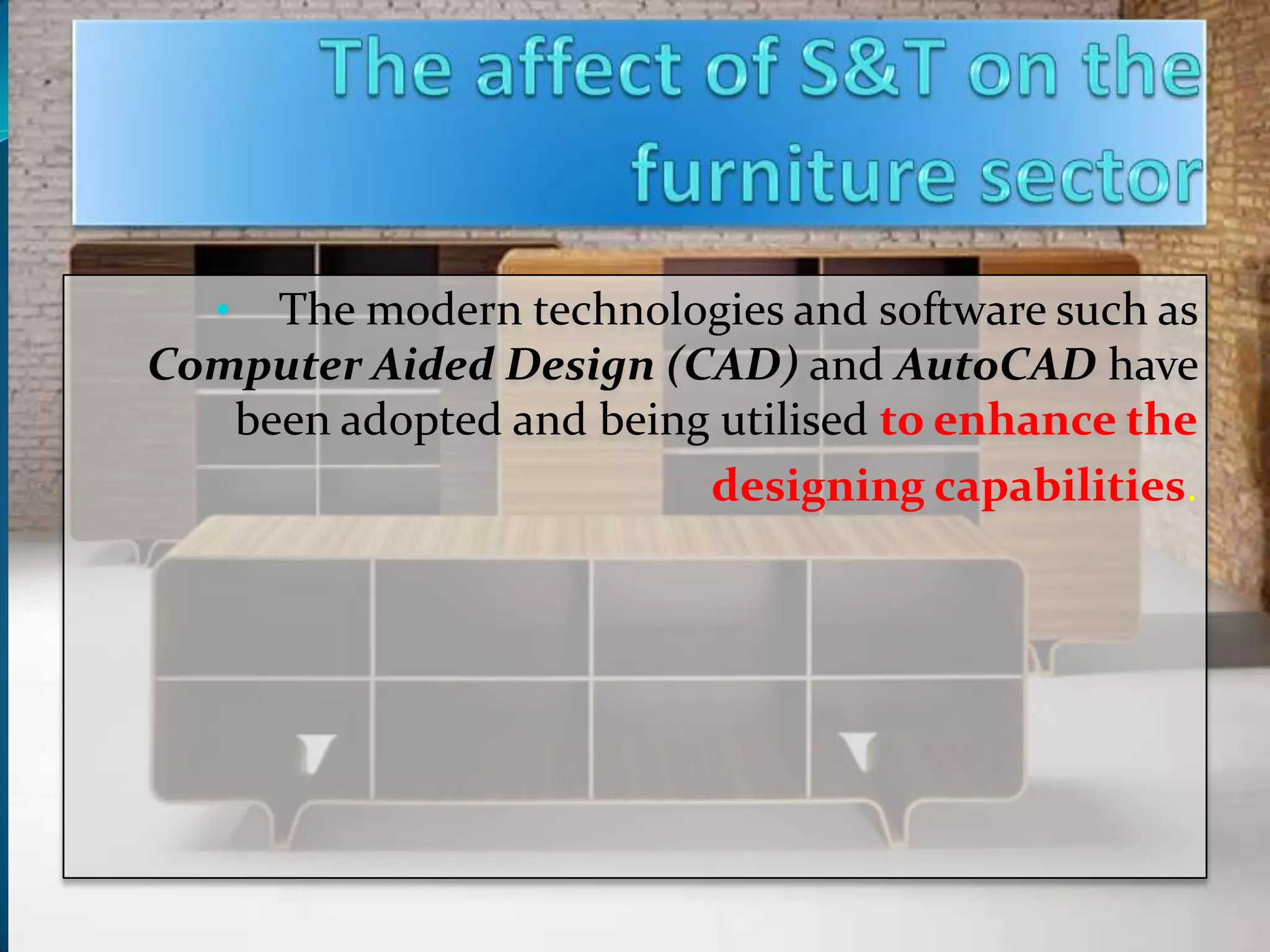
 ENVIRONMENT
Many people (potential customers) are concerned about their
environment and the damage to it caused by industrial production.
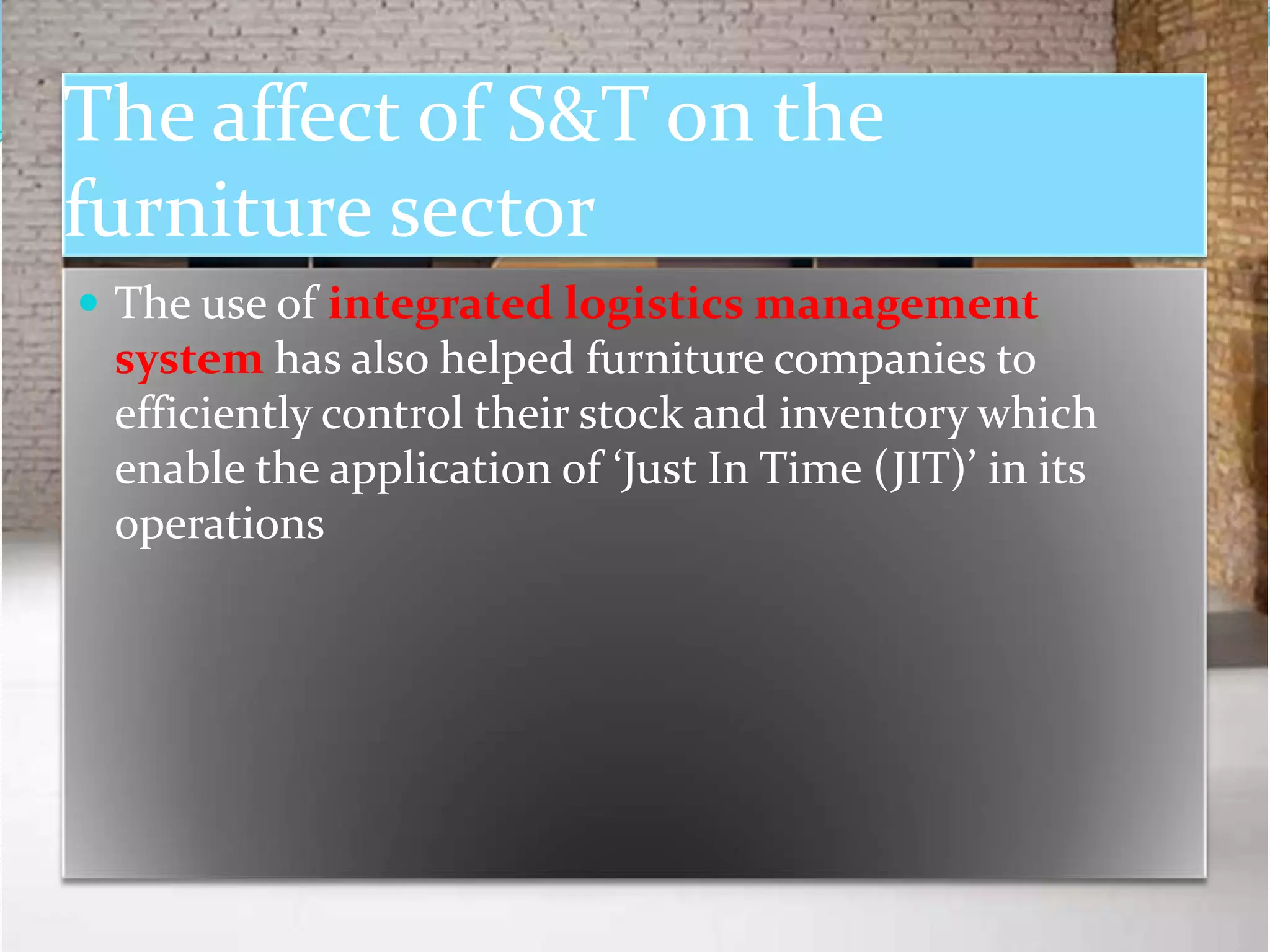
• The modern technologies and software such as
Computer Aided Design (CAD) and AutoCAD have
   been adopted and being utilised to enhance the
                         designing capabilities.
The affect of S&T on the
furniture sector
 The use of integrated logistics management
 system has also helped furniture companies to
 efficiently control their stock and inventory which
 enable the application of ‘Just In Time (JIT)’ in its
 operations
The affect of S&T on the
furniture sector
 The government has set-up the Malaysian Furniture
 Promotion Council (MFPC) to specially focus on the
 promotion of the furniture sector

 Appointed technical consultants to be based in
 Malaysia in order to ensure that Malaysian products
 conform to the high-expectant and strict requirements
 of the market-standards.
The affect of S&T on the
furniture sector
 Career opportunities
 Achieve great amounts of furniture exports.
 Increased productivity, market expansion and
 aggressive promotional efforts are also
 instrumental in increasing Malaysia's furniture exports

Snt(group)

  • 1.
    Sector manufacturing (furniture) of Malaysian industry Ainur Asyirah Md Bakri SEH110003 Nur Liyana Diyanah Mohd Nasser SEH110021 Siti Munirah Abd Rashid SEW090029
  • 2.
    -It starts sincethe development of non-nomadic cultures -It survives from the Neolithic Period and later in antiquity in the form of paintings, such as the wall Murals discovered at Pompeii. -It divide into Neolithic period,Classical world,Early Modern World, and modernism
  • 3.
    -Example: a rangeof unique stone furniture in Skara Brae, a Neolithic village in Orkney. -The site dates from 3100–2500 BC -The people of Skara Brae were build with stone, a readily available material that could be worked easily and turned into items for use within the household. -Each house was equipped with an of stone furniture, ranging from cupboards, dressers and beds to shelves, stone seats, - The stone dresser is the most important ,it symbolically faces the entrance in each house
  • 5.
    -It occur fromthe 8th-century BC Phrygian tumulus, the Midas Mound, in Gordion, Turkey. -Pieces found here include tables and serving stands. -There are also surviving works from the 9th-8th-century BC Assyrian palace of Nimrud. -The earliest surviving carpet, the Pazyryk Carpet was discovered in a frozen tomb in Siberia - It has been dated between the 6th and 3rd century BC
  • 7.
    -The furniture ofthe Middle Ages was usually heavy, oak, and ornamented with carved designs. -Occur in the Italian Renaissance of the 14th and 15th century marked a rebirth in design - Inspired by the Greco-Roman tradition. -A similar explosion of design, and renaissance of culture in general, occurred in Northern Europe, starting in the 14th century.
  • 9.
    -The first three-quartersof the 20th century -It born from the Bauhaus and Art Deco/Streamline styles came the post World War II "Mid-Century Modern" style - Using materials developed during the war, lamenated plywood, plastics and fiberglass. -Postmodern design, intersecting the Pop art movement, gained steam in the 1960s and 70s, promoted in the 80s by groups such as the Italy-based Memphis movement. Transitional furniture is intended to fill a place between Traditional and Modern tastes.
  • 11.
    Factors that influencethe development of the sector
  • 12.
     COST The costof the materials and labour required to manufacture the product. The price potential customers are prepared to pay for the product.  ERGONOMICS The product may be designed for human use.  MATERIALS The availability of materials and the development of new, hi-technology materials will have an influence on the final design of a product.  CUSTOMER REQUIREMENTS The customer will have great influence over the way a product is designed and develops
  • 13.
     INDUSTRIAL PRODUCTION Whendesigning a product the most desirable production technique may influence the way the final product looks.  COMPANY IDENTITY The product may have to display the company image. Most companies are proud of their public image. This may determine the colour scheme applied to the product, the way it looks or even the materials that are used in its manufacture (i.e. recycled materials).  AESTHETICS The shape and form of the product may determine the layout of circuits or mechanisms.  FASHION The fashion of the time influences the design of products. Usually people want to buy up to date items not ones based on 'last years look'.
  • 14.
     CULTURE Some productsare aimed at different cultures and countries.  FUNCTIONS The number of functions a product has to perform will inevitably affect its design.  ENVIRONMENT Many people (potential customers) are concerned about their environment and the damage to it caused by industrial production.
  • 15.
    • The moderntechnologies and software such as Computer Aided Design (CAD) and AutoCAD have been adopted and being utilised to enhance the designing capabilities.
  • 16.
    The affect ofS&T on the furniture sector  The use of integrated logistics management system has also helped furniture companies to efficiently control their stock and inventory which enable the application of ‘Just In Time (JIT)’ in its operations
  • 17.
    The affect ofS&T on the furniture sector  The government has set-up the Malaysian Furniture Promotion Council (MFPC) to specially focus on the promotion of the furniture sector  Appointed technical consultants to be based in Malaysia in order to ensure that Malaysian products conform to the high-expectant and strict requirements of the market-standards.
  • 18.
    The affect ofS&T on the furniture sector  Career opportunities  Achieve great amounts of furniture exports.  Increased productivity, market expansion and aggressive promotional efforts are also instrumental in increasing Malaysia's furniture exports