Small Scale Industry And
Business
Class XI
Prof. Komal C. Gadhe
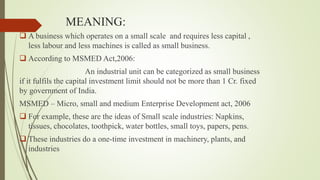
MEANING:
 A business which operates on a small scale and requires less capital ,
less labour and less machines is called as small business.
 According to MSMED Act,2006:
An industrial unit can be categorized as small business
if it fulfils the capital investment limit should not be more than 1 Cr. fixed
by government of India.
MSMED – Micro, small and medium Enterprise Development act, 2006
 For example, these are the ideas of Small scale industries: Napkins,
tissues, chocolates, toothpick, water bottles, small toys, papers, pens.
 These industries do a one-time investment in machinery, plants, and
industries
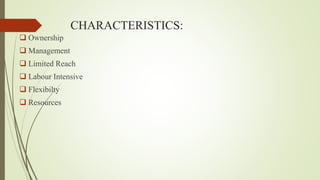
CHARACTERISTICS:
 Ownership
 Management
 Limited Reach
 Labour Intensive
 Flexibilty
 Resources
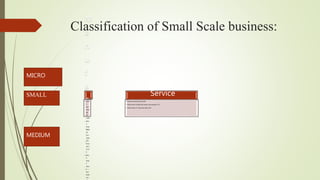
Classification of Small Scale business:
M
a
n
u
f
a
c
t
u
r
i
n
• Doe
s
not
exce
ed
25
Lakh
• Mor
e
than
25La
kh
but
does
not
exce
ed 5
Cror
e
• Mor
e
than
5
Cror
e
but
does
not
Service
• Does not exceed 10 Lakh
• More than 10 lakh but does not exceed 2 Cr.
• More than 2 Cr but less than 5Cr.
MICRO
SMALL
MEDIUM
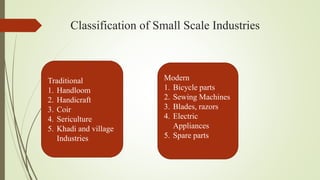
Classification of Small Scale Industries
Traditional
1. Handloom
2. Handicraft
3. Coir
4. Sericulture
5. Khadi and village
Industries
Modern
1. Bicycle parts
2. Sewing Machines
3. Blades, razors
4. Electric
Appliances
5. Spare parts
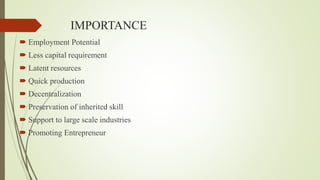
IMPORTANCE
 Employment Potential
 Less capital requirement
 Latent resources
 Quick production
 Decentralization
 Preservation of inherited skill
 Support to large scale industries
 Promoting Entrepreneur
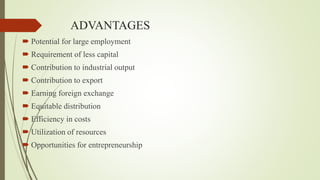
ADVANTAGES
 Potential for large employment
 Requirement of less capital
 Contribution to industrial output
 Contribution to export
 Earning foreign exchange
 Equitable distribution
 Efficiency in costs
 Utilization of resources
 Opportunities for entrepreneurship
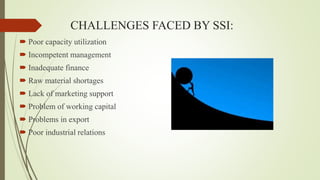
CHALLENGES FACED BY SSI:
 Poor capacity utilization
 Incompetent management
 Inadequate finance
 Raw material shortages
 Lack of marketing support
 Problem of working capital
 Problems in export
 Poor industrial relations
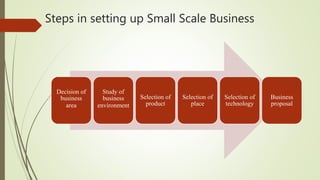
Steps in setting up Small Scale Business
Decision of
business
area
Study of
business
environment
Selection of
product
Selection of
place
Selection of
technology
Business
proposal
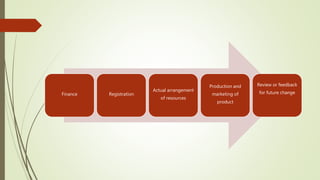
Finance Registration
Actual arrangement
of resources
Production and
marketing of
product
Review or feedback
for future change
THANK YOU

Small scale business

  • 1.
    Small Scale IndustryAnd Business Class XI Prof. Komal C. Gadhe
  • 2.
    MEANING:  A businesswhich operates on a small scale and requires less capital , less labour and less machines is called as small business.  According to MSMED Act,2006: An industrial unit can be categorized as small business if it fulfils the capital investment limit should not be more than 1 Cr. fixed by government of India. MSMED – Micro, small and medium Enterprise Development act, 2006  For example, these are the ideas of Small scale industries: Napkins, tissues, chocolates, toothpick, water bottles, small toys, papers, pens.  These industries do a one-time investment in machinery, plants, and industries
  • 3.
    CHARACTERISTICS:  Ownership  Management Limited Reach  Labour Intensive  Flexibilty  Resources
  • 4.
    Classification of SmallScale business: M a n u f a c t u r i n • Doe s not exce ed 25 Lakh • Mor e than 25La kh but does not exce ed 5 Cror e • Mor e than 5 Cror e but does not Service • Does not exceed 10 Lakh • More than 10 lakh but does not exceed 2 Cr. • More than 2 Cr but less than 5Cr. MICRO SMALL MEDIUM
  • 5.
    Classification of SmallScale Industries Traditional 1. Handloom 2. Handicraft 3. Coir 4. Sericulture 5. Khadi and village Industries Modern 1. Bicycle parts 2. Sewing Machines 3. Blades, razors 4. Electric Appliances 5. Spare parts
  • 6.
    IMPORTANCE  Employment Potential Less capital requirement  Latent resources  Quick production  Decentralization  Preservation of inherited skill  Support to large scale industries  Promoting Entrepreneur
  • 7.
    ADVANTAGES  Potential forlarge employment  Requirement of less capital  Contribution to industrial output  Contribution to export  Earning foreign exchange  Equitable distribution  Efficiency in costs  Utilization of resources  Opportunities for entrepreneurship
  • 8.
    CHALLENGES FACED BYSSI:  Poor capacity utilization  Incompetent management  Inadequate finance  Raw material shortages  Lack of marketing support  Problem of working capital  Problems in export  Poor industrial relations
  • 9.
    Steps in settingup Small Scale Business Decision of business area Study of business environment Selection of product Selection of place Selection of technology Business proposal
  • 10.
    Finance Registration Actual arrangement ofresources Production and marketing of product Review or feedback for future change
  • 11.