Chapter
Operations and
Productivity
PowezPofnt presentadon fa
accompany
He/xerWendez
Principles of Operations gfanagemenf,
7e
D Global Company Profile: Hard
Rock
Cake
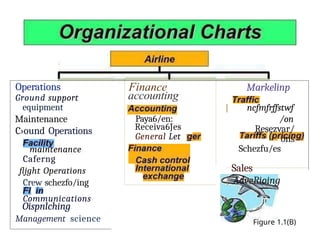
What IS *^Rerationn
ñfanagement*
Organizing to Produce Goods
and
Services
Why Study OM?
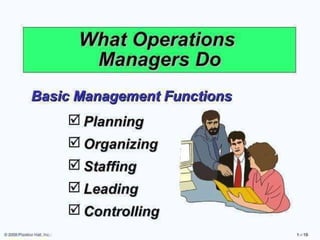
What Operations Managers Do
the fYerifage oL
Operations
Management
Operations in the Service Sector
differences Defween Goods and
Services
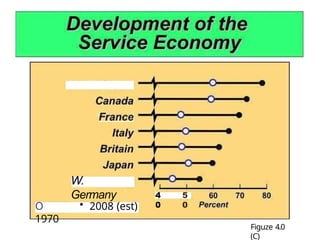
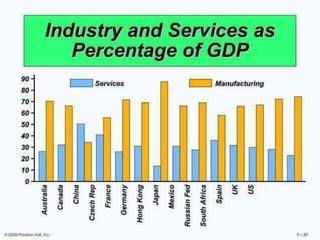
Growth of Services
Service Pay
Exciting New Trends in
Operations
ñfanapemenf
The Productivity Challenge
Productivity Measurement
Productivity Variables
Productivity and the Service
Secfor
J2thics an‹:I Social Responsibility
. Oefine operations
management
2. Explain the i::Iistinction
between
goods and oerviceo
3. Explain the difference
between
production and ro‹:luctivity
4. Compute sinyIe-
factor
productivity
6. ïs/enfify the critical variables in
enhancing productivity
Production in the creation of
yoods and services
“ ssential nctions:
D Marketing - generates demand
Production/operations creates
the prod'uct
D FinancKaccounting — tracks
how well the organization is doing,
pays hills, co//ec/s the money
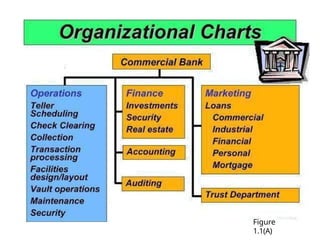
Figure
1.1(A)
Operations
Ground support
equipment
Maintenance
C›ound Operations
maintenance
Caferng
fljght Operations
Crew schezfo/ing
Communications
Oispnlching
Management science
Finance
accounting
Paya6/en:
Receiva6Jes
General Let
Markelinp
ncfmfrffstwf
/on
Resezvar/
ons
Schezfu/es
Sales
, AdveRioing
Figure 1.1(B)
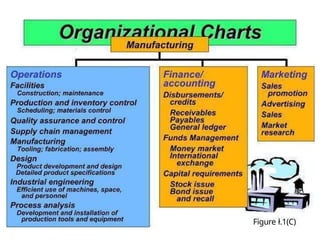
Figure ł.1(C)
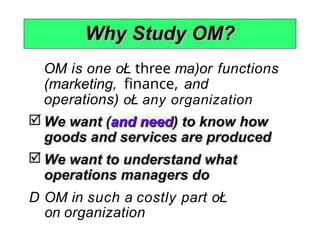
OM is one oŁ three ma)or functions
(marketing, finance, and
operations) oŁ any organization
D OM in such a costly part oŁ
on organization
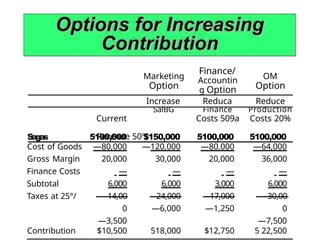
Marketing
Option
Finance/
Accountin
g Option
OM
Option
Increase Reduca Reduce
SalBG Finance Production
Current
Revenue 50°/
Costs 509a Costs 20%
S
aga
s 5100,000 $150,000 5100,000 5100,000
Cost of Goods —80,000 —120,000 —80,000 —64,000
Gross Margin
Finance Costs
Subtotal
Taxes at 25°/
20,000
—
6,000
14,00
0
—3,500
30,000
—
6,000
24,000
—6,000
20,000
—
3,000
17,000
—1,250
36,000
—
6,000
30,00
0
—7,500
Contribution $10,500 518,000 $12,750 5 22,500
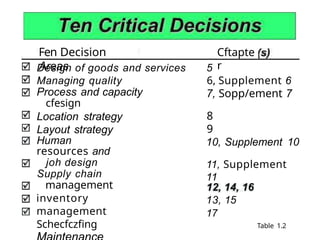
Fen Decision
Areas
Cftapte
r
Design of goods and services
Managing quality
Process and capacity
cfesign
Location strategy
Layout strategy
Human
resources and
joh design
Supply chain
management
inventory
management
Schecfczfing
5
6, Supplement 6
7, Sopp/ement 7
8
9
10, Supplement 10
11, Supplement
11
13, 15
17
Table 1.2
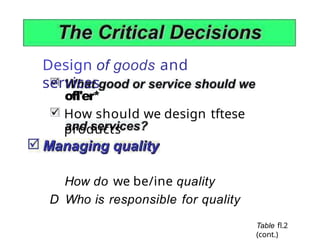
Design of goods and
services
ofI'er*
How should we design tftese
products
How do we be/ine quality
D Who is responsible for quality
Table fl.2
(cont.)
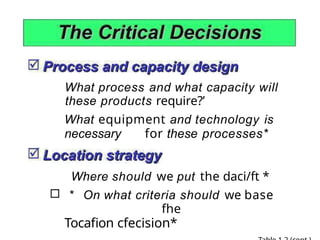
What process and what capacity will
these products require?’
What equipment and technology is
necessary for these processes*
Where should we put the daci/ft *
* On what criteria should we base
fhe
Tocafion cfecision*
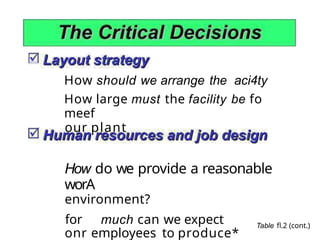
How should we arrange the aci4ty
How large must the facility be fo
meef
our plant
How do we provide a reasonable
worA
environment?
for much can we expect
onr employees to produce*
Table fl.2 (cont.)
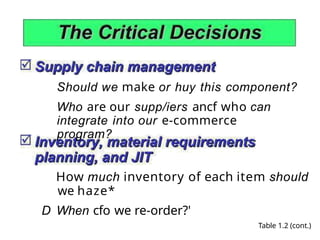
Should we make or huy this component?
Who are our supp/iers ancf who can
integrate into our e-commerce
program?
How much inventory of each item should
we haze*
D When cfo we re-order?'
Table 1.2 (cont.)
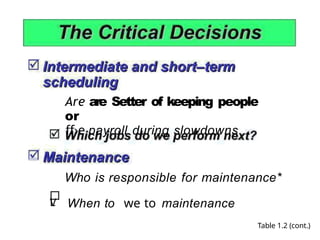
Are are Setter of keeping people
or
ff›e payroll during slowdowns
Who is responsible for maintenance*
L
V When to we to maintenance
Table 1.2 (cont.)
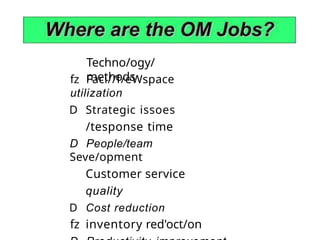
Techno/ogy/
methods
fz Faci//f/eWspace
utilization
D Strategic issoes
/tesponse time
D People/team
Seve/opment
Customer service
quality
D Cost reduction
fz inventory red'oct/on
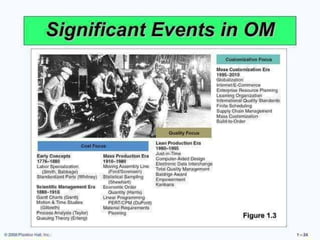
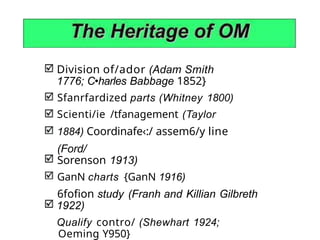
Division of/ador (Adam Smith
1776; C•harles Babbage 1852}
Sfanrfardized parts (Whitney 1800)
Scienti/ie /tfanagement (Taylor
1884) Coordinafe‹:/ assem6/y line
(Ford/
Sorenson 1913)
GanN charts {GanN 1916)
6fofion study (Franh and Killian Gilbreth
1922)
Qualify contro/ (Shewhart 1924;
Oeming Y950}
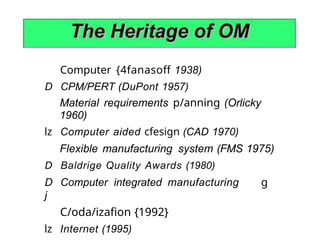
Computer {4fanasoff 1938)
D CPM/PERT (DuPont 1957)
Material requirements p/anning (Orlicky
1960)
lz Computer aided cfesign (CAD 1970)
Flexible manufacturing system (FMS 1975)
D Baldrige Quality Awards (1980)
D Computer integrated manufacturing g
j
C/oda/izafion {1992}
lz Internet (1995)
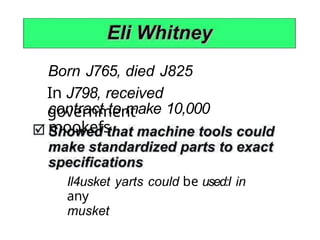
Born J765, died J825
In J798, received
government
contract to make 10,000
mookefs
Il4usket yarts could be used:I in
any
musket
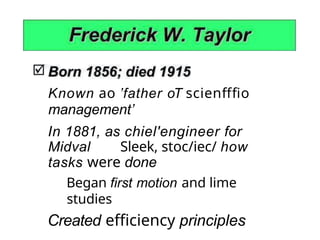
Known ao ’father oT scienfffio
management’
In 1881, as chiel'engineer for
Midval Sleek, stoc/iec/ how
tasks were done
Began first motion and lime
studies
Created efficiency principles
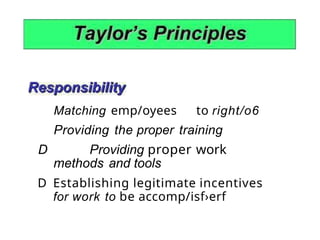
Matching emp/oyees to right/o6
Providing the proper training
D Providing proper work
methods and tools
D Establishing legitimate incentives
for work to be accomp/isf›erf
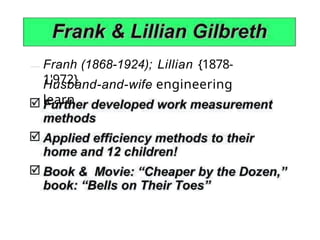
Franh (1868-1924); Lillian {1878-
1'972}
Husband-and-wife engineering
learn
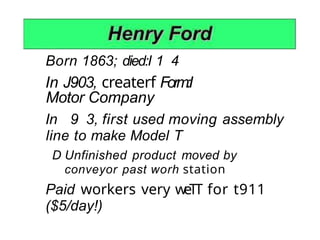
Born 1863; died:I 1 4
In J903, createrf Form:I
Motor Company
In 9 3, first used moving assembly
line to make Model T
D Unfinished product moved by
conveyor past worh station
Paid workers very weTT for t911
($5/day!)
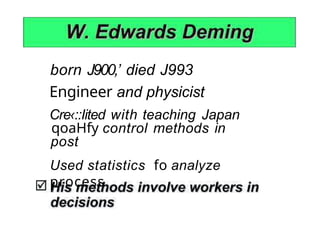
born J900,’ died J993
Engineer and physicist
Cre‹::Iited with teaching Japan
qoaHfy control methods in
post
Used statistics fo analyze
process
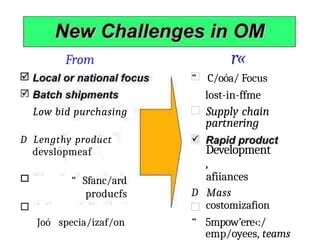
From
Low bid purchasing
D Lengthy product
devslopmeaf
“ Sfanc/ard
producfs
Joó specia/izaf/on
r«
“ C/oóa/ Focus
lost-in-ffme
Supply chain
partnering
Development
,
afiiances
D Mass
costomizafion
“ 5mpow’ere‹:/
emp/oyees, teams
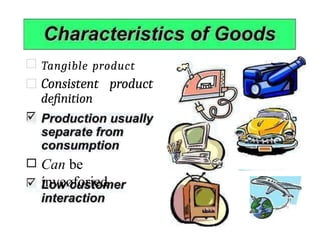
Tangible product
Consistent product
definition
Can be
ínveøforied
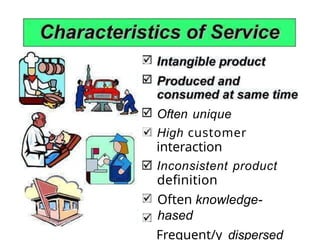
Often unique
High customer
interaction
Inconsistent product
definition
Often knowledge-
hased
Frequent/y dispersed
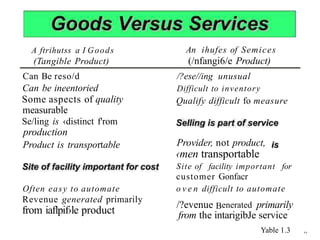
A ftrihutss a I Goods
(Tangible Product)
Can Be reso/d
Can be ineentoried
Some aspects of quality
measurable
Se/ling is ‹distinct f'rom
production
Product is transportable
Often easy to automate
Revenue generated primarily
from iaflpif›le product
An ihufes of Semices
(/nfangi6/e Product)
/?ese//ing unusual
Difficult to inventory
Qualify difficult fo measure
Provider, not product,
‹men transportable
Site of facility important for
customer Gonfacr
o v e n difficult to automate
/?evenue Benerated primarily
from the intarigibJe service
Yable 1.3 „
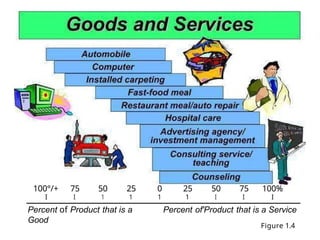
100°/+ 75 50 25 0 25 50 75 100%
I I 1 1 1 1 I I I
Percent of Product that is a
Good
Percent of'Product that is a Service
Figure 1.4
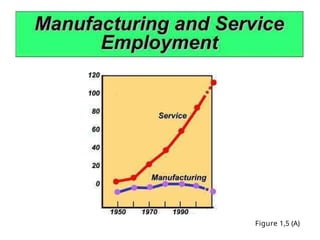
Figure 1,5 (A)
20
195
0
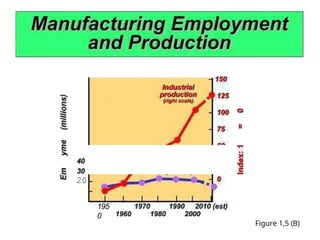
Figure 1,5 (B)
W.
Germany
O
1970
• 2008 (est)
4
0
5
0
Figuze 4.0
(C)
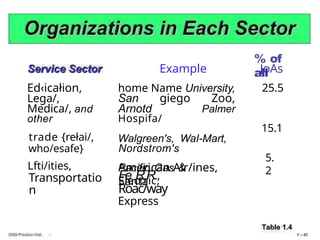
Ed‹icałion,
Lega/,
Medica/, and
other
trade {rełai/,
who/esafe}
Lfti/ities,
Transportatio
n
% of
all
Example
home Name University,
San giego Zoo,
Arnotd Palmer
Hospifa/
Walgreen's, WaI-Mart,
Nordstrom's
Pacific Gas &
Electric,
JoAs
25.5
15.1
5.
2
American Air/ines,
Santa
Fe R.R.,
Roac/way
Express
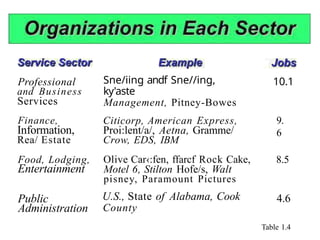
Professional
and Business
Services
Finance,
Information,
Rea/ Estate
Food, Lodging,
Entertainment
Public
Administration
Sne/iing andf Sne//ing,
ky'aste
Management, Pitney-Bowes
10.1
Citicorp, American Express,
Proi:lent/a/, Aetna, Gramme/
Crow, EDS, IBM
Olive Car‹:fen, ffarcf Rock Cake,
Motel 6, Stilton Hofe/s, Walt
pisney, Paramount Pictures
U.S., State of Alabama, Cook
County
9.
6
8.5
4.6
Table 1.4
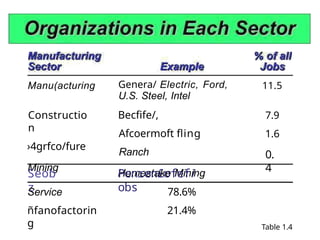
Manu(acturing Genera/ Electric, Ford,
U.S. Steel, Intel
Becfife/,
Afcoermoft fling
Ranch
Homestake Mining
Constructio
n
›4grfco/fure
Mining
Seob
z
Penren£ofef/
obs
Service
ñfanofactorin
g
78.6%
21.4%
11.5
7.9
1.6
0.
4
Table 1.4
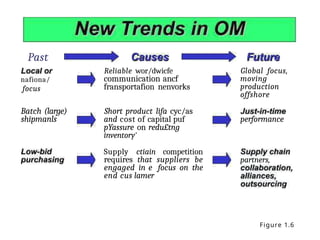
Past
nafiona/
focus
Batch (large)
shipmanls
Reliable wor/dwicfe
communication ancf
fransportafion nenvorks
Short product lifa cyc/as
and cost of capital puf
pYassure on redu£tng
inventory'
Supply ctiain competition
requires that suppliers be
engaged in e focus on the
end cus lamer
Global focus,
moving
production
offshore
performance
partners,
Figure 1.6
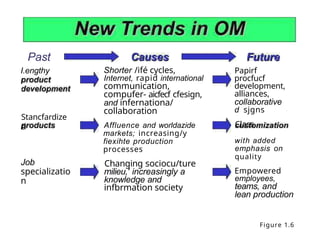
Past
I.engthy
Stancfardize
d
Job
specializatio
n
Shorter /ifé cycles,
Internet, rapid international
communication,
compufer- aicfecf cfesign,
and infernationa/
collaboration
Affluence and worldazide
markets; increasing/y
fiexihte production
processes
Changing sociocu/ture
milieu,' increasingly a
knowledge and
infbrmation society
Papirf
procfucf
development,
alliances,
collaborative
d sjgns
Class
with added
emphasis on
quality
Empowered
employees,
teams, and
lean production
Figure 1.6
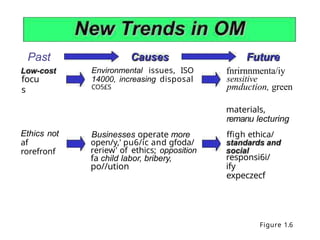
Past
focu
s
Environmental issues, ISO
14000, increasing disposal
CO5£S
Ethics not
af
rorefronf
Businesses operate more
open/y,' pu6/ic and gfoda/
reriew' of ethics; opposition
fa child labor, bribery,
po//ution
fnrirnnmenta/iy
sensitive
pmduction, green
materials,
remanu lecturing
ffigh ethica/
responsi6i/
ify
expeczecf
Figure 1.6
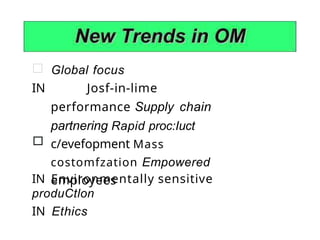
Global focus
IN Josf-in-lime
performance Supply chain
partnering Rapid proc:Iuct
c/evefopment Mass
costomfzation Empowered
employees
IN Environmentally sensitive
produCtlon
IN Ethics
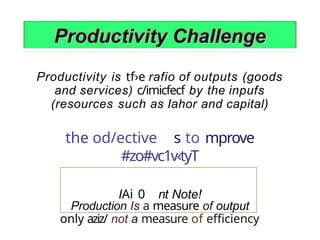
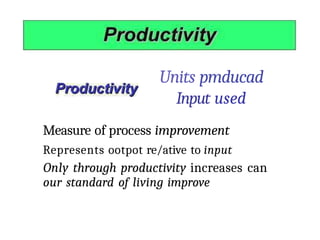
Productivity is tf›e rafio of outputs (goods
and services) c/imicfecf by the inpufs
(resources such as Iahor and capital)
the od/ective s to mprove
#zo#vc1v‹tyT
IAi 0 nt Note!
Production Is a measure of output
only aziz/ not a measure of efficiency
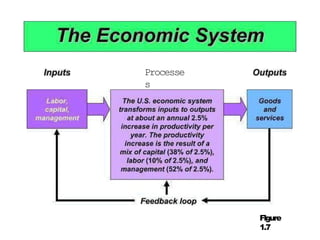
Processe
s
Flgure
1.7
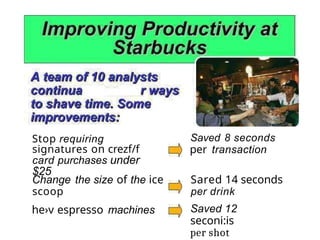
Stop requiring
signatures on crezf/f
card purchases under
$25
Saved 8 seconds
per transaction
Change the size of the ice
scoop
he›v espresso machines
Sared 14 seconds
per drink
Saved 12
seconi:is
per shot
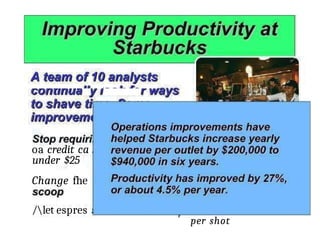
oa credit ca
under $25
Change fhe
/let espres
per shot
Units pmducad
Input used
Measure of process improvement
Represents ootpot re/ative to input
Only through productivity increases can
our standard of living improve
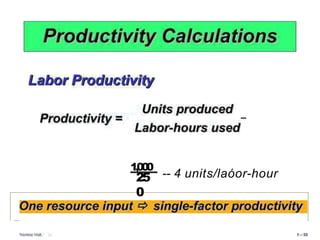
25
0
1
,
0
0
0
-- 4 units/laóor-hour
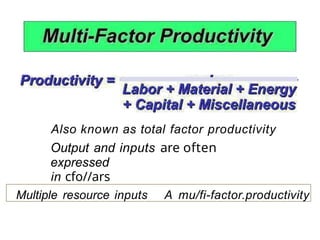
Also known as total factor productivity
Output and inputs are often
expressed
in cfo//ars
Multiple resource inputs A mu/fi-factor.productivity
O/ó
System:
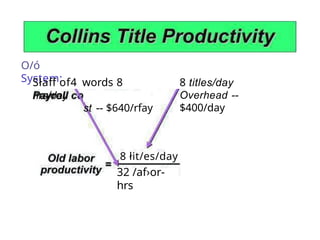
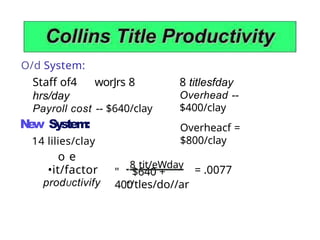
Słaff of4 words 8
hrs/day
st -- $640/rfay
8 titles/day
Overhead --
$400/day
8 łit/es/day
32 /af›or-
hrs
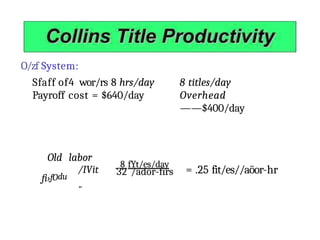
O/zf System:
Sfaff of4 wor/rs 8 hrs/day
Payroff cost = $640/day
8 titles/day
Overhead
——$400/day
Old labor
fi›fOdu
/IVit
"
32 /ador-firs
8 fYt/es/day
= .25 fit/es//aöor-hr
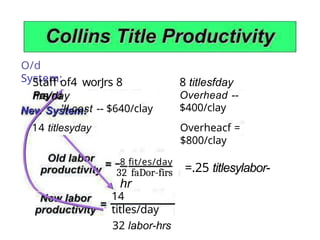
O/d
System:
Staff of4 worJrs 8
hrs/day
'II cost -- $640/clay
8 titlesfday
Overhead --
$400/clay
14 titlesyday
32 faDor-firs
14
titles/day
32 labor-hrs
Overheacf =
$800/clay
8 fit/es/day
=.25 titlesylabor-
hr
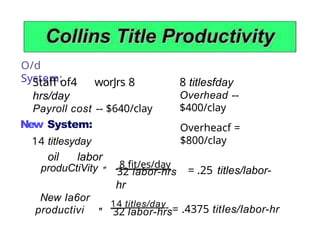
O/d
System:
Staff of4 worJrs 8
hrs/day
Payroll cost -- $640/clay
New System:
14 titlesyday
8 titlesfday
Overhead --
$400/clay
oil labor
produCtiVity " 32 labor-hrs
8 fit/es/day
= .25 titles/labor-
hr
New Ia6or
productivi " 32 labor-hrs
14 titles/day
= .4375 titIes/Iabor-hr
Overheacf =
$800/clay
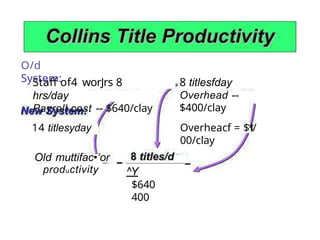
O/d
System:
Staff of4 worJrs 8
hrs/day
Payroll cost -- $640/clay
8 titlesfday
Overhead --
$400/clay
14 titlesyday Overheacf = $*/
00/clay
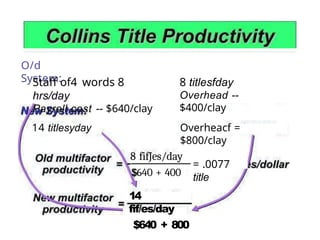
Old muttifac•‘or
productivity ^Y
$640
400
O/d System:
Staff of4 worJrs 8
hrs/day
Payroll cost -- $640/clay
N
e
w System:
14 lilies/clay
8 titlesfday
Overhead --
$400/clay
Overheacf =
$800/clay
o e
•it/factor
prodUctivify
" $640 +
400
8 tit/eWday
= .0077
t/tles/do//ar
O/d
System:
Staff of4 words 8
hrs/day
Payroll cost -- $640/clay
8 titlesfday
Overhead --
$400/clay
14 titlesyday Overheacf =
$800/clay
8 fifJes/day
640 + 400
14
fif/es/day
$640 + 800
= .0077
title
O/d
System:
Staff of4 worJrs 8
hrs/day
8 titlesfday
Overhead --
$400/clay
Payroll cost --
$640/clay
New System:
14 titlesyday
Overheacf =
$800/clay
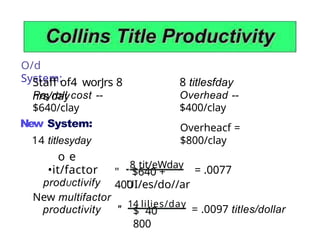
o e
•it/factor
prodUctivify
" $640 +
400
8 tit/eWday
= .0077
UI/es/do//ar
New multifactor
productivity " $ 40
800
14 lilies/day
= .0097 titles/dollar
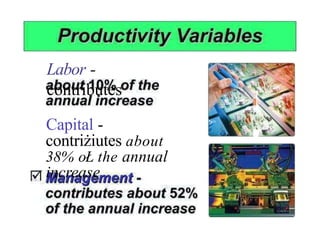
Labor -
contributes
Capital -
contriżiutes about
38% oŁ the annual
increase
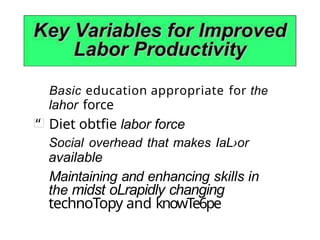
Basic education appropriate for the
lahor force
“ Diet obtfie labor force
Social overhead that makes IaL›or
available
Maintaining and enhancing skills in
the midst oLrapidly changing
technoTopy and knowTe6pe
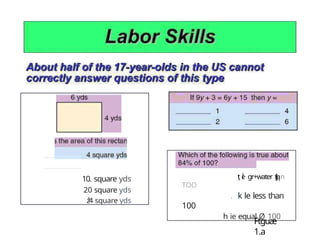
10. square yds
20 square yds
ź'4 square yds
ț
t İ
e gr+water ț
ł
j
ąn
TOO
. k le less than
100
h ie equal Ø 100
Ftguæ
1.a
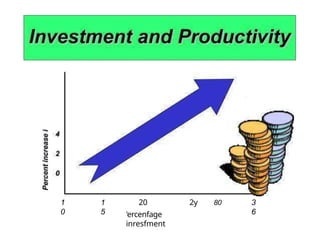
1
0
1
5
20 2y
'ercenfage
inresfment
80 3
6
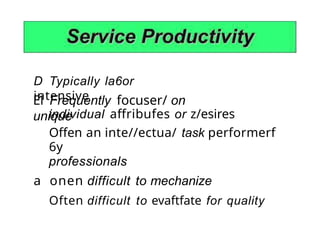
D Typically la6or
intensive
E1 Frequently focuser/ on
unique
individual affribufes or z/esires
Offen an inte//ectua/ task performerf
6y
professionals
a onen difficult to mechanize
Often difficult to evaftfate for quality
improvement
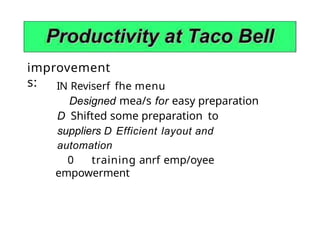
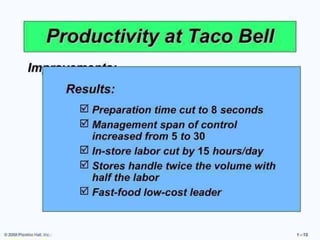
s: IN Reviserf fhe menu
Designed mea/s for easy preparation
D Shifted some preparation to
suppliers D Efficient layout and
automation
0 training anrf emp/oyee
empowerment
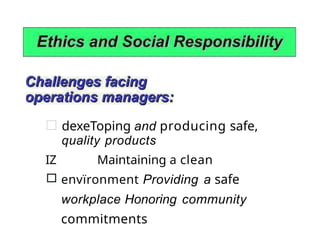
dexeToping and producing safe,
quality products
IZ Maintaining a clean
envïronment Providing a safe
workplace Honoring community
commitments

slidesaver.app_xhtagu-compressed_compressed_repaired_compressed-1-73.pptx

  • 1.
    Chapter Operations and Productivity PowezPofnt presentadonfa accompany He/xerWendez Principles of Operations gfanagemenf, 7e
  • 2.
    D Global CompanyProfile: Hard Rock Cake What IS *^Rerationn ñfanagement* Organizing to Produce Goods and Services Why Study OM? What Operations Managers Do
  • 3.
    the fYerifage oL Operations Management Operationsin the Service Sector differences Defween Goods and Services Growth of Services Service Pay Exciting New Trends in Operations ñfanapemenf
  • 4.
    The Productivity Challenge ProductivityMeasurement Productivity Variables Productivity and the Service Secfor J2thics an‹:I Social Responsibility
  • 5.
    . Oefine operations management 2.Explain the i::Iistinction between goods and oerviceo 3. Explain the difference between production and ro‹:luctivity
  • 6.
    4. Compute sinyIe- factor productivity 6.ïs/enfify the critical variables in enhancing productivity
  • 8.
    Production in thecreation of yoods and services
  • 9.
    “ ssential nctions: DMarketing - generates demand Production/operations creates the prod'uct D FinancKaccounting — tracks how well the organization is doing, pays hills, co//ec/s the money
  • 10.
  • 11.
    Operations Ground support equipment Maintenance C›ound Operations maintenance Caferng fljghtOperations Crew schezfo/ing Communications Oispnlching Management science Finance accounting Paya6/en: Receiva6Jes General Let Markelinp ncfmfrffstwf /on Resezvar/ ons Schezfu/es Sales , AdveRioing Figure 1.1(B)
  • 12.
  • 13.
    OM is oneoŁ three ma)or functions (marketing, finance, and operations) oŁ any organization D OM in such a costly part oŁ on organization
  • 14.
    Marketing Option Finance/ Accountin g Option OM Option Increase ReducaReduce SalBG Finance Production Current Revenue 50°/ Costs 509a Costs 20% S aga s 5100,000 $150,000 5100,000 5100,000 Cost of Goods —80,000 —120,000 —80,000 —64,000 Gross Margin Finance Costs Subtotal Taxes at 25°/ 20,000 — 6,000 14,00 0 —3,500 30,000 — 6,000 24,000 —6,000 20,000 — 3,000 17,000 —1,250 36,000 — 6,000 30,00 0 —7,500 Contribution $10,500 518,000 $12,750 5 22,500
  • 16.
    Fen Decision Areas Cftapte r Design ofgoods and services Managing quality Process and capacity cfesign Location strategy Layout strategy Human resources and joh design Supply chain management inventory management Schecfczfing 5 6, Supplement 6 7, Sopp/ement 7 8 9 10, Supplement 10 11, Supplement 11 13, 15 17 Table 1.2
  • 17.
    Design of goodsand services ofI'er* How should we design tftese products How do we be/ine quality D Who is responsible for quality Table fl.2 (cont.)
  • 18.
    What process andwhat capacity will these products require?’ What equipment and technology is necessary for these processes* Where should we put the daci/ft * * On what criteria should we base fhe Tocafion cfecision*
  • 19.
    How should wearrange the aci4ty How large must the facility be fo meef our plant How do we provide a reasonable worA environment? for much can we expect onr employees to produce* Table fl.2 (cont.)
  • 20.
    Should we makeor huy this component? Who are our supp/iers ancf who can integrate into our e-commerce program? How much inventory of each item should we haze* D When cfo we re-order?' Table 1.2 (cont.)
  • 21.
    Are are Setterof keeping people or ff›e payroll during slowdowns Who is responsible for maintenance* L V When to we to maintenance Table 1.2 (cont.)
  • 23.
    Techno/ogy/ methods fz Faci//f/eWspace utilization D Strategicissoes /tesponse time D People/team Seve/opment Customer service quality D Cost reduction fz inventory red'oct/on
  • 25.
    Division of/ador (AdamSmith 1776; C•harles Babbage 1852} Sfanrfardized parts (Whitney 1800) Scienti/ie /tfanagement (Taylor 1884) Coordinafe‹:/ assem6/y line (Ford/ Sorenson 1913) GanN charts {GanN 1916) 6fofion study (Franh and Killian Gilbreth 1922) Qualify contro/ (Shewhart 1924; Oeming Y950}
  • 26.
    Computer {4fanasoff 1938) DCPM/PERT (DuPont 1957) Material requirements p/anning (Orlicky 1960) lz Computer aided cfesign (CAD 1970) Flexible manufacturing system (FMS 1975) D Baldrige Quality Awards (1980) D Computer integrated manufacturing g j C/oda/izafion {1992} lz Internet (1995)
  • 27.
    Born J765, diedJ825 In J798, received government contract to make 10,000 mookefs Il4usket yarts could be used:I in any musket
  • 28.
    Known ao ’fatheroT scienfffio management’ In 1881, as chiel'engineer for Midval Sleek, stoc/iec/ how tasks were done Began first motion and lime studies Created efficiency principles
  • 29.
    Matching emp/oyees toright/o6 Providing the proper training D Providing proper work methods and tools D Establishing legitimate incentives for work to be accomp/isf›erf
  • 30.
    Franh (1868-1924); Lillian{1878- 1'972} Husband-and-wife engineering learn
  • 31.
    Born 1863; died:I1 4 In J903, createrf Form:I Motor Company In 9 3, first used moving assembly line to make Model T D Unfinished product moved by conveyor past worh station Paid workers very weTT for t911 ($5/day!)
  • 32.
    born J900,’ diedJ993 Engineer and physicist Cre‹::Iited with teaching Japan qoaHfy control methods in post Used statistics fo analyze process
  • 34.
    From Low bid purchasing DLengthy product devslopmeaf “ Sfanc/ard producfs Joó specia/izaf/on r« “ C/oóa/ Focus lost-in-ffme Supply chain partnering Development , afiiances D Mass costomizafion “ 5mpow’ere‹:/ emp/oyees, teams
  • 35.
  • 36.
    Often unique High customer interaction Inconsistentproduct definition Often knowledge- hased Frequent/y dispersed
  • 38.
    A ftrihutss aI Goods (Tangible Product) Can Be reso/d Can be ineentoried Some aspects of quality measurable Se/ling is ‹distinct f'rom production Product is transportable Often easy to automate Revenue generated primarily from iaflpif›le product An ihufes of Semices (/nfangi6/e Product) /?ese//ing unusual Difficult to inventory Qualify difficult fo measure Provider, not product, ‹men transportable Site of facility important for customer Gonfacr o v e n difficult to automate /?evenue Benerated primarily from the intarigibJe service Yable 1.3 „
  • 39.
    100°/+ 75 5025 0 25 50 75 100% I I 1 1 1 1 I I I Percent of Product that is a Good Percent of'Product that is a Service Figure 1.4
  • 40.
  • 41.
  • 42.
  • 43.
    Ed‹icałion, Lega/, Medica/, and other trade {rełai/, who/esafe} Lfti/ities, Transportatio n %of all Example home Name University, San giego Zoo, Arnotd Palmer Hospifa/ Walgreen's, WaI-Mart, Nordstrom's Pacific Gas & Electric, JoAs 25.5 15.1 5. 2 American Air/ines, Santa Fe R.R., Roac/way Express
  • 44.
    Professional and Business Services Finance, Information, Rea/ Estate Food,Lodging, Entertainment Public Administration Sne/iing andf Sne//ing, ky'aste Management, Pitney-Bowes 10.1 Citicorp, American Express, Proi:lent/a/, Aetna, Gramme/ Crow, EDS, IBM Olive Car‹:fen, ffarcf Rock Cake, Motel 6, Stilton Hofe/s, Walt pisney, Paramount Pictures U.S., State of Alabama, Cook County 9. 6 8.5 4.6 Table 1.4
  • 45.
    Manu(acturing Genera/ Electric,Ford, U.S. Steel, Intel Becfife/, Afcoermoft fling Ranch Homestake Mining Constructio n ›4grfco/fure Mining Seob z Penren£ofef/ obs Service ñfanofactorin g 78.6% 21.4% 11.5 7.9 1.6 0. 4 Table 1.4
  • 46.
    Past nafiona/ focus Batch (large) shipmanls Reliable wor/dwicfe communicationancf fransportafion nenvorks Short product lifa cyc/as and cost of capital puf pYassure on redu£tng inventory' Supply ctiain competition requires that suppliers be engaged in e focus on the end cus lamer Global focus, moving production offshore performance partners, Figure 1.6
  • 47.
    Past I.engthy Stancfardize d Job specializatio n Shorter /ifé cycles, Internet,rapid international communication, compufer- aicfecf cfesign, and infernationa/ collaboration Affluence and worldazide markets; increasing/y fiexihte production processes Changing sociocu/ture milieu,' increasingly a knowledge and infbrmation society Papirf procfucf development, alliances, collaborative d sjgns Class with added emphasis on quality Empowered employees, teams, and lean production Figure 1.6
  • 48.
    Past focu s Environmental issues, ISO 14000,increasing disposal CO5£S Ethics not af rorefronf Businesses operate more open/y,' pu6/ic and gfoda/ reriew' of ethics; opposition fa child labor, bribery, po//ution fnrirnnmenta/iy sensitive pmduction, green materials, remanu lecturing ffigh ethica/ responsi6i/ ify expeczecf Figure 1.6
  • 49.
    Global focus IN Josf-in-lime performanceSupply chain partnering Rapid proc:Iuct c/evefopment Mass costomfzation Empowered employees IN Environmentally sensitive produCtlon IN Ethics
  • 50.
    Productivity is tf›erafio of outputs (goods and services) c/imicfecf by the inpufs (resources such as Iahor and capital) the od/ective s to mprove #zo#vc1v‹tyT IAi 0 nt Note! Production Is a measure of output only aziz/ not a measure of efficiency
  • 51.
  • 52.
    Stop requiring signatures oncrezf/f card purchases under $25 Saved 8 seconds per transaction Change the size of the ice scoop he›v espresso machines Sared 14 seconds per drink Saved 12 seconi:is per shot
  • 53.
    oa credit ca under$25 Change fhe /let espres per shot
  • 54.
    Units pmducad Input used Measureof process improvement Represents ootpot re/ative to input Only through productivity increases can our standard of living improve
  • 55.
  • 56.
    Also known astotal factor productivity Output and inputs are often expressed in cfo//ars Multiple resource inputs A mu/fi-factor.productivity
  • 57.
    O/ó System: Słaff of4 words8 hrs/day st -- $640/rfay 8 titles/day Overhead -- $400/day 8 łit/es/day 32 /af›or- hrs
  • 58.
    O/zf System: Sfaff of4wor/rs 8 hrs/day Payroff cost = $640/day 8 titles/day Overhead ——$400/day Old labor fi›fOdu /IVit " 32 /ador-firs 8 fYt/es/day = .25 fit/es//aöor-hr
  • 59.
    O/d System: Staff of4 worJrs8 hrs/day 'II cost -- $640/clay 8 titlesfday Overhead -- $400/clay 14 titlesyday 32 faDor-firs 14 titles/day 32 labor-hrs Overheacf = $800/clay 8 fit/es/day =.25 titlesylabor- hr
  • 60.
    O/d System: Staff of4 worJrs8 hrs/day Payroll cost -- $640/clay New System: 14 titlesyday 8 titlesfday Overhead -- $400/clay oil labor produCtiVity " 32 labor-hrs 8 fit/es/day = .25 titles/labor- hr New Ia6or productivi " 32 labor-hrs 14 titles/day = .4375 titIes/Iabor-hr Overheacf = $800/clay
  • 61.
    O/d System: Staff of4 worJrs8 hrs/day Payroll cost -- $640/clay 8 titlesfday Overhead -- $400/clay 14 titlesyday Overheacf = $*/ 00/clay Old muttifac•‘or productivity ^Y $640 400
  • 62.
    O/d System: Staff of4worJrs 8 hrs/day Payroll cost -- $640/clay N e w System: 14 lilies/clay 8 titlesfday Overhead -- $400/clay Overheacf = $800/clay o e •it/factor prodUctivify " $640 + 400 8 tit/eWday = .0077 t/tles/do//ar
  • 63.
    O/d System: Staff of4 words8 hrs/day Payroll cost -- $640/clay 8 titlesfday Overhead -- $400/clay 14 titlesyday Overheacf = $800/clay 8 fifJes/day 640 + 400 14 fif/es/day $640 + 800 = .0077 title
  • 64.
    O/d System: Staff of4 worJrs8 hrs/day 8 titlesfday Overhead -- $400/clay Payroll cost -- $640/clay New System: 14 titlesyday Overheacf = $800/clay o e •it/factor prodUctivify " $640 + 400 8 tit/eWday = .0077 UI/es/do//ar New multifactor productivity " $ 40 800 14 lilies/day = .0097 titles/dollar
  • 66.
    Labor - contributes Capital - contriżiutesabout 38% oŁ the annual increase
  • 67.
    Basic education appropriatefor the lahor force “ Diet obtfie labor force Social overhead that makes IaL›or available Maintaining and enhancing skills in the midst oLrapidly changing technoTopy and knowTe6pe
  • 68.
    10. square yds 20square yds ź'4 square yds ț t İ e gr+water ț ł j ąn TOO . k le less than 100 h ie equal Ø 100 Ftguæ 1.a
  • 69.
  • 70.
    D Typically la6or intensive E1Frequently focuser/ on unique individual affribufes or z/esires Offen an inte//ectua/ task performerf 6y professionals a onen difficult to mechanize Often difficult to evaftfate for quality
  • 71.
    improvement s: IN Reviserffhe menu Designed mea/s for easy preparation D Shifted some preparation to suppliers D Efficient layout and automation 0 training anrf emp/oyee empowerment
  • 73.
    dexeToping and producingsafe, quality products IZ Maintaining a clean envïronment Providing a safe workplace Honoring community commitments