Pediatric Seizures
With Dr. Elizabeth Stone
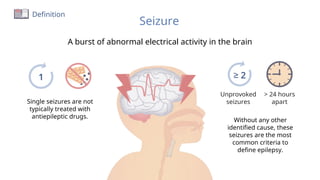
Seizure
A burst of abnormal electrical activity in the brain
1
Single seizures are not
typically treated with
antiepileptic drugs.
> 24 hours
apart
≥ 2
Unprovoked
seizures
Without any other
identified cause, these
seizures are the most
common criteria to
define epilepsy.
Definition
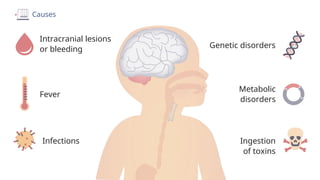
Metabolic
disorders
Intracranial lesions
or bleeding
Fever
Infections
Genetic disorders
Ingestion
of toxins
Causes
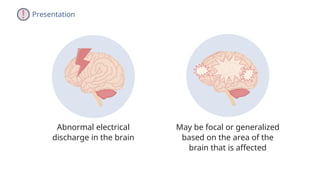
May be focal or generalized
based on the area of the
brain that is affected
Abnormal electrical
discharge in the brain
Presentation
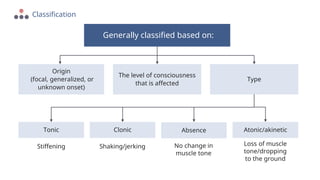
Tonic Clonic Absence Atonic/akinetic
Generally classified based on:
Origin
(focal, generalized, or
unknown onset)
The level of consciousness
that is affected
Type
Shaking/jerking
Stiffening No change in
muscle tone
Loss of muscle
tone/dropping
to the ground
Classification
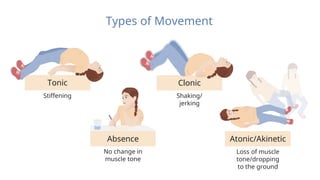
Atonic/Akinetic
Loss of muscle
tone/dropping
to the ground
Types of Movement
Absence
No change in
muscle tone
Clonic
Shaking/
jerking
Tonic
Stiffening
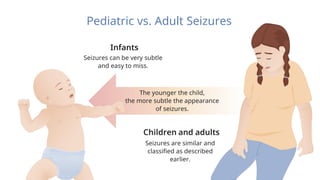
Children and adults
Seizures can be very subtle
and easy to miss.
Infants
Seizures are similar and
classified as described
earlier.
Pediatric vs. Adult Seizures
The younger the child,
the more subtle the appearance
of seizures.
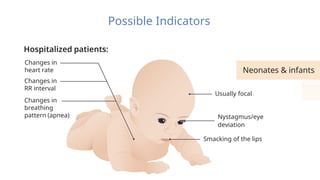
Possible Indicators
Nystagmus/eye
deviation
Smacking of the lips
Usually focal
Hospitalized patients:
Changes in
RR interval
Changes in
breathing
pattern (apnea)
Changes in
heart rate Neonates & infants
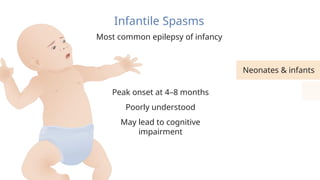
Neonates & infants
Peak onset at 4–8 months
Poorly understood
May lead to cognitive
impairment
Most common epilepsy of infancy
Infantile Spasms
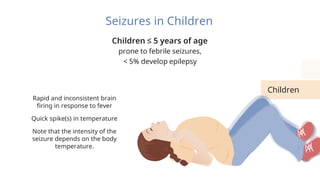
Seizures in Children
Children ≤ 5 years of age
Rapid and inconsistent brain
firing in response to fever
Quick spike(s) in temperature
Note that the intensity of the
seizure depends on the body
temperature.
prone to febrile seizures,
< 5% develop epilepsy
Children

Slides_Pediatric_Seizures_Nursing.####pdf

  • 1.
  • 2.
    Seizure A burst ofabnormal electrical activity in the brain 1 Single seizures are not typically treated with antiepileptic drugs. > 24 hours apart ≥ 2 Unprovoked seizures Without any other identified cause, these seizures are the most common criteria to define epilepsy. Definition
  • 3.
  • 4.
    May be focalor generalized based on the area of the brain that is affected Abnormal electrical discharge in the brain Presentation
  • 5.
    Tonic Clonic AbsenceAtonic/akinetic Generally classified based on: Origin (focal, generalized, or unknown onset) The level of consciousness that is affected Type Shaking/jerking Stiffening No change in muscle tone Loss of muscle tone/dropping to the ground Classification
  • 6.
    Atonic/Akinetic Loss of muscle tone/dropping tothe ground Types of Movement Absence No change in muscle tone Clonic Shaking/ jerking Tonic Stiffening
  • 7.
    Children and adults Seizurescan be very subtle and easy to miss. Infants Seizures are similar and classified as described earlier. Pediatric vs. Adult Seizures The younger the child, the more subtle the appearance of seizures.
  • 8.
    Possible Indicators Nystagmus/eye deviation Smacking ofthe lips Usually focal Hospitalized patients: Changes in RR interval Changes in breathing pattern (apnea) Changes in heart rate Neonates & infants
  • 9.
    Neonates & infants Peakonset at 4–8 months Poorly understood May lead to cognitive impairment Most common epilepsy of infancy Infantile Spasms
  • 10.
    Seizures in Children Children≤ 5 years of age Rapid and inconsistent brain firing in response to fever Quick spike(s) in temperature Note that the intensity of the seizure depends on the body temperature. prone to febrile seizures, < 5% develop epilepsy Children