
Industrial training in
Risda
Name : Aziroh Binti Johari
Organization : Risda Daerah
Sik
Date: 19 november 2012 – 3
may 2013
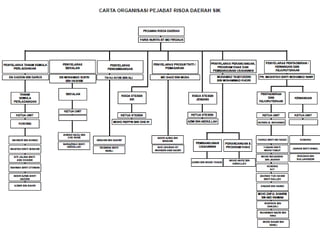
Introduction of organization
RISDA is one of the Federal Statutory
Bodies under the Ministry of Rural and
Regional Development and was
established on 1 January 1973 under
the authorities endorsed by
Parliament is RISDA Rubber
Industry Smallholder’s Development
Authority Act (Act 85, 1972)
 Objective : Smallholders earn a monthly
income of at least RM2,500 per family by
2015
 Mission:Creating a progressive and
prosperous smallholder community
through agricultural and commercial
activities
 Vision :Leader in Smallholders’
Development.
Unit to be responsible
 Management unit
 Risda stesen sik
 Productivity And Marketing unit
Risda stesen sik
 Activities that I had done
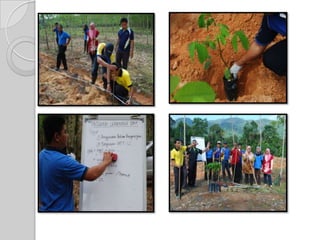
1. Campaign Movement Fertilizing
(KGM)
2. Latex Stimulation Material Usage
Campaign
3. Additional Economic Activity
4. Breakfast love smallholder
5. Learning days
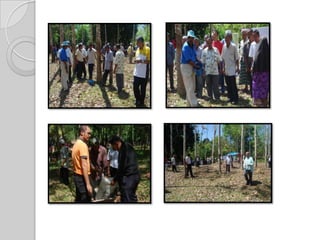
Campaign Movement Fertilizing
(KGM)
OBJECTIVE PROGRAMME
 To ensure smallholder under aid of
Risda scheme adopt to
recommended fertilization technology
to increase the productivity of rubber
plantation.
Benefits of fertilization
 Increase result latex and rubber wood.
 Help avoid from attacks of a few leaf
disease.
 Accelerate canopy between tree.
 Fertilization can turn
on recovery renewed bark after in tap.
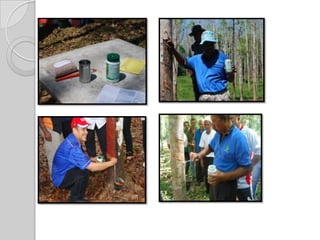
Latex Stimulation Material Usage
Campaign
OBJECTIVE PROGRAMME
 to expose and make sure that
smallholders will use the latex stimulation
material following purpose that has given .
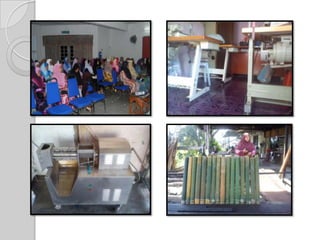
Additional Economic Activity
OBJECTIVE PROGRAMME
Additional
economic activity Risda was aims to
help wives group or family
member smallholder in
improving family's economic status
further economic status surrounding
community
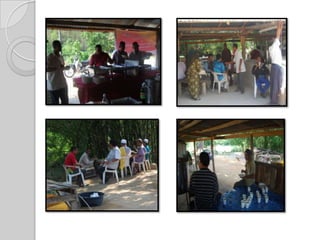
Breakfast love smallholder
OBJECTIVE PROGRAMME
To bring closer Risda agency with
smallholder throughout Malaysia.
 Risda officer and smallholder can
gather together to discuss about a
new technique and more.
Learning days
OBJECTIVE PROGRAMME
 To bring closer relationship between
Risda officer .
 To practice about theory .
Special project
 Rubber Plant disease
 Have three major disease
I. leaf disease rubber tree
II. Incision panel disease
III. Root disease
Root diseases
 Most hazardous in rubber cultivation
 Communicable from tree to tree throu
gh meeting root.
 Also can occur by spore which
entered root through tissue wound that
exposed that exist in trunk part or
branch
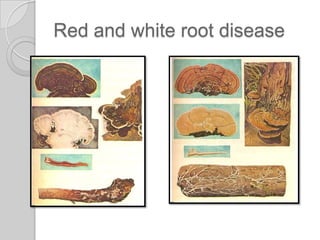
Three main root diseases
White root disease (Rigidoporus
lignosus)
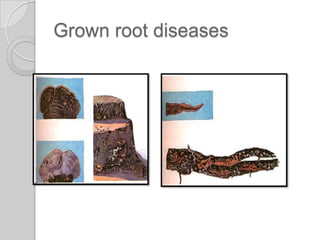
Brown root disease (Phellinus noxius)
Red root disease (Ganoderma philippii)
Red and white root disease
Grown root diseases
Significant tree marking
experience root disease
 The tree will die.
 The principal amount will decline.
 Total revenue latex and wood per area
unit will decline.
 Tree leaves that are infected by root
disease will be transformed colour
become yellowish
 The leaf will become
hard and curved below.
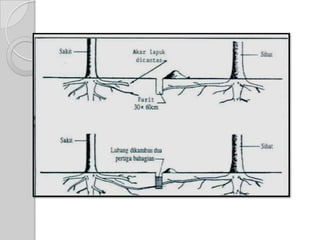
Treating Disease Root
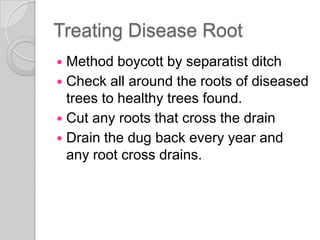
 Method boycott by separatist ditch
 Check all around the roots of diseased
trees to healthy trees found.
 Cut any roots that cross the drain
 Drain the dug back every year and
any root cross drains.
Controlling Root Disease
1. Use planting management
 throw trees and roots to reduce initial
cause.
 Collect and destroyed all of infected root
using machine.
 Plant a ‘Kekacang Penutup Bumi’
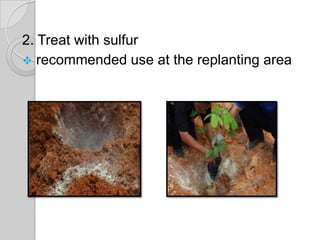
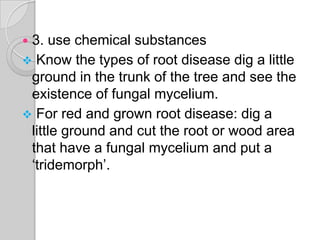
2. Treat with sulfur
 recommended use at the replanting area
 3. use chemical substances
 Know the types of root disease dig a little
ground in the trunk of the tree and see the
existence of fungal mycelium.
 For red and grown root disease: dig a
little ground and cut the root or wood area
that have a fungal mycelium and put a
‘tridemorph’.
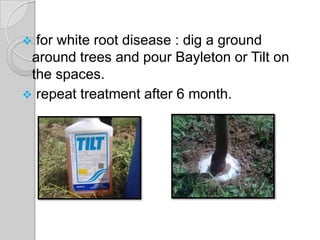
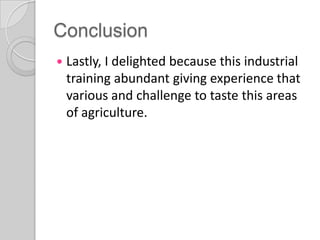
 for white root disease : dig a ground
around trees and pour Bayleton or Tilt on
the spaces.
 repeat treatment after 6 month.
Conclusion
 Lastly, I delighted because this industrial
training abundant giving experience that
various and challenge to taste this areas
of agriculture.
slide laporan praktikal

slide laporan praktikal

  • 1.
  • 2.
    Name : AzirohBinti Johari Organization : Risda Daerah Sik Date: 19 november 2012 – 3 may 2013
  • 3.
    Introduction of organization RISDAis one of the Federal Statutory Bodies under the Ministry of Rural and Regional Development and was established on 1 January 1973 under the authorities endorsed by Parliament is RISDA Rubber Industry Smallholder’s Development Authority Act (Act 85, 1972)
  • 4.
     Objective :Smallholders earn a monthly income of at least RM2,500 per family by 2015  Mission:Creating a progressive and prosperous smallholder community through agricultural and commercial activities  Vision :Leader in Smallholders’ Development.
  • 6.
    Unit to beresponsible  Management unit  Risda stesen sik  Productivity And Marketing unit
  • 7.
    Risda stesen sik Activities that I had done 1. Campaign Movement Fertilizing (KGM) 2. Latex Stimulation Material Usage Campaign 3. Additional Economic Activity 4. Breakfast love smallholder 5. Learning days
  • 8.
    Campaign Movement Fertilizing (KGM) OBJECTIVEPROGRAMME  To ensure smallholder under aid of Risda scheme adopt to recommended fertilization technology to increase the productivity of rubber plantation.
  • 9.
    Benefits of fertilization Increase result latex and rubber wood.  Help avoid from attacks of a few leaf disease.  Accelerate canopy between tree.  Fertilization can turn on recovery renewed bark after in tap.
  • 11.
    Latex Stimulation MaterialUsage Campaign OBJECTIVE PROGRAMME  to expose and make sure that smallholders will use the latex stimulation material following purpose that has given .
  • 13.
    Additional Economic Activity OBJECTIVEPROGRAMME Additional economic activity Risda was aims to help wives group or family member smallholder in improving family's economic status further economic status surrounding community
  • 15.
    Breakfast love smallholder OBJECTIVEPROGRAMME To bring closer Risda agency with smallholder throughout Malaysia.  Risda officer and smallholder can gather together to discuss about a new technique and more.
  • 17.
    Learning days OBJECTIVE PROGRAMME To bring closer relationship between Risda officer .  To practice about theory .
  • 20.
    Special project  RubberPlant disease  Have three major disease I. leaf disease rubber tree II. Incision panel disease III. Root disease
  • 21.
    Root diseases  Mosthazardous in rubber cultivation  Communicable from tree to tree throu gh meeting root.  Also can occur by spore which entered root through tissue wound that exposed that exist in trunk part or branch
  • 22.
    Three main rootdiseases White root disease (Rigidoporus lignosus) Brown root disease (Phellinus noxius) Red root disease (Ganoderma philippii)
  • 23.
    Red and whiteroot disease
  • 24.
  • 25.
    Significant tree marking experienceroot disease  The tree will die.  The principal amount will decline.  Total revenue latex and wood per area unit will decline.  Tree leaves that are infected by root disease will be transformed colour become yellowish  The leaf will become hard and curved below.
  • 26.
    Treating Disease Root Method boycott by separatist ditch  Check all around the roots of diseased trees to healthy trees found.  Cut any roots that cross the drain  Drain the dug back every year and any root cross drains.
  • 28.
    Controlling Root Disease 1.Use planting management  throw trees and roots to reduce initial cause.  Collect and destroyed all of infected root using machine.  Plant a ‘Kekacang Penutup Bumi’
  • 29.
    2. Treat withsulfur  recommended use at the replanting area
  • 30.
     3. usechemical substances  Know the types of root disease dig a little ground in the trunk of the tree and see the existence of fungal mycelium.  For red and grown root disease: dig a little ground and cut the root or wood area that have a fungal mycelium and put a ‘tridemorph’.
  • 31.
     for whiteroot disease : dig a ground around trees and pour Bayleton or Tilt on the spaces.  repeat treatment after 6 month.
  • 32.
    Conclusion  Lastly, Idelighted because this industrial training abundant giving experience that various and challenge to taste this areas of agriculture.