Download to read offline


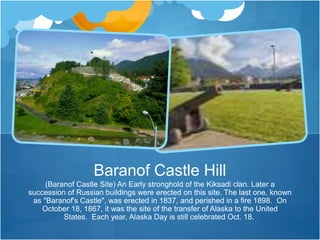


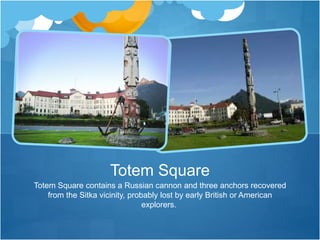


Sitka, Alaska was established in 1799 as a Russian trading post but faced resistance from the local Tlingit people. It is now a fishing community and the fourth largest city in Alaska, known for its Russian cultural influences like the New Archangel Dancers. The climate is mild and humid with warm summers. The population is mostly white and Alaska Native. Notable attractions include Sitka National Historical Park, St. Michael's Cathedral, and the Sheldon Jackson Museum housing Alaskan art. Local industries rely on salmon fishing and wildlife like bald eagles and bears are common sights.


