












ANNUAL REPORT
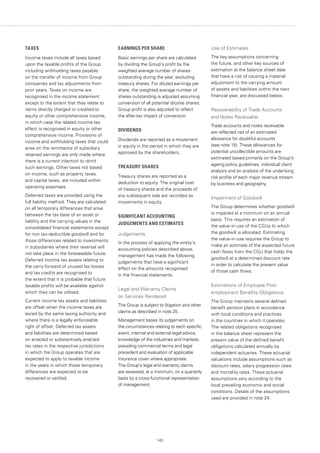
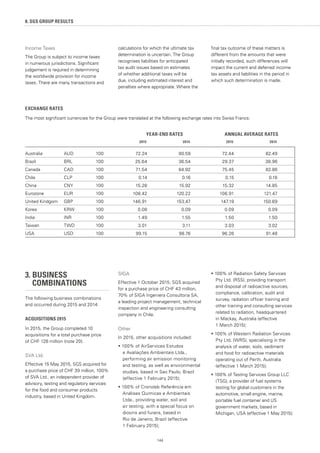
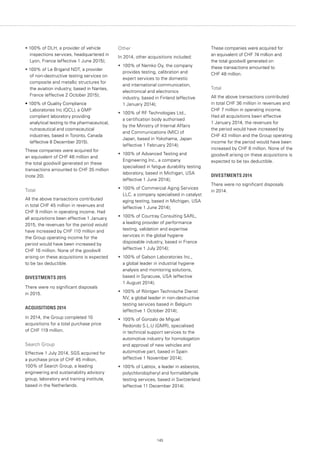
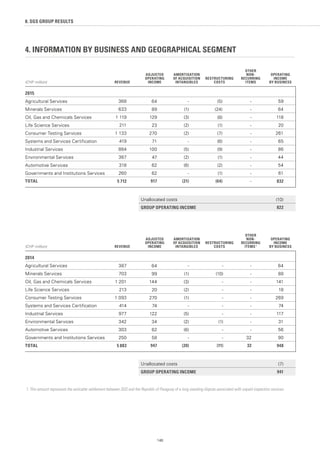
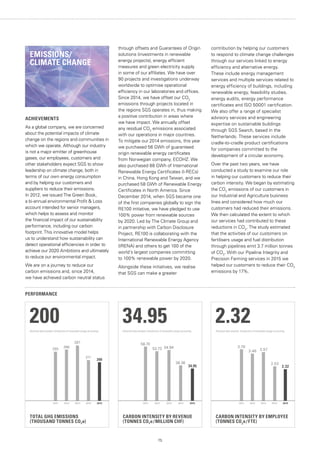
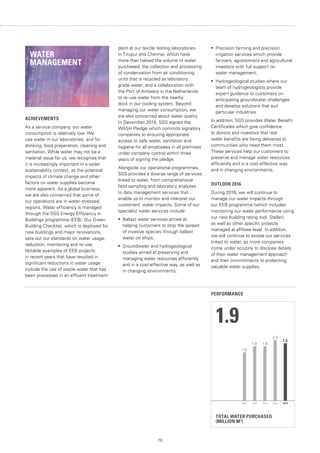
2
3
CONTENTS
2015 has been a transitional year
for SGS, with an evolution in our
structure and service offering being
announced to investors in October 2015.
The market is changing in fundamental
ways and SGS is aligning itself
to take full advantage of the
opportunities that this presents.
Without changing the nature of
the core business, which is firmly
rooted in the Testing, Inspection and
Certification (TIC) industry, SGS is
looking to leverage its existing network
in new and exciting ways.
As a result of these changes we have
designed this year’s Annual Report
to provide stakeholders not only with
a retrospective view of our performance
in 2015, but also with a clarification
of the company’s outlook and
structure going forward. More detailed
information on these changes
is also available from the SGS website:
www.sgs.com/management
Finally, you may note a difference
in the format of this year’s Annual
Report as we make our first steps
towards integrated reporting.
This year’s Business Review and
Corporate Sustainability performance
and highlights have been fully
incorporated into this document.
The complete Corporate
Sustainability Report will be
available online from 14 March 2016:
www.sgs.com/cs-report2015
We hope that you find this year’s
Annual Report useful, stimulating
and informative.
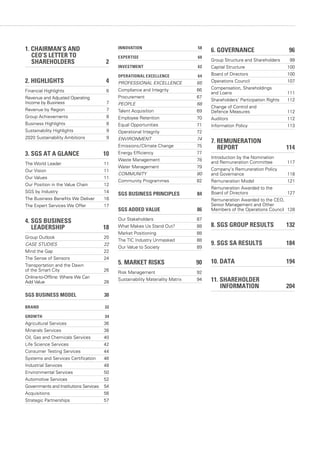
1. CHAIRMAN’S AND			
CEO’S LETTER TO			
SHAREHOLDERS 2
2. HIGHLIGHTS 4
Financial Highlights 6
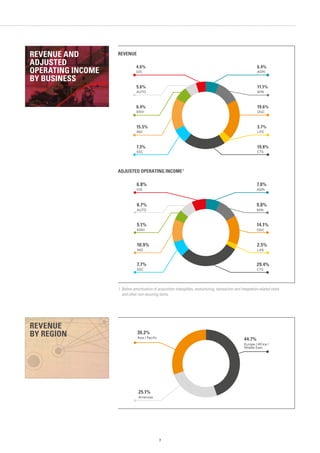
Revenue and Adjusted Operating
Income by Business 7
Revenue by Region 7
Group Achievements 8
Business Highlights	 8
Sustainability Highlights 9
2020 Sustainability Ambitions 9
3. SGS AT A GLANCE 10
The World Leader 11
Our Vision 11
Our Values 11
Our Position in the Value Chain 12
SGS by Industry 14
The Business Benefits We Deliver 16
The Expert Services We Offer 17
4. SGS BUSINESS	
LEADERSHIP 18
Group Outlook 20
CASE STUDIES 22
Mind the Gap 22
The Sense of Sensors 24
Transportation and the Dawn
of the Smart City 26
Online-to-Offline: Where We Can
Add Value 28
SGS BUSINESS MODEL 30
BRAND 32
GROWTH 34
Agricultural Services 36
Minerals Services 38
Oil, Gas and Chemicals Services 40
Life Science Services  42
Consumer Testing Services 44
Systems and Services Certification 46
Industrial Services 48
Environmental Services 50
Automotive Services 52
Governments and Institutions Services 54
Acquisitions 56
Strategic Partnerships 57
INNOVATION 58
EXPERTISE 60
INVESTMENT 62
OPERATIONAL EXCELLENCE 64
PROFESSIONAL EXCELLENCE 65
Compliance and Integrity 66
Procurement 67
PEOPLE 68
Talent Acquisition 69
Employee Retention 70
Equal Opportunities 71
Operational Integrity 72
ENVIRONMENT 74
Emissions / Climate Change 75
Energy Efficiency 77
Waste Management 78
Water Management 79
COMMUNITY 80
Community Programmes 82
SGS BUSINESS PRINCIPLES 84
SGS ADDED VALUE 86
Our Stakeholders 87
What Makes Us Stand Out? 88
Market Positioning 88
The TIC Industry Unmasked 88
Our Value to Society 89
5.	 MARKET RISKS 90
Risk Management 92
Sustainability Materiality Matrix 94
6. GOVERNANCE 96
Group Structure and Shareholders 99
Capital Structure 100
Board of Directors 100
Operations Council 107
Compensation, Shareholdings 
and Loans 111
Shareholders’ Participation Rights 112
Change of Control and
Defence Measures 112
Auditors 112
Information Policy 113
7. REMUNERATION	
REPORT 114
Introduction by the Nomination
and Remuneration Committee 117
Company’s Remuneration Policy
and Governance 118
Remuneration Model 121
Remuneration Awarded to the
Board of Directors 127
Remuneration Awarded to the CEO,
Senior Management and Other
Members of the Operations Council 128
8. SGS GROUP RESULTS 132
9. SGS SA RESULTS 184
10. DATA 194
11. SHAREHOLDER	
INFORMATION 204
2
seen in Life Science Services at 6.4%,
Environmental Services at 5.2%
and Consumer Testing Services at
4.9% organic growth.
The restructuring programme that the
Group announced in the first semester
to align operations with current market
conditions is proceeding as planned.
This measure resulted in one-off
expenses amounting to CHF 64 million
(CHF 47 million net of taxes).
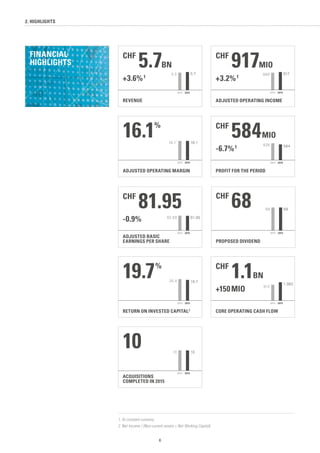
Adjusted EBITDA reached CHF 1 191
million, up 3.4% at constant currency
versus the prior year. Adjusted operating
income was CHF 917 million resulting
in a stable margin versus the prior year
at 16.1%.
Net financial expenses for the year
increased to CHF 43 million. The overall
effective tax rate for the period was
25%, slightly below the prior year.
Profit for the period reached CHF 584
million, down 6.7% at constant currency
versus the prior year, mainly due to
the one-off effect of the restructuring
expenses of CHF 64 million in 2015 and
the one-off benefit in 2014 resulting
from the settlement of a long-standing
dispute with the Republic of Paraguay
amounting to CHF 32 million.
Operating cash flow improved
significantly over the year. For the
first time in the history of SGS, the
core operating cash flow exceeded
CHF 1 billion.
The Group invested in acquisitions
during the year for a total cash
consideration of CHF 103 million.
It also paid a dividend of CHF 522 million,
leading to a Group net debt position
as at 31 December 2015 of CHF 482
million compared to CHF 340 million
in December 2014.
1. CHAIRMAN’S AND CEO’S LETTER TO SHAREHOLDERS
The SGS Group performed well in
2015 with total revenues reaching
CHF 5.7 billion.
This represents revenue growth
of 3.6% (constant currency basis),
of which 2.0% was organic and 1.6%
was contributed by recent acquisitions.
Trading conditions remained difficult
during the year with the fall in
commodity prices, primarily impacting
Oil, Gas and Chemicals, Minerals and
Industrial Services. Group revenue
declined 2.9% in comparison with the
reported figures for December 2014 due
to the strengthening of the Swiss Franc
against the majority of other currencies.
Achieving growth during this challenging
year underlines the strength of the
Group’s strategy and the depth and
balance of its portfolio.
Organic revenue growth was most
apparent in Governments and
Institutions Services (12.0%), with
Product Conformity Assessments
experiencing impressive double-digit
growth. Automotive Services saw
8.5% organic growth resulting from
the expansion of Vehicle Inspection
Services. Systems and Services
Certification delivered 7.2% organic
growth from high adoption of new 2015
standards and good performance in
food activities. Solid results were also
DEAR
SHAREHOLDERS,
ACQUISITIONS
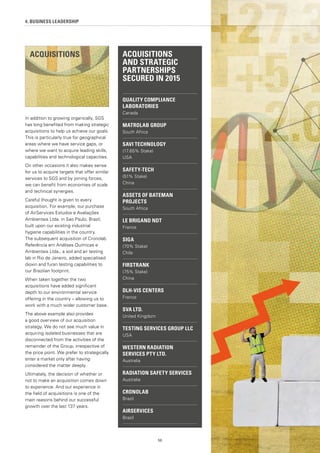
The Group initiated 14 acquisitions in
2015 of which 10 were completed.
These acquisitions further expand the
Group’s footprint into new markets and
create a more diverse service offering.
Combined, these companies add
CHF 45 million to the Group’s revenue
and CHF 9 million to the operating
income in 2015.
Examples of this year’s acquisitions
include: SVA Ltd., a UK-based leading
independent provider of extensive
advisory services in the food testing
space, the Chile-based SIGA Ingeniería
y Consultoría SA, a leading project
management, technical inspection
and engineering consulting company,
and Quality Compliance Laboratories
Inc. in Canada, a provider of analytical
testing to the pharmaceutical, nutrition
and cosmetic industries.
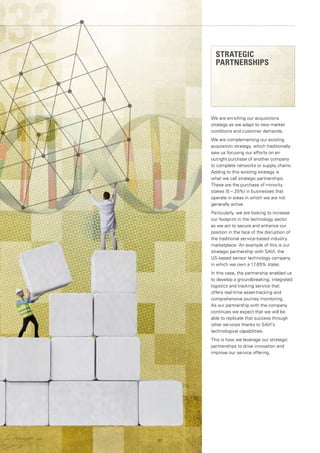
The Group has also begun to
complement its traditional approach
to acquisitions by finding opportunities
to take smaller equity stakes in certain
strategic technology companies to
form partnerships. An example of this
is the recent partnership with SAVI,
the US-based sensor technology
company in which SGS now holds
a 17.65% stake.
DISTRIBUTION TO SHAREHOLDERS
The SGS Board of Directors will
recommend to the Annual General
Meeting, to be held on 14 March 2016,
the approval of a dividend of CHF 68 per
share, unchanged from the prior year.
MANAGEMENT
The Board would like to take this
opportunity to thank former CEO
Christopher Kirk for his commitment
and leadership during his time at SGS.
3
SUSTAINABILITY
2015 delivered another year of solid
sustainability performance. For the
second consecutive year, SGS was
named Industry Leader in the Dow
Jones Sustainability Indices (DJSI)
for both Europe and World regions.
The Carbon Disclosure Project (CDP)
also named SGS as Industrials Sector
Leader and Country Leader in the DACH
(Germany, Austria and Switzerland)
region for our high level of transparency
on the measures we have taken to
combat and adapt to climate change.
We maintained our status as a carbon
neutral company and also improved our
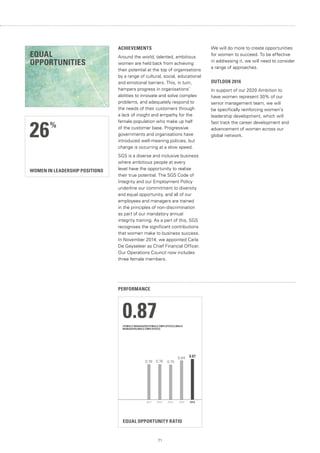
diversity and equal opportunities ratio.
Sustainability is core to what we do and
is integral to our strategy and long-term
commercial success. Our sustainability
approach focuses on delivering
programmes linked to the most material
issues for our business: upholding high
standards of ethical conduct, supporting
economic performance, ensuring health
and safety, acquiring and developing
talent, managing energy and climate
change impacts, protecting human rights
and delivering sustainability services
to our clients. It is through these
programmes that SGS generates value
to society, both directly and through our
customers. We employ pioneering tools,
such as our Green Book and our Value
to Society Estimation Model, to estimate
the impact of our actions on the natural
environment, employees, customers,
stakeholder networks and wider society.
Actions on climate change mitigation
remained the focus of our efforts in
2015, culminating in SGS actively
participating in the United Nations
Climate Change Conference, COP21,
Mr. Kirk, who left his position as CEO in
March 2015 after ten successful years
at the helm of the Group, was replaced
by Frankie Ng who has been with the
Group since 1994 and most recently led
the Industrial Services and Consumer
Testing businesses.
In the course of 2015, Michael Belton,
EVP Minerals Services, resigned from
his position. Ladislav Papik, COO South
East Europe left the Operations Council
to assume a regional role within the
Group. Anthony Hall, COO South East
Asia Pacific stepped down from the
Operations Council to take the global
leadership of the Innovation initiative
for the Group.
The Nomination and Remuneration
Committee approved the internal
promotion and appointment at the
Operations Council of Derick Govender
as EVP Minerals Services, Richard
Shentu as EVP Consumer Testing
Services and Kimmo Fuller as COO
North America.
SIGNIFICANT SHAREHOLDERS
As at 31 December 2015, Mr. August
von Finck and members of his family
acting in concert held 15.03%, Groupe
Bruxelles Lambert acting through
Serena SARL held 15.00%, the Bank
of New York Mellon Corporation held
3.35%, BlackRock Inc. held 3.03% and
MFS Investment Management held
3.01% of the share capital and voting
rights of the Company.
At the same date, SGS Group
held 2.77% of the share capital of
the Company.
Sergio Marchionne	
Chairman of the Board	
Frankie Ng
Chief Executive Officer
in Paris. SGS convened with participants
across multiple business sectors to
exchange thinking on how companies
can work together to drive business
innovation and bring scale to the
emerging green economy. Decisive
action such as this underscores our
vision for SGS to be the trusted partner
in building a more sustainable economy.
OUTLOOK
In response to a constantly changing
global marketplace and new demand
patterns from our existing customer
base, SGS is evolving both structurally
and technically.
The organisational realignment that was
announced last Autumn will not only
underpin our ability to service clients
following the emergence of new product
categories (such as pharma-nutritional
products), but it will also help us to
broaden our services, pool expertise
and create synergies across business
lines to drive innovation.
Another important development in
the Group will be the work we are
beginning to do in the exciting and
rapidly changing fields of e-commerce
and data analytics. In decisively
embracing the increasing digitalisation
of global supply chains with our strategic
Testing Inspection and Certification (TIC)
4.0 initiative, we can take advantage of a
number of new business opportunities.
GUIDANCE 2016
The Group expects to deliver an
organic revenue growth in the range
of 2.5% to 3.5%, with stable margins
compared to the prior year and solid
cash flow generation.
20 January 2016
4
2. HIGHLIGHTS
4
55
6
PROPOSED DIVIDEND
CHF 68
ADJUSTED OPERATING INCOMEREVENUE
ADJUSTED BASIC
EARNINGS PER SHARE
CORE OPERATING CASH FLOW
PROFIT FOR THE PERIOD
RETURN ON INVESTED CAPITAL2
ACQUISITIONS
COMPLETED IN 2015
ADJUSTED OPERATING MARGIN
2. HIGHLIGHTS
6
1. At constant currency.
2. Net Income / (Non-current assets + Net Working Capital).
68
20152014
68
CHF 917MIO
+3.2% 1
889
20152014
917
CHF 5.7BN
+3.6% 1
5.5
20152014
5.7
CHF 81.95
-0.9% 82.69
20152014
81.95
CHF 1.1BN
+150 MIO 912
20152014
1 062
CHF 584MIO
-6.7% 1 626
20152014
584
19.7%
20.4
20152014
19.7
10 10
20152014
10
16.1%
16.1
1
20152014
16.1
FINANCIAL
HIGHLIGHTS
77
REVENUE
ADJUSTED OPERATING INCOME 1
1. Before amortisation of acquisition intangibles, restructuring, transaction and integration-related costs
and other non-recurring items.
30.2%
Asia / Pacific
25.1%
Americas
44.7%
Europe / Africa /
Middle East
6.8%
GIS
7.0%
AGRI
14.1%
OGC
9.8%
MIN
6.7%
AUTO
5.1%
ENVI
10.9%
IND
7.7%
SSC
29.4%
CTS
2.5%
LIFE
4.6%
GIS
6.4%
AGRI
19.6%
OGC
11.1%
MIN
5.6%
AUTO
6.4%
ENVI
15.5%
IND
7.3%
SSC
19.8%
CTS
3.7%
LIFE
REVENUE AND
ADJUSTED
OPERATING INCOME
BY BUSINESS
REVENUE
BY REGION
8
2. HIGHLIGHTS
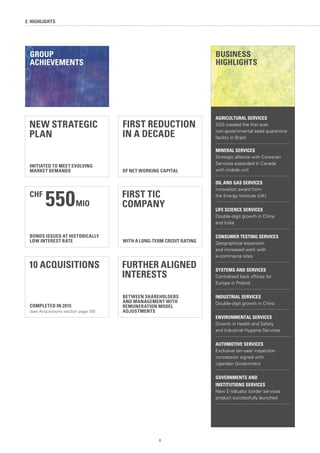
AGRICULTURAL SERVICES
SGS created the first ever
non-governmental seed quarantine
facility in Brazil
MINERAL SERVICES
Strategic alliance with Corescan
Services expanded in Canada
with mobile unit
OIL AND GAS SERVICES
Innovation award from
the Energy Institute (UK)
LIFE SCIENCE SERVICES
Double-digit growth in China
and India
CONSUMER TESTING SERVICES
Geographical expansion
and increased work with
e-commerce sites
SYSTEMS AND SERVICES
Centralised back offices for
Europe in Poland
INDUSTRIAL SERVICES
Double-digit growth in China
ENVIRONMENTAL SERVICES
Growth in Health and Safety
and Industrial Hygiene Services
AUTOMOTIVE SERVICES
Exclusive ten-year inspection
concession signed with
Ugandan Government
GOVERNMENTS AND
INSTITUTIONS SERVICES
New E-Valuator border services
product successfully launched
BONDS ISSUED AT HISTORICALLY
LOW INTEREST RATE
CHF 550MIO
INITIATED TO MEET EVOLVING
MARKET DEMANDS
NEW STRATEGIC
PLAN
OF NET WORKING CAPITAL
FIRST REDUCTION
IN A DECADE
WITH A LONG-TERM CREDIT RATING
FIRST TIC
COMPANY
COMPLETED IN 2015
(see Acquisitions section page 56)
10 ACQUISITIONS
BETWEEN SHAREHOLDERS
AND MANAGEMENT WITH
REMUNERATION MODEL
ADJUSTMENTS
FURTHER ALIGNED
INTERESTS
GROUP
ACHIEVEMENTS
BUSINESS
HIGHLIGHTS
99
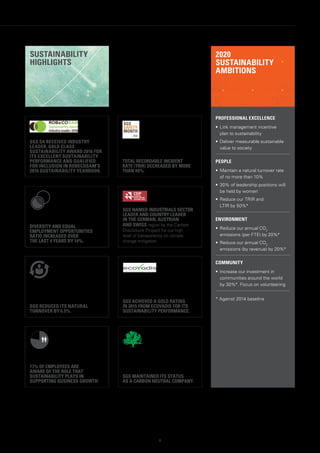
TOTAL RECORDABLE INCIDENT
RATE (TRIR) DECREASED BY MORE
THAN 40%.
SGS
SAFETY
MONTH
SGS MAINTAINED ITS STATUS
AS A CARBON NEUTRAL COMPANY.
SGS SA RECEIVED INDUSTRY
LEADER, GOLD CLASS
SUSTAINABILITY AWARD 2016 FOR
ITS EXCELLENT SUSTAINABILITY
PERFORMANCE AND QUALIFIED
FOR INCLUSION IN ROBECOSAM’S
2016 SUSTAINABILITY YEARBOOK.
SGS NAMED INDUSTRIALS SECTOR
LEADER AND COUNTRY LEADER
IN THE GERMAN, AUSTRIAN
AND SWISS region by the Carbon
Disclosure Project for our high
level of transparency on climate
change mitigation.
SGS ACHIEVED A GOLD RATING
IN 2015 FROM ECOVADIS FOR ITS
SUSTAINABILITY PERFORMANCE.
77% OF EMPLOYEES ARE
AWARE OF THE ROLE THAT
SUSTAINABILITY PLAYS IN
SUPPORTING BUSINESS GROWTH.
DIVERSITY AND EQUAL
EMPLOYMENT OPPORTUNITIES
RATIO INCREASED OVER
THE LAST 4 YEARS BY 14%.
PROFESSIONAL EXCELLENCE
•	 Link management incentive
plan to sustainability
•	 Deliver measurable sustainable
value to society
PEOPLE
•	 Maintain a natural turnover rate
of no more than 10%
•	 30% of leadership positions will
be held by women
•	 Reduce our TRIR and
LTIR by 50%*
ENVIRONMENT
•	 Reduce our annual CO2
emissions (per FTE) by 20%*
•	 Reduce our annual CO2
emissions (by revenue) by 20%*
COMMUNITY
•	 Increase our investment in
communities around the world
by 30%*. Focus on volunteering
* Against 2014 baseline
SGS REDUCED ITS NATURAL
TURNOVER BY 6.5%.
SUSTAINABILITY
HIGHLIGHTS
2020
SUSTAINABILITY
AMBITIONS
10
3. SGS AT A GLANCE
11
THE WORLD LEADER OUR VISION OUR VALUES
We provide competitive advantage, drive
sustainability and deliver trust. At SGS,
we are continually pushing ourselves to
deliver innovative services and solutions
that help our customers move their
businesses forward.
At SGS, our sustainability approach is
about more than just reducing carbon
emissions. We maintain the highest
professional standards and ensure our
employees are able to lead fulfilling
working lives. We also seek to maximise
the positive impacts our business has
on society.
We aim to be the most competitive and
the most productive service organisation
in the world. Our core competencies
in inspection, verification, testing and
certification are being continuously
improved to be best in class. They are
at the heart of what we are. Our chosen
markets are and will be determined by
our ability to be the most competitive
and to consistently deliver unequalled
service to our customers.
We seek to be characterised by our
passion, integrity, entrepreneurialism and
our innovative spirit, as we continually
strive to fulfil our vision. These values
guide us in all that we do and are the
bedrock upon which our organisation
is built.
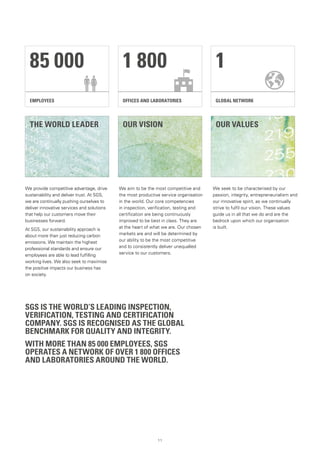
EMPLOYEES OFFICES AND LABORATORIES GLOBAL NETWORK
85 000 1 800 1
SGS IS THE WORLD’S LEADING INSPECTION,
VERIFICATION, TESTING AND CERTIFICATION
COMPANY. SGS IS RECOGNISED AS THE GLOBAL
BENCHMARK FOR QUALITY AND INTEGRITY.
WITH MORE THAN 85 000 EMPLOYEES, SGS
OPERATES A NETWORK OF OVER 1 800 OFFICES
AND LABORATORIES AROUND THE WORLD.
12
3. SGS AT A GLANCE
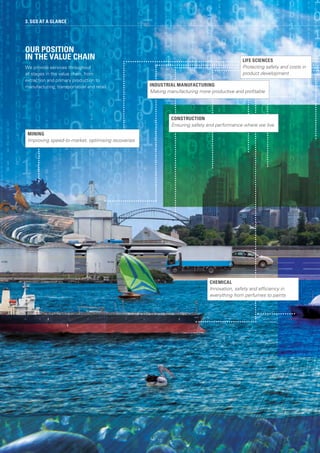
OUR POSITION
IN THE VALUE CHAIN
We provide services throughout
all stages in the value chain, from
extraction and primary production to
manufacturing, transportation and retail.
MINING
Improving speed-to-market, optimising recoveries
LIFE SCIENCES
Protecting safety and costs in
product development
INDUSTRIAL MANUFACTURING
Making manufacturing more productive and profitable
CONSTRUCTION
Ensuring safety and performance where we live
CHEMICAL
Innovation, safety and efficiency in
everything from perfumes to paints
12
13
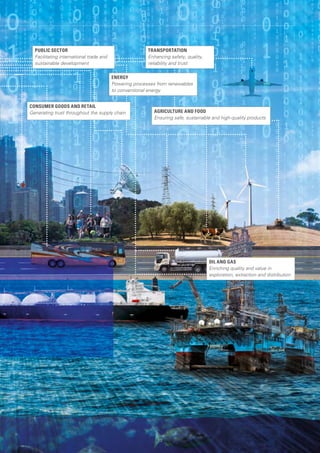
PUBLIC SECTOR
Facilitating international trade and
sustainable development
OIL AND GAS
Enriching quality and value in
exploration, extraction and distribution
ENERGY
Powering processes from renewables
to conventional energy
CONSUMER GOODS AND RETAIL
Generating trust throughout the supply chain
TRANSPORTATION
Enhancing safety, quality,
reliability and trust
AGRICULTURE AND FOOD
Ensuring safe, sustainable and high-quality products
13
14
OUR SPECIALIST
TEAMS DELIVER
TRUSTED RESULTS
IN WORLD-LEADING
SERVICES, COVERING
VIRTUALLY ALL
INDUSTRIES.
We audit across the entire value chain,
providing benefits to all business
sectors. We ensure our customers’
projects, products, processes and
operations meet and exceed regulations
and standards, and we provide the
verification and certification needed
to trade in target markets around the
world. Our consultancy services inform
organisations on market demands,
while our outsourcing solutions
provide the expertise, experience
and resources that enable our
customers to meet their goals.
We use state-of-the-art examination
methodologies with unsurpassed
accuracy to perform inspections that
reduce risk and control quality and
quantity. At the same time we conduct
testing of raw materials, components
and products in our global network
of facilities. Our industry experts also
deliver world-class training, specifically
designed for the precise needs of our
customers, providing the right skills
and knowledge to maximise efficiency
and improve productivity.
Through our unique global network
we deliver independent results tailored
to the precise needs of the industry
or sector. Our customers trust our
expertise, experience and resources to
support them. We help our customers
achieve outstanding performance in
everything they do.
AGRICULTURE AND FOOD
Consumers want assurance of safety
and quality at every stage of the food
production process. Our services build
trust, reduce risk and maintain efficiency
across diverse agriculture and food
supply chains. We offer solutions for
agrochemicals, seed, biofuels, fertilisers,
food and forestry. Our services protect
the integrity of our customers’ brands
by assessing quality, adding value and
securing safe and sustainable global
supply chains. From primary production
to the point of processing or custody
transfer, we assist with legislation
compliance, correct storage, shipping,
packing and distribution as well as
import and export product inspection.
CHEMICAL
The chemicals industry converts
raw materials into literally tens of
thousands of consumer products every
day. Industrial chemicals companies
trust our services to reduce risk and
eliminate potential health hazards. We
ensure quality in chemical components
and the safety and compliance of
finished products. Our consultancy
services deliver turnkey laboratory
design, commissioning and operations
assistance in dealing with intricate
equipment or logistics. We support our
customers in improving productivity
and efficiency through our asset
integrity management services,
optimisation programmes and project
lifecycle services.
CONSTRUCTION
Safe, efficient and trusted processes are
essential when constructing buildings or
infrastructure. Our construction industry
experience means our customers can
minimise environmental impact and
public inconvenience. We support our
customers in implementing effective
scheduling, budgeting, site safety and
logistics, plus assist in sourcing quality
materials and personnel. We conduct
studies in construction feasibility, risk
assessment and management. Our
services ensure quality in global supply
chains by performing chemical and
physical testing of materials. Our asset
management system tracks machines
and equipment, while our inspection
services provide facility, waste and
energy audits.
CONSUMER GOODS AND RETAIL
Our services enable manufacturers,
importers, exporters and retailers to gain
a competitive edge. We ensure trusted,
ethical and environmentally conscious
goods such as food, electronics, textiles,
toys, footwear and housewares, reach
consumers. Our laboratories conduct
material and functionality testing to verify
and certify that products perform as our
customers claim. We inspect processes
at every stage of production and
undertake retail store audits to ensure
our customers’ brands are represented
correctly. We help our customers develop
products, processes and supply chains
that consumers trust every day.
ENERGY
Across all operations, the energy sector
has to meet regulations, consider
safety and limit environmental impact.
We support the energy sector with a
comprehensive range of independent
inspections and audits across the
petroleum, gas, electrical power,
coal and renewable energy industries.
We reduce risk in all operations from
exploration to decommissioning for
the oil, gas and coal industries. In
renewables, we consult on sustainability
across hydroelectric, wind and solar
power. Our expertise maximises
productivity and increases efficiency
in sales and distribution processes.
Our solutions help the energy sector
innovate to find tomorrow's energy today.
3. SGS AT A GLANCE
SGS BY
INDUSTRY
15
INDUSTRIAL MANUFACTURING
Our expertise allows manufacturers
to improve productivity, follow best
practices and streamline operational
processes or logistics. Industrial
manufacturers, from pharmaceuticals
to farm machinery and aerospace to
automotive, trust in our independent
testing and conformity services.
Our advice on the fabrication of
components along with our finished
product assessments enable our
customers to achieve performance
standards throughout manufacturing.
We support manufacturers in meeting
all national and international quality,
health and safety legislation, at the same
time as providing advice on minimising
environmental impact.
LIFE SCIENCES
In the pharmaceuticals,
biopharmaceuticals and medical devices
industries, products must conform to
all national and international regulations,
as well as industry best practices.
Our services enable high-quality,
safe and compliant products to reach
the market in the shortest possible
timescales. We provide vital support
and expertise for medicines and medical
devices throughout every stage of
development, testing, production and
distribution. With the largest network
of contract analytical laboratories in
the world and state-of-the-art clinical
trials facilities, our customers trust
in our expert knowledge to support
them with reliable results.
MINING
We act as a strategic partner in
the mining industry, providing testing,
technology and trade solutions.
Our services promote growth and
deliver efficiencies across exploration,
production, industrial applications,
decommissioning and closure. We offer
technical advice in steel manufacturing
processes and act as a strategic partner
in coal and coke trading. We also
help to maximise profits in precious
or base metal mining and extraction.
Our consultancy services deliver
transparent and unbiased support
in new technologies and accurate data
to track the progress of projects.
OIL AND GAS
Access to independent expertise in
both the upstream and downstream
sectors is key to maximising the value
chain in this sector. Our customers
in the oil and gas industry trust our
dedication to quality and safety. We
provide tailored solutions for exploring,
extracting, refining, transporting and
marketing oil, oil sands, gas and other
hydrocarbons. Our specialist advice
and knowledge supports upstream
activities such as applied mineralogy,
metering, measuring and hydrocarbons
allocation. Our downstream services
support distribution and retail as well as
the design and execution of optimisation
processes
and global trade inspection.
PUBLIC SECTOR
Public sector organisations require
solutions designed to work in harmony
with the processes and policies they
already have in place. Our unrivalled
border control services for scanner
installation, transit monitoring and
risk profiling support the public
sector in reducing risk worldwide.
Our e-government solutions enhance
international trade and revenue
processing. We improve public
infrastructure through independent
road safety services that increase the
efficiency of transportation systems.
Our customers trust our knowledge of
quality, health, safety and environmental
issues to comply with complex
regulations. We improve quality
and maximise productivity across
the public sector.
TRANSPORTATION
For governments, manufacturers
and financial institutions, improving
performance and reducing risk in the
transportation industry is essential.
From the automotive industry, through
rail and shipping to the aerospace
industry, we guide quality improvements
and verify that efficiency is maximised.
We support our customers in achieving
shorter delivery times, safer products
and reduced costs. Our experts help our
customers minimise the environmental
impact of their products and ensure their
conformity and compliance to standards
and regulations. We also ensure that
brand guidelines are met throughout
aftermarket and distribution operations.
Our global network of offices,
laboratories and testing centres offers
a truly unique and independent service.
16
SAFETY
We help organisations develop
effective health and safety systems
to protect employees, generate
consumer confidence and enhance
trust in business operations.
We support our customers in
adhering to best practices and
complying with local, national
and international regulations.
TRUST
Our global reputation for
independence and integrity
enables us to build trust wherever
needed. We provide transparent
and unbiased inspection, testing,
verification and certification
solutions so our customers can
give assurance in their products,
processes, systems and services.
PRODUCTIVITY
Our training and outsourcing
solutions ensure productivity keeps
pace with developments in our
customers’ organisations. In the
short-term, we offer the knowledge
of our world-class productivity
experts. In the long-term, we
deliver focused training to develop
specialist skills in our customers’
existing personnel.
REDUCED RISK
We provide our customers with
independent and impartial services
that enable them to identify, manage
and reduce risk. Our experts deliver
risk management solutions, drawing
on our testing and inspection
capabilities, to verify risk prevention
measures are in place. We assist
with compliance to international
risk management standards across
a wide range of industries.
QUALITY
Our customers rely on our
independent third party inspection,
testing and auditing solutions to
ensure products, services and
processes comply with the latest
quality standards. Our global
network of state-of-the-art facilities
provides information to certify
and verify quality worldwide.
SUSTAINABILITY
We help our customers take
ownership of building a more
responsible and sustainable future.
We encourage environmental
responsibility and reduce the risk
of corruption in our customers’
projects. Our services assist in
developing sustainable facilities
and production, as well as better
working and social environments.
EFFICIENCY
Our tailored business solutions
help our customers implement
processes and systems that make
business operations faster, simpler
and more efficient. We deliver
unrivalled efficiency results from
our local experts, who draw on
the global experience of the entire
SGS network.
SPEED TO MARKET
Compliance with the requirements
of target markets is key to
increasing speed to market.
Our consultancy, testing and
certification services help our
customers overcome the complex
challenges of understanding
and meeting market demands
anywhere in the world, whatever
the industry or sector.
WE DELIVER
BUSINESS
BENEFITS ACROSS
THE 11 DIFFERENT
INDUSTRIES
WE SERVICE
3. SGS AT A GLANCE
THE BUSINESS
BENEFITS WE
DELIVER
17
TESTING
We provide the broadest range
of product testing to customers
around the world. Our global
network of testing facilities, staffed
by knowledgeable and experienced
personnel, helps reduce risks,
shorten time to market and
demonstrate the quality and safety
of raw materials, components
and products.
CERTIFICATION
We enable our customers
to demonstrate that products,
processes, systems and services
are compliant with national
and international regulations
and standards.
CONSULTANCY
To ensure full market access, goods
must comply with the requirements
of target markets. Identifying those
requirements and meeting them is a
complex challenge. Our consultancy
services help our customers to
understand and meet market
demands anywhere in the world,
whatever industry or sector.
TRAINING
Providing a workforce with
skills and knowledge enhances
organisational agility, maximises
efficiency, motivates employees,
improves productivity and
boosts the bottom line. We offer
world-class training and courses
from industry experts that address
the precise needs of organisations
and industry.
INSPECTION
All organisations need trusted
independent inspection to ensure
that legal obligations and high
standards are met at every stage.
Our comprehensive range of
world-leading inspection services
helps to reduce risk, control quality
and quantity, and meet all relevant
regulatory requirements across
different regions and markets.
VERIFICATION
Whatever industry, compliance
with the latest regulations and
standards is mandatory. We can
help ensure that products, services
and processes follow the latest
national and international standards
– wherever our customers are
in the world.
OUTSOURCING
We offer unrivalled expertise,
experience, resources and a unique
global network. As a result, we can
provide the specialised skills our
customers need to achieve their
goals, for any industry, anywhere
in the world.
ANALYTICS
Our data analytics services ensure
the quality of automated data inputs
and its subsequent analysis.
In managing streams of big data,
we are able to subsequently
propose innovations to our
customers, including the creation
of cutting-edge predictive
operations tools across all
the industries we operate in.
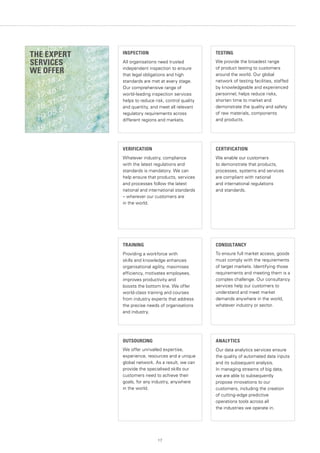
THE EXPERT
SERVICES
WE OFFER
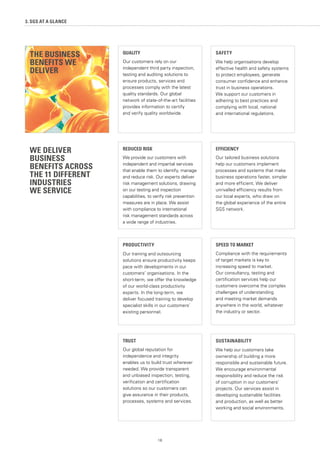
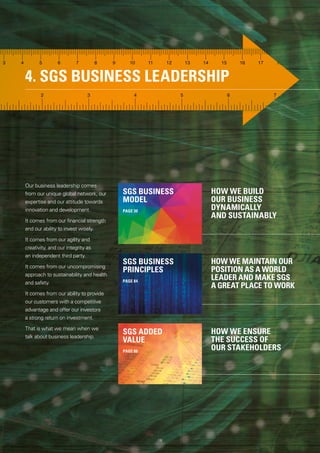
4. SGS BUSINESS LEADERSHIP
HOW WE BUILD
OUR BUSINESS
DYNAMICALLY
AND SUSTAINABLY
HOW WE MAINTAIN OUR
POSITION AS A WORLD
LEADER AND MAKE SGS
A GREAT PLACE TO WORK
HOW WE ENSURE
THE SUCCESS OF
OUR STAKEHOLDERS
Our business leadership comes
from our unique global network, our
expertise and our attitude towards
innovation and development.
It comes from our financial strength
and our ability to invest wisely.
It comes from our agility and
creativity, and our integrity as
an independent third party.
It comes from our uncompromising
approach to sustainability and health
and safety.
It comes from our ability to provide
our customers with a competitive
advantage and offer our investors
a strong return on investment.
That is what we mean when we
talk about business leadership.
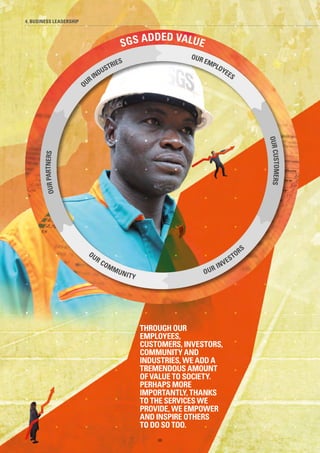
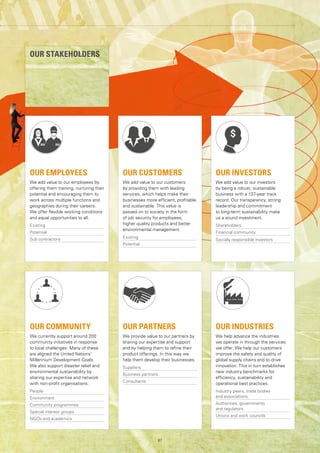
SGS ADDED
VALUE
PAGE 86
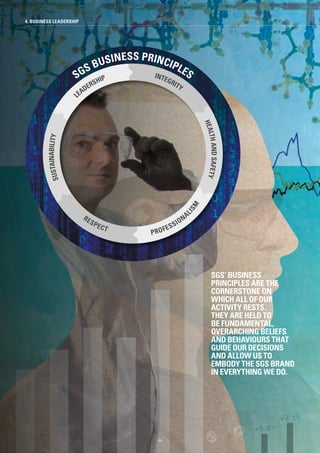
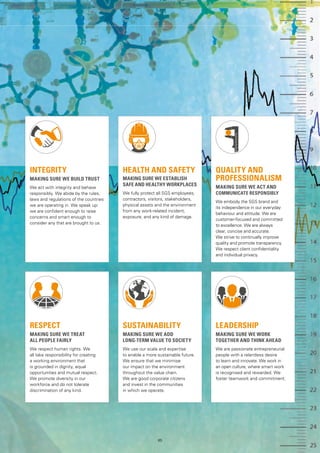
SGS BUSINESS
PRINCIPLES
PAGE 84
SGS BUSINESS
MODEL
PAGE 30
18
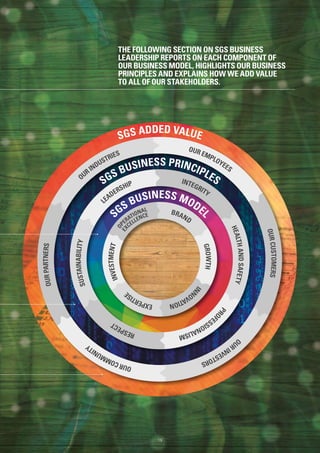
SGS ADDED VALUE
SGS BUSINESS PRINCIPLES
SGS BUSINESS MODE
LIN
NOVATION
GROWTH
BRAND PRO
FESSIONALISM
HEALTHANDSAFETY
INTEGRITY
OURINVESTORS
OURCUSTOMERS
INVESTMENT
EXPERTISE
OP
ERATIONAL
EX
CELLENCE
LEADERSHIP
SUSTAINABILITY
RESPECT
OURINDUSTRIES
OURPARTNERS
OURCOMMUNITY
OUR EMPLOYEES
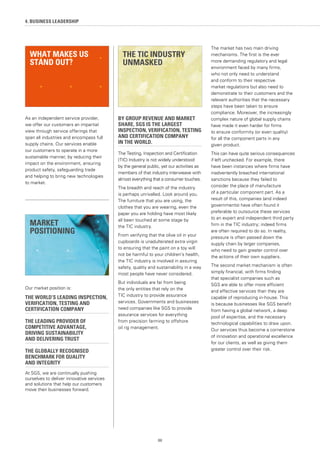
THE FOLLOWING SECTION ON SGS BUSINESS
LEADERSHIP REPORTS ON EACH COMPONENT OF
OUR BUSINESS MODEL, HIGHLIGHTS OUR BUSINESS
PRINCIPLES AND EXPLAINS HOW WE ADD VALUE
TO ALL OF OUR STAKEHOLDERS.
19
20
STRUCTURE
SGS’ core skills and organisational
structure are evolving to adapt to
new market conditions and customer
demands. The consolidation of our
business lines from 2016 (which will
be reduced in number from ten to
nine) will result in more organisational
efficiency, improved customer service
and greater agility.
The restructuring will include the
incorporation of aspects of Life Science
Services as well as Food Testing into
Agricultural Services to generate
additional synergies to new product
categories. As a result of its expanded
scope, the business line will become
Agriculture, Food and Life.
Automotive Services will expand
its remit to become Transportation.
Environmental Services will likewise
expand to become Environment,
Health and Safety. Systems and
Services Certification will also broaden
its horizons to become Certification
and Business Enhancement. Consumer
Testing Services meanwhile will become
Consumer and Retail.
Our geographical organisation will also
change, with the number of our Regions
being consolidated from ten to nine.
As part of this process, Southern
MARKET
SGS expects market conditions
to remain constrained in 2016 but
nonetheless anticipates organic growth
in the range of 2.5% to 3.5%, along
with solid cash flow generation and
stable margins compared to 2015.
Over the longer term (2016 – 2020),
SGS anticipates mid-single digit organic
growth on average, which will be
supported by the new structure and
strategic initiatives. We also expect
accelerating merger and acquisition
activities, CHF 1bn of revenues over
the period, an adjusted operating income
margin of at least 18% by the end
of the period, strong cash conversion
and solid returns on capital.
4. BUSINESS LEADERSHIP
SGS REGIONS 2015
WESTERN EUROPE
NORTHERN AND CENTRAL EUROPE
SOUTHERN AND CENTRAL EUROPE
EASTERN EUROPE AND MIDDLE EAST
AFRICA
NORTH AMERICA
SOUTH AMERICA
CHINA AND HONG KONG
EASTERN ASIA
SOUTH EASTERN ASIA AND PACIFIC
SGS REGIONS 2016
WESTERN EUROPE
NORTHERN, CENTRAL
AND SOUTHERN EUROPE
EASTERN EUROPE AND MIDDLE EAST
AFRICA
NORTH AMERICA
SOUTH AND CENTRAL AMERICA
CHINA AND HONG KONG
EASTERN ASIA
SOUTH EASTERN ASIA AND PACIFIC
SGS LINES OF BUSINESS 2015
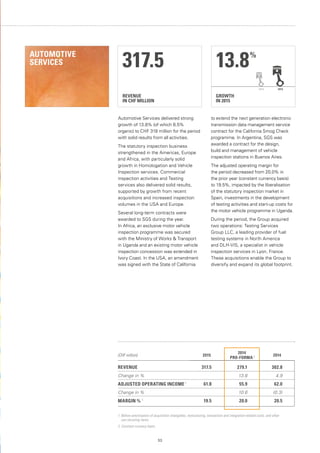
AGRICULTURAL SERVICES
LIFE SCIENCES SERVICES
AUTOMOTIVE SERVICES
CONSUMER TESTING SERVICES
ENVIRONMENTAL SERVICES
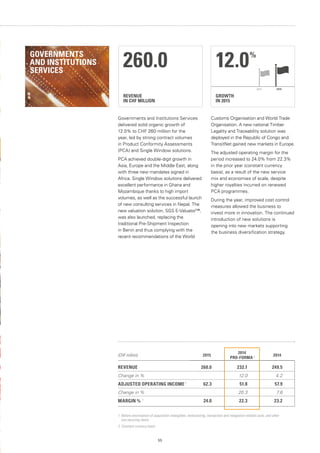
GOVERNMENTS AND INSTITUTIONS SERVICES
SYSTEMS AND SERVICES CERTIFICATION
INDUSTRIAL SERVICES
MINERAL SERVICES
OIL, GAS AND CHEMICALS SERVICES
SGS LINES OF BUSINESS 2016
AGRICULTURE, FOOD AND LIFE
TRANSPORTATION
CONSUMER AND RETAIL
ENVIRONMENT, HEALTH AND SAFETY
GOVERNMENTS AND INSTITUTIONS
CERTIFICATION AND BUSINESS ENHANCEMENT
INDUSTRIAL
MINERALS
OIL, GAS AND CHEMICALS
GROUP
OUTLOOK
Central Europe will be incorporated into
Northern and Central Europe and Central
America will be incorporated into a new
South and Central America Region.
SGS’ core skills and structure are
evolving to adapt to new market
conditions and customer demands.
FINANCE
The Group will continue to focus on both
organic and inorganic growth as a key
objective for the year ahead, along with
solid cash flow and stable profitability.
SGS will also continue to place strong
emphasis on structural improvements
to its Net Working Capital (NWC) as
a priority during 2016. This will include
the standardisation and optimisation
of NWC for each activity within the
SGS portfolio.
Our Procurement function will continue
to add value to the organisation through
optimising strategic sourcing, enhancing
supply chain management and
optimising our real estate portfolio.
Another important aspect going forward
will be the deployment of our Global
Business Services Strategy. This will
seek to simplify, streamline and optimise
the organisation, processes and systems
REALIGNMENT IN 2016
SGS SA, registered in Geneva,
controls all companies worldwide
belonging to the SGS Group.
Our operations are divided into
ten regions, each led by a Chief
Operating Officer who is a
member of the Operations Council
and is responsible for the SGS
businesses in that region and for
the local implementation of Group
policies and strategies.
From 2016 there will be a
realignment of regions and
business lines.
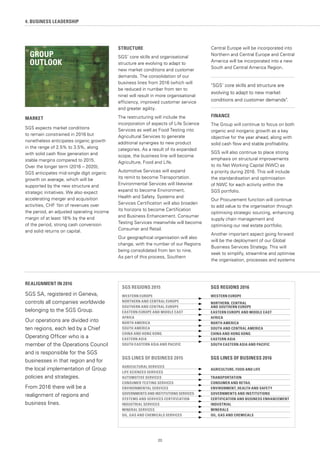
21
of our back office functions as well as
leveraging best practices across our
internal business services. One of
the main aspects of this will be to
create three major Shared Service
Centres to handle the back office
processes that are currently managed
in 35 different countries.
STRATEGIC INITIATIVES
SGS will be moving assertively
further into the digital space with
our TIC 4.0 initiative which will see
us focusing on two key areas for
potential future growth.
Firstly, as is outlined in more depth
in the case study on page 25, we
are exploring ways in which we can
leverage our unparalleled global footprint
to move into offering analytics services.
Secondly (as per the case study on
page 29), we are finding that customers
increasingly value our services in the
world of e-commerce.
In both these areas our traditional
core skills can be used to offer
offline-to-online services that ensure
our customers can be confident in
the products that they are offering.
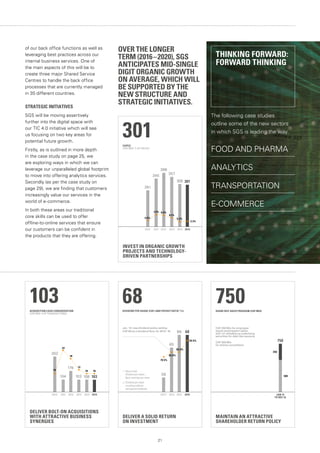
INVEST IN ORGANIC GROWTH
PROJECTS AND TECHNOLOGY-
DRIVEN PARTNERSHIPS
201520142013201220112010
5.5%
7.2% 6.9%
6.1%
5.2%
5.3%
301305
357
386
345
261
301CAPEX
(CHF MIO, % OF SALES)
MAINTAIN AN ATTRACTIVE
SHAREHOLDER RETURN POLICY
JAN 15
TO DEC 16
250
500
750
750SHARE BUY-BACK PROGRAM (CHF MIO)
CHF 250 Mio for employee
equity participation plans
and / or utilisable as underlying
securities for debt-like issuance
CHF 500 Mio
for shares cancellation
DELIVER BOLT-ON ACQUISITIONS
WITH ATTRACTIVE BUSINESS
SYNERGIES
201520142013201220112010
103108103
176
104
302
103ACQUISITION CASH CONSIDERATION
(CHF MIO: # OF TRANSACTIONS)
10
22
18
12
10 10
DELIVER A SOLID RETURN
ON INVESTMENT
2014 201520132012 2
79.5%
82.9%
94.5%
68 68
65
58
68DIVIDEND PER SHARE (CHF) AND PAYOUT RATIO 1
(%)
Jan. 14: new dividend policy setting
CHF 65 as a dividend floor for 2013 – 16
1. 	Payout ratio:
Dividend per share /
Basic earnings per share
2. 	Dividend per share
including ordinary
and special dividends
The following case studies
outline some of the new sectors
in which SGS is leading the way.
FOOD AND PHARMA
ANALYTICS
TRANSPORTATION
E-COMMERCE
OVER THE LONGER
TERM (2016 – 2020), SGS
ANTICIPATES MID-SINGLE
DIGIT ORGANIC GROWTH
ON AVERAGE, WHICH WILL
BE SUPPORTED BY THE
NEW STRUCTURE AND
STRATEGIC INITIATIVES.
THINKING FORWARD:
FORWARD THINKING
82.9%
22
4. BUSINESS LEADERSHIP
23
“Let food be thy medicine and medicine
be thy food,” said the father of Western
medicine, Hippocrates around the 4th
century B.C. and seemingly, Western
medicine is now embracing this
philosophy with renewed vigour.
A new genre of medical products
is emerging in what is being called
the pharma-nutritional field. These
quasi-medicinal products acknowledge
the fact that many modern ailments
stem from dietary problems.
For instance, a remarkably large number
of people suffer from micronutrient
deficiencies, with the World Health
Organisation (WHO) stating that
over 30% of the world’s population
are anaemic, due to iron deficiency 1
.
This, as the WHO explains, is a public
health issue of epidemic proportions.
Micronutrient deficiencies in this and
other areas (e.g. vitamin A or zinc
deficiency), not only damage public
health but can also reduce the economic
productivity of entire populations.
This is one of the instances where
pharma-nutritional products can
potentially help. Unlike pure drugs,
which are chemical structures with
a single target, medical-nutritional
products may be a mixture of many
different ingredients with multiple
objectives. They more closely resemble
ordinary food and thus patients may be
more likely to comply with their doctor’s
recommended dosage.
Despite being an exciting development
for patients and medical practitioners
alike, on many levels these products
have sat awkwardly in the space
between nutritional and pharmaceutical
products.
For instance, on occasion it is not
clear when a product first comes to
market whether it should be regulated
under medical or nutritional rules.
This becomes yet more complicated as
different countries are adopting different
approaches to the problem, resulting in a
complex global regulatory environment.
Such ambiguity filters into advertising
regulations, requirements around clinical
trials and even product labelling. Yet
the patient benefits and relative speed
to market of these products compared
to traditional drugs still make them
attractive to the industry irrespective
of whether they are viewed as a food
product or a medical one.
SGS has always been agile enough
to ensure that products like this have
not slipped into the cracks between
business lines. By combining the
expertise we have in multiple areas,
we have been able to offer a single
customer-facing team to our clients.
Yet it is partly in response to the rapid
growth of this kind of product that SGS
will now be permanently merging its
Life Science, Food Testing and
Agricultural Services, to form a new
Agricultural, Food and Life business
line. Whilst we have been working with
this kind of product for a while, creating
greater internal synergies will only
improve the quality of service we can
offer to our customers. And by having
a comprehensive service offering,
we can ensure there are no gaps in
our service offering.
1.	 www.who.int/nutrition/topics/ida/en/
MIND
THE GAP
A new genre of
medical product is
emerging in what
is being called the
pharma-nutritional field.
24
THE
SENSE OF
SENSORS
4. BUSINESS LEADERSHIP
25
The market is evolving.
Some of the manual
measurements that
companies like SGS
used to carry out for
our clients are now
being performed
by increasingly
sophisticated
automatic sensors.
These can often generate a continual
flow of data – far outstripping the
coverage that could be achieved by
hand. To an industry outsider this might
appear to be an infringement upon some
of SGS traditional verification activities,
but that is not how we view these
developments. In fact we see them
as a major opportunity.
Imagine a sensor buried in a farmer's
soil. Such a sensor could provide a
farmer with various data, such as soil
PH levels, salinity, acidity, fertiliser levels
and current water retention. Moreover,
it can do this whilst drawing on the
latest weather forecasts, relative to its
exact location (using GPS technology),
to advise the farmer as to whether he
needs to apply more water or fertiliser
to his or her crops.
At a first glance, it may appear as
though this sensor is replacing an
SGS agricultural expert, who would
traditionally take these samples by hand
(the sensor can provide a continual
flow of data rather than a periodic one).
However, someone still needs to install
the sensor, to verify the quality of its
data output and to handle the analysis
of the data that the sensor provides to
advise the farmer on how to strategically
use, ration and purchase both water
and fertilisers.
What we have found at SGS is that
by using this technology, farmers
often discover that they start to use
significantly less fertiliser than they were
previously, which saves them money in
addition to any environmental benefits
that this may bring.
This kind of development isn’t just
limited to precision farming. Working
with our strategic partner SAVI, we are
able to provide companies with supply
chain visibility and logistics support,
such as real-time route data (traffic jams,
floods, etc.) and route optimisation.
Elsewhere, we are working on the
calibration of automatic sensors for oil
refineries. The huge amount of data we
are generating and managing is allowing
us to move from a preventative use of
these sensors, to a predictive one. As
a result we are now able to significantly
reduce the risks associated with entire
systems and pinpoint areas that will need
maintenance before it becomes urgent.
However, in all of these cases someone
still needs to physically test the quality
of the data at the initial input stage.
Otherwise the entire subsequent
set of data generated could be next
to meaningless. Decisions based on
inaccurate data could lead to less
than optimal results, and in some
circumstances could be outright
dangerous. This means that companies
will need businesses with SGS’
capabilities more than ever – and there
is no one else in the industry with the
kind of physical global presence that
SGS has. As this technology becomes
more widespread our unparalleled global
footprint will be both a unique sales
point and a key competitive advantage
for us.
That is why we are excited by
the opportunities created by big
data analytics.
26
4. BUSINESS LEADERSHIP
27
The way we move is changing. In the
era of the internet of things, objects of
all descriptions are already able to send
and receive specific data to and from
each other. For example, your weighing
scales can automatically send your
morning weigh-in results to your mobile
phone fitness app to track changes
over time. Your alarm clock can tell
your coffee machine to start brewing
five minutes after you wake up. When
scaled up to a city level, the advances
in technology are the stuff of the best
science fiction writing.
For example, car-to-car communication
technology already exists and is on
the way to becoming commercially
viable. Cars will be able to build a
picture of what’s happening around
them – position, speed and other data
– anticipating risks that even the best
drivers couldn’t and improving safety.
In addition, car-to-building
communication and smarter navigation
systems will soon allow drivers not
only to pick the fastest route but the
greenest, or the cheapest. City traffic
management systems will be able
to detect temporary increases in air
pollution along certain routes and
redirect the traffic flow. Intelligent
transport management solutions will
also improve the fluidity of use and
interface between trains, trams and
buses. Driverless cars on demand may
begin to take care of the last mile.
These developments are taking place
worldwide, spanning both developed
and emerging markets and cities that
are home to major transport frameworks
and travel hubs. Each city will have
different demands of these new
capabilities. The technology will have
to meet each set of requirements for
improving mobility and assuring safety
on road and rail networks.
Such changes in the way we move will
inevitably create new areas of public
and private concern, particularly in
the cyber security space. That includes
not only the privacy expectations that
come with having a detailed digital
footprint of an individual’s transportation
behaviour across various service
providers, but also the need for
trusted and secure data exchange
and systems’ management.
Therefore, as interaction between
vehicles increases and this technology
becomes better established, there
will be a greater need for integrated
independent oversight. SGS plans to
be at the heart of it. That’s why from
2016 we will be offering our customers
a single point of contact to deal with all
their transportation needs.
In the future new data
systems will mean
a more integrated
transport network
in the world’s
major cities.
TRANSPORTATION
AND THE DAWN OF
THE SMART CITY
28
4. BUSINESS LEADERSHIP
29
E-commerce is a trillion dollar industry
and is growing fast, led by a shift in
consumer buying habits in the UK,
the US, Germany and China. Online
shopping is accounting for a larger and
larger slice of the overall retail market
pie. At present, the e-commerce model
is entirely built around trust.
Consumers need to know that the
products they are buying online are
legitimate, safe, correctly sourced and
compliant with the law. However, a
December 2014 MarkMonitor1
survey
suggested that up to one in every six
online bargain hunters were duped by
sites selling counterfeit goods. This type
of adverse retail experience damages
the brand integrity of e-commerce sites.
In response, major e-commerce sites
are determined to assure the quality
of the products on their sites in order
to protect both their customers and
their brand reputation. In a marketplace
where competition is becoming
increasingly fierce and adverse reports
are increasingly visible and permanent,
this reach for assurance is a critical
phase in the evolution of the global
e-commerce market and one that is
worth trillions of dollars to retailers
and manufacturers.
Working with a major player in the
fast-growing multi-billion-dollar Chinese
e-commerce market, SGS has designed
systems for checking the quality
of products posted on the site by
manufacturers. We carry out physical
product tests, verify the legitimacy
(and in some cases existence) of the
manufacturers themselves and assure
the integrity of the e-supply chain.
SGS can provide e-commerce sites
with audited reports of manufacturers,
which can be placed alongside the
products they sell on these sites.
This information functions in a similar
way to a traditional peer review rating,
a well-established global format whose
role in the consumer decision-making
process is pivotal. Yet our reports have
the additional benefit of coming from a
globally recognised independent auditor.
These reports can provide consumers
and retailers with information about a
product’s source, a factory's production
capacity and other pertinent details.
This helps to assure site operators
that their supplier's products meet
local regulations. With e-commerce
sites increasingly operating on an
international scale this is critical.
The reports therefore help improve
supplier transparency and assure
consumers of product quality.
This assurance-focused progress in the
e-commerce model will see consumers
making use of SGS data to inform their
online purchases. This marks not only
a key moment in the development of
this industry, but also in the evolution
of SGS. By adapting in this way, our
business is moving into another space
and connecting with the B2C realm.
1.	 www.markmonitor.com/pressreleases/2014/pr141119
The rapidly growing e-commerce model is entirely built around trust.
Consumers need to know that the products they are buying online are
legitimate, safe, correctly sourced and compliant with the law.
ONLINE-TO-OFFLINE:
WHERE WE CAN ADD VALUE
4. BUSINESS LEADERSHIP
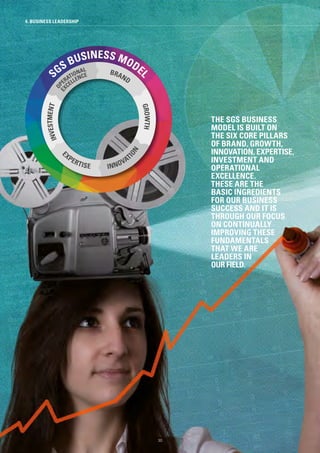
THE SGS BUSINESS
MODEL IS BUILT ON
THE SIX CORE PILLARS
OF BRAND, GROWTH,
INNOVATION, EXPERTISE,
INVESTMENT AND
OPERATIONAL
EXCELLENCE.
THESE ARE THE
BASIC INGREDIENTS
FOR OUR BUSINESS
SUCCESS AND IT IS
THROUGH OUR FOCUS
ON CONTINUALLY
IMPROVING THESE
FUNDAMENTALS
THAT WE ARE
LEADERS IN
OUR FIELD.
SGS BUSINESS MODE
L
INVESTMENT
E
XPERTISE INNOVAT
ION
GROWTH
BRAND
OP
ERATIONAL
EX
CELLENCE
30
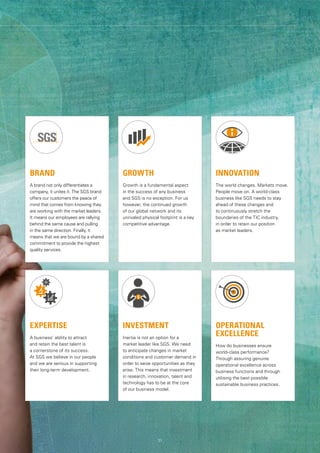
BRAND
A brand not only differentiates a
company, it unites it. The SGS brand
offers our customers the peace of
mind that comes from knowing they
are working with the market leaders.
It means our employees are rallying
behind the same cause and pulling
in the same direction. Finally, it
means that we are bound by a shared
commitment to provide the highest
quality services.
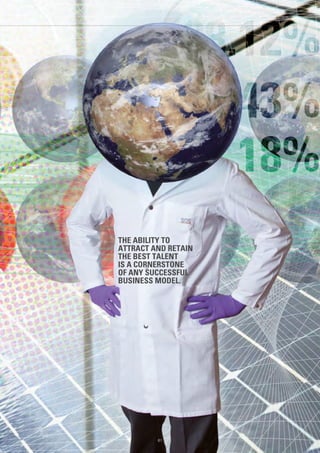
EXPERTISE
A business’ ability to attract
and retain the best talent is
a cornerstone of its success.
At SGS we believe in our people
and we are serious in supporting
their long-term development.
GROWTH
Growth is a fundamental aspect
in the success of any business
and SGS is no exception. For us
however, the continued growth
of our global network and its
unrivaled physical footprint is a key
competitive advantage.
INVESTMENT
Inertia is not an option for a
market leader like SGS. We need
to anticipate changes in market
conditions and customer demand in
order to seize opportunities as they
arise. This means that investment
in research, innovation, talent and
technology has to be at the core
of our business model.
INNOVATION
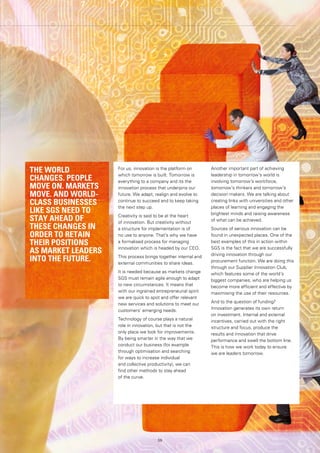
The world changes. Markets move.
People move on. A world-class
business like SGS needs to stay
ahead of these changes and
to continuously stretch the
boundaries of the TIC industry,
in order to retain our position
as market leaders.
OPERATIONAL
EXCELLENCE
How do businesses ensure
world-class performance?
Through assuring genuine
operational excellence across
business functions and through
utilising the best possible
sustainable business practices.
31
BRAND
4. BUSINESS LEADERSHIP
The fact that we have
international reach and a global
network with world-class
facilities and expert personnel
in key locations across the
world, is something that has
become increasingly valued
by our customers.
This is particularly the case as global
supply chains become ever more
complex. Expanding our global
footprint has become a major driver
of our growth, which has in turn
made strategic acquisitions a core
component of our success.
Finding and making the right
acquisitions is a challenging strategic
task and integrating acquisitions
is important to strengthening our
brand equity.
Integrating competencies, expertise,
systems and solutions are an obvious
but pivotal part of this. However,
for integration to fully occur, thought
must be given to ensuring that
SGS’ values, vision, business
principles and culture are adopted
by the acquired company.
The above is part of a formalised
methodology and integration process
applied to each acquisition.
New acquisitions need to be given
access to and educated about the
international capabilities of the Group
whilst retaining their local expertise.
Knowledge needs to flow seamlessly
between acquired businesses and
the Group (in both directions) to
ensure the expertise of all parties
are at the very cutting edge of
the industry in question.
This integration process takes place
at multiple levels and across multiple
departments and functions.
Over time, SGS has developed unique
guidelines and methodology to drive
a smooth and complete integration
process across all activities.
Integration managers are coached
and benefit from a unique platform
to drive and monitor this process.
Migrating and leveraging acquired
brand equity is a key area of focus
as ultimately the acquired capabilities
help strengthen the SGS brand.
Meanwhile, the acquisitions
themselves benefit from having
access to the full service portfolio
of the SGS network. But the unifying
factor across all these elements is
the strength of the SGS brand.
The SGS brand strengthens the
acquired businesses and acquired
capabilities strengthen the SGS brand.
32
GLOBAL NETWORK
GLOBAL BRAND
ONE
33
A BRAND NOT ONLY
DIFFERENTIATES
A COMPANY,
IT UNITES IT.
4. BUSINESS LEADERSHIP
GROWTH
34
WHETHER THROUGH
ACQUISITIONS,
STRATEGIC
PARTNERSHIPS
OR BY ORGANIC
EXPANSION, THE
CONTINUED GROWTH
OF OUR GLOBAL
NETWORK AND ITS
UNRIVALED PHYSICAL
FOOTPRINT IS A
KEY COMPETITIVE
ADVANTAGE.
35
36
4. BUSINESS LEADERSHIP
37
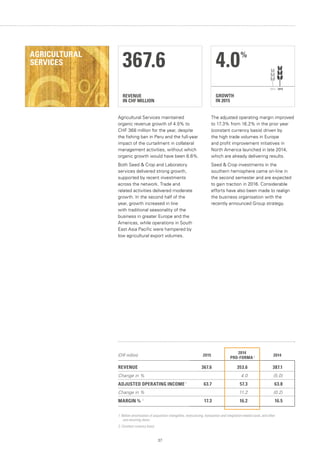
REVENUE
IN CHF MILLION
367.6
GROWTH
IN 2015
4.0%
20152014
AGRICULTURAL
SERVICES
Agricultural Services maintained
organic revenue growth of 4.0% to
CHF 368 million for the year, despite
the fishing ban in Peru and the full-year
impact of the curtailment in collateral
management activities, without which
organic growth would have been 6.6%.
Both Seed  Crop and Laboratory
services delivered strong growth,
supported by recent investments
across the network. Trade and
related activities delivered moderate
growth. In the second half of the
year, growth increased in line
with traditional seasonality of the
business in greater Europe and the
Americas, while operations in South
East Asia Pacific were hampered by
low agricultural export volumes.
The adjusted operating margin improved
to 17.3% from 16.2% in the prior year
(constant currency basis) driven by
the high trade volumes in Europe
and profit improvement initiatives in
North America launched in late 2014,
which are already delivering results.
Seed  Crop investments in the
southern hemisphere came on-line in
the second semester and are expected
to gain traction in 2016. Considerable
efforts have also been made to realign
the business organisation with the
recently announced Group strategy.
1. Before amortisation of acquisition intangibles, restructuring, transaction and integration-related costs, and other
non-recurring items.
2. Constant currency basis.
(CHF million) 2015
2014
PRO-FORMA 2 2014
REVENUE 367.6 353.6 387.1
Change in % 4.0 (5.0)
ADJUSTED OPERATING INCOME 1
63.7 57.3 63.8
Change in % 11.2 (0.2)
MARGIN % 1
17.3 16.2 16.5
38
4. BUSINESS LEADERSHIP
39
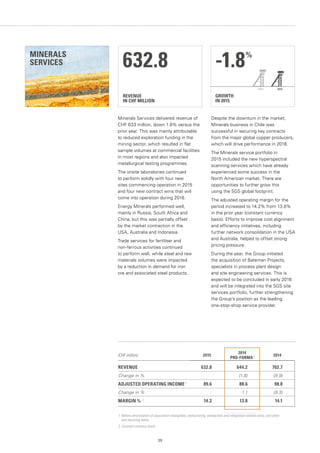
REVENUE
IN CHF MILLION
632.8MINERALS
SERVICES
Minerals Services delivered revenue of
CHF 633 million, down 1.8% versus the
prior year. This was mainly attributable
to reduced exploration funding in the
mining sector, which resulted in flat
sample volumes at commercial facilities
in most regions and also impacted
metallurgical testing programmes.
The onsite laboratories continued
to perform solidly with four new
sites commencing operation in 2015
and four new contract wins that will
come into operation during 2016.
Energy Minerals performed well,
mainly in Russia, South Africa and
China, but this was partially offset
by the market contraction in the
USA, Australia and Indonesia.
Trade services for fertiliser and
non-ferrous activities continued
to perform well, while steel and raw
materials volumes were impacted
by a reduction in demand for iron
ore and associated steel products.
Despite the downturn in the market,
Minerals business in Chile was
successful in securing key contracts
from the major global copper producers,
which will drive performance in 2016.
The Minerals service portfolio in
2015 included the new hyperspectral
scanning services which have already
experienced some success in the
North American market. There are
opportunities to further grow this
using the SGS global footprint.
The adjusted operating margin for the
period increased to 14.2% from 13.8%
in the prior year (constant currency
basis). Efforts to improve cost alignment
and efficiency initiatives, including
further network consolidation in the USA
and Australia, helped to offset strong
pricing pressure.
During the year, the Group initiated
the acquisition of Bateman Projects,
specialists in process plant design
and site engineering services. This is
expected to be concluded in early 2016
and will be integrated into the SGS site
services portfolio, further strengthening
the Group’s position as the leading
one-stop-shop service provider.
GROWTH
IN 2015
-1.8%
20152014
1. Before amortisation of acquisition intangibles, restructuring, transaction and integration-related costs, and other
non-recurring items.
2. Constant currency basis.
(CHF million) 2015
2014
PRO-FORMA 2 2014
REVENUE 632.8 644.2 702.7
Change in % (1.8) (9.9)
ADJUSTED OPERATING INCOME 1
89.6 88.6 98.8
Change in % 1.1 (9.3)
MARGIN % 1
14.2 13.8 14.1
40
4. BUSINESS LEADERSHIP
41
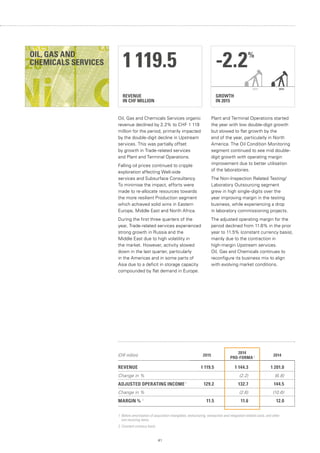
REVENUE
IN CHF MILLION
1 119.5
GROWTH
IN 2015
-2.2%
20152014
Oil, Gas and Chemicals Services organic
revenue declined by 2.2% to CHF 1 119
million for the period, primarily impacted
by the double-digit decline in Upstream
services. This was partially offset
by growth in Trade-related services
and Plant and Terminal Operations.
Falling oil prices continued to cripple
exploration affecting Well-side
services and Subsurface Consultancy.
To minimise the impact, efforts were
made to re-allocate resources towards
the more resilient Production segment
which achieved solid wins in Eastern
Europe, Middle East and North Africa.
During the first three quarters of the
year, Trade-related services experienced
strong growth in Russia and the
Middle East due to high volatility in
the market. However, activity slowed
down in the last quarter, particularly
in the Americas and in some parts of
Asia due to a deficit in storage capacity
compounded by flat demand in Europe.
Plant and Terminal Operations started
the year with low double-digit growth
but slowed to flat growth by the
end of the year, particularly in North
America. The Oil Condition Monitoring
segment continued to see mid double-
digit growth with operating margin
improvement due to better utilisation
of the laboratories.
The Non-Inspection Related Testing/
Laboratory Outsourcing segment
grew in high single-digits over the
year improving margin in the testing
business, while experiencing a drop
in laboratory commissioning projects.
The adjusted operating margin for the
period declined from 11.6% in the prior
year to 11.5% (constant currency basis),
mainly due to the contraction in
high-margin Upstream services.
Oil, Gas and Chemicals continues to
reconfigure its business mix to align
with evolving market conditions.
1. Before amortisation of acquisition intangibles, restructuring, transaction and integration-related costs, and other
non-recurring items.
2. Constant currency basis.
(CHF million) 2015
2014
PRO-FORMA 2 2014
REVENUE 1 119.5 1 144.3 1 201.0
Change in % (2.2) (6.8)
ADJUSTED OPERATING INCOME 1
129.2 132.7 144.5
Change in % (2.6) (10.6)
MARGIN % 1
11.5 11.6 12.0
OIL, GAS AND
CHEMICALS SERVICES
42
4. BUSINESS LEADERSHIP
43
REVENUE
IN CHF MILLION
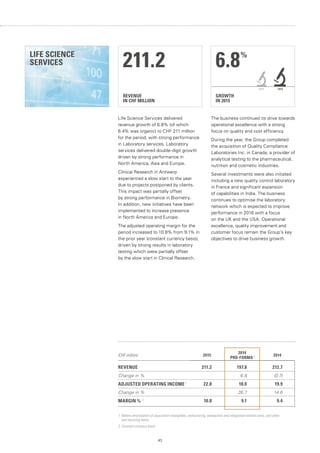
211.2
GROWTH
IN 2015
6.8%
20152014
Life Science Services delivered
revenue growth of 6.8% (of which
6.4% was organic) to CHF 211 million
for the period, with strong performance
in Laboratory services. Laboratory
services delivered double-digit growth
driven by strong performance in
North America, Asia and Europe.
Clinical Research in Antwerp
experienced a slow start to the year
due to projects postponed by clients.
This impact was partially offset
by strong performance in Biometry.
In addition, new initiatives have been
implemented to increase presence
in North America and Europe.
The adjusted operating margin for the
period increased to 10.8% from 9.1% in
the prior year (constant currency basis),
driven by strong results in laboratory
testing which were partially offset
by the slow start in Clinical Research.
The business continued its drive towards
operational excellence with a strong
focus on quality and cost efficiency.
During the year, the Group completed
the acquisition of Quality Compliance
Laboratories Inc. in Canada, a provider of
analytical testing to the pharmaceutical,
nutrition and cosmetic industries.
Several investments were also initiated
including a new quality control laboratory
in France and significant expansion
of capabilities in India. The business
continues to optimise the laboratory
network which is expected to improve
performance in 2016 with a focus
on the UK and the USA. Operational
excellence, quality improvement and
customer focus remain the Group’s key
objectives to drive business growth.
1. Before amortisation of acquisition intangibles, restructuring, transaction and integration-related costs, and other
non-recurring items.
2. Constant currency basis.
(CHF million) 2015
2014
PRO-FORMA 2 2014
REVENUE 211.2 197.8 212.7
Change in % 6.8 (0.7)
ADJUSTED OPERATING INCOME 1
22.8 18.0 19.9
Change in % 26.7 14.6
MARGIN % 1
10.8 9.1 9.4
LIFE SCIENCE
SERVICES
44
4. BUSINESS LEADERSHIP
45
REVENUE
IN CHF MILLION
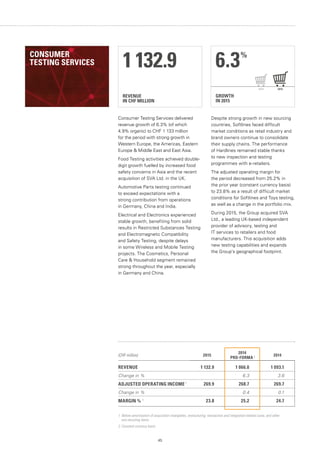
1 132.9
GROWTH
IN 2015
6.3%
20152014
Consumer Testing Services delivered
revenue growth of 6.3% (of which
4.9% organic) to CHF 1 133 million
for the period with strong growth in
Western Europe, the Americas, Eastern
Europe  Middle East and East Asia.
Food Testing activities achieved double-
digit growth fuelled by increased food
safety concerns in Asia and the recent
acquisition of SVA Ltd. in the UK.
Automotive Parts testing continued
to exceed expectations with a
strong contribution from operations
in Germany, China and India.
Electrical and Electronics experienced
stable growth, benefiting from solid
results in Restricted Substances Testing
and Electromagnetic Compatibility
and Safety Testing, despite delays
in some Wireless and Mobile Testing
projects. The Cosmetics, Personal
Care  Household segment remained
strong throughout the year, especially
in Germany and China.
Despite strong growth in new sourcing
countries, Softlines faced difficult
market conditions as retail industry and
brand owners continue to consolidate
their supply chains. The performance
of Hardlines remained stable thanks
to new inspection and testing
programmes with e-retailers.
The adjusted operating margin for
the period decreased from 25.2% in
the prior year (constant currency basis)
to 23.8% as a result of difficult market
conditions for Softlines and Toys testing,
as well as a change in the portfolio mix.
During 2015, the Group acquired SVA
Ltd., a leading UK-based independent
provider of advisory, testing and
IT services to retailers and food
manufacturers. This acquisition adds
new testing capabilities and expands
the Group’s geographical footprint.
1. Before amortisation of acquisition intangibles, restructuring, transaction and integration-related costs, and other
non-recurring items.
2. Constant currency basis.
(CHF million) 2015
2014
PRO-FORMA 2 2014
REVENUE 1 132.9 1 066.0 1 093.1
Change in % 6.3 3.6
ADJUSTED OPERATING INCOME 1
269.9 268.7 269.7
Change in % 0.4 0.1
MARGIN % 1
23.8 25.2 24.7
CONSUMER
TESTING SERVICES
46
4. BUSINESS LEADERSHIP
47
REVENUE
IN CHF MILLION
419.0
GROWTH
IN 2015
7.2%
20152014
Systems and Services Certification
delivered solid organic revenue growth
of 7.2% to CHF 419 million for the period
with all regions reporting growth.
Management System Certification
delivered strong growth driven by high
adoption of the new 2015 standards
and good performance in food
activities. Training activities achieved
double-digit growth boosted by solid
demand from our clients for the new
ISO 9001:2015 standard training.
The adjusted operating margin for
the period decreased from 18.1%
in the prior year (constant currency
basis) to 16.9%, mainly impacted
by margin erosion in some regions.
In particular, China continues to be
impacted by high labour costs, East
Asia by strong competition and Western
Europe by additional personnel cost
mainly related to strengthening of
the medical device team in the UK.
Going forward, growth is expected
to remain healthy driven by Training,
as well as recent contract wins in
Hospitality, Automotive and Hart
Aviation and further transition to
the new ISO 9001:2015 standard.
New product launches in industry
sectors will start to feed the product
mix supporting future growth.
1. Before amortisation of acquisition intangibles, restructuring, transaction and integration-related costs, and other
non-recurring items.
2. Constant currency basis.
(CHF million) 2015
2014
PRO-FORMA 2 2014
REVENUE 419.0 390.9 414.6
Change in % 7.2 1.1
ADJUSTED OPERATING INCOME 1
71.0 70.7 73.9
Change in % 0.4 (3.9)
MARGIN % 1
16.9 18.1 17.8
SYSTEMS AND
SERVICES
CERTIFICATION
48
4. BUSINESS LEADERSHIP
49
REVENUE
IN CHF MILLION
884.3INDUSTRIAL
SERVICES
GROWTH
IN 2015
-0.6%
20152014
Industrial Services reported a decline
in revenue of 0.6%, with an organic
decline of 3.0%, largely offset by
acquisitive growth of 2.4%, to CHF 884
million for the year. Organic growth
was heavily impacted by declining oil
and gas prices on activities in North
America, South East Asia Pacific
and to a lesser extent in Africa.
North America reported reduced
supply chain inspections and asset
integrity services in the USA and lower
volumes in geotechnical services in
the Canadian Oil Sands. Australia,
Singapore and Malaysia were impacted
by lower volumes and pricing due to
reduced investments in the Mining and
Energy sector. Despite difficult market
conditions in Brazil and Colombia, South
America posted stable revenue through
the development of new activities in
Argentina and expanding its reach into
new markets such as maintenance-
related activities. China reported
double-digit growth driven by the
continued increase in volume in testing
activities. Globally, the implementation
of key account management helped the
business to secure new accounts which
are expected to drive revenue growth.
The adjusted operating income margin
for the year decreased from 12.8%
in the prior year (constant currency
basis) to 11.3%, impacted by margin
erosion related to the difficult market
conditions in North America, South East
Asia Pacific and Africa. Other regions
performed in-line with the prior year.
During the year, the Group acquired
Le Brigand in France, specialised in
non-destructive testing for the aviation
industry. The Group also acquired
a majority stake in SIGA in Chile,
an engineering consulting company;
initiated a majority stake in FirstRank,
specialised in quality and safety
assurance and Safety-Tech, specialised
in valve maintenance, repair and
overhaul services, both in China.
The acquisition of Matrolab Group in
South Africa, specialising in engineering
and construction materials testing, is
being concluded. A minority stake was
acquired in SAVI Technology, Inc. in the
USA, a leader in sensor-based solutions.
1. Before amortisation of acquisition intangibles, restructuring, transaction and integration-related costs, and other
non-recurring items.
2. Constant currency basis.
(CHF million) 2015
2014
PRO-FORMA 2 2014
REVENUE 884.3 889.7 977.0
Change in % (0.6) (9.5)
ADJUSTED OPERATING INCOME 1
100.0 113.8 122.6
Change in % (12.1) (18.4)
MARGIN % 1
11.3 12.8 12.5
50
4. BUSINESS LEADERSHIP
51
REVENUE
IN CHF MILLION
367.1ENVIRONMENTAL
SERVICES
GROWTH
IN 2015
16.9%
20152014
Environmental Services delivered robust
revenue growth of 16.9% (of which
5.2% organic) to CHF 367 million for
the year, by increasing market share.
Strong performance in Europe was
driven by the optimisation of the
laboratory network and cost control
measures. In South America, the
business successfully developed
a strong market position through
increased field and testing services,
with the exception of Brazil which is
experiencing an economic slowdown,
partially offset by the synergies from
acquisitions made in the first semester.
China delivered top and bottom line
improvements due to the development
of key product lines in addition to
restructuring in the first half of the year.
The market in Australia continues
to face strong pricing pressure in
the mining sector.
Industrial Hygiene services continued
to expand globally, supported by
a strengthened international sales and
key account management structure.
The adjusted operating margin for the
period increased to 12.8% from 10.0%
in the prior year (constant currency
basis), benefiting from an efficiency
drive across the entire network and
successful cost control measures.
During the year, the Group acquired
Western Radiation Services Pty Ltd.
and Radiation Safety Services Pty Ltd.
in Australia; and AirServices Estudos
e Avaliaçôes Ambientais Ltda. and
Cronolab Referência em Análises
Químicas e Ambientais Ltda. in Brazil.
1. Before amortisation of acquisition intangibles, restructuring, transaction and integration-related costs, and other
non-recurring items.
2. Constant currency basis.
(CHF million) 2015
2014
PRO-FORMA 2 2014
REVENUE 367.1 314.1 342.4
Change in % 16.9 7.2
ADJUSTED OPERATING INCOME 1
46.9 31.3 34.3
Change in % 49.8 36.7
MARGIN % 1
12.8 10.0 10.0
52
4. BUSINESS LEADERSHIP
53
AUTOMOTIVE
SERVICES
to extend the next generation electronic
transmission data management service
contract for the California Smog Check
programme. In Argentina, SGS was
awarded a contract for the design,
build and management of vehicle
inspection stations in Buenos Aires.
The adjusted operating margin for
the period decreased from 20.0% in
the prior year (constant currency basis)
to 19.5%, impacted by the liberalisation
of the statutory inspection market in
Spain, investments in the development
of testing activities and start-up costs for
the motor vehicle programme in Uganda.
During the period, the Group acquired
two operations: Testing Services
Group LLC, a leading provider of fuel
testing systems in North America
and DLH-VIS, a specialist in vehicle
inspection services in Lyon, France.
These acquisitions enable the Group to
diversify and expand its global footprint.
Automotive Services delivered strong
growth of 13.8% (of which 8.5%
organic) to CHF 318 million for the period
with solid results from all activities.
The statutory inspection business
strengthened in the Americas, Europe
and Africa, with particularly solid
growth in Homologation and Vehicle
Inspection services. Commercial
inspection activities and Testing
services also delivered solid results,
supported by growth from recent
acquisitions and increased inspection
volumes in the USA and Europe.
Several long-term contracts were
awarded to SGS during the year.
In Africa, an exclusive motor vehicle
inspection programme was secured
with the Ministry of Works  Transport
in Uganda and an existing motor vehicle
inspection concession was extended in
Ivory Coast. In the USA, an amendment
was signed with the State of California
REVENUE
IN CHF MILLION
317.5
GROWTH
IN 2015
13.8%
20152014
1. Before amortisation of acquisition intangibles, restructuring, transaction and integration-related costs, and other
non-recurring items.
2. Constant currency basis.
(CHF million) 2015
2014
PRO-FORMA 2 2014
REVENUE 317.5 279.1 302.8
Change in % 13.8 4.9
ADJUSTED OPERATING INCOME 1
61.8 55.9 62.0
Change in % 10.6 (0.3)
MARGIN % 1
19.5 20.0 20.5
54
4. BUSINESS LEADERSHIP
55
GOVERNMENTS
AND INSTITUTIONS
SERVICES
Customs Organisation and World Trade
Organisation. A new national Timber
Legality and Traceability solution was
deployed in the Republic of Congo and
TransitNet gained new markets in Europe.
The adjusted operating margin for the
period increased to 24.0% from 22.3%
in the prior year (constant currency
basis), as a result of the new service
mix and economies of scale, despite
higher royalties incurred on renewed
PCA programmes.
During the year, improved cost control
measures allowed the business to
invest more in innovation. The continued
introduction of new solutions is
opening into new markets supporting
the business diversification strategy.
Governments and Institutions Services
delivered solid organic growth of
12.0% to CHF 260 million for the
year, led by strong contract volumes
in Product Conformity Assessments
(PCA) and Single Window solutions.
PCA achieved double-digit growth in
Asia, Europe and the Middle East, along
with three new mandates signed in
Africa. Single Window solutions delivered
excellent performance in Ghana and
Mozambique thanks to high import
volumes, as well as the successful launch
of new consulting services in Nepal. The
new valuation solution, SGS E-Valuator™,
was also launched, replacing the
traditional Pre-Shipment Inspection
in Benin and thus complying with the
recent recommendations of the World
REVENUE
IN CHF MILLION
260.0
GROWTH
IN 2015
12.0%
20152014
1. Before amortisation of acquisition intangibles, restructuring, transaction and integration-related costs, and other
non-recurring items.
2. Constant currency basis.
(CHF million) 2015
2014
PRO-FORMA 2 2014
REVENUE 260.0 232.1 249.5
Change in % 12.0 4.2
ADJUSTED OPERATING INCOME 1
62.3 51.8 57.9
Change in % 20.3 7.6
MARGIN % 1
24.0 22.3 23.2
56
In addition to growing organically, SGS
has long benefited from making strategic
acquisitions to help us achieve our goals.
This is particularly true for geographical
areas where we have service gaps, or
where we want to acquire leading skills,
capabilities and technological capacities.
On other occasions it also makes sense
for us to acquire targets that offer similar
services to SGS and by joining forces,
we can benefit from economies of scale
and technical synergies.
Careful thought is given to every
acquisition. For example, our purchase
of AirServices Estudos e Avaliaçôes
Ambientais Ltda. in Sao Paulo, Brazil,
built upon our existing industrial
hygiene capabilities in the country.
The subsequent acquisition of Cronolab
Referência em Análises Químicas e
Ambientais Ltda., a soil and air testing
lab in Rio de Janeiro, added specialised
dioxin and furan testing capabilities to
our Brazilian footprint.
When taken together the two
acquisitions have added significant
depth to our environmental service
offering in the country – allowing us to
work with a much wider customer base.
The above example also provides
a good overview of our acquisition
strategy. We do not see much value in
acquiring isolated businesses that are
disconnected from the activities of the
remainder of the Group, irrespective of
the price point. We prefer to strategically
enter a market only after having
considered the matter deeply.
Ultimately, the decision of whether or
not to make an acquisition comes down
to experience. And our experience in
the field of acquisitions is one of the
main reasons behind our successful
growth over the last 137 years.
ACQUISITIONS
AND STRATEGIC
PARTNERSHIPS
SECURED IN 2015
QUALITY COMPLIANCE
LABORATORIES
Canada
MATROLAB GROUP
South Africa
SAVI TECHNOLOGY
(17.65% Stake)
USA
SAFETY-TECH
(51% Stake)
China
ASSETS OF BATEMAN
PROJECTS
South Africa
LE BRIGAND NDT
France
SIGA
(70% Stake)
Chile
FIRSTRANK
(75% Stake)
China
DLH-VIS CENTERS
France
SVA LTD.
United Kingdom
TESTING SERVICES GROUP LLC
USA
WESTERN RADIATION
SERVICES PTY LTD.
Australia
RADIATION SAFETY SERVICES
Australia
CRONOLAB
Brazil
AIRSERVICES
Brazil
4. BUSINESS LEADERSHIP
ACQUISITIONS
We are enriching our acquisitions
strategy as we adapt to new market
conditions and customer demands.
We are complementing our existing
acquisition strategy, which traditionally
saw us focusing our efforts on an
outright purchase of another company
to complete networks or supply chains.
Adding to this existing strategy is
what we call strategic partnerships.
These are the purchase of minority
stakes (5 – 25%) in businesses that
operate in areas in which we are not
generally active.
Particularly, we are looking to increase
our footprint in the technology sector
as we act to secure and enhance our
position in the face of the disruption of
the traditional service-based industry
marketplace. An example of this is our
strategic partnership with SAVI, the
US-based sensor technology company
in which we own a 17.65% stake.
In this case, the partnership enabled us
to develop a groundbreaking, integrated
logistics and tracking service that
offers real-time asset-tracking and
comprehensive journey monitoring.
As our partnership with the company
continues we expect that we will be
able to replicate that success through
other services thanks to SAVI’s
technological capabilities.
This is how we leverage our strategic
partnerships to drive innovation and
improve our service offering.
57
STRATEGIC
PARTNERSHIPS
58
4. BUSINESS LEADERSHIP
INNOVATION
58
59
For us, innovation is the platform on
which tomorrow is built. Tomorrow is
everything to a company and its the
innovation process that underpins our
future. We adapt, realign and evolve to
continue to succeed and to keep taking
the next step up.
Creativity is said to be at the heart
of innovation. But creativity without
a structure for implementation is of
no use to anyone. That’s why we have
a formalised process for managing
innovation which is headed by our CEO.
This process brings together internal and
external communities to share ideas.
It is needed because as markets change
SGS must remain agile enough to adapt
to new circumstances. It means that
with our ingrained entrepreneurial spirit
we are quick to spot and offer relevant
new services and solutions to meet our
customers’ emerging needs.
Technology of course plays a natural
role in innovation, but that is not the
only place we look for improvements.
By being smarter in the way that we
conduct our business (for example
through optimisation and searching
for ways to increase individual
and collective productivity), we can
find other methods to stay ahead
of the curve.
Another important part of achieving
leadership in tomorrow’s world is
involving tomorrow’s workforce,
tomorrow’s thinkers and tomorrow’s
decision makers. We are talking about
creating links with universities and other
places of learning and engaging the
brightest minds and raising awareness
of what can be achieved.
Sources of serious innovation can be
found in unexpected places. One of the
best examples of this in action within
SGS is the fact that we are successfully
driving innovation through our
procurement function. We are doing this
through our Supplier Innovation Club,
which features some of the world’s
biggest companies, who are helping us
become more efficient and effective by
maximising the use of their resources.
And to the question of funding?
Innovation generates its own return
on investment. Internal and external
incentives, carried out with the right
structure and focus, produce the
results and innovation that drive
performance and swell the bottom line.
This is how we work today to ensure
we are leaders tomorrow.
THE WORLD
CHANGES. PEOPLE
MOVE ON. MARKETS
MOVE. AND WORLD-
CLASS BUSINESSES
LIKE SGS NEED TO
STAY AHEAD OF
THESE CHANGES IN
ORDER TO RETAIN
THEIR POSITIONS
AS MARKET LEADERS
INTO THE FUTURE.
59
60
EXPERTISE
4. BUSINESS LEADERSHIP
Trusted all over the world, SGS is
a market leader because we put
passion and pride into everything
we do. Our business touches
nearly every part of the world and
reaches across a huge range
of industries.
Our international experts help customers
operate in more efficient and sustainable
ways by streamlining processes,
improving quality and productivity,
reducing risk, verifying compliance and
increasing speed to market.
Therefore, having specialists with
access to state-of-the-art technology
and infrastructure is not only a benefit
for SGS – it is essential.
For example, thanks to our experts, we
were nominated for prizes of excellence
in 2015 (winning two Gulf Coast Safety
Council awards) and our customers also
won awards of their own.
The fact that we ensure our customers
get first-rate, top-quality advice is one of
the reasons that our business continues
to grow. But such successes can only
happen in an environment where our
employees are given the freedom to
exercise their judgment and make
decisions. Crucially though, they also
have the skills and ability to work in that
way. Brimming with passion and energy,
they know what we do is important
and that our work has a real impact
on people's lives.
Consequently, we are mindful of the
fact that recruiting and retaining the best
talent is important for us (see pages
69 and 70) because new and bold
thinking is the lifeblood of our business.
It is part of what keeps us ahead of
the competition.
THE ABILITY TO
ATTRACT AND RETAIN
THE BEST TALENT
IS A CORNERSTONE
OF ANY SUCCESSFUL
BUSINESS MODEL.
61
62
4. BUSINESS LEADERSHIP
INVESTMENTINERTIA IS NOT
AN OPTION FOR
BUSINESSES LIKE
SGS THAT MUST
CONSTANTLY ADAPT
TO CHANGING
CUSTOMER
DEMANDS
AND MARKET
CONDITIONS.
THIS MEANS
THAT INVESTMENT
HAS TO BE AT
THE HEART OF OUR
BUSINESS MODEL.
62
63
Investment is vital. Having the
right talent, assets, technology
and RD in place are fundamental
to the long-term success and
profitability of any organisation.
This is particularly true for SGS,
which must not only stay ahead
of developments within the TIC
industry, but must also keep
abreast of the technologies,
markets, regulations and dynamics
of the extremely diverse industries
we service.
Thus, as discussed on page 69,
investing in our people and their
on-boarding, retention and continual
development is important. So too is
investment in high-quality IT platforms,
laboratory capabilities and best-in-class
technological capacity. Our growth
has in many places been driven by
acquisitions or by buying equity in key
technology providers to allow us to form
strategic partnerships. As discussed on
page 59, investment in innovation is also
a company priority, with an emphasis
on supporting new business areas with
long-term growth potential.
Naturally, despite being in a strong
financial position, SGS will only invest
in areas where we feel we will see
significant returns on that investment.
Thus, capital expenditure (capex)
investments are focused on the
strongest areas of the business,
and those with the best growth record
or long-term growth potential.
Standing still is not an option for
a business that intends to retain its
status as an industry leader, and SGS
has no intention of doing so.
63
4. BUSINESS LEADERSHIP
OPERATIONAL
EXCELLENCE
HOW DO BUSINESSES
ENSURE WORLD-CLASS
PERFORMANCE?
BY ASSURING
GENUINE OPERATIONAL
EXCELLENCE ACROSS
BUSINESS FUNCTIONS
AND THROUGH
UTILISING THE BEST
POSSIBLE SUSTAINABLE
BUSINESS PRACTICES.
64
PROFESSIONAL
EXCELLENCE
Trust lies at the heart of
the value we deliver to our
customers and society.
We have a responsibility
to maintain the highest levels
of professional integrity.
65
66
CODE OF INTEGRITY
NON-COMPLIANCES
20152014201320122011
31TOTAL NUMBER OF BREACHES OF THE CODE OF INTEGRITY
IDENTIFIED THROUGH CORPORATE INTEGRITY HELPLINES 1
1.	“Helplines” means channels used by employees and external parties
to report suspected violations of the Code of integrity and submitted
online, by phone call, sent via fax, email or post.
22
46
36
42
31
EMPLOYEES SIGNING
THE CODE OF INTEGRITY
20152014201320122011 1
100%
% OF EMPLOYEES SIGNING THE CODE OF INTEGRITY
1.	Implementation of new Code of Integrity in 2012.
100100 100 100
CODE OF INTEGRITY REPORTS
20152014201320122011
245TOTAL NUMBER OF INTEGRITY ISSUES REPORTED THROUGH
CORPORATE INTEGRITY HELPLINES 1
1.	“Helplines” means channels used by employees and external parties
to report suspected violations of the Code of integrity and submitted
online, by phone call, sent via fax, email or post.
168
198 200
241 245
CODE OF INTEGRITY
INVESTIGATIONS
20152014201320122011
169TOTAL NUMBER OF VALID REPORTS INVESTIGATED
CONCLUDING IN NO BREACHES
52
91
141
109
169
The SGS Code of Integrity defines the
main principles of professional integrity
for the SGS Group and is an expression
of the values that are shared throughout
our organisation, our businesses and our
affiliates. The Code applies to all of our
employees, officers and directors, our
affiliated companies, our contractors,
our joint-venture partners, our agents,
our subcontractors and anyone acting
on behalf of or representing SGS.
It addresses issues such as conflicts
of interest, bribery and corruption,
facilitation payments and the use
of intermediaries and consultants.
Violations of the Code result in
disciplinary action, including termination
of employment and criminal
prosecution for serious violations.
TRAINING FORMS PART
OF A CONTINUOUS
PROCESS OF LEARNING
AND REINFORCEMENT,
WHICH INCLUDES
EMPLOYEES SIGNING
THE CODE, COMPLETING
INTEGRITY E-LEARNING
AS PART OF THEIR ON-
BOARDING PROGRAMME,
AND ATTENDING
ANNUAL INTEGRITY
TRAINING.
The content of our Annual Integrity
Training is updated each year using
real-life case studies drawn from the
business. Training is typically conducted
face to face and in teams by trained
managers using scenarios adapted
to employees’ areas of work. New
employees must sign the Code at the
start of their employment with SGS and
are expected to complete an integrity
e-learning module within three months
of joining.
A Professional Conduct Committee
ensures implementation of the Code
within our organisation and advises
management on all issues of business
ethics. The Committee consists of five
members: the Chairman of the Board
of Directors, two other Board members,
the Chief Executive Officer and the
Chief Compliance Officer.
PERFORMANCE
4. BUSINESS LEADERSHIP
COMPLIANCE
AND INTEGRITY
SGS’ Procurement operations can point
to a number of major achievements
in 2015. The function reported
CHF 40 million in savings for the year
as part of a 3-years savings programme
for 2015-2017.
The year was also marked by the
ongoing success of our supplier
incentive programme, which we
developed to focus our procurement
volume on strategic partners. We are
also targeting further savings through
greater transactional efficiency. In
2015, we reduced our number of
suppliers significantly worldwide,
brought rationalisation to our invoicing,
delivery and transaction volumes,
increased the use of our internal
catalogues and created a streamlined
procurement community. In 2016, we
will begin a shift to electronic invoicing
and payment systems. In addition,
we have negotiated better payment
terms, reduced our inventory levels
and contributed to the significant
improvement of the company’s Net
Working Capital.
Sustainability and innovation-based
initiatives remain an integral part of
our strategic development. We are
implementing a code of conduct for
our suppliers, relating to responsible
sourcing. We are also discussing issues
such as CO2
emissions and energy
efficiency with them. We continue to set
an example through initiatives relating
to supply chain management and
resources use.
We have consolidated the SGS
Innovation Club initiative, a community
made up of strategic suppliers with
the goal of improving our operations
and driving innovation that will
generate notable efficiencies and
competitive advantages.
67
PROCUREMENT
PEOPLE Our people are our most
important asset. We must
ensure that our employees
are safe and healthy at work,
treated fairly and with
respect and are able to fulfil
their potential.
4. BUSINESS LEADERSHIP
68
69
ACHIEVEMENTS
Our strength lies in our people. In a
competitive business environment,
our global reach and breadth of activities
offer many possibilities for talented
individuals to pursue a career at SGS.
Our ability to acquire, manage, develop
and retain talent is essential, as we
need highly skilled employees to deliver
outstanding services to our customers.
Our global spread, variety of business
lines and approach to sourcing talent
locally wherever possible means we
need to attract exceptional people
from diverse backgrounds, cultures
and geographies.
Competition for talent is growing,
with companies, industry sectors and
markets seeking to attract the same
pool of highly skilled people. A feature
of this is the increased mobility of highly
skilled workers, particularly in science
and technology-based industries.
The migration of talent plays an
important role in shaping skilled labour
forces throughout developing countries,
diffusing knowledge, boosting
innovation and enhancing career
opportunities locally.
Meeting these challenges demands a
dynamic recruitment strategy, as well as
the successful integration of employees
from business acquisitions. During
2015, more than 16 000 positions were
filled either by internal candidates or
external people joining SGS. More
than half of these positions are newly
created positions. Our approach to talent
acquisition is characterised through
programmes linked to e-recruitment,
employer branding, internally and
externally benchmarking our talent
acquisition against peers and world
class companies, establishing networks
with selected universities, and efficient
on-boarding.
A HIGHLIGHT IN 2015
WAS OUR ONGOING
PARTNERSHIP WITH
LINKEDIN, WHERE WE
SAW SIGNIFICANT
INCREASE IN THE
NUMBER OF FOLLOWERS
ON OUR COMPANY PAGE
(FROM 14 000 IN 2012
TO MORE THAN 220 000
IN 2015).
On this page, potential recruits can
learn about career opportunities and
find out about life at SGS. Our industry
stakeholders can also stay up to date
with company news and the latest
thought leadership from their industries.
OUTLOOK 2016
Building on the success of our
e-recruitment strategy, we will
continue to deploy our digital and
mobile responsive solutions for talent
acquisition. We also plan to optimise
our HR, Finance and IT support
functions to ensure we have an agile,
sustainable operating model that can
effectively support our growing global
organisation through enhanced analytics
and reporting, talent growth and
leveraged technology aimed at improving
transactional productivity and enabling
efficient access to information.
TALENT
ACQUISITION
70
ACHIEVEMENTS
The continuous improvement of our
business depends on our employees.
We strive to give our people varied
and stimulating experiences that come
from changing roles, working across
different businesses and geographies
and, where possible, gaining client
exposure. With our lean organisational
structure, employees enjoy visibility
and recognition. Our aim is to help
our people to reach their full potential,
through working in different parts of
the organisation and through creating
opportunities to work abroad, gaining
access to our global portfolio of
customers, and being exposed to
different cultures and thinking.
In a dynamic employment market,
employee turnover is a challenge
and managing it remains a priority at
SGS. In this respect, we have a targeted
approach to improve retention.
Highlights in 2015 centred on the
roll-out of our performance management
initiative and related training in 34
countries; and expanding our employee
engagement programme, CATALYST,
which is now active in 31 countries and
directly targets our employee natural
turnover and the underlying issues
affecting people’s motivation to pursue
careers within SGS. Feedback from
employees through our annual employee
survey indicated, once again, a high level
of engagement from employees with
our sustainability agenda, with 77%
of respondents being aware of the role
that sustainability plays in supporting
business growth.
OUTLOOK 2016
Our efforts will be focused on working
towards the achievement of our 2020
Ambition to maintain employee natural
turnover at 10% or less. To this end,
we will reinforce talent management
programmes across the Group.
Engagement will continue to be at the
heart of our team activities, at local
and global level, to ensure that our
employees have a voice in making SGS
an even better place to work. We will
also deploy our new annual incentive
plan which formally links business and
team performance to reward.
4. BUSINESS LEADERSHIP
EMPLOYEE
RETENTION
NATURAL TURNOVER
20152014201320122011
11.93%
12.39 12.25
14.20
12.77
11.93
TRAINING RATIO
20152014201320122011
2.22%
2.08
2.21
2.38
2.52
2.22
PERFORMANCE
ENGAGEMENT INDEX
PERFORMANCE EXCELLENCE INDEX
68%
71%
TRAINING COST INCLUDING HOURS/EMPLOYMENT COSTPEOPLE LEAVING BY THEIR OWN WILL
71
ACHIEVEMENTS
Around the world, talented, ambitious
women are held back from achieving
their potential at the top of organisations
by a range of cultural, social, educational
and emotional barriers. This, in turn,
hampers progress in organisations’
abilities to innovate and solve complex
problems, and adequately respond to
the needs of their customers through
a lack of insight and empathy for the
female population who make up half
of the customer base. Progressive
governments and organisations have
introduced well-meaning policies, but
change is occurring at a slow speed.
SGS is a diverse and inclusive business
where ambitious people at every
level have the opportunity to realise
their true potential. The SGS Code of
Integrity and our Employment Policy
underline our commitment to diversity
and equal opportunity, and all of our
employees and managers are trained
in the principles of non-discrimination
as part of our mandatory annual
integrity training. As a part of this, SGS
recognises the significant contributions
that women make to business success.
In November 2014, we appointed Carla
De Geyseleer as Chief Financial Officer.
Our Operations Council now includes
three female members.
We will do more to create opportunities
for women to succeed. To be effective
in addressing it, we will need to consider
a range of approaches.
OUTLOOK 2016
In support of our 2020 Ambition to
have women represent 30% of our
senior management team, we will
be specifically reinforcing women's
leadership development, which will
fast track the career development and
advancement of women across our
global network.
PERFORMANCE
WOMEN IN LEADERSHIP POSITIONS
26%
EQUAL OPPORTUNITY RATIO
20152014201320122011
0.87(FEMALE MANAGERS/FEMALE EMPLOYEES)/(MALE
MANAGERS/MALE EMPLOYEES)
0.76 0.76 0.75
0.84 0.87
EQUAL
OPPORTUNITIES
72
ACHIEVEMENTS
Operational Integrity (OI) is the term we
use to describe our health, safety and
environmental management approach.
With more than 85 000 people working
for us, we are committed to keeping
them safe and healthy, and to supporting
their wellbeing.
The OI team reports directly to the CEO
and our strategy is clear; to be best in
class on safety. Striving for zero incidents
demands a global safety culture that
is based on a continuous commitment
to making personal and co-worker
safety an integral part of everyday
working lives. We are building this
culture through a redefined OI strategy
based on seven pillars (see page 73)
and underpinned by a Group-wide
Operational Integrity Management
System (OIMS) which is aligned to
internationally recognised standards
of health, safety and environment1
.
Another key component of our OI is
the Top-Page cascading and deployment
process, as per the EFQM model,
which allows our global OI objectives to
be shared throughout the organisation,
regions and countries (before a deeper
deployment to cities in 2016). This process
also allows us to put focus on specific
key programmes, such as incident
investigations, training, hazard
identification and correction, leadership
visits and best practices.
Alongside the focus on safety, we need
to manage the impacts of working
in industrial environments, which can
present potential hazards, such as the
exposure to carcinogens or damage
to hearing. Our global industrial hygiene
(IH) programme uses a standardised
approach to managing IH aimed at
protecting the health and wellbeing of
our people through disease and fatality
prevention, increased quality of life,
improved health and promoting healthy
and safe living. The Global OI Industrial
Hygiene and Occupational Health
Function provides active management
of emerging health issues, which
focuses especially on communicable
diseases, such as cholera and Middle
East Respiratory Syndrome Corona Virus
(MERS-CoV). We added this element
following an outbreak of cholera in
Kenya in May 2015 and of MERS-CoV in
South Korea in June 2015. As a signatory
to the WASH Pledge, we are working to
ensure appropriate access to safe water,
sanitation and hygiene for all employees
in all premises under company control.
We are sad to report that there were
two fatalities (one employee and one
subcontractor) in 2015. These resulted
in investigations being conducted and
awareness about the SGS Rules for Life
being reinforced across our network
through field-based examples.
OUTLOOK 2016
Our 2020 Ambition for OI is to reduce
our Total Recordable Incident Rate
(TRIR) and our Lost Time Incident
Rate (LTIR) by 50%, based on a 2014
baseline. As such, we will continue
our focus on integrating safety culture
through the company using the seven
pillars of our OI strategy. Alongside
this, we will further develop our IH
management system and continue
to implement our waste management
system to ensure appropriate and
coordinated controls are in place to
minimise and manage our impacts and
provide more detailed performance
reporting via our sustainability report.
1.	 Standards include: Quality (ISO 9001), Health
and Safety (OHSAS 18001), Environmental (ISO
14001), Inspection Management (ISO/IEC 17020),
Testing and Calibration Laboratory (ISO/IEC
17025), and Sustainability (ISO 26000).
4. BUSINESS LEADERSHIP
TOTAL RECORDABLE INCIDENT
RATE (TRIR) (200 000 HOURS)
20152014201320122011
0.65
1.43
1.27
1.10 1.11
0.65
LOST TIME INCIDENT RATE (LTIR)
(200 000 HOURS)
20152014201320122011
0.38
0.71
0.63
0.58 0.60
0.38
PERFORMANCE
OPERATIONAL
INTEGRITY
73
LEADERSHIP
is overseen by a quarterly Executive OI Steering Committee, which includes 50% of
Operations Council members. Furthermore, our extended OI Steering Committee brings
managers, regional businesses and corporate functions together bi-annually to collaborate
on managing OI across the network. Our Chief Operating Officers, Managing Directors and
site and laboratory managers provide active leadership on OI across our global network.
In 2015, more than 12 leadership visits were conducted per hundred employees compared
to nine in the previous year.
COMMUNICATION
is managed via a Top-Page initiative which ensures that information is consistently
cascaded through the network and actions are systematically tracked. We raise awareness
of safety issues in a variety of ways, such as through our Rules for Life which are
15 non-negotiable rules that help save lives. These include new rules on the dangers
of engulfment and suffocation, the control of work around mobile equipment, and getting
out of the line of fire. The SGS Rules for Life apply to all employees, contractors and others
working on behalf of SGS and are incorporated in all our safety-related communication.
TRAINING AND
AWARENESS
is targeted at all levels of the organisation and includes briefings for Chief Operating
Officers and Executive Vice Presidents on leadership site visits, as well as dedicated
safety seminars for MDs in addition to generic and specific training of employees across
all functional operations and corporate sites. Road safety remains a critical risk associated
with the territories and driving cultures in which our employees and subcontractors are
required to work, as well as driver behaviour and driving habits. Over the past two years,
we have run numerous campaigns focused on in-vehicle monitoring. These have resulted
in a reduction in our vehicle incident rate of 11% in 2015.
RESOURCES
AND SKILLS
have been strengthened at the global OI team level as well as at regional and affiliate
levels. These included the appointment of an OI communications manager in our global
headquarters and the establishment of an industrial hygiene (IH) team which operates
globally and comprises experts in clinical health and hygiene.
KEY PERFORMANCE
INDICATORS
are captured via our reporting tool, Crystal, which provides a standardised, multilingual
and data-driven incident management and reporting interface to expedite regulatory and
client-mandated incident reporting. Crystal ensures that all data collected meets our high
standards, while encouraging greater use of data analysis to identify trends. Following
its implementation and the simplification of the reporting functionality, we have detected
a significant increase in the reporting of near misses and hazards. Alongside Crystal,
our Safety Data Sheet Management System, ChemWatch, provides consolidated and
up-to-date information on potential hazards associated with the chemicals used in our
laboratories, and how to manage these.
AUDITS AND
COMPLIANCE
reviews cover health risks, environmental and chemical impacts, and safety risks.
The audits are conducted by an internal team of 19 certified HSE auditors and the findings
are reported to the executive management team.
HEALTH, SAFETY AND
ENVIRONMENTAL (HSE)
SELF-ASSESSMENTS
will be conducted annually using a specially designed online tool which provides a
comprehensive overview of potential risks per site and the controls in place for managing
them. This tool was piloted in 44 sites during 2015 and will be rolled-out across
our sites during 2016. Performance will be benchmarked across SGS sites globally.
OUR SEVEN
OI PILLARS
ENVIRONMENT We are committed to achieving
sustainable growth while
managing our impact on the
environment, under our aim to
“Do More With Less”. We also
recognise our role in helping
our customers to improve
their own environmental
performance. We also commit
to measuring and reducing
our carbon footprint.
4. BUSINESS LEADERSHIP
74
75
ACHIEVEMENTS
As a global company, we are concerned
about the potential impacts of climate
change on the regions and communities in
which we operate. Although our industry
is not a major emitter of greenhouse
gases, our employees, customers and
other stakeholders expect SGS to show
leadership on climate change, both in
terms of our own energy consumption
and by helping our customers and
suppliers to reduce their emissions.
In 2012, we issued The Green Book,
a bi-annual environmental Profit  Loss
account intended for senior managers,
which helps to assess and monitor
the financial impact of our sustainability
performance, including our carbon
footprint. This innovative model helps
us to understand how sustainability can
detect operational efficiencies in order to
achieve our 2020 Ambitions and ultimately
to reduce our environmental impact.
We are on a journey to reduce our
carbon emissions and, since 2014,
we have achieved carbon neutral status
through offsets and Guarantees of Origin
solutions (investments in renewable
energy projects), energy efficient
measures and green electricity supply
in some of our affiliates. We have over
90 projects and investigations underway
worldwide to optimise operational
efficiency in our laboratories and offices.
Since 2014, we have offset our CO2
emissions through projects located in
the regions SGS operates in, thus making
a positive contribution in areas where
we have impact. We annually offset
any residual CO2
emissions associated
with our operations in major countries.
To mitigate our 2014 emissions, this year
we purchased 56 GWh of guaranteed
origin renewable energy certificates
from Norwegian company, ECOHZ. We
also purchased 88 GWh of International
Renewable Energy Certificates (I-RECs)
in China, Hong Kong and Taiwan, and we
purchased 58 GWh of Renewable Energy
Certificates in North America. Since
December 2014, when SGS became one
of the first companies globally to sign the
RE100 initiative, we have pledged to use
100% power from renewable sources
by 2020. Led by The Climate Group and
in partnership with Carbon Disclosure
Project, RE100 is collaborating with the
International Renewable Energy Agency
(IRENA) and others to get 100 of the
world’s largest companies committing
to 100% renewable power by 2020.
Alongside these initiatives, we realise
that SGS can make a greater
contribution by helping our customers
to respond to climate change challenges
through our services linked to energy
efficiency and alternative energy.
These include energy management
services and multiple services related to
energy efficiency of buildings, including
renewable energy, feasibility studies,
energy audits, energy performance
certificates and ISO 50001 certification.
We also offer a range of specialist
advisory services and engineering
expertise on sustainable buildings
through SGS Search, based in the
Netherlands. These services include
cradle-to-cradle product certifications
for companies committed to the
development of a circular economy.
Over the past two years, we have
conducted a study to examine our role
in helping our customers to reduce their
carbon intensity. We began by estimating
the CO2
emissions of our customers in
our Industrial and Agriculture business
lines and considered how much our
customers had reduced their emissions.
We then calculated the extent to which
our services had contributed to these
reductions in CO2
. The study estimated
that the activities of our customers on
fertilisers usage and fuel distribution
through pipelines emit 3.7 million tonnes
of CO2
. With our Pipeline Integrity and
Precision Farming services in 2015 we
helped our customers to reduce their CO2
emissions by 17%.
EMISSIONS/
CLIMATE CHANGE
PERFORMANCE
TOTAL GHG EMISSIONS
(THOUSAND TONNES CO2e)
20152014201320122011
200
255
266
287
211
200
CARBON INTENSITY BY REVENUE
(TONNES CO2e / MILLION CHF)
20152014201320122011
34.95
58.70
53.73 54.94
34.95
CARBON INTENSITY BY EMPLOYEE
(TONNES CO2
e / FTE)
20152014201320122011
2.32
3.78
3.46 3.57
2.53
2.32
38.36
Historical data restated. Introduction of renewable energy accounting. Historical data restated. Introduction of renewable energy accounting.Historical data restated. Introduction of renewable energy accounting.
4. BUSINESS LEADERSHIP
For the second year running, SGS
was recognised in the CDP Climate
Performance Leadership Index, a global
ranking of listed companies on their
approach to climate change mitigation.
We are committed to being part of
the solution, using our scale and our
expertise to enable a more responsible,
balanced and sustainable future. We
recognise that ambitious action on
climate change is necessary and that
companies must play an active role in
bringing solutions to the table which
support the global economy and the
global climate agenda. As part of our
commitment to climate action, SGS
was involved in several key collaborative
processes as part of the United Nations
Conference on Climate Change2
that
was held in Paris in December 2015 and
was aimed at helping to inform progress
toward a universal, ambitious and
balanced climate agreement.
OUTLOOK 2016
By 2020, we plan to have reduced our
annual CO2
emissions (by revenue and
by headcount) by 20%, against our
2014 baseline. We aim to achieve this
through improved energy efficiency and
by switching to low-carbon options,
including renewable energy sources
and the introduction of mandatory
low-emission fleet cars. In addition,
we will continue to work across our
business lines and functions to show
the tangible value of our services and
our people in contributing to society
and its impacts on climate change. In
particular, we will continue to maximise
our contribution by ensuring the integrity
and safety of existing energy supply
and storage systems, and ensuring
that our customers have accurate and
reliable data to manage their reduction
strategies. In addition, new lower-carbon
technologies will challenge us to think
about how we combine our skills and
competencies and test our technologies
and services to generate new ideas and
insights that will enable us to actively
contribute to a lower-carbon future.
2.	 United Nations Framework Convention on Climate
Change, 21st
Conference of the Parties (or COP21).
76
77
ACHIEVEMENTS
SGS is not an energy intensive company.
However, with over 85 000 employees
working in more than 1 800 offices and
laboratories and with a building floor
area of approximately 2 million square
metres, targeting energy consumption
at our offices and laboratories is the
most direct and effective way we can
contribute to tackling climate change.
The electricity used in our buildings
accounts for almost 55% of our global
carbon emissions.
SGS is a signatory to the World Business
Council for Sustainable Development
(WBCSD) Energy Efficiency in Buildings
(EEB) Manifesto. Under this manifesto,
we have committed to a 20% reduction
in CO2
emissions for all offices and
laboratories we own that are larger
than 2 000 m2
by 2020, against a
2010 baseline.
Progress against our EEB targets is
tracked via the SGS Energy Rating
Tool for Offices and Laboratories, and
reported to the WBCSD. As part of
our target to reduce CO2
emissions
intensity by 20%, we conducted 58
energy audits and self-assessments on
buildings as part of our EEB Programme
in 2015 and we have around 30 projects
ongoing across our affiliates. Extending
our commitment to energy efficiency in
buildings, SGS is leading the WBCSD
EEB 2.0 project in India which aims
to unlock financially viable energy
efficiency investments that are currently
not being realised because of financial,
regulatory or organisational barriers.
Recognising that energy efficiency
is driven by behaviour as much as by
technological intervention, our Spot the
Orange Dot behaviour change campaign
uses strategically positioned orange
stickers to remind employees to take
concerted action to improve energy
and resource efficiency. To date, at
least 34 000 employees in 21 affiliates
across our network have participated
in the campaign, resulting in tangible
improvements in their energy efficiency
and waste management impacts.
Examples of case studies linked to EEB
and Spot the Orange Dot can be found in
our Corporate Sustainability Report which
will be available online from 14 March
2016: www.sgs.com/cs-report2015
Across our network, we increasingly use
video, audio and web conferencing to
reduce travel costs, cut CO2
emissions,
and improve work-life balance. During
2015, we placed 85 191 conference calls
and 19 956 video calls that helped us
save more than 5 200 flights.
OUTLOOK 2016
In addition to our 2020 Ambition to
reduce annual CO2
emissions by 20% on
a 2014 baseline, we also plan to reduce
CO2
emissions from all company-owned
offices and laboratories above 2 000
square metres by 20% within the same
timeframe. We plan to achieve this
through our EEB programme and Spot
the Orange Dot campaign. We also plan
to hold a Lower Carbon Day in 2016
to focus employee efforts on energy
reduction linked to lowering our carbon
impact. We will report on progress
against these initiatives through our
online sustainability report.
ENERGY EFFICIENCY
VEHICLES FUELS (GWH)
20152014201320122011
354
288
316
335 332
354
ELECTRICITY AND
NON-TRANSPORT FUELS (GWH)
20152014201320122011
492
394
456
477 492
460
TOTAL ENERGY (GWH)
20152014201320122011
846
683
772
795 809
846
PERFORMANCE
RENEWABLE ENERGY RENEWABLE ENERGY
78
ACHIEVEMENTS
As with the rest of the services industry,
SGS is responsible for generating
relatively small quantities of hazardous
and non-hazardous (e.g. mixed paper
mixed plastics, mixed organic) waste.
A standard operating procedure for
waste management and minimisation
is established as part of the SGS
Operational Integrity Management
System (OIMS). Audits are conducted
regularly by the Operational Integrity
team, which assesses conformity to
the procedure to ensure best practices
are applied. In 2015, the generation of
hazardous waste from our operations
increased by approximately 13% and
non-hazardous waste decreased by 5%
against a 2014 baseline.
OUR MOST SIGNIFICANT
IMPACT ON WASTE
MANAGEMENT IS ACHIEVED
THROUGH OUR SERVICES.
OUR WASTE MANAGEMENT
SERVICES HELP OUR
CUSTOMERS TO RECYCLE,
TREAT AND DISPOSE OF
WASTE IN A COST-EFFECTIVE
AND EFFICIENT MANNER.
TO REDUCE WASTE DISPOSAL,
WE ARE CONSTANTLY
INVESTIGATING WAYS
TO RECYCLE AND REUSE
MATERIALS TO AVOID
CONTRIBUTING TO LANDFILL.
Our comprehensive waste services
include the pre-treatment, intermediate
storage and reconditioning of dangerous
industrial waste products, while our
audit services benchmark public
standards such as the Recycling
Industry Operating Standard (RIOS) and
the Responsible Recycling©
Standard
(R2) as well as customers’ own criteria.
We investigate ways to reduce the
volume of waste, treatments to make
waste more stable and suitable for
packaging, and long-term storage
if needed. Processing is carried out
at our licensed treatment plants by our
accredited technicians. All our work
complies with the latest national and
international environmental principles.
We provide certification as proof that
waste has been processed in a manner
compliant with the regulations for
each specific industry. For materials
that are not reusable, we investigate
options for environmentally sound
intermediate storage or waste disposal.
Our technicians are licensed to
collect, transport and treat hazardous
waste. Understanding that profitable
landfill management involves many
environmental considerations and
maintaining a safe site can be complex
and constant work, SGS also provides
integrated landfill management solutions.
OUTLOOK 2016
We will continue to develop services
linked to waste reduction, treatment,
storage and reconditioning and
responsible disposal in response to
our customers changing needs around
complying with increased legislation,
and finding innovative solutions
linked to the introduction of new
products, materials, technologies
and manufacturing methods.
WASTE
MANAGEMENT
4. BUSINESS LEADERSHIP
TOTAL WASTE GENERATED
(THOUSAND TONNES)
20152014201320122011
43.2
27.3
42.6
49.2
43.5 43.2
PERFORMANCE
79
ACHIEVEMENTS
As a service company, our water
consumption is relatively low. We
use water in our laboratories, and for
drinking, food preparation, cleaning and
sanitation. While water may not be a
material issue for us, we recognise that
it is increasingly important in a wider
sustainability context, as the potential
impacts of climate change and other
factors on water supplies become
more apparent. As a global business,
we are also concerned that some of
our operations are in water-stressed
regions. Water efficiency is managed
through the SGS Energy Efficiency in
Buildings programme (EEB). Our Green
Building Checklist, which is deployed for
new buildings and major renovations,
sets out our standards on water usage,
reduction, monitoring and re-use.
Notable examples of EEB projects
in recent years that have resulted in
significant reductions in water usage
include the use of waste water that has
been processed in an effluent treatment
plant at our textile testing laboratories
in Tirupur and Chennai, which have
more than halved the volume of water
purchased; the collection and processing
of condensation from air conditioning
units that is recycled as laboratory
grade water; and a collaboration with
the Port of Antwerp in the Netherlands
to re-use water from the nearby
dock in our cooling system. Beyond
managing our water consumption, we
are also concerned about water quality.
In December 2014, SGS signed the
WASH Pledge which commits signatory
companies to ensuring appropriate
access to safe water, sanitation and
hygiene for all employees in all premises
under company control within three
years of signing the pledge.
Alongside our operational programmes,
SGS provides a diverse range of services
linked to water, from comprehensive
field sampling and laboratory analyses
to data management services that
enable us to monitor and interpret our
customers’ water impacts. Some of our
specialist water services include:
•	 Ballast water services aimed at
helping customers to stop the spread
of invasive species through ballast
water on ships;
•	 Groundwater and hydrogeological
studies aimed at preserving and
managing water resources efficiently
and in a cost-effective way, as well as
in changing environments;
•	 Precision farming and precision
irrigation services which provide
farmers, agronomists and agricultural
investors with full support on
water management;
•	 Hydrogeological studies where our
team of hydrogeologists provide
expert guidance to customers on
anticipating groundwater challenges
and develop solutions that suit
particular industries.
In addition, SGS provides Water Benefit
Certificates which give confidence
to donors and investors that real
water benefits are being delivered to
communities who need them most.
These services help our customers to
preserve and manage water resources
efficiently and in a cost-effective way
and in changing environments.
OUTLOOK 2016
During 2016, we will continue to
manage our water impacts through
our EEB programme (which includes
monitoring our water performance using
our new building rating tool, Stellar),
as well as other specific projects
managed at affiliate level. In addition,
we will continue to evolve our services
linked to water, as more companies
come under scrutiny to disclose details
of their water management approach
and their commitments to protecting
valuable water supplies.
WATER
MANAGEMENT
PERFORMANCE
TOTAL WATER PURCHASED
(MILLION M3
)
20152014201320122011
1.9
1.6
1.8 1.8
2.0
1.9
4. BUSINESS LEADERSHIP
80
COMMUNITY We welcome local talent and
knowledge to our business.
We want to give back to
the communities in which
we operate and live.
81
82
4. BUSINESS LEADERSHIP
PROGRAMMES
Our community programme is led by
our affiliates through collaborations with
local community organisations. Across
our global network, we support around
200 community initiatives that are
initiated by employees and leadership
teams in our affiliates in response to
local challenges. Many of the projects
are aligned with the United Nations
Millennium Development Goals (MDGs).
PERFORMANCE
INVESTMENT IN COMMUNITY
(THOUSAND CHF)
20152014201320122011
842
809 818
688
532
842
COMMUNITY PROJECTS
20152014201320122011
222
360
303
352
217 222
CAUSES SUPPORTED BY SGS COMMUNITY PROJECTS
DISASTER
RELIEF
ECONOMIC
DEVELOPMENT
MDG 1:
POVERTY
MDG 2:
UNIVERSAL
EDUCATION
MDG 4:
REDUCED CHILD
MORTALITY
MDG 5:
MATERNAL
HEALTH
MDG 7:
ENVIRONMENTAL
SUSTAINABILITY
COMBAT MAJOR
DISEASES/OTHER
HEALTH ISSUES
0 10 20 30
COMMUNITY
PROGRAMMES
83
ACHIEVEMENTS
SGS is committed to supporting projects
that have the potential to change lives
in communities where SGS employees
live and work.
THE SGS GLOBAL
COMMUNITY
PROGRAMME
IS ORGANISED
AROUND THREE CORE
THEMES: EDUCATION,
EMPOWERMENT,
AND ENVIRONMENTAL
SUSTAINABILITY.
Education projects are aimed at
improving access to elementary,
primary, secondary, higher and further
education, as well as informal education
in the form of employment training
schemes and skills workshops.
Empowerment projects are aimed at
promoting the physical, emotional,
intellectual and economic empowerment
of women and men through access
to healthcare, counselling, mentoring,
enterprise schemes and micro credit.
Environmental sustainability projects
are aimed at reducing or eliminating
the reliance on non-renewable or scarce
resources such as fossil fuels and water.
SGS offers support to communities
through cash donations, community-led
sponsorship, employee volunteering,
pro bono services and in-kind support.
We also provide immediate support to
communities in the aftermath of major
disasters. The majority of community
programmes are identified and managed
locally in line with the Group Community
Policy and Guidelines.
OUTLOOK 2016
In line with our 2020 Ambition to
increase community investment by
30% using a 2014 baseline, we will
focus effort on encouraging more
active involvement of employees
through community volunteering.
We will implement guidelines on
employee volunteering to our affiliates,
which includes sections on measuring
the social outcomes from volunteering,
and we will report on our progress
against our 2020 Ambition in our annual
sustainability report, available online.
SGS’ BUSINESS
PRINCIPLES ARE THE
CORNERSTONE ON
WHICH ALL OF OUR
ACTIVITY RESTS.
THEY ARE HELD TO
BE FUNDAMENTAL,
OVERARCHING BELIEFS
AND BEHAVIOURS THAT
GUIDE OUR DECISIONS
AND ALLOW US TO
EMBODY THE SGS BRAND
IN EVERYTHING WE DO.
4. BUSINESS LEADERSHIP
SGS BUSINESS PRINCIPLES
LEADERSHIP
SUSTAINABILITY
RESPECT
PROFESSIONA
LISM
HEALTHANDSAFETY
INTEGRITY
84
QUALITY AND
PROFESSIONALISM
MAKING SURE WE ACT AND
COMMUNICATE RESPONSIBLY
We embody the SGS brand and
its independence in our everyday
behaviour and attitude. We are
customer-focused and committed
to excellence. We are always
clear, concise and accurate.
We strive to continually improve
quality and promote transparency.
We respect client confidentiality
and individual privacy.
INTEGRITY
MAKING SURE WE BUILD TRUST
We act with integrity and behave
responsibly. We abide by the rules,
laws and regulations of the countries
we are operating in. We speak up:
we are confident enough to raise
concerns and smart enough to
consider any that are brought to us.
RESPECT
MAKING SURE WE TREAT
ALL PEOPLE FAIRLY
We respect human rights. We
all take responsibility for creating
a working environment that
is grounded in dignity, equal
opportunities and mutual respect.
We promote diversity in our
workforce and do not tolerate
discrimination of any kind.
HEALTH AND SAFETY
MAKING SURE WE ESTABLISH
SAFE AND HEALTHY WORKPLACES
We fully protect all SGS employees,
contractors, visitors, stakeholders,
physical assets and the environment
from any work-related incident,
exposure, and any kind of damage.
SUSTAINABILITY
MAKING SURE WE ADD
LONG-TERM VALUE TO SOCIETY
We use our scale and expertise
to enable a more sustainable future.
We ensure that we minimise
our impact on the environment
throughout the value chain.
We are good corporate citizens
and invest in the communities
in which we operate.
LEADERSHIP
MAKING SURE WE WORK
TOGETHER AND THINK AHEAD
We are passionate entrepreneurial
people with a relentless desire
to learn and innovate. We work in
an open culture, where smart work
is recognised and rewarded. We
foster teamwork and commitment.
85
4. BUSINESS LEADERSHIP
THROUGH OUR
EMPLOYEES,
CUSTOMERS, INVESTORS,
COMMUNITY AND
INDUSTRIES, WE ADD A
TREMENDOUS AMOUNT
OF VALUE TO SOCIETY.
PERHAPS MORE
IMPORTANTLY, THANKS
TO THE SERVICES WE
PROVIDE, WE EMPOWER
AND INSPIRE OTHERS
TO DO SO TOO.
SGS ADDED VALUE
OURINDUSTRIES
OURPARTNERS
OUR COMMUNITY
OUR INVESTOR
S
OURCUSTOMERS
OUR EMPLOYEES
86
OUR EMPLOYEES
We add value to our employees by
offering them training, nurturing their
potential and encouraging them to
work across multiple functions and
geographies during their careers.
We offer flexible working conditions
and equal opportunities to all.
Existing
Potential
Sub contractors
OUR COMMUNITY
We currently support around 200
community initiatives in response
to local challenges. Many of these
are aligned the United Nations’
Millennium Development Goals.
We also support disaster relief and
environmental sustainability by
sharing our expertise and network
with non-profit organisations.
People
Environment
Community programmes
Special interest groups
NGOs and academics
OUR CUSTOMERS
We add value to our customers
by providing them with leading
services, which helps make their
businesses more efficient, profitable
and sustainable. This value is
passed on to society in the form
of job security for employees,
higher quality products and better
environmental management.
Existing
Potential
OUR PARTNERS
We provide value to our partners by
sharing our expertise and support
and by helping them to refine their
product offerings. In this way we
help them develop their businesses.
Suppliers
Business partners
Consultants
OUR INVESTORS
We add value to our investors
by being a robust, sustainable
business with a 137-year track
record. Our transparency, strong
leadership and commitment
to long-term sustainability make
us a sound investment.
Shareholders
Financial community
Socially responsible investors
OUR INDUSTRIES
We help advance the industries
we operate in through the services
we offer. We help our customers
improve the safety and quality of
global supply chains and to drive
innovation. This in turn establishes
new industry benchmarks for
efficiency, sustainability and
operational best practices.
Industry peers, trade bodies
and associations
Authorities, governments
and regulators
Unions and work councils
87
OUR STAKEHOLDERS
88
4. BUSINESS LEADERSHIP
As an independent service provider,
we offer our customers an impartial
view through service offerings that
span all industries and encompass full
supply chains. Our services enable
our customers to operate in a more
sustainable manner, by reducing their
impact on the environment, ensuring
product safety, safeguarding trade
and helping to bring new technologies
to market.
Our market position is:
THE WORLD’S LEADING INSPECTION,
VERIFICATION, TESTING AND
CERTIFICATION COMPANY
THE LEADING PROVIDER OF
COMPETITIVE ADVANTAGE,
DRIVING SUSTAINABILITY
AND DELIVERING TRUST
THE GLOBALLY RECOGNISED
BENCHMARK FOR QUALITY
AND INTEGRITY
At SGS, we are continually pushing
ourselves to deliver innovative services
and solutions that help our customers
move their businesses forward.
BY GROUP REVENUE AND MARKET
SHARE, SGS IS THE LARGEST
INSPECTION, VERIFICATION, TESTING
AND CERTIFICATION COMPANY
IN THE WORLD.
The Testing, Inspection and Certification
(TIC) Industry is not widely understood
by the general public, yet our activities as
members of that industry interweave with
almost everything that a consumer touches.
The breadth and reach of the industry
is perhaps unrivalled. Look around you.
The furniture that you are using, the
clothes that you are wearing, even the
paper you are holding have most likely
all been touched at some stage by
the TIC industry.
From verifying that the olive oil in your
cupboards is unadulterated extra virgin
to ensuring that the paint on a toy will
not be harmful to your children’s health,
the TIC industry is involved in assuring
safety, quality and sustainability in a way
most people have never considered.
But individuals are far from being
the only entities that rely on the
TIC industry to provide assurance
services. Governments and businesses
need companies like SGS to provide
assurance services for everything
from precision farming to offshore
oil rig management.
The market has two main driving
mechanisms. The first is the ever
more demanding regulatory and legal
environment faced by many firms,
who not only need to understand
and conform to their respective
market regulations but also need to
demonstrate to their customers and the
relevant authorities that the necessary
steps have been taken to ensure
compliance. Moreover, the increasingly
complex nature of global supply chains
have made it even harder for firms
to ensure conformity (or even quality)
for all the component parts in any
given product.
This can have quite serious consequences
if left unchecked. For example, there
have been instances where firms have
inadvertently breached international
sanctions because they failed to
consider the place of manufacture
of a particular component part. As a
result of this, companies (and indeed
governments) have often found it
preferable to outsource these services
to an expert and independent third party
firm in the TIC industry; indeed firms
are often required to do so. In reality,
pressure is often passed down the
supply chain by larger companies,
who need to gain greater control over
the actions of their own suppliers.
The second market mechanism is often
simply financial, with firms finding
that specialist companies such as
SGS are able to offer more efficient
and effective services than they are
capable of reproducing in-house. This
is because businesses like SGS benefit
from having a global network, a deep
pool of expertise, and the necessary
technological capabilities to draw upon.
Our services thus become a cornerstone
of innovation and operational excellence
for our clients, as well as giving them
greater control over their risk.
MARKET
POSITIONING
WHAT MAKES US
STAND OUT?
THE TIC INDUSTRY
UNMASKED
89
SGS has started a process to understand
our value to society. Value to society is
based on the premise that all business
activities take place within a field
of social capital, which is contained
within the natural environment.
Social capital allows the development
of interpersonal relationships that in
turn enable the combination of human
capital, natural capital and intellectual
capital to produce goods and services
(i.e. manufactured capital). A key
component of the value to society
framework is determining the economic
values for respective capital stocks
and flows.This process of economic
evaluation, often termed monetisation,
is necessary to enable integration of the
full factors of production (i.e. the natural
capital, human capital, manufactured
capital, etc.) into a core financial-based
business decision-making system.
The first stage in the process has
involved the quantification and economic
valuation of the various capital stocks
and flows that comprehensively
represent the necessary inputs and
outputs of our business activities.
First, we identified the entire asset
base that underpins SGS’ operations.
Conceptually supported by the
International Integrated Reporting
Council’s [IRRC] guidelines, operations
require (directly and indirectly)
a complement of:
FINANCIAL CAPITAL
The medium for exchange, a store of
economic value and as a unit of account.
NATURAL CAPITAL
The economic functions
of the natural environment.
HUMAN CAPITAL
The economic functions
of the labour force.
INTELLECTUAL CAPITAL
The economic functions of knowledge.
SOCIAL CAPITAL
The economic functions of trust within
stakeholder networks.
MANUFACTURED (OR BUILT) CAPITAL
The economic functions of property,
plant, equipment, inventory and
intermediate inputs.
In future, we will start reporting around
the six capitals. A significant amount
of work has already been completed,
which indicates that the business
activities of SGS are net positive (which
means that we contribute more value
than we derive). There is further work
to be done to adapt the concept to our
business model using auditable data, but
we expect to be in a position to report
on this in detail in 2016. We are also
focusing on aligning our future reporting
to the IRRC framework. As such,
2016 will be a decisive year involving
high-level stakeholder dialogue and
consultation on our evolved reporting
approach. More details on how we
are measuring our value to society
can be found on our website:
www.sgs.com/cs-report2015
OUR VALUE
TO SOCIETY
90
5. MARKET RISKS
RISKS AND UNCERTAINTIES
On a yearly basis the SGS Board
conducts an assessment of the risks
facing the Group. This process is
conducted with the active participation
and input of the Management. Once
identified, risks are assessed according
to their likelihood, severity and mitigation.
The Board deliberates on the adequacy
of measures in place to mitigate
and manage risks and assigns
responsibility to designated managers
for implementation of such measures.
As part of this process, the ownership
and accountability for identified risks
are approved by the Board. The
implementation of such actions is
audited by Internal Audit. These findings
are communicated to the Board of
Directors so that progress and identified
risks can be monitored objectively and
independently from Management.
The risks identified and monitored by
the Board fall broadly into four categories:
•	 	Governance and Integrity Risks – arise
when corporate governance structure
and controls are inadequate and when
ethical culture and procedures are weak.
•	 Strategy and Planning Risks – arise
when the company’s strategy selection
and execution is inadequate and when
there are external factors that can
affect the company’s performance.
•	 Global Support Risks – arise when core
functions of the company do not operate
effectively and do not support the
business performance.
•	 Operations Risks – arise when
business processes do not achieve
the objectives they were designed to
achieve in supporting the company’s
business model.
91
92
5. MARKET RISKS
RISK AREA RISK DESCRIPTION MEASURES IN PLACE
STRATEGY AND PLANNING
EXTERNAL FACTORS /
COMPETITION
The SGS Group operates in volatile
markets and needs to sustain and/or
develop market share through innovation
and technical developments.
•	 Customer insights
•	 Competitor intelligence (periodic reviews of
activities of major competitors in the TIC industry)
•	 Innovation team
•	 Organic growth initiatives
MERGER AND ACQUISITIONS Part of the SGS Group’s strategy relies
on acquisitions of new companies
allowing access to new markets.
Inefficient integration of new companies
may lead to sub-optimal synergies.
•	 Specific policy ruling mergers and acquisitions
is in place
•	 Operations Council reviews/approves projects
meeting admissible criteria
•	 Integration guidelines and system to report upon
adequate integration of acquisitions
POLITICAL ACTIVITIES Political instability is a risk in some of
the countries in which SGS operates.
•	 Collaboration with experts to maintain knowledge
and alignment with local, legal and fiscal changes
•	 Diversification of activities and countries to
compensate higher risks in some geographical areas
GOVERNANCE AND INTEGRITY
LOSS OF REPUTATION Loss of reputation through poor
or inconsistent delivery and poor
client relationship management or
inappropriate health and safety practice.
•	 Health and safety standards and performance
•	 Client relationship management
•	 Business operating procedures
ETHICS SGS operates in countries recognised to
have higher bribery and corruption risks.
•	 SGS Code of Integrity
•	 Integrity rules (from integrity of services
to compliance with laws)
•	 Training course for all employees
LEGAL CLAIMS The SGS Group is exposed to litigation
proceedings in connection with
services provided. Litigations could
lead to payment of damages and affect
the reputation of the Group.
•	 Claim reporting system
•	 Insurance coverage and policies
RISK MANAGEMENT
93
RISK AREA RISK DESCRIPTION MEASURES IN PLACE
GLOBAL SUPPORT
IT SYSTEMS Information systems and the technology
infrastructure are key to supporting SGS’
strategy and growth. The IT architecture
and the new technologies chosen could
expose SGS to new threats.
•	 Information Technology Service Delivery Model
•	 Security systems and applications
•	 Identification and prioritisation of strategic projects
through IT Committee
•	 Internal and external audit testing
FINANCE The SGS Group could suffer from failing
to present reliable financial statements.
•	 Independent external audit of the Group’s annual
financial statements
•	 Financial and management controls are in place
to ensure Group’s assets are safeguarded from
major financial risks
TALENT MANAGEMENT /
RECRUITMENT
The SGS group relies on key personnel
from operations to executive level. Skilled
employees may not be attracted and
know-how and information of value for
SGS may be lost.
•	 Succession planning to ensure effective
continuation of leadership and expertise
•	 Geographic mobility to ensure continuity
•	 Employer branding initiative to attract talent
OPERATIONS
CYCLICAL DOWNTURN The cyclical nature of certain businesses
may lead to over-capacity and surplus
resources in certain geographies.
•	 Monitoring of operational KPIs to allow rapid
up/down-scaling of variable costs
•	 Diversified service offering to a wide range
of industries and geographies
CUSTOMER SERVICES A lack of focus on customer needs
may lead to customer dissatisfaction
and customer loss.
•	 Customer satisfaction survey
•	 Key account management structure and dedicated
sales people
•	 Tracking on-time delivery through laboratory excellence
•	 Customer care shared services
As a step towards adopting a fully integrated reporting structure in the future, for the first time we have also included
our sustainability risks in this section of the report.
CORPORATE SUSTAINABILITY
SGS is concerned about the potential
impacts of climate change and resource
depletion. Energy consumption and
greenhouse gas emissions, as well as
water consumption and waste, if not
adequately managed, could lead to
increased costs, interrupted supply and
regulatory fines. The resulting impact
could cause disruption to services
as well as risks to people and assets.
•	 Sustainability Management System and external
parties’ verification of sustainability data
•	 Energy Efficiency in Building Programme
•	 Carbon Neutral Strategy
•	 Green Procurement Strategies
•	 Employees Awareness Campaigns
•	 Signature of the WASH Pledge and World Business
Council for Sustainable Development’s Manifesto
for Energy Efficiency in Buildings
94
5. MARKET RISKS
As an industry leader, we are committed
to upholding the highest standards
to ensure our business operates in
a sustainable way.
Our Materiality Matrix sets out the
issues that are deemed most important
to our stakeholders and our business.
We have identified the material aspects
for SGS and our stakeholders and
in the coming years we will merge
both processes.
Our online sustainability report
describes the processes we use to
identify our most important issues in
detail (see Materiality Process), and
it explains how we manage each of
these important issues through our
sustainability management system.
STAKEHOLDERCONCERN
IMPORTANCE TO SGS
HIGHVERYHIGH
HIGH VERY HIGH
EFFLUENTS
AND WASTE
WATERMANAGEMENT
DIVERSITYANDEQUAL
OPPORTUNITIES
LOCAL COMMUNITIES
RESPONSIBLE SUPPLY CHAIN
ETHICAL CONDUCT
ECONOMIC PERFORMANCE
HEALTH AND SAFETY
TALENT ACQUISITION
AND DEVELOPMENT
ENERGYANDCLIMATECHANGE
SUSTAINABILITY SERVICES
HUMAN RIGHTS
SUSTAINABILITY
MATERIALITY
MATRIX
95
REPORT ON THE INTERNAL ASSURANCE OF THE SUSTAINABILITY CONTENT
IN THE 2015 SGS ANNUAL REPORT
NATURE AND SCOPE OF THE ASSURANCE
The scope of this assurance was performance data, report text supporting performance data and a review of the management
of this data.
This Sustainability Content in the 2015 SGS Annual Report has been assured using SGS’ own protocols to ensure consistency with
the service offered to customers. The assurance comprised a combination of documentation review and face-to-face interviews
with relevant employees at the Head Office in Geneva and at affiliate level. Audit reviews of data samples and management were
also carried out in selected sites.
For the period 2011 to 2014, the assurance procedures on the sustainability performance had been carried out on SGS trend
countries, which represent three-quarters of revenue and two-thirds of headcount. For the year 2015, the sustainability
performance assurance procedures covered the full SGS Group.
Financial data drawn directly from independently audited financial accounts has not been checked back to source as part of this
assurance process.
The assurance team was assembled based on their knowledge, experience and qualifications for this assignment, and comprised
auditors with the following qualifications: Lead Quality, Health and Safety, Environmental and SA8000 Auditor and assurance practitioner.
The responsibility of the assurance team is to express an opinion on the text, data, graphs and statements within the scope
of verification, with the intention to inform all SGS stakeholders and to inform improvements in the process for future reporting.
This report has been assured at a moderate level of scrutiny using our protocols for:
•	 Evaluation of veracity of the reported text, graphs and statements and performance data (including data on the web) with a focus
on text, graphs and statements and performance data related to the identified material issues
ASSURANCE OPINION
On the basis of the methodology described and the verification work performed, we are satisfied that the information and
data contained within the Sustainability Content in the 2015 SGS Annual Report is reliable and provides a fair and balanced
representation of SGS activities in 2015 within the limitations of the stated reporting scope.
The apparent discrepancies in the previous years CO2
emission statistics have been noted by the assurors who are satisfied that
they actually reflect the extension of the CO2
emission scope to the full SGS Group and the change of methodology to calculate
the Scope 2 CO2
emissions with the integration of renewable energy accounting.
RECOMMENDATIONS
Further opportunities were identified during the assurance for consideration to ensure continual improvement, including the following:
•	 Currently the reported environmental data is based on financial evidence. When such evidence is not available, the data is not
systematically estimated. Although estimated as non-material and thus not biasing the stakeholders’ opinion, it is recommended
that a methodology is implemented to estimate such data based on the location surface area or/and the number of employees.
A report has been prepared for SGS management which includes a detailed set of recommendations to help identify areas for
future improvement.
Rita Godfrey	 Michel Mooser
Lead SRA Assuror	 SRA Assuror
Geneva, 8 February 2016
ASSURANCE STATEMENT
6. GOVERNANCE
98
6. GOVERNANCE
1. GROUP STRUCTURE
	 AND SHAREHOLDERS
1.1.	 Group Structure
1.2.	Significant Shareholders
1.3. Cross-Shareholdings
2. CAPITAL STRUCTURE
2.1.	 Issued Share Capital
2.2.	Authorised and Conditional
	 Share Capital
2.3.	Changes in Capital
2.4.	Shares and Participation Certificates
2.5.	Profit Sharing Certificates
2.6.	Limitations on Transferability and
	 Admissibility of Nominee Registrations
2.7.	 Convertible Bonds and
	Warrants/Options
3. BOARD OF DIRECTORS
3.1.	Members of the Board of Directors
3.2.	Cross Involvement
3.3.	Elections and Terms of Office
3.4.	Limits on External Mandates
3.5.	Internal Organisational Structure
	 3.5.1. 	Allocation of Tasks within
		 the Board of Directors
	 3.5.2. Committees
	 3.5.3.	Working Methods of the
		 Board and its Committees
3.6.	Definition of Areas of Responsibility
3.7.	Information and Control Instruments
	 vis-à-vis the Management
4. OPERATIONS COUNCIL
4.1.	Members of the Operations Council
4.2.	Other Activities and Functions
4.3.	Limits on External Mandates
4.4.	Management Contracts
5. COMPENSATION, 		
	SHAREHOLDINGS
	 AND LOANS
5.1.	Content and Method of 		
	 Determining the Compensation 		
	 and the Shareholding Programmes
	 5.1.1.	 Rules on Performance-Related
		 Pay and Allocation of
		 Equity-Linked Instruments
	 5.1.2.	 Rules on Loans, Credit 		
		 Facilities and
		 Post-Employment Benefits
	 5.1.3.	 Rules on Vote on Pay
6. SHAREHOLDERS’
	 PARTICIPATIONRIGHTS
6.1.	Voting Rights and
	 Representation Restrictions
6.2.	Statutory Quorums
6.3.	Convocation of General Meetings
	 of Shareholders
6.4.	Agenda
6.5.	Registration in the Share Register
7. CHANGE OF CONTROL
	 AND DEFENCE
	MEASURES
7.1.	 Duty to Make an Offer
7.2.	Clauses on Change of Control
8. AUDITORS
8.1.	Duration of the Mandate
	 and Term of Office
8.2.	Audit Fees
8.3.	Additional Fees
8.4.	Supervisory and Control
	 Instruments vis-à-vis
	 the Auditors
9. INFORMATION POLICY
This Corporate Governance Report
informs shareholders, prospective
investors and the public at large
on SGS policies in matters of
corporate governance such
as: the structure of the Group,
shareholders' rights, composition,
roles and duties of the Board of
Directors and its Committees and
Management, internal controls
and audits. This report has been
prepared in compliance with the
Swiss Exchange (SIX) Directive on
Information Relating to Corporate
Governance of 1 September 2014
and with the Swiss Code of Best
Practice for Corporate Governance.
The SGS Corporate Governance
framework aims to achieve an
efficient allocation of resources,
clear mechanisms for setting
strategies and targets in order to
maximise and protect shareholder
value. SGS strives to attain this
goal by defining clear and efficient
decision-making processes,
fostering a climate of performance
and accountability among
managers and employees alike
and aligning employees’
remuneration with the long-term
interests of shareholders.
99
1. GROUP STRUCTURE
	 AND SHAREHOLDERS
1.1. GROUP STRUCTURE
SGS SA, registered in Geneva (CH),
also referred to as the “Company”,
controls directly or indirectly all entities
worldwide belonging to the SGS Group,
which provides independent inspection,
verification, testing, certification and
quality assurance services. The shares
of SGS SA are listed on the SIX Swiss
Exchange and are traded on SIX Europe
(Swiss Security Number: 249745;
ISIN: CH0002497458).
On 31 December 2015, the market
capitalisation of SGS SA was
CHF 14 949 million.
None of the companies under the direct
or indirect control of SGS SA has listed
its shares or other securities on any
stock exchange.
The principal legal entities consolidated
within the Group are listed on pages 200
to 203 of the Annual Report, with details
of the share capital, the percentage of
shares controlled directly or indirectly
by SGS SA and the registered office or
principal place of business.
Details of acquisitions made by the
SGS Group during 2015 are provided
in note 3 to the consolidated financial
statements included in the section
SGS Group Results (pages 144 to 145)
of this Annual Report.
The operations of the Group are divided
into 10 regions, each led by a Chief
Operating Officer who is responsible for
the SGS businesses in that region and
for the local implementation of Group
policies and strategies.
At 31 December 2015, geographic
operations were organised as follows:
Europe, Africa, Middle East
•	 Western Europe
•	 Northern and Central Europe
•	 Southern Central Europe
•	 Eastern Europe and Middle East
•	 Africa
Americas
•	 North America
•	 South America
Asia Pacific
•	 East Asia
•	 China and Hong Kong
•	 South Eastern Asia and Pacific
The Group is also structured into 10
lines of business. Each business line is
responsible for the global development
of Group activities within its own sphere
of specialisation and for the execution
of strategies with the support of the
Chief Operating Officers.
At 31 December 2015, the business
lines were organised as follows:
•	 Agriculture
•	 Minerals
•	 Oil, Gas and Chemicals
•	 Life Science
•	 Consumer Testing
•	 Systems and Services Certification
•	 Industrial
•	 Environmental
•	 Automotive
•	 Governments and Institutions
Each line of business is led by an
Executive Vice President. Chief
Operating Officers and Executive
Vice Presidents are members of the
Operations Council, the Group's most
senior management body.
With effect as from 1 January 2016,
the geographic operations and
business lines are realigned, with the
consequence that, from 2016 onwards,
the Group is structured into 9 lines
of business and 9 regions.
1.2. SIGNIFICANT SHAREHOLDERS
As at 31 December 2015, Mr. August
von Finck and members of his family
acting in concert held 15.03% (2014:
14.97%), Groupe Bruxelles Lambert
acting through Serena SARL held
15.00% (2014: 15.00%), the Bank of
New York Mellon Corporation held
3.35% (2014: 3.43%), BlackRock Inc.
held 3.03% (2014: 3.00%) and MFS
Investment Management held 3.01%
(2014: 0.00%) of the share capital and
voting rights of the Company.
At the same date, SGS Group held
2.77% of the share capital of the
Company (2014: 1.88%).
During 2015, the Company published
regularly on the electronic platform of
the Disclosure Office of the SIX Swiss
Exchange Ltd. all disclosure notifications
received from shareholders of transactions
subject to the disclosure obligations
of Article 20 SESTA. Such disclosure
notifications can be accessed at
www.six-swiss-exchange.com/
shares/companies/
1.3 CROSS-SHAREHOLDINGS
Neither SGS SA nor its direct and indirect
subsidiaries has any cross-shareholding
in any other entity, whether publicly
traded or privately held.
100
6. GOVERNANCE
2. CAPITAL STRUCTURE
2.1. ISSUED SHARE CAPITAL
The share capital of SGS SA is
CHF 7 822 436 and comprises
7 822 436 fully paid-in, registered
shares of a par value of CHF 1.
On 31 December 2015, SGS SA held
216 976 treasury shares (2014: 146 930).
In 2015, 54 636 treasury shares were
sold or released to cover option rights.
These shares were sold at an average
price of CHF 1 483. During the year,
45 778 treasury shares were purchased
for cancellation and 78 904 treasury
shares were purchased to support
future share incentive programmes in
application of a CHF 750 million Share
Buy-Back programme valid from
29 January 2015 to 31 December 2016.
2.2. AUTHORISED AND CONDITIONAL
SHARE CAPITAL
The Board of Directors has the authority
to increase the share capital of the
Company by a maximum of 500 000
registered shares with a par value of
CHF 1 each, corresponding to a
maximum increase of CHF 500 000 in
share capital. The Board is authorised
to issue the new shares at the market
conditions prevailing at the time
of issue. In the event that the new
shares are issued for the purpose of
an acquisition, the Board is authorised
to waive the shareholders’ preferential
right of subscription or to allocate such
subscription rights to third parties. The
authority delegated by the shareholders
to the Board of Directors to increase the
share capital is valid until 12 March 2017.
The shareholders have conditionally
approved an increase of share capital
by an amount of CHF 1 100 000 divided
into 1 100 000 registered shares with a
par value of CHF 1 each. This conditional
share capital increase is intended to
obtain the shares necessary to meet the
Company’s obligations with respect to
employee share option plans and option
or conversion rights of convertible bonds
or similar equity-linked instruments that
the Board is authorised to issue.
The right to subscribe to such conditional
capital is reserved to beneficiaries of
employee share option plans and holders
of convertible bonds or similar debt
instruments and therefore excludes
shareholders’ preferential rights of
subscription. The Board is authorised
to determine the timing and conditions
of such issues, provided that they
reflect prevailing market conditions.
The term of exercise of the options
or conversion rights may not exceed
10 years from the date of issuance
of the equity-linked instruments.
2.3. CHANGES IN CAPITAL
There have been no changes to the
Company’s share capital in the last
eight years.
2.4. SHARES AND
PARTICIPATION CERTIFICATES
All shares, other than treasury shares
held by SGS SA, have equal rights to
the dividends declared by the Company
and have equal voting rights.
The Company has not issued any
participation certificates (bons de
participation/Partizipationsscheine).
2.5. PROFIT SHARING CERTIFICATES
The Company has not issued any profit
sharing certificates.
2.6. LIMITATIONS ON
TRANSFERABILITY AND ADMISSIBILITY
OF NOMINEE REGISTRATIONS
SGS SA does not limit the transferability
of its shares. The registration of shares
held by nominees is not permitted by
the Company’s Articles of Association,
except by special resolution of the Board
of Directors. By decision of the Board,
the Company’s shares can be registered
in the name of a nominee acting in a
fiduciary capacity for an undisclosed
principal, provided however that shares
registered in the names of nominees or
fiduciaries may not exercise voting rights
above a limit of 5% of the aggregate
share capital of the Company. This rule
was made public on 23 March 2005.
The Company has a single class of
shares and no preferential rights,
statutory or otherwise, have been
granted to any shareholder.
2.7. CONVERTIBLE BONDS
AND WARRANTS/OPTIONS
No convertible bonds have been
issued by the Company or by any entity
under its direct or indirect control.
Options and other share-based
remuneration granted to senior
managers of the Group are detailed in
the SGS Remuneration Report. Details
of all options and shares outstanding are
provided in note 31 to the consolidated
financial statements of the Group.
No other options or similar instruments
have been issued by the Company nor
by any of the Group’s subsidiaries.
3. BOARD OF DIRECTORS
The Board of Directors is the highest
governing body within the Group. It is the
ultimate decision-making authority except
for those decisions reserved by law to
the General Meeting of Shareholders.
3.1. MEMBERS OF THE BOARD
OF DIRECTORS
This section presents the Members
of the Board of Directors of the
Company, with their functions in the
Group, their professional background
and all their material positions in
governing and supervisory boards,
management positions and consultancy
functions, official tenures and political
commitments, both in Switzerland
and abroad, as at 31 December 2015
(an * denotes a listed company).
Each Board member brings particular
skills, leadership and experience,
acquired through their respective careers
spanning many industries. Together they
enable the Board to provide leadership,
strategic overview and guidance, which
contribute to setting ambitious targets
to the Group and meeting long-term
value-creation objectives.
101
SERGIO MARCHIONNE (1952)
Canadian/Italian
Function in SGS
Chairman:
•	 Board of Directors
•	 Audit Committee
•	 Professional Conduct Committee
Initial appointment to the Board
May 2001
Professional Background
Chief Executive Officer of *Fiat Chrysler
Automobiles N.V., since 2014
Sergio Marchionne holds a BA in
Philosophy from the University of
Toronto, and an LLB degree from
Osgoode Hall Law School, York
University, and Toronto. He also has
an MBA and B.Com from the University
of Windsor, in Canada.
A barrister, solicitor and chartered
accountant, Mr. Marchionne began
his career in Canada in 1983.
In 2004, he became CEO of Fiat S.p.A.,
headquartered in Turin. In addition, in
June 2009, he was appointed CEO of
Chrysler Group LLC and, in September
2011, also assumed the role of
Chairman. In October 2014, he became
Chairman of Ferrari S.p.A. and CEO of
*Fiat Chrysler Automobiles N.V. (FCA),
the company resulting from the merger
of Fiat S.p.A. and Chrysler Group LLC.
He served as Chairman of CNH Global
N.V. from 2006 and Fiat Industrial S.p.A.
from 2011, becoming Chairman of *CNH
Industrial N.V., the company resulting
from the merger of CNH Global N.V. and
Fiat Industrial S.p.A. in 2013.
Other Activities and Functions
*Philip Morris International SA,
Lausanne (CH), Member of the Board
*Exor S.p.A., Turin (IT), Member of
the Board
Peterson Institute for International
Economics, Member of the
BoardCouncil for the United States
and Italy, Chairman
European Automobile Manufacturers’
Association (ACEA), Brussels (BE),
Member of the Board
PAUL DESMARAIS, JR (1954)
Canadian
Function in SGS
Member:
•	 	Board of Directors
Initial appointment to the Board
July 2013
Professional Background
Chairman and Co-Chief Executive
Officer, * Power Corporation of Canada.
Paul Desmarais, Jr. has a Bachelor
of Commerce Degree from McGill
University, Montréal and an MBA from
the Institut Européen d'Administration
des Affaires (INSEAD), France.
He has received honorary doctorates
from various Canadian universities.
He joined Power Corporation of Canada
in 1981 and assumed the position of
Vice-President the following year.
In 1984, he led the creation of Power
Financial Corporation to consolidate
Power’s major financial holdings, as well
as Pargesa Holding SA, under a single
corporate entity. Mr. Desmarais served
as Vice-President from 1984 to 1986,
as President and Chief Operating Officer
of Power Financial from 1986 to 1989,
as Executive Vice Chairman from 1989
to 1990, as Executive Chairman from
1990 to 2005, as Chairman of the
Executive Committee from 2006 to
2008 and as Executive Co Chairman
from 2008 until today. He was named
Chairman and Co-CEO with Power
Corporation in 1996. After Power
Financial and the Frère Group of Belgium
took control of Pargesa in 1990,
Mr. Desmarais moved to Europe
from 1990 to 1994, to develop the
partnership with the Frère Group and
to restructure the Pargesa group.
From 1982 to 1990, he was a member
of the Management Committee of
Pargesa, in 1991, Executive Vice
Chairman and then Executive Chairman
of the Committee, in 2003, he was
appointed Co-Chief Executive Officer
and in 2013 named Chairman of the
Board. He is a Director of many Power
Group companies in North America.
Other Activities and Functions
*Groupe Bruxelles Lambert,
Brussels (BE), Vice-Chairman of
the Board of Directors
*Great-West Lifeco Inc., Winnipeg
(Can), Member of the Board (including
those of its major subsidiaries)
*IGM Financial Inc., Winnipeg (Can),
Member of the Board (including those
of its major subsidiaries)
*LafargeHolcim, Zürich (CH),
Board Member
*Pargesa Holding SA, Geneva (CH),
Board Member since 1992, Chairman
of the Board since 2013
*Total SA, Paris (F), Board Member
Member of the Advisory Council of
the European Institute of Business
Administration (INSEAD)
Trustee of the Brookings Institution and
a Co-Chair of the Brookings International
Advisory Council (USA)
Chairman of the Canadian Council
of Chief Executives (Can)
AUGUST VON FINCK (1930)
German
Function in SGS
Member:
•	 Board of Directors
•	 Nomination and
Remuneration Committee
Initial appointment to the Board
October 1998
Professional Background
August von Finck is an Industrialist.
He descends from the banking family
von Finck. His grandfather, Wilhelm von
Finck, founded Merck, Finck  Co. in
1870, the private bank which was at the
origin of companies including Munich
Re, Allianz insurance and the Löwenbräu
breweries, among others.
Based in Munich, the member of the
third generation of the von Finck family
holds interests in a number of German,
Swiss and Austrian companies as well
as in groups from other countries.
In Switzerland, August von Finck's
participations include Mövenpick
Holding A.G. and Von Roll Holding A.G.
102
AUGUST FRANÇOIS VON FINCK (1968)
Swiss
Function in SGS
Member:
•	 Board of Directors
•	 Audit Committee
Initial appointment to the Board
May 2002
Professional Background
François Von Finck holds a Master
of Business Administration from
Georgetown University, Washington
D.C. He has a banking background
and is currently Managing Director
of Carlton Holding in Basel.
Other Activities and Functions
*Custodia Holding, Munich (DE),
Member of the Board since 1999
Carlton Holding, Allschwil (CH), Member
of the Board since 2001
*Staatl. Mineralbrunnen AG, Bad
Brückenau (DE), Member of the Board
since 2001
Bank von Roll, Zürich (CH), Vice-President
of the Board since 2009
*Von Roll Holding AG, Breitenbach (CH),
Member of the Board since 2010
IAN GALLIENNE (1971)
French
Function in SGS
Member:
•	 	Board of Directors
•	 	Nomination and
Remuneration Committee
Initial appointment to the Board
July 2013
Professional Background
Managing Director of *Groupe Bruxelles
Lambert, since 2012. Ian Gallienne
has a degree in Management and
Administration, with a specialisation
in Finance; from Ecole Supérieure
des Dirigeants d'Entreprises (ESDE)
in Paris and an MBA from INSEAD
in Fontainebleau.
He began his career in 1992 in Spain
as co-founder of a sales company.
From 1995 to 1997, he managed a
consulting firm, specialising in turning
around businesses in France.
From 1998 to 2005, he was Manager
of the private equity funds Rhône Capital
LLC in New York and London.
In 2005 to 2012, he founded the private
equity funds Ergon Capital Partners in
Brussels and was Managing Director
of such funds until 2012.
In 2012, he became Managing Director of
*Groupe Bruxelles Lambert of which he
had been a Board Member since 2009.
Other Activities and Functions
*Imerys, Paris (F), Member of the Board
and Chairman of the Strategic Committee,
Member of the Compensation and
Nomination Committee
Lafarge, Paris (F), Member of the Board
*Pernod Ricard SA, Paris (F), Member
of the Board, Member of the Strategic
Committee and Member of the
Remuneration Committee
Erbe SA (BE), Member of the Board
Ergon Capital SA (BE), Member of
the Board
Ergon Capital II SARL (LU), Manager
* Umicore NV, (BE), Member of
the Board
CORNELIUS GRUPP (1947)
Austrian
Function in SGS
Member:
•	 Board of Directors
•	 Professional Conduct Committee
(since March 2015)
Initial appointment to the Board
March 2011
Professional Background
Dr. Grupp holds a Doctorate in law and
a Master in Business Administration.
He is the owner and general manager
of Tubex Holding GmbH, Stuttgart,
Germany, a company active in the
packaging industry and specialised in
the production of aluminum aerosol
cans, aluminum tubes and plastic tubes
and of CAG Holding GmbH, Lilienfeld,
Austria, active in the field of aluminum,
glass and fibers.
Other Activities and Functions
Schoellerbank AG, Vienna (AT),
Member of the Board since 1999
Stölzle Oberglas, Koeflach (AT),
Member of the Board since 1989
Honorary Consul of Austria to
the Land of Baden-Württemberg
PETER KALANTZIS (1945)
Swiss/Greek
Function in SGS
Member:
•	 	Board of Directors
•	 	Audit Committee
Initial appointment to the Board
March 2009
Professional Background
Peter Kalantzis holds a Ph.D. in
Economics and Political Sciences from
the University of Basel and engaged in
research as a member of the Institute
for Applied Economics Research at
the University of Basel between 1969
and 1971.
Prior to 2000, Peter Kalantzis was
responsible for Alusuisse-Lonza Group's
corporate development and actively
involved in the de-merger and stock
market launch of Lonza, as well as the
merger process of Alusuisse and Alcan.
Dr. Kalantzis served as head of the
Chemicals Division of Alusuisse-Lonza
Group from 1991 until 1996. In 1991,
Dr. Kalantzis was appointed Executive
Vice-President and Member of the
Executive Committee of the Alusuisse-
Lonza Group.
Dr. Kalantzis has worked as an
independent consultant since 2000.
Other Activities and Functions
Mövenpick/Holding AG, Baar (CH),
Chairman of the Board from 2000 to
2014, Member since 2014
6. GOVERNANCE
103
Clair AG, Cham (CH), Chairman of
the Board since 2004
*CNH Industrial NV, Amsterdam (NL),
Member of the Board since 2013
Degussa Sonne/Mond Goldhandel AG,
Cham (CH), Chairman of the Board
since 2012
Consolidated Lamda Holdings Ltd.,
Luxembourg (LU), Member of the Board
since 2002
Paneuropean Oil and Industrial Holdings
SA, Luxembourg (LU), Member of
the Board since 2001
*Von Roll Holding AG, Breitenbach
(CH), Chairman of the Board since 2010,
Member of the Board since 2007
Hardstone Services SA, Geneva (CH),
Chairman of the Board since 2014,
Member since 2009
Gnosis Foundation, Vaduz (FL), President
of the Foundation Board since 2008
John S. Latsis Public Benefit Foundation,
Vaduz (FL), President of the Executive
Board since 2015
CHRISTOPHER KIRK (1956)
English
Function in SGS
Member
•	 Board of Directors
Initial appointment to the Board
March 2015
Professional Background
Chris Kirk holds a BSc (Hons) degree
in Zoology. He began his career at
SGS in 1981 in New Zeeland. From
1981 to 1987 he undertook a range
of different roles in the company,
including Operations Manager, Business
Development Manager and General
Manager for SGS New Zealand.
Between 1987 and 1999, Chris held a
number of senior positions in Thailand,
Ghana, Singapore and Australia. He
was appointed as Chief Operating
Officer of the South East Asia/Pacific
region in 2002 and was then appointed
Vice President for Minerals and
Environmental Services, a role he held
for three years.
Chris was Chief Executive Officer for
SGS between 2006 and 2015 before
being elected to the Board of Directors
at the 2015 Annual Shareholders
Meeting. He brings to the Board his
unparalleled experience in the industry
and in-depth knowledge of the Group.
Other Activities and Functions
Compass Limited, Hamilton, Bermuda,
Member of the Board since 2011
GÉRARD LAMARCHE (1961)
Belgian
Function in SGS
Member:
•	 	Board of Directors
•	 	Audit Committee
Initial appointment to the Board
July 2013
Professional Background
Managing Director of *Groupe Bruxelles
Lambert, since 2012.
Gérard Lamarche holds a bachelor
of Economics from the University of
Louvain-la-Neuve with a specialisation
in Business Administration and
Management. He also completed the
Advanced Management Program for
Suez Group Executives at INSEAD
Business School and took part in the
1998-99 Wharton International Forum,
Global Leadership Series.
He began his professional career in 1983
with Deloitte Haskins  Sells in Belgium,
and became a MA Consultant in
the Netherlands in 1987. In 1988, he
joined Société Générale de Belgique as
Investment Manager. He was promoted
to Controller in 1989, and was appointed
in 1992 Advisor to the Director of
Strategic Planning.
He became Secretary of the Suez
Executive Committee (1995-1997);
he was later appointed Senior Vice
President in charge of Planning, Control
and Accounting.
In 2000, Gérard Lamarche joined
NALCO (US subsidiary of the Suez
Group and world leader in industrial
water treatment) as Member of the
Board, Senior Executive Vice President
and CFO. He was appointed CFO
of the Suez Group in 2003.
He has been a Director of *Groupe
Bruxelles Lambert since 2011 and
Managing Director since 2012.
Other Activities and Functions
*LafargeHolcim, Zurich (CH),
Member of the Board, Member
of the Strategy and Sustainability
Committee, Member of the Finance
and Audit Committee
Lafarge, Paris (F), Member of the Board
*Legrand, Limoges (F), Member
of the Board and Member of the
Audit Committee
*Total SA, Paris (F), Member of
the Board, Member of the Audit
Committee and Chairman of
the Remuneration Committee
SHELBY R. DU PASQUIER (1960)
Swiss
Function in SGS
Member:
•	 Board of Directors
•	 Professional Conduct Committee
•	 Nomination and Remuneration
Committee, Chairman
Initial appointment to the Board
March 2006
Professional Background
Attorney at law, Partner Lenz 
Staehelin law firm, Geneva.
Shelby R. du Pasquier holds degrees
from Geneva University Business
School and School of Law as well as
from Columbia University School of Law
(LLM). He was admitted to the Geneva
Bar in 1984 and to the New York Bar
in 1989. He became a partner of Lenz 
Staehelin in 1994.
Other Activities and Functions
*Swiss National Bank, Member of
the Board since 2012
Stonehage Trust Holdings (Jersey)
Limited, Member of the Board since 2012
Pictet  Cie Group SCA, Chairman
of the Supervisory Board since 2013
104
The Directors bring a wide range of
experience and skills to the Board.
They participate fully in decisions on key
issues facing the Group. Their combined
expertise in the areas of finance,
commercial law, strategy, and their
respective positions of leadership in
various industrial sectors are important
contributing factors to the successful
governance of an organisation of the size
and complexity of SGS.
The Board undertakes a periodic review
of the Directors’ interests in which
all potential or perceived conflicts of
interests and issues relevant to their
independence are considered. Based
on this review, the Board has concluded
that, with the exception of Christopher
Kirk who was Group CEO immediately
before his nomination to the Board, all
Directors (including the Chairman) are
independent from management and free
of any relationship that could materially
interfere with the exercise of their
independent judgement.
Other than Sergio Marchionne
(Group Chief Executive Officer between
February 2002 and June 2004) and
Christopher Kirk (Group Chief Executive
Officer between November 2006
and March 2015), none of the Directors
or their close relatives has or had any
management responsibility within
the SGS Group.
None of the Members of the Board of
Directors or their close relatives has or
had any material business connections
with the Company or its affiliated
companies. The remuneration of the
Members of the Board of Directors is
detailed in the Remuneration Report.
The Chairman of the Board, jointly with
members of the Board of Directors,
reviews periodically the performance of
the Board as a whole, of its Committees
and of each of its individual members.
On the basis of this periodic
assessment, changes to the
composition of the Board membership
are regularly proposed to the
Company's Annual General Meeting
of Shareholders.
This periodic performance evaluation
is designed to ensure that the Board
is always in a position to provide an
effective oversight and leadership role
to the Group.
3.2. CROSS INVOLVEMENT
No member of the Board of Directors
or of the Operations Council is also a
member of the executive bodies of
entities or organisations with which
the Group has material business or
commercial relations.
3.3. ELECTIONS AND TERMS OF OFFICE
The Articles of Association of SGS SA
provide that each Member of the
Board of Directors, and among them
the Chairman of the Board of Directors
and the Members of the Nomination
Remuneration Committee, is elected
each year by the shareholders for a
period ending at the next Annual General
Meeting. Each Member of the Board
is individually elected. There is no limit
to the number of terms a Director may
serve. The initial date of appointment
of each Board Member is indicated in
section 3.1.
3.4. LIMITS ON EXTERNAL MANDATES
At the 2015 Annual General Meeting,
the Shareholders modified the Articles
of Association of the Company in
compliance with the Ordinance against
Excessive Compensation at Listed
Joint-Stock Companies (OaEC), for the
purpose of introducing limits on the
number of mandates permissible to
Board members. The new rules limit
the number of mandates which board
members can accept to no more than
ten board memberships in entities
outside the Group, out of which a
maximum of five memberships in
board of companies whose shares are
traded on a stock exchange. Mandates
assumed at the request of a controlling
entity do not count towards the maxima
defined in the Articles of Association.
In addition, the Articles of Association
set similar limits to participations in
board of associations and other non for
profit organisations. All Board members
have confirmed that they comply with
these rules.
3.5. INTERNAL
ORGANISATIONAL STRUCTURE
The duties of the Board of Directors
and its Committees are defined in the
Company’s Articles of Association
and in its internal regulations which
are reviewed periodically. They set
out all matters for which a decision
by the Board of Directors is required.
In addition to the decisions required
by Swiss company law, the Board
of Directors approves the Group’s
strategies and key business policies,
investments, acquisitions, disposals
and commitments in excess of
delegated limits.
3.5.1. Allocation of Tasks within
the Board of Directors
The Chairman of the Board is elected
by the Annual Meeting of Shareholders.
He plans and chairs the Board meetings,
defines the agenda of the meetings and
conducts the deliberations of the Board
of Directors. All Members of the Board
of Directors participate in deliberations
of the Board and participate equally
in its decisions. Within the limits
permitted by law or by the Articles of
Association, the Board of Directors can
decide to delegate certain of its tasks
to standing or ad-hoc committees.
With the exception of the members
of the Nomination and Remuneration
Committee who are elected by the
Shareholders, the members of other
Committees are appointed by the Board.
3.5.2. Committees
The following Committees have
been established within the Board
of Directors:
•	 	Nomination and Remuneration
•	 Audit
•	 Professional Conduct
Each Committee acts within terms
of reference established by the Board
of Directors and set out in the internal
regulations of the Company. The
minutes of their meetings are available
to all Directors.
Nomination and
Remuneration Committee
The Committee acts in part in an
advisory capacity to the Board, and
in part as a decision-making body on
matters that the Board has delegated to
the Committee. The Committee advises
the Board of Directors on matters
regarding the remuneration of the
Members of the Board of Directors and
management and on general policies
relating to remuneration applicable to
6. GOVERNANCE
105
the Group. The Committee defines the
conditions of share-based remuneration
plans or other plans for the allocation
of shares, issued from time to time by
the Company. The Committee reviews
and approves the contractual terms of
the employment of the Chief Executive
Officer and the other members of the
management. The Committee reviews
regularly, at least once a year, the
compensation of each member of the
Operations Council. The Committee
drafts the SGS Remuneration Report.
In 2015, the following Directors
served on the Nomination and
Remuneration Committee:
•	 	Shelby du Pasquier (Chairman)
•	 	August von Finck
•	 	Ian Gallienne
In 2015, the Committee held three
meetings and passed three resolutions
in writing. Meetings of the Nomination
and Remuneration Committee were
attended by all members and had an
average duration of 1 hour.
Audit Committee
The Audit Committee supports the
Board of Directors in discharging its
duties in relation to financial reporting
and internal control. Such duties include
consideration of the appropriateness
of accounting policies, the adequacy of
internal controls and risk management
and regulatory compliance. It is also
responsible for the supervision of the
internal and external auditors of the
Group, each of which provides regular
reports to the Committee on findings
arising from their work. The Committee
reports regularly to the Board of
Directors on its findings.
In 2015, the following Directors served
on the Audit Committee:
•	 Sergio Marchionne (Chairman)
•	 August François von Finck
•	 Gérard Lamarche
•	 Peter Kalantzis.
In 2015, the Audit Committee held four
meetings, with an average duration of
one and a half hours. Meetings were
attended by all members, with one
member being excused for one meeting.
Professional Conduct Committee
The Professional Conduct Committee
assists the Board of Directors and
Management in establishing policies
relating to professional conduct
and oversees their implementation.
The Group’s professional conduct
policies are embodied in the Code of
Integrity which sets out the principles
governing business conduct, which are
applied across the whole SGS Group.
These principles reflect the Business
Principles for Countering Bribery issued
by Transparency International and
Social Accountability International and
incorporate the rules adopted by the
International Federation of Inspection
Agencies (IFIA), the professional
association for the inspection industry.
In 2015, the following Directors served
on the Professional Conduct Committee:
•	 Sergio Marchionne (Chairman)
•	 Shelby du Pasquier
•	 Cornelius Grupp (since March 2015)
In addition to the Board Members,
the Professional Conduct Committee
also comprises the Chief Executive
Officer and the General Counsel  Chief
Compliance Officer (General Counsel).
The head of Internal Audit attends all
meetings of the Professional Conduct
Committee. The Committee met
three times in 2015, with an average
duration of one hour and passed several
resolutions in writing. All meetings were
attended by all members.
3.5.3. Working Methods of
the Board and its Committees
The Board of Directors and each
Committee convene regularly scheduled
meetings with additional meetings held
as and when required, in person or by
phone conference. The Board and the
Committees may pass resolutions by
written consent.
Each Board Member has the right to
request that a meeting be held or that
an item for discussion and decision be
included in the agenda of a meeting.
Board and Committee members receive
supporting documentation in advance
of the meetings and are entitled to
request further information from the
Management in order to assist them
to prepare for the meetings. The Board
and each of the Committees can
request the attendance of members
of the management of the Group. The
Board and each of the Committees are
authorised to hire external professional
advisors to assist them in matters within
their sphere of responsibility.
To be adopted, resolutions need a
majority vote of the members of the
Board or Committee, with the Chairman
having a casting vote.
The Board of Directors held five physical
meetings in 2015 and one meeting
by phone conference. Meetings of
the Board of Directors had an average
duration of two and half hours. All
members of the Board of Directions
attended every meeting of the Board in
2015, with the exception of one board
member being excused for one meeting.
3.6. DEFINITION OF AREAS
OF RESPONSIBILITY
The Board of Directors is responsible
for the ultimate direction of the Group.
The Board discharges all duties and
responsibilities which are attributed
to it by law. In particular, the Board:
•	 Leads and oversees the conduct,
management and supervision
of the Group
•	 Determines the organisation
of the Group
•	 Assesses risks facing the business
and reviews risk management and
mitigation policies
•	 Appoints and removes the Group’s
Chief Executive Officer and other
members of Management
•	 Defines the Group’s accounting
and control principles
•	 Decides on major acquisitions,
investments and disposals
•	 Discusses and approves the Group’s
strategy, financial statements and
annual budgets
•	 Prepares the General Meetings
of Shareholders and implements
the shareholders’ resolutions
•	 Notifies the judicial authorities in the
event of insolvency of the Company,
as required by Swiss law
In accordance with the Company’s
internal regulations, operational
management of the Group, a function
which the Board of Directors has
106
delegated, is the responsibility
of the Operations Council. The
Operations Council has the authority
and responsibility to decide on all
issues which are not attributed to
the Board of Directors. In the event
of uncertainty on a particular issue
regarding the separation of responsibility
between the Board of Directors and
the Management, the final decision is
taken by the Chairman of the Board.
The Chairman is regularly informed of
the activities of the Operations Council
by the Chief Executive Officer, Chief
Financial Officer and General Counsel.
The Operations Council is chaired by
the Chief Executive Officer and consists
of those individuals entrusted with the
operational management of the Group’s
activities, as follows:
•	 The Chief Operating Officers (COOs)
are responsible for operations in the
Group’s 10 regions (see section 1.1.)
•	 The Executive Vice Presidents (EVPs)
are entrusted with the management
and development of the Group’s
10 business lines (see section 1.1.)
•	 The Senior Vice Presidents (SVPs)
represent the principal Group support
functions (Finance, Human Resources,
IT, Communications  Investor
Relations, Corporate Development,
Legal  Compliance and Strategic
Transformation).
The composition, role and organisation
of the Operations Council are detailed
in section 4.1.
3.7. INFORMATION AND CONTROL
INSTRUMENTS VIS-À-VIS
THE MANAGEMENT
A. Responsibility of the Board
The Board of Directors has ultimate
responsibility for the system
of internal controls established
and maintained by the Group
and for periodically reviewing its
effectiveness. Internal controls
are intended to provide reasonable
assurance against financial
misstatement and/or loss, and include
the safeguarding of assets, the
maintenance of proper accounting
records, the reliability of financial
information and the compliance with
relevant legislation, regulation and
industry practice.
B. Governance Framework
The Group has an established
governance framework which is
designed to oversee its operations
and assist the Company in achieving
its objectives. The main principles of
this framework include the definition
of the role of the Board and its
Committees, an organisational structure
with documented delegated authority
from the Board to Management and
procedures for the approval of major
investments, acquisitions and other
capital allocations.
The Chief Executive Officer and the
Chief Financial Officer participate in
the meetings of the Board of Directors
and of the Audit Committee.
The Group Controller and the Head
of the Internal Audit Function
participate in the meetings of the
Audit Committee. The Head of Human
Resources participates in the meetings
of the Nomination and Remuneration
Committee and the General Counsel
 Chief Compliance Officer attends all
meetings of the Board of Directors and
its Committees. The other members
of the Operations Council and other
members of management only
participate in the Board and Committee
meetings by invitation.
C. Information to the Board
The Board of Directors is constantly
informed about the operational and
financial results of the Group by way
of detailed monthly management
reports which describe the performance
of the Group and its divisions.
During each Board meeting, the Chief
Executive Officer and the Chief Financial
Officer present a report to the Board
of Directors on the operations and
financial results, with an analysis of
deviations from the prior year and from
current financial targets.
During Board Meetings, the Board is
updated on important issues facing
the Group. The Chief Executive
Officer, the Chief Financial Officer
and the General Counsel  Chief
Compliance Officer (hereafter “Senior
Management”) attend all of the Board
of Directors meetings, while other
Operations Council members attend
from time to time to discuss matters
under their direct responsibility.
The Board of Directors meets regularly
with the members of the Operations
Council. During Board Meetings or
Committee Meetings, Board members
can require any information concerning
the Group. The Board reviews and
monitors regularly and formally previous
acquisitions and large investments as
well as the implementation of related
Group strategies.
The Group has a dedicated Internal
Audit function, reporting to the
Chairman of the Board and the Audit
Committee, which assesses the
effectiveness and appropriateness of
the Group’s risk management, internal
controls and governance processes
as well as the reliability of internal
financial and operational information
and ensures that the standards and
policies of the Group are respected.
Internal Audit reviews and identifies
areas of potential risk associated with
the key business activities performed
by a particular office, highlights
opportunities for improvement and
proposes constructive control solutions
to reduce any exposures. All key
observations are communicated
to the Operations Council and the
Chairman of the Board through formal
and informal reports.
The Audit Committee is regularly
informed about audits performed and
important findings, as well as the
progress in implementing the agreed
actions by management.
D. General Counsel and
Chief Compliance Officer
Furthermore, the Group has a
Compliance Function, headed by the
General Counsel  Chief Compliance
Officer, who is a member of the
Professional Conduct Committee and
has direct access to the Chairman of
the Board. The Compliance Function
supports the implementation of a
compliance programme based on
the SGS Code of Integrity, available
in 30 languages. The goal of the
programme is to ensure that the highest
standards of integrity are applied to
all of the Group’s activities worldwide
in accordance with international best
practices. The General Counsel 
Chief Compliance Officer reports
6. GOVERNANCE
107
violations of compliance rules every
semester to the Professional Conduct
Committee. The Committee monitors
disciplinary actions taken and monitors
implementation of corrective actions.
E. Other
In addition, the main business lines have
specialised technical governance units,
which ensure compliance with internally
set quality standards and industry
best practices. Formal procedures are
in place for both internal and external
auditors to report their findings and
recommendations independently to
the Board’s Audit Committee.
F. Risk Assessment
The Board conducts on a yearly basis
an assessment of the risks facing the
Group. This process is conducted with
the active participation and input of the
Management. Once identified, risks are
assessed according to their likelihood,
severity and mitigation.
The Board deliberates on the adequacy
of measures in place to mitigate
and manage risks and assigns
responsibility to designated managers
for implementation of such measures.
As part of this process, the ownership
and accountability for identified risks are
approved by the Board.
The implementation of such actions
is audited by Internal Audit. These
findings are communicated to the
Board of Directors so that progress
and identified risks can be monitored
objectively and independently from
Management. The risks identified and
monitored by the Board fall broadly into
three categories: first, environment risk
which includes circumstances outside
the Group's direct sphere of influence,
such as competition and economic or
political landscape; second, process
risks which include risks linked to
the operations of the business, the
management of the Group and the
integrity of its reputation in the market
place; and thirdly, risks associated with
information and decision-making.
4. OPERATIONS COUNCIL
The Operations Council (as defined
in section 1.1.) meets on a regular
basis, in principle at least six times
a year. Between meetings, it holds
regular phone conferences and may
make decisions on such calls or by
electronic voting.
4.1. MEMBERS OF
THE OPERATIONS COUNCIL
Members of the Operations Council
bring to the Group years of experience
in their respective field and area of
expertise. They come from a diversity
of backgrounds which reflects the
multiple aspects of the Group. The
Group strives to promote talents
internally and encourages women to
assume senior leadership positions.
The members of the Operations
Council at 31 December 2015 were
as follows:
FRANKIE NG (1966)
Swiss/Chinese
Chief Executive Officer
(since March 2015)
EVP Life Science, ad interim
BA in Economics and Electronics
Engineering
Joined SGS in 1994
Previous responsibilities
2011 – 2015: EVP, Industrial Services
2005 – 2011: EVP, Consumer Testing
Services
2002 – 2004: Managing Director,
US Testing
2000 – 2002: Director, Consumer
Testing Services, China and Global
Hardlines
1997 – 2000: Operations Manager,
Consumer Testing Services, China
CARLA DE GEYSELEER (1968)
Belgian
Chief Financial Officer
EMBA, Executive Master in
Administration IMD, 2005
Master in Economics and Finance, 1991
Joined SGS in 2014
Previous work experience
2012 – 2014: Chief Financial Officer,
Vodafone Libertel, BV, The Netherlands
2010 – 2012: Director Financial
Controlling, Vodafone GmbH, Germany
2007 – 2010: Chief Financial Officer
DHL Express Benelux, The Netherlands
1995 – 2007: Various finance positions
DHL Express
1991 – 1995: Senior Auditor, Ernst 
Young, Belgium
OLIVIER MERKT (1962)
Swiss
General Counsel and
Chief Compliance Officer
Doctorate in Law, admitted to the bar
in Switzerland
Joined SGS in 2001
Previous responsibilities
2006 – 2008: VP, Corporate Development
2001 – 2006: Senior Counsel
Other work experience
1993 – 2001: Senior Manager Legal,
Ernst  Young, Geneva
108
6. GOVERNANCE
TEYMUR ABASOV (1972)
Azerbaijani
COO, Eastern Europe and Middle East
Degree in Electrical Engineering
Joined SGS in 1994
Previous responsibilities
2006 – 2007: Managing Director,
Kazakhstan  Caspian Sub-Region
2004 – 2006: Managing Director,
Azerbaijan and Georgia
2003 – 2004: Managing Director,
Georgia
2001 – 2003: Operations Manager, Oil
Gas and Chemicals Services, Azerbaijan
DOMINIQUE BEN DHAOU (1965)
Swiss
SVP, Human Resources
Degree in Hotel Industry Management
Joined SGS in 2001
Previous responsibilities
2008 – 2010: Vice President,
Human Resources
2003 – 2005: additional role as Africa
Regional Human Resources Manager
2003 – 2008: Assistant Vice President
Human Resources
2001 – 2003: International Compensation
and Benefits and HQ HR Manager
Other work experience
International Human Resources positions:
2000 – 2001: Firmenich
1999 – 2000: Novartis Consumer Health
1991 – 1998: Levi Strauss
JEAN-LUC DE BUMAN (1953)
Swiss
SVP, Corporate Communications,
Investor Relations and Corporate
Development
Legal studies
Joined SGS in 1998
Other work experience
1978 – 1998: Country Head Switzerland,
Sales Fixed Income, UBS
HELMUT CHIK (1966)
Chinese
COO, China and Hong Kong
Master in Business Administration
Joined SGS in 1991
Previous responsibilities
2003: Managing Director, Hong Kong
2002: Global Business Manager,
Softline, Consumer Testing Services
2000 – 2001: Director Greater China,
SBU Softline, Consumer Testing Services
1999: Director, Hong Kong, Consumer
Testing Services
OLIVIER COPPEY (1972)
Swiss
EVP, Agricultural Services
MSc Economics
Joined SGS in 1994
Previous responsibilities
2009 – 2013: Vice President Seed 
Crop, Agricultural Services
2006 – 2008: Vice President North
America, Agricultural Services, USA
1994 – 2006: Managerial positions,
Agricultural Services, Switzerland/
India/Cameroon
PAULINE EARL (1961)
British
COO, Western Europe
BSc in Food Science
Joined SGS in 1995
Previous responsibilities
2007 – 2010: Managing Director,
United Kingdom
2004 – 2007: SSC Business Manager,
United Kingdom
ALEJANDRO
GOMEZ DE LA TORRE (1959)
Peruvian
COO, South America
Degree in Business Administration,
Postgraduate Specialisation in
International Commerce
Joined SGS in 1986
Previous responsibilities
1996 – 2001: National Chief Executive,
Peru and Manager Central Sub-Region,
Latin America (1998 – 2001)
DERICK GOVENDER (1970)
South African
EVP, Minerals Services
(since October 2015)
Diploma in Analytical Chemistry
Post graduate in Business Management
Joined SGS in 2002
Previous responsibilities
2014 – 2015: Minerals Manager, Chile
2010 – 2014: VP Minerals Africa
2007 – 2010: Regional Minerals
Manager SGS Southern Africa
109
KIMMO FULLER (1967)
American
COO, North America
(since October 2015)
Bachelor of Science degree in Civil
Engineering; Masters in Business
Administration
Joined SGS in 2014
Previous responsibilities
2014 – 2015: Managing Director, USA
Other work experience
2013 – 2014: Regional Director,
Rolls Royce Plc
2011 – 2013: Regional Director,
Elliott Group
2007 – 2011: Business Unit Director,
Wood Group
1999 – 2007: General Manager,
General Electric.
DIRK HELLEMANS (1958)
Belgian
COO, Northern and Central Europe /
Southern Central Europe ad interim
Degree in Chemical Engineering and
Master in Business Administration
Joined SGS in 1988
Previous responsibilities
2004 – 2012: COO, Central  North
West Europe
2002 – 2004: COO, North West Europe
1997 – 2002: Managing Director, Belgium
FRÉDÉRIC HERREN (1955)
Swiss
COO, Africa
Master in Economics
Initially joined SGS in 1986, rejoined
in 1999
Previous responsibilities
2006 – 2014: EVP, Governments and
Institutions Services
2003 – 2006: EVP, Automotive Services
1999 – 2003: Head of Global Marketing,
Trade Assurance Services (now
Governments and Institutions Services)
Other work experience
1995 – 1998: CEO, Unilabs International
ROGER KAMGAING (1966)
Swiss
EVP, Governments and
Institutions Services
Master in Commercial Law and Tax
Master in Auditing and Consulting
Initially joined SGS in 1997, rejoined
in 2014
Previous responsibilities
2000 – 2012: Governments and
Institutions Services, Global Head
Business Development
1997 – 2000: Governments and
Institutions Services, Sales Manager
Other work experience
2012 – 2014: Kamgaing Associates
(Consulting) and Time (African Business
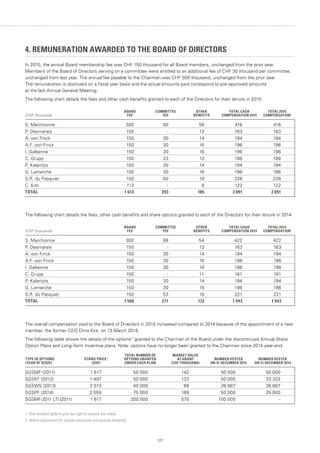
Incubator)
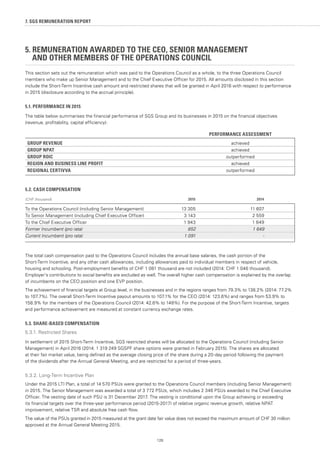
THOMAS KLUKAS (1965)
German
EVP, Automotive Services
PhD Engineering Science,
Master Business Administration
Joined SGS in 2006
Previous responsibilities
2008 – 2010: VP Automotive Services
2006 – 2008: Automotive Services
Regional Manager, North America
Other work experience
2000 – 2006: Senior Manager DEKRA SE
(Germany and USA)
FRANCOIS MARTI (1968)
Swiss
EVP, Industrial Services
(since October 2015)
Degree in International Relations
Initially joined SGS in 2003, rejoined
in 2011
Previous responsibilities
2012 – 2015: EVP Systems and
Services Certification
2011 – 2015: SVP, Strategic Transformation
2003 – 2005: VP Continuous Improvement
Other work experience
2005 – 2011: CEO Fiat Services
Senior Manager PWC and IBM
JEFFREY MCDONALD (1964)
Australian
EVP, Systems and Services Certification
(since October 2015)
Postgraduate Diploma in Education
Joined SGS in 1995
Previous responsibilities
2007 – 2015: COO, North America
2004 – 2007: EVP, Systems and
Services Certification
2003: Global Project Manager,
Systems and Services Certification
1995 – 2003: Systems and Services
Certification, South Eastern Asia and
Pacific, Regional Manager (Bangkok)
110
6. GOVERNANCE
PETER POSSEMIERS (1962)
Australian and Belgian
EVP, Environmental Services
BSc Chemistry and Microbiology
Joined SGS in 1983
Previous responsibilities
2007 – 2012: Global Sales, OGC
2005 – 2007: Managing Director, Korea
2003 – 2005: OGC Business
Development Manager Asia Pacific, China
2001 – 2003: OGC Business Development
Manager Asia Pacific, Australia
1998 – 2000: OGC Manager, Singapore
MALCOLM REID (1963)
British
COO South East Asia and Pacific
(since October 2015)
BSc Chemistry
Joined SGS in 1987
Previous responsibilities
2012 – 2015: EVP, Consumer
Testing Services
2008 – 2011: EVP, Systems and
Services Certification
2005 – 2007: Managing Director, Australia
2000 – 2005: Managing Director, Thailand
1997 – 2000: Managing Director,
Philippines
ALIM SAIDOV (1964)
Azerbaijani and Canadian
EVP, Oil, Gas and Chemicals Services
PhD in Science
Joined SGS in 1993
Previous responsibilities
2007 – 2013: EVP, Oil, Gas and Chemicals
Services and Environmental Services
2005 – 2007: COO, Eastern Europe 
Middle East
2004: COO, North America and
Managing Director, Canada
2001 – 2004: Managing Director,
Kazakhstan  Manager Caspian Region
RICHARD SHENTU (1968)
Chinese
EVP Consumer Testing Services
(since September 2015)
Textile Engineer, Masters in
Business Administration,
PhD in Management Science
Joined SGS in 1990
Previous responsibilities
2010 – 2015: Managing Director, China
2005 – 2011: Vice President CTS, CTS
Director and Executive Director China
2012 – 2015: Vice President
Industrial Services
2002 – 2004: CTS Hardline SBU director
China and Hong Kong
DENNIS YANG (1949)
Taiwanese
COO, East Asia
Master in Business Administration
Joined SGS in 1975
Previous responsibilities
2000 – 2002: Managing Director, Taiwan
1992 – 2000: Assistant General
Manager, Taiwan
In the course of 2015, Michael Belton,
EVP Minerals Services resigned from
his position and left the Group. Ladislav
Papik, COO South East Europe left the
Operations Council to assume a regional
role within the Group. Anthony Hall, COO
South East Asia  Pacific stepped down
from the Operations Council to assume
other responsibilities in the Group.
The Nomination and Remuneration
Committee approved in July 2015 the
internal promotion and appointment of
Derick Govender and Richard Shentu,
respectively EVP Minerals Services
and EVP Consumer Testing Services,
and in October 2015, the appointment
of Kimmo Fuller as COO North America.
4.2. OTHER ACTIVITIES AND FUNCTIONS
The following list presents all material
activities in governing and supervisory
boards, management positions and
consultancy functions, official tenures
and political positions held by each
member of the Operations Council
outside the Group, both in Switzerland
and abroad.
CARLA DE GEYSELEER
Macintosh Retail Group (NL), Member
of the Supervisory Board and Chair
of the Audit Committee
JEAN-LUC DE BUMAN
Association pour le Développement des
Compétences Bancaires, Geneva (CH),
Member of the Board since 1999
Hyposwiss Private Bank Genève SA,
Geneva (CH), Member of the Board
since 2006
Federal Accreditation Commission,
Bern (CH), Member since 2012
OLIVIER COPPEY
Swiss Trading and Shipping Association,
Geneva (CH), Member of the Executive
Board (since 2015)
ALEJANDRO GOMEZ DE LA TORRE
Swiss-Peruvian Chamber of Commerce,
Lima (Peru), Director
THOMAS KLUKAS
CITA, International Motor Vehicle
Inspection Committee, Brussels (BE),
Member of the Bureau Permanent
since 2011
FRANÇOIS MARTI
Swiss Philanthropy Foundation,
Member of the Board since 2013
111
4.3. LIMITS ON EXTERNAL MANDATES
At the 2015 Annual General Meeting,
the Shareholders modified the Articles
of Association of the Company in
compliance with the Ordinance against
Excessive Compensation at Listed
Joint-Stock Companies (OaEC),
for the purpose of introducing limits
on the number of mandates permissible
to members of the Operations Council.
The new rules limit the number of
mandates which members of the
Operations Council can accept, with
the prior consent of the Board of
Directors, to no more than four board
memberships in entities outside the
Group, out of which a maximum of one
membership in board of companies
whose shares are traded on a stock
exchange. Mandates assumed at the
request of a controlling entity do not
count towards the maxima defined in
the Articles of Association. In addition,
the Articles of Association set limits to
participations in board of associations
and other non-profit organisations to
no more than ten such memberships.
4.4. MANAGEMENT CONTRACTS
The Company is not party to any
management contract delegating
management tasks to companies
or individuals outside the Group.
5. COMPENSATION,
	SHAREHOLDINGS
	 AND LOANS
5.1. CONTENT AND METHOD OF
DETERMINING THE COMPENSATION
AND THE SHAREHOLDING
PROGRAMMES
The Group’s overriding compensation
policies are defined by the Board of
Directors. The objectives of these
policies are twofold: a) to attract and
retain the best talent available in the
industry and b) to motivate employees
and managers to create and protect value
for shareholders by generating long-term
sustainable financial achievements.
In line with these principles, Board
members are entitled to a fixed fee
which takes into account their level
of responsibility. Members of the
Operations Council receive a fixed
remuneration and are entitled to a
performance-related annual bonus
and Long-Term Incentive plans.
In compliance with the requirements
of the Ordinance against Excessive
Compensation at Listed Joint-Stock
Companies (OaEC), the Annual General
Meeting approves the compensation
payable to the Board and to the
Operations Council. The rules on vote
on pay applicable in the Group are
explained below.
The ultimate responsibility for
defining remuneration policies and
deciding on all matters relating to
remuneration rests with the Board of
Directors, subject to decisions which
require binding resolutions of the
Annual General Meeting. The Board
of Directors is assisted in its work
by a Nomination and Remuneration
Committee, which is elected by
the Annual General Meeting.
5.1.1. Rules on Performance-Related
Pay and Allocation of Equity-Linked
Instruments
At the 2015 Annual General Meeting,
the principles of the variable
remuneration and the allocation of
shares or equity-linked instruments to
the members of the Operations Council
were introduced in the Company's
Articles of Association (please refer
to the Remuneration Report for a
description of the Company’s rules
in the matter).
5.1.2. Rules on Loans, Credit Facilities
and Post-Employment Benefits
Loans granted to members of the
governing bodies of the Company may
not exceed one year of remuneration
and must be granted at market
conditions. As of 31 December 2015,
no such loan or credit facility had been
granted to any member of the Board
or management.
5.1.3. Rules on Vote on Pay
The Annual General meeting approves
the following matters related to
the compensation of the Board and
Operations Council:
•	 It approves the fixed fees payable to
the Board of Directors until the next
Annual General meeting;
•	 It approves in advance the fixed
remuneration payable to the
Operations Council during the next
financial year;
•	 It approves the total aggregate
amount payable to the Operations
Council for the performance-related
annual bonus related to the prior year;
•	 It approves the maximum amount
payable under Long-Term Incentive
plans to be introduced by the Company.
Resolutions of such matters are binding
on the Board of Directors. In addition,
the Annual General Meeting is invited
to cast a non-binding vote on the
Remuneration Report which describes
the Company’s remunerations policies.
112
6. SHAREHOLDERS’ 		
	PARTICIPATION
	RIGHTS
All registered shareholders receive a
copy of the half-year and full-year results
upon the publication of such results by
the Company. They can request a copy
of the Company’s Annual Report and are
personally invited to attend the Annual
General Meeting of Shareholders.
6.1. VOTING RIGHTS AND
REPRESENTATION RESTRICTIONS
All registered shareholders can
attend the General Meetings of
Shareholders and exercise their right
to vote. A shareholder may also elect
to grant power of attorney to an
independent proxy appointed by the
Company or to any other registered
shareholder. There are no voting
restrictions, subject to the exclusion
of nominee shareholders representing
undisclosed principals, as detailed
in section 2.6. Shareholders have
the opportunity to give general
or specific voting instructions to
the independent proxy. The voting
of resolutions by electronic votes
is authorised by the Articles of
Association, within the modalities
defined by the Board of Directors.
6.2. STATUTORY QUORUMS
The General Meeting of Shareholders
can validly deliberate regardless of
the number of shares represented
at the meeting. Resolutions are adopted
by the absolute majority of votes cast.
If a second ballot is necessary,
a relative majority is sufficient,
unless Swiss company law mandates
a special majority.
6.3. CONVOCATION OF GENERAL
MEETINGS OF SHAREHOLDERS
The rules regarding the convocation of
General Meetings of Shareholders are
in accordance with Swiss company law.
6.4. AGENDA
The Agenda of the General Meeting
of Shareholders is issued by the Board
of Directors. Shareholders representing
shares with a minimum par value of
CHF 50 thousand may request the
inclusion of an item on the agenda of
the General Meetings, provided that such
a request reaches the Company at least
40 days prior to the General Meeting.
6.5. REGISTRATION
IN THE SHARE REGISTER
The Company does not impose any
deadline for registering shares prior to
a General Meeting. However, a technical
notice of two business days is required
to process the registration.
7. CHANGE OF
	 CONTROL AND
	 DEFENCE MEASURES
No restriction on changes in control
is included in the Company’s Articles
of Association.
7.1. DUTY TO MAKE AN OFFER
In the absence of any specific rules in
the Company’s Articles of Association,
any investor or group of investors
acquiring more than 33.3% of the
shares and voting rights of the Company
has the duty to make a public offer in
compliance with the applicable Swiss
takeover rules.
7.2. CLAUSES ON CHANGE OF CONTROL
There are no general plans or standard
agreements offering specific protection
to Board Members, Senior Management
or employees of the Group in the event
of a change of control, subject to the
standard rules regarding termination
of employment.
8. AUDITORS
8.1. DURATION OF THE MANDATE
AND TERM OF OFFICE
Following a competitive process in 2000,
Deloitte SA was appointed auditor of the
Company and of the SGS Group by the
Annual General Meeting of Shareholders
upon recommendation of the Board of
Directors. The auditors of the Company
are subject to re-election at the Annual
General Meeting every year. The current
lead auditor, James Baird, has acted in
this capacity since 2012. He assumed
this position after agreement by the
Company's Audit Committee
8.2. AUDIT FEES
Total audit fees paid to Deloitte for the
audit of the Company and the Group
financial statements in 2015 amounted to
CHF 5.3 million (2014: CHF 6.0 million).
8.3. ADDITIONAL FEES
An aggregate amount of CHF 1.3 million
(2014 CHF 1.3 million) was paid to
Deloitte for other professional services,
unrelated to the statutory audit
activity. This amount includes CHF 0.7
million (2014: CHF 0.7 million) for tax
compliance services and CHF 0.6 million
(2014: CHF 0.6 million) for non-statutory
reporting and assurance services.
8.4. SUPERVISORY AND CONTROL
INSTRUMENTS VIS-A-VIS THE AUDITORS
The Audit Committee is responsible for
evaluating the external auditor on behalf
of the Board of Directors, and conducts
assessments of the audit services
provided to the Group during its regular
meetings. It meets with the auditor at
least three times per year (four times
in 2015), including private sessions
without the presence of management.
The duties of the Committee include
consideration of the audit plan, regular
assessment of the performance of
the auditor and approval of audit fees on
the basis of the amount of work required
in order to perform the audit.
6. GOVERNANCE
113
The auditor regularly presents his
findings, both during the deliberations
of the Audit Committee and in written
reports, to the attention of the Board
of Directors which summarise key
findings. The Group strives to safeguard
and support the independence of the
auditor by avoiding conflicts of interests.
In applying this policy, the attribution
of other consultancy assignments is
carefully reviewed to ensure that such
assignments do not endanger the
auditor’s independence.
9. INFORMATION POLICY
The policy of the Group is to provide
individual and institutional investors,
directly or through financial analysts,
business journalists or investment
consultants (financial community)
and the employees with financial and
business information in a consistent,
broad, timely and transparent manner.
The Group website has a section fully
dedicated to investor relations,
www.sgs.com/ir where all financial
information and presentations are
available. This includes an updated
version of the articles of association,
current information on share buy-back
programmes and minutes of
shareholders’ meetings. SGS meets
regularly with institutional investors,
holds results presentations, roadshows,
presentations at broker-sponsored
country or industry conferences as
well as one-on-one meetings.
The group publishes consolidated
half-year unaudited and yearly audited
results in print and on-line formats.
The annual report is published in English
and is available upon order on the
internet. The current list of publication
dates is available on the internet.
The group acknowledges the directives
on the independence of financial
research issued by the Swiss bankers
association, particularly articles 26 and
29-32. In addition, the Group complies
with rules regarding information and
reporting of the federal act on stock
exchange and securities trading, and
the ordinance on stock exchanges and
securities trading.
7. SGS REMUNERATION REPORT
116
7. SGS REMUNERATION REPORT
1. INTRODUCTION
	 BY THE NOMINATION
	 AND REMUNERATION
	COMMITTEE
2. COMPANY’S
	 REMUNERATION 	
	 POLICY AND
	GOVERNANCE
2.1.	 Remuneration Policy
	 and Principles
2.2.	Remuneration Governance
	 2.2.1. 	Nomination and
		 Remuneration Committee
	 2.2.2. 	Shareholders' Engagement
	 2.2.3. 	Method of Determination
		 of Compensation –
		 Benchmarking
3.	REMUNERATION
	MODEL
3.1.	Structure of Remuneration
	 of the Board of Directors
3.2.	Structure of Remuneration
	 of the Operations Council
	 3.2.1.	 Base Salary
	 3.2.2.	Short-Term Incentive
	 3.2.3.	Long-Term Incentive
	 3.2.4.	Shareholding Ownership
		 Guideline
	 3.2.5.	Benefits
	 3.2.6.	Employment Contracts
	 3.2.7.	 Timeline of Remuneration
4. REMUNERATION
	 AWARDED TO THE
	 BOARD OF DIRECTORS
5. REMUNERATION
	 AWARDED TO
	 THE CEO, SENIOR
	MANAGEMENT
	 AND OTHER MEMBERS
	 OF THE OPERATIONS 	
	COUNCIL
5.1.	Performance in 2015
5.2.	Cash Compensation
5.3.	Share-Based Compensation
	 5.3.1. Restricted Shares
	 5.3.2. Long-Term Incentive Plan
	 5.3.3. Discontinued Share
		 Option Plans
5.4.	Total Compensation to
	 the Operations Council,
	 Senior Management and
	 Chief Executive Officer
5.5.	Other Compensation
	 5.5.1. 	Severance Payments
	 5.5.2. 	Loans to Members
		 of Governing Bodies
The SGS Remuneration Report
provides an overview of the SGS
remuneration model, its principles
and programs and the related
governance framework. The
report also includes details on
the remuneration of the Board of
Directors and of the Operations
Council related to the 2015
business year.
The SGS Remuneration Report
has been prepared in compliance
with the Ordinance against
Excessive Compensation in Stock
Exchange listed Companies (the
Ordinance), the Swiss Exchange
(SIX) Directive on Information
relating to Corporate Governance
of 1 September 2014 and the
principles of the Swiss Code
of Best Practice for Corporate
Governance of economiesuisse.
117
1. INTRODUCTION
	 BY THE NOMINATION
	 AND REMUNERATION 	
	 COMMITTEE
The Nomination and Remuneration
Committee is pleased to present its
2015 Remuneration Report to you.
During the year, the Committee
has concentrated its efforts on
the implementation of the new
remuneration system developed as a
result of a thorough review conducted
in 2014. The new remuneration model
is strongly aligned to the business
strategy of profitable growth and to
the expectations of our shareholders.
The following changes are effective
from 2015 onwards:
More detailed information on the
remuneration model is provided in
section 3 of this report.
Furthermore, following the provisions
of the Ordinance issued by the Swiss
Federal Council, we have implemented
the binding vote on compensation
amounts at the Annual General Meeting
in 2015. At the forthcoming Annual
General Meeting, we will continue with
the same say-on-pay vote structure:
•	 Consultative vote on the
Remuneration Report;
•	 Binding vote on the prospective
remuneration amount of the Board
of Directors until the next Annual
General Meeting;
•	 Binding vote on the retrospective
variable remuneration of the
Operations Council members
of the previous business year;
•	 Binding vote on the prospective
fixed remuneration amount of the
Operations Council members for 2017.
The Articles of Association of SGS have
been revised accordingly and outline
the remuneration framework as well
as the structure of the binding votes
on remuneration. The revised Articles
of Association were approved at the
Annual General Meeting in 2015.
On the following pages, you will find
detailed information about our new
remuneration model, its principles and
programs and the remuneration awarded
to the Board of Directors and to the
Operations Council related to business
year 2015. We hope that you find this
report informative and are confident
that our approach to executive pay is
fully aligned with the strategy, the wider
competitive market benchmarks, the
performance of the Company and with
the interests of our shareholders.
Shelby du Pasquier
Chairman
•	 Introduction of:
	 Grant of shares for both
Short-Term and Long-Term
Incentive plans;
	 Balanced mix of performance
conditions in the Short-Term
and Long-Term Incentive
plans, including revenue goals,
profitability objectives, cash flow
and share price performance;
	 Relative performance
measurement against peer
companies in the Long-Term
Incentive plan;
	 Share ownership guideline
for the members of the
Operations Council.
•	 Discontinuation of:
	 Any stock options program;
	 Discretionary bonus;
	 Incentive scheme for the Chairman
of the Board of Directors.
2. COMPANY’S 			
	 REMUNERATION 		
	 POLICY AND 			
	GOVERNANCE
2.1. REMUNERATION POLICY
AND PRINCIPLES
Remuneration of the Board
of Directors
In order to guarantee their independence
in exercising their supervisory duties
towards the executive management,
the members of the Board of Directors
receive a fixed remuneration only.
Remuneration of the
Executive Management
The Company's remuneration policy
applicable to the executive management
(Operations Council) is defined by
the Board of Directors with two main
objectives: to attract and retain the best
talents available in the industry,
and to motivate them to create and
protect value for our shareholders by
driving long-term sustainable financial
success. The remuneration policy is
built on core principles that are aligned
to the Company’s business strategy of
profitable growth and that aim to drive
and support the Company’s core values
of passion, integrity, entrepreneurship
and innovative spirit.
Our remuneration system operates
according to four principles
described below.
7. SGS REMUNERATION REPORT
118
•	DIFFERENTIATIONISBASED
O
N
INDIVIDUAL CONTRIBUTIONS
LINKEDTOBUSINESSAND
I
NDIVIDUAL PERFORMANCE
•	 PART OF REMUNERATION
IS DELI
VERED
IN
EQUITYCOMPENSATION
•	 REMUNERATION LEVELS ARE IN
LINE
W
ITH
COMPETITIVEMARKETPRACTICE
SUBJECT TO A M
ULTI-
YEARVESTINGPERIOD
RESPONSIBILITIESANDTOTHESKILL-S
ET REQUIRED TO PERFORM THE ROLE
•	REMUNERATIONPROGRAM
SLINK
REM
UNERATION TO THE LEVEL OF
PAYFORPE
RFORMANCE
LONG-TERM
VALUECREATION
SHAREHOLDER
S’INTERESTS
ALIGNM
ENTTO
•	ASUBSTANTIALPORTION
OF
REM
UNERATION IS DIRECTLY
MARKET COM
PETITIVENESS
INTERNA
L EQUITY
119
2.2. REMUNERATION GOVERNANCE
2.2.1. Nomination and
Remuneration Committee
The Board of Directors is responsible
for determining the remuneration
of the Chairman and the Directors.
It also decides on the remuneration
and terms of employment of the Chief
Executive Officer, based upon the
recommendations of the Nomination
and Remuneration Committee. In
addition, the Board of Directors defines
general executive remuneration policies,
including the implementation and terms
and conditions of Long-Term Incentive
plans, as well as the financial targets
relevant to any incentive plan.
The Board of Directors is assisted in its
work by a Nomination and Remuneration
Committee (“the Committee”), which
consists of independent non-executive
Directors. The Committee acts in part in
an advisory capacity to the Board, and
in part as a decision-making body on
matters that the Board has delegated
to the Committee. The Committee
reviews regularly, at least once a year,
the compensation of each member of
the Operations Council (including the
Chief Executive Officer), and decides on
all matters relating to the remuneration
of these executives.
The following charts summarise
the authorisation levels for the main
decisions relating to the compensation
of the Board and the Operations
Council members. When reviewing
and deciding on executive remuneration
policies, the Committee and the Board
have access to Group Human Resources
staff and may use third party consultants
specialising in compensation matters.
In 2015, neither the Committee
nor the Board had recourse to such
external advisors.
Authorisation levels:
SUBJECT MATTER RECOMMENDATION APPROVAL
Aggregate remuneration amount of the Board of Directors Board of Directors AGM (binding vote)
Individual remuneration of the members of the Board of Directors
including the Chairman of the Board
Remuneration Committee Board of Directors
Aggregate fixed remuneration amount of the Operations Council Board of Directors AGM (binding vote)
Individual remuneration of the CEO Remuneration Committee Board of Directors
Individual remuneration of the Operations Council members CEO Remuneration Committee
Establishment of Long-Term Incentive plans Remuneration Committee Board of Directors
Aggregate value of the grants awarded under the Long-Term
Incentive plan for Operations Council members
Board of Directors AGM (binding vote)
Setting of annual financial targets for variable remuneration
of Operations Council members
CEO Board of Directors
Remuneration report Board of Directors AGM (consultative vote)
The following Directors served on
the Committee in 2015:
•	 Shelby du Pasquier (Chairman)
•	 Ian Gallienne
•	 August von Finck
In 2015, the Committee met three
times and settled two resolutions by
teleconference during the year. All
members attended all meetings and
teleconference calls. The Chairman
of the Nomination and Remuneration
Committee reports to the Board of
Directors after each meeting on the
activities of the Committee. The
minutes of the Committee meetings
are available to the members of the
Board of Directors. As a general rule,
the Chairman of the Board of Directors
attends the meetings of the Committee,
except when matters pertaining to his
own compensation are being discussed.
Selected members of the Operations
Council, the CEO and the Senior VP
for HR, may be asked to attend the
meetings in an advisory capacity.
They do not attend the meeting
when their own compensation and/or
performance are being discussed.
2.2.2. Shareholders’ Engagement
In the last two years, based on the
feedback received from our shareholders
and their representatives, we have
made significant efforts to improve the
disclosure of remuneration in terms of
transparency and level of detail provided
about the remuneration principles
and programs. The positive outcome
of the consultative vote on the 2014
Remuneration Report indicates that
shareholders welcome the progresses
made. We will continue to submit the
Remuneration Report to a consultative
shareholders’ vote at the Annual General
Meeting, so that shareholders have an
opportunity to express their opinion
about our remuneration model.
In addition, as required by the
Ordinance, the aggregate amounts of
the remuneration to be paid to members
of the Board of Directors and to the
Operations Council are subject to the
approval of the shareholders in form
of a binding vote on remuneration.
The procedure on the vote is defined
in the Articles of Association that
were approved at the 2015 Annual
General Meeting and foresees separate
votes on (i) the Board remuneration for
the period until the next Annual General
Meeting (ii) the fixed remuneration of the
Operations Council for the next calendar
year (iii) the variable compensation
awarded to the Operations Council in
respect to the previous calendar year
and (iv) any award to be granted to the
Operations Council under the Long-Term
Incentive plan.
7. SGS REMUNERATION REPORT
SHAREHOLDER VOTE
AT THE 2016 AGM
2015 2016 2017
Consultative vote on 2015
Remuneration Report
Remuneration policy
and principles
Binding vote on remuneration
of Board
Remuneration
Binding vote on fixed
remuneration of OC
Fixed remuneration
Binding vote on variable
remuneration of OC
Variable remuneration
Vote at AGM 2016
120
The binding votes on the aggregate
compensation amounts combined with
a consultative vote on the remuneration
report reflect our true commitment
to provide our shareholders with
a far-reaching “say-on-pay”.
As required by the Ordinance, the
Articles of Association of SGS have
been revised and approved by the
shareholders at the Annual General
Meeting in 2015. The Articles of
Association include the following
provisions on remuneration (details
available on www.sgs.com/governance:
•	 	Principles of remuneration: The
members of the Board of Directors
receive a fixed remuneration. The
amount of the remuneration depends
on the tasks performed within the
Board of Directors and in particular
the participation in the committees
of the Board of Directors. The
remuneration may be paid in cash
or in shares of the Company.
•	 The members of the Operations
Council may receive a fixed and
a variable remuneration. The fixed
remuneration includes the annual
base salary, submitted for approval
to shareholder vote as per table
above, the employer’s contributions
to pension fund and/or health and
life insurance, benefits in kind
and seniority bonuses, as required
by law and company policies.
The variable remuneration is linked
to the achievement of financial or
non-financial performance objectives
set by the Board of Directors. Variable
compensation may be paid in cash
or in shares or conversion rights or
other equity instruments, at conditions
determined by the Board of Directors.
	 In addition, the Board of Directors
may implement Long-Term Incentive
plans in order to motivate executives
to reach strategic objectives for a
period which exceeds one year. Such
plans may provide for the allotment
of shares or conversion rights or
other equity instruments, which are
contingent upon the objectives set by
the Board of Directors being reached.
Terms and conditions of such plans are
determined by the Board of Directors.
•	 Additional amount for payments
to members of the Operations
Council appointed after the vote on
remuneration at the Annual General
Meeting: for the remuneration
of members of the Operations
Council who have been appointed
after the approval of the aggregate
remuneration amount by the Annual
General Meeting, an amount of up
to 25% of the maximum aggregate
remuneration amount approved for
the Operations Council is available
without further approval of the Annual
General Meeting.
•	 Loans, credit facilities and post-
employment benefits for members
of the Board of Directors and of the
Operations Council: loans and credits
to a member of the Board of Directors
or executive management may only be
granted at market conditions and may
not, when they are granted, exceed the
most recent total annual remuneration
of the member in question.
2.2.3. Method of Determination
of Compensation – Benchmarking
As a global business in a broad range of
sectors, SGS’ business success is driven
by the commitment and engagement of
its employees. Our remuneration policy
must take account of both global and
local practices. We therefore compare
our practices with those of other similar
global organisations. The Group performs
periodic benchmarks against companies
which satisfy the following criteria:
•	 Competitors in the testing, inspection
and certification industry, such as
Bureau Veritas, Intertek, DNV-GL
and TÜVs.
•	 All SMI listed companies
•	 Internationally active companies within
and outside Switzerland which operate
in one or more of the industry sectors
in which SGS is active, including the
energy, mining, industrial, chemical,
medical goods, pharmaceutical,
durable and non-durable goods,
and food sectors, such as Alstom,
Glencore-Xstrata, Siemens, DuPont,
Baxter, Actelion, Schindler and Amcor.
The elements of executive remuneration
benchmarked include annual base salary,
allowances, short-term and long-term
incentive compensation and benefits.
To ensure proper benchmarking, we use
a proprietary job sizing methodology.
Since more than one-third of our
Operations Council members are
based outside Switzerland, we utilise
information published by reputable
data providers, including Mercer
and Towers Watson, who are able
to supply information on both a local
and a global basis.
121
Directors receive an annual fixed fee
of CHF 150 000 whilst the Chairman
receives CHF 300 000. In addition
members of a board committee receive
CHF 30 000 for each committee.
The remuneration is paid in cash in two
instalments, in June and in December
for the calendar year. Social charges
are applied to the above amounts.
Members of the Board of Directors do
not hold service contracts and are not
entitled to any termination or severance
payments. They do not participate in
the Company’s benefit schemes and
the Company does not make any
pension contributions on their behalf.
3.2. STRUCTURE OF REMUNERATION
OF THE OPERATIONS COUNCIL
The remuneration earned by the Chief
Executive Officer and by members of
the Operations Council comprises:
(i) a fixed base salary, (ii) an annual
Short-Term Incentive, settled partly
in cash and partly in restricted shares,
(iii) a Long-Term Incentive, and (iv) other
benefits such as retirement, insurances
and perquisites.
The Group’s long-term strategic plan
drives all the activities in the business
and is reflected in the remuneration
strategy that will assist the Group in
achieving its financial and other business
goals. Each year, an annual business
plan is derived from the long-term
strategic plan and sets the business
objectives to be achieved during the
year. The annual Short-Term Incentive is
used to reward the annual achievements
against the business plan while the
Long-Term Incentive is used to drive
sustained performance aligned with
the Group’s long-term strategic plan.
The Company considers that the
payment of variable remuneration in the
form of shares subject to restriction and/
or vesting period is a key mechanism to
align the management’s incentives to
the long-term interests of shareholders.
3. REMUNERATION MODEL
3.1. STRUCTURE OF REMUNERATION OF THE BOARD OF DIRECTORS
In order to guarantee their independence in exercising their supervisory duties towards the executive management, the members
of the Board of Directors receive a fixed remuneration only. They are entitled to a fixed annual board membership fee and additional
annual fees for the participation in board committees. They do not receive additional compensation for attending meetings and do
not receive any variable remuneration, options or shares.
The Chairman receives a fixed annual fee and additional fixed fees for chairing the Audit Committee and the Professional
Conduct Committee.
REMUNERATION OF THE BOARD OF DIRECTORS
300 000 30 000
FIXED ANNUAL FEE
COMMITTEE FEE
(PER COMMITTEE)
150 000 30 000
+
Chairman
Board members
122
7. SGS REMUNERATION REPORT
The table below summarises the various components of the compensation of Operations Council members, including
the Chief Executive Officer:
3.2.1. Base Salary
The base salaries of the Chief Executive
Officer and of each Operations Council
member are reviewed annually on the
basis of market data for similar positions
in those companies and geographies
against which the Group benchmarks
itself. In addition to individual
performance and contribution, business
performance and results, the deciding
body takes into account the scope and
complexity of the areas of responsibility
of the position, skill sets and experience
required to perform the role, and relevant
market practice in the industry.
3.2.2. Short-Term Incentive
Members of the Operations Council
including the Chief Executive Officer are
entitled to a performance-related annual
incentive (the “Short-Term Incentive”).
The Short-Term Incentive is designed
to reward the executives for the annual
financial performance of the Group
and its businesses, as well as for the
demonstration of leadership behaviours
in line with the SGS competency model.
The target incentive is expressed as a
percentage of the annual base salary
and varies depending on the role. For
the CEO, the target incentive amounts
to 100% of annual base salary, while the
target incentive for the other members of
the Operations Council varies between
55% and 65% of annual base salary.
Financial Performance
The key performance indicators
used to measure the annual financial
performance of the Group and its
businesses have been amended in 2015
in order to be fully aligned with the
business strategy of profitable growth.
They include a measurement of growth
(top-line contribution), profitability
(bottom-line contribution) and efficient
use of capital and thus reflect the
financial performance of the Company
in a balanced manner. Those financial
metrics are cascaded consistently
throughout the organisation in order to
ensure collective alignment. The CEO
and the heads of corporate functions
(SVPs) are measured on the financial
performance of the Group, while the
other members of the Operations Council
are measured 50% on the financial
performance of the Group and 50% on
the financial performance of their own
business line (EVPs) or region (COOs).
REMUNERATION
ELEMENT
REMUNERATION
VEHICLE DRIVERS
PERFORMANCE
MEASURES PURPOSE PLAN PERIOD
Base Salary Monthly
cash salary
Position and
experience,
market practice
(benchmarking)
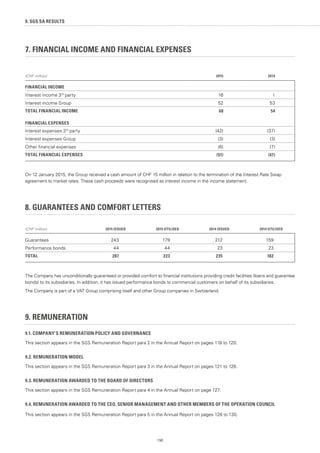
n/a Attract and retain
key executives
Continuous
Short-Term
Incentive
50% cash
50% restricted
shares
Annual financial
performance,
individual performance
against leadership
behavioural model
Group Revenue, Group
NPAT, Group ROIC1
,
business profit, Regional
CertiVVa2
, Leadership
multiplier
Pay for
performance
1 year
performance
period
3-years
deferral period
Long-Term
Incentive
Performance
Share Units (PSU)
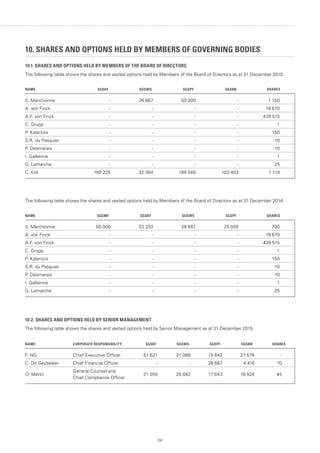
Long-term financial
performance
Relative organic
revenue growth,
relative NPAT
improvement, relative
TSR3
, absolute free
cash flow
Reward for long-
term performance,
align compensation
with the interests
of the shareholders
3-year
performance
period
Benefits Retirement
benefits and
insurances,
perquisites
Market practice n/a Protect executive
against risks,
attract and retain
Continuous
1. NPAT : Net Profit After Tax, ROIC : Return On Invested Capital.
2. SGS Internal Economic Value Added.
3. TSR: Total Shareholder Return.
123
GROUP'S FINANCIAL PERFORMANCE ROLE SPECIFIC FINANCIAL PERFORMANCE
PROFITABILITY
(BOTTOM-LINE)
GROWTH
(TOP-LINE)
EFFICIENT USE
OF CAPITAL
PROFITABILITY
(BOTTOM-LINE)
EFFICIENT USE
OF CAPITAL
CEO Group NPAT
25%
Group Revenue
25%
Group ROIC
50%
- -
SVPs Group NPAT
65%
Group Revenue
25%
Group ROIC
10%
- -
EVPs Group NPAT
25%
Group Revenue
25%
- Business-line profit
40%
Group ROIC
10%
COOs Group NPAT
25%
Group Revenue
25%
- Regional profit
40%
Regional CertiVVa
10%
At the beginning of the performance year, the objective for each financial metric is set by the Board of Directors on the basis
of a recommendation by the CEO and in line with the annual budget. For each financial metric, the payout curve is predetermined
as follows: a target (expected level of performance), a threshold (minimum level of performance to trigger a payout) and a cap
(maximum level of performance above which the payout factor is capped at 200%). The Financial Performance Payout factor
between the threshold, the target and the maximum is calculated by linear interpolation.
PAYOUT%
ACHIEVEMENT %
The payout curve is structured on a leverage of one to three for over-achievement and one to five for under-achievement:
•	 Every percentage achievement above 100% of the objective (budget) increases the payout factor by 3%. The payout factor is
capped at 200%.
•	 Every percentage achievement below 100% of the objective (budget) reduces the payout factor by 5%. Therefore a performance
below 80% achievement level (threshold) provides a 0% payout factor.
At the end of the performance period, the results for each objective are assessed against the pre-defined targets and the payout
curve to determine a payout factor. The weighted average of the payout factors of each objective corresponds to the overall
Financial Performance Payout factor. Below you will find an example of calculation for an Executive Vice President
100%
x 0.25
GROUP
REVENUE
WEIGHT 25%
80%
x 0.25
GROUP
NPAT
WEIGHT 25%
150%
x 0.40
BUSINESS
PROFIT
WEIGHT 40%
150%
x 0.10
GROUP
ROIC
WEIGHT 10%
120%
FINANCIAL
PERFORMANCE
PAYOUT
+ + + =
CAP
TARGET
THRESHOLD
200%
100%
0%
80% 100% 133.3%
124
7. SGS REMUNERATION REPORT
100 000 120% 125% 150 000
TARGET INCENTIVE
FINANCIAL
PERFORMANCE
PAYOUT FACTOR
LEADERSHIP
MULTIPLIER
ACTUAL PAYOUT
X X =
Leadership Multiplier
To determine the final bonus amount to be paid, the financial performance payout factor is multiplied by a leadership multiplier.
This combination of financial objectives and leadership multiplier has been chosen in order to balance between rewarding
the financial performance of the Group and its businesses and rewarding wider leadership behaviours of the executives.
The leadership multiplier is determined for each executive on the basis of an assessment of their behaviours against sixteen
pre-defined dimensions of the competency model of SGS in the areas of change management and people management.
The assessment of the members of the Operations Council is conducted at year end by the CEO. The assessment leads
to an overall leadership performance rating that is directly linked to the leadership multiplier as follows:
•	 “Needs improvement” rating corresponds to a leadership multiplier of 70%
•	 	“Meets expectations” rating corresponds to a leadership multiplier of 100%
•	 	“Exceeds expectations” rating corresponds to a leadership multiplier of 125%
Short-Term Incentive Calculation
The final payout and the corresponding
Short-Term Incentive amount for the CEO
and the other members of the Operations
Council are confirmed by the Nomination
and Remuneration Committee and
approved by the Board of Directors.
They are subject to a binding vote at
the Annual General Meeting.
Specific Short-Term Incentive Rules
for the CEO
While determining the compensation
package of the new CEO, the Board
of Directors decided to adapt the rules
of the Short-Term Incentive plan to the
specific position of CEO, as follows:
•	 The CEO performance assessment
is purely based on the financial
performance of the company and
the leadership multiplier does not
apply to the CEO;
•	 	Because of the absence of leadership
multiplier, the payout curve for the
CEO was adjusted: for the threshold
level of performance, the payout
starts at 25% (instead of 0%) and
the 200% payout cap for financial
performance does not apply.
Furthermore there is no accelerator
for performance above target.
Settlement of the Short-Term Incentive
Once the Short-Term Incentive amount
is determined, it is settled 50% in cash
and 50% in restricted shares, in order
to strengthen the link between the
compensation of the executives and the
future company share price performance.
The cash component and the shares
are paid out after the shareholders’
approval at the Annual General Meeting
of the following year. The shares are
allocated at the value defined as the
average closing share price during the
20-day period following the payment
of the dividends after the Annual
General Meeting. They are restricted
for a period of three years during which
they may not be sold, transferred
or pledged. In case of change of
control or liquidation or termination
of employment following retirement,
death or disability, the restriction period
of the shares lapses. The shares remain
blocked in all other instances.
The shares are subject to forfeiture
in cases where the executives act
in violation of the law or the internal
regulations of the SGS Group, such as
the code of integrity, or are in breach
of their obligations to the SGS Group.
3.2.3. Long-Term Incentive
In 2015, the Board of Directors
implemented a new Long-Term
Incentive plan designed to motivate
the leadership team to realise the
long-term objectives of the Group.
The plan consists of Performance Share
Units (PSUs) granted in Q4 2015 to a
selected number of senior executives
of the Group, including the members
of the Operations Council. The PSU
vest after a performance period of
three years (2015-2017) conditionally
upon the achievement of pre-defined
performance objectives and the
executive being employed by the Group
at the vesting date (31 December 2017).
In order to balance with the Short-Term
Incentive which is based on absolute
financial performance and on Leadership
behaviours, a relative performance
measurement has been introduced in the
PSU plan, combining absolute performance
of the SGS Group and relative performance
compared to a peer group of companies:
•	 Relative total shareholder return
(TSR, value delivered to shareholders),
40% weight
•	 Relative organic revenue growth
(top-line performance), 20% weight
•	 Relative NPAT improvement
(bottom-line performance), 20% weight
•	 Free cash flow (absolute measure
against SGS annual budget),
20% weight.
125
The relative performance on revenue growth, NPAT and TSR is measured by an independent consulting company, Obermatt.
Obermatt compares and ranks SGS amongst the performance of a selected peer group of companies which have been approved
by the Board of Directors because they have a comparable range of services, technology, customers, suppliers or investors and
thus, are exposed to similar market cycles. The intention of indexing performance against a peer group of companies is to reward
the relative performance of the company, where market factors that are outside the control of the executives are neutralised.
For each relative objective, the target is to reach at least the median performance of the peer group, which corresponds to 100%
vesting level. There is no vesting for a performance below the median of the peer group and the vesting level is capped at 150%
for performance at the upper quartile of the peer group. Any vesting level in between is interpolated linearly.
PEER GROUP
Adecco ALS Applus+ Bureau Veritas Eurofins
Exova Intertek ISS Mistras Rentokil
SAI Global Securitas Sodexo Team
For the free cash flow objective, the vesting level is predetermined as follows: for every percentage point of underachievement
below the target, the vesting level is reduced by 5%; for every percentage point of overachievement above target, the vesting level
is increased by 3%, to a maximum of 150%.
The overall vesting level of the PSUs granted will be calculated as a weighted average of each of the respective vesting levels for
relative TSR (40%), relative NPAT improvement (20%), relative organic revenue growth (20%) and free cash flow against budget
(20%) and ranges between 0% and 150%.
Number of Shares Allocated
at vesting
=
Number of PSUs originally granted
to the Participant
X Overall vesting level (0-150%)
In case of termination of employment,
all unvested PSUs are immediately
forfeited without value and without
any compensation, except in the
following cases:
•	 In case of termination of employment
as a result of disability or retirement,
unvested PSUs vest on a pro rata
basis, based on the number of full
months of the performance period
that have expired until the termination
date. The shares are allocated after
the regular vesting date and the
vesting level is determined based on
the performance during the entire
regular performance period. There is
no early allocation of the shares.
•	 Upon termination of employment as
a result of death, unvested PSUs will
vest immediately on a pro rata basis,
based on the number of full months
of the performance period that have
expired until the termination date.
The vesting level is based on an
estimation of performance by the
Board of Directors.
•	 In the event of a corporate transaction
or liquidation, unvested PSUs vest
immediately. The vesting level is based
on an estimation of performance by
the Board of Directors.
The PSUs are subject to forfeiture
in cases where the executives act
in violation of the law or the internal
regulations of the SGS Group, such as
the code of integrity, or are in breach of
their obligations to the SGS Group.
The grants awarded under the
Long-Term Incentive plan take place
every three years (no annual grants).
3.2.4. Shareholding Ownership
Guideline
A shareholding ownership guideline
(SOG) has been introduced in 2015,
requiring the members of the
Operations Council to own at least
a certain multiple of their annual base
salary in SGS shares as follows:
•	 	CEO: three times the annual
base salary
•	 Other members of the Operations
Council: two times the annual
base salary
In the event of a substantial drop in
the share price, the Board of Directors
has the discretion to modify the SOG.
The determination of equity amounts
against the SOG is defined to include
vested shares allocated under the
Short-Term and Long-Term Incentive
plans, shares underlying vested and
unvested warrants granted under the
discontinued warrants plans and other
shares that are owned by the Operations
Council member directly or indirectly
(by “closely related persons”).
126
7. SGS REMUNERATION REPORT
The Nomination and Remuneration
Committee reviews compliance with
the SOG on an annual basis. Until the
minimum requirement is met, 25%
of the shares allocated under the
Short-Term Incentive plan and all shares
allocated upon vesting of the PSUs
under the Long-Term Incentive plan
will be blocked.
3.2.5. Benefits
Additional employment benefits
such as allowances or memberships
may be awarded in accordance with
prevailing practice in the locations of
employment of individual Operations
Council members. They also include
the employer's contributions to
social benefits as per the applicable
legislation in the country of employment.
Retirement benefits are set out on
page 129 in this Report. Swiss-based
Operations Council members
participate, on the same basis as
other Swiss employees of the Group,
in the Company’s pension scheme.
Employees contribute 8% of their base
salary and the Company contributes an
amount equal to one and a half times
the contributions paid by all employees
to the scheme. Employees have the
possibility to voluntarily increase their
contribution rate by 2% above the
standard rate. More flexibility has also
been granted to employees who wish
to fund a potential retirement before the
normal age, or for those who wish to
continue working after the age of 65.
3.2.6. Employment Contracts
Employment contracts of Operations
Council members have no fixed term
and can be terminated at any time by
either party, provided a standard notice
period of six months is respected. For
the Chief Executive Officer the notice
period is twelve months. As of 2015,
the executive contracts do not provide
for any severance payments, and are
subject to applicable legislation in the
country of employment. More than
one-third of the Operations
Council members are not employed
in Switzerland.
3.2.7. Timeline of Remuneration
The following outlines the timeline of
payment of each remuneration element
that has been earned in 2015:
•	 The annual base salary is paid
during 2015
•	 The cash portion of the Short-Term
Incentive is paid in March 2016, shortly
after the Annual General Meeting
•	 The share portion of the Short-Term
Incentive is allocated in April 2016 and
will be unblocked in April 2019
•	 The PSUs granted under the Long-Term
Incentive in 2015 will be earned over
the performance period from 2015
to 2017 and will vest on 31 December
2017. Until that date, there is
no vesting under the Long-Term
Incentive plan.
Vesting31.12.2017
Sharesallocation
TIMELINE (PERFORMANCE PERIOD, TIME OF PAYMENT PERFORMANCE OBJECTIVES
Relative organic revenue growth (20%)
Relative NPAT improvement (20%)
Relative TSR (40%)
Absolute free cash flow (20%)
Group revenue (25%)
Group NPAT (25%)
Role specific PL (50%)
Multiplied by leadership multiplier
Fixed remuneration
LONG-TERM
INCENTIVE 2015
GRANT
SHORT-TERM
INCENTIVE
ANNUAL BASE
SALARY AND
BENEFITS
SHARE OWNERSHIP GUIDELINE
2015 2016 2017 2018 2019
Un-
blocking
50%in
shares
50%in
cash
127
4. REMUNERATION AWARDED TO THE BOARD OF DIRECTORS
In 2015, the annual Board membership fee was CHF 150 thousand for all Board members, unchanged from the prior year.
Members of the Board of Directors serving on a committee were entitled to an additional fee of CHF 30 thousand per committee,
unchanged from last year. The annual fee payable to the Chairman was CHF 300 thousand, unchanged from the prior year.
The remuneration is disclosed on a fiscal year basis and the actual amounts paid correspond to pre-approved amounts
at the last Annual General Meeting.
The following chart details the fees and other cash benefits granted to each of the Directors for their tenure in 2015:
(CHF thousand)
BOARD
FEE
COMMITTEE
FEE
OTHER
BENEFITS
TOTAL CASH
COMPENSATION 2015
TOTAL 2015
COMPENSATION
S. Marchionne 300 60 56 416 416
P. Desmarais 150 - 13 163 163
A. von Finck 150 30 14 194 194
A.F. von Finck 150 30 16 196 196
I. Gallienne 150 30 16 196 196
C. Grupp 150 23 13 186 186
P. Kalantzis 150 30 14 194 194
G. Lamarche 150 30 16 196 196
S.R. du Pasquier 150 60 18 228 228
C. Kirk 113 - 9 122 122
TOTAL 1 613 293 185 2 091 2 091
The following chart details the fees, other cash benefits and share options granted to each of the Directors for their tenure in 2014:
(CHF thousand)
BOARD
FEE
COMMITTEE
FEE
OTHER
BENEFITS
TOTAL CASH
COMPENSATION 2014
TOTAL 2014
COMPENSATION
S. Marchionne 300 68 54 422 422
P. Desmarais 150 - 13 163 163
A. von Finck 150 30 14 194 194
A.F. von Finck 150 30 16 196 196
I. Gallienne 150 30 16 196 196
C. Grupp 150 - 11 161 161
P. Kalantzis 150 30 14 194 194
G. Lamarche 150 30 16 196 196
S.R. du Pasquier 150 53 18 221 221
TOTAL 1 500 271 172 1 943 1 943
The overall compensation paid to the Board of Directors in 2015 increased compared to 2014 because of the appointment of a new
member, the former CEO Chris Kirk, on 13 March 2015.
The following table shows the details of the options ¹ granted to the Chairman of the Board under the discontinued Annual Share
Option Plans and Long-Term Incentive plans. Note: options have no longer been granted to the Chairman since 2014 year-end.
TYPE OF OPTIONS
(YEAR OF ISSUE)
STRIKE PRICE 2
(CHF)
TOTAL NUMBER OF
OPTIONS GRANTED
UNDER EACH PLAN
MARKET VALUE
AT GRANT
(CHF THOUSAND)
NUMBER VESTED
ON 31 DECEMBER 2015
NUMBER VESTED
ON 31 DECEMBER 2014
SGSMF (2011) 1 617 50 000 142 50 000 50 000
SGSKF (2012) 1 497 50 000 133 50 000 33 333
SGSWS (2013) 2 013 40 000 89 26 667 26 667
SGSPF (2014) 2 059 75 000 189 50 000 25 000
SGSMF-2011 LTI (2011) 1 617 200 000 570 100 000 -
1. One hundred options give the right to acquire one share.
2. Before adjustment for capital reductions and special dividends.
128
7. SGS REMUNERATION REPORT
5. REMUNERATION AWARDED TO THE CEO, SENIOR MANAGEMENT
	 AND OTHER MEMBERS OF THE OPERATIONS COUNCIL
This section sets out the remuneration which was paid to the Operations Council as a whole, to the three Operations Council
members who make up Senior Management and to the Chief Executive Officer for 2015. All amounts disclosed in this section
include the Short-Term Incentive cash amount and restricted shares that will be granted in April 2016 with respect to performance
in 2015 (disclosure according to the accrual principle).
5.1. PERFORMANCE IN 2015
The table below summarises the financial performance of SGS Group and its businesses in 2015 on the financial objectives
(revenue, profitability, capital efficiency):
PERFORMANCE ASSESSMENT
GROUP REVENUE achieved
GROUP NPAT achieved
GROUP ROIC outperformed
REGION AND BUSINESS LINE PROFIT achieved
REGIONAL CERTIVVA outperformed
5.2. CASH COMPENSATION
(CHF thousand) 2015 2014
To the Operations Council (including Senior Management) 13 305 11 607
To Senior Management (including Chief Executive Officer) 3 143 2 559
To the Chief Executive Officer 1 943 1 649
Former Incumbent (pro rata) 852 1 649
Current Incumbent (pro rata) 1 091 -
The total cash compensation paid to the Operations Council includes the annual base salaries, the cash portion of the
Short-Term Incentive, and any other cash allowances, including allowances paid to individual members in respect of vehicle,
housing and schooling. Post-employment benefits of CHF 1 081 thousand are not included (2014: CHF 1 046 thousand).
Employer's contributions to social benefits are excluded as well. The overall higher cash compensation is explained by the overlap
of incumbents on the CEO position and one EVP position.
The achievement of financial targets at Group level, in the businesses and in the regions ranges from 79.3% to 138.2% (2014: 77.2%
to 107.7%). The overall Short-Term Incentive payout amounts to 107.1% for the CEO (2014: 123.6%) and ranges from 53.9% to
158.9% for the members of the Operations Council (2014: 42.6% to 148%). For the purpose of the Short-Term Incentive, targets
and performance achievement are measured at constant currency exchange rates.
5.3. SHARE-BASED COMPENSATION
5.3.1. Restricted Shares
In settlement of 2015 Short-Term Incentive, SGS restricted shares will be allocated to the Operations Council (including Senior
Management) in April 2016 (2014: 1 319 249 SGSPF share options were granted in February 2015). The shares are allocated
at their fair market value, being defined as the average closing price of the share during a 20-day period following the payment
of the dividends after the Annual General Meeting, and are restricted for a period of three-years.
5.3.2. Long-Term Incentive Plan
Under the 2015 LTI Plan, a total of 14 570 PSUs were granted to the Operations Council members (including Senior Management)
in 2015. The Senior Management was awarded a total of 3 772 PSUs, which includes 2 346 PSUs awarded to the Chief Executive
Officer. The vesting date of such PSU is 31 December 2017. The vesting is conditional upon the Group achieving or exceeding
its financial targets over the three-year performance period (2015-2017) of relative organic revenue growth, relative NPAT
improvement, relative TSR and absolute free cash flow.
The value of the PSUs granted in 2015 measured at the grant date fair value does not exceed the maximum amount of CHF 30 million
approved at the Annual General Meeting 2015.
129
5.3.3. Discontinued Share Option Plans
The following table presents details of the share options awarded to members of the Operations Council, Senior Management and
the CEO, active at 31 December 2015, and shows those options which have been granted, vested and/or became exercisable in 2015.
TYPE OF OPTIONS 1
(YEAR OF ISSUE)
STRIKE PRICE
(CHF) 2
TOTAL NUMBER OF
OPTIONS GRANTED
UNDER EACH PLAN
MARKET VALUE
AT GRANT
(CHF THOUSAND)
NUMBER VESTED ON
31 DECEMBER 2015
NUMBER VESTED ON
31 DECEMBER 2014
OPERATIONS COUNCIL (INCLUDING SENIOR MANAGEMENT AND CHIEF EXECUTIVE OFFICER)
SGSMF (2011) 1 617 573 909 1 636 572 241 572 241
SGSKF (2012) 1 497 651 925 1 734 651 925 434 617
SGSWS (2013) 2 013 807 068 1 800 538 045 538 045
SGSPF (2014) 2 059 612 341 1 543 408 227 204 114
SGSMF-2011 LTI 1 617 2 840 000 8 094 1 405 000 -
SGSBB (2015) 1 798 921 319 2 045 307 106 -
SENIOR MANAGEMENT (INCLUDING CHIEF EXECUTIVE OFFICER)
SGSMF (2011) 1 617 80 149 228 80 149 80 149
SGSKF (2012) 1 497 102 676 273 102 676 68 451
SGSWS (2013) 2 013 89 895 200 59 930 59 930
SGSPF (2014) 2 059 89 928 227 59 952 29 976
SGSMF-2011 LTI 1 617 320 000 912 160 000 -
SGSBB (2015) 1 798 145 545 323 48 515 -
CHIEF EXECUTIVE OFFICER
SGSMF (2011) 1 617 46 227 132 46 227 46 227
SGSKF (2012) 1 497 61 621 164 61 621 41 081
SGSWS (2013) 2 013 46 632 104 31 088 31 088
SGSPF (2014) 2 059 23 464 59 15 643 7 821
SGSMF-2011 LTI 1 617 200 000 570 100 000 -
SGSBB (2015) 1 798 82 727 184 27 576 -
1. One hundred options give the right to acquire one share.
2. Before adjustment for capital reductions and special dividends.
5.4. TOTAL COMPENSATION TO THE OPERATIONS COUNCIL, SENIOR MANAGEMENT AND CHIEF EXECUTIVE OFFICER
The tables below present all components of the remuneration earned in 2014 and 2015 by the Operations Council, by the Senior
Management and by the Chief Executive Officer.
Total compensation for 2015:
(CHF thousand)
BASE
SALARY
CONTRIBUTION
TO PENSION
BENEFITS
OTHER
EMPLOYMENT
BENEFITS
ANNUAL
CASH
BONUS
ANNUAL GRANT
OF RESTRICTED
SHARES 1
LONG-TERM
INCENTIVE
PSUs GRANT  2
TOTAL 2015 COMPENSATION
(INCLUDING RESTRICTED
SHARES AND PSU)
To the Operations Council
(including Senior Management) 3
8 205 1 081 3 508 2 944 2 680 13 468 31 886
To Senior Management
(including Chief Executive Officer) 4
1 950 260 841 731 731 3 487 8 000
To the Chief Executive Officer 1 140 148 614 438 438 2 169 4 947
Former Incumbent (pro rata) 496 50 404 93 93 - 1 136
Current Incumbent (pro rata) 644 98 210 345 345 2 169 3 811
1. Restricted Shares that will be granted in April 2016.
2. Valuation of the Performance Share Units (PSUs) granted under the 2015-2017 Long-Term Incentive plan (LTI) according to IFRS2. PSUs vesting is subject to company
performance conditions. As per Swiss law requirements, the total valuation of the 3-year period has to be disclosed when PSUs are granted contrary to IFRS
(valuation disclosed over the LTIP 3-year period).
3. 24 FTE (Full Time Equivalent).
4. 3 FTE.
130
7. SGS REMUNERATION REPORT
Total compensation for 2014:
(CHF thousand)
BASE
SALARY
CONTRIBUTION
TO PENSION
BENEFITS
OTHER
EMPLOYMENT
BENEFITS
ANNUAL
CASH
BONUS
ANNUAL
GRANT
OF SHARE
OPTIONS
DISCRETIONARY
CASH BONUS
TOTAL 2014
COMPENSATION
(INCLUDING
OPTIONS)
To the Operations Council
(including Senior Management) 1
7 680 1 046 2 198 2 603 2 929 75 16 531
To Senior Management
(including Chief Executive Officer) 2
1 576 271 344 814 828 75 3 908
To the Chief Executive Officer 1 000 172 216 577 689 - 2 654
1. 24 FTE (Full Time Equivalent).
2. 3 FTE.
In the year under review, the highest compensation paid by the Group was awarded to the Chief Executive Officer.
The following charts illustrate the ratio between fixed and variable remuneration for the CEO and for the other members of
the Operations Council on average (without CEO). The ratio depends on the extent to which pre-defined objectives have been
achieved and is being shown at target (assuming performance at the required level), at minimum (no payout under the Short-Term
Incentive due to underperformance), at maximum (maximum payout under the Short-Term Incentive plan) and at actual levels
achieved in 2015. The charts exclude Long-Term Incentive grants.
In 2015, the variable actual remuneration of the Chief Executive Officer represented 44% of the total actual compensation (2014:
56%), split in cash (22%) and restricted shares (22%). For the Operations Council, including Senior Management, the variable
remuneration amounted to 41% of the total compensation on average (2014: 42%), split in cash (21%) and options (20%). Total
compensation includes the fixed remuneration (base salary) and the variable remuneration paid out for 2015 (Short-Term Incentive
in cash and restricted shares). It excludes fringe and social benefits.
5.5. OTHER COMPENSATION
5.5.1. Severance Payments
All employment contracts for current Operations Council members have been amended in 2015, aligning with the timing and
requirements under the Minder Ordinance. There was an exception for one member of the Operations Council, who stepped
down on 30 September 2015 according to the terms of his pre-existing contractual arrangements. His compensation reflected
in the separation agreement for the financial year amounts to CHF 350 000 (2014: CHF 0).
5.5.2. Loans to Members of Governing Bodies
As at 31 December 2015, no loan, credit or outstanding advance was due to the Group from members of its governing bodies
(unchanged from prior year).
OPERATION COUNCIL (EXCLUDING CEO)
REMUNERATION MIX (ON AVERAGE)CEO REMUNERATION MIX
Annual Base Salary Annual Bonus (cash) Annual Bonus (shares)
3 500
3 000
2 500
2 000
1 500
1 000
500
0
Target Minimum Maximum Actuals
2015
(CHF thousand)
Annual Base Salary Annual Bonus (cash) Annual Bonus (shares)
800
700
600
500
400
300
200
100
0
Target Minimum Maximum Actuals
2015
(CHF thousand)
131
REPORT OF THE STATUTORY AUDITOR
To the General Meeting of
SGS SA, GENEVA
REPORT OF THE STATUTORY AUDITOR IN RELATION TO SECTIONS 4 AND 5 OF THE REMUNERATION REPORT IN ACCORDANCE
WITH THE ORDINANCE AGAINST EXCESSIVE COMPENSATION IN STOCK EXCHANGE LISTED COMPANIES (ORDINANCE)
We have audited sections 4 and 5 of the Remuneration Report of SGS SA for the year ended 31 December 2015, presented
on pages 127 to 130.
Board of Directors’ Responsibility
The Board of Directors is responsible for the preparation and overall fair presentation of the Remuneration Report in accordance
with Swiss law and the Ordinance against Excessive compensation in Stock Exchange Listed Companies (Ordinance). The Board
of Directors is also responsible for designing the remuneration system and defining individual remuneration packages.
Auditor’s Responsibility
Our responsibility is to express an opinion on the Remuneration Report. We conducted our audit in accordance with Swiss
Auditing Standards. Those standards require that we comply with ethical requirements and plan and perform the audit to obtain
reasonable assurance about whether sections 4 and 5 of the Remuneration Report comply with Swiss law and articles 14 – 16
of the Ordinance.
An audit involves performing procedures to obtain audit evidence on the disclosures made in the Remuneration Report with regard
to compensation, loans and credits in accordance with articles 14 – 16 of the Ordinance. The procedures selected depend
on the auditor’s judgment, including the assessment of the risks of material misstatements in the Remuneration Report, whether
due to fraud or error. This audit also includes evaluating the reasonableness of the methods applied to value components of
remuneration, as well as assessing the overall presentation of the Remuneration Report.
We believe that the audit evidence we have obtained is sufficient and appropriate to provide a basis for our opinion.
Opinion
In our opinion, sections 4 and 5 of the Remuneration Report of SGS SA for the year ended 31 December 2015 comply with Swiss
law and articles 14 – 16 of the Ordinance.
DELOITTE SA
James Baird	 Fabien Bryois
Licensed Audit Expert	 Licensed Audit Expert
Auditor in Charge
Geneva, 8 February 2016
8. SGS GROUP RESULTS
CONSOLIDATED INCOME STATEMENT
FOR THE YEARS ENDED 31 DECEMBER
(CHF million) NOTES 2015 2014
REVENUE 5 712 5 883
Salaries and wages (2 849) (2 891)
Subcontractors' expenses (345) (361)
Depreciation, amortisation and impairment 10 and 12 (322) (304)
Other operating expenses 5 (1 374) (1 386)
OPERATING INCOME (EBIT) 822 941
Analysis of operating income
Adjusted operating income 917 947
Restructuring costs (64) (11)
Amortisation of acquisition intangibles (21) (20)
Transaction and integration-related costs (10) (7)
Other non-recurring items - 32
Operating income 822 941
Financial income 6 13 17
Financial expenses 7 (56) (58)
PROFIT BEFORE TAXES 779 900
Taxes 8 (195) (234)
PROFIT FOR THE YEAR 584 666
Profit attributable to:
Equity holders of SGS SA 549 629
Non-controlling interests 35 37
BASIC EARNINGS PER SHARE (IN CHF) 9 71.99 81.99
DILUTED EARNINGS PER SHARE (IN CHF) 9 71.95 81.65
DIVIDEND PER SHARE (IN CHF) 68.00 1
68.00
1. As proposed by the Board of Directors.
CONSOLIDATED STATEMENT OF COMPREHENSIVE INCOME
FOR THE YEARS ENDED 31 DECEMBER
(CHF million) 2015 2014
Actuarial (losses)/gains on defined benefits plans (40) (100)
Income tax on actuarial (losses)/gains taken directly to equity 9 26
Items that will not be subsequently reclassified to income statement (31) (74)
Exchange differences and other 1
(254) 82
Items that may be subsequently reclassified to income statement (254) 82
OTHER COMPREHENSIVE INCOME/(LOSS) FOR THE YEAR (285) 8
Profit for the year 584 666
TOTAL COMPREHENSIVE INCOME FOR THE YEAR 299 674
Attributable to:
Equity holders of SGS SA 266 643
Non-controlling interests 33 31
1. In 2015, exchange differences included net exchange gain of CHF 40 million on long-term loans treated as net investment in a foreign entity according to International
Accounting Standard (IAS) 21 (2014: gain of CHF 14 million).
In 2015, this amount included less than CHF 1 million of adjustments due to the marketable securities recognised as financial instrument available for sale (2014: nil).
134
8. SGS GROUP RESULTS
CONSOLIDATED BALANCE SHEET
AT 31 DECEMBER (BEFORE APPROPRIATION OF AVAILABLE RETAINED EARNINGS)
(CHF million) NOTES 2015 2014
ASSETS
NON-CURRENT ASSETS
Land, buildings and equipment 10 964 1 043
Goodwill 11 1 088 1 105
Other intangible assets 12 218 232
Investments in associated and other companies 32 24
Deferred tax assets 8 173 195
Other non-current assets 13 and 24 142 49
TOTAL NON-CURRENT ASSETS 2 617 2 648
CURRENT ASSETS
Unbilled revenues and inventories 14 288 330
Trade accounts and notes receivable 15 917 1 068
Other receivables and prepayments 16 338 371
Marketable securities 17 244 9
Cash and cash equivalents 18 1 490 1 341
TOTAL CURRENT ASSETS 3 277 3 119
TOTAL ASSETS 5 894 5 767
EQUITY AND LIABILITIES
CAPITAL AND RESERVES
Share capital 22 8 8
Reserves 2 222 2 473
Treasury shares 22 (324) (154)
EQUITY ATTRIBUTABLE TO EQUITY HOLDERS OF SGS SA 1 906 2 327
Non-controlling interests 75 76
TOTAL EQUITY 1 981 2 403
NON-CURRENT LIABILITIES
Loans and obligations under finance leases 23 2 214 1 672
Deferred tax liabilities 8 60 74
Retirement benefit obligations 24 181 176
Provisions 25 97 97
TOTAL NON-CURRENT LIABILITIES 2 552 2 019
CURRENT LIABILITIES
Loans and obligations under finance leases 23 3 18
Trade and other payables 26 526 511
Provisions 25 19 19
Current tax liabilities 159 175
Other creditors and accruals 27 654 622
TOTAL CURRENT LIABILITIES 1 361 1 345
TOTAL LIABILITIES 3 913 3 364
TOTAL EQUITY AND LIABILITIES 5 894 5 767
135
CONSOLIDATED STATEMENT OF CASH FLOWS
FOR THE YEARS ENDED 31 DECEMBER
(CHF million) NOTES 2015 2014
Profit for the year 584 666
Other non-cash items 19 541 559
Decrease/(Increase) in working capital 19 160 (109)
Taxes paid (223) (204)
Core operating cash flow 1 062 912
Pension funds special contribution 1
(103) -
CASH FLOW FROM OPERATING ACTIVITIES 959 912
Purchase of land, buildings, equipment and other intangible assets 10 and 12 (301) (305)
Net (acquisition) of businesses 3 and 19 (104) (114)
(Increase)/decrease in other non-current assets - (4)
(Increase)/decrease in marketable securities and other (248) 1
Interest and dividends received 13 9
Sales of land, buildings and equipment 15 13
CASH FLOW FROM INVESTING ACTIVITIES (625) (400)
Dividends paid to equity holders of SGS SA (522) (499)
Dividends paid to non-controlling interests (34) (24)
Transaction with non-controlling interests (2) 1
Cash received on treasury shares 81 31
Cash (paid) on treasury shares (228) -
Proceeds of corporate bonds 549 362
Interest paid (55) (43)
Net flows related to Interest Rate Swaps 16 2
(Decrease)/Increase in borrowings (15) 2
CASH FLOW FROM FINANCING ACTIVITIES (210) (168)
Currency translations 25 33
INCREASE/(DECREASE) IN CASH AND CASH EQUIVALENTS 149 377
CASH AND CASH EQUIVALENTS AT BEGINNING OF YEAR 1 341 964
Increase/(decrease) in cash and cash equivalents 149 377
CASH AND CASH EQUIVALENTS AT END OF YEAR 18 1 490 1 341
1. See note 24.
8. SGS GROUP RESULTS
136
STATEMENT OF CHANGES IN CONSOLIDATED EQUITY
(CHF million)
SHARE
CAPITAL
TREASURY
SHARES
CAPITAL
RESERVE
CUMULATIVE
TRANSLATION
ADJUSTMENTS
CUMULATIVE
GAINS/(LOSSES) ON
DEFINED BENEFIT
PLANS 1
RETAINED
EARNINGS
AND GROUP
RESERVES
EQUITY
HOLDERS
OF SGS SA
NON-
CONTROLLING
INTERESTS
TOTAL
EQUITY
BALANCE AT
1 JANUARY 2014
8 (179) 111 (758) (133) 3 094 2 143 69 2 212
Profit for the year - - - - - 629 629 37 666
Other comprehensive income
for the year
- - - 88 (74) - 14 (6) 8
Total comprehensive income
for the year
- - - 88 (74) 629 643 31 674
Dividends paid - - - - - (499) 2
(499) (24) (523)
Share-based payments - - 10 - - - 10 - 10
Movement in
non-controlling interests
- - - - - (1) (1) - (1)
Movement on treasury shares - 25 - - - 6 31 - 31
BALANCE AT
31 DECEMBER 2014
8 (154) 121 (670) (207) 3 229 2 327 76 2 403
BALANCE AT
1 JANUARY 2015
8 (154) 121 (670) (207) 3 229 2 327 76 2 403
Profit for the year - - - - - 549 549 35 584
Other comprehensive income
for the year
- - - (252) (31) - (283) (2) (285)
Total comprehensive income
for the year
- - - (252) (31) 549 266 33 299
Dividends paid - - - - - (522) 2
(522) (34) (556)
Share-based payments - - 9 - - - 9 - 9
Movement in
non-controlling interests
- - - - - (1) (1) - (1)
Deferred tax on pension
funds special contribution
- - - - - (24) (24) - (24)
Movement on treasury shares - (170) - - - 21 149 - (149)
BALANCE AT
31 DECEMBER 2015
8 (324) 130 (922) (238) 3 252 1 906 75 1 981
1. Net of tax.
2. The amounts available for dividends are based on SGS SA’s statutory standalone shareholders’ equity, determined in accordance with the legal provisions of
the Swiss Code of Obligations.
ATTRIBUTABLE TO
137
138
NOTES
1. ACTIVITIES OF
	 THE GROUP
SGS SA and its subsidiaries (the
“Group”) operate around the world under
the name SGS. The head office of the
Group is located in Geneva, Switzerland.
SGS is the global leader and innovator
in inspection, verification, testing
and certification services supporting
international trade in agriculture, minerals,
petroleum and consumer products. It also
provides these services to governments,
international institutions and to
customers engaged in the industrial,
environmental and life science sectors.
2. SIGNIFICANT
	ACCOUNTING
	 POLICIES AND
	 EXCHANGE RATES
BASIS OF PREPARATION OF
THE FINANCIAL STATEMENTS
The consolidated financial statements
of the Group are stated in millions of
Swiss Francs. They are prepared from
the financial statements of the individual
companies within the Group with all
significant companies having a year-end
of 31 December 2015. The consolidated
financial statements comply with the
accounting and reporting requirements
of the International Financial Reporting
Standards (IFRS) as issued by the
International Accounting Standards
Board (IASB).
The accounting conventions and
accounting policies are the same as
those applied in the 2014 consolidated
financial statements, except for the
Group’s adoption of new IFRS effective
1 January 2015.
The financial statements are prepared
on an accrual basis and under the
historical cost convention, modified
as required for the revaluation of certain
financial instruments.
ADOPTION OF NEW AND REVISED IN-
TERNATIONAL FINANCIAL REPORTING
STANDARDS
In the current year, the Group has
adopted the following Amendments,
Improvements and Interpretations:
Current year adoption
•	 Amendments to IAS 19: Defined
	 Benefit Plans - Employee
	Contributions
•	 Annual Improvements to IFRSs
Issued but not yet effective
•	 IFRS 9 Financial Instruments
	 (as revised in 2014)
•	 IFRS 15 Revenue from Contracts
	 with Customers
•	 IFRS 16 Leases
•	 Annual Improvements to IFRSs
•	 Amendments to IAS 16 and IAS 38:
	 Clarification of Acceptable Methods
	 of Depreciation and Amortisation
•	 Amendments to IAS 16 and IAS 41:
	 Agriculture: Bearer Plants
•	 Amendments to IFRS 10 and IAS 28:
	 Sale or Contribution of Assets
	 between an Investor and its Associate
	 or Joint Venture
•	 Amendments to IFRS 11:
	 Accounting for Acquisitions of
	 Interests in Joint Operations
•	 Amendments to IAS 27:
	 Equity Method in Separate
	 Financial Statements
•	 IFRS 14 Regulatory Deferral Accounts
•	 Amendments to IAS 1:
	 Disclosure Initiative
•	 Amendments to IFRS 10, IFRS 12
	 and IAS 28: Investment Entities:
	 Applying the Consolidation Exception
The directors are assessing the future
impacts resulting of the adoption of
these new Standards, Improvements,
Amendments and Interpretations on
the consolidated financial statements.
BASIS OF CONSOLIDATION
Subsidiaries
The consolidated financial statements
incorporate the financial statements of
the Company and the entities controlled
by the Group. Control is achieved when
the Group:
•	 has power over the investee;
•	 is exposed, or has right, to variable
	 return from its involvement with
	 the investee; and
•	 has the ability to use its power
	 to affect its return.
The Company reassesses whether or
not the Group controls an investee if
facts and circumstances indicate that
there are changes to one or more of the
three elements of control listed above.
Consolidation of a subsidiary begins
when the Group obtains control over
the subsidiary and ceases when the
Group loses control of the subsidiary.
The principal operating companies of the
Group are listed on pages 200 to 203.
Associates
Associates are entities over which the
Group has significant influence but no
control or joint control over the financial
and operating policies. The consolidated
financial statements include the Group’s
share of the earnings of associates on
an equity accounting basis from the date
that significant influence commences until
the date that significant influence ceases.
8. SGS GROUP RESULTS
139
Joint Ventures
A joint venture is a jointly controlled
entity or operation where the parties
have joint rights to the net assets.
The consolidated financial statements
include the Group’s share of the
earnings and net assets on an equity
accounting basis of joint ventures
that it does not control, effective from
the date that joint control commences
until the date that joint control ceases.
Joint Operations
A joint operation is an arrangement
whereby the parties that have joint
control have separable specific rights
to the assets and the liabilities within
the arrangement. When a Group entity
undertakes its activities under joint
operations, the Group as a joint operator
recognises in relation to its interest in
a joint operation:
•	 its assets, including its share of any
	 assets held jointly;
•	 its liabilities, including its share of any
	 liabilities incurred jointly;
•	 its revenue from the sale of its
	 share of the output arising from
	 the joint operation;
•	 its share of the revenue from the sale
	 of the output by the joint operation; and
•	 its expenses, including its share
	 of any expenses incurred jointly.
Investments in Companies not
Accounted for as Subsidiaries,
Associates or Jointly Controlled Entities
Investments in companies not accounted
for as subsidiaries, associates or jointly
controlled entities (normally below 20%
shareholding levels) are stated at cost
less any provision for impairment. The
fair value of these investments cannot
be reliably measured. Dividends received
from these investments are included in
financial income.
Transactions Eliminated
on Consolidation
All intra-group balances and transactions,
and any unrealised gains and losses
arising from intra-group transactions, are
eliminated in preparing the consolidated
financial statements. Unrealised gains
and losses arising from transactions with
associates and jointly controlled entities
are eliminated to the extent of the
Group’s interest in those entities.
Foreign Currency Transactions
Transactions in foreign currencies are
recorded at the foreign exchange rate
prevailing at the date of the transaction.
Monetary assets and liabilities
denominated in foreign currencies at
the balance sheet date are translated at
the foreign exchange rate prevailing at
that date. Exchange differences arising
on the settlement of monetary items
or on reporting monetary items at rates
different from those at which they were
initially recorded during the period or
in previous financial statements, are
recognised in the income statement.
Consolidation of Foreign Companies
All assets and liabilities of foreign
companies that are consolidated are
translated using the exchange rates
in effect at the balance sheet date.
Income and expenses are translated
at the average exchange rate for the
year. Translation differences resulting
from the application of this method are
classified as equity until the disposal of
the investment.
Average exchange rates are used
to translate the cash flows of
foreign subsidiaries in preparing the
consolidated statement of cash flows.
REVENUE RECOGNITION
Revenue is recognised to the extent that
it is probable that the economic benefits
will flow to the Group and the revenue
can be reliably measured.
Revenues represent fees for services
rendered to third parties after the
deduction of discounts and are
recognised when the service has been
completed. In certain circumstances,
revenue is recognised in proportion
to the stage of completion, normally
determined by reference to costs
incurred to date in comparison with the
total estimated costs of the transaction
at the balance sheet date. No margin
is recognised on work-in-progress.
Completed, but unbilled, services are
recorded at net selling prices.
SEGMENT INFORMATION
The Group reports its operations
by business segment, according to
the nature of the services provided.
The Group operates in ten business
segments. The Chief Operating Decision
Maker evaluates segment performance
and allocates resources based on several
factors, of which revenue, adjusted
operating income and return on capital
are the main criteria.
For the Group, the Chief Operating
Decision Maker is the Senior
Management composed of: the Chief
Executive Officer, the Chief Financial
Officer and the General Counsel.
All segment revenues reported are from
external customers. Segment revenue
and operating income are attributed to
countries based on the location in which
the services are rendered.
Segment assets and liabilities comprise
all assets and all liabilities held by
the Group’s operating affiliates after
elimination of inter-company balances.
Capital additions represent the total
cost incurred to acquire land, buildings
and equipment as well as other
intangible assets.
Depreciation and amortisation of
segment assets include depreciation
of buildings and equipment as well as
other intangible assets. Impairment of
segment assets includes impairment
related to land, buildings and equipment,
goodwill and other intangible assets
when incurred.
140
LAND, BUILDINGS AND EQUIPMENT
Land is stated at historical cost and
is not depreciated. Buildings and
equipment are stated at historical
cost less accumulated depreciation.
Subsequent expenditures are capitalised
only if they increase the future economic
benefits embodied in the related item
of property and equipment. All other
expenditures are expensed as incurred.
Depreciation is calculated on a
straight-line basis over the estimated
useful life of the assets as follows:
•	 Buildings 12 – 40 years
•	 Machinery and equipment 3 – 10 years
•	 Other tangible assets 3 – 10 years
LEASES
Assets acquired under finance lease
agreements, which provide the Group
with substantially all the risks and
rewards of ownership, are capitalised
at fair value or, if lower, at amounts
equivalent to the estimated present
value of the underlying minimum
lease payments. The corresponding
liabilities are included in long and
short-term loans. These leased assets
are depreciated over the lease period or
their estimated useful lives, whichever
is shorter.
Leases where the lessor retains
substantially all the risks and rewards of
ownership of the assets are classified
as operating leases. Operating lease
expenditures are expensed on a
straight-line basis over the lease terms.
GOODWILL
In the case of acquisitions of businesses,
the acquired identifiable assets, liabilities
and contingent liabilities are recorded
at fair value. The difference between
the purchase price and the fair value is
classified as goodwill and recorded in
the balance sheet as an intangible asset.
Goodwill arising from business
combinations is measured at cost less
any accumulated impairment losses.
If the initial accounting for a business
combination is incomplete by the end
of the reporting period in which the
combination occurs, the Group reports
provisional amounts for the items for
which the accounting is incomplete.
Those provisional amounts are adjusted
during the measurement period,
or additional assets or liabilities are
recognised, to reflect new information
obtained about facts and circumstances
that existed at the acquisition date that,
if known, would have affected amounts
recognised at that date.
Goodwill arising on the acquisition of a
foreign entity is recorded in the relevant
foreign currency and is translated using
the end of period exchange rate.
On disposal of part or all of a business
which was previously acquired and which
gave rise to the recording of acquisition
goodwill, the relevant amount of residual
goodwill is included in the determination
of the gain or loss on disposal.
Goodwill and other intangible assets
with indefinite useful lives acquired
as part of business combinations are
tested for possible impairment annually
and whenever events or changes in
circumstances indicate their value may
not be fully recoverable.
For the purpose of impairment testing,
the Group has adopted a uniform
method for assessing goodwill and
other intangibles recognised under
the acquisition method of accounting.
These assets are allocated to the Cash
Generating Unit (CGU) or group of CGUs
that are expected to benefit from the
business combination. The recoverable
amount of a CGU is determined
through a value-in-use calculation. The
key assumptions for the value-in-use
calculations are those regarding the
discount rates, growth rates, operating
margins and expected changes to selling
prices or direct costs during the period.
Pre-tax discount rates used are based
on the Group’s weighted average cost
of capital, adjusted for specific risks
associated with the CGU’s cash flow
projections. The growth rates are based
on industry growth forecasts.
Expected changes in selling prices and
direct costs are based on past practices
and expectations of future changes in
the market.
For all CGUs, a value-in-use calculation
is performed using cash flow projections
covering the next 10 years. The cash
flows for the first five years take into
account the most recent financial
results and outlook approved by
management, while the subsequent
five years are extrapolated based on
the estimated long-term growth rate
for the relevant activity.
If the recoverable amount of the CGU
is less than the carrying amount of the
unit, the impairment loss is allocated
first to reduce the carrying amount of
any goodwill allocated to the unit and
then to the other assets of the unit. An
impairment loss recognised for goodwill
is not reversed in a subsequent period.
Even if the initial accounting for an
intangible asset acquired in the reporting
period is only provisional, this asset is
tested for impairment.
OTHER INTANGIBLE ASSETS
Intangible assets, including software,
licences, trademarks and customer
relationships are capitalised and
amortised on a straight-line basis over
their estimated useful lives, normally
not exceeding 20 years. Indefinite life
intangible assets are not amortised but
are subject to an annual impairment test.
The following useful lives are used in
the calculation of amortisation:
•	 Trademarks 5 – 20 years
•	 Customer relationships 5 – 20 years
•	 Computer software 1 – 4 years
Other intangible assets acquired as
part of an acquisition of a business are
capitalised separately from goodwill if
their fair value can be measured reliably.
Internally generated intangible assets
are recognised if the asset created can
be identified, it is probable that future
economic benefits will be generated
from it, the related development costs
can be measured reliably and sufficient
financial resources are available to
8. SGS GROUP RESULTS
141
complete the development. These
assets are amortised on a straight-line
basis over their useful lives, which
usually do not exceed four years.
All other development costs are
expensed as incurred.
IMPAIRMENT OF ASSETS
EXCLUDING GOODWILL
At each balance sheet date, or whenever
there is an indication that an asset may
be impaired, the Group reviews the
carrying amounts of its tangible and
intangible assets to determine whether
they have suffered an impairment loss.
If indications of impairment are present,
the assets are tested for impairment.
If impaired, the carrying value of the
asset is reduced to its recoverable
value. Where it is not possible to
estimate the recoverable amount of an
individual asset, the Group estimates the
recoverable amount of the CGU to which
the asset belongs.
The recoverable amount of an asset is
the greater of the net realisable value
and its value-in-use. In assessing its
value-in-use, the pre-tax estimated
future cash flows are discounted to
their present value using a pre-tax
discount rate that reflects current market
assessments of the time value of money
and the risks specific to the asset.
REVERSAL OF IMPAIRMENT LOSSES
Where an impairment loss on assets
other than goodwill subsequently
reverses, the carrying amount of the
asset or CGU is increased to the revised
estimate of its recoverable amount,
but not in excess of the carrying amount
that would have been recorded had
no impairment loss been recognised.
A reversal of an impairment loss is
recognised as income immediately.
UNBILLED REVENUES
AND INVENTORIES
Completed but unbilled services are
recorded at net selling prices.
Work-in-progress is measured at the
lower of the costs incurred in providing
the service and its ultimate invoice price
less costs to complete.
RECEIVABLES
Trade receivables are recognised and
carried at original invoice amount less an
allowance for any uncollectible amounts.
An allowance for doubtful debts is made
when collection of the full amount is no
longer probable. Bad debts are written
off when identified.
MARKETABLE SECURITIES
Marketable securities are recorded
in the balance sheet at fair value.
Movements in the fair value of
marketable securities are reported in the
income statement as financial income/
expenses. For marketable securities
designated as being available for sale,
the movements in fair value are recorded
as a component of shareholders’ equity
and recognised in the income statement
at the time of disposal. Marketable
securities designated as available for
sale are those that are not classified as
at fair value through profit and loss.
CASH AND CASH EQUIVALENTS
Cash and cash equivalents comprise
cash, deposits held with banks
and investments in money market
instruments with an original maturity of
three months or less. Bank overdrafts
are included within current loans.
DERIVATIVE FINANCIAL
INSTRUMENTS AND HEDGING
The Group uses derivative financial
instruments to hedge its exposure to
foreign exchange and interest rate risks
arising from operational, financing and
investment activities. In accordance
with its treasury policy, the Group does
not hold or issue derivative financial
instruments for trading purposes.
Derivatives are accounted for on a
mark-to-market basis.
Derivative financial instruments are
initially recognised at fair value and
subsequently re-measured at fair value
at each balance sheet date. The gains
and losses resulting from the fair
value re-measurement are recognised
in the income statement.
The fair value of forward exchange
contracts is determined with reference to
market prices at the balance sheet date.
The Group designates and documents
certain derivatives as hedging
instruments against changes in fair value
of recognised assets and liabilities. The
effectiveness of such hedges is assessed
at inception and verified at regular
intervals, at least each semester, using
prospective and retrospective testing.
CORPORATE BONDS
The corporate bonds issued by the
Group are measured at amortised cost
using the effective interest method,
with interest expense recognised on
an effective yield basis.
The effective interest method is a
method of calculating the amortised cost
of a financial liability and of allocating
interest expense over the relevant period.
The effective interest rate is the rate that
exactly discounts estimated future cash
payments through the expected life of
the financial liability to the net carrying
amount on initial recognition.
The Group uses fair value hedges to
mitigate interest rate risks relating to its
corporate bonds. The changes in fair value
of hedging instruments are recognised in
the income statement. Hedge accounting
was discontinued in 2015 with the
termination of Interest Rate Swap.
EMPLOYEE BENEFITS
Pension Plans
The Group maintains several defined
benefit and defined contribution pension
plans in accordance with local conditions
and practices in the countries in which it
operates. Defined benefit pension plans
are based on an employee’s years of
service and remuneration earned during
a pre-determined period. Contributions
to these plans are normally paid into
funds which are managed independently
of the Group, except in rare cases where
there is no legal obligation to fund.
In such cases, the liability is recorded in
the Group’s consolidated balance sheet.
142
The Group’s obligations towards defined
benefit pension plans and the annual
cost recognised in the income statement
are determined by independent
actuaries using the projected unit credit
method. Remeasurement gains and
losses are immediately recognised
in the consolidated balance sheet with
the corresponding movement being
recorded in the consolidated statement
of comprehensive income.
Past service costs are immediately
recognised as an expense. Net interest
expense is calculated by applying
the discount rate at the beginning
of the period to the net defined benefit
liability or asset.
The retirement benefit obligation
recognised in the balance sheet
represents the present value of the
defined benefit obligation reduced by
the fair value of plan assets. Any asset
resulting from this calculation is limited
to the present value of available
refunds and reductions in future
contributions to the plan.
Payments to defined contribution plans
are recognised as an expense in
the income statement as incurred.
Post-employment Plans Other
than Pensions
The Group operates some non-pension
post-employment defined benefit
schemes, mainly healthcare plans.
The method of accounting and
the frequency of valuations are similar
to those used for defined benefit
pension plans.
Equity Compensation Plans
The Group provides additional benefits to
certain senior executives and employees
through equity compensation plans
(see note 31). An expense is recognised
in the income statement for shares
and equity-linked instruments granted
to senior executives and employees
under these plans.
TRADE PAYABLES
Trade payables are recognised at nominal
value that approximates the fair value.
PROVISIONS
The Group records provisions when:
it has an obligation, legal or constructive,
to satisfy a claim; it is probable that
an outflow of Group resources will be
required to satisfy the obligation;
and a reliable estimate of the amount
can be made.
In the case of litigation and claims
relating to services rendered, the
amount that is ultimately recorded
is the result of a complex process of
assessment of a number of variables,
and relies on management’s informed
judgement about the circumstances
surrounding the past provision of
services. It also relies on expert legal
advice and actuarial assessments.
Changes in estimates are reflected
in the income statement in the period
in which the change occurs.
BORROWING COSTS
Borrowing costs directly attributable
to the acquisition, construction or
production of qualifying assets, which
are assets that necessarily take a
substantial period of time to get ready
for their intended use or sale, are added
to the cost of those assets, until such
time as the assets are substantially
ready for their intended use or sale.
Investment income earned on the
temporary investment of specific
borrowings pending their expenditure on
qualifying assets is deducted from the
borrowing costs eligible for capitalisation.
All other borrowing costs are recognised
in the income statement in the period
in which they are incurred.
RESTRUCTURING COSTS
The Group recognises costs of
restructuring against operating income
in the period in which management has
committed to a formal plan, the costs
of which can be reliably estimated,
and has raised a valid expectation
in those affected that the plan will
be implemented and the related
costs incurred. Where appropriate,
restructuring costs include impairment
charges arising from implementation
of the formal plan.
CAPITAL MANAGEMENT
Capital comprises equity attributable
to equity holders, loans and obligations
under finance leases and cash and
cash equivalents.
The Board of Directors’ policy is to
maintain a strong capital base in order
to maintain investor, creditor and market
confidence and to sustain the future
development of the business. The
Board also recommends the level of
dividends to be distributed to ordinary
shareholders on an annual basis.
The Group maintains sufficient liquidity
at the Group and subsidiary level to
meet its working capital requirements,
fund capital purchases and small and
medium-sized acquisitions.
Cash and cash equivalents as well as
loans and obligations under finance
leases are disclosed in notes 18 and 23.
In 2015, the Board of Directors of SGS
SA authorised a new share buyback
program of up to CHF 750 million. Up to
CHF 500 million is designated for capital
reduction through cancellation of the
repurchased shares and up to CHF 250
million for employee equity participation
plans and/or utilisable as underlying
securities for potential issuances of
convertible bonds. The program started
on 29 January 2015 and will close on
30 December 2016 at the latest.
Treasury shares are intended primarily
to be used to cover the Group’s
employee equity participation plan
and/or convertible bonds that may be
issued. Decisions to buy or sell are
made on an individual transaction basis
by management.
There were no changes in the Group’s
approach to capital management
during the year.
The Group is not subject to any externally
imposed capital requirements.
8. SGS GROUP RESULTS
143
TAXES
Income taxes include all taxes based
upon the taxable profits of the Group
including withholding taxes payable
on the transfer of income from Group
companies and tax adjustments from
prior years. Taxes on income are
recognised in the income statement
except to the extent that they relate to
items directly charged or credited to
equity or other comprehensive income,
in which case the related income tax
effect is recognised in equity or other
comprehensive income. Provisions of
income and withholding taxes that could
arise on the remittance of subsidiary
retained earnings are only made where
there is a current intention to remit
such earnings. Other taxes not based
on income, such as property taxes
and capital taxes, are included within
operating expenses.
Deferred taxes are provided using the
full liability method. They are calculated
on all temporary differences that arise
between the tax base of an asset or
liability and the carrying values in the
consolidated financial statements except
for non tax-deductible goodwill and for
those differences related to investments
in subsidiaries where their reversal will
not take place in the foreseeable future.
Deferred income tax assets relating to
the carry-forward of unused tax losses
and tax credits are recognised to
the extent that it is probable that future
taxable profits will be available against
which they can be utilised.
Current income tax assets and liabilities
are offset when the income taxes are
levied by the same taxing authority and
where there is a legally enforceable
right of offset. Deferred tax assets
and liabilities are determined based
on enacted or substantively enacted
tax rates in the respective jurisdictions
in which the Group operates that are
expected to apply to taxable income
in the years in which those temporary
differences are expected to be
recovered or settled.
EARNINGS PER SHARE
Basic earnings per share are calculated
by dividing the Group’s profit by the
weighted average number of shares
outstanding during the year, excluding
treasury shares. For diluted earnings per
share, the weighted average number of
shares outstanding is adjusted assuming
conversion of all potential dilutive shares.
Group profit is also adjusted to reflect
the after-tax impact of conversion.
DIVIDENDS
Dividends are reported as a movement
in equity in the period in which they are
approved by the shareholders.
TREASURY SHARES
Treasury shares are reported as a
deduction to equity. The original cost
of treasury shares and the proceeds of
any subsequent sale are recorded as
movements in equity.
SIGNIFICANT ACCOUNTING
JUDGEMENTS AND ESTIMATES
Judgements
In the process of applying the entity’s
accounting policies described above,
management has made the following
judgements that have a significant
effect on the amounts recognised
in the financial statements.
Legal and Warranty Claims
on Services Rendered
The Group is subject to litigation and other
claims as described in note 25.
Management bases its judgements on
the circumstances relating to each specific
event, internal and external legal advice,
knowledge of the industries and markets,
prevailing commercial terms and legal
precedent and evaluation of applicable
insurance cover where appropriate.
The Group’s legal and warranty claims
are reviewed, at a minimum, on a quarterly
basis by a cross-functional representation
of management.
Use of Estimates
The key assumptions concerning
the future, and other key sources of
estimation at the balance sheet date
that have a risk of causing a material
adjustment to the carrying amount
of assets and liabilities within the next
financial year, are discussed below.
Recoverability of Trade Accounts
and Notes Receivable
Trade accounts and notes receivable
are reflected net of an estimated
allowance for doubtful accounts
(see note 15). These allowances for
potential uncollectible amounts are
estimated based primarily on the Group’s
ageing policy guidelines, individual client
analysis and an analysis of the underlying
risk profile of each major revenue stream
by business and geography.
Impairment of Goodwill
The Group determines whether goodwill
is impaired at a minimum on an annual
basis. This requires an estimation of
the value-in-use of the CGUs to which
the goodwill is allocated. Estimating
the value-in-use requires the Group to
make an estimate of the expected future
cash flows from the CGU that holds the
goodwill at a determined discount rate
in order to calculate the present value
of those cash flows.
Estimations of Employee Post-
employment Benefits Obligations
The Group maintains several defined
benefit pension plans in accordance
with local conditions and practices
in the countries in which it operates.
The related obligations recognised
in the balance sheet represent the
present value of the defined benefit
obligations calculated annually by
independent actuaries. These actuarial
valuations include assumptions such as
discount rates, salary progression rates
and mortality rates. These actuarial
assumptions vary according to the
local prevailing economic and social
conditions. Details of the assumptions
used are provided in note 24.
EXCHANGE RATES
The most significant currencies for the Group were translated at the following exchange rates into Swiss Francs:
YEAR-END RATES ANNUAL AVERAGE RATES
2015 2014 2015 2014
Australia AUD 100 72.24 80.59 72.44 82.49
Brazil BRL 100 25.64 36.54 29.37 38.96
Canada CAD 100 71.54 84.92 75.45 82.86
Chile CLP 100 0.14 0.16 0.15 0.16
China CNY 100 15.28 15.92 15.32 14.85
Eurozone EUR 100 108.42 120.22 106.91 121.47
United Kindgom GBP 100 146.91 153.47 147.19 150.69
Korea KRW 100 0.08 0.09 0.09 0.09
India INR 100 1.49 1.55 1.50 1.50
Taiwan TWD 100 3.01 3.11 3.03 3.02
USA USD 100 99.15 98.76 96.26 91.48
Income Taxes
The Group is subject to income taxes
in numerous jurisdictions. Significant
judgement is required in determining
the worldwide provision for income
taxes. There are many transactions and
calculations for which the ultimate tax
determination is uncertain. The Group
recognises liabilities for anticipated
tax audit issues based on estimates
of whether additional taxes will be
due, including estimated interest and
penalties where appropriate. Where the
final tax outcome of these matters is
different from the amounts that were
initially recorded, such differences will
impact the current and deferred income
tax assets and liabilities in the period in
which such determination is made.
SGS GROUP RESULTS
144
8. SGS GROUP RESULTS
144
3. BUSINESS 			
	COMBINATIONS
The following business combinations
and occurred during 2015 and 2014:
ACQUISITIONS 2015
In 2015, the Group completed 10
acquisitions for a total purchase price
of CHF 128 million (note 20).
SVA Ltd.
Effective 15 May 2015, SGS acquired for
a purchase price of CHF 39 million, 100%
of SVA Ltd., an independent provider of
advisory, testing and regulatory services
for the food and consumer products
industry, based in United Kingdom.
SIGA
Effective 1 October 2015, SGS acquired
for a purchase price of CHF 43 million,
70% of SIGA Ingeniera Consultoria SA,
a leading project management, technical
inspection and engineering consulting
company in Chile.
Other
In 2015, other acquisitions included:
• 100% of AirServices Estudos
e Avaliaçôes Ambientais Ltda.,
performing air emission monitoring
and testing, as well as environmental
studies, based in Sao Paulo, Brazil
(effective 1 February 2015);
• 100% of Cronolab Referência em
Análises Químicas e Ambientais
Ltda., providing water, soil and
air testing, with a special focus on
dioxins and furans, based in
Rio de Janeiro, Brazil (effective
1 February 2015);
• 100% of Radiation Safety Services
Pty Ltd. (RSS), providing transport
and disposal of radioactive sources,
compliance, calibration, audit and
survey, radiation officer training and
other training and consulting services
related to radiation, headquartered
in Mackay, Australia (effective
1 March 2015);
• 100% of Western Radiation Services
Pty Ltd. (WRS), specialising in the
analysis of water, soils, sediment
and food for radioactive materials
operating out of Perth, Australia
(effective 1 March 2015);
• 100% of Testing Services Group LLC
(TSG), a provider of fuel systems
testing for global customers in the
automotive, small engine, marine,
portable fuel container and US
government markets, based in
Michigan, USA (effective 1 May 2015);
145145
• 100% of DLH, a provider of vehicle
inspections services, headquartered in
Lyon, France (effective 1 June 2015);
• 100% of Le Brigand NDT, a provider
of non-destructive testing services on
composite and metallic structures for
the aviation industry, based in Nantes,
France (effective 2 October 2015);
• 100% of Quality Compliance
Laboratories Inc (QCL), a GMP
compliant laboratory providing
analytical testing to the pharmaceutical,
nutraceutical and cosmeceutical
industries, based in Toronto, Canada
(effective 8 December 2015).
These companies were acquired for
an equivalent of CHF 46 million and
the total goodwill generated on these
transactions amounted to CHF 35 million
(note 20).
Total
All the above transactions contributed
in total CHF 45 million in revenues and
CHF 9 million in operating income. Had
all acquisitions been effective 1 January
2015, the revenues for the period would
have increased by CHF 110 million and
the Group operating income for the
period would have been increased by
CHF 16 million. None of the goodwill
arising on these acquisitions is expected
to be tax deductible.
DIVESTMENTS 2015
There were no significant disposals
in 2015.
ACQUISITIONS 2014
In 2014, the Group completed 10
acquisitions for a total purchase price
of CHF 119 million.
Search Group
Effective 1 July 2014, SGS acquired for
a purchase price of CHF 45 million,
100% of Search Group, a leading
engineering and sustainability advisory
group, laboratory and training institute,
based in the Netherlands.
Other
In 2014, other acquisitions included:
•	 100% of Nemko Oy, the company
provides testing, calibration and
expert services to the domestic
and international communication,
electronical and electronics
industry, based in Finland (effective
1 January 2014);
•	 100% of RF Technologies Ltd.,
a certification body authorised
by the Ministry of Internal Affairs
and Communications (MIC) of
Japan, based in Yokohama, Japan
(effective 1 February 2014);
•	 100% of Advanced Testing and
Engineering Inc., a company
specialised in fatigue durability testing
laboratory, based in Michigan, USA
(effective 1 June 2014);
•	 100% of Commercial Aging Services
LLC, a company specialised in catalyst
aging testing, based in Michigan, USA
(effective 1 June 2014);
•	 100% of Courtray Consulting SARL,
a leading provider of performance
testing, validation and expertise
services in the global hygiene
disposable industry, based in France
(effective 1 July 2014);
•	 100% of Galson Laboratories Inc.,
a global leader in industrial hygiene
analysis and monitoring solutions,
based in Syracuse, USA (effective
1 August 2014);
•	 100% of Röntgen Technische Dienst
NV, a global leader in non-destructive
testing services based in Belgium
(effective 1 October 2014);
•	 100% of Gonzalo de Miguel
Redondo S.L.U (GMR), specialised
in technical support services to the
automotive industry for homologation
and approval of new vehicles and
automotive part, based in Spain
(effective 1 November 2014);
•	 100% of Labtox, a leader in asbestos,
polychlorobipheryl and formaldehyde
testing services, based in Switzerland
(effective 11 December 2014).
These companies were acquired for
an equivalent of CHF 74 million and
the total goodwill generated on
these transactions amounted to
CHF 48 million.
Total
All the above transactions contributed
in total CHF 36 million in revenues and
CHF 7 million in operating income.
Had all acquisitions been effective
1 January 2014, the revenues for
the period would have increased by
CHF 43 million and the Group operating
income for the period would have been
increased by CHF 8 million. None of the
goodwill arising on these acquisitions is
expected to be tax deductible.
DIVESTMENTS 2014
There were no significant disposals
in 2014.
146
8. SGS GROUP RESULTS
4. INFORMATION BY BUSINESS AND GEOGRAPHICAL SEGMENT
(CHF million) REVENUE
ADJUSTED
OPERATING
INCOME
AMORTISATION
OF ACQUISITION
INTANGIBLES
RESTRUCTURING
COSTS
OTHER
NON-
RECURRING
ITEMS
OPERATING
INCOME
BY BUSINESS
2015
Agricultural Services 368 64 - (5) - 59
Minerals Services 633 89 (1) (24) - 64
Oil, Gas and Chemicals Services 1 119 129 (3) (8) - 118
Life Science Services 211 23 (2) (1) - 20
Consumer Testing Services 1 133 270 (2) (7) - 261
Systems and Services Certification 419 71 - (6) - 65
Industrial Services 884 100 (5) (9) - 86
Environmental Services 367 47 (2) (1) - 44
Automotive Services 318 62 (6) (2) - 54
Governments and Institutions Services 260 62 - (1) - 61
TOTAL 5 712 917 (21) (64) - 832
Unallocated costs (10)
GROUP OPERATING INCOME 822
(CHF million) REVENUE
ADJUSTED
OPERATING
INCOME
AMORTISATION
OF ACQUISITION
INTANGIBLES
RESTRUCTURING
COSTS
OTHER
NON-
RECURRING
ITEMS 1
OPERATING
INCOME
BY BUSINESS
2014
Agricultural Services 387 64 - - - 64
Minerals Services 703 99 (1) (10) - 88
Oil, Gas and Chemicals Services 1 201 144 (3) - - 141
Life Science Services 213 20 (2) - - 18
Consumer Testing Services 1 093 270 (1) - - 269
Systems and Services Certification 414 74 - - - 74
Industrial Services 977 122 (5) - - 117
Environmental Services 342 34 (2) (1) - 31
Automotive Services 303 62 (6) - - 56
Governments and Institutions Services 250 58 - - 32 90
TOTAL 5 883 947 (20) (11) 32 948
Unallocated costs (7)
GROUP OPERATING INCOME 941
1. This amount represents the amicable settlement between SGS and the Republic of Paraguay of a long standing dispute associated with unpaid inspection services.
147
The revenues reported represent revenue generated from external customers.
UNALLOCATED COSTS 2015
In 2015, the Group incurred CHF 10 million of integration-related costs and transaction-related costs that have been expensed
in accordance with IFRS 3 (revised).
RESTRUCTURING COSTS 2015
At the same time, the Group incurred a pre-tax restructuring charge of CHF 64 million, largely as a result of personnel
reorganisation due to the decline in market conditions in certain businesses and geographies (CHF 30 million) as well as fixed asset
impairment and other charges (CHF 34 million).
UNALLOCATED COSTS 2014
In 2014, the Group incurred CHF 7 million of integration-related costs and transaction-related costs that were expensed in
accordance with IFRS 3 (revised).
RESTRUCTURING COSTS 2014
At the same time, the Group incurred a pre-tax restructuring charge of CHF 11 million, largely as a result of personnel reorganisation
due to the decline in market conditions in certain businesses and geographies (CHF 3 million) as well as fixed asset impairment and
other charges (CHF 8 million).
(CHF million) 2015 % 2014 %
REVENUE FROM EXTERNAL CUSTOMERS BY GEOGRAPHICAL SEGMENT
Europe/Africa/Middle East 2 553 44.7 2 709 46.0
Americas 1 432 25.1 1 433 24.4
Asia Pacific 1 727 30.2 1 741 29.6
TOTAL 5 712 100.0 5 883 100.0
Revenue in Switzerland from external customers for 2015 amounted to CHF 227 million (2014: CHF 232 million). No country
represented more than 15% of revenues from external customers in 2015 or 2014.
MAJOR CUSTOMER INFORMATION
In 2015 and in 2014, no external customer represented 10% or more of the Group’s total revenue.
(CHF million) 2015 % 2014 %
OPERATING ASSETS BY BUSINESS SEGMENT
Agricultural Services 246 5.4 242 5.0
Minerals Services 549 11.9 626 13.1
Oil, Gas and Chemicals Services 912 19.8 951 19.8
Life Science Services 239 5.2 264 5.5
Consumer Testing Services 735 16.0 714 14.9
Systems and Services Certification 243 5.3 199 4.1
Industrial Services 699 15.2 805 16.8
Environmental Services 350 7.6 356 7.4
Automotive Services 415 9.0 422 8.8
Governments and Institutions Services 209 4.6 219 4.6
TOTAL 4 597 100.0 4 798 100.0
148
8. SGS GROUP RESULTS
(CHF million) 2015 2014
RECONCILIATION OF OPERATING ASSETS BY BUSINESS SEGMENT TO THE BALANCE SHEET
Assets by business segment as above 4 597 4 798
Non-operating assets 1 297 969
TOTAL ASSETS PER BALANCE SHEET 5 894 5 767
Assets by business segment comprise all assets held by the Group’s operating affiliates after elimination of inter-company balances.
SPECIFIC NON-CURRENT ASSETS BY MATERIAL COUNTRIES
Specific non-current assets by material countries:
(CHF million) 2015 % 2014 %
Switzerland 206 8.5 114 4.6
Other countries 2 230 91.5 2 337 95.4
TOTAL SPECIFIC NON-CURRENT ASSETS 2 436 100.0 2 451 100.0
No country represented more than 15% of the specific non-current assets in 2015 or 2014.
(CHF million) 2015 2014
RECONCILIATION WITH TOTAL NON-CURRENT ASSETS
Specific non-current assets as above 2 436 2 451
Deferred tax assets 173 195
Non-current loans to third parties 8 2
TOTAL 2 617 2 648
(CHF million) 2015 % 2014 %
OPERATING LIABILITIES BY BUSINESS SEGMENT
Agricultural Services 129 6.4 134 6.6
Minerals Services 221 11.1 243 12.0
Oil, Gas and Chemicals Services 392 19.6 415 20.4
Life Science Services 74 3.7 74 3.6
Consumer Testing Services 396 19.8 378 18.6
Systems and Services Certification 147 7.3 143 7.0
Industrial Services 309 15.5 338 16.6
Environmental Services 128 6.4 118 5.8
Automotive Services 111 5.6 105 5.2
Governments and Institutions Services 91 4.6 86 4.2
TOTAL 1 998 100.0 2 034 100.0
(CHF million) 2015 2014
RECONCILIATION OF OPERATING LIABILITIES BY BUSINESS SEGMENT TO THE BALANCE SHEET
Liabilities by business segment as above 1 998 2 034
Non-operating liabilities 1 915 1 330
TOTAL LIABILITIES PER BALANCE SHEET 3 913 3 364
149
(CHF million) 2015 % 2014 %
CAPITAL ADDITIONS BY BUSINESS SEGMENT
Agricultural Services 15 4.9 17 5.5
Minerals Services 29 9.4 32 10.3
Oil, Gas and Chemicals Services 64 20.8 75 24.0
Life Science Services 15 4.9 16 5.1
Consumer Testing Services 93 30.3 91 29.2
Systems and Services Certification 5 1.6 5 1.6
Industrial Services 30 9.8 30 9.6
Environmental Services 22 7.2 19 6.1
Automotive Services 18 5.9 16 5.1
Governments and Institutions Services 16 5.2 11 3.5
TOTAL 307 100.0 312 100.0
(CHF million) 2015 % 2014 %
DEPRECIATION AND AMORTISATION BY BUSINESS SEGMENT
Agricultural Services 12 4.0 13 4.4
Minerals Services 37 12.5 43 14.4
Oil, Gas and Chemicals Services 57 19.2 56 18.8
Life Science Services 14 4.7 14 4.7
Consumer Testing Services 80 26.9 74 24.8
Systems and Services Certification 5 1.7 5 1.7
Industrial Services 34 11.4 36 12.1
Environmental Services 22 7.8 22 7.4
Automotive Services 21 7.1 22 7.4
Governments and Institutions Services 13 4.7 13 4.3
TOTAL 295 100.0 298 100.0
(CHF million) 2015 % 2014 %
IMPAIRMENT BY BUSINESS SEGMENT
Agricultural Services 3 11.1 - 0.0
Minerals Services 16 59.3 5 83.3
Oil, Gas and Chemicals Services - - - 0.0
Life Science Services - - - 0.0
Consumer Testing Services 1 3.7 1 16.7
Systems and Services Certification 5 18.5 - 0.0
Industrial Services 2 7.4 - 0.0
Environmental Services - - - 0.0
Automotive Services - - - 0.0
Governments and Institutions Services - - - 0.0
TOTAL 27 100.0 6 100.0
150
2015 2014
AVERAGE NUMBER OF EMPLOYEES BY GEOGRAPHICAL SEGMENT
Europe/Africa/Middle East 34 721 33 542
Americas 19 873 19 191
Asia Pacific 31 309 30 782
TOTAL 85 903 83 515
Number of employees at year-end 87 962 84 246
5. OTHER OPERATING EXPENSES
(CHF million) 2015 2014
Rental expense, insurance, utilities and sundry supplies 279 287
Consumables, repairs and maintenance 375 400
Communication costs 98 103
Travel costs 357 377
Miscellaneous operating income and expenses 265 219
TOTAL 1 374 1 386
6. FINANCIAL INCOME
(CHF million) 2015 2014
Interest income 11 16
Foreign exchange gains 1 0
Other financial income 1 1
TOTAL 13 17
7. FINANCIAL EXPENSES
(CHF million) 2015 2014
Interest expense 36 40
Loss on derivatives at fair value 13 14
Loss/(gain) arising on an Interest Rate Swap 1
15 (20)
(Gain)/loss arising on adjustment for hedged item 1
(15) 20
Other financial expenses 5 2
Net financial expenses on defined benefit plans 2 2
TOTAL 56 58
1. In a designated fair value hedge accounting relationship.
8. SGS GROUP RESULTS
151
8. TAXES
(CHF million) 2015 2014
MAJOR COMPONENTS OF TAX EXPENSE
Current taxes 214 223
Deferred tax (credit)/expense relating to the origination and reversal
of temporary differences
(19) 11
TOTAL 195 234
The Group has operations in various countries that have differing tax laws and rates. Consequently, the effective tax rate on
consolidated income varies from year to year. A reconciliation between the reported income tax expense and the amount that would
arise using the weighted average statutory tax rate of the Group is as follows:
(CHF million) 2015 2014
RECONCILIATION OF TAX EXPENSE
Profit before taxes 779 900
Tax at the domestic rates applicable to the profits earned
in the country concerned
140 173
Tax effect of non-deductible or non-taxable items 10 8
Tax charge from/(usage of) unrecognised tax losses 1 2
Non-creditable foreign withholding taxes 34 31
Other 10 20
TAX CHARGE 195 234
2015 2014
(CHF million) ASSETS LIABILITIES ASSETS LIABILITIES
COMPONENTS OF DEFERRED INCOME TAX BALANCES
Fixed assets 33 9 30 12
Inventories and receivables 8 18 17 27
Retirement benefit obligations 21 - 36 -
Provisions and other 36 17 66 17
Intangible assets 8 16 8 18
Tax losses carried forward 67 - 38 -
DEFERRED INCOME TAXES 173 60 195 74
Net change in deferred tax assets/(liabilities):
(CHF million) TOTAL
NET DEFERRED INCOME TAX ASSET (LIABILITY) AT 1 JANUARY 2014 107
(Charged)/credited to the income statement (11)
Credited/(charged) to the shareholders' equity 1
26
Exchange differences and other (1)
NET DEFERRED INCOME TAX ASSET (LIABILITY) AT 31 DECEMBER 2014 121
Credited/(charged) to the income statement 19
(Charged)/credited to the shareholders' equity 1
(15)
Exchange differences and other (12)
NET DEFERRED INCOME TAX ASSET (LIABILITY) AT 31 DECEMBER 2015 113
1. Relate to remeasurement gains and losses on pensions. (2015: CHF 9 million, 2014: CHF 26 million) and pension funds special contribution [2015: CHF (24) million,
2014: CHF 0 million].
(CHF million) 2015 2014
REFLECTED IN THE BALANCE SHEET AS FOLLOWS:
Deferred tax assets 173 195
Deferred tax liabilities (60) (74)
TOTAL 113 121
The Group has unrecognised tax losses carried forward amounting to CHF 46 million (2014: CHF 49 million) of which none will
expire within the next five years. No tax losses carried forward expired in 2015.
At 31 December 2015, the retained earnings of subsidiaries and foreign incorporated joint ventures consolidated by the Group include
approximately CHF 4 125 million (2014: CHF 3 912 million) of undistributed earnings that may be subject to tax if remitted to the
parent company. As a Group policy, no deferred tax is recognised in respect of these amounts until the point at which the distributable
earnings are determined and foreign statutory requirements, allowing the distribution, are fulfilled. Until that time, the Group is able to
control the reversal of the temporary differences and it is probable that they will not reverse in the foreseeable future.
9. EARNINGS PER SHARE
Basic earnings per share are calculated as follows:
2015 2014
Profit attributable to equity holders of SGS SA (CHF million) 549 629
Weighted average number of shares 7 626 002 7 670 752
BASIC EARNINGS PER SHARE (CHF) 71.99 81.99
Diluted earnings per share are calculated as basic earnings per share except that the weighted average number of shares includes
the dilutive effect of the Group’s share option plans (see note 31):
2015 2014
Profit attributable to equity holders of SGS SA (CHF million) 549 629
Diluted weighted average number of shares 7 630 172 7 702 444
DILUTED EARNINGS PER SHARE (CHF) 71.95 81.65
152
8. SGS GROUP RESULTS
153
Adjusted earnings per share are calculated as follows:
2015 2014
Profit attributable to equity holders of SGS SA (CHF million) 549 629
Amortisation of acquisition intangibles (CHF million) 21 20
Restructuring costs net of tax (CHF million) 47 8
Transaction and integration-related costs net of tax (CHF million) 8 5
Other non-recurring items net of tax (CHF million) - (28)
Adjusted profit attributable to equity holders of SGS SA (CHF million) 625 634
ADJUSTED BASIC EARNINGS PER SHARE (CHF) 81.95 82.69
ADJUSTED DILUTED EARNINGS PER SHARE (CHF) 81.91 82.35
10. LAND, BUILDINGS AND EQUIPMENT
(CHF million)
LAND AND
BUILDINGS
MACHINERY
AND EQUIPMENT
OTHER TANGIBLE
ASSETS TOTAL
2015
COST
At 1 January 477 1 750 660 2 887
Additions 8 165 102 275
Acquisition of subsidiaries - 10 4 14
Disposals (12) (40) (41) (93)
Exchange differences/other (29) (122) (82) (233)
At 31 December 444 1 763 643 2 850
ACCUMULATED DEPRECIATION AND IMPAIRMENTS
At 1 January 229 1 195 420 1 844
Depreciation 16 173 56 245
Impairment 13 4 3 20
Acquisition of subsidiaries - 6 2 8
Disposals (8) (37) (38) (83)
Exchange differences/other (20) (98) (30) (148)
At 31 December 230 1 243 413 1 886
NET BOOK VALUE AT 31 DECEMBER 2015 214 520 230 964
INCLUDED IN LAND, BUILDINGS AND EQUIPMENT ARE LEASED ASSETS AS FOLLOWS
Purchase cost of leased tangible assets - 2 - 2
Accumulated depreciation - 2 - 2
NET BOOK VALUE AT 31 DECEMBER 2015 - - - -
154
8. SGS GROUP RESULTS
(CHF million)
LAND AND
BUILDINGS
MACHINERY
AND EQUIPMENT
OTHER TANGIBLE
ASSETS TOTAL
2014
COST
At 1 January 453 1 545 643 2 641
Additions 10 154 109 273
Acquisition of subsidiaries (2) 12 4 14
Disposals (2) (47) (25) (74)
Exchange differences/other 18 86 (71) 33
At 31 December 477 1 750 660 2 887
ACCUMULATED DEPRECIATION AND IMPAIRMENTS
At 1 January 214 1 026 372 1 612
Depreciation 17 170 60 247
Impairment 2 2 2 6
Acquisition of subsidiaries - 9 3 12
Disposals (2) (39) (22) (63)
Exchange differences/other (2) 27 5 30
At 31 December 229 1 195 420 1 844
NET BOOK VALUE AT 31 DECEMBER 2014 248 555 240 1 043
INCLUDED IN LAND, BUILDINGS AND EQUIPMENT ARE LEASED ASSETS AS FOLLOWS
Purchase cost of leased tangible assets - 4 1 5
Accumulated depreciation - 3 - 3
NET BOOK VALUE AT 31 DECEMBER 2014 - 1 1 2
At 31 December 2015, the Group had commitments of CHF 4 million (2014: CHF 9 million) for the acquisition of land,
buildings and equipment.
Included in the other tangible assets are construction-in-progress assets amounting to CHF 24 million (2014: CHF 12 million).
11. GOODWILL
(CHF million) 2015 2014
COST
At 1 January 1 105 1 009
Additions 85 84
Exchange differences (102) 12
AT 31 DECEMBER 1 088 1 105
Goodwill impairment reviews have been conducted for goodwill balances allocated to more than 60 cash generating units (CGU).
The goodwill balances tested account for 99.4% of the total goodwill net book value reported as at 31 December 2015.
No goodwill impairment was identified and therefore no impairment charge was recorded (2014: nil).
Detailed results of the impairment tests are presented below for larger goodwill balances (representing 42.4% of all goodwill items
tested). These tests have all been performed in accordance with the Group's uniform method described on page 140.
155
AUTOMOTIVE SPAIN AND ARGENTINA
Goodwill recognised on the acquisition
of the vehicle inspection businesses of
General de Servicios ITV (Inspección
Técnica de Vehículos) SA in Spain and
Argentina (2010) has been allocated
to the Automotive Services Spain and
Argentina CGU for impairment testing
purposes. The carrying amount of
the goodwill allocated to the CGU is
expressed in EUR for an equivalent of
CHF 128 million as at 31 December 2015
(2014: CHF 142 million).
The recoverable amount of the CGU,
determined based upon a value-in-use
calculation, is higher than its carrying
amount. Cash flow projections were
used in this calculation, discounted at
a pre-tax rate of 8.9%. The cash flows
for the first five years were based
upon financial plans approved by Group
Management while the subsequent
years assume a long-term growth rate
of 1.0% and stable operating margins.
The overall assumptions used in the
calculation are consistent with the
expected average growth rate of the
vehicle inspection business served in
Europe and South America.
The key sensitivity for the impairment
test is the growth in sales and operating
margin. Reducing the expected annual
revenue growth rates for the first five years
by 2.0% would not result in the carrying
amount exceeding the recoverable amount.
Reducing the operating margin by 0.25%
would not result in the carrying amount
exceeding the recoverable amount.
An increase of 1.0% in the discount
rate assumption would not change the
conclusions of the impairment test.
LIFE SCIENCE SERVICES, EUROPE
Goodwill recognised on the following
main acquisitions has been allocated
to the Life Science Services, Europe
CGU for impairment testing purposes:
Medisearch International (2003), Cibest
(2004), Aster Cephac (2006), M-Scan
Group (2010), Exprimo (2011) and
Vitrology (2012). The carrying amounts
of the goodwill items allocated to
this CGU are expressed in EUR for an
equivalent of CHF 95 million as at 31
December 2015 (2014: CHF 104 million).
The recoverable amount of the CGU,
determined based upon a value-in-use
calculation, is higher than its carrying
amount. Cash flow projections were
used in this calculation, discounted at
a pre-tax rate of 6.0%. The cash flows
for the first five years were based
upon financial plans approved by Group
Management while the subsequent
years assume a long-term growth rate
of 1.0% and stable operating margins.
The overall assumptions used in the
calculation are consistent with the
expected average growth rate of the Life
Science Services business in Europe.
The key sensitivity for the impairment
test is the growth in sales and operating
margin. Reducing the expected annual
revenue growth rates for the first five
years by 2.0% would not result in
the carrying amount exceeding the
recoverable amount. Reducing the
operating margin by 0.25% would not
result in the carrying amount exceeding
the recoverable amount.
An increase of 1.0% in the discount
rate assumption would not change the
conclusions of the impairment test.
INDUSTRIAL SERVICES,
NORTH AMERICA
Goodwill mainly recognised on the
following main acquisition of Pfinde
(2011), FTS US (2007) and MSI (2013)
has been allocated to the Industrial
Services North America CGU for
impairment testing purposes.
The carrying amount of the goodwill
allocated to this CGU is expressed in
USD and CAD for an equivalent of
CHF 71 million as at 31 December 2015
(2014: CHF 73 million).
The recoverable amount of the CGU,
determined based upon a value-in-use
calculation, is higher than its carrying
amount. Cash flow projections were
used in this calculation, discounted at
a pre-tax rate of 6.7%. The cash flows
for the first five years were based
upon financial plans approved by Group
Management while the subsequent
years assume a long-term growth rate
of 1.0% and stable operating margins.
The overall assumptions used in
the calculation are consistent with
the expected average growth rate
of the Industrial Services business
in North America.
The key sensitivity for the impairment
test is the growth in sales and operating
margin. Reducing the expected annual
revenue growth rates for the first five
years by 2.0% would not result in
the carrying amount exceeding the
recoverable amount. Reducing the
operating margin by 0.25% would not
result in the carrying amount exceeding
the recoverable amount.
An increase of 1.0% in the discount
rate assumption would not change
the conclusions of the impairment test.
MINERALS SERVICES, NORTH AMERICA
Goodwill recognised on the following
main acquisitions has been allocated to
the Minerals Services North America
CGU for impairment testing purposes:
Lakefield group (2002) and Minnovex
group (2005), SMPN-CEMI (2008) and
ES Engineering (2012). The carrying
amounts of the goodwill items allocated
to this CGU are expressed in various
currencies for an equivalent of
CHF 56 million as at 31 December 2015
(2014: CHF 65 million).
The recoverable amount of the CGU,
determined based upon a value-in-use
calculation, is higher than its carrying
amount. Cash flow projections were
used in this calculation, discounted at
a pre-tax rate of 7.3%. The cash flows
for the first five years were based
upon financial plans approved by Group
Management while the subsequent
years assume a long-term growth rate
of 1.0% and stable operating margins.
The overall assumptions used in
the calculation are consistent with
the expected average growth rate
of the Minerals Services business
in North America.
The key sensitivity for the impairment
test is the growth in sales and operating
margin. Reducing the expected annual
revenue growth rates for the first five
years by 2.0% would not result in
the carrying amount exceeding the
recoverable amount. Reducing the
operating margin by 0.25% would not
result in the carrying amount exceeding
the recoverable amount.
An increase of 1.0% in the discount
rate assumption would not change
the conclusions of the impairment test.
156
8. SGS GROUP RESULTS
MULTIBUSINESS SERVICES, GERMANY
Goodwill mainly recognised on
the following main acquisition of Institut
Fresenius AG (2004) and Merlot
Nokia Siemens network (2008),
has been allocated to a specific
cross-business CGU for impairment
testing purposes. The carrying amount
of the goodwill allocated to this CGU is
expressed in EUR for an equivalent of
CHF 57 million as at 31 December 2015
(2014: CHF 64 million).
The recoverable amount of the CGU,
determined based upon a value-in-use
calculation, is higher than its carrying
amount. Cash flow projections were
used in this calculation, discounted at
a pre-tax rate of 6.0%. The cash flows
for the first five years were based
upon financial plans approved by Group
Management while the subsequent
years assume a long-term growth rate
of 1.0% and stable operating margins.
The overall assumptions used in
the calculation are consistent with
the expected average growth rate
in Multibusiness Services in Germany.
The key sensitivity for the impairment
test is the growth in sales and operating
margin. Reducing the expected annual
revenue growth rates for the first five
years by 2.0% would not result in
the carrying amount exceeding the
recoverable amount. Reducing the
operating margin by 0.25% would not
result in the carrying amount exceeding
the recoverable amount.
An increase of 1.0% in the discount
rate assumption would not change
the conclusions of the impairment test.
OIL, GAS AND CHEMICALS SERVICES,
NETHERLANDS AND MALAYSIA
Goodwill recognised on the following
main acquisitions of Horizon Energy
Partners (2008) and AKZO (2008) has
been allocated to the Oil, Gas and
Chemicals Services, Netherlands and
Malaysia CGU for impairment testing
purposes. The carrying amount of
the goodwill allocated to the CGU is
expressed in EUR for an equivalent of
CHF 52 million as at 31 December 2015
(2014: CHF 57 million).
The recoverable amount of the CGU,
determined based upon a value-in-use
calculation, is higher than its carrying
amount. Cash flow projections were
used in this calculation, discounted at
a pre-tax rate of 7.5%. The cash flows
for the first five years were based
upon financial plans approved by Group
Management while the subsequent
years assume a long-term growth rate
of 1.0% and stable operating margins.
The overall assumptions used in
the calculation are consistent with
the expected average growth rate
of the Oil, Gas and Chemicals Services,
Netherlands and Malaysia segment
served by the Group.
The key sensitivity for the impairment
test is the growth in sales and operating
margin. Reducing the expected annual
revenue growth rates for the first five
years by 2.0% would not result in
the carrying amount exceeding the
recoverable amount. Reducing the
operating margin by 0.25% would not
result in the carrying amount exceeding
the recoverable amount.
An increase of 1.0% in the discount
rate assumption would not change
the conclusions of the impairment test.
12. OTHER INTANGIBLE ASSETS
COMPUTER SOFTWARE
AND OTHER ASSETS
(CHF million)
TRADEMARKS
AND OTHER
CUSTOMER
RELATIONSHIPS
INTERNALLY
GENERATED PURCHASED TOTAL
2015
COST
At 1 January 81 176 85 283 625
Additions - - 8 24 32
Acquisition of subsidiaries 3 27 - - 30
Disposals - - - (5) (5)
Exchange differences/other (8) (15) 3 (19) (39)
At 31 December 76 188 96 283 643
ACCUMULATED AMORTISATION AND IMPAIRMENT
At 1 January 44 63 72 214 393
Amortisation 7 15 6 22 50
Impairment - 1 1 5 7
Acquisition of subsidiaries - - - - -
Disposals - - - (6) (6)
Exchange differences/other (4) (5) - (10) (19)
At 31 December 47 74 79 225 425
NET BOOK VALUE AT 31 DECEMBER 2015 29 114 17 58 218
157
COMPUTER SOFTWARE
AND OTHER ASSETS
(CHF million)
TRADEMARKS
AND OTHER
CUSTOMER
RELATIONSHIPS
INTERNALLY
GENERATED PURCHASED TOTAL
2014
COST
At 1 January 82 153 78 240 553
Additions - - 7 32 39
Acquisition of subsidiaries - 20 - 1 21
Disposals - - - (8) (8)
Exchange differences/other (1) 3 - 18 20
At 31 December 81 176 85 283 625
ACCUMULATED AMORTISATION AND IMPAIRMENT
At 1 January 37 49 67 193 346
Amortisation 7 13 5 26 51
Acquisition of subsidiaries - - - 1 1
Disposals - - - (8) (8)
Exchange differences/other - 1 - 2 3
At 31 December 44 63 72 214 393
NET BOOK VALUE AT 31 DECEMBER 2014 37 113 13 69 232
SIGNIFICANT INTANGIBLE ASSETS
The Group is improving global management information systems focusing on contract management, finance and sales order
processing. In particular, additions relating to the Group's ERP system amount to CHF 6 million (2014: CHF 5 million) and are being
amortised over a period of four years.
Incremental costs relating to internally generated assets are capitalised when incurred and amortised over a period of four years
from the time of occurrence. Purchased intangible assets mainly consist of purchased computer software and consultancy services
required for implementations.
13. OTHER NON-CURRENT ASSETS
(CHF million) 2015 2014
Non-current loans or amounts receivable from third parties 8 1
Retirement benefit assets 87 -
Other non-current assets 47 48
TOTAL 142 49
Depending on the nature of the balances, currency and date of maturity, interest rates on long-term balances or loans to third
parties range between 0% and 16.8%.
In 2015, other non-current assets includes deposits for guarantees and include CHF 28 million (2014: CHF 27 million) of restricted
cash. Typical examples of restricted cash are cash deposits for performance bonds, rentals and other operating obligations.
At 31 December 2015 and 2014, the fair value of the Group's other non-current assets approximates the carrying value.
158
8. SGS GROUP RESULTS
14. UNBILLED REVENUES AND INVENTORIES
(CHF million) 2015 2014
Work-in-progress 61 60
Unbilled revenues 187 212
Inventories 40 58
TOTAL 288 330
15. TRADE ACCOUNTS AND NOTES RECEIVABLE
(CHF million) 2015 2014
Trade accounts and notes receivable 1 015 1 178
Allowance for doubtful accounts (98) (110)
TOTAL 917 1 068
Ageing of trade accounts and notes receivables:
Not overdue 361 446
Past due not more than two months 372 401
Past due more than two months but not more than four months 79 102
Past due more than four months but not more than six months 40 49
Past due more than six months but not more than one year 65 70
Past due more than one year 0 0
TOTAL 917 1 068
The nominal value, less impairment provisions, of trade accounts and notes receivable is considered to approximate their fair value.
The movement of allowance for doubtful accounts is analysed as follows:
(CHF million) 2015 2014
Balance at beginning of the year (110) (159)
Acquisition of subsidiaries (1) (1)
Increase in allowance recognised in the income statement (18) (15)
Utilisations 22 66
Exchange differences 9 (1)
TOTAL (98) (110)
159
Receivables aged less than 360 days are provided when the creditworthiness review indicates that the amounts may
become unrecoverable.
The Group provides fully for all trade accounts and notes receivable over 360 days as historical experience shows that receivables
aged more than 360 days are generally not recoverable.
The Group has no significant concentration of credit risk, with exposure spread over a large number of counterparties and
customers. Accordingly, management believes that there is no further credit provision required in excess of the allowance
for doubtful debts.
Credit risks arise mainly from the possibility that customers may not be able to settle their obligations as agreed. The Group
periodically assesses the creditworthiness of customers.
The Group’s credit risk is diversified due to the large number of entities that make up the Group’s customer base and the
diversification across many different industries and geographic regions.
The maximum credit risk to which the Group is theoretically exposed at 31 December 2015 is represented by the carrying amounts
of receivables in the balance sheet.
No customer accounts for 5% or more of the Group’s total receivables at balance sheet date.
16. OTHER RECEIVABLES AND PREPAYMENTS
(CHF million) 2015 2014
Prepayments 69 76
Derivative assets 22 22
Interest Rate Swap designated in a fair value hedge accounting relationship - 15
Other receivables 247 258
TOTAL 338 371
The Group has no significant concentration of credit risk, with exposure spread over a large number of counterparties.
Other receivables consist mainly of sales and other taxes recoverable as well as advances to suppliers and prepaid income tax.
17. MARKETABLE SECURITIES
(CHF million) 2015 2014
Available for sale 244 9
TOTAL 244 9
This amount of CHF 244 million includes CHF 235 million of various investments in Exchange Traded Funds (ETF), denominated in USD.
Unrealised gains or losses on marketable securities designated as available for sale and which are recorded in equity amounted
to less than CHF 1 million for 2015 (2014: nil).
160
18. CASH AND CASH EQUIVALENTS
(CHF million) 2015 2014
Cash and short-term deposits 955 803
Deposits on demand 535 537
Short-term loans - 1
TOTAL 1 490 1 341
Cash and cash equivalents do not include restricted cash, which is reported within other non-current assets (note 13).
19. CASH FLOW STATEMENT
19.1. OTHER NON-CASH ITEMS
(CHF million) NOTES 2015 2014
Depreciation of buildings and equipment 10 245 247
Impairment of land, buildings and equipment and other intangible assets 10 and 12 27 6
Amortisation of intangible assets 12 50 51
Net financial expenses 43 41
(Decrease)/increase in provisions and employee benefits (22) (28)
Share-based payment expenses 9 10
(Gain)/loss on disposals of land, buildings and equipment (5) -
Share of results from associates and other entities (1) (2)
Taxes 195 234
OTHER NON-CASH ITEMS 541 559
19.2 INCREASE IN WORKING CAPITAL
(CHF million) 2015 2014
Decrease/(increase) in unbilled revenues and inventories 10 (2)
Decrease/(increase) in trade accounts and notes receivable 64 (90)
(Increase)/decrease in other receivables and prepayments (12) (25)
Increase/(decrease) in trade and other payables 36 (4)
Increase/(decrease) in other creditors and accruals 50 29
Increase/(decrease) in other provisions 12 (17)
DECREASE/(INCREASE)IN WORKING CAPITAL 160 (109)
8. SGS GROUP RESULTS
161
19.3. CASH FLOWS ARISING FROM ACQUISITIONS OF BUSINESSES
(CHF million)
2015
ACQUISITIONS
2014
ACQUISITIONS
Tangible and other long-term assets (8) (6)
Intangible assets (30) (20)
Current assets excluding cash and cash equivalents (38) (21)
Cash and cash equivalents (6) (6)
Current liabilities 21 11
Non-current liabilities 12 7
Non-controlling interests 6 -
NET IDENTIFIABLE ASSETS ACQUIRED OR DIVESTED (43) (35)
Acquired/(divested) cash and cash equivalents 6 6
SUBTOTAL (37) (29)
Goodwill (85) (84)
Consideration payable 22 5
Payments on prior year acquisitions (1) (6)
Prepayment on acquisitions (3) -
NET CASH FLOWS (104) (114)
Note 3 provides further information regarding acquisitions of businesses. All acquisitions were settled in cash.
20. ACQUISITIONS
ASSETS AND LIABILITIES ARISING FROM THE 2015 ACQUISITIONS
SVA SIGA OTHER TOTAL
(CHF million)
FAIR VALUE ON
ACQUISITION
FAIR VALUE ON
ACQUISITION
FAIR VALUE ON
ACQUISITION
FAIR VALUE ON
ACQUISITION
Tangible and other long-term assets 3 2 3 8
Intangible assets 11 14 5 30
Trade accounts and notes receivable 3 21 14 38
Cash and cash equivalents 3 2 1 6
Current liabilities (3) (9) (9) (21)
Non-current liabilities (2) (7) (3) (12)
Non-controlling interests - (6) - (6)
NET ASSETS ACQUIRED 15 17 11 43
Goodwill 24 26 35 85
TOTAL PURCHASE PRICE 39 43 46 128
Acquired cash and cash equivalents (3) (2) (1) (6)
Consideration payable (9) (7) (6) (22)
Prepayment on acquisitions - - 3 3
NET CASH OUTFLOW ON ACQUISITIONS 27 34 42 103
The goodwill arising on these acquisitions relates mainly to the value of expected synergies and the value of the qualified workforce
that do not meet the criteria for recognition as separable intangible assets.
Consideration payable relates mainly to environmental and commercial warranty clauses and future earn-out payments.
The Group incurred transaction-related costs of CHF 4 million (2014: CHF 5 million) related to external legal fees, due diligence
expenses as well as the costs of maintaining an internal acquisition department. These expenses are reported within Other
Operating Expenses in the consolidated income statement.
162
21. FINANCIAL RISK MANAGEMENT
RISK MANAGEMENT POLICIES AND OBJECTIVES
The Group’s activities expose it primarily to market, credit and liquidity risk. Market risk includes foreign exchange, interest rate
and equity price risks.
The risk management policies and objectives are governed by the Group’s policies approved by the Board of Directors.
The Group’s risk management policies are designed to identify and analyse these risks, to set appropriate risk limits and controls
and to monitor the risk and limits continually by means of reliable and up-to-date administrative and information systems.
The Audit Committee oversees how management monitors compliance with the Group’s risk management policies.
The Audit Committee is assisted in its oversight role by Internal Audit.
RISK MANAGEMENT ACTIVITIES
The Group uses foreign exchange contracts to manage the Group’s exposure to fluctuations in foreign currency exchange rates.
These activities are carried out in accordance with the Group’s risk management policies and objectives in areas such as
counter-party exposure and hedging practices. Counter parties to these agreements are major international financial institutions
with high credit ratings and positions are monitored using market value and sensitivity analyses. The associated credit risk is
therefore limited. These agreements generally include the exchange of one currency for a second currency at a future date.
The following table summarises foreign exchange contracts outstanding at year-end. The notional amount of derivatives
summarised below represents the gross amount of the contracts and includes transactions which have not yet matured.
Therefore the figures do not reflect the Group’s net exposure at year-end. The market value approximates the costs to settle
the outstanding contracts. These market values should not be viewed in isolation but in relation to the market values of the
underlying hedged transactions and the overall reduction in the Group’s exposure to adverse fluctuations in foreign exchange rates.
Currently, the Group has certain exposure to interest and credit risks and no exposure to equity price risk.
NOTIONAL AMOUNT BOOK VALUE MARKET VALUE
(CHF million) 2015 2014 2015 2014 2015 2014
FOREIGN EXCHANGE FORWARD CONTRACTS
Currency:
Australian Dollar (AUD) (54) (45) (1) (1) (1) (1)
Brazilian Real (BRL) (27) (40) 1 (1) 1 (1)
Canadian Dollar (CAD) (19) (14) 1 - 1 -
Chilean Peso (CLP) (23) (26) (1) 1 (1) 1
Chinese Renminbi (CNY) 19 20 1 - 1 -
Colombian Peso (COP) (10) (10) - (1) - (1)
Czech Koruna (CZK) - (2) - - - -
Euro (EUR) (318) (409) - 6 - 6
British Pound Sterling (GBP) 72 31 (2) - (2) -
Hong Kong Dollar (HKD) 15 267 - - - -
Indian Rupee (INR) (4) - - - - -
Japanese Yen (JPY) (7) (4) - - - -
Kenyan Shilling (KES) (2) - - - - -
Korean Won (KRW) 4 3 - - - -
New Zealand Dollar (NZD) (4) - - - - -
Philippines Peso (PHP) (7) (8) - - - -
Polish Zloty (PLN) (5) (6) - - - -
Russian Rubble (RUB) 3 (3) - 1 - 1
Turkish New Lira (TRY) (14) (16) - - - -
US Dollar (USD) (417) (117) 4 (1) 4 (1)
South African Rand (ZAR) (23) (37) 2 - 2 -
Other (2) (2) (1) - (1) -
TOTAL (823) (418) 5 4 5 4
8. SGS GROUP RESULTS
163
FAIR VALUE MEASUREMENT RECOGNISED IN THE BALANCE SHEET
Marketable securities and derivative assets and liabilities are the only financial instruments measured at fair value subsequent
to their initial recognition.
Of marketable securities, CHF 244 million (2014: CHF 9 million) qualify as Level 1, fair value measurement category.
Derivative assets (2015: CHF 22 million; 2014: CHF 37 million) and liabilities (2015: CHF 20 million; 2014: CHF 8 million) qualify as
Level 2 fair value measurement category in accordance with the fair value hierarchy.
Level 1 fair value measurements are those derived from the quoted price in active markets. Level 2 fair value measurements are
those derived from inputs other than quoted prices that are observable for the asset and liability, either directly (i.e. as prices)
or indirectly (i.e. derived from prices).
Derivative assets and liabilities consist of foreign currency forward contracts that are measured using quoted forward exchange
rates and yield curves derived from quoted interest rates matching maturities of the contract. In addition, the Interest Rate Swap
was measured using quoted interest rates and yield curves derived from quoted interest rates matching maturities of the contract.
The Interest Rate Swap was terminated during the year.
The fair values of financial assets and financial liabilities included in the level 2 above have been determined in accordance with
generally accepted pricing models.
CREDIT RISK MANAGEMENT
Credit risk arises from the possibility that customers may not be able to settle their obligations as agreed. It arises principally from
the Group’s commercial activities. The Group has dedicated standards, policies and procedures to control and monitor such risks.
As part of financial management activities the Group enters into various types of transactions with international banks, usually with
a credit rating of at least A. Exposure to these risks is closely monitored and kept within predetermined parameters. The Group
does not expect any non-performance by these counter parties.
The maximum credit risk to which the Group is theoretically exposed at 31 December 2015 is the carrying amount of financial
assets including derivatives.
Analysis of financial assets by class and category at 31 December 2015:
AMORTISED
COST LOANS AND
RECEIVABLES
FAIR VALUE
TOTALAVAILABLE FOR SALE AT FAIR VALUE THROUGH PL
(CHF million)
CARRYING
AMOUNT FAIR VALUE
CARRYING
AMOUNT FAIR VALUE
CARRYING
AMOUNT FAIR VALUE
CARRYING
AMOUNT FAIR VALUE
Cash and cash equivalents 1 490 1 490 - - - - 1 490 1 490
Trade receivables 917 917 - - - - 917 917
Other receivables 1
140 140 - - - - 140 140
Unbilled revenues 187 187 - - - - 187 187
Receivables from 3rd
parties
- non-current
8 8 - - - - 8 8
Marketable securities - - 244 244 - - 244 244
Derivatives 
- - - - 22 22 22 22
TOTAL FINANCIAL ASSETS 2 742 2 742 244 244 22 22 3 008 3 008
1. Excluding VAT and other tax related items.
In the fair value hierarchy, marketable securities qualify as level 1 and the remaining financial assets qualify as level 2.
164
Analysis of financial assets by class and category at 31 December 2014:
AMORTISED
COST LOANS AND
RECEIVABLES
FAIR VALUE
TOTALAVAILABLE FOR SALE AT FAIR VALUE THROUGH PL
(CHF million)
CARRYING
AMOUNT FAIR VALUE
CARRYING
AMOUNT FAIR VALUE
CARRYING
AMOUNT FAIR VALUE
CARRYING
AMOUNT FAIR VALUE
Cash and cash equivalents 1 341 1 341 - - - - 1 341 1 341
Trade receivables 1 068 1 068 - - - - 1 068 1 068
Other receivables 1
140 140 - - - - 140 140
Unbilled revenues 212 212 - - - - 212 212
Receivables from 3rd
parties -
non-current
1 1 - - - - 1 1
Marketable securities - - 9 9 - - 9 9
Derivatives 2
- - - - 37 37 37 37
TOTAL FINANCIAL ASSETS 2 762 2 762 9 9 37 37 2 808 2 808
1. Excluding VAT and other tax related items.
2. Including an Interest Rate Swap designated in a fair value hedge accounting relationship of CHF 15 million.
In the fair value hierarchy, marketable securities qualify as level 1 and the remaining financial assets qualify as level 2.
LIQUIDITY RISK MANAGEMENT
The objective of the Group liquidity and funding management is to ensure that all its foreseeable financial commitments can be
met when due. Liquidity and funding is primarily managed by Group Treasury in accordance with practices and limits set in the risk
management policies and objectives approved by the Board of Directors.
The nature of the Group’s business requires keeping a significant part of the cash reserves in the operating units.
Due to the significant cash position liquidity risk is limited. The Group has various committed and uncommitted bilateral credit
facilities with its banks.
Analysis of financial liabilities by class and category at 31 December 2015:
AMORTISED
COST LOANS AND
RECEIVABLES
FAIR VALUE
TOTALAT FAIR VALUE THROUGH PL
(CHF million)
CARRYING
AMOUNT FAIR VALUE
CARRYING
AMOUNT FAIR VALUE
CARRYING
AMOUNT FAIR VALUE
Trade payables 226 226 - - 226 226
Other payables and financial liabilities 1
162 162 - - 162 162
Advances from clients 59 59 - - 59 59
Loans and obligations under finance leases 2 217 2 217 - - 2 217 2 217
Derivatives - - 20 20 20 20
Bank overdrafts 1 1 - - 1 1
TOTAL FINANCIAL LIABILITIES 2 665 2 665 20 20 2 685 2 685
1. Excluding VAT and other tax related items.
In the fair value hierarchy, all financial liabilities qualify as level 2.
8. SGS GROUP RESULTS
165
Analysis of financial liabilities by class and category at 31 December 2014:
AMORTISED
COST LOANS AND
RECEIVABLES
FAIR VALUE
TOTALAT FAIR VALUE THROUGH PL
(CHF million)
CARRYING
AMOUNT FAIR VALUE
CARRYING
AMOUNT FAIR VALUE
CARRYING
AMOUNT FAIR VALUE
Trade payables 192 192 - - 192 192
Other payables and financial liabilities 1
159 159 - - 159 159
Advances from clients 41 41 - - 41 41
Loans and obligations under finance leases 1 686 1 686 - - 1 686 1 686
Derivatives - - 8 8 8 8
Bank overdrafts 4 4 - - 4 4
TOTAL FINANCIAL LIABILITIES 2 082 2 082 8 8 2 090 2 090
1. Excluding VAT and other tax related items.
In the fair value hierarchy, all financial liabilities qualify as level 2.
Contractual maturities of financial liabilities including interest payments at 31 December 2015:
(CHF million)
BORROWINGS
3RD
PARTY LT
AND ST
BANK
OVERDRAFTS
AND OTHER
LIABILITIES
GROSS SETTLED
DERIVATIVE
FINANCIAL
INSTRUMENTS
OUTFLOWS
GROSS SETTLED
DERIVATIVE
FINANCIAL
INSTRUMENTS
INFLOWS
TRADE
PAYABLES
AND OTHERS
FINANCE
LEASES TOTAL
On demand or within one year 531 10 1 472 (1 472) 374 - 915
Within the second year 29 6 - - 1 - 36
Within the third year 30 6 - - - - 36
Within the fourth year 402 - - - 1 - 403
Within the fifth year 19 - - - - - 19
After five years 1 403 - - - - - 1 403
The Group hedges its foreign exchange exposures on a net basis. The net gross settled derivative financial instruments of less than
1 million (2014: 11 million) represents the net nominal value expressed in CHF of the Group’s foreign currency contracts outstanding
at 31 December 2015.
Contractual maturities of financial liabilities including interest payments at 31 December 2014:
(CHF million)
BORROWINGS
3RD
PARTY LT
AND ST
BANK
OVERDRAFTS
AND OTHER
LIABILITIES
GROSS SETTLED
DERIVATIVE
FINANCIAL
INSTRUMENTS
OUTFLOWS
GROSS SETTLED
DERIVATIVE
FINANCIAL
INSTRUMENTS
INFLOWS
TRADE
PAYABLES
AND OTHERS
FINANCE
LEASES TOTAL
On demand or within one year 46 12 1 130 (1 119) 332 1 402
Within the second year 524 4 - - - - 528
Within the third year 26 1 - - - - 27
Within the fourth year 24 - - - - - 24
Within the fifth year 397 - - - - - 397
After five years 852 1 - - - - 853
SGS GROUP RESULTS
166
8. SGS GROUP RESULTS
SENSITIVITY ANALYSES
The estimated changes in the value of net foreign currency positions are based on an instantaneous 5% weakening of the Swiss
Franc against all other currencies from the level applicable at 31 December 2015 and 2014, with all other variables remaining constant.
Sensitivity analysis at 31 December 2015 and 2014:
2015 2014
(CHF million)
INCOME STATEMENT
IMPACT INCOME/(EXPENSE)
EQUITY IMPACT
INCREASE/(DECREASE)
INCOME STATEMENT
IMPACT INCOME/(EXPENSE)
EQUITY IMPACT
INCREASE/(DECREASE)
US Dollar (USD) - 9 (1) 8
Euro (EUR) (2) - (2) -
CFA Franc BEAC (XAF) 2 - 1 -
New Cedi (GHS) - - (1) -
Kwanza Angolais (AOA) 1 - 1 -
British Pound Sterling (GBP) - - - 2
Australian Dollar (AUD) - 2 - 2
Canadian Dollar (CAD) - 4 - 5
New Metical (MZN) - - - -
Brazilian Real (BRL) - 2 - 2
Colombian Peso (COP) - - - 1
Korean Won (KRW) - - - 1
Chilean Peso (CLP) - 3 - 2
INTEREST RATE RISK MANAGEMENT
The Group is exposed to fair value interest rate risk because the Group borrows funds at fixed interest rates. The risk is managed
by the Group by the use of Interest Rate Swap contracts. Hedging activities are evaluated regularly to align with interest rate views
and defined risk appetite, ensuring the most cost-effective hedging strategies are applied.
On 27 May 2011, the Group entered into an Interest Rate Swap agreement, which hedges the 10-year CHF 275 million corporate
bond with a coupon of 3.0% issued at the same date. In this case, the Group designated and documented the Interest Rate Swap
exchanging fixed rate interest for floating interest as a hedging instrument against changes in fair value of recognised liability
(fair value hedge).
On 18 July 2012, the Group received a cash amount of CHF 33 million in relation with the re-setting of the Interest Rate Swap
agreement to market rates.
These cash proceeds were recognised against the carrying amount of the corporate bond and will be amortised within interest
expense over the remaining life of the corporate bond by adjusting the effective interest rate under the effective interest method.
At the same date, the Group has also re-designated the hedge accounting relationship in compliance with fair value hedge
accounting requirements.
In February 2014 the company issued a ten year CHF 250 million straight bond with a coupon of 1.75%. At the same time bond
holders of CHF 133 million accepted to exchange their existing 2016 bonds into new bonds with a term of 8 years amounting
to CHF 138 million and maturing in 2022 with a coupon of 1.375%. Finally, in 2014 the Company re-opened the bond maturing in
2022 and increased the amount by CHF 112 million to a total of CHF 250 million.
On 12 January 2015, the Group received a cash amount of CHF 15 million in relation with the termination of the Interest Rate
Swap agreement to market rates. At the same date, the Group terminated the hedge accounting in compliance with fair value
accounting principles.
In May 2015, the Company issued a 15-year CHF 225 million straight bond with a coupon of 0.875% and a 8-year CHF 325 million
straight bond with a coupon of 0.25%.
These cash proceeds were recognised against the carrying amount of the corporate bond and will be amortised within interest
expense over the remaining life of the corporate bond by adjusting the effective interest rate under the effective interest method.
If interest rates were 50 basis points higher/lower, the profit for the year ended 31 December 2015 would increase/decrease
by CHF nil (2014: nil).
166
167167
22. SHARE CAPITAL AND TREASURY SHARES
SHARES IN CIRCULATION TREASURY SHARES TOTAL SHARES ISSUED
TOTAL SHARE CAPITAL
(CHF million)
BALANCE AT 1 JANUARY 2014 7 650 840 171 596 7 822 436 8
Treasury shares released into circulation 24 666 (24 666) - -
Treasury shares purchased - - - -
BALANCE AT 31 DECEMBER 2014 7 675 506 146 930 7 822 436 8
Treasury shares released into circulation 54 636 (54 636) - -
Treasury shares purchased for future
equity compensation plans
(45 778) 45 778 - -
Treasury shares purchased for buyback (78 904) 78 904 - -
BALANCE AT 31 DECEMBER 2015 7 605 460 216 976 7 822 436 8
ISSUED SHARE CAPITAL
SGS SA has a share capital of CHF 7 822 436 (2014: CHF 7 822 436) fully paid in and divided into 7 822 436 (2014: 7 822 436)
registered shares of a par value of CHF 1. All shares, other than own shares, participate equally in the dividends declared by the
Company and have equal voting rights.
TREASURY SHARES
On 31 December 2015, SGS SA held 216 976 treasury shares. The shares related to the share buyback are directly held by SGS SA,
while the shares to cover the option rights issued in previous periods are held by a subsidiary company.
In 2015, 54 636 treasury shares were sold to cover option rights and 45 778 were purchased for an average price of CHF 1 842.
As part of the share buyback programme, 78 904 shares were purchased this year for an average price of CHF 1 842.
In 2015, the Group Initiated a Share Buy-Back programme for a total of up to CHF 750 million. Up to CHF 500 million is designated
for cancellation and the remainder for employee equity participation plans and/or for utilisation as underlying securities for potential
issuances of convertible bonds. The program started on 20 January 2015 and will close 31 December 2016 at the latest.
AUTHORISED AND CONDITIONAL ISSUE OF SHARE CAPITAL
The Board has the authority to increase the share capital of SGS SA by a maximum of 500 000 registered shares of a par value
of CHF 1 each, corresponding to a maximum increase of CHF 500 000 in share capital. The Board is mandated to issue the new
shares at the market conditions at the time of issue. In the event that the new shares are issued for an acquisition, the Board is
authorised to waive the shareholders’ preferential right of subscription or to allocate such subscription right to third parties.
The authority delegated by the shareholders to the Board of Directors to increase the share capital is valid until 12 March 2017.
The shareholders have conditionally approved an increase of share capital in the amount of CHF 1 100 000, divided into
1 100 000 registered shares of a par value of CHF 1 each. This conditional share capital increase is intended to procure the
necessary shares to satisfy employee equity participation plans and option or conversion rights to be incorporated in convertible
bonds or similar equity-linked instruments that the Board is authorised to issue. The right to subscribe to such conditional capital is
reserved for beneficiaries of employee equity participation plans and holders of convertible bonds or similar debt instruments and
therefore excludes shareholders’ preferential rights of subscription. The Board is authorised to determine the timing and conditions
of such issues, provided that they reflect prevailing market conditions. The term of exercise of the options or conversion rights may
not exceed 10 years from the date of issuance of the equity-linked instruments.
168
8. SGS GROUP RESULTS
23. LOANS AND OBLIGATIONS UNDER LEASES
(CHF million) 2015 2014
Bank loans 4 16
Bank overdrafts 1 4
Corporate bonds 2 211 1 668
Finance lease obligations 1 2
TOTAL 2 217 1 690
Current 3 18
Non-current 2 214 1 672
Depending on the nature of the loan, currency and date of maturity, interest rates on long-term loans from third parties range
between 0.25% and 15.8% and on short-term loans from third parties range between 0% and 10.9%.
The loans from third parties exposed to fair value interest rate risk amount to CHF 2 215 million (2014: CHF 1 361 million) and
the loans from third parties exposed to cash flow interest rate risk amount to CHF 0.5 million (2014: CHF 328 million).
The fair value of the other corporate bonds was CHF 2 312 million (2014: CHF 1 456 million).
SGS SA issued the following corporate bonds listed on the SIX Swiss Exchange:
DATE OF ISSUE
FACE VALUE IN
CHF MILLION COUPON IN %
YEAR OF
MATURITY
ISSUE
PRICE IN %
REDEMPTION
PRICE IN %
19.08.2010 417 1.875 2016 100.346 100.000
08.03.2011 375 2.625 2019 100.832 100.000
27.05.2011 275 3.000 2021 100.480 100.000
27.05.2011 1
75 1.875 2016 99.591 100.000
27.02.2014 138 1.375 2022 100.517 100.000
27.02.2014 250 1.750 2024 101.019 100.000
25.04.2014 112 1.375 2022 101.533 100.000
08.05.2015 325 0.25 2023 100.079 100.000
08.05.2015 225 0.875 2030 100.245 100.000
1. Re-opening of the six-year bond issued on 19 August 2010.
In February 2014, the Company issued a 10-year CHF 250 million straight bond with a coupon of 1.75%. At the same time, bond
holders of CHF 133 million accepted to exchange their existing 2016 bonds into new bonds with a term of 8 years amounting
to CHF 138 million and maturing in 2022 with a coupon of 1.375%.
The Company re-opened the bond maturing in 2022 and increased the amount by CHF 112 million to a total of CHF 250 million.
169
In May 2015, the Company issued a 15-year CHF 225 million straight bond with a coupon of 0.875% and a 8-year CHF 325 million
straight bond with a coupon of 0.25%. The Group has listed all the bonds on the SIX Swiss Exchange.
Loans and finance lease obligations mature as follows:
BANK LOANS, OVERDRAFTS
AND CORPORATE BONDS LEASE OBLIGATIONS
(CHF million) 2015 2014 2015 2014
On demand or within one year 494 16 1 2
Within the second year 1 75 - -
Within the third year 1 2 - -
Within the fourth year 373 - - -
Within the fifth year - 373 - -
After five years 1 348 1 222 - -
TOTAL 2 216 1 688 1 2
The currency composition of loans and finance lease obligations is as follows:
BANK LOANS, OVERDRAFTS
AND CORPORATE BONDS LEASE OBLIGATIONS
(CHF million) 2015 2014 2015 2014
Swiss Franc (CHF) 2 212 1 673 - -
Euro (EUR) 1 - - -
US Dollar (USD) 1 1 - -
Indian Rupee (INR) - 4 - -
Colombian Peso (COP) - - - -
Malagasy Ariary (MGA) 1 2 - -
Brazilian Real (BRL) - 7 - -
Other 1 1 1 2
TOTAL 2 216 1 688 1 2
170
8. SGS GROUP RESULTS
24. RETIREMENT BENEFIT OBLIGATIONS
The Group mainly operates defined benefit pension plans in Switzerland, the United States of America, the United Kingdom,
the Netherlands, Germany, Italy, France, Korea and Taiwan. Contributions to most plans are paid to pension funds that are legally
separate entities.
The Group also operates post-employment benefit plans, principally healthcare plans in the United States of America and
in Switzerland. They represent a defined benefit obligation at 31 December 2015 of CHF 14 million (2014: CHF 14 million).
The method of accounting and the frequency of valuation are similar to those used for defined benefit pension plans.
Healthcare cost trend assumptions do not have a significant effect on the amounts recognised in the income statement.
In 2015, following changes in its status, an entity previously recognised as a subsidiary was qualified as a defined benefit plan
(employer fund) in Switzerland. Before the change in status, the Group decided to transfer funds in order to improve the structure
of the assets in the United States of America and the United Kingdom.
The Group's material defined benefit plans are in Switzerland, the United States of America and the United Kingdom.
SWITZERLAND
The Group jointly operates with the employees a retirement foundation in Switzerland. The assets and liabilities of the retirement
foundation are held separately from the Group. The foundation board is equally composed of representatives of the employee
and representatives of the employer. This foundation covers all the employees in Switzerland and provides benefits on a defined
contribution basis.
Each employee has a retirement account to which the employee and the Group contribute at a rate set out in the foundation rules
based on a percentage of salary. Every year, the foundation decides the level of interest, if any, to apply to retirement accounts
based on the agreed policy. At retirement, employees can elect to withdraw all or part of their balances of their retirement account,
failing which the retirement account is converted into annuities at pre-defined conversion rates.
As the foundation board is expected to eventually pay out all of the foundation’s assets as benefits to employees and former
employees, no surplus is deemed to be recoverable by the Group. Similarly, unless the assets are insufficient to cover minimum
benefits, the Group does not expect to make any deficit contribution to the foundation.
According to IFRS, the foundation has to be classified as a defined benefit plan due to underlying benefit guarantees and
has to be accounted for on this basis.
The Group also operates an employer fund. The assets are held separately from the Group. This foundation has unilateral power
to provide benefits and consequently has no obligations. Therefore, this foundation has no pension liabilities.
The weighted average duration of the expected benefit payment is approximately 16 years.
The Group expects to contribute CHF 7 million to this plan in 2016.
UNITED STATES OF AMERICA
The Group operates a non-contributory defined benefit plan which is subject to the provisions of the Employee Retirement
Income Security Act (ERISA).
The assets of the plan are held separately from the Group by the trustee-custodian, and the plan’s third party pension administrator
who disburses payments directly to retirees or beneficiaries under the plan. Both the trustee-custodian and the administrator
ensure adherence to ERISA rules.
Funding valuations are calculated on an actuarial basis and contributions are made as necessary. The funding target is to provide
the plan with sufficient assets to meet future plan obligations.
Effective 16 March 2004, non-exempt participants ceased accruing any additional benefits; only exempt employees of certain
SGS business units in the United States of America are eligible for annual benefit accrual. In addition, the pension benefit was
changed and is defined as percentage of the current year’s pensionable compensation; the cost of additional benefit accrual
is evaluated annually. The Group reserves the right to make future changes to the benefit accrual structure of the plan.
Eligible employees become participants in the plan after the completion of one year of service and after reaching the age of 21.
Participants become fully vested in the plan after five years of service.
The weighted average of duration of the expected benefit payment is approximately 13 years.
The Group expects to contribute CHF 8 million to this plan in 2016.
171
UNITED KINGDOM
The Group operates two defined benefit plans through a trust. The assets of the plans are held separately from the Group and have
trustees who ensure the plan’s rules are strictly adhered to. One plan has been closed to new entrants since 2002. Since then
new employees have been offered membership of defined contributions plans which have been operated by the Group. The other
plan has no active members. Under the defined benefit plans, each member’s pension at retirement is related to their pensionable
service and final salary.
Funding valuations of the defined benefit plans are carried out and agreed between the Group and the plan trustees at least once
every three years. The funding target is for the plans to hold assets equal in value to the accrued benefits based on projected
salaries. As part of the valuation process, if there is a shortfall against this target, then the Group and trustees will agree on deficit
contributions to meet this deficit over a specified period.
There is a risk to the Group that adverse experience could lead to a requirement for the Group to make additional contributions
to recover any deficit that arises.
The weighted average of duration of the expected benefit payments from the combined plans is approximately 20 years.
The Group expects to contribute CHF 2 million to this plan in 2016.
OTHER COUNTRIES
The Group sponsors defined retirement benefits plans in other countries where the Group operates. No individual countries other
than those described above are considered material and need to be separately disclosed.
The Group expects to contribute CHF 29 million to those plans in 2016.
The assets and liabilities recognised in the balance sheet at 31 December for defined benefit obligations and for post-employment
benefit plans are as follows:
(CHF million) CH UK USA OTHER TOTAL
2015
Fair value of plan assets 373 241 214 84 912
Present value of funded defined benefit obligation (390) (198) (242) (109) (939)
(UNFUNDED)/FUNDED STATUS (17) 43 (28) (25) (27)
Present value of unfunded defined benefit obligation (10) - (8) (49) (67)
Limit on pension asset - - - - -
NET ASSET/(LIABILITY) AT 31 DECEMBER (27) 43 (36) (74) (94)
The net liability of CHF 94 million includes CHF 87 million of pension fund assets recognised in the item Other Non-Current Assets
in Note 13 and CHF 181 million of pension fund liability recognised in the item Retirement Benefit Obligation in the balance sheet.
(CHF million) CH UK USA OTHER TOTAL
2014
Fair value of plan assets 332 235 235 86 888
Present value of funded defined benefit obligation (370) (218) (284) (116) (988)
(UNFUNDED)/FUNDED STATUS (38) 17 (49) (30) (100)
Present value of unfunded defined benefit obligation (9) - (9) (58) (76)
Limit on pension asset - - - - -
NET ASSET/(LIABILITY) AT 31 DECEMBER (47) 17 (58) (88) (176)
172
8. SGS GROUP RESULTS
Amounts recognised in the income statement:
(CHF million) CH UK USA OTHER TOTAL
2015
Service cost expense 8 2 (2) 4 12
Net interest/(income) expense on defined benefit plan - (1) 1 2 2
Administrative expenses - 1 1 - 2
TOTAL EXPENSE DUE TO DEFINED BENEFIT OBLIGATION AT 31 DECEMBER 8 2 - 6 16
Expense charged in:
Salaries and wages 8 3 (1) 4 14
Financial expense/(income) - (1) 1 2 2
TOTAL EXPENSE DUE TO DEFINED BENEFIT OBLIGATION AT 31 DECEMBER 8 2 - 6 16
(CHF million) CH UK USA OTHER TOTAL
2014
Service cost expense 5 1 2 - 8
Net interest/(income) expense on defined benefit plan - (1) 1 2 2
Administrative expenses - 1 1 - 2
TOTAL EXPENSE DUE TO DEFINED BENEFIT OBLIGATION AT 31 DECEMBER 5 1 4 2 12
Expense charged in:
Salaries and wages 5 2 3 - 10
Financial expense/(income) - (1) 1 2 2
TOTAL EXPENSE DUE TO DEFINED BENEFIT OBLIGATION AT 31 DECEMBER 5 1 4 2 12
Amounts recognised in the statement of other comprehensive income:
(CHF million) CH UK USA OTHER TOTAL
2015
Remeasurement on net defined benefit liability
Change in demographic assumptions - - 15 1 16
Change in financial assumptions 11 (13) (7) - (9)
Experience adjustments 6 - (4) - 2
Actual return on plan assets excluding net interest expense 5 9 17 - 31
Change in limit on pension asset - - - - -
TOTAL RECOGNISED IN THE STATEMENT OF OTHER COMPREHENSIVE
INCOME AT 31 DECEMBER
22 (4) 21 1 40
173
(CHF million) CH UK USA OTHER TOTAL
2014
Remeasurement on net defined benefit liability
Change in demographic assumptions 8 - - 1 9
Change in financial assumptions 54 34 28 20 136
Experience adjustments 7 (7) 1 1 2
Actual return on plan assets excluding net interest expense (12) (8) (1) (10) (31)
Change in limit on pension asset (16) - - - (16)
TOTAL RECOGNISED IN THE STATEMENT OF OTHER COMPREHENSIVE
INCOME AT 31 DECEMBER
41 19 28 12 100
Movements in the net asset/(liability) during the period:
(CHF million) CH UK USA OTHER TOTAL
2015
NET ASSET/(LIABILITY) AT 1 JANUARY (47) 17 (58) (88) (176)
Expense recognised in the income statement (8) (2) - (6) (16)
Remeasurements recognised in other comprehensive income (22) 4 (21) (1) (40)
Contributions paid by the Group 7 5 3 11 26
Pension funds special contribution 43 20 40 - 103
Exchange differences - (1) - 10 9
NET ASSET/(LIABILITY) AT 31 DECEMBER (27) 43 (36) (74) (94)
(CHF million) CH UK USA OTHER TOTAL
2014
NET ASSET/(LIABILITY) AT 1 JANUARY (7) 28 (33) (82) (94)
Expense recognised in the income statement (5) (1) (4) (2) (12)
Remeasurements recognised in other comprehensive income (41) (19) (28) (12) (100)
Contributions paid by the Group 7 8 13 8 36
Exchange differences (1) 1 (6) - (6)
NET ASSET/(LIABILITY) AT 31 DECEMBER (47) 17 (58) (88) (176)
174
8. SGS GROUP RESULTS
Change in the defined benefit obligation is as follows:
(CHF million) CH UK USA OTHER TOTAL
2015
Opening present value of the defined benefit obligation 379 218 293 174 1 064
Current service cost 8 2 3 4 17
Interest cost 5 7 11 4 27
Plan participants' contributions 5 1 1 (1) 6
Past service cost - - - - -
Settlements - - (47) (1) (48)
Net benefit payments (14) (8) (15) (6) (43)
(Gains)/losses due to changes in demographic assumptions - - 15 1 16
(Gains)/losses due to changes in financial assumptions 11 (13) (7) - (9)
Experience (gains)/losses 6 - (4) - 2
Exchange rate (gains)/losses - (9) - (17) (26)
DEFINED BENEFIT OBLIGATION AT 31 DECEMBER 400 198 250 158 1 006
(CHF million) CH UK USA OTHER TOTAL
2014
Opening present value of the defined benefit obligation 307 179 236 150 872
Current service cost 5 1 2 4 12
Interest cost 7 8 12 5 32
Plan participants' contributions 5 - 1 - 6
Past service cost - - - (4) (4)
Settlements - - - - -
Change in scope - - - 4 4
Net benefit payments (14) (6) (14) (7) (41)
(Gains)/losses due to changes in demographic assumptions 8 - - 1 9
(Gains)/losses due to changes in financial assumptions 54 34 28 20 136
Experience (gains)/losses 7 (7) 1 1 2
Exchange rate (gains)/losses - 9 27 - 36
DEFINED BENEFIT OBLIGATION AT 31 DECEMBER 379 218 293 174 1 064
Change in fair value of plan assets is as follows:
(CHF million) CH UK USA OTHER TOTAL
2015
Opening fair value of plan assets 332 235 235 86 888
Interest income on plan assets 5 8 10 2 25
Return on plan assets excluding amounts included in net
interest expense
(5) (9) (17) - (31)
Employer contributions 7 5 3 11 26
Pension funds special contribution 43 20 40 - 103
Plan participants' contributions 5 1 1 (1) 6
Net benefit payments (14) (8) (15) (6) (43)
Administrative expenses paid - (1) (1) - (2)
Settlements - - (42) (1) (43)
Exchange differences - (10) - (7) (17)
FAIR VALUE OF PLAN ASSETS AT 31 DECEMBER 373 241 214 84 912
175
(CHF million) CH UK USA OTHER TOTAL
2014
Opening fair value of plan assets 316 207 203 68 794
Interest income on plan assets 8 10 10 2 30
Return on plan assets excluding amounts included in net
interest expense
12 8 1 10 31
Employer contributions 7 8 13 8 36
Plan participants' contributions 5 - 1 - 6
Net benefit payments (14) (6) (14) (7) (41)
Administrative expenses paid - (1) (1) - (2)
Settlements - - - - -
Change in scope - - - 4 4
Exchange differences (2) 9 22 1 30
FAIR VALUE OF PLAN ASSETS AT 31 DECEMBER 332 235 235 86 888
There are no reimbursement rights included in plan assets. The actual return on plan assets was a loss of CHF 6 million
(2014: gain of CHF 61 million).
Changes in the amount not recognised due to the asset limit are as follows:
(CHF million) CH UK USA OTHER TOTAL
2015
ASSET LIMIT AT 1 JANUARY - - - - -
Other changes in unrecognised asset due to the asset ceiling - - - - -
Exchange differences - - - - -
ASSET LIMIT AT 31 DECEMBER - - - - -
(CHF million) CH UK USA OTHER TOTAL
2014
ASSET LIMIT AT 1 JANUARY 16 - - - 16
Other changes in unrecognised asset due to the asset ceiling (16) - - - (16)
Exchange differences - - - - -
ASSET LIMIT AT 31 DECEMBER - - - - -
176
8. SGS GROUP RESULTS
The major categories of plan assets at the balance sheet date are as follows:
(CHF million) CH UK USA OTHER TOTAL
2015
Cash and cash equivalent 88 4 1 11 104
Equity securities 91 47 71 2 211
Debt securities 58 91 142 1 292
Insurance policies - 17 - 70 87
Property 116 - - - 116
Investment funds 20 81 - - 101
Other - 1 - - 1
TOTAL PLAN ASSETS AT 31 DECEMBER 373 241 214 84 912
(CHF million) CH UK USA OTHER TOTAL
2014
Cash and cash equivalent 47 23 1 11 82
Equity securities 84 56 137 2 279
Debt securities 60 94 97 1 252
Insurance policies - - - 72 72
Property 116 - - - 116
Investment funds 25 61 - - 86
Other - - - 1 1
TOTAL PLAN ASSETS AT 31 DECEMBER 332 234 235 87 888
In 2015, SGS did not occupy any property that was included in the plan assets. In 2014, SGS occupied property that was included
in the plan assets with a fair value of CHF 6 million.
The property is rented at fair market rental rates. There are no SGS SA shares or any other financial securities used by
the Group included in plan assets.
The plan assets are primarily held within instruments with quoted market prices in an active market, with the exception of
the property and insurance policy holdings.
The investment strategy in Switzerland is to invest, within the statutory and legal requirements, in a diversified portfolio which
provides a long-term return strategy which will enable the board of the foundation to provide increases to the accounts of
the members of the pension fund, whilst taking on the lowest possible risk in order to do so.
In the United States of America, the Pension Plan Target Policy is determined by both quantitatively and qualitatively assessing
the risk tolerance level and return requirements of the Plan as determined by the Investment Committee. The investment portfolio
asset allocation and structure are developed based on the results of this process.
In the United Kingdom, the Trustees review the investment strategy of the Scheme and the Plan on a regular basis in order
to ensure that they remain appropriate. The last review for both the Scheme and Plan has recently been undertaken and
is in the process of being implemented.
Actuarial assumptions vary according to local prevailing economic and social conditions. The principal weighted average actuarial
assumptions used in determining the cost of benefits for both 2015 and 2014 are as follows:
177
Actuarial assumptions vary according to local prevailing economic and social conditions. The principal weighted average actuarial
assumptions used in determining the cost of benefits for both 2015 and 2014 are as follows:
(Weighted average %) CH UK USA OTHER
2015
Discount rate 0.9 3.9 4.3 2.5
Mortality assumption
LPP 2010
Generational
SNA02 CMI
2015 Scale
RP 2014
SSA
-
Salary progression rate 2.0 3.5 3.3 2.4
Future pension increases 0.3 3.2 - 0.4
Healthcare cost trend assumed for the next year 3.0 2.0 6.9 -
Ultimate trend rate 3.0 - 5.0 -
Year that the rate reaches the ultimate trend rate - - 2 022 -
(Weighted average %) CH UK USA OTHER
2014
Discount rate 1.3 3.6 4.0 2.6
Mortality assumption LPP 2010 Gen S1NA IRS 2015 -
Salary progression rate 2.0 3.6 3.3 2.5
Future pension increases 0.5 3.1/2.1 - 0.5
Healthcare cost trend assumed for the next year - - 7.2 -
Ultimate trend rate - - 5.0 -
Year that the rate reaches the ultimate trend rate - - 2022 -
The weighted average rate for each assumption used to measure the benefits obligation is also shown. The assumptions used
to determine end-of-year benefits obligation are also used to calculate the following year’s cost.
In Switzerland, a decrease in the discount rate of 0.5% per annum would, all other things being equal, increase the obligation
by CHF 33 million; a 0.5% increase in assumed salary increases would increase the obligation by CHF 2 million and a one-year
increase in members’ life expectancy would increase the obligation by approximately CHF 13 million.
In the United States of America a decrease in the discount rate of 0.5% per annum would, all other things being equal, increase
the obligation by CHF 15 million; a 0.5% increase in assumed salary increases would increase the obligation by less than
CHF 1 million and a one-year increase in members’ life expectancy would increase the obligation by approximately CHF 8 million.
In the United Kingdom, a decrease in the discount rate of 0.5% per annum would, all other things being equal, increase the
obligation by CHF 22 million; a 0.5% increase in assumed salary increases would increase the obligation by CHF 3 million and
a one-year increase in members’ life expectancy would increase the obligation by approximately CHF 6 million.
These sensitivities have been calculated to show the movement in the defined benefit obligation in isolation, and assuming no
other changes in market conditions at the accounting date. This is unlikely in practice; for example, a change in discount rate is
unlikely to occur without any movement in the value of the assets held by the plans.
The amount recognised as an expense in respect of defined contribution plans during 2015 was CHF 69 million (2014: CHF 74 million).
25. PROVISIONS
(CHF million)
LEGAL AND WARRANTY
CLAIMS ON SERVICES
RENDERED
DEMOBILISATION AND
REORGANISATION OTHER PROVISIONS TOTAL
AT 1 JANUARY 2015 48 38 30 116
Acquisitions of subsidiaries - - 1 1
Charge to income statement 21 44 24 89
Release to income statement (21) (9) (4) (34)
Payments (5) (38) (9) (52)
Exchange differences (1) (1) (2) (4)
AT 31 DECEMBER 2015 42 34 40 116
Analysed as: 2015 2014
Current liabilities 19 19
Non-current liabilities 97 97
TOTAL 116 116
A number of Group companies are subject to litigation and other claims arising out of the normal conduct of their business that
can be best viewed as claims on services rendered. The claim provision represents the sum of estimates of amounts payable
on identified claims and of losses incurred but not yet reported. They therefore reflect estimates of the future payments required
to settle both reported and unreported claims.
The process of estimation is complex, dealing with uncertainty, requiring the use of informed estimates, actuarial assessment,
evaluation of the insurance cover where appropriate and the judgement of management. Any changes in these estimates are
reflected in the income statement in the period in which the estimates change.
The timing of cash outflows from pending litigation and claims is uncertain since it depends, in the majority of cases, on the
outcome of administrative and legal proceedings. The Group does not discount its provisions, as the timing of the cash outflows
cannot be reasonably and reliably determined.
In the opinion of management, based on all currently available information, the provisions adequately reflect exposure to legal and
warranty claims on services rendered. The ultimate outcome of these matters is not expected to materially affect the Group’s
financial position, results of operations or cash flows.
For specific long-term contracts, typically with two to five years’ duration, the Group is required to dismantle infrastructure and
terminate the services of personnel upon completion of the contract. These demobilisation costs are provided for during the life
of the contract. Experience has shown that these contracts may be either extended or terminated earlier than expected. The timing
of these demobilisation outflows is difficult to assess. The amounts are therefore not discounted.
Other provisions relate to various present legal or constructive obligations of the Group toward third parties, such as termination
payment to employees upon leaving the Group, which in some jurisdictions are a legal obligation.
26. TRADE AND OTHER PAYABLES
(CHF million) 2015 2014
Trade payables 226 192
Other payables 115 121
Other financial liabilities 185 198
TOTAL 526 511
Trade accounts and other payables principally comprise amounts outstanding for trade purchases and ongoing operating costs.
At 31 December 2015 and 2014, the fair value of the Group’s trade accounts and other payables approximates the carrying value.
178
8. SGS GROUP RESULTS
179
27. OTHER CREDITORS AND ACCRUALS
(CHF million) 2015 2014
Accrued expenses 521 523
Advance billings 54 50
Advances from clients 59 41
Derivative liabilities 20 8
TOTAL 654 622
At 31 December 2015 and 2014, the fair value of the Group’s other creditors and accruals approximates the carrying value.
28. CONTINGENT LIABILITIES
In the normal course of business, the Group and its subsidiaries are parties to various lawsuits and claims. Management does not
expect that the outcome of any of these legal proceedings will have a material adverse effect on the Group’s financial position,
results of operations or cash flows.
29. GUARANTEES
(CHF million) 2015 ISSUED 2014 ISSUED
Guarantees 130 109
Performance bonds 204 159
TOTAL 334 268
The Group has issued unconditional guarantees to certain financial institutions that have provided credit facilities (loans and guaranteed
bonds) to its subsidiaries. In addition, it has issued performance bonds and bid bonds to commercial customers on behalf of its
subsidiaries. Management believes the likelihood that a material payment will be required under these guarantees is remote.
30. OPERATING LEASES
Operating lease rentals are payable as follows:
(CHF million) 2015 2014
Less than one year 124 130
Between one and five years 254 250
More than five years 72 82
TOTAL 450 462
The Group leases the majority of its office and laboratory space, as well as vehicles and equipment. During the year ended
31 December 2015, CHF 149 million was recognised as an expense in the income statement in respect of operating leases
(2014: CHF 154 million).
180
OPTION PLAN
DESCRIPTION
EXERCISE PERIOD STRIKE
PRICE 1
OPTIONS
OUTSTANDING AT
31 DECEMBER 2014 GRANTED CANCELLED
EXERCISED
OR ADJUSTED
OPTIONS
OUTSTANDING AT
31 DECEMBER 2015FROM TO
SGSOP-2010 Jan.13 Jan.15 1 240.70 187 965 - - (187 965) -
SGSMF-2011 Jan.14 Jan.16 1 528.78 1 488 994 - (131 237) (1 151 095) 206 662
SGSMF-2011 LTI Jan.15 Jan.16 1 528.78 7 600 000 - (3 865 000) (3 669 000) 66 000
SGSKF-2012 Jan.15 Jan.17 1 448.85 3 140 068 - (5 336) (1 690 452) 1 444 280
SGSWS-2013 Jan.16 Jan.18 1 989.31 3 109 820 - (46 084) (2 000) 3 061 736
SGSPF-2014 Jan.17 Jan.19 2 059.00 3 027 347 - (36 948) - 2 990 399
SGSBB-2015 Jan.18 Jan.20 1 798.00 - 1 508 760 (26 636) - 1 482 124
TOTAL 18 554 194 1 508 760 (4 111 241) (6 700 512) 9 251 201
Of which exercisable at 31 December 1 562 115 1 606 201
1. The strike price of the options has been adjusted in accordance with market practice for capital reductions and special dividends.
31. EQUITY
	 COMPENSATION
	 PLANS
Selected employees of the SGS Group
are eligible to participate in equity
compensation plans.
i) Grants to Members of
the Operations Council
A total of 1 319 249 options granting the
right to acquire shares of SGS SA at a
strike price of CHF 1 798, 100 options
giving the right to acquire one share and
each option expiring in January 2020
(these options hereinafter referred to as
SGSBB), were granted to the members
of the Operations Council in 2015.
These options vest or have vested in
three stages (one third in 2015, one third
in 2016 and one third in 2018), and can be
exercised or sold between January 2018
and January 2020. The estimated fair
value at grant of the options granted was
CHF 2 928 733.
The share option plan has been
discontinued after the 2015 grant and
replaced by a Restricted Share Plan for
the Operations Council members.
50% of the Annual Incentive related to
the 2015 performance will be settled
in Restricted Shares. The grant of the
Restricted Shares will be done after
the 2016 Annual General Meeting;
the total number of Restricted Shares
to be granted will be calculated based
on the Average closing share price of
the 20 days period following the payment
of the dividends. The Restricted Shares
are restricted for a period of three years
from the time of grant, i.e. until March
2019. They fully vest at the time of the
grant in 2016. Shareholding guidelines
apply to the Restricted Share Plan.
ii) Grants to Other Employees
A total of 189 511 options granting the
right to acquire shares of SGS SA at a
strike price of CHF 1 798, 100 options
giving the right to acquire one share
and each option expiring in January
2020 (these options hereinafter referred
to as SGSBB), were granted to other
employees in 2015. These options vest
or have vested in three stages (one third
in 2015, one third in 2016 and one third
in 2018), and can be exercised or sold
between January 2018 and January
2020. The estimated fair value at grant of
the options granted was CHF 420 714.
The annual share option plan for other
employees has been discontinued after
the 2015 grant. A Restricted Share Unit
Plan may be introduced in 2016 for
selected key employees, at the discretion
of the Board of Directors.
iii) Long-Term Incentive Plans (LTI)
A new Long-Term Incentive plan (LTI)
has been introduced in 2015, under the
form of a Performance Share Unit Plan,
as described in the SGS Remuneration
Report (pages 124 to 125). A number of
39 186 Performance Share Units have
been granted in 2015 to members of
the Operations Council and selected
employees. Additional information is
disclosed in the SGS Remuneration
Report (pages 116 to 130).
8. SGS GROUP RESULTS
181
PERFORMANCE SHARE UNIT (PSU) PLAN
DESCRIPTION
EXERCISE PERIOD
SHARES
OUTSTANDING AT
31 DECEMBER 2014 GRANTED CANCELLED
SHARES
OUTSTANDING AT
31 DECEMBER 2015FROM
SGS-PSU-15 Jan.18 - 39 186 - 39 186
The fair value of equity compensation plans granted during the year are based on their market value at grant date. All options are
publicly traded. The exercise dates are not known to the Group. Correspondingly, the weighted average share price at the date
of exercise cannot be calculated.
The Group recognised during the year total expense of CHF 9 million (2014: CHF 10 million) in relation with equity compensation plans.
Shares available for future plans:
TOTAL
AT 1 JANUARY 2014 (33 189)
Repurchased shares -
Options granted (SGSPF Plan and adjustments) (35 000)
Options cancelled 47 554
AT 31 DECEMBER 2014 (20 635)
Repurchased shares 45 778
Options granted (SGSBB Plan and adjustments) (16 000)
Options cancelled 6 120
SGS-PSU-15 plan (39 186)
AT 31 DECEMBER 2015 (23 923)
At 31 December, the Group had the following shares available to satisfy various programs:
(CHF million) 2015 TOTAL 2014 TOTAL
Number of unallocated shares held 138 072 146 930
Shares held for 2010 option plans - (6 513)
Shares held for 2011 option plans (21 392) (62 743)
Shares held for 2012 option plans (25 669) (32 525)
Shares held for 2013 option plans (31 004) (31 480)
Shares held for 2014 option plans (29 923) (34 304)
Shares allocated to 2015 option plans (14 821) -
Shares allocated for 2015 PSU plans (39 186) -
SHARES AVAILABLE FOR FUTURE EQUITY COMPENSATION PLANS AT 31 DECEMBER (23 923) (20 635)
For the equity compensation plans, the Group has entered into agreements with various banks, whereby the Group has an
obligation to offer to sell to the banks the shares underlying the option programme at the relevant strike price whenever these
shares become unblocked. The banks are not obliged to purchase these shares.
182
8. SGS GROUP RESULTS
32. RELATED PARTY TRANSACTIONS
Transactions between the Company and its subsidiaries, which are related parties of the Group, have been eliminated
on consolidation and are not disclosed in the note.
COMPENSATION TO DIRECTORS AND MEMBERS OF THE OPERATIONS COUNCIL
The remuneration of Directors and members of the Operations Council during the year was as follows:
(CHF million) 2015 2014
Short-term benefits 17 15
Post-employment benefits 1 1
Share-based payments 1
16 3
Severance payments 0 -
TOTAL 34 19
1. Market value of SGSBB options and market value of PSU granted in 2015.
The remuneration of Directors and
members of the Operations Council
is determined by the Nomination and
Remuneration Committee. Additional
information is disclosed in the SGS
Remuneration Report (pages 116 to 130).
During 2015 and 2014, no member
of the Board of Directors or of the
Operations Council had a personal
interest in any business transactions
of the Group.
The Operations Council (including Senior
Management) participate in the equity
compensation plans as disclosed in
note 31.
In 2015, Directors’ fees were
CHF 2 091 000 (2014: CHF 1 943 000).
The total compensation (cash and shares/
options) received by the Operations
Council (including Senior Management)
amounted to CHF 31 886 000
(2014: CHF 16 531 000).
Disclosure of compensation paid to
the Board of Directors and Senior
Management, as required by Swiss law
is presented in the notes to the accounts
of SGS SA on pages 190 to 192 of
this report.
LOANS TO MEMBERS OF
GOVERNING BODIES
As at 31 December 2015, no loan, credit
or outstanding advance was due to the
Company from members of its governing
bodies (unchanged from prior year).
TRANSACTIONS WITH OTHER
RELATED PARTIES
In 2015 and 2014, the Group did not
perform any activity generating revenue
for the other related parties. During
the same period, neither related trade
receivable balances unpaid nor expense
in respect of any bad or doubtful
debts due from these related parties
were recognised.
33. SIGNIFICANT 			
	 SHAREHOLDERS
As at 31 December 2015, Mr. August
von Finck and members of his family
acting in concert held 15.03% (2014:
14.97%), Groupe Bruxelles Lambert
acting through Serena SARL held
15.00% (2014: 15.00%), the Bank of
New York Mellon Corporation held
3.35% (2014: 3.43%), BlackRock Inc.
held 3.03% (2014: 3.00%) and MFS
Investment Management held 3.01%
(2014: 0.00%) of the share capital and
voting rights of the Company.
At the same date, SGS Group held
2.77% of the share capital of
the Company (2014: 1.88%).
34. APPROVAL
	 OF FINANCIAL
	 STATEMENTS AND
	 SUBSEQUENT
	 EVENTS
The Board of Directors is responsible
for the preparation and presentation
of the financial statements. These
financial statements were authorised
for issue by the Board of Directors on
8 February 2016, and will be submitted
for approval by the Annual General
Meeting of Shareholders’ to be held
on 14 March 2016.
On 4 January 2016, the Group
announced the acquisition of the assets
and operations of Acutest Laboratories,
the fifth largest full service environmental
testing company in the United States
(effective 1 January 2016).
On 5 January 2016, the Group
announced the acquisition of 100% of
Cargo Compliance Company (CargoCC),
based in the Netherlands (effective
1 January 2016).
On 2 February 2016, the Group
announced the acquisition of 51% of
The Lab (Asia) Ltd., based in Hong Kong
(effective 1 February 2016).
On 4 February 2016, the Group
announced the completion of the
acquisition of Matrolabs Group (Pty)
Ltd., based in South Africa (effective
1 February 2016).
183
REPORT OF THE STATUTORY AUDITOR
To the General Meeting of
SGS SA, GENEVA
REPORT OF THE STATUTORY AUDITOR ON THE CONSOLIDATED FINANCIAL STATEMENTS
As statutory auditor, we have audited the consolidated financial statements of SGS Group presented on pages 134 to 182,
which comprise the consolidated balance sheet as at 31 December 2015, and the consolidated income statement, consolidated
statement of comprehensive income, consolidated statement of changes in equity, consolidated statement of cash flows
and notes to the consolidated financial statements for the year then ended.
Board of Directors’ Responsibility
The Board of Directors is responsible for the preparation of the consolidated financial statements in accordance with International
Financial Reporting Standards (IFRS) and the requirements of Swiss law. This responsibility includes designing, implementing
and maintaining an internal control system relevant to the preparation of consolidated financial statements that are free from
material misstatement, whether due to fraud or error. The Board of Directors is further responsible for selecting and applying
appropriate accounting policies and making accounting estimates that are reasonable in the circumstances.
Auditor’s Responsibility
Our responsibility is to express an opinion on these consolidated financial statements based on our audit. We conducted our audit in
accordance with Swiss law, Swiss Auditing Standards and International Standards on Auditing. Those standards require that we plan and
perform the audit to obtain reasonable assurance as to whether the consolidated financial statements are free from material misstatement.
An audit involves performing procedures to obtain audit evidence about the amounts and disclosures in the consolidated financial
statements. The procedures selected depend on the auditor’s judgment, including the assessment of the risks of material
misstatement of the consolidated financial statements, whether due to fraud or error. In making those risk assessments, the auditor
considers the internal control system relevant to the entity’s preparation of the consolidated financial statements in order to design
audit procedures that are appropriate in the circumstances, but not for the purpose of expressing an opinion on the effectiveness
of the entity’s internal control system. An audit also includes evaluating the appropriateness of the accounting policies used and the
reasonableness of accounting estimates made, as well as evaluating the overall presentation of the consolidated financial statements.
We believe that the audit evidence we have obtained is sufficient and appropriate to provide a basis for our audit opinion.
Opinion
In our opinion, the consolidated financial statements for the year ended 31 December 2015 give a true and fair view of the financial
position, the results of operations and the cash flows in accordance with IFRS and comply with Swiss law.
REPORT ON OTHER LEGAL REQUIREMENTS
We confirm that we meet the legal requirements on licensing according to the Auditor Oversight Act (AOA) and independence
(article 728 Code of Obligations (CO) and article 11 AOA) and that there are no circumstances incompatible with our independence.
In accordance with article 728a paragraph 1 item 3 CO and Swiss Auditing Standard 890, we confirm that an internal control
system exists which has been designed for the preparation of consolidated financial statements according to the instructions
of the Board of Directors.
We recommend that the consolidated financial statements submitted to you be approved.
DELOITTE SA
James Baird	 Fabien Bryois
Licensed Audit Expert	 Licensed Audit Expert
Auditor in Charge
Geneva, 8 February 2016
9. SGS SA RESULTS
INCOME STATEMENT
FOR THE YEARS ENDED 31 DECEMBER
(CHF million) NOTES 2015 2014
OPERATING INCOME
Dividends from subsidiaries 1 055 375
Other income 1 1
TOTAL OPERATING INCOME 1 056 376
OPERATING EXPENSES
Other operating and administrative expenses (4) (4)
Depreciation of fixed assets 0 0
Other expenses (3) 0
TOTAL OPERATING EXPENSES (7) (4)
OPERATING RESULT 1 049 372
FINANCIAL INCOME
Financial income 7 68 54
Exchange gain, net - 0
Liquidation of subsidiaries, net - 3
TOTAL FINANCIAL INCOME 68 57
FINANCIAL EXPENSES
Financial expenses 7 (51) (47)
Exchange loss, net (4) -
TOTAL FINANCIAL EXPENSES (55) (47)
FINANCIAL RESULT 13 10
PROFIT BEFORE TAXES 1 062 382
Taxes (5) 2
Withholding taxes (9) (6)
PROFIT FOR THE YEAR 1 048 378
186
9. SGS SA RESULTS
BALANCE SHEET AT 31 DECEMBER
(BEFORE APPROPRIATION OF AVAILABLE RETAINED EARNINGS)
(CHF million) NOTES 2015 2014
ASSETS
CURRENT ASSETS
Cash and cash equivalents 529 790
Other financial assets 195 -
Amounts due from subsidiaries 301 299
Accrued income and prepaid expenses 1 19
TOTAL CURRENT ASSETS 1 026 1 108
NON-CURRENT ASSETS
Financial assets
Investments in subsidiaries 2 1 635 1 107
Loans to subsidiaries 1 289 1 304
Other financial assets 1 1
Fixed assets
Tangible fixed assets 3 3 3
TOTAL NON-CURRENT ASSETS 2 928 2 415
TOTAL ASSETS 3 954 3 523
SHAREHOLDER'S EQUITY AND LIABILITIES
SHORT-TERM LIABILITIES
Other creditors 2 0
Amounts due to subsidiaries 50 28
Deferred income and accrued expenses 56 39
Provisions 34 37
TOTAL SHORT-TERM LIABILITIES 142 104
LONG-TERM LIABILITIES / NON-CURRENT LIABILITIES
Long-Term Liabilities – third party 0 0
Long-Term Liabilities – subsidiaries 275 813
Corporate bonds 4 2 192 1 642
TOTAL LONG-TERM LIABILITIES /
NON-CURRENT LIABILITIES
2 467 2 455
CAPITAL AND RESERVE
Share capital 5 and 6 8 8
Statutory capital reserve 5 and 6 34 34
Statutory retained earnings 5 and 6 1 273 750
Own shares for shares buyback 5 and 6 (145) -
Reserve for own shares held by
a subsidiary
5 and 6 175 172
TOTAL CAPITAL AND RESERVE 1 345 964
TOTAL SHAREHOLDER'S EQUITY AND LIABILITIES 3 954 3 523
187
188
SGS SA (“the Company”) is the ultimate parent company of the SGS Group which owns and finances, either directly or indirectly,
its subsidiaries and joint ventures throughout the world. The Headquarter is located in Geneva, Switzerland.
The average number of employees during the year was less than ten.
NOTES
1.	SIGNIFICANT 			
	 ACCOUNTING 			
	POLICIES
The financial statements are prepared
in accordance with the new accounting
principles required by Swiss law.
The previous year’s figures have
been restated in accordance with the
new requirements of the Swiss Code
of Obligations, in order to achieve
a consistent representation and
breakdown of the figures.
INVESTMENTS IN SUBSIDIARIES
Investments in subsidiaries are
valued individually at acquisition cost
less an adjustment for impairment
where appropriate.
FOREIGN CURRENCIES
Balance sheet items denominated in
foreign currencies are converted at year
end exchange rates with the exception
of investments in subsidiaries which
are valued at the historical exchange
rate. Unrealised gains and losses arising
on foreign exchange transactions are
included in the determination of the
net profit, except long-term unrealised
gains on long-term loans and related
instruments which are deferred.
DIVIDENDS FROM SUBSIDIARIES
Dividends are treated as an appropriation
of profit in the year in which they are
ratified at the Annual General Meeting
and subsequently paid, rather than as
an appropriation of profit in the year to
which they relate or for which they are
proposed by the Board of Directors.
As a result, dividends are recognised
in income in the year in which they are
received, on cash basis.
BONDS
Bonds are recorded at nominal value.
2. SUBSIDIARIES
The list of principal Group subsidiaries
appears in the Annual Report on pages
200 to 203.
3. TANGIBLE
	 FIXED ASSETS
The tangible fixed asset is a building
located at 15, rue des Alpes in Geneva
and is stated at historical cost less
accumulated depreciation.
4. CORPORATE BONDS
SGS SA made the following bond issuances:
DATE OF ISSUE
FACE VALUE IN
CHF MILLION COUPON IN %
YEAR OF
MATURITY
ISSUE
PRICE IN %
REDEMPTION
PRICE IN %
19.08.2010 417 1.875 2016 100.346 100.000
08.03.2011 375 2.625 2019 100.832 100.000
27.05.2011  275 3.000 2021 100.480 100.000
27.05.2011 1
75 1.875 2016 99.591 100.000
27.02.2014 138 1.375 2022 100.517 100.000
27.02.2014 250 1.750 2024 101.019 100.000
25.04.2014 112 1.375 2022 101.533 100.000
08.05.2015 325 0.250 2023 100.079 100.000
08.05.2015 225 0.875 2030 100.245 100.000
1. Re-opening of the six-year bond issued on 19 August 2010.
In May 2015 the Company issued two bonds, one for a period of 8 years, amounting to CHF 325 million with a coupon of 0.25%
and a second one for a period of 15 years, amounting to CHF 225 million with a coupon of 0.875%.
The Group has listed all the bonds on the SIX Swiss Exchange.
9. SGS SA RESULTS
189
5. TOTAL EQUITY
(CHF million)
SHARE
CAPITAL
STATUTORY
CAPITAL
RESERVE
RESERVE FOR
OWN SHARES
HELD BY A
SUBSIDIARY
OWN SHARES
FOR SHARES
BUYBACK
STATUTORY
RETAINED
EARNINGS TOTAL
BALANCE AT 1 JANUARY 2014 8 34 204 - 839 1 085
Dividends paid - - - - (499) (499)
Decrease in the reserve for own shares - - (32) - 32 -
Profit for the year - - - - 378 378
BALANCE AT 31 DECEMBER 2014 8 34 172 - 750 964
Dividends paid - - - - (522) (522)
Increase in the reserve for own shares - - 3 - (3) -
Purchase of shares for buyback - - - (145) - (145)
Profit for the year - - - - 1 048 1 048
BALANCE AT 31 DECEMBER 2015 8 34 175 (145) 1 273 1 345
6. SHARE CAPITAL
SHARES IN
CIRCULATION
OWN
SHARES
TOTAL SHARES
ISSUED
TOTAL SHARE CAPITAL
CHF (MILLION)
BALANCE AT 1 JANUARY 2014 7 650 840 171 596 7 822 436 8
Own shares released into circulation 24 666 (24 666) - -
Own shares purchased, net - - - -
BALANCE AT 31 DECEMBER 2014 7 675 506 146 930 7 822 436 8
Own shares released into circulation 54 636 (54 636) - -
Own shares purchased for future equity
compensation plans
(45 778) 45 778 - -
Own shares purchased for buyback (78 904) 78 904 - -
BALANCE AT 31 DECEMBER 2015 7 605 460 216 976 7 822 436 8
Issued Share Capital
SGS SA has a share capital of CHF 7 822 436 (2014: CHF 7 822 436) fully paid-in and divided into 7 822 436 (2014: 7 822 436)
registered shares of a par value of CHF 1. All shares, other than own shares, participate equally in the dividends declared by
the Company and have equal voting rights.
Own shares
On 31 December 2015, SGS SA held directly and indirectly 216 976 of its own shares. The shares related to the shares buyback
program are directly held by SGS SA, the shares to cover the option rights are held by a subsidiary company.
In 2015, 54 636 own shares were sold to cover option rights and 45 778 were purchased for an average price of CHF 1 840. As part
of the shares buyback program, 78 904 shares were purchased this year for an average price of CHF 1 842.
190
7. FINANCIAL INCOME AND FINANCIAL EXPENSES
(CHF million) 2015 2014
FINANCIAL INCOME
Interest income 3rd
party 16 1
Interest income Group 52 53
TOTAL FINANCIAL INCOME 68 54
FINANCIAL EXPENSES
Interest expenses 3rd
party (42) (37)
Interest expenses Group (3) (3)
Other financial expenses (6) (7)
TOTAL FINANCIAL EXPENSES (51) (47)
On 12 January 2015, the Group received a cash amount of CHF 15 million in relation to the termination of the Interest Rate Swap
agreement to market rates. These cash proceeds were recognised as interest income in the income statement.
8. GUARANTEES AND COMFORT LETTERS
(CHF million) 2015 ISSUED 2015 UTILISED 2014 ISSUED 2014 UTILISED
Guarantees 243 179 212 159
Performance bonds 44 44 23 23
TOTAL 287 223 235 182
The Company has unconditionally guaranteed or provided comfort to financial institutions providing credit facilities (loans and guarantee
bonds) to its subsidiaries. In addition, it has issued performance bonds to commercial customers on behalf of its subsidiaries.
The Company is part of a VAT Group comprising itself and other Group companies in Switzerland.
9. REMUNERATION
9.1. COMPANY’S REMUNERATION POLICY AND GOVERNANCE
This section appears in the SGS Remuneration Report para 2 in the Annual Report on pages 118 to 120.
9.2. REMUNERATION MODEL
This section appears in the SGS Remuneration Report para 3 in the Annual Report on pages 121 to 126.
9.3. REMUNERATION AWARDED TO THE BOARD OF DIRECTORS
This section appears in the SGS Remuneration Report para 4 in the Annual Report on page 127.
9.4. REMUNERATION AWARDED TO THE CEO, SENIOR MANAGEMENT AND OTHER MEMBERS OF THE OPERATION COUNCIL
This section appears in the SGS Remuneration Report para 5 in the Annual Report on pages 128 to 130.
9. SGS SA RESULTS
191
10. SHARES AND OPTIONS HELD BY MEMBERS OF GOVERNING BODIES
10.1. SHARES AND OPTIONS HELD BY MEMBERS OF THE BOARD OF DIRECTORS
The following table shows the shares and vested options held by Members of the Board of Directors as at 31 December 2015:
NAME SGSKF SGSWS SGSPF SGSBB SHARES
S. Marchionne - 26 667 50 000 - 1 150
A. von Finck - - - - 19 670
A.F. von Finck - - - - 439 515
C. Grupp - - - - 1
P. Kalantzis - - - - 150
S.R. du Pasquier - - - - 10
P. Desmarais - - - - 10
I. Gallienne - - - - 1
G. Lamarche - - - - 25
C. Kirk 180 225 32 384 188 546 103 403 1 119
The following table shows the shares and vested options held by Members of the Board of Directors as at 31 December 2014:
NAME SGSMF SGSKF SGSWS SGSPF SHARES
S. Marchionne 50 000 33 333 26 667 25 000 700
A. von Finck - - - - 19 670
A.F. von Finck - - - - 439 515
C. Grupp - - - - 1
P. Kalantzis - - - - 150
S.R. du Pasquier - - - - 10
P. Desmarais - - - - 10
I. Gallienne - - - - 1
G. Lamarche - - - - 25
10.2. SHARES AND OPTIONS HELD BY SENIOR MANAGEMENT
The following table shows the shares and vested options held by Senior Management as at 31 December 2015:
NAME CORPORATE RESPONSIBILITY SGSKF SGSWS SGSPF SGSBB SHARES
F. NG Chief Executive Officer 61 621 31 088 15 642 27 576 -
C. De Geyseleer Chief Financial Officer - - 26 667 4 416 70
O. Merkt
General Counsel and
Chief Compliance Officer
21 055 28 842 17 643 16 524 45
192
9. SGS SA RESULTS
The following table shows the shares and vested options held by Senior Management as at 31 December 2014:
NAME CORPORATE RESPONSIBILITY SGSMF SGSKF SGSWS SGSPF SHARES
C. Kirk Chief Executive Officer 174 920 120 150 32 384 94 273 1 199
C. De Geyseleer Chief Financial Officer - - - 40 000 -
O. Merkt
General Counsel and
Chief Compliance Officer
10 000 27 370 28 842 8 821 45
11. SIGNIFICANT SHAREHOLDERS
As at 31 December 2015, Mr. August von Finck and members of his family acting in concert held 15.03% (2014: 14.97%),
Groupe Bruxelles Lambert acting through Serena SARL held 15.00% (2014: 15.00%), the Bank of New York Mellon Corporation
held 3.35% (2014: 3.43%), BlackRock Inc. held 3.03% (2014: 3.00%) and MFS Investment Management held 3.01% (2014: 0.00%)
of the share capital and voting rights of the Company.
At the same date, SGS Group held 2.77% of the share capital of the Company (2014: 1.88%).
PROPOSAL OF THE BOARD OF DIRECTORS FOR THE APPROPRIATION OF AVAILABLE RETAINED EARNINGS
(CHF) 2015 2014
Profit for the year 1 048 128 990 378 165 415
Balance brought forward from previous year 227 785 349 341 877 870
Dividend paid on own shares released into circulation in 2014
prior the Annual General Meeting on 13 March 2014
- (1 645 215)
Dividend not paid on own shares bought in 2015
prior the Annual General Meeting on 12 March 2015
384 676 -
Shares buyback program (145 362 298) -
(Transfer to) / reversal from the reserve for own shares (3 131 617) 31 321 687
TOTAL RETAINED EARNINGS AVAILABLE FOR APPROPRIATION 1 127 805 100 749 719 757
Proposal of the Board of Directors:
Dividends ¹ (517 171 280) (521 934 408)
BALANCE CARRIED FORWARD 610 633 820 227 785 349
Ordinary gross dividend per registered share 68.00 68.00
1. No dividend is paid on own shares held directly or indirectly by SGS SA.
12. APPROVAL OF FINANCIAL STATEMENTS AND SUBSEQUENT EVENTS
The Board of Directors is responsible for the preparation and presentation of the financial statements. These financial statements
were authorised for issue by the Board of Directors on 8 February 2016, and will be submitted for approval by the Annual General
Meeting of Shareholders’ to be held on 14 March 2016.
193
REPORT OF THE STATUTORY AUDITOR
To the General Meeting of
SGS SA, GENEVA
REPORT OF THE STATUTORY AUDITOR ON THE FINANCIAL STATEMENTS
As statutory auditor, we have audited the financial statements of SGS SA presented on pages 186 to 192, which comprise
the balance sheet as at 31 December 2015, and the income statement and notes for the year then ended.
Board of Directors’ Responsibility
The Board of Directors is responsible for the preparation of the financial statements in accordance with the requirements of Swiss
law and the company’s articles of incorporation. This responsibility includes designing, implementing and maintaining an internal
control system relevant to the preparation of financial statements that are free from material misstatement, whether due to
fraud or error. The Board of Directors is further responsible for selecting and applying appropriate accounting policies and making
accounting estimates that are reasonable in the circumstances.
Auditor’s Responsibility
Our responsibility is to express an opinion on these financial statements based on our audit. We conducted our audit in accordance
with Swiss law and Swiss Auditing Standards. Those standards require that we plan and perform the audit to obtain reasonable
assurance as to whether the financial statements are free from material misstatement.
An audit involves performing procedures to obtain audit evidence about the amounts and disclosures in the financial statements.
The procedures selected depend on the auditor’s judgment, including the assessment of the risks of material misstatement of
the financial statements, whether due to fraud or error. In making those risk assessments, the auditor considers the internal control
system relevant to the entity’s preparation of the financial statements in order to design audit procedures that are appropriate
in the circumstances, but not for the purpose of expressing an opinion on the effectiveness of the entity’s internal control system.
An audit also includes evaluating the appropriateness of the accounting policies used and the reasonableness of accounting
estimates made, as well as evaluating the overall presentation of the financial statements. We believe that the audit evidence
we have obtained is sufficient and appropriate to provide a basis for our audit opinion.
Opinion
In our opinion, the financial statements for the year ended 31 December 2015 comply with Swiss law and the company’s articles
of incorporation.
REPORT ON OTHER LEGAL REQUIREMENTS
We confirm that we meet the legal requirements on licensing according to the Auditor Oversight Act (AOA) and independence
(article 728 Code of Obligations (CO) and article 11 AOA) and that there are no circumstances incompatible with our independence.
In accordance with article 728a paragraph 1 item 3 CO and Swiss Auditing Standard 890, we confirm that an internal control
system exists which has been designed for the preparation of financial statements according to the instructions of the
Board of Directors.
We further confirm that the proposed appropriation of available earnings complies with Swiss law and the company’s articles
of incorporation. We recommend that the financial statements submitted to you be approved.
Deloitte SA
James Baird	 Fabien Bryois
Licensed Audit Expert	 Licensed Audit Expert
Auditor in Charge
Geneva, 8 February 2016
10. DATA
SGS GROUP – FIVE YEAR STATISTICAL DATA CONSOLIDATED INCOME STATEMENTS
FOR THE YEARS ENDED 31 DECEMBER
(CHF million) 2015 2014 2013 2012 2011
REVENUES 5 712 5 883 5 830 5 569 4 797
Salaries and wages (2 849) (2 891) (2 871) (2 733) (2 304)
Subcontractors' expenses (345) (361) (357) (338) (331)
Depreciation, amortisation and impairment (322) (304) (298) (280) (225)
Other operating expenses (1 374) (1 386) (1 392) (1 384) (1 147)
OPERATING INCOME (EBIT) 822 941 912 834 790
Analysis of operating income
Adjusted operating income 917 947 977 930 815
Restructuring costs (64) (11) (33) (68) -
Amortisation of acquisition intangibles (21) (20) (20) (16) (16)
Transaction and integration-related costs (10) (7) (12) (12) (9)
Other non-recurring items - 32 - - -
Operating income 822 941 912 834 790
Financial income/(expense) (43) (41) (38) (41) (26)
PROFIT BEFORE TAXES 779 900 874 793 764
Taxes (195) (234) (236) (214) (203)
PROFIT FOR THE YEAR 584 666 638 579 561
Profit attributable to:
Equity holders of SGS SA 549 629 600 545 534
Non-controlling interests 35 37 38 34 27
ADJUSTED OPERATING INCOME MARGIN IN % 16.1 16.1 16.8 16.7 17.0
AVERAGE NUMBER OF EMPLOYEES 85 903 83 515 80 510 76 790 67 633
196
10. DATA
SGS GROUP – FIVE YEAR STATISTICAL DATA CONSOLIDATED BALANCE SHEETS
AT 31 DECEMBER
(CHF million) 2015 2014 2013 2012 2011
Land, buildings and equipment 964 1 043 1 029 1 015 888
Goodwill and other intangible assets 1 306 1 337 1 216 1 172 1 044
Investments in associated and other companies 32 24 18 17 1
Deferred tax and other non-current assets 315 244 215 266 247
TOTAL NON-CURRENT ASSETS 2 617 2 648 2 478 2 470 2 180
Unbilled revenues and inventories 288 330 330 302 257
Trade accounts and notes receivable 917 1 068 952 977 868
Other receivables and prepayments 338 371 306 255 244
Cash and marketable securities 1 734 1 350 973 987 1 211
TOTAL CURRENT ASSETS 3 277 3 119 2 561 2 521 2 580
TOTAL ASSETS 5 894 5 767 5 039 4 991 4 760
Share capital 8 8 8 8 8
Reserves 1 898 2 319 2 135 2 052 1 987
Equity attributable to equity holders of SGS SA 1 906 2 327 2 143 2 060 1 995
Non-controlling interests 75 76 69 58 50
TOTAL EQUITY 1 981 2 403 2 212 2 118 2 045
Loans and obligations under finance leases 2 214 1 672 1 293 1 305 1 299
Deferred tax liabilities 60 74 66 72 58
Provisions and retirement benefit obligations 278 273 190 273 275
TOTAL NON-CURRENT LIABILITIES 2 552 2 019 1 549 1 650 1 632
Loans and obligations under finance leases 3 18 15 17 6
Trade and other payables 526 511 502 492 447
Current tax liabilities 159 175 142 103 86
Provisions, other creditors and accruals 673 641 619 611 544
TOTAL CURRENT LIABILITIES 1 361 1 345 1 278 1 223 1 083
TOTAL LIABILITIES 3 913 3 364 2 827 2 873 2 715
TOTAL EQUITY AND LIABILITIES 5 894 5 767 5 039 4 991 4 760
CAPITAL EXPENDITURE
Land, buildings and equipment 301 305 357 386 345
197
SGS GROUP – FIVE YEAR STATISTICAL SHARE DATA
(CHF unless indicated otherwise) 2015 2014 2013 2012 2011
SHARE INFORMATION
REGISTERED SHARES
Number of shares issued 7 822 436 7 822 436 7 822 436 7 822 436 7 822 436
Number of shares with dividend rights 7 605 460 7 675 506 7 650 840 7 632 042 7 596 871
PRICE
High 2 049 2 260 2 450 2 156 1 724
Low 1 577 1 802 1 952 1 559 1 255
Year-end 1 911 2 045 2 052 2 026 1 555
Par value 1 1 1 1 1
KEY FIGURES BY SHARES
Equity attributable to equity holders of SGS
SA per share in circulation at 31 December
250.56 303.13 280.08 269.95 263.75
Basic earnings per share 1
71.99 81.99 78.43 71.52 70.52
Dividend per share ordinary 68.00 2
68.00 65.00 30.00 30.00
Dividend per share special - - - 28.00 35.00
Total dividend per share 68.00 68.00 65.00 58.00 65.00
DIVIDENDS (CHF MILLION)
Ordinary 517 2
522 497 229 228
Special - - - 214 266
Total 517 522 497 443 494
1. Calculation of the basic earnings per share (weighted average for the year) is disclosed in note 9, pages 152 to 153.
2. As proposed by the Board of Directors.
SGS GROUP SHARE INFORMATION
SHARE TRANSFER
SGS SA has no restrictions as to share ownership, except that registered shares acquired in a fiduciary capacity by third parties
may not be registered in the shareholders’ register, unless a special authorisation has been granted by the Board of Directors.
MARKET CAPITALISATION
At the end of 2015, market capitalisation was approximately CHF 14 949 million (2014: CHF 15 997 million). Shares are quoted
on the SIX Swiss Exchange.
198
10. DATA
CLOSING PRICES FOR SGS AND THE SMI 2014 – 2015
199
SGS SA
2 300
2 200
2 100
2 000
1 900
1 800
1 700
1 600
1 500
1 400
1 300
1 200
1 100
1 000
900
800
700
SMI
11 500
11 250
11 000
10 750
10 500
10 250
10 000
9 750
9 500
9 250
9 000
8 750
8 500
8 250
8 000
7 750
7 500
J F M A M J J A S O N D J F M A M J J A S O N D
2014 2015
HIGH PRICE
CLOSE
LOW PRICE
SWISS MARKET INDEX (MONTHLY CLOSE)SGS SA
200
Albania SGS Albania Ltd., Tirana ALL 100 000 100 D
Albania SGS Automotive Albania sh.p.k., Tirana ALL 190 000 100 100 I
Algeria SGS Qualitest Algérie SpA, Alger DZD 50 000 000 100 D
Algeria
Société de Contrôle Technique Automobile SA,
Rouiba-Alger
DZD 173 600 000 77 D
Angola SGS Angola Limitada, Luanda AOA 8 000 000 100 D
Argentina SGS Argentina SA, Buenos Aires ARS 4 171 536 100 D
Argentina ITV SA, Buenos Aires ARS 1 500 000 100 I
Australia SGS Australia Pty. Ltd., Perth AUD 200 000 100 I
Australia Gearhart Australia Limited, Perth AUD 5 609 210 100 I
Austria SGS Austria Controll-Co. Ges.m.b.H., Vienna EUR 185 000 100 D
Azerbaijan Société Générale de Surveillance Azeri Ltd., Baku USD 100 000 100 D
Bahamas SGS Bahamas Ltd., Freeport BSD 5 000 100 D
Bangladesh SGS Bangladesh Limited, Dhaka BDT 10 000 000 100 D
Belarus SGS Minsk Ltd., Minsk USD 20 000 100 D
Belgium SGS Belgium N.V., Antwerpen EUR 2 178 200 100 I
Benin SGS Bénin SA, Cotonou XOF 10 000 000 100 D
Bolivia SGS Bolivia SA, La Paz BOB 41 900 100 D
Bosnia-Herzegovina SGS Bosna i Hercegovina (d.o.o.) Ltd., Sarajevo BAM 2 151 100 I
Botswana SGS Botswana (Proprietary) Limited, Gaborone BWP 1 000 100 D
Brazil SGS do Brasil Ltda., São Paulo BRL 170 166 436 100 D
Brazil SGS Enger Engenharia Ltda., Barueri-SP BRL 3 000 000 100 I
Bulgaria SGS Bulgaria Ltd., Sofia BGN 10 000 100 D
Burkina Faso SGS Burkina SA, Ouagadougou XOF 10 000 000 100 D
Cambodge SGS (Cambodia) Ltd., Phnom Penh KHR 400 000 000 100 D
Cameroon SGS Cameroun SA, Douala XAF 10 000 000 100 D
Canada SGS Canada Inc., Missisauga CAD 20 900 000 100 D
Chile SGS Chile Limitada, Santiago de Chile CLP 9 394 781 237 100 D
Chile
CIMM Tecnologias y Servicios SA,
Santiago de Chile
CLP 7 570 000 000 100 I
China
SGS-CSTC Standards Technical
Services Ltd., Beijing
USD 3 966 667 85 I
Colombia SGS Colombia SA, Bogota COP 59 054 167 360 100 D
Colombia Estudios Técnicos SA, (ETSA), Bogota COP 265 739 000 100 I
Congo SGS Congo SA, Pointe-Noire XAF 1 510 000 000 100 D
Croatia SGS Adriatica, w.l.l., Zagreb HRK 1 300 000 100 I
Czech Republic SGS Czech Republic s.r.o., Praha CZK 7 707 000 100 I
Denmark SGS Danmark A / S, Glostrup Hvidovre DKK 700 000 100 I
Democratic
Republic of Congo
SGS RDC SPRL, Kinshasa USD 50 000 100 D
Dubai (see United Arab Emirates)
COUNTRY NAME AND DOMICILE
ISSUED CAPITAL
CURRENCY
ISSUED CAPITAL
AMOUNT
% HELD BY
GROUP
DIRECT /
INDIRECT
SGS GROUP PRINCIPAL OPERATING COMPANIES AND ULTIMATE PARENT
10. DATA
201
COUNTRY NAME AND DOMICILE
ISSUED CAPITAL
CURRENCY
ISSUED CAPITAL
AMOUNT
% HELD BY
GROUP
DIRECT /
INDIRECT
Ecuador SGS del Ecuador SA, Guayaquil USD 147 680 100 D
Egypt SGS Egypt Ltd., Cairo EGP 1 500 000 100 D
Estonia SGS Estonia Ltd., Tallinn EUR 42 174 100 I
Ethiopia SGS Ethiopia Private Limited, Addis Abeba ETB 15 000 100 D
Finland SGS Inspection Services Oy, Helsingfors EUR 102 000 100 I
Finland SGS Fimko Oy, Helsingfors EUR 260 000 100 I
France SGS Oil, Gas and Chemicals, SAS, Arcueil EUR 2 320 000 100 I
France SGS Qualitest Industrie SAS, Orsay EUR 200 000 100 I
France Securitest SA, Paris EUR 2 745 000 92.31 I
Georgia SGS Georgia Ltd., Batumi USD 80 000 100 D
Germany SGS Germany GmbH, Hamburg EUR 1 210 000 100 I
Germany SGS Institut Fresenius GmbH, Taunusstein EUR 7 490 000 100 I
Germany SGS-TÜV Saar GmbH, Sulzbach EUR 750 000 74.9 I
Ghana SGS Ghana Limited, Accra GHS 4 005 202 100 D
Ghana
Ghana Community Network
Services Limited, Accra
GHS 1 978 604 60 D
Great Britain SGS United Kingdom Limited, Ellesmere Port GBP 8 000 000 100 I
Great Britain SGS M-Scan Limited, Ellesmere Port GBP 139 100 I
Greece SGS Greece SA, Peristeri EUR 301 731 100 D
Guam SGS Guam Inc., Guam USD 25 000 100 D
Guatemala SGS Central America SA, Guatemala-City GTQ 1 068 000 100 D
Guinea-Conakry SGS Guinée Conakry SA, Conakry GNF 50 000 000 100 D
Guinea-Equatorial
Compañia de Inspecciones y
Servicios G.E., Malabo
XAF 10 000 000 51 D
Hong Kong SGS Hong Kong Limited, Hong Kong HKD 200 000 100 D
Hungary SGS Hungária Kft., Budapest HUF 518 000 000 100 I
India SGS India Private Ltd., Mumbai INR 960 000 100 D
Indonesia P.T. SGS Indonesia, Jakarta USD 200 000 100 D
Iran SGS Iran (Private Joint Stock) Limited, Tehran IRR 50 000 000 100 D
Ireland SGS Ireland (Holdings) Limited, Dublin EUR 62 500 100 I
Italy SGS Italia S.p.A., Milan EUR 2 500 000 100 I
Ivory Coast SGS Côte d’Ivoire SA, Abidjan XOF 300 000 000 100 D
Ivory Coast
Société Ivoirienne de Contrôles Techniques
Automobiles et Industriels SA, Abidjan
XOF 200 000 000 95 D
Japan SGS Japan Inc., Yokohama JPY 100 000 000 100 D
Jordan
SGS (Jordan) Private Shareholding Company,
Amman
JOD 100 000 50 D
Kazakhstan SGS Kazakhstan Limited, Almaty KZT 146 527 100 D
Kenya SGS Kenya Limited, Mombasa KES 2 000 000 100 D
Korea (Republic of) SGS Korea Co., Ltd., Seoul KRW 15 617 540 000 100 D
Kuwait SGS Kuwait W.L.L., Kuwait KWD 50 000 49 D
202
Latvia SGS Latvija Limited, Riga LVL 118 382 100 I
Lebanon SGS (Liban) S.A.L., Beirut LBP 30 000 000 99.99 D
Liberia SGS Liberia Inc, Monrovia LRD 100 100 D
Lithuania SGS Klaipeda Ltd., Klaipeda LTL 40 000 100 I
Luxembourg SGS Luxembourg SA, Windhof EUR 38 000 100 I
Madagascar SGS Madagascar SARL, Antananarivo MGA 20 000 000 100 I
Madagascar
Malagasy Community Network Services SA,
Antananarivo
MGA 10 000 000 70 D
Malawi SGS Malawi Limited, Blantyre MWK 30 000 100 D
Malaysia
Petrotechnical Inspection (Malaysia) Sdn. Bhd.,
Kuala Lumpur
MYR 500 000 70 D
Malaysia SGS (Malaysia) Sdn. Bhd., Kuala Lumpur MYR 60 000 100 I
Mali SGS Mali Sàrlu, Kayes XOF 300 000 000 100 D
Mauritius SGS (Mauritius) LTD, Phoenix MUR 100 000 100 D
Mexico SGS de Mexico, SA de C.V., Mexico MXN 7 065 828 100 D
Moldova SGS (Moldova) SA, Chisinau MDL 488 050 100 D
Mongolia SGS Mongolia LLC, Ulaanbaatar USD 10 000 100 D
Morocco SGS Maroc SA, Casablanca MAD 12 000 000 100 D
Morocco SGS Maroc Automotive SA, Casablanca MAD 33 000 000 75 D
Mozambique SGS Mozambique, Limitada, Maputo MZM 100 000 100 D
Myanmar SGS (Myanmar) Limited, Yangon MMK 300 000 100 D
Namibia
SGS Inspection Services Namibia
(Propietary) Limited, Windhoek
NAD 100 100 I
Netherlands SGS Nederland B.V., Spijkenisse EUR 250 000 100 I
Netherlands SGS Horizon B.V., Gravenhage EUR 45 000 100 I
New Zealand SGS New Zealand Limited, Auckland-Onehunga NZD 10 522 190 100 D
Nigeria SGS Inspection Services Nigeria Limited, Lagos NGN 200 000 50 D
Norway SGS Norge A / S, Austrheim NOK 804 000 100 I
Oman SGS Gulf Upstream, Oman (Branch office) - - - -
Pakistan SGS Pakistan (Private) Limited, Karachi PKR 2 300 000 100 D
Panama SGS Panama Control Services Inc., Panama USD 850 000 100 D
Papua-New-Guinea SGS PNG Pty. Limited, Port Moresby PGK 2 100 I
Paraguay SGS Paraguay SA, Asunción PYG 1 962 000 000 100 D
Peru SGS del Perú S.A.C., Lima PEN 13 081 182 100 D
Philippines SGS Philippines, Inc., Manila PHP 24 620 000 100 D
Poland SGS Polska Sp.z o.o., Warsaw PLN 10 144 200 100 I
Portugal
SGS Portugal - Sociedade Geral de
Superintendência SA, Lisboa
EUR 500 000 100 I
Romania SGS Romania SA, Bucharest RON 100 002 100 I
Russia SGS Vostok Limited, Moscow RUB 18 000 000 100 D
COUNTRY NAME AND DOMICILE
ISSUED CAPITAL
CURRENCY
ISSUED CAPITAL
AMOUNT
% HELD BY
GROUP
DIRECT /
INDIRECT
10. DATA
203
Saudi Arabia
SGS Inspection Services Saudi Arabia Ltd.,
Jeddah
SAR 1 000 000 75 D
Senegal SGS Sénégal SA, Dakar XAF 35 000 000 100 D
Serbia SGS Beograd d.o.o., Beograd EUR 66 161 100 I
Sierra Leone SGS (SL) Ltd., Freetown SLL 200 000 000 100 D
Singapore
SGS Testing and Control Services
Singapore Pte Ltd., Singapore
SGD 100 000 100 D
Slovakia SGS Slovakia spol.s.r.o., Kosice EUR 19 917 100 I
Slovenia
SGS Slovenija d.o.o. - Podjetje za
kontrol blaga, Koper
EUR 10 432 100 I
South Africa
SGS South Africa (Proprietary) Limited,
Johannesburg
ZAR 452 000 500 100 I
Spain SGS Española de Control SA, Madrid EUR 240 000 100 I
Spain SGS Tecnos, SA, Sociedad Unipersonal, Madrid EUR 92 072 034 100 I
Spain General de Servicios ITV, SA, Madrid EUR 4 559 657 100 I
Sri Lanka SGS Lanka (Private) Limited, Colombo LKR 9 000 000 100 D
Sweden SGS Sweden AB, Göteborg SEK 1 500 000 100 I
Switzerland
SGS Société Générale de Surveillance SA,
Geneva
CHF 10 000 000 100 I
Switzerland SGS SA, Geneva CHF 7 822 436
Ultimate
parent
company
Switzerland SGS Group Management SA, Geneva CHF 100 000 100 I
Taiwan SGS Taiwan Limited, Taipei TWD 62 000 000 100 I
Tanzania
SGS Tanzania Superintendence Co. Limited,
Dar-es-Salaam
TZS 250 000 100 D
Thailand SGS (Thailand) Limited, Bangkok THB 20 000 000 99.99 D
Togo SGS Togo SA, Lomé XOF 10 000 000 100 D
Tunisia SGS Tunisie SA, Tunis TND 49 500 50 D
Turkey
SGS Supervise Gözetme Etud Kontrol
Servisleri Anonim Sirketi, Istanbul
TRY 6 550 000 100 I
Turkmenistan SGS Turkmen Ltd., Ashgabat USD 50 000 100 D
Uganda SGS Uganda Limited, Kampala UGX 5 000 000 100 D
Ukraine SGS Ukraine, Foreign Enterprise, Odessa USD 400 000 100 I
United Arab Emirates SGS Gulf Limited, Abu Dhabi (Branch office) - - - -
United States SGS North America Inc., Wilmington USD 73 701 996 100 I
Uruguay SGS Uruguay Limitada, Montevideo UYU 1 500 100 D
Uruguay
Sociedad Uruguaya de Control Técnico de
Automotores Sociedad Anónima, Montevideo
UYU 24 000 100 I
Uzbekistan SGS Tashkent Ltd., Tashkent USD 50 000 100 D
Venezuela SGS Venezuela SA, Caracas VEF 162 980 100 D
Vietnam SGS Vietnam Ltd., Ho Chi Minh City USD 288 000 100 D
Zambia SGS Inspections Services Ltd., Lusaka ZMK 5 000 000 100 I
Zimbabwe SGS Zimbabwe (Private) Limited, Harare ZWD 5 000 100 D
COUNTRY NAME AND DOMICILE
ISSUED CAPITAL
CURRENCY
ISSUED CAPITAL
AMOUNT
% HELD BY
GROUP
DIRECT /
INDIRECT
11. SHAREHOLDER INFORMATION
206
11. SHAREHOLDER INFORMATION
SGS SA CORPORATE OFFICE
1 place des Alpes
P.O. Box 2152
CH – 1211 Geneva 1
t +41 (0)22 739 91 11
f +41 (0)22 739 98 86
e sgs.investor.relations@sgs.com
www.sgs.com
STOCK EXCHANGE LISTING
SIX Swiss Exchange, SGSN
STOCK EXCHANGE TRADING
SIX Swiss Exchange
COMMON STOCK SYMBOLS
Bloomberg: Registered Share: SGSN.VX
Reuters: Registered Share: SGSN.VX
Telekurs: Registered Share: SGSN
ISIN: Registered Share: CH0002497458
Swiss security number: 249745
CORPORATE COMMUNICATIONS
AND INVESTOR RELATIONS SGS SA
Jean-Luc de Buman
1 place des Alpes
P.O. Box 2152
CH – 1211 Geneva 1
t +41 (0)22 739 93 31
f +41 (0)22 739 92 00
www.sgs.com
ANNUAL GENERAL MEETING
OF SHAREHOLDERS
Monday, 14 March 2016
Geneva, Switzerland
2016 HALF YEAR RESULTS
Monday, 18 July 2016
INVESTOR DAYS (IN EUROPE)
Thursday – Friday
27 – 28 October 2016
DIVIDEND PAYMENT DATE
Ex-Date: 16 March 2016
Record data: 17 March 2016
Payment date: 18 March 2016
PROJECT MANAGEMENT
Françoise Rein
CONCEPT, DESIGN, PHOTOGRAPHY,
REALISATION AND PRODUCTION
Group Charlescannon SARL
Geneva, Switzerland
PRINTED BY
Hertig Print SA
Lyss, Switzerland
Printed on 100% recycled BalancePure
offset paper, February 2016
207
WWW.SGS.COM
©SGSGroupManagementSA–2016–Allrightsreserved–SGSisaregisteredtrademarkofSGSGroupManagementSA.

SGS 2015 Annual Report

  • 1.
  • 2.
  • 3.
  • 4.
    CONTENTS 2015 has beena transitional year for SGS, with an evolution in our structure and service offering being announced to investors in October 2015. The market is changing in fundamental ways and SGS is aligning itself to take full advantage of the opportunities that this presents. Without changing the nature of the core business, which is firmly rooted in the Testing, Inspection and Certification (TIC) industry, SGS is looking to leverage its existing network in new and exciting ways. As a result of these changes we have designed this year’s Annual Report to provide stakeholders not only with a retrospective view of our performance in 2015, but also with a clarification of the company’s outlook and structure going forward. More detailed information on these changes is also available from the SGS website: www.sgs.com/management Finally, you may note a difference in the format of this year’s Annual Report as we make our first steps towards integrated reporting. This year’s Business Review and Corporate Sustainability performance and highlights have been fully incorporated into this document. The complete Corporate Sustainability Report will be available online from 14 March 2016: www.sgs.com/cs-report2015 We hope that you find this year’s Annual Report useful, stimulating and informative.
  • 5.
    1. CHAIRMAN’S AND CEO’SLETTER TO SHAREHOLDERS 2 2. HIGHLIGHTS 4 Financial Highlights 6 Revenue and Adjusted Operating Income by Business 7 Revenue by Region 7 Group Achievements 8 Business Highlights 8 Sustainability Highlights 9 2020 Sustainability Ambitions 9 3. SGS AT A GLANCE 10 The World Leader 11 Our Vision 11 Our Values 11 Our Position in the Value Chain 12 SGS by Industry 14 The Business Benefits We Deliver 16 The Expert Services We Offer 17 4. SGS BUSINESS LEADERSHIP 18 Group Outlook 20 CASE STUDIES 22 Mind the Gap 22 The Sense of Sensors 24 Transportation and the Dawn of the Smart City 26 Online-to-Offline: Where We Can Add Value 28 SGS BUSINESS MODEL 30 BRAND 32 GROWTH 34 Agricultural Services 36 Minerals Services 38 Oil, Gas and Chemicals Services 40 Life Science Services 42 Consumer Testing Services 44 Systems and Services Certification 46 Industrial Services 48 Environmental Services 50 Automotive Services 52 Governments and Institutions Services 54 Acquisitions 56 Strategic Partnerships 57 INNOVATION 58 EXPERTISE 60 INVESTMENT 62 OPERATIONAL EXCELLENCE 64 PROFESSIONAL EXCELLENCE 65 Compliance and Integrity 66 Procurement 67 PEOPLE 68 Talent Acquisition 69 Employee Retention 70 Equal Opportunities 71 Operational Integrity 72 ENVIRONMENT 74 Emissions / Climate Change 75 Energy Efficiency 77 Waste Management 78 Water Management 79 COMMUNITY 80 Community Programmes 82 SGS BUSINESS PRINCIPLES 84 SGS ADDED VALUE 86 Our Stakeholders 87 What Makes Us Stand Out? 88 Market Positioning 88 The TIC Industry Unmasked 88 Our Value to Society 89 5. MARKET RISKS 90 Risk Management 92 Sustainability Materiality Matrix 94 6. GOVERNANCE 96 Group Structure and Shareholders 99 Capital Structure 100 Board of Directors 100 Operations Council 107 Compensation, Shareholdings and Loans 111 Shareholders’ Participation Rights 112 Change of Control and Defence Measures 112 Auditors 112 Information Policy 113 7. REMUNERATION REPORT 114 Introduction by the Nomination and Remuneration Committee 117 Company’s Remuneration Policy and Governance 118 Remuneration Model 121 Remuneration Awarded to the Board of Directors 127 Remuneration Awarded to the CEO, Senior Management and Other Members of the Operations Council 128 8. SGS GROUP RESULTS 132 9. SGS SA RESULTS 184 10. DATA 194 11. SHAREHOLDER INFORMATION 204
  • 6.
    2 seen in LifeScience Services at 6.4%, Environmental Services at 5.2% and Consumer Testing Services at 4.9% organic growth. The restructuring programme that the Group announced in the first semester to align operations with current market conditions is proceeding as planned. This measure resulted in one-off expenses amounting to CHF 64 million (CHF 47 million net of taxes). Adjusted EBITDA reached CHF 1 191 million, up 3.4% at constant currency versus the prior year. Adjusted operating income was CHF 917 million resulting in a stable margin versus the prior year at 16.1%. Net financial expenses for the year increased to CHF 43 million. The overall effective tax rate for the period was 25%, slightly below the prior year. Profit for the period reached CHF 584 million, down 6.7% at constant currency versus the prior year, mainly due to the one-off effect of the restructuring expenses of CHF 64 million in 2015 and the one-off benefit in 2014 resulting from the settlement of a long-standing dispute with the Republic of Paraguay amounting to CHF 32 million. Operating cash flow improved significantly over the year. For the first time in the history of SGS, the core operating cash flow exceeded CHF 1 billion. The Group invested in acquisitions during the year for a total cash consideration of CHF 103 million. It also paid a dividend of CHF 522 million, leading to a Group net debt position as at 31 December 2015 of CHF 482 million compared to CHF 340 million in December 2014. 1. CHAIRMAN’S AND CEO’S LETTER TO SHAREHOLDERS The SGS Group performed well in 2015 with total revenues reaching CHF 5.7 billion. This represents revenue growth of 3.6% (constant currency basis), of which 2.0% was organic and 1.6% was contributed by recent acquisitions. Trading conditions remained difficult during the year with the fall in commodity prices, primarily impacting Oil, Gas and Chemicals, Minerals and Industrial Services. Group revenue declined 2.9% in comparison with the reported figures for December 2014 due to the strengthening of the Swiss Franc against the majority of other currencies. Achieving growth during this challenging year underlines the strength of the Group’s strategy and the depth and balance of its portfolio. Organic revenue growth was most apparent in Governments and Institutions Services (12.0%), with Product Conformity Assessments experiencing impressive double-digit growth. Automotive Services saw 8.5% organic growth resulting from the expansion of Vehicle Inspection Services. Systems and Services Certification delivered 7.2% organic growth from high adoption of new 2015 standards and good performance in food activities. Solid results were also DEAR SHAREHOLDERS, ACQUISITIONS The Group initiated 14 acquisitions in 2015 of which 10 were completed. These acquisitions further expand the Group’s footprint into new markets and create a more diverse service offering. Combined, these companies add CHF 45 million to the Group’s revenue and CHF 9 million to the operating income in 2015. Examples of this year’s acquisitions include: SVA Ltd., a UK-based leading independent provider of extensive advisory services in the food testing space, the Chile-based SIGA Ingeniería y Consultoría SA, a leading project management, technical inspection and engineering consulting company, and Quality Compliance Laboratories Inc. in Canada, a provider of analytical testing to the pharmaceutical, nutrition and cosmetic industries. The Group has also begun to complement its traditional approach to acquisitions by finding opportunities to take smaller equity stakes in certain strategic technology companies to form partnerships. An example of this is the recent partnership with SAVI, the US-based sensor technology company in which SGS now holds a 17.65% stake. DISTRIBUTION TO SHAREHOLDERS The SGS Board of Directors will recommend to the Annual General Meeting, to be held on 14 March 2016, the approval of a dividend of CHF 68 per share, unchanged from the prior year. MANAGEMENT The Board would like to take this opportunity to thank former CEO Christopher Kirk for his commitment and leadership during his time at SGS.
  • 7.
    3 SUSTAINABILITY 2015 delivered anotheryear of solid sustainability performance. For the second consecutive year, SGS was named Industry Leader in the Dow Jones Sustainability Indices (DJSI) for both Europe and World regions. The Carbon Disclosure Project (CDP) also named SGS as Industrials Sector Leader and Country Leader in the DACH (Germany, Austria and Switzerland) region for our high level of transparency on the measures we have taken to combat and adapt to climate change. We maintained our status as a carbon neutral company and also improved our diversity and equal opportunities ratio. Sustainability is core to what we do and is integral to our strategy and long-term commercial success. Our sustainability approach focuses on delivering programmes linked to the most material issues for our business: upholding high standards of ethical conduct, supporting economic performance, ensuring health and safety, acquiring and developing talent, managing energy and climate change impacts, protecting human rights and delivering sustainability services to our clients. It is through these programmes that SGS generates value to society, both directly and through our customers. We employ pioneering tools, such as our Green Book and our Value to Society Estimation Model, to estimate the impact of our actions on the natural environment, employees, customers, stakeholder networks and wider society. Actions on climate change mitigation remained the focus of our efforts in 2015, culminating in SGS actively participating in the United Nations Climate Change Conference, COP21, Mr. Kirk, who left his position as CEO in March 2015 after ten successful years at the helm of the Group, was replaced by Frankie Ng who has been with the Group since 1994 and most recently led the Industrial Services and Consumer Testing businesses. In the course of 2015, Michael Belton, EVP Minerals Services, resigned from his position. Ladislav Papik, COO South East Europe left the Operations Council to assume a regional role within the Group. Anthony Hall, COO South East Asia Pacific stepped down from the Operations Council to take the global leadership of the Innovation initiative for the Group. The Nomination and Remuneration Committee approved the internal promotion and appointment at the Operations Council of Derick Govender as EVP Minerals Services, Richard Shentu as EVP Consumer Testing Services and Kimmo Fuller as COO North America. SIGNIFICANT SHAREHOLDERS As at 31 December 2015, Mr. August von Finck and members of his family acting in concert held 15.03%, Groupe Bruxelles Lambert acting through Serena SARL held 15.00%, the Bank of New York Mellon Corporation held 3.35%, BlackRock Inc. held 3.03% and MFS Investment Management held 3.01% of the share capital and voting rights of the Company. At the same date, SGS Group held 2.77% of the share capital of the Company. Sergio Marchionne Chairman of the Board Frankie Ng Chief Executive Officer in Paris. SGS convened with participants across multiple business sectors to exchange thinking on how companies can work together to drive business innovation and bring scale to the emerging green economy. Decisive action such as this underscores our vision for SGS to be the trusted partner in building a more sustainable economy. OUTLOOK In response to a constantly changing global marketplace and new demand patterns from our existing customer base, SGS is evolving both structurally and technically. The organisational realignment that was announced last Autumn will not only underpin our ability to service clients following the emergence of new product categories (such as pharma-nutritional products), but it will also help us to broaden our services, pool expertise and create synergies across business lines to drive innovation. Another important development in the Group will be the work we are beginning to do in the exciting and rapidly changing fields of e-commerce and data analytics. In decisively embracing the increasing digitalisation of global supply chains with our strategic Testing Inspection and Certification (TIC) 4.0 initiative, we can take advantage of a number of new business opportunities. GUIDANCE 2016 The Group expects to deliver an organic revenue growth in the range of 2.5% to 3.5%, with stable margins compared to the prior year and solid cash flow generation. 20 January 2016
  • 8.
  • 9.
  • 10.
    6 PROPOSED DIVIDEND CHF 68 ADJUSTED OPERATINGINCOMEREVENUE ADJUSTED BASIC EARNINGS PER SHARE CORE OPERATING CASH FLOW PROFIT FOR THE PERIOD RETURN ON INVESTED CAPITAL2 ACQUISITIONS COMPLETED IN 2015 ADJUSTED OPERATING MARGIN 2. HIGHLIGHTS 6 1. At constant currency. 2. Net Income / (Non-current assets + Net Working Capital). 68 20152014 68 CHF 917MIO +3.2% 1 889 20152014 917 CHF 5.7BN +3.6% 1 5.5 20152014 5.7 CHF 81.95 -0.9% 82.69 20152014 81.95 CHF 1.1BN +150 MIO 912 20152014 1 062 CHF 584MIO -6.7% 1 626 20152014 584 19.7% 20.4 20152014 19.7 10 10 20152014 10 16.1% 16.1 1 20152014 16.1 FINANCIAL HIGHLIGHTS
  • 11.
    77 REVENUE ADJUSTED OPERATING INCOME 1 1.Before amortisation of acquisition intangibles, restructuring, transaction and integration-related costs and other non-recurring items. 30.2% Asia / Pacific 25.1% Americas 44.7% Europe / Africa / Middle East 6.8% GIS 7.0% AGRI 14.1% OGC 9.8% MIN 6.7% AUTO 5.1% ENVI 10.9% IND 7.7% SSC 29.4% CTS 2.5% LIFE 4.6% GIS 6.4% AGRI 19.6% OGC 11.1% MIN 5.6% AUTO 6.4% ENVI 15.5% IND 7.3% SSC 19.8% CTS 3.7% LIFE REVENUE AND ADJUSTED OPERATING INCOME BY BUSINESS REVENUE BY REGION
  • 12.
    8 2. HIGHLIGHTS AGRICULTURAL SERVICES SGScreated the first ever non-governmental seed quarantine facility in Brazil MINERAL SERVICES Strategic alliance with Corescan Services expanded in Canada with mobile unit OIL AND GAS SERVICES Innovation award from the Energy Institute (UK) LIFE SCIENCE SERVICES Double-digit growth in China and India CONSUMER TESTING SERVICES Geographical expansion and increased work with e-commerce sites SYSTEMS AND SERVICES Centralised back offices for Europe in Poland INDUSTRIAL SERVICES Double-digit growth in China ENVIRONMENTAL SERVICES Growth in Health and Safety and Industrial Hygiene Services AUTOMOTIVE SERVICES Exclusive ten-year inspection concession signed with Ugandan Government GOVERNMENTS AND INSTITUTIONS SERVICES New E-Valuator border services product successfully launched BONDS ISSUED AT HISTORICALLY LOW INTEREST RATE CHF 550MIO INITIATED TO MEET EVOLVING MARKET DEMANDS NEW STRATEGIC PLAN OF NET WORKING CAPITAL FIRST REDUCTION IN A DECADE WITH A LONG-TERM CREDIT RATING FIRST TIC COMPANY COMPLETED IN 2015 (see Acquisitions section page 56) 10 ACQUISITIONS BETWEEN SHAREHOLDERS AND MANAGEMENT WITH REMUNERATION MODEL ADJUSTMENTS FURTHER ALIGNED INTERESTS GROUP ACHIEVEMENTS BUSINESS HIGHLIGHTS
  • 13.
    99 TOTAL RECORDABLE INCIDENT RATE(TRIR) DECREASED BY MORE THAN 40%. SGS SAFETY MONTH SGS MAINTAINED ITS STATUS AS A CARBON NEUTRAL COMPANY. SGS SA RECEIVED INDUSTRY LEADER, GOLD CLASS SUSTAINABILITY AWARD 2016 FOR ITS EXCELLENT SUSTAINABILITY PERFORMANCE AND QUALIFIED FOR INCLUSION IN ROBECOSAM’S 2016 SUSTAINABILITY YEARBOOK. SGS NAMED INDUSTRIALS SECTOR LEADER AND COUNTRY LEADER IN THE GERMAN, AUSTRIAN AND SWISS region by the Carbon Disclosure Project for our high level of transparency on climate change mitigation. SGS ACHIEVED A GOLD RATING IN 2015 FROM ECOVADIS FOR ITS SUSTAINABILITY PERFORMANCE. 77% OF EMPLOYEES ARE AWARE OF THE ROLE THAT SUSTAINABILITY PLAYS IN SUPPORTING BUSINESS GROWTH. DIVERSITY AND EQUAL EMPLOYMENT OPPORTUNITIES RATIO INCREASED OVER THE LAST 4 YEARS BY 14%. PROFESSIONAL EXCELLENCE • Link management incentive plan to sustainability • Deliver measurable sustainable value to society PEOPLE • Maintain a natural turnover rate of no more than 10% • 30% of leadership positions will be held by women • Reduce our TRIR and LTIR by 50%* ENVIRONMENT • Reduce our annual CO2 emissions (per FTE) by 20%* • Reduce our annual CO2 emissions (by revenue) by 20%* COMMUNITY • Increase our investment in communities around the world by 30%*. Focus on volunteering * Against 2014 baseline SGS REDUCED ITS NATURAL TURNOVER BY 6.5%. SUSTAINABILITY HIGHLIGHTS 2020 SUSTAINABILITY AMBITIONS
  • 14.
    10 3. SGS ATA GLANCE
  • 15.
    11 THE WORLD LEADEROUR VISION OUR VALUES We provide competitive advantage, drive sustainability and deliver trust. At SGS, we are continually pushing ourselves to deliver innovative services and solutions that help our customers move their businesses forward. At SGS, our sustainability approach is about more than just reducing carbon emissions. We maintain the highest professional standards and ensure our employees are able to lead fulfilling working lives. We also seek to maximise the positive impacts our business has on society. We aim to be the most competitive and the most productive service organisation in the world. Our core competencies in inspection, verification, testing and certification are being continuously improved to be best in class. They are at the heart of what we are. Our chosen markets are and will be determined by our ability to be the most competitive and to consistently deliver unequalled service to our customers. We seek to be characterised by our passion, integrity, entrepreneurialism and our innovative spirit, as we continually strive to fulfil our vision. These values guide us in all that we do and are the bedrock upon which our organisation is built. EMPLOYEES OFFICES AND LABORATORIES GLOBAL NETWORK 85 000 1 800 1 SGS IS THE WORLD’S LEADING INSPECTION, VERIFICATION, TESTING AND CERTIFICATION COMPANY. SGS IS RECOGNISED AS THE GLOBAL BENCHMARK FOR QUALITY AND INTEGRITY. WITH MORE THAN 85 000 EMPLOYEES, SGS OPERATES A NETWORK OF OVER 1 800 OFFICES AND LABORATORIES AROUND THE WORLD.
  • 16.
    12 3. SGS ATA GLANCE OUR POSITION IN THE VALUE CHAIN We provide services throughout all stages in the value chain, from extraction and primary production to manufacturing, transportation and retail. MINING Improving speed-to-market, optimising recoveries LIFE SCIENCES Protecting safety and costs in product development INDUSTRIAL MANUFACTURING Making manufacturing more productive and profitable CONSTRUCTION Ensuring safety and performance where we live CHEMICAL Innovation, safety and efficiency in everything from perfumes to paints 12
  • 17.
    13 PUBLIC SECTOR Facilitating internationaltrade and sustainable development OIL AND GAS Enriching quality and value in exploration, extraction and distribution ENERGY Powering processes from renewables to conventional energy CONSUMER GOODS AND RETAIL Generating trust throughout the supply chain TRANSPORTATION Enhancing safety, quality, reliability and trust AGRICULTURE AND FOOD Ensuring safe, sustainable and high-quality products 13
  • 18.
    14 OUR SPECIALIST TEAMS DELIVER TRUSTEDRESULTS IN WORLD-LEADING SERVICES, COVERING VIRTUALLY ALL INDUSTRIES. We audit across the entire value chain, providing benefits to all business sectors. We ensure our customers’ projects, products, processes and operations meet and exceed regulations and standards, and we provide the verification and certification needed to trade in target markets around the world. Our consultancy services inform organisations on market demands, while our outsourcing solutions provide the expertise, experience and resources that enable our customers to meet their goals. We use state-of-the-art examination methodologies with unsurpassed accuracy to perform inspections that reduce risk and control quality and quantity. At the same time we conduct testing of raw materials, components and products in our global network of facilities. Our industry experts also deliver world-class training, specifically designed for the precise needs of our customers, providing the right skills and knowledge to maximise efficiency and improve productivity. Through our unique global network we deliver independent results tailored to the precise needs of the industry or sector. Our customers trust our expertise, experience and resources to support them. We help our customers achieve outstanding performance in everything they do. AGRICULTURE AND FOOD Consumers want assurance of safety and quality at every stage of the food production process. Our services build trust, reduce risk and maintain efficiency across diverse agriculture and food supply chains. We offer solutions for agrochemicals, seed, biofuels, fertilisers, food and forestry. Our services protect the integrity of our customers’ brands by assessing quality, adding value and securing safe and sustainable global supply chains. From primary production to the point of processing or custody transfer, we assist with legislation compliance, correct storage, shipping, packing and distribution as well as import and export product inspection. CHEMICAL The chemicals industry converts raw materials into literally tens of thousands of consumer products every day. Industrial chemicals companies trust our services to reduce risk and eliminate potential health hazards. We ensure quality in chemical components and the safety and compliance of finished products. Our consultancy services deliver turnkey laboratory design, commissioning and operations assistance in dealing with intricate equipment or logistics. We support our customers in improving productivity and efficiency through our asset integrity management services, optimisation programmes and project lifecycle services. CONSTRUCTION Safe, efficient and trusted processes are essential when constructing buildings or infrastructure. Our construction industry experience means our customers can minimise environmental impact and public inconvenience. We support our customers in implementing effective scheduling, budgeting, site safety and logistics, plus assist in sourcing quality materials and personnel. We conduct studies in construction feasibility, risk assessment and management. Our services ensure quality in global supply chains by performing chemical and physical testing of materials. Our asset management system tracks machines and equipment, while our inspection services provide facility, waste and energy audits. CONSUMER GOODS AND RETAIL Our services enable manufacturers, importers, exporters and retailers to gain a competitive edge. We ensure trusted, ethical and environmentally conscious goods such as food, electronics, textiles, toys, footwear and housewares, reach consumers. Our laboratories conduct material and functionality testing to verify and certify that products perform as our customers claim. We inspect processes at every stage of production and undertake retail store audits to ensure our customers’ brands are represented correctly. We help our customers develop products, processes and supply chains that consumers trust every day. ENERGY Across all operations, the energy sector has to meet regulations, consider safety and limit environmental impact. We support the energy sector with a comprehensive range of independent inspections and audits across the petroleum, gas, electrical power, coal and renewable energy industries. We reduce risk in all operations from exploration to decommissioning for the oil, gas and coal industries. In renewables, we consult on sustainability across hydroelectric, wind and solar power. Our expertise maximises productivity and increases efficiency in sales and distribution processes. Our solutions help the energy sector innovate to find tomorrow's energy today. 3. SGS AT A GLANCE SGS BY INDUSTRY
  • 19.
    15 INDUSTRIAL MANUFACTURING Our expertiseallows manufacturers to improve productivity, follow best practices and streamline operational processes or logistics. Industrial manufacturers, from pharmaceuticals to farm machinery and aerospace to automotive, trust in our independent testing and conformity services. Our advice on the fabrication of components along with our finished product assessments enable our customers to achieve performance standards throughout manufacturing. We support manufacturers in meeting all national and international quality, health and safety legislation, at the same time as providing advice on minimising environmental impact. LIFE SCIENCES In the pharmaceuticals, biopharmaceuticals and medical devices industries, products must conform to all national and international regulations, as well as industry best practices. Our services enable high-quality, safe and compliant products to reach the market in the shortest possible timescales. We provide vital support and expertise for medicines and medical devices throughout every stage of development, testing, production and distribution. With the largest network of contract analytical laboratories in the world and state-of-the-art clinical trials facilities, our customers trust in our expert knowledge to support them with reliable results. MINING We act as a strategic partner in the mining industry, providing testing, technology and trade solutions. Our services promote growth and deliver efficiencies across exploration, production, industrial applications, decommissioning and closure. We offer technical advice in steel manufacturing processes and act as a strategic partner in coal and coke trading. We also help to maximise profits in precious or base metal mining and extraction. Our consultancy services deliver transparent and unbiased support in new technologies and accurate data to track the progress of projects. OIL AND GAS Access to independent expertise in both the upstream and downstream sectors is key to maximising the value chain in this sector. Our customers in the oil and gas industry trust our dedication to quality and safety. We provide tailored solutions for exploring, extracting, refining, transporting and marketing oil, oil sands, gas and other hydrocarbons. Our specialist advice and knowledge supports upstream activities such as applied mineralogy, metering, measuring and hydrocarbons allocation. Our downstream services support distribution and retail as well as the design and execution of optimisation processes
and global trade inspection. PUBLIC SECTOR Public sector organisations require solutions designed to work in harmony with the processes and policies they already have in place. Our unrivalled border control services for scanner installation, transit monitoring and risk profiling support the public sector in reducing risk worldwide. Our e-government solutions enhance international trade and revenue processing. We improve public infrastructure through independent road safety services that increase the efficiency of transportation systems. Our customers trust our knowledge of quality, health, safety and environmental issues to comply with complex regulations. We improve quality and maximise productivity across the public sector. TRANSPORTATION For governments, manufacturers and financial institutions, improving performance and reducing risk in the transportation industry is essential. From the automotive industry, through rail and shipping to the aerospace industry, we guide quality improvements and verify that efficiency is maximised. We support our customers in achieving shorter delivery times, safer products and reduced costs. Our experts help our customers minimise the environmental impact of their products and ensure their conformity and compliance to standards and regulations. We also ensure that brand guidelines are met throughout aftermarket and distribution operations. Our global network of offices, laboratories and testing centres offers a truly unique and independent service.
  • 20.
    16 SAFETY We help organisationsdevelop effective health and safety systems to protect employees, generate consumer confidence and enhance trust in business operations. We support our customers in adhering to best practices and complying with local, national and international regulations. TRUST Our global reputation for independence and integrity enables us to build trust wherever needed. We provide transparent and unbiased inspection, testing, verification and certification solutions so our customers can give assurance in their products, processes, systems and services. PRODUCTIVITY Our training and outsourcing solutions ensure productivity keeps pace with developments in our customers’ organisations. In the short-term, we offer the knowledge of our world-class productivity experts. In the long-term, we deliver focused training to develop specialist skills in our customers’ existing personnel. REDUCED RISK We provide our customers with independent and impartial services that enable them to identify, manage and reduce risk. Our experts deliver risk management solutions, drawing on our testing and inspection capabilities, to verify risk prevention measures are in place. We assist with compliance to international risk management standards across a wide range of industries. QUALITY Our customers rely on our independent third party inspection, testing and auditing solutions to ensure products, services and processes comply with the latest quality standards. Our global network of state-of-the-art facilities provides information to certify and verify quality worldwide. SUSTAINABILITY We help our customers take ownership of building a more responsible and sustainable future. We encourage environmental responsibility and reduce the risk of corruption in our customers’ projects. Our services assist in developing sustainable facilities and production, as well as better working and social environments. EFFICIENCY Our tailored business solutions help our customers implement processes and systems that make business operations faster, simpler and more efficient. We deliver unrivalled efficiency results from our local experts, who draw on the global experience of the entire SGS network. SPEED TO MARKET Compliance with the requirements of target markets is key to increasing speed to market. Our consultancy, testing and certification services help our customers overcome the complex challenges of understanding and meeting market demands anywhere in the world, whatever the industry or sector. WE DELIVER BUSINESS BENEFITS ACROSS THE 11 DIFFERENT INDUSTRIES WE SERVICE 3. SGS AT A GLANCE THE BUSINESS BENEFITS WE DELIVER
  • 21.
    17 TESTING We provide thebroadest range of product testing to customers around the world. Our global network of testing facilities, staffed by knowledgeable and experienced personnel, helps reduce risks, shorten time to market and demonstrate the quality and safety of raw materials, components and products. CERTIFICATION We enable our customers to demonstrate that products, processes, systems and services are compliant with national and international regulations and standards. CONSULTANCY To ensure full market access, goods must comply with the requirements of target markets. Identifying those requirements and meeting them is a complex challenge. Our consultancy services help our customers to understand and meet market demands anywhere in the world, whatever industry or sector. TRAINING Providing a workforce with skills and knowledge enhances organisational agility, maximises efficiency, motivates employees, improves productivity and boosts the bottom line. We offer world-class training and courses from industry experts that address the precise needs of organisations and industry. INSPECTION All organisations need trusted independent inspection to ensure that legal obligations and high standards are met at every stage. Our comprehensive range of world-leading inspection services helps to reduce risk, control quality and quantity, and meet all relevant regulatory requirements across different regions and markets. VERIFICATION Whatever industry, compliance with the latest regulations and standards is mandatory. We can help ensure that products, services and processes follow the latest national and international standards – wherever our customers are in the world. OUTSOURCING We offer unrivalled expertise, experience, resources and a unique global network. As a result, we can provide the specialised skills our customers need to achieve their goals, for any industry, anywhere in the world. ANALYTICS Our data analytics services ensure the quality of automated data inputs and its subsequent analysis. In managing streams of big data, we are able to subsequently propose innovations to our customers, including the creation of cutting-edge predictive operations tools across all the industries we operate in. THE EXPERT SERVICES WE OFFER
  • 22.
    4. SGS BUSINESSLEADERSHIP HOW WE BUILD OUR BUSINESS DYNAMICALLY AND SUSTAINABLY HOW WE MAINTAIN OUR POSITION AS A WORLD LEADER AND MAKE SGS A GREAT PLACE TO WORK HOW WE ENSURE THE SUCCESS OF OUR STAKEHOLDERS Our business leadership comes from our unique global network, our expertise and our attitude towards innovation and development. It comes from our financial strength and our ability to invest wisely. It comes from our agility and creativity, and our integrity as an independent third party. It comes from our uncompromising approach to sustainability and health and safety. It comes from our ability to provide our customers with a competitive advantage and offer our investors a strong return on investment. That is what we mean when we talk about business leadership. SGS ADDED VALUE PAGE 86 SGS BUSINESS PRINCIPLES PAGE 84 SGS BUSINESS MODEL PAGE 30 18
  • 23.
    SGS ADDED VALUE SGSBUSINESS PRINCIPLES SGS BUSINESS MODE LIN NOVATION GROWTH BRAND PRO FESSIONALISM HEALTHANDSAFETY INTEGRITY OURINVESTORS OURCUSTOMERS INVESTMENT EXPERTISE OP ERATIONAL EX CELLENCE LEADERSHIP SUSTAINABILITY RESPECT OURINDUSTRIES OURPARTNERS OURCOMMUNITY OUR EMPLOYEES THE FOLLOWING SECTION ON SGS BUSINESS LEADERSHIP REPORTS ON EACH COMPONENT OF OUR BUSINESS MODEL, HIGHLIGHTS OUR BUSINESS PRINCIPLES AND EXPLAINS HOW WE ADD VALUE TO ALL OF OUR STAKEHOLDERS. 19
  • 24.
    20 STRUCTURE SGS’ core skillsand organisational structure are evolving to adapt to new market conditions and customer demands. The consolidation of our business lines from 2016 (which will be reduced in number from ten to nine) will result in more organisational efficiency, improved customer service and greater agility. The restructuring will include the incorporation of aspects of Life Science Services as well as Food Testing into Agricultural Services to generate additional synergies to new product categories. As a result of its expanded scope, the business line will become Agriculture, Food and Life. Automotive Services will expand its remit to become Transportation. Environmental Services will likewise expand to become Environment, Health and Safety. Systems and Services Certification will also broaden its horizons to become Certification and Business Enhancement. Consumer Testing Services meanwhile will become Consumer and Retail. Our geographical organisation will also change, with the number of our Regions being consolidated from ten to nine. As part of this process, Southern MARKET SGS expects market conditions to remain constrained in 2016 but nonetheless anticipates organic growth in the range of 2.5% to 3.5%, along with solid cash flow generation and stable margins compared to 2015. Over the longer term (2016 – 2020), SGS anticipates mid-single digit organic growth on average, which will be supported by the new structure and strategic initiatives. We also expect accelerating merger and acquisition activities, CHF 1bn of revenues over the period, an adjusted operating income margin of at least 18% by the end of the period, strong cash conversion and solid returns on capital. 4. BUSINESS LEADERSHIP SGS REGIONS 2015 WESTERN EUROPE NORTHERN AND CENTRAL EUROPE SOUTHERN AND CENTRAL EUROPE EASTERN EUROPE AND MIDDLE EAST AFRICA NORTH AMERICA SOUTH AMERICA CHINA AND HONG KONG EASTERN ASIA SOUTH EASTERN ASIA AND PACIFIC SGS REGIONS 2016 WESTERN EUROPE NORTHERN, CENTRAL AND SOUTHERN EUROPE EASTERN EUROPE AND MIDDLE EAST AFRICA NORTH AMERICA SOUTH AND CENTRAL AMERICA CHINA AND HONG KONG EASTERN ASIA SOUTH EASTERN ASIA AND PACIFIC SGS LINES OF BUSINESS 2015 AGRICULTURAL SERVICES LIFE SCIENCES SERVICES AUTOMOTIVE SERVICES CONSUMER TESTING SERVICES ENVIRONMENTAL SERVICES GOVERNMENTS AND INSTITUTIONS SERVICES SYSTEMS AND SERVICES CERTIFICATION INDUSTRIAL SERVICES MINERAL SERVICES OIL, GAS AND CHEMICALS SERVICES SGS LINES OF BUSINESS 2016 AGRICULTURE, FOOD AND LIFE TRANSPORTATION CONSUMER AND RETAIL ENVIRONMENT, HEALTH AND SAFETY GOVERNMENTS AND INSTITUTIONS CERTIFICATION AND BUSINESS ENHANCEMENT INDUSTRIAL MINERALS OIL, GAS AND CHEMICALS GROUP OUTLOOK Central Europe will be incorporated into Northern and Central Europe and Central America will be incorporated into a new South and Central America Region. SGS’ core skills and structure are evolving to adapt to new market conditions and customer demands. FINANCE The Group will continue to focus on both organic and inorganic growth as a key objective for the year ahead, along with solid cash flow and stable profitability. SGS will also continue to place strong emphasis on structural improvements to its Net Working Capital (NWC) as a priority during 2016. This will include the standardisation and optimisation of NWC for each activity within the SGS portfolio. Our Procurement function will continue to add value to the organisation through optimising strategic sourcing, enhancing supply chain management and optimising our real estate portfolio. Another important aspect going forward will be the deployment of our Global Business Services Strategy. This will seek to simplify, streamline and optimise the organisation, processes and systems REALIGNMENT IN 2016 SGS SA, registered in Geneva, controls all companies worldwide belonging to the SGS Group. Our operations are divided into ten regions, each led by a Chief Operating Officer who is a member of the Operations Council and is responsible for the SGS businesses in that region and for the local implementation of Group policies and strategies. From 2016 there will be a realignment of regions and business lines.
  • 25.
    21 of our backoffice functions as well as leveraging best practices across our internal business services. One of the main aspects of this will be to create three major Shared Service Centres to handle the back office processes that are currently managed in 35 different countries. STRATEGIC INITIATIVES SGS will be moving assertively further into the digital space with our TIC 4.0 initiative which will see us focusing on two key areas for potential future growth. Firstly, as is outlined in more depth in the case study on page 25, we are exploring ways in which we can leverage our unparalleled global footprint to move into offering analytics services. Secondly (as per the case study on page 29), we are finding that customers increasingly value our services in the world of e-commerce. In both these areas our traditional core skills can be used to offer offline-to-online services that ensure our customers can be confident in the products that they are offering. INVEST IN ORGANIC GROWTH PROJECTS AND TECHNOLOGY- DRIVEN PARTNERSHIPS 201520142013201220112010 5.5% 7.2% 6.9% 6.1% 5.2% 5.3% 301305 357 386 345 261 301CAPEX (CHF MIO, % OF SALES) MAINTAIN AN ATTRACTIVE SHAREHOLDER RETURN POLICY JAN 15 TO DEC 16 250 500 750 750SHARE BUY-BACK PROGRAM (CHF MIO) CHF 250 Mio for employee equity participation plans and / or utilisable as underlying securities for debt-like issuance CHF 500 Mio for shares cancellation DELIVER BOLT-ON ACQUISITIONS WITH ATTRACTIVE BUSINESS SYNERGIES 201520142013201220112010 103108103 176 104 302 103ACQUISITION CASH CONSIDERATION (CHF MIO: # OF TRANSACTIONS) 10 22 18 12 10 10 DELIVER A SOLID RETURN ON INVESTMENT 2014 201520132012 2 79.5% 82.9% 94.5% 68 68 65 58 68DIVIDEND PER SHARE (CHF) AND PAYOUT RATIO 1 (%) Jan. 14: new dividend policy setting CHF 65 as a dividend floor for 2013 – 16 1. Payout ratio: Dividend per share / Basic earnings per share 2. Dividend per share including ordinary and special dividends The following case studies outline some of the new sectors in which SGS is leading the way. FOOD AND PHARMA ANALYTICS TRANSPORTATION E-COMMERCE OVER THE LONGER TERM (2016 – 2020), SGS ANTICIPATES MID-SINGLE DIGIT ORGANIC GROWTH ON AVERAGE, WHICH WILL BE SUPPORTED BY THE NEW STRUCTURE AND STRATEGIC INITIATIVES. THINKING FORWARD: FORWARD THINKING 82.9%
  • 26.
  • 27.
    23 “Let food bethy medicine and medicine be thy food,” said the father of Western medicine, Hippocrates around the 4th century B.C. and seemingly, Western medicine is now embracing this philosophy with renewed vigour. A new genre of medical products is emerging in what is being called the pharma-nutritional field. These quasi-medicinal products acknowledge the fact that many modern ailments stem from dietary problems. For instance, a remarkably large number of people suffer from micronutrient deficiencies, with the World Health Organisation (WHO) stating that over 30% of the world’s population are anaemic, due to iron deficiency 1 . This, as the WHO explains, is a public health issue of epidemic proportions. Micronutrient deficiencies in this and other areas (e.g. vitamin A or zinc deficiency), not only damage public health but can also reduce the economic productivity of entire populations. This is one of the instances where pharma-nutritional products can potentially help. Unlike pure drugs, which are chemical structures with a single target, medical-nutritional products may be a mixture of many different ingredients with multiple objectives. They more closely resemble ordinary food and thus patients may be more likely to comply with their doctor’s recommended dosage. Despite being an exciting development for patients and medical practitioners alike, on many levels these products have sat awkwardly in the space between nutritional and pharmaceutical products. For instance, on occasion it is not clear when a product first comes to market whether it should be regulated under medical or nutritional rules. This becomes yet more complicated as different countries are adopting different approaches to the problem, resulting in a complex global regulatory environment. Such ambiguity filters into advertising regulations, requirements around clinical trials and even product labelling. Yet the patient benefits and relative speed to market of these products compared to traditional drugs still make them attractive to the industry irrespective of whether they are viewed as a food product or a medical one. SGS has always been agile enough to ensure that products like this have not slipped into the cracks between business lines. By combining the expertise we have in multiple areas, we have been able to offer a single customer-facing team to our clients. Yet it is partly in response to the rapid growth of this kind of product that SGS will now be permanently merging its Life Science, Food Testing and Agricultural Services, to form a new Agricultural, Food and Life business line. Whilst we have been working with this kind of product for a while, creating greater internal synergies will only improve the quality of service we can offer to our customers. And by having a comprehensive service offering, we can ensure there are no gaps in our service offering. 1. www.who.int/nutrition/topics/ida/en/ MIND THE GAP A new genre of medical product is emerging in what is being called the pharma-nutritional field.
  • 28.
  • 29.
    25 The market isevolving. Some of the manual measurements that companies like SGS used to carry out for our clients are now being performed by increasingly sophisticated automatic sensors. These can often generate a continual flow of data – far outstripping the coverage that could be achieved by hand. To an industry outsider this might appear to be an infringement upon some of SGS traditional verification activities, but that is not how we view these developments. In fact we see them as a major opportunity. Imagine a sensor buried in a farmer's soil. Such a sensor could provide a farmer with various data, such as soil PH levels, salinity, acidity, fertiliser levels and current water retention. Moreover, it can do this whilst drawing on the latest weather forecasts, relative to its exact location (using GPS technology), to advise the farmer as to whether he needs to apply more water or fertiliser to his or her crops. At a first glance, it may appear as though this sensor is replacing an SGS agricultural expert, who would traditionally take these samples by hand (the sensor can provide a continual flow of data rather than a periodic one). However, someone still needs to install the sensor, to verify the quality of its data output and to handle the analysis of the data that the sensor provides to advise the farmer on how to strategically use, ration and purchase both water and fertilisers. What we have found at SGS is that by using this technology, farmers often discover that they start to use significantly less fertiliser than they were previously, which saves them money in addition to any environmental benefits that this may bring. This kind of development isn’t just limited to precision farming. Working with our strategic partner SAVI, we are able to provide companies with supply chain visibility and logistics support, such as real-time route data (traffic jams, floods, etc.) and route optimisation. Elsewhere, we are working on the calibration of automatic sensors for oil refineries. The huge amount of data we are generating and managing is allowing us to move from a preventative use of these sensors, to a predictive one. As a result we are now able to significantly reduce the risks associated with entire systems and pinpoint areas that will need maintenance before it becomes urgent. However, in all of these cases someone still needs to physically test the quality of the data at the initial input stage. Otherwise the entire subsequent set of data generated could be next to meaningless. Decisions based on inaccurate data could lead to less than optimal results, and in some circumstances could be outright dangerous. This means that companies will need businesses with SGS’ capabilities more than ever – and there is no one else in the industry with the kind of physical global presence that SGS has. As this technology becomes more widespread our unparalleled global footprint will be both a unique sales point and a key competitive advantage for us. That is why we are excited by the opportunities created by big data analytics.
  • 30.
  • 31.
    27 The way wemove is changing. In the era of the internet of things, objects of all descriptions are already able to send and receive specific data to and from each other. For example, your weighing scales can automatically send your morning weigh-in results to your mobile phone fitness app to track changes over time. Your alarm clock can tell your coffee machine to start brewing five minutes after you wake up. When scaled up to a city level, the advances in technology are the stuff of the best science fiction writing. For example, car-to-car communication technology already exists and is on the way to becoming commercially viable. Cars will be able to build a picture of what’s happening around them – position, speed and other data – anticipating risks that even the best drivers couldn’t and improving safety. In addition, car-to-building communication and smarter navigation systems will soon allow drivers not only to pick the fastest route but the greenest, or the cheapest. City traffic management systems will be able to detect temporary increases in air pollution along certain routes and redirect the traffic flow. Intelligent transport management solutions will also improve the fluidity of use and interface between trains, trams and buses. Driverless cars on demand may begin to take care of the last mile. These developments are taking place worldwide, spanning both developed and emerging markets and cities that are home to major transport frameworks and travel hubs. Each city will have different demands of these new capabilities. The technology will have to meet each set of requirements for improving mobility and assuring safety on road and rail networks. Such changes in the way we move will inevitably create new areas of public and private concern, particularly in the cyber security space. That includes not only the privacy expectations that come with having a detailed digital footprint of an individual’s transportation behaviour across various service providers, but also the need for trusted and secure data exchange and systems’ management. Therefore, as interaction between vehicles increases and this technology becomes better established, there will be a greater need for integrated independent oversight. SGS plans to be at the heart of it. That’s why from 2016 we will be offering our customers a single point of contact to deal with all their transportation needs. In the future new data systems will mean a more integrated transport network in the world’s major cities. TRANSPORTATION AND THE DAWN OF THE SMART CITY
  • 32.
  • 33.
    29 E-commerce is atrillion dollar industry and is growing fast, led by a shift in consumer buying habits in the UK, the US, Germany and China. Online shopping is accounting for a larger and larger slice of the overall retail market pie. At present, the e-commerce model is entirely built around trust. Consumers need to know that the products they are buying online are legitimate, safe, correctly sourced and compliant with the law. However, a December 2014 MarkMonitor1 survey suggested that up to one in every six online bargain hunters were duped by sites selling counterfeit goods. This type of adverse retail experience damages the brand integrity of e-commerce sites. In response, major e-commerce sites are determined to assure the quality of the products on their sites in order to protect both their customers and their brand reputation. In a marketplace where competition is becoming increasingly fierce and adverse reports are increasingly visible and permanent, this reach for assurance is a critical phase in the evolution of the global e-commerce market and one that is worth trillions of dollars to retailers and manufacturers. Working with a major player in the fast-growing multi-billion-dollar Chinese e-commerce market, SGS has designed systems for checking the quality of products posted on the site by manufacturers. We carry out physical product tests, verify the legitimacy (and in some cases existence) of the manufacturers themselves and assure the integrity of the e-supply chain. SGS can provide e-commerce sites with audited reports of manufacturers, which can be placed alongside the products they sell on these sites. This information functions in a similar way to a traditional peer review rating, a well-established global format whose role in the consumer decision-making process is pivotal. Yet our reports have the additional benefit of coming from a globally recognised independent auditor. These reports can provide consumers and retailers with information about a product’s source, a factory's production capacity and other pertinent details. This helps to assure site operators that their supplier's products meet local regulations. With e-commerce sites increasingly operating on an international scale this is critical. The reports therefore help improve supplier transparency and assure consumers of product quality. This assurance-focused progress in the e-commerce model will see consumers making use of SGS data to inform their online purchases. This marks not only a key moment in the development of this industry, but also in the evolution of SGS. By adapting in this way, our business is moving into another space and connecting with the B2C realm. 1. www.markmonitor.com/pressreleases/2014/pr141119 The rapidly growing e-commerce model is entirely built around trust. Consumers need to know that the products they are buying online are legitimate, safe, correctly sourced and compliant with the law. ONLINE-TO-OFFLINE: WHERE WE CAN ADD VALUE
  • 34.
    4. BUSINESS LEADERSHIP THESGS BUSINESS MODEL IS BUILT ON THE SIX CORE PILLARS OF BRAND, GROWTH, INNOVATION, EXPERTISE, INVESTMENT AND OPERATIONAL EXCELLENCE. THESE ARE THE BASIC INGREDIENTS FOR OUR BUSINESS SUCCESS AND IT IS THROUGH OUR FOCUS ON CONTINUALLY IMPROVING THESE FUNDAMENTALS THAT WE ARE LEADERS IN OUR FIELD. SGS BUSINESS MODE L INVESTMENT E XPERTISE INNOVAT ION GROWTH BRAND OP ERATIONAL EX CELLENCE 30
  • 35.
    BRAND A brand notonly differentiates a company, it unites it. The SGS brand offers our customers the peace of mind that comes from knowing they are working with the market leaders. It means our employees are rallying behind the same cause and pulling in the same direction. Finally, it means that we are bound by a shared commitment to provide the highest quality services. EXPERTISE A business’ ability to attract and retain the best talent is a cornerstone of its success. At SGS we believe in our people and we are serious in supporting their long-term development. GROWTH Growth is a fundamental aspect in the success of any business and SGS is no exception. For us however, the continued growth of our global network and its unrivaled physical footprint is a key competitive advantage. INVESTMENT Inertia is not an option for a market leader like SGS. We need to anticipate changes in market conditions and customer demand in order to seize opportunities as they arise. This means that investment in research, innovation, talent and technology has to be at the core of our business model. INNOVATION The world changes. Markets move. People move on. A world-class business like SGS needs to stay ahead of these changes and to continuously stretch the boundaries of the TIC industry, in order to retain our position as market leaders. OPERATIONAL EXCELLENCE How do businesses ensure world-class performance? Through assuring genuine operational excellence across business functions and through utilising the best possible sustainable business practices. 31
  • 36.
    BRAND 4. BUSINESS LEADERSHIP Thefact that we have international reach and a global network with world-class facilities and expert personnel in key locations across the world, is something that has become increasingly valued by our customers. This is particularly the case as global supply chains become ever more complex. Expanding our global footprint has become a major driver of our growth, which has in turn made strategic acquisitions a core component of our success. Finding and making the right acquisitions is a challenging strategic task and integrating acquisitions is important to strengthening our brand equity. Integrating competencies, expertise, systems and solutions are an obvious but pivotal part of this. However, for integration to fully occur, thought must be given to ensuring that SGS’ values, vision, business principles and culture are adopted by the acquired company. The above is part of a formalised methodology and integration process applied to each acquisition. New acquisitions need to be given access to and educated about the international capabilities of the Group whilst retaining their local expertise. Knowledge needs to flow seamlessly between acquired businesses and the Group (in both directions) to ensure the expertise of all parties are at the very cutting edge of the industry in question. This integration process takes place at multiple levels and across multiple departments and functions. Over time, SGS has developed unique guidelines and methodology to drive a smooth and complete integration process across all activities. Integration managers are coached and benefit from a unique platform to drive and monitor this process. Migrating and leveraging acquired brand equity is a key area of focus as ultimately the acquired capabilities help strengthen the SGS brand. Meanwhile, the acquisitions themselves benefit from having access to the full service portfolio of the SGS network. But the unifying factor across all these elements is the strength of the SGS brand. The SGS brand strengthens the acquired businesses and acquired capabilities strengthen the SGS brand. 32
  • 37.
    GLOBAL NETWORK GLOBAL BRAND ONE 33 ABRAND NOT ONLY DIFFERENTIATES A COMPANY, IT UNITES IT.
  • 38.
  • 39.
    WHETHER THROUGH ACQUISITIONS, STRATEGIC PARTNERSHIPS OR BYORGANIC EXPANSION, THE CONTINUED GROWTH OF OUR GLOBAL NETWORK AND ITS UNRIVALED PHYSICAL FOOTPRINT IS A KEY COMPETITIVE ADVANTAGE. 35
  • 40.
  • 41.
    37 REVENUE IN CHF MILLION 367.6 GROWTH IN2015 4.0% 20152014 AGRICULTURAL SERVICES Agricultural Services maintained organic revenue growth of 4.0% to CHF 368 million for the year, despite the fishing ban in Peru and the full-year impact of the curtailment in collateral management activities, without which organic growth would have been 6.6%. Both Seed Crop and Laboratory services delivered strong growth, supported by recent investments across the network. Trade and related activities delivered moderate growth. In the second half of the year, growth increased in line with traditional seasonality of the business in greater Europe and the Americas, while operations in South East Asia Pacific were hampered by low agricultural export volumes. The adjusted operating margin improved to 17.3% from 16.2% in the prior year (constant currency basis) driven by the high trade volumes in Europe and profit improvement initiatives in North America launched in late 2014, which are already delivering results. Seed Crop investments in the southern hemisphere came on-line in the second semester and are expected to gain traction in 2016. Considerable efforts have also been made to realign the business organisation with the recently announced Group strategy. 1. Before amortisation of acquisition intangibles, restructuring, transaction and integration-related costs, and other non-recurring items. 2. Constant currency basis. (CHF million) 2015 2014 PRO-FORMA 2 2014 REVENUE 367.6 353.6 387.1 Change in % 4.0 (5.0) ADJUSTED OPERATING INCOME 1 63.7 57.3 63.8 Change in % 11.2 (0.2) MARGIN % 1 17.3 16.2 16.5
  • 42.
  • 43.
    39 REVENUE IN CHF MILLION 632.8MINERALS SERVICES MineralsServices delivered revenue of CHF 633 million, down 1.8% versus the prior year. This was mainly attributable to reduced exploration funding in the mining sector, which resulted in flat sample volumes at commercial facilities in most regions and also impacted metallurgical testing programmes. The onsite laboratories continued to perform solidly with four new sites commencing operation in 2015 and four new contract wins that will come into operation during 2016. Energy Minerals performed well, mainly in Russia, South Africa and China, but this was partially offset by the market contraction in the USA, Australia and Indonesia. Trade services for fertiliser and non-ferrous activities continued to perform well, while steel and raw materials volumes were impacted by a reduction in demand for iron ore and associated steel products. Despite the downturn in the market, Minerals business in Chile was successful in securing key contracts from the major global copper producers, which will drive performance in 2016. The Minerals service portfolio in 2015 included the new hyperspectral scanning services which have already experienced some success in the North American market. There are opportunities to further grow this using the SGS global footprint. The adjusted operating margin for the period increased to 14.2% from 13.8% in the prior year (constant currency basis). Efforts to improve cost alignment and efficiency initiatives, including further network consolidation in the USA and Australia, helped to offset strong pricing pressure. During the year, the Group initiated the acquisition of Bateman Projects, specialists in process plant design and site engineering services. This is expected to be concluded in early 2016 and will be integrated into the SGS site services portfolio, further strengthening the Group’s position as the leading one-stop-shop service provider. GROWTH IN 2015 -1.8% 20152014 1. Before amortisation of acquisition intangibles, restructuring, transaction and integration-related costs, and other non-recurring items. 2. Constant currency basis. (CHF million) 2015 2014 PRO-FORMA 2 2014 REVENUE 632.8 644.2 702.7 Change in % (1.8) (9.9) ADJUSTED OPERATING INCOME 1 89.6 88.6 98.8 Change in % 1.1 (9.3) MARGIN % 1 14.2 13.8 14.1
  • 44.
  • 45.
    41 REVENUE IN CHF MILLION 1 119.5 GROWTH IN2015 -2.2% 20152014 Oil, Gas and Chemicals Services organic revenue declined by 2.2% to CHF 1 119 million for the period, primarily impacted by the double-digit decline in Upstream services. This was partially offset by growth in Trade-related services and Plant and Terminal Operations. Falling oil prices continued to cripple exploration affecting Well-side services and Subsurface Consultancy. To minimise the impact, efforts were made to re-allocate resources towards the more resilient Production segment which achieved solid wins in Eastern Europe, Middle East and North Africa. During the first three quarters of the year, Trade-related services experienced strong growth in Russia and the Middle East due to high volatility in the market. However, activity slowed down in the last quarter, particularly in the Americas and in some parts of Asia due to a deficit in storage capacity compounded by flat demand in Europe. Plant and Terminal Operations started the year with low double-digit growth but slowed to flat growth by the end of the year, particularly in North America. The Oil Condition Monitoring segment continued to see mid double- digit growth with operating margin improvement due to better utilisation of the laboratories. The Non-Inspection Related Testing/ Laboratory Outsourcing segment grew in high single-digits over the year improving margin in the testing business, while experiencing a drop in laboratory commissioning projects. The adjusted operating margin for the period declined from 11.6% in the prior year to 11.5% (constant currency basis), mainly due to the contraction in high-margin Upstream services. Oil, Gas and Chemicals continues to reconfigure its business mix to align with evolving market conditions. 1. Before amortisation of acquisition intangibles, restructuring, transaction and integration-related costs, and other non-recurring items. 2. Constant currency basis. (CHF million) 2015 2014 PRO-FORMA 2 2014 REVENUE 1 119.5 1 144.3 1 201.0 Change in % (2.2) (6.8) ADJUSTED OPERATING INCOME 1 129.2 132.7 144.5 Change in % (2.6) (10.6) MARGIN % 1 11.5 11.6 12.0 OIL, GAS AND CHEMICALS SERVICES
  • 46.
  • 47.
    43 REVENUE IN CHF MILLION 211.2 GROWTH IN2015 6.8% 20152014 Life Science Services delivered revenue growth of 6.8% (of which 6.4% was organic) to CHF 211 million for the period, with strong performance in Laboratory services. Laboratory services delivered double-digit growth driven by strong performance in North America, Asia and Europe. Clinical Research in Antwerp experienced a slow start to the year due to projects postponed by clients. This impact was partially offset by strong performance in Biometry. In addition, new initiatives have been implemented to increase presence in North America and Europe. The adjusted operating margin for the period increased to 10.8% from 9.1% in the prior year (constant currency basis), driven by strong results in laboratory testing which were partially offset by the slow start in Clinical Research. The business continued its drive towards operational excellence with a strong focus on quality and cost efficiency. During the year, the Group completed the acquisition of Quality Compliance Laboratories Inc. in Canada, a provider of analytical testing to the pharmaceutical, nutrition and cosmetic industries. Several investments were also initiated including a new quality control laboratory in France and significant expansion of capabilities in India. The business continues to optimise the laboratory network which is expected to improve performance in 2016 with a focus on the UK and the USA. Operational excellence, quality improvement and customer focus remain the Group’s key objectives to drive business growth. 1. Before amortisation of acquisition intangibles, restructuring, transaction and integration-related costs, and other non-recurring items. 2. Constant currency basis. (CHF million) 2015 2014 PRO-FORMA 2 2014 REVENUE 211.2 197.8 212.7 Change in % 6.8 (0.7) ADJUSTED OPERATING INCOME 1 22.8 18.0 19.9 Change in % 26.7 14.6 MARGIN % 1 10.8 9.1 9.4 LIFE SCIENCE SERVICES
  • 48.
  • 49.
    45 REVENUE IN CHF MILLION 1 132.9 GROWTH IN2015 6.3% 20152014 Consumer Testing Services delivered revenue growth of 6.3% (of which 4.9% organic) to CHF 1 133 million for the period with strong growth in Western Europe, the Americas, Eastern Europe Middle East and East Asia. Food Testing activities achieved double- digit growth fuelled by increased food safety concerns in Asia and the recent acquisition of SVA Ltd. in the UK. Automotive Parts testing continued to exceed expectations with a strong contribution from operations in Germany, China and India. Electrical and Electronics experienced stable growth, benefiting from solid results in Restricted Substances Testing and Electromagnetic Compatibility and Safety Testing, despite delays in some Wireless and Mobile Testing projects. The Cosmetics, Personal Care Household segment remained strong throughout the year, especially in Germany and China. Despite strong growth in new sourcing countries, Softlines faced difficult market conditions as retail industry and brand owners continue to consolidate their supply chains. The performance of Hardlines remained stable thanks to new inspection and testing programmes with e-retailers. The adjusted operating margin for the period decreased from 25.2% in the prior year (constant currency basis) to 23.8% as a result of difficult market conditions for Softlines and Toys testing, as well as a change in the portfolio mix. During 2015, the Group acquired SVA Ltd., a leading UK-based independent provider of advisory, testing and IT services to retailers and food manufacturers. This acquisition adds new testing capabilities and expands the Group’s geographical footprint. 1. Before amortisation of acquisition intangibles, restructuring, transaction and integration-related costs, and other non-recurring items. 2. Constant currency basis. (CHF million) 2015 2014 PRO-FORMA 2 2014 REVENUE 1 132.9 1 066.0 1 093.1 Change in % 6.3 3.6 ADJUSTED OPERATING INCOME 1 269.9 268.7 269.7 Change in % 0.4 0.1 MARGIN % 1 23.8 25.2 24.7 CONSUMER TESTING SERVICES
  • 50.
  • 51.
    47 REVENUE IN CHF MILLION 419.0 GROWTH IN2015 7.2% 20152014 Systems and Services Certification delivered solid organic revenue growth of 7.2% to CHF 419 million for the period with all regions reporting growth. Management System Certification delivered strong growth driven by high adoption of the new 2015 standards and good performance in food activities. Training activities achieved double-digit growth boosted by solid demand from our clients for the new ISO 9001:2015 standard training. The adjusted operating margin for the period decreased from 18.1% in the prior year (constant currency basis) to 16.9%, mainly impacted by margin erosion in some regions. In particular, China continues to be impacted by high labour costs, East Asia by strong competition and Western Europe by additional personnel cost mainly related to strengthening of the medical device team in the UK. Going forward, growth is expected to remain healthy driven by Training, as well as recent contract wins in Hospitality, Automotive and Hart Aviation and further transition to the new ISO 9001:2015 standard. New product launches in industry sectors will start to feed the product mix supporting future growth. 1. Before amortisation of acquisition intangibles, restructuring, transaction and integration-related costs, and other non-recurring items. 2. Constant currency basis. (CHF million) 2015 2014 PRO-FORMA 2 2014 REVENUE 419.0 390.9 414.6 Change in % 7.2 1.1 ADJUSTED OPERATING INCOME 1 71.0 70.7 73.9 Change in % 0.4 (3.9) MARGIN % 1 16.9 18.1 17.8 SYSTEMS AND SERVICES CERTIFICATION
  • 52.
  • 53.
    49 REVENUE IN CHF MILLION 884.3INDUSTRIAL SERVICES GROWTH IN2015 -0.6% 20152014 Industrial Services reported a decline in revenue of 0.6%, with an organic decline of 3.0%, largely offset by acquisitive growth of 2.4%, to CHF 884 million for the year. Organic growth was heavily impacted by declining oil and gas prices on activities in North America, South East Asia Pacific and to a lesser extent in Africa. North America reported reduced supply chain inspections and asset integrity services in the USA and lower volumes in geotechnical services in the Canadian Oil Sands. Australia, Singapore and Malaysia were impacted by lower volumes and pricing due to reduced investments in the Mining and Energy sector. Despite difficult market conditions in Brazil and Colombia, South America posted stable revenue through the development of new activities in Argentina and expanding its reach into new markets such as maintenance- related activities. China reported double-digit growth driven by the continued increase in volume in testing activities. Globally, the implementation of key account management helped the business to secure new accounts which are expected to drive revenue growth. The adjusted operating income margin for the year decreased from 12.8% in the prior year (constant currency basis) to 11.3%, impacted by margin erosion related to the difficult market conditions in North America, South East Asia Pacific and Africa. Other regions performed in-line with the prior year. During the year, the Group acquired Le Brigand in France, specialised in non-destructive testing for the aviation industry. The Group also acquired a majority stake in SIGA in Chile, an engineering consulting company; initiated a majority stake in FirstRank, specialised in quality and safety assurance and Safety-Tech, specialised in valve maintenance, repair and overhaul services, both in China. The acquisition of Matrolab Group in South Africa, specialising in engineering and construction materials testing, is being concluded. A minority stake was acquired in SAVI Technology, Inc. in the USA, a leader in sensor-based solutions. 1. Before amortisation of acquisition intangibles, restructuring, transaction and integration-related costs, and other non-recurring items. 2. Constant currency basis. (CHF million) 2015 2014 PRO-FORMA 2 2014 REVENUE 884.3 889.7 977.0 Change in % (0.6) (9.5) ADJUSTED OPERATING INCOME 1 100.0 113.8 122.6 Change in % (12.1) (18.4) MARGIN % 1 11.3 12.8 12.5
  • 54.
  • 55.
    51 REVENUE IN CHF MILLION 367.1ENVIRONMENTAL SERVICES GROWTH IN2015 16.9% 20152014 Environmental Services delivered robust revenue growth of 16.9% (of which 5.2% organic) to CHF 367 million for the year, by increasing market share. Strong performance in Europe was driven by the optimisation of the laboratory network and cost control measures. In South America, the business successfully developed a strong market position through increased field and testing services, with the exception of Brazil which is experiencing an economic slowdown, partially offset by the synergies from acquisitions made in the first semester. China delivered top and bottom line improvements due to the development of key product lines in addition to restructuring in the first half of the year. The market in Australia continues to face strong pricing pressure in the mining sector. Industrial Hygiene services continued to expand globally, supported by a strengthened international sales and key account management structure. The adjusted operating margin for the period increased to 12.8% from 10.0% in the prior year (constant currency basis), benefiting from an efficiency drive across the entire network and successful cost control measures. During the year, the Group acquired Western Radiation Services Pty Ltd. and Radiation Safety Services Pty Ltd. in Australia; and AirServices Estudos e Avaliaçôes Ambientais Ltda. and Cronolab Referência em Análises Químicas e Ambientais Ltda. in Brazil. 1. Before amortisation of acquisition intangibles, restructuring, transaction and integration-related costs, and other non-recurring items. 2. Constant currency basis. (CHF million) 2015 2014 PRO-FORMA 2 2014 REVENUE 367.1 314.1 342.4 Change in % 16.9 7.2 ADJUSTED OPERATING INCOME 1 46.9 31.3 34.3 Change in % 49.8 36.7 MARGIN % 1 12.8 10.0 10.0
  • 56.
  • 57.
    53 AUTOMOTIVE SERVICES to extend thenext generation electronic transmission data management service contract for the California Smog Check programme. In Argentina, SGS was awarded a contract for the design, build and management of vehicle inspection stations in Buenos Aires. The adjusted operating margin for the period decreased from 20.0% in the prior year (constant currency basis) to 19.5%, impacted by the liberalisation of the statutory inspection market in Spain, investments in the development of testing activities and start-up costs for the motor vehicle programme in Uganda. During the period, the Group acquired two operations: Testing Services Group LLC, a leading provider of fuel testing systems in North America and DLH-VIS, a specialist in vehicle inspection services in Lyon, France. These acquisitions enable the Group to diversify and expand its global footprint. Automotive Services delivered strong growth of 13.8% (of which 8.5% organic) to CHF 318 million for the period with solid results from all activities. The statutory inspection business strengthened in the Americas, Europe and Africa, with particularly solid growth in Homologation and Vehicle Inspection services. Commercial inspection activities and Testing services also delivered solid results, supported by growth from recent acquisitions and increased inspection volumes in the USA and Europe. Several long-term contracts were awarded to SGS during the year. In Africa, an exclusive motor vehicle inspection programme was secured with the Ministry of Works Transport in Uganda and an existing motor vehicle inspection concession was extended in Ivory Coast. In the USA, an amendment was signed with the State of California REVENUE IN CHF MILLION 317.5 GROWTH IN 2015 13.8% 20152014 1. Before amortisation of acquisition intangibles, restructuring, transaction and integration-related costs, and other non-recurring items. 2. Constant currency basis. (CHF million) 2015 2014 PRO-FORMA 2 2014 REVENUE 317.5 279.1 302.8 Change in % 13.8 4.9 ADJUSTED OPERATING INCOME 1 61.8 55.9 62.0 Change in % 10.6 (0.3) MARGIN % 1 19.5 20.0 20.5
  • 58.
  • 59.
    55 GOVERNMENTS AND INSTITUTIONS SERVICES Customs Organisationand World Trade Organisation. A new national Timber Legality and Traceability solution was deployed in the Republic of Congo and TransitNet gained new markets in Europe. The adjusted operating margin for the period increased to 24.0% from 22.3% in the prior year (constant currency basis), as a result of the new service mix and economies of scale, despite higher royalties incurred on renewed PCA programmes. During the year, improved cost control measures allowed the business to invest more in innovation. The continued introduction of new solutions is opening into new markets supporting the business diversification strategy. Governments and Institutions Services delivered solid organic growth of 12.0% to CHF 260 million for the year, led by strong contract volumes in Product Conformity Assessments (PCA) and Single Window solutions. PCA achieved double-digit growth in Asia, Europe and the Middle East, along with three new mandates signed in Africa. Single Window solutions delivered excellent performance in Ghana and Mozambique thanks to high import volumes, as well as the successful launch of new consulting services in Nepal. The new valuation solution, SGS E-Valuator™, was also launched, replacing the traditional Pre-Shipment Inspection in Benin and thus complying with the recent recommendations of the World REVENUE IN CHF MILLION 260.0 GROWTH IN 2015 12.0% 20152014 1. Before amortisation of acquisition intangibles, restructuring, transaction and integration-related costs, and other non-recurring items. 2. Constant currency basis. (CHF million) 2015 2014 PRO-FORMA 2 2014 REVENUE 260.0 232.1 249.5 Change in % 12.0 4.2 ADJUSTED OPERATING INCOME 1 62.3 51.8 57.9 Change in % 20.3 7.6 MARGIN % 1 24.0 22.3 23.2
  • 60.
    56 In addition togrowing organically, SGS has long benefited from making strategic acquisitions to help us achieve our goals. This is particularly true for geographical areas where we have service gaps, or where we want to acquire leading skills, capabilities and technological capacities. On other occasions it also makes sense for us to acquire targets that offer similar services to SGS and by joining forces, we can benefit from economies of scale and technical synergies. Careful thought is given to every acquisition. For example, our purchase of AirServices Estudos e Avaliaçôes Ambientais Ltda. in Sao Paulo, Brazil, built upon our existing industrial hygiene capabilities in the country. The subsequent acquisition of Cronolab Referência em Análises Químicas e Ambientais Ltda., a soil and air testing lab in Rio de Janeiro, added specialised dioxin and furan testing capabilities to our Brazilian footprint. When taken together the two acquisitions have added significant depth to our environmental service offering in the country – allowing us to work with a much wider customer base. The above example also provides a good overview of our acquisition strategy. We do not see much value in acquiring isolated businesses that are disconnected from the activities of the remainder of the Group, irrespective of the price point. We prefer to strategically enter a market only after having considered the matter deeply. Ultimately, the decision of whether or not to make an acquisition comes down to experience. And our experience in the field of acquisitions is one of the main reasons behind our successful growth over the last 137 years. ACQUISITIONS AND STRATEGIC PARTNERSHIPS SECURED IN 2015 QUALITY COMPLIANCE LABORATORIES Canada MATROLAB GROUP South Africa SAVI TECHNOLOGY (17.65% Stake) USA SAFETY-TECH (51% Stake) China ASSETS OF BATEMAN PROJECTS South Africa LE BRIGAND NDT France SIGA (70% Stake) Chile FIRSTRANK (75% Stake) China DLH-VIS CENTERS France SVA LTD. United Kingdom TESTING SERVICES GROUP LLC USA WESTERN RADIATION SERVICES PTY LTD. Australia RADIATION SAFETY SERVICES Australia CRONOLAB Brazil AIRSERVICES Brazil 4. BUSINESS LEADERSHIP ACQUISITIONS
  • 61.
    We are enrichingour acquisitions strategy as we adapt to new market conditions and customer demands. We are complementing our existing acquisition strategy, which traditionally saw us focusing our efforts on an outright purchase of another company to complete networks or supply chains. Adding to this existing strategy is what we call strategic partnerships. These are the purchase of minority stakes (5 – 25%) in businesses that operate in areas in which we are not generally active. Particularly, we are looking to increase our footprint in the technology sector as we act to secure and enhance our position in the face of the disruption of the traditional service-based industry marketplace. An example of this is our strategic partnership with SAVI, the US-based sensor technology company in which we own a 17.65% stake. In this case, the partnership enabled us to develop a groundbreaking, integrated logistics and tracking service that offers real-time asset-tracking and comprehensive journey monitoring. As our partnership with the company continues we expect that we will be able to replicate that success through other services thanks to SAVI’s technological capabilities. This is how we leverage our strategic partnerships to drive innovation and improve our service offering. 57 STRATEGIC PARTNERSHIPS
  • 62.
  • 63.
    59 For us, innovationis the platform on which tomorrow is built. Tomorrow is everything to a company and its the innovation process that underpins our future. We adapt, realign and evolve to continue to succeed and to keep taking the next step up. Creativity is said to be at the heart of innovation. But creativity without a structure for implementation is of no use to anyone. That’s why we have a formalised process for managing innovation which is headed by our CEO. This process brings together internal and external communities to share ideas. It is needed because as markets change SGS must remain agile enough to adapt to new circumstances. It means that with our ingrained entrepreneurial spirit we are quick to spot and offer relevant new services and solutions to meet our customers’ emerging needs. Technology of course plays a natural role in innovation, but that is not the only place we look for improvements. By being smarter in the way that we conduct our business (for example through optimisation and searching for ways to increase individual and collective productivity), we can find other methods to stay ahead of the curve. Another important part of achieving leadership in tomorrow’s world is involving tomorrow’s workforce, tomorrow’s thinkers and tomorrow’s decision makers. We are talking about creating links with universities and other places of learning and engaging the brightest minds and raising awareness of what can be achieved. Sources of serious innovation can be found in unexpected places. One of the best examples of this in action within SGS is the fact that we are successfully driving innovation through our procurement function. We are doing this through our Supplier Innovation Club, which features some of the world’s biggest companies, who are helping us become more efficient and effective by maximising the use of their resources. And to the question of funding? Innovation generates its own return on investment. Internal and external incentives, carried out with the right structure and focus, produce the results and innovation that drive performance and swell the bottom line. This is how we work today to ensure we are leaders tomorrow. THE WORLD CHANGES. PEOPLE MOVE ON. MARKETS MOVE. AND WORLD- CLASS BUSINESSES LIKE SGS NEED TO STAY AHEAD OF THESE CHANGES IN ORDER TO RETAIN THEIR POSITIONS AS MARKET LEADERS INTO THE FUTURE. 59
  • 64.
    60 EXPERTISE 4. BUSINESS LEADERSHIP Trustedall over the world, SGS is a market leader because we put passion and pride into everything we do. Our business touches nearly every part of the world and reaches across a huge range of industries. Our international experts help customers operate in more efficient and sustainable ways by streamlining processes, improving quality and productivity, reducing risk, verifying compliance and increasing speed to market. Therefore, having specialists with access to state-of-the-art technology and infrastructure is not only a benefit for SGS – it is essential. For example, thanks to our experts, we were nominated for prizes of excellence in 2015 (winning two Gulf Coast Safety Council awards) and our customers also won awards of their own. The fact that we ensure our customers get first-rate, top-quality advice is one of the reasons that our business continues to grow. But such successes can only happen in an environment where our employees are given the freedom to exercise their judgment and make decisions. Crucially though, they also have the skills and ability to work in that way. Brimming with passion and energy, they know what we do is important and that our work has a real impact on people's lives. Consequently, we are mindful of the fact that recruiting and retaining the best talent is important for us (see pages 69 and 70) because new and bold thinking is the lifeblood of our business. It is part of what keeps us ahead of the competition.
  • 65.
    THE ABILITY TO ATTRACTAND RETAIN THE BEST TALENT IS A CORNERSTONE OF ANY SUCCESSFUL BUSINESS MODEL. 61
  • 66.
    62 4. BUSINESS LEADERSHIP INVESTMENTINERTIAIS NOT AN OPTION FOR BUSINESSES LIKE SGS THAT MUST CONSTANTLY ADAPT TO CHANGING CUSTOMER DEMANDS AND MARKET CONDITIONS. THIS MEANS THAT INVESTMENT HAS TO BE AT THE HEART OF OUR BUSINESS MODEL. 62
  • 67.
    63 Investment is vital.Having the right talent, assets, technology and RD in place are fundamental to the long-term success and profitability of any organisation. This is particularly true for SGS, which must not only stay ahead of developments within the TIC industry, but must also keep abreast of the technologies, markets, regulations and dynamics of the extremely diverse industries we service. Thus, as discussed on page 69, investing in our people and their on-boarding, retention and continual development is important. So too is investment in high-quality IT platforms, laboratory capabilities and best-in-class technological capacity. Our growth has in many places been driven by acquisitions or by buying equity in key technology providers to allow us to form strategic partnerships. As discussed on page 59, investment in innovation is also a company priority, with an emphasis on supporting new business areas with long-term growth potential. Naturally, despite being in a strong financial position, SGS will only invest in areas where we feel we will see significant returns on that investment. Thus, capital expenditure (capex) investments are focused on the strongest areas of the business, and those with the best growth record or long-term growth potential. Standing still is not an option for a business that intends to retain its status as an industry leader, and SGS has no intention of doing so. 63
  • 68.
    4. BUSINESS LEADERSHIP OPERATIONAL EXCELLENCE HOWDO BUSINESSES ENSURE WORLD-CLASS PERFORMANCE? BY ASSURING GENUINE OPERATIONAL EXCELLENCE ACROSS BUSINESS FUNCTIONS AND THROUGH UTILISING THE BEST POSSIBLE SUSTAINABLE BUSINESS PRACTICES. 64
  • 69.
    PROFESSIONAL EXCELLENCE Trust lies atthe heart of the value we deliver to our customers and society. We have a responsibility to maintain the highest levels of professional integrity. 65
  • 70.
    66 CODE OF INTEGRITY NON-COMPLIANCES 20152014201320122011 31TOTALNUMBER OF BREACHES OF THE CODE OF INTEGRITY IDENTIFIED THROUGH CORPORATE INTEGRITY HELPLINES 1 1. “Helplines” means channels used by employees and external parties to report suspected violations of the Code of integrity and submitted online, by phone call, sent via fax, email or post. 22 46 36 42 31 EMPLOYEES SIGNING THE CODE OF INTEGRITY 20152014201320122011 1 100% % OF EMPLOYEES SIGNING THE CODE OF INTEGRITY 1. Implementation of new Code of Integrity in 2012. 100100 100 100 CODE OF INTEGRITY REPORTS 20152014201320122011 245TOTAL NUMBER OF INTEGRITY ISSUES REPORTED THROUGH CORPORATE INTEGRITY HELPLINES 1 1. “Helplines” means channels used by employees and external parties to report suspected violations of the Code of integrity and submitted online, by phone call, sent via fax, email or post. 168 198 200 241 245 CODE OF INTEGRITY INVESTIGATIONS 20152014201320122011 169TOTAL NUMBER OF VALID REPORTS INVESTIGATED CONCLUDING IN NO BREACHES 52 91 141 109 169 The SGS Code of Integrity defines the main principles of professional integrity for the SGS Group and is an expression of the values that are shared throughout our organisation, our businesses and our affiliates. The Code applies to all of our employees, officers and directors, our affiliated companies, our contractors, our joint-venture partners, our agents, our subcontractors and anyone acting on behalf of or representing SGS. It addresses issues such as conflicts of interest, bribery and corruption, facilitation payments and the use of intermediaries and consultants. Violations of the Code result in disciplinary action, including termination of employment and criminal prosecution for serious violations. TRAINING FORMS PART OF A CONTINUOUS PROCESS OF LEARNING AND REINFORCEMENT, WHICH INCLUDES EMPLOYEES SIGNING THE CODE, COMPLETING INTEGRITY E-LEARNING AS PART OF THEIR ON- BOARDING PROGRAMME, AND ATTENDING ANNUAL INTEGRITY TRAINING. The content of our Annual Integrity Training is updated each year using real-life case studies drawn from the business. Training is typically conducted face to face and in teams by trained managers using scenarios adapted to employees’ areas of work. New employees must sign the Code at the start of their employment with SGS and are expected to complete an integrity e-learning module within three months of joining. A Professional Conduct Committee ensures implementation of the Code within our organisation and advises management on all issues of business ethics. The Committee consists of five members: the Chairman of the Board of Directors, two other Board members, the Chief Executive Officer and the Chief Compliance Officer. PERFORMANCE 4. BUSINESS LEADERSHIP COMPLIANCE AND INTEGRITY
  • 71.
    SGS’ Procurement operationscan point to a number of major achievements in 2015. The function reported CHF 40 million in savings for the year as part of a 3-years savings programme for 2015-2017. The year was also marked by the ongoing success of our supplier incentive programme, which we developed to focus our procurement volume on strategic partners. We are also targeting further savings through greater transactional efficiency. In 2015, we reduced our number of suppliers significantly worldwide, brought rationalisation to our invoicing, delivery and transaction volumes, increased the use of our internal catalogues and created a streamlined procurement community. In 2016, we will begin a shift to electronic invoicing and payment systems. In addition, we have negotiated better payment terms, reduced our inventory levels and contributed to the significant improvement of the company’s Net Working Capital. Sustainability and innovation-based initiatives remain an integral part of our strategic development. We are implementing a code of conduct for our suppliers, relating to responsible sourcing. We are also discussing issues such as CO2 emissions and energy efficiency with them. We continue to set an example through initiatives relating to supply chain management and resources use. We have consolidated the SGS Innovation Club initiative, a community made up of strategic suppliers with the goal of improving our operations and driving innovation that will generate notable efficiencies and competitive advantages. 67 PROCUREMENT
  • 72.
    PEOPLE Our peopleare our most important asset. We must ensure that our employees are safe and healthy at work, treated fairly and with respect and are able to fulfil their potential. 4. BUSINESS LEADERSHIP 68
  • 73.
    69 ACHIEVEMENTS Our strength liesin our people. In a competitive business environment, our global reach and breadth of activities offer many possibilities for talented individuals to pursue a career at SGS. Our ability to acquire, manage, develop and retain talent is essential, as we need highly skilled employees to deliver outstanding services to our customers. Our global spread, variety of business lines and approach to sourcing talent locally wherever possible means we need to attract exceptional people from diverse backgrounds, cultures and geographies. Competition for talent is growing, with companies, industry sectors and markets seeking to attract the same pool of highly skilled people. A feature of this is the increased mobility of highly skilled workers, particularly in science and technology-based industries. The migration of talent plays an important role in shaping skilled labour forces throughout developing countries, diffusing knowledge, boosting innovation and enhancing career opportunities locally. Meeting these challenges demands a dynamic recruitment strategy, as well as the successful integration of employees from business acquisitions. During 2015, more than 16 000 positions were filled either by internal candidates or external people joining SGS. More than half of these positions are newly created positions. Our approach to talent acquisition is characterised through programmes linked to e-recruitment, employer branding, internally and externally benchmarking our talent acquisition against peers and world class companies, establishing networks with selected universities, and efficient on-boarding. A HIGHLIGHT IN 2015 WAS OUR ONGOING PARTNERSHIP WITH LINKEDIN, WHERE WE SAW SIGNIFICANT INCREASE IN THE NUMBER OF FOLLOWERS ON OUR COMPANY PAGE (FROM 14 000 IN 2012 TO MORE THAN 220 000 IN 2015). On this page, potential recruits can learn about career opportunities and find out about life at SGS. Our industry stakeholders can also stay up to date with company news and the latest thought leadership from their industries. OUTLOOK 2016 Building on the success of our e-recruitment strategy, we will continue to deploy our digital and mobile responsive solutions for talent acquisition. We also plan to optimise our HR, Finance and IT support functions to ensure we have an agile, sustainable operating model that can effectively support our growing global organisation through enhanced analytics and reporting, talent growth and leveraged technology aimed at improving transactional productivity and enabling efficient access to information. TALENT ACQUISITION
  • 74.
    70 ACHIEVEMENTS The continuous improvementof our business depends on our employees. We strive to give our people varied and stimulating experiences that come from changing roles, working across different businesses and geographies and, where possible, gaining client exposure. With our lean organisational structure, employees enjoy visibility and recognition. Our aim is to help our people to reach their full potential, through working in different parts of the organisation and through creating opportunities to work abroad, gaining access to our global portfolio of customers, and being exposed to different cultures and thinking. In a dynamic employment market, employee turnover is a challenge and managing it remains a priority at SGS. In this respect, we have a targeted approach to improve retention. Highlights in 2015 centred on the roll-out of our performance management initiative and related training in 34 countries; and expanding our employee engagement programme, CATALYST, which is now active in 31 countries and directly targets our employee natural turnover and the underlying issues affecting people’s motivation to pursue careers within SGS. Feedback from employees through our annual employee survey indicated, once again, a high level of engagement from employees with our sustainability agenda, with 77% of respondents being aware of the role that sustainability plays in supporting business growth. OUTLOOK 2016 Our efforts will be focused on working towards the achievement of our 2020 Ambition to maintain employee natural turnover at 10% or less. To this end, we will reinforce talent management programmes across the Group. Engagement will continue to be at the heart of our team activities, at local and global level, to ensure that our employees have a voice in making SGS an even better place to work. We will also deploy our new annual incentive plan which formally links business and team performance to reward. 4. BUSINESS LEADERSHIP EMPLOYEE RETENTION NATURAL TURNOVER 20152014201320122011 11.93% 12.39 12.25 14.20 12.77 11.93 TRAINING RATIO 20152014201320122011 2.22% 2.08 2.21 2.38 2.52 2.22 PERFORMANCE ENGAGEMENT INDEX PERFORMANCE EXCELLENCE INDEX 68% 71% TRAINING COST INCLUDING HOURS/EMPLOYMENT COSTPEOPLE LEAVING BY THEIR OWN WILL
  • 75.
    71 ACHIEVEMENTS Around the world,talented, ambitious women are held back from achieving their potential at the top of organisations by a range of cultural, social, educational and emotional barriers. This, in turn, hampers progress in organisations’ abilities to innovate and solve complex problems, and adequately respond to the needs of their customers through a lack of insight and empathy for the female population who make up half of the customer base. Progressive governments and organisations have introduced well-meaning policies, but change is occurring at a slow speed. SGS is a diverse and inclusive business where ambitious people at every level have the opportunity to realise their true potential. The SGS Code of Integrity and our Employment Policy underline our commitment to diversity and equal opportunity, and all of our employees and managers are trained in the principles of non-discrimination as part of our mandatory annual integrity training. As a part of this, SGS recognises the significant contributions that women make to business success. In November 2014, we appointed Carla De Geyseleer as Chief Financial Officer. Our Operations Council now includes three female members. We will do more to create opportunities for women to succeed. To be effective in addressing it, we will need to consider a range of approaches. OUTLOOK 2016 In support of our 2020 Ambition to have women represent 30% of our senior management team, we will be specifically reinforcing women's leadership development, which will fast track the career development and advancement of women across our global network. PERFORMANCE WOMEN IN LEADERSHIP POSITIONS 26% EQUAL OPPORTUNITY RATIO 20152014201320122011 0.87(FEMALE MANAGERS/FEMALE EMPLOYEES)/(MALE MANAGERS/MALE EMPLOYEES) 0.76 0.76 0.75 0.84 0.87 EQUAL OPPORTUNITIES
  • 76.
    72 ACHIEVEMENTS Operational Integrity (OI)is the term we use to describe our health, safety and environmental management approach. With more than 85 000 people working for us, we are committed to keeping them safe and healthy, and to supporting their wellbeing. The OI team reports directly to the CEO and our strategy is clear; to be best in class on safety. Striving for zero incidents demands a global safety culture that is based on a continuous commitment to making personal and co-worker safety an integral part of everyday working lives. We are building this culture through a redefined OI strategy based on seven pillars (see page 73) and underpinned by a Group-wide Operational Integrity Management System (OIMS) which is aligned to internationally recognised standards of health, safety and environment1 . Another key component of our OI is the Top-Page cascading and deployment process, as per the EFQM model, which allows our global OI objectives to be shared throughout the organisation, regions and countries (before a deeper deployment to cities in 2016). This process also allows us to put focus on specific key programmes, such as incident investigations, training, hazard identification and correction, leadership visits and best practices. Alongside the focus on safety, we need to manage the impacts of working in industrial environments, which can present potential hazards, such as the exposure to carcinogens or damage to hearing. Our global industrial hygiene (IH) programme uses a standardised approach to managing IH aimed at protecting the health and wellbeing of our people through disease and fatality prevention, increased quality of life, improved health and promoting healthy and safe living. The Global OI Industrial Hygiene and Occupational Health Function provides active management of emerging health issues, which focuses especially on communicable diseases, such as cholera and Middle East Respiratory Syndrome Corona Virus (MERS-CoV). We added this element following an outbreak of cholera in Kenya in May 2015 and of MERS-CoV in South Korea in June 2015. As a signatory to the WASH Pledge, we are working to ensure appropriate access to safe water, sanitation and hygiene for all employees in all premises under company control. We are sad to report that there were two fatalities (one employee and one subcontractor) in 2015. These resulted in investigations being conducted and awareness about the SGS Rules for Life being reinforced across our network through field-based examples. OUTLOOK 2016 Our 2020 Ambition for OI is to reduce our Total Recordable Incident Rate (TRIR) and our Lost Time Incident Rate (LTIR) by 50%, based on a 2014 baseline. As such, we will continue our focus on integrating safety culture through the company using the seven pillars of our OI strategy. Alongside this, we will further develop our IH management system and continue to implement our waste management system to ensure appropriate and coordinated controls are in place to minimise and manage our impacts and provide more detailed performance reporting via our sustainability report. 1. Standards include: Quality (ISO 9001), Health and Safety (OHSAS 18001), Environmental (ISO 14001), Inspection Management (ISO/IEC 17020), Testing and Calibration Laboratory (ISO/IEC 17025), and Sustainability (ISO 26000). 4. BUSINESS LEADERSHIP TOTAL RECORDABLE INCIDENT RATE (TRIR) (200 000 HOURS) 20152014201320122011 0.65 1.43 1.27 1.10 1.11 0.65 LOST TIME INCIDENT RATE (LTIR) (200 000 HOURS) 20152014201320122011 0.38 0.71 0.63 0.58 0.60 0.38 PERFORMANCE OPERATIONAL INTEGRITY
  • 77.
    73 LEADERSHIP is overseen bya quarterly Executive OI Steering Committee, which includes 50% of Operations Council members. Furthermore, our extended OI Steering Committee brings managers, regional businesses and corporate functions together bi-annually to collaborate on managing OI across the network. Our Chief Operating Officers, Managing Directors and site and laboratory managers provide active leadership on OI across our global network. In 2015, more than 12 leadership visits were conducted per hundred employees compared to nine in the previous year. COMMUNICATION is managed via a Top-Page initiative which ensures that information is consistently cascaded through the network and actions are systematically tracked. We raise awareness of safety issues in a variety of ways, such as through our Rules for Life which are 15 non-negotiable rules that help save lives. These include new rules on the dangers of engulfment and suffocation, the control of work around mobile equipment, and getting out of the line of fire. The SGS Rules for Life apply to all employees, contractors and others working on behalf of SGS and are incorporated in all our safety-related communication. TRAINING AND AWARENESS is targeted at all levels of the organisation and includes briefings for Chief Operating Officers and Executive Vice Presidents on leadership site visits, as well as dedicated safety seminars for MDs in addition to generic and specific training of employees across all functional operations and corporate sites. Road safety remains a critical risk associated with the territories and driving cultures in which our employees and subcontractors are required to work, as well as driver behaviour and driving habits. Over the past two years, we have run numerous campaigns focused on in-vehicle monitoring. These have resulted in a reduction in our vehicle incident rate of 11% in 2015. RESOURCES AND SKILLS have been strengthened at the global OI team level as well as at regional and affiliate levels. These included the appointment of an OI communications manager in our global headquarters and the establishment of an industrial hygiene (IH) team which operates globally and comprises experts in clinical health and hygiene. KEY PERFORMANCE INDICATORS are captured via our reporting tool, Crystal, which provides a standardised, multilingual and data-driven incident management and reporting interface to expedite regulatory and client-mandated incident reporting. Crystal ensures that all data collected meets our high standards, while encouraging greater use of data analysis to identify trends. Following its implementation and the simplification of the reporting functionality, we have detected a significant increase in the reporting of near misses and hazards. Alongside Crystal, our Safety Data Sheet Management System, ChemWatch, provides consolidated and up-to-date information on potential hazards associated with the chemicals used in our laboratories, and how to manage these. AUDITS AND COMPLIANCE reviews cover health risks, environmental and chemical impacts, and safety risks. The audits are conducted by an internal team of 19 certified HSE auditors and the findings are reported to the executive management team. HEALTH, SAFETY AND ENVIRONMENTAL (HSE) SELF-ASSESSMENTS will be conducted annually using a specially designed online tool which provides a comprehensive overview of potential risks per site and the controls in place for managing them. This tool was piloted in 44 sites during 2015 and will be rolled-out across our sites during 2016. Performance will be benchmarked across SGS sites globally. OUR SEVEN OI PILLARS
  • 78.
    ENVIRONMENT We arecommitted to achieving sustainable growth while managing our impact on the environment, under our aim to “Do More With Less”. We also recognise our role in helping our customers to improve their own environmental performance. We also commit to measuring and reducing our carbon footprint. 4. BUSINESS LEADERSHIP 74
  • 79.
    75 ACHIEVEMENTS As a globalcompany, we are concerned about the potential impacts of climate change on the regions and communities in which we operate. Although our industry is not a major emitter of greenhouse gases, our employees, customers and other stakeholders expect SGS to show leadership on climate change, both in terms of our own energy consumption and by helping our customers and suppliers to reduce their emissions. In 2012, we issued The Green Book, a bi-annual environmental Profit Loss account intended for senior managers, which helps to assess and monitor the financial impact of our sustainability performance, including our carbon footprint. This innovative model helps us to understand how sustainability can detect operational efficiencies in order to achieve our 2020 Ambitions and ultimately to reduce our environmental impact. We are on a journey to reduce our carbon emissions and, since 2014, we have achieved carbon neutral status through offsets and Guarantees of Origin solutions (investments in renewable energy projects), energy efficient measures and green electricity supply in some of our affiliates. We have over 90 projects and investigations underway worldwide to optimise operational efficiency in our laboratories and offices. Since 2014, we have offset our CO2 emissions through projects located in the regions SGS operates in, thus making a positive contribution in areas where we have impact. We annually offset any residual CO2 emissions associated with our operations in major countries. To mitigate our 2014 emissions, this year we purchased 56 GWh of guaranteed origin renewable energy certificates from Norwegian company, ECOHZ. We also purchased 88 GWh of International Renewable Energy Certificates (I-RECs) in China, Hong Kong and Taiwan, and we purchased 58 GWh of Renewable Energy Certificates in North America. Since December 2014, when SGS became one of the first companies globally to sign the RE100 initiative, we have pledged to use 100% power from renewable sources by 2020. Led by The Climate Group and in partnership with Carbon Disclosure Project, RE100 is collaborating with the International Renewable Energy Agency (IRENA) and others to get 100 of the world’s largest companies committing to 100% renewable power by 2020. Alongside these initiatives, we realise that SGS can make a greater contribution by helping our customers to respond to climate change challenges through our services linked to energy efficiency and alternative energy. These include energy management services and multiple services related to energy efficiency of buildings, including renewable energy, feasibility studies, energy audits, energy performance certificates and ISO 50001 certification. We also offer a range of specialist advisory services and engineering expertise on sustainable buildings through SGS Search, based in the Netherlands. These services include cradle-to-cradle product certifications for companies committed to the development of a circular economy. Over the past two years, we have conducted a study to examine our role in helping our customers to reduce their carbon intensity. We began by estimating the CO2 emissions of our customers in our Industrial and Agriculture business lines and considered how much our customers had reduced their emissions. We then calculated the extent to which our services had contributed to these reductions in CO2 . The study estimated that the activities of our customers on fertilisers usage and fuel distribution through pipelines emit 3.7 million tonnes of CO2 . With our Pipeline Integrity and Precision Farming services in 2015 we helped our customers to reduce their CO2 emissions by 17%. EMISSIONS/ CLIMATE CHANGE PERFORMANCE TOTAL GHG EMISSIONS (THOUSAND TONNES CO2e) 20152014201320122011 200 255 266 287 211 200 CARBON INTENSITY BY REVENUE (TONNES CO2e / MILLION CHF) 20152014201320122011 34.95 58.70 53.73 54.94 34.95 CARBON INTENSITY BY EMPLOYEE (TONNES CO2 e / FTE) 20152014201320122011 2.32 3.78 3.46 3.57 2.53 2.32 38.36 Historical data restated. Introduction of renewable energy accounting. Historical data restated. Introduction of renewable energy accounting.Historical data restated. Introduction of renewable energy accounting.
  • 80.
    4. BUSINESS LEADERSHIP Forthe second year running, SGS was recognised in the CDP Climate Performance Leadership Index, a global ranking of listed companies on their approach to climate change mitigation. We are committed to being part of the solution, using our scale and our expertise to enable a more responsible, balanced and sustainable future. We recognise that ambitious action on climate change is necessary and that companies must play an active role in bringing solutions to the table which support the global economy and the global climate agenda. As part of our commitment to climate action, SGS was involved in several key collaborative processes as part of the United Nations Conference on Climate Change2 that was held in Paris in December 2015 and was aimed at helping to inform progress toward a universal, ambitious and balanced climate agreement. OUTLOOK 2016 By 2020, we plan to have reduced our annual CO2 emissions (by revenue and by headcount) by 20%, against our 2014 baseline. We aim to achieve this through improved energy efficiency and by switching to low-carbon options, including renewable energy sources and the introduction of mandatory low-emission fleet cars. In addition, we will continue to work across our business lines and functions to show the tangible value of our services and our people in contributing to society and its impacts on climate change. In particular, we will continue to maximise our contribution by ensuring the integrity and safety of existing energy supply and storage systems, and ensuring that our customers have accurate and reliable data to manage their reduction strategies. In addition, new lower-carbon technologies will challenge us to think about how we combine our skills and competencies and test our technologies and services to generate new ideas and insights that will enable us to actively contribute to a lower-carbon future. 2. United Nations Framework Convention on Climate Change, 21st Conference of the Parties (or COP21). 76
  • 81.
    77 ACHIEVEMENTS SGS is notan energy intensive company. However, with over 85 000 employees working in more than 1 800 offices and laboratories and with a building floor area of approximately 2 million square metres, targeting energy consumption at our offices and laboratories is the most direct and effective way we can contribute to tackling climate change. The electricity used in our buildings accounts for almost 55% of our global carbon emissions. SGS is a signatory to the World Business Council for Sustainable Development (WBCSD) Energy Efficiency in Buildings (EEB) Manifesto. Under this manifesto, we have committed to a 20% reduction in CO2 emissions for all offices and laboratories we own that are larger than 2 000 m2 by 2020, against a 2010 baseline. Progress against our EEB targets is tracked via the SGS Energy Rating Tool for Offices and Laboratories, and reported to the WBCSD. As part of our target to reduce CO2 emissions intensity by 20%, we conducted 58 energy audits and self-assessments on buildings as part of our EEB Programme in 2015 and we have around 30 projects ongoing across our affiliates. Extending our commitment to energy efficiency in buildings, SGS is leading the WBCSD EEB 2.0 project in India which aims to unlock financially viable energy efficiency investments that are currently not being realised because of financial, regulatory or organisational barriers. Recognising that energy efficiency is driven by behaviour as much as by technological intervention, our Spot the Orange Dot behaviour change campaign uses strategically positioned orange stickers to remind employees to take concerted action to improve energy and resource efficiency. To date, at least 34 000 employees in 21 affiliates across our network have participated in the campaign, resulting in tangible improvements in their energy efficiency and waste management impacts. Examples of case studies linked to EEB and Spot the Orange Dot can be found in our Corporate Sustainability Report which will be available online from 14 March 2016: www.sgs.com/cs-report2015 Across our network, we increasingly use video, audio and web conferencing to reduce travel costs, cut CO2 emissions, and improve work-life balance. During 2015, we placed 85 191 conference calls and 19 956 video calls that helped us save more than 5 200 flights. OUTLOOK 2016 In addition to our 2020 Ambition to reduce annual CO2 emissions by 20% on a 2014 baseline, we also plan to reduce CO2 emissions from all company-owned offices and laboratories above 2 000 square metres by 20% within the same timeframe. We plan to achieve this through our EEB programme and Spot the Orange Dot campaign. We also plan to hold a Lower Carbon Day in 2016 to focus employee efforts on energy reduction linked to lowering our carbon impact. We will report on progress against these initiatives through our online sustainability report. ENERGY EFFICIENCY VEHICLES FUELS (GWH) 20152014201320122011 354 288 316 335 332 354 ELECTRICITY AND NON-TRANSPORT FUELS (GWH) 20152014201320122011 492 394 456 477 492 460 TOTAL ENERGY (GWH) 20152014201320122011 846 683 772 795 809 846 PERFORMANCE RENEWABLE ENERGY RENEWABLE ENERGY
  • 82.
    78 ACHIEVEMENTS As with therest of the services industry, SGS is responsible for generating relatively small quantities of hazardous and non-hazardous (e.g. mixed paper mixed plastics, mixed organic) waste. A standard operating procedure for waste management and minimisation is established as part of the SGS Operational Integrity Management System (OIMS). Audits are conducted regularly by the Operational Integrity team, which assesses conformity to the procedure to ensure best practices are applied. In 2015, the generation of hazardous waste from our operations increased by approximately 13% and non-hazardous waste decreased by 5% against a 2014 baseline. OUR MOST SIGNIFICANT IMPACT ON WASTE MANAGEMENT IS ACHIEVED THROUGH OUR SERVICES. OUR WASTE MANAGEMENT SERVICES HELP OUR CUSTOMERS TO RECYCLE, TREAT AND DISPOSE OF WASTE IN A COST-EFFECTIVE AND EFFICIENT MANNER. TO REDUCE WASTE DISPOSAL, WE ARE CONSTANTLY INVESTIGATING WAYS TO RECYCLE AND REUSE MATERIALS TO AVOID CONTRIBUTING TO LANDFILL. Our comprehensive waste services include the pre-treatment, intermediate storage and reconditioning of dangerous industrial waste products, while our audit services benchmark public standards such as the Recycling Industry Operating Standard (RIOS) and the Responsible Recycling© Standard (R2) as well as customers’ own criteria. We investigate ways to reduce the volume of waste, treatments to make waste more stable and suitable for packaging, and long-term storage if needed. Processing is carried out at our licensed treatment plants by our accredited technicians. All our work complies with the latest national and international environmental principles. We provide certification as proof that waste has been processed in a manner compliant with the regulations for each specific industry. For materials that are not reusable, we investigate options for environmentally sound intermediate storage or waste disposal. Our technicians are licensed to collect, transport and treat hazardous waste. Understanding that profitable landfill management involves many environmental considerations and maintaining a safe site can be complex and constant work, SGS also provides integrated landfill management solutions. OUTLOOK 2016 We will continue to develop services linked to waste reduction, treatment, storage and reconditioning and responsible disposal in response to our customers changing needs around complying with increased legislation, and finding innovative solutions linked to the introduction of new products, materials, technologies and manufacturing methods. WASTE MANAGEMENT 4. BUSINESS LEADERSHIP TOTAL WASTE GENERATED (THOUSAND TONNES) 20152014201320122011 43.2 27.3 42.6 49.2 43.5 43.2 PERFORMANCE
  • 83.
    79 ACHIEVEMENTS As a servicecompany, our water consumption is relatively low. We use water in our laboratories, and for drinking, food preparation, cleaning and sanitation. While water may not be a material issue for us, we recognise that it is increasingly important in a wider sustainability context, as the potential impacts of climate change and other factors on water supplies become more apparent. As a global business, we are also concerned that some of our operations are in water-stressed regions. Water efficiency is managed through the SGS Energy Efficiency in Buildings programme (EEB). Our Green Building Checklist, which is deployed for new buildings and major renovations, sets out our standards on water usage, reduction, monitoring and re-use. Notable examples of EEB projects in recent years that have resulted in significant reductions in water usage include the use of waste water that has been processed in an effluent treatment plant at our textile testing laboratories in Tirupur and Chennai, which have more than halved the volume of water purchased; the collection and processing of condensation from air conditioning units that is recycled as laboratory grade water; and a collaboration with the Port of Antwerp in the Netherlands to re-use water from the nearby dock in our cooling system. Beyond managing our water consumption, we are also concerned about water quality. In December 2014, SGS signed the WASH Pledge which commits signatory companies to ensuring appropriate access to safe water, sanitation and hygiene for all employees in all premises under company control within three years of signing the pledge. Alongside our operational programmes, SGS provides a diverse range of services linked to water, from comprehensive field sampling and laboratory analyses to data management services that enable us to monitor and interpret our customers’ water impacts. Some of our specialist water services include: • Ballast water services aimed at helping customers to stop the spread of invasive species through ballast water on ships; • Groundwater and hydrogeological studies aimed at preserving and managing water resources efficiently and in a cost-effective way, as well as in changing environments; • Precision farming and precision irrigation services which provide farmers, agronomists and agricultural investors with full support on water management; • Hydrogeological studies where our team of hydrogeologists provide expert guidance to customers on anticipating groundwater challenges and develop solutions that suit particular industries. In addition, SGS provides Water Benefit Certificates which give confidence to donors and investors that real water benefits are being delivered to communities who need them most. These services help our customers to preserve and manage water resources efficiently and in a cost-effective way and in changing environments. OUTLOOK 2016 During 2016, we will continue to manage our water impacts through our EEB programme (which includes monitoring our water performance using our new building rating tool, Stellar), as well as other specific projects managed at affiliate level. In addition, we will continue to evolve our services linked to water, as more companies come under scrutiny to disclose details of their water management approach and their commitments to protecting valuable water supplies. WATER MANAGEMENT PERFORMANCE TOTAL WATER PURCHASED (MILLION M3 ) 20152014201320122011 1.9 1.6 1.8 1.8 2.0 1.9
  • 84.
  • 85.
    COMMUNITY We welcomelocal talent and knowledge to our business. We want to give back to the communities in which we operate and live. 81
  • 86.
    82 4. BUSINESS LEADERSHIP PROGRAMMES Ourcommunity programme is led by our affiliates through collaborations with local community organisations. Across our global network, we support around 200 community initiatives that are initiated by employees and leadership teams in our affiliates in response to local challenges. Many of the projects are aligned with the United Nations Millennium Development Goals (MDGs). PERFORMANCE INVESTMENT IN COMMUNITY (THOUSAND CHF) 20152014201320122011 842 809 818 688 532 842 COMMUNITY PROJECTS 20152014201320122011 222 360 303 352 217 222 CAUSES SUPPORTED BY SGS COMMUNITY PROJECTS DISASTER RELIEF ECONOMIC DEVELOPMENT MDG 1: POVERTY MDG 2: UNIVERSAL EDUCATION MDG 4: REDUCED CHILD MORTALITY MDG 5: MATERNAL HEALTH MDG 7: ENVIRONMENTAL SUSTAINABILITY COMBAT MAJOR DISEASES/OTHER HEALTH ISSUES 0 10 20 30 COMMUNITY PROGRAMMES
  • 87.
    83 ACHIEVEMENTS SGS is committedto supporting projects that have the potential to change lives in communities where SGS employees live and work. THE SGS GLOBAL COMMUNITY PROGRAMME IS ORGANISED AROUND THREE CORE THEMES: EDUCATION, EMPOWERMENT, AND ENVIRONMENTAL SUSTAINABILITY. Education projects are aimed at improving access to elementary, primary, secondary, higher and further education, as well as informal education in the form of employment training schemes and skills workshops. Empowerment projects are aimed at promoting the physical, emotional, intellectual and economic empowerment of women and men through access to healthcare, counselling, mentoring, enterprise schemes and micro credit. Environmental sustainability projects are aimed at reducing or eliminating the reliance on non-renewable or scarce resources such as fossil fuels and water. SGS offers support to communities through cash donations, community-led sponsorship, employee volunteering, pro bono services and in-kind support. We also provide immediate support to communities in the aftermath of major disasters. The majority of community programmes are identified and managed locally in line with the Group Community Policy and Guidelines. OUTLOOK 2016 In line with our 2020 Ambition to increase community investment by 30% using a 2014 baseline, we will focus effort on encouraging more active involvement of employees through community volunteering. We will implement guidelines on employee volunteering to our affiliates, which includes sections on measuring the social outcomes from volunteering, and we will report on our progress against our 2020 Ambition in our annual sustainability report, available online.
  • 88.
    SGS’ BUSINESS PRINCIPLES ARETHE CORNERSTONE ON WHICH ALL OF OUR ACTIVITY RESTS. THEY ARE HELD TO BE FUNDAMENTAL, OVERARCHING BELIEFS AND BEHAVIOURS THAT GUIDE OUR DECISIONS AND ALLOW US TO EMBODY THE SGS BRAND IN EVERYTHING WE DO. 4. BUSINESS LEADERSHIP SGS BUSINESS PRINCIPLES LEADERSHIP SUSTAINABILITY RESPECT PROFESSIONA LISM HEALTHANDSAFETY INTEGRITY 84
  • 89.
    QUALITY AND PROFESSIONALISM MAKING SUREWE ACT AND COMMUNICATE RESPONSIBLY We embody the SGS brand and its independence in our everyday behaviour and attitude. We are customer-focused and committed to excellence. We are always clear, concise and accurate. We strive to continually improve quality and promote transparency. We respect client confidentiality and individual privacy. INTEGRITY MAKING SURE WE BUILD TRUST We act with integrity and behave responsibly. We abide by the rules, laws and regulations of the countries we are operating in. We speak up: we are confident enough to raise concerns and smart enough to consider any that are brought to us. RESPECT MAKING SURE WE TREAT ALL PEOPLE FAIRLY We respect human rights. We all take responsibility for creating a working environment that is grounded in dignity, equal opportunities and mutual respect. We promote diversity in our workforce and do not tolerate discrimination of any kind. HEALTH AND SAFETY MAKING SURE WE ESTABLISH SAFE AND HEALTHY WORKPLACES We fully protect all SGS employees, contractors, visitors, stakeholders, physical assets and the environment from any work-related incident, exposure, and any kind of damage. SUSTAINABILITY MAKING SURE WE ADD LONG-TERM VALUE TO SOCIETY We use our scale and expertise to enable a more sustainable future. We ensure that we minimise our impact on the environment throughout the value chain. We are good corporate citizens and invest in the communities in which we operate. LEADERSHIP MAKING SURE WE WORK TOGETHER AND THINK AHEAD We are passionate entrepreneurial people with a relentless desire to learn and innovate. We work in an open culture, where smart work is recognised and rewarded. We foster teamwork and commitment. 85
  • 90.
    4. BUSINESS LEADERSHIP THROUGHOUR EMPLOYEES, CUSTOMERS, INVESTORS, COMMUNITY AND INDUSTRIES, WE ADD A TREMENDOUS AMOUNT OF VALUE TO SOCIETY. PERHAPS MORE IMPORTANTLY, THANKS TO THE SERVICES WE PROVIDE, WE EMPOWER AND INSPIRE OTHERS TO DO SO TOO. SGS ADDED VALUE OURINDUSTRIES OURPARTNERS OUR COMMUNITY OUR INVESTOR S OURCUSTOMERS OUR EMPLOYEES 86
  • 91.
    OUR EMPLOYEES We addvalue to our employees by offering them training, nurturing their potential and encouraging them to work across multiple functions and geographies during their careers. We offer flexible working conditions and equal opportunities to all. Existing Potential Sub contractors OUR COMMUNITY We currently support around 200 community initiatives in response to local challenges. Many of these are aligned the United Nations’ Millennium Development Goals. We also support disaster relief and environmental sustainability by sharing our expertise and network with non-profit organisations. People Environment Community programmes Special interest groups NGOs and academics OUR CUSTOMERS We add value to our customers by providing them with leading services, which helps make their businesses more efficient, profitable and sustainable. This value is passed on to society in the form of job security for employees, higher quality products and better environmental management. Existing Potential OUR PARTNERS We provide value to our partners by sharing our expertise and support and by helping them to refine their product offerings. In this way we help them develop their businesses. Suppliers Business partners Consultants OUR INVESTORS We add value to our investors by being a robust, sustainable business with a 137-year track record. Our transparency, strong leadership and commitment to long-term sustainability make us a sound investment. Shareholders Financial community Socially responsible investors OUR INDUSTRIES We help advance the industries we operate in through the services we offer. We help our customers improve the safety and quality of global supply chains and to drive innovation. This in turn establishes new industry benchmarks for efficiency, sustainability and operational best practices. Industry peers, trade bodies and associations Authorities, governments and regulators Unions and work councils 87 OUR STAKEHOLDERS
  • 92.
    88 4. BUSINESS LEADERSHIP Asan independent service provider, we offer our customers an impartial view through service offerings that span all industries and encompass full supply chains. Our services enable our customers to operate in a more sustainable manner, by reducing their impact on the environment, ensuring product safety, safeguarding trade and helping to bring new technologies to market. Our market position is: THE WORLD’S LEADING INSPECTION, VERIFICATION, TESTING AND CERTIFICATION COMPANY THE LEADING PROVIDER OF COMPETITIVE ADVANTAGE, DRIVING SUSTAINABILITY AND DELIVERING TRUST THE GLOBALLY RECOGNISED BENCHMARK FOR QUALITY AND INTEGRITY At SGS, we are continually pushing ourselves to deliver innovative services and solutions that help our customers move their businesses forward. BY GROUP REVENUE AND MARKET SHARE, SGS IS THE LARGEST INSPECTION, VERIFICATION, TESTING AND CERTIFICATION COMPANY IN THE WORLD. The Testing, Inspection and Certification (TIC) Industry is not widely understood by the general public, yet our activities as members of that industry interweave with almost everything that a consumer touches. The breadth and reach of the industry is perhaps unrivalled. Look around you. The furniture that you are using, the clothes that you are wearing, even the paper you are holding have most likely all been touched at some stage by the TIC industry. From verifying that the olive oil in your cupboards is unadulterated extra virgin to ensuring that the paint on a toy will not be harmful to your children’s health, the TIC industry is involved in assuring safety, quality and sustainability in a way most people have never considered. But individuals are far from being the only entities that rely on the TIC industry to provide assurance services. Governments and businesses need companies like SGS to provide assurance services for everything from precision farming to offshore oil rig management. The market has two main driving mechanisms. The first is the ever more demanding regulatory and legal environment faced by many firms, who not only need to understand and conform to their respective market regulations but also need to demonstrate to their customers and the relevant authorities that the necessary steps have been taken to ensure compliance. Moreover, the increasingly complex nature of global supply chains have made it even harder for firms to ensure conformity (or even quality) for all the component parts in any given product. This can have quite serious consequences if left unchecked. For example, there have been instances where firms have inadvertently breached international sanctions because they failed to consider the place of manufacture of a particular component part. As a result of this, companies (and indeed governments) have often found it preferable to outsource these services to an expert and independent third party firm in the TIC industry; indeed firms are often required to do so. In reality, pressure is often passed down the supply chain by larger companies, who need to gain greater control over the actions of their own suppliers. The second market mechanism is often simply financial, with firms finding that specialist companies such as SGS are able to offer more efficient and effective services than they are capable of reproducing in-house. This is because businesses like SGS benefit from having a global network, a deep pool of expertise, and the necessary technological capabilities to draw upon. Our services thus become a cornerstone of innovation and operational excellence for our clients, as well as giving them greater control over their risk. MARKET POSITIONING WHAT MAKES US STAND OUT? THE TIC INDUSTRY UNMASKED
  • 93.
    89 SGS has starteda process to understand our value to society. Value to society is based on the premise that all business activities take place within a field of social capital, which is contained within the natural environment. Social capital allows the development of interpersonal relationships that in turn enable the combination of human capital, natural capital and intellectual capital to produce goods and services (i.e. manufactured capital). A key component of the value to society framework is determining the economic values for respective capital stocks and flows.This process of economic evaluation, often termed monetisation, is necessary to enable integration of the full factors of production (i.e. the natural capital, human capital, manufactured capital, etc.) into a core financial-based business decision-making system. The first stage in the process has involved the quantification and economic valuation of the various capital stocks and flows that comprehensively represent the necessary inputs and outputs of our business activities. First, we identified the entire asset base that underpins SGS’ operations. Conceptually supported by the International Integrated Reporting Council’s [IRRC] guidelines, operations require (directly and indirectly) a complement of: FINANCIAL CAPITAL The medium for exchange, a store of economic value and as a unit of account. NATURAL CAPITAL The economic functions of the natural environment. HUMAN CAPITAL The economic functions of the labour force. INTELLECTUAL CAPITAL The economic functions of knowledge. SOCIAL CAPITAL The economic functions of trust within stakeholder networks. MANUFACTURED (OR BUILT) CAPITAL The economic functions of property, plant, equipment, inventory and intermediate inputs. In future, we will start reporting around the six capitals. A significant amount of work has already been completed, which indicates that the business activities of SGS are net positive (which means that we contribute more value than we derive). There is further work to be done to adapt the concept to our business model using auditable data, but we expect to be in a position to report on this in detail in 2016. We are also focusing on aligning our future reporting to the IRRC framework. As such, 2016 will be a decisive year involving high-level stakeholder dialogue and consultation on our evolved reporting approach. More details on how we are measuring our value to society can be found on our website: www.sgs.com/cs-report2015 OUR VALUE TO SOCIETY
  • 94.
  • 95.
    5. MARKET RISKS RISKSAND UNCERTAINTIES On a yearly basis the SGS Board conducts an assessment of the risks facing the Group. This process is conducted with the active participation and input of the Management. Once identified, risks are assessed according to their likelihood, severity and mitigation. The Board deliberates on the adequacy of measures in place to mitigate and manage risks and assigns responsibility to designated managers for implementation of such measures. As part of this process, the ownership and accountability for identified risks are approved by the Board. The implementation of such actions is audited by Internal Audit. These findings are communicated to the Board of Directors so that progress and identified risks can be monitored objectively and independently from Management. The risks identified and monitored by the Board fall broadly into four categories: • Governance and Integrity Risks – arise when corporate governance structure and controls are inadequate and when ethical culture and procedures are weak. • Strategy and Planning Risks – arise when the company’s strategy selection and execution is inadequate and when there are external factors that can affect the company’s performance. • Global Support Risks – arise when core functions of the company do not operate effectively and do not support the business performance. • Operations Risks – arise when business processes do not achieve the objectives they were designed to achieve in supporting the company’s business model. 91
  • 96.
    92 5. MARKET RISKS RISKAREA RISK DESCRIPTION MEASURES IN PLACE STRATEGY AND PLANNING EXTERNAL FACTORS / COMPETITION The SGS Group operates in volatile markets and needs to sustain and/or develop market share through innovation and technical developments. • Customer insights • Competitor intelligence (periodic reviews of activities of major competitors in the TIC industry) • Innovation team • Organic growth initiatives MERGER AND ACQUISITIONS Part of the SGS Group’s strategy relies on acquisitions of new companies allowing access to new markets. Inefficient integration of new companies may lead to sub-optimal synergies. • Specific policy ruling mergers and acquisitions is in place • Operations Council reviews/approves projects meeting admissible criteria • Integration guidelines and system to report upon adequate integration of acquisitions POLITICAL ACTIVITIES Political instability is a risk in some of the countries in which SGS operates. • Collaboration with experts to maintain knowledge and alignment with local, legal and fiscal changes • Diversification of activities and countries to compensate higher risks in some geographical areas GOVERNANCE AND INTEGRITY LOSS OF REPUTATION Loss of reputation through poor or inconsistent delivery and poor client relationship management or inappropriate health and safety practice. • Health and safety standards and performance • Client relationship management • Business operating procedures ETHICS SGS operates in countries recognised to have higher bribery and corruption risks. • SGS Code of Integrity • Integrity rules (from integrity of services to compliance with laws) • Training course for all employees LEGAL CLAIMS The SGS Group is exposed to litigation proceedings in connection with services provided. Litigations could lead to payment of damages and affect the reputation of the Group. • Claim reporting system • Insurance coverage and policies RISK MANAGEMENT
  • 97.
    93 RISK AREA RISKDESCRIPTION MEASURES IN PLACE GLOBAL SUPPORT IT SYSTEMS Information systems and the technology infrastructure are key to supporting SGS’ strategy and growth. The IT architecture and the new technologies chosen could expose SGS to new threats. • Information Technology Service Delivery Model • Security systems and applications • Identification and prioritisation of strategic projects through IT Committee • Internal and external audit testing FINANCE The SGS Group could suffer from failing to present reliable financial statements. • Independent external audit of the Group’s annual financial statements • Financial and management controls are in place to ensure Group’s assets are safeguarded from major financial risks TALENT MANAGEMENT / RECRUITMENT The SGS group relies on key personnel from operations to executive level. Skilled employees may not be attracted and know-how and information of value for SGS may be lost. • Succession planning to ensure effective continuation of leadership and expertise • Geographic mobility to ensure continuity • Employer branding initiative to attract talent OPERATIONS CYCLICAL DOWNTURN The cyclical nature of certain businesses may lead to over-capacity and surplus resources in certain geographies. • Monitoring of operational KPIs to allow rapid up/down-scaling of variable costs • Diversified service offering to a wide range of industries and geographies CUSTOMER SERVICES A lack of focus on customer needs may lead to customer dissatisfaction and customer loss. • Customer satisfaction survey • Key account management structure and dedicated sales people • Tracking on-time delivery through laboratory excellence • Customer care shared services As a step towards adopting a fully integrated reporting structure in the future, for the first time we have also included our sustainability risks in this section of the report. CORPORATE SUSTAINABILITY SGS is concerned about the potential impacts of climate change and resource depletion. Energy consumption and greenhouse gas emissions, as well as water consumption and waste, if not adequately managed, could lead to increased costs, interrupted supply and regulatory fines. The resulting impact could cause disruption to services as well as risks to people and assets. • Sustainability Management System and external parties’ verification of sustainability data • Energy Efficiency in Building Programme • Carbon Neutral Strategy • Green Procurement Strategies • Employees Awareness Campaigns • Signature of the WASH Pledge and World Business Council for Sustainable Development’s Manifesto for Energy Efficiency in Buildings
  • 98.
    94 5. MARKET RISKS Asan industry leader, we are committed to upholding the highest standards to ensure our business operates in a sustainable way. Our Materiality Matrix sets out the issues that are deemed most important to our stakeholders and our business. We have identified the material aspects for SGS and our stakeholders and in the coming years we will merge both processes. Our online sustainability report describes the processes we use to identify our most important issues in detail (see Materiality Process), and it explains how we manage each of these important issues through our sustainability management system. STAKEHOLDERCONCERN IMPORTANCE TO SGS HIGHVERYHIGH HIGH VERY HIGH EFFLUENTS AND WASTE WATERMANAGEMENT DIVERSITYANDEQUAL OPPORTUNITIES LOCAL COMMUNITIES RESPONSIBLE SUPPLY CHAIN ETHICAL CONDUCT ECONOMIC PERFORMANCE HEALTH AND SAFETY TALENT ACQUISITION AND DEVELOPMENT ENERGYANDCLIMATECHANGE SUSTAINABILITY SERVICES HUMAN RIGHTS SUSTAINABILITY MATERIALITY MATRIX
  • 99.
    95 REPORT ON THEINTERNAL ASSURANCE OF THE SUSTAINABILITY CONTENT IN THE 2015 SGS ANNUAL REPORT NATURE AND SCOPE OF THE ASSURANCE The scope of this assurance was performance data, report text supporting performance data and a review of the management of this data. This Sustainability Content in the 2015 SGS Annual Report has been assured using SGS’ own protocols to ensure consistency with the service offered to customers. The assurance comprised a combination of documentation review and face-to-face interviews with relevant employees at the Head Office in Geneva and at affiliate level. Audit reviews of data samples and management were also carried out in selected sites. For the period 2011 to 2014, the assurance procedures on the sustainability performance had been carried out on SGS trend countries, which represent three-quarters of revenue and two-thirds of headcount. For the year 2015, the sustainability performance assurance procedures covered the full SGS Group. Financial data drawn directly from independently audited financial accounts has not been checked back to source as part of this assurance process. The assurance team was assembled based on their knowledge, experience and qualifications for this assignment, and comprised auditors with the following qualifications: Lead Quality, Health and Safety, Environmental and SA8000 Auditor and assurance practitioner. The responsibility of the assurance team is to express an opinion on the text, data, graphs and statements within the scope of verification, with the intention to inform all SGS stakeholders and to inform improvements in the process for future reporting. This report has been assured at a moderate level of scrutiny using our protocols for: • Evaluation of veracity of the reported text, graphs and statements and performance data (including data on the web) with a focus on text, graphs and statements and performance data related to the identified material issues ASSURANCE OPINION On the basis of the methodology described and the verification work performed, we are satisfied that the information and data contained within the Sustainability Content in the 2015 SGS Annual Report is reliable and provides a fair and balanced representation of SGS activities in 2015 within the limitations of the stated reporting scope. The apparent discrepancies in the previous years CO2 emission statistics have been noted by the assurors who are satisfied that they actually reflect the extension of the CO2 emission scope to the full SGS Group and the change of methodology to calculate the Scope 2 CO2 emissions with the integration of renewable energy accounting. RECOMMENDATIONS Further opportunities were identified during the assurance for consideration to ensure continual improvement, including the following: • Currently the reported environmental data is based on financial evidence. When such evidence is not available, the data is not systematically estimated. Although estimated as non-material and thus not biasing the stakeholders’ opinion, it is recommended that a methodology is implemented to estimate such data based on the location surface area or/and the number of employees. A report has been prepared for SGS management which includes a detailed set of recommendations to help identify areas for future improvement. Rita Godfrey Michel Mooser Lead SRA Assuror SRA Assuror Geneva, 8 February 2016 ASSURANCE STATEMENT
  • 100.
  • 102.
    98 6. GOVERNANCE 1. GROUPSTRUCTURE AND SHAREHOLDERS 1.1. Group Structure 1.2. Significant Shareholders 1.3. Cross-Shareholdings 2. CAPITAL STRUCTURE 2.1. Issued Share Capital 2.2. Authorised and Conditional Share Capital 2.3. Changes in Capital 2.4. Shares and Participation Certificates 2.5. Profit Sharing Certificates 2.6. Limitations on Transferability and Admissibility of Nominee Registrations 2.7. Convertible Bonds and Warrants/Options 3. BOARD OF DIRECTORS 3.1. Members of the Board of Directors 3.2. Cross Involvement 3.3. Elections and Terms of Office 3.4. Limits on External Mandates 3.5. Internal Organisational Structure 3.5.1. Allocation of Tasks within the Board of Directors 3.5.2. Committees 3.5.3. Working Methods of the Board and its Committees 3.6. Definition of Areas of Responsibility 3.7. Information and Control Instruments vis-à-vis the Management 4. OPERATIONS COUNCIL 4.1. Members of the Operations Council 4.2. Other Activities and Functions 4.3. Limits on External Mandates 4.4. Management Contracts 5. COMPENSATION, SHAREHOLDINGS AND LOANS 5.1. Content and Method of Determining the Compensation and the Shareholding Programmes 5.1.1. Rules on Performance-Related Pay and Allocation of Equity-Linked Instruments 5.1.2. Rules on Loans, Credit Facilities and Post-Employment Benefits 5.1.3. Rules on Vote on Pay 6. SHAREHOLDERS’ PARTICIPATIONRIGHTS 6.1. Voting Rights and Representation Restrictions 6.2. Statutory Quorums 6.3. Convocation of General Meetings of Shareholders 6.4. Agenda 6.5. Registration in the Share Register 7. CHANGE OF CONTROL AND DEFENCE MEASURES 7.1. Duty to Make an Offer 7.2. Clauses on Change of Control 8. AUDITORS 8.1. Duration of the Mandate and Term of Office 8.2. Audit Fees 8.3. Additional Fees 8.4. Supervisory and Control Instruments vis-à-vis the Auditors 9. INFORMATION POLICY This Corporate Governance Report informs shareholders, prospective investors and the public at large on SGS policies in matters of corporate governance such as: the structure of the Group, shareholders' rights, composition, roles and duties of the Board of Directors and its Committees and Management, internal controls and audits. This report has been prepared in compliance with the Swiss Exchange (SIX) Directive on Information Relating to Corporate Governance of 1 September 2014 and with the Swiss Code of Best Practice for Corporate Governance. The SGS Corporate Governance framework aims to achieve an efficient allocation of resources, clear mechanisms for setting strategies and targets in order to maximise and protect shareholder value. SGS strives to attain this goal by defining clear and efficient decision-making processes, fostering a climate of performance and accountability among managers and employees alike and aligning employees’ remuneration with the long-term interests of shareholders.
  • 103.
    99 1. GROUP STRUCTURE AND SHAREHOLDERS 1.1. GROUP STRUCTURE SGS SA, registered in Geneva (CH), also referred to as the “Company”, controls directly or indirectly all entities worldwide belonging to the SGS Group, which provides independent inspection, verification, testing, certification and quality assurance services. The shares of SGS SA are listed on the SIX Swiss Exchange and are traded on SIX Europe (Swiss Security Number: 249745; ISIN: CH0002497458). On 31 December 2015, the market capitalisation of SGS SA was CHF 14 949 million. None of the companies under the direct or indirect control of SGS SA has listed its shares or other securities on any stock exchange. The principal legal entities consolidated within the Group are listed on pages 200 to 203 of the Annual Report, with details of the share capital, the percentage of shares controlled directly or indirectly by SGS SA and the registered office or principal place of business. Details of acquisitions made by the SGS Group during 2015 are provided in note 3 to the consolidated financial statements included in the section SGS Group Results (pages 144 to 145) of this Annual Report. The operations of the Group are divided into 10 regions, each led by a Chief Operating Officer who is responsible for the SGS businesses in that region and for the local implementation of Group policies and strategies. At 31 December 2015, geographic operations were organised as follows: Europe, Africa, Middle East • Western Europe • Northern and Central Europe • Southern Central Europe • Eastern Europe and Middle East • Africa Americas • North America • South America Asia Pacific • East Asia • China and Hong Kong • South Eastern Asia and Pacific The Group is also structured into 10 lines of business. Each business line is responsible for the global development of Group activities within its own sphere of specialisation and for the execution of strategies with the support of the Chief Operating Officers. At 31 December 2015, the business lines were organised as follows: • Agriculture • Minerals • Oil, Gas and Chemicals • Life Science • Consumer Testing • Systems and Services Certification • Industrial • Environmental • Automotive • Governments and Institutions Each line of business is led by an Executive Vice President. Chief Operating Officers and Executive Vice Presidents are members of the Operations Council, the Group's most senior management body. With effect as from 1 January 2016, the geographic operations and business lines are realigned, with the consequence that, from 2016 onwards, the Group is structured into 9 lines of business and 9 regions. 1.2. SIGNIFICANT SHAREHOLDERS As at 31 December 2015, Mr. August von Finck and members of his family acting in concert held 15.03% (2014: 14.97%), Groupe Bruxelles Lambert acting through Serena SARL held 15.00% (2014: 15.00%), the Bank of New York Mellon Corporation held 3.35% (2014: 3.43%), BlackRock Inc. held 3.03% (2014: 3.00%) and MFS Investment Management held 3.01% (2014: 0.00%) of the share capital and voting rights of the Company. At the same date, SGS Group held 2.77% of the share capital of the Company (2014: 1.88%). During 2015, the Company published regularly on the electronic platform of the Disclosure Office of the SIX Swiss Exchange Ltd. all disclosure notifications received from shareholders of transactions subject to the disclosure obligations of Article 20 SESTA. Such disclosure notifications can be accessed at www.six-swiss-exchange.com/ shares/companies/ 1.3 CROSS-SHAREHOLDINGS Neither SGS SA nor its direct and indirect subsidiaries has any cross-shareholding in any other entity, whether publicly traded or privately held.
  • 104.
    100 6. GOVERNANCE 2. CAPITALSTRUCTURE 2.1. ISSUED SHARE CAPITAL The share capital of SGS SA is CHF 7 822 436 and comprises 7 822 436 fully paid-in, registered shares of a par value of CHF 1. On 31 December 2015, SGS SA held 216 976 treasury shares (2014: 146 930). In 2015, 54 636 treasury shares were sold or released to cover option rights. These shares were sold at an average price of CHF 1 483. During the year, 45 778 treasury shares were purchased for cancellation and 78 904 treasury shares were purchased to support future share incentive programmes in application of a CHF 750 million Share Buy-Back programme valid from 29 January 2015 to 31 December 2016. 2.2. AUTHORISED AND CONDITIONAL SHARE CAPITAL The Board of Directors has the authority to increase the share capital of the Company by a maximum of 500 000 registered shares with a par value of CHF 1 each, corresponding to a maximum increase of CHF 500 000 in share capital. The Board is authorised to issue the new shares at the market conditions prevailing at the time of issue. In the event that the new shares are issued for the purpose of an acquisition, the Board is authorised to waive the shareholders’ preferential right of subscription or to allocate such subscription rights to third parties. The authority delegated by the shareholders to the Board of Directors to increase the share capital is valid until 12 March 2017. The shareholders have conditionally approved an increase of share capital by an amount of CHF 1 100 000 divided into 1 100 000 registered shares with a par value of CHF 1 each. This conditional share capital increase is intended to obtain the shares necessary to meet the Company’s obligations with respect to employee share option plans and option or conversion rights of convertible bonds or similar equity-linked instruments that the Board is authorised to issue. The right to subscribe to such conditional capital is reserved to beneficiaries of employee share option plans and holders of convertible bonds or similar debt instruments and therefore excludes shareholders’ preferential rights of subscription. The Board is authorised to determine the timing and conditions of such issues, provided that they reflect prevailing market conditions. The term of exercise of the options or conversion rights may not exceed 10 years from the date of issuance of the equity-linked instruments. 2.3. CHANGES IN CAPITAL There have been no changes to the Company’s share capital in the last eight years. 2.4. SHARES AND PARTICIPATION CERTIFICATES All shares, other than treasury shares held by SGS SA, have equal rights to the dividends declared by the Company and have equal voting rights. The Company has not issued any participation certificates (bons de participation/Partizipationsscheine). 2.5. PROFIT SHARING CERTIFICATES The Company has not issued any profit sharing certificates. 2.6. LIMITATIONS ON TRANSFERABILITY AND ADMISSIBILITY OF NOMINEE REGISTRATIONS SGS SA does not limit the transferability of its shares. The registration of shares held by nominees is not permitted by the Company’s Articles of Association, except by special resolution of the Board of Directors. By decision of the Board, the Company’s shares can be registered in the name of a nominee acting in a fiduciary capacity for an undisclosed principal, provided however that shares registered in the names of nominees or fiduciaries may not exercise voting rights above a limit of 5% of the aggregate share capital of the Company. This rule was made public on 23 March 2005. The Company has a single class of shares and no preferential rights, statutory or otherwise, have been granted to any shareholder. 2.7. CONVERTIBLE BONDS AND WARRANTS/OPTIONS No convertible bonds have been issued by the Company or by any entity under its direct or indirect control. Options and other share-based remuneration granted to senior managers of the Group are detailed in the SGS Remuneration Report. Details of all options and shares outstanding are provided in note 31 to the consolidated financial statements of the Group. No other options or similar instruments have been issued by the Company nor by any of the Group’s subsidiaries. 3. BOARD OF DIRECTORS The Board of Directors is the highest governing body within the Group. It is the ultimate decision-making authority except for those decisions reserved by law to the General Meeting of Shareholders. 3.1. MEMBERS OF THE BOARD OF DIRECTORS This section presents the Members of the Board of Directors of the Company, with their functions in the Group, their professional background and all their material positions in governing and supervisory boards, management positions and consultancy functions, official tenures and political commitments, both in Switzerland and abroad, as at 31 December 2015 (an * denotes a listed company). Each Board member brings particular skills, leadership and experience, acquired through their respective careers spanning many industries. Together they enable the Board to provide leadership, strategic overview and guidance, which contribute to setting ambitious targets to the Group and meeting long-term value-creation objectives.
  • 105.
    101 SERGIO MARCHIONNE (1952) Canadian/Italian Functionin SGS Chairman: • Board of Directors • Audit Committee • Professional Conduct Committee Initial appointment to the Board May 2001 Professional Background Chief Executive Officer of *Fiat Chrysler Automobiles N.V., since 2014 Sergio Marchionne holds a BA in Philosophy from the University of Toronto, and an LLB degree from Osgoode Hall Law School, York University, and Toronto. He also has an MBA and B.Com from the University of Windsor, in Canada. A barrister, solicitor and chartered accountant, Mr. Marchionne began his career in Canada in 1983. In 2004, he became CEO of Fiat S.p.A., headquartered in Turin. In addition, in June 2009, he was appointed CEO of Chrysler Group LLC and, in September 2011, also assumed the role of Chairman. In October 2014, he became Chairman of Ferrari S.p.A. and CEO of *Fiat Chrysler Automobiles N.V. (FCA), the company resulting from the merger of Fiat S.p.A. and Chrysler Group LLC. He served as Chairman of CNH Global N.V. from 2006 and Fiat Industrial S.p.A. from 2011, becoming Chairman of *CNH Industrial N.V., the company resulting from the merger of CNH Global N.V. and Fiat Industrial S.p.A. in 2013. Other Activities and Functions *Philip Morris International SA, Lausanne (CH), Member of the Board *Exor S.p.A., Turin (IT), Member of the Board Peterson Institute for International Economics, Member of the BoardCouncil for the United States and Italy, Chairman European Automobile Manufacturers’ Association (ACEA), Brussels (BE), Member of the Board PAUL DESMARAIS, JR (1954) Canadian Function in SGS Member: • Board of Directors Initial appointment to the Board July 2013 Professional Background Chairman and Co-Chief Executive Officer, * Power Corporation of Canada. Paul Desmarais, Jr. has a Bachelor of Commerce Degree from McGill University, Montréal and an MBA from the Institut Européen d'Administration des Affaires (INSEAD), France. He has received honorary doctorates from various Canadian universities. He joined Power Corporation of Canada in 1981 and assumed the position of Vice-President the following year. In 1984, he led the creation of Power Financial Corporation to consolidate Power’s major financial holdings, as well as Pargesa Holding SA, under a single corporate entity. Mr. Desmarais served as Vice-President from 1984 to 1986, as President and Chief Operating Officer of Power Financial from 1986 to 1989, as Executive Vice Chairman from 1989 to 1990, as Executive Chairman from 1990 to 2005, as Chairman of the Executive Committee from 2006 to 2008 and as Executive Co Chairman from 2008 until today. He was named Chairman and Co-CEO with Power Corporation in 1996. After Power Financial and the Frère Group of Belgium took control of Pargesa in 1990, Mr. Desmarais moved to Europe from 1990 to 1994, to develop the partnership with the Frère Group and to restructure the Pargesa group. From 1982 to 1990, he was a member of the Management Committee of Pargesa, in 1991, Executive Vice Chairman and then Executive Chairman of the Committee, in 2003, he was appointed Co-Chief Executive Officer and in 2013 named Chairman of the Board. He is a Director of many Power Group companies in North America. Other Activities and Functions *Groupe Bruxelles Lambert, Brussels (BE), Vice-Chairman of the Board of Directors *Great-West Lifeco Inc., Winnipeg (Can), Member of the Board (including those of its major subsidiaries) *IGM Financial Inc., Winnipeg (Can), Member of the Board (including those of its major subsidiaries) *LafargeHolcim, Zürich (CH), Board Member *Pargesa Holding SA, Geneva (CH), Board Member since 1992, Chairman of the Board since 2013 *Total SA, Paris (F), Board Member Member of the Advisory Council of the European Institute of Business Administration (INSEAD) Trustee of the Brookings Institution and a Co-Chair of the Brookings International Advisory Council (USA) Chairman of the Canadian Council of Chief Executives (Can) AUGUST VON FINCK (1930) German Function in SGS Member: • Board of Directors • Nomination and Remuneration Committee Initial appointment to the Board October 1998 Professional Background August von Finck is an Industrialist. He descends from the banking family von Finck. His grandfather, Wilhelm von Finck, founded Merck, Finck Co. in 1870, the private bank which was at the origin of companies including Munich Re, Allianz insurance and the Löwenbräu breweries, among others. Based in Munich, the member of the third generation of the von Finck family holds interests in a number of German, Swiss and Austrian companies as well as in groups from other countries. In Switzerland, August von Finck's participations include Mövenpick Holding A.G. and Von Roll Holding A.G.
  • 106.
    102 AUGUST FRANÇOIS VONFINCK (1968) Swiss Function in SGS Member: • Board of Directors • Audit Committee Initial appointment to the Board May 2002 Professional Background François Von Finck holds a Master of Business Administration from Georgetown University, Washington D.C. He has a banking background and is currently Managing Director of Carlton Holding in Basel. Other Activities and Functions *Custodia Holding, Munich (DE), Member of the Board since 1999 Carlton Holding, Allschwil (CH), Member of the Board since 2001 *Staatl. Mineralbrunnen AG, Bad Brückenau (DE), Member of the Board since 2001 Bank von Roll, Zürich (CH), Vice-President of the Board since 2009 *Von Roll Holding AG, Breitenbach (CH), Member of the Board since 2010 IAN GALLIENNE (1971) French Function in SGS Member: • Board of Directors • Nomination and Remuneration Committee Initial appointment to the Board July 2013 Professional Background Managing Director of *Groupe Bruxelles Lambert, since 2012. Ian Gallienne has a degree in Management and Administration, with a specialisation in Finance; from Ecole Supérieure des Dirigeants d'Entreprises (ESDE) in Paris and an MBA from INSEAD in Fontainebleau. He began his career in 1992 in Spain as co-founder of a sales company. From 1995 to 1997, he managed a consulting firm, specialising in turning around businesses in France. From 1998 to 2005, he was Manager of the private equity funds Rhône Capital LLC in New York and London. In 2005 to 2012, he founded the private equity funds Ergon Capital Partners in Brussels and was Managing Director of such funds until 2012. In 2012, he became Managing Director of *Groupe Bruxelles Lambert of which he had been a Board Member since 2009. Other Activities and Functions *Imerys, Paris (F), Member of the Board and Chairman of the Strategic Committee, Member of the Compensation and Nomination Committee Lafarge, Paris (F), Member of the Board *Pernod Ricard SA, Paris (F), Member of the Board, Member of the Strategic Committee and Member of the Remuneration Committee Erbe SA (BE), Member of the Board Ergon Capital SA (BE), Member of the Board Ergon Capital II SARL (LU), Manager * Umicore NV, (BE), Member of the Board CORNELIUS GRUPP (1947) Austrian Function in SGS Member: • Board of Directors • Professional Conduct Committee (since March 2015) Initial appointment to the Board March 2011 Professional Background Dr. Grupp holds a Doctorate in law and a Master in Business Administration. He is the owner and general manager of Tubex Holding GmbH, Stuttgart, Germany, a company active in the packaging industry and specialised in the production of aluminum aerosol cans, aluminum tubes and plastic tubes and of CAG Holding GmbH, Lilienfeld, Austria, active in the field of aluminum, glass and fibers. Other Activities and Functions Schoellerbank AG, Vienna (AT), Member of the Board since 1999 Stölzle Oberglas, Koeflach (AT), Member of the Board since 1989 Honorary Consul of Austria to the Land of Baden-Württemberg PETER KALANTZIS (1945) Swiss/Greek Function in SGS Member: • Board of Directors • Audit Committee Initial appointment to the Board March 2009 Professional Background Peter Kalantzis holds a Ph.D. in Economics and Political Sciences from the University of Basel and engaged in research as a member of the Institute for Applied Economics Research at the University of Basel between 1969 and 1971. Prior to 2000, Peter Kalantzis was responsible for Alusuisse-Lonza Group's corporate development and actively involved in the de-merger and stock market launch of Lonza, as well as the merger process of Alusuisse and Alcan. Dr. Kalantzis served as head of the Chemicals Division of Alusuisse-Lonza Group from 1991 until 1996. In 1991, Dr. Kalantzis was appointed Executive Vice-President and Member of the Executive Committee of the Alusuisse- Lonza Group. Dr. Kalantzis has worked as an independent consultant since 2000. Other Activities and Functions Mövenpick/Holding AG, Baar (CH), Chairman of the Board from 2000 to 2014, Member since 2014 6. GOVERNANCE
  • 107.
    103 Clair AG, Cham(CH), Chairman of the Board since 2004 *CNH Industrial NV, Amsterdam (NL), Member of the Board since 2013 Degussa Sonne/Mond Goldhandel AG, Cham (CH), Chairman of the Board since 2012 Consolidated Lamda Holdings Ltd., Luxembourg (LU), Member of the Board since 2002 Paneuropean Oil and Industrial Holdings SA, Luxembourg (LU), Member of the Board since 2001 *Von Roll Holding AG, Breitenbach (CH), Chairman of the Board since 2010, Member of the Board since 2007 Hardstone Services SA, Geneva (CH), Chairman of the Board since 2014, Member since 2009 Gnosis Foundation, Vaduz (FL), President of the Foundation Board since 2008 John S. Latsis Public Benefit Foundation, Vaduz (FL), President of the Executive Board since 2015 CHRISTOPHER KIRK (1956) English Function in SGS Member • Board of Directors Initial appointment to the Board March 2015 Professional Background Chris Kirk holds a BSc (Hons) degree in Zoology. He began his career at SGS in 1981 in New Zeeland. From 1981 to 1987 he undertook a range of different roles in the company, including Operations Manager, Business Development Manager and General Manager for SGS New Zealand. Between 1987 and 1999, Chris held a number of senior positions in Thailand, Ghana, Singapore and Australia. He was appointed as Chief Operating Officer of the South East Asia/Pacific region in 2002 and was then appointed Vice President for Minerals and Environmental Services, a role he held for three years. Chris was Chief Executive Officer for SGS between 2006 and 2015 before being elected to the Board of Directors at the 2015 Annual Shareholders Meeting. He brings to the Board his unparalleled experience in the industry and in-depth knowledge of the Group. Other Activities and Functions Compass Limited, Hamilton, Bermuda, Member of the Board since 2011 GÉRARD LAMARCHE (1961) Belgian Function in SGS Member: • Board of Directors • Audit Committee Initial appointment to the Board July 2013 Professional Background Managing Director of *Groupe Bruxelles Lambert, since 2012. Gérard Lamarche holds a bachelor of Economics from the University of Louvain-la-Neuve with a specialisation in Business Administration and Management. He also completed the Advanced Management Program for Suez Group Executives at INSEAD Business School and took part in the 1998-99 Wharton International Forum, Global Leadership Series. He began his professional career in 1983 with Deloitte Haskins Sells in Belgium, and became a MA Consultant in the Netherlands in 1987. In 1988, he joined Société Générale de Belgique as Investment Manager. He was promoted to Controller in 1989, and was appointed in 1992 Advisor to the Director of Strategic Planning. He became Secretary of the Suez Executive Committee (1995-1997); he was later appointed Senior Vice President in charge of Planning, Control and Accounting. In 2000, Gérard Lamarche joined NALCO (US subsidiary of the Suez Group and world leader in industrial water treatment) as Member of the Board, Senior Executive Vice President and CFO. He was appointed CFO of the Suez Group in 2003. He has been a Director of *Groupe Bruxelles Lambert since 2011 and Managing Director since 2012. Other Activities and Functions *LafargeHolcim, Zurich (CH), Member of the Board, Member of the Strategy and Sustainability Committee, Member of the Finance and Audit Committee Lafarge, Paris (F), Member of the Board *Legrand, Limoges (F), Member of the Board and Member of the Audit Committee *Total SA, Paris (F), Member of the Board, Member of the Audit Committee and Chairman of the Remuneration Committee SHELBY R. DU PASQUIER (1960) Swiss Function in SGS Member: • Board of Directors • Professional Conduct Committee • Nomination and Remuneration Committee, Chairman Initial appointment to the Board March 2006 Professional Background Attorney at law, Partner Lenz Staehelin law firm, Geneva. Shelby R. du Pasquier holds degrees from Geneva University Business School and School of Law as well as from Columbia University School of Law (LLM). He was admitted to the Geneva Bar in 1984 and to the New York Bar in 1989. He became a partner of Lenz Staehelin in 1994. Other Activities and Functions *Swiss National Bank, Member of the Board since 2012 Stonehage Trust Holdings (Jersey) Limited, Member of the Board since 2012 Pictet Cie Group SCA, Chairman of the Supervisory Board since 2013
  • 108.
    104 The Directors bringa wide range of experience and skills to the Board. They participate fully in decisions on key issues facing the Group. Their combined expertise in the areas of finance, commercial law, strategy, and their respective positions of leadership in various industrial sectors are important contributing factors to the successful governance of an organisation of the size and complexity of SGS. The Board undertakes a periodic review of the Directors’ interests in which all potential or perceived conflicts of interests and issues relevant to their independence are considered. Based on this review, the Board has concluded that, with the exception of Christopher Kirk who was Group CEO immediately before his nomination to the Board, all Directors (including the Chairman) are independent from management and free of any relationship that could materially interfere with the exercise of their independent judgement. Other than Sergio Marchionne (Group Chief Executive Officer between February 2002 and June 2004) and Christopher Kirk (Group Chief Executive Officer between November 2006 and March 2015), none of the Directors or their close relatives has or had any management responsibility within the SGS Group. None of the Members of the Board of Directors or their close relatives has or had any material business connections with the Company or its affiliated companies. The remuneration of the Members of the Board of Directors is detailed in the Remuneration Report. The Chairman of the Board, jointly with members of the Board of Directors, reviews periodically the performance of the Board as a whole, of its Committees and of each of its individual members. On the basis of this periodic assessment, changes to the composition of the Board membership are regularly proposed to the Company's Annual General Meeting of Shareholders. This periodic performance evaluation is designed to ensure that the Board is always in a position to provide an effective oversight and leadership role to the Group. 3.2. CROSS INVOLVEMENT No member of the Board of Directors or of the Operations Council is also a member of the executive bodies of entities or organisations with which the Group has material business or commercial relations. 3.3. ELECTIONS AND TERMS OF OFFICE The Articles of Association of SGS SA provide that each Member of the Board of Directors, and among them the Chairman of the Board of Directors and the Members of the Nomination Remuneration Committee, is elected each year by the shareholders for a period ending at the next Annual General Meeting. Each Member of the Board is individually elected. There is no limit to the number of terms a Director may serve. The initial date of appointment of each Board Member is indicated in section 3.1. 3.4. LIMITS ON EXTERNAL MANDATES At the 2015 Annual General Meeting, the Shareholders modified the Articles of Association of the Company in compliance with the Ordinance against Excessive Compensation at Listed Joint-Stock Companies (OaEC), for the purpose of introducing limits on the number of mandates permissible to Board members. The new rules limit the number of mandates which board members can accept to no more than ten board memberships in entities outside the Group, out of which a maximum of five memberships in board of companies whose shares are traded on a stock exchange. Mandates assumed at the request of a controlling entity do not count towards the maxima defined in the Articles of Association. In addition, the Articles of Association set similar limits to participations in board of associations and other non for profit organisations. All Board members have confirmed that they comply with these rules. 3.5. INTERNAL ORGANISATIONAL STRUCTURE The duties of the Board of Directors and its Committees are defined in the Company’s Articles of Association and in its internal regulations which are reviewed periodically. They set out all matters for which a decision by the Board of Directors is required. In addition to the decisions required by Swiss company law, the Board of Directors approves the Group’s strategies and key business policies, investments, acquisitions, disposals and commitments in excess of delegated limits. 3.5.1. Allocation of Tasks within the Board of Directors The Chairman of the Board is elected by the Annual Meeting of Shareholders. He plans and chairs the Board meetings, defines the agenda of the meetings and conducts the deliberations of the Board of Directors. All Members of the Board of Directors participate in deliberations of the Board and participate equally in its decisions. Within the limits permitted by law or by the Articles of Association, the Board of Directors can decide to delegate certain of its tasks to standing or ad-hoc committees. With the exception of the members of the Nomination and Remuneration Committee who are elected by the Shareholders, the members of other Committees are appointed by the Board. 3.5.2. Committees The following Committees have been established within the Board of Directors: • Nomination and Remuneration • Audit • Professional Conduct Each Committee acts within terms of reference established by the Board of Directors and set out in the internal regulations of the Company. The minutes of their meetings are available to all Directors. Nomination and Remuneration Committee The Committee acts in part in an advisory capacity to the Board, and in part as a decision-making body on matters that the Board has delegated to the Committee. The Committee advises the Board of Directors on matters regarding the remuneration of the Members of the Board of Directors and management and on general policies relating to remuneration applicable to 6. GOVERNANCE
  • 109.
    105 the Group. TheCommittee defines the conditions of share-based remuneration plans or other plans for the allocation of shares, issued from time to time by the Company. The Committee reviews and approves the contractual terms of the employment of the Chief Executive Officer and the other members of the management. The Committee reviews regularly, at least once a year, the compensation of each member of the Operations Council. The Committee drafts the SGS Remuneration Report. In 2015, the following Directors served on the Nomination and Remuneration Committee: • Shelby du Pasquier (Chairman) • August von Finck • Ian Gallienne In 2015, the Committee held three meetings and passed three resolutions in writing. Meetings of the Nomination and Remuneration Committee were attended by all members and had an average duration of 1 hour. Audit Committee The Audit Committee supports the Board of Directors in discharging its duties in relation to financial reporting and internal control. Such duties include consideration of the appropriateness of accounting policies, the adequacy of internal controls and risk management and regulatory compliance. It is also responsible for the supervision of the internal and external auditors of the Group, each of which provides regular reports to the Committee on findings arising from their work. The Committee reports regularly to the Board of Directors on its findings. In 2015, the following Directors served on the Audit Committee: • Sergio Marchionne (Chairman) • August François von Finck • Gérard Lamarche • Peter Kalantzis. In 2015, the Audit Committee held four meetings, with an average duration of one and a half hours. Meetings were attended by all members, with one member being excused for one meeting. Professional Conduct Committee The Professional Conduct Committee assists the Board of Directors and Management in establishing policies relating to professional conduct and oversees their implementation. The Group’s professional conduct policies are embodied in the Code of Integrity which sets out the principles governing business conduct, which are applied across the whole SGS Group. These principles reflect the Business Principles for Countering Bribery issued by Transparency International and Social Accountability International and incorporate the rules adopted by the International Federation of Inspection Agencies (IFIA), the professional association for the inspection industry. In 2015, the following Directors served on the Professional Conduct Committee: • Sergio Marchionne (Chairman) • Shelby du Pasquier • Cornelius Grupp (since March 2015) In addition to the Board Members, the Professional Conduct Committee also comprises the Chief Executive Officer and the General Counsel Chief Compliance Officer (General Counsel). The head of Internal Audit attends all meetings of the Professional Conduct Committee. The Committee met three times in 2015, with an average duration of one hour and passed several resolutions in writing. All meetings were attended by all members. 3.5.3. Working Methods of the Board and its Committees The Board of Directors and each Committee convene regularly scheduled meetings with additional meetings held as and when required, in person or by phone conference. The Board and the Committees may pass resolutions by written consent. Each Board Member has the right to request that a meeting be held or that an item for discussion and decision be included in the agenda of a meeting. Board and Committee members receive supporting documentation in advance of the meetings and are entitled to request further information from the Management in order to assist them to prepare for the meetings. The Board and each of the Committees can request the attendance of members of the management of the Group. The Board and each of the Committees are authorised to hire external professional advisors to assist them in matters within their sphere of responsibility. To be adopted, resolutions need a majority vote of the members of the Board or Committee, with the Chairman having a casting vote. The Board of Directors held five physical meetings in 2015 and one meeting by phone conference. Meetings of the Board of Directors had an average duration of two and half hours. All members of the Board of Directions attended every meeting of the Board in 2015, with the exception of one board member being excused for one meeting. 3.6. DEFINITION OF AREAS OF RESPONSIBILITY The Board of Directors is responsible for the ultimate direction of the Group. The Board discharges all duties and responsibilities which are attributed to it by law. In particular, the Board: • Leads and oversees the conduct, management and supervision of the Group • Determines the organisation of the Group • Assesses risks facing the business and reviews risk management and mitigation policies • Appoints and removes the Group’s Chief Executive Officer and other members of Management • Defines the Group’s accounting and control principles • Decides on major acquisitions, investments and disposals • Discusses and approves the Group’s strategy, financial statements and annual budgets • Prepares the General Meetings of Shareholders and implements the shareholders’ resolutions • Notifies the judicial authorities in the event of insolvency of the Company, as required by Swiss law In accordance with the Company’s internal regulations, operational management of the Group, a function which the Board of Directors has
  • 110.
    106 delegated, is theresponsibility of the Operations Council. The Operations Council has the authority and responsibility to decide on all issues which are not attributed to the Board of Directors. In the event of uncertainty on a particular issue regarding the separation of responsibility between the Board of Directors and the Management, the final decision is taken by the Chairman of the Board. The Chairman is regularly informed of the activities of the Operations Council by the Chief Executive Officer, Chief Financial Officer and General Counsel. The Operations Council is chaired by the Chief Executive Officer and consists of those individuals entrusted with the operational management of the Group’s activities, as follows: • The Chief Operating Officers (COOs) are responsible for operations in the Group’s 10 regions (see section 1.1.) • The Executive Vice Presidents (EVPs) are entrusted with the management and development of the Group’s 10 business lines (see section 1.1.) • The Senior Vice Presidents (SVPs) represent the principal Group support functions (Finance, Human Resources, IT, Communications Investor Relations, Corporate Development, Legal Compliance and Strategic Transformation). The composition, role and organisation of the Operations Council are detailed in section 4.1. 3.7. INFORMATION AND CONTROL INSTRUMENTS VIS-À-VIS THE MANAGEMENT A. Responsibility of the Board The Board of Directors has ultimate responsibility for the system of internal controls established and maintained by the Group and for periodically reviewing its effectiveness. Internal controls are intended to provide reasonable assurance against financial misstatement and/or loss, and include the safeguarding of assets, the maintenance of proper accounting records, the reliability of financial information and the compliance with relevant legislation, regulation and industry practice. B. Governance Framework The Group has an established governance framework which is designed to oversee its operations and assist the Company in achieving its objectives. The main principles of this framework include the definition of the role of the Board and its Committees, an organisational structure with documented delegated authority from the Board to Management and procedures for the approval of major investments, acquisitions and other capital allocations. The Chief Executive Officer and the Chief Financial Officer participate in the meetings of the Board of Directors and of the Audit Committee. The Group Controller and the Head of the Internal Audit Function participate in the meetings of the Audit Committee. The Head of Human Resources participates in the meetings of the Nomination and Remuneration Committee and the General Counsel Chief Compliance Officer attends all meetings of the Board of Directors and its Committees. The other members of the Operations Council and other members of management only participate in the Board and Committee meetings by invitation. C. Information to the Board The Board of Directors is constantly informed about the operational and financial results of the Group by way of detailed monthly management reports which describe the performance of the Group and its divisions. During each Board meeting, the Chief Executive Officer and the Chief Financial Officer present a report to the Board of Directors on the operations and financial results, with an analysis of deviations from the prior year and from current financial targets. During Board Meetings, the Board is updated on important issues facing the Group. The Chief Executive Officer, the Chief Financial Officer and the General Counsel Chief Compliance Officer (hereafter “Senior Management”) attend all of the Board of Directors meetings, while other Operations Council members attend from time to time to discuss matters under their direct responsibility. The Board of Directors meets regularly with the members of the Operations Council. During Board Meetings or Committee Meetings, Board members can require any information concerning the Group. The Board reviews and monitors regularly and formally previous acquisitions and large investments as well as the implementation of related Group strategies. The Group has a dedicated Internal Audit function, reporting to the Chairman of the Board and the Audit Committee, which assesses the effectiveness and appropriateness of the Group’s risk management, internal controls and governance processes as well as the reliability of internal financial and operational information and ensures that the standards and policies of the Group are respected. Internal Audit reviews and identifies areas of potential risk associated with the key business activities performed by a particular office, highlights opportunities for improvement and proposes constructive control solutions to reduce any exposures. All key observations are communicated to the Operations Council and the Chairman of the Board through formal and informal reports. The Audit Committee is regularly informed about audits performed and important findings, as well as the progress in implementing the agreed actions by management. D. General Counsel and Chief Compliance Officer Furthermore, the Group has a Compliance Function, headed by the General Counsel Chief Compliance Officer, who is a member of the Professional Conduct Committee and has direct access to the Chairman of the Board. The Compliance Function supports the implementation of a compliance programme based on the SGS Code of Integrity, available in 30 languages. The goal of the programme is to ensure that the highest standards of integrity are applied to all of the Group’s activities worldwide in accordance with international best practices. The General Counsel Chief Compliance Officer reports 6. GOVERNANCE
  • 111.
    107 violations of compliancerules every semester to the Professional Conduct Committee. The Committee monitors disciplinary actions taken and monitors implementation of corrective actions. E. Other In addition, the main business lines have specialised technical governance units, which ensure compliance with internally set quality standards and industry best practices. Formal procedures are in place for both internal and external auditors to report their findings and recommendations independently to the Board’s Audit Committee. F. Risk Assessment The Board conducts on a yearly basis an assessment of the risks facing the Group. This process is conducted with the active participation and input of the Management. Once identified, risks are assessed according to their likelihood, severity and mitigation. The Board deliberates on the adequacy of measures in place to mitigate and manage risks and assigns responsibility to designated managers for implementation of such measures. As part of this process, the ownership and accountability for identified risks are approved by the Board. The implementation of such actions is audited by Internal Audit. These findings are communicated to the Board of Directors so that progress and identified risks can be monitored objectively and independently from Management. The risks identified and monitored by the Board fall broadly into three categories: first, environment risk which includes circumstances outside the Group's direct sphere of influence, such as competition and economic or political landscape; second, process risks which include risks linked to the operations of the business, the management of the Group and the integrity of its reputation in the market place; and thirdly, risks associated with information and decision-making. 4. OPERATIONS COUNCIL The Operations Council (as defined in section 1.1.) meets on a regular basis, in principle at least six times a year. Between meetings, it holds regular phone conferences and may make decisions on such calls or by electronic voting. 4.1. MEMBERS OF THE OPERATIONS COUNCIL Members of the Operations Council bring to the Group years of experience in their respective field and area of expertise. They come from a diversity of backgrounds which reflects the multiple aspects of the Group. The Group strives to promote talents internally and encourages women to assume senior leadership positions. The members of the Operations Council at 31 December 2015 were as follows: FRANKIE NG (1966) Swiss/Chinese Chief Executive Officer (since March 2015) EVP Life Science, ad interim BA in Economics and Electronics Engineering Joined SGS in 1994 Previous responsibilities 2011 – 2015: EVP, Industrial Services 2005 – 2011: EVP, Consumer Testing Services 2002 – 2004: Managing Director, US Testing 2000 – 2002: Director, Consumer Testing Services, China and Global Hardlines 1997 – 2000: Operations Manager, Consumer Testing Services, China CARLA DE GEYSELEER (1968) Belgian Chief Financial Officer EMBA, Executive Master in Administration IMD, 2005 Master in Economics and Finance, 1991 Joined SGS in 2014 Previous work experience 2012 – 2014: Chief Financial Officer, Vodafone Libertel, BV, The Netherlands 2010 – 2012: Director Financial Controlling, Vodafone GmbH, Germany 2007 – 2010: Chief Financial Officer DHL Express Benelux, The Netherlands 1995 – 2007: Various finance positions DHL Express 1991 – 1995: Senior Auditor, Ernst Young, Belgium OLIVIER MERKT (1962) Swiss General Counsel and Chief Compliance Officer Doctorate in Law, admitted to the bar in Switzerland Joined SGS in 2001 Previous responsibilities 2006 – 2008: VP, Corporate Development 2001 – 2006: Senior Counsel Other work experience 1993 – 2001: Senior Manager Legal, Ernst Young, Geneva
  • 112.
    108 6. GOVERNANCE TEYMUR ABASOV(1972) Azerbaijani COO, Eastern Europe and Middle East Degree in Electrical Engineering Joined SGS in 1994 Previous responsibilities 2006 – 2007: Managing Director, Kazakhstan Caspian Sub-Region 2004 – 2006: Managing Director, Azerbaijan and Georgia 2003 – 2004: Managing Director, Georgia 2001 – 2003: Operations Manager, Oil Gas and Chemicals Services, Azerbaijan DOMINIQUE BEN DHAOU (1965) Swiss SVP, Human Resources Degree in Hotel Industry Management Joined SGS in 2001 Previous responsibilities 2008 – 2010: Vice President, Human Resources 2003 – 2005: additional role as Africa Regional Human Resources Manager 2003 – 2008: Assistant Vice President Human Resources 2001 – 2003: International Compensation and Benefits and HQ HR Manager Other work experience International Human Resources positions: 2000 – 2001: Firmenich 1999 – 2000: Novartis Consumer Health 1991 – 1998: Levi Strauss JEAN-LUC DE BUMAN (1953) Swiss SVP, Corporate Communications, Investor Relations and Corporate Development Legal studies Joined SGS in 1998 Other work experience 1978 – 1998: Country Head Switzerland, Sales Fixed Income, UBS HELMUT CHIK (1966) Chinese COO, China and Hong Kong Master in Business Administration Joined SGS in 1991 Previous responsibilities 2003: Managing Director, Hong Kong 2002: Global Business Manager, Softline, Consumer Testing Services 2000 – 2001: Director Greater China, SBU Softline, Consumer Testing Services 1999: Director, Hong Kong, Consumer Testing Services OLIVIER COPPEY (1972) Swiss EVP, Agricultural Services MSc Economics Joined SGS in 1994 Previous responsibilities 2009 – 2013: Vice President Seed Crop, Agricultural Services 2006 – 2008: Vice President North America, Agricultural Services, USA 1994 – 2006: Managerial positions, Agricultural Services, Switzerland/ India/Cameroon PAULINE EARL (1961) British COO, Western Europe BSc in Food Science Joined SGS in 1995 Previous responsibilities 2007 – 2010: Managing Director, United Kingdom 2004 – 2007: SSC Business Manager, United Kingdom ALEJANDRO GOMEZ DE LA TORRE (1959) Peruvian COO, South America Degree in Business Administration, Postgraduate Specialisation in International Commerce Joined SGS in 1986 Previous responsibilities 1996 – 2001: National Chief Executive, Peru and Manager Central Sub-Region, Latin America (1998 – 2001) DERICK GOVENDER (1970) South African EVP, Minerals Services (since October 2015) Diploma in Analytical Chemistry Post graduate in Business Management Joined SGS in 2002 Previous responsibilities 2014 – 2015: Minerals Manager, Chile 2010 – 2014: VP Minerals Africa 2007 – 2010: Regional Minerals Manager SGS Southern Africa
  • 113.
    109 KIMMO FULLER (1967) American COO,North America (since October 2015) Bachelor of Science degree in Civil Engineering; Masters in Business Administration Joined SGS in 2014 Previous responsibilities 2014 – 2015: Managing Director, USA Other work experience 2013 – 2014: Regional Director, Rolls Royce Plc 2011 – 2013: Regional Director, Elliott Group 2007 – 2011: Business Unit Director, Wood Group 1999 – 2007: General Manager, General Electric. DIRK HELLEMANS (1958) Belgian COO, Northern and Central Europe / Southern Central Europe ad interim Degree in Chemical Engineering and Master in Business Administration Joined SGS in 1988 Previous responsibilities 2004 – 2012: COO, Central North West Europe 2002 – 2004: COO, North West Europe 1997 – 2002: Managing Director, Belgium FRÉDÉRIC HERREN (1955) Swiss COO, Africa Master in Economics Initially joined SGS in 1986, rejoined in 1999 Previous responsibilities 2006 – 2014: EVP, Governments and Institutions Services 2003 – 2006: EVP, Automotive Services 1999 – 2003: Head of Global Marketing, Trade Assurance Services (now Governments and Institutions Services) Other work experience 1995 – 1998: CEO, Unilabs International ROGER KAMGAING (1966) Swiss EVP, Governments and Institutions Services Master in Commercial Law and Tax Master in Auditing and Consulting Initially joined SGS in 1997, rejoined in 2014 Previous responsibilities 2000 – 2012: Governments and Institutions Services, Global Head Business Development 1997 – 2000: Governments and Institutions Services, Sales Manager Other work experience 2012 – 2014: Kamgaing Associates (Consulting) and Time (African Business Incubator) THOMAS KLUKAS (1965) German EVP, Automotive Services PhD Engineering Science, Master Business Administration Joined SGS in 2006 Previous responsibilities 2008 – 2010: VP Automotive Services 2006 – 2008: Automotive Services Regional Manager, North America Other work experience 2000 – 2006: Senior Manager DEKRA SE (Germany and USA) FRANCOIS MARTI (1968) Swiss EVP, Industrial Services (since October 2015) Degree in International Relations Initially joined SGS in 2003, rejoined in 2011 Previous responsibilities 2012 – 2015: EVP Systems and Services Certification 2011 – 2015: SVP, Strategic Transformation 2003 – 2005: VP Continuous Improvement Other work experience 2005 – 2011: CEO Fiat Services Senior Manager PWC and IBM JEFFREY MCDONALD (1964) Australian EVP, Systems and Services Certification (since October 2015) Postgraduate Diploma in Education Joined SGS in 1995 Previous responsibilities 2007 – 2015: COO, North America 2004 – 2007: EVP, Systems and Services Certification 2003: Global Project Manager, Systems and Services Certification 1995 – 2003: Systems and Services Certification, South Eastern Asia and Pacific, Regional Manager (Bangkok)
  • 114.
    110 6. GOVERNANCE PETER POSSEMIERS(1962) Australian and Belgian EVP, Environmental Services BSc Chemistry and Microbiology Joined SGS in 1983 Previous responsibilities 2007 – 2012: Global Sales, OGC 2005 – 2007: Managing Director, Korea 2003 – 2005: OGC Business Development Manager Asia Pacific, China 2001 – 2003: OGC Business Development Manager Asia Pacific, Australia 1998 – 2000: OGC Manager, Singapore MALCOLM REID (1963) British COO South East Asia and Pacific (since October 2015) BSc Chemistry Joined SGS in 1987 Previous responsibilities 2012 – 2015: EVP, Consumer Testing Services 2008 – 2011: EVP, Systems and Services Certification 2005 – 2007: Managing Director, Australia 2000 – 2005: Managing Director, Thailand 1997 – 2000: Managing Director, Philippines ALIM SAIDOV (1964) Azerbaijani and Canadian EVP, Oil, Gas and Chemicals Services PhD in Science Joined SGS in 1993 Previous responsibilities 2007 – 2013: EVP, Oil, Gas and Chemicals Services and Environmental Services 2005 – 2007: COO, Eastern Europe Middle East 2004: COO, North America and Managing Director, Canada 2001 – 2004: Managing Director, Kazakhstan Manager Caspian Region RICHARD SHENTU (1968) Chinese EVP Consumer Testing Services (since September 2015) Textile Engineer, Masters in Business Administration, PhD in Management Science Joined SGS in 1990 Previous responsibilities 2010 – 2015: Managing Director, China 2005 – 2011: Vice President CTS, CTS Director and Executive Director China 2012 – 2015: Vice President Industrial Services 2002 – 2004: CTS Hardline SBU director China and Hong Kong DENNIS YANG (1949) Taiwanese COO, East Asia Master in Business Administration Joined SGS in 1975 Previous responsibilities 2000 – 2002: Managing Director, Taiwan 1992 – 2000: Assistant General Manager, Taiwan In the course of 2015, Michael Belton, EVP Minerals Services resigned from his position and left the Group. Ladislav Papik, COO South East Europe left the Operations Council to assume a regional role within the Group. Anthony Hall, COO South East Asia Pacific stepped down from the Operations Council to assume other responsibilities in the Group. The Nomination and Remuneration Committee approved in July 2015 the internal promotion and appointment of Derick Govender and Richard Shentu, respectively EVP Minerals Services and EVP Consumer Testing Services, and in October 2015, the appointment of Kimmo Fuller as COO North America. 4.2. OTHER ACTIVITIES AND FUNCTIONS The following list presents all material activities in governing and supervisory boards, management positions and consultancy functions, official tenures and political positions held by each member of the Operations Council outside the Group, both in Switzerland and abroad. CARLA DE GEYSELEER Macintosh Retail Group (NL), Member of the Supervisory Board and Chair of the Audit Committee JEAN-LUC DE BUMAN Association pour le Développement des Compétences Bancaires, Geneva (CH), Member of the Board since 1999 Hyposwiss Private Bank Genève SA, Geneva (CH), Member of the Board since 2006 Federal Accreditation Commission, Bern (CH), Member since 2012 OLIVIER COPPEY Swiss Trading and Shipping Association, Geneva (CH), Member of the Executive Board (since 2015) ALEJANDRO GOMEZ DE LA TORRE Swiss-Peruvian Chamber of Commerce, Lima (Peru), Director THOMAS KLUKAS CITA, International Motor Vehicle Inspection Committee, Brussels (BE), Member of the Bureau Permanent since 2011 FRANÇOIS MARTI Swiss Philanthropy Foundation, Member of the Board since 2013
  • 115.
    111 4.3. LIMITS ONEXTERNAL MANDATES At the 2015 Annual General Meeting, the Shareholders modified the Articles of Association of the Company in compliance with the Ordinance against Excessive Compensation at Listed Joint-Stock Companies (OaEC), for the purpose of introducing limits on the number of mandates permissible to members of the Operations Council. The new rules limit the number of mandates which members of the Operations Council can accept, with the prior consent of the Board of Directors, to no more than four board memberships in entities outside the Group, out of which a maximum of one membership in board of companies whose shares are traded on a stock exchange. Mandates assumed at the request of a controlling entity do not count towards the maxima defined in the Articles of Association. In addition, the Articles of Association set limits to participations in board of associations and other non-profit organisations to no more than ten such memberships. 4.4. MANAGEMENT CONTRACTS The Company is not party to any management contract delegating management tasks to companies or individuals outside the Group. 5. COMPENSATION, SHAREHOLDINGS AND LOANS 5.1. CONTENT AND METHOD OF DETERMINING THE COMPENSATION AND THE SHAREHOLDING PROGRAMMES The Group’s overriding compensation policies are defined by the Board of Directors. The objectives of these policies are twofold: a) to attract and retain the best talent available in the industry and b) to motivate employees and managers to create and protect value for shareholders by generating long-term sustainable financial achievements. In line with these principles, Board members are entitled to a fixed fee which takes into account their level of responsibility. Members of the Operations Council receive a fixed remuneration and are entitled to a performance-related annual bonus and Long-Term Incentive plans. In compliance with the requirements of the Ordinance against Excessive Compensation at Listed Joint-Stock Companies (OaEC), the Annual General Meeting approves the compensation payable to the Board and to the Operations Council. The rules on vote on pay applicable in the Group are explained below. The ultimate responsibility for defining remuneration policies and deciding on all matters relating to remuneration rests with the Board of Directors, subject to decisions which require binding resolutions of the Annual General Meeting. The Board of Directors is assisted in its work by a Nomination and Remuneration Committee, which is elected by the Annual General Meeting. 5.1.1. Rules on Performance-Related Pay and Allocation of Equity-Linked Instruments At the 2015 Annual General Meeting, the principles of the variable remuneration and the allocation of shares or equity-linked instruments to the members of the Operations Council were introduced in the Company's Articles of Association (please refer to the Remuneration Report for a description of the Company’s rules in the matter). 5.1.2. Rules on Loans, Credit Facilities and Post-Employment Benefits Loans granted to members of the governing bodies of the Company may not exceed one year of remuneration and must be granted at market conditions. As of 31 December 2015, no such loan or credit facility had been granted to any member of the Board or management. 5.1.3. Rules on Vote on Pay The Annual General meeting approves the following matters related to the compensation of the Board and Operations Council: • It approves the fixed fees payable to the Board of Directors until the next Annual General meeting; • It approves in advance the fixed remuneration payable to the Operations Council during the next financial year; • It approves the total aggregate amount payable to the Operations Council for the performance-related annual bonus related to the prior year; • It approves the maximum amount payable under Long-Term Incentive plans to be introduced by the Company. Resolutions of such matters are binding on the Board of Directors. In addition, the Annual General Meeting is invited to cast a non-binding vote on the Remuneration Report which describes the Company’s remunerations policies.
  • 116.
    112 6. SHAREHOLDERS’ PARTICIPATION RIGHTS Allregistered shareholders receive a copy of the half-year and full-year results upon the publication of such results by the Company. They can request a copy of the Company’s Annual Report and are personally invited to attend the Annual General Meeting of Shareholders. 6.1. VOTING RIGHTS AND REPRESENTATION RESTRICTIONS All registered shareholders can attend the General Meetings of Shareholders and exercise their right to vote. A shareholder may also elect to grant power of attorney to an independent proxy appointed by the Company or to any other registered shareholder. There are no voting restrictions, subject to the exclusion of nominee shareholders representing undisclosed principals, as detailed in section 2.6. Shareholders have the opportunity to give general or specific voting instructions to the independent proxy. The voting of resolutions by electronic votes is authorised by the Articles of Association, within the modalities defined by the Board of Directors. 6.2. STATUTORY QUORUMS The General Meeting of Shareholders can validly deliberate regardless of the number of shares represented at the meeting. Resolutions are adopted by the absolute majority of votes cast. If a second ballot is necessary, a relative majority is sufficient, unless Swiss company law mandates a special majority. 6.3. CONVOCATION OF GENERAL MEETINGS OF SHAREHOLDERS The rules regarding the convocation of General Meetings of Shareholders are in accordance with Swiss company law. 6.4. AGENDA The Agenda of the General Meeting of Shareholders is issued by the Board of Directors. Shareholders representing shares with a minimum par value of CHF 50 thousand may request the inclusion of an item on the agenda of the General Meetings, provided that such a request reaches the Company at least 40 days prior to the General Meeting. 6.5. REGISTRATION IN THE SHARE REGISTER The Company does not impose any deadline for registering shares prior to a General Meeting. However, a technical notice of two business days is required to process the registration. 7. CHANGE OF CONTROL AND DEFENCE MEASURES No restriction on changes in control is included in the Company’s Articles of Association. 7.1. DUTY TO MAKE AN OFFER In the absence of any specific rules in the Company’s Articles of Association, any investor or group of investors acquiring more than 33.3% of the shares and voting rights of the Company has the duty to make a public offer in compliance with the applicable Swiss takeover rules. 7.2. CLAUSES ON CHANGE OF CONTROL There are no general plans or standard agreements offering specific protection to Board Members, Senior Management or employees of the Group in the event of a change of control, subject to the standard rules regarding termination of employment. 8. AUDITORS 8.1. DURATION OF THE MANDATE AND TERM OF OFFICE Following a competitive process in 2000, Deloitte SA was appointed auditor of the Company and of the SGS Group by the Annual General Meeting of Shareholders upon recommendation of the Board of Directors. The auditors of the Company are subject to re-election at the Annual General Meeting every year. The current lead auditor, James Baird, has acted in this capacity since 2012. He assumed this position after agreement by the Company's Audit Committee 8.2. AUDIT FEES Total audit fees paid to Deloitte for the audit of the Company and the Group financial statements in 2015 amounted to CHF 5.3 million (2014: CHF 6.0 million). 8.3. ADDITIONAL FEES An aggregate amount of CHF 1.3 million (2014 CHF 1.3 million) was paid to Deloitte for other professional services, unrelated to the statutory audit activity. This amount includes CHF 0.7 million (2014: CHF 0.7 million) for tax compliance services and CHF 0.6 million (2014: CHF 0.6 million) for non-statutory reporting and assurance services. 8.4. SUPERVISORY AND CONTROL INSTRUMENTS VIS-A-VIS THE AUDITORS The Audit Committee is responsible for evaluating the external auditor on behalf of the Board of Directors, and conducts assessments of the audit services provided to the Group during its regular meetings. It meets with the auditor at least three times per year (four times in 2015), including private sessions without the presence of management. The duties of the Committee include consideration of the audit plan, regular assessment of the performance of the auditor and approval of audit fees on the basis of the amount of work required in order to perform the audit. 6. GOVERNANCE
  • 117.
    113 The auditor regularlypresents his findings, both during the deliberations of the Audit Committee and in written reports, to the attention of the Board of Directors which summarise key findings. The Group strives to safeguard and support the independence of the auditor by avoiding conflicts of interests. In applying this policy, the attribution of other consultancy assignments is carefully reviewed to ensure that such assignments do not endanger the auditor’s independence. 9. INFORMATION POLICY The policy of the Group is to provide individual and institutional investors, directly or through financial analysts, business journalists or investment consultants (financial community) and the employees with financial and business information in a consistent, broad, timely and transparent manner. The Group website has a section fully dedicated to investor relations, www.sgs.com/ir where all financial information and presentations are available. This includes an updated version of the articles of association, current information on share buy-back programmes and minutes of shareholders’ meetings. SGS meets regularly with institutional investors, holds results presentations, roadshows, presentations at broker-sponsored country or industry conferences as well as one-on-one meetings. The group publishes consolidated half-year unaudited and yearly audited results in print and on-line formats. The annual report is published in English and is available upon order on the internet. The current list of publication dates is available on the internet. The group acknowledges the directives on the independence of financial research issued by the Swiss bankers association, particularly articles 26 and 29-32. In addition, the Group complies with rules regarding information and reporting of the federal act on stock exchange and securities trading, and the ordinance on stock exchanges and securities trading.
  • 118.
  • 120.
    116 7. SGS REMUNERATIONREPORT 1. INTRODUCTION BY THE NOMINATION AND REMUNERATION COMMITTEE 2. COMPANY’S REMUNERATION POLICY AND GOVERNANCE 2.1. Remuneration Policy and Principles 2.2. Remuneration Governance 2.2.1. Nomination and Remuneration Committee 2.2.2. Shareholders' Engagement 2.2.3. Method of Determination of Compensation – Benchmarking 3. REMUNERATION MODEL 3.1. Structure of Remuneration of the Board of Directors 3.2. Structure of Remuneration of the Operations Council 3.2.1. Base Salary 3.2.2. Short-Term Incentive 3.2.3. Long-Term Incentive 3.2.4. Shareholding Ownership Guideline 3.2.5. Benefits 3.2.6. Employment Contracts 3.2.7. Timeline of Remuneration 4. REMUNERATION AWARDED TO THE BOARD OF DIRECTORS 5. REMUNERATION AWARDED TO THE CEO, SENIOR MANAGEMENT AND OTHER MEMBERS OF THE OPERATIONS COUNCIL 5.1. Performance in 2015 5.2. Cash Compensation 5.3. Share-Based Compensation 5.3.1. Restricted Shares 5.3.2. Long-Term Incentive Plan 5.3.3. Discontinued Share Option Plans 5.4. Total Compensation to the Operations Council, Senior Management and Chief Executive Officer 5.5. Other Compensation 5.5.1. Severance Payments 5.5.2. Loans to Members of Governing Bodies The SGS Remuneration Report provides an overview of the SGS remuneration model, its principles and programs and the related governance framework. The report also includes details on the remuneration of the Board of Directors and of the Operations Council related to the 2015 business year. The SGS Remuneration Report has been prepared in compliance with the Ordinance against Excessive Compensation in Stock Exchange listed Companies (the Ordinance), the Swiss Exchange (SIX) Directive on Information relating to Corporate Governance of 1 September 2014 and the principles of the Swiss Code of Best Practice for Corporate Governance of economiesuisse.
  • 121.
    117 1. INTRODUCTION BYTHE NOMINATION AND REMUNERATION COMMITTEE The Nomination and Remuneration Committee is pleased to present its 2015 Remuneration Report to you. During the year, the Committee has concentrated its efforts on the implementation of the new remuneration system developed as a result of a thorough review conducted in 2014. The new remuneration model is strongly aligned to the business strategy of profitable growth and to the expectations of our shareholders. The following changes are effective from 2015 onwards: More detailed information on the remuneration model is provided in section 3 of this report. Furthermore, following the provisions of the Ordinance issued by the Swiss Federal Council, we have implemented the binding vote on compensation amounts at the Annual General Meeting in 2015. At the forthcoming Annual General Meeting, we will continue with the same say-on-pay vote structure: • Consultative vote on the Remuneration Report; • Binding vote on the prospective remuneration amount of the Board of Directors until the next Annual General Meeting; • Binding vote on the retrospective variable remuneration of the Operations Council members of the previous business year; • Binding vote on the prospective fixed remuneration amount of the Operations Council members for 2017. The Articles of Association of SGS have been revised accordingly and outline the remuneration framework as well as the structure of the binding votes on remuneration. The revised Articles of Association were approved at the Annual General Meeting in 2015. On the following pages, you will find detailed information about our new remuneration model, its principles and programs and the remuneration awarded to the Board of Directors and to the Operations Council related to business year 2015. We hope that you find this report informative and are confident that our approach to executive pay is fully aligned with the strategy, the wider competitive market benchmarks, the performance of the Company and with the interests of our shareholders. Shelby du Pasquier Chairman • Introduction of: Grant of shares for both Short-Term and Long-Term Incentive plans; Balanced mix of performance conditions in the Short-Term and Long-Term Incentive plans, including revenue goals, profitability objectives, cash flow and share price performance; Relative performance measurement against peer companies in the Long-Term Incentive plan; Share ownership guideline for the members of the Operations Council. • Discontinuation of: Any stock options program; Discretionary bonus; Incentive scheme for the Chairman of the Board of Directors.
  • 122.
    2. COMPANY’S REMUNERATION POLICY AND GOVERNANCE 2.1. REMUNERATION POLICY AND PRINCIPLES Remuneration of the Board of Directors In order to guarantee their independence in exercising their supervisory duties towards the executive management, the members of the Board of Directors receive a fixed remuneration only. Remuneration of the Executive Management The Company's remuneration policy applicable to the executive management (Operations Council) is defined by the Board of Directors with two main objectives: to attract and retain the best talents available in the industry, and to motivate them to create and protect value for our shareholders by driving long-term sustainable financial success. The remuneration policy is built on core principles that are aligned to the Company’s business strategy of profitable growth and that aim to drive and support the Company’s core values of passion, integrity, entrepreneurship and innovative spirit. Our remuneration system operates according to four principles described below. 7. SGS REMUNERATION REPORT 118 • DIFFERENTIATIONISBASED O N INDIVIDUAL CONTRIBUTIONS LINKEDTOBUSINESSAND I NDIVIDUAL PERFORMANCE • PART OF REMUNERATION IS DELI VERED IN EQUITYCOMPENSATION • REMUNERATION LEVELS ARE IN LINE W ITH COMPETITIVEMARKETPRACTICE SUBJECT TO A M ULTI- YEARVESTINGPERIOD RESPONSIBILITIESANDTOTHESKILL-S ET REQUIRED TO PERFORM THE ROLE • REMUNERATIONPROGRAM SLINK REM UNERATION TO THE LEVEL OF PAYFORPE RFORMANCE LONG-TERM VALUECREATION SHAREHOLDER S’INTERESTS ALIGNM ENTTO • ASUBSTANTIALPORTION OF REM UNERATION IS DIRECTLY MARKET COM PETITIVENESS INTERNA L EQUITY
  • 123.
    119 2.2. REMUNERATION GOVERNANCE 2.2.1.Nomination and Remuneration Committee The Board of Directors is responsible for determining the remuneration of the Chairman and the Directors. It also decides on the remuneration and terms of employment of the Chief Executive Officer, based upon the recommendations of the Nomination and Remuneration Committee. In addition, the Board of Directors defines general executive remuneration policies, including the implementation and terms and conditions of Long-Term Incentive plans, as well as the financial targets relevant to any incentive plan. The Board of Directors is assisted in its work by a Nomination and Remuneration Committee (“the Committee”), which consists of independent non-executive Directors. The Committee acts in part in an advisory capacity to the Board, and in part as a decision-making body on matters that the Board has delegated to the Committee. The Committee reviews regularly, at least once a year, the compensation of each member of the Operations Council (including the Chief Executive Officer), and decides on all matters relating to the remuneration of these executives. The following charts summarise the authorisation levels for the main decisions relating to the compensation of the Board and the Operations Council members. When reviewing and deciding on executive remuneration policies, the Committee and the Board have access to Group Human Resources staff and may use third party consultants specialising in compensation matters. In 2015, neither the Committee nor the Board had recourse to such external advisors. Authorisation levels: SUBJECT MATTER RECOMMENDATION APPROVAL Aggregate remuneration amount of the Board of Directors Board of Directors AGM (binding vote) Individual remuneration of the members of the Board of Directors including the Chairman of the Board Remuneration Committee Board of Directors Aggregate fixed remuneration amount of the Operations Council Board of Directors AGM (binding vote) Individual remuneration of the CEO Remuneration Committee Board of Directors Individual remuneration of the Operations Council members CEO Remuneration Committee Establishment of Long-Term Incentive plans Remuneration Committee Board of Directors Aggregate value of the grants awarded under the Long-Term Incentive plan for Operations Council members Board of Directors AGM (binding vote) Setting of annual financial targets for variable remuneration of Operations Council members CEO Board of Directors Remuneration report Board of Directors AGM (consultative vote) The following Directors served on the Committee in 2015: • Shelby du Pasquier (Chairman) • Ian Gallienne • August von Finck In 2015, the Committee met three times and settled two resolutions by teleconference during the year. All members attended all meetings and teleconference calls. The Chairman of the Nomination and Remuneration Committee reports to the Board of Directors after each meeting on the activities of the Committee. The minutes of the Committee meetings are available to the members of the Board of Directors. As a general rule, the Chairman of the Board of Directors attends the meetings of the Committee, except when matters pertaining to his own compensation are being discussed. Selected members of the Operations Council, the CEO and the Senior VP for HR, may be asked to attend the meetings in an advisory capacity. They do not attend the meeting when their own compensation and/or performance are being discussed. 2.2.2. Shareholders’ Engagement In the last two years, based on the feedback received from our shareholders and their representatives, we have made significant efforts to improve the disclosure of remuneration in terms of transparency and level of detail provided about the remuneration principles and programs. The positive outcome of the consultative vote on the 2014 Remuneration Report indicates that shareholders welcome the progresses made. We will continue to submit the Remuneration Report to a consultative shareholders’ vote at the Annual General Meeting, so that shareholders have an opportunity to express their opinion about our remuneration model. In addition, as required by the Ordinance, the aggregate amounts of the remuneration to be paid to members of the Board of Directors and to the Operations Council are subject to the approval of the shareholders in form of a binding vote on remuneration. The procedure on the vote is defined in the Articles of Association that were approved at the 2015 Annual General Meeting and foresees separate votes on (i) the Board remuneration for the period until the next Annual General Meeting (ii) the fixed remuneration of the Operations Council for the next calendar year (iii) the variable compensation awarded to the Operations Council in respect to the previous calendar year and (iv) any award to be granted to the Operations Council under the Long-Term Incentive plan.
  • 124.
    7. SGS REMUNERATIONREPORT SHAREHOLDER VOTE AT THE 2016 AGM 2015 2016 2017 Consultative vote on 2015 Remuneration Report Remuneration policy and principles Binding vote on remuneration of Board Remuneration Binding vote on fixed remuneration of OC Fixed remuneration Binding vote on variable remuneration of OC Variable remuneration Vote at AGM 2016 120 The binding votes on the aggregate compensation amounts combined with a consultative vote on the remuneration report reflect our true commitment to provide our shareholders with a far-reaching “say-on-pay”. As required by the Ordinance, the Articles of Association of SGS have been revised and approved by the shareholders at the Annual General Meeting in 2015. The Articles of Association include the following provisions on remuneration (details available on www.sgs.com/governance: • Principles of remuneration: The members of the Board of Directors receive a fixed remuneration. The amount of the remuneration depends on the tasks performed within the Board of Directors and in particular the participation in the committees of the Board of Directors. The remuneration may be paid in cash or in shares of the Company. • The members of the Operations Council may receive a fixed and a variable remuneration. The fixed remuneration includes the annual base salary, submitted for approval to shareholder vote as per table above, the employer’s contributions to pension fund and/or health and life insurance, benefits in kind and seniority bonuses, as required by law and company policies. The variable remuneration is linked to the achievement of financial or non-financial performance objectives set by the Board of Directors. Variable compensation may be paid in cash or in shares or conversion rights or other equity instruments, at conditions determined by the Board of Directors. In addition, the Board of Directors may implement Long-Term Incentive plans in order to motivate executives to reach strategic objectives for a period which exceeds one year. Such plans may provide for the allotment of shares or conversion rights or other equity instruments, which are contingent upon the objectives set by the Board of Directors being reached. Terms and conditions of such plans are determined by the Board of Directors. • Additional amount for payments to members of the Operations Council appointed after the vote on remuneration at the Annual General Meeting: for the remuneration of members of the Operations Council who have been appointed after the approval of the aggregate remuneration amount by the Annual General Meeting, an amount of up to 25% of the maximum aggregate remuneration amount approved for the Operations Council is available without further approval of the Annual General Meeting. • Loans, credit facilities and post- employment benefits for members of the Board of Directors and of the Operations Council: loans and credits to a member of the Board of Directors or executive management may only be granted at market conditions and may not, when they are granted, exceed the most recent total annual remuneration of the member in question. 2.2.3. Method of Determination of Compensation – Benchmarking As a global business in a broad range of sectors, SGS’ business success is driven by the commitment and engagement of its employees. Our remuneration policy must take account of both global and local practices. We therefore compare our practices with those of other similar global organisations. The Group performs periodic benchmarks against companies which satisfy the following criteria: • Competitors in the testing, inspection and certification industry, such as Bureau Veritas, Intertek, DNV-GL and TÜVs. • All SMI listed companies • Internationally active companies within and outside Switzerland which operate in one or more of the industry sectors in which SGS is active, including the energy, mining, industrial, chemical, medical goods, pharmaceutical, durable and non-durable goods, and food sectors, such as Alstom, Glencore-Xstrata, Siemens, DuPont, Baxter, Actelion, Schindler and Amcor. The elements of executive remuneration benchmarked include annual base salary, allowances, short-term and long-term incentive compensation and benefits. To ensure proper benchmarking, we use a proprietary job sizing methodology. Since more than one-third of our Operations Council members are based outside Switzerland, we utilise information published by reputable data providers, including Mercer and Towers Watson, who are able to supply information on both a local and a global basis.
  • 125.
    121 Directors receive anannual fixed fee of CHF 150 000 whilst the Chairman receives CHF 300 000. In addition members of a board committee receive CHF 30 000 for each committee. The remuneration is paid in cash in two instalments, in June and in December for the calendar year. Social charges are applied to the above amounts. Members of the Board of Directors do not hold service contracts and are not entitled to any termination or severance payments. They do not participate in the Company’s benefit schemes and the Company does not make any pension contributions on their behalf. 3.2. STRUCTURE OF REMUNERATION OF THE OPERATIONS COUNCIL The remuneration earned by the Chief Executive Officer and by members of the Operations Council comprises: (i) a fixed base salary, (ii) an annual Short-Term Incentive, settled partly in cash and partly in restricted shares, (iii) a Long-Term Incentive, and (iv) other benefits such as retirement, insurances and perquisites. The Group’s long-term strategic plan drives all the activities in the business and is reflected in the remuneration strategy that will assist the Group in achieving its financial and other business goals. Each year, an annual business plan is derived from the long-term strategic plan and sets the business objectives to be achieved during the year. The annual Short-Term Incentive is used to reward the annual achievements against the business plan while the Long-Term Incentive is used to drive sustained performance aligned with the Group’s long-term strategic plan. The Company considers that the payment of variable remuneration in the form of shares subject to restriction and/ or vesting period is a key mechanism to align the management’s incentives to the long-term interests of shareholders. 3. REMUNERATION MODEL 3.1. STRUCTURE OF REMUNERATION OF THE BOARD OF DIRECTORS In order to guarantee their independence in exercising their supervisory duties towards the executive management, the members of the Board of Directors receive a fixed remuneration only. They are entitled to a fixed annual board membership fee and additional annual fees for the participation in board committees. They do not receive additional compensation for attending meetings and do not receive any variable remuneration, options or shares. The Chairman receives a fixed annual fee and additional fixed fees for chairing the Audit Committee and the Professional Conduct Committee. REMUNERATION OF THE BOARD OF DIRECTORS 300 000 30 000 FIXED ANNUAL FEE COMMITTEE FEE (PER COMMITTEE) 150 000 30 000 + Chairman Board members
  • 126.
    122 7. SGS REMUNERATIONREPORT The table below summarises the various components of the compensation of Operations Council members, including the Chief Executive Officer: 3.2.1. Base Salary The base salaries of the Chief Executive Officer and of each Operations Council member are reviewed annually on the basis of market data for similar positions in those companies and geographies against which the Group benchmarks itself. In addition to individual performance and contribution, business performance and results, the deciding body takes into account the scope and complexity of the areas of responsibility of the position, skill sets and experience required to perform the role, and relevant market practice in the industry. 3.2.2. Short-Term Incentive Members of the Operations Council including the Chief Executive Officer are entitled to a performance-related annual incentive (the “Short-Term Incentive”). The Short-Term Incentive is designed to reward the executives for the annual financial performance of the Group and its businesses, as well as for the demonstration of leadership behaviours in line with the SGS competency model. The target incentive is expressed as a percentage of the annual base salary and varies depending on the role. For the CEO, the target incentive amounts to 100% of annual base salary, while the target incentive for the other members of the Operations Council varies between 55% and 65% of annual base salary. Financial Performance The key performance indicators used to measure the annual financial performance of the Group and its businesses have been amended in 2015 in order to be fully aligned with the business strategy of profitable growth. They include a measurement of growth (top-line contribution), profitability (bottom-line contribution) and efficient use of capital and thus reflect the financial performance of the Company in a balanced manner. Those financial metrics are cascaded consistently throughout the organisation in order to ensure collective alignment. The CEO and the heads of corporate functions (SVPs) are measured on the financial performance of the Group, while the other members of the Operations Council are measured 50% on the financial performance of the Group and 50% on the financial performance of their own business line (EVPs) or region (COOs). REMUNERATION ELEMENT REMUNERATION VEHICLE DRIVERS PERFORMANCE MEASURES PURPOSE PLAN PERIOD Base Salary Monthly cash salary Position and experience, market practice (benchmarking) n/a Attract and retain key executives Continuous Short-Term Incentive 50% cash 50% restricted shares Annual financial performance, individual performance against leadership behavioural model Group Revenue, Group NPAT, Group ROIC1 , business profit, Regional CertiVVa2 , Leadership multiplier Pay for performance 1 year performance period 3-years deferral period Long-Term Incentive Performance Share Units (PSU) Long-term financial performance Relative organic revenue growth, relative NPAT improvement, relative TSR3 , absolute free cash flow Reward for long- term performance, align compensation with the interests of the shareholders 3-year performance period Benefits Retirement benefits and insurances, perquisites Market practice n/a Protect executive against risks, attract and retain Continuous 1. NPAT : Net Profit After Tax, ROIC : Return On Invested Capital. 2. SGS Internal Economic Value Added. 3. TSR: Total Shareholder Return.
  • 127.
    123 GROUP'S FINANCIAL PERFORMANCEROLE SPECIFIC FINANCIAL PERFORMANCE PROFITABILITY (BOTTOM-LINE) GROWTH (TOP-LINE) EFFICIENT USE OF CAPITAL PROFITABILITY (BOTTOM-LINE) EFFICIENT USE OF CAPITAL CEO Group NPAT 25% Group Revenue 25% Group ROIC 50% - - SVPs Group NPAT 65% Group Revenue 25% Group ROIC 10% - - EVPs Group NPAT 25% Group Revenue 25% - Business-line profit 40% Group ROIC 10% COOs Group NPAT 25% Group Revenue 25% - Regional profit 40% Regional CertiVVa 10% At the beginning of the performance year, the objective for each financial metric is set by the Board of Directors on the basis of a recommendation by the CEO and in line with the annual budget. For each financial metric, the payout curve is predetermined as follows: a target (expected level of performance), a threshold (minimum level of performance to trigger a payout) and a cap (maximum level of performance above which the payout factor is capped at 200%). The Financial Performance Payout factor between the threshold, the target and the maximum is calculated by linear interpolation. PAYOUT% ACHIEVEMENT % The payout curve is structured on a leverage of one to three for over-achievement and one to five for under-achievement: • Every percentage achievement above 100% of the objective (budget) increases the payout factor by 3%. The payout factor is capped at 200%. • Every percentage achievement below 100% of the objective (budget) reduces the payout factor by 5%. Therefore a performance below 80% achievement level (threshold) provides a 0% payout factor. At the end of the performance period, the results for each objective are assessed against the pre-defined targets and the payout curve to determine a payout factor. The weighted average of the payout factors of each objective corresponds to the overall Financial Performance Payout factor. Below you will find an example of calculation for an Executive Vice President 100% x 0.25 GROUP REVENUE WEIGHT 25% 80% x 0.25 GROUP NPAT WEIGHT 25% 150% x 0.40 BUSINESS PROFIT WEIGHT 40% 150% x 0.10 GROUP ROIC WEIGHT 10% 120% FINANCIAL PERFORMANCE PAYOUT + + + = CAP TARGET THRESHOLD 200% 100% 0% 80% 100% 133.3%
  • 128.
    124 7. SGS REMUNERATIONREPORT 100 000 120% 125% 150 000 TARGET INCENTIVE FINANCIAL PERFORMANCE PAYOUT FACTOR LEADERSHIP MULTIPLIER ACTUAL PAYOUT X X = Leadership Multiplier To determine the final bonus amount to be paid, the financial performance payout factor is multiplied by a leadership multiplier. This combination of financial objectives and leadership multiplier has been chosen in order to balance between rewarding the financial performance of the Group and its businesses and rewarding wider leadership behaviours of the executives. The leadership multiplier is determined for each executive on the basis of an assessment of their behaviours against sixteen pre-defined dimensions of the competency model of SGS in the areas of change management and people management. The assessment of the members of the Operations Council is conducted at year end by the CEO. The assessment leads to an overall leadership performance rating that is directly linked to the leadership multiplier as follows: • “Needs improvement” rating corresponds to a leadership multiplier of 70% • “Meets expectations” rating corresponds to a leadership multiplier of 100% • “Exceeds expectations” rating corresponds to a leadership multiplier of 125% Short-Term Incentive Calculation The final payout and the corresponding Short-Term Incentive amount for the CEO and the other members of the Operations Council are confirmed by the Nomination and Remuneration Committee and approved by the Board of Directors. They are subject to a binding vote at the Annual General Meeting. Specific Short-Term Incentive Rules for the CEO While determining the compensation package of the new CEO, the Board of Directors decided to adapt the rules of the Short-Term Incentive plan to the specific position of CEO, as follows: • The CEO performance assessment is purely based on the financial performance of the company and the leadership multiplier does not apply to the CEO; • Because of the absence of leadership multiplier, the payout curve for the CEO was adjusted: for the threshold level of performance, the payout starts at 25% (instead of 0%) and the 200% payout cap for financial performance does not apply. Furthermore there is no accelerator for performance above target. Settlement of the Short-Term Incentive Once the Short-Term Incentive amount is determined, it is settled 50% in cash and 50% in restricted shares, in order to strengthen the link between the compensation of the executives and the future company share price performance. The cash component and the shares are paid out after the shareholders’ approval at the Annual General Meeting of the following year. The shares are allocated at the value defined as the average closing share price during the 20-day period following the payment of the dividends after the Annual General Meeting. They are restricted for a period of three years during which they may not be sold, transferred or pledged. In case of change of control or liquidation or termination of employment following retirement, death or disability, the restriction period of the shares lapses. The shares remain blocked in all other instances. The shares are subject to forfeiture in cases where the executives act in violation of the law or the internal regulations of the SGS Group, such as the code of integrity, or are in breach of their obligations to the SGS Group. 3.2.3. Long-Term Incentive In 2015, the Board of Directors implemented a new Long-Term Incentive plan designed to motivate the leadership team to realise the long-term objectives of the Group. The plan consists of Performance Share Units (PSUs) granted in Q4 2015 to a selected number of senior executives of the Group, including the members of the Operations Council. The PSU vest after a performance period of three years (2015-2017) conditionally upon the achievement of pre-defined performance objectives and the executive being employed by the Group at the vesting date (31 December 2017). In order to balance with the Short-Term Incentive which is based on absolute financial performance and on Leadership behaviours, a relative performance measurement has been introduced in the PSU plan, combining absolute performance of the SGS Group and relative performance compared to a peer group of companies: • Relative total shareholder return (TSR, value delivered to shareholders), 40% weight • Relative organic revenue growth (top-line performance), 20% weight • Relative NPAT improvement (bottom-line performance), 20% weight • Free cash flow (absolute measure against SGS annual budget), 20% weight.
  • 129.
    125 The relative performanceon revenue growth, NPAT and TSR is measured by an independent consulting company, Obermatt. Obermatt compares and ranks SGS amongst the performance of a selected peer group of companies which have been approved by the Board of Directors because they have a comparable range of services, technology, customers, suppliers or investors and thus, are exposed to similar market cycles. The intention of indexing performance against a peer group of companies is to reward the relative performance of the company, where market factors that are outside the control of the executives are neutralised. For each relative objective, the target is to reach at least the median performance of the peer group, which corresponds to 100% vesting level. There is no vesting for a performance below the median of the peer group and the vesting level is capped at 150% for performance at the upper quartile of the peer group. Any vesting level in between is interpolated linearly. PEER GROUP Adecco ALS Applus+ Bureau Veritas Eurofins Exova Intertek ISS Mistras Rentokil SAI Global Securitas Sodexo Team For the free cash flow objective, the vesting level is predetermined as follows: for every percentage point of underachievement below the target, the vesting level is reduced by 5%; for every percentage point of overachievement above target, the vesting level is increased by 3%, to a maximum of 150%. The overall vesting level of the PSUs granted will be calculated as a weighted average of each of the respective vesting levels for relative TSR (40%), relative NPAT improvement (20%), relative organic revenue growth (20%) and free cash flow against budget (20%) and ranges between 0% and 150%. Number of Shares Allocated at vesting = Number of PSUs originally granted to the Participant X Overall vesting level (0-150%) In case of termination of employment, all unvested PSUs are immediately forfeited without value and without any compensation, except in the following cases: • In case of termination of employment as a result of disability or retirement, unvested PSUs vest on a pro rata basis, based on the number of full months of the performance period that have expired until the termination date. The shares are allocated after the regular vesting date and the vesting level is determined based on the performance during the entire regular performance period. There is no early allocation of the shares. • Upon termination of employment as a result of death, unvested PSUs will vest immediately on a pro rata basis, based on the number of full months of the performance period that have expired until the termination date. The vesting level is based on an estimation of performance by the Board of Directors. • In the event of a corporate transaction or liquidation, unvested PSUs vest immediately. The vesting level is based on an estimation of performance by the Board of Directors. The PSUs are subject to forfeiture in cases where the executives act in violation of the law or the internal regulations of the SGS Group, such as the code of integrity, or are in breach of their obligations to the SGS Group. The grants awarded under the Long-Term Incentive plan take place every three years (no annual grants). 3.2.4. Shareholding Ownership Guideline A shareholding ownership guideline (SOG) has been introduced in 2015, requiring the members of the Operations Council to own at least a certain multiple of their annual base salary in SGS shares as follows: • CEO: three times the annual base salary • Other members of the Operations Council: two times the annual base salary In the event of a substantial drop in the share price, the Board of Directors has the discretion to modify the SOG. The determination of equity amounts against the SOG is defined to include vested shares allocated under the Short-Term and Long-Term Incentive plans, shares underlying vested and unvested warrants granted under the discontinued warrants plans and other shares that are owned by the Operations Council member directly or indirectly (by “closely related persons”).
  • 130.
    126 7. SGS REMUNERATIONREPORT The Nomination and Remuneration Committee reviews compliance with the SOG on an annual basis. Until the minimum requirement is met, 25% of the shares allocated under the Short-Term Incentive plan and all shares allocated upon vesting of the PSUs under the Long-Term Incentive plan will be blocked. 3.2.5. Benefits Additional employment benefits such as allowances or memberships may be awarded in accordance with prevailing practice in the locations of employment of individual Operations Council members. They also include the employer's contributions to social benefits as per the applicable legislation in the country of employment. Retirement benefits are set out on page 129 in this Report. Swiss-based Operations Council members participate, on the same basis as other Swiss employees of the Group, in the Company’s pension scheme. Employees contribute 8% of their base salary and the Company contributes an amount equal to one and a half times the contributions paid by all employees to the scheme. Employees have the possibility to voluntarily increase their contribution rate by 2% above the standard rate. More flexibility has also been granted to employees who wish to fund a potential retirement before the normal age, or for those who wish to continue working after the age of 65. 3.2.6. Employment Contracts Employment contracts of Operations Council members have no fixed term and can be terminated at any time by either party, provided a standard notice period of six months is respected. For the Chief Executive Officer the notice period is twelve months. As of 2015, the executive contracts do not provide for any severance payments, and are subject to applicable legislation in the country of employment. More than one-third of the Operations Council members are not employed in Switzerland. 3.2.7. Timeline of Remuneration The following outlines the timeline of payment of each remuneration element that has been earned in 2015: • The annual base salary is paid during 2015 • The cash portion of the Short-Term Incentive is paid in March 2016, shortly after the Annual General Meeting • The share portion of the Short-Term Incentive is allocated in April 2016 and will be unblocked in April 2019 • The PSUs granted under the Long-Term Incentive in 2015 will be earned over the performance period from 2015 to 2017 and will vest on 31 December 2017. Until that date, there is no vesting under the Long-Term Incentive plan. Vesting31.12.2017 Sharesallocation TIMELINE (PERFORMANCE PERIOD, TIME OF PAYMENT PERFORMANCE OBJECTIVES Relative organic revenue growth (20%) Relative NPAT improvement (20%) Relative TSR (40%) Absolute free cash flow (20%) Group revenue (25%) Group NPAT (25%) Role specific PL (50%) Multiplied by leadership multiplier Fixed remuneration LONG-TERM INCENTIVE 2015 GRANT SHORT-TERM INCENTIVE ANNUAL BASE SALARY AND BENEFITS SHARE OWNERSHIP GUIDELINE 2015 2016 2017 2018 2019 Un- blocking 50%in shares 50%in cash
  • 131.
    127 4. REMUNERATION AWARDEDTO THE BOARD OF DIRECTORS In 2015, the annual Board membership fee was CHF 150 thousand for all Board members, unchanged from the prior year. Members of the Board of Directors serving on a committee were entitled to an additional fee of CHF 30 thousand per committee, unchanged from last year. The annual fee payable to the Chairman was CHF 300 thousand, unchanged from the prior year. The remuneration is disclosed on a fiscal year basis and the actual amounts paid correspond to pre-approved amounts at the last Annual General Meeting. The following chart details the fees and other cash benefits granted to each of the Directors for their tenure in 2015: (CHF thousand) BOARD FEE COMMITTEE FEE OTHER BENEFITS TOTAL CASH COMPENSATION 2015 TOTAL 2015 COMPENSATION S. Marchionne 300 60 56 416 416 P. Desmarais 150 - 13 163 163 A. von Finck 150 30 14 194 194 A.F. von Finck 150 30 16 196 196 I. Gallienne 150 30 16 196 196 C. Grupp 150 23 13 186 186 P. Kalantzis 150 30 14 194 194 G. Lamarche 150 30 16 196 196 S.R. du Pasquier 150 60 18 228 228 C. Kirk 113 - 9 122 122 TOTAL 1 613 293 185 2 091 2 091 The following chart details the fees, other cash benefits and share options granted to each of the Directors for their tenure in 2014: (CHF thousand) BOARD FEE COMMITTEE FEE OTHER BENEFITS TOTAL CASH COMPENSATION 2014 TOTAL 2014 COMPENSATION S. Marchionne 300 68 54 422 422 P. Desmarais 150 - 13 163 163 A. von Finck 150 30 14 194 194 A.F. von Finck 150 30 16 196 196 I. Gallienne 150 30 16 196 196 C. Grupp 150 - 11 161 161 P. Kalantzis 150 30 14 194 194 G. Lamarche 150 30 16 196 196 S.R. du Pasquier 150 53 18 221 221 TOTAL 1 500 271 172 1 943 1 943 The overall compensation paid to the Board of Directors in 2015 increased compared to 2014 because of the appointment of a new member, the former CEO Chris Kirk, on 13 March 2015. The following table shows the details of the options ¹ granted to the Chairman of the Board under the discontinued Annual Share Option Plans and Long-Term Incentive plans. Note: options have no longer been granted to the Chairman since 2014 year-end. TYPE OF OPTIONS (YEAR OF ISSUE) STRIKE PRICE 2 (CHF) TOTAL NUMBER OF OPTIONS GRANTED UNDER EACH PLAN MARKET VALUE AT GRANT (CHF THOUSAND) NUMBER VESTED ON 31 DECEMBER 2015 NUMBER VESTED ON 31 DECEMBER 2014 SGSMF (2011) 1 617 50 000 142 50 000 50 000 SGSKF (2012) 1 497 50 000 133 50 000 33 333 SGSWS (2013) 2 013 40 000 89 26 667 26 667 SGSPF (2014) 2 059 75 000 189 50 000 25 000 SGSMF-2011 LTI (2011) 1 617 200 000 570 100 000 - 1. One hundred options give the right to acquire one share. 2. Before adjustment for capital reductions and special dividends.
  • 132.
    128 7. SGS REMUNERATIONREPORT 5. REMUNERATION AWARDED TO THE CEO, SENIOR MANAGEMENT AND OTHER MEMBERS OF THE OPERATIONS COUNCIL This section sets out the remuneration which was paid to the Operations Council as a whole, to the three Operations Council members who make up Senior Management and to the Chief Executive Officer for 2015. All amounts disclosed in this section include the Short-Term Incentive cash amount and restricted shares that will be granted in April 2016 with respect to performance in 2015 (disclosure according to the accrual principle). 5.1. PERFORMANCE IN 2015 The table below summarises the financial performance of SGS Group and its businesses in 2015 on the financial objectives (revenue, profitability, capital efficiency): PERFORMANCE ASSESSMENT GROUP REVENUE achieved GROUP NPAT achieved GROUP ROIC outperformed REGION AND BUSINESS LINE PROFIT achieved REGIONAL CERTIVVA outperformed 5.2. CASH COMPENSATION (CHF thousand) 2015 2014 To the Operations Council (including Senior Management) 13 305 11 607 To Senior Management (including Chief Executive Officer) 3 143 2 559 To the Chief Executive Officer 1 943 1 649 Former Incumbent (pro rata) 852 1 649 Current Incumbent (pro rata) 1 091 - The total cash compensation paid to the Operations Council includes the annual base salaries, the cash portion of the Short-Term Incentive, and any other cash allowances, including allowances paid to individual members in respect of vehicle, housing and schooling. Post-employment benefits of CHF 1 081 thousand are not included (2014: CHF 1 046 thousand). Employer's contributions to social benefits are excluded as well. The overall higher cash compensation is explained by the overlap of incumbents on the CEO position and one EVP position. The achievement of financial targets at Group level, in the businesses and in the regions ranges from 79.3% to 138.2% (2014: 77.2% to 107.7%). The overall Short-Term Incentive payout amounts to 107.1% for the CEO (2014: 123.6%) and ranges from 53.9% to 158.9% for the members of the Operations Council (2014: 42.6% to 148%). For the purpose of the Short-Term Incentive, targets and performance achievement are measured at constant currency exchange rates. 5.3. SHARE-BASED COMPENSATION 5.3.1. Restricted Shares In settlement of 2015 Short-Term Incentive, SGS restricted shares will be allocated to the Operations Council (including Senior Management) in April 2016 (2014: 1 319 249 SGSPF share options were granted in February 2015). The shares are allocated at their fair market value, being defined as the average closing price of the share during a 20-day period following the payment of the dividends after the Annual General Meeting, and are restricted for a period of three-years. 5.3.2. Long-Term Incentive Plan Under the 2015 LTI Plan, a total of 14 570 PSUs were granted to the Operations Council members (including Senior Management) in 2015. The Senior Management was awarded a total of 3 772 PSUs, which includes 2 346 PSUs awarded to the Chief Executive Officer. The vesting date of such PSU is 31 December 2017. The vesting is conditional upon the Group achieving or exceeding its financial targets over the three-year performance period (2015-2017) of relative organic revenue growth, relative NPAT improvement, relative TSR and absolute free cash flow. The value of the PSUs granted in 2015 measured at the grant date fair value does not exceed the maximum amount of CHF 30 million approved at the Annual General Meeting 2015.
  • 133.
    129 5.3.3. Discontinued ShareOption Plans The following table presents details of the share options awarded to members of the Operations Council, Senior Management and the CEO, active at 31 December 2015, and shows those options which have been granted, vested and/or became exercisable in 2015. TYPE OF OPTIONS 1 (YEAR OF ISSUE) STRIKE PRICE (CHF) 2 TOTAL NUMBER OF OPTIONS GRANTED UNDER EACH PLAN MARKET VALUE AT GRANT (CHF THOUSAND) NUMBER VESTED ON 31 DECEMBER 2015 NUMBER VESTED ON 31 DECEMBER 2014 OPERATIONS COUNCIL (INCLUDING SENIOR MANAGEMENT AND CHIEF EXECUTIVE OFFICER) SGSMF (2011) 1 617 573 909 1 636 572 241 572 241 SGSKF (2012) 1 497 651 925 1 734 651 925 434 617 SGSWS (2013) 2 013 807 068 1 800 538 045 538 045 SGSPF (2014) 2 059 612 341 1 543 408 227 204 114 SGSMF-2011 LTI 1 617 2 840 000 8 094 1 405 000 - SGSBB (2015) 1 798 921 319 2 045 307 106 - SENIOR MANAGEMENT (INCLUDING CHIEF EXECUTIVE OFFICER) SGSMF (2011) 1 617 80 149 228 80 149 80 149 SGSKF (2012) 1 497 102 676 273 102 676 68 451 SGSWS (2013) 2 013 89 895 200 59 930 59 930 SGSPF (2014) 2 059 89 928 227 59 952 29 976 SGSMF-2011 LTI 1 617 320 000 912 160 000 - SGSBB (2015) 1 798 145 545 323 48 515 - CHIEF EXECUTIVE OFFICER SGSMF (2011) 1 617 46 227 132 46 227 46 227 SGSKF (2012) 1 497 61 621 164 61 621 41 081 SGSWS (2013) 2 013 46 632 104 31 088 31 088 SGSPF (2014) 2 059 23 464 59 15 643 7 821 SGSMF-2011 LTI 1 617 200 000 570 100 000 - SGSBB (2015) 1 798 82 727 184 27 576 - 1. One hundred options give the right to acquire one share. 2. Before adjustment for capital reductions and special dividends. 5.4. TOTAL COMPENSATION TO THE OPERATIONS COUNCIL, SENIOR MANAGEMENT AND CHIEF EXECUTIVE OFFICER The tables below present all components of the remuneration earned in 2014 and 2015 by the Operations Council, by the Senior Management and by the Chief Executive Officer. Total compensation for 2015: (CHF thousand) BASE SALARY CONTRIBUTION TO PENSION BENEFITS OTHER EMPLOYMENT BENEFITS ANNUAL CASH BONUS ANNUAL GRANT OF RESTRICTED SHARES 1 LONG-TERM INCENTIVE PSUs GRANT  2 TOTAL 2015 COMPENSATION (INCLUDING RESTRICTED SHARES AND PSU) To the Operations Council (including Senior Management) 3 8 205 1 081 3 508 2 944 2 680 13 468 31 886 To Senior Management (including Chief Executive Officer) 4 1 950 260 841 731 731 3 487 8 000 To the Chief Executive Officer 1 140 148 614 438 438 2 169 4 947 Former Incumbent (pro rata) 496 50 404 93 93 - 1 136 Current Incumbent (pro rata) 644 98 210 345 345 2 169 3 811 1. Restricted Shares that will be granted in April 2016. 2. Valuation of the Performance Share Units (PSUs) granted under the 2015-2017 Long-Term Incentive plan (LTI) according to IFRS2. PSUs vesting is subject to company performance conditions. As per Swiss law requirements, the total valuation of the 3-year period has to be disclosed when PSUs are granted contrary to IFRS (valuation disclosed over the LTIP 3-year period). 3. 24 FTE (Full Time Equivalent). 4. 3 FTE.
  • 134.
    130 7. SGS REMUNERATIONREPORT Total compensation for 2014: (CHF thousand) BASE SALARY CONTRIBUTION TO PENSION BENEFITS OTHER EMPLOYMENT BENEFITS ANNUAL CASH BONUS ANNUAL GRANT OF SHARE OPTIONS DISCRETIONARY CASH BONUS TOTAL 2014 COMPENSATION (INCLUDING OPTIONS) To the Operations Council (including Senior Management) 1 7 680 1 046 2 198 2 603 2 929 75 16 531 To Senior Management (including Chief Executive Officer) 2 1 576 271 344 814 828 75 3 908 To the Chief Executive Officer 1 000 172 216 577 689 - 2 654 1. 24 FTE (Full Time Equivalent). 2. 3 FTE. In the year under review, the highest compensation paid by the Group was awarded to the Chief Executive Officer. The following charts illustrate the ratio between fixed and variable remuneration for the CEO and for the other members of the Operations Council on average (without CEO). The ratio depends on the extent to which pre-defined objectives have been achieved and is being shown at target (assuming performance at the required level), at minimum (no payout under the Short-Term Incentive due to underperformance), at maximum (maximum payout under the Short-Term Incentive plan) and at actual levels achieved in 2015. The charts exclude Long-Term Incentive grants. In 2015, the variable actual remuneration of the Chief Executive Officer represented 44% of the total actual compensation (2014: 56%), split in cash (22%) and restricted shares (22%). For the Operations Council, including Senior Management, the variable remuneration amounted to 41% of the total compensation on average (2014: 42%), split in cash (21%) and options (20%). Total compensation includes the fixed remuneration (base salary) and the variable remuneration paid out for 2015 (Short-Term Incentive in cash and restricted shares). It excludes fringe and social benefits. 5.5. OTHER COMPENSATION 5.5.1. Severance Payments All employment contracts for current Operations Council members have been amended in 2015, aligning with the timing and requirements under the Minder Ordinance. There was an exception for one member of the Operations Council, who stepped down on 30 September 2015 according to the terms of his pre-existing contractual arrangements. His compensation reflected in the separation agreement for the financial year amounts to CHF 350 000 (2014: CHF 0). 5.5.2. Loans to Members of Governing Bodies As at 31 December 2015, no loan, credit or outstanding advance was due to the Group from members of its governing bodies (unchanged from prior year). OPERATION COUNCIL (EXCLUDING CEO) REMUNERATION MIX (ON AVERAGE)CEO REMUNERATION MIX Annual Base Salary Annual Bonus (cash) Annual Bonus (shares) 3 500 3 000 2 500 2 000 1 500 1 000 500 0 Target Minimum Maximum Actuals 2015 (CHF thousand) Annual Base Salary Annual Bonus (cash) Annual Bonus (shares) 800 700 600 500 400 300 200 100 0 Target Minimum Maximum Actuals 2015 (CHF thousand)
  • 135.
    131 REPORT OF THESTATUTORY AUDITOR To the General Meeting of SGS SA, GENEVA REPORT OF THE STATUTORY AUDITOR IN RELATION TO SECTIONS 4 AND 5 OF THE REMUNERATION REPORT IN ACCORDANCE WITH THE ORDINANCE AGAINST EXCESSIVE COMPENSATION IN STOCK EXCHANGE LISTED COMPANIES (ORDINANCE) We have audited sections 4 and 5 of the Remuneration Report of SGS SA for the year ended 31 December 2015, presented on pages 127 to 130. Board of Directors’ Responsibility The Board of Directors is responsible for the preparation and overall fair presentation of the Remuneration Report in accordance with Swiss law and the Ordinance against Excessive compensation in Stock Exchange Listed Companies (Ordinance). The Board of Directors is also responsible for designing the remuneration system and defining individual remuneration packages. Auditor’s Responsibility Our responsibility is to express an opinion on the Remuneration Report. We conducted our audit in accordance with Swiss Auditing Standards. Those standards require that we comply with ethical requirements and plan and perform the audit to obtain reasonable assurance about whether sections 4 and 5 of the Remuneration Report comply with Swiss law and articles 14 – 16 of the Ordinance. An audit involves performing procedures to obtain audit evidence on the disclosures made in the Remuneration Report with regard to compensation, loans and credits in accordance with articles 14 – 16 of the Ordinance. The procedures selected depend on the auditor’s judgment, including the assessment of the risks of material misstatements in the Remuneration Report, whether due to fraud or error. This audit also includes evaluating the reasonableness of the methods applied to value components of remuneration, as well as assessing the overall presentation of the Remuneration Report. We believe that the audit evidence we have obtained is sufficient and appropriate to provide a basis for our opinion. Opinion In our opinion, sections 4 and 5 of the Remuneration Report of SGS SA for the year ended 31 December 2015 comply with Swiss law and articles 14 – 16 of the Ordinance. DELOITTE SA James Baird Fabien Bryois Licensed Audit Expert Licensed Audit Expert Auditor in Charge Geneva, 8 February 2016
  • 136.
    8. SGS GROUPRESULTS
  • 138.
    CONSOLIDATED INCOME STATEMENT FORTHE YEARS ENDED 31 DECEMBER (CHF million) NOTES 2015 2014 REVENUE 5 712 5 883 Salaries and wages (2 849) (2 891) Subcontractors' expenses (345) (361) Depreciation, amortisation and impairment 10 and 12 (322) (304) Other operating expenses 5 (1 374) (1 386) OPERATING INCOME (EBIT) 822 941 Analysis of operating income Adjusted operating income 917 947 Restructuring costs (64) (11) Amortisation of acquisition intangibles (21) (20) Transaction and integration-related costs (10) (7) Other non-recurring items - 32 Operating income 822 941 Financial income 6 13 17 Financial expenses 7 (56) (58) PROFIT BEFORE TAXES 779 900 Taxes 8 (195) (234) PROFIT FOR THE YEAR 584 666 Profit attributable to: Equity holders of SGS SA 549 629 Non-controlling interests 35 37 BASIC EARNINGS PER SHARE (IN CHF) 9 71.99 81.99 DILUTED EARNINGS PER SHARE (IN CHF) 9 71.95 81.65 DIVIDEND PER SHARE (IN CHF) 68.00 1 68.00 1. As proposed by the Board of Directors. CONSOLIDATED STATEMENT OF COMPREHENSIVE INCOME FOR THE YEARS ENDED 31 DECEMBER (CHF million) 2015 2014 Actuarial (losses)/gains on defined benefits plans (40) (100) Income tax on actuarial (losses)/gains taken directly to equity 9 26 Items that will not be subsequently reclassified to income statement (31) (74) Exchange differences and other 1 (254) 82 Items that may be subsequently reclassified to income statement (254) 82 OTHER COMPREHENSIVE INCOME/(LOSS) FOR THE YEAR (285) 8 Profit for the year 584 666 TOTAL COMPREHENSIVE INCOME FOR THE YEAR 299 674 Attributable to: Equity holders of SGS SA 266 643 Non-controlling interests 33 31 1. In 2015, exchange differences included net exchange gain of CHF 40 million on long-term loans treated as net investment in a foreign entity according to International Accounting Standard (IAS) 21 (2014: gain of CHF 14 million). In 2015, this amount included less than CHF 1 million of adjustments due to the marketable securities recognised as financial instrument available for sale (2014: nil). 134 8. SGS GROUP RESULTS
  • 139.
    CONSOLIDATED BALANCE SHEET AT31 DECEMBER (BEFORE APPROPRIATION OF AVAILABLE RETAINED EARNINGS) (CHF million) NOTES 2015 2014 ASSETS NON-CURRENT ASSETS Land, buildings and equipment 10 964 1 043 Goodwill 11 1 088 1 105 Other intangible assets 12 218 232 Investments in associated and other companies 32 24 Deferred tax assets 8 173 195 Other non-current assets 13 and 24 142 49 TOTAL NON-CURRENT ASSETS 2 617 2 648 CURRENT ASSETS Unbilled revenues and inventories 14 288 330 Trade accounts and notes receivable 15 917 1 068 Other receivables and prepayments 16 338 371 Marketable securities 17 244 9 Cash and cash equivalents 18 1 490 1 341 TOTAL CURRENT ASSETS 3 277 3 119 TOTAL ASSETS 5 894 5 767 EQUITY AND LIABILITIES CAPITAL AND RESERVES Share capital 22 8 8 Reserves 2 222 2 473 Treasury shares 22 (324) (154) EQUITY ATTRIBUTABLE TO EQUITY HOLDERS OF SGS SA 1 906 2 327 Non-controlling interests 75 76 TOTAL EQUITY 1 981 2 403 NON-CURRENT LIABILITIES Loans and obligations under finance leases 23 2 214 1 672 Deferred tax liabilities 8 60 74 Retirement benefit obligations 24 181 176 Provisions 25 97 97 TOTAL NON-CURRENT LIABILITIES 2 552 2 019 CURRENT LIABILITIES Loans and obligations under finance leases 23 3 18 Trade and other payables 26 526 511 Provisions 25 19 19 Current tax liabilities 159 175 Other creditors and accruals 27 654 622 TOTAL CURRENT LIABILITIES 1 361 1 345 TOTAL LIABILITIES 3 913 3 364 TOTAL EQUITY AND LIABILITIES 5 894 5 767 135
  • 140.
    CONSOLIDATED STATEMENT OFCASH FLOWS FOR THE YEARS ENDED 31 DECEMBER (CHF million) NOTES 2015 2014 Profit for the year 584 666 Other non-cash items 19 541 559 Decrease/(Increase) in working capital 19 160 (109) Taxes paid (223) (204) Core operating cash flow 1 062 912 Pension funds special contribution 1 (103) - CASH FLOW FROM OPERATING ACTIVITIES 959 912 Purchase of land, buildings, equipment and other intangible assets 10 and 12 (301) (305) Net (acquisition) of businesses 3 and 19 (104) (114) (Increase)/decrease in other non-current assets - (4) (Increase)/decrease in marketable securities and other (248) 1 Interest and dividends received 13 9 Sales of land, buildings and equipment 15 13 CASH FLOW FROM INVESTING ACTIVITIES (625) (400) Dividends paid to equity holders of SGS SA (522) (499) Dividends paid to non-controlling interests (34) (24) Transaction with non-controlling interests (2) 1 Cash received on treasury shares 81 31 Cash (paid) on treasury shares (228) - Proceeds of corporate bonds 549 362 Interest paid (55) (43) Net flows related to Interest Rate Swaps 16 2 (Decrease)/Increase in borrowings (15) 2 CASH FLOW FROM FINANCING ACTIVITIES (210) (168) Currency translations 25 33 INCREASE/(DECREASE) IN CASH AND CASH EQUIVALENTS 149 377 CASH AND CASH EQUIVALENTS AT BEGINNING OF YEAR 1 341 964 Increase/(decrease) in cash and cash equivalents 149 377 CASH AND CASH EQUIVALENTS AT END OF YEAR 18 1 490 1 341 1. See note 24. 8. SGS GROUP RESULTS 136
  • 141.
    STATEMENT OF CHANGESIN CONSOLIDATED EQUITY (CHF million) SHARE CAPITAL TREASURY SHARES CAPITAL RESERVE CUMULATIVE TRANSLATION ADJUSTMENTS CUMULATIVE GAINS/(LOSSES) ON DEFINED BENEFIT PLANS 1 RETAINED EARNINGS AND GROUP RESERVES EQUITY HOLDERS OF SGS SA NON- CONTROLLING INTERESTS TOTAL EQUITY BALANCE AT 1 JANUARY 2014 8 (179) 111 (758) (133) 3 094 2 143 69 2 212 Profit for the year - - - - - 629 629 37 666 Other comprehensive income for the year - - - 88 (74) - 14 (6) 8 Total comprehensive income for the year - - - 88 (74) 629 643 31 674 Dividends paid - - - - - (499) 2 (499) (24) (523) Share-based payments - - 10 - - - 10 - 10 Movement in non-controlling interests - - - - - (1) (1) - (1) Movement on treasury shares - 25 - - - 6 31 - 31 BALANCE AT 31 DECEMBER 2014 8 (154) 121 (670) (207) 3 229 2 327 76 2 403 BALANCE AT 1 JANUARY 2015 8 (154) 121 (670) (207) 3 229 2 327 76 2 403 Profit for the year - - - - - 549 549 35 584 Other comprehensive income for the year - - - (252) (31) - (283) (2) (285) Total comprehensive income for the year - - - (252) (31) 549 266 33 299 Dividends paid - - - - - (522) 2 (522) (34) (556) Share-based payments - - 9 - - - 9 - 9 Movement in non-controlling interests - - - - - (1) (1) - (1) Deferred tax on pension funds special contribution - - - - - (24) (24) - (24) Movement on treasury shares - (170) - - - 21 149 - (149) BALANCE AT 31 DECEMBER 2015 8 (324) 130 (922) (238) 3 252 1 906 75 1 981 1. Net of tax. 2. The amounts available for dividends are based on SGS SA’s statutory standalone shareholders’ equity, determined in accordance with the legal provisions of the Swiss Code of Obligations. ATTRIBUTABLE TO 137
  • 142.
    138 NOTES 1. ACTIVITIES OF THE GROUP SGS SA and its subsidiaries (the “Group”) operate around the world under the name SGS. The head office of the Group is located in Geneva, Switzerland. SGS is the global leader and innovator in inspection, verification, testing and certification services supporting international trade in agriculture, minerals, petroleum and consumer products. It also provides these services to governments, international institutions and to customers engaged in the industrial, environmental and life science sectors. 2. SIGNIFICANT ACCOUNTING POLICIES AND EXCHANGE RATES BASIS OF PREPARATION OF THE FINANCIAL STATEMENTS The consolidated financial statements of the Group are stated in millions of Swiss Francs. They are prepared from the financial statements of the individual companies within the Group with all significant companies having a year-end of 31 December 2015. The consolidated financial statements comply with the accounting and reporting requirements of the International Financial Reporting Standards (IFRS) as issued by the International Accounting Standards Board (IASB). The accounting conventions and accounting policies are the same as those applied in the 2014 consolidated financial statements, except for the Group’s adoption of new IFRS effective 1 January 2015. The financial statements are prepared on an accrual basis and under the historical cost convention, modified as required for the revaluation of certain financial instruments. ADOPTION OF NEW AND REVISED IN- TERNATIONAL FINANCIAL REPORTING STANDARDS In the current year, the Group has adopted the following Amendments, Improvements and Interpretations: Current year adoption • Amendments to IAS 19: Defined Benefit Plans - Employee Contributions • Annual Improvements to IFRSs Issued but not yet effective • IFRS 9 Financial Instruments (as revised in 2014) • IFRS 15 Revenue from Contracts with Customers • IFRS 16 Leases • Annual Improvements to IFRSs • Amendments to IAS 16 and IAS 38: Clarification of Acceptable Methods of Depreciation and Amortisation • Amendments to IAS 16 and IAS 41: Agriculture: Bearer Plants • Amendments to IFRS 10 and IAS 28: Sale or Contribution of Assets between an Investor and its Associate or Joint Venture • Amendments to IFRS 11: Accounting for Acquisitions of Interests in Joint Operations • Amendments to IAS 27: Equity Method in Separate Financial Statements • IFRS 14 Regulatory Deferral Accounts • Amendments to IAS 1: Disclosure Initiative • Amendments to IFRS 10, IFRS 12 and IAS 28: Investment Entities: Applying the Consolidation Exception The directors are assessing the future impacts resulting of the adoption of these new Standards, Improvements, Amendments and Interpretations on the consolidated financial statements. BASIS OF CONSOLIDATION Subsidiaries The consolidated financial statements incorporate the financial statements of the Company and the entities controlled by the Group. Control is achieved when the Group: • has power over the investee; • is exposed, or has right, to variable return from its involvement with the investee; and • has the ability to use its power to affect its return. The Company reassesses whether or not the Group controls an investee if facts and circumstances indicate that there are changes to one or more of the three elements of control listed above. Consolidation of a subsidiary begins when the Group obtains control over the subsidiary and ceases when the Group loses control of the subsidiary. The principal operating companies of the Group are listed on pages 200 to 203. Associates Associates are entities over which the Group has significant influence but no control or joint control over the financial and operating policies. The consolidated financial statements include the Group’s share of the earnings of associates on an equity accounting basis from the date that significant influence commences until the date that significant influence ceases. 8. SGS GROUP RESULTS
  • 143.
    139 Joint Ventures A jointventure is a jointly controlled entity or operation where the parties have joint rights to the net assets. The consolidated financial statements include the Group’s share of the earnings and net assets on an equity accounting basis of joint ventures that it does not control, effective from the date that joint control commences until the date that joint control ceases. Joint Operations A joint operation is an arrangement whereby the parties that have joint control have separable specific rights to the assets and the liabilities within the arrangement. When a Group entity undertakes its activities under joint operations, the Group as a joint operator recognises in relation to its interest in a joint operation: • its assets, including its share of any assets held jointly; • its liabilities, including its share of any liabilities incurred jointly; • its revenue from the sale of its share of the output arising from the joint operation; • its share of the revenue from the sale of the output by the joint operation; and • its expenses, including its share of any expenses incurred jointly. Investments in Companies not Accounted for as Subsidiaries, Associates or Jointly Controlled Entities Investments in companies not accounted for as subsidiaries, associates or jointly controlled entities (normally below 20% shareholding levels) are stated at cost less any provision for impairment. The fair value of these investments cannot be reliably measured. Dividends received from these investments are included in financial income. Transactions Eliminated on Consolidation All intra-group balances and transactions, and any unrealised gains and losses arising from intra-group transactions, are eliminated in preparing the consolidated financial statements. Unrealised gains and losses arising from transactions with associates and jointly controlled entities are eliminated to the extent of the Group’s interest in those entities. Foreign Currency Transactions Transactions in foreign currencies are recorded at the foreign exchange rate prevailing at the date of the transaction. Monetary assets and liabilities denominated in foreign currencies at the balance sheet date are translated at the foreign exchange rate prevailing at that date. Exchange differences arising on the settlement of monetary items or on reporting monetary items at rates different from those at which they were initially recorded during the period or in previous financial statements, are recognised in the income statement. Consolidation of Foreign Companies All assets and liabilities of foreign companies that are consolidated are translated using the exchange rates in effect at the balance sheet date. Income and expenses are translated at the average exchange rate for the year. Translation differences resulting from the application of this method are classified as equity until the disposal of the investment. Average exchange rates are used to translate the cash flows of foreign subsidiaries in preparing the consolidated statement of cash flows. REVENUE RECOGNITION Revenue is recognised to the extent that it is probable that the economic benefits will flow to the Group and the revenue can be reliably measured. Revenues represent fees for services rendered to third parties after the deduction of discounts and are recognised when the service has been completed. In certain circumstances, revenue is recognised in proportion to the stage of completion, normally determined by reference to costs incurred to date in comparison with the total estimated costs of the transaction at the balance sheet date. No margin is recognised on work-in-progress. Completed, but unbilled, services are recorded at net selling prices. SEGMENT INFORMATION The Group reports its operations by business segment, according to the nature of the services provided. The Group operates in ten business segments. The Chief Operating Decision Maker evaluates segment performance and allocates resources based on several factors, of which revenue, adjusted operating income and return on capital are the main criteria. For the Group, the Chief Operating Decision Maker is the Senior Management composed of: the Chief Executive Officer, the Chief Financial Officer and the General Counsel. All segment revenues reported are from external customers. Segment revenue and operating income are attributed to countries based on the location in which the services are rendered. Segment assets and liabilities comprise all assets and all liabilities held by the Group’s operating affiliates after elimination of inter-company balances. Capital additions represent the total cost incurred to acquire land, buildings and equipment as well as other intangible assets. Depreciation and amortisation of segment assets include depreciation of buildings and equipment as well as other intangible assets. Impairment of segment assets includes impairment related to land, buildings and equipment, goodwill and other intangible assets when incurred.
  • 144.
    140 LAND, BUILDINGS ANDEQUIPMENT Land is stated at historical cost and is not depreciated. Buildings and equipment are stated at historical cost less accumulated depreciation. Subsequent expenditures are capitalised only if they increase the future economic benefits embodied in the related item of property and equipment. All other expenditures are expensed as incurred. Depreciation is calculated on a straight-line basis over the estimated useful life of the assets as follows: • Buildings 12 – 40 years • Machinery and equipment 3 – 10 years • Other tangible assets 3 – 10 years LEASES Assets acquired under finance lease agreements, which provide the Group with substantially all the risks and rewards of ownership, are capitalised at fair value or, if lower, at amounts equivalent to the estimated present value of the underlying minimum lease payments. The corresponding liabilities are included in long and short-term loans. These leased assets are depreciated over the lease period or their estimated useful lives, whichever is shorter. Leases where the lessor retains substantially all the risks and rewards of ownership of the assets are classified as operating leases. Operating lease expenditures are expensed on a straight-line basis over the lease terms. GOODWILL In the case of acquisitions of businesses, the acquired identifiable assets, liabilities and contingent liabilities are recorded at fair value. The difference between the purchase price and the fair value is classified as goodwill and recorded in the balance sheet as an intangible asset. Goodwill arising from business combinations is measured at cost less any accumulated impairment losses. If the initial accounting for a business combination is incomplete by the end of the reporting period in which the combination occurs, the Group reports provisional amounts for the items for which the accounting is incomplete. Those provisional amounts are adjusted during the measurement period, or additional assets or liabilities are recognised, to reflect new information obtained about facts and circumstances that existed at the acquisition date that, if known, would have affected amounts recognised at that date. Goodwill arising on the acquisition of a foreign entity is recorded in the relevant foreign currency and is translated using the end of period exchange rate. On disposal of part or all of a business which was previously acquired and which gave rise to the recording of acquisition goodwill, the relevant amount of residual goodwill is included in the determination of the gain or loss on disposal. Goodwill and other intangible assets with indefinite useful lives acquired as part of business combinations are tested for possible impairment annually and whenever events or changes in circumstances indicate their value may not be fully recoverable. For the purpose of impairment testing, the Group has adopted a uniform method for assessing goodwill and other intangibles recognised under the acquisition method of accounting. These assets are allocated to the Cash Generating Unit (CGU) or group of CGUs that are expected to benefit from the business combination. The recoverable amount of a CGU is determined through a value-in-use calculation. The key assumptions for the value-in-use calculations are those regarding the discount rates, growth rates, operating margins and expected changes to selling prices or direct costs during the period. Pre-tax discount rates used are based on the Group’s weighted average cost of capital, adjusted for specific risks associated with the CGU’s cash flow projections. The growth rates are based on industry growth forecasts. Expected changes in selling prices and direct costs are based on past practices and expectations of future changes in the market. For all CGUs, a value-in-use calculation is performed using cash flow projections covering the next 10 years. The cash flows for the first five years take into account the most recent financial results and outlook approved by management, while the subsequent five years are extrapolated based on the estimated long-term growth rate for the relevant activity. If the recoverable amount of the CGU is less than the carrying amount of the unit, the impairment loss is allocated first to reduce the carrying amount of any goodwill allocated to the unit and then to the other assets of the unit. An impairment loss recognised for goodwill is not reversed in a subsequent period. Even if the initial accounting for an intangible asset acquired in the reporting period is only provisional, this asset is tested for impairment. OTHER INTANGIBLE ASSETS Intangible assets, including software, licences, trademarks and customer relationships are capitalised and amortised on a straight-line basis over their estimated useful lives, normally not exceeding 20 years. Indefinite life intangible assets are not amortised but are subject to an annual impairment test. The following useful lives are used in the calculation of amortisation: • Trademarks 5 – 20 years • Customer relationships 5 – 20 years • Computer software 1 – 4 years Other intangible assets acquired as part of an acquisition of a business are capitalised separately from goodwill if their fair value can be measured reliably. Internally generated intangible assets are recognised if the asset created can be identified, it is probable that future economic benefits will be generated from it, the related development costs can be measured reliably and sufficient financial resources are available to 8. SGS GROUP RESULTS
  • 145.
    141 complete the development.These assets are amortised on a straight-line basis over their useful lives, which usually do not exceed four years. All other development costs are expensed as incurred. IMPAIRMENT OF ASSETS EXCLUDING GOODWILL At each balance sheet date, or whenever there is an indication that an asset may be impaired, the Group reviews the carrying amounts of its tangible and intangible assets to determine whether they have suffered an impairment loss. If indications of impairment are present, the assets are tested for impairment. If impaired, the carrying value of the asset is reduced to its recoverable value. Where it is not possible to estimate the recoverable amount of an individual asset, the Group estimates the recoverable amount of the CGU to which the asset belongs. The recoverable amount of an asset is the greater of the net realisable value and its value-in-use. In assessing its value-in-use, the pre-tax estimated future cash flows are discounted to their present value using a pre-tax discount rate that reflects current market assessments of the time value of money and the risks specific to the asset. REVERSAL OF IMPAIRMENT LOSSES Where an impairment loss on assets other than goodwill subsequently reverses, the carrying amount of the asset or CGU is increased to the revised estimate of its recoverable amount, but not in excess of the carrying amount that would have been recorded had no impairment loss been recognised. A reversal of an impairment loss is recognised as income immediately. UNBILLED REVENUES AND INVENTORIES Completed but unbilled services are recorded at net selling prices. Work-in-progress is measured at the lower of the costs incurred in providing the service and its ultimate invoice price less costs to complete. RECEIVABLES Trade receivables are recognised and carried at original invoice amount less an allowance for any uncollectible amounts. An allowance for doubtful debts is made when collection of the full amount is no longer probable. Bad debts are written off when identified. MARKETABLE SECURITIES Marketable securities are recorded in the balance sheet at fair value. Movements in the fair value of marketable securities are reported in the income statement as financial income/ expenses. For marketable securities designated as being available for sale, the movements in fair value are recorded as a component of shareholders’ equity and recognised in the income statement at the time of disposal. Marketable securities designated as available for sale are those that are not classified as at fair value through profit and loss. CASH AND CASH EQUIVALENTS Cash and cash equivalents comprise cash, deposits held with banks and investments in money market instruments with an original maturity of three months or less. Bank overdrafts are included within current loans. DERIVATIVE FINANCIAL INSTRUMENTS AND HEDGING The Group uses derivative financial instruments to hedge its exposure to foreign exchange and interest rate risks arising from operational, financing and investment activities. In accordance with its treasury policy, the Group does not hold or issue derivative financial instruments for trading purposes. Derivatives are accounted for on a mark-to-market basis. Derivative financial instruments are initially recognised at fair value and subsequently re-measured at fair value at each balance sheet date. The gains and losses resulting from the fair value re-measurement are recognised in the income statement. The fair value of forward exchange contracts is determined with reference to market prices at the balance sheet date. The Group designates and documents certain derivatives as hedging instruments against changes in fair value of recognised assets and liabilities. The effectiveness of such hedges is assessed at inception and verified at regular intervals, at least each semester, using prospective and retrospective testing. CORPORATE BONDS The corporate bonds issued by the Group are measured at amortised cost using the effective interest method, with interest expense recognised on an effective yield basis. The effective interest method is a method of calculating the amortised cost of a financial liability and of allocating interest expense over the relevant period. The effective interest rate is the rate that exactly discounts estimated future cash payments through the expected life of the financial liability to the net carrying amount on initial recognition. The Group uses fair value hedges to mitigate interest rate risks relating to its corporate bonds. The changes in fair value of hedging instruments are recognised in the income statement. Hedge accounting was discontinued in 2015 with the termination of Interest Rate Swap. EMPLOYEE BENEFITS Pension Plans The Group maintains several defined benefit and defined contribution pension plans in accordance with local conditions and practices in the countries in which it operates. Defined benefit pension plans are based on an employee’s years of service and remuneration earned during a pre-determined period. Contributions to these plans are normally paid into funds which are managed independently of the Group, except in rare cases where there is no legal obligation to fund. In such cases, the liability is recorded in the Group’s consolidated balance sheet.
  • 146.
    142 The Group’s obligationstowards defined benefit pension plans and the annual cost recognised in the income statement are determined by independent actuaries using the projected unit credit method. Remeasurement gains and losses are immediately recognised in the consolidated balance sheet with the corresponding movement being recorded in the consolidated statement of comprehensive income. Past service costs are immediately recognised as an expense. Net interest expense is calculated by applying the discount rate at the beginning of the period to the net defined benefit liability or asset. The retirement benefit obligation recognised in the balance sheet represents the present value of the defined benefit obligation reduced by the fair value of plan assets. Any asset resulting from this calculation is limited to the present value of available refunds and reductions in future contributions to the plan. Payments to defined contribution plans are recognised as an expense in the income statement as incurred. Post-employment Plans Other than Pensions The Group operates some non-pension post-employment defined benefit schemes, mainly healthcare plans. The method of accounting and the frequency of valuations are similar to those used for defined benefit pension plans. Equity Compensation Plans The Group provides additional benefits to certain senior executives and employees through equity compensation plans (see note 31). An expense is recognised in the income statement for shares and equity-linked instruments granted to senior executives and employees under these plans. TRADE PAYABLES Trade payables are recognised at nominal value that approximates the fair value. PROVISIONS The Group records provisions when: it has an obligation, legal or constructive, to satisfy a claim; it is probable that an outflow of Group resources will be required to satisfy the obligation; and a reliable estimate of the amount can be made. In the case of litigation and claims relating to services rendered, the amount that is ultimately recorded is the result of a complex process of assessment of a number of variables, and relies on management’s informed judgement about the circumstances surrounding the past provision of services. It also relies on expert legal advice and actuarial assessments. Changes in estimates are reflected in the income statement in the period in which the change occurs. BORROWING COSTS Borrowing costs directly attributable to the acquisition, construction or production of qualifying assets, which are assets that necessarily take a substantial period of time to get ready for their intended use or sale, are added to the cost of those assets, until such time as the assets are substantially ready for their intended use or sale. Investment income earned on the temporary investment of specific borrowings pending their expenditure on qualifying assets is deducted from the borrowing costs eligible for capitalisation. All other borrowing costs are recognised in the income statement in the period in which they are incurred. RESTRUCTURING COSTS The Group recognises costs of restructuring against operating income in the period in which management has committed to a formal plan, the costs of which can be reliably estimated, and has raised a valid expectation in those affected that the plan will be implemented and the related costs incurred. Where appropriate, restructuring costs include impairment charges arising from implementation of the formal plan. CAPITAL MANAGEMENT Capital comprises equity attributable to equity holders, loans and obligations under finance leases and cash and cash equivalents. The Board of Directors’ policy is to maintain a strong capital base in order to maintain investor, creditor and market confidence and to sustain the future development of the business. The Board also recommends the level of dividends to be distributed to ordinary shareholders on an annual basis. The Group maintains sufficient liquidity at the Group and subsidiary level to meet its working capital requirements, fund capital purchases and small and medium-sized acquisitions. Cash and cash equivalents as well as loans and obligations under finance leases are disclosed in notes 18 and 23. In 2015, the Board of Directors of SGS SA authorised a new share buyback program of up to CHF 750 million. Up to CHF 500 million is designated for capital reduction through cancellation of the repurchased shares and up to CHF 250 million for employee equity participation plans and/or utilisable as underlying securities for potential issuances of convertible bonds. The program started on 29 January 2015 and will close on 30 December 2016 at the latest. Treasury shares are intended primarily to be used to cover the Group’s employee equity participation plan and/or convertible bonds that may be issued. Decisions to buy or sell are made on an individual transaction basis by management. There were no changes in the Group’s approach to capital management during the year. The Group is not subject to any externally imposed capital requirements. 8. SGS GROUP RESULTS
  • 147.
    143 TAXES Income taxes includeall taxes based upon the taxable profits of the Group including withholding taxes payable on the transfer of income from Group companies and tax adjustments from prior years. Taxes on income are recognised in the income statement except to the extent that they relate to items directly charged or credited to equity or other comprehensive income, in which case the related income tax effect is recognised in equity or other comprehensive income. Provisions of income and withholding taxes that could arise on the remittance of subsidiary retained earnings are only made where there is a current intention to remit such earnings. Other taxes not based on income, such as property taxes and capital taxes, are included within operating expenses. Deferred taxes are provided using the full liability method. They are calculated on all temporary differences that arise between the tax base of an asset or liability and the carrying values in the consolidated financial statements except for non tax-deductible goodwill and for those differences related to investments in subsidiaries where their reversal will not take place in the foreseeable future. Deferred income tax assets relating to the carry-forward of unused tax losses and tax credits are recognised to the extent that it is probable that future taxable profits will be available against which they can be utilised. Current income tax assets and liabilities are offset when the income taxes are levied by the same taxing authority and where there is a legally enforceable right of offset. Deferred tax assets and liabilities are determined based on enacted or substantively enacted tax rates in the respective jurisdictions in which the Group operates that are expected to apply to taxable income in the years in which those temporary differences are expected to be recovered or settled. EARNINGS PER SHARE Basic earnings per share are calculated by dividing the Group’s profit by the weighted average number of shares outstanding during the year, excluding treasury shares. For diluted earnings per share, the weighted average number of shares outstanding is adjusted assuming conversion of all potential dilutive shares. Group profit is also adjusted to reflect the after-tax impact of conversion. DIVIDENDS Dividends are reported as a movement in equity in the period in which they are approved by the shareholders. TREASURY SHARES Treasury shares are reported as a deduction to equity. The original cost of treasury shares and the proceeds of any subsequent sale are recorded as movements in equity. SIGNIFICANT ACCOUNTING JUDGEMENTS AND ESTIMATES Judgements In the process of applying the entity’s accounting policies described above, management has made the following judgements that have a significant effect on the amounts recognised in the financial statements. Legal and Warranty Claims on Services Rendered The Group is subject to litigation and other claims as described in note 25. Management bases its judgements on the circumstances relating to each specific event, internal and external legal advice, knowledge of the industries and markets, prevailing commercial terms and legal precedent and evaluation of applicable insurance cover where appropriate. The Group’s legal and warranty claims are reviewed, at a minimum, on a quarterly basis by a cross-functional representation of management. Use of Estimates The key assumptions concerning the future, and other key sources of estimation at the balance sheet date that have a risk of causing a material adjustment to the carrying amount of assets and liabilities within the next financial year, are discussed below. Recoverability of Trade Accounts and Notes Receivable Trade accounts and notes receivable are reflected net of an estimated allowance for doubtful accounts (see note 15). These allowances for potential uncollectible amounts are estimated based primarily on the Group’s ageing policy guidelines, individual client analysis and an analysis of the underlying risk profile of each major revenue stream by business and geography. Impairment of Goodwill The Group determines whether goodwill is impaired at a minimum on an annual basis. This requires an estimation of the value-in-use of the CGUs to which the goodwill is allocated. Estimating the value-in-use requires the Group to make an estimate of the expected future cash flows from the CGU that holds the goodwill at a determined discount rate in order to calculate the present value of those cash flows. Estimations of Employee Post- employment Benefits Obligations The Group maintains several defined benefit pension plans in accordance with local conditions and practices in the countries in which it operates. The related obligations recognised in the balance sheet represent the present value of the defined benefit obligations calculated annually by independent actuaries. These actuarial valuations include assumptions such as discount rates, salary progression rates and mortality rates. These actuarial assumptions vary according to the local prevailing economic and social conditions. Details of the assumptions used are provided in note 24.
  • 148.
    EXCHANGE RATES The mostsignificant currencies for the Group were translated at the following exchange rates into Swiss Francs: YEAR-END RATES ANNUAL AVERAGE RATES 2015 2014 2015 2014 Australia AUD 100 72.24 80.59 72.44 82.49 Brazil BRL 100 25.64 36.54 29.37 38.96 Canada CAD 100 71.54 84.92 75.45 82.86 Chile CLP 100 0.14 0.16 0.15 0.16 China CNY 100 15.28 15.92 15.32 14.85 Eurozone EUR 100 108.42 120.22 106.91 121.47 United Kindgom GBP 100 146.91 153.47 147.19 150.69 Korea KRW 100 0.08 0.09 0.09 0.09 India INR 100 1.49 1.55 1.50 1.50 Taiwan TWD 100 3.01 3.11 3.03 3.02 USA USD 100 99.15 98.76 96.26 91.48 Income Taxes The Group is subject to income taxes in numerous jurisdictions. Significant judgement is required in determining the worldwide provision for income taxes. There are many transactions and calculations for which the ultimate tax determination is uncertain. The Group recognises liabilities for anticipated tax audit issues based on estimates of whether additional taxes will be due, including estimated interest and penalties where appropriate. Where the final tax outcome of these matters is different from the amounts that were initially recorded, such differences will impact the current and deferred income tax assets and liabilities in the period in which such determination is made. SGS GROUP RESULTS 144 8. SGS GROUP RESULTS 144 3. BUSINESS COMBINATIONS The following business combinations and occurred during 2015 and 2014: ACQUISITIONS 2015 In 2015, the Group completed 10 acquisitions for a total purchase price of CHF 128 million (note 20). SVA Ltd. Effective 15 May 2015, SGS acquired for a purchase price of CHF 39 million, 100% of SVA Ltd., an independent provider of advisory, testing and regulatory services for the food and consumer products industry, based in United Kingdom. SIGA Effective 1 October 2015, SGS acquired for a purchase price of CHF 43 million, 70% of SIGA Ingeniera Consultoria SA, a leading project management, technical inspection and engineering consulting company in Chile. Other In 2015, other acquisitions included: • 100% of AirServices Estudos e Avaliaçôes Ambientais Ltda., performing air emission monitoring and testing, as well as environmental studies, based in Sao Paulo, Brazil (effective 1 February 2015); • 100% of Cronolab Referência em Análises Químicas e Ambientais Ltda., providing water, soil and air testing, with a special focus on dioxins and furans, based in Rio de Janeiro, Brazil (effective 1 February 2015); • 100% of Radiation Safety Services Pty Ltd. (RSS), providing transport and disposal of radioactive sources, compliance, calibration, audit and survey, radiation officer training and other training and consulting services related to radiation, headquartered in Mackay, Australia (effective 1 March 2015); • 100% of Western Radiation Services Pty Ltd. (WRS), specialising in the analysis of water, soils, sediment and food for radioactive materials operating out of Perth, Australia (effective 1 March 2015); • 100% of Testing Services Group LLC (TSG), a provider of fuel systems testing for global customers in the automotive, small engine, marine, portable fuel container and US government markets, based in Michigan, USA (effective 1 May 2015);
  • 149.
    145145 • 100% ofDLH, a provider of vehicle inspections services, headquartered in Lyon, France (effective 1 June 2015); • 100% of Le Brigand NDT, a provider of non-destructive testing services on composite and metallic structures for the aviation industry, based in Nantes, France (effective 2 October 2015); • 100% of Quality Compliance Laboratories Inc (QCL), a GMP compliant laboratory providing analytical testing to the pharmaceutical, nutraceutical and cosmeceutical industries, based in Toronto, Canada (effective 8 December 2015). These companies were acquired for an equivalent of CHF 46 million and the total goodwill generated on these transactions amounted to CHF 35 million (note 20). Total All the above transactions contributed in total CHF 45 million in revenues and CHF 9 million in operating income. Had all acquisitions been effective 1 January 2015, the revenues for the period would have increased by CHF 110 million and the Group operating income for the period would have been increased by CHF 16 million. None of the goodwill arising on these acquisitions is expected to be tax deductible. DIVESTMENTS 2015 There were no significant disposals in 2015. ACQUISITIONS 2014 In 2014, the Group completed 10 acquisitions for a total purchase price of CHF 119 million. Search Group Effective 1 July 2014, SGS acquired for a purchase price of CHF 45 million, 100% of Search Group, a leading engineering and sustainability advisory group, laboratory and training institute, based in the Netherlands. Other In 2014, other acquisitions included: • 100% of Nemko Oy, the company provides testing, calibration and expert services to the domestic and international communication, electronical and electronics industry, based in Finland (effective 1 January 2014); • 100% of RF Technologies Ltd., a certification body authorised by the Ministry of Internal Affairs and Communications (MIC) of Japan, based in Yokohama, Japan (effective 1 February 2014); • 100% of Advanced Testing and Engineering Inc., a company specialised in fatigue durability testing laboratory, based in Michigan, USA (effective 1 June 2014); • 100% of Commercial Aging Services LLC, a company specialised in catalyst aging testing, based in Michigan, USA (effective 1 June 2014); • 100% of Courtray Consulting SARL, a leading provider of performance testing, validation and expertise services in the global hygiene disposable industry, based in France (effective 1 July 2014); • 100% of Galson Laboratories Inc., a global leader in industrial hygiene analysis and monitoring solutions, based in Syracuse, USA (effective 1 August 2014); • 100% of Röntgen Technische Dienst NV, a global leader in non-destructive testing services based in Belgium (effective 1 October 2014); • 100% of Gonzalo de Miguel Redondo S.L.U (GMR), specialised in technical support services to the automotive industry for homologation and approval of new vehicles and automotive part, based in Spain (effective 1 November 2014); • 100% of Labtox, a leader in asbestos, polychlorobipheryl and formaldehyde testing services, based in Switzerland (effective 11 December 2014). These companies were acquired for an equivalent of CHF 74 million and the total goodwill generated on these transactions amounted to CHF 48 million. Total All the above transactions contributed in total CHF 36 million in revenues and CHF 7 million in operating income. Had all acquisitions been effective 1 January 2014, the revenues for the period would have increased by CHF 43 million and the Group operating income for the period would have been increased by CHF 8 million. None of the goodwill arising on these acquisitions is expected to be tax deductible. DIVESTMENTS 2014 There were no significant disposals in 2014.
  • 150.
    146 8. SGS GROUPRESULTS 4. INFORMATION BY BUSINESS AND GEOGRAPHICAL SEGMENT (CHF million) REVENUE ADJUSTED OPERATING INCOME AMORTISATION OF ACQUISITION INTANGIBLES RESTRUCTURING COSTS OTHER NON- RECURRING ITEMS OPERATING INCOME BY BUSINESS 2015 Agricultural Services 368 64 - (5) - 59 Minerals Services 633 89 (1) (24) - 64 Oil, Gas and Chemicals Services 1 119 129 (3) (8) - 118 Life Science Services 211 23 (2) (1) - 20 Consumer Testing Services 1 133 270 (2) (7) - 261 Systems and Services Certification 419 71 - (6) - 65 Industrial Services 884 100 (5) (9) - 86 Environmental Services 367 47 (2) (1) - 44 Automotive Services 318 62 (6) (2) - 54 Governments and Institutions Services 260 62 - (1) - 61 TOTAL 5 712 917 (21) (64) - 832 Unallocated costs (10) GROUP OPERATING INCOME 822 (CHF million) REVENUE ADJUSTED OPERATING INCOME AMORTISATION OF ACQUISITION INTANGIBLES RESTRUCTURING COSTS OTHER NON- RECURRING ITEMS 1 OPERATING INCOME BY BUSINESS 2014 Agricultural Services 387 64 - - - 64 Minerals Services 703 99 (1) (10) - 88 Oil, Gas and Chemicals Services 1 201 144 (3) - - 141 Life Science Services 213 20 (2) - - 18 Consumer Testing Services 1 093 270 (1) - - 269 Systems and Services Certification 414 74 - - - 74 Industrial Services 977 122 (5) - - 117 Environmental Services 342 34 (2) (1) - 31 Automotive Services 303 62 (6) - - 56 Governments and Institutions Services 250 58 - - 32 90 TOTAL 5 883 947 (20) (11) 32 948 Unallocated costs (7) GROUP OPERATING INCOME 941 1. This amount represents the amicable settlement between SGS and the Republic of Paraguay of a long standing dispute associated with unpaid inspection services.
  • 151.
    147 The revenues reportedrepresent revenue generated from external customers. UNALLOCATED COSTS 2015 In 2015, the Group incurred CHF 10 million of integration-related costs and transaction-related costs that have been expensed in accordance with IFRS 3 (revised). RESTRUCTURING COSTS 2015 At the same time, the Group incurred a pre-tax restructuring charge of CHF 64 million, largely as a result of personnel reorganisation due to the decline in market conditions in certain businesses and geographies (CHF 30 million) as well as fixed asset impairment and other charges (CHF 34 million). UNALLOCATED COSTS 2014 In 2014, the Group incurred CHF 7 million of integration-related costs and transaction-related costs that were expensed in accordance with IFRS 3 (revised). RESTRUCTURING COSTS 2014 At the same time, the Group incurred a pre-tax restructuring charge of CHF 11 million, largely as a result of personnel reorganisation due to the decline in market conditions in certain businesses and geographies (CHF 3 million) as well as fixed asset impairment and other charges (CHF 8 million). (CHF million) 2015 % 2014 % REVENUE FROM EXTERNAL CUSTOMERS BY GEOGRAPHICAL SEGMENT Europe/Africa/Middle East 2 553 44.7 2 709 46.0 Americas 1 432 25.1 1 433 24.4 Asia Pacific 1 727 30.2 1 741 29.6 TOTAL 5 712 100.0 5 883 100.0 Revenue in Switzerland from external customers for 2015 amounted to CHF 227 million (2014: CHF 232 million). No country represented more than 15% of revenues from external customers in 2015 or 2014. MAJOR CUSTOMER INFORMATION In 2015 and in 2014, no external customer represented 10% or more of the Group’s total revenue. (CHF million) 2015 % 2014 % OPERATING ASSETS BY BUSINESS SEGMENT Agricultural Services 246 5.4 242 5.0 Minerals Services 549 11.9 626 13.1 Oil, Gas and Chemicals Services 912 19.8 951 19.8 Life Science Services 239 5.2 264 5.5 Consumer Testing Services 735 16.0 714 14.9 Systems and Services Certification 243 5.3 199 4.1 Industrial Services 699 15.2 805 16.8 Environmental Services 350 7.6 356 7.4 Automotive Services 415 9.0 422 8.8 Governments and Institutions Services 209 4.6 219 4.6 TOTAL 4 597 100.0 4 798 100.0
  • 152.
    148 8. SGS GROUPRESULTS (CHF million) 2015 2014 RECONCILIATION OF OPERATING ASSETS BY BUSINESS SEGMENT TO THE BALANCE SHEET Assets by business segment as above 4 597 4 798 Non-operating assets 1 297 969 TOTAL ASSETS PER BALANCE SHEET 5 894 5 767 Assets by business segment comprise all assets held by the Group’s operating affiliates after elimination of inter-company balances. SPECIFIC NON-CURRENT ASSETS BY MATERIAL COUNTRIES Specific non-current assets by material countries: (CHF million) 2015 % 2014 % Switzerland 206 8.5 114 4.6 Other countries 2 230 91.5 2 337 95.4 TOTAL SPECIFIC NON-CURRENT ASSETS 2 436 100.0 2 451 100.0 No country represented more than 15% of the specific non-current assets in 2015 or 2014. (CHF million) 2015 2014 RECONCILIATION WITH TOTAL NON-CURRENT ASSETS Specific non-current assets as above 2 436 2 451 Deferred tax assets 173 195 Non-current loans to third parties 8 2 TOTAL 2 617 2 648 (CHF million) 2015 % 2014 % OPERATING LIABILITIES BY BUSINESS SEGMENT Agricultural Services 129 6.4 134 6.6 Minerals Services 221 11.1 243 12.0 Oil, Gas and Chemicals Services 392 19.6 415 20.4 Life Science Services 74 3.7 74 3.6 Consumer Testing Services 396 19.8 378 18.6 Systems and Services Certification 147 7.3 143 7.0 Industrial Services 309 15.5 338 16.6 Environmental Services 128 6.4 118 5.8 Automotive Services 111 5.6 105 5.2 Governments and Institutions Services 91 4.6 86 4.2 TOTAL 1 998 100.0 2 034 100.0 (CHF million) 2015 2014 RECONCILIATION OF OPERATING LIABILITIES BY BUSINESS SEGMENT TO THE BALANCE SHEET Liabilities by business segment as above 1 998 2 034 Non-operating liabilities 1 915 1 330 TOTAL LIABILITIES PER BALANCE SHEET 3 913 3 364
  • 153.
    149 (CHF million) 2015% 2014 % CAPITAL ADDITIONS BY BUSINESS SEGMENT Agricultural Services 15 4.9 17 5.5 Minerals Services 29 9.4 32 10.3 Oil, Gas and Chemicals Services 64 20.8 75 24.0 Life Science Services 15 4.9 16 5.1 Consumer Testing Services 93 30.3 91 29.2 Systems and Services Certification 5 1.6 5 1.6 Industrial Services 30 9.8 30 9.6 Environmental Services 22 7.2 19 6.1 Automotive Services 18 5.9 16 5.1 Governments and Institutions Services 16 5.2 11 3.5 TOTAL 307 100.0 312 100.0 (CHF million) 2015 % 2014 % DEPRECIATION AND AMORTISATION BY BUSINESS SEGMENT Agricultural Services 12 4.0 13 4.4 Minerals Services 37 12.5 43 14.4 Oil, Gas and Chemicals Services 57 19.2 56 18.8 Life Science Services 14 4.7 14 4.7 Consumer Testing Services 80 26.9 74 24.8 Systems and Services Certification 5 1.7 5 1.7 Industrial Services 34 11.4 36 12.1 Environmental Services 22 7.8 22 7.4 Automotive Services 21 7.1 22 7.4 Governments and Institutions Services 13 4.7 13 4.3 TOTAL 295 100.0 298 100.0 (CHF million) 2015 % 2014 % IMPAIRMENT BY BUSINESS SEGMENT Agricultural Services 3 11.1 - 0.0 Minerals Services 16 59.3 5 83.3 Oil, Gas and Chemicals Services - - - 0.0 Life Science Services - - - 0.0 Consumer Testing Services 1 3.7 1 16.7 Systems and Services Certification 5 18.5 - 0.0 Industrial Services 2 7.4 - 0.0 Environmental Services - - - 0.0 Automotive Services - - - 0.0 Governments and Institutions Services - - - 0.0 TOTAL 27 100.0 6 100.0
  • 154.
    150 2015 2014 AVERAGE NUMBEROF EMPLOYEES BY GEOGRAPHICAL SEGMENT Europe/Africa/Middle East 34 721 33 542 Americas 19 873 19 191 Asia Pacific 31 309 30 782 TOTAL 85 903 83 515 Number of employees at year-end 87 962 84 246 5. OTHER OPERATING EXPENSES (CHF million) 2015 2014 Rental expense, insurance, utilities and sundry supplies 279 287 Consumables, repairs and maintenance 375 400 Communication costs 98 103 Travel costs 357 377 Miscellaneous operating income and expenses 265 219 TOTAL 1 374 1 386 6. FINANCIAL INCOME (CHF million) 2015 2014 Interest income 11 16 Foreign exchange gains 1 0 Other financial income 1 1 TOTAL 13 17 7. FINANCIAL EXPENSES (CHF million) 2015 2014 Interest expense 36 40 Loss on derivatives at fair value 13 14 Loss/(gain) arising on an Interest Rate Swap 1 15 (20) (Gain)/loss arising on adjustment for hedged item 1 (15) 20 Other financial expenses 5 2 Net financial expenses on defined benefit plans 2 2 TOTAL 56 58 1. In a designated fair value hedge accounting relationship. 8. SGS GROUP RESULTS
  • 155.
    151 8. TAXES (CHF million)2015 2014 MAJOR COMPONENTS OF TAX EXPENSE Current taxes 214 223 Deferred tax (credit)/expense relating to the origination and reversal of temporary differences (19) 11 TOTAL 195 234 The Group has operations in various countries that have differing tax laws and rates. Consequently, the effective tax rate on consolidated income varies from year to year. A reconciliation between the reported income tax expense and the amount that would arise using the weighted average statutory tax rate of the Group is as follows: (CHF million) 2015 2014 RECONCILIATION OF TAX EXPENSE Profit before taxes 779 900 Tax at the domestic rates applicable to the profits earned in the country concerned 140 173 Tax effect of non-deductible or non-taxable items 10 8 Tax charge from/(usage of) unrecognised tax losses 1 2 Non-creditable foreign withholding taxes 34 31 Other 10 20 TAX CHARGE 195 234 2015 2014 (CHF million) ASSETS LIABILITIES ASSETS LIABILITIES COMPONENTS OF DEFERRED INCOME TAX BALANCES Fixed assets 33 9 30 12 Inventories and receivables 8 18 17 27 Retirement benefit obligations 21 - 36 - Provisions and other 36 17 66 17 Intangible assets 8 16 8 18 Tax losses carried forward 67 - 38 - DEFERRED INCOME TAXES 173 60 195 74
  • 156.
    Net change indeferred tax assets/(liabilities): (CHF million) TOTAL NET DEFERRED INCOME TAX ASSET (LIABILITY) AT 1 JANUARY 2014 107 (Charged)/credited to the income statement (11) Credited/(charged) to the shareholders' equity 1 26 Exchange differences and other (1) NET DEFERRED INCOME TAX ASSET (LIABILITY) AT 31 DECEMBER 2014 121 Credited/(charged) to the income statement 19 (Charged)/credited to the shareholders' equity 1 (15) Exchange differences and other (12) NET DEFERRED INCOME TAX ASSET (LIABILITY) AT 31 DECEMBER 2015 113 1. Relate to remeasurement gains and losses on pensions. (2015: CHF 9 million, 2014: CHF 26 million) and pension funds special contribution [2015: CHF (24) million, 2014: CHF 0 million]. (CHF million) 2015 2014 REFLECTED IN THE BALANCE SHEET AS FOLLOWS: Deferred tax assets 173 195 Deferred tax liabilities (60) (74) TOTAL 113 121 The Group has unrecognised tax losses carried forward amounting to CHF 46 million (2014: CHF 49 million) of which none will expire within the next five years. No tax losses carried forward expired in 2015. At 31 December 2015, the retained earnings of subsidiaries and foreign incorporated joint ventures consolidated by the Group include approximately CHF 4 125 million (2014: CHF 3 912 million) of undistributed earnings that may be subject to tax if remitted to the parent company. As a Group policy, no deferred tax is recognised in respect of these amounts until the point at which the distributable earnings are determined and foreign statutory requirements, allowing the distribution, are fulfilled. Until that time, the Group is able to control the reversal of the temporary differences and it is probable that they will not reverse in the foreseeable future. 9. EARNINGS PER SHARE Basic earnings per share are calculated as follows: 2015 2014 Profit attributable to equity holders of SGS SA (CHF million) 549 629 Weighted average number of shares 7 626 002 7 670 752 BASIC EARNINGS PER SHARE (CHF) 71.99 81.99 Diluted earnings per share are calculated as basic earnings per share except that the weighted average number of shares includes the dilutive effect of the Group’s share option plans (see note 31): 2015 2014 Profit attributable to equity holders of SGS SA (CHF million) 549 629 Diluted weighted average number of shares 7 630 172 7 702 444 DILUTED EARNINGS PER SHARE (CHF) 71.95 81.65 152 8. SGS GROUP RESULTS
  • 157.
    153 Adjusted earnings pershare are calculated as follows: 2015 2014 Profit attributable to equity holders of SGS SA (CHF million) 549 629 Amortisation of acquisition intangibles (CHF million) 21 20 Restructuring costs net of tax (CHF million) 47 8 Transaction and integration-related costs net of tax (CHF million) 8 5 Other non-recurring items net of tax (CHF million) - (28) Adjusted profit attributable to equity holders of SGS SA (CHF million) 625 634 ADJUSTED BASIC EARNINGS PER SHARE (CHF) 81.95 82.69 ADJUSTED DILUTED EARNINGS PER SHARE (CHF) 81.91 82.35 10. LAND, BUILDINGS AND EQUIPMENT (CHF million) LAND AND BUILDINGS MACHINERY AND EQUIPMENT OTHER TANGIBLE ASSETS TOTAL 2015 COST At 1 January 477 1 750 660 2 887 Additions 8 165 102 275 Acquisition of subsidiaries - 10 4 14 Disposals (12) (40) (41) (93) Exchange differences/other (29) (122) (82) (233) At 31 December 444 1 763 643 2 850 ACCUMULATED DEPRECIATION AND IMPAIRMENTS At 1 January 229 1 195 420 1 844 Depreciation 16 173 56 245 Impairment 13 4 3 20 Acquisition of subsidiaries - 6 2 8 Disposals (8) (37) (38) (83) Exchange differences/other (20) (98) (30) (148) At 31 December 230 1 243 413 1 886 NET BOOK VALUE AT 31 DECEMBER 2015 214 520 230 964 INCLUDED IN LAND, BUILDINGS AND EQUIPMENT ARE LEASED ASSETS AS FOLLOWS Purchase cost of leased tangible assets - 2 - 2 Accumulated depreciation - 2 - 2 NET BOOK VALUE AT 31 DECEMBER 2015 - - - -
  • 158.
    154 8. SGS GROUPRESULTS (CHF million) LAND AND BUILDINGS MACHINERY AND EQUIPMENT OTHER TANGIBLE ASSETS TOTAL 2014 COST At 1 January 453 1 545 643 2 641 Additions 10 154 109 273 Acquisition of subsidiaries (2) 12 4 14 Disposals (2) (47) (25) (74) Exchange differences/other 18 86 (71) 33 At 31 December 477 1 750 660 2 887 ACCUMULATED DEPRECIATION AND IMPAIRMENTS At 1 January 214 1 026 372 1 612 Depreciation 17 170 60 247 Impairment 2 2 2 6 Acquisition of subsidiaries - 9 3 12 Disposals (2) (39) (22) (63) Exchange differences/other (2) 27 5 30 At 31 December 229 1 195 420 1 844 NET BOOK VALUE AT 31 DECEMBER 2014 248 555 240 1 043 INCLUDED IN LAND, BUILDINGS AND EQUIPMENT ARE LEASED ASSETS AS FOLLOWS Purchase cost of leased tangible assets - 4 1 5 Accumulated depreciation - 3 - 3 NET BOOK VALUE AT 31 DECEMBER 2014 - 1 1 2 At 31 December 2015, the Group had commitments of CHF 4 million (2014: CHF 9 million) for the acquisition of land, buildings and equipment. Included in the other tangible assets are construction-in-progress assets amounting to CHF 24 million (2014: CHF 12 million). 11. GOODWILL (CHF million) 2015 2014 COST At 1 January 1 105 1 009 Additions 85 84 Exchange differences (102) 12 AT 31 DECEMBER 1 088 1 105 Goodwill impairment reviews have been conducted for goodwill balances allocated to more than 60 cash generating units (CGU). The goodwill balances tested account for 99.4% of the total goodwill net book value reported as at 31 December 2015. No goodwill impairment was identified and therefore no impairment charge was recorded (2014: nil). Detailed results of the impairment tests are presented below for larger goodwill balances (representing 42.4% of all goodwill items tested). These tests have all been performed in accordance with the Group's uniform method described on page 140.
  • 159.
    155 AUTOMOTIVE SPAIN ANDARGENTINA Goodwill recognised on the acquisition of the vehicle inspection businesses of General de Servicios ITV (Inspección Técnica de Vehículos) SA in Spain and Argentina (2010) has been allocated to the Automotive Services Spain and Argentina CGU for impairment testing purposes. The carrying amount of the goodwill allocated to the CGU is expressed in EUR for an equivalent of CHF 128 million as at 31 December 2015 (2014: CHF 142 million). The recoverable amount of the CGU, determined based upon a value-in-use calculation, is higher than its carrying amount. Cash flow projections were used in this calculation, discounted at a pre-tax rate of 8.9%. The cash flows for the first five years were based upon financial plans approved by Group Management while the subsequent years assume a long-term growth rate of 1.0% and stable operating margins. The overall assumptions used in the calculation are consistent with the expected average growth rate of the vehicle inspection business served in Europe and South America. The key sensitivity for the impairment test is the growth in sales and operating margin. Reducing the expected annual revenue growth rates for the first five years by 2.0% would not result in the carrying amount exceeding the recoverable amount. Reducing the operating margin by 0.25% would not result in the carrying amount exceeding the recoverable amount. An increase of 1.0% in the discount rate assumption would not change the conclusions of the impairment test. LIFE SCIENCE SERVICES, EUROPE Goodwill recognised on the following main acquisitions has been allocated to the Life Science Services, Europe CGU for impairment testing purposes: Medisearch International (2003), Cibest (2004), Aster Cephac (2006), M-Scan Group (2010), Exprimo (2011) and Vitrology (2012). The carrying amounts of the goodwill items allocated to this CGU are expressed in EUR for an equivalent of CHF 95 million as at 31 December 2015 (2014: CHF 104 million). The recoverable amount of the CGU, determined based upon a value-in-use calculation, is higher than its carrying amount. Cash flow projections were used in this calculation, discounted at a pre-tax rate of 6.0%. The cash flows for the first five years were based upon financial plans approved by Group Management while the subsequent years assume a long-term growth rate of 1.0% and stable operating margins. The overall assumptions used in the calculation are consistent with the expected average growth rate of the Life Science Services business in Europe. The key sensitivity for the impairment test is the growth in sales and operating margin. Reducing the expected annual revenue growth rates for the first five years by 2.0% would not result in the carrying amount exceeding the recoverable amount. Reducing the operating margin by 0.25% would not result in the carrying amount exceeding the recoverable amount. An increase of 1.0% in the discount rate assumption would not change the conclusions of the impairment test. INDUSTRIAL SERVICES, NORTH AMERICA Goodwill mainly recognised on the following main acquisition of Pfinde (2011), FTS US (2007) and MSI (2013) has been allocated to the Industrial Services North America CGU for impairment testing purposes. The carrying amount of the goodwill allocated to this CGU is expressed in USD and CAD for an equivalent of CHF 71 million as at 31 December 2015 (2014: CHF 73 million). The recoverable amount of the CGU, determined based upon a value-in-use calculation, is higher than its carrying amount. Cash flow projections were used in this calculation, discounted at a pre-tax rate of 6.7%. The cash flows for the first five years were based upon financial plans approved by Group Management while the subsequent years assume a long-term growth rate of 1.0% and stable operating margins. The overall assumptions used in the calculation are consistent with the expected average growth rate of the Industrial Services business in North America. The key sensitivity for the impairment test is the growth in sales and operating margin. Reducing the expected annual revenue growth rates for the first five years by 2.0% would not result in the carrying amount exceeding the recoverable amount. Reducing the operating margin by 0.25% would not result in the carrying amount exceeding the recoverable amount. An increase of 1.0% in the discount rate assumption would not change the conclusions of the impairment test. MINERALS SERVICES, NORTH AMERICA Goodwill recognised on the following main acquisitions has been allocated to the Minerals Services North America CGU for impairment testing purposes: Lakefield group (2002) and Minnovex group (2005), SMPN-CEMI (2008) and ES Engineering (2012). The carrying amounts of the goodwill items allocated to this CGU are expressed in various currencies for an equivalent of CHF 56 million as at 31 December 2015 (2014: CHF 65 million). The recoverable amount of the CGU, determined based upon a value-in-use calculation, is higher than its carrying amount. Cash flow projections were used in this calculation, discounted at a pre-tax rate of 7.3%. The cash flows for the first five years were based upon financial plans approved by Group Management while the subsequent years assume a long-term growth rate of 1.0% and stable operating margins. The overall assumptions used in the calculation are consistent with the expected average growth rate of the Minerals Services business in North America. The key sensitivity for the impairment test is the growth in sales and operating margin. Reducing the expected annual revenue growth rates for the first five years by 2.0% would not result in the carrying amount exceeding the recoverable amount. Reducing the operating margin by 0.25% would not result in the carrying amount exceeding the recoverable amount. An increase of 1.0% in the discount rate assumption would not change the conclusions of the impairment test.
  • 160.
    156 8. SGS GROUPRESULTS MULTIBUSINESS SERVICES, GERMANY Goodwill mainly recognised on the following main acquisition of Institut Fresenius AG (2004) and Merlot Nokia Siemens network (2008), has been allocated to a specific cross-business CGU for impairment testing purposes. The carrying amount of the goodwill allocated to this CGU is expressed in EUR for an equivalent of CHF 57 million as at 31 December 2015 (2014: CHF 64 million). The recoverable amount of the CGU, determined based upon a value-in-use calculation, is higher than its carrying amount. Cash flow projections were used in this calculation, discounted at a pre-tax rate of 6.0%. The cash flows for the first five years were based upon financial plans approved by Group Management while the subsequent years assume a long-term growth rate of 1.0% and stable operating margins. The overall assumptions used in the calculation are consistent with the expected average growth rate in Multibusiness Services in Germany. The key sensitivity for the impairment test is the growth in sales and operating margin. Reducing the expected annual revenue growth rates for the first five years by 2.0% would not result in the carrying amount exceeding the recoverable amount. Reducing the operating margin by 0.25% would not result in the carrying amount exceeding the recoverable amount. An increase of 1.0% in the discount rate assumption would not change the conclusions of the impairment test. OIL, GAS AND CHEMICALS SERVICES, NETHERLANDS AND MALAYSIA Goodwill recognised on the following main acquisitions of Horizon Energy Partners (2008) and AKZO (2008) has been allocated to the Oil, Gas and Chemicals Services, Netherlands and Malaysia CGU for impairment testing purposes. The carrying amount of the goodwill allocated to the CGU is expressed in EUR for an equivalent of CHF 52 million as at 31 December 2015 (2014: CHF 57 million). The recoverable amount of the CGU, determined based upon a value-in-use calculation, is higher than its carrying amount. Cash flow projections were used in this calculation, discounted at a pre-tax rate of 7.5%. The cash flows for the first five years were based upon financial plans approved by Group Management while the subsequent years assume a long-term growth rate of 1.0% and stable operating margins. The overall assumptions used in the calculation are consistent with the expected average growth rate of the Oil, Gas and Chemicals Services, Netherlands and Malaysia segment served by the Group. The key sensitivity for the impairment test is the growth in sales and operating margin. Reducing the expected annual revenue growth rates for the first five years by 2.0% would not result in the carrying amount exceeding the recoverable amount. Reducing the operating margin by 0.25% would not result in the carrying amount exceeding the recoverable amount. An increase of 1.0% in the discount rate assumption would not change the conclusions of the impairment test. 12. OTHER INTANGIBLE ASSETS COMPUTER SOFTWARE AND OTHER ASSETS (CHF million) TRADEMARKS AND OTHER CUSTOMER RELATIONSHIPS INTERNALLY GENERATED PURCHASED TOTAL 2015 COST At 1 January 81 176 85 283 625 Additions - - 8 24 32 Acquisition of subsidiaries 3 27 - - 30 Disposals - - - (5) (5) Exchange differences/other (8) (15) 3 (19) (39) At 31 December 76 188 96 283 643 ACCUMULATED AMORTISATION AND IMPAIRMENT At 1 January 44 63 72 214 393 Amortisation 7 15 6 22 50 Impairment - 1 1 5 7 Acquisition of subsidiaries - - - - - Disposals - - - (6) (6) Exchange differences/other (4) (5) - (10) (19) At 31 December 47 74 79 225 425 NET BOOK VALUE AT 31 DECEMBER 2015 29 114 17 58 218
  • 161.
    157 COMPUTER SOFTWARE AND OTHERASSETS (CHF million) TRADEMARKS AND OTHER CUSTOMER RELATIONSHIPS INTERNALLY GENERATED PURCHASED TOTAL 2014 COST At 1 January 82 153 78 240 553 Additions - - 7 32 39 Acquisition of subsidiaries - 20 - 1 21 Disposals - - - (8) (8) Exchange differences/other (1) 3 - 18 20 At 31 December 81 176 85 283 625 ACCUMULATED AMORTISATION AND IMPAIRMENT At 1 January 37 49 67 193 346 Amortisation 7 13 5 26 51 Acquisition of subsidiaries - - - 1 1 Disposals - - - (8) (8) Exchange differences/other - 1 - 2 3 At 31 December 44 63 72 214 393 NET BOOK VALUE AT 31 DECEMBER 2014 37 113 13 69 232 SIGNIFICANT INTANGIBLE ASSETS The Group is improving global management information systems focusing on contract management, finance and sales order processing. In particular, additions relating to the Group's ERP system amount to CHF 6 million (2014: CHF 5 million) and are being amortised over a period of four years. Incremental costs relating to internally generated assets are capitalised when incurred and amortised over a period of four years from the time of occurrence. Purchased intangible assets mainly consist of purchased computer software and consultancy services required for implementations. 13. OTHER NON-CURRENT ASSETS (CHF million) 2015 2014 Non-current loans or amounts receivable from third parties 8 1 Retirement benefit assets 87 - Other non-current assets 47 48 TOTAL 142 49 Depending on the nature of the balances, currency and date of maturity, interest rates on long-term balances or loans to third parties range between 0% and 16.8%. In 2015, other non-current assets includes deposits for guarantees and include CHF 28 million (2014: CHF 27 million) of restricted cash. Typical examples of restricted cash are cash deposits for performance bonds, rentals and other operating obligations. At 31 December 2015 and 2014, the fair value of the Group's other non-current assets approximates the carrying value.
  • 162.
    158 8. SGS GROUPRESULTS 14. UNBILLED REVENUES AND INVENTORIES (CHF million) 2015 2014 Work-in-progress 61 60 Unbilled revenues 187 212 Inventories 40 58 TOTAL 288 330 15. TRADE ACCOUNTS AND NOTES RECEIVABLE (CHF million) 2015 2014 Trade accounts and notes receivable 1 015 1 178 Allowance for doubtful accounts (98) (110) TOTAL 917 1 068 Ageing of trade accounts and notes receivables: Not overdue 361 446 Past due not more than two months 372 401 Past due more than two months but not more than four months 79 102 Past due more than four months but not more than six months 40 49 Past due more than six months but not more than one year 65 70 Past due more than one year 0 0 TOTAL 917 1 068 The nominal value, less impairment provisions, of trade accounts and notes receivable is considered to approximate their fair value. The movement of allowance for doubtful accounts is analysed as follows: (CHF million) 2015 2014 Balance at beginning of the year (110) (159) Acquisition of subsidiaries (1) (1) Increase in allowance recognised in the income statement (18) (15) Utilisations 22 66 Exchange differences 9 (1) TOTAL (98) (110)
  • 163.
    159 Receivables aged lessthan 360 days are provided when the creditworthiness review indicates that the amounts may become unrecoverable. The Group provides fully for all trade accounts and notes receivable over 360 days as historical experience shows that receivables aged more than 360 days are generally not recoverable. The Group has no significant concentration of credit risk, with exposure spread over a large number of counterparties and customers. Accordingly, management believes that there is no further credit provision required in excess of the allowance for doubtful debts. Credit risks arise mainly from the possibility that customers may not be able to settle their obligations as agreed. The Group periodically assesses the creditworthiness of customers. The Group’s credit risk is diversified due to the large number of entities that make up the Group’s customer base and the diversification across many different industries and geographic regions. The maximum credit risk to which the Group is theoretically exposed at 31 December 2015 is represented by the carrying amounts of receivables in the balance sheet. No customer accounts for 5% or more of the Group’s total receivables at balance sheet date. 16. OTHER RECEIVABLES AND PREPAYMENTS (CHF million) 2015 2014 Prepayments 69 76 Derivative assets 22 22 Interest Rate Swap designated in a fair value hedge accounting relationship - 15 Other receivables 247 258 TOTAL 338 371 The Group has no significant concentration of credit risk, with exposure spread over a large number of counterparties. Other receivables consist mainly of sales and other taxes recoverable as well as advances to suppliers and prepaid income tax. 17. MARKETABLE SECURITIES (CHF million) 2015 2014 Available for sale 244 9 TOTAL 244 9 This amount of CHF 244 million includes CHF 235 million of various investments in Exchange Traded Funds (ETF), denominated in USD. Unrealised gains or losses on marketable securities designated as available for sale and which are recorded in equity amounted to less than CHF 1 million for 2015 (2014: nil).
  • 164.
    160 18. CASH ANDCASH EQUIVALENTS (CHF million) 2015 2014 Cash and short-term deposits 955 803 Deposits on demand 535 537 Short-term loans - 1 TOTAL 1 490 1 341 Cash and cash equivalents do not include restricted cash, which is reported within other non-current assets (note 13). 19. CASH FLOW STATEMENT 19.1. OTHER NON-CASH ITEMS (CHF million) NOTES 2015 2014 Depreciation of buildings and equipment 10 245 247 Impairment of land, buildings and equipment and other intangible assets 10 and 12 27 6 Amortisation of intangible assets 12 50 51 Net financial expenses 43 41 (Decrease)/increase in provisions and employee benefits (22) (28) Share-based payment expenses 9 10 (Gain)/loss on disposals of land, buildings and equipment (5) - Share of results from associates and other entities (1) (2) Taxes 195 234 OTHER NON-CASH ITEMS 541 559 19.2 INCREASE IN WORKING CAPITAL (CHF million) 2015 2014 Decrease/(increase) in unbilled revenues and inventories 10 (2) Decrease/(increase) in trade accounts and notes receivable 64 (90) (Increase)/decrease in other receivables and prepayments (12) (25) Increase/(decrease) in trade and other payables 36 (4) Increase/(decrease) in other creditors and accruals 50 29 Increase/(decrease) in other provisions 12 (17) DECREASE/(INCREASE)IN WORKING CAPITAL 160 (109) 8. SGS GROUP RESULTS
  • 165.
    161 19.3. CASH FLOWSARISING FROM ACQUISITIONS OF BUSINESSES (CHF million) 2015 ACQUISITIONS 2014 ACQUISITIONS Tangible and other long-term assets (8) (6) Intangible assets (30) (20) Current assets excluding cash and cash equivalents (38) (21) Cash and cash equivalents (6) (6) Current liabilities 21 11 Non-current liabilities 12 7 Non-controlling interests 6 - NET IDENTIFIABLE ASSETS ACQUIRED OR DIVESTED (43) (35) Acquired/(divested) cash and cash equivalents 6 6 SUBTOTAL (37) (29) Goodwill (85) (84) Consideration payable 22 5 Payments on prior year acquisitions (1) (6) Prepayment on acquisitions (3) - NET CASH FLOWS (104) (114) Note 3 provides further information regarding acquisitions of businesses. All acquisitions were settled in cash. 20. ACQUISITIONS ASSETS AND LIABILITIES ARISING FROM THE 2015 ACQUISITIONS SVA SIGA OTHER TOTAL (CHF million) FAIR VALUE ON ACQUISITION FAIR VALUE ON ACQUISITION FAIR VALUE ON ACQUISITION FAIR VALUE ON ACQUISITION Tangible and other long-term assets 3 2 3 8 Intangible assets 11 14 5 30 Trade accounts and notes receivable 3 21 14 38 Cash and cash equivalents 3 2 1 6 Current liabilities (3) (9) (9) (21) Non-current liabilities (2) (7) (3) (12) Non-controlling interests - (6) - (6) NET ASSETS ACQUIRED 15 17 11 43 Goodwill 24 26 35 85 TOTAL PURCHASE PRICE 39 43 46 128 Acquired cash and cash equivalents (3) (2) (1) (6) Consideration payable (9) (7) (6) (22) Prepayment on acquisitions - - 3 3 NET CASH OUTFLOW ON ACQUISITIONS 27 34 42 103 The goodwill arising on these acquisitions relates mainly to the value of expected synergies and the value of the qualified workforce that do not meet the criteria for recognition as separable intangible assets. Consideration payable relates mainly to environmental and commercial warranty clauses and future earn-out payments. The Group incurred transaction-related costs of CHF 4 million (2014: CHF 5 million) related to external legal fees, due diligence expenses as well as the costs of maintaining an internal acquisition department. These expenses are reported within Other Operating Expenses in the consolidated income statement.
  • 166.
    162 21. FINANCIAL RISKMANAGEMENT RISK MANAGEMENT POLICIES AND OBJECTIVES The Group’s activities expose it primarily to market, credit and liquidity risk. Market risk includes foreign exchange, interest rate and equity price risks. The risk management policies and objectives are governed by the Group’s policies approved by the Board of Directors. The Group’s risk management policies are designed to identify and analyse these risks, to set appropriate risk limits and controls and to monitor the risk and limits continually by means of reliable and up-to-date administrative and information systems. The Audit Committee oversees how management monitors compliance with the Group’s risk management policies. The Audit Committee is assisted in its oversight role by Internal Audit. RISK MANAGEMENT ACTIVITIES The Group uses foreign exchange contracts to manage the Group’s exposure to fluctuations in foreign currency exchange rates. These activities are carried out in accordance with the Group’s risk management policies and objectives in areas such as counter-party exposure and hedging practices. Counter parties to these agreements are major international financial institutions with high credit ratings and positions are monitored using market value and sensitivity analyses. The associated credit risk is therefore limited. These agreements generally include the exchange of one currency for a second currency at a future date. The following table summarises foreign exchange contracts outstanding at year-end. The notional amount of derivatives summarised below represents the gross amount of the contracts and includes transactions which have not yet matured. Therefore the figures do not reflect the Group’s net exposure at year-end. The market value approximates the costs to settle the outstanding contracts. These market values should not be viewed in isolation but in relation to the market values of the underlying hedged transactions and the overall reduction in the Group’s exposure to adverse fluctuations in foreign exchange rates. Currently, the Group has certain exposure to interest and credit risks and no exposure to equity price risk. NOTIONAL AMOUNT BOOK VALUE MARKET VALUE (CHF million) 2015 2014 2015 2014 2015 2014 FOREIGN EXCHANGE FORWARD CONTRACTS Currency: Australian Dollar (AUD) (54) (45) (1) (1) (1) (1) Brazilian Real (BRL) (27) (40) 1 (1) 1 (1) Canadian Dollar (CAD) (19) (14) 1 - 1 - Chilean Peso (CLP) (23) (26) (1) 1 (1) 1 Chinese Renminbi (CNY) 19 20 1 - 1 - Colombian Peso (COP) (10) (10) - (1) - (1) Czech Koruna (CZK) - (2) - - - - Euro (EUR) (318) (409) - 6 - 6 British Pound Sterling (GBP) 72 31 (2) - (2) - Hong Kong Dollar (HKD) 15 267 - - - - Indian Rupee (INR) (4) - - - - - Japanese Yen (JPY) (7) (4) - - - - Kenyan Shilling (KES) (2) - - - - - Korean Won (KRW) 4 3 - - - - New Zealand Dollar (NZD) (4) - - - - - Philippines Peso (PHP) (7) (8) - - - - Polish Zloty (PLN) (5) (6) - - - - Russian Rubble (RUB) 3 (3) - 1 - 1 Turkish New Lira (TRY) (14) (16) - - - - US Dollar (USD) (417) (117) 4 (1) 4 (1) South African Rand (ZAR) (23) (37) 2 - 2 - Other (2) (2) (1) - (1) - TOTAL (823) (418) 5 4 5 4 8. SGS GROUP RESULTS
  • 167.
    163 FAIR VALUE MEASUREMENTRECOGNISED IN THE BALANCE SHEET Marketable securities and derivative assets and liabilities are the only financial instruments measured at fair value subsequent to their initial recognition. Of marketable securities, CHF 244 million (2014: CHF 9 million) qualify as Level 1, fair value measurement category. Derivative assets (2015: CHF 22 million; 2014: CHF 37 million) and liabilities (2015: CHF 20 million; 2014: CHF 8 million) qualify as Level 2 fair value measurement category in accordance with the fair value hierarchy. Level 1 fair value measurements are those derived from the quoted price in active markets. Level 2 fair value measurements are those derived from inputs other than quoted prices that are observable for the asset and liability, either directly (i.e. as prices) or indirectly (i.e. derived from prices). Derivative assets and liabilities consist of foreign currency forward contracts that are measured using quoted forward exchange rates and yield curves derived from quoted interest rates matching maturities of the contract. In addition, the Interest Rate Swap was measured using quoted interest rates and yield curves derived from quoted interest rates matching maturities of the contract. The Interest Rate Swap was terminated during the year. The fair values of financial assets and financial liabilities included in the level 2 above have been determined in accordance with generally accepted pricing models. CREDIT RISK MANAGEMENT Credit risk arises from the possibility that customers may not be able to settle their obligations as agreed. It arises principally from the Group’s commercial activities. The Group has dedicated standards, policies and procedures to control and monitor such risks. As part of financial management activities the Group enters into various types of transactions with international banks, usually with a credit rating of at least A. Exposure to these risks is closely monitored and kept within predetermined parameters. The Group does not expect any non-performance by these counter parties. The maximum credit risk to which the Group is theoretically exposed at 31 December 2015 is the carrying amount of financial assets including derivatives. Analysis of financial assets by class and category at 31 December 2015: AMORTISED COST LOANS AND RECEIVABLES FAIR VALUE TOTALAVAILABLE FOR SALE AT FAIR VALUE THROUGH PL (CHF million) CARRYING AMOUNT FAIR VALUE CARRYING AMOUNT FAIR VALUE CARRYING AMOUNT FAIR VALUE CARRYING AMOUNT FAIR VALUE Cash and cash equivalents 1 490 1 490 - - - - 1 490 1 490 Trade receivables 917 917 - - - - 917 917 Other receivables 1 140 140 - - - - 140 140 Unbilled revenues 187 187 - - - - 187 187 Receivables from 3rd parties - non-current 8 8 - - - - 8 8 Marketable securities - - 244 244 - - 244 244 Derivatives  - - - - 22 22 22 22 TOTAL FINANCIAL ASSETS 2 742 2 742 244 244 22 22 3 008 3 008 1. Excluding VAT and other tax related items. In the fair value hierarchy, marketable securities qualify as level 1 and the remaining financial assets qualify as level 2.
  • 168.
    164 Analysis of financialassets by class and category at 31 December 2014: AMORTISED COST LOANS AND RECEIVABLES FAIR VALUE TOTALAVAILABLE FOR SALE AT FAIR VALUE THROUGH PL (CHF million) CARRYING AMOUNT FAIR VALUE CARRYING AMOUNT FAIR VALUE CARRYING AMOUNT FAIR VALUE CARRYING AMOUNT FAIR VALUE Cash and cash equivalents 1 341 1 341 - - - - 1 341 1 341 Trade receivables 1 068 1 068 - - - - 1 068 1 068 Other receivables 1 140 140 - - - - 140 140 Unbilled revenues 212 212 - - - - 212 212 Receivables from 3rd parties - non-current 1 1 - - - - 1 1 Marketable securities - - 9 9 - - 9 9 Derivatives 2 - - - - 37 37 37 37 TOTAL FINANCIAL ASSETS 2 762 2 762 9 9 37 37 2 808 2 808 1. Excluding VAT and other tax related items. 2. Including an Interest Rate Swap designated in a fair value hedge accounting relationship of CHF 15 million. In the fair value hierarchy, marketable securities qualify as level 1 and the remaining financial assets qualify as level 2. LIQUIDITY RISK MANAGEMENT The objective of the Group liquidity and funding management is to ensure that all its foreseeable financial commitments can be met when due. Liquidity and funding is primarily managed by Group Treasury in accordance with practices and limits set in the risk management policies and objectives approved by the Board of Directors. The nature of the Group’s business requires keeping a significant part of the cash reserves in the operating units. Due to the significant cash position liquidity risk is limited. The Group has various committed and uncommitted bilateral credit facilities with its banks. Analysis of financial liabilities by class and category at 31 December 2015: AMORTISED COST LOANS AND RECEIVABLES FAIR VALUE TOTALAT FAIR VALUE THROUGH PL (CHF million) CARRYING AMOUNT FAIR VALUE CARRYING AMOUNT FAIR VALUE CARRYING AMOUNT FAIR VALUE Trade payables 226 226 - - 226 226 Other payables and financial liabilities 1 162 162 - - 162 162 Advances from clients 59 59 - - 59 59 Loans and obligations under finance leases 2 217 2 217 - - 2 217 2 217 Derivatives - - 20 20 20 20 Bank overdrafts 1 1 - - 1 1 TOTAL FINANCIAL LIABILITIES 2 665 2 665 20 20 2 685 2 685 1. Excluding VAT and other tax related items. In the fair value hierarchy, all financial liabilities qualify as level 2. 8. SGS GROUP RESULTS
  • 169.
    165 Analysis of financialliabilities by class and category at 31 December 2014: AMORTISED COST LOANS AND RECEIVABLES FAIR VALUE TOTALAT FAIR VALUE THROUGH PL (CHF million) CARRYING AMOUNT FAIR VALUE CARRYING AMOUNT FAIR VALUE CARRYING AMOUNT FAIR VALUE Trade payables 192 192 - - 192 192 Other payables and financial liabilities 1 159 159 - - 159 159 Advances from clients 41 41 - - 41 41 Loans and obligations under finance leases 1 686 1 686 - - 1 686 1 686 Derivatives - - 8 8 8 8 Bank overdrafts 4 4 - - 4 4 TOTAL FINANCIAL LIABILITIES 2 082 2 082 8 8 2 090 2 090 1. Excluding VAT and other tax related items. In the fair value hierarchy, all financial liabilities qualify as level 2. Contractual maturities of financial liabilities including interest payments at 31 December 2015: (CHF million) BORROWINGS 3RD PARTY LT AND ST BANK OVERDRAFTS AND OTHER LIABILITIES GROSS SETTLED DERIVATIVE FINANCIAL INSTRUMENTS OUTFLOWS GROSS SETTLED DERIVATIVE FINANCIAL INSTRUMENTS INFLOWS TRADE PAYABLES AND OTHERS FINANCE LEASES TOTAL On demand or within one year 531 10 1 472 (1 472) 374 - 915 Within the second year 29 6 - - 1 - 36 Within the third year 30 6 - - - - 36 Within the fourth year 402 - - - 1 - 403 Within the fifth year 19 - - - - - 19 After five years 1 403 - - - - - 1 403 The Group hedges its foreign exchange exposures on a net basis. The net gross settled derivative financial instruments of less than 1 million (2014: 11 million) represents the net nominal value expressed in CHF of the Group’s foreign currency contracts outstanding at 31 December 2015. Contractual maturities of financial liabilities including interest payments at 31 December 2014: (CHF million) BORROWINGS 3RD PARTY LT AND ST BANK OVERDRAFTS AND OTHER LIABILITIES GROSS SETTLED DERIVATIVE FINANCIAL INSTRUMENTS OUTFLOWS GROSS SETTLED DERIVATIVE FINANCIAL INSTRUMENTS INFLOWS TRADE PAYABLES AND OTHERS FINANCE LEASES TOTAL On demand or within one year 46 12 1 130 (1 119) 332 1 402 Within the second year 524 4 - - - - 528 Within the third year 26 1 - - - - 27 Within the fourth year 24 - - - - - 24 Within the fifth year 397 - - - - - 397 After five years 852 1 - - - - 853
  • 170.
    SGS GROUP RESULTS 166 8.SGS GROUP RESULTS SENSITIVITY ANALYSES The estimated changes in the value of net foreign currency positions are based on an instantaneous 5% weakening of the Swiss Franc against all other currencies from the level applicable at 31 December 2015 and 2014, with all other variables remaining constant. Sensitivity analysis at 31 December 2015 and 2014: 2015 2014 (CHF million) INCOME STATEMENT IMPACT INCOME/(EXPENSE) EQUITY IMPACT INCREASE/(DECREASE) INCOME STATEMENT IMPACT INCOME/(EXPENSE) EQUITY IMPACT INCREASE/(DECREASE) US Dollar (USD) - 9 (1) 8 Euro (EUR) (2) - (2) - CFA Franc BEAC (XAF) 2 - 1 - New Cedi (GHS) - - (1) - Kwanza Angolais (AOA) 1 - 1 - British Pound Sterling (GBP) - - - 2 Australian Dollar (AUD) - 2 - 2 Canadian Dollar (CAD) - 4 - 5 New Metical (MZN) - - - - Brazilian Real (BRL) - 2 - 2 Colombian Peso (COP) - - - 1 Korean Won (KRW) - - - 1 Chilean Peso (CLP) - 3 - 2 INTEREST RATE RISK MANAGEMENT The Group is exposed to fair value interest rate risk because the Group borrows funds at fixed interest rates. The risk is managed by the Group by the use of Interest Rate Swap contracts. Hedging activities are evaluated regularly to align with interest rate views and defined risk appetite, ensuring the most cost-effective hedging strategies are applied. On 27 May 2011, the Group entered into an Interest Rate Swap agreement, which hedges the 10-year CHF 275 million corporate bond with a coupon of 3.0% issued at the same date. In this case, the Group designated and documented the Interest Rate Swap exchanging fixed rate interest for floating interest as a hedging instrument against changes in fair value of recognised liability (fair value hedge). On 18 July 2012, the Group received a cash amount of CHF 33 million in relation with the re-setting of the Interest Rate Swap agreement to market rates. These cash proceeds were recognised against the carrying amount of the corporate bond and will be amortised within interest expense over the remaining life of the corporate bond by adjusting the effective interest rate under the effective interest method. At the same date, the Group has also re-designated the hedge accounting relationship in compliance with fair value hedge accounting requirements. In February 2014 the company issued a ten year CHF 250 million straight bond with a coupon of 1.75%. At the same time bond holders of CHF 133 million accepted to exchange their existing 2016 bonds into new bonds with a term of 8 years amounting to CHF 138 million and maturing in 2022 with a coupon of 1.375%. Finally, in 2014 the Company re-opened the bond maturing in 2022 and increased the amount by CHF 112 million to a total of CHF 250 million. On 12 January 2015, the Group received a cash amount of CHF 15 million in relation with the termination of the Interest Rate Swap agreement to market rates. At the same date, the Group terminated the hedge accounting in compliance with fair value accounting principles. In May 2015, the Company issued a 15-year CHF 225 million straight bond with a coupon of 0.875% and a 8-year CHF 325 million straight bond with a coupon of 0.25%. These cash proceeds were recognised against the carrying amount of the corporate bond and will be amortised within interest expense over the remaining life of the corporate bond by adjusting the effective interest rate under the effective interest method. If interest rates were 50 basis points higher/lower, the profit for the year ended 31 December 2015 would increase/decrease by CHF nil (2014: nil). 166
  • 171.
    167167 22. SHARE CAPITALAND TREASURY SHARES SHARES IN CIRCULATION TREASURY SHARES TOTAL SHARES ISSUED TOTAL SHARE CAPITAL (CHF million) BALANCE AT 1 JANUARY 2014 7 650 840 171 596 7 822 436 8 Treasury shares released into circulation 24 666 (24 666) - - Treasury shares purchased - - - - BALANCE AT 31 DECEMBER 2014 7 675 506 146 930 7 822 436 8 Treasury shares released into circulation 54 636 (54 636) - - Treasury shares purchased for future equity compensation plans (45 778) 45 778 - - Treasury shares purchased for buyback (78 904) 78 904 - - BALANCE AT 31 DECEMBER 2015 7 605 460 216 976 7 822 436 8 ISSUED SHARE CAPITAL SGS SA has a share capital of CHF 7 822 436 (2014: CHF 7 822 436) fully paid in and divided into 7 822 436 (2014: 7 822 436) registered shares of a par value of CHF 1. All shares, other than own shares, participate equally in the dividends declared by the Company and have equal voting rights. TREASURY SHARES On 31 December 2015, SGS SA held 216 976 treasury shares. The shares related to the share buyback are directly held by SGS SA, while the shares to cover the option rights issued in previous periods are held by a subsidiary company. In 2015, 54 636 treasury shares were sold to cover option rights and 45 778 were purchased for an average price of CHF 1 842. As part of the share buyback programme, 78 904 shares were purchased this year for an average price of CHF 1 842. In 2015, the Group Initiated a Share Buy-Back programme for a total of up to CHF 750 million. Up to CHF 500 million is designated for cancellation and the remainder for employee equity participation plans and/or for utilisation as underlying securities for potential issuances of convertible bonds. The program started on 20 January 2015 and will close 31 December 2016 at the latest. AUTHORISED AND CONDITIONAL ISSUE OF SHARE CAPITAL The Board has the authority to increase the share capital of SGS SA by a maximum of 500 000 registered shares of a par value of CHF 1 each, corresponding to a maximum increase of CHF 500 000 in share capital. The Board is mandated to issue the new shares at the market conditions at the time of issue. In the event that the new shares are issued for an acquisition, the Board is authorised to waive the shareholders’ preferential right of subscription or to allocate such subscription right to third parties. The authority delegated by the shareholders to the Board of Directors to increase the share capital is valid until 12 March 2017. The shareholders have conditionally approved an increase of share capital in the amount of CHF 1 100 000, divided into 1 100 000 registered shares of a par value of CHF 1 each. This conditional share capital increase is intended to procure the necessary shares to satisfy employee equity participation plans and option or conversion rights to be incorporated in convertible bonds or similar equity-linked instruments that the Board is authorised to issue. The right to subscribe to such conditional capital is reserved for beneficiaries of employee equity participation plans and holders of convertible bonds or similar debt instruments and therefore excludes shareholders’ preferential rights of subscription. The Board is authorised to determine the timing and conditions of such issues, provided that they reflect prevailing market conditions. The term of exercise of the options or conversion rights may not exceed 10 years from the date of issuance of the equity-linked instruments.
  • 172.
    168 8. SGS GROUPRESULTS 23. LOANS AND OBLIGATIONS UNDER LEASES (CHF million) 2015 2014 Bank loans 4 16 Bank overdrafts 1 4 Corporate bonds 2 211 1 668 Finance lease obligations 1 2 TOTAL 2 217 1 690 Current 3 18 Non-current 2 214 1 672 Depending on the nature of the loan, currency and date of maturity, interest rates on long-term loans from third parties range between 0.25% and 15.8% and on short-term loans from third parties range between 0% and 10.9%. The loans from third parties exposed to fair value interest rate risk amount to CHF 2 215 million (2014: CHF 1 361 million) and the loans from third parties exposed to cash flow interest rate risk amount to CHF 0.5 million (2014: CHF 328 million). The fair value of the other corporate bonds was CHF 2 312 million (2014: CHF 1 456 million). SGS SA issued the following corporate bonds listed on the SIX Swiss Exchange: DATE OF ISSUE FACE VALUE IN CHF MILLION COUPON IN % YEAR OF MATURITY ISSUE PRICE IN % REDEMPTION PRICE IN % 19.08.2010 417 1.875 2016 100.346 100.000 08.03.2011 375 2.625 2019 100.832 100.000 27.05.2011 275 3.000 2021 100.480 100.000 27.05.2011 1 75 1.875 2016 99.591 100.000 27.02.2014 138 1.375 2022 100.517 100.000 27.02.2014 250 1.750 2024 101.019 100.000 25.04.2014 112 1.375 2022 101.533 100.000 08.05.2015 325 0.25 2023 100.079 100.000 08.05.2015 225 0.875 2030 100.245 100.000 1. Re-opening of the six-year bond issued on 19 August 2010. In February 2014, the Company issued a 10-year CHF 250 million straight bond with a coupon of 1.75%. At the same time, bond holders of CHF 133 million accepted to exchange their existing 2016 bonds into new bonds with a term of 8 years amounting to CHF 138 million and maturing in 2022 with a coupon of 1.375%. The Company re-opened the bond maturing in 2022 and increased the amount by CHF 112 million to a total of CHF 250 million.
  • 173.
    169 In May 2015,the Company issued a 15-year CHF 225 million straight bond with a coupon of 0.875% and a 8-year CHF 325 million straight bond with a coupon of 0.25%. The Group has listed all the bonds on the SIX Swiss Exchange. Loans and finance lease obligations mature as follows: BANK LOANS, OVERDRAFTS AND CORPORATE BONDS LEASE OBLIGATIONS (CHF million) 2015 2014 2015 2014 On demand or within one year 494 16 1 2 Within the second year 1 75 - - Within the third year 1 2 - - Within the fourth year 373 - - - Within the fifth year - 373 - - After five years 1 348 1 222 - - TOTAL 2 216 1 688 1 2 The currency composition of loans and finance lease obligations is as follows: BANK LOANS, OVERDRAFTS AND CORPORATE BONDS LEASE OBLIGATIONS (CHF million) 2015 2014 2015 2014 Swiss Franc (CHF) 2 212 1 673 - - Euro (EUR) 1 - - - US Dollar (USD) 1 1 - - Indian Rupee (INR) - 4 - - Colombian Peso (COP) - - - - Malagasy Ariary (MGA) 1 2 - - Brazilian Real (BRL) - 7 - - Other 1 1 1 2 TOTAL 2 216 1 688 1 2
  • 174.
    170 8. SGS GROUPRESULTS 24. RETIREMENT BENEFIT OBLIGATIONS The Group mainly operates defined benefit pension plans in Switzerland, the United States of America, the United Kingdom, the Netherlands, Germany, Italy, France, Korea and Taiwan. Contributions to most plans are paid to pension funds that are legally separate entities. The Group also operates post-employment benefit plans, principally healthcare plans in the United States of America and in Switzerland. They represent a defined benefit obligation at 31 December 2015 of CHF 14 million (2014: CHF 14 million). The method of accounting and the frequency of valuation are similar to those used for defined benefit pension plans. Healthcare cost trend assumptions do not have a significant effect on the amounts recognised in the income statement. In 2015, following changes in its status, an entity previously recognised as a subsidiary was qualified as a defined benefit plan (employer fund) in Switzerland. Before the change in status, the Group decided to transfer funds in order to improve the structure of the assets in the United States of America and the United Kingdom. The Group's material defined benefit plans are in Switzerland, the United States of America and the United Kingdom. SWITZERLAND The Group jointly operates with the employees a retirement foundation in Switzerland. The assets and liabilities of the retirement foundation are held separately from the Group. The foundation board is equally composed of representatives of the employee and representatives of the employer. This foundation covers all the employees in Switzerland and provides benefits on a defined contribution basis. Each employee has a retirement account to which the employee and the Group contribute at a rate set out in the foundation rules based on a percentage of salary. Every year, the foundation decides the level of interest, if any, to apply to retirement accounts based on the agreed policy. At retirement, employees can elect to withdraw all or part of their balances of their retirement account, failing which the retirement account is converted into annuities at pre-defined conversion rates. As the foundation board is expected to eventually pay out all of the foundation’s assets as benefits to employees and former employees, no surplus is deemed to be recoverable by the Group. Similarly, unless the assets are insufficient to cover minimum benefits, the Group does not expect to make any deficit contribution to the foundation. According to IFRS, the foundation has to be classified as a defined benefit plan due to underlying benefit guarantees and has to be accounted for on this basis. The Group also operates an employer fund. The assets are held separately from the Group. This foundation has unilateral power to provide benefits and consequently has no obligations. Therefore, this foundation has no pension liabilities. The weighted average duration of the expected benefit payment is approximately 16 years. The Group expects to contribute CHF 7 million to this plan in 2016. UNITED STATES OF AMERICA The Group operates a non-contributory defined benefit plan which is subject to the provisions of the Employee Retirement Income Security Act (ERISA). The assets of the plan are held separately from the Group by the trustee-custodian, and the plan’s third party pension administrator who disburses payments directly to retirees or beneficiaries under the plan. Both the trustee-custodian and the administrator ensure adherence to ERISA rules. Funding valuations are calculated on an actuarial basis and contributions are made as necessary. The funding target is to provide the plan with sufficient assets to meet future plan obligations. Effective 16 March 2004, non-exempt participants ceased accruing any additional benefits; only exempt employees of certain SGS business units in the United States of America are eligible for annual benefit accrual. In addition, the pension benefit was changed and is defined as percentage of the current year’s pensionable compensation; the cost of additional benefit accrual is evaluated annually. The Group reserves the right to make future changes to the benefit accrual structure of the plan. Eligible employees become participants in the plan after the completion of one year of service and after reaching the age of 21. Participants become fully vested in the plan after five years of service. The weighted average of duration of the expected benefit payment is approximately 13 years. The Group expects to contribute CHF 8 million to this plan in 2016.
  • 175.
    171 UNITED KINGDOM The Groupoperates two defined benefit plans through a trust. The assets of the plans are held separately from the Group and have trustees who ensure the plan’s rules are strictly adhered to. One plan has been closed to new entrants since 2002. Since then new employees have been offered membership of defined contributions plans which have been operated by the Group. The other plan has no active members. Under the defined benefit plans, each member’s pension at retirement is related to their pensionable service and final salary. Funding valuations of the defined benefit plans are carried out and agreed between the Group and the plan trustees at least once every three years. The funding target is for the plans to hold assets equal in value to the accrued benefits based on projected salaries. As part of the valuation process, if there is a shortfall against this target, then the Group and trustees will agree on deficit contributions to meet this deficit over a specified period. There is a risk to the Group that adverse experience could lead to a requirement for the Group to make additional contributions to recover any deficit that arises. The weighted average of duration of the expected benefit payments from the combined plans is approximately 20 years. The Group expects to contribute CHF 2 million to this plan in 2016. OTHER COUNTRIES The Group sponsors defined retirement benefits plans in other countries where the Group operates. No individual countries other than those described above are considered material and need to be separately disclosed. The Group expects to contribute CHF 29 million to those plans in 2016. The assets and liabilities recognised in the balance sheet at 31 December for defined benefit obligations and for post-employment benefit plans are as follows: (CHF million) CH UK USA OTHER TOTAL 2015 Fair value of plan assets 373 241 214 84 912 Present value of funded defined benefit obligation (390) (198) (242) (109) (939) (UNFUNDED)/FUNDED STATUS (17) 43 (28) (25) (27) Present value of unfunded defined benefit obligation (10) - (8) (49) (67) Limit on pension asset - - - - - NET ASSET/(LIABILITY) AT 31 DECEMBER (27) 43 (36) (74) (94) The net liability of CHF 94 million includes CHF 87 million of pension fund assets recognised in the item Other Non-Current Assets in Note 13 and CHF 181 million of pension fund liability recognised in the item Retirement Benefit Obligation in the balance sheet. (CHF million) CH UK USA OTHER TOTAL 2014 Fair value of plan assets 332 235 235 86 888 Present value of funded defined benefit obligation (370) (218) (284) (116) (988) (UNFUNDED)/FUNDED STATUS (38) 17 (49) (30) (100) Present value of unfunded defined benefit obligation (9) - (9) (58) (76) Limit on pension asset - - - - - NET ASSET/(LIABILITY) AT 31 DECEMBER (47) 17 (58) (88) (176)
  • 176.
    172 8. SGS GROUPRESULTS Amounts recognised in the income statement: (CHF million) CH UK USA OTHER TOTAL 2015 Service cost expense 8 2 (2) 4 12 Net interest/(income) expense on defined benefit plan - (1) 1 2 2 Administrative expenses - 1 1 - 2 TOTAL EXPENSE DUE TO DEFINED BENEFIT OBLIGATION AT 31 DECEMBER 8 2 - 6 16 Expense charged in: Salaries and wages 8 3 (1) 4 14 Financial expense/(income) - (1) 1 2 2 TOTAL EXPENSE DUE TO DEFINED BENEFIT OBLIGATION AT 31 DECEMBER 8 2 - 6 16 (CHF million) CH UK USA OTHER TOTAL 2014 Service cost expense 5 1 2 - 8 Net interest/(income) expense on defined benefit plan - (1) 1 2 2 Administrative expenses - 1 1 - 2 TOTAL EXPENSE DUE TO DEFINED BENEFIT OBLIGATION AT 31 DECEMBER 5 1 4 2 12 Expense charged in: Salaries and wages 5 2 3 - 10 Financial expense/(income) - (1) 1 2 2 TOTAL EXPENSE DUE TO DEFINED BENEFIT OBLIGATION AT 31 DECEMBER 5 1 4 2 12 Amounts recognised in the statement of other comprehensive income: (CHF million) CH UK USA OTHER TOTAL 2015 Remeasurement on net defined benefit liability Change in demographic assumptions - - 15 1 16 Change in financial assumptions 11 (13) (7) - (9) Experience adjustments 6 - (4) - 2 Actual return on plan assets excluding net interest expense 5 9 17 - 31 Change in limit on pension asset - - - - - TOTAL RECOGNISED IN THE STATEMENT OF OTHER COMPREHENSIVE INCOME AT 31 DECEMBER 22 (4) 21 1 40
  • 177.
    173 (CHF million) CHUK USA OTHER TOTAL 2014 Remeasurement on net defined benefit liability Change in demographic assumptions 8 - - 1 9 Change in financial assumptions 54 34 28 20 136 Experience adjustments 7 (7) 1 1 2 Actual return on plan assets excluding net interest expense (12) (8) (1) (10) (31) Change in limit on pension asset (16) - - - (16) TOTAL RECOGNISED IN THE STATEMENT OF OTHER COMPREHENSIVE INCOME AT 31 DECEMBER 41 19 28 12 100 Movements in the net asset/(liability) during the period: (CHF million) CH UK USA OTHER TOTAL 2015 NET ASSET/(LIABILITY) AT 1 JANUARY (47) 17 (58) (88) (176) Expense recognised in the income statement (8) (2) - (6) (16) Remeasurements recognised in other comprehensive income (22) 4 (21) (1) (40) Contributions paid by the Group 7 5 3 11 26 Pension funds special contribution 43 20 40 - 103 Exchange differences - (1) - 10 9 NET ASSET/(LIABILITY) AT 31 DECEMBER (27) 43 (36) (74) (94) (CHF million) CH UK USA OTHER TOTAL 2014 NET ASSET/(LIABILITY) AT 1 JANUARY (7) 28 (33) (82) (94) Expense recognised in the income statement (5) (1) (4) (2) (12) Remeasurements recognised in other comprehensive income (41) (19) (28) (12) (100) Contributions paid by the Group 7 8 13 8 36 Exchange differences (1) 1 (6) - (6) NET ASSET/(LIABILITY) AT 31 DECEMBER (47) 17 (58) (88) (176)
  • 178.
    174 8. SGS GROUPRESULTS Change in the defined benefit obligation is as follows: (CHF million) CH UK USA OTHER TOTAL 2015 Opening present value of the defined benefit obligation 379 218 293 174 1 064 Current service cost 8 2 3 4 17 Interest cost 5 7 11 4 27 Plan participants' contributions 5 1 1 (1) 6 Past service cost - - - - - Settlements - - (47) (1) (48) Net benefit payments (14) (8) (15) (6) (43) (Gains)/losses due to changes in demographic assumptions - - 15 1 16 (Gains)/losses due to changes in financial assumptions 11 (13) (7) - (9) Experience (gains)/losses 6 - (4) - 2 Exchange rate (gains)/losses - (9) - (17) (26) DEFINED BENEFIT OBLIGATION AT 31 DECEMBER 400 198 250 158 1 006 (CHF million) CH UK USA OTHER TOTAL 2014 Opening present value of the defined benefit obligation 307 179 236 150 872 Current service cost 5 1 2 4 12 Interest cost 7 8 12 5 32 Plan participants' contributions 5 - 1 - 6 Past service cost - - - (4) (4) Settlements - - - - - Change in scope - - - 4 4 Net benefit payments (14) (6) (14) (7) (41) (Gains)/losses due to changes in demographic assumptions 8 - - 1 9 (Gains)/losses due to changes in financial assumptions 54 34 28 20 136 Experience (gains)/losses 7 (7) 1 1 2 Exchange rate (gains)/losses - 9 27 - 36 DEFINED BENEFIT OBLIGATION AT 31 DECEMBER 379 218 293 174 1 064 Change in fair value of plan assets is as follows: (CHF million) CH UK USA OTHER TOTAL 2015 Opening fair value of plan assets 332 235 235 86 888 Interest income on plan assets 5 8 10 2 25 Return on plan assets excluding amounts included in net interest expense (5) (9) (17) - (31) Employer contributions 7 5 3 11 26 Pension funds special contribution 43 20 40 - 103 Plan participants' contributions 5 1 1 (1) 6 Net benefit payments (14) (8) (15) (6) (43) Administrative expenses paid - (1) (1) - (2) Settlements - - (42) (1) (43) Exchange differences - (10) - (7) (17) FAIR VALUE OF PLAN ASSETS AT 31 DECEMBER 373 241 214 84 912
  • 179.
    175 (CHF million) CHUK USA OTHER TOTAL 2014 Opening fair value of plan assets 316 207 203 68 794 Interest income on plan assets 8 10 10 2 30 Return on plan assets excluding amounts included in net interest expense 12 8 1 10 31 Employer contributions 7 8 13 8 36 Plan participants' contributions 5 - 1 - 6 Net benefit payments (14) (6) (14) (7) (41) Administrative expenses paid - (1) (1) - (2) Settlements - - - - - Change in scope - - - 4 4 Exchange differences (2) 9 22 1 30 FAIR VALUE OF PLAN ASSETS AT 31 DECEMBER 332 235 235 86 888 There are no reimbursement rights included in plan assets. The actual return on plan assets was a loss of CHF 6 million (2014: gain of CHF 61 million). Changes in the amount not recognised due to the asset limit are as follows: (CHF million) CH UK USA OTHER TOTAL 2015 ASSET LIMIT AT 1 JANUARY - - - - - Other changes in unrecognised asset due to the asset ceiling - - - - - Exchange differences - - - - - ASSET LIMIT AT 31 DECEMBER - - - - - (CHF million) CH UK USA OTHER TOTAL 2014 ASSET LIMIT AT 1 JANUARY 16 - - - 16 Other changes in unrecognised asset due to the asset ceiling (16) - - - (16) Exchange differences - - - - - ASSET LIMIT AT 31 DECEMBER - - - - -
  • 180.
    176 8. SGS GROUPRESULTS The major categories of plan assets at the balance sheet date are as follows: (CHF million) CH UK USA OTHER TOTAL 2015 Cash and cash equivalent 88 4 1 11 104 Equity securities 91 47 71 2 211 Debt securities 58 91 142 1 292 Insurance policies - 17 - 70 87 Property 116 - - - 116 Investment funds 20 81 - - 101 Other - 1 - - 1 TOTAL PLAN ASSETS AT 31 DECEMBER 373 241 214 84 912 (CHF million) CH UK USA OTHER TOTAL 2014 Cash and cash equivalent 47 23 1 11 82 Equity securities 84 56 137 2 279 Debt securities 60 94 97 1 252 Insurance policies - - - 72 72 Property 116 - - - 116 Investment funds 25 61 - - 86 Other - - - 1 1 TOTAL PLAN ASSETS AT 31 DECEMBER 332 234 235 87 888 In 2015, SGS did not occupy any property that was included in the plan assets. In 2014, SGS occupied property that was included in the plan assets with a fair value of CHF 6 million. The property is rented at fair market rental rates. There are no SGS SA shares or any other financial securities used by the Group included in plan assets. The plan assets are primarily held within instruments with quoted market prices in an active market, with the exception of the property and insurance policy holdings. The investment strategy in Switzerland is to invest, within the statutory and legal requirements, in a diversified portfolio which provides a long-term return strategy which will enable the board of the foundation to provide increases to the accounts of the members of the pension fund, whilst taking on the lowest possible risk in order to do so. In the United States of America, the Pension Plan Target Policy is determined by both quantitatively and qualitatively assessing the risk tolerance level and return requirements of the Plan as determined by the Investment Committee. The investment portfolio asset allocation and structure are developed based on the results of this process. In the United Kingdom, the Trustees review the investment strategy of the Scheme and the Plan on a regular basis in order to ensure that they remain appropriate. The last review for both the Scheme and Plan has recently been undertaken and is in the process of being implemented. Actuarial assumptions vary according to local prevailing economic and social conditions. The principal weighted average actuarial assumptions used in determining the cost of benefits for both 2015 and 2014 are as follows:
  • 181.
    177 Actuarial assumptions varyaccording to local prevailing economic and social conditions. The principal weighted average actuarial assumptions used in determining the cost of benefits for both 2015 and 2014 are as follows: (Weighted average %) CH UK USA OTHER 2015 Discount rate 0.9 3.9 4.3 2.5 Mortality assumption LPP 2010 Generational SNA02 CMI 2015 Scale RP 2014 SSA - Salary progression rate 2.0 3.5 3.3 2.4 Future pension increases 0.3 3.2 - 0.4 Healthcare cost trend assumed for the next year 3.0 2.0 6.9 - Ultimate trend rate 3.0 - 5.0 - Year that the rate reaches the ultimate trend rate - - 2 022 - (Weighted average %) CH UK USA OTHER 2014 Discount rate 1.3 3.6 4.0 2.6 Mortality assumption LPP 2010 Gen S1NA IRS 2015 - Salary progression rate 2.0 3.6 3.3 2.5 Future pension increases 0.5 3.1/2.1 - 0.5 Healthcare cost trend assumed for the next year - - 7.2 - Ultimate trend rate - - 5.0 - Year that the rate reaches the ultimate trend rate - - 2022 - The weighted average rate for each assumption used to measure the benefits obligation is also shown. The assumptions used to determine end-of-year benefits obligation are also used to calculate the following year’s cost. In Switzerland, a decrease in the discount rate of 0.5% per annum would, all other things being equal, increase the obligation by CHF 33 million; a 0.5% increase in assumed salary increases would increase the obligation by CHF 2 million and a one-year increase in members’ life expectancy would increase the obligation by approximately CHF 13 million. In the United States of America a decrease in the discount rate of 0.5% per annum would, all other things being equal, increase the obligation by CHF 15 million; a 0.5% increase in assumed salary increases would increase the obligation by less than CHF 1 million and a one-year increase in members’ life expectancy would increase the obligation by approximately CHF 8 million. In the United Kingdom, a decrease in the discount rate of 0.5% per annum would, all other things being equal, increase the obligation by CHF 22 million; a 0.5% increase in assumed salary increases would increase the obligation by CHF 3 million and a one-year increase in members’ life expectancy would increase the obligation by approximately CHF 6 million. These sensitivities have been calculated to show the movement in the defined benefit obligation in isolation, and assuming no other changes in market conditions at the accounting date. This is unlikely in practice; for example, a change in discount rate is unlikely to occur without any movement in the value of the assets held by the plans. The amount recognised as an expense in respect of defined contribution plans during 2015 was CHF 69 million (2014: CHF 74 million).
  • 182.
    25. PROVISIONS (CHF million) LEGALAND WARRANTY CLAIMS ON SERVICES RENDERED DEMOBILISATION AND REORGANISATION OTHER PROVISIONS TOTAL AT 1 JANUARY 2015 48 38 30 116 Acquisitions of subsidiaries - - 1 1 Charge to income statement 21 44 24 89 Release to income statement (21) (9) (4) (34) Payments (5) (38) (9) (52) Exchange differences (1) (1) (2) (4) AT 31 DECEMBER 2015 42 34 40 116 Analysed as: 2015 2014 Current liabilities 19 19 Non-current liabilities 97 97 TOTAL 116 116 A number of Group companies are subject to litigation and other claims arising out of the normal conduct of their business that can be best viewed as claims on services rendered. The claim provision represents the sum of estimates of amounts payable on identified claims and of losses incurred but not yet reported. They therefore reflect estimates of the future payments required to settle both reported and unreported claims. The process of estimation is complex, dealing with uncertainty, requiring the use of informed estimates, actuarial assessment, evaluation of the insurance cover where appropriate and the judgement of management. Any changes in these estimates are reflected in the income statement in the period in which the estimates change. The timing of cash outflows from pending litigation and claims is uncertain since it depends, in the majority of cases, on the outcome of administrative and legal proceedings. The Group does not discount its provisions, as the timing of the cash outflows cannot be reasonably and reliably determined. In the opinion of management, based on all currently available information, the provisions adequately reflect exposure to legal and warranty claims on services rendered. The ultimate outcome of these matters is not expected to materially affect the Group’s financial position, results of operations or cash flows. For specific long-term contracts, typically with two to five years’ duration, the Group is required to dismantle infrastructure and terminate the services of personnel upon completion of the contract. These demobilisation costs are provided for during the life of the contract. Experience has shown that these contracts may be either extended or terminated earlier than expected. The timing of these demobilisation outflows is difficult to assess. The amounts are therefore not discounted. Other provisions relate to various present legal or constructive obligations of the Group toward third parties, such as termination payment to employees upon leaving the Group, which in some jurisdictions are a legal obligation. 26. TRADE AND OTHER PAYABLES (CHF million) 2015 2014 Trade payables 226 192 Other payables 115 121 Other financial liabilities 185 198 TOTAL 526 511 Trade accounts and other payables principally comprise amounts outstanding for trade purchases and ongoing operating costs. At 31 December 2015 and 2014, the fair value of the Group’s trade accounts and other payables approximates the carrying value. 178 8. SGS GROUP RESULTS
  • 183.
    179 27. OTHER CREDITORSAND ACCRUALS (CHF million) 2015 2014 Accrued expenses 521 523 Advance billings 54 50 Advances from clients 59 41 Derivative liabilities 20 8 TOTAL 654 622 At 31 December 2015 and 2014, the fair value of the Group’s other creditors and accruals approximates the carrying value. 28. CONTINGENT LIABILITIES In the normal course of business, the Group and its subsidiaries are parties to various lawsuits and claims. Management does not expect that the outcome of any of these legal proceedings will have a material adverse effect on the Group’s financial position, results of operations or cash flows. 29. GUARANTEES (CHF million) 2015 ISSUED 2014 ISSUED Guarantees 130 109 Performance bonds 204 159 TOTAL 334 268 The Group has issued unconditional guarantees to certain financial institutions that have provided credit facilities (loans and guaranteed bonds) to its subsidiaries. In addition, it has issued performance bonds and bid bonds to commercial customers on behalf of its subsidiaries. Management believes the likelihood that a material payment will be required under these guarantees is remote. 30. OPERATING LEASES Operating lease rentals are payable as follows: (CHF million) 2015 2014 Less than one year 124 130 Between one and five years 254 250 More than five years 72 82 TOTAL 450 462 The Group leases the majority of its office and laboratory space, as well as vehicles and equipment. During the year ended 31 December 2015, CHF 149 million was recognised as an expense in the income statement in respect of operating leases (2014: CHF 154 million).
  • 184.
    180 OPTION PLAN DESCRIPTION EXERCISE PERIODSTRIKE PRICE 1 OPTIONS OUTSTANDING AT 31 DECEMBER 2014 GRANTED CANCELLED EXERCISED OR ADJUSTED OPTIONS OUTSTANDING AT 31 DECEMBER 2015FROM TO SGSOP-2010 Jan.13 Jan.15 1 240.70 187 965 - - (187 965) - SGSMF-2011 Jan.14 Jan.16 1 528.78 1 488 994 - (131 237) (1 151 095) 206 662 SGSMF-2011 LTI Jan.15 Jan.16 1 528.78 7 600 000 - (3 865 000) (3 669 000) 66 000 SGSKF-2012 Jan.15 Jan.17 1 448.85 3 140 068 - (5 336) (1 690 452) 1 444 280 SGSWS-2013 Jan.16 Jan.18 1 989.31 3 109 820 - (46 084) (2 000) 3 061 736 SGSPF-2014 Jan.17 Jan.19 2 059.00 3 027 347 - (36 948) - 2 990 399 SGSBB-2015 Jan.18 Jan.20 1 798.00 - 1 508 760 (26 636) - 1 482 124 TOTAL 18 554 194 1 508 760 (4 111 241) (6 700 512) 9 251 201 Of which exercisable at 31 December 1 562 115 1 606 201 1. The strike price of the options has been adjusted in accordance with market practice for capital reductions and special dividends. 31. EQUITY COMPENSATION PLANS Selected employees of the SGS Group are eligible to participate in equity compensation plans. i) Grants to Members of the Operations Council A total of 1 319 249 options granting the right to acquire shares of SGS SA at a strike price of CHF 1 798, 100 options giving the right to acquire one share and each option expiring in January 2020 (these options hereinafter referred to as SGSBB), were granted to the members of the Operations Council in 2015. These options vest or have vested in three stages (one third in 2015, one third in 2016 and one third in 2018), and can be exercised or sold between January 2018 and January 2020. The estimated fair value at grant of the options granted was CHF 2 928 733. The share option plan has been discontinued after the 2015 grant and replaced by a Restricted Share Plan for the Operations Council members. 50% of the Annual Incentive related to the 2015 performance will be settled in Restricted Shares. The grant of the Restricted Shares will be done after the 2016 Annual General Meeting; the total number of Restricted Shares to be granted will be calculated based on the Average closing share price of the 20 days period following the payment of the dividends. The Restricted Shares are restricted for a period of three years from the time of grant, i.e. until March 2019. They fully vest at the time of the grant in 2016. Shareholding guidelines apply to the Restricted Share Plan. ii) Grants to Other Employees A total of 189 511 options granting the right to acquire shares of SGS SA at a strike price of CHF 1 798, 100 options giving the right to acquire one share and each option expiring in January 2020 (these options hereinafter referred to as SGSBB), were granted to other employees in 2015. These options vest or have vested in three stages (one third in 2015, one third in 2016 and one third in 2018), and can be exercised or sold between January 2018 and January 2020. The estimated fair value at grant of the options granted was CHF 420 714. The annual share option plan for other employees has been discontinued after the 2015 grant. A Restricted Share Unit Plan may be introduced in 2016 for selected key employees, at the discretion of the Board of Directors. iii) Long-Term Incentive Plans (LTI) A new Long-Term Incentive plan (LTI) has been introduced in 2015, under the form of a Performance Share Unit Plan, as described in the SGS Remuneration Report (pages 124 to 125). A number of 39 186 Performance Share Units have been granted in 2015 to members of the Operations Council and selected employees. Additional information is disclosed in the SGS Remuneration Report (pages 116 to 130). 8. SGS GROUP RESULTS
  • 185.
    181 PERFORMANCE SHARE UNIT(PSU) PLAN DESCRIPTION EXERCISE PERIOD SHARES OUTSTANDING AT 31 DECEMBER 2014 GRANTED CANCELLED SHARES OUTSTANDING AT 31 DECEMBER 2015FROM SGS-PSU-15 Jan.18 - 39 186 - 39 186 The fair value of equity compensation plans granted during the year are based on their market value at grant date. All options are publicly traded. The exercise dates are not known to the Group. Correspondingly, the weighted average share price at the date of exercise cannot be calculated. The Group recognised during the year total expense of CHF 9 million (2014: CHF 10 million) in relation with equity compensation plans. Shares available for future plans: TOTAL AT 1 JANUARY 2014 (33 189) Repurchased shares - Options granted (SGSPF Plan and adjustments) (35 000) Options cancelled 47 554 AT 31 DECEMBER 2014 (20 635) Repurchased shares 45 778 Options granted (SGSBB Plan and adjustments) (16 000) Options cancelled 6 120 SGS-PSU-15 plan (39 186) AT 31 DECEMBER 2015 (23 923) At 31 December, the Group had the following shares available to satisfy various programs: (CHF million) 2015 TOTAL 2014 TOTAL Number of unallocated shares held 138 072 146 930 Shares held for 2010 option plans - (6 513) Shares held for 2011 option plans (21 392) (62 743) Shares held for 2012 option plans (25 669) (32 525) Shares held for 2013 option plans (31 004) (31 480) Shares held for 2014 option plans (29 923) (34 304) Shares allocated to 2015 option plans (14 821) - Shares allocated for 2015 PSU plans (39 186) - SHARES AVAILABLE FOR FUTURE EQUITY COMPENSATION PLANS AT 31 DECEMBER (23 923) (20 635) For the equity compensation plans, the Group has entered into agreements with various banks, whereby the Group has an obligation to offer to sell to the banks the shares underlying the option programme at the relevant strike price whenever these shares become unblocked. The banks are not obliged to purchase these shares.
  • 186.
    182 8. SGS GROUPRESULTS 32. RELATED PARTY TRANSACTIONS Transactions between the Company and its subsidiaries, which are related parties of the Group, have been eliminated on consolidation and are not disclosed in the note. COMPENSATION TO DIRECTORS AND MEMBERS OF THE OPERATIONS COUNCIL The remuneration of Directors and members of the Operations Council during the year was as follows: (CHF million) 2015 2014 Short-term benefits 17 15 Post-employment benefits 1 1 Share-based payments 1 16 3 Severance payments 0 - TOTAL 34 19 1. Market value of SGSBB options and market value of PSU granted in 2015. The remuneration of Directors and members of the Operations Council is determined by the Nomination and Remuneration Committee. Additional information is disclosed in the SGS Remuneration Report (pages 116 to 130). During 2015 and 2014, no member of the Board of Directors or of the Operations Council had a personal interest in any business transactions of the Group. The Operations Council (including Senior Management) participate in the equity compensation plans as disclosed in note 31. In 2015, Directors’ fees were CHF 2 091 000 (2014: CHF 1 943 000). The total compensation (cash and shares/ options) received by the Operations Council (including Senior Management) amounted to CHF 31 886 000 (2014: CHF 16 531 000). Disclosure of compensation paid to the Board of Directors and Senior Management, as required by Swiss law is presented in the notes to the accounts of SGS SA on pages 190 to 192 of this report. LOANS TO MEMBERS OF GOVERNING BODIES As at 31 December 2015, no loan, credit or outstanding advance was due to the Company from members of its governing bodies (unchanged from prior year). TRANSACTIONS WITH OTHER RELATED PARTIES In 2015 and 2014, the Group did not perform any activity generating revenue for the other related parties. During the same period, neither related trade receivable balances unpaid nor expense in respect of any bad or doubtful debts due from these related parties were recognised. 33. SIGNIFICANT SHAREHOLDERS As at 31 December 2015, Mr. August von Finck and members of his family acting in concert held 15.03% (2014: 14.97%), Groupe Bruxelles Lambert acting through Serena SARL held 15.00% (2014: 15.00%), the Bank of New York Mellon Corporation held 3.35% (2014: 3.43%), BlackRock Inc. held 3.03% (2014: 3.00%) and MFS Investment Management held 3.01% (2014: 0.00%) of the share capital and voting rights of the Company. At the same date, SGS Group held 2.77% of the share capital of the Company (2014: 1.88%). 34. APPROVAL OF FINANCIAL STATEMENTS AND SUBSEQUENT EVENTS The Board of Directors is responsible for the preparation and presentation of the financial statements. These financial statements were authorised for issue by the Board of Directors on 8 February 2016, and will be submitted for approval by the Annual General Meeting of Shareholders’ to be held on 14 March 2016. On 4 January 2016, the Group announced the acquisition of the assets and operations of Acutest Laboratories, the fifth largest full service environmental testing company in the United States (effective 1 January 2016). On 5 January 2016, the Group announced the acquisition of 100% of Cargo Compliance Company (CargoCC), based in the Netherlands (effective 1 January 2016). On 2 February 2016, the Group announced the acquisition of 51% of The Lab (Asia) Ltd., based in Hong Kong (effective 1 February 2016). On 4 February 2016, the Group announced the completion of the acquisition of Matrolabs Group (Pty) Ltd., based in South Africa (effective 1 February 2016).
  • 187.
    183 REPORT OF THESTATUTORY AUDITOR To the General Meeting of SGS SA, GENEVA REPORT OF THE STATUTORY AUDITOR ON THE CONSOLIDATED FINANCIAL STATEMENTS As statutory auditor, we have audited the consolidated financial statements of SGS Group presented on pages 134 to 182, which comprise the consolidated balance sheet as at 31 December 2015, and the consolidated income statement, consolidated statement of comprehensive income, consolidated statement of changes in equity, consolidated statement of cash flows and notes to the consolidated financial statements for the year then ended. Board of Directors’ Responsibility The Board of Directors is responsible for the preparation of the consolidated financial statements in accordance with International Financial Reporting Standards (IFRS) and the requirements of Swiss law. This responsibility includes designing, implementing and maintaining an internal control system relevant to the preparation of consolidated financial statements that are free from material misstatement, whether due to fraud or error. The Board of Directors is further responsible for selecting and applying appropriate accounting policies and making accounting estimates that are reasonable in the circumstances. Auditor’s Responsibility Our responsibility is to express an opinion on these consolidated financial statements based on our audit. We conducted our audit in accordance with Swiss law, Swiss Auditing Standards and International Standards on Auditing. Those standards require that we plan and perform the audit to obtain reasonable assurance as to whether the consolidated financial statements are free from material misstatement. An audit involves performing procedures to obtain audit evidence about the amounts and disclosures in the consolidated financial statements. The procedures selected depend on the auditor’s judgment, including the assessment of the risks of material misstatement of the consolidated financial statements, whether due to fraud or error. In making those risk assessments, the auditor considers the internal control system relevant to the entity’s preparation of the consolidated financial statements in order to design audit procedures that are appropriate in the circumstances, but not for the purpose of expressing an opinion on the effectiveness of the entity’s internal control system. An audit also includes evaluating the appropriateness of the accounting policies used and the reasonableness of accounting estimates made, as well as evaluating the overall presentation of the consolidated financial statements. We believe that the audit evidence we have obtained is sufficient and appropriate to provide a basis for our audit opinion. Opinion In our opinion, the consolidated financial statements for the year ended 31 December 2015 give a true and fair view of the financial position, the results of operations and the cash flows in accordance with IFRS and comply with Swiss law. REPORT ON OTHER LEGAL REQUIREMENTS We confirm that we meet the legal requirements on licensing according to the Auditor Oversight Act (AOA) and independence (article 728 Code of Obligations (CO) and article 11 AOA) and that there are no circumstances incompatible with our independence. In accordance with article 728a paragraph 1 item 3 CO and Swiss Auditing Standard 890, we confirm that an internal control system exists which has been designed for the preparation of consolidated financial statements according to the instructions of the Board of Directors. We recommend that the consolidated financial statements submitted to you be approved. DELOITTE SA James Baird Fabien Bryois Licensed Audit Expert Licensed Audit Expert Auditor in Charge Geneva, 8 February 2016
  • 188.
    9. SGS SARESULTS
  • 190.
    INCOME STATEMENT FOR THEYEARS ENDED 31 DECEMBER (CHF million) NOTES 2015 2014 OPERATING INCOME Dividends from subsidiaries 1 055 375 Other income 1 1 TOTAL OPERATING INCOME 1 056 376 OPERATING EXPENSES Other operating and administrative expenses (4) (4) Depreciation of fixed assets 0 0 Other expenses (3) 0 TOTAL OPERATING EXPENSES (7) (4) OPERATING RESULT 1 049 372 FINANCIAL INCOME Financial income 7 68 54 Exchange gain, net - 0 Liquidation of subsidiaries, net - 3 TOTAL FINANCIAL INCOME 68 57 FINANCIAL EXPENSES Financial expenses 7 (51) (47) Exchange loss, net (4) - TOTAL FINANCIAL EXPENSES (55) (47) FINANCIAL RESULT 13 10 PROFIT BEFORE TAXES 1 062 382 Taxes (5) 2 Withholding taxes (9) (6) PROFIT FOR THE YEAR 1 048 378 186 9. SGS SA RESULTS
  • 191.
    BALANCE SHEET AT31 DECEMBER (BEFORE APPROPRIATION OF AVAILABLE RETAINED EARNINGS) (CHF million) NOTES 2015 2014 ASSETS CURRENT ASSETS Cash and cash equivalents 529 790 Other financial assets 195 - Amounts due from subsidiaries 301 299 Accrued income and prepaid expenses 1 19 TOTAL CURRENT ASSETS 1 026 1 108 NON-CURRENT ASSETS Financial assets Investments in subsidiaries 2 1 635 1 107 Loans to subsidiaries 1 289 1 304 Other financial assets 1 1 Fixed assets Tangible fixed assets 3 3 3 TOTAL NON-CURRENT ASSETS 2 928 2 415 TOTAL ASSETS 3 954 3 523 SHAREHOLDER'S EQUITY AND LIABILITIES SHORT-TERM LIABILITIES Other creditors 2 0 Amounts due to subsidiaries 50 28 Deferred income and accrued expenses 56 39 Provisions 34 37 TOTAL SHORT-TERM LIABILITIES 142 104 LONG-TERM LIABILITIES / NON-CURRENT LIABILITIES Long-Term Liabilities – third party 0 0 Long-Term Liabilities – subsidiaries 275 813 Corporate bonds 4 2 192 1 642 TOTAL LONG-TERM LIABILITIES / NON-CURRENT LIABILITIES 2 467 2 455 CAPITAL AND RESERVE Share capital 5 and 6 8 8 Statutory capital reserve 5 and 6 34 34 Statutory retained earnings 5 and 6 1 273 750 Own shares for shares buyback 5 and 6 (145) - Reserve for own shares held by a subsidiary 5 and 6 175 172 TOTAL CAPITAL AND RESERVE 1 345 964 TOTAL SHAREHOLDER'S EQUITY AND LIABILITIES 3 954 3 523 187
  • 192.
    188 SGS SA (“theCompany”) is the ultimate parent company of the SGS Group which owns and finances, either directly or indirectly, its subsidiaries and joint ventures throughout the world. The Headquarter is located in Geneva, Switzerland. The average number of employees during the year was less than ten. NOTES 1. SIGNIFICANT ACCOUNTING POLICIES The financial statements are prepared in accordance with the new accounting principles required by Swiss law. The previous year’s figures have been restated in accordance with the new requirements of the Swiss Code of Obligations, in order to achieve a consistent representation and breakdown of the figures. INVESTMENTS IN SUBSIDIARIES Investments in subsidiaries are valued individually at acquisition cost less an adjustment for impairment where appropriate. FOREIGN CURRENCIES Balance sheet items denominated in foreign currencies are converted at year end exchange rates with the exception of investments in subsidiaries which are valued at the historical exchange rate. Unrealised gains and losses arising on foreign exchange transactions are included in the determination of the net profit, except long-term unrealised gains on long-term loans and related instruments which are deferred. DIVIDENDS FROM SUBSIDIARIES Dividends are treated as an appropriation of profit in the year in which they are ratified at the Annual General Meeting and subsequently paid, rather than as an appropriation of profit in the year to which they relate or for which they are proposed by the Board of Directors. As a result, dividends are recognised in income in the year in which they are received, on cash basis. BONDS Bonds are recorded at nominal value. 2. SUBSIDIARIES The list of principal Group subsidiaries appears in the Annual Report on pages 200 to 203. 3. TANGIBLE FIXED ASSETS The tangible fixed asset is a building located at 15, rue des Alpes in Geneva and is stated at historical cost less accumulated depreciation. 4. CORPORATE BONDS SGS SA made the following bond issuances: DATE OF ISSUE FACE VALUE IN CHF MILLION COUPON IN % YEAR OF MATURITY ISSUE PRICE IN % REDEMPTION PRICE IN % 19.08.2010 417 1.875 2016 100.346 100.000 08.03.2011 375 2.625 2019 100.832 100.000 27.05.2011  275 3.000 2021 100.480 100.000 27.05.2011 1 75 1.875 2016 99.591 100.000 27.02.2014 138 1.375 2022 100.517 100.000 27.02.2014 250 1.750 2024 101.019 100.000 25.04.2014 112 1.375 2022 101.533 100.000 08.05.2015 325 0.250 2023 100.079 100.000 08.05.2015 225 0.875 2030 100.245 100.000 1. Re-opening of the six-year bond issued on 19 August 2010. In May 2015 the Company issued two bonds, one for a period of 8 years, amounting to CHF 325 million with a coupon of 0.25% and a second one for a period of 15 years, amounting to CHF 225 million with a coupon of 0.875%. The Group has listed all the bonds on the SIX Swiss Exchange. 9. SGS SA RESULTS
  • 193.
    189 5. TOTAL EQUITY (CHFmillion) SHARE CAPITAL STATUTORY CAPITAL RESERVE RESERVE FOR OWN SHARES HELD BY A SUBSIDIARY OWN SHARES FOR SHARES BUYBACK STATUTORY RETAINED EARNINGS TOTAL BALANCE AT 1 JANUARY 2014 8 34 204 - 839 1 085 Dividends paid - - - - (499) (499) Decrease in the reserve for own shares - - (32) - 32 - Profit for the year - - - - 378 378 BALANCE AT 31 DECEMBER 2014 8 34 172 - 750 964 Dividends paid - - - - (522) (522) Increase in the reserve for own shares - - 3 - (3) - Purchase of shares for buyback - - - (145) - (145) Profit for the year - - - - 1 048 1 048 BALANCE AT 31 DECEMBER 2015 8 34 175 (145) 1 273 1 345 6. SHARE CAPITAL SHARES IN CIRCULATION OWN SHARES TOTAL SHARES ISSUED TOTAL SHARE CAPITAL CHF (MILLION) BALANCE AT 1 JANUARY 2014 7 650 840 171 596 7 822 436 8 Own shares released into circulation 24 666 (24 666) - - Own shares purchased, net - - - - BALANCE AT 31 DECEMBER 2014 7 675 506 146 930 7 822 436 8 Own shares released into circulation 54 636 (54 636) - - Own shares purchased for future equity compensation plans (45 778) 45 778 - - Own shares purchased for buyback (78 904) 78 904 - - BALANCE AT 31 DECEMBER 2015 7 605 460 216 976 7 822 436 8 Issued Share Capital SGS SA has a share capital of CHF 7 822 436 (2014: CHF 7 822 436) fully paid-in and divided into 7 822 436 (2014: 7 822 436) registered shares of a par value of CHF 1. All shares, other than own shares, participate equally in the dividends declared by the Company and have equal voting rights. Own shares On 31 December 2015, SGS SA held directly and indirectly 216 976 of its own shares. The shares related to the shares buyback program are directly held by SGS SA, the shares to cover the option rights are held by a subsidiary company. In 2015, 54 636 own shares were sold to cover option rights and 45 778 were purchased for an average price of CHF 1 840. As part of the shares buyback program, 78 904 shares were purchased this year for an average price of CHF 1 842.
  • 194.
    190 7. FINANCIAL INCOMEAND FINANCIAL EXPENSES (CHF million) 2015 2014 FINANCIAL INCOME Interest income 3rd party 16 1 Interest income Group 52 53 TOTAL FINANCIAL INCOME 68 54 FINANCIAL EXPENSES Interest expenses 3rd party (42) (37) Interest expenses Group (3) (3) Other financial expenses (6) (7) TOTAL FINANCIAL EXPENSES (51) (47) On 12 January 2015, the Group received a cash amount of CHF 15 million in relation to the termination of the Interest Rate Swap agreement to market rates. These cash proceeds were recognised as interest income in the income statement. 8. GUARANTEES AND COMFORT LETTERS (CHF million) 2015 ISSUED 2015 UTILISED 2014 ISSUED 2014 UTILISED Guarantees 243 179 212 159 Performance bonds 44 44 23 23 TOTAL 287 223 235 182 The Company has unconditionally guaranteed or provided comfort to financial institutions providing credit facilities (loans and guarantee bonds) to its subsidiaries. In addition, it has issued performance bonds to commercial customers on behalf of its subsidiaries. The Company is part of a VAT Group comprising itself and other Group companies in Switzerland. 9. REMUNERATION 9.1. COMPANY’S REMUNERATION POLICY AND GOVERNANCE This section appears in the SGS Remuneration Report para 2 in the Annual Report on pages 118 to 120. 9.2. REMUNERATION MODEL This section appears in the SGS Remuneration Report para 3 in the Annual Report on pages 121 to 126. 9.3. REMUNERATION AWARDED TO THE BOARD OF DIRECTORS This section appears in the SGS Remuneration Report para 4 in the Annual Report on page 127. 9.4. REMUNERATION AWARDED TO THE CEO, SENIOR MANAGEMENT AND OTHER MEMBERS OF THE OPERATION COUNCIL This section appears in the SGS Remuneration Report para 5 in the Annual Report on pages 128 to 130. 9. SGS SA RESULTS
  • 195.
    191 10. SHARES ANDOPTIONS HELD BY MEMBERS OF GOVERNING BODIES 10.1. SHARES AND OPTIONS HELD BY MEMBERS OF THE BOARD OF DIRECTORS The following table shows the shares and vested options held by Members of the Board of Directors as at 31 December 2015: NAME SGSKF SGSWS SGSPF SGSBB SHARES S. Marchionne - 26 667 50 000 - 1 150 A. von Finck - - - - 19 670 A.F. von Finck - - - - 439 515 C. Grupp - - - - 1 P. Kalantzis - - - - 150 S.R. du Pasquier - - - - 10 P. Desmarais - - - - 10 I. Gallienne - - - - 1 G. Lamarche - - - - 25 C. Kirk 180 225 32 384 188 546 103 403 1 119 The following table shows the shares and vested options held by Members of the Board of Directors as at 31 December 2014: NAME SGSMF SGSKF SGSWS SGSPF SHARES S. Marchionne 50 000 33 333 26 667 25 000 700 A. von Finck - - - - 19 670 A.F. von Finck - - - - 439 515 C. Grupp - - - - 1 P. Kalantzis - - - - 150 S.R. du Pasquier - - - - 10 P. Desmarais - - - - 10 I. Gallienne - - - - 1 G. Lamarche - - - - 25 10.2. SHARES AND OPTIONS HELD BY SENIOR MANAGEMENT The following table shows the shares and vested options held by Senior Management as at 31 December 2015: NAME CORPORATE RESPONSIBILITY SGSKF SGSWS SGSPF SGSBB SHARES F. NG Chief Executive Officer 61 621 31 088 15 642 27 576 - C. De Geyseleer Chief Financial Officer - - 26 667 4 416 70 O. Merkt General Counsel and Chief Compliance Officer 21 055 28 842 17 643 16 524 45
  • 196.
    192 9. SGS SARESULTS The following table shows the shares and vested options held by Senior Management as at 31 December 2014: NAME CORPORATE RESPONSIBILITY SGSMF SGSKF SGSWS SGSPF SHARES C. Kirk Chief Executive Officer 174 920 120 150 32 384 94 273 1 199 C. De Geyseleer Chief Financial Officer - - - 40 000 - O. Merkt General Counsel and Chief Compliance Officer 10 000 27 370 28 842 8 821 45 11. SIGNIFICANT SHAREHOLDERS As at 31 December 2015, Mr. August von Finck and members of his family acting in concert held 15.03% (2014: 14.97%), Groupe Bruxelles Lambert acting through Serena SARL held 15.00% (2014: 15.00%), the Bank of New York Mellon Corporation held 3.35% (2014: 3.43%), BlackRock Inc. held 3.03% (2014: 3.00%) and MFS Investment Management held 3.01% (2014: 0.00%) of the share capital and voting rights of the Company. At the same date, SGS Group held 2.77% of the share capital of the Company (2014: 1.88%). PROPOSAL OF THE BOARD OF DIRECTORS FOR THE APPROPRIATION OF AVAILABLE RETAINED EARNINGS (CHF) 2015 2014 Profit for the year 1 048 128 990 378 165 415 Balance brought forward from previous year 227 785 349 341 877 870 Dividend paid on own shares released into circulation in 2014 prior the Annual General Meeting on 13 March 2014 - (1 645 215) Dividend not paid on own shares bought in 2015 prior the Annual General Meeting on 12 March 2015 384 676 - Shares buyback program (145 362 298) - (Transfer to) / reversal from the reserve for own shares (3 131 617) 31 321 687 TOTAL RETAINED EARNINGS AVAILABLE FOR APPROPRIATION 1 127 805 100 749 719 757 Proposal of the Board of Directors: Dividends ¹ (517 171 280) (521 934 408) BALANCE CARRIED FORWARD 610 633 820 227 785 349 Ordinary gross dividend per registered share 68.00 68.00 1. No dividend is paid on own shares held directly or indirectly by SGS SA. 12. APPROVAL OF FINANCIAL STATEMENTS AND SUBSEQUENT EVENTS The Board of Directors is responsible for the preparation and presentation of the financial statements. These financial statements were authorised for issue by the Board of Directors on 8 February 2016, and will be submitted for approval by the Annual General Meeting of Shareholders’ to be held on 14 March 2016.
  • 197.
    193 REPORT OF THESTATUTORY AUDITOR To the General Meeting of SGS SA, GENEVA REPORT OF THE STATUTORY AUDITOR ON THE FINANCIAL STATEMENTS As statutory auditor, we have audited the financial statements of SGS SA presented on pages 186 to 192, which comprise the balance sheet as at 31 December 2015, and the income statement and notes for the year then ended. Board of Directors’ Responsibility The Board of Directors is responsible for the preparation of the financial statements in accordance with the requirements of Swiss law and the company’s articles of incorporation. This responsibility includes designing, implementing and maintaining an internal control system relevant to the preparation of financial statements that are free from material misstatement, whether due to fraud or error. The Board of Directors is further responsible for selecting and applying appropriate accounting policies and making accounting estimates that are reasonable in the circumstances. Auditor’s Responsibility Our responsibility is to express an opinion on these financial statements based on our audit. We conducted our audit in accordance with Swiss law and Swiss Auditing Standards. Those standards require that we plan and perform the audit to obtain reasonable assurance as to whether the financial statements are free from material misstatement. An audit involves performing procedures to obtain audit evidence about the amounts and disclosures in the financial statements. The procedures selected depend on the auditor’s judgment, including the assessment of the risks of material misstatement of the financial statements, whether due to fraud or error. In making those risk assessments, the auditor considers the internal control system relevant to the entity’s preparation of the financial statements in order to design audit procedures that are appropriate in the circumstances, but not for the purpose of expressing an opinion on the effectiveness of the entity’s internal control system. An audit also includes evaluating the appropriateness of the accounting policies used and the reasonableness of accounting estimates made, as well as evaluating the overall presentation of the financial statements. We believe that the audit evidence we have obtained is sufficient and appropriate to provide a basis for our audit opinion. Opinion In our opinion, the financial statements for the year ended 31 December 2015 comply with Swiss law and the company’s articles of incorporation. REPORT ON OTHER LEGAL REQUIREMENTS We confirm that we meet the legal requirements on licensing according to the Auditor Oversight Act (AOA) and independence (article 728 Code of Obligations (CO) and article 11 AOA) and that there are no circumstances incompatible with our independence. In accordance with article 728a paragraph 1 item 3 CO and Swiss Auditing Standard 890, we confirm that an internal control system exists which has been designed for the preparation of financial statements according to the instructions of the Board of Directors. We further confirm that the proposed appropriation of available earnings complies with Swiss law and the company’s articles of incorporation. We recommend that the financial statements submitted to you be approved. Deloitte SA James Baird Fabien Bryois Licensed Audit Expert Licensed Audit Expert Auditor in Charge Geneva, 8 February 2016
  • 198.
  • 200.
    SGS GROUP –FIVE YEAR STATISTICAL DATA CONSOLIDATED INCOME STATEMENTS FOR THE YEARS ENDED 31 DECEMBER (CHF million) 2015 2014 2013 2012 2011 REVENUES 5 712 5 883 5 830 5 569 4 797 Salaries and wages (2 849) (2 891) (2 871) (2 733) (2 304) Subcontractors' expenses (345) (361) (357) (338) (331) Depreciation, amortisation and impairment (322) (304) (298) (280) (225) Other operating expenses (1 374) (1 386) (1 392) (1 384) (1 147) OPERATING INCOME (EBIT) 822 941 912 834 790 Analysis of operating income Adjusted operating income 917 947 977 930 815 Restructuring costs (64) (11) (33) (68) - Amortisation of acquisition intangibles (21) (20) (20) (16) (16) Transaction and integration-related costs (10) (7) (12) (12) (9) Other non-recurring items - 32 - - - Operating income 822 941 912 834 790 Financial income/(expense) (43) (41) (38) (41) (26) PROFIT BEFORE TAXES 779 900 874 793 764 Taxes (195) (234) (236) (214) (203) PROFIT FOR THE YEAR 584 666 638 579 561 Profit attributable to: Equity holders of SGS SA 549 629 600 545 534 Non-controlling interests 35 37 38 34 27 ADJUSTED OPERATING INCOME MARGIN IN % 16.1 16.1 16.8 16.7 17.0 AVERAGE NUMBER OF EMPLOYEES 85 903 83 515 80 510 76 790 67 633 196 10. DATA
  • 201.
    SGS GROUP –FIVE YEAR STATISTICAL DATA CONSOLIDATED BALANCE SHEETS AT 31 DECEMBER (CHF million) 2015 2014 2013 2012 2011 Land, buildings and equipment 964 1 043 1 029 1 015 888 Goodwill and other intangible assets 1 306 1 337 1 216 1 172 1 044 Investments in associated and other companies 32 24 18 17 1 Deferred tax and other non-current assets 315 244 215 266 247 TOTAL NON-CURRENT ASSETS 2 617 2 648 2 478 2 470 2 180 Unbilled revenues and inventories 288 330 330 302 257 Trade accounts and notes receivable 917 1 068 952 977 868 Other receivables and prepayments 338 371 306 255 244 Cash and marketable securities 1 734 1 350 973 987 1 211 TOTAL CURRENT ASSETS 3 277 3 119 2 561 2 521 2 580 TOTAL ASSETS 5 894 5 767 5 039 4 991 4 760 Share capital 8 8 8 8 8 Reserves 1 898 2 319 2 135 2 052 1 987 Equity attributable to equity holders of SGS SA 1 906 2 327 2 143 2 060 1 995 Non-controlling interests 75 76 69 58 50 TOTAL EQUITY 1 981 2 403 2 212 2 118 2 045 Loans and obligations under finance leases 2 214 1 672 1 293 1 305 1 299 Deferred tax liabilities 60 74 66 72 58 Provisions and retirement benefit obligations 278 273 190 273 275 TOTAL NON-CURRENT LIABILITIES 2 552 2 019 1 549 1 650 1 632 Loans and obligations under finance leases 3 18 15 17 6 Trade and other payables 526 511 502 492 447 Current tax liabilities 159 175 142 103 86 Provisions, other creditors and accruals 673 641 619 611 544 TOTAL CURRENT LIABILITIES 1 361 1 345 1 278 1 223 1 083 TOTAL LIABILITIES 3 913 3 364 2 827 2 873 2 715 TOTAL EQUITY AND LIABILITIES 5 894 5 767 5 039 4 991 4 760 CAPITAL EXPENDITURE Land, buildings and equipment 301 305 357 386 345 197
  • 202.
    SGS GROUP –FIVE YEAR STATISTICAL SHARE DATA (CHF unless indicated otherwise) 2015 2014 2013 2012 2011 SHARE INFORMATION REGISTERED SHARES Number of shares issued 7 822 436 7 822 436 7 822 436 7 822 436 7 822 436 Number of shares with dividend rights 7 605 460 7 675 506 7 650 840 7 632 042 7 596 871 PRICE High 2 049 2 260 2 450 2 156 1 724 Low 1 577 1 802 1 952 1 559 1 255 Year-end 1 911 2 045 2 052 2 026 1 555 Par value 1 1 1 1 1 KEY FIGURES BY SHARES Equity attributable to equity holders of SGS SA per share in circulation at 31 December 250.56 303.13 280.08 269.95 263.75 Basic earnings per share 1 71.99 81.99 78.43 71.52 70.52 Dividend per share ordinary 68.00 2 68.00 65.00 30.00 30.00 Dividend per share special - - - 28.00 35.00 Total dividend per share 68.00 68.00 65.00 58.00 65.00 DIVIDENDS (CHF MILLION) Ordinary 517 2 522 497 229 228 Special - - - 214 266 Total 517 522 497 443 494 1. Calculation of the basic earnings per share (weighted average for the year) is disclosed in note 9, pages 152 to 153. 2. As proposed by the Board of Directors. SGS GROUP SHARE INFORMATION SHARE TRANSFER SGS SA has no restrictions as to share ownership, except that registered shares acquired in a fiduciary capacity by third parties may not be registered in the shareholders’ register, unless a special authorisation has been granted by the Board of Directors. MARKET CAPITALISATION At the end of 2015, market capitalisation was approximately CHF 14 949 million (2014: CHF 15 997 million). Shares are quoted on the SIX Swiss Exchange. 198 10. DATA
  • 203.
    CLOSING PRICES FORSGS AND THE SMI 2014 – 2015 199 SGS SA 2 300 2 200 2 100 2 000 1 900 1 800 1 700 1 600 1 500 1 400 1 300 1 200 1 100 1 000 900 800 700 SMI 11 500 11 250 11 000 10 750 10 500 10 250 10 000 9 750 9 500 9 250 9 000 8 750 8 500 8 250 8 000 7 750 7 500 J F M A M J J A S O N D J F M A M J J A S O N D 2014 2015 HIGH PRICE CLOSE LOW PRICE SWISS MARKET INDEX (MONTHLY CLOSE)SGS SA
  • 204.
    200 Albania SGS AlbaniaLtd., Tirana ALL 100 000 100 D Albania SGS Automotive Albania sh.p.k., Tirana ALL 190 000 100 100 I Algeria SGS Qualitest Algérie SpA, Alger DZD 50 000 000 100 D Algeria Société de Contrôle Technique Automobile SA, Rouiba-Alger DZD 173 600 000 77 D Angola SGS Angola Limitada, Luanda AOA 8 000 000 100 D Argentina SGS Argentina SA, Buenos Aires ARS 4 171 536 100 D Argentina ITV SA, Buenos Aires ARS 1 500 000 100 I Australia SGS Australia Pty. Ltd., Perth AUD 200 000 100 I Australia Gearhart Australia Limited, Perth AUD 5 609 210 100 I Austria SGS Austria Controll-Co. Ges.m.b.H., Vienna EUR 185 000 100 D Azerbaijan Société Générale de Surveillance Azeri Ltd., Baku USD 100 000 100 D Bahamas SGS Bahamas Ltd., Freeport BSD 5 000 100 D Bangladesh SGS Bangladesh Limited, Dhaka BDT 10 000 000 100 D Belarus SGS Minsk Ltd., Minsk USD 20 000 100 D Belgium SGS Belgium N.V., Antwerpen EUR 2 178 200 100 I Benin SGS Bénin SA, Cotonou XOF 10 000 000 100 D Bolivia SGS Bolivia SA, La Paz BOB 41 900 100 D Bosnia-Herzegovina SGS Bosna i Hercegovina (d.o.o.) Ltd., Sarajevo BAM 2 151 100 I Botswana SGS Botswana (Proprietary) Limited, Gaborone BWP 1 000 100 D Brazil SGS do Brasil Ltda., São Paulo BRL 170 166 436 100 D Brazil SGS Enger Engenharia Ltda., Barueri-SP BRL 3 000 000 100 I Bulgaria SGS Bulgaria Ltd., Sofia BGN 10 000 100 D Burkina Faso SGS Burkina SA, Ouagadougou XOF 10 000 000 100 D Cambodge SGS (Cambodia) Ltd., Phnom Penh KHR 400 000 000 100 D Cameroon SGS Cameroun SA, Douala XAF 10 000 000 100 D Canada SGS Canada Inc., Missisauga CAD 20 900 000 100 D Chile SGS Chile Limitada, Santiago de Chile CLP 9 394 781 237 100 D Chile CIMM Tecnologias y Servicios SA, Santiago de Chile CLP 7 570 000 000 100 I China SGS-CSTC Standards Technical Services Ltd., Beijing USD 3 966 667 85 I Colombia SGS Colombia SA, Bogota COP 59 054 167 360 100 D Colombia Estudios Técnicos SA, (ETSA), Bogota COP 265 739 000 100 I Congo SGS Congo SA, Pointe-Noire XAF 1 510 000 000 100 D Croatia SGS Adriatica, w.l.l., Zagreb HRK 1 300 000 100 I Czech Republic SGS Czech Republic s.r.o., Praha CZK 7 707 000 100 I Denmark SGS Danmark A / S, Glostrup Hvidovre DKK 700 000 100 I Democratic Republic of Congo SGS RDC SPRL, Kinshasa USD 50 000 100 D Dubai (see United Arab Emirates) COUNTRY NAME AND DOMICILE ISSUED CAPITAL CURRENCY ISSUED CAPITAL AMOUNT % HELD BY GROUP DIRECT / INDIRECT SGS GROUP PRINCIPAL OPERATING COMPANIES AND ULTIMATE PARENT 10. DATA
  • 205.
    201 COUNTRY NAME ANDDOMICILE ISSUED CAPITAL CURRENCY ISSUED CAPITAL AMOUNT % HELD BY GROUP DIRECT / INDIRECT Ecuador SGS del Ecuador SA, Guayaquil USD 147 680 100 D Egypt SGS Egypt Ltd., Cairo EGP 1 500 000 100 D Estonia SGS Estonia Ltd., Tallinn EUR 42 174 100 I Ethiopia SGS Ethiopia Private Limited, Addis Abeba ETB 15 000 100 D Finland SGS Inspection Services Oy, Helsingfors EUR 102 000 100 I Finland SGS Fimko Oy, Helsingfors EUR 260 000 100 I France SGS Oil, Gas and Chemicals, SAS, Arcueil EUR 2 320 000 100 I France SGS Qualitest Industrie SAS, Orsay EUR 200 000 100 I France Securitest SA, Paris EUR 2 745 000 92.31 I Georgia SGS Georgia Ltd., Batumi USD 80 000 100 D Germany SGS Germany GmbH, Hamburg EUR 1 210 000 100 I Germany SGS Institut Fresenius GmbH, Taunusstein EUR 7 490 000 100 I Germany SGS-TÜV Saar GmbH, Sulzbach EUR 750 000 74.9 I Ghana SGS Ghana Limited, Accra GHS 4 005 202 100 D Ghana Ghana Community Network Services Limited, Accra GHS 1 978 604 60 D Great Britain SGS United Kingdom Limited, Ellesmere Port GBP 8 000 000 100 I Great Britain SGS M-Scan Limited, Ellesmere Port GBP 139 100 I Greece SGS Greece SA, Peristeri EUR 301 731 100 D Guam SGS Guam Inc., Guam USD 25 000 100 D Guatemala SGS Central America SA, Guatemala-City GTQ 1 068 000 100 D Guinea-Conakry SGS Guinée Conakry SA, Conakry GNF 50 000 000 100 D Guinea-Equatorial Compañia de Inspecciones y Servicios G.E., Malabo XAF 10 000 000 51 D Hong Kong SGS Hong Kong Limited, Hong Kong HKD 200 000 100 D Hungary SGS Hungária Kft., Budapest HUF 518 000 000 100 I India SGS India Private Ltd., Mumbai INR 960 000 100 D Indonesia P.T. SGS Indonesia, Jakarta USD 200 000 100 D Iran SGS Iran (Private Joint Stock) Limited, Tehran IRR 50 000 000 100 D Ireland SGS Ireland (Holdings) Limited, Dublin EUR 62 500 100 I Italy SGS Italia S.p.A., Milan EUR 2 500 000 100 I Ivory Coast SGS Côte d’Ivoire SA, Abidjan XOF 300 000 000 100 D Ivory Coast Société Ivoirienne de Contrôles Techniques Automobiles et Industriels SA, Abidjan XOF 200 000 000 95 D Japan SGS Japan Inc., Yokohama JPY 100 000 000 100 D Jordan SGS (Jordan) Private Shareholding Company, Amman JOD 100 000 50 D Kazakhstan SGS Kazakhstan Limited, Almaty KZT 146 527 100 D Kenya SGS Kenya Limited, Mombasa KES 2 000 000 100 D Korea (Republic of) SGS Korea Co., Ltd., Seoul KRW 15 617 540 000 100 D Kuwait SGS Kuwait W.L.L., Kuwait KWD 50 000 49 D
  • 206.
    202 Latvia SGS LatvijaLimited, Riga LVL 118 382 100 I Lebanon SGS (Liban) S.A.L., Beirut LBP 30 000 000 99.99 D Liberia SGS Liberia Inc, Monrovia LRD 100 100 D Lithuania SGS Klaipeda Ltd., Klaipeda LTL 40 000 100 I Luxembourg SGS Luxembourg SA, Windhof EUR 38 000 100 I Madagascar SGS Madagascar SARL, Antananarivo MGA 20 000 000 100 I Madagascar Malagasy Community Network Services SA, Antananarivo MGA 10 000 000 70 D Malawi SGS Malawi Limited, Blantyre MWK 30 000 100 D Malaysia Petrotechnical Inspection (Malaysia) Sdn. Bhd., Kuala Lumpur MYR 500 000 70 D Malaysia SGS (Malaysia) Sdn. Bhd., Kuala Lumpur MYR 60 000 100 I Mali SGS Mali Sàrlu, Kayes XOF 300 000 000 100 D Mauritius SGS (Mauritius) LTD, Phoenix MUR 100 000 100 D Mexico SGS de Mexico, SA de C.V., Mexico MXN 7 065 828 100 D Moldova SGS (Moldova) SA, Chisinau MDL 488 050 100 D Mongolia SGS Mongolia LLC, Ulaanbaatar USD 10 000 100 D Morocco SGS Maroc SA, Casablanca MAD 12 000 000 100 D Morocco SGS Maroc Automotive SA, Casablanca MAD 33 000 000 75 D Mozambique SGS Mozambique, Limitada, Maputo MZM 100 000 100 D Myanmar SGS (Myanmar) Limited, Yangon MMK 300 000 100 D Namibia SGS Inspection Services Namibia (Propietary) Limited, Windhoek NAD 100 100 I Netherlands SGS Nederland B.V., Spijkenisse EUR 250 000 100 I Netherlands SGS Horizon B.V., Gravenhage EUR 45 000 100 I New Zealand SGS New Zealand Limited, Auckland-Onehunga NZD 10 522 190 100 D Nigeria SGS Inspection Services Nigeria Limited, Lagos NGN 200 000 50 D Norway SGS Norge A / S, Austrheim NOK 804 000 100 I Oman SGS Gulf Upstream, Oman (Branch office) - - - - Pakistan SGS Pakistan (Private) Limited, Karachi PKR 2 300 000 100 D Panama SGS Panama Control Services Inc., Panama USD 850 000 100 D Papua-New-Guinea SGS PNG Pty. Limited, Port Moresby PGK 2 100 I Paraguay SGS Paraguay SA, Asunción PYG 1 962 000 000 100 D Peru SGS del Perú S.A.C., Lima PEN 13 081 182 100 D Philippines SGS Philippines, Inc., Manila PHP 24 620 000 100 D Poland SGS Polska Sp.z o.o., Warsaw PLN 10 144 200 100 I Portugal SGS Portugal - Sociedade Geral de Superintendência SA, Lisboa EUR 500 000 100 I Romania SGS Romania SA, Bucharest RON 100 002 100 I Russia SGS Vostok Limited, Moscow RUB 18 000 000 100 D COUNTRY NAME AND DOMICILE ISSUED CAPITAL CURRENCY ISSUED CAPITAL AMOUNT % HELD BY GROUP DIRECT / INDIRECT 10. DATA
  • 207.
    203 Saudi Arabia SGS InspectionServices Saudi Arabia Ltd., Jeddah SAR 1 000 000 75 D Senegal SGS Sénégal SA, Dakar XAF 35 000 000 100 D Serbia SGS Beograd d.o.o., Beograd EUR 66 161 100 I Sierra Leone SGS (SL) Ltd., Freetown SLL 200 000 000 100 D Singapore SGS Testing and Control Services Singapore Pte Ltd., Singapore SGD 100 000 100 D Slovakia SGS Slovakia spol.s.r.o., Kosice EUR 19 917 100 I Slovenia SGS Slovenija d.o.o. - Podjetje za kontrol blaga, Koper EUR 10 432 100 I South Africa SGS South Africa (Proprietary) Limited, Johannesburg ZAR 452 000 500 100 I Spain SGS Española de Control SA, Madrid EUR 240 000 100 I Spain SGS Tecnos, SA, Sociedad Unipersonal, Madrid EUR 92 072 034 100 I Spain General de Servicios ITV, SA, Madrid EUR 4 559 657 100 I Sri Lanka SGS Lanka (Private) Limited, Colombo LKR 9 000 000 100 D Sweden SGS Sweden AB, Göteborg SEK 1 500 000 100 I Switzerland SGS Société Générale de Surveillance SA, Geneva CHF 10 000 000 100 I Switzerland SGS SA, Geneva CHF 7 822 436 Ultimate parent company Switzerland SGS Group Management SA, Geneva CHF 100 000 100 I Taiwan SGS Taiwan Limited, Taipei TWD 62 000 000 100 I Tanzania SGS Tanzania Superintendence Co. Limited, Dar-es-Salaam TZS 250 000 100 D Thailand SGS (Thailand) Limited, Bangkok THB 20 000 000 99.99 D Togo SGS Togo SA, Lomé XOF 10 000 000 100 D Tunisia SGS Tunisie SA, Tunis TND 49 500 50 D Turkey SGS Supervise Gözetme Etud Kontrol Servisleri Anonim Sirketi, Istanbul TRY 6 550 000 100 I Turkmenistan SGS Turkmen Ltd., Ashgabat USD 50 000 100 D Uganda SGS Uganda Limited, Kampala UGX 5 000 000 100 D Ukraine SGS Ukraine, Foreign Enterprise, Odessa USD 400 000 100 I United Arab Emirates SGS Gulf Limited, Abu Dhabi (Branch office) - - - - United States SGS North America Inc., Wilmington USD 73 701 996 100 I Uruguay SGS Uruguay Limitada, Montevideo UYU 1 500 100 D Uruguay Sociedad Uruguaya de Control Técnico de Automotores Sociedad Anónima, Montevideo UYU 24 000 100 I Uzbekistan SGS Tashkent Ltd., Tashkent USD 50 000 100 D Venezuela SGS Venezuela SA, Caracas VEF 162 980 100 D Vietnam SGS Vietnam Ltd., Ho Chi Minh City USD 288 000 100 D Zambia SGS Inspections Services Ltd., Lusaka ZMK 5 000 000 100 I Zimbabwe SGS Zimbabwe (Private) Limited, Harare ZWD 5 000 100 D COUNTRY NAME AND DOMICILE ISSUED CAPITAL CURRENCY ISSUED CAPITAL AMOUNT % HELD BY GROUP DIRECT / INDIRECT
  • 208.
  • 210.
    206 11. SHAREHOLDER INFORMATION SGSSA CORPORATE OFFICE 1 place des Alpes P.O. Box 2152 CH – 1211 Geneva 1 t +41 (0)22 739 91 11 f +41 (0)22 739 98 86 e sgs.investor.relations@sgs.com www.sgs.com STOCK EXCHANGE LISTING SIX Swiss Exchange, SGSN STOCK EXCHANGE TRADING SIX Swiss Exchange COMMON STOCK SYMBOLS Bloomberg: Registered Share: SGSN.VX Reuters: Registered Share: SGSN.VX Telekurs: Registered Share: SGSN ISIN: Registered Share: CH0002497458 Swiss security number: 249745 CORPORATE COMMUNICATIONS AND INVESTOR RELATIONS SGS SA Jean-Luc de Buman 1 place des Alpes P.O. Box 2152 CH – 1211 Geneva 1 t +41 (0)22 739 93 31 f +41 (0)22 739 92 00 www.sgs.com ANNUAL GENERAL MEETING OF SHAREHOLDERS Monday, 14 March 2016 Geneva, Switzerland 2016 HALF YEAR RESULTS Monday, 18 July 2016 INVESTOR DAYS (IN EUROPE) Thursday – Friday 27 – 28 October 2016 DIVIDEND PAYMENT DATE Ex-Date: 16 March 2016 Record data: 17 March 2016 Payment date: 18 March 2016 PROJECT MANAGEMENT Françoise Rein CONCEPT, DESIGN, PHOTOGRAPHY, REALISATION AND PRODUCTION Group Charlescannon SARL Geneva, Switzerland PRINTED BY Hertig Print SA Lyss, Switzerland Printed on 100% recycled BalancePure offset paper, February 2016
  • 211.
  • 212.