1
Unit-1 Introduction to Data Structure
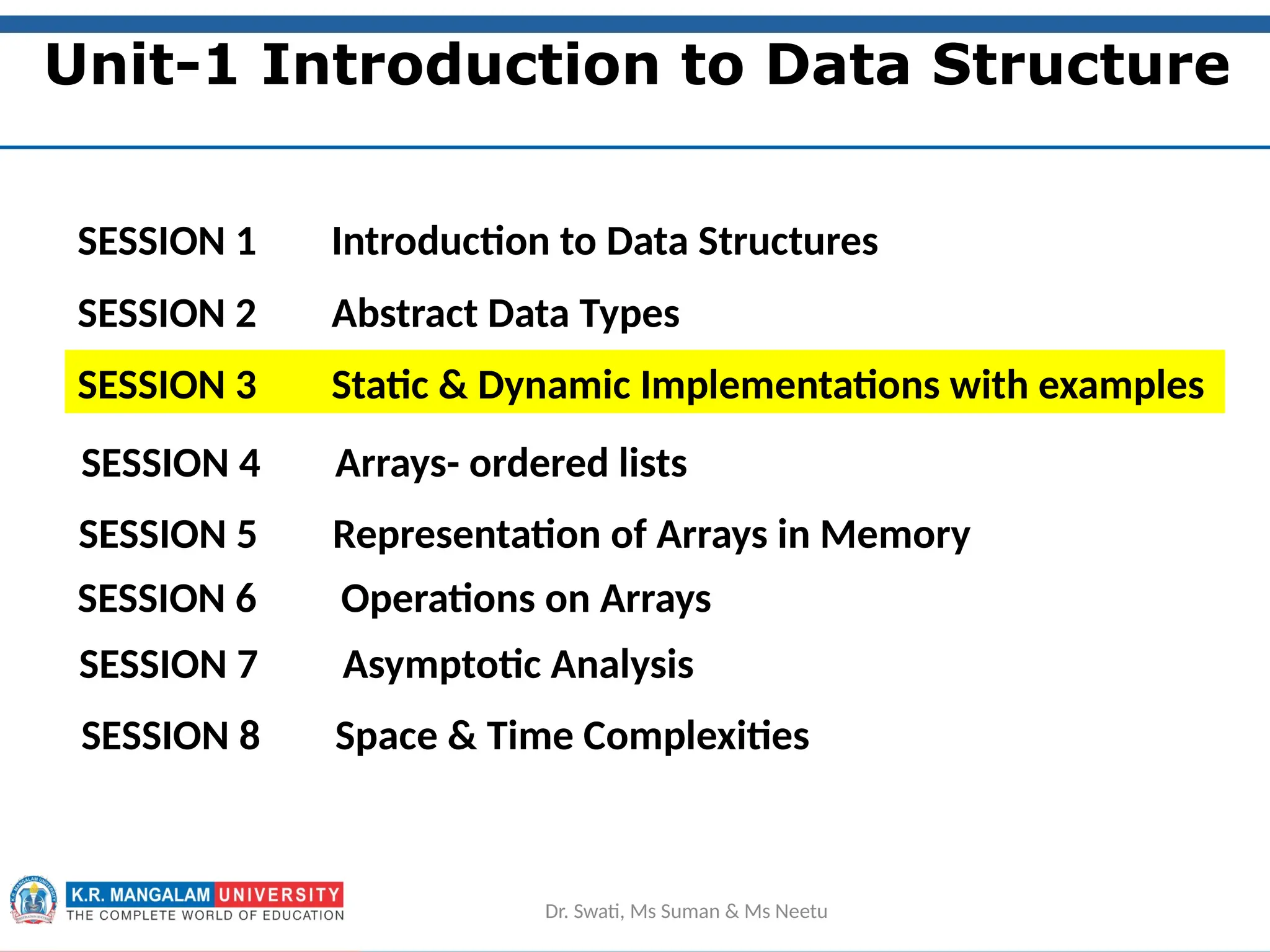
SESSION 1 Introduction to Data Structures
Dr. Swati, Ms Suman & Ms Neetu
SESSION 2 Abstract Data Types
SESSION 3 Static & Dynamic Implementations with examples
SESSION 4 Arrays- ordered lists
SESSION 5 Representation of Arrays in Memory
SESSION 7 Asymptotic Analysis
SESSION 8 Space & Time Complexities
SESSION 6 Operations on Arrays
2
Unit-1 Introduction to Data Structure
Dr. Swati, Ms Suman & Ms Neetu
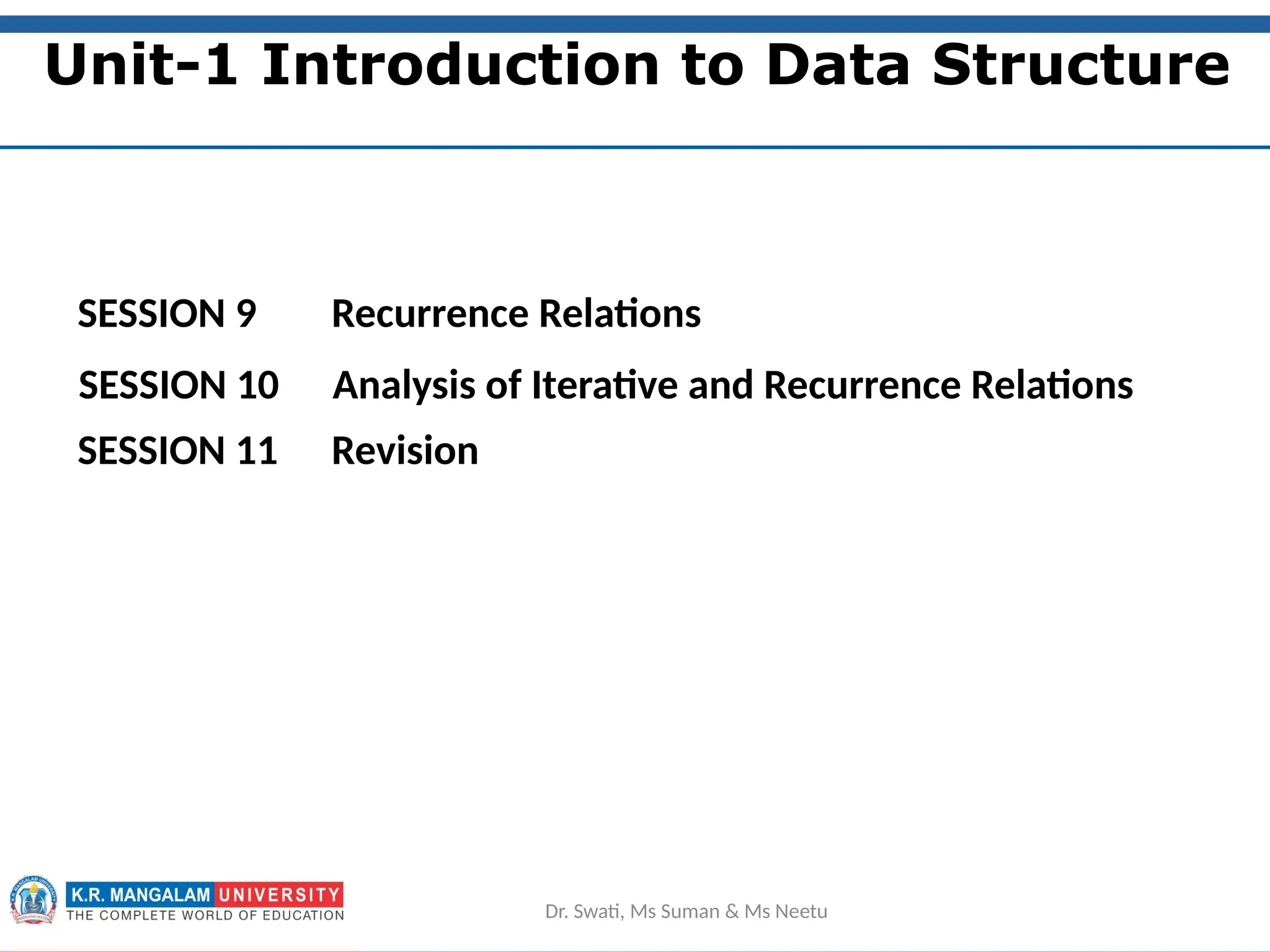
SESSION 9 Recurrence Relations
SESSION 10 Analysis of Iterative and Recurrence Relations
SESSION 11 Revision
Dr. Swati, Ms Suman & Ms Neetu 3
Recapitulation (Previous Session)
Quiz
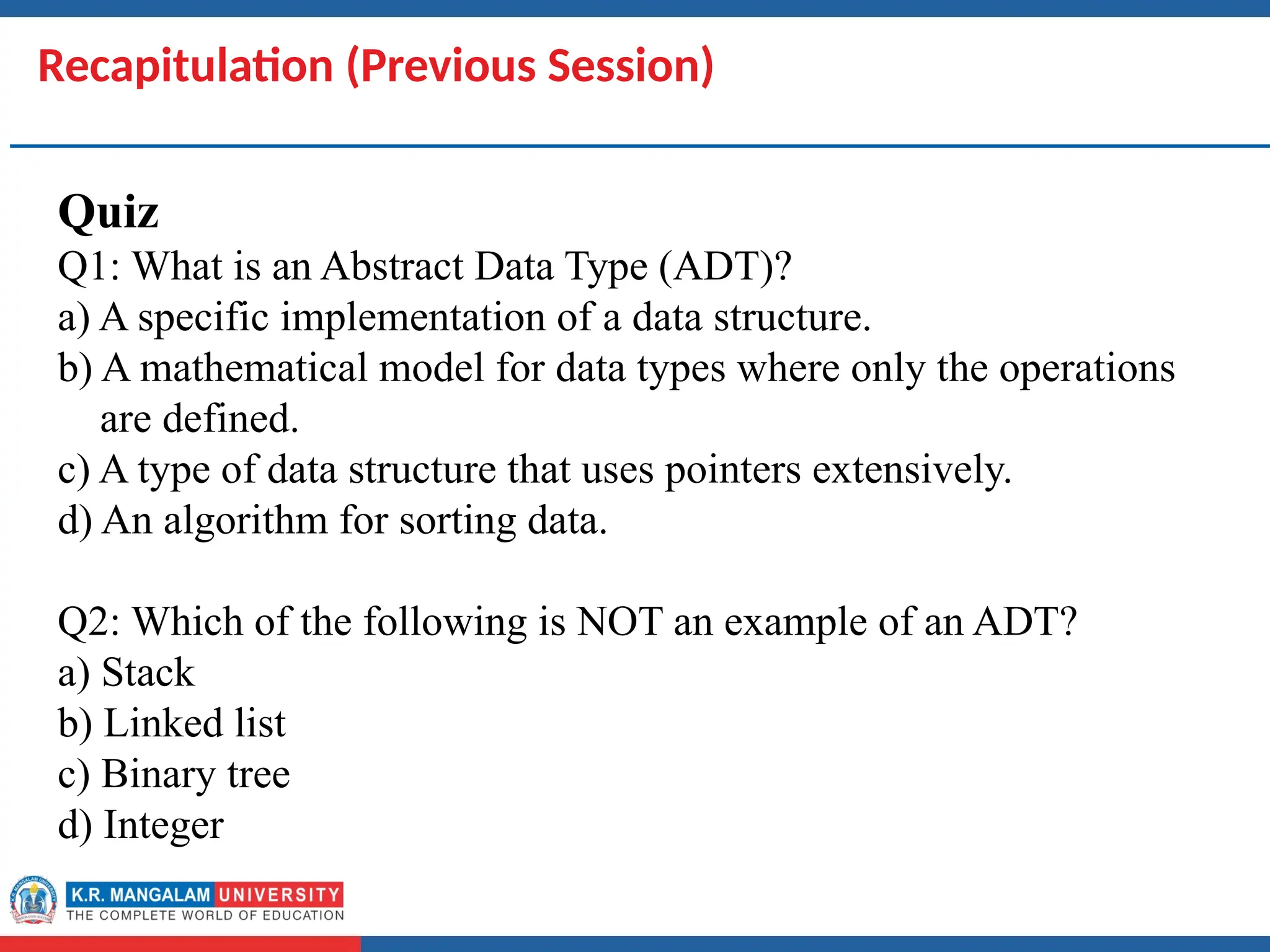
Q1: What is an Abstract Data Type (ADT)?
a) A specific implementation of a data structure.
b) A mathematical model for data types where only the operations
are defined.
c) A type of data structure that uses pointers extensively.
d) An algorithm for sorting data.
Q2: Which of the following is NOT an example of an ADT?
a) Stack
b) Linked list
c) Binary tree
d) Integer
Dr. Swati, Ms Suman & Ms Neetu 4
Recapitulation (Previous Session Cont..)
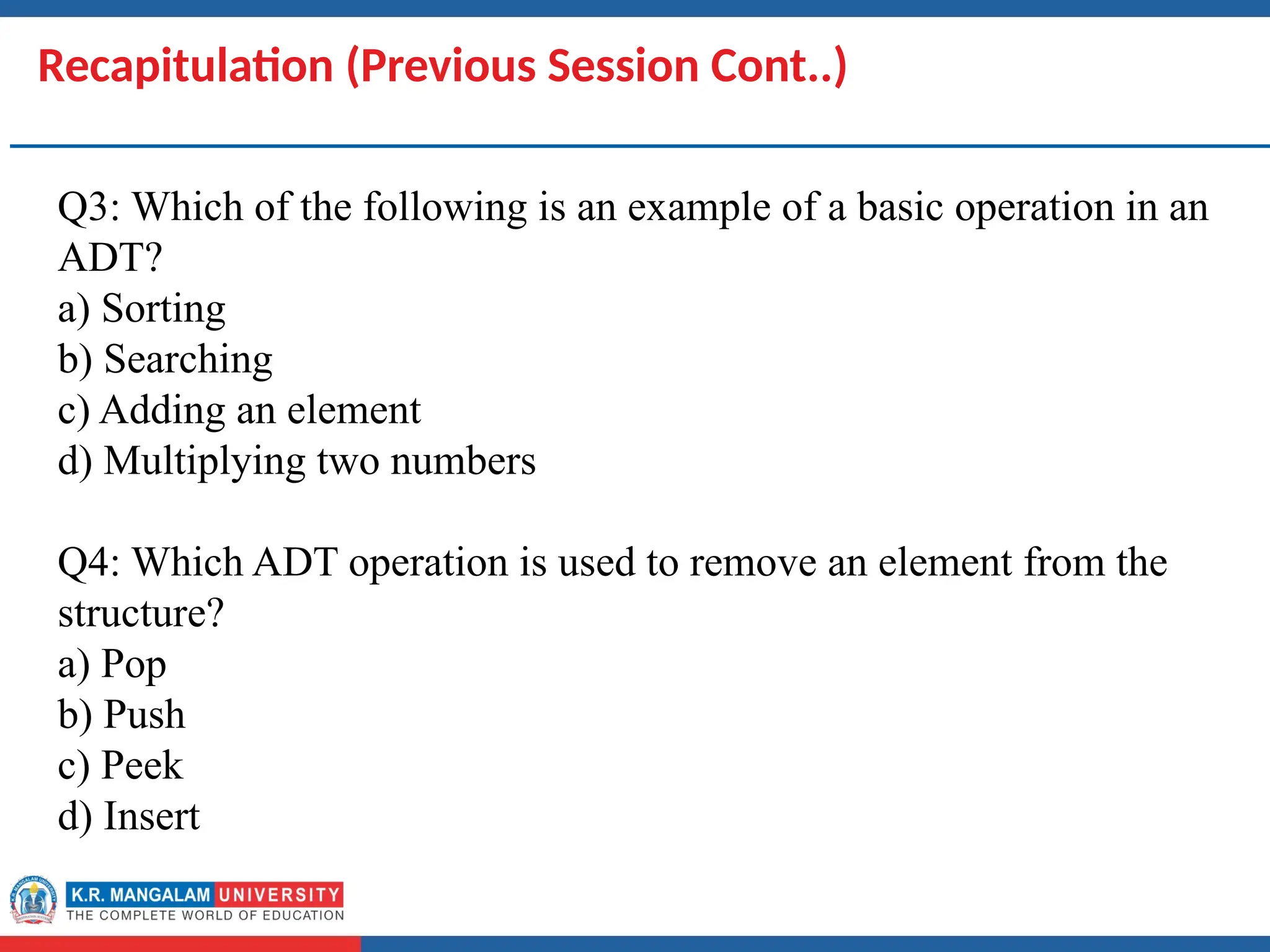
Q3: Which of the following is an example of a basic operation in an
ADT?
a) Sorting
b) Searching
c) Adding an element
d) Multiplying two numbers
Q4: Which ADT operation is used to remove an element from the
structure?
a) Pop
b) Push
c) Peek
d) Insert
Dr. Swati, Ms Suman & Ms Neetu 5
Recapitulation (Previous Session)
Quiz (Answers)
A1: b) A mathematical model for data types where only the
operations are defined.
A2: d) Integer
A3: c) Adding an element
A4: a) Pop
Dr. Swati, Ms Suman & Ms Neetu 6
Static & Dynamic Implementation
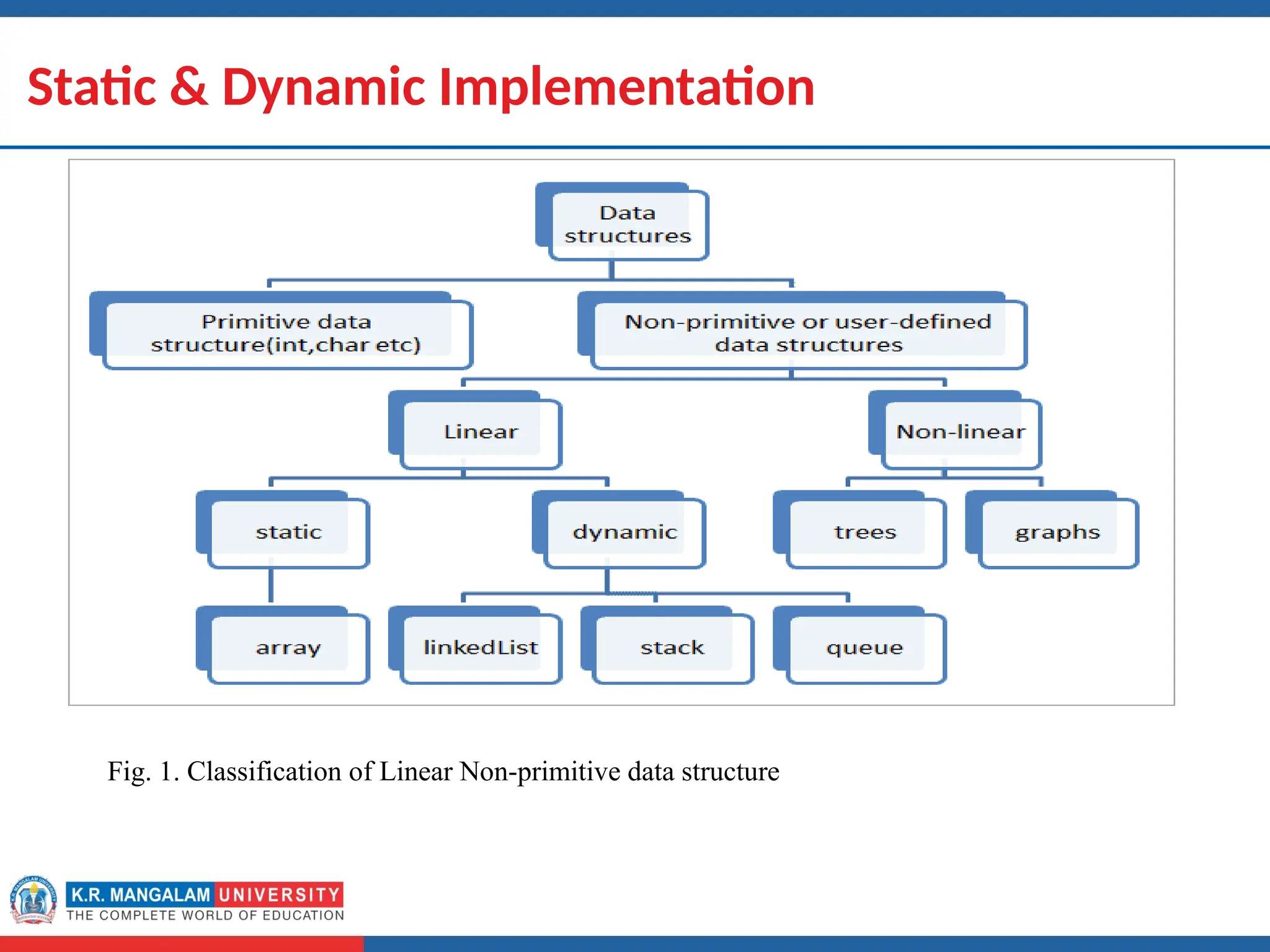
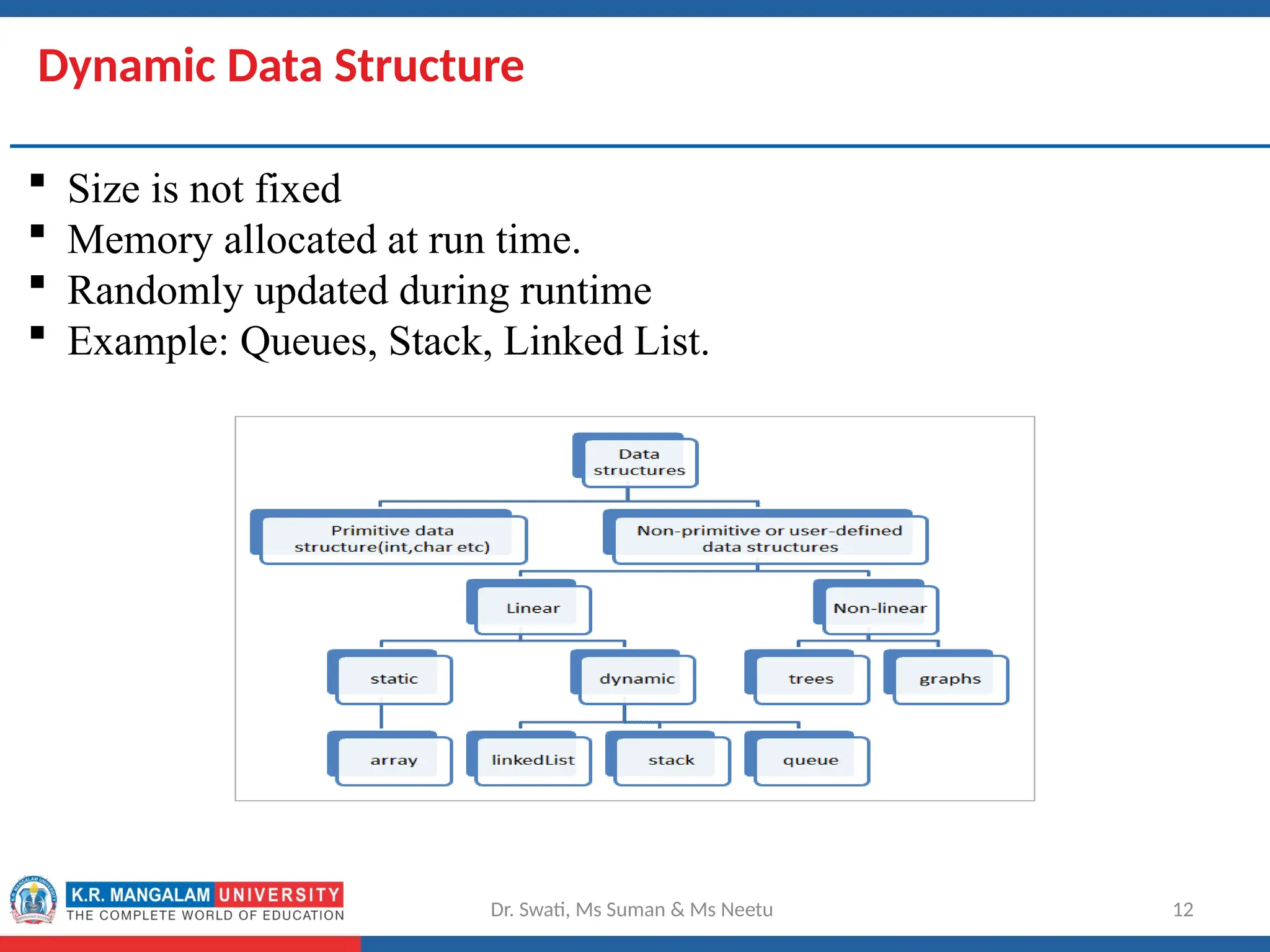
Fig. 1. Classification of Linear Non-primitive data structure
Dr. Swati, Ms Suman & Ms Neetu 7
Static Data Structure
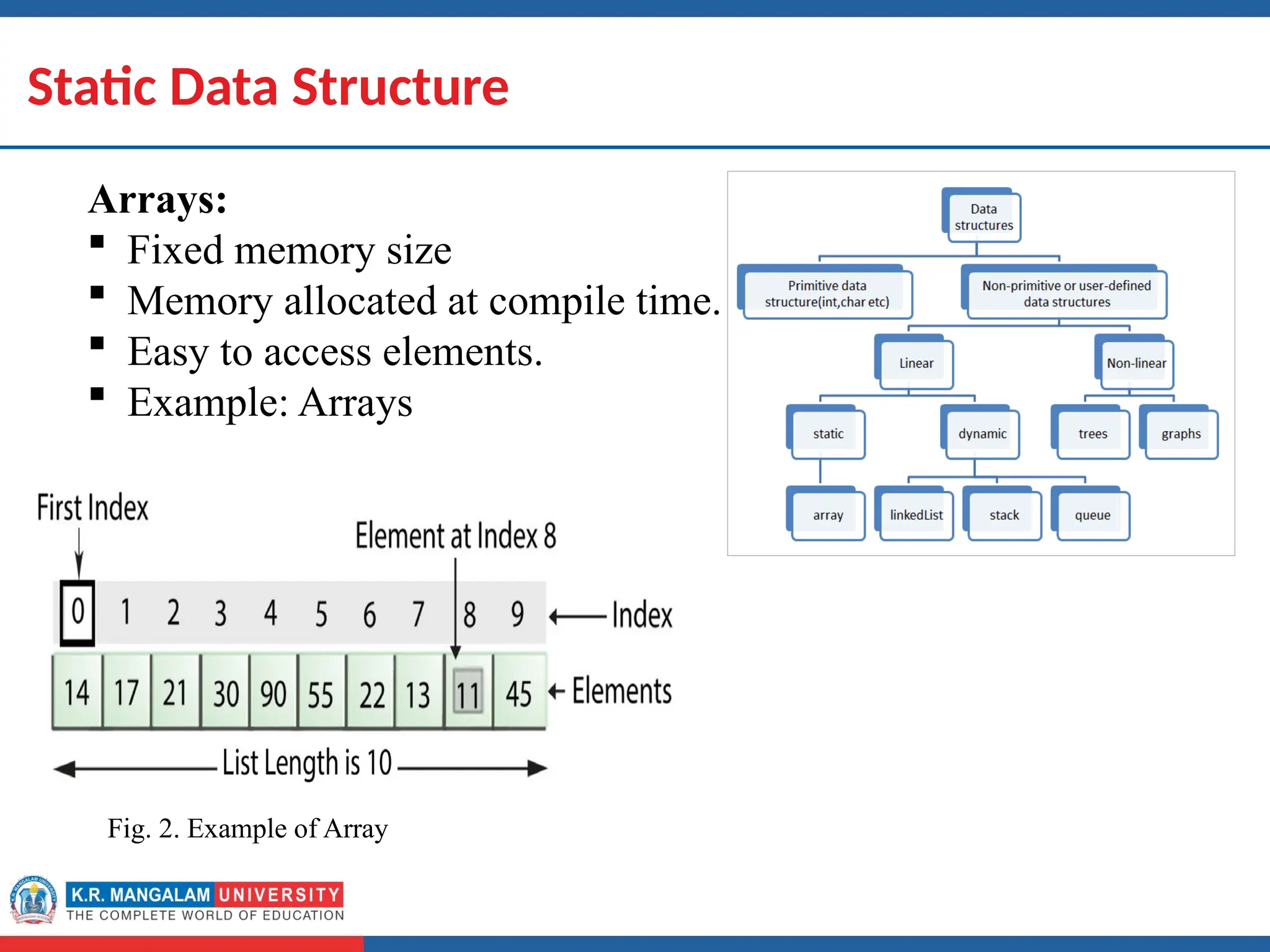
Arrays:
 Fixed memory size
 Memory allocated at compile time.
 Easy to access elements.
 Example: Arrays
Fig. 2. Example of Array
Dr. Swati, Ms Suman & Ms Neetu 8
Static Data Structure-Real world situation
Scenario Description: Consider a home automation system embedded in a smart home
device, such as a thermostat, security system, or light controller. These devices often operate
with limited hardware resources and need to be highly reliable and fast. The software
embedded in these devices controls various aspects of a home, such as adjusting
temperatures, managing security sensors, and controlling lighting based on predefined
settings.
Justification for Using Static Data Structures:
Predictability: Static data structures have a fixed size and memory allocation, which ensures
predictability in memory usage. This is crucial in embedded systems where memory
resources are limited and must be allocated precisely to avoid running out of space during
operation.
Performance: Static data structures typically allow faster access to data because their
memory location is fixed, making them quicker to access and manipulate. This speed is
beneficial in real-time systems where delay can affect the functionality of the device.
Resource Constraints: Embedded systems, especially those in smart home devices, often
operate with strict power and processing limitations. Static data structures, due to their fixed
size, help in optimizing the use of these limited resources.
Example of Static Data Structure Implementation
#include <iostream>
using namespace std;
int main()
{
int array[5];
for(int i=0;i<5;i++)
{
array[i] = i;
cout<<array[i]<<" ";
}
cout<<endl; // changing line
for(int i=0; i<5; i++)
{
array[i] = 10;
cout<<array[i]<<" ";
}
return 0; }
Dr. Swati, Ms Suman & Ms Neetu 9
Output:
Advantages of Static Data Structures
 Easy to handle as compiler handles all the allocation and
deallocation processes.
 Memory allocated in contiguous form so no need to maintain the
structure of the data structure.
 No problem in overflow or underflow conditions while inserting or
deleting any element.
Dr. Swati, Ms Suman & Ms Neetu 10
Disadvantages of Static Data Structures
 Users have to estimate maximum required space.
 Insertion of new element between two elements, if there is any
vacant space present between them otherwise insertion will take a
lot of time.
 Element deletion create vacant space between two elements and
covering up that space is costly concerning time.
Dr. Swati, Ms Suman & Ms Neetu 11
Dynamic Data Structure
 Size is not fixed
 Memory allocated at run time.
 Randomly updated during runtime
 Example: Queues, Stack, Linked List.
Dr. Swati, Ms Suman & Ms Neetu 12
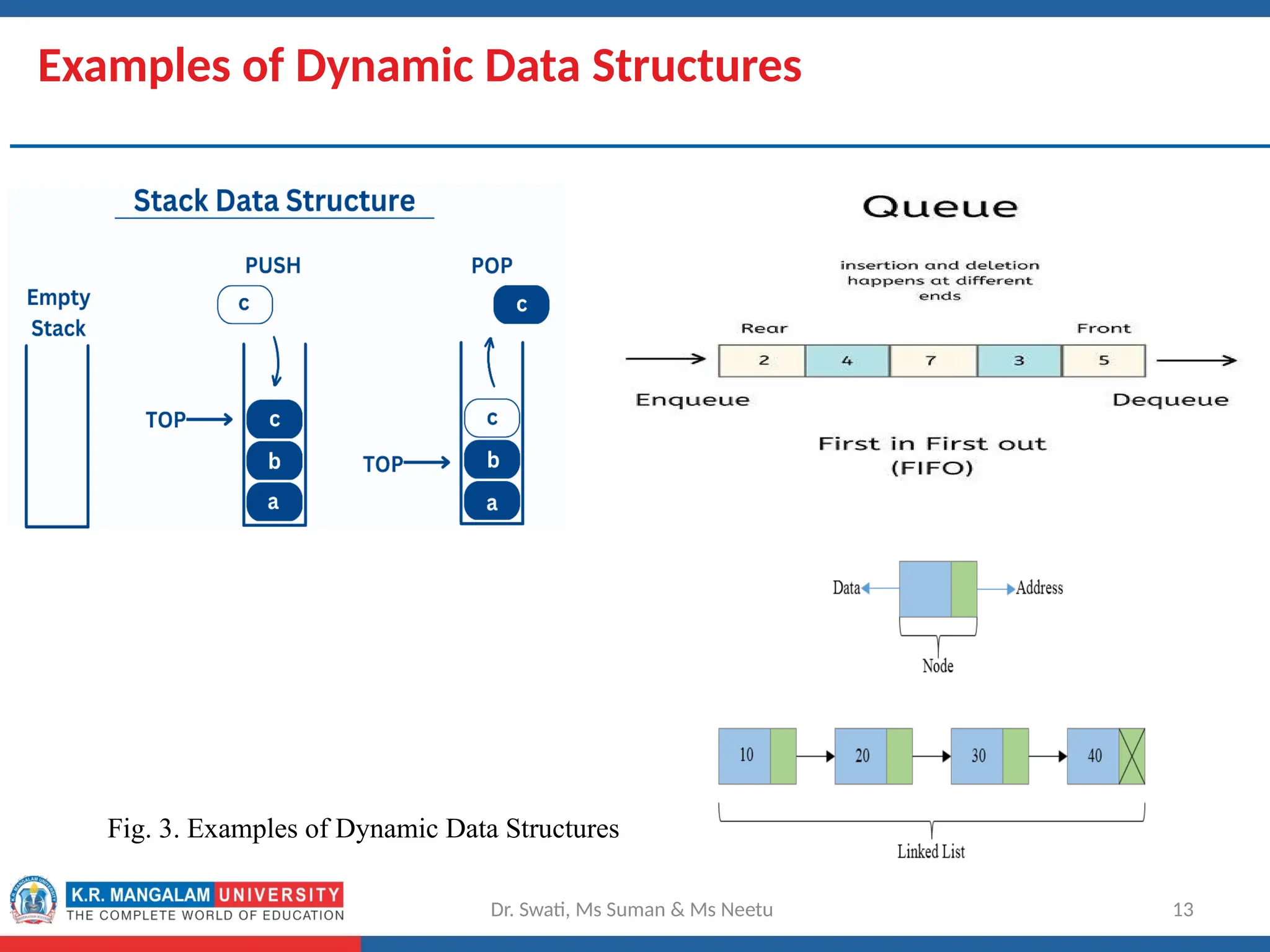
Examples of Dynamic Data Structures
Dr. Swati, Ms Suman & Ms Neetu 13
Fig. 3. Examples of Dynamic Data Structures
Dr. Swati, Ms Suman & Ms Neetu 14
Dynamic Data Structure-Real world Situation
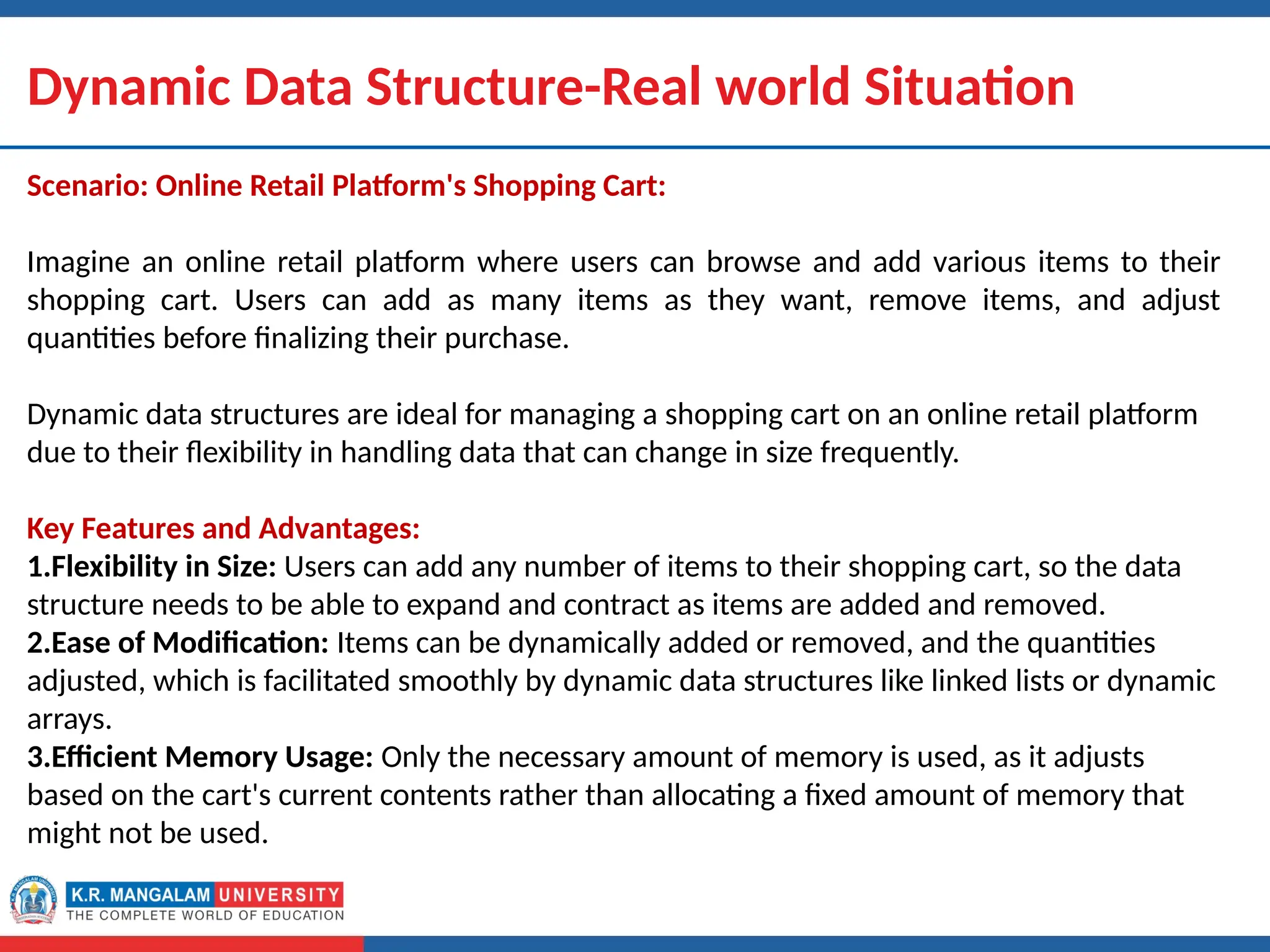
Scenario: Online Retail Platform's Shopping Cart:
Imagine an online retail platform where users can browse and add various items to their
shopping cart. Users can add as many items as they want, remove items, and adjust
quantities before finalizing their purchase.
Dynamic data structures are ideal for managing a shopping cart on an online retail platform
due to their flexibility in handling data that can change in size frequently.
Key Features and Advantages:
1.Flexibility in Size: Users can add any number of items to their shopping cart, so the data
structure needs to be able to expand and contract as items are added and removed.
2.Ease of Modification: Items can be dynamically added or removed, and the quantities
adjusted, which is facilitated smoothly by dynamic data structures like linked lists or dynamic
arrays.
3.Efficient Memory Usage: Only the necessary amount of memory is used, as it adjusts
based on the cart's current contents rather than allocating a fixed amount of memory that
might not be used.
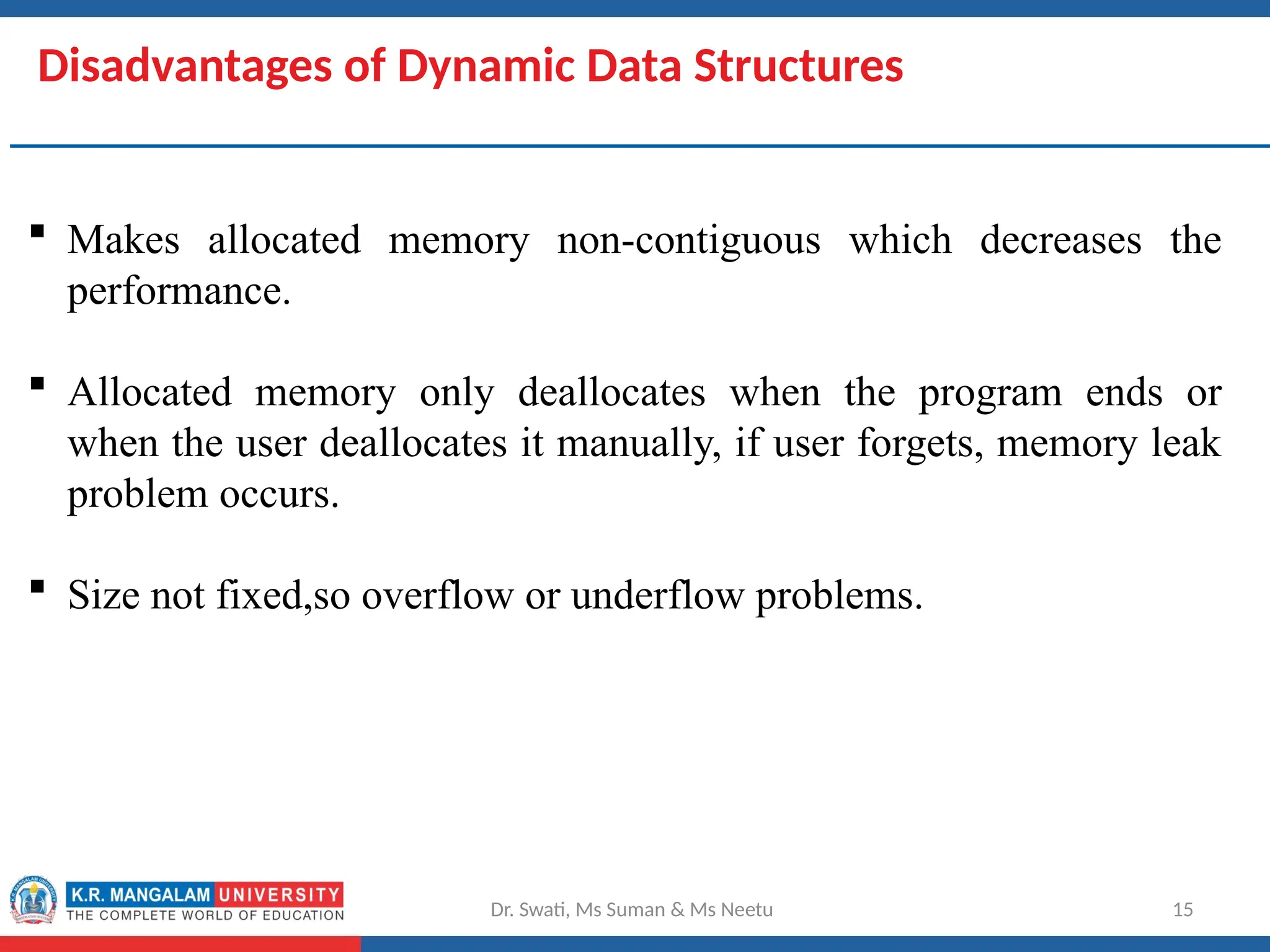
Disadvantages of Dynamic Data Structures
 Makes allocated memory non-contiguous which decreases the
performance.
 Allocated memory only deallocates when the program ends or
when the user deallocates it manually, if user forgets, memory leak
problem occurs.
 Size not fixed,so overflow or underflow problems.
Dr. Swati, Ms Suman & Ms Neetu 15
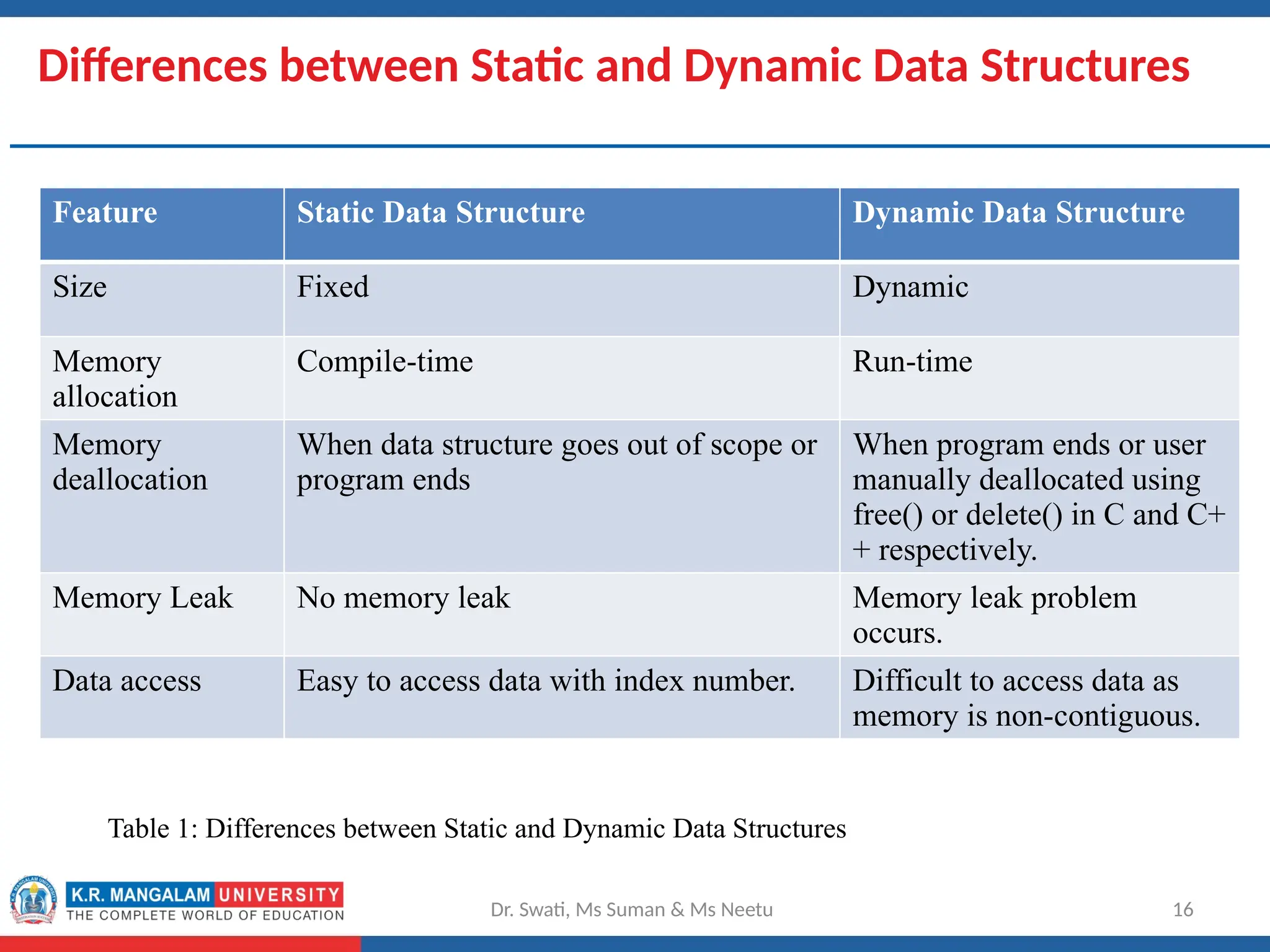
Differences between Static and Dynamic Data Structures
Dr. Swati, Ms Suman & Ms Neetu 16
Feature Static Data Structure Dynamic Data Structure
Size Fixed Dynamic
Memory
allocation
Compile-time Run-time
Memory
deallocation
When data structure goes out of scope or
program ends
When program ends or user
manually deallocated using
free() or delete() in C and C+
+ respectively.
Memory Leak No memory leak Memory leak problem
occurs.
Data access Easy to access data with index number. Difficult to access data as
memory is non-contiguous.
Table 1: Differences between Static and Dynamic Data Structures
Dr. Swati, Ms Suman & Ms Neetu 17
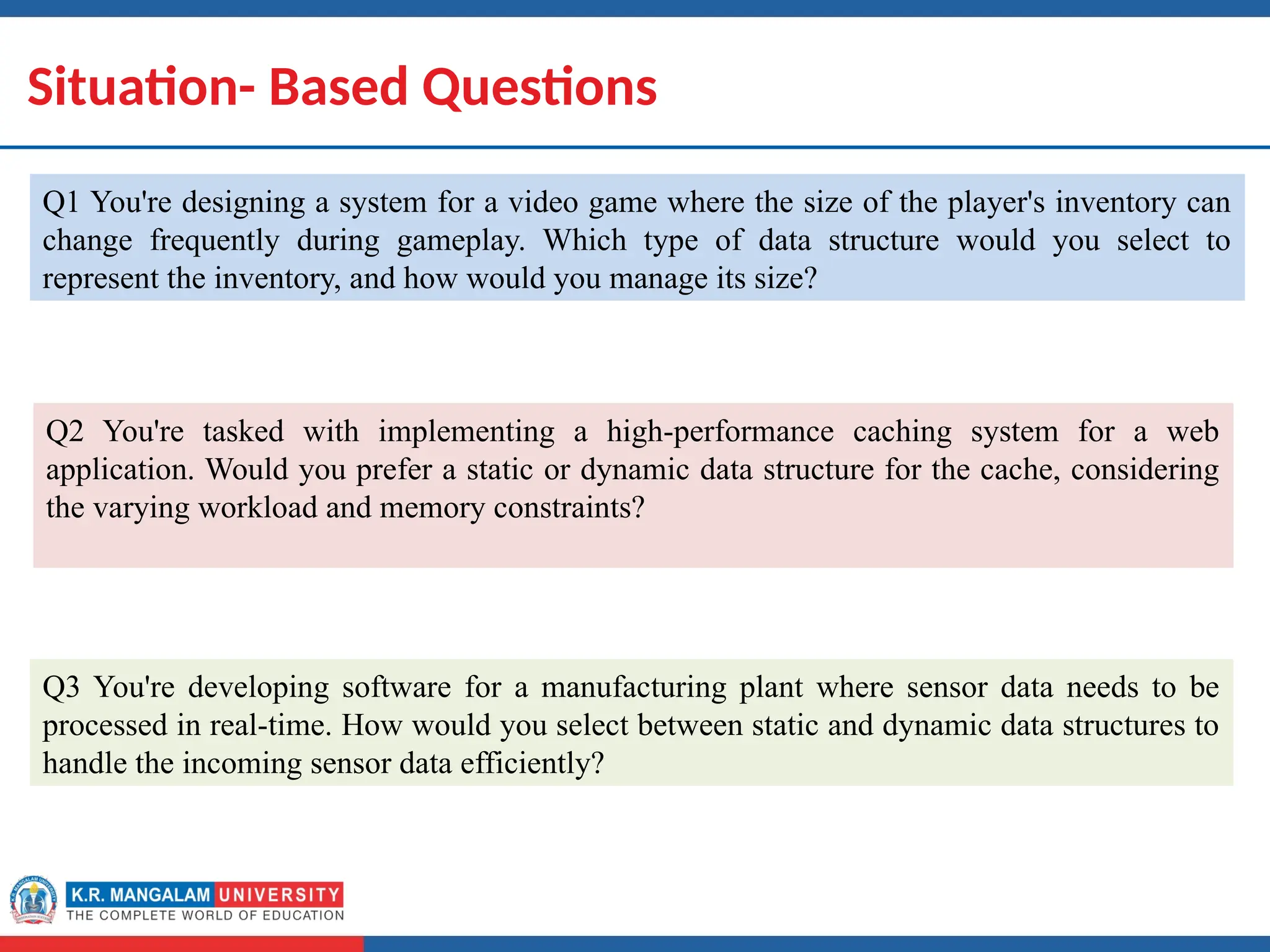
Situation- Based Questions
Q1 You're designing a system for a video game where the size of the player's inventory can
change frequently during gameplay. Which type of data structure would you select to
represent the inventory, and how would you manage its size?
Q2 You're tasked with implementing a high-performance caching system for a web
application. Would you prefer a static or dynamic data structure for the cache, considering
the varying workload and memory constraints?
Q3 You're developing software for a manufacturing plant where sensor data needs to be
processed in real-time. How would you select between static and dynamic data structures to
handle the incoming sensor data efficiently?
Dr. Swati, Ms Suman & Ms Neetu 18
Situation- Based Questions (Answers)
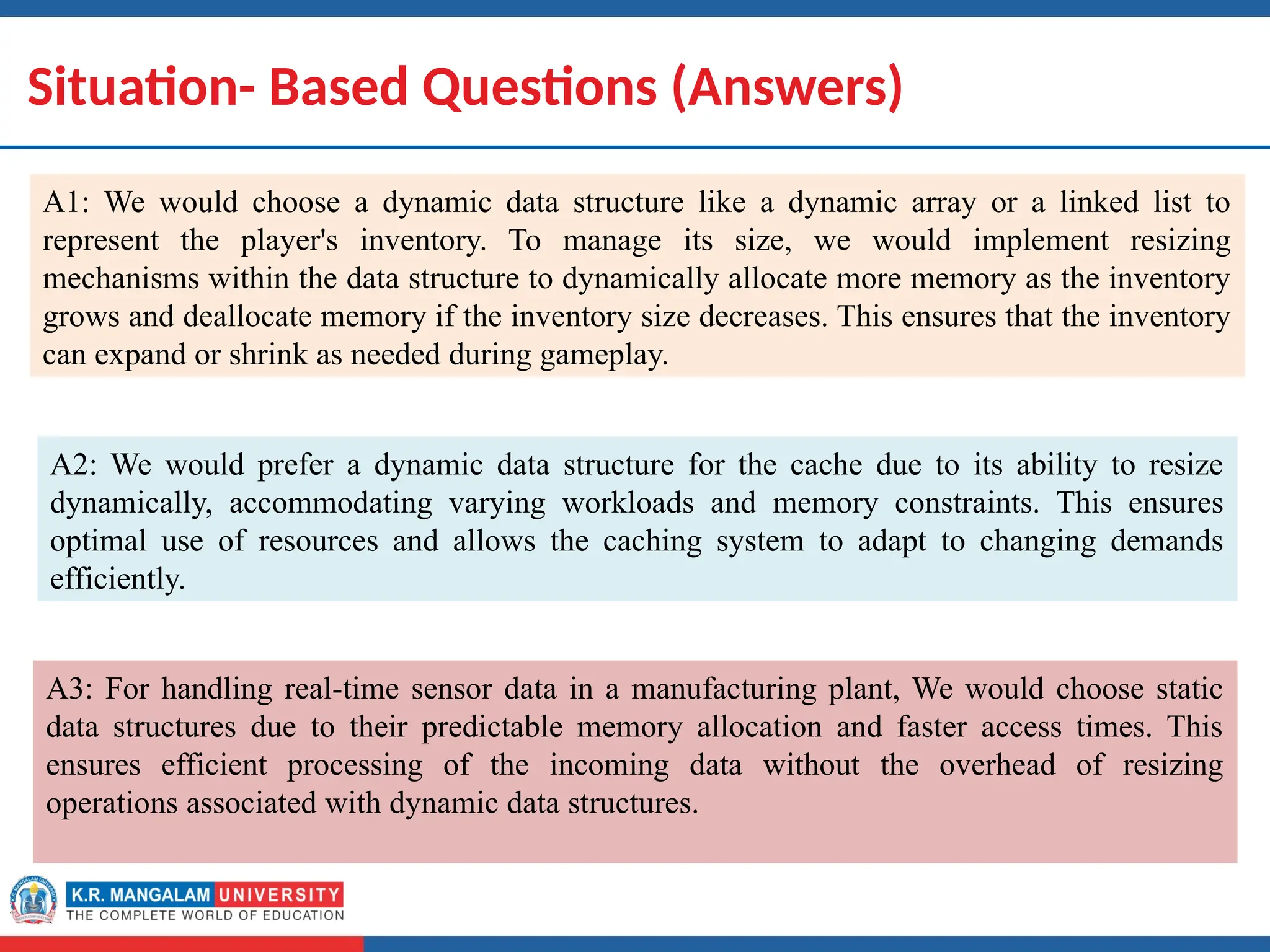
A1: We would choose a dynamic data structure like a dynamic array or a linked list to
represent the player's inventory. To manage its size, we would implement resizing
mechanisms within the data structure to dynamically allocate more memory as the inventory
grows and deallocate memory if the inventory size decreases. This ensures that the inventory
can expand or shrink as needed during gameplay.
A2: We would prefer a dynamic data structure for the cache due to its ability to resize
dynamically, accommodating varying workloads and memory constraints. This ensures
optimal use of resources and allows the caching system to adapt to changing demands
efficiently.
A3: For handling real-time sensor data in a manufacturing plant, We would choose static
data structures due to their predictable memory allocation and faster access times. This
ensures efficient processing of the incoming data without the overhead of resizing
operations associated with dynamic data structures.
Dr. Swati, Ms Suman & Ms Neetu 19
THANK YOU

Session 3 (Static & Dynamic Implementation) - Copy (2).pptx

  • 1.
    1 Unit-1 Introduction toData Structure SESSION 1 Introduction to Data Structures Dr. Swati, Ms Suman & Ms Neetu SESSION 2 Abstract Data Types SESSION 3 Static & Dynamic Implementations with examples SESSION 4 Arrays- ordered lists SESSION 5 Representation of Arrays in Memory SESSION 7 Asymptotic Analysis SESSION 8 Space & Time Complexities SESSION 6 Operations on Arrays
  • 2.
    2 Unit-1 Introduction toData Structure Dr. Swati, Ms Suman & Ms Neetu SESSION 9 Recurrence Relations SESSION 10 Analysis of Iterative and Recurrence Relations SESSION 11 Revision
  • 3.
    Dr. Swati, MsSuman & Ms Neetu 3 Recapitulation (Previous Session) Quiz Q1: What is an Abstract Data Type (ADT)? a) A specific implementation of a data structure. b) A mathematical model for data types where only the operations are defined. c) A type of data structure that uses pointers extensively. d) An algorithm for sorting data. Q2: Which of the following is NOT an example of an ADT? a) Stack b) Linked list c) Binary tree d) Integer
  • 4.
    Dr. Swati, MsSuman & Ms Neetu 4 Recapitulation (Previous Session Cont..) Q3: Which of the following is an example of a basic operation in an ADT? a) Sorting b) Searching c) Adding an element d) Multiplying two numbers Q4: Which ADT operation is used to remove an element from the structure? a) Pop b) Push c) Peek d) Insert
  • 5.
    Dr. Swati, MsSuman & Ms Neetu 5 Recapitulation (Previous Session) Quiz (Answers) A1: b) A mathematical model for data types where only the operations are defined. A2: d) Integer A3: c) Adding an element A4: a) Pop
  • 6.
    Dr. Swati, MsSuman & Ms Neetu 6 Static & Dynamic Implementation Fig. 1. Classification of Linear Non-primitive data structure
  • 7.
    Dr. Swati, MsSuman & Ms Neetu 7 Static Data Structure Arrays:  Fixed memory size  Memory allocated at compile time.  Easy to access elements.  Example: Arrays Fig. 2. Example of Array
  • 8.
    Dr. Swati, MsSuman & Ms Neetu 8 Static Data Structure-Real world situation Scenario Description: Consider a home automation system embedded in a smart home device, such as a thermostat, security system, or light controller. These devices often operate with limited hardware resources and need to be highly reliable and fast. The software embedded in these devices controls various aspects of a home, such as adjusting temperatures, managing security sensors, and controlling lighting based on predefined settings. Justification for Using Static Data Structures: Predictability: Static data structures have a fixed size and memory allocation, which ensures predictability in memory usage. This is crucial in embedded systems where memory resources are limited and must be allocated precisely to avoid running out of space during operation. Performance: Static data structures typically allow faster access to data because their memory location is fixed, making them quicker to access and manipulate. This speed is beneficial in real-time systems where delay can affect the functionality of the device. Resource Constraints: Embedded systems, especially those in smart home devices, often operate with strict power and processing limitations. Static data structures, due to their fixed size, help in optimizing the use of these limited resources.
  • 9.
    Example of StaticData Structure Implementation #include <iostream> using namespace std; int main() { int array[5]; for(int i=0;i<5;i++) { array[i] = i; cout<<array[i]<<" "; } cout<<endl; // changing line for(int i=0; i<5; i++) { array[i] = 10; cout<<array[i]<<" "; } return 0; } Dr. Swati, Ms Suman & Ms Neetu 9 Output:
  • 10.
    Advantages of StaticData Structures  Easy to handle as compiler handles all the allocation and deallocation processes.  Memory allocated in contiguous form so no need to maintain the structure of the data structure.  No problem in overflow or underflow conditions while inserting or deleting any element. Dr. Swati, Ms Suman & Ms Neetu 10
  • 11.
    Disadvantages of StaticData Structures  Users have to estimate maximum required space.  Insertion of new element between two elements, if there is any vacant space present between them otherwise insertion will take a lot of time.  Element deletion create vacant space between two elements and covering up that space is costly concerning time. Dr. Swati, Ms Suman & Ms Neetu 11
  • 12.
    Dynamic Data Structure Size is not fixed  Memory allocated at run time.  Randomly updated during runtime  Example: Queues, Stack, Linked List. Dr. Swati, Ms Suman & Ms Neetu 12
  • 13.
    Examples of DynamicData Structures Dr. Swati, Ms Suman & Ms Neetu 13 Fig. 3. Examples of Dynamic Data Structures
  • 14.
    Dr. Swati, MsSuman & Ms Neetu 14 Dynamic Data Structure-Real world Situation Scenario: Online Retail Platform's Shopping Cart: Imagine an online retail platform where users can browse and add various items to their shopping cart. Users can add as many items as they want, remove items, and adjust quantities before finalizing their purchase. Dynamic data structures are ideal for managing a shopping cart on an online retail platform due to their flexibility in handling data that can change in size frequently. Key Features and Advantages: 1.Flexibility in Size: Users can add any number of items to their shopping cart, so the data structure needs to be able to expand and contract as items are added and removed. 2.Ease of Modification: Items can be dynamically added or removed, and the quantities adjusted, which is facilitated smoothly by dynamic data structures like linked lists or dynamic arrays. 3.Efficient Memory Usage: Only the necessary amount of memory is used, as it adjusts based on the cart's current contents rather than allocating a fixed amount of memory that might not be used.
  • 15.
    Disadvantages of DynamicData Structures  Makes allocated memory non-contiguous which decreases the performance.  Allocated memory only deallocates when the program ends or when the user deallocates it manually, if user forgets, memory leak problem occurs.  Size not fixed,so overflow or underflow problems. Dr. Swati, Ms Suman & Ms Neetu 15
  • 16.
    Differences between Staticand Dynamic Data Structures Dr. Swati, Ms Suman & Ms Neetu 16 Feature Static Data Structure Dynamic Data Structure Size Fixed Dynamic Memory allocation Compile-time Run-time Memory deallocation When data structure goes out of scope or program ends When program ends or user manually deallocated using free() or delete() in C and C+ + respectively. Memory Leak No memory leak Memory leak problem occurs. Data access Easy to access data with index number. Difficult to access data as memory is non-contiguous. Table 1: Differences between Static and Dynamic Data Structures
  • 17.
    Dr. Swati, MsSuman & Ms Neetu 17 Situation- Based Questions Q1 You're designing a system for a video game where the size of the player's inventory can change frequently during gameplay. Which type of data structure would you select to represent the inventory, and how would you manage its size? Q2 You're tasked with implementing a high-performance caching system for a web application. Would you prefer a static or dynamic data structure for the cache, considering the varying workload and memory constraints? Q3 You're developing software for a manufacturing plant where sensor data needs to be processed in real-time. How would you select between static and dynamic data structures to handle the incoming sensor data efficiently?
  • 18.
    Dr. Swati, MsSuman & Ms Neetu 18 Situation- Based Questions (Answers) A1: We would choose a dynamic data structure like a dynamic array or a linked list to represent the player's inventory. To manage its size, we would implement resizing mechanisms within the data structure to dynamically allocate more memory as the inventory grows and deallocate memory if the inventory size decreases. This ensures that the inventory can expand or shrink as needed during gameplay. A2: We would prefer a dynamic data structure for the cache due to its ability to resize dynamically, accommodating varying workloads and memory constraints. This ensures optimal use of resources and allows the caching system to adapt to changing demands efficiently. A3: For handling real-time sensor data in a manufacturing plant, We would choose static data structures due to their predictable memory allocation and faster access times. This ensures efficient processing of the incoming data without the overhead of resizing operations associated with dynamic data structures.
  • 19.
    Dr. Swati, MsSuman & Ms Neetu 19 THANK YOU

Editor's Notes

  • #1 New Courses replaced with New Programmes
  • #2 New Courses replaced with New Programmes
  • #3 New Courses replaced with New Programmes
  • #4 New Courses replaced with New Programmes
  • #5 New Courses replaced with New Programmes
  • #6 New Courses replaced with New Programmes
  • #7 New Courses replaced with New Programmes
  • #8 New Courses replaced with New Programmes
  • #9 New Courses replaced with New Programmes
  • #10 New Courses replaced with New Programmes
  • #11 New Courses replaced with New Programmes
  • #12 New Courses replaced with New Programmes
  • #13 New Courses replaced with New Programmes
  • #14 New Courses replaced with New Programmes
  • #15 New Courses replaced with New Programmes
  • #16 New Courses replaced with New Programmes
  • #17 New Courses replaced with New Programmes
  • #18 New Courses replaced with New Programmes