Service
Design
Webinar 004
Hi, I'm
and I'm from Lausanne,
Switzerland. .
Where are you from?
Leave a comment
in the chat
“What's the
plan for today, and what
will you get at the after
of the event?”
A trailer now.
Go deeper later.
Information overload
that gives you the
taste to explore more.
Service
Design
Principles
examples
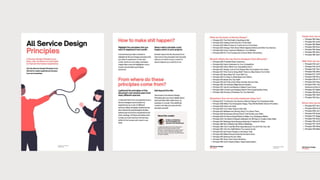
The three first
principles from
my second
book.
In the chapter "Service
Design Mindset"
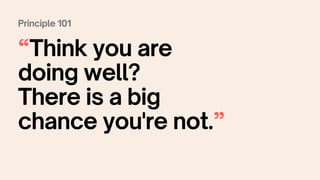
Principle 101
“Think you are
doing well?
There is a big
chance you're not.”
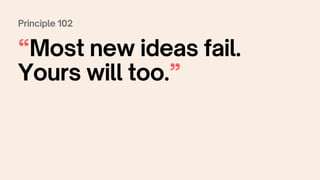
Principle 102
“Most new ideas fail.
Yours will too.”
Principle 103
“It's okay to steal
ideas from others.”
Service
Design
Worldwide
Questions
Nico G. asks
“What organizations
use Service Design in
Switzerland?”
More than you think.
Service Design is a mindset
that is used under many
different names.
Service
Design
Career
Questions
“Are there enough
Service Design jobs
out there?”
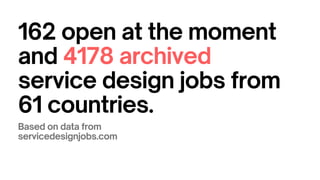
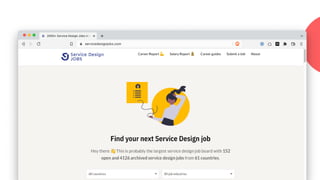
162 open at the moment
and 4178 archived
service design jobs from
61 countries.
Based on data from
servicedesignjobs.com
Nearly 1 new
service design
job opening
per day in the
United Kingdom.
And these are just the
ones listed on that
website.
There are lots of service
design jobs that don't have
that name or an not publicly
visible.
Service
Design
Philosophy
Questions
“How should we call
the people we serve?”
Seems to be
historic shifts.
From customer to user, to
user to human, from human to
living organism.
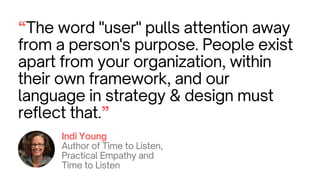
“The word "user" pulls attention away
from a person's purpose. People exist
apart from your organization, within
their own framework, and our
language in strategy & design must
reflect that.”
Indi Young
Author of Time to Listen,
Practical Empathy and
Time to Listen
I'm using synonyms
like a writer.
I tend to use the words people,
customers, human, just to avoid
repetitions. But when I want to
make a point I'm using "People" or
"Humans".
Service
Design
Principles
Questions
“What is a Service
Design Principles
Library?”
It's like having your
own Pinterest of
Service Design ideas.
that help you to improve
human experiences in your
service, product or
organization.
“What are the benefits
of creating your own
Principles Library?”
Serve better the humans
around you.
You see what
you know.
Helps kickstart projects.
You don't start
from zero.
Unite the team.
Agree on what you'll
work on.
Build your
own Pinterest.
Don't forget great ideas, great
insights, great pieces of
research.
Helps fight your
impostor syndrome.
You see what
you know.
Grow daily as
a service designer
A practice you can do
everyday.
“What tools to use to
create your own
Service Design
Principles Library?”
Think long term.
Notes apps if you want to
keep it for yourself
Notion, Apple Notes,
Onenote, Obsidian,
etc.
Website builders if you
want to share them
easily.
Podia, Wordpress,
Squarespace.
Project management
apps if you want to
become a pro at it.
Notion, Trello, etc.
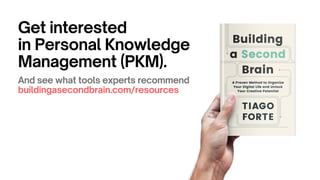
Get interested
in Personal Knowledge
Management (PKM).
And see what tools experts recommend
buildingasecondbrain.com/resources
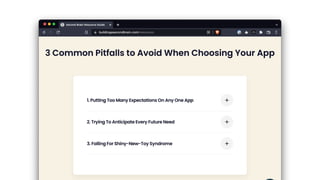
Understand
your note
taking style.
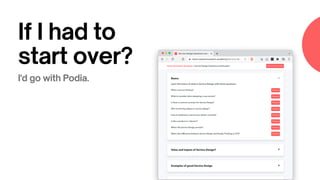
If I had to
start over?
I'd go with Podia.
“What are apps that
help write clearer
Service Design
Principles?”
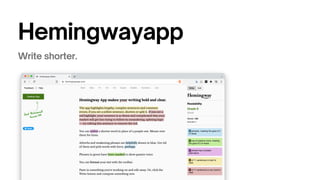
Hemingwayapp
Write shorter.
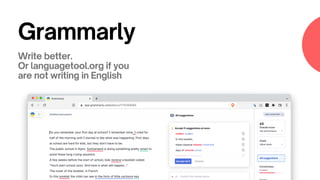
Grammarly
Write better.
Or languagetool.org if you
are not writing in English
“What are apps that
make it faster to write
Service Design
Principles?”
Pastebot
Keep track of everything
you copy and paste
Bettersnaptool
Manage quicker windows.
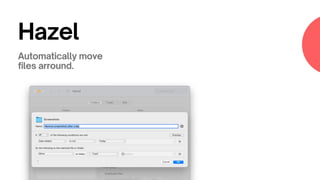
Hazel
Automatically move
files arround.
“How to organize your
Service Design
Principles Library?”
Decide if it’s private,
internal or shared
That changes your
writing setup.
If doing it in a team,
work with the tools
you already have.
Build on existing habits to
get people more easily
involved.
Sharing helps for
motivation.
And it forces clarity.
Keep the principles
in one place.
Make your future life
easier.
Keep the principles at
different levels of writing
It's okay if not
everything is perfect.
“How to build a
Service Design Library
Principles for a team?”
Have one shared
internal library.
Teams need additional
information to make the
principles actionable.
Add projects.
Specific projects have
specific challenges.
Add stages of the
experience.
You can use the stages of a
Servce Blueprint: Aware,
Join, Use, Develop, Leave
Add imagined impact
and effort.
Make it easier to decide
whats' important now.
Add key stakeholders.
Who are the decision
makers? What team needs to
be involved? What external
partner can help?
“What's the mindset
of someone who
builds his own Service
Design Principles
Library?”
There is always
something new to
capture and learn.
Curiosity.
You’ll do this during the
next 30 years.
Career.
It will evolve: the way to
capture will evolve and
the content too
Practical.
What's your
question?
Questions for future webinars.
Thanks!
You're awesome.
Join the
community
now.
bit.ly/cocreate-now

Service Design Webinar 004