Sequential sampling
How to decide when to ‘take
action’ based on a threshold and
counts
Based on: Robson, J.D., Wright, M.G. & Almeida, R.P.P.
2006. Within-plant spatial distribution and binomial
sampling of Pentalonia nigronervosa Coquerel
(Hemiptera: Aphididae) on banana in Hawai'i. Journal of
Economic Entomology 99: 2185-2190. (Funded by
PBARC, WSARE, TSTAR)
The ‘average’
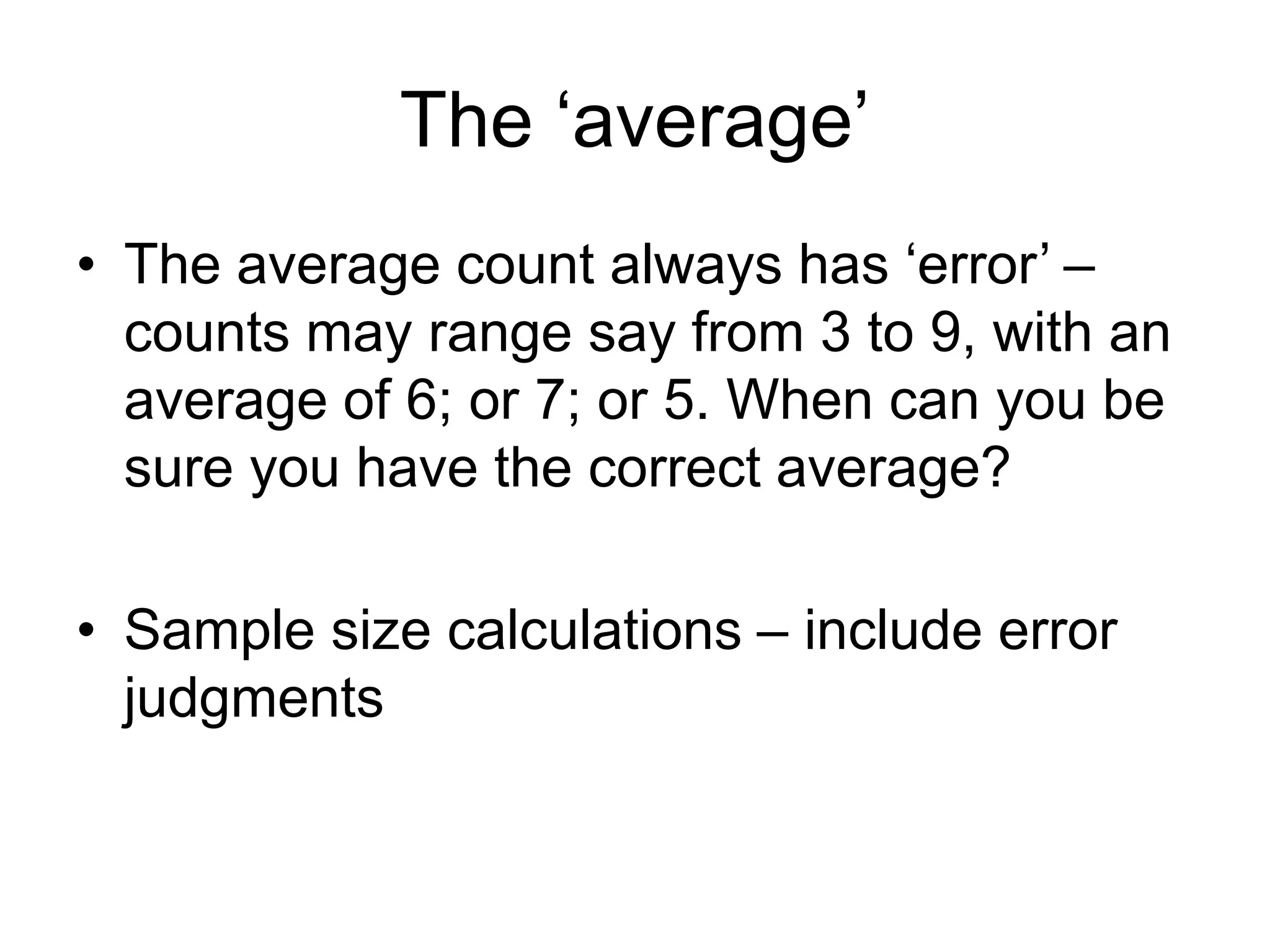
• The average count always has ‘error’ –
counts may range say from 3 to 9, with an
average of 6; or 7; or 5. When can you be
sure you have the correct average?
• Sample size calculations – include error
judgments
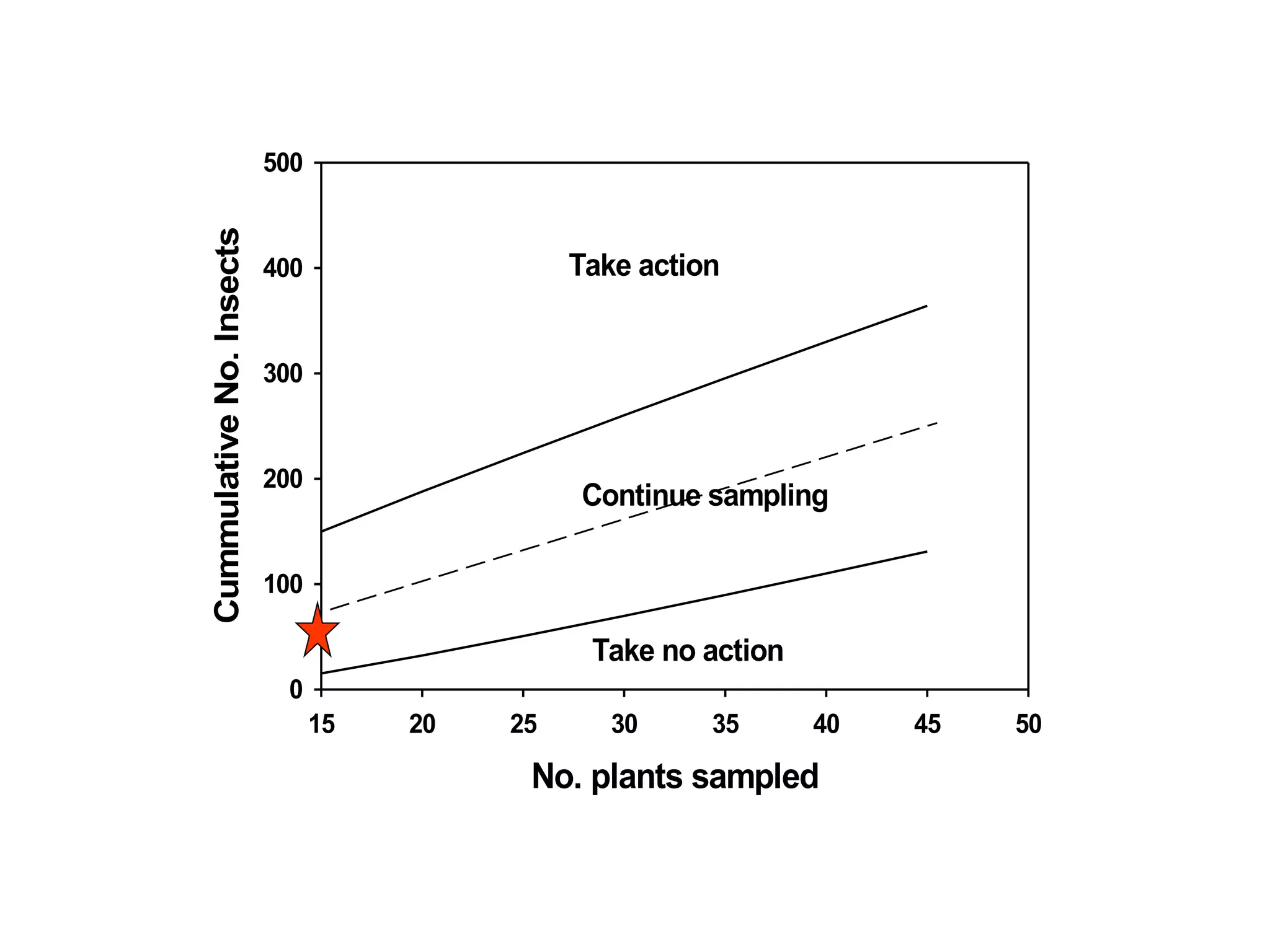
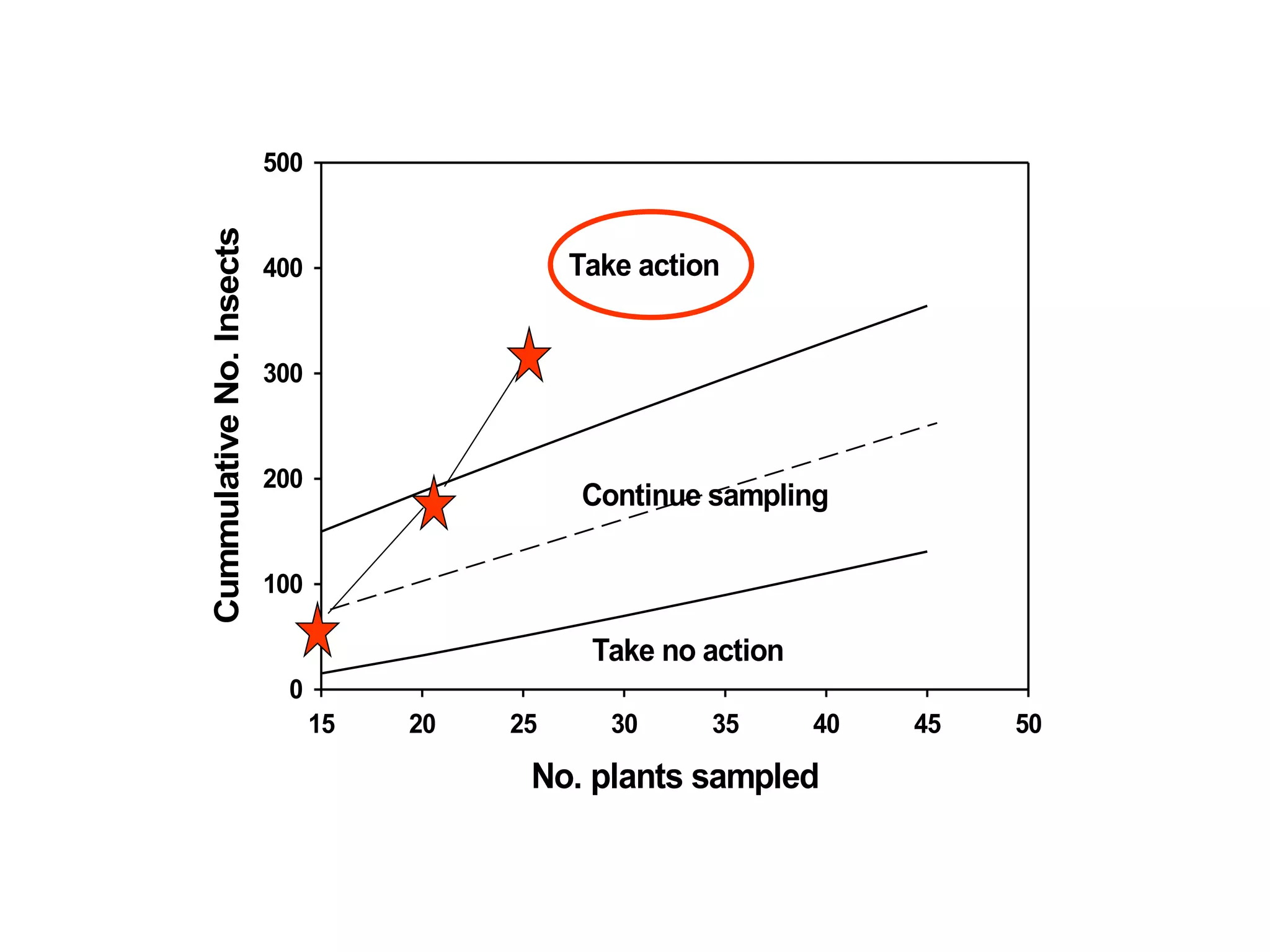
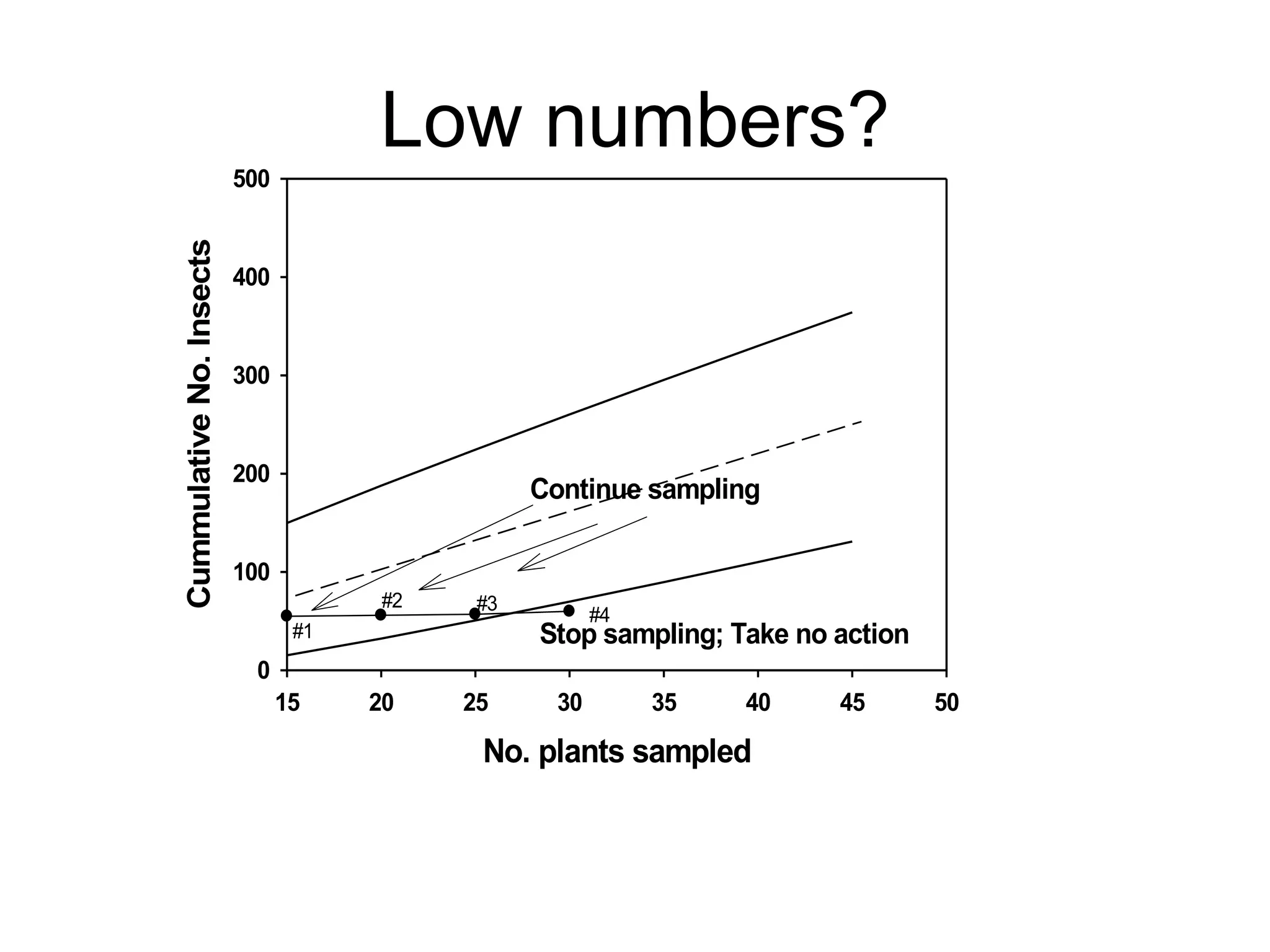
Sequential sampling
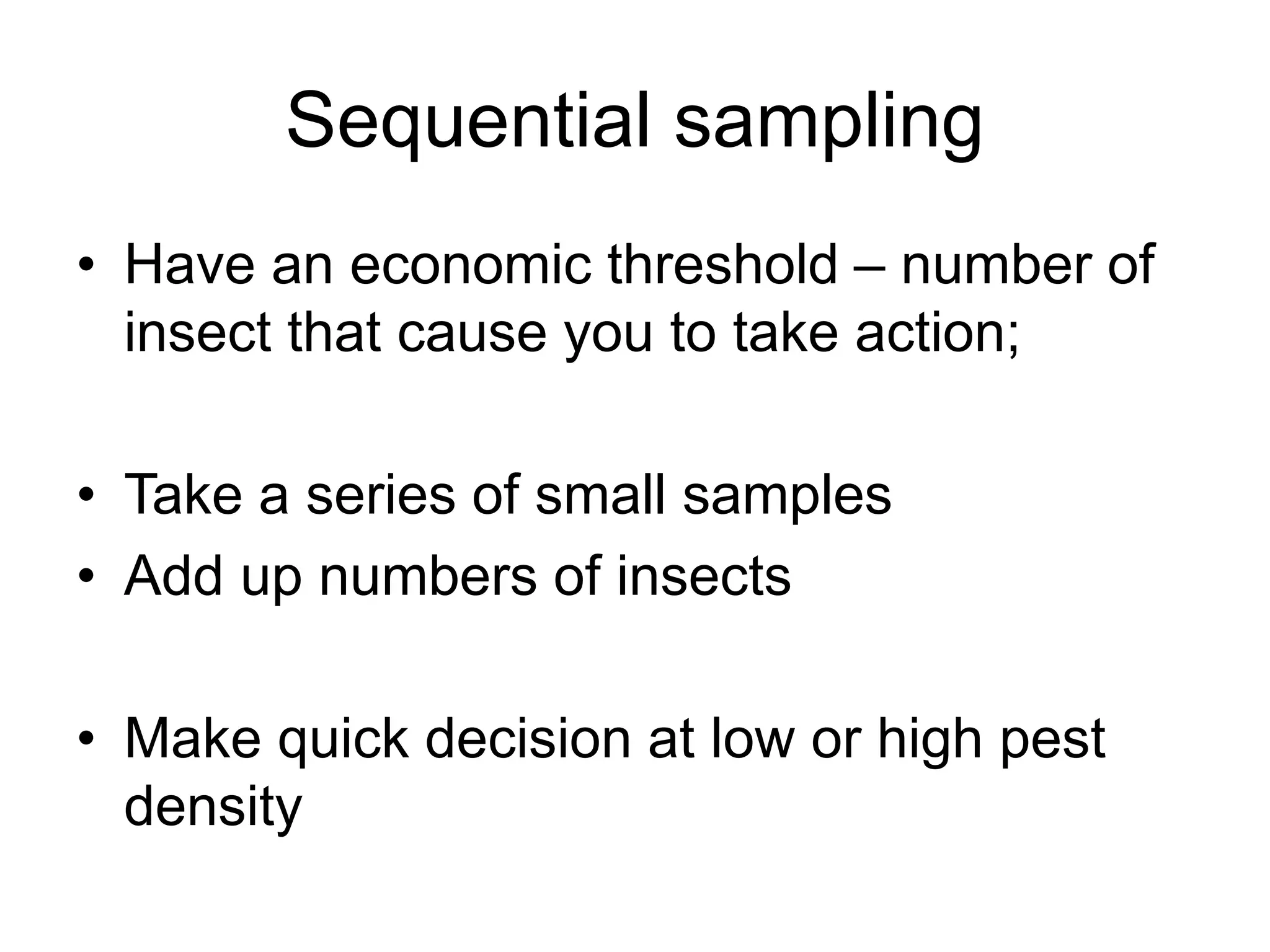
• Have an economic threshold – number of
insect that cause you to take action;
• Take a series of small samples
• Add up numbers of insects
• Make quick decision at low or high pest
density
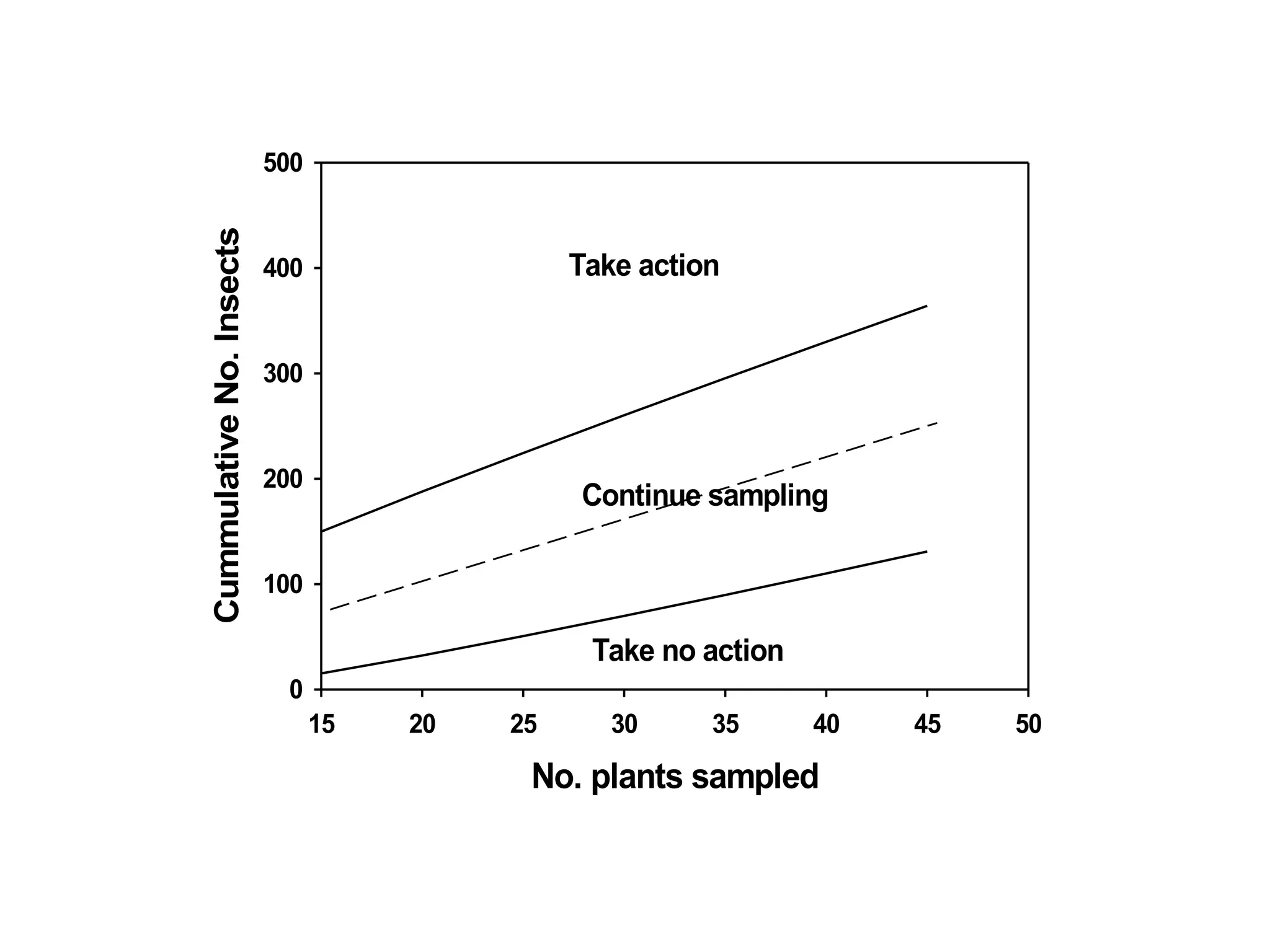
No. plants sampled
15 20 25 30 35 40 45 50
Cummulative
No.
Insects
0
100
200
300
400
500
Continue sampling
Take action
Take no action
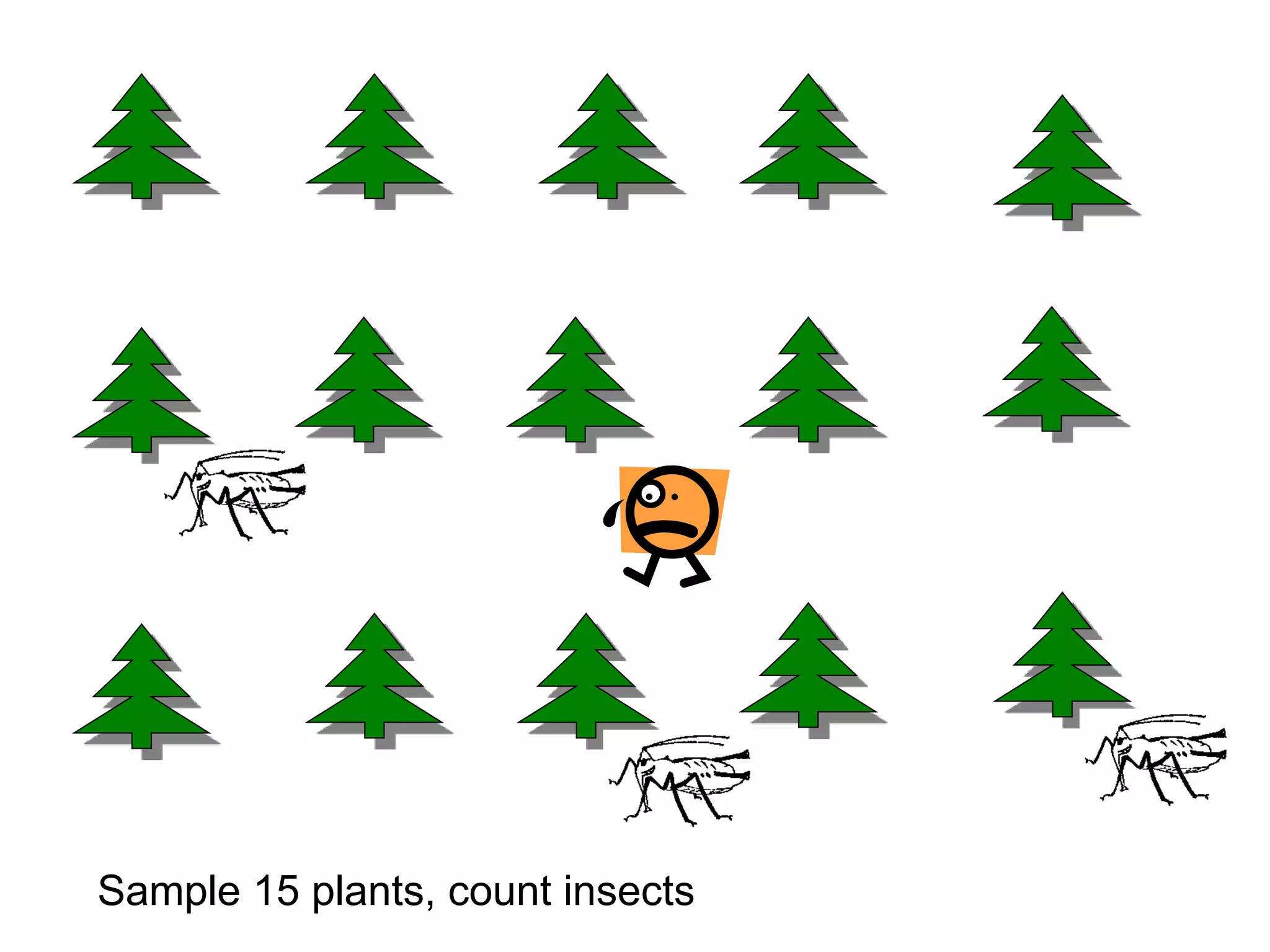
Sample 15 plants, count insects
No. plants sampled
15 20 25 30 35 40 45 50
Cummulative
No.
Insects
0
100
200
300
400
500
Continue sampling
Take action
Take no action
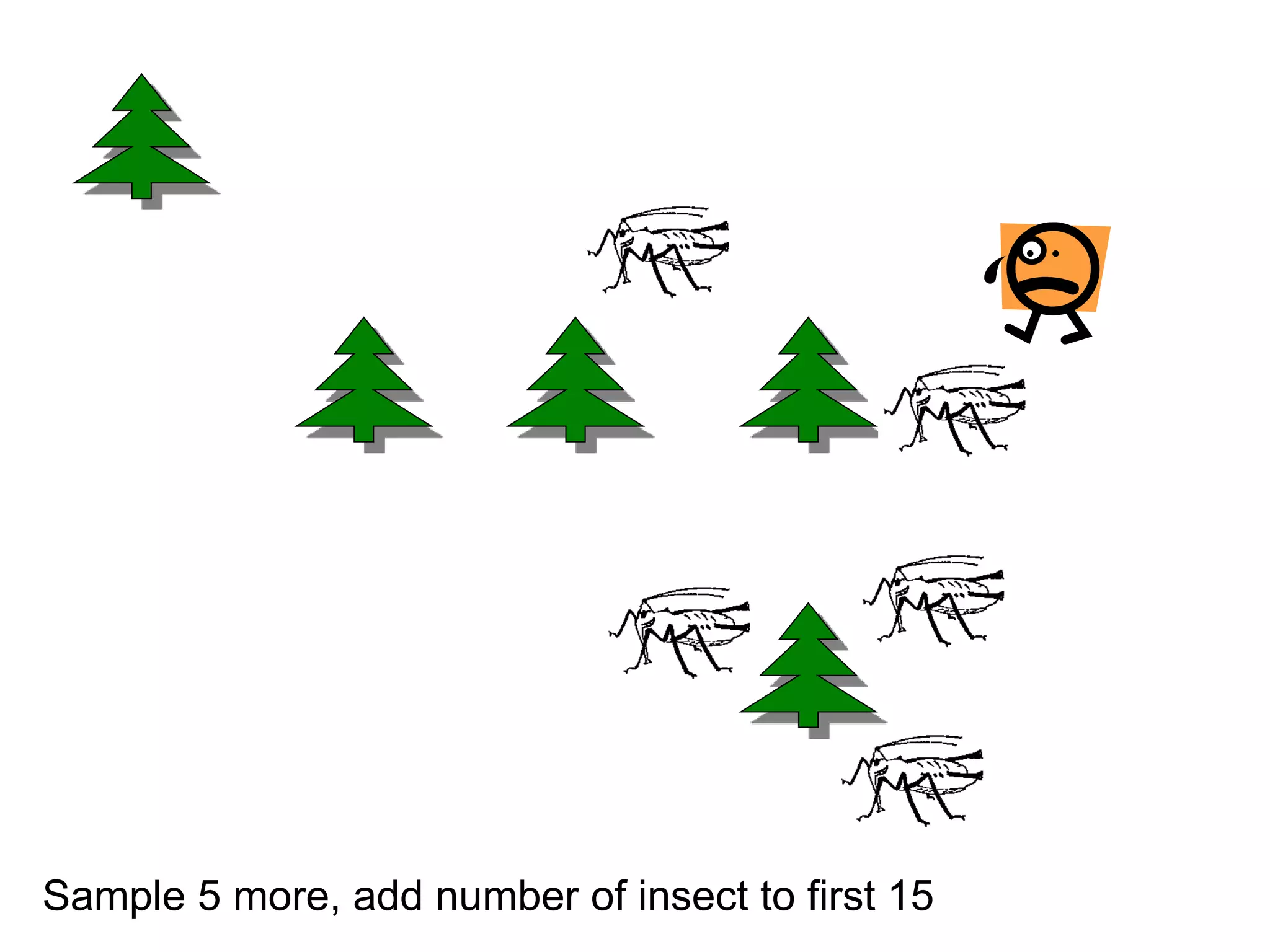
Sample 5 more, add number of insect to first 15
No. plants sampled
15 20 25 30 35 40 45 50
Cummulative
No.
Insects
0
100
200
300
400
500
Continue sampling
Take action
Take no action
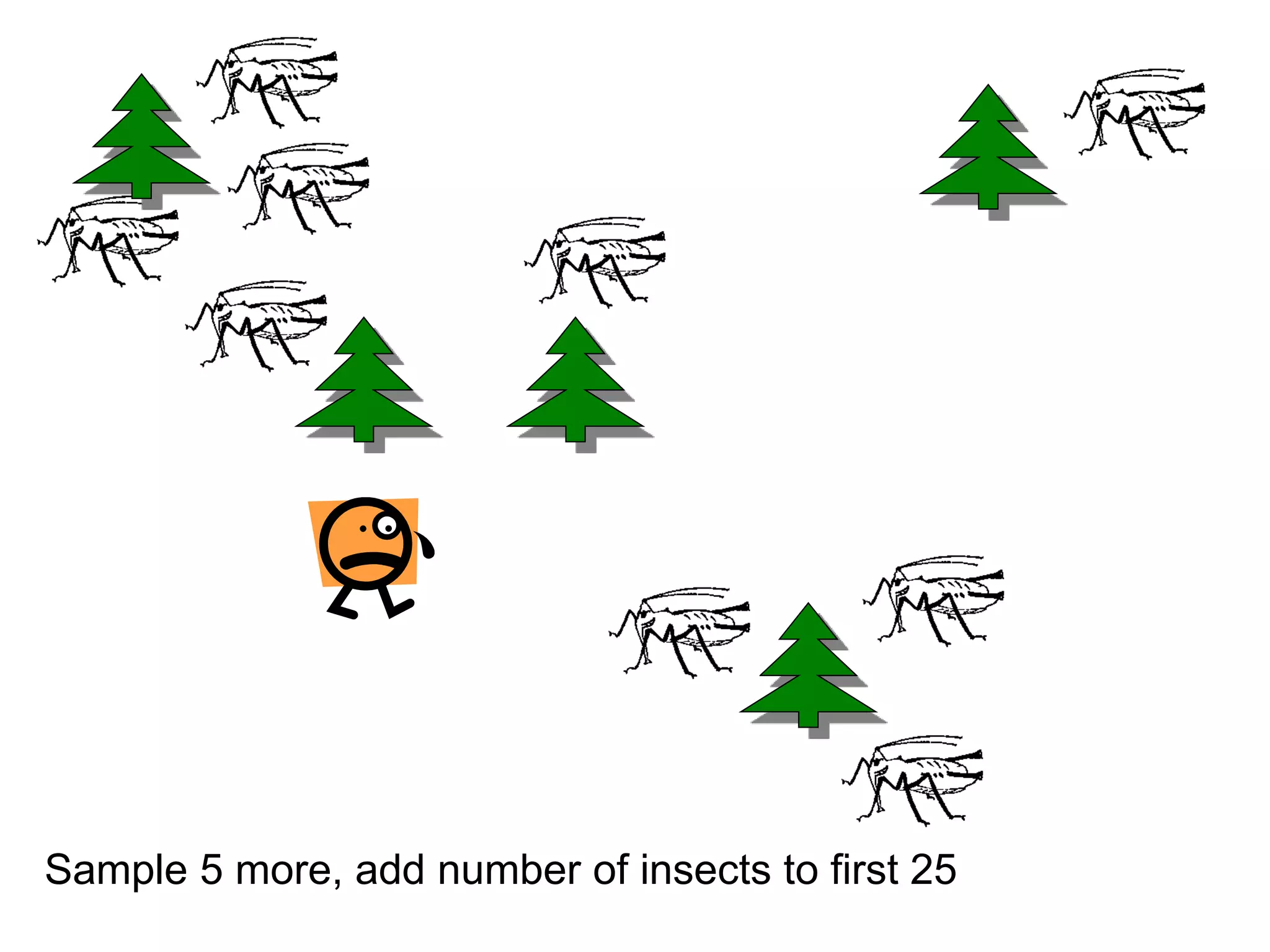
Sample 5 more, add number of insects to first 25
No. plants sampled
15 20 25 30 35 40 45 50
Cummulative
No.
Insects
0
100
200
300
400
500
Continue sampling
Take action
Take no action
No. plants sampled
15 20 25 30 35 40 45 50
Cummulative
No.
Insects
0
100
200
300
400
500
Continue sampling
Stop sampling; Take no action
#1
#2 #3
#4
Low numbers?
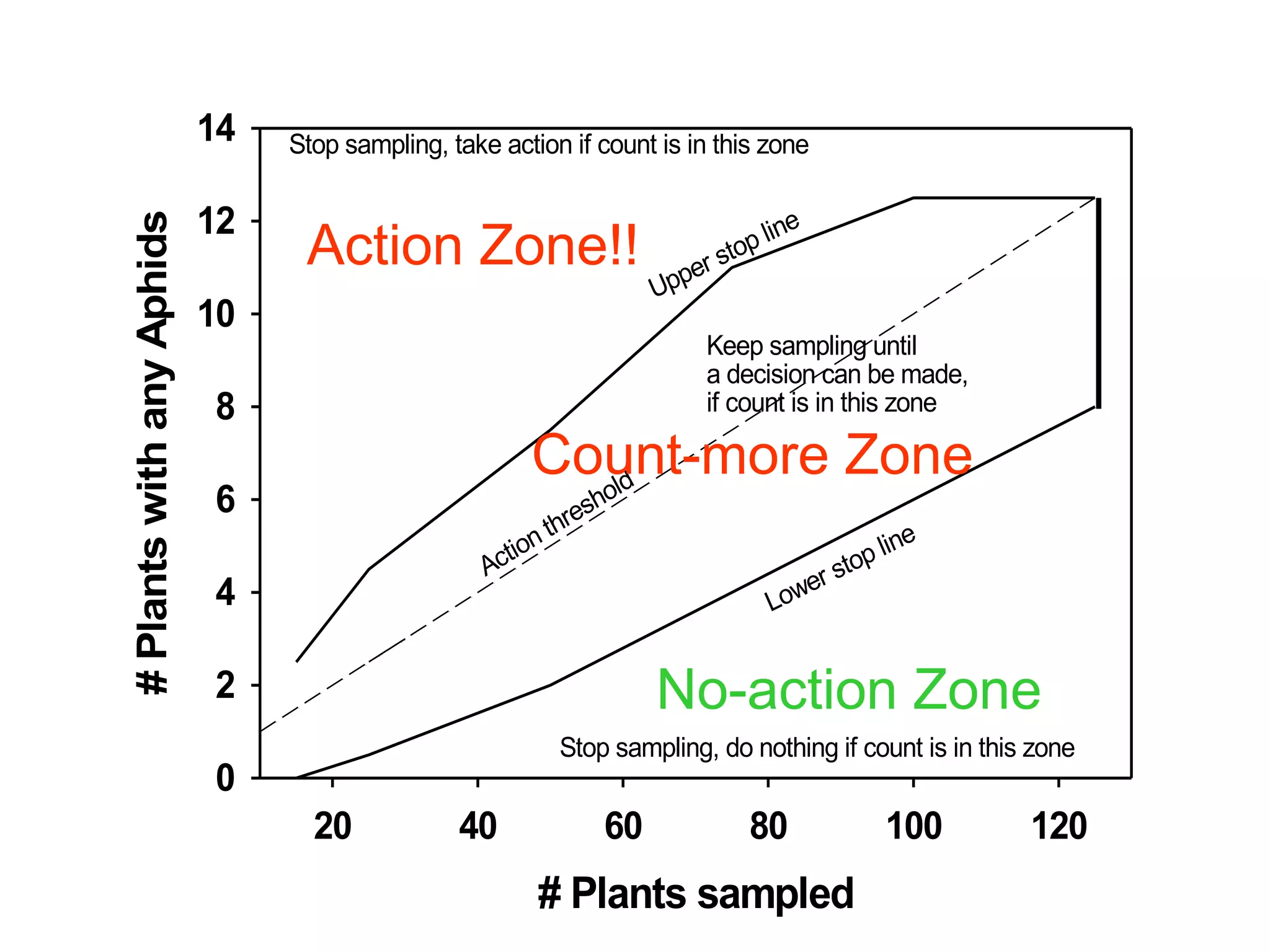
So much counting! Go Binomial
• Just say yes; or no (any aphids or none)
• Count number of plants with aphids, and
plot them on the graph….
• This saves time and effort, and allows a
quick and accurate decision.
# Plants sampled
20 40 60 80 100 120
#
Plants
with
any
Aphids
0
2
4
6
8
10
12
14 Stop sampling, take action if count is in this zone
Stop sampling, do nothing if count is in this zone
Keep sampling until
a decision can be made,
if count is in this zone
Upper stop line
Lower stop line
Action threshold
Action Zone!!
Count-more Zone
No-action Zone

Sequential sampling banana aphid.ppt

  • 1.
    Sequential sampling How todecide when to ‘take action’ based on a threshold and counts Based on: Robson, J.D., Wright, M.G. & Almeida, R.P.P. 2006. Within-plant spatial distribution and binomial sampling of Pentalonia nigronervosa Coquerel (Hemiptera: Aphididae) on banana in Hawai'i. Journal of Economic Entomology 99: 2185-2190. (Funded by PBARC, WSARE, TSTAR)
  • 2.
    The ‘average’ • Theaverage count always has ‘error’ – counts may range say from 3 to 9, with an average of 6; or 7; or 5. When can you be sure you have the correct average? • Sample size calculations – include error judgments
  • 3.
    Sequential sampling • Havean economic threshold – number of insect that cause you to take action; • Take a series of small samples • Add up numbers of insects • Make quick decision at low or high pest density
  • 4.
    No. plants sampled 1520 25 30 35 40 45 50 Cummulative No. Insects 0 100 200 300 400 500 Continue sampling Take action Take no action
  • 5.
    Sample 15 plants,count insects
  • 6.
    No. plants sampled 1520 25 30 35 40 45 50 Cummulative No. Insects 0 100 200 300 400 500 Continue sampling Take action Take no action
  • 7.
    Sample 5 more,add number of insect to first 15
  • 8.
    No. plants sampled 1520 25 30 35 40 45 50 Cummulative No. Insects 0 100 200 300 400 500 Continue sampling Take action Take no action
  • 9.
    Sample 5 more,add number of insects to first 25
  • 10.
    No. plants sampled 1520 25 30 35 40 45 50 Cummulative No. Insects 0 100 200 300 400 500 Continue sampling Take action Take no action
  • 11.
    No. plants sampled 1520 25 30 35 40 45 50 Cummulative No. Insects 0 100 200 300 400 500 Continue sampling Stop sampling; Take no action #1 #2 #3 #4 Low numbers?
  • 12.
    So much counting!Go Binomial • Just say yes; or no (any aphids or none) • Count number of plants with aphids, and plot them on the graph…. • This saves time and effort, and allows a quick and accurate decision.
  • 13.
    # Plants sampled 2040 60 80 100 120 # Plants with any Aphids 0 2 4 6 8 10 12 14 Stop sampling, take action if count is in this zone Stop sampling, do nothing if count is in this zone Keep sampling until a decision can be made, if count is in this zone Upper stop line Lower stop line Action threshold Action Zone!! Count-more Zone No-action Zone