What Is an Image?
Imagery in Poetry
Practice
Imagery
Feature Menu
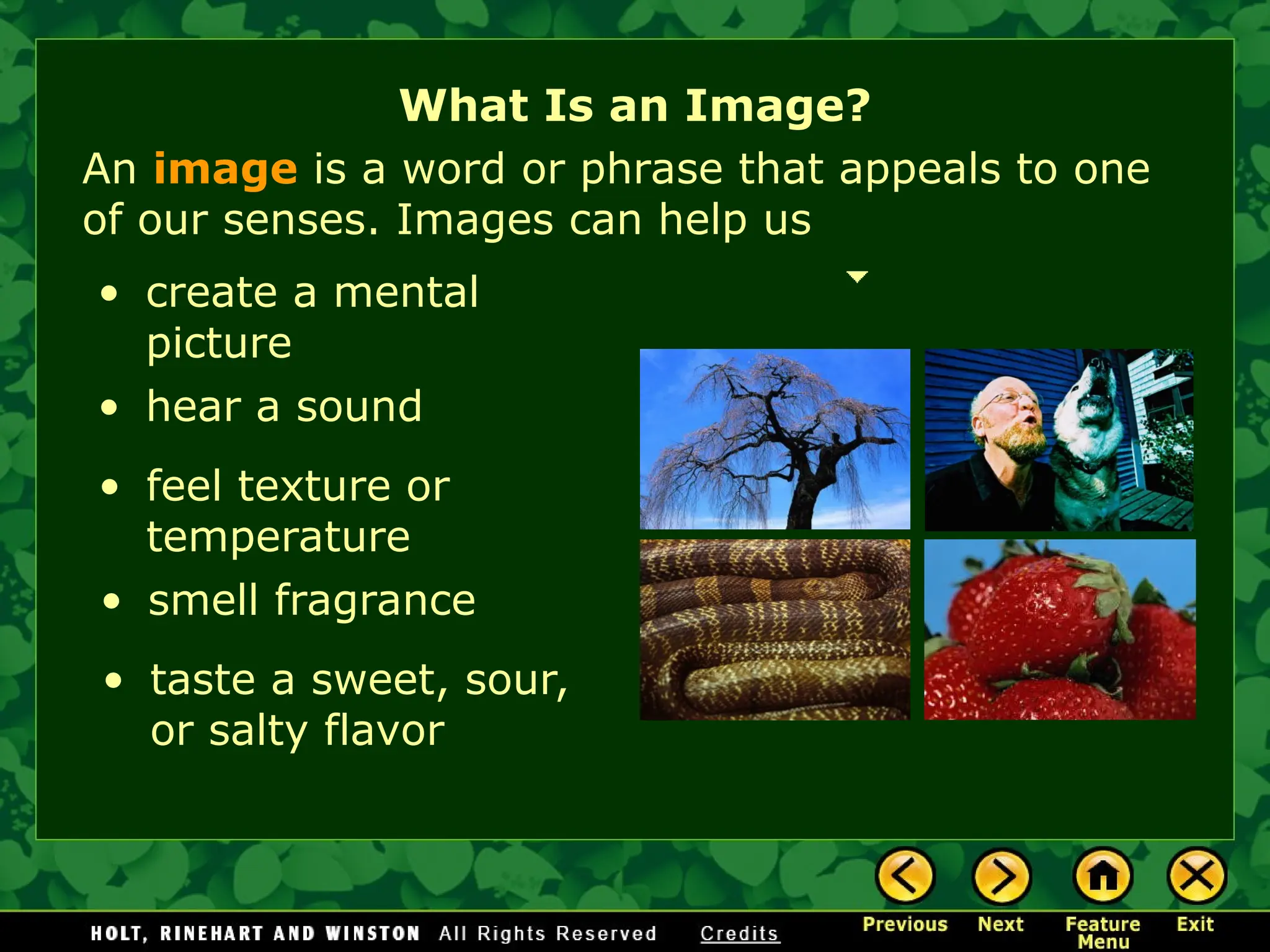
An image is a word or phrase that appeals to one
of our senses. Images can help us
• create a mental
picture
• hear a sound
• feel texture or
temperature
• taste a sweet, sour,
or salty flavor
What Is an Image?
• smell fragrance
And straightway like a bell
Came low and clear
The slow, sad murmur of the distant seas,
. . . . . . . . . . . . . . . . . . . . . . . . . . . . . .
And in the hush of waters was the sound
Of pebbles rolling round,
For ever rolling with a hollow sound.
And bubbling sea-weeds as the waters go
Swish to and fro
Their long, cold tentacles of slimy grey.
—from “The Shell” by James Stephens
Listen to this excerpt of “The Shell” by James
Stephens and imagine the scene he describes.
What Is an Image?
Which words
appeal to the
sense of
hearing?
sight? touch?
What Is an Image?
And straightway like a bell
Came low and clear
The slow, sad murmur of the distant seas,
. . . . . . . . . . . . . . . . . . . . . . . . . . . . . .
And in the hush of waters was the sound
Of pebbles rolling round,
For ever rolling with a hollow sound.
And bubbling sea-weeds as the waters go
Swish to and fro
Their long, cold tentacles of slimy grey.
—from “The Shell” by James Stephens
Quick Check
[End of Section]
Poets and painters both create
vivid images. Painters choose
from a palette of colors to
create different textures and
moods in their works.
Poets also have a palette—a
palette of words—from which they
choose just the right words to
create a sensory experience for
the reader.
Imagery in Poetry
Poets use imagery to
• speak to our deepest feelings—joy, sorrow,
wonder, love
• emphasize certain qualities of the subject
• create a mood
Out on the land White Moon shines.
Shines and glimmers against gnarled shadows,
All silver to slow twisted shadows
Falling across the long road that runs from the house.
—from “Baby Face” by Carl Sandburg
Imagery in Poetry
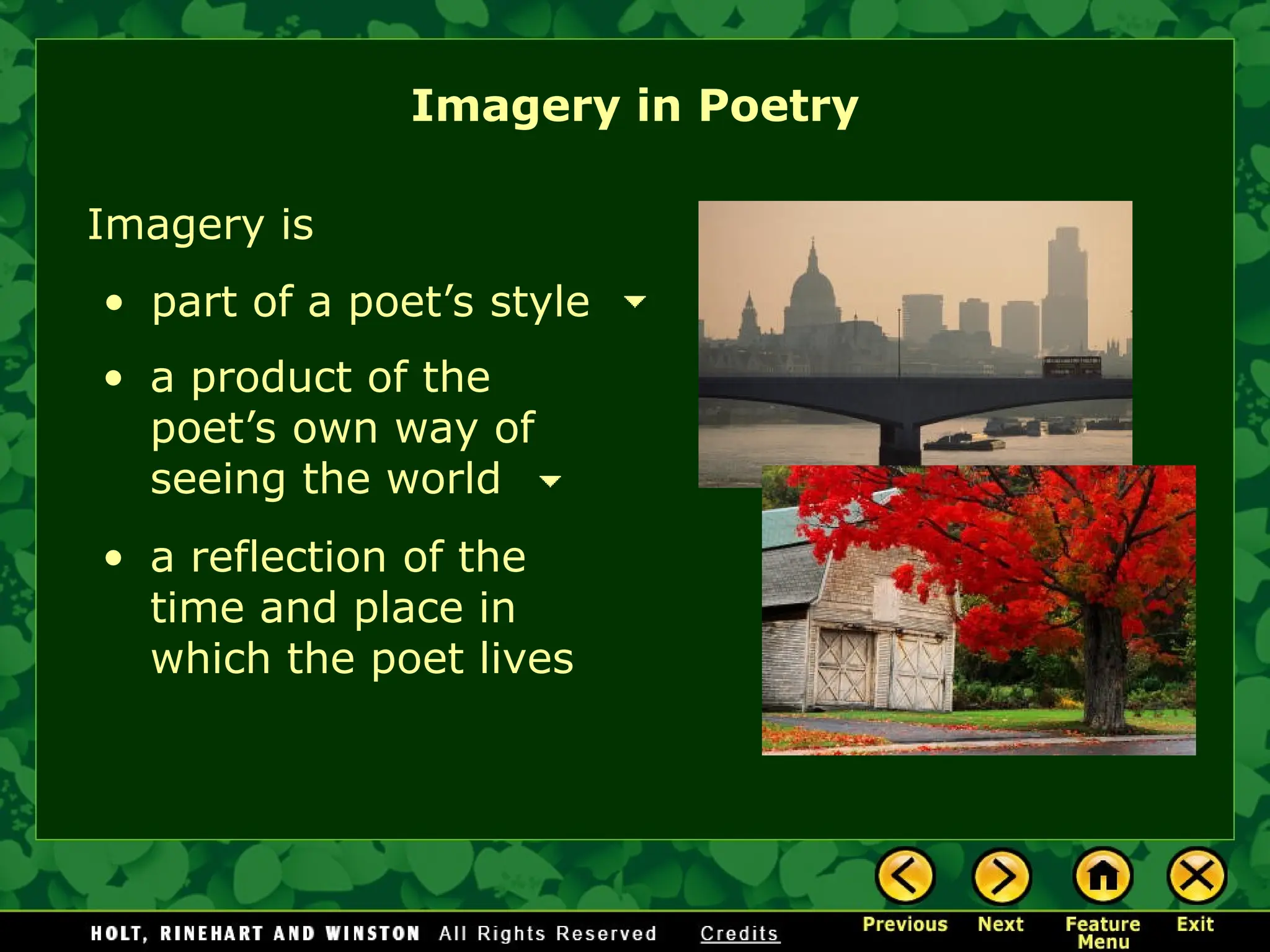
Imagery is
• part of a poet’s style
• a product of the
poet’s own way of
seeing the world
• a reflection of the
time and place in
which the poet lives
Imagery in Poetry
How does the
imagery affect
your emotions?
Explain.
What mood does
the poet create
through his use
of imagery?
Imagery in Poetry
Quick Check
The Loon
by Lew Sarett
A lonely lake, a lonely shore,
A lone pine leaning on the moon;
All night the water-beating wings
Of a solitary loon.
With mournful wail from dusk to dawn
He gibbered at the taunting stars,—
A hermit-soul gone raving mad,
And beating at his bars.
[End of Section]
Images can be drawn from all sorts of
things we observe in life. For each category, create two
images—one pleasant and one unpleasant. Try to
include images that appeal to all five senses.
Images Pleasant Unpleasant
Animal images
Flower images
Water images
Sky images
Earth images
City images
Country images
Practice
The End

Sensory Imagery powerpoint presentation.ppt

  • 1.
    What Is anImage? Imagery in Poetry Practice Imagery Feature Menu
  • 2.
    An image isa word or phrase that appeals to one of our senses. Images can help us • create a mental picture • hear a sound • feel texture or temperature • taste a sweet, sour, or salty flavor What Is an Image? • smell fragrance
  • 3.
    And straightway likea bell Came low and clear The slow, sad murmur of the distant seas, . . . . . . . . . . . . . . . . . . . . . . . . . . . . . . And in the hush of waters was the sound Of pebbles rolling round, For ever rolling with a hollow sound. And bubbling sea-weeds as the waters go Swish to and fro Their long, cold tentacles of slimy grey. —from “The Shell” by James Stephens Listen to this excerpt of “The Shell” by James Stephens and imagine the scene he describes. What Is an Image?
  • 4.
    Which words appeal tothe sense of hearing? sight? touch? What Is an Image? And straightway like a bell Came low and clear The slow, sad murmur of the distant seas, . . . . . . . . . . . . . . . . . . . . . . . . . . . . . . And in the hush of waters was the sound Of pebbles rolling round, For ever rolling with a hollow sound. And bubbling sea-weeds as the waters go Swish to and fro Their long, cold tentacles of slimy grey. —from “The Shell” by James Stephens Quick Check [End of Section]
  • 5.
    Poets and paintersboth create vivid images. Painters choose from a palette of colors to create different textures and moods in their works. Poets also have a palette—a palette of words—from which they choose just the right words to create a sensory experience for the reader. Imagery in Poetry
  • 6.
    Poets use imageryto • speak to our deepest feelings—joy, sorrow, wonder, love • emphasize certain qualities of the subject • create a mood Out on the land White Moon shines. Shines and glimmers against gnarled shadows, All silver to slow twisted shadows Falling across the long road that runs from the house. —from “Baby Face” by Carl Sandburg Imagery in Poetry
  • 7.
    Imagery is • partof a poet’s style • a product of the poet’s own way of seeing the world • a reflection of the time and place in which the poet lives Imagery in Poetry
  • 8.
    How does the imageryaffect your emotions? Explain. What mood does the poet create through his use of imagery? Imagery in Poetry Quick Check The Loon by Lew Sarett A lonely lake, a lonely shore, A lone pine leaning on the moon; All night the water-beating wings Of a solitary loon. With mournful wail from dusk to dawn He gibbered at the taunting stars,— A hermit-soul gone raving mad, And beating at his bars. [End of Section]
  • 9.
    Images can bedrawn from all sorts of things we observe in life. For each category, create two images—one pleasant and one unpleasant. Try to include images that appeal to all five senses. Images Pleasant Unpleasant Animal images Flower images Water images Sky images Earth images City images Country images Practice
  • 10.