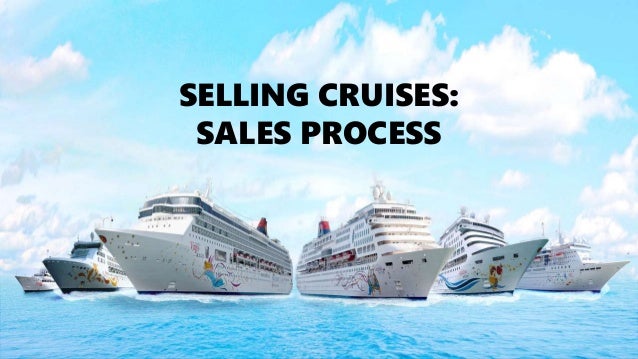
SELLING CRUISES:
SALES PROCESS
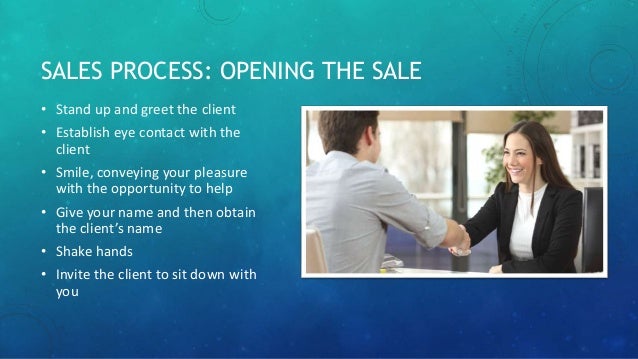
SALES PROCESS: OPENING THE SALE
• Stand up and greet the client
• Establish eye contact with the
client
• Smile, conveying your pleasure
with the opportunity to help
• Give your name and then obtain
the client’s name
• Shake hands
• Invite the client to sit down with
you
OPENING A PHONE SALE
• Use the four-part greeting
• Smile
• Communicate energy and
enthusiasm
QUALIFYING THE CLIENT
Qualifying means asking questions to uncover a client’s needs.
Travel agents with 3 general scenarios:
1. Clients have only the vaguest idea about what kind of vacation they want.
2. Clients have a rough idea of what they want
3. Clients know exactly what they want
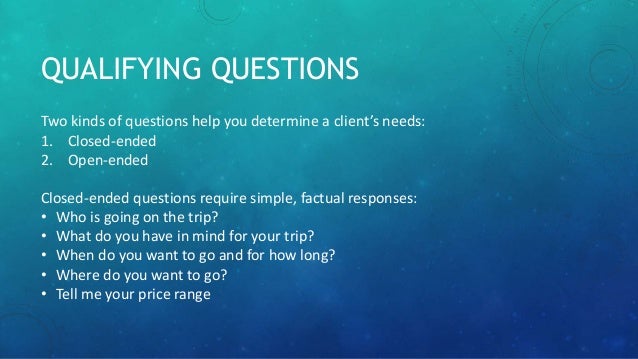
QUALIFYING QUESTIONS
Two kinds of questions help you determine a client’s needs:
1. Closed-ended
2. Open-ended
Closed-ended questions require simple, factual responses:
• Who is going on the trip?
• What do you have in mind for your trip?
• When do you want to go and for how long?
• Where do you want to go?
• Tell me your price range
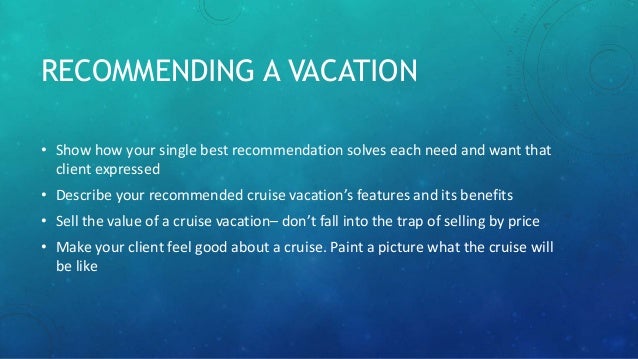
RECOMMENDING A VACATION
• Show how your single best recommendation solves each need and want that
client expressed
• Describe your recommended cruise vacation’s features and its benefits
• Sell the value of a cruise vacation– don’t fall into the trap of selling by price
• Make your client feel good about a cruise. Paint a picture what the cruise will
be like
CRUISE BROCHURE: THREE-PART
FORMAT
• A sales presentation
• The cruise itineraries
• The back-of-brochure information section
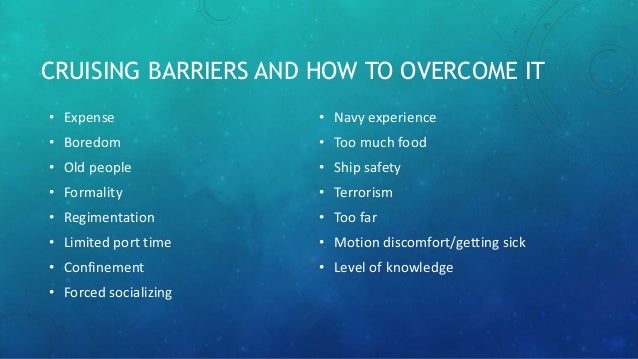
CRUISING BARRIERS AND HOW TO OVERCOME IT
• Expense
• Boredom
• Old people
• Formality
• Regimentation
• Limited port time
• Confinement
• Forced socializing
• Navy experience
• Too much food
• Ship safety
• Terrorism
• Too far
• Motion discomfort/getting sick
• Level of knowledge
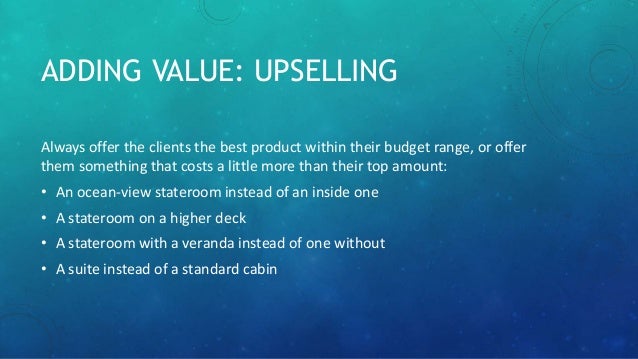
ADDING VALUE: UPSELLING
Always offer the clients the best product within their budget range, or offer
them something that costs a little more than their top amount:
• An ocean-view stateroom instead of an inside one
• A stateroom on a higher deck
• A stateroom with a veranda instead of one without
• A suite instead of a standard cabin
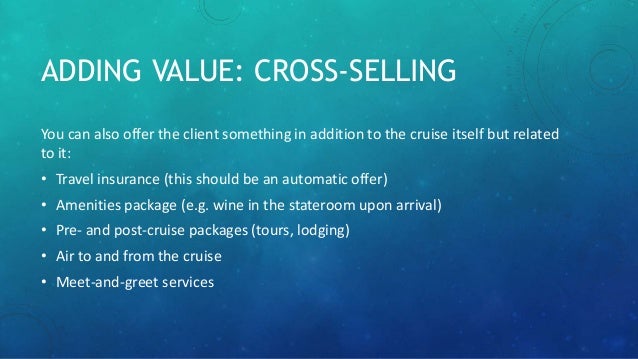
ADDING VALUE: CROSS-SELLING
You can also offer the client something in addition to the cruise itself but related
to it:
• Travel insurance (this should be an automatic offer)
• Amenities package (e.g. wine in the stateroom upon arrival)
• Pre- and post-cruise packages (tours, lodging)
• Air to and from the cruise
• Meet-and-greet services
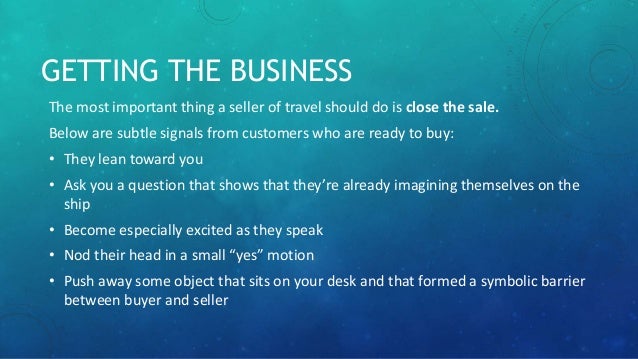
GETTING THE BUSINESS
The most important thing a seller of travel should do is close the sale.
Below are subtle signals from customers who are ready to buy:
• They lean toward you
• Ask you a question that shows that they’re already imagining themselves on the
ship
• Become especially excited as they speak
• Nod their head in a small “yes” motion
• Push away some object that sits on your desk and that formed a symbolic barrier
between buyer and seller
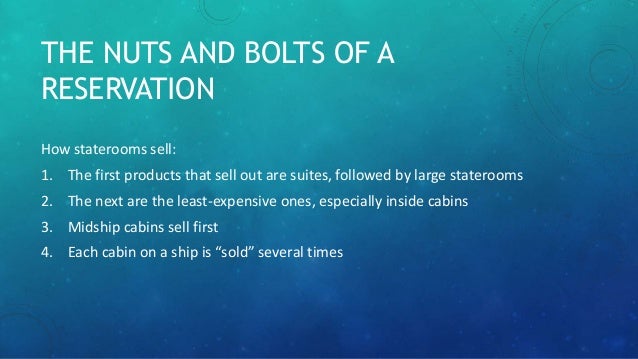
THE NUTS AND BOLTS OF A
RESERVATION
How staterooms sell:
1. The first products that sell out are suites, followed by large staterooms
2. The next are the least-expensive ones, especially inside cabins
3. Midship cabins sell first
4. Each cabin on a ship is “sold” several times
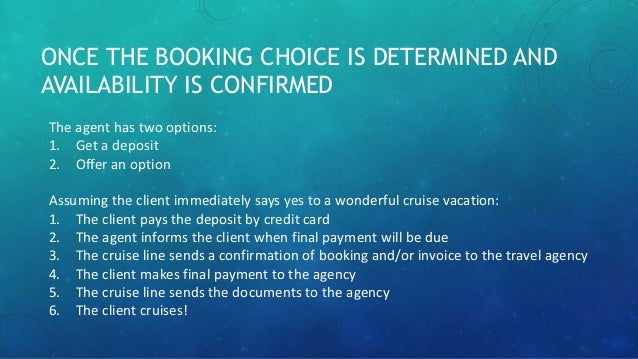
ONCE THE BOOKING CHOICE IS DETERMINED AND
AVAILABILITY IS CONFIRMED
The agent has two options:
1. Get a deposit
2. Offer an option
Assuming the client immediately says yes to a wonderful cruise vacation:
1. The client pays the deposit by credit card
2. The agent informs the client when final payment will be due
3. The cruise line sends a confirmation of booking and/or invoice to the travel agency
4. The client makes final payment to the agency
5. The cruise line sends the documents to the agency
6. The client cruises!
FOLLOWING UP
You know that you’re creating a loyal client, not just a sale.
There are 4 kinds of follow-up situations:
1. Follow up on an unclosed sale
2. Follow up a closed sale
3. Follow up when they return
4. Follow up at the same booking time next year
THANK YOU 
PREPARED BY:
BOYET E. ESPLANADA, MSTM
FACULTY, TMD

Selling_Cruises_Sales_Process(2).pptx

  • 1.
  • 2.
    SALES PROCESS: OPENINGTHE SALE • Stand up and greet the client • Establish eye contact with the client • Smile, conveying your pleasure with the opportunity to help • Give your name and then obtain the client’s name • Shake hands • Invite the client to sit down with you
  • 3.
    OPENING A PHONESALE • Use the four-part greeting • Smile • Communicate energy and enthusiasm
  • 4.
    QUALIFYING THE CLIENT Qualifyingmeans asking questions to uncover a client’s needs. Travel agents with 3 general scenarios: 1. Clients have only the vaguest idea about what kind of vacation they want. 2. Clients have a rough idea of what they want 3. Clients know exactly what they want
  • 5.
    QUALIFYING QUESTIONS Two kindsof questions help you determine a client’s needs: 1. Closed-ended 2. Open-ended Closed-ended questions require simple, factual responses: • Who is going on the trip? • What do you have in mind for your trip? • When do you want to go and for how long? • Where do you want to go? • Tell me your price range
  • 6.
    RECOMMENDING A VACATION •Show how your single best recommendation solves each need and want that client expressed • Describe your recommended cruise vacation’s features and its benefits • Sell the value of a cruise vacation– don’t fall into the trap of selling by price • Make your client feel good about a cruise. Paint a picture what the cruise will be like
  • 7.
    CRUISE BROCHURE: THREE-PART FORMAT •A sales presentation • The cruise itineraries • The back-of-brochure information section
  • 8.
    CRUISING BARRIERS ANDHOW TO OVERCOME IT • Expense • Boredom • Old people • Formality • Regimentation • Limited port time • Confinement • Forced socializing • Navy experience • Too much food • Ship safety • Terrorism • Too far • Motion discomfort/getting sick • Level of knowledge
  • 9.
    ADDING VALUE: UPSELLING Alwaysoffer the clients the best product within their budget range, or offer them something that costs a little more than their top amount: • An ocean-view stateroom instead of an inside one • A stateroom on a higher deck • A stateroom with a veranda instead of one without • A suite instead of a standard cabin
  • 10.
    ADDING VALUE: CROSS-SELLING Youcan also offer the client something in addition to the cruise itself but related to it: • Travel insurance (this should be an automatic offer) • Amenities package (e.g. wine in the stateroom upon arrival) • Pre- and post-cruise packages (tours, lodging) • Air to and from the cruise • Meet-and-greet services
  • 11.
    GETTING THE BUSINESS Themost important thing a seller of travel should do is close the sale. Below are subtle signals from customers who are ready to buy: • They lean toward you • Ask you a question that shows that they’re already imagining themselves on the ship • Become especially excited as they speak • Nod their head in a small “yes” motion • Push away some object that sits on your desk and that formed a symbolic barrier between buyer and seller
  • 12.
    THE NUTS ANDBOLTS OF A RESERVATION How staterooms sell: 1. The first products that sell out are suites, followed by large staterooms 2. The next are the least-expensive ones, especially inside cabins 3. Midship cabins sell first 4. Each cabin on a ship is “sold” several times
  • 13.
    ONCE THE BOOKINGCHOICE IS DETERMINED AND AVAILABILITY IS CONFIRMED The agent has two options: 1. Get a deposit 2. Offer an option Assuming the client immediately says yes to a wonderful cruise vacation: 1. The client pays the deposit by credit card 2. The agent informs the client when final payment will be due 3. The cruise line sends a confirmation of booking and/or invoice to the travel agency 4. The client makes final payment to the agency 5. The cruise line sends the documents to the agency 6. The client cruises!
  • 14.
    FOLLOWING UP You knowthat you’re creating a loyal client, not just a sale. There are 4 kinds of follow-up situations: 1. Follow up on an unclosed sale 2. Follow up a closed sale 3. Follow up when they return 4. Follow up at the same booking time next year
  • 15.
    THANK YOU  PREPAREDBY: BOYET E. ESPLANADA, MSTM FACULTY, TMD