2014
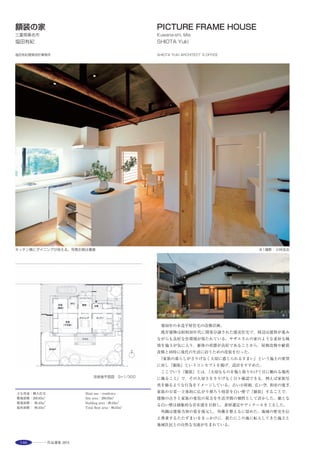
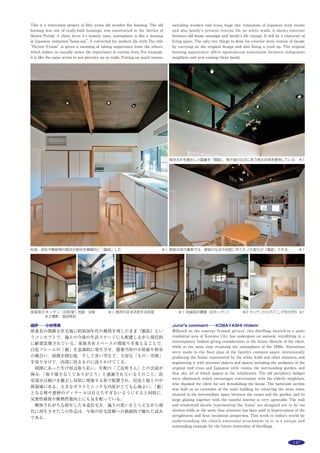
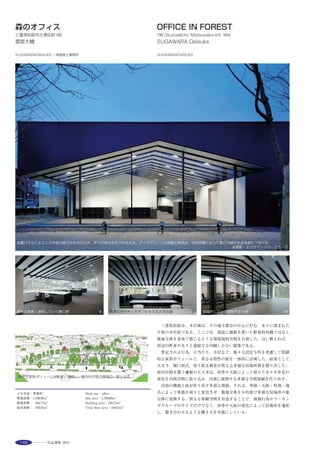
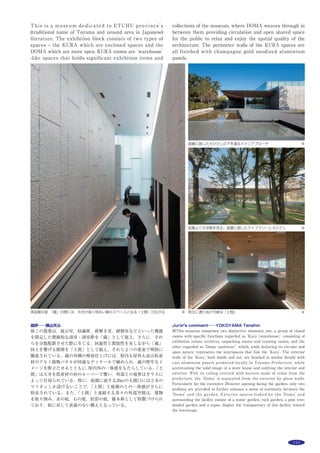
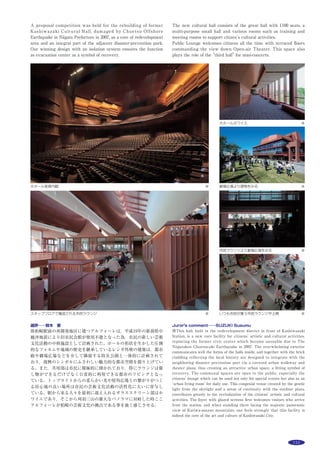
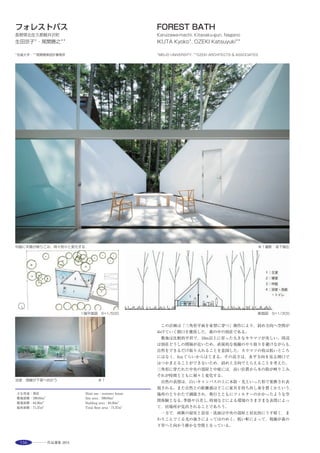
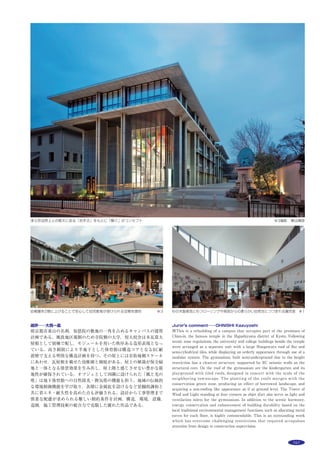
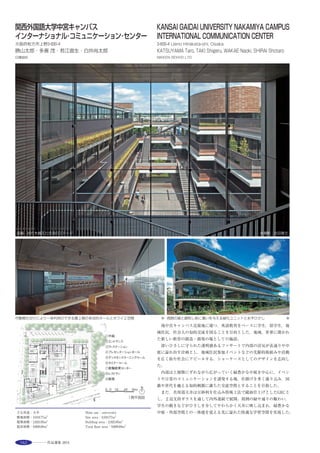
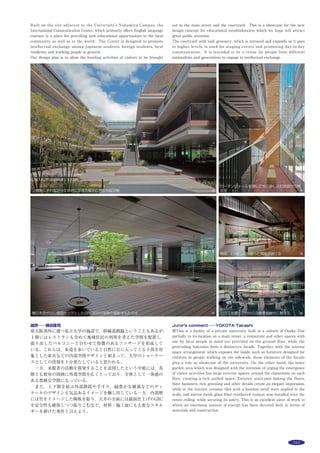
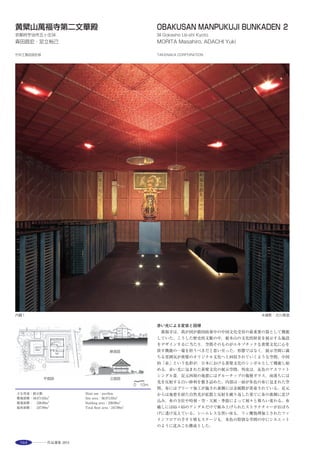
Selected
Architectural Designs
Journal of Architecture and Building Science Architectural Institute of Japan
建築雑誌 増刊 作品選集 日本建築学会
ISSN1342-0739
 
昭
和
二
二
年
九
月
一
八
日
第
三
種
郵
便
物
承
認
 
二
〇
一
四
年
三
月
二
〇
日
発
行
 
建
築
雑
誌
 
増
刊
 
第
一
二
九
集
 
第
一
六
五
六
号
Architectural Institute of Japan
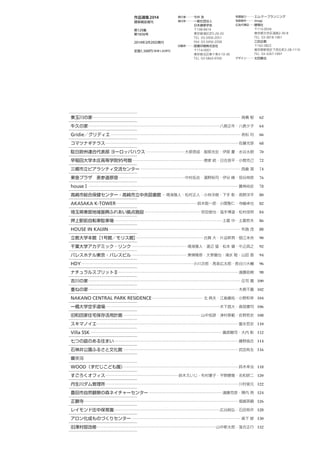
REPORT ON THE SELECTION PROCESS ......................................................................... KONO Haruhiko (8)
IMPRESSION.................................................................................... SHIBATA Ikuhide, YOSHIMATSU Hideki (13)
COMMITTEE REVIEW................................................................................................................................... (14)
●HOKKAIDO
TOMA HOUSE .....................................................................................HORIO Hiroshi, HASEGAWA Daisuke 2
HOKKAIDO INSTITUTE OF TECHNOLOGY “HIT ARENA”
..................................................................................SATO Takashi, YOSHIKAWA Tomohiko, TANEDA Shunji 4
●TOHOKU
YURIHONJO CITY CULTURAL CENTER KADARE................................................................. ARAI Chiaki 6
BAMBOO ARK.............................................................. TOKI Hirokazu, TAKAHASHI Kazushi, NAGAI Takuo 8
HOBARA ELEMENTARY SCHOOL......................ONO Hidetoshi, YOSHIDA Akihiro, YAMAMOTO Shinya 10
SHOKEI GAKUIN UNIVERSITY CHAPEL.........KUWABARA Hiroaki, KATSURA Kazuhisa, HIRAOKA Maki 12
●KANTO
TEIKYO UNIVERSITY ELEMENTARY SCHOOL
........................................................... KUMA Kengo, KOIZUMI Osamu, FUJITA Masayoshi, NAKANO Yosuke 14
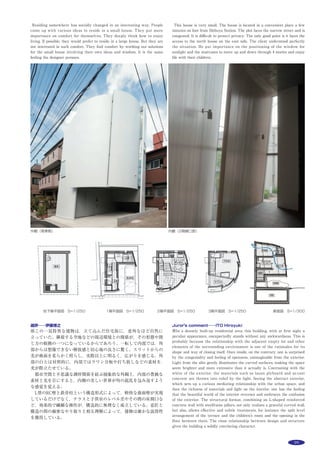
GRID .............................................................................................................................................ITO Hiroyuki 16
BAYSIDE MARINA HOTEL....................................................................................... YOSHIMURA Yasutaka 18
SHIMIZU CORPORATION HEAD OFFICE
.........................KENJYO Tatsuya, TAKEUCHI Masahiko, KOKURYU Atsushi, KATO Maki, MIYAZAKI Hirohide 20
SUNKEN HOUSE..............................................................................KOJIMA Kazuhiro, AKAMATSU Kazuko 22
JISSEN GAKUEN JUNIOR&SENIOR HIGH SCHOOL FREEDOM LEARNING MANOR HOUSE
................................................................FURUYA Nobuaki, YAGI Sachiko, ARAYA Masato, TAKAMA Saburo 24
IIS ANNIVERSARY HALL, THE UNIV. OF TOKYO............... IMAI Kotaro, ENDO Katsuhiko, OOI Tetsuya 26
THE NEW OI OFFICE BUILDING OF THE DAI-ICHI LIFE INSURANCE COMPANY
........................................................ UMEGAKI Haruki, KURUMADO Joje, ISHIKAWA Shuji, HANAOKA Ikuya 28
NBF OSAKI BLDG. (FORMER NAME : SONY CITY OSAKI)
......................................YAMANASHI Tomohiko, HATORI Tatsuya, ISHIHARA Yoshito, KAWASHIMA Norihisa 30
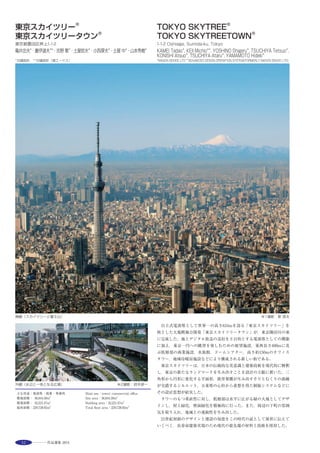
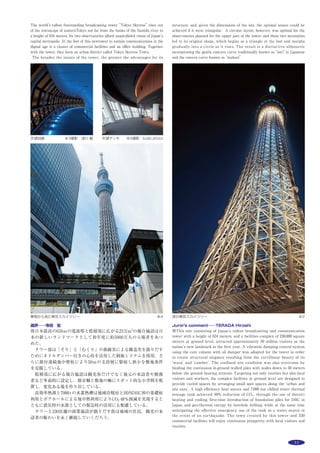
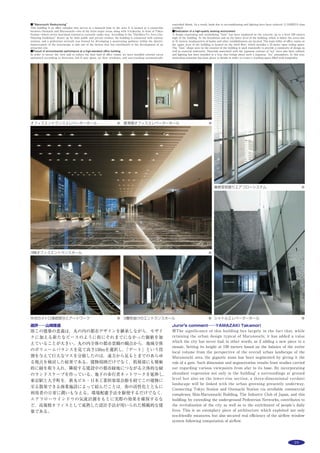
TOKYO SKYTREE®
TOKYO SKYTREETOWN® .........................................................................................
KAMEI Tadao, KEII Michio, YOSHINO Shigeru, TSUCHIYA Tetsuo, KONISHI Atsuo, TSUCHIYA Ataru, YAMAMOTO Hideki 32
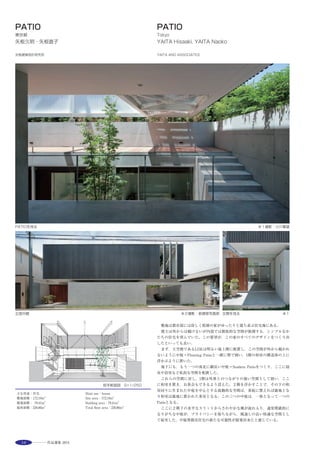
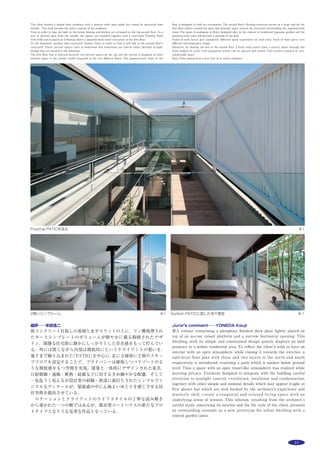
PATIO ................................................................................................................. YAITA Hisaaki, YAITA Naoko 34
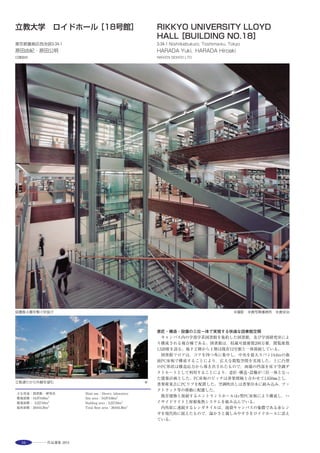
RIKKYO UNIVERSITY LLOYD HALL [BUILDING NO.18].....................HARADA Yuki, HARADA Hiroaki 36
KAJIMA TECHNICAL RESEARCH INSTITUTE, RESEARCH AND ADMINISTRATION BUILDING
........................................................................................YONEDA Koji, SUGIOKA Masatoshi, TOGO Hiroyuki 38
GEO METRIA...........................................................................................HARADA Masahiro, HARADA Mao 40
SUNNY LOGGIA HOUSE......................................................................................................... KONNO Chie 42
TAKANAWA................................................................................................................................ITO Hiroyuki 44
STATIC QUARRY.................................................................................................................... FUJINO Takashi 46
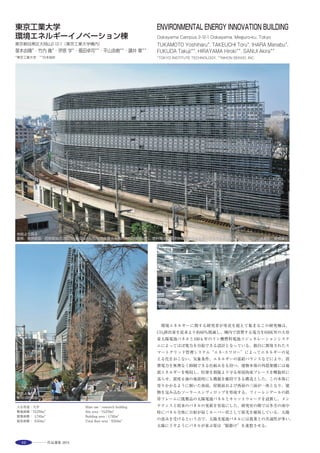
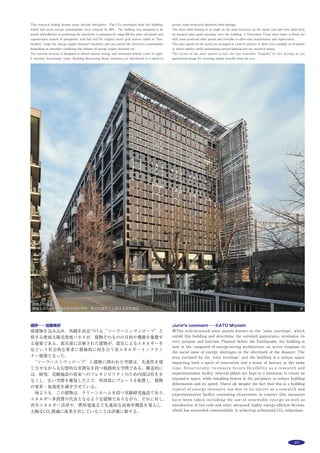
ENVIRONMENTAL ENERGY INNOVATION BUILDING
..TUKAMOTO Yoshiharu, TAKEUCHI Toru, IHARA Manabu, FUKUDA Takuji, HIRAYAMA Hiroki, SANUI Akira 48
JP TOWER
................... IWAI Mitsuo, SATO Kazukiyo, MIYACHI Koki, OGAWA Ichiro, KUMA Kengo, MIYAGI Syunsaku 50
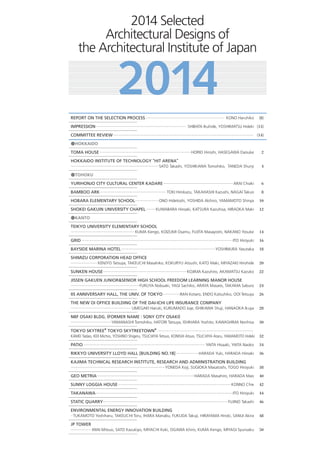
2014 Selected
Architectural Designs of
the Architectural Institute of Japan
2014
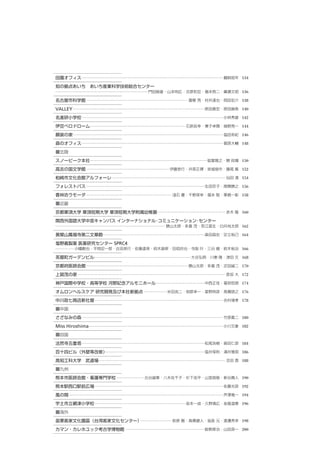
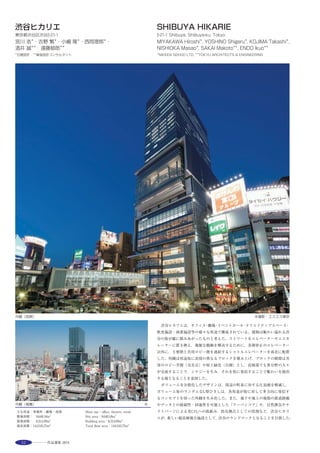
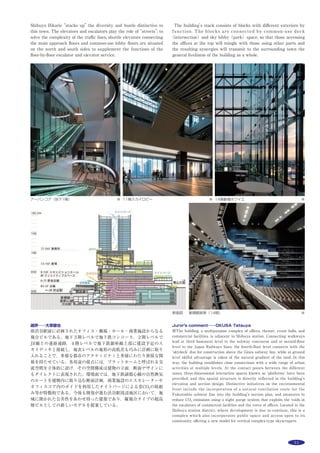
SHIBUYA HIKARIE
......MIYAKAWA Hiroshi, YOSHINO Shigeru, KOJIMA Takashi, NISHIOKA Masao, SAKAI Makoto, ENDO Ikuo 52
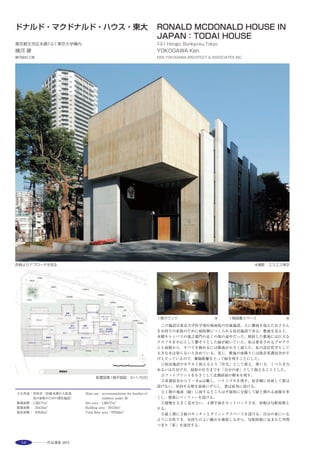
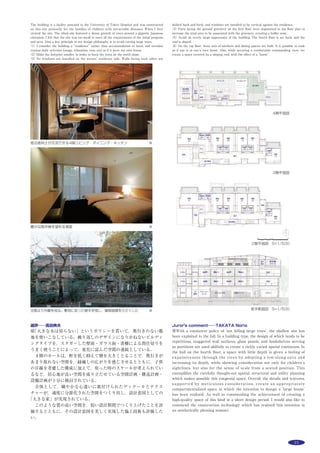
RONALD MCDONALD HOUSE IN JAPAN : TODAI HOUSE.......................................YOKOGAWA Ken 54
NOMURA KANDA-OGAWAMACHI BUILDING......................... YAMANASHI Tomohiko, ONDA Satoshi 56
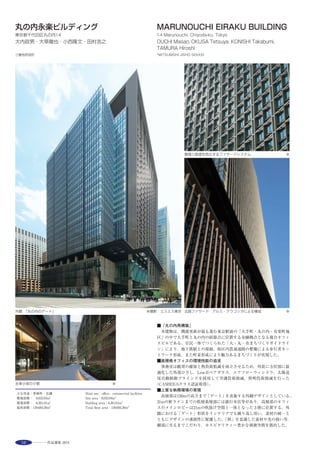
MARUNOUCHI EIRAKU BUILDING ...OUCHI Masao, OKUSA Tetsuya, KONISHI Takabumi, TAMURA Hiroshi 58
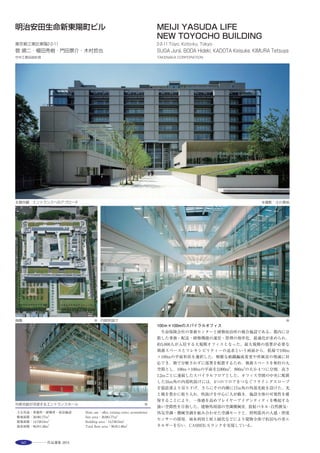
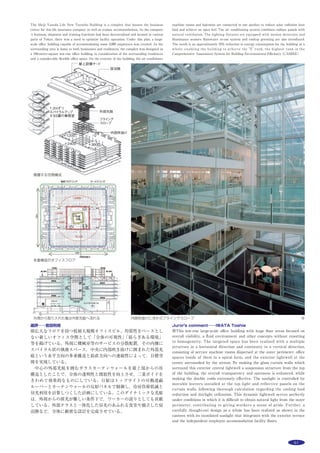
MEIJI YASUDA LIFE NEW TOYOCHO BUILDING
....................................................................... SUGA Junji, BODA Hideki, KADOTA Keisuke, KIMURA Tetsuya 60
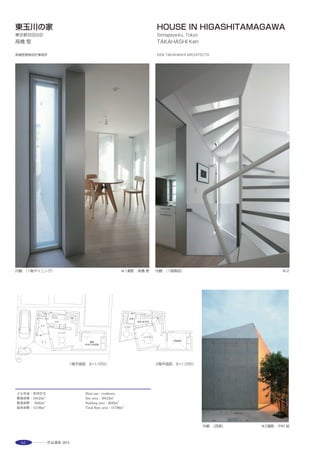
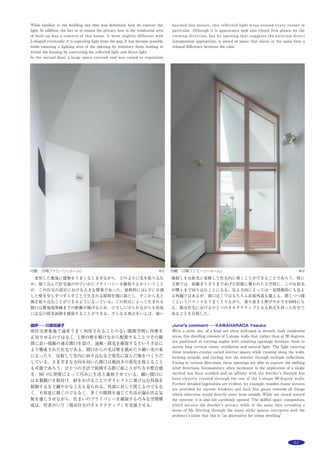
HOUSE IN HIGASHITAMAGAWA ....................................................................................TAKAHASHI Ken 62
USHIKU HOUSE................................................................................. YASHIMA Masatoshi, YASHIMA Yuko 64
GRIDIE.......................................................................................................................... WAKAMATSU Hitoshi 66
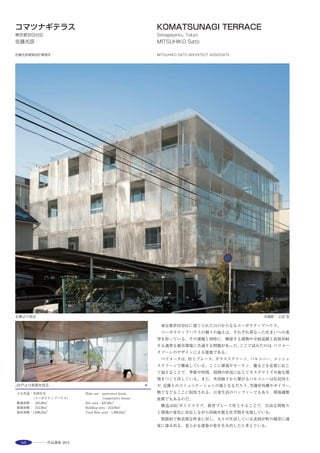
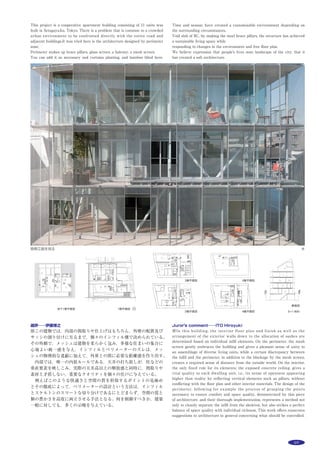
KOMATSUNAGI TERRACE ............................................................................................... MITSUHIKO Sato 68
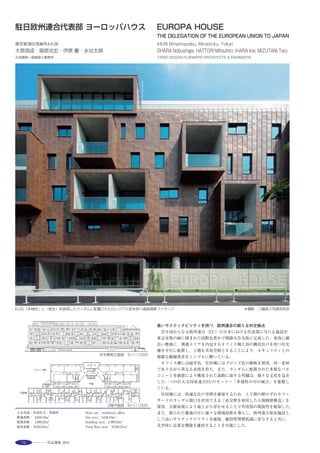
EUROPA HOUSE THE DELEGATION OF THE EUROPEAN UNION TO JAPAN
...............................................................OHARA Nobushige, HATTORI Mitsuhiro, IHARA Kei, MIZUTANI Taro 70
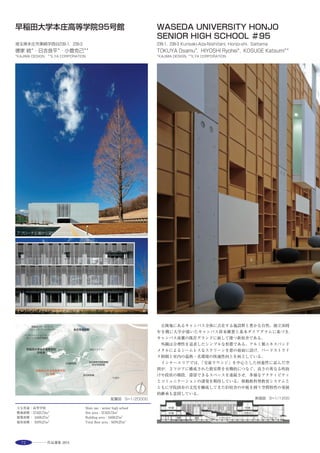
WASEDA UNIVERSITY HONJO SENIOR HIGH SCHOOL #95
...................................................................................... TOKUYA Osamu, HIYOSHI Ryohei, KOSUGE Katsumi 72
MISATO CITY PIALA-CITY COMMUNITY CENTER....................................................NISHIKURA Kiyoshi 74
TOKYU PLAZA OMOTESANDO HARAJUKU
........................................................NAKAMURA Hiroshi, HAMANO Yuji, ITANI Takashi, KAKITANI Nobuhiko 76
HOUSEⅠ.................................................................................................................................... HOJIN Hisashi 78
TAKASAKI CITY INTEGRATED HEALTH CENTER, CENTRAL LIBRARY
...................... NARUMI Masato, MATSUMURA Masato, KOBAYASHI Hiroki, SHIMOTE Akira, TAKANO Yohei 80
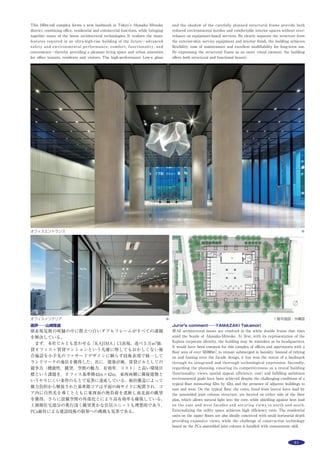
AKASAKA K-TOWER..............................................SUZUKI Soichiro, OZEKI Masahito, TERASHIMA Takuya 82
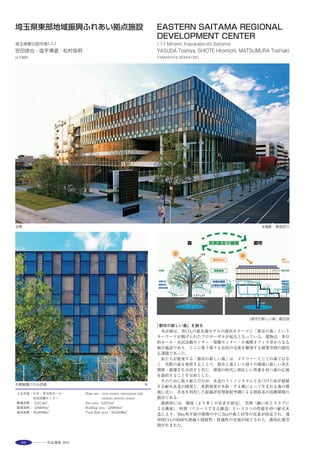
EASTERN SAITAMA REGIONAL DEVELOPMENT CENTER
............................................................................YASUDA Toshiya, SHIOTE Hiromichi, MATSUMURA Toshiaki 84
OSHIAGE BICYCLE PARKING..............................................................TSUCHIYA Ataru, TSUCHIYA Tetsuo 86
HOUSE IN KAIJIN..................................................................................................................... FUSE Shigeru 88
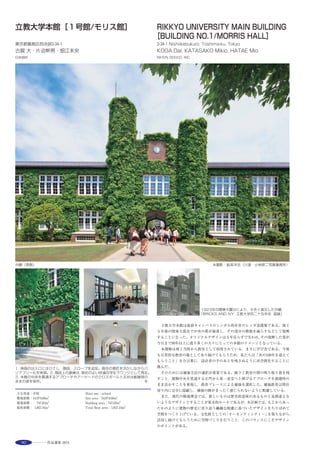
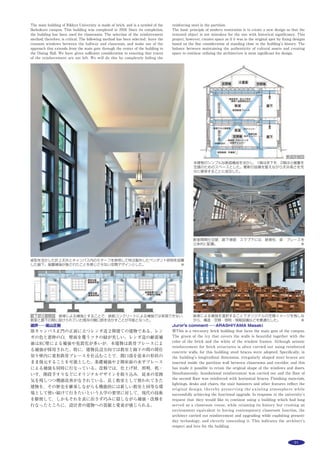
RIKKYO UNIVERSITY MAIN BUILDING [BUILDING NO.1/MORRIS HALL]
....................................................................................................... KOGA Dai, KATASAKO Mikio, HATAE Mio 90
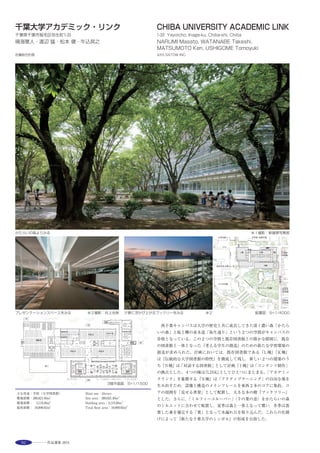
CHIBA UNIVERSITY ACADEMIC LINK
......................................... NARUMI Masato, WATANABE Takeshi, MATSUMOTO Ken, USHIGOME Tomoyuki 92
PALACE HOTEL TOKYO ・ PALACE BUILDING
...............................................................TOJYO Takao, OKUSA Tetsuya, SHIMIZU Satoshi, YAMADA Susumu 94
HDY......................................................................OGAWA Jiro, TAKAKUWA Kohtaro, HASEGAWA Daisuke 96
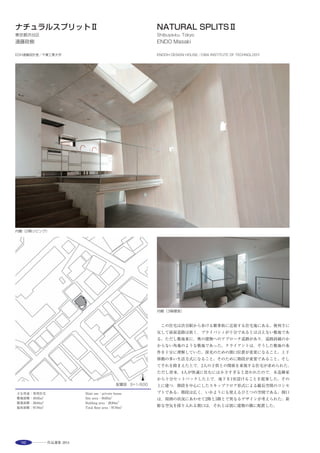
NATURAL SPLITSⅡ................................................................................................................. ENDO Masaki 98
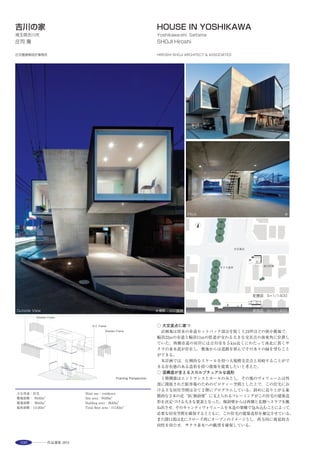
HOUSE IN YOSHIKAWA.........................................................................................................SHOJI Hiroshi 100
OVERLAPPED HOUSE .............................................................................................................KIJIMA Chika 102
NAKANO CENTRAL PARK RESIDENCE ............................KITA Norio, ESHIMA Yoshihiro, ONO Kazuyuki 104
THE KARATE-DOJO IN HITOTSUBASHI UNIVERSITY................KINOSHITA Masahiro, MORIBE Yasushi 106
RENOVATION PROJECT OF THE FORMER WADA RESIDENCE
............................................................................YAMANAKA Tomohiko, TSUMURA Yasunori, SANO Satoshi 108
GAP-HOUSE...................................................................................................................TOMINAGA Tetsushi 110
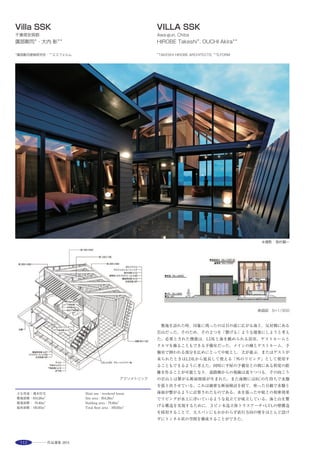
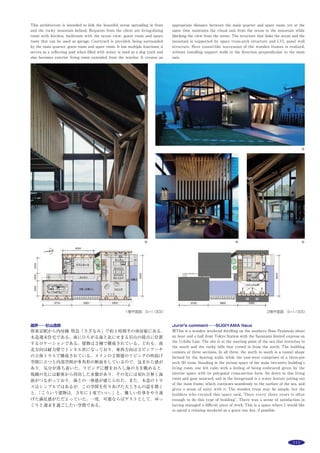
VILLA SSK........................................................................................................HIROBE Takeshi, OUCHI Akira 112
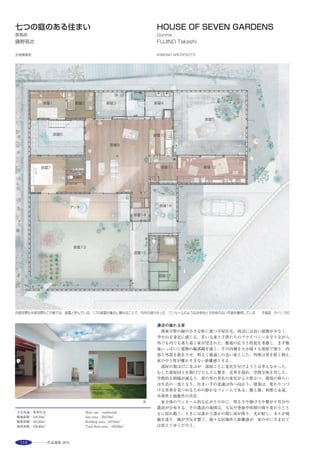
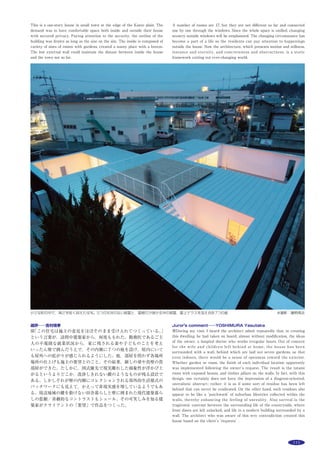
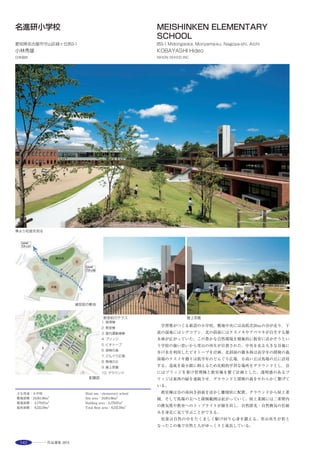
HOUSE OF SEVEN GARDENS.............................................................................................. FUJINO Takashi 114
SHAKUJIIKOEN FURUSATO MUSEUM................................................................................TAKEDA Arisa 116
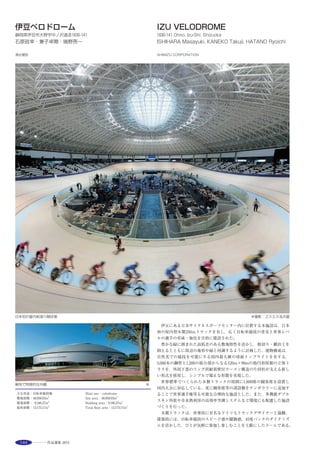
●TOKAI
WOOD ................................................................................................................................. SUZUKI Yukiharu 118
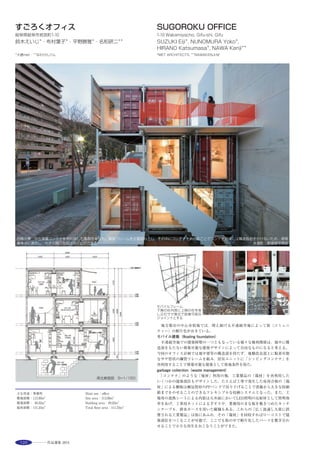
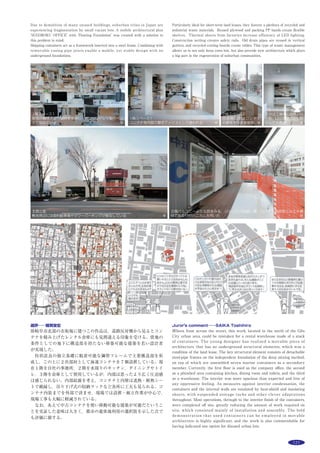
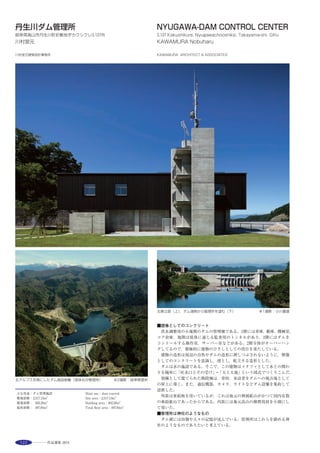
SUGOROKU OFFICE..............................SUZUKI Eiji, NUNOMURA Yoko, HIRANO Katsumasa, NAWA Kenji 120
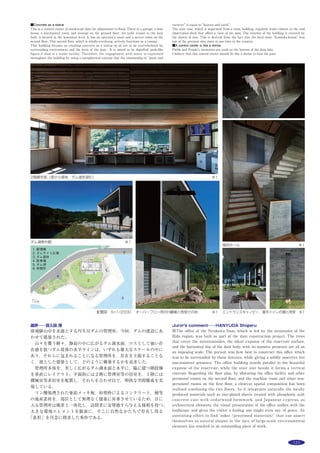
NYUGAWA-DAM CONTROL CENTER.................................................................KAWAMURA Nobuharu 122
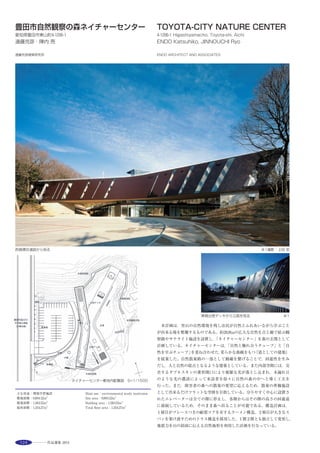
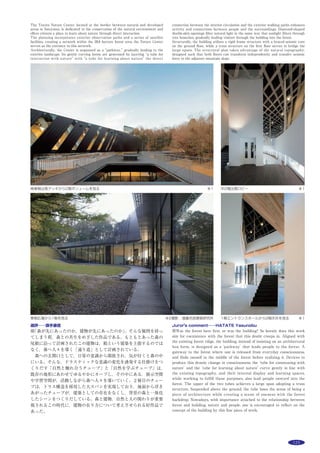
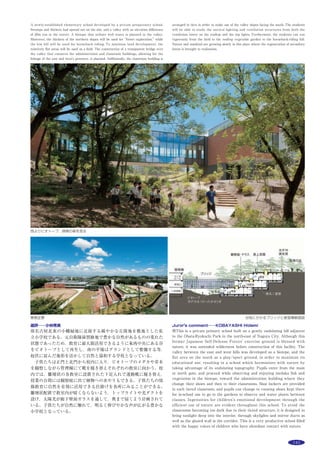
TOYOTA-CITY NATURE CENTER.......................................................... ENDO Katsuhiko, JINNOUCHI Ryo 124
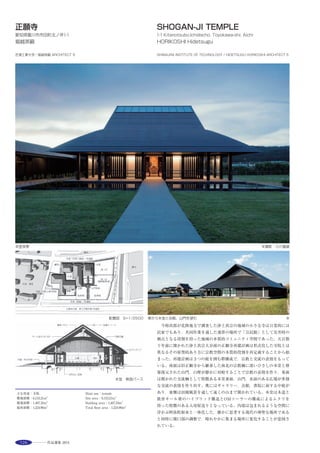
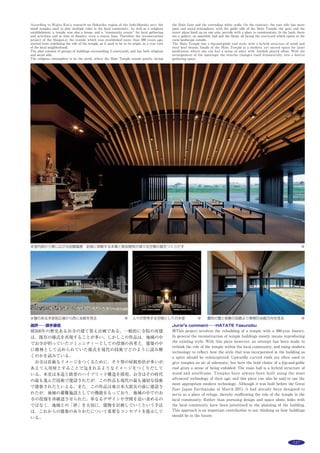
SHOGAN-JI TEMPLE................................................................................................. HORIKOSHI Hidetsugu 126
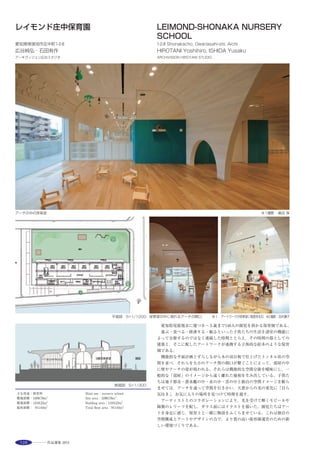
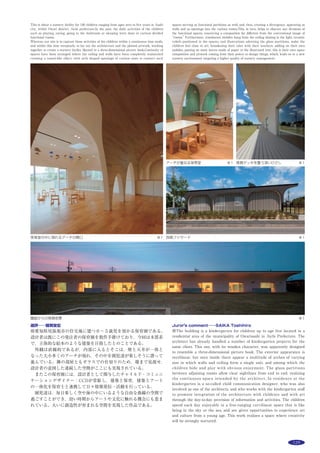
LEIMOND-SHONAKA NURSERY SCHOOL....................................... HIROTANI Yoshihiro, ISHIDA Yusaku 128
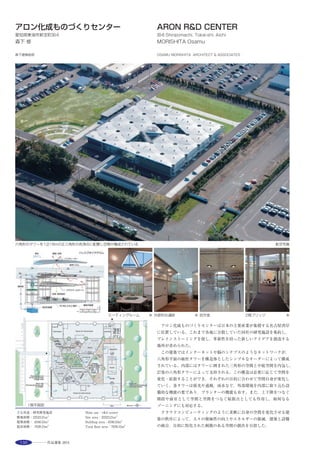
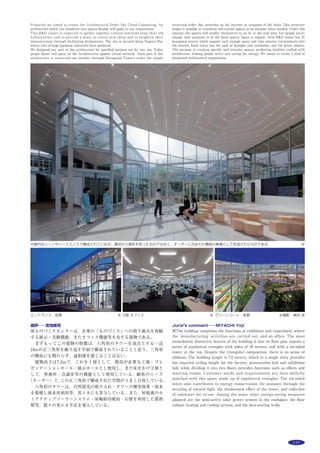
ARON R&D CENTER ...................................................................................................... MORISHITA Osamu 130
RENOVATION OF SAWAMURA HOUSE ...................................YAMANAKA Shintaro, OCHIAI Masayuki 132
DEN-EN OFFICE.......................................................................................................................UKAI Akitoshi 134
KNOWLEDGE HUB AICHI / AICHI CENTER FOR INDUSTRY AND SCIENCE TECHNOLOGY
............. KADOTA Mutsuo, YAMAMOTO Akihiro, YOSHIHARA Kazuhiro, FUKUMOTO Keiji, HIROSE Fumiaki 136
NAGOYA CITY SCIENCE MUSEUM............................. TOGASHI Ryo, MURAI Tatsuya , OKADA Hirosuke 138
VALLEY ....................................................................................................HARADA Masahiro, HARADA Mao 140
MEISHINKEN ELEMENTARY SCHOOL..........................................................................KOBAYASHI Hideo 142
IZU VELODROME....................................................ISHIHARA Masayuki, KANEKO Takuji, HATANO Ryoichi 144
PICTURE FRAME HOUSE ......................................................................................................... SHIOTA Yuki 146
OFFICE IN FOREST .......................................................................................................SUGAWARA Daisuke 148
●HOKURIKU
SNOW PEAK HEADQUARTERS ........................................................... IKARIYA Masayuki, SEKI Masaharu 150
KOSHINOKUNI MUSEUM OF LITERATURE
.......................................................................ITO Yasuyuki, IHARA Masaki, MIYAGI Syunsaku, FUJIO Atsushi 152
KASHIWAZAKI-CITY PERFORMING ARTS CENTER....................................................... SENDA Mitsuru 154
FOREST BATH ............................................................................................... IKUTA Kyoko, OZEKI Katsuyuki 156
KORINBO LA MODA................ ASAISHI Masaru, CHINO Yasuyuki, FUKUMOTO Satoshi, KURISU Kazuaki 158
●KINKI
KYOTO KACHO UNIVERSITY KACHO JUNIOR COLLEGE KACHO JUNIOR COLLEGE KINDERGARTEN
...................................................................................................................................................AKAGI Takashi 160
KANSAI GAIDAI UNIVERSITY NAKAMIYA CAMPUS INTERNATIONAL COMMUNICATION CENTER
....................................................................KATSUYAMA Taro, TAKI Shigeru, WAKAE Naoki, SHIRAI Shotaro 162
OBAKUSAN MANPUKUJI BUNKADEN 2 .............................................MORITA Masahiro, ADACHI Yuki 164
SHIONOGI PHARMACEUTICAL RESEARCH CENTER 4 ....................OBATA Takeya, HIRAOKA Koichiro,
SHODA Hideyuki,SATO Tatsuho, SUZUKI Naomiki, TAGAKI Kinya, TERASAKA Kano, MITANI Toru, SUZUKI Yuji 166
CHAYAMACHI GARDEN BUILDING .......................OTANI Hiroaki, KAWAHIGASHI Takashi, TSUDA Fumi 168
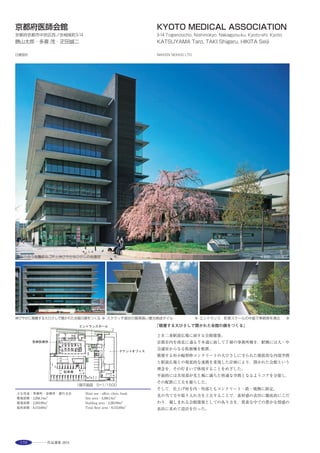
KYOTO MEDICAL ASSOCIATION........................................KATSUYAMA Taro, TAKI Shigeru, HIKITA Seiji 170
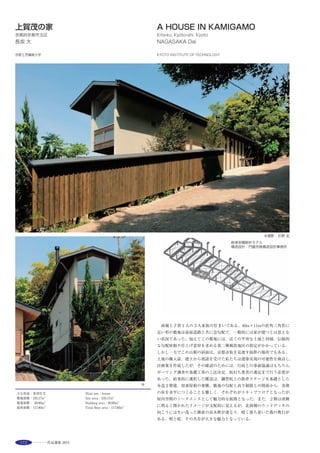
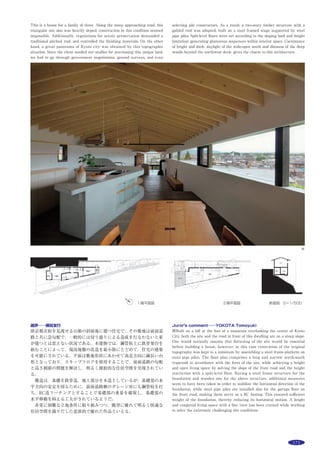
A HOUSE IN KAMIGAMO................................................................................................. NAGASAKA Dai 172
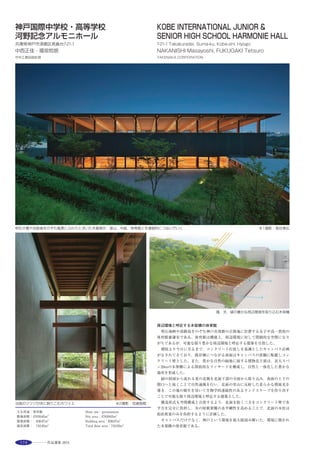
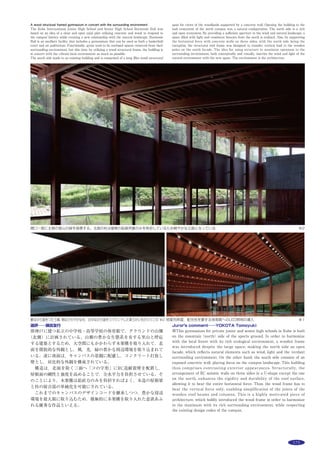
KOBE INTERNATIONAL JUNIOR & SENIOR HIGH SCHOOL HARMONIE HALL
...................................................................................................... NAKANISHI Masayoshi, FUKUGAKI Tetsuro 174
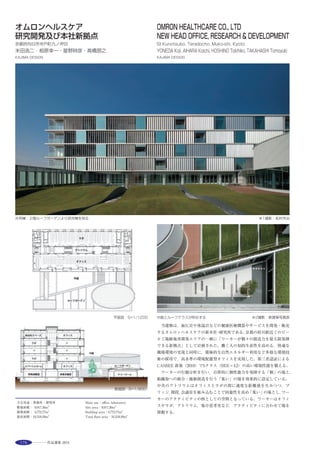
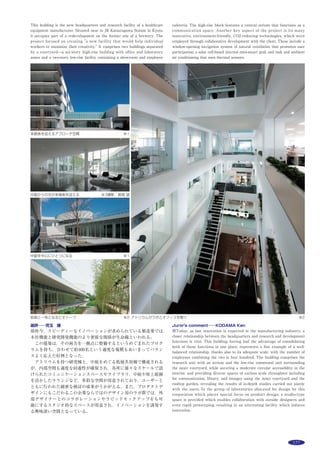
OMRON HEALTHCARE CO., LTD NEW HEAD OFFICE, RESEARCH & DEVELOPMENT
..................................................... YONEDA Koji, AIHARA Koichi, HOSHINO Tokihiko, TAKAHASHI Tomoyuki 176
NAKAGAWA OFFICE................................................................................................ YOSHIMURA Yasutaka 178
●CHUGOKU
SAZANAMI NO MORI ..................................................................................................... TAKEHARA Yoshiji 180
MISS HIROSHIMA ................................................................................................................ OGAWA Bunzo 182
●SHIKOKU
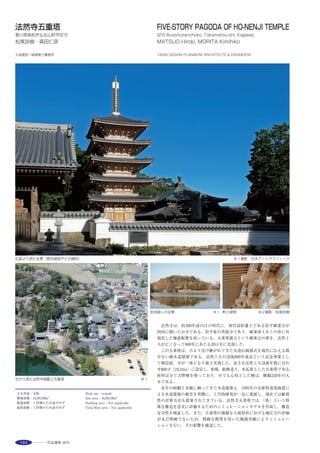
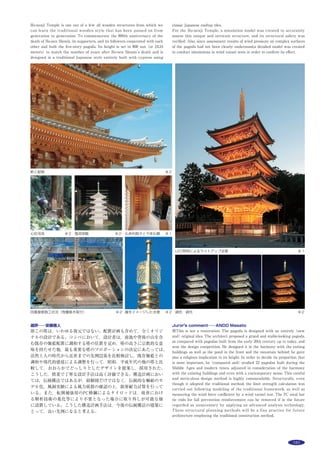
FIVE-STORY PAGODA OF HO-NENJI TEMPLE..................................MATSUO Hiroki, MORITA Kimihiko 184
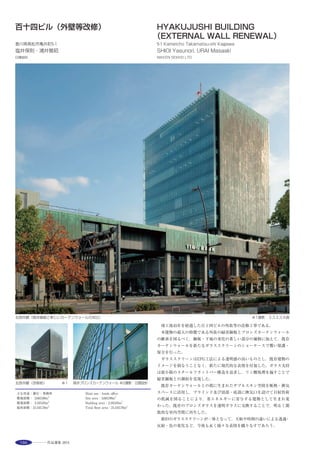
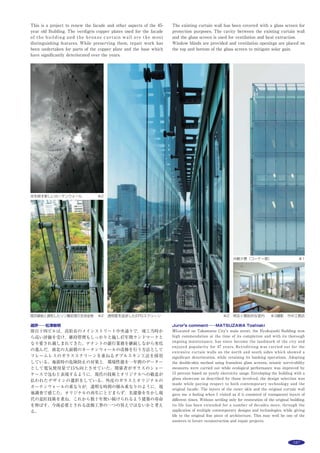
HYAKUJUSHI BUILDING (EXTERNAL WALL RENEWAL)....................... SHIOI Yasunori, URAI Masaaki 186
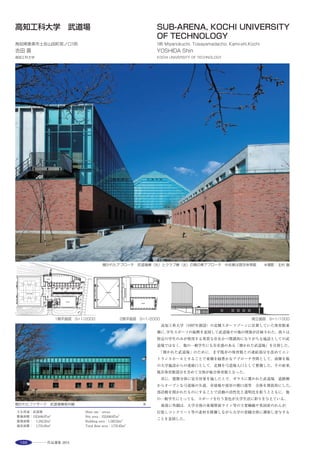
SUB-ARENA, KOCHI UNIVERSITY OF TECHNOLOGY.....................................................YOSHIDA Shin 188
●KYUSYU
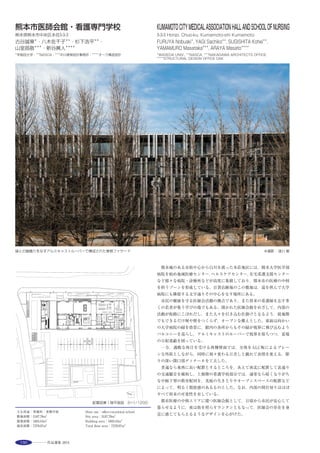
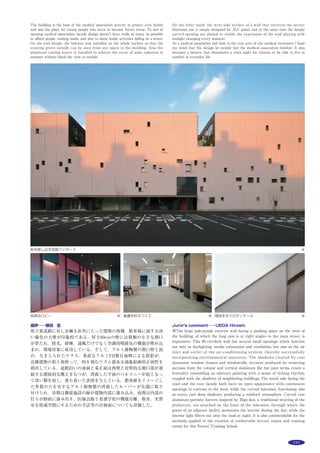
KUMAMOTO CITY MEDICAL ASSOCIATION HALL AND SCHOOL OF NURSING
......................FURUYA Nobuaki, YAGI Sachiko, SUGISHITA Kohei, YAMAMURO Masataka, ARAYA Masato 190
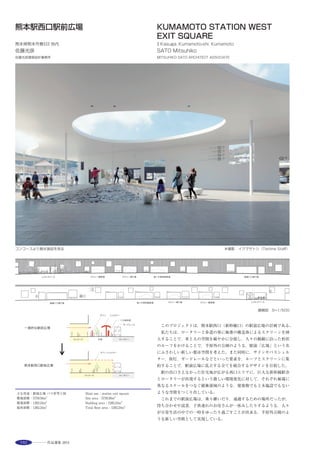
KUMAMOTO STATION WEST EXIT SQUARE ................................................................ SATO Mitsuhiko 192
MA of Wind.....................................................................................................................ASHIZAWA Ryuichi 194
AMITSU MUNICIPAL ELEMENTARY SCHOOL
.......................................................................SAKAMOTO Kazunari, KUNO Yasuhiro, KANEBAKO Yoshiharu 196
●OVERSEAS
MIAOLI HAKKA CULTURAL PARK
.............................................HAGIWARA Takeshi, TAKAHASHI Takehito, ONAGA Gen, WATANABE Hideyuki 198
KAMAN-KALEHÖYÜK ARCHAEOLOGICAL MUSEUM...........................NOSE Shuji, YAMADA Ryoichi 200
2 作品選集 2014
Main use:
Site area:
Building area:
Total floor area:
主な用途:
敷地面積:
建築面積:
延床面積:
当麻の家
北海道上川郡当麻町
堀尾 浩
*
・長谷川大輔
**
*
堀尾浩建築設計事務所・
**
長谷川大輔構造計画
TOMA HOUSE
Toma-cho, Kamikawa-gun, Hokkaido
HORIO Hiroshi
*
, HASEGAWA Daisuke
**
*
HIROSHI HORIO ARCHITECTS OFFICE,
**
HASEGAWA DAISUKE STRUCTURAL
ENGINEERS
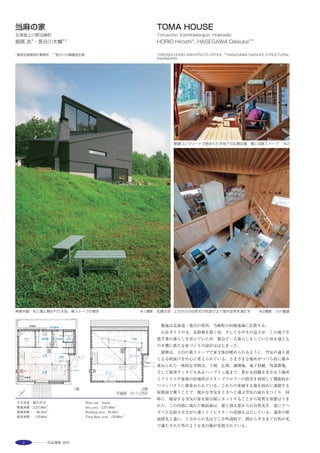
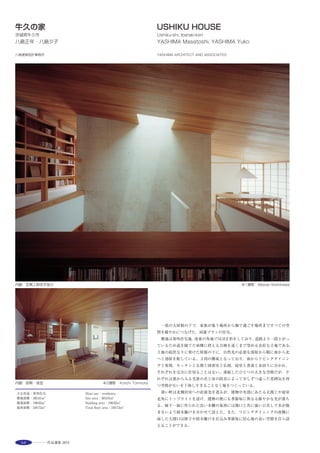
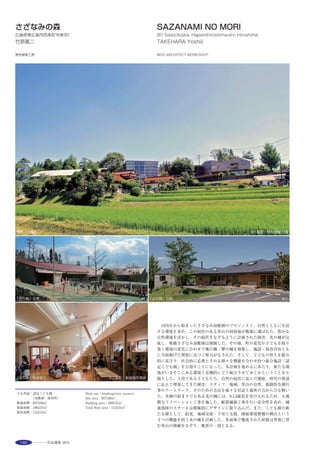
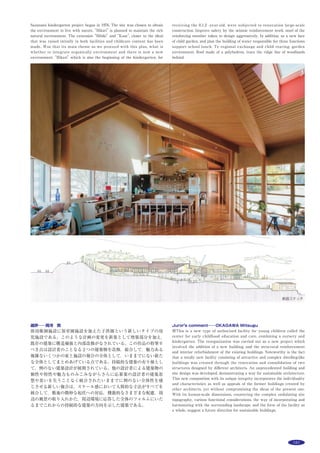
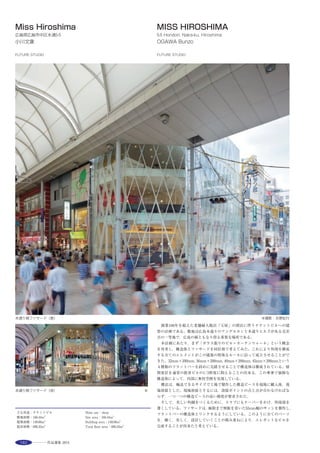
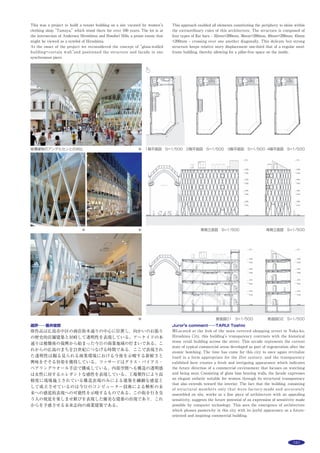
敷地は北海道・旭川の郊外,当麻町の田園地域に位置する。
山岳ガイドの父,水彩画を描く母,そして小学生の息子が,この地で半
農半業の暮らしを営んでいたが,都会で一人暮らしをしていた母を迎える
のを機に新たな家づくりの設計ははじまった。
建物は,1台の薪ストーブで家全体が暖められるように,空気の通り道
となる吹抜けを中心に考えられている。さまざまな場所がつづら状に積み
重ねられた一体的な空間は,土間,広間,調理場,地下収納,外部置場,
そして展望デッキでもあるハーブ干し場まで,豊かな収穫をまかなう場所
とアトリエや家族の居場所がスキップフロアーの段差を利用して機能的か
つコンパクトに積重ねられている。これらの重層する場を斜めに連続する
屋根面で覆うことで,暖かな空気を上方へと運ぶ空気の流れをつくり,同
時に,暖房する空気の量を最小限にカットすることから特異な形態はうま
れた。この内部に現れた傾斜面は,最上部大窓からの自然光を,逆に下へ
下へと反射させながら導くリフレクターの役割もはたしている。通常の壁
面採光と違い,上方からの光はどこか外部的で,朝から夕方まで自然の光
で満たされた外のような光の場が実現されている。
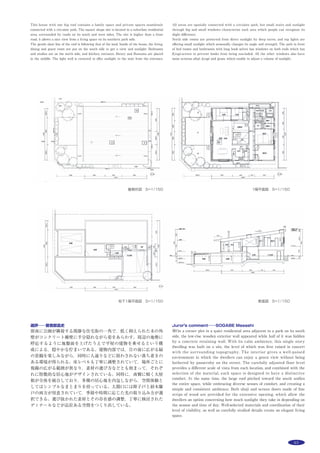
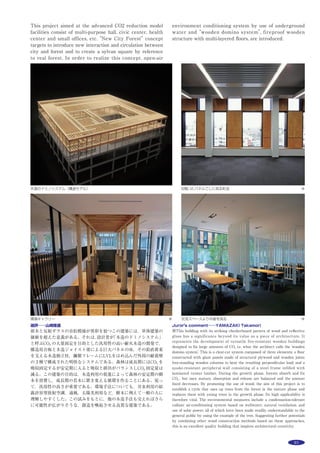
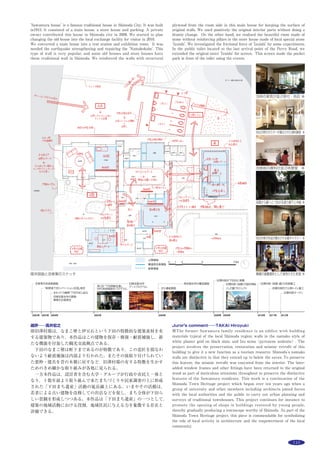
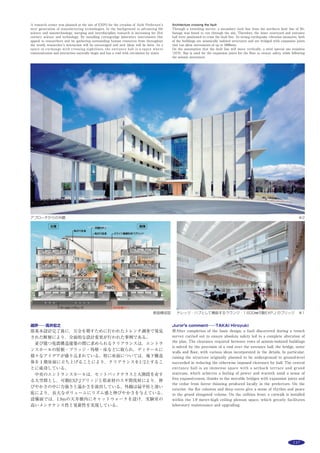
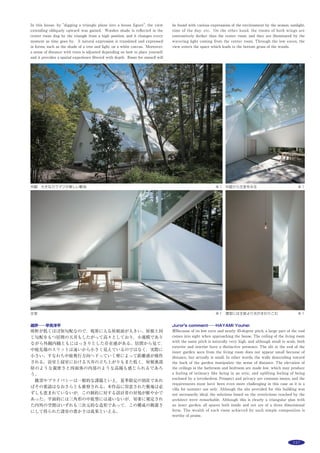
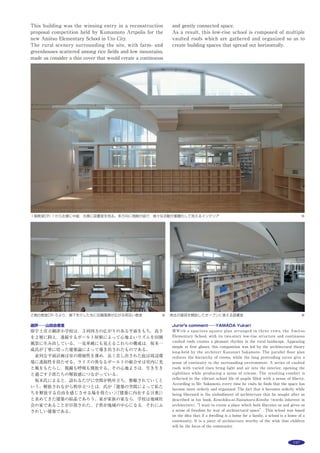
南側外観 光と風に開かれた大窓。薪ストーブの煙突 ※1撮影:佐藤文昭 上方からの自然光が吹抜けより室内全体を満たす ※2撮影:小川重雄
基礎コンクリートで囲まれた半地下の広間空間,奥には薪ストーブ ※2
外部置場
調理場 洗面室 浴室
トイレ
土間
広間
玄関 ポーチ アトリエ
収納
薪ストーブ
薪置場
床下吹出し
調整ダンパー
薪置場
個人住宅
2,371.00m2
85.19m2
135.06m2
house
2,371.00m2
85.19m2
135.06m2
2階
平面図 S=1/250
1階
3
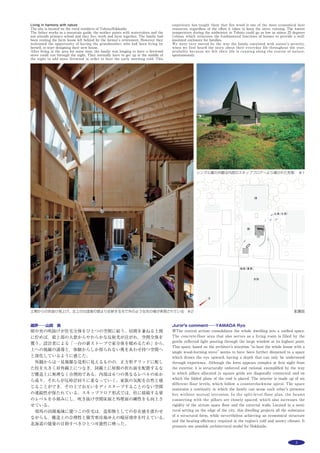
Living in harmony with nature
The site is located on the rural outskirts of Tohma,Hokkaido.
The father works as a mountain guide, the mother paints with watercolors, and the
son attends primary school and they live, work and farm together. The family had
been renting the farm house left behind by the farmer’s retirement. However they
welcomed the opportunity of having the grandmother, who had been living by
herself, to start designing their new house.
After living in the area for some time, the family was longing to have a firewood
stove could run through the night. They normally have to get up in the middle of
the night to add more firewood in order to beat the early morning cold. This
experience has taught them that fire wood is one of the most economical heat
resources, regardless of the effort it takes to keep the stove running. The lowest
temperature during the midwinter in Tohma could go as low as minus 25 degrees
Celsius, which reiterates the fundamental functions of houses to provide a well-
insulated enclosure for families.
We were very moved by the way the family coexisted with nature’s severity,
when we first heard the story about their everyday life throughout the year,
probably because we felt their life is running along the course of nature,
spontaneously.
土間からの吹抜け見上げ。左上の白塗装の壁より反射する光で外のような光の場が実現されている ※2
シングル葺の外観は内部のスキップフロアーより導かれた形態 ※1
畑
畑
南風(夏季)
北風(冬季)
N
水田
配置図
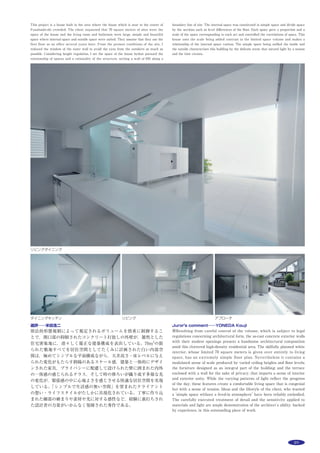
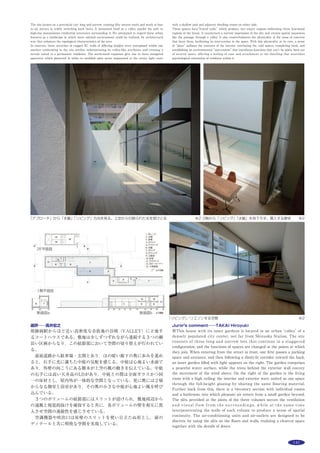
選評……山田 良 Juror’s comment……YAMADA Ryo
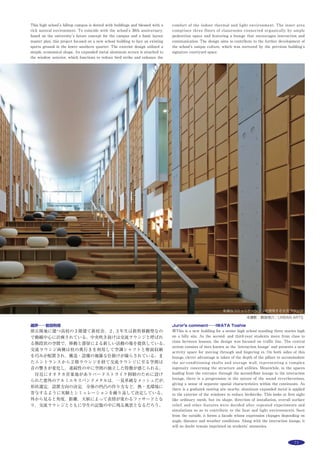
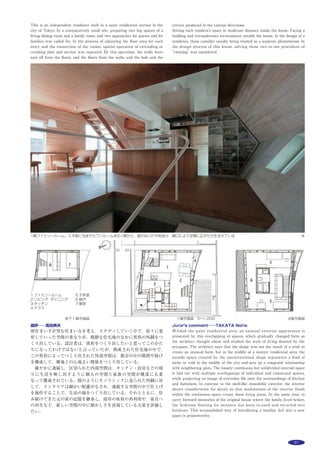
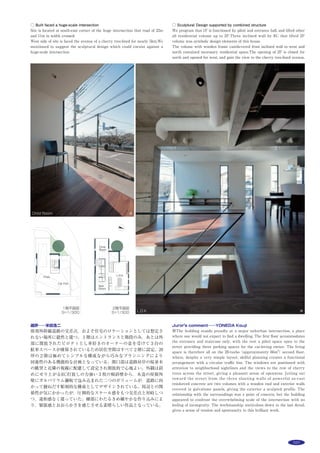
中央の吹抜けが住宅全体をひとつの空間に結う。居間を兼ねる土間
に佇めば,最上部の大窓からやわらかな反射光が注がれ,空間全体を
覆う。設計者による「一台の薪ストーブで家全体を暖めるため」から,
上への視線の誘導と,体験からしか得られない奥をあわせ持つ空間へ
と深化しているように感じた。
外観からは一見複雑な造形に見えるものの,正方形グリッドに配し
た柱を大きく対角線上につなぎ,同線上に屋根の折れ面を配置するな
ど構造上に無理なく合理的である。内部は6つの異なるレベルの床か
ら成り,それらが反時計回りに重なっていく。家族の気配を自然と感
じることができ,その上でお互いをディスターブすることのない空間
の連続性が保たれている。スキップフロア形式では,柱に接続する梁
のレベルを小刻みにし,吹き抜け空間床面と外壁面の剛性をも向上さ
せている。
郊外の田園地域に建つこの住宅は,造形物としての存在感を漂わせ
ながらも,構造上の合理性と積雪寒冷地ゆえの暖房効率を叶えている。
北海道の建築の目指すべきひとつ可能性に映った。
 The central atrium consolidates the whole dwelling into a unified space.
The concrete-floor area that also serves as a living room is filled by the
gentle reflected light pouring through the large window at its highest point.
This space, based on the architect’s intention“to heat the whole house with a
single wood-burning stove”seems to have been further deepened to a space
which draws the eye upward, having a depth that can only be understood
through experience. Although the form appears complex at first sight from
the exterior, it is structurally unforced and rational, exemplified by the way
in which pillars allocated in square grids are diagonally connected, and on
which the folded plane of the roof is placed. The interior is made up of six
different floor levels, which follow a counterclockwise spiral. The space
maintains a continuity in which the family can sense each other’s presence
but without mutual intrusion. In the split-level floor plan, the beams
connecting with the pillars are closely spaced, which also increases the
rigidity of the atrium space floor and the external walls. Located in a semi-
rural setting on the edge of the city, this dwelling projects all the substance
of a structural form, while nevertheless achieving an economical structure
and the heating efficiency required in the region’s cold and snowy climate. It
presents one possible architectural model for Hokkaido.
4 作品選集 2014
主な用途:
敷地面積:
建築面積:
延床面積:
Main use:
Site area:
Building area:
Total floor area:
北海道工業大学“HIT ARENA”
北海道札幌市手稲区前田7条15-4-1
佐藤 孝
*
・芳川朝彦
**
・種田俊二
***
*
北海道工業大学・
**
a-plus芳川朝彦建築計画室・
***
清水建設一級建築士事務所
HOKKAIDO INSTITUTE OF
TECHNOLOGY“HIT ARENA”
15-4-1 Maeda 7jyo, Teine-ku, Sapporo-shi, Hokkaido
SATO Takashi
*
, YOSHIKAWA Tomohiko
**
, TANEDA Shunji
***
*
HOKKAIDO INSTITUTE OF TECHNOLOGY,
**
A-PLUS YOSHIKAWA ARCHITECTURAL
DESIGN STUDIO,
***
SHIMIZU CORPORATION
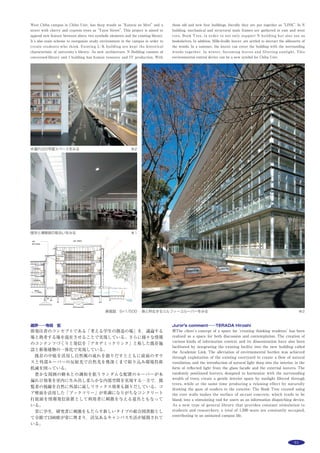
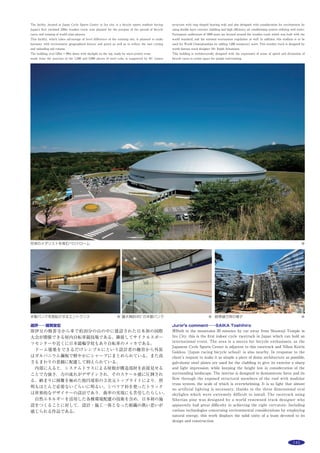
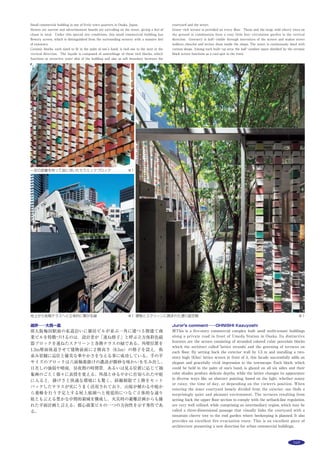
のクラブハウスのラウンジから学生は,広場を眺めるように学生たちのプ
レイを観る。
春から秋,北海道のキャンパスは気持ちよい。しかし冬になると外に出
ようとはしない。冬のキャンパスを楽しむためにはウィンターガーデン(ア
トリウム)が必要である。かつて設計した講義棟(2001)はガレリアであ
り,この体育館は広場型アトリウムである。北国の寒い冬の大学のキャン
パスには,学生のキャンパスライフを楽しむためにもウィンターガーデン
(アトリウム)があることが望ましいと思っている。
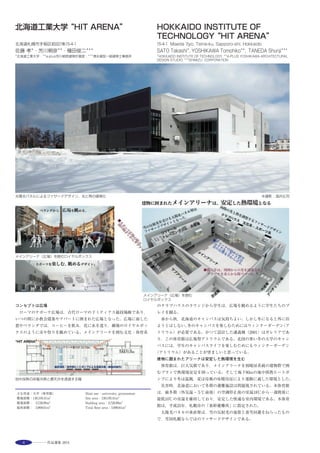
建物に囲まれたアリーナは安定した熱環境を生む
体育館は,巨大気積であり,メインアリーナを別暖房系統の建物群で囲
むプランで熱環境安定を図っている。そして地下80mの地中採熱ヒートポ
ンプにより冬は温風,夏は冷風の床暖冷房により運動に適した環境とした。
災害時,北海道において冬期の避難施設は問題視されている。本体育館
は,厳冬期(外気温−5℃前後)の空調停止後の室温18℃から一週間後に
最低10℃の室温を維持しており,安定した快適な室内環境である。本体育
館は,平成25年,札幌市の「基幹避難所」に指定された。
太陽光パネルの垂直壁は,雪の反射光の加算と着雪回避をねらったもの
で,雪国札幌ならではのファサードデザインである。
コンセプトは広場
ローマのナボーナ広場は,古代ローマのドミティアス競技場跡であり,
いつの間にか教会建築やアパートに囲まれた広場となった。広場に面した
窓やベランダでは,コーヒーを飲み,花に水を遣り,劇場のロイヤルボッ
クスのように市や祭りを眺めている。メインアリーナを囲む文化・体育系
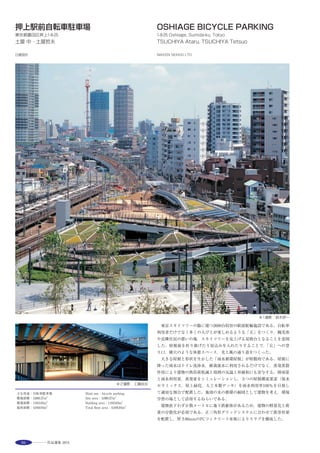
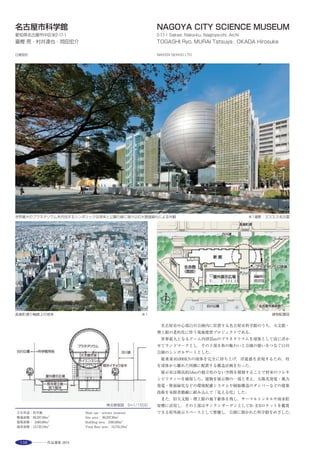
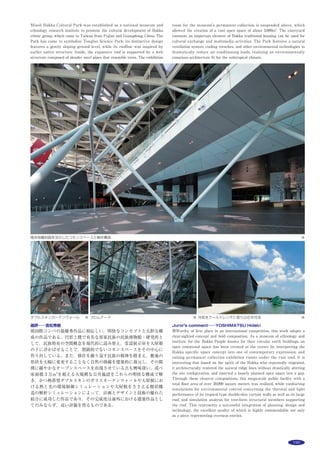
太陽光パネルによるファサードデザイン、光と熱の建築化 ※撮影:酒井広司
大学(体育館)
130,195.41m2
3,728.90m2
5,900.61m2
university, gymnasium
130,195.41m2
3,728.90m2
5,900.61m2
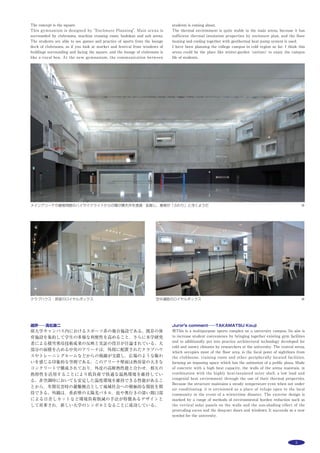
メインアリーナ(広場)を囲むロイヤルボックス
地中採熱の床暖冷房と膜天井を透過する陽
メインアリーナ(広場)を囲む
ロイヤルボックス
5
クラブハウス・部室のロイヤルボックス 空中通路のロイヤルボックス ※
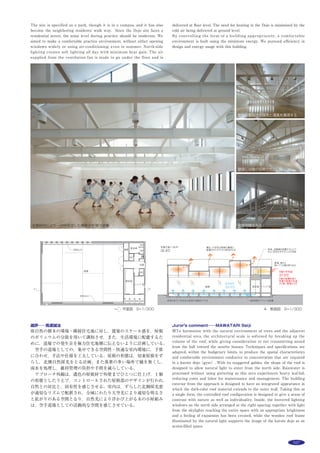
The concept is the square.
This gymnasium is designed by“Enclosure Planning”. Main arena is
surrounded by clubrooms, machine training room, budokan and sub arena.
The students are able to see games and practice of sports from the lounge
deck of clubrooms, as if you look at market and festival from windows of
buildings surrounding and facing the square, and the lounge of clubrooms is
like a royal box. At the new gymnasium, the communication between
students is coming about.
The thermal environment is quite stable in the main arena, because it has
sufficient thermal insulation properties by enclosure plan, and the floor
heating and cooling together with geothermal heat pump system is used.
I have been planning the college campus in cold region so far. I think this
arena could be the place like winter-garden(atrium)to enjoy the campus
life of students.
メインアリーナの屋根周囲のハイサイドライトからの陽が膜天井を透過・拡散し、屋根が「ふわり」と浮くようだ ※
選評……髙松康二 Juror’s comment……TAKAMATSU Kouji
大学キャンパス内におけるスポーツ系の複合施設である。既存の体
育施設を集約して学生の多様な利便性を高めること,さらに本学研究
者による積雪寒冷技術成果の反映と実証の役目が目論まれている。大
部分の面積を占める中央のアリーナは,外周に配置されたクラブハウ
スやトレーニングルームなどからの視線が交錯し,広場のような賑わ
いを感じる印象的な空間である。このアリーナ壁面は熱容量の大きな
コンクリートで構成されており,外皮の高断熱性能と合わせ,相互の
熱特性を活用することにより低負荷で快適な温熱環境を維持してい
る。非空調時においても安定した温度環境を維持できる性能があるこ
とから,冬期災害時の避難拠点として地域社会への積極的な開放を期
待できる。外観は,垂直壁の太陽光パネル,庇や奥行きの深い開口部
による日差しカットなど環境負荷削減の手法が特徴あるデザインと
して昇華され,新しい大学のシンボルとなることに成功している。
 This is a multipurpose sports complex on a university campus. Its aim is
to increase student convenience by bringing together existing gym facilities
and to additionally put into practice architectural technology developed for
cold and snowy climates by researchers at the university. The central arena,
which occupies most of the floor area, is the focal point of sightlines from
the clubhouse, training room and other peripherally located facilities,
forming an imposing space which has the animation of a public plaza. Made
of concrete with a high heat capacity, the walls of the arena maintain, in
combination with the highly heat-insulated outer shell, a low load and
congenial heat environment through the use of their thermal properties.
Because the structure maintains a steady temperature even when not under
air conditioning, it is envisioned as a place of refuge open to the local
community in the event of a wintertime disaster. The exterior design is
marked by a range of methods of environmental burden reduction such as
the vertical solar panels on the walls and the sun-shading effect of the
protruding eaves and the deep-set doors and windows. It succeeds as a new
symbol for the university.
6 作品選集 2014
主な用途:
敷地面積:
建築面積:
延床面積:
Main use:
Site area:
Building area:
Total floor area:
由利本荘市文化交流館/カダーレ
秋田県由利本荘市東町15
新居千秋
新居千秋都市建築設計
YURIHONJO CITY CULTURAL
CENTER KADARE
15 Higashimachi, Yurihonjo-shi, Akita
ARAI Chiaki
CHIAKI ARAI URBAN AND ARCHITECTURE DESIGN
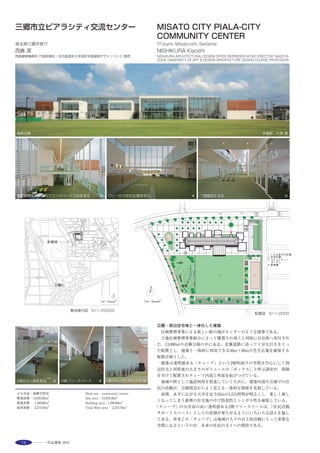
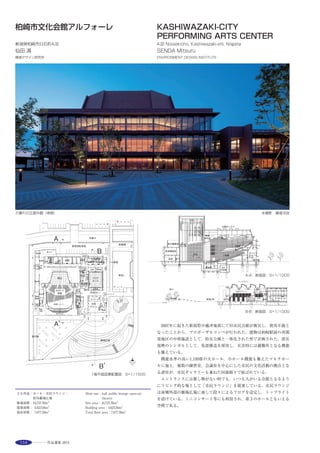
人口8万人のまちにおいて,4ヶ月間で20万人もの人々
を集める新たな「まちの文化交流拠点・カダーレ」
カダーレは劇場,図書館,公民館,教育研究所,物産館やレストラン等から
なる,3階建の複合文化施設である。この建築は大きな3つのゾーンを持って
いる。一つ目が建物を南北に貫通するわいわいストリートである。1,2階吹
抜けの明るい空間は交流,散策の場となり,カダーレ全体を繋ぐ場所となる。
二つ目は1,110席の大ホール,市民活動室,ギャラリー,南北のポケットパーク
が連結して形成される「スーパーボックス」というスペースである。大ホール
と一体に長さ約135mのダイナミックな空間を作り出すことができる。そして三
つ目は建物中央,図書館上部に浮かぶだ円球体状のプラネタリウムと天体観測
室である。科学に力を入れてきた由利本荘市の歴史を引き継ぎ,自然科学学習室,
研修室等と共に活用できる様に計画されている。また,図書館(蔵書22万冊)
には様々な閲覧スペースや子供たちの夢を育むような読書スペースを設けてい
る。その他のゾーンでは,1階北に地域物産館・レストラン・観光情報案内コー
ナーを設け,施設や周辺に対して多様なサービスを展開している。1階南には
スタジオ,練習室,調理創作室,創作テラスなど,様々な趣味・生涯学習・交
流の場が設けられている。2階は和室・茶室を設け,伝統芸能,会議等の利用
ができる場としている。
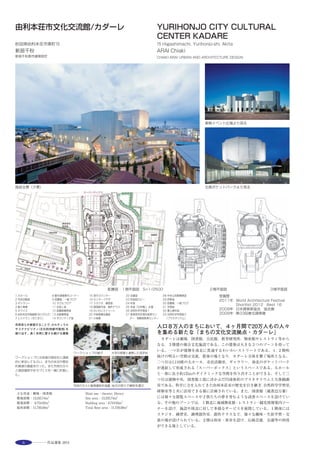
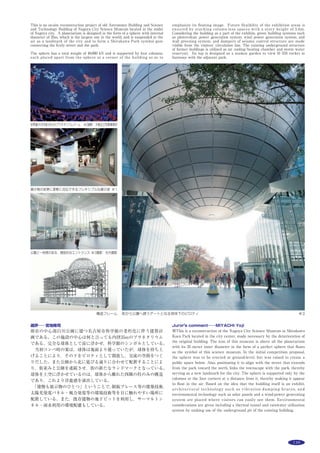
施設全景(夕景) 北側ポケットパークより見る
市民自らが参画することで、カルチュラル
サステナビリティ(文化的持続可能性)を
創り出す、長く市民に愛され続ける建築
ワークショップには地域の高校生に連続
的に参加してもらい、まちの状況や歴史
的資源の調査を行った。また市民の方々
と施設運営やまちづくりを一緒に計画し
た。
東側イベント広場より見る
劇場・図書館
13,335.74m2
6,754.92m2
11,750.50m2
theater, library
13,335.74m2
6,754.92m2
11,750.50m2
配置図・1階平面図 S=1/2500
1 大ホール
2 市民活動室
3 ギャラリー
4 搬入車庫
5 ホワイエ
6 由利本荘市物産館「ゆりぷらざ」
7 レストラン「花てまり」
8 観光情報案内コーナー
9 図書館:一般フロア
10 子どもフロア
11 お話し室
12 図書館事務室
13 会館事務室
14 ボランティア室
15 受付カウンター
16 センタープラザ
17 スタジオ、練習室
18 調理創作室、創作テラス
19 わいわいストリート
20 中楽屋兼会議室
21 小楽屋
22 会議室
23 和室前ロビー
24 和室
25 茶室「白宇庵」、水屋
26 自然科学学習室1
27 教育研究所理科教育セン
ター・視聴覚教育センター
28 中央公民館事務室
29 研修室
30 図書館:一般フロア
31 学習室
32 郷土資料室
33 自然科学学習室2
(プラネタリウム)
2階平面図 3階平面図
受賞歴
2011年 World Architecture Festival
Shortlist 2012 Best 16
2009年 日本建築家協会 協会賞
2009年 第33回東北建築賞
ワークショップの様子 大学の授業と連携した見学会
市民の方々と管理運営を協議 地元の祭りで模型を展示
7
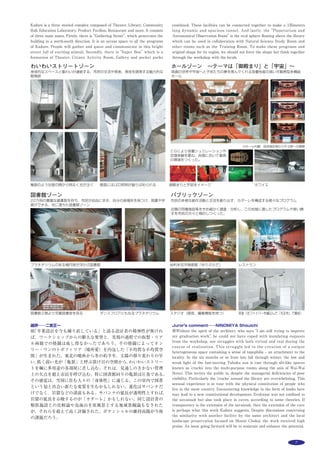
亀裂のような壁の間から明るく光が注ぐ 壁面にはLED照明が散りばめられる 御殿まりと宇宙をイメージ ホワイエ
レストラン
茶室(光ファイバーを編込んだ「光る布」で構成)
由利本荘市物産館「ゆりぷらざ」
スタジオ(録音、編集機能を持つ)
プラネタリウムのある楕円球が浮かぶ図書館
ダンスフロアにもなるプラネタリウム図書館2階より児童図書室を見る
大ホール内観 段床固定席から平土間への展開
Kadare is a three storied complex composed of Theater, Library, Community
Hall, Education Laboratory, Product Pavilion, Restaurant and more. It consists
of three main zones. Firstly, there is“Gathering Street”. which penetrates the
building in a north-south direction. It is an access space to all the programs
of Kadare. People will gather and quest and communicate in this bright
street full of exciting stimuli. Secondly, there is“Super Box”which is a
formation of Theater, Citizen Activity Room, Gallery and pocket parks
combined. These facilities can be connected together to make a 135meters
long dynamic and spacious tunnel. And lastly, the“Planetarium and
Astronomical Observation Room”is the oval sphere floating above the library
which can be used in collaboration with Natural Science Study Room and
other rooms such as the Training Room. To make these programs and
original shape for its region, we should not force the shape but think together
through the workshop with the locals.
CGにより音響シュミレーションや
空調実験を重ね、各階において最高
の環境をつくった。
ホールゾーン ~テーマは「御殿まり」と「宇宙」~
映画の世界や宇宙へと子供たちの夢を育んでくれる音響性能の高い可動席型多機能
ホール
わいわいストリートゾーン
身体的なスペースと賑わいが連続する、市民の交流や発表、発見を誘発する魅力的な
散策路
パブリックゾーン
市民の多様な創作活動と交流を創り出す、カダーレを構成する様々なプログラム
近隣の同種施設等をきめ細かく調査・分析し、この地域に適したプログラムや使い勝
手を市民の方々と検討しつくった。
図書館ゾーン
22万冊の豊富な蔵書数を持ち、市民が自由に歩き、自分の居場所を見つけ、読書や学
習ができる、光に満ちた図書館ゾーン
選評……二宮正一 Juror’s comment……NINOMIYA Shouichi
「卒業設計を今も練り直している」と語る設計者の精神性が無けれ
ば,ワークショップからの膨大な要望と,実現の過程での仮想・リア
ル両様での格闘は成し得なかったであろう。その格闘によってオン
リー・ワンのトポフィリア(場所愛)を内包した「不均質な不均質空
間」が生まれた。東北の晩秋から冬の約半年,太陽の移り変わりの早
い,低く弱い光が「亀裂」と呼ぶ裂け目の空間から,わいわいストリー
トを軸に多用途の各部屋に差し込む。それは,見通しのきかない管理
上の欠点を超え市民を呼び込む。特に図書館回りの亀裂は圧巻である。
その感覚は,雪国に住む人々の「身体性」に通じる。この室内で図書
という知と出会い新たな変質を生むかもしれない。進化はサバンナだ
けでなく,岩窟などの諸説もある。サバンナの延長が透明性とすれば,
岩窟の延長を示唆するのが「カダーレ」かもしれない。同じ設計者の
類似施設との比較論や鳥海山を原風景とする地域景観論もなされた
が,それらを超えて高く評価された。ポテンシャルの維持高揚が今後
の課題だろう。
 Without the spirit of the architect, who says“I am still trying to improve
my graduation work”, he could not have coped with inundating requests
from the workshop, nor struggles with both virtual and real during the
course of realization. This struggle led to the creation of a unique
heterogeneous space containing a sense of topophilia – an attachment to the
locality. In the six months or so from late fall through winter, the low and
weak light of the fast-moving Tohoku sun is cast through slit-like spaces
known as‘cracks’into the multi-purpose rooms along the axis of Wai-Wai
Street. This invites the public in, despite the managerial deficiencies of poor
visibility. Particularly the‘cracks’around the library are overwhelming. This
sensual experience is in tune with the physical constitution of people who
live in the snow country. Encountering knowledge in the form of books here
may lead to a new constitutional development. Evolution was not confined to
the savannah but also took place in caves, according to some theories. If
transparency is the extension of the savannah, then the extension of the cave
is perhaps what this work Kadare suggests. Despite discussions concerning
the similarity with another facility by the same architect and the local
landscape preservation focused on Mount Chokai, the work received high
praise. An issue going forward will be to maintain and enhance the potential.
8 作品選集 2014
主な用途:
敷地面積:
建築面積:
延床面積:
Main use:
Site area:
Building area:
Total floor area:
竹の会所
宮城県気仙沼市
陶器浩一
*
・髙橋和志
**
・永井拓生
*
*
滋賀県立大学・
**
髙橋工業
BamBoo ark
Kesennuma-shi, Miyagi
TOKI Hirokazu
*
, TAKAHASHI Kazushi
**
, NAGAI Takuo
*
*
THE UNIV. OF SHIGA PREF.,
**
TAKAHASHI KOGYO
“竹の会所”は津波で流された集会所に替わるものとして,地域に自生
する竹を使って学生たちと共に築いた建築である。しなやかに曲がる竹の
特徴を活かし,長尺竹を曲げて構築することを考えた。工事はすべて手作
業で難航を極めたが学生たちは諦めなかった。
竹の会所で走り回る子供たちの笑顔が印象的である。大きな被害を受け
た地域ではあるけれど,小さな拠点が出来ていきながら街全体が自然治癒
する復興もあるのではないか。ひとつひとつの小さな絆が連なってまちの
未来につながってゆく。この建物がその一助になれば幸いである。
集会所
724.50m2
188.38m2
175.92m2
meeting space
724.50m2
188.38m2
175.92m2
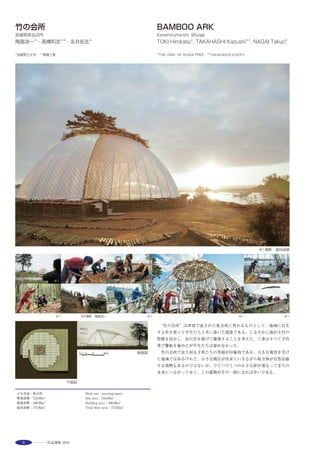
※1撮影:堀田貞雄
※2撮影:陶器浩一※1 ※1 ※1 ※1
断面図
平面図
※1 ※2 ※2 ※1
9
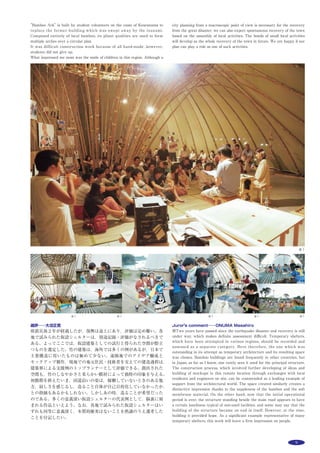
“Bamboo Ark”is built by student volunteers on the coast of Kesennuma to
replace the former building which was swept away by the tsunami.
Composed entirely of local bamboo, its pliant qualities are used to form
multiple arches over a circular plan.
It was difficult construction work because of all hand-made ,however,
students did not give up.
What impressed me most was the smile of children in this region. Although a
city planning from a macroscopic point of view is necessary for the recovery
from the great disaster, we can also expect spontaneous recovery of the town
based on the assembly of local activities. The bonds of small local activities
will develop as the whole recovery of the town in future. We are happy if our
plan can play a role as one of such activities.
※1
※1 ※1 ※1 ※1 ※1
※1 ※1 ※1 ※1
選評……大沼正寛 Juror’s comment……ONUMA Masahiro
震災後2年が経過したが,復興は途上にあり,評価は定め難い。各
地で試みられた仮設シェルターは,別途記録・評価がなされるべきで
ある。よってここでは,仮設建築としての試行と得られた空間が際立
つものを選定した。竹の建築は,海外では多くの例があるが,日本で
主要構造に用いたものは極めて少ない。遠隔地でのアイデア醸成と
モックアップ製作,現地での地元住民・技術者を交えての建造過程は,
建築界による支援例のトップランナーとして評価できる。創出された
空間も,竹のしなやかさと柔らかい膜材によって独特の印象を与える。
初動期を終えたいま,国道沿いの姿は,稼働していないときのある他
方,寂しさを感じるし,造ること自体が自己目的化していなかったか,
との指摘もあるかもしれない。しかしあの時,造ることが希望だった
のである。多くの意義深い仮設シェルターの代表例として,脳裏に刻
まれる作品といえよう。なお,各地で試みられた仮設シェルターはい
ずれも同等に意義深く,本質的優劣はないことを熟議のうえ選考した
ことを付記したい。
 Two years have passed since the earthquake disaster and recovery is still
under way, which makes definite assessment difficult. Temporary shelters,
which have been attempted in various regions, should be recorded and
assessed as a separate category. Here therefore, the one which was
outstanding in its attempt as temporary architecture and its resulting space
was chosen. Bamboo buildings are found frequently in other countries, but
in Japan, as far as I know, one rarely sees it used for the principal structure.
The construction process, which involved further developing of ideas and
building of mockups in this remote location through exchanges with local
residents and engineers on site, can be commended as a leading example of
support from the architectural world. The space created similarly creates a
distinctive impression thanks to the suppleness of the bamboo and the soft
membrane material. On the other hand, now that the initial operational
period is over, the structure standing beside the main road appears to have
a certain loneliness typical of non-used facilities, and some may say that the
building of the structure became an end in itself. However, at the time,
building it provided hope. As a significant example representative of many
temporary shelters, this work will leave a firm impression on people.
10 作品選集 2014
主な用途:
敷地面積:
建築面積:
延床面積:
Main use:
Site area:
Building area:
Total floor area:
伊達市立保原小学校
福島県伊達市保原町字弥生町15
大野秀敏
*・**
・吉田明弘
***
・山本真也
**
*
東京大学大学院・
**
アプルデザインワークショップ・
***
ヨシダデザインワークショップ
HOBARA ELEMENTARY SCHOOL
15 Yayoicho, Hobaramachi, Date-shi, Fukushima
ONO Hidetoshi
*,**
, YOSHIDA Akihiro
***
,
YAMAMOTO Shinya**
*
THE UNIVERSITY OF TOKYO,
**
APL DESIGN WORKSHOP,
***
YOSHIDA DESIGN WORKSHOP
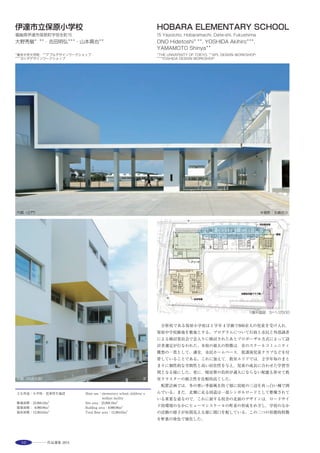
合併校である保原小学校は1学年4学級で800余人の児童を受け入れ,
保原中学校跡地を敷地とする。プログラムについて行政と市民と外部識者
による検討委員会で念入りに検討されたあとプロポーザル方式によって設
計者選定が行なわれた。本校の最大の特徴は,市のスクールコミュニティ
構想の一貫として,講堂,市民ホームベース,放課後児童クラブなどを付
帯していることである。これに加えて,教室エリアでは,2学年毎のまと
まりに個性的な空間性と高い居住性を与え,児童の成長に合わせた学習空
間となる様にした。更に,暖房費の負担が過大にならない配慮も併せて教
室クラスターの独立性を比較的高くした。
配置計画では,冬の寒い季節風を防ぐ様に校庭の三辺を真っ白い棟で囲
んでいる。また,北側に走る国道は一部シンボルロードとして整備されて
いる重要な道なので,これに面する校舎の北面のデザインは,ロードサイ
ド的環境のなかにヒューマンスケールの町並の形成をめざし,学校のなか
の活動の様子が垣間見える様に開口を配している。この二つの形態的特徴
を軒裏の塗色で強化した。
1階平面図 S=1/2500
elementary school, children’s
welfare facility
25,968.10m2
8,980.96m2
13,384.63m2
小学校・児童厚生施設
25,968.10m2
8,980.96m2
13,384.63m2
外観(正門) ※撮影:北嶋俊治
外観(校舎北面) ※
11
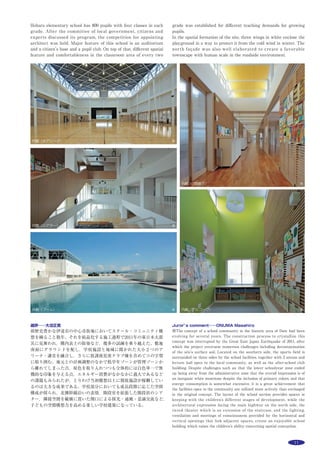
Hobara elementary school has 800 pupils with four classes in each
grade. After the committee of local government, citizens and
experts discussed its program, the competition for appointing
architect was held. Major feature of this school is an auditorium
and a citizen’s base and a pupil club. On top of that, different spatial
feature and comfortableness in the classroom area of every two
grade was established for different teaching demands for growing
pupils.
In the spatial formation of the site, three wings in white enclose the
playground in a way to protect it from the cold wind in winter. The
north façade was also well elaborated to create a favorable
townscape with human scale in the roadside environment.
内観(大アリーナ) ※
内観(シアター) ※
外観(プール) ※ 内観(アルコーブ) ※
内観(3階廊下) ※
選評……大沼正寛 Juror’s comment……ONUMA Masahiro
 歴史豊かな伊達市の中心市街地においてスクール・コミュニティ構
想を練ること数年。それを結晶化する施工過程で2011年の東日本大震
災に見舞われ,構内表土の除染など,幾多の試練を乗り越えた。敷地
南面にグラウンドを配し,学校施設と地域に開かれた大小2つのア
リーナ・講堂を融合し,さらに放課後児童クラブ棟を含めてコの字型
に取り囲む。地元との計画調整のなかで低学年ゾーンが管理ゾーンか
ら離れてしまった点,原色を取り入れつつも全体的には白色単一で無
機的な印象を与える点,エネルギー消費がなかなかに過大であるなど
の課題もみられたが,とりわけ当初構想以上に開放施設が稼働してい
るのは大きな成果である。学校部分においても成長段階に応じた空間
構成が採られ,北側幹線沿いの表情,階段室を拡張した階段状のシア
ター,隣接空間を縦横に貫いた開口による採光・通風・意識交流など,
子どもの空間構想力を高める楽しい学校建築になっている。
 The concept of a school community in the historic area of Date had been
evolving for several years. The construction process to crystallize this
concept was interrupted by the Great East Japan Earthquake of 2011, after
which the project overcame numerous challenges including decontamination
of the site’s surface soil. Located on the southern side, the sports field is
surrounded on three sides by the school facilities, together with 2 arenas and
lecture hall open to the local community, as well as the after-school club
building. Despite challenges such as; that the lower schoolyear zone ended
up being away from the administrative zone that the overall impression is of
an inorganic white monotone despite the inclusion of primary colors; and that
energy consumption is somewhat excessive, it is a great achievement that
the facilities open to the community are utilized more actively than envisaged
in the original concept. The layout of the school section provides spaces in
keeping with the children’s different stages of development, while the
architectural expression facing the main highway on the north side, the
tiered theater which is an extension of the staircase, and the lighting,
ventilation and meetings of consciousness provided by the horizontal and
vertical openings that link adjacent spaces, create an enjoyable school
building which raises the children’s ability concerning spatial conception.
12 作品選集 2014
主な用途:
敷地面積:
建築面積:
延床面積:
Main use:
Site area:
Building area:
Total floor area:
尚絅学院大学礼拝堂
宮城県名取市ゆりが丘4-10-1
桑原裕彰・葛 和久・平岡麻紀
竹中工務店設計部
SHOKEI GAKUIN UNIVERSITY
CHAPEL
4-10-1 Yurigaoka Natori-shi Miyagi
KUWABARA Hiroaki, KATSURA Kazuhisa, HIRAOKA Maki
TAKENAKA CORPORATION
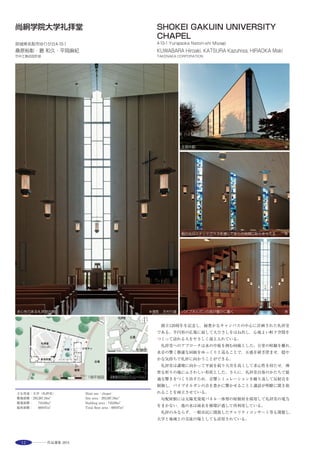
創立120周年を記念し,緑豊かなキャンパスの中心に計画された礼拝堂
である。半円形の広場に面して大ひさしをはね出し,心地よい軒下空間を
つくって訪れる人をやさしく迎え入れている。
礼拝堂へのアプローチは水の中庭を囲む回廊とした。日常の喧騒を離れ,
水音の響く静謐な回廊をゆっくりと巡ることで,五感を研ぎ澄ませ,穏や
かな気持ちで礼拝に向かうことができる。
礼拝堂は講壇に向かって平面を絞り天井を高くして求心性を持たせ,神
聖な祈りの場にふさわしい形状とした。さらに,礼拝堂自体のかたちで最
適な響きをつくり出すため,音響シミュレーションを繰り返して反射音を
制御し,パイプオルガンの音を豊かに響かせることと講話が明瞭に聞き取
れることを両立させている。
勾配屋根には太陽光発電パネル一体型の屋根材を採用して礼拝堂の電力
をまかない,池の水は雨水を循環沪過して再利用している。
礼拝のみならず,一般市民に開放したチャリティコンサート等も開催し,
大学と地域との交流の場としても活用されている。
大学(礼拝堂)
293,387.18m2
745.69m2
669.97m2
chapel
293,387.18m2
745.69m2
669.97m2
求心性のある礼拝堂内観 ※撮影:吉村行雄 パイプオルガンの音が豊かに響く ※
朝の光がステンドグラスを通して祈りの時間に彩りを与える ※
北側外観 ※
1階平面図
0 30
CH:12.7m
CH:4.0m
(m) 配置図
(350席)
反射音の3次元シミュレーション
N
N
151050 (m)
13
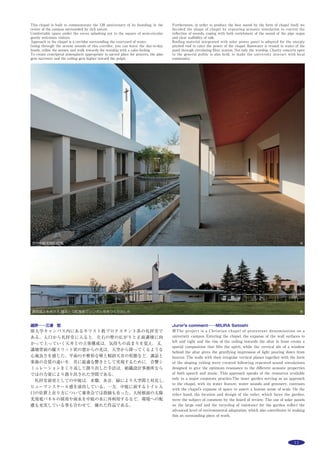
This chapel is built to commemorate the 120 anniversary of its founding, in the
center of the campus surrounded by rich nature.
Comfortable space under the eaves splashing out to the square of semi-circular
gently welcomes visitors.
Approach to the chapel is a corridor surrounding the courtyard of water.
Going through the serene sounds of this corridor, you can leave the day-to-day
bustle, refine the senses, and walk towards the worship with a calm feeling.
To create centripetal atmosphere appropriate to sacred place for prayers, the plan
gets narrower and the ceiling gets higher toward the pulpit.
Furthermore, in order to produce the best sound by the form of chapel itself, we
decided the shape of chapel by repeating acoustic simulation to control the
reflection of sounds, coping with both enrichment of the sound of the pipe organ
and clear audibility of talk.
Roofing material integrated with solar power panel is adopted for the steeply
pitched roof to cater the power of the chapel. Rainwater is reused to water of the
pond through circulating filter system. Not only the worship, Charity concerts open
to the general public is also held, to make the university interact with local
community.
建物高さをおさえ,鐘塔と勾配屋根でシンボル性をつくり出した ※
水の中庭を囲む回廊 ※
選評……三浦 哲 Juror’s comment……MIURA Satoshi
 大学キャンパス内にあるキリスト教プロテスタント系の礼拝堂で
ある。入口から礼拝堂に入ると,左右の壁の広がりと正面講壇に向
かって上っていく天井との立体構成は,気持ちの高まりを覚え,又,
講壇背面の縦スリット状の窓からの光は,天空から降ってくるような
心地良さを感じた。平面の不整形な壁と傾斜天井の形態など,講話と
楽曲の音質の違いを,共に最適な響きとして実現するために,音響シ
ミュレーションをくり返して創り出した手法は,組織設計事務所なら
ではの力量により創り出された空間である。
 礼拝堂前室としての中庭は,水盤,水音,緑により大空間と対比し,
ヒューマンスケール感を演出している。一方,中庭に面するトイレ入
口の位置と在り方について審査会では指摘も有った。大屋根面の太陽
光発電パネルの採用や雨水を中庭の水に再利用するなど,環境への配
慮も充実している事も合わせて,優れた作品である。
 The project is a Christian chapel of protestant denomination on a
university campus. Entering the chapel, the expanse of the wall surfaces to
left and right and the rise of the ceiling towards the altar in front create a
spatial composition that lifts the spirit, while the vertical slit of a window
behind the altar gives the gratifying impression of light pouring down from
heaven. The walls with their irregular vertical planes together with the form
of the sloping ceiling were created following repeated sound simulations
designed to give the optimum resonance to the different acoustic properties
of both speech and music. This approach speaks of the resources available
only to a major corporate practice.The inner garden serving as an approach
to the chapel, with its water feature, water sounds and greenery, contrasts
with the chapel’s expanse of space to assert a human sense of scale. On the
other hand, the location and design of the toilet, which faces the garden,
were the subject of comment by the board of review. The use of solar panels
on the large roof and the recycling of rainwater for the garden reflect the
advanced level of environmental adaptation, which also contributes to making
this an outstanding piece of work.
14 作品選集 2014
主な用途:
敷地面積:
建築面積:
延床面積:
Main use:
Site area:
Building area:
Total floor area:
帝京大学小学校
東京都多摩市和田1254-6
隈 研吾
*
・小泉 治
**
・藤田雅義
**
・中野洋輔
**
*
東京大学・
**
日本設計
Teikyo UniversiTy elemenTary school
1254-6 Wada, Tama-shi, Tokyo
KUMA Kengo
*
, KOIZUMI Osamu
**
, FUJITA Masayoshi
**
,
NAKANO Yosuke**
*
TOKYO UNIVERSITY,
**
NIHON SEKKEI,INC
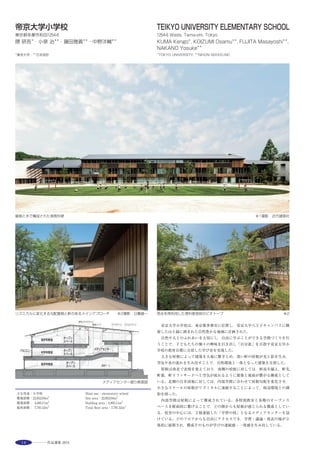
帝京大学小学校は,東京都多摩市に位置し,帝京大学八王子キャンパスに隣
接した山と緑に囲まれた自然豊かな地域に計画された。
自然や人とのふれあいを大切にし,自由に学ぶことができる空間づくりを行
うことで,子どもたちの個々の興味を引き出し「自分流」を目指す帝京大学小
学校の教育目標に合致した学び舎を実現した。
大きな屋根によって建築を大地に繋ぎとめ,深い軒の屋根が光と影を生み,
空気や水の流れを生み出すことで,自然環境と一体となった建築を目指した。
屋根は南北で表情を変えており,南側の校庭に対しては,軒高を揃え,軒先,
軒裏,軒下ファサードへと空気が流れるように建築と地面が繋がる構成として
いる。北側の百草団地に対しては,内部空間に合わせて屋根勾配を変化させ,
小さなスケールの屋根がリズミカルに連続することによって,周辺環境との調
和を図った。
内部空間は屋根によって構成されている。各特別教室と各階のオープンス
ペースを断面的に繋げることで,どの階からも屋根が感じられる構成としてい
る。校舎の中心には,3層連続した「学習の核」となるメディアセンターを設
けている。どのフロアからも自由にアクセスでき,学習・議論・発表の場が立
体的に展開され,構成そのものが学びの連続感・一体感を生み出している。
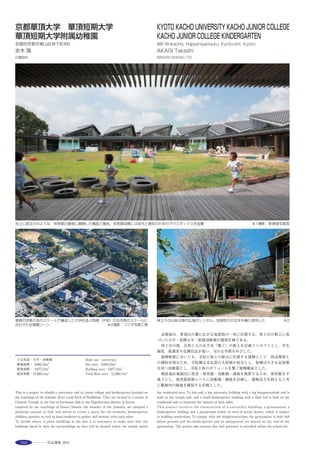
屋根と木で構成された南側外壁 ※1撮影:近代建築社
小学校
22,852.04m2
 4,405.11m2
 7,781.52m2
elementary school
22,852.04m2
4,405.11m2
7,781.52m2
リズミカルに変化する勾配屋根と軒のあるメインアプローチ ※2撮影:日暮雄一
メディアセンター廻り断面図
雨水を再利用した理科教室前のビオトープ ※2
15
視覚的に2・3階と連続するランチルーム ※3撮影:帝京大学小学校
The school building was realized through placing an importance on contact
with nature and human beings and creating a space where students can
learn without inhibition. It is consistent with Teikyo University’s educational
goals of eliciting the individual interest of students and having them seek
“their own way.”
The goal of creating an eco-friendly building was achieved through the large
roof that provides a link to the natural environment, and the long eaves that
create light and shadow, and allow for the flow of air and water.
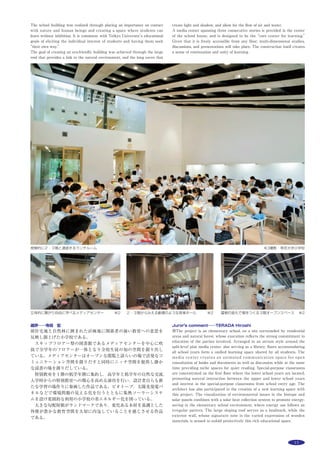
A media center spanning three consecutive stories is provided in the center
of the school house, and is designed to be the“core center for learning.”
Given that it is freely accessible from any floor, multi-dimensional studies,
discussions, and presentations will take place. The construction itself creates
a sense of continuation and unity of learning.
立体的に繋がり自由に学べるメディアセンター ※2 2・3階からみえる劇場のような音楽ホール ※2 屋根の変化で場をつくる3階オープンスペース ※2
選評……寺田 宏 Juror’s comment……TERADA Hiroshi
住宅地と自然林に囲まれた計画地に関係者の強い教育への意思を
反映し創上げた小学校である。
スキップフロアー型の図書館であるメディアセンターを中心に吹
抜で全学年のフロアーが一体となり全校生徒の知の空間を創り出し
ている。メディアセンターはオープンな閲覧と語らいの場で活発なコ
ミュニケーション空間を創りだすと同時にニッチ空間を提供し静か
な読書の場を創りだしている。
特別教室を1階の低学年階に集約し,高学年と低学年の自然な交流,
入学時からの特別教室への関心を高める演出を行い,設計者自らも新
たな学習の場作りに参画した作品である。ビオトープ,太陽光発電パ
ネルなどで環境問題の見える化を行うとともに集熱ソーラーシステ
ムを設け変則的な利用の小学校の省エネルギー化を図っている。
大きな勾配屋根がランドマークであり,変化ある木材を基調とした
外壁が豊かな教育空間を大切に内包していることを感じさせる作品
である。
 The project is an elementary school, on a site surrounded by residential
areas and natural forest, whose execution reflects the strong commitment to
education of the parties involved. Arranged in an atrium style around the
split-level plan media center, also serving as a library, floors accommodating
all school years form a unified learning space shared by all students. The
media center creates an animated communication space for open
consultation of books and documents as well as discussion while at the same
time providing niche spaces for quiet reading. Special-purpose classrooms
are concentrated on the first floor where the lower school years are located,
promoting natural interaction between the upper and lower school years
and interest in the special-purpose classrooms from school entry age. The
architect has also participated in the creation of a new learning space with
this project. The visualization of environmental issues in the biotope and
solar panels combines with a solar heat collection system to promote energy-
saving in the elementary school environment, where energy use follows an
irregular pattern. The large sloping roof serves as a landmark, while the
exterior wall, whose signature note is the varied expression of wooden
materials, is sensed to enfold protectively this rich educational space.
16 作品選集 2014
主な用途:
敷地面積:
建築面積:
延床面積:
Main use:
Site area:
Building area:
Total floor area:
GRID
東京都中央区
伊藤博之
伊藤博之建築設計事務所
GRID
Chuo-ku, Tokyo
ITO Hiroyuki
HIROYUKI ITO ARCHITECTS
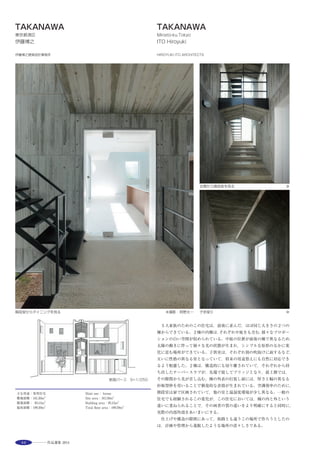
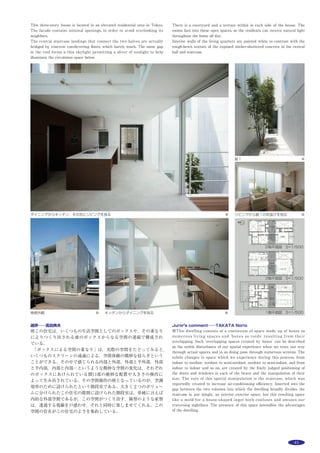
生活の滲む路地で知られる月島に,この建物は建っている。敷地周辺に
は,古い2階建の住宅が並ぶ,この地域らしい細い路地も見られるが,隣
接して新しい高層の集合住宅が散在し,それらが調和しているとは言い難
い。あまりに対極的で無関係な両者の関係について考えたいと思った。
路地の特徴の一つがその小ささだとすると,経験する空間が連続性をも
つように,計画建物をできる限り小さな単位から作ろうと考えた。スパン
と階高を,木造一戸建と同程度の2,700mm前後に抑えることで,7階建と
しては,スリムな構造体を実現している。同時に,住戸の広がりを作るた
め,各住戸には必ず吹抜けを設けている。
多様な住戸を作るべく,平面の方向性をなくして隣地を含む全方位を利
用できる平面とした。構造的なバランスと,隣地も含む周辺環境の状況を
鑑みながら,開口の配置を決めた。外観上の多様な見栄がかりは,外観の
スケールを小さくする。
入居者の入替えの際に,新品のクロスを張って時間を巻き戻そうとする
のではなく,多少の傷や汚れも風合いと感じられるよう,あえて色むらが
できる下地用の左官材を用いた。外部も,均質なコントロールが難しい普
通型枠をあえて用いた。竣工当初を最上の状態とするのではなく,いつか
ら建っているかわからないような建物が良いと考えた。
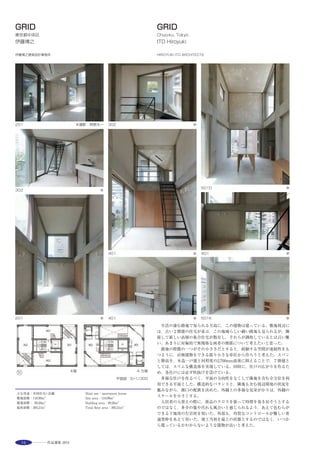
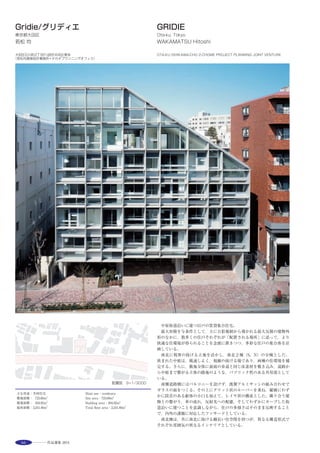
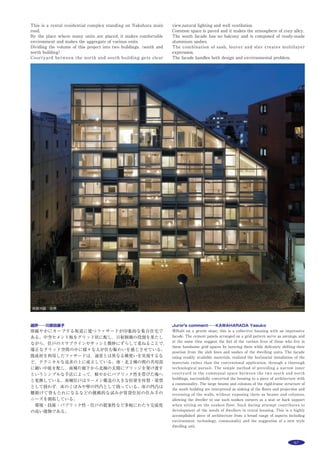
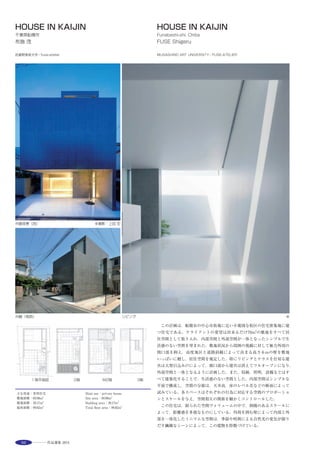
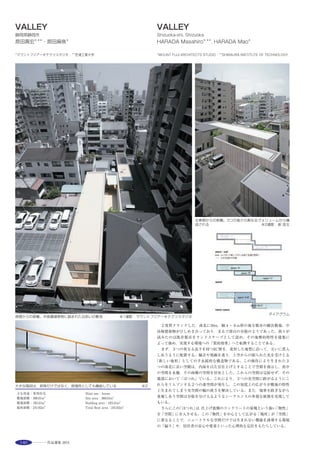
201 ※撮影:阿野太一
302 ※
201 ※
平面図 S=1/300
302 ※
501D ※
401 ※401 ※
401 ※ 501K ※
共同住宅+店舗
116.99m2
89.26m2
395.21m2
apartment house
116.99m2
89.26m2
395.21m2
4.5階4階
17
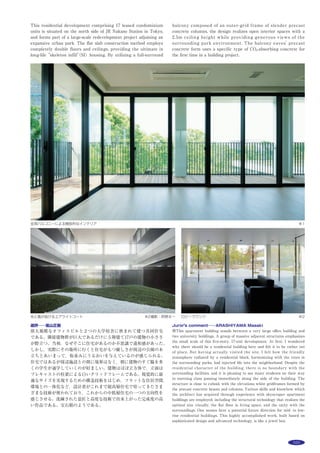
This housing complex was built in Tsukishima known as attractive alleyways. The
alleyways have a lot of old wooden 2-storey houses, but also hold spread new high-
rise housing complexes around the area. This contrastive undesirable relationship
between 2 types of houses in this area should be concerned.
It can be said that one of the element of the alleyways is peculiar smallness. To
make connection to the town, this building was made by unit as small as possible.
At the same time, every room has got a double-height space to have a stretch of
the rooms. To make various apartment, we considered every direction should be
available whether the façade faces road or not. This façade avoid pressure of big
outward appearance.
In this building, the walls and ceilings were painted by uneven foundation plaster,
so that scars or stains can get peculiar characters. Outside concrete walls are also
used smaller lauan panel mould which is difficult to control homogeneous
appearance. This printed grain of wood on the concrete wall also fits inside of lauan
wood furniture. This building can accept passage of the time in surrounding
intensive changes.
南側外観 ※
外観夕景 ※
断面図 S=1/300
選評……山崎隆盛 Juror’s comment……YAMAZAKI Takamori
 垂直導線のコアをL型平面のメゾネット住戸が巴型に囲む,言わば,
マルセイユのユニテの断面を平面化し,3次元に空間展開したような
建築である。この作品の成功は,まず,周辺環境と居住空間を注意深
く読み込んで決められたGRIDの寸法にある。作者は,路地や町屋の
ヒューマンスケールを尊重して,人が住むための最小空間単位を一間
半350角柱梁の立方格子とし,3×4×7個積み上げている(一見7
階建てだが法的には5階建てのため直通階段1か所)。この骨格に住
戸がはめ込まれているのだが,外観は格子を強調せず,組積造的雰囲
気をもたせたウマ目地の1/2コンパネによる打放しとし,そこに生ま
れる偶発的なばらつきのあるテクスチャーを街に対応させている。内
部では断熱や結露対策を取りながらも張りぼて感を避けて本物とし
ての躯体を現している。街や住み手に向けたやさしさの裏に厳格な思
想と透明な理性が隠された清々しい建築である。
 With the vertically oriented core alternately enclosed by L-shape plan
maisonnettes, the plan of the building is as it were a three-dimensional
interpretation of an elevation of the Unité d'Habitation in Marseille. The
success of this architecture lies in its grid dimensions which were decided
through careful studies of the surrounding environment and living spaces.
The architect, while respecting the human scale of alley and town houses,
made the minimum living spatial unit as a 2.7 cubic meter lattice with 350-
mm square beams and columns and stacked this unit in the order of three
by four horizontally and seven vertically(although appearing to be a seven-
story building, it is legally five, thus being required to have only one direct
stair). Dwelling units are fitted into this framework without stressing the
grid on the exterior, instead making it as-cast concrete using half standard-
size formwork panels with masonry construction-like staggered joints, while
the accidentally generated inconsistent texture responds well to the
townscape. Measures for insulation and to counter condensation are devised
for the interior, which reveals its presence as a structural body, while
avoiding a look of emptiness. This is an invigorating piece of architecture
based on rigorous yet hidden concepts and transparent rationale behind the
consideration given towards both its dwellers and the local community.
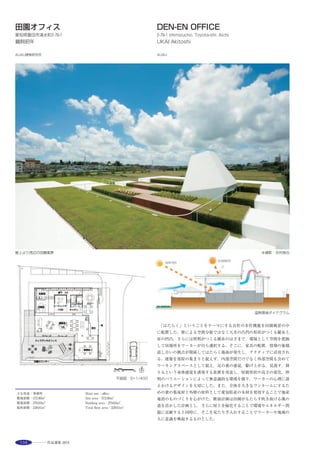
当作品(ページ)は非公開です。
This page is not disclosed.
当作品(ページ)は非公開です。
This page is not disclosed.
20 作品選集 2014
主な用途:
敷地面積:
建築面積:
延床面積:
Main use:
Site area:
Building area:
Total floor area:
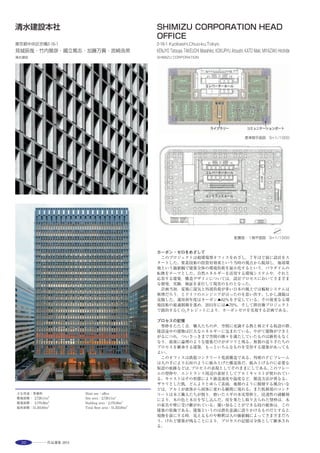
清水建設本社
東京都中央区京橋2-16-1
見城辰哉・竹内雅彦・國立篤志・加藤万貴・宮崎浩英
清水建設
SHIMIZU CORPORATION HEAD
OFFICE
2-16-1 Kyobashi,Chuo-ku,Tokyo
KENJYO Tatsuya, TAKEUCHI Masahiko, KOKURYU Atsushi, KATO Maki, MIYAZAKI Hirohide
SHIMIZU CORPORATION
事務所
2,728.11m2
2,170.36m2
51,355.84m2
office
2,728.11m2
2,170.36m2
51,355.84m2
基準階平面図 S=1/1000
配置図・1階平面図 S=1/1000
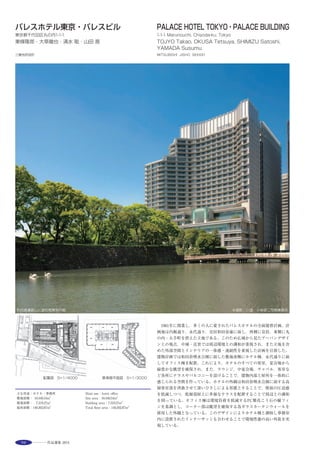
カーボン・ゼロをめざして
このプロジェクトは超環境型オフィスをめざし,7年ほど前に設計をス
タートした。要素技術の投資対効果という当時の視点から脱却し,地球環
境という価値観で建築全体の環境負荷を最小化するという,パラダイムの
転換をテーマとした。自然エネルギーを活用する環境システムや,それと
応答する建築,構造デザインについては,設計プロセスにおいてさまざま
な開発,実験,検証を並行して現実のものとなった。
計画当初,夏場に湿気と外部負荷が多い日本の風土では輻射システムは
無理だろう,とドイツのエンジニアが言ったのを思い出す。しかし課題は
克服した。運用初年度はカーボン▲62%を予定している。その後更なる環
境技術の最適制御を進め,2015年には▲70%,そして排出権プロジェクト
で創出するCO2クレジットにより,カーボンゼロを実現する計画である。
プロセスの記憶
型枠をたたく音,職人たちの声,空間に充満する熱と林立する仮設の群。
建設途中の建物は巨大なエネルギーに包まれている。やがて建物ができ上
がるにつれ,ついさっきまで空間の隅々を満たしていたものは跡形もなく
なり,最後に論理のような建築だけがポツリと残る。無数の造り手たちの
プロセスを継承する建築,もっといろんなものを受容する建築があっても
よい。
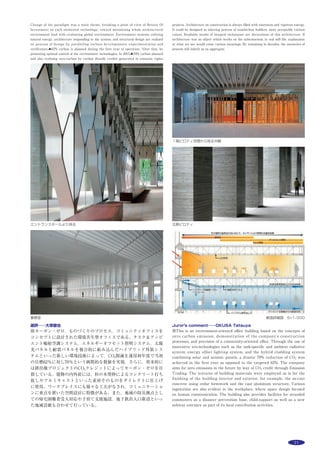
このオフィスは鉄筋コンクリート免震構造である。外壁のPCフレーム
は人の手により石垣のように組み上げた構造体だ。組み上げるのに必要な
仮設の痕跡などは,プロセスの表現としてそのままにしてある。このフレー
ムの型枠や,エントランス周辺の素材としてアルミキャストが使われてい
る。キャストはその形態により鋳造速度や温度など,製造方法が異なる。
ザラリとした肌,どんよりとゆらぐ表面,地層のように積層する風合いな
どは,アルミが液体から固体に変わる瞬間に現れる。また低層部のコンク
リートは木工職人たちが削り,磨いたスギの本実型枠と,浸透性の剥離剤
により,木の色と木目を写し込んだ。用を果たし取り去られた型枠は,木
の家具や壁に受け継がれている。窺い知ることができる技の総体は,この
建築の装飾である。建築というのは潜在意識に語りかけるものだとすると,
現物を前にする時,見えるものや解釈は人の価値観によってさまざまだろ
う。けれど建築が残ることにより,プロセスの記憶は全体として継承され
る。
21
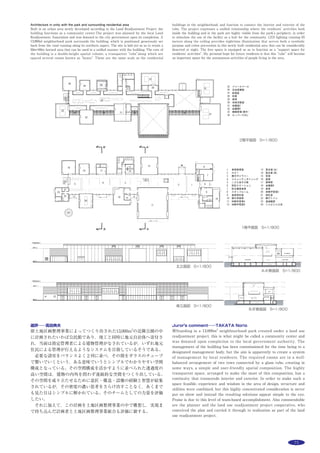
Change of the paradigm was a main theme, breaking a point of view of Return Of
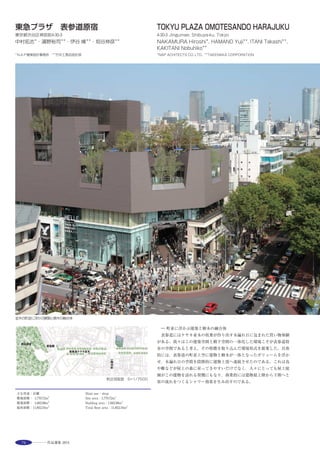
Investment on each elemental technology, toward minimizing whole architectural
environment load with evaluating global environment. Environment systems utilizing
natural energy, architecture responding to the system, and structural design are realized
on process of design by paralleling various developments, experimentation and
verification.▲62% carbon is planned during the first year of operation. After that, by
promoting optimal control of the environment technologies, In 2015,▲70% carbon planned
and also realizing zero-carbon by carbon dioxide credits generated in emission rights
projects. Architecture on construction is always filled with enormous and vigorous energy.
It could be designed as inhering process of numberless builders, more acceptable various
values. Readable marks of integral techniques are decorations of this architecture. If
architecture was an object which works on the subconscious, in real still life, explanation
or what we see would come various meanings. By remaining in decades, the memories of
process will inherit as an aggregate.
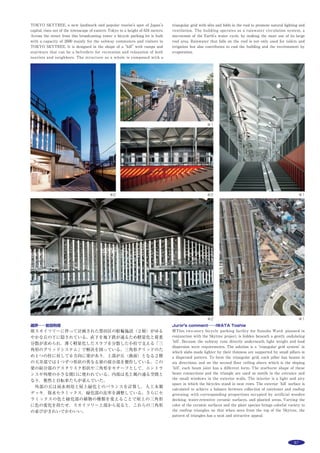
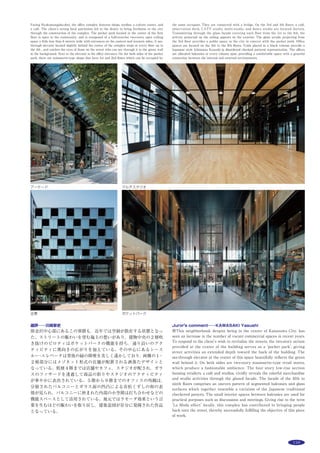
エントランスホールより見る
事務室
1階ピロティ空間から見る外観
北側ピロティ
断面詳細図 S=1/200
選評……大草徹也 Juror’s comment……OKUSA Tetsuya
 カーボン・ゼロ,ものづくりのプロセス,コミュニティオフィスを
コンセプトに設計された環境共生型オフィスである。タスク&アンビ
エント輻射空調システム,エネルギーオフセット照明システム,太陽
光パネルと耐震パネルを複合的に組み込んだハイブリッド外装シス
テムといった新しい環境技術によって,CO2削減を運用初年度で当初
の目標62%に対し70%という画期的な数値を実現,さらに,将来的に
は排出権プロジェクトのCO2クレジットによってカーボン・ゼロを目
指している。建物の内外装には,杉の本型枠によるコンクリート打ち
放しやアルミキャストといった素材そのものをダイレクトに仕上げ
に使用。ワークプレイスにも様々な工夫がなされ,コミュニケーショ
ンに重点を置いた空間設計に特徴がある。また,地域の防災拠点とし
ての帰宅困難者受入対応や子育て支援施設,地下鉄出入口新設といっ
た地域貢献も合わせて行っている。
 This is an environment-oriented office building based on the concepts of
zero carbon emission, demonstration of the company’s construction
processes, and provision of a community-oriented office. Through the use of
innovative eco-technologies such as the task-specific and ambient radiative
system, energy offset lighting system, and the hybrid cladding system
combining solar and seismic panels, a drastic 70% reduction of CO2 was
achieved in the first year as opposed to the targeted 62%. The company
aims for zero emissions in the future by way of CO2 credit through Emission
Trading. The textures of building materials were employed as is for the
finishing of the building interior and exterior, for example, the as-cast
concrete using cedar formwork and the cast aluminum structure. Various
ingenuities are also evident in the workplace, where space design focused
on human communication. The building also provides facilities for stranded
commuters as a disaster prevention base, child-support as well as a new
subway entrance as part of its local contribution activities.
22 作品選集 2014
主な用途:
敷地面積:
建築面積:
延床面積:
Main use:
Site area:
Building area:
Total floor area:
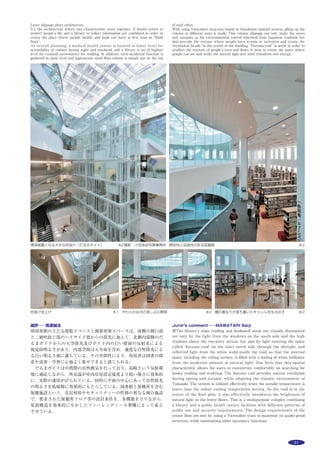
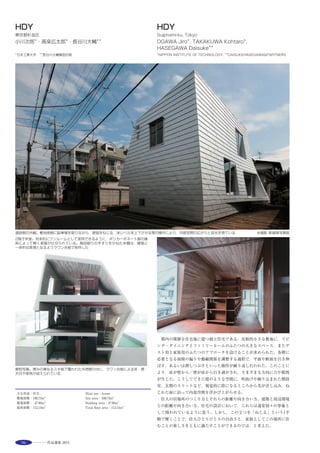
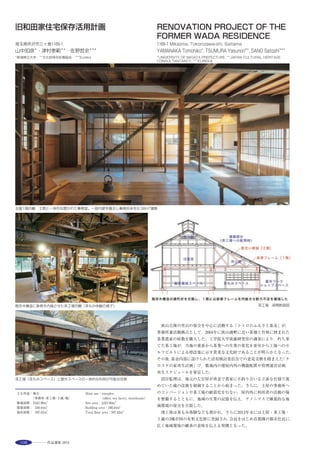
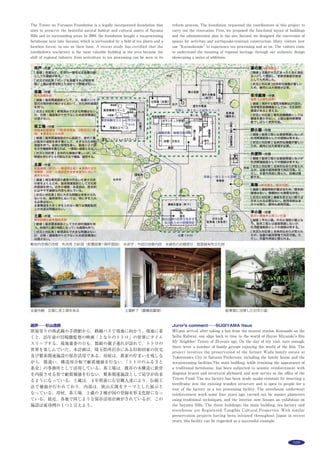
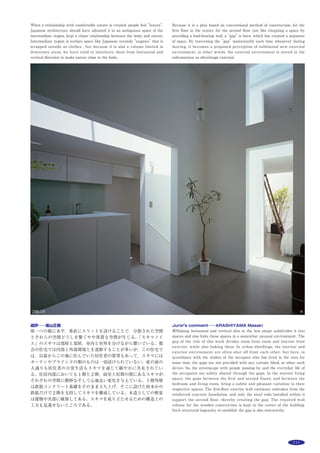
柿畑のサンクン・ハウス
神奈川県小田原市
小嶋一浩
*・**
・赤松佳珠子
*・***
*CAt・**横浜国立大学大学院建築都市スクール“Y-GSA”・***法政大学
SUNKEN HOUSE
Odawara-shi, Kanagawa
KOJIMA Kazuhiro
*, **
, AKAMATSU Kazuko
*, ***
*
CAT,
**
YOKOHAMA GRADUATE SCHOOL OF ARCHITECTURE,
***
HOSEI UNIVERSITY
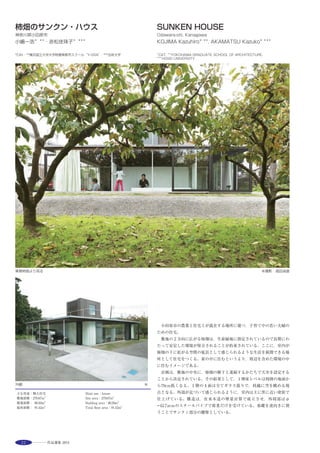
小田原市の農業と住宅とが混在する場所に建つ,子育て中の若い夫婦の
ための住宅。
敷地の2方向に広がる柿畑は,生産緑地に指定されているので長期にわ
たって安定した環境が保全されることが約束されている。ここに,室内が
柿畑の下に拡がる空間の延長として感じられるような生活を展開できる場
所として住宅をつくる。家の中に住むというより,周辺を含めた環境の中
に住むイメージである。
計画は,敷地の中央に,柿畑の樹下と連続するかたちで天井を設定する
ことから決定されている。その結果として,1階床レベルは周囲の地面か
ら70cm低くなる。1階の4面は全てガラス張りで,枝越に空を眺める視
点となる。外部が近づいて感じられるように,室内は主に黒に近い塗装で
仕上げている。構造は,在来木造の壁量計算で成立させ,外周部はφ
=42.7mmのスチールパイプで荷重だけを受けている。基礎を逆向きに使
うことでサンクン部分の腰壁としている。
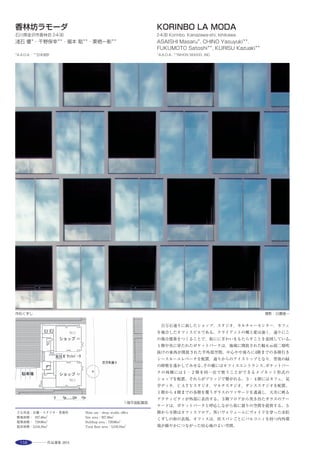
東側柿畑より見る ※撮影:堀田貞雄
外観 ※
個人住宅
270.67m2
86.50m2
91.42m2
house
270.67m2
86.50m2
91.42m2
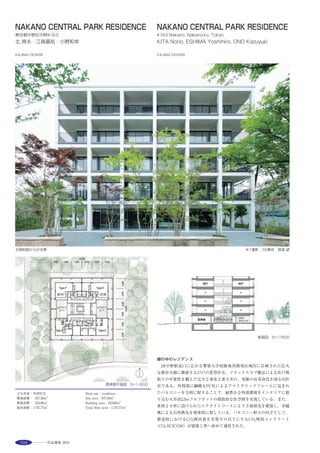
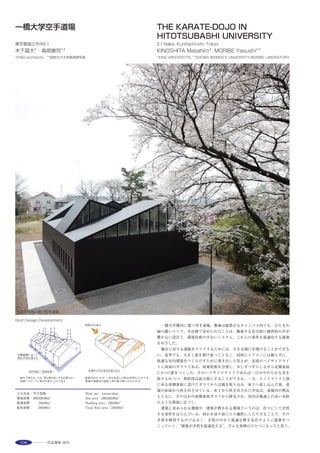
23
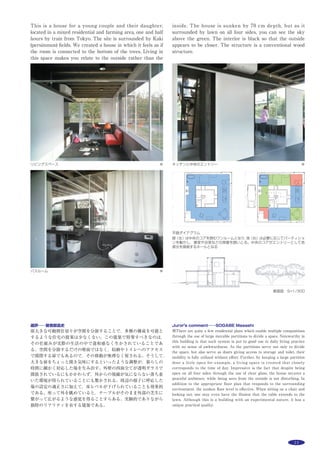
This is a house for a young couple and their daughter,
located in a mixed residential and farming area, one and half
hours by train from Tokyo. The site is surrounded by Kaki
(persimmon) fields. We created a house in which it feels as if
the room is connected to the bottom of the trees. Living in
this space makes you relate to the outside rather than the
inside. The house is sunken by 70 cm depth, but as it
surrounded by lawn on all four sides, you can see the sky
above the green. The interior is black so that the outside
appears to be closer. The structure is a conventional wood
structure.
リビングスペース ※ キッチンと中央のエントリー ※
昼(左)は中央のコアを囲むワンルームとなり,夜(右)は必要に応じてパーティショ
ンを動かし,寝室や浴室などの部屋を囲いとる。中央のコアがエントリーとして各
部分を接続するホールとなる
バスルーム ※
平面ダイアグラム
断面図 S=1/300
選評……曽我部昌史 Juror’s comment……SOGABE Masashi
 大きな可動間仕切りが空間を分節することで,多種の構成を可能と
するような住宅の提案は少なくない。この建築で特筆すべきなのは,
その仕組みが実際の生活の中で違和感なく生かされていることであ
る。空間を分節するだけの壁面ではなく,収納やトイレへのアクセス
で開閉する扉でもあるので,その移動が無理なく促される。そうして,
大きな扉をちょっと開き気味にするといったような調整が,暮らしの
時間に細かく対応した場を生み出す。外壁の四面全てが透明ガラスで
開放されているにもかかわらず,外からの視線が気にならない落ち着
いた環境が得られていることにも驚かされる。周辺の様子に呼応した
場の設定の適正さに加えて,床レベルが下げられていることも効果的
である。座って外を眺めていると,テーブルがそのまま外部の芝生に
繋がって広がるような感覚を得ることすらある。実験的でありながら
独特のリアリティを有する建築である。
 There are quite a few residential plans which enable multiple compositions
through the use of large movable partitions to divide a space. Noteworthy in
this building is that such system is put to good use in daily living practice
with no sense of awkwardness. As the partitions serve not only to divide
the space, but also serve as doors giving access to storage and toilet, their
mobility is fully utilized without effort. Further, by keeping a large partition
door a little open for example, a living space is created that closely
corresponds to the time of day. Impressive is the fact that despite being
open on all four sides through the use of clear glass, the house secures a
peaceful ambience, while being seen from the outside is not disturbing. In
addition to the appropriate floor plan that responds to the surrounding
environment, the sunken floor level is effective. When sitting on a chair and
looking out, one may even have the illusion that the table extends to the
lawn. Although this is a building with an experimental nature, it has a
unique practical quality.
24 作品選集 2014
主な用途:
敷地面積:
建築面積:
延床面積:
Main use:
Site area:
Building area:
Total floor area:
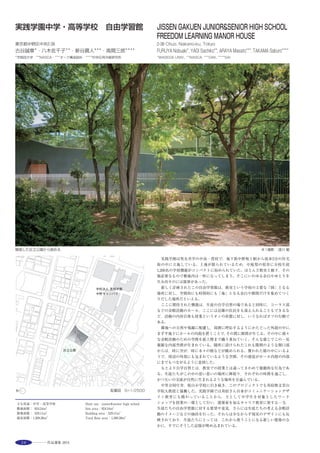
実践学園中学・高等学校 自由学習館
東京都中野区中央2-38
古谷誠章
*
・八木佐千子
**
・新谷眞人
***
・高間三郎
****
*
早稲田大学・
**
NASCA・
***
オーク構造設計・
****
科学応用冷暖研究所
JISSEN GAKUEN JUNIOR&SENIOR HIGH SCHOOL
FREEDOM LEARNING MANOR HOUSE
2-38 Chuo, Nakano-ku, Tokyo
FURUYA Nobuaki
*
, YAGI Sachiko
**
, ARAYA Masato
***
, TAKAMA Saburo
****
*
WASEDA UNIV.,
**
NASCA,
***
OAK,
****
SAI
実践学園は男女共学の中高一貫校で,地下鉄中野坂上駅から徒歩5分の住宅
街の中に立地している。土地が限られているため,中庭型の校舎に全校生徒
1,200名の学校機能がコンパクトに収められていた。ほとんど教室と廊下,その
他必要なもので敷地内は一杯になってしまう。そこにいわゆる余白やゆとりを
生み出すのには限界があった。
新しく計画されたこの自由学習館は,教室という学校の主要な「図」となる
場所に対し,空間的にも時間的にも「地」となる余白や隙間だけを集めてつく
りだした場所だといえる。
ここに期待された機能は,生徒の自学自習の場であると同時に,コーラス部
などの余暇活動のホール,ここには近隣の住民をも迎え入れることもできるな
ど,活動の内容自体も授業というオンの状態に対し,いうなればオフの行動で
ある。
隣地への日照や視線に配慮し,周囲に呼応するようにかたどった外殻の中に,
まず半地下にホールの内殻を置くことで,その間に隙間が生じる。その中に様々
な余暇活動のための空間を最上階まで織り重ねていく。そんな感じでこの一見
複雑な内部空間が生まれている。随所に設けられたこれも隙間のような開口部
からは,時に空が,時に木々の梢などが眺められる。覆われた箱の中にいるよ
うで,周辺の外部にも包まれているような空間。その感覚がホール内殻の内部
にまでもつながるように意図した。
もとより自学自習とは,教室での授業とは違ってきわめて能動的な行為であ
る。生徒たちがこの中の思い思いの場所に陣取り,それぞれの時間を過ごし,
かつ互いの交流が自然に生まれるような場所を目論んでいる。
中里合同庁舎,桜山小学校に引き続き,このプロジェクトでも苅宿俊文青山
学院大教授と協働した。実践学園では苅宿さん自身がコミュニケーションデザ
イン教育にも携わっていることから,主として中学生を対象としたワーク
ショップを授業の一環として行い,建築家を知るキャリア教育に資する一方,
生徒たちの自由学習館に対する要望や意見,さらには生徒たちの考える余暇活
動のイメージなどの抽出を行った。それらは少なからず現実のデザインにも反
映されており,生徒たちにとっては,これから使うことになる新しい建築のな
かに,すでにそうした記憶が埋め込まれている。
学校法人 実践学園
中野キャンパス
区立公園
中学・高等学校
 924.54m2
 529.11m2
1,389.38m2
junior&senior high school
924.54m2
529.11m2
1,389.38m2
隣接した区立公園から眺める ※1撮影:淺川 敏
配置図 S=1/2500
25
2階 OS-1よりLearning Terraceを眺める ※1
Jissen Gakuen is a coeducational integrated junior high and high school, and it is
located in residential area in Tokyo. It can be said that this newly plane Freedom
learning manor house is the place that is made and collected only the unfilled space
and room as a“ground”in terms of space and time, to the place filled by class
room as main“figures”of the school. The function expected here is a place of a
student’s self-teaching and at the same time a hall of leisure-time activities and it
can also receive neighboring residents etc. So the contents of activity them-self are
action of OFF, to the action of ON as school lessons. With careful treatment of view
and sunshine duration, the outer shell is formed in harmony with its circumstance
and the hall as an inner shell is placed on semi-basement of the outer shell. So a
gap space is produced in between outer and inner shell and the space for various
leisure-time activities is woven and piled up to the top floor in the space. Originally
the space for self-learning, differently from the lesson in the classroom, has been
attempted to be a place for students to find their own spaces, to spend their own
time and to naturally let them communicate each other.
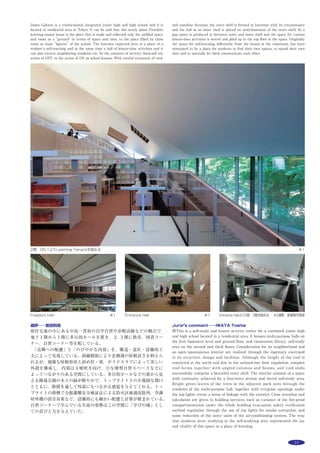
Freedom Hall ※1 Entrance Hall ※1 Entrance Hallより2階・3階を眺める ※2撮影:新建築写真部
選評……岩田利枝 Juror’s comment……IWATA Toshie
住宅地の中にある中高一貫校の自学自習や余暇活動などの拠点で,
地下1階から1階に多目的ホールを置き,2,3階に教室,図書コー
ナー,自習コーナー等を配している。
「近隣への配慮」と「のびやかな内部」を,構造・意匠・設備的工
夫によって実現している。斜線制限により北側端の屋根高さを抑えら
れるが,複雑な屋根形状と斜め柱・梁,ボイドスラブによって美しい
外殻を構成し,内部は4層吹き向け,ひな壇型自習スペースなどに
よってつながりのある空間にしている。多目的ホールなどの窓から見
える隣地公園の木々の緑が鮮やかで,トップライト下の不規則な開口
とともに,隙間を通して外部にもつながる感覚を与えてくれる。トッ
プライトの排煙で全館避難安全検証法による防火区画適用除外,空調
屋外機の消音対策など,設備的にも細かい配慮と計算が積まれている。
自習コーナーで学んでいる生徒の姿勢はこの空間に「学びの場」とし
ての喜びと力を与えていた。
 This is a self-study and leisure activity center for a combined junior high
and high school located in a residential area. It houses multi-purpose halls on
the first basement level and ground floor, and classrooms, library, self-study
area on the second and third floors. Consideration for its neighborhood and
an open/spontaneous interior are realized through the ingenuity exercised
in its structure, design and facilities. Although the height of the roof is
restricted at the north end due to the setback-line limit regulation, complex
roof forms together with angled columns and beams, and void slabs
successfully comprise a beautiful outer shell. The interior consists of a space
with continuity achieved by a four-story atrium and tiered self-study area.
Bright green leaves of the trees in the adjacent park seen through the
windows of the multi-purpose hall, together with irregular openings under
the top lights create a sense of linkage with the exterior. Close attention and
calculation are given to building services, such as variance of the fire-proof
compartmentation under the whole building evacuation safety verification
method regulation through the use of top lights for smoke extraction, and
noise reduction of the outer units of the air-conditioning system. The way
that students were studying in the self-studying area represented the joy
and vitality of this space as a place of learning.
26 作品選集 2014
主な用途:
敷地面積:
建築面積:
延床面積:
Main use:
Site area:
Building area:
Total floor area:
東京大学生産技術研究所
アニヴァーサリーホール
東京都目黒区駒場4-6-1
今井公太郎
*
・遠藤克彦
**
・大井鉄也
***
*
東京大学生産技術研究所・
**
遠藤克彦建築研究所・
***
大井鉄也建築設計事務所(前,東京大学生産技術研究所,遠藤克彦建築研究所)
IIS ANNIVERSARY HALL,
THE UNIV. OF TOKYO
4-6-1 Komaba, Meguro-ku, Tokyo
IMAI Kotaro
*
, ENDO Katsuhiko
**
, OOI Tetsuya
***
*
INSTITUTE OF INDUSTRIAL SCIENCE, THE UNIV. OF TOKYO,
**
ENDO ARCHITECT AND
ASSOCIATES,
***
OOI ARCHITECT AND ASSOCIATES, (Ex-Design staff of IIS and EAA)
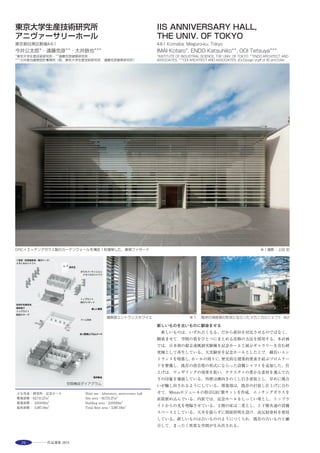
新しいものを古いものに馴染ませる
新しいものは,いずれ古くなる。だから新旧を対比させるのではなく,
馴染ませて,空間の質をひとつにまとめる改修の方法を採用する。本計画
では,日本初の超音速風洞実験棟を記念ホールと展示ギャラリーを含む研
究棟として再生している。大実験室を記念ホールとした上で,細長いエン
トランスを増築し,ホールの周りに,歴史的な建築的要素を結ぶプロムナー
ドを整備し,既存の消音塔の形式にならった設備シャフトを追加した。仕
上げは,ウェザリングの効果を狙い,テクスチャの豊かな素材を選んで古
さの印象を補強している。外壁は横向きのくし引き塗装とし,早めに風合
いが醸し出されるようにしている。増築部は,既存の打放し仕上げに合わ
せて,90mmモジュールの特注GRC製サッシを作成,エッチングガラスを
直接嵌め込んでいる。内装では,記念ホールをしっくい塗とし,トップラ
イトからの光を増幅させている。2階の床は二重とし,上下階共通の設備
スペースとしている。天井を張らずに間接照明を設け,高反射塗料を使用
している。新しいものは古いもののようにつくられ,既存の古いものと融
合して,まったく異質な空間が生み出される。
GRC+エッチングガラス製のカーテンウォールを薄皮1枚増築した,東側ファサード ※1撮影:上田 宏
既存の消音塔の形状にならったメカニカルシャフト ※2増築部エントランスホワイエ ※1
研究所・記念ホール
92,731.27m2
2,018.92m2
3,387.18m2
laboratory, anniversary hall
92,731.27m2
2,018.92m2
3,387.18m2
空間構成ダイアグラム
27
INTEGRATING THE OLD WITH THE NEW
Anything new will eventually get old. Therefore, instead of
expressing contrasts between the old and the new, this project
aims to integrate these two features by shading off their
boundaries, creating one spatial quality having to apply different
dimensions of materials, forms, orders, contexts and programs.
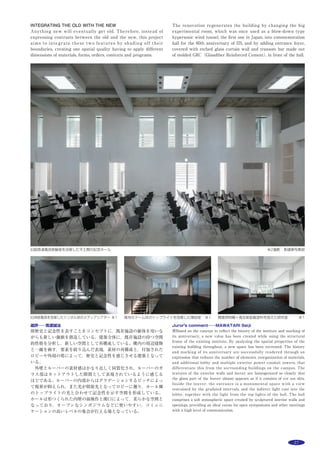
The renovation regenerates the building by changing the big
experimental room, which was once used as a blow-down type
hypersonic wind tunnel, the first one in Japan, into commemoration
hall for the 60th anniversary of IIS, and by adding entrance foyer,
covered with etched glass curtain wall and transom bar made out
of molded GRC(Glassfiber Reinforced Cement), in front of the hall.
旧超音速風洞実験室を改修した平土間の記念ホール ※2撮影:新建築写真部
旧消音風洞を改修したトンネル状のメディアシアター ※1 既存のドーム状のトップライトを改修した階段室 ※1 間接照明棚+高反射拡散塗料を設えた研究室 ※1
選評……馬渡誠治 Juror’s comment……MAWATARI Seiji
歴史と記念性を表すことをコンセプトに,既存施設の躯体を用いな
がらも新しい価値を創造している。建築全体に,既存施設の持つ空間
的性格を分析し,新しい空間として再構成している。構内の周辺建物
と一線を画す,要素を絞り込んだ表現,素材の再構成と,付加された
ロビーや外周の塔によって,歴史と記念性を感じさせる建築となって
いる。
外壁とルーバーの素材感はかなり近しく同質化され,ルーバーのガ
ラス部はカットアウトした隙間として表現されているように感じる
ほどである。ルーバーの内部からはグラデーションするピッチによっ
て視界が抑えられ,また光が間接光となってロビーに廻り,ホール側
のトップライトの光と合わせて記念性を示す空間を形成している。
ホールは形つくられた内壁の面操作と開口によって,柔らかな空間と
なっており,オープンなシンポジウムなどに使いやすい,コミュニ
ケーションの高いレベルの集会が行える場となっている。
 Based on the concept to reflect the history of the institute and marking of
its anniversary, a new value has been created while using the structural
frame of the existing institute. By analyzing the spatial properties of the
existing building throughout, a new space has been recreated. The history
and marking of its anniversary are successfully rendered through an
expression that reduces the number of elements, reorganization of materials,
and additional lobby and multiple exterior power conduit towers, that
differentiate this from the surrounding buildings on the campus. The
textures of the exterior walls and louver are homogenized so closely that
the glass part of the louver almost appears as if it consists of cut out slits.
Inside the louver, the entrance is a monumental space with a view
restrained by the gradated intervals, and the indirect light cast into the
lobby, together with the light from the top lights of the hall. The hall
comprises a soft atmospheric space created by sculptured interior walls and
openings, providing an ideal venue for open symposiums and other meetings
with a high level of communication.
28 作品選集 2014
主な用途:
敷地面積:
建築面積:
延床面積:
Main use:
Site area:
Building area:
Total floor area:
第一生命新大井事業所
神奈川県足柄上郡大井町上大井131-1
梅垣春記
*
・車戸城二
**
・石川修次
**
・花岡郁哉
**
*
第一生命保険元社員・
**
竹中工務店
THE NEW OI OFFICE BUILDING OF
THE DAI-ICHI LIFE INSURANCE COMPANY
131-1 Kamioi, Oi-machi, Ashigarakami-gun, Kanagawa
UMEGAKI Haruki
*
, KURUMADO Joje
**
, ISHIKAWA Shuji
**
, HANAOKA Ikuya
**
*
DAI-ICHI INSURANCE,
**
TAKENAKA CORPORATION
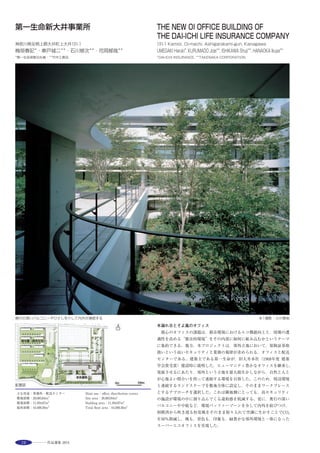
木漏れ日とそよ風のオフィス
都心のオフィスの課題は,都市環境におけるエコ機能向上と,情報の遭
遇性を高める“都市的環境”をその内部に如何に組み込むかというテーマ
に集約できる。他方,本プロジェクトは,郊外立地において,保険証券取
扱いという高いセキュリティと業務の規律が求められる,オフィスと配送
センターである。建築主である第一生命が,旧大井本社(1968年度 建築
学会賞受賞)建設時に提唱した,ヒューマニティ豊かなオフィスを継承し,
発展させるにあたり,郊外という立地を最大限生かしながら,自然と人と
が心地よい間合いを持って連続する環境を目指した。このため,周辺環境
と連続するランドスケープを敷地全体に設定し,そのままワークプレース
とするアプローチを選択した。これは隣地側にとっても,高セキュリティ
の施設が環境の中に割り込んでくる違和感を低減する。更に,奥行の深い
バルコニーや中庭など,環境バッファーゾーンを介して内外を結びつけ,
相模湾から吹き渡る恒常風をそのまま取り入れて空調に生かすことでCO2
を50%削減し,風も,景色も,印象も,緑豊かな郊外環境と一体になった
スーパーエコオフィスを実現した。
奥行の深いバルコニーやひさしを介して内外が連続する ※1撮影:小川泰祐
事務所・配送センター
26,083.84m2
11,494.87m2
44,488.36m2
office, distribution center
26,083.84m2
11,494.87m2
44,488.36m2
配置図
29
ランドスケープと一体化した建築 ※1
This project, set in a suburban area, was an office building for a life
insurance company, with requirement for high security and
concentration and relaxation of the workers. To meet this goal, we
have set a landscape throughout the site, which continuously links
the architecture with the surrounding environment, and to make
the landscape a workplace itself. This approach has succeeded in
minimizing the impact of the building, intruding itself into the site,
for neighboring houses, elementary school and dormitory.
Furthermore, utilization of the prevailing wind from Sagami bay as
an air conditioner, solar shading deep balcony and reduction of heat
load by trees, we have achieved“super-eco”office, halving CO2
emission compared to standard buildings.
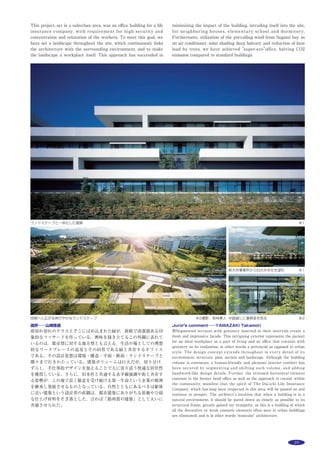
西側へと広がる伸びやかなランドスケープ ※2撮影:若林勇人 中庭越しに事務室を見る ※2
新大井事業所から旧大井本社を望む ※1
選評……山崎隆盛 Juror’s comment……YAMAZAKI Takamori
 切れ切れのテラスとそこにはめ込まれた緑が,新鮮で清潔感ある印
象的なファサードを作っている。興味を掻き立てるこの外観に表れて
いるのは,都市型に対する地方型とも言える,生活の場としての理想
的なワークプレースの追及とその回答である緑と共存するオフィス
である。その設計思想は環境・構造・平面・断面・ランドスケープと
隅々まで行きわたっている。建築ボリュームは巨大だが,切り分け,
ずらし,手仕事的デザインを加えることで人に寄り添う快適な居住性
を獲得している。さらに,旧本社と共通する水平線強調や街と共存す
る姿勢が,この地で長く敬意を受け続ける第一生命という企業の精神
を継承し発展させるものとなっている。自然とともにあるべきは躯体
に近い建築という設計者の直観は,都市建築にありがちな装飾やひ弱
な仕上げ材料をそぎ落とした,言わば「筋肉質の建築」として大いに
共感させられた。
 Segmented terraces with greenery inserted in their intervals create a
fresh and impressive facade. This intriguing exterior represents the pursuit
for an ideal workplace as a part of living and an office that coexists with
greenery as its realization, in other words a provincial as opposed to urban
style. The design concept extends throughout in every detail of its
environment, structure, plan, section and landscape. Although the building
volume is enormous, a human-friendly and pleasant interior comfort has
been secured by segmenting and shifting such volume, and adding
handwork-like design details. Further, the stressed horizontal element
common to the former head office as well as the approach to coexist within
the community, manifest that the spirit of The Dai-ichi Life Insurance
Company, which has long been respected in this area, will be passed on and
continue to prosper. The architect’s intuition that when a building is in a
natural environment, it should be pared down as closely as possible to its
structural frame, greatly gained my sympathy, as this is a building of which
all the decorative or weak cosmetic elements often seen in urban buildings
are eliminated, and is in other words‘muscular’architecture.
30 作品選集 2014
Main use:
Site area:
Building area:
Total floor area:
主な用途:
敷地面積:
建築面積:
延床面積:
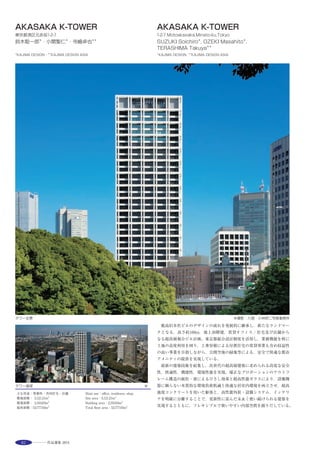
NBF大崎ビル(旧ソニーシティ大崎)
東京都品川区大崎2-10-1
山梨知彦・羽鳥達也・石原嘉人・川島範久
日建設計
NBF osaki Bldg.(Former Name:soNY CiTY osaki)
2-10-1 Osaki, Shinagawa-ku, Tokyo
YAMANASHI Tomohiko, HATORI Tatsuya,
ISHIHARA Yoshito, KAWASHIMA Norihisa
NIKKEN SEKKEI LTD
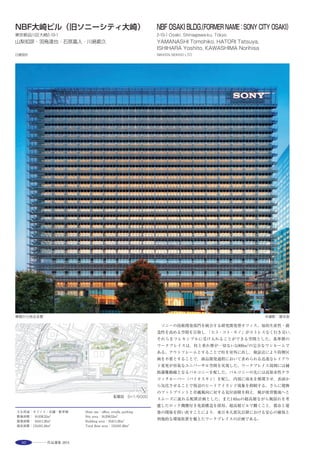
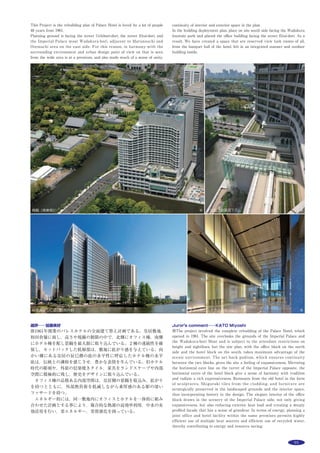
ソニーの技術開発部門を統合する研究開発型オフィス。知的生産性・創
造性を高める空間を目指し,「ヒト・コト・モノ」がストレスなく行き交い,
それらをフレキシブルに受け入れることができる空間とした。基準階の
ワークプレイスは,柱と垂れ壁が一切ない3,000m2
の完全なワンルームで
ある。アウトフレームとすることで柱を室外に出し,検証法により防煙区
画を不要とすることで,商品開発過程において求められる迅速なレイアウ
ト変更が容易なユニバーサル空間を実現した。ワークプレイス周囲には補
助避難動線となるバルコニーを配した。バルコニーの先には高保水性テラ
コッタルーバー(バイオスキン)を配し,内部に雨水を循環させ,表面か
ら気化させることで周辺のヒートアイランド現象を抑制する。さらに建物
のフットプリントと卓越風向に対する見付面積を抑え,風が後背敷地へと
スムーズに流れる配置計画とした。また140mの超高層ながら風揺れを考
慮したロック機構付き免震構造を採用。超高層ビルで働くこと,都市と建
築の関係を問い直すことにより,東日本大震災以降における安心の確保と
利他的な環境装置を備えたワークプレイスの計画である。
東側から見る全景 ※撮影:雁光舎
配置図 S=1/6000
オフィス・店舗・駐車場
 16,558.52m2
 10,611.26m2
124,041.48m2
office, retails, parking
16,558.52m2
10,611.26m2
124,041.48m2
N
31
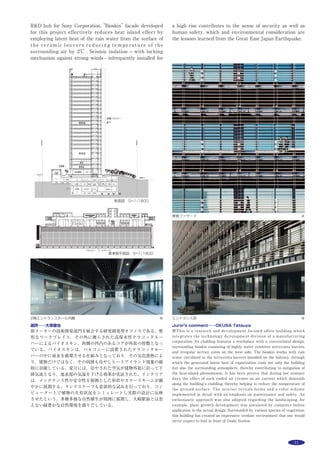
断面図 S=1/1800
2階エントランスホール内観 ※
R&D hub for Sony Corporation.“Bioskin”facade developed
for this project effectively reduces heat island effect by
employing latent heat of the rain water from the surface of
the ceramic louvers reducing temperature of the
surrounding air by 2℃ . Seismic isolation – with locking
mechanism against strong winds - infrequently installed for
a high rise contributes to the sense of security as well as
human safety, which and environmental consideration are
the lessons learned from the Great East Japan Earthquake.
エントランス前 ※
東側ファサード ※
事務室
事務室
食堂
事務室
中会議室
免震層
店舗 ロビー
廊下
設備バルコニー
ワークプレイスバルコニー
基準階平面図 S=1/1800
選評……大草徹也 Juror’s comment……OKUSA Tetsuya
メーカーの技術開発部門を統合する研究開発型オフィスである。整
形なワークプレイス,その外に廻らされた高保水性テラコッタルー
バーによるバイオスキン,西側の凹凸のあるコアが外装の特徴となっ
ている。バイオスキンは,バルコニーに設置されたテラコッタルー
バーの中に雨水を循環させる仕組みとなっており,その気化潜熱によ
り,建物だけではなく,その周囲も冷やしヒートアイランド現象の緩
和に貢献している。夏日には,冷やされた空気が建物外装に沿って下
降気流となり,地表部の気温を下げる効果が実証された。インテリア
は,メンテナンス性や安全性を根拠とした形状やカラースキームが細
やかに展開する。ランドスケープも意欲的な試みを行っており,コン
ピューター上で植物の生育状況をシミュレートし実際の設計に反映
させたという。多種多様な自然植生が周囲に展開し,大崎駅前とは思
えない緑豊かな自然環境を創りだしている。
 This is a research and development focused office building which
integrates the technology development division of a manufacturing
corporation. Its cladding features a workplace with a conventional design,
surrounding bioskin consisting of highly water retentive terra-cotta louvers,
and irregular service cores on the west side. The bioskin works with rain
water circulated in the terra-cotta louvers installed on the balcony, through
which the generated latent heat of vaporization cools not only the building
but also the surrounding atmosphere, thereby contributing to mitigation of
the heat-island phenomenon. It has been proven that during hot summer
days, the effect of such cooled air creates an air current which descends
along the building’s cladding, thereby helping to reduce the temperature of
the ground surface. The interior reveals forms and a color scheme
implemented in detail with an emphasis on maintenance and safety. An
enthusiastic approach was also adopted regarding the landscaping, for
example, plant growth development was simulated by computer before
application to the actual design. Surrounded by various species of vegetation,
this building has created an impressive verdant environment that one would
never expect to find in front of Osaki Station.
32 作品選集 2014
主な用途:
敷地面積:
建築面積:
延床面積:
Main use:
Site area:
Building area:
Total floor area:
TOKYOSKYTREE®

TOKYOSKYTREETOWN®
1-1-2 Oshiage, Sumida-ku, Tokyo
KAMEI Tadao
*
, KEII Michio
**
, YOSHINO Shigeru
*
, TSUCHIYA Tetsuo
*
,
KONISHI Atsuo
*
, TSUCHIYA Ataru
*
, YAMAMOTO Hideki
*
*
NIKKEN SEKKEI LTD
**
ADVANCED DESIGN OPERATION SYSTEM(FORMERLY NIKKEN SEKKEI LTD)
東京スカイツリー®
東京スカイツリータウン®
東京都墨田区押上1-1-2
亀井忠夫
*
・慶伊道夫
**
・吉野 繁
*
・土屋哲夫
*
・小西厚夫
*
・土屋 中
*
・山本秀樹
*
*
日建設計,
**
日建設計(現エードス)
自立式電波塔として世界一の高さ634mを誇る「東京スカイツリー」を
核とした大規模複合開発「東京スカイツリータウン」が,東京隅田川の東
に完成した。地上デジタル放送の送信を主目的とする電波塔としての機能
に加え,東京一円への眺望を楽しむための展望施設,東西長さ400mに及
ぶ低層部の商業施設,水族館,ドームシアター,高さ約150mのオフィス
タワー,地域冷暖房施設などにより構成される新しい街である。
東京スカイツリーは,日本の伝統的な美意識と建築技術を現代的に解釈
し,東京の新たなランドマークを生み出すことを設計の主眼に置いた。三
角形から円形に変化する平面形,鉄骨架構が生み出すそりとむくりの曲線
が交錯するシルエット,五重塔の心柱から着想を得た制振システムなどに
その設計思想が結実した。
タワーのもつ垂直性に対し,低層部は水平に広がる緑の大地としてデザ
インし,屋上緑化,壁面緑化を積極的に行った。また,周辺の下町の雰囲
気を取り入れ,地域との連続性を生み出した。
21世紀初頭のデザインと建設の知恵をこの時代の証として後世に伝えて
いくべく,長寿命建築実現のため現代の最先端の材料と技術を採用した。
鳥瞰(スカイツリーと富士山) ※1撮影:新 良太
外観(水辺と一体となる広場) ※2撮影:鈴木研一
電波塔・商業・事務所
 36,844.39m2
 32,221.47m2
229,728.92m2
tower, commercial, office
36,844.39m2
32,221.47m2
229,728.92m2
33
天望回廊 ※3撮影:淺川 敏 天望デッキ ※4撮影:kudo photo
東側から見た東京スカイツリー ※4 夜の東京スカイツリー ※2
The world’s tallest freestanding broadcasting tower“Tokyo Skytree”rises out
of the townscape of easternTokyo not far from the banks of the Sumida river to
a height of 634 meters. Its two observatories afford unparalleled vistas of Japan’s
capital metropolis. At the foot of this newtower to sustain communications in the
digital age is a cluster of commercial facilities and an office building. Together
with the tower, they form an urban district called Tokyo Skytree Town.
The broader the stance of the tower, the greater the advantages for its
structure, and, given the dimensions of the site, the optimal stance could be
achieved if it were triangular. A circular layout, however, was optimal for the
observatories planned for the upper part of the tower, and these two necessities
led to its original shape, which begins as a triangle at the foot and morphs
gradually into a circle as it rises. The result is a distinctive silhouette
incorporating the gentle concave curve traditionally known as“sori”in Japanese
and the convex curve known as“mukuri”.
選評……寺田 宏 Juror’s comment……TERADA Hiroshi
日本最高の634mの電波塔と低層部に広がる23万m2
の複合施設は日
本の新しいランドマークとして初年度に約5000万人の入場者をあつ
めた。
タワー部は「そり」と「むくり」の曲線美による構造美を創りだす
ためにオイルダンパー付きの心柱を活用した制振システムを採用,さ
らに節付連続地中壁杭により50mの支持層に緊結し狭小な敷地条件
を克服している。
低層部に広がる複合施設は観光客だけでなく地元の来訪者や勤務
者など多面的に設定し,都市軸と敷地の軸にスポット的な小空間を配
置し,変化ある場を作り出している。
高効率熱源と7000tの水蓄熱槽は地域冷暖房と国内DHC初の基礎杭
利用とボアホールによる地中熱利用によりCO2 48%削減を実現すると
ともに震災時の水源としての緊急時の活用にも配慮している。
タワーと330店舗の商業施設が創りだす街は地域の住民,観光の来
訪者の賑わいを永く継続していくだろう。
 This site consisting of Japan’s tallest broadcasting and communication
tower with a height of 634 meters, and a facilities complex of 230,000 square
meters at ground level, attracted approximately 50 million visitors as the
nation’s new landmark in the first year. A vibration damping control system
using the core column with oil damper was adopted for the tower in order
to create structural elegance resulting from the curvilinear beauty of its
‘warp’and‘camber’. The confined site condition was also overcome by
binding the continuous in-ground walled piles with nodes down to 50 meters
below the ground bearing stratum. Targeting not only tourists but also local
visitors and workers, the complex facilities at ground level are designed to
provide varied spaces by arranging small spot spaces along the‘urban and
site axes’. A high efficiency heat source and 7,000 ton chilled water thermal
storage tank achieved 48% reduction of CO2 , through the use of district
heating and cooling, first-time introduction of foundation piles for DHC in
Japan, and geo-thermal energy by borehole drilling, while at the same time
anticipating the effective emergency use of the tank as a water source in
the event of an earthquake. The town created by this tower and 330
commercial facilities will enjoy continuous prosperity with local visitors and
tourists.
34 作品選集 2014
主な用途:
敷地面積:
建築面積:
延床面積:
Main use:
Site area:
Building area:
Total floor area:
PATIO
東京都
矢板久明・矢板直子
矢板建築設計研究所
PATIO
Tokyo
YAITA Hisaaki, YAITA Naoko
YAITA AND ASSOCIATES
敷地は都市部には珍しく低層の家がゆったりと建ち並ぶ住宅地にある。
建主は外からは覗けないが内部では開放的な空間が展開する,シンプルなか
たちの住宅を望んでいた。この要望が,この家のすべてのデザインをつくり出
したといっても良い。
まず,主空間であるLDKは明るい最上階に配置し,この空間が外から覗かれ
ないように中庭=Floating Patioと一緒に壁で囲い,1階の和室の構造体の上に
浮かぶように置いた。
地下にも,もう一つの南北に細長い中庭=Sunken Patioをつくり,ここに寝
室や浴室など私的な空間を配置した。
これらの空間に対し,1階は外界とのつながりの強い空間として扱い,ここ
に和室を置き,お茶会もできるよう設えた。2階を浮かすことで,その下の和
室回りに生まれた中庭を中心とする流動的な空間は,茶庭に譬えれば露地とな
り和室は露地に置かれた茶室となる。この三つの中庭は,一体となって一つの
Patioとなる。
ここに2階下の水平なスリットからさわやかな風が流れ入り,通常閉鎖的に
なりがちな中庭が,プライバシーを保ちながら,風通しの良い快適な空間とし
て結実した。中庭型都市住宅の新たな可能性が提案出来たと感じている。
PATIOを見る ※1撮影:小川重雄
正面外観 ※2撮影:新建築写真部 玄関を見る ※1
住宅
172.19m2
79.41m2
226.86m2
house
172.19m2
79.41m2
226.86m2
短手断面図 S=1/250
35
The client desired a simple form residence with a interior wide open inside but cannot be perceived from
outside . This wish became the entire concept of the residence.
First, in order to take the light in, the living, dinning and kitchen are arranged on the top second floor. As a
way to prevent gaze from the outside, the spaces are enclosed together with a courtyard, Floating Patio,
with walls and is placed as if floating above a Japanese-style room’s structure of the first floor.
At the basement, another thin courtyard, Sunken Patio, is made so that it will link to the second floor’s
courtyard. There, private spaces such as bedrooms and bathrooms are placed under plentiful of light,
though they are located in the basement.
The first floor that is inserted between two private spaces on the top and the bottom is designed as more
intimate space to the outside world compared to the two different floors. The Japanese-style room on the
floor is designed to hold tea ceremonies. The second floor’s floating structure serves as a large roof for the
first floor which created the open and dynamic space around the structure surrounding the Japanese-style
room. The space is analogous to Roji-a designed alley in the context of traditional Japanese garden and the
Japanese-style room will become a tearoom in the Roji.
Patios of each layers give completely different space experience on each story. Each of them gives very
different and impressive image.
Moreover, by floating the box of the second floor, a fresh wind enters from a crevice, blows through this
Patio helped by outer wall equipment which can be opened and closed. This system realized an airy,
comfortable space.
Here, Patio appeared as a new way of an urban residence.
Floating PATIOを見る ※1
2階リビングルーム ※1 Sunken PATIOに面した地下寝室 ※1
選評……米田浩二 Juror’s comment……YONEDA Kouji
 コンクリート打放しの基壇と水平スリットの上に,リン酸処理され
たキーストンプレートのボリュームが軽やかに載る抑制されたデザ
イン,閑静な住宅街に静かにしっかりとした存在感をもって佇んでい
る。外には閉じながら内部は開放的にというクライアントの想いを,
地下まで掘り込まれた「PATIO」を中心に,北に3層南に2層のスキッ
プフロアを設定することで,プライバシーは確保しつつリゾートのよ
うな開放感をもつ空間を実現。建築と一体的にデザインされた家具,
日射制御・通風・断熱・結露などに対するきめ細やかな配慮,そして
一見危うく見えるが設計者の経験・熟達に裏打ちされたシンプルでミ
ニマルなディテールが,緊張感の中に心地よいゆとりを感じさせる居
住空間を創出させている。
 ロケーションとクライアントのライフスタイルの丁寧な読み解き
から導かれた一つの解ではあるが,都市型コートハウスの新たなプロ
トタイプとなりうる見事な作品となっている。
 A volume comprising a phosphate finished deck plate lightly placed on
top of an as-cast raised platform and a narrow horizontal opening. This
dwelling, with its simple and constrained design quietly displays its bold
presence in a sedate residential area. To reflect the client’s wish to have an
interior with an open atmosphere while closing it towards the exterior, a
split-level floor plan with three and two layers in the north and south
respectively is introduced, centering a patio which is sunken below ground
level. Thus a space with an open resort-like atmosphere was realized while
securing privacy. Furniture designed to integrate with the building, careful
attention to sunlight control, ventilation, insulation and condensation,
together with other simple and minimal details which may appear fragile at
first glance but which are well backed by the architect’s experience and
masterly skill, create a congenial and relaxed living space with an
underlying sense of tension. This solution, resulting from the architect’s
careful study concerning its location and the life style of the client, presents
an outstanding example as a new prototype for urban dwelling with a
central garden/patio.
36 作品選集 2014
主な用途:
敷地面積:
建築面積:
延床面積:
Main use:
Site area:
Building area:
Total floor area:
立教大学 ロイドホール[18号館]
東京都豊島区西池袋3-34-1
原田由紀・原田公明
日建設計
RIKKYO UNIVERSITY LLOYD
HALL[BUILDING NO.18]
3-34-1 Nishiikebukuro, Toshima-ku, Tokyo
HARADA Yuki,HARADA Hiroaki
NIKKEN SEKKEI LTD
意匠・構造・設備の三位一体で実現する快適な図書館空間
キャンパス内の学部学系図書館を集約した図書館,及び学部研究室によ
り構成される複合棟である。図書館は,収蔵可能冊数200万冊,閲覧席数
1,520席を誇る。地下2階から1階は既存12号館と一体接続している。
図書館フロアは,コアを四つ角に集中し,中央を最大スパン14.6mの曲
面PC床板で構成することにより,広大な閲覧空間を実現した。上に凸型
のPC形状は構造応力から導き出されたもので,両端の凹部を床下空調ダ
クトルートとして利用することにより,意匠・構造・設備が三位一体となっ
た建築計画とした。PC床板のピッチは書架間隔と合わせて1,650㎜とし,
書架荷重点にPCリブを配置した。空調吹出しは書架巾木に組み込み,ブッ
クトラック等の移動に配慮した。
既存建物と接続するエントランスホールはr型PC床板により構成し,ハ
イサイドライトと屋根集熱システムを組み込んでいる。
内外装に連続するレンガタイルは,池袋キャンパスの象徴である赤レン
ガを現代的に捉えたもので,温かさと親しみやすさをロイドホールに添え
ている。
図書館4層を繋ぐ吹抜け ※撮影:米倉写真事務所 米倉栄治
立教通りから外観を望む ※
図書館・研究室
54,974.66m2
 3,227.04m2
20,644.36m2
library, laboratory
54,974.66m2
3,227.04m2
20,644.36m2
37
PC床板の形状を利用した
空調ダクトメインルート
曲面形状のPC床板PC形状を利用した
LEDスリット照明
FL
書架巾木部から空調吹出し
書架間は吹出し口のないフラットな通路
大梁
最大14.6m
The Lloyd Hall stands in green-rich Ikebukuro Campus as central
library for the university. The floor plan is square of 50m×55m in
dimension. Cores provided at four corners function as aseismic
resistant walls, install a machine room, sanitary fitments,
consequently creating a reading space without structural
restriction. To realize a large flexible space, the flooring system is
composed of precast concrete flooring panels, 14.6m long in a
maximum span. These PC panels are shaped to have a convex
section advantageous in structural rationality. The valley section
formed by abutting convexes is used for ducting space in floor.
Connecting to air-conditioning outlets provided at the flooring.
A部 断面詳細図 S=1/100
エントランスホール ※
曲面PC床板表しの図書館閲覧室 ※
立教通りから見る夕景 ※
2階平面図 S=1/1000
ロイドホール [18 号館 ]
研究室研究室
研究室研究室
〃〃
〃〃
図書館図書館
図書館図書館
自動書庫自動書庫
〃〃
〃〃
研究室研究室
〃〃
〃〃
〃〃
研究室研究室
図書館図書館
図書館図書館
積層書架積層書架
研究関連施設研究関連施設
〃〃
12 号館 [ 既存建物 ]新築工事範囲
エントランス
ホール
エントランス
ホール
ブリッジブリッジ
新築工事範囲
保管庫保管庫
会議室会議室 大会議室大会議室
講習会室講習会室
雑誌架雑誌架参考図書架参考図書架
研究組織
執務スペース
研究組織
執務スペース
固定書架固定書架
グループ学習室グループ学習室
PC席PC席
AV
コーナー
AV
コーナー
リサーチ
センター
リサーチ
センター
リサーチ
コモンズ
リサーチ
コモンズ
ラーニング
スクウェア
ラーニング
スクウェア
AA
構造壁 大梁 空調ダクトメインルート
N
0 5 10 20 30 50m
断面図 S=1/1000
選評……岩田利枝 Juror’s comment……IWATA Toshie
池袋キャンパス全体の景観を保持しつつ,大学の図書へのこだわり,
本を通した教育への理念を体現した建物である。外観はキャンパスの
シンボルを継承した赤レンガタイルで,細かい色相の違いを用いなが
ら全体をやや暗めにして本館の図書館らしさを表現している。
プレキャストプレストレスコンクリート床板による大スパン構造
で,天井PC板の曲面形状は上下配光照明によって意匠的演出となり,
PC板柱際は床下ダクトスペースとして利用するなど,構造・意匠・
設備一体で無駄がない。地下1階から4層にわたる閲覧室は各階性格
が異なり,中央吹き抜けのシースルーエレベータと階段でその全体を
見渡せる。学生自身が目的をもった選択を行えることで,学習意欲が
高めている。
中央吹き抜けを風の道とした自然換気,地下2階の自動書庫下部の
ピットを用いたクール・ヒートトレンチ,エントランス屋根の太陽熱
集熱装置など効果的な環境負荷低減策を実施している。
 While preserving the overall scenic value of the Ikebukuro campus, this
building embodies the university’s commitment to books and the principle
of books as a path to education. The exterior displays the redbrick tiles that
are the inherited symbol of the campus, with subtle variations of hue to give
an overall slightly dark shade that provides a fitting appearance for the
main building library. The broad-span structure uses precast-prestressed
concrete floor slabs. The curved form of the PC panel ceiling comprises a
design element highlighted by the upper and lower lighting, while the ends
of the PC panels near the columns are used as underfloor duct spaces.
Touches such as these illustrate a unity of structure, design and facilities
which avoid waste. From the first basement floor through each of the three
library floors above, the character of the reading rooms differs, while the
transparent elevator and the staircase in the central atrium provide an
overall vantage point. Enabling the students to make their own choice
depending on their objective enhances learning motivation. Effective
environmental load reducing measures are taken such as the central atrium
serving as a pathway for natural ventilation, the cool-heat trench using the
pit below the automated storage/retrieval system on the second basement,
and the solar heat collection system on the entrance roof.
38 作品選集 2014
N
002,62
57,600
軸力柱 耐震壁
鹿島技術研究所 本館研究棟
東京都調布市飛田給2-19-1
米田浩二
*
・杉岡正敏
*
・東郷裕幸
**
*
KAJIMA DESIGN・
**
KAJIMA DESIGN ASIA
KAJIMA TECHNICAL RESEARCH INSTITUTE,
RESEARCH AND ADMINISTRATION BUILDING
2-19-1 Tobitakyu Chofu-shi Tokyo
YONEDA Koji*, SUGIOKA Masatoshi
*
, TOGO Hiroyuki
**
*
KAJIMA DESIGN,
**
KAJIMA DESIGN ASIA
敷地は調布市の飛田給駅前再開発地区の隣地。分散していた既存施設の
再編の要となる300人の研究者のためのオフィスで,品川通りをはさんで
建つ実験棟(2008年竣工)とは地下道で連結され,一体で運用される。
主な設計意図は以下の3つ。①研究者相互のコミュニケーションを活性
化するワークプレイスづくり,②施工性に十分配慮し,ローコストながら
高い居住性能を備えた建築,③ZEB(ゼロエネルギービル)実現に向けた
リーディングプロジェクト。
フルフラットスラブを採用して空調ダクトをなくし,家具内と天井の配
線を利用してOAフロアをなくすなど,すべての構成要素を見直して贅肉
を徹底的にそぎ落とし,階高3.5mながら天井高3mの開放的な空間を実現
している。合理的な環境配慮設計の積み重ねとミニマムな設備機器の採用
により環境負荷の低減を図った結果,CASBEEでSランク,BEE値8.3(竣
工当時日本最高値)を第三者認証で取得している。
ダクトレス空調により天井仕上げを省く。階高3.5mで天井高3mの空間を実現 ※1撮影:新建築写真部 執務エリアよりコア側を見る ※2撮影:エスエス島尾 望
■タスクアンビエント空調:
アンビエント空調は平滑面に気流が吸い付くコアンダ効果を利用
軸力柱
耐震壁
(X,Y 軸 100%負担)
フルフラットスラブ
(コアンダ効果を生じさせる)
外調機
アンビエント空調
タスク空調 タスク空調
配線ルート(家具内) タイルカーペット(OA フロアレス)
照明ライン
FL
木毛セメント板 RC直天井
005,3033
000,3071053
FL
Main use:
Site area:
Building area:
Total floor area:
主な用途:
敷地面積:
建築面積:
延床面積:
事務所
5,256.68m2
2,202.39m2
8,913.73m2
office
5,256.68m2
2,202.39m2
8,913.73m2
■平面図:東西に耐震壁を配置 S=1/1000
■架構計画:梁のないフルフラットスラブを採用
39
北側外観 ※3撮影:川澄・小林研二写真事務所
This building is the core facility within the Kajima Technical Research
Institute. The project incorporates offices for 300 researchers, and aimed to
realign and reintegrate existing facilities that were dispersed and aging. The
new building connects to the Laboratory Building ─completed in 2008─ via
an underground passageway, enabling unified operation. It employs a simple
overall design featuring an earthquake-resisting wall along the east-west axis
and a five-story podium, topped by a steel-framed penthouse. An aperture
occupies the entire south-facing side, providing a feeling of unity with the
Laboratory Building on the opposite side of the main avenue. A full-flat-slab
construction method was employed for the main structure, which contributed
to efficient construction and cost reduction. Based on thorough analysis of
researcher work styles and collaboration from specialist researchers, the plan
was modified to ensure excellent environmental performance and user
functionality.
エントランスロビー ※2配置図
北西側外観 ※3 地下大会議室 ※1 屋上テラス ※2
住宅地住宅地
商店街商店街
飛田給駅
駅前広場
再開発エリア
品川通り
畑畑
畑畑
研究棟
実験棟
N
選評……加藤美好 Juror’s comment……KATO Miyoshi
既存建物の躯体を利用し,耐震壁を周囲に配置したことにより,柱
は,RC造でありながら,鉄鋼造のように細く見える。300mmのフル
フラットスラブは,無梁構造を形成している。
天井レスでありながら表裏両面に吸音性を持たせた木毛版と空調
空気を添わせて到達させる平滑な白いスラブ面が,天井面にあり,交
互に織りなすリズム感を空間に与えている。OAフロアを廃し,オフィ
スレイアウトに家具の配置を組み合わせた基準階オフィスは,空調,
音,光の環境が,よく検討されており,研究者にとって居心地の良い
空間であることを想像させる。
日射の遮蔽や,外皮負荷の低減など原理原則の技術とオリジナル技
術の組み合わせ,さらに建築,構造,設備の融合による様々な工夫は,
建物を細部に渡り創り込む熱意を感じる。
また,意匠性,快適性,合理性を追求し,環境負荷の低減を実現し
ながらも,コストパフォーマンスの高い施設である事は評価に値する。
 The use of the existing building’s frame with the addition of an
earthquake-resistant peripheral wall means that, although the pillars are of
reinforced concrete, they appear as slender as in a steelframe structure. The
300-mm full flat slab realizes a non-beam structure. Although free of ceiling
boards, the ceiling surface consists of wooden fiber cement boards with
sound absorbing function on both sides, and the smooth white slab along
which the air conditioning currents flow. This alternating visual rhythm is
carried into the interior space. Eliminating the raised flooring, the standard
floors integrate office furniture in their layouts and are well thought-out in
terms of the air conditioning, sound and lighting environments, providing
what one imagines to be congenial spaces for the researchers. The principle
based technologies combined with independently developed technologies
such as the combination of direct sunlight blocking and outer shell load
reduction, together with a range of ideas based on integration of
architecture, structure and building services are evidence of a commitment
to good workmanship throughout down to the smallest detail. The facility
also deserves praise for its strong cost performance, achieved despite the
pursuit of design values, congeniality and rationality as well as the reduction
realized in environmental load.
40 作品選集 2014
主な用途:
敷地面積:
建築面積:
延床面積:
Main use:
Site area:
Building area:
Total floor area:
Geo metria
神奈川県小田原市
原田真宏
*
・原田麻魚
**
*
マウントフジアーキテクツスタジオ・
**
芝浦工業大学
GEO METRIA
Odawara-shi, Kanagawa
HARADA Masahiro
*
,HARADA Mao
**
*
MOUNT FUJI ARCHITECTS STUDIO,
**
SHIBAURA INSTITUTE OF TECHNOLOGY
土地から見いだされる秩序
小田原郊外の里山の中腹に敷地はある。かつては果樹が植えられていた
南面する明るい傾斜地で,前方には太平洋を見下ろしながらも,背後には
里山が控え,冬期の北風から住環境を保護している。住まうに適した「居
住ポンテンシャル」が,そもそも高い土地と言っていいだろう。
よって,我々が行なったのは,新しい形式を土地に持ち込むのではなく,
その土地の恵まれた特長を顕在化し拡張するようなデザイン操作である。
具体的には,不整形な自然地形と,この地域の気候風土をよく観察するこ
とで,この土地ならではの立体的なジオメトリを導き出し,建築の秩序と
している。構造は得られたジオメトリに沿ってLVLの門型フレーム2セッ
トを,若干角度をもって重ねているが,中間スパンに生まれるトラス面が
弱軸方向の水平力を効率よくコアに伝えるため,構造部材は38×286mm
とあくまで薄く成立し,自然環境に溶け込んでいくかのような空間性が実
現されることになった。
その「土地(geo)」を「よく測る(metria)」ことで見出された「秩序
(geometry)」によって建築を形作ることで,自然と建築が連続し,「家も
自然/自然も家」とでも表現されるような、重層的な住環境が現れた。
専用住宅
429.40m2
123.95m2
155.66m2
house
429.40m2
123.95m2
155.66m2
リビングから南側の風景を望む ※撮影:鈴木研一
geometry/structure 緩くカーブする土地形状に沿って2種類のフ
レームを配置する
portal frames LVL(38×286)で構成される2種類のフレーム
平面図 S=1/400
41
Geometry that Looks Out from the Land
The site is halfway up a secondary forest on the outskirts of Odawara. It’s sunny rolling
hillside was once planted with fruit trees, and on the south side you have a clear view of
the distant Sagami Bay, north of the site a mountain gives shelter to the living
environment from the north wind.It was called a rich land with latent“habitability”in the
first place.
Consequently, what we have done is not bringing in a new structure into the land but
creating a design that capitalizes and amplifies upon the natural advantages of the land.
In concrete, we derived a three-dimensional geometry unique to this environment and
made it our architectural geometry by closely observing the irregular terrain and the
climate of this land. Following this acquired geometry, we repeated two sets of LVL portal
frames, and a ridge-jointed truss underneath the ceiling distributes horizontal force on
weak axes to the back core efficiently, achieving thin (38x286mm) structure that merges
into the natural environment.
By taking a close survey (metria) of the land (geo) and building a structure that follows
the found geometry, we brought out a“multi-layered living environment”that links
nature with architecture and expresses“the home is nature / nature is the home.”
子供部屋からリビングを見る ※
北側の山から見下ろす ※
東側外観 ※
西側外観 ※
選評……伊藤博之 Juror’s comment……ITO Hiroyuki
周囲の等高線に呼応する,二つの異なる軸線を持つフレームと,そ
の重ね合わせによって幾つかの場所が生まれている。それぞれの場所
は,用途が想定されてはいるものの,境界の本棚に置かれる物の密度
によって場所の関係が変えられるなど,カスタマイズ可能な寛容さを
持っている。
柱梁の38mmの厚さと接合の繊細さから,一見,それらは荷重を支
える架構とは思えない。一般に,架構は人の居場所を外界から切り取
るシェルターであるが,この繊細なフレームは,その役割を機能的に
は果たしながらも,体験としてはむしろ逆に,周辺環境の望ましい特
質を引き受け,顕在化するためにある。
この建物のもつ寛容さとは,住むにふさわしい場所が,そもそも持
つ快適さと自由であろう。独特かつ高いレベルでの環境と建築の連続
の中に身を置くと,身体の回りを整えながら,土地に「住み着く」と
いう,原初的な人の振る舞いが実現されているかのようにすら感じら
れる。
 The frame with two different axes in response to the surrounding
contours, together with their overlapping create a number of spaces, which,
although they each have an envisaged purpose, also have the flexibility to
be customized, for example, their interrelationship can be altered by
adjusting the density of objects on the open shelving which serves their
boundaries. The 38-mm thickness of columns and beams and the delicacy of
their joints do not appear at first sight to serve as a load-bearing frame.
Normally, the frame forms a shelter to shut off human dwelling spaces from
the outside world. This delicate frame, however, at the same time as
fulfilling this functional role, is experienced rather as serving to acknowledge
and accentuate the desirable features of the surrounding environment. The
flexibility of this building lies in the congeniality and freedom which are part
of a human dwelling. Experiencing at first hand the continuum of
architecture and environment, which is of a unique and high level, one even
has the sense of achieving the primitive mode of human behavior that
consists in shaping, but also becoming part of, the surrounding landscape.
42 作品選集 2014
主な用途:
敷地面積:
建築面積:
延床面積:
Main use:
Site area:
Building area:
Total floor area:
向陽ロッジアハウス
神奈川県相模原市
金野千恵
KONNO
SUNNY LOGGIA HOUSE
Sagamihara-shi, Kanagawa
KONNO Chie
KONNO
1950年代に開発された東京郊外の住宅地における一戸建住宅。周辺の敷
地細分化が進むなか開発当時の面積を保つ計画地では,以前の配置を踏襲
して平屋から2階建とすることで,庭を拡張する建ち方が可能となった。
敷地を二分した南に庭,北に建物を配し,双方をロッジアと呼ぶ屋根付半
屋外空間で繋いだ。敷地中央に位置するロッジアは最も大きな気積の室で
ありながら,特別な機能をもたない。ロッジアの庭側境界は,方杖を兼ね
た垂れ壁と腰壁が高さ3.5×幅7mほどのガラスのない巨大なアーチ窓を形
成し,草花の香り,鳥や動物,光や影など絶えず変化する外部の環境を取
り込む。室内側の1階には小上がりになった畳の間を中心にリビング・キッ
チン・水回りが連なり,2階には勾配天井をもつ室が寝台・長ベンチ・バ
ルコニーといった身体スケールの居場所とともに配される。ロッジアには
異なる窓を伴う室が一堂に会し,立体的な人のふるまいが集められている。
この住宅では,ロッジアという空間が,街や樹木,太陽の秩序のもつ躍
動的なふるまいと人間の生活から溢れる細やかなふるまいを均衡させ,心
地よい緊張感を生みだしているのである。
庭の南方からみたメインファサード。すべての室が異なる窓を伴ってロッジアに集められている ※1撮影:KONNO
専用住宅
148.74m2
 70.66m2
 99.17m2
residence
148.74m2
70.66m2
99.17m2
配置図兼1階平面図 S=1/200
室内側からロッジア越しに庭をのぞむ断面パースペクティブ S=1/200
43
A new detached house built in a residential area of Tokyo originally
developed in the 1950s. While neighboring sites have been subdivided, this
project site kept the original property size. This made possible the client’s
request to have an extensive garden. The site was developed in two parts,
the South part is a garden of trees, flowers and vegetables, and the North
part is the house. They are tied with a roofed semi-open space called a loggia.
The garden side of the loggia has a large window without glass. The interior
of the house is connected to the loggia with various windows. The habitant’s
behavior is influenced by the fresh green environment, the sun and shadows,
birds and animals, and the gathering of neighbors. In other words, the loggia
ties life through the property beyond the site’s borders using nature and the
neighboring environment.
2階寝台の窓から見えるロッジア,庭,街路の風景 ※1 多くの人を招くことのできるロッジア ※2撮影:藤本卓也
ダイニングからロッジア越しにのぞむ庭 ※1 庭から柔らかな光が注ぐ建物中央の和室 ※1 2階主寝室の窓先に広がる南北外部の風景※1 2階寝台の設え ※1
選評……高田典夫 Juror’s comment……TAKATA Norio
ロッジアと称した半外部空間がこの住宅の心地よさをつくり出し
ているのはもちろんであるが,敷地の南面の庭の存在が住宅地のなか
で効いている。この庭は,今回の計画で新しく作られた庭ではあるが,
昔からあるような,周辺の人たちにとってもごく自然に受け入れられ
る庭となっている。この庭を生活の中に活かすための装置がロッジア
といえる。ロッジアを介した空間の緩やかなつながり,きめ細かく考
えられ,納められた仕上げの違いが,空間の性格を映し出している。
さらに,家具や照明,無造作に置かれている小物まで含めて,細やか
にデザインされている。
住まい方の記憶を,空間のボリューム,ロッジアを介した空間の連
続,玄関から続く路地的空間に再構成し,そのそれぞれの仕上げ,納
まり,そこに置かれる家具まで,十二分に考えられ,作られている。
そのデザイン過程のしつこさに驚嘆するとともに,体験した空間のさ
わやかさが何ともいえず好ましい。
 It is of course true that the congeniality of this dwelling is created by the
semi-outdoor space known as the loggia, but the presence of a garden on
the south side of the site strikes an effective note amid this residential area.
Although it is a garden created anew as part of this project, it feels that it
might have been here for a long time and can be accepted perfectly
naturally by people in the neighborhood. It is perhaps the loggia which
serves as a device for enjoying the garden as part of everyday life. The
loose linking of spaces through the loggia and the carefully considered and
accommodated differences in finish serve to bring out the character of the
spaces. Moreover, from furnishings and lighting right through to the
randomly arranged ornaments, the design shows careful attention to detail.
Memories of modes of dwelling are reconstituted by the spatial dimensions,
the spatial continuity mediated by the loggia, and the corridor-like space
progressing from the entrance. The different finishes and treatments, and
even the furnishings, have been duly thought out and properly executed. As
well as admiration for the assiduousness of the design process, one feels a
delight that is hard to describe at the freshness of the spatial experience.
44 作品選集 2014
主な用途:
敷地面積:
建築面積:
延床面積:
Main use:
Site area:
Building area:
Total floor area:
TAKANAWA
東京都港区
伊藤博之
伊藤博之建築設計事務所
TAKANAWA 
Minato-ku,Tokyo
ITO Hiroyuki
HIROYUKI ITO ARCHITECTS
5人家族のためのこの住宅は,前後に並んだ,ほぼ同じ大きさの2つの
棟からできている。2棟の内側は,それぞれ中庭をも含む,様々なプロポー
ションの白い空間が収められている。中庭の位置が前後の棟で異なるため,
太陽の動きに伴って様々な光の状態が生まれ,シンプルな矩形のなかに変
化に富む場所ができている。子供室は,それぞれ別の吹抜けに面するなど,
互いに性格の異なる室となっていて,将来の用途替えにも自然に対応でき
るよう配慮した。2棟は,構造的にも切り離されていて,それぞれから持
ち出したテーパースラブが,先端で接してブリッジとなり,最上階では,
その隙間から光が差し込む。棟の外表の打放し面には,厚さと幅の異なる
杉板型枠を用いることで偶発的な表情が生まれている。空調効率のために,
階段室は扉で区画されていて,他の室と温湿度環境が少し異なる。一般の
住宅でも経験されるこの変化が,この住宅においては,棟の内と外という
違いに重ねられることで,その両者の質の違いをより明確にすると同時に,
実際の内部外部をあいまいにする。
仕上げや構造の隙間にあって,街路とも違うこの場所で作ろうとしたの
は,計画や管理から逸脱したような場所の清々しさである。
階段室からダイニングを見る ※撮影:阿野太一 子供室3 ※
玄関から階段室を見る ※
断面パース S=1/250
専用住宅
161.50m2
95.15m2
199.39m2
house
161.50m2
95.15m2
199.39m2
45
This three-story house is located in an elevated residential area in Tokyo.
The facade contains minimal openings, in order to avoid overlooking its
neighbors.
The central staircase landings that connect the two halves are actually
bridged by concrete cantilevering floors, which barely touch. The same gap
in the roof forms a thin skylight permitting a sliver of sunlight to help
illuminate the circulation space below.
There is a courtyard and a terrace within in each side of the house. The
rooms face into these open spaces, so the residents can receive natural light
throughout the home all day.
Interior walls of the living quarters are painted white to contrast with the
rough-hewn texture of the exposed timber-shuttered concrete in the central
hall and staircase.
南側外観 ※ キッチンからダイニングを見る ※
ダイニングからキッチン,その先にリビングを見る ※
庭1 ※
リビングから庭1の吹抜けを見る ※
3階平面図 S=1/500
2階平面図 S=1/500
1階平面図 S=1/500
選評……高田典夫 Juror’s comment……TAKATA Norio
この住宅は,いくつもの生活空間としてのボックスや,その重なり
によりつくり出される虚のボックスからなる空間の連続で構成され
ている。
「ボックスによる空間の重なり」は,実際の空間をたどってみると,
いくつものスクリーンの通過による,空間体験の微妙な揺らぎという
ことができる。その中で感じられる内部と外部,外部と半外部,外部
と半内部,内部と内部…というような微妙な空間の変化は,それぞれ
のボックスにあけられている開口部の絶妙な配置や大きさの操作に
よって生み出されている。その空間操作の核となっているのが,空調
効率のために設けられたという階段室である。大きく2つのボリュー
ムに分けられたこの住宅の隙間に設けられた階段室は,単純に言えば
内的な外部空間であるが,この空間がつくり出す,鋳型のような家型
は,透過する視線を戸惑わせ,それと同時に楽しませてくれる。この
空間の存在がこの住宅のよさを集約している。
 This dwelling consists of a continuum of space made up of boxes as
numerous living spaces and‘boxes as voids’resulting from their
overlapping. Such‘overlapping spaces created by boxes’can be described
as the subtle disturbance of our spatial experience when we trace our way
through actual spaces and in so doing pass through numerous screens. The
subtle changes in space which we experience during this process, from
indoor to outdoor, outdoor to semi-outdoor, outdoor to semi-indoor, and from
indoor to indoor and so on, are created by the finely judged positioning of
the doors and windows in each of the boxes and the manipulation of their
size. The core of this spatial manipulation is the staircase, which was
reportedly created to increase air-conditioning efficiency. Inserted into the
gap between the two volumes into which the dwelling broadly divides, the
staircase is, put simply, an interior exterior space, but this resulting space
like a mold for a house-shaped ingot both confuses and amuses our
traversing sightlines. The presence of this space intensifies the advantages
of the dwelling.
46 作品選集 2014
Main use:
Site area:
Building area:
Total floor area:
主な用途:
敷地面積:
建築面積:
延床面積:
萩塚の長屋
群馬県高崎市貝沢町字萩塚1289-1
藤野高志
生物建築舎
STATIC QUARRY
1289-1 Hagizuka, Kaizawamachi,Takasaki-shi,Gunma
FUJINO Takashi
IKIMONO ARCHITECTS
隣人も環境のひとつ
小さな都市のような建築を作ろうと考えた。
人間は本来,群れで暮らす生き物だ。一方で,今の日本で最も多い家族
類型は一人暮らし世帯だという。人は住居という個人領域と,社会という
群れの状態を行き来しながらバランスをとっている。個人領域のすぐ隣に
小さな社会を持てる集合住宅は,都市生活の縮図になり得るか。
8世帯が暮らす長屋には,石切場のように沢山の穴が開く。屋上テラス
まで含めた床面積は室内より外部が広く,住戸内で中と外が入り組んでい
る。無数の外部は個人の専有空間で明確な機能は持たない。庭園,ダイニ
ング,駐車場,ギャラリーなど,工夫次第で思い思いの空間となる。自分
専用の外部空間なので,家具や灯りや植栽などを持ち出しやすい。こうし
て静かなコンクリートの塊に多様な気配が纏わりつき始める。
各住戸の窓の向く中庭は,聖域のような場としてしつらえた。誰のもの
でもない空間を中心に置くことで,住戸同士に距離感が生まれる。雨の日
の滝,風に揺れる葉音,砂利の隆起,自然石の風合いの変化が,内外の関
係を動的なものとし,人も天気も季節も同じ風景の中に括る。隣人は特別
な存在ではなく自然や街といった環境の一部だ。
※撮影:藤野高志
長屋
624.56m2
329.92m2
554.23m2
apartment
624.56m2
329.92m2
554.23m2
建物を貫通するヴォイドや屋上といった外部空間は全て住人個々の専有領域。竣工時はまだ静かで抽象的な建物の外観に,だんだんと個性や色や温かみや多様さが表出してくる
47
The project began on the idea to design the architecture like a small city.
Originally, human being lives by groups. On the other hand, the most
frequent type of family structure is single life. People balance themselves by
going back and forth between a personal space, a house, and groups, society.
Apartment house that produces a small society right next to a personal
space could present an urban life in miniature. In the tenement house that 8
people live, there are a lot of holes like a stone quarry.
This outer space, larger than the inner floor area, used only for a personal
purpose, and does not have fixed function. This quiet mass of concrete begins
to be surrounded with the sense of diversity. The courtyard in the middle of
the building provides a distance perspective among dwellers. The factors,
falling rain, sound of leaves by wind, bunch of ground, and change of texture
of natural stones, make a dynamic relationship between inner and outer
spaces.
起伏をもつ白砂利敷の中庭と竹の植栽は,各戸の外部空間同士の間に程よい距離感とプライバシーをもたらし,住人は気兼ねなく外に意識を向けられる ※撮影:森田達也
選評……伊藤博之 Juror’s comment……ITO Hiroyuki
リング状のボリュームに穿たれた穴から垣間見られる,中庭の起伏
と植栽は,住戸間の適切な距離をつくる重要な役割を果たしているだ
けでなく,住宅やアパートが散在する平坦な風景の中で,特異な場所
となっている。
全ての住戸は,内部より広いテラスを各階に持つメゾネットである。
各住戸には,例えば1階の天井高などの,ある特徴を主軸に,面積や
水回りの位置,1,2階の天井高の配分,階段の作り方,窓の位置と
大きさ,仕上げの種類およびその範囲等,あらゆる差異が与えられて
いる。
この住戸の多様さは,不動産として必要なバリエーションであるこ
とをはるかに超えて,様々なモノと人が集合する,より自然で相補的
な状況を目指していると思われる。
住民たちがテラスを様々に使い,能動的に建物に関わり始めている
こと,そしておそらくそれを媒介に,良好な隣人関係が生まれている
ことも,この住環境の大きな成果である。
 The undulations and planting of the internal garden, which can be
glimpsed through the openings punctuating the encircling volume, not only
fulfill the important role of ensuring an appropriate distance between the
dwelling units, but also form a distinctive place in the flat landscape of
scattered houses and apartment buildings. All units are of the maisonette-
type with a terrace on each floor that is more extensive than the interior.
Centering on one major distinctive feature, such as the height of the first-
floor ceiling, the individual units are differentiated through a range of
elements such as floor area, position of wet area, apportionment of ceiling
height between first and second floor, the way the staircase is made, the
position and size of the windows, and the type of finish and the extent of its
coverage. The diversity of the units far exceeds the required level of variety
for real estate. The aim appears to be to achieve a more natural state of
complementarity in which a wide range of things and people are assembled.
The fact that the residents make varied use of the terraces and have thus
begun to relate to the building in a proactive way, which has led to good
neighborly relationships, is a great achievement of this residential
environment.
48 作品選集 2014
Main use:
Site area:
Building area:
Total floor area:
主な用途:
敷地面積:
建築面積:
延床面積:
東京工業大学
環境エネルギーイノベーション棟
東京都目黒区大岡山2-12-1(東京工業大学構内)
塚本由晴
*
・竹内 徹
*
・伊原 学
*
・福田卓司
**
・平山浩樹
**
・讃井 章
**
*
東京工業大学・
**
日本設計
ENVIRONMENTAL ENERGY INNOVATION BUILDING
Ookayama Campus 2-12-1 Ookayama, Meguro-ku, Tokyo
TUKAMOTO Yoshiharu
*
, TAKEUCHI Toru
*
, IHARA Manabu
*
,
FUKUDA Takuji**
, HIRAYAMA Hiroki
**
, SANUI Akira
**
*
TOKYO INSTITUTE TECHNOLOGY,
**
NIHON SEKKEI, INC.
環境エネルギーに関する研究者が専攻を超えて集まるこの研究棟は、
CO2排出量を従来より約60%削減し、棟内で消費する電力を650KWの大容
量太陽電池パネルと100kWのリン酸燃料電池コジェネレーションシステ
ムによってほぼ電力を自給できる設計となっている。独自に開発されたス
マートグリッド管理システム“エネ-スワロー”によってエネルギーの見
える化をおこない、気象条件、エネルギーの需給バランスなどにより、消
費電力を無理なく抑制できる仕組みをも持つ。建物本体の外殻架構には地
震エネルギーを吸収し、柱梁を損傷より守る座屈拘束ブレースを螺旋状に
巡らせ、震度6強の地震時にも機能を維持できる構造とした。この本体に
寄りかかるように傾いた南面、屋根面および西面の三面が一体となり、建
物を包み込むソーラーエンヴェロップを形成する。フィーレンデールの鉄
骨フレームに既製品の太陽電池パネルとキャットウォークを設置し、メン
テナンスと将来のパネルの更新を容易にした。研究室の階では冬至の南中
時にパネル全体に日射が届くルーバー状として採光を確保している。太陽
の恵みを受けるという点で、太陽光電池パネルには農業との共通性が多い。
太陽に干すようにパネルが並ぶ姿は“稲掛け”を連想させる。
大学
74,270m2
1,742m2
9,554m2
research building
74,270m2
1,742m2
9,554m2
南側より見る
屋根,南側壁面,西側壁面の3面の外装には4570枚の太陽光発電パネルが使用され,燃料電池と組み合わせたエネルギーシステムを構築した ※撮影:高橋富夫
屋上機械置場
燃料電池、 デシカント空調設備や各種高効率機器など、 省エネ・創エネ設備を配する ※
東側より見る
敷地は路線脇のくさび形状 ※
49
This research buildig houses many diverse disciplines. The CO2 emmission from the building,
which had much energy consumption, were reduced by 60% . The building was designed to be
nearly self-sufficient at producing the electricity it consumes by using 650 kw solar cell panels and
cogeneration system of phospheric acid fuel cell.The original smart grid system called as“Ene-
Swallow”make the energy supply/demand visualized, and can control the electricity consumption
depending on wheather conditions, the balance of energy supply/demand, etc.
The exterior structur is designed to absorb seismic energy and withstand seismic event of upper
6 intensity functionally intact. Buckling Restricting Brace members are distributed in a spiral to
protect main structural members from damage.
The three sides leaning at an angle on the main structure on the south, roof and west sides form
an integral solar panel envelope over the building. A Vierendeel Truss steel frame is fitted out
with mass produced solar panels and catwalks to allow easy maintenance and replacement.
The solar panels on the south are arranged in a louver pattern to allow even sunlight on all panels
at winter solstice while maintaining natural lighting into the research rooms.
The layout of the solar panels to face the sun resemble“Inagake”or rice drying, an apt
agricultural image for receiving similar benefits from the sun.
西側より見る
環境エネルギー関連の研究室が学科,専攻を越えて入居する研究施設 ※
選評……加藤美好 Juror’s comment……KATO Miyoshi
建物を包み込み,外観を決定づける“ソーラーエンヴェロープ”と
称する壁面太陽光発電パネルが,建物そのものの目的や機能を象徴す
る建築である。震災前に計画された建物が,震災によるエネルギー不
足という社会的な要求に積極的に向き合う省エネルギートップラン
ナー建築となった。
“ソーラーエンヴェロープ”と建物に囲われた空間は,先進性を感
じさせながらも幻想的な雰囲気を持つ独創的な空間である。構造的に
は,研究,実験施設の将来へのフレキシビリティのため内部は柱を少
なくし,広い空間を確保した上で,外周部にブレースを配置し,建物
の変形・加速度を減少させている。
何よりも,この建物は,クリーンルームを持つ実験研究施設であり,
エネルギー多消費の代表となるような建物でありながら,それに対し,
再生エネルギー活用や,燃料電池など先進的な高効率機器を導入し,
大幅なCO2 削減に成果を出していることは評価に値する。
 The wall-mounted solar panels known as the‘solar envelope’, which
enfold this building and determine the outward appearance, symbolize its
very purpose and function. Planned before the Earthquake, the building is
now in the vanguard of energy-saving architecture, an active response to
the social issue of energy shortages in the aftermath of the disaster. The
area enclosed by the‘solar envelope’and the building is a unique space
imparting both a spirit of innovation and a sense of fantasy at the same
time. Structurally, to ensure future flexibility as a research and
experimentation facility, internal pillars are kept to a minimum to create an
expansive space, while installing braces at the periphery to reduce building
deformation and its speed. Above all, despite the fact that this is a building
typical of energy-intensive use due to its nature as a research and
experimentation facility containing cleanrooms, to counter this, measures
have been taken including the use of renewable energy as well as
introduction of fuel cells and other advanced, highly energy-efficient devices,
which has succeeded commendably in achieving substantial CO2 reductions.
当作品(ページ)は非公開です。
This page is not disclosed.
当作品(ページ)は非公開です。
This page is not disclosed.
52 作品選集 2014
主な用途:
敷地面積:
建築面積:
延床面積:
Main use:
Site area:
Building area:
Total floor area:
渋谷ヒカリエ
東京都渋谷区渋谷2-21-1
宮川 浩
*
・吉野 繁
*
・小嶋 隆
*
・西岡理郎
*
・
酒井 誠**
・遠藤郁郎
**
*
日建設計・
**
東急設計コンサルタント
SHIBUYA HIKARIE
2-21-1 Shibuya, Shibuya-ku, Tokyo
MIYAKAWA Hiroshi
*
, YOSHINO Shigeru
*
, KOJIMA Takashi
*
,
NISHIOKA Masao*
, SAKAI Makoto
**
, ENDO Ikuo
**
*
NIKKEN SEKKEI LTD,
**
TOKYU ARCHITECTS  ENGINEERING
外観(鳥瞰) ※
渋谷ヒカリエは,オフィス・劇場・イベントホール・クリエイティブスペース・
飲食施設・商業施設等の様々な用途で構成されている。建物は賑わい溢れる渋
谷の街が縦に積みあがったものと考えた。ストリートをエレベーターやエスカ
レーターに置き換え,複雑な動線を解決するために,各階停止のエレベーター
以外に,主要階と共用ロビー階を連結するシャトルエレベーターを南北に配置
した。外観は用途毎に表情の異なるブロックを積み上げ,ブロックの隙間は共
用のロビー空間(交差点)や屋上緑化(公園)とし,高層部でも異分野の人々
が交流することで,シナジーを生み,それを街に発信することで賑わいを創出
する場となることを意図した。
ボリュームを分節化したデザインは,周辺の町並に対する圧迫感を軽減し,
ボリューム毎のランダムなL型ひさしは,各用途が街に対して多方向に発信す
るコンセプトを持った外観を生み出した。また,地下や地上の複数の鉄道路線
やデッキとの接続性・回遊性を可能とした「アーバンコア」や,自然換気やナ
イトパージによる省CO2への取組み,防災拠点としての役割など,渋谷ヒカリ
エが,新しい超高層複合施設として,渋谷のランドマークとなることを目指した。
外観(西側) ※撮影:エスエス東京
事務所・劇場・商業
  9,640.18m2
  8,314.09m2
144,545.75m2
office, theatre, retail
9,640.18m2
8,314.09m2
144,545.75m2
53
アーバンコア(地下1階) ※ 11階スカイロビー ※ 14階劇場ホワイエ ※
Shibuya Hikarie“stacks up”the diversity and bustle distinctive to
this town. The elevators and escalators play the role of“streets”; to
solve the complexity of the traffic lines, shuttle elevators connecting
the main approach floors and common-use lobby floors are situated
on the north and south sides to supplement the functions of the
floor-by-floor escalator and elevator service.
The building’s stack consists of blocks with different exteriors by
function. The blocks are connected by common-use deck
(intersection)and sky lobby(park)space, so that those accessing
the offices at the top will mingle with those using other parts and
the resulting synergies will transmit to the surrounding town the
general liveliness of the building as a whole.
劇場観客席(14階) ※断面図
選評……大草徹也 Juror’s comment……OKUSA Tetsuya
 渋谷駅前に計画されたオフィス・劇場・ホール・商業施設からなる
複合ビルである。地下3階レベルで地下鉄コンコース,2階レベルで
JR線との連絡通路,4階レベルで地下鉄銀座線上部に建設予定のス
カイデッキと接続し,地表レベルの地形の高低差も巧みに計画に取り
入れることで,多様な都市のアクティビティと多層にわたり密接な関
係を持たせている。各用途の接点には,プラットホームと呼ばれる交
流空間を立体的に設け,その空間構成は建物の立面,断面デザインに
もダイレクトに表現された。環境面では,地下鉄副都心線の自然換気
のルートを建物内に取り込む断面計画,商業施設のエスカレーターや
オフィスコア内のボイドを利用したナイトパージによる省CO2の取組
み等が特徴的である。今後も開発が進む渋谷駅周辺地区において,地
域に開かれた公共性をあわせ持った建築であり,縦複合タイプの超高
層ビルとしての新しいモデルを提案している。
 The building, a multipurpose complex of offices, theater, event halls, and
commercial facilities, is adjacent to Shibuya station. Connecting walkways
lead at third basement level to the subway concourse and at second-floor
level to the Japan Railways lines, the fourth-floor level connects with the
‘skydeck’due for construction above the Ginza subway line, while at ground
level skilful advantage is taken of the natural gradient of the land. In this
way, the building establishes close connections with a wide range of urban
activities at multiple levels. At the contact points between the different
zones, three-dimensional interaction spaces known as‘platforms’have been
provided, and this spatial structure is directly reflected in the building’s
elevation and section design. Distinctive initiatives on the environmental
front include the incorporation of a natural ventilation route for the
Fukutoshin subway line into the building’s section plan, and measures to
reduce CO2 emissions using a night purge system that exploits the voids in
the escalators of commercial facilities and the cores of offices. Located in the
Shibuya station district, where development is due to continue, this is a
complex which also incorporates public space and access open to its
community, offering a new model for vertical complex-type skyscrapers.
54 作品選集 2014
Main use:
Site area:
Building area:
Total floor area:
主な用途:
敷地面積:
建築面積:
延床面積:
ドナルド・マクドナルド・ハウス・東大
東京都文京区本郷7-3-1 東京大学構内
横河 健
横河設計工房
RONALD MCDONALD HOUSE IN
JAPAN:TODAI HOUSE
7-3-1 Hongo, Bunkyo-ku,Tokyo
YOKOGAWA Ken
KEN YOKOGAWA ARCHITECT  ASSOCIATES INC.
この施設は東京大学医学部付属病院の付属施設。主に難病を抱えたお子さん
をお持ちの家族のために病院側につくられる宿泊施設である。敷地を見ると,
本郷キャンパスの池之端門の近くの坂の途中だった。傾斜した敷地には巨大な
クスノキを中心として鬱そうとした緑が続いていた。私は要求されるプログラ
ムと面積から,すべてを納めるには敷地が小さく感じた。私の設計哲学として
大きな木は切らないと決めている。更に,敷地の南隣りには既存看護宿舎がそ
びえ立っているので,離隔距離をとって緑を残すことにした。
①宿泊施設やホテルと捉えるより「住宅」として捉え,使い方,くつろぎ方,
あるいは片付け方,掃除の仕方までを「自分の家」として捉えることとした。
②フットプリントを小さくして北側斜面の樹木を残す。
③看護宿舎から7〜8mは離し,ハナミズキを残す。宿舎側に対面して窓は
設けない。対向する壁を前後にずらし,窓は直角に設ける。
④1階の地面(緑)に面するところは平面的に分節して緑と関わる面積を多
くし,建築にバッファーを設ける。
⑤建物を大きく見せない。4階平面をセットバックさせ,屋根は勾配屋根と
する。
⑥最上階に3組のキッチンとダイニングスペースを設ける。自分の家にいる
ように自炊でき,気持ちのよい眺めを確保しながら,勾配屋根に包まれた空間
つまり「家」を演出する。
西側よりアプローチを見る ※撮影:エスエス東京
配置図兼1階平面図 S=1/500
1階図書スペース ※1階ラウンジ ※
寄宿舎(20歳未満の入院患
児の家族のための滞在施設)
1,382.77m2
  354.55m2
  978.82m2
accommondation for families of
children under 20
1,382.77m2
354.55m2
978.82m2
55
宿泊者同士が交流できる4階リビング・ダイニング・キッチン ※
豊かな既存樹を望める個室 ※
北側より外観を見る。敷地にあった樹木を残し,建築面積を小さくした ※
The building is a facility annexed to the University of Tokyo Hospital and was constructed
on this site primarily for the families of children with intractable diseases. When I first
viewed the site, The tilted site featured a dense growth of trees around a gigantic Japanese
cinnamon. I felt that the site was too small to meet all the requirements of the initial program
and area. Also, a key principle in my design philosophy is to avoid cutting large trees.
(1)I consider the building a“residence”rather than accommodation or hotel, and envision
various daily activities (usage, relaxation, care, etc) as if it were my own house.
(2)Make the footprint smaller, in order to keep the trees on the north slope.
(3)No windows are installed on the nurses’residence side. Walls facing each other are
shifted back and forth, and windows are installed to be vertical against the residence.
(4)Parts facing the ground greenery on the first floor were segmented in the floor plan to
increase the total area to be associated with the greenery, creating a buffer zone.
(5)Avoid an overly large appearance of the building. The fourth floor is set back, and the
roof is sloped.
(6)On the top floor, three sets of kitchens and dining spaces are built. It is possible to cook
as if one is at one’s own home. Also, while securing a comfortable commanding view, we
create a space covered by a sloping roof, with the effect of a“home”.
3階平面図
4階平面図
2階平面図 S=1/500
長手断面図 S=1/500
選評……高田典夫 Juror’s comment……TAKATA Norio
「大きな木は切らない」というポリシーを貫いて,奥行きのない敷
地を使いこなしている。繰り返しのデザインになりかねないビルディ
ングタイプを,スタガーした壁面・ガラス面・書棚による間仕切りを
うまく使うことによって,変化に富んだ空間の連続としている。
4階のホールは,軒を低く抑えて懐を大きくとることで,奥行きが
あまり取れない空間を,緑越しの広がりを感じさせるとともに,子供
の目線を考慮した構成に加えて,座った時のスケールが考えられてい
るなど,居心地が良い空間を成り立たせている空間計画・構造計画・
設備計画が十分に検討されている。
全体として,細やかな心遣いに裏付けられたディテールとテクス
チャーが,適度に分節化された空間をつくり出し,設計意図としての
「大きな家」が実現されている。
このような質の高い空間を,短い設計期間でつくり上げたことを評
価するとともに,その設計意図を美しく実現した施工技術も評価した
い。
 With a consistent policy of‘not felling large trees’, the shallow site has
been exploited to the full. In a building type, the design of which tends to be
repetitious, staggered wall surfaces, glass panels, and bookshelves serving
as partitions are used skilfully to create a richly varied spatial continuum. In
the hall on the fourth floor, a space with little depth is given a feeling of
expansiveness through the trees by adopting a low-slung eave and
increasing its depth, while showing consideration not only for children’s
sightlines, but also for the sense of scale from a seated position. This
exemplifies the carefully thought-out spatial, structural and utility planning
which makes possible this congenial space. Overall, the details and textures,
supported by meticulous consideration, create an appropriately
compartmentalized space in which the intention to design a‘large house’
has been realized. As well as commending the achievement of creating a
high-quality space of this kind in a short design period, I would also like to
commend the construction technology which has realized this intention in
an aesthetically pleasing manner.
当作品(ページ)は非公開です。
This page is not disclosed.
当作品(ページ)は非公開です。
This page is not disclosed.
58 作品選集 2014
主な用途:
敷地面積:
建築面積:
延床面積:
Main use:
Site area:
Building area:
Total floor area:
丸の内永楽ビルディング
東京都千代田区丸の内1-4
大内政男・大草徹也・小西隆文・田村浩之
三菱地所設計
MARUNOUCHI EIRAKU BUILDING
1-4 Marunouchi, Chiyoda-ku, Tokyo
OUCHI Masao, OKUSA Tetsuya, KONISHI Takabumi,
TAMURA Hiroshi
*MITSUBISHI JISHO SEKKEI
■「丸の内再構築」
本建物は,機能更新が最も進む東京駅前の「大手町・丸の内・有楽町地
区」の中で大手町と丸の内の結節点に位置する金融拠点となる複合オフィ
スビルである。官民一体でつくられた「大・丸・有まちづくりガイドライ
ン」により,地下鉄駅との接続,街区内貫通通路の整備による歩行者ネッ
トワーク形成,また町並形成により魅力あるまちづくりが実現した。
■高規格オフィスの環境性能の追求
事務室は眺望の確保と熱負荷低減を両立させるため,外装に方位別に最
適化した外部ひさし,Low-Eペアガラス,エアフローウィンドウ,太陽追
尾自動制御ブラインドを採用して空調負荷削減,照明負荷削減を行った
(CASBEE-Sクラス認証取得)。
■上質な執務環境の実現
高層部は150mの高さまで「ゲート」を表象する外観デザインとしている。
31mの軒ラインまでの低層基壇部には銀行本店等があり,高層部のオフィ
スのメインロビーは21mの吹抜け空間と一体となった3階に位置する。外
観における「ゲート」形状をインテリアでも繰り返し用い,素材の統一と
ともにデザインの連続性に配慮した。「和」を意識した素材や光の扱い等,
細部に至るまでこだわり,ホスピタリティー豊かな執務空間を創出した。
事務所・店舗
  8,033.94m2
  6,361.61m2
139,684.30m2
office,commercial facilities
8,033.94m2
6,361.61m2
139,684.30m2
外観 「丸の内のゲート」 ※撮影:エスエス東京 北面ファサード アルミ・テラコッタによる構成 ※
環境と眺望を両立するファサードシステム ※
永楽小径の夕景 ※
59
■“Marunouchi Restructuring”
This building is an office complex that serves as a financial base in the area. It is located at a connection
between Otemachi and Marunouchi—two of the three major areas, along with Yurakucho, in front of Tokyo
Station—where active functional renewal is currently under way. According to the“Dai-Maru-Yu Area City-
Planning Guidelines”drawn up by both public and private entities, the building is connected with subway
stations, and a pedestrian network was formed by developing a penetrating pathway within the district.
Improvement of the streetscape is also one of the factors that has contributed to the development of an
attractive city.
■Pursuit of environmental performance at a high-standard office building
In order to secure the view and to reduce the heat load of office rooms, we have installed exterior eaves
optimized according to direction, low-E pair glass, air flow windows, and sun-tracking automatically
controlled blinds. As a result, loads due to air-conditioning and lighting have been reduced(CASBEE-S class
certified).
■Realization of a high-quality working environment
A design expressing and symbolizing“Gate”has been employed on the exterior, up to a level 150 meters
high, of the building. At the foundation and on the lower level of the building, which is below the eaves line
at 31 meters, headquarters of banks and other establishments are located. The main lobby of office rooms on
the upper level of the building is located on the third floor, which includes a 21-meter open ceiling space.
The“Gate”shape seen on the exterior of the building is used repeatedly to provide a continuity of design as
well as material uniformity. Materials associated with the Japanese concept of“wa”have also been utilized,
and lighting has been installed in a way that brings about such a Japanese“wa”atmosphere. In this way,
meticulous attention has been given to details in order to create a working space filled with hospitality.
外光のメトロ接続部分とアートワーク ※
3階オフィスエントランスホール ※
オフィスエントランスエレベーターホール ※ 基準階オフィスエレベーターホール ※
3層吹抜けのエントランスホール ※ シャトルエレベーターホール ※
事務室窓廻りエアフローシステム ※
選評……山崎隆盛 Juror’s comment……YAMAZAKI Takamori
 この建築の意義は,丸の内の都市デザインを継承しながら,モザイ
クに加える新たなピースのように街にそれまでになかった価値を加
えていることが大きい。丸の内全体の都市景観の観点から,地域全体
のボリュームバランスを見て高さ150mを選択し,「ゲート」という役
割を与えて巨大なマスを分節したのは,遠方から足もとまでのあらゆ
る視点を検討した結果である。建物周囲だけでなく,低層部にも積極
的に緑を取り入れ,隣接する建設中の都市緑地につながる立体的な緑
のランドスケープを作っている。地下の歩行者ネットワークを延伸し,
東京駅と大手町を,新丸ビル・日本工業倶楽部会館を経てこの建物に
至る散策できる商業施設によって結んだことは,街の活性化とともに
利用者の日常に潤いも与える。環境配慮手法を駆使するだけでなく,
エアフローウインドウの気流計測をもとに実際の効果を確保するな
ど,高規格オフィスとして成熟した設計手法が用いられた模範的な建
築である。
 The significance of this building lies largely in the fact that, while
retaining the urban design typical of Marunouchi, it has added a value
which the city has never had, in other words, as if adding a new piece to a
mosaic. Setting its height at 150 meters based on the balance of the entire
local volume from the perspective of the overall urban landscape of the
Marunouchi area, the gigantic mass has been segmented by giving it the
role of a gate. Such dimension and segmentation results from studies carried
out regarding various viewpoints from afar to its base. By incorporating
abundant vegetation not only in the building’s surroundings at ground
level but also on the lower-rise section, a three-dimensional verdant
landscape will be linked with the urban greening presently underway.
Connecting Tokyo Station and Otemachi Station via strollable commercial
complexes; Shin-Marunouchi Building, The Industry Club of Japan, and this
building, by extending the underground Pedestrian Networks, contributes to
the revitalization of the city as well as to the enrichment of people’s daily
lives. This is an exemplary piece of architecture which exploited not only
eco-friendly measures, but also secured real efficiency of the airflow window
system following computation of airflow.
60 作品選集 2014
Main use:
Site area:
Building area:
Total floor area:
主な用途:
敷地面積:
建築面積:
延床面積:
明治安田生命新東陽町ビル
東京都江東区東陽2-2-11
菅 順二・帽田秀樹・門田景介・木村哲也
竹中工務店設計部
MEIJI YASUDA LIFE
NEW TOYOCHO BUILDING
2-2-11 Toyo, Koto-ku, Tokyo
SUGA Junji, BODA Hideki, KADOTA Keisuke, KIMURA Tetsuya
TAKENAKA CORPORATION
100m×100mのスパイラルオフィス
生命保険会社の事務センターと研修宿泊所の複合施設である。都内に分
散した事務・配送・研修機能の運営・管理の効率化,最適化が求められ,
約5,000人が入居する大規模オフィスとなった。最大規模の部署が必要な
執務スペースとフレキシビリティーの追求という両面から,低層で100m
×100mの平面形状を選択した。頻繁な組織編成変更や所属員の増減に対
応でき,階で分断されずに部署を配置するため,執務スペースを無柱の大
空間とし,100m×100mの平面を3,000m2
,800m2
の大小4つに分割,高さ
1.2mごとに連続したスパイラルフロアとした。オフィス空間の中央に配置
した35m角の内部吹抜けには,4つのフロアをつなぐフライングスロープ
を張弦梁より吊り下げ,さらにその内側に17m角の外部光庭を設けた。光
と風を豊かに取り入れ,吹抜けを中心に人が動き,施設全体の可視性を確
保することにより,一体感を高めプレイヤーアイデンティティを喚起する
強い空間性を目指した。建物外周部の空調機械室,放射パネル・自然換気・
外気空調・機械空調を組み合わせた空調モードと,照明器具の人感・照度
センサーの採用,雨水利用と屋上緑化などにより建物全体で約35%の省エ
ネルギーを行い,CASBEE-Sランクを実現している。
北側外観 エントランスへのアプローチ ※撮影:小川泰祐
鳥瞰 ※
外部光庭が浮遊するエントランスホール ※
内部吹抜け ※
事務所・研修所・宿泊施設
30,081.77m2
14,748.54m2
96,911.48m2
office, training center, accomodation
30,081.77m2
14,748.54m2
96,911.48m2
61
内部吹抜けに浮かぶフライングスロープ ※
The Meiji Yasuda Life New Toyocho Building is a complex that houses the business
center for this life insurance company as well as trainee accommodations. As the company
‘s business, shipment and training functions had been decentralized and located in various
parts of Tokyo, there was a need to optimize facility operation. Under this plan, a large-
scale office building capable of accommodating some 5,000 employees was created. As the
surrounding area is home to both businesses and residences, the complex was designed as
a 100-meter-square low-rise office building, in consideration of the surrounding residences
and a considerably flexible office space. On the exterior of the building, the air conditioner
machine rooms and balconies are connected to one another to reduce solar radiation heat
load and achieve an open feel. The air conditioning system combines radiant panels with
natural ventilation. The lighting fixtures are equipped with motion detectors and
illuminance sensors. Rainwater re-use system and rooftop greening are also introduced.
The result is an approximately 35% reduction in energy consumption for the building as a
whole, enabling the building to achieve the“S”rank, the highest rank in the
Comprehensive Assessment System for Building Environmental Efficiency(CASBEE).
屋上設備ヤード
宿泊階
外部光庭
フライング
スロープ
+
− 0
内部吹抜け
+1200
+2400 +3600
1.2mずつ
スパイラルアップ
する5層の事務室
積層する空間構成
多重構造のオフィスフロア
外周から取り入れた風は外部光庭へ流れる
選評……岩田利枝 Juror’s comment……IWATA Toshie
広大なフロアを持つ低層大規模オフィスビル。均質性をベースとし
ない新しいオフィス空間として「全体の可視性」「揺らぎある環境」
等を掲げている。外周に機械室等のサービスの分散配置,その内側に
スパイラル状の執務スペース,中央に内部吹き抜けに囲まれた外部光
庭という水平方向の多重構造と鉛直方向への連続性によって,目標空
間を実現している。
中心の外部光庭を囲むガラスカーテンウォールを最上部からの吊
構造としたことで,全体の透明性と開放性を向上させ,二重ボイドを
きわめて効果的なものにしている。日射はトップライトの可動遮蔽
ルーバーとカーテンウォールの反射パネルで制御し,冷房負荷低減と
昼光利用を計算しつくした計画にしている。このダイナミックな光庭
は,外周からの採光が難しい条件下で,ワーカーの誇りとしても貢献
している。外部テラスと一体化した昼光のあふれる食堂や独立した宿
泊階など,全体に緻密な設計を完成させている。
 This low-rise large-scale office building with huge floor areas focused on
overall visibility, a fluid environment and other concepts without resorting
to homogeneity. The targeted space has been realized with a multiple
structure in a horizontal direction and continuity in a vertical direction,
consisting of service machine rooms dispersed at the outer perimeter, office
spaces inside of them in a spiral form, and the exterior lightwell at the
center surrounded by the atrium. By making the glass curtain walls which
surround this exterior central lightwell a suspension structure from the top
of the building, the overall transparency and openness is enhanced, while
making the double voids extremely effective. The sunlight is controlled by
movable louvers installed at the top light and reflective panels on the
curtain walls, following thorough calculation regarding the cooling load
reduction and daylight utilization. This dynamic lightwell serves perfectly
under conditions in which it is difficult to obtain natural light from the outer
perimeter, contributing to giving workers a sense of pride. Further, a
carefully thought-out design as a whole has been realized as shown in the
canteen with its inundated sunlight that integrates with the exterior terrace
and the independent employee accommodation facility floors.
62 作品選集 2014
主な用途:
敷地面積:
建築面積:
延床面積:
Main use:
Site area:
Building area:
Total floor area:
東玉川の家
東京都世田谷区
高橋 堅
高橋堅建築設計事務所
HOUSE IN HIGASHITAMAGAWA
Setagaya-ku, Tokyo
TAKAHASHI Ken
KEN TAKAHASHI ARCHITECTS
内観 (1階ダイニング) ※1撮影:高橋 堅 内観 (1階階段) ※2
専用住宅
104.23m2
 50.62m2
117.06m2
residence
104.23m2
50.62m2
117.06m2
ポーチ
ホール
トイレ
キッチン
ダイニング
書斎
(将来子供部屋)
ファミリールーム
子供部屋
浴室
バルコニー
洗面•脱衣室
1階平面図 S=1/250 2階平面図 S=1/250
外観 (西側) ※2撮影:中村 絵
63
内観 (2階ファミーリールーム) ※2内観 (2階ファミーリールーム) ※2
While familiar to the building site that was deformed, how do capture the
light. In addition, the fact or to ensure the privacy how in the residential area
of built-up was a concern of this house. It went slightly different wall
L-shaped eventually, it is capturing light from the gap. It has become possible
while ensuring a lighting area of the opening by statutory form, leading to
within the housing by converting the reflected light and direct light.
In the second floor, a large space covered roof was raised to regulation
hatched last minute, this reflected light wrap around every corner in
particular. Although it is appearance look also closed first glance by the
viewing direction, but by opening that suggests the external direct
juxtaposition appropriate, is aimed at space that meets at the same time a
relaxed difference between the calm.
変形した敷地に建物をうまくなじませながら,どのように光を取り込む
か。建て込んだ住宅地の中でいかにプライバシーを確保するかということ
が,この住宅の設計における大きな懸案であった。最終的にはL字に分割
した壁を少しずつずらすことで生まれる隙間を開口部とし,そこから光と
風を取り込むことができるようになっている。この形式によって生まれる
開口は敷地境界線までの距離が稼げるため,ひさしに守られながらも容易
に法定の採光面積を確保することができる。さらなる利点をいえば,強い
陽射しを反射光に変換して住宅内に導くことができることであろう。特に
2階では,斜線ぎりぎりまであげた屋根に覆われた大空間に,この反射光
が隅々まで回り込むことになる。見る方向によっては一見閉鎖的にも見え
る外観ではあるが,開口近くではもちろん直接外部も窺える。閉じつつ開
くというバランスをうまくとりながら,落ち着きと伸びやかさを同時に与
え,都市住宅におけるひとつのオルタナティブとなる形式を持った住宅で
あることを目指した。
選評……川原田康子 Juror’s comment……KAWAHARADA Yasuko
 住宅密集地で通常うまく利用されることのない隙間空間に外壁を
正対させるのではなく,L型の壁を傾けながら配置することでその隙
間に長い視線の通る開口を設け,通風・採光を確保するという手法に
より構成された住宅である。開口からの光は壁を舐めたり細い光の束
になったり,反射して室内に回り込むなど変化に富んだ場をつくりだ
している。さまざまな方向を向いた開口は風向きの変化を捉えること
も可能であろう。ひとつの手法で展開する際に起こりがちな不整合感
を,90°のL型壁によって巧みに生活と親和させている。細い開口に
は木製網戸を取付け,紗をかけることでダイレクトに飛び込む外部を
制御するなど細やかな工夫も見られる。外部に対して閉じるのでもな
く,不用意に開くのでもなく,多くの隙間を通じて生活が漏れ出る気
配を感じさせながら,住まいのプライバシーを確保する巧みな空間構
成は,作者のいう「都市住宅のオルタナティブ」を実感させる。
 On a niche site, of a kind not often well-used in densely built residential
areas, this dwelling consists of L-shape walls that, rather than at 90 degrees,
are positioned at varying angles with resulting openings between them to
secure long vertical vistas, ventilation and natural light. The light entering
these windows creates varied interior spaces while running along the walls,
forming strands, and circling into the interior through multiple reflections.
Facing in various directions, these openings are able to capture the shifting
wind directions. Inconsistency often incidental to the application of a single
method has been avoided and an affinity with the dweller’s lifestyle has
been cleverly created through the use of the L-shape 90-degree walls.
Further detailed ingenuities are evident, for example, wooden frame screens
are provided for narrow windows and their fine gauze controls all things
which otherwise would directly enter from outside. While not closed toward
the exterior, it is also not carelessly opened. The skillful space composition,
which secures the dweller’s privacy while at the same time revealing a
sense of life filtering through the many niche spaces, interprets well the
architect’s claim that this is“an alternative for urban dwelling”.
64 作品選集 2014
主な用途:
敷地面積:
建築面積:
延床面積:
Main use:
Site area:
Building area:
Total floor area:
牛久の家
茨城県牛久市
八島正年・八島夕子
八島建築設計事務所
USHIKU HOUSE
Ushiku-shi, Ibaraki-ken
YASHIMA Masatoshi, YASHIMA Yuko
YASHIMA ARCHITECT AND ASSOCIATES
一枚の大屋根の下で,家族が集う場所から個で過ごす場所まですべての空
間を緩やかにつなげた,回遊プランの住宅。
敷地は郊外住宅地,南東の角地でほぼ正形をしており,道路より一段上がっ
ているため道を隔てた南側に控える公園を遠くまで望める良好な立地である。
土地の起伏なりに架けた屋根の下に,自然光の必要な部屋から順に南から北
へと部屋を配している。3列の構成となっており,南からリビングダイニン
グと客間,キッチンと玄関と図書室と仏間,寝室と書斎と水回りに分かれ,
それぞれを完全に仕切ることはない。連続したひとつの大きな空間だが,そ
れぞれは窓から入る光量の差と床の段差によって少しずつ違った雰囲気を持
つ空間が互いを干渉しすぎることなく場をつくっている。
深い軒は北側居室への直接光を遮るが,建物中央部にあたる玄関上や寝室
北角にトップライトを設け,建物の奧にも季節毎に異なる鮮やかな光が落ち
る。廊下一面に作られた長い本棚の東西には開口と共に強い日差しで本が傷
まないよう経木簾戸を合わせて設えた。また,リビングダイニングの南側に
面した大開口は障子や経木簾戸を仕込み季節毎に居心地の良い空間を自ら設
えることができる。
内観 玄関上部吹き抜け ※1撮影:Masao Nishikawa
内観 居間・食堂 ※2撮影:Koichi Torimura
専用住宅
305.01m2
198.02m2
249.72m2
residence
305.01m2
198.02m2
249.72m2
65
This house with one big roof contains a family space and private spaces seamlessly
connected with a circulate path. The square shape site is located in a suburban residential
area, surrounded by roads on its south and west sides. The site is higher than a front
road, it allows a nice view from a living space on its southern park side.
The gentle slant line of the roof is following that of the land. Inside of the house, the living,
dining and guest room are put on the south side to get a view and sunlight. Bedrooms
and studies are on the north side, and kitchen, entrance, library and Butsuma are placed
in the middle. The light well is centered to offer sunlight to the stair from the entrance.
All areas are spatially connected with a circulate path, but small stairs and sunlight
through big and small windows characterize each area which people can recognize its
slight difference.
North side rooms are protected from direct sunlight by deep eaves, and top lights are
offering small sunlight which seasonally changes its angle and strength. The path in front
of bed rooms and bathrooms with long book selves has windows on both ends which has
Kyogi-screen to prevent books from being sun-faded. All the other windows also have
some screens; shoji, kyogi and grass, which enable to adjust a volume of sunlight.
屋根伏図 S=1/150
地下1階平面図 S=1/150
1階平面図 S=1/150
断面図 S=1/150
選評……曽我部昌史 Juror’s comment……SOGABE Masashi
 南に公園が隣接する閑静な住宅街の一角で,低く抑えられた木の外
壁がコンクリート擁壁に半分隠れながら姿をあらわす。周辺の地勢に
呼応するように地盤面を上げたうえで平屋の建物を乗せるという構
成による,穏やかな佇まいである。建物内部では,目の前に広がる緑
の景観を楽しみながら,同時に人通りなどに煩わされない落ち着きの
ある環境が得られる。床レベルも丁寧に調整されていて,場所ごとに
視線の広がる範囲が異なり,素材の選び方などとも相まって,それぞ
れに特徴的な居心地がデザインされている。同時に,南側に傾く大屋
根が全体を統合しており,多種の居心地を内包しながら,空間体験と
してはシンプルなまとまりを持っている。大開口には障子戸と経木簾
戸の両方が用意されていて,季節や時間に応じた光の取り込み方が選
択できる。選び抜かれた素材とその存在感の調整,丁寧に検討された
ディテールなどが品位ある空間をつくり出している。
 On a corner plot in a quiet residential area adjacent to a park on its south
side, the low-rise wooden exterior wall appeared while half of it was hidden
by a concrete retaining wall. With its calm ambience, this single story
dwelling was built on a site, the level of which was first raised in concert
with the surrounding topography. The interior gives a well-poised
environment in which the dwellers can enjoy a green view without being
bothered by passersby on the street. The carefully adjusted floor level
provides a different scale of vista from each location, and combined with the
selection of the material, each space is designed to have a distinctive
comfort. At the same time, the large roof pitched toward the south unifies
the entire space, while embracing diverse senses of comfort, and creating a
simple and consistent ambience. Both shoji and screen doors made of fine
strips of wood are provided for the extensive opening, which allow the
dwellers an option concerning how much sunlight they take in depending on
the season and time of day. Well-selected materials and coordination of their
level of visibility, as well as carefully studied details create an elegant living
space.
66 作品選集 2014
主な用途:
敷地面積:
建築面積:
延床面積:
Main use:
Site area:
Building area:
Total floor area:
Gridie/グリディエ
東京都大田区
若松 均
大田区石川町2丁目PJ設計共同企業体
(若松均建築設計事務所+タカギプランニングオフィス)
GRIDIE
Ota-ku, Tokyo
WAKAMATSU Hitoshi
OTA-KU ISHIKAWA-CHO 2-CHOME PROJECT PLANNING JOINT VENTURE
中原街道沿いに建つ51戸の賃貸集合住宅。
最大容積を与条件として,主に日影規制から導かれる最大気積の建物外
形のなかに,数多くの住戸それぞれが「配置される場所」に添って,より
快適な住環境が得られることを念頭に置きつつ,多彩な住戸の集合体を計
画している。
南北に視界の抜ける立地を活かし,南北2棟(S,N)の分棟とした。
挟まれた中庭は,風通しよく,視線の抜ける場であり,両棟の住環境を補
完する。さらに,敷地全体に前面の歩道と同じ床素材を敷き込み,道路か
ら中庭まで繋がる立体の路地のような,パブリック性のある共用部として
いる。
南側道路側にはバルコニーを設けず,既製アルミサッシの組み合わせで
ガラスの面をつくる。その上にグリット状のルーバーを重ね,縦横にわず
かに段差のある躯体の小口も加えて,レイヤ状の構成とした。隣り合う建
物との繋がり,車の流れ,反射光への配慮,そしてわずかにカーブした街
道沿いに建つことを意識しながら,住戸の多様さはそのまま反映すること
で,内外の課題に対応したファサードとしている。
南北棟は,共に南北に抜ける細長い住空間を持つが,異なる構造形式で
それぞれ雰囲気の異なるインテリアとしている。
南側外観:昼景
配置図 S=1/3000
共同住宅
  725.60m2
  504.92m2
2,241.40m2
residence
725.60m2
504.92m2
2,241.40m2
67
This is a rental residential complex standing on Nakahara main
road.
By the place where many units are placed, it makes comfortable
environment and makes the aggregate of various units.
Dividing the volume of this project into two buildings.(south and
north building)
Courtyard between the north and south building gets clear
view,natural lighting and well ventilation.
Common space is paved and it makes the atmosphere of cozy alley.
The south facade has no balcony and is composed of ready-made
aluminium sashes.
The combination of sash, louver and slav creates multilayer
expression.
The facade handles both design and environmental problem.
南側外観:夜景
選評……川原田康子 Juror’s comment……KAWAHARADA Yasuko
緩やかにカーブする坂道に建つファサードが印象的な集合住宅で
ある。中空セメント板をグリッド状に配し,日射制御の役割を果たし
ながら,住戸のスラブラインやサッシと微妙にずらして重ねることで,
端正なグリッド空間の中に様々な人が住む賑わいを感じさせている。
既成材を利用したファサードは,通常とは異なる横使いを実現するな
ど,テクニカルな追求の上に成立している。南・北2棟の間の共用部
に細い中庭を配し,南棟片廊下から北棟の玄関にブリッジを架け渡す
というシンプルな手法によって,鮮やかにパブリック性を帯びた場へ
と変換している。南棟住戸はラーメン構造の大きな柱梁を柱型・梁型
として扱わず,床のくぼみや壁の凹凸として扱っている。床の凹凸は
腰掛けて背もたれになるなどの挑戦的な試みが賃貸住居の住み手の
ニーズを開拓している。
環境・技術・パブリック性・住戸の提案性など多岐にわたり完成度
の高い建物である。
 Built on a gentle slope, this is a collective housing with an impressive
facade. The cement panels arranged on a grid pattern serve as awnings, and
at the same time suggest the feel of the various lives of those who live in
these handsome grid spaces by layering them while delicately shifting their
position from the slab lines and sashes of the dwelling units. The facade
using readily available materials, realized the horizontal installation of the
materials rather than the conventional application, through a thorough
technological pursuit. The simple method of providing a narrow inner
courtyard in the communal space between the two south and north
buildings, successfully converted the housing to a piece of architecture with
a communality. The large beams and columns of the rigid-frame structure of
the south building are interpreted as sinking of the floors and projection and
recessing of the walls, without exposing them as beams and columns,
allowing the dweller to use such sunken corners as a seat or back support
when sitting on the sunken floor. Such daring attempt contributes to
development of the needs of dwellers in rental housing. This is a highly
accomplished piece of architecture from a broad range of aspects including
environment, technology, communality and the suggestion of a new style
dwelling unit.
68 作品選集 2014
Main use:
Site area:
Building area:
Total floor area:
主な用途:
敷地面積:
建築面積:
延床面積:
コマツナギテラス
東京都世田谷区
佐藤光彦
佐藤光彦建築設計事務所
KOMATSUNAGI TERRACE
Setagaya-ku, Tokyo
MITSUHIKO Sato
MITSUHIKO SATO ARCHITECT ASSOCIATE
東京都世田谷区に建てられた11戸からなるコーポラティブハウス。
コーポラティブハウスの個々の施主は,それぞれ異なった住まいへの希
望を持っている。その課題と同時に,隣接する建物や全面道路と直接対峙
する過密な都市環境に共通する問題があった。ここで試みたのは,ペリメー
タゾーンのデザインによる建築である。
ペリメータは,柱とブレース,ガラススクリーン,バルコニー,メッシュ
スクリーンで構成している。ここに植栽やカーテン,簾などを必要に応じ
て加えることで,季節や時間,周囲の状況に応じてカスタマイズ可能な環
境をつくり出している。また,共用廊下から繋がるバルコニーは住民同士
や,近隣とのコミュニケーションの場となるだろう。空調室外機やボイラー,
物干などもここに収容される。日常生活のバッファーでもあり,環境調整
装置でもあるのだ。
構造はRCボイドスラブ,鉄骨ブレース柱とすることで,自由な間取り
と環境の変化に対応しながら持続可能な住空間を実現している。
閉鎖的で無表情な町並に対し,人々の生活している表情が町の風景に適
度に滲み出る,柔らかな建築の姿を生み出したと考えている。
北東より見る ※撮影:上田 宏
J住戸より南東を見る ※
共同住宅
(コーポラティブハウス)
  425.48m2
  212.56m2
1,208.22m2
apartment house
(cooperative house)
425.48m2
212.56m2
1,208.22m2
69
南側立面を見る ※
This project is a cooperative apartment building consisting of 11 units was
built in Setagaya-ku, Tokyo. There is a problem that is common to a crowded
urban environment to be confronted directly with the entire road and
adjacent buildings.It was tried here is the architecture designed by perimeter
zone.
Perimeter makes up brace pillars, glass screen, a balcony, a mesh screen.
You can add it as necessary and curtains planting, and bamboo blind here.
Time and season, have created a customizable environment depending on
the surrounding circumstances.
Void slab of RC, by making the steel brace pillars, the structure has achieved
a sustainable living space while
responding to changes in the environment and free floor plan.
We believe expression that people's lives ooze landscape of the city, that it
has created a soft architecture.
1階平面図
2階平面図
3階平面図
4階平面図
断面図
S=1/800
5階平面図
地下1階平面図
A
A
E
F
FG
H
IJ
J
HG
E
C
K
K
B
CD
B
D
C
選評……伊藤博之 Juror’s comment……ITO Hiroyuki
この建物では,内部の間取りや仕上げはもちろん,外壁の配置及び
サッシの割り付けに至るまで,個々のインフィル側で決められている。
その外側で,メッシュは建物を柔らかく包み,多様な住まいの集合に
心地よい統一感を与え,インフィルとペリメーターのズレは,メッ
シュの物理的な遮蔽に加えて,外界との間に必要な距離感を作り出す。
内部では,唯一の内装ルールである,天井の打ち放しが,柱などの
垂直要素を映しこみ,実際の天井高以上の解放感と同時に,間取りや
素材と矛盾しない,重要なクオリティを個々の住戸に与えている。
例えばこのような快適さと空間の質を担保するポイントの見極め
とその徹底によって,ペリメーターの設計という方法は,インフィル
とスケルトンのスマートな切り分けであるにとどまらず,空間の質と
個の豊かさを高度に両立させる手法となる。何を制御すべきか,建築
一般に対しても,多くの示唆を与えている。
 In this building, the interior floor plan and finish as well as the
arrangement of the exterior walls down to the allocation of sashes are
determined based on individual infill elements. On the perimeter, the mesh
screen gently embraces the building and gives a pleasant sense of unity to
an assemblage of diverse living units, while a certain discrepancy between
the infill and the perimeter, in addition to the blockage by the mesh screen,
creates a required sense of distance from the outside world. On the interior,
the only fixed rule for its elements; the exposed concrete ceiling, gives a
vital quality to each dwelling unit, i.e., its sense of openness appearing
higher than reality by reflecting vertical elements such as pillars, without
conflicting with the floor plan and other interior materials. The design of the
perimeter, following for example the process of grasping the points
necessary to ensure comfort and space quality, demonstrated by this piece
of architecture, and their thorough implementation, represents a method not
only to cleanly separate the infill from the skeleton, but also strikes a perfect
balance of space quality with individual richness. This work offers numerous
suggestions to architecture in general concerning what should be controlled.
70 作品選集 2014
EUROPA HOUSE
オフィス棟
住居棟
オフィス オフィス
オフィス
オフィスホール
中庭
Main use:
Site area:
Building area:
Total floor area:
主な用途:
敷地面積:
建築面積:
延床面積:
駐日欧州連合代表部 ヨーロッパハウス
東京都港区南麻布4-6-28
大原信成・服部光宏・伊原 慶・水谷太朗
大成建設一級建築士事務所
EUROPA HOUSE
THE DELEGATION OF THE EUROPEAN UNION TO JAPAN
4-6-28 Minamiazabu, Minato-ku, Tokyo
OHARA Nobushige, HATTORI Mitsuhiro, IHARA Kei, MIZUTANI Taro
TAISEI DESIGN PLANNERS ARCHITECTS  ENGINEERS
高いサスティナビリティを持つ,欧州連合の新たな外交拠点
27カ国からなる欧州連合(EU)の日本における代表部に当たる施設が,
東京有数の緑に囲まれた国際色豊かで閑静な住宅街に完成した。東西に細
長い敷地に,執務エリアを内包するオフィス棟と20の職員住戸を持つ住宅
棟を平行に配置し,1階を共用空間とすることにより,セキュリティ上の
複雑な動線要求をシンプルに解いている。
オフィス棟には緑青色,住居棟にはブロンズ色の銅板を採用,同一素材
でありながら異なる表情を持ち,また,ランダムに配置された多様なバル
コニーと単独窓により構成された道路に面する外観は,様々な文化を包有
した一つの巨大な国家連合EUのモットー「多様性の中の統合」を象徴し
ている。
住居棟には,快適な住戸空間を確保するため,上下階の壁のずれやファ
サードのランダム開口を許容できる「直交壁を利用した大規模壁構造」を
採用,大断面梁により地上から浮かせることで共用部の開放性を確保した。
また,限られた敷地の中に様々な環境技術を導入し,欧州連合保有施設と
して高いサスティナビリティを確保,維持管理費低減に寄与すると共に,
災害時に必要な機能を維持することを可能にした。
EUの「多様性」と「統合」を表現したランダムに配置されたロッジアと窓を持つ道路側南ファサード ※撮影:三輪晃久写真研究所
住宅棟南立面図 S=1/1200
2階平面図 S=1/1200
共同住宅・事務所
3,626.10m2
1,999.33m2
10,561.81m2
residence, office
3,626.10m2
1,999.33m2
10,561.81m2
71
二棟間の1階と2階の緑が立体的に連続し,光・風・憩いを提供する中庭 ※ 断面図と環境配慮技術
住居棟屋上庭園 ※1階パブリックスペース ※1階ホール1 ※メゾネット住居吹抜けとロッジア ※
オフィス棟南側ファサードと中庭を見下ろす ※
The EU’s new delegation facility in Japan, representing 27 countries, has
completed in one of the reputed international residential area in Tokyo. On the
east-west oriented linear piece of property, the office building and the
residential building, which has 20 apartments for the committees, are placed on
a parallel. The complicated demand on the passages flow of different security
levels is solved simply by putting the public spaces on the ground floor. For the
apartment building, the‘wall structure using transversal walls’has been
adopted to obtain comfortable residential spaces. This structure method
sustains the non-superposed walls between upper and lower floors and also the
random openings on the façade. By making this apartment volume float by
using huge sectioned transfer beams underneath, the spacious public spaces
under the volume was obtained. Various environmental technologies are
introduced on this limited site to obtain high sustainability. Its architectural
design expresses the motto of EU‘united in diversity’.
セントラル
ガーデン
Sun Light
Rain
Rain
住戸
ホール2エントランス
ホール
住戸
ロッジア
オフィス オフィス
オフィス
駐車場
オフィス
住戸
免震ピット
車路
住宅棟 オフィス棟
太陽光発電システム
トップライトによる自然採光
窓開閉による空調自動停止制御
人感・照度センサー
による照明制御
雨水利用システム
クールピットによる
空調外気予冷・予熱ボアホールによる
地中熱利用システム
中央監視システム
(BEMS)
輻射冷暖房システム
1.35mモデュールの執務空間
選評……杉山逸郎 Juror’s comment……SUGIYAMA Itsuo
 本建物は,地下鉄の広尾駅から歩いて5分程の所にある,欧州連合
(EU)の共同住宅と事務所を併せもつ施設である。訪ねてみると,ま
ず驚いたのは,住宅棟の南側のファサードである。共同住宅にありが
ちな画一化されたファサードではなく,同型の開口はなく,多種多様
な窓はリズミカルで軽快な印象を与えている。その背景には,構造で
JSCA賞を取る程の構造的な仕組みが隠されている。内部に入って行
くとそこはヨーロッパである。欧州連合の施設には,全世界共通で建
築・構造・設備全てに渡り,細かく水準が定められているとの事であ
る。特に環境水準には,レベルの高い物が要求されており,全てクリ
アしている。住宅棟とオフィス棟の間には中庭が配置されており,視
線が交わらないように計画されている。施工途中に東日本大震災に
あったが,既に免震化されており,全く被害が無く,EUの人達に安
心感を与え,高い評価を得たとの事である。
 Located five minutes away on foot from Hiroo Station, this facility houses
both the apartment and office for the European Union. When visited, the
first thing that surprised was its facade on the south side of the residential
building. Unlike the typical uniform facades of conventional apartments,
there are no openings of the same form, and instead a variety of windows
gives a rhythmical and light impression. Underlying this is structural
ingenuity worthy of winning the JSCA(Japan Structural Consultants
Association)Award. Once you enter the buildings, it is Europe. Apparently,
for all institutions of the EU, detailed standards that are common throughout
the world are stipulated concerning the architecture, structure and utilities
as a whole. Especially in terms of environmental standards, a high level of
compliance is expected, which this institution meets in all respects. The
inner courtyard is placed between the residential and office buildings, while
designed so that the sightlines do not meet. Although the buildings
experienced the Great East Japan Earthquake during their construction,
thanks to the seismic isolation which had already been completed, they did
not suffer any damage. This brought a feeling of security to people of the
EU and received high appreciation.
72 作品選集 2014
早稲田大学本庄高等学院95号館
埼玉県本庄市栗崎字西谷239-1,239-3
德家 統
*
・日吉良平
*
・小菅克己
**
*
KAJIMA DESIGN 
**
ILYA CORPORATION
WASEDA UNIVERSITY HONJO
SENIOR HIGH SCHOOL #95
239-1,239-3 Kurisaki-Aza-Nishitani, Honjo-shi,Saitama
TOKUYA Osamu
*
,HIYOSHI Ryohei
*
,KOSUGE Katsumi
**
*
KAJIMA DESIGN,
**
ILYA CORPORATION
丘陵地にあるキャンパス全体に点在する施設群と豊かな自然。創立30周
年を機に大学が描いたキャンパス将来構想と基本ダイアグラムに基づき,
キャンパス南麓の既存グランドに面して建つ新校舎である。
外観は合理性を追求したシンプルな形態である。アルミ製エキスパンド
メタルによるシームレスなスクリーンを窓の前面に設け,バードストライ
ク抑制と室内の温熱・光環境の快適性向上を両立している。
インナーエリアでは,「交流ラウンジ」を中心とした回遊性に富んだ空
間が,3フロアに構成された教室群を有機的につなぐ。高さの異なる吹抜
けや段状の階段,滞留できるスペースを連続させ,多様なアクティビティ
とコミュニケーションの誘発を期待している。移動教科型教育システムと
ともに学院固有の文化を醸成してきた旧校舎の中庭を囲う空間特性の発展
的継承も意図している。
配置図 S=1/20000
Main use:
Site area:
Building area:
Total floor area:
主な用途:
敷地面積:
建築面積:
延床面積:
高等学校
57,625.72m2
 3,658.27m2
 9,070.27m2
senior high school
57,625.72m2
3,658.27m2
9,070.27m2
エキスパンドメタルによる半透明な外装 ※
アプローチ広場から望むファサード ※
断面図 S=1/1200
73
This high school’s hilltop campus is dotted with buildings and blessed with a
rich natural environment. To coincide with the school’s 30th anniversary,
based on the university’s future concept for the campus and a basic layout
master plan, this project focused on a new school building to face an existing
sports ground in the lower southern quarter. The exterior design utilized a
simple, economical shape. An expanded metal aluminum screen is attached to
the window anterior, which functions to reduce bird strike and enhance the
comfort of the indoor thermal and light environment. The inner area
comprises three floors of classrooms connected organically by ample
pedestrian space and featuring a lounge that encourages interaction and
communication. The design aims to contribute to the further development of
the school’s unique culture, which was nurtured by the previous building’s
signature courtyard space.
※撮影:解良信介/URBAN ARTS
多様なコミュニケーションを誘発する交流ラウンジ
選評……岩田利枝 Juror’s comment……IWATA Toshie
丘陵地に建つ高校の3階建て新校舎。2,3年生は教科移動型なの
で動線中心に計画されている。中央吹き抜けは交流ラウンジと呼ばれ
る階段状の空間で,移動と滞留による新しい活動の場を提供している。
交流ラウンジ両側は柱の奥行きを利用して空調シャフトと壁面収納
を巧みが配置され,構造・設備の複雑な仕掛けが凝らされている。ま
たエントランスから2階ラウンジを経て交流ラウンジに至る空間は
音の響きが変化し,連続性の中に空間の独立した特徴が感じられる。
付近にオオタカ営巣地がありバードストライク抑制のために設け
られた窓外のアルミエキスパンドメタルは,一見単純なメッシュだが,
形状選定,設置方向の決定,全体の凹凸の作り方など,熱・光環境に
寄与するように実験とシミュレーションを繰り返して決定している。
外から見ると角度,距離,天候によって表情が変わるファサードとな
り,交流ラウンジとともに学生の記憶の中に残る風景となるだろう。
 This is a new building for a senior high school standing three stories high
on a hilly site. As the second- and third-year students move from class to
class between lessons, the design was focused on traffic line. The central
atrium consists of tiers known as the‘interaction lounge’and presents a new
activity space for moving through and lingering in. On both sides of this
lounge, clever advantage is taken of the depth of the pillars to accommodate
the air-conditioning shafts and storage wall, representing a complex
ingenuity concerning the structure and utilities. Meanwhile, in the spaces
leading from the entrance through the second-floor lounge to the interaction
lounge, there is a progression in the nature of the sound reverberations,
giving a sense of separate spatial characteristics within the continuum. As
there is a goshawk nesting site nearby, aluminum expanded metal is applied
to the exterior of the windows to reduce birdstrike. This looks at first sight
like ordinary mesh, but its shape, direction of installation, overall surface
relief, and other features were decided after repeated experiments and
simulations so as to contribute to the heat and light environments. Seen
from the outside, it forms a facade whose expression changes depending on
angle, distance and weather conditions. Along with the interaction lounge, it
will no doubt remain imprinted on students’memories.
74 作品選集 2014
主な用途:
敷地面積:
建築面積:
延床面積:
Main use:
Site area:
Building area:
Total floor area:
三郷市立ピアラシティ交流センター
埼玉県三郷市泉77
西倉 潔
西倉建築事務所 代表取締役/名古屋造形大学造形学部建築デザインコース 教授
MISATO CITY PIALA-CITY
COMMUNITY CENTER
77 Izumi, Misato-shi, Saitama
NISHIKURA Kiyoshi
NISHIKURA ARCHITECTURAL DESIGN OFFICE REPRESENTATIVE DIRECTOR, NAGOYA
ZOKEI UNIVERSITY OF ART  DESIGN ARCHITECTURE DESIGN COURSE PROFESSOR
公園・周辺住宅地と一体化した建築
区画整理事業による新しい街の地区センターのような建築である。
土地区画整理事業組合によって構想され竣工と同時に自治体へ寄付され
た。13,000㎡の近隣公園の中にある。北側道路に添って十分な引きをとっ
た配置とし,建築と一体的に利用できる50m×60mの芝生広場を確保する
配置計画とした。
建築は透明感ある「チューブ」という2層吹抜けの空間を中心にして周
辺住宅と同程度の大きさのボリュームの「ボックス」と呼ぶ諸室が,間隔
を空けて配置されチューブ内部と外部を結びつけている。
地域の核として施設利用を促進していくために,建築内部や公園での住
民の活動が,公園周辺からよく見える一体的な関係を実現している。
夜間,水平に広がる天井を長さ65mのLED照明が明るくし,著しく淋し
くなってしまう新興の住宅地の中で防犯性とシンボル性を確保している。
「チューブ」の天井高の高い透明感ある2階フリースペースは,「住民活動
サポートスペース」としての役割が果たせるようにいろいろな設えを施し
てある。将来この「チューブ」は地域の人々の自主的活動にとって重要な
空間になるというのが,未来の住民の方々への期待である。
体験学習室
13,503.36m2
 1,590.80m2
 2,274.76m2
community center
13,503.36m2
1,590.80m2
2,274.76m2
N
配 置 図 1 / 5 0 0
三郷IC
計画地
南側全景 ※撮影:大野 繁
事務管理室上部からフリースペース方向を見る ※
2階から1階を見る ※ 2階フリースペース ※ 1階コミュニティダイニング ※
ロビーから芝生広場を見る ※ 1階階段を見る ※
敷地案内図 S=1/20000
配置図 S=1/2000
N
75
Architecture in unity with the park and surrounding residential area
Built in an urban area newly developed according to the Land Readjustment Project, the
building functions as a community center.The project was planned by the local Land
Readjustment Association and was donated to the city government upon its completion. A
13,000㎡ neighborhood park surrounds the building, which is positioned generously set
back from the road running along its northern aspect. The site is laid out so as to retain a
50m×60m lawned area that can be used in a unified manner with the building. The core of
the building is a double-height spatial volume, a transparent“tube”along which are
spaced several rooms known as“boxes”. These are the same scale as the residential
buildings in the neighborhood, and function to connect the interior and exterior of the
tube. The project expresses a unified relationship where the residents’activities both
inside the building and in the park are highly visible from the park’s periphery, in order
to stimulate the use of the facility as a hub for the community. LED lighting running 65
meters along the ceiling provides nighttime illumination that serves both a symbolic
purpose and crime prevention in this newly built residential area that can be considerably
deserted at night. The free space is equipped so as to function as a“support space for
residents’activities”. My personal hope for future residents is that this“tube”will become
an important space for the autonomous activities of people living in the area.
倉庫
ひさし
A '
A
B'
B
▼
7
8
7
8
2階平面図 S=1/800
1階平面図 S=1/800
B-B'断面図 S=1/800
南立面図 S=1/800
A-A'断面図 S=1/800
北立面図 S=1/800
選評……高田典夫 Juror’s comment……TAKATA Norio
土地区画整理事業によってつくり出された13,000m2
の近隣公園の中
に計画されたいわば公民館であり,竣工と同時に地元自治体へ寄付さ
れ,当面は指定管理者による建物管理がなされているが,いずれ地元
住民による管理が行えるようなシステムを目指しているそうである。
必要な諸室をバランスよく2列に並べ,その間をガラスのチューブ
で繋いでいくという,ある意味でいうとシンプルでわかりやすい空間
構成となっている。その空間構成を活かすように並べられた透過度の
高い空間は,建物の内外を問わず連続的な空間をつくり出している。
その空間を成り立たせるために意匠・構造・設備の経験と智慧が結集
されているが,その密度の濃い思考をさらけ出すことなく,あくまで
も見た目はシンプルに解かれている。そのチームとしての力量を評価
したい。
それに加えて,この計画を土地区画整理事業の中で構想し,実現ま
で持ち込んだ計画者と土地区画整理事業組合も評価に値する。
 Standing in a 13,000m2
neighbourhood park created under a land use
readjustment project, this is what might be called a community center and
was donated upon completion to the local government authority. The
management of the building has been commissioned for the time being to a
designated management body, but the aim is apparently to create a system
of management by local residents. The required rooms are in a well-
balanced arrangement of two rows connected by a glass tube, creating in
some ways, a simple and user-friendly spatial composition. The highly
transparent space, arranged to make the most of this composition, has a
continuity that transcends interior and exterior. In order to make such a
space feasible, experience and wisdom in the area of design, structure and
utilities were combined, but this highly concentrated consideration is never
put on show and instead the resulting solutions appear simple to the eye.
Praise is due to this level of team-based accomplishment. Also commendable
are the planner and the land use readjustment project cooperative, who
conceived the plan and carried it through to realization as part of the land
use readjustment project.
76 作品選集 2014
主な用途:
敷地面積:
建築面積:
延床面積:
Main use:
Site area:
Building area:
Total floor area:
東急プラザ 表参道原宿
東京都渋谷区神宮前4-30-3
中村拓志
*
・濱野裕司
**
・伊谷 峰
**
・垣谷伸彦
**
*
NAP建築設計事務所・
**
竹中工務店設計部
TOKYU PLAZA OMOTESANDO HARAJUKU
4-30-3 Jingumae, Shibuya-ku, Tokyo
NAKAMURA Hiroshi
*
, HAMANO Yuji
**
, ITANI Takashi
**
,
KAKITANI Nobuhiko**
*
NAP ACHITECTS CO.,LTD.,
**
TAKENAKA CORPORATION
― 町並に浮かぶ建築と樹木の融合体
表参道にはケヤキ並木の枝葉が作り出す木漏れ日に包まれた買い物体験
がある。我々はこの建築空間と樹下空間の一体化した環境こそが表参道特
有の空間であると考え,その特徴を取り込んだ環境形式を提案した。具体
的には,表参道の町並上空に建物と樹木が一体となったボリュームを浮か
せ,木漏れ日の空間を段階的に建物上部へ連続させたのである。これは鳥
や蝶などが屋上の森に昇ってきやすいだけでなく,人々にとっても屋上庭
園がこの建物を訪れる契機にもなり,商業的には建物最上階から下階へと
客の流れをつくるシャワー効果を生み出すのである。
並木の町並に浮かぶ建築と樹木の融合体
附近見取図 S=1/7500
店舗
 1,770.72m2
 1,662.98m2
11,852.34m2
shop
1,770.72m2
1,662.98m2
11,852.34m2
77
― Fusion of Building and Trees Rising from the Streetscape
Countless people have had the experience of shopping in Omotesando with
the sunlight shining through the branches and leaves of the rows of Japanese
zelkova trees. We consider that the environment in which building space is
integrated with the space below the trees to be one of the characteristics of
Omotesando, and have proposed an environmental format that incorporates
this characteristic. Specifically, the building scale that integrates the building
and trees is raised above the Omotesando streetscape, and the space with
the sunlight shining through the trees is connected to the top of the building
in stages. This not only promotes birds, butterflies, etc., landing on the
rooftop trees, but also provides people with an occasion to visit this rooftop
garden, and commercially produces a“shower effect”with customers flowing
from the uppermost level of the building to lowest.
※撮影:ナカサアンドパートナーズ 人が自然と視線の先を共有するすり鉢状の広場 ※ 天空へ人々を誘う万華鏡のようなエントランスチューブ ※
断面図 S=1/300
選評……大草徹也 Juror’s comment……OKUSA Tetsuya
 表参道と明治通りの交差点に計画された商業テナントビルである。
多様な樹木に覆われた森を建物上部に浮かせ,その下に既存の街並み
との連続性を強く意識した路面店を配置する構成は成功しており,表
参道の街並みとケヤキ並木のコンテクストを最大限に読み取った計
画といえる。交差点に面して設けられた入口は,万華鏡の中に入った
かのような効果を持たせ,人々を上層階へと迎え入れる。建物中央の
吹き抜け上部からは,トップライト越しに屋上の木々の木漏れ日が降
り注ぐ。地区計画で周囲の建物高さが抑えられていることもあり,地
上30mの屋上庭園からは東京都心とは思えない広い青空が広がり,屋
上に植えられた多種多様な植生とすり鉢状のデッキによって都心で
は貴重なオアシス空間が生みだされた。特徴的な外観も,それぞれ意
味のある形態と材料,ディテールによって構成され,街並み型商業施
設の新しいあり方を提案している。
 This is a commercial rental building located at the intersection of
Omotesando and Meiji-dori avenues. A‘grove’of varied trees appears to
float on top of the building, below which is the store entrance with its strong
sense of continuity with the existing streetscape. This successful
arrangement reflects to the maximum the context of the Omotesando
streetscape and the avenue of zelkovas. The entrance, which faces the
intersection, creates an effect like walking into a kaleidoscope, and draws
people to the upper floors. Sunlight filtered through the rooftop trees pours
in via the skylights above the building’s central atrium. Because the district
plan has restricted the height of surrounding buildings, the rooftop garden
at a height of 30 meters above ground affords a vista of sky unexpectedly
expansive for the center of Tokyo, while the widely varied rooftop greenery
and the bowl-shaped deck form a precious oasis in the heart of the city. The
distinctive exterior appearance composed of different shapes, materials and
details, each with its own significance, offers a new model for commercial
complexes as a part of the streetscape.
78 作品選集 2014
主な用途:
敷地面積:
建築面積:
延床面積:
Main use:
Site area:
Building area:
Total floor area:
houseⅠ
東京都武蔵野市
寳神尚史
日吉坂事務所
HOUSEⅠ
Musashino-shi, Tokyo
HOJIN Hisashi
OFFICE HIYOSHIZAKA
作家である御主人と,一緒に仕事をする奥様,そして子供二人が暮らす仕事
場を併設した住宅である。
敷地は閑静な住宅街にあり,周囲にできるだけ圧迫感を与えないよう,小さ
な切妻屋根が連なる形式とした。また,仕事場と生活の場が出来るだけ距離感
を持つよう,平面計画は中庭形式とした。
建物の内部には,豊富な蔵書を楽しむ読書部屋,奥様の作業部屋など,役割
を細分化した結果生まれた小部屋が多くある。また寝室や子供部屋など,サイ
ズを圧縮することで小部屋化したものもある。
これらの小部屋を建物内に配していくに際し,我々は小部屋の配置が生み出
す構成と,外形がもたらす室内形状,そして在来木造による構造体という三要
素と向き合うこととした。
その結果,ゆるやかに連続する場の中にあって,ある場所では小部屋の構成
による空間の立体感を強く覚えたり,別の場所では立ち現れた構造柱が空間に
思わぬ効果をもたらしていたり,あるいは屋根形状を生かした屋根架構を強く
感じる場が現れたりと,構成,外形,構造という三要素が次々と濃淡を変化さ
せる場ができた。
建築を扱う思考において,単純な統合,帰結をもたせないことで生まれる豊
かさを目指した。
道路側正面 ※撮影:阿野太一
ポーチ ※アプローチ ※
アトリエ兼住居
419.79m2
168.68m2
292.48m2
residence + atelier
419.79m2
168.68m2
292.48m2
1階平面図
南東立面図
2階平面図
断面図
79
A house for the family with two children, both parents work at the
atelier connected to the house.
Located in a quiet residential area, made three small gable roof
extending small so as not to give a feeling of oppression to the
neighboring. To have a sense of distance between the house and
workplace, the courtyard was planed as the center of this house.
Inside the house, there are many small rooms for subdivided role,
such as well-stocked library and working space for the madam, and
minimum sized rooms such as kids space and bedroom. And by
placing these small rooms, a gap space appears witch connects
leniently.
It aims at richness by not remembering simple integration and
consequences.
リビング ※ サンルーム ※ 子供室 ※ 渡り廊下 ※
リビング・暖炉・ダイニング ※
選評……川原田康子 Juror’s comment……KAWAHARADA Yasuko
武蔵野の閑静な住宅地に建つアトリエ付きの住宅である。仕事場併
設のため付近の住居の2.5~3倍程度のスケールを持つボリュームを
極めて緩い勾配をもった切り妻が3列並ぶ形式によって分節し,外壁
ラインもわずかにテーパーをかけることで,優しい存在感を獲得して
いる。
ロの字に展開する平面は小さな場の連続で構成され,敢えてつくっ
た内部の床の高低差とともにたくさんのシーンを生み出している。構
造,外形,屋根型,小部屋群を既に存在していたかのようにお互い自
立させて扱いながら,少しずつチューニングしてシーンの形成に参加
させていくやり方は改築の手法のようでもある。個々のズレを際だた
せるのではなく,かといって統合させるのではないバランス感覚が生
活者であるクライアントの感性と呼応し,「生きられた家」となって
いくように思える。
 This is a dwelling with studio attached in a quiet residential area of
Musashino. With an attached workspace, the volume of the dwelling is two-
and-a-half to three times greater than that of surrounding residences, but by
dividing it using three gables of very gentle pitch and slightly tapering the
line of the exterior wall, a discreet presence is achieved. The floor plan
proceeds around four sides of a square and is made up of a continuum of
small individual spaces. Combined with the intentionally adopted internal
differences in level, this creates a variety of different settings. The structure,
exterior form, roof shape and suite of small rooms are given a mutual
independence as if they had always been there, while at the same time
allowing them to participate in forming an overall shape through
incremental adjustments. This can almost be said to be a method for
refurbishment. Their individual discrepancies are not emphasized but nor is
integration imposed. This sense of balance responds to the sensitivities of
the client, and seems set to make this into a‘lived-in’house.
80 作品選集 2014
主な用途:
敷地面積:
建築面積:
延床面積:
Main use:
Site area:
Building area:
Total floor area:
高崎市総合保健センター・
高崎市立中央図書館
群馬県高崎市高松町5-28
鳴海雅人
*
・松村正人
**
・小林洋樹
*
・下手 彰
**
・高野洋平
***
*
佐藤総合計画・
**
大成建設一級建築士事務所・
***
マル・アーキテクチャ
TAKASAKI CITY INTEGRATED HEALTH CENTER,
CENTRAL LIBRARY
5-28 Takamatsucho, Takasaki-shi, Gunma
NARUMI Masato
*
, MATSUMURA Masato
**
,
KOBAYASHI Hiroki*
, SHIMOTE Akira
**
, TAKANO Yohei
***
*
AXS SATOW INC,
**
TAISEI DESIGN PLANNERS ARCHITECTS  ENGINEERS,
***
MARU。ARCHITECTURE
「相のズレ」が奏でる建築
「人と保健と本」が初めて出会う「ブックスタート」の場のように,人々
の命を守る「保健センター」と叡智の集積としての「図書館」という2つ
の機能が同居する建築である。
全体構成は,夜間・休日診療などの外来者動線の接地性が求められる「医
療保健センター」を低層階に,落ち着いた読書環境が求められる「図書館」
を最上階に配置した。さらに,それぞれの要求機能が同一階にまとまり,
最適な大きさのフロアボリュームを素直に重ねた。
構造は,「基礎免震構造」をベースとして外周部で耐震要素を受け持つ
「フィーレンディール構造」とし,これらの異なる大きさの平面の積層を
実現した。これによって生じたボリュームの「ズレ」は,日本建築が継承
してきた環境を制御する軒やひさし,市民の活動の舞台としてのテラスを
生み出すとともに,リズミカルに変化するファサードをつくり出している。
施設の中央には,多様な視線・動線の交錯を生み出す「だるまボイド」を
設け,また,自然光や風をエネルギーに変換する装置として視覚化するこ
とで,建築そのものが環境を学ぶ場となることを意図している。
正面外観 ※1撮影:川澄・小林研二写真事務所
層の重なりがひさしやテラスを生み出す  ※1
診療所・保健所・図書館
12,469.98m2
 6,631.65m2
32,392.10m2
clinic, health centre, library
12,469.98m2
6,631.65m2
32,392.10m2
架構とデザインの一致
構造コンセプトモデル
フィーレンディール構造
81
環境装置となる大きな吹抜け「だるまボイド」 ※2撮影:小笠原岳写真事務所
吹抜け見上げ ※1 やわらかな光の差し込む開架 ※2 層の重なりが落ち着いたキャレルを生み出す ※2
開放性と回遊性のある図書館 ※2
Layer slippage plays architecture.
It’s the architecture where two characteristic stays together. A health centre to
protect people’s life and a library to collect information are combined in order to
create the place where people, health, and book can meet at first time as“Book
Start”.
As overall planning, a medical health center is located in lower level for
accessibility of visitors during night and weekend, and a library is set in highest
level for tranquil environment for reading. In addition, each incidental function is
gathered in same level and appropriate sized floor-volume is simply put on the top
of each other.
With using Vierendeel structure based on foundation isolated system, piling up the
volume in different sizes is made. This volume slippage not only make the eaves
and canopies as the environmental control inherited from Japanese tradition but
also provide the terrace where people have events or activities and create the
rhythmical facade. In the center of the building,“Daruma-void”is settle in order to
produce the mixture of people’s eyes and flows. It aims to create the space where
people can see and study the natural light and wind transform into energy.
選評……馬渡誠治 Juror’s comment……MAWATARI Seiji
図書館の主たる閲覧スペースと開架書架スペースは,南側の開口部
と二層吹抜上部のハイサイド窓からの採光に加えて,北側内部側のだ
るまボイドからの天空採光及びボイド内の白い壁面の反射光による
視覚的明るさがあり,内部空間は天井面を含め,適度な自然採光によ
る白い明るさ感に満ちている。その空間性により,利用者は図書の探
索や読書・学習に心地よく集中できると感じられる。
だるまボイドは中間期の自然換気を行っており,高崎という気候環
境に適応しながら,外気温が室内冷房設定温度より低い場合に効果的
に,実際の運用が計られている。同時に平面の中心にあって自然採光
の明るさを低層階に効果的にもたらしている。図書館と保健所を含む
保健施設という,市民利用やセキュリティーの性格の異なる複合施設
で,要求された保健所フロア等の設計条件を,各機能を守りながら,
免震構造を効果的に生かしたフィーレンディール架構によって成立
させている。
 The library’s main reading and bookshelf areas are visually illuminated
not only by the light from the windows on the south side and the high
windows above the two-story atrium, but also by light entering the space
called‘daruma void’on the inner north side through the skylight, and
reflected light from the white walls inside the void, so that the internal
space, including the ceiling surface, is filled with a feeling of white brilliance
from the moderate amount of natural light. One feels that this spatial
characteristic allows the users to concentrate comfortably on searching for
books, reading and studying. The daruma void provides natural ventilation
during spring and autumn, while adapting the climatic environment of
Takasaki. The system is utilized effectively when the outside temperature is
lower than the indoor cooling temperature setting. As the void is in the
center of the floor plan, it also effectively introduces the brightness of
natural light to the lower floors. This is a multipurpose complex combining
a library and a public health center; facilities with different patterns of
public use and security requirements. The design requirements of the
center floor are met by using a Vierendeel truss to maximize its quake-proof
structure, while maintaining other necessary functions.
82 作品選集 2014
主な用途:
敷地面積:
建築面積:
延床面積:
Main use:
Site area:
Building area:
Total floor area:
AKASAKA K-TOWER
東京都港区元赤坂1-2-7
鈴木聡一郎
*
・小関聖仁
*
・寺嶋卓也
**
*
KAJIMA DESIGN・
**
KAJIMA DESIGN ASIA
AKASAKA K-TOWER
1-2-7 Motoakasaka,Minato-ku,Tokyo
SUZUKI Soichiro
*
, OZEKI Masahito
*
,
TERASHIMA Takuya**
*
KAJIMA DESIGN,
**
KAJIMA DESIGN ASIA
鹿島旧本社ビルのデザインの流れを発展的に継承し,新たなランドマー
クとなる,高さ約160m,地上30階建,賃貸オフィス/住宅及び店舗から
なる超高層複合ビル計画。東京都総合設計制度を活用し,業務機能を核に
土地の高度利用を図り,上乗容積による付置住宅の賃貸事業も含め収益性
の高い事業を目指しながら,公開空地の緑地等による,安全で快適な都市
アメニティの提供を実現している。
最新の建築技術を結集し,次世代の超高層建築に求められる高度な安全
性,快適性,機能性,環境性能を実現。端正なプロポーションのアウトフ
レーム構造の組柱・梁によるひさし効果と超高性能ガラスにより,設備機
器に頼らない本質的な環境負荷低減と快適な居室内環境を両立させ,超高
強度コンクリートを用いた躯体と,高性能外装・設備システム,インテリ
アを明確に分離することで,更新性に富んだ末永く使い続けられる建築を
実現するとともに,フレキシブルで使いやすい内部空間を創りだしている。
タワー全景 ※撮影:川澄・小林研二写真事務所
タワー遠望 ※
事務所・共同住宅・店舗
 5,121.21m2
 2,310.03m2
53,777.03m2
office, residence, shop
5,121.21m2
2,310.03m2
53,777.03m2
83
This 160m-tall complex forms a new landmark in Tokyo’s Akasaka Mitsuke
district, combining office, residential and commercial functions, while bringing
together many of the latest architectural technologies. It realizes the many
features required in an ultra-high-rise building of the future─advanced
safety and environmental performance, comfort, functionality, and
convenience─thereby providing a pleasant living space and urban amenities
for office tenants, residents and visitors. The high-performance Low-e glass
and the shadow of the carefully planned structural frame provide both
reduced environmental burden and comfortable interior spaces without over-
reliance on equipment-based services. By clearly separate the structure from
the exterior-skin, service equipment and interior finish, the building achieves
flexibility, ease of maintenance and excellent modifiability for long-term use.
By expressing the structural frame as an outer visual element, the building
offers both structural and functional beauty.
オフィスエントランス ※
オフィスインテリア ※ 1階平面図・外構図
選評……山崎隆盛 Juror’s comment……YAMAZAKI Takamori
赤坂見附の喧騒の中に際立つ白いダブルフレームがすべての課題
を解決している。
まず,本社ビルとも思わせる「KAJIMA」CI表現。述べ5万m2
強,
貸オフィス+賃貸マンションという凡庸に堕してもおかしくない複
合施設を小手先のファサードデザインに頼らず技術表現で統一して
ランドマークの地位を獲得した。次に,建築計画。賃貸ビルとしての
競争力(機能性,眺望,空間の魅力,有効率,コスト)と高い環境目
標という課題を,オフィス基準階42m×42m,東西両側に隣接建物と
いうやりにくい条件のもとで見事に達成している。組柱構造によって
横力負担から解放された基準階コアは平面の両サイドに配置され,コ
ア内に自然光を導くとともに東西面の熱負荷を遮断し南北面の眺望
を獲得,さらに設備空間の外部化とにより高有効率も確保している。
上層階住宅部分の奥行浅く眺望豊かな住居ユニットも理想的であり,
PCa組柱による建設技術の限界への挑戦も見事である。
 All architectural issues are resolved in the white double frame that rises
amid the bustle of Akasaka-Mitsuke. At first, with its representation of the
Kajima corporate identity, the building may be mistaken as its headquarters.
It would have been common for this complex of offices and apartments with a
floor area of over 50,000m2
, to remain submerged in banality. Instead of relying
on and fussing over the facade design, it has won the status of a landmark
through its integrated and thorough technological expression. Secondly,
regarding the planning, ensuring its competitiveness as a rental building
(functionality, views, spatial appeal, efficiency, cost)and fulfilling ambitious
environmental goals have been achieved despite the challenging conditions of a
typical floor measuring 42m by 42m and the presence of adjacent buildings to
east and west. On the typical floor, the cores, freed from lateral force load by
the assembled joint column structure, are located on either side of the floor
plan, which allows natural light into the core, while shielding against heat load
on the east and west facades and securing views to north and south.
Externalizing the utility space achieves high efficiency ratio. The residential
units on the upper floors are also ideally conceived with small horizontal depth
providing expansive views, while the challenge of construction technology
based on the PCa assembled joint column is handled with consummate skill.
84 作品選集 2014
Main use:
Site area:
Building area:
Total floor area:
主な用途:
敷地面積:
建築面積:
延床面積:
埼玉県東部地域振興ふれあい拠点施設
埼玉県春日部市南1-1-7
安田俊也・塩手博道・松村佳明
山下設計
EASTERN SAITAMA REGIONAL
DEVELOPMENT CENTER
1-1-7 Minami, Kasukabe-shi,Saitama
YASUDA Toshiya, SHIOTE Hiromichi, MATSUMURA Toshiaki
YAMASHITA SEKKEI INC.
「都市の新しい森」概念図
「都市の新しい森」を創る
本計画は,省CO2の最先端モデルの創出をテーマに「都市の森」という
キーワードが掲げられたプロポーザルが起点となっている。建物は,多目
的ホール・市民活動センター・保健センター・小規模オフィス等からなる
複合施設であり,ここに集う様々な市民の交流を触発する建築空間の創出
も課題であった。
私たちが提案する「都市の新しい森」は,メタファーとしての森ではな
く,実際の森を参照することで,都市と森という別々の環境に新しい共生
関係・循環を生み出すと共に,環境の時代に相応しい性能を持つ森の広場
を創出することを目的とした。
そのために取り組んだのが,木造のドミノシステムと名づけた床が積層
する耐火木造の開発と,蒸散効果や木陰・そよ風によって生まれる森の環
境に近い,井水を利用した結露許容型放射空調による開放系の活動環境の
創出である。
最終的には,環境(より多くの炭素を固定),空間(細い柱とスラブに
よる構成),時間(リユースできる構造)という3つの性能を持つ耐火木
造により,50m角平面の建物の中に3haの森と同等の炭素が固定され,運
用時CO2の約60%削減と開放性・快適性の実現が両立された,森的広場空
間が生まれた。
全景 ※撮影:解良信介
木質耐震パネル詳細 ※
庁舎・多目的ホール・
市民活動センター
 5,212.4m2
 2,848.04m2
10,529.08m2
civic center, convention hall,
citizens activity center
5,212.4m2
2,848.04m2
10,529.08m2
85
木造のドミノシステム〈構造モデル〉
環境ギャラリー ※
6階LVLパネルごしに見る町並 ※
交流スペースより中庭を見る ※
This project aimed at the advanced CO2 reduction model
facilities consist of multi-purpose hall, civic center, health
center and small offices, etc.“New City Forest”concept
targets to introduce new interaction and circulation between
city and forest and to create a sylvan square by reference
to real forest. In order to realize this concept, open-air
environment conditioning system by use of underground
water and“wooden domino system”, fireproof wooden
structure with multi-layered floors, are introduced.
選評……山崎隆盛 Juror’s comment……YAMAZAKI Takamori
 木と反射ガラスの市松模様が異彩を放つこの建築には,単体建築の
価値を超えた意義がある。それは,設計者が「木造のドミノシステム」
と呼ぶCO2 の大量固定を目的とした汎用性の高い耐火木造の開発で,
構造用合板と木造ジョイスト梁による巨大パネルの床,その鉛直荷重
を支える木造独立柱,鋼製フレームにLVLをはめ込んだ外周の耐震壁
の3種で構成された明快なシステムである。森林は成長期にはCO2 を
吸収固定するが安定期に入ると吸収と排出がバランスしCO2 固定量は
減る。この建築の目的は,木造利用の促進によって森林の安定期の樹
木を消費し,成長期の若木に置き変える循環を作ることにある。従っ
て,汎用性の高さが重要である。環境手法についても,井水利用の結
露許容型放射空調,通風,太陽光利用など,樹木に例えて一般の人に
理解しやすくした。この試みをもとに,他の木造手法も交えればさら
に可能性が広がりそうな,創造を喚起させる良質な建築である。
 This building with its striking checkerboard pattern of wood and reflective
glass has a significance beyond its value as a piece of architecture. It
represents the development of versatile fire-resistant wooden buildings
designed to fix large amounts of CO2 i.e. what the architect calls the‘wooden
domino system’. This is a clear-cut system composed of three elements: a floor
constructed with giant panels made of structural plywood and wooden joists;
free-standing wooden columns to bear the resulting perpendicular load; and a
quake-resistant peripheral wall consisting of a steel frame infilled with
laminated veneer lumber. During the growth phase, forests absorb and fix
CO2 , but once mature, absorption and release are balanced and the amount
fixed decreases. By promoting the use of wood, the aim of this project is to
establish a cycle that uses up trees from the forest in the mature phase and
replaces them with young trees in the growth phase. Its high applicability is
therefore vital. The environmental measures include a condensation-tolerant
radiant air-conditioning system based on wellwater, natural ventilation, and
use of solar power, all of which have been made readily understandable to the
general public by using the example of the tree. Suggesting further potentials
by combining other wood construction methods based on these approaches,
this is an excellent quality building that inspires architectural creativity.
86 作品選集 2014
主な用途:
敷地面積:
建築面積:
延床面積:
Main use:
Site area:
Building area:
Total floor area:
押上駅前自転車駐車場
東京都墨田区押上1-8-25
土屋 中・土屋哲夫
日建設計
OSHIAGE BICYCLE PARKING
1-8-25 Oshiage, Sumida-ku, Tokyo
TSUCHIYA Ataru, TSUCHIYA Tetsuo
NIKKEN SEKKEI LTD
東京スカイツリーの脇に建つ2600台収容の駅前駐輪施設である。自転車
利用者だけでなく多くの人びとが楽しめるような「丘」をつくり,観光客
や近隣住民の憩いの場,スカイツリーを見上げる見晴台となることを意図
した。屋根面を折り曲げたり切込みを入れたりすることで,「丘」への登
り口,横穴のような休憩スペース,光と風の通り道をつくった。
大きな屋根と形状を生かした「雨水循環屋根」が特徴的である。屋根に
降った雨水はトイレ洗浄水,植栽潅水に利用されるだけでなく,蒸発蒸散
作用により建物の熱負荷低減と周囲の気温上昇緩和にも寄与する。降雨量
と雨水利用量,蒸発量をシミュレーションし,3つの屋根構成要素(保水
セラミックス,屋上緑化,人工木製デッキ)を雨水利用率100%を目指し
て適切な割合で配置した。地球の水の循環の縮図として建物を考え,環境
学習の場として活用するねらいである。
建物直下わずか数メートルに地下鉄躯体があるため,建物の軽量化と荷
重の分散化が必須である。正三角形グリッドシステムに合わせて鉄骨柱梁
を配置し,厚さ80mmのPCコンクリート床板によりスラブを構成した。
※1撮影:鈴木研一
自転車駐車場
3,080.37m2
1,943.65m2
4,048.04m2
bicycle parking
3,080.37m2
1,943.65m2
4,048.04m2
※2撮影:工藤政志
87
※2 ※1
※1※2
※1
※2
TOKYO SKYTREE, a new landmark and popular tourist's spot of Japan’s
capital, rises out of the townscape of eastern Tokyo to a height of 634 meters.
Across the street from this broadcasting tower a bicycle parking lot is built
with a capacity of 2600 mainly for the subway commuters and visitors to
TOKYO SKYTREE. It is designed in the shape of a“hill”with ramps and
stairways that can be a belvedere for recreation and relaxation of both
tourists and neighbors. The structure as a whole is composed with a
triangular grid with slits and folds in the roof to promote natural lighting and
ventilation. The building operates as a rainwater circulation system, a
microcosm of the Earth's water cycle, by making the most use of its large
roof area. Rainwater that falls on the roof is not only used for toilets and
irrigation but also contributes to cool the building and the environment by
evaporation.
選評……岩田利枝 Juror’s comment……IWATA Toshie
スカイツリーに伴って計画された墨田区の駐輪施設(2層)がゆる
やかな丘の下に隠されている。直下を地下鉄が通るため軽量化と荷重
分散が求められ,薄く軽量化したスラブを分散した小柱で支える「三
角形のグリッドシステム」で解決を図っている。三角形グリッドのた
め1つの柱に対して6方向に梁があり,上部が丘(曲面)となる2階
の天井部では1つずつ形状の異なる梁の接合部を製作している。この
梁の結合部のアスタリスク形状や三角形をモチーフとして,エントラ
ンスや外壁の小さな開口に使われている。内部は光と風の通る空間と
なり,整然と自転車たちが並んでいた。
外部の丘は雨水利用と屋上緑化とのバランスを計算し,人工木製
デッキ,保水セラミックス,緑化部の比率を調整している。さらにセ
ラミックスの色と緑化部の植物の種類を変えることで屋上の三角形
に色の変化を持たせ,スカイツリー上部から見ると,これらの三角形
の並びがきれいでかわいい。
 This two-story bicycle parking facility for Sumida Ward, planned in
conjunction with the Skytree project, is hidden beneath a gently undulating
‘hill’. Because the subway runs directly underneath, light weight and load
dispersion were requirements. The solution is a‘triangular grid system’in
which slabs made lighter by their thinness are supported by small pillars in
a dispersed pattern. To form the triangular grid, each pillar has beams in
six directions, and on the second floor ceiling above which is the sloping
‘hill’, each beam joint has a different form. The starburst shape of these
beam connections and the triangle are used as motifs in the entrance and
the small windows in the exterior walls. The interior is a light and airy
space in which the bicycles stand in neat rows. The exterior‘hill’surface is
calculated to achieve a balance between collection of rainwater and rooftop
greening, with corresponding proportions occupied by artificial wooden
decking, water-retentive ceramic surfaces, and planted areas. Varying the
color of the ceramic surfaces and the plant species brings colorful variety to
the rooftop triangles, so that when seen from the top of the Skytree, the
pattern of triangles has a neat and attractive appeal.
88 作品選集 2014
主な用途:
敷地面積:
建築面積:
延床面積:
Main use:
Site area:
Building area:
Total floor area:
HOUSE IN KAIJIN  
千葉県船橋市 
布施 茂
武蔵野美術大学/fuse-atelier
HOUSE IN KAIJIN  
Funabashi-shi, Chiba
FUSE Shigeru
MUSASHINO ART UNIVERSITY/FUSE-ATELIER
この計画は,船橋市の中心市街地に近い不規則な街区の住宅密集地に建
つ住宅である。クライアントの要望は出来るだけ70m2
の敷地をすべて居
住空間として取り入れ,内部空間と外部空間が一体となったシンプルで生
活感のない空間を望まれた。敷地状況から周囲の視線に対して極力外周の
開口部を抑え,高度地区と道路斜線によって決まる高さ6mの壁を敷地
いっぱいに廻し,居住空間を規定した。特にリビングとテラスを仕切る建
具は大型引込み戸によって,開口部から建具は消えてフルオープンになり,
外部空間と一体となるように計画した。また,収納,照明,設備などはす
べて建築化することで,生活感のない空間とした。内部空間はシンプルな
平面で構成し,空間の分節は,天井高,床のレベル差などの断面によって
試みている。各スペースはそれぞれの行為に対応する空間のプロポーショ
ンとスケールを与え,空間相互の関係を細かくコントロールした。
この住宅は,限られた空間ヴォリュームの中で,抑揚のあるスケールに
よって,距離感を多様なものにしている。外周を囲む壁によって内部と外
部を一体化したミニマムな空間は,季節や時間による自然光の変化が創り
だす繊細なシーンによって,この建物を特徴づけている。
外観夜景(西) ※撮影:上田 宏
外観(南西)
1階平面図 2階 M2階 3階
リビング ※
専用住宅
69.98m2
39.17m2
99.82m2
private house
69.98m2
39.17m2
99.82m2
89
リビングダイニング
This project is a house built in the area where the house which is near to the center of
Funabashi-shi crowded. The client requested that 70 square meters of sites were the
space of the house and the living room and bathroom were large, simple and beautiful
space where internal space and outside space were united. They assume that they use the
first floor as an office several years later. From the present conditions of the site, I
reduced the window of the outer wall to avoid the eyes from the outskirts as much as
possible. Considering height regulation, I set the space of the house bythat pursued the
relationship of spaces and a rationality of the structure. setting a wall of 6M along a
boundary line of site. The internal space was constituted in simple space and divide space
by the sections such as level differences of the floor. Each space gave a proportion and a
scale of the space corresponding to each act and controlled the correlations of space. This
house uses the scale being added contrast in the limited space volume and makes a
relationship of the internal space various. The simple space being unified the inside and
the outside characterizes this building by the delicate scene that natural light by a season
and the time creates.
ダイニングキッチン リビング アプローチ
選評……米田浩二 Juror’s comment……YONEDA Kouji
法的形態規制によって規定されるボリュームを慎重に制御するこ
とで,開口部の抑制されたコンクリート打放しの外壁が,雑然とした
住宅密集地に,凛々しく端正な建築構成を表出している。70m2
の限
られた敷地すべてを居住空間としてたくみに計画された白い内部空
間は,極めてシンプルな平面構成ながら,天井高さ・床レベルに与え
られた変化がもたらす抑揚のあるスケール感,建築と一体的にデザイ
ンされた家具,プライバシーに配慮して設けられた壁に囲まれた内外
の一体感の感じられるテラス,そして時の移ろいが織り成す多様な光
の変化が,緊張感の中に心地よさを感じさせる快適な居住空間を実現
している。「シンプルで生活感の無い空間」を望まれたクライアント
の想い・ライフスタイルがたしかに具現化されている。丁寧に作り込
まれた細部の納まりや素材や光に対する感性など,経験に裏打ちされ
た設計者の力量がいかんなく発揮された秀作である。
 Resulting from careful control of the volume, which is subject to legal
regulations concerning architectural form, the as-cast concrete exterior walls
with their modest openings present a handsome architectural composition
amid this cluttered high-density residential area. The skilfully planned white
interior, whose limited 70 square meters is given over entirely to living
space, has an extremely simple floor plan. Nevertheless it contains a
modulated sense of scale produced by varied ceiling heights and floor levels;
the furniture designed as an integral part of the building; and the terrace
enclosed with a wall for the sake of privacy, that imparts a sense of interior
and exterior unity. While the varying patterns of light reflect the progress
of the day, these features create a comfortable living space that is congenial
but with a sense of tension. Ideas and the lifestyle of the client, who wanted
a‘simple space without a lived-in atmosphere’have been reliably embodied.
The carefully executed treatment of detail and the sensitivity applied to
materials and light are ample demonstration of the architect’s ability, backed
by experience, in this outstanding piece of work.
90 作品選集 2014
主な用途:
敷地面積:
建築面積:
延床面積:
Main use:
Site area:
Building area:
Total floor area:
立教大学本館[1号館/モリス館]
東京都豊島区西池袋3-34-1
古賀 大・片迫幹男・畑江未央
日本設計
RIKKYO UNIVERSITY MAIN BUILDING
[BUILDING NO.1/MORRIS HALL]
3-34-1 Nishiikebukuro, Toshima-ku, Tokyo
KOGA Dai, KATASAKO Mikio, HATAE Mio
NIHON SEKKEI, INC.
立教大学本館は池袋キャンパスのシンボル的存在のレンガ造建築である。竣工
5年後の関東大震災で中央の塔が崩落し,その部分の階数を減らすなどして復興
することになった。オリジナルデザインは5年足らずで失われ,その復興した姿が,
今日まで90年以上に渡り多くの人々にとっての本館のイメージとなっている。
本建物は竣工当時から教室として利用されている,まさに学び舎である。今後
も日常的な教育の場としてあり続けてもらうため,私たちは「次の100年を迎えて
もらうこと」を合言葉に,設計者の手のあとを残さぬように再空間化することに
挑んだ。
そのためには補強方法の選択が重要である。廊下と教室の間の明り取り窓を残
すこと,建物中央を貫通する正門から第一食堂へと伸びるアプローチを創建時の
まま活かすことを重視し,鉄骨ブレースによる補強を選択した。補強鉄骨は間仕
切り内に完全に隠蔽し,補強の跡がまったく感じられないように配慮している。
また,現代の修復理念では,新しいものは歴史的意味のあるものと見間違えな
いようなデザインとすることが基本的ルールであるが,本計画では,もとからあっ
たかのように建物の歴史に寄り添う繊細な配慮に基づいたデザインをちりばめて
空間をつくり上げている。文化財としての「オーセンティシティー」を保ちながら,
活用し続けてもらうために空間づくりを行うこと,このバランスにこそデザイン
のポイントがある。
外観(南側) ※撮影:船来洋志(川澄・小林研二写真事務所)
1. 南面の出入口にはひさし,階段,スロープを追加。既存の意匠を活かしながらバ
リアフリー化を実現。2. 階段上の倉庫は,眺めのよい快適な学生ラウンジとして再生。
3. 本館の中央を貫通するアプローチやアーケードのクロスボールト天井は創建時の
ままの姿を保存。 ※
1923年の関東大震災により,大きく被災した外観 
「BRICKS AND IVY 立教大学百二十五年史 図録」
学校
54,974.66m2
 747.65m2
 1,857.44m2
school
54,974.66m2
747.65m2
1,857.44m2
1
2
3
91
本建物のシンプルな断面構成を活かし,1階は床下を,2階は小屋裏を
空調のためのスペースとした。最新の設備を整えながら天井高さを充
分に確保することに成功した。
教室間間仕切壁,廊下境壁,スラブ下には,鉄骨柱,梁・ブレースを
立体的に配置。 ※
鉄骨による補強を選択することでオリジナルの空間イメージを残しな
がら,構造・空間・照明・情報設備などを最適化した。 ※
廊下部分展開図 鉄骨による補強とすることで,鉄筋コンクリートによる補強では実現できない,
教室と廊下の間に設けられていた既存の開口部を活かすことが可能となった。
梁型を活かした折上天井とキャンパス内のモチーフを参照して特注製作したペンダント照明を設置
した廊下。耐震補強が施されたことを感じさせない空間デザインとした。 ※
The main building of Rikkyo University is made of brick, and is a symbol of the
Ikebukuro campus. This building was completed in 1918. Since its completion,
the building has been used for classrooms. The selection of the reinforcement
method, therefore, is critical. The following method has been selected: leave the
transom windows between the hallway and classroom, and make use of the
approach that extends from the main gate through the center of the building to
the Dining Hall. We have given sufficient consideration to ensuring that traces
of the reinforcement are not left. We will do this by completely hiding the
reinforcing steel in the partition.
The basic principle of modern restoration is to create a new design so that the
restored object is not mistaken for the one with historical significance. This
project, however, creates space as if it was in the original spot by fixing designs
based on the fine consideration of standing close to the building’s history. The
balance between maintaining the authenticity of cultural assets and creating
space to continue utilizing the architecture is most significant for design.
断面詳細図
選評……嵐山正樹 Juror’s comment……ARASHIYAMA Masaki
キャンパス正門の正面に立つレンガ造2階建ての建物である。レン
ガの色と窓枠の白,壁面を覆うツタの緑が美しい。レンガ造の耐震補
強はRC壁による補強や免震化が多いが,本建物は鉄骨ブレースによ
る補強が採用された。特に,建物長辺方向では教室と廊下の間の間仕
切り壁内に変形鉄骨ブレースを仕込むことで,開口部を従来の形状の
まま復元することを可能とした。基礎補強や2階床面の水平ブレース
による補強も同時に行なっている。改修では,仕上げ材,照明,机・
いす,階段手すりなどにオリジナルデザインを取り込み,従来の雰囲
気を残しつつ機能改善がなされている。長く教室として使われてきた
建物を,その歴史を継承しながらも機能的には新しい教室と同等な環
境として使い続けて行きたいという大学の要望に対して,現代の技術
を駆使して,しかもそれを表に出さず巧みに隠しながら補強・改修を
行なったところに,設計者の建物への畏敬と愛着が感じられる。
 This is a two-story brick building that faces the main gate of the campus.
The green of the ivy that covers the walls is beautiful together with the
color of the brick and the white of the window frames. Although seismic
reinforcement for brick structures is often carried out using reinforced
concrete walls, for this building, steel braces were adopted. Specifically, in
the building’s longitudinal dimension, irregularly shaped steel braces are
inserted inside the partition wall between classrooms and corridor, and this
has made it possible to retain the original shape of the windows and doors.
Simultaneously, foundational reinforcement was carried out and the floor of
the second floor was reinforced with horizontal braces. Finishing materials,
lightings, desks and chairs, the stair banisters and other features reflect the
original design, thereby preserving the existing atmosphere while
successfully achieving the functional upgrade. In response to the university’s
request that they would like to continue using a building which had long
served as a classroom venue, while retaining its history but creating an
environment equivalent to having contemporary classroom function, the
architect carried out reinforcement and upgrading while exploiting present-
day technology, and cleverly concealing it. This indicates the architect’s
respect and love for the building.
92 作品選集 2014
主な用途:
敷地面積:
建築面積:
延床面積:
Main use:
Site area:
Building area:
Total floor area:
千葉大学アカデミック・リンク
千葉県千葉市稲毛区弥生町1-33
鳴海雅人・渡辺 猛・松本 健・牛込具之
佐藤総合計画
CHIBA UNIVERSITY ACADEMIC LINK
1-33 Yayoicho, Inage-ku, Chiba-shi, Chiba
NARUMI Masato, WATANABE Takeshi,
MATSUMOTO Ken, USHIGOME Tomoyuki
AXS SATOW INC.
西千葉キャンパスは大学の歴史と共に成長してきた深く濃い森「かたら
いの森」と桜と欅の並木道「弥生通り」という2つの空間がキャンパスの
骨格となっている。この2つの空間と既存図書館との僅かな隙間に,既存
の図書館と一体となった『考える学生の創造』のための新たな学習環境の
創造が求められた。計画においては,既存図書館である『L棟』『K棟』
は『伝統的な大学図書館の特性』を徹底して残し,新しい2つの建築のう
ち『N棟』は「対話する図書館」として計画,『 I 棟』は「コンテンツ制作」
の拠点とした。4つの棟は『LINK』としてひとつにまとまる。「アカデミッ
クリンク」を象徴する『N棟』は「アクティブラーニング」の自由な場を
生み出すため,設備と構造のメインフレームを東西2本のコアに集約。コ
アの周囲を「見せる書架」として配置し,大きな本の樹『ブックツリー』
とした。さらに,「ミルフィーユルーバー」(千の葉の意)をかたらいの森
のシルエットに合わせて配置し,夏季は森と一体となって覆い,冬季は落
葉した森を補完する「葉」となって木漏れ日を取り込んだ。これらの仕掛
けによって『新たな千葉大学のシンボル』の形成を目指した。
かたらいの森よりみる ※1撮影:新建築写真部
プレゼンテーションスペースをみる ※2撮影:井上光伸 夕景に浮かび上がるブックリーをみる ※2 配置図 S=1/4000
学校(大学図書館)
380,921.40m2
  3,119.26m2
 10,890.92m2
library
380,921.40m2
3,119.26m2
10,890.92m2
セミナー
ルーム
ラウンジ
利用者支援
デスク
スタッフ
ルーム
グループワーク
エリア
閲覧室
ブックツリーミルフィーユルーバー
閲覧室
返戻作業
スペース
閲覧室
閲覧室
屋上
コレクション室
貴重書室
貴重書室
ブックツリー
セミナー
ルーム
ラウンジ
利用者支援
デスク
スタッフ
ルーム
グループワーク
エリア
閲覧室
ブックツリーミルフィーユルーバー
閲覧室
返戻作業
スペース
閲覧室
閲覧室
屋上
コレクション室
貴重書室
貴重書室
ブックツリー
L棟
K棟
N棟
I棟
A
A
配置図 1/4000
L棟 K棟 I棟
N棟
工学部
12号館
工学部
16号館
工学部
11号館
かたらいの森
けやき会館
総合学生支援センター
文学部・法経学部大学会館
り
通
生
弥
3階平面図 S=1/1500
93
木漏れ日の学習スペースをみる ※2
既存と増築部の取合いをみる ※1
断面図 S=1/500 森と呼応するミルフィーユルーバーをみる ※2
West Chiba campus in Chiba Univ. has deep woods as“Katarai no Mori”and a
street with cherry and cypress trees as“Yayoi Street”. This project is aimed to
append new feature between above two symbolic elements and the existing library.
It’s also main scheme to reorganize study environment in the campus in order to
create students who think. Existing L/K building are kept the historical
characteristic of university’s library. As new architecture, N Building consists of
conversed-library and I building has human resource and IT production. With
those old and new four buildings, literally they are put together as“LINK”. In N
building, mechanical and structural main frames are gathered in east and west
core, Book Tree, in order to not only support N building but also use as
bookshelves. In addition, Mille-feuille louver, are settled to interact the silhouette of
the woods. In a summer, the louver can cover the building with the surrounding
woods together. In winter, becoming leaves and filtering sunlight. This
environmental control device can be a new symbol for Chiba Univ.
A 部断面詳細図 1/500
既存改修部
N棟K棟: :増築部
一般閲覧室 グループワークエリア
一般閲覧室
コミュニケーションエリア
事務室
クリエイティブ
ギャラリー
プレゼンテーション
スペース
アプローチギャラリー
かたらいの森
(サービス業務)
グループ学習室
(兼セミナー室)
研究個室
共同溝
ピット ピット
一般閲覧室 グループワークエリア
一般閲覧室
コミュニケーションエリア
事務室
クリエイティブ
ギャラリー
プレゼンテーション
スペース
アプローチギャラリー
かたらいの森
(サービス業務)
グループ学習室
(兼セミナー室)
研究個室
共同溝
ピット ピット
選評……寺田 宏 Juror’s comment……TERADA Hiroshi
発注者のコンセプトである「考える学生の創造の場」を,議論する
場と熟考する場を混在させることで実現している。さらに様々な情報
のコンテンツづくりと発信を「アカデミックリンク」と称した既存施
設と新築建物の一体化で実現している。
既存の中庭を活用し自然風の流れを創りだすとともに前面のガラ
スと外部ルーバーの反射光で自然光を奥深くまで取り込み環境負荷
低減を図っている。
豊かな周囲の樹木との調和を狙うランダムな配置のルーバーが木
漏れ日効果を室内に生み出し柔らかな内部空間を実現する一方で,閲
覧者の視線を自然に外部に流しリラックス効果も創りだしている。コ
ア壁面を活用した「ブックツリー」が単調になりがちなコンクリート
打放面を情報発信装置として利用者に刺激を与える道具ともなって
いる。
常に学生,研究者に刺激をもたらす新しいタイプの総合図書館とし
て全館で1500席が常に埋まり,活気あるキャンパス生活が展開されて
いる。
 The client’s concept of a space for‘creating thinking students’has been
realized as a space for both discussion and contemplation. The creation of
various kinds of information content and its dissemination have also been
facilitated by integrating the existing facility into the new building called
the Academic Link. The alleviation of environmental burden was achieved
through exploitation of the existing courtyard to create a flow of natural
ventilation, and the introduction of natural light deep into the interior, in the
form of reflected light from the glass facade and the external louvers. The
randomly positioned louvers, designed to harmonize with the surrounding
wealth of trees, create a gentle interior space by sunlight filtered through
trees, while at the same time producing a relaxing effect by naturally
drawing the gaze of readers to the exterior. The Book Tree created using
the core walls makes the surface of as-cast concrete, which tends to be
bland, into a stimulating tool for users as an information dispatching device.
As a new type of general library that provides constant stimulation to
students and researchers, a total of 1,500 seats are constantly occupied,
contributing to an animated campus life.
94 作品選集 2014
主な用途:
敷地面積:
建築面積:
延床面積:
Main use:
Site area:
Building area:
Total floor area:
パレスホテル東京・パレスビル
東京都千代田区丸の内1-1-1
東條隆郎・大草徹也・清水 聡・山田 晋
三菱地所設計
PALACE HOTEL TOKYO・PALACE BUILDING
1-1-1 Marunouchi, Chiyoda-ku, Tokyo
TOJYO Takao, OKUSA Tetsuya, SHIMIZU Satoshi,
YAMADA Susumu
MITSUBISHI JISHO SEKKEI
1961年に開業し,多くの人に愛されたパレスホテルの全面建替計画。計
画地は内堀通り,永代通り,皇居和田倉濠に面し,西側に皇居,東側に丸
の内・大手町を控えた立地である。このため広域から見たアーバンデザイ
ン上の視点,中域・近景では周辺環境との調和が重視され,また立地を含
めた外部空間とインテリアの一体感・連続性を重視した計画を目指した。
建物計画では和田倉噴水公園に面した敷地南側にホテル棟,永代通りに面
してオフィス棟を配置。これにより,ホテルのすべての客室,宴会場から
緑豊かな眺望を確保され,また,ラウンジ,中宴会場,チャペル,客室な
ど各所にテラスやバルコニーを設けることで,建物内部と屋外を一体的に
感じられる空間を作っている。ホテルの外観は和田倉噴水公園に面する高
層客室部を湾曲させて深いひさしによる形態とすることで,壁面の圧迫感
を低減しつつ,低層部屋上に多様なテラスを配置することで周辺との調和
を図っている。オフィス棟は環境負荷を低減するPC製花こう石の縦フィ
ンを基調とし,コーナー部は眺望を確保する為ガラスカーテンウォールを
採用した外観となっている。このデザインによりホテル棟と調和し事務室
内に設置されたインナーサッシも合わせることで環境性能の高い外装を実
現している。
ホテル・事務所
 10,440.54m2
  7,319.27m2
140,302.87m2
hotel, office
10,440.54m2
7,319.27m2
140,302.87m2
配置図 S=1/4000 基準階平面図 S=1/3000
和田倉濠越しに望む南東側外観 ※撮影:川澄・小林研二写真事務所
95
This Project is the rebuilding plan of Palace Hotel is loved by a lot of people
48 years from 1961.
Planning ground is facing the street Uchibori-dori, the street Eitai-dori, and
the Imperial Palace moat Wadakura-bori, adjacent to Marunouchi and
Otemachi area on the east side. For this reason, in harmony with the
surrounding environment and urban design point of view on that is seen
from the wide area is at a premium, and also made much of a sense of unity,
continuity of interior and exterior space in the plan.
In the building deployment plan, place on site south side facing the Wadakura
fountain park and placed the office building facing the street Eitai-dori. As a
result, We have created a space that are reserved view lush rooms of all,
from the banquet hall of the hotel, felt in an integrated manner and outdoor
building inside.
鳥瞰(南東側) ※
桔梗濠越しに望む西側外観 ※ オフィスエントランスホール ※
7階屋上庭園見下ろし ※
選評……加藤美好 Juror’s comment……KATO Miyoshi
1961年開業のパレスホテルの全面建て替え計画である。皇居敷地,
和田倉壕に面し,高さや視線の制限の中で,北側にオフィス棟,南側
にホテル棟を配し景観を最大限に取り込んでいる。2棟の連続性を確
保し,セットバックした低層部は,敷地に拡がり感を与えている。向
かい側にある皇居の辰巳櫓の庇の水平性に呼応したホテル棟の水平
庇は,伝統との調和を感じさせ,豊かな表情を生んでいる。旧ホテル
時代の彫刻や,外装の信楽焼きタイル,家具をランドスケープや内部
空間に積極的に残し,歴史をデザインに取り込んでいる。
オフィス棟の品格ある内部空間は,皇居側の景観を取込み,拡がり
を持つとともに,外部熱負荷を低減しながら重厚感のある彫の深い
ファサードを持つ。
エネルギー的には,同一敷地内にオフィスとホテルを一体的に組み
合わせた計画とする事により,複合的な熱源の高効率利用,中水の有
効活用を行い,省エネルギー,省資源化を図っている。
 The project involved the complete rebuilding of the Palace Hotel, which
opened in 1961. The site overlooks the grounds of the Imperial Palace and
the Wadakura-bori Moat and is subject to the attendant restrictions on
height and sightlines, but the site plan, with the office block on the north
side and the hotel block on the south, takes maximum advantage of the
scenic environment. The set back podium, which ensures continuity
between the two blocks, gives the site a feeling of expansiveness. Mirroring
the horizontal eave line on the turret of the Imperial Palace opposite, the
horizontal eaves of the hotel block give a sense of harmony with tradition
and radiate a rich expressiveness. Remnants from the old hotel in the form
of sculptures, Shigaraki tiles from the cladding, and furniture are
strategically preserved in the landscaped grounds and the interior space,
thus incorporating history in the design. The elegant interior of the office
block draws in the scenery of the Imperial Palace side, not only giving
expansiveness, but also reducing exterior heat load and creating a deeply
profiled facade that has a sense of grandeur. In terms of energy, planning a
joint office and hotel facility within the same premises permits highly
efficient use of multiple heat sources and efficient use of recycled water,
thereby contributing to energy and resource saving.
96 作品選集 2014
主な用途:
敷地面積:
建築面積:
延床面積:
Main use:
Site area:
Building area:
Total floor area:
HDY
東京都杉並区
小川次郎
*
・髙桒広太郎
*
・長谷川大輔
**
*
日本工業大学・
**
長谷川大輔構造計画
HDY
Suginami-ku, Tokyo
OGAWA Jiro
*
, TAKAKUWA Kohtaro
*
,
HASEGAWA Daisuke**
*
NIPPON INSTITUTE OF TECHNOLOGY,
**
DAISUKEHASEGAWAPARTNERS
都内の閑静な住宅地に建つ独立住宅である。比較的小さな敷地に,リビ
ング・ダイニングとファミリールームのふたつの大きなスペース,またゲ
スト用と家族用のふたつのアプローチを設けることが求められた。各階に
必要となる面積の偏りや動線関係を調整する過程で,平面や断面を引き伸
ばす,あるいは押しつぶすといった操作が繰り返し行われた。このことに
より,床が壁から/壁が床から引き剥がされ,さまざまな方向に穴や隙間
が生じた。こうしてできた殻のような空間に,吹抜けや掘り込まれた階段
室,玄関のスリットなど,視覚的に陰になるところから光が差し込み,ね
じれた面に沿って内部空間を浮かび上がらせる。
住人の居場所のつくり方とそれらの距離や向き合い方。建物と周辺環境
との距離や向き合い方。住宅の設計において,これらは通常別々の事象と
して扱われているように思う。しかし,この2つを「ねじる」という1手
順で解くことで,住人ひとりひとりの自由さと,家族としてこの場所に住
むことの楽しさをともに満たすことができるのでは,と考えた。
道路側の外観。敷地南側に駐車場を取りながら,壁面をねじる,床レベルを上下させる等の操作により,内部空間の広がりと採光を得ている ※撮影 新建築写真部
2階子供室。将来的にワンルームとして使用できるように,ポリカーボネート製の建
具によって軽く部屋が仕切られている。階段廻りの手すりをかねた本棚は,建築と
一体的な表現となるようラワン合板で制作した
模型写真。厚みの異なるスギ板で覆われた外周壁の中に,ラワン合板による床・壁・
天井や家具が設えられている
住宅
108.73m2
 47.96m2
112.14m2
house
108.73m2
47.96m2
112.14m2
97
1階ファミリールーム。スギ板に包まれたワンルーム状の1階から,壁のねじれや吹抜け,開口により空間に広がりが生まれている ※
This is an independent residence built in a quiet residential section in the
city of Tokyo. In a comparatively small site, preparing two big spaces of a
living/dining room and a family room, and two approaches for guests and for
families was called for. In the process of adjusting the floor area for each
story and the connection of the rooms, spatial operation of extending or
crushing plan and section was repeated. By this operation, the walls were
torn off from the floors, and the floors from the walls, and the hole and the
crevice produced in the various directions.
Setting each resident's space in moderate distance inside the house. Facing a
building and circumference environment outside the house. In the design of a
residence, these consider usually being treated as a separate phenomenon. In
the design process of this house, solving these two in one procedure of
“twisting”was considered.
地下1階平面図 1階平面図 S=1/200 2階平面図
1.ファミリールーム
2.リビング・ダイニング 
3.キッチン 
4.テラス 
5.子供室 
6.納戸 
7.寝室
選評……高田典夫 Juror’s comment……TAKATA Norio
住まい手が望む住まい方を考え,スタディしていく中で,徐々に変
形していった空間の重なりが,閑静な住宅地のなかに異形の外観をつ
くり出している。設計者は,異形をつくり出したいと思ってこのかた
ちになったわけではないと言っていたが,熟成された住宅地の中で,
この異形によってつくり出された外部空間は,都市の中の隙間や抜け
を構成して,隣地との心地よい関係をつくり出している。
緩やかに連続し,区切られた内部空間は,キッチン・浴室などの周
りに生活を映し出すように個人の空間と家族の空間が幾重にも重
なって構成されている。殻のようにモノリシックに造られた外観に対
して,インテリアは細かい配慮がなされ,連続する空間の中で仕上げ
を操作することで,生活の場をつくり出している。それとともに,住
み続けてきた元の家の記憶を継承し,寝室の床材の再利用や,家具へ
の再生など,新しい空間の中に懐かしさを再現している力量を評価し
たい。
 Amid the quiet residential area, an unusual exterior appearance is
presented by this overlapping of spaces, which gradually changed form as
the architect thought about and studied the style of living desired by the
occupant. The architect says that the shape was not the result of a wish to
create an unusual form, but in the middle of a mature residential area, the
outside space created by the unconventional shape represents a kind of
niche or void in the middle of the city and sets up a congenial relationship
with neighboring plots. The loosely continuous but subdivided internal space
is laid out with multiple overlappings of individual and communal spaces,
while projecting an image of everyday life onto the surroundings of kitchen
and bathroom. In contrast to the shell-like monolithic exterior, the interior
shows consideration for detail, so that modulations of the interior finish
within the continuous space create these living areas. At the same time, to
carry forward memories of the original house where the family lived before,
the bedroom flooring for instance has been re-used and recycled into
furniture. This accomplished way of introducing a familiar feel into a new
space is praiseworthy.
98 作品選集 2014
主な用途:
敷地面積:
建築面積:
延床面積:
Main use:
Site area:
Building area:
Total floor area:
ナチュラルスプリットⅡ
東京都渋谷区
遠藤政樹
EDH遠藤設計室/千葉工業大学
NATURAL SPLITSⅡ
Shibuya-ku, Tokyo
ENDO Masaki
ENDOH DESIGN HOUSE/CIBA INSTITUTE OF TECHNOLOGY
この住宅は渋谷駅から歩ける繁華街に近接する住宅地にある。便利さに
反して前面道路は狭く,プライバシィが十分であるとは言えない敷地であ
る。ただし敷地東に,奥の建物へのアプローチ道路があり,道路斜線のか
からない角地のような敷地であった。クライアントは,そうした敷地の条
件を十分に理解していた。採光のための開口位置が重要になること。上下
移動の多い生活方式になること。そのために階段が重要であること。そし
てそれを踏まえた上で,2人の子供との関係を重視する住宅が求められた。
ただし将来,4人が快適に住むには小さすぎると思われたので,木造隣家
から十分セットバックした上で,地下を1室設けることを提案した。その
上に建つ,階段を中心にしたスキップフロア形式による縦長空間のコンセ
プトである。階段は広く,いかようにも使えるひとつの空間である。開口
は,周囲の状況にあわせて2階と3階とで異なるデザインが考えられた。新
鮮な空気を採り入れる開口は,それとは別に建物の隅に配置した。
専用住宅
49.65m2
28.84m2
97.94m2
private house
49.65m2
28.84m2
97.94m2
内観(2階リビング)
内観(3階寝室)
配置図 S=1/600
99
Residing somewhere has socially changed in an interesting way. People
come up with various ideas to reside in a small house. They put more
importance on comfort for themselves. They deeply think how to enjoy
living. If possible, they would prefer to reside in a large house. But they are
not interested in such comfort. They find comfort by working out solutions
for the small house involving their own ideas and wisdom. It is the same
feeling the designer pursues.
This house is very small. The house is located in a convenient place a few
minutes on foot from Shibuya Station. The plot faces the narrow street and is
congested. It is difficult to protect privacy. The only good point is it faces the
access to the north house on the east side. The client understood perfectly
the situation. He put importance on the positioning of the window for
sunlight and the staircases to move up and down through 4 stories and enjoy
life with their children.
外観(南東側) 内観(2階開口部)
地下階平面図 S=1/250 1階平面図 S=1/250 断面図 S=1/3002階平面図 S=1/250 3階平面図 S=1/250
選評……伊藤博之 Juror’s comment……ITO Hiroyuki
この一見特異な建物は,立て込んだ住宅街に,意外なほど自然に
立っていた。隣接する空地などの周辺環境との関係が,その形態や閉
じ方の根拠の一つになっているからであろう。一転して内部では,外
部からは想像できない解放感と居心地の良さに驚く。スリットからの
光が曲面を柔らかく照らし,実際以上に明るく,広がりを感じる。外
部の白とは対照的に,内部ではラワン合板や打ち放しなどの素材を,
光が際立たせている。
都市空間と不思議な調停関係を結ぶ抽象的な外観と,内部の豊饒な
素材と光を目にすると,内側の美しい世界が外の混乱を包み返すよう
な感覚を覚える。
L型のRC壁と鉄骨柱という構造形式によって,軽快な曲面壁が実現
しているだけでなく,テラスと子供室のレベル差やその間の床開口な
ど,効果的で繊細な操作が,構造的に無理なく成立している。意匠と
構造の間の綿密なやり取りと相互理解によって,建物は確かな説得性
を獲得している。
 In a densely built-up residential area, this building, with at first sight a
peculiar appearance, unexpectedly stands without any awkwardness. This is
probably because the relationship with the adjacent empty lot and other
elements of the surrounding environment is one of the rationales for its
shape and way of closing itself. Once inside, on the contrary, one is surprised
by the congeniality and feeling of openness, unimaginable from the exterior.
Light from the slits gently illuminates the curved surfaces, making the space
seem brighter and more extensive than it actually is. Contrasting with the
white of the exterior, the materials such as lauan plyboard and as-cast
concrete are thrown into relief by the light. Seeing the abstract exterior,
which sets up a curious mediating relationship with the urban space, and
then the richness of materials and light on the interior, one has the feeling
that the beautiful world of the interior reverses and embraces the confusion
of the exterior. The structural format, combining an L-shaped reinforced
concrete wall with steelframe pillars, not only realizes a graceful curved wall,
but also, allows effective and subtle treatments, for instance the split level
arrangement of the terrace and the children’s room and the opening in the
floor between them. The close relationship between design and structure
gives the building a solidly convincing character.
100 作品選集 2014
主な用途:
敷地面積:
建築面積:
延床面積:
Main use:
Site area:
Building area:
Total floor area:
吉川の家
埼玉県吉川市
庄司 寛
庄司寛建築設計事務所
HOUSE IN YOSHIKAWA
Yoshikawa-shi, Saitama
SHOJI Hiroshi
HIROSHI SHOJI ARCHITECT  ASSOCIATES
○ 大交差点に建つ
計画地は将来の歩道セットバック部分を除くと24坪ほどの狭小敷地で,
幅員22mの市道と幅員11mの県道が交わる大きな交差点の南東角に位置し
ていた。西側市道の対岸には吉川市を5km近くにわたって南北に貫くサ
クラの並木道が存在し,敷地からは道路を挟んでその木々の緑を望むこと
ができる。
本計画では,圧倒的なスケールを持つ大規模交差点と対峙することがで
きる存在感のある造形を持つ建築を提案したいと考えた。
○ 混構造が支えるスカルプチュアルな造形
1階機能はエントランスとホールのみとし,その他のヴォリュームは外
部に開放された駐車場のためのピロティー空間とした上で,この住宅にお
ける主な居住空間は全て2階にプログラムしている。斜めに迫り上がる象
徴的な3本の足“RC傾斜壁”に支えられるフレーミングがこの住宅の建築造
形を決定づける大きな要素となった。傾斜壁からは西側と北側へスラブを跳
ね出させ,そのキャンティヴォリュームを木造の架構で包み込むことによって,
必要な居室空間を確保するとともに,この住宅の建築造形を補完させている。
また開口部は北にクローズ西にオープンのイメージとし,西方向に視覚的方
向性を持たせ,サクラ並木への眺望を確保している。
住宅
 94.03m2
 58.63m2
111.83m2
residence
94.03m2
58.63m2
111.83m2
サクラ並木
大交差点
吉川の家
Wooden Frame
Wooden Frame
RC Frame
Framing Perspective
Outside View ※撮影:小川重雄
Piloti ※
※
断面図 S=1/1400
配置図 S=1/1400
101
○ Built faced a huge-scale intersection
Site is located at south-east corner of the huge intersection that road of 22m
and 11m in width crossed.
West side of site is faced the avenue of a cherry tree-lined for nearly 5km.We
mentioned to suggest the sculptural design which could coexist against a
huge-scale intersection.
○ Sculptural Design supported by combined structure
We program that 1F is functioned by piloti and entrance hall, and lifted other
all residential volume up to 2F.Three inclined wall by RC that lifted 2F
volume was symbolic design elements of this house.
The volume with wooden frame cantilevered from inclined wall to west and
north contained necessary residential space.The opening of 2F is closed for
north and opened for west, and gain the view to the cherry tree-lined avenue.
Child
Room
Bed
Room
Car Port
Piloti
Hall
L.D.K.
Child Room ※
L.D.K. ※
1階平面図
S=1/300
2階平面図
S=1/300
選評……米田浩二 Juror’s comment……YONEDA Kouji
郊外幹線道路の交差点,およそ住宅のロケーションとしては想定さ
れない場所に毅然と建つ。1階はエントランスと階段のみ,あとは外
部に開放されたピロティとし車好きのオーナーの意を受けて3台の
駐車スペースが確保されているため居住空間はすべて2階に設定。20
坪の2階は極めてシンプルな構成ながら巧みなプランニングにより
回遊性のある機能的な計画となっている。開口部は道路対岸の桜並木
の眺望と近隣の視線に配慮して設定され開放的で心地よい。外観は斜
めにせり上がるRC打放しの力強い3枚の傾斜壁から,木造の屋根外
壁にガルバリウム鋼板で包み込まれた二つのボリュームが,道路に向
かって撥ねだす彫刻的な構成としてデザインされている。周辺との関
係性が気にかかったが,圧倒的なスケール感をもつ交差点と対峙しつ
つ,違和感なく建っていた。細部にわたるきめ細やかな作り込みによ
り,緊張感とおおらかさを感じさせる素晴らしい作品となっている。
 The building stands proudly at a major suburban intersection, a place
where one would not expect to find a dwelling. The first floor accommodates
the entrance and staircase only, with the rest a piloti space open to the
street providing three parking spaces for the car-loving owner. The living
space is therefore all on the 20-tsubo(approximately 66m2
)second floor,
where, despite a very simple layout, skilful planning creates a functional
arrangement with a circular traffic line. The windows are positioned with
attention to neighborhood sightlines and the views to the row of cherry
trees across the street, giving a pleasant sense of openness. Jutting out
toward the street from the three slanting walls of powerful as-cast
reinforced concrete are two volumes with a wooden roof and exterior walls
covered in galvalume panels, giving the exterior a sculpted profile. The
relationship with the surroundings was a point of concern, but the building
appeared to confront the overwhelming scale of the intersection with no
feeling of incongruity. The workmanship, meticulous down to the last detail,
gives a sense of tension and spontaneity to this brilliant work.
当作品(ページ)は非公開です。
This page is not disclosed.
当作品(ページ)は非公開です。
This page is not disclosed.
104 作品選集 2014
主な用途:
敷地面積:
建築面積:
延床面積:
Main use:
Site area:
Building area:
Total floor area:
NAKANO CENTRAL PARK RESIDENCE
東京都中野区中野4-10-3
北 典夫・江島嘉祐・小野和幸
KAJIMA DESIGN
NAKANO CENTRAL PARK RESIDENCE
4-10-3 Nakano, Nakano-ku, Tokyo
KITA Norio, ESHIMA Yoshihiro, ONO Kazuyuki
KAJIMA DESIGN
緑の中のレジデンス
JR中野駅北口に広がる警察大学校跡地再開発区域内に計画された広大
な都市公園に隣接する17戸の賃貸住宅。フラットスラブ構法による住戸間
取りの可変性を備えた完全2重床2重天井の,究極の長寿命化を図るSI住
宅である。外周部に繊細なPC柱によるアウトグリッドフレームに包まれ
たバルコニーを全周に配することで,緑豊かな外部環境をインテリアに取
り込む天井高2.5mフルフラットの開放的な住空間を実現している。また,
東西2カ所に設けられたエアライトコートにより3面採光を確保し,卓越
風による自然換気を効果的に促している。バルコニー軒天のPCFとして,
製造時におけるCO2排出量を実質ゼロ以下にするCO2吸収コンクリート
(CO2-SUICOM)が建築工事へ初めて適用された。
北側前庭からの全景 ※1撮影:SS東京 島尾 望
断面図 S=1/600
基準階平面図 S=1/600
共同住宅
937.59m2
523.86m2
1,747.77m2
residence
937.59m2
523.86m2
1,747.77m2
105
全周バルコニーによる開放的なインテリア ※1
This residential development comprising 17 leased condominium
units is situated on the north side of JR Nakano Station in Tokyo,
and forms part of a large-scale redevelopment project adjoining an
expansive urban park. The flat slab construction method employs
completely double floors and ceilings, providing the ultimate in
long-life“skeleton infill”(SI)housing. By utilizing a full-surround
balcony composed of an outer-grid frame of slender precast
concrete columns, the design realizes open interior spaces with a
2.5m ceiling height while providing generous views of the
surrounding park environment. The balcony eaves’precast
concrete form uses a specific type of CO2-absorbing concrete for
the first time in a building project.
光と風が抜けるエアライトコート ※2撮影:阿野太一 ロビーラウンジ ※2
選評……嵐山正樹 Juror’s comment……ARASHIYAMA Masaki
大規模なオフィスビルと2つの大学校舎に挟まれて建つ共同住宅
である。隣接建物群が巨大であるだけに5階建て17戸の建物の小ささ
が際立つ。当初,なぜそこに住宅があるのか不思議で違和感があった。
しかし,実際にその場所に行くと住宅がもつ優しさが周辺の公園の木
立ちとあいまって,街並みにうるおいを与えているのが感じられる。
住宅ではあるが周辺施設との間に境界はなく,朝に建物のすぐ脇を多
くの学生が通学していくのが好ましい。建物はほぼ立方体で,立面は
プレキャストの柱梁による白いグリッドフレームである。視覚的に最
適なサイズを実現するための構造技術をはじめ,フラットな住居空間,
環境との一体化など,設計者がこれまで超高層住宅で培ってきたさま
ざまな技術が使われており,これからの中低層住宅の一つの方向性を
感じさせる。洗練された意匠と高度な技術で出来上がった完成度の高
い作品である。宝石箱のようである。
 This apartment building stands between a very large office building and
two university buildings. A group of massive adjacent structures emphasizes
the small scale of this five-story, 17-unit development. At first, I wondered
why there should be a residential building here and felt it to be rather out
of place. But having actually visited the site, I felt how the friendly
atmosphere radiated by a residential block, harmonizing with the trees in
the surrounding parks, had injected life into the neighborhood. Despite the
residential character of the building, there is no boundary with the
surrounding facilities, and it is pleasing to see many students on their way
to morning class passing immediately along the side of the building. The
structure is close to cuboid, with the elevations white gridframes formed by
the precast concrete beams and columns. Various skills and knowhow which
the architect has acquired through experience with skyscraper apartment
buildings are employed, including the structural technology that realizes the
optimal size visually, the flat floor in living space, and the unity with the
surroundings. One senses here a potential future direction for mid- to low-
rise residential buildings. This highly accomplished work, built based on
sophisticated design and advanced technology, is like a jewel box.
106 作品選集 2014
主な用途:
敷地面積:
建築面積:
延床面積:
Main use:
Site area:
Building area:
Total floor area:
一橋大学空手道場
東京都国立市中2-1
木下昌大
*
・森部康司
**
*
KINO architects・
**
昭和女子大学森部研究室
THE KARATE-DOJO IN
HITOTSUBASHI UNIVERSITY
2-1 Naka, Kunitachi-shi, Tokyo
KINOSHITA Masahiro
*
, MORIBE Yasushi
**
*
KINO ARCHITECTS,
**
SHOWA WOMEN’S UNIVERSITY MORIBE LABORATORY
一橋大学構内に建つ空手道場。敷地は緑豊かなキャンパス内でも,ひときわ
緑の濃いエリア。本計画で求められたことは,隣接する住宅街に練習時の声が
響かない設計と,環境負荷の少ないシステム。これらの条件を最適化する建築
をめざした。
騒音に対する課題をクリアするためには,大きな開口を開けることができな
い。夏季でも,大きく窓を開け放つことなく,同時にエアコンには頼らずに,
快適な室内環境をつくりだすために導き出した答えが,北面のハイサイドライ
トと南面のガラリである。切妻屋根を分割し,少しずつずらしながら北側妻面
に4つの窓をつくった。そのハイサイドライトであれば一日中やわらかな光を
取り入れつつ,熱取得は最小限にすることができる。一方,エントランス上部
にある南側妻面に設けたガラリからは風を取り込み,床下へ流し込んだ後,道
場の床面から吹き出させている。床下から吹き出された空気は,道場内の熱気
とともに,そのほかの南側妻面ガラリから排気され,室内は風通しの良い木陰
のような環境に近づく。
建築に求められる機能や,建築が置かれる環境というのは,往々にして矛盾
する条件をはらんでいる。何かを切り捨てたり犠牲にしたりすることで,その
矛盾を解消するのではなく,矛盾の中から最適な解を見出すように建築をつ
くっていく。“建築が矛盾を最適化する”,そんな事例のひとつになったと思う。
空手道場
208,028.00m2
   240.00m2
   240.00m2
karate-dojo
208,028.00m2
240.00m2
240.00m2
北側からの天空光を取り込む
直射日光は遮る
玉砂利部にて浸透処理
切妻屋根に沿って
雨水が流れ落ちる
樋や入角がないため、落ち葉を気にする必要がなく、
地面へスムーズに雨水を流すことができる
直射日光をいれず、一日中安定した明るさを得ることができ、
夏場の道場内の温度上昇も最小限におさえられる
Roof Design Development
桜並木の先に建つ空手道場
107
The site is specified as a park, though it is in a campus, and it has also
become the neighboring residents' walk way. Since the Dojo site faces a
residential street, the noise level during practice should be moderate. We
aimed to make a comfortable practice environment, without either opening
windows widely or using air-conditioning; even in summer. North-side
lighting creates soft lighting all day with minimum heat gain. The air
supplied from the ventilation fan is made to go under the floor and is
delivered at floor level. The need for heating in the Dojo is minimized by the
cold air being delivered at ground level.
By controlling the form of a building appropriately, a comfortable
environment is built using the minimum energy. We pursued efficiency in
design and energy usage with this building.
A A
N
道場
倉庫床吹出し口
更衣室
更衣室
ミーティング室
ミーティング室
玄関
WC
WC
SW
SW
SW SW SW SW
更衣室道場
暖まった空気は南側の妻面に
配置されたガラリから排気される 将来、涼風機を設置することで、
さらに空気を冷やすことが可能
夏場、南から
吹いてくる風を取り込む
日陰の外気温
37.5℃
日射の影響を受け
気象庁発表の気温
より高い数値となる室内温度
32.5℃
気象庁調べ(府中)
32.9℃
空気を床下に引き込み空気の温度を下げる 給気用床下ファンを設置
床吹出し口
A 断面図 S=1/300平面図 S=1/300
複数の妻面から採光と通風を獲得する
壁面には鏡が収納されている
屋根架構をみる北側採光により一日中安定した明るさを保つ道場
選評……馬渡誠治 Juror’s comment……MAWATARI Seiji
自然の樹木の環境・隣接住宅地に対し,建築のスケール感を,屋根
のボリュウムの分節を用いて調和させ,また,生活環境に配慮するた
めに,道場での発生音を極力住宅地側に伝えないように計画している。
空手の道場としての,集中できる空間性・快適な室内環境に,予算
に合わせ,手法や仕様を工夫している。屋根の形態は,切妻屋根をず
らし,北側自然採光をとる計画。また落葉の多い場所で樋を無くし,
雨水を処理し,維持管理の負担や手間を減らしている。
アプローチ外観は,濃色の屋根材で外壁までひとつに仕上げ,1個
の形態としたうえで,コントロールされた屋根部のデザインが行われ,
自然との対比と,固有性を感じさせる。室内は,ずらした北側採光窓
が適切なリズムで配置され,全域にわたり天空光により適切な明るさ
と拡がりのある空間となり,自然光により浮かび上がる木の小屋組み
は,空手道場としての活動的な空間を感じさせている。
 To harmonize with the natural environment of trees and the adjacent
residential area, the architectural scale is softened by breaking up the
volume of the roof, while giving consideration to not transmitting sound
from the hall toward the nearby houses. Techniques and specifications are
adapted, within the budgetary limits, to produce the spatial characteristics
and comfortable environment conducive to concentration that are required
in a karate dojo(gym). With its staggered gables, the shape of the roof is
designed to allow natural light to enter from the north side. Rainwater is
processed without using guttering as this area experiences heavy leaf-fall,
reducing costs and labor for maintenance and management. The building
exterior from the approach is designed to have an integrated appearance in
which the dark-color roof material extends to the outer wall. Taking this as
a single form, the controlled roof configuration is designed to give a sense of
contrast with nature as well as individuality. Inside, the louvered lighting
windows on the north side arranged at the right spacing, together with light
from the skylights reaching the entire space with an appropriate brightness
and a feeling of expansion has been created, while the wooden roof frame
illuminated by the natural light supports the image of the karate dojo as an
action-filled space.
108 作品選集 2014
Main use:
Site area:
Building area:
Total floor area:
主な用途:
敷地面積:
建築面積:
延床面積:
旧和田家住宅保存活用計画
埼玉県所沢市三ヶ島1169-1
山中知彦
*
・津村泰範
**
・佐野哲史
***
*
新潟県立大学・
**
文化財保存計画協会・
***
Eureka
RENOVATION PROJECT OF THE
FORMER WADA RESIDENCE
1169-1 Mikajima, Tokorozawa-shi, Saitama
YAMANAKA Tomohiko
*
, TSUMURA Yasunori
**
, SANO Satoshi
***
*
UNIVERSITY OF NIIGATA PREFECTURE,
**
JAPAN CULTURAL HERITAGE
CONSULTANTANCY,
***
EUREKA
狭山丘陵の里山の保全を中心に活動する「トトロのふるさと基金」が,
事務所兼活動拠点として,2004年に狭山湖畔に近い茶畑と竹林に囲まれた
茶業農家の屋敷を購入した。工学院大学後藤研究室の調査により,朽ち果
てた茶工場が,当地の養蚕から茶業への生業の変化を蚕室から工場へのセ
ルフビルトによる増改築に示す貴重な文化財であることが明らかとなった。
その後,基金内部に設けられた活用検討委員会での意見交換を踏まえた「ク
ロスケの家再生計画」で,敷地内の建屋内外の機能配置や管理運営計画,
再生スケジュールを策定した。
設計監理は,地元の左官屋が善意で農家に不釣り合いな立派な仕様で進
めていた蔵の改修を制御することから始まった。さらに,主屋の事務所へ
のコンバージョンや茶工場の耐震化を行ない,屋内外に利用者の活動の場
を整備するとともに,地域の生業の記憶を伝え,アノニマスで漸進的な地
域環境の保全を目指した。
竣工後は茶もみ体験なども開かれ,さらに2013年末には主屋・茶工場・
土蔵の3棟が国の有形文化財に登録され,会員をはじめ首都圏の都市住民に,
広く地域環境の継承の意味を伝える契機となった。
主屋1階内観 土間と一体的な開かれた事務室。一部内壁を撤去し事務所床を9.38m2
増築
既存木構造に鉄骨を内接させた茶工場内観(茶もみ体験の様子) 茶工場 梁間断面図
茶工場(茶もみスペース)と屋外スペースの一体的な利用が可能な改修
複合
(事務所・茶工場・土蔵・他)
2,021.90m2
346.44m2
597.42m2
complex
(office, tea factry, storehouse)
2,021.90m2
346.44m2
597.42m2
109
敷地内空間の改修・利活用 方針図(配置図兼1階平面図) ※赤字:今回の改修内容 ※緑色の点線部分:国登録有形文化財
The Totoro no Furusato Foundation is a legally incorporated foundation that
aims to preserve the beautiful natural habitat and cultural assets of Sayama
Hills and its surrounding areas. In 2004, the foundation bought a tea-processing
farmhouse near lake Sayama, which is surrounded by a field of tea plants and a
bamboo forest, to use as their base. A recent study has certified that the
tumbledown tea-factory is the most valuable building in the area because the
shift of regional industry from sericulture to tea processing can be seen in its
reform process. The foundation requested the coordinators of this project to
carry out the renovation. First, we proposed the functional layout of buildings
and the administration plan in the site. Second, we designed the conversion of
spaces for activities and earthquake-resistant construction. Many visitors now
use“Kurosukenoie”to experience tea processing and so on. The visitors come
to understand the meaning of regional heritage through our authentic design
showcasing a series of additions.
主屋外観 左奥に茶工場を見る 土蔵軒下(農機具置場) 駐車場に改修した旧羊小屋
選評……杉山逸郎 Juror’s comment……SUGIYAMA Itsuo
最寄りの西武線小手指駅から,路線バスで現地に向かう。現地に着
くと,25年前の宮崎駿監督の映画「となりのトトロ」の世界にタイム
スリップする。現地審査の日も,数組の親子連れが訪れて,トトロの
世界を楽しんでいた。本計画は,埼玉県所沢市にある旧和田家の住宅
及び製茶関連施設の保存活用である。母屋は,農家の佇まいを残しな
がら,筋違い,構造用合板で耐震補強を行ない,「トトロのふるさと
基金」の事務所として活用している。茶工場は,既存の木構造に鉄骨
を内接させる形で耐震補強を行ない,製茶関連施設として見学が出来
るようになっている。土蔵は,4年程前に左官職人達により,伝統工
法で補強が行われており,内部は,狭山丘陵をテーマとした展示と
なっている。母屋,茶工場,土蔵の3棟が国の登録有形文化財になっ
ている。最近,各地で同じような保存活用計画がされているが,この
施設は成功例の1つと言えよう。
 Upon arrival, after taking a bus from the nearest station, Kotesashi on the
Seibu Railway, one slips back in time to the world of Hayao Miyazaki’s film
My Neighbor Totoro of 25-years ago. On the day of my visit, sure enough,
there were a number of family groups enjoying the world of the film. The
project involves the preservation of the former Wada family estate at
Tokorozawa City in Saitama Prefecture, including the family house and the
tea-processing facilities.The main building, while retaining the appearance of
a traditional farmhouse, has been subjected to seismic reinforcement with
diagonal braces and structural plyboard, and now serves as the office of the
Totoro Fund. The tea factory has been made quake-resistant by inserting a
steelframe into the existing wooden structure and is open to people for a
tour of the factory as a tea processing facility. The storehouse underwent
reinforcement work some four years ago, carried out by master plasterers
using traditional techniques, and the interior now houses an exhibition on
the Sayama Hills. The three buildings; the main building, tea factory and
storehouse are Registered Tangible Cultural Properties. With similar
preservation projects having been initiated throughout Japan in recent
years, this facility can be regarded as a successful example.
110 作品選集 2014
主な用途:
敷地面積:
建築面積:
延床面積:
Main use:
Site area:
Building area:
Total floor area:
スキマノイエ
東京都杉並区永福
富永哲史
富永哲史建築設計室
GAP-HOUSE
Eifuku, Suginami-ku, Tokyo
TOMINAGA Tetsushi
TETSUSHI TOMINAGA ARCHITECT  ASSOCIATES
我々の土地や領土などの領域は境界線により,明確に分けられているも
のの,空間の認識はもっと自由であり,実際はもっと曖昧なものである。今
回のような都市型狭小住宅単位の場合でも同様であり,視覚的領域を曖昧
にするだけで空間意識を互いにシェアリングでき,今後のゆとりある都市
型住宅のひとつのアイデンティティーになり得るのではなかろうかと考えた。
心地良い自然との関係性を築けた時,人は「贅沢」を感じる。日本建築
はそれを中間領域という曖昧な空間で調節し,自然と身体をより近い関係
性に保ってきたはずである。中間領域は縁側など衣服のように外側に巻か
れる表層空間であるが,今回は都心の限られたボリュームでもあるため,
それらを水平垂直に入れ込むことで自然を身体に近付け,戯れることを試
みた。
在来工法での計画ゆえ,1階はセンターに,2階は空間をぶつ切りにす
るように耐力壁を設けることで「スキマ」が誕生し,空間のシークエンス
を生み出している。居場所を移動する度に瞬間的にその「スキマ」を横断
することで,外部を残像として潜在意識に記憶されていく言わばサブリミ
ナルな新しい外部環境の感じ方の提案となった。
一戸建の住宅
78.13m2
38.98m2
77.09m2
house
78.13m2
38.98m2
77.09m2
ダイヤグラム
東側外観夜景 ※撮影:鈴木研一
ロフトから見下ろす ※
2階スキマ ※
1階寝室 ※
111
When a relationship with comfortable nature is created, people feel“luxury”.
Japanese architecture should have adjusted it in an ambiguous space of the
intermediate region, kept a closer relationship between the body and nature.
Intermediate region is surface space like Japanese veranda“engawa”that is
wrapped outside as clothes , but because it is also a volume limited in
downtown areas, we have tried to interleave them from horizontal and
vertical direction to make nature close to the body.
Because it is a plan based on conventional method of construction, for the
first floor in the center, for the second floor just like chopping a space by
providing a load-bearing wall, a“gap”is born, which has created a sequence
of space. By traversing the“gap”momentarily each time whenever during
moving, it becomes a proposed perception of subliminal new external
environment, in other words, the external environment is stored in the
subconscious as afterimage external.
2階LDK ※
選評……嵐山正樹 Juror’s comment……ARASHIYAMA Masaki
一つの箱に水平,垂直にスリットを設けることで,分節された空間
とそれらの空間どうしを繋ぐやや異質な空間が生じる。「スキマノイ
エ」のスキマは部屋と部屋,室内と室外を分けながら繋いでいる。都
会の住宅では内部と外部環境とを遮断することが多いが,この住宅で
は,以前からこの地に住んでいた居住者の要望もあって,スキマには
カーテンやブラインドの類のものは一切設けられていない。家の前の
人通りも居住者の日常生活もスキマを通じて緩やかに共有されてい
る。住居内部においても1階と2階,寝室と居間の間にあるスキマが,
それぞれの空間に微妙なそして心地良い変化を与えている。1階外壁
は鉄筋コンクリート基礎をそのまま立ち上げ,そこに設けた何本かの
鉄筋だけで2階を支持してスキマを構成している。木造としての壁量
は建物中央部に確保してある。スキマを成り立たせるための構造上の
工夫も見逃せないところである。
 Making horizontal and vertical slits in the box shape subdivides it into
spaces and also links these spaces in a somewhat unusual environment. The
gap of the title of this work divides room from room and interior from
exterior, while also linking them. In urban dwellings, the interior and
exterior environment are often shut off from each other, but here, in
accordance with the wishes of the occupant who has lived in the area for
some time, the gaps are not provided with any curtain, blind, or other such
device. So, the streetscape with people passing by and the everyday life of
the occupants are subtly shared through the gaps. In the interior living
space, the gaps between the first and second floors, and between the
bedroom and living room, bring a subtle and pleasant variation to their
respective spaces. The first-floor exterior wall continues unbroken from the
reinforced concrete foundation, and only the steel rods installed within it
support the second floor, thereby creating the gap. The required wall
volume for the wooden construction is kept in the center of the building.
Such structural ingenuity to establish the gap is also noteworthy.
112 作品選集 2014
主な用途:
敷地面積:
建築面積:
延床面積:
Main use:
Site area:
Building area:
Total floor area:
Villa SSK
千葉県安房郡
廣部剛司
*
・大内 彰
**
*
廣部剛司建築研究所・
**
エスフォルム
Villa SSK
Awa-gun, Chiba
HIROBE Takeshi
*
, OUCHI Akira
**
*
TAKESHI HIROBE ARCHITECTS,
**
S.FORM
敷地を訪れた時,印象に残ったのは目の前に広がる海と,反対側にある
岩山だった。そのため,その2つを「繋げる」ような建築にしようと考え
た。必要とされた機能は,LDKと海を眺められる浴室。ゲストルームと
クルマを飾ることもできる予備室だった。メインの棟とゲストルーム,予
備室で囲われる部分を広めにとって中庭とし,犬が遊ぶ,またはゲストが
来られたときはLDKから延長して使える「外のリビング」として使用す
ることもできるように考えた。同時に平屋の予備室との間にある程度の距
離を作ることが可能となり,道路側からの視線は遮りつつも,その向こう
の岩山とは繋がる断面関係が生まれた。また海側にはRCの片持ちで水盤
を張り出させている。これは綿密な断面検討を経て,座った目線で水盤と
海面が繋がるように計算されたものである。水を張った中庭との相乗効果
でリビングが水上に浮いているような見立てが成立している。海と山を繋
げる構造を実現するために,3ピン木造立体トラスアーチ+LVLの壁構造
を採用することで,大スパンにもかかわらず直行方向の壁をほとんど設け
ずにトンネル状の空間を構成することができた。
※撮影:鳥村鋼一
週末住宅
854.28m2
 79.40m2
105.05m2
weekend house
854.28m2
79.40m2
105.05m2
断面図 S=1/300
アクソメトリック
113
This architecture is intended to link the beautiful ocean spreading in front
and the rocky mountain behind. Requests from the client are living-dining
room with kitchen, bathroom with the ocean view, guest room and spare
room that can be used as garage. Courtyard is provided, being surrounded
by the main quarter, guest room and spare room. It has multiple functions; it
serves as a reflecting pool when filled with water; is used as a dog yard; and
also becomes exterior living room extended from the interior. It creates an
appropriate distance between the main quarter and spare room, yet at the
same time maintains the visual axis from the ocean to the mountain while
blocking the view from the street. The structure that links the ocean and the
mountain is supported by space truss-arch structure and LVL panel wall
structure. Here tunnel-like succession of the wooden frames is realized,
without installing support walls in the direction perpendicular to the main
axis.
※
※
※※
1階平面図 S=1/300 2階平面図 S=1/300
選評……杉山逸郎 Juror’s comment……SUGIYAMA Itsuo
東京駅から内房線 特急「さざなみ」で約1時間半の南房総にある,
木造週末住宅である。南にひろがる海と北にせまる岩山の接点に位置
するロケーションである。建物は3棟で構成されている。どれも,南
北方向は耐力壁でトンネル状になっており,東西方向は3ピンアーチ
の立体トラスで構成されている。メインの2階建のリビングの吹抜け
空間に立つと内部空間が多角形の断面をしているので,包まれた感が
あり,気分が落ち着いた。リビングに腰をおろし海の方を眺めると,
視線の先には躯体から持出した水盤があり,その先には切れ目無く海
面がつながっており,海との一体感が感じられた。また,木造のトラ
スはシンプルではあるが,この空間を作りあげた大工さんの話を聞く
と,「こういう建物は,3年に1度でいい。」と。難しい仕事をやり遂
げた満足感がただよっていた。一度,可能ならばゲストとして,ゆっ
くりと週末を過ごしたい空間である。
 This is a wooden weekend dwelling on the southern Boso Peninsula about
an hour and a half from Tokyo Station with the Sazanami limited express on
the Uchibo Line. The site is at the meeting point of the sea that stretches to
the south and the rocky hills that crowd in from the north. The building
consists of three sections. In all three, the north to south is a tunnel shape
formed by the bearing walls, while the east-west comprises of a three-pin
arch 3D truss. Standing in the atrium space of the main two-story building’s
living room, one felt calm with a feeling of being embraced given by the
interior space with its polygonal cross-section form. Sit down in this living
room and gaze seaward, and in the foreground is a water feature jutting out
of the main frame, which continues seamlessly to the surface of the sea, and
gives a sense of unity with it. The wooden truss may be simple, but the
builders who created this space said,“Once every three years is often
enough to do this type of building”. There was a sense of satisfaction in
having managed a difficult piece of work. This is a space where I would like
to spend a relaxing weekend as a guest one day, if possible.
114 作品選集 2014
Main use:
Site area:
Building area:
Total floor area:
主な用途:
敷地面積:
建築面積:
延床面積:
七つの庭のある住まい
群馬県
藤野高志
生物建築舎
HOUSE OF SEVEN GARDENS
Gunma
FUJINO Takashi
IKIMONO ARCHITECTS
濃淡の揺れる家
関東平野の縁の小さな町に建つ平屋住宅。周辺には高い建物が少なく,
空や山を身近に感じる。若い夫妻と子供たちのプライバシーを守りながら,
外でも内でも落ち着く家が望まれた。敷地の広さと防犯を考慮し,まず敷
地いっぱいに建物の輪郭線を描く。その内側を大小様々な部屋で割り,内
部と外部を散在させ,明るく風通しの良い家とした。外壁は背を低く抑え,
家の中と町が離れすぎない距離感とする。
部屋の数は17に及ぶが,部屋ごとに変化を付けようとは考えなかった。
むしろ部屋同士を開口でどんどん繋ぎ,差異を弱め,空間全体を均した。
空間的な抑揚が減ると,窓の外の景色の変化がより際立つ。環境の移ろい
は生活の一部となり,住まい手の意識は外へ向かう。建築は,変わりつづ
ける世界を見つめるための静かなフレームである。動と静。刹那と永遠。
具体性と抽象性の共存。
家全体のワンルーム的な広がりの中に,明るさや静けさや繋がり具合の
濃淡が分布する。その濃淡の地図は,天気や季節や時間の移り変わりとと
もに揺れ動く。ときには誰かと誰かの間に雨が降り,光が射し,木々が視
線を遮り,風が空気を繋ぐ。様々な居場所と距離感が,家の中に生まれて
は消えてゆくだろう。
内部空間も外部空間もこの家では,部屋と呼んでいる。17の部屋が集合し繋がることで,内外の溶け合った,ワンルームのような全体性と方向性のない平面を獲得している 平面図 S=1/150
※
専用住宅
516.70m2
161.64m2
159.40m2
residential
516.70m2
161.64m2
159.40m2
部屋1 部屋2 部屋3 部屋4
部屋5
部屋12部屋11
部屋10
部屋9
部屋6
部屋7
部屋8
部屋13
部屋14
部屋16
部屋15
部屋17
デッキ
115
小さな町の中で,高さを低く抑えた住宅。5つの天井のない部屋と,屋根だけ掛かる外の部屋,屋上テラスを加え合計7つの庭 ※撮影:藤野高志
This is a one-story house in small town at the edge of the Kanto plain. The
demand was to have comfortable space both inside and outside their house
with secured privacy. Paying attention to the security, the outline of the
building was drawn as long as the size on the site. The inside is composed of
variety of sizes of rooms with gardens, created a sunny place with a breeze.
The low external wall could maintain the distant between inside the house
and the town not so far.
A number of rooms are 17, but they are not different so far and connected
one by one through the windows. Since the whole space is unified, changing
scenery outside windows will be emphasized. The changing circumstance has
become a part of a life so the residents can pay attention to happenings
outside the house. Now the architecture, which presents motion and stillness,
instance and eternity, and concreteness and abstractness, is a static
framework cutting out ever-changing world.
選評……吉村靖孝 Juror’s comment……YOSHIMURA Yasutaka
 「この住宅は施主の意見をほぼそのまま受け入れてつくっている。」
という言葉が,訪問中建築家から,何度ももれた。勤務医であるご主
人の不規則な就業状況から,家に残される妻や子どものことを考え
いったん壁で囲んだうえで,その内側に7つの庭を設け,屋内にいて
も屋外への拡がりが感じられるようにした。庭,部屋を問わず各場所
場所の仕上げも施主の要望とのこと。その結果,顕しの梁や真壁の畳
部屋ができた。たしかに,図式優先で現実離れした抽象性が浮かび上
がるというよりどこか,洗浄しきれない澱のようなものが残る設計で
ある。しかしそれが壁の内側にコレクションされる郊外的生活様式の
パッチワークにも見えて,かえって非現実感を増しているようでもあ
る。周辺地域の鍵を掛けない田舎暮らしと壁に囲まれた現代建築暮ら
しの悲劇/喜劇的なコントラストもシュール。その可笑しみを知る建
築家がクライアントの「要望」で作品をつくった。
 During my visit, I heard the architect admit repeatedly that, in creating
this dwelling, he had taken on board, almost without modification, the ideas
of the owner, a hospital doctor who works irregular hours. Out of concern
for the wife and children left behind at home, the house has been
surrounded with a wall, behind which are laid out seven gardens, so that
even indoors, there would be a sense of openness toward the exterior.
Whether garden or room, the finish of each individual location apparently
was implemented following the owner’s request. The result is the tatami
room with exposed beams, and timber pillars on the walls. In fact, with this
design, one certainly does not have the impression of a diagram-oriented,
unrealistic abstract; rather, it is as if some sort of residue has been left
behind that can never be eradicated. On the other hand, such residues also
appear to be like a‘patchwork’of suburban lifestyles collected within the
walls, thereby enhancing the feeling of unreality. Also surreal is the
tragicomic contrast between the surrounding life of the countryside, where
front doors are left unlocked, and life in a modern building surrounded by a
wall. The architect who was aware of this wry contradiction created this
house based on the client’s‘requests’.
116 作品選集 2014
Main use:
Site area:
Building area:
Total floor area:
主な用途:
敷地面積:
建築面積:
延床面積:
石神井公園ふるさと文化館
東京都練馬区石神井町5-12-16
武田有左
山下設計 /+ANET lab.
SHAKUJIIKOEN FURUSATO MUSEUM
5-12-16 Shakujiimachi, Nerima-ku, Tokyo
TAKEDA Arisa
YAMASHITA SEKKEI /+ANET LAB.
練馬区立石神井公園ふるさと文化館は,大都市東京の一画にあって発展
を続ける練馬区を“ふるさと”と位置づけ,その歴史的風土と文化の魅力
を展示物によって表現し,観光と学習を両輪に,文化の担い手である区民
相互や来訪者の交流を目的として計画された。敷地は都立石神井公園の南
に位置し,東に広がる区立池淵史跡公園の緑とともに,良好な自然環境の
なかに施設作りが進められた。
明るく開放的なこのミュージアムは,これら緑の景観との親和性をテー
マに設計された。それは公園散策の延長として楽しむことができるよう,
デザイン要素に壁面・屋上緑化に加え1/fゆらぎリズムを取り入れている。
一方ミュージアム施設としては,文化財が納められる展示室や収蔵庫の温
湿度を一定に保つ必要があり,その為に,外断熱パネルで外壁を仕上げる
とともに屋上緑化や壁面緑化により断熱性能の向上が図られている。
撮影:篠澤 裕
博物館
14,388.72m2
 1,895.75m2
 3,274.71m2
museum
14,388.72m2
1,895.75m2
3,274.71m2
117
ShakujiikoenFurusato Museum is located in Nerima. The museum
is surrounded by green park. This bright, airy museum was
designed to evoke a sense of intimacy and harmony with the green
landscape. In addition to using lush vegetation for the museum’s
walls and roofs, so that it could be enjoyed as an extension of a
stroll in the park, the design embodies the(asymmetrical yet
mathematical)rhythm of 1/f fluctuation. At the same time, since
this is a museum, there was a need to maintain a consistent
temperature and humidity in the rooms that display and store
cultural treasures. To achieve this, the exterior walls were finished
with insulating panels, and the insulating property of the roofs and
walls was enhanced by covering them with greenery.
選評……馬渡誠治 Juror’s comment……MAWATARI Seiji
敷地のもつコンテクストを読み,隣接する各々の周辺環境との調整
をはかり,建築のつながり方を考察している。石神井公園側は,木立
の垂直な風景に調和するガラススクリーンから,2階の中庭へと抜け
ていく視線の流れにより,公園の自然の空間を内部へとつなげ融和さ
せようとしている。前面道路側は,シャープな庇の出により,ふるさ
と文化館としての構えを見せている。プール側は明るい壁面の構成,
民家のある池淵史跡公園側は緑の背景になるよう抑えた色彩で調整
している。
内部では,エントランスホールのスペースから,奥の2階ライブラ
リーを通した民家側へと視線が抜け,斜めにつながる空間の流れが豊
かである。この斜めの軸に沿って抜けていく空間の動きとやわらかさ
が,樹木の中の歩径路のように奥の公園の空間とつないでいる。
内部空間は,適切に自然の光が取り込まれ,外の緑への視線の抜け
と合まって,快適な市民の憩いの場を形成している。
 This project was completed by interpreting the context of the site,
coordinating with the various surrounding environments, and studying how
the buildings should link. On the side facing Shakujii Park, the visual flow
through the glass screen, which harmonizes with the verticality of the trees,
out to the second floor courtyard fuses the natural space of the park with
the interior. On the front side facing the road, the protruding sharp line of
the eaves creates a presence fitting for this local museum. Bright walls were
selected for the side facing the pool, and a harmoniously subdued green
background for the side facing Ikebuchi Historic Park neighboring some
private dwellings. On the interior, sightlines extend from the entrance hall
to the side of private dwellings through the second-floor library, creating a
rich spatial flow through diagonal connections. The spatial dynamism and
smoothness along this diagonal axis links with the park space at the rear
like a path among the trees. The interior space secures adequate natural
light, which, together with the sightlines reaching out to the verdant
exterior, creates a congenial space for public recreation.
118 作品選集 2014
主な用途:
敷地面積:
建築面積:
延床面積:
Main use:
Site area:
Building area:
Total floor area:
WOOD(ずだじこども園)
静岡県浜松市南区恩地町321
鈴木幸治
ナウハウス
WOOD
321 Onjicho, Minami-ku Hamamatsu-shi, Shizuoka
SUZUKI Yukiharu
NAUHAUS
機能する光壁
魅力的でサスティナブルなこども園が欲しい。それを可能にしたのは「機能
する光壁」である。環境が温暖なことを最大限利用する。光と風と地熱を直接
使って真に環境の恩恵を享受し,園児が太陽や風を体感し,自然とふれあう。
環境と建築の力で,施設の機能を超えて,魅力あるこども園をめざした。
建築と設備が一体で多重的な効用があり,その建築が園児の知覚を活性化さ
せる触媒になる。素朴で直接的な設備は安価で長寿命である。素朴な環境対策
で建物のエネルギー消費を最小化した。
回廊は「空間のしかけ」の根幹である。100mの回廊は外部と保育室の間にあ
り,「熱的バッファ空間」であり,「屋内運動場」でもある。中庭は回廊で内部
化され,園児たちを季節風や危険から守る。北の保育室の曲線回廊は「縁側」で,
それらの境界は透明で曖昧である。中庭が見え隠れし,陰影の変化のある回廊
は楽しそうである。
回廊の光壁は壁面透過採光である。昼は保育室や回廊そのものが明るく,夜
は光壁として中庭や周囲を照らす。光壁は時刻によって内と外の認識をそっく
り変える。夜の中庭は光壁によって内部化された未体験ゾーンである。また光
壁は柔らかな光で夜の田園を演出する。
西立面。周囲は田と畑で囲まれ,冬の西からの季節風が強い。回廊はこども園の「空間のしかけ」の根幹であり,「機能する光壁」が回廊を構成している ※1撮影:スパイラル 小林浩志
保育所が既設幼稚園の西に隣接した,幼保連携型のこども園 ※1
「機能する光壁」はダブルスキン排熱換気(夏期・中間期)ソーラーウォール暖房(冬期) ※1 直線回廊。外壁は壁面透過採光の「機能する光壁」は多重的な効用を持つ ※1
中庭は回廊によって内部化され,園児たちを季節風や危険から守る ※2撮影:鈴木幸治
child welfare building
(nursery school)
1,976.24m2
969.64m2
997.43m2
児童福祉施設(保育所)
1,976.24m2
969.64m2
997.43m2
A-A断面図 S=1/800
1階平面図 S=1/800
N
119
時計台の下はトンネル ※1
曲線回廊は陰影の変化がある楽しい遊び場となる ※1
回廊は「空間のしかけ」の根幹であり「熱的バッファ空間」※1
The attractive and sustainable nursery school was required.
Responded by the“light wall”feature.“Light wall”is a transparent
walllighting.This concept serves as a catalyst to activate the
perception of children.Construction and equipment were designed
in one and acquired various effects. Simple and direct equipment is
inexpensive and long life. Corridor that 100 meters, which is an
intermediate of the external and internal.The idea from the veranda
of Japanese architecture. Playground is internalized by the corridor
and children are protected from danger and the monsoon. The
playground of twilight is dramatic space.In addition,“light wall”
emits a soft light and directs the rural landscape of night.
2歳保育室(高断熱),床放射・対流式冷暖房。身長が低く床近くで遊び昼寝する園児には,床放射は効果的である ※1
軸組図
断面詳細図(冬期空調システム図) S=1/150
選評……雑賀俊宏 Juror’s comment……SAIKA Toshihiro
浜松市南部の田園地帯の中に建つずだじこども園は,隣接する既設
の幼稚園と合わせて認定こども園となっている。学園の理事長でもあ
る頭陀寺のご住職とも旧知の間柄であり,園児が自然と触れ合い,そ
の自然環境の変化を体感できる空間が用意されている。
風の強いこの地区のため,建物は既設幼稚園と同様に中庭形式と
なっており,この中庭を囲む長さ約100mの回廊は,保育園の縁側で
もあり,屋内運動場にもなる。壁面を透過する光で昼間は内部が明る
く,夜は光壁となって中庭や周囲を照らしている。
できるだけローコストにと外部はポリカーボネイト板とガルバニ
ウム鋼板が多用されているが,内部は木が随所に用いられ,やさしい
空間づくりとなっている。木構造であるため,規制の厳しい施設の実
現に行政や消防との協議にも相当苦労したそうだが,採光・通風にも
自然環境をうまく取り込み,建物と自然との調和を実現した秀作であ
る。
 Situated in a rural setting south of the city of Hamamatsu, Zudaji
Kodomo-En forms an accredited pre-school facility combined with the
existing kindergarten next door. The architect is an old acquaintance of the
facility director, who is also the head priest of the Zudaji Temple, and has
created a space where the children can get in touch with nature and
experience changes in the natural environment at first hand. Due to the
windy district, the building, like the existing kindergarten, is built around an
internal garden bounded by a corridor about 100 meters in length, which
also serves the nursery as a verandah, as well as an indoor exercise yard.
Light permeating the walls ensures a bright interior in the daytime, and in
the evening this wall of light illuminates the internal garden and
surroundings. To minimize cost, the exterior has extensive polycarbonate
sheet and galvanized steel plate, but the interior makes rich use of wood to
create a warm space. Because of the wooden structure, there were
apparently stiff negotiations with the local authorities and the fire
department over meeting the stringent facility regulations, but the clever
integration of the natural environment, extending to the provision of light
and ventilation, realizes a harmonious relationship between building and
nature in this excellent piece of work.
120 作品選集 2014
主な用途:
敷地面積:
建築面積:
延床面積:
Main use:
Site area:
Building area:
Total floor area:
すごろくオフィス
岐阜県岐阜市若宮町1-10
鈴木えいじ
*
・布村葉子
*
・平野勝雅
*
・名和研二
**
*
大建met・
**
なわけんジム
SUGOROKU OFFICE
1-10 Wakamiyacho, Gifu-shi, Gifu
SUZUKI Eiji
*
, NUNOMURA Yoko
*
,
HIRANO Katsumasa*
, NAWA Kenji
**
*MET ARCHITECTS,
**
NAWAKENJI-M
地方都市の中心市街地では,増え続ける不連続空地によって街(コミュニ
ティー)の断片化がおきている。
モバイル建築(floating foundation)
不連続空地での建築障壁の一つともなっている様々な権利関係は,地中に構
造部をもたない移築可能な建築デザインによって自由なものになると考える。
今回のオフィス計画では地中梁等の構造部を持たず,地盤改良部上に脱着可能
なサヤ管状の鋼管フレームを組み,居室ユニットに「シッピングコンテナ」を
再利用することで移築可能な建築として借地条件を得た。
garbage collection(waste management)
「コンテナ」のような「廃材」利用の他,工業製品の「端材」を再利用した
いくつかの建築部位もデザインした。たとえば工事で発生した床用合板の「端
材」による棚板は梱包資材のPPバンドで吊り下げることで書籍から大きな収納
箱までをのせることのできるフレキシブルな収納システムとなった。また,工
場用の遮熱シートによる内装は天井面においてLED照明の反射材として照明効
率をあげ,工事用ネットによる手すりや,業務用のまな板を敷きつめたキッチ
ンテーブル,排水ホースを用いた縦樋もある。これらの「広く流通し大量に消
費される工業製品」は街にあふれ,その「端材」を回収すればローコストで建
築部位をつくることが可能で,ここでも街の中で断片化したパーツを繋ぎ合わ
せることで小さな再生をおこなうことができた。
事務所
113.30m2
 49.32m2
111.35m2
office
113.30m2
49.32m2
111.35m2
西側夕景 中古海運コンテナを再利用した事務所兼住宅。鋼管フレームを主要部材とし,その中にコンテナを納めることでコンテナ自体には構造負担をかけないため,建築
基準法に適合し,大きく開口を設けることができる ※撮影:新建築写真部
地中梁を設けず地上部分
でフレームを完結させ,
固定する ※
コンテナはコーナーサド
ルで水平方向を,トップ
ボルトで浮き上がりを押
さえ固定する ※
南北断面図 S=1/150
モバイルフレーム
下階の柱内部に上階の柱を差
し込むサヤ管式で脱着可能な
ジョイントとする
121
Due to demolition of many unused buildings, suburban cities in Japan are
experiencing fragmentation by small vacant lots. A mobile architectural plan
‘SUGOROKU OFFICE’with‘Floating Foundation’was created with a solution to
this problem in mind.
Shipping containers act as a framework inserted into a steel frame. Combining with
removable casing pipe joints enable a mobile, yet stable design with no
underground foundations.
Particularly ideal for short-term land leases, they feature a plethora of recycled and
industrial waste materials. Reused plywood and packing PP bands create flexible
shelves. Thermal sheets from factories increase efficiency of LED lighting.
Construction netting creates safety rails. Old drain pipes are reused in vertical
gutters, and recycled cutting boards create tables. This type of waste management
allows us to not only keep costs low, but also provide new architecture which plays
a big part in the regeneration of suburban communities.
1階スペース1
壁面の棚は合板の端材を使用し,ポリプロピレン製のベル
トで留めている ※
北側立面
敷地周辺には契約駐車場やタワーパーキングが散在している ※
2階バルコニーより北西をみる,バルコニーの床,扉,コンテナ接続部には土木資
材であるFRPハニカムを用いた ※
1階スペース1
コンテナを内部で繋ぎアトリエとして使われる ※
2階スペース2
西面開口部はコンテナ
の扉をそのまま使用 ※
2階スペース2
天井は工場用の遮熱シー
ト貼,LED照明の反射材
としても有効 ※
選評……雑賀俊宏 Juror’s comment……SAIKA Toshihiro
岐阜市北部の市街地に建つこの作品は,道路反対側から見るとコン
テナを積み上げたレンタル倉庫にも見間違える印象を受ける。借地の
条件としての地下に構造部を持たない移築可能な建築を若い設計者
が実現した。
柱状改良の独立基礎に脱着可能な鋼管フレームで主要構造部を形
成し,この上に2次部材として海運コンテナを7個設置している。現
在1階を自社の事務所,2階を水周りのキッチン,ダイニングやトイ
レ,3階を倉庫として使用しているが,内部は思ったより広く圧迫感
は感じられない。内部結露を考え,コンテナと内壁は遮熱・断熱シー
トで絶縁し,吊り下げ式の収納ラックなど各所に工夫も見られる。コ
ンテナ内装までを外部で済ませ,現場では設置・組立作業が中心で,
現場工事も大幅に軽減されている。
なお,あえて中古コンテナを使い移動可能な建築が可能だというこ
とを実証した意味は大きく,都市の遊休地利用の選択肢を示した点で
も評価に値する。
 Seen from across the street, this work, located in the north of the Gifu
City urban area, could be mistaken for a rental warehouse made of a stack
of containers. The young designer has realized a movable piece of
architecture that has no underground structural elements, which was a
condition of the land lease. The key structural element consists of detachable
steel-pipe frames on the independent foundation of the deep mixing method,
on top of which are assembled seven marine containers as a secondary
member. Currently, the first floor is used as the company office, the second
as a plumbed area containing kitchen, dining room and toilets, and the third
as a warehouse. The interior was more spacious than expected and free of
any oppressive feeling. As measures against interior condensation, the
containers and the internal walls are insulated by heat-shield and insulating
sheets, with suspended storage racks and other clever adaptations
throughout. Most operations, through to the interior finish of the containers,
were completed off site, greatly reducing the amount of work required on
site, which consisted mainly of installation and assembly. The bold
demonstration that used containers can be employed in movable
architecture is highly significant, and the work is also commendable for
having indicated one option for disused urban lots.
122 作品選集 2014
主な用途:
敷地面積:
建築面積:
延床面積:
Main use:
Site area:
Building area:
Total floor area:
丹生川ダム管理所
岐阜県高山市丹生川町折敷地字カクシクレ3,137外
川村宣元
川村宣元建築設計事務所
NYUGAWA-DAM CONTROL CENTER
3,137 Kakushikure, Nyugawachooshikiji, Takayama-shi, Gihu
KAWAMURA Nobuharu
KAWAMURA ARCHITECT  ASSOCIATES
■塑像としてのコンクリート
洪水調整用の小規模のダムの管理棟である。1階には車庫,艇庫,機械室,
コア倉庫,地階は堤体に通じる監査用のトンネルがあり,2階にはダムを
コントールする操作室,サーバー室などがある。2階全体がオーバーハン
グしてるので,積極的に建物のひさしとしての役目を果たしている。
建物の造形は周辺の自然やダムの造形に押しつぶされないように,塑像
としてのコンクリートを意識し,凛とし,屹立する造形とした。
ダムは水の施設である。そこで,この建物はメタファとして水との関わ
りを随所に「吐水口とその受け」=「天と大地」という図式でつくりこんだ。
別棟として建てられた階段棟は,常時,来訪者をダムへの視点場として
の屋上に導く。また,通信機器,カメラ,ライトなどダム設備を集約して
設置した。
外装は亜鉛板を用いているが,これは地元の神岡鉱山がかつて国内有数
の亜鉛鉱山であったからである。内装には地元高山の檜間伐材を小割にし
て用いた。
■管理所は神社のようなもの
ダム湖には田畑や人々の記憶が沈んでいる。管理所はこれらを鎮める神
社のようなものでありたいと考えている。
北アルプスを背にしたダム施設俯瞰(堤体右が管理所) ※2撮影:岐阜県提供
北東立面(上),ダム湖側から管理所を望む(下) ※1撮影:小川重雄
ダム管理施設
2,317.13m2
  302.20m2
  497.84m2
dam control
2,317.13m2
302.20m2
497.84m2
123
2階操作室(窓から堤体,ダム湖を望む) ※1
階段ホール ※1
エントランスキャノピー,屋外トイレの樋と雨受 ※1オーバーフロー用のH鋼樋と雨受けの岩 ※1配置図 S=1/2000
ダム湖側外観 ※1
■Concrete as a statue
This is a control center of small-scale dam for adjustment to flood. There is a garage, a boat
house, a mechanical room, and storage on the ground floor. An audit tunnel to the dam
body is located at the basement level. It has an operator’s room and a server room on the
second floor. This second floor, which is wholly-overhung, actively functions as a canopy.
This building focuses on creating concrete as a statue so as not to be overwhelmed by
surrounding environment and the form of the dam. It is aimed to be dignified, peak-like
figure.A dam is a water facility. Therefore, the engagement with water is expressed
throughout the building by using a metaphorical concept that the relationship of“spout and
receiver”is equal to“heaven and earth”.
The stair case, which is separated from a main building, regularly leads visitors to the roof
observation deck that offers a view of the dam. The exterior of the building is covered by
the sheets of zinc. This is derived from the fact that the local mine“Kamioka-kozan”was
one of the greatest zinc mine at one time in the country.
■A control center is like a shrine.
Fields and People’s memories are sunk on the bottom of the dam lake.
I believe that this control center should be like a shrine to heal the past.
1. 管理棟
2. ダムサイト広場
3. ダム堤体
4. 駐車場
5. ダム湖
6. 休憩所 1
2
3
4
5
N
6
選評……羽入田 茂 Juror’s comment……HANYUDA Shigeru
飛騨山中を水源とする丹生川ダムの管理所。今回,ダムの建設にあ
わせて建築された。
山々を覆う樹々,静寂の中に広がるダム湖水面,マスとして強い存
在感を放つダム堤体の水平ラインは,いずれも雄大なスケールの中に
あり,それらに包まれることになる管理所を,存在を主張することな
く,凛とした建築として,どのように構築するかを追求した。
管理所本体を,美しく広がるダム湖水面と水平に,脇に建つ階段棟
を垂直にレイアウト。平面的には2階に管理室等の居室を,1階には
機械室等非居室を配置し,それらを合わせ以て,明快な空間構成を実
現している。
リン酸処理された亜鉛メッキ板,杉型枠によるコンクリート,檜等
の地産素材を,部位として無理なく建築に昇華させているため,目に
入る管理所は風景と一体化し,訪問者に安堵感すら与える様相を持つ。
大きな環境エレメントを眼前に,そこに自然なかたちで存在し得る
「素形」を丹念に探求した秀作である。
 The office of the Nyukawa Dam, which is fed by the mountains of the
Hida region, was built as part of the dam construction project. The trees
that cover the mountainsides, the silent expanse of the reservoir surface,
and the horizontal line of the dam body with its massive presence are all on
an imposing scale. The pursuit was how best to construct this office which
was to be surrounded by these features, while giving a solidly assertive but
non-insistent presence. The office building stands parallel to the beautiful
expanse of the reservoir, while the stair unit beside it forms a vertical
contrast. Regarding the floor plan, by allocating the office facility and other
personnel rooms on the second floor, and the machine room and other non-
personnel rooms on the first floor, a clearcut spatial composition has been
realized combining the two floors. As it integrates naturally the locally
produced materials such as zinc-plated sheets treated with phosphoric acid,
concrete cast with cedarwood formwork, and Japanese cypress, as
architectural elements, the visual presentation of the office unifies with the
landscape, and gives the visitor a feeling, one might even say, of peace. An
unstinting effort to find‘sokei(processed materials)’that can assert
themselves as natural shapes in the face of large-scale environmental
elements has resulted in an outstanding piece of work.
124 作品選集 2014
主な用途:
敷地面積:
建築面積:
延床面積:
Main use:
Site area:
Building area:
Total floor area:
豊田市自然観察の森ネイチャーセンター
愛知県豊田市東山町4-1206-1
遠藤克彦・陣内 亮
遠藤克彦建築研究所
TOYOTA-CITY NATURE CENTER
4-1206-1 Higashiyamacho, Toyota-shi, Aichi
ENDO Katsuhiko, JINNOUCHI Ryo
ENDO ARCHITECT AND ASSOCIATES
本計画は,里山の自然環境を残し市民が自然とふれあいながら学ぶこと
が出来る場を整備するものである。約28.8haの広大な自然を点と線で結ぶ観
察路やサテライト施設を設置し,「ネイチャーセンター」を森の玄関として
計画している。ネイチャーセンターは,「自然と触れ合うチューブ」と「自
然を学ぶチューブ」を重ね合わせた,柔らかな曲線をもつ『道としての建築』
を提案した。自然散策路の一部として動線を繋げることで,回遊性を生み
だし,人と自然の接点となるような建築としている。また内部空間には,交
差するダブルスキンの菱形開口により複雑な光が落とし込まれ,木漏れ日
のような光の濃淡によって来訪者を徐々に自然の森の中へと導く工夫を
行った。また,障害者の森への散策の要望に応えるため,散策の準備施設
として出来るだけフラットな空間を目指している。分りやすく中心に設置さ
れたエレベーターは全ての階に停止し,各階からはその階の高さの回遊道
に接続しているため,そのまま森へ出ることが可能である。構造計画は,
1層目がブレースつきの耐震コアを有するラーメン構造,2層目が大きなス
パンを架け渡すためのトラス構造を採用した。1階2階とも独立して変形し,
地震力を山の斜面に伝える自然地形を利用した計画を行なっている。
西側環状道路から見る ※1撮影:上田 宏
東側出発デッキから立面を見る ※1
環境学習施設
9,894.32m2
1,583.52m2
1,354.27m2
environmental study institution
9,894.32m2
1,583.52m2
1,354.27m2
ネイチャーセンター敷地内配置図 S=1/1500
125
東側広場から1階を見る ※2撮影:遠藤克彦建築研究所 1階エントランスホールから2階天井を見る ※1
南東側出発デッキから2階ボリュームを見る ※1 中2階出発ロビー ※1
The Toyota Nature Center, located at the border between natural and developed
areas in Satoyama, is dedicated to the conservation of the natural environment and
offers citizens a place to learn about nature through direct interaction.
The planning incorporates exterior observation paths and a series of satellite
facilities, creating a network within the 28.8 hectare forest area; the Nature Center
serves as the entrance to this network.
Architecturally, the Center is organized as a“pathway,”gradually leading to the
exterior landscape. Its gently curving forms are generated by layering“a tube for
interaction with nature”with“a tube for learning about nature”the direct
connection between the interior circulation and the exterior walking paths enhances
activity and connections between people and the surroundings. Diamond-shaped
double-skin openings filter natural light in the same way that sunlight filters through
tree branches, gradually leading visitors through the building into the forest.
Structurally, the building utilizes a rigid frame structure with a braced seismic core
on the ground floor, while a truss structure on the first floor serves to bridge the
large spans. The structural plan takes advantage of the natural topography,
designed such that both floors can transform independently and transfer seismic
force to the adjacent mountain slope.
選評……旗手康信 Juror’s comment……HATATE Yasunobu
「森が先にあったのか,建物が先にあったのか」。そんな疑問を持っ
てしまう程,森との共生をめざした作品である。もともとあった森の
尾根に沿って計画されたこの建物は,箱という建築を主張するのでは
なく,森へ人々を導く「通り道」として計画されている。
森への玄関口として,日常の意識から開放され,気が付くと森の中
にいる。そんな,ドラスティックな意識の変化を誘発する仕掛けをつ
くりだす「自然と触れ合うチューブ」と「自然を学ぶチューブ」は,
既存の地形にあわせてゆるやかにカーブし,その中にある,展示空間
や学習空間が,活動しながら森へ人々を導いていく。2層目のチュー
ブは,トラス構造を採用した大スパンを実現しており,地面から浮き
あがったチューブが,建築としての存在をなくし,背景の森と一体化
したシーンをつくりだしている。森と建物,自然と人の関わりが重要
視されるこの時代に,建物の在り方について考えさせられる好作品で
あった。
 Was the forest here first, or was the building? So keenly does this work
aim for coexistence with the forest that this doubt creeps in. Aligned with
the existing forest ridge, the building, instead of insisting on an architectural
box form, is designed as a‘pathway’that leads people to the forest. A
gateway to the forest where one is released from everyday consciousness,
and finds oneself in the middle of the forest before realizing it. Devices to
produce this drastic change in consciousness; the‘tube for communing with
nature’and the‘tube for learning about nature’curve gently in line with
the existing topography, and their internal display and learning spaces,
while working to fulfill these purposes, also lead people onward into the
forest. The upper of the two tubes achieves a large span adopting a truss
structure. Suspended above the ground, the tube loses the sense of being a
piece of architecture while creating a scene of oneness with the forest
backdrop. Nowadays, with importance attached to the relationship between
forest and building, nature and people, one is encouraged to reflect on the
concept of the building by this fine piece of work.
126 作品選集 2014
主な用途:
敷地面積:
建築面積:
延床面積:
Main use:
Site area:
Building area:
Total floor area:
正願寺
愛知県豊川市市田町北ノ坪1-1
堀越英嗣
芝浦工業大学/堀越英嗣 ARCHITECT 5
SHOGAN-JI TEMPLE
1-1 Kitanotsubo,Ichidacho, Toyokawa-shi, Aichi
HORIKOSHI Hidetsugu
SHIBAURA INSTITUTE OF TECHNOLOGY / HIDETSUGU HORIKOSHI ARCHITECT 5
今和次郎が北陸地方で調査した浄土真宗の地域の小さな寺は日常的には
民家でもあり,共同作業を通した連帯の場所で「公民館」として災害時の
拠点となる役割を持った地域の本質的コミュニティ空間であった。五百数
十年前に開かれた浄土真宗大谷派の正願寺再建計画は形式化した寺院とは
異なるその原型的あり方に宗教空間の本質的役割を再定義することから始
まった。再建計画は3つの庭を囲む群構成で,宗教と交流の表情をもって
いる。南面は旧正願寺から継承した南北の宗教軸に深いひさしの本堂と移
築復元された山門,白壁が静かに対峙することで宗教の表情を作り,東面
は開かれた交流軸として特徴ある本堂妻面,山門,水面のある広場が多様
な交流の表情を作り出す。奥にはギャラリー,会館,書院に面する中庭が
あり,東側は田園風景を通して遠くの山まで開かれている。本堂は木造と
鉄骨キール梁のハイブリッド構造とOMソーラーの構成によるムクリを
持った特徴のある入母屋造りとなっている。内部は包まれるような空間に
浮かぶ阿弥陀如来と一体化した,静かに思考する現代の神聖な場所である
と同時に開口部の調整で,晴れやかに集まる場所に変化することが意図さ
れている。
本堂夜景 ※撮影:小川重雄
寺院
6,153.21m2
1,467.33m2
1,224.90m2
temple
6,153.21m2
1,467.33m2
1,224.90m2
東から本堂と会館、山門を望む ※配置図 S=1/2500
本堂 断面パース
127
According to Wajiro Kon’s research on Hokuriku region of the Jodo-Shinshu sect, the
small temples used to play multiple roles in the local community. As well as a religious
establishment, a temple was also a house, and a“community center”for local gathering
and activities, and in time of disaster, even a rescue base. Therefore the reconstruction
project of the Shogan-ji, the temple which was established more than 500 years ago,
started from redefining the role of the temple, as it used to be in its origin, as a true core
of the local neighborhood.
The plan consists of groups of buildings surrounding 3 courtyards, and has both religious
and social side.
The religious atmosphere is on the south, where the Main Temple stands quietly, facing
the Main Gate and the extending white walls. On the contrary, the east side has more
open and social atmosphere, with the gable side of the Main Temple, the gate, and the
water plaza lined up on one axis, provide with a place to communicate. In the back, there
are a gallery, an assembly hall and the Shoin, all facing the courtyard which opens to the
rural landscape outside.
The Main Temple has a hip-and-gable roof style, with a hybrid structure of wood and
steel keel beams. Inside of the Main Temple is a modern, yet sacred space for quiet
meditation, where one can feel a sense of unity with Amidah placed afloat. With the
arrangement of the openings, the interior changes itself dramatically, into a festive
gathering space.
本堂内部から東に広がる田園風景 前後に移動する本尊と無双建具が様々な空間の質をつくりだす ※
水盤のある本堂前広場から西に会館を見る ※ 人々が思考する空間としての本堂 ※ 書院の畳と板敷の回廊より東側の会館方向を見る ※
選評……旗手康信 Juror’s comment……HATATE Yasunobu
500年の歴史あるお寺の建て替え計画である。一般的に寺院の再建
は,既存の様式を再現することが多い。しかしこの作品は,地域の中
でお寺が担っていたコミュニティーとしての役割の再考と,建築の中
に精神として込められていた様式を現代の技術でどのように読み解
くのかを試みている。
お寺は荘厳なイメージをつくるために,そり型の屋根形状が多いが,
あえて入母屋とすることで包まれるようなイメージをつくりだして
いる。本堂は木造と鉄骨のハイブリッド構造を採用。お寺はその時代
の最も進んだ技術で建設されたが,この作品も現代の最も適切な技術
で建築されたといえる。また,この作品は東日本大震災の前に建設さ
れたが,地域の避難施設としての機能をもっており,地域の中でのお
寺の役割を再確認させられた。単なるデザインや空間を追い求めるの
ではなく,地域との「絆」を大切に,建物を計画していくという手法
は,これからの建築のありかたについて重要なコンセプトを提示して
いる。
 This project involves the rebuilding of a temple with a 500-year history.
In general the reconstruction of temple buildings mostly means reproducing
the existing style. With this piece however, an attempt has been made to
rethink the role of the temple within the local community, and using modern
technology to reflect, how the style that was incorporated in the building as
a spirit should be reinterpreted. Upwardly curved roofs are often used to
give temples an air of solemnity, but here the bold choice of a hip-and-gable
roof gives a sense of being enfolded. The main hall is a hybrid structure of
wood and steelframe. Temples have always been built using the most
advanced technology of their age, and this piece can also be said to use the
most appropriate modern technology. Although it was built before the Great
East Japan Earthquake of March 2011, it had already been designed to
serve as a place of refuge, thereby reaffirming the role of the temple in the
local community. Rather than pursuing design and space alone, links with
the local community have been prioritized in the planning of the building.
This approach is an important contribution to our thinking on how buildings
should be in the future.
128 作品選集 2014
主な用途:
敷地面積:
建築面積:
延床面積:
Main use:
Site area:
Building area:
Total floor area:
レイモンド庄中保育園
愛知県尾張旭市庄中町1-2-8
広谷純弘・石田有作
アーキヴィジョン広谷スタジオ
LEIMOND-SHONAKA NURSERY
SCHOOL
1-2-8 Shonakacho, Owariasahi-shi, Aichi
HIROTANI Yoshihiro, ISHIDA Yusaku
ARCHIVISION HIROTANI STUDIO
保育室の中に現れるアーチの開口 ※1平面図 S=1/1000
断面図 S=1/300
アートワークが保育室に物語を生む ※2撮影:百井謙子
愛知県尾張旭市に建つ0~5歳まで140人の園児を預かる保育園である。
遊ぶ・食べる・排泄する・眠るといった子供たちの生活を諸室の機能に
よって分節するのではなく連続した時間ととらえ,その時間の器としての
建築と,そこに配したアートワークが連携する立体的な絵本のような保育
園である。
機能的な平面計画とずらしながら木の羽目板で仕上げたトンネル状の空
間を並べ,それらを大小のアーチ型の開口が繋ぐことによって,部屋の中
に壁やアーチの姿が現われる。それらは機能的な空間分節を曖昧にし,一
般的な「部屋」のイメージから遠く離れた様相を生み出している。子供た
ちは地下都市・潜水艦の中・水の中・雲の中と独自の空間イメージを膨ら
ませては,アーチを通って空間を行きかい,天窓からの光の変化に「自ら
気付き」,お気に入りの場所を見つけて時間を過す。
アーティストとのコラボレーションにより,光を受けて輝くモビールや
陶製のレリーフを配し,ガラス面にはイラストを描いた。園児たちはアー
トを身近に感じ,保育士と一緒に物語をふくらませている。これは独自の
空間構成とアートやデザインの力で,より質の高い保育園運営のための新
しい環境づくりである。
アーチの中の保育室 ※1撮影:車田 保
保育所
3,000.78m2
1,018.22m2
  911.64m2
nursery school
3,000.78m2
1,018.22m2
911.64m2
129
園庭からの南側夜景 ※1
This is about a nursery facility for 140 children ranging from ages zero to five years in Asahi
city, within Owari district, Aichi prefecture.In the past, the daily activities of the children
such as playing, eating, going to the bathroom or sleeping were done in various divided
functional rooms.
Whereas, our aim is to capture these activities of the children within a continuous time mode,
and within this time receptacle, to lay out the architecture and the plotted artwork, working
together to create a nursery facility likened to a three-dimensional picture book.Continuity of
spaces have been arranged where the ceiling and walls have been completely wainscoted
creating a tunnel-like effect, with arch shaped openings of various sizes to connect such
spaces serving as functional partitions as well, and, thus, creating a divergence, appearing as
walls and as openings into the various rooms.This, in turn, helps to obscure any divisions of
the functional spaces, conceiving a composition far different from the conventional image of
“rooms.”Furthermore, translucent mobiles hung from the ceiling shining in the light, ceramic
reliefs positioned in the spaces, and illustrations adorning the glass partitions, make the
children feel close to art, broadening their tales with their teachers, adding on their own
mobiles, pasting on more leaves made of paper to the illustrated tree, this is their own space
composition and artwork coming from their power to design things, which, leads on to a new
nursery environment targeting a higher quality of nursery management.
保育室の中に現れるアーチの開口 ※1 西側ファサード ※1
アーチが重なる保育室 ※1 南側デッキを覆う深いひさし ※1
選評……雑賀俊宏 Juror’s comment……SAIKA Toshihiro
愛知県尾張旭市の住宅地に建つ0~5歳児を預かる保育園である。
設計者は既にこの発注者の保育園を数件手掛けており,今回は木質系
で,立体的な絵本のような建築を目指したとのことである。
外観は直線的であるが,内部に入るとそこは,壁と天井が一体と
なった大小多くのアーチが現れ,その中を園児達が楽しそうに潜って
遊んでいる。隣の部屋ともガラスでの仕切りのため,端まで見渡せ,
設計者の意図した連続した空間がここにも実現されている。
またこの保育園には,設計者として関与したチャイルド・コミュニ
ケーションデザイナー:CCDが常駐し,建築と保育,建築とアート
の一体化を保育士と連携して日々情報発信・活動を行っている。
園児達は,毎日楽しく空や海の中にいるような自由な曲線の空間で
過ごすことができ,幼い時期からアートや文化に触れる機会にも恵ま
れている。大いに創造性が育まれる空間を実現した作品である。
 The building is a kindergarten for children up to age five located in a
residential area of the municipality of Owariasahi in Aichi Prefecture. The
architect has already handled a number of kindergarten projects for the
same client. This one, with its wooden character, was apparently designed
to resemble a three-dimensional picture book. The exterior appearance is
rectilinear, but once inside there appear a multitude of arches of varying
size in which walls and ceiling form a single unit, and among which the
children hide and play with obvious enjoyment. The glass partitions
between adjoining rooms allow clear sightlines from end to end, realizing
the continuous space intended by the architect. In residence at the
kindergarten is a so-called child communication designer, who was also
involved as one of the architects, and who works with the kindergarten staff
to promote integration of the architecture with childcare and with art
through the day-to-day provision of information and activities. The children
spend each day enjoyably in a free-ranging curvilinear space that is like
being in the sky or the sea, and are given opportunities to experience art
and culture from a young age. This work realizes a space where creativity
will be strongly nurtured.
130 作品選集 2014
Main use:
Site area:
Building area:
Total floor area:
主な用途:
敷地面積:
建築面積:
延床面積:
アロン化成ものづくりセンター
愛知県東海市新宝町30-6
森下 修
森下建築総研
ARON RD CENTER
30-6 Shinpomachi, Tokai-shi, Aichi
MORISHITA Osamu
OSAMU MORISHITA ARCHITECT  ASSOCIATES
アロン化成ものづくりセンターは日本の主要産業が集積する名古屋湾岸
に位置している。これまで各地に分散していた同社の研究施設を集約し,
ブレインストーミングを促し,革新性を持った新しいアイデアを創造する
場所が求められた。
この建築ではインターネットや脳のシナプスのようなネットワークが,
六角形平面の組柱タワーを構造体としたシンプルなオーダーによって構成
されている。内部にはタワーに囲まれた三角形の空間と中庭空間を内包し,
27基の六角形タワーによって支持される。この構造は必要に応じて空間を
変化・拡張することができ,それぞれの目的に合わせて空間自身が変化し
ていく。各タワーは採光や通風,雨水など,外部環境を内部に取り込む設
備的な機能の要であり,プランターの機能も有す。また,上下階をつなぐ
階段や前室として空間と空間をつなぐ結節点としても作用し,如何なる
ゾーニングにも対応する。
クラウドコンピューティングのように柔軟に自身の空間を変化させる建
築の秩序によって,人々の積極性の向上やエネルギーの節減,建築と設備
の統合,目的に特化された刺激のある空間の創出を目指した。
六角形のタワーを1辺18mの正三角形の各頂点に配置し空間が構成されている 航空写真
2階ブリッジ ※試作室外部的な通路 ※
研究開発施設
22523.21m2
 6346.53m2
 7039.15m2
rd center
22523.21m2
6346.53m2
7039.15m2
ミーティングルーム ※
1階平面図
131
Primarily we aimed to create the Architectural Order like Cloud Computing. An
architecture which can transform own spaces flexibly will apply to any requirement.
This RD center is expected to gather together various functions from their old
Laboratories, and to provide a place to create new ideas and to heighten their
innovativeness through facilitating brainstorms. The site is located along Nagoya Bay
where Lots of huge Japanese industries have gathered.
We designed any part of this architecture for specified purpose not for any use. Today
people desire real space on the Architectures against virtual network. Each part of this
architecture is connected one another through Hexagonal Towers under the simple
structural order, like networks on the internet or synapses of the brain. This structure
makes it possible to transform and extend spaces as its purpose when needed. Under this
concept the spaces will modify themselves to be fit to the real aims but people never
change their purposes to fit the fixed spaces. Space is organic. Aron RD center has 27
hexagonal towers which support each triangle space and take exterior environments into
the interior. Each tower has the path of daylight and ventilation, and the green planter.
The purpose is creating specific and stimulus spaces, producing facilities unified with
architecture, making people active and saving the energy. We aimed to create a kind of
integrated architectural organization.
印象的なシーンやシークエンスで構成されているが、最初から意匠を狙ったものではなく、オーダーに包まれた機能の集積として形成されたものである ※
エントランス・夜景 ※ 2階 オフィス ※ グリーンコート・夜景 ※撮影:車田 保
選評……宮地陽司 Juror’s comment……MIYACHI Yoji
ものづくりセンターは,企業の「ものづくり」への取り組みを体験
する展示・実験機能,またオフィス機能等を有する建物である。
まずもってこの建物の特徴は,六角形のタワーを頂点とする一辺
18mの正三角形を繰り返す平面で構成されていることと思う。三角形
の構成にも関わらず,違和感を感じることはない。
建物高さは7.2mで,これを1層として,階高が必要な工場・プレ
ゼンテーションホール・展示ホールとし使用し,また床をかけ2層と
して,事務所・会議室等の機能として使用している。顧客のニーズ
(オーダー)と,この正三角形で構成された空間がうまく合致している。
六角形のタワーは,自然採光の取り入れ・タワーの煙突効果・雨水
を集積し雨水再利用等,省エネにも寄与している。また,屋根裏のセ
ミアクティブソーラーシステム・床輻射冷暖房・石壁を利用した蓄熱
壁等,数々の省エネ手法を導入している。
 The building comprises the functions of exhibition and experiment where
the‘manufacturing’activities are carried out, and an office. The most
immediately distinctive feature of the building is that its floor plan repeats a
series of equilateral triangles with sides of 18 meters, and with a six-sided
tower at the top. Despite the triangular composition, there is no sense of
oddness. The building height is 7.2 meters, which in a single story provides
the required ceiling height for the factory, presentation hall and exhibition
hall, while dividing it into two floors provides functions such as offices and
meeting rooms. Customer needs and requirements are thus skilfully
matched with this space made up of equilateral triangles. The six-sided
tower also contributes to energy conservation, for instance through the
securing of natural light, the smokestack effect of the tower, and collection
of rainwater for re-use. Among the many other energy-saving measures
adopted are the semi-active solar power system in the roofspace, the floor
radiant heating and cooling system, and the heat-storing walls.
132 作品選集 2014
Main use:
Site area:
Building area:
Total floor area:
主な用途:
敷地面積:
建築面積:
延床面積:
旧澤村邸改修
静岡県下田市3-16-10
山中新太郎
*
・落合正行
**
*
日本大学理工学部建築学科・
**
PEA…
RENOVATION OF SAWAMURA HOUSE
3-16-10 Simoda-shi, Shizuoka
YAMANAKA Shintaro
*
, OCHIAI Masayuki
**
*
NIHON UNIVERSITY,
**
PEA…
旧澤村邸は静岡県下田市の旧町内に残る大正4年に建てられた母屋と蔵,
駐車場からなる邸宅である。平成20年に市に寄附された後,平成22年より
観光交流拠点として活用するため整備計画が始まった。
外壁のなまこ壁を保存・修復しつつ耐震改修を行い,母屋と蔵を休憩所
と展示室に転用し,駐車場に公衆トイレと広場を新設することが求められ
た。まち中でも多く見られるなまこ壁を外壁全面に持つ母屋では,室内側
から構造用合板による補強で壁量を増やす耐震補強方法を用い,既存の設
えや間取りを活かした改修とした。伊豆石造の蔵では,伊豆石の構造性能
実験を行い石自体の摩擦力を評価することで,鉄骨と土間による最小限の
構造補強に留め内部には伊豆石壁が広がる伊豆・下田らしい展示空間を実
現した。ペリーロードの終着点に位置する公衆トイレは,既存の伊豆石塀
を90度に折り曲げた形で積み直し,広場との境界をつくるとともにペリー
ロードからのアイストップとなるよう景観に寄与する建築を目指した。歴
史的な町並づくりを目指している下田市が,景観条例制定後に初めて取り
組んだまち遺産の活用であり,周辺の既存建物利用を促す呼び水となった。
母屋と蔵からなる旧澤村邸と新設した公衆トイレの3つの建築 ※撮影:堀田貞雄
前面の塀を下げまちとのつながりを高める ※
母屋と蔵をつなげる中庭と外廊下 ※内部に伊豆石が広がる蔵ギャラリー ※
観光交流施設・
展示・公衆トイレ
757.02m2
251.78m2
315.56m2
tourism exchange base,
exhibition, public toilets
757.02m2
251.78m2
315.56m2
133
当時の家具が並ぶ受付・売店 ※
地元の祭のポスターが展示された資料展室 ※
改修前の資料が並ぶ休憩室 ※
母屋から蔵へとつながる渡り廊下と中庭 ※
地元作家の作品が展示される蔵ギャラリー ※
舞踊の披露場所として使用された和室 ※既存図面と改修案のスケッチ
‘Sawamura house’is a famous traditional house in Shimoda City. It was built
in1915. It consisted of a main house, a store house and parking. A private
owner contributed this house to Shimoda city in 2008. We started to plan
changing the old house into the local exchange facility for visitor in 2010.
We converted a main house into a rest station and exhibition room. It was
needed the earthquake strengthening and repairing the‘Namakokabe’. This
type of wall is very popular, and some old houses and store houses have
these traditional wall in Shimoda. We reinforced the walls with structural
plywood from the room side in this main house for keeping the surface of
original walls. We used positively the original interior parts without doing a
drastic change. On the other hand, we realized the beautiful room made of
stone without reinforcing pillars in the store house made of local special stone
‘Izuishi’. We investigated the frictional force of‘Izuishi’by some experiments.
In the public toilet located at the last arrival point of the Perry Road, we
extended the original outer‘Izuishi’for screen. This screen made the pocket
park in front of the toilet using the events.
離れ
隣地(路地)
前面道路
応接間
出入口
子供室
手洗場
洗面所
便所1
物置
手洗場
便所2 便所3
板の間
中庭
和室2和室1
玄関
居間
庭
勝手口
台所 食堂
裏玄関
浴室
脱衣室
洋室1
至 ペリー艦隊上陸記念公園
構造用合板補強
鉄骨補強
土間補強
0 1 2 5 10M
空家等市民実態調査
選評……高井宏之 Juror’s comment……TAKAI Hiroyuki
旧澤村邸は,なまこ壁と伊豆石という下田の特徴的な建築素材を有
する建築物であり,本作品はこの建物を保存・修復・耐震補強し,新
たな機能を付加した観光交流拠点である。
下田のなまこ壁は軒下まであるのが特徴であり,この意匠を損なわ
ないよう耐震補強は内部より行われた。またその後取り付けられてい
た窓枠・建具を昔の木製に戻すなど,旧澤村邸の有する特徴を生かす
ためのきめ細かな取り組みが各処に見られる。
一方本作品は,設計者を含む大学・グループが行政や市民と一体と
なり,十数年前より取り組んで来たまちづくりや民家調査の上に形成
された「下田まち遺産」活動の延長線上にある。いまやその活動は,
若者による古い建物を改修しての出店などを促し,まち全体が下田ら
しい景観を形成しつつある。本作品は「下田まち遺産」の一つとして,
建築の地域活動における役割,地域住民に与える力を象徴する存在と
評価できる。
 The former Sawamura family residence is an edifice with building
materials typical of the local Shimoda region: walls in the namako style of
white plaster grid on black slate, and Izu stone(pyroxene andesite). The
project involves the preservation, restoration and seismic retrofit of this
building to give it a new function as a tourism resource. Shimoda’s namako
walls are distinctive in that they extend up to below the eaves. To preserve
this feature, the seismic retrofit was executed from the interior. The later-
added window frames and other fittings have been returned to the original
wood as part of meticulous attentions throughout to preserve the distinctive
features of the Sawamura residence. This work is a continuation of the
Shimoda Town Heritage project which began over ten years ago when a
group of university and other members including architects joined forces
with the local authorities and the public to carry out urban planning and
surveys of traditional townhouses. This project continues for instance to
promote the opening of shops in buildings restored by young people,
thereby gradually producing a townscape worthy of Shimoda. As part of the
Shimoda Town Heritage project, this piece is commendable for symbolizing
the role of local activity in architecture and the empowerment of the local
community.
134 作品選集 2014
主な用途:
敷地面積:
建築面積:
延床面積:
Main use:
Site area:
Building area:
Total floor area:
田園オフィス
愛知県豊田市清水町2-79-1
鵜飼昭年
AUAU建築研究所
DEN-EN OFFICE
2-79-1 shimizucho, Toyota-shi, Aichi
UKAI Akitoshi
AUAU
「はたらく」ということをテーマにする会社の本社機能を田園風景の中
に配置した。壁による空間分節ではなく天井の凸凹の形状がつくる縦糸と,
床の凹凸,さらには照明がつくる横糸のはざまで,環境として空間を把握
して居場所をワーカーが自ら選択する。そこに,家具の配置,情報の集積,
話し合いの拠点が関係してはたらく場面が発生し,アクティブに活用され
る。建築を部屋の集まりと捉えず,内部空間だけでなく外部空間も含めて
ワーキングスペースとして捉え,足の裏の感覚,駆け上がる,見渡す,降
りるという身体感覚を誘発する装置を用意し,屋根形状や高さの変化,照
明のバリエーションによって無意識的な環境を創り,ワーカーの心理に訴
えかけるデザインを大切にした。また,全体を大きなワンルームにするた
めの梁の集成材と外壁の材料として愛知県産の木材を使用することで地産
地消のものづくりを心がけた。断面計画は田園がもたらす吹き抜ける風の
道を活かした計画とし,さらに屋上を緑化することで環境やエネルギー問
題に貢献すると同時に,そこを見たり手入れすることでワーカーや地域の
人に意識を喚起するものとした。
事務所
572.90m2
270.03m2
228.61m2
office
572.90m2
270.03m2
228.61m2
屋上より周辺の田園風景 ※撮影:吉村昌也
温熱環境ダイアグラム
平面図 S=1/400
135
Workers select their own place for working at a crossing point between
concaved and convexed channels on the ceiling and floor affected lighting
each other. The arrangement of furnitures, accumulated information and
conversation activate this point as a working space. This office has
comprehensive working space including not only interiors but an outdoor
environment rather than indoor rooms. The following design elements are
important as making the worker’s mind confortable;sensation of the sole
contacted with floor, climbing-up, glance vista, going down, etc. To realize a
large room without partitions laminated lumbers were used as beams. The
lumbers producted in Aichi were also utilized as exterior walls for the local
supply and consumption as the nature friendly design. A ventilation path in a
sectional planning was designed based on the suburban climate and
landscape and roof vegetation was introduced for contribution resolving
environmental problems.
外観(南東側) ※
アプローチ側外観(東側) ※ ウッドデッキ側外観(南側) ※
居場所を固定しないフリーアドレス方式 ※
廊下を抜け仕事場へ向かう階段 ※
選評……羽入田 茂 Juror’s comment……HANYUDA Shigeru
「はたらく」という問いを原点に還って問うことからプランニング
を始めたオフィスである。
集まって働くことの意義を問う時,コミュニケーションの意味とそ
の形体が問われる。大断面集成材による1スパンの大きなワンルーム,
段差を積極的に設けたオフィスフロア,程良くホワイトボード壁で囲
まれたミーティングルーム,オフィスの中心に設けられたキッチン。
屋外に目を移せば,長いカウンターテーブル付のワークスペースとし
てのウッドデッキ,そして屋上にはガーデンオフィス。
すべてのオフィス構成要素が,今日画一的に量産されているシステ
ム天井とタイルカーペットで構成される均一なオフィスとは世界観
を異にしている。
実験的な意味合いも強いとはいえ,全てが面白く,冒険的で,空間
に躍動感が溢れている。そして,その立地「田園の只中に在る」とい
う事実が,この建築の意義を何よりも明快に語る。ここに働くワー
カーたちの活き活きとした笑顔が,空間から肌で感じられるような新
しいワークスペースの誕生である。
 The starting point for the planning of this office building was to go back
to the beginning in questioning the idea of‘work’. When considering the
significance of gathering together to engage in work, the meaning and the
form of communication are at issue. The open plan area with its large single-
span created with large-section laminated lumber encompasses a boldly
split-level office floor, a meeting room enclosed to an appropriate degree by
the surrounding whiteboard wall, and a kitchen located in the center of the
office. Cast a glance to the exterior and one sees a wooden deck with a long
counter-type table that acts as a workspace, and a garden office on the
rooftop. Unlike the uniform office environments put together these days
from boringly mass-produced system ceilings and carpet tiles, all constituent
elements of this office arise from a different worldview. Despite its strong
experimental significance, all aspects are interesting and adventurous, and
the space is full of a sense of dynamism. Above all the location in the middle
of the fields illustrates the significance of the building. This marks the birth
of a new work environment where the bright smiles of the people who work
here are transmitted to one physically through the space.
136 作品選集 2014
Main use:
Site area:
Building area:
Total floor area:
主な用途:
敷地面積:
建築面積:
延床面積:
知の拠点あいち あいち産業科学技術
総合センター
愛知県豊田市八草町秋合1267-1
門田睦雄・山本明広・吉原和宏・福本啓二・廣瀬文昭
日建設計
KNOWLEDGE HUB AICHI / AICHI CENTER FOR
INDUSTRY AND SCIENCE TECHNOLOGY
1267-1 Akiai, Yakusacho, Toyota-shi, Aichi
KADOTA Mutsuo, YAMAMOTO Akihiro, YOSHIHARA Kazuhiro, FUKUMOTO Keiji, HIROSE Fumiaki
NIKKEN SEKKEI LTD
愛・地球博跡地に計画された愛知県の次世代産業創出のための研究施設。
21世紀の科学技術はライフサイエンスやナノテクノロジーの進歩を背景に融
合的・境界領域的研究が多くなっている。研究者を魅了する世界最先端の実験
機器を配備し,国内外から優秀な人材を集め,研究者のインタラクションを誘
発することで新しい発想が生まれる。交流の場としてエントランスホールを視
線が行き交い,階段で往来できる吹抜け空間とし,自然に出会いや会話が始ま
るしつらえとした。
断層を跨いだ建築
トレンチ調査で猿投山北断層の副次的な断層が走ることが分かり,中庭とエ
ントランスホールで断層を跨ぐ配置とした。地震時の大きな揺れ対策として,
2棟それぞれを免震構造とし,最大1,600㎜の動きに追従するEXP.J を持つブ
リッジで二棟を繋ぐ計画とした。
エントランスホールの屋根と外壁のガラスカーテンウォールは南棟に属し,
屋根はスライド式,外壁はパンタグラフ式のEXP.J を採用,1階床は免震建物
同士を直結せず,地球と免震建物の関係に見直し二分割したEXP.J を採用した。
断層が上下方向に動く場合を想定して床のEXP.J にはSUS 製フラップを設け,
地震時の動きに追従すると共に安全性を確保した。
研究者のインタラクションを誘発するエントランスホール ※1撮影:エスエス名古屋
周辺の緑から突出しないよう低層で計画 ※2撮影:篠澤建築写真事務所
研究施設
101,561.57m2
  6,297.78m2
 14,896.43m2
loboratory
101,561.57m2
6,297.78m2
14,896.43m2
137
A research center was planned at the site of EXPO for the creation of Aichi Prefecture’s
next generation of manufacturing technologies. In the background to advancing life
science and nanotechnology, merging and interdiscipline research is increasing for 21st
century science and technology. By installing cutting-edge laboratory instruments that
appeal to researchers and by gathering outstanding human resources from throughout
the world, researcher’s interaction will be encouraged and new ideas will be born. As a
space of exchange with crossing sightlines, the entrance hall is a space where
communication and interaction naturally begin and has a void with circulation by stairs.
Architecture crossing the fault
Through a trenching survey, a secondary fault line from the northern fault line of Mt.
Sanage was found to run through the site. Therefore, the inner courtyard and entrance
hall were positioned to cross the fault line. As strong earthquake vibration measures, both
of the buildings are seismically isolated structures and are bridged with expansion joints
that can allow movements of up to 1600mm.
On the assumption that the fault line will move vertically, a steel special use stainless
(SUS)flap is used for the expansion joints for the floor to ensure safety while following
the seismic movement.
ナレッジ・ハブとして機能するラウンジ・1,600㎜可動EXP.J のブリッジ ※1断面構成図
アプローチからの外観 ※2
選評……高井宏之 Juror’s comment……TAKAI Hiroyuki
基本設計完了後に,万全を期すために行われたトレンチ調査で発見
された断層により,全面的な設計変更が行われた事例である。
並び建つ免震構造建築の間に求められるクリアランスは,エントラ
ンスホールの屋根・ブリッジ・外壁・床などに取られ,ディテールに
様々なアイデアが盛り込まれている。特に床面については,地下構造
体を1階床面に立ち上げることにより,クリアランスを1/2とするこ
とに成功している。
中央のエントランスホールは,セットバックテラスと大階段を有す
る大空間とし,可動EXP.Jブリッジと県産材のスギ間伐材により,伸
びやかさの中に力強さと温かさを演出している。外観は扁平柱と深い
庇により,長大なボリュームにリズム感と伸びやかさを与えている。
設備面では,1.9mの天井懐内にキャットウォークを設け,実験室の
高いメンテナンス性と更新性を実現している。
 After completion of the basic design, a fault discovered during a trench
survey carried out to ensure absolute safety led to a complete alteration of
the plan. The clearance required between rows of seismic-isolated buildings
is solved by the provision of a roof over the entrance hall, the bridge, outer
walls and floor, with various ideas incorporated in the details. In particular,
raising the structure originally planned to be underground to ground-level
succeeded in reducing the otherwise imposed clearance by half. The central
entrance hall is an immense space with a setback terrace and grand
staircase, which achieves a feeling of power and warmth amid a sense of
free expansiveness, thanks to the movable bridges with expansion joints and
the cedar from forest thinning produced locally in the prefecture. On the
exterior, the flat columns and deep eaves give a sense of rhythm and peace
to the grand elongated volume. On the utilities front, a catwalk is installed
within the 1.9 meter-high ceiling plenum space, which greatly facilitates
laboratory maintenance and upgrading.
138 作品選集 2014
Main use:
Site area:
Building area:
Total floor area:
主な用途:
敷地面積:
建築面積:
延床面積:
名古屋市科学館
愛知県名古屋市中区栄2-17-1
富樫 亮・村井達也・岡田宏介
日建設計
NAGOYA CITY SCIENCE MUSEUM
2-17-1 Sakae, Naka-ku, Nagoya-shi, Aichi
TOGASHI Ryo, MURAI Tatsuya , OKADA Hirosuke
NIKKEN SEKKEI LTD
名古屋市中心部白川公園内に位置する名古屋市科学館のうち,天文館・
理工館の老朽化に伴う現地建替プロジェクトである。
世界最大となるドーム内径35mのプラネタリウムを球体として宙に浮か
せてランドマークとし,その下部を街の賑わいと公園の憩いをつなぐ白川
公園のシンボルゲートとした。
総重量40,000KNの球体を完全に持ち上げ,浮遊感を表現するため,柱
を球体から離れた四隅に配置する構造計画を行った。
展示室は階高約5.6mの独立柱のない空間を積層することで将来のフレキ
シビリティ―を確保した。建物を展示物の一部と考え,太陽光発電・風力
発電・壁面緑化などの環境配慮システムや制振構造のダンパーなどの建築
技術を来館者動線に組み込んで「見える化」した。
また,旧天文館・理工館の地下躯体を残し,サーマルトンネルや雨水貯
留槽に活用し,その上部はサンクンガーデンとしてH-ⅡBロケットを鑑賞
できる屋外展示スペースとして整備し,公園に開かれた科学館をめざした。
世界最大のプラネタリウムを内包するシンボリックな球体と公園の緑に溶け込む大壁面緑化による外観 ※1撮影:エスエス名古屋
長島町通り軸線上の球体 ※1 建物配置図
科学館
89,297.99m2
 3,063.80m2
15,735.19m2
science museum
89,297.99m2
3,063.80m2
15,735.19m2
南北断面図 S=1/1500
139
This is an on-site reconstruction project of old Astronomy Building and Science
and Technology Building of Nagoya City Science Museum located in the midst
of Nagoya city. A planetarium is designed in the form of a sphere with internal
diameter of 35m, which is the largest one in the world, and is suspended in the
air as a landmark of the city and to form a Shirakawa Park symbol gate
connecting the lively street and the park.
The sphere has a total weight of 40,000 kN and is supported by four columns,
each placed apart from the sphere at a corner of the building so as to
emphasize its floating image. Future flexibility of the exhibition areas is
ensured by stacking column-less spaces with a story height of 5.6m.
Considering the building as a part of the exhibits, green building systems such
as photovoltaic power generation system, wind power generation system, and
wall greening system, and dampers of seismic control structure are made
visible from the visitors’circulation line. The existing underground structure
of former buildings is utilized as air cooling/heating chamber and storm water
reservoir. Its top is designed as a sunken garden to view H-IIB rocket in
harmony with the adjacent park.
街から公園へ誘うゲートとなる球体下のピロティ ※3構造フレーム
世界最大の内径35mのプラネタリウムドーム ※2撮影:大東正巳写真事務所
展示物の変更に柔軟に対応できるフレキシブルな展示室 ※1
公園と一体感のある,開放的なエントランス ※3撮影:社内撮影
選評……宮地陽司 Juror’s comment……MIYACHI Yoji
市の中心部白川公園に建つ名古屋市科学館の老朽化に伴う建替計
画である。この施設の中心は何と言っても内径35mのプラネタリウム
である。完全な球体として宙に浮かせ,科学館のシンボルとしている。
当初コンペ時の案は,球体は地面より建っていたが,球体を持ち上
げることにより,その下をピロティとして開放し,交流の空間をつく
りだした。また公園から北に延びる通りに合わせて配置することによ
り,街並みと公園を連続させ,街の新たなランドマークとなっている。
球体を上空に浮かせているのは,球体から離れた四隅の柱のみの構造
であり,これより浮遊感を演出している。
「建物も展示物のひとつ」ということで,制振ブレース等の建築技術,
太陽光発電パネル・風力発電等の環境技術等を目に触れやすい場所に
配置している。また,既存建物の地下ピットを利用し,サーマルトン
ネル・雨水利用の環境配慮もしている。
 This is a reconstruction of the Nagoya City Science Museum in Shirakawa
Koen Park located in the city center, made necessary by the deterioration of
the original building. The icon of this museum is above all the planetarium
with its 35 meter inner diameter in the form of a perfect sphere that floats
as the symbol of this science museum. In the initial competition proposal,
the sphere was to be erected at ground-level, but was raised to create a
public space below. Also, positioning it to align with the street that extends
from the park toward the north, links the townscape with the park, thereby
serving as a new landmark for the city. The sphere is supported only by the
columns at the four corners at a distance from it, thereby making it appear
to float in the air. Based on the idea that the building itself is an exhibit,
architectural technology such as vibration damping braces, and
environmental technology such as solar panels and a wind-power generating
system are placed where visitors can easily see them. Environmental
considerations are given including a thermal tunnel and rainwater utilization
system by making use of the underground pit of the existing building.
140 作品選集 2014
主な用途:
敷地面積:
建築面積:
延床面積:
Main use:
Site area:
Building area:
Total floor area:
VALLEY
静岡県静岡市
原田真宏
*,**
・原田麻魚
*
*
マウントフジアーキテクツスタジオ・
**
芝浦工業大学
VALLEY
Shizuoka-shi, Shizuoka
HARADA Masahiro
*,**
, HARADA Mao
*
*
MOUNT FUJI ARCHITECTS STUDIO・
**
SHIBAURA INSTITUTE OF TECHNOLOGY
2度程クランクした,南北に50m,幅4〜6m程の地方都市の細長敷地。中
高層建築物がひしめき合っており,まるで深山の谷筋のようであった。我々が
試みたのは既存都市をランドスケープとして認め,その地勢的特性を建築に
よって強め,実現する環境への「質的効果」へと転換することである。
まず,3つの異なる高さを持つRC壁を,変形した地型に沿って,互いに貫入
しあうように配置する。騒音や視線を遮り,上空からの限られた光を受けとる
「新しい地形」としての半永続的な構造物である。この操作により生まれた3
つの南北に長い空隙は,内面を白左官仕上げとすることで空間を指示し,真中
の空間を水盤,その両側の空間を居室とした。これらの空間は完結せず,その
端部において「ほつれ」ている。これにより,3つの実空間に跨がるようにこ
れらをリエゾンする2つの虚空間が発生し,この知覚上の広がりが敷地の特性
上生まれてしまう実空間の幅の狭さを解決している。また,境界を跨ぎながら
重複しあう空間は谷筋を分け入るようなシークエンスの多様な展開を実現して
もいる。
さらにこの「ほつれ」は,仕上げ裏側のコンクリートの量塊という強い「物性」
を「空間」に介入させる。この「物性」を中心として広がる「場所」が「空間」
に重なることで,ニュートラルな空間だけでは生まれない機能を誘導する環境
の「偏り」や,居住者の安心や愛着といった心理的な定位をもたらしている。
南側からの俯瞰。中高層建築物に囲まれた谷あいの敷地 ※1撮影:マウントフジアーキテクツスタジオ
大きな階段は,昇降だけではなく,居場所としても機能している ※2
専用住宅
366.01m2
183.41m2
241.02m2
house
366.01m2
183.41m2
241.02m2
北東側からの俯瞰。3つの高さの異なるヴォリュームから構
成される ※2撮影:新 良太
ダイアグラム
141
2F平面図
1階平面図
断面図a 断面図b
The site locates on a provincial city: long and narrow, running fifty meters north and south at four
to six meters in width, switching back twice. It presented itself as a valley amidst the mid- to
high-rise mountainous residential structures surrounding it. We attempted to regard these urban
features as a landscape in which more optimal environment could be realized, by architectural
way that enhances the topological characteristics of the area.
In concrete, three stretches of rugged RC walls of differing heights were juxtaposed within one
another conforming to the site outline, substantiating its valley-like attributes and creating a
terrain suited to a permanent residence. The north-south expanses give rise to three elongated
apertures which plastered in white to establish open areas, segmented to the center light court
with a shallow pool and adjacent dwelling rooms on either side.
These spaces have“frayed ends,”which produce two empty regions infiltrating three functional
regions of the house. It counteracts a narrow impression of the site and creates spatial sequences
like the passage through a valley. It also counterbalances the physicality of the mass of concrete
that faces them, facilitating its intervention in the space. With this physicality at its core, a sense
of“place”suffuses the contours of the interior, overlaying the void spaces, completing them, and
establishing an environmental“unevenness”that introduces functions that can’t be solely born out
of neutral space, offering a feeling of ease and attachment to the dwelling that nourishes
psychological orientation of residents within it.
「アプローチ」から「水盤」「リビング」方向を見る。上空からの限られた光を受けとる ※2 2階から「リビング」「水盤」を見下ろす。貫入する壁体 ※2
「リビング」/リエゾンする空間 ※2
選評……高井宏之 Juror’s comment……TAKAI Hiroyuki
静岡駅からほど近い高密度な市街地の谷間(VALLEY)に立地す
るコートハウスである。敷地は少しずつずれながら連続する3つの細
長い区画からなり,この結節部において空間の切り替えが行われてい
る。
前面道路から駐車場・玄関とあり,ほの暗い廊下の奥に歩みを進め
ると,右手に光に満ちた中庭の気配を感じる。中庭は心地よい水面で
あり,外壁の向こうにある樹木が上空の風の動きを伝えている。中庭
の右手には高い天井高のLDがあり,中庭との間は全面ガラスかつ同
一の床材とし,屋内外が一体的な空間となっている。更に奥には2層
からなる個室と浴室があり,その奥の小さな中庭が心地よい風を呼び
込んでいる。
3つのボリュームの結節部にはスリットが設けられ,敷地周辺から
の通風と視覚的抜けを確保すると共に,各ボリュームの壁を相互に貫
入させ空間の連続性を感じさせている。
空調機器や吹出口は床壁のスリットを使い目立たぬ形とし,扉の
ディテールと共に明快な空間を実現している。
 This house with its inner gardens is located in an urban‘valley’of a
densely populated city center, not far from Shizuoka Station. The site
consists of three long and narrow lots that continue in a staggered
configuration, and the functions of spaces are changed at the points at which
they join. When entering from the street in front, one first passes a parking
space and entrance, and then following a dimly-lit corridor toward the back,
an inner garden filled with light appears on the right. The garden comprises
a peaceful water surface, while the trees behind the exterior wall convey
the movement of the wind above. On the right of the garden is the living
room with a high ceiling; the interior and exterior were united as one space
through the full-height glazing by sharing the same flooring material.
Further back from this, there is a two-story section with individual rooms
and a bathroom, into which pleasant air enters from a small garden beyond.
The slits provided at the joints of the three volumes secure the ventilation
and visual flow from the surroundings, while at the same time
interpenetrating the walls of each volume to produce a sense of spatial
continuity. The air-conditioning units and air-outlets are designed to be
discrete by using the slits on the floors and walls, realizing a clearcut space
together with the details of doors.
142 作品選集 2014
主な用途:
敷地面積:
建築面積:
延床面積:
Main use:
Site area:
Building area:
Total floor area:
名進研小学校
愛知県名古屋市守山区緑ヶ丘853-1
小林秀雄
日本設計
MEISHINKEN ELEMENTARY
SCHOOL
853-1 Midorigaoka, Moriyama-ku, Nagoya-shi, Aichi
KOBAYASHI Hideo
NIHON SEKKEI.INC
学習塾がつくる新設の小学校。敷地中央には高低差20mの谷が走り,下
流の湿地にはシデコブシ,北の斜面にはクスノキやアベマキが自生する雑
木林が広がっていた。この豊かな自然環境を積極的に教育に活かそうとい
う学校の強い思いから里山の再生が目指された。中央を走る大きな谷地に
井戸水を利用したビオトープを計画。北斜面の雑木林は高学年の探検の森,
南端のクスノキ廻りは低学年のどんぐり広場,小高い丘は馬場の丘に活用
する。造成を最小限に抑えるため比較的平坦な場所をグラウンドとし,谷
にはブリッジを架け管理棟と教室棟を繋ぐ計画とした。透明感のあるブ
リッジは東西の緑を連続させ,グラウンドと探検の森をやわらかく繋げて
いる。
教室棟は谷の南向き斜面を活かし雛壇状に配置。グラウンドから屋上菜
園,そして馬場の丘へと探検範囲は拡がっていく。屋上菜園には二重壁内
の換気塔や教室へのトップライトが顔を出し,自然採光・自然換気の仕組
みを身近に見て学ぶことができる。
児童は自然の中をたくましく駆け回り心身を鍛える。里山再生が形と
なったこの地で自然と人がゆっくりと成長している。
小学校
24,051.86m2
 5,179.07m2
 8,232.59m2
elementary school
24,051.86m2
5,179.07m2
8,232.59m2
東より校庭を見る
建設前の敷地
教室前のテラス 屋上菜園
配置図
1. 管理棟
2. 教室棟
3. 屋内運動場棟
4. ブリッジ
5. ビオトープ
6. 探検の森
7. どんぐり広場
8. 馬場の丘
9. 屋上菜園
10. グラウンド
143
A newly-established elementary school developed by a private preparatory school.
Swamps and thickets had spread out on the site, and a valley with an elevation difference
of 20m ran in the center. A biotope that utilizes well water is planned in the valley.
Moreover, the thickets of the northern slopes will be used for“forest exploration,”while
the low hill will be used for horseback riding. To minimize land development, the
relatively flat areas will be used as a field. The construction of a transparent bridge over
the valley that connects the administration and classroom buildings, allowing for the
linkage of the east and west's greenery, is planned. Additionally, the classroom building is
arranged in tiers in order to make use of the valley slopes facing the south. The students
will be able to study the natural lighting and ventilation structures from both the
ventilation tower on the rooftop and the top lights. Furthermore, the students can run
vigorously from the field to the rooftop vegetable garden to the horseback-riding hill.
Nature and mankind are growing slowly in this place where the regeneration of secondary
forest is brought to realization.
西よりビオトープ,探検の森を見る
谷地にかかるブリッジと教室棟断面図東側全景
選評……小林秀実 Juror’s comment……KOBAYASHI Hidemi
名古屋北東の小幡緑地に近接する緩やかな丘陵地を敷地とした私
立小学校である。元自衛隊演習跡地で豊かな自然があるものの荒れた
状態であったため,教育に最大限活用できるように東西中央にある谷
をビオトープとして再生し,南の平場はグランドとして整備する等,
起伏に富んだ地形を活かして自然と協和する学校となっている。
子供たちは正門と北門から校内に入り,ビオトープのメダカや草木
を観察しながら管理棟にて靴を履き替えそれぞれの教室に向かう。校
内では,雛壇状の各教室に設置された下足入れで運動靴に履き替え,
授業の合間には観察庭に出て植物への水やりもできる。子供たちの情
操教育に自然を有効に活用できる仕掛けを各所にみることができる。
雛壇状配置で教室内が暗くならないよう,トップライトや光ダクトを
設け,太陽光が廊下壁面ガラスを通して,奥まで届くよう計画されて
いる。子供たちが自然に触れて,明るく伸びやかな声が広がる豊かな
小学校となっている。
 This is a private primary school built on a gently undulating hill adjacent
to the Obata-Ryokuchi Park in the north-east of Nagoya City. Although this
former Japanese Self-Defense Forces’exercise ground is blessed with
nature, it was untended wilderness before construction of this facility. The
valley between the east and west hills was developed as a biotope, and the
flat area on the south as a play/sport ground, in order to maximize its
educational use, resulting in a school which harmonizes with nature by
taking advantage of its undulating topography. Pupils enter from the main
or north gate, and proceed while observing and enjoying medaka fish and
vegetation in the biotope, toward the administration building where they
change their shoes and then to their classrooms. Shoe lockers are provided
in each tiered classroom, and pupils can change to running shoes kept there
for in-school use to go to the gardens to observe and water plants between
classes. Ingenuities for children’s emotional development through the
efficient use of nature are evident throughout this school. To avoid the
classrooms becoming too dark due to their tiered structure, it is designed to
bring sunlight deep into the interior, through skylights and mirror ducts as
well as the glazed wall in the corridor. This is a very productive school filled
with the happy voices of children who have abundant contact with nature.
144 作品選集 2014
主な用途:
敷地面積:
建築面積:
延床面積:
Main use:
Site area:
Building area:
Total floor area:
伊豆ベロドローム
静岡県伊豆市大野字中ノ沢道添1830-141
石原政幸・兼子卓爾・端野亮一
清水建設
IZU VELODROME
1830-141 Ohno, Izu-Shi, Shizuoka
ISHIHARA Masayuki, KANEKO Takuji, HATANO Ryoichi
SHIMIZU CORPORATION
伊豆にある日本サイクルスポーツセンター内に位置する本施設は,日本
初の屋内型木製250mトラックを有し,広く自転車競技の普及と世界レベ
ルの選手の育成・強化を目的に建設された。
豊かな緑に囲まれた高低差のある敷地特性を活かし,根切り・搬出土を
抑えるとともに周辺の地形や緑と同調するように計画した。建物構成は,
自然光での競技を可能にする国内最大級の球面トップライトを有する,
5,000本の鋼管と1,200の接合部からなる120m×90mの楕円形屋根の立体ト
ラスを,外周下部のリング状耐震壁付ラーメン構造の片持柱が支える新し
い形式を採用し,シンプルで端正な形態を実現した。
世界標準でつくられた木製トラックの周囲に1,800席の観客席を設置し
国内大会に対応している。更に観客席等の諸設備をテンポラリーに追加す
ることで世界選手権等も可能な合理的な施設とした。また,多機能ダブル
スキン外装や井水熱利用の高効率空調システムなど環境にも配慮した施設
づくりを行った。
木製トラックは,世界的に有名なドイツ人トラックデザイナーと協働。
建築的には,自転車競技のスピード感や躍動感,45度バンクのダイナミズ
ムを活かした,ひとが気軽に参加し楽しむことを主眼にしたドームである。
日本初の屋内板張り競技場 ※撮影:エスエス名古屋
軽快で特徴的な外観 ※
自転車競技場
48,958.93m2
 9,166.37m2
13,175.17m2
velodrome
48,958.93m2
9,166.37m2
13,175.17m2
145
将来のメダリストを育むベロドローム ※
木製バンクを想起させるエントランス ※ 最大傾斜45°の木製バンク ※ 鉄骨建方時の様子 ※
The facility ,located at Japan Cycle Sports Center in Izu city, is a bicycle sports stadium having
Japan’s first enclosed 250m wooden truck ,was planned for the purpose of the spread of bicycle
races, and training of world class players.
This facility, which takes advantage of level difference of the existing site, is planned to make
harmony with environment geographical feature and green as well as to reduce the root cutting
and unloading soil volume.
The building, oval 120m×90m dome with skylight on the top, made by steel system truss
made from the junction of the 1,200 and 5,000 pieces of steel tube, is supported by RC ramen
structure with ring shaped bearing wall, and also designed with consideration for environment by
using double layer exterior cladding and high efficiency air conditioning system utilizing well water.
Permanent auditorium of 1800 seats are located around the wooden track which was built with the
world standard, and the national tournament regulation as well. In addition, this stadium is to be
used for World Championships by adding 1,200 temporary seats. This wooden track is designed by
world famous track designer Mr. Ralph Schumann.
This building is architecturally designed with the expression of sense of speed and dynamism of
bicycle races to create space for people entertaining.
選評……雑賀俊宏 Juror’s comment……SAIKA Toshihiro
伊豆の修善寺から車で約20分の山の中に建設された日本初の国際
大会が開催できる屋内自転車競技場である。隣接してサイクルスポー
ツセンターや近くに日本競輪学校もあり自転車のメッカである。
ドーム建築をできるだけシンプルにという設計者の趣旨から外装
はガルバニウム鋼板で軽やかにシャープにまとめられている。また高
さもまわりの景観に配慮して抑えられている。
内部に入ると,システムトラスによる屋根が構造部材を直接見せる
ことで力強さ,力の流れがデザインされ,そのスケール感に圧倒され
る。納まりに困難を極めた楕円球形の3次元トップライトにより,照
明もほとんど必要ないぐらいに明るい。シベリア杉を使ったトラック
は世界的なデザイナーの設計であり,曲率の実現にも苦労したらしい。
自然エネルギーを活用した各種環境配慮の技術を含め,日本初の施
設をつくることに対して,設計・施工一体となった組織の熱い思いが
感じられる作品である。
 Built in the mountains 20 minutes by car away from Shuzenji Temple in
Izu City, this is the first indoor cycle racetrack in Japan which can hold an
international event. The area is a mecca for bicycle enthusiasts, as the
Japanese Cycle Sports Center is adjacent to this racetrack and Nihon Keirin
Gakkou(Japan racing bicycle school)is also nearby. In response to the
client’s request to make it as simple a piece of dome architecture as possible,
galvalume steel plates are used for the cladding to give its exterior a sharp
and light impression, while keeping the height low in consideration of the
surrounding landscape. The interior is designed to demonstrate force and its
flow through the exposed structural members of the roof with modular
truss system, the scale of which is overwhelming. It is so light that almost
no artificial lighting is necessary, thanks to the three dimensional oval
skylights which were extremely difficult to install. The racetrack using
Siberian pine was designed by a world renowned track designer who
apparently had great difficulty in achieving the right curvature. Including
various technologies concerning environmental considerations by employing
natural energy, this work displays the solid unity of a team devoted to its
design and construction.
146 作品選集 2014
主な用途:
敷地面積:
建築面積:
延床面積:
Main use:
Site area:
Building area:
Total floor area:
額装の家
三重県桑名市
塩田有紀
塩田有紀建築設計事務所
PICTURE FRAME HOUSE
Kuwana-shi, Mie
SHIOTA Yuki
SHIOTA YUKI ARCHITECT’S OFFICE
築50年の木造平屋住宅の改修計画。
既存建物は昭和30年代に開発分譲された建売住宅で,周辺は建替が進み
ながらも良好な住環境が保たれている。サザエさんの家のような素朴な風
情を施主が気に入り,躯体の状態が良好であることから,屋根改修や耐震
改修と同時に現代の生活に沿うための改装を行った。
『家族の暮らしがさりげなく大切に感じられるすまい』という施主の要望
に対し『額装』というコンセプトを掲げ,設計をすすめた。
ここでいう『額装』とは,『大切なものを他と取りわけて目に触れる場所
に飾ること』で,その大切さをさりげなく日々確認できる,例えば家族写
真を飾るような行為をイメージしている。古い小屋組,広い空,和室の寛ぎ,
家族の日常…立体的に広がり移ろう情景を白い壁で『額装』することで,
建物の古さと家族の変化の双方を生活空間の個性として活かした。額とな
る白い壁は抽象的な存在感を目指し,素材選定やディテールを工夫した。
外観は建築当初の姿を復元し,外構を整えるに留めた。地域の歴史を伝
え尊重するたたずまいをきっかけに,新たにこの地に転入してきた施主と
地域住民との自然な交流が生まれている。
キッチン奥にダイニングが見える。写真右側は書斎 ※1撮影:小林浩志
個人住宅
266.93m2
 86.43m2
 86.43m2
residence
266.93m2
86.43m2
86.43m2
改装後平面図 S=1/300
外観(改装後) ※1
147
This is a renovation project of fifty years old wooden flat housing. The old
housing was one of ready-built housings, was constructed in the thirties of
Showa Period. A client loves it’s homely taste, atmosphere is like a housing
in Japanese animation“Sazae-san”, it converted for modern life style.The title
“Picture Frame”is given a meaning of taking importance from the others,
which makes us casually notice the importance in routine lives. For example,
it is like the same action to put pictures up on walls. Putting up much scenes,
including wooden roof truss, huge sky, relaxation of Japanese style rooms
and also family’s present routine life on white walls, it shows contrast
between old house nostalgia and family's life change. It will be a character of
living space. The only two things to done for exterior were restore of facade
by carrying on the original design and also fixing a yard up. The original
housing appearance offers spontaneous association between indigenous
neighbors and new coming client family.
柱梁,床柱や鴨居等の既存の部材を積極的に「額装」した ※1
改装前のキッチン(旧和室)
※2撮影:塩田有紀
洗面・浴室 ※1 既存のまま活用する和室 ※1 改装前の書斎(旧キッチン) ※2 キッチンからダイニングをのぞむ ※1
家族共有の書斎では,家族の生活や成長に伴うモノの変化が「額装」される ※1
既存天井を撤去し小屋裏を「額装」,椅子座の生活にあう様天井高を確保している ※1
選評……小林秀実 Juror’s comment……KOBAYASHI Hidemi
桑名の閑静な住宅地に昭和30年代の風情を残したまま『額装』とい
うコンセプトで,施主の今後の生活ステージにも配慮しながら現代的
に耐震改修されている。家族共有スペースの間取りを変えることで,
白色フレームの「額」を意識的に発生させ,建築当時の小屋組や和室
の風合い,周囲を囲む庭,そして青い空など,大切な「もの・空間」
を切り分けて,内部に居るものに語りかけてくる。
周囲にあった生け垣は取り払い,年配の「ご近所さん」との会話が
弾み,「取り壊さなくてありがとう」と感謝されているとのこと。浴
室部分は納戸を撤去し母屋に増築する形で配置され,居室と庭との中
間領域にある。大きなガラスとシックな内装がとても心地よい。「額」
となる壁や窓枠のディテールは目立ちすぎないようにすると同時に,
気密性確保や断熱性能向上にも気を配っている。
解体されがちな経年した木造住宅を,施主の思いをとらえながら現
代に再生させたこの作品は,今後の住宅改修への独創的で優れた試み
である。
 Based on the concept‘framed picture’, this dwelling, located in a quiet
residential area of Kuwana City, has undergone an aseismic retrofitting in a
contemporary fashion giving consideration to the future lifestyle of the client,
while at the same time retaining the atmosphere of the 1950s. Alterations
were made to the floor plan of the family’s common space, intentionally
producing the‘frame’represented by the white walls and other elements, and
segmenting it with precious‘objects and spaces’including the ambience of the
original roof truss and Japanese style rooms, the surrounding garden, and
blue sky, all of which appeal to the inhabitants. The old periphery hedges
were eliminated, which encourages conversation with the elderly neighbors,
who thanked the client for not demolishing the house. The bathroom section
was built as an extension of the main building by removing the store room,
situated in the intermediate space between the rooms and the garden, and its
large glazing together with the tasteful interior is very agreeable. The wall
and windowsill details representing the‘frame’are designed not to be too
obvious while at the same time attention has been paid to improvement of the
airtightness and heat insulation properties. This work to today’s world by
understanding the client’s emotional attachment to it, is a unique and
outstanding example for the future renovation of dwellings.
148 作品選集 2014
主な用途:
敷地面積:
建築面積:
延床面積:
Main use:
Site area:
Building area:
Total floor area:
森のオフィス
三重県松阪市大黒田町199
菅原大輔
SUGAWARADAISUKE 一級建築士事務所
OFFICE IN FOREST
199 Okurodacho Matsusaka-shi, Mie
SUGAWARA Daisuke
SUGAWARADAISUKE
三重県松阪市。本計画は,その地方都市の中心に佇む,木々に囲まれた
平屋の本社屋である。ここでは,視覚に価値を置いた彫刻的外観ではなく,
敷地全体を身体で感じるような環境視的空間を目指した。言い換えれば,
周辺の町並や木々と連続する内観しかない建築である。
想定される行為,日当たり,方位など,様々な設計与件を考慮して閉鎖
的な家形ボリュームと,異なる特性の庭を一体的に計画した。結果として,
大きさ,開口形式,切り取る風景が異なる多様な居場所群を創り出した。
屋内空間を覆う鋼製の大天井は,四季や天候によって移ろう木々や草花の
変化を内部空間に取り込み,内部に展開する多様な空間体験を作り出す。
内部の機能と庭が作り出す多様な関係。それは,季節・天候・時刻・視
点によって体感を刻々と変化させ,敷地全体を不均質で多様な居場所の集
合体に変換する。異なる体験空間を用意することで,執務行為やワーキン
ググループのサイズだけでなく,四季や天候の変化によって居場所を選択
し,繋ぎ合わせるような働き方を可能にしている。
木々と家形ボリュームが町並と連続し、屋内外が周辺環境の一部となる
事務所
1,188.86m2
  356.73m2
  348.01m2
office
1,188.86m2
356.73m2
348.01m2
金属パネルによる大天井面は屋内外を包み込み、木々の色付きをつかまえる。ダークグリーンの床面と家具は、光の状態によって草花の緑がある地面とつながる
※撮影:ナカサアンドパートナーズ
異なる風景と連続していく開口群 ※ 風景の色付きと光をつかまえる大天井面 ※ 居場所によって開閉する空間 ※
149
1.事務室
2.社長室
3.面接室
4.多目的室
5.倉庫
6.水回り
7.駐車場
The head office project targets not on the value of the object view
in respect to sculptural appearance of the building, but rather on
the value of the environmental view with body experience.
Various places are created in the whole of the site with hut
volumes and 4 season gardens. The large reflect ceiling and
different types of windows invite plantation colors to inside. Body
experience here changes dramatically according to seasons,
weathers and human activities.
This project proposes a new approach to office design, which
enables us to choose working places not only by function or work
typology, but also by the experiential qualities of a space and its
effect on the human body through reflected nature.
散在する木々と家形ボリュームは屋内外に多様な居場所群を作り出す。最適な居場所を動物的に選択し、人々が行為を展開する環境視的空間 ※
内包する機能によって変化する家形ボリューム ※
木々の存在を強調するシンプルな箱型ボリューム ※
平面図 S=1/800
短手断面図 S=1/800
長手断面図 S=1/800
選評……旗手康信 Juror’s comment……HATATE Yasunobu
「森のオフィス」のタイトルから,自然に囲まれた風景を想像して
いたが,現地に行き,それは見事に裏切られることになった。
幹線道路に沿って建てられたこの小さなオフィスは,彫刻的な外観
を捨て,内部と外部をつなぎ,敷地全体を境目のない空間として成立
させることで,「一体の森のような空間」を形成していたのである。
形を主張しない正形の外観の中で切りとられた開口部は,外部から
は内部空間への連続性を,内部からは風景を切り取る視覚的環境をつ
くりだしている。内部には勾配屋根の形をした白いキューブが,意図
的に不均等に配列され,ゆるやかに空間を分けることで,それぞれの
居場所を自由に選択できるようになっている。また,金属でつくられ
た天井に,外部の光や木々の緑がうつりこみ,写真からは想像できな
かったやさしい空間が感じられた。
視覚的環境,身体が感じるスケール感,自然環境の融合が,いまま
でにない新たな空間を提起できるという意欲作である。
 I was expecting a landscape surrounded by nature based on the title of
this work‘Office in Forest’, but what I really saw was something totally
different. It was a small office built along a main street forming an
‘integrated forest-like space’, while discarding a sculptural exterior
appearance, but establishing the entire site as a seamless space by linking
the interior with the exterior. The openings cutout from the square non-
assertive appearance create a sense of continuity from the exterior toward
the interior, and from the interior a visual environment by framing the
landscape. White irregular cubes with pitched-rooftops are placed inside in
an intentionally irregular manner, ambiguously dividing the space and
allowing users to freely select where they want to be. With the green of
trees and light reflected on the ceiling made of metal, the interior creates a
peaceful and congenial atmosphere, which one could not imagine from the
photographs. This is a motivating example which demonstrates that the
fusion of visual environment, and sense of scale experienced by the body,
can present an innovative space never seen before.
150 作品選集 2014
主な用途:
敷地面積:
建築面積:
延床面積:
Main use:
Site area:
Building area:
Total floor area:
スノーピーク本社
新潟県三条市中野原456
碇屋雅之・関 政晴
大成建設一級建築士事務所
SNOW PEAK HEADQUARTERS
456 Nakanohara, Sanjyo-shi, Niigata
IKARIYA Masayuki, SEKI Masaharu
TAISEI DESIGN PLANNERS ARCHITECTS  ENGINEERS
人と人,人と自然をつなぐ
キャンプが主役
三条市郊外のキャンプ場に建つアウトドア事業を展開するスノーピークの本
社ビル。
長さ150mの低く抑えられたボリュームは,雄大な山並み景観,満天の星空,
爽やかな春風を妨げない。
自然の地形に従う
傾斜地である敷地特性を生かし,ストア・オフィス・ファクトリーが各々異
なるレベルのアプローチを持つ階段状の断面構成を採用。この自然と建築の関
係は,風土との調和だけでなく最小限の排出残土による地球環境保全を目的と
している。
ゆるやかにつなぐ
ワーカー全員の顔が見えるワンルーム型オフィス。オフィスとファクトリー
に一体感を与えるRC打放しと張弦梁による大スパン構造。見学可能な建築計
画。そして豊かな自然を感じる開放的な空間性が,人と人,人と自然をゆるや
かにつなぐ。
コーポレートアイデンティティと地域性
多雪地域に適合しつつ,軽快なスノーピーク製品を踏襲するデザインを目指
した。
大スパン張弦梁は,3cmのムクリを設けることで軽快なフォルムとなる。
190.7φの鉄骨柱に支えられ浮遊するPCaコンクリートの大屋根は,大きく張り
出した連続庇が多雪時のバランスを保ち,薄く水平に延びる。
地形に合わせた階段状の建築計画 ※1撮影:小川重雄
配置図
事務所・工場
39,180.00m2
4,191.39m2
5,070.36m2
office, factory
39,180.00m2
4,191.39m2
5,070.36m2
南側(キャンプ場側)夕景 ※2撮影:関 政晴
151
A Campsite in the Great Outdoors
The new head office building of outdoor products company Snow Peak Inc. is located in a
campground on the outskirts of Sanjo City, Niigata Prefecture. The long (150 m) building
is low to the ground so as not to obstruct the view of the majestic mountains, the star-
filled night sky, and the gentle spring breezes.
Following the Contours of Nature
The sloping site has a stepped cross-section design that situates the approaches to the
store, office and factory on different levels. The relationship between the building and the
topography is designed to achieve a balance with its natural surroundings, as well as
minimizing the volume of surplus soil that needed to be removed and thereby helping to
preserve the global environment.
Gently Interconnected
The [spacious] single-room office design enables employees to see each other’s faces. The
office and factory are integrated in a single large-span structure composed of exposed
concrete and overhanging beams, making it easy for visitors to tour the facility. The open
spatial design enables people to experience the abundance of nature, unobtrusively
connecting people with one another and with nature.
キャンプ場が見える1階オフィス ※3撮影:新建築写真部
2階ホールから緑豊かな周辺環境を望む ※1 オフィスを望む2階見学者通路 ※1
選評……鈴木 晋 Juror’s comment……SUZUKI Susumu
本計画は,アウトドア事業を展開するスノーピーク社が新潟県三条
市郊外の広大な丘陵地に建設したキャンプが主役となる新社屋であ
る。見学可能なオフィス・ファクトリー・ストア及びキャンプ場で構
成されている。敷地の起伏を生かした計画により低くフラットなシル
エットをつくる東西150mにのびるシャープな屋根は,キャンプ場か
ら見える山並や星空の広がる風景を妨げる事なく,自然と建築によっ
てできる洗練された風景をつくりだしている。またコンクリート・鉄・
ガラスで徹底的に表現されている建築は,素材へのこだわりや軽快さ
が特徴である自社のアウトドア用品を見事に体現している。フラット
屋根につながるオフィス・ファクトリーは,中庭を挟みフロアレベル
の操作をする事で,スタッフ・見学者・周辺の外部環境に一体的な繋
がりをもたせており,新社屋が目指す“ユーザーと共に魅力的なナ
チュラルライフスタイルを作り出す場”が実現されている。
 With the focus placed on its camp ground, the new headquarters of the
outdoor product company Snow Peak Inc. was built on a vast hill site on the
outskirts of Sanjo City, Niigata Prefecture. It comprises office, factory, store
and camp ground facilities, all of which people can visit. Benefitting from its
undulating topography, the sharp looking roof stretching 150 meters from
east to west with its low and flat silhouette creates a sophisticated landscape
together with nature without spoiling the view of the mountain range and
starry sky seen from the camp ground. The buildings, consisting entirely of
concrete, steel and glass beautifully embody the company’s outdoor products
which feature its commitment to materials and sportiness. The office and
factory, having an inner garden between them and coordinating the floor
level, link with the flat roof, thereby creating a unified continuity with
employees, visitors and the surrounding exterior environment. The aim of
this new headquarters‘to be a venue that creates an attractive natural life
style jointly with users’has been realized.
152 作品選集 2014
主な用途:
敷地面積:
建築面積:
延床面積:
Main use:
Site area:
Building area:
Total floor area:
高志の国文学館
富山県富山市舟橋南町2-22
伊藤恭行
*,**
・井原正揮
**
・宮城俊作
***
・藤尾 篤
****
*
名古屋市立大学・
**
CAn・
***
奈良女子大学・
****
藤尾建築構造設計事務所
KOSHINOKUNI MUSEUM OF LITERATURE
2-22 Funahashiminamicho,Toyama-shi,Toyama
ITO Yasuyuki
*,**
, IHARA Masaki
**
,
MIYAGI Syunsaku***
, FUJIO Atsushi
****
*
NAGOYA CITY UNIVERSITY,
**
CAn,
***
NARA WOMEN'S UNIVERSITY
****
FUJIO AND ASSOCIATES
この計画は,富山市中心部の松川沿いに位置する旧県知事公館を改修し,
新たに展示棟を増築,既存庭園の改修と周辺ランドスケープを整備するこ
とで,万葉の時代から続く越中文学に関する文学館として再生したもので
ある。ここでは,旧知事公館を屋敷,展示棟をそれに付随する蔵として位
置づけ,既存の建物と庭を尊重しながら新しい空間の形成を目指した。
展示棟は「蔵」である閉鎖的な空間と「土間」である開放的な空間から
構成される。「蔵」は文字通り文学館の貴重な展示品や収蔵品を収納する
蔵であり,「土間」は蔵と蔵との間をつないでいる動線であるとともにゆっ
たりととどまることのできる場ともなる。「蔵」の外周は全て淡いシャン
パンゴールド色にアルマイト処理されたアルミ鋳物パネルで覆われている。
「土間」は基本的には天井高2,870mmの低く抑え込まれた空間であり,水
平方向に広がりながら西側の庭園につながっていく。この空間は,柱や壁
などの構造材を絞り込んだ大きなキャンチレバーとなっており,庭園に面
した開口部は幅21mである。ここでは3m×7mの大きなペアガラス3枚を
設置することでサッシマリオンを可能な限り減らし,庭園への眺めを最大
限に確保している。
導入展示より万葉の庭をみる。アルミ鋳物パネルで覆われた「蔵」と、その間に広がる天井が低く抑えられた「土間」 ※撮影:上田 宏
文学館
8,466.73m2
2,738.64m2
3,070.62m2
museum of literature
8,466.73m2
2,738.64m2
3,070.62m2
ライブラリーから万葉の庭への眺望 ※
配置図兼1階平面図
万葉の庭
旧知事公館 展示棟
153
This is a museum dedicated to ETCHU province's
(traditional name of Toyama and around area in Japanese)
literature. The exhibition block consists of two types of
spaces – the KURA which are enclosed spaces and the
DOMA which are more open. KURA rooms are‘warehouse’
-like spaces that holds significant exhibition items and
collections of the museum, where DOMA weaves through in
between them providing circulation and open shared space
for the public to relax and enjoy the spatial quality of the
architecture. The perimeter walls of the KURA spaces are
all finished with champagne gold anodized aluminium
panels.
常設展示室 「蔵」の間には、天井が高く明るい展示スペースとなる「土間」が広がる ※ 南北に通りぬけ可能な「土間」 ※
庭園より文学館を見る。庭園に面したライブラリーと大ひさし ※
庭園に面した大ひさしの下を通るメインアプローチ ※
選評……横山天心 Juror’s comment……YOKOYAMA Tenshin
この建築は,展示室,収蔵庫,荷解き室,研修室などといった機能
を限定した閉鎖的な諸室・諸室群を「蔵」として捉え,さらに,それ
らを分散配置させた際に生じる,回遊性と開放性を有しながら「蔵」
同士を繋げる隙間を「土間」として捉え,それら2つの要素で明快に
構成されている。蔵の外側の壁面仕上げには,屋内も屋外も富山県産
材のアルミ鋳物パネルが同様なディテールで納められ,蔵の堅牢なイ
メージを際立たせるとともに,屋内外の一体感をもたらしている。「土
間」は天井を県産材の杉のルーバーで覆い,外部との境界はガラスに
よって仕切られている。特に,庭園に面する20mの大開口には2本の
マリオンしか設けないことで,「土間」と庭園のとの一体感がさらに
助長されている。また,「土間」と連続する各々の外部空間は,建物
を取り囲み,水の庭,石の庭,松影の庭,雑木林として特徴づけられ
ており,街に対して表裏のない構えとなっている。
 This museum comprises two distinctive elements; one, a group of closed
rooms with specific functions regarded as‘Kura(storehouse)’consisting of
exhibition rooms, archives, unpacking rooms and training rooms, and the
other regarded as‘Doma(pathway)’which, while featuring its circular and
open nature, represents the interspaces that link the‘Kura’. The exterior
walls of the‘Kura’, both inside and out, are finished in similar details with
cast aluminum panels produced locally in Toyama Prefecture, while
accentuating the solid image of a store house and unifying the interior and
exterior. With its ceiling covered with louvers made of cedar from the
prefecture, the‘Doma’is separated from the exterior by glass walls.
Particularly for the extensive 20-meter opening facing the garden, only two
mullions are provided to further enhance a sense of continuity between the
‘Doma’and the garden. Exterior spaces linked by the‘Doma’and
surrounding the facility consist of a water garden, rock garden, a pine tree-
shaded garden and a copse, display the transparency of this facility toward
the townscape.
154 作品選集 2014
主な用途:
敷地面積:
建築面積:
延床面積:
Main use:
Site area:
Building area:
Total floor area:
柏崎市文化会館アルフォーレ
新潟県柏崎市日石町4-32
仙田 満
環境デザイン研究所
KASHIWAZAKI-CITY
PERFORMING ARTS CENTER
4-32 Nissekicho, Kashiwazaki-shi, Niigata
SENDA Mitsuru
ENVIRONMENT DESIGN INSTITUTE
2007年に起きた新潟県中越沖地震にて旧市民会館が被災し,使用不能と
なったことから,プロポーザルコンペが行われた。建物は柏崎駅前の再開
発地区の中核施設として,防災公園と一体化された形で計画された。震災
復興のシンボルとして,免震構造を採用し,災害時には避難所となる機能
も備えている。
機能水準の高い1,100席の大ホール,小ホール機能も備えたマルチホー
ルに加え,複数の練習室,会議室を中心にした市民の文化活動の拠点とな
る諸室が,市民ギャラリーも兼ねた回遊廊下で結ばれている。
エントランスには催し物がない時でも,いつも人がいる会館となるよう
にリビング的な場として「市民ラウンジ」を提案している。市民ラウンジ
は南側外部の劇場広場に面して段々によるフロアを設定し,トップライト
を設けている。ミニコンサート等にも利用され,第3のホールともいえる
空間である。
夕暮れの正面外観(南側) ※撮影:藤塚光政
1階平面図兼配置図 S=1/1500
N
大ホール
客席
舞台
ホワイエ
楽屋楽屋
ラウンジ
搬入口
荷捌室
備品庫
備品庫
スタッフ控室
SPバルブ室
備蓄
倉庫
備品庫
空調チャンバー倉庫
管理室
楽屋口
大会議室
小会議室
中会議室
器具庫控室ピアノ庫
マルチ
ホール
器具庫
ワーク
スペース
共用ロビー
市民
ラウンジ
事務室
受付
ミーティング
ルーム
キッズ
ルーム
音の
遊び場
南エントランス
1Fホール
入口
東エントランス
EV
EV
劇場広場
駐輪場
車回し
浜屋川
管理用駐車場
都市廊
バス乗場
A
B
B’
A’
都市廊
ホワイエ
ホワイエ
ホワイエ
調整室
WC空調チャンバー
1階席
2階席
フォロ
スポット室
シーリング
ブリッジ
客席
すのこ
すのこ
舞台
廊下楽屋
熱源機械室
オーケストラ
ピット
雨水
貯留槽
室外機置場
太陽光パネル
ワーク
スペース
市民ラウンジ
劇場広場
築山
散策路 マルチホール
ギャラリー
回廊
共用
ロビー
スカイ
ステージ
都市廊
トップライト
倉庫
A-A’断面図 S=1/1000
B-B’断面図 S=1/1000
ホール・市民ラウンジ・
屋外劇場広場
16,727.30m2
 4,623.56m2
 7,677.58m2
hall, public lounge, open-air
theatre
16,727.30m2
4,623.56m2
7,677.58m2
155
大ホール客席内観 ※
スキップフロアで構成される市民ラウンジ ※
A proposal competition was held for the rebuilding of former
Kashiwazaki Cultural Hall, damaged by Chuetsu Offshore
Earthquake in Niigata Prefecture in 2007, as a core of redevelopment
area and an integral part of the adjacent disaster-prevention park.
Our winning design with an isolation system ensures the function
as evacuation center as a symbol of recovery.
The new cultural hall consists of the great hall with 1100 seats, a
multi-purpose small hall and various rooms such as training and
meeting rooms to support citizen’s cultural activities.
Public Lounge welcomes citizens all the time with terraced floors
commanding the view down Open-air Theater. This space also
plays the role of the“third hall”for mini-concerts.
劇場広場より建物をみる ※
大ホールホワイエ ※
市民ラウンジより劇場広場をみる ※
いつも市民が集う市民ラウンジ平土間 ※
選評……鈴木 晋 Juror’s comment……SUZUKI Susumu
 柏崎駅前の再開発地区に建つアルフォーレは,平成19年の新潟県中
越沖地震により旧市民会館が使用不能となった為,市民の新しい芸術
文化活動の中核施設として計画された。ホールの形状を生かした圧倒
的なフォルムや地域の歴史を継承しているレンガ外壁の建築は,都市
廊や劇場広場などを介して隣接する防災公園と一体的に計画されて
おり,復興のシンボルにふさわしい魅力的な都市空間を創り上げてい
る。また,共用部は市民に積極的に開かれており,特にラウンジは催
し物ができるだけでなく日常的に利用できる都市のリビングとなっ
ている。トップライトからの柔らかい光や屋外広場との繋がりがつく
る居心地の良い場所は市民の芸術文化活動の活性化に大いに寄与し
ている。駅から来る人々を最初に迎え入れるガラススクリーン部はホ
ワイエであり,そこから刈羽三山の雄大なパノラマに対峙した時ここ
アルフォーレが柏崎の芸術文化の拠点である事を強く感じさせる。
 This hall, built in the redevelopment district in front of Kashiwazaki
Station, is a new core facility for citizens’artistic and cultural activities,
replacing the former civic center which became unusable due to The
Niigataken Chuetsu-oki Earthquake in 2007. The overwhelming exterior
communicates well the forms of the halls inside, and together with the brick
cladding reflecting the local history are designed to integrate with the
neighboring disaster prevention part via a covered urban walkway and
theater plaza, thus creating an attractive urban space, a fitting symbol of
recovery. The communal spaces are open to the public, especially the
citizens’lounge which can be used not only for special events but also as an
‘urban living room’for daily use. This congenial venue created by the gentle
light from the skylight and a sense of continuity with the outdoor plaza,
contributes greatly to the revitalization of the citizens’artistic and cultural
activities. The foyer with glazed screens first welcomes visitors who arrive
from the station, and when standing there facing the majestic panoramic
view of Kariwa-sanzan mountains, one feels strongly that this facility is
indeed the core of the art and culture of Kashiwazaki City.
156 作品選集 2014
主な用途:
敷地面積:
建築面積:
延床面積:
Main use:
Site area:
Building area:
Total floor area:
フォレストバス
長野県北佐久郡軽井沢町
生田京子
*
・尾関勝之
**
*
名城大学・
**
尾関建築設計事務所
FOREST BATH
Karuizawa-machi, Kitasaku-gun, Nagano
IKUTA Kyoko
*
, OZEKI Katsuyuki
**
*
MEIJO UNIVERSITY,
**
OZEKI ARCHITECTS  ASSOCIATES
この計画は「三角形平面を家型に穿つ」操作により,斜め方向へ空間が
ぬけていく開口を獲得した,森の中の別荘である。
敷地は比較的平坦で,10m以上に育った大きなカラマツが美しい。周辺
は別荘どうしの間隔が近いため,直接的な視線のやり取りを避けながらも,
自然をできるだけ取り入れることを意図した。カラマツの枝は低いところ
にはなく,6mぐらいからはじまる。その高さは,水平方向を見る開口で
はつかまえることができないため,斜め上方向でとらえることを考えた。
三角形に穿たれた中央の部屋と中庭には,高い位置から木の陰が映りこみ,
それが時間とともに刻々と変化する。
自然の表情は,白いキャンバスの上に木陰・光といった形で変換され表
現される。また自然との距離感はどこに家具を持ち出し身を置くかという,
場所のとりかたで調節され,奥行とともにフィルターのかかったような空
間体験となる。季節や日差し,時刻などによる環境のさまざまな表情によっ
て,居場所が見出されることであろう。
一方で,両翼の寝室と浴室・洗面は中央の部屋と対比的にうす暗く,ま
わりこんでくる光の強さによってほのめく。低い軒によって,視線が森の
下草へと向かう静かな空間となっている。
別荘
590.94m2
84.30m2
71.37m2
summer house
590.94m2
84.30m2
71.37m2
中庭に木陰が映りこみ、時々刻々と変化する ※1撮影:坂下智広
1階平面図 S=1/500 断面図 S=1/300
浴室 視線が下草へ向かう ※1
157
In this house, by digging a triangle plane into a house figure, the view
extending obliquely upward was gained. Wooden shade is reflected in the
center room dug by the triangle from a high position, and it changes every
moment as time goes by. A natural expression is translated and expressed
in forms, such as the shade of a tree and light, on a white canvas. Moreover,
a sense of distance with trees is adjusted depending on how to place yourself,
and it provides a spatial experience filtered with depth. Room for oneself will
be found with various expressions of the environment by the season, sunlight,
time of the day, etc. On the other hand, the rooms of both wings are
contrastively darker than the center room, and they are illuminated by the
wavering light coming from the center room. Through the low eaves, the
view enters the space which leads to the bottom grass of the woods.
外観 大きなカラマツが美しい敷地 ※1 中庭から主室をみる ※1
主室 ※1 寝室には主室より光がまわりこむ ※1
選評……早見洋平 Juror’s comment……HAYAMI Youhei
軒が低くほぼ矩勾配なので,視界に入る屋根面が大きい。屋根と同
じ勾配をもつ居間の天井もしたがって高々としており,小規模であり
ながら外観内観ともにはっきりとした存在感がある。居間から見て,
中庭先端のスリットは遠いから小さく見えているのではなく,実際に
小さい。すなわち中庭奥行方向へ下っていく壁によって距離感が操作
される。浴室と寝室における天井の立ち上がりもまた低く,屋根裏部
屋のような親密さと四面体の内部のような高揚も感じられるであろ
う。
眺望やプライバシーは一般的な課題といえ,夏季限定の別荘であれ
ばその要請はなおさらとも推察される。本作品に用意された敷地は必
ずしも恵まれていないが,この制約に対する設計者の対処が鮮やかで
あった。平面的には三角形の中庭型には違いないが,切妻に規定され
た内外の空間はいずれも三次元的な造形であって,この構成の簡潔さ
にして得られた諸室の豊かさは成果といえる。
 Because of its low eave and nearly 45-degree pitch, a large part of the roof
comes into sight when approaching the house. The ceiling of the living room
with the same pitch is naturally very high, and although small in scale, both
exterior and interior have a distinctive presence. The slit at the end of the
inner garden seen from the living room does not appear small because of
distance, but actually is small. In other words, the walls descending toward
the back of the garden manipulate the sense of distance. The elevation of
the ceilings in the bathroom and bedroom are made low, which may produce
a feeling of intimacy like being in an attic, and uplifting feeling of being
enclosed by a tetrahedron. Prospect and privacy are common issues, and the
requirements must have been even more challenging in this case as it is a
villa for summer use only. Although the site provided for this building was
not necessarily ideal, the solutions based on the restrictions reached by the
architect were remarkable. Although this is clearly a triangular plan with
an inner garden, all spaces both inside and out are of a three dimensional
form. The wealth of each room achieved by such simple composition is
worthy of praise.
158 作品選集 2014
香林坊ラモーダ
石川県金沢市香林坊 2-4-30
淺石 優
*
・千野保幸
**
・福本 聡
**
・栗栖一彰
**
*
A.A.D.A.・
**
日本設計
KORINBO LA MODA
2-4-30 Korinbo, Kanazawa-shi, Ishikawa
ASAISHI Masaru
*
, CHINO Yasuyuki
**
,
FUKUMOTO Satoshi**
, KURISU Kazuaki
**
*
A.A.D.A.,
**
NIHON SEKKEI, INC.
百万石通りに面したショップ,スタジオ,カルチャーセンター,カフェ
を複合したオフィスビルである。クライアントの郷土愛は強く,通りにこ
の複合建築をつくることで,街ににぎわいをもたらすことを意図している。
1階中央に穿たれたポケットパークは,地域に開放された幅6m弱二層吹
抜けの東西が開放された半外部空間。中心やや後ろに4階までの各階行き
シースルーエレベータを配置,通りからのアイストップとなり,背後の緑
の障壁を透かしてみせる。その横にはオフィスエントランス。ポケットパー
クの両側には1・2階を同一店で使うことができるメゾネット形式の
ショップを配置。それらがブリッジで繋がれる。3・4階にはカフェ,見
学デッキ,CATVスタジオ,マルチスタジオ,ダンススタジオを配置。
1階から4階までの各階を覆うガラスのファサードを透過し,天井に映る
アクティビティが外部に表出する。3階フロアから突き出たガラスのアー
ケードは,ポケットパークと呼応しながら街に溜りの空間を提供する。5
階から9階はオフィスフロア。黒いヴォリュームにヴォイドを穿った市松
くずしの和の表現。オフィスは,柱スパンごとにバルコニィを持つ内外環
境が緩やかにつながった居心地のよい空間。
市松くずし 撮影:日暮雄一
1階平面配置図
Main use:
Site area:
Building area:
Total floor area:
主な用途:
敷地面積:
建築面積:
延床面積:
店舗・スタジオ・事務所
927.40m2
739.86m2
5,516.16m2
shop, studio, office
927.40m2
739.86m2
5,516.16m2
159
アーケード
全景
マルチスタジオ
ポケットパーク
Facing Hyakumangoku-dori, the office complex features shops, studios, a culture center, and
a café. The client’s strong local patriotism led to the desire to bring liveliness to the city
through the construction of the complex. The pocket park located in the center of the first
floor is open to the community, and is composed of a half-exterior two-story open ceiling
space a little less than 6 meters wide with entrances on the eastern and western sides. A see-
through elevator located slightly behind the center of the complex stops at every floor up to
the 4th , and catches the eyes of those on the street who can see through it to the green wall
in the background. Next to the elevator is the office entrance. On the both sides of the pocket
park, there are maisonette-type shops that have 1st and 2nd floors which can be occupied by
the same occupant. They are connected with a bridge. On the 3rd and 4th floors, a café,
observation deck, CATV studio, multi-studio, and dance studio are located therein.
Transmitting through the glass façade covering each floor from the 1st to the 4th, the
activity projected on the ceiling appears on the exterior. The glass arcade projecting from
the 3rd floor provides a public space to the city in concert with the pocket park. Office
spaces are located on the 5th to the 9th floors. Voids placed in a black volume provide a
Japanese style Ichimatsu Kuzushi (a disordered checked pattern) representation. The offices
are allocated balconies at every column span, providing a comfortable space with a graceful
connection between the internal and external environments.
選評……川﨑寧史 Juror’s comment……KAWASAKI Yasushi
金沢中心部にあるこの界隈も,近年では空洞が散在する状態となっ
た。ストリートの賑わいを望む施主の想いがあり,建物中央の2層吹
き抜けのピロティはポケットパークの機能を持ち,通り沿いのアク
ティビティに奥向きの広がりを加えている。その中心にあるシース
ルー・エレベータは背後の緑の障壁を美しく透かしており,両側の1・
2層部分にはメゾネット形式の店舗が配置される洒落たデザインと
なっている。低層4階までは店舗やカフェ,スタジオが配され,ガラ
スのファサードを透過して商品の彩りやスタジオのアクティビティ
が華やかに表出されている。5階から9階までのオフィスの外観は,
分節されたバルコニーとガラス面の凹凸による市松くずしの和の表
情が見られ,バルコニーに挟まれた内部の小空間は打ち合わせなどの
機能スペースとして活用されている。地元ではラモーダ効果という言
葉を生むほどの賑わいを取り戻し,建築意図が存分に発揮された作品
となっている。
 This neighborhood, despite being in the center of Kanazawa City, has
seen an increase in the number of vacant commercial spaces in recent years.
To respond to the client’s wish to revitalize the streets, the two-story atrium
provided at the center of the building serves as a‘pocket park’, giving
street activities an extended depth toward the back of the building. The
see-through elevator at the center of this space beautifully reflects the green
wall behind it. On both sides are two-story masionette-type retail stores,
which produce a fashionable ambience. The four story low-rise section
housing retailers, a café and studios, vividly reveals the colorful merchandise
and studio activities through the glazed facade. The facade of the fifth to
ninth floors comprises an uneven pattern of segmented balconies and glass
surfaces which together resemble a variation of the Japanese traditional
checkered pattern. The small interior spaces between balconies are used for
practical purposes such as discussions and meetings. Giving rise to the term
‘La Moda effect’locally, this complex has contributed to bringing people
back onto the street, thereby successfully fulfilling the objective of this piece
of work.
160 作品選集 2014
Main use:
Site area:
Building area:
Total floor area:
主な用途:
敷地面積:
建築面積:
延床面積:
京都華頂大学 華頂短期大学
華頂短期大学附属幼稚園
京都府京都市東山区林下町400
赤木 隆
日建設計
KYOTO KACHO UNIVERSITY KACHO JUNIOR COLLEGE
KACHO JUNIOR COLLEGE KINDERGARTEN
400 Rinkacho, Higashiyama-ku, Kyoto-shi, Kyoto
AKAGI Takashi
NIKKEN SEKKEI LTD
京都東山,華頂山の麓に広がる知恩院の一角に位置する,浄土宗の教えに基
づいた大学・短期大学・附属幼稚園の建替計画である。
浄土宗の祖,法然上人のお手次「繋ぐ」の教えを計画コンセプトとし,学生,
園児,保護者や近隣住民が集い,交わる空間をめざした。
建物配置においても,寺院と街との接点に位置する建物として,周辺環境と
の調和を図るため,寺院側は本瓦葺の大屋根の校舎とし,街側は小さな瓦屋根
を持つ幼稚園とし,寺院と街のボリュームを繋ぐ建物構成とした。
風致地区規制内に校舎・体育館・幼稚園・園庭を配置するため,体育館を半
地下とし,体育館屋根レベルに幼稚園・園庭を計画し,建物高さを抑えると共
に敷地内の緑地を確保する計画とした。
This is a project to rebuild a university and its junior college and kindergarten founded on
the teachings of the Jodoshu (Pure Land Sect) of Buddhism. They are located in a corner of
Chion-in Temple at the foot of Kachozan hills in the Higashiyama district of Kyoto.
Inspired by the teachings of Honen Shonin, the founder of the Jodoshu, we adopted a
planning concept of 'link' and aimed to create a space for the students, kindergarten
children, parents, as well as local residents to gather and interact with each other.
To decide where to place buildings in the site, it is necessary to make sure that the
buildings blend in with the surroundings as they will be located where the temple meets
the residential area. To this end, a big university building with a big hongawarabuki roof is
built on the temple side, and a small kindergarten building with a tiled roof is built on the
residential side to maintain the balance of both sides.
This project involves the construction of a university building, a gymnasium, a
kindergarten building and a playground within an area of scenic beauty, which is subject
to building restrictions. To comply with the heightrestrictions, the gymnasium is built half
below ground and the kindergarten and its playground are placed on the roof of the
gymnasium. The project also ensures that lush greenery is provided within the school site.
地上に居るかのような,体育館の屋根に展開した園庭と園舎。体育館四隅には採光と換気のためのガラスボックスを設置 ※1撮影:新建築写真部
東側の宗務庁舎のスケールで構成した大学校舎と西側(手前)の住宅群のスケールに
合わせた幼稚園ゾーン ※2撮影:フジタ写真工房
株立ちの山桜は葵の広場のシンボル。知恩院の古瓦を外構に使用した ※2
大学・幼稚園
 9,893.33m2
 4,877.12m2
12,386.11m2
university
9,893.33m2
4,877.12m2
12,386.11m2
161
浄土宗法然上人の教えにある「お手次」をもとに「繋ぐ」がコンセプト ※3撮影:東出晴彦
幼稚園を2階に上げることで安心して幼児教育が受けられる空間を提供 ※3 杉の木製家具と杉フローリングや高窓からの柔らかい自然光につつまれる園児室 ※1
選評……大西一嘉 Juror’s comment……OHNISHI Kazuyoshi
京都市東山の名刹,知恩院の敷地の一角を占めるキャンパスの建替
計画である。風致地区規制のため寺院側の大学,短大校舎は本瓦葺大
屋根として別棟で配し,モジュールを用いた秩序ある造形表現となっ
ている。高さ制限により半地下とした体育館は構造コアとなるRC耐
震壁で支える明快な構造計画を持つ。その屋上には市街地側スケール
にあわせ,瓦屋根を載せた幼稚園と園庭がある。屋上の植栽が保全緑
地と一体となる借景効果を生み出し,屋上階と感じさせない豊かな接
地性が確保されている。オブジェとして四隅に設けられた「風と光の
塔」は地下体育館への自然採光・換気塔の機能も担う。地域の伝統的
な環境制御機能を学び取り,各階に金属庇を設けるなど景観的調和と
共に省エネ・耐久性を高めた点も評価される。設計から工事管理まで
慎重な配慮が求められる難しい制約条件を計画,構造,環境,設備,
造園,施工管理技術の総合力で克服した優れた作品である。
 This is a rebuilding of a campus that occupies part of the premises of
Chion-in, the famous temple in the Higashiyama district of Kyoto. Following
scenic zone regulations, the university and college buildings beside the temple
were arranged as a separate unit with a large Hongawara roof of flat and
semi-cylindrical tiles, while displaying an orderly appearance through use of a
modular system. The gymnasium, built semi-underground due to the height
restriction has a clearcut structure, supported by RC seismic walls as the
structural core. On the roof of the gymnasium are the kindergarten and its
playground with tiled roofs, designed in concert with the scale of the
neighboring townscape. The planting of the roofs merges with the
conservation green zone, producing an effect of borrowed landscape, and
acquiring a non-rooftop like appearance as if at ground level. The Tower of
Wind and Light standing at four corners as objet d’art also serve as light and
ventilation inlets for the gymnasium. In addition to the scenic harmony,
energy conservation and enhancement of building durability based on the
local traditional environmental management functions, such as allocating metal
eaves for each floor, is highly commendable. This is an outstanding work
which has overcome challenging restrictions that required scrupulous
attention from design to construction supervision.
162 作品選集 2014
Main use:
Site area:
Building area:
Total floor area:
主な用途:
敷地面積:
建築面積:
延床面積:
関西外国語大学中宮キャンパス
インターナショナル・コミュニケーション・センター
大阪府枚方市上野3-600-4
勝山太郎・多喜 茂・若江直生・白井尚太郎
日建設計
KANSAI GAIDAI UNIVERSITY NAKAMIYA CAMPUS
INTERNATIONAL COMMUNICATION CENTER
3-600-4 Ueno Hirakata-shi, Osaka
KATSUYAMA Taro, TAKI Shigeru, WAKAE Naoki, SHIRAI Shotaro
NIKKEN SEKKEI LTD
現中宮キャンパス近接地に建つ,英語教育をベースに学生,留学生,地
域住民,社会人の知的交流を図ることを目的とした,地域,世界に開かれ
た新しい教育の創造・創発の場としての施設。
深いひさしに守られた透明感あるファサートで内部の活気が表通りや中
庭に溢れ出す計画とし,地域住民参加イベントなどの先駆的取組みや活動
を広く街や社会にアピールする,ショーケースとしてのデザインを志向し
た。
内部は上層階にずれながら広がっていく緑豊かな中庭を中心に,イベン
トや日常のコミュニケーションを誘発する場,仕掛けを多く盛り込み,国
籍や世代を越える知的刺激に満ちた交流空間とすることを目指した。
また,共用部天井は豆砂利を仕込み特殊工法で鏡面仕上げとしたGRCと
し,2辺支持ガラスを通して内外連続で展開。周囲の緑や通りの賑わい,
学生の動きなどがひさしを介してやわらかく天井に映し込まれ,緑豊かな
中庭・外部空間との一体感を覚える光に溢れた快適な学習空間を実現した。
可動間仕切りにより一体利用のできる最上階の多目的ホールとホワイエ空間 ※ 周囲の緑と調和し街に潤いを与える緑化ユニットと水平ひさし ※
0 5 10 20 30m
N
①中庭
②エントランス
③7i・ステーション
④プレゼンテーションホール
⑤ディスタンスラーニングルーム
⑥セミナールーム
⑦教職教育センター
⑧レストラン
⑨厨房
⑥
⑥①
②
④
⑤
③
⑨
⑦
⑧
大学
4,910.77m2
2,925.95m2
9,809.69m2
university
4,910.77m2
2,925.95m2
9,809.69m2
国籍・世代を越えた交流のステージ ※撮影:古田雅文
1階平面図
163
Built on the site adjacent to the University’s Nakamiya Campus, the
International Communication Center, which primarily offers English language
courses, is a place for providing new educational opportunities to the local
community as well as to the world. The Center is designed to promote
intellectual exchange among Japanese students, foreign students, local
residents, and working people in general.
Our design plan is to allow the bustling activities of visitors to be brought
out to the main street and the courtyard. This is a showcase for the new
design concept for educational establishments which we hope will attract
great public attention.
The courtyard with lush greenery, which is terraced and expands as it goes
to higher levels, is used for staging events and promoting day-to-day
communication. It is intended to be a venue for people from different
nationalities and generations to engage in intellectual exchange.
上層階にずれながら立体的に交流の場が広がる中庭空間 ※
種石を研ぎ出し鏡面仕上げとしたGRC天井が独特の陰影をもたらす ※
カーテンウォールを通して光の差し込む吹抜けの階
段室 ※
階段,EV越しに外部へと視線が抜ける ※
ガラスを通して内外の活動を視覚的に繋げる ※
選評……横田隆司 Juror’s comment……YOKOTA Takashi
大阪郊外に建つ私立大学の施設で,幹線道路脇ということもあるが,
1階にはレストランも含めて地域住民の利用を考えた空間を配置し,
張り出したバルコニーと合わせて特徴のあるファサードを形成して
いる。これらは,歩道を歩いていると自然に目に入ってくる子供を対
象とした家具などの内部空間デザインと相まって,大学のショーケー
スとしての役割を十分果たしていると思われる。
一方,来館者の活動を創発することを意図したという中庭には,各
階とも教室の周囲に外部空間を広くとっており,全体として一体感の
ある豊饒な空間になっている。
また,上下階を結ぶ外部階段や手すり,緑豊かな植栽などのディ
テールのデザインも気品あるイメージを醸し出している一方,内部壁
には竹をイメージした陶板を貼り,天井の全面には鏡面仕上げのGRC
を安全性も確保しつつ貼りこむなど,材料・施工面にも大変なエネル
ギーを掛けた秀作と言えよう。
 This is a facility of a private university built in a suburb of Osaka. Due
partially to its location on a main street, a restaurant and other spaces with
use by local people in mind are provided on the ground floor, while the
protruding balconies form a distinctive facade. Together with the interior
space arrangement which exposes the inside such as furniture designed for
children to people walking on the sidewalk, these elements of the facade
play a role as showcase of the university. On the other hand, the inner
garden area which was designed with the intention of urging the emergence
of visitor activities has large exterior spaces around the classrooms on each
floor, creating a rich unified space. Exterior staircases linking the floors,
their banisters, rich greening and other details create an elegant impression,
while in the interior, ceramic tiles with a bamboo motif were applied to the
walls, and mirror finish glass fiber reinforced cement was installed over the
entire ceiling, while securing its safety. This is an excellent piece of work to
which an enormous amount of energy has been devoted both in terms of
materials and construction.
164 作品選集 2014
主な用途:
敷地面積:
建築面積:
延床面積:
Main use:
Site area:
Building area:
Total floor area:
黄檗山萬福寺第二文華殿
京都府宇治市五ヶ庄34
森田昌宏・足立裕己
竹中工務店設計部
OBAKUSAN MANPUKUJI BUNKADEN 2
34 Gokasho Uji-shi Kyoto
MORITA Masahiro, ADACHI Yuki
TAKENAKA CORPORATION
赤い光による変容と回帰
萬福寺は,我が国が鎖国政策中の中国文化受容の最重要の器として機能
していた。こうした歴史的文脈の中,総本山の文化的財産を展示する施設
をデザインするに当たり,空間そのものがエキゾチックな黄檗文化に心を
致す機能の一端を担うべきだと思い至った。形態ではなく,展示空間に満
ちる雰囲気が黄檗のオリジナル文化へと回収されていくような空間。中国
的「赤」という色彩が,日本における黄檗文化のシンボルとして機能し始
める,赤い光に包まれた黄檗文化の展示空間。外皮は,瓦色のアスファト
シングル葺,足元四周の地窓にはグルーチップの複層ガラス,雨落ちには
光を反射する白い砂利を敷き詰めた。内部は一面が朱色の布に包まれた空
間。布にはプリーツ加工が施され裏側には金属膜が蒸着されている。足元
からは地窓を経た自然光が拡散と反射を繰り返した果てに布の裏側に忍び
込み,布の方位や時刻・空・天候・季節によって刻々と移ろい変わる。布
越しには65×65のアングルだけで組み上げられたストラクチャーがおぼろ
げに透け見えている。シームレスな黒い床も,リン酸処理加工されたファ
インフロアの手すり壁もステージも,朱色の特別な空間の中にシルエット
のように沈みこむ構成とした。
内観1 ※撮影:古川泰造
平面図 立面図
断面図
展示館
58,471.03m2
  238.09m2
  247.99m2
pavilion
58,471.03m2
238.09m2
247.99m2
0 10m
165
三門横 ※
足元の窓 ※
Changes and Recurrences with Red Light(Interior Space)
Manpukuji Temple served as the most significant receptacle of Chinese culture during
Japan’s isolationist period. Taking this historical context into account in designing a
facility for exhibiting cultural treasures of the head temple, I realized that space itself
should be a functional element in“memorializing the exotic Obaku culture.”
This is“space”in the sense of atmosphere rather than form. The exhibition space is
surrounded with red light. This Chinese“red”motif functions as a symbol of the Obaku
culture in Japan.
Outside, roof tile-colored asphalt shingles are used in conjunction with multi-layered glue-
chipped glass panels on the peripheral tectonic windows. Light-reflecting white pebbles
are spread over areas where raindrops fall from the eaves.
The interior is totally enveloped in pleated vermillion fabric backed with metallic film,
which repeatedly diffuses and reflects natural light for a constantly changing effect
depending on light direction, time of day, sky, weather and season. Through the fabric, a
structure comprising only 65mm×65mm angles is faintly seen. Seamless black floors, walls
with handrails and the stage made of Fine Floor treated with phosphate seem to blend
into the remarkable vermillion-hued space as silhouettes.
矩計図 光ダクト 内観2 ※
選評……近井 務 Juror’s comment……CHIKAI Tsutomu
1661年開山の「黄檗宗総本山」萬福寺は中国文化の匂いを色濃く反
映したダイナミックな大伽藍を有している。その三門近く,この建築
は木々の間に寡黙な様相の佇まいを呈している。美術工芸品の展示を
目的とする内部空間は,この外部とアンビバレントな関係にあり,内
外双方が黄檗文化そのものを可視化するために仕上,色彩,テクス
チュアが選択され,ロジカルなディテールの上に組成されている。限
定して切取られた下部の隙から光が侵入し,壁と天井を覆うファブリ
クスを透過・反射・拡散しながら空間を立ち昇り,それが異化して再
び天から降り注ぎ来る感覚に包まれる。極限に制御された光と対峙す
る幽玄な赤い闇の饒舌,そしてその間に存在する静謐な精神領域の関
係が空間全体に豊かな深みを形成している。敷地の制約からアングル
材とノード金物の組合せで構成した構造体や,丁寧に割付けられた外
壁材が変位試験を経て新工法により施工に至った点など,意欲的な技
術に依った点も特筆に値する。
 The large and dynamic architecture of Manpuku-ji, the head temple of
Obaku-shu, a school of Zen Buddhism founded in 1661 is strongly tinged
with the scent of Chinese culture. Near its sanmon gate, one can see this
building between trees standing with its secluded appearance. The interior,
designed to exhibit fine arts and crafts bears an ambivalent relationship
with the exterior, both of which comprise rational details following selection
of the finish, colors and textures for the purpose of visualizing the Obaku
culture. Light enters from the openings specifically provided near the floor
level, rises while transmitting, reflecting and diffusing on and through the
fabrics that cover the walls and ceiling, and then assuming a mystical
quality pours down as if from heaven, giving one a sense of being enveloped
by it. The relation between such extremely controlled light, the contrasting
volubility of this mystical red darkness, and the tranquil spiritual realm
between them gives the entire space a profound depth. Noteworthy is that
this work owes much to technological innovations such as the structural
body consisting of the combination of angle bars and node connectors as a
solution to the site restriction, and the carefully laid out exterior wall
cladding employing a new method following displacement tests.
166 作品選集 2014
Main use:
Site area:
Building area:
Total floor area:
主な用途:
敷地面積:
建築面積:
延床面積:
塩野義製薬 医薬研究センター SPRC4
大阪府豊中市二葉町3-1-1
小幡剛也
*
・平岡宏一郎
*
・庄田英行
*
・佐藤達保
*
・鈴木直幹
*
・
田垣欣也*
・寺阪 叶
*
・三谷 徹
**
・鈴木裕治
**
*竹中工務店設計部・**オンサイト計画設計事務所
Shionogi PhaRmaCeutiCal ReSeaRCh CenteR 4
3-1-1 Futabacho, Toyonaka-shi, Osaka
OBATA Takeya
*
, HIRAOKA Koichiro
*
, SHODA Hideyuki
*
,
SATO Tatsuho*
, SUZUKI Naomiki
*
, TAGAKI Kinya
*
,
TERASAKA Kano*
, MITANI Toru
**
, SUZUKI Yuji
**
*
TAKENAKA CORPORATION,
**
STUDIO ON SITE
知的生産性を高める環境配慮型研究所
大阪市北部を流れる神崎川と阪神高速道路に隣接する塩野義製薬 医薬
研究センターSPRC4は,分散した拠点の集約化による研究効率の向上と新
薬開発サイクルの短期化を狙い計画された医薬研究施設である。
敷地における最大平面最小断面の計画とし,実験室にこもりがちな研究
者が必然的に出会う確率を高め,自然に執務ゾーンでコミュニケーション
を図れるよう,施設の中心に魅力あるガレリア(吹抜けを有する執務ゾー
ン)を配置した。
また外観を特徴づけるアルミルーバーによるトリプルスキンをはじめと
する様々な環境技術(地熱利用冷温輻射パネル空調・排熱回収システム等)
を採用し,研究所に求められる知的創造性の向上と社会的に求められる環
境性能の両立を目指した。
1.阪神高速道路(池田線) 2.神崎川 3.ガレリア 4.会議室
5.実験ゾーン 6.バッファ廊下 7.メカニカルバルコニー
3階平面図
 S=1/2500
1
6
2 3
4
5 5 77
6
トップライトや視線の抜けによる不均質な空間がうむコミュニケーションシーン ※1 撮影:古川泰造
階高を利用した中間階と吹抜けによって立体的につながるガレリア
※2
エントランスホール。
左奥の木調壁は輻射空調パネル内蔵 ※2 撮影:平井広行
研究所
34,627.97m2
10,069.80m2
43,929.84m2
rd center
34,627.97m2
10,069.80m2
43,929.84m2
167
Environmentally conscious research institute designed to heighten
intellectual creativity
The site plan maximizes plane dimensions and minimizes section dimensions
to encourage natural engagement and communication in the work zone
among researchers, who otherwise would tend to confine themselves to their
laboratories. To this end, an attractive galleria(high-ceilinged work zone)
was made the centerpiece of the facility. Various environmental technologies
were also incorporated into the design, including a“triple skin”provided by
aluminum louvers that create a distinctive external appearance, and a cold
radiation panel air-conditioning and waste heat recovery system employing
geothermal heat. The design of the new facility is aimed at realizing a
balance between the higher intellectual creativity demands of the research
center and public expectations with regard to environmental performance.
実験
ゾーン
構内ファサード。前庭越しにエントランスとオーディトリアムを配置 ※1
神崎川への眺望が望める300人収容の社員食堂 ※1
3層にレイヤー化
されたトリプルス
キンにより,実験
ゾーンへのスキン
ロードを40%低減
ルーバースキン
外壁・ACWスキン
耐力壁スキン
heat
air
refresh
view
選評……寺岡宏治 Juror’s comment……TERAOKA Koji
将来に渡って世界で通用する創薬研究の場を創出することが,第一
に求められたテーマである。その実現に向けて,現在考えられる最高
水準の建築・環境的提案が追求された。
まず,多くの研究所で課題となっているワークプレイスのあり方に
ついて,施設の中心にガレリアと呼ぶ吹抜のある執務ゾーンを配する
ことで,研究者同士の必然的な出会いや部門を超えた交流の場が設定
された。建築面では,医薬研究の安心と信頼を支える免震構造の採用
をはじめとし,最先端技術が多数導入されている。環境面では,日射
負荷を約4割制御するトリプルスキンのファサードが採択され,刻々
と表情を変える景観を提供している。この環境性能の高いファサード
はヒトゲノムマップをモチーフとしており,医薬研究センターの顔と
してふさわしい。
様々な先進の環境技術を踏まえ,知的生産性と知的創造性を向上さ
せる人間味あふれる研究環境を具現化したプロジェクトとして高く
評価される。
 The first priority for the client was to create a research center for the
development of world-class drugs for many years to come. In order to
realize this, the highest possible level of design both architecturally and
environmentally was pursued. First, concerning the task shared with many
other research facilities concerning how to position the workplace for office
functions, this center adopted a galleria office zone with an atrium in the
center, in order to establish a venue for cross-divisional interchanges and
encounters beyond those necessary. From the architectural aspect,
numerous state-of-the-art technologies are introduced including the
seismically isolated structure which underpins the reassurance and
reliability necessary for pharmaceutical research. Environmentally, a triple-
skin facade is adopted which reduces the thermal load by approximately
40%, while giving the landscape an expression that changes by the minute.
The highly eco-friendly facade is designed with a motif of the human
genome mapping, appropriate for the face of a medical research center. This
project is highly commendable for its embodiment of a humane research
environment which helps improve intellectual productivity and creativity in
accordance with a diverse range of advanced environmental technologies.
168 作品選集 2014
主な用途:
敷地面積:
建築面積:
延床面積:
Main use:
Site area:
Building area:
Total floor area:
茶屋町ガーデンビル
大阪府大阪市北区茶屋町4-4
大谷弘明・川東 隆・津田 文
日建設計
CHAYAMACHI GARDEN BUILDING
4-4 Chayamachi, Kita-ku, Osaka-shi, Osaka
OTANI Hiroaki, KAWAHIGASHI Takashi, TSUDA Fumi
NIKKEN SEKKEI LTD
大阪・梅田の若者が集う繁華街の小路に面した商業ビルの計画である。
多くの要素が混在する町並の中で,小規模ながら周辺とは一線を画した華
やかさと存在感のある外観を目指した。
手のひらサイズのセラミックブロックを「連ね格子」としたスクリーン
を商業ビルの顔として計画した。ブロックに六面施釉を施すことにより,
全方向からの視線に対応でき,光と影,灯と反射により多様で深みのある
表情を見せている。このスクリーンは,街区に足を踏み入れた瞬間には
1つの面として,近づくにつれ格子状の立体感を持ち,正面に立つと格子
の隙間から店舗の内部が窺える。商業施設としてのアピール性を持った外
皮であると同時に,通りと建物に内包される中庭との柔らかい境界として
も機能しており,暖簾をくぐり別世界に足を踏み入れる感覚を喚起させる。
各階のテラスに屋上植栽を設け,中庭のヤマザクラから繋がる立体的な
通り庭空間としている。スクリーンの合間から見え隠れする緑は街に潤い
を与え,人々を内部に誘い込む。様々な店舗が通り一杯に軒を連ねる町並
の中でのクールスポットとして機能している。
街と中庭との間の柔らかい境界 ※1撮影:岡本公二(テクニスタッフ)
夜は周囲の灯りによって艶めいた表情を見せる ※1
街の喧騒から一歩離れた屋上テラス
※2撮影:興亜
「おいしそう」な外装を目指して
※3撮影:津田 文
店舗
  403.82m2
  293.42m2
1,192.29m2
shop
403.82m2
293.42m2
1,192.29m2
169
一定の距離を持って宙に浮いたセラミックブロック ※1
地上から各階テラスへと立体的に繋がる緑 ※1 建物とスクリーンに囲まれた通り庭空間 ※1
Small commercial building in one of lively town quarters in Osaka,Japan.
Streets are narrow and advertisement boards are extruding on the street,giving a feel of
chaos in total. Under this special site conditions,this small commercial building has
flowery screen,which is distinguished from the surrounding scenery with a massive feel
of existence.
Ceramic blocks,each sized to fit in the palm of one’s hand,is tied one to the next in the
vertical direction. The façade is composed of assemblage of these tied blocks,which
functions as attractive outer skin of the building and also as soft boundary between the
courtyard and the street.
Green−rich terrace is provided on every floor. These and the large wild cherry trees on
the ground in combination form a cozy little foot−circulation garden in the vertical
direction. Greenery is half−visible through interstices of the screen and makes street
walkers cheerful and invites them inside the shops. The street is continuously lined with
various shops. Among such built−up area,the half−outdoor space shielded by the ceramic
block screen functions as a cool spot in the town.
選評……大西一嘉 Juror’s comment……OHNISHI Kazuyoshi
大阪梅田駅前の私道沿いに雑居ビルが並ぶ一角に建つ5階建て商
業ビルを特徴づけるのは,設計者が「連ね格子」と呼ぶ立方体彩色磁
器ブロックを連ねたスクリーンと各階テラスの緑である。外壁位置を
1.3m壁面後退させて建物前面に2階高さ(8.5m)の格子を設え,街
並み景観に品位と優美な華やかさを与える事に成功している。手の平
サイズのブロックは六面釉薬掛けの濃淡が微妙な味わいを生み出し。
日差しの強弱や晴雨,昼夜間の時間帯,あるいは見る位置に応じて抽
象画のごとく様々に表情を変える。外部とゆるやかに仕切られた中庭
に入ると,静けさと快適な環境にも驚く。斜線制限で上階をセット
バックしたテラスが実にうまく活用されており,山桜が植わる中庭か
ら養蜂を行う予定とする屋上庭園へと視覚的につなぐ立体的な通り
庭とも云える豊かな中間的領域を構成し,火災時の避難計画からも優
れた平面計画と言える。都心商業ビルの一つの方向性を示す秀作であ
る。
 This is a five-story commercial complex built amid multi-tenant buildings
along a private road in front of Umeda Station in Osaka. Its distinctive
features are the screen consisting of stranded colored cubic porcelain blocks
which the architect called‘lattice strands’and the greening of terraces on
each floor. By setting back the exterior wall by 1.3 m and installing a two-
story high(8.5m)lattice screen in front of it, this facade successfully adds an
elegant and gracefully vivid impression to the townscape. Each block, which
could be held in the palm of one’s hand, is glazed on all six sides and their
color shades produce delicate depths, while the lattice changes its appearance
in diverse ways like an abstract painting, based on the light, whether sunny
or rainy, the time of day, or depending on the viewer’s position. When
entering the inner courtyard loosely divided from the exterior, one finds a
surprisingly quiet and pleasant environment. The terraces resulting from
setting back the upper floor section to comply with the setback-line regulation,
are very well utilized, while comprising an intermediary region, which may be
called a three-dimensional passage that visually links the courtyard with a
mountain cherry tree to the roof garden where beekeeping is planned. It also
provides an excellent fire evacuation route. This is an excellent piece of
architecture presenting a new direction for urban commercial buildings.
170 作品選集 2014
主な用途:
敷地面積:
建築面積:
延床面積:
Main use:
Site area:
Building area:
Total floor area:
京都府医師会館
京都府京都市中京区西ノ京栂尾町3-14
勝山太郎・多喜 茂・疋田誠二
日建設計
KYOTO MEDICAL ASSOCIATION
3-14 Toganoocho, Nishinokyo, Nakagyou-ku, Kyoto-shi, Kyoto
KATSUYAMA Taro, TAKI Shigeru, HIKITA Seiji
NIKKEN SEKKEI LTD
「積層する大ひさしで開かれた会館の顔をつくる」
JR二条駅前広場に面する会館建築。
京都市内を南北に通る千本通に面して7層の事務所棟を,駅側には大・中
会議室からなる低層棟を配置。
積層する杉小幅型枠コンクリートの大ひさしに守られた開放的な内部空間
と駅前広場との視覚的な連携を重視した計画により,開かれた会館という
理念を,その佇まいで体現することをめざした。
平面的には共用部が光と風に満ちた快適な空間となるようコアを分節し,
その配置に工夫を凝らした。
そして,仕上げ材を内・外部ともコンクリート・鉄・焼物に限定。
光の当て方や取り入れ方を工夫することで,素材感の表出に徹底的にこだ
わり,親しまれる会館建築としてのあり方を,質素な中での豊かな情感の
表出に求めて設計を行った。
伸びやかに積層する大ひさしで開かれた会館の顔をつくる ※ スクラッチ面状の質感高い還元焼成タイル ※ エントランス 町家スケールの中庭で季節感を演出 ※
事務所・診療所・銀行支店
3,268.14m2
2.283.99m2
8,153.69m2
office, clinic, bank
3,268.14m2
2.283.99m2
8,153.69m2
重なり合う高層部のコアと伸びやかなひさしの低層部 ※撮影:古田雅文
1階平面図 S=1/1500
171
Kyoto Medical Association Assembly Hall Openness is
ensured by giving the building large windows with deep
architectural concrete eaves to command the neighboring
JR Nijo station square. hall building to be cherished by the
association members for a long time was realized as simple
but rich architectural space by limiting construction
materials to concrete, steel, and ceramics and by elaborating
natural lighting plans to impressively lighten them.
1階エントランスロビー ※ 杉小幅コンクリート天井が内外に連結するロビー空間 ※ 大会議室 ※
銀粉入りしっくい壁に光と影が差し込む、手仕事の質感を際立たせた内部空間 ※ 質感にこだわったアルミキャストルーバー ※
選評……近井 務 Juror’s comment……CHIKAI Tsutomu
市内を南北に貫通する大通りと鉄道,そして駅前広場に面するとい
う敷地の条件に応じて建築は3つのブロックに分節され,それぞれが
境界に対する適切なボリュームとアイデンティティを付与されてい
る。広場に対して開かれた会館の顔をつくるという設計テーマは,開
放的なインテリアの天井が大開口を介して外部の軒天と相互貫入す
るという視覚的連携により効果的に可視化されている。積層する大庇
はまた,来館者を迎え入れる表現としての軒下を形成し,そして温熱
を制御するという点における環境建築として社会的に認知され得る
形式としての一役も担っている。論理的に選択された杉実型枠打放し,
キャスト,スチール,還元焼成タイルなど,材質感が豊かで精度の高
い仕上は,工房のアーチストや施工の確かな技術によるところも大き
い。繊細で意欲的なディテールを透徹する設計者の意思とこれを具現
化する施工者の熱意双方の確かな信頼関係から導かれた建築である
ことを認識できる秀逸な作品たり得ている。
 Determined by the site conditions facing an arterial road that runs north
to south, a railway and the station square, the building is divided into three
blocks, each of which has an appropriate volume and identity in accordance
with its immediate environment. The design theme, to create a facade with
a sense of openness to the square has been effectively made visible through
the visual linkage produced by the expansive ceilings as if inter-penetrating
with the exterior eave soffits via large windows. Layers of large eaves
create a space below them as an expression of welcome to visitors. They
also play a role in producing an environmentally-friendly building through
its thermal load reduction in a form visible to the community. The building’s
finish with its rich material textures and high precision evident in the
exposed concrete cast with cedar panel formwork, casting, steel, and tiles by
reduction firing, owes greatly also to the solid skill of artists of the workshop
and builders. This is a brilliant piece of work revealing that it was achieved
no doubt through the trustworthy interrelationship between the architect
whose intention was to thoroughly deliver fine and ambitious details, and
the builder who was devoted to its realization.
172 作品選集 2014
主な用途:
敷地面積:
建築面積:
延床面積:
Main use:
Site area:
Building area:
Total floor area:
上賀茂の家
京都府京都市北区
長坂 大
京都工芸繊維大学
A HOUSE IN KAMIGAMO
Kita-ku, Kyoto-shi, Kyoto
NAGASAKA Dai
KYOTO INSTITUTE OF TECHNOLOGY
両親と子供1人の3人家族の住まいである。40m×11mの直角三角形に
近い形の敷地は前面道路と共に急勾配で,一般的には家が建つとは思えな
い状況であった。加えてこの敷地には,近くの平坦な土地と同様,伝統的
な勾配屋根や仕上げ素材を求める第二種風致地区の指定がかかっている。
しかし一方でこの山裾の斜面は,京都市街を見渡す抜群の場所でもある。
土地の購入前,建主から相談を受けた私たちは建築実現の可能性を検討し,
計画案を作成したが,その確認のためには,行政との事前協議はもちろん,
ボーリング調査や基礎工事の工法決定,杭打ち業者の選定まで行う必要が
あった。結果的に選択した構造は,鋼管杭上の鉄骨ステージを基礎とした
木造2階建,切妻屋根の架構。敷地の勾配と高さ制限との関係から,各階
の床を水平につくることも難しく,それぞれがスキップフロアとなったが,
屋内空間のシークエンスとして魅力的な展開となった。また,2階は南側
に明るく開かれたイメージが支配的に見えるが,北西側のウッドデッキの
向こうには生い茂った隣家の高木群が連なり,暗く落ち着いた森の奥行が
ある。明と暗,その共存が大きな魅力となっている。
鉄骨架構解析モデル
構造設計:門藤芳樹構造設計事務所
※撮影:杉野 圭
専用住宅
245.17m2
 60.90m2
117.80m2
house
245.17m2
60.90m2
117.80m2
※
173
This is a house for a family of three. Along the steep approaching road, this
triangular site also was heavily sloped; construction in this condition seemed
impossible. Additionally, regulations for scenic preservation demanded a
traditional pitched roof, and controlled the finishing materials. On the other
hand, a great panorama of Kyoto city was obtained by this topographic
situation. Since the client needed our studies for purchasing this unique land,
we had to go through government negotiations, ground surveys, and even
selecting pile constructors. As a result, a two-story timber structure with a
gabled roof was adopted, built on a steel framed stage supported by steel
pipe piles. Split-level floors were set according to the sloping land and height
limitation; generating glamorous sequences within interior space. Coexistence
of bright and dark- daylight of the wide-open south and dimness of the deep
woods beyond the northwest deck- gives the charm to this architecture.
※
1階平面図 2階平面図 断面図 S=1/500
選評……横田友行 Juror’s comment……YOKOTA Tomoyuki
京都市街を見渡せる山裾の斜面地に建つ住宅で,その敷地は前面道
路と共に急勾配で,一般的には切り盛りによる造成を行なわないと家
が建つとは思えない状況である。本建物では,鋼管杭上に鉄骨架台を
組むことによって,現況地盤の改造を最小限にとどめて,住宅の建築
を可能にされている。平面は敷地形状にあわせて南北方向に細長い台
形となっており,スキップフロアを採用することで,前面道路の勾配
と高さ制限の問題を解決し,明るく開放的な住居空間を実現されてい
る。
構造は,基礎を鉄骨造,地上部分を木造としているが,基礎部の水
平方向の安定を図るために,前面道路側のガレージ床にも鋼管杭を打
ち,RC造フーチングとすることで基礎部の重量を確保し,基礎部の
水平移動を抑える工夫がされているようだ。
非常に困難な立地条件に取り組みつつ,眺望に優れて明るく快適な
住居空間を創りだした意欲的で優れた作品といえる。
 Built on a hill at the foot of a mountain overlooking the center of Kyoto
City, both the site and the road in front of this dwelling are on a steep slope.
One would normally assume that flattening of the site would be essential
before building a house, however, in this case renovation of the original
topography was kept to a minimum by assembling a steel frame-platform on
steel pipe piles. The floor plan comprises a long and narrow north-south
trapezoid in accordance with the form of the site, while achieving a bright
and open living space by solving the slope of the front road and the height
restriction with a split-level floor. Having a steel frame structure for the
foundation and wooden one for the above structure, additional measures
seem to have been taken in order to stabilize the horizontal direction of the
foundation, while steel pipe piles are installed also for the garage floor on
the front road, making them serve as a RC footing. This ensured sufficient
weight of the foundation, thereby reducing its horizontal motion. A bright
and congenial living space with a fine view has been created while working
to solve the extremely challenging site conditions.
174 作品選集 2014
Main use:
Site area:
Building area:
Total floor area:
主な用途:
敷地面積:
建築面積:
延床面積:
神戸国際中学校・高等学校 
河野記念アルモニホール
兵庫県神戸市須磨区高倉台7-21-1
中西正佳・福垣哲朗
竹中工務店設計部
KOBE INTERNATIONAL JUNIOR 
SENIOR HIGH SCHOOL HARMONIE HALL
7-21-1 Takakuradai, Suma-ku, Kobe-shi, Hyogo
NAKANISHI Masayoshi, FUKUGAKI Tetsuro
TAKENAKA CORPORATION
周辺環境と呼応する木架構の体育館
明石海峡や淡路島をのぞむ神戸市須磨の丘陵地に位置する女子中高一貫校の
体育館兼講堂である。体育館は機能上,周辺環境に対して閉鎖的な空間になり
がちであるが,可能な限り豊かな周辺環境と呼応する建築を目指した。
開校より今日に至るまで,コンクリート打放しを基調としたキャンパス計画
がなされてきており,既存棟につながる南面はキャンパスの景観に配慮しコン
クリート壁とした。また,豊かな自然の緑地に面する建物北立面は,長大スパ
ン20mの木架構による開放的なファサードを構成し,自然と一体化した豊かな
場所を形成した。
緑の斜面から流れる夏の北風を北面下部の全面から取り込み,南面の上下の
開口へと抜くことで自然通風を行い,北面の里山に反射した柔らかな間接光を
導き,この地の植生を用いて生物学的連続性のあるランドスケープを作り出す
ことで可能な限り周辺環境と呼応する建築とした。
構造形式も空間構成と合致するよう,北面を除く三方をコンクリート壁で水
平力を完全に負担し,木の屋根架構の水平剛性を高めることで,北面の木柱は
鉛直荷重のみを負担するように計画した。
キャンパスだけでなく,神戸という環境を最大限読み解いた,環境に開かれ
た木架構の体育館である。
明石大橋や淡路島をのぞむ風景にふわりと浮いた木屋根が,里山,中庭,体育館とを連続的につないでいく ※1撮影:稲住泰広
体育館
47659.65m2
838.07m2
742.95m2
gymnasium
47659.65m2
838.07m2
742.95m2
法面のツツジが床に映りこむホワイエ ※2撮影:母倉智樹
風,光,緑の豊かな周辺環境を取り込む木架構
175
開口一面に北側の里山の緑を借景する。北面の柱は屋根の鉛直荷重のみを負担しているため軽やかな立面となっている ※2
A wood structural framed gymnasium in concert with the surrounding environment
The Kobe International Junior High School and Senior High School Harmonie Hall was
based on an idea of a clear and open axial plan utilizing concrete and wood to respond to
the campus’history while creating a new relationship with the natural landscape. Harmonie
Hall is an ancillary facility that includes a gymnasium that can be used as both a basketball
court and an auditorium. Functionally, gyms tend to be enclosed spaces removed from their
surrounding environment, but this time, by utilizing a wood structural frame, the building is
in concert with the vibrant local environment as much as possible.
The south side leads to an existing building and is comprised of a long 20m wood structural
span for views of the woodlands supported by a concrete wall. Opening the building to the
lush ecosystem of the north campus was a natural configuration. The north side is a rich
and open ecosystem. By providing a sufficient aperture to the wind and natural landscape, a
space filled with light and consistent breezes from the north is realized. Also, by supporting
the horizontal force with concrete walls on three sides, with the north side being the
exception, the structural roof frame was designed to transfer vertical load to the wooden
poles on the north facade. The idea for using structure to maximize openness to the
surrounding environment, both conceptually and visually, marries the wind and light of the
natural environment with the new space. The environment is the architecture.
照度均斉度,配光性を要する体育館へのLED照明の導入 ※1夏はのり面をつたう風. 朝はさわやかな光,日中はのり面をリバウンドした柔らかい光が入りこむ ※2
選評……横田友行 Juror’s comment……YOKOTA Tomoyuki
神戸に建つ私立の中学校・高等学校の体育館で,グラウンドの山側
(北側)に計画されている。山側の豊かな生態系を有する里山と呼応
する建築とするため,大空間にもかかわらず木架構を取り入れて,北
面を開放的な外観とし,風,光,緑の豊かな周辺環境を取り込まれて
いる。逆に南面は,キャンパスの景観に配慮し,コンクリート打放し
壁とし,対比的な外観を構成されている。
構造は,北面を除く三面へ「コの字形」にRC造耐震壁を配置し,
屋根面の剛性と強度を高めることで,全水平力を負担させている。そ
のことにより,木架構は鉛直力のみを負担すればよく,木造の屋根梁
と柱の接合部の単純化を可能にされている。
これまでのキャンパスのデザインコードを継承しつつ,豊かな周辺
環境を最大限に取り込むため,積極的に木架構を取り入れた意欲あふ
れる優秀な作品といえる。
 This gymnasium for private junior and senior high schools in Kobe is built
on the mountain(north)side of the sports ground. In order to harmonize
with the local forest with its rich ecological environment, a wooden frame
was introduced despite the large space, making the north side an open
facade, which reflects natural elements such as wind, light and the verdant
surrounding environment. On the other hand, the south side consists of an
exposed concrete wall, placing focus on the campus landscape. This building
thus comprises contrasting exterior appearances. Structurally, the
arrangement of RC seismic walls on three sides in a U-shape except the one
on the north, enhances the rigidity and durability of the roof surface,
allowing it to bear the entire horizontal force. Thus, the wood frame has to
bear the vertical force only, enabling simplification of the joints of the
wooden roof beams and columns. This is a highly motivated piece of
architecture, which boldly introduced the wood frame in order to harmonize
to the maximum with its rich surrounding environment, while respecting
the existing design codes of the campus.
176 作品選集 2014
主な用途:
敷地面積:
建築面積:
延床面積:
Main use:
Site area:
Building area:
Total floor area:
オムロンヘルスケア
研究開発及び本社新拠点
京都府向日市寺戸町九ノ坪53
米田浩二・相原幸一・星野時彦・高橋朋之
KAJIMA DESIGN
OMRON HEALTHCARE CO., LTD
NEW HEAD OFFICE, RESEARCH  DEVELOPMENT
53 Kunotsubo, Teradocho, Muko-shi, Kyoto
YONEDA Koji, AIHARA Koichi, HOSHINO Tokihiko, TAKAHASHI Tomoyuki
KAJIMA DESIGN
当建物は,血圧計や体温計などの健康医療機器やサービスを開発・販売
するオムロンヘルスケアの新本社・研究所である。京都の桂川駅近くのビー
ル工場跡地再開発エリアの一画に「ワーカーが個々の創造力を最大限発揮
できる新拠点」として計画された。働く人の知的生産性を高める,快適な
職場環境の実現と同時に,積極的な自然エネルギー利用など多様な環境技
術の採用で,高水準の環境配慮型オフィスを実現した。第三者認証による
CASBEE 新築(2010)でSクラス(BEE=4.2)の高い環境性能を備える。
ワーカーの行動分析を行い,自律的に個性能力を発揮する「個」の場と,
組織知への統合・価値創造を行う「集い」の場を効果的に設定している。
中央のアトリウムはオフィスとラボの間に適度な距離感を生みつつ,ブ
リッジ,階段,会議室を組み込むことで回遊性を高め「集い」の場とし,ワー
カーのアクティビティの核としての空間となっている。ワーカーはオフィ
スやラボ,アトリウム,集中思考室など,アクティビティに合わせて場を
移動する。
共用棟 2階ルーフガーデンより研究棟を見る ※1撮影:松村芳治
事務所・研究所
 9,917.36m2
 4,772.77m2
16,318.49m2
office, laboratory
9,917.36m2
4,772.77m2
16,318.49m2
平面図 S=1/1200 中庭とルーフテラスが呼応する ※2撮影:新建築写真部
断面図 S=1/800
177
来館者を迎えるアプローチ空間 ※1
中庭からの光が来場者を迎える ※3撮影:島尾 望
中庭を中心にひとつになる ※1
街路と一体となるビオトープ ※2 アトリウムがラボとオフィスを繋ぐ ※2
This building is the new headquarters and research facility of a healthcare
equipment manufacturer. Situated near to JR Katsuragawa Station in Kyoto,
it occupies part of a redevelopment on the former site of a brewery. The
project focused on creating“a new facility that would help individual
workers to maximize their creativity.”It comprises two buildings separated
by a courtyard—a six-story high-rise building with office and laboratory
zones and a two-story low-rise facility containing a showroom and employee
cafeteria. The high-rise block features a central atrium that functions as a
communication space. Another key aspect of the project is its many
innovative, environment-friendly, CO2-reducing technologies, which were
employed through collaborative development with the client. These include a
window-opening navigation system of natural ventilation that promotes user
participation, a solar cell-based internal mini-smart grid, and task and ambient
air conditioning that uses thermal sensors.
選評……児玉 謙 Juror’s comment……KODAMA Ken
昨今,スピーディーなイノベーションが求められている製造業では,
本社機能と研究開発機能のより密接な関係が生命線といわれる。
この建築は,その両方を一拠点に整備するというめぐまれたプログ
ラムを持ち,合わせて約400名という適度な規模もあいまってバラン
スよく応えた好例となった。
アトリウムを持つ研究棟と,中庭をめぐる低層共用棟で構成される
が,内部空間も適度な回遊性が確保され,各所に様々なスケールで設
けられたコミュニケーションスペースやライブラリ,中庭や屋上庭園
を活かしたラウンジなど,多彩な空間が用意されており,ユーザーと
ともに行われた綿密な検討の成果がうかがえる。また,プロダクトデ
ザインにもこだわるこの企業ならではのデザイン用のラボ群では,外
部デザイナーとのコラボレーションやラピッドモックアップをも可
能にするスタジオ的なスペースが用意され,イノベーションを誘発す
る興味深い空間となっている。
 Today, as fast innovation is expected in the manufacturing industry, a
closer relationship between the headquarters and research and development
functions is vital. This building, having had the advantage of consolidating
both of these functions in one place, represents a fine example of a well-
balanced relationship, thanks also to its adequate scale, with the number of
employees combining the two is four hundred. The building comprises the
research unit with an atrium and the low-rise communal unit surrounding
the inner courtyard, while securing a moderate circular accessibility in the
interior, and providing diverse spaces of various scale throughout including
for communication, library, and lounges using the inner courtyard and the
rooftop garden, revealing the results of in-depth studies carried out jointly
with the users. In the group of laboratories allocated for design by this
corporation which places special focus on product design, a studio-type
space is provided which enables collaboration with outside designers and
even rapid prototyping, resulting in an interesting facility which induces
innovation.
当作品(ページ)は非公開です。
This page is not disclosed.
当作品(ページ)は非公開です。
This page is not disclosed.
180 作品選集 2014
主な用途:
敷地面積:
建築面積:
延床面積:
Main use:
Site area:
Building area:
Total floor area:
さざなみの森
広島県東広島市西条町寺家261
竹原義二
無有建築工房
SAZANAMI NO MORI
261 Saijochojika, Higashihiroshima-shi, Hiroshima
TAKEHARA Yoshiji
MOO ARCHITECT WORKSHOP
1976年から始まったさざなみ幼稚園のプロジェクト。自然とともに生活
する環境を求め,この起伏のある里山の斜面地が敷地に選ばれた。豊かな
自然環境を活かし,その起伏をなぞるように計画された園舎,光の棟が完
成し,板橋さざなみ幼稚園は開園した。その後,町の変化や子どもを取り
巻く環境の変化に合わせて風の棟・響の棟を増築し,施設・保育内容とも
に当初掲げた理想に近づく努力がなされた。そして,子どもの育ちを総合
的に見守り,社会的に必要とされる様々な機能を合わせ持つ総合施設「認
定こども園」を目指すことになった。本計画を進めるにあたり,新たな環
境がいまそこにある環境と有機的にどう統合させてゆくかということを主
題とした。主役である子どもたち,自然の起伏に富んだ園庭,時代の要請
に応えて増築してきた園舎,スタッフ,地域,里山の自然,独創的な園行
事やアートワーク。そのための方法を様々な対話と場所の力からひも解い
た。本園の始まりでもある光の棟には,0,1,2歳児を受け入れるため,大規
模なリノベーション工事を施した。耐震補強工事を行い安全性を高め,補
強部材のスチールは積極的にデザインに取り込んだ。また,こども園の新
たな顔として,給食,地域交流・子育て支援,園庭環境整備の拠点という
3つの機能を担う水の棟を計画した。多面体で構成された屋根は背後に望
む里山の稜線をなぞり,風景の一部となる。
認定こども園
(幼稚園・保育所)
8573.06m2
1003.37m2
1123.31m2
kindergarten, nursery
8573.06m2
1003.37m2
1123.31m2
南側より見る ※1撮影:無有建築工房
「光の棟」全景 ※1
「光の棟」保育室3 ※2撮影:新建築写真部
「水の棟」外観 ※1
181
Sazanami kindergarten project began in 1976. The site was chosen to obtain
the environment to live with nature.“Hikari”is planned to maintain the rich
natural environment. The extension“Hibiki”and“Kaze”, closer to the ideal
that was raised initially in both facilities and childcare content has been
made. Was that its main theme as we proceed with this plan, what is
whether to integrate organically environment and there is now a new
environment.“Hikari”which is also the beginning of the kindergarten, for
receiving the 0,1,2 -year-old, were subjected to renovation large-scale
construction. Improve safety by the seismic reinforcement work, steel of the
reinforcing member taken to design aggressively. In addition, as a new face
of child garden, and plan the building of water responsible for three functions
support school lunch, Te regional exchange and child rearing, garden
environment. Roof made of a polyhedron, trace the ridge line of woodlands
behind.
「水の棟」子育て支援室 ※2
断面スケッチ
選評……岡河 貢 Juror’s comment……OKAGAWA Mitsugu
 幼稚園施設に保育園施設を加えた子供園という新しいタイプの幼
児施設である。このような計画の変更を新築として増築部分を加え,
既存の建築に構造補強と内部改修がなされている。この作品の特筆す
べき点は設計者のことなる2つの建築物を改修,総合して,魅力ある
複雑ないくつかの家と施設の複合の全体として,いままでにない新た
な全体としてまとめあげている点である。持続的な建築の有り様とし
て,例のない建築設計が展開されている。他の設計者による建築物の
個性や特性や魅力ものみこみながらさらに応募案の設計者の建築思
想や思いを失うことなく統合されたいままでに例のない全体性を感
じさせる新しい複合は,スケール感において人間的な寸法がすべてを
統合して,敷地の微妙な起伏への対応,機能的なさまざまな配慮,周
辺の風景の取り入れかた,周辺環境に応答した全体のフォルムにいた
るまでこれからの持続的な建築の方向を示した建築である。
 This is a new type of authorized facility for young children called the
center for early childhood education and care, combining a nursery and
kindergarten. The reorganization was carried out as a new project which
involved the addition of a new building, and the structural reinforcement
and interior refurbishment of the existing buildings. Noteworthy is the fact
that a totally new facility consisting of attractive and complex dwelling-like
buildings was created through the renovation and consolidation of two
structures designed by different architects. An unprecedented building and
site design was developed, demonstrating a way for sustainable architecture.
This new composition with its unique integrity incorporates the individuality
and characteristics as well as appeals of the former buildings created by
other architects, yet without compromising the ideas of the present one.
With its human-scale dimensions, countering the complex undulating site
topography, various functional considerations, the way of incorporating and
harmonizing with the surrounding landscape, and the form of the facility as
a whole, suggest a future direction for sustainable buildings.
182 作品選集 2014
Main use:
Site area:
Building area:
Total floor area:
主な用途:
敷地面積:
建築面積:
延床面積:
Miss Hiroshima
広島県広島市中区本通5-5
小川文象
FUTURE STUDIO
MISS HIROSHIMA
5-5 Hondori, Naka-ku, Hiroshima
OGAWA Bunzo
FUTURE STUDIO
創業100年を超えた老舗婦人服店「玉屋」の閉店に伴うテナントビルへの建
替の計画である。敷地は広島本通りのアンデルセンと本通りヒルズがある交差
点の一等地で,広島の顔ともなり得る重要な場所である。
本計画にあたり,まず「ガラス張りのビル=カーテンウォール」という概念
を再考し,構造体とファサードを同位相で考えてみた。これにより外周を構成
する全てのエレメントがこの建築の特殊なルールに沿って成立させることがで
きた。32mm×200mm, 36mm×200mm, 40mm×200mm, 45mm×200mmという
4種類のフラットバーを斜めに交錯させることで構造体は構成されている。層
間変位を通常の鉄骨ビルの1/3程度に抑えることの出来る,この華奢で強靭な
構造体によって,内部に無柱空間を実現している。
構法は,輸送できるサイズで工場で製作した構造ピースを現場に搬入後,現
場溶接とした。現場溶接とするには,溶接ポイントの点と点が合わなければな
らず,一つ一つの構造ピースの高い精度が要求された。
そして,美しい外観をつくるために,スラブにもテーパーをかけ,外周部を
薄くしている。ファサードは,極限まで無駄を省いた55mm幅のサッシを製作し,
フラットバーの構造体とリンクするようにしている。このように全てのパーツ
を,細く,美しく,設計していくことの積み重ねにより,エレガントなビルを
完成することが出来たと考えている。
本通り側ファサード(昼) ※撮影:矢野紀行
本通り側ファサード(夜) ※
テナントビル
166.44m2
148.06m2
606.35m2
shop
166.44m2
148.06m2
606.35m2
183
被爆建物のアンデルセンとの対比 ※ 2階平面図 S=1/500 3階平面図 S=1/500 4階平面図 S=1/5001階平面図 S=1/500
※ 断面図01 S=1/500 断面図02 S=1/500
※ ※ 南側立面図 S=1/500東側立面図 S=1/500
This was a project to build a tenant building on a site vacated by women’s
clothing shop“Tamaya,”which stood there for over 100 years. The lot is at
the intersection of Andersen Hiroshima and Hondori Hills, a prime estate that
might be viewed as a symbol of Hiroshima.
At the onset of the project we reconsidered the concept of“glass-walled
building=curtain wall,”and positioned the structure and facade in one
synchronous piece.
This approach enabled all elements constituting the periphery to shine within
the extraordinary rules of this architecture. The structure is composed of
four types of flat bars -- 32mm×200mm, 36mm×200mm, 40mm×200mm, 45mm
×200mm -- crossing over one another diagonally. This delicate but strong
structure keeps relative story displacement one-third that of a regular steel-
frame building, thereby allowing for a pillar-free space on the inside.
選評……垂井俊郎 Juror’s comment……TARUI Toshio
作品は広島市中区の商店街本通りの中心に位置し,向かいの石張り
の歴史的店舗建築と対峙して透明性を表現している。アーケイドの本
通りは被爆後の復興から始まった今日の商業地域の佇まいである。こ
れからの広島のまちを21世紀につなげる時期である,ここで表現され
た透明性は観る見られる商業環境における今後を示唆する新鮮さと
興味をそそる容姿を獲得している。ファサードはグラス・バイアス・
ベアリングウオール手法で構成している。内部空間へも構造の透明感
は女性に対するエレガントな感性を表現している。工場製作により高
精度に現場施工されている構造表現のみによる建築を繊細な感覚と
して成立させているのは今日のコンピューター技術による解析の未
来への感覚的表現への可能性を示唆するものである。この街を行き交
う人の視覚を楽しませ歓びを表現した優美な建築の出現であり,これ
からを予感させる未来志向の商業建築である。
 Located at the hub of the main covered shopping street in Naka-ku,
Hiroshima City, this building’s transparency contrasts with the historical
stone retail building across the street. This arcade represents the current
state of typical commercial areas developed as part of regeneration after the
atomic bombing. The time has come for this city to once again revitalize
itself in a form appropriate for the 21st century, and the transparency
exhibited here creates a fresh and intriguing appearance which indicates
the future direction of a commercial environment that focuses on watching
and being seen. Consisting of glass bias bearing walls, the facade expresses
an elegant esthetic suitable for women through its structural transparency
that also extends toward the interior. The fact that the building, consisting
of structural members only that were factory-made and accurately
assembled on site, works as a fine piece of architecture with an appealing
sensitivity, suggests the future potential of an expression of sensitivity made
possible by computer technology. This sees the emergence of architecture
which pleases passers-by in this city with its joyful appearance as a future-
oriented and inspiring commercial building.
184 作品選集 2014
主な用途:
敷地面積:
建築面積:
延床面積:
Main use:
Site area:
Building area:
Total floor area:
法然寺五重塔
香川県高松市仏生山町甲3215
松尾浩樹・森田仁彦
大成建設一級建築士事務所
FIVE-STORY PAGODA OF HO-NENJI TEMPLE
3215 Busshozanchoko, Takamatsu-shi, Kagawa
MATSUO Hiroki, MORITA Kimihiko
TAISEI DESIGN PLANNERS ARCHITECTS  ENGINEERS
法然寺は,約300年前の江戸時代に,初代高松藩主である松平頼重公が
四国に開いたお寺である。松平家の菩提寺であり,極楽浄土をこの世に具
現化した伽藍配置を持っている。五重塔建立という頼重公の夢を,法然上
人が亡くなって800年にあたる2011年に実現した。
この五重塔は,古より受け継がれてきた木造伝統様式を現代に伝える数
少ない純木造建築である。法然上人の没後800年遠忌という記念事業とし
て壇信徒,寺が一体となり建立実現した。高さを法然上人没後年数に合わ
せ800寸(24.24m)に設定し,和様,総檜造り,本瓦葺とした五重塔である。
材料は全て吉野檜を使っており,中でも心柱とした檜は,樹齢250年の大
木である。
長年の経験と実績に頼ってきた木造建築も,1995年の兵庫県南部地震に
よる木造建築の被害を契機に,工学的研究が一気に進展し,現在では耐震
性の計算方法も提案されてきている。法然寺五重塔では,「塔」という特
殊な構造を忠実に評価するためのシミュレーションモデルを作成し,構造
安全性を検証した。また,五重塔の複雑な立面形状における風圧力の評価
が未だ明確でないため,精緻な模型を用いた風洞実験によりシミュレー
ションを行い,その影響を確認した。
広庭より見た全景(既存諸堂宇との調和) ※1撮影:日本アートグラフィック
寺院
16,391.00m2
工作物のため該当せず
工作物のため該当せず
temple
16,391.00m2
Not applicable
Not applicable
空から見た法然寺伽藍と五重塔 ※1
軒と組物 ※2撮影:松尾浩樹前池越しの全景 ※1
185
軒と組物 ※2
Ho-nenji Temple is one out of a few all wooden structures from which we
can learn the traditional wooden style that has been passed on from
generation to generation. To commemorate the 800th anniversary of the
death of Ho-nen Shonin, its supporters, and its followers cooperated with each
other and built the five-story pagoda. Its height is set to 800 sun(or 24.24
meters)to match the number of years after Ho-nen Shonin’s death and is
designed in a traditional Japanese style entirely built with cypress using
classic Japanese rooftop tiles.
For the Ho-nenji Temple, a simulation model was created to accurately
assess this unique and intricate structure, and its structural safety was
verified. Also, since assessment results of wind pressure on complex surfaces
of the pagoda had not been clearly understood,a detailed model was created
to conduct simulations in wind tunnel tests in order to confirm its effect.
LED照明によるライトアップ全景 ※1
調色・調光 ※2四重屋根施工状況(飛檐垂木取付) ※2
心柱伐採 ※2 風洞実験 ※2 仏舎利厨子と千体仏棚 ※1
龍をイメージした水煙 ※2
選評……安藤雅人 Juror’s comment……ANDO Masato
 この塔は,いわゆる復元ではない。配置計画も含めて,全くオリジ
ナルの設計である。コンペにおいて,設計者は,前池や背後の山を含
む既存の伽藍配置に調和する塔の位置を定め,塔の高さに宗教的な意
味を持たせた他,最も重要な塔のプロポーションの決定にあたっては,
法然上人の時代から近世までの先例22基を比較検討し,既存伽藍との
調和や現代的感覚による調整を行って,昭和,平成年代の他の塔と比
較して,おおらかでどっしりとしたデザインを提案し,採用された。
こうした,慎重で丁寧な設計手法は高く評価できる。構造計画におい
ては,伝統構法ではあるが,経験則だけではなく,伝統的な軸組のモ
デル化,風洞実験による風力係数の確認の上,限界耐力計算を行って
いる。また,転倒補強用のPC棒鋼によるタイロッドは,後世におけ
る解析技術の進化等により不要となった場合に取り外しが可能な様
に設置している。こうした構造計画手法は,今後の伝統構法の建築に
とって,良い先例になると考える。
 This is not a restoration; The pagoda is designed with an entirely(new
and)original idea. The architect proposed a grand and stable-looking pagoda,
as compared with pagodas built from the early 20th century up to today, and
won the design competition. He designed it in the harmony with the exiting
buildings as well as the pond in the front and the mountain behind; he gave
also a religious implication to its height. In order to decide its proportion that
is most important, he(compared and)studied 22 pagodas built during the
Middle Ages and modern times, adjusted in consideration of the harmony
with the existing buildings and even with a contemporary sense. This careful
and meticulous design method is highly commendable. Structurally, even
though it adopted the traditional method, the limit strength calculation was
carried out following modeling of the traditional framework, as well as
measuring the wind force coefficient by a wind tunnel test. The PC steal bar
tie rods for fall prevention reinforcement can be removed if in the future
regarded as unnecessary by applying an advanced analysis technology.
These structural planning methods will be a fine practice for future
architecture employing the traditional construction method.
186 作品選集 2014
主な用途:
敷地面積:
建築面積:
延床面積:
Main use:
Site area:
Building area:
Total floor area:
百十四ビル(外壁等改修)
香川県高松市亀井町5-1
塩井保則・浦井雅昭
日建設計
HYAKUJUSHI BUILDING
(EXTERNAL WALL RENEWAL)
5-1 Kameicho Takamatsu-shi Kagawa
SHIOI Yasunori, URAI Masaaki
NIKKEN SEKKEI LTD
竣工後45年を経過した百十四ビルの外装等の改修工事である。
本建物の最大の特徴である外装の緑青銅板とブロンズカーテンウォール
の継承を図るべく,銅板・下地の劣化の著しい部分の補修に加えて,既存
カーテンウォールを新たなガラススクリーンのショーケースで覆い保護・
保全を行った。
ガラススクリーンはEPG工法による透明感の高いものとし,既存建物の
イメージを損なうことなく,新たに現代的な表情を付加した。ガラス支持
は最小限のスチールフラットバー構造を追求し,リン酸処理を施すことで
緑青銅板との調和を実現した。
既存カーテンウォールとの間に生まれたダブルスキン空間を断熱・換気
スペースに活用し,ブラインド及び頂部・底部に換気口を設けて日射負荷
の低減を図ることにより,省エネルギーに寄与する建物として生まれ変
わった。既存のブロンズガラスを透明ガラスに交換することで,明るく開
放的な室内空間に再生した。
新旧のガラススクリーンが一体となって,天候や時間の違いによる透過・
反射・色の変化など,今後も永く様々な表情を織りなすであろう。
北西外観(既存銅板と新しいカーテンウォールの対比) ※1撮影:エスエス大阪
北西外観(改修前) ※1 既存ブロンズカーテンウォール ※2撮影:日建設計
銀行・事務所
 3,663.98m2
 2,165.05m2
21,545.78m2
bank, office
3,663.98m2
2,165.05m2
21,545.78m2
187
空を映す新しいカーテンウォール ※2
既存銅板と調和したリン酸処理の支持金物 ※2 透明度を追求したEPGスクリーン ※2
This is a project to renew the facade and other aspects of the 45-
year old Building. The verdigris copper plates used for the facade
of the building and the bronze curtain wall are the most
distinguishing features. While preserving them, repair work has
been undertaken for parts of the copper plate and the base which
have significantly deteriorated over the years.
The existing curtain wall has been covered with a glass screen for
protection purposes. The cavity between the existing curtain wall
and the glass screen is used for ventilation and heat extraction.
Window blinds are provided and ventilation openings are placed on
the top and bottom of the glass screen to mitigate solar gain.
外観夕景(コーナー部) ※1
明るく開放的な室内 ※3撮影:竹中工務店
選評……松澤敏明 Juror’s comment……MATSUZAWA Toshiaki
 百十四ビルは,高松市のメインストリート中央通りで,竣工当時か
ら高い評価を受け,維持管理もしっかりと施し47年間ランドマークと
なり愛され親しまれてきた。テナントの銀行業務を継続しながら劣化
の進んだ,南北の大面積のカーテンウォールの改修を行う方法として
フレームレスのガラススクリーンを重ねるダブルスキン工法を採用
している。地震時の危険防止の対策と,環境性能を一年間のデーター
として電気使用量で15%向上させていた。関係者がガラスのショー
ケースで包むと表現するように,現代の技術とオリジナルへの敬意が
払われたデザインの選択をしている。外皮のガラスとオリジナルの
カーテンウォールの重なりが,透明な時間の積み重なりのように,現
地調査で感じた。オリジナルの再生にとどまらず,名建築を生かし現
代の意匠技術を重ね,これから数十年使い続けられるよう建築の寿命
を伸ばす。今後必要とされる改修工事の一つの答えではないかと考え
る。
 Located on Takamatsu City’s main street, the Hyakujushi Building won
high commendation at the time of its completion and with its thorough
ongoing maintenance, has since become the landmark of the city and
enjoyed popularity for 47 years. Retrofitting was carried out for the
extensive curtain walls on the north and south sides which showed a
significant deterioration, while retaining its banking operations. Adopting
the double-skin method using frameless glass screens, seismic survivability
measures were carried out while ecological performance was improved by
15 percent based on yearly electricity usage. Enveloping the building with a
glass showcase as described by those involved, the design selection was
made while paying respect to both contemporary technology and the
original facade. The layers of the outer skin and the original curtain wall
gave me a feeling when I visited as if it consisted of transparent layers of
different times. Without settling only for restoration of the original building,
its life has been extended for a number of decades more, through the
application of multiple contemporary designs and technologies, while giving
life to the original fine piece of architecture. This may well be one of the
answers to future reconstruction and repair projects.
188 作品選集 2014
主な用途:
敷地面積:
建築面積:
延床面積:
Main use:
Site area:
Building area:
Total floor area:
高知工科大学 武道場
高知県香美市土佐山田町宮ノ口185
吉田 晋
高知工科大学
SUB-ARENA, KOCHI UNIVERSITY
OF TECHNOLOGY
185 Miyanokuchi, Tosayamadacho, Kami-shi,Kochi
YOSHIDA Shin
KOCHI UNIVERSITY OF TECHNOLOGY
高知工科大学(1997年創設)の北側スポーツゾーンに位置していた体育館東
側に,学生スポーツの振興を意図して武道場その他の増築が計画された。我々は,
特定の学生のみが使用する異質な存在かつ閉鎖的になりがちな施設としての武
道場ではなく,他の一般学生にも存在感のある「開かれた武道場」を目指した。
「開かれた武道場」のために,まず既存の体育館との連結部分を改めてエン
トランスホールとすることで東側を緑豊かなアプローチ空間として,南側を他
の大学施設からの連絡口として,北側を弓道場入口として整備した。その結果,
既存体育館部分を含めて全体が総合体育館となった。
次に,建物全体に安全対策を施した上で,ガラスに覆われた武道場,道路側
からオープンな弓道場の矢道,卓球場や部室の開口部等 全体を開放的にした。
部活動を開かれたものにすることで活動の活性化と透明化を狙うとともに,他
の一般学生にとっても,スポーツを行う景色が大学生活に彩りを与えている。
最後に外観は,大学全体の東端壁面ライン等の主要軸線や英国産のれんが,
打放しコンクリート等の素材を踏襲しながら大学の景観全体に調和し寄与する
ことを意図した。
エントランス
ホール
卓球場
弓道場
既存体育館
中庭
アプローチ
部室
武道場
既存体育館
部室
武道場
152,646.07m2
  1,182.52m2
  1,731.65m2
arena
152,646.07m2
1,182.52m2
1,731.65m2
 開かれたアプローチ 武道場棟(右)とクラブ棟(左)の間の東アプローチ 中央奥は既存体育館 ※撮影:北村 徹
南立面図 S=1/10002階平面図 S=1/20001階平面図 S=1/2000
開かれたファサード 武道場棟南外観 ※
189
▼北東外観 ※ ▼開かれたエントランスホール ※ ▼▲開かれた武道場 ※
For advancement of student’s sports this sub-arena including club-house
was built as extension of main-arena on sports zone in Kochi University
of Technology(founded in 1997).
This sub-arena and club-house and existing main-arena are intended to
be the place for not only people who use these facilities but also other
students as“visible and open arena”.
For visible and open arena we are going to make three facilities
“general sports arena”by redefining approach from several directions.
And we are going to make their sports activity transparent and
activated by glassed curtain wall and visible wall. And we are going to
make it harmonized with other buildings in the campus by following
existing building materials and their axis for this sub-arena.
選評……佐藤昌平 Juror’s comment……SATO Masanari
高知県北に位置し施設を取り巻く山並みが美しい土地柄で,既存
キャンパスは周辺環境に配慮した煉瓦・コンクリート・緑青により統
一した素材による調和が伺える。
体育館の東側に武道場,卓球場,弓道場,部室を増築し,キャンパ
スでの同一素材による計画が求められ,「開かれた武道場」となる為,
新たな設計手法により既存施設との一元化を意図している。
体育館との連結部に新たにエントランスホールを挿入し,2棟に分
割した増築建物との連続性を高め,エントランスホールへのアプロー
チは中央を開き,低層部は同一素材による回廊と緑地が運動施設の軸
性を高めている。
ガラスに覆われた武道場,隣接道路側を少し開放した弓道場等から,
他の一般学生からスポーツを行う景色が伺え,部活動を開かれたもの
にすることで活動の活性化と透明化を意識している。
 Surrounded by beautiful mountains in northern Kochi Prefecture, the
existing campus is built to harmonize with them through the use of
elements consistent with brick, concrete and blue-green. Gymnasiums for
martial arts(Budojo), table tennis and archery, and clubrooms were added
on the east side of the university’s main gymnasium, with the requirement
to use the same materials and elements as the existing campus buildings. In
order to achieve an‘open Budojo’, a new design method was adopted to
unify it with the existing facilities. Continuity with these extensions which
were divided into two buildings is enhanced by providing a new entrance
hall at the junction with the main gymnasium. The approach to this
entrance hall is made open, while in the lower section of these buildings, the
open corridors using the same materials and the greening stress the axiality
of these sports facilities. Students participating in sports activities in the
main gymnasium can be seen from the glazed Budojo and archery gym
which is partially open to an adjoining road. Making all club activities open
and visible in this way encourages their vitalization and transparency.
190 作品選集 2014
主な用途:
敷地面積:
建築面積:
延床面積:
Main use:
Site area:
Building area:
Total floor area:
熊本市医師会館・看護専門学校
熊本県熊本市中央区本荘3-3-3
古谷誠章
*
・八木佐千子
**
・杉下浩平
**
・
山室昌敬***
・新谷眞人
****
*
早稲田大学・
**
NASCA・
***
中川建築設計事務所・
****
オーク構造設計
KUMAMOTOCITYMEDICALASSOCIATIONHALLANDSCHOOLOFNURSING
3-3-3 Honjo, Chuo-ku, Kumamoto-shi Kumamoto
FURUYA Nobuaki
*
, YAGI Sachiko
**
, SUGISHITA Kohei
**
,
YAMAMURO Masataka***
, ARAYA Masato
****
*
WASEDA UNIV.,
**
NASCA,
***
NAKAGAWA ARCHITECTS OFFICE,
****
STRUCTURAL DESIGN OFFICE OAK
熊本城のある市街中心から白川を渡った本荘地区には,熊本大学医学部
病院を始め地域医療センター,ヘルスケアセンター,在宅看護支援センター
など様々な病院・診療所などが高度に集積しており,熊本市の医療の中核
を担うゾーンを形成している。百貨店跡地のこの敷地は,道を挟んで大学
病院にも隣接する文字通りその中心をなす場所にある。
市民の健康を守る医師会活動の拠点であり,また将来の看護師を志す多
くの若者が集う学びの場でもある。開かれた医師会館をめざして,内部の
活動が街路にこぼれだし,また人々を引き込む仕掛けとなるよう,接地階
でもできるだけ塀や壁をつくらず,オープンな構えとした。東面は向かい
の大学病院の緑を借景に,館内の各所からもその緑が視界に飛び込むよう
バルコニーを巡らし,アルミキャストのルーバーで視界を保ちつつ,夏場
の日射遮蔽を図っている。
一方,過酷な西日を受ける西側壁面では,全体をALC板によるプレー
ンな外装としながら,同時に刻々変わる日差しと戯れて表情を変える,彫
りの深い開口部ディテールを工夫した。
普通なら東西に長い配置とするところを,あえて南北に配置して表通り
の交通騒音を緩和し,上層階の看護学校部分では,通常なら暗くなりがち
な中廊下型の教室配列を,光庭の欠きとりやオープンスペースの配置など
によって,明るく開放感のあるものとした。なお,内部の間仕切りはほぼ
すべて将来の可変性を有している。
都市医療の中核エリアに建つ医師会館として,日頃から市民が安心して
暮らせるように,夜は街を照らすランタンともなって,医師会の存在を身
近に感じてもらえるようなデザインを心がけた。
緑との綾織りをなすアルミキャストルーバーで構成された東側ファサード ※撮影:淺川 敏
配置図兼1階平面図 S=1/1200
事務所・専修学校 
5187.78m2
1803.43m2
7278.07m2
office,vocational school
5187.78m2
1803.43m2
7278.07m2
191
街を映し出す西側ファサード ※
The building is the base of the medical association activity to protect civic health
and also the place for young people who learn to become future nurse. To aim at
opening medical association, facade design doesn’t have walls as many as possible
to afford people visiting inside and also to show inside activities falling in a street.
On the east facade, the balcony was installed on the whole surface so that the
existing green outside can be seen from any space in the building. Also the
aluminum casting louver is installed to achieve the cover of solar radiation in
summer without block the view to outside.
On the other hand, the west side surface of a wall that receives the severe
afternoon sun is simply designed by ALC panel, and at the same time the deeply
carved opening are planed to visible the expression of the wall playing with
sunlight changing every moment.
As a medical association hall built in the core area of city medical treatment, I kept
my mind that the design let people feel the medical association familiar. It also
becomes a lantern that illuminates a town night for citizens to be able to live in
comfort in everyday life.
医師会ロビー ※ 看護学校ホワイエ ※ 階段手すりのディテール ※
選評……植田 宏 Juror’s comment……UEDA Hiroshi
 主要道路に対し長軸を直角にとった建物の西側,駐車場に面する淡
い藤色の大壁が印象的である。厚さ60cmの壁には数個の小さな開口
が穿たれ,採光,排煙,通風だけでなく空調用吸排気の機能が埋め込
まれ,環境対策に成功している。そして,アルミ鋳物製の開口枠と面
台,欠きとられたテラス,垂直なアルミFB製目地棒による陰影が,
近隣建物の影と相俟って,時を刻むリズム感ある抽象絵画的正面性を
創出している。道路沿いの南面と東正面は西壁と対照的な開口部が連
続する開放的な構えをもつが,湾曲した平面のバルコニーが庇となっ
て深い翳を宿し,落ち着いた表情を与えている。肥後絣をイメージし
た多数の穴を有するアルミ鋳物製の湾曲したルーバーが先端に取り
付けられ,昼間は隣接施設の緑が建物内部に滲み込み,夜間は内部の
灯りが路面に滲み出す。医師会館と看護学校の機能分離,教室,実習
室を快適空間にするための手法等の計画面についても評価した。
 The large pale-purple exterior wall facing a parking space on the west of
the building, of which the long axis is at right angles to the main street, is
impressive. This 60 cm-thick wall has several small openings which function
not only as daylighting, smoke exhaustion and ventilation, but also as the air
inlet and outlet of the air-conditioning system, thereby successfully
incorporating environmental measures. The shadows created by cast
aluminum window frames and windowsills, terraces produced by removing
sections from the volume and vertical aluminum flat bar joint strips create a
frontality resembling an abstract painting with a sense of ticking rhythm,
coupled with the shadows of neighboring buildings. The south side facing the
road and the east facade both have an open appearance with continuous
openings in contrast to the west, while the curved balconies, functioning also
as eaves, cast deep shadows, producing a subdued atmosphere. Curved cast
aluminum porosity louvers inspired by Higo ikat, a traditional weaving of the
prefecture, are attached on the front of the balconies, through which the
green of an adjacent facility permeates the interior during the day, while the
interior light filters out onto the road at night. It is also commendable for the
methods applied to the creation of comfortable lecture rooms and training
rooms for this Nurses’Training School.
192 作品選集 2014
主な用途:
敷地面積:
建築面積:
延床面積:
Main use:
Site area:
Building area:
Total floor area:
熊本駅西口駅前広場
熊本県熊本市春日3 地内
佐藤光彦
佐藤光彦建築設計事務所
KUMAMOTO STATION WEST
EXIT SQUARE
3 Kasuga, Kumamoto-shi, Kumamoto
SATO Mitsuhiko
MITSUHIKO SATO ARCHITECT ASSOCIATE
このプロジェクトは,熊本駅西口(新幹線口)の駅前広場の計画である。
私たちは,ロータリーと歩道の界に極薄の構造体によるスクリーンを挿
入することで,車と人の空間を緩やかに分節し,人々の動線に沿った形状
のルーフをかけることで,半屋外の公園のような,駅前「広場」という名
にふさわしい新しい都市空間を考えた。また同時に,サインやバスシェル
ター,街灯,ガードレールなどといった要素を,ルーフとスクリーンに集
約することで,駅前広場に乱立する全てを統合するデザインを目指した。
駅の出口さえなかった住宅地が広がる西口エリアに,巨大な新幹線駅舎
とロータリーが出現するという激しい環境変化に対して,それぞれ極端に
異なるスケールをつなぐ緩衝領域のような,建築物でも土木施設でもない
ような空間をつくり出している。
これまでの駅前広場は,乗り継いだり,通過するための場所だったが,
待ち合わせや読書,子供連れのお母さんが一休みしたりするような,人々
が日常生活の中での一時をゆったり過ごすことが出来る,半屋外公園のよ
うな新しい空間として実現している。
コンコースより親水施設を見る ※撮影:イクマサトシ(Techne Staff)
展開図 S=1/500
駅前広場 バス停等上屋
5759.50m2
1282.24m2
1282.24m2
station exit square
5759.50m2
1282.24m2
1282.24m2
レストスペース
レストスペース
タクシー乗降場
タクシー乗降場
タクシー乗り場
タクシー乗り場
車いす専用乗降場
車いす専用乗降場
路線バス乗り場
路線バス乗り場
一般的な駅前広場
熊本駅西口駅前広場
サイン・シェルター
サイン シェルター
バス時刻表
ガードレール
コンコース
コンコース
歩道 ロータリー
ロータリー
193
タクシー乗場より歩道側と車道側を見る ※
平面図 S=1/1500 万日山より全景を見る ※
ロータリーよりスクリーンを見る ※
This project is a plan of the station square of Kumamoto Station West.
By inserting the screen by the structure of very thin on the border of
sidewalk and Rotary, we have thought that you segment gently space
of human and vehicle.And, by applying a roof of shape along the flow
line of people, we thought the new urban space appropriate for the
name of the park, such as semi-outdoor, station called“Square”.
Conventional station square was place to pass.
However, I think it can be reading and waiting, mother with children is
like or to rest, and that people spend leisurely temporary in daily life,
and we could have achieved as a new space, such as a semi-outdoor
park.
団体バス乗り場
一般車
乗降場
ギャラリースペース
屋根ライン
レストスペース
親水施設
水飲み場
タクシー
待機場
駅舎ピロティ
九州新幹線 熊本駅
待合所柵外コンコース
タクシー
乗り場
タクシー
乗降場
車いす専用
乗降場
自動車
整理場
団体バス待機場
路線バス乗り場
選評……永田誼和 Juror’s comment……NAGATA Michikazu
JR熊本駅周辺は大規模な再開発が進行中であるが西口(新幹線口)
は未だ戸建ての住宅が立ち並ぶ静かな住宅地域である。駅前広場には
多様な用途が内包される。利用者の通過,バス停,タクシー乗り場の
3要素から構成されており,憩い,遊びを目的とした施設ではない,
利用者は緩やかにうねる屋根曲線にそってスムーズに移動する。
屋根スラブを鉄板,塗装防水としたことにより断面は薄く,柱も細
くなり,軽やかな表現となっている。壁もまた鉄骨造であり,歩道側
は白,車道側は黒に色分けされている。ランダムに穿たれた開口部が
壁に変化と適度な解放感を与えている。溶接,塗装,ともに丁寧な仕
事がなされており,錆の発生も見られない。建築を構成する材料の種
類を極端に減らすことにより,デティールの種類も減り,シンプルな
気持ちの良い表現となった。
ただ,鉄筋コンクリート造のような表現となっており,鉄骨により
軽さを追求するならばテント地による膜構造もあったのではないか?
これから周囲の開発が進むだろうが,駅舎と周辺地城を軽快にコネ
クトする良質の施設になるだろう。
 Although a large-scale redevelopment is in progress in the vicinity of JR
Kumamoto Station, the west exit is still in a quiet residential area with
detached houses. The west exit square includes diverse functions, and
comprises three elements; pedestrian traffic, bus stop and taxi stand, and is
not a facility for leisure or entertainment. The pedestrian traffic is smooth
following the gently curving roof line. The selection of steel panels for the
roof slab and use of waterproof paint allowed a thin cross-section and slim
pillars, thus creating a light impression. The walls are also of steel
construction, and painted white on the sidewalk side and black on the road
side, while randomly made openings give variation and an appropriate sense
of openness. The welding and painting are both carefully done and no
rusting has been found. Reducing the number of types of building materials
to a minimum also reduced the number of details, thereby realizing a simple
and pleasant ambience. One thing is that it appeared to have a reinforced
concrete-like structure, and one wonders whether a membrane structure
using tent fabric could have been adopted if light weight was pursued using
a steel-frame. The development of the surrounding area will advance in the
future, and this will surely be a fine facility to effortlessly interface the
station building with its vicinity.
194 作品選集 2014
主な用途:
敷地面積:
建築面積:
延床面積:
Main use:
Site area:
Building area:
Total floor area:
風の間
沖縄県那覇市
芦澤竜一
芦澤竜一建築設計事務所
MA of Wind
Naha-shi Okinawa
ASHIZAWA Ryuichi
RYUICHI ASHIZAWA ARCHITECT  ASSOCIATES
沖縄の伝統的な住居の知恵から学び,敷地の気候条件を読み込み,光,風,
水,植物など自然環境に寄り添う住宅を目指した。大きな軒下空間は夏場
の室内への強い直射日光の侵入を防ぐ。南北のネットに這わせた植物は光
を和らげる役割を担うと同時に,隣接する住戸からの視線を緩やかに遮る。
大屋根に降る雨水は2階の南北テラスの貯水タンクを経由して地盤面に設
けた池へと導かれる。この水は常時は植栽灌水として用いられるが,水不
足の際には中水利用できるように計画している。そして夏場極力機械空調
に頼らない環境を築くために,いかに自然の風を利用するかを検討した。
夏期,斜面下から上へと吹く風を最大限室内へと取り込むように,1階床
面を約1m持ち上げる高床式とし,床下に吹く風を南北2カ所に設けた池
の水で発生する気化熱で冷やし,室内へと取り込む。また南北面の木製建
具は,大屋根による深い軒があり天候に関わらず全開放でき,建具を開け
ると室内は風の通り道となる。ワイヤーネットによる壁面緑化を施してい
るが,時が経つにつれ蔦系植物の何本かはしっかりとした幹をもつ樹木の
ように生長し,いつの日か建築躯体と一体化するであろう。
個人住宅
210.96m2
 84.12m2
109.13m2
house
210.96m2
84.12m2
109.13m2
南側外観 ※撮影:市川かおり
北側外観 ※
195
This project aimed to learn from the traditional Okinawa Residence the nestling of
the natural environment, such as plants, light, wind and water. In the net at the
north and south, plants are allowed to crawl, being responsible for the role of
moderating the light preventing intrusion of summer direct light and also to gently
block the gaze from neighboring residents. Rainwater falls in the second floor north
and south roof, is then led to the terrace water storage tank providing the pond via
ground. The water is used for irrigation, when known of water shortage it’s
possible to consume it. In the summer, top blowing winds are acquired and
maximized trough the slope below, the first floor, lifted by its stilts, under, the wind
blows in two directions, north and south, in location heat vaporization occurs in
their water ponds, this air gets cooler when enters in the room. The surfaces are in
wooden joinery, in the roof there, regardless of the deep eaves, the weather does
not change; it’s when we open the rooms that the wind blows. Like a trunk of a
tree that grows, the wired net wall will become enveloped by ivy as time passes,
hoping that someday the building frame would be integrated with it.
1階平面図 2階平面図 S=1/500
1 居間
2 キッチン
3 客間
4 食品庫
5 夫婦の間
6 子供の間
7 書斎
8 納戸
9 外居間
10 空庭3
2
6
5
10
8
10
7
1
9
9
4
N
窓
窓
SUNLIGHT
池 池
GREEN FILTER
GREEN FILTER
雨端
RAINWATER
HOT WIND
ENERGY DIAGRAM
光を夏場の直射光射 を遮
視線を遮る
強風を弱める
視線を遮る
GREEN FIL
るる
視線を遮る
D
反射光
COLD WIND
水ガメ 水ガメ
反射光
気化熱 気化熱
1 居間
2 キッチン
3 客間
4 食品庫
5 夫婦の間
6 子供の間
7 書斎
8 納戸
9 外居間
10 空庭3
2
6
5
10
8
10
7
1
9
9
4
N
窓
窓
SUNLIGHT
池 池
GREEN FILTER
GREEN FILTER
雨端
RAINWATER
HOT WIND
ENERGY DIAGRAM
光を夏場の直射光射 を遮
視線を遮る
強風を弱める
視線を遮る
GREEN FIL
るる
視線を遮る
D
反射光
COLD WIND
水ガメ 水ガメ
反射光
気化熱 気化熱
1 居間
2 キッチン
3 客間
4 食品庫
5 夫婦の間
6 子供の間
7 書斎
8 納戸
9 外居間
10 空庭3
2
6
5
10
8
10
7
1
9
9
4
N
窓
窓
SUNLIGHT
池 池
GREEN FILTER
GREEN FILTER
雨端
RAINWATER
HOT WIND
ENERGY DIAGRAM
光を夏場の直射光射 を遮
視線を遮る
強風を弱める
視線を遮る
GREEN FIL
るる
視線を遮る
D
反射光
COLD WIND
水ガメ 水ガメ
反射光
気化熱 気化熱
居間よりキッチンを見る ※
子供の間より南側空庭を見る ※ 外居間より客室を見る ※
選評……小倉暢之 Juror’s comment……OGURA Nobuyuki
那覇市の丘陵住宅地に亜熱帯沖縄の気候風土に基づく新たな住ま
いの形を求めた意欲作である。周囲にコンクリート建築が立ち込める
約211m2
の敷地に延床109m2
の独立住宅が組込まれているが,緑に覆
われた表と裏の庭を内部空間と連続させ,風の流れと一体となった伸
びのある広間は見応えがある。
様々な来訪者が憩える開放的な広間を成立させるために内部形状
から建具詳細に至る迄密度の高い意匠が用いられている。ここでは
ボックスカルバート状の大小2個のコンクリートの箱を組み合わせ
て単純な構造体とし,生活空間として必要な木部を極自然に馴染む様
に組み合わせている点が注目される。
現代の市街地でこれ程住まいをオープンにし得たのは,住み手の理
解と共に建築家の前面通路を含む周辺環境の読みが深い事と複雑な
住要求をシンプルな空間形状に纏め上げる力量による。家族の成長と
共に住まい方の変化も予想されるが,そうした変化も十分吸収しなが
ら住む楽しさを提供し続ける事の出来る住まいとして評価される。
 This is an ambitious piece built in a hilly residential area of Naha City,
which explored a new way of dwelling based on the climate of subtropical
Okinawa. A detached house with a total floor area of 109m2
is fit into an
approximately 211m2
site, amid densely built concrete buildings. Despite the
surroundings, continuity is established by linking the front and back gardens
covered with green, to the interior space, resulting in an extensive living
room through which air flows, and is indeed worth seeing. In order to make
this room an open and relaxing place for a wide range of visitors, close
attention has been given to design from the interior configuration to details
of doors and windows. With its simple structure combining two box-culvert
like concrete boxes, one large and one small, the building incorporates
wooden elements required for a living space in a remarkably natural fashion.
What allowed the dwelling to be open to this extent amid today’s urban area
was the collaboration of the occupants, together with the architect’s in-depth
understanding of the surrounding environment including the front road, and
his skill in bringing complex living requirements together into a simple
spatial configuration. Although the lifestyle is expected to change as the
children grow, this dwelling is highly commendable for its capacity to
provide the joy of living while fully absorbing such changes.
196 作品選集 2014
Main use:
Site area:
Building area:
Total floor area:
主な用途:
敷地面積:
建築面積:
延床面積:
宇土市立網津小学校
熊本県宇土市網津町 2082-3
坂本一成
*
・久野靖広
*
・金箱温春
**
*
アトリエ・アンド・アイ 坂本一成研究室・
**
金箱構造設計事務所
AmiTSu municipAl ElEmEnTAry School
2082-3 Amitsumachi, Uto-shi, Kumamoto
SAKAMOTO Kazunari
*
, KUNO Yasuhiro
*
,
KANEBAKO Yoshiharu**
*
ATELIER AND I KAZUNARI SAKAMOTO ARCHITECTURAL LABORATORY,
**
KANEBAKO STRUCTURAL ENGINEERS
「くまもとアートポリス」事業の一環のなかで行われた,宇土市立網津小学
校の改築プロポーザル・コンペ入選案の校舎。
低い山々を伴った扇状地の水田に農家やビニールハウスが散在する田園風景
の中に,薄い覆いを架けることで,緩やかに連続した場所を形成したいと考えた。
その結果,この校舎は低層で複数のボールト屋根の集合で構成され,平面的に
広がる内外の空間になった。3列の教室が東西・南北の両方向に連続する平面
構成により,内部空間は動線や視線が多方向に抜けて児童の様々な活動が自在
に展開される場となっている。また,建物外周をめぐる大きなひさしの下の半
外部の縁側スペースは,強い日差しや雨を和らげ,内部の活動を外側へと拡げ
るとともに,地域社会とのインターフェースとしての役割をもつ。軒高を抑え
た緩やかな2種類のライズをもつボールト状の屋根は連続して架けられること
で,均質な架構のなかに,多くの空間的なまとまりをつくり,また,それらの
組合せによって妻面側に生じる“ずれ”がハイサイドライトとなり,中央列の
図書室や特別教室等に様々な光や換気・通風をもたらして奥深い内側も明るく
さわやかな場所としている。
この設計では,このようにコンパクトで合理的な平面計画とともに,周辺の
風景の一部となる大小のボールトの集合によって,地域環境と連続した非完結
で開放的な空間となるよう意図した。
南側外観。大小2種類のボールト屋根が架けられている。ボールトのずれから生まれるハイサイドライトからも通風,採光を得る ※撮影:アトリエ・アンド・アイ 坂本一成研究室
正門側から新校舎を見る。左手に見えるのは既存体育館,緩やかな勾配をもつランドスケープ ※
長手断面図 S=1/1000
短手断面図 S=1/1000
け
け
小学校
13,700.00m2
 2,811.00m2
 2,967.00m2
elementary school
13,700.00m2
2,811.00m2
2,967.00m2
1階平面図 S=1/1000
2階平面図 S=1/1000
197
This building was the winning entry in a reconstruction
proposal competition held by Kumamoto Artpolis for the
new Amitsu Elementary School in Uto City.
The rural scenery surrounding the site, with farm- and
greenhouses scattered among rice fields and low mountains,
made us consider a thin cover that would create a continuous
and gently connected space.
As a result, this low-rise school is composed of multiple
vaulted roofs which are gathered and organized so as to
create building spaces that spread out horizontally.
1階教室CR-1から左奥に中庭,右奥に図書室を見る。多方向に視線が抜け,様々な活動が重層化して見えるインテリア ※
2階の教室CR-5より,廊下を介した先に田園風景が広がる明るい教室 ※ 南北の建具を開放してオープンに使える図書室 ※
選評……山田由香里 Juror’s comment……YAMADA Yukari
宇土市立網津小学校は,3列四方の広がりのある平面をもち,高さ
を2層に抑え,連続するボールト屋根によって心地よいリズムを田園
風景に生み出している。一見単純にも見えるこれらの構成は,坂本一
成氏が丁寧に培った建築論によって導き出されたものである。
並列な平面計画は室の階層性を薄め,長く差し出された庇は周辺環
境に連続性を持たせる。ライズの異なるボールトの組合せは室内に光
と風をもたらし,視線も呼吸も開放する。その心地よさは,生き生き
と過ごす子供たちの解放感につながっている。
坂本氏によると,訪れるたびに空間が秩序立ち,整頓されていくと
いう。解放されながら秩序立つとは,氏が「建築の空間によって私た
ちを解放する自由を感じさせる場を得たい」(『建築に内在する言葉』)
と求めてきた建築の結晶であろう。家が家族の家なら,学校は地域社
会の家であることが目指された。子供が地域の中心になる,それにふ
さわしい建築である。
 With a spacious square plan arranged in three rows, the Amitsu
Elementary School, with its two-story low-rise structure and continuous
vaulted roofs creates a pleasant rhythm in the rural landscape. Appearing
simple at first glance, this composition was led by the architectural theory
long-held by the architect Kazunari Sakamoto. The parallel floor plan
reduces the hierarchy of rooms, while the long protruding eaves give a
sense of continuity to the surrounding environment. A series of vaulted
roofs with varied rises bring light and air into the interior, opening the
sightlines while producing a sense of release. The resulting comfort is
reflected in the vibrant school life of pupils filled with a sense of liberty.
According to Mr. Sakamoto, every time he visits he finds that the space has
become more orderly and organized. The fact that it becomes orderly while
being liberated is the embodiment of architecture that he sought after as
described in his book, Kenchiku-ni-Naizaisuru-Kotoba(words inherent in
architecture),“I want to create a place which both liberates us and gives us
a sense of freedom by way of architectural space”. This school was based
on the idea that; if a dwelling is a home for a family, a school is a home of a
community. It is a piece of architecture worthy of the wish that children
will be the focus of the community.
198 作品選集 2014
Main use:
Site area:
Building area:
Total floor area:
主な用途:
敷地面積:
建築面積:
延床面積:
苗栗客家文化園區(台湾客家文化センター)
台湾苗栗縣銅羅郷銅科南路6號
萩原 剛・髙橋健人・翁長 元・渡邊秀幸
竹中工務店設計部
MIAOLI HAKKA CULTURAL PARK
No.6 Tongke S. Rd., Tongluo Town, Miaoli, Taiwan
HAGIWARA Takeshi, TAKAHASHI Takehito,
ONAGA Gen, WATANABE Hideyuki
TAKENAKA CORPORATION
客家民族は中国福建省・広東省山間部を故郷とする独自の言語・文化を
保有し,当プロジェクトは台湾において客家人口比の高い苗栗県に,客家
文化発展のための国立民族博物館及び研究所として,国際設計コンペによ
り選出された。移住を繰り返す客家民族は,移住先の土地の特徴を活かし
つつ自然と共生した風景を築く文化を継承する。この精神に基づく「原風
景の再生」をコンセプトとし,現存の緩勾配地盤面と,開発前の自然の稜
線を復元する屋根・外装により空間を形成した。内部空間は,樹林をイメー
ジした極細の鋼管構造体によって大屋根を支え,常設展示室を宙に浮かべ
ることで,約3,000m2
の緩やかな斜面状のオープンスペースを実現した。
客家建築の重要な要素である中庭空間(コモン)を立体化した空間であり,
柔軟な展示イベント運営をサポートする空間となっている。丘陵地形を活
かした断面計画により,亜熱帯気候に配慮した自然換気システム,クール
トレンチ,居住域空調を行い,空調負荷を大きく低減している。研究棟を
併設し,国際学会を開催することができる会議場,客家に関する文献・論
文を所蔵する図書館,研究者のためのオフィスなどを設け,客家文化の理
解深耕に貢献している。
全景 ※撮影:小川重雄
稜線に沿った勾配を持つ外観 ※
1
22
22
4
3
1. Entrance Lobby
2. Permanent
Exhibition
3. Café
4. Open to Below
5. Incubation Office
6. Half Moon Pond
7. Approach Bridge
6
5
7
N
博物館・研究所
43,148.00m2
15,020.11m2
31,663.93m2
museum, research center
43,148.00m2
15,020.11m2
31,663.93m2
配置図兼
2階平面図
断面図
199
既存地盤斜面を活かしたコモンスペースと樹状構造 ※
Miaoli Hakka Cultural Park was established as a national museum and
ethnology research institute to promote the cultural development of Hakka
ethnic group, which came to Taiwan from Fujian and Guangdong, China. The
Park has come to symbolize Tongluo Science Park: its distinctive design
features a gently sloping ground level, while its roofline was inspired by
earlier native structure. Inside, the expansive roof is supported by a web
structure composed of slender steel pipes that resemble trees. The exhibition
room for the museum’s permanent collection is suspended above, which
allowed the creation of a vast open space of about 3,000m2
. The courtyard
common, an important element of Hakka traditional housing can be used for
cultural exchange and multimedia activities. The Park features a natural
ventilation system, cooling trenches, and other environmental technologies to
dramatically reduce air conditioning loads, realizing an environmentally
conscious architecture fit for the subtropical climate.
ダブルスキンカーテンウォール ※ プロムナード ※ 冷気をクールトレンチに取り込む半月池 ※
選評……吉松秀樹 Juror’s comment……YOSHIMATSU Hideki
 国際コンペの最優秀作品に相応しい,明快なコンセプトと大胆な構
成の作品である。円形土楼で有名な客家民族の民族博物館・研究所と
して,民族特有の空間概念を現代的に読み替え,常設展示室を大屋根
の下に浮かばせることで,閉鎖的でないコモンスペースをその中心に
作り出している。また,移住を繰り返す民族の精神を踏まえ,敷地の
形状を大幅に変更することなく自然の稜線を建築的に復元し,その隙
間に緩やかなオープンスペースを出現させている点も興味深い。述べ
床面積3万m2
を超える大規模な公共施設をこれらの明快な構成で解
き,かつ熱帯型ダブルスキンのガラスカーテンウォールや大屋根にお
ける熱と光の環境制御シミュレーションや大屋根をささえる樹状構
造の解析シミュレーションによって,計画とデザインと技術の優れた
結合に成功した作品であり,その完成度は海外における建築作品とし
てのみならず,高い評価を得るものである。
 Worthy of first place in an international competition, this work adopts a
clear-sighted concept and bold composition. As a museum of ethnology and
institute for the Hakka People known for their circular earth buildings, an
open communal space has been created at the center by interpreting the
Hakka specific space concept into one of contemporary expression, and
raising permanent collection exhibition rooms under the vast roof. It is
interesting that based on the spirit of the Hakka who repeatedly migrated,
it architecturally restored the natural ridge lines without drastically altering
the site configuration, and inserted a loosely planned open space into a gap.
Through these clearcut compositions, this mega-scale public facility with a
total floor area of over 30,000 square meters was realized, while conducting
simulations for environmental control concerning the thermal and light
performance of its tropical type double-skin curtain walls as well as its large
roof, and simulation analysis for tree-form structural members supporting
the roof. This represents a successful integration of planning, design and
technology, the excellent quality of which is highly commendable not only
as a piece representing overseas entries.
200 作品選集 2014
主な用途:
敷地面積:
建築面積:
延床面積:
Main use:
Site area:
Building area:
Total floor area:
カマン・カレホユック考古学博物館
トルコ共和国クルシェヒル県カマン郡チャウルカン村
能勢修治・山田良一
石本建築事務所
KAMAN-KALEHÖYÜK
ARCHAEOLOGICAL MUSEUM
Ça ırkan, Kaman, Kırsehir, Turkey
NOSE Shuji, YAMADA Ryoichi
ISHIMOTO ARCHITECTURAL  ENGINEERING FIRM
建設地はトルコ共和国の首都アンカラから南東に約120km,緩やかな起
伏の麦畑と丘に囲まれたカマン郡チャウルカン村である。カマン・カレホ
ユック考古学博物館の大きな特徴はカマン・カレホユック遺跡の出土品を
現地で展示することであり,遺跡を調査発掘するアナトリア考古学研究所
の施設群も同じ敷地内に隣接して建設され,相互に連携して施設運営が行
なわれていることである。館内に展示する出土物によりカマン・カレホユッ
ク遺跡を紹介するのはもちろんのこと,建築自身がカマン・カレホユック
遺跡の形状と特色ある発掘手法を表現し,訪れる人々に理解してもらうこ
とを意図している。博物館の建築に土をかぶせ遺丘をイメージしたマウン
ドとすることで遺跡の形状を,そのマウンドをグリッドに合わせて掘り込
み発掘現場を再現した屋外展示スペースとすることで特色あると発掘手法
を表現している。
更にその土を被せたマウンドにはクールチューブを埋設した。そこから
取り入れた外気を,地熱利用した空調換気システムによって夏は換気のみ,
冬はヒーターによる暖房だけというシンプルでランニングコストが掛から
ない空調システムをトルコで初めて導入できた事は大きな意義がある。
考古学博物館
8,846.24m2
1,494.26m2
1,421.45m2
archaeological museum
8,846.24m2
1,494.26m2
1,421.45m2
エントランスとライオンの彫像 ※2撮影:能勢修治
周辺全景 カマン・カレホユック遺跡とアナトリア考古学研究所施設群と相互連携
三笠宮記念庭園
カマン・カレホユック
考古学博物館
カマン・カレホユック遺跡
201
エントラン
スホール 中庭
研修室
倉庫
事務室
展示室
図書室
天井内ダクト
外気吹出し口
外気取入れ口
クールチューブ経路
The construction site is about 120km southeast from Ankara, the capital city
of Turkey, near Kaman Ça ırkan, a village located in the heart of fields and
gently rolling hills. The main feature of Kaman-Kalehöyük archaeological
museum is that it is a museum for the exhibition of Kaman-Kalehöyük Local
Historic Ruins in the same local area where these are excavated. The
museum is located on the same site of the facility of the Japanese Institute
Anatolian Archaeology and the two operate in conjunction with each other.
The museum buried under the mound with the motif as for ruins.
The ruin of Kaman kalehoyuk as the target for the exhibition is presented to
be a motif, and it is the type to bury the construction in the mound.
The part where the shape of the mound is cut down on the grid is imitated
an actual excavation method, and it becomes an outdoor exhibition space.
クールチューブ温度測定グラフ
三笠宮記念庭園
クールチューブ
芝生の連続により
一体的な環境デザイン
展示室事務室機械室
カマン・カレホユック
考古学博物館
クールチューブ
周辺環境に溶け込んだ建築と
ランドスケープを創出
16
20
24
28
32
36
40
9/17 9/18 9/19 9/20 9/21 9/22 9/23 9/24 9/25 9/26 9/27 9/28 9/29
クールチューブ
出口
室内温度
外気温度
クールチューブ冷房効果
温
度
(℃)
外部アプロ−チ ※2
クールチューブ施工状況 ※1
※1撮影:山田良一 クールチューブプロット平面図
断面図
アナトリア
考古学研究所
選評……早草睦惠 Juror’s comment……HAYAKUSA Mutsue
本作品は,トルコ,カマン・カレホユック遺跡を展示する博物館で
ある。紀元前4000年からの都市遺構が重なり丘となった遺跡の姿を模
して,建物をマウンドアップした土で覆うという単純な構成により,
建物を消し去り風景に連続させることが意図された。クールチューブ
を利用することで,マウンドというコンセプトを設備的な提案にも活
かし,冷房負荷100%暖房負荷54%削減により維持管理コストの低減
を図っている。クールチューブは夏季の湿度が低いトルコの気候風土
に適合して高い効果を発揮したのではないかと思われる。マウンドと
いうシンプルなアイディアにより,建物のコンセプトから,ランドス
ケープのあり方,気候風土にあった空調提案,施工精度のクオリ
ティーコントロールまで,設計,施工,維持管理の広い範囲をカバー
し,地域の風土に根ざした建築を成立させている点を評価したい。
 This is a museum dedicated to the exhibition of unearthed articles from
the Kaman Kalehoyuk archaeological site. Adopting a simple composition in
which the building was covered with soil in the form of a mound, following
the form of the site which has become a hill consisting of layers of urban
remains since 4000 B.C., the museum was constructed while eliminating the
idea of exposing the building structure, so that the mound merges into the
landscape. The concept of the form of a mound also accommodated the idea
in the utilities installation through the use of an earth tube system, which
reduced cooling load by 100% and heating load by 54%, thereby achieving
maintenance cost reduction. The earth tube system worked very effectively
perhaps because it was well-suited to the Turkish climate which is low in
humidity in summer. Commendable is the realization of a piece of
architecture rooted in the local climate, by satisfying design, construction
and maintenance issues, namely the building concept, landscaping, air-
conditioning in tune with the climate, and quality control of construction
accuracy, all based on the simple idea of the mound.
202
2
当麻の家
所在地
北海道上川郡当麻町
建築主
個人
設計
建築:堀尾浩建築設計事務所 担当/堀尾
浩・古池章規(元所員)・篠原航太 
構造:長谷川大輔構造計画 担当/長谷川大
輔
設備:エス計画設備設計 担当/佐藤迪夫
環境アドバイザー:道立北方建築総合研究所 
施工
橋本川島コーポレーション 担当/村上雅人・
古田利幸
機械設備:アサダ設備工業 担当/浅田泰久
電気設備:ライコン・LAICON 担当/徳中
尚宏 
工程
設計期間:2008年6月〜2009年4月
施工期間:2009年5月〜2009年9月
規模
敷地面積:2,371.00m2
建築面積・建蔽率:85.19m2
・3%
延床面積・容積率:135.06m2
・6%
1階 72.05m2
2階 63.01m2
階数:地上2階
高さ:最高高さ 9.50m 軒高 3.6〜5.2m
構造
木造
敷地条件
地域地区:指定なし 防火指定なし
道路幅員:南11.0m
主な外部仕上げ
屋根:アスファルトシングル葺t=1.0mm
外壁:アスファルトシングル葺t=1.0mm
開口部:木製トリプルガラスサッシ(ノル
ド)
外構:アプローチ/枕木敷L=1800@275 犬
走/化粧砂利敷込t=50mm
主な内部仕上げ
● 土間
床:コンクリート金ごて仕上げ 防塵塗装
壁:トドマツ合板t=12mm下地 素地現し
天井:トドマツ合板t=12mm下地 素地現
し
● 広間
床:2×6材 クリアワックス
壁:コンクリート打放し(普通型枠) 素地
天井:トドマツ合板t=12mm下地 素地現
し
● Space
床:ラワン合板t=9.0mm 突付け張り ク
リアワックス
壁:トドマツ合板t=12mm下地 素地現し
天井:トドマツ合板t=12mm下地 素地現
し
空調設備
暖房方式:薪ストーブ:ダッチウエスト FA
265
補助暖房:温水パネルヒーター(ピーエス)
熱源:薪 電気
換気:第三種換気
給排水衛生設備
給水:上水道直結
給湯:電気暖房給湯一体型
排水:合併処理浄化槽
その他
空気循環ダクト
4
北海道工業大学体育館
“HIT ARENA”
所在地
北海道札幌市手稲区前田7条15-4-1
建築主
北海道尚志学園理事長 西 安信
設計
建築:佐藤 孝(北海道工業大学)・芳川朝彦
(a-plus 芳川朝彦建築設計室)・名古屋英紀
(a-plus 名古屋英紀建築設計室)・中舘誠治
(エヌディースタジオ)・中田 稔(上遠野
建築事務所)
構造:CSA 合同会社1級建築士事務所 担
当/山木優敬・佐久間 拓
設備:環境設備計画 担当/長澤幸雄・斎藤
隆俊・高橋正人 半澤 久(北海道工業大
学)・魚住昌広(北海道工業大学)・細川和
彦(北海道工業大学)
積算:桂積算 担当/安達直人
実施設計・監理
清水建設一級建築士事務所
建築:担当/鈴木建夫・種田俊二・鈴木 淳
構造:担当/竹田拓司・浅井政宏・後藤延明
設備:担当/的野孝一・澁谷明広
施工
清水建設北海道支店
建築:担当/山名巨仁・目黒雅之・岩森心
也・一條真範・鈴木貴幸・小玉良太
設備:担当/石塚将之・若佐和夫(高砂熱
学)・佐藤尚侍(浅海電気)
工程 
設計期間:2010年4月1日〜2011年3月1日
施工期間:2011年5月1日〜2012年2月28日
規模
敷地面積:130,195.41m
2
建築面積・建蔽率:3,728.90m2
・22.37%
延床面積・容積率:5,900.61m2
・51.72%
 1階 3669.49m2
 2階 1431.38m2
 3階  782.24m2
塔屋階   17.50m2
階数:地上3階
高さ:最高高さ16.34m 軒高13m
構造
鉄筋コンクリート造 一部鉄骨鉄筋コンクリ
ート造 鉄骨造
敷地条件
地域地区:第二種中高層住居専用地域
施設概要
メインアリーナ(バスケットコート×2面 
ハンドボールコート×1面 クライミング
ウォール×1ヶ所) サブアリーナ(練習
用バスケットコート×1面) 武道場1階
(柔道専用床) 武道場2階(剣道専用床) 
トレーニングルーム 合宿所 クラブハウ
ス(部室) 弓道場 アーチェリー場
主な外部仕上げ
屋根:耐火デッキプレートシート防水
外壁:コンクリート打放し スチール製ルー
バー(リン酸亜鉛被膜処理) 太陽光アモ
ルファス発電パネル
建具:アルミ製ガラスカーテンウォール
外構:インターロッキングブロック アスフ
ァルト舗装(駐車場部分)
主な内部仕上げ
● コリドール
床:磁器質タイル
壁:コンクリート打放し アルミスパンドレ
ル
天井:化粧せっこうボード
● メインアリーナ
床:フローリング(競技用鋼製床下地)
壁:シナ合板 コンクリート打放し 木毛セ
メント板
天井:テフロン膜天井 デッキプレート表し
● 武道場
床:フローリング(柔道用鋼製床下地)
壁:ケイ酸カルシウム板 コンクリート打放
し 木毛セメント板
天井:コンクリート現し
● トレーニングルーム
床:フローリング
壁:コンクリート打放し
天井:コンクリート現し
空調設備
空調方式:メインアリーナ サブアリーナ/
空調機による単一ダクト+VAV方式 給
気鋼製床組内吹出し 一部FCV併用 武
道場(1, 2階)/温水FCV+単独換気(一
種) クラブ部室/温水FCV+全熱交換換
気扇
熱源設備:地中熱利用ヒートポンプチラー
(空調機系統) 加熱能力90kW・冷却能力
98.6kW×1基 地中採熱管(85m×19本) 
潜熱回収温水ヒーター/ガス焚 加熱能力
581kW×2基 ガスヒートポンプマルチ
エアコン/加熱能力39.1kW・冷却能力58.
3kW×1系統 地中熱利用ヒートポンプ
チラー(融雪系統)/加熱能力10kW×1基 
地中採熱管(85m×2本)
給排水衛生設備
札幌市水道水源 既設受水槽室へ加圧給水ポ
ンプ設置
給湯:マルチ給湯ガス給湯器
防災設備
消火:易操作性1号屋内消火栓
その他
自動制御設備(中央監視設備):熱源廻り制
御 外気冷房判断 外気取入アースチュー
ブ系統切替制御 給気風量制御(VAV制
御) ナイトパージ制御
床暖冷房(メインアリーナ サブアリーナ):
地中熱ヒートポンプ設備 ボアホール地下
80m 19本
照明:大規模LED(メインアリーナ サブ
アリーナ)
6
由利本荘市文化交流館/
カダーレ
所在地
秋田県由利本荘市東町15
建築主
由利本荘市
設計
建築:新居千秋都市建築設計 担当/新居千
秋・吉崎良一・浅井正憲・新居未陸・矢野
寿洋・村瀬慶彦
構造:アラップ 担当/柴田育秀・徳渕正
毅・徳安義紀(元所員)・谷川啓祐(元所
員)・江村哲哉・平野沙織(元所員)・尾関
美紀(元所員)
作品データ
203
8
竹の会所
所在地
宮城県気仙沼市
建築主
滋賀県立大学陶器浩一研究室
設計
陶器浩一・髙橋和志・永井拓生
施工
滋賀県立大学陶器浩一研究室 髙橋工業 た
けとも(竹の会所・友の会)※
※全国の社会人・大学生を会員とする、竹の
会所を中心とした被災地支援のボランティ
ア団体(本部:滋賀県立大学陶器浩一研究
室 代表:陶器浩一)
工程
設計期間:2011年5月〜2011年9月
施工期間:2011年9月〜2011年10月
規模
敷地面積:724.50m2
建築面積・建蔽率:188.38m2
・24.28%
延床面積・容積率:175.92m2
・26.00%
階数:地上1階
高さ:最高高さ 6.88m 軒高 6.22m
構造
竹構造
敷地条件
地域地区:都市計画区域外 法22条地域
主な外部仕上げ
屋根:シェード・アスール ターポリン
床下立ち上がり壁:割竹編み壁
主な内部仕上げ
床:ガルバリウム鋼板サンドイッチパネル 
丸竹敷並べ
電気設備
投光器
10
伊達市立保原小学校
所在地
福島県伊達市保原町字弥生町15
建築主
伊達市
設計
大野秀敏+吉田明弘+アプルデザインワーク
ショップ
施工
建築:校舎棟/佐藤・山崎・酒井東栄特定建
設工事共同企業体 放課後児童クラブ棟/
佐藤工業
工程
設計期間:2008年3月〜2010年3月
施工期間:2010年7月〜2012年2月
規模
敷地面積:25,968.10m2
建築面積・建蔽率:8,980.96m2
・34.59%(指
定60%)
● スタジオ・練習室
床:防振浮床 チーク縁甲板t=15mm着色
ウレタンCL
壁:遮音壁 有孔FGボードt=8mmの上 
木製ルーバー
天井:有孔FGボードt=8mm
● レストラン
床:寿寧斑岩
壁:コンクリート打放し 木製ルーバー着色
ウレタンCL プロフィリットガラス乳白
フィルム張り
天井:金属天井(スーパーダイマパンチン
グ)
● 和室 
床:スタイロ畳
壁:天然木練付け合板着色ウレタンCL
天井:天然木練付け合板着色ウレタンCL
● 茶室 
床:スタイロ畳
壁:合板フェルト張りの上 光ファイバーク
ロス ガラスクロス張り
天井:合板フェルト張りの上 光ファイバー
クロス ガラスクロス張り
● 市民活動室
床:チーク縁甲板t=15mm着色ウレタンCL
壁:グラスウールt=15mmガラスクロス張
りの上 アルミパンチングt=3mm
天井:キャットウォーク現わし
● ギャラリー
床:チーク縁甲板t=15mm着色ウレタンCL
壁:グラスウールt=15mmガラスクロス張
りの上 アルミパンチングt=3mm
● 可動壁
天井:スチールメッシュ天井
● 自然科学学習室2
床:カーペット
壁:有孔FGボードt=8mmの上 木製ルーバ
ー
天井:有孔FGボードt=8mm アルミパン
チングドームプラネタリウム
電気設備
受電方式:三相3線 6.6kV
設備容量:3,050kVA
契約電力:860kW
予備電源:非常用発電設備310kVA
空調設備
空調方式:大ホール/単一ダクト方式+床吹
出し方式 その他/外調機+ファンコイル
ユニット パッケージエアコン+全熱交換
機
熱源:ガス吸収式冷温水発生機 空冷ヒート
ポンプパッケージエアコン
給排水衛生設備
給水:受水槽+加圧給水ポンプ
給湯:局所給湯
排水:雨水分流 汚水/雑排水合流式にて公
共下水道へ放流
昇降機等
乗用エレベーター:ロープ式 15人乗(45
m/min)×2基
人荷用エレベーター:ロープ式 13人乗(45
m/min)×1基
乗用エレベーター:ロープ式 9人乗 (45
m/min)×1基
防災設備
消火:スプリンクラー設備+補助散水栓
排煙:自然排煙+機械排煙
その他:自動火災報知設備 誘導灯設備 非
常放送設備
その他
特殊設備:舞台機構設備 舞台音響・映像設
備 舞台照明設備
延床面積・容積率:13,384.63m
2
・51.55%(指
定200%)
1階 7,931.38m2
2階 3,591.10m2
3階 1,862.15m2
階数:地上3階
高さ:最高高さ 15.93m 軒高 11.25m 
階高:3.7m
構造
主体構造:鉄筋コンクリート造 一部鉄骨造
杭 基礎:既製コンクリート杭
敷地条件
地域地区:都市計画区域内 第一種住居地域 
法22条指定地域
道路幅員:北13.5〜15.0m 東11.1〜14.5m 
南西6.5m
主な外部仕上げ
屋根:一般部/ウレタン複合防水 アリー
ナ・3階ハイサイドライト/金属屋根下地 
露出シート防水
外壁:コンクリート打放し薄塗り補修の上 
アクリルシリコン樹脂エナメル塗り
開口部:アルミサッシ
外構:コンクリート洗出し インターロッキ
ングブロック
主な内部仕上げ
● 一般部
床:サクラフローリング 長尺塩ビシート
壁:コンクリート打放し薄塗り補修の上 EP
天井:グラスウールマット ピン固定
● アリーナ
床:サクラフローリング
壁:杉集成材ルーバーオイルステンクリア塗
装
天井:グラスウールマットT型ジョイナー固
定ピン(ビス止め)
電気設備
● 校舎棟
受電方式:高圧6.6kV 1回線受電
設備容量:1500kVA
契約電力:705kW
● 放課後児童クラブ棟
受電方式:校舎棟から低圧供給
設備容量:校舎棟に含む
契約電力:校舎棟に含む
空調設備
● 校舎棟
空調方式:空冷ヒートポンプ式パッケージ空
調機 蓄熱式空気暖房機
● 放課後児童クラブ棟
空調方式:空冷ヒートポンプ式パッケージ空
調機
給排水衛生設備
● 校舎棟
給水:受水槽+加圧給水ポンプ
給湯:局所式給湯(ガス給湯機+電気貯湯式
温水器)
排水:自然流下式 公共下水道に接続
● 放課後児童クラブ棟
給水:直結給水
給湯:なし
排水:自然流下式 公共下水道に接続
昇降機等
乗用エレベーター:11〜13人乗
防災設備
消火:屋内消火栓設備 屋外消火栓設備 消
火器
設備:森村設計 担当/袖川政憲・村山秀
樹・湯澤 健
音響コンサルタント:永田音響 担当/池田
覺・稲生 眞・箱崎文子
劇場コンサルタント:シアターワークショッ
プ 担当/戸田直人・小林徹也・山下貴子
施工
建築本体:戸田建設 担当/田中祐司・番水
紀行・甲谷恭輔・橋本孝之
電気設備・機械設備・舞台特殊設備:担当/
武山雅俊・石川秀秋(ユアテック)・渡部
正彦(ユアテック)・佐藤貴彦(新日本空
調)・村上 学(新日本空調)・村田浩人(森
平舞台機構)・飯沼順治(森平舞台機構)・
渡辺匡(パナソニック)・湯澤吉弘(ヤマ
ハサウンドシステム)・山口久治郎(ヤマ
ハサウンドシステム)
西外構:村岡建設工業 担当/三浦清喜
東外構:長田建設 担当/三森茂男・佐藤正
憲
工程
設計期間:2006年9月〜2008年7月
施工期間:2008年12月〜2011年11月
規模
敷地面積:13,335.74m
2
建築面積・建蔽率:6,754.92m2
・50.65%(許
容80%)
延床面積・容積率:11,750.50m2
・88.11%(許
容400%)
地下1階  237.41m2
  1階 6,422.50m2
  2階 3,346.76m2
  3階 1,743.83m2
階数:地上3階 地下1階
高さ:最高高さ 30.27m 軒高 28.77m
構造
鉄筋コンクリート造 一部鉄骨造
敷地条件
地域地区:商業地域 準防火地域
道路幅員:北27.0m
主な外部仕上げ
屋根:積層アスファルト防水(DENKS工
法) ポリスチレンフォーム シンダーコ
ンクリート
金属屋根:チタン亜鉛合金フラットロック
外壁:ポリスチレンフォーム チタン亜鉛合
金フラットロック
開口部:アルミ製建具 ステンレス製建具 
ステンレス製シャッター
外構:舗装/寿寧斑岩 インターロッキング
ブロック
主な内部仕上げ
● ホール客席
床:チーク縁甲板t=15mm着色ウレタンCL 
移動観覧席
壁:コンクリート小たたき仕上げ 木製ルー
バーOSCL グラスウールt=50mmガラ
スクロス張り 有孔FGボードt=8mmの
上 木製ルーバーOSCL 金属製手すり
天井:強化せっこうボードt=21mm×2ク
ロス張りの上 AEP
● ホール舞台(音響反射板)
床:檜集成材t=30mm染色塗装
壁:合板t=12mm+タンピングシートt=3
mm+合板t=5.5mm FGボードt=6mm
の上 木製ルーバーOSCL
天井:合板t=12mm+タンピングシートt
=3mm+合板t=5.5mm FGボードt=6
mmクロス張りの上 AEP
● 図書館・調理創作室・会議室・研修室・自
然科学学習室1
床:チーク縁甲板t=15mm着色ウレタンCL
壁:コンクリート打放し
家具:シナ合板染色ウレタン塗装
天井:金属天井(スーパーダイマパンチン
グ)
204
12
尚絅学院大学礼拝堂
所在地
宮城県名取市ゆりが丘4-10-1
建築主
尚絅学院理事長 加藤正名
設計
竹中工務店設計部
建築:担当/桑原裕彰・寺田 巧・葛 和久・
平岡麻紀・福田久展
構造:担当/安岡千尋・高橋伸一
設備:担当/田原 誠・津田康浩
音響:担当/荒木邦彦(元社員)・安井千絵
照明基本設計:シリウスライティングオフィ
ス 担当/戸垣浩人・小林周平
施工
竹中工務店
建築:担当/白田浩二・菊地雄也
設備:担当/後藤和博・高橋宜宏
工程
設計期間:2010年12月〜2011年8月
施工期間:2011年8月〜2012年5月
(オルガン設置期間:2012年9月〜2012年11
月)
規模
敷地面積:293,387.18m2
建築面積・建蔽率:745.69m2
・0.3%(既存建
物と合わせて5.9%)
延床面積・容積率:669.97m2
・0.2%(既存建
物と合わせて9.73%)
地下1階  50.40m2
  1階 619.57m2
階数:地上1階 地下1階
高さ:最高高さ 15.80m 軒高 14.80m
構造
鉄筋コンクリート造 一部鉄骨造
敷地条件
地区地域:第一種中高層住居専用地域 法22
条指定地域
道路幅員:北15.0m
主な外部仕上げ
屋根:勾配屋根/フッ素樹脂コートカラーガ
ルバリウム鋼板t=0.5mm 段葺 一部太
陽電池一体型
陸屋根:シート防水
外壁:コンクリート打放し補修の上 アクリ
ル樹脂ローラー塗り
基礎部分:コンクリート打放しの上 アクリ
ルシリコン樹脂クリア(H-ASC)
開口部:アルミサッシウレタン樹脂焼付け塗
装
ピロティ床:豆砂利洗出し
主な内部仕上げ
天井:GB-Rt=15+15mm EP 折上げ部
/グラスウール張り
壁:GB-Rt=15mm+GB-Ht=15mm 厚付
仕上げ塗材
床:無垢フローリング(ホワイトオーク)
t=19mm ウレタン塗装
電気設備
受電方式:高圧受電(既存棟屋内キュービク
ルより送電)
空調設備
空調方式:電気式空冷ヒートポンプパッケー
ジエアコン
礼拝堂空調:アンダーフロア空調方式
給排水衛生設備
給水:重力式(既存給水系統より分岐)
給湯:局所式(電気温水器)
排水:建屋内分流式(既存排水管に接続)
防災設備
非常照明(電池内蔵型) 誘導標識 自動火
災報知設備 消火器
特殊設備
礼拝堂電気音響設備 太陽光発電設備 雨水
利用設備(中庭池補給水 散水栓)
14
帝京大学小学校
所在地
東京都多摩市和田1254-6
建築主
帝京大学
設計
日本設計・隈研吾建築都市設計事務所共同企
業体
施工
竹中工務店
工程
設計期間:2010年8月〜2010年12月
施工期間:2011年2月〜2012年2月(解体込
み)
規模
敷地面積:22,852.04m2
建築面積・建蔽率:4,405.11m2
・19.27%
延床面積・容積率:7,781.52m2
・34.05%
1階 4,082.16m2
2階 2,389.69m2
3階 1,309.67m2
階数:地上3階
高さ:最高高さ 13.94m 軒高 11.86m
構造
鉄筋コンクリート造(一部PC工法) 一部
鉄骨造 一部鉄骨鉄筋コンクリート造
敷地条件
地域地区:第一種中高層住居専用地域 準防
火地域 一団地 第二種高度地区
道路幅員:北12.0m
主な外部仕上げ
屋根:カラーガルバリウム鋼板竪平葺
外壁:熱処理杉板張り アクリルシリコン系
塗装
開口部:アルミサッシ(電解二次着色)
軒天:高圧木毛セメント板
垂木:ST-BT 150×525t9(溶融亜鉛メッキ
リン酸処理)
手すり:ST-FBt9×38 @100(溶融亜鉛メ
ッキリン酸処理)
外構:コリドー/自然色アスファルト舗装 
通路/土系舗装 グラウンド/人工芝 そ
の他/樹脂版舗装
主な内部仕上げ
● 普通教室部
天井:1・2F/有孔OSSB 板 3F/木毛
セメント板
壁:前側/せっこうボード+EP 後側/単
板積層材(LVL 合板)
床:複合フローリング(白色目残液体硝子塗
装)
● メディアセンター部
天井:1・2F/有孔OSSB 板 3F/木毛
セメント板
壁:有孔OSSB 板
床:タイルカーペット
● オープンスペース部(+特別教室部)
天井:1・2F/有孔OSSB 板 3F/木毛
セメント板
壁:せっこうボード+EP OSSB 板 OSSB
ルーバー 複合イグサボード イグサボー
ド
床:複合フローリング(白色目残液体硝子塗
装) カンタベリーオーク マルコポール
ウォールナット
電気設備
受電方式:架空引込 1回線
設備容量:300kW
空調設備
空調方式:GHPビルマルチ+全熱交換機(校
舎棟) 直膨コイル空調機(体育館棟)
給排水衛生設備
給水:直結給水(上水) ポンプ圧送(雑用
水)
給湯:個別式
排水:屋内汚水・雑排水合流 屋外下水・雨
水分流
昇降機等
乗用エレベーター:マシンレス 11人乗(45
m/min)×1基
防災設備
消火:消火器 屋内消火栓
その他:自動火災報知機
その他
太陽熱集熱システム
16
GRID
所在地
東京都中央区
建築主
法人
設計
建築:伊藤博之建築設計事務所 担当/伊藤
博之・渡邉聡子
構造:池田建築設計(現ひばり建築設計) 
担当/池田 峻・ひばりの誠
電気設備:EOS plus 担当/遠藤和広・名
取大輔
機械設備:Comodo設備計画 担当/山下直
久
施工
サンユー建設 担当/岩瀬正彦
工程
設計期間:2009年9月〜2010年8月
施工期間:2010年8月〜2011年6月
規模
敷地面積:116.99m2
建築面積・建蔽率:89.26m2
・76.30%(許容
100%)
延床面積・容積率:395.21m2
・337.82%(許
容400%)
1階 89.26m2
2階 82.72m2
3階 85.94m2
4階 86.16m2
5階 85.91m2
6階 44.63m2
階数:地上6階
高さ:最高高さ 18.90m 軒高:18.70m
構造
鉄筋コンクリート造
敷地条件
地域地区:第二種住居地域 防火地域 月島
地区地区計画 第二種中高層階住居専用地
域 第三種特別工業地域
道路幅員:南東5.45m 南西10.91m
主な外部仕上げ
屋根:シート防水(断熱工法)
外壁:普通型枠打放しコンクリートの上 ラ
ンデックス塗装
開口部:アルミサッシ
外構:砂利敷
主な内部仕上げ
床:天然石 
501床:タイル フローリング
壁:下地用左官材仕上げ
天井:下地用左官材仕上げ
電気設備
受電方式:低圧受電
空調設備
冷暖房方式 ヒートポンプ式エアコン
給排水衛生設備
給水:公共上水道直結
給湯:ガス給湯
排水:公共下水道放流
昇降機等
乗用エレベーター:機械式レス6人乗(60m
/min)×1基
防災設備
消火器
18
ベイサイドマリーナホテル横浜
所在地
神奈川県横浜市金沢区白帆6-1
建築主
横浜ベイサイドリゾート
設計
吉村靖孝建築設計事務所
施工
間組東京建築支店
客室棟製作
SOLEIL(THAILAND)
工程
設計期間:2008年6月〜2008年12月
施工期間:2009年1月〜2009年12月
規模
敷地面積:7,426.39m2
建築面積・建蔽率:1,720.17m2
・23.16%
延床面積・容積率:2,087.37m2
・28.11%
● 客室棟
1階面積 917.60m2
2階面積 367.20m2
高さ:最高高さ 5.22m 軒高 5.22m
階数:地上2階
● エントランス棟
1階面積 802.57m2
高さ:最高高さ 5.00m 軒高 4.00m
階数:地上1階
構造
鉄骨造
敷地条件
地域地区:準工業地域 準防火地域 第五種
高度地区
道路幅員:東13.00m 北14.79m
主な外部仕上げ
● 客室棟
屋根:st.PL断熱塗料塗布
外壁:磁器質タイル市松模様張り
開口部:アルミサッシ
● エントランス棟
屋根:塩化ビニル樹脂系シート防水
外壁:可撓形左官仕上げ塗材吹付け
開口部:スチールサッシ ステンレスサッシ 
自動ドア
床:乱形石張り 自然石舗装
外構:芝張り コンクリート舗装白モルタル
205
はけ引き仕上げ インターロッキングブロ
ック 磁器質50角タイル 御影石 玉砂利
敷込み 砕石敷 硬質木材
主な内部仕上げ
● 客室棟
床:カットパイルカーペット t=8mm
壁:PVCシート錬付MDF t=4mm アクリ
ル板 t=3mm
天井:PVCシート錬付MDF t=4mm プラ
スチック板
● エントランス棟
床:特注タイルカーペット t=9mm 複層フ
ローリングt=15mm 磁器質25角タイル
t=6mm 磁器質300角タイル ゴムチップ
タイル t=10mm
壁:磁器質タイル t=7.5mm 左官仕上げ塗
材吹付け 磁器質25角タイル t=6mm 不
燃クロス AEP塗装
天井:AEP塗装
電気設備
● 客室棟
受電方式:三相3線キュービクル
● エントランス棟
受電方式:三相3線キュービクル
空調設備
● 客室棟
空調方式:ルームエアコン
熱源:電気
● エントランス棟
空調方式:パッケージエアコン
熱源:電気
給排水衛生設備
● 客室棟
給水:受水槽
給湯:局所式 ガス給湯機(都市ガス)
排水:公共下水道放流
● エントランス棟
給水:受水槽
給湯:局所式 ガス給湯機(都市ガス)
排水:公共下水道放流
防災設備
● 客室棟
排煙:自然排煙
● エントランス棟
排煙:自然排煙
20
清水建設本社
所在地
東京都中央区京橋2-16-1
建築主
清水建設
設計
設計・監理:清水建設
設計室長:見城辰哉
建築:担当/竹内雅彦・國立篤志・加藤万
貴・宮崎浩英・平田郁子・大村成美
構造:担当/中村庄滋・中川健太郎・島崎
大・津曲 敬
設備:担当/荒井義人・髙橋満博・湊 敦
FM:担当/大田道広・束田淳行
● オフィスプランニング協力 
岡村製作所:担当/長谷川 修・長内浩樹
剣持デザイン研究所:担当/髙山与志郎・樋
口真也
デザインプロポーザル(カフェ)・張 昊・財
部あゆみ
施工
建築:清水建設
建設所長:石水功一
建築:担当/金子裕介・早川貞友・平沢 卓・
強田憲司・松崎正人・石川俊英
設備:担当/沼田修一・今井啓介・國安孝
尚・林 豊
空調
高砂熱学工業 新菱冷熱工業 第一設備工業
衛生
斎久・東亜設備共同企業体
電気
関電工 きんでん 大坪電気
工程
設計期間:2005年7月〜2009年4月
施工期間:2009年4月〜2012年5月
規模
敷地面積:2,728.11m2
建築面積・建蔽率:2,170.36m2
・79.51%
延床面積・容積率:51,355.84m2
・1230%
地下3階 2,261.39m2
地下2階 2,584.07m2
免震層   53.09m2
地下1階 2,058.47m2
  1階  974.04m2
  2階 2,139.94m2
  3階 2,169.07m2
4〜11階 2,122.65m2
  12階 2,169.07m2
  13階 2,122.50m2
14〜21階 2,169.07m2
  22階  315.41m2
 塔屋階  184.43m2
階数:地下3階 地上22階 塔屋1階
高さ:最高高さ 106.26m 軒高 106.26m
構造
鉄筋コンクリート造 一部鉄骨造
敷地条件
地域地区:都市再生特別区域 街並み誘導型
地区計画区域 商業地域 防火地域
道路幅員:西43.86m 北14.94m 東10.91m
主な外部仕上げ
屋根:シート防水外断熱工法 屋上緑化
外壁:アルミキャスト打込PC構造
開口部:クロロプレン製Y型ジッパーガスケ
ットサッシ Low-Eペアガラス 建材一体
型太陽光パネル
外構:錆石びしゃん仕上げ
主な内部仕上げ
● 基準階オフィス
床:OAフロアH=150mmの上 タイルカーペ
ット
壁:コンクリート打放し PC板の上 弾性
塗装
天井:輻射パネル(アルミパンチングパネル
焼付塗装)
ペリメーター部:フィン型輻射パネル(アル
ミ型材焼付塗装)
● 基準階エレベーターホール
床:タイルカーペット
壁:リブ付アスロック
天井:せっこうボードEP
● エントランスホール
床:錆石びしゃん仕上げ
壁:スギ本実型枠コンクリート打放し 透明
フロートガラス 
ガラス受け:アルミキャスト+スチールFB
天井:PC床板
電気設備
受電方式:特高本線予備電源線受電
設備容量:特高受電3,500kVA×2 高圧受
電6,600kVA
契約電力:2,300kW
予備電源:ディーゼル発電機1,250kVA 
UPS100kVA マイクログリッド用蓄電池
500AH
空調設備
空調方式:輻射空調+デシカント空調機によ
るタスク&アンビエント方式
熱源:地域冷暖房からの低温冷水・中温冷
水・温水の3系統受入
給排水衛生設備
給水:受水槽+高架水槽による重力式
給湯:電気温水器による局所式
排水:自然放流+貯留後夜間放流
昇降機等
乗用エレべーター:23人乗:12基
乗用エレべーター:7人乗:1基
非常用エレべーター:2基
エスカレーター:4基
機械式駐車設備(水平循環式72台)
防災設備
消火:特殊消防用設備等(空調配管兼用スプ
リンクラー) 泡消火設備 連結送水管 
ガス消火設備
排煙:機械排煙(全館避難安全検証法)
その他:自動火災報知設備 非常放送 非常
コンセント 非常電話 誘導灯 非常照明
主な環境配慮技術
輻射空調+デシカント空調機 地域冷暖房の
排熱利用 Low-eガラス タスク&アンビ
エントLED照明 明るさセンサ+人感セ
ンサ照明制御 共用部LED照明 グラデ
ーションブラインド 建材一体型太陽光パ
ネル マイクログリッド PC節電制御 
雑排水・雨水利用 屋上緑化 CASBEE 
Sランク BEE値=9.7(第三者認証) 
LEED ゴールド認証
22
柿畑のサンクン・ハウス
所在地
神奈川県小田原市
建築主
個人
設計
設計:CAt 担当/小嶋一浩・赤松佳珠
子・野地智美・大石 藍(元所員)
構造:佐藤淳構造設計事務所 担当/佐藤
淳・三原悠子
施工
芹沢建設 担当/芹沢久男・芹沢麻子
工程
設計期間:2008年7月〜2010年3月
施工期間:2010年4月〜2010年9月
規模
敷地面積:270.67m2
建築面積・建蔽率:86.50m2
・31.96%(許容
60%)
延床面積・容積率:91.42m2
・33.78%(許容
160%)
1階 86.50m2
2階  4.92m2
階数:地上2階 
天井高:2.66m
高さ:最高高さ 4.96m 軒高 4.84m
駐車台数:2台
構造
主体構造:木造 
杭・基礎:べた基礎
敷地条件
地域地区:都市計画区域内(市街化区域) 
準防火地域 第二種高度地区
道路幅員:東4.0m
主な外部仕上げ
屋根:FRP防水
外壁:杉縦板張りの上 オスモカラー(ウッ
ドステイン:色エボニー)
軒下:ラーチ構造用合板 t=9mmの上 オ
スモカラー(ウォーターレペレント+ワン
コートオンリー:色エボニー)
開口部:木製サッシ(モローズ)
アプローチ:コンクリート刷毛引き
外構:砂利敷
主な内部仕上げ
床:モルタル金ごて押えの上 透明着色はっ
水材
壁:鉄筋コンクリート打放しの上 透明着色
はっ水材 ラーチ構造用合板 t=9mmの上 
オスモカラー(ワンコートオンリー:色エ
ボニー)
天井:集成材ホワイトウッドの上 オスモカ
ラー(ワンコートオンリー:色エボニー)
+ラーチ合板
● 浴室
天井:集成材ホワイトウッドの上 オスモカ
ラー(ウッドプロテクター+ワンコートオ
ンリー:色エボニー)+ラーチ合板
● ロフト
床:FRPグレーチング
壁:ラーチ構造用合板 t=9mmの上 オス
モカラー(ワンコートオンリー:色エボニ
ー)
天井:ラーチ構造用合板 t=9mmの上 オ
スモカラー(ワンコートオンリー:色エボ
ニー)
電気設備
受電方式:敷地内に引込柱を設け低圧受電
(単相3線式100V/200V)
契約電力:60A
空調設備
空調方式:ルームエアコン 温水式床暖房
熱源:電気 ガス
給排水衛生設備
給水:直結給水
給湯:直圧給湯
排水:公共下水
24
実践学園中学・高等学校
自由学習館
所在地
東京都中野区中央2-38
建築主
実践学園
設計
古谷誠章+NASCA
設計監理
建築:NASCA
構造:オーク構造設計
機械設備:科学応用冷暖研究所
電気設備:設備計画
防災:明野設備研究所
音響:永田音響設計
照明:S.L.D.A
サイン計画:CBK
協力:苅宿俊文/青山学院大学・大東文化大
学
施工
建築・設備:大成建設
施工協力:空調・衛生/横山設備工業 電気
/エイコウ電設
工程
設計期間:2009年4月〜2010年4月
施工期間:2010年5月〜2011年3月
規模
敷地面積:924.54m2
建築面積・建蔽率:529.11m2
・57.22%(許
容60%)
206
延床面積・容積率:1,389.38m2
・150.2%(許
容160%)
地下1階 447.86m2
  1階 229.32m2
  2階 403.67m2
  3階 308.53m2
階数:地下1階 地上3階
高さ:最高高さ 12.5m
構造
主体構造:鉄筋コンクリート構造 一部鉄骨
造
杭・基礎:直接基礎 既製コンクリート杭
敷地条件
地域地区:第一種中高層住居専用地域 準防
火地域 第二種高度地区
道路幅員:南4.0m(二項道路道路拡幅)
主な外部仕上げ
屋根:カラーガリバリウム鋼板(ギングロ
JP)t=0.4mmパーフェクトルーフ一文字
葺(ダイムワカイ) 一部トップライト
(菱晃)
外壁:デラクリート下地の上 アクリル系可
とう性薄塗材 ジョリパット(AICA) 特
注色(西側:JP-100TBK(黒MAX)72-
30H 限界色=3/1 その他:85-80D(JQ-
650)
開口部:既製アルミサッシ/ARM-S(三協
立山アルミ) SD(三和シャッター) 
SSD(ナブコシステム)
外構:インターロッキングブロックショット
ブラスト加工パターン張り(舗装) 玉砂
利(エスビック) St-FB12×44 溶融亜
鉛メッキリン酸処理仕上げ(フェンス)
植栽:コブシ ヤマボウシ ヒメシャラ カ
ナメモチ ドウダンツツジ 
主な内部仕上げ
● Freedom Hall
床:タイルカーペット(サンゲツ) カバ集
層フローリング
壁:ナラ不燃化粧合板染色仕上げ 不燃木リ
ブ白染色クリア塗装+グラスウール+ガラ
スクロス張り 特殊型枠RC打放し 凹凸
仕上げ 下地塗装用天然壁紙(ルナファー
ザー) SD/ペルラージ スポンジ仕上げ
(ドゥカーレ)
天井:LGS下地の上 アルミパンチングメタ
ルt=3mm(焼付け塗装) PB寒冷紗AEP
塗装
● Learning Room/Study Room
床:タイルカーペット(サンゲツ)
壁:フレキシブルボード二重張りの上 AEP
塗装
天井:LGS下地の上 岩綿吸音板 PB寒冷
紗AEP塗装
● Learning Terrace・Open Space
床:タイルカーペット(サンゲツ) 集成材
黒染色クリア塗装
壁:RC打放し(3×6 2×6) スギ板型
枠RC打放しの上 水性シリケート塗装マ
イカ粉入 MDF手すり15×50@30(支柱:
st-FB16×40@450)
天井:RC打放し LGS下地の上 岩綿吸音
板突付けトメ加工 押出し成形アルミパン
チングスパンドレル 不燃木ルーバー白染
色クリア塗装
● 特記仕様
階段1.2:手すり/stパネルt=3.2mm(曲
げ加工) St部/錆び止め処理の上 AEP
仕上げ(ペルラージスポンジ仕上げ) 手
すりLED照明埋込
階段3:MDF手すり15×50@30(支柱)st-
FB16×40@450
階段4:St-PL t=16mm 30φ加工(ペルラ
ージスポンジ仕上げ/ドゥカーレ) 
階段5:集成材/手すり子:St-FB 6×50@130
St部/SOP仕上げ
電気設備
受電方式:低圧受電
空調設備
空調方式:空冷ヒートポンプマルチエアコン
熱源:ガス
昇降機等
乗用エレベーター:11人乗×1基
防災設備
消火:粉末消火器
排煙:トップライト排煙(自動扉・トップラ
イト火災報知器連動開放)
その他:自動火災報知設備 非常放送 誘導
標識
26
東京大学生産技術研究所
アニヴァーサリーホール
所在地
東京都目黒区駒場4-6-1
建築主
東京大学生産技術研究所
設計
今井公太郎+遠藤克彦建築研究所 東京大学
キャンパス計画室・東京大学施設部
施工
イズミ・コンストラクション(1期) 小松
原工務店(2期)
工程
設計期間:2010年2月〜2011年10月
施工期間:2010年12月〜2012年7月
規模
敷地面積:92,731.27m2
建築面積・建蔽率:2,018.92m2
・33.76%
延床面積・容積率:3,387.18m2
・128.57%
1階 2,009.08m2
2階 1,209.75m2
3階  168.35m2
階数:地上3階
高さ 最高高さ 12.70m 軒高 12.45m
構造
既存部/鉄筋コンクリート造 増築部/鉄骨
造
敷地条件
地域地区:第一種中高層住居専用地域 近隣
商業地域 準防火地域 第二種高度地区
道路幅員:15.0m
主な外部仕上げ 
屋根:アスファルト露出防水
外壁:カラー GRCカーテンウォール はっ
水材塗布+サッシレスフロートガラスt
=15mmエッチング加工 土壁調セラミッ
ク系装飾仕上げ材 くし引き仕上げ
外部メカニカルシャフト:エキスパンドメタ
ル溶融亜鉛メッキ
開口部:アルミサッシ スチールサッシ
外構:黒御影石張りt=30mm 白玉砂利敷 
アスファルト舗装
主な内部仕上げ
● エントランスホール
床:コンクリート金ごて押え+浸透性表面強
化材
壁:カラー GRCカーテンウォール はっ水
材塗布+サッシレスフロートガラスt
=15mmエッチング加工 PBt=12.5+9.5
mm+しっくい聚楽鏡面仕上げ
天井:PBt=9.5mm+岩綿化粧リブ付き吸音
板t=9mm
● 記念ホール
床:コンクリート金ごて押え+浸透性表面強
化材
壁:PBt=12.5+9.5mm+しっくい聚楽鏡面
仕上げ
天井:既存躯体現し 一部グラスウールt
=25mm+寒冷紗
● 企画展示室
床:コンクリート金ごて押え+浸透性表面強
化材
壁:PBt=12.5+9.5mm EP/高拡散反射塗
料
天井:PBt=9.5+9.5mm EP/高拡散反射
塗料
● ギャラリー
床:コンクリート金ごて押え+浸透性表面強
化材(1階)
OAフロアH=250mm+タイルカーペット
(2階)
壁:PBt=12.5+9.5mm+しっくい聚楽鏡面
仕上げ
天井:既存躯体+高拡散反射塗料 亜鉛鋼鈑
製吊り天井(1階) 鋼製吊り天井(2階)
● 風路・メディアギャラリー
床:コンクリート金ごて押え+浸透性表面強
化材
壁:黒皮鉄板t=2.3mm+御影石本磨き PB
t=12.5+9.5mm EP
天井:PBt=9.5mm+岩綿化粧リブ付き吸音
板t=9mm
● 研究室(1期側2階)
床:空調用吹出しファン内蔵OAフロア
H=250mm+タイルカーペット
壁:PBt=12.5+9.5mm EP/高拡散反射塗
料 シナベニヤ目透かしt=8mm OSCL 
亜鉛鋼鈑製間接照明棚
天井:PBt=9.5+9.5mm EP/高拡散反射
塗料
● 研究室(2期側1階)
床:モルタル金ごて押え+タイルカーペット
壁:SUS切り板t=2.0mm HL+スパッタリ
ングガラスt=8mm+フロートガラスt=
8mm PBt=12.5+9.5mm EP シナベ
ニヤ目透かし t=8mm OSCL
天井:既存躯体現し 一部その上高拡散反射
塗料 鋼製吊り天井
● 会議室
床:OAフロアH=250mm+タイルカーペッ
ト
壁:PBt=12.5+9.5mm EP/高拡散反射塗
料 シナベニヤ目透かし張りt=8mm 
OSCL
天井 既存躯体の上 高拡散反射塗料 鋼製
吊り天井
電気設備
受電方式:高圧受電
設備容量:950 kVA
空調設備
空調方式:ヒートポンプパッケージ
熱源:電気
給排水衛生設備
給水:構内給水管からのポンプ圧送給水
給湯:電気温水器による局所給湯
排水:自然流下下水道放流
防災設備
消火:屋内消火栓設備(易操作性1号)
排煙:自然排煙
その他:自動火災報知設備 非常照明設備 
誘導灯設備
特殊設備
中央監視設備
その他
高拡散反射塗料を使用した照明設備(環境配
慮技術) 空調換気自動制御設備(環境配
慮技術) 集中検針設備 放送設備 監視
カメラ設備 入退出管理設備 トイレ呼
出・表示設備 
28
第一生命新大井事業所
所在地
神奈川県足柄上郡大井町上大井131-1
建築主
第一生命保険
全体統括
第一生命保険
設計・監理
竹中工務店
建築:担当/車戸城二・石川修次・小吹達
哉・花岡郁哉・平尾雅之・大橋明子
構造:担当/廣重隆明・伊藤利明・武藤 肇
設備:担当/鈴木尚昭・平野克彦 
ランドスケープ:担当/向山雅之・蓑茂雄二
郎
ワークプレイスプロデュース:担当/徳本幸
男・大川徹・坂本圭司・丘本道彦・石崎直
孝・小菅 健・粕谷貴司
ランドスケープコンセプトデザイン:WRT
(Wallace Roberts  Todd) 担当/David
J.Ostrich・Douglas J. Meehan・鶴田景子
照明コンサルティング:ALG(建築証明計
画) 担当/小西武志・小西美穂
施工
竹中・日本建設共同企業体
作業所長:前田義光
工程
設計期間:2007年10月〜2009年7月
施工期間:2009年8月〜2012年1月
規模 
敷地面積:26,083.84m
2
(本体計画) 24,700.
00m2
(修景計画)
建築面積・建蔽率:11,494.87m2
・44.07%(許
容60%)
延床面積・容積率:44,488.36m2
・137.60%
(許容200%)
地下1階 10,488.90m2
  1階 10,153.79m2
  2階 8,908.55m2
  3階 8,323.46m2
  4階 5,744.03m2
 塔屋階 47.73m2
高さ:最高高さ 19.87m 軒高 19.29m
構造
主体構造:鉄筋コンクリート造 一部鉄骨
造・鉄骨鉄筋コンクリート造
敷地条件
地域地区:第一種中高層住居専用地域 準住
居地域
道路幅員:南9.0m 北7.0m
主な外部仕上げ
屋根:アスファルト防水外断熱絶縁工法の上
押さえコンクリート
外壁:ホワイトコンクリートPCa板(ダイ
ワ)の上 無機質表面保護材(グリーン・
ドゥ:セラグリーン)
耐火断熱サンドイッチパネル(日鉄住金鋼
板:Sガード)
開口部:アルミサッシ(LIXIL)
外構床:ウッドデッキ(昭和洋樽:トンガ) 
コンクリートくし引仕上げ 透水性アスフ
ァルトコンクリート
主な内部仕上げ
● 事務室
207
床:OAフロアの上 タイルカーペット(タ
ジマ:タピスルーク)
壁:化粧コンクリート打放し PBの上 塗装
天井:ホローコアスラブ直仕上げ(昭和コン
クリート)
電気設備
受電方式:高圧6,600V 2回線(本線・予備
線)受電方式
設備容量:6,300kVA
空調設備
空調方式:自然換気+外気冷房自動切換型空
調機による単一ダクト VAV+インバー
タ制御
熱源:電気+ガス併用によるセントラル熱源
方式 インバーターターボ冷凍機 ガス吸
収式冷温水発生機 水蓄熱槽3,800m3
設置
給排水衛生設備
給水:中水/井水+雨水を利用した加圧給水
ポンプ+受水槽 上水/加圧給水ポンプ+
受水槽
給湯:手洗/貯湯式電気温水器による局所式 
厨房/業務用エコキュートを利用したセン
トラル給湯
排水:汚水・雑排水合流
昇降機等
乗用エレベーター:24人乗(90m/min)×3基
人荷用エレベーター:27人乗(60m/min)×
2基
人荷用エレベーター:13人乗(60m/min)×
1基
防災設備
非常放送 自動火災報知機 避雷設備
特殊設備
入退室監理設備 ITV設備
30
NBF大崎ビル(旧ソニーシティ
大崎)
所在地
東京都品川区大崎2-10-1
建築主
ソニー
設計
建築:日建設計 担当/山梨知彦・羽鳥達
也・石原嘉人・川島範久・宮倉保快・湯沢
省二・長尾美菜未・竹内 聡・水野芳康
構造:日建設計 担当/向野聡彦・小崎 均・
貞許美和
空調・衛生:日建設計 担当/丹羽勝巳・高
辻 量・塚見史郎・藤井拓郎・後藤 悠 
電気:日建設計 担当/滝澤 総・小林 護
監理:日建設計 担当/木村清晴・石上智
章・島田太郎・石川富夫・中西理幸・小野
里守旦・山下直彦・長坂 昇
外構:日建設計 担当/根本哲夫・西 大輔
種まきプログラム:AnS Studio 担当/竹
中 司・岡部あや
都市計画:日建設計 担当/青木 伸・松井
泰友・吉田 明・金井和哉・西舘沙織
音響計画:日建設計 担当/司馬義英
ヒューマンビヘイビアシミュレーション:
AA 担当/木村 謙
バイオスキンにおけるIPD:TOTO アベル
コ
バイオスキン環境シミュレーション・効果実
測:日建設計 担当/永瀬 修・高辻 量・
川島範久
バイオスキン事前実験・効果実測:東京大学
建築学科環境系研究室 担当/前 真之・
赤嶺嘉彦・高瀬幸造・佐藤 誠・草川研二
施工
建築:鹿島建設
電気:関電工
空調・衛生:東洋熱工業
工程
設計期間:2007年7月〜2009年1月
施工期間:2009年2月〜2011年3月
規模
敷地面積:16,558.52m
2
建築面積・建蔽率:10,611.26m2
・65.0%(許
容81.0%)
延床面積・容積率:124,041.48m2
・649.9%
(許容650%)
地下1階 7,144.50m2
  1階 8,709.60m2
  2階 5,135.02m2
 塔屋階   413.27m2
 基準階 4,370.62m2
階数:地下2階 地上25階 塔屋1階
高さ:最高高さ TP+139.35m 軒高 
TP+139.20m
階高:基準階事務室 4.64m
天井高:基準階事務室 3.00m
主なスパン:7.2m×24.30m
駐車台数:253台
構造
主体構造:鉄骨造(柱CFT造)鉄骨鉄筋コン
クリート造 鉄筋コンクリート造(中間層
免震構造)
杭・基礎:直接べた基礎 一部場所打コンク
リート杭地業
敷地条件
地域地区:準工業地域 近隣商業地域 防火
地域
道路幅員:北東15.0m 西8.0m 南12.0m 
北12.0m
主な外部仕上げ
屋根:アスファルト断熱防水 屋上緑化
外壁:事務所/アルミサッシ ルーバー 東
面/バイオスキン(高保水性テラコッタル
ーバー+アルミルーバー) 792ユニット 
雨水沪過(20m3
/日)・揚水ポンプ(200L/
min) 効果計測装置(表面温度・空気温
湿度・日射・3次元風速・降雨量) 南面
/太陽光パネルひさし(定格出力30kW) 
コア/アルミカットパネルCW 高耐候性
ポリエステル粉体塗装
開口部:事務所/普通複層ガラス コア/
Low-E複層ガラス
外構:天然石洗出し樹脂舗装材
主な内部仕上げ
● 基準階ワークプレイス
床:OA(H140)の上 タイルカーペット
壁:PB t=9.5+12.5mm EP
天井:システム天井(ロックウール化粧吸音
板)
● 基準階コア
床:長尺塩化ビニルシート
壁:化粧塩化ビニルシート
天井:ロックウール化粧吸音板
● 2階(エントランスホール)
床:磁器質タイル
壁:アルミHL切板パネル・SUSパネルHL仕
上げ
天井:アルミルーバー
● 3階
床:タイルカーペット
壁:Stパネル焼付け塗装 SUSパネルHL仕
上げ
天井:ロックウール化粧吸音板 ディフュー
ザー付LED照明
受付カウンター・壁面:人造大理石
● 4階
床:塩化ビニルタイル
壁:メラミン化粧版 スチールパネル焼付け
塗装
天井:ロックウール化粧吸音板 ディフュー
ザー付LED照明
電気設備
受電方式:66kループ受電
設備容量:主変圧器10,000kVA×2基
非常電源:NAS電池1,500kW(500kW×3)
保安電源:ガスタービン発電機 1,500kVA
その他:太陽光発電パネル(30kW) 
空調設備
空調方式:各階分散組立型空調機+単一ダク
トVAV
熱源:R123冷媒COP6ターボ冷凍機×3(定
速/インバータ/熱回収)+R410冷媒COP
4.3空冷HPユニット×2設備 水蓄熱槽
(地下2階躯体ピット 水深9mの成層型
3槽合計約3,950m3
) 冷却塔冷却水・熱源
一次二次ポンプ 太陽熱集熱器
給排水衛生設備
給水:高層/重力給水 低層/加圧給水
給湯:局所式 貯湯式電気湯沸器
排水:汚水貯留後夜間放流 雨水流出抑制貯
留ポンプアップ排水
昇降機等
乗用エレベーター:34人乗×18基 
非常用エレベーター:2基 
大型荷物用エレベーター 
エスカレーター
防災設備
消火:屋内消化設備 スプリンクラー設備 
連結送水管 泡消火設備 不活性化ガス消
火設備 消防用水 大型消火器
排煙:機械3種排煙
その他:自動制御・中央監視設備
照明設備
ワークプレイス:600ミリ角グリッド照明方式 
高効率蛍光灯FHP45W-1灯 基準照度
700lx 個別アドレス制御方式 明るさセ
ンサによる初期照度補正・適正照度制御 
人感センサによる減光・消灯制御
共用部・廊下・便所:LED照明 人感セン
サ照明制御
2階エントランス・会議室:LED照明:色
温度可変調光制御
3階会議室・4階食堂:LED照明
主な環境配慮技術
バイオスキン 太陽光パネル
その他
外構:緑化率50%超(東京都基準) 緑化面
積6300m
2
超 高木植栽46種256本 100種類
以上の低木地被類
雨水流出抑制水槽:約1100m3
震災対策水源(空調用蓄熱水槽から外部へ取
水)442m3
保有
32
東京スカイツリー®
東京スカイツリータウン®
所在地
東京都墨田区押上1-1-2
建築主
東武鉄道 東武タワースカイツリー
設計
日建設計
総括:担当/中村光男・安 昌寿
設計統括:担当/亀井忠夫
プロジェクトマネジャー:担当/山本秀樹・
慶伊道夫・早川文雄
企画計画:担当/大村高広・山本秀樹・内山
隆史・平林 直・林 邦能・登山暁夫・河原
透・柳澤壮一郎・西館沙織・金井和哉
タワーヤード設計:担当/吉野 繁・土屋哲
夫・田中雄輔・小杉栄次郎・柏谷修平・小
松篤人・山本 博
イーストウエストヤード設計:担当/土屋
中・高梨基久・皿海博章・秋澤 大・塩浦
政也・三井祐介・安田知功・山内 暢・古
澤 航・濱口芳郎・岡本奈留美
防災計画:担当/福井 潔・染谷朝幸・古宇
田智子
ランドスケープ:担当/根本哲夫・岡 昌史・
豊田充規・小谷芙美子
インテリアデザイン:担当/大久保豊・片山
賢・鈴木真弥・中井真樹(日建スペースデ
ザイン)
タワ一ヤード構造:担当/慶伊道夫・小西厚
夫・中西則夫・江坂佳賢・加賀美安男・渡
辺一成・樫本信隆・田坂雅則・篠原達巳・
松岡 穣・黒澤 順
イーストウエストヤード構造:担当/慶伊道
夫・小野潤一郎・末岡利之・角田義雄・山
本恵市・風間宏樹・渡辺利治・西山誠治
(日建設計シビル)
設備:担当/野原文男・本多 敦・渡邊 薫・
高辻 量・高柳慎太郎・宮坂裕美子・岡田
悠介・金塚清高・大高 恵・堀井めぐみ(電
気・空調・衛生設備) 栄 干治・橋口裕
彦・安斎 幹(IT) 海宝幸一・篠原奈緒子
(照明設計・監理)
タワーヤード監理:担当/田中義久・谷 研
一・石上智章・山崎 淳・渡辺一成・志田
俊一・山田和正・安川秀一・岡田悠介
イーストウエストヤード監理:担当/田中義
久・村上政司・小番 満・梶原宣行・三島
英之・外山万佐幸・苅込大一・田中康二・
山下直彦・岸本武士・新保友三郎・鈴木研
志
タワーデザイン監修:澄川喜一
照明コンサルタント:シリウスライティング
オフィス 担当/戸恒浩人・助川佳苗・小
林周平
施工
タワーヤード/大林組 イーストヤード/大
林組 株木建設 東武建設共同企業体 ウ
エストヤード/大成建設 東武谷内田建設
共同企業体
工程
設計期間:2006年4月〜2008年6月
施工期間:タワーヤード/2008年7月〜2012
年2月 イーストウエストヤード/2009年
3月〜2012年2月
規模
敷地面積:36,844.39m
2
建築面積・建蔽率:32,221.47m2
・87.46%
延床面積・容積率:229,728.92m2
・498.81%
地下3階  1.679.45m2
地下2階  4,046.71m2
地下1階  7,525.65m2
  1階 14,720.70m2
  2階 21,965.78m2
  3階 21,256.93m2
  4階 13,200.90m2
  5階 12,563.78m2
  6階  9,153.46m2
  7階  6,632.31m2
  8階  3,550.93m2
  9階  2,686.23m2
  10階  2,582.97m2
  11階  2,494.49m2
  12階  2,647.22m2
  13階  2,543.63m2
208
  14階  2,540.01m2
  15階  2,471.41m2
  16階  3,197.50m2
  17階  3,290.46m2
  18階  3,660.06m2
  19階  2,573.11m2
  20階  4,119.21m2
  21階  4,101.68m2
  22階  2,702.83m2
  23階  2,594.20m2
  24階  2,396.78m2
  25階  2,332.61m2
  26階  2,236.61m2
  27階  2,309.84m2
  28階  2,951.53m2
  29階  2,911.93m2
  30階  2,040.65m2
  31階  2,040.65m2
塔屋1階  1,019.87m2
塔屋2階    183.43m2
塔屋3階    101.22m2
塔屋4階     98.96m2
階数:地下3階 地上31階 塔屋4階
高さ:最高高さ 634.00m(タワー工作物部
分) 158.09m(イーストヤード) 42.80m
(ウエストヤード) 軒高 459.42m(タワ
ーヤード) 146.84m(イーストヤード) 
33.27m(ウエストヤード)
構造
鉄骨造 鉄骨鉄筋コンクリート造 鉄筋コン
クリート造
敷地条件
地域地区:商業地域 防火地域 押上・業平
橋周辺地区
道路幅員:東16.0m 西21.87〜22.03m 南
16.0m
主な外部仕上げ
屋根:タワー塔体/ウレタン複合防水無機質
仕上げ 低層部/アスファルト防水外断熱
仕様押えコンクリート ガルバリウム鋼板
段葺 嵌合型折版葺
外壁:タワー展望台/アルミカーテンウォー
ル タワーシャフト部/アルミカーテンウ
ォール オフィス棟・低層部/アルミカー
テンウォール アルミスパンドレル PC
パネルフッ素樹脂塗装 コンクリート化粧
打放しフッ素樹脂塗装 PCルーバーフッ
素樹脂塗装 押出し成形セメント板 穴あ
きPCパネル スチールパネル亜鉛メッキ
リン酸塩処理
外構:インターロッキング PC平板
主な内部仕上げ
● 4階出発ロビー
床:花こう岩
壁:化粧繊維強化セメント板 内照箔入りガ
ラススクリーン
天井:PB塗装仕上げ 岩綿吸音板 スチー
ル吊り組子天井
● 天望デッキ
床:タイルカーペット
壁:内照和紙入りガラススクリーン 化粧繊
維強化セメント板 木リブ
天井:PB塗装仕上げ
● 天望回廊
床:タイルカーペット
壁:ガラススクリーン 化粧繊維強化セメン
ト板
天井:繊維混入PB
● 地下鉄エントランスホール
床:花こう岩
壁:大谷石 大理石 スチールルーバー亜鉛
メッキリン酸塩処理
天井:PB塗装仕上げ
● 商業(東京ソラマチ)エントランスホール
床:花こう岩 磁器質タイル
壁:花こう岩 れんが調タイル スチールパ
ネル亜鉛メッキリン酸塩処理
天井:PB塗装仕上げ
● オフィス基準階
床:OAフロア+タイルカーペット
壁:PB塗装仕上げ
天井:システム天井 
電気設備
受電方式:特高66kVループ受電方式
設備容量:45,000kVA
空調設備
空調方式:空調機 外調機 ファンコイルユ
ニット PAC空調機など
熱源:ウエストヤード地域冷暖房プラントか
らの冷水・温水をイーストヤード ウエス
トヤードの2ヶ所で受入後、需要家内冷
水・温水4管式一部季節切り替え2管式 
中央監視自動制御 タワー防災センターお
よびイーストヤード防災センター機器室に
BA BEMSを設置 Bac-net方式(IPV4) 
分散DDC制御方式 
給排水衛生設備
給水:低層/上水+中水加圧給水 高層/上
水のみ加圧+重量給水
給湯:電気式局所分散
排水:屋内外分流(汚雑水 厨房排水 雨
水)
昇降機等
乗用エレベーター:タワーヤード/13基 イ
ーストヤード/31基 ウエストヤード/12
基
エスカレーター:タワーヤード/13基 イー
ストヤード/44基 ウエストヤード/15基
機械駐車:イーストヤード/110台 ウエス
トヤード/366台
防災設備
自動火災報知設備 誘導灯設備 非常照明設
備
特殊設備
厨房排水除害設備 中水製造沪過設備 植栽
灌水設備 IT設備 ライトアップ設備
34
PATIO
所在地
東京都
建築主
個人
設計
建築:矢板建築設計研究所 担当/矢板久
明・矢板直子・栗原佳子・大久保元彰(元
所員)
構造:構造設計社 担当/杉浦克治
設備:島津設計 担当/島津充宏
施工
日南鉄構 担当/鹿島 正・加賀山豪士
工程
設計期間:2006年5月〜2009年6月
施工期間:2009年7月〜2011年11月
規模 
敷地面積:172.19m2
建築面積・建蔽率:79.41m2
・46.12%
延床面積・容積率:226.86m2
・78.05%(容
積対象面積134.40m2
)
地下1階 81.45m2
  1階 73.76m2
  2階 71.65m2
階数:地下1階 地上2階
高さ:最高高さ 5.79m 軒高 5.43m
構造
鉄筋コンクリート造 一部鉄骨造
敷地条件
地域地区:第一種低層住居専用地域 準防火
地域 第一種高度地区
道路幅員:東5.45m
主な外部仕上げ
屋根:St t=6mm鉄板溶接防水 断熱塗料塗
布
外壁:2階/断熱OSBパネルt=78mm キ
ーストンプレートt=1.2mm溶融亜鉛メッ
キリン酸処理 地下1階・1階/コンクリ
ート打放し はっ水材塗布
開口部:1階・2階/特注スチールサッシ
木製サッシ アルミ製電動横引きシャッタ
ー 地下1階/特注スチールサッシ アル
ミサッシ
外構:コンクリート研出し仕上げ
主な内部仕上げ
● リビング ダイニング キッチン
床:コンクリート研出し仕上げ
壁:キーストンプレートt=1.2mm UP吹付け
天井:PBt=9.5mm EP
● 和室
床:畳敷t=35mm
壁:PB t=12.5mmジョリパッド三河白土撫
切り仕上げ 湊紙張り
天井:PBt=9.5mm 土佐和紙張り
地板・床板等:杉板
建具:障子両面張切り引手
● 書斎・寝室
床:チークフローリングt=15mm OS拭取
り
壁:PBt=12.5mm EP 一部バーチ積層合板
t=9mm
天井:PBt=9.5mm EP
空調設備
暖房方式:空冷ヒートポンプ式 薪ストーブ
冷房方式:空冷ヒートポンプ式
換気方式:第三種換気方式
床暖房:ガス温水式床暖房
給排水衛生設備
給水:上水道直結
給湯:ガス給湯機
排水:下水道直結
36
立教大学 ロイドホール[18号館]
所在地
東京都豊島区西池袋3-34-1
建築主
立教学院
設計
日建設計
チーフ:山崎隆盛
建築:担当/原田由紀・三輪田真人・木村太
一・田仲志至・落部未央
構造:担当/原田公明・村上博昭
設備:担当/宮坂裕美子・山本純子・張 兆
明・小林靖昌・渡邊健一
工務:担当/笛田一義・宮本知和・矢崎 覚・
馬場好春・平田勝彦
監理:担当/藤丸英俊・長坂 昇・平岡 毅・
山田耕造・橋本忠彦・木村春紀
インテリア:日建スペースデザイン 担当/
井上順一郎・柴崎裕子
施工
建築:清水建設
電気:東光電気工事
機械:大気社
自動書庫:岡村製作所
電動集密書庫・図書館家具:丸善
工程
設計:2008年12月〜2010年3月
施工:2010年8月〜2012年7月
規模
敷地面積:54,974.66m2
建築面積・建蔽率:3,227.04m2
・50.38%(キ
ャンパス全体 既存含む)
延床面積・容積率:20,644.36m2
・205.38%
(キャンパス全体 既存含む)
地下2階 3,809.45m2
地下1階 3,374.79m2
  1階 3,207.06m2
  2階 2,797.95m2
  3階 2,586.57m2
  4階 1,645.75m2
  5階 1,571.24m2
  6階   811.90m2
  7階   811.90m2
 塔屋階   27.25m2
階数:地下2階 地上7階 塔屋1階
高さ:最高高さ 27.18m 軒高 27.18m
構造
鉄骨鉄筋コンクリート造 一部鉄骨造
敷地条件
地域地区:第一種中高層住居地域 近隣商業
地域 第三種高度地区 法86条(一団地)
認定敷地
道路幅員:北11.0m 南20.0m 東・西4.0m
主な外部仕上げ
屋根:アスファルト防水押えコンクリート 
アルミパネル
外壁:れんがタイル 化粧打放しコンクリー
ト アクリルクリア塗装
開口部:ステンレスカーテンウォール アル
ミサッシ アルミガラリ
外構:洗出し樹脂舗装 花こう岩
主な内部仕上げ
● エントランスホール
床:花こう岩WJP
壁:れんがタイル コンクリート打放し
天井:PC床板現し
● 図書館
床:OAフロアH=200+タイルカーペット 
一部鋼製床組
壁:れんがタイル コンクリート打放し 天
然木練付合板
天井:PC床板現し アルミルーバー
● 研究室
床:タイルカーペット 天然リノリウム
壁:せっこうボード EP
天井:岩綿吸音板
電気設備
受電方式:22kV3回線スポットネットワー
ク受電
設備容量:特高変圧器 2500kVA×3台
予備電源:ディーゼル発電機(非常保安用) 
200kVA×1台
空調設備
空調方式:貴重書庫・自動書庫・集密書庫/
空調機(4管式) 閲覧席・固定書架/空
調機(2管式)(一部FCU併設) 研究室/
マルチパッケージエアコン+全熱交換機付
換気扇
熱源:図書館/空冷モジュールチラー 研究
室/電気式空気熱源ヒートポンプパッケー
ジエアコン
給排水衛生設備
給水:水源/市水+雨水利用 上水+雑用水
2系統給水 受水槽+加圧給水
給湯:個別給湯 貯湯式電気温水器
排水:建物内/汚水 雑排水合流 敷地内/
汚水・雨水合流
昇降機等
乗用エレベーター:研究室用EV/17人乗(90
m/min)×1基 15人乗(90m/min)×1基 
図書館利用者用EV/20人乗(60m/min)×
1基 図書館職員用EV/11人乗(90m/
min)×1基
防災設備
209
消火:閲覧席・固定書架/乾式与作動スプリ
ンクラー設備 貴重書庫・自動書庫・電気
室/窒素ガス消火設備 屋内消火栓 連結
送水管
その他:自動火災報知設備 非常放送設備 
非常照明設備 誘導灯設備 避雷設備
特殊設備
自動書庫 電動集密書庫
38
鹿島技術研究所 本館研究棟
所在地
東京都調布市飛田給2-19-1
建築主
鹿島建設
設計
KAJIMA DESIGN
建築:担当/米田浩二・杉岡正敏・東郷裕
幸・真鍋 寛・横山翔太
FP:担当/田中重良・宮本 礼
企画開発:担当/大関和三
構造:担当/吉貝 滋・井上智晶・中井 武
設備:担当/平岡雅哉・弘本真一・上村 健・
多羅間次郎
家具コディネート:イリア 担当/福間正文
・鶴見友紀
サイン・グラフィック:イリア 担当/鈴木
一成
外構設計:ランドスケープデザイン 担当/
豊田幸夫・岩崎哲治
監理
鹿島建設東京建築支店
建築:担当/野路高夫
構造:担当/塚本 清
設備:担当/山口博由
施工
鹿島建設東京建築支店
建築:担当/荻原克二・木村雅彦・今永亮
一・渡邊紗恵子
設備:担当/吉川健哉・村 年益 電気/ク
リマテック 担当/山岡正明 空調・衛生
/クリマテック 担当/内藤研二・矢鳴 勉
工程
設計期間:2009年8月〜2010年3月
施工期間:2010年4月〜2011年10月
規模
敷地面積:5,256.68m
2
建築面積・建蔽率:2,202.39m2
・41.89%
延床面積・容積率:8,913.73m2
・167.63%
地下1階 1,338.02m2
  1階 1,434.94m2
2-5階 1,500.23m2
 塔屋階   38.32m2
階数:地下1階 地上5階 塔屋1階
高さ:最高高さ 18.14m 軒高 18.14m
構造
鉄筋コンクリート造 一部鉄骨造
敷地条件
地域地区:近隣商業地域 準防火地域 第三
種高度地区
道路幅員:南・西16.00m 東7.00m
主な外部仕上げ
屋根:外断熱アスファルト露出防水
屋上緑化:薄層緑化 PC平板 ウッドデッ
キ
外壁:鉄筋コンクリート打放し補修弾性アク
リル樹脂系防水形複層塗材 目隠しルーバ
ー アルミ押出し材フッ素焼付け塗装
開口部:アルミサッシ+フロートガラス
外構:花こう岩JP インターロッキング
主な内部仕上げ
● エントランスホール
床:カラーコンクリート研磨仕上げ
壁:GB-R EP 一部木毛セメント板
天井:GB-R+EP 
● 研究オフィス
床:タイルカーペット
壁:GB-R+EP
天井:鉄筋コンクリート打放し+EP 一部木
毛セメント板+EP
電気設備
受電方式:高圧受電 6.6kV 1回線引込
設備容量:850kVA
中央監視:BEMS・CO2管理システム
空調設備
空調方式:単一ダクト外調機+空冷ヒートポ
ンプパッケージ
熱源:空冷ヒートポンプチラー
給排水衛生設備
給水:受水槽+ポンプ圧送
排水:雑排水合流 雨水分流(貯留後再利
用)
昇降機等
乗用エレベーター:15人乗×2基
防災設備
消火:連結散水設備 屋内消火栓 連結送水
管
排煙:階避難安全検証法ルートB
その他:自動火災報知設備 非常用照明 誘
導灯
40
Geo metria
所在地
神奈川県小田原市
建築主
個人
設計
建築:マウントフジアーキテクツスタジオ
   担当/原田真宏・原田麻魚・石井尚人
      隈 翔平・柿木佑介
構造:坪井宏嗣構造設計事務所
   担当/坪井宏嗣
施工:成田建築
   担当/成田満治
工程
設計期間:2010年1月〜2011年3月
施工期間:2011年4月〜2011年12月
規模
敷地面積:429.40m2
建築面積・建蔽率:123.95m2
・28.86%(許容
60%)
延床面積・容積率:155.66m2
・36.25%(許容
150%)
地階  49.33m2
1階 106.33m2
階数:地下1階 地上1階
高さ:最高高さ 5.88m 最高軒高 5.68m
構造
木造 鉄筋コンクリート造
敷地条件
地域地区:第一種低層住居専用地域 法22条
区域
道路幅員:南4.0m
主な外部仕上げ
屋根:カラー鋼板 立てはぜ葺
外壁:窯業系サイディング AEP 木毛セメ
ント板 シゴキ材にて面仕上げ サンダー掛
け はっ水剤塗布
開口部:スチールサッシ アルミサッシ
主な内部仕上げ
床:無垢フローリング(オーク)t=15mm ワ
トコ塗装
壁:MDF t=4mm はっ水剤塗布
天井:木毛セメント板 t=15mm
電気設備
受電方式:低圧受電
空調設備
空調方式:エアコン フィルム式遠赤外線床
暖房
給排水衛生設備
給水:加圧給水
給湯:電気給湯システム
排水:分流
42
向陽ロッジアハウス
所在地
神奈川県相模原市
建築主
個人
設計
KONNO 金野千恵
構造設計
ASA 鈴木 啓
施工
工藤工務店
工程
設計期間:2008年4月〜2011年5月
施工期間:2011年6月〜2011年12月
構造
木造
規模
敷地面積:148.74m2
建築面積・建蔽率:70.66m2
・47.5%(許容
70%)
延床面積・容積率:99.17m2
・66.7%(許容
160%)
1階 55.38m2
2階 43.79m2
階数:地上2階
高さ:最高高さ 6.69m 軒高 4.83m
敷地条件
地域地区:第一種住居地域 準防火地区
道路幅員:北側4.0m,東側4.0m
主な外部仕上げ
屋根:アスファルトシングル 0.4kg/m2
外壁:ジョリパッド吹付け
開口部:木製サッシ(moro’s)
外構:ウッドチップ 透水性平板ブロック 
御影砂利
植栽:モミジ イチジク ジューンベリー 
キンカン ソヨゴ ナツハゼ シラキ ヤ
マモモ カラタネオガタマ トキワマンサ
ク トキワヤマボウシ フイリサカキ ホ
ンサカキ ウバメガシ ギンモクセイ セ
ンリョウ ヤマブキ ブルーベリー
主な内部仕上げ
● ロッジア
床:磁器質タイル t=10mm
壁:ジョリパッド吹付け
天井:ケイ酸カルシウム板 t=6mm*2 ジョリ
パッド吹付け
家具:チェリースツール
● リビング・ダイニング
床:磁器質タイル t=10mm
壁:パインフローリング材 t=15mm UP
天井:PB t=9.5mm AEP
家具:チェリーダイニングテーブル チェリ
ーダイニングチェア
● 畳の間
床:畳 t=60mm
壁:唐紙柿渋 柿渋+金 市松張り
天井:根太現し PB t=9.5mm しっくい仕上
げ
● 主寝室・書斎・寝台
床:ラワン合板 t=5.5mm 蜜蝋WAX仕上げ
壁:ラワン合板 t=5.5mm 目透し張り 蜜蝋
WAX仕上げ
天井:PB t=9.5mm AEP
● キッチン
床:磁器質タイル t=10mm
壁:PB t=12.5mm UP
天井:PB t=9.5mm AEP
● 浴室
床:磁器質タイル t=10mm
壁:モルタル t=25mm UP
天井:ケイ酸カルシウム板 t=6mm UP
空調設備
空調方式:ガス温水式床暖房
換気方式:第三種換気
給排水
給水:上水道直結
給湯:ガス給湯機
排水:下水道放流
44
TAKANAWA
所在地
東京都港区
建築主
個人
設計
設計:伊藤博之建築設計事務所 担当/伊藤
博之・小林賢太
構造:ロウファットストラクチュア 担当/
横山太郎・澤田慶太
施工
サンユー建設 担当/倉石剛平
工程
設計期間:2009年12月〜2010年11月
施工期間:2010年11月〜2011年7月
規模
敷地面積:161.50m2
建築面積・建蔽率:95.15m2
・58.92%(許容
60%)
延床面積・容積率:199.39m2
・123.46%(許
容200%)
1階 87.90m2
(駐車場面積30.8m2
)
2階 75.52m2
3階 66.35m2
階数:地上3階
高さ:最高高さ 8.39m 軒高:7.98m
構造
鉄筋コンクリート造
敷地条件
地域地区:第一種中高層住居専用地域 準防
火地域 第二種高度高度地区 
道路幅員:南5.4m 
主な外部仕上げ
屋根:塩ビシート防水
外壁:杉板型枠コンクリート打放し
開口部:アルミサッシ
外構:洗出しコンクリート 砂利敷
主な内部仕上げ:
● ダイニング・キッチン
床:タイルt=11mm
壁:PBt=12.5mm EP
天井:PBt=9.5mm EP
● リビング
床:オークフローリングt=16mm
壁:PBt=12.5mm EP 
天井:PBt=9.5mm EP
● 玄関・階段室
床:コンクリート磨き
壁:杉板型枠コンクリート 
天井:杉板型枠コンクリート
電気設備
受電方式:低圧受電
空調設備
空調方式:ヒートポンプ式エアコン
給排水衛生設備
給水:上水道直結
給湯:ガス給湯機
排水:下水道直結
210
46
萩塚の長屋
所在地
群馬県高崎市貝沢町字萩塚1289-1
渋川
高
崎
高崎女子高
五霊神社
高
崎
問
屋
町
駅
J
R
上
越
線
高
崎
環
状
線
貝沢町
貝沢町南
渋川
高
崎
高崎女子高
五霊神社
高
崎
問
屋
町
駅
J
R
上
越
線
高
崎
環
状
線
貝沢町
貝沢町南
26 萩塚の長屋
建築主
個人
プロデュース:ティ・ティ・エー 担当/井
田 聡
設計
建築:藤野高志/生物建築舎 担当/藤野高
志・森田達也
構造:助川恵美子/アキュレート構造設計事
務所 担当/助川恵美子
植栽:太田敦雄/ACID NATURE乙庭 担
当/太田敦雄・松島哲雄
監理:藤野高志/生物建築舎 担当/藤野高
志・森田達也
施工
建築:橋詰工業 担当/小林国男・柄沢清
司・青木 豊
空調・衛生:徳江設備 担当/徳江 弘
電気:城北電気工事 担当/小泉俊行
工程
設計期間:2009年12月〜2010年8月
施工期間:2010年9月〜2011年4月
規模
敷地面積:624.56㎡
建築面積・建蔽率:329.92m2
・52.82%(許容
60%)
延床面積・容積率:554.23m2
・88.73%(許容
160%)
1階 311.85m2
2階 242.38m2
階数:地上2階
高さ:最高高さ 7.05m 軒高 6.30m
階高:2.30m〜3.50m
天井高:2.10m〜3.25m
主なスパン:2.40m/2.70m/3.00m/5.00m
×4.80m
駐車台数:15台
構造
主体構造:壁式鉄筋コンクリート造
杭・基礎:ソイルセメントコラム(深層混合
処理工法) 布基礎
敷地条件
地域地区:第一種中高層住居専用地域
道路幅員:東4.0m 西4.0m 南4.0m
主な外部仕上げ
屋根:ウレタン塗膜防水(田島ルーフィン
グ:オルタックカラー)
外壁:鉄筋コンクリート打放しの上 シラン
系はっ水剤(大同塗料:アクアトップSF
+専用着色剤 白)
開口部:アルミサッシ(YKKAP:フレミン
グJ エイピアJ/三協立山アルミ:ビュ
ーアート/三和シャッター:ルミエール)
外構:中庭/砂利 石 植栽/モウソウチク 
スホウチク 外側/アスファルト
主な内部仕上げ
● A号室
床:1階/土間コンクリート 2階/Pタイ
ル(東リ:マチコV MV46)
壁:鉄筋コンクリート打放しの上 シラン系
はっ水剤(大同塗料:アクアトップSF+
専用着色剤 白) シナベニア
天井:鉄筋コンクリート打放しの上 シラン
系はっ水剤(大同塗料:アクアトップSF
+専用着色剤 白)
● B号室
床:Pタイル(東リ:マチコV MV46)
壁:鉄筋コンクリート打放しの上 シラン系
はっ水剤(大同塗料:アクアトップSF+
専用着色剤 白) シナベニア
天井:鉄筋コンクリート打放しの上 シラン
系はっ水剤(大同塗料:アクアトップSF
+専用着色剤 白)
● C号室
床:Pタイル(東リ:マチコV MV46)
壁:鉄筋コンクリート打放しの上 シラン系
はっ水剤(大同塗料:アクアトップSF+
専用着色剤 白) シナベニア
天井:鉄筋コンクリート打放しの上 シラン
系はっ水剤(大同塗料:アクアトップSF
+専用着色剤 白) シナベニア
● D号室
床:1階/土間コンクリート 2階/Pタイ
ル(東リ:マチコV MV46)
壁:鉄筋コンクリート打放しの上 シラン系
はっ水剤(大同塗料:アクアトップSF+
専用着色剤 白) FRP防水(アイカ工業:
ジョリエース)
天井:鉄筋コンクリート打放しの上 シラン
系はっ水剤(大同塗料:アクアトップSF
+専用着色剤 白) FRP防水(アイカ工
業:ジョリエース)
● E号室
床:Pタイル(東リ:マチコV MV46)
壁:ビニルクロス(リリカラ:2323)
天井:ビニルクロス(リリカラ:2323) 鉄
筋コンクリート打放しの上 シラン系はっ
水剤(大同塗料:アクアトップSF+専用
着色剤 白)
● F号室
床:Pタイル(東リ:マチコV MV46)
壁:鉄筋コンクリート打放しの上 シラン系
はっ水剤(大同塗料:アクアトップSF+
専用着色剤 白) シナベニア
天井:鉄筋コンクリート打放しの上 シラン
系はっ水剤(大同塗料:アクアトップSF
+専用着色剤 白)
● G号室
床:Pタイル(東リ:マチコV MV46)
壁:鉄筋コンクリート打放しの上 シラン系
はっ水剤(大同塗料:アクアトップSF+
専用着色剤 白) シナベニア
天井:鉄筋コンクリート打放しの上 シラン
系はっ水剤(大同塗料:アクアトップSF
+専用着色剤 白) シナベニア
● H号室
床:Pタイル(東リ:マチコV MV46)
壁:鉄筋コンクリート打放しの上 シラン系
はっ水剤(大同塗料:アクアトップSF+
専用着色剤 白) シナベニア FRP防水
(アイカ工業:ジョリエース)
天井:鉄筋コンクリート打放しの上 シラン
系はっ水剤(大同塗料:アクアトップSF
+専用着色剤 白) FRP防水(アイカ工
業:ジョリエース)
電気設備
受電方式:低圧受電
契約電力:各住戸6kVA×8戸=48kVA 共
用3kVA
空調設備
空調方式:個別エアコン
熱源:電気
給排水衛生設備
給水:直結給水
給湯:ヒートポンプ式電気温水器
排水:下水道放流
防災設備
消火:住宅用火災報知設備
その他
セコム 光ファイバー回線
48
東京工業大学
環境エネルギーイノベーション棟
所在地
東京都目黒区大岡山2-12-1(東京工業大学構内)
建築主
東京工業大学
基本構想
東京工業大学環境エネルギー機構 担当/伊
原 学・平井秀一郎・山田 明・店橋 護・野
崎智洋・植田 譲・岡崎 健・佐藤政弘・伊
澤達夫
デザインアーキテクト
塚本由晴研究室 担当/塚本由晴・吉村英
孝・大熊克和・千田友己・坂根みなほ・山
道拓人・千葉元生 竹内研究室 担当/竹
内 徹・中村 悠・近藤佑樹・多田尊紀・得
能将紀 伊原 学研究室 担当/伊原 学
設計
東京工業大学施設運営部
総合:担当/佐藤政弘・鈴木久雄・齋藤幸
司・小川 昭
建築:担当/佐藤 誠・七部俊夫・佐久間武
史
設備:担当/村山 修・小寺 豊・東 泰彦・三
好立志・神谷克樹
日本設計
統括:担当/福田卓司・大野二郎
建築:担当/平山浩樹・讃井 章・須賀貴康・
永田未奈美
構造:担当/人見泰義・西川大介・高崎雄太
設備:担当/柳井 崇・佐々木真人・古谷政
秀・阿久津太一・大庭正俊・大谷文彦・橋
本健史
コスト:担当/笹本良典
ランドスケープ:ランドスケーププラス 担
当/平賀達也
技術協力:湯淺和博研究室 担当/湯淺和博
施工
建築:戸田建設 担当/大河内祥志・伊藤達
成・岩﨑圭佑
空調・衛生:ダイダン 担当/山口孝浩・中
川 博
電気:ユアテック 担当/松田明浩・佐々木
清・八子雅史・吉村秀次
工程 
設計期間:2009年4月〜2009年12月
施工期間:2010年2月〜2012年2月  
規模
敷地面積:74,270m
2
建築面積・建蔽率:1,742m2
・21.2%
延床面積・容積率:9,554m2
・58.7%
地下2階   530.78m2
地下1階   928.58m2
  1階 1,111.75m2
  2階 1,152.25m2
  3階 1,164.70m2
  4階 1,141.28m2
  5階 1,159.62m2
  6階 1,136.21m2
  7階 1,138.09m2
 塔屋階    90.31m2
高さ:最高高さ 33.94m 軒高 32.56m
構造
主体構造:鉄骨造 一部鉄骨鉄筋コンクリー
ト造 
杭・基礎:直接基礎
敷地条件
地域地区:第一種中高層住居専用地域 準防
火地域 第二種高度地区
主な外部仕上げ
屋根:アスファルト防水の上 断熱材t=
60mm+保護コンクリートt=80mm
外壁:断熱鋼板パネルt=75mm
開口部:アルミサッシ ステンレス自動扉
外構:コンクリート舗装
主な内部仕上げ
● 実験室
床:耐薬品性ビニル床シート
壁:プラスターボードの上 EP-G塗装
天井:直天井
● 教員室
床:タイルカーペット
壁:プラスターボードの上 EP-G塗装
天井:化粧せっこうボード
● 多目的ホール
床:防塵塗装
壁:穴あきケイ酸カルシウム板の上 EP-G
塗装
天井:直天井
電気設備
受電方式:ループ受電方式
設備容量:2,650kVA
契約電力:構内受電によりなし
予備電源:非常用発電機
空調設備
空調方式:外調機+パッケージエアコン
熱源:温水焚吸収式冷凍機(燃料電池排熱利
用) 空冷ヒートポンプチラー
給排水衛生設備
給水:加圧給水ポンプ
給湯:局所(ガス湯沸かし)
排水:合流
昇降機等
人荷共用エレベーター(兼車椅子用) 積載
過重:2000kg 最大定員:30名 速度:
60m/min
乗用エレベーター 積載過重:600kg 最大
定員:9名 速度:90m/min
防災設備
消火:屋内消火栓設備 連結送水設備 連結
散水設備 粉末消火設備
特殊設備
特殊風量制御(高速VAV) 特殊ガス設備
主な環境配慮技術
太陽光発電設備 地中熱利用ヒートポンプ 
放射冷暖房空調 自然換気 クール・ヒー
トピット
50
JPタワー
所在地
東京都千代田区丸の内2-7-3
建築主
日本郵便 東日本旅客鉄道 三菱地所
設計
三菱地所設計
施工  
大成建設
工程  
設計期間:2007年8月〜2009年8月
施工期間:2009年11月〜2012年5月
211
規模
敷地面積:11,633.87m2
建築面積・建蔽率:8,491.11m2
・72.99%
延床面積・容積率:212,043.05m2
・1629.99%
地下4階   9,966.27m2
地下3階 10,192.86m2
地下2階   9,805.62m2
地下1階   9,446.96m2
  1階   7,860.56m2
  2階   5,448.61m2
  3階   6,539.99m2
  4階   6,980.09m2
  5階   6,307.08m2
  6階   4,201.11m2
 基準階   4,253.43m2
〜4,488.72m2
階数:地下4階 地上38階 塔屋3階
高さ:最高高さ 200.00m 軒高 189.15m
構造 
地上/鉄骨造 地下/鉄骨鉄筋コンクリート
造
敷地条件
地域地区:商業地域 防火地域 都市再生特
別地区 特例容積率適用地域 丸の内地区
地区計画区域
道路幅員:東31.78m 西23.00m 北30.16m
主な外部仕上げ
屋根:アスファルト防水コンクリート押え
外壁:新築部分/アルミカーテンウォールフ
ッ素樹脂焼付け塗装 保存部分/二丁掛磁
器質タイル
開口部:保存部分/ステンレス・アルミ併用
サッシ刷毛目調フッ素樹脂焼付け塗装
外構:中国産花こう石JP仕上げ
主な内部仕上げ
● 事務室
床:OAフロアH=150mm+タイルカーペッ
ト
壁:GB EP
天井:600×600mmグリッド型システム天井
● オフィスエントランスホール
床:中国産花こう石JP仕上げ
壁:アルミルーバー+化粧塩ビシート
天井:アルミルーバー焼付け塗装
● アトリウム
床:中国産花こう石浪花白粗ずり仕上げ
壁:キラくし引き加工和紙(1階) サクラ
練付け(1階) 古色風瓦(2階) ガラス
クロス挟み込み合わせガラス(3階) パ
ンメタル左官仕上げ(4階) クリ練付け
(5階) ナラ練付け(6階)
天井:せっこうボードEP仕上げ 岩綿吸音
板
電気設備
受電方式:特別高圧66kVループ式2回線受
電
設備容量:特高変圧器15,000kVA×2台
契約電力:8,500kVA
予備電源:ガスタービン非常用発電機 3,000
kVA×2台
空調設備
空調方式:単一ダクトVAV変風量方式+エ
アフローウインドウ
熱源:地域冷暖房施設より冷水・蒸気受け入
れ
給排水衛生設備
給水:高架水槽重力給水(一部加圧給水)
給湯:電気温水器による局所方式(一部ヒー
トポンプ給湯機採用)
排水:屋内/汚水・雑排水・雨水分流 屋外
/汚水・雨水合流
昇降機等
エレベーター:45基 
エスカレーター:19基
防災設備
消火:スプリンクラー設備(オフィス/乾式
予作動 アトリウム/可動式放水型 オフ
ィスエントランス/固定式放水型) 屋内
消火栓設備 連結送水管設備 不活性ガス
(N2)消火設備 閉鎖型噴霧消火設備 
消防用水
排煙:アトリウム/自然排煙方式 その他/
機械排煙方式(避難安全検証法による少量
排煙)
特殊設備
単純二段式機械式駐車設備
その他
地中熱を利用した空調設備 中水道設備 雨
水利用設備
52
渋谷ヒカリエ
所在地
東京都渋谷区渋谷2-21-1
建築主
渋谷新文化街区プロジェクト推進協議会
事業推進者:東京急行電鉄 東京地下鉄 東
宝不動産 田中ビル 嘉栄ビル ヒラゼン
ビル
設計
日建設計・東急設計コンサルタント共同企業
体
● 日建設計
総括:浜田明彦
設計総括:宮川 浩
意匠:担当/吉野 繁・米盛和之・小嶋 隆・
西岡理郎・西 豊彦・山田啓二・白水敏矢・
小沢淳弥・森 雅博・片瀬雪乃・渡部智彦・
谷内啓太郎・村田朋子・坂巻直哉・青木洋
一・石川勝也*・平澤健至*(*元所員)
防災計画:担当/福井 潔・吉原千恵子
構造:担当/山野祐司・小西厚夫・東條健
一・福島孝志
電気設備:担当/渡辺 薫・小林靖昌・内藤
慎太郎・清水義章・秋元和紀・田中葉子
機械設備:担当/白土弘貴・飯塚 宏・吉田
直裕・関 悠平・川上早千絵
企画計画:担当/大松 敦・奥森清喜・橋尾
和博・浅田真澄・佐藤 敦・周 徳琴
CM:担当/青木 伸・小実健一・牧村和紀・
高田絵美・松野亙吾
工務:担当/小路直彦・山本俊彦・笛田一
義・矢崎 覚・鬼頭泰裕・若槻佳宏
LS:担当/根本哲夫・森山 明・関 冨史
音響:担当/司馬義英・田中亜美
情報計画:担当/安斎 幹・平賀 昇
監理建築:担当/田中義久・斎藤俊宏・田中
利幸・須田 豊・森 雅博・小川栄三・大胡
秀一郎
監理設備:担当/田中義久・橋本春二・行武
哲郎・川上早千絵・林 真人・池上勝之・
三村琇二
● 東急設計コンサルタント
総括:山下孝夫・酒井誠
設計総括:遠藤郁郎
意匠:担当/黒岩真一・富岡 毅・多根逸美・
山口浩人・渋川克也・小坂田稔・中曽根敬
典・田代洋志・高橋ユカリ・寺島光彦*・
近藤陽二・公地章雄・栂 賢治・松浦 新・
細川和紀*・池 美恵*・鈴木麻美・宇戸幸代
(*元所員)
監理建築:担当/高瀬静昭*(*元所員)
区画整理:担当/大場雅仁・渡邊大吾・原田
勲・柴田頼孝
外装設計協力:中木敏之
アーバンコアデザインアドバイザー:内藤
廣・岸井隆幸
スカイロビーインテリア監修・店舗内装設
計:インテンショナリーズ 担当/鄭 秀
和・海野典生・下田倫史*・広瀬由佳梨*
(*元所員)
クリエイティブスペース「8/(はち)」デザ
イン監修:ナガオカケンメイ
共用部・外部ライティングデザイン:内原智
史デザイン事務所 担当/内原智史・八木
弘樹・廣木花織
共用部サイン計画:GK設計 担当/入江寿
彦・功能澄人・西潟眞佐子*
(*
元所員)
施工
東急・大成建設共同企業体
● 東急建設:内海秀樹・猫本隆博・吉川秀
二・田村健二・竹内正宏・吉田 寛・中本
康・末 真彦・平井和貴・八城泰衛・清本
昭彦・石田 実・濱木 桂・松井英二郎・那
俄性潤一郎・本間栄一・竹内建人・村田淳
也・野上正行・佐藤浩治・植村宏一・橋口
一彦・弘瀬哲也・中村健一・下谷哲章・中
山康弘・中村雅一・依田 登・斎藤隆久・
小宮昌克・大野浩正・渡辺幾史・鶴飼万
也・白井久雄・室谷道夫・西田博貴
● 大成建設:松崎重一・足立千尋・香取利
彰・工藤秀樹・小沼信昌・菊澤 聡・石田
正裕・小田切昌彦・鏡 信文
空調・衛生・電気:上記一括工事
舞台機構:三精輸送機 森平舞台機構(コス
トオン)
舞台照明:松村電機製作所(コストオン)
舞台音響:ヤマハサウンドシステム(コスト
オン)
工程
設計期間:2005年4月〜2008年5月
施工期間:2008年6月〜2012年4月(33か月)
規模
敷地面積:9,640.18m2
建築面積・建蔽率:8,314.09m2
・86.24%(許
容100%)
延床面積・容積率:144,545.75m2
・1372.53%
(許容1370%に道路上空通路面積を含む)
地下1階 6350.25m2
  1階 5817.89m2
  2階 6055.73m2
 基準階 3038.31m2
階数:地下4階 地上34階 塔屋2階
高さ:最高高さ 182.5m
構造
鉄骨造 鉄骨鉄筋コンクリート造 一部鉄筋
コンクリート造
敷地条件
商業地域 防火地域 駐車場整備地区 渋谷
駅東口地区地区計画 都市再生特別地区
道路幅員:東8.0m 西35.0〜42.0m 南9.0 
8.0m 北6.0 22.0m
主な外部仕上げ
屋根:アスファルト防水外断熱押えコンクリ
ート
外壁:高層部/アルミサッシユニット構法フ
ッ素樹脂塗装Low-Eガラス 中層部/ダブ
ルスキンガラスカーテンウォール+アルミ
パネル等圧構法フッ素樹脂塗装 低層部/
アルミサッシ+GRCパネル等圧構法フッ素
樹脂塗装+押出し成形セメント板+アルミ
スパンドレル
外構:インターロッキングブロック+花こう
岩+磁器質タイル
主な内部仕上げ:
● 共用部
床:磁器質タイル
壁:せっこうボード塗装 一部化粧シート張
り
天井:せっこうボード塗装 一部岩綿吸音板
● 事務室 
床:OAフロアH=100タイルカーペット
壁:せっこうボードビニールシート張り 一
部塗装
天井:システム天井岩綿吸音板 
● 劇場 
床:ビニル床タイル 一部カーペット
壁:せっこうボード塗装 一部クロス張り
天井:せっこうボード塗装
電気設備
受電方式:特別高圧66kV 本線・予備線2
回線受電
空調設備
空調方式:空調機 外調機 ファンコイルユ
ニット パッケージエアコン等
熱源:ターボ冷凍機 吸収冷温水器 空冷ヒ
ートポンプモジュールチラー 温度成層型
水蓄熱槽 冷水・温水4管式
給排水衛生設備
給水:中層・低層/上水+雑用水 加圧給水 
高層/上水のみ 高置水槽+加圧給水 
給湯:B3〜B2階厨房/ガス中央方式 その
他/電気またはガス局所方式
排水:建屋内分流(汚雑水 厨房排水 雨
水) 建屋外合流(汚雑水 厨房排水 雨
水)
昇降機等
メインエレベーター:南シャトル/積載荷重
2,900kg 44人乗(240m/min)×2基 積
載荷重2,400kg 36人乗(150m/min)×3
基 北シャトル/オフィスローカル 劇場
搬入用
防災設備
消火:SP(放水型 開放型 湿式) 屋内消
火栓 連結送水管 泡消火 ガス消火
(FM-200) 移動式粉末消火 消防用水
排煙:避難安全検証法(ルートC)による機
械排煙 一部押出し排煙(オフィス階西側
付室兼用ロビー)
その他/自動火災報知設備 非常用照明 非
常放送 無線通信補助
特殊設備
厨房排水除害設備
54
ドナルド・マクドナルド・ハウス・
東大
所在地
東京都文京区本郷7-3-1 東京大学構内
建築主
ドナルド・マクドナルド・ハウス・チャリテ
ィーズ・ジャパン
設計
横河健/横河設計工房
施工
清水建設
工程
設計期間:2010年10月〜2011年2月
施工期間:2011年2月〜2011年11月
規模
敷地面積:1,382.77m2
建築面積・建蔽率:354.55m2
・25.64%(許
容60%)
延床面積・容積率:978.82m2
・70.78%(許
容300%)
1階 295.67m2
2階 255.36m2
212
3階 297.65m2
4階 130.14m2
階数:地上4階
高さ:最高高さ 14.10m 軒高 12.90m
構造
鉄筋コンクリート壁式ラーメン構造
敷地条件
地域地区:第一種中高層住居専用地域 準防
火地域 第一種文京地区
道路幅員:西27.00m
主な外部仕上げ
屋根:ガルバリウム鋼板平葺
外壁:パネコート・本実型枠コンクリート打
放し
開口部:アルミ・スチールサッシ
外構:玉砂利洗出し
主な内部仕上げ
● ロビー・ラウンジ・図書スペース
床:フェルト+カーペットt=15mm ナラ板
目無垢板張り幅広フローリングt=15mm
壁:本実型枠コンクリート打放し PBt=9.5
mm 二重張りAEP塗装
天井:ナラ板目練付け合板t=9mm OS+
UCL
● 個室
床:フェルト+カーペットt=15mm
壁:本実型枠コンクリート打放し
PBt=9.5mm 二重張りAEP塗装
天井:PBt=9.5mm 二重張りAEP塗装
● 洗面バスルーム
床:カバザクラフローリングt=15mm+UC
壁:PB t=12.5mm+AEP
天井:ALCt=125mm+EP 鉄骨梁+耐火塗
料
● 浴室
床・壁:ポリコンモザイクタイルt=5mm
天井:バスリブ
● リビング・ダイニング・キッチン・キッズ
コーナー
床:フェルト+カーペットt=15mm ナラ板
目無垢板張り幅広フローリングt=15mm
壁:本実型枠コンクリート打放し PBt=
9.5mm二重張りAEP塗装
天井:レッドシダーt=9mm OS+UCL
電気設備
受電方式:高圧受電
設備容量:150kVA
契約電力:105kW
空調設備
空調方式:ヒートポンプ方式
熱源:電気
給排水衛生設備
給水:増圧給水
給湯:ガス給湯
排水:重力
昇降機等
乗用兼車椅子用エレベーター:13人乗(45m/
min)×1基
防火設備
消火:スプリンクラー 
排煙:自然排煙
その他:自動火災報知設備 防排煙制御 火
災通報設備
主な使用機器
家具:造作家具
衛生機器:TOTO
照明器具:パナソニック 庭園灯(ダイコー)
空調機器:ダイキン
56
野村不動産神田小川町ビル
所在地
東京都千代田区神田小川町3-26-8
建築主
野村不動産
設計
日建設計
建築:担当/山梨知彦・恩田 聡
構造:担当/向野聡彦・吉江慶祐
電気:担当/岸 克巳・石川 昇・田中葉子
機械:担当/小林靖昌・杉浦敏浩・関 悠平
工務:担当/小路直彦・笛田一義・矢崎 覚・
鬼頭泰裕・馬場好春
監理:担当/宮里正望・加藤裕明・橋本忠彦
業務:担当/水谷孝行
施工
戸田建設
工程
設計期間:2007年9月〜2008年7月
施工期間:2008年11月〜2009年1月
規模
敷地面積:593.98m2
建築面積・建蔽率:457.40m2
・77%
延床面積・容積率:2,870.17m2
・463.72%
地下1階 21.58m2
  1階 455.09m2
  2階 457.39m2
  3階 457.39m2
  4階 457.39m2
  5階 391.81m2
  6階 317.17m2
  7階 296.69m2
 塔屋階  15.49m2
階数:地上7階
高さ:最高高さ 31.12m 軒高 27.21m
構造
鉄筋コンクリート造
敷地条件
地域地区:商業地域 防火地域
道路復員:東6.0m 西7.99m
主な外部仕上げ
屋根:アスファルト防水外断熱工法
外壁:GRC板9mmの上 塗装
開口部:アルミサッシ
外構:骨材洗出しコンクリート
主な内部仕上げ
床:タイルカーペット
壁:コンクリート打放しの上 はっ水剤塗布
天井:岩綿吸音板
電気設備
受電方式:高圧6.6kV1回線受電
変電設備:屋外型キュービクル形式
空調設備
空調方式:ビル用マルチ空冷パッケージ
給排水衛生設備
給水:直結ブースターポンプ 上水1系統
給湯:電気温水器による局所式
昇降機等
乗用エレベーター:2基
防災設備
排煙:自然排煙
58
丸の内永楽ビルディング
所在地
東京都千代田区丸の内1-4
建築主
三菱地所 三井住友信託銀行 三菱東京UFJ
銀行
設計・監理
三菱地所設計
アートワーク:和泉屋石材店
施工
建築:清水建設
電気:九電工
特高受変電:三菱電機
非常用発電機:三菱電機
防犯:三菱電機
空調:新菱冷熱工業
衛生:斎久工業
中水:ドリコ
昇降機:三菱電機
エスカレーター:日立製作所
工程
設計期間:2005年1月〜2008年6月
施工期間:2009年9月〜2012年1月
規模
敷地面積:8,033.94m2
建築面積・建蔽率:6,361.61m2
・79.18%(許
容80%)
延床面積・容積率:139,684.30m2
・1,592.70%
(許容1,592.91%)
地下1階 6,138.65m2
  1階 5,210.48m2
  2階 4,157.58㎡
 塔屋階   467.83m2
 基準階 4,345.34m2
階数:地下4階 地上27階 塔屋3階
高さ:最高高さ 150.00m 軒高 150.00m
階高:事務室 4.35m
天井高:事務室 2.85m
主なスパン:7.20m×7.20m
構造
主体構造:地下/鉄骨鉄筋コンクリート造
(一部鉄骨造) 地上/鉄骨造 
杭・基礎:直接基礎
敷地条件
地域地区:商業地域 防火地域 特例容積率
適用地区 特定街区 駐車場整備地区
道路幅員:東27.0m 西9.0m 北36.0m
主な外部仕上げ
屋根:アスファルト防水コンクリート押えの
上 高反射性塗装
外壁:高層部:アルミカーテンウォール プ
レキャストコンクリート花こう岩(ジャロ
サンタセシリア)打込み
低層部:テラコッタカーテンウォール 大理
石カーテンウォール アルミカーテンウォ
ール ガラスカーテンウォール
主な内部仕上げ
● エントランスホール・オフィスエントラン
スホール
床:花こう岩(六方石 カシミールホワイ
ト) 大理石(アンリ4世 ゼブラカルニ
コ)
壁:大理石(グリジオカルニコ アウリジー
ナフィオリータ)
● 事務室
床:OAフロア H150 タイルカーペット
壁:プラスターボードの上 ガラスクロス塗
装 Dボード 黒皮
天井:システム天井(岩綿吸音板)
電気設備
受電方式:22kV 2回線(本線・予備線)
受電方式
設備容量:特高変圧器 10,000kVA×2台
契約電力:4,900kW
予備電源:非常用発電機 ガスタービン式
2,000kVA×2台
空調設備
空調方式:変風量単一ダクト
熱源:地域冷暖房(冷水・蒸気)
給排水衛生設備
給水:高置水槽方式 加圧給水
給湯:局所方式
排水:汚水雑排水分流 厨房排水除害処理 
中水処理
昇降機等
エレベーター:47基 
エスカレーター:13基
防災設備
消火:インバーター制御スプリンクラー設備
(一部予作動)
排煙:機械排煙 一部自然排煙
環境配慮技術
エアフローウィンドウ 縦横フィン 太陽追
尾自動ブラインド 太陽光発電設備 
LED照明 自動調光設備 超高効率型変
圧器 IPMモーター 全熱交換器 自然換
気装置 高捕集効率厨房排気フード 
BEMS CASBEE Sランク PAL187.3
(事務所用途) ERR40%(事務所用途)な
どの数値 BEE=3.0
60
明治安田生命新東陽町ビル
所在地
東京都江東区東陽2-2-11
建築主
明治安田生命保険
設計
竹中工務店
建築:担当/菅 順二・帽田秀樹・小平純子・
門田景介・木村哲也・吉川達哉・岡田朋
子・河野真郷
構造:担当/松崎裕之・中山信雄・井出 豊・
長岡博志・平井慶一・杉内章浩・植草雅浩
設備:担当/大宮由紀夫・染次 恵・田中宏
治・芝原崇慶・伊勢田元
外構:担当/大西美典・鈴木康平
照明コンサルタント:シリウスライティング
オフィス
プロダクトデザイン・ラウンジ照明器具デザ
イン:アンドーギャラリー オッティモデ
ザイン
施工
竹中工務店:担当/佐藤恭輔・岩崎和義
工程
設計期間:2007年1月〜2009年10月
施工期間:2009年11月〜2011年11月
規模
敷地面積:30,081.77m2
建築面積・建蔽率:14,768.45m2
・49.09%
延床面積・容積率:96,911.48m2
・307.77%
 1階 12,165.99m2
213
 2階  9,878.39m2
 3階 7,676.87m2
 4階 10,140.70m2
 5階  9,904.03m2
 6階  9,917.37m2
 7階  9,904.03m2
 8階 9,849.67m2
 9階  1,498.18m2
 10階 3,859.09m2
 11階 3,872.56m2
 12階  3,146.57m2
 
塔屋階  148.76m2
階数:地下1階 地上12階 塔屋1階
高さ:最高高さ 55.5m 軒高 54.8m
構造
鉄骨造(柱 コンクリート充填鋼管構造)免
震構造
敷地条件
商業地域:準工業地域 第三種高度地区 防
火地域
道路幅員:東26.0m 南8.0m 北8.0m
主な外部仕上げ
屋根:アスファルト防水の上 押えコンクリ
ート
外壁:プレキャストコンクリート板 押出し
成形セメント板
開口部:アルミカーテンウォール アルミサ
ッシ Low-E複層ガラス
外構:歩道部/花こう岩J&P 駐車場・車
路/緑化ブロック ゴロタ石 インターロ
ッキングブロック アスファルト舗装 コ
ンクリート舗装 芝 植栽/モミジ アキ
ニレ サクラ カツラ ハナミズキ
主な内部仕上げ	
● 事務室
床:OAフロアの上 タイルカーペット
壁:LGS+GB-R EP-Ⅱ塗装
天井:LGS+GB-R・岩綿吸音板
● フライングスロープ
床:ゴムタイル
天井:LGS+GB-R EP-Ⅱ塗装
● エントランスロビー・エントランスホール
床:PFスタンドの上 花こう岩さざなみ仕
上げ
壁:LGS+GB-Rの上ビトロガラス・スチー
ルパンチングパネル・押出し成形セメント
版
天井:LGS+GB-R EP-Ⅱ塗装
● 研修ホール
床:フローリング
壁:不燃化粧板 ファブエース 木製格子
天井:アルミルーバー ケイ酸カルシウム板
EP-Ⅱ塗装
電気設備
受電方式:特別高圧22kVスポットネットワ
ーク
設備容量:16,200kVA
空調設備
空調方式:放射空調併用単一ダクトAHU(事
務室)
熱源:高効率ターボ冷凍機 空冷ヒートポン
プモジュラーチラー ガス冷温水発生器
給排水衛生設備
給水:受水槽+加圧給水方式ポンプユニット
給湯:電気・ガス
排水:建物内分流
昇降機等
事務所用乗用エレベーター:24人乗(105m/
min)×16基
研修宿泊用乗用エレベーター:15人乗(105m
/min)×4基
人荷用兼非常用エレベーター:17人・26人乗
(105m/min)×4基
防災設備
消火:スプリンクラー 屋内消火栓(一部
不活性ガス設備)
排煙:機械排煙(一部自然排煙)
特殊設備
中水設備
62
東玉川の家
所在地
東京都世田谷区
建築主
個人
設計
高橋堅建築設計事務所
施工
アーキッシュギャラリー
工程 
設計期間:2010年4月〜2011年1月
施工期間:2011年4月〜2012年2月
規模 
敷地面積:104.23m2
建築面積・建蔽率:50.62m2
・48.57%(許容
50%)
延床面積・容積率:117.06m2
・89.09%(許容
100%)
地下1階 24.20m2
  1階 47.82m2
  2階 45.04m2
階数:地下1階 地上2階
高さ:最高高さ 7.97m 軒高 5.30m
構造 
主体構造:鉄筋コンクリート造
基礎:べた基礎/鋼管杭
敷地条件 
地域地区:第一種低層住居専用地域 準防火
地域 第一種高度地区
道路幅員:西5.45m 
主な外部仕上げ 
屋根:タケイ式躯体防水コンクリート/ラン
デックスコート
外壁:タケイ式躯体防水コンクリート/ラン
デックスコート
開口:アルミサッシ ステンレスサッシ ス
テンレスドア スチールドア
外構:コンクリート 白那智石敷
主な内部仕上げ
天井:プラスターボードt=12.5mm+EP
壁:プラスターボードt=12.5mm+EP
床:フローリング
空調設備
空調方式:ヒートポンプ式エアコン
換気方式:第三種換気
床暖房:ヒートポンプ式温水床暖房
給排水衛生設備
給水:上水道直結
給湯:ガス給湯機
排水:下水道直結
64
牛久の家
所在地
茨城県牛久市
建築主
矢部文顕
設計
八島正年 八島夕子/八島建築設計事務所 
担当/八島正年・八島夕子
施工
郡司建設
工程
設計期間:2009年8月〜2010年3月 
施工期間:2010年7月〜2011年2月
規模
敷地面積:305.01m2
建築面積・建蔽率:198.02m2
・64.93%(許
容70%)
延床面積・容積率:249.72m2
・65.50%(許
容200%)
階数:地上1階 地下1階
高さ:5.82m
構造
混構造(鉄筋コンクリート造+木造)
敷地条件
地域地区:第二種住居専用地域
主な外部仕上げ
屋根:ガルバリウム鋼板立てはぜ葺
外壁:1階/コンクリート化粧打放しはっ水
材塗布 2階/ガルバリウム鋼板平葺
開口部:特注木製建具 一部半既製木製建具
(プロファイルウィンドウ)
主な内部仕上げ
床:タモ無垢フローリングt=15mmオイル
塗装
壁:PBt=9.5mm二重張り寒冷紗パテしごき
しっくい塗り
天井:ラワン縁甲板t=8mmオイル塗装
空調設備
空調方式:個別エアコン
その他:温水式床暖房+薪ストーブ+パネル
ヒーター
給排水衛生設備
給水:上水道直結
給湯:ガス給湯機 ヒートポンプ式電気給湯
機併用
排水:公共下水道直結
66
Gridie/グリディエ
所在地
東京都大田区
建築主
丸仁ホールディングス
設計
大田区石川町2丁目PJ設計共同企業体(若松
均建築設計事務所+タカギプランニングオ
フィス)
施工
東急建設
工程
設計期間:2009年10月〜2011年1月
施工期間:2011年1月〜2012年2月
規模
敷地面積:725.60m2
建築面積・建蔽率:504.92m2
・69.59%(許容
70%)
延床面積・容積率:2241.42m2
・263.47%(許
容297.51%)
1階 284.40m2
2階 470.73m2
3階 470.73m2
4階 403.10m2
5階 278.91m2
6階 159.04m2
7階   40.39m2
階数:S棟/地上7階 N棟/地上5階
高さ:最高高さ 21.70m 軒高 20.89m
構造
S棟/鉄筋コンクリート耐震壁付きラーメン
構造 一部鉄骨造 N棟/壁式鉄筋コンク
リート造
敷地条件
地域地区:準住居地域 一部第一種中高層住
居専用地域 防火地域 一部準防火地域 
第二種高度地区 一部第三種高度地区
道路幅員:南25.0m
主な外部仕上げ
● S棟
屋根:シート防水(昭和化工)
外壁:透湿型湿式外断熱 エコサーム(東邦
レオ) 一部コンクリート打放し ランデ
ックスコートWS-Aクリア(大日技研工業)
開口部:アルミサッシ エクシマシリーズ
(YKK AP) トップライト(菱光) ファ
サードルーバー 押出し成形セメント板メ
ース(三菱マテリアル建材)
● N棟
屋根:露出外断熱アスファルト防水(昭和化
工)
外壁:コンクリート打放し 光触媒フッ素樹
種コーティング材(ピアレックス・テクノ
ロジーズ)
開口部:アルミサッシ エクシマシリーズ
(YKK AP)
● 外構
舗装:インターロッキング コレクション(太
平洋プレコン)
植栽:シマトネリコ(株立) アラカシ(株
立) カクレミノ ヒイラギモクセイ等
主な内部仕上げ
● S棟 一般室
床:長尺塩化ビニルシート フロアリューム
プレーン(東リ)
壁:PBの上 塗装 一部コンクリート打放
し
天井:コンクリート打ち放し 一部PBの上 
塗装
● S棟 515,611,612,613
床:シートフローリング(朝日ウッドテッ
ク)
壁:PBの上 塗装 一部コンクリート打放し
天井:PBの上 塗装 一部コンクリート打
放し
● N棟 一般室
床:長尺塩化ビニルシート フロアリューム
プレーン(東リ)
壁:コンクリート打放し 一部PBの上 塗装
天井:コンクリート打放し 一部PBの上 
塗装
● N棟 501
床:木質系複合フローリング 液体ガラス塗
装品(アイオーシー)
壁:PBの上 塗装 一部コンクリート打放
し
天井 コンクリート打放し
電気設備
受電方式:地上用変圧器
設備容量:電灯125kVA 動力32kW
契約電力:4kVA 5kVA 8kVA/戸
空調設備
空調方式:空冷ヒートポンプエアコン ガス
式温水床暖房
熱源:電気 ガス
給排水衛生設備
給水:直結給水ブースターポンプ
給湯:瞬間式(都市ガス)
排水:合流
防災設備
消火:屋内消火栓設備 連結送水管設備 消
火器
排煙:自然排煙
その他:昇降設備 自動火災報知設備 避雷
設備
68
コマツナギテラス
所在地
東京都世田谷区
建築主
個人
企画・プロデュース 
アーキネット
設計
佐藤光彦建築設計事務所
施工 
興建社
工程 
設計期間:2009年12月〜2011年1月
施工期間:2011年2月〜2012年2月
規模
敷地面積:425.48m2
214
建築面積・建蔽率:212.56m2
・49.96%(許容
60%)
延床面積・容積率:1,208.22m2
(容積対象床
面積850.31m2
)・199.84%(許容200%)
階数:地下1階 地上5階
高さ:最高高さ 18.14m 軒高 13.60m
構造
主体構造:鉄骨造 一部鉄筋コンクリート造
杭・基礎:ベタ基礎
敷地条件
地区地域:第一種中高層住居専用地域 準防
火地域 第二種高度地区
主な外部仕上げ
屋根:ガルバリウム鋼板
外壁:高耐食溶融亜鉛メッキ鋼鈑 樹脂モル
タル
開口部:アルミサッシ(YKK ap) スチー
ルサッシ
天井:コンクリート化粧打放し仕上げ
植栽:ジュンベリー ヤマボウシ ポートワ
イン レッドロビン コバトネリコ など
主な内部仕上げ
● J住戸
床:オークフローリングt=14mm(アルベ
ロプロ)
壁:しっくい シャトーデルタt=5.5mm(渋
谷製作所)
天井:コンクリート化粧打放し仕上げ
● K住戸
床:モルタル金ごて仕上げ 表面強化材
壁:PBt=12.5mm 寒冷紗パテしごき AEP
天井:PBt=9.5mm 寒冷紗パテしごき AEP
電気設備 
受電方式:架空引込み
空調設備
空調方式:空冷ヒートポンプエアコン
給排水衛生設備
給水:直結増圧
給湯:ガス給湯
排水:公共下水道放流
昇降機等
エレベーター 戸開走行保護装置
70
駐日欧州連合代表部
ヨーロッパハウス
所在地
東京都港区南麻布4-6-28
建築主
駐日欧州連合代表部
設計
大成建設一級建築士事務所
施工
大成建設東京支店
工程
コンペ・基本設計:2007年6月〜2008年11月
設計期間:2008年11月〜2009年10月
施工期間:2009年11月〜2011年8月
規模
敷地面積:3,626.10m2
建築面積・建蔽率:1,999.33m2
・55.14%
延床面積・容積率:10,561.81m2
・203.54%
地下1階 2,716.04m2
  1階 1,821.33m2
  2階 1,757.58m2
  3階 1,684.21m2
  4階 1,470.61m2
  5階   754.93m2
  6階   357.11m2
階数:地下1階 地上6階
高さ:最高高さ 21.41m 軒高 21.16m
駐車台数:50台
構造
鉄筋コンクリート造 一部鉄骨造・鉄骨鉄筋
コンクリート造 基礎免震 PHC杭・
PRC杭(F.T. Pile構法)
敷地条件
地域地区:第一種住居地域 準防火地域 
第二種高度地区
道路幅員:南8.12m〜9.11m
主な外部仕上げ
屋根:緑青銅版 t=0.7mm 立てはぜ工法
(KME社(ドイツ)) 合成高分子系シート
防水(アーキヤマデ リベットルーフ) 
マリンバ材ウッドデッキ(ABC商会)
外壁:緑青銅版 t=0.7mm 立てはぜ工法
(KME社(ドイツ)) ブロンズ銅版 t=
0.7mm 立てはぜ工法(KME社(ドイツ)) 
(ブチルゴム接着工法 オーティス ハウ
テックルーフ) (銅版施工 石渡工業) 
コンクリート化粧打放し
開口部:アルミサッシ(不二サッシ) ステ
ンレスサッシ(三和タジマ) 高遮熱Low-E
ガラス(サンゴバン SGG Cool-Lite)
外構:中国産花こう岩ピンコロ石 中国産ク
ォーツサイト乱張り(松下ガイアテクノ) 
植栽工事(内山緑地建設 東邦レオ)
主な内部仕上げ
● エントランス・パブリックスペース
床:磁器タイル120×600(ダイナワン ボア
ーゼ)
壁:押出し成形セメント板(昭和電工 ラム
ダ)
天井:穴あきスチールパネルt=0.6mm ポリ
エステル粉体塗装(日本ハンターダグラス 
フックオンプランク) 一部光膜天井(日
東紡 ライトシェード)
● ホール1
床:タイルカーペットt=7.0mm(インター
フェースフロア Tatami Tile)
壁:不燃木吸音ルーバーパネル(マイヤーズ)
天井:せっこうボードt=12.5mm EP-Ⅱ
● ホール2
床:大理石パターン張り(松下ガイアテクノ 
ビアンコブロイエ/グリジオファンタジー)
壁:不燃木吸音ルーバーパネル(マイヤーズ)
天井:光膜天井(日東紡 ライトシェード) 
せっこうボードt=12.5mm EP-Ⅱ
● 事務室
床:タイルカーペットt=7.0mm(東リ カ
ンナ)
壁:パーティション(オカムラ プロヴァート)
天井:システム天井特注品(東芝ライテック)
● 住宅
床:磁器タイル600角(マラッツィジャパン 
ヴィンテージ)
壁:せっこうボードt=12.5mm EP-Ⅱ
天井:せっこうボードt=12.5mm EP-Ⅱ
電気設備
受電方式:高圧6.6kV 2回線受電
設備容量:1,850kVA
契約電力:700kW
予備電源:空冷ディーゼル発電機
空調設備
空調方式:外調機+空気熱源ヒートポンプマ
ルチ
給排水衛生設備
給水:受水タンク+加圧給水(上水・雑用
水)
給湯:事務所/電気貯湯式局所 住宅/ガス
中央式給湯
排水:屋内合流 屋外合流
昇降機等
乗用エレベーター:機械室レス式×4基
人荷用エレベーター:機械室レス式×1基
防災設備
消火:屋内消火栓設備 連結散水設備 連結
送水管設備
排煙:自然排煙 機械排煙(駐車場)
その他:自動火災報知設備 非常放送設備 
避雷設備
特殊設備
太陽光発電設備
その他
日射制御可動ルーバー(ホール1)(旭物産) 
太陽光パネルシステム(インターアクショ
ン)
72
早稲田大学本庄高等学院95号館
所在地
埼玉県本庄市栗崎字西谷239-1, 239-3
建築主
早稲田大学
設計
総合監理:早稲田大学キャンパス企画部 担
当/小倉 優・北野寧彦・石川隆夫・中里
大・鎌田紘爾・田中 聡
設計:鹿島建設一級建築士事務所
建築:担当/小菅克己・德家 統・日吉良平
構造:担当/上野正夫・土合博之・小野寺勉
設備:担当/川崎克巳・大矢強志・加藤英之
環境エンジニアリング:担当/大和田淳・加
藤正宏・古賀貴士・竹林健一・坂田克彦・
鈴木雅靖・高久勝彦
サインデザイン:ILYA CORPORATION 
担当/鈴木一成
インテリアデザイン:ILYA CORPORATION 
担当/野口義懸・立原晶子
FFE:ILYA CORPORATION 
担当/松村克彦・伊藤由賀
施工
鹿島建設関東支店
所長:山崎達也
建築:担当/松浦稔国・中瀬一暁
設備:担当/工藤光行・久保田賢
工程
設計期間:2010年8月〜2011年2月
施工期間:2011年2月〜2012年1月
規模
敷地面積:57,625.72m
2
建築面積:3,658.27m2
延床面積:9,070.27m2
1階 3,364.46m2
2階 2,857.74m2
3階 2,848.07m2
階数:地上3階
高さ:最高高さ 15.50m
構造
主体構造:鉄筋コンクリート造
杭・基礎:直接基礎
敷地条件
市街化調整区域
主な外部仕上げ
屋根:金属折板 鉄筋コンクリート下地アス
ファルト防水
外壁:鉄筋コンクリート化粧打放し補修フッ
素樹脂塗装 アルミサッシ
外装(環境共生スクリーン):アルミエキス
パンドメタルt=3.0mmアルマイト処理
(一部)の上 粉体クリア塗装
主な内部仕上げ
● 教室
床:ビニル床タイル
壁:PB+EP
天井:岩綿吸音板
● 交流ラウンジ
床:コンクリート型枠用合板t=15+12mm
の上 ナラフローリングt=15mm
壁:木練付合板(オーク)t=6.0mm
天井:岩綿吸音板(R加工)
電気設備
受変電:6.6kV1回線1,500kVA
照明:Hf蛍光灯及びLED主体
空調設備
空調方式:電気式空冷HPマルチ
換気:全熱交換器 送風機
給排水衛生設備
給水:受水槽+ポンプ圧送(上水 雑用水)
給湯:局所式(電気温水器 ガス湯沸機)
ガス:LPG(バルクタンク)
浄化槽:270人槽
昇降機等
乗用エレベーター:13人乗×1基
防災設備
消火:消火器 屋内消火栓設備 
その他:自動火災報知設備 誘導灯 非常用
照明
特殊設備
太陽光発電:単結晶型30kVA
主な環境配慮技術:野鳥衝突抑止機能を持つ
環境共生スクリーン
74
三郷市立ピアラシティ交流
センター
所在地
埼玉県三郷市泉77
建築主
三郷市
設計
建築:西倉建築事務所 
担当/西倉 潔・中濱春洋 
昭和 担当/桑嶋哲朗・堀江佑典
構造:佐藤淳構造設計事務所 担当/佐藤
淳・荒木美香
設備:総合設備計画 担当/三輪誠司(元社
員)・大熊利一・瀧 巌
監理
西倉建築事務所 担当/西倉 潔・中濱春洋
設計・監理協力:id一級建築士事務所 担当
/岩澤浩一
家具デザイン:西倉建築事務所 担当/西倉
潔 Luft(2階フリースペース):担当/真
喜志奈美
照明デザイン:岡安泉照明設計事務所 担当
/岡安 泉・奥田啓晃(元所員)
サインデザイン:氏デザイン 担当/前田
豊・大場智博
テキスタイルデザイン・色彩計画・FFE:
田口デザイン事務所 担当/田口久美子
音響設計協力:永田音響 担当/福地智子
公園設計:昭和 担当/藤田曜士(元社員)・
工藤奈津美
基本構想・基本計画:昭和 担当/堀江佑典
施工
建築:鹿島建設関東支店 担当/馬本宣典
215
空調・衛生:朝日工業社 担当/菅野 厚
電気:関電工 担当/岩本健司
規模
敷地面積:13,503.36m2
建築面積:1,590.80m2
・建蔽率:11.78%(許
容都市公園法により許容12%)
延床面積:2,274.76m2
・容積率:16.85%(許
容150%)
1階 1,590.11m2
2階   684.65m2
階数 地上2階 
高さ:最高高さ 9.47m
構造
主体構造:鉄骨造
杭・基礎:ベタ基礎
敷地条件
地域地区:第一種中高層住居専用地域 法22
条地域
その他:三郷インターA地区地区計画 三郷
インターA地区土地区画整理事業施行地区
道路幅員:東6.0m 西6.0m 南6.0m 北14.0m
主な外部仕上げ:
屋根:ステンレスシーム溶接工法
外壁:しっくい調仕上げ+親水性防汚材塗布
開口部:カーテンウォール(ガラスコマ工
法) アルミサッシ
主な内部仕上げ
● ロビー・コミュニティダイニング・フリー
スペース
天井:St+SOP
壁:しっくい調仕上げ
床:特注タイルカーペット OAフロアー
● 事務管理室・こどもあそび室
天井:St+SOP
壁:しっくい調仕上げ
床:特注タイルカーペット(しみ出し空調用
特殊加工) OAフロアー床しみ出し空調用
● 一般諸室
天井:岩綿吸音板
壁:PB2枚張り+EPG
床:特注タイルカーペット OAフロアー
電気設備
受電方式:高圧受電 三相3線6,600V
設備容量:450kVA
契約電力:225kVA
空調設備
空調方式:氷蓄熱ビル用マルチエアコン
熱源:電気
給排水衛生設備
給水:上水/直結直圧 雑用水/加圧給水
給湯:局所式(貯湯式電気温水器+自然冷媒
ヒートポンプ給湯機)
排水:屋内/汚水・雑排水分流 屋外/生活
排水・雨水分流
昇降機等
乗用エレベーター(兼車椅子用):11人乗×1基
防災設備
粉末ABC消火器 屋内消火栓設備 自動火
災報知設備 非常放送設備
特殊設備
池沪過・噴水設備
その他
アンダーフロア(床吹出し・床しみ出し)空調
による居住域空調 クールヒートトレンチ 
雨水再利用設備 業務用エコキュート 太 
陽光発電 ルーバー制御 全熱交換器によ
る換気効率の向上 室外機の分散配置(効
率向上 コスト縮減) 透水性舗装 LED
照明 中間期の自然換気システム 人感セ
ンサーによる照明点滅制御(トイレ)
76
東急プラザ 表参道原宿
所在地
東京都渋谷区神宮前4-30-3
建築主
東急不動産
設計
建築:NAP建築設計事務所 担当/中村拓
志・間宮なつき・戸田 智・井川充司 竹
中工務店設計部 担当/濱野裕司・伊谷
峰・小岩ほのか・垣谷伸彦・横田隆志
構造:竹中工務店設計部 担当/廣重隆明・
石川智章・阪田真規
設備:竹中工務店設計部 担当/古屋誠二
郎・渡部恭一・村下和紀・星野宗久
施工
竹中工務店 担当/掛川伸一
工程 
設計期間:2007年12月〜2010年10月
施工期間:2010年11月〜2012年3月
規模
敷地面積:1,770.72m2
建築面積・建蔽率:1,662.98m2
・93.91%
延床面積・容積率:11,852.34m2
・567.56%
地下2階 1,885.71m2
地下1階 1,507.12m2
  1階 1,609.27m2
  2階 1,447.87m2
  3階 1,383.13m2
  4階 1,503.32m2
  5階 1,422.53m2
  6階   569.70m2
  7階   471.79m2
階数:地下2階 地上7階
高さ:最高高さ 44.65m 軒高 44.05m
構造 
鉄骨造 一部鉄骨鉄筋コンクリート造 鉄筋
コンクリート造
敷地条件
地域地区:商業地域 第一種住居地域 防火
地域
道路幅員:西21.75m 南36.0m 北6.0m
主な外部仕上げ 
屋根:アスファルト防水
外壁:押出し成形セメント板t=75mm縦張
り 下地組みの上 アルミプレス材t=2.0
mm
開口部:アルミカーテンウォール
外構:御影石 t=25mm JB
主な内部仕上げ
● 共用部
床:フローリング
壁:EP塗装
天井:EP塗装
電気設備
受電方式:高圧受電
設備容量:3,500kVA
空調設備
空調方式:空冷ヒートポンプパッケージ
給排水衛生設備
給水:増圧直結
給湯:局所
排水:合流
昇降機等
乗用エレベーター:2基
非常用兼人荷用エレベーター:1基 
荷物用(自動車用)エレベーター:2基
エスカレーター:8基
防災設備
消火:屋内消火栓 スプリンクラー 泡消火 
連結送水管 移動式粉末消火 消火器 ダ
クト・フード消火
排煙:機械排煙
その他:自動火災報知設備 非常放送 誘導
灯
その他
機械駐車設備 風力発電機 ドライミスト装
置
78
houseⅠ
所在地
東京都武蔵野市
建築主
個人
設計
日吉坂事務所
施工
青
工程
設計期間:2010年6月〜2011年5月
施工期間:2011年6月〜2012年3月
規模
敷地面積:419.79m2
建築面積・建蔽率:168.68m2
・39.94%
延床面積・容積率:292.48m2
・69.67%
地下1階  27.44m2
  1階 162.08m2
  2階 130.40m2
階数:地下1階 地上2階
高さ:最高高さ 7.10m 軒高 6.04m
構造
木造在来工法
敷地条件
地域地区:第一種低層住居専用地域 第一種
高度地区 法22条区域
道路幅員:南南東4.0m
主な外部仕上げ
屋根:ガルバリウム鋼板t=0.35mm立はぜ葺
外壁:アクリル系壁仕上げ吹付け リシン吹
付け
開口部:木製サッシ アルミサッシ
外構:植栽 砂利敷 タイル
主な内部仕上げ
床:タモ複合フローリングt=15mm
壁:しっくい塗装 AEP塗装
天井:PBt=9.5mm しっくい塗装 AEP
電気設備
受電方式:架空引込み式
設備容量:100A+60A
空調設備
暖房方式:ガス温水床暖房 PS暖房 暖炉
冷房方式:ルームエアコン
換気方式:ロスナイ換気 第三種換気
給排水衛生設備
給水:上水道直結
給湯:ガス給湯機
排水:下水道直結
80
高崎市総合保健センター・
高崎市立中央図書館
所在地
群馬県高崎市高松町5-28
建築主
高崎市
設計
建築:佐藤総合計画 担当/鳴海雅人・高野
洋平・小林洋樹・山口健児・前田直孝 大
成建設一級建築士事務所 担当/松村正
人・下手 彰・青木一朗・西平守克・土屋
尚人
構造:佐藤総合計画 担当/桑原賢司・村松
岳人・松村幸保 大成建設一級建築士事務
所 担当/早部安弘・福本陽介
設備:佐藤総合計画 担当/本間秀明・志賀
一鑑・川波信司 大成建設一級建築士事務
所 担当/龍 英夫・鈴木庸平・林 幸広
環境計画:小林 光・菅原圭子(大成建設)
サイン:監修/西川 潔(筑波大学副学長)
担当/水口弘志(エンビックス)
照明計画(内部):フォーライツ 担当/稲
葉裕
防災計画:明野設備研究所 担当/岸本文一 
ランドスケープ:大成建設一級建築士事務所 
担当/蕪木伸一・加瀬泰郎
照明計画(外部):岩井達弥光景デザイン事
務所 担当/岩井達弥
監理 佐藤総合計画 担当/高浜誠一・伊勢
本昭・大野 裕
施工
建築:大成建設 担当/松村育士・高松邦
成・吉岡浩孝・柳岡大吉
設備:大成建設 担当/菅谷隆司・山内 健
工程
設計期間:2008年7月〜2009年6月
施工期間:2009年7月〜2011年1月
規模
敷地面積:12,469.98m
2
建築面積・建蔽率:6,631.65m2
・53.81%(許
容90%)
延床面積・容積率:32,392.10m2
・207.81%
(許容400%)
地下1階   491.02m2
  1階 6,143.84m2
  2階 5,210.99m2
  3階 5,213.54m2
  4階 5,890.88m2
  5階 5,431.27m2
  6階 3,880.45m2
 塔屋階    47.31m2
階数 地下1階 地上6階 塔屋1階
駐車台数:400台
構造
主体構造:鉄骨造 一部鉄筋コンクリート造
杭・基礎:杭基礎(既製コンクリート杭)
敷地条件
地域地区:城址地区 商業地域
道路幅員:東23.20m 南10.30m
主な外部仕上げ
屋根:ステンレスシーム溶接工法(三晃金属
工業)
外壁:アルミパネルt=2.5mm(三協立山ア
ルミ) PC板化粧打放し着色はっ水剤塗布
開口部:アルミサッシ(三協立山アルミ)
216
テラス:ウッドデッキ イペ材
外構:舗装 透水性インターロッキング舗装 
アスファルト舗装 半たわみ舗装 自然色
舗装
植栽:芝 ヤブラン アベリア マグノリア 
シマトネリコ コヒガンザクラ ケヤキ 
シラカシ モチノキ
施設:ウッドベンチ SUSパンチングベンチ
主な内部仕上げ
● ロビーホール・吹抜け
床:1階 花こう岩 2階〜4階 タイルカー
ペット(サンゲツ)
壁:ビニルクロス(ベスコム)
天井:ビニルクロス
● 子ども健診センター待合室
床:塩ビシート(サンゲツ)一部床暖房
壁:化粧塩ビシート(サンゲツ)
天井:岩面吸音板
● 保健所検査室
床:塩ビシート(サンゲツ)
壁:化粧ケイ酸カルシウム板(DIC)
天井:化粧ケイ酸カルシウム板(DIC)
● 図書館一般開架スペース
床:フローリング
壁:EP-Ⅱ
天井:岩綿吸音板 GB+EP-Ⅱ
電気設備
受電方式:高圧6.6kV 1回線受電方式
設備容量:変圧器総容量2,150kVA
契約電力:566kVA
予備電源:非常用発電機310kVA(72時間運
転可能)
空調設備
空調方式:単一ダクト+ファンコイルユニッ
ト+一部個別パッケージ
熱源:地域冷暖房(冷水 温水)+一部空冷
ヒートポンプ
給排水衛生設備
給水:加圧給水(上水 雑用水)
給湯:中央方式(CO2冷媒ヒートポンプ給湯
器)+一部個別方式(電気温水器)
排水:建屋内汚雑分流 屋外汚雑合流 雨水
分流
昇降機等
乗用エレベーター:8基 
人荷用エレベーター:2基
防災設備
消火:スプリンクラー設備 屋内消火栓設備 
連結送水管 不活性ガス(N2 CO2)消火
設備 移動式粉末消火設備 消火器
排煙:自然排煙+機械排煙
特殊設備
特殊ガス設備 検査・感染排水処理設備 音
声誘導・案内設備
その他
主な環境配慮技術:太陽追尾型採光システム 
太陽光発電設備 昼光利用制御 自然換気 
雨水利用
主な使用機器:自動化書庫(金剛) ロビー
ホール家具(simongavina.japan) 図書館
家具(髙島屋スペースクリエイツ)
82
AKASAKA K-TOWER
所在地
東京都港区元赤坂1-2-7
建築主
鹿島建設
設計
KAJIMA DESIGN
施工
鹿島・鉄建建設共同企業体
工程
設計期間:2006年4月〜2008年11月
施工期間:2008年11月〜2012年1月
規模
敷地面積:5,121.21m2
建築面積・建蔽率:2,310.03m2
・45.10%
延床面積・容積率:53,777.03m2
・874.38%
地下3階 1,784.42m2
地下2階 3,792.71m2
地下1階 2,158.84m2
  1階 1,508.27m2
  2階 1,319.32m2
  3階 1,205.71m2
  4階 1,681.70m2
  〜 〜
  13階 1,681.70m2
  14階 1,722.36m2
  15階 1,682.99m2
  16階 1,722.36m2
  17階 1,722.36m2
  18階 1,727.27m2
  〜 〜
  24階 1,727.27m2
  25階   510.01m2
  26階 1,175.90m2
  27階 1,097.54m2
  28階 1,122.04m2
  29階 1,120.12m2
  30階 1,122.63m2
塔屋1階    41.98m2
塔屋2階    59.58m2
階数:地下3階 地上30階 塔屋2階
高さ:最高高さ 157.87m 軒高 148.62m
構造
主体構造:鉄筋コンクリート造 一部鉄骨造 
制震装置:Hi-Dux
敷地条件
地域地区:商業地域 防火地域 駐車場整備
地区
道路幅員:南東40.00m 北30.19〜49.79m 
南西6.63〜6.84m 北西6.96〜8.22m
主な外部仕上げ
屋根:アスファルト防水コンクリート押え
外壁:超高強度コンクリート 超低汚染弾性
フッ素樹脂塗装 アルミルーバー フッ素
樹脂焼付け塗装 SUS複合板ダル仕上げ 
中空押出しセメントパネルフッ素樹脂焼付
け塗装
開口部:ガラス=(超高性能Low-Eペアガラ
ス) カーテンウォールサッシ=フッ素樹
脂焼付け塗装 ガラススクリーン=スチー
ルマリオン
外構:花こう岩(G6 5 4)JB インターロッ
キング
主な内部仕上げ
● 事務室
床:OAフロアH=150+タイルカーペット
壁:せっこうボードEP
天井:岩綿吸音板 グリット型システム天井 
エントランスロビー
床:大理石本磨き
壁:SUS複合板ダル仕上げ ガラスパイプ壁
天井:アルミ複合板アクリル樹脂焼付け塗装 
アート用制震天井
● 住宅
床:大理石水磨き フローリング
壁:せっこうボードEP 天井 せっこうボ
ードEP
電気設備
特高3回線スポットネットワーク受電方式
特高変電5,250kVA 高圧変電6,050kVA 契
約電力2,600kW 
予備電源:ガスタービン発電機1,750kVA 
テナント発電機設置スペース
空調設備
● オフィス
高効率ターボ冷凍機+潜熱回収型温水ヒータ
温度成層型水蓄熱
インテリア空調:単一ダクトVAV方式+外
調機方式
ペリメータ空調:空冷ヒートポンプパッケー
ジ
● 住宅部
空冷ヒートポンプパッケージ+全熱交換器
給排水衛生設備
受水槽+高置水槽・加圧給水の併用方式
雨水利用(事務所共用)
局所式電気温水器(事務所共用)
潜熱回収型ガス瞬間湯沸器(住宅)
事務所共用=一時貯留後圧送 雨水分流式
住宅系統=自然流下式
昇降機等
乗用エレベーター:24人乗(240m/min)×
5基 24人乗(180m/min)×5基 13人
乗(90m/min)×2基
 住宅用シャトル(11人 180m/min)2台 
住宅用ローカル(13人+11人 105m/
min)各1台 非常用2台 ESC2台
防災設備
スプリンクラー設備 泡消火設備 連結送水
管 窒素ガス消火設備 消防用水 自動火
災報知設備 非常放送 非常コンセント 
非常電話 誘導灯 非常照明 機械排煙 
押出排煙(付室・乗降ロビー)
特殊設備
水景施設用設備
機械駐車設備
平面往復式70台 昇降横行ピット式 42台 
その他
主な環境配慮技術:超高性能Low-Eガラス+
人感センサ連動ブラインド制御 人感セン
サ連動昼光利用照明制御 共用部LED照
明 太陽光発電(約7Kw) 熱源最適統
合制御システム アイドリングストップ空
調制御 雨水利用 屋上緑化 CASBEE
スコア=Sランク BEE値=4.4(第三者認
証)
84
埼玉県東部地域振興ふれあい
拠点施設
所在地
埼玉県春日部市南1-1-7
建築主
埼玉県・春日部市
監修:埼玉県産業労働部産業拠点整備課
設計
山下設計
総括:安田俊也
建築:担当/原田 聡・上戸龍二・大塚 直
構造:担当/塩手博道・丸谷周平・落合 徹
電気:担当/根岸雄児・岩崎正泰
機械:担当/金 和彦・松村佳明
積算:担当/飯塚潤子
ランドスケープ:担当/プレイスメディア 
吉村純一 
監理
埼玉県都市整備部営繕課 山下設計
建築:担当/山下太平・上戸龍二
電気:担当/高橋利光
機械:担当/中村茂和
施工
建築:錢高組
電気:錢高組 (協力会社)雄電社
空調:錢高組 (協力会社)三建設備工業
衛生:錢高組 (協力会社)三建設備工業
外構:(一部)中野組
工程
設計期間:2009年8月〜2010年3月
施工期間:2010年8月〜2011年9月
規模
敷地面積:5,212.4m
2
建築面積・建蔽率:2,848.04m2
・54.63%(許
容80%)
延床面積・容積率:10,529.08m2
・201.41%
(許容400%)
 1階 2,568.59m2
 2階 1,120.69m2
 3階   847.62m2
 4階 1,633.03m2
 5階 2,167.09m2
 6階 2,167.09m2
塔屋階   24.97m2
階数:地上6階
高さ:最高高さ 27.08m 軒高 23.48m
構造
主体構造:鉄骨造 耐火木造(最上階2層)
杭・基礎:既製コンクリート杭基礎
敷地条件
地域地区:都市計画区域内市街化区域 防火
地域 商業地域 春日部駅西口地区 地区
計画区域B地区種住居地域 準防火地域 
第五種風致地区
道路幅員:西16.0 m 北9.3m〜10.4 m
主な外部仕上げ
屋根:シート防水「ハイタフルーフィングシ
ステム」 折板「F-200Ⅱ型」(三晃金属工
業) 床用鋼製デッキ
外壁:押出し成形セメント板「メースt=60
mm」の上 フッ素樹脂塗装(三菱マテリ
アル) アルミパネルt=2.5mmフッ素樹
脂焼付け塗装(よし与工房) アルミパネ
ルt=4.0mmハンマートーン仕上げフッ素
樹脂焼付け塗装(よし与工房) 木製リブ
(ヒノキ)サーモウッド処理仕上げ(越井
木材工業)
開口部:ガラスカーテンウォール アルミカ
ーテンウォール 木アルミカーテンウォー
ル電解着色仕上げ シルバーマット処理仕
上げ(不二サッシ) 一般建具シルバーマ
ット処理仕上げ(リクシル) ガラス(FL
6+A12+Low-E6) (FL-8) (高性能熱
線反射ガラス+A12+ Low-E6) (耐熱強
化ガラス+A12+Low-E6)(日本板硝子) 
大型外部スライディングウォール(小松ウ
ォール工業)製窓(既存補修)
テラス:再生木材混入樹脂デッキ+樹脂製置
床
外構:外国産花こう岩t=40mmウォーター
ジェット仕上げ 透水性インターロッキン
グt=80mm コンクリート平板ブロック
t=60mm ウッドデッキ「マクセラムPL」
(越井木材工業)
内部仕上げ
● 多目的ホール
床:外国産花こう岩t=40mmウォータージ
ェット仕上げ
壁:木製リブ(ヒノキ)50×37.5 50×62.5 
50×100 クリア塗装仕上げ
天井:せっこうボードt=12.5+9.5mm EP
仕上げ 有孔ケイ酸カルシウム板t=6mm 
EP仕上げ せっこうボードt=12.5mm 
下地の上 GW32Kガラスクロスピン押え
● 環境ギャラリー
217
床:フローリング
壁:しっくい(黒)t=10mm 鏡面磨き仕上
げ(久住有生 左官) 化粧不燃フィルム張
り 輻射パネル(ピーエス工業)
天井:せっこうボードt=12.5+9.5mm EP
仕上げ(寒冷紗パテしごき)
● 交流・ミーティングスペース(市民活動セ
ンター)
床:タイルカーペット+OAフロア
壁:せっこうボードt=12.5+9.5mm EP仕
上げ 輻射パネル(ピーエス工業)
天井:ロックウール化粧吸音板 t=9.0mm
電気設備
受電方式:高圧6.6kV 1回線受電
設備容量:2,650kVA
契約電力:800kW
予備電源:非常用ディーゼル発電機 300kVA
空調設備
● 多目的ホール・ホワイエ
空調方式:デシカント空調機 全熱交換器組
込型空調機による単一ダクト
● エントランス・環境ギャラリー
空調方式:ラジエータ(チューブ式)による
除湿型放射 単一ダクト
● 交流スペース・交流ミーティングスペース
空調方式:ラジエータによる除湿型放射 単
一ダクト
● 執務室
空調方式:天井放射パネルによる放射 単一
ダクト
熱源:地中熱利用水冷ヒートポンプチラー 
氷蓄熱空冷ヒートポンプチラー モジュー
ル型空冷ヒートポンプチラー
給排水衛生設備
給水:系統/上水・直結増圧給水 トイレ洗
浄水・加圧給水
給湯:2ヒートポンプ給湯機(太陽集熱併
用) 一般系統/電気式局所給湯
排水:建屋内/汚水・雑排水分流 建屋外/
汚水・雑排水合流
昇降機等
乗用兼車椅子用エレベーター:15人乗×2基 
11人乗×2基
防災設備
消火:スプリンクラー(予作動式 湿式)設
備 連結送水管
排煙:自然排煙 機械排煙
特殊設備
舞台機構設備 舞台照明設備 舞台音響設備
その他
太陽光集熱パネル 太陽光発電パネル 井水
利用輻射パネル 天井放射パネル
86
押上駅前自転車駐車場
所在地
東京都墨田区押上1-8-25
建築主
墨田区
設計
日建設計
建築:担当/土屋 中・土屋哲夫・柏谷修平・
田中雄輔・古澤 航
構造:担当/小板橋裕一・朝川 剛・柳原雅
直・大山翔也・加賀美安男
電気:担当/小倉良友・高根澤武
機械:担当/堀川 晋・杉原浩二・本郷太郎
監理:担当/田中義久・渡辺一成・安川秀
一・岡田悠介
施工
建築:大林組・東武谷内田建設共同企業体
空調・衛生:アサノダンレー
電気:東武電設・山中建設共同企業体
昇降機:東芝エレベータ
太陽光設備:NSKファシリティーズ
工程
設計期間:2010年6月〜2010年11月
施工期間:2011年5月〜2012年3月
規模
敷地面積:3,080.37m2
建築面積・建蔽率:1,943.65m2
・63.10%
延床面積・容積率:4,048.04m2
・105.10%
 1階 2339.41m2
 2階 1703.27m2
塔屋階   5.36m2
階数:地上2階
高さ:最高高さ 9.98m 軒高 9.28m
構造
鉄骨造
敷地条件
地域地区:商業地域 防火地域 押上・業平
橋駅周辺土地区画整理事業施行地区
道路幅員:西16.0〜18.0m
主な外部仕上げ
屋根:アスファルト防水押えコンクリートの
上 保水セラミックス 屋上緑化 人工木
製デッキ
外壁:高耐食性めっき鋼板 ALC板セラミ
シリコン塗装
開口部:スチールサッシ アルミサッシ
ひさし:高耐食性めっき鋼板 一部ポリカー
ボネート
外構:透水性PC平板 透水性樹脂舗装
主な内部仕上げ
床:コンクリート直均し 表面硬化剤 一部
塗膜防水
壁:ALC板セラミシリコン塗装 押出し成
形セメント板フッソ塗装
天井:PC板現し
電気設備
受電方式:低圧受電方式
設備容量:電灯48kVA 動力35kW
空調設備
全熱交換器+ファンコイルユニット方式(事
務室)
熱源:DHC/冷水・温水
給排水衛生設備
給水:水道直結ブースター(上水) 受水槽
+加圧給水(便所洗浄水 植栽灌水は雨水
再利用)
給湯:個別
排水:汚水雑排水合流
昇降機等
乗用エレベーター:9人乗(45m/min)×1基
防災設備
消火:消火器
排煙:自然排煙
環境配慮技術
雨水循環屋根(保水セラミックス「蒸散」 
屋上緑化「光合成」 人工木製デッキ「集
水」)
88
House in KAIJIN
所在地
千葉県船橋市
建築主
斉藤正人・斉藤久美
設計
布施茂/fuse-atelier
施工
長野工務店
工程
設計期間:2008年4月〜2009年8月
施工期間:2009年9月〜2010年8月
規模
敷地面積:69.98m2
建築面積・建蔽率:39.17m2
・55.97%
延床面積・容積率:99.82m2
・142.64%
1階 36.75m2
2階 39.17m2
3階 23.90m2
階数:地上3階 
高さ:最高高さ 8.61m 軒高 8.43m
構造
鉄筋コンクリート造
敷地条件
地域地区:第一種住居地域
道路幅員:西4.0m
主な外部仕上げ
屋根:FRP防水
外壁:コンクリート打放し
開口部:アルミサッシ
アプローチ:磁器質タイル
主な内部仕上げ
床:磁器質タイル
壁:コンクリート打放しAEP
天井:コンクリート打放しAEP
電気設備
受電方式:低圧受電
空調設備
空調方式:エアコン 電気式床暖房
床暖房:電気式床暖房
熱源:エコキュート
給排水衛生設備
給水:上水道直結
排水:下水道直結
90
立教大学本館[1号館/モリス館]
所在地
東京都豊島区西池袋3-34-1
建築主
立教学院
設計
日本設計
施工
清水建設
工程
設計期間:2010年10月〜2011年3月
施工期間:2011年6月〜2012年3月
規模
敷地面積:54,974.66m2
建築面積:747.65m2
延床面積:1,857.44m2
階数:地下1階 地上2階 塔屋1階
高さ 最高高さ 14.85m 軒高 8.59m
構造
主体構造:壁/れんが組積造 床・臥梁/鉄
筋コンクリート造 小屋組/木造 鉄骨耐
震補強
敷地条件
地域地区:第一種中高層住居専用地域 近隣
商業地域 防火地域 立教大学南地区 第
三種高度地区 最低限度高度地区
道路幅員:東4.0m 西4.0 m 南20.0m 北
10.9m
主な外部仕上げ
屋根:塗膜防水
外壁:れんが績み(既存)
● 渡り廊下部分
外壁:れんがタイル張り(日本陶業・織部製
陶)
開口部:木製建具補修・アルミニウム製建具
2次電解着色新設(LIXIL)
主な内部仕上げ
● 教室部分
床:フローリング 乱尺特注色塗装品
天井:GB-Rt=9.5+DRt=12.5mm
壁:GB-Ht=9.5mmの上 EP-G塗装
● 廊下部分
床:人研ぎテラゾー
天井:GB-Rt=9.5mm+EP塗装
壁:GB-Ht=9.5mmの上 EP-G塗装
電気設備
受電方式:隣接図書館キュービクルより低圧
供給
設備容量:電灯117 kVA 動力7kW
空調設備
空調方式:ガスエンジンヒートポンプマルチ
パッケージ
熱源:都市ガス
給排水衛生設備
給水:重力方式
給湯:個別方式
排水:合流方式
昇降機等
乗用エレベーター:バリアフリー対応 11人
乗
防災設備
消火器 自動火災報知設備 漏電火災警報器
設備
その他
地下水利用(常時散水 非常時飲料水) 井
戸散水設備
92
千葉大学 アカデミック・リンク
所在地
千葉県千葉市稲毛区弥生町1-33
建築主
千葉大学
設計
設計:佐藤総合計画
総括・監理:千葉大学キャンパス整備企画
室・施設環境部
構造:佐藤総合計画
設備:T・S・G
造作家具:ミチイト
施工
建築:安藤・間
空調・衛生:東洋熱工業 
電気:JFE電制
昇降機:東芝エレベータ
工程
基本設計期間:2009年4月〜2009年6月
実施設計期間:2010年4月〜2010年10月
施工期間:2010年11月〜2011年12月
規模
敷地面積:380,921.40m2
建築面積:N棟(増築)1,116.32m2
I棟(新築)  606.97m2
K棟(改修)1,395.97m2
延床面積:N棟(増築)3,957.35m2
I 棟(新築)2,409.87m2
K棟(改修)4,523.70m2
建蔽率:19.23%(許容60%)
218
容積率:60.7%(許容200%)
● N棟(増築)
1階 1,116.32m2
2階   926.93m2
3階   969.10m2
4階   945.00m2
階数:地上4階
● I棟(新築)
地下1階 214.05m2
  1階 606.97m2
  2階 526.95m2
  3階 534.95m2
  4階 526.95m2
階数:地下1階 地上4階
● K棟(改修)
地下1階   264.00m2
  1階 1,395.97m2
  2階 1,395.97m2
  3階 1,383.64m2
  塔屋   84.12m2
階数:地下1階 地上4階 棟屋1階
高さ:最高高さ N棟17.55m I棟19.80m
構造
主体構造:N棟(増築)/鉄骨鉄筋コンクリ
ート+鉄骨造 I棟(新築)/鉄筋コンクリ
ート造 K棟(改修)/鉄筋コンクリート造
敷地条件
地域地区:市街化区域 防火指定なし 法22
条指定区域内 第一種高度地区
道路幅員:東16.0m 西18.0m 南16.0m 北
8.0m
主な外部仕上げ
● N棟
屋根:ガルバリウム鋼板 シート防水
外壁:再生木アルミ複合ルーバー
開口部:アルミカーテンウォール アルミ製
建具
外構:再生木デッキ
● I棟
屋根:シート防水
外壁:せっ器質ボーダータイル 鉄筋コンク
リート化粧打放し超耐久はっ水材仕上げ
開口部:アルミカーテンウォール アルミ製
建具
外構:再生木デッキ
主な内部仕上げ
● N棟
床:再生木デッキt=25mm ビニル床タイ
ルt=5.0mm
壁:GB-Rt=12.5+9.5mmの上 EP-G
天井:GB-Rt=12.5mm+GB-Pt=9.5mm 寒
冷紗敷の上 GWt=25mm
● I棟
床:ビニル床シートt=2.0mm
壁:GB-Rt=12.5+9.5mmの上 EP-G
天井:GB-Rt=12.5mm+GB-Pt=9.5mm 寒
冷紗敷の上 GWt=25mm
電気設備
受電方式:高圧2回線受電
設備容量:1,100kVA
契約電力:4,700kVA
空調設備
空調方式:ガス式ヒートポンプマルチパッケ
ージ(GHP) 一部電気式
給排水衛生設備
給水:加圧給水ポンプ
給湯:局所給湯
昇降機等
乗用エレベーター:旧館/15人乗(60m/
min) 南棟/15人乗(60m/min) 東棟/
11人乗(60m/min)
防災設備
消火:屋内消火栓
94
パレスホテル東京・パレスビル
所在地
東京都千代田区丸の内1-1-1
建築主
パレスホテル
設計
三菱地所設計
施工
大林組
工程
設計期間:2007年3月〜2009年7月
施工期間:2009年8月〜2012年4月
規模
敷地面積:10,440.54m2
建築面積・建蔽率:73,19.27m2
・70.10%(許
容80%)
延床面積・容積率:140,302.87m2
・1,140.20%
(許容1,300%)
 地下1階 8,234.26m2
   1階 5,545.21m2
   2階 5,575.43m2
基準階 ホテル棟/1,664.21m2
 オフィ
ス棟/2,943.28m2
階数:地下4階 地上23階 塔屋2階
高さ:最高高さ 114.90m 軒高 ホテル棟
/100.95m オフィス棟/103.50m
階高:ホテル棟客室/3.65m オフィス棟事
務室/4.35m
天井高:ホテル棟客室/3.00m オフィス棟
事務室/2.90m
主なスパン:ホテル棟/9.60m×12.30m オ
フィス棟/7.20m×18.90m
駐車台数:350台
構造
地下/一部鉄骨鉄筋コンクリート 鉄筋コン
クリート造 地上/鉄骨造
杭・基礎:直接基礎
敷地条件
地域地区:商業地区 防火地区 地区計画区
域 特例容積率適用地区 駐車場整備地区 
道路幅員:西34.72m 北36.56m
主な外部仕上げ
● ホテル棟 
屋根:アスファルト防水コンクリート押え 
外壁:花こう岩打ち込みPC 花こう岩打ち
込みGRC 
● オフィス棟
屋根:アスファルト防水コンクリート押え
外壁:花こう岩PC カーテンウォール
主な内部仕上げ
● ホテル客室
床:カーペット 大理石
壁・天井:EP  
● オフィス基準室
床:OAフロア タイルカーペット
壁:GB EP塗装
天井:システム天井(パナソニック)
電気設備
受電方式:22kV特別高圧三回線受電方式
設備容量:15,400kVA
空調設備
空調方式:ホテル客室/外気処理機+隠蔽型
ファンコイルユニット方式 オフィス基準
室/空調機による単一ダクト変風量方式
熱源:冷水・温水4管式
給排水衛生設備
給水:上水・中水の2管供給 受水槽+高置
水槽
給湯:ホテル棟/蒸気加熱式貯湯漕によるセ
ントラル給湯 オフィス棟/電気温水器に
よる局所給湯
排水:屋内分流 屋外分流
昇降機等
● ホテル棟
エレベーター:14基 
エスカレーター:8基
● オフィス棟
エレベーター:22基 
エスカレーター:4基
防災設備
消化:屋内消化栓 湿式スプリンクラー設備 
防水型スプリンクラー設備
排煙:第三種排煙 
特殊設備
太陽光発電 入退管理設備 監視カメラ設備 
駐車管制設備 厨房排水除害設備 植栽灌
水設備
96
HDY
所在地
東京都杉並区
建築主
個人
設計
設計:小川次郎・髙桒広太郎・冨谷広宣
(設計協力/松下和弘・松下元也・佐藤洋平)
構造:長谷川大輔構造計画 担当/長谷川大
輔
施工
建築:深澤工務店 担当/深澤正之・深澤伸
行・田中政明
家具:イノウエインダストリィズ 担当/井
上高文・安藤敦子・今村祐介・山崎秀樹
設備:白石工業 担当/白石若信
電気:エム・ティー電設 担当/武藤秀光
工程
設計期間:2008年2月〜2009年12月
施工期間:2010年1月〜2010年8月
規模
敷地面積:108.73m2
建築面積・建蔽率:47.96m2
・44.11%(許容
50%)
延床面積・容積率:112.14m2
・85.12%(許容
100%)
地下1階 19.58m2
  1階 48.36m2
  2階 44.20m2
階数:地下1階 地上2階
高さ:最高高さ 7.03m 軒高 6.96m 
構造
木造 一部鉄筋コンクリート造
敷地条件
地域地区:第一種低層住居専用地域 準防火
地域 第一種高度地区
道路幅員:西4.0m
主な外部仕上げ
屋根:シート防水
外壁:ガルバリウム鋼板t=0.35mm 平葺
開口部:アルミサッシ
外構:枕木
主な内部仕上げ
● キッチン
床:コンクリートスラブ直押え ランデック
スコートクリア
壁:スギ板張りt=15, 18, 21mm EPふき取
り
天井:ラワン合板t=9mm 蜜蝋ワックス
家具:キッチンカウンター ラワン合板t=
5.5mm 蜜蝋ワックス
● 浴室・洗面室
床:FRP防水
壁:FRP防水
天井:繊維強化セメント板t=5mm SOP
● リビング・ダイニング
床:ラワン合板t=5.5mm 蜜蝋ワックス
壁:スギ板張りt=15, 18, 21mm EPふき取
り
天井:ラワン合板t=9mm 蜜蝋ワックス
● 子供室1・2
床:ラワン合板t=12mm 蜜蝋ワックス
壁・天井:スギ板張りt=15, 18, 21mm EP
ふき取り
家具:本棚 ラワン合板t=15mm 蜜蝋ワッ
クス
● 便所
床・壁:ラワン合板t=5.5mm 蜜蝋ワックス
天井:ラワン合板t=9mm 蜜蝋ワックス
● 寝室
床:ブナ無垢板(旧家の床板を加工し再利
用)t=16mm 蜜蝋ワックス
壁・天井:コンクリート打放し
空調設備
空調方式:ルームエアコン
その他:ガス温水式床暖房
給排水衛生設備
給水:上水道直結
給湯:ガス給湯
排水:公共下水道放流
98
ナチュラルスプリットⅡ
所在地
東京都渋谷区
建築主
個人
設計
EDH遠藤設計室/千葉工業大学
施工
葛工務店
工程
設計期間:2010年10月〜2011年8月
施工期間:2011年9月〜2012年6月
規模
敷地面積:49.65m2
建築面積・建蔽率:28.84m2
・58.08%
延床面積・容積率:97.94m2
・127.73%(容積
対象面積63.42m2
)
地階 23.86m2
1階 16.31m2
2階 27.42m2
3階 19.69m2
駐車場 10.66m2
階数:地下1階 地上3階 
高さ:最高高さ9.20m 軒高9.00m
構造
鉄筋コンクリート造 一部鉄骨造
敷地条件
地域地区:第一種住居地域 準防火地域 市
街化区域 第三種高度地区
道路幅員:南4.0m
主な外部仕上げ
屋根:FRP防水
外壁:外壁防水 コンクリート打放し
開口部:スチールサッシ アルミサッシ(三
共立山アルミ) スチールドア
外構:土間コンクリート金ごて仕上げ 砂利
敷
主な内部仕上げ
● 寝室(地下1階)
床:フローリング
壁:PB t=12.5mmクロス張り 一部モルタ
ル仕上
天井:PB t=9.5mmクロス張り
● 玄関(1階)
床:タイル
壁:PB t=12.5mmクロス張り
219
天井:コンクリート打放し
● 脱衣室(1階)
床:タイル
壁:PB t=12.5mmクロス張り
天井:コンクリート打放し
● 浴室(1階)
床:タイル
壁:タイル
天井:コンクリート打放し
● リビング・ダイニングキッチン(2階)
床:タイル
壁:ラワン合板 t=5.5+5.5mm OS 一部PB
t=12.5mmクロス張り
天井:コンクリート打放し
● 子供室(3階)
床:フローリング
壁:ラワン合板 t=5.5+5.5mm OS 一部PB
t=12.5mmクロス張り
天井:PB t=9.5mmクロス張り
電気設備
受電方式:低圧受電
空調設備
空調方式:エアコン
その他:電気式床暖房
給排水衛生設備
給水:上水道直結
給湯:ガス給湯
排水:下水道放流
100
吉川の家
所在地
埼玉県吉川市
建築主
個人
設計
庄司寛建築設計事務所
構造:高橋構造設計事務所
設備:ピロティ
施工
辰建
工程
設計期間:2010年9月〜2011年4月
施工期間:2011年6月〜2012年1月
規模
敷地面積:94.03m2
建築面積・建蔽率:58.63m2
・62.35%
延床面積・容積率:111.83m2
・95.14%(容積
対象床面積/89.46m2
)
1階 34.63m2
(含 ピロティー/57.00m2
)
2階 54.83m2
階数:地上2階
高さ:最高高さ 6.24m 軒高 6.15m
構造
鉄筋コンクリート壁式造
敷地条件
地域地区:第二種住居地域
道路幅員:西22.00m 北11.00m
主な外部仕上げ
屋根:シート防水外断熱工法 ガルバリウム
塗装鋼板 立てはぜ葺
外壁:コンクリート杉板型枠化粧打放し+は
っ水剤 ガルバリウム塗装鋼板 立てはぜ
葺
開口部:スチールサッシ ビル用アルミサッ
シ
トップライト:特注アルミサッシ(跳ね上げ
ダンパー付) +複層ガラス+UVカット
フィルム
外構:土間コンクリート同時金ごて押え 那
智黒砂利敷
主な内部仕上げ 
● 居室
床:ウォルナットフローリング オイルフィ
ニッシュ
壁・天井:コンクリート化粧打放し シナラ
ンバーコア+OSUC塗装 PB パテシゴキ
+EP塗装
● 浴室
床・壁:磁器質25□モザイクタイル
天井:フレキシブルボード+耐水光沢ペイン
ト
● 洗面・トイレ
床:ウォルナットフローリング オイルフィ
ニッシュ
壁・天井:コンクリート化粧打放し シナラ
ンバーコア+OSUC塗装 PB パテシゴキ
+EP塗装
電気設備
低圧受電
空調設備
空調方式:空気熱源ヒートポンプエアコン 
ガス温水式床暖房
給排水衛生設備
給水:上水道直結
給湯:プロパンガス給湯機
排水:公共下水道放流
102
重ねの家
所在地
千葉県
建築主
個人
設計
建築:木島千嘉建築設計事務所
構造:正木構造研究所
監理
木島千嘉建築設計事務所
施工
榊住建
工程
設計期間:2010年9月〜2011年8月
施工期間:2011年9月〜2012年4月
規模
敷地面積:247.47m2
建築面積・建蔽率:90.02m2
・36.38%
延床面積・容積率:104.74m2
・42.32%
1階 89.44m2
2階 15.30m2
階数:地上2階
高さ:最高高さ5.81m 軒高4.40m
構造
木造
敷地条件
地域地区:西側/第一種中高層住宅専用地域 
法22条地域 第一種高度地区 東側/近隣
商業地域 準防火地域 高度地区指定なし
道路幅員:南6.93m
主な外部仕上げ
屋根:ガルバリウム鋼板t=0.35mm 平葺
外壁:ガルバリウム鋼板 t=0.35mm 平葺 
一部窯業系サイディングt=14mm
開口部:アルミサッシ プロフィリットガラ
ス
主な内部仕上げ
● エントランス
床:モルタル金ごて仕上げ 防塵塗装
壁:PBt=12.5mmの上 EP
天井:野地板(ラーチ合板)OSCL
● 広間
床:カラマツ無垢フローリングt=15mm 
オイル塗布
壁:シナ合板t=9mm OSCL 一部PBt=
12.5mmの上 EP
天井:野地板(ラーチ合板)OSCL
● スタジオ
床:防振床組ロックウールt=55mm充填の
上 メイプル無垢フローリング クリア塗
装品t=15mm
壁:浮き木軸間柱ロックウールt=55mm充
填の上 PBt=12.5mm 3枚張りEP
天井:防振野縁組ロックウールt=55mm充
填の上 PBt=12.5mm 2枚張りEP
● 寝室
床:メイプル無垢フローリング クリア塗装
品t=15mm
壁:高性能グラスウール14K t=105mm充
填の上 PBt=12.5mm 2枚張りEP
天井:高性能グラスウール14K t=105mm
充填の上 PBt=9.5mm EP
電気設備
受電方式:低圧受電
空調設備
冷暖房方式:ルームエアコン
空調方式:第三種換気
その他:ガス温水式床暖房 デシカント換気
除湿機
給排水衛生設備
給水:上水道直結
給湯:ガス給湯機
排水:下水道放流
104
NAKANO CENTRAL PARK
RESIDENCE
所在地
東京都中野区中野4-10-3
建築主
中野駅前開発特定目的会社
設計
KAJIMA DESIGN
施工
鹿島建設東京建築支店
工程
設計期間:2008年11月〜2009年12月
施工期間:2010年6月〜2012年5月
規模
敷地面積:937.59m2
建築面積・建蔽率:523.86m2
・55.87%
延床面積・容積率:1,747.77m2
・130.41%
1階 361.19m2
2階 361.75m2
3階 341.60m2
4階 341.61m2
5階 341.62m2
階数:地上5階
高さ:最高高さ 19.22m 軒高 17.62m
構造
鉄筋コンクリ―ト造
敷地条件
地域地区:第一種中高層住居専用地区 防火
地域 中野四丁目地区地区計画区域
道路幅員:南12.0m
主な外部仕上げ
屋根:アスファルト防水押えコンクリート
外壁:プレキャストコンクリート板超低汚染
微弾性フッ素樹脂塗装 花こう岩本磨き仕
上げ(タンブラウン) アルミパネル
軒天PCFパネル:CO₂-SUICOM
開口部:アルミサッシフッ素焼付け塗装
主な内部仕上げ
● ラウンジ
床:大版磁器質タイルt=10mm
壁:不燃木練付け(マホガニー)ウレタン塗
装
天井:PB G-EP
● 住戸専有部
床:フローリングt=12mm
壁・天井:PB ビニルクロス張り
電気設備
受電方式:低圧受電方式
空調設備
空調方式:パッケージ型空調機
給排水衛生設備
給水方式:増圧直結
給湯方式:自然冷媒ヒートポンプ式給湯機
排水方式:建屋内分流 屋外合流
昇降機等
乗用エレベーター:13人乗(60m/min)×1基
その他
照明設備:LED照明(専有部・共用部)
106
一橋大学空手道場
所在地
東京都国立市中2-1
建築主
一橋大学
設計
建築:KINO architects 担当/木下昌大・
鈴木優子
構造:昭和女子大学森部研究室 担当/森部
康司
設備:設備計画 担当/渡辺 忍・森栄次郎・
浅野 光
監理:KINO architects 担当/木下昌大・
鈴木優子
施工 
建築:大出産業 担当/原田森人
空調:八設 担当/村松 治
衛生:八設 担当/村松 治
電気:堀内電機 担当/有馬渓祐
工程
設計期間:2011年4月〜2011年10月
施工期間:2011年11月〜2012年3月
規模
敷地面積:208,028.00m2
建築面積:240.00m2
延床面積:240.00m2
 
1階 240.00m2
階数:地上1階
高さ:最高高さ 6.84m 軒高 3.75m
構造 
鉄骨造 一部木造
敷地条件
地域地区:市街化区域 第一種中高層住居専
用地域 第一種高度地区
道路幅員:東43.56m 西5.46m 南5.46m 
北5.46m
主な外部仕上げ
屋根:アスファルトルーフィング+住宅用化
粧スレート
外壁:アスファルトルーフィング+住宅用化
粧スレート
開口部:アルミサッシ
外構:コンクリート舗装 砕石敷
主な内部仕上げ
● 道場
床:複合フローリングt=15mm(ナラ3mm
厚単板張り)
壁:構造用合板t=12mm+OSB合板t=9mm
+オスモカラー2回塗
天井:化粧穴あきせっこう吸音ボードt=9.5
mm
● 大・小更衣室 ミーティング室
220
床:ビニル床タイルt=2mm
壁:PBt=12.5mm + ビニルクロス
天井 化粧せっこうボードt=9.5mm
空調設備
熱源:電気
給排水衛生設備
給水:構内給水管からの直結方式
給湯:ガス瞬間湯沸器の局所方式
排水:構内下水管へ接続
電気設備
受電方式:構内電気室からの単相三線式100
V/200V
設備容量 単相40A
防災設備
消火:非常警報設備
排煙:自然排煙
その他
道場の床吹出し換気方式
108
旧和田家住宅保存活用計画
所在地
埼玉県所沢市三ヶ島1169-1
建築主
トトロのふるさと基金
設計
建築:山中知彦(新潟県立大学)・津村泰範
(文 化 財 保 存 計 画 協 会)・ 佐 野 哲 史
(Eureka)
構造:安斎正弘
施工
川木建設
工程
設計期間:2009年7月〜2010年3月 
施工期間:2010年9月〜2011年3月
規模
敷地面積:2,021.90m2
建築面積:346.44m2
延床面積:597.42m2
階数:地上2階
高さ:最高高さ 7.31m 軒高 4.82m
構造
木造
敷地条件
地域地区:都市計画区域内用途地域未指定 
市街化調整区域
道路幅員:4.0m
主な外部仕上げ 
屋根:桟瓦葺 鋼板葺 
外壁:しっくい 板張り 鋼板葺 
開口部:木製建具 アルミサッシ
主な内部仕上げ 
床:板張り モルタル金ごて押え 
壁:しっくい 合板張り 
天井:無し 一部板張り
電気設備 
受電方式:低圧受電方式
空調設備 
暖房方式:温水床暖房+ルームエアコン
換気方式:第三種換気
給排水衛生設備 
給水:上水道直結
給湯:LPG温水器
排水:公共下水道直結 雨水浸透枡
特殊設備
製茶機器関連設備
110
スキマノイエ
所在地
東京都杉並区永福
建築主
個人
設計
富永哲史/富永哲史建築設計室
構造設計
横尾 真/OUVI
施工
栄伸建設
工程
設計期間:2009年5月〜2010年10月
施工期間:2010年11月〜2011年5月
規模
敷地面積:78.13m2
建築面積・建蔽率:38.98m2
・49.89%
延床面積・容積率:77.09m2
・98.67%
1階 38.98m2
2階 38.11m2
階数:地上2階
高さ:最高高さ 6.90m 軒高 6.70m
構造
木造
敷地条件 
地域地区:第一種低層住居専用地域 準防火
地域 第一種高度地区
道路幅員:東4.0m
主な外部仕上げ
屋根:FRP防水+トップコート
外壁:モルタル金ごて押え 弾性リシン+浸
透性防水はっ水剤
開口部:スチールサッシ アルミサッシ
外構:コンクリート金ごて押え 白砕石敷込
み
植栽:ヤマモミジ
主な内部仕上げ
● 1階
床:モルタル金ごて押え 防塵塗装 一部 
FRP防水+トップコート
壁:コンクリート補修 EP塗装 一部PBt
=12.5mm EP塗装
天井:PBt=9.5mm EP塗装 一部ケイ酸
カルシウム板t=5+5mm VP塗装
● 2階
床:フレキシブルボードt=5mm UCL塗
装 一部FRP防水+トップコート
壁:PBt=12.5mm EP塗装 一部FRP防水
+トップコート
天井:PBt=9.5mm EP塗装 一部ケイ酸
カルシウム板t=5+5mm VP塗装
電気設備
低圧受電方式
空調設備
空調方式:ヒートポンプエアコン ガス温水
床暖房
給排水衛生設備
給水:公共上水道直結
給湯:ガス給湯機
排水:公共下水道直結
防災設備
住宅用火災警報器
112
Villa SSK
所在地
千葉県安房郡
建築主
個人
設計
建築:廣部剛司建築研究所 担当/廣部剛司
構造:エスフォルム 担当/大内彰
施工
片岡健工務店
工程
設計期間:2009年7月〜2010年12月
施工期間:2011年1月〜2012年5月
規模
敷地面積:854.28m2
建築面積・建蔽率:79.40m2
・9.29%
延床面積・容積率:105.05m2
・16.53%
1階 79.40m2
2階 25.65m2
階数:地上2階
高さ:最高高さ 7.21m 軒高 6.50m
構造
木造(WTP + トラスアーチ)
敷地条件
地域地区:都市計画区域外
主な外部仕上げ
屋根:ガルバリウム鋼板 一文字葺
外壁:ガルバリウム鋼板 一文字葺
開口部:木製建具・アルミサッシ(トップラ
イト)
外構:芝生敷 砕石敷 植栽
主な内部仕上げ
床:磁器質タイル ウォールナット無垢フロ
ーリング
壁:化粧梁+杉羽目板張り WP
天井:化粧梁+杉羽目板張り WP
電気設備
受電方式:低圧受電
空調設備
空調方式:空冷ヒートポンプ式エアコン
給排水衛生設備
給水:公共水道直結
給湯:ガス給湯機
排水:合併処理浄化槽
114
七つの庭のある住まい
所在地
群馬県
建築主
個人
設計
建築:藤野高志/生物建築舎 担当/藤野高
志・森田達也
監理:藤野高志/生物建築舎 担当/藤野高
志・森田達也
施工
建築:オムニバス 担当/金子直人・入澤康
志
設備:ミヤタ総合設備 担当/宮田 透
電気:美山電業 担当/山宮 潤
外構・造園:戸部組 担当/戸部仲二
工程
設計期間:2009年4月〜2010年7月
施工期間:2010年7月〜2011年2月
規模
敷地面積:516.70m2
建築面積・建蔽率:161.64m2
・31.28%(許容
60%)
延床面積・容積率:159.40m2
・30.84%(許容
200%)
1階 159.40m2
階数:地上1階
高さ:最高高さ 3.31m 軒高 3.02m
駐車台数:3台
構造
主体構造:木造在来構法
基礎:布基礎+べた基礎
敷地条件
地域地区:第一種住居地域
道路幅員:南東5.4m
主な外部仕上げ
屋根:ガルバリウム鋼板
外壁:ガルバリウム鋼板 けいそうファーム
コート(四国化成)
開口部:アルミ製サッシ(トステム:デュオ
PG)
外構:砂利 コンクリート金ごて仕上げ 芝
生 植栽(シダレザクラ ヤマモミジ ク
ロダケ ジャクモンティー アオハダ)
主な内部仕上げ
● 部屋1・部屋2
床:シナベニアt=5.5mm
壁:PBt=12mm シナベニアt=5.5mm
天井:PBt=9.5mm シナベニアt=5.5mm
● 部屋3
床:タイル(SANWACOMPANY)
壁:タイル(SANWACOMPANY)
天井:STPLt=6mm SOP塗装
● 部屋4
床:FRP防水(アイカ工業)
壁:FRP防水(アイカ工業)
天井:ヒノキ板張りt=12mm
● 部屋5
床:土間コンクリート
壁:ガルバリウム鋼板平葺 馬目地
天井:STPLt=6mm SOP塗装
● 部屋6
床:白砂利
壁:ジョリパット(アイカ工業)
天井:STPLt=6mm SOP塗装
● 部屋7
床:無垢材ナラフローリングt=15mm
壁:PBt=12mm ジョリパット(アイカ
工業)
天井:ジョリパット(アイカ工業)
● 部屋8
床:無垢材ナラフローリングt=15mm
壁:PBt=12mm ビニルクロス(リリカ
ラ:2323)
天井:PBt=9.5mm ビニルクロス(リリ
カラ:2323)
● 部屋9・部屋14
床:無垢材ナラフローリングt=15mm
壁:PBt=12mm ジョリパット(アイカ
工業)
天井:梁現し+ジョリパット(アイカ工業)
● 部屋10
床:無垢材ナラフローリングt=15mm
壁:キッチンパネル(アイカ工業:KFM
6000ZGN)
天井:キッチンパネル(アイカ工業:FHM
7312ZMN)
● 部屋11・部屋12
床:無垢材ナラフローリングt=15mm
壁:PBt=12mm ビニルクロス(リリカ
ラ:2323)
天井:PBt=9.5mm ビニルクロス(リリ
カラ:2323)
● 部屋13・部屋15
床:芝生 イペ材 けいそうファームコート
(四国化成)
壁:ジョリパット(アイカ工業)
天井:ジョリパット(アイカ工業) STPL
t=6mm SOP塗装
● 部屋16
床:けいそうファームコート(四国化成)
壁:ジョリパット(アイカ工業)
天井:STPLt=6mm SOP塗装
● 部屋17
床:畳 ナラフローリングt=15mm
壁:PBt=12mm けいそうエコクリーン
(サンクス)
天井:PBt=9.5mm ジョリパット(アイ
カ工業)
● 屋上
床:スギ材t=36mm(エステックウッド)
空調設備
空調方式:暖房方式/蓄熱暖房 ルームエア
コン 冷房方式/ルームエアコン 換気方
式/第三種換気
給排水衛生設備
221
給水:上水道直結
給湯:エコ給湯
排水:下水道直結
116
石神井公園ふるさと文化館
所在地
練馬区石神井町5-12-16
建築主
練馬区
設計
山下設計
統括:武田有左(嘱託/+ANET lab.)
建築:担当/大島良隆
設備:担当/市川卓也・青木龍介・得能正樹
電気:担当/加門文隆・松本康彦
積算:担当/富樫雅志 
監理
山下設計
建築:担当/日浦博史・大植 哲・草薙 武
機械:担当/池田明夫
電気:担当/柳 博
ミュージアムコンサルタント:半澤重信(半
澤重信研究室)
コンピュータデザイン:エーエーラボ 担当
/濱野慶彦
ライティングデザイン:ライトスケープ・デ
ザイン・オフィス 担当/東宮洋美・山田
圭太郎
特殊緑化デザイン:ランドスケープ・デザイ
ン・アトリエ 担当/西田正徳
グラフィックデザイン:エクスプリム 担当
/マニグリエ真矢・岡 達也
サインデザイン:エンバイロシステム 担当
/木村明彦・亀谷美幸
展示デザイン:トータルメディア 担当/藤
澤伸佳・吉原千華
施工
立花・シマ・増島建設共同企業体
電気:成瀬・小野建設共同企業体
空調・衛生:渡辺伊崎建設共同企業体
昇降機:ダイコー
工程
設計期間:2006年8月〜2007年10月
施工期間:2008年6月〜2010年3月
規模
地上2階
構造
鉄骨造
敷地条件
地域地区:第一種中高層住居専用地域 第一
種低層住居専用地域
道路幅員:11.5m
主な外部仕上げ
屋根:屋上緑化 アスファルト防水断熱工法 
フッ素樹脂塗装ガルバニウム鋼板
外壁:壁面緑化システム ガルバニウム鋼板
複合断熱パネル
開口部:スチールサッシSSG構法
外構:花こう石
主な内部仕上げ
床:フローリング(樹脂含浸)
壁:プラスターボード+ AEP
天井:プラスターボード+ AEP
電気設備
受電方式:屋外キュービクル型受変電設備
設備容量:100kVA×1 200kVA×2
空調設備
空調方式:空冷ヒートポンプパッケージ
昇降機等
乗用エレベーター:13人乗
貨物用エレベーター:1.8t
防災設備
排煙:自然排煙 機械排煙
118
WOOD(ずだじこども園)
所在地
静岡県浜松市南区恩地町321
建築主
頭陀寺学園
設計
ナウハウス
構造設計:タカ設計一級建築士事務所
施工
杉浦建築店
工程
設計期間:2010年1月〜2011年8月
施工期間:2011年8月〜2012年3月
規模
敷地面積:1,976.24m2
建築面積・建蔽率:969.64m2
・49.07 %
延床面積・容積率:997.43m2
・50.48%
1階 934.40m2
2階 63.03m2
階数:地上2階
高さ:最高高さ 7.53m 軒高 6.23m
構造
木造 一部鉄筋コンクリート造
敷地条件
地域地区:市街化調整区域 法22条区域 防
火地域指定なし
道路幅員:西6.51m
主な外部仕上げ
屋根:ガルバリウム鋼板
外壁:ガルバリウム鋼板63波 サイディング
下地シポロック吹付け コンクリート打放
しはっ水材塗布 高耐候性ポリカーボネー
ト63波
開口部:アルミサッシ
主な内部仕上げ
● 0・1歳保育室
床:ソフトセラミック仕上げコルクタイル
壁:塩化ビニル樹脂系壁紙(サンゲツ)
天井:塩化ビニル樹脂系壁紙(サンゲツ)
● 2・3・4+5歳保育室
床:カバユニフローリング塗装品
壁:塩化ビニル樹脂系壁紙(サンゲツ)
天井:塩化ビニル樹脂系壁紙(サンゲツ)
● 直線回廊・曲線回廊
床:カバユニフローリング塗装品
壁:羽目板(欧州赤松)ノットバーンCR/NS 
塗布 + OP クリアライトロン V-1000
天井:塩化ビニル樹脂系壁紙(サンゲツ)
電気設備
受電方式:高圧受電
設備容量:200kVA 電灯トランス50 kVA
動力トランス150 kVA
空調設備
空調方式:冷暖房/ビル用マルチ型エアコン
(事務室) 床吹出し式冷暖房/ビル用マル
チ型エアコン(保育室)
熱源:EHP
給排水衛生設備
給水:直結給水
給湯:エコキュート 電気温水器
排水:公共下水道放流
120
すごろくオフィス
所在地
岐阜県岐阜市若宮町1-10
建築主
大建met
設計
大建met 担当/鈴木えいじ・布村葉子・平
野勝雅
構造:なわけんジム 担当/名和研二・下田
仁美・森永信行
施工
なかむら工務店
工程
設計期間:2010年10月〜2011年5月
施工期間:2011年6月〜2011年9月
規模
敷地面積:113.30m2
建築面積:49.32m2
延床面積:111.35m2
1階 47.18m2
2階 32.72m2
3階 31.45m2
階数:地上3階
高さ:最高高さ 8.95m 軒高 8.95m
構造
鉄骨造
敷地条件
地域地区:商業地域 準防火地域
道路幅員:北33.0m
主な外部仕上げ
屋根:St-PLt=2.0mm(コンテナ)
外壁:St-PLt=2.0mm(コンテナ)
ジョイント部:FRPハニカムt=50mm
開口部:鋼製建具 FRPハニカムt=30mm
主な内部仕上げ
床:構造用合板t=12mm
壁:PBt=12.5mm AEP
天井:遮熱・断熱シート
ジョイント部:FRPハニカムt=50mm
バルコニー床:FRPハニカムt=50mm ジ
ャラ60×60mm
棚板:合板 梱包用PPバンド
空調設備
空調方式:ヒートポンプ式ルームエアコン
熱源:ガス
給排水衛生設備
給水:公共水道直圧
排水:公共下水道放流
防災設備
排煙:自然排煙
122
丹生川ダム管理所
所在地
岐阜県高山市丹生川町折敷地字カクシクレ
3,137外
建築主
岐阜県
設計
基本設計:川村宣元建築設計事務所+クレア
リア
実施設計:新井建築設計事務所
設備設計:浅野設備設計事務所
実施設計監修:川村宣元建築設計事務所+ク
レアリア
外構設計:設計領域
工事監理 
匠栄設計
意匠監理:川村宣元建築設計事務所+クレア
リア
外構意匠監理:設計領域+クレアリア
施工 
建築主体工事:堀口工務店
機械設備工事:田原設備工業
電気設備工事:山栄電気工事
工程
設計期間:2009年5月〜2010年3月
施工期間:2010年7月〜2011年7月
(外構工事:2011年9月〜2012年6月)
規模
敷地面積:2,317.13m2
建築面積:302.20m2
延床面積:497.84m2
地下1階  31.45m2
  1階 213.39m2
  2階 253.00m2
階数:地下1階 地上2階
高さ:最高高さ 12.50m 軒高 8.20m
構造
鉄筋コンクリート造
敷地条件
地域地区:都市計画区域外
道路幅員:南6.0m
主な外部仕上げ
屋根:アスファルトシート断熱露出防水+セ
メント置敷ブロック
外壁:コンクリート打放し(スギ板型枠) 
亜鉛合金長結晶表面処理板t=0.7mm立て
はぜ葺@225
開口部:アルミサッシ
犬走り:地石敷置き
主な内部仕上げ
床:コンクリート直均し タイルカーペット
張り
壁:コンクリート打放し プラスターボード
EP
天井:檜小割板(間伐材)張り+木材保護塗
料塗
電気設備
受電方式:高圧引込み
空調設備
空調方式:空冷ヒートポンプ
熱源:電気
給排水衛生設備
給水:直結
排水:浄化槽
222
124
豊田市自然観察の森ネイチャー
センター
所在地
愛知県豊田市東山4-1206-1
建築主
豊田市
設計
遠藤克彦建築研究所
施工
熊谷・斎藤建設共同企業体
工程
設計期間:2007年10月〜2008年10月
施工期間:2009年12月〜2010年1月
規模
敷地面積:9894.32m2
建築面積・建蔽率:1583.52m2
・16.33%
延床面積・容積率:1354.27m2
 1階 738.59m2
 2階 524.28m2
塔屋階   17.58m2
階数:地上2階 塔屋1階
高さ:最高高さ 11.71m 軒高 11.71m
構造
鉄骨造 一部鉄筋コンクリート造
敷地条件
地域地区:無指定
道路幅員:西23.0m
主な外部仕上げ
屋根:アスファルト防水外断熱 木製デッキ
張り
外壁:ガルバリウム鋼板t=0.6mmフラット
葺
開口部:アルミサッシ スチールサッシ ア
プローチ/浸透性ポーラスコンクリート
主な内部仕上げ
床:モルタル金ごて 浸透性表面強化剤
壁:プラスターボード AEP塗
天井:プラスターボード AEP塗 不燃集
成木材
電気設備
受変電設備:高圧受電方式三相3線6,600V
幹線設備:動力三相3線200V 電灯1φ3
w200V
動力設備:動力三相3線200V
太陽光発電設備:多結晶シリコンモジュール
5kW
空調設備
空調方式:空冷ヒートポンプエアコン方式
換気設備:局所換気方式
給排水衛生設備
給水:直接給水
給湯:局所給湯
排水通気設備:重力排水+ループ通気方式
昇降機等
乗用エレベーター:11人乗(45m/min)×
1基
ガス設備
プロパンガス方式
防災設備
自動火災報知設備 非常放送設備 消火器
その他
浄化槽設備:合併浄化槽方式
126
正願寺
所在地
愛知県豊川市市田町北ノ坪1-1
建築主
三保谷 順
設計
建築:堀越英嗣 ARCHITECT 5 担当/堀
越英嗣・釜澤広成・細谷幸希
構造:梅沢建築構造研究所 担当/梅沢良
三・関口洋平
設備:科学応用冷暖研究所(空調・衛生) 
担当/高間三郎
設備計画(電気):担当/山本修二
開発計画:ニュー豊川建築事務所 担当/杉
浦舜治
施工
建築:竹中工務店名古屋支店 
建築:担当/井川 悟・細野清隆
設備:担当/中川一平
空調・衛生:中部
電気:きんでん
鉄骨工事:岡谷スチール
鉄骨製作・施工:平野建鉄工業
内陣可動天蓋:サンセイ
外構:西武造園
工程
設計期間:2006年2月〜2011年2月
施工期間:2011年3月〜2012年3月
規模
敷地面積:6153.21m
2
建築面積:1467.33m2
延床面積:1224.90m2
主要各棟延床面積
本堂 239.83m2
会館 308.03m2
書院 144.17m2
住宅 301.82m2
倉庫・車庫 195.84m2
階数:地上1階 
高さ:最高高さ 9.50m 軒高 4.94m
構造
木造 一部鉄筋コンクリート造 本堂/鉄骨
造
敷地条件
地域地区:市街化調整区域
道路幅員:南42.8m 西4.1m
主な外部仕上げ
屋根:カラーガルバリウム鋼板t=0.4mm横
葺 立てはぜ葺 ゴムアス防水シート ス
タイロフォームt=25mm構造用合板
外壁:構造用合板 透湿防水シート ケイ酸
カルシウム板 ニュートップレスクリーン 
荒板張り
開口部:木製建具(末永製作所)アルミサッ
シ 鋼製建具/倉庫・車庫シャッター
水盤:黒御影石(本磨き) 砕石敷
外構:黒御影石(水磨き)ごろた石 砕石
植栽:ラカンマキ モミジ サザンカ サン
ゴジュ ワビスケ ほか 芝・ダイカンド
ラ吹付け
主な内部仕上げ
● 本堂
床:タイルカーペット 内陣ヒノキ板(旧本
堂より転用)
壁:PBt=12.5mm+EP塗装
天井:構造垂木現し ベイマツ60×300@455 
南北方向構造用合板12mm EP塗装 垂木
間東西面 有孔シナ合板t=4mm EP塗装 
回廊:化粧野地板張り 木材保護塗材 野地
板間 ニュートップレスクリーン
● 会館
床:タイルカーペット 厨房/長尺塩ビシー
ト
壁:PBt=12.5mm+キトサンコート
天井:PBt=9.5mm EP塗装 一部ベイマツ
登梁現し
● 書院
床:畳 回廊 一部マツフローリング
壁:聚楽
天井:スギ板目透かし張り 回廊 ヨシベニ
ヤ張り
● 住宅
床:カバ材フローリング 畳
壁:PBt=12.5mm キトサンコート
天井:PBt=9.5mm EP塗装 一部鉄骨梁・
ベイマツ登梁現し
電気設備
受電方式:低圧受電
設備容量:45kVA
契約電力:45kW
予備電源:将来用発電機接続箱(10kVA相
当)
空調設備
空調方式:パッケージエアコン 空冷ヒート
ポンプエアコン アンダーフロア空調 床
下放熱器 パネルヒーター 
熱源:電気式 暖房用石油湯沸器 
給排水衛生設備
給水:水道直結方式 井水ポンプ直送
給湯:局所式給湯設備(電気、灯油)
排水:合併処理浄化槽
防災設備
消火:自動火災報知設備 非常警報装置 誘
導標識 消火器
排煙:自然排煙
特殊設備
OMソーラー
その他
非常用照明 トイレ呼出 インターホン テ
レビ協調設備 情報設備
128
レイモンド庄中保育園
所在地
愛知県尾張旭市庄中町1-2-8
建築主
檸檬会
設計
アーキヴィジョン広谷スタジオ 担当/広谷
純弘・石田有作
施工
東洋建設
工程
設計期間:2011年5月〜2011年8月
施工期間:2011年10月〜2012年3月
規模
敷地面積:3,000.78m2
建築面積・建蔽率:1,018.22m2
・33.93%
延床面積・容積率:911.64m2
・28.71%
1階 911.64m2
階数:地上1階
高さ:最高高さ 5.43m 軒高 4.24m
構造
鉄骨造
敷地条件
地域地区:第一種住居地域 法22条区域
道路幅員:北6.0m 西12.0m 南6.0m
主な外部仕上げ
屋根:カラーガルバリウム鋼板立てはぜ葺
外壁:杉横羽目板 キシラデコール仕上げ 
杉ルーバー キシラデコール仕上げ ジョ
リパッド仕上げ
開口部:アルミサッシ
外構:芝 ケヤキH=5.0m
主な内部仕上げ
床:タモ複合フローリングt=12mm
壁:杉横羽目板
天井:杉横羽目板
電気設備
受電方式:高圧一回線受電三相3線式 6.6kV
設備容量:三相100kVA 単相50kVA
空調設備
空調方式:床吹出し空調(空冷ヒートポンプ
式マルチパッケージエアコン ダクト式)
換気方式:全熱交換機
熱源:電気
給排水衛生設備
給水:受水槽+加圧給水
給湯:ガス給湯機
排水:公共下水道合流
130
アロン化成ものづくりセンター
所在地
愛知県東海市新宝町30-6
建築主
アロン化成
設計
森下建築総研 担当/森下 修・岩本 剛
構造:建築構造企画・北條建築構造事務所
設備:建築設備設計研究所
施工
安藤建設名古屋支店
工程
設計期間:2010年3月〜2010年11月
施工期間:2010年12月〜2011年9月
規模 
敷地面積:22523.21m2
建築面積・建蔽率:6346.53m2
・28.18%
延床面積・容積率:7039.15m2
・29.39%
1階 4887.72m2
2階 1729.95m2
階数:地上2階
高さ:最高高さ 8.17m 軒高 7.77m
構造
鉄骨造 一部鉄筋コンクリート造
敷地条件
地域地区:工業専用地域 法22条地区 臨港
地区(工業港区)
主な外部仕上げ
屋根:断熱パネルt=35mmの上 アスファ
ルト防水 シルバーコート
外壁:ALCt=100mm 下地補修の上 ア
ロンウォール塗
屋上デッキ:ウッドデッキ材
2階テラス:ウッドデッキ材 束脚部防水層
保護板 アスファルト露出断熱防水
1階蓄熱壁:亜鉛メッキスチールケージの中
に15〜20cm大の砕石詰め
223
開口部:アルミ製 スチール製
試作場開口部:防火シャッター電動
駐車場ひさし:コンクリート化粧打放しスラ
ブ はっ水材+フッ素コート 塗膜防水
(屋根面)
縦樋:アロン化成製塩ビパイプ(アロンパイ
プ)125φ
外壁ルーバー:有孔折板 焼付け塗装
主な内部仕上げ
床:三角形PC床パネルt=50mmの上 ウレ
タン樹脂塗料 タイルカーペット 長尺ビ
ニール床シート ウッドデッキ材
壁:ケイ酸カルシウム板目透し張りの上 ②-
UE塗
天井:グラスウールボード48kg/m3
 全面ガ
ラスクロス巻き 天井ライン部に上置き
電気設備
受電方式:高圧6.6kV 1回線受電
設備容量:800kVA
空調設備
空調方式:個別マルチパッケージ 空気式床
輻射冷暖房
熱源:空冷ヒートポンプ
給排水衛生設備
給水:加圧給水(上水 雨水利用雑用水)
給湯:電気個別貯湯温水器
排水:合併浄化槽処理
昇降機等
乗用エレベーター:ロープ式 13人乗
防災設備
屋外消火栓設備
特殊設備
太陽光発電設備
132
旧澤村邸改修
所在地
静岡県下田市3-16-10
建築主
下田市
設計
山中新太郎・落合正行
施工
加藤工芸社
工程
● 母屋 
設計期間:2009年6月〜2010年3月
施工期間:2010年8月〜2011年3月
● 蔵
設計期間:2010年8月〜2011年3月
施工期間:2011年9月〜2011年12月
● 公衆トイレ 
設計期間:2011年2月〜2011年8月
施工期間:2011年11月〜2012年2月
規模
敷地面積:母屋・蔵/538.05m2
 公衆トイレ
/218.97m2
建築面積:母屋/186.82m2
 蔵/40.87m2
 
公衆トイレ/24.09m2
延床面積:母屋/258.65m2
 蔵/34.41m2
 
公衆トイレ/22.50m2
1階 母屋/186.82m2
 蔵/34.41m2
 公衆
トイレ/22.50m2
2階 母屋/71.83m2
構造
主体構造:母屋/木造 蔵/石造 一部木造 
公衆トイレ/木造
杭・基礎:べた基礎
敷地条件
地域地区:都市計画区域内(区域区分非設定) 
第二種住居地域 法22条区域内
主な外部仕上げ
● 母屋・蔵
屋根:瓦/既存
外壁:なまこ壁/既存(補修)
開口部:木製建具 アルミニウム建具/既存
● 公衆トイレ
屋根:ガルバリウム鋼板菱葺き
外壁:しっくい
主な内部仕上げ
● 母屋休憩室
床:既存縁甲板張り 
壁:しっくい仕上げ 
天井:しっくい仕上げ
● 母屋資料展示室
床:カーペット敷き 
壁:クロス張り 
天井:クロス張り
● 蔵風除室
床:無垢フローリング 
壁:伊豆石壁AEP塗装仕上げ 木軸壁SOP
塗装仕上げ 
天井:AEP塗装仕上げ
● 展示室
床:無垢フローリング 
壁:伊豆石壁現し 木軸壁SOP塗装仕上げ
天井:しっくい仕上げ
● 公衆トイレ
床:御影石張り 
壁:しっくい仕上げ 
天井:しっくい仕上げ
電気設備
設備容量:単相200kVA
空調設備
空調方式:蔵/床吹出し空調方式
熱源:電気ヒートポンプ
給排水衛生設備
給水:直結直圧
排水:敷地内合流
防災設備
排煙:自然排煙
その他:自動火災報知設備
134
田園オフィス
所在地
愛知県豊田市清水町2-79-1
建築主
都工業
設計
建築:AUAU建築研究所 担当/鵜飼昭年・
井本博之
構造:TAPS 担当/田口雅一
照明デザイン:ヤマギワ 担当/飯塚邦一
施工
渡邊工務店
工程
設計期間:2010年6月〜2011年7月
施工期間:2011年8月〜2012年4月
規模
敷地面積:572.90m2
建築面積・建蔽率:270.03m2
・47.14%
延床面積・容積率:228.61m2
・39.91%
1階 228.61m2
階数:地上1階
高さ:最高高さ 8.21m 軒高 4.79m
構造
木造
敷地条件
地域地区:無指定区域
道路幅員:北14.629m
主な外部仕上げ 
屋根:FRP防水の上 一部屋上緑化
外壁:天然スレート 一部愛知県産ヒノキ材
張り
開口部:木製建具
ウッドデッキ:イペ材
外部階段:StPL FP
主な内部仕上げ
● 受付
床:タイル
壁:PBの上 AEP塗装
天井:PBの上 AEP塗装
● 廊下
床:タイル
壁:PBの上 AEP塗装
天井:PBの上 AEP塗装
● 情報デッキ
床:クリフローリングの上 セラミッククリ
アー塗装
壁:PBの上 AEP塗装
天井:PBの上 AEP塗装
● ミーティングルーム
床:クリフローリングの上 セラミッククリ
アー塗装
壁:PBの上 AEP塗装
天井:PBの上 AEP塗装
● 応接室
床:タイル
壁:PBの上 AEP塗装
天井:PBの上 AEP塗装
● 作戦室
床:クリフローリングの上 セラミッククリ
アー塗装
壁:PBの上 AEP塗装
天井:PBの上 AEP塗装
● 事務室
床:タイルカーペット
壁:PBの上 AEP塗装
天井:PBの上 AEP塗装
● 給湯室・便所
床:タイル
壁:耐水PBの上 AEP塗装
天井:PBの上 AEP塗装
空調設備
空調方式:冷暖房方式/空冷ヒートポンプ式
エアコン
給排水衛生設備 
給水:公共上水道直結
給湯:ガス給湯
排水:浄化槽
136
知の拠点あいち あいち産業科
学技術総合センター
所在地
愛知県豊田市八草町秋合1267-1
建築主
愛知県
設計
愛知県建設部 日建設計
● 日建設計
建築:総括/門田睦雄・葛原定次・山本明広 
担当/橘高宗平・関根幹彦・白石記之・廣
瀬文昭・鈴木豊一郎・安藤大輔*・岩崎成
晃*(*元社員)
構造:担当/大野富男・二宮利治・西澤崇
雄・吉原和宏
電気:担当/督 満・横井繁明
空調・衛生:担当/渡辺健二・福本啓二
ランドスケープ:担当/根本哲夫・長谷川一
真
プレゼンテーション:担当/渡邉和明・西川
史朗 浅井千恵・右左見拓人*・古山篤志・
中村裕子(*元社員)
工務:担当/山内久高・五十嵐寿夫・宮本一
広
土木:担当/佐々木照雄(日建設計シビル)
監理:担当/住 哲也・桐山宏之・鈴木宏明・
中田為久・村上 武
CR:担当/三輪哲夫
施工
安藤建設・日東建設・栄興建設共同企業体
工程
設計期間:2006年8月〜2009年7月
施工期間:2009年10月〜2012年1月
規模
敷地面積:101,561.57m
2
建築面積・建蔽率:6,297.78m2
・6.20% 
延床面積・容積率:14,896.43m2
・14.67% 
  1階 5,723.44m2
  2階 4,843.62m2
  3階 4,029.82m2
塔屋1階   299.55m2
階数:地上3階 塔屋1階
高さ:最高高さ 26.84m 軒高 21.77m
構造
鉄筋コンクリート造 一部鉄骨造,鉄骨鉄筋
コンクリート造
敷地条件
地域地区:市街化調整区域(用途無指定) 
防火指定無し
道路幅員:前面79.0m
主な外部仕上げ
屋根:アスファルト露出防水 一部ガルバリ
ウム鋼板折板屋根フッ素焼付け
外壁:コンクリート化粧打放し
開口部:アルミサッシ 二次電解着色
外構:平板ブロック インターロッキングブ
ロック
主な内部仕上げ
● エントランス
床:フローリング ビニル床シート
壁:コンクリート化粧打放し 不燃木リブ
天井:スチールパンチングメタル
● 研究室
床:ビニル床シート
壁:せっこうボードEP-G 一部コンクリート
化粧打放し
天井:化粧せっこうボード
電気設備
受電方式:特高2回線受電
設備容量:77kV 4,000kVA×2
予備電源:非常用発電機高圧 500kVA
空調設備
空調方式:空調機 ビルマルチ型PAC 実
験系空調換気設備にマニフォールド給排気
システム
熱源:冷温水発生機 ヒートポンプチラー 
チラー 熱回収チラー
給排水衛生設備
給水:上水・雑用水2系統給水
給湯:中央式給湯
排水:生活排水 実験排水2系統 実験排水
は中和処理方式
昇降機等
乗用エレベーター:1基 
224
人荷用エレベーター:1基
防災設備
屋内消火栓設備 屋外消火栓設備 連結送水
管 機械排煙
その他
照明器具:Hf型蛍光灯・LED器具主体 太
陽光発電設備
138
名古屋市科学館
所在地
愛知県名古屋市中区栄2-17-1
建築主
名古屋市
設計
日建設計
建築:総括/富樫 亮 担当/村井達也・岡
田宏介・墨 英子・勅使河原幹夫・荒川康
弘
構造:担当/大野富男・杉浦盛基
電気:担当/久光 眞・佐藤 聡・黒田浩司
空調・衛生:担当/渡辺健二・田中宏明・西
山史記
工務:担当/山内久高・村井一行・宮本一広
土木:担当/藤原克光・石原大吾(日建設計
シビル)
ランドスケープ:担当/三谷康彦・平賀達
也・豊田充規
音響:担当/中川浩一
施工
竹中工務店・TSUCHIYA・ヒメノビルド特
定建設工事共同企業体
工程
設計期間:2007年1月〜2008年3月
施工期間:2008年10月〜2011年3月
規模
敷地面積:89,297.99m2
(白川公園全体を含む)
建築面積・建蔽率:4,263.62m2
・4.8%(既設
建物を含む)
延床面積・容積率:15,735.19m2
・17.6%(既
設建物を除く)
地下2階 2,287.18m2
地下1階   295.32m2
  1階 2,316.12m2
  2階 1,389.10m2
  3階 1,473.39m2
  4階 1,999.77m2
  5階 2,314.46m2
  6階 2,743.79m2
  7階   822.31m2
 塔屋階    93.75m2
階数:地下2階 地上7階 塔屋1階
高さ:最高高さ 51.15m 軒高 39.00m
構造
鉄骨造 一部鉄骨鉄筋コンクリート造 CF
T造 制震ダンパー(本体) システムト
ラス(球体上部)
敷地条件
地域地区:商業地域 防火地域 駐車場整備
地区
道路幅員:北(白川通り)15.0m
主な外部仕上げ:
● エントランス
ガラスカーテンウォール
● 展示室
穴開きPC板フッ素樹脂塗装 ガラスカーテ
ンウォール 壁面緑化システムパネル 鋼
製ルーバー
● プラネタリウム
GRCパネル下地ステンレス一文字葺(ダル
仕上げ 非加硫ブチルゴム裏打ち)
屋上:アスファルト防水押えコンクリートの
上 擬石ブロック・薄型屋上緑化システム
外構:磁器質タイル アスファルト舗装
主な内部仕上げ:
● エントランス
床:磁器質タイル
壁:ガラスカーテンウォール
天井:アルミルーバー
● 常設展示室
床:タイルカーペット(OAフロアH100)
壁:せっこうボードEP
天井:スラブ下
● プラネタリウム
床:タイルカーペット(フリーアクセスフロ
アH300)
壁:グラスウール吸音材集成材リブ押えOP
(H3000まで)
スクリーン:アルミパンチングメタル(別途)
電気設備
電源:高圧6.6kV1回線受電(4,870kVA) 
空冷ディーゼル式非常用発電機 750kVA 
太陽光発電(ライトスルー型) 風力発電 
電灯コンセント:セラミックメタルハライド
ランプ・コンパクト型蛍光灯+ライティン
グダクト(展示室照明)
通信:構内交換 構内情報通信用配線 非常
放送 監視カメラ サイエンスショーAV 
自動火災報知
空調設備
空調方式:2管式空調機VAV方式(展示室
系統) 4管式空調機VAV方式+床吹出し
方式(プラネタリウム系統) サーマルト
ンネル 一部外気冷房
熱源:ガス焚冷温水発生機+高効率ターボ冷
凍機 一部電気式空冷パッケージ
換気設備:第一種換気(居室・機械室等)第
三種換気(便所・湯沸等) ドラフトチャ
ンバー
自動制御:DDC方式
大型展示:極寒の部屋冷凍設備
給排水衛生設備
給水:飲用(市水) 雑用(雨水沪過水+市
水) 空調冷却水補給用(市水)の三系統 
受水槽+加圧給水(雑用水・空調用はピッ
ト利用)
給湯:個別給湯(貯湯式電気給湯)
排水:汚水・雑排水・厨房排水分流(屋内) 
汚水・雨水合流(屋外)
ガス:都市ガス13A(低圧)熱源 厨房 実
験室 展示用
大型展示:ウォーターアトラクション用沪過
設備
その他:雨水沪過設備
昇降機等
乗用エレベーター:17人乗×2基(シースル
ー)
非常用エレベーター:17人乗×1基 
荷物用エレベーター3.5t×1基 
エスカレータ:14基
防災設備
消火:屋内消火栓 スプリンクラー(一部予
作動式 放水型) 窒素ガス消火 連結送
水管 消火器
排煙:機械排煙(全館避難安全検証法による
排煙風量の低減)
その他
主冷熱源容量(kW):1,120USRt+1,040kW
既存生命館の改修(現行法規適合化を含む)
既存生命館への電源・冷温水・給水・ガス供
給 通信回線・消火配管接続 監視統合化
140
VALLEY
所在地
静岡県静岡市
建築主
個人
設計
建築:マウントフジアーキテクツスタジオ 
担当/原田真宏・原田麻魚・石井尚人・野
村和良・隈 翔平
構造:佐藤淳構造設計事務所 担当/佐藤
淳・髙田雅之(元所員)
設備:裕健環境設計 担当/森田和義
施工
桑髙建設 担当/桑髙弘城
工程
設計期間:2009年4月〜2010年4月
施工期間:2010年5月〜2011年5月
規模
敷地面積:366.01m2
建築面積・建蔽率:183.41m2
・50.11%
延床面積・容積率:241.02m2
・65.85%
1階 179.13m2
2階  61.89m2
階数:地上2階
高さ:最高高さ 6.13m 軒高 5.83m
構造
鉄筋コンクリート造
敷地条件
地域地区:近隣商業地域 準防火地域
道路幅員:北4.6m
主な外部仕上げ
屋根:塗膜防水 遮熱塗料
外壁:コンクリート打放し
開口部:スチールサッシ アルミサッシ
植栽:シマトネリコ
外構:砕石
主な内部仕上げ
床:トラバーチン
壁:左官
天井:PB EP
電気設備
低圧受電方式
空調設備
空調方式:ヒートポンプエアコン
床暖房:フィルム式遠赤外線床暖房
給排水衛生設備
給水:上水道直結
給湯:ガス給湯機
排水:下水道直結
特殊設備
水景設備
142
名進研小学校
所在地
愛知県名古屋市守山区緑ヶ丘853-1
建築主
名進研学園
設計
日本設計中部支社
施工
安藤建設名古屋支店
工程
設計期間:2010年1月〜2010年12月
施工期間:2011年1月〜2012年2月
規模
敷地面積:24,051.86m2
建築面積: 5,179.07m2
延床面積: 8,232.59m2
 1階 2,900.96m2
 2階 2,628.76m2
 3階 2,408.84m2
塔屋階 42.52m2
付属建屋 251.51m2
階数:地上3階 塔屋1階
高さ:最高高さ 9.99m 軒高 9.84m
構造:鉄筋コンクリート造 一部S造 鉄筋
コンクリート造 木造
敷地条件
地域地区:第一種低層住居専用地域 近隣商
業地域
道路復員:南東8.0m 北6.0m 
外部仕上
屋根:管理棟/コンクリート金ごて下地 ア
スファルト露出防水 教室棟/コンクリー
ト金ごて下地 外断熱アスファルト防水の
上 屋上緑化 
外壁:コンクリート打放し塗装仕上げ タイ
ル張り
開口部:アルミサッシ スチール建具
外構:グラウンド部改良土舗装 車路・駐車
場アスファルト舗装 芝張り 
内部仕上
● 普通教室
床:フローリングボード張り
壁:シナ合板CL仕上げ せっこうボードE
P仕上げ
天井:ロックウール化粧吸音板張り
電気設備
受電方式:架空方式 1回線 高圧受電
6,600V
設備容量:単相 150kVA 3相 80kVA
空調設備
空調方式:空冷ヒートポンプビル用マルチ室
内機+空調換気扇
熱源:電気・都市ガス
給排水衛生設備
給水:上水 引込口径40mm 受水槽+加圧
給水ポンプ
給湯:ガス給湯機(厨房、家庭科室)個別電
気貯湯(その他)
排水:屋内排水/分流(汚水・雑排水) 屋
外排水/合流(下水本管へ)
昇降機等
乗用エレベーター:15人乗(45m/min)×2
基
144
伊豆ベロドローム
所在地
静岡県伊豆市大野字中ノ沢道添1830-141
建築主
日本サイクルスポーツセンター
設計・監理
清水建設一級建築士事務所
建築:担当/石原政幸・兼子卓爾・端野亮一
構造:担当/谷口尚範・吉井正行・佐藤起司
空調衛生設備:担当/花島真也・西村秀生
電気設備:担当/中澤公彦・阿津地啓充
施工
清水建設 担当/小林弘和・松本雄樹
工程
225
設計期間:2009年8月〜2010年5月
施工期間:2010年5月〜2011年9月
規模
敷地面積:48,958.93m2
建築面積:9,166.37m2
延床面積:13,175.17m2
階数:地下1階 地上3階
高さ:最高高さ 27.07m 軒高 15.85m
用途
自転車競技場(観客席:常設1800席 仮設
1200席 合計3000席)
構造
下部鉄筋コンクリート造 上部鉄骨造(シス
テムトラス構造)
敷地条件   
地域地区:市街化調整区域 法22条区域 
主な外部仕上げ  
屋根:SUS一文字葺(防水材:高純度非加硫
ゴムシート防水)
外壁:ガルバリウム鋼板t=0.5mm張り汚塗
装 ボルトレス工法スパンドレル張り
開口部:アルミサッシ アルマイト
外構:インターロッキングブロック舗装 
アスファルト舗装 野芝 伊豆桜
主な内部仕上げ
● 観客席 
床:防塵塗装
壁:コンクリート化粧打放し せっこうボー
ドEP塗装
天井:ロックウール吸音板(野地板兼複合断
熱板)
● インフィールド 
床(トラック部):シベリアマツ
床:エポキシ系弾性塗床
壁:コンクリート打放し塗装
電気設備      
受電方式:6.6kV 本線1回線受電
設備容量:三相3線 500kVA×2台 
単相3線150kVA×2
空調設備      
空調熱源:井水利用型水冷チラー 空冷HP
モジュールチラー クールピット給気方式 
空調機(外気冷房対応型)
給排水衛生設備   
給水:上水直結 雑用水加圧給水 井水利用
排水:汚水・雑排水 雨水分流式
防災設備
消火:小型放水銃 スプリンクラー設備
排煙:自然排煙
その他
温湿度連動自然換気システム
146
額装の家
所在地
三重県桑名市
建築主
個人
設計
塩田有紀建築設計事務所 担当/塩田有紀・
北野亜樹
WAMP木構造計画 担当/渡邉 睦
施工
誠和建設
工程
設計期間:2010年6月〜2011年6月
施工期間:2011年7月〜2012年1月
規模
敷地面積:266.93m2
建築面積・建蔽率:86.43m2
・32.38%
延床面積・容積率:86.43m2
・32.38%
階数:地上1階
高さ:最高高さ 4.64m 軒高 3.04m
構造
木造(在来軸組造)
敷地条件
地域地区:第一種低層住居専用地域
道路幅員:北4.0m
主な外部仕上げ
屋根:ガルバリウム鋼板立はぜ葺
外壁:杉板t=12mm OP塗
開口部:アルミサッシ 木製サッシ(玄関扉)
外構:舗装/カラーモルタルt=30mm 四
半目地切 植栽/ソヨゴ シマトネリコ 
コブシ トクサなど
主な内部仕上げ
● 居室
床:バーチフローリングt=15mm
壁:ビニルクロス
天井:シナ合板t=4mm オイルワックス塗
● 浴室・洗面
床:カラーモルタルt=30mm四半目地切
壁:カラーモルタルt=30mm
天井:フロートガラスt=8mm
空調設備
冷暖房方式:ヒートポンプ式壁掛エアコン
暖房方式:蓄熱式暖房器
給排水衛生設備
給水:直圧給水設備
給湯:ヒートポンプ式電気温水器
排水:公共下水道放流
148
森のオフィス
所在地
三重県松阪市大黒田町199
建築主
アクアプランネット
設計
建築:基本設計/SUGAWARADAISUKE一
級建築士事務所 担当/菅原大輔 実施設
計/SUGAWARADAISUKE一級建築士事
務所+北村組附属一級建築士事務所
監理:SUGAWRADAISUKE一級建築士事
務所
施工
建築:北村組
工程
設計期間:2009年11月〜2011年5月
施工期間:2011年5月〜2011年11月
規模
敷地面積:1,188.86m²
建築面積・建蔽率:356.73m²・30.00%
延床面積・容積率:348.01m²・29.27%
1階 348.01m²
階数:地上1階
高さ:最高高さ 4.63m 軒高 4.48m
駐車台数:15台
構造
鉄骨造
敷地条件
地域地区:準工業地域
道路幅員:南西20.0m 東5.1m
主な外部仕上げ
屋根:シート防水(アーキヤマデ) リベット
ルーフ防水
外壁:金属サイディング(アイジー工業) ガ
ルスパンSEi N-25艶消
開口部:アルミサッシ(三協立山) 焼付け塗
装 N-25 N-90
外構:コンクリート舗装 ライン ピンコロ
石(黒)
主な内部仕上げ
● 執務室・多目的室
床:タイルカーペット DESSO pallas9980
壁:内装薄塗材E(エスケー化研) ベルアー
トフラット JP100/アイカ
天井:カラーアルミ平板 中部カラー 
YS1N
● 社長室・面談室
床:タイルカーペット DESSO pallas9980
壁:AEP塗装 N-90 艶消
天井:AEP塗装 N-90 艶消 
● 便所
床:300角タイル(INAX RSK-23D)
壁:AEP塗装 N-30半艶 男子/DIC F28
ブルーアシード 女子/DIC F122 フラン
ボアーズ
天井:AEP塗装 N-30半艶
電気設備
受電方式:低圧受電
設備容量:電灯 20kVA 動力 40kVA
契約電力:電灯 20kVA 動力 36kVA
空調設備
空調方式:空冷ヒートポンプパッケージエア
コン
熱源:冷媒
給排水衛生設備
給水:直結直圧
給湯:局所給湯
排水:屋内分流・屋外合流
防災設備
消火:無
排煙:有
150
スノーピーク本社
所在地
新潟県三条市中野原456
建築主
スノーピーク
設計
大成建設一級建築士事務所
施工
大成建設北信越支店
工程
設計期間:2009年12月〜2010年6月
施工期間:2010年7月〜2011年4月
規模
敷地面積・建蔽率:39,180.00m2
・10.69%
延床面積・容積率:5,070.36m2
・12.94%
地下1階 1,456.97m2
  1階 1,952.23m2
  2階 1,656.36m2
階数:地下1階 地上2階
高さ:最高高さ 11.49m 軒高 11.49m
構造
鉄筋コンクリート造 一部鉄骨造
敷地条件
地域地区:都市計画区域及び準都市計画区域
外
道路幅員:西4.5m〜16.3m
主な外部仕上げ
屋根:外断熱シート防水
外壁:化粧コンクリート打放しの上 はっ水
剤塗布
開口部:アルミ電解着色 スチール方立SOP
(ヤマキ工業)
外構:アスファルト舗装 芝種子吹付け
主な内部仕上げ
床:モルタル金ごて押え+表面硬化剤塗布
壁:化粧コンクリート打放し+はっ水剤塗布
天井:プレキャストコンクリート+はっ水剤
塗布
電気設備
受電方式:6.6kV50Hz1回線 屋外キュービ
クル式受変電
設備容量:1,050kVA
空調設備
空調方式:空冷ヒートポンプパッケージエア
コン
熱源:電気
給排水衛生設備
給水:受水タンク+加圧給水ポンプ
給湯:電気温水器 ガス瞬間湯沸器
排水:重力排水
昇降機等
人荷用エレベーター:20人乗×1基
防災設備
消火:屋内消火栓設備 連結散水設備
排煙:自然排煙
特殊設備
融雪ヒータ
その他
太陽光発電50kWシステム LED照明器具 
人感センサ照明制御 全面床吹出し空調
152
高志の国文学館
所在地
富山県富山市舟橋南町2-22
建築主
富山県
設計
建築:CAn 担当/伊藤恭行・井原正揮・
磯谷直昭
ランドスケープ:プレイスメディア 担当/
宮城俊作・山根喜明・岸 孝
構造:藤尾建築構造設計事務所 担当/藤尾
篤
空調衛生設備:設備計画 担当/渡辺 忍
電気設備:設備計画 担当/山本修二
照明デザイン:岩井達弥光景デザイン 担当
/岩井達弥・橋詰美沙
家具デザイン:藤江和子アトリエ 担当/藤
江和子・野崎みどり・渡邉 圭
サインデザイン:スタジオ福デ 担当/福田
秀之
施工
建築:展示棟/日本海建興・三由建設・ミヅ
ホ建設共同企業体 担当/野上俊光・高野
泰弘・大屋 豪・南 裕治・野原昌記・河崎
智・江川 圭・小林 章 旧知事公館/酒井
建設 担当/中田真司
工程
設計期間 2010年7月〜2011年6月
施工期間 2011年7月〜2012年6月
規模
敷地面積 8,466.73m
2
建築面積・建蔽率 2,738.64m2
・32.35%(許
容60%)
延床面積・容積率 3,070.62m2
・36.27%(許
容200%)
地下1階  54.88m2
  1階 2,437.02m2
  2階  578.72m2
階数:地下1階 地上2階
226
高さ:最高高さ 9.99m 軒高 9.42m
駐車台数:普通車83台 身障者対応3台 バ
ス対応2台
構造
主体構造:鉄筋コンクリート造 一部鉄骨鉄
筋コンクリート造
杭・基礎:ソイルセメントコラム(地盤改
良) ベタ基礎+布基礎
敷地条件
地域地区:第一種住居地域 準防火地域 第
一種高度地区
道路幅員:東6.0m 西6.0m 南6.0m 北
11.1m
主な外部仕上げ
屋根:一般部・レストランテラス/ガルバリ
ウム鋼板一文字葺粘接着工法 陸屋根/改
質アスファルトシート防水屋根露出防水断
熱工法トーチ工法 旧知事公館/日本焼瓦
(既存)
軒下:アルミ板 t=2.0mmの上 再生木材ル
ーバー30×60mm @100mm
外壁:一般部/可撓型外装薄塗材e下地の上
アルマイト仕上げアルミキャストパネル
t=10mm 旧知事公館/既存セラミックテ
ッセラタイル高圧洗浄
開口部:アルミサッシ ガラスカーテンウォ
ール 大判ペアガラス 強化ガラス自動ド
ア スチールドア
外構:植栽/新植樹(常緑)/シラカシ タ
ブノキ ヤブツバキ アケボノモウソウチ
ク クロマツ 新植樹(落葉)/アカシデ 
ウメ エゴノキ オオヤマザクラ コナラ 
サルスベリ 保存樹/イヌシデ ケヤキ 
コナラ コブシ シラカシ タブノキ ク
ロマツ(移植) 舗装/中国産花こう岩
(山西黒)t=40mm ジェットバーナー仕上
げ 明色アスファルト舗装(石灰石)t=50
mm
ファニチャー他:石ベンチ/中国産花こう岩
(白系G603山西黒) 木ベンチ/グリーン
ハート+アルミキャスト製脚 庭園外周塀
/アルミキャスト笠木+左官仕上げコンク
リートウォール 玉石護岸/常願寺川産玉
石
主な内部仕上げ
● 土間(ラウンジ・ライブラリなど)
床:中国産花こう岩(山西黒)t=15mmジェ
ットバーナー仕上げ
壁:アルマイト仕上げアルミキャストパネル
オープンジョイント工法 t=10mm
天井:不燃処理剤注入県産杉ルーバー30×
60mm @100mm
● 企画展示室
床:圧縮率60%県産杉仕上げ複合フローリン
グ t=15mmの上 WP
壁:PB t=12.5+12.5mmの上 織物壁紙
天井:PB t=12.5mm二重張り(上張りジョ
イントボード)の上 EP
● 常設展示室1
床:中国産花こう岩(山西黒)t=15mmジェ
ットバーナー仕上げ
壁:アルマイト仕上げアルミキャストパネル
オープンジョイント工法 t=10mm
天井:PB t=12.5mm二重張り(上張りジョ
イントボード)の上 EP
● 常設展示室2,3
床:床吹出し空調OAフロア下地の上 タイ
ルカーペット(カット&ループパイル)
t=8.5mm
壁:火山性ガラス質複層板天然木(県産杉)
突板目透かし張り t=6.2mm
天井:PB t=12.5mm二重張り(上張りジョ
イントボード)の上 EP
● 親子スペース
床:コルクタイル t=5.0mm ソフトセラミッ
ク仕上げ
壁:PB t=9.5+12.5mmの上 壁面書架 浸透
性保護剤塗装
天井:PB t=12.5mm二重張り(上張りジョ
イントボード)の上 EP
● レストラン
床:客室/圧縮率60%県産杉仕上げ複合フロ
ーリング t=15mmの上 WP
壁:PB t=9.5+12.5mmの上 EP
天井:客室/PB t=9.5+12.5mmの上 EP
● 収蔵庫
床:圧縮率60%県産杉仕上げ複合フローリン
グ t=15mmサンダー掛の上 OS
壁:無機質系調湿材裏面ペットアルミ張り
t=12mmの上 酸・アルカリ吸着シート張り
天 井: 不 燃 P B 裏 面 ペ ッ ト ア ル ミ 張 り
t=12.5mmの上 岩綿吸音板 t=12mm
電気設備
受電方式:三相3線 6.6kV 60Hz 1回線
設備容量:500kVA 契約電力:295kW
空調設備
空調方式:モジュールチラーによる中央熱源
+床吹出し空調+GHP
熱源:都市ガス(13A)GHP 電気(モジュ
ールチラー)
給排水衛生設備
給水:直結給水方式 
給湯:局所方式 電気温水器
排水:合流方式
昇降機等
乗用エレベータ:1基
防災設備
消火:消火器 1号易操作屋内消火栓 不活
性ガス消火設備(収蔵庫)
排煙:自然排煙 機械排煙 
その他:誘導灯設備 自動火災報知設備 非
常放送設備
その他
融雪設備(井水利用無散水・散水) ソック
スダクト(収蔵庫空調吹出し口)
154
柏崎市文化会館アルフォーレ
所在地
新潟県柏崎市日石町4-32
建築主
柏崎市
設計
総括:仙田 満
建築:環境デザイン研究所 担当/斎藤 義・
古藤田茂・佐々木省悟*・小林 元*
構造:ARUP 担当/柴田育秀・与那嶺仁
志・奥村祐介・大原和之*・隅谷真也*
設備:ARUP 担当/森 義之・荻原廣高・
田村修一・矢菅吉彦・清原茂樹・松本 仁*
積算:舘建築積算事務所 担当/舘 厚志
音響:永田音響設計 担当/福地智子・箱崎
文子・服部暢彦
外構:環境デザイン研究所 担当/町田潤哉
サイン:環境デザイン研究所 担当/落合千
春*
遊具:環境デザイン研究所 担当/石原 智*
(*元所員)
照明:ライティングプランナーズアソシエイ
ツ 担当/窪田麻里・小川基世
舞台機構設備アドバイザー:小宮山忠彦
舞台照明設備アドバイザー:西村 充
舞台音響設備アドバイザー:岡田辰夫
施工
植木・阿部・東北特定共同企業体
工程
設計期間:2009年3月〜2010年5月
施工期間:2010年9月〜2012年4月
規模
敷地面積:16,727.30m
2
建築面積・建蔽率:4,623.56m2
・41.06%(許
容 80%)
延床面積・容積率:7,677.58m2
・69.26%(許
容400%)
地下1階   210.49m2
  1階 3,993.59m2
  2階 2,279.12m2
  3階  907.92m2
  4階  286.46m2
階数:地下1階 地上4階
高さ:最高高さ 30.50m 軒高 29.45m
構造
鉄骨鉄筋コンクリート造 鉄筋コンクリート
造 一部鉄骨造 免震構造
敷地条件
地域地区:都市計画区域内 区域区分非設定 
商業地域 防火地域指定なし
道路幅員:17.0m
主な外部仕上げ
屋根:軽歩行用シート防水(断熱)
外壁:タイルA- ボーダー粗面タイル(せ
っ器質無釉) タイルB- 粗面タイル(せ
っ器質無釉)
開口部:アルミ製断熱サッシフッ素樹脂焼付
け塗装 Low-Eペアガラス
外構:建物周囲/花こう岩張りt=25mm 
一般歩行部/透水性インターロッキング舗
装
主な内部仕上げ 
● 大ホール客席
床:フローリング直張り CL
壁:せっき質ボーダータイル凸凹張り 木桟
18×30 @225 グラスウール化粧壁高級ガ
ラスクロス仕様t=25mm H=205mm 
木桟18×30 @225
天井:GB-Rt=15mm×3枚(耐震天井下地) 
ジュラク調リシン吹付け 木目調塩ビシー
ト張り
● ホワイエ
床:タイルカーペットt=9mm特注柄
壁:タイルA- ボーダー粗面タイル(せっ
器質無釉)
天井:LGS+GB-Rt=9.5mm 岩綿吸音板t=
18mm(リニア形状)
● 市民ラウンジ 共用ロビー
床:花こう岩張りt=25mm びしゃんタタ
キ
壁:木縦格子壁(不燃処理)25×75 @100
  GB-Rt=9.5mm+t=12.5mm EP
天井:(反射面)GRGボード5+5の上 リ
シン吹付け (吸音面)グラスウールマッ
トの上 アルミパンチングメタル(曲面加
工 フッ素樹脂焼付け塗装)
● マルチホール
床:防振ゴム+RCスラブ浮床 ユニットフ
ロア+フローリング張り
壁:浮遮音壁+仕上げ壁:LGS(GW充填)
+GB-Rt=12.5mm×3 木目調塩ビシー
ト張り 間接照明柱
天井:浮遮音天井+仕上げ天井:LGS(GW
敷込)+GB-Rt=12.5mm×3 EP塗装
● 大・小練習室
床:防振ゴム+RCスラブ浮床 ユニットフ
ロア+フローリング張り
壁:浮遮音壁+仕上げ壁:LGS(GW充填)
+不燃木練付け化粧合板t=12mm/不燃有
孔木練付け化粧合板t=12mm 浮遮音壁
+仕上げ壁:LGS(GW充填)+ケイ酸カ
ルシウム板t=8mm EP/有孔ケイ酸カル
シウム板t=8mm EP
天井:浮遮音天井+仕上げ天井:LGS(GW
敷込)+GB-Rt=12.5mm×2 岩綿吸音板
t=12mm リニア形状
電気設備
受電方式:三相3線 6.6kV 50Hz
変電容量:電灯1,050kVA 動力1,400kVA 
計2,450kVA
発電機:非常用ディーゼルエンジン 三相3
線 200V 250kVA
太陽光発電:多結晶シリコン太陽電池 三相
3線200V 10kW×2
空調設備
空調方式:空調機 ファンコイルユニット 
空冷ヒートポンプパッケージエアコン
熱源:ガス焚き吸収式冷温水発生機(冷暖同
時取出)
給排水衛生設備
給水:上水(飲料水) 雨水再利用(便所系
統)の2系統加圧給水方式
給湯:個別給湯 楽屋UB:ガス給湯機/給
湯室 洗面器:電気温水器
排水:一般排水(汚水・雑排水)屋内合流 
屋根雨水をピット内貯留槽へ放流し再利用
(便所系統)
昇降機等
乗用エレベーター:1基
人荷兼用エレベーター:1基
防災設備
一般系統:閉鎖型スプリンクラー設備
舞台系統:放水型スプリンクラー設備
必要箇所:消火器
排煙:自然排煙 機械排煙
156
フォレストバス
所在地
長野県北佐久郡軽井沢町
建築主
個人
設計
建築:生田京子建築研究室 担当/生田京
子・下村将之 尾関勝之建築設計事務所 
担当/尾関勝之・萱沼宏記
構造:飯島建築事務所 担当/飯島俊比古・
永友良幸・安江隆治
施工
第一建設
工程  
設計期間:2008年3月〜2009年12月
施工期間:2009年12月〜2010年7月
規模
敷地面積:590.94m2
建築面積・建蔽率:84.30m2
・14.26%
延床面積・容積率:71.37m2
・12.07%
1階 71.37m2
階数:地上1階 
高さ:最高高さ 6.20m 軒高 2.35m
構造 
主構造:鉄骨造
基礎:柱状地盤改良 鉄筋コンクリート布基
礎
敷地条件
地域地区:第一種低層住居専用地域  
道路幅員:西6.0m
主な外部仕上げ
屋根:ガルバリウム鋼板 t=0.35mm 平葺
外壁:杉板 t=15mm モルタル金ごて下地
AEP
開口部:木製建具
外構:ケンパス枕木 浅間石ビリ敷込
主な内部仕上げ
床:コンクリート打放し金ごて仕上げ はっ
水材塗布
壁:PB t=12.5mm 寒冷紗AEP
天井:PB t=12.5mm 寒冷紗AEP
227
給排水衛生設備
給水:上水道直結
給湯:ガス給湯機
排水:合併処理 浄化槽
158
香林坊ラモーダ
所在地
石川県金沢市香林坊2-4-30
建築主
北國新聞社
設計
日本設計
施工
大林組北陸支店
工程
設計期間:2009年9月〜2009年12月
施工期間:2010年3月〜2011年3月
規模
敷地面積:927.40m2
建築面積・建蔽率:739.86m2
・79.77%
延床面積・容積率:5,516.16m2
・594.79%
1階 629.56m2
2階 547.92m2
3階 611.16m2
4階 613.29m2
5階 566.61m2
6-9階 631.45m2
 塔屋階 21.82m2
階数:地上9階 塔屋1階
高さ:最高高さ 41.87m 軒高 36.87m
駐車台数:4台(平置)
構造
鉄骨造
敷地条件
地域地区:商業地域 防火地域
道路幅員:東21.82m
主な外部仕上げ
屋根:アスファルト防水外断熱工法+押えコ
ンクリート
外壁:アルミカットパネル+フッ素樹脂エナ
メル塗装
開口部:アルミカーテンウォール+ペアガラ
ス(一部Low-Eガラス)
外構:御影石(国道157号側) アスファルト
舗装(駐車場部)
アーケード:強化合わせガラスDPG工法
主な内部仕上げ
● CATVスタジオ
天井:アルミ積層複合材
壁:スチールパンチングカットパネル
床:フローリング
● ダンススタジオ
天井:ステンレス積層複合材
壁:せっこうボード+鏡
床:フローリング
● オフィス
天井:システム天井
壁:せっこうボード+EP
床:タイルカーペット
電気設備
受電方式:地中方式1回線6.6kV
設備容量:1,450kW
空調設備
空調方式:空冷ヒートポンプ
熱源:電気
給排水衛生設備
給水:上水 雑用水 加圧給水ポンプ
給湯:個別式(電気湯沸器)
排水:敷地内合流 敷地外公共下水道合流
昇降機等
乗用シースルーエレベーター:15人乗(60m
/min)×1基
乗用エレベーター:15人乗(105m/min)×1基
乗用兼非常用兼車椅子用エレベーター:24人
乗(105m/min)×1基
160
京都華頂大学 華頂短期大学
華頂短期大学附属幼稚園
所在地
京都府京都市東山区林下町400
建築主
佛教教育学園
設計
日建設計
建築:担当/赤木 隆・菅原幸也・山口智加
構造:担当/多賀謙蔵・田代靖彦
電気:担当/瀬戸良昭・小川禄仙
空調衛生:担当/吉田 亨・橋本直樹
積算:担当/清 孝好・酒井清司・小林忠彦・
川西浩二・中垣俊雄
ランドスケープ:担当/根本哲夫・河野孝章
・西 大輔
音響:担当/中川浩一
監理:担当/杉山 隆・片桐 聡・柿木寿和・
大堀好昭
サインデザイン:島津環境グラフィックス 
担当/島津勝弘
施工
建築:清水建設
電気:日本電設工業
空調:東洋熱工業
衛生:東洋熱工業
昇降機:三菱電機
工程
設計期間:2005年1月〜2007年1月
施工期間:2007年3月〜2010年10月
規模
敷地面積:9,893.33m
2
建築面積・建蔽率:4,877.12m2
・49.30%
延床面積・容積率:12,386.11m2
・125.20%
地下1階 4,396.70m2
  1階 2,615.32m2
  2階 2,699.15m2
  3階 1,318.24m2
  4階 1,351.75m2
 塔屋階 4.95m2
階数:地下1階 地上4階 塔屋1階
高さ:最高高さ 19.02m 軒高 3.4m
構造
鉄筋コンクリート造 鉄骨鉄筋コンクリート
造
敷地条件
地域地区:第二種住居地域・防火指定なし 
法22条地域 第五種風致地区
道路幅員:北13.5m 
主な外部仕上げ
屋根:本瓦葺
外壁:化粧コンクリート杉抜型枠
開口部:アルミサッシ
外構:洗出しコンクリート
主な内部仕上げ
床:タイルカーペット フローリング
壁:鉄筋コンクリート打放し せっこうボー
ドEP
天井:岩綿吸音板
電気設備
受電方式:6.6kV 1回線受電
設備容量:150kVA
空調設備
空調方式:外気処理エアコン
熱源:ガスエンジンヒートポンプ
給排水衛生設備
給水:加圧給水
給湯:個別給湯
排水:合流式
昇降機等
エレベーター:3基
162
関西外国語大学中宮キャンパス
インターナショナル・
コミュニケーション・センター
所在地
大阪府枚方市上野3-600-4
建築主
関西外国語大学
設計
日建設計
建築:担当/勝山太郎・多喜 茂・若江直生・
白井尚太郎
構造:担当/吉澤幹夫・塚越治夫・渥美 博
電気:担当/前田 章
空調衛生:担当/高野恭輔・貫名篤郎
積算:担当/清 孝好・白石裕也・今村彰男・
小林忠彦
ランドスケープ:担当/森山 明
監理:担当/菊田靖久・上杉嘉國・川本光二
施工
建築:竹中工務店
電気:四電工
空調:新菱冷熱工業
衛生:新菱冷熱工業
昇降機:日立エレベータ販売
工程
設計期間:2010年2月〜2011年3月
施工期間:2011年7月〜2012年7月
規模
敷地面積:4,910.77m2
建築面積・建蔽率:2,925.95m2
・59.58%
延床面積・容積率:9,809.69m2
・199.76%
地下1階 808.14m2
  1階 2127.38m2
  2階 2411.74m2
  3階 2299.59m2
  4階 2162.84m2
階数:地下1階 地上4階
高さ:最高高さ 17.94m 軒高 17.37m
構造
鉄骨造 鉄骨鉄筋コンクリート造
敷地条件
地域地区:第一種住居専用地域 第三種高度
地区 準防火地域
道路幅員:南16.1m
主な外部仕上げ
屋根:ウレタン系塗膜防水
外壁:せっ器質大判タイル
開口部:アルミサッシ
外構:木製デッキ 石張り塗装(ピンコロ
石)
主な内部仕上げ
床:木製フローリング ゴムタイル タイル
カーペット
壁:スチールサッシ 有孔ケイ酸カルシウム
板ペンキ ボードペンキ 木製ルーバー
天井:ガラス繊維強化セメント板 豆砂利打
込み研磨仕上げ 有孔ケイ酸カルシウム板
ペンキ 岩綿吸音板 FGボードペンキ
電気設備
受電方式:6.6kV 1回線受電
設備容量:1,200kVA(発電機)
空調設備
空調方式:パッケージ空調
熱源:空気熱源ヒートポンプ
給排水衛生設備
給水:加圧給水
給湯:個別給湯
排水:雑排水合流
昇降機等
乗用エレベーター:2基
防災設備
非常用発電機45kVA
164
黄檗山萬福寺第二文華殿
所在地
京都府宇治市五ヶ庄34
建築主
黄檗宗大本山萬福寺
設計
竹中工務店設計部
建築:担当/森田昌宏・足立裕己
構造:担当/鈴木直幹・田中秀人
設備:担当/西端康介・西久保進一
施工
竹中工務店・下岡建設共同企業体
担当/山本俊之・阪西 康・加藤亮太
工程
設計期間:2007年9月〜2011年6月
施工期間:2011年7月〜2012年2月
規模
敷地面積:58,471.03m2
建築面積・建蔽率:238.09m2
・5.674%
延床面積・容積率:247.99m2
・6.436%
地下1階 33.17m2
  1階 138.83m2
  2階 75.99m2
階数:地下1階 地上2階
高さ:最高高さ 9.90m 軒高 8.27m
構造
鉄骨造(アングル材による単層ラチスシェ
ル) 一部鉄筋コンクリート造
敷地条件
地域地区:都市計画区域内(市街化調整区域) 
用途地域の指定なし 法22条指定地域 黄
檗風致地区
道路幅員:南8.0m
主な外部仕上げ
屋根:アスファルトシングル葺
外壁:アスファルトシングル葺
開口部:アルミサッシ グル―チップ複層ガ
ラス アルミ鋳物ドア
主な内部仕上げ
床:長尺塩ビシート
壁:テキスタイル 朱色オーガンジー 裏面
スパッタリング加工及びプリーツ加工仕上
げ
228
天井:テキスタイル 朱色レーヨンベルベッ
ト オパール加工
電気設備
受電方式:高圧1回線
設備容量:70kVA
空調設備
空調方式:床置型空調機+単一ダクト
熱源:空冷ヒートポンプ式パッケージエアコ
ン
給排水衛生設備
給水:直圧
給湯:-
排水:分流
防災設備 
消火器 自然排煙 非常照明 自動火災報知
設備 誘導灯設備
166
塩野義製薬 医薬研究センター
SPRC4
所在地
大阪府豊中市二葉町3-1-1
建築主
塩野義製薬
設計
竹中工務店設計部
建築:担当/小幡剛也・平岡宏一郎・庄田英
行・佐藤達保
構造:担当/鈴木直幹・田垣欣也
設備:担当/西村泰弘・北村俊裕
インテリア:担当/小梶吉隆・竹内恵子・酒
井道助
ワークプレイス:担当/大川 徹・夏目英行
実験機器・什器:担当/佐々木陽平・吾田義
和
外構協力:担当/三谷 徹・鈴木裕治(オン
サイト計画設計事務所)
施工
竹中工務店 担当/緒方政継・弦田康平・大
槻由君・中村 聡
工程
設計期間:2007年9月〜2009年11月
施工期間:2009年11月〜2011年7月
規模
敷地面積:34,627.97m2
建築面積・建蔽率:10,069.80m2
・47.22%
延床面積・容積率:43,929.84m2
・196.92%
 1階 7,918.99m2
 2階 7,988.27m2
 3階 9,083.27m2
 4階 9,024.24m2
 5階 8,365.07m2
塔屋階 1,191.68m2
階数:地上5階 塔屋1階
高さ:最高高さ 28.85m 軒高 27.00m
構造
鉄骨鉄筋コンクリート造 一部鉄骨及び鉄筋
コンクリート造
敷地条件
地域地区:工業地域 法22条指定地域
道路幅員:西40.0m 南6.0m 北18.0m
主な外部仕上げ
屋根:保護アスファルト防水
外壁:コンクリート化粧型枠打放し仕上げ 
GRC化粧板 アルミルーバー50×250(特
注型)二次電解着色
開口部:アルミカーテンウォール(特注型) 
二次電解着色
主な内部仕上げ
床:花こう岩 フローリング タイルカーペ
ット 耐薬ビニル床シート
壁:花こう岩 突板練付け不燃板 せっこう
ボード・ケイ酸カルシウム板の上 EP塗
装
電気設備 
受電方式:特高 本線・予備線2回線受電方
式
設備容量:10,475 kVA
空調設備
空調方式:中央熱源方式+個別分散方式
熱源:水冷モジュールチラー+ガス炊き冷温
水発生機+空冷ヒートポンプパッケージエ
アコン
給排水衛生設備
給水:重力給水
給湯:中央+個別
排水:汚水・雑排水合流
昇降機等
乗用エレベーター:2基 
人荷用エレベーター:×5基
防災設備
屋内消火栓設備 屋外消火栓設備 N2ガス
消火設備 連結送水管 消火器
その他
排熱回収システム 省風量型ヒュームフー
ド・VAVシステム トリプルスキン 大
温度差送水 光ダクト 地熱利用冷温輻射
パネル空調)
168
茶屋町ガーデンビル
所在地
大阪府大阪市北区茶屋町4-4
建築主
興亜
設計
日建設計
建築:担当/大谷弘明・川東 隆・津田 文
構造:担当/吉澤幹夫・白沢吉衛・岡田泰司
電気:担当/小倉良友・小稲克也・迫田裕之
空調衛生:担当/高山 眞・三浦満雄・國吉
敬司
積算:担当/清 孝好・田村豊彦・小林忠彦・
浅山洋次郎・村上 忍
ランドスケープ:担当/根本哲夫・森山 明・
河野孝章
監理:担当/杉山 隆・高矢義忠・榎本明良
施工
建築:竹中工務店
電気:住友電設
空調:新菱冷熱工業
衛生:新菱冷熱工業
昇降機:日立製作所
セラミック外装:旭ビルウォール
工程
設計期間:2010年8月〜2010年11月
施工期間:2010年12月〜2011年11月
規模
敷地面積:403.82m2
建築面積・建蔽率:293.42m2
・72.67%
延床面積・容積率:1,192.29m2
・272.25%
1階 266.35m2
2階 268.33m2
3階 243.27m2
4階 221.62m2
5階 160.22m2
階数:地上5階
高さ:最高高さ 20.00m 軒高 19.75m
構造
鉄筋コンクリート造
敷地条件
地域地区:商業地域 準防火地域
道路幅員:南4.55m 
主な外部仕上げ
屋根:塗膜防水の上 屋上緑化システム及び
木製デッキ
外壁:コンクリート化粧打放し(杉小幅板型
枠)フッ素樹脂クリア
開口部:アルミサッシ 
外構:花こう岩100×100 J&P仕上げ
主な内部仕上げ
床:鉄筋コンクリート金ごて(内装工事別
途)
壁:せっこうボード素地(内装工事別途)
天井:せっこうボード素地(内装工事別途)
電気設備 
受電方式:6.6kV 1回線受電
設備容量:700kVA
空調設備 
空調方式:パッケージ型エアコン(GHP 
EHP)
給排水衛生設備
給水:加圧給水
給湯:個別給湯
排水:分流式/直結増圧ポンプ 建屋内汚水
厨房排水分流
昇降機等
乗用エレベーター:15人乗1基
防災設備
消火:消火器
排煙:自然排煙
その他:自動火災報知 非常警報
170
京都府医師会館
所在地
京都府京都市中京区西ノ京栂尾町3-14
建築主
京都府医師会
設計
日建設計
建築:担当/勝山太郎・多喜 茂・疋田誠二・
甲斐圭介・小此木佑介・佐賀淳一
構造:担当/阿波野昌幸・加登美喜子・山田
祥平
電気:担当/小倉良友・川合満男
空調衛生:担当/堀川 晋・三浦満雄
積算:担当/清 孝好・酒井清司・白石裕也・
小林忠彦・村上 忍
ランドスケープ:担当/根本哲夫
監理:担当/森田一哉・木村幸三・詫間光
彦・久保 満
施工
建築:大成建設
電気:きんでん
空調:川崎設備工業
衛生:川崎設備工業
昇降機:日立ビルシステム
駐車:大成建設
外構:大成建設
工程
設計期間:2008年3月〜2009年12月
施工期間:2009年6月〜2010年8月
規模
敷地面積:3,268.14m2
建築面積・建蔽率2.283.99m2
・69.89%
延床面積・容積率8,153.69m2
・249.49%
  1階 1904.83m2
  2階 2123.48m2
  3階 1345.54m2
  4階 670.02m2
  5階 670.02m2
  6階 670.02m2
  7階 670.02m2
塔屋1階   99.76m2
階数:地上7階 塔屋1階
高さ:最高高さ 31.00m 軒高 3.80m
構造
鉄骨造
敷地条件
地域地区:市街化区域 防火地域 商業地域
道路幅員:北58.28m 東24.93m 
主な外部仕上げ
屋根:ガルバリウム鋼板 ウレタン防水
外壁:還元焼成タイル 杉小幅本実型枠コン
クリート
開口部:アルミサッシ 電解二次着色マット
処理
外構:花こう岩(床)
主な内部仕上げ
床:花こう岩 タイルカーペット
壁:還元焼成タイル ボードペンキ スチー
ル燐酸仕上げ
天井:押出し成形セメント ロックウール化
粧吸音板 有孔ケイ酸カルシウム
電気設備
受電方式:高圧6.6kV 1回線 屋内型キュ
ービクル
空調設備
空調方式:電気式パッケージエアコン
給排水衛生設備
給水:受水槽 雑用水槽(雨水利用)
給湯:個別式
排水:建物内分流 敷地内合流(雨水利用)
昇降機等
乗用エレベーター:13人乗(90m/min)×1
基 身障者対応
乗用エレベーター:20人乗(90m/min)×1
基 身障者対応
防災設備
自動火災報知設備 非常照明 誘導灯
172
上賀茂の家
所在地
京都府京都市北区
建築主
個人
設計
長坂大/Mega 担当/長坂 大・田中郁恵*
(*元所員)
構造設計:門藤芳樹構造設計事務所 担当/
門藤芳樹
施工
ウエダ工務店 担当/藤田民朗
工程
設計期間:2010年9月〜2011年8月
工事期間:2011年10月〜2012年4月
規模
敷地面積:245.17m2
建築面積・建蔽率:60.90m2
・24.84%(許容
30%)
延床面積・容積率:117.80m2
・48.05%(許容
80%)
1階 56.90m2
2階 60.90m2
階数:地上2階 
229
高さ:最高高さ 7.98m 軒高 6.94m
駐車台数:1台
構造・構法
主体構造・構法:木造在来工法
基礎:鋼管杭
敷地条件
市街化区域 第一種低層住居専用地域 法22
条区域 10m高度地区 第二種風致地区 
屋外広告物 歴史遺産型第一種地域 宅地
造成工事規制区域 近景デザイン保全区域 
遠景デザイン保全区域 歴史的風土保存区
域
道路幅員:北5.5m 
主な外部仕上げ
屋根:カラーガルバリウム鋼板 t=0.4mm
段葺(アポロルーフ)
外壁:樹脂モルタル
開口部:木製建具 アルミサッシ
外構:ガレージ/コンクリート刷毛引き仕上
げ テラス/トリスタリアt=25mm 防
腐塗料 既存植栽
主な内部仕上げ・使用機器
● LDK
床:ナラフローリングt=15mmカラーオイ
ル+ワックス モルタルt=25mm金ごて
押え 防塵塗料
壁:しっくいt=3mm
天井:構造用合板t=12mm現し
● 浴室
床:300mm角タイルt=9mm
壁:300mm角タイルt=9mm モルタルt
=25mm AEP
天井:杉板t=9mm 防腐塗料
● 洗面室
床:300mm角タイルt=9mm
壁:300mm角タイルt=9mm モルタルt
=25mm AEP
天井:杉板t=9mm
● 寝室1・2
床:ナラフローリングt=15mm ウレタン塗
装
壁:しっくいt=3mm PBt=12mm EP
天井/杉板t=9mm
● 階段室
床:ナラフローリングt=15mm ウレタン塗
装
壁:しっくいt=3mm シナベニヤt=6
mm OSCL
天井:杉板t=9mm
174
神戸国際中学校・高等学校
河野記念 アルモニホール
所在地
兵庫県神戸市須磨区高倉台7-21-1
建築主
睦学園
設計
竹中工務店設計部
建築:担当/中西正佳・福垣哲朗
構造:担当/山田政雄・桒原真理子
設備:担当/山崎将吾
施工
竹中工務店
担当/藤田秀明・甲斐隆範
工程
設計期間:2010年1月〜2010年10月
施工期間:2010年11月〜2011年5月
規模
敷地面積:47659.65m2
建築面積・建蔽率:838.07m2
(敷地全体 5,55
9.26m2
)・13.42%
延床面積・容積率:742.95m2
(敷地全体12,63
3.03m2
)・28.06%
1階 742.95m2
階数:地上1階
高さ:最高高さ 8.90m 軒高 8.56m
構造
鉄筋コンクリート構造 木造
敷地条件
地域地区:第一種低層住居専用地域 法22条
指定地域
道路幅員:東16.5m
主な外部仕上げ
屋根:ゴムアスファルト系ルーフィング  
塗装溶融亜鉛55%アルミニウムめっき鋼板
外壁:塗装溶融亜鉛55%アルミニウムめっき
鋼板 コンクリート化粧打放し はっ水材
塗布
開口部:アルミサッシ
主な内部仕上げ
床:カリン・複合フローリング
壁:コンクリート化粧打放し フレキシブル
ボード カリン・複合フローリング 
電気設備
受電方式:校内低圧幹線より分岐
照明設備:ホール内/LED照明
空調設備
ホール内/非空調 諸室/ルームエアコン 
換気設備:24時間換気用有圧扇
給排水衛生設備 
給水:校内既設給水管より分岐
排水:校内既設排水管に合流
防災設備
自動火災報知設備
176
オムロンヘルスケア
研究開発及び本社新拠点
所在地
京都府向日市寺戸町九ノ坪53
建築主
オムロンヘルスケア
監修
オムロンビジネスアソシエイツ 担当/西 良
次
設計
KAJIMA DESIGN 
建築:担当/米田浩二・相原幸一・藤田勝
浩・星野時彦・高橋朋之・福原和則* 
FP:担当/田中重良・大和田美以奈・宮本
礼 
構造:担当/畠本 斉・樋口 聡・宮野鼻一
裕・矢野貴大 
設備:担当/平岡雅哉・小池正俊・神谷麻理
子(*元社員)
インテリアコーディネート:イリア 担当/
鈴木一成・姫井 新・岡本 せりか
外構・水景:ランドスケープデザイン社 担
当/小池孝幸・西島知明  
和紙光壁:堀木エリ子&アソシエイツ
監理:鹿島建設関西支店 
建築:担当/横田 敏
構造:担当/寺田 裕
設備:担当/三原俊博
施工
建築:鹿島建設関西支店
建築:担当/松浦 徹・法貴慶人・田野畑月
人・小林正和・山本遼太 
設備:担当/加藤 誠・北原祐耶
空調:高砂熱学 担当/渡辺晃正
衛生:三機工業 担当/柿本和洋
電気:栗原工業 担当/安田和浩
環境:オムロン 担当/林田光紀
工程
設計期間:2009年10月〜2010年7月
施工期間:2010年8月〜2011年10月
規模
敷地面積:9,917.36m
2
建築面積・建蔽率:4,772.77m2
・48.12%(許
容80%)
延床面積・容積率:16,318.49m2
・61.83%(許
容300%)
基準階 2,161.08m2
階数:地上7階
高さ:最高高さ 29.45m 軒高 28.70m
構造
主体構造:鉄骨鉄筋コンクリート造(免震構
造) 一部鉄筋コンクリート造・鉄骨造
杭・基礎:直接基礎
敷地条件
地域地区:商業地域 第一種建造物修景地区
道路幅員:東10.0m 南18.0m
主な外部仕上げ
屋根:金属屋根 勘合式平滑葺法(淀川製鋼
所:ヨドルーフタイラ400)
外壁:コンクリート打放し補修 弾性アクリ
ルゴム系防水型複層塗材(エスケー化研:
ダンツークリーン)
開口部:アルミサッシ(三協立山アルミ 
YKKap) 電動ルーバー(YKKap 豊和)
外構:小舗石舗装 植栽 旧鹿島本社跡敷石
主な内部仕上げ
● 事務室
床:OAフロアH=100+タイルカーペット
壁:PB-EP
天井:岩綿吸音板グリット型システム天井
● エントランスホール
床:御影石
壁:スチールパネル SOP
天井:PB-EP
● ショールーム
床:タイルカーペット
壁:PB-EP
天井:木毛セメント板
● 食堂・ホール
床:長尺塩ビシート
壁:スチール製スパンドレル(特注) 珪藻
土風複層塗材
天井:木毛セメント板
電気設備
受電方式:高圧1回線受電方式 屋外キュー
ビクル
設備容量:2,800kVA
契約電力:1,200kW
予備電源:なし(非常電源専用受電設備)
空調設備
空調方式:単一ダクト空調機+空冷ヒートポ
ンプパッケージ方式
熱源:空冷ヒートポンプモジュールチラー
給排水衛生設備
給水:受水槽+ポンプ圧送方式
給湯:個別給湯方式(貯湯式電気温水器 エ
コキュート)
排水:建屋内汚水・雑排水合流方式(厨房排
水は分流) 実験排水(PH監視) 建屋外
雨水分流方式
昇降機等
乗用エレベーター:11人乗(90m/min)×4
基
人荷用エレベーター:1,800kg(60m/min)×
1基
防災設備
消火:連結送水管 屋内消火栓設備 消防用
水
排煙:避難安全検証法による畜煙/自然排煙
特殊設備
水景設備 太陽光発電 蓄電池設備(リチウ
ムイオン電池)
178
中川政七商店新社屋
所在地
奈良県奈良市東九条町1112-1
建築主
中川政七商店
設計
吉村靖孝建築設計事務所
施工
清水建設
工程
設計期間:2008年6月〜2009年5月
施工期間:2009年6月〜2010年2月
規模
敷地面積:3,049.59m2
建築面積・建蔽率:1,459.53m2
・47.86%
延床面積・容積率:1,459.53m2
・47.86%
1階 1,459.53m2
階数:地上1階
高さ:最高高さ 6.22m 軒高 5.49m
構造
鉄骨造
敷地条件
地域地区:準工業地域 第一種住居地域
道路幅員:南5.4m
主な外部仕上げ
屋根:ガルバリウム鋼板 t=0.4mm アスファ
ルトルーフィング 22K ネオマフォーム
t=25mm 硬質木毛セメント板 t=18mm
外壁:ウレタン樹脂塗装 繊維混入フラッシ
ュセメント板 t=12mm アスファルトフェ
ルト 17K 吹付けロックウール t=40mm 
開口部:温室サッシ スチールサッシ アル
ミサッシ
外構:アスファルト舗装 インターロッキン
グ セランガンバツ
主な内部仕上げ
● 事務所・倉庫
床:タイルカーペット
壁1:PB t=12.5mm AEP
壁2:ケイ酸カルシウム板 t=8mm PB t=
12.5mm AEP
天井1:PB t=12.5mm AEP
天井2:難燃合板 t=18mm W200@400 難燃
下地 OP
● ダイニング
床:ホモジニアス床タイル t=2mm
壁1:PB t=12.5mm AEP
壁2:ケイ酸カルシウム板 t=8mm PB
t=12.5mm AEP
天井:難燃合板 t=18mm W200@400 難燃下
地 OP
● キッチン
床:テラゾタイル t=18mm
壁:PB t=12.5mm AEP
天井:PB t=12.5mm AEP
● 撮影室
230
184
法然寺五重塔
所在地
香川県高松市仏生山町甲3215
建築主
法然寺
設計
大成建設一級建築士事務所
施工
大成建設四国支店
工程
設計期間:2005年2月〜2006年3月
施工期間:2006年4月〜2011年2月
規模
敷地面積:16,391.00m2
高さ:最高高さ 25.04m(基壇上高さ:24.
24m)
構造
木造
敷地条件
地域地区:市街化調整区域
主な外部仕上げ
屋根:土居葺下地 本瓦葺
組物:三手先
軒先:二軒繁垂木
壁:板壁下地 釉薬胡粉塗
基壇:御影石
主な内部仕上げ
床:檜板張り
壁:檜板
天井:檜格天井
電気設備
受電方式:低圧受電
設備容量:約1kVA
防災設備
屋外消火栓 避雷設備
その他
LEDによるライトアップ
186
百十四ビル(外壁等改修)
所在地
香川県高松市亀井町5-1
建築主
日本橋不動産
設計
日建設計
建築:担当/塩井保則・浦井雅昭・梅谷英
樹・伊藤嘉浩
構造:担当/吉澤幹夫・塚越治夫
電気:担当/小倉良友
空調衛生:担当/高野恭輔・押田忠明・三浦
満雄・永瀬 修
積算:担当/酒井清司・小林忠彦・村上 忍
監理:担当/杉山 隆・田尾正夫・西 啓
施工
建築:竹中工務店
182
Miss Hiroshima
所在地
広島県広島市中区本通5-5
建築主
Tamaya BLD
設計
建築:小川文象/FUTURE STUDIO 
構造:Arup 担当/与那嶺仁志・高松謙伍
ファサード:Arup 担当/三澤 温
設備:K STYLE設計 担当/片山幸宗
施工
創建工業
工程
設計期間:2010年5月〜2011年12月
施工期間:2012年1月〜2012年7月
規模
敷地面積:166.44m2
建築面積・建蔽率:148.06m2
・100%
延床面積・容積率:606.35m2
・600%
 1階 148.06m2
 2階 148.06m2
 3階 148.06m2
 4階 148.06m2
塔屋階  14.11m2
階数:地上4階
高さ:最高高さ 15.63m 軒高 15.43m
構造
鉄骨造
敷地条件
地域地区:商業地域 防火地域
道路幅員:東10.0m 南11.0m
主な外部仕上げ
屋上:シンダーコンクリート アスファルト
防水
外壁:押出し成形セメント板 光触媒塗装
開口部:アルミサッシ スチールサッシ 焼
付け塗装
外構:コンクリート直押え
主な内部仕上げ
床:コンクリート直押え
壁:PBt=12.5mm PBt=12.5mm+9.5mm
天井:PBt=9.5mm
電気設備
電圧種別:高圧三相3線 6,600V 60Hz
給排水衛生設備
給水:水道直結
排水:合流式
昇降機等
乗用エレベーター:9人乗×1基
防災設備
自動火災報知設備 誘導灯 非常照明設備 
消火器 固定はしご(横桟収納式)
床:チークフローリング t=15mm
壁1:PB t=12.5mm AEP
壁2:しっくい t=2.0mm PB t=12.5+9.5mm
壁3:洛土 t=1.5mm PB t=12.5+9.5mm
電気設備
受電方式:高圧三相3線6.6kV1回線受電
設備容量:275kVA
空調設備
空調方式:空冷ヒートポンプ
熱源:電気
給排水衛生設備
給水:直結給水
給湯:局所式電気湯沸器
排水:建物内合流
防災設備
消火:消火器
排煙:自然排煙
その他:自動火災報知設備 非常用照明
180
さざなみの森
所在地
広島県東広島市西条町寺家261
建築主
難波学園 理事長 難波元實
設計
竹原義二/無有建築工房 担当/竹原義二・
玉井 淳・板舛洋子・志水直人
施工
フジタ広島支店 担当/久山忠延・藤堂博
行・川岡正憲
工程
設計期間:2009年4月〜2010年7月
施工期間:2010年8月〜2011年2月
規模
敷地面積:8573.06m2
建築面積・建蔽率:1003.37m2
・19.36%(許
容70%)
(増築部分「水の棟」:214.56m2
 既存改修
「光の棟」788.81m2
)
延床面積・容積率:1123.31m2
・22.43%(許
容400%)
(増築部分「水の棟」:334.46m2
 既存改修
「光の棟」788.85m2
)
地下1階 171.00m2
(増築部分「水の棟」:154.36m2
 既存改修
「光の棟」16.64m2
)
  1階 952.31m2
(増築部分「水の棟」:180.10m2
 既存改修
「光の棟」772.21m2
)
階数:地下1階 地上1階
高さ:最高高さ 7.86m 軒高 6.39m
構造
水の棟/木造 一部鉄筋コンクリート造
光の棟/鉄筋コンクリート造 一部鉄骨造
敷地条件
地域地区:市街化調整区域
道路幅員:東5.0m
主な外部仕上げ
● 水の棟
屋根:JFEカラーGL t=0.4mm立はぜ葺
外壁:ベイスギ t=18mm素地下見板張り
JFEカラーGL t=0.4mm菱葺 アクリル樹
脂塗材仕上げ
開口部:木製建具 鋼製建具 アルミサッシ 
木製トップライト
外構:テラス1,2/ウッドデッキ イタウ
バ t=20mm W=125mm テラス3/エン
トランスポーチ タイル 300角 屋外階段
/コンクリート同時金ごて押さえ ノンス
リップ段鼻タイル
● 光の棟
屋根:JFEカラーGL t=0.4mm長尺一文字葺
外壁:水性ウレタン樹脂塗装ローラー塗 ア
クリル樹脂塗材仕上げ ベイスギt=18mm
素地下見板張り
開口部:アルミサッシ 鋼製建具 木製サッ
シ 木製建具
外構:テラス ウッドデッキ イタウバ t=
20mm W=125mm
主な内部仕上げ
● 水の棟 エントランスホール
床:窯変タイル 285角
壁:けいそう土100塗 リアルウォール張り 
れんがタイル張り 210×60
天井:ヒノキパネリングFPウッド準不燃
w=75mm t=6mm 底目仕様 けいそう土
100塗
● 水の棟 ギャラリー・子育支援室
床:チーク無垢フローリング t=15mm 
w=90mm ウレタン塗装品
壁:けいそう土100塗 れんがタイル張り
210×60
天井:ヒノキパネリング FPウッド準不燃
w=75mm t=6mm 底目仕様
● 光の棟 0・1才児保育室
床:鬼胡桃上小節無垢フローリング t=15
mm w=130mm コルクタイル t=5mm
壁:OSB t=10.0mm 素地仕上張り ヒノキ
パネリング t=10mm シナベニヤ張り
t=5.5mm ルナファーザー張りの上 
AEP塗装 ポリ合板張り
天井:AEP塗装
● 光の棟 2才児保育室
床:バーチ無垢フローリング t=15mm w=75
mm塗装品 ナラ集成材 t=30mm(階段部
分)
壁:AEP塗装 スギ本実加工 w=90mm t=
10mm
天井:AEP塗装
● 光の棟 保育室1
床:バーチ無垢フローリング t=15mm w=75
mm塗装品 チークパーケットフローリン
グ t=15mm ナラ集成材 t=30mm(階段
部分)
壁:AEP塗装 ポリ合板張り
天井:AEP塗装
● 光の棟 保育室2,3
床:バーチ無垢フローリング t=15mm w=
75mm塗装品 チークパーケットフローリ
ング t=15mm コルクタイル t=5mm
壁:AEP塗装 ポリ合板張り OSB t=10
mm張り スギ板張 t=10mm シナベニヤ
t=5.5mm 防錆処理の上SOP塗装(補強支
柱)
天井:ヒノキパネリングFPウッド準不燃
w=75mm t=6mm 底目仕様 AEP塗装
電気設備
受電方式:高圧受電
空調設備
空調方式:水冷チラー方式(井水利用)油炊
きボイラー 空冷ヒートポンプ 放射冷暖
房
給排水衛生設備
給水:直圧 
給湯:ガス給湯 
排水:合併処理浄化槽
231
熊本市
設計
佐藤光彦建築設計事務所
施工 
豊工務店
工程
設計:2008年4月〜2010年2月
施工:2010年3月〜2011年2月
規模
敷地面積:5759.50m2
建築面積:1282.24m2
延床面積:1282.24m2
階数:地上1階
高さ:最高高さ 5.96m 軒高 5.92m
構造
主体構造:鉄骨造
杭・基礎:直接基礎
敷地条件
近隣商業地域・準防火地域
主な外部仕上げ
屋根:スティールプレート t=4.5mm 防塵
塗装(錆止めペイント2回塗り) ウレタン
塗膜防水遮熱仕上げ
外壁:歩道側/スティールプレート t=6.0
mm 溶融亜鉛メッキ・リン酸亜鉛化成皮
膜処理 2液形ポリウレタンエナメル塗装 
ロータリー側/スラブプレート APA45 t=
4.5mm 溶融亜鉛メッキ・リン酸亜鉛化成
皮膜処理 2液形ポリウレタンエナメル塗
装
天井:ケイ酸カルシウム板 t=8.0mm アク
リル樹脂塗装
外構:植栽/シマトネリコ エゴノキ コナ
ラ サルスベリ ガマズミ マユミ マン
サク アベリア シャリンバイ など 
 舗床/透水性舗装材300×300 t=60mm 
ユーカリ材ウッドデッキ t=45mm
194
風の間
所在地
沖縄県那覇市
建築主
個人
設計
芦澤竜一建築設計事務所 芦澤竜一
施工
大地建設
工程
設計期間:2008年10月〜2010年6月
施工期間:2010年7月〜2011年9月
規模
敷地面積:210.96m2
建築面積・建蔽率:39.87%・84.12m2
延床面積・容積率:51.73%・109.13m2
1階 62.84m2
2階 46.29m2
階数:地上2階
高さ:最高高さ 7.37m 軒高 7.22m
構造
鉄筋コンクリート造
敷地条件
地域地区:都市計画区域内(市街化区域) 
第一種低層住居専用地域
道路幅員:南4.2m 北2.8m
主な外部仕上げ
屋根:コンクリート金ごて押え 
外壁:普通型枠コンクリート打放し仕上げ 
はっ水剤塗布
開口部:木製建具
外構:砂利敷
主な内部仕上げ
床:杉足場板フローリング張りt=30mm
内壁:普通型枠コンクリート打放し仕上げ
天井:普通型枠コンクリート打放し仕上げ
電気設備
主な外部仕上げ
屋根:遮熱シート防水
外壁:ALC下地の上 外装薄塗材+水性光
触媒トップコート 押出し成形セメント板
の上 モザイクタイル張り アルミパネル
焼付け塗装
バルコニー床:ウッドデッキ ゴムチップ舗
装材
開口部:アルミサッシ スチールサッシ ア
ルミキャスト四方枠
その他:アルミキャストパンチングパネル+
マイカ粉入り水性シリケート塗装
外構:植栽/ケヤキ ナンキンハゼ シマト
ネリコ ベニカナメモチ ドウダンツツジ 
舗床/透水性アスファルト舗装 豆砂利洗
出し舗装
主な内部仕上げ
● エントランスホール
床:御影石(山西黒挽き肌仕上げ)
壁:Stパネル
天井:岩綿吸音板
● 1階医師会
床:タイルカーペット
壁:せっこうボード二重張りの上 AEP塗装 
せっこうボード二重張りの上 ビニルクロ
ス張り アルミパネル
天井:岩綿吸音板
● 講堂ロビー・研修室
床:タイルカーペット
壁:せっこうボード二重張りの上 AEP塗装 
せっこうボード二重張りの上 ビニルクロ
ス張り せっこうボード二重張りの上 鉱
物性しっくい特殊こて仕上げ アルミパネ
ル
天井:岩綿吸音板
● 講堂
床:フローリング
壁:スギ不燃処理リブ材染色仕上げ 難燃処
理シナ合板染色仕上げ織物壁装緞子張り
 (反射壁下地/ケイ酸カルシウム板 吸音
壁下地/モルトン)
天井:不燃木(スギ)ルーバー染色仕上げ
● 看護専門学校
床:タイルカーペット 長尺塩ビシート
壁:せっこうボード二重張りの上 ビニルク
ロス張り シナ合板染色仕上げ 掲示板ク
ロス
天井:岩綿吸音板
電気設備
受電方式:高圧受電方式
空調設備
空調方式:空冷ヒートポンプパッケージ
熱源:電気
給排水衛生設備 
給水:水道直結増圧
給湯:電気貯湯タンク
昇降機等
乗用エレベーター:13人乗×2基
防災設備
消火:屋内消火栓設備
排煙:自然排煙
192
熊本駅西口駅前広場
所在地
熊本県熊本市春日3
建築主
建築面積:1,182.52m2
延床面積:1,731.65m2
高さ:最高高さ 12.68m
構造 
鉄筋コンクリート造 
敷地条件
地域地区:市街化調整区域
主な外部仕上げ
屋根:アルミ合金メッキ鋼鈑瓦棒葺
外壁:英国産れんが中空積み カーテンウォ
ール
外構:芝 コンクリート平板
主な内部仕上げ
床:複合フローリング
壁:コンクリート打放し 一部杉板張り
天井:木製吸音パネル
電気設備
受電方式:地中引込方式
設備容量:44.07kVA
給排水衛生設備
給水:直結式
給湯:ガス式
排水:自然循環(四万十)方式
防災設備
屋内消火栓 自動火災報知機 誘導灯
190
熊本市医師会館・看護専門学校
所在地
熊本県熊本市中央区本荘3-3-3
建築主
熊本市医師会
設計
古谷誠章+NASCA・中川建築設計共同企業
体
設計監理
建築:古谷誠章+NASCA・中川建築設計共
同企業体
構造:オーク構造設計
設備:設備計画
音響:永田音響設計
サイン計画:寺澤事務所・工房
施工
松尾建設熊本支店
工程
設計期間:2009年4月〜2010年3月
施工期間:2010年4月〜2011年3月
規模
敷地面積:5,187.78m2
建築面積・建蔽率:1,803.43m2
・34.77%(許
容80%)
延床面積・容積率:7,278.07m2
(駐輪場104.42
m2
含む)・138.28%(許容400%)
1階 1,372.18m2
2階 1,542.13m2
3階 1,138.88m2
4階 1,580.97m2
5階 1,539.49m2
階数:地上5階
高さ:最高高さ 19.99m
駐車台数:80台
構造
主体構造:鉄骨造
杭・基礎:回転圧入鋼管杭
敷地条件
地域地区:商業地域 準防火地域
道路幅員:東15.16m 南22.00m 北6.63m
電気:きんでん
空調:新菱冷熱工業
衛生:後藤設備工業
工程
設計期間:2008年8月〜2010年3月
施工期間:2010年4月〜2011年5月
規模
敷地面積:3,663.98m2
建築面積・建蔽率:2,165.05m2
・59.1%
延床面積・容積率:21,545.78m2
・588.1%
階数:地下2階 地上16階 塔屋3階
高さ:最高高さ 64m 軒高 54m
構造
鉄筋コンクリート造 鉄骨鉄筋コンクリート
造 鉄骨造
敷地条件
地域地区:商業地域
道路幅員:西36.0m 東8.0m 
主な外部仕上げ
屋根:アスファルト防水押えコンクリート磁
器質タイル張り(既存)
外壁:ブロンズ緑青仕上げ(既存改修)コン
クリート化粧打放し仕上げ(既存)
開口部:高層部インナー/ブロンズ緑青仕上
げスチールカーテンウォール(既存改修) 
アウター/EPGガラススクリーン(新設改
修)
外構:アスファルト舗装(既存)
主な内部仕上げ
床:ビニルタイル ビニルシート
壁:ボードペンキ プラスチックシート
天井:岩綿吸音板
電気設備
受電方式:高圧6.6kV 1回線受電
設備容量:変圧器合計3,225kVA
空調設備
空調方式:セントラル単一ダクト方式
熱源:空気熱源パッケージ空調機
給排水衛生設備
給水:重力給水
給湯:個別給湯 中央式給湯
排水:分流式
昇降機等
乗用エレベーター:6基(既存)
防災設備
自動火災報知設備 非常放送 誘導灯 屋内
消火栓 予作動式スプリンクラー 泡消火 
連結送水管
188
高知工科大学 武道場
所在地
高知県香美市土佐山田町宮ノ口185
建築主
高知工科大学
設計
高知工科大学 吉田研究室+イーハトーブ設
計工房+梅原佑司デザイン事務所
監理
アクア
施工 
合田工務店
工程
設計期間:2008年9月〜2009年12月
施工期間:2010年4月〜2011年3月
規模
敷地面積:152,646.07m2
232
トルコ共和国文化観光省
設計
石本建築事務所
施工
鹿島建設
工程
設計期間:2005年3月〜2008年1月
施工期間:2008年4月〜2009年1月
規模
敷地面積:8,846.24m2
建築面積・建蔽率:1,494.26m2
・16.89%
延床面積・容積率:1,421.45m2
・16.07%
1階 1421.45m2
高さ:最高高さ 5.85m 軒高 4.85m
構造
鉄筋コンクリート造
敷地条件 
地域地区:特に無し
道路幅員:北7.5m
主な外部仕上げ 
屋根:アスファルト防水の上 天然芝緑化
外壁:骨材入りくし引き塗装
開口部:アルミサッシ
外構:トラバーチン舗装 砂利敷 天然芝張
り 天然石積擁壁
主な内部仕上げ
床:トラバーチン
壁:天然石張り
天井:せっこうボードの上 EP塗装
電気設備
受電方式:35kV1回線受電
設備容量:125kVA
空調設備
空調方式:温水パネルヒーター
熱源:ガス焚き温水ボイラー
給排水衛生設備
給水:加圧給水
給湯:局所給湯
排水:自然流下
防災設備
非常用電源
特殊設備
クールチューブ換気システム
建築面積・建蔽率:15,020.11m2
・34.81%
延床面積・容積率:31,663.93m2
・73.38%
地下1階 8,585.51m2
  1階 15,020.11m2
  2階   5,792.84m2
  3階 1,217.25m2
  4階 1,009.41m2
階数:地下1階 地上4階 塔屋1階
高さ:最高高さ 15.45m 軒高 15.00m
構造
博物館棟:地上/鉄骨造 一部鉄骨鉄筋コン
クリート造 地下/鉄筋コンクリート造
企画展示室:鉄筋コンクリート造 一部鉄骨
コンクリート梁
研究棟:地上/鉄骨造 地下/鉄筋コンクリ
ート造
敷地条件
銅羅科学園區工5用地
道路幅員:西南東35.0m
主な外部仕上げ
屋根:アルミサンドイッチパネルt=45mm
フッ素樹脂焼付塗装 コンクリート直押え 
アスファルト防水 シンダーコンクリート
外壁:コンクリート打放し補修の上 アルミ
パンチングパネルt=3mm フッ素樹脂焼
付け塗装
開口部:アルミカーテンウォール フッ素樹
脂焼付塗装 Low-Eガラス
外構:舗床/花こう岩J&P インターロッ
キングブロック 植栽/キリ クスノキ 
タイワンカエデ トネリコ
主な内部仕上げ
床:スチール製二重床h200 磁器質タイル 
木軸二重床 ナラ無垢フローリング
壁:アルミパネルt=3mm フッ素樹脂焼付
け塗装
天井:アルミパネルt=3mm フッ素樹脂焼
付け塗装 トップライトLow-Eガラス
電気設備
受電方式:高圧受電22.8kV 変圧器22.8k
V/380-220V 4,500kVA
予備電源:ディーゼル発電機 1,250kVA
空調設備
空調方式:AHU FCU 空冷式パッケー
ジエアコン型
熱源:水冷熱回収チラー+氷蓄熱システム
給排水衛生設備
給水:受水槽+加圧給水ポンプユニット
給湯:局所式電気温水器
排水:公共下水道
昇降機等
乗用エレベーター:15人乗×6基 
荷物用エレベーター:3,500㎏×2基
防災設備
スプリンクラー放水型ヘッド N2消火設備 
自然排煙 機械排煙
特殊設備
太陽光発電システム 雨水利用システム 特
殊音響設備
200
カマン・カレホユック考古学
博物館
所在地
トルコ共和国クルシェヒル県カマン郡チャウ
ルカン村
建築主
● 図書室・コンピュータ室・音楽室
床:タイルカーペット(東リ)
壁:コンクリート化粧打放し EP PBt=9.5
+12.5mm EP シナ合板 ウレタン塗装(音
楽室)
天井:繊維混入有孔PBt=6mm EP
● 理科室・家庭科室
床:長尺塩化ビニルシート(東リ)
壁:コンクリート化粧打放し EP PBt=9.5
+12.5mm EP
天井:繊維混入有孔PBt=6mm EP
電気設備
受電方式:三相3線 6,600V 60Hz方式
設備容量:200kVA
契約電力:135kVA
空調設備 
空調方式:空気熱源ヒートポンプ(管理諸
室・特別教室)
給排水衛生設備
給水:受水槽+加圧ポンプ
給湯:局所電気温水器
排水:合併処理浄化槽
昇降機等
機械室レス型車椅子兼用乗用エレベーター:
ロープ式11人乗(45m/min)×1基
防災設備
消火:屋内消火栓設備 
その他:火災報知設備
198
苗栗客家文化園區
所在地
台湾苗栗縣銅羅郷銅科南路6號
建築主
行政院客家委員会
設計
竹中工務店設計部+劉培森建築師事務所
建築:竹中工務店 担当/萩原 剛・高橋健
人・翁長 元・酒向 昇・谷 章生 劉培森建
築師事務所 担当/劉培森・曹光洲・呉本
忠・王聖哲・余淑瑾
構造:竹中工務店 担当/渡邊秀幸・杉内章
浩 信業工程顧問公司 担当/李萬和・王
志誠・陳偉松
設備:竹中工務店 担当/大宮由紀夫・伊藤
素行 克勤電機技師事務所 担当/黄傳生 
玉堡冷凍空調事務所/李錦鐘
外構:竹中工務店 担当/向山雅之・鈴木康
平 劉培森建築師事務所 担当/安怡中
照明:小西武志+ALG(建築照明計画) 
大公照明顧問公司 担当/姚仁恭
サイン:KMD 担当/宮崎 桂
ファサードコンサルタント:アラップジャパ
ン 担当/佐々木 仁・高岡祥絵・南 公人
防災:竹中工務店 担当/吉田克之
監理:劉培森建築師事務所
施工
建築:上民營造股份有限公司
外装:泰昇實業有限公司
構造:坤福營造股份有限公司
電気衛生:興泰水電工程有限公司
空調:新日空調工程股份有限公司
工程
設計期間:2008年2月〜2009年8月
施工期間:2009年1月〜2012年5月
規模
敷地面積:43,148.00㎡
受電方式:低圧受電
空調設備
暖房方式:ルームエアコン
冷房方式:ルームエアコン
換気方式:パイプファン
給排水衛生設備
給水:上水道直結
給湯:エコキュート
排水:下水道直結
196
宇土市立網津小学校
所在地
熊本県宇土市網津町2082-3
建築主
宇土市
設計
建築:アトリエ・アンド・アイ 坂本一成研
究室 担当/久野靖広・竹田真志・三木達
郎・小滝健司
構造:金箱構造設計事務所 担当/金箱温
春・田村恵子
設備:イーエスアソシエイツ 担当/佐藤英
治・辺見久活・入口新吾
電気:環境トータルシステム 担当/木林茂
利
監理
アトリエ・アンド・アイ 坂本一成研究室 
担当/久野靖広・竹田真志
施工
建築:小竹組
設備:熊電施設
電気:新星電気
渡り廊下:岩下建設
規模
敷地面積:13,700m2
建築面積・建蔽率:2,811.00m2
・27.77%
延床面積・容積率:2,967.00m2
・28.44%
1階 2,274.00m2
2階 693,00m2
階数:地上2階
高さ:最高高さ 8.63m 軒高 6.89m
構造
主体構造:鉄筋コンクリート造
杭・基礎:杭基礎
敷地条件
地域地区:都市計画区域外 
道路幅員:西4.4〜5.6m 北4.9m
主な外部仕上げ
屋根:超速硬化ウレタン防水の上 遮熱トッ
プコート(ダイフレックス)
外壁:コンクリート化粧打放し アクリルシ
リコン樹脂塗装 押出し成形セメント板(ノ
ザワ:アスロック)アクリルシリコン樹脂
塗装
床:縁側スペース モルタル金ごて押え 床
用はっ水材塗装 一部人工木デッキ材(リ
フォジュール) 
中庭:人工木デッキ材(リフォジュール)
開口部:アルミサッシ(不二サッシ)
主な内部仕上げ
● 教室・廊下
床:バーチ無垢フローリングt=15mm ウレ
タンクリア塗装(東京工営)
壁:コンクリート化粧打放し EP PBt=9.5
+12.5mm EP
天井:繊維混入有孔PBt=6mm EP

Selected_Architectural_Designs_2014

  • 1.
    2014 Selected Architectural Designs Journal ofArchitecture and Building Science Architectural Institute of Japan 建築雑誌 増刊 作品選集 日本建築学会 ISSN1342-0739   昭 和 二 二 年 九 月 一 八 日 第 三 種 郵 便 物 承 認   二 〇 一 四 年 三 月 二 〇 日 発 行   建 築 雑 誌   増 刊   第 一 二 九 集   第 一 六 五 六 号 Architectural Institute of Japan
  • 2.
    REPORT ON THESELECTION PROCESS ......................................................................... KONO Haruhiko (8) IMPRESSION.................................................................................... SHIBATA Ikuhide, YOSHIMATSU Hideki (13) COMMITTEE REVIEW................................................................................................................................... (14) ●HOKKAIDO TOMA HOUSE .....................................................................................HORIO Hiroshi, HASEGAWA Daisuke 2 HOKKAIDO INSTITUTE OF TECHNOLOGY “HIT ARENA” ..................................................................................SATO Takashi, YOSHIKAWA Tomohiko, TANEDA Shunji 4 ●TOHOKU YURIHONJO CITY CULTURAL CENTER KADARE................................................................. ARAI Chiaki 6 BAMBOO ARK.............................................................. TOKI Hirokazu, TAKAHASHI Kazushi, NAGAI Takuo 8 HOBARA ELEMENTARY SCHOOL......................ONO Hidetoshi, YOSHIDA Akihiro, YAMAMOTO Shinya 10 SHOKEI GAKUIN UNIVERSITY CHAPEL.........KUWABARA Hiroaki, KATSURA Kazuhisa, HIRAOKA Maki 12 ●KANTO TEIKYO UNIVERSITY ELEMENTARY SCHOOL ........................................................... KUMA Kengo, KOIZUMI Osamu, FUJITA Masayoshi, NAKANO Yosuke 14 GRID .............................................................................................................................................ITO Hiroyuki 16 BAYSIDE MARINA HOTEL....................................................................................... YOSHIMURA Yasutaka 18 SHIMIZU CORPORATION HEAD OFFICE .........................KENJYO Tatsuya, TAKEUCHI Masahiko, KOKURYU Atsushi, KATO Maki, MIYAZAKI Hirohide 20 SUNKEN HOUSE..............................................................................KOJIMA Kazuhiro, AKAMATSU Kazuko 22 JISSEN GAKUEN JUNIOR&SENIOR HIGH SCHOOL FREEDOM LEARNING MANOR HOUSE ................................................................FURUYA Nobuaki, YAGI Sachiko, ARAYA Masato, TAKAMA Saburo 24 IIS ANNIVERSARY HALL, THE UNIV. OF TOKYO............... IMAI Kotaro, ENDO Katsuhiko, OOI Tetsuya 26 THE NEW OI OFFICE BUILDING OF THE DAI-ICHI LIFE INSURANCE COMPANY ........................................................ UMEGAKI Haruki, KURUMADO Joje, ISHIKAWA Shuji, HANAOKA Ikuya 28 NBF OSAKI BLDG. (FORMER NAME : SONY CITY OSAKI) ......................................YAMANASHI Tomohiko, HATORI Tatsuya, ISHIHARA Yoshito, KAWASHIMA Norihisa 30 TOKYO SKYTREE® TOKYO SKYTREETOWN® ......................................................................................... KAMEI Tadao, KEII Michio, YOSHINO Shigeru, TSUCHIYA Tetsuo, KONISHI Atsuo, TSUCHIYA Ataru, YAMAMOTO Hideki 32 PATIO ................................................................................................................. YAITA Hisaaki, YAITA Naoko 34 RIKKYO UNIVERSITY LLOYD HALL [BUILDING NO.18].....................HARADA Yuki, HARADA Hiroaki 36 KAJIMA TECHNICAL RESEARCH INSTITUTE, RESEARCH AND ADMINISTRATION BUILDING ........................................................................................YONEDA Koji, SUGIOKA Masatoshi, TOGO Hiroyuki 38 GEO METRIA...........................................................................................HARADA Masahiro, HARADA Mao 40 SUNNY LOGGIA HOUSE......................................................................................................... KONNO Chie 42 TAKANAWA................................................................................................................................ITO Hiroyuki 44 STATIC QUARRY.................................................................................................................... FUJINO Takashi 46 ENVIRONMENTAL ENERGY INNOVATION BUILDING ..TUKAMOTO Yoshiharu, TAKEUCHI Toru, IHARA Manabu, FUKUDA Takuji, HIRAYAMA Hiroki, SANUI Akira 48 JP TOWER ................... IWAI Mitsuo, SATO Kazukiyo, MIYACHI Koki, OGAWA Ichiro, KUMA Kengo, MIYAGI Syunsaku 50 2014 Selected Architectural Designs of the Architectural Institute of Japan 2014
  • 3.
    SHIBUYA HIKARIE ......MIYAKAWA Hiroshi,YOSHINO Shigeru, KOJIMA Takashi, NISHIOKA Masao, SAKAI Makoto, ENDO Ikuo 52 RONALD MCDONALD HOUSE IN JAPAN : TODAI HOUSE.......................................YOKOGAWA Ken 54 NOMURA KANDA-OGAWAMACHI BUILDING......................... YAMANASHI Tomohiko, ONDA Satoshi 56 MARUNOUCHI EIRAKU BUILDING ...OUCHI Masao, OKUSA Tetsuya, KONISHI Takabumi, TAMURA Hiroshi 58 MEIJI YASUDA LIFE NEW TOYOCHO BUILDING ....................................................................... SUGA Junji, BODA Hideki, KADOTA Keisuke, KIMURA Tetsuya 60 HOUSE IN HIGASHITAMAGAWA ....................................................................................TAKAHASHI Ken 62 USHIKU HOUSE................................................................................. YASHIMA Masatoshi, YASHIMA Yuko 64 GRIDIE.......................................................................................................................... WAKAMATSU Hitoshi 66 KOMATSUNAGI TERRACE ............................................................................................... MITSUHIKO Sato 68 EUROPA HOUSE THE DELEGATION OF THE EUROPEAN UNION TO JAPAN ...............................................................OHARA Nobushige, HATTORI Mitsuhiro, IHARA Kei, MIZUTANI Taro 70 WASEDA UNIVERSITY HONJO SENIOR HIGH SCHOOL #95 ...................................................................................... TOKUYA Osamu, HIYOSHI Ryohei, KOSUGE Katsumi 72 MISATO CITY PIALA-CITY COMMUNITY CENTER....................................................NISHIKURA Kiyoshi 74 TOKYU PLAZA OMOTESANDO HARAJUKU ........................................................NAKAMURA Hiroshi, HAMANO Yuji, ITANI Takashi, KAKITANI Nobuhiko 76 HOUSEⅠ.................................................................................................................................... HOJIN Hisashi 78 TAKASAKI CITY INTEGRATED HEALTH CENTER, CENTRAL LIBRARY ...................... NARUMI Masato, MATSUMURA Masato, KOBAYASHI Hiroki, SHIMOTE Akira, TAKANO Yohei 80 AKASAKA K-TOWER..............................................SUZUKI Soichiro, OZEKI Masahito, TERASHIMA Takuya 82 EASTERN SAITAMA REGIONAL DEVELOPMENT CENTER ............................................................................YASUDA Toshiya, SHIOTE Hiromichi, MATSUMURA Toshiaki 84 OSHIAGE BICYCLE PARKING..............................................................TSUCHIYA Ataru, TSUCHIYA Tetsuo 86 HOUSE IN KAIJIN..................................................................................................................... FUSE Shigeru 88 RIKKYO UNIVERSITY MAIN BUILDING [BUILDING NO.1/MORRIS HALL] ....................................................................................................... KOGA Dai, KATASAKO Mikio, HATAE Mio 90 CHIBA UNIVERSITY ACADEMIC LINK ......................................... NARUMI Masato, WATANABE Takeshi, MATSUMOTO Ken, USHIGOME Tomoyuki 92 PALACE HOTEL TOKYO ・ PALACE BUILDING ...............................................................TOJYO Takao, OKUSA Tetsuya, SHIMIZU Satoshi, YAMADA Susumu 94 HDY......................................................................OGAWA Jiro, TAKAKUWA Kohtaro, HASEGAWA Daisuke 96 NATURAL SPLITSⅡ................................................................................................................. ENDO Masaki 98 HOUSE IN YOSHIKAWA.........................................................................................................SHOJI Hiroshi 100 OVERLAPPED HOUSE .............................................................................................................KIJIMA Chika 102 NAKANO CENTRAL PARK RESIDENCE ............................KITA Norio, ESHIMA Yoshihiro, ONO Kazuyuki 104 THE KARATE-DOJO IN HITOTSUBASHI UNIVERSITY................KINOSHITA Masahiro, MORIBE Yasushi 106 RENOVATION PROJECT OF THE FORMER WADA RESIDENCE ............................................................................YAMANAKA Tomohiko, TSUMURA Yasunori, SANO Satoshi 108 GAP-HOUSE...................................................................................................................TOMINAGA Tetsushi 110 VILLA SSK........................................................................................................HIROBE Takeshi, OUCHI Akira 112 HOUSE OF SEVEN GARDENS.............................................................................................. FUJINO Takashi 114 SHAKUJIIKOEN FURUSATO MUSEUM................................................................................TAKEDA Arisa 116 ●TOKAI WOOD ................................................................................................................................. SUZUKI Yukiharu 118 SUGOROKU OFFICE..............................SUZUKI Eiji, NUNOMURA Yoko, HIRANO Katsumasa, NAWA Kenji 120 NYUGAWA-DAM CONTROL CENTER.................................................................KAWAMURA Nobuharu 122 TOYOTA-CITY NATURE CENTER.......................................................... ENDO Katsuhiko, JINNOUCHI Ryo 124 SHOGAN-JI TEMPLE................................................................................................. HORIKOSHI Hidetsugu 126 LEIMOND-SHONAKA NURSERY SCHOOL....................................... HIROTANI Yoshihiro, ISHIDA Yusaku 128 ARON R&D CENTER ...................................................................................................... MORISHITA Osamu 130
  • 4.
    RENOVATION OF SAWAMURAHOUSE ...................................YAMANAKA Shintaro, OCHIAI Masayuki 132 DEN-EN OFFICE.......................................................................................................................UKAI Akitoshi 134 KNOWLEDGE HUB AICHI / AICHI CENTER FOR INDUSTRY AND SCIENCE TECHNOLOGY ............. KADOTA Mutsuo, YAMAMOTO Akihiro, YOSHIHARA Kazuhiro, FUKUMOTO Keiji, HIROSE Fumiaki 136 NAGOYA CITY SCIENCE MUSEUM............................. TOGASHI Ryo, MURAI Tatsuya , OKADA Hirosuke 138 VALLEY ....................................................................................................HARADA Masahiro, HARADA Mao 140 MEISHINKEN ELEMENTARY SCHOOL..........................................................................KOBAYASHI Hideo 142 IZU VELODROME....................................................ISHIHARA Masayuki, KANEKO Takuji, HATANO Ryoichi 144 PICTURE FRAME HOUSE ......................................................................................................... SHIOTA Yuki 146 OFFICE IN FOREST .......................................................................................................SUGAWARA Daisuke 148 ●HOKURIKU SNOW PEAK HEADQUARTERS ........................................................... IKARIYA Masayuki, SEKI Masaharu 150 KOSHINOKUNI MUSEUM OF LITERATURE .......................................................................ITO Yasuyuki, IHARA Masaki, MIYAGI Syunsaku, FUJIO Atsushi 152 KASHIWAZAKI-CITY PERFORMING ARTS CENTER....................................................... SENDA Mitsuru 154 FOREST BATH ............................................................................................... IKUTA Kyoko, OZEKI Katsuyuki 156 KORINBO LA MODA................ ASAISHI Masaru, CHINO Yasuyuki, FUKUMOTO Satoshi, KURISU Kazuaki 158 ●KINKI KYOTO KACHO UNIVERSITY KACHO JUNIOR COLLEGE KACHO JUNIOR COLLEGE KINDERGARTEN ...................................................................................................................................................AKAGI Takashi 160 KANSAI GAIDAI UNIVERSITY NAKAMIYA CAMPUS INTERNATIONAL COMMUNICATION CENTER ....................................................................KATSUYAMA Taro, TAKI Shigeru, WAKAE Naoki, SHIRAI Shotaro 162 OBAKUSAN MANPUKUJI BUNKADEN 2 .............................................MORITA Masahiro, ADACHI Yuki 164 SHIONOGI PHARMACEUTICAL RESEARCH CENTER 4 ....................OBATA Takeya, HIRAOKA Koichiro, SHODA Hideyuki,SATO Tatsuho, SUZUKI Naomiki, TAGAKI Kinya, TERASAKA Kano, MITANI Toru, SUZUKI Yuji 166 CHAYAMACHI GARDEN BUILDING .......................OTANI Hiroaki, KAWAHIGASHI Takashi, TSUDA Fumi 168 KYOTO MEDICAL ASSOCIATION........................................KATSUYAMA Taro, TAKI Shigeru, HIKITA Seiji 170 A HOUSE IN KAMIGAMO................................................................................................. NAGASAKA Dai 172 KOBE INTERNATIONAL JUNIOR & SENIOR HIGH SCHOOL HARMONIE HALL ...................................................................................................... NAKANISHI Masayoshi, FUKUGAKI Tetsuro 174 OMRON HEALTHCARE CO., LTD NEW HEAD OFFICE, RESEARCH & DEVELOPMENT ..................................................... YONEDA Koji, AIHARA Koichi, HOSHINO Tokihiko, TAKAHASHI Tomoyuki 176 NAKAGAWA OFFICE................................................................................................ YOSHIMURA Yasutaka 178 ●CHUGOKU SAZANAMI NO MORI ..................................................................................................... TAKEHARA Yoshiji 180 MISS HIROSHIMA ................................................................................................................ OGAWA Bunzo 182 ●SHIKOKU FIVE-STORY PAGODA OF HO-NENJI TEMPLE..................................MATSUO Hiroki, MORITA Kimihiko 184 HYAKUJUSHI BUILDING (EXTERNAL WALL RENEWAL)....................... SHIOI Yasunori, URAI Masaaki 186 SUB-ARENA, KOCHI UNIVERSITY OF TECHNOLOGY.....................................................YOSHIDA Shin 188 ●KYUSYU KUMAMOTO CITY MEDICAL ASSOCIATION HALL AND SCHOOL OF NURSING ......................FURUYA Nobuaki, YAGI Sachiko, SUGISHITA Kohei, YAMAMURO Masataka, ARAYA Masato 190 KUMAMOTO STATION WEST EXIT SQUARE ................................................................ SATO Mitsuhiko 192 MA of Wind.....................................................................................................................ASHIZAWA Ryuichi 194 AMITSU MUNICIPAL ELEMENTARY SCHOOL .......................................................................SAKAMOTO Kazunari, KUNO Yasuhiro, KANEBAKO Yoshiharu 196 ●OVERSEAS MIAOLI HAKKA CULTURAL PARK .............................................HAGIWARA Takeshi, TAKAHASHI Takehito, ONAGA Gen, WATANABE Hideyuki 198 KAMAN-KALEHÖYÜK ARCHAEOLOGICAL MUSEUM...........................NOSE Shuji, YAMADA Ryoichi 200
  • 5.
    2 作品選集 2014 Mainuse: Site area: Building area: Total floor area: 主な用途: 敷地面積: 建築面積: 延床面積: 当麻の家 北海道上川郡当麻町 堀尾 浩 * ・長谷川大輔 ** * 堀尾浩建築設計事務所・ ** 長谷川大輔構造計画 TOMA HOUSE Toma-cho, Kamikawa-gun, Hokkaido HORIO Hiroshi * , HASEGAWA Daisuke ** * HIROSHI HORIO ARCHITECTS OFFICE, ** HASEGAWA DAISUKE STRUCTURAL ENGINEERS 敷地は北海道・旭川の郊外,当麻町の田園地域に位置する。 山岳ガイドの父,水彩画を描く母,そして小学生の息子が,この地で半 農半業の暮らしを営んでいたが,都会で一人暮らしをしていた母を迎える のを機に新たな家づくりの設計ははじまった。 建物は,1台の薪ストーブで家全体が暖められるように,空気の通り道 となる吹抜けを中心に考えられている。さまざまな場所がつづら状に積み 重ねられた一体的な空間は,土間,広間,調理場,地下収納,外部置場, そして展望デッキでもあるハーブ干し場まで,豊かな収穫をまかなう場所 とアトリエや家族の居場所がスキップフロアーの段差を利用して機能的か つコンパクトに積重ねられている。これらの重層する場を斜めに連続する 屋根面で覆うことで,暖かな空気を上方へと運ぶ空気の流れをつくり,同 時に,暖房する空気の量を最小限にカットすることから特異な形態はうま れた。この内部に現れた傾斜面は,最上部大窓からの自然光を,逆に下へ 下へと反射させながら導くリフレクターの役割もはたしている。通常の壁 面採光と違い,上方からの光はどこか外部的で,朝から夕方まで自然の光 で満たされた外のような光の場が実現されている。 南側外観 光と風に開かれた大窓。薪ストーブの煙突 ※1撮影:佐藤文昭 上方からの自然光が吹抜けより室内全体を満たす ※2撮影:小川重雄 基礎コンクリートで囲まれた半地下の広間空間,奥には薪ストーブ ※2 外部置場 調理場 洗面室 浴室 トイレ 土間 広間 玄関 ポーチ アトリエ 収納 薪ストーブ 薪置場 床下吹出し 調整ダンパー 薪置場 個人住宅 2,371.00m2 85.19m2 135.06m2 house 2,371.00m2 85.19m2 135.06m2 2階 平面図 S=1/250 1階
  • 6.
    3 Living in harmonywith nature The site is located on the rural outskirts of Tohma,Hokkaido. The father works as a mountain guide, the mother paints with watercolors, and the son attends primary school and they live, work and farm together. The family had been renting the farm house left behind by the farmer’s retirement. However they welcomed the opportunity of having the grandmother, who had been living by herself, to start designing their new house. After living in the area for some time, the family was longing to have a firewood stove could run through the night. They normally have to get up in the middle of the night to add more firewood in order to beat the early morning cold. This experience has taught them that fire wood is one of the most economical heat resources, regardless of the effort it takes to keep the stove running. The lowest temperature during the midwinter in Tohma could go as low as minus 25 degrees Celsius, which reiterates the fundamental functions of houses to provide a well- insulated enclosure for families. We were very moved by the way the family coexisted with nature’s severity, when we first heard the story about their everyday life throughout the year, probably because we felt their life is running along the course of nature, spontaneously. 土間からの吹抜け見上げ。左上の白塗装の壁より反射する光で外のような光の場が実現されている ※2 シングル葺の外観は内部のスキップフロアーより導かれた形態 ※1 畑 畑 南風(夏季) 北風(冬季) N 水田 配置図 選評……山田 良 Juror’s comment……YAMADA Ryo 中央の吹抜けが住宅全体をひとつの空間に結う。居間を兼ねる土間 に佇めば,最上部の大窓からやわらかな反射光が注がれ,空間全体を 覆う。設計者による「一台の薪ストーブで家全体を暖めるため」から, 上への視線の誘導と,体験からしか得られない奥をあわせ持つ空間へ と深化しているように感じた。 外観からは一見複雑な造形に見えるものの,正方形グリッドに配し た柱を大きく対角線上につなぎ,同線上に屋根の折れ面を配置するな ど構造上に無理なく合理的である。内部は6つの異なるレベルの床か ら成り,それらが反時計回りに重なっていく。家族の気配を自然と感 じることができ,その上でお互いをディスターブすることのない空間 の連続性が保たれている。スキップフロア形式では,柱に接続する梁 のレベルを小刻みにし,吹き抜け空間床面と外壁面の剛性をも向上さ せている。 郊外の田園地域に建つこの住宅は,造形物としての存在感を漂わせ ながらも,構造上の合理性と積雪寒冷地ゆえの暖房効率を叶えている。 北海道の建築の目指すべきひとつ可能性に映った。  The central atrium consolidates the whole dwelling into a unified space. The concrete-floor area that also serves as a living room is filled by the gentle reflected light pouring through the large window at its highest point. This space, based on the architect’s intention“to heat the whole house with a single wood-burning stove”seems to have been further deepened to a space which draws the eye upward, having a depth that can only be understood through experience. Although the form appears complex at first sight from the exterior, it is structurally unforced and rational, exemplified by the way in which pillars allocated in square grids are diagonally connected, and on which the folded plane of the roof is placed. The interior is made up of six different floor levels, which follow a counterclockwise spiral. The space maintains a continuity in which the family can sense each other’s presence but without mutual intrusion. In the split-level floor plan, the beams connecting with the pillars are closely spaced, which also increases the rigidity of the atrium space floor and the external walls. Located in a semi- rural setting on the edge of the city, this dwelling projects all the substance of a structural form, while nevertheless achieving an economical structure and the heating efficiency required in the region’s cold and snowy climate. It presents one possible architectural model for Hokkaido.
  • 7.
    4 作品選集 2014 主な用途: 敷地面積: 建築面積: 延床面積: Mainuse: Site area: Building area: Total floor area: 北海道工業大学“HIT ARENA” 北海道札幌市手稲区前田7条15-4-1 佐藤 孝 * ・芳川朝彦 ** ・種田俊二 *** * 北海道工業大学・ ** a-plus芳川朝彦建築計画室・ *** 清水建設一級建築士事務所 HOKKAIDO INSTITUTE OF TECHNOLOGY“HIT ARENA” 15-4-1 Maeda 7jyo, Teine-ku, Sapporo-shi, Hokkaido SATO Takashi * , YOSHIKAWA Tomohiko ** , TANEDA Shunji *** * HOKKAIDO INSTITUTE OF TECHNOLOGY, ** A-PLUS YOSHIKAWA ARCHITECTURAL DESIGN STUDIO, *** SHIMIZU CORPORATION のクラブハウスのラウンジから学生は,広場を眺めるように学生たちのプ レイを観る。 春から秋,北海道のキャンパスは気持ちよい。しかし冬になると外に出 ようとはしない。冬のキャンパスを楽しむためにはウィンターガーデン(ア トリウム)が必要である。かつて設計した講義棟(2001)はガレリアであ り,この体育館は広場型アトリウムである。北国の寒い冬の大学のキャン パスには,学生のキャンパスライフを楽しむためにもウィンターガーデン (アトリウム)があることが望ましいと思っている。 建物に囲まれたアリーナは安定した熱環境を生む 体育館は,巨大気積であり,メインアリーナを別暖房系統の建物群で囲 むプランで熱環境安定を図っている。そして地下80mの地中採熱ヒートポ ンプにより冬は温風,夏は冷風の床暖冷房により運動に適した環境とした。 災害時,北海道において冬期の避難施設は問題視されている。本体育館 は,厳冬期(外気温−5℃前後)の空調停止後の室温18℃から一週間後に 最低10℃の室温を維持しており,安定した快適な室内環境である。本体育 館は,平成25年,札幌市の「基幹避難所」に指定された。 太陽光パネルの垂直壁は,雪の反射光の加算と着雪回避をねらったもの で,雪国札幌ならではのファサードデザインである。 コンセプトは広場 ローマのナボーナ広場は,古代ローマのドミティアス競技場跡であり, いつの間にか教会建築やアパートに囲まれた広場となった。広場に面した 窓やベランダでは,コーヒーを飲み,花に水を遣り,劇場のロイヤルボッ クスのように市や祭りを眺めている。メインアリーナを囲む文化・体育系 太陽光パネルによるファサードデザイン、光と熱の建築化 ※撮影:酒井広司 大学(体育館) 130,195.41m2 3,728.90m2 5,900.61m2 university, gymnasium 130,195.41m2 3,728.90m2 5,900.61m2 メインアリーナ(広場)を囲むロイヤルボックス 地中採熱の床暖冷房と膜天井を透過する陽 メインアリーナ(広場)を囲む ロイヤルボックス
  • 8.
    5 クラブハウス・部室のロイヤルボックス 空中通路のロイヤルボックス ※ Theconcept is the square. This gymnasium is designed by“Enclosure Planning”. Main arena is surrounded by clubrooms, machine training room, budokan and sub arena. The students are able to see games and practice of sports from the lounge deck of clubrooms, as if you look at market and festival from windows of buildings surrounding and facing the square, and the lounge of clubrooms is like a royal box. At the new gymnasium, the communication between students is coming about. The thermal environment is quite stable in the main arena, because it has sufficient thermal insulation properties by enclosure plan, and the floor heating and cooling together with geothermal heat pump system is used. I have been planning the college campus in cold region so far. I think this arena could be the place like winter-garden(atrium)to enjoy the campus life of students. メインアリーナの屋根周囲のハイサイドライトからの陽が膜天井を透過・拡散し、屋根が「ふわり」と浮くようだ ※ 選評……髙松康二 Juror’s comment……TAKAMATSU Kouji 大学キャンパス内におけるスポーツ系の複合施設である。既存の体 育施設を集約して学生の多様な利便性を高めること,さらに本学研究 者による積雪寒冷技術成果の反映と実証の役目が目論まれている。大 部分の面積を占める中央のアリーナは,外周に配置されたクラブハウ スやトレーニングルームなどからの視線が交錯し,広場のような賑わ いを感じる印象的な空間である。このアリーナ壁面は熱容量の大きな コンクリートで構成されており,外皮の高断熱性能と合わせ,相互の 熱特性を活用することにより低負荷で快適な温熱環境を維持してい る。非空調時においても安定した温度環境を維持できる性能があるこ とから,冬期災害時の避難拠点として地域社会への積極的な開放を期 待できる。外観は,垂直壁の太陽光パネル,庇や奥行きの深い開口部 による日差しカットなど環境負荷削減の手法が特徴あるデザインと して昇華され,新しい大学のシンボルとなることに成功している。  This is a multipurpose sports complex on a university campus. Its aim is to increase student convenience by bringing together existing gym facilities and to additionally put into practice architectural technology developed for cold and snowy climates by researchers at the university. The central arena, which occupies most of the floor area, is the focal point of sightlines from the clubhouse, training room and other peripherally located facilities, forming an imposing space which has the animation of a public plaza. Made of concrete with a high heat capacity, the walls of the arena maintain, in combination with the highly heat-insulated outer shell, a low load and congenial heat environment through the use of their thermal properties. Because the structure maintains a steady temperature even when not under air conditioning, it is envisioned as a place of refuge open to the local community in the event of a wintertime disaster. The exterior design is marked by a range of methods of environmental burden reduction such as the vertical solar panels on the walls and the sun-shading effect of the protruding eaves and the deep-set doors and windows. It succeeds as a new symbol for the university.
  • 9.
    6 作品選集 2014 主な用途: 敷地面積: 建築面積: 延床面積: Mainuse: Site area: Building area: Total floor area: 由利本荘市文化交流館/カダーレ 秋田県由利本荘市東町15 新居千秋 新居千秋都市建築設計 YURIHONJO CITY CULTURAL CENTER KADARE 15 Higashimachi, Yurihonjo-shi, Akita ARAI Chiaki CHIAKI ARAI URBAN AND ARCHITECTURE DESIGN 人口8万人のまちにおいて,4ヶ月間で20万人もの人々 を集める新たな「まちの文化交流拠点・カダーレ」 カダーレは劇場,図書館,公民館,教育研究所,物産館やレストラン等から なる,3階建の複合文化施設である。この建築は大きな3つのゾーンを持って いる。一つ目が建物を南北に貫通するわいわいストリートである。1,2階吹 抜けの明るい空間は交流,散策の場となり,カダーレ全体を繋ぐ場所となる。 二つ目は1,110席の大ホール,市民活動室,ギャラリー,南北のポケットパーク が連結して形成される「スーパーボックス」というスペースである。大ホール と一体に長さ約135mのダイナミックな空間を作り出すことができる。そして三 つ目は建物中央,図書館上部に浮かぶだ円球体状のプラネタリウムと天体観測 室である。科学に力を入れてきた由利本荘市の歴史を引き継ぎ,自然科学学習室, 研修室等と共に活用できる様に計画されている。また,図書館(蔵書22万冊) には様々な閲覧スペースや子供たちの夢を育むような読書スペースを設けてい る。その他のゾーンでは,1階北に地域物産館・レストラン・観光情報案内コー ナーを設け,施設や周辺に対して多様なサービスを展開している。1階南には スタジオ,練習室,調理創作室,創作テラスなど,様々な趣味・生涯学習・交 流の場が設けられている。2階は和室・茶室を設け,伝統芸能,会議等の利用 ができる場としている。 施設全景(夕景) 北側ポケットパークより見る 市民自らが参画することで、カルチュラル サステナビリティ(文化的持続可能性)を 創り出す、長く市民に愛され続ける建築 ワークショップには地域の高校生に連続 的に参加してもらい、まちの状況や歴史 的資源の調査を行った。また市民の方々 と施設運営やまちづくりを一緒に計画し た。 東側イベント広場より見る 劇場・図書館 13,335.74m2 6,754.92m2 11,750.50m2 theater, library 13,335.74m2 6,754.92m2 11,750.50m2 配置図・1階平面図 S=1/2500 1 大ホール 2 市民活動室 3 ギャラリー 4 搬入車庫 5 ホワイエ 6 由利本荘市物産館「ゆりぷらざ」 7 レストラン「花てまり」 8 観光情報案内コーナー 9 図書館:一般フロア 10 子どもフロア 11 お話し室 12 図書館事務室 13 会館事務室 14 ボランティア室 15 受付カウンター 16 センタープラザ 17 スタジオ、練習室 18 調理創作室、創作テラス 19 わいわいストリート 20 中楽屋兼会議室 21 小楽屋 22 会議室 23 和室前ロビー 24 和室 25 茶室「白宇庵」、水屋 26 自然科学学習室1 27 教育研究所理科教育セン ター・視聴覚教育センター 28 中央公民館事務室 29 研修室 30 図書館:一般フロア 31 学習室 32 郷土資料室 33 自然科学学習室2 (プラネタリウム) 2階平面図 3階平面図 受賞歴 2011年 World Architecture Festival Shortlist 2012 Best 16 2009年 日本建築家協会 協会賞 2009年 第33回東北建築賞 ワークショップの様子 大学の授業と連携した見学会 市民の方々と管理運営を協議 地元の祭りで模型を展示
  • 10.
    7 亀裂のような壁の間から明るく光が注ぐ 壁面にはLED照明が散りばめられる 御殿まりと宇宙をイメージホワイエ レストラン 茶室(光ファイバーを編込んだ「光る布」で構成) 由利本荘市物産館「ゆりぷらざ」 スタジオ(録音、編集機能を持つ) プラネタリウムのある楕円球が浮かぶ図書館 ダンスフロアにもなるプラネタリウム図書館2階より児童図書室を見る 大ホール内観 段床固定席から平土間への展開 Kadare is a three storied complex composed of Theater, Library, Community Hall, Education Laboratory, Product Pavilion, Restaurant and more. It consists of three main zones. Firstly, there is“Gathering Street”. which penetrates the building in a north-south direction. It is an access space to all the programs of Kadare. People will gather and quest and communicate in this bright street full of exciting stimuli. Secondly, there is“Super Box”which is a formation of Theater, Citizen Activity Room, Gallery and pocket parks combined. These facilities can be connected together to make a 135meters long dynamic and spacious tunnel. And lastly, the“Planetarium and Astronomical Observation Room”is the oval sphere floating above the library which can be used in collaboration with Natural Science Study Room and other rooms such as the Training Room. To make these programs and original shape for its region, we should not force the shape but think together through the workshop with the locals. CGにより音響シュミレーションや 空調実験を重ね、各階において最高 の環境をつくった。 ホールゾーン ~テーマは「御殿まり」と「宇宙」~ 映画の世界や宇宙へと子供たちの夢を育んでくれる音響性能の高い可動席型多機能 ホール わいわいストリートゾーン 身体的なスペースと賑わいが連続する、市民の交流や発表、発見を誘発する魅力的な 散策路 パブリックゾーン 市民の多様な創作活動と交流を創り出す、カダーレを構成する様々なプログラム 近隣の同種施設等をきめ細かく調査・分析し、この地域に適したプログラムや使い勝 手を市民の方々と検討しつくった。 図書館ゾーン 22万冊の豊富な蔵書数を持ち、市民が自由に歩き、自分の居場所を見つけ、読書や学 習ができる、光に満ちた図書館ゾーン 選評……二宮正一 Juror’s comment……NINOMIYA Shouichi 「卒業設計を今も練り直している」と語る設計者の精神性が無けれ ば,ワークショップからの膨大な要望と,実現の過程での仮想・リア ル両様での格闘は成し得なかったであろう。その格闘によってオン リー・ワンのトポフィリア(場所愛)を内包した「不均質な不均質空 間」が生まれた。東北の晩秋から冬の約半年,太陽の移り変わりの早 い,低く弱い光が「亀裂」と呼ぶ裂け目の空間から,わいわいストリー トを軸に多用途の各部屋に差し込む。それは,見通しのきかない管理 上の欠点を超え市民を呼び込む。特に図書館回りの亀裂は圧巻である。 その感覚は,雪国に住む人々の「身体性」に通じる。この室内で図書 という知と出会い新たな変質を生むかもしれない。進化はサバンナだ けでなく,岩窟などの諸説もある。サバンナの延長が透明性とすれば, 岩窟の延長を示唆するのが「カダーレ」かもしれない。同じ設計者の 類似施設との比較論や鳥海山を原風景とする地域景観論もなされた が,それらを超えて高く評価された。ポテンシャルの維持高揚が今後 の課題だろう。  Without the spirit of the architect, who says“I am still trying to improve my graduation work”, he could not have coped with inundating requests from the workshop, nor struggles with both virtual and real during the course of realization. This struggle led to the creation of a unique heterogeneous space containing a sense of topophilia – an attachment to the locality. In the six months or so from late fall through winter, the low and weak light of the fast-moving Tohoku sun is cast through slit-like spaces known as‘cracks’into the multi-purpose rooms along the axis of Wai-Wai Street. This invites the public in, despite the managerial deficiencies of poor visibility. Particularly the‘cracks’around the library are overwhelming. This sensual experience is in tune with the physical constitution of people who live in the snow country. Encountering knowledge in the form of books here may lead to a new constitutional development. Evolution was not confined to the savannah but also took place in caves, according to some theories. If transparency is the extension of the savannah, then the extension of the cave is perhaps what this work Kadare suggests. Despite discussions concerning the similarity with another facility by the same architect and the local landscape preservation focused on Mount Chokai, the work received high praise. An issue going forward will be to maintain and enhance the potential.
  • 11.
    8 作品選集 2014 主な用途: 敷地面積: 建築面積: 延床面積: Mainuse: Site area: Building area: Total floor area: 竹の会所 宮城県気仙沼市 陶器浩一 * ・髙橋和志 ** ・永井拓生 * * 滋賀県立大学・ ** 髙橋工業 BamBoo ark Kesennuma-shi, Miyagi TOKI Hirokazu * , TAKAHASHI Kazushi ** , NAGAI Takuo * * THE UNIV. OF SHIGA PREF., ** TAKAHASHI KOGYO “竹の会所”は津波で流された集会所に替わるものとして,地域に自生 する竹を使って学生たちと共に築いた建築である。しなやかに曲がる竹の 特徴を活かし,長尺竹を曲げて構築することを考えた。工事はすべて手作 業で難航を極めたが学生たちは諦めなかった。 竹の会所で走り回る子供たちの笑顔が印象的である。大きな被害を受け た地域ではあるけれど,小さな拠点が出来ていきながら街全体が自然治癒 する復興もあるのではないか。ひとつひとつの小さな絆が連なってまちの 未来につながってゆく。この建物がその一助になれば幸いである。 集会所 724.50m2 188.38m2 175.92m2 meeting space 724.50m2 188.38m2 175.92m2 ※1撮影:堀田貞雄 ※2撮影:陶器浩一※1 ※1 ※1 ※1 断面図 平面図 ※1 ※2 ※2 ※1
  • 12.
    9 “Bamboo Ark”is builtby student volunteers on the coast of Kesennuma to replace the former building which was swept away by the tsunami. Composed entirely of local bamboo, its pliant qualities are used to form multiple arches over a circular plan. It was difficult construction work because of all hand-made ,however, students did not give up. What impressed me most was the smile of children in this region. Although a city planning from a macroscopic point of view is necessary for the recovery from the great disaster, we can also expect spontaneous recovery of the town based on the assembly of local activities. The bonds of small local activities will develop as the whole recovery of the town in future. We are happy if our plan can play a role as one of such activities. ※1 ※1 ※1 ※1 ※1 ※1 ※1 ※1 ※1 ※1 選評……大沼正寛 Juror’s comment……ONUMA Masahiro 震災後2年が経過したが,復興は途上にあり,評価は定め難い。各 地で試みられた仮設シェルターは,別途記録・評価がなされるべきで ある。よってここでは,仮設建築としての試行と得られた空間が際立 つものを選定した。竹の建築は,海外では多くの例があるが,日本で 主要構造に用いたものは極めて少ない。遠隔地でのアイデア醸成と モックアップ製作,現地での地元住民・技術者を交えての建造過程は, 建築界による支援例のトップランナーとして評価できる。創出された 空間も,竹のしなやかさと柔らかい膜材によって独特の印象を与える。 初動期を終えたいま,国道沿いの姿は,稼働していないときのある他 方,寂しさを感じるし,造ること自体が自己目的化していなかったか, との指摘もあるかもしれない。しかしあの時,造ることが希望だった のである。多くの意義深い仮設シェルターの代表例として,脳裏に刻 まれる作品といえよう。なお,各地で試みられた仮設シェルターはい ずれも同等に意義深く,本質的優劣はないことを熟議のうえ選考した ことを付記したい。  Two years have passed since the earthquake disaster and recovery is still under way, which makes definite assessment difficult. Temporary shelters, which have been attempted in various regions, should be recorded and assessed as a separate category. Here therefore, the one which was outstanding in its attempt as temporary architecture and its resulting space was chosen. Bamboo buildings are found frequently in other countries, but in Japan, as far as I know, one rarely sees it used for the principal structure. The construction process, which involved further developing of ideas and building of mockups in this remote location through exchanges with local residents and engineers on site, can be commended as a leading example of support from the architectural world. The space created similarly creates a distinctive impression thanks to the suppleness of the bamboo and the soft membrane material. On the other hand, now that the initial operational period is over, the structure standing beside the main road appears to have a certain loneliness typical of non-used facilities, and some may say that the building of the structure became an end in itself. However, at the time, building it provided hope. As a significant example representative of many temporary shelters, this work will leave a firm impression on people.
  • 13.
    10 作品選集 2014 主な用途: 敷地面積: 建築面積: 延床面積: Mainuse: Site area: Building area: Total floor area: 伊達市立保原小学校 福島県伊達市保原町字弥生町15 大野秀敏 *・** ・吉田明弘 *** ・山本真也 ** * 東京大学大学院・ ** アプルデザインワークショップ・ *** ヨシダデザインワークショップ HOBARA ELEMENTARY SCHOOL 15 Yayoicho, Hobaramachi, Date-shi, Fukushima ONO Hidetoshi *,** , YOSHIDA Akihiro *** , YAMAMOTO Shinya** * THE UNIVERSITY OF TOKYO, ** APL DESIGN WORKSHOP, *** YOSHIDA DESIGN WORKSHOP 合併校である保原小学校は1学年4学級で800余人の児童を受け入れ, 保原中学校跡地を敷地とする。プログラムについて行政と市民と外部識者 による検討委員会で念入りに検討されたあとプロポーザル方式によって設 計者選定が行なわれた。本校の最大の特徴は,市のスクールコミュニティ 構想の一貫として,講堂,市民ホームベース,放課後児童クラブなどを付 帯していることである。これに加えて,教室エリアでは,2学年毎のまと まりに個性的な空間性と高い居住性を与え,児童の成長に合わせた学習空 間となる様にした。更に,暖房費の負担が過大にならない配慮も併せて教 室クラスターの独立性を比較的高くした。 配置計画では,冬の寒い季節風を防ぐ様に校庭の三辺を真っ白い棟で囲 んでいる。また,北側に走る国道は一部シンボルロードとして整備されて いる重要な道なので,これに面する校舎の北面のデザインは,ロードサイ ド的環境のなかにヒューマンスケールの町並の形成をめざし,学校のなか の活動の様子が垣間見える様に開口を配している。この二つの形態的特徴 を軒裏の塗色で強化した。 1階平面図 S=1/2500 elementary school, children’s welfare facility 25,968.10m2 8,980.96m2 13,384.63m2 小学校・児童厚生施設 25,968.10m2 8,980.96m2 13,384.63m2 外観(正門) ※撮影:北嶋俊治 外観(校舎北面) ※
  • 14.
    11 Hobara elementary schoolhas 800 pupils with four classes in each grade. After the committee of local government, citizens and experts discussed its program, the competition for appointing architect was held. Major feature of this school is an auditorium and a citizen’s base and a pupil club. On top of that, different spatial feature and comfortableness in the classroom area of every two grade was established for different teaching demands for growing pupils. In the spatial formation of the site, three wings in white enclose the playground in a way to protect it from the cold wind in winter. The north façade was also well elaborated to create a favorable townscape with human scale in the roadside environment. 内観(大アリーナ) ※ 内観(シアター) ※ 外観(プール) ※ 内観(アルコーブ) ※ 内観(3階廊下) ※ 選評……大沼正寛 Juror’s comment……ONUMA Masahiro  歴史豊かな伊達市の中心市街地においてスクール・コミュニティ構 想を練ること数年。それを結晶化する施工過程で2011年の東日本大震 災に見舞われ,構内表土の除染など,幾多の試練を乗り越えた。敷地 南面にグラウンドを配し,学校施設と地域に開かれた大小2つのア リーナ・講堂を融合し,さらに放課後児童クラブ棟を含めてコの字型 に取り囲む。地元との計画調整のなかで低学年ゾーンが管理ゾーンか ら離れてしまった点,原色を取り入れつつも全体的には白色単一で無 機的な印象を与える点,エネルギー消費がなかなかに過大であるなど の課題もみられたが,とりわけ当初構想以上に開放施設が稼働してい るのは大きな成果である。学校部分においても成長段階に応じた空間 構成が採られ,北側幹線沿いの表情,階段室を拡張した階段状のシア ター,隣接空間を縦横に貫いた開口による採光・通風・意識交流など, 子どもの空間構想力を高める楽しい学校建築になっている。  The concept of a school community in the historic area of Date had been evolving for several years. The construction process to crystallize this concept was interrupted by the Great East Japan Earthquake of 2011, after which the project overcame numerous challenges including decontamination of the site’s surface soil. Located on the southern side, the sports field is surrounded on three sides by the school facilities, together with 2 arenas and lecture hall open to the local community, as well as the after-school club building. Despite challenges such as; that the lower schoolyear zone ended up being away from the administrative zone that the overall impression is of an inorganic white monotone despite the inclusion of primary colors; and that energy consumption is somewhat excessive, it is a great achievement that the facilities open to the community are utilized more actively than envisaged in the original concept. The layout of the school section provides spaces in keeping with the children’s different stages of development, while the architectural expression facing the main highway on the north side, the tiered theater which is an extension of the staircase, and the lighting, ventilation and meetings of consciousness provided by the horizontal and vertical openings that link adjacent spaces, create an enjoyable school building which raises the children’s ability concerning spatial conception.
  • 15.
    12 作品選集 2014 主な用途: 敷地面積: 建築面積: 延床面積: Mainuse: Site area: Building area: Total floor area: 尚絅学院大学礼拝堂 宮城県名取市ゆりが丘4-10-1 桑原裕彰・葛 和久・平岡麻紀 竹中工務店設計部 SHOKEI GAKUIN UNIVERSITY CHAPEL 4-10-1 Yurigaoka Natori-shi Miyagi KUWABARA Hiroaki, KATSURA Kazuhisa, HIRAOKA Maki TAKENAKA CORPORATION 創立120周年を記念し,緑豊かなキャンパスの中心に計画された礼拝堂 である。半円形の広場に面して大ひさしをはね出し,心地よい軒下空間を つくって訪れる人をやさしく迎え入れている。 礼拝堂へのアプローチは水の中庭を囲む回廊とした。日常の喧騒を離れ, 水音の響く静謐な回廊をゆっくりと巡ることで,五感を研ぎ澄ませ,穏や かな気持ちで礼拝に向かうことができる。 礼拝堂は講壇に向かって平面を絞り天井を高くして求心性を持たせ,神 聖な祈りの場にふさわしい形状とした。さらに,礼拝堂自体のかたちで最 適な響きをつくり出すため,音響シミュレーションを繰り返して反射音を 制御し,パイプオルガンの音を豊かに響かせることと講話が明瞭に聞き取 れることを両立させている。 勾配屋根には太陽光発電パネル一体型の屋根材を採用して礼拝堂の電力 をまかない,池の水は雨水を循環沪過して再利用している。 礼拝のみならず,一般市民に開放したチャリティコンサート等も開催し, 大学と地域との交流の場としても活用されている。 大学(礼拝堂) 293,387.18m2 745.69m2 669.97m2 chapel 293,387.18m2 745.69m2 669.97m2 求心性のある礼拝堂内観 ※撮影:吉村行雄 パイプオルガンの音が豊かに響く ※ 朝の光がステンドグラスを通して祈りの時間に彩りを与える ※ 北側外観 ※ 1階平面図 0 30 CH:12.7m CH:4.0m (m) 配置図 (350席) 反射音の3次元シミュレーション N N 151050 (m)
  • 16.
    13 This chapel isbuilt to commemorate the 120 anniversary of its founding, in the center of the campus surrounded by rich nature. Comfortable space under the eaves splashing out to the square of semi-circular gently welcomes visitors. Approach to the chapel is a corridor surrounding the courtyard of water. Going through the serene sounds of this corridor, you can leave the day-to-day bustle, refine the senses, and walk towards the worship with a calm feeling. To create centripetal atmosphere appropriate to sacred place for prayers, the plan gets narrower and the ceiling gets higher toward the pulpit. Furthermore, in order to produce the best sound by the form of chapel itself, we decided the shape of chapel by repeating acoustic simulation to control the reflection of sounds, coping with both enrichment of the sound of the pipe organ and clear audibility of talk. Roofing material integrated with solar power panel is adopted for the steeply pitched roof to cater the power of the chapel. Rainwater is reused to water of the pond through circulating filter system. Not only the worship, Charity concerts open to the general public is also held, to make the university interact with local community. 建物高さをおさえ,鐘塔と勾配屋根でシンボル性をつくり出した ※ 水の中庭を囲む回廊 ※ 選評……三浦 哲 Juror’s comment……MIURA Satoshi  大学キャンパス内にあるキリスト教プロテスタント系の礼拝堂で ある。入口から礼拝堂に入ると,左右の壁の広がりと正面講壇に向 かって上っていく天井との立体構成は,気持ちの高まりを覚え,又, 講壇背面の縦スリット状の窓からの光は,天空から降ってくるような 心地良さを感じた。平面の不整形な壁と傾斜天井の形態など,講話と 楽曲の音質の違いを,共に最適な響きとして実現するために,音響シ ミュレーションをくり返して創り出した手法は,組織設計事務所なら ではの力量により創り出された空間である。  礼拝堂前室としての中庭は,水盤,水音,緑により大空間と対比し, ヒューマンスケール感を演出している。一方,中庭に面するトイレ入 口の位置と在り方について審査会では指摘も有った。大屋根面の太陽 光発電パネルの採用や雨水を中庭の水に再利用するなど,環境への配 慮も充実している事も合わせて,優れた作品である。  The project is a Christian chapel of protestant denomination on a university campus. Entering the chapel, the expanse of the wall surfaces to left and right and the rise of the ceiling towards the altar in front create a spatial composition that lifts the spirit, while the vertical slit of a window behind the altar gives the gratifying impression of light pouring down from heaven. The walls with their irregular vertical planes together with the form of the sloping ceiling were created following repeated sound simulations designed to give the optimum resonance to the different acoustic properties of both speech and music. This approach speaks of the resources available only to a major corporate practice.The inner garden serving as an approach to the chapel, with its water feature, water sounds and greenery, contrasts with the chapel’s expanse of space to assert a human sense of scale. On the other hand, the location and design of the toilet, which faces the garden, were the subject of comment by the board of review. The use of solar panels on the large roof and the recycling of rainwater for the garden reflect the advanced level of environmental adaptation, which also contributes to making this an outstanding piece of work.
  • 17.
    14 作品選集 2014 主な用途: 敷地面積: 建築面積: 延床面積: Mainuse: Site area: Building area: Total floor area: 帝京大学小学校 東京都多摩市和田1254-6 隈 研吾 * ・小泉 治 ** ・藤田雅義 ** ・中野洋輔 ** * 東京大学・ ** 日本設計 Teikyo UniversiTy elemenTary school 1254-6 Wada, Tama-shi, Tokyo KUMA Kengo * , KOIZUMI Osamu ** , FUJITA Masayoshi ** , NAKANO Yosuke** * TOKYO UNIVERSITY, ** NIHON SEKKEI,INC 帝京大学小学校は,東京都多摩市に位置し,帝京大学八王子キャンパスに隣 接した山と緑に囲まれた自然豊かな地域に計画された。 自然や人とのふれあいを大切にし,自由に学ぶことができる空間づくりを行 うことで,子どもたちの個々の興味を引き出し「自分流」を目指す帝京大学小 学校の教育目標に合致した学び舎を実現した。 大きな屋根によって建築を大地に繋ぎとめ,深い軒の屋根が光と影を生み, 空気や水の流れを生み出すことで,自然環境と一体となった建築を目指した。 屋根は南北で表情を変えており,南側の校庭に対しては,軒高を揃え,軒先, 軒裏,軒下ファサードへと空気が流れるように建築と地面が繋がる構成として いる。北側の百草団地に対しては,内部空間に合わせて屋根勾配を変化させ, 小さなスケールの屋根がリズミカルに連続することによって,周辺環境との調 和を図った。 内部空間は屋根によって構成されている。各特別教室と各階のオープンス ペースを断面的に繋げることで,どの階からも屋根が感じられる構成としてい る。校舎の中心には,3層連続した「学習の核」となるメディアセンターを設 けている。どのフロアからも自由にアクセスでき,学習・議論・発表の場が立 体的に展開され,構成そのものが学びの連続感・一体感を生み出している。 屋根と木で構成された南側外壁 ※1撮影:近代建築社 小学校 22,852.04m2  4,405.11m2  7,781.52m2 elementary school 22,852.04m2 4,405.11m2 7,781.52m2 リズミカルに変化する勾配屋根と軒のあるメインアプローチ ※2撮影:日暮雄一 メディアセンター廻り断面図 雨水を再利用した理科教室前のビオトープ ※2
  • 18.
    15 視覚的に2・3階と連続するランチルーム ※3撮影:帝京大学小学校 The schoolbuilding was realized through placing an importance on contact with nature and human beings and creating a space where students can learn without inhibition. It is consistent with Teikyo University’s educational goals of eliciting the individual interest of students and having them seek “their own way.” The goal of creating an eco-friendly building was achieved through the large roof that provides a link to the natural environment, and the long eaves that create light and shadow, and allow for the flow of air and water. A media center spanning three consecutive stories is provided in the center of the school house, and is designed to be the“core center for learning.” Given that it is freely accessible from any floor, multi-dimensional studies, discussions, and presentations will take place. The construction itself creates a sense of continuation and unity of learning. 立体的に繋がり自由に学べるメディアセンター ※2 2・3階からみえる劇場のような音楽ホール ※2 屋根の変化で場をつくる3階オープンスペース ※2 選評……寺田 宏 Juror’s comment……TERADA Hiroshi 住宅地と自然林に囲まれた計画地に関係者の強い教育への意思を 反映し創上げた小学校である。 スキップフロアー型の図書館であるメディアセンターを中心に吹 抜で全学年のフロアーが一体となり全校生徒の知の空間を創り出し ている。メディアセンターはオープンな閲覧と語らいの場で活発なコ ミュニケーション空間を創りだすと同時にニッチ空間を提供し静か な読書の場を創りだしている。 特別教室を1階の低学年階に集約し,高学年と低学年の自然な交流, 入学時からの特別教室への関心を高める演出を行い,設計者自らも新 たな学習の場作りに参画した作品である。ビオトープ,太陽光発電パ ネルなどで環境問題の見える化を行うとともに集熱ソーラーシステ ムを設け変則的な利用の小学校の省エネルギー化を図っている。 大きな勾配屋根がランドマークであり,変化ある木材を基調とした 外壁が豊かな教育空間を大切に内包していることを感じさせる作品 である。  The project is an elementary school, on a site surrounded by residential areas and natural forest, whose execution reflects the strong commitment to education of the parties involved. Arranged in an atrium style around the split-level plan media center, also serving as a library, floors accommodating all school years form a unified learning space shared by all students. The media center creates an animated communication space for open consultation of books and documents as well as discussion while at the same time providing niche spaces for quiet reading. Special-purpose classrooms are concentrated on the first floor where the lower school years are located, promoting natural interaction between the upper and lower school years and interest in the special-purpose classrooms from school entry age. The architect has also participated in the creation of a new learning space with this project. The visualization of environmental issues in the biotope and solar panels combines with a solar heat collection system to promote energy- saving in the elementary school environment, where energy use follows an irregular pattern. The large sloping roof serves as a landmark, while the exterior wall, whose signature note is the varied expression of wooden materials, is sensed to enfold protectively this rich educational space.
  • 19.
    16 作品選集 2014 主な用途: 敷地面積: 建築面積: 延床面積: Mainuse: Site area: Building area: Total floor area: GRID 東京都中央区 伊藤博之 伊藤博之建築設計事務所 GRID Chuo-ku, Tokyo ITO Hiroyuki HIROYUKI ITO ARCHITECTS 生活の滲む路地で知られる月島に,この建物は建っている。敷地周辺に は,古い2階建の住宅が並ぶ,この地域らしい細い路地も見られるが,隣 接して新しい高層の集合住宅が散在し,それらが調和しているとは言い難 い。あまりに対極的で無関係な両者の関係について考えたいと思った。 路地の特徴の一つがその小ささだとすると,経験する空間が連続性をも つように,計画建物をできる限り小さな単位から作ろうと考えた。スパン と階高を,木造一戸建と同程度の2,700mm前後に抑えることで,7階建と しては,スリムな構造体を実現している。同時に,住戸の広がりを作るた め,各住戸には必ず吹抜けを設けている。 多様な住戸を作るべく,平面の方向性をなくして隣地を含む全方位を利 用できる平面とした。構造的なバランスと,隣地も含む周辺環境の状況を 鑑みながら,開口の配置を決めた。外観上の多様な見栄がかりは,外観の スケールを小さくする。 入居者の入替えの際に,新品のクロスを張って時間を巻き戻そうとする のではなく,多少の傷や汚れも風合いと感じられるよう,あえて色むらが できる下地用の左官材を用いた。外部も,均質なコントロールが難しい普 通型枠をあえて用いた。竣工当初を最上の状態とするのではなく,いつか ら建っているかわからないような建物が良いと考えた。 201 ※撮影:阿野太一 302 ※ 201 ※ 平面図 S=1/300 302 ※ 501D ※ 401 ※401 ※ 401 ※ 501K ※ 共同住宅+店舗 116.99m2 89.26m2 395.21m2 apartment house 116.99m2 89.26m2 395.21m2 4.5階4階
  • 20.
    17 This housing complexwas built in Tsukishima known as attractive alleyways. The alleyways have a lot of old wooden 2-storey houses, but also hold spread new high- rise housing complexes around the area. This contrastive undesirable relationship between 2 types of houses in this area should be concerned. It can be said that one of the element of the alleyways is peculiar smallness. To make connection to the town, this building was made by unit as small as possible. At the same time, every room has got a double-height space to have a stretch of the rooms. To make various apartment, we considered every direction should be available whether the façade faces road or not. This façade avoid pressure of big outward appearance. In this building, the walls and ceilings were painted by uneven foundation plaster, so that scars or stains can get peculiar characters. Outside concrete walls are also used smaller lauan panel mould which is difficult to control homogeneous appearance. This printed grain of wood on the concrete wall also fits inside of lauan wood furniture. This building can accept passage of the time in surrounding intensive changes. 南側外観 ※ 外観夕景 ※ 断面図 S=1/300 選評……山崎隆盛 Juror’s comment……YAMAZAKI Takamori  垂直導線のコアをL型平面のメゾネット住戸が巴型に囲む,言わば, マルセイユのユニテの断面を平面化し,3次元に空間展開したような 建築である。この作品の成功は,まず,周辺環境と居住空間を注意深 く読み込んで決められたGRIDの寸法にある。作者は,路地や町屋の ヒューマンスケールを尊重して,人が住むための最小空間単位を一間 半350角柱梁の立方格子とし,3×4×7個積み上げている(一見7 階建てだが法的には5階建てのため直通階段1か所)。この骨格に住 戸がはめ込まれているのだが,外観は格子を強調せず,組積造的雰囲 気をもたせたウマ目地の1/2コンパネによる打放しとし,そこに生ま れる偶発的なばらつきのあるテクスチャーを街に対応させている。内 部では断熱や結露対策を取りながらも張りぼて感を避けて本物とし ての躯体を現している。街や住み手に向けたやさしさの裏に厳格な思 想と透明な理性が隠された清々しい建築である。  With the vertically oriented core alternately enclosed by L-shape plan maisonnettes, the plan of the building is as it were a three-dimensional interpretation of an elevation of the Unité d'Habitation in Marseille. The success of this architecture lies in its grid dimensions which were decided through careful studies of the surrounding environment and living spaces. The architect, while respecting the human scale of alley and town houses, made the minimum living spatial unit as a 2.7 cubic meter lattice with 350- mm square beams and columns and stacked this unit in the order of three by four horizontally and seven vertically(although appearing to be a seven- story building, it is legally five, thus being required to have only one direct stair). Dwelling units are fitted into this framework without stressing the grid on the exterior, instead making it as-cast concrete using half standard- size formwork panels with masonry construction-like staggered joints, while the accidentally generated inconsistent texture responds well to the townscape. Measures for insulation and to counter condensation are devised for the interior, which reveals its presence as a structural body, while avoiding a look of emptiness. This is an invigorating piece of architecture based on rigorous yet hidden concepts and transparent rationale behind the consideration given towards both its dwellers and the local community.
  • 21.
  • 22.
  • 23.
    20 作品選集 2014 主な用途: 敷地面積: 建築面積: 延床面積: Mainuse: Site area: Building area: Total floor area: 清水建設本社 東京都中央区京橋2-16-1 見城辰哉・竹内雅彦・國立篤志・加藤万貴・宮崎浩英 清水建設 SHIMIZU CORPORATION HEAD OFFICE 2-16-1 Kyobashi,Chuo-ku,Tokyo KENJYO Tatsuya, TAKEUCHI Masahiko, KOKURYU Atsushi, KATO Maki, MIYAZAKI Hirohide SHIMIZU CORPORATION 事務所 2,728.11m2 2,170.36m2 51,355.84m2 office 2,728.11m2 2,170.36m2 51,355.84m2 基準階平面図 S=1/1000 配置図・1階平面図 S=1/1000 カーボン・ゼロをめざして このプロジェクトは超環境型オフィスをめざし,7年ほど前に設計をス タートした。要素技術の投資対効果という当時の視点から脱却し,地球環 境という価値観で建築全体の環境負荷を最小化するという,パラダイムの 転換をテーマとした。自然エネルギーを活用する環境システムや,それと 応答する建築,構造デザインについては,設計プロセスにおいてさまざま な開発,実験,検証を並行して現実のものとなった。 計画当初,夏場に湿気と外部負荷が多い日本の風土では輻射システムは 無理だろう,とドイツのエンジニアが言ったのを思い出す。しかし課題は 克服した。運用初年度はカーボン▲62%を予定している。その後更なる環 境技術の最適制御を進め,2015年には▲70%,そして排出権プロジェクト で創出するCO2クレジットにより,カーボンゼロを実現する計画である。 プロセスの記憶 型枠をたたく音,職人たちの声,空間に充満する熱と林立する仮設の群。 建設途中の建物は巨大なエネルギーに包まれている。やがて建物ができ上 がるにつれ,ついさっきまで空間の隅々を満たしていたものは跡形もなく なり,最後に論理のような建築だけがポツリと残る。無数の造り手たちの プロセスを継承する建築,もっといろんなものを受容する建築があっても よい。 このオフィスは鉄筋コンクリート免震構造である。外壁のPCフレーム は人の手により石垣のように組み上げた構造体だ。組み上げるのに必要な 仮設の痕跡などは,プロセスの表現としてそのままにしてある。このフレー ムの型枠や,エントランス周辺の素材としてアルミキャストが使われてい る。キャストはその形態により鋳造速度や温度など,製造方法が異なる。 ザラリとした肌,どんよりとゆらぐ表面,地層のように積層する風合いな どは,アルミが液体から固体に変わる瞬間に現れる。また低層部のコンク リートは木工職人たちが削り,磨いたスギの本実型枠と,浸透性の剥離剤 により,木の色と木目を写し込んだ。用を果たし取り去られた型枠は,木 の家具や壁に受け継がれている。窺い知ることができる技の総体は,この 建築の装飾である。建築というのは潜在意識に語りかけるものだとすると, 現物を前にする時,見えるものや解釈は人の価値観によってさまざまだろ う。けれど建築が残ることにより,プロセスの記憶は全体として継承され る。
  • 24.
    21 Change of theparadigm was a main theme, breaking a point of view of Return Of Investment on each elemental technology, toward minimizing whole architectural environment load with evaluating global environment. Environment systems utilizing natural energy, architecture responding to the system, and structural design are realized on process of design by paralleling various developments, experimentation and verification.▲62% carbon is planned during the first year of operation. After that, by promoting optimal control of the environment technologies, In 2015,▲70% carbon planned and also realizing zero-carbon by carbon dioxide credits generated in emission rights projects. Architecture on construction is always filled with enormous and vigorous energy. It could be designed as inhering process of numberless builders, more acceptable various values. Readable marks of integral techniques are decorations of this architecture. If architecture was an object which works on the subconscious, in real still life, explanation or what we see would come various meanings. By remaining in decades, the memories of process will inherit as an aggregate. エントランスホールより見る 事務室 1階ピロティ空間から見る外観 北側ピロティ 断面詳細図 S=1/200 選評……大草徹也 Juror’s comment……OKUSA Tetsuya  カーボン・ゼロ,ものづくりのプロセス,コミュニティオフィスを コンセプトに設計された環境共生型オフィスである。タスク&アンビ エント輻射空調システム,エネルギーオフセット照明システム,太陽 光パネルと耐震パネルを複合的に組み込んだハイブリッド外装シス テムといった新しい環境技術によって,CO2削減を運用初年度で当初 の目標62%に対し70%という画期的な数値を実現,さらに,将来的に は排出権プロジェクトのCO2クレジットによってカーボン・ゼロを目 指している。建物の内外装には,杉の本型枠によるコンクリート打ち 放しやアルミキャストといった素材そのものをダイレクトに仕上げ に使用。ワークプレイスにも様々な工夫がなされ,コミュニケーショ ンに重点を置いた空間設計に特徴がある。また,地域の防災拠点とし ての帰宅困難者受入対応や子育て支援施設,地下鉄出入口新設といっ た地域貢献も合わせて行っている。  This is an environment-oriented office building based on the concepts of zero carbon emission, demonstration of the company’s construction processes, and provision of a community-oriented office. Through the use of innovative eco-technologies such as the task-specific and ambient radiative system, energy offset lighting system, and the hybrid cladding system combining solar and seismic panels, a drastic 70% reduction of CO2 was achieved in the first year as opposed to the targeted 62%. The company aims for zero emissions in the future by way of CO2 credit through Emission Trading. The textures of building materials were employed as is for the finishing of the building interior and exterior, for example, the as-cast concrete using cedar formwork and the cast aluminum structure. Various ingenuities are also evident in the workplace, where space design focused on human communication. The building also provides facilities for stranded commuters as a disaster prevention base, child-support as well as a new subway entrance as part of its local contribution activities.
  • 25.
    22 作品選集 2014 主な用途: 敷地面積: 建築面積: 延床面積: Mainuse: Site area: Building area: Total floor area: 柿畑のサンクン・ハウス 神奈川県小田原市 小嶋一浩 *・** ・赤松佳珠子 *・*** *CAt・**横浜国立大学大学院建築都市スクール“Y-GSA”・***法政大学 SUNKEN HOUSE Odawara-shi, Kanagawa KOJIMA Kazuhiro *, ** , AKAMATSU Kazuko *, *** * CAT, ** YOKOHAMA GRADUATE SCHOOL OF ARCHITECTURE, *** HOSEI UNIVERSITY 小田原市の農業と住宅とが混在する場所に建つ,子育て中の若い夫婦の ための住宅。 敷地の2方向に広がる柿畑は,生産緑地に指定されているので長期にわ たって安定した環境が保全されることが約束されている。ここに,室内が 柿畑の下に拡がる空間の延長として感じられるような生活を展開できる場 所として住宅をつくる。家の中に住むというより,周辺を含めた環境の中 に住むイメージである。 計画は,敷地の中央に,柿畑の樹下と連続するかたちで天井を設定する ことから決定されている。その結果として,1階床レベルは周囲の地面か ら70cm低くなる。1階の4面は全てガラス張りで,枝越に空を眺める視 点となる。外部が近づいて感じられるように,室内は主に黒に近い塗装で 仕上げている。構造は,在来木造の壁量計算で成立させ,外周部はφ =42.7mmのスチールパイプで荷重だけを受けている。基礎を逆向きに使 うことでサンクン部分の腰壁としている。 東側柿畑より見る ※撮影:堀田貞雄 外観 ※ 個人住宅 270.67m2 86.50m2 91.42m2 house 270.67m2 86.50m2 91.42m2
  • 26.
    23 This is ahouse for a young couple and their daughter, located in a mixed residential and farming area, one and half hours by train from Tokyo. The site is surrounded by Kaki (persimmon) fields. We created a house in which it feels as if the room is connected to the bottom of the trees. Living in this space makes you relate to the outside rather than the inside. The house is sunken by 70 cm depth, but as it surrounded by lawn on all four sides, you can see the sky above the green. The interior is black so that the outside appears to be closer. The structure is a conventional wood structure. リビングスペース ※ キッチンと中央のエントリー ※ 昼(左)は中央のコアを囲むワンルームとなり,夜(右)は必要に応じてパーティショ ンを動かし,寝室や浴室などの部屋を囲いとる。中央のコアがエントリーとして各 部分を接続するホールとなる バスルーム ※ 平面ダイアグラム 断面図 S=1/300 選評……曽我部昌史 Juror’s comment……SOGABE Masashi  大きな可動間仕切りが空間を分節することで,多種の構成を可能と するような住宅の提案は少なくない。この建築で特筆すべきなのは, その仕組みが実際の生活の中で違和感なく生かされていることであ る。空間を分節するだけの壁面ではなく,収納やトイレへのアクセス で開閉する扉でもあるので,その移動が無理なく促される。そうして, 大きな扉をちょっと開き気味にするといったような調整が,暮らしの 時間に細かく対応した場を生み出す。外壁の四面全てが透明ガラスで 開放されているにもかかわらず,外からの視線が気にならない落ち着 いた環境が得られていることにも驚かされる。周辺の様子に呼応した 場の設定の適正さに加えて,床レベルが下げられていることも効果的 である。座って外を眺めていると,テーブルがそのまま外部の芝生に 繋がって広がるような感覚を得ることすらある。実験的でありながら 独特のリアリティを有する建築である。  There are quite a few residential plans which enable multiple compositions through the use of large movable partitions to divide a space. Noteworthy in this building is that such system is put to good use in daily living practice with no sense of awkwardness. As the partitions serve not only to divide the space, but also serve as doors giving access to storage and toilet, their mobility is fully utilized without effort. Further, by keeping a large partition door a little open for example, a living space is created that closely corresponds to the time of day. Impressive is the fact that despite being open on all four sides through the use of clear glass, the house secures a peaceful ambience, while being seen from the outside is not disturbing. In addition to the appropriate floor plan that responds to the surrounding environment, the sunken floor level is effective. When sitting on a chair and looking out, one may even have the illusion that the table extends to the lawn. Although this is a building with an experimental nature, it has a unique practical quality.
  • 27.
    24 作品選集 2014 主な用途: 敷地面積: 建築面積: 延床面積: Mainuse: Site area: Building area: Total floor area: 実践学園中学・高等学校 自由学習館 東京都中野区中央2-38 古谷誠章 * ・八木佐千子 ** ・新谷眞人 *** ・高間三郎 **** * 早稲田大学・ ** NASCA・ *** オーク構造設計・ **** 科学応用冷暖研究所 JISSEN GAKUEN JUNIOR&SENIOR HIGH SCHOOL FREEDOM LEARNING MANOR HOUSE 2-38 Chuo, Nakano-ku, Tokyo FURUYA Nobuaki * , YAGI Sachiko ** , ARAYA Masato *** , TAKAMA Saburo **** * WASEDA UNIV., ** NASCA, *** OAK, **** SAI 実践学園は男女共学の中高一貫校で,地下鉄中野坂上駅から徒歩5分の住宅 街の中に立地している。土地が限られているため,中庭型の校舎に全校生徒 1,200名の学校機能がコンパクトに収められていた。ほとんど教室と廊下,その 他必要なもので敷地内は一杯になってしまう。そこにいわゆる余白やゆとりを 生み出すのには限界があった。 新しく計画されたこの自由学習館は,教室という学校の主要な「図」となる 場所に対し,空間的にも時間的にも「地」となる余白や隙間だけを集めてつく りだした場所だといえる。 ここに期待された機能は,生徒の自学自習の場であると同時に,コーラス部 などの余暇活動のホール,ここには近隣の住民をも迎え入れることもできるな ど,活動の内容自体も授業というオンの状態に対し,いうなればオフの行動で ある。 隣地への日照や視線に配慮し,周囲に呼応するようにかたどった外殻の中に, まず半地下にホールの内殻を置くことで,その間に隙間が生じる。その中に様々 な余暇活動のための空間を最上階まで織り重ねていく。そんな感じでこの一見 複雑な内部空間が生まれている。随所に設けられたこれも隙間のような開口部 からは,時に空が,時に木々の梢などが眺められる。覆われた箱の中にいるよ うで,周辺の外部にも包まれているような空間。その感覚がホール内殻の内部 にまでもつながるように意図した。 もとより自学自習とは,教室での授業とは違ってきわめて能動的な行為であ る。生徒たちがこの中の思い思いの場所に陣取り,それぞれの時間を過ごし, かつ互いの交流が自然に生まれるような場所を目論んでいる。 中里合同庁舎,桜山小学校に引き続き,このプロジェクトでも苅宿俊文青山 学院大教授と協働した。実践学園では苅宿さん自身がコミュニケーションデザ イン教育にも携わっていることから,主として中学生を対象としたワーク ショップを授業の一環として行い,建築家を知るキャリア教育に資する一方, 生徒たちの自由学習館に対する要望や意見,さらには生徒たちの考える余暇活 動のイメージなどの抽出を行った。それらは少なからず現実のデザインにも反 映されており,生徒たちにとっては,これから使うことになる新しい建築のな かに,すでにそうした記憶が埋め込まれている。 学校法人 実践学園 中野キャンパス 区立公園 中学・高等学校  924.54m2  529.11m2 1,389.38m2 junior&senior high school 924.54m2 529.11m2 1,389.38m2 隣接した区立公園から眺める ※1撮影:淺川 敏 配置図 S=1/2500
  • 28.
    25 2階 OS-1よりLearning Terraceを眺める ※1 JissenGakuen is a coeducational integrated junior high and high school, and it is located in residential area in Tokyo. It can be said that this newly plane Freedom learning manor house is the place that is made and collected only the unfilled space and room as a“ground”in terms of space and time, to the place filled by class room as main“figures”of the school. The function expected here is a place of a student’s self-teaching and at the same time a hall of leisure-time activities and it can also receive neighboring residents etc. So the contents of activity them-self are action of OFF, to the action of ON as school lessons. With careful treatment of view and sunshine duration, the outer shell is formed in harmony with its circumstance and the hall as an inner shell is placed on semi-basement of the outer shell. So a gap space is produced in between outer and inner shell and the space for various leisure-time activities is woven and piled up to the top floor in the space. Originally the space for self-learning, differently from the lesson in the classroom, has been attempted to be a place for students to find their own spaces, to spend their own time and to naturally let them communicate each other. Freedom Hall ※1 Entrance Hall ※1 Entrance Hallより2階・3階を眺める ※2撮影:新建築写真部 選評……岩田利枝 Juror’s comment……IWATA Toshie 住宅地の中にある中高一貫校の自学自習や余暇活動などの拠点で, 地下1階から1階に多目的ホールを置き,2,3階に教室,図書コー ナー,自習コーナー等を配している。 「近隣への配慮」と「のびやかな内部」を,構造・意匠・設備的工 夫によって実現している。斜線制限により北側端の屋根高さを抑えら れるが,複雑な屋根形状と斜め柱・梁,ボイドスラブによって美しい 外殻を構成し,内部は4層吹き向け,ひな壇型自習スペースなどに よってつながりのある空間にしている。多目的ホールなどの窓から見 える隣地公園の木々の緑が鮮やかで,トップライト下の不規則な開口 とともに,隙間を通して外部にもつながる感覚を与えてくれる。トッ プライトの排煙で全館避難安全検証法による防火区画適用除外,空調 屋外機の消音対策など,設備的にも細かい配慮と計算が積まれている。 自習コーナーで学んでいる生徒の姿勢はこの空間に「学びの場」とし ての喜びと力を与えていた。  This is a self-study and leisure activity center for a combined junior high and high school located in a residential area. It houses multi-purpose halls on the first basement level and ground floor, and classrooms, library, self-study area on the second and third floors. Consideration for its neighborhood and an open/spontaneous interior are realized through the ingenuity exercised in its structure, design and facilities. Although the height of the roof is restricted at the north end due to the setback-line limit regulation, complex roof forms together with angled columns and beams, and void slabs successfully comprise a beautiful outer shell. The interior consists of a space with continuity achieved by a four-story atrium and tiered self-study area. Bright green leaves of the trees in the adjacent park seen through the windows of the multi-purpose hall, together with irregular openings under the top lights create a sense of linkage with the exterior. Close attention and calculation are given to building services, such as variance of the fire-proof compartmentation under the whole building evacuation safety verification method regulation through the use of top lights for smoke extraction, and noise reduction of the outer units of the air-conditioning system. The way that students were studying in the self-studying area represented the joy and vitality of this space as a place of learning.
  • 29.
    26 作品選集 2014 主な用途: 敷地面積: 建築面積: 延床面積: Mainuse: Site area: Building area: Total floor area: 東京大学生産技術研究所 アニヴァーサリーホール 東京都目黒区駒場4-6-1 今井公太郎 * ・遠藤克彦 ** ・大井鉄也 *** * 東京大学生産技術研究所・ ** 遠藤克彦建築研究所・ *** 大井鉄也建築設計事務所(前,東京大学生産技術研究所,遠藤克彦建築研究所) IIS ANNIVERSARY HALL, THE UNIV. OF TOKYO 4-6-1 Komaba, Meguro-ku, Tokyo IMAI Kotaro * , ENDO Katsuhiko ** , OOI Tetsuya *** * INSTITUTE OF INDUSTRIAL SCIENCE, THE UNIV. OF TOKYO, ** ENDO ARCHITECT AND ASSOCIATES, *** OOI ARCHITECT AND ASSOCIATES, (Ex-Design staff of IIS and EAA) 新しいものを古いものに馴染ませる 新しいものは,いずれ古くなる。だから新旧を対比させるのではなく, 馴染ませて,空間の質をひとつにまとめる改修の方法を採用する。本計画 では,日本初の超音速風洞実験棟を記念ホールと展示ギャラリーを含む研 究棟として再生している。大実験室を記念ホールとした上で,細長いエン トランスを増築し,ホールの周りに,歴史的な建築的要素を結ぶプロムナー ドを整備し,既存の消音塔の形式にならった設備シャフトを追加した。仕 上げは,ウェザリングの効果を狙い,テクスチャの豊かな素材を選んで古 さの印象を補強している。外壁は横向きのくし引き塗装とし,早めに風合 いが醸し出されるようにしている。増築部は,既存の打放し仕上げに合わ せて,90mmモジュールの特注GRC製サッシを作成,エッチングガラスを 直接嵌め込んでいる。内装では,記念ホールをしっくい塗とし,トップラ イトからの光を増幅させている。2階の床は二重とし,上下階共通の設備 スペースとしている。天井を張らずに間接照明を設け,高反射塗料を使用 している。新しいものは古いもののようにつくられ,既存の古いものと融 合して,まったく異質な空間が生み出される。 GRC+エッチングガラス製のカーテンウォールを薄皮1枚増築した,東側ファサード ※1撮影:上田 宏 既存の消音塔の形状にならったメカニカルシャフト ※2増築部エントランスホワイエ ※1 研究所・記念ホール 92,731.27m2 2,018.92m2 3,387.18m2 laboratory, anniversary hall 92,731.27m2 2,018.92m2 3,387.18m2 空間構成ダイアグラム
  • 30.
    27 INTEGRATING THE OLDWITH THE NEW Anything new will eventually get old. Therefore, instead of expressing contrasts between the old and the new, this project aims to integrate these two features by shading off their boundaries, creating one spatial quality having to apply different dimensions of materials, forms, orders, contexts and programs. The renovation regenerates the building by changing the big experimental room, which was once used as a blow-down type hypersonic wind tunnel, the first one in Japan, into commemoration hall for the 60th anniversary of IIS, and by adding entrance foyer, covered with etched glass curtain wall and transom bar made out of molded GRC(Glassfiber Reinforced Cement), in front of the hall. 旧超音速風洞実験室を改修した平土間の記念ホール ※2撮影:新建築写真部 旧消音風洞を改修したトンネル状のメディアシアター ※1 既存のドーム状のトップライトを改修した階段室 ※1 間接照明棚+高反射拡散塗料を設えた研究室 ※1 選評……馬渡誠治 Juror’s comment……MAWATARI Seiji 歴史と記念性を表すことをコンセプトに,既存施設の躯体を用いな がらも新しい価値を創造している。建築全体に,既存施設の持つ空間 的性格を分析し,新しい空間として再構成している。構内の周辺建物 と一線を画す,要素を絞り込んだ表現,素材の再構成と,付加された ロビーや外周の塔によって,歴史と記念性を感じさせる建築となって いる。 外壁とルーバーの素材感はかなり近しく同質化され,ルーバーのガ ラス部はカットアウトした隙間として表現されているように感じる ほどである。ルーバーの内部からはグラデーションするピッチによっ て視界が抑えられ,また光が間接光となってロビーに廻り,ホール側 のトップライトの光と合わせて記念性を示す空間を形成している。 ホールは形つくられた内壁の面操作と開口によって,柔らかな空間と なっており,オープンなシンポジウムなどに使いやすい,コミュニ ケーションの高いレベルの集会が行える場となっている。  Based on the concept to reflect the history of the institute and marking of its anniversary, a new value has been created while using the structural frame of the existing institute. By analyzing the spatial properties of the existing building throughout, a new space has been recreated. The history and marking of its anniversary are successfully rendered through an expression that reduces the number of elements, reorganization of materials, and additional lobby and multiple exterior power conduit towers, that differentiate this from the surrounding buildings on the campus. The textures of the exterior walls and louver are homogenized so closely that the glass part of the louver almost appears as if it consists of cut out slits. Inside the louver, the entrance is a monumental space with a view restrained by the gradated intervals, and the indirect light cast into the lobby, together with the light from the top lights of the hall. The hall comprises a soft atmospheric space created by sculptured interior walls and openings, providing an ideal venue for open symposiums and other meetings with a high level of communication.
  • 31.
    28 作品選集 2014 主な用途: 敷地面積: 建築面積: 延床面積: Mainuse: Site area: Building area: Total floor area: 第一生命新大井事業所 神奈川県足柄上郡大井町上大井131-1 梅垣春記 * ・車戸城二 ** ・石川修次 ** ・花岡郁哉 ** * 第一生命保険元社員・ ** 竹中工務店 THE NEW OI OFFICE BUILDING OF THE DAI-ICHI LIFE INSURANCE COMPANY 131-1 Kamioi, Oi-machi, Ashigarakami-gun, Kanagawa UMEGAKI Haruki * , KURUMADO Joje ** , ISHIKAWA Shuji ** , HANAOKA Ikuya ** * DAI-ICHI INSURANCE, ** TAKENAKA CORPORATION 木漏れ日とそよ風のオフィス 都心のオフィスの課題は,都市環境におけるエコ機能向上と,情報の遭 遇性を高める“都市的環境”をその内部に如何に組み込むかというテーマ に集約できる。他方,本プロジェクトは,郊外立地において,保険証券取 扱いという高いセキュリティと業務の規律が求められる,オフィスと配送 センターである。建築主である第一生命が,旧大井本社(1968年度 建築 学会賞受賞)建設時に提唱した,ヒューマニティ豊かなオフィスを継承し, 発展させるにあたり,郊外という立地を最大限生かしながら,自然と人と が心地よい間合いを持って連続する環境を目指した。このため,周辺環境 と連続するランドスケープを敷地全体に設定し,そのままワークプレース とするアプローチを選択した。これは隣地側にとっても,高セキュリティ の施設が環境の中に割り込んでくる違和感を低減する。更に,奥行の深い バルコニーや中庭など,環境バッファーゾーンを介して内外を結びつけ, 相模湾から吹き渡る恒常風をそのまま取り入れて空調に生かすことでCO2 を50%削減し,風も,景色も,印象も,緑豊かな郊外環境と一体になった スーパーエコオフィスを実現した。 奥行の深いバルコニーやひさしを介して内外が連続する ※1撮影:小川泰祐 事務所・配送センター 26,083.84m2 11,494.87m2 44,488.36m2 office, distribution center 26,083.84m2 11,494.87m2 44,488.36m2 配置図
  • 32.
    29 ランドスケープと一体化した建築 ※1 This project,set in a suburban area, was an office building for a life insurance company, with requirement for high security and concentration and relaxation of the workers. To meet this goal, we have set a landscape throughout the site, which continuously links the architecture with the surrounding environment, and to make the landscape a workplace itself. This approach has succeeded in minimizing the impact of the building, intruding itself into the site, for neighboring houses, elementary school and dormitory. Furthermore, utilization of the prevailing wind from Sagami bay as an air conditioner, solar shading deep balcony and reduction of heat load by trees, we have achieved“super-eco”office, halving CO2 emission compared to standard buildings. 西側へと広がる伸びやかなランドスケープ ※2撮影:若林勇人 中庭越しに事務室を見る ※2 新大井事業所から旧大井本社を望む ※1 選評……山崎隆盛 Juror’s comment……YAMAZAKI Takamori  切れ切れのテラスとそこにはめ込まれた緑が,新鮮で清潔感ある印 象的なファサードを作っている。興味を掻き立てるこの外観に表れて いるのは,都市型に対する地方型とも言える,生活の場としての理想 的なワークプレースの追及とその回答である緑と共存するオフィス である。その設計思想は環境・構造・平面・断面・ランドスケープと 隅々まで行きわたっている。建築ボリュームは巨大だが,切り分け, ずらし,手仕事的デザインを加えることで人に寄り添う快適な居住性 を獲得している。さらに,旧本社と共通する水平線強調や街と共存す る姿勢が,この地で長く敬意を受け続ける第一生命という企業の精神 を継承し発展させるものとなっている。自然とともにあるべきは躯体 に近い建築という設計者の直観は,都市建築にありがちな装飾やひ弱 な仕上げ材料をそぎ落とした,言わば「筋肉質の建築」として大いに 共感させられた。  Segmented terraces with greenery inserted in their intervals create a fresh and impressive facade. This intriguing exterior represents the pursuit for an ideal workplace as a part of living and an office that coexists with greenery as its realization, in other words a provincial as opposed to urban style. The design concept extends throughout in every detail of its environment, structure, plan, section and landscape. Although the building volume is enormous, a human-friendly and pleasant interior comfort has been secured by segmenting and shifting such volume, and adding handwork-like design details. Further, the stressed horizontal element common to the former head office as well as the approach to coexist within the community, manifest that the spirit of The Dai-ichi Life Insurance Company, which has long been respected in this area, will be passed on and continue to prosper. The architect’s intuition that when a building is in a natural environment, it should be pared down as closely as possible to its structural frame, greatly gained my sympathy, as this is a building of which all the decorative or weak cosmetic elements often seen in urban buildings are eliminated, and is in other words‘muscular’architecture.
  • 33.
    30 作品選集 2014 Mainuse: Site area: Building area: Total floor area: 主な用途: 敷地面積: 建築面積: 延床面積: NBF大崎ビル(旧ソニーシティ大崎) 東京都品川区大崎2-10-1 山梨知彦・羽鳥達也・石原嘉人・川島範久 日建設計 NBF osaki Bldg.(Former Name:soNY CiTY osaki) 2-10-1 Osaki, Shinagawa-ku, Tokyo YAMANASHI Tomohiko, HATORI Tatsuya, ISHIHARA Yoshito, KAWASHIMA Norihisa NIKKEN SEKKEI LTD ソニーの技術開発部門を統合する研究開発型オフィス。知的生産性・創 造性を高める空間を目指し,「ヒト・コト・モノ」がストレスなく行き交い, それらをフレキシブルに受け入れることができる空間とした。基準階の ワークプレイスは,柱と垂れ壁が一切ない3,000m2 の完全なワンルームで ある。アウトフレームとすることで柱を室外に出し,検証法により防煙区 画を不要とすることで,商品開発過程において求められる迅速なレイアウ ト変更が容易なユニバーサル空間を実現した。ワークプレイス周囲には補 助避難動線となるバルコニーを配した。バルコニーの先には高保水性テラ コッタルーバー(バイオスキン)を配し,内部に雨水を循環させ,表面か ら気化させることで周辺のヒートアイランド現象を抑制する。さらに建物 のフットプリントと卓越風向に対する見付面積を抑え,風が後背敷地へと スムーズに流れる配置計画とした。また140mの超高層ながら風揺れを考 慮したロック機構付き免震構造を採用。超高層ビルで働くこと,都市と建 築の関係を問い直すことにより,東日本大震災以降における安心の確保と 利他的な環境装置を備えたワークプレイスの計画である。 東側から見る全景 ※撮影:雁光舎 配置図 S=1/6000 オフィス・店舗・駐車場  16,558.52m2  10,611.26m2 124,041.48m2 office, retails, parking 16,558.52m2 10,611.26m2 124,041.48m2 N
  • 34.
    31 断面図 S=1/1800 2階エントランスホール内観 ※ R&D hubfor Sony Corporation.“Bioskin”facade developed for this project effectively reduces heat island effect by employing latent heat of the rain water from the surface of the ceramic louvers reducing temperature of the surrounding air by 2℃ . Seismic isolation – with locking mechanism against strong winds - infrequently installed for a high rise contributes to the sense of security as well as human safety, which and environmental consideration are the lessons learned from the Great East Japan Earthquake. エントランス前 ※ 東側ファサード ※ 事務室 事務室 食堂 事務室 中会議室 免震層 店舗 ロビー 廊下 設備バルコニー ワークプレイスバルコニー 基準階平面図 S=1/1800 選評……大草徹也 Juror’s comment……OKUSA Tetsuya メーカーの技術開発部門を統合する研究開発型オフィスである。整 形なワークプレイス,その外に廻らされた高保水性テラコッタルー バーによるバイオスキン,西側の凹凸のあるコアが外装の特徴となっ ている。バイオスキンは,バルコニーに設置されたテラコッタルー バーの中に雨水を循環させる仕組みとなっており,その気化潜熱によ り,建物だけではなく,その周囲も冷やしヒートアイランド現象の緩 和に貢献している。夏日には,冷やされた空気が建物外装に沿って下 降気流となり,地表部の気温を下げる効果が実証された。インテリア は,メンテナンス性や安全性を根拠とした形状やカラースキームが細 やかに展開する。ランドスケープも意欲的な試みを行っており,コン ピューター上で植物の生育状況をシミュレートし実際の設計に反映 させたという。多種多様な自然植生が周囲に展開し,大崎駅前とは思 えない緑豊かな自然環境を創りだしている。  This is a research and development focused office building which integrates the technology development division of a manufacturing corporation. Its cladding features a workplace with a conventional design, surrounding bioskin consisting of highly water retentive terra-cotta louvers, and irregular service cores on the west side. The bioskin works with rain water circulated in the terra-cotta louvers installed on the balcony, through which the generated latent heat of vaporization cools not only the building but also the surrounding atmosphere, thereby contributing to mitigation of the heat-island phenomenon. It has been proven that during hot summer days, the effect of such cooled air creates an air current which descends along the building’s cladding, thereby helping to reduce the temperature of the ground surface. The interior reveals forms and a color scheme implemented in detail with an emphasis on maintenance and safety. An enthusiastic approach was also adopted regarding the landscaping, for example, plant growth development was simulated by computer before application to the actual design. Surrounded by various species of vegetation, this building has created an impressive verdant environment that one would never expect to find in front of Osaki Station.
  • 35.
    32 作品選集 2014 主な用途: 敷地面積: 建築面積: 延床面積: Mainuse: Site area: Building area: Total floor area: TOKYOSKYTREE® TOKYOSKYTREETOWN® 1-1-2 Oshiage, Sumida-ku, Tokyo KAMEI Tadao * , KEII Michio ** , YOSHINO Shigeru * , TSUCHIYA Tetsuo * , KONISHI Atsuo * , TSUCHIYA Ataru * , YAMAMOTO Hideki * * NIKKEN SEKKEI LTD ** ADVANCED DESIGN OPERATION SYSTEM(FORMERLY NIKKEN SEKKEI LTD) 東京スカイツリー® 東京スカイツリータウン® 東京都墨田区押上1-1-2 亀井忠夫 * ・慶伊道夫 ** ・吉野 繁 * ・土屋哲夫 * ・小西厚夫 * ・土屋 中 * ・山本秀樹 * * 日建設計, ** 日建設計(現エードス) 自立式電波塔として世界一の高さ634mを誇る「東京スカイツリー」を 核とした大規模複合開発「東京スカイツリータウン」が,東京隅田川の東 に完成した。地上デジタル放送の送信を主目的とする電波塔としての機能 に加え,東京一円への眺望を楽しむための展望施設,東西長さ400mに及 ぶ低層部の商業施設,水族館,ドームシアター,高さ約150mのオフィス タワー,地域冷暖房施設などにより構成される新しい街である。 東京スカイツリーは,日本の伝統的な美意識と建築技術を現代的に解釈 し,東京の新たなランドマークを生み出すことを設計の主眼に置いた。三 角形から円形に変化する平面形,鉄骨架構が生み出すそりとむくりの曲線 が交錯するシルエット,五重塔の心柱から着想を得た制振システムなどに その設計思想が結実した。 タワーのもつ垂直性に対し,低層部は水平に広がる緑の大地としてデザ インし,屋上緑化,壁面緑化を積極的に行った。また,周辺の下町の雰囲 気を取り入れ,地域との連続性を生み出した。 21世紀初頭のデザインと建設の知恵をこの時代の証として後世に伝えて いくべく,長寿命建築実現のため現代の最先端の材料と技術を採用した。 鳥瞰(スカイツリーと富士山) ※1撮影:新 良太 外観(水辺と一体となる広場) ※2撮影:鈴木研一 電波塔・商業・事務所  36,844.39m2  32,221.47m2 229,728.92m2 tower, commercial, office 36,844.39m2 32,221.47m2 229,728.92m2
  • 36.
    33 天望回廊 ※3撮影:淺川 敏天望デッキ ※4撮影:kudo photo 東側から見た東京スカイツリー ※4 夜の東京スカイツリー ※2 The world’s tallest freestanding broadcasting tower“Tokyo Skytree”rises out of the townscape of easternTokyo not far from the banks of the Sumida river to a height of 634 meters. Its two observatories afford unparalleled vistas of Japan’s capital metropolis. At the foot of this newtower to sustain communications in the digital age is a cluster of commercial facilities and an office building. Together with the tower, they form an urban district called Tokyo Skytree Town. The broader the stance of the tower, the greater the advantages for its structure, and, given the dimensions of the site, the optimal stance could be achieved if it were triangular. A circular layout, however, was optimal for the observatories planned for the upper part of the tower, and these two necessities led to its original shape, which begins as a triangle at the foot and morphs gradually into a circle as it rises. The result is a distinctive silhouette incorporating the gentle concave curve traditionally known as“sori”in Japanese and the convex curve known as“mukuri”. 選評……寺田 宏 Juror’s comment……TERADA Hiroshi 日本最高の634mの電波塔と低層部に広がる23万m2 の複合施設は日 本の新しいランドマークとして初年度に約5000万人の入場者をあつ めた。 タワー部は「そり」と「むくり」の曲線美による構造美を創りだす ためにオイルダンパー付きの心柱を活用した制振システムを採用,さ らに節付連続地中壁杭により50mの支持層に緊結し狭小な敷地条件 を克服している。 低層部に広がる複合施設は観光客だけでなく地元の来訪者や勤務 者など多面的に設定し,都市軸と敷地の軸にスポット的な小空間を配 置し,変化ある場を作り出している。 高効率熱源と7000tの水蓄熱槽は地域冷暖房と国内DHC初の基礎杭 利用とボアホールによる地中熱利用によりCO2 48%削減を実現すると ともに震災時の水源としての緊急時の活用にも配慮している。 タワーと330店舗の商業施設が創りだす街は地域の住民,観光の来 訪者の賑わいを永く継続していくだろう。  This site consisting of Japan’s tallest broadcasting and communication tower with a height of 634 meters, and a facilities complex of 230,000 square meters at ground level, attracted approximately 50 million visitors as the nation’s new landmark in the first year. A vibration damping control system using the core column with oil damper was adopted for the tower in order to create structural elegance resulting from the curvilinear beauty of its ‘warp’and‘camber’. The confined site condition was also overcome by binding the continuous in-ground walled piles with nodes down to 50 meters below the ground bearing stratum. Targeting not only tourists but also local visitors and workers, the complex facilities at ground level are designed to provide varied spaces by arranging small spot spaces along the‘urban and site axes’. A high efficiency heat source and 7,000 ton chilled water thermal storage tank achieved 48% reduction of CO2 , through the use of district heating and cooling, first-time introduction of foundation piles for DHC in Japan, and geo-thermal energy by borehole drilling, while at the same time anticipating the effective emergency use of the tank as a water source in the event of an earthquake. The town created by this tower and 330 commercial facilities will enjoy continuous prosperity with local visitors and tourists.
  • 37.
    34 作品選集 2014 主な用途: 敷地面積: 建築面積: 延床面積: Mainuse: Site area: Building area: Total floor area: PATIO 東京都 矢板久明・矢板直子 矢板建築設計研究所 PATIO Tokyo YAITA Hisaaki, YAITA Naoko YAITA AND ASSOCIATES 敷地は都市部には珍しく低層の家がゆったりと建ち並ぶ住宅地にある。 建主は外からは覗けないが内部では開放的な空間が展開する,シンプルなか たちの住宅を望んでいた。この要望が,この家のすべてのデザインをつくり出 したといっても良い。 まず,主空間であるLDKは明るい最上階に配置し,この空間が外から覗かれ ないように中庭=Floating Patioと一緒に壁で囲い,1階の和室の構造体の上に 浮かぶように置いた。 地下にも,もう一つの南北に細長い中庭=Sunken Patioをつくり,ここに寝 室や浴室など私的な空間を配置した。 これらの空間に対し,1階は外界とのつながりの強い空間として扱い,ここ に和室を置き,お茶会もできるよう設えた。2階を浮かすことで,その下の和 室回りに生まれた中庭を中心とする流動的な空間は,茶庭に譬えれば露地とな り和室は露地に置かれた茶室となる。この三つの中庭は,一体となって一つの Patioとなる。 ここに2階下の水平なスリットからさわやかな風が流れ入り,通常閉鎖的に なりがちな中庭が,プライバシーを保ちながら,風通しの良い快適な空間とし て結実した。中庭型都市住宅の新たな可能性が提案出来たと感じている。 PATIOを見る ※1撮影:小川重雄 正面外観 ※2撮影:新建築写真部 玄関を見る ※1 住宅 172.19m2 79.41m2 226.86m2 house 172.19m2 79.41m2 226.86m2 短手断面図 S=1/250
  • 38.
    35 The client desireda simple form residence with a interior wide open inside but cannot be perceived from outside . This wish became the entire concept of the residence. First, in order to take the light in, the living, dinning and kitchen are arranged on the top second floor. As a way to prevent gaze from the outside, the spaces are enclosed together with a courtyard, Floating Patio, with walls and is placed as if floating above a Japanese-style room’s structure of the first floor. At the basement, another thin courtyard, Sunken Patio, is made so that it will link to the second floor’s courtyard. There, private spaces such as bedrooms and bathrooms are placed under plentiful of light, though they are located in the basement. The first floor that is inserted between two private spaces on the top and the bottom is designed as more intimate space to the outside world compared to the two different floors. The Japanese-style room on the floor is designed to hold tea ceremonies. The second floor’s floating structure serves as a large roof for the first floor which created the open and dynamic space around the structure surrounding the Japanese-style room. The space is analogous to Roji-a designed alley in the context of traditional Japanese garden and the Japanese-style room will become a tearoom in the Roji. Patios of each layers give completely different space experience on each story. Each of them gives very different and impressive image. Moreover, by floating the box of the second floor, a fresh wind enters from a crevice, blows through this Patio helped by outer wall equipment which can be opened and closed. This system realized an airy, comfortable space. Here, Patio appeared as a new way of an urban residence. Floating PATIOを見る ※1 2階リビングルーム ※1 Sunken PATIOに面した地下寝室 ※1 選評……米田浩二 Juror’s comment……YONEDA Kouji  コンクリート打放しの基壇と水平スリットの上に,リン酸処理され たキーストンプレートのボリュームが軽やかに載る抑制されたデザ イン,閑静な住宅街に静かにしっかりとした存在感をもって佇んでい る。外には閉じながら内部は開放的にというクライアントの想いを, 地下まで掘り込まれた「PATIO」を中心に,北に3層南に2層のスキッ プフロアを設定することで,プライバシーは確保しつつリゾートのよ うな開放感をもつ空間を実現。建築と一体的にデザインされた家具, 日射制御・通風・断熱・結露などに対するきめ細やかな配慮,そして 一見危うく見えるが設計者の経験・熟達に裏打ちされたシンプルでミ ニマルなディテールが,緊張感の中に心地よいゆとりを感じさせる居 住空間を創出させている。  ロケーションとクライアントのライフスタイルの丁寧な読み解き から導かれた一つの解ではあるが,都市型コートハウスの新たなプロ トタイプとなりうる見事な作品となっている。  A volume comprising a phosphate finished deck plate lightly placed on top of an as-cast raised platform and a narrow horizontal opening. This dwelling, with its simple and constrained design quietly displays its bold presence in a sedate residential area. To reflect the client’s wish to have an interior with an open atmosphere while closing it towards the exterior, a split-level floor plan with three and two layers in the north and south respectively is introduced, centering a patio which is sunken below ground level. Thus a space with an open resort-like atmosphere was realized while securing privacy. Furniture designed to integrate with the building, careful attention to sunlight control, ventilation, insulation and condensation, together with other simple and minimal details which may appear fragile at first glance but which are well backed by the architect’s experience and masterly skill, create a congenial and relaxed living space with an underlying sense of tension. This solution, resulting from the architect’s careful study concerning its location and the life style of the client, presents an outstanding example as a new prototype for urban dwelling with a central garden/patio.
  • 39.
    36 作品選集 2014 主な用途: 敷地面積: 建築面積: 延床面積: Mainuse: Site area: Building area: Total floor area: 立教大学 ロイドホール[18号館] 東京都豊島区西池袋3-34-1 原田由紀・原田公明 日建設計 RIKKYO UNIVERSITY LLOYD HALL[BUILDING NO.18] 3-34-1 Nishiikebukuro, Toshima-ku, Tokyo HARADA Yuki,HARADA Hiroaki NIKKEN SEKKEI LTD 意匠・構造・設備の三位一体で実現する快適な図書館空間 キャンパス内の学部学系図書館を集約した図書館,及び学部研究室によ り構成される複合棟である。図書館は,収蔵可能冊数200万冊,閲覧席数 1,520席を誇る。地下2階から1階は既存12号館と一体接続している。 図書館フロアは,コアを四つ角に集中し,中央を最大スパン14.6mの曲 面PC床板で構成することにより,広大な閲覧空間を実現した。上に凸型 のPC形状は構造応力から導き出されたもので,両端の凹部を床下空調ダ クトルートとして利用することにより,意匠・構造・設備が三位一体となっ た建築計画とした。PC床板のピッチは書架間隔と合わせて1,650㎜とし, 書架荷重点にPCリブを配置した。空調吹出しは書架巾木に組み込み,ブッ クトラック等の移動に配慮した。 既存建物と接続するエントランスホールはr型PC床板により構成し,ハ イサイドライトと屋根集熱システムを組み込んでいる。 内外装に連続するレンガタイルは,池袋キャンパスの象徴である赤レン ガを現代的に捉えたもので,温かさと親しみやすさをロイドホールに添え ている。 図書館4層を繋ぐ吹抜け ※撮影:米倉写真事務所 米倉栄治 立教通りから外観を望む ※ 図書館・研究室 54,974.66m2  3,227.04m2 20,644.36m2 library, laboratory 54,974.66m2 3,227.04m2 20,644.36m2
  • 40.
    37 PC床板の形状を利用した 空調ダクトメインルート 曲面形状のPC床板PC形状を利用した LEDスリット照明 FL 書架巾木部から空調吹出し 書架間は吹出し口のないフラットな通路 大梁 最大14.6m The Lloyd Hallstands in green-rich Ikebukuro Campus as central library for the university. The floor plan is square of 50m×55m in dimension. Cores provided at four corners function as aseismic resistant walls, install a machine room, sanitary fitments, consequently creating a reading space without structural restriction. To realize a large flexible space, the flooring system is composed of precast concrete flooring panels, 14.6m long in a maximum span. These PC panels are shaped to have a convex section advantageous in structural rationality. The valley section formed by abutting convexes is used for ducting space in floor. Connecting to air-conditioning outlets provided at the flooring. A部 断面詳細図 S=1/100 エントランスホール ※ 曲面PC床板表しの図書館閲覧室 ※ 立教通りから見る夕景 ※ 2階平面図 S=1/1000 ロイドホール [18 号館 ] 研究室研究室 研究室研究室 〃〃 〃〃 図書館図書館 図書館図書館 自動書庫自動書庫 〃〃 〃〃 研究室研究室 〃〃 〃〃 〃〃 研究室研究室 図書館図書館 図書館図書館 積層書架積層書架 研究関連施設研究関連施設 〃〃 12 号館 [ 既存建物 ]新築工事範囲 エントランス ホール エントランス ホール ブリッジブリッジ 新築工事範囲 保管庫保管庫 会議室会議室 大会議室大会議室 講習会室講習会室 雑誌架雑誌架参考図書架参考図書架 研究組織 執務スペース 研究組織 執務スペース 固定書架固定書架 グループ学習室グループ学習室 PC席PC席 AV コーナー AV コーナー リサーチ センター リサーチ センター リサーチ コモンズ リサーチ コモンズ ラーニング スクウェア ラーニング スクウェア AA 構造壁 大梁 空調ダクトメインルート N 0 5 10 20 30 50m 断面図 S=1/1000 選評……岩田利枝 Juror’s comment……IWATA Toshie 池袋キャンパス全体の景観を保持しつつ,大学の図書へのこだわり, 本を通した教育への理念を体現した建物である。外観はキャンパスの シンボルを継承した赤レンガタイルで,細かい色相の違いを用いなが ら全体をやや暗めにして本館の図書館らしさを表現している。 プレキャストプレストレスコンクリート床板による大スパン構造 で,天井PC板の曲面形状は上下配光照明によって意匠的演出となり, PC板柱際は床下ダクトスペースとして利用するなど,構造・意匠・ 設備一体で無駄がない。地下1階から4層にわたる閲覧室は各階性格 が異なり,中央吹き抜けのシースルーエレベータと階段でその全体を 見渡せる。学生自身が目的をもった選択を行えることで,学習意欲が 高めている。 中央吹き抜けを風の道とした自然換気,地下2階の自動書庫下部の ピットを用いたクール・ヒートトレンチ,エントランス屋根の太陽熱 集熱装置など効果的な環境負荷低減策を実施している。  While preserving the overall scenic value of the Ikebukuro campus, this building embodies the university’s commitment to books and the principle of books as a path to education. The exterior displays the redbrick tiles that are the inherited symbol of the campus, with subtle variations of hue to give an overall slightly dark shade that provides a fitting appearance for the main building library. The broad-span structure uses precast-prestressed concrete floor slabs. The curved form of the PC panel ceiling comprises a design element highlighted by the upper and lower lighting, while the ends of the PC panels near the columns are used as underfloor duct spaces. Touches such as these illustrate a unity of structure, design and facilities which avoid waste. From the first basement floor through each of the three library floors above, the character of the reading rooms differs, while the transparent elevator and the staircase in the central atrium provide an overall vantage point. Enabling the students to make their own choice depending on their objective enhances learning motivation. Effective environmental load reducing measures are taken such as the central atrium serving as a pathway for natural ventilation, the cool-heat trench using the pit below the automated storage/retrieval system on the second basement, and the solar heat collection system on the entrance roof.
  • 41.
    38 作品選集 2014 N 002,62 57,600 軸力柱耐震壁 鹿島技術研究所 本館研究棟 東京都調布市飛田給2-19-1 米田浩二 * ・杉岡正敏 * ・東郷裕幸 ** * KAJIMA DESIGN・ ** KAJIMA DESIGN ASIA KAJIMA TECHNICAL RESEARCH INSTITUTE, RESEARCH AND ADMINISTRATION BUILDING 2-19-1 Tobitakyu Chofu-shi Tokyo YONEDA Koji*, SUGIOKA Masatoshi * , TOGO Hiroyuki ** * KAJIMA DESIGN, ** KAJIMA DESIGN ASIA 敷地は調布市の飛田給駅前再開発地区の隣地。分散していた既存施設の 再編の要となる300人の研究者のためのオフィスで,品川通りをはさんで 建つ実験棟(2008年竣工)とは地下道で連結され,一体で運用される。 主な設計意図は以下の3つ。①研究者相互のコミュニケーションを活性 化するワークプレイスづくり,②施工性に十分配慮し,ローコストながら 高い居住性能を備えた建築,③ZEB(ゼロエネルギービル)実現に向けた リーディングプロジェクト。 フルフラットスラブを採用して空調ダクトをなくし,家具内と天井の配 線を利用してOAフロアをなくすなど,すべての構成要素を見直して贅肉 を徹底的にそぎ落とし,階高3.5mながら天井高3mの開放的な空間を実現 している。合理的な環境配慮設計の積み重ねとミニマムな設備機器の採用 により環境負荷の低減を図った結果,CASBEEでSランク,BEE値8.3(竣 工当時日本最高値)を第三者認証で取得している。 ダクトレス空調により天井仕上げを省く。階高3.5mで天井高3mの空間を実現 ※1撮影:新建築写真部 執務エリアよりコア側を見る ※2撮影:エスエス島尾 望 ■タスクアンビエント空調: アンビエント空調は平滑面に気流が吸い付くコアンダ効果を利用 軸力柱 耐震壁 (X,Y 軸 100%負担) フルフラットスラブ (コアンダ効果を生じさせる) 外調機 アンビエント空調 タスク空調 タスク空調 配線ルート(家具内) タイルカーペット(OA フロアレス) 照明ライン FL 木毛セメント板 RC直天井 005,3033 000,3071053 FL Main use: Site area: Building area: Total floor area: 主な用途: 敷地面積: 建築面積: 延床面積: 事務所 5,256.68m2 2,202.39m2 8,913.73m2 office 5,256.68m2 2,202.39m2 8,913.73m2 ■平面図:東西に耐震壁を配置 S=1/1000 ■架構計画:梁のないフルフラットスラブを採用
  • 42.
    39 北側外観 ※3撮影:川澄・小林研二写真事務所 This buildingis the core facility within the Kajima Technical Research Institute. The project incorporates offices for 300 researchers, and aimed to realign and reintegrate existing facilities that were dispersed and aging. The new building connects to the Laboratory Building ─completed in 2008─ via an underground passageway, enabling unified operation. It employs a simple overall design featuring an earthquake-resisting wall along the east-west axis and a five-story podium, topped by a steel-framed penthouse. An aperture occupies the entire south-facing side, providing a feeling of unity with the Laboratory Building on the opposite side of the main avenue. A full-flat-slab construction method was employed for the main structure, which contributed to efficient construction and cost reduction. Based on thorough analysis of researcher work styles and collaboration from specialist researchers, the plan was modified to ensure excellent environmental performance and user functionality. エントランスロビー ※2配置図 北西側外観 ※3 地下大会議室 ※1 屋上テラス ※2 住宅地住宅地 商店街商店街 飛田給駅 駅前広場 再開発エリア 品川通り 畑畑 畑畑 研究棟 実験棟 N 選評……加藤美好 Juror’s comment……KATO Miyoshi 既存建物の躯体を利用し,耐震壁を周囲に配置したことにより,柱 は,RC造でありながら,鉄鋼造のように細く見える。300mmのフル フラットスラブは,無梁構造を形成している。 天井レスでありながら表裏両面に吸音性を持たせた木毛版と空調 空気を添わせて到達させる平滑な白いスラブ面が,天井面にあり,交 互に織りなすリズム感を空間に与えている。OAフロアを廃し,オフィ スレイアウトに家具の配置を組み合わせた基準階オフィスは,空調, 音,光の環境が,よく検討されており,研究者にとって居心地の良い 空間であることを想像させる。 日射の遮蔽や,外皮負荷の低減など原理原則の技術とオリジナル技 術の組み合わせ,さらに建築,構造,設備の融合による様々な工夫は, 建物を細部に渡り創り込む熱意を感じる。 また,意匠性,快適性,合理性を追求し,環境負荷の低減を実現し ながらも,コストパフォーマンスの高い施設である事は評価に値する。  The use of the existing building’s frame with the addition of an earthquake-resistant peripheral wall means that, although the pillars are of reinforced concrete, they appear as slender as in a steelframe structure. The 300-mm full flat slab realizes a non-beam structure. Although free of ceiling boards, the ceiling surface consists of wooden fiber cement boards with sound absorbing function on both sides, and the smooth white slab along which the air conditioning currents flow. This alternating visual rhythm is carried into the interior space. Eliminating the raised flooring, the standard floors integrate office furniture in their layouts and are well thought-out in terms of the air conditioning, sound and lighting environments, providing what one imagines to be congenial spaces for the researchers. The principle based technologies combined with independently developed technologies such as the combination of direct sunlight blocking and outer shell load reduction, together with a range of ideas based on integration of architecture, structure and building services are evidence of a commitment to good workmanship throughout down to the smallest detail. The facility also deserves praise for its strong cost performance, achieved despite the pursuit of design values, congeniality and rationality as well as the reduction realized in environmental load.
  • 43.
    40 作品選集 2014 主な用途: 敷地面積: 建築面積: 延床面積: Mainuse: Site area: Building area: Total floor area: Geo metria 神奈川県小田原市 原田真宏 * ・原田麻魚 ** * マウントフジアーキテクツスタジオ・ ** 芝浦工業大学 GEO METRIA Odawara-shi, Kanagawa HARADA Masahiro * ,HARADA Mao ** * MOUNT FUJI ARCHITECTS STUDIO, ** SHIBAURA INSTITUTE OF TECHNOLOGY 土地から見いだされる秩序 小田原郊外の里山の中腹に敷地はある。かつては果樹が植えられていた 南面する明るい傾斜地で,前方には太平洋を見下ろしながらも,背後には 里山が控え,冬期の北風から住環境を保護している。住まうに適した「居 住ポンテンシャル」が,そもそも高い土地と言っていいだろう。 よって,我々が行なったのは,新しい形式を土地に持ち込むのではなく, その土地の恵まれた特長を顕在化し拡張するようなデザイン操作である。 具体的には,不整形な自然地形と,この地域の気候風土をよく観察するこ とで,この土地ならではの立体的なジオメトリを導き出し,建築の秩序と している。構造は得られたジオメトリに沿ってLVLの門型フレーム2セッ トを,若干角度をもって重ねているが,中間スパンに生まれるトラス面が 弱軸方向の水平力を効率よくコアに伝えるため,構造部材は38×286mm とあくまで薄く成立し,自然環境に溶け込んでいくかのような空間性が実 現されることになった。 その「土地(geo)」を「よく測る(metria)」ことで見出された「秩序 (geometry)」によって建築を形作ることで,自然と建築が連続し,「家も 自然/自然も家」とでも表現されるような、重層的な住環境が現れた。 専用住宅 429.40m2 123.95m2 155.66m2 house 429.40m2 123.95m2 155.66m2 リビングから南側の風景を望む ※撮影:鈴木研一 geometry/structure 緩くカーブする土地形状に沿って2種類のフ レームを配置する portal frames LVL(38×286)で構成される2種類のフレーム 平面図 S=1/400
  • 44.
    41 Geometry that LooksOut from the Land The site is halfway up a secondary forest on the outskirts of Odawara. It’s sunny rolling hillside was once planted with fruit trees, and on the south side you have a clear view of the distant Sagami Bay, north of the site a mountain gives shelter to the living environment from the north wind.It was called a rich land with latent“habitability”in the first place. Consequently, what we have done is not bringing in a new structure into the land but creating a design that capitalizes and amplifies upon the natural advantages of the land. In concrete, we derived a three-dimensional geometry unique to this environment and made it our architectural geometry by closely observing the irregular terrain and the climate of this land. Following this acquired geometry, we repeated two sets of LVL portal frames, and a ridge-jointed truss underneath the ceiling distributes horizontal force on weak axes to the back core efficiently, achieving thin (38x286mm) structure that merges into the natural environment. By taking a close survey (metria) of the land (geo) and building a structure that follows the found geometry, we brought out a“multi-layered living environment”that links nature with architecture and expresses“the home is nature / nature is the home.” 子供部屋からリビングを見る ※ 北側の山から見下ろす ※ 東側外観 ※ 西側外観 ※ 選評……伊藤博之 Juror’s comment……ITO Hiroyuki 周囲の等高線に呼応する,二つの異なる軸線を持つフレームと,そ の重ね合わせによって幾つかの場所が生まれている。それぞれの場所 は,用途が想定されてはいるものの,境界の本棚に置かれる物の密度 によって場所の関係が変えられるなど,カスタマイズ可能な寛容さを 持っている。 柱梁の38mmの厚さと接合の繊細さから,一見,それらは荷重を支 える架構とは思えない。一般に,架構は人の居場所を外界から切り取 るシェルターであるが,この繊細なフレームは,その役割を機能的に は果たしながらも,体験としてはむしろ逆に,周辺環境の望ましい特 質を引き受け,顕在化するためにある。 この建物のもつ寛容さとは,住むにふさわしい場所が,そもそも持 つ快適さと自由であろう。独特かつ高いレベルでの環境と建築の連続 の中に身を置くと,身体の回りを整えながら,土地に「住み着く」と いう,原初的な人の振る舞いが実現されているかのようにすら感じら れる。  The frame with two different axes in response to the surrounding contours, together with their overlapping create a number of spaces, which, although they each have an envisaged purpose, also have the flexibility to be customized, for example, their interrelationship can be altered by adjusting the density of objects on the open shelving which serves their boundaries. The 38-mm thickness of columns and beams and the delicacy of their joints do not appear at first sight to serve as a load-bearing frame. Normally, the frame forms a shelter to shut off human dwelling spaces from the outside world. This delicate frame, however, at the same time as fulfilling this functional role, is experienced rather as serving to acknowledge and accentuate the desirable features of the surrounding environment. The flexibility of this building lies in the congeniality and freedom which are part of a human dwelling. Experiencing at first hand the continuum of architecture and environment, which is of a unique and high level, one even has the sense of achieving the primitive mode of human behavior that consists in shaping, but also becoming part of, the surrounding landscape.
  • 45.
    42 作品選集 2014 主な用途: 敷地面積: 建築面積: 延床面積: Mainuse: Site area: Building area: Total floor area: 向陽ロッジアハウス 神奈川県相模原市 金野千恵 KONNO SUNNY LOGGIA HOUSE Sagamihara-shi, Kanagawa KONNO Chie KONNO 1950年代に開発された東京郊外の住宅地における一戸建住宅。周辺の敷 地細分化が進むなか開発当時の面積を保つ計画地では,以前の配置を踏襲 して平屋から2階建とすることで,庭を拡張する建ち方が可能となった。 敷地を二分した南に庭,北に建物を配し,双方をロッジアと呼ぶ屋根付半 屋外空間で繋いだ。敷地中央に位置するロッジアは最も大きな気積の室で ありながら,特別な機能をもたない。ロッジアの庭側境界は,方杖を兼ね た垂れ壁と腰壁が高さ3.5×幅7mほどのガラスのない巨大なアーチ窓を形 成し,草花の香り,鳥や動物,光や影など絶えず変化する外部の環境を取 り込む。室内側の1階には小上がりになった畳の間を中心にリビング・キッ チン・水回りが連なり,2階には勾配天井をもつ室が寝台・長ベンチ・バ ルコニーといった身体スケールの居場所とともに配される。ロッジアには 異なる窓を伴う室が一堂に会し,立体的な人のふるまいが集められている。 この住宅では,ロッジアという空間が,街や樹木,太陽の秩序のもつ躍 動的なふるまいと人間の生活から溢れる細やかなふるまいを均衡させ,心 地よい緊張感を生みだしているのである。 庭の南方からみたメインファサード。すべての室が異なる窓を伴ってロッジアに集められている ※1撮影:KONNO 専用住宅 148.74m2  70.66m2  99.17m2 residence 148.74m2 70.66m2 99.17m2 配置図兼1階平面図 S=1/200 室内側からロッジア越しに庭をのぞむ断面パースペクティブ S=1/200
  • 46.
    43 A new detachedhouse built in a residential area of Tokyo originally developed in the 1950s. While neighboring sites have been subdivided, this project site kept the original property size. This made possible the client’s request to have an extensive garden. The site was developed in two parts, the South part is a garden of trees, flowers and vegetables, and the North part is the house. They are tied with a roofed semi-open space called a loggia. The garden side of the loggia has a large window without glass. The interior of the house is connected to the loggia with various windows. The habitant’s behavior is influenced by the fresh green environment, the sun and shadows, birds and animals, and the gathering of neighbors. In other words, the loggia ties life through the property beyond the site’s borders using nature and the neighboring environment. 2階寝台の窓から見えるロッジア,庭,街路の風景 ※1 多くの人を招くことのできるロッジア ※2撮影:藤本卓也 ダイニングからロッジア越しにのぞむ庭 ※1 庭から柔らかな光が注ぐ建物中央の和室 ※1 2階主寝室の窓先に広がる南北外部の風景※1 2階寝台の設え ※1 選評……高田典夫 Juror’s comment……TAKATA Norio ロッジアと称した半外部空間がこの住宅の心地よさをつくり出し ているのはもちろんであるが,敷地の南面の庭の存在が住宅地のなか で効いている。この庭は,今回の計画で新しく作られた庭ではあるが, 昔からあるような,周辺の人たちにとってもごく自然に受け入れられ る庭となっている。この庭を生活の中に活かすための装置がロッジア といえる。ロッジアを介した空間の緩やかなつながり,きめ細かく考 えられ,納められた仕上げの違いが,空間の性格を映し出している。 さらに,家具や照明,無造作に置かれている小物まで含めて,細やか にデザインされている。 住まい方の記憶を,空間のボリューム,ロッジアを介した空間の連 続,玄関から続く路地的空間に再構成し,そのそれぞれの仕上げ,納 まり,そこに置かれる家具まで,十二分に考えられ,作られている。 そのデザイン過程のしつこさに驚嘆するとともに,体験した空間のさ わやかさが何ともいえず好ましい。  It is of course true that the congeniality of this dwelling is created by the semi-outdoor space known as the loggia, but the presence of a garden on the south side of the site strikes an effective note amid this residential area. Although it is a garden created anew as part of this project, it feels that it might have been here for a long time and can be accepted perfectly naturally by people in the neighborhood. It is perhaps the loggia which serves as a device for enjoying the garden as part of everyday life. The loose linking of spaces through the loggia and the carefully considered and accommodated differences in finish serve to bring out the character of the spaces. Moreover, from furnishings and lighting right through to the randomly arranged ornaments, the design shows careful attention to detail. Memories of modes of dwelling are reconstituted by the spatial dimensions, the spatial continuity mediated by the loggia, and the corridor-like space progressing from the entrance. The different finishes and treatments, and even the furnishings, have been duly thought out and properly executed. As well as admiration for the assiduousness of the design process, one feels a delight that is hard to describe at the freshness of the spatial experience.
  • 47.
    44 作品選集 2014 主な用途: 敷地面積: 建築面積: 延床面積: Mainuse: Site area: Building area: Total floor area: TAKANAWA 東京都港区 伊藤博之 伊藤博之建築設計事務所 TAKANAWA  Minato-ku,Tokyo ITO Hiroyuki HIROYUKI ITO ARCHITECTS 5人家族のためのこの住宅は,前後に並んだ,ほぼ同じ大きさの2つの 棟からできている。2棟の内側は,それぞれ中庭をも含む,様々なプロポー ションの白い空間が収められている。中庭の位置が前後の棟で異なるため, 太陽の動きに伴って様々な光の状態が生まれ,シンプルな矩形のなかに変 化に富む場所ができている。子供室は,それぞれ別の吹抜けに面するなど, 互いに性格の異なる室となっていて,将来の用途替えにも自然に対応でき るよう配慮した。2棟は,構造的にも切り離されていて,それぞれから持 ち出したテーパースラブが,先端で接してブリッジとなり,最上階では, その隙間から光が差し込む。棟の外表の打放し面には,厚さと幅の異なる 杉板型枠を用いることで偶発的な表情が生まれている。空調効率のために, 階段室は扉で区画されていて,他の室と温湿度環境が少し異なる。一般の 住宅でも経験されるこの変化が,この住宅においては,棟の内と外という 違いに重ねられることで,その両者の質の違いをより明確にすると同時に, 実際の内部外部をあいまいにする。 仕上げや構造の隙間にあって,街路とも違うこの場所で作ろうとしたの は,計画や管理から逸脱したような場所の清々しさである。 階段室からダイニングを見る ※撮影:阿野太一 子供室3 ※ 玄関から階段室を見る ※ 断面パース S=1/250 専用住宅 161.50m2 95.15m2 199.39m2 house 161.50m2 95.15m2 199.39m2
  • 48.
    45 This three-story houseis located in an elevated residential area in Tokyo. The facade contains minimal openings, in order to avoid overlooking its neighbors. The central staircase landings that connect the two halves are actually bridged by concrete cantilevering floors, which barely touch. The same gap in the roof forms a thin skylight permitting a sliver of sunlight to help illuminate the circulation space below. There is a courtyard and a terrace within in each side of the house. The rooms face into these open spaces, so the residents can receive natural light throughout the home all day. Interior walls of the living quarters are painted white to contrast with the rough-hewn texture of the exposed timber-shuttered concrete in the central hall and staircase. 南側外観 ※ キッチンからダイニングを見る ※ ダイニングからキッチン,その先にリビングを見る ※ 庭1 ※ リビングから庭1の吹抜けを見る ※ 3階平面図 S=1/500 2階平面図 S=1/500 1階平面図 S=1/500 選評……高田典夫 Juror’s comment……TAKATA Norio この住宅は,いくつもの生活空間としてのボックスや,その重なり によりつくり出される虚のボックスからなる空間の連続で構成され ている。 「ボックスによる空間の重なり」は,実際の空間をたどってみると, いくつものスクリーンの通過による,空間体験の微妙な揺らぎという ことができる。その中で感じられる内部と外部,外部と半外部,外部 と半内部,内部と内部…というような微妙な空間の変化は,それぞれ のボックスにあけられている開口部の絶妙な配置や大きさの操作に よって生み出されている。その空間操作の核となっているのが,空調 効率のために設けられたという階段室である。大きく2つのボリュー ムに分けられたこの住宅の隙間に設けられた階段室は,単純に言えば 内的な外部空間であるが,この空間がつくり出す,鋳型のような家型 は,透過する視線を戸惑わせ,それと同時に楽しませてくれる。この 空間の存在がこの住宅のよさを集約している。  This dwelling consists of a continuum of space made up of boxes as numerous living spaces and‘boxes as voids’resulting from their overlapping. Such‘overlapping spaces created by boxes’can be described as the subtle disturbance of our spatial experience when we trace our way through actual spaces and in so doing pass through numerous screens. The subtle changes in space which we experience during this process, from indoor to outdoor, outdoor to semi-outdoor, outdoor to semi-indoor, and from indoor to indoor and so on, are created by the finely judged positioning of the doors and windows in each of the boxes and the manipulation of their size. The core of this spatial manipulation is the staircase, which was reportedly created to increase air-conditioning efficiency. Inserted into the gap between the two volumes into which the dwelling broadly divides, the staircase is, put simply, an interior exterior space, but this resulting space like a mold for a house-shaped ingot both confuses and amuses our traversing sightlines. The presence of this space intensifies the advantages of the dwelling.
  • 49.
    46 作品選集 2014 Mainuse: Site area: Building area: Total floor area: 主な用途: 敷地面積: 建築面積: 延床面積: 萩塚の長屋 群馬県高崎市貝沢町字萩塚1289-1 藤野高志 生物建築舎 STATIC QUARRY 1289-1 Hagizuka, Kaizawamachi,Takasaki-shi,Gunma FUJINO Takashi IKIMONO ARCHITECTS 隣人も環境のひとつ 小さな都市のような建築を作ろうと考えた。 人間は本来,群れで暮らす生き物だ。一方で,今の日本で最も多い家族 類型は一人暮らし世帯だという。人は住居という個人領域と,社会という 群れの状態を行き来しながらバランスをとっている。個人領域のすぐ隣に 小さな社会を持てる集合住宅は,都市生活の縮図になり得るか。 8世帯が暮らす長屋には,石切場のように沢山の穴が開く。屋上テラス まで含めた床面積は室内より外部が広く,住戸内で中と外が入り組んでい る。無数の外部は個人の専有空間で明確な機能は持たない。庭園,ダイニ ング,駐車場,ギャラリーなど,工夫次第で思い思いの空間となる。自分 専用の外部空間なので,家具や灯りや植栽などを持ち出しやすい。こうし て静かなコンクリートの塊に多様な気配が纏わりつき始める。 各住戸の窓の向く中庭は,聖域のような場としてしつらえた。誰のもの でもない空間を中心に置くことで,住戸同士に距離感が生まれる。雨の日 の滝,風に揺れる葉音,砂利の隆起,自然石の風合いの変化が,内外の関 係を動的なものとし,人も天気も季節も同じ風景の中に括る。隣人は特別 な存在ではなく自然や街といった環境の一部だ。 ※撮影:藤野高志 長屋 624.56m2 329.92m2 554.23m2 apartment 624.56m2 329.92m2 554.23m2 建物を貫通するヴォイドや屋上といった外部空間は全て住人個々の専有領域。竣工時はまだ静かで抽象的な建物の外観に,だんだんと個性や色や温かみや多様さが表出してくる
  • 50.
    47 The project beganon the idea to design the architecture like a small city. Originally, human being lives by groups. On the other hand, the most frequent type of family structure is single life. People balance themselves by going back and forth between a personal space, a house, and groups, society. Apartment house that produces a small society right next to a personal space could present an urban life in miniature. In the tenement house that 8 people live, there are a lot of holes like a stone quarry. This outer space, larger than the inner floor area, used only for a personal purpose, and does not have fixed function. This quiet mass of concrete begins to be surrounded with the sense of diversity. The courtyard in the middle of the building provides a distance perspective among dwellers. The factors, falling rain, sound of leaves by wind, bunch of ground, and change of texture of natural stones, make a dynamic relationship between inner and outer spaces. 起伏をもつ白砂利敷の中庭と竹の植栽は,各戸の外部空間同士の間に程よい距離感とプライバシーをもたらし,住人は気兼ねなく外に意識を向けられる ※撮影:森田達也 選評……伊藤博之 Juror’s comment……ITO Hiroyuki リング状のボリュームに穿たれた穴から垣間見られる,中庭の起伏 と植栽は,住戸間の適切な距離をつくる重要な役割を果たしているだ けでなく,住宅やアパートが散在する平坦な風景の中で,特異な場所 となっている。 全ての住戸は,内部より広いテラスを各階に持つメゾネットである。 各住戸には,例えば1階の天井高などの,ある特徴を主軸に,面積や 水回りの位置,1,2階の天井高の配分,階段の作り方,窓の位置と 大きさ,仕上げの種類およびその範囲等,あらゆる差異が与えられて いる。 この住戸の多様さは,不動産として必要なバリエーションであるこ とをはるかに超えて,様々なモノと人が集合する,より自然で相補的 な状況を目指していると思われる。 住民たちがテラスを様々に使い,能動的に建物に関わり始めている こと,そしておそらくそれを媒介に,良好な隣人関係が生まれている ことも,この住環境の大きな成果である。  The undulations and planting of the internal garden, which can be glimpsed through the openings punctuating the encircling volume, not only fulfill the important role of ensuring an appropriate distance between the dwelling units, but also form a distinctive place in the flat landscape of scattered houses and apartment buildings. All units are of the maisonette- type with a terrace on each floor that is more extensive than the interior. Centering on one major distinctive feature, such as the height of the first- floor ceiling, the individual units are differentiated through a range of elements such as floor area, position of wet area, apportionment of ceiling height between first and second floor, the way the staircase is made, the position and size of the windows, and the type of finish and the extent of its coverage. The diversity of the units far exceeds the required level of variety for real estate. The aim appears to be to achieve a more natural state of complementarity in which a wide range of things and people are assembled. The fact that the residents make varied use of the terraces and have thus begun to relate to the building in a proactive way, which has led to good neighborly relationships, is a great achievement of this residential environment.
  • 51.
    48 作品選集 2014 Mainuse: Site area: Building area: Total floor area: 主な用途: 敷地面積: 建築面積: 延床面積: 東京工業大学 環境エネルギーイノベーション棟 東京都目黒区大岡山2-12-1(東京工業大学構内) 塚本由晴 * ・竹内 徹 * ・伊原 学 * ・福田卓司 ** ・平山浩樹 ** ・讃井 章 ** * 東京工業大学・ ** 日本設計 ENVIRONMENTAL ENERGY INNOVATION BUILDING Ookayama Campus 2-12-1 Ookayama, Meguro-ku, Tokyo TUKAMOTO Yoshiharu * , TAKEUCHI Toru * , IHARA Manabu * , FUKUDA Takuji** , HIRAYAMA Hiroki ** , SANUI Akira ** * TOKYO INSTITUTE TECHNOLOGY, ** NIHON SEKKEI, INC. 環境エネルギーに関する研究者が専攻を超えて集まるこの研究棟は、 CO2排出量を従来より約60%削減し、棟内で消費する電力を650KWの大容 量太陽電池パネルと100kWのリン酸燃料電池コジェネレーションシステ ムによってほぼ電力を自給できる設計となっている。独自に開発されたス マートグリッド管理システム“エネ-スワロー”によってエネルギーの見 える化をおこない、気象条件、エネルギーの需給バランスなどにより、消 費電力を無理なく抑制できる仕組みをも持つ。建物本体の外殻架構には地 震エネルギーを吸収し、柱梁を損傷より守る座屈拘束ブレースを螺旋状に 巡らせ、震度6強の地震時にも機能を維持できる構造とした。この本体に 寄りかかるように傾いた南面、屋根面および西面の三面が一体となり、建 物を包み込むソーラーエンヴェロップを形成する。フィーレンデールの鉄 骨フレームに既製品の太陽電池パネルとキャットウォークを設置し、メン テナンスと将来のパネルの更新を容易にした。研究室の階では冬至の南中 時にパネル全体に日射が届くルーバー状として採光を確保している。太陽 の恵みを受けるという点で、太陽光電池パネルには農業との共通性が多い。 太陽に干すようにパネルが並ぶ姿は“稲掛け”を連想させる。 大学 74,270m2 1,742m2 9,554m2 research building 74,270m2 1,742m2 9,554m2 南側より見る 屋根,南側壁面,西側壁面の3面の外装には4570枚の太陽光発電パネルが使用され,燃料電池と組み合わせたエネルギーシステムを構築した ※撮影:高橋富夫 屋上機械置場 燃料電池、 デシカント空調設備や各種高効率機器など、 省エネ・創エネ設備を配する ※ 東側より見る 敷地は路線脇のくさび形状 ※
  • 52.
    49 This research buildighouses many diverse disciplines. The CO2 emmission from the building, which had much energy consumption, were reduced by 60% . The building was designed to be nearly self-sufficient at producing the electricity it consumes by using 650 kw solar cell panels and cogeneration system of phospheric acid fuel cell.The original smart grid system called as“Ene- Swallow”make the energy supply/demand visualized, and can control the electricity consumption depending on wheather conditions, the balance of energy supply/demand, etc. The exterior structur is designed to absorb seismic energy and withstand seismic event of upper 6 intensity functionally intact. Buckling Restricting Brace members are distributed in a spiral to protect main structural members from damage. The three sides leaning at an angle on the main structure on the south, roof and west sides form an integral solar panel envelope over the building. A Vierendeel Truss steel frame is fitted out with mass produced solar panels and catwalks to allow easy maintenance and replacement. The solar panels on the south are arranged in a louver pattern to allow even sunlight on all panels at winter solstice while maintaining natural lighting into the research rooms. The layout of the solar panels to face the sun resemble“Inagake”or rice drying, an apt agricultural image for receiving similar benefits from the sun. 西側より見る 環境エネルギー関連の研究室が学科,専攻を越えて入居する研究施設 ※ 選評……加藤美好 Juror’s comment……KATO Miyoshi 建物を包み込み,外観を決定づける“ソーラーエンヴェロープ”と 称する壁面太陽光発電パネルが,建物そのものの目的や機能を象徴す る建築である。震災前に計画された建物が,震災によるエネルギー不 足という社会的な要求に積極的に向き合う省エネルギートップラン ナー建築となった。 “ソーラーエンヴェロープ”と建物に囲われた空間は,先進性を感 じさせながらも幻想的な雰囲気を持つ独創的な空間である。構造的に は,研究,実験施設の将来へのフレキシビリティのため内部は柱を少 なくし,広い空間を確保した上で,外周部にブレースを配置し,建物 の変形・加速度を減少させている。 何よりも,この建物は,クリーンルームを持つ実験研究施設であり, エネルギー多消費の代表となるような建物でありながら,それに対し, 再生エネルギー活用や,燃料電池など先進的な高効率機器を導入し, 大幅なCO2 削減に成果を出していることは評価に値する。  The wall-mounted solar panels known as the‘solar envelope’, which enfold this building and determine the outward appearance, symbolize its very purpose and function. Planned before the Earthquake, the building is now in the vanguard of energy-saving architecture, an active response to the social issue of energy shortages in the aftermath of the disaster. The area enclosed by the‘solar envelope’and the building is a unique space imparting both a spirit of innovation and a sense of fantasy at the same time. Structurally, to ensure future flexibility as a research and experimentation facility, internal pillars are kept to a minimum to create an expansive space, while installing braces at the periphery to reduce building deformation and its speed. Above all, despite the fact that this is a building typical of energy-intensive use due to its nature as a research and experimentation facility containing cleanrooms, to counter this, measures have been taken including the use of renewable energy as well as introduction of fuel cells and other advanced, highly energy-efficient devices, which has succeeded commendably in achieving substantial CO2 reductions.
  • 53.
  • 54.
  • 55.
    52 作品選集 2014 主な用途: 敷地面積: 建築面積: 延床面積: Mainuse: Site area: Building area: Total floor area: 渋谷ヒカリエ 東京都渋谷区渋谷2-21-1 宮川 浩 * ・吉野 繁 * ・小嶋 隆 * ・西岡理郎 * ・ 酒井 誠** ・遠藤郁郎 ** * 日建設計・ ** 東急設計コンサルタント SHIBUYA HIKARIE 2-21-1 Shibuya, Shibuya-ku, Tokyo MIYAKAWA Hiroshi * , YOSHINO Shigeru * , KOJIMA Takashi * , NISHIOKA Masao* , SAKAI Makoto ** , ENDO Ikuo ** * NIKKEN SEKKEI LTD, ** TOKYU ARCHITECTS ENGINEERING 外観(鳥瞰) ※ 渋谷ヒカリエは,オフィス・劇場・イベントホール・クリエイティブスペース・ 飲食施設・商業施設等の様々な用途で構成されている。建物は賑わい溢れる渋 谷の街が縦に積みあがったものと考えた。ストリートをエレベーターやエスカ レーターに置き換え,複雑な動線を解決するために,各階停止のエレベーター 以外に,主要階と共用ロビー階を連結するシャトルエレベーターを南北に配置 した。外観は用途毎に表情の異なるブロックを積み上げ,ブロックの隙間は共 用のロビー空間(交差点)や屋上緑化(公園)とし,高層部でも異分野の人々 が交流することで,シナジーを生み,それを街に発信することで賑わいを創出 する場となることを意図した。 ボリュームを分節化したデザインは,周辺の町並に対する圧迫感を軽減し, ボリューム毎のランダムなL型ひさしは,各用途が街に対して多方向に発信す るコンセプトを持った外観を生み出した。また,地下や地上の複数の鉄道路線 やデッキとの接続性・回遊性を可能とした「アーバンコア」や,自然換気やナ イトパージによる省CO2への取組み,防災拠点としての役割など,渋谷ヒカリ エが,新しい超高層複合施設として,渋谷のランドマークとなることを目指した。 外観(西側) ※撮影:エスエス東京 事務所・劇場・商業   9,640.18m2   8,314.09m2 144,545.75m2 office, theatre, retail 9,640.18m2 8,314.09m2 144,545.75m2
  • 56.
    53 アーバンコア(地下1階) ※ 11階スカイロビー※ 14階劇場ホワイエ ※ Shibuya Hikarie“stacks up”the diversity and bustle distinctive to this town. The elevators and escalators play the role of“streets”; to solve the complexity of the traffic lines, shuttle elevators connecting the main approach floors and common-use lobby floors are situated on the north and south sides to supplement the functions of the floor-by-floor escalator and elevator service. The building’s stack consists of blocks with different exteriors by function. The blocks are connected by common-use deck (intersection)and sky lobby(park)space, so that those accessing the offices at the top will mingle with those using other parts and the resulting synergies will transmit to the surrounding town the general liveliness of the building as a whole. 劇場観客席(14階) ※断面図 選評……大草徹也 Juror’s comment……OKUSA Tetsuya  渋谷駅前に計画されたオフィス・劇場・ホール・商業施設からなる 複合ビルである。地下3階レベルで地下鉄コンコース,2階レベルで JR線との連絡通路,4階レベルで地下鉄銀座線上部に建設予定のス カイデッキと接続し,地表レベルの地形の高低差も巧みに計画に取り 入れることで,多様な都市のアクティビティと多層にわたり密接な関 係を持たせている。各用途の接点には,プラットホームと呼ばれる交 流空間を立体的に設け,その空間構成は建物の立面,断面デザインに もダイレクトに表現された。環境面では,地下鉄副都心線の自然換気 のルートを建物内に取り込む断面計画,商業施設のエスカレーターや オフィスコア内のボイドを利用したナイトパージによる省CO2の取組 み等が特徴的である。今後も開発が進む渋谷駅周辺地区において,地 域に開かれた公共性をあわせ持った建築であり,縦複合タイプの超高 層ビルとしての新しいモデルを提案している。  The building, a multipurpose complex of offices, theater, event halls, and commercial facilities, is adjacent to Shibuya station. Connecting walkways lead at third basement level to the subway concourse and at second-floor level to the Japan Railways lines, the fourth-floor level connects with the ‘skydeck’due for construction above the Ginza subway line, while at ground level skilful advantage is taken of the natural gradient of the land. In this way, the building establishes close connections with a wide range of urban activities at multiple levels. At the contact points between the different zones, three-dimensional interaction spaces known as‘platforms’have been provided, and this spatial structure is directly reflected in the building’s elevation and section design. Distinctive initiatives on the environmental front include the incorporation of a natural ventilation route for the Fukutoshin subway line into the building’s section plan, and measures to reduce CO2 emissions using a night purge system that exploits the voids in the escalators of commercial facilities and the cores of offices. Located in the Shibuya station district, where development is due to continue, this is a complex which also incorporates public space and access open to its community, offering a new model for vertical complex-type skyscrapers.
  • 57.
    54 作品選集 2014 Mainuse: Site area: Building area: Total floor area: 主な用途: 敷地面積: 建築面積: 延床面積: ドナルド・マクドナルド・ハウス・東大 東京都文京区本郷7-3-1 東京大学構内 横河 健 横河設計工房 RONALD MCDONALD HOUSE IN JAPAN:TODAI HOUSE 7-3-1 Hongo, Bunkyo-ku,Tokyo YOKOGAWA Ken KEN YOKOGAWA ARCHITECT ASSOCIATES INC. この施設は東京大学医学部付属病院の付属施設。主に難病を抱えたお子さん をお持ちの家族のために病院側につくられる宿泊施設である。敷地を見ると, 本郷キャンパスの池之端門の近くの坂の途中だった。傾斜した敷地には巨大な クスノキを中心として鬱そうとした緑が続いていた。私は要求されるプログラ ムと面積から,すべてを納めるには敷地が小さく感じた。私の設計哲学として 大きな木は切らないと決めている。更に,敷地の南隣りには既存看護宿舎がそ びえ立っているので,離隔距離をとって緑を残すことにした。 ①宿泊施設やホテルと捉えるより「住宅」として捉え,使い方,くつろぎ方, あるいは片付け方,掃除の仕方までを「自分の家」として捉えることとした。 ②フットプリントを小さくして北側斜面の樹木を残す。 ③看護宿舎から7〜8mは離し,ハナミズキを残す。宿舎側に対面して窓は 設けない。対向する壁を前後にずらし,窓は直角に設ける。 ④1階の地面(緑)に面するところは平面的に分節して緑と関わる面積を多 くし,建築にバッファーを設ける。 ⑤建物を大きく見せない。4階平面をセットバックさせ,屋根は勾配屋根と する。 ⑥最上階に3組のキッチンとダイニングスペースを設ける。自分の家にいる ように自炊でき,気持ちのよい眺めを確保しながら,勾配屋根に包まれた空間 つまり「家」を演出する。 西側よりアプローチを見る ※撮影:エスエス東京 配置図兼1階平面図 S=1/500 1階図書スペース ※1階ラウンジ ※ 寄宿舎(20歳未満の入院患 児の家族のための滞在施設) 1,382.77m2   354.55m2   978.82m2 accommondation for families of children under 20 1,382.77m2 354.55m2 978.82m2
  • 58.
    55 宿泊者同士が交流できる4階リビング・ダイニング・キッチン ※ 豊かな既存樹を望める個室 ※ 北側より外観を見る。敷地にあった樹木を残し,建築面積を小さくした※ The building is a facility annexed to the University of Tokyo Hospital and was constructed on this site primarily for the families of children with intractable diseases. When I first viewed the site, The tilted site featured a dense growth of trees around a gigantic Japanese cinnamon. I felt that the site was too small to meet all the requirements of the initial program and area. Also, a key principle in my design philosophy is to avoid cutting large trees. (1)I consider the building a“residence”rather than accommodation or hotel, and envision various daily activities (usage, relaxation, care, etc) as if it were my own house. (2)Make the footprint smaller, in order to keep the trees on the north slope. (3)No windows are installed on the nurses’residence side. Walls facing each other are shifted back and forth, and windows are installed to be vertical against the residence. (4)Parts facing the ground greenery on the first floor were segmented in the floor plan to increase the total area to be associated with the greenery, creating a buffer zone. (5)Avoid an overly large appearance of the building. The fourth floor is set back, and the roof is sloped. (6)On the top floor, three sets of kitchens and dining spaces are built. It is possible to cook as if one is at one’s own home. Also, while securing a comfortable commanding view, we create a space covered by a sloping roof, with the effect of a“home”. 3階平面図 4階平面図 2階平面図 S=1/500 長手断面図 S=1/500 選評……高田典夫 Juror’s comment……TAKATA Norio 「大きな木は切らない」というポリシーを貫いて,奥行きのない敷 地を使いこなしている。繰り返しのデザインになりかねないビルディ ングタイプを,スタガーした壁面・ガラス面・書棚による間仕切りを うまく使うことによって,変化に富んだ空間の連続としている。 4階のホールは,軒を低く抑えて懐を大きくとることで,奥行きが あまり取れない空間を,緑越しの広がりを感じさせるとともに,子供 の目線を考慮した構成に加えて,座った時のスケールが考えられてい るなど,居心地が良い空間を成り立たせている空間計画・構造計画・ 設備計画が十分に検討されている。 全体として,細やかな心遣いに裏付けられたディテールとテクス チャーが,適度に分節化された空間をつくり出し,設計意図としての 「大きな家」が実現されている。 このような質の高い空間を,短い設計期間でつくり上げたことを評 価するとともに,その設計意図を美しく実現した施工技術も評価した い。  With a consistent policy of‘not felling large trees’, the shallow site has been exploited to the full. In a building type, the design of which tends to be repetitious, staggered wall surfaces, glass panels, and bookshelves serving as partitions are used skilfully to create a richly varied spatial continuum. In the hall on the fourth floor, a space with little depth is given a feeling of expansiveness through the trees by adopting a low-slung eave and increasing its depth, while showing consideration not only for children’s sightlines, but also for the sense of scale from a seated position. This exemplifies the carefully thought-out spatial, structural and utility planning which makes possible this congenial space. Overall, the details and textures, supported by meticulous consideration, create an appropriately compartmentalized space in which the intention to design a‘large house’ has been realized. As well as commending the achievement of creating a high-quality space of this kind in a short design period, I would also like to commend the construction technology which has realized this intention in an aesthetically pleasing manner.
  • 59.
  • 60.
  • 61.
    58 作品選集 2014 主な用途: 敷地面積: 建築面積: 延床面積: Mainuse: Site area: Building area: Total floor area: 丸の内永楽ビルディング 東京都千代田区丸の内1-4 大内政男・大草徹也・小西隆文・田村浩之 三菱地所設計 MARUNOUCHI EIRAKU BUILDING 1-4 Marunouchi, Chiyoda-ku, Tokyo OUCHI Masao, OKUSA Tetsuya, KONISHI Takabumi, TAMURA Hiroshi *MITSUBISHI JISHO SEKKEI ■「丸の内再構築」 本建物は,機能更新が最も進む東京駅前の「大手町・丸の内・有楽町地 区」の中で大手町と丸の内の結節点に位置する金融拠点となる複合オフィ スビルである。官民一体でつくられた「大・丸・有まちづくりガイドライ ン」により,地下鉄駅との接続,街区内貫通通路の整備による歩行者ネッ トワーク形成,また町並形成により魅力あるまちづくりが実現した。 ■高規格オフィスの環境性能の追求 事務室は眺望の確保と熱負荷低減を両立させるため,外装に方位別に最 適化した外部ひさし,Low-Eペアガラス,エアフローウィンドウ,太陽追 尾自動制御ブラインドを採用して空調負荷削減,照明負荷削減を行った (CASBEE-Sクラス認証取得)。 ■上質な執務環境の実現 高層部は150mの高さまで「ゲート」を表象する外観デザインとしている。 31mの軒ラインまでの低層基壇部には銀行本店等があり,高層部のオフィ スのメインロビーは21mの吹抜け空間と一体となった3階に位置する。外 観における「ゲート」形状をインテリアでも繰り返し用い,素材の統一と ともにデザインの連続性に配慮した。「和」を意識した素材や光の扱い等, 細部に至るまでこだわり,ホスピタリティー豊かな執務空間を創出した。 事務所・店舗   8,033.94m2   6,361.61m2 139,684.30m2 office,commercial facilities 8,033.94m2 6,361.61m2 139,684.30m2 外観 「丸の内のゲート」 ※撮影:エスエス東京 北面ファサード アルミ・テラコッタによる構成 ※ 環境と眺望を両立するファサードシステム ※ 永楽小径の夕景 ※
  • 62.
    59 ■“Marunouchi Restructuring” This buildingis an office complex that serves as a financial base in the area. It is located at a connection between Otemachi and Marunouchi—two of the three major areas, along with Yurakucho, in front of Tokyo Station—where active functional renewal is currently under way. According to the“Dai-Maru-Yu Area City- Planning Guidelines”drawn up by both public and private entities, the building is connected with subway stations, and a pedestrian network was formed by developing a penetrating pathway within the district. Improvement of the streetscape is also one of the factors that has contributed to the development of an attractive city. ■Pursuit of environmental performance at a high-standard office building In order to secure the view and to reduce the heat load of office rooms, we have installed exterior eaves optimized according to direction, low-E pair glass, air flow windows, and sun-tracking automatically controlled blinds. As a result, loads due to air-conditioning and lighting have been reduced(CASBEE-S class certified). ■Realization of a high-quality working environment A design expressing and symbolizing“Gate”has been employed on the exterior, up to a level 150 meters high, of the building. At the foundation and on the lower level of the building, which is below the eaves line at 31 meters, headquarters of banks and other establishments are located. The main lobby of office rooms on the upper level of the building is located on the third floor, which includes a 21-meter open ceiling space. The“Gate”shape seen on the exterior of the building is used repeatedly to provide a continuity of design as well as material uniformity. Materials associated with the Japanese concept of“wa”have also been utilized, and lighting has been installed in a way that brings about such a Japanese“wa”atmosphere. In this way, meticulous attention has been given to details in order to create a working space filled with hospitality. 外光のメトロ接続部分とアートワーク ※ 3階オフィスエントランスホール ※ オフィスエントランスエレベーターホール ※ 基準階オフィスエレベーターホール ※ 3層吹抜けのエントランスホール ※ シャトルエレベーターホール ※ 事務室窓廻りエアフローシステム ※ 選評……山崎隆盛 Juror’s comment……YAMAZAKI Takamori  この建築の意義は,丸の内の都市デザインを継承しながら,モザイ クに加える新たなピースのように街にそれまでになかった価値を加 えていることが大きい。丸の内全体の都市景観の観点から,地域全体 のボリュームバランスを見て高さ150mを選択し,「ゲート」という役 割を与えて巨大なマスを分節したのは,遠方から足もとまでのあらゆ る視点を検討した結果である。建物周囲だけでなく,低層部にも積極 的に緑を取り入れ,隣接する建設中の都市緑地につながる立体的な緑 のランドスケープを作っている。地下の歩行者ネットワークを延伸し, 東京駅と大手町を,新丸ビル・日本工業倶楽部会館を経てこの建物に 至る散策できる商業施設によって結んだことは,街の活性化とともに 利用者の日常に潤いも与える。環境配慮手法を駆使するだけでなく, エアフローウインドウの気流計測をもとに実際の効果を確保するな ど,高規格オフィスとして成熟した設計手法が用いられた模範的な建 築である。  The significance of this building lies largely in the fact that, while retaining the urban design typical of Marunouchi, it has added a value which the city has never had, in other words, as if adding a new piece to a mosaic. Setting its height at 150 meters based on the balance of the entire local volume from the perspective of the overall urban landscape of the Marunouchi area, the gigantic mass has been segmented by giving it the role of a gate. Such dimension and segmentation results from studies carried out regarding various viewpoints from afar to its base. By incorporating abundant vegetation not only in the building’s surroundings at ground level but also on the lower-rise section, a three-dimensional verdant landscape will be linked with the urban greening presently underway. Connecting Tokyo Station and Otemachi Station via strollable commercial complexes; Shin-Marunouchi Building, The Industry Club of Japan, and this building, by extending the underground Pedestrian Networks, contributes to the revitalization of the city as well as to the enrichment of people’s daily lives. This is an exemplary piece of architecture which exploited not only eco-friendly measures, but also secured real efficiency of the airflow window system following computation of airflow.
  • 63.
    60 作品選集 2014 Mainuse: Site area: Building area: Total floor area: 主な用途: 敷地面積: 建築面積: 延床面積: 明治安田生命新東陽町ビル 東京都江東区東陽2-2-11 菅 順二・帽田秀樹・門田景介・木村哲也 竹中工務店設計部 MEIJI YASUDA LIFE NEW TOYOCHO BUILDING 2-2-11 Toyo, Koto-ku, Tokyo SUGA Junji, BODA Hideki, KADOTA Keisuke, KIMURA Tetsuya TAKENAKA CORPORATION 100m×100mのスパイラルオフィス 生命保険会社の事務センターと研修宿泊所の複合施設である。都内に分 散した事務・配送・研修機能の運営・管理の効率化,最適化が求められ, 約5,000人が入居する大規模オフィスとなった。最大規模の部署が必要な 執務スペースとフレキシビリティーの追求という両面から,低層で100m ×100mの平面形状を選択した。頻繁な組織編成変更や所属員の増減に対 応でき,階で分断されずに部署を配置するため,執務スペースを無柱の大 空間とし,100m×100mの平面を3,000m2 ,800m2 の大小4つに分割,高さ 1.2mごとに連続したスパイラルフロアとした。オフィス空間の中央に配置 した35m角の内部吹抜けには,4つのフロアをつなぐフライングスロープ を張弦梁より吊り下げ,さらにその内側に17m角の外部光庭を設けた。光 と風を豊かに取り入れ,吹抜けを中心に人が動き,施設全体の可視性を確 保することにより,一体感を高めプレイヤーアイデンティティを喚起する 強い空間性を目指した。建物外周部の空調機械室,放射パネル・自然換気・ 外気空調・機械空調を組み合わせた空調モードと,照明器具の人感・照度 センサーの採用,雨水利用と屋上緑化などにより建物全体で約35%の省エ ネルギーを行い,CASBEE-Sランクを実現している。 北側外観 エントランスへのアプローチ ※撮影:小川泰祐 鳥瞰 ※ 外部光庭が浮遊するエントランスホール ※ 内部吹抜け ※ 事務所・研修所・宿泊施設 30,081.77m2 14,748.54m2 96,911.48m2 office, training center, accomodation 30,081.77m2 14,748.54m2 96,911.48m2
  • 64.
    61 内部吹抜けに浮かぶフライングスロープ ※ The MeijiYasuda Life New Toyocho Building is a complex that houses the business center for this life insurance company as well as trainee accommodations. As the company ‘s business, shipment and training functions had been decentralized and located in various parts of Tokyo, there was a need to optimize facility operation. Under this plan, a large- scale office building capable of accommodating some 5,000 employees was created. As the surrounding area is home to both businesses and residences, the complex was designed as a 100-meter-square low-rise office building, in consideration of the surrounding residences and a considerably flexible office space. On the exterior of the building, the air conditioner machine rooms and balconies are connected to one another to reduce solar radiation heat load and achieve an open feel. The air conditioning system combines radiant panels with natural ventilation. The lighting fixtures are equipped with motion detectors and illuminance sensors. Rainwater re-use system and rooftop greening are also introduced. The result is an approximately 35% reduction in energy consumption for the building as a whole, enabling the building to achieve the“S”rank, the highest rank in the Comprehensive Assessment System for Building Environmental Efficiency(CASBEE). 屋上設備ヤード 宿泊階 外部光庭 フライング スロープ + − 0 内部吹抜け +1200 +2400 +3600 1.2mずつ スパイラルアップ する5層の事務室 積層する空間構成 多重構造のオフィスフロア 外周から取り入れた風は外部光庭へ流れる 選評……岩田利枝 Juror’s comment……IWATA Toshie 広大なフロアを持つ低層大規模オフィスビル。均質性をベースとし ない新しいオフィス空間として「全体の可視性」「揺らぎある環境」 等を掲げている。外周に機械室等のサービスの分散配置,その内側に スパイラル状の執務スペース,中央に内部吹き抜けに囲まれた外部光 庭という水平方向の多重構造と鉛直方向への連続性によって,目標空 間を実現している。 中心の外部光庭を囲むガラスカーテンウォールを最上部からの吊 構造としたことで,全体の透明性と開放性を向上させ,二重ボイドを きわめて効果的なものにしている。日射はトップライトの可動遮蔽 ルーバーとカーテンウォールの反射パネルで制御し,冷房負荷低減と 昼光利用を計算しつくした計画にしている。このダイナミックな光庭 は,外周からの採光が難しい条件下で,ワーカーの誇りとしても貢献 している。外部テラスと一体化した昼光のあふれる食堂や独立した宿 泊階など,全体に緻密な設計を完成させている。  This low-rise large-scale office building with huge floor areas focused on overall visibility, a fluid environment and other concepts without resorting to homogeneity. The targeted space has been realized with a multiple structure in a horizontal direction and continuity in a vertical direction, consisting of service machine rooms dispersed at the outer perimeter, office spaces inside of them in a spiral form, and the exterior lightwell at the center surrounded by the atrium. By making the glass curtain walls which surround this exterior central lightwell a suspension structure from the top of the building, the overall transparency and openness is enhanced, while making the double voids extremely effective. The sunlight is controlled by movable louvers installed at the top light and reflective panels on the curtain walls, following thorough calculation regarding the cooling load reduction and daylight utilization. This dynamic lightwell serves perfectly under conditions in which it is difficult to obtain natural light from the outer perimeter, contributing to giving workers a sense of pride. Further, a carefully thought-out design as a whole has been realized as shown in the canteen with its inundated sunlight that integrates with the exterior terrace and the independent employee accommodation facility floors.
  • 65.
    62 作品選集 2014 主な用途: 敷地面積: 建築面積: 延床面積: Mainuse: Site area: Building area: Total floor area: 東玉川の家 東京都世田谷区 高橋 堅 高橋堅建築設計事務所 HOUSE IN HIGASHITAMAGAWA Setagaya-ku, Tokyo TAKAHASHI Ken KEN TAKAHASHI ARCHITECTS 内観 (1階ダイニング) ※1撮影:高橋 堅 内観 (1階階段) ※2 専用住宅 104.23m2  50.62m2 117.06m2 residence 104.23m2 50.62m2 117.06m2 ポーチ ホール トイレ キッチン ダイニング 書斎 (将来子供部屋) ファミリールーム 子供部屋 浴室 バルコニー 洗面•脱衣室 1階平面図 S=1/250 2階平面図 S=1/250 外観 (西側) ※2撮影:中村 絵
  • 66.
    63 内観 (2階ファミーリールーム) ※2内観 (2階ファミーリールーム) ※2 Whilefamiliar to the building site that was deformed, how do capture the light. In addition, the fact or to ensure the privacy how in the residential area of built-up was a concern of this house. It went slightly different wall L-shaped eventually, it is capturing light from the gap. It has become possible while ensuring a lighting area of the opening by statutory form, leading to within the housing by converting the reflected light and direct light. In the second floor, a large space covered roof was raised to regulation hatched last minute, this reflected light wrap around every corner in particular. Although it is appearance look also closed first glance by the viewing direction, but by opening that suggests the external direct juxtaposition appropriate, is aimed at space that meets at the same time a relaxed difference between the calm. 変形した敷地に建物をうまくなじませながら,どのように光を取り込む か。建て込んだ住宅地の中でいかにプライバシーを確保するかということ が,この住宅の設計における大きな懸案であった。最終的にはL字に分割 した壁を少しずつずらすことで生まれる隙間を開口部とし,そこから光と 風を取り込むことができるようになっている。この形式によって生まれる 開口は敷地境界線までの距離が稼げるため,ひさしに守られながらも容易 に法定の採光面積を確保することができる。さらなる利点をいえば,強い 陽射しを反射光に変換して住宅内に導くことができることであろう。特に 2階では,斜線ぎりぎりまであげた屋根に覆われた大空間に,この反射光 が隅々まで回り込むことになる。見る方向によっては一見閉鎖的にも見え る外観ではあるが,開口近くではもちろん直接外部も窺える。閉じつつ開 くというバランスをうまくとりながら,落ち着きと伸びやかさを同時に与 え,都市住宅におけるひとつのオルタナティブとなる形式を持った住宅で あることを目指した。 選評……川原田康子 Juror’s comment……KAWAHARADA Yasuko  住宅密集地で通常うまく利用されることのない隙間空間に外壁を 正対させるのではなく,L型の壁を傾けながら配置することでその隙 間に長い視線の通る開口を設け,通風・採光を確保するという手法に より構成された住宅である。開口からの光は壁を舐めたり細い光の束 になったり,反射して室内に回り込むなど変化に富んだ場をつくりだ している。さまざまな方向を向いた開口は風向きの変化を捉えること も可能であろう。ひとつの手法で展開する際に起こりがちな不整合感 を,90°のL型壁によって巧みに生活と親和させている。細い開口に は木製網戸を取付け,紗をかけることでダイレクトに飛び込む外部を 制御するなど細やかな工夫も見られる。外部に対して閉じるのでもな く,不用意に開くのでもなく,多くの隙間を通じて生活が漏れ出る気 配を感じさせながら,住まいのプライバシーを確保する巧みな空間構 成は,作者のいう「都市住宅のオルタナティブ」を実感させる。  On a niche site, of a kind not often well-used in densely built residential areas, this dwelling consists of L-shape walls that, rather than at 90 degrees, are positioned at varying angles with resulting openings between them to secure long vertical vistas, ventilation and natural light. The light entering these windows creates varied interior spaces while running along the walls, forming strands, and circling into the interior through multiple reflections. Facing in various directions, these openings are able to capture the shifting wind directions. Inconsistency often incidental to the application of a single method has been avoided and an affinity with the dweller’s lifestyle has been cleverly created through the use of the L-shape 90-degree walls. Further detailed ingenuities are evident, for example, wooden frame screens are provided for narrow windows and their fine gauze controls all things which otherwise would directly enter from outside. While not closed toward the exterior, it is also not carelessly opened. The skillful space composition, which secures the dweller’s privacy while at the same time revealing a sense of life filtering through the many niche spaces, interprets well the architect’s claim that this is“an alternative for urban dwelling”.
  • 67.
    64 作品選集 2014 主な用途: 敷地面積: 建築面積: 延床面積: Mainuse: Site area: Building area: Total floor area: 牛久の家 茨城県牛久市 八島正年・八島夕子 八島建築設計事務所 USHIKU HOUSE Ushiku-shi, Ibaraki-ken YASHIMA Masatoshi, YASHIMA Yuko YASHIMA ARCHITECT AND ASSOCIATES 一枚の大屋根の下で,家族が集う場所から個で過ごす場所まですべての空 間を緩やかにつなげた,回遊プランの住宅。 敷地は郊外住宅地,南東の角地でほぼ正形をしており,道路より一段上がっ ているため道を隔てた南側に控える公園を遠くまで望める良好な立地である。 土地の起伏なりに架けた屋根の下に,自然光の必要な部屋から順に南から北 へと部屋を配している。3列の構成となっており,南からリビングダイニン グと客間,キッチンと玄関と図書室と仏間,寝室と書斎と水回りに分かれ, それぞれを完全に仕切ることはない。連続したひとつの大きな空間だが,そ れぞれは窓から入る光量の差と床の段差によって少しずつ違った雰囲気を持 つ空間が互いを干渉しすぎることなく場をつくっている。 深い軒は北側居室への直接光を遮るが,建物中央部にあたる玄関上や寝室 北角にトップライトを設け,建物の奧にも季節毎に異なる鮮やかな光が落ち る。廊下一面に作られた長い本棚の東西には開口と共に強い日差しで本が傷 まないよう経木簾戸を合わせて設えた。また,リビングダイニングの南側に 面した大開口は障子や経木簾戸を仕込み季節毎に居心地の良い空間を自ら設 えることができる。 内観 玄関上部吹き抜け ※1撮影:Masao Nishikawa 内観 居間・食堂 ※2撮影:Koichi Torimura 専用住宅 305.01m2 198.02m2 249.72m2 residence 305.01m2 198.02m2 249.72m2
  • 68.
    65 This house withone big roof contains a family space and private spaces seamlessly connected with a circulate path. The square shape site is located in a suburban residential area, surrounded by roads on its south and west sides. The site is higher than a front road, it allows a nice view from a living space on its southern park side. The gentle slant line of the roof is following that of the land. Inside of the house, the living, dining and guest room are put on the south side to get a view and sunlight. Bedrooms and studies are on the north side, and kitchen, entrance, library and Butsuma are placed in the middle. The light well is centered to offer sunlight to the stair from the entrance. All areas are spatially connected with a circulate path, but small stairs and sunlight through big and small windows characterize each area which people can recognize its slight difference. North side rooms are protected from direct sunlight by deep eaves, and top lights are offering small sunlight which seasonally changes its angle and strength. The path in front of bed rooms and bathrooms with long book selves has windows on both ends which has Kyogi-screen to prevent books from being sun-faded. All the other windows also have some screens; shoji, kyogi and grass, which enable to adjust a volume of sunlight. 屋根伏図 S=1/150 地下1階平面図 S=1/150 1階平面図 S=1/150 断面図 S=1/150 選評……曽我部昌史 Juror’s comment……SOGABE Masashi  南に公園が隣接する閑静な住宅街の一角で,低く抑えられた木の外 壁がコンクリート擁壁に半分隠れながら姿をあらわす。周辺の地勢に 呼応するように地盤面を上げたうえで平屋の建物を乗せるという構 成による,穏やかな佇まいである。建物内部では,目の前に広がる緑 の景観を楽しみながら,同時に人通りなどに煩わされない落ち着きの ある環境が得られる。床レベルも丁寧に調整されていて,場所ごとに 視線の広がる範囲が異なり,素材の選び方などとも相まって,それぞ れに特徴的な居心地がデザインされている。同時に,南側に傾く大屋 根が全体を統合しており,多種の居心地を内包しながら,空間体験と してはシンプルなまとまりを持っている。大開口には障子戸と経木簾 戸の両方が用意されていて,季節や時間に応じた光の取り込み方が選 択できる。選び抜かれた素材とその存在感の調整,丁寧に検討された ディテールなどが品位ある空間をつくり出している。  On a corner plot in a quiet residential area adjacent to a park on its south side, the low-rise wooden exterior wall appeared while half of it was hidden by a concrete retaining wall. With its calm ambience, this single story dwelling was built on a site, the level of which was first raised in concert with the surrounding topography. The interior gives a well-poised environment in which the dwellers can enjoy a green view without being bothered by passersby on the street. The carefully adjusted floor level provides a different scale of vista from each location, and combined with the selection of the material, each space is designed to have a distinctive comfort. At the same time, the large roof pitched toward the south unifies the entire space, while embracing diverse senses of comfort, and creating a simple and consistent ambience. Both shoji and screen doors made of fine strips of wood are provided for the extensive opening, which allow the dwellers an option concerning how much sunlight they take in depending on the season and time of day. Well-selected materials and coordination of their level of visibility, as well as carefully studied details create an elegant living space.
  • 69.
    66 作品選集 2014 主な用途: 敷地面積: 建築面積: 延床面積: Mainuse: Site area: Building area: Total floor area: Gridie/グリディエ 東京都大田区 若松 均 大田区石川町2丁目PJ設計共同企業体 (若松均建築設計事務所+タカギプランニングオフィス) GRIDIE Ota-ku, Tokyo WAKAMATSU Hitoshi OTA-KU ISHIKAWA-CHO 2-CHOME PROJECT PLANNING JOINT VENTURE 中原街道沿いに建つ51戸の賃貸集合住宅。 最大容積を与条件として,主に日影規制から導かれる最大気積の建物外 形のなかに,数多くの住戸それぞれが「配置される場所」に添って,より 快適な住環境が得られることを念頭に置きつつ,多彩な住戸の集合体を計 画している。 南北に視界の抜ける立地を活かし,南北2棟(S,N)の分棟とした。 挟まれた中庭は,風通しよく,視線の抜ける場であり,両棟の住環境を補 完する。さらに,敷地全体に前面の歩道と同じ床素材を敷き込み,道路か ら中庭まで繋がる立体の路地のような,パブリック性のある共用部として いる。 南側道路側にはバルコニーを設けず,既製アルミサッシの組み合わせで ガラスの面をつくる。その上にグリット状のルーバーを重ね,縦横にわず かに段差のある躯体の小口も加えて,レイヤ状の構成とした。隣り合う建 物との繋がり,車の流れ,反射光への配慮,そしてわずかにカーブした街 道沿いに建つことを意識しながら,住戸の多様さはそのまま反映すること で,内外の課題に対応したファサードとしている。 南北棟は,共に南北に抜ける細長い住空間を持つが,異なる構造形式で それぞれ雰囲気の異なるインテリアとしている。 南側外観:昼景 配置図 S=1/3000 共同住宅   725.60m2   504.92m2 2,241.40m2 residence 725.60m2 504.92m2 2,241.40m2
  • 70.
    67 This is arental residential complex standing on Nakahara main road. By the place where many units are placed, it makes comfortable environment and makes the aggregate of various units. Dividing the volume of this project into two buildings.(south and north building) Courtyard between the north and south building gets clear view,natural lighting and well ventilation. Common space is paved and it makes the atmosphere of cozy alley. The south facade has no balcony and is composed of ready-made aluminium sashes. The combination of sash, louver and slav creates multilayer expression. The facade handles both design and environmental problem. 南側外観:夜景 選評……川原田康子 Juror’s comment……KAWAHARADA Yasuko 緩やかにカーブする坂道に建つファサードが印象的な集合住宅で ある。中空セメント板をグリッド状に配し,日射制御の役割を果たし ながら,住戸のスラブラインやサッシと微妙にずらして重ねることで, 端正なグリッド空間の中に様々な人が住む賑わいを感じさせている。 既成材を利用したファサードは,通常とは異なる横使いを実現するな ど,テクニカルな追求の上に成立している。南・北2棟の間の共用部 に細い中庭を配し,南棟片廊下から北棟の玄関にブリッジを架け渡す というシンプルな手法によって,鮮やかにパブリック性を帯びた場へ と変換している。南棟住戸はラーメン構造の大きな柱梁を柱型・梁型 として扱わず,床のくぼみや壁の凹凸として扱っている。床の凹凸は 腰掛けて背もたれになるなどの挑戦的な試みが賃貸住居の住み手の ニーズを開拓している。 環境・技術・パブリック性・住戸の提案性など多岐にわたり完成度 の高い建物である。  Built on a gentle slope, this is a collective housing with an impressive facade. The cement panels arranged on a grid pattern serve as awnings, and at the same time suggest the feel of the various lives of those who live in these handsome grid spaces by layering them while delicately shifting their position from the slab lines and sashes of the dwelling units. The facade using readily available materials, realized the horizontal installation of the materials rather than the conventional application, through a thorough technological pursuit. The simple method of providing a narrow inner courtyard in the communal space between the two south and north buildings, successfully converted the housing to a piece of architecture with a communality. The large beams and columns of the rigid-frame structure of the south building are interpreted as sinking of the floors and projection and recessing of the walls, without exposing them as beams and columns, allowing the dweller to use such sunken corners as a seat or back support when sitting on the sunken floor. Such daring attempt contributes to development of the needs of dwellers in rental housing. This is a highly accomplished piece of architecture from a broad range of aspects including environment, technology, communality and the suggestion of a new style dwelling unit.
  • 71.
    68 作品選集 2014 Mainuse: Site area: Building area: Total floor area: 主な用途: 敷地面積: 建築面積: 延床面積: コマツナギテラス 東京都世田谷区 佐藤光彦 佐藤光彦建築設計事務所 KOMATSUNAGI TERRACE Setagaya-ku, Tokyo MITSUHIKO Sato MITSUHIKO SATO ARCHITECT ASSOCIATE 東京都世田谷区に建てられた11戸からなるコーポラティブハウス。 コーポラティブハウスの個々の施主は,それぞれ異なった住まいへの希 望を持っている。その課題と同時に,隣接する建物や全面道路と直接対峙 する過密な都市環境に共通する問題があった。ここで試みたのは,ペリメー タゾーンのデザインによる建築である。 ペリメータは,柱とブレース,ガラススクリーン,バルコニー,メッシュ スクリーンで構成している。ここに植栽やカーテン,簾などを必要に応じ て加えることで,季節や時間,周囲の状況に応じてカスタマイズ可能な環 境をつくり出している。また,共用廊下から繋がるバルコニーは住民同士 や,近隣とのコミュニケーションの場となるだろう。空調室外機やボイラー, 物干などもここに収容される。日常生活のバッファーでもあり,環境調整 装置でもあるのだ。 構造はRCボイドスラブ,鉄骨ブレース柱とすることで,自由な間取り と環境の変化に対応しながら持続可能な住空間を実現している。 閉鎖的で無表情な町並に対し,人々の生活している表情が町の風景に適 度に滲み出る,柔らかな建築の姿を生み出したと考えている。 北東より見る ※撮影:上田 宏 J住戸より南東を見る ※ 共同住宅 (コーポラティブハウス)   425.48m2   212.56m2 1,208.22m2 apartment house (cooperative house) 425.48m2 212.56m2 1,208.22m2
  • 72.
    69 南側立面を見る ※ This projectis a cooperative apartment building consisting of 11 units was built in Setagaya-ku, Tokyo. There is a problem that is common to a crowded urban environment to be confronted directly with the entire road and adjacent buildings.It was tried here is the architecture designed by perimeter zone. Perimeter makes up brace pillars, glass screen, a balcony, a mesh screen. You can add it as necessary and curtains planting, and bamboo blind here. Time and season, have created a customizable environment depending on the surrounding circumstances. Void slab of RC, by making the steel brace pillars, the structure has achieved a sustainable living space while responding to changes in the environment and free floor plan. We believe expression that people's lives ooze landscape of the city, that it has created a soft architecture. 1階平面図 2階平面図 3階平面図 4階平面図 断面図 S=1/800 5階平面図 地下1階平面図 A A E F FG H IJ J HG E C K K B CD B D C 選評……伊藤博之 Juror’s comment……ITO Hiroyuki この建物では,内部の間取りや仕上げはもちろん,外壁の配置及び サッシの割り付けに至るまで,個々のインフィル側で決められている。 その外側で,メッシュは建物を柔らかく包み,多様な住まいの集合に 心地よい統一感を与え,インフィルとペリメーターのズレは,メッ シュの物理的な遮蔽に加えて,外界との間に必要な距離感を作り出す。 内部では,唯一の内装ルールである,天井の打ち放しが,柱などの 垂直要素を映しこみ,実際の天井高以上の解放感と同時に,間取りや 素材と矛盾しない,重要なクオリティを個々の住戸に与えている。 例えばこのような快適さと空間の質を担保するポイントの見極め とその徹底によって,ペリメーターの設計という方法は,インフィル とスケルトンのスマートな切り分けであるにとどまらず,空間の質と 個の豊かさを高度に両立させる手法となる。何を制御すべきか,建築 一般に対しても,多くの示唆を与えている。  In this building, the interior floor plan and finish as well as the arrangement of the exterior walls down to the allocation of sashes are determined based on individual infill elements. On the perimeter, the mesh screen gently embraces the building and gives a pleasant sense of unity to an assemblage of diverse living units, while a certain discrepancy between the infill and the perimeter, in addition to the blockage by the mesh screen, creates a required sense of distance from the outside world. On the interior, the only fixed rule for its elements; the exposed concrete ceiling, gives a vital quality to each dwelling unit, i.e., its sense of openness appearing higher than reality by reflecting vertical elements such as pillars, without conflicting with the floor plan and other interior materials. The design of the perimeter, following for example the process of grasping the points necessary to ensure comfort and space quality, demonstrated by this piece of architecture, and their thorough implementation, represents a method not only to cleanly separate the infill from the skeleton, but also strikes a perfect balance of space quality with individual richness. This work offers numerous suggestions to architecture in general concerning what should be controlled.
  • 73.
    70 作品選集 2014 EUROPAHOUSE オフィス棟 住居棟 オフィス オフィス オフィス オフィスホール 中庭 Main use: Site area: Building area: Total floor area: 主な用途: 敷地面積: 建築面積: 延床面積: 駐日欧州連合代表部 ヨーロッパハウス 東京都港区南麻布4-6-28 大原信成・服部光宏・伊原 慶・水谷太朗 大成建設一級建築士事務所 EUROPA HOUSE THE DELEGATION OF THE EUROPEAN UNION TO JAPAN 4-6-28 Minamiazabu, Minato-ku, Tokyo OHARA Nobushige, HATTORI Mitsuhiro, IHARA Kei, MIZUTANI Taro TAISEI DESIGN PLANNERS ARCHITECTS ENGINEERS 高いサスティナビリティを持つ,欧州連合の新たな外交拠点 27カ国からなる欧州連合(EU)の日本における代表部に当たる施設が, 東京有数の緑に囲まれた国際色豊かで閑静な住宅街に完成した。東西に細 長い敷地に,執務エリアを内包するオフィス棟と20の職員住戸を持つ住宅 棟を平行に配置し,1階を共用空間とすることにより,セキュリティ上の 複雑な動線要求をシンプルに解いている。 オフィス棟には緑青色,住居棟にはブロンズ色の銅板を採用,同一素材 でありながら異なる表情を持ち,また,ランダムに配置された多様なバル コニーと単独窓により構成された道路に面する外観は,様々な文化を包有 した一つの巨大な国家連合EUのモットー「多様性の中の統合」を象徴し ている。 住居棟には,快適な住戸空間を確保するため,上下階の壁のずれやファ サードのランダム開口を許容できる「直交壁を利用した大規模壁構造」を 採用,大断面梁により地上から浮かせることで共用部の開放性を確保した。 また,限られた敷地の中に様々な環境技術を導入し,欧州連合保有施設と して高いサスティナビリティを確保,維持管理費低減に寄与すると共に, 災害時に必要な機能を維持することを可能にした。 EUの「多様性」と「統合」を表現したランダムに配置されたロッジアと窓を持つ道路側南ファサード ※撮影:三輪晃久写真研究所 住宅棟南立面図 S=1/1200 2階平面図 S=1/1200 共同住宅・事務所 3,626.10m2 1,999.33m2 10,561.81m2 residence, office 3,626.10m2 1,999.33m2 10,561.81m2
  • 74.
    71 二棟間の1階と2階の緑が立体的に連続し,光・風・憩いを提供する中庭 ※ 断面図と環境配慮技術 住居棟屋上庭園※1階パブリックスペース ※1階ホール1 ※メゾネット住居吹抜けとロッジア ※ オフィス棟南側ファサードと中庭を見下ろす ※ The EU’s new delegation facility in Japan, representing 27 countries, has completed in one of the reputed international residential area in Tokyo. On the east-west oriented linear piece of property, the office building and the residential building, which has 20 apartments for the committees, are placed on a parallel. The complicated demand on the passages flow of different security levels is solved simply by putting the public spaces on the ground floor. For the apartment building, the‘wall structure using transversal walls’has been adopted to obtain comfortable residential spaces. This structure method sustains the non-superposed walls between upper and lower floors and also the random openings on the façade. By making this apartment volume float by using huge sectioned transfer beams underneath, the spacious public spaces under the volume was obtained. Various environmental technologies are introduced on this limited site to obtain high sustainability. Its architectural design expresses the motto of EU‘united in diversity’. セントラル ガーデン Sun Light Rain Rain 住戸 ホール2エントランス ホール 住戸 ロッジア オフィス オフィス オフィス 駐車場 オフィス 住戸 免震ピット 車路 住宅棟 オフィス棟 太陽光発電システム トップライトによる自然採光 窓開閉による空調自動停止制御 人感・照度センサー による照明制御 雨水利用システム クールピットによる 空調外気予冷・予熱ボアホールによる 地中熱利用システム 中央監視システム (BEMS) 輻射冷暖房システム 1.35mモデュールの執務空間 選評……杉山逸郎 Juror’s comment……SUGIYAMA Itsuo  本建物は,地下鉄の広尾駅から歩いて5分程の所にある,欧州連合 (EU)の共同住宅と事務所を併せもつ施設である。訪ねてみると,ま ず驚いたのは,住宅棟の南側のファサードである。共同住宅にありが ちな画一化されたファサードではなく,同型の開口はなく,多種多様 な窓はリズミカルで軽快な印象を与えている。その背景には,構造で JSCA賞を取る程の構造的な仕組みが隠されている。内部に入って行 くとそこはヨーロッパである。欧州連合の施設には,全世界共通で建 築・構造・設備全てに渡り,細かく水準が定められているとの事であ る。特に環境水準には,レベルの高い物が要求されており,全てクリ アしている。住宅棟とオフィス棟の間には中庭が配置されており,視 線が交わらないように計画されている。施工途中に東日本大震災に あったが,既に免震化されており,全く被害が無く,EUの人達に安 心感を与え,高い評価を得たとの事である。  Located five minutes away on foot from Hiroo Station, this facility houses both the apartment and office for the European Union. When visited, the first thing that surprised was its facade on the south side of the residential building. Unlike the typical uniform facades of conventional apartments, there are no openings of the same form, and instead a variety of windows gives a rhythmical and light impression. Underlying this is structural ingenuity worthy of winning the JSCA(Japan Structural Consultants Association)Award. Once you enter the buildings, it is Europe. Apparently, for all institutions of the EU, detailed standards that are common throughout the world are stipulated concerning the architecture, structure and utilities as a whole. Especially in terms of environmental standards, a high level of compliance is expected, which this institution meets in all respects. The inner courtyard is placed between the residential and office buildings, while designed so that the sightlines do not meet. Although the buildings experienced the Great East Japan Earthquake during their construction, thanks to the seismic isolation which had already been completed, they did not suffer any damage. This brought a feeling of security to people of the EU and received high appreciation.
  • 75.
    72 作品選集 2014 早稲田大学本庄高等学院95号館 埼玉県本庄市栗崎字西谷239-1,239-3 德家統 * ・日吉良平 * ・小菅克己 ** * KAJIMA DESIGN  ** ILYA CORPORATION WASEDA UNIVERSITY HONJO SENIOR HIGH SCHOOL #95 239-1,239-3 Kurisaki-Aza-Nishitani, Honjo-shi,Saitama TOKUYA Osamu * ,HIYOSHI Ryohei * ,KOSUGE Katsumi ** * KAJIMA DESIGN, ** ILYA CORPORATION 丘陵地にあるキャンパス全体に点在する施設群と豊かな自然。創立30周 年を機に大学が描いたキャンパス将来構想と基本ダイアグラムに基づき, キャンパス南麓の既存グランドに面して建つ新校舎である。 外観は合理性を追求したシンプルな形態である。アルミ製エキスパンド メタルによるシームレスなスクリーンを窓の前面に設け,バードストライ ク抑制と室内の温熱・光環境の快適性向上を両立している。 インナーエリアでは,「交流ラウンジ」を中心とした回遊性に富んだ空 間が,3フロアに構成された教室群を有機的につなぐ。高さの異なる吹抜 けや段状の階段,滞留できるスペースを連続させ,多様なアクティビティ とコミュニケーションの誘発を期待している。移動教科型教育システムと ともに学院固有の文化を醸成してきた旧校舎の中庭を囲う空間特性の発展 的継承も意図している。 配置図 S=1/20000 Main use: Site area: Building area: Total floor area: 主な用途: 敷地面積: 建築面積: 延床面積: 高等学校 57,625.72m2  3,658.27m2  9,070.27m2 senior high school 57,625.72m2 3,658.27m2 9,070.27m2 エキスパンドメタルによる半透明な外装 ※ アプローチ広場から望むファサード ※ 断面図 S=1/1200
  • 76.
    73 This high school’shilltop campus is dotted with buildings and blessed with a rich natural environment. To coincide with the school’s 30th anniversary, based on the university’s future concept for the campus and a basic layout master plan, this project focused on a new school building to face an existing sports ground in the lower southern quarter. The exterior design utilized a simple, economical shape. An expanded metal aluminum screen is attached to the window anterior, which functions to reduce bird strike and enhance the comfort of the indoor thermal and light environment. The inner area comprises three floors of classrooms connected organically by ample pedestrian space and featuring a lounge that encourages interaction and communication. The design aims to contribute to the further development of the school’s unique culture, which was nurtured by the previous building’s signature courtyard space. ※撮影:解良信介/URBAN ARTS 多様なコミュニケーションを誘発する交流ラウンジ 選評……岩田利枝 Juror’s comment……IWATA Toshie 丘陵地に建つ高校の3階建て新校舎。2,3年生は教科移動型なの で動線中心に計画されている。中央吹き抜けは交流ラウンジと呼ばれ る階段状の空間で,移動と滞留による新しい活動の場を提供している。 交流ラウンジ両側は柱の奥行きを利用して空調シャフトと壁面収納 を巧みが配置され,構造・設備の複雑な仕掛けが凝らされている。ま たエントランスから2階ラウンジを経て交流ラウンジに至る空間は 音の響きが変化し,連続性の中に空間の独立した特徴が感じられる。 付近にオオタカ営巣地がありバードストライク抑制のために設け られた窓外のアルミエキスパンドメタルは,一見単純なメッシュだが, 形状選定,設置方向の決定,全体の凹凸の作り方など,熱・光環境に 寄与するように実験とシミュレーションを繰り返して決定している。 外から見ると角度,距離,天候によって表情が変わるファサードとな り,交流ラウンジとともに学生の記憶の中に残る風景となるだろう。  This is a new building for a senior high school standing three stories high on a hilly site. As the second- and third-year students move from class to class between lessons, the design was focused on traffic line. The central atrium consists of tiers known as the‘interaction lounge’and presents a new activity space for moving through and lingering in. On both sides of this lounge, clever advantage is taken of the depth of the pillars to accommodate the air-conditioning shafts and storage wall, representing a complex ingenuity concerning the structure and utilities. Meanwhile, in the spaces leading from the entrance through the second-floor lounge to the interaction lounge, there is a progression in the nature of the sound reverberations, giving a sense of separate spatial characteristics within the continuum. As there is a goshawk nesting site nearby, aluminum expanded metal is applied to the exterior of the windows to reduce birdstrike. This looks at first sight like ordinary mesh, but its shape, direction of installation, overall surface relief, and other features were decided after repeated experiments and simulations so as to contribute to the heat and light environments. Seen from the outside, it forms a facade whose expression changes depending on angle, distance and weather conditions. Along with the interaction lounge, it will no doubt remain imprinted on students’memories.
  • 77.
    74 作品選集 2014 主な用途: 敷地面積: 建築面積: 延床面積: Mainuse: Site area: Building area: Total floor area: 三郷市立ピアラシティ交流センター 埼玉県三郷市泉77 西倉 潔 西倉建築事務所 代表取締役/名古屋造形大学造形学部建築デザインコース 教授 MISATO CITY PIALA-CITY COMMUNITY CENTER 77 Izumi, Misato-shi, Saitama NISHIKURA Kiyoshi NISHIKURA ARCHITECTURAL DESIGN OFFICE REPRESENTATIVE DIRECTOR, NAGOYA ZOKEI UNIVERSITY OF ART DESIGN ARCHITECTURE DESIGN COURSE PROFESSOR 公園・周辺住宅地と一体化した建築 区画整理事業による新しい街の地区センターのような建築である。 土地区画整理事業組合によって構想され竣工と同時に自治体へ寄付され た。13,000㎡の近隣公園の中にある。北側道路に添って十分な引きをとっ た配置とし,建築と一体的に利用できる50m×60mの芝生広場を確保する 配置計画とした。 建築は透明感ある「チューブ」という2層吹抜けの空間を中心にして周 辺住宅と同程度の大きさのボリュームの「ボックス」と呼ぶ諸室が,間隔 を空けて配置されチューブ内部と外部を結びつけている。 地域の核として施設利用を促進していくために,建築内部や公園での住 民の活動が,公園周辺からよく見える一体的な関係を実現している。 夜間,水平に広がる天井を長さ65mのLED照明が明るくし,著しく淋し くなってしまう新興の住宅地の中で防犯性とシンボル性を確保している。 「チューブ」の天井高の高い透明感ある2階フリースペースは,「住民活動 サポートスペース」としての役割が果たせるようにいろいろな設えを施し てある。将来この「チューブ」は地域の人々の自主的活動にとって重要な 空間になるというのが,未来の住民の方々への期待である。 体験学習室 13,503.36m2  1,590.80m2  2,274.76m2 community center 13,503.36m2 1,590.80m2 2,274.76m2 N 配 置 図 1 / 5 0 0 三郷IC 計画地 南側全景 ※撮影:大野 繁 事務管理室上部からフリースペース方向を見る ※ 2階から1階を見る ※ 2階フリースペース ※ 1階コミュニティダイニング ※ ロビーから芝生広場を見る ※ 1階階段を見る ※ 敷地案内図 S=1/20000 配置図 S=1/2000 N
  • 78.
    75 Architecture in unitywith the park and surrounding residential area Built in an urban area newly developed according to the Land Readjustment Project, the building functions as a community center.The project was planned by the local Land Readjustment Association and was donated to the city government upon its completion. A 13,000㎡ neighborhood park surrounds the building, which is positioned generously set back from the road running along its northern aspect. The site is laid out so as to retain a 50m×60m lawned area that can be used in a unified manner with the building. The core of the building is a double-height spatial volume, a transparent“tube”along which are spaced several rooms known as“boxes”. These are the same scale as the residential buildings in the neighborhood, and function to connect the interior and exterior of the tube. The project expresses a unified relationship where the residents’activities both inside the building and in the park are highly visible from the park’s periphery, in order to stimulate the use of the facility as a hub for the community. LED lighting running 65 meters along the ceiling provides nighttime illumination that serves both a symbolic purpose and crime prevention in this newly built residential area that can be considerably deserted at night. The free space is equipped so as to function as a“support space for residents’activities”. My personal hope for future residents is that this“tube”will become an important space for the autonomous activities of people living in the area. 倉庫 ひさし A ' A B' B ▼ 7 8 7 8 2階平面図 S=1/800 1階平面図 S=1/800 B-B'断面図 S=1/800 南立面図 S=1/800 A-A'断面図 S=1/800 北立面図 S=1/800 選評……高田典夫 Juror’s comment……TAKATA Norio 土地区画整理事業によってつくり出された13,000m2 の近隣公園の中 に計画されたいわば公民館であり,竣工と同時に地元自治体へ寄付さ れ,当面は指定管理者による建物管理がなされているが,いずれ地元 住民による管理が行えるようなシステムを目指しているそうである。 必要な諸室をバランスよく2列に並べ,その間をガラスのチューブ で繋いでいくという,ある意味でいうとシンプルでわかりやすい空間 構成となっている。その空間構成を活かすように並べられた透過度の 高い空間は,建物の内外を問わず連続的な空間をつくり出している。 その空間を成り立たせるために意匠・構造・設備の経験と智慧が結集 されているが,その密度の濃い思考をさらけ出すことなく,あくまで も見た目はシンプルに解かれている。そのチームとしての力量を評価 したい。 それに加えて,この計画を土地区画整理事業の中で構想し,実現ま で持ち込んだ計画者と土地区画整理事業組合も評価に値する。  Standing in a 13,000m2 neighbourhood park created under a land use readjustment project, this is what might be called a community center and was donated upon completion to the local government authority. The management of the building has been commissioned for the time being to a designated management body, but the aim is apparently to create a system of management by local residents. The required rooms are in a well- balanced arrangement of two rows connected by a glass tube, creating in some ways, a simple and user-friendly spatial composition. The highly transparent space, arranged to make the most of this composition, has a continuity that transcends interior and exterior. In order to make such a space feasible, experience and wisdom in the area of design, structure and utilities were combined, but this highly concentrated consideration is never put on show and instead the resulting solutions appear simple to the eye. Praise is due to this level of team-based accomplishment. Also commendable are the planner and the land use readjustment project cooperative, who conceived the plan and carried it through to realization as part of the land use readjustment project.
  • 79.
    76 作品選集 2014 主な用途: 敷地面積: 建築面積: 延床面積: Mainuse: Site area: Building area: Total floor area: 東急プラザ 表参道原宿 東京都渋谷区神宮前4-30-3 中村拓志 * ・濱野裕司 ** ・伊谷 峰 ** ・垣谷伸彦 ** * NAP建築設計事務所・ ** 竹中工務店設計部 TOKYU PLAZA OMOTESANDO HARAJUKU 4-30-3 Jingumae, Shibuya-ku, Tokyo NAKAMURA Hiroshi * , HAMANO Yuji ** , ITANI Takashi ** , KAKITANI Nobuhiko** * NAP ACHITECTS CO.,LTD., ** TAKENAKA CORPORATION ― 町並に浮かぶ建築と樹木の融合体 表参道にはケヤキ並木の枝葉が作り出す木漏れ日に包まれた買い物体験 がある。我々はこの建築空間と樹下空間の一体化した環境こそが表参道特 有の空間であると考え,その特徴を取り込んだ環境形式を提案した。具体 的には,表参道の町並上空に建物と樹木が一体となったボリュームを浮か せ,木漏れ日の空間を段階的に建物上部へ連続させたのである。これは鳥 や蝶などが屋上の森に昇ってきやすいだけでなく,人々にとっても屋上庭 園がこの建物を訪れる契機にもなり,商業的には建物最上階から下階へと 客の流れをつくるシャワー効果を生み出すのである。 並木の町並に浮かぶ建築と樹木の融合体 附近見取図 S=1/7500 店舗  1,770.72m2  1,662.98m2 11,852.34m2 shop 1,770.72m2 1,662.98m2 11,852.34m2
  • 80.
    77 ― Fusion ofBuilding and Trees Rising from the Streetscape Countless people have had the experience of shopping in Omotesando with the sunlight shining through the branches and leaves of the rows of Japanese zelkova trees. We consider that the environment in which building space is integrated with the space below the trees to be one of the characteristics of Omotesando, and have proposed an environmental format that incorporates this characteristic. Specifically, the building scale that integrates the building and trees is raised above the Omotesando streetscape, and the space with the sunlight shining through the trees is connected to the top of the building in stages. This not only promotes birds, butterflies, etc., landing on the rooftop trees, but also provides people with an occasion to visit this rooftop garden, and commercially produces a“shower effect”with customers flowing from the uppermost level of the building to lowest. ※撮影:ナカサアンドパートナーズ 人が自然と視線の先を共有するすり鉢状の広場 ※ 天空へ人々を誘う万華鏡のようなエントランスチューブ ※ 断面図 S=1/300 選評……大草徹也 Juror’s comment……OKUSA Tetsuya  表参道と明治通りの交差点に計画された商業テナントビルである。 多様な樹木に覆われた森を建物上部に浮かせ,その下に既存の街並み との連続性を強く意識した路面店を配置する構成は成功しており,表 参道の街並みとケヤキ並木のコンテクストを最大限に読み取った計 画といえる。交差点に面して設けられた入口は,万華鏡の中に入った かのような効果を持たせ,人々を上層階へと迎え入れる。建物中央の 吹き抜け上部からは,トップライト越しに屋上の木々の木漏れ日が降 り注ぐ。地区計画で周囲の建物高さが抑えられていることもあり,地 上30mの屋上庭園からは東京都心とは思えない広い青空が広がり,屋 上に植えられた多種多様な植生とすり鉢状のデッキによって都心で は貴重なオアシス空間が生みだされた。特徴的な外観も,それぞれ意 味のある形態と材料,ディテールによって構成され,街並み型商業施 設の新しいあり方を提案している。  This is a commercial rental building located at the intersection of Omotesando and Meiji-dori avenues. A‘grove’of varied trees appears to float on top of the building, below which is the store entrance with its strong sense of continuity with the existing streetscape. This successful arrangement reflects to the maximum the context of the Omotesando streetscape and the avenue of zelkovas. The entrance, which faces the intersection, creates an effect like walking into a kaleidoscope, and draws people to the upper floors. Sunlight filtered through the rooftop trees pours in via the skylights above the building’s central atrium. Because the district plan has restricted the height of surrounding buildings, the rooftop garden at a height of 30 meters above ground affords a vista of sky unexpectedly expansive for the center of Tokyo, while the widely varied rooftop greenery and the bowl-shaped deck form a precious oasis in the heart of the city. The distinctive exterior appearance composed of different shapes, materials and details, each with its own significance, offers a new model for commercial complexes as a part of the streetscape.
  • 81.
    78 作品選集 2014 主な用途: 敷地面積: 建築面積: 延床面積: Mainuse: Site area: Building area: Total floor area: houseⅠ 東京都武蔵野市 寳神尚史 日吉坂事務所 HOUSEⅠ Musashino-shi, Tokyo HOJIN Hisashi OFFICE HIYOSHIZAKA 作家である御主人と,一緒に仕事をする奥様,そして子供二人が暮らす仕事 場を併設した住宅である。 敷地は閑静な住宅街にあり,周囲にできるだけ圧迫感を与えないよう,小さ な切妻屋根が連なる形式とした。また,仕事場と生活の場が出来るだけ距離感 を持つよう,平面計画は中庭形式とした。 建物の内部には,豊富な蔵書を楽しむ読書部屋,奥様の作業部屋など,役割 を細分化した結果生まれた小部屋が多くある。また寝室や子供部屋など,サイ ズを圧縮することで小部屋化したものもある。 これらの小部屋を建物内に配していくに際し,我々は小部屋の配置が生み出 す構成と,外形がもたらす室内形状,そして在来木造による構造体という三要 素と向き合うこととした。 その結果,ゆるやかに連続する場の中にあって,ある場所では小部屋の構成 による空間の立体感を強く覚えたり,別の場所では立ち現れた構造柱が空間に 思わぬ効果をもたらしていたり,あるいは屋根形状を生かした屋根架構を強く 感じる場が現れたりと,構成,外形,構造という三要素が次々と濃淡を変化さ せる場ができた。 建築を扱う思考において,単純な統合,帰結をもたせないことで生まれる豊 かさを目指した。 道路側正面 ※撮影:阿野太一 ポーチ ※アプローチ ※ アトリエ兼住居 419.79m2 168.68m2 292.48m2 residence + atelier 419.79m2 168.68m2 292.48m2 1階平面図 南東立面図 2階平面図 断面図
  • 82.
    79 A house forthe family with two children, both parents work at the atelier connected to the house. Located in a quiet residential area, made three small gable roof extending small so as not to give a feeling of oppression to the neighboring. To have a sense of distance between the house and workplace, the courtyard was planed as the center of this house. Inside the house, there are many small rooms for subdivided role, such as well-stocked library and working space for the madam, and minimum sized rooms such as kids space and bedroom. And by placing these small rooms, a gap space appears witch connects leniently. It aims at richness by not remembering simple integration and consequences. リビング ※ サンルーム ※ 子供室 ※ 渡り廊下 ※ リビング・暖炉・ダイニング ※ 選評……川原田康子 Juror’s comment……KAWAHARADA Yasuko 武蔵野の閑静な住宅地に建つアトリエ付きの住宅である。仕事場併 設のため付近の住居の2.5~3倍程度のスケールを持つボリュームを 極めて緩い勾配をもった切り妻が3列並ぶ形式によって分節し,外壁 ラインもわずかにテーパーをかけることで,優しい存在感を獲得して いる。 ロの字に展開する平面は小さな場の連続で構成され,敢えてつくっ た内部の床の高低差とともにたくさんのシーンを生み出している。構 造,外形,屋根型,小部屋群を既に存在していたかのようにお互い自 立させて扱いながら,少しずつチューニングしてシーンの形成に参加 させていくやり方は改築の手法のようでもある。個々のズレを際だた せるのではなく,かといって統合させるのではないバランス感覚が生 活者であるクライアントの感性と呼応し,「生きられた家」となって いくように思える。  This is a dwelling with studio attached in a quiet residential area of Musashino. With an attached workspace, the volume of the dwelling is two- and-a-half to three times greater than that of surrounding residences, but by dividing it using three gables of very gentle pitch and slightly tapering the line of the exterior wall, a discreet presence is achieved. The floor plan proceeds around four sides of a square and is made up of a continuum of small individual spaces. Combined with the intentionally adopted internal differences in level, this creates a variety of different settings. The structure, exterior form, roof shape and suite of small rooms are given a mutual independence as if they had always been there, while at the same time allowing them to participate in forming an overall shape through incremental adjustments. This can almost be said to be a method for refurbishment. Their individual discrepancies are not emphasized but nor is integration imposed. This sense of balance responds to the sensitivities of the client, and seems set to make this into a‘lived-in’house.
  • 83.
    80 作品選集 2014 主な用途: 敷地面積: 建築面積: 延床面積: Mainuse: Site area: Building area: Total floor area: 高崎市総合保健センター・ 高崎市立中央図書館 群馬県高崎市高松町5-28 鳴海雅人 * ・松村正人 ** ・小林洋樹 * ・下手 彰 ** ・高野洋平 *** * 佐藤総合計画・ ** 大成建設一級建築士事務所・ *** マル・アーキテクチャ TAKASAKI CITY INTEGRATED HEALTH CENTER, CENTRAL LIBRARY 5-28 Takamatsucho, Takasaki-shi, Gunma NARUMI Masato * , MATSUMURA Masato ** , KOBAYASHI Hiroki* , SHIMOTE Akira ** , TAKANO Yohei *** * AXS SATOW INC, ** TAISEI DESIGN PLANNERS ARCHITECTS ENGINEERS, *** MARU。ARCHITECTURE 「相のズレ」が奏でる建築 「人と保健と本」が初めて出会う「ブックスタート」の場のように,人々 の命を守る「保健センター」と叡智の集積としての「図書館」という2つ の機能が同居する建築である。 全体構成は,夜間・休日診療などの外来者動線の接地性が求められる「医 療保健センター」を低層階に,落ち着いた読書環境が求められる「図書館」 を最上階に配置した。さらに,それぞれの要求機能が同一階にまとまり, 最適な大きさのフロアボリュームを素直に重ねた。 構造は,「基礎免震構造」をベースとして外周部で耐震要素を受け持つ 「フィーレンディール構造」とし,これらの異なる大きさの平面の積層を 実現した。これによって生じたボリュームの「ズレ」は,日本建築が継承 してきた環境を制御する軒やひさし,市民の活動の舞台としてのテラスを 生み出すとともに,リズミカルに変化するファサードをつくり出している。 施設の中央には,多様な視線・動線の交錯を生み出す「だるまボイド」を 設け,また,自然光や風をエネルギーに変換する装置として視覚化するこ とで,建築そのものが環境を学ぶ場となることを意図している。 正面外観 ※1撮影:川澄・小林研二写真事務所 層の重なりがひさしやテラスを生み出す  ※1 診療所・保健所・図書館 12,469.98m2  6,631.65m2 32,392.10m2 clinic, health centre, library 12,469.98m2 6,631.65m2 32,392.10m2 架構とデザインの一致 構造コンセプトモデル フィーレンディール構造
  • 84.
    81 環境装置となる大きな吹抜け「だるまボイド」 ※2撮影:小笠原岳写真事務所 吹抜け見上げ ※1やわらかな光の差し込む開架 ※2 層の重なりが落ち着いたキャレルを生み出す ※2 開放性と回遊性のある図書館 ※2 Layer slippage plays architecture. It’s the architecture where two characteristic stays together. A health centre to protect people’s life and a library to collect information are combined in order to create the place where people, health, and book can meet at first time as“Book Start”. As overall planning, a medical health center is located in lower level for accessibility of visitors during night and weekend, and a library is set in highest level for tranquil environment for reading. In addition, each incidental function is gathered in same level and appropriate sized floor-volume is simply put on the top of each other. With using Vierendeel structure based on foundation isolated system, piling up the volume in different sizes is made. This volume slippage not only make the eaves and canopies as the environmental control inherited from Japanese tradition but also provide the terrace where people have events or activities and create the rhythmical facade. In the center of the building,“Daruma-void”is settle in order to produce the mixture of people’s eyes and flows. It aims to create the space where people can see and study the natural light and wind transform into energy. 選評……馬渡誠治 Juror’s comment……MAWATARI Seiji 図書館の主たる閲覧スペースと開架書架スペースは,南側の開口部 と二層吹抜上部のハイサイド窓からの採光に加えて,北側内部側のだ るまボイドからの天空採光及びボイド内の白い壁面の反射光による 視覚的明るさがあり,内部空間は天井面を含め,適度な自然採光によ る白い明るさ感に満ちている。その空間性により,利用者は図書の探 索や読書・学習に心地よく集中できると感じられる。 だるまボイドは中間期の自然換気を行っており,高崎という気候環 境に適応しながら,外気温が室内冷房設定温度より低い場合に効果的 に,実際の運用が計られている。同時に平面の中心にあって自然採光 の明るさを低層階に効果的にもたらしている。図書館と保健所を含む 保健施設という,市民利用やセキュリティーの性格の異なる複合施設 で,要求された保健所フロア等の設計条件を,各機能を守りながら, 免震構造を効果的に生かしたフィーレンディール架構によって成立 させている。  The library’s main reading and bookshelf areas are visually illuminated not only by the light from the windows on the south side and the high windows above the two-story atrium, but also by light entering the space called‘daruma void’on the inner north side through the skylight, and reflected light from the white walls inside the void, so that the internal space, including the ceiling surface, is filled with a feeling of white brilliance from the moderate amount of natural light. One feels that this spatial characteristic allows the users to concentrate comfortably on searching for books, reading and studying. The daruma void provides natural ventilation during spring and autumn, while adapting the climatic environment of Takasaki. The system is utilized effectively when the outside temperature is lower than the indoor cooling temperature setting. As the void is in the center of the floor plan, it also effectively introduces the brightness of natural light to the lower floors. This is a multipurpose complex combining a library and a public health center; facilities with different patterns of public use and security requirements. The design requirements of the center floor are met by using a Vierendeel truss to maximize its quake-proof structure, while maintaining other necessary functions.
  • 85.
    82 作品選集 2014 主な用途: 敷地面積: 建築面積: 延床面積: Mainuse: Site area: Building area: Total floor area: AKASAKA K-TOWER 東京都港区元赤坂1-2-7 鈴木聡一郎 * ・小関聖仁 * ・寺嶋卓也 ** * KAJIMA DESIGN・ ** KAJIMA DESIGN ASIA AKASAKA K-TOWER 1-2-7 Motoakasaka,Minato-ku,Tokyo SUZUKI Soichiro * , OZEKI Masahito * , TERASHIMA Takuya** * KAJIMA DESIGN, ** KAJIMA DESIGN ASIA 鹿島旧本社ビルのデザインの流れを発展的に継承し,新たなランドマー クとなる,高さ約160m,地上30階建,賃貸オフィス/住宅及び店舗から なる超高層複合ビル計画。東京都総合設計制度を活用し,業務機能を核に 土地の高度利用を図り,上乗容積による付置住宅の賃貸事業も含め収益性 の高い事業を目指しながら,公開空地の緑地等による,安全で快適な都市 アメニティの提供を実現している。 最新の建築技術を結集し,次世代の超高層建築に求められる高度な安全 性,快適性,機能性,環境性能を実現。端正なプロポーションのアウトフ レーム構造の組柱・梁によるひさし効果と超高性能ガラスにより,設備機 器に頼らない本質的な環境負荷低減と快適な居室内環境を両立させ,超高 強度コンクリートを用いた躯体と,高性能外装・設備システム,インテリ アを明確に分離することで,更新性に富んだ末永く使い続けられる建築を 実現するとともに,フレキシブルで使いやすい内部空間を創りだしている。 タワー全景 ※撮影:川澄・小林研二写真事務所 タワー遠望 ※ 事務所・共同住宅・店舗  5,121.21m2  2,310.03m2 53,777.03m2 office, residence, shop 5,121.21m2 2,310.03m2 53,777.03m2
  • 86.
    83 This 160m-tall complexforms a new landmark in Tokyo’s Akasaka Mitsuke district, combining office, residential and commercial functions, while bringing together many of the latest architectural technologies. It realizes the many features required in an ultra-high-rise building of the future─advanced safety and environmental performance, comfort, functionality, and convenience─thereby providing a pleasant living space and urban amenities for office tenants, residents and visitors. The high-performance Low-e glass and the shadow of the carefully planned structural frame provide both reduced environmental burden and comfortable interior spaces without over- reliance on equipment-based services. By clearly separate the structure from the exterior-skin, service equipment and interior finish, the building achieves flexibility, ease of maintenance and excellent modifiability for long-term use. By expressing the structural frame as an outer visual element, the building offers both structural and functional beauty. オフィスエントランス ※ オフィスインテリア ※ 1階平面図・外構図 選評……山崎隆盛 Juror’s comment……YAMAZAKI Takamori 赤坂見附の喧騒の中に際立つ白いダブルフレームがすべての課題 を解決している。 まず,本社ビルとも思わせる「KAJIMA」CI表現。述べ5万m2 強, 貸オフィス+賃貸マンションという凡庸に堕してもおかしくない複 合施設を小手先のファサードデザインに頼らず技術表現で統一して ランドマークの地位を獲得した。次に,建築計画。賃貸ビルとしての 競争力(機能性,眺望,空間の魅力,有効率,コスト)と高い環境目 標という課題を,オフィス基準階42m×42m,東西両側に隣接建物と いうやりにくい条件のもとで見事に達成している。組柱構造によって 横力負担から解放された基準階コアは平面の両サイドに配置され,コ ア内に自然光を導くとともに東西面の熱負荷を遮断し南北面の眺望 を獲得,さらに設備空間の外部化とにより高有効率も確保している。 上層階住宅部分の奥行浅く眺望豊かな住居ユニットも理想的であり, PCa組柱による建設技術の限界への挑戦も見事である。  All architectural issues are resolved in the white double frame that rises amid the bustle of Akasaka-Mitsuke. At first, with its representation of the Kajima corporate identity, the building may be mistaken as its headquarters. It would have been common for this complex of offices and apartments with a floor area of over 50,000m2 , to remain submerged in banality. Instead of relying on and fussing over the facade design, it has won the status of a landmark through its integrated and thorough technological expression. Secondly, regarding the planning, ensuring its competitiveness as a rental building (functionality, views, spatial appeal, efficiency, cost)and fulfilling ambitious environmental goals have been achieved despite the challenging conditions of a typical floor measuring 42m by 42m and the presence of adjacent buildings to east and west. On the typical floor, the cores, freed from lateral force load by the assembled joint column structure, are located on either side of the floor plan, which allows natural light into the core, while shielding against heat load on the east and west facades and securing views to north and south. Externalizing the utility space achieves high efficiency ratio. The residential units on the upper floors are also ideally conceived with small horizontal depth providing expansive views, while the challenge of construction technology based on the PCa assembled joint column is handled with consummate skill.
  • 87.
    84 作品選集 2014 Mainuse: Site area: Building area: Total floor area: 主な用途: 敷地面積: 建築面積: 延床面積: 埼玉県東部地域振興ふれあい拠点施設 埼玉県春日部市南1-1-7 安田俊也・塩手博道・松村佳明 山下設計 EASTERN SAITAMA REGIONAL DEVELOPMENT CENTER 1-1-7 Minami, Kasukabe-shi,Saitama YASUDA Toshiya, SHIOTE Hiromichi, MATSUMURA Toshiaki YAMASHITA SEKKEI INC. 「都市の新しい森」概念図 「都市の新しい森」を創る 本計画は,省CO2の最先端モデルの創出をテーマに「都市の森」という キーワードが掲げられたプロポーザルが起点となっている。建物は,多目 的ホール・市民活動センター・保健センター・小規模オフィス等からなる 複合施設であり,ここに集う様々な市民の交流を触発する建築空間の創出 も課題であった。 私たちが提案する「都市の新しい森」は,メタファーとしての森ではな く,実際の森を参照することで,都市と森という別々の環境に新しい共生 関係・循環を生み出すと共に,環境の時代に相応しい性能を持つ森の広場 を創出することを目的とした。 そのために取り組んだのが,木造のドミノシステムと名づけた床が積層 する耐火木造の開発と,蒸散効果や木陰・そよ風によって生まれる森の環 境に近い,井水を利用した結露許容型放射空調による開放系の活動環境の 創出である。 最終的には,環境(より多くの炭素を固定),空間(細い柱とスラブに よる構成),時間(リユースできる構造)という3つの性能を持つ耐火木 造により,50m角平面の建物の中に3haの森と同等の炭素が固定され,運 用時CO2の約60%削減と開放性・快適性の実現が両立された,森的広場空 間が生まれた。 全景 ※撮影:解良信介 木質耐震パネル詳細 ※ 庁舎・多目的ホール・ 市民活動センター  5,212.4m2  2,848.04m2 10,529.08m2 civic center, convention hall, citizens activity center 5,212.4m2 2,848.04m2 10,529.08m2
  • 88.
    85 木造のドミノシステム〈構造モデル〉 環境ギャラリー ※ 6階LVLパネルごしに見る町並 ※ 交流スペースより中庭を見る※ This project aimed at the advanced CO2 reduction model facilities consist of multi-purpose hall, civic center, health center and small offices, etc.“New City Forest”concept targets to introduce new interaction and circulation between city and forest and to create a sylvan square by reference to real forest. In order to realize this concept, open-air environment conditioning system by use of underground water and“wooden domino system”, fireproof wooden structure with multi-layered floors, are introduced. 選評……山崎隆盛 Juror’s comment……YAMAZAKI Takamori  木と反射ガラスの市松模様が異彩を放つこの建築には,単体建築の 価値を超えた意義がある。それは,設計者が「木造のドミノシステム」 と呼ぶCO2 の大量固定を目的とした汎用性の高い耐火木造の開発で, 構造用合板と木造ジョイスト梁による巨大パネルの床,その鉛直荷重 を支える木造独立柱,鋼製フレームにLVLをはめ込んだ外周の耐震壁 の3種で構成された明快なシステムである。森林は成長期にはCO2 を 吸収固定するが安定期に入ると吸収と排出がバランスしCO2 固定量は 減る。この建築の目的は,木造利用の促進によって森林の安定期の樹 木を消費し,成長期の若木に置き変える循環を作ることにある。従っ て,汎用性の高さが重要である。環境手法についても,井水利用の結 露許容型放射空調,通風,太陽光利用など,樹木に例えて一般の人に 理解しやすくした。この試みをもとに,他の木造手法も交えればさら に可能性が広がりそうな,創造を喚起させる良質な建築である。  This building with its striking checkerboard pattern of wood and reflective glass has a significance beyond its value as a piece of architecture. It represents the development of versatile fire-resistant wooden buildings designed to fix large amounts of CO2 i.e. what the architect calls the‘wooden domino system’. This is a clear-cut system composed of three elements: a floor constructed with giant panels made of structural plywood and wooden joists; free-standing wooden columns to bear the resulting perpendicular load; and a quake-resistant peripheral wall consisting of a steel frame infilled with laminated veneer lumber. During the growth phase, forests absorb and fix CO2 , but once mature, absorption and release are balanced and the amount fixed decreases. By promoting the use of wood, the aim of this project is to establish a cycle that uses up trees from the forest in the mature phase and replaces them with young trees in the growth phase. Its high applicability is therefore vital. The environmental measures include a condensation-tolerant radiant air-conditioning system based on wellwater, natural ventilation, and use of solar power, all of which have been made readily understandable to the general public by using the example of the tree. Suggesting further potentials by combining other wood construction methods based on these approaches, this is an excellent quality building that inspires architectural creativity.
  • 89.
    86 作品選集 2014 主な用途: 敷地面積: 建築面積: 延床面積: Mainuse: Site area: Building area: Total floor area: 押上駅前自転車駐車場 東京都墨田区押上1-8-25 土屋 中・土屋哲夫 日建設計 OSHIAGE BICYCLE PARKING 1-8-25 Oshiage, Sumida-ku, Tokyo TSUCHIYA Ataru, TSUCHIYA Tetsuo NIKKEN SEKKEI LTD 東京スカイツリーの脇に建つ2600台収容の駅前駐輪施設である。自転車 利用者だけでなく多くの人びとが楽しめるような「丘」をつくり,観光客 や近隣住民の憩いの場,スカイツリーを見上げる見晴台となることを意図 した。屋根面を折り曲げたり切込みを入れたりすることで,「丘」への登 り口,横穴のような休憩スペース,光と風の通り道をつくった。 大きな屋根と形状を生かした「雨水循環屋根」が特徴的である。屋根に 降った雨水はトイレ洗浄水,植栽潅水に利用されるだけでなく,蒸発蒸散 作用により建物の熱負荷低減と周囲の気温上昇緩和にも寄与する。降雨量 と雨水利用量,蒸発量をシミュレーションし,3つの屋根構成要素(保水 セラミックス,屋上緑化,人工木製デッキ)を雨水利用率100%を目指し て適切な割合で配置した。地球の水の循環の縮図として建物を考え,環境 学習の場として活用するねらいである。 建物直下わずか数メートルに地下鉄躯体があるため,建物の軽量化と荷 重の分散化が必須である。正三角形グリッドシステムに合わせて鉄骨柱梁 を配置し,厚さ80mmのPCコンクリート床板によりスラブを構成した。 ※1撮影:鈴木研一 自転車駐車場 3,080.37m2 1,943.65m2 4,048.04m2 bicycle parking 3,080.37m2 1,943.65m2 4,048.04m2 ※2撮影:工藤政志
  • 90.
    87 ※2 ※1 ※1※2 ※1 ※2 TOKYO SKYTREE,a new landmark and popular tourist's spot of Japan’s capital, rises out of the townscape of eastern Tokyo to a height of 634 meters. Across the street from this broadcasting tower a bicycle parking lot is built with a capacity of 2600 mainly for the subway commuters and visitors to TOKYO SKYTREE. It is designed in the shape of a“hill”with ramps and stairways that can be a belvedere for recreation and relaxation of both tourists and neighbors. The structure as a whole is composed with a triangular grid with slits and folds in the roof to promote natural lighting and ventilation. The building operates as a rainwater circulation system, a microcosm of the Earth's water cycle, by making the most use of its large roof area. Rainwater that falls on the roof is not only used for toilets and irrigation but also contributes to cool the building and the environment by evaporation. 選評……岩田利枝 Juror’s comment……IWATA Toshie スカイツリーに伴って計画された墨田区の駐輪施設(2層)がゆる やかな丘の下に隠されている。直下を地下鉄が通るため軽量化と荷重 分散が求められ,薄く軽量化したスラブを分散した小柱で支える「三 角形のグリッドシステム」で解決を図っている。三角形グリッドのた め1つの柱に対して6方向に梁があり,上部が丘(曲面)となる2階 の天井部では1つずつ形状の異なる梁の接合部を製作している。この 梁の結合部のアスタリスク形状や三角形をモチーフとして,エントラ ンスや外壁の小さな開口に使われている。内部は光と風の通る空間と なり,整然と自転車たちが並んでいた。 外部の丘は雨水利用と屋上緑化とのバランスを計算し,人工木製 デッキ,保水セラミックス,緑化部の比率を調整している。さらにセ ラミックスの色と緑化部の植物の種類を変えることで屋上の三角形 に色の変化を持たせ,スカイツリー上部から見ると,これらの三角形 の並びがきれいでかわいい。  This two-story bicycle parking facility for Sumida Ward, planned in conjunction with the Skytree project, is hidden beneath a gently undulating ‘hill’. Because the subway runs directly underneath, light weight and load dispersion were requirements. The solution is a‘triangular grid system’in which slabs made lighter by their thinness are supported by small pillars in a dispersed pattern. To form the triangular grid, each pillar has beams in six directions, and on the second floor ceiling above which is the sloping ‘hill’, each beam joint has a different form. The starburst shape of these beam connections and the triangle are used as motifs in the entrance and the small windows in the exterior walls. The interior is a light and airy space in which the bicycles stand in neat rows. The exterior‘hill’surface is calculated to achieve a balance between collection of rainwater and rooftop greening, with corresponding proportions occupied by artificial wooden decking, water-retentive ceramic surfaces, and planted areas. Varying the color of the ceramic surfaces and the plant species brings colorful variety to the rooftop triangles, so that when seen from the top of the Skytree, the pattern of triangles has a neat and attractive appeal.
  • 91.
    88 作品選集 2014 主な用途: 敷地面積: 建築面積: 延床面積: Mainuse: Site area: Building area: Total floor area: HOUSE IN KAIJIN   千葉県船橋市  布施 茂 武蔵野美術大学/fuse-atelier HOUSE IN KAIJIN   Funabashi-shi, Chiba FUSE Shigeru MUSASHINO ART UNIVERSITY/FUSE-ATELIER この計画は,船橋市の中心市街地に近い不規則な街区の住宅密集地に建 つ住宅である。クライアントの要望は出来るだけ70m2 の敷地をすべて居 住空間として取り入れ,内部空間と外部空間が一体となったシンプルで生 活感のない空間を望まれた。敷地状況から周囲の視線に対して極力外周の 開口部を抑え,高度地区と道路斜線によって決まる高さ6mの壁を敷地 いっぱいに廻し,居住空間を規定した。特にリビングとテラスを仕切る建 具は大型引込み戸によって,開口部から建具は消えてフルオープンになり, 外部空間と一体となるように計画した。また,収納,照明,設備などはす べて建築化することで,生活感のない空間とした。内部空間はシンプルな 平面で構成し,空間の分節は,天井高,床のレベル差などの断面によって 試みている。各スペースはそれぞれの行為に対応する空間のプロポーショ ンとスケールを与え,空間相互の関係を細かくコントロールした。 この住宅は,限られた空間ヴォリュームの中で,抑揚のあるスケールに よって,距離感を多様なものにしている。外周を囲む壁によって内部と外 部を一体化したミニマムな空間は,季節や時間による自然光の変化が創り だす繊細なシーンによって,この建物を特徴づけている。 外観夜景(西) ※撮影:上田 宏 外観(南西) 1階平面図 2階 M2階 3階 リビング ※ 専用住宅 69.98m2 39.17m2 99.82m2 private house 69.98m2 39.17m2 99.82m2
  • 92.
    89 リビングダイニング This project isa house built in the area where the house which is near to the center of Funabashi-shi crowded. The client requested that 70 square meters of sites were the space of the house and the living room and bathroom were large, simple and beautiful space where internal space and outside space were united. They assume that they use the first floor as an office several years later. From the present conditions of the site, I reduced the window of the outer wall to avoid the eyes from the outskirts as much as possible. Considering height regulation, I set the space of the house bythat pursued the relationship of spaces and a rationality of the structure. setting a wall of 6M along a boundary line of site. The internal space was constituted in simple space and divide space by the sections such as level differences of the floor. Each space gave a proportion and a scale of the space corresponding to each act and controlled the correlations of space. This house uses the scale being added contrast in the limited space volume and makes a relationship of the internal space various. The simple space being unified the inside and the outside characterizes this building by the delicate scene that natural light by a season and the time creates. ダイニングキッチン リビング アプローチ 選評……米田浩二 Juror’s comment……YONEDA Kouji 法的形態規制によって規定されるボリュームを慎重に制御するこ とで,開口部の抑制されたコンクリート打放しの外壁が,雑然とした 住宅密集地に,凛々しく端正な建築構成を表出している。70m2 の限 られた敷地すべてを居住空間としてたくみに計画された白い内部空 間は,極めてシンプルな平面構成ながら,天井高さ・床レベルに与え られた変化がもたらす抑揚のあるスケール感,建築と一体的にデザイ ンされた家具,プライバシーに配慮して設けられた壁に囲まれた内外 の一体感の感じられるテラス,そして時の移ろいが織り成す多様な光 の変化が,緊張感の中に心地よさを感じさせる快適な居住空間を実現 している。「シンプルで生活感の無い空間」を望まれたクライアント の想い・ライフスタイルがたしかに具現化されている。丁寧に作り込 まれた細部の納まりや素材や光に対する感性など,経験に裏打ちされ た設計者の力量がいかんなく発揮された秀作である。  Resulting from careful control of the volume, which is subject to legal regulations concerning architectural form, the as-cast concrete exterior walls with their modest openings present a handsome architectural composition amid this cluttered high-density residential area. The skilfully planned white interior, whose limited 70 square meters is given over entirely to living space, has an extremely simple floor plan. Nevertheless it contains a modulated sense of scale produced by varied ceiling heights and floor levels; the furniture designed as an integral part of the building; and the terrace enclosed with a wall for the sake of privacy, that imparts a sense of interior and exterior unity. While the varying patterns of light reflect the progress of the day, these features create a comfortable living space that is congenial but with a sense of tension. Ideas and the lifestyle of the client, who wanted a‘simple space without a lived-in atmosphere’have been reliably embodied. The carefully executed treatment of detail and the sensitivity applied to materials and light are ample demonstration of the architect’s ability, backed by experience, in this outstanding piece of work.
  • 93.
    90 作品選集 2014 主な用途: 敷地面積: 建築面積: 延床面積: Mainuse: Site area: Building area: Total floor area: 立教大学本館[1号館/モリス館] 東京都豊島区西池袋3-34-1 古賀 大・片迫幹男・畑江未央 日本設計 RIKKYO UNIVERSITY MAIN BUILDING [BUILDING NO.1/MORRIS HALL] 3-34-1 Nishiikebukuro, Toshima-ku, Tokyo KOGA Dai, KATASAKO Mikio, HATAE Mio NIHON SEKKEI, INC. 立教大学本館は池袋キャンパスのシンボル的存在のレンガ造建築である。竣工 5年後の関東大震災で中央の塔が崩落し,その部分の階数を減らすなどして復興 することになった。オリジナルデザインは5年足らずで失われ,その復興した姿が, 今日まで90年以上に渡り多くの人々にとっての本館のイメージとなっている。 本建物は竣工当時から教室として利用されている,まさに学び舎である。今後 も日常的な教育の場としてあり続けてもらうため,私たちは「次の100年を迎えて もらうこと」を合言葉に,設計者の手のあとを残さぬように再空間化することに 挑んだ。 そのためには補強方法の選択が重要である。廊下と教室の間の明り取り窓を残 すこと,建物中央を貫通する正門から第一食堂へと伸びるアプローチを創建時の まま活かすことを重視し,鉄骨ブレースによる補強を選択した。補強鉄骨は間仕 切り内に完全に隠蔽し,補強の跡がまったく感じられないように配慮している。 また,現代の修復理念では,新しいものは歴史的意味のあるものと見間違えな いようなデザインとすることが基本的ルールであるが,本計画では,もとからあっ たかのように建物の歴史に寄り添う繊細な配慮に基づいたデザインをちりばめて 空間をつくり上げている。文化財としての「オーセンティシティー」を保ちながら, 活用し続けてもらうために空間づくりを行うこと,このバランスにこそデザイン のポイントがある。 外観(南側) ※撮影:船来洋志(川澄・小林研二写真事務所) 1. 南面の出入口にはひさし,階段,スロープを追加。既存の意匠を活かしながらバ リアフリー化を実現。2. 階段上の倉庫は,眺めのよい快適な学生ラウンジとして再生。 3. 本館の中央を貫通するアプローチやアーケードのクロスボールト天井は創建時の ままの姿を保存。 ※ 1923年の関東大震災により,大きく被災した外観  「BRICKS AND IVY 立教大学百二十五年史 図録」 学校 54,974.66m2  747.65m2  1,857.44m2 school 54,974.66m2 747.65m2 1,857.44m2 1 2 3
  • 94.
    91 本建物のシンプルな断面構成を活かし,1階は床下を,2階は小屋裏を 空調のためのスペースとした。最新の設備を整えながら天井高さを充 分に確保することに成功した。 教室間間仕切壁,廊下境壁,スラブ下には,鉄骨柱,梁・ブレースを 立体的に配置。 ※ 鉄骨による補強を選択することでオリジナルの空間イメージを残しな がら,構造・空間・照明・情報設備などを最適化した。 ※ 廊下部分展開図 鉄骨による補強とすることで,鉄筋コンクリートによる補強では実現できない, 教室と廊下の間に設けられていた既存の開口部を活かすことが可能となった。 梁型を活かした折上天井とキャンパス内のモチーフを参照して特注製作したペンダント照明を設置 した廊下。耐震補強が施されたことを感じさせない空間デザインとした。※ The main building of Rikkyo University is made of brick, and is a symbol of the Ikebukuro campus. This building was completed in 1918. Since its completion, the building has been used for classrooms. The selection of the reinforcement method, therefore, is critical. The following method has been selected: leave the transom windows between the hallway and classroom, and make use of the approach that extends from the main gate through the center of the building to the Dining Hall. We have given sufficient consideration to ensuring that traces of the reinforcement are not left. We will do this by completely hiding the reinforcing steel in the partition. The basic principle of modern restoration is to create a new design so that the restored object is not mistaken for the one with historical significance. This project, however, creates space as if it was in the original spot by fixing designs based on the fine consideration of standing close to the building’s history. The balance between maintaining the authenticity of cultural assets and creating space to continue utilizing the architecture is most significant for design. 断面詳細図 選評……嵐山正樹 Juror’s comment……ARASHIYAMA Masaki キャンパス正門の正面に立つレンガ造2階建ての建物である。レン ガの色と窓枠の白,壁面を覆うツタの緑が美しい。レンガ造の耐震補 強はRC壁による補強や免震化が多いが,本建物は鉄骨ブレースによ る補強が採用された。特に,建物長辺方向では教室と廊下の間の間仕 切り壁内に変形鉄骨ブレースを仕込むことで,開口部を従来の形状の まま復元することを可能とした。基礎補強や2階床面の水平ブレース による補強も同時に行なっている。改修では,仕上げ材,照明,机・ いす,階段手すりなどにオリジナルデザインを取り込み,従来の雰囲 気を残しつつ機能改善がなされている。長く教室として使われてきた 建物を,その歴史を継承しながらも機能的には新しい教室と同等な環 境として使い続けて行きたいという大学の要望に対して,現代の技術 を駆使して,しかもそれを表に出さず巧みに隠しながら補強・改修を 行なったところに,設計者の建物への畏敬と愛着が感じられる。  This is a two-story brick building that faces the main gate of the campus. The green of the ivy that covers the walls is beautiful together with the color of the brick and the white of the window frames. Although seismic reinforcement for brick structures is often carried out using reinforced concrete walls, for this building, steel braces were adopted. Specifically, in the building’s longitudinal dimension, irregularly shaped steel braces are inserted inside the partition wall between classrooms and corridor, and this has made it possible to retain the original shape of the windows and doors. Simultaneously, foundational reinforcement was carried out and the floor of the second floor was reinforced with horizontal braces. Finishing materials, lightings, desks and chairs, the stair banisters and other features reflect the original design, thereby preserving the existing atmosphere while successfully achieving the functional upgrade. In response to the university’s request that they would like to continue using a building which had long served as a classroom venue, while retaining its history but creating an environment equivalent to having contemporary classroom function, the architect carried out reinforcement and upgrading while exploiting present- day technology, and cleverly concealing it. This indicates the architect’s respect and love for the building.
  • 95.
    92 作品選集 2014 主な用途: 敷地面積: 建築面積: 延床面積: Mainuse: Site area: Building area: Total floor area: 千葉大学アカデミック・リンク 千葉県千葉市稲毛区弥生町1-33 鳴海雅人・渡辺 猛・松本 健・牛込具之 佐藤総合計画 CHIBA UNIVERSITY ACADEMIC LINK 1-33 Yayoicho, Inage-ku, Chiba-shi, Chiba NARUMI Masato, WATANABE Takeshi, MATSUMOTO Ken, USHIGOME Tomoyuki AXS SATOW INC. 西千葉キャンパスは大学の歴史と共に成長してきた深く濃い森「かたら いの森」と桜と欅の並木道「弥生通り」という2つの空間がキャンパスの 骨格となっている。この2つの空間と既存図書館との僅かな隙間に,既存 の図書館と一体となった『考える学生の創造』のための新たな学習環境の 創造が求められた。計画においては,既存図書館である『L棟』『K棟』 は『伝統的な大学図書館の特性』を徹底して残し,新しい2つの建築のう ち『N棟』は「対話する図書館」として計画,『 I 棟』は「コンテンツ制作」 の拠点とした。4つの棟は『LINK』としてひとつにまとまる。「アカデミッ クリンク」を象徴する『N棟』は「アクティブラーニング」の自由な場を 生み出すため,設備と構造のメインフレームを東西2本のコアに集約。コ アの周囲を「見せる書架」として配置し,大きな本の樹『ブックツリー』 とした。さらに,「ミルフィーユルーバー」(千の葉の意)をかたらいの森 のシルエットに合わせて配置し,夏季は森と一体となって覆い,冬季は落 葉した森を補完する「葉」となって木漏れ日を取り込んだ。これらの仕掛 けによって『新たな千葉大学のシンボル』の形成を目指した。 かたらいの森よりみる ※1撮影:新建築写真部 プレゼンテーションスペースをみる ※2撮影:井上光伸 夕景に浮かび上がるブックリーをみる ※2 配置図 S=1/4000 学校(大学図書館) 380,921.40m2   3,119.26m2  10,890.92m2 library 380,921.40m2 3,119.26m2 10,890.92m2 セミナー ルーム ラウンジ 利用者支援 デスク スタッフ ルーム グループワーク エリア 閲覧室 ブックツリーミルフィーユルーバー 閲覧室 返戻作業 スペース 閲覧室 閲覧室 屋上 コレクション室 貴重書室 貴重書室 ブックツリー セミナー ルーム ラウンジ 利用者支援 デスク スタッフ ルーム グループワーク エリア 閲覧室 ブックツリーミルフィーユルーバー 閲覧室 返戻作業 スペース 閲覧室 閲覧室 屋上 コレクション室 貴重書室 貴重書室 ブックツリー L棟 K棟 N棟 I棟 A A 配置図 1/4000 L棟 K棟 I棟 N棟 工学部 12号館 工学部 16号館 工学部 11号館 かたらいの森 けやき会館 総合学生支援センター 文学部・法経学部大学会館 り 通 生 弥 3階平面図 S=1/1500
  • 96.
    93 木漏れ日の学習スペースをみる ※2 既存と増築部の取合いをみる ※1 断面図 S=1/500森と呼応するミルフィーユルーバーをみる ※2 West Chiba campus in Chiba Univ. has deep woods as“Katarai no Mori”and a street with cherry and cypress trees as“Yayoi Street”. This project is aimed to append new feature between above two symbolic elements and the existing library. It’s also main scheme to reorganize study environment in the campus in order to create students who think. Existing L/K building are kept the historical characteristic of university’s library. As new architecture, N Building consists of conversed-library and I building has human resource and IT production. With those old and new four buildings, literally they are put together as“LINK”. In N building, mechanical and structural main frames are gathered in east and west core, Book Tree, in order to not only support N building but also use as bookshelves. In addition, Mille-feuille louver, are settled to interact the silhouette of the woods. In a summer, the louver can cover the building with the surrounding woods together. In winter, becoming leaves and filtering sunlight. This environmental control device can be a new symbol for Chiba Univ. A 部断面詳細図 1/500 既存改修部 N棟K棟: :増築部 一般閲覧室 グループワークエリア 一般閲覧室 コミュニケーションエリア 事務室 クリエイティブ ギャラリー プレゼンテーション スペース アプローチギャラリー かたらいの森 (サービス業務) グループ学習室 (兼セミナー室) 研究個室 共同溝 ピット ピット 一般閲覧室 グループワークエリア 一般閲覧室 コミュニケーションエリア 事務室 クリエイティブ ギャラリー プレゼンテーション スペース アプローチギャラリー かたらいの森 (サービス業務) グループ学習室 (兼セミナー室) 研究個室 共同溝 ピット ピット 選評……寺田 宏 Juror’s comment……TERADA Hiroshi 発注者のコンセプトである「考える学生の創造の場」を,議論する 場と熟考する場を混在させることで実現している。さらに様々な情報 のコンテンツづくりと発信を「アカデミックリンク」と称した既存施 設と新築建物の一体化で実現している。 既存の中庭を活用し自然風の流れを創りだすとともに前面のガラ スと外部ルーバーの反射光で自然光を奥深くまで取り込み環境負荷 低減を図っている。 豊かな周囲の樹木との調和を狙うランダムな配置のルーバーが木 漏れ日効果を室内に生み出し柔らかな内部空間を実現する一方で,閲 覧者の視線を自然に外部に流しリラックス効果も創りだしている。コ ア壁面を活用した「ブックツリー」が単調になりがちなコンクリート 打放面を情報発信装置として利用者に刺激を与える道具ともなって いる。 常に学生,研究者に刺激をもたらす新しいタイプの総合図書館とし て全館で1500席が常に埋まり,活気あるキャンパス生活が展開されて いる。  The client’s concept of a space for‘creating thinking students’has been realized as a space for both discussion and contemplation. The creation of various kinds of information content and its dissemination have also been facilitated by integrating the existing facility into the new building called the Academic Link. The alleviation of environmental burden was achieved through exploitation of the existing courtyard to create a flow of natural ventilation, and the introduction of natural light deep into the interior, in the form of reflected light from the glass facade and the external louvers. The randomly positioned louvers, designed to harmonize with the surrounding wealth of trees, create a gentle interior space by sunlight filtered through trees, while at the same time producing a relaxing effect by naturally drawing the gaze of readers to the exterior. The Book Tree created using the core walls makes the surface of as-cast concrete, which tends to be bland, into a stimulating tool for users as an information dispatching device. As a new type of general library that provides constant stimulation to students and researchers, a total of 1,500 seats are constantly occupied, contributing to an animated campus life.
  • 97.
    94 作品選集 2014 主な用途: 敷地面積: 建築面積: 延床面積: Mainuse: Site area: Building area: Total floor area: パレスホテル東京・パレスビル 東京都千代田区丸の内1-1-1 東條隆郎・大草徹也・清水 聡・山田 晋 三菱地所設計 PALACE HOTEL TOKYO・PALACE BUILDING 1-1-1 Marunouchi, Chiyoda-ku, Tokyo TOJYO Takao, OKUSA Tetsuya, SHIMIZU Satoshi, YAMADA Susumu MITSUBISHI JISHO SEKKEI 1961年に開業し,多くの人に愛されたパレスホテルの全面建替計画。計 画地は内堀通り,永代通り,皇居和田倉濠に面し,西側に皇居,東側に丸 の内・大手町を控えた立地である。このため広域から見たアーバンデザイ ン上の視点,中域・近景では周辺環境との調和が重視され,また立地を含 めた外部空間とインテリアの一体感・連続性を重視した計画を目指した。 建物計画では和田倉噴水公園に面した敷地南側にホテル棟,永代通りに面 してオフィス棟を配置。これにより,ホテルのすべての客室,宴会場から 緑豊かな眺望を確保され,また,ラウンジ,中宴会場,チャペル,客室な ど各所にテラスやバルコニーを設けることで,建物内部と屋外を一体的に 感じられる空間を作っている。ホテルの外観は和田倉噴水公園に面する高 層客室部を湾曲させて深いひさしによる形態とすることで,壁面の圧迫感 を低減しつつ,低層部屋上に多様なテラスを配置することで周辺との調和 を図っている。オフィス棟は環境負荷を低減するPC製花こう石の縦フィ ンを基調とし,コーナー部は眺望を確保する為ガラスカーテンウォールを 採用した外観となっている。このデザインによりホテル棟と調和し事務室 内に設置されたインナーサッシも合わせることで環境性能の高い外装を実 現している。 ホテル・事務所  10,440.54m2   7,319.27m2 140,302.87m2 hotel, office 10,440.54m2 7,319.27m2 140,302.87m2 配置図 S=1/4000 基準階平面図 S=1/3000 和田倉濠越しに望む南東側外観 ※撮影:川澄・小林研二写真事務所
  • 98.
    95 This Project isthe rebuilding plan of Palace Hotel is loved by a lot of people 48 years from 1961. Planning ground is facing the street Uchibori-dori, the street Eitai-dori, and the Imperial Palace moat Wadakura-bori, adjacent to Marunouchi and Otemachi area on the east side. For this reason, in harmony with the surrounding environment and urban design point of view on that is seen from the wide area is at a premium, and also made much of a sense of unity, continuity of interior and exterior space in the plan. In the building deployment plan, place on site south side facing the Wadakura fountain park and placed the office building facing the street Eitai-dori. As a result, We have created a space that are reserved view lush rooms of all, from the banquet hall of the hotel, felt in an integrated manner and outdoor building inside. 鳥瞰(南東側) ※ 桔梗濠越しに望む西側外観 ※ オフィスエントランスホール ※ 7階屋上庭園見下ろし ※ 選評……加藤美好 Juror’s comment……KATO Miyoshi 1961年開業のパレスホテルの全面建て替え計画である。皇居敷地, 和田倉壕に面し,高さや視線の制限の中で,北側にオフィス棟,南側 にホテル棟を配し景観を最大限に取り込んでいる。2棟の連続性を確 保し,セットバックした低層部は,敷地に拡がり感を与えている。向 かい側にある皇居の辰巳櫓の庇の水平性に呼応したホテル棟の水平 庇は,伝統との調和を感じさせ,豊かな表情を生んでいる。旧ホテル 時代の彫刻や,外装の信楽焼きタイル,家具をランドスケープや内部 空間に積極的に残し,歴史をデザインに取り込んでいる。 オフィス棟の品格ある内部空間は,皇居側の景観を取込み,拡がり を持つとともに,外部熱負荷を低減しながら重厚感のある彫の深い ファサードを持つ。 エネルギー的には,同一敷地内にオフィスとホテルを一体的に組み 合わせた計画とする事により,複合的な熱源の高効率利用,中水の有 効活用を行い,省エネルギー,省資源化を図っている。  The project involved the complete rebuilding of the Palace Hotel, which opened in 1961. The site overlooks the grounds of the Imperial Palace and the Wadakura-bori Moat and is subject to the attendant restrictions on height and sightlines, but the site plan, with the office block on the north side and the hotel block on the south, takes maximum advantage of the scenic environment. The set back podium, which ensures continuity between the two blocks, gives the site a feeling of expansiveness. Mirroring the horizontal eave line on the turret of the Imperial Palace opposite, the horizontal eaves of the hotel block give a sense of harmony with tradition and radiate a rich expressiveness. Remnants from the old hotel in the form of sculptures, Shigaraki tiles from the cladding, and furniture are strategically preserved in the landscaped grounds and the interior space, thus incorporating history in the design. The elegant interior of the office block draws in the scenery of the Imperial Palace side, not only giving expansiveness, but also reducing exterior heat load and creating a deeply profiled facade that has a sense of grandeur. In terms of energy, planning a joint office and hotel facility within the same premises permits highly efficient use of multiple heat sources and efficient use of recycled water, thereby contributing to energy and resource saving.
  • 99.
    96 作品選集 2014 主な用途: 敷地面積: 建築面積: 延床面積: Mainuse: Site area: Building area: Total floor area: HDY 東京都杉並区 小川次郎 * ・髙桒広太郎 * ・長谷川大輔 ** * 日本工業大学・ ** 長谷川大輔構造計画 HDY Suginami-ku, Tokyo OGAWA Jiro * , TAKAKUWA Kohtaro * , HASEGAWA Daisuke** * NIPPON INSTITUTE OF TECHNOLOGY, ** DAISUKEHASEGAWAPARTNERS 都内の閑静な住宅地に建つ独立住宅である。比較的小さな敷地に,リビ ング・ダイニングとファミリールームのふたつの大きなスペース,またゲ スト用と家族用のふたつのアプローチを設けることが求められた。各階に 必要となる面積の偏りや動線関係を調整する過程で,平面や断面を引き伸 ばす,あるいは押しつぶすといった操作が繰り返し行われた。このことに より,床が壁から/壁が床から引き剥がされ,さまざまな方向に穴や隙間 が生じた。こうしてできた殻のような空間に,吹抜けや掘り込まれた階段 室,玄関のスリットなど,視覚的に陰になるところから光が差し込み,ね じれた面に沿って内部空間を浮かび上がらせる。 住人の居場所のつくり方とそれらの距離や向き合い方。建物と周辺環境 との距離や向き合い方。住宅の設計において,これらは通常別々の事象と して扱われているように思う。しかし,この2つを「ねじる」という1手 順で解くことで,住人ひとりひとりの自由さと,家族としてこの場所に住 むことの楽しさをともに満たすことができるのでは,と考えた。 道路側の外観。敷地南側に駐車場を取りながら,壁面をねじる,床レベルを上下させる等の操作により,内部空間の広がりと採光を得ている ※撮影 新建築写真部 2階子供室。将来的にワンルームとして使用できるように,ポリカーボネート製の建 具によって軽く部屋が仕切られている。階段廻りの手すりをかねた本棚は,建築と 一体的な表現となるようラワン合板で制作した 模型写真。厚みの異なるスギ板で覆われた外周壁の中に,ラワン合板による床・壁・ 天井や家具が設えられている 住宅 108.73m2  47.96m2 112.14m2 house 108.73m2 47.96m2 112.14m2
  • 100.
    97 1階ファミリールーム。スギ板に包まれたワンルーム状の1階から,壁のねじれや吹抜け,開口により空間に広がりが生まれている ※ This isan independent residence built in a quiet residential section in the city of Tokyo. In a comparatively small site, preparing two big spaces of a living/dining room and a family room, and two approaches for guests and for families was called for. In the process of adjusting the floor area for each story and the connection of the rooms, spatial operation of extending or crushing plan and section was repeated. By this operation, the walls were torn off from the floors, and the floors from the walls, and the hole and the crevice produced in the various directions. Setting each resident's space in moderate distance inside the house. Facing a building and circumference environment outside the house. In the design of a residence, these consider usually being treated as a separate phenomenon. In the design process of this house, solving these two in one procedure of “twisting”was considered. 地下1階平面図 1階平面図 S=1/200 2階平面図 1.ファミリールーム 2.リビング・ダイニング  3.キッチン  4.テラス  5.子供室  6.納戸  7.寝室 選評……高田典夫 Juror’s comment……TAKATA Norio 住まい手が望む住まい方を考え,スタディしていく中で,徐々に変 形していった空間の重なりが,閑静な住宅地のなかに異形の外観をつ くり出している。設計者は,異形をつくり出したいと思ってこのかた ちになったわけではないと言っていたが,熟成された住宅地の中で, この異形によってつくり出された外部空間は,都市の中の隙間や抜け を構成して,隣地との心地よい関係をつくり出している。 緩やかに連続し,区切られた内部空間は,キッチン・浴室などの周 りに生活を映し出すように個人の空間と家族の空間が幾重にも重 なって構成されている。殻のようにモノリシックに造られた外観に対 して,インテリアは細かい配慮がなされ,連続する空間の中で仕上げ を操作することで,生活の場をつくり出している。それとともに,住 み続けてきた元の家の記憶を継承し,寝室の床材の再利用や,家具へ の再生など,新しい空間の中に懐かしさを再現している力量を評価し たい。  Amid the quiet residential area, an unusual exterior appearance is presented by this overlapping of spaces, which gradually changed form as the architect thought about and studied the style of living desired by the occupant. The architect says that the shape was not the result of a wish to create an unusual form, but in the middle of a mature residential area, the outside space created by the unconventional shape represents a kind of niche or void in the middle of the city and sets up a congenial relationship with neighboring plots. The loosely continuous but subdivided internal space is laid out with multiple overlappings of individual and communal spaces, while projecting an image of everyday life onto the surroundings of kitchen and bathroom. In contrast to the shell-like monolithic exterior, the interior shows consideration for detail, so that modulations of the interior finish within the continuous space create these living areas. At the same time, to carry forward memories of the original house where the family lived before, the bedroom flooring for instance has been re-used and recycled into furniture. This accomplished way of introducing a familiar feel into a new space is praiseworthy.
  • 101.
    98 作品選集 2014 主な用途: 敷地面積: 建築面積: 延床面積: Mainuse: Site area: Building area: Total floor area: ナチュラルスプリットⅡ 東京都渋谷区 遠藤政樹 EDH遠藤設計室/千葉工業大学 NATURAL SPLITSⅡ Shibuya-ku, Tokyo ENDO Masaki ENDOH DESIGN HOUSE/CIBA INSTITUTE OF TECHNOLOGY この住宅は渋谷駅から歩ける繁華街に近接する住宅地にある。便利さに 反して前面道路は狭く,プライバシィが十分であるとは言えない敷地であ る。ただし敷地東に,奥の建物へのアプローチ道路があり,道路斜線のか からない角地のような敷地であった。クライアントは,そうした敷地の条 件を十分に理解していた。採光のための開口位置が重要になること。上下 移動の多い生活方式になること。そのために階段が重要であること。そし てそれを踏まえた上で,2人の子供との関係を重視する住宅が求められた。 ただし将来,4人が快適に住むには小さすぎると思われたので,木造隣家 から十分セットバックした上で,地下を1室設けることを提案した。その 上に建つ,階段を中心にしたスキップフロア形式による縦長空間のコンセ プトである。階段は広く,いかようにも使えるひとつの空間である。開口 は,周囲の状況にあわせて2階と3階とで異なるデザインが考えられた。新 鮮な空気を採り入れる開口は,それとは別に建物の隅に配置した。 専用住宅 49.65m2 28.84m2 97.94m2 private house 49.65m2 28.84m2 97.94m2 内観(2階リビング) 内観(3階寝室) 配置図 S=1/600
  • 102.
    99 Residing somewhere hassocially changed in an interesting way. People come up with various ideas to reside in a small house. They put more importance on comfort for themselves. They deeply think how to enjoy living. If possible, they would prefer to reside in a large house. But they are not interested in such comfort. They find comfort by working out solutions for the small house involving their own ideas and wisdom. It is the same feeling the designer pursues. This house is very small. The house is located in a convenient place a few minutes on foot from Shibuya Station. The plot faces the narrow street and is congested. It is difficult to protect privacy. The only good point is it faces the access to the north house on the east side. The client understood perfectly the situation. He put importance on the positioning of the window for sunlight and the staircases to move up and down through 4 stories and enjoy life with their children. 外観(南東側) 内観(2階開口部) 地下階平面図 S=1/250 1階平面図 S=1/250 断面図 S=1/3002階平面図 S=1/250 3階平面図 S=1/250 選評……伊藤博之 Juror’s comment……ITO Hiroyuki この一見特異な建物は,立て込んだ住宅街に,意外なほど自然に 立っていた。隣接する空地などの周辺環境との関係が,その形態や閉 じ方の根拠の一つになっているからであろう。一転して内部では,外 部からは想像できない解放感と居心地の良さに驚く。スリットからの 光が曲面を柔らかく照らし,実際以上に明るく,広がりを感じる。外 部の白とは対照的に,内部ではラワン合板や打ち放しなどの素材を, 光が際立たせている。 都市空間と不思議な調停関係を結ぶ抽象的な外観と,内部の豊饒な 素材と光を目にすると,内側の美しい世界が外の混乱を包み返すよう な感覚を覚える。 L型のRC壁と鉄骨柱という構造形式によって,軽快な曲面壁が実現 しているだけでなく,テラスと子供室のレベル差やその間の床開口な ど,効果的で繊細な操作が,構造的に無理なく成立している。意匠と 構造の間の綿密なやり取りと相互理解によって,建物は確かな説得性 を獲得している。  In a densely built-up residential area, this building, with at first sight a peculiar appearance, unexpectedly stands without any awkwardness. This is probably because the relationship with the adjacent empty lot and other elements of the surrounding environment is one of the rationales for its shape and way of closing itself. Once inside, on the contrary, one is surprised by the congeniality and feeling of openness, unimaginable from the exterior. Light from the slits gently illuminates the curved surfaces, making the space seem brighter and more extensive than it actually is. Contrasting with the white of the exterior, the materials such as lauan plyboard and as-cast concrete are thrown into relief by the light. Seeing the abstract exterior, which sets up a curious mediating relationship with the urban space, and then the richness of materials and light on the interior, one has the feeling that the beautiful world of the interior reverses and embraces the confusion of the exterior. The structural format, combining an L-shaped reinforced concrete wall with steelframe pillars, not only realizes a graceful curved wall, but also, allows effective and subtle treatments, for instance the split level arrangement of the terrace and the children’s room and the opening in the floor between them. The close relationship between design and structure gives the building a solidly convincing character.
  • 103.
    100 作品選集 2014 主な用途: 敷地面積: 建築面積: 延床面積: Mainuse: Site area: Building area: Total floor area: 吉川の家 埼玉県吉川市 庄司 寛 庄司寛建築設計事務所 HOUSE IN YOSHIKAWA Yoshikawa-shi, Saitama SHOJI Hiroshi HIROSHI SHOJI ARCHITECT ASSOCIATES ○ 大交差点に建つ 計画地は将来の歩道セットバック部分を除くと24坪ほどの狭小敷地で, 幅員22mの市道と幅員11mの県道が交わる大きな交差点の南東角に位置し ていた。西側市道の対岸には吉川市を5km近くにわたって南北に貫くサ クラの並木道が存在し,敷地からは道路を挟んでその木々の緑を望むこと ができる。 本計画では,圧倒的なスケールを持つ大規模交差点と対峙することがで きる存在感のある造形を持つ建築を提案したいと考えた。 ○ 混構造が支えるスカルプチュアルな造形 1階機能はエントランスとホールのみとし,その他のヴォリュームは外 部に開放された駐車場のためのピロティー空間とした上で,この住宅にお ける主な居住空間は全て2階にプログラムしている。斜めに迫り上がる象 徴的な3本の足“RC傾斜壁”に支えられるフレーミングがこの住宅の建築造 形を決定づける大きな要素となった。傾斜壁からは西側と北側へスラブを跳 ね出させ,そのキャンティヴォリュームを木造の架構で包み込むことによって, 必要な居室空間を確保するとともに,この住宅の建築造形を補完させている。 また開口部は北にクローズ西にオープンのイメージとし,西方向に視覚的方 向性を持たせ,サクラ並木への眺望を確保している。 住宅  94.03m2  58.63m2 111.83m2 residence 94.03m2 58.63m2 111.83m2 サクラ並木 大交差点 吉川の家 Wooden Frame Wooden Frame RC Frame Framing Perspective Outside View ※撮影:小川重雄 Piloti ※ ※ 断面図 S=1/1400 配置図 S=1/1400
  • 104.
    101 ○ Built faceda huge-scale intersection Site is located at south-east corner of the huge intersection that road of 22m and 11m in width crossed. West side of site is faced the avenue of a cherry tree-lined for nearly 5km.We mentioned to suggest the sculptural design which could coexist against a huge-scale intersection. ○ Sculptural Design supported by combined structure We program that 1F is functioned by piloti and entrance hall, and lifted other all residential volume up to 2F.Three inclined wall by RC that lifted 2F volume was symbolic design elements of this house. The volume with wooden frame cantilevered from inclined wall to west and north contained necessary residential space.The opening of 2F is closed for north and opened for west, and gain the view to the cherry tree-lined avenue. Child Room Bed Room Car Port Piloti Hall L.D.K. Child Room ※ L.D.K. ※ 1階平面図 S=1/300 2階平面図 S=1/300 選評……米田浩二 Juror’s comment……YONEDA Kouji 郊外幹線道路の交差点,およそ住宅のロケーションとしては想定さ れない場所に毅然と建つ。1階はエントランスと階段のみ,あとは外 部に開放されたピロティとし車好きのオーナーの意を受けて3台の 駐車スペースが確保されているため居住空間はすべて2階に設定。20 坪の2階は極めてシンプルな構成ながら巧みなプランニングにより 回遊性のある機能的な計画となっている。開口部は道路対岸の桜並木 の眺望と近隣の視線に配慮して設定され開放的で心地よい。外観は斜 めにせり上がるRC打放しの力強い3枚の傾斜壁から,木造の屋根外 壁にガルバリウム鋼板で包み込まれた二つのボリュームが,道路に向 かって撥ねだす彫刻的な構成としてデザインされている。周辺との関 係性が気にかかったが,圧倒的なスケール感をもつ交差点と対峙しつ つ,違和感なく建っていた。細部にわたるきめ細やかな作り込みによ り,緊張感とおおらかさを感じさせる素晴らしい作品となっている。  The building stands proudly at a major suburban intersection, a place where one would not expect to find a dwelling. The first floor accommodates the entrance and staircase only, with the rest a piloti space open to the street providing three parking spaces for the car-loving owner. The living space is therefore all on the 20-tsubo(approximately 66m2 )second floor, where, despite a very simple layout, skilful planning creates a functional arrangement with a circular traffic line. The windows are positioned with attention to neighborhood sightlines and the views to the row of cherry trees across the street, giving a pleasant sense of openness. Jutting out toward the street from the three slanting walls of powerful as-cast reinforced concrete are two volumes with a wooden roof and exterior walls covered in galvalume panels, giving the exterior a sculpted profile. The relationship with the surroundings was a point of concern, but the building appeared to confront the overwhelming scale of the intersection with no feeling of incongruity. The workmanship, meticulous down to the last detail, gives a sense of tension and spontaneity to this brilliant work.
  • 105.
  • 106.
  • 107.
    104 作品選集 2014 主な用途: 敷地面積: 建築面積: 延床面積: Mainuse: Site area: Building area: Total floor area: NAKANO CENTRAL PARK RESIDENCE 東京都中野区中野4-10-3 北 典夫・江島嘉祐・小野和幸 KAJIMA DESIGN NAKANO CENTRAL PARK RESIDENCE 4-10-3 Nakano, Nakano-ku, Tokyo KITA Norio, ESHIMA Yoshihiro, ONO Kazuyuki KAJIMA DESIGN 緑の中のレジデンス JR中野駅北口に広がる警察大学校跡地再開発区域内に計画された広大 な都市公園に隣接する17戸の賃貸住宅。フラットスラブ構法による住戸間 取りの可変性を備えた完全2重床2重天井の,究極の長寿命化を図るSI住 宅である。外周部に繊細なPC柱によるアウトグリッドフレームに包まれ たバルコニーを全周に配することで,緑豊かな外部環境をインテリアに取 り込む天井高2.5mフルフラットの開放的な住空間を実現している。また, 東西2カ所に設けられたエアライトコートにより3面採光を確保し,卓越 風による自然換気を効果的に促している。バルコニー軒天のPCFとして, 製造時におけるCO2排出量を実質ゼロ以下にするCO2吸収コンクリート (CO2-SUICOM)が建築工事へ初めて適用された。 北側前庭からの全景 ※1撮影:SS東京 島尾 望 断面図 S=1/600 基準階平面図 S=1/600 共同住宅 937.59m2 523.86m2 1,747.77m2 residence 937.59m2 523.86m2 1,747.77m2
  • 108.
    105 全周バルコニーによる開放的なインテリア ※1 This residentialdevelopment comprising 17 leased condominium units is situated on the north side of JR Nakano Station in Tokyo, and forms part of a large-scale redevelopment project adjoining an expansive urban park. The flat slab construction method employs completely double floors and ceilings, providing the ultimate in long-life“skeleton infill”(SI)housing. By utilizing a full-surround balcony composed of an outer-grid frame of slender precast concrete columns, the design realizes open interior spaces with a 2.5m ceiling height while providing generous views of the surrounding park environment. The balcony eaves’precast concrete form uses a specific type of CO2-absorbing concrete for the first time in a building project. 光と風が抜けるエアライトコート ※2撮影:阿野太一 ロビーラウンジ ※2 選評……嵐山正樹 Juror’s comment……ARASHIYAMA Masaki 大規模なオフィスビルと2つの大学校舎に挟まれて建つ共同住宅 である。隣接建物群が巨大であるだけに5階建て17戸の建物の小ささ が際立つ。当初,なぜそこに住宅があるのか不思議で違和感があった。 しかし,実際にその場所に行くと住宅がもつ優しさが周辺の公園の木 立ちとあいまって,街並みにうるおいを与えているのが感じられる。 住宅ではあるが周辺施設との間に境界はなく,朝に建物のすぐ脇を多 くの学生が通学していくのが好ましい。建物はほぼ立方体で,立面は プレキャストの柱梁による白いグリッドフレームである。視覚的に最 適なサイズを実現するための構造技術をはじめ,フラットな住居空間, 環境との一体化など,設計者がこれまで超高層住宅で培ってきたさま ざまな技術が使われており,これからの中低層住宅の一つの方向性を 感じさせる。洗練された意匠と高度な技術で出来上がった完成度の高 い作品である。宝石箱のようである。  This apartment building stands between a very large office building and two university buildings. A group of massive adjacent structures emphasizes the small scale of this five-story, 17-unit development. At first, I wondered why there should be a residential building here and felt it to be rather out of place. But having actually visited the site, I felt how the friendly atmosphere radiated by a residential block, harmonizing with the trees in the surrounding parks, had injected life into the neighborhood. Despite the residential character of the building, there is no boundary with the surrounding facilities, and it is pleasing to see many students on their way to morning class passing immediately along the side of the building. The structure is close to cuboid, with the elevations white gridframes formed by the precast concrete beams and columns. Various skills and knowhow which the architect has acquired through experience with skyscraper apartment buildings are employed, including the structural technology that realizes the optimal size visually, the flat floor in living space, and the unity with the surroundings. One senses here a potential future direction for mid- to low- rise residential buildings. This highly accomplished work, built based on sophisticated design and advanced technology, is like a jewel box.
  • 109.
    106 作品選集 2014 主な用途: 敷地面積: 建築面積: 延床面積: Mainuse: Site area: Building area: Total floor area: 一橋大学空手道場 東京都国立市中2-1 木下昌大 * ・森部康司 ** * KINO architects・ ** 昭和女子大学森部研究室 THE KARATE-DOJO IN HITOTSUBASHI UNIVERSITY 2-1 Naka, Kunitachi-shi, Tokyo KINOSHITA Masahiro * , MORIBE Yasushi ** * KINO ARCHITECTS, ** SHOWA WOMEN’S UNIVERSITY MORIBE LABORATORY 一橋大学構内に建つ空手道場。敷地は緑豊かなキャンパス内でも,ひときわ 緑の濃いエリア。本計画で求められたことは,隣接する住宅街に練習時の声が 響かない設計と,環境負荷の少ないシステム。これらの条件を最適化する建築 をめざした。 騒音に対する課題をクリアするためには,大きな開口を開けることができな い。夏季でも,大きく窓を開け放つことなく,同時にエアコンには頼らずに, 快適な室内環境をつくりだすために導き出した答えが,北面のハイサイドライ トと南面のガラリである。切妻屋根を分割し,少しずつずらしながら北側妻面 に4つの窓をつくった。そのハイサイドライトであれば一日中やわらかな光を 取り入れつつ,熱取得は最小限にすることができる。一方,エントランス上部 にある南側妻面に設けたガラリからは風を取り込み,床下へ流し込んだ後,道 場の床面から吹き出させている。床下から吹き出された空気は,道場内の熱気 とともに,そのほかの南側妻面ガラリから排気され,室内は風通しの良い木陰 のような環境に近づく。 建築に求められる機能や,建築が置かれる環境というのは,往々にして矛盾 する条件をはらんでいる。何かを切り捨てたり犠牲にしたりすることで,その 矛盾を解消するのではなく,矛盾の中から最適な解を見出すように建築をつ くっていく。“建築が矛盾を最適化する”,そんな事例のひとつになったと思う。 空手道場 208,028.00m2    240.00m2    240.00m2 karate-dojo 208,028.00m2 240.00m2 240.00m2 北側からの天空光を取り込む 直射日光は遮る 玉砂利部にて浸透処理 切妻屋根に沿って 雨水が流れ落ちる 樋や入角がないため、落ち葉を気にする必要がなく、 地面へスムーズに雨水を流すことができる 直射日光をいれず、一日中安定した明るさを得ることができ、 夏場の道場内の温度上昇も最小限におさえられる Roof Design Development 桜並木の先に建つ空手道場
  • 110.
    107 The site isspecified as a park, though it is in a campus, and it has also become the neighboring residents' walk way. Since the Dojo site faces a residential street, the noise level during practice should be moderate. We aimed to make a comfortable practice environment, without either opening windows widely or using air-conditioning; even in summer. North-side lighting creates soft lighting all day with minimum heat gain. The air supplied from the ventilation fan is made to go under the floor and is delivered at floor level. The need for heating in the Dojo is minimized by the cold air being delivered at ground level. By controlling the form of a building appropriately, a comfortable environment is built using the minimum energy. We pursued efficiency in design and energy usage with this building. A A N 道場 倉庫床吹出し口 更衣室 更衣室 ミーティング室 ミーティング室 玄関 WC WC SW SW SW SW SW SW 更衣室道場 暖まった空気は南側の妻面に 配置されたガラリから排気される 将来、涼風機を設置することで、 さらに空気を冷やすことが可能 夏場、南から 吹いてくる風を取り込む 日陰の外気温 37.5℃ 日射の影響を受け 気象庁発表の気温 より高い数値となる室内温度 32.5℃ 気象庁調べ(府中) 32.9℃ 空気を床下に引き込み空気の温度を下げる 給気用床下ファンを設置 床吹出し口 A 断面図 S=1/300平面図 S=1/300 複数の妻面から採光と通風を獲得する 壁面には鏡が収納されている 屋根架構をみる北側採光により一日中安定した明るさを保つ道場 選評……馬渡誠治 Juror’s comment……MAWATARI Seiji 自然の樹木の環境・隣接住宅地に対し,建築のスケール感を,屋根 のボリュウムの分節を用いて調和させ,また,生活環境に配慮するた めに,道場での発生音を極力住宅地側に伝えないように計画している。 空手の道場としての,集中できる空間性・快適な室内環境に,予算 に合わせ,手法や仕様を工夫している。屋根の形態は,切妻屋根をず らし,北側自然採光をとる計画。また落葉の多い場所で樋を無くし, 雨水を処理し,維持管理の負担や手間を減らしている。 アプローチ外観は,濃色の屋根材で外壁までひとつに仕上げ,1個 の形態としたうえで,コントロールされた屋根部のデザインが行われ, 自然との対比と,固有性を感じさせる。室内は,ずらした北側採光窓 が適切なリズムで配置され,全域にわたり天空光により適切な明るさ と拡がりのある空間となり,自然光により浮かび上がる木の小屋組み は,空手道場としての活動的な空間を感じさせている。  To harmonize with the natural environment of trees and the adjacent residential area, the architectural scale is softened by breaking up the volume of the roof, while giving consideration to not transmitting sound from the hall toward the nearby houses. Techniques and specifications are adapted, within the budgetary limits, to produce the spatial characteristics and comfortable environment conducive to concentration that are required in a karate dojo(gym). With its staggered gables, the shape of the roof is designed to allow natural light to enter from the north side. Rainwater is processed without using guttering as this area experiences heavy leaf-fall, reducing costs and labor for maintenance and management. The building exterior from the approach is designed to have an integrated appearance in which the dark-color roof material extends to the outer wall. Taking this as a single form, the controlled roof configuration is designed to give a sense of contrast with nature as well as individuality. Inside, the louvered lighting windows on the north side arranged at the right spacing, together with light from the skylights reaching the entire space with an appropriate brightness and a feeling of expansion has been created, while the wooden roof frame illuminated by the natural light supports the image of the karate dojo as an action-filled space.
  • 111.
    108 作品選集 2014 Mainuse: Site area: Building area: Total floor area: 主な用途: 敷地面積: 建築面積: 延床面積: 旧和田家住宅保存活用計画 埼玉県所沢市三ヶ島1169-1 山中知彦 * ・津村泰範 ** ・佐野哲史 *** * 新潟県立大学・ ** 文化財保存計画協会・ *** Eureka RENOVATION PROJECT OF THE FORMER WADA RESIDENCE 1169-1 Mikajima, Tokorozawa-shi, Saitama YAMANAKA Tomohiko * , TSUMURA Yasunori ** , SANO Satoshi *** * UNIVERSITY OF NIIGATA PREFECTURE, ** JAPAN CULTURAL HERITAGE CONSULTANTANCY, *** EUREKA 狭山丘陵の里山の保全を中心に活動する「トトロのふるさと基金」が, 事務所兼活動拠点として,2004年に狭山湖畔に近い茶畑と竹林に囲まれた 茶業農家の屋敷を購入した。工学院大学後藤研究室の調査により,朽ち果 てた茶工場が,当地の養蚕から茶業への生業の変化を蚕室から工場へのセ ルフビルトによる増改築に示す貴重な文化財であることが明らかとなった。 その後,基金内部に設けられた活用検討委員会での意見交換を踏まえた「ク ロスケの家再生計画」で,敷地内の建屋内外の機能配置や管理運営計画, 再生スケジュールを策定した。 設計監理は,地元の左官屋が善意で農家に不釣り合いな立派な仕様で進 めていた蔵の改修を制御することから始まった。さらに,主屋の事務所へ のコンバージョンや茶工場の耐震化を行ない,屋内外に利用者の活動の場 を整備するとともに,地域の生業の記憶を伝え,アノニマスで漸進的な地 域環境の保全を目指した。 竣工後は茶もみ体験なども開かれ,さらに2013年末には主屋・茶工場・ 土蔵の3棟が国の有形文化財に登録され,会員をはじめ首都圏の都市住民に, 広く地域環境の継承の意味を伝える契機となった。 主屋1階内観 土間と一体的な開かれた事務室。一部内壁を撤去し事務所床を9.38m2 増築 既存木構造に鉄骨を内接させた茶工場内観(茶もみ体験の様子) 茶工場 梁間断面図 茶工場(茶もみスペース)と屋外スペースの一体的な利用が可能な改修 複合 (事務所・茶工場・土蔵・他) 2,021.90m2 346.44m2 597.42m2 complex (office, tea factry, storehouse) 2,021.90m2 346.44m2 597.42m2
  • 112.
    109 敷地内空間の改修・利活用 方針図(配置図兼1階平面図) ※赤字:今回の改修内容 ※緑色の点線部分:国登録有形文化財 The Totorono Furusato Foundation is a legally incorporated foundation that aims to preserve the beautiful natural habitat and cultural assets of Sayama Hills and its surrounding areas. In 2004, the foundation bought a tea-processing farmhouse near lake Sayama, which is surrounded by a field of tea plants and a bamboo forest, to use as their base. A recent study has certified that the tumbledown tea-factory is the most valuable building in the area because the shift of regional industry from sericulture to tea processing can be seen in its reform process. The foundation requested the coordinators of this project to carry out the renovation. First, we proposed the functional layout of buildings and the administration plan in the site. Second, we designed the conversion of spaces for activities and earthquake-resistant construction. Many visitors now use“Kurosukenoie”to experience tea processing and so on. The visitors come to understand the meaning of regional heritage through our authentic design showcasing a series of additions. 主屋外観 左奥に茶工場を見る 土蔵軒下(農機具置場) 駐車場に改修した旧羊小屋 選評……杉山逸郎 Juror’s comment……SUGIYAMA Itsuo 最寄りの西武線小手指駅から,路線バスで現地に向かう。現地に着 くと,25年前の宮崎駿監督の映画「となりのトトロ」の世界にタイム スリップする。現地審査の日も,数組の親子連れが訪れて,トトロの 世界を楽しんでいた。本計画は,埼玉県所沢市にある旧和田家の住宅 及び製茶関連施設の保存活用である。母屋は,農家の佇まいを残しな がら,筋違い,構造用合板で耐震補強を行ない,「トトロのふるさと 基金」の事務所として活用している。茶工場は,既存の木構造に鉄骨 を内接させる形で耐震補強を行ない,製茶関連施設として見学が出来 るようになっている。土蔵は,4年程前に左官職人達により,伝統工 法で補強が行われており,内部は,狭山丘陵をテーマとした展示と なっている。母屋,茶工場,土蔵の3棟が国の登録有形文化財になっ ている。最近,各地で同じような保存活用計画がされているが,この 施設は成功例の1つと言えよう。  Upon arrival, after taking a bus from the nearest station, Kotesashi on the Seibu Railway, one slips back in time to the world of Hayao Miyazaki’s film My Neighbor Totoro of 25-years ago. On the day of my visit, sure enough, there were a number of family groups enjoying the world of the film. The project involves the preservation of the former Wada family estate at Tokorozawa City in Saitama Prefecture, including the family house and the tea-processing facilities.The main building, while retaining the appearance of a traditional farmhouse, has been subjected to seismic reinforcement with diagonal braces and structural plyboard, and now serves as the office of the Totoro Fund. The tea factory has been made quake-resistant by inserting a steelframe into the existing wooden structure and is open to people for a tour of the factory as a tea processing facility. The storehouse underwent reinforcement work some four years ago, carried out by master plasterers using traditional techniques, and the interior now houses an exhibition on the Sayama Hills. The three buildings; the main building, tea factory and storehouse are Registered Tangible Cultural Properties. With similar preservation projects having been initiated throughout Japan in recent years, this facility can be regarded as a successful example.
  • 113.
    110 作品選集 2014 主な用途: 敷地面積: 建築面積: 延床面積: Mainuse: Site area: Building area: Total floor area: スキマノイエ 東京都杉並区永福 富永哲史 富永哲史建築設計室 GAP-HOUSE Eifuku, Suginami-ku, Tokyo TOMINAGA Tetsushi TETSUSHI TOMINAGA ARCHITECT ASSOCIATES 我々の土地や領土などの領域は境界線により,明確に分けられているも のの,空間の認識はもっと自由であり,実際はもっと曖昧なものである。今 回のような都市型狭小住宅単位の場合でも同様であり,視覚的領域を曖昧 にするだけで空間意識を互いにシェアリングでき,今後のゆとりある都市 型住宅のひとつのアイデンティティーになり得るのではなかろうかと考えた。 心地良い自然との関係性を築けた時,人は「贅沢」を感じる。日本建築 はそれを中間領域という曖昧な空間で調節し,自然と身体をより近い関係 性に保ってきたはずである。中間領域は縁側など衣服のように外側に巻か れる表層空間であるが,今回は都心の限られたボリュームでもあるため, それらを水平垂直に入れ込むことで自然を身体に近付け,戯れることを試 みた。 在来工法での計画ゆえ,1階はセンターに,2階は空間をぶつ切りにす るように耐力壁を設けることで「スキマ」が誕生し,空間のシークエンス を生み出している。居場所を移動する度に瞬間的にその「スキマ」を横断 することで,外部を残像として潜在意識に記憶されていく言わばサブリミ ナルな新しい外部環境の感じ方の提案となった。 一戸建の住宅 78.13m2 38.98m2 77.09m2 house 78.13m2 38.98m2 77.09m2 ダイヤグラム 東側外観夜景 ※撮影:鈴木研一 ロフトから見下ろす ※ 2階スキマ ※ 1階寝室 ※
  • 114.
    111 When a relationshipwith comfortable nature is created, people feel“luxury”. Japanese architecture should have adjusted it in an ambiguous space of the intermediate region, kept a closer relationship between the body and nature. Intermediate region is surface space like Japanese veranda“engawa”that is wrapped outside as clothes , but because it is also a volume limited in downtown areas, we have tried to interleave them from horizontal and vertical direction to make nature close to the body. Because it is a plan based on conventional method of construction, for the first floor in the center, for the second floor just like chopping a space by providing a load-bearing wall, a“gap”is born, which has created a sequence of space. By traversing the“gap”momentarily each time whenever during moving, it becomes a proposed perception of subliminal new external environment, in other words, the external environment is stored in the subconscious as afterimage external. 2階LDK ※ 選評……嵐山正樹 Juror’s comment……ARASHIYAMA Masaki 一つの箱に水平,垂直にスリットを設けることで,分節された空間 とそれらの空間どうしを繋ぐやや異質な空間が生じる。「スキマノイ エ」のスキマは部屋と部屋,室内と室外を分けながら繋いでいる。都 会の住宅では内部と外部環境とを遮断することが多いが,この住宅で は,以前からこの地に住んでいた居住者の要望もあって,スキマには カーテンやブラインドの類のものは一切設けられていない。家の前の 人通りも居住者の日常生活もスキマを通じて緩やかに共有されてい る。住居内部においても1階と2階,寝室と居間の間にあるスキマが, それぞれの空間に微妙なそして心地良い変化を与えている。1階外壁 は鉄筋コンクリート基礎をそのまま立ち上げ,そこに設けた何本かの 鉄筋だけで2階を支持してスキマを構成している。木造としての壁量 は建物中央部に確保してある。スキマを成り立たせるための構造上の 工夫も見逃せないところである。  Making horizontal and vertical slits in the box shape subdivides it into spaces and also links these spaces in a somewhat unusual environment. The gap of the title of this work divides room from room and interior from exterior, while also linking them. In urban dwellings, the interior and exterior environment are often shut off from each other, but here, in accordance with the wishes of the occupant who has lived in the area for some time, the gaps are not provided with any curtain, blind, or other such device. So, the streetscape with people passing by and the everyday life of the occupants are subtly shared through the gaps. In the interior living space, the gaps between the first and second floors, and between the bedroom and living room, bring a subtle and pleasant variation to their respective spaces. The first-floor exterior wall continues unbroken from the reinforced concrete foundation, and only the steel rods installed within it support the second floor, thereby creating the gap. The required wall volume for the wooden construction is kept in the center of the building. Such structural ingenuity to establish the gap is also noteworthy.
  • 115.
    112 作品選集 2014 主な用途: 敷地面積: 建築面積: 延床面積: Mainuse: Site area: Building area: Total floor area: Villa SSK 千葉県安房郡 廣部剛司 * ・大内 彰 ** * 廣部剛司建築研究所・ ** エスフォルム Villa SSK Awa-gun, Chiba HIROBE Takeshi * , OUCHI Akira ** * TAKESHI HIROBE ARCHITECTS, ** S.FORM 敷地を訪れた時,印象に残ったのは目の前に広がる海と,反対側にある 岩山だった。そのため,その2つを「繋げる」ような建築にしようと考え た。必要とされた機能は,LDKと海を眺められる浴室。ゲストルームと クルマを飾ることもできる予備室だった。メインの棟とゲストルーム,予 備室で囲われる部分を広めにとって中庭とし,犬が遊ぶ,またはゲストが 来られたときはLDKから延長して使える「外のリビング」として使用す ることもできるように考えた。同時に平屋の予備室との間にある程度の距 離を作ることが可能となり,道路側からの視線は遮りつつも,その向こう の岩山とは繋がる断面関係が生まれた。また海側にはRCの片持ちで水盤 を張り出させている。これは綿密な断面検討を経て,座った目線で水盤と 海面が繋がるように計算されたものである。水を張った中庭との相乗効果 でリビングが水上に浮いているような見立てが成立している。海と山を繋 げる構造を実現するために,3ピン木造立体トラスアーチ+LVLの壁構造 を採用することで,大スパンにもかかわらず直行方向の壁をほとんど設け ずにトンネル状の空間を構成することができた。 ※撮影:鳥村鋼一 週末住宅 854.28m2  79.40m2 105.05m2 weekend house 854.28m2 79.40m2 105.05m2 断面図 S=1/300 アクソメトリック
  • 116.
    113 This architecture isintended to link the beautiful ocean spreading in front and the rocky mountain behind. Requests from the client are living-dining room with kitchen, bathroom with the ocean view, guest room and spare room that can be used as garage. Courtyard is provided, being surrounded by the main quarter, guest room and spare room. It has multiple functions; it serves as a reflecting pool when filled with water; is used as a dog yard; and also becomes exterior living room extended from the interior. It creates an appropriate distance between the main quarter and spare room, yet at the same time maintains the visual axis from the ocean to the mountain while blocking the view from the street. The structure that links the ocean and the mountain is supported by space truss-arch structure and LVL panel wall structure. Here tunnel-like succession of the wooden frames is realized, without installing support walls in the direction perpendicular to the main axis. ※ ※ ※※ 1階平面図 S=1/300 2階平面図 S=1/300 選評……杉山逸郎 Juror’s comment……SUGIYAMA Itsuo 東京駅から内房線 特急「さざなみ」で約1時間半の南房総にある, 木造週末住宅である。南にひろがる海と北にせまる岩山の接点に位置 するロケーションである。建物は3棟で構成されている。どれも,南 北方向は耐力壁でトンネル状になっており,東西方向は3ピンアーチ の立体トラスで構成されている。メインの2階建のリビングの吹抜け 空間に立つと内部空間が多角形の断面をしているので,包まれた感が あり,気分が落ち着いた。リビングに腰をおろし海の方を眺めると, 視線の先には躯体から持出した水盤があり,その先には切れ目無く海 面がつながっており,海との一体感が感じられた。また,木造のトラ スはシンプルではあるが,この空間を作りあげた大工さんの話を聞く と,「こういう建物は,3年に1度でいい。」と。難しい仕事をやり遂 げた満足感がただよっていた。一度,可能ならばゲストとして,ゆっ くりと週末を過ごしたい空間である。  This is a wooden weekend dwelling on the southern Boso Peninsula about an hour and a half from Tokyo Station with the Sazanami limited express on the Uchibo Line. The site is at the meeting point of the sea that stretches to the south and the rocky hills that crowd in from the north. The building consists of three sections. In all three, the north to south is a tunnel shape formed by the bearing walls, while the east-west comprises of a three-pin arch 3D truss. Standing in the atrium space of the main two-story building’s living room, one felt calm with a feeling of being embraced given by the interior space with its polygonal cross-section form. Sit down in this living room and gaze seaward, and in the foreground is a water feature jutting out of the main frame, which continues seamlessly to the surface of the sea, and gives a sense of unity with it. The wooden truss may be simple, but the builders who created this space said,“Once every three years is often enough to do this type of building”. There was a sense of satisfaction in having managed a difficult piece of work. This is a space where I would like to spend a relaxing weekend as a guest one day, if possible.
  • 117.
    114 作品選集 2014 Mainuse: Site area: Building area: Total floor area: 主な用途: 敷地面積: 建築面積: 延床面積: 七つの庭のある住まい 群馬県 藤野高志 生物建築舎 HOUSE OF SEVEN GARDENS Gunma FUJINO Takashi IKIMONO ARCHITECTS 濃淡の揺れる家 関東平野の縁の小さな町に建つ平屋住宅。周辺には高い建物が少なく, 空や山を身近に感じる。若い夫妻と子供たちのプライバシーを守りながら, 外でも内でも落ち着く家が望まれた。敷地の広さと防犯を考慮し,まず敷 地いっぱいに建物の輪郭線を描く。その内側を大小様々な部屋で割り,内 部と外部を散在させ,明るく風通しの良い家とした。外壁は背を低く抑え, 家の中と町が離れすぎない距離感とする。 部屋の数は17に及ぶが,部屋ごとに変化を付けようとは考えなかった。 むしろ部屋同士を開口でどんどん繋ぎ,差異を弱め,空間全体を均した。 空間的な抑揚が減ると,窓の外の景色の変化がより際立つ。環境の移ろい は生活の一部となり,住まい手の意識は外へ向かう。建築は,変わりつづ ける世界を見つめるための静かなフレームである。動と静。刹那と永遠。 具体性と抽象性の共存。 家全体のワンルーム的な広がりの中に,明るさや静けさや繋がり具合の 濃淡が分布する。その濃淡の地図は,天気や季節や時間の移り変わりとと もに揺れ動く。ときには誰かと誰かの間に雨が降り,光が射し,木々が視 線を遮り,風が空気を繋ぐ。様々な居場所と距離感が,家の中に生まれて は消えてゆくだろう。 内部空間も外部空間もこの家では,部屋と呼んでいる。17の部屋が集合し繋がることで,内外の溶け合った,ワンルームのような全体性と方向性のない平面を獲得している 平面図 S=1/150 ※ 専用住宅 516.70m2 161.64m2 159.40m2 residential 516.70m2 161.64m2 159.40m2 部屋1 部屋2 部屋3 部屋4 部屋5 部屋12部屋11 部屋10 部屋9 部屋6 部屋7 部屋8 部屋13 部屋14 部屋16 部屋15 部屋17 デッキ
  • 118.
    115 小さな町の中で,高さを低く抑えた住宅。5つの天井のない部屋と,屋根だけ掛かる外の部屋,屋上テラスを加え合計7つの庭 ※撮影:藤野高志 This isa one-story house in small town at the edge of the Kanto plain. The demand was to have comfortable space both inside and outside their house with secured privacy. Paying attention to the security, the outline of the building was drawn as long as the size on the site. The inside is composed of variety of sizes of rooms with gardens, created a sunny place with a breeze. The low external wall could maintain the distant between inside the house and the town not so far. A number of rooms are 17, but they are not different so far and connected one by one through the windows. Since the whole space is unified, changing scenery outside windows will be emphasized. The changing circumstance has become a part of a life so the residents can pay attention to happenings outside the house. Now the architecture, which presents motion and stillness, instance and eternity, and concreteness and abstractness, is a static framework cutting out ever-changing world. 選評……吉村靖孝 Juror’s comment……YOSHIMURA Yasutaka  「この住宅は施主の意見をほぼそのまま受け入れてつくっている。」 という言葉が,訪問中建築家から,何度ももれた。勤務医であるご主 人の不規則な就業状況から,家に残される妻や子どものことを考え いったん壁で囲んだうえで,その内側に7つの庭を設け,屋内にいて も屋外への拡がりが感じられるようにした。庭,部屋を問わず各場所 場所の仕上げも施主の要望とのこと。その結果,顕しの梁や真壁の畳 部屋ができた。たしかに,図式優先で現実離れした抽象性が浮かび上 がるというよりどこか,洗浄しきれない澱のようなものが残る設計で ある。しかしそれが壁の内側にコレクションされる郊外的生活様式の パッチワークにも見えて,かえって非現実感を増しているようでもあ る。周辺地域の鍵を掛けない田舎暮らしと壁に囲まれた現代建築暮ら しの悲劇/喜劇的なコントラストもシュール。その可笑しみを知る建 築家がクライアントの「要望」で作品をつくった。  During my visit, I heard the architect admit repeatedly that, in creating this dwelling, he had taken on board, almost without modification, the ideas of the owner, a hospital doctor who works irregular hours. Out of concern for the wife and children left behind at home, the house has been surrounded with a wall, behind which are laid out seven gardens, so that even indoors, there would be a sense of openness toward the exterior. Whether garden or room, the finish of each individual location apparently was implemented following the owner’s request. The result is the tatami room with exposed beams, and timber pillars on the walls. In fact, with this design, one certainly does not have the impression of a diagram-oriented, unrealistic abstract; rather, it is as if some sort of residue has been left behind that can never be eradicated. On the other hand, such residues also appear to be like a‘patchwork’of suburban lifestyles collected within the walls, thereby enhancing the feeling of unreality. Also surreal is the tragicomic contrast between the surrounding life of the countryside, where front doors are left unlocked, and life in a modern building surrounded by a wall. The architect who was aware of this wry contradiction created this house based on the client’s‘requests’.
  • 119.
    116 作品選集 2014 Mainuse: Site area: Building area: Total floor area: 主な用途: 敷地面積: 建築面積: 延床面積: 石神井公園ふるさと文化館 東京都練馬区石神井町5-12-16 武田有左 山下設計 /+ANET lab. SHAKUJIIKOEN FURUSATO MUSEUM 5-12-16 Shakujiimachi, Nerima-ku, Tokyo TAKEDA Arisa YAMASHITA SEKKEI /+ANET LAB. 練馬区立石神井公園ふるさと文化館は,大都市東京の一画にあって発展 を続ける練馬区を“ふるさと”と位置づけ,その歴史的風土と文化の魅力 を展示物によって表現し,観光と学習を両輪に,文化の担い手である区民 相互や来訪者の交流を目的として計画された。敷地は都立石神井公園の南 に位置し,東に広がる区立池淵史跡公園の緑とともに,良好な自然環境の なかに施設作りが進められた。 明るく開放的なこのミュージアムは,これら緑の景観との親和性をテー マに設計された。それは公園散策の延長として楽しむことができるよう, デザイン要素に壁面・屋上緑化に加え1/fゆらぎリズムを取り入れている。 一方ミュージアム施設としては,文化財が納められる展示室や収蔵庫の温 湿度を一定に保つ必要があり,その為に,外断熱パネルで外壁を仕上げる とともに屋上緑化や壁面緑化により断熱性能の向上が図られている。 撮影:篠澤 裕 博物館 14,388.72m2  1,895.75m2  3,274.71m2 museum 14,388.72m2 1,895.75m2 3,274.71m2
  • 120.
    117 ShakujiikoenFurusato Museum islocated in Nerima. The museum is surrounded by green park. This bright, airy museum was designed to evoke a sense of intimacy and harmony with the green landscape. In addition to using lush vegetation for the museum’s walls and roofs, so that it could be enjoyed as an extension of a stroll in the park, the design embodies the(asymmetrical yet mathematical)rhythm of 1/f fluctuation. At the same time, since this is a museum, there was a need to maintain a consistent temperature and humidity in the rooms that display and store cultural treasures. To achieve this, the exterior walls were finished with insulating panels, and the insulating property of the roofs and walls was enhanced by covering them with greenery. 選評……馬渡誠治 Juror’s comment……MAWATARI Seiji 敷地のもつコンテクストを読み,隣接する各々の周辺環境との調整 をはかり,建築のつながり方を考察している。石神井公園側は,木立 の垂直な風景に調和するガラススクリーンから,2階の中庭へと抜け ていく視線の流れにより,公園の自然の空間を内部へとつなげ融和さ せようとしている。前面道路側は,シャープな庇の出により,ふるさ と文化館としての構えを見せている。プール側は明るい壁面の構成, 民家のある池淵史跡公園側は緑の背景になるよう抑えた色彩で調整 している。 内部では,エントランスホールのスペースから,奥の2階ライブラ リーを通した民家側へと視線が抜け,斜めにつながる空間の流れが豊 かである。この斜めの軸に沿って抜けていく空間の動きとやわらかさ が,樹木の中の歩径路のように奥の公園の空間とつないでいる。 内部空間は,適切に自然の光が取り込まれ,外の緑への視線の抜け と合まって,快適な市民の憩いの場を形成している。  This project was completed by interpreting the context of the site, coordinating with the various surrounding environments, and studying how the buildings should link. On the side facing Shakujii Park, the visual flow through the glass screen, which harmonizes with the verticality of the trees, out to the second floor courtyard fuses the natural space of the park with the interior. On the front side facing the road, the protruding sharp line of the eaves creates a presence fitting for this local museum. Bright walls were selected for the side facing the pool, and a harmoniously subdued green background for the side facing Ikebuchi Historic Park neighboring some private dwellings. On the interior, sightlines extend from the entrance hall to the side of private dwellings through the second-floor library, creating a rich spatial flow through diagonal connections. The spatial dynamism and smoothness along this diagonal axis links with the park space at the rear like a path among the trees. The interior space secures adequate natural light, which, together with the sightlines reaching out to the verdant exterior, creates a congenial space for public recreation.
  • 121.
    118 作品選集 2014 主な用途: 敷地面積: 建築面積: 延床面積: Mainuse: Site area: Building area: Total floor area: WOOD(ずだじこども園) 静岡県浜松市南区恩地町321 鈴木幸治 ナウハウス WOOD 321 Onjicho, Minami-ku Hamamatsu-shi, Shizuoka SUZUKI Yukiharu NAUHAUS 機能する光壁 魅力的でサスティナブルなこども園が欲しい。それを可能にしたのは「機能 する光壁」である。環境が温暖なことを最大限利用する。光と風と地熱を直接 使って真に環境の恩恵を享受し,園児が太陽や風を体感し,自然とふれあう。 環境と建築の力で,施設の機能を超えて,魅力あるこども園をめざした。 建築と設備が一体で多重的な効用があり,その建築が園児の知覚を活性化さ せる触媒になる。素朴で直接的な設備は安価で長寿命である。素朴な環境対策 で建物のエネルギー消費を最小化した。 回廊は「空間のしかけ」の根幹である。100mの回廊は外部と保育室の間にあ り,「熱的バッファ空間」であり,「屋内運動場」でもある。中庭は回廊で内部 化され,園児たちを季節風や危険から守る。北の保育室の曲線回廊は「縁側」で, それらの境界は透明で曖昧である。中庭が見え隠れし,陰影の変化のある回廊 は楽しそうである。 回廊の光壁は壁面透過採光である。昼は保育室や回廊そのものが明るく,夜 は光壁として中庭や周囲を照らす。光壁は時刻によって内と外の認識をそっく り変える。夜の中庭は光壁によって内部化された未体験ゾーンである。また光 壁は柔らかな光で夜の田園を演出する。 西立面。周囲は田と畑で囲まれ,冬の西からの季節風が強い。回廊はこども園の「空間のしかけ」の根幹であり,「機能する光壁」が回廊を構成している ※1撮影:スパイラル 小林浩志 保育所が既設幼稚園の西に隣接した,幼保連携型のこども園 ※1 「機能する光壁」はダブルスキン排熱換気(夏期・中間期)ソーラーウォール暖房(冬期) ※1 直線回廊。外壁は壁面透過採光の「機能する光壁」は多重的な効用を持つ ※1 中庭は回廊によって内部化され,園児たちを季節風や危険から守る ※2撮影:鈴木幸治 child welfare building (nursery school) 1,976.24m2 969.64m2 997.43m2 児童福祉施設(保育所) 1,976.24m2 969.64m2 997.43m2 A-A断面図 S=1/800 1階平面図 S=1/800 N
  • 122.
    119 時計台の下はトンネル ※1 曲線回廊は陰影の変化がある楽しい遊び場となる ※1 回廊は「空間のしかけ」の根幹であり「熱的バッファ空間」※1 Theattractive and sustainable nursery school was required. Responded by the“light wall”feature.“Light wall”is a transparent walllighting.This concept serves as a catalyst to activate the perception of children.Construction and equipment were designed in one and acquired various effects. Simple and direct equipment is inexpensive and long life. Corridor that 100 meters, which is an intermediate of the external and internal.The idea from the veranda of Japanese architecture. Playground is internalized by the corridor and children are protected from danger and the monsoon. The playground of twilight is dramatic space.In addition,“light wall” emits a soft light and directs the rural landscape of night. 2歳保育室(高断熱),床放射・対流式冷暖房。身長が低く床近くで遊び昼寝する園児には,床放射は効果的である ※1 軸組図 断面詳細図(冬期空調システム図) S=1/150 選評……雑賀俊宏 Juror’s comment……SAIKA Toshihiro 浜松市南部の田園地帯の中に建つずだじこども園は,隣接する既設 の幼稚園と合わせて認定こども園となっている。学園の理事長でもあ る頭陀寺のご住職とも旧知の間柄であり,園児が自然と触れ合い,そ の自然環境の変化を体感できる空間が用意されている。 風の強いこの地区のため,建物は既設幼稚園と同様に中庭形式と なっており,この中庭を囲む長さ約100mの回廊は,保育園の縁側で もあり,屋内運動場にもなる。壁面を透過する光で昼間は内部が明る く,夜は光壁となって中庭や周囲を照らしている。 できるだけローコストにと外部はポリカーボネイト板とガルバニ ウム鋼板が多用されているが,内部は木が随所に用いられ,やさしい 空間づくりとなっている。木構造であるため,規制の厳しい施設の実 現に行政や消防との協議にも相当苦労したそうだが,採光・通風にも 自然環境をうまく取り込み,建物と自然との調和を実現した秀作であ る。  Situated in a rural setting south of the city of Hamamatsu, Zudaji Kodomo-En forms an accredited pre-school facility combined with the existing kindergarten next door. The architect is an old acquaintance of the facility director, who is also the head priest of the Zudaji Temple, and has created a space where the children can get in touch with nature and experience changes in the natural environment at first hand. Due to the windy district, the building, like the existing kindergarten, is built around an internal garden bounded by a corridor about 100 meters in length, which also serves the nursery as a verandah, as well as an indoor exercise yard. Light permeating the walls ensures a bright interior in the daytime, and in the evening this wall of light illuminates the internal garden and surroundings. To minimize cost, the exterior has extensive polycarbonate sheet and galvanized steel plate, but the interior makes rich use of wood to create a warm space. Because of the wooden structure, there were apparently stiff negotiations with the local authorities and the fire department over meeting the stringent facility regulations, but the clever integration of the natural environment, extending to the provision of light and ventilation, realizes a harmonious relationship between building and nature in this excellent piece of work.
  • 123.
    120 作品選集 2014 主な用途: 敷地面積: 建築面積: 延床面積: Mainuse: Site area: Building area: Total floor area: すごろくオフィス 岐阜県岐阜市若宮町1-10 鈴木えいじ * ・布村葉子 * ・平野勝雅 * ・名和研二 ** * 大建met・ ** なわけんジム SUGOROKU OFFICE 1-10 Wakamiyacho, Gifu-shi, Gifu SUZUKI Eiji * , NUNOMURA Yoko * , HIRANO Katsumasa* , NAWA Kenji ** *MET ARCHITECTS, ** NAWAKENJI-M 地方都市の中心市街地では,増え続ける不連続空地によって街(コミュニ ティー)の断片化がおきている。 モバイル建築(floating foundation) 不連続空地での建築障壁の一つともなっている様々な権利関係は,地中に構 造部をもたない移築可能な建築デザインによって自由なものになると考える。 今回のオフィス計画では地中梁等の構造部を持たず,地盤改良部上に脱着可能 なサヤ管状の鋼管フレームを組み,居室ユニットに「シッピングコンテナ」を 再利用することで移築可能な建築として借地条件を得た。 garbage collection(waste management) 「コンテナ」のような「廃材」利用の他,工業製品の「端材」を再利用した いくつかの建築部位もデザインした。たとえば工事で発生した床用合板の「端 材」による棚板は梱包資材のPPバンドで吊り下げることで書籍から大きな収納 箱までをのせることのできるフレキシブルな収納システムとなった。また,工 場用の遮熱シートによる内装は天井面においてLED照明の反射材として照明効 率をあげ,工事用ネットによる手すりや,業務用のまな板を敷きつめたキッチ ンテーブル,排水ホースを用いた縦樋もある。これらの「広く流通し大量に消 費される工業製品」は街にあふれ,その「端材」を回収すればローコストで建 築部位をつくることが可能で,ここでも街の中で断片化したパーツを繋ぎ合わ せることで小さな再生をおこなうことができた。 事務所 113.30m2  49.32m2 111.35m2 office 113.30m2 49.32m2 111.35m2 西側夕景 中古海運コンテナを再利用した事務所兼住宅。鋼管フレームを主要部材とし,その中にコンテナを納めることでコンテナ自体には構造負担をかけないため,建築 基準法に適合し,大きく開口を設けることができる ※撮影:新建築写真部 地中梁を設けず地上部分 でフレームを完結させ, 固定する ※ コンテナはコーナーサド ルで水平方向を,トップ ボルトで浮き上がりを押 さえ固定する ※ 南北断面図 S=1/150 モバイルフレーム 下階の柱内部に上階の柱を差 し込むサヤ管式で脱着可能な ジョイントとする
  • 124.
    121 Due to demolitionof many unused buildings, suburban cities in Japan are experiencing fragmentation by small vacant lots. A mobile architectural plan ‘SUGOROKU OFFICE’with‘Floating Foundation’was created with a solution to this problem in mind. Shipping containers act as a framework inserted into a steel frame. Combining with removable casing pipe joints enable a mobile, yet stable design with no underground foundations. Particularly ideal for short-term land leases, they feature a plethora of recycled and industrial waste materials. Reused plywood and packing PP bands create flexible shelves. Thermal sheets from factories increase efficiency of LED lighting. Construction netting creates safety rails. Old drain pipes are reused in vertical gutters, and recycled cutting boards create tables. This type of waste management allows us to not only keep costs low, but also provide new architecture which plays a big part in the regeneration of suburban communities. 1階スペース1 壁面の棚は合板の端材を使用し,ポリプロピレン製のベル トで留めている ※ 北側立面 敷地周辺には契約駐車場やタワーパーキングが散在している ※ 2階バルコニーより北西をみる,バルコニーの床,扉,コンテナ接続部には土木資 材であるFRPハニカムを用いた ※ 1階スペース1 コンテナを内部で繋ぎアトリエとして使われる ※ 2階スペース2 西面開口部はコンテナ の扉をそのまま使用 ※ 2階スペース2 天井は工場用の遮熱シー ト貼,LED照明の反射材 としても有効 ※ 選評……雑賀俊宏 Juror’s comment……SAIKA Toshihiro 岐阜市北部の市街地に建つこの作品は,道路反対側から見るとコン テナを積み上げたレンタル倉庫にも見間違える印象を受ける。借地の 条件としての地下に構造部を持たない移築可能な建築を若い設計者 が実現した。 柱状改良の独立基礎に脱着可能な鋼管フレームで主要構造部を形 成し,この上に2次部材として海運コンテナを7個設置している。現 在1階を自社の事務所,2階を水周りのキッチン,ダイニングやトイ レ,3階を倉庫として使用しているが,内部は思ったより広く圧迫感 は感じられない。内部結露を考え,コンテナと内壁は遮熱・断熱シー トで絶縁し,吊り下げ式の収納ラックなど各所に工夫も見られる。コ ンテナ内装までを外部で済ませ,現場では設置・組立作業が中心で, 現場工事も大幅に軽減されている。 なお,あえて中古コンテナを使い移動可能な建築が可能だというこ とを実証した意味は大きく,都市の遊休地利用の選択肢を示した点で も評価に値する。  Seen from across the street, this work, located in the north of the Gifu City urban area, could be mistaken for a rental warehouse made of a stack of containers. The young designer has realized a movable piece of architecture that has no underground structural elements, which was a condition of the land lease. The key structural element consists of detachable steel-pipe frames on the independent foundation of the deep mixing method, on top of which are assembled seven marine containers as a secondary member. Currently, the first floor is used as the company office, the second as a plumbed area containing kitchen, dining room and toilets, and the third as a warehouse. The interior was more spacious than expected and free of any oppressive feeling. As measures against interior condensation, the containers and the internal walls are insulated by heat-shield and insulating sheets, with suspended storage racks and other clever adaptations throughout. Most operations, through to the interior finish of the containers, were completed off site, greatly reducing the amount of work required on site, which consisted mainly of installation and assembly. The bold demonstration that used containers can be employed in movable architecture is highly significant, and the work is also commendable for having indicated one option for disused urban lots.
  • 125.
    122 作品選集 2014 主な用途: 敷地面積: 建築面積: 延床面積: Mainuse: Site area: Building area: Total floor area: 丹生川ダム管理所 岐阜県高山市丹生川町折敷地字カクシクレ3,137外 川村宣元 川村宣元建築設計事務所 NYUGAWA-DAM CONTROL CENTER 3,137 Kakushikure, Nyugawachooshikiji, Takayama-shi, Gihu KAWAMURA Nobuharu KAWAMURA ARCHITECT ASSOCIATES ■塑像としてのコンクリート 洪水調整用の小規模のダムの管理棟である。1階には車庫,艇庫,機械室, コア倉庫,地階は堤体に通じる監査用のトンネルがあり,2階にはダムを コントールする操作室,サーバー室などがある。2階全体がオーバーハン グしてるので,積極的に建物のひさしとしての役目を果たしている。 建物の造形は周辺の自然やダムの造形に押しつぶされないように,塑像 としてのコンクリートを意識し,凛とし,屹立する造形とした。 ダムは水の施設である。そこで,この建物はメタファとして水との関わ りを随所に「吐水口とその受け」=「天と大地」という図式でつくりこんだ。 別棟として建てられた階段棟は,常時,来訪者をダムへの視点場として の屋上に導く。また,通信機器,カメラ,ライトなどダム設備を集約して 設置した。 外装は亜鉛板を用いているが,これは地元の神岡鉱山がかつて国内有数 の亜鉛鉱山であったからである。内装には地元高山の檜間伐材を小割にし て用いた。 ■管理所は神社のようなもの ダム湖には田畑や人々の記憶が沈んでいる。管理所はこれらを鎮める神 社のようなものでありたいと考えている。 北アルプスを背にしたダム施設俯瞰(堤体右が管理所) ※2撮影:岐阜県提供 北東立面(上),ダム湖側から管理所を望む(下) ※1撮影:小川重雄 ダム管理施設 2,317.13m2   302.20m2   497.84m2 dam control 2,317.13m2 302.20m2 497.84m2
  • 126.
    123 2階操作室(窓から堤体,ダム湖を望む) ※1 階段ホール ※1 エントランスキャノピー,屋外トイレの樋と雨受※1オーバーフロー用のH鋼樋と雨受けの岩 ※1配置図 S=1/2000 ダム湖側外観 ※1 ■Concrete as a statue This is a control center of small-scale dam for adjustment to flood. There is a garage, a boat house, a mechanical room, and storage on the ground floor. An audit tunnel to the dam body is located at the basement level. It has an operator’s room and a server room on the second floor. This second floor, which is wholly-overhung, actively functions as a canopy. This building focuses on creating concrete as a statue so as not to be overwhelmed by surrounding environment and the form of the dam. It is aimed to be dignified, peak-like figure.A dam is a water facility. Therefore, the engagement with water is expressed throughout the building by using a metaphorical concept that the relationship of“spout and receiver”is equal to“heaven and earth”. The stair case, which is separated from a main building, regularly leads visitors to the roof observation deck that offers a view of the dam. The exterior of the building is covered by the sheets of zinc. This is derived from the fact that the local mine“Kamioka-kozan”was one of the greatest zinc mine at one time in the country. ■A control center is like a shrine. Fields and People’s memories are sunk on the bottom of the dam lake. I believe that this control center should be like a shrine to heal the past. 1. 管理棟 2. ダムサイト広場 3. ダム堤体 4. 駐車場 5. ダム湖 6. 休憩所 1 2 3 4 5 N 6 選評……羽入田 茂 Juror’s comment……HANYUDA Shigeru 飛騨山中を水源とする丹生川ダムの管理所。今回,ダムの建設にあ わせて建築された。 山々を覆う樹々,静寂の中に広がるダム湖水面,マスとして強い存 在感を放つダム堤体の水平ラインは,いずれも雄大なスケールの中に あり,それらに包まれることになる管理所を,存在を主張することな く,凛とした建築として,どのように構築するかを追求した。 管理所本体を,美しく広がるダム湖水面と水平に,脇に建つ階段棟 を垂直にレイアウト。平面的には2階に管理室等の居室を,1階には 機械室等非居室を配置し,それらを合わせ以て,明快な空間構成を実 現している。 リン酸処理された亜鉛メッキ板,杉型枠によるコンクリート,檜等 の地産素材を,部位として無理なく建築に昇華させているため,目に 入る管理所は風景と一体化し,訪問者に安堵感すら与える様相を持つ。 大きな環境エレメントを眼前に,そこに自然なかたちで存在し得る 「素形」を丹念に探求した秀作である。  The office of the Nyukawa Dam, which is fed by the mountains of the Hida region, was built as part of the dam construction project. The trees that cover the mountainsides, the silent expanse of the reservoir surface, and the horizontal line of the dam body with its massive presence are all on an imposing scale. The pursuit was how best to construct this office which was to be surrounded by these features, while giving a solidly assertive but non-insistent presence. The office building stands parallel to the beautiful expanse of the reservoir, while the stair unit beside it forms a vertical contrast. Regarding the floor plan, by allocating the office facility and other personnel rooms on the second floor, and the machine room and other non- personnel rooms on the first floor, a clearcut spatial composition has been realized combining the two floors. As it integrates naturally the locally produced materials such as zinc-plated sheets treated with phosphoric acid, concrete cast with cedarwood formwork, and Japanese cypress, as architectural elements, the visual presentation of the office unifies with the landscape, and gives the visitor a feeling, one might even say, of peace. An unstinting effort to find‘sokei(processed materials)’that can assert themselves as natural shapes in the face of large-scale environmental elements has resulted in an outstanding piece of work.
  • 127.
    124 作品選集 2014 主な用途: 敷地面積: 建築面積: 延床面積: Mainuse: Site area: Building area: Total floor area: 豊田市自然観察の森ネイチャーセンター 愛知県豊田市東山町4-1206-1 遠藤克彦・陣内 亮 遠藤克彦建築研究所 TOYOTA-CITY NATURE CENTER 4-1206-1 Higashiyamacho, Toyota-shi, Aichi ENDO Katsuhiko, JINNOUCHI Ryo ENDO ARCHITECT AND ASSOCIATES 本計画は,里山の自然環境を残し市民が自然とふれあいながら学ぶこと が出来る場を整備するものである。約28.8haの広大な自然を点と線で結ぶ観 察路やサテライト施設を設置し,「ネイチャーセンター」を森の玄関として 計画している。ネイチャーセンターは,「自然と触れ合うチューブ」と「自 然を学ぶチューブ」を重ね合わせた,柔らかな曲線をもつ『道としての建築』 を提案した。自然散策路の一部として動線を繋げることで,回遊性を生み だし,人と自然の接点となるような建築としている。また内部空間には,交 差するダブルスキンの菱形開口により複雑な光が落とし込まれ,木漏れ日 のような光の濃淡によって来訪者を徐々に自然の森の中へと導く工夫を 行った。また,障害者の森への散策の要望に応えるため,散策の準備施設 として出来るだけフラットな空間を目指している。分りやすく中心に設置さ れたエレベーターは全ての階に停止し,各階からはその階の高さの回遊道 に接続しているため,そのまま森へ出ることが可能である。構造計画は, 1層目がブレースつきの耐震コアを有するラーメン構造,2層目が大きなス パンを架け渡すためのトラス構造を採用した。1階2階とも独立して変形し, 地震力を山の斜面に伝える自然地形を利用した計画を行なっている。 西側環状道路から見る ※1撮影:上田 宏 東側出発デッキから立面を見る ※1 環境学習施設 9,894.32m2 1,583.52m2 1,354.27m2 environmental study institution 9,894.32m2 1,583.52m2 1,354.27m2 ネイチャーセンター敷地内配置図 S=1/1500
  • 128.
    125 東側広場から1階を見る ※2撮影:遠藤克彦建築研究所 1階エントランスホールから2階天井を見る※1 南東側出発デッキから2階ボリュームを見る ※1 中2階出発ロビー ※1 The Toyota Nature Center, located at the border between natural and developed areas in Satoyama, is dedicated to the conservation of the natural environment and offers citizens a place to learn about nature through direct interaction. The planning incorporates exterior observation paths and a series of satellite facilities, creating a network within the 28.8 hectare forest area; the Nature Center serves as the entrance to this network. Architecturally, the Center is organized as a“pathway,”gradually leading to the exterior landscape. Its gently curving forms are generated by layering“a tube for interaction with nature”with“a tube for learning about nature”the direct connection between the interior circulation and the exterior walking paths enhances activity and connections between people and the surroundings. Diamond-shaped double-skin openings filter natural light in the same way that sunlight filters through tree branches, gradually leading visitors through the building into the forest. Structurally, the building utilizes a rigid frame structure with a braced seismic core on the ground floor, while a truss structure on the first floor serves to bridge the large spans. The structural plan takes advantage of the natural topography, designed such that both floors can transform independently and transfer seismic force to the adjacent mountain slope. 選評……旗手康信 Juror’s comment……HATATE Yasunobu 「森が先にあったのか,建物が先にあったのか」。そんな疑問を持っ てしまう程,森との共生をめざした作品である。もともとあった森の 尾根に沿って計画されたこの建物は,箱という建築を主張するのでは なく,森へ人々を導く「通り道」として計画されている。 森への玄関口として,日常の意識から開放され,気が付くと森の中 にいる。そんな,ドラスティックな意識の変化を誘発する仕掛けをつ くりだす「自然と触れ合うチューブ」と「自然を学ぶチューブ」は, 既存の地形にあわせてゆるやかにカーブし,その中にある,展示空間 や学習空間が,活動しながら森へ人々を導いていく。2層目のチュー ブは,トラス構造を採用した大スパンを実現しており,地面から浮き あがったチューブが,建築としての存在をなくし,背景の森と一体化 したシーンをつくりだしている。森と建物,自然と人の関わりが重要 視されるこの時代に,建物の在り方について考えさせられる好作品で あった。  Was the forest here first, or was the building? So keenly does this work aim for coexistence with the forest that this doubt creeps in. Aligned with the existing forest ridge, the building, instead of insisting on an architectural box form, is designed as a‘pathway’that leads people to the forest. A gateway to the forest where one is released from everyday consciousness, and finds oneself in the middle of the forest before realizing it. Devices to produce this drastic change in consciousness; the‘tube for communing with nature’and the‘tube for learning about nature’curve gently in line with the existing topography, and their internal display and learning spaces, while working to fulfill these purposes, also lead people onward into the forest. The upper of the two tubes achieves a large span adopting a truss structure. Suspended above the ground, the tube loses the sense of being a piece of architecture while creating a scene of oneness with the forest backdrop. Nowadays, with importance attached to the relationship between forest and building, nature and people, one is encouraged to reflect on the concept of the building by this fine piece of work.
  • 129.
    126 作品選集 2014 主な用途: 敷地面積: 建築面積: 延床面積: Mainuse: Site area: Building area: Total floor area: 正願寺 愛知県豊川市市田町北ノ坪1-1 堀越英嗣 芝浦工業大学/堀越英嗣 ARCHITECT 5 SHOGAN-JI TEMPLE 1-1 Kitanotsubo,Ichidacho, Toyokawa-shi, Aichi HORIKOSHI Hidetsugu SHIBAURA INSTITUTE OF TECHNOLOGY / HIDETSUGU HORIKOSHI ARCHITECT 5 今和次郎が北陸地方で調査した浄土真宗の地域の小さな寺は日常的には 民家でもあり,共同作業を通した連帯の場所で「公民館」として災害時の 拠点となる役割を持った地域の本質的コミュニティ空間であった。五百数 十年前に開かれた浄土真宗大谷派の正願寺再建計画は形式化した寺院とは 異なるその原型的あり方に宗教空間の本質的役割を再定義することから始 まった。再建計画は3つの庭を囲む群構成で,宗教と交流の表情をもって いる。南面は旧正願寺から継承した南北の宗教軸に深いひさしの本堂と移 築復元された山門,白壁が静かに対峙することで宗教の表情を作り,東面 は開かれた交流軸として特徴ある本堂妻面,山門,水面のある広場が多様 な交流の表情を作り出す。奥にはギャラリー,会館,書院に面する中庭が あり,東側は田園風景を通して遠くの山まで開かれている。本堂は木造と 鉄骨キール梁のハイブリッド構造とOMソーラーの構成によるムクリを 持った特徴のある入母屋造りとなっている。内部は包まれるような空間に 浮かぶ阿弥陀如来と一体化した,静かに思考する現代の神聖な場所である と同時に開口部の調整で,晴れやかに集まる場所に変化することが意図さ れている。 本堂夜景 ※撮影:小川重雄 寺院 6,153.21m2 1,467.33m2 1,224.90m2 temple 6,153.21m2 1,467.33m2 1,224.90m2 東から本堂と会館、山門を望む ※配置図 S=1/2500 本堂 断面パース
  • 130.
    127 According to WajiroKon’s research on Hokuriku region of the Jodo-Shinshu sect, the small temples used to play multiple roles in the local community. As well as a religious establishment, a temple was also a house, and a“community center”for local gathering and activities, and in time of disaster, even a rescue base. Therefore the reconstruction project of the Shogan-ji, the temple which was established more than 500 years ago, started from redefining the role of the temple, as it used to be in its origin, as a true core of the local neighborhood. The plan consists of groups of buildings surrounding 3 courtyards, and has both religious and social side. The religious atmosphere is on the south, where the Main Temple stands quietly, facing the Main Gate and the extending white walls. On the contrary, the east side has more open and social atmosphere, with the gable side of the Main Temple, the gate, and the water plaza lined up on one axis, provide with a place to communicate. In the back, there are a gallery, an assembly hall and the Shoin, all facing the courtyard which opens to the rural landscape outside. The Main Temple has a hip-and-gable roof style, with a hybrid structure of wood and steel keel beams. Inside of the Main Temple is a modern, yet sacred space for quiet meditation, where one can feel a sense of unity with Amidah placed afloat. With the arrangement of the openings, the interior changes itself dramatically, into a festive gathering space. 本堂内部から東に広がる田園風景 前後に移動する本尊と無双建具が様々な空間の質をつくりだす ※ 水盤のある本堂前広場から西に会館を見る ※ 人々が思考する空間としての本堂 ※ 書院の畳と板敷の回廊より東側の会館方向を見る ※ 選評……旗手康信 Juror’s comment……HATATE Yasunobu 500年の歴史あるお寺の建て替え計画である。一般的に寺院の再建 は,既存の様式を再現することが多い。しかしこの作品は,地域の中 でお寺が担っていたコミュニティーとしての役割の再考と,建築の中 に精神として込められていた様式を現代の技術でどのように読み解 くのかを試みている。 お寺は荘厳なイメージをつくるために,そり型の屋根形状が多いが, あえて入母屋とすることで包まれるようなイメージをつくりだして いる。本堂は木造と鉄骨のハイブリッド構造を採用。お寺はその時代 の最も進んだ技術で建設されたが,この作品も現代の最も適切な技術 で建築されたといえる。また,この作品は東日本大震災の前に建設さ れたが,地域の避難施設としての機能をもっており,地域の中でのお 寺の役割を再確認させられた。単なるデザインや空間を追い求めるの ではなく,地域との「絆」を大切に,建物を計画していくという手法 は,これからの建築のありかたについて重要なコンセプトを提示して いる。  This project involves the rebuilding of a temple with a 500-year history. In general the reconstruction of temple buildings mostly means reproducing the existing style. With this piece however, an attempt has been made to rethink the role of the temple within the local community, and using modern technology to reflect, how the style that was incorporated in the building as a spirit should be reinterpreted. Upwardly curved roofs are often used to give temples an air of solemnity, but here the bold choice of a hip-and-gable roof gives a sense of being enfolded. The main hall is a hybrid structure of wood and steelframe. Temples have always been built using the most advanced technology of their age, and this piece can also be said to use the most appropriate modern technology. Although it was built before the Great East Japan Earthquake of March 2011, it had already been designed to serve as a place of refuge, thereby reaffirming the role of the temple in the local community. Rather than pursuing design and space alone, links with the local community have been prioritized in the planning of the building. This approach is an important contribution to our thinking on how buildings should be in the future.
  • 131.
    128 作品選集 2014 主な用途: 敷地面積: 建築面積: 延床面積: Mainuse: Site area: Building area: Total floor area: レイモンド庄中保育園 愛知県尾張旭市庄中町1-2-8 広谷純弘・石田有作 アーキヴィジョン広谷スタジオ LEIMOND-SHONAKA NURSERY SCHOOL 1-2-8 Shonakacho, Owariasahi-shi, Aichi HIROTANI Yoshihiro, ISHIDA Yusaku ARCHIVISION HIROTANI STUDIO 保育室の中に現れるアーチの開口 ※1平面図 S=1/1000 断面図 S=1/300 アートワークが保育室に物語を生む ※2撮影:百井謙子 愛知県尾張旭市に建つ0~5歳まで140人の園児を預かる保育園である。 遊ぶ・食べる・排泄する・眠るといった子供たちの生活を諸室の機能に よって分節するのではなく連続した時間ととらえ,その時間の器としての 建築と,そこに配したアートワークが連携する立体的な絵本のような保育 園である。 機能的な平面計画とずらしながら木の羽目板で仕上げたトンネル状の空 間を並べ,それらを大小のアーチ型の開口が繋ぐことによって,部屋の中 に壁やアーチの姿が現われる。それらは機能的な空間分節を曖昧にし,一 般的な「部屋」のイメージから遠く離れた様相を生み出している。子供た ちは地下都市・潜水艦の中・水の中・雲の中と独自の空間イメージを膨ら ませては,アーチを通って空間を行きかい,天窓からの光の変化に「自ら 気付き」,お気に入りの場所を見つけて時間を過す。 アーティストとのコラボレーションにより,光を受けて輝くモビールや 陶製のレリーフを配し,ガラス面にはイラストを描いた。園児たちはアー トを身近に感じ,保育士と一緒に物語をふくらませている。これは独自の 空間構成とアートやデザインの力で,より質の高い保育園運営のための新 しい環境づくりである。 アーチの中の保育室 ※1撮影:車田 保 保育所 3,000.78m2 1,018.22m2   911.64m2 nursery school 3,000.78m2 1,018.22m2 911.64m2
  • 132.
    129 園庭からの南側夜景 ※1 This isabout a nursery facility for 140 children ranging from ages zero to five years in Asahi city, within Owari district, Aichi prefecture.In the past, the daily activities of the children such as playing, eating, going to the bathroom or sleeping were done in various divided functional rooms. Whereas, our aim is to capture these activities of the children within a continuous time mode, and within this time receptacle, to lay out the architecture and the plotted artwork, working together to create a nursery facility likened to a three-dimensional picture book.Continuity of spaces have been arranged where the ceiling and walls have been completely wainscoted creating a tunnel-like effect, with arch shaped openings of various sizes to connect such spaces serving as functional partitions as well, and, thus, creating a divergence, appearing as walls and as openings into the various rooms.This, in turn, helps to obscure any divisions of the functional spaces, conceiving a composition far different from the conventional image of “rooms.”Furthermore, translucent mobiles hung from the ceiling shining in the light, ceramic reliefs positioned in the spaces, and illustrations adorning the glass partitions, make the children feel close to art, broadening their tales with their teachers, adding on their own mobiles, pasting on more leaves made of paper to the illustrated tree, this is their own space composition and artwork coming from their power to design things, which, leads on to a new nursery environment targeting a higher quality of nursery management. 保育室の中に現れるアーチの開口 ※1 西側ファサード ※1 アーチが重なる保育室 ※1 南側デッキを覆う深いひさし ※1 選評……雑賀俊宏 Juror’s comment……SAIKA Toshihiro 愛知県尾張旭市の住宅地に建つ0~5歳児を預かる保育園である。 設計者は既にこの発注者の保育園を数件手掛けており,今回は木質系 で,立体的な絵本のような建築を目指したとのことである。 外観は直線的であるが,内部に入るとそこは,壁と天井が一体と なった大小多くのアーチが現れ,その中を園児達が楽しそうに潜って 遊んでいる。隣の部屋ともガラスでの仕切りのため,端まで見渡せ, 設計者の意図した連続した空間がここにも実現されている。 またこの保育園には,設計者として関与したチャイルド・コミュニ ケーションデザイナー:CCDが常駐し,建築と保育,建築とアート の一体化を保育士と連携して日々情報発信・活動を行っている。 園児達は,毎日楽しく空や海の中にいるような自由な曲線の空間で 過ごすことができ,幼い時期からアートや文化に触れる機会にも恵ま れている。大いに創造性が育まれる空間を実現した作品である。  The building is a kindergarten for children up to age five located in a residential area of the municipality of Owariasahi in Aichi Prefecture. The architect has already handled a number of kindergarten projects for the same client. This one, with its wooden character, was apparently designed to resemble a three-dimensional picture book. The exterior appearance is rectilinear, but once inside there appear a multitude of arches of varying size in which walls and ceiling form a single unit, and among which the children hide and play with obvious enjoyment. The glass partitions between adjoining rooms allow clear sightlines from end to end, realizing the continuous space intended by the architect. In residence at the kindergarten is a so-called child communication designer, who was also involved as one of the architects, and who works with the kindergarten staff to promote integration of the architecture with childcare and with art through the day-to-day provision of information and activities. The children spend each day enjoyably in a free-ranging curvilinear space that is like being in the sky or the sea, and are given opportunities to experience art and culture from a young age. This work realizes a space where creativity will be strongly nurtured.
  • 133.
    130 作品選集 2014 Mainuse: Site area: Building area: Total floor area: 主な用途: 敷地面積: 建築面積: 延床面積: アロン化成ものづくりセンター 愛知県東海市新宝町30-6 森下 修 森下建築総研 ARON RD CENTER 30-6 Shinpomachi, Tokai-shi, Aichi MORISHITA Osamu OSAMU MORISHITA ARCHITECT ASSOCIATES アロン化成ものづくりセンターは日本の主要産業が集積する名古屋湾岸 に位置している。これまで各地に分散していた同社の研究施設を集約し, ブレインストーミングを促し,革新性を持った新しいアイデアを創造する 場所が求められた。 この建築ではインターネットや脳のシナプスのようなネットワークが, 六角形平面の組柱タワーを構造体としたシンプルなオーダーによって構成 されている。内部にはタワーに囲まれた三角形の空間と中庭空間を内包し, 27基の六角形タワーによって支持される。この構造は必要に応じて空間を 変化・拡張することができ,それぞれの目的に合わせて空間自身が変化し ていく。各タワーは採光や通風,雨水など,外部環境を内部に取り込む設 備的な機能の要であり,プランターの機能も有す。また,上下階をつなぐ 階段や前室として空間と空間をつなぐ結節点としても作用し,如何なる ゾーニングにも対応する。 クラウドコンピューティングのように柔軟に自身の空間を変化させる建 築の秩序によって,人々の積極性の向上やエネルギーの節減,建築と設備 の統合,目的に特化された刺激のある空間の創出を目指した。 六角形のタワーを1辺18mの正三角形の各頂点に配置し空間が構成されている 航空写真 2階ブリッジ ※試作室外部的な通路 ※ 研究開発施設 22523.21m2  6346.53m2  7039.15m2 rd center 22523.21m2 6346.53m2 7039.15m2 ミーティングルーム ※ 1階平面図
  • 134.
    131 Primarily we aimedto create the Architectural Order like Cloud Computing. An architecture which can transform own spaces flexibly will apply to any requirement. This RD center is expected to gather together various functions from their old Laboratories, and to provide a place to create new ideas and to heighten their innovativeness through facilitating brainstorms. The site is located along Nagoya Bay where Lots of huge Japanese industries have gathered. We designed any part of this architecture for specified purpose not for any use. Today people desire real space on the Architectures against virtual network. Each part of this architecture is connected one another through Hexagonal Towers under the simple structural order, like networks on the internet or synapses of the brain. This structure makes it possible to transform and extend spaces as its purpose when needed. Under this concept the spaces will modify themselves to be fit to the real aims but people never change their purposes to fit the fixed spaces. Space is organic. Aron RD center has 27 hexagonal towers which support each triangle space and take exterior environments into the interior. Each tower has the path of daylight and ventilation, and the green planter. The purpose is creating specific and stimulus spaces, producing facilities unified with architecture, making people active and saving the energy. We aimed to create a kind of integrated architectural organization. 印象的なシーンやシークエンスで構成されているが、最初から意匠を狙ったものではなく、オーダーに包まれた機能の集積として形成されたものである ※ エントランス・夜景 ※ 2階 オフィス ※ グリーンコート・夜景 ※撮影:車田 保 選評……宮地陽司 Juror’s comment……MIYACHI Yoji ものづくりセンターは,企業の「ものづくり」への取り組みを体験 する展示・実験機能,またオフィス機能等を有する建物である。 まずもってこの建物の特徴は,六角形のタワーを頂点とする一辺 18mの正三角形を繰り返す平面で構成されていることと思う。三角形 の構成にも関わらず,違和感を感じることはない。 建物高さは7.2mで,これを1層として,階高が必要な工場・プレ ゼンテーションホール・展示ホールとし使用し,また床をかけ2層と して,事務所・会議室等の機能として使用している。顧客のニーズ (オーダー)と,この正三角形で構成された空間がうまく合致している。 六角形のタワーは,自然採光の取り入れ・タワーの煙突効果・雨水 を集積し雨水再利用等,省エネにも寄与している。また,屋根裏のセ ミアクティブソーラーシステム・床輻射冷暖房・石壁を利用した蓄熱 壁等,数々の省エネ手法を導入している。  The building comprises the functions of exhibition and experiment where the‘manufacturing’activities are carried out, and an office. The most immediately distinctive feature of the building is that its floor plan repeats a series of equilateral triangles with sides of 18 meters, and with a six-sided tower at the top. Despite the triangular composition, there is no sense of oddness. The building height is 7.2 meters, which in a single story provides the required ceiling height for the factory, presentation hall and exhibition hall, while dividing it into two floors provides functions such as offices and meeting rooms. Customer needs and requirements are thus skilfully matched with this space made up of equilateral triangles. The six-sided tower also contributes to energy conservation, for instance through the securing of natural light, the smokestack effect of the tower, and collection of rainwater for re-use. Among the many other energy-saving measures adopted are the semi-active solar power system in the roofspace, the floor radiant heating and cooling system, and the heat-storing walls.
  • 135.
    132 作品選集 2014 Mainuse: Site area: Building area: Total floor area: 主な用途: 敷地面積: 建築面積: 延床面積: 旧澤村邸改修 静岡県下田市3-16-10 山中新太郎 * ・落合正行 ** * 日本大学理工学部建築学科・ ** PEA… RENOVATION OF SAWAMURA HOUSE 3-16-10 Simoda-shi, Shizuoka YAMANAKA Shintaro * , OCHIAI Masayuki ** * NIHON UNIVERSITY, ** PEA… 旧澤村邸は静岡県下田市の旧町内に残る大正4年に建てられた母屋と蔵, 駐車場からなる邸宅である。平成20年に市に寄附された後,平成22年より 観光交流拠点として活用するため整備計画が始まった。 外壁のなまこ壁を保存・修復しつつ耐震改修を行い,母屋と蔵を休憩所 と展示室に転用し,駐車場に公衆トイレと広場を新設することが求められ た。まち中でも多く見られるなまこ壁を外壁全面に持つ母屋では,室内側 から構造用合板による補強で壁量を増やす耐震補強方法を用い,既存の設 えや間取りを活かした改修とした。伊豆石造の蔵では,伊豆石の構造性能 実験を行い石自体の摩擦力を評価することで,鉄骨と土間による最小限の 構造補強に留め内部には伊豆石壁が広がる伊豆・下田らしい展示空間を実 現した。ペリーロードの終着点に位置する公衆トイレは,既存の伊豆石塀 を90度に折り曲げた形で積み直し,広場との境界をつくるとともにペリー ロードからのアイストップとなるよう景観に寄与する建築を目指した。歴 史的な町並づくりを目指している下田市が,景観条例制定後に初めて取り 組んだまち遺産の活用であり,周辺の既存建物利用を促す呼び水となった。 母屋と蔵からなる旧澤村邸と新設した公衆トイレの3つの建築 ※撮影:堀田貞雄 前面の塀を下げまちとのつながりを高める ※ 母屋と蔵をつなげる中庭と外廊下 ※内部に伊豆石が広がる蔵ギャラリー ※ 観光交流施設・ 展示・公衆トイレ 757.02m2 251.78m2 315.56m2 tourism exchange base, exhibition, public toilets 757.02m2 251.78m2 315.56m2
  • 136.
    133 当時の家具が並ぶ受付・売店 ※ 地元の祭のポスターが展示された資料展室 ※ 改修前の資料が並ぶ休憩室※ 母屋から蔵へとつながる渡り廊下と中庭 ※ 地元作家の作品が展示される蔵ギャラリー ※ 舞踊の披露場所として使用された和室 ※既存図面と改修案のスケッチ ‘Sawamura house’is a famous traditional house in Shimoda City. It was built in1915. It consisted of a main house, a store house and parking. A private owner contributed this house to Shimoda city in 2008. We started to plan changing the old house into the local exchange facility for visitor in 2010. We converted a main house into a rest station and exhibition room. It was needed the earthquake strengthening and repairing the‘Namakokabe’. This type of wall is very popular, and some old houses and store houses have these traditional wall in Shimoda. We reinforced the walls with structural plywood from the room side in this main house for keeping the surface of original walls. We used positively the original interior parts without doing a drastic change. On the other hand, we realized the beautiful room made of stone without reinforcing pillars in the store house made of local special stone ‘Izuishi’. We investigated the frictional force of‘Izuishi’by some experiments. In the public toilet located at the last arrival point of the Perry Road, we extended the original outer‘Izuishi’for screen. This screen made the pocket park in front of the toilet using the events. 離れ 隣地(路地) 前面道路 応接間 出入口 子供室 手洗場 洗面所 便所1 物置 手洗場 便所2 便所3 板の間 中庭 和室2和室1 玄関 居間 庭 勝手口 台所 食堂 裏玄関 浴室 脱衣室 洋室1 至 ペリー艦隊上陸記念公園 構造用合板補強 鉄骨補強 土間補強 0 1 2 5 10M 空家等市民実態調査 選評……高井宏之 Juror’s comment……TAKAI Hiroyuki 旧澤村邸は,なまこ壁と伊豆石という下田の特徴的な建築素材を有 する建築物であり,本作品はこの建物を保存・修復・耐震補強し,新 たな機能を付加した観光交流拠点である。 下田のなまこ壁は軒下まであるのが特徴であり,この意匠を損なわ ないよう耐震補強は内部より行われた。またその後取り付けられてい た窓枠・建具を昔の木製に戻すなど,旧澤村邸の有する特徴を生かす ためのきめ細かな取り組みが各処に見られる。 一方本作品は,設計者を含む大学・グループが行政や市民と一体と なり,十数年前より取り組んで来たまちづくりや民家調査の上に形成 された「下田まち遺産」活動の延長線上にある。いまやその活動は, 若者による古い建物を改修しての出店などを促し,まち全体が下田ら しい景観を形成しつつある。本作品は「下田まち遺産」の一つとして, 建築の地域活動における役割,地域住民に与える力を象徴する存在と 評価できる。  The former Sawamura family residence is an edifice with building materials typical of the local Shimoda region: walls in the namako style of white plaster grid on black slate, and Izu stone(pyroxene andesite). The project involves the preservation, restoration and seismic retrofit of this building to give it a new function as a tourism resource. Shimoda’s namako walls are distinctive in that they extend up to below the eaves. To preserve this feature, the seismic retrofit was executed from the interior. The later- added window frames and other fittings have been returned to the original wood as part of meticulous attentions throughout to preserve the distinctive features of the Sawamura residence. This work is a continuation of the Shimoda Town Heritage project which began over ten years ago when a group of university and other members including architects joined forces with the local authorities and the public to carry out urban planning and surveys of traditional townhouses. This project continues for instance to promote the opening of shops in buildings restored by young people, thereby gradually producing a townscape worthy of Shimoda. As part of the Shimoda Town Heritage project, this piece is commendable for symbolizing the role of local activity in architecture and the empowerment of the local community.
  • 137.
    134 作品選集 2014 主な用途: 敷地面積: 建築面積: 延床面積: Mainuse: Site area: Building area: Total floor area: 田園オフィス 愛知県豊田市清水町2-79-1 鵜飼昭年 AUAU建築研究所 DEN-EN OFFICE 2-79-1 shimizucho, Toyota-shi, Aichi UKAI Akitoshi AUAU 「はたらく」ということをテーマにする会社の本社機能を田園風景の中 に配置した。壁による空間分節ではなく天井の凸凹の形状がつくる縦糸と, 床の凹凸,さらには照明がつくる横糸のはざまで,環境として空間を把握 して居場所をワーカーが自ら選択する。そこに,家具の配置,情報の集積, 話し合いの拠点が関係してはたらく場面が発生し,アクティブに活用され る。建築を部屋の集まりと捉えず,内部空間だけでなく外部空間も含めて ワーキングスペースとして捉え,足の裏の感覚,駆け上がる,見渡す,降 りるという身体感覚を誘発する装置を用意し,屋根形状や高さの変化,照 明のバリエーションによって無意識的な環境を創り,ワーカーの心理に訴 えかけるデザインを大切にした。また,全体を大きなワンルームにするた めの梁の集成材と外壁の材料として愛知県産の木材を使用することで地産 地消のものづくりを心がけた。断面計画は田園がもたらす吹き抜ける風の 道を活かした計画とし,さらに屋上を緑化することで環境やエネルギー問 題に貢献すると同時に,そこを見たり手入れすることでワーカーや地域の 人に意識を喚起するものとした。 事務所 572.90m2 270.03m2 228.61m2 office 572.90m2 270.03m2 228.61m2 屋上より周辺の田園風景 ※撮影:吉村昌也 温熱環境ダイアグラム 平面図 S=1/400
  • 138.
    135 Workers select theirown place for working at a crossing point between concaved and convexed channels on the ceiling and floor affected lighting each other. The arrangement of furnitures, accumulated information and conversation activate this point as a working space. This office has comprehensive working space including not only interiors but an outdoor environment rather than indoor rooms. The following design elements are important as making the worker’s mind confortable;sensation of the sole contacted with floor, climbing-up, glance vista, going down, etc. To realize a large room without partitions laminated lumbers were used as beams. The lumbers producted in Aichi were also utilized as exterior walls for the local supply and consumption as the nature friendly design. A ventilation path in a sectional planning was designed based on the suburban climate and landscape and roof vegetation was introduced for contribution resolving environmental problems. 外観(南東側) ※ アプローチ側外観(東側) ※ ウッドデッキ側外観(南側) ※ 居場所を固定しないフリーアドレス方式 ※ 廊下を抜け仕事場へ向かう階段 ※ 選評……羽入田 茂 Juror’s comment……HANYUDA Shigeru 「はたらく」という問いを原点に還って問うことからプランニング を始めたオフィスである。 集まって働くことの意義を問う時,コミュニケーションの意味とそ の形体が問われる。大断面集成材による1スパンの大きなワンルーム, 段差を積極的に設けたオフィスフロア,程良くホワイトボード壁で囲 まれたミーティングルーム,オフィスの中心に設けられたキッチン。 屋外に目を移せば,長いカウンターテーブル付のワークスペースとし てのウッドデッキ,そして屋上にはガーデンオフィス。 すべてのオフィス構成要素が,今日画一的に量産されているシステ ム天井とタイルカーペットで構成される均一なオフィスとは世界観 を異にしている。 実験的な意味合いも強いとはいえ,全てが面白く,冒険的で,空間 に躍動感が溢れている。そして,その立地「田園の只中に在る」とい う事実が,この建築の意義を何よりも明快に語る。ここに働くワー カーたちの活き活きとした笑顔が,空間から肌で感じられるような新 しいワークスペースの誕生である。  The starting point for the planning of this office building was to go back to the beginning in questioning the idea of‘work’. When considering the significance of gathering together to engage in work, the meaning and the form of communication are at issue. The open plan area with its large single- span created with large-section laminated lumber encompasses a boldly split-level office floor, a meeting room enclosed to an appropriate degree by the surrounding whiteboard wall, and a kitchen located in the center of the office. Cast a glance to the exterior and one sees a wooden deck with a long counter-type table that acts as a workspace, and a garden office on the rooftop. Unlike the uniform office environments put together these days from boringly mass-produced system ceilings and carpet tiles, all constituent elements of this office arise from a different worldview. Despite its strong experimental significance, all aspects are interesting and adventurous, and the space is full of a sense of dynamism. Above all the location in the middle of the fields illustrates the significance of the building. This marks the birth of a new work environment where the bright smiles of the people who work here are transmitted to one physically through the space.
  • 139.
    136 作品選集 2014 Mainuse: Site area: Building area: Total floor area: 主な用途: 敷地面積: 建築面積: 延床面積: 知の拠点あいち あいち産業科学技術 総合センター 愛知県豊田市八草町秋合1267-1 門田睦雄・山本明広・吉原和宏・福本啓二・廣瀬文昭 日建設計 KNOWLEDGE HUB AICHI / AICHI CENTER FOR INDUSTRY AND SCIENCE TECHNOLOGY 1267-1 Akiai, Yakusacho, Toyota-shi, Aichi KADOTA Mutsuo, YAMAMOTO Akihiro, YOSHIHARA Kazuhiro, FUKUMOTO Keiji, HIROSE Fumiaki NIKKEN SEKKEI LTD 愛・地球博跡地に計画された愛知県の次世代産業創出のための研究施設。 21世紀の科学技術はライフサイエンスやナノテクノロジーの進歩を背景に融 合的・境界領域的研究が多くなっている。研究者を魅了する世界最先端の実験 機器を配備し,国内外から優秀な人材を集め,研究者のインタラクションを誘 発することで新しい発想が生まれる。交流の場としてエントランスホールを視 線が行き交い,階段で往来できる吹抜け空間とし,自然に出会いや会話が始ま るしつらえとした。 断層を跨いだ建築 トレンチ調査で猿投山北断層の副次的な断層が走ることが分かり,中庭とエ ントランスホールで断層を跨ぐ配置とした。地震時の大きな揺れ対策として, 2棟それぞれを免震構造とし,最大1,600㎜の動きに追従するEXP.J を持つブ リッジで二棟を繋ぐ計画とした。 エントランスホールの屋根と外壁のガラスカーテンウォールは南棟に属し, 屋根はスライド式,外壁はパンタグラフ式のEXP.J を採用,1階床は免震建物 同士を直結せず,地球と免震建物の関係に見直し二分割したEXP.J を採用した。 断層が上下方向に動く場合を想定して床のEXP.J にはSUS 製フラップを設け, 地震時の動きに追従すると共に安全性を確保した。 研究者のインタラクションを誘発するエントランスホール ※1撮影:エスエス名古屋 周辺の緑から突出しないよう低層で計画 ※2撮影:篠澤建築写真事務所 研究施設 101,561.57m2   6,297.78m2  14,896.43m2 loboratory 101,561.57m2 6,297.78m2 14,896.43m2
  • 140.
    137 A research centerwas planned at the site of EXPO for the creation of Aichi Prefecture’s next generation of manufacturing technologies. In the background to advancing life science and nanotechnology, merging and interdiscipline research is increasing for 21st century science and technology. By installing cutting-edge laboratory instruments that appeal to researchers and by gathering outstanding human resources from throughout the world, researcher’s interaction will be encouraged and new ideas will be born. As a space of exchange with crossing sightlines, the entrance hall is a space where communication and interaction naturally begin and has a void with circulation by stairs. Architecture crossing the fault Through a trenching survey, a secondary fault line from the northern fault line of Mt. Sanage was found to run through the site. Therefore, the inner courtyard and entrance hall were positioned to cross the fault line. As strong earthquake vibration measures, both of the buildings are seismically isolated structures and are bridged with expansion joints that can allow movements of up to 1600mm. On the assumption that the fault line will move vertically, a steel special use stainless (SUS)flap is used for the expansion joints for the floor to ensure safety while following the seismic movement. ナレッジ・ハブとして機能するラウンジ・1,600㎜可動EXP.J のブリッジ ※1断面構成図 アプローチからの外観 ※2 選評……高井宏之 Juror’s comment……TAKAI Hiroyuki 基本設計完了後に,万全を期すために行われたトレンチ調査で発見 された断層により,全面的な設計変更が行われた事例である。 並び建つ免震構造建築の間に求められるクリアランスは,エントラ ンスホールの屋根・ブリッジ・外壁・床などに取られ,ディテールに 様々なアイデアが盛り込まれている。特に床面については,地下構造 体を1階床面に立ち上げることにより,クリアランスを1/2とするこ とに成功している。 中央のエントランスホールは,セットバックテラスと大階段を有す る大空間とし,可動EXP.Jブリッジと県産材のスギ間伐材により,伸 びやかさの中に力強さと温かさを演出している。外観は扁平柱と深い 庇により,長大なボリュームにリズム感と伸びやかさを与えている。 設備面では,1.9mの天井懐内にキャットウォークを設け,実験室の 高いメンテナンス性と更新性を実現している。  After completion of the basic design, a fault discovered during a trench survey carried out to ensure absolute safety led to a complete alteration of the plan. The clearance required between rows of seismic-isolated buildings is solved by the provision of a roof over the entrance hall, the bridge, outer walls and floor, with various ideas incorporated in the details. In particular, raising the structure originally planned to be underground to ground-level succeeded in reducing the otherwise imposed clearance by half. The central entrance hall is an immense space with a setback terrace and grand staircase, which achieves a feeling of power and warmth amid a sense of free expansiveness, thanks to the movable bridges with expansion joints and the cedar from forest thinning produced locally in the prefecture. On the exterior, the flat columns and deep eaves give a sense of rhythm and peace to the grand elongated volume. On the utilities front, a catwalk is installed within the 1.9 meter-high ceiling plenum space, which greatly facilitates laboratory maintenance and upgrading.
  • 141.
    138 作品選集 2014 Mainuse: Site area: Building area: Total floor area: 主な用途: 敷地面積: 建築面積: 延床面積: 名古屋市科学館 愛知県名古屋市中区栄2-17-1 富樫 亮・村井達也・岡田宏介 日建設計 NAGOYA CITY SCIENCE MUSEUM 2-17-1 Sakae, Naka-ku, Nagoya-shi, Aichi TOGASHI Ryo, MURAI Tatsuya , OKADA Hirosuke NIKKEN SEKKEI LTD 名古屋市中心部白川公園内に位置する名古屋市科学館のうち,天文館・ 理工館の老朽化に伴う現地建替プロジェクトである。 世界最大となるドーム内径35mのプラネタリウムを球体として宙に浮か せてランドマークとし,その下部を街の賑わいと公園の憩いをつなぐ白川 公園のシンボルゲートとした。 総重量40,000KNの球体を完全に持ち上げ,浮遊感を表現するため,柱 を球体から離れた四隅に配置する構造計画を行った。 展示室は階高約5.6mの独立柱のない空間を積層することで将来のフレキ シビリティ―を確保した。建物を展示物の一部と考え,太陽光発電・風力 発電・壁面緑化などの環境配慮システムや制振構造のダンパーなどの建築 技術を来館者動線に組み込んで「見える化」した。 また,旧天文館・理工館の地下躯体を残し,サーマルトンネルや雨水貯 留槽に活用し,その上部はサンクンガーデンとしてH-ⅡBロケットを鑑賞 できる屋外展示スペースとして整備し,公園に開かれた科学館をめざした。 世界最大のプラネタリウムを内包するシンボリックな球体と公園の緑に溶け込む大壁面緑化による外観 ※1撮影:エスエス名古屋 長島町通り軸線上の球体 ※1 建物配置図 科学館 89,297.99m2  3,063.80m2 15,735.19m2 science museum 89,297.99m2 3,063.80m2 15,735.19m2 南北断面図 S=1/1500
  • 142.
    139 This is anon-site reconstruction project of old Astronomy Building and Science and Technology Building of Nagoya City Science Museum located in the midst of Nagoya city. A planetarium is designed in the form of a sphere with internal diameter of 35m, which is the largest one in the world, and is suspended in the air as a landmark of the city and to form a Shirakawa Park symbol gate connecting the lively street and the park. The sphere has a total weight of 40,000 kN and is supported by four columns, each placed apart from the sphere at a corner of the building so as to emphasize its floating image. Future flexibility of the exhibition areas is ensured by stacking column-less spaces with a story height of 5.6m. Considering the building as a part of the exhibits, green building systems such as photovoltaic power generation system, wind power generation system, and wall greening system, and dampers of seismic control structure are made visible from the visitors’circulation line. The existing underground structure of former buildings is utilized as air cooling/heating chamber and storm water reservoir. Its top is designed as a sunken garden to view H-IIB rocket in harmony with the adjacent park. 街から公園へ誘うゲートとなる球体下のピロティ ※3構造フレーム 世界最大の内径35mのプラネタリウムドーム ※2撮影:大東正巳写真事務所 展示物の変更に柔軟に対応できるフレキシブルな展示室 ※1 公園と一体感のある,開放的なエントランス ※3撮影:社内撮影 選評……宮地陽司 Juror’s comment……MIYACHI Yoji 市の中心部白川公園に建つ名古屋市科学館の老朽化に伴う建替計 画である。この施設の中心は何と言っても内径35mのプラネタリウム である。完全な球体として宙に浮かせ,科学館のシンボルとしている。 当初コンペ時の案は,球体は地面より建っていたが,球体を持ち上 げることにより,その下をピロティとして開放し,交流の空間をつく りだした。また公園から北に延びる通りに合わせて配置することによ り,街並みと公園を連続させ,街の新たなランドマークとなっている。 球体を上空に浮かせているのは,球体から離れた四隅の柱のみの構造 であり,これより浮遊感を演出している。 「建物も展示物のひとつ」ということで,制振ブレース等の建築技術, 太陽光発電パネル・風力発電等の環境技術等を目に触れやすい場所に 配置している。また,既存建物の地下ピットを利用し,サーマルトン ネル・雨水利用の環境配慮もしている。  This is a reconstruction of the Nagoya City Science Museum in Shirakawa Koen Park located in the city center, made necessary by the deterioration of the original building. The icon of this museum is above all the planetarium with its 35 meter inner diameter in the form of a perfect sphere that floats as the symbol of this science museum. In the initial competition proposal, the sphere was to be erected at ground-level, but was raised to create a public space below. Also, positioning it to align with the street that extends from the park toward the north, links the townscape with the park, thereby serving as a new landmark for the city. The sphere is supported only by the columns at the four corners at a distance from it, thereby making it appear to float in the air. Based on the idea that the building itself is an exhibit, architectural technology such as vibration damping braces, and environmental technology such as solar panels and a wind-power generating system are placed where visitors can easily see them. Environmental considerations are given including a thermal tunnel and rainwater utilization system by making use of the underground pit of the existing building.
  • 143.
    140 作品選集 2014 主な用途: 敷地面積: 建築面積: 延床面積: Mainuse: Site area: Building area: Total floor area: VALLEY 静岡県静岡市 原田真宏 *,** ・原田麻魚 * * マウントフジアーキテクツスタジオ・ ** 芝浦工業大学 VALLEY Shizuoka-shi, Shizuoka HARADA Masahiro *,** , HARADA Mao * * MOUNT FUJI ARCHITECTS STUDIO・ ** SHIBAURA INSTITUTE OF TECHNOLOGY 2度程クランクした,南北に50m,幅4〜6m程の地方都市の細長敷地。中 高層建築物がひしめき合っており,まるで深山の谷筋のようであった。我々が 試みたのは既存都市をランドスケープとして認め,その地勢的特性を建築に よって強め,実現する環境への「質的効果」へと転換することである。 まず,3つの異なる高さを持つRC壁を,変形した地型に沿って,互いに貫入 しあうように配置する。騒音や視線を遮り,上空からの限られた光を受けとる 「新しい地形」としての半永続的な構造物である。この操作により生まれた3 つの南北に長い空隙は,内面を白左官仕上げとすることで空間を指示し,真中 の空間を水盤,その両側の空間を居室とした。これらの空間は完結せず,その 端部において「ほつれ」ている。これにより,3つの実空間に跨がるようにこ れらをリエゾンする2つの虚空間が発生し,この知覚上の広がりが敷地の特性 上生まれてしまう実空間の幅の狭さを解決している。また,境界を跨ぎながら 重複しあう空間は谷筋を分け入るようなシークエンスの多様な展開を実現して もいる。 さらにこの「ほつれ」は,仕上げ裏側のコンクリートの量塊という強い「物性」 を「空間」に介入させる。この「物性」を中心として広がる「場所」が「空間」 に重なることで,ニュートラルな空間だけでは生まれない機能を誘導する環境 の「偏り」や,居住者の安心や愛着といった心理的な定位をもたらしている。 南側からの俯瞰。中高層建築物に囲まれた谷あいの敷地 ※1撮影:マウントフジアーキテクツスタジオ 大きな階段は,昇降だけではなく,居場所としても機能している ※2 専用住宅 366.01m2 183.41m2 241.02m2 house 366.01m2 183.41m2 241.02m2 北東側からの俯瞰。3つの高さの異なるヴォリュームから構 成される ※2撮影:新 良太 ダイアグラム
  • 144.
    141 2F平面図 1階平面図 断面図a 断面図b The sitelocates on a provincial city: long and narrow, running fifty meters north and south at four to six meters in width, switching back twice. It presented itself as a valley amidst the mid- to high-rise mountainous residential structures surrounding it. We attempted to regard these urban features as a landscape in which more optimal environment could be realized, by architectural way that enhances the topological characteristics of the area. In concrete, three stretches of rugged RC walls of differing heights were juxtaposed within one another conforming to the site outline, substantiating its valley-like attributes and creating a terrain suited to a permanent residence. The north-south expanses give rise to three elongated apertures which plastered in white to establish open areas, segmented to the center light court with a shallow pool and adjacent dwelling rooms on either side. These spaces have“frayed ends,”which produce two empty regions infiltrating three functional regions of the house. It counteracts a narrow impression of the site and creates spatial sequences like the passage through a valley. It also counterbalances the physicality of the mass of concrete that faces them, facilitating its intervention in the space. With this physicality at its core, a sense of“place”suffuses the contours of the interior, overlaying the void spaces, completing them, and establishing an environmental“unevenness”that introduces functions that can’t be solely born out of neutral space, offering a feeling of ease and attachment to the dwelling that nourishes psychological orientation of residents within it. 「アプローチ」から「水盤」「リビング」方向を見る。上空からの限られた光を受けとる ※2 2階から「リビング」「水盤」を見下ろす。貫入する壁体 ※2 「リビング」/リエゾンする空間 ※2 選評……高井宏之 Juror’s comment……TAKAI Hiroyuki 静岡駅からほど近い高密度な市街地の谷間(VALLEY)に立地す るコートハウスである。敷地は少しずつずれながら連続する3つの細 長い区画からなり,この結節部において空間の切り替えが行われてい る。 前面道路から駐車場・玄関とあり,ほの暗い廊下の奥に歩みを進め ると,右手に光に満ちた中庭の気配を感じる。中庭は心地よい水面で あり,外壁の向こうにある樹木が上空の風の動きを伝えている。中庭 の右手には高い天井高のLDがあり,中庭との間は全面ガラスかつ同 一の床材とし,屋内外が一体的な空間となっている。更に奥には2層 からなる個室と浴室があり,その奥の小さな中庭が心地よい風を呼び 込んでいる。 3つのボリュームの結節部にはスリットが設けられ,敷地周辺から の通風と視覚的抜けを確保すると共に,各ボリュームの壁を相互に貫 入させ空間の連続性を感じさせている。 空調機器や吹出口は床壁のスリットを使い目立たぬ形とし,扉の ディテールと共に明快な空間を実現している。  This house with its inner gardens is located in an urban‘valley’of a densely populated city center, not far from Shizuoka Station. The site consists of three long and narrow lots that continue in a staggered configuration, and the functions of spaces are changed at the points at which they join. When entering from the street in front, one first passes a parking space and entrance, and then following a dimly-lit corridor toward the back, an inner garden filled with light appears on the right. The garden comprises a peaceful water surface, while the trees behind the exterior wall convey the movement of the wind above. On the right of the garden is the living room with a high ceiling; the interior and exterior were united as one space through the full-height glazing by sharing the same flooring material. Further back from this, there is a two-story section with individual rooms and a bathroom, into which pleasant air enters from a small garden beyond. The slits provided at the joints of the three volumes secure the ventilation and visual flow from the surroundings, while at the same time interpenetrating the walls of each volume to produce a sense of spatial continuity. The air-conditioning units and air-outlets are designed to be discrete by using the slits on the floors and walls, realizing a clearcut space together with the details of doors.
  • 145.
    142 作品選集 2014 主な用途: 敷地面積: 建築面積: 延床面積: Mainuse: Site area: Building area: Total floor area: 名進研小学校 愛知県名古屋市守山区緑ヶ丘853-1 小林秀雄 日本設計 MEISHINKEN ELEMENTARY SCHOOL 853-1 Midorigaoka, Moriyama-ku, Nagoya-shi, Aichi KOBAYASHI Hideo NIHON SEKKEI.INC 学習塾がつくる新設の小学校。敷地中央には高低差20mの谷が走り,下 流の湿地にはシデコブシ,北の斜面にはクスノキやアベマキが自生する雑 木林が広がっていた。この豊かな自然環境を積極的に教育に活かそうとい う学校の強い思いから里山の再生が目指された。中央を走る大きな谷地に 井戸水を利用したビオトープを計画。北斜面の雑木林は高学年の探検の森, 南端のクスノキ廻りは低学年のどんぐり広場,小高い丘は馬場の丘に活用 する。造成を最小限に抑えるため比較的平坦な場所をグラウンドとし,谷 にはブリッジを架け管理棟と教室棟を繋ぐ計画とした。透明感のあるブ リッジは東西の緑を連続させ,グラウンドと探検の森をやわらかく繋げて いる。 教室棟は谷の南向き斜面を活かし雛壇状に配置。グラウンドから屋上菜 園,そして馬場の丘へと探検範囲は拡がっていく。屋上菜園には二重壁内 の換気塔や教室へのトップライトが顔を出し,自然採光・自然換気の仕組 みを身近に見て学ぶことができる。 児童は自然の中をたくましく駆け回り心身を鍛える。里山再生が形と なったこの地で自然と人がゆっくりと成長している。 小学校 24,051.86m2  5,179.07m2  8,232.59m2 elementary school 24,051.86m2 5,179.07m2 8,232.59m2 東より校庭を見る 建設前の敷地 教室前のテラス 屋上菜園 配置図 1. 管理棟 2. 教室棟 3. 屋内運動場棟 4. ブリッジ 5. ビオトープ 6. 探検の森 7. どんぐり広場 8. 馬場の丘 9. 屋上菜園 10. グラウンド
  • 146.
    143 A newly-established elementaryschool developed by a private preparatory school. Swamps and thickets had spread out on the site, and a valley with an elevation difference of 20m ran in the center. A biotope that utilizes well water is planned in the valley. Moreover, the thickets of the northern slopes will be used for“forest exploration,”while the low hill will be used for horseback riding. To minimize land development, the relatively flat areas will be used as a field. The construction of a transparent bridge over the valley that connects the administration and classroom buildings, allowing for the linkage of the east and west's greenery, is planned. Additionally, the classroom building is arranged in tiers in order to make use of the valley slopes facing the south. The students will be able to study the natural lighting and ventilation structures from both the ventilation tower on the rooftop and the top lights. Furthermore, the students can run vigorously from the field to the rooftop vegetable garden to the horseback-riding hill. Nature and mankind are growing slowly in this place where the regeneration of secondary forest is brought to realization. 西よりビオトープ,探検の森を見る 谷地にかかるブリッジと教室棟断面図東側全景 選評……小林秀実 Juror’s comment……KOBAYASHI Hidemi 名古屋北東の小幡緑地に近接する緩やかな丘陵地を敷地とした私 立小学校である。元自衛隊演習跡地で豊かな自然があるものの荒れた 状態であったため,教育に最大限活用できるように東西中央にある谷 をビオトープとして再生し,南の平場はグランドとして整備する等, 起伏に富んだ地形を活かして自然と協和する学校となっている。 子供たちは正門と北門から校内に入り,ビオトープのメダカや草木 を観察しながら管理棟にて靴を履き替えそれぞれの教室に向かう。校 内では,雛壇状の各教室に設置された下足入れで運動靴に履き替え, 授業の合間には観察庭に出て植物への水やりもできる。子供たちの情 操教育に自然を有効に活用できる仕掛けを各所にみることができる。 雛壇状配置で教室内が暗くならないよう,トップライトや光ダクトを 設け,太陽光が廊下壁面ガラスを通して,奥まで届くよう計画されて いる。子供たちが自然に触れて,明るく伸びやかな声が広がる豊かな 小学校となっている。  This is a private primary school built on a gently undulating hill adjacent to the Obata-Ryokuchi Park in the north-east of Nagoya City. Although this former Japanese Self-Defense Forces’exercise ground is blessed with nature, it was untended wilderness before construction of this facility. The valley between the east and west hills was developed as a biotope, and the flat area on the south as a play/sport ground, in order to maximize its educational use, resulting in a school which harmonizes with nature by taking advantage of its undulating topography. Pupils enter from the main or north gate, and proceed while observing and enjoying medaka fish and vegetation in the biotope, toward the administration building where they change their shoes and then to their classrooms. Shoe lockers are provided in each tiered classroom, and pupils can change to running shoes kept there for in-school use to go to the gardens to observe and water plants between classes. Ingenuities for children’s emotional development through the efficient use of nature are evident throughout this school. To avoid the classrooms becoming too dark due to their tiered structure, it is designed to bring sunlight deep into the interior, through skylights and mirror ducts as well as the glazed wall in the corridor. This is a very productive school filled with the happy voices of children who have abundant contact with nature.
  • 147.
    144 作品選集 2014 主な用途: 敷地面積: 建築面積: 延床面積: Mainuse: Site area: Building area: Total floor area: 伊豆ベロドローム 静岡県伊豆市大野字中ノ沢道添1830-141 石原政幸・兼子卓爾・端野亮一 清水建設 IZU VELODROME 1830-141 Ohno, Izu-Shi, Shizuoka ISHIHARA Masayuki, KANEKO Takuji, HATANO Ryoichi SHIMIZU CORPORATION 伊豆にある日本サイクルスポーツセンター内に位置する本施設は,日本 初の屋内型木製250mトラックを有し,広く自転車競技の普及と世界レベ ルの選手の育成・強化を目的に建設された。 豊かな緑に囲まれた高低差のある敷地特性を活かし,根切り・搬出土を 抑えるとともに周辺の地形や緑と同調するように計画した。建物構成は, 自然光での競技を可能にする国内最大級の球面トップライトを有する, 5,000本の鋼管と1,200の接合部からなる120m×90mの楕円形屋根の立体ト ラスを,外周下部のリング状耐震壁付ラーメン構造の片持柱が支える新し い形式を採用し,シンプルで端正な形態を実現した。 世界標準でつくられた木製トラックの周囲に1,800席の観客席を設置し 国内大会に対応している。更に観客席等の諸設備をテンポラリーに追加す ることで世界選手権等も可能な合理的な施設とした。また,多機能ダブル スキン外装や井水熱利用の高効率空調システムなど環境にも配慮した施設 づくりを行った。 木製トラックは,世界的に有名なドイツ人トラックデザイナーと協働。 建築的には,自転車競技のスピード感や躍動感,45度バンクのダイナミズ ムを活かした,ひとが気軽に参加し楽しむことを主眼にしたドームである。 日本初の屋内板張り競技場 ※撮影:エスエス名古屋 軽快で特徴的な外観 ※ 自転車競技場 48,958.93m2  9,166.37m2 13,175.17m2 velodrome 48,958.93m2 9,166.37m2 13,175.17m2
  • 148.
    145 将来のメダリストを育むベロドローム ※ 木製バンクを想起させるエントランス ※最大傾斜45°の木製バンク ※ 鉄骨建方時の様子 ※ The facility ,located at Japan Cycle Sports Center in Izu city, is a bicycle sports stadium having Japan’s first enclosed 250m wooden truck ,was planned for the purpose of the spread of bicycle races, and training of world class players. This facility, which takes advantage of level difference of the existing site, is planned to make harmony with environment geographical feature and green as well as to reduce the root cutting and unloading soil volume. The building, oval 120m×90m dome with skylight on the top, made by steel system truss made from the junction of the 1,200 and 5,000 pieces of steel tube, is supported by RC ramen structure with ring shaped bearing wall, and also designed with consideration for environment by using double layer exterior cladding and high efficiency air conditioning system utilizing well water. Permanent auditorium of 1800 seats are located around the wooden track which was built with the world standard, and the national tournament regulation as well. In addition, this stadium is to be used for World Championships by adding 1,200 temporary seats. This wooden track is designed by world famous track designer Mr. Ralph Schumann. This building is architecturally designed with the expression of sense of speed and dynamism of bicycle races to create space for people entertaining. 選評……雑賀俊宏 Juror’s comment……SAIKA Toshihiro 伊豆の修善寺から車で約20分の山の中に建設された日本初の国際 大会が開催できる屋内自転車競技場である。隣接してサイクルスポー ツセンターや近くに日本競輪学校もあり自転車のメッカである。 ドーム建築をできるだけシンプルにという設計者の趣旨から外装 はガルバニウム鋼板で軽やかにシャープにまとめられている。また高 さもまわりの景観に配慮して抑えられている。 内部に入ると,システムトラスによる屋根が構造部材を直接見せる ことで力強さ,力の流れがデザインされ,そのスケール感に圧倒され る。納まりに困難を極めた楕円球形の3次元トップライトにより,照 明もほとんど必要ないぐらいに明るい。シベリア杉を使ったトラック は世界的なデザイナーの設計であり,曲率の実現にも苦労したらしい。 自然エネルギーを活用した各種環境配慮の技術を含め,日本初の施 設をつくることに対して,設計・施工一体となった組織の熱い思いが 感じられる作品である。  Built in the mountains 20 minutes by car away from Shuzenji Temple in Izu City, this is the first indoor cycle racetrack in Japan which can hold an international event. The area is a mecca for bicycle enthusiasts, as the Japanese Cycle Sports Center is adjacent to this racetrack and Nihon Keirin Gakkou(Japan racing bicycle school)is also nearby. In response to the client’s request to make it as simple a piece of dome architecture as possible, galvalume steel plates are used for the cladding to give its exterior a sharp and light impression, while keeping the height low in consideration of the surrounding landscape. The interior is designed to demonstrate force and its flow through the exposed structural members of the roof with modular truss system, the scale of which is overwhelming. It is so light that almost no artificial lighting is necessary, thanks to the three dimensional oval skylights which were extremely difficult to install. The racetrack using Siberian pine was designed by a world renowned track designer who apparently had great difficulty in achieving the right curvature. Including various technologies concerning environmental considerations by employing natural energy, this work displays the solid unity of a team devoted to its design and construction.
  • 149.
    146 作品選集 2014 主な用途: 敷地面積: 建築面積: 延床面積: Mainuse: Site area: Building area: Total floor area: 額装の家 三重県桑名市 塩田有紀 塩田有紀建築設計事務所 PICTURE FRAME HOUSE Kuwana-shi, Mie SHIOTA Yuki SHIOTA YUKI ARCHITECT’S OFFICE 築50年の木造平屋住宅の改修計画。 既存建物は昭和30年代に開発分譲された建売住宅で,周辺は建替が進み ながらも良好な住環境が保たれている。サザエさんの家のような素朴な風 情を施主が気に入り,躯体の状態が良好であることから,屋根改修や耐震 改修と同時に現代の生活に沿うための改装を行った。 『家族の暮らしがさりげなく大切に感じられるすまい』という施主の要望 に対し『額装』というコンセプトを掲げ,設計をすすめた。 ここでいう『額装』とは,『大切なものを他と取りわけて目に触れる場所 に飾ること』で,その大切さをさりげなく日々確認できる,例えば家族写 真を飾るような行為をイメージしている。古い小屋組,広い空,和室の寛ぎ, 家族の日常…立体的に広がり移ろう情景を白い壁で『額装』することで, 建物の古さと家族の変化の双方を生活空間の個性として活かした。額とな る白い壁は抽象的な存在感を目指し,素材選定やディテールを工夫した。 外観は建築当初の姿を復元し,外構を整えるに留めた。地域の歴史を伝 え尊重するたたずまいをきっかけに,新たにこの地に転入してきた施主と 地域住民との自然な交流が生まれている。 キッチン奥にダイニングが見える。写真右側は書斎 ※1撮影:小林浩志 個人住宅 266.93m2  86.43m2  86.43m2 residence 266.93m2 86.43m2 86.43m2 改装後平面図 S=1/300 外観(改装後) ※1
  • 150.
    147 This is arenovation project of fifty years old wooden flat housing. The old housing was one of ready-built housings, was constructed in the thirties of Showa Period. A client loves it’s homely taste, atmosphere is like a housing in Japanese animation“Sazae-san”, it converted for modern life style.The title “Picture Frame”is given a meaning of taking importance from the others, which makes us casually notice the importance in routine lives. For example, it is like the same action to put pictures up on walls. Putting up much scenes, including wooden roof truss, huge sky, relaxation of Japanese style rooms and also family’s present routine life on white walls, it shows contrast between old house nostalgia and family's life change. It will be a character of living space. The only two things to done for exterior were restore of facade by carrying on the original design and also fixing a yard up. The original housing appearance offers spontaneous association between indigenous neighbors and new coming client family. 柱梁,床柱や鴨居等の既存の部材を積極的に「額装」した ※1 改装前のキッチン(旧和室) ※2撮影:塩田有紀 洗面・浴室 ※1 既存のまま活用する和室 ※1 改装前の書斎(旧キッチン) ※2 キッチンからダイニングをのぞむ ※1 家族共有の書斎では,家族の生活や成長に伴うモノの変化が「額装」される ※1 既存天井を撤去し小屋裏を「額装」,椅子座の生活にあう様天井高を確保している ※1 選評……小林秀実 Juror’s comment……KOBAYASHI Hidemi 桑名の閑静な住宅地に昭和30年代の風情を残したまま『額装』とい うコンセプトで,施主の今後の生活ステージにも配慮しながら現代的 に耐震改修されている。家族共有スペースの間取りを変えることで, 白色フレームの「額」を意識的に発生させ,建築当時の小屋組や和室 の風合い,周囲を囲む庭,そして青い空など,大切な「もの・空間」 を切り分けて,内部に居るものに語りかけてくる。 周囲にあった生け垣は取り払い,年配の「ご近所さん」との会話が 弾み,「取り壊さなくてありがとう」と感謝されているとのこと。浴 室部分は納戸を撤去し母屋に増築する形で配置され,居室と庭との中 間領域にある。大きなガラスとシックな内装がとても心地よい。「額」 となる壁や窓枠のディテールは目立ちすぎないようにすると同時に, 気密性確保や断熱性能向上にも気を配っている。 解体されがちな経年した木造住宅を,施主の思いをとらえながら現 代に再生させたこの作品は,今後の住宅改修への独創的で優れた試み である。  Based on the concept‘framed picture’, this dwelling, located in a quiet residential area of Kuwana City, has undergone an aseismic retrofitting in a contemporary fashion giving consideration to the future lifestyle of the client, while at the same time retaining the atmosphere of the 1950s. Alterations were made to the floor plan of the family’s common space, intentionally producing the‘frame’represented by the white walls and other elements, and segmenting it with precious‘objects and spaces’including the ambience of the original roof truss and Japanese style rooms, the surrounding garden, and blue sky, all of which appeal to the inhabitants. The old periphery hedges were eliminated, which encourages conversation with the elderly neighbors, who thanked the client for not demolishing the house. The bathroom section was built as an extension of the main building by removing the store room, situated in the intermediate space between the rooms and the garden, and its large glazing together with the tasteful interior is very agreeable. The wall and windowsill details representing the‘frame’are designed not to be too obvious while at the same time attention has been paid to improvement of the airtightness and heat insulation properties. This work to today’s world by understanding the client’s emotional attachment to it, is a unique and outstanding example for the future renovation of dwellings.
  • 151.
    148 作品選集 2014 主な用途: 敷地面積: 建築面積: 延床面積: Mainuse: Site area: Building area: Total floor area: 森のオフィス 三重県松阪市大黒田町199 菅原大輔 SUGAWARADAISUKE 一級建築士事務所 OFFICE IN FOREST 199 Okurodacho Matsusaka-shi, Mie SUGAWARA Daisuke SUGAWARADAISUKE 三重県松阪市。本計画は,その地方都市の中心に佇む,木々に囲まれた 平屋の本社屋である。ここでは,視覚に価値を置いた彫刻的外観ではなく, 敷地全体を身体で感じるような環境視的空間を目指した。言い換えれば, 周辺の町並や木々と連続する内観しかない建築である。 想定される行為,日当たり,方位など,様々な設計与件を考慮して閉鎖 的な家形ボリュームと,異なる特性の庭を一体的に計画した。結果として, 大きさ,開口形式,切り取る風景が異なる多様な居場所群を創り出した。 屋内空間を覆う鋼製の大天井は,四季や天候によって移ろう木々や草花の 変化を内部空間に取り込み,内部に展開する多様な空間体験を作り出す。 内部の機能と庭が作り出す多様な関係。それは,季節・天候・時刻・視 点によって体感を刻々と変化させ,敷地全体を不均質で多様な居場所の集 合体に変換する。異なる体験空間を用意することで,執務行為やワーキン ググループのサイズだけでなく,四季や天候の変化によって居場所を選択 し,繋ぎ合わせるような働き方を可能にしている。 木々と家形ボリュームが町並と連続し、屋内外が周辺環境の一部となる 事務所 1,188.86m2   356.73m2   348.01m2 office 1,188.86m2 356.73m2 348.01m2 金属パネルによる大天井面は屋内外を包み込み、木々の色付きをつかまえる。ダークグリーンの床面と家具は、光の状態によって草花の緑がある地面とつながる ※撮影:ナカサアンドパートナーズ 異なる風景と連続していく開口群 ※ 風景の色付きと光をつかまえる大天井面 ※ 居場所によって開閉する空間 ※
  • 152.
    149 1.事務室 2.社長室 3.面接室 4.多目的室 5.倉庫 6.水回り 7.駐車場 The head officeproject targets not on the value of the object view in respect to sculptural appearance of the building, but rather on the value of the environmental view with body experience. Various places are created in the whole of the site with hut volumes and 4 season gardens. The large reflect ceiling and different types of windows invite plantation colors to inside. Body experience here changes dramatically according to seasons, weathers and human activities. This project proposes a new approach to office design, which enables us to choose working places not only by function or work typology, but also by the experiential qualities of a space and its effect on the human body through reflected nature. 散在する木々と家形ボリュームは屋内外に多様な居場所群を作り出す。最適な居場所を動物的に選択し、人々が行為を展開する環境視的空間 ※ 内包する機能によって変化する家形ボリューム ※ 木々の存在を強調するシンプルな箱型ボリューム ※ 平面図 S=1/800 短手断面図 S=1/800 長手断面図 S=1/800 選評……旗手康信 Juror’s comment……HATATE Yasunobu 「森のオフィス」のタイトルから,自然に囲まれた風景を想像して いたが,現地に行き,それは見事に裏切られることになった。 幹線道路に沿って建てられたこの小さなオフィスは,彫刻的な外観 を捨て,内部と外部をつなぎ,敷地全体を境目のない空間として成立 させることで,「一体の森のような空間」を形成していたのである。 形を主張しない正形の外観の中で切りとられた開口部は,外部から は内部空間への連続性を,内部からは風景を切り取る視覚的環境をつ くりだしている。内部には勾配屋根の形をした白いキューブが,意図 的に不均等に配列され,ゆるやかに空間を分けることで,それぞれの 居場所を自由に選択できるようになっている。また,金属でつくられ た天井に,外部の光や木々の緑がうつりこみ,写真からは想像できな かったやさしい空間が感じられた。 視覚的環境,身体が感じるスケール感,自然環境の融合が,いまま でにない新たな空間を提起できるという意欲作である。  I was expecting a landscape surrounded by nature based on the title of this work‘Office in Forest’, but what I really saw was something totally different. It was a small office built along a main street forming an ‘integrated forest-like space’, while discarding a sculptural exterior appearance, but establishing the entire site as a seamless space by linking the interior with the exterior. The openings cutout from the square non- assertive appearance create a sense of continuity from the exterior toward the interior, and from the interior a visual environment by framing the landscape. White irregular cubes with pitched-rooftops are placed inside in an intentionally irregular manner, ambiguously dividing the space and allowing users to freely select where they want to be. With the green of trees and light reflected on the ceiling made of metal, the interior creates a peaceful and congenial atmosphere, which one could not imagine from the photographs. This is a motivating example which demonstrates that the fusion of visual environment, and sense of scale experienced by the body, can present an innovative space never seen before.
  • 153.
    150 作品選集 2014 主な用途: 敷地面積: 建築面積: 延床面積: Mainuse: Site area: Building area: Total floor area: スノーピーク本社 新潟県三条市中野原456 碇屋雅之・関 政晴 大成建設一級建築士事務所 SNOW PEAK HEADQUARTERS 456 Nakanohara, Sanjyo-shi, Niigata IKARIYA Masayuki, SEKI Masaharu TAISEI DESIGN PLANNERS ARCHITECTS ENGINEERS 人と人,人と自然をつなぐ キャンプが主役 三条市郊外のキャンプ場に建つアウトドア事業を展開するスノーピークの本 社ビル。 長さ150mの低く抑えられたボリュームは,雄大な山並み景観,満天の星空, 爽やかな春風を妨げない。 自然の地形に従う 傾斜地である敷地特性を生かし,ストア・オフィス・ファクトリーが各々異 なるレベルのアプローチを持つ階段状の断面構成を採用。この自然と建築の関 係は,風土との調和だけでなく最小限の排出残土による地球環境保全を目的と している。 ゆるやかにつなぐ ワーカー全員の顔が見えるワンルーム型オフィス。オフィスとファクトリー に一体感を与えるRC打放しと張弦梁による大スパン構造。見学可能な建築計 画。そして豊かな自然を感じる開放的な空間性が,人と人,人と自然をゆるや かにつなぐ。 コーポレートアイデンティティと地域性 多雪地域に適合しつつ,軽快なスノーピーク製品を踏襲するデザインを目指 した。 大スパン張弦梁は,3cmのムクリを設けることで軽快なフォルムとなる。 190.7φの鉄骨柱に支えられ浮遊するPCaコンクリートの大屋根は,大きく張り 出した連続庇が多雪時のバランスを保ち,薄く水平に延びる。 地形に合わせた階段状の建築計画 ※1撮影:小川重雄 配置図 事務所・工場 39,180.00m2 4,191.39m2 5,070.36m2 office, factory 39,180.00m2 4,191.39m2 5,070.36m2 南側(キャンプ場側)夕景 ※2撮影:関 政晴
  • 154.
    151 A Campsite inthe Great Outdoors The new head office building of outdoor products company Snow Peak Inc. is located in a campground on the outskirts of Sanjo City, Niigata Prefecture. The long (150 m) building is low to the ground so as not to obstruct the view of the majestic mountains, the star- filled night sky, and the gentle spring breezes. Following the Contours of Nature The sloping site has a stepped cross-section design that situates the approaches to the store, office and factory on different levels. The relationship between the building and the topography is designed to achieve a balance with its natural surroundings, as well as minimizing the volume of surplus soil that needed to be removed and thereby helping to preserve the global environment. Gently Interconnected The [spacious] single-room office design enables employees to see each other’s faces. The office and factory are integrated in a single large-span structure composed of exposed concrete and overhanging beams, making it easy for visitors to tour the facility. The open spatial design enables people to experience the abundance of nature, unobtrusively connecting people with one another and with nature. キャンプ場が見える1階オフィス ※3撮影:新建築写真部 2階ホールから緑豊かな周辺環境を望む ※1 オフィスを望む2階見学者通路 ※1 選評……鈴木 晋 Juror’s comment……SUZUKI Susumu 本計画は,アウトドア事業を展開するスノーピーク社が新潟県三条 市郊外の広大な丘陵地に建設したキャンプが主役となる新社屋であ る。見学可能なオフィス・ファクトリー・ストア及びキャンプ場で構 成されている。敷地の起伏を生かした計画により低くフラットなシル エットをつくる東西150mにのびるシャープな屋根は,キャンプ場か ら見える山並や星空の広がる風景を妨げる事なく,自然と建築によっ てできる洗練された風景をつくりだしている。またコンクリート・鉄・ ガラスで徹底的に表現されている建築は,素材へのこだわりや軽快さ が特徴である自社のアウトドア用品を見事に体現している。フラット 屋根につながるオフィス・ファクトリーは,中庭を挟みフロアレベル の操作をする事で,スタッフ・見学者・周辺の外部環境に一体的な繋 がりをもたせており,新社屋が目指す“ユーザーと共に魅力的なナ チュラルライフスタイルを作り出す場”が実現されている。  With the focus placed on its camp ground, the new headquarters of the outdoor product company Snow Peak Inc. was built on a vast hill site on the outskirts of Sanjo City, Niigata Prefecture. It comprises office, factory, store and camp ground facilities, all of which people can visit. Benefitting from its undulating topography, the sharp looking roof stretching 150 meters from east to west with its low and flat silhouette creates a sophisticated landscape together with nature without spoiling the view of the mountain range and starry sky seen from the camp ground. The buildings, consisting entirely of concrete, steel and glass beautifully embody the company’s outdoor products which feature its commitment to materials and sportiness. The office and factory, having an inner garden between them and coordinating the floor level, link with the flat roof, thereby creating a unified continuity with employees, visitors and the surrounding exterior environment. The aim of this new headquarters‘to be a venue that creates an attractive natural life style jointly with users’has been realized.
  • 155.
    152 作品選集 2014 主な用途: 敷地面積: 建築面積: 延床面積: Mainuse: Site area: Building area: Total floor area: 高志の国文学館 富山県富山市舟橋南町2-22 伊藤恭行 *,** ・井原正揮 ** ・宮城俊作 *** ・藤尾 篤 **** * 名古屋市立大学・ ** CAn・ *** 奈良女子大学・ **** 藤尾建築構造設計事務所 KOSHINOKUNI MUSEUM OF LITERATURE 2-22 Funahashiminamicho,Toyama-shi,Toyama ITO Yasuyuki *,** , IHARA Masaki ** , MIYAGI Syunsaku*** , FUJIO Atsushi **** * NAGOYA CITY UNIVERSITY, ** CAn, *** NARA WOMEN'S UNIVERSITY **** FUJIO AND ASSOCIATES この計画は,富山市中心部の松川沿いに位置する旧県知事公館を改修し, 新たに展示棟を増築,既存庭園の改修と周辺ランドスケープを整備するこ とで,万葉の時代から続く越中文学に関する文学館として再生したもので ある。ここでは,旧知事公館を屋敷,展示棟をそれに付随する蔵として位 置づけ,既存の建物と庭を尊重しながら新しい空間の形成を目指した。 展示棟は「蔵」である閉鎖的な空間と「土間」である開放的な空間から 構成される。「蔵」は文字通り文学館の貴重な展示品や収蔵品を収納する 蔵であり,「土間」は蔵と蔵との間をつないでいる動線であるとともにゆっ たりととどまることのできる場ともなる。「蔵」の外周は全て淡いシャン パンゴールド色にアルマイト処理されたアルミ鋳物パネルで覆われている。 「土間」は基本的には天井高2,870mmの低く抑え込まれた空間であり,水 平方向に広がりながら西側の庭園につながっていく。この空間は,柱や壁 などの構造材を絞り込んだ大きなキャンチレバーとなっており,庭園に面 した開口部は幅21mである。ここでは3m×7mの大きなペアガラス3枚を 設置することでサッシマリオンを可能な限り減らし,庭園への眺めを最大 限に確保している。 導入展示より万葉の庭をみる。アルミ鋳物パネルで覆われた「蔵」と、その間に広がる天井が低く抑えられた「土間」 ※撮影:上田 宏 文学館 8,466.73m2 2,738.64m2 3,070.62m2 museum of literature 8,466.73m2 2,738.64m2 3,070.62m2 ライブラリーから万葉の庭への眺望 ※ 配置図兼1階平面図 万葉の庭 旧知事公館 展示棟
  • 156.
    153 This is amuseum dedicated to ETCHU province's (traditional name of Toyama and around area in Japanese) literature. The exhibition block consists of two types of spaces – the KURA which are enclosed spaces and the DOMA which are more open. KURA rooms are‘warehouse’ -like spaces that holds significant exhibition items and collections of the museum, where DOMA weaves through in between them providing circulation and open shared space for the public to relax and enjoy the spatial quality of the architecture. The perimeter walls of the KURA spaces are all finished with champagne gold anodized aluminium panels. 常設展示室 「蔵」の間には、天井が高く明るい展示スペースとなる「土間」が広がる ※ 南北に通りぬけ可能な「土間」 ※ 庭園より文学館を見る。庭園に面したライブラリーと大ひさし ※ 庭園に面した大ひさしの下を通るメインアプローチ ※ 選評……横山天心 Juror’s comment……YOKOYAMA Tenshin この建築は,展示室,収蔵庫,荷解き室,研修室などといった機能 を限定した閉鎖的な諸室・諸室群を「蔵」として捉え,さらに,それ らを分散配置させた際に生じる,回遊性と開放性を有しながら「蔵」 同士を繋げる隙間を「土間」として捉え,それら2つの要素で明快に 構成されている。蔵の外側の壁面仕上げには,屋内も屋外も富山県産 材のアルミ鋳物パネルが同様なディテールで納められ,蔵の堅牢なイ メージを際立たせるとともに,屋内外の一体感をもたらしている。「土 間」は天井を県産材の杉のルーバーで覆い,外部との境界はガラスに よって仕切られている。特に,庭園に面する20mの大開口には2本の マリオンしか設けないことで,「土間」と庭園のとの一体感がさらに 助長されている。また,「土間」と連続する各々の外部空間は,建物 を取り囲み,水の庭,石の庭,松影の庭,雑木林として特徴づけられ ており,街に対して表裏のない構えとなっている。  This museum comprises two distinctive elements; one, a group of closed rooms with specific functions regarded as‘Kura(storehouse)’consisting of exhibition rooms, archives, unpacking rooms and training rooms, and the other regarded as‘Doma(pathway)’which, while featuring its circular and open nature, represents the interspaces that link the‘Kura’. The exterior walls of the‘Kura’, both inside and out, are finished in similar details with cast aluminum panels produced locally in Toyama Prefecture, while accentuating the solid image of a store house and unifying the interior and exterior. With its ceiling covered with louvers made of cedar from the prefecture, the‘Doma’is separated from the exterior by glass walls. Particularly for the extensive 20-meter opening facing the garden, only two mullions are provided to further enhance a sense of continuity between the ‘Doma’and the garden. Exterior spaces linked by the‘Doma’and surrounding the facility consist of a water garden, rock garden, a pine tree- shaded garden and a copse, display the transparency of this facility toward the townscape.
  • 157.
    154 作品選集 2014 主な用途: 敷地面積: 建築面積: 延床面積: Mainuse: Site area: Building area: Total floor area: 柏崎市文化会館アルフォーレ 新潟県柏崎市日石町4-32 仙田 満 環境デザイン研究所 KASHIWAZAKI-CITY PERFORMING ARTS CENTER 4-32 Nissekicho, Kashiwazaki-shi, Niigata SENDA Mitsuru ENVIRONMENT DESIGN INSTITUTE 2007年に起きた新潟県中越沖地震にて旧市民会館が被災し,使用不能と なったことから,プロポーザルコンペが行われた。建物は柏崎駅前の再開 発地区の中核施設として,防災公園と一体化された形で計画された。震災 復興のシンボルとして,免震構造を採用し,災害時には避難所となる機能 も備えている。 機能水準の高い1,100席の大ホール,小ホール機能も備えたマルチホー ルに加え,複数の練習室,会議室を中心にした市民の文化活動の拠点とな る諸室が,市民ギャラリーも兼ねた回遊廊下で結ばれている。 エントランスには催し物がない時でも,いつも人がいる会館となるよう にリビング的な場として「市民ラウンジ」を提案している。市民ラウンジ は南側外部の劇場広場に面して段々によるフロアを設定し,トップライト を設けている。ミニコンサート等にも利用され,第3のホールともいえる 空間である。 夕暮れの正面外観(南側) ※撮影:藤塚光政 1階平面図兼配置図 S=1/1500 N 大ホール 客席 舞台 ホワイエ 楽屋楽屋 ラウンジ 搬入口 荷捌室 備品庫 備品庫 スタッフ控室 SPバルブ室 備蓄 倉庫 備品庫 空調チャンバー倉庫 管理室 楽屋口 大会議室 小会議室 中会議室 器具庫控室ピアノ庫 マルチ ホール 器具庫 ワーク スペース 共用ロビー 市民 ラウンジ 事務室 受付 ミーティング ルーム キッズ ルーム 音の 遊び場 南エントランス 1Fホール 入口 東エントランス EV EV 劇場広場 駐輪場 車回し 浜屋川 管理用駐車場 都市廊 バス乗場 A B B’ A’ 都市廊 ホワイエ ホワイエ ホワイエ 調整室 WC空調チャンバー 1階席 2階席 フォロ スポット室 シーリング ブリッジ 客席 すのこ すのこ 舞台 廊下楽屋 熱源機械室 オーケストラ ピット 雨水 貯留槽 室外機置場 太陽光パネル ワーク スペース 市民ラウンジ 劇場広場 築山 散策路 マルチホール ギャラリー 回廊 共用 ロビー スカイ ステージ 都市廊 トップライト 倉庫 A-A’断面図 S=1/1000 B-B’断面図 S=1/1000 ホール・市民ラウンジ・ 屋外劇場広場 16,727.30m2  4,623.56m2  7,677.58m2 hall, public lounge, open-air theatre 16,727.30m2 4,623.56m2 7,677.58m2
  • 158.
    155 大ホール客席内観 ※ スキップフロアで構成される市民ラウンジ ※ Aproposal competition was held for the rebuilding of former Kashiwazaki Cultural Hall, damaged by Chuetsu Offshore Earthquake in Niigata Prefecture in 2007, as a core of redevelopment area and an integral part of the adjacent disaster-prevention park. Our winning design with an isolation system ensures the function as evacuation center as a symbol of recovery. The new cultural hall consists of the great hall with 1100 seats, a multi-purpose small hall and various rooms such as training and meeting rooms to support citizen’s cultural activities. Public Lounge welcomes citizens all the time with terraced floors commanding the view down Open-air Theater. This space also plays the role of the“third hall”for mini-concerts. 劇場広場より建物をみる ※ 大ホールホワイエ ※ 市民ラウンジより劇場広場をみる ※ いつも市民が集う市民ラウンジ平土間 ※ 選評……鈴木 晋 Juror’s comment……SUZUKI Susumu  柏崎駅前の再開発地区に建つアルフォーレは,平成19年の新潟県中 越沖地震により旧市民会館が使用不能となった為,市民の新しい芸術 文化活動の中核施設として計画された。ホールの形状を生かした圧倒 的なフォルムや地域の歴史を継承しているレンガ外壁の建築は,都市 廊や劇場広場などを介して隣接する防災公園と一体的に計画されて おり,復興のシンボルにふさわしい魅力的な都市空間を創り上げてい る。また,共用部は市民に積極的に開かれており,特にラウンジは催 し物ができるだけでなく日常的に利用できる都市のリビングとなっ ている。トップライトからの柔らかい光や屋外広場との繋がりがつく る居心地の良い場所は市民の芸術文化活動の活性化に大いに寄与し ている。駅から来る人々を最初に迎え入れるガラススクリーン部はホ ワイエであり,そこから刈羽三山の雄大なパノラマに対峙した時ここ アルフォーレが柏崎の芸術文化の拠点である事を強く感じさせる。  This hall, built in the redevelopment district in front of Kashiwazaki Station, is a new core facility for citizens’artistic and cultural activities, replacing the former civic center which became unusable due to The Niigataken Chuetsu-oki Earthquake in 2007. The overwhelming exterior communicates well the forms of the halls inside, and together with the brick cladding reflecting the local history are designed to integrate with the neighboring disaster prevention part via a covered urban walkway and theater plaza, thus creating an attractive urban space, a fitting symbol of recovery. The communal spaces are open to the public, especially the citizens’lounge which can be used not only for special events but also as an ‘urban living room’for daily use. This congenial venue created by the gentle light from the skylight and a sense of continuity with the outdoor plaza, contributes greatly to the revitalization of the citizens’artistic and cultural activities. The foyer with glazed screens first welcomes visitors who arrive from the station, and when standing there facing the majestic panoramic view of Kariwa-sanzan mountains, one feels strongly that this facility is indeed the core of the art and culture of Kashiwazaki City.
  • 159.
    156 作品選集 2014 主な用途: 敷地面積: 建築面積: 延床面積: Mainuse: Site area: Building area: Total floor area: フォレストバス 長野県北佐久郡軽井沢町 生田京子 * ・尾関勝之 ** * 名城大学・ ** 尾関建築設計事務所 FOREST BATH Karuizawa-machi, Kitasaku-gun, Nagano IKUTA Kyoko * , OZEKI Katsuyuki ** * MEIJO UNIVERSITY, ** OZEKI ARCHITECTS ASSOCIATES この計画は「三角形平面を家型に穿つ」操作により,斜め方向へ空間が ぬけていく開口を獲得した,森の中の別荘である。 敷地は比較的平坦で,10m以上に育った大きなカラマツが美しい。周辺 は別荘どうしの間隔が近いため,直接的な視線のやり取りを避けながらも, 自然をできるだけ取り入れることを意図した。カラマツの枝は低いところ にはなく,6mぐらいからはじまる。その高さは,水平方向を見る開口で はつかまえることができないため,斜め上方向でとらえることを考えた。 三角形に穿たれた中央の部屋と中庭には,高い位置から木の陰が映りこみ, それが時間とともに刻々と変化する。 自然の表情は,白いキャンバスの上に木陰・光といった形で変換され表 現される。また自然との距離感はどこに家具を持ち出し身を置くかという, 場所のとりかたで調節され,奥行とともにフィルターのかかったような空 間体験となる。季節や日差し,時刻などによる環境のさまざまな表情によっ て,居場所が見出されることであろう。 一方で,両翼の寝室と浴室・洗面は中央の部屋と対比的にうす暗く,ま わりこんでくる光の強さによってほのめく。低い軒によって,視線が森の 下草へと向かう静かな空間となっている。 別荘 590.94m2 84.30m2 71.37m2 summer house 590.94m2 84.30m2 71.37m2 中庭に木陰が映りこみ、時々刻々と変化する ※1撮影:坂下智広 1階平面図 S=1/500 断面図 S=1/300 浴室 視線が下草へ向かう ※1
  • 160.
    157 In this house,by digging a triangle plane into a house figure, the view extending obliquely upward was gained. Wooden shade is reflected in the center room dug by the triangle from a high position, and it changes every moment as time goes by. A natural expression is translated and expressed in forms, such as the shade of a tree and light, on a white canvas. Moreover, a sense of distance with trees is adjusted depending on how to place yourself, and it provides a spatial experience filtered with depth. Room for oneself will be found with various expressions of the environment by the season, sunlight, time of the day, etc. On the other hand, the rooms of both wings are contrastively darker than the center room, and they are illuminated by the wavering light coming from the center room. Through the low eaves, the view enters the space which leads to the bottom grass of the woods. 外観 大きなカラマツが美しい敷地 ※1 中庭から主室をみる ※1 主室 ※1 寝室には主室より光がまわりこむ ※1 選評……早見洋平 Juror’s comment……HAYAMI Youhei 軒が低くほぼ矩勾配なので,視界に入る屋根面が大きい。屋根と同 じ勾配をもつ居間の天井もしたがって高々としており,小規模であり ながら外観内観ともにはっきりとした存在感がある。居間から見て, 中庭先端のスリットは遠いから小さく見えているのではなく,実際に 小さい。すなわち中庭奥行方向へ下っていく壁によって距離感が操作 される。浴室と寝室における天井の立ち上がりもまた低く,屋根裏部 屋のような親密さと四面体の内部のような高揚も感じられるであろ う。 眺望やプライバシーは一般的な課題といえ,夏季限定の別荘であれ ばその要請はなおさらとも推察される。本作品に用意された敷地は必 ずしも恵まれていないが,この制約に対する設計者の対処が鮮やかで あった。平面的には三角形の中庭型には違いないが,切妻に規定され た内外の空間はいずれも三次元的な造形であって,この構成の簡潔さ にして得られた諸室の豊かさは成果といえる。  Because of its low eave and nearly 45-degree pitch, a large part of the roof comes into sight when approaching the house. The ceiling of the living room with the same pitch is naturally very high, and although small in scale, both exterior and interior have a distinctive presence. The slit at the end of the inner garden seen from the living room does not appear small because of distance, but actually is small. In other words, the walls descending toward the back of the garden manipulate the sense of distance. The elevation of the ceilings in the bathroom and bedroom are made low, which may produce a feeling of intimacy like being in an attic, and uplifting feeling of being enclosed by a tetrahedron. Prospect and privacy are common issues, and the requirements must have been even more challenging in this case as it is a villa for summer use only. Although the site provided for this building was not necessarily ideal, the solutions based on the restrictions reached by the architect were remarkable. Although this is clearly a triangular plan with an inner garden, all spaces both inside and out are of a three dimensional form. The wealth of each room achieved by such simple composition is worthy of praise.
  • 161.
    158 作品選集 2014 香林坊ラモーダ 石川県金沢市香林坊2-4-30 淺石 優 * ・千野保幸 ** ・福本 聡 ** ・栗栖一彰 ** * A.A.D.A.・ ** 日本設計 KORINBO LA MODA 2-4-30 Korinbo, Kanazawa-shi, Ishikawa ASAISHI Masaru * , CHINO Yasuyuki ** , FUKUMOTO Satoshi** , KURISU Kazuaki ** * A.A.D.A., ** NIHON SEKKEI, INC. 百万石通りに面したショップ,スタジオ,カルチャーセンター,カフェ を複合したオフィスビルである。クライアントの郷土愛は強く,通りにこ の複合建築をつくることで,街ににぎわいをもたらすことを意図している。 1階中央に穿たれたポケットパークは,地域に開放された幅6m弱二層吹 抜けの東西が開放された半外部空間。中心やや後ろに4階までの各階行き シースルーエレベータを配置,通りからのアイストップとなり,背後の緑 の障壁を透かしてみせる。その横にはオフィスエントランス。ポケットパー クの両側には1・2階を同一店で使うことができるメゾネット形式の ショップを配置。それらがブリッジで繋がれる。3・4階にはカフェ,見 学デッキ,CATVスタジオ,マルチスタジオ,ダンススタジオを配置。 1階から4階までの各階を覆うガラスのファサードを透過し,天井に映る アクティビティが外部に表出する。3階フロアから突き出たガラスのアー ケードは,ポケットパークと呼応しながら街に溜りの空間を提供する。5 階から9階はオフィスフロア。黒いヴォリュームにヴォイドを穿った市松 くずしの和の表現。オフィスは,柱スパンごとにバルコニィを持つ内外環 境が緩やかにつながった居心地のよい空間。 市松くずし 撮影:日暮雄一 1階平面配置図 Main use: Site area: Building area: Total floor area: 主な用途: 敷地面積: 建築面積: 延床面積: 店舗・スタジオ・事務所 927.40m2 739.86m2 5,516.16m2 shop, studio, office 927.40m2 739.86m2 5,516.16m2
  • 162.
    159 アーケード 全景 マルチスタジオ ポケットパーク Facing Hyakumangoku-dori, theoffice complex features shops, studios, a culture center, and a café. The client’s strong local patriotism led to the desire to bring liveliness to the city through the construction of the complex. The pocket park located in the center of the first floor is open to the community, and is composed of a half-exterior two-story open ceiling space a little less than 6 meters wide with entrances on the eastern and western sides. A see- through elevator located slightly behind the center of the complex stops at every floor up to the 4th , and catches the eyes of those on the street who can see through it to the green wall in the background. Next to the elevator is the office entrance. On the both sides of the pocket park, there are maisonette-type shops that have 1st and 2nd floors which can be occupied by the same occupant. They are connected with a bridge. On the 3rd and 4th floors, a café, observation deck, CATV studio, multi-studio, and dance studio are located therein. Transmitting through the glass façade covering each floor from the 1st to the 4th, the activity projected on the ceiling appears on the exterior. The glass arcade projecting from the 3rd floor provides a public space to the city in concert with the pocket park. Office spaces are located on the 5th to the 9th floors. Voids placed in a black volume provide a Japanese style Ichimatsu Kuzushi (a disordered checked pattern) representation. The offices are allocated balconies at every column span, providing a comfortable space with a graceful connection between the internal and external environments. 選評……川﨑寧史 Juror’s comment……KAWASAKI Yasushi 金沢中心部にあるこの界隈も,近年では空洞が散在する状態となっ た。ストリートの賑わいを望む施主の想いがあり,建物中央の2層吹 き抜けのピロティはポケットパークの機能を持ち,通り沿いのアク ティビティに奥向きの広がりを加えている。その中心にあるシース ルー・エレベータは背後の緑の障壁を美しく透かしており,両側の1・ 2層部分にはメゾネット形式の店舗が配置される洒落たデザインと なっている。低層4階までは店舗やカフェ,スタジオが配され,ガラ スのファサードを透過して商品の彩りやスタジオのアクティビティ が華やかに表出されている。5階から9階までのオフィスの外観は, 分節されたバルコニーとガラス面の凹凸による市松くずしの和の表 情が見られ,バルコニーに挟まれた内部の小空間は打ち合わせなどの 機能スペースとして活用されている。地元ではラモーダ効果という言 葉を生むほどの賑わいを取り戻し,建築意図が存分に発揮された作品 となっている。  This neighborhood, despite being in the center of Kanazawa City, has seen an increase in the number of vacant commercial spaces in recent years. To respond to the client’s wish to revitalize the streets, the two-story atrium provided at the center of the building serves as a‘pocket park’, giving street activities an extended depth toward the back of the building. The see-through elevator at the center of this space beautifully reflects the green wall behind it. On both sides are two-story masionette-type retail stores, which produce a fashionable ambience. The four story low-rise section housing retailers, a café and studios, vividly reveals the colorful merchandise and studio activities through the glazed facade. The facade of the fifth to ninth floors comprises an uneven pattern of segmented balconies and glass surfaces which together resemble a variation of the Japanese traditional checkered pattern. The small interior spaces between balconies are used for practical purposes such as discussions and meetings. Giving rise to the term ‘La Moda effect’locally, this complex has contributed to bringing people back onto the street, thereby successfully fulfilling the objective of this piece of work.
  • 163.
    160 作品選集 2014 Mainuse: Site area: Building area: Total floor area: 主な用途: 敷地面積: 建築面積: 延床面積: 京都華頂大学 華頂短期大学 華頂短期大学附属幼稚園 京都府京都市東山区林下町400 赤木 隆 日建設計 KYOTO KACHO UNIVERSITY KACHO JUNIOR COLLEGE KACHO JUNIOR COLLEGE KINDERGARTEN 400 Rinkacho, Higashiyama-ku, Kyoto-shi, Kyoto AKAGI Takashi NIKKEN SEKKEI LTD 京都東山,華頂山の麓に広がる知恩院の一角に位置する,浄土宗の教えに基 づいた大学・短期大学・附属幼稚園の建替計画である。 浄土宗の祖,法然上人のお手次「繋ぐ」の教えを計画コンセプトとし,学生, 園児,保護者や近隣住民が集い,交わる空間をめざした。 建物配置においても,寺院と街との接点に位置する建物として,周辺環境と の調和を図るため,寺院側は本瓦葺の大屋根の校舎とし,街側は小さな瓦屋根 を持つ幼稚園とし,寺院と街のボリュームを繋ぐ建物構成とした。 風致地区規制内に校舎・体育館・幼稚園・園庭を配置するため,体育館を半 地下とし,体育館屋根レベルに幼稚園・園庭を計画し,建物高さを抑えると共 に敷地内の緑地を確保する計画とした。 This is a project to rebuild a university and its junior college and kindergarten founded on the teachings of the Jodoshu (Pure Land Sect) of Buddhism. They are located in a corner of Chion-in Temple at the foot of Kachozan hills in the Higashiyama district of Kyoto. Inspired by the teachings of Honen Shonin, the founder of the Jodoshu, we adopted a planning concept of 'link' and aimed to create a space for the students, kindergarten children, parents, as well as local residents to gather and interact with each other. To decide where to place buildings in the site, it is necessary to make sure that the buildings blend in with the surroundings as they will be located where the temple meets the residential area. To this end, a big university building with a big hongawarabuki roof is built on the temple side, and a small kindergarten building with a tiled roof is built on the residential side to maintain the balance of both sides. This project involves the construction of a university building, a gymnasium, a kindergarten building and a playground within an area of scenic beauty, which is subject to building restrictions. To comply with the heightrestrictions, the gymnasium is built half below ground and the kindergarten and its playground are placed on the roof of the gymnasium. The project also ensures that lush greenery is provided within the school site. 地上に居るかのような,体育館の屋根に展開した園庭と園舎。体育館四隅には採光と換気のためのガラスボックスを設置 ※1撮影:新建築写真部 東側の宗務庁舎のスケールで構成した大学校舎と西側(手前)の住宅群のスケールに 合わせた幼稚園ゾーン ※2撮影:フジタ写真工房 株立ちの山桜は葵の広場のシンボル。知恩院の古瓦を外構に使用した ※2 大学・幼稚園  9,893.33m2  4,877.12m2 12,386.11m2 university 9,893.33m2 4,877.12m2 12,386.11m2
  • 164.
    161 浄土宗法然上人の教えにある「お手次」をもとに「繋ぐ」がコンセプト ※3撮影:東出晴彦 幼稚園を2階に上げることで安心して幼児教育が受けられる空間を提供 ※3杉の木製家具と杉フローリングや高窓からの柔らかい自然光につつまれる園児室 ※1 選評……大西一嘉 Juror’s comment……OHNISHI Kazuyoshi 京都市東山の名刹,知恩院の敷地の一角を占めるキャンパスの建替 計画である。風致地区規制のため寺院側の大学,短大校舎は本瓦葺大 屋根として別棟で配し,モジュールを用いた秩序ある造形表現となっ ている。高さ制限により半地下とした体育館は構造コアとなるRC耐 震壁で支える明快な構造計画を持つ。その屋上には市街地側スケール にあわせ,瓦屋根を載せた幼稚園と園庭がある。屋上の植栽が保全緑 地と一体となる借景効果を生み出し,屋上階と感じさせない豊かな接 地性が確保されている。オブジェとして四隅に設けられた「風と光の 塔」は地下体育館への自然採光・換気塔の機能も担う。地域の伝統的 な環境制御機能を学び取り,各階に金属庇を設けるなど景観的調和と 共に省エネ・耐久性を高めた点も評価される。設計から工事管理まで 慎重な配慮が求められる難しい制約条件を計画,構造,環境,設備, 造園,施工管理技術の総合力で克服した優れた作品である。  This is a rebuilding of a campus that occupies part of the premises of Chion-in, the famous temple in the Higashiyama district of Kyoto. Following scenic zone regulations, the university and college buildings beside the temple were arranged as a separate unit with a large Hongawara roof of flat and semi-cylindrical tiles, while displaying an orderly appearance through use of a modular system. The gymnasium, built semi-underground due to the height restriction has a clearcut structure, supported by RC seismic walls as the structural core. On the roof of the gymnasium are the kindergarten and its playground with tiled roofs, designed in concert with the scale of the neighboring townscape. The planting of the roofs merges with the conservation green zone, producing an effect of borrowed landscape, and acquiring a non-rooftop like appearance as if at ground level. The Tower of Wind and Light standing at four corners as objet d’art also serve as light and ventilation inlets for the gymnasium. In addition to the scenic harmony, energy conservation and enhancement of building durability based on the local traditional environmental management functions, such as allocating metal eaves for each floor, is highly commendable. This is an outstanding work which has overcome challenging restrictions that required scrupulous attention from design to construction supervision.
  • 165.
    162 作品選集 2014 Mainuse: Site area: Building area: Total floor area: 主な用途: 敷地面積: 建築面積: 延床面積: 関西外国語大学中宮キャンパス インターナショナル・コミュニケーション・センター 大阪府枚方市上野3-600-4 勝山太郎・多喜 茂・若江直生・白井尚太郎 日建設計 KANSAI GAIDAI UNIVERSITY NAKAMIYA CAMPUS INTERNATIONAL COMMUNICATION CENTER 3-600-4 Ueno Hirakata-shi, Osaka KATSUYAMA Taro, TAKI Shigeru, WAKAE Naoki, SHIRAI Shotaro NIKKEN SEKKEI LTD 現中宮キャンパス近接地に建つ,英語教育をベースに学生,留学生,地 域住民,社会人の知的交流を図ることを目的とした,地域,世界に開かれ た新しい教育の創造・創発の場としての施設。 深いひさしに守られた透明感あるファサートで内部の活気が表通りや中 庭に溢れ出す計画とし,地域住民参加イベントなどの先駆的取組みや活動 を広く街や社会にアピールする,ショーケースとしてのデザインを志向し た。 内部は上層階にずれながら広がっていく緑豊かな中庭を中心に,イベン トや日常のコミュニケーションを誘発する場,仕掛けを多く盛り込み,国 籍や世代を越える知的刺激に満ちた交流空間とすることを目指した。 また,共用部天井は豆砂利を仕込み特殊工法で鏡面仕上げとしたGRCと し,2辺支持ガラスを通して内外連続で展開。周囲の緑や通りの賑わい, 学生の動きなどがひさしを介してやわらかく天井に映し込まれ,緑豊かな 中庭・外部空間との一体感を覚える光に溢れた快適な学習空間を実現した。 可動間仕切りにより一体利用のできる最上階の多目的ホールとホワイエ空間 ※ 周囲の緑と調和し街に潤いを与える緑化ユニットと水平ひさし ※ 0 5 10 20 30m N ①中庭 ②エントランス ③7i・ステーション ④プレゼンテーションホール ⑤ディスタンスラーニングルーム ⑥セミナールーム ⑦教職教育センター ⑧レストラン ⑨厨房 ⑥ ⑥① ② ④ ⑤ ③ ⑨ ⑦ ⑧ 大学 4,910.77m2 2,925.95m2 9,809.69m2 university 4,910.77m2 2,925.95m2 9,809.69m2 国籍・世代を越えた交流のステージ ※撮影:古田雅文 1階平面図
  • 166.
    163 Built on thesite adjacent to the University’s Nakamiya Campus, the International Communication Center, which primarily offers English language courses, is a place for providing new educational opportunities to the local community as well as to the world. The Center is designed to promote intellectual exchange among Japanese students, foreign students, local residents, and working people in general. Our design plan is to allow the bustling activities of visitors to be brought out to the main street and the courtyard. This is a showcase for the new design concept for educational establishments which we hope will attract great public attention. The courtyard with lush greenery, which is terraced and expands as it goes to higher levels, is used for staging events and promoting day-to-day communication. It is intended to be a venue for people from different nationalities and generations to engage in intellectual exchange. 上層階にずれながら立体的に交流の場が広がる中庭空間 ※ 種石を研ぎ出し鏡面仕上げとしたGRC天井が独特の陰影をもたらす ※ カーテンウォールを通して光の差し込む吹抜けの階 段室 ※ 階段,EV越しに外部へと視線が抜ける ※ ガラスを通して内外の活動を視覚的に繋げる ※ 選評……横田隆司 Juror’s comment……YOKOTA Takashi 大阪郊外に建つ私立大学の施設で,幹線道路脇ということもあるが, 1階にはレストランも含めて地域住民の利用を考えた空間を配置し, 張り出したバルコニーと合わせて特徴のあるファサードを形成して いる。これらは,歩道を歩いていると自然に目に入ってくる子供を対 象とした家具などの内部空間デザインと相まって,大学のショーケー スとしての役割を十分果たしていると思われる。 一方,来館者の活動を創発することを意図したという中庭には,各 階とも教室の周囲に外部空間を広くとっており,全体として一体感の ある豊饒な空間になっている。 また,上下階を結ぶ外部階段や手すり,緑豊かな植栽などのディ テールのデザインも気品あるイメージを醸し出している一方,内部壁 には竹をイメージした陶板を貼り,天井の全面には鏡面仕上げのGRC を安全性も確保しつつ貼りこむなど,材料・施工面にも大変なエネル ギーを掛けた秀作と言えよう。  This is a facility of a private university built in a suburb of Osaka. Due partially to its location on a main street, a restaurant and other spaces with use by local people in mind are provided on the ground floor, while the protruding balconies form a distinctive facade. Together with the interior space arrangement which exposes the inside such as furniture designed for children to people walking on the sidewalk, these elements of the facade play a role as showcase of the university. On the other hand, the inner garden area which was designed with the intention of urging the emergence of visitor activities has large exterior spaces around the classrooms on each floor, creating a rich unified space. Exterior staircases linking the floors, their banisters, rich greening and other details create an elegant impression, while in the interior, ceramic tiles with a bamboo motif were applied to the walls, and mirror finish glass fiber reinforced cement was installed over the entire ceiling, while securing its safety. This is an excellent piece of work to which an enormous amount of energy has been devoted both in terms of materials and construction.
  • 167.
    164 作品選集 2014 主な用途: 敷地面積: 建築面積: 延床面積: Mainuse: Site area: Building area: Total floor area: 黄檗山萬福寺第二文華殿 京都府宇治市五ヶ庄34 森田昌宏・足立裕己 竹中工務店設計部 OBAKUSAN MANPUKUJI BUNKADEN 2 34 Gokasho Uji-shi Kyoto MORITA Masahiro, ADACHI Yuki TAKENAKA CORPORATION 赤い光による変容と回帰 萬福寺は,我が国が鎖国政策中の中国文化受容の最重要の器として機能 していた。こうした歴史的文脈の中,総本山の文化的財産を展示する施設 をデザインするに当たり,空間そのものがエキゾチックな黄檗文化に心を 致す機能の一端を担うべきだと思い至った。形態ではなく,展示空間に満 ちる雰囲気が黄檗のオリジナル文化へと回収されていくような空間。中国 的「赤」という色彩が,日本における黄檗文化のシンボルとして機能し始 める,赤い光に包まれた黄檗文化の展示空間。外皮は,瓦色のアスファト シングル葺,足元四周の地窓にはグルーチップの複層ガラス,雨落ちには 光を反射する白い砂利を敷き詰めた。内部は一面が朱色の布に包まれた空 間。布にはプリーツ加工が施され裏側には金属膜が蒸着されている。足元 からは地窓を経た自然光が拡散と反射を繰り返した果てに布の裏側に忍び 込み,布の方位や時刻・空・天候・季節によって刻々と移ろい変わる。布 越しには65×65のアングルだけで組み上げられたストラクチャーがおぼろ げに透け見えている。シームレスな黒い床も,リン酸処理加工されたファ インフロアの手すり壁もステージも,朱色の特別な空間の中にシルエット のように沈みこむ構成とした。 内観1 ※撮影:古川泰造 平面図 立面図 断面図 展示館 58,471.03m2   238.09m2   247.99m2 pavilion 58,471.03m2 238.09m2 247.99m2 0 10m
  • 168.
    165 三門横 ※ 足元の窓 ※ Changesand Recurrences with Red Light(Interior Space) Manpukuji Temple served as the most significant receptacle of Chinese culture during Japan’s isolationist period. Taking this historical context into account in designing a facility for exhibiting cultural treasures of the head temple, I realized that space itself should be a functional element in“memorializing the exotic Obaku culture.” This is“space”in the sense of atmosphere rather than form. The exhibition space is surrounded with red light. This Chinese“red”motif functions as a symbol of the Obaku culture in Japan. Outside, roof tile-colored asphalt shingles are used in conjunction with multi-layered glue- chipped glass panels on the peripheral tectonic windows. Light-reflecting white pebbles are spread over areas where raindrops fall from the eaves. The interior is totally enveloped in pleated vermillion fabric backed with metallic film, which repeatedly diffuses and reflects natural light for a constantly changing effect depending on light direction, time of day, sky, weather and season. Through the fabric, a structure comprising only 65mm×65mm angles is faintly seen. Seamless black floors, walls with handrails and the stage made of Fine Floor treated with phosphate seem to blend into the remarkable vermillion-hued space as silhouettes. 矩計図 光ダクト 内観2 ※ 選評……近井 務 Juror’s comment……CHIKAI Tsutomu 1661年開山の「黄檗宗総本山」萬福寺は中国文化の匂いを色濃く反 映したダイナミックな大伽藍を有している。その三門近く,この建築 は木々の間に寡黙な様相の佇まいを呈している。美術工芸品の展示を 目的とする内部空間は,この外部とアンビバレントな関係にあり,内 外双方が黄檗文化そのものを可視化するために仕上,色彩,テクス チュアが選択され,ロジカルなディテールの上に組成されている。限 定して切取られた下部の隙から光が侵入し,壁と天井を覆うファブリ クスを透過・反射・拡散しながら空間を立ち昇り,それが異化して再 び天から降り注ぎ来る感覚に包まれる。極限に制御された光と対峙す る幽玄な赤い闇の饒舌,そしてその間に存在する静謐な精神領域の関 係が空間全体に豊かな深みを形成している。敷地の制約からアングル 材とノード金物の組合せで構成した構造体や,丁寧に割付けられた外 壁材が変位試験を経て新工法により施工に至った点など,意欲的な技 術に依った点も特筆に値する。  The large and dynamic architecture of Manpuku-ji, the head temple of Obaku-shu, a school of Zen Buddhism founded in 1661 is strongly tinged with the scent of Chinese culture. Near its sanmon gate, one can see this building between trees standing with its secluded appearance. The interior, designed to exhibit fine arts and crafts bears an ambivalent relationship with the exterior, both of which comprise rational details following selection of the finish, colors and textures for the purpose of visualizing the Obaku culture. Light enters from the openings specifically provided near the floor level, rises while transmitting, reflecting and diffusing on and through the fabrics that cover the walls and ceiling, and then assuming a mystical quality pours down as if from heaven, giving one a sense of being enveloped by it. The relation between such extremely controlled light, the contrasting volubility of this mystical red darkness, and the tranquil spiritual realm between them gives the entire space a profound depth. Noteworthy is that this work owes much to technological innovations such as the structural body consisting of the combination of angle bars and node connectors as a solution to the site restriction, and the carefully laid out exterior wall cladding employing a new method following displacement tests.
  • 169.
    166 作品選集 2014 Mainuse: Site area: Building area: Total floor area: 主な用途: 敷地面積: 建築面積: 延床面積: 塩野義製薬 医薬研究センター SPRC4 大阪府豊中市二葉町3-1-1 小幡剛也 * ・平岡宏一郎 * ・庄田英行 * ・佐藤達保 * ・鈴木直幹 * ・ 田垣欣也* ・寺阪 叶 * ・三谷 徹 ** ・鈴木裕治 ** *竹中工務店設計部・**オンサイト計画設計事務所 Shionogi PhaRmaCeutiCal ReSeaRCh CenteR 4 3-1-1 Futabacho, Toyonaka-shi, Osaka OBATA Takeya * , HIRAOKA Koichiro * , SHODA Hideyuki * , SATO Tatsuho* , SUZUKI Naomiki * , TAGAKI Kinya * , TERASAKA Kano* , MITANI Toru ** , SUZUKI Yuji ** * TAKENAKA CORPORATION, ** STUDIO ON SITE 知的生産性を高める環境配慮型研究所 大阪市北部を流れる神崎川と阪神高速道路に隣接する塩野義製薬 医薬 研究センターSPRC4は,分散した拠点の集約化による研究効率の向上と新 薬開発サイクルの短期化を狙い計画された医薬研究施設である。 敷地における最大平面最小断面の計画とし,実験室にこもりがちな研究 者が必然的に出会う確率を高め,自然に執務ゾーンでコミュニケーション を図れるよう,施設の中心に魅力あるガレリア(吹抜けを有する執務ゾー ン)を配置した。 また外観を特徴づけるアルミルーバーによるトリプルスキンをはじめと する様々な環境技術(地熱利用冷温輻射パネル空調・排熱回収システム等) を採用し,研究所に求められる知的創造性の向上と社会的に求められる環 境性能の両立を目指した。 1.阪神高速道路(池田線) 2.神崎川 3.ガレリア 4.会議室 5.実験ゾーン 6.バッファ廊下 7.メカニカルバルコニー 3階平面図  S=1/2500 1 6 2 3 4 5 5 77 6 トップライトや視線の抜けによる不均質な空間がうむコミュニケーションシーン ※1 撮影:古川泰造 階高を利用した中間階と吹抜けによって立体的につながるガレリア ※2 エントランスホール。 左奥の木調壁は輻射空調パネル内蔵 ※2 撮影:平井広行 研究所 34,627.97m2 10,069.80m2 43,929.84m2 rd center 34,627.97m2 10,069.80m2 43,929.84m2
  • 170.
    167 Environmentally conscious researchinstitute designed to heighten intellectual creativity The site plan maximizes plane dimensions and minimizes section dimensions to encourage natural engagement and communication in the work zone among researchers, who otherwise would tend to confine themselves to their laboratories. To this end, an attractive galleria(high-ceilinged work zone) was made the centerpiece of the facility. Various environmental technologies were also incorporated into the design, including a“triple skin”provided by aluminum louvers that create a distinctive external appearance, and a cold radiation panel air-conditioning and waste heat recovery system employing geothermal heat. The design of the new facility is aimed at realizing a balance between the higher intellectual creativity demands of the research center and public expectations with regard to environmental performance. 実験 ゾーン 構内ファサード。前庭越しにエントランスとオーディトリアムを配置 ※1 神崎川への眺望が望める300人収容の社員食堂 ※1 3層にレイヤー化 されたトリプルス キンにより,実験 ゾーンへのスキン ロードを40%低減 ルーバースキン 外壁・ACWスキン 耐力壁スキン heat air refresh view 選評……寺岡宏治 Juror’s comment……TERAOKA Koji 将来に渡って世界で通用する創薬研究の場を創出することが,第一 に求められたテーマである。その実現に向けて,現在考えられる最高 水準の建築・環境的提案が追求された。 まず,多くの研究所で課題となっているワークプレイスのあり方に ついて,施設の中心にガレリアと呼ぶ吹抜のある執務ゾーンを配する ことで,研究者同士の必然的な出会いや部門を超えた交流の場が設定 された。建築面では,医薬研究の安心と信頼を支える免震構造の採用 をはじめとし,最先端技術が多数導入されている。環境面では,日射 負荷を約4割制御するトリプルスキンのファサードが採択され,刻々 と表情を変える景観を提供している。この環境性能の高いファサード はヒトゲノムマップをモチーフとしており,医薬研究センターの顔と してふさわしい。 様々な先進の環境技術を踏まえ,知的生産性と知的創造性を向上さ せる人間味あふれる研究環境を具現化したプロジェクトとして高く 評価される。  The first priority for the client was to create a research center for the development of world-class drugs for many years to come. In order to realize this, the highest possible level of design both architecturally and environmentally was pursued. First, concerning the task shared with many other research facilities concerning how to position the workplace for office functions, this center adopted a galleria office zone with an atrium in the center, in order to establish a venue for cross-divisional interchanges and encounters beyond those necessary. From the architectural aspect, numerous state-of-the-art technologies are introduced including the seismically isolated structure which underpins the reassurance and reliability necessary for pharmaceutical research. Environmentally, a triple- skin facade is adopted which reduces the thermal load by approximately 40%, while giving the landscape an expression that changes by the minute. The highly eco-friendly facade is designed with a motif of the human genome mapping, appropriate for the face of a medical research center. This project is highly commendable for its embodiment of a humane research environment which helps improve intellectual productivity and creativity in accordance with a diverse range of advanced environmental technologies.
  • 171.
    168 作品選集 2014 主な用途: 敷地面積: 建築面積: 延床面積: Mainuse: Site area: Building area: Total floor area: 茶屋町ガーデンビル 大阪府大阪市北区茶屋町4-4 大谷弘明・川東 隆・津田 文 日建設計 CHAYAMACHI GARDEN BUILDING 4-4 Chayamachi, Kita-ku, Osaka-shi, Osaka OTANI Hiroaki, KAWAHIGASHI Takashi, TSUDA Fumi NIKKEN SEKKEI LTD 大阪・梅田の若者が集う繁華街の小路に面した商業ビルの計画である。 多くの要素が混在する町並の中で,小規模ながら周辺とは一線を画した華 やかさと存在感のある外観を目指した。 手のひらサイズのセラミックブロックを「連ね格子」としたスクリーン を商業ビルの顔として計画した。ブロックに六面施釉を施すことにより, 全方向からの視線に対応でき,光と影,灯と反射により多様で深みのある 表情を見せている。このスクリーンは,街区に足を踏み入れた瞬間には 1つの面として,近づくにつれ格子状の立体感を持ち,正面に立つと格子 の隙間から店舗の内部が窺える。商業施設としてのアピール性を持った外 皮であると同時に,通りと建物に内包される中庭との柔らかい境界として も機能しており,暖簾をくぐり別世界に足を踏み入れる感覚を喚起させる。 各階のテラスに屋上植栽を設け,中庭のヤマザクラから繋がる立体的な 通り庭空間としている。スクリーンの合間から見え隠れする緑は街に潤い を与え,人々を内部に誘い込む。様々な店舗が通り一杯に軒を連ねる町並 の中でのクールスポットとして機能している。 街と中庭との間の柔らかい境界 ※1撮影:岡本公二(テクニスタッフ) 夜は周囲の灯りによって艶めいた表情を見せる ※1 街の喧騒から一歩離れた屋上テラス ※2撮影:興亜 「おいしそう」な外装を目指して ※3撮影:津田 文 店舗   403.82m2   293.42m2 1,192.29m2 shop 403.82m2 293.42m2 1,192.29m2
  • 172.
    169 一定の距離を持って宙に浮いたセラミックブロック ※1 地上から各階テラスへと立体的に繋がる緑 ※1建物とスクリーンに囲まれた通り庭空間 ※1 Small commercial building in one of lively town quarters in Osaka,Japan. Streets are narrow and advertisement boards are extruding on the street,giving a feel of chaos in total. Under this special site conditions,this small commercial building has flowery screen,which is distinguished from the surrounding scenery with a massive feel of existence. Ceramic blocks,each sized to fit in the palm of one’s hand,is tied one to the next in the vertical direction. The façade is composed of assemblage of these tied blocks,which functions as attractive outer skin of the building and also as soft boundary between the courtyard and the street. Green−rich terrace is provided on every floor. These and the large wild cherry trees on the ground in combination form a cozy little foot−circulation garden in the vertical direction. Greenery is half−visible through interstices of the screen and makes street walkers cheerful and invites them inside the shops. The street is continuously lined with various shops. Among such built−up area,the half−outdoor space shielded by the ceramic block screen functions as a cool spot in the town. 選評……大西一嘉 Juror’s comment……OHNISHI Kazuyoshi 大阪梅田駅前の私道沿いに雑居ビルが並ぶ一角に建つ5階建て商 業ビルを特徴づけるのは,設計者が「連ね格子」と呼ぶ立方体彩色磁 器ブロックを連ねたスクリーンと各階テラスの緑である。外壁位置を 1.3m壁面後退させて建物前面に2階高さ(8.5m)の格子を設え,街 並み景観に品位と優美な華やかさを与える事に成功している。手の平 サイズのブロックは六面釉薬掛けの濃淡が微妙な味わいを生み出し。 日差しの強弱や晴雨,昼夜間の時間帯,あるいは見る位置に応じて抽 象画のごとく様々に表情を変える。外部とゆるやかに仕切られた中庭 に入ると,静けさと快適な環境にも驚く。斜線制限で上階をセット バックしたテラスが実にうまく活用されており,山桜が植わる中庭か ら養蜂を行う予定とする屋上庭園へと視覚的につなぐ立体的な通り 庭とも云える豊かな中間的領域を構成し,火災時の避難計画からも優 れた平面計画と言える。都心商業ビルの一つの方向性を示す秀作であ る。  This is a five-story commercial complex built amid multi-tenant buildings along a private road in front of Umeda Station in Osaka. Its distinctive features are the screen consisting of stranded colored cubic porcelain blocks which the architect called‘lattice strands’and the greening of terraces on each floor. By setting back the exterior wall by 1.3 m and installing a two- story high(8.5m)lattice screen in front of it, this facade successfully adds an elegant and gracefully vivid impression to the townscape. Each block, which could be held in the palm of one’s hand, is glazed on all six sides and their color shades produce delicate depths, while the lattice changes its appearance in diverse ways like an abstract painting, based on the light, whether sunny or rainy, the time of day, or depending on the viewer’s position. When entering the inner courtyard loosely divided from the exterior, one finds a surprisingly quiet and pleasant environment. The terraces resulting from setting back the upper floor section to comply with the setback-line regulation, are very well utilized, while comprising an intermediary region, which may be called a three-dimensional passage that visually links the courtyard with a mountain cherry tree to the roof garden where beekeeping is planned. It also provides an excellent fire evacuation route. This is an excellent piece of architecture presenting a new direction for urban commercial buildings.
  • 173.
    170 作品選集 2014 主な用途: 敷地面積: 建築面積: 延床面積: Mainuse: Site area: Building area: Total floor area: 京都府医師会館 京都府京都市中京区西ノ京栂尾町3-14 勝山太郎・多喜 茂・疋田誠二 日建設計 KYOTO MEDICAL ASSOCIATION 3-14 Toganoocho, Nishinokyo, Nakagyou-ku, Kyoto-shi, Kyoto KATSUYAMA Taro, TAKI Shigeru, HIKITA Seiji NIKKEN SEKKEI LTD 「積層する大ひさしで開かれた会館の顔をつくる」 JR二条駅前広場に面する会館建築。 京都市内を南北に通る千本通に面して7層の事務所棟を,駅側には大・中 会議室からなる低層棟を配置。 積層する杉小幅型枠コンクリートの大ひさしに守られた開放的な内部空間 と駅前広場との視覚的な連携を重視した計画により,開かれた会館という 理念を,その佇まいで体現することをめざした。 平面的には共用部が光と風に満ちた快適な空間となるようコアを分節し, その配置に工夫を凝らした。 そして,仕上げ材を内・外部ともコンクリート・鉄・焼物に限定。 光の当て方や取り入れ方を工夫することで,素材感の表出に徹底的にこだ わり,親しまれる会館建築としてのあり方を,質素な中での豊かな情感の 表出に求めて設計を行った。 伸びやかに積層する大ひさしで開かれた会館の顔をつくる ※ スクラッチ面状の質感高い還元焼成タイル ※ エントランス 町家スケールの中庭で季節感を演出 ※ 事務所・診療所・銀行支店 3,268.14m2 2.283.99m2 8,153.69m2 office, clinic, bank 3,268.14m2 2.283.99m2 8,153.69m2 重なり合う高層部のコアと伸びやかなひさしの低層部 ※撮影:古田雅文 1階平面図 S=1/1500
  • 174.
    171 Kyoto Medical AssociationAssembly Hall Openness is ensured by giving the building large windows with deep architectural concrete eaves to command the neighboring JR Nijo station square. hall building to be cherished by the association members for a long time was realized as simple but rich architectural space by limiting construction materials to concrete, steel, and ceramics and by elaborating natural lighting plans to impressively lighten them. 1階エントランスロビー ※ 杉小幅コンクリート天井が内外に連結するロビー空間 ※ 大会議室 ※ 銀粉入りしっくい壁に光と影が差し込む、手仕事の質感を際立たせた内部空間 ※ 質感にこだわったアルミキャストルーバー ※ 選評……近井 務 Juror’s comment……CHIKAI Tsutomu 市内を南北に貫通する大通りと鉄道,そして駅前広場に面するとい う敷地の条件に応じて建築は3つのブロックに分節され,それぞれが 境界に対する適切なボリュームとアイデンティティを付与されてい る。広場に対して開かれた会館の顔をつくるという設計テーマは,開 放的なインテリアの天井が大開口を介して外部の軒天と相互貫入す るという視覚的連携により効果的に可視化されている。積層する大庇 はまた,来館者を迎え入れる表現としての軒下を形成し,そして温熱 を制御するという点における環境建築として社会的に認知され得る 形式としての一役も担っている。論理的に選択された杉実型枠打放し, キャスト,スチール,還元焼成タイルなど,材質感が豊かで精度の高 い仕上は,工房のアーチストや施工の確かな技術によるところも大き い。繊細で意欲的なディテールを透徹する設計者の意思とこれを具現 化する施工者の熱意双方の確かな信頼関係から導かれた建築である ことを認識できる秀逸な作品たり得ている。  Determined by the site conditions facing an arterial road that runs north to south, a railway and the station square, the building is divided into three blocks, each of which has an appropriate volume and identity in accordance with its immediate environment. The design theme, to create a facade with a sense of openness to the square has been effectively made visible through the visual linkage produced by the expansive ceilings as if inter-penetrating with the exterior eave soffits via large windows. Layers of large eaves create a space below them as an expression of welcome to visitors. They also play a role in producing an environmentally-friendly building through its thermal load reduction in a form visible to the community. The building’s finish with its rich material textures and high precision evident in the exposed concrete cast with cedar panel formwork, casting, steel, and tiles by reduction firing, owes greatly also to the solid skill of artists of the workshop and builders. This is a brilliant piece of work revealing that it was achieved no doubt through the trustworthy interrelationship between the architect whose intention was to thoroughly deliver fine and ambitious details, and the builder who was devoted to its realization.
  • 175.
    172 作品選集 2014 主な用途: 敷地面積: 建築面積: 延床面積: Mainuse: Site area: Building area: Total floor area: 上賀茂の家 京都府京都市北区 長坂 大 京都工芸繊維大学 A HOUSE IN KAMIGAMO Kita-ku, Kyoto-shi, Kyoto NAGASAKA Dai KYOTO INSTITUTE OF TECHNOLOGY 両親と子供1人の3人家族の住まいである。40m×11mの直角三角形に 近い形の敷地は前面道路と共に急勾配で,一般的には家が建つとは思えな い状況であった。加えてこの敷地には,近くの平坦な土地と同様,伝統的 な勾配屋根や仕上げ素材を求める第二種風致地区の指定がかかっている。 しかし一方でこの山裾の斜面は,京都市街を見渡す抜群の場所でもある。 土地の購入前,建主から相談を受けた私たちは建築実現の可能性を検討し, 計画案を作成したが,その確認のためには,行政との事前協議はもちろん, ボーリング調査や基礎工事の工法決定,杭打ち業者の選定まで行う必要が あった。結果的に選択した構造は,鋼管杭上の鉄骨ステージを基礎とした 木造2階建,切妻屋根の架構。敷地の勾配と高さ制限との関係から,各階 の床を水平につくることも難しく,それぞれがスキップフロアとなったが, 屋内空間のシークエンスとして魅力的な展開となった。また,2階は南側 に明るく開かれたイメージが支配的に見えるが,北西側のウッドデッキの 向こうには生い茂った隣家の高木群が連なり,暗く落ち着いた森の奥行が ある。明と暗,その共存が大きな魅力となっている。 鉄骨架構解析モデル 構造設計:門藤芳樹構造設計事務所 ※撮影:杉野 圭 専用住宅 245.17m2  60.90m2 117.80m2 house 245.17m2 60.90m2 117.80m2 ※
  • 176.
    173 This is ahouse for a family of three. Along the steep approaching road, this triangular site also was heavily sloped; construction in this condition seemed impossible. Additionally, regulations for scenic preservation demanded a traditional pitched roof, and controlled the finishing materials. On the other hand, a great panorama of Kyoto city was obtained by this topographic situation. Since the client needed our studies for purchasing this unique land, we had to go through government negotiations, ground surveys, and even selecting pile constructors. As a result, a two-story timber structure with a gabled roof was adopted, built on a steel framed stage supported by steel pipe piles. Split-level floors were set according to the sloping land and height limitation; generating glamorous sequences within interior space. Coexistence of bright and dark- daylight of the wide-open south and dimness of the deep woods beyond the northwest deck- gives the charm to this architecture. ※ 1階平面図 2階平面図 断面図 S=1/500 選評……横田友行 Juror’s comment……YOKOTA Tomoyuki 京都市街を見渡せる山裾の斜面地に建つ住宅で,その敷地は前面道 路と共に急勾配で,一般的には切り盛りによる造成を行なわないと家 が建つとは思えない状況である。本建物では,鋼管杭上に鉄骨架台を 組むことによって,現況地盤の改造を最小限にとどめて,住宅の建築 を可能にされている。平面は敷地形状にあわせて南北方向に細長い台 形となっており,スキップフロアを採用することで,前面道路の勾配 と高さ制限の問題を解決し,明るく開放的な住居空間を実現されてい る。 構造は,基礎を鉄骨造,地上部分を木造としているが,基礎部の水 平方向の安定を図るために,前面道路側のガレージ床にも鋼管杭を打 ち,RC造フーチングとすることで基礎部の重量を確保し,基礎部の 水平移動を抑える工夫がされているようだ。 非常に困難な立地条件に取り組みつつ,眺望に優れて明るく快適な 住居空間を創りだした意欲的で優れた作品といえる。  Built on a hill at the foot of a mountain overlooking the center of Kyoto City, both the site and the road in front of this dwelling are on a steep slope. One would normally assume that flattening of the site would be essential before building a house, however, in this case renovation of the original topography was kept to a minimum by assembling a steel frame-platform on steel pipe piles. The floor plan comprises a long and narrow north-south trapezoid in accordance with the form of the site, while achieving a bright and open living space by solving the slope of the front road and the height restriction with a split-level floor. Having a steel frame structure for the foundation and wooden one for the above structure, additional measures seem to have been taken in order to stabilize the horizontal direction of the foundation, while steel pipe piles are installed also for the garage floor on the front road, making them serve as a RC footing. This ensured sufficient weight of the foundation, thereby reducing its horizontal motion. A bright and congenial living space with a fine view has been created while working to solve the extremely challenging site conditions.
  • 177.
    174 作品選集 2014 Mainuse: Site area: Building area: Total floor area: 主な用途: 敷地面積: 建築面積: 延床面積: 神戸国際中学校・高等学校  河野記念アルモニホール 兵庫県神戸市須磨区高倉台7-21-1 中西正佳・福垣哲朗 竹中工務店設計部 KOBE INTERNATIONAL JUNIOR SENIOR HIGH SCHOOL HARMONIE HALL 7-21-1 Takakuradai, Suma-ku, Kobe-shi, Hyogo NAKANISHI Masayoshi, FUKUGAKI Tetsuro TAKENAKA CORPORATION 周辺環境と呼応する木架構の体育館 明石海峡や淡路島をのぞむ神戸市須磨の丘陵地に位置する女子中高一貫校の 体育館兼講堂である。体育館は機能上,周辺環境に対して閉鎖的な空間になり がちであるが,可能な限り豊かな周辺環境と呼応する建築を目指した。 開校より今日に至るまで,コンクリート打放しを基調としたキャンパス計画 がなされてきており,既存棟につながる南面はキャンパスの景観に配慮しコン クリート壁とした。また,豊かな自然の緑地に面する建物北立面は,長大スパ ン20mの木架構による開放的なファサードを構成し,自然と一体化した豊かな 場所を形成した。 緑の斜面から流れる夏の北風を北面下部の全面から取り込み,南面の上下の 開口へと抜くことで自然通風を行い,北面の里山に反射した柔らかな間接光を 導き,この地の植生を用いて生物学的連続性のあるランドスケープを作り出す ことで可能な限り周辺環境と呼応する建築とした。 構造形式も空間構成と合致するよう,北面を除く三方をコンクリート壁で水 平力を完全に負担し,木の屋根架構の水平剛性を高めることで,北面の木柱は 鉛直荷重のみを負担するように計画した。 キャンパスだけでなく,神戸という環境を最大限読み解いた,環境に開かれ た木架構の体育館である。 明石大橋や淡路島をのぞむ風景にふわりと浮いた木屋根が,里山,中庭,体育館とを連続的につないでいく ※1撮影:稲住泰広 体育館 47659.65m2 838.07m2 742.95m2 gymnasium 47659.65m2 838.07m2 742.95m2 法面のツツジが床に映りこむホワイエ ※2撮影:母倉智樹 風,光,緑の豊かな周辺環境を取り込む木架構
  • 178.
    175 開口一面に北側の里山の緑を借景する。北面の柱は屋根の鉛直荷重のみを負担しているため軽やかな立面となっている ※2 A woodstructural framed gymnasium in concert with the surrounding environment The Kobe International Junior High School and Senior High School Harmonie Hall was based on an idea of a clear and open axial plan utilizing concrete and wood to respond to the campus’history while creating a new relationship with the natural landscape. Harmonie Hall is an ancillary facility that includes a gymnasium that can be used as both a basketball court and an auditorium. Functionally, gyms tend to be enclosed spaces removed from their surrounding environment, but this time, by utilizing a wood structural frame, the building is in concert with the vibrant local environment as much as possible. The south side leads to an existing building and is comprised of a long 20m wood structural span for views of the woodlands supported by a concrete wall. Opening the building to the lush ecosystem of the north campus was a natural configuration. The north side is a rich and open ecosystem. By providing a sufficient aperture to the wind and natural landscape, a space filled with light and consistent breezes from the north is realized. Also, by supporting the horizontal force with concrete walls on three sides, with the north side being the exception, the structural roof frame was designed to transfer vertical load to the wooden poles on the north facade. The idea for using structure to maximize openness to the surrounding environment, both conceptually and visually, marries the wind and light of the natural environment with the new space. The environment is the architecture. 照度均斉度,配光性を要する体育館へのLED照明の導入 ※1夏はのり面をつたう風. 朝はさわやかな光,日中はのり面をリバウンドした柔らかい光が入りこむ ※2 選評……横田友行 Juror’s comment……YOKOTA Tomoyuki 神戸に建つ私立の中学校・高等学校の体育館で,グラウンドの山側 (北側)に計画されている。山側の豊かな生態系を有する里山と呼応 する建築とするため,大空間にもかかわらず木架構を取り入れて,北 面を開放的な外観とし,風,光,緑の豊かな周辺環境を取り込まれて いる。逆に南面は,キャンパスの景観に配慮し,コンクリート打放し 壁とし,対比的な外観を構成されている。 構造は,北面を除く三面へ「コの字形」にRC造耐震壁を配置し, 屋根面の剛性と強度を高めることで,全水平力を負担させている。そ のことにより,木架構は鉛直力のみを負担すればよく,木造の屋根梁 と柱の接合部の単純化を可能にされている。 これまでのキャンパスのデザインコードを継承しつつ,豊かな周辺 環境を最大限に取り込むため,積極的に木架構を取り入れた意欲あふ れる優秀な作品といえる。  This gymnasium for private junior and senior high schools in Kobe is built on the mountain(north)side of the sports ground. In order to harmonize with the local forest with its rich ecological environment, a wooden frame was introduced despite the large space, making the north side an open facade, which reflects natural elements such as wind, light and the verdant surrounding environment. On the other hand, the south side consists of an exposed concrete wall, placing focus on the campus landscape. This building thus comprises contrasting exterior appearances. Structurally, the arrangement of RC seismic walls on three sides in a U-shape except the one on the north, enhances the rigidity and durability of the roof surface, allowing it to bear the entire horizontal force. Thus, the wood frame has to bear the vertical force only, enabling simplification of the joints of the wooden roof beams and columns. This is a highly motivated piece of architecture, which boldly introduced the wood frame in order to harmonize to the maximum with its rich surrounding environment, while respecting the existing design codes of the campus.
  • 179.
    176 作品選集 2014 主な用途: 敷地面積: 建築面積: 延床面積: Mainuse: Site area: Building area: Total floor area: オムロンヘルスケア 研究開発及び本社新拠点 京都府向日市寺戸町九ノ坪53 米田浩二・相原幸一・星野時彦・高橋朋之 KAJIMA DESIGN OMRON HEALTHCARE CO., LTD NEW HEAD OFFICE, RESEARCH DEVELOPMENT 53 Kunotsubo, Teradocho, Muko-shi, Kyoto YONEDA Koji, AIHARA Koichi, HOSHINO Tokihiko, TAKAHASHI Tomoyuki KAJIMA DESIGN 当建物は,血圧計や体温計などの健康医療機器やサービスを開発・販売 するオムロンヘルスケアの新本社・研究所である。京都の桂川駅近くのビー ル工場跡地再開発エリアの一画に「ワーカーが個々の創造力を最大限発揮 できる新拠点」として計画された。働く人の知的生産性を高める,快適な 職場環境の実現と同時に,積極的な自然エネルギー利用など多様な環境技 術の採用で,高水準の環境配慮型オフィスを実現した。第三者認証による CASBEE 新築(2010)でSクラス(BEE=4.2)の高い環境性能を備える。 ワーカーの行動分析を行い,自律的に個性能力を発揮する「個」の場と, 組織知への統合・価値創造を行う「集い」の場を効果的に設定している。 中央のアトリウムはオフィスとラボの間に適度な距離感を生みつつ,ブ リッジ,階段,会議室を組み込むことで回遊性を高め「集い」の場とし,ワー カーのアクティビティの核としての空間となっている。ワーカーはオフィ スやラボ,アトリウム,集中思考室など,アクティビティに合わせて場を 移動する。 共用棟 2階ルーフガーデンより研究棟を見る ※1撮影:松村芳治 事務所・研究所  9,917.36m2  4,772.77m2 16,318.49m2 office, laboratory 9,917.36m2 4,772.77m2 16,318.49m2 平面図 S=1/1200 中庭とルーフテラスが呼応する ※2撮影:新建築写真部 断面図 S=1/800
  • 180.
    177 来館者を迎えるアプローチ空間 ※1 中庭からの光が来場者を迎える ※3撮影:島尾望 中庭を中心にひとつになる ※1 街路と一体となるビオトープ ※2 アトリウムがラボとオフィスを繋ぐ ※2 This building is the new headquarters and research facility of a healthcare equipment manufacturer. Situated near to JR Katsuragawa Station in Kyoto, it occupies part of a redevelopment on the former site of a brewery. The project focused on creating“a new facility that would help individual workers to maximize their creativity.”It comprises two buildings separated by a courtyard—a six-story high-rise building with office and laboratory zones and a two-story low-rise facility containing a showroom and employee cafeteria. The high-rise block features a central atrium that functions as a communication space. Another key aspect of the project is its many innovative, environment-friendly, CO2-reducing technologies, which were employed through collaborative development with the client. These include a window-opening navigation system of natural ventilation that promotes user participation, a solar cell-based internal mini-smart grid, and task and ambient air conditioning that uses thermal sensors. 選評……児玉 謙 Juror’s comment……KODAMA Ken 昨今,スピーディーなイノベーションが求められている製造業では, 本社機能と研究開発機能のより密接な関係が生命線といわれる。 この建築は,その両方を一拠点に整備するというめぐまれたプログ ラムを持ち,合わせて約400名という適度な規模もあいまってバラン スよく応えた好例となった。 アトリウムを持つ研究棟と,中庭をめぐる低層共用棟で構成される が,内部空間も適度な回遊性が確保され,各所に様々なスケールで設 けられたコミュニケーションスペースやライブラリ,中庭や屋上庭園 を活かしたラウンジなど,多彩な空間が用意されており,ユーザーと ともに行われた綿密な検討の成果がうかがえる。また,プロダクトデ ザインにもこだわるこの企業ならではのデザイン用のラボ群では,外 部デザイナーとのコラボレーションやラピッドモックアップをも可 能にするスタジオ的なスペースが用意され,イノベーションを誘発す る興味深い空間となっている。  Today, as fast innovation is expected in the manufacturing industry, a closer relationship between the headquarters and research and development functions is vital. This building, having had the advantage of consolidating both of these functions in one place, represents a fine example of a well- balanced relationship, thanks also to its adequate scale, with the number of employees combining the two is four hundred. The building comprises the research unit with an atrium and the low-rise communal unit surrounding the inner courtyard, while securing a moderate circular accessibility in the interior, and providing diverse spaces of various scale throughout including for communication, library, and lounges using the inner courtyard and the rooftop garden, revealing the results of in-depth studies carried out jointly with the users. In the group of laboratories allocated for design by this corporation which places special focus on product design, a studio-type space is provided which enables collaboration with outside designers and even rapid prototyping, resulting in an interesting facility which induces innovation.
  • 181.
  • 182.
  • 183.
    180 作品選集 2014 主な用途: 敷地面積: 建築面積: 延床面積: Mainuse: Site area: Building area: Total floor area: さざなみの森 広島県東広島市西条町寺家261 竹原義二 無有建築工房 SAZANAMI NO MORI 261 Saijochojika, Higashihiroshima-shi, Hiroshima TAKEHARA Yoshiji MOO ARCHITECT WORKSHOP 1976年から始まったさざなみ幼稚園のプロジェクト。自然とともに生活 する環境を求め,この起伏のある里山の斜面地が敷地に選ばれた。豊かな 自然環境を活かし,その起伏をなぞるように計画された園舎,光の棟が完 成し,板橋さざなみ幼稚園は開園した。その後,町の変化や子どもを取り 巻く環境の変化に合わせて風の棟・響の棟を増築し,施設・保育内容とも に当初掲げた理想に近づく努力がなされた。そして,子どもの育ちを総合 的に見守り,社会的に必要とされる様々な機能を合わせ持つ総合施設「認 定こども園」を目指すことになった。本計画を進めるにあたり,新たな環 境がいまそこにある環境と有機的にどう統合させてゆくかということを主 題とした。主役である子どもたち,自然の起伏に富んだ園庭,時代の要請 に応えて増築してきた園舎,スタッフ,地域,里山の自然,独創的な園行 事やアートワーク。そのための方法を様々な対話と場所の力からひも解い た。本園の始まりでもある光の棟には,0,1,2歳児を受け入れるため,大規 模なリノベーション工事を施した。耐震補強工事を行い安全性を高め,補 強部材のスチールは積極的にデザインに取り込んだ。また,こども園の新 たな顔として,給食,地域交流・子育て支援,園庭環境整備の拠点という 3つの機能を担う水の棟を計画した。多面体で構成された屋根は背後に望 む里山の稜線をなぞり,風景の一部となる。 認定こども園 (幼稚園・保育所) 8573.06m2 1003.37m2 1123.31m2 kindergarten, nursery 8573.06m2 1003.37m2 1123.31m2 南側より見る ※1撮影:無有建築工房 「光の棟」全景 ※1 「光の棟」保育室3 ※2撮影:新建築写真部 「水の棟」外観 ※1
  • 184.
    181 Sazanami kindergarten projectbegan in 1976. The site was chosen to obtain the environment to live with nature.“Hikari”is planned to maintain the rich natural environment. The extension“Hibiki”and“Kaze”, closer to the ideal that was raised initially in both facilities and childcare content has been made. Was that its main theme as we proceed with this plan, what is whether to integrate organically environment and there is now a new environment.“Hikari”which is also the beginning of the kindergarten, for receiving the 0,1,2 -year-old, were subjected to renovation large-scale construction. Improve safety by the seismic reinforcement work, steel of the reinforcing member taken to design aggressively. In addition, as a new face of child garden, and plan the building of water responsible for three functions support school lunch, Te regional exchange and child rearing, garden environment. Roof made of a polyhedron, trace the ridge line of woodlands behind. 「水の棟」子育て支援室 ※2 断面スケッチ 選評……岡河 貢 Juror’s comment……OKAGAWA Mitsugu  幼稚園施設に保育園施設を加えた子供園という新しいタイプの幼 児施設である。このような計画の変更を新築として増築部分を加え, 既存の建築に構造補強と内部改修がなされている。この作品の特筆す べき点は設計者のことなる2つの建築物を改修,総合して,魅力ある 複雑ないくつかの家と施設の複合の全体として,いままでにない新た な全体としてまとめあげている点である。持続的な建築の有り様とし て,例のない建築設計が展開されている。他の設計者による建築物の 個性や特性や魅力ものみこみながらさらに応募案の設計者の建築思 想や思いを失うことなく統合されたいままでに例のない全体性を感 じさせる新しい複合は,スケール感において人間的な寸法がすべてを 統合して,敷地の微妙な起伏への対応,機能的なさまざまな配慮,周 辺の風景の取り入れかた,周辺環境に応答した全体のフォルムにいた るまでこれからの持続的な建築の方向を示した建築である。  This is a new type of authorized facility for young children called the center for early childhood education and care, combining a nursery and kindergarten. The reorganization was carried out as a new project which involved the addition of a new building, and the structural reinforcement and interior refurbishment of the existing buildings. Noteworthy is the fact that a totally new facility consisting of attractive and complex dwelling-like buildings was created through the renovation and consolidation of two structures designed by different architects. An unprecedented building and site design was developed, demonstrating a way for sustainable architecture. This new composition with its unique integrity incorporates the individuality and characteristics as well as appeals of the former buildings created by other architects, yet without compromising the ideas of the present one. With its human-scale dimensions, countering the complex undulating site topography, various functional considerations, the way of incorporating and harmonizing with the surrounding landscape, and the form of the facility as a whole, suggest a future direction for sustainable buildings.
  • 185.
    182 作品選集 2014 Mainuse: Site area: Building area: Total floor area: 主な用途: 敷地面積: 建築面積: 延床面積: Miss Hiroshima 広島県広島市中区本通5-5 小川文象 FUTURE STUDIO MISS HIROSHIMA 5-5 Hondori, Naka-ku, Hiroshima OGAWA Bunzo FUTURE STUDIO 創業100年を超えた老舗婦人服店「玉屋」の閉店に伴うテナントビルへの建 替の計画である。敷地は広島本通りのアンデルセンと本通りヒルズがある交差 点の一等地で,広島の顔ともなり得る重要な場所である。 本計画にあたり,まず「ガラス張りのビル=カーテンウォール」という概念 を再考し,構造体とファサードを同位相で考えてみた。これにより外周を構成 する全てのエレメントがこの建築の特殊なルールに沿って成立させることがで きた。32mm×200mm, 36mm×200mm, 40mm×200mm, 45mm×200mmという 4種類のフラットバーを斜めに交錯させることで構造体は構成されている。層 間変位を通常の鉄骨ビルの1/3程度に抑えることの出来る,この華奢で強靭な 構造体によって,内部に無柱空間を実現している。 構法は,輸送できるサイズで工場で製作した構造ピースを現場に搬入後,現 場溶接とした。現場溶接とするには,溶接ポイントの点と点が合わなければな らず,一つ一つの構造ピースの高い精度が要求された。 そして,美しい外観をつくるために,スラブにもテーパーをかけ,外周部を 薄くしている。ファサードは,極限まで無駄を省いた55mm幅のサッシを製作し, フラットバーの構造体とリンクするようにしている。このように全てのパーツ を,細く,美しく,設計していくことの積み重ねにより,エレガントなビルを 完成することが出来たと考えている。 本通り側ファサード(昼) ※撮影:矢野紀行 本通り側ファサード(夜) ※ テナントビル 166.44m2 148.06m2 606.35m2 shop 166.44m2 148.06m2 606.35m2
  • 186.
    183 被爆建物のアンデルセンとの対比 ※ 2階平面図 S=1/5003階平面図 S=1/500 4階平面図 S=1/5001階平面図 S=1/500 ※ 断面図01 S=1/500 断面図02 S=1/500 ※ ※ 南側立面図 S=1/500東側立面図 S=1/500 This was a project to build a tenant building on a site vacated by women’s clothing shop“Tamaya,”which stood there for over 100 years. The lot is at the intersection of Andersen Hiroshima and Hondori Hills, a prime estate that might be viewed as a symbol of Hiroshima. At the onset of the project we reconsidered the concept of“glass-walled building=curtain wall,”and positioned the structure and facade in one synchronous piece. This approach enabled all elements constituting the periphery to shine within the extraordinary rules of this architecture. The structure is composed of four types of flat bars -- 32mm×200mm, 36mm×200mm, 40mm×200mm, 45mm ×200mm -- crossing over one another diagonally. This delicate but strong structure keeps relative story displacement one-third that of a regular steel- frame building, thereby allowing for a pillar-free space on the inside. 選評……垂井俊郎 Juror’s comment……TARUI Toshio 作品は広島市中区の商店街本通りの中心に位置し,向かいの石張り の歴史的店舗建築と対峙して透明性を表現している。アーケイドの本 通りは被爆後の復興から始まった今日の商業地域の佇まいである。こ れからの広島のまちを21世紀につなげる時期である,ここで表現され た透明性は観る見られる商業環境における今後を示唆する新鮮さと 興味をそそる容姿を獲得している。ファサードはグラス・バイアス・ ベアリングウオール手法で構成している。内部空間へも構造の透明感 は女性に対するエレガントな感性を表現している。工場製作により高 精度に現場施工されている構造表現のみによる建築を繊細な感覚と して成立させているのは今日のコンピューター技術による解析の未 来への感覚的表現への可能性を示唆するものである。この街を行き交 う人の視覚を楽しませ歓びを表現した優美な建築の出現であり,これ からを予感させる未来志向の商業建築である。  Located at the hub of the main covered shopping street in Naka-ku, Hiroshima City, this building’s transparency contrasts with the historical stone retail building across the street. This arcade represents the current state of typical commercial areas developed as part of regeneration after the atomic bombing. The time has come for this city to once again revitalize itself in a form appropriate for the 21st century, and the transparency exhibited here creates a fresh and intriguing appearance which indicates the future direction of a commercial environment that focuses on watching and being seen. Consisting of glass bias bearing walls, the facade expresses an elegant esthetic suitable for women through its structural transparency that also extends toward the interior. The fact that the building, consisting of structural members only that were factory-made and accurately assembled on site, works as a fine piece of architecture with an appealing sensitivity, suggests the future potential of an expression of sensitivity made possible by computer technology. This sees the emergence of architecture which pleases passers-by in this city with its joyful appearance as a future- oriented and inspiring commercial building.
  • 187.
    184 作品選集 2014 主な用途: 敷地面積: 建築面積: 延床面積: Mainuse: Site area: Building area: Total floor area: 法然寺五重塔 香川県高松市仏生山町甲3215 松尾浩樹・森田仁彦 大成建設一級建築士事務所 FIVE-STORY PAGODA OF HO-NENJI TEMPLE 3215 Busshozanchoko, Takamatsu-shi, Kagawa MATSUO Hiroki, MORITA Kimihiko TAISEI DESIGN PLANNERS ARCHITECTS ENGINEERS 法然寺は,約300年前の江戸時代に,初代高松藩主である松平頼重公が 四国に開いたお寺である。松平家の菩提寺であり,極楽浄土をこの世に具 現化した伽藍配置を持っている。五重塔建立という頼重公の夢を,法然上 人が亡くなって800年にあたる2011年に実現した。 この五重塔は,古より受け継がれてきた木造伝統様式を現代に伝える数 少ない純木造建築である。法然上人の没後800年遠忌という記念事業とし て壇信徒,寺が一体となり建立実現した。高さを法然上人没後年数に合わ せ800寸(24.24m)に設定し,和様,総檜造り,本瓦葺とした五重塔である。 材料は全て吉野檜を使っており,中でも心柱とした檜は,樹齢250年の大 木である。 長年の経験と実績に頼ってきた木造建築も,1995年の兵庫県南部地震に よる木造建築の被害を契機に,工学的研究が一気に進展し,現在では耐震 性の計算方法も提案されてきている。法然寺五重塔では,「塔」という特 殊な構造を忠実に評価するためのシミュレーションモデルを作成し,構造 安全性を検証した。また,五重塔の複雑な立面形状における風圧力の評価 が未だ明確でないため,精緻な模型を用いた風洞実験によりシミュレー ションを行い,その影響を確認した。 広庭より見た全景(既存諸堂宇との調和) ※1撮影:日本アートグラフィック 寺院 16,391.00m2 工作物のため該当せず 工作物のため該当せず temple 16,391.00m2 Not applicable Not applicable 空から見た法然寺伽藍と五重塔 ※1 軒と組物 ※2撮影:松尾浩樹前池越しの全景 ※1
  • 188.
    185 軒と組物 ※2 Ho-nenji Templeis one out of a few all wooden structures from which we can learn the traditional wooden style that has been passed on from generation to generation. To commemorate the 800th anniversary of the death of Ho-nen Shonin, its supporters, and its followers cooperated with each other and built the five-story pagoda. Its height is set to 800 sun(or 24.24 meters)to match the number of years after Ho-nen Shonin’s death and is designed in a traditional Japanese style entirely built with cypress using classic Japanese rooftop tiles. For the Ho-nenji Temple, a simulation model was created to accurately assess this unique and intricate structure, and its structural safety was verified. Also, since assessment results of wind pressure on complex surfaces of the pagoda had not been clearly understood,a detailed model was created to conduct simulations in wind tunnel tests in order to confirm its effect. LED照明によるライトアップ全景 ※1 調色・調光 ※2四重屋根施工状況(飛檐垂木取付) ※2 心柱伐採 ※2 風洞実験 ※2 仏舎利厨子と千体仏棚 ※1 龍をイメージした水煙 ※2 選評……安藤雅人 Juror’s comment……ANDO Masato  この塔は,いわゆる復元ではない。配置計画も含めて,全くオリジ ナルの設計である。コンペにおいて,設計者は,前池や背後の山を含 む既存の伽藍配置に調和する塔の位置を定め,塔の高さに宗教的な意 味を持たせた他,最も重要な塔のプロポーションの決定にあたっては, 法然上人の時代から近世までの先例22基を比較検討し,既存伽藍との 調和や現代的感覚による調整を行って,昭和,平成年代の他の塔と比 較して,おおらかでどっしりとしたデザインを提案し,採用された。 こうした,慎重で丁寧な設計手法は高く評価できる。構造計画におい ては,伝統構法ではあるが,経験則だけではなく,伝統的な軸組のモ デル化,風洞実験による風力係数の確認の上,限界耐力計算を行って いる。また,転倒補強用のPC棒鋼によるタイロッドは,後世におけ る解析技術の進化等により不要となった場合に取り外しが可能な様 に設置している。こうした構造計画手法は,今後の伝統構法の建築に とって,良い先例になると考える。  This is not a restoration; The pagoda is designed with an entirely(new and)original idea. The architect proposed a grand and stable-looking pagoda, as compared with pagodas built from the early 20th century up to today, and won the design competition. He designed it in the harmony with the exiting buildings as well as the pond in the front and the mountain behind; he gave also a religious implication to its height. In order to decide its proportion that is most important, he(compared and)studied 22 pagodas built during the Middle Ages and modern times, adjusted in consideration of the harmony with the existing buildings and even with a contemporary sense. This careful and meticulous design method is highly commendable. Structurally, even though it adopted the traditional method, the limit strength calculation was carried out following modeling of the traditional framework, as well as measuring the wind force coefficient by a wind tunnel test. The PC steal bar tie rods for fall prevention reinforcement can be removed if in the future regarded as unnecessary by applying an advanced analysis technology. These structural planning methods will be a fine practice for future architecture employing the traditional construction method.
  • 189.
    186 作品選集 2014 主な用途: 敷地面積: 建築面積: 延床面積: Mainuse: Site area: Building area: Total floor area: 百十四ビル(外壁等改修) 香川県高松市亀井町5-1 塩井保則・浦井雅昭 日建設計 HYAKUJUSHI BUILDING (EXTERNAL WALL RENEWAL) 5-1 Kameicho Takamatsu-shi Kagawa SHIOI Yasunori, URAI Masaaki NIKKEN SEKKEI LTD 竣工後45年を経過した百十四ビルの外装等の改修工事である。 本建物の最大の特徴である外装の緑青銅板とブロンズカーテンウォール の継承を図るべく,銅板・下地の劣化の著しい部分の補修に加えて,既存 カーテンウォールを新たなガラススクリーンのショーケースで覆い保護・ 保全を行った。 ガラススクリーンはEPG工法による透明感の高いものとし,既存建物の イメージを損なうことなく,新たに現代的な表情を付加した。ガラス支持 は最小限のスチールフラットバー構造を追求し,リン酸処理を施すことで 緑青銅板との調和を実現した。 既存カーテンウォールとの間に生まれたダブルスキン空間を断熱・換気 スペースに活用し,ブラインド及び頂部・底部に換気口を設けて日射負荷 の低減を図ることにより,省エネルギーに寄与する建物として生まれ変 わった。既存のブロンズガラスを透明ガラスに交換することで,明るく開 放的な室内空間に再生した。 新旧のガラススクリーンが一体となって,天候や時間の違いによる透過・ 反射・色の変化など,今後も永く様々な表情を織りなすであろう。 北西外観(既存銅板と新しいカーテンウォールの対比) ※1撮影:エスエス大阪 北西外観(改修前) ※1 既存ブロンズカーテンウォール ※2撮影:日建設計 銀行・事務所  3,663.98m2  2,165.05m2 21,545.78m2 bank, office 3,663.98m2 2,165.05m2 21,545.78m2
  • 190.
    187 空を映す新しいカーテンウォール ※2 既存銅板と調和したリン酸処理の支持金物 ※2透明度を追求したEPGスクリーン ※2 This is a project to renew the facade and other aspects of the 45- year old Building. The verdigris copper plates used for the facade of the building and the bronze curtain wall are the most distinguishing features. While preserving them, repair work has been undertaken for parts of the copper plate and the base which have significantly deteriorated over the years. The existing curtain wall has been covered with a glass screen for protection purposes. The cavity between the existing curtain wall and the glass screen is used for ventilation and heat extraction. Window blinds are provided and ventilation openings are placed on the top and bottom of the glass screen to mitigate solar gain. 外観夕景(コーナー部) ※1 明るく開放的な室内 ※3撮影:竹中工務店 選評……松澤敏明 Juror’s comment……MATSUZAWA Toshiaki  百十四ビルは,高松市のメインストリート中央通りで,竣工当時か ら高い評価を受け,維持管理もしっかりと施し47年間ランドマークと なり愛され親しまれてきた。テナントの銀行業務を継続しながら劣化 の進んだ,南北の大面積のカーテンウォールの改修を行う方法として フレームレスのガラススクリーンを重ねるダブルスキン工法を採用 している。地震時の危険防止の対策と,環境性能を一年間のデーター として電気使用量で15%向上させていた。関係者がガラスのショー ケースで包むと表現するように,現代の技術とオリジナルへの敬意が 払われたデザインの選択をしている。外皮のガラスとオリジナルの カーテンウォールの重なりが,透明な時間の積み重なりのように,現 地調査で感じた。オリジナルの再生にとどまらず,名建築を生かし現 代の意匠技術を重ね,これから数十年使い続けられるよう建築の寿命 を伸ばす。今後必要とされる改修工事の一つの答えではないかと考え る。  Located on Takamatsu City’s main street, the Hyakujushi Building won high commendation at the time of its completion and with its thorough ongoing maintenance, has since become the landmark of the city and enjoyed popularity for 47 years. Retrofitting was carried out for the extensive curtain walls on the north and south sides which showed a significant deterioration, while retaining its banking operations. Adopting the double-skin method using frameless glass screens, seismic survivability measures were carried out while ecological performance was improved by 15 percent based on yearly electricity usage. Enveloping the building with a glass showcase as described by those involved, the design selection was made while paying respect to both contemporary technology and the original facade. The layers of the outer skin and the original curtain wall gave me a feeling when I visited as if it consisted of transparent layers of different times. Without settling only for restoration of the original building, its life has been extended for a number of decades more, through the application of multiple contemporary designs and technologies, while giving life to the original fine piece of architecture. This may well be one of the answers to future reconstruction and repair projects.
  • 191.
    188 作品選集 2014 主な用途: 敷地面積: 建築面積: 延床面積: Mainuse: Site area: Building area: Total floor area: 高知工科大学 武道場 高知県香美市土佐山田町宮ノ口185 吉田 晋 高知工科大学 SUB-ARENA, KOCHI UNIVERSITY OF TECHNOLOGY 185 Miyanokuchi, Tosayamadacho, Kami-shi,Kochi YOSHIDA Shin KOCHI UNIVERSITY OF TECHNOLOGY 高知工科大学(1997年創設)の北側スポーツゾーンに位置していた体育館東 側に,学生スポーツの振興を意図して武道場その他の増築が計画された。我々は, 特定の学生のみが使用する異質な存在かつ閉鎖的になりがちな施設としての武 道場ではなく,他の一般学生にも存在感のある「開かれた武道場」を目指した。 「開かれた武道場」のために,まず既存の体育館との連結部分を改めてエン トランスホールとすることで東側を緑豊かなアプローチ空間として,南側を他 の大学施設からの連絡口として,北側を弓道場入口として整備した。その結果, 既存体育館部分を含めて全体が総合体育館となった。 次に,建物全体に安全対策を施した上で,ガラスに覆われた武道場,道路側 からオープンな弓道場の矢道,卓球場や部室の開口部等 全体を開放的にした。 部活動を開かれたものにすることで活動の活性化と透明化を狙うとともに,他 の一般学生にとっても,スポーツを行う景色が大学生活に彩りを与えている。 最後に外観は,大学全体の東端壁面ライン等の主要軸線や英国産のれんが, 打放しコンクリート等の素材を踏襲しながら大学の景観全体に調和し寄与する ことを意図した。 エントランス ホール 卓球場 弓道場 既存体育館 中庭 アプローチ 部室 武道場 既存体育館 部室 武道場 152,646.07m2   1,182.52m2   1,731.65m2 arena 152,646.07m2 1,182.52m2 1,731.65m2  開かれたアプローチ 武道場棟(右)とクラブ棟(左)の間の東アプローチ 中央奥は既存体育館 ※撮影:北村 徹 南立面図 S=1/10002階平面図 S=1/20001階平面図 S=1/2000 開かれたファサード 武道場棟南外観 ※
  • 192.
    189 ▼北東外観 ※ ▼開かれたエントランスホール※ ▼▲開かれた武道場 ※ For advancement of student’s sports this sub-arena including club-house was built as extension of main-arena on sports zone in Kochi University of Technology(founded in 1997). This sub-arena and club-house and existing main-arena are intended to be the place for not only people who use these facilities but also other students as“visible and open arena”. For visible and open arena we are going to make three facilities “general sports arena”by redefining approach from several directions. And we are going to make their sports activity transparent and activated by glassed curtain wall and visible wall. And we are going to make it harmonized with other buildings in the campus by following existing building materials and their axis for this sub-arena. 選評……佐藤昌平 Juror’s comment……SATO Masanari 高知県北に位置し施設を取り巻く山並みが美しい土地柄で,既存 キャンパスは周辺環境に配慮した煉瓦・コンクリート・緑青により統 一した素材による調和が伺える。 体育館の東側に武道場,卓球場,弓道場,部室を増築し,キャンパ スでの同一素材による計画が求められ,「開かれた武道場」となる為, 新たな設計手法により既存施設との一元化を意図している。 体育館との連結部に新たにエントランスホールを挿入し,2棟に分 割した増築建物との連続性を高め,エントランスホールへのアプロー チは中央を開き,低層部は同一素材による回廊と緑地が運動施設の軸 性を高めている。 ガラスに覆われた武道場,隣接道路側を少し開放した弓道場等から, 他の一般学生からスポーツを行う景色が伺え,部活動を開かれたもの にすることで活動の活性化と透明化を意識している。  Surrounded by beautiful mountains in northern Kochi Prefecture, the existing campus is built to harmonize with them through the use of elements consistent with brick, concrete and blue-green. Gymnasiums for martial arts(Budojo), table tennis and archery, and clubrooms were added on the east side of the university’s main gymnasium, with the requirement to use the same materials and elements as the existing campus buildings. In order to achieve an‘open Budojo’, a new design method was adopted to unify it with the existing facilities. Continuity with these extensions which were divided into two buildings is enhanced by providing a new entrance hall at the junction with the main gymnasium. The approach to this entrance hall is made open, while in the lower section of these buildings, the open corridors using the same materials and the greening stress the axiality of these sports facilities. Students participating in sports activities in the main gymnasium can be seen from the glazed Budojo and archery gym which is partially open to an adjoining road. Making all club activities open and visible in this way encourages their vitalization and transparency.
  • 193.
    190 作品選集 2014 主な用途: 敷地面積: 建築面積: 延床面積: Mainuse: Site area: Building area: Total floor area: 熊本市医師会館・看護専門学校 熊本県熊本市中央区本荘3-3-3 古谷誠章 * ・八木佐千子 ** ・杉下浩平 ** ・ 山室昌敬*** ・新谷眞人 **** * 早稲田大学・ ** NASCA・ *** 中川建築設計事務所・ **** オーク構造設計 KUMAMOTOCITYMEDICALASSOCIATIONHALLANDSCHOOLOFNURSING 3-3-3 Honjo, Chuo-ku, Kumamoto-shi Kumamoto FURUYA Nobuaki * , YAGI Sachiko ** , SUGISHITA Kohei ** , YAMAMURO Masataka*** , ARAYA Masato **** * WASEDA UNIV., ** NASCA, *** NAKAGAWA ARCHITECTS OFFICE, **** STRUCTURAL DESIGN OFFICE OAK 熊本城のある市街中心から白川を渡った本荘地区には,熊本大学医学部 病院を始め地域医療センター,ヘルスケアセンター,在宅看護支援センター など様々な病院・診療所などが高度に集積しており,熊本市の医療の中核 を担うゾーンを形成している。百貨店跡地のこの敷地は,道を挟んで大学 病院にも隣接する文字通りその中心をなす場所にある。 市民の健康を守る医師会活動の拠点であり,また将来の看護師を志す多 くの若者が集う学びの場でもある。開かれた医師会館をめざして,内部の 活動が街路にこぼれだし,また人々を引き込む仕掛けとなるよう,接地階 でもできるだけ塀や壁をつくらず,オープンな構えとした。東面は向かい の大学病院の緑を借景に,館内の各所からもその緑が視界に飛び込むよう バルコニーを巡らし,アルミキャストのルーバーで視界を保ちつつ,夏場 の日射遮蔽を図っている。 一方,過酷な西日を受ける西側壁面では,全体をALC板によるプレー ンな外装としながら,同時に刻々変わる日差しと戯れて表情を変える,彫 りの深い開口部ディテールを工夫した。 普通なら東西に長い配置とするところを,あえて南北に配置して表通り の交通騒音を緩和し,上層階の看護学校部分では,通常なら暗くなりがち な中廊下型の教室配列を,光庭の欠きとりやオープンスペースの配置など によって,明るく開放感のあるものとした。なお,内部の間仕切りはほぼ すべて将来の可変性を有している。 都市医療の中核エリアに建つ医師会館として,日頃から市民が安心して 暮らせるように,夜は街を照らすランタンともなって,医師会の存在を身 近に感じてもらえるようなデザインを心がけた。 緑との綾織りをなすアルミキャストルーバーで構成された東側ファサード ※撮影:淺川 敏 配置図兼1階平面図 S=1/1200 事務所・専修学校  5187.78m2 1803.43m2 7278.07m2 office,vocational school 5187.78m2 1803.43m2 7278.07m2
  • 194.
    191 街を映し出す西側ファサード ※ The buildingis the base of the medical association activity to protect civic health and also the place for young people who learn to become future nurse. To aim at opening medical association, facade design doesn’t have walls as many as possible to afford people visiting inside and also to show inside activities falling in a street. On the east facade, the balcony was installed on the whole surface so that the existing green outside can be seen from any space in the building. Also the aluminum casting louver is installed to achieve the cover of solar radiation in summer without block the view to outside. On the other hand, the west side surface of a wall that receives the severe afternoon sun is simply designed by ALC panel, and at the same time the deeply carved opening are planed to visible the expression of the wall playing with sunlight changing every moment. As a medical association hall built in the core area of city medical treatment, I kept my mind that the design let people feel the medical association familiar. It also becomes a lantern that illuminates a town night for citizens to be able to live in comfort in everyday life. 医師会ロビー ※ 看護学校ホワイエ ※ 階段手すりのディテール ※ 選評……植田 宏 Juror’s comment……UEDA Hiroshi  主要道路に対し長軸を直角にとった建物の西側,駐車場に面する淡 い藤色の大壁が印象的である。厚さ60cmの壁には数個の小さな開口 が穿たれ,採光,排煙,通風だけでなく空調用吸排気の機能が埋め込 まれ,環境対策に成功している。そして,アルミ鋳物製の開口枠と面 台,欠きとられたテラス,垂直なアルミFB製目地棒による陰影が, 近隣建物の影と相俟って,時を刻むリズム感ある抽象絵画的正面性を 創出している。道路沿いの南面と東正面は西壁と対照的な開口部が連 続する開放的な構えをもつが,湾曲した平面のバルコニーが庇となっ て深い翳を宿し,落ち着いた表情を与えている。肥後絣をイメージし た多数の穴を有するアルミ鋳物製の湾曲したルーバーが先端に取り 付けられ,昼間は隣接施設の緑が建物内部に滲み込み,夜間は内部の 灯りが路面に滲み出す。医師会館と看護学校の機能分離,教室,実習 室を快適空間にするための手法等の計画面についても評価した。  The large pale-purple exterior wall facing a parking space on the west of the building, of which the long axis is at right angles to the main street, is impressive. This 60 cm-thick wall has several small openings which function not only as daylighting, smoke exhaustion and ventilation, but also as the air inlet and outlet of the air-conditioning system, thereby successfully incorporating environmental measures. The shadows created by cast aluminum window frames and windowsills, terraces produced by removing sections from the volume and vertical aluminum flat bar joint strips create a frontality resembling an abstract painting with a sense of ticking rhythm, coupled with the shadows of neighboring buildings. The south side facing the road and the east facade both have an open appearance with continuous openings in contrast to the west, while the curved balconies, functioning also as eaves, cast deep shadows, producing a subdued atmosphere. Curved cast aluminum porosity louvers inspired by Higo ikat, a traditional weaving of the prefecture, are attached on the front of the balconies, through which the green of an adjacent facility permeates the interior during the day, while the interior light filters out onto the road at night. It is also commendable for the methods applied to the creation of comfortable lecture rooms and training rooms for this Nurses’Training School.
  • 195.
    192 作品選集 2014 主な用途: 敷地面積: 建築面積: 延床面積: Mainuse: Site area: Building area: Total floor area: 熊本駅西口駅前広場 熊本県熊本市春日3 地内 佐藤光彦 佐藤光彦建築設計事務所 KUMAMOTO STATION WEST EXIT SQUARE 3 Kasuga, Kumamoto-shi, Kumamoto SATO Mitsuhiko MITSUHIKO SATO ARCHITECT ASSOCIATE このプロジェクトは,熊本駅西口(新幹線口)の駅前広場の計画である。 私たちは,ロータリーと歩道の界に極薄の構造体によるスクリーンを挿 入することで,車と人の空間を緩やかに分節し,人々の動線に沿った形状 のルーフをかけることで,半屋外の公園のような,駅前「広場」という名 にふさわしい新しい都市空間を考えた。また同時に,サインやバスシェル ター,街灯,ガードレールなどといった要素を,ルーフとスクリーンに集 約することで,駅前広場に乱立する全てを統合するデザインを目指した。 駅の出口さえなかった住宅地が広がる西口エリアに,巨大な新幹線駅舎 とロータリーが出現するという激しい環境変化に対して,それぞれ極端に 異なるスケールをつなぐ緩衝領域のような,建築物でも土木施設でもない ような空間をつくり出している。 これまでの駅前広場は,乗り継いだり,通過するための場所だったが, 待ち合わせや読書,子供連れのお母さんが一休みしたりするような,人々 が日常生活の中での一時をゆったり過ごすことが出来る,半屋外公園のよ うな新しい空間として実現している。 コンコースより親水施設を見る ※撮影:イクマサトシ(Techne Staff) 展開図 S=1/500 駅前広場 バス停等上屋 5759.50m2 1282.24m2 1282.24m2 station exit square 5759.50m2 1282.24m2 1282.24m2 レストスペース レストスペース タクシー乗降場 タクシー乗降場 タクシー乗り場 タクシー乗り場 車いす専用乗降場 車いす専用乗降場 路線バス乗り場 路線バス乗り場 一般的な駅前広場 熊本駅西口駅前広場 サイン・シェルター サイン シェルター バス時刻表 ガードレール コンコース コンコース 歩道 ロータリー ロータリー
  • 196.
    193 タクシー乗場より歩道側と車道側を見る ※ 平面図 S=1/1500 万日山より全景を見る※ ロータリーよりスクリーンを見る ※ This project is a plan of the station square of Kumamoto Station West. By inserting the screen by the structure of very thin on the border of sidewalk and Rotary, we have thought that you segment gently space of human and vehicle.And, by applying a roof of shape along the flow line of people, we thought the new urban space appropriate for the name of the park, such as semi-outdoor, station called“Square”. Conventional station square was place to pass. However, I think it can be reading and waiting, mother with children is like or to rest, and that people spend leisurely temporary in daily life, and we could have achieved as a new space, such as a semi-outdoor park. 団体バス乗り場 一般車 乗降場 ギャラリースペース 屋根ライン レストスペース 親水施設 水飲み場 タクシー 待機場 駅舎ピロティ 九州新幹線 熊本駅 待合所柵外コンコース タクシー 乗り場 タクシー 乗降場 車いす専用 乗降場 自動車 整理場 団体バス待機場 路線バス乗り場 選評……永田誼和 Juror’s comment……NAGATA Michikazu JR熊本駅周辺は大規模な再開発が進行中であるが西口(新幹線口) は未だ戸建ての住宅が立ち並ぶ静かな住宅地域である。駅前広場には 多様な用途が内包される。利用者の通過,バス停,タクシー乗り場の 3要素から構成されており,憩い,遊びを目的とした施設ではない, 利用者は緩やかにうねる屋根曲線にそってスムーズに移動する。 屋根スラブを鉄板,塗装防水としたことにより断面は薄く,柱も細 くなり,軽やかな表現となっている。壁もまた鉄骨造であり,歩道側 は白,車道側は黒に色分けされている。ランダムに穿たれた開口部が 壁に変化と適度な解放感を与えている。溶接,塗装,ともに丁寧な仕 事がなされており,錆の発生も見られない。建築を構成する材料の種 類を極端に減らすことにより,デティールの種類も減り,シンプルな 気持ちの良い表現となった。 ただ,鉄筋コンクリート造のような表現となっており,鉄骨により 軽さを追求するならばテント地による膜構造もあったのではないか? これから周囲の開発が進むだろうが,駅舎と周辺地城を軽快にコネ クトする良質の施設になるだろう。  Although a large-scale redevelopment is in progress in the vicinity of JR Kumamoto Station, the west exit is still in a quiet residential area with detached houses. The west exit square includes diverse functions, and comprises three elements; pedestrian traffic, bus stop and taxi stand, and is not a facility for leisure or entertainment. The pedestrian traffic is smooth following the gently curving roof line. The selection of steel panels for the roof slab and use of waterproof paint allowed a thin cross-section and slim pillars, thus creating a light impression. The walls are also of steel construction, and painted white on the sidewalk side and black on the road side, while randomly made openings give variation and an appropriate sense of openness. The welding and painting are both carefully done and no rusting has been found. Reducing the number of types of building materials to a minimum also reduced the number of details, thereby realizing a simple and pleasant ambience. One thing is that it appeared to have a reinforced concrete-like structure, and one wonders whether a membrane structure using tent fabric could have been adopted if light weight was pursued using a steel-frame. The development of the surrounding area will advance in the future, and this will surely be a fine facility to effortlessly interface the station building with its vicinity.
  • 197.
    194 作品選集 2014 主な用途: 敷地面積: 建築面積: 延床面積: Mainuse: Site area: Building area: Total floor area: 風の間 沖縄県那覇市 芦澤竜一 芦澤竜一建築設計事務所 MA of Wind Naha-shi Okinawa ASHIZAWA Ryuichi RYUICHI ASHIZAWA ARCHITECT ASSOCIATES 沖縄の伝統的な住居の知恵から学び,敷地の気候条件を読み込み,光,風, 水,植物など自然環境に寄り添う住宅を目指した。大きな軒下空間は夏場 の室内への強い直射日光の侵入を防ぐ。南北のネットに這わせた植物は光 を和らげる役割を担うと同時に,隣接する住戸からの視線を緩やかに遮る。 大屋根に降る雨水は2階の南北テラスの貯水タンクを経由して地盤面に設 けた池へと導かれる。この水は常時は植栽灌水として用いられるが,水不 足の際には中水利用できるように計画している。そして夏場極力機械空調 に頼らない環境を築くために,いかに自然の風を利用するかを検討した。 夏期,斜面下から上へと吹く風を最大限室内へと取り込むように,1階床 面を約1m持ち上げる高床式とし,床下に吹く風を南北2カ所に設けた池 の水で発生する気化熱で冷やし,室内へと取り込む。また南北面の木製建 具は,大屋根による深い軒があり天候に関わらず全開放でき,建具を開け ると室内は風の通り道となる。ワイヤーネットによる壁面緑化を施してい るが,時が経つにつれ蔦系植物の何本かはしっかりとした幹をもつ樹木の ように生長し,いつの日か建築躯体と一体化するであろう。 個人住宅 210.96m2  84.12m2 109.13m2 house 210.96m2 84.12m2 109.13m2 南側外観 ※撮影:市川かおり 北側外観 ※
  • 198.
    195 This project aimedto learn from the traditional Okinawa Residence the nestling of the natural environment, such as plants, light, wind and water. In the net at the north and south, plants are allowed to crawl, being responsible for the role of moderating the light preventing intrusion of summer direct light and also to gently block the gaze from neighboring residents. Rainwater falls in the second floor north and south roof, is then led to the terrace water storage tank providing the pond via ground. The water is used for irrigation, when known of water shortage it’s possible to consume it. In the summer, top blowing winds are acquired and maximized trough the slope below, the first floor, lifted by its stilts, under, the wind blows in two directions, north and south, in location heat vaporization occurs in their water ponds, this air gets cooler when enters in the room. The surfaces are in wooden joinery, in the roof there, regardless of the deep eaves, the weather does not change; it’s when we open the rooms that the wind blows. Like a trunk of a tree that grows, the wired net wall will become enveloped by ivy as time passes, hoping that someday the building frame would be integrated with it. 1階平面図 2階平面図 S=1/500 1 居間 2 キッチン 3 客間 4 食品庫 5 夫婦の間 6 子供の間 7 書斎 8 納戸 9 外居間 10 空庭3 2 6 5 10 8 10 7 1 9 9 4 N 窓 窓 SUNLIGHT 池 池 GREEN FILTER GREEN FILTER 雨端 RAINWATER HOT WIND ENERGY DIAGRAM 光を夏場の直射光射 を遮 視線を遮る 強風を弱める 視線を遮る GREEN FIL るる 視線を遮る D 反射光 COLD WIND 水ガメ 水ガメ 反射光 気化熱 気化熱 1 居間 2 キッチン 3 客間 4 食品庫 5 夫婦の間 6 子供の間 7 書斎 8 納戸 9 外居間 10 空庭3 2 6 5 10 8 10 7 1 9 9 4 N 窓 窓 SUNLIGHT 池 池 GREEN FILTER GREEN FILTER 雨端 RAINWATER HOT WIND ENERGY DIAGRAM 光を夏場の直射光射 を遮 視線を遮る 強風を弱める 視線を遮る GREEN FIL るる 視線を遮る D 反射光 COLD WIND 水ガメ 水ガメ 反射光 気化熱 気化熱 1 居間 2 キッチン 3 客間 4 食品庫 5 夫婦の間 6 子供の間 7 書斎 8 納戸 9 外居間 10 空庭3 2 6 5 10 8 10 7 1 9 9 4 N 窓 窓 SUNLIGHT 池 池 GREEN FILTER GREEN FILTER 雨端 RAINWATER HOT WIND ENERGY DIAGRAM 光を夏場の直射光射 を遮 視線を遮る 強風を弱める 視線を遮る GREEN FIL るる 視線を遮る D 反射光 COLD WIND 水ガメ 水ガメ 反射光 気化熱 気化熱 居間よりキッチンを見る ※ 子供の間より南側空庭を見る ※ 外居間より客室を見る ※ 選評……小倉暢之 Juror’s comment……OGURA Nobuyuki 那覇市の丘陵住宅地に亜熱帯沖縄の気候風土に基づく新たな住ま いの形を求めた意欲作である。周囲にコンクリート建築が立ち込める 約211m2 の敷地に延床109m2 の独立住宅が組込まれているが,緑に覆 われた表と裏の庭を内部空間と連続させ,風の流れと一体となった伸 びのある広間は見応えがある。 様々な来訪者が憩える開放的な広間を成立させるために内部形状 から建具詳細に至る迄密度の高い意匠が用いられている。ここでは ボックスカルバート状の大小2個のコンクリートの箱を組み合わせ て単純な構造体とし,生活空間として必要な木部を極自然に馴染む様 に組み合わせている点が注目される。 現代の市街地でこれ程住まいをオープンにし得たのは,住み手の理 解と共に建築家の前面通路を含む周辺環境の読みが深い事と複雑な 住要求をシンプルな空間形状に纏め上げる力量による。家族の成長と 共に住まい方の変化も予想されるが,そうした変化も十分吸収しなが ら住む楽しさを提供し続ける事の出来る住まいとして評価される。  This is an ambitious piece built in a hilly residential area of Naha City, which explored a new way of dwelling based on the climate of subtropical Okinawa. A detached house with a total floor area of 109m2 is fit into an approximately 211m2 site, amid densely built concrete buildings. Despite the surroundings, continuity is established by linking the front and back gardens covered with green, to the interior space, resulting in an extensive living room through which air flows, and is indeed worth seeing. In order to make this room an open and relaxing place for a wide range of visitors, close attention has been given to design from the interior configuration to details of doors and windows. With its simple structure combining two box-culvert like concrete boxes, one large and one small, the building incorporates wooden elements required for a living space in a remarkably natural fashion. What allowed the dwelling to be open to this extent amid today’s urban area was the collaboration of the occupants, together with the architect’s in-depth understanding of the surrounding environment including the front road, and his skill in bringing complex living requirements together into a simple spatial configuration. Although the lifestyle is expected to change as the children grow, this dwelling is highly commendable for its capacity to provide the joy of living while fully absorbing such changes.
  • 199.
    196 作品選集 2014 Mainuse: Site area: Building area: Total floor area: 主な用途: 敷地面積: 建築面積: 延床面積: 宇土市立網津小学校 熊本県宇土市網津町 2082-3 坂本一成 * ・久野靖広 * ・金箱温春 ** * アトリエ・アンド・アイ 坂本一成研究室・ ** 金箱構造設計事務所 AmiTSu municipAl ElEmEnTAry School 2082-3 Amitsumachi, Uto-shi, Kumamoto SAKAMOTO Kazunari * , KUNO Yasuhiro * , KANEBAKO Yoshiharu** * ATELIER AND I KAZUNARI SAKAMOTO ARCHITECTURAL LABORATORY, ** KANEBAKO STRUCTURAL ENGINEERS 「くまもとアートポリス」事業の一環のなかで行われた,宇土市立網津小学 校の改築プロポーザル・コンペ入選案の校舎。 低い山々を伴った扇状地の水田に農家やビニールハウスが散在する田園風景 の中に,薄い覆いを架けることで,緩やかに連続した場所を形成したいと考えた。 その結果,この校舎は低層で複数のボールト屋根の集合で構成され,平面的に 広がる内外の空間になった。3列の教室が東西・南北の両方向に連続する平面 構成により,内部空間は動線や視線が多方向に抜けて児童の様々な活動が自在 に展開される場となっている。また,建物外周をめぐる大きなひさしの下の半 外部の縁側スペースは,強い日差しや雨を和らげ,内部の活動を外側へと拡げ るとともに,地域社会とのインターフェースとしての役割をもつ。軒高を抑え た緩やかな2種類のライズをもつボールト状の屋根は連続して架けられること で,均質な架構のなかに,多くの空間的なまとまりをつくり,また,それらの 組合せによって妻面側に生じる“ずれ”がハイサイドライトとなり,中央列の 図書室や特別教室等に様々な光や換気・通風をもたらして奥深い内側も明るく さわやかな場所としている。 この設計では,このようにコンパクトで合理的な平面計画とともに,周辺の 風景の一部となる大小のボールトの集合によって,地域環境と連続した非完結 で開放的な空間となるよう意図した。 南側外観。大小2種類のボールト屋根が架けられている。ボールトのずれから生まれるハイサイドライトからも通風,採光を得る ※撮影:アトリエ・アンド・アイ 坂本一成研究室 正門側から新校舎を見る。左手に見えるのは既存体育館,緩やかな勾配をもつランドスケープ ※ 長手断面図 S=1/1000 短手断面図 S=1/1000 け け 小学校 13,700.00m2  2,811.00m2  2,967.00m2 elementary school 13,700.00m2 2,811.00m2 2,967.00m2 1階平面図 S=1/1000 2階平面図 S=1/1000
  • 200.
    197 This building wasthe winning entry in a reconstruction proposal competition held by Kumamoto Artpolis for the new Amitsu Elementary School in Uto City. The rural scenery surrounding the site, with farm- and greenhouses scattered among rice fields and low mountains, made us consider a thin cover that would create a continuous and gently connected space. As a result, this low-rise school is composed of multiple vaulted roofs which are gathered and organized so as to create building spaces that spread out horizontally. 1階教室CR-1から左奥に中庭,右奥に図書室を見る。多方向に視線が抜け,様々な活動が重層化して見えるインテリア ※ 2階の教室CR-5より,廊下を介した先に田園風景が広がる明るい教室 ※ 南北の建具を開放してオープンに使える図書室 ※ 選評……山田由香里 Juror’s comment……YAMADA Yukari 宇土市立網津小学校は,3列四方の広がりのある平面をもち,高さ を2層に抑え,連続するボールト屋根によって心地よいリズムを田園 風景に生み出している。一見単純にも見えるこれらの構成は,坂本一 成氏が丁寧に培った建築論によって導き出されたものである。 並列な平面計画は室の階層性を薄め,長く差し出された庇は周辺環 境に連続性を持たせる。ライズの異なるボールトの組合せは室内に光 と風をもたらし,視線も呼吸も開放する。その心地よさは,生き生き と過ごす子供たちの解放感につながっている。 坂本氏によると,訪れるたびに空間が秩序立ち,整頓されていくと いう。解放されながら秩序立つとは,氏が「建築の空間によって私た ちを解放する自由を感じさせる場を得たい」(『建築に内在する言葉』) と求めてきた建築の結晶であろう。家が家族の家なら,学校は地域社 会の家であることが目指された。子供が地域の中心になる,それにふ さわしい建築である。  With a spacious square plan arranged in three rows, the Amitsu Elementary School, with its two-story low-rise structure and continuous vaulted roofs creates a pleasant rhythm in the rural landscape. Appearing simple at first glance, this composition was led by the architectural theory long-held by the architect Kazunari Sakamoto. The parallel floor plan reduces the hierarchy of rooms, while the long protruding eaves give a sense of continuity to the surrounding environment. A series of vaulted roofs with varied rises bring light and air into the interior, opening the sightlines while producing a sense of release. The resulting comfort is reflected in the vibrant school life of pupils filled with a sense of liberty. According to Mr. Sakamoto, every time he visits he finds that the space has become more orderly and organized. The fact that it becomes orderly while being liberated is the embodiment of architecture that he sought after as described in his book, Kenchiku-ni-Naizaisuru-Kotoba(words inherent in architecture),“I want to create a place which both liberates us and gives us a sense of freedom by way of architectural space”. This school was based on the idea that; if a dwelling is a home for a family, a school is a home of a community. It is a piece of architecture worthy of the wish that children will be the focus of the community.
  • 201.
    198 作品選集 2014 Mainuse: Site area: Building area: Total floor area: 主な用途: 敷地面積: 建築面積: 延床面積: 苗栗客家文化園區(台湾客家文化センター) 台湾苗栗縣銅羅郷銅科南路6號 萩原 剛・髙橋健人・翁長 元・渡邊秀幸 竹中工務店設計部 MIAOLI HAKKA CULTURAL PARK No.6 Tongke S. Rd., Tongluo Town, Miaoli, Taiwan HAGIWARA Takeshi, TAKAHASHI Takehito, ONAGA Gen, WATANABE Hideyuki TAKENAKA CORPORATION 客家民族は中国福建省・広東省山間部を故郷とする独自の言語・文化を 保有し,当プロジェクトは台湾において客家人口比の高い苗栗県に,客家 文化発展のための国立民族博物館及び研究所として,国際設計コンペによ り選出された。移住を繰り返す客家民族は,移住先の土地の特徴を活かし つつ自然と共生した風景を築く文化を継承する。この精神に基づく「原風 景の再生」をコンセプトとし,現存の緩勾配地盤面と,開発前の自然の稜 線を復元する屋根・外装により空間を形成した。内部空間は,樹林をイメー ジした極細の鋼管構造体によって大屋根を支え,常設展示室を宙に浮かべ ることで,約3,000m2 の緩やかな斜面状のオープンスペースを実現した。 客家建築の重要な要素である中庭空間(コモン)を立体化した空間であり, 柔軟な展示イベント運営をサポートする空間となっている。丘陵地形を活 かした断面計画により,亜熱帯気候に配慮した自然換気システム,クール トレンチ,居住域空調を行い,空調負荷を大きく低減している。研究棟を 併設し,国際学会を開催することができる会議場,客家に関する文献・論 文を所蔵する図書館,研究者のためのオフィスなどを設け,客家文化の理 解深耕に貢献している。 全景 ※撮影:小川重雄 稜線に沿った勾配を持つ外観 ※ 1 22 22 4 3 1. Entrance Lobby 2. Permanent Exhibition 3. Café 4. Open to Below 5. Incubation Office 6. Half Moon Pond 7. Approach Bridge 6 5 7 N 博物館・研究所 43,148.00m2 15,020.11m2 31,663.93m2 museum, research center 43,148.00m2 15,020.11m2 31,663.93m2 配置図兼 2階平面図 断面図
  • 202.
    199 既存地盤斜面を活かしたコモンスペースと樹状構造 ※ Miaoli HakkaCultural Park was established as a national museum and ethnology research institute to promote the cultural development of Hakka ethnic group, which came to Taiwan from Fujian and Guangdong, China. The Park has come to symbolize Tongluo Science Park: its distinctive design features a gently sloping ground level, while its roofline was inspired by earlier native structure. Inside, the expansive roof is supported by a web structure composed of slender steel pipes that resemble trees. The exhibition room for the museum’s permanent collection is suspended above, which allowed the creation of a vast open space of about 3,000m2 . The courtyard common, an important element of Hakka traditional housing can be used for cultural exchange and multimedia activities. The Park features a natural ventilation system, cooling trenches, and other environmental technologies to dramatically reduce air conditioning loads, realizing an environmentally conscious architecture fit for the subtropical climate. ダブルスキンカーテンウォール ※ プロムナード ※ 冷気をクールトレンチに取り込む半月池 ※ 選評……吉松秀樹 Juror’s comment……YOSHIMATSU Hideki  国際コンペの最優秀作品に相応しい,明快なコンセプトと大胆な構 成の作品である。円形土楼で有名な客家民族の民族博物館・研究所と して,民族特有の空間概念を現代的に読み替え,常設展示室を大屋根 の下に浮かばせることで,閉鎖的でないコモンスペースをその中心に 作り出している。また,移住を繰り返す民族の精神を踏まえ,敷地の 形状を大幅に変更することなく自然の稜線を建築的に復元し,その隙 間に緩やかなオープンスペースを出現させている点も興味深い。述べ 床面積3万m2 を超える大規模な公共施設をこれらの明快な構成で解 き,かつ熱帯型ダブルスキンのガラスカーテンウォールや大屋根にお ける熱と光の環境制御シミュレーションや大屋根をささえる樹状構 造の解析シミュレーションによって,計画とデザインと技術の優れた 結合に成功した作品であり,その完成度は海外における建築作品とし てのみならず,高い評価を得るものである。  Worthy of first place in an international competition, this work adopts a clear-sighted concept and bold composition. As a museum of ethnology and institute for the Hakka People known for their circular earth buildings, an open communal space has been created at the center by interpreting the Hakka specific space concept into one of contemporary expression, and raising permanent collection exhibition rooms under the vast roof. It is interesting that based on the spirit of the Hakka who repeatedly migrated, it architecturally restored the natural ridge lines without drastically altering the site configuration, and inserted a loosely planned open space into a gap. Through these clearcut compositions, this mega-scale public facility with a total floor area of over 30,000 square meters was realized, while conducting simulations for environmental control concerning the thermal and light performance of its tropical type double-skin curtain walls as well as its large roof, and simulation analysis for tree-form structural members supporting the roof. This represents a successful integration of planning, design and technology, the excellent quality of which is highly commendable not only as a piece representing overseas entries.
  • 203.
    200 作品選集 2014 主な用途: 敷地面積: 建築面積: 延床面積: Mainuse: Site area: Building area: Total floor area: カマン・カレホユック考古学博物館 トルコ共和国クルシェヒル県カマン郡チャウルカン村 能勢修治・山田良一 石本建築事務所 KAMAN-KALEHÖYÜK ARCHAEOLOGICAL MUSEUM Ça ırkan, Kaman, Kırsehir, Turkey NOSE Shuji, YAMADA Ryoichi ISHIMOTO ARCHITECTURAL ENGINEERING FIRM 建設地はトルコ共和国の首都アンカラから南東に約120km,緩やかな起 伏の麦畑と丘に囲まれたカマン郡チャウルカン村である。カマン・カレホ ユック考古学博物館の大きな特徴はカマン・カレホユック遺跡の出土品を 現地で展示することであり,遺跡を調査発掘するアナトリア考古学研究所 の施設群も同じ敷地内に隣接して建設され,相互に連携して施設運営が行 なわれていることである。館内に展示する出土物によりカマン・カレホユッ ク遺跡を紹介するのはもちろんのこと,建築自身がカマン・カレホユック 遺跡の形状と特色ある発掘手法を表現し,訪れる人々に理解してもらうこ とを意図している。博物館の建築に土をかぶせ遺丘をイメージしたマウン ドとすることで遺跡の形状を,そのマウンドをグリッドに合わせて掘り込 み発掘現場を再現した屋外展示スペースとすることで特色あると発掘手法 を表現している。 更にその土を被せたマウンドにはクールチューブを埋設した。そこから 取り入れた外気を,地熱利用した空調換気システムによって夏は換気のみ, 冬はヒーターによる暖房だけというシンプルでランニングコストが掛から ない空調システムをトルコで初めて導入できた事は大きな意義がある。 考古学博物館 8,846.24m2 1,494.26m2 1,421.45m2 archaeological museum 8,846.24m2 1,494.26m2 1,421.45m2 エントランスとライオンの彫像 ※2撮影:能勢修治 周辺全景 カマン・カレホユック遺跡とアナトリア考古学研究所施設群と相互連携 三笠宮記念庭園 カマン・カレホユック 考古学博物館 カマン・カレホユック遺跡
  • 204.
    201 エントラン スホール 中庭 研修室 倉庫 事務室 展示室 図書室 天井内ダクト 外気吹出し口 外気取入れ口 クールチューブ経路 The constructionsite is about 120km southeast from Ankara, the capital city of Turkey, near Kaman Ça ırkan, a village located in the heart of fields and gently rolling hills. The main feature of Kaman-Kalehöyük archaeological museum is that it is a museum for the exhibition of Kaman-Kalehöyük Local Historic Ruins in the same local area where these are excavated. The museum is located on the same site of the facility of the Japanese Institute Anatolian Archaeology and the two operate in conjunction with each other. The museum buried under the mound with the motif as for ruins. The ruin of Kaman kalehoyuk as the target for the exhibition is presented to be a motif, and it is the type to bury the construction in the mound. The part where the shape of the mound is cut down on the grid is imitated an actual excavation method, and it becomes an outdoor exhibition space. クールチューブ温度測定グラフ 三笠宮記念庭園 クールチューブ 芝生の連続により 一体的な環境デザイン 展示室事務室機械室 カマン・カレホユック 考古学博物館 クールチューブ 周辺環境に溶け込んだ建築と ランドスケープを創出 16 20 24 28 32 36 40 9/17 9/18 9/19 9/20 9/21 9/22 9/23 9/24 9/25 9/26 9/27 9/28 9/29 クールチューブ 出口 室内温度 外気温度 クールチューブ冷房効果 温 度 (℃) 外部アプロ−チ ※2 クールチューブ施工状況 ※1 ※1撮影:山田良一 クールチューブプロット平面図 断面図 アナトリア 考古学研究所 選評……早草睦惠 Juror’s comment……HAYAKUSA Mutsue 本作品は,トルコ,カマン・カレホユック遺跡を展示する博物館で ある。紀元前4000年からの都市遺構が重なり丘となった遺跡の姿を模 して,建物をマウンドアップした土で覆うという単純な構成により, 建物を消し去り風景に連続させることが意図された。クールチューブ を利用することで,マウンドというコンセプトを設備的な提案にも活 かし,冷房負荷100%暖房負荷54%削減により維持管理コストの低減 を図っている。クールチューブは夏季の湿度が低いトルコの気候風土 に適合して高い効果を発揮したのではないかと思われる。マウンドと いうシンプルなアイディアにより,建物のコンセプトから,ランドス ケープのあり方,気候風土にあった空調提案,施工精度のクオリ ティーコントロールまで,設計,施工,維持管理の広い範囲をカバー し,地域の風土に根ざした建築を成立させている点を評価したい。  This is a museum dedicated to the exhibition of unearthed articles from the Kaman Kalehoyuk archaeological site. Adopting a simple composition in which the building was covered with soil in the form of a mound, following the form of the site which has become a hill consisting of layers of urban remains since 4000 B.C., the museum was constructed while eliminating the idea of exposing the building structure, so that the mound merges into the landscape. The concept of the form of a mound also accommodated the idea in the utilities installation through the use of an earth tube system, which reduced cooling load by 100% and heating load by 54%, thereby achieving maintenance cost reduction. The earth tube system worked very effectively perhaps because it was well-suited to the Turkish climate which is low in humidity in summer. Commendable is the realization of a piece of architecture rooted in the local climate, by satisfying design, construction and maintenance issues, namely the building concept, landscaping, air- conditioning in tune with the climate, and quality control of construction accuracy, all based on the simple idea of the mound.
  • 205.
    202 2 当麻の家 所在地 北海道上川郡当麻町 建築主 個人 設計 建築:堀尾浩建築設計事務所 担当/堀尾 浩・古池章規(元所員)・篠原航太  構造:長谷川大輔構造計画 担当/長谷川大 輔 設備:エス計画設備設計 担当/佐藤迪夫 環境アドバイザー:道立北方建築総合研究所  施工 橋本川島コーポレーション 担当/村上雅人・ 古田利幸 機械設備:アサダ設備工業 担当/浅田泰久 電気設備:ライコン・LAICON 担当/徳中 尚宏  工程 設計期間:2008年6月〜2009年4月 施工期間:2009年5月〜2009年9月 規模 敷地面積:2,371.00m2 建築面積・建蔽率:85.19m2 ・3% 延床面積・容積率:135.06m2 ・6% 1階 72.05m2 2階 63.01m2 階数:地上2階 高さ:最高高さ 9.50m 軒高 3.6〜5.2m 構造 木造 敷地条件 地域地区:指定なし 防火指定なし 道路幅員:南11.0m 主な外部仕上げ 屋根:アスファルトシングル葺t=1.0mm 外壁:アスファルトシングル葺t=1.0mm 開口部:木製トリプルガラスサッシ(ノル ド) 外構:アプローチ/枕木敷L=1800@275 犬 走/化粧砂利敷込t=50mm 主な内部仕上げ ● 土間 床:コンクリート金ごて仕上げ 防塵塗装 壁:トドマツ合板t=12mm下地 素地現し 天井:トドマツ合板t=12mm下地 素地現 し ● 広間 床:2×6材 クリアワックス 壁:コンクリート打放し(普通型枠) 素地 天井:トドマツ合板t=12mm下地 素地現 し ●Space 床:ラワン合板t=9.0mm 突付け張り ク リアワックス 壁:トドマツ合板t=12mm下地 素地現し 天井:トドマツ合板t=12mm下地 素地現 し 空調設備 暖房方式:薪ストーブ:ダッチウエスト FA 265 補助暖房:温水パネルヒーター(ピーエス) 熱源:薪 電気 換気:第三種換気 給排水衛生設備 給水:上水道直結 給湯:電気暖房給湯一体型 排水:合併処理浄化槽 その他 空気循環ダクト 4 北海道工業大学体育館 “HIT ARENA” 所在地 北海道札幌市手稲区前田7条15-4-1 建築主 北海道尚志学園理事長 西 安信 設計 建築:佐藤 孝(北海道工業大学)・芳川朝彦 (a-plus 芳川朝彦建築設計室)・名古屋英紀 (a-plus 名古屋英紀建築設計室)・中舘誠治 (エヌディースタジオ)・中田 稔(上遠野 建築事務所) 構造:CSA 合同会社1級建築士事務所 担 当/山木優敬・佐久間 拓 設備:環境設備計画 担当/長澤幸雄・斎藤 隆俊・高橋正人 半澤 久(北海道工業大 学)・魚住昌広(北海道工業大学)・細川和 彦(北海道工業大学) 積算:桂積算 担当/安達直人 実施設計・監理 清水建設一級建築士事務所 建築:担当/鈴木建夫・種田俊二・鈴木 淳 構造:担当/竹田拓司・浅井政宏・後藤延明 設備:担当/的野孝一・澁谷明広 施工 清水建設北海道支店 建築:担当/山名巨仁・目黒雅之・岩森心 也・一條真範・鈴木貴幸・小玉良太 設備:担当/石塚将之・若佐和夫(高砂熱 学)・佐藤尚侍(浅海電気) 工程  設計期間:2010年4月1日〜2011年3月1日 施工期間:2011年5月1日〜2012年2月28日 規模 敷地面積:130,195.41m 2 建築面積・建蔽率:3,728.90m2 ・22.37% 延床面積・容積率:5,900.61m2 ・51.72%  1階 3669.49m2  2階 1431.38m2  3階  782.24m2 塔屋階   17.50m2 階数:地上3階 高さ:最高高さ16.34m 軒高13m 構造 鉄筋コンクリート造 一部鉄骨鉄筋コンクリ ート造 鉄骨造 敷地条件 地域地区:第二種中高層住居専用地域 施設概要 メインアリーナ(バスケットコート×2面  ハンドボールコート×1面 クライミング ウォール×1ヶ所) サブアリーナ(練習 用バスケットコート×1面) 武道場1階 (柔道専用床) 武道場2階(剣道専用床)  トレーニングルーム 合宿所 クラブハウ ス(部室) 弓道場 アーチェリー場 主な外部仕上げ 屋根:耐火デッキプレートシート防水 外壁:コンクリート打放し スチール製ルー バー(リン酸亜鉛被膜処理) 太陽光アモ ルファス発電パネル 建具:アルミ製ガラスカーテンウォール 外構:インターロッキングブロック アスフ ァルト舗装(駐車場部分) 主な内部仕上げ ● コリドール 床:磁器質タイル 壁:コンクリート打放し アルミスパンドレ ル 天井:化粧せっこうボード ● メインアリーナ 床:フローリング(競技用鋼製床下地) 壁:シナ合板 コンクリート打放し 木毛セ メント板 天井:テフロン膜天井 デッキプレート表し ● 武道場 床:フローリング(柔道用鋼製床下地) 壁:ケイ酸カルシウム板 コンクリート打放 し 木毛セメント板 天井:コンクリート現し ● トレーニングルーム 床:フローリング 壁:コンクリート打放し 天井:コンクリート現し 空調設備 空調方式:メインアリーナ サブアリーナ/ 空調機による単一ダクト+VAV方式 給 気鋼製床組内吹出し 一部FCV併用 武 道場(1, 2階)/温水FCV+単独換気(一 種) クラブ部室/温水FCV+全熱交換換 気扇 熱源設備:地中熱利用ヒートポンプチラー (空調機系統) 加熱能力90kW・冷却能力 98.6kW×1基 地中採熱管(85m×19本)  潜熱回収温水ヒーター/ガス焚 加熱能力 581kW×2基 ガスヒートポンプマルチ エアコン/加熱能力39.1kW・冷却能力58. 3kW×1系統 地中熱利用ヒートポンプ チラー(融雪系統)/加熱能力10kW×1基  地中採熱管(85m×2本) 給排水衛生設備 札幌市水道水源 既設受水槽室へ加圧給水ポ ンプ設置 給湯:マルチ給湯ガス給湯器 防災設備 消火:易操作性1号屋内消火栓 その他 自動制御設備(中央監視設備):熱源廻り制 御 外気冷房判断 外気取入アースチュー ブ系統切替制御 給気風量制御(VAV制 御) ナイトパージ制御 床暖冷房(メインアリーナ サブアリーナ): 地中熱ヒートポンプ設備 ボアホール地下 80m 19本 照明:大規模LED(メインアリーナ サブ アリーナ) 6 由利本荘市文化交流館/ カダーレ 所在地 秋田県由利本荘市東町15 建築主 由利本荘市 設計 建築:新居千秋都市建築設計 担当/新居千 秋・吉崎良一・浅井正憲・新居未陸・矢野 寿洋・村瀬慶彦 構造:アラップ 担当/柴田育秀・徳渕正 毅・徳安義紀(元所員)・谷川啓祐(元所 員)・江村哲哉・平野沙織(元所員)・尾関 美紀(元所員) 作品データ

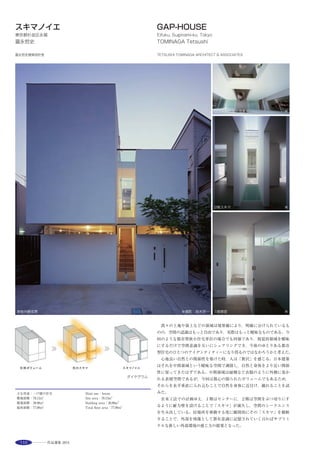
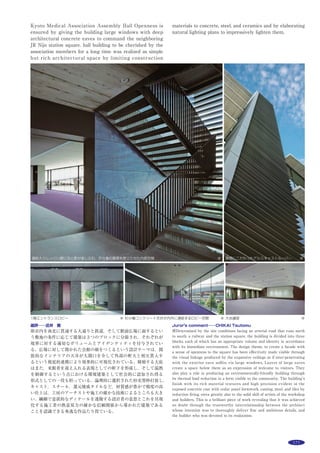
  • 206.
    203 8 竹の会所 所在地 宮城県気仙沼市 建築主 滋賀県立大学陶器浩一研究室 設計 陶器浩一・髙橋和志・永井拓生 施工 滋賀県立大学陶器浩一研究室 髙橋工業 た けとも(竹の会所・友の会)※ ※全国の社会人・大学生を会員とする、竹の 会所を中心とした被災地支援のボランティ ア団体(本部:滋賀県立大学陶器浩一研究 室 代表:陶器浩一) 工程 設計期間:2011年5月〜2011年9月 施工期間:2011年9月〜2011年10月 規模 敷地面積:724.50m2 建築面積・建蔽率:188.38m2 ・24.28% 延床面積・容積率:175.92m2 ・26.00% 階数:地上1階 高さ:最高高さ 6.88m 軒高 6.22m 構造 竹構造 敷地条件 地域地区:都市計画区域外 法22条地域 主な外部仕上げ 屋根:シェード・アスール ターポリン 床下立ち上がり壁:割竹編み壁 主な内部仕上げ 床:ガルバリウム鋼板サンドイッチパネル  丸竹敷並べ 電気設備 投光器 10 伊達市立保原小学校 所在地 福島県伊達市保原町字弥生町15 建築主 伊達市 設計 大野秀敏+吉田明弘+アプルデザインワーク ショップ 施工 建築:校舎棟/佐藤・山崎・酒井東栄特定建 設工事共同企業体 放課後児童クラブ棟/ 佐藤工業 工程 設計期間:2008年3月〜2010年3月 施工期間:2010年7月〜2012年2月 規模 敷地面積:25,968.10m2 建築面積・建蔽率:8,980.96m2 ・34.59%(指 定60%) ● スタジオ・練習室 床:防振浮床 チーク縁甲板t=15mm着色 ウレタンCL 壁:遮音壁 有孔FGボードt=8mmの上  木製ルーバー 天井:有孔FGボードt=8mm ● レストラン 床:寿寧斑岩 壁:コンクリート打放し 木製ルーバー着色 ウレタンCL プロフィリットガラス乳白 フィルム張り 天井:金属天井(スーパーダイマパンチン グ) ●和室  床:スタイロ畳 壁:天然木練付け合板着色ウレタンCL 天井:天然木練付け合板着色ウレタンCL ● 茶室  床:スタイロ畳 壁:合板フェルト張りの上 光ファイバーク ロス ガラスクロス張り 天井:合板フェルト張りの上 光ファイバー クロス ガラスクロス張り ● 市民活動室 床:チーク縁甲板t=15mm着色ウレタンCL 壁:グラスウールt=15mmガラスクロス張 りの上 アルミパンチングt=3mm 天井:キャットウォーク現わし ● ギャラリー 床:チーク縁甲板t=15mm着色ウレタンCL 壁:グラスウールt=15mmガラスクロス張 りの上 アルミパンチングt=3mm ● 可動壁 天井:スチールメッシュ天井 ● 自然科学学習室2 床:カーペット 壁:有孔FGボードt=8mmの上 木製ルーバ ー 天井:有孔FGボードt=8mm アルミパン チングドームプラネタリウム 電気設備 受電方式:三相3線 6.6kV 設備容量:3,050kVA 契約電力:860kW 予備電源:非常用発電設備310kVA 空調設備 空調方式:大ホール/単一ダクト方式+床吹 出し方式 その他/外調機+ファンコイル ユニット パッケージエアコン+全熱交換 機 熱源:ガス吸収式冷温水発生機 空冷ヒート ポンプパッケージエアコン 給排水衛生設備 給水:受水槽+加圧給水ポンプ 給湯:局所給湯 排水:雨水分流 汚水/雑排水合流式にて公 共下水道へ放流 昇降機等 乗用エレベーター:ロープ式 15人乗(45 m/min)×2基 人荷用エレベーター:ロープ式 13人乗(45 m/min)×1基 乗用エレベーター:ロープ式 9人乗 (45 m/min)×1基 防災設備 消火:スプリンクラー設備+補助散水栓 排煙:自然排煙+機械排煙 その他:自動火災報知設備 誘導灯設備 非 常放送設備 その他 特殊設備:舞台機構設備 舞台音響・映像設 備 舞台照明設備 延床面積・容積率:13,384.63m 2 ・51.55%(指 定200%) 1階 7,931.38m2 2階 3,591.10m2 3階 1,862.15m2 階数:地上3階 高さ:最高高さ 15.93m 軒高 11.25m  階高:3.7m 構造 主体構造:鉄筋コンクリート造 一部鉄骨造 杭 基礎:既製コンクリート杭 敷地条件 地域地区:都市計画区域内 第一種住居地域  法22条指定地域 道路幅員:北13.5〜15.0m 東11.1〜14.5m  南西6.5m 主な外部仕上げ 屋根:一般部/ウレタン複合防水 アリー ナ・3階ハイサイドライト/金属屋根下地  露出シート防水 外壁:コンクリート打放し薄塗り補修の上  アクリルシリコン樹脂エナメル塗り 開口部:アルミサッシ 外構:コンクリート洗出し インターロッキ ングブロック 主な内部仕上げ ● 一般部 床:サクラフローリング 長尺塩ビシート 壁:コンクリート打放し薄塗り補修の上 EP 天井:グラスウールマット ピン固定 ● アリーナ 床:サクラフローリング 壁:杉集成材ルーバーオイルステンクリア塗 装 天井:グラスウールマットT型ジョイナー固 定ピン(ビス止め) 電気設備 ● 校舎棟 受電方式:高圧6.6kV 1回線受電 設備容量:1500kVA 契約電力:705kW ● 放課後児童クラブ棟 受電方式:校舎棟から低圧供給 設備容量:校舎棟に含む 契約電力:校舎棟に含む 空調設備 ● 校舎棟 空調方式:空冷ヒートポンプ式パッケージ空 調機 蓄熱式空気暖房機 ● 放課後児童クラブ棟 空調方式:空冷ヒートポンプ式パッケージ空 調機 給排水衛生設備 ● 校舎棟 給水:受水槽+加圧給水ポンプ 給湯:局所式給湯(ガス給湯機+電気貯湯式 温水器) 排水:自然流下式 公共下水道に接続 ● 放課後児童クラブ棟 給水:直結給水 給湯:なし 排水:自然流下式 公共下水道に接続 昇降機等 乗用エレベーター:11〜13人乗 防災設備 消火:屋内消火栓設備 屋外消火栓設備 消 火器 設備:森村設計 担当/袖川政憲・村山秀 樹・湯澤 健 音響コンサルタント:永田音響 担当/池田 覺・稲生 眞・箱崎文子 劇場コンサルタント:シアターワークショッ プ 担当/戸田直人・小林徹也・山下貴子 施工 建築本体:戸田建設 担当/田中祐司・番水 紀行・甲谷恭輔・橋本孝之 電気設備・機械設備・舞台特殊設備:担当/ 武山雅俊・石川秀秋(ユアテック)・渡部 正彦(ユアテック)・佐藤貴彦(新日本空 調)・村上 学(新日本空調)・村田浩人(森 平舞台機構)・飯沼順治(森平舞台機構)・ 渡辺匡(パナソニック)・湯澤吉弘(ヤマ ハサウンドシステム)・山口久治郎(ヤマ ハサウンドシステム) 西外構:村岡建設工業 担当/三浦清喜 東外構:長田建設 担当/三森茂男・佐藤正 憲 工程 設計期間:2006年9月〜2008年7月 施工期間:2008年12月〜2011年11月 規模 敷地面積:13,335.74m 2 建築面積・建蔽率:6,754.92m2 ・50.65%(許 容80%) 延床面積・容積率:11,750.50m2 ・88.11%(許 容400%) 地下1階  237.41m2   1階 6,422.50m2   2階 3,346.76m2   3階 1,743.83m2 階数:地上3階 地下1階 高さ:最高高さ 30.27m 軒高 28.77m 構造 鉄筋コンクリート造 一部鉄骨造 敷地条件 地域地区:商業地域 準防火地域 道路幅員:北27.0m 主な外部仕上げ 屋根:積層アスファルト防水(DENKS工 法) ポリスチレンフォーム シンダーコ ンクリート 金属屋根:チタン亜鉛合金フラットロック 外壁:ポリスチレンフォーム チタン亜鉛合 金フラットロック 開口部:アルミ製建具 ステンレス製建具  ステンレス製シャッター 外構:舗装/寿寧斑岩 インターロッキング ブロック 主な内部仕上げ ● ホール客席 床:チーク縁甲板t=15mm着色ウレタンCL  移動観覧席 壁:コンクリート小たたき仕上げ 木製ルー バーOSCL グラスウールt=50mmガラ スクロス張り 有孔FGボードt=8mmの 上 木製ルーバーOSCL 金属製手すり 天井:強化せっこうボードt=21mm×2ク ロス張りの上 AEP ● ホール舞台(音響反射板) 床:檜集成材t=30mm染色塗装 壁:合板t=12mm+タンピングシートt=3 mm+合板t=5.5mm FGボードt=6mm の上 木製ルーバーOSCL 天井:合板t=12mm+タンピングシートt =3mm+合板t=5.5mm FGボードt=6 mmクロス張りの上 AEP ● 図書館・調理創作室・会議室・研修室・自 然科学学習室1 床:チーク縁甲板t=15mm着色ウレタンCL 壁:コンクリート打放し 家具:シナ合板染色ウレタン塗装 天井:金属天井(スーパーダイマパンチン グ)
  • 207.
    204 12 尚絅学院大学礼拝堂 所在地 宮城県名取市ゆりが丘4-10-1 建築主 尚絅学院理事長 加藤正名 設計 竹中工務店設計部 建築:担当/桑原裕彰・寺田 巧・葛 和久・ 平岡麻紀・福田久展 構造:担当/安岡千尋・高橋伸一 設備:担当/田原誠・津田康浩 音響:担当/荒木邦彦(元社員)・安井千絵 照明基本設計:シリウスライティングオフィ ス 担当/戸垣浩人・小林周平 施工 竹中工務店 建築:担当/白田浩二・菊地雄也 設備:担当/後藤和博・高橋宜宏 工程 設計期間:2010年12月〜2011年8月 施工期間:2011年8月〜2012年5月 (オルガン設置期間:2012年9月〜2012年11 月) 規模 敷地面積:293,387.18m2 建築面積・建蔽率:745.69m2 ・0.3%(既存建 物と合わせて5.9%) 延床面積・容積率:669.97m2 ・0.2%(既存建 物と合わせて9.73%) 地下1階  50.40m2   1階 619.57m2 階数:地上1階 地下1階 高さ:最高高さ 15.80m 軒高 14.80m 構造 鉄筋コンクリート造 一部鉄骨造 敷地条件 地区地域:第一種中高層住居専用地域 法22 条指定地域 道路幅員:北15.0m 主な外部仕上げ 屋根:勾配屋根/フッ素樹脂コートカラーガ ルバリウム鋼板t=0.5mm 段葺 一部太 陽電池一体型 陸屋根:シート防水 外壁:コンクリート打放し補修の上 アクリ ル樹脂ローラー塗り 基礎部分:コンクリート打放しの上 アクリ ルシリコン樹脂クリア(H-ASC) 開口部:アルミサッシウレタン樹脂焼付け塗 装 ピロティ床:豆砂利洗出し 主な内部仕上げ 天井:GB-Rt=15+15mm EP 折上げ部 /グラスウール張り 壁:GB-Rt=15mm+GB-Ht=15mm 厚付 仕上げ塗材 床:無垢フローリング(ホワイトオーク) t=19mm ウレタン塗装 電気設備 受電方式:高圧受電(既存棟屋内キュービク ルより送電) 空調設備 空調方式:電気式空冷ヒートポンプパッケー ジエアコン 礼拝堂空調:アンダーフロア空調方式 給排水衛生設備 給水:重力式(既存給水系統より分岐) 給湯:局所式(電気温水器) 排水:建屋内分流式(既存排水管に接続) 防災設備 非常照明(電池内蔵型) 誘導標識 自動火 災報知設備 消火器 特殊設備 礼拝堂電気音響設備 太陽光発電設備 雨水 利用設備(中庭池補給水 散水栓) 14 帝京大学小学校 所在地 東京都多摩市和田1254-6 建築主 帝京大学 設計 日本設計・隈研吾建築都市設計事務所共同企 業体 施工 竹中工務店 工程 設計期間:2010年8月〜2010年12月 施工期間:2011年2月〜2012年2月(解体込 み) 規模 敷地面積:22,852.04m2 建築面積・建蔽率:4,405.11m2 ・19.27% 延床面積・容積率:7,781.52m2 ・34.05% 1階 4,082.16m2 2階 2,389.69m2 3階 1,309.67m2 階数:地上3階 高さ:最高高さ 13.94m 軒高 11.86m 構造 鉄筋コンクリート造(一部PC工法) 一部 鉄骨造 一部鉄骨鉄筋コンクリート造 敷地条件 地域地区:第一種中高層住居専用地域 準防 火地域 一団地 第二種高度地区 道路幅員:北12.0m 主な外部仕上げ 屋根:カラーガルバリウム鋼板竪平葺 外壁:熱処理杉板張り アクリルシリコン系 塗装 開口部:アルミサッシ(電解二次着色) 軒天:高圧木毛セメント板 垂木:ST-BT 150×525t9(溶融亜鉛メッキ リン酸処理) 手すり:ST-FBt9×38 @100(溶融亜鉛メ ッキリン酸処理) 外構:コリドー/自然色アスファルト舗装  通路/土系舗装 グラウンド/人工芝 そ の他/樹脂版舗装 主な内部仕上げ ● 普通教室部 天井:1・2F/有孔OSSB 板 3F/木毛 セメント板 壁:前側/せっこうボード+EP 後側/単 板積層材(LVL 合板) 床:複合フローリング(白色目残液体硝子塗 装) ● メディアセンター部 天井:1・2F/有孔OSSB 板 3F/木毛 セメント板 壁:有孔OSSB 板 床:タイルカーペット ● オープンスペース部(+特別教室部) 天井:1・2F/有孔OSSB 板 3F/木毛 セメント板 壁:せっこうボード+EP OSSB 板 OSSB ルーバー 複合イグサボード イグサボー ド 床:複合フローリング(白色目残液体硝子塗 装) カンタベリーオーク マルコポール ウォールナット 電気設備 受電方式:架空引込 1回線 設備容量:300kW 空調設備 空調方式:GHPビルマルチ+全熱交換機(校 舎棟) 直膨コイル空調機(体育館棟) 給排水衛生設備 給水:直結給水(上水) ポンプ圧送(雑用 水) 給湯:個別式 排水:屋内汚水・雑排水合流 屋外下水・雨 水分流 昇降機等 乗用エレベーター:マシンレス 11人乗(45 m/min)×1基 防災設備 消火:消火器 屋内消火栓 その他:自動火災報知機 その他 太陽熱集熱システム 16 GRID 所在地 東京都中央区 建築主 法人 設計 建築:伊藤博之建築設計事務所 担当/伊藤 博之・渡邉聡子 構造:池田建築設計(現ひばり建築設計)  担当/池田 峻・ひばりの誠 電気設備:EOS plus 担当/遠藤和広・名 取大輔 機械設備:Comodo設備計画 担当/山下直 久 施工 サンユー建設 担当/岩瀬正彦 工程 設計期間:2009年9月〜2010年8月 施工期間:2010年8月〜2011年6月 規模 敷地面積:116.99m2 建築面積・建蔽率:89.26m2 ・76.30%(許容 100%) 延床面積・容積率:395.21m2 ・337.82%(許 容400%) 1階 89.26m2 2階 82.72m2 3階 85.94m2 4階 86.16m2 5階 85.91m2 6階 44.63m2 階数:地上6階 高さ:最高高さ 18.90m 軒高:18.70m 構造 鉄筋コンクリート造 敷地条件 地域地区:第二種住居地域 防火地域 月島 地区地区計画 第二種中高層階住居専用地 域 第三種特別工業地域 道路幅員:南東5.45m 南西10.91m 主な外部仕上げ 屋根:シート防水(断熱工法) 外壁:普通型枠打放しコンクリートの上 ラ ンデックス塗装 開口部:アルミサッシ 外構:砂利敷 主な内部仕上げ 床:天然石  501床:タイル フローリング 壁:下地用左官材仕上げ 天井:下地用左官材仕上げ 電気設備 受電方式:低圧受電 空調設備 冷暖房方式 ヒートポンプ式エアコン 給排水衛生設備 給水:公共上水道直結 給湯:ガス給湯 排水:公共下水道放流 昇降機等 乗用エレベーター:機械式レス6人乗(60m /min)×1基 防災設備 消火器 18 ベイサイドマリーナホテル横浜 所在地 神奈川県横浜市金沢区白帆6-1 建築主 横浜ベイサイドリゾート 設計 吉村靖孝建築設計事務所 施工 間組東京建築支店 客室棟製作 SOLEIL(THAILAND) 工程 設計期間:2008年6月〜2008年12月 施工期間:2009年1月〜2009年12月 規模 敷地面積:7,426.39m2 建築面積・建蔽率:1,720.17m2 ・23.16% 延床面積・容積率:2,087.37m2 ・28.11% ● 客室棟 1階面積 917.60m2 2階面積 367.20m2 高さ:最高高さ 5.22m 軒高 5.22m 階数:地上2階 ● エントランス棟 1階面積 802.57m2 高さ:最高高さ 5.00m 軒高 4.00m 階数:地上1階 構造 鉄骨造 敷地条件 地域地区:準工業地域 準防火地域 第五種 高度地区 道路幅員:東13.00m 北14.79m 主な外部仕上げ ● 客室棟 屋根:st.PL断熱塗料塗布 外壁:磁器質タイル市松模様張り 開口部:アルミサッシ ● エントランス棟 屋根:塩化ビニル樹脂系シート防水 外壁:可撓形左官仕上げ塗材吹付け 開口部:スチールサッシ ステンレスサッシ  自動ドア 床:乱形石張り 自然石舗装 外構:芝張り コンクリート舗装白モルタル
  • 208.
    205 はけ引き仕上げ インターロッキングブロ ック 磁器質50角タイル 御影石 玉砂利 敷込み 砕石敷 硬質木材 主な内部仕上げ ● 客室棟 床:カットパイルカーペット t=8mm 壁:PVCシート錬付MDFt=4mm アクリ ル板 t=3mm 天井:PVCシート錬付MDF t=4mm プラ スチック板 ● エントランス棟 床:特注タイルカーペット t=9mm 複層フ ローリングt=15mm 磁器質25角タイル t=6mm 磁器質300角タイル ゴムチップ タイル t=10mm 壁:磁器質タイル t=7.5mm 左官仕上げ塗 材吹付け 磁器質25角タイル t=6mm 不 燃クロス AEP塗装 天井:AEP塗装 電気設備 ● 客室棟 受電方式:三相3線キュービクル ● エントランス棟 受電方式:三相3線キュービクル 空調設備 ● 客室棟 空調方式:ルームエアコン 熱源:電気 ● エントランス棟 空調方式:パッケージエアコン 熱源:電気 給排水衛生設備 ● 客室棟 給水:受水槽 給湯:局所式 ガス給湯機(都市ガス) 排水:公共下水道放流 ● エントランス棟 給水:受水槽 給湯:局所式 ガス給湯機(都市ガス) 排水:公共下水道放流 防災設備 ● 客室棟 排煙:自然排煙 ● エントランス棟 排煙:自然排煙 20 清水建設本社 所在地 東京都中央区京橋2-16-1 建築主 清水建設 設計 設計・監理:清水建設 設計室長:見城辰哉 建築:担当/竹内雅彦・國立篤志・加藤万 貴・宮崎浩英・平田郁子・大村成美 構造:担当/中村庄滋・中川健太郎・島崎 大・津曲 敬 設備:担当/荒井義人・髙橋満博・湊 敦 FM:担当/大田道広・束田淳行 ● オフィスプランニング協力  岡村製作所:担当/長谷川 修・長内浩樹 剣持デザイン研究所:担当/髙山与志郎・樋 口真也 デザインプロポーザル(カフェ)・張 昊・財 部あゆみ 施工 建築:清水建設 建設所長:石水功一 建築:担当/金子裕介・早川貞友・平沢 卓・ 強田憲司・松崎正人・石川俊英 設備:担当/沼田修一・今井啓介・國安孝 尚・林 豊 空調 高砂熱学工業 新菱冷熱工業 第一設備工業 衛生 斎久・東亜設備共同企業体 電気 関電工 きんでん 大坪電気 工程 設計期間:2005年7月〜2009年4月 施工期間:2009年4月〜2012年5月 規模 敷地面積:2,728.11m2 建築面積・建蔽率:2,170.36m2 ・79.51% 延床面積・容積率:51,355.84m2 ・1230% 地下3階 2,261.39m2 地下2階 2,584.07m2 免震層   53.09m2 地下1階 2,058.47m2   1階  974.04m2   2階 2,139.94m2   3階 2,169.07m2 4〜11階 2,122.65m2   12階 2,169.07m2   13階 2,122.50m2 14〜21階 2,169.07m2   22階  315.41m2  塔屋階  184.43m2 階数:地下3階 地上22階 塔屋1階 高さ:最高高さ 106.26m 軒高 106.26m 構造 鉄筋コンクリート造 一部鉄骨造 敷地条件 地域地区:都市再生特別区域 街並み誘導型 地区計画区域 商業地域 防火地域 道路幅員:西43.86m 北14.94m 東10.91m 主な外部仕上げ 屋根:シート防水外断熱工法 屋上緑化 外壁:アルミキャスト打込PC構造 開口部:クロロプレン製Y型ジッパーガスケ ットサッシ Low-Eペアガラス 建材一体 型太陽光パネル 外構:錆石びしゃん仕上げ 主な内部仕上げ ● 基準階オフィス 床:OAフロアH=150mmの上 タイルカーペ ット 壁:コンクリート打放し PC板の上 弾性 塗装 天井:輻射パネル(アルミパンチングパネル 焼付塗装) ペリメーター部:フィン型輻射パネル(アル ミ型材焼付塗装) ● 基準階エレベーターホール 床:タイルカーペット 壁:リブ付アスロック 天井:せっこうボードEP ● エントランスホール 床:錆石びしゃん仕上げ 壁:スギ本実型枠コンクリート打放し 透明 フロートガラス  ガラス受け:アルミキャスト+スチールFB 天井:PC床板 電気設備 受電方式:特高本線予備電源線受電 設備容量:特高受電3,500kVA×2 高圧受 電6,600kVA 契約電力:2,300kW 予備電源:ディーゼル発電機1,250kVA  UPS100kVA マイクログリッド用蓄電池 500AH 空調設備 空調方式:輻射空調+デシカント空調機によ るタスク&アンビエント方式 熱源:地域冷暖房からの低温冷水・中温冷 水・温水の3系統受入 給排水衛生設備 給水:受水槽+高架水槽による重力式 給湯:電気温水器による局所式 排水:自然放流+貯留後夜間放流 昇降機等 乗用エレべーター:23人乗:12基 乗用エレべーター:7人乗:1基 非常用エレべーター:2基 エスカレーター:4基 機械式駐車設備(水平循環式72台) 防災設備 消火:特殊消防用設備等(空調配管兼用スプ リンクラー) 泡消火設備 連結送水管  ガス消火設備 排煙:機械排煙(全館避難安全検証法) その他:自動火災報知設備 非常放送 非常 コンセント 非常電話 誘導灯 非常照明 主な環境配慮技術 輻射空調+デシカント空調機 地域冷暖房の 排熱利用 Low-eガラス タスク&アンビ エントLED照明 明るさセンサ+人感セ ンサ照明制御 共用部LED照明 グラデ ーションブラインド 建材一体型太陽光パ ネル マイクログリッド PC節電制御  雑排水・雨水利用 屋上緑化 CASBEE  Sランク BEE値=9.7(第三者認証)  LEED ゴールド認証 22 柿畑のサンクン・ハウス 所在地 神奈川県小田原市 建築主 個人 設計 設計:CAt 担当/小嶋一浩・赤松佳珠 子・野地智美・大石 藍(元所員) 構造:佐藤淳構造設計事務所 担当/佐藤 淳・三原悠子 施工 芹沢建設 担当/芹沢久男・芹沢麻子 工程 設計期間:2008年7月〜2010年3月 施工期間:2010年4月〜2010年9月 規模 敷地面積:270.67m2 建築面積・建蔽率:86.50m2 ・31.96%(許容 60%) 延床面積・容積率:91.42m2 ・33.78%(許容 160%) 1階 86.50m2 2階  4.92m2 階数:地上2階  天井高:2.66m 高さ:最高高さ 4.96m 軒高 4.84m 駐車台数:2台 構造 主体構造:木造  杭・基礎:べた基礎 敷地条件 地域地区:都市計画区域内(市街化区域)  準防火地域 第二種高度地区 道路幅員:東4.0m 主な外部仕上げ 屋根:FRP防水 外壁:杉縦板張りの上 オスモカラー(ウッ ドステイン:色エボニー) 軒下:ラーチ構造用合板 t=9mmの上 オ スモカラー(ウォーターレペレント+ワン コートオンリー:色エボニー) 開口部:木製サッシ(モローズ) アプローチ:コンクリート刷毛引き 外構:砂利敷 主な内部仕上げ 床:モルタル金ごて押えの上 透明着色はっ 水材 壁:鉄筋コンクリート打放しの上 透明着色 はっ水材 ラーチ構造用合板 t=9mmの上  オスモカラー(ワンコートオンリー:色エ ボニー) 天井:集成材ホワイトウッドの上 オスモカ ラー(ワンコートオンリー:色エボニー) +ラーチ合板 ● 浴室 天井:集成材ホワイトウッドの上 オスモカ ラー(ウッドプロテクター+ワンコートオ ンリー:色エボニー)+ラーチ合板 ● ロフト 床:FRPグレーチング 壁:ラーチ構造用合板 t=9mmの上 オス モカラー(ワンコートオンリー:色エボニ ー) 天井:ラーチ構造用合板 t=9mmの上 オ スモカラー(ワンコートオンリー:色エボ ニー) 電気設備 受電方式:敷地内に引込柱を設け低圧受電 (単相3線式100V/200V) 契約電力:60A 空調設備 空調方式:ルームエアコン 温水式床暖房 熱源:電気 ガス 給排水衛生設備 給水:直結給水 給湯:直圧給湯 排水:公共下水 24 実践学園中学・高等学校 自由学習館 所在地 東京都中野区中央2-38 建築主 実践学園 設計 古谷誠章+NASCA 設計監理 建築:NASCA 構造:オーク構造設計 機械設備:科学応用冷暖研究所 電気設備:設備計画 防災:明野設備研究所 音響:永田音響設計 照明:S.L.D.A サイン計画:CBK 協力:苅宿俊文/青山学院大学・大東文化大 学 施工 建築・設備:大成建設 施工協力:空調・衛生/横山設備工業 電気 /エイコウ電設 工程 設計期間:2009年4月〜2010年4月 施工期間:2010年5月〜2011年3月 規模 敷地面積:924.54m2 建築面積・建蔽率:529.11m2 ・57.22%(許 容60%)
  • 209.
    206 延床面積・容積率:1,389.38m2 ・150.2%(許 容160%) 地下1階 447.86m2   1階 229.32m2   2階403.67m2   3階 308.53m2 階数:地下1階 地上3階 高さ:最高高さ 12.5m 構造 主体構造:鉄筋コンクリート構造 一部鉄骨 造 杭・基礎:直接基礎 既製コンクリート杭 敷地条件 地域地区:第一種中高層住居専用地域 準防 火地域 第二種高度地区 道路幅員:南4.0m(二項道路道路拡幅) 主な外部仕上げ 屋根:カラーガリバリウム鋼板(ギングロ JP)t=0.4mmパーフェクトルーフ一文字 葺(ダイムワカイ) 一部トップライト (菱晃) 外壁:デラクリート下地の上 アクリル系可 とう性薄塗材 ジョリパット(AICA) 特 注色(西側:JP-100TBK(黒MAX)72- 30H 限界色=3/1 その他:85-80D(JQ- 650) 開口部:既製アルミサッシ/ARM-S(三協 立山アルミ) SD(三和シャッター)  SSD(ナブコシステム) 外構:インターロッキングブロックショット ブラスト加工パターン張り(舗装) 玉砂 利(エスビック) St-FB12×44 溶融亜 鉛メッキリン酸処理仕上げ(フェンス) 植栽:コブシ ヤマボウシ ヒメシャラ カ ナメモチ ドウダンツツジ  主な内部仕上げ ● Freedom Hall 床:タイルカーペット(サンゲツ) カバ集 層フローリング 壁:ナラ不燃化粧合板染色仕上げ 不燃木リ ブ白染色クリア塗装+グラスウール+ガラ スクロス張り 特殊型枠RC打放し 凹凸 仕上げ 下地塗装用天然壁紙(ルナファー ザー) SD/ペルラージ スポンジ仕上げ (ドゥカーレ) 天井:LGS下地の上 アルミパンチングメタ ルt=3mm(焼付け塗装) PB寒冷紗AEP 塗装 ● Learning Room/Study Room 床:タイルカーペット(サンゲツ) 壁:フレキシブルボード二重張りの上 AEP 塗装 天井:LGS下地の上 岩綿吸音板 PB寒冷 紗AEP塗装 ● Learning Terrace・Open Space 床:タイルカーペット(サンゲツ) 集成材 黒染色クリア塗装 壁:RC打放し(3×6 2×6) スギ板型 枠RC打放しの上 水性シリケート塗装マ イカ粉入 MDF手すり15×50@30(支柱: st-FB16×40@450) 天井:RC打放し LGS下地の上 岩綿吸音 板突付けトメ加工 押出し成形アルミパン チングスパンドレル 不燃木ルーバー白染 色クリア塗装 ● 特記仕様 階段1.2:手すり/stパネルt=3.2mm(曲 げ加工) St部/錆び止め処理の上 AEP 仕上げ(ペルラージスポンジ仕上げ) 手 すりLED照明埋込 階段3:MDF手すり15×50@30(支柱)st- FB16×40@450 階段4:St-PL t=16mm 30φ加工(ペルラ ージスポンジ仕上げ/ドゥカーレ)  階段5:集成材/手すり子:St-FB 6×50@130 St部/SOP仕上げ 電気設備 受電方式:低圧受電 空調設備 空調方式:空冷ヒートポンプマルチエアコン 熱源:ガス 昇降機等 乗用エレベーター:11人乗×1基 防災設備 消火:粉末消火器 排煙:トップライト排煙(自動扉・トップラ イト火災報知器連動開放) その他:自動火災報知設備 非常放送 誘導 標識 26 東京大学生産技術研究所 アニヴァーサリーホール 所在地 東京都目黒区駒場4-6-1 建築主 東京大学生産技術研究所 設計 今井公太郎+遠藤克彦建築研究所 東京大学 キャンパス計画室・東京大学施設部 施工 イズミ・コンストラクション(1期) 小松 原工務店(2期) 工程 設計期間:2010年2月〜2011年10月 施工期間:2010年12月〜2012年7月 規模 敷地面積:92,731.27m2 建築面積・建蔽率:2,018.92m2 ・33.76% 延床面積・容積率:3,387.18m2 ・128.57% 1階 2,009.08m2 2階 1,209.75m2 3階  168.35m2 階数:地上3階 高さ 最高高さ 12.70m 軒高 12.45m 構造 既存部/鉄筋コンクリート造 増築部/鉄骨 造 敷地条件 地域地区:第一種中高層住居専用地域 近隣 商業地域 準防火地域 第二種高度地区 道路幅員:15.0m 主な外部仕上げ  屋根:アスファルト露出防水 外壁:カラー GRCカーテンウォール はっ 水材塗布+サッシレスフロートガラスt =15mmエッチング加工 土壁調セラミッ ク系装飾仕上げ材 くし引き仕上げ 外部メカニカルシャフト:エキスパンドメタ ル溶融亜鉛メッキ 開口部:アルミサッシ スチールサッシ 外構:黒御影石張りt=30mm 白玉砂利敷  アスファルト舗装 主な内部仕上げ ● エントランスホール 床:コンクリート金ごて押え+浸透性表面強 化材 壁:カラー GRCカーテンウォール はっ水 材塗布+サッシレスフロートガラスt =15mmエッチング加工 PBt=12.5+9.5 mm+しっくい聚楽鏡面仕上げ 天井:PBt=9.5mm+岩綿化粧リブ付き吸音 板t=9mm ● 記念ホール 床:コンクリート金ごて押え+浸透性表面強 化材 壁:PBt=12.5+9.5mm+しっくい聚楽鏡面 仕上げ 天井:既存躯体現し 一部グラスウールt =25mm+寒冷紗 ● 企画展示室 床:コンクリート金ごて押え+浸透性表面強 化材 壁:PBt=12.5+9.5mm EP/高拡散反射塗 料 天井:PBt=9.5+9.5mm EP/高拡散反射 塗料 ● ギャラリー 床:コンクリート金ごて押え+浸透性表面強 化材(1階) OAフロアH=250mm+タイルカーペット (2階) 壁:PBt=12.5+9.5mm+しっくい聚楽鏡面 仕上げ 天井:既存躯体+高拡散反射塗料 亜鉛鋼鈑 製吊り天井(1階) 鋼製吊り天井(2階) ● 風路・メディアギャラリー 床:コンクリート金ごて押え+浸透性表面強 化材 壁:黒皮鉄板t=2.3mm+御影石本磨き PB t=12.5+9.5mm EP 天井:PBt=9.5mm+岩綿化粧リブ付き吸音 板t=9mm ● 研究室(1期側2階) 床:空調用吹出しファン内蔵OAフロア H=250mm+タイルカーペット 壁:PBt=12.5+9.5mm EP/高拡散反射塗 料 シナベニヤ目透かしt=8mm OSCL  亜鉛鋼鈑製間接照明棚 天井:PBt=9.5+9.5mm EP/高拡散反射 塗料 ● 研究室(2期側1階) 床:モルタル金ごて押え+タイルカーペット 壁:SUS切り板t=2.0mm HL+スパッタリ ングガラスt=8mm+フロートガラスt= 8mm PBt=12.5+9.5mm EP シナベ ニヤ目透かし t=8mm OSCL 天井:既存躯体現し 一部その上高拡散反射 塗料 鋼製吊り天井 ● 会議室 床:OAフロアH=250mm+タイルカーペッ ト 壁:PBt=12.5+9.5mm EP/高拡散反射塗 料 シナベニヤ目透かし張りt=8mm  OSCL 天井 既存躯体の上 高拡散反射塗料 鋼製 吊り天井 電気設備 受電方式:高圧受電 設備容量:950 kVA 空調設備 空調方式:ヒートポンプパッケージ 熱源:電気 給排水衛生設備 給水:構内給水管からのポンプ圧送給水 給湯:電気温水器による局所給湯 排水:自然流下下水道放流 防災設備 消火:屋内消火栓設備(易操作性1号) 排煙:自然排煙 その他:自動火災報知設備 非常照明設備  誘導灯設備 特殊設備 中央監視設備 その他 高拡散反射塗料を使用した照明設備(環境配 慮技術) 空調換気自動制御設備(環境配 慮技術) 集中検針設備 放送設備 監視 カメラ設備 入退出管理設備 トイレ呼 出・表示設備  28 第一生命新大井事業所 所在地 神奈川県足柄上郡大井町上大井131-1 建築主 第一生命保険 全体統括 第一生命保険 設計・監理 竹中工務店 建築:担当/車戸城二・石川修次・小吹達 哉・花岡郁哉・平尾雅之・大橋明子 構造:担当/廣重隆明・伊藤利明・武藤 肇 設備:担当/鈴木尚昭・平野克彦  ランドスケープ:担当/向山雅之・蓑茂雄二 郎 ワークプレイスプロデュース:担当/徳本幸 男・大川徹・坂本圭司・丘本道彦・石崎直 孝・小菅 健・粕谷貴司 ランドスケープコンセプトデザイン:WRT (Wallace Roberts Todd) 担当/David J.Ostrich・Douglas J. Meehan・鶴田景子 照明コンサルティング:ALG(建築証明計 画) 担当/小西武志・小西美穂 施工 竹中・日本建設共同企業体 作業所長:前田義光 工程 設計期間:2007年10月〜2009年7月 施工期間:2009年8月〜2012年1月 規模  敷地面積:26,083.84m 2 (本体計画) 24,700. 00m2 (修景計画) 建築面積・建蔽率:11,494.87m2 ・44.07%(許 容60%) 延床面積・容積率:44,488.36m2 ・137.60% (許容200%) 地下1階 10,488.90m2   1階 10,153.79m2   2階 8,908.55m2   3階 8,323.46m2   4階 5,744.03m2  塔屋階 47.73m2 高さ:最高高さ 19.87m 軒高 19.29m 構造 主体構造:鉄筋コンクリート造 一部鉄骨 造・鉄骨鉄筋コンクリート造 敷地条件 地域地区:第一種中高層住居専用地域 準住 居地域 道路幅員:南9.0m 北7.0m 主な外部仕上げ 屋根:アスファルト防水外断熱絶縁工法の上 押さえコンクリート 外壁:ホワイトコンクリートPCa板(ダイ ワ)の上 無機質表面保護材(グリーン・ ドゥ:セラグリーン) 耐火断熱サンドイッチパネル(日鉄住金鋼 板:Sガード) 開口部:アルミサッシ(LIXIL) 外構床:ウッドデッキ(昭和洋樽:トンガ)  コンクリートくし引仕上げ 透水性アスフ ァルトコンクリート 主な内部仕上げ ● 事務室
  • 210.
    207 床:OAフロアの上 タイルカーペット(タ ジマ:タピスルーク) 壁:化粧コンクリート打放し PBの上 塗装 天井:ホローコアスラブ直仕上げ(昭和コン クリート) 電気設備 受電方式:高圧6,600V 2回線(本線・予備 線)受電方式 設備容量:6,300kVA 空調設備 空調方式:自然換気+外気冷房自動切換型空 調機による単一ダクト VAV+インバー タ制御 熱源:電気+ガス併用によるセントラル熱源 方式 インバーターターボ冷凍機 ガス吸 収式冷温水発生機 水蓄熱槽3,800m3 設置 給排水衛生設備 給水:中水/井水+雨水を利用した加圧給水 ポンプ+受水槽 上水/加圧給水ポンプ+ 受水槽 給湯:手洗/貯湯式電気温水器による局所式  厨房/業務用エコキュートを利用したセン トラル給湯 排水:汚水・雑排水合流 昇降機等 乗用エレベーター:24人乗(90m/min)×3基 人荷用エレベーター:27人乗(60m/min)× 2基 人荷用エレベーター:13人乗(60m/min)× 1基 防災設備 非常放送 自動火災報知機 避雷設備 特殊設備 入退室監理設備 ITV設備 30 NBF大崎ビル(旧ソニーシティ 大崎) 所在地 東京都品川区大崎2-10-1 建築主 ソニー 設計 建築:日建設計 担当/山梨知彦・羽鳥達 也・石原嘉人・川島範久・宮倉保快・湯沢 省二・長尾美菜未・竹内 聡・水野芳康 構造:日建設計 担当/向野聡彦・小崎 均・ 貞許美和 空調・衛生:日建設計 担当/丹羽勝巳・高 辻量・塚見史郎・藤井拓郎・後藤 悠  電気:日建設計 担当/滝澤 総・小林 護 監理:日建設計 担当/木村清晴・石上智 章・島田太郎・石川富夫・中西理幸・小野 里守旦・山下直彦・長坂 昇 外構:日建設計 担当/根本哲夫・西 大輔 種まきプログラム:AnS Studio 担当/竹 中 司・岡部あや 都市計画:日建設計 担当/青木 伸・松井 泰友・吉田 明・金井和哉・西舘沙織 音響計画:日建設計 担当/司馬義英 ヒューマンビヘイビアシミュレーション: AA 担当/木村 謙 バイオスキンにおけるIPD:TOTO アベル コ バイオスキン環境シミュレーション・効果実 測:日建設計 担当/永瀬 修・高辻 量・ 川島範久 バイオスキン事前実験・効果実測:東京大学 建築学科環境系研究室 担当/前 真之・ 赤嶺嘉彦・高瀬幸造・佐藤 誠・草川研二 施工 建築:鹿島建設 電気:関電工 空調・衛生:東洋熱工業 工程 設計期間:2007年7月〜2009年1月 施工期間:2009年2月〜2011年3月 規模 敷地面積:16,558.52m 2 建築面積・建蔽率:10,611.26m2 ・65.0%(許 容81.0%) 延床面積・容積率:124,041.48m2 ・649.9% (許容650%) 地下1階 7,144.50m2   1階 8,709.60m2   2階 5,135.02m2  塔屋階   413.27m2  基準階 4,370.62m2 階数:地下2階 地上25階 塔屋1階 高さ:最高高さ TP+139.35m 軒高  TP+139.20m 階高:基準階事務室 4.64m 天井高:基準階事務室 3.00m 主なスパン:7.2m×24.30m 駐車台数:253台 構造 主体構造:鉄骨造(柱CFT造)鉄骨鉄筋コン クリート造 鉄筋コンクリート造(中間層 免震構造) 杭・基礎:直接べた基礎 一部場所打コンク リート杭地業 敷地条件 地域地区:準工業地域 近隣商業地域 防火 地域 道路幅員:北東15.0m 西8.0m 南12.0m  北12.0m 主な外部仕上げ 屋根:アスファルト断熱防水 屋上緑化 外壁:事務所/アルミサッシ ルーバー 東 面/バイオスキン(高保水性テラコッタル ーバー+アルミルーバー) 792ユニット  雨水沪過(20m3 /日)・揚水ポンプ(200L/ min) 効果計測装置(表面温度・空気温 湿度・日射・3次元風速・降雨量) 南面 /太陽光パネルひさし(定格出力30kW)  コア/アルミカットパネルCW 高耐候性 ポリエステル粉体塗装 開口部:事務所/普通複層ガラス コア/ Low-E複層ガラス 外構:天然石洗出し樹脂舗装材 主な内部仕上げ ● 基準階ワークプレイス 床:OA(H140)の上 タイルカーペット 壁:PB t=9.5+12.5mm EP 天井:システム天井(ロックウール化粧吸音 板) ● 基準階コア 床:長尺塩化ビニルシート 壁:化粧塩化ビニルシート 天井:ロックウール化粧吸音板 ● 2階(エントランスホール) 床:磁器質タイル 壁:アルミHL切板パネル・SUSパネルHL仕 上げ 天井:アルミルーバー ● 3階 床:タイルカーペット 壁:Stパネル焼付け塗装 SUSパネルHL仕 上げ 天井:ロックウール化粧吸音板 ディフュー ザー付LED照明 受付カウンター・壁面:人造大理石 ● 4階 床:塩化ビニルタイル 壁:メラミン化粧版 スチールパネル焼付け 塗装 天井:ロックウール化粧吸音板 ディフュー ザー付LED照明 電気設備 受電方式:66kループ受電 設備容量:主変圧器10,000kVA×2基 非常電源:NAS電池1,500kW(500kW×3) 保安電源:ガスタービン発電機 1,500kVA その他:太陽光発電パネル(30kW)  空調設備 空調方式:各階分散組立型空調機+単一ダク トVAV 熱源:R123冷媒COP6ターボ冷凍機×3(定 速/インバータ/熱回収)+R410冷媒COP 4.3空冷HPユニット×2設備 水蓄熱槽 (地下2階躯体ピット 水深9mの成層型 3槽合計約3,950m3 ) 冷却塔冷却水・熱源 一次二次ポンプ 太陽熱集熱器 給排水衛生設備 給水:高層/重力給水 低層/加圧給水 給湯:局所式 貯湯式電気湯沸器 排水:汚水貯留後夜間放流 雨水流出抑制貯 留ポンプアップ排水 昇降機等 乗用エレベーター:34人乗×18基  非常用エレベーター:2基  大型荷物用エレベーター  エスカレーター 防災設備 消火:屋内消化設備 スプリンクラー設備  連結送水管 泡消火設備 不活性化ガス消 火設備 消防用水 大型消火器 排煙:機械3種排煙 その他:自動制御・中央監視設備 照明設備 ワークプレイス:600ミリ角グリッド照明方式  高効率蛍光灯FHP45W-1灯 基準照度 700lx 個別アドレス制御方式 明るさセ ンサによる初期照度補正・適正照度制御  人感センサによる減光・消灯制御 共用部・廊下・便所:LED照明 人感セン サ照明制御 2階エントランス・会議室:LED照明:色 温度可変調光制御 3階会議室・4階食堂:LED照明 主な環境配慮技術 バイオスキン 太陽光パネル その他 外構:緑化率50%超(東京都基準) 緑化面 積6300m 2 超 高木植栽46種256本 100種類 以上の低木地被類 雨水流出抑制水槽:約1100m3 震災対策水源(空調用蓄熱水槽から外部へ取 水)442m3 保有 32 東京スカイツリー® 東京スカイツリータウン® 所在地 東京都墨田区押上1-1-2 建築主 東武鉄道 東武タワースカイツリー 設計 日建設計 総括:担当/中村光男・安 昌寿 設計統括:担当/亀井忠夫 プロジェクトマネジャー:担当/山本秀樹・ 慶伊道夫・早川文雄 企画計画:担当/大村高広・山本秀樹・内山 隆史・平林 直・林 邦能・登山暁夫・河原 透・柳澤壮一郎・西館沙織・金井和哉 タワーヤード設計:担当/吉野 繁・土屋哲 夫・田中雄輔・小杉栄次郎・柏谷修平・小 松篤人・山本 博 イーストウエストヤード設計:担当/土屋 中・高梨基久・皿海博章・秋澤 大・塩浦 政也・三井祐介・安田知功・山内 暢・古 澤 航・濱口芳郎・岡本奈留美 防災計画:担当/福井 潔・染谷朝幸・古宇 田智子 ランドスケープ:担当/根本哲夫・岡 昌史・ 豊田充規・小谷芙美子 インテリアデザイン:担当/大久保豊・片山 賢・鈴木真弥・中井真樹(日建スペースデ ザイン) タワ一ヤード構造:担当/慶伊道夫・小西厚 夫・中西則夫・江坂佳賢・加賀美安男・渡 辺一成・樫本信隆・田坂雅則・篠原達巳・ 松岡 穣・黒澤 順 イーストウエストヤード構造:担当/慶伊道 夫・小野潤一郎・末岡利之・角田義雄・山 本恵市・風間宏樹・渡辺利治・西山誠治 (日建設計シビル) 設備:担当/野原文男・本多 敦・渡邊 薫・ 高辻 量・高柳慎太郎・宮坂裕美子・岡田 悠介・金塚清高・大高 恵・堀井めぐみ(電 気・空調・衛生設備) 栄 干治・橋口裕 彦・安斎 幹(IT) 海宝幸一・篠原奈緒子 (照明設計・監理) タワーヤード監理:担当/田中義久・谷 研 一・石上智章・山崎 淳・渡辺一成・志田 俊一・山田和正・安川秀一・岡田悠介 イーストウエストヤード監理:担当/田中義 久・村上政司・小番 満・梶原宣行・三島 英之・外山万佐幸・苅込大一・田中康二・ 山下直彦・岸本武士・新保友三郎・鈴木研 志 タワーデザイン監修:澄川喜一 照明コンサルタント:シリウスライティング オフィス 担当/戸恒浩人・助川佳苗・小 林周平 施工 タワーヤード/大林組 イーストヤード/大 林組 株木建設 東武建設共同企業体 ウ エストヤード/大成建設 東武谷内田建設 共同企業体 工程 設計期間:2006年4月〜2008年6月 施工期間:タワーヤード/2008年7月〜2012 年2月 イーストウエストヤード/2009年 3月〜2012年2月 規模 敷地面積:36,844.39m 2 建築面積・建蔽率:32,221.47m2 ・87.46% 延床面積・容積率:229,728.92m2 ・498.81% 地下3階  1.679.45m2 地下2階  4,046.71m2 地下1階  7,525.65m2   1階 14,720.70m2   2階 21,965.78m2   3階 21,256.93m2   4階 13,200.90m2   5階 12,563.78m2   6階  9,153.46m2   7階  6,632.31m2   8階  3,550.93m2   9階  2,686.23m2   10階  2,582.97m2   11階  2,494.49m2   12階  2,647.22m2   13階  2,543.63m2
  • 211.
    208   14階  2,540.01m2   15階  2,471.41m2   16階 3,197.50m2   17階  3,290.46m2   18階  3,660.06m2   19階  2,573.11m2   20階  4,119.21m2   21階  4,101.68m2   22階  2,702.83m2   23階  2,594.20m2   24階  2,396.78m2   25階  2,332.61m2   26階  2,236.61m2   27階  2,309.84m2   28階  2,951.53m2   29階  2,911.93m2   30階  2,040.65m2   31階  2,040.65m2 塔屋1階  1,019.87m2 塔屋2階    183.43m2 塔屋3階    101.22m2 塔屋4階     98.96m2 階数:地下3階 地上31階 塔屋4階 高さ:最高高さ 634.00m(タワー工作物部 分) 158.09m(イーストヤード) 42.80m (ウエストヤード) 軒高 459.42m(タワ ーヤード) 146.84m(イーストヤード)  33.27m(ウエストヤード) 構造 鉄骨造 鉄骨鉄筋コンクリート造 鉄筋コン クリート造 敷地条件 地域地区:商業地域 防火地域 押上・業平 橋周辺地区 道路幅員:東16.0m 西21.87〜22.03m 南 16.0m 主な外部仕上げ 屋根:タワー塔体/ウレタン複合防水無機質 仕上げ 低層部/アスファルト防水外断熱 仕様押えコンクリート ガルバリウム鋼板 段葺 嵌合型折版葺 外壁:タワー展望台/アルミカーテンウォー ル タワーシャフト部/アルミカーテンウ ォール オフィス棟・低層部/アルミカー テンウォール アルミスパンドレル PC パネルフッ素樹脂塗装 コンクリート化粧 打放しフッ素樹脂塗装 PCルーバーフッ 素樹脂塗装 押出し成形セメント板 穴あ きPCパネル スチールパネル亜鉛メッキ リン酸塩処理 外構:インターロッキング PC平板 主な内部仕上げ ● 4階出発ロビー 床:花こう岩 壁:化粧繊維強化セメント板 内照箔入りガ ラススクリーン 天井:PB塗装仕上げ 岩綿吸音板 スチー ル吊り組子天井 ● 天望デッキ 床:タイルカーペット 壁:内照和紙入りガラススクリーン 化粧繊 維強化セメント板 木リブ 天井:PB塗装仕上げ ● 天望回廊 床:タイルカーペット 壁:ガラススクリーン 化粧繊維強化セメン ト板 天井:繊維混入PB ● 地下鉄エントランスホール 床:花こう岩 壁:大谷石 大理石 スチールルーバー亜鉛 メッキリン酸塩処理 天井:PB塗装仕上げ ● 商業(東京ソラマチ)エントランスホール 床:花こう岩 磁器質タイル 壁:花こう岩 れんが調タイル スチールパ ネル亜鉛メッキリン酸塩処理 天井:PB塗装仕上げ ● オフィス基準階 床:OAフロア+タイルカーペット 壁:PB塗装仕上げ 天井:システム天井  電気設備 受電方式:特高66kVループ受電方式 設備容量:45,000kVA 空調設備 空調方式:空調機 外調機 ファンコイルユ ニット PAC空調機など 熱源:ウエストヤード地域冷暖房プラントか らの冷水・温水をイーストヤード ウエス トヤードの2ヶ所で受入後、需要家内冷 水・温水4管式一部季節切り替え2管式  中央監視自動制御 タワー防災センターお よびイーストヤード防災センター機器室に BA BEMSを設置 Bac-net方式(IPV4)  分散DDC制御方式  給排水衛生設備 給水:低層/上水+中水加圧給水 高層/上 水のみ加圧+重量給水 給湯:電気式局所分散 排水:屋内外分流(汚雑水 厨房排水 雨 水) 昇降機等 乗用エレベーター:タワーヤード/13基 イ ーストヤード/31基 ウエストヤード/12 基 エスカレーター:タワーヤード/13基 イー ストヤード/44基 ウエストヤード/15基 機械駐車:イーストヤード/110台 ウエス トヤード/366台 防災設備 自動火災報知設備 誘導灯設備 非常照明設 備 特殊設備 厨房排水除害設備 中水製造沪過設備 植栽 灌水設備 IT設備 ライトアップ設備 34 PATIO 所在地 東京都 建築主 個人 設計 建築:矢板建築設計研究所 担当/矢板久 明・矢板直子・栗原佳子・大久保元彰(元 所員) 構造:構造設計社 担当/杉浦克治 設備:島津設計 担当/島津充宏 施工 日南鉄構 担当/鹿島 正・加賀山豪士 工程 設計期間:2006年5月〜2009年6月 施工期間:2009年7月〜2011年11月 規模  敷地面積:172.19m2 建築面積・建蔽率:79.41m2 ・46.12% 延床面積・容積率:226.86m2 ・78.05%(容 積対象面積134.40m2 ) 地下1階 81.45m2   1階 73.76m2   2階 71.65m2 階数:地下1階 地上2階 高さ:最高高さ 5.79m 軒高 5.43m 構造 鉄筋コンクリート造 一部鉄骨造 敷地条件 地域地区:第一種低層住居専用地域 準防火 地域 第一種高度地区 道路幅員:東5.45m 主な外部仕上げ 屋根:St t=6mm鉄板溶接防水 断熱塗料塗 布 外壁:2階/断熱OSBパネルt=78mm キ ーストンプレートt=1.2mm溶融亜鉛メッ キリン酸処理 地下1階・1階/コンクリ ート打放し はっ水材塗布 開口部:1階・2階/特注スチールサッシ 木製サッシ アルミ製電動横引きシャッタ ー 地下1階/特注スチールサッシ アル ミサッシ 外構:コンクリート研出し仕上げ 主な内部仕上げ ● リビング ダイニング キッチン 床:コンクリート研出し仕上げ 壁:キーストンプレートt=1.2mm UP吹付け 天井:PBt=9.5mm EP ● 和室 床:畳敷t=35mm 壁:PB t=12.5mmジョリパッド三河白土撫 切り仕上げ 湊紙張り 天井:PBt=9.5mm 土佐和紙張り 地板・床板等:杉板 建具:障子両面張切り引手 ● 書斎・寝室 床:チークフローリングt=15mm OS拭取 り 壁:PBt=12.5mm EP 一部バーチ積層合板 t=9mm 天井:PBt=9.5mm EP 空調設備 暖房方式:空冷ヒートポンプ式 薪ストーブ 冷房方式:空冷ヒートポンプ式 換気方式:第三種換気方式 床暖房:ガス温水式床暖房 給排水衛生設備 給水:上水道直結 給湯:ガス給湯機 排水:下水道直結 36 立教大学 ロイドホール[18号館] 所在地 東京都豊島区西池袋3-34-1 建築主 立教学院 設計 日建設計 チーフ:山崎隆盛 建築:担当/原田由紀・三輪田真人・木村太 一・田仲志至・落部未央 構造:担当/原田公明・村上博昭 設備:担当/宮坂裕美子・山本純子・張 兆 明・小林靖昌・渡邊健一 工務:担当/笛田一義・宮本知和・矢崎 覚・ 馬場好春・平田勝彦 監理:担当/藤丸英俊・長坂 昇・平岡 毅・ 山田耕造・橋本忠彦・木村春紀 インテリア:日建スペースデザイン 担当/ 井上順一郎・柴崎裕子 施工 建築:清水建設 電気:東光電気工事 機械:大気社 自動書庫:岡村製作所 電動集密書庫・図書館家具:丸善 工程 設計:2008年12月〜2010年3月 施工:2010年8月〜2012年7月 規模 敷地面積:54,974.66m2 建築面積・建蔽率:3,227.04m2 ・50.38%(キ ャンパス全体 既存含む) 延床面積・容積率:20,644.36m2 ・205.38% (キャンパス全体 既存含む) 地下2階 3,809.45m2 地下1階 3,374.79m2   1階 3,207.06m2   2階 2,797.95m2   3階 2,586.57m2   4階 1,645.75m2   5階 1,571.24m2   6階   811.90m2   7階   811.90m2  塔屋階   27.25m2 階数:地下2階 地上7階 塔屋1階 高さ:最高高さ 27.18m 軒高 27.18m 構造 鉄骨鉄筋コンクリート造 一部鉄骨造 敷地条件 地域地区:第一種中高層住居地域 近隣商業 地域 第三種高度地区 法86条(一団地) 認定敷地 道路幅員:北11.0m 南20.0m 東・西4.0m 主な外部仕上げ 屋根:アスファルト防水押えコンクリート  アルミパネル 外壁:れんがタイル 化粧打放しコンクリー ト アクリルクリア塗装 開口部:ステンレスカーテンウォール アル ミサッシ アルミガラリ 外構:洗出し樹脂舗装 花こう岩 主な内部仕上げ ● エントランスホール 床:花こう岩WJP 壁:れんがタイル コンクリート打放し 天井:PC床板現し ● 図書館 床:OAフロアH=200+タイルカーペット  一部鋼製床組 壁:れんがタイル コンクリート打放し 天 然木練付合板 天井:PC床板現し アルミルーバー ● 研究室 床:タイルカーペット 天然リノリウム 壁:せっこうボード EP 天井:岩綿吸音板 電気設備 受電方式:22kV3回線スポットネットワー ク受電 設備容量:特高変圧器 2500kVA×3台 予備電源:ディーゼル発電機(非常保安用)  200kVA×1台 空調設備 空調方式:貴重書庫・自動書庫・集密書庫/ 空調機(4管式) 閲覧席・固定書架/空 調機(2管式)(一部FCU併設) 研究室/ マルチパッケージエアコン+全熱交換機付 換気扇 熱源:図書館/空冷モジュールチラー 研究 室/電気式空気熱源ヒートポンプパッケー ジエアコン 給排水衛生設備 給水:水源/市水+雨水利用 上水+雑用水 2系統給水 受水槽+加圧給水 給湯:個別給湯 貯湯式電気温水器 排水:建物内/汚水 雑排水合流 敷地内/ 汚水・雨水合流 昇降機等 乗用エレベーター:研究室用EV/17人乗(90 m/min)×1基 15人乗(90m/min)×1基  図書館利用者用EV/20人乗(60m/min)× 1基 図書館職員用EV/11人乗(90m/ min)×1基 防災設備
  • 212.
    209 消火:閲覧席・固定書架/乾式与作動スプリ ンクラー設備 貴重書庫・自動書庫・電気 室/窒素ガス消火設備 屋内消火栓 連結 送水管 その他:自動火災報知設備 非常放送設備  非常照明設備 誘導灯設備 避雷設備 特殊設備 自動書庫 電動集密書庫 38 鹿島技術研究所 本館研究棟 所在地 東京都調布市飛田給2-19-1 建築主 鹿島建設 設計 KAJIMA DESIGN 建築:担当/米田浩二・杉岡正敏・東郷裕 幸・真鍋寛・横山翔太 FP:担当/田中重良・宮本 礼 企画開発:担当/大関和三 構造:担当/吉貝 滋・井上智晶・中井 武 設備:担当/平岡雅哉・弘本真一・上村 健・ 多羅間次郎 家具コディネート:イリア 担当/福間正文 ・鶴見友紀 サイン・グラフィック:イリア 担当/鈴木 一成 外構設計:ランドスケープデザイン 担当/ 豊田幸夫・岩崎哲治 監理 鹿島建設東京建築支店 建築:担当/野路高夫 構造:担当/塚本 清 設備:担当/山口博由 施工 鹿島建設東京建築支店 建築:担当/荻原克二・木村雅彦・今永亮 一・渡邊紗恵子 設備:担当/吉川健哉・村 年益 電気/ク リマテック 担当/山岡正明 空調・衛生 /クリマテック 担当/内藤研二・矢鳴 勉 工程 設計期間:2009年8月〜2010年3月 施工期間:2010年4月〜2011年10月 規模 敷地面積:5,256.68m 2 建築面積・建蔽率:2,202.39m2 ・41.89% 延床面積・容積率:8,913.73m2 ・167.63% 地下1階 1,338.02m2   1階 1,434.94m2 2-5階 1,500.23m2  塔屋階   38.32m2 階数:地下1階 地上5階 塔屋1階 高さ:最高高さ 18.14m 軒高 18.14m 構造 鉄筋コンクリート造 一部鉄骨造 敷地条件 地域地区:近隣商業地域 準防火地域 第三 種高度地区 道路幅員:南・西16.00m 東7.00m 主な外部仕上げ 屋根:外断熱アスファルト露出防水 屋上緑化:薄層緑化 PC平板 ウッドデッ キ 外壁:鉄筋コンクリート打放し補修弾性アク リル樹脂系防水形複層塗材 目隠しルーバ ー アルミ押出し材フッ素焼付け塗装 開口部:アルミサッシ+フロートガラス 外構:花こう岩JP インターロッキング 主な内部仕上げ ● エントランスホール 床:カラーコンクリート研磨仕上げ 壁:GB-R EP 一部木毛セメント板 天井:GB-R+EP  ● 研究オフィス 床:タイルカーペット 壁:GB-R+EP 天井:鉄筋コンクリート打放し+EP 一部木 毛セメント板+EP 電気設備 受電方式:高圧受電 6.6kV 1回線引込 設備容量:850kVA 中央監視:BEMS・CO2管理システム 空調設備 空調方式:単一ダクト外調機+空冷ヒートポ ンプパッケージ 熱源:空冷ヒートポンプチラー 給排水衛生設備 給水:受水槽+ポンプ圧送 排水:雑排水合流 雨水分流(貯留後再利 用) 昇降機等 乗用エレベーター:15人乗×2基 防災設備 消火:連結散水設備 屋内消火栓 連結送水 管 排煙:階避難安全検証法ルートB その他:自動火災報知設備 非常用照明 誘 導灯 40 Geo metria 所在地 神奈川県小田原市 建築主 個人 設計 建築:マウントフジアーキテクツスタジオ    担当/原田真宏・原田麻魚・石井尚人       隈 翔平・柿木佑介 構造:坪井宏嗣構造設計事務所    担当/坪井宏嗣 施工:成田建築    担当/成田満治 工程 設計期間:2010年1月〜2011年3月 施工期間:2011年4月〜2011年12月 規模 敷地面積:429.40m2 建築面積・建蔽率:123.95m2 ・28.86%(許容 60%) 延床面積・容積率:155.66m2 ・36.25%(許容 150%) 地階  49.33m2 1階 106.33m2 階数:地下1階 地上1階 高さ:最高高さ 5.88m 最高軒高 5.68m 構造 木造 鉄筋コンクリート造 敷地条件 地域地区:第一種低層住居専用地域 法22条 区域 道路幅員:南4.0m 主な外部仕上げ 屋根:カラー鋼板 立てはぜ葺 外壁:窯業系サイディング AEP 木毛セメ ント板 シゴキ材にて面仕上げ サンダー掛 け はっ水剤塗布 開口部:スチールサッシ アルミサッシ 主な内部仕上げ 床:無垢フローリング(オーク)t=15mm ワ トコ塗装 壁:MDF t=4mm はっ水剤塗布 天井:木毛セメント板 t=15mm 電気設備 受電方式:低圧受電 空調設備 空調方式:エアコン フィルム式遠赤外線床 暖房 給排水衛生設備 給水:加圧給水 給湯:電気給湯システム 排水:分流 42 向陽ロッジアハウス 所在地 神奈川県相模原市 建築主 個人 設計 KONNO 金野千恵 構造設計 ASA 鈴木 啓 施工 工藤工務店 工程 設計期間:2008年4月〜2011年5月 施工期間:2011年6月〜2011年12月 構造 木造 規模 敷地面積:148.74m2 建築面積・建蔽率:70.66m2 ・47.5%(許容 70%) 延床面積・容積率:99.17m2 ・66.7%(許容 160%) 1階 55.38m2 2階 43.79m2 階数:地上2階 高さ:最高高さ 6.69m 軒高 4.83m 敷地条件 地域地区:第一種住居地域 準防火地区 道路幅員:北側4.0m,東側4.0m 主な外部仕上げ 屋根:アスファルトシングル 0.4kg/m2 外壁:ジョリパッド吹付け 開口部:木製サッシ(moro’s) 外構:ウッドチップ 透水性平板ブロック  御影砂利 植栽:モミジ イチジク ジューンベリー  キンカン ソヨゴ ナツハゼ シラキ ヤ マモモ カラタネオガタマ トキワマンサ ク トキワヤマボウシ フイリサカキ ホ ンサカキ ウバメガシ ギンモクセイ セ ンリョウ ヤマブキ ブルーベリー 主な内部仕上げ ● ロッジア 床:磁器質タイル t=10mm 壁:ジョリパッド吹付け 天井:ケイ酸カルシウム板 t=6mm*2 ジョリ パッド吹付け 家具:チェリースツール ● リビング・ダイニング 床:磁器質タイル t=10mm 壁:パインフローリング材 t=15mm UP 天井:PB t=9.5mm AEP 家具:チェリーダイニングテーブル チェリ ーダイニングチェア ● 畳の間 床:畳 t=60mm 壁:唐紙柿渋 柿渋+金 市松張り 天井:根太現し PB t=9.5mm しっくい仕上 げ ● 主寝室・書斎・寝台 床:ラワン合板 t=5.5mm 蜜蝋WAX仕上げ 壁:ラワン合板 t=5.5mm 目透し張り 蜜蝋 WAX仕上げ 天井:PB t=9.5mm AEP ● キッチン 床:磁器質タイル t=10mm 壁:PB t=12.5mm UP 天井:PB t=9.5mm AEP ● 浴室 床:磁器質タイル t=10mm 壁:モルタル t=25mm UP 天井:ケイ酸カルシウム板 t=6mm UP 空調設備 空調方式:ガス温水式床暖房 換気方式:第三種換気 給排水 給水:上水道直結 給湯:ガス給湯機 排水:下水道放流 44 TAKANAWA 所在地 東京都港区 建築主 個人 設計 設計:伊藤博之建築設計事務所 担当/伊藤 博之・小林賢太 構造:ロウファットストラクチュア 担当/ 横山太郎・澤田慶太 施工 サンユー建設 担当/倉石剛平 工程 設計期間:2009年12月〜2010年11月 施工期間:2010年11月〜2011年7月 規模 敷地面積:161.50m2 建築面積・建蔽率:95.15m2 ・58.92%(許容 60%) 延床面積・容積率:199.39m2 ・123.46%(許 容200%) 1階 87.90m2 (駐車場面積30.8m2 ) 2階 75.52m2 3階 66.35m2 階数:地上3階 高さ:最高高さ 8.39m 軒高:7.98m 構造 鉄筋コンクリート造 敷地条件 地域地区:第一種中高層住居専用地域 準防 火地域 第二種高度高度地区  道路幅員:南5.4m  主な外部仕上げ 屋根:塩ビシート防水 外壁:杉板型枠コンクリート打放し 開口部:アルミサッシ 外構:洗出しコンクリート 砂利敷 主な内部仕上げ: ● ダイニング・キッチン 床:タイルt=11mm 壁:PBt=12.5mm EP 天井:PBt=9.5mm EP ● リビング 床:オークフローリングt=16mm 壁:PBt=12.5mm EP  天井:PBt=9.5mm EP ● 玄関・階段室 床:コンクリート磨き 壁:杉板型枠コンクリート  天井:杉板型枠コンクリート 電気設備 受電方式:低圧受電 空調設備 空調方式:ヒートポンプ式エアコン 給排水衛生設備 給水:上水道直結 給湯:ガス給湯機 排水:下水道直結
  • 213.
    210 46 萩塚の長屋 所在地 群馬県高崎市貝沢町字萩塚1289-1 渋川 高 崎 高崎女子高 五霊神社 高 崎 問 屋 町 駅 J R 上 越 線 高 崎 環 状 線 貝沢町 貝沢町南 渋川 高 崎 高崎女子高 五霊神社 高 崎 問 屋 町 駅 J R 上 越 線 高 崎 環 状 線 貝沢町 貝沢町南 26 萩塚の長屋 建築主 個人 プロデュース:ティ・ティ・エー 担当/井 田 聡 設計 建築:藤野高志/生物建築舎 担当/藤野高 志・森田達也 構造:助川恵美子/アキュレート構造設計事 務所 担当/助川恵美子 植栽:太田敦雄/ACID NATURE乙庭 担 当/太田敦雄・松島哲雄 監理:藤野高志/生物建築舎 担当/藤野高 志・森田達也 施工 建築:橋詰工業 担当/小林国男・柄沢清 司・青木豊 空調・衛生:徳江設備 担当/徳江 弘 電気:城北電気工事 担当/小泉俊行 工程 設計期間:2009年12月〜2010年8月 施工期間:2010年9月〜2011年4月 規模 敷地面積:624.56㎡ 建築面積・建蔽率:329.92m2 ・52.82%(許容 60%) 延床面積・容積率:554.23m2 ・88.73%(許容 160%) 1階 311.85m2 2階 242.38m2 階数:地上2階 高さ:最高高さ 7.05m 軒高 6.30m 階高:2.30m〜3.50m 天井高:2.10m〜3.25m 主なスパン:2.40m/2.70m/3.00m/5.00m ×4.80m 駐車台数:15台 構造 主体構造:壁式鉄筋コンクリート造 杭・基礎:ソイルセメントコラム(深層混合 処理工法) 布基礎 敷地条件 地域地区:第一種中高層住居専用地域 道路幅員:東4.0m 西4.0m 南4.0m 主な外部仕上げ 屋根:ウレタン塗膜防水(田島ルーフィン グ:オルタックカラー) 外壁:鉄筋コンクリート打放しの上 シラン 系はっ水剤(大同塗料:アクアトップSF +専用着色剤 白) 開口部:アルミサッシ(YKKAP:フレミン グJ エイピアJ/三協立山アルミ:ビュ ーアート/三和シャッター:ルミエール) 外構:中庭/砂利 石 植栽/モウソウチク  スホウチク 外側/アスファルト 主な内部仕上げ ● A号室 床:1階/土間コンクリート 2階/Pタイ ル(東リ:マチコV MV46) 壁:鉄筋コンクリート打放しの上 シラン系 はっ水剤(大同塗料:アクアトップSF+ 専用着色剤 白) シナベニア 天井:鉄筋コンクリート打放しの上 シラン 系はっ水剤(大同塗料:アクアトップSF +専用着色剤 白) ● B号室 床:Pタイル(東リ:マチコV MV46) 壁:鉄筋コンクリート打放しの上 シラン系 はっ水剤(大同塗料:アクアトップSF+ 専用着色剤 白) シナベニア 天井:鉄筋コンクリート打放しの上 シラン 系はっ水剤(大同塗料:アクアトップSF +専用着色剤 白) ● C号室 床:Pタイル(東リ:マチコV MV46) 壁:鉄筋コンクリート打放しの上 シラン系 はっ水剤(大同塗料:アクアトップSF+ 専用着色剤 白) シナベニア 天井:鉄筋コンクリート打放しの上 シラン 系はっ水剤(大同塗料:アクアトップSF +専用着色剤 白) シナベニア ● D号室 床:1階/土間コンクリート 2階/Pタイ ル(東リ:マチコV MV46) 壁:鉄筋コンクリート打放しの上 シラン系 はっ水剤(大同塗料:アクアトップSF+ 専用着色剤 白) FRP防水(アイカ工業: ジョリエース) 天井:鉄筋コンクリート打放しの上 シラン 系はっ水剤(大同塗料:アクアトップSF +専用着色剤 白) FRP防水(アイカ工 業:ジョリエース) ● E号室 床:Pタイル(東リ:マチコV MV46) 壁:ビニルクロス(リリカラ:2323) 天井:ビニルクロス(リリカラ:2323) 鉄 筋コンクリート打放しの上 シラン系はっ 水剤(大同塗料:アクアトップSF+専用 着色剤 白) ● F号室 床:Pタイル(東リ:マチコV MV46) 壁:鉄筋コンクリート打放しの上 シラン系 はっ水剤(大同塗料:アクアトップSF+ 専用着色剤 白) シナベニア 天井:鉄筋コンクリート打放しの上 シラン 系はっ水剤(大同塗料:アクアトップSF +専用着色剤 白) ● G号室 床:Pタイル(東リ:マチコV MV46) 壁:鉄筋コンクリート打放しの上 シラン系 はっ水剤(大同塗料:アクアトップSF+ 専用着色剤 白) シナベニア 天井:鉄筋コンクリート打放しの上 シラン 系はっ水剤(大同塗料:アクアトップSF +専用着色剤 白) シナベニア ● H号室 床:Pタイル(東リ:マチコV MV46) 壁:鉄筋コンクリート打放しの上 シラン系 はっ水剤(大同塗料:アクアトップSF+ 専用着色剤 白) シナベニア FRP防水 (アイカ工業:ジョリエース) 天井:鉄筋コンクリート打放しの上 シラン 系はっ水剤(大同塗料:アクアトップSF +専用着色剤 白) FRP防水(アイカ工 業:ジョリエース) 電気設備 受電方式:低圧受電 契約電力:各住戸6kVA×8戸=48kVA 共 用3kVA 空調設備 空調方式:個別エアコン 熱源:電気 給排水衛生設備 給水:直結給水 給湯:ヒートポンプ式電気温水器 排水:下水道放流 防災設備 消火:住宅用火災報知設備 その他 セコム 光ファイバー回線 48 東京工業大学 環境エネルギーイノベーション棟 所在地 東京都目黒区大岡山2-12-1(東京工業大学構内) 建築主 東京工業大学 基本構想 東京工業大学環境エネルギー機構 担当/伊 原 学・平井秀一郎・山田 明・店橋 護・野 崎智洋・植田 譲・岡崎 健・佐藤政弘・伊 澤達夫 デザインアーキテクト 塚本由晴研究室 担当/塚本由晴・吉村英 孝・大熊克和・千田友己・坂根みなほ・山 道拓人・千葉元生 竹内研究室 担当/竹 内 徹・中村 悠・近藤佑樹・多田尊紀・得 能将紀 伊原 学研究室 担当/伊原 学 設計 東京工業大学施設運営部 総合:担当/佐藤政弘・鈴木久雄・齋藤幸 司・小川 昭 建築:担当/佐藤 誠・七部俊夫・佐久間武 史 設備:担当/村山 修・小寺 豊・東 泰彦・三 好立志・神谷克樹 日本設計 統括:担当/福田卓司・大野二郎 建築:担当/平山浩樹・讃井 章・須賀貴康・ 永田未奈美 構造:担当/人見泰義・西川大介・高崎雄太 設備:担当/柳井 崇・佐々木真人・古谷政 秀・阿久津太一・大庭正俊・大谷文彦・橋 本健史 コスト:担当/笹本良典 ランドスケープ:ランドスケーププラス 担 当/平賀達也 技術協力:湯淺和博研究室 担当/湯淺和博 施工 建築:戸田建設 担当/大河内祥志・伊藤達 成・岩﨑圭佑 空調・衛生:ダイダン 担当/山口孝浩・中 川 博 電気:ユアテック 担当/松田明浩・佐々木 清・八子雅史・吉村秀次 工程  設計期間:2009年4月〜2009年12月 施工期間:2010年2月〜2012年2月   規模 敷地面積:74,270m 2 建築面積・建蔽率:1,742m2 ・21.2% 延床面積・容積率:9,554m2 ・58.7% 地下2階   530.78m2 地下1階   928.58m2   1階 1,111.75m2   2階 1,152.25m2   3階 1,164.70m2   4階 1,141.28m2   5階 1,159.62m2   6階 1,136.21m2   7階 1,138.09m2  塔屋階    90.31m2 高さ:最高高さ 33.94m 軒高 32.56m 構造 主体構造:鉄骨造 一部鉄骨鉄筋コンクリー ト造  杭・基礎:直接基礎 敷地条件 地域地区:第一種中高層住居専用地域 準防 火地域 第二種高度地区 主な外部仕上げ 屋根:アスファルト防水の上 断熱材t= 60mm+保護コンクリートt=80mm 外壁:断熱鋼板パネルt=75mm 開口部:アルミサッシ ステンレス自動扉 外構:コンクリート舗装 主な内部仕上げ ● 実験室 床:耐薬品性ビニル床シート 壁:プラスターボードの上 EP-G塗装 天井:直天井 ● 教員室 床:タイルカーペット 壁:プラスターボードの上 EP-G塗装 天井:化粧せっこうボード ● 多目的ホール 床:防塵塗装 壁:穴あきケイ酸カルシウム板の上 EP-G 塗装 天井:直天井 電気設備 受電方式:ループ受電方式 設備容量:2,650kVA 契約電力:構内受電によりなし 予備電源:非常用発電機 空調設備 空調方式:外調機+パッケージエアコン 熱源:温水焚吸収式冷凍機(燃料電池排熱利 用) 空冷ヒートポンプチラー 給排水衛生設備 給水:加圧給水ポンプ 給湯:局所(ガス湯沸かし) 排水:合流 昇降機等 人荷共用エレベーター(兼車椅子用) 積載 過重:2000kg 最大定員:30名 速度: 60m/min 乗用エレベーター 積載過重:600kg 最大 定員:9名 速度:90m/min 防災設備 消火:屋内消火栓設備 連結送水設備 連結 散水設備 粉末消火設備 特殊設備 特殊風量制御(高速VAV) 特殊ガス設備 主な環境配慮技術 太陽光発電設備 地中熱利用ヒートポンプ  放射冷暖房空調 自然換気 クール・ヒー トピット 50 JPタワー 所在地 東京都千代田区丸の内2-7-3 建築主 日本郵便 東日本旅客鉄道 三菱地所 設計 三菱地所設計 施工   大成建設 工程   設計期間:2007年8月〜2009年8月 施工期間:2009年11月〜2012年5月
  • 214.
    211 規模 敷地面積:11,633.87m2 建築面積・建蔽率:8,491.11m2 ・72.99% 延床面積・容積率:212,043.05m2 ・1629.99% 地下4階   9,966.27m2 地下3階10,192.86m2 地下2階   9,805.62m2 地下1階   9,446.96m2   1階   7,860.56m2   2階   5,448.61m2   3階   6,539.99m2   4階   6,980.09m2   5階   6,307.08m2   6階   4,201.11m2  基準階   4,253.43m2 〜4,488.72m2 階数:地下4階 地上38階 塔屋3階 高さ:最高高さ 200.00m 軒高 189.15m 構造  地上/鉄骨造 地下/鉄骨鉄筋コンクリート 造 敷地条件 地域地区:商業地域 防火地域 都市再生特 別地区 特例容積率適用地域 丸の内地区 地区計画区域 道路幅員:東31.78m 西23.00m 北30.16m 主な外部仕上げ 屋根:アスファルト防水コンクリート押え 外壁:新築部分/アルミカーテンウォールフ ッ素樹脂焼付け塗装 保存部分/二丁掛磁 器質タイル 開口部:保存部分/ステンレス・アルミ併用 サッシ刷毛目調フッ素樹脂焼付け塗装 外構:中国産花こう石JP仕上げ 主な内部仕上げ ● 事務室 床:OAフロアH=150mm+タイルカーペッ ト 壁:GB EP 天井:600×600mmグリッド型システム天井 ● オフィスエントランスホール 床:中国産花こう石JP仕上げ 壁:アルミルーバー+化粧塩ビシート 天井:アルミルーバー焼付け塗装 ● アトリウム 床:中国産花こう石浪花白粗ずり仕上げ 壁:キラくし引き加工和紙(1階) サクラ 練付け(1階) 古色風瓦(2階) ガラス クロス挟み込み合わせガラス(3階) パ ンメタル左官仕上げ(4階) クリ練付け (5階) ナラ練付け(6階) 天井:せっこうボードEP仕上げ 岩綿吸音 板 電気設備 受電方式:特別高圧66kVループ式2回線受 電 設備容量:特高変圧器15,000kVA×2台 契約電力:8,500kVA 予備電源:ガスタービン非常用発電機 3,000 kVA×2台 空調設備 空調方式:単一ダクトVAV変風量方式+エ アフローウインドウ 熱源:地域冷暖房施設より冷水・蒸気受け入 れ 給排水衛生設備 給水:高架水槽重力給水(一部加圧給水) 給湯:電気温水器による局所方式(一部ヒー トポンプ給湯機採用) 排水:屋内/汚水・雑排水・雨水分流 屋外 /汚水・雨水合流 昇降機等 エレベーター:45基  エスカレーター:19基 防災設備 消火:スプリンクラー設備(オフィス/乾式 予作動 アトリウム/可動式放水型 オフ ィスエントランス/固定式放水型) 屋内 消火栓設備 連結送水管設備 不活性ガス (N2)消火設備 閉鎖型噴霧消火設備  消防用水 排煙:アトリウム/自然排煙方式 その他/ 機械排煙方式(避難安全検証法による少量 排煙) 特殊設備 単純二段式機械式駐車設備 その他 地中熱を利用した空調設備 中水道設備 雨 水利用設備 52 渋谷ヒカリエ 所在地 東京都渋谷区渋谷2-21-1 建築主 渋谷新文化街区プロジェクト推進協議会 事業推進者:東京急行電鉄 東京地下鉄 東 宝不動産 田中ビル 嘉栄ビル ヒラゼン ビル 設計 日建設計・東急設計コンサルタント共同企業 体 ● 日建設計 総括:浜田明彦 設計総括:宮川 浩 意匠:担当/吉野 繁・米盛和之・小嶋 隆・ 西岡理郎・西 豊彦・山田啓二・白水敏矢・ 小沢淳弥・森 雅博・片瀬雪乃・渡部智彦・ 谷内啓太郎・村田朋子・坂巻直哉・青木洋 一・石川勝也*・平澤健至*(*元所員) 防災計画:担当/福井 潔・吉原千恵子 構造:担当/山野祐司・小西厚夫・東條健 一・福島孝志 電気設備:担当/渡辺 薫・小林靖昌・内藤 慎太郎・清水義章・秋元和紀・田中葉子 機械設備:担当/白土弘貴・飯塚 宏・吉田 直裕・関 悠平・川上早千絵 企画計画:担当/大松 敦・奥森清喜・橋尾 和博・浅田真澄・佐藤 敦・周 徳琴 CM:担当/青木 伸・小実健一・牧村和紀・ 高田絵美・松野亙吾 工務:担当/小路直彦・山本俊彦・笛田一 義・矢崎 覚・鬼頭泰裕・若槻佳宏 LS:担当/根本哲夫・森山 明・関 冨史 音響:担当/司馬義英・田中亜美 情報計画:担当/安斎 幹・平賀 昇 監理建築:担当/田中義久・斎藤俊宏・田中 利幸・須田 豊・森 雅博・小川栄三・大胡 秀一郎 監理設備:担当/田中義久・橋本春二・行武 哲郎・川上早千絵・林 真人・池上勝之・ 三村琇二 ● 東急設計コンサルタント 総括:山下孝夫・酒井誠 設計総括:遠藤郁郎 意匠:担当/黒岩真一・富岡 毅・多根逸美・ 山口浩人・渋川克也・小坂田稔・中曽根敬 典・田代洋志・高橋ユカリ・寺島光彦*・ 近藤陽二・公地章雄・栂 賢治・松浦 新・ 細川和紀*・池 美恵*・鈴木麻美・宇戸幸代 (*元所員) 監理建築:担当/高瀬静昭*(*元所員) 区画整理:担当/大場雅仁・渡邊大吾・原田 勲・柴田頼孝 外装設計協力:中木敏之 アーバンコアデザインアドバイザー:内藤 廣・岸井隆幸 スカイロビーインテリア監修・店舗内装設 計:インテンショナリーズ 担当/鄭 秀 和・海野典生・下田倫史*・広瀬由佳梨* (*元所員) クリエイティブスペース「8/(はち)」デザ イン監修:ナガオカケンメイ 共用部・外部ライティングデザイン:内原智 史デザイン事務所 担当/内原智史・八木 弘樹・廣木花織 共用部サイン計画:GK設計 担当/入江寿 彦・功能澄人・西潟眞佐子* (* 元所員) 施工 東急・大成建設共同企業体 ● 東急建設:内海秀樹・猫本隆博・吉川秀 二・田村健二・竹内正宏・吉田 寛・中本 康・末 真彦・平井和貴・八城泰衛・清本 昭彦・石田 実・濱木 桂・松井英二郎・那 俄性潤一郎・本間栄一・竹内建人・村田淳 也・野上正行・佐藤浩治・植村宏一・橋口 一彦・弘瀬哲也・中村健一・下谷哲章・中 山康弘・中村雅一・依田 登・斎藤隆久・ 小宮昌克・大野浩正・渡辺幾史・鶴飼万 也・白井久雄・室谷道夫・西田博貴 ● 大成建設:松崎重一・足立千尋・香取利 彰・工藤秀樹・小沼信昌・菊澤 聡・石田 正裕・小田切昌彦・鏡 信文 空調・衛生・電気:上記一括工事 舞台機構:三精輸送機 森平舞台機構(コス トオン) 舞台照明:松村電機製作所(コストオン) 舞台音響:ヤマハサウンドシステム(コスト オン) 工程 設計期間:2005年4月〜2008年5月 施工期間:2008年6月〜2012年4月(33か月) 規模 敷地面積:9,640.18m2 建築面積・建蔽率:8,314.09m2 ・86.24%(許 容100%) 延床面積・容積率:144,545.75m2 ・1372.53% (許容1370%に道路上空通路面積を含む) 地下1階 6350.25m2   1階 5817.89m2   2階 6055.73m2  基準階 3038.31m2 階数:地下4階 地上34階 塔屋2階 高さ:最高高さ 182.5m 構造 鉄骨造 鉄骨鉄筋コンクリート造 一部鉄筋 コンクリート造 敷地条件 商業地域 防火地域 駐車場整備地区 渋谷 駅東口地区地区計画 都市再生特別地区 道路幅員:東8.0m 西35.0〜42.0m 南9.0  8.0m 北6.0 22.0m 主な外部仕上げ 屋根:アスファルト防水外断熱押えコンクリ ート 外壁:高層部/アルミサッシユニット構法フ ッ素樹脂塗装Low-Eガラス 中層部/ダブ ルスキンガラスカーテンウォール+アルミ パネル等圧構法フッ素樹脂塗装 低層部/ アルミサッシ+GRCパネル等圧構法フッ素 樹脂塗装+押出し成形セメント板+アルミ スパンドレル 外構:インターロッキングブロック+花こう 岩+磁器質タイル 主な内部仕上げ: ● 共用部 床:磁器質タイル 壁:せっこうボード塗装 一部化粧シート張 り 天井:せっこうボード塗装 一部岩綿吸音板 ● 事務室  床:OAフロアH=100タイルカーペット 壁:せっこうボードビニールシート張り 一 部塗装 天井:システム天井岩綿吸音板  ● 劇場  床:ビニル床タイル 一部カーペット 壁:せっこうボード塗装 一部クロス張り 天井:せっこうボード塗装 電気設備 受電方式:特別高圧66kV 本線・予備線2 回線受電 空調設備 空調方式:空調機 外調機 ファンコイルユ ニット パッケージエアコン等 熱源:ターボ冷凍機 吸収冷温水器 空冷ヒ ートポンプモジュールチラー 温度成層型 水蓄熱槽 冷水・温水4管式 給排水衛生設備 給水:中層・低層/上水+雑用水 加圧給水  高層/上水のみ 高置水槽+加圧給水  給湯:B3〜B2階厨房/ガス中央方式 その 他/電気またはガス局所方式 排水:建屋内分流(汚雑水 厨房排水 雨 水) 建屋外合流(汚雑水 厨房排水 雨 水) 昇降機等 メインエレベーター:南シャトル/積載荷重 2,900kg 44人乗(240m/min)×2基 積 載荷重2,400kg 36人乗(150m/min)×3 基 北シャトル/オフィスローカル 劇場 搬入用 防災設備 消火:SP(放水型 開放型 湿式) 屋内消 火栓 連結送水管 泡消火 ガス消火 (FM-200) 移動式粉末消火 消防用水 排煙:避難安全検証法(ルートC)による機 械排煙 一部押出し排煙(オフィス階西側 付室兼用ロビー) その他/自動火災報知設備 非常用照明 非 常放送 無線通信補助 特殊設備 厨房排水除害設備 54 ドナルド・マクドナルド・ハウス・ 東大 所在地 東京都文京区本郷7-3-1 東京大学構内 建築主 ドナルド・マクドナルド・ハウス・チャリテ ィーズ・ジャパン 設計 横河健/横河設計工房 施工 清水建設 工程 設計期間:2010年10月〜2011年2月 施工期間:2011年2月〜2011年11月 規模 敷地面積:1,382.77m2 建築面積・建蔽率:354.55m2 ・25.64%(許 容60%) 延床面積・容積率:978.82m2 ・70.78%(許 容300%) 1階 295.67m2 2階 255.36m2
  • 215.
    212 3階 297.65m2 4階 130.14m2 階数:地上4階 高さ:最高高さ 14.10m 軒高 12.90m 構造 鉄筋コンクリート壁式ラーメン構造 敷地条件 地域地区:第一種中高層住居専用地域 準防 火地域 第一種文京地区 道路幅員:西27.00m 主な外部仕上げ 屋根:ガルバリウム鋼板平葺 外壁:パネコート・本実型枠コンクリート打 放し 開口部:アルミ・スチールサッシ 外構:玉砂利洗出し 主な内部仕上げ ●ロビー・ラウンジ・図書スペース 床:フェルト+カーペットt=15mm ナラ板 目無垢板張り幅広フローリングt=15mm 壁:本実型枠コンクリート打放し PBt=9.5 mm 二重張りAEP塗装 天井:ナラ板目練付け合板t=9mm OS+ UCL ● 個室 床:フェルト+カーペットt=15mm 壁:本実型枠コンクリート打放し PBt=9.5mm 二重張りAEP塗装 天井:PBt=9.5mm 二重張りAEP塗装 ● 洗面バスルーム 床:カバザクラフローリングt=15mm+UC 壁:PB t=12.5mm+AEP 天井:ALCt=125mm+EP 鉄骨梁+耐火塗 料 ● 浴室 床・壁:ポリコンモザイクタイルt=5mm 天井:バスリブ ● リビング・ダイニング・キッチン・キッズ コーナー 床:フェルト+カーペットt=15mm ナラ板 目無垢板張り幅広フローリングt=15mm 壁:本実型枠コンクリート打放し PBt= 9.5mm二重張りAEP塗装 天井:レッドシダーt=9mm OS+UCL 電気設備 受電方式:高圧受電 設備容量:150kVA 契約電力:105kW 空調設備 空調方式:ヒートポンプ方式 熱源:電気 給排水衛生設備 給水:増圧給水 給湯:ガス給湯 排水:重力 昇降機等 乗用兼車椅子用エレベーター:13人乗(45m/ min)×1基 防火設備 消火:スプリンクラー  排煙:自然排煙 その他:自動火災報知設備 防排煙制御 火 災通報設備 主な使用機器 家具:造作家具 衛生機器:TOTO 照明器具:パナソニック 庭園灯(ダイコー) 空調機器:ダイキン 56 野村不動産神田小川町ビル 所在地 東京都千代田区神田小川町3-26-8 建築主 野村不動産 設計 日建設計 建築:担当/山梨知彦・恩田 聡 構造:担当/向野聡彦・吉江慶祐 電気:担当/岸 克巳・石川 昇・田中葉子 機械:担当/小林靖昌・杉浦敏浩・関 悠平 工務:担当/小路直彦・笛田一義・矢崎 覚・ 鬼頭泰裕・馬場好春 監理:担当/宮里正望・加藤裕明・橋本忠彦 業務:担当/水谷孝行 施工 戸田建設 工程 設計期間:2007年9月〜2008年7月 施工期間:2008年11月〜2009年1月 規模 敷地面積:593.98m2 建築面積・建蔽率:457.40m2 ・77% 延床面積・容積率:2,870.17m2 ・463.72% 地下1階 21.58m2   1階 455.09m2   2階 457.39m2   3階 457.39m2   4階 457.39m2   5階 391.81m2   6階 317.17m2   7階 296.69m2  塔屋階  15.49m2 階数:地上7階 高さ:最高高さ 31.12m 軒高 27.21m 構造 鉄筋コンクリート造 敷地条件 地域地区:商業地域 防火地域 道路復員:東6.0m 西7.99m 主な外部仕上げ 屋根:アスファルト防水外断熱工法 外壁:GRC板9mmの上 塗装 開口部:アルミサッシ 外構:骨材洗出しコンクリート 主な内部仕上げ 床:タイルカーペット 壁:コンクリート打放しの上 はっ水剤塗布 天井:岩綿吸音板 電気設備 受電方式:高圧6.6kV1回線受電 変電設備:屋外型キュービクル形式 空調設備 空調方式:ビル用マルチ空冷パッケージ 給排水衛生設備 給水:直結ブースターポンプ 上水1系統 給湯:電気温水器による局所式 昇降機等 乗用エレベーター:2基 防災設備 排煙:自然排煙 58 丸の内永楽ビルディング 所在地 東京都千代田区丸の内1-4 建築主 三菱地所 三井住友信託銀行 三菱東京UFJ 銀行 設計・監理 三菱地所設計 アートワーク:和泉屋石材店 施工 建築:清水建設 電気:九電工 特高受変電:三菱電機 非常用発電機:三菱電機 防犯:三菱電機 空調:新菱冷熱工業 衛生:斎久工業 中水:ドリコ 昇降機:三菱電機 エスカレーター:日立製作所 工程 設計期間:2005年1月〜2008年6月 施工期間:2009年9月〜2012年1月 規模 敷地面積:8,033.94m2 建築面積・建蔽率:6,361.61m2 ・79.18%(許 容80%) 延床面積・容積率:139,684.30m2 ・1,592.70% (許容1,592.91%) 地下1階 6,138.65m2   1階 5,210.48m2   2階 4,157.58㎡  塔屋階   467.83m2  基準階 4,345.34m2 階数:地下4階 地上27階 塔屋3階 高さ:最高高さ 150.00m 軒高 150.00m 階高:事務室 4.35m 天井高:事務室 2.85m 主なスパン:7.20m×7.20m 構造 主体構造:地下/鉄骨鉄筋コンクリート造 (一部鉄骨造) 地上/鉄骨造  杭・基礎:直接基礎 敷地条件 地域地区:商業地域 防火地域 特例容積率 適用地区 特定街区 駐車場整備地区 道路幅員:東27.0m 西9.0m 北36.0m 主な外部仕上げ 屋根:アスファルト防水コンクリート押えの 上 高反射性塗装 外壁:高層部:アルミカーテンウォール プ レキャストコンクリート花こう岩(ジャロ サンタセシリア)打込み 低層部:テラコッタカーテンウォール 大理 石カーテンウォール アルミカーテンウォ ール ガラスカーテンウォール 主な内部仕上げ ● エントランスホール・オフィスエントラン スホール 床:花こう岩(六方石 カシミールホワイ ト) 大理石(アンリ4世 ゼブラカルニ コ) 壁:大理石(グリジオカルニコ アウリジー ナフィオリータ) ● 事務室 床:OAフロア H150 タイルカーペット 壁:プラスターボードの上 ガラスクロス塗 装 Dボード 黒皮 天井:システム天井(岩綿吸音板) 電気設備 受電方式:22kV 2回線(本線・予備線) 受電方式 設備容量:特高変圧器 10,000kVA×2台 契約電力:4,900kW 予備電源:非常用発電機 ガスタービン式 2,000kVA×2台 空調設備 空調方式:変風量単一ダクト 熱源:地域冷暖房(冷水・蒸気) 給排水衛生設備 給水:高置水槽方式 加圧給水 給湯:局所方式 排水:汚水雑排水分流 厨房排水除害処理  中水処理 昇降機等 エレベーター:47基  エスカレーター:13基 防災設備 消火:インバーター制御スプリンクラー設備 (一部予作動) 排煙:機械排煙 一部自然排煙 環境配慮技術 エアフローウィンドウ 縦横フィン 太陽追 尾自動ブラインド 太陽光発電設備  LED照明 自動調光設備 超高効率型変 圧器 IPMモーター 全熱交換器 自然換 気装置 高捕集効率厨房排気フード  BEMS CASBEE Sランク PAL187.3 (事務所用途) ERR40%(事務所用途)な どの数値 BEE=3.0 60 明治安田生命新東陽町ビル 所在地 東京都江東区東陽2-2-11 建築主 明治安田生命保険 設計 竹中工務店 建築:担当/菅 順二・帽田秀樹・小平純子・ 門田景介・木村哲也・吉川達哉・岡田朋 子・河野真郷 構造:担当/松崎裕之・中山信雄・井出 豊・ 長岡博志・平井慶一・杉内章浩・植草雅浩 設備:担当/大宮由紀夫・染次 恵・田中宏 治・芝原崇慶・伊勢田元 外構:担当/大西美典・鈴木康平 照明コンサルタント:シリウスライティング オフィス プロダクトデザイン・ラウンジ照明器具デザ イン:アンドーギャラリー オッティモデ ザイン 施工 竹中工務店:担当/佐藤恭輔・岩崎和義 工程 設計期間:2007年1月〜2009年10月 施工期間:2009年11月〜2011年11月 規模 敷地面積:30,081.77m2 建築面積・建蔽率:14,768.45m2 ・49.09% 延床面積・容積率:96,911.48m2 ・307.77%  1階 12,165.99m2
  • 216.
    213  2階  9,878.39m2  3階 7,676.87m2  4階10,140.70m2  5階  9,904.03m2  6階  9,917.37m2  7階  9,904.03m2  8階 9,849.67m2  9階  1,498.18m2  10階 3,859.09m2  11階 3,872.56m2  12階  3,146.57m2   塔屋階  148.76m2 階数:地下1階 地上12階 塔屋1階 高さ:最高高さ 55.5m 軒高 54.8m 構造 鉄骨造(柱 コンクリート充填鋼管構造)免 震構造 敷地条件 商業地域:準工業地域 第三種高度地区 防 火地域 道路幅員:東26.0m 南8.0m 北8.0m 主な外部仕上げ 屋根:アスファルト防水の上 押えコンクリ ート 外壁:プレキャストコンクリート板 押出し 成形セメント板 開口部:アルミカーテンウォール アルミサ ッシ Low-E複層ガラス 外構:歩道部/花こう岩J&P 駐車場・車 路/緑化ブロック ゴロタ石 インターロ ッキングブロック アスファルト舗装 コ ンクリート舗装 芝 植栽/モミジ アキ ニレ サクラ カツラ ハナミズキ 主な内部仕上げ ● 事務室 床:OAフロアの上 タイルカーペット 壁:LGS+GB-R EP-Ⅱ塗装 天井:LGS+GB-R・岩綿吸音板 ● フライングスロープ 床:ゴムタイル 天井:LGS+GB-R EP-Ⅱ塗装 ● エントランスロビー・エントランスホール 床:PFスタンドの上 花こう岩さざなみ仕 上げ 壁:LGS+GB-Rの上ビトロガラス・スチー ルパンチングパネル・押出し成形セメント 版 天井:LGS+GB-R EP-Ⅱ塗装 ● 研修ホール 床:フローリング 壁:不燃化粧板 ファブエース 木製格子 天井:アルミルーバー ケイ酸カルシウム板 EP-Ⅱ塗装 電気設備 受電方式:特別高圧22kVスポットネットワ ーク 設備容量:16,200kVA 空調設備 空調方式:放射空調併用単一ダクトAHU(事 務室) 熱源:高効率ターボ冷凍機 空冷ヒートポン プモジュラーチラー ガス冷温水発生器 給排水衛生設備 給水:受水槽+加圧給水方式ポンプユニット 給湯:電気・ガス 排水:建物内分流 昇降機等 事務所用乗用エレベーター:24人乗(105m/ min)×16基 研修宿泊用乗用エレベーター:15人乗(105m /min)×4基 人荷用兼非常用エレベーター:17人・26人乗 (105m/min)×4基 防災設備 消火:スプリンクラー 屋内消火栓(一部 不活性ガス設備) 排煙:機械排煙(一部自然排煙) 特殊設備 中水設備 62 東玉川の家 所在地 東京都世田谷区 建築主 個人 設計 高橋堅建築設計事務所 施工 アーキッシュギャラリー 工程  設計期間:2010年4月〜2011年1月 施工期間:2011年4月〜2012年2月 規模  敷地面積:104.23m2 建築面積・建蔽率:50.62m2 ・48.57%(許容 50%) 延床面積・容積率:117.06m2 ・89.09%(許容 100%) 地下1階 24.20m2   1階 47.82m2   2階 45.04m2 階数:地下1階 地上2階 高さ:最高高さ 7.97m 軒高 5.30m 構造  主体構造:鉄筋コンクリート造 基礎:べた基礎/鋼管杭 敷地条件  地域地区:第一種低層住居専用地域 準防火 地域 第一種高度地区 道路幅員:西5.45m  主な外部仕上げ  屋根:タケイ式躯体防水コンクリート/ラン デックスコート 外壁:タケイ式躯体防水コンクリート/ラン デックスコート 開口:アルミサッシ ステンレスサッシ ス テンレスドア スチールドア 外構:コンクリート 白那智石敷 主な内部仕上げ 天井:プラスターボードt=12.5mm+EP 壁:プラスターボードt=12.5mm+EP 床:フローリング 空調設備 空調方式:ヒートポンプ式エアコン 換気方式:第三種換気 床暖房:ヒートポンプ式温水床暖房 給排水衛生設備 給水:上水道直結 給湯:ガス給湯機 排水:下水道直結 64 牛久の家 所在地 茨城県牛久市 建築主 矢部文顕 設計 八島正年 八島夕子/八島建築設計事務所  担当/八島正年・八島夕子 施工 郡司建設 工程 設計期間:2009年8月〜2010年3月  施工期間:2010年7月〜2011年2月 規模 敷地面積:305.01m2 建築面積・建蔽率:198.02m2 ・64.93%(許 容70%) 延床面積・容積率:249.72m2 ・65.50%(許 容200%) 階数:地上1階 地下1階 高さ:5.82m 構造 混構造(鉄筋コンクリート造+木造) 敷地条件 地域地区:第二種住居専用地域 主な外部仕上げ 屋根:ガルバリウム鋼板立てはぜ葺 外壁:1階/コンクリート化粧打放しはっ水 材塗布 2階/ガルバリウム鋼板平葺 開口部:特注木製建具 一部半既製木製建具 (プロファイルウィンドウ) 主な内部仕上げ 床:タモ無垢フローリングt=15mmオイル 塗装 壁:PBt=9.5mm二重張り寒冷紗パテしごき しっくい塗り 天井:ラワン縁甲板t=8mmオイル塗装 空調設備 空調方式:個別エアコン その他:温水式床暖房+薪ストーブ+パネル ヒーター 給排水衛生設備 給水:上水道直結 給湯:ガス給湯機 ヒートポンプ式電気給湯 機併用 排水:公共下水道直結 66 Gridie/グリディエ 所在地 東京都大田区 建築主 丸仁ホールディングス 設計 大田区石川町2丁目PJ設計共同企業体(若松 均建築設計事務所+タカギプランニングオ フィス) 施工 東急建設 工程 設計期間:2009年10月〜2011年1月 施工期間:2011年1月〜2012年2月 規模 敷地面積:725.60m2 建築面積・建蔽率:504.92m2 ・69.59%(許容 70%) 延床面積・容積率:2241.42m2 ・263.47%(許 容297.51%) 1階 284.40m2 2階 470.73m2 3階 470.73m2 4階 403.10m2 5階 278.91m2 6階 159.04m2 7階   40.39m2 階数:S棟/地上7階 N棟/地上5階 高さ:最高高さ 21.70m 軒高 20.89m 構造 S棟/鉄筋コンクリート耐震壁付きラーメン 構造 一部鉄骨造 N棟/壁式鉄筋コンク リート造 敷地条件 地域地区:準住居地域 一部第一種中高層住 居専用地域 防火地域 一部準防火地域  第二種高度地区 一部第三種高度地区 道路幅員:南25.0m 主な外部仕上げ ● S棟 屋根:シート防水(昭和化工) 外壁:透湿型湿式外断熱 エコサーム(東邦 レオ) 一部コンクリート打放し ランデ ックスコートWS-Aクリア(大日技研工業) 開口部:アルミサッシ エクシマシリーズ (YKK AP) トップライト(菱光) ファ サードルーバー 押出し成形セメント板メ ース(三菱マテリアル建材) ● N棟 屋根:露出外断熱アスファルト防水(昭和化 工) 外壁:コンクリート打放し 光触媒フッ素樹 種コーティング材(ピアレックス・テクノ ロジーズ) 開口部:アルミサッシ エクシマシリーズ (YKK AP) ● 外構 舗装:インターロッキング コレクション(太 平洋プレコン) 植栽:シマトネリコ(株立) アラカシ(株 立) カクレミノ ヒイラギモクセイ等 主な内部仕上げ ● S棟 一般室 床:長尺塩化ビニルシート フロアリューム プレーン(東リ) 壁:PBの上 塗装 一部コンクリート打放 し 天井:コンクリート打ち放し 一部PBの上  塗装 ● S棟 515,611,612,613 床:シートフローリング(朝日ウッドテッ ク) 壁:PBの上 塗装 一部コンクリート打放し 天井:PBの上 塗装 一部コンクリート打 放し ● N棟 一般室 床:長尺塩化ビニルシート フロアリューム プレーン(東リ) 壁:コンクリート打放し 一部PBの上 塗装 天井:コンクリート打放し 一部PBの上  塗装 ● N棟 501 床:木質系複合フローリング 液体ガラス塗 装品(アイオーシー) 壁:PBの上 塗装 一部コンクリート打放 し 天井 コンクリート打放し 電気設備 受電方式:地上用変圧器 設備容量:電灯125kVA 動力32kW 契約電力:4kVA 5kVA 8kVA/戸 空調設備 空調方式:空冷ヒートポンプエアコン ガス 式温水床暖房 熱源:電気 ガス 給排水衛生設備 給水:直結給水ブースターポンプ 給湯:瞬間式(都市ガス) 排水:合流 防災設備 消火:屋内消火栓設備 連結送水管設備 消 火器 排煙:自然排煙 その他:昇降設備 自動火災報知設備 避雷 設備 68 コマツナギテラス 所在地 東京都世田谷区 建築主 個人 企画・プロデュース  アーキネット 設計 佐藤光彦建築設計事務所 施工  興建社 工程  設計期間:2009年12月〜2011年1月 施工期間:2011年2月〜2012年2月 規模 敷地面積:425.48m2
  • 217.
    214 建築面積・建蔽率:212.56m2 ・49.96%(許容 60%) 延床面積・容積率:1,208.22m2 (容積対象床 面積850.31m2 )・199.84%(許容200%) 階数:地下1階 地上5階 高さ:最高高さ 18.14m 軒高 13.60m 構造 主体構造:鉄骨造 一部鉄筋コンクリート造 杭・基礎:ベタ基礎 敷地条件 地区地域:第一種中高層住居専用地域 準防 火地域 第二種高度地区 主な外部仕上げ 屋根:ガルバリウム鋼板 外壁:高耐食溶融亜鉛メッキ鋼鈑 樹脂モル タル 開口部:アルミサッシ(YKK ap) スチー ルサッシ 天井:コンクリート化粧打放し仕上げ 植栽:ジュンベリー ヤマボウシ ポートワ イン レッドロビン コバトネリコ など 主な内部仕上げ ● J住戸 床:オークフローリングt=14mm(アルベ ロプロ) 壁:しっくいシャトーデルタt=5.5mm(渋 谷製作所) 天井:コンクリート化粧打放し仕上げ ● K住戸 床:モルタル金ごて仕上げ 表面強化材 壁:PBt=12.5mm 寒冷紗パテしごき AEP 天井:PBt=9.5mm 寒冷紗パテしごき AEP 電気設備  受電方式:架空引込み 空調設備 空調方式:空冷ヒートポンプエアコン 給排水衛生設備 給水:直結増圧 給湯:ガス給湯 排水:公共下水道放流 昇降機等 エレベーター 戸開走行保護装置 70 駐日欧州連合代表部 ヨーロッパハウス 所在地 東京都港区南麻布4-6-28 建築主 駐日欧州連合代表部 設計 大成建設一級建築士事務所 施工 大成建設東京支店 工程 コンペ・基本設計:2007年6月〜2008年11月 設計期間:2008年11月〜2009年10月 施工期間:2009年11月〜2011年8月 規模 敷地面積:3,626.10m2 建築面積・建蔽率:1,999.33m2 ・55.14% 延床面積・容積率:10,561.81m2 ・203.54% 地下1階 2,716.04m2   1階 1,821.33m2   2階 1,757.58m2   3階 1,684.21m2   4階 1,470.61m2   5階   754.93m2   6階   357.11m2 階数:地下1階 地上6階 高さ:最高高さ 21.41m 軒高 21.16m 駐車台数:50台 構造 鉄筋コンクリート造 一部鉄骨造・鉄骨鉄筋 コンクリート造 基礎免震 PHC杭・ PRC杭(F.T. Pile構法) 敷地条件 地域地区:第一種住居地域 準防火地域  第二種高度地区 道路幅員:南8.12m〜9.11m 主な外部仕上げ 屋根:緑青銅版 t=0.7mm 立てはぜ工法 (KME社(ドイツ)) 合成高分子系シート 防水(アーキヤマデ リベットルーフ)  マリンバ材ウッドデッキ(ABC商会) 外壁:緑青銅版 t=0.7mm 立てはぜ工法 (KME社(ドイツ)) ブロンズ銅版 t= 0.7mm 立てはぜ工法(KME社(ドイツ))  (ブチルゴム接着工法 オーティス ハウ テックルーフ) (銅版施工 石渡工業)  コンクリート化粧打放し 開口部:アルミサッシ(不二サッシ) ステ ンレスサッシ(三和タジマ) 高遮熱Low-E ガラス(サンゴバン SGG Cool-Lite) 外構:中国産花こう岩ピンコロ石 中国産ク ォーツサイト乱張り(松下ガイアテクノ)  植栽工事(内山緑地建設 東邦レオ) 主な内部仕上げ ● エントランス・パブリックスペース 床:磁器タイル120×600(ダイナワン ボア ーゼ) 壁:押出し成形セメント板(昭和電工 ラム ダ) 天井:穴あきスチールパネルt=0.6mm ポリ エステル粉体塗装(日本ハンターダグラス  フックオンプランク) 一部光膜天井(日 東紡 ライトシェード) ● ホール1 床:タイルカーペットt=7.0mm(インター フェースフロア Tatami Tile) 壁:不燃木吸音ルーバーパネル(マイヤーズ) 天井:せっこうボードt=12.5mm EP-Ⅱ ● ホール2 床:大理石パターン張り(松下ガイアテクノ  ビアンコブロイエ/グリジオファンタジー) 壁:不燃木吸音ルーバーパネル(マイヤーズ) 天井:光膜天井(日東紡 ライトシェード)  せっこうボードt=12.5mm EP-Ⅱ ● 事務室 床:タイルカーペットt=7.0mm(東リ カ ンナ) 壁:パーティション(オカムラ プロヴァート) 天井:システム天井特注品(東芝ライテック) ● 住宅 床:磁器タイル600角(マラッツィジャパン  ヴィンテージ) 壁:せっこうボードt=12.5mm EP-Ⅱ 天井:せっこうボードt=12.5mm EP-Ⅱ 電気設備 受電方式:高圧6.6kV 2回線受電 設備容量:1,850kVA 契約電力:700kW 予備電源:空冷ディーゼル発電機 空調設備 空調方式:外調機+空気熱源ヒートポンプマ ルチ 給排水衛生設備 給水:受水タンク+加圧給水(上水・雑用 水) 給湯:事務所/電気貯湯式局所 住宅/ガス 中央式給湯 排水:屋内合流 屋外合流 昇降機等 乗用エレベーター:機械室レス式×4基 人荷用エレベーター:機械室レス式×1基 防災設備 消火:屋内消火栓設備 連結散水設備 連結 送水管設備 排煙:自然排煙 機械排煙(駐車場) その他:自動火災報知設備 非常放送設備  避雷設備 特殊設備 太陽光発電設備 その他 日射制御可動ルーバー(ホール1)(旭物産)  太陽光パネルシステム(インターアクショ ン) 72 早稲田大学本庄高等学院95号館 所在地 埼玉県本庄市栗崎字西谷239-1, 239-3 建築主 早稲田大学 設計 総合監理:早稲田大学キャンパス企画部 担 当/小倉 優・北野寧彦・石川隆夫・中里 大・鎌田紘爾・田中 聡 設計:鹿島建設一級建築士事務所 建築:担当/小菅克己・德家 統・日吉良平 構造:担当/上野正夫・土合博之・小野寺勉 設備:担当/川崎克巳・大矢強志・加藤英之 環境エンジニアリング:担当/大和田淳・加 藤正宏・古賀貴士・竹林健一・坂田克彦・ 鈴木雅靖・高久勝彦 サインデザイン:ILYA CORPORATION  担当/鈴木一成 インテリアデザイン:ILYA CORPORATION  担当/野口義懸・立原晶子 FFE:ILYA CORPORATION  担当/松村克彦・伊藤由賀 施工 鹿島建設関東支店 所長:山崎達也 建築:担当/松浦稔国・中瀬一暁 設備:担当/工藤光行・久保田賢 工程 設計期間:2010年8月〜2011年2月 施工期間:2011年2月〜2012年1月 規模 敷地面積:57,625.72m 2 建築面積:3,658.27m2 延床面積:9,070.27m2 1階 3,364.46m2 2階 2,857.74m2 3階 2,848.07m2 階数:地上3階 高さ:最高高さ 15.50m 構造 主体構造:鉄筋コンクリート造 杭・基礎:直接基礎 敷地条件 市街化調整区域 主な外部仕上げ 屋根:金属折板 鉄筋コンクリート下地アス ファルト防水 外壁:鉄筋コンクリート化粧打放し補修フッ 素樹脂塗装 アルミサッシ 外装(環境共生スクリーン):アルミエキス パンドメタルt=3.0mmアルマイト処理 (一部)の上 粉体クリア塗装 主な内部仕上げ ● 教室 床:ビニル床タイル 壁:PB+EP 天井:岩綿吸音板 ● 交流ラウンジ 床:コンクリート型枠用合板t=15+12mm の上 ナラフローリングt=15mm 壁:木練付合板(オーク)t=6.0mm 天井:岩綿吸音板(R加工) 電気設備 受変電:6.6kV1回線1,500kVA 照明:Hf蛍光灯及びLED主体 空調設備 空調方式:電気式空冷HPマルチ 換気:全熱交換器 送風機 給排水衛生設備 給水:受水槽+ポンプ圧送(上水 雑用水) 給湯:局所式(電気温水器 ガス湯沸機) ガス:LPG(バルクタンク) 浄化槽:270人槽 昇降機等 乗用エレベーター:13人乗×1基 防災設備 消火:消火器 屋内消火栓設備  その他:自動火災報知設備 誘導灯 非常用 照明 特殊設備 太陽光発電:単結晶型30kVA 主な環境配慮技術:野鳥衝突抑止機能を持つ 環境共生スクリーン 74 三郷市立ピアラシティ交流 センター 所在地 埼玉県三郷市泉77 建築主 三郷市 設計 建築:西倉建築事務所  担当/西倉 潔・中濱春洋  昭和 担当/桑嶋哲朗・堀江佑典 構造:佐藤淳構造設計事務所 担当/佐藤 淳・荒木美香 設備:総合設備計画 担当/三輪誠司(元社 員)・大熊利一・瀧 巌 監理 西倉建築事務所 担当/西倉 潔・中濱春洋 設計・監理協力:id一級建築士事務所 担当 /岩澤浩一 家具デザイン:西倉建築事務所 担当/西倉 潔 Luft(2階フリースペース):担当/真 喜志奈美 照明デザイン:岡安泉照明設計事務所 担当 /岡安 泉・奥田啓晃(元所員) サインデザイン:氏デザイン 担当/前田 豊・大場智博 テキスタイルデザイン・色彩計画・FFE: 田口デザイン事務所 担当/田口久美子 音響設計協力:永田音響 担当/福地智子 公園設計:昭和 担当/藤田曜士(元社員)・ 工藤奈津美 基本構想・基本計画:昭和 担当/堀江佑典 施工 建築:鹿島建設関東支店 担当/馬本宣典
  • 218.
    215 空調・衛生:朝日工業社 担当/菅野 厚 電気:関電工 担当/岩本健司 規模 敷地面積:13,503.36m2 建築面積:1,590.80m2 ・建蔽率:11.78%(許 容都市公園法により許容12%) 延床面積:2,274.76m2 ・容積率:16.85%(許 容150%) 1階 1,590.11m2 2階   684.65m2 階数 地上2階  高さ:最高高さ 9.47m 構造 主体構造:鉄骨造 杭・基礎:ベタ基礎 敷地条件 地域地区:第一種中高層住居専用地域 法22 条地域 その他:三郷インターA地区地区計画 三郷 インターA地区土地区画整理事業施行地区 道路幅員:東6.0m 西6.0m 南6.0m 北14.0m 主な外部仕上げ: 屋根:ステンレスシーム溶接工法 外壁:しっくい調仕上げ+親水性防汚材塗布 開口部:カーテンウォール(ガラスコマ工 法) アルミサッシ 主な内部仕上げ ●ロビー・コミュニティダイニング・フリー スペース 天井:St+SOP 壁:しっくい調仕上げ 床:特注タイルカーペット OAフロアー ● 事務管理室・こどもあそび室 天井:St+SOP 壁:しっくい調仕上げ 床:特注タイルカーペット(しみ出し空調用 特殊加工) OAフロアー床しみ出し空調用 ● 一般諸室 天井:岩綿吸音板 壁:PB2枚張り+EPG 床:特注タイルカーペット OAフロアー 電気設備 受電方式:高圧受電 三相3線6,600V 設備容量:450kVA 契約電力:225kVA 空調設備 空調方式:氷蓄熱ビル用マルチエアコン 熱源:電気 給排水衛生設備 給水:上水/直結直圧 雑用水/加圧給水 給湯:局所式(貯湯式電気温水器+自然冷媒 ヒートポンプ給湯機) 排水:屋内/汚水・雑排水分流 屋外/生活 排水・雨水分流 昇降機等 乗用エレベーター(兼車椅子用):11人乗×1基 防災設備 粉末ABC消火器 屋内消火栓設備 自動火 災報知設備 非常放送設備 特殊設備 池沪過・噴水設備 その他 アンダーフロア(床吹出し・床しみ出し)空調 による居住域空調 クールヒートトレンチ  雨水再利用設備 業務用エコキュート 太  陽光発電 ルーバー制御 全熱交換器によ る換気効率の向上 室外機の分散配置(効 率向上 コスト縮減) 透水性舗装 LED 照明 中間期の自然換気システム 人感セ ンサーによる照明点滅制御(トイレ) 76 東急プラザ 表参道原宿 所在地 東京都渋谷区神宮前4-30-3 建築主 東急不動産 設計 建築:NAP建築設計事務所 担当/中村拓 志・間宮なつき・戸田 智・井川充司 竹 中工務店設計部 担当/濱野裕司・伊谷 峰・小岩ほのか・垣谷伸彦・横田隆志 構造:竹中工務店設計部 担当/廣重隆明・ 石川智章・阪田真規 設備:竹中工務店設計部 担当/古屋誠二 郎・渡部恭一・村下和紀・星野宗久 施工 竹中工務店 担当/掛川伸一 工程  設計期間:2007年12月〜2010年10月 施工期間:2010年11月〜2012年3月 規模 敷地面積:1,770.72m2 建築面積・建蔽率:1,662.98m2 ・93.91% 延床面積・容積率:11,852.34m2 ・567.56% 地下2階 1,885.71m2 地下1階 1,507.12m2   1階 1,609.27m2   2階 1,447.87m2   3階 1,383.13m2   4階 1,503.32m2   5階 1,422.53m2   6階   569.70m2   7階   471.79m2 階数:地下2階 地上7階 高さ:最高高さ 44.65m 軒高 44.05m 構造  鉄骨造 一部鉄骨鉄筋コンクリート造 鉄筋 コンクリート造 敷地条件 地域地区:商業地域 第一種住居地域 防火 地域 道路幅員:西21.75m 南36.0m 北6.0m 主な外部仕上げ  屋根:アスファルト防水 外壁:押出し成形セメント板t=75mm縦張 り 下地組みの上 アルミプレス材t=2.0 mm 開口部:アルミカーテンウォール 外構:御影石 t=25mm JB 主な内部仕上げ ● 共用部 床:フローリング 壁:EP塗装 天井:EP塗装 電気設備 受電方式:高圧受電 設備容量:3,500kVA 空調設備 空調方式:空冷ヒートポンプパッケージ 給排水衛生設備 給水:増圧直結 給湯:局所 排水:合流 昇降機等 乗用エレベーター:2基 非常用兼人荷用エレベーター:1基  荷物用(自動車用)エレベーター:2基 エスカレーター:8基 防災設備 消火:屋内消火栓 スプリンクラー 泡消火  連結送水管 移動式粉末消火 消火器 ダ クト・フード消火 排煙:機械排煙 その他:自動火災報知設備 非常放送 誘導 灯 その他 機械駐車設備 風力発電機 ドライミスト装 置 78 houseⅠ 所在地 東京都武蔵野市 建築主 個人 設計 日吉坂事務所 施工 青 工程 設計期間:2010年6月〜2011年5月 施工期間:2011年6月〜2012年3月 規模 敷地面積:419.79m2 建築面積・建蔽率:168.68m2 ・39.94% 延床面積・容積率:292.48m2 ・69.67% 地下1階  27.44m2   1階 162.08m2   2階 130.40m2 階数:地下1階 地上2階 高さ:最高高さ 7.10m 軒高 6.04m 構造 木造在来工法 敷地条件 地域地区:第一種低層住居専用地域 第一種 高度地区 法22条区域 道路幅員:南南東4.0m 主な外部仕上げ 屋根:ガルバリウム鋼板t=0.35mm立はぜ葺 外壁:アクリル系壁仕上げ吹付け リシン吹 付け 開口部:木製サッシ アルミサッシ 外構:植栽 砂利敷 タイル 主な内部仕上げ 床:タモ複合フローリングt=15mm 壁:しっくい塗装 AEP塗装 天井:PBt=9.5mm しっくい塗装 AEP 電気設備 受電方式:架空引込み式 設備容量:100A+60A 空調設備 暖房方式:ガス温水床暖房 PS暖房 暖炉 冷房方式:ルームエアコン 換気方式:ロスナイ換気 第三種換気 給排水衛生設備 給水:上水道直結 給湯:ガス給湯機 排水:下水道直結 80 高崎市総合保健センター・ 高崎市立中央図書館 所在地 群馬県高崎市高松町5-28 建築主 高崎市 設計 建築:佐藤総合計画 担当/鳴海雅人・高野 洋平・小林洋樹・山口健児・前田直孝 大 成建設一級建築士事務所 担当/松村正 人・下手 彰・青木一朗・西平守克・土屋 尚人 構造:佐藤総合計画 担当/桑原賢司・村松 岳人・松村幸保 大成建設一級建築士事務 所 担当/早部安弘・福本陽介 設備:佐藤総合計画 担当/本間秀明・志賀 一鑑・川波信司 大成建設一級建築士事務 所 担当/龍 英夫・鈴木庸平・林 幸広 環境計画:小林 光・菅原圭子(大成建設) サイン:監修/西川 潔(筑波大学副学長) 担当/水口弘志(エンビックス) 照明計画(内部):フォーライツ 担当/稲 葉裕 防災計画:明野設備研究所 担当/岸本文一  ランドスケープ:大成建設一級建築士事務所  担当/蕪木伸一・加瀬泰郎 照明計画(外部):岩井達弥光景デザイン事 務所 担当/岩井達弥 監理 佐藤総合計画 担当/高浜誠一・伊勢 本昭・大野 裕 施工 建築:大成建設 担当/松村育士・高松邦 成・吉岡浩孝・柳岡大吉 設備:大成建設 担当/菅谷隆司・山内 健 工程 設計期間:2008年7月〜2009年6月 施工期間:2009年7月〜2011年1月 規模 敷地面積:12,469.98m 2 建築面積・建蔽率:6,631.65m2 ・53.81%(許 容90%) 延床面積・容積率:32,392.10m2 ・207.81% (許容400%) 地下1階   491.02m2   1階 6,143.84m2   2階 5,210.99m2   3階 5,213.54m2   4階 5,890.88m2   5階 5,431.27m2   6階 3,880.45m2  塔屋階    47.31m2 階数 地下1階 地上6階 塔屋1階 駐車台数:400台 構造 主体構造:鉄骨造 一部鉄筋コンクリート造 杭・基礎:杭基礎(既製コンクリート杭) 敷地条件 地域地区:城址地区 商業地域 道路幅員:東23.20m 南10.30m 主な外部仕上げ 屋根:ステンレスシーム溶接工法(三晃金属 工業) 外壁:アルミパネルt=2.5mm(三協立山ア ルミ) PC板化粧打放し着色はっ水剤塗布 開口部:アルミサッシ(三協立山アルミ)
  • 219.
    216 テラス:ウッドデッキ イペ材 外構:舗装 透水性インターロッキング舗装  アスファルト舗装 半たわみ舗装 自然色 舗装 植栽:芝 ヤブラン アベリア マグノリア  シマトネリコ コヒガンザクラ ケヤキ  シラカシ モチノキ 施設:ウッドベンチ SUSパンチングベンチ 主な内部仕上げ ● ロビーホール・吹抜け 床:1階花こう岩 2階〜4階 タイルカー ペット(サンゲツ) 壁:ビニルクロス(ベスコム) 天井:ビニルクロス ● 子ども健診センター待合室 床:塩ビシート(サンゲツ)一部床暖房 壁:化粧塩ビシート(サンゲツ) 天井:岩面吸音板 ● 保健所検査室 床:塩ビシート(サンゲツ) 壁:化粧ケイ酸カルシウム板(DIC) 天井:化粧ケイ酸カルシウム板(DIC) ● 図書館一般開架スペース 床:フローリング 壁:EP-Ⅱ 天井:岩綿吸音板 GB+EP-Ⅱ 電気設備 受電方式:高圧6.6kV 1回線受電方式 設備容量:変圧器総容量2,150kVA 契約電力:566kVA 予備電源:非常用発電機310kVA(72時間運 転可能) 空調設備 空調方式:単一ダクト+ファンコイルユニッ ト+一部個別パッケージ 熱源:地域冷暖房(冷水 温水)+一部空冷 ヒートポンプ 給排水衛生設備 給水:加圧給水(上水 雑用水) 給湯:中央方式(CO2冷媒ヒートポンプ給湯 器)+一部個別方式(電気温水器) 排水:建屋内汚雑分流 屋外汚雑合流 雨水 分流 昇降機等 乗用エレベーター:8基  人荷用エレベーター:2基 防災設備 消火:スプリンクラー設備 屋内消火栓設備  連結送水管 不活性ガス(N2 CO2)消火 設備 移動式粉末消火設備 消火器 排煙:自然排煙+機械排煙 特殊設備 特殊ガス設備 検査・感染排水処理設備 音 声誘導・案内設備 その他 主な環境配慮技術:太陽追尾型採光システム  太陽光発電設備 昼光利用制御 自然換気  雨水利用 主な使用機器:自動化書庫(金剛) ロビー ホール家具(simongavina.japan) 図書館 家具(髙島屋スペースクリエイツ) 82 AKASAKA K-TOWER 所在地 東京都港区元赤坂1-2-7 建築主 鹿島建設 設計 KAJIMA DESIGN 施工 鹿島・鉄建建設共同企業体 工程 設計期間:2006年4月〜2008年11月 施工期間:2008年11月〜2012年1月 規模 敷地面積:5,121.21m2 建築面積・建蔽率:2,310.03m2 ・45.10% 延床面積・容積率:53,777.03m2 ・874.38% 地下3階 1,784.42m2 地下2階 3,792.71m2 地下1階 2,158.84m2   1階 1,508.27m2   2階 1,319.32m2   3階 1,205.71m2   4階 1,681.70m2   〜 〜   13階 1,681.70m2   14階 1,722.36m2   15階 1,682.99m2   16階 1,722.36m2   17階 1,722.36m2   18階 1,727.27m2   〜 〜   24階 1,727.27m2   25階   510.01m2   26階 1,175.90m2   27階 1,097.54m2   28階 1,122.04m2   29階 1,120.12m2   30階 1,122.63m2 塔屋1階    41.98m2 塔屋2階    59.58m2 階数:地下3階 地上30階 塔屋2階 高さ:最高高さ 157.87m 軒高 148.62m 構造 主体構造:鉄筋コンクリート造 一部鉄骨造  制震装置:Hi-Dux 敷地条件 地域地区:商業地域 防火地域 駐車場整備 地区 道路幅員:南東40.00m 北30.19〜49.79m  南西6.63〜6.84m 北西6.96〜8.22m 主な外部仕上げ 屋根:アスファルト防水コンクリート押え 外壁:超高強度コンクリート 超低汚染弾性 フッ素樹脂塗装 アルミルーバー フッ素 樹脂焼付け塗装 SUS複合板ダル仕上げ  中空押出しセメントパネルフッ素樹脂焼付 け塗装 開口部:ガラス=(超高性能Low-Eペアガラ ス) カーテンウォールサッシ=フッ素樹 脂焼付け塗装 ガラススクリーン=スチー ルマリオン 外構:花こう岩(G6 5 4)JB インターロッ キング 主な内部仕上げ ● 事務室 床:OAフロアH=150+タイルカーペット 壁:せっこうボードEP 天井:岩綿吸音板 グリット型システム天井  エントランスロビー 床:大理石本磨き 壁:SUS複合板ダル仕上げ ガラスパイプ壁 天井:アルミ複合板アクリル樹脂焼付け塗装  アート用制震天井 ● 住宅 床:大理石水磨き フローリング 壁:せっこうボードEP 天井 せっこうボ ードEP 電気設備 特高3回線スポットネットワーク受電方式 特高変電5,250kVA 高圧変電6,050kVA 契 約電力2,600kW  予備電源:ガスタービン発電機1,750kVA  テナント発電機設置スペース 空調設備 ● オフィス 高効率ターボ冷凍機+潜熱回収型温水ヒータ 温度成層型水蓄熱 インテリア空調:単一ダクトVAV方式+外 調機方式 ペリメータ空調:空冷ヒートポンプパッケー ジ ● 住宅部 空冷ヒートポンプパッケージ+全熱交換器 給排水衛生設備 受水槽+高置水槽・加圧給水の併用方式 雨水利用(事務所共用) 局所式電気温水器(事務所共用) 潜熱回収型ガス瞬間湯沸器(住宅) 事務所共用=一時貯留後圧送 雨水分流式 住宅系統=自然流下式 昇降機等 乗用エレベーター:24人乗(240m/min)× 5基 24人乗(180m/min)×5基 13人 乗(90m/min)×2基  住宅用シャトル(11人 180m/min)2台  住宅用ローカル(13人+11人 105m/ min)各1台 非常用2台 ESC2台 防災設備 スプリンクラー設備 泡消火設備 連結送水 管 窒素ガス消火設備 消防用水 自動火 災報知設備 非常放送 非常コンセント  非常電話 誘導灯 非常照明 機械排煙  押出排煙(付室・乗降ロビー) 特殊設備 水景施設用設備 機械駐車設備 平面往復式70台 昇降横行ピット式 42台  その他 主な環境配慮技術:超高性能Low-Eガラス+ 人感センサ連動ブラインド制御 人感セン サ連動昼光利用照明制御 共用部LED照 明 太陽光発電(約7Kw) 熱源最適統 合制御システム アイドリングストップ空 調制御 雨水利用 屋上緑化 CASBEE スコア=Sランク BEE値=4.4(第三者認 証) 84 埼玉県東部地域振興ふれあい 拠点施設 所在地 埼玉県春日部市南1-1-7 建築主 埼玉県・春日部市 監修:埼玉県産業労働部産業拠点整備課 設計 山下設計 総括:安田俊也 建築:担当/原田 聡・上戸龍二・大塚 直 構造:担当/塩手博道・丸谷周平・落合 徹 電気:担当/根岸雄児・岩崎正泰 機械:担当/金 和彦・松村佳明 積算:担当/飯塚潤子 ランドスケープ:担当/プレイスメディア  吉村純一  監理 埼玉県都市整備部営繕課 山下設計 建築:担当/山下太平・上戸龍二 電気:担当/高橋利光 機械:担当/中村茂和 施工 建築:錢高組 電気:錢高組 (協力会社)雄電社 空調:錢高組 (協力会社)三建設備工業 衛生:錢高組 (協力会社)三建設備工業 外構:(一部)中野組 工程 設計期間:2009年8月〜2010年3月 施工期間:2010年8月〜2011年9月 規模 敷地面積:5,212.4m 2 建築面積・建蔽率:2,848.04m2 ・54.63%(許 容80%) 延床面積・容積率:10,529.08m2 ・201.41% (許容400%)  1階 2,568.59m2  2階 1,120.69m2  3階   847.62m2  4階 1,633.03m2  5階 2,167.09m2  6階 2,167.09m2 塔屋階   24.97m2 階数:地上6階 高さ:最高高さ 27.08m 軒高 23.48m 構造 主体構造:鉄骨造 耐火木造(最上階2層) 杭・基礎:既製コンクリート杭基礎 敷地条件 地域地区:都市計画区域内市街化区域 防火 地域 商業地域 春日部駅西口地区 地区 計画区域B地区種住居地域 準防火地域  第五種風致地区 道路幅員:西16.0 m 北9.3m〜10.4 m 主な外部仕上げ 屋根:シート防水「ハイタフルーフィングシ ステム」 折板「F-200Ⅱ型」(三晃金属工 業) 床用鋼製デッキ 外壁:押出し成形セメント板「メースt=60 mm」の上 フッ素樹脂塗装(三菱マテリ アル) アルミパネルt=2.5mmフッ素樹 脂焼付け塗装(よし与工房) アルミパネ ルt=4.0mmハンマートーン仕上げフッ素 樹脂焼付け塗装(よし与工房) 木製リブ (ヒノキ)サーモウッド処理仕上げ(越井 木材工業) 開口部:ガラスカーテンウォール アルミカ ーテンウォール 木アルミカーテンウォー ル電解着色仕上げ シルバーマット処理仕 上げ(不二サッシ) 一般建具シルバーマ ット処理仕上げ(リクシル) ガラス(FL 6+A12+Low-E6) (FL-8) (高性能熱 線反射ガラス+A12+ Low-E6) (耐熱強 化ガラス+A12+Low-E6)(日本板硝子)  大型外部スライディングウォール(小松ウ ォール工業)製窓(既存補修) テラス:再生木材混入樹脂デッキ+樹脂製置 床 外構:外国産花こう岩t=40mmウォーター ジェット仕上げ 透水性インターロッキン グt=80mm コンクリート平板ブロック t=60mm ウッドデッキ「マクセラムPL」 (越井木材工業) 内部仕上げ ● 多目的ホール 床:外国産花こう岩t=40mmウォータージ ェット仕上げ 壁:木製リブ(ヒノキ)50×37.5 50×62.5  50×100 クリア塗装仕上げ 天井:せっこうボードt=12.5+9.5mm EP 仕上げ 有孔ケイ酸カルシウム板t=6mm  EP仕上げ せっこうボードt=12.5mm  下地の上 GW32Kガラスクロスピン押え ● 環境ギャラリー
  • 220.
    217 床:フローリング 壁:しっくい(黒)t=10mm 鏡面磨き仕上 げ(久住有生 左官) 化粧不燃フィルム張 り 輻射パネル(ピーエス工業) 天井:せっこうボードt=12.5+9.5mm EP 仕上げ(寒冷紗パテしごき) ● 交流・ミーティングスペース(市民活動セ ンター) 床:タイルカーペット+OAフロア 壁:せっこうボードt=12.5+9.5mm EP仕 上げ 輻射パネル(ピーエス工業) 天井:ロックウール化粧吸音板t=9.0mm 電気設備 受電方式:高圧6.6kV 1回線受電 設備容量:2,650kVA 契約電力:800kW 予備電源:非常用ディーゼル発電機 300kVA 空調設備 ● 多目的ホール・ホワイエ 空調方式:デシカント空調機 全熱交換器組 込型空調機による単一ダクト ● エントランス・環境ギャラリー 空調方式:ラジエータ(チューブ式)による 除湿型放射 単一ダクト ● 交流スペース・交流ミーティングスペース 空調方式:ラジエータによる除湿型放射 単 一ダクト ● 執務室 空調方式:天井放射パネルによる放射 単一 ダクト 熱源:地中熱利用水冷ヒートポンプチラー  氷蓄熱空冷ヒートポンプチラー モジュー ル型空冷ヒートポンプチラー 給排水衛生設備 給水:系統/上水・直結増圧給水 トイレ洗 浄水・加圧給水 給湯:2ヒートポンプ給湯機(太陽集熱併 用) 一般系統/電気式局所給湯 排水:建屋内/汚水・雑排水分流 建屋外/ 汚水・雑排水合流 昇降機等 乗用兼車椅子用エレベーター:15人乗×2基  11人乗×2基 防災設備 消火:スプリンクラー(予作動式 湿式)設 備 連結送水管 排煙:自然排煙 機械排煙 特殊設備 舞台機構設備 舞台照明設備 舞台音響設備 その他 太陽光集熱パネル 太陽光発電パネル 井水 利用輻射パネル 天井放射パネル 86 押上駅前自転車駐車場 所在地 東京都墨田区押上1-8-25 建築主 墨田区 設計 日建設計 建築:担当/土屋 中・土屋哲夫・柏谷修平・ 田中雄輔・古澤 航 構造:担当/小板橋裕一・朝川 剛・柳原雅 直・大山翔也・加賀美安男 電気:担当/小倉良友・高根澤武 機械:担当/堀川 晋・杉原浩二・本郷太郎 監理:担当/田中義久・渡辺一成・安川秀 一・岡田悠介 施工 建築:大林組・東武谷内田建設共同企業体 空調・衛生:アサノダンレー 電気:東武電設・山中建設共同企業体 昇降機:東芝エレベータ 太陽光設備:NSKファシリティーズ 工程 設計期間:2010年6月〜2010年11月 施工期間:2011年5月〜2012年3月 規模 敷地面積:3,080.37m2 建築面積・建蔽率:1,943.65m2 ・63.10% 延床面積・容積率:4,048.04m2 ・105.10%  1階 2339.41m2  2階 1703.27m2 塔屋階   5.36m2 階数:地上2階 高さ:最高高さ 9.98m 軒高 9.28m 構造 鉄骨造 敷地条件 地域地区:商業地域 防火地域 押上・業平 橋駅周辺土地区画整理事業施行地区 道路幅員:西16.0〜18.0m 主な外部仕上げ 屋根:アスファルト防水押えコンクリートの 上 保水セラミックス 屋上緑化 人工木 製デッキ 外壁:高耐食性めっき鋼板 ALC板セラミ シリコン塗装 開口部:スチールサッシ アルミサッシ ひさし:高耐食性めっき鋼板 一部ポリカー ボネート 外構:透水性PC平板 透水性樹脂舗装 主な内部仕上げ 床:コンクリート直均し 表面硬化剤 一部 塗膜防水 壁:ALC板セラミシリコン塗装 押出し成 形セメント板フッソ塗装 天井:PC板現し 電気設備 受電方式:低圧受電方式 設備容量:電灯48kVA 動力35kW 空調設備 全熱交換器+ファンコイルユニット方式(事 務室) 熱源:DHC/冷水・温水 給排水衛生設備 給水:水道直結ブースター(上水) 受水槽 +加圧給水(便所洗浄水 植栽灌水は雨水 再利用) 給湯:個別 排水:汚水雑排水合流 昇降機等 乗用エレベーター:9人乗(45m/min)×1基 防災設備 消火:消火器 排煙:自然排煙 環境配慮技術 雨水循環屋根(保水セラミックス「蒸散」  屋上緑化「光合成」 人工木製デッキ「集 水」) 88 House in KAIJIN 所在地 千葉県船橋市 建築主 斉藤正人・斉藤久美 設計 布施茂/fuse-atelier 施工 長野工務店 工程 設計期間:2008年4月〜2009年8月 施工期間:2009年9月〜2010年8月 規模 敷地面積:69.98m2 建築面積・建蔽率:39.17m2 ・55.97% 延床面積・容積率:99.82m2 ・142.64% 1階 36.75m2 2階 39.17m2 3階 23.90m2 階数:地上3階  高さ:最高高さ 8.61m 軒高 8.43m 構造 鉄筋コンクリート造 敷地条件 地域地区:第一種住居地域 道路幅員:西4.0m 主な外部仕上げ 屋根:FRP防水 外壁:コンクリート打放し 開口部:アルミサッシ アプローチ:磁器質タイル 主な内部仕上げ 床:磁器質タイル 壁:コンクリート打放しAEP 天井:コンクリート打放しAEP 電気設備 受電方式:低圧受電 空調設備 空調方式:エアコン 電気式床暖房 床暖房:電気式床暖房 熱源:エコキュート 給排水衛生設備 給水:上水道直結 排水:下水道直結 90 立教大学本館[1号館/モリス館] 所在地 東京都豊島区西池袋3-34-1 建築主 立教学院 設計 日本設計 施工 清水建設 工程 設計期間:2010年10月〜2011年3月 施工期間:2011年6月〜2012年3月 規模 敷地面積:54,974.66m2 建築面積:747.65m2 延床面積:1,857.44m2 階数:地下1階 地上2階 塔屋1階 高さ 最高高さ 14.85m 軒高 8.59m 構造 主体構造:壁/れんが組積造 床・臥梁/鉄 筋コンクリート造 小屋組/木造 鉄骨耐 震補強 敷地条件 地域地区:第一種中高層住居専用地域 近隣 商業地域 防火地域 立教大学南地区 第 三種高度地区 最低限度高度地区 道路幅員:東4.0m 西4.0 m 南20.0m 北 10.9m 主な外部仕上げ 屋根:塗膜防水 外壁:れんが績み(既存) ● 渡り廊下部分 外壁:れんがタイル張り(日本陶業・織部製 陶) 開口部:木製建具補修・アルミニウム製建具 2次電解着色新設(LIXIL) 主な内部仕上げ ● 教室部分 床:フローリング 乱尺特注色塗装品 天井:GB-Rt=9.5+DRt=12.5mm 壁:GB-Ht=9.5mmの上 EP-G塗装 ● 廊下部分 床:人研ぎテラゾー 天井:GB-Rt=9.5mm+EP塗装 壁:GB-Ht=9.5mmの上 EP-G塗装 電気設備 受電方式:隣接図書館キュービクルより低圧 供給 設備容量:電灯117 kVA 動力7kW 空調設備 空調方式:ガスエンジンヒートポンプマルチ パッケージ 熱源:都市ガス 給排水衛生設備 給水:重力方式 給湯:個別方式 排水:合流方式 昇降機等 乗用エレベーター:バリアフリー対応 11人 乗 防災設備 消火器 自動火災報知設備 漏電火災警報器 設備 その他 地下水利用(常時散水 非常時飲料水) 井 戸散水設備 92 千葉大学 アカデミック・リンク 所在地 千葉県千葉市稲毛区弥生町1-33 建築主 千葉大学 設計 設計:佐藤総合計画 総括・監理:千葉大学キャンパス整備企画 室・施設環境部 構造:佐藤総合計画 設備:T・S・G 造作家具:ミチイト 施工 建築:安藤・間 空調・衛生:東洋熱工業  電気:JFE電制 昇降機:東芝エレベータ 工程 基本設計期間:2009年4月〜2009年6月 実施設計期間:2010年4月〜2010年10月 施工期間:2010年11月〜2011年12月 規模 敷地面積:380,921.40m2 建築面積:N棟(増築)1,116.32m2 I棟(新築)  606.97m2 K棟(改修)1,395.97m2 延床面積:N棟(増築)3,957.35m2 I 棟(新築)2,409.87m2 K棟(改修)4,523.70m2 建蔽率:19.23%(許容60%)
  • 221.
    218 容積率:60.7%(許容200%) ● N棟(増築) 1階 1,116.32m2 2階   926.93m2 3階  969.10m2 4階   945.00m2 階数:地上4階 ● I棟(新築) 地下1階 214.05m2   1階 606.97m2   2階 526.95m2   3階 534.95m2   4階 526.95m2 階数:地下1階 地上4階 ● K棟(改修) 地下1階   264.00m2   1階 1,395.97m2   2階 1,395.97m2   3階 1,383.64m2   塔屋   84.12m2 階数:地下1階 地上4階 棟屋1階 高さ:最高高さ N棟17.55m I棟19.80m 構造 主体構造:N棟(増築)/鉄骨鉄筋コンクリ ート+鉄骨造 I棟(新築)/鉄筋コンクリ ート造 K棟(改修)/鉄筋コンクリート造 敷地条件 地域地区:市街化区域 防火指定なし 法22 条指定区域内 第一種高度地区 道路幅員:東16.0m 西18.0m 南16.0m 北 8.0m 主な外部仕上げ ● N棟 屋根:ガルバリウム鋼板 シート防水 外壁:再生木アルミ複合ルーバー 開口部:アルミカーテンウォール アルミ製 建具 外構:再生木デッキ ● I棟 屋根:シート防水 外壁:せっ器質ボーダータイル 鉄筋コンク リート化粧打放し超耐久はっ水材仕上げ 開口部:アルミカーテンウォール アルミ製 建具 外構:再生木デッキ 主な内部仕上げ ● N棟 床:再生木デッキt=25mm ビニル床タイ ルt=5.0mm 壁:GB-Rt=12.5+9.5mmの上 EP-G 天井:GB-Rt=12.5mm+GB-Pt=9.5mm 寒 冷紗敷の上 GWt=25mm ● I棟 床:ビニル床シートt=2.0mm 壁:GB-Rt=12.5+9.5mmの上 EP-G 天井:GB-Rt=12.5mm+GB-Pt=9.5mm 寒 冷紗敷の上 GWt=25mm 電気設備 受電方式:高圧2回線受電 設備容量:1,100kVA 契約電力:4,700kVA 空調設備 空調方式:ガス式ヒートポンプマルチパッケ ージ(GHP) 一部電気式 給排水衛生設備 給水:加圧給水ポンプ 給湯:局所給湯 昇降機等 乗用エレベーター:旧館/15人乗(60m/ min) 南棟/15人乗(60m/min) 東棟/ 11人乗(60m/min) 防災設備 消火:屋内消火栓 94 パレスホテル東京・パレスビル 所在地 東京都千代田区丸の内1-1-1 建築主 パレスホテル 設計 三菱地所設計 施工 大林組 工程 設計期間:2007年3月〜2009年7月 施工期間:2009年8月〜2012年4月 規模 敷地面積:10,440.54m2 建築面積・建蔽率:73,19.27m2 ・70.10%(許 容80%) 延床面積・容積率:140,302.87m2 ・1,140.20% (許容1,300%)  地下1階 8,234.26m2    1階 5,545.21m2    2階 5,575.43m2 基準階 ホテル棟/1,664.21m2  オフィ ス棟/2,943.28m2 階数:地下4階 地上23階 塔屋2階 高さ:最高高さ 114.90m 軒高 ホテル棟 /100.95m オフィス棟/103.50m 階高:ホテル棟客室/3.65m オフィス棟事 務室/4.35m 天井高:ホテル棟客室/3.00m オフィス棟 事務室/2.90m 主なスパン:ホテル棟/9.60m×12.30m オ フィス棟/7.20m×18.90m 駐車台数:350台 構造 地下/一部鉄骨鉄筋コンクリート 鉄筋コン クリート造 地上/鉄骨造 杭・基礎:直接基礎 敷地条件 地域地区:商業地区 防火地区 地区計画区 域 特例容積率適用地区 駐車場整備地区  道路幅員:西34.72m 北36.56m 主な外部仕上げ ● ホテル棟  屋根:アスファルト防水コンクリート押え  外壁:花こう岩打ち込みPC 花こう岩打ち 込みGRC  ● オフィス棟 屋根:アスファルト防水コンクリート押え 外壁:花こう岩PC カーテンウォール 主な内部仕上げ ● ホテル客室 床:カーペット 大理石 壁・天井:EP   ● オフィス基準室 床:OAフロア タイルカーペット 壁:GB EP塗装 天井:システム天井(パナソニック) 電気設備 受電方式:22kV特別高圧三回線受電方式 設備容量:15,400kVA 空調設備 空調方式:ホテル客室/外気処理機+隠蔽型 ファンコイルユニット方式 オフィス基準 室/空調機による単一ダクト変風量方式 熱源:冷水・温水4管式 給排水衛生設備 給水:上水・中水の2管供給 受水槽+高置 水槽 給湯:ホテル棟/蒸気加熱式貯湯漕によるセ ントラル給湯 オフィス棟/電気温水器に よる局所給湯 排水:屋内分流 屋外分流 昇降機等 ● ホテル棟 エレベーター:14基  エスカレーター:8基 ● オフィス棟 エレベーター:22基  エスカレーター:4基 防災設備 消化:屋内消化栓 湿式スプリンクラー設備  防水型スプリンクラー設備 排煙:第三種排煙  特殊設備 太陽光発電 入退管理設備 監視カメラ設備  駐車管制設備 厨房排水除害設備 植栽灌 水設備 96 HDY 所在地 東京都杉並区 建築主 個人 設計 設計:小川次郎・髙桒広太郎・冨谷広宣 (設計協力/松下和弘・松下元也・佐藤洋平) 構造:長谷川大輔構造計画 担当/長谷川大 輔 施工 建築:深澤工務店 担当/深澤正之・深澤伸 行・田中政明 家具:イノウエインダストリィズ 担当/井 上高文・安藤敦子・今村祐介・山崎秀樹 設備:白石工業 担当/白石若信 電気:エム・ティー電設 担当/武藤秀光 工程 設計期間:2008年2月〜2009年12月 施工期間:2010年1月〜2010年8月 規模 敷地面積:108.73m2 建築面積・建蔽率:47.96m2 ・44.11%(許容 50%) 延床面積・容積率:112.14m2 ・85.12%(許容 100%) 地下1階 19.58m2   1階 48.36m2   2階 44.20m2 階数:地下1階 地上2階 高さ:最高高さ 7.03m 軒高 6.96m  構造 木造 一部鉄筋コンクリート造 敷地条件 地域地区:第一種低層住居専用地域 準防火 地域 第一種高度地区 道路幅員:西4.0m 主な外部仕上げ 屋根:シート防水 外壁:ガルバリウム鋼板t=0.35mm 平葺 開口部:アルミサッシ 外構:枕木 主な内部仕上げ ● キッチン 床:コンクリートスラブ直押え ランデック スコートクリア 壁:スギ板張りt=15, 18, 21mm EPふき取 り 天井:ラワン合板t=9mm 蜜蝋ワックス 家具:キッチンカウンター ラワン合板t= 5.5mm 蜜蝋ワックス ● 浴室・洗面室 床:FRP防水 壁:FRP防水 天井:繊維強化セメント板t=5mm SOP ● リビング・ダイニング 床:ラワン合板t=5.5mm 蜜蝋ワックス 壁:スギ板張りt=15, 18, 21mm EPふき取 り 天井:ラワン合板t=9mm 蜜蝋ワックス ● 子供室1・2 床:ラワン合板t=12mm 蜜蝋ワックス 壁・天井:スギ板張りt=15, 18, 21mm EP ふき取り 家具:本棚 ラワン合板t=15mm 蜜蝋ワッ クス ● 便所 床・壁:ラワン合板t=5.5mm 蜜蝋ワックス 天井:ラワン合板t=9mm 蜜蝋ワックス ● 寝室 床:ブナ無垢板(旧家の床板を加工し再利 用)t=16mm 蜜蝋ワックス 壁・天井:コンクリート打放し 空調設備 空調方式:ルームエアコン その他:ガス温水式床暖房 給排水衛生設備 給水:上水道直結 給湯:ガス給湯 排水:公共下水道放流 98 ナチュラルスプリットⅡ 所在地 東京都渋谷区 建築主 個人 設計 EDH遠藤設計室/千葉工業大学 施工 葛工務店 工程 設計期間:2010年10月〜2011年8月 施工期間:2011年9月〜2012年6月 規模 敷地面積:49.65m2 建築面積・建蔽率:28.84m2 ・58.08% 延床面積・容積率:97.94m2 ・127.73%(容積 対象面積63.42m2 ) 地階 23.86m2 1階 16.31m2 2階 27.42m2 3階 19.69m2 駐車場 10.66m2 階数:地下1階 地上3階  高さ:最高高さ9.20m 軒高9.00m 構造 鉄筋コンクリート造 一部鉄骨造 敷地条件 地域地区:第一種住居地域 準防火地域 市 街化区域 第三種高度地区 道路幅員:南4.0m 主な外部仕上げ 屋根:FRP防水 外壁:外壁防水 コンクリート打放し 開口部:スチールサッシ アルミサッシ(三 共立山アルミ) スチールドア 外構:土間コンクリート金ごて仕上げ 砂利 敷 主な内部仕上げ ● 寝室(地下1階) 床:フローリング 壁:PB t=12.5mmクロス張り 一部モルタ ル仕上 天井:PB t=9.5mmクロス張り ● 玄関(1階) 床:タイル 壁:PB t=12.5mmクロス張り
  • 222.
    219 天井:コンクリート打放し ● 脱衣室(1階) 床:タイル 壁:PB t=12.5mmクロス張り 天井:コンクリート打放し ●浴室(1階) 床:タイル 壁:タイル 天井:コンクリート打放し ● リビング・ダイニングキッチン(2階) 床:タイル 壁:ラワン合板 t=5.5+5.5mm OS 一部PB t=12.5mmクロス張り 天井:コンクリート打放し ● 子供室(3階) 床:フローリング 壁:ラワン合板 t=5.5+5.5mm OS 一部PB t=12.5mmクロス張り 天井:PB t=9.5mmクロス張り 電気設備 受電方式:低圧受電 空調設備 空調方式:エアコン その他:電気式床暖房 給排水衛生設備 給水:上水道直結 給湯:ガス給湯 排水:下水道放流 100 吉川の家 所在地 埼玉県吉川市 建築主 個人 設計 庄司寛建築設計事務所 構造:高橋構造設計事務所 設備:ピロティ 施工 辰建 工程 設計期間:2010年9月〜2011年4月 施工期間:2011年6月〜2012年1月 規模 敷地面積:94.03m2 建築面積・建蔽率:58.63m2 ・62.35% 延床面積・容積率:111.83m2 ・95.14%(容積 対象床面積/89.46m2 ) 1階 34.63m2 (含 ピロティー/57.00m2 ) 2階 54.83m2 階数:地上2階 高さ:最高高さ 6.24m 軒高 6.15m 構造 鉄筋コンクリート壁式造 敷地条件 地域地区:第二種住居地域 道路幅員:西22.00m 北11.00m 主な外部仕上げ 屋根:シート防水外断熱工法 ガルバリウム 塗装鋼板 立てはぜ葺 外壁:コンクリート杉板型枠化粧打放し+は っ水剤 ガルバリウム塗装鋼板 立てはぜ 葺 開口部:スチールサッシ ビル用アルミサッ シ トップライト:特注アルミサッシ(跳ね上げ ダンパー付) +複層ガラス+UVカット フィルム 外構:土間コンクリート同時金ごて押え 那 智黒砂利敷 主な内部仕上げ  ● 居室 床:ウォルナットフローリング オイルフィ ニッシュ 壁・天井:コンクリート化粧打放し シナラ ンバーコア+OSUC塗装 PB パテシゴキ +EP塗装 ● 浴室 床・壁:磁器質25□モザイクタイル 天井:フレキシブルボード+耐水光沢ペイン ト ● 洗面・トイレ 床:ウォルナットフローリング オイルフィ ニッシュ 壁・天井:コンクリート化粧打放し シナラ ンバーコア+OSUC塗装 PB パテシゴキ +EP塗装 電気設備 低圧受電 空調設備 空調方式:空気熱源ヒートポンプエアコン  ガス温水式床暖房 給排水衛生設備 給水:上水道直結 給湯:プロパンガス給湯機 排水:公共下水道放流 102 重ねの家 所在地 千葉県 建築主 個人 設計 建築:木島千嘉建築設計事務所 構造:正木構造研究所 監理 木島千嘉建築設計事務所 施工 榊住建 工程 設計期間:2010年9月〜2011年8月 施工期間:2011年9月〜2012年4月 規模 敷地面積:247.47m2 建築面積・建蔽率:90.02m2 ・36.38% 延床面積・容積率:104.74m2 ・42.32% 1階 89.44m2 2階 15.30m2 階数:地上2階 高さ:最高高さ5.81m 軒高4.40m 構造 木造 敷地条件 地域地区:西側/第一種中高層住宅専用地域  法22条地域 第一種高度地区 東側/近隣 商業地域 準防火地域 高度地区指定なし 道路幅員:南6.93m 主な外部仕上げ 屋根:ガルバリウム鋼板t=0.35mm 平葺 外壁:ガルバリウム鋼板 t=0.35mm 平葺  一部窯業系サイディングt=14mm 開口部:アルミサッシ プロフィリットガラ ス 主な内部仕上げ ● エントランス 床:モルタル金ごて仕上げ 防塵塗装 壁:PBt=12.5mmの上 EP 天井:野地板(ラーチ合板)OSCL ● 広間 床:カラマツ無垢フローリングt=15mm  オイル塗布 壁:シナ合板t=9mm OSCL 一部PBt= 12.5mmの上 EP 天井:野地板(ラーチ合板)OSCL ● スタジオ 床:防振床組ロックウールt=55mm充填の 上 メイプル無垢フローリング クリア塗 装品t=15mm 壁:浮き木軸間柱ロックウールt=55mm充 填の上 PBt=12.5mm 3枚張りEP 天井:防振野縁組ロックウールt=55mm充 填の上 PBt=12.5mm 2枚張りEP ● 寝室 床:メイプル無垢フローリング クリア塗装 品t=15mm 壁:高性能グラスウール14K t=105mm充 填の上 PBt=12.5mm 2枚張りEP 天井:高性能グラスウール14K t=105mm 充填の上 PBt=9.5mm EP 電気設備 受電方式:低圧受電 空調設備 冷暖房方式:ルームエアコン 空調方式:第三種換気 その他:ガス温水式床暖房 デシカント換気 除湿機 給排水衛生設備 給水:上水道直結 給湯:ガス給湯機 排水:下水道放流 104 NAKANO CENTRAL PARK RESIDENCE 所在地 東京都中野区中野4-10-3 建築主 中野駅前開発特定目的会社 設計 KAJIMA DESIGN 施工 鹿島建設東京建築支店 工程 設計期間:2008年11月〜2009年12月 施工期間:2010年6月〜2012年5月 規模 敷地面積:937.59m2 建築面積・建蔽率:523.86m2 ・55.87% 延床面積・容積率:1,747.77m2 ・130.41% 1階 361.19m2 2階 361.75m2 3階 341.60m2 4階 341.61m2 5階 341.62m2 階数:地上5階 高さ:最高高さ 19.22m 軒高 17.62m 構造 鉄筋コンクリ―ト造 敷地条件 地域地区:第一種中高層住居専用地区 防火 地域 中野四丁目地区地区計画区域 道路幅員:南12.0m 主な外部仕上げ 屋根:アスファルト防水押えコンクリート 外壁:プレキャストコンクリート板超低汚染 微弾性フッ素樹脂塗装 花こう岩本磨き仕 上げ(タンブラウン) アルミパネル 軒天PCFパネル:CO₂-SUICOM 開口部:アルミサッシフッ素焼付け塗装 主な内部仕上げ ● ラウンジ 床:大版磁器質タイルt=10mm 壁:不燃木練付け(マホガニー)ウレタン塗 装 天井:PB G-EP ● 住戸専有部 床:フローリングt=12mm 壁・天井:PB ビニルクロス張り 電気設備 受電方式:低圧受電方式 空調設備 空調方式:パッケージ型空調機 給排水衛生設備 給水方式:増圧直結 給湯方式:自然冷媒ヒートポンプ式給湯機 排水方式:建屋内分流 屋外合流 昇降機等 乗用エレベーター:13人乗(60m/min)×1基 その他 照明設備:LED照明(専有部・共用部) 106 一橋大学空手道場 所在地 東京都国立市中2-1 建築主 一橋大学 設計 建築:KINO architects 担当/木下昌大・ 鈴木優子 構造:昭和女子大学森部研究室 担当/森部 康司 設備:設備計画 担当/渡辺 忍・森栄次郎・ 浅野 光 監理:KINO architects 担当/木下昌大・ 鈴木優子 施工  建築:大出産業 担当/原田森人 空調:八設 担当/村松 治 衛生:八設 担当/村松 治 電気:堀内電機 担当/有馬渓祐 工程 設計期間:2011年4月〜2011年10月 施工期間:2011年11月〜2012年3月 規模 敷地面積:208,028.00m2 建築面積:240.00m2 延床面積:240.00m2   1階 240.00m2 階数:地上1階 高さ:最高高さ 6.84m 軒高 3.75m 構造  鉄骨造 一部木造 敷地条件 地域地区:市街化区域 第一種中高層住居専 用地域 第一種高度地区 道路幅員:東43.56m 西5.46m 南5.46m  北5.46m 主な外部仕上げ 屋根:アスファルトルーフィング+住宅用化 粧スレート 外壁:アスファルトルーフィング+住宅用化 粧スレート 開口部:アルミサッシ 外構:コンクリート舗装 砕石敷 主な内部仕上げ ● 道場 床:複合フローリングt=15mm(ナラ3mm 厚単板張り) 壁:構造用合板t=12mm+OSB合板t=9mm +オスモカラー2回塗 天井:化粧穴あきせっこう吸音ボードt=9.5 mm ● 大・小更衣室 ミーティング室
  • 223.
    220 床:ビニル床タイルt=2mm 壁:PBt=12.5mm + ビニルクロス 天井 化粧せっこうボードt=9.5mm 空調設備 熱源:電気 給排水衛生設備 給水:構内給水管からの直結方式 給湯:ガス瞬間湯沸器の局所方式 排水:構内下水管へ接続 電気設備 受電方式:構内電気室からの単相三線式100 V/200V 設備容量 単相40A 防災設備 消火:非常警報設備 排煙:自然排煙 その他 道場の床吹出し換気方式 108 旧和田家住宅保存活用計画 所在地 埼玉県所沢市三ヶ島1169-1 建築主 トトロのふるさと基金 設計 建築:山中知彦(新潟県立大学)・津村泰範 (文化 財 保 存 計 画 協 会)・ 佐 野 哲 史 (Eureka) 構造:安斎正弘 施工 川木建設 工程 設計期間:2009年7月〜2010年3月  施工期間:2010年9月〜2011年3月 規模 敷地面積:2,021.90m2 建築面積:346.44m2 延床面積:597.42m2 階数:地上2階 高さ:最高高さ 7.31m 軒高 4.82m 構造 木造 敷地条件 地域地区:都市計画区域内用途地域未指定  市街化調整区域 道路幅員:4.0m 主な外部仕上げ  屋根:桟瓦葺 鋼板葺  外壁:しっくい 板張り 鋼板葺  開口部:木製建具 アルミサッシ 主な内部仕上げ  床:板張り モルタル金ごて押え  壁:しっくい 合板張り  天井:無し 一部板張り 電気設備  受電方式:低圧受電方式 空調設備  暖房方式:温水床暖房+ルームエアコン 換気方式:第三種換気 給排水衛生設備  給水:上水道直結 給湯:LPG温水器 排水:公共下水道直結 雨水浸透枡 特殊設備 製茶機器関連設備 110 スキマノイエ 所在地 東京都杉並区永福 建築主 個人 設計 富永哲史/富永哲史建築設計室 構造設計 横尾 真/OUVI 施工 栄伸建設 工程 設計期間:2009年5月〜2010年10月 施工期間:2010年11月〜2011年5月 規模 敷地面積:78.13m2 建築面積・建蔽率:38.98m2 ・49.89% 延床面積・容積率:77.09m2 ・98.67% 1階 38.98m2 2階 38.11m2 階数:地上2階 高さ:最高高さ 6.90m 軒高 6.70m 構造 木造 敷地条件  地域地区:第一種低層住居専用地域 準防火 地域 第一種高度地区 道路幅員:東4.0m 主な外部仕上げ 屋根:FRP防水+トップコート 外壁:モルタル金ごて押え 弾性リシン+浸 透性防水はっ水剤 開口部:スチールサッシ アルミサッシ 外構:コンクリート金ごて押え 白砕石敷込 み 植栽:ヤマモミジ 主な内部仕上げ ● 1階 床:モルタル金ごて押え 防塵塗装 一部  FRP防水+トップコート 壁:コンクリート補修 EP塗装 一部PBt =12.5mm EP塗装 天井:PBt=9.5mm EP塗装 一部ケイ酸 カルシウム板t=5+5mm VP塗装 ● 2階 床:フレキシブルボードt=5mm UCL塗 装 一部FRP防水+トップコート 壁:PBt=12.5mm EP塗装 一部FRP防水 +トップコート 天井:PBt=9.5mm EP塗装 一部ケイ酸 カルシウム板t=5+5mm VP塗装 電気設備 低圧受電方式 空調設備 空調方式:ヒートポンプエアコン ガス温水 床暖房 給排水衛生設備 給水:公共上水道直結 給湯:ガス給湯機 排水:公共下水道直結 防災設備 住宅用火災警報器 112 Villa SSK 所在地 千葉県安房郡 建築主 個人 設計 建築:廣部剛司建築研究所 担当/廣部剛司 構造:エスフォルム 担当/大内彰 施工 片岡健工務店 工程 設計期間:2009年7月〜2010年12月 施工期間:2011年1月〜2012年5月 規模 敷地面積:854.28m2 建築面積・建蔽率:79.40m2 ・9.29% 延床面積・容積率:105.05m2 ・16.53% 1階 79.40m2 2階 25.65m2 階数:地上2階 高さ:最高高さ 7.21m 軒高 6.50m 構造 木造(WTP + トラスアーチ) 敷地条件 地域地区:都市計画区域外 主な外部仕上げ 屋根:ガルバリウム鋼板 一文字葺 外壁:ガルバリウム鋼板 一文字葺 開口部:木製建具・アルミサッシ(トップラ イト) 外構:芝生敷 砕石敷 植栽 主な内部仕上げ 床:磁器質タイル ウォールナット無垢フロ ーリング 壁:化粧梁+杉羽目板張り WP 天井:化粧梁+杉羽目板張り WP 電気設備 受電方式:低圧受電 空調設備 空調方式:空冷ヒートポンプ式エアコン 給排水衛生設備 給水:公共水道直結 給湯:ガス給湯機 排水:合併処理浄化槽 114 七つの庭のある住まい 所在地 群馬県 建築主 個人 設計 建築:藤野高志/生物建築舎 担当/藤野高 志・森田達也 監理:藤野高志/生物建築舎 担当/藤野高 志・森田達也 施工 建築:オムニバス 担当/金子直人・入澤康 志 設備:ミヤタ総合設備 担当/宮田 透 電気:美山電業 担当/山宮 潤 外構・造園:戸部組 担当/戸部仲二 工程 設計期間:2009年4月〜2010年7月 施工期間:2010年7月〜2011年2月 規模 敷地面積:516.70m2 建築面積・建蔽率:161.64m2 ・31.28%(許容 60%) 延床面積・容積率:159.40m2 ・30.84%(許容 200%) 1階 159.40m2 階数:地上1階 高さ:最高高さ 3.31m 軒高 3.02m 駐車台数:3台 構造 主体構造:木造在来構法 基礎:布基礎+べた基礎 敷地条件 地域地区:第一種住居地域 道路幅員:南東5.4m 主な外部仕上げ 屋根:ガルバリウム鋼板 外壁:ガルバリウム鋼板 けいそうファーム コート(四国化成) 開口部:アルミ製サッシ(トステム:デュオ PG) 外構:砂利 コンクリート金ごて仕上げ 芝 生 植栽(シダレザクラ ヤマモミジ ク ロダケ ジャクモンティー アオハダ) 主な内部仕上げ ● 部屋1・部屋2 床:シナベニアt=5.5mm 壁:PBt=12mm シナベニアt=5.5mm 天井:PBt=9.5mm シナベニアt=5.5mm ● 部屋3 床:タイル(SANWACOMPANY) 壁:タイル(SANWACOMPANY) 天井:STPLt=6mm SOP塗装 ● 部屋4 床:FRP防水(アイカ工業) 壁:FRP防水(アイカ工業) 天井:ヒノキ板張りt=12mm ● 部屋5 床:土間コンクリート 壁:ガルバリウム鋼板平葺 馬目地 天井:STPLt=6mm SOP塗装 ● 部屋6 床:白砂利 壁:ジョリパット(アイカ工業) 天井:STPLt=6mm SOP塗装 ● 部屋7 床:無垢材ナラフローリングt=15mm 壁:PBt=12mm ジョリパット(アイカ 工業) 天井:ジョリパット(アイカ工業) ● 部屋8 床:無垢材ナラフローリングt=15mm 壁:PBt=12mm ビニルクロス(リリカ ラ:2323) 天井:PBt=9.5mm ビニルクロス(リリ カラ:2323) ● 部屋9・部屋14 床:無垢材ナラフローリングt=15mm 壁:PBt=12mm ジョリパット(アイカ 工業) 天井:梁現し+ジョリパット(アイカ工業) ● 部屋10 床:無垢材ナラフローリングt=15mm 壁:キッチンパネル(アイカ工業:KFM 6000ZGN) 天井:キッチンパネル(アイカ工業:FHM 7312ZMN) ● 部屋11・部屋12 床:無垢材ナラフローリングt=15mm 壁:PBt=12mm ビニルクロス(リリカ ラ:2323) 天井:PBt=9.5mm ビニルクロス(リリ カラ:2323) ● 部屋13・部屋15 床:芝生 イペ材 けいそうファームコート (四国化成) 壁:ジョリパット(アイカ工業) 天井:ジョリパット(アイカ工業) STPL t=6mm SOP塗装 ● 部屋16 床:けいそうファームコート(四国化成) 壁:ジョリパット(アイカ工業) 天井:STPLt=6mm SOP塗装 ● 部屋17 床:畳 ナラフローリングt=15mm 壁:PBt=12mm けいそうエコクリーン (サンクス) 天井:PBt=9.5mm ジョリパット(アイ カ工業) ● 屋上 床:スギ材t=36mm(エステックウッド) 空調設備 空調方式:暖房方式/蓄熱暖房 ルームエア コン 冷房方式/ルームエアコン 換気方 式/第三種換気 給排水衛生設備
  • 224.
    221 給水:上水道直結 給湯:エコ給湯 排水:下水道直結 116 石神井公園ふるさと文化館 所在地 練馬区石神井町5-12-16 建築主 練馬区 設計 山下設計 統括:武田有左(嘱託/+ANET lab.) 建築:担当/大島良隆 設備:担当/市川卓也・青木龍介・得能正樹 電気:担当/加門文隆・松本康彦 積算:担当/富樫雅志  監理 山下設計 建築:担当/日浦博史・大植 哲・草薙武 機械:担当/池田明夫 電気:担当/柳 博 ミュージアムコンサルタント:半澤重信(半 澤重信研究室) コンピュータデザイン:エーエーラボ 担当 /濱野慶彦 ライティングデザイン:ライトスケープ・デ ザイン・オフィス 担当/東宮洋美・山田 圭太郎 特殊緑化デザイン:ランドスケープ・デザイ ン・アトリエ 担当/西田正徳 グラフィックデザイン:エクスプリム 担当 /マニグリエ真矢・岡 達也 サインデザイン:エンバイロシステム 担当 /木村明彦・亀谷美幸 展示デザイン:トータルメディア 担当/藤 澤伸佳・吉原千華 施工 立花・シマ・増島建設共同企業体 電気:成瀬・小野建設共同企業体 空調・衛生:渡辺伊崎建設共同企業体 昇降機:ダイコー 工程 設計期間:2006年8月〜2007年10月 施工期間:2008年6月〜2010年3月 規模 地上2階 構造 鉄骨造 敷地条件 地域地区:第一種中高層住居専用地域 第一 種低層住居専用地域 道路幅員:11.5m 主な外部仕上げ 屋根:屋上緑化 アスファルト防水断熱工法  フッ素樹脂塗装ガルバニウム鋼板 外壁:壁面緑化システム ガルバニウム鋼板 複合断熱パネル 開口部:スチールサッシSSG構法 外構:花こう石 主な内部仕上げ 床:フローリング(樹脂含浸) 壁:プラスターボード+ AEP 天井:プラスターボード+ AEP 電気設備 受電方式:屋外キュービクル型受変電設備 設備容量:100kVA×1 200kVA×2 空調設備 空調方式:空冷ヒートポンプパッケージ 昇降機等 乗用エレベーター:13人乗 貨物用エレベーター:1.8t 防災設備 排煙:自然排煙 機械排煙 118 WOOD(ずだじこども園) 所在地 静岡県浜松市南区恩地町321 建築主 頭陀寺学園 設計 ナウハウス 構造設計:タカ設計一級建築士事務所 施工 杉浦建築店 工程 設計期間:2010年1月〜2011年8月 施工期間:2011年8月〜2012年3月 規模 敷地面積:1,976.24m2 建築面積・建蔽率:969.64m2 ・49.07 % 延床面積・容積率:997.43m2 ・50.48% 1階 934.40m2 2階 63.03m2 階数:地上2階 高さ:最高高さ 7.53m 軒高 6.23m 構造 木造 一部鉄筋コンクリート造 敷地条件 地域地区:市街化調整区域 法22条区域 防 火地域指定なし 道路幅員:西6.51m 主な外部仕上げ 屋根:ガルバリウム鋼板 外壁:ガルバリウム鋼板63波 サイディング 下地シポロック吹付け コンクリート打放 しはっ水材塗布 高耐候性ポリカーボネー ト63波 開口部:アルミサッシ 主な内部仕上げ ● 0・1歳保育室 床:ソフトセラミック仕上げコルクタイル 壁:塩化ビニル樹脂系壁紙(サンゲツ) 天井:塩化ビニル樹脂系壁紙(サンゲツ) ● 2・3・4+5歳保育室 床:カバユニフローリング塗装品 壁:塩化ビニル樹脂系壁紙(サンゲツ) 天井:塩化ビニル樹脂系壁紙(サンゲツ) ● 直線回廊・曲線回廊 床:カバユニフローリング塗装品 壁:羽目板(欧州赤松)ノットバーンCR/NS  塗布 + OP クリアライトロン V-1000 天井:塩化ビニル樹脂系壁紙(サンゲツ) 電気設備 受電方式:高圧受電 設備容量:200kVA 電灯トランス50 kVA 動力トランス150 kVA 空調設備 空調方式:冷暖房/ビル用マルチ型エアコン (事務室) 床吹出し式冷暖房/ビル用マル チ型エアコン(保育室) 熱源:EHP 給排水衛生設備 給水:直結給水 給湯:エコキュート 電気温水器 排水:公共下水道放流 120 すごろくオフィス 所在地 岐阜県岐阜市若宮町1-10 建築主 大建met 設計 大建met 担当/鈴木えいじ・布村葉子・平 野勝雅 構造:なわけんジム 担当/名和研二・下田 仁美・森永信行 施工 なかむら工務店 工程 設計期間:2010年10月〜2011年5月 施工期間:2011年6月〜2011年9月 規模 敷地面積:113.30m2 建築面積:49.32m2 延床面積:111.35m2 1階 47.18m2 2階 32.72m2 3階 31.45m2 階数:地上3階 高さ:最高高さ 8.95m 軒高 8.95m 構造 鉄骨造 敷地条件 地域地区:商業地域 準防火地域 道路幅員:北33.0m 主な外部仕上げ 屋根:St-PLt=2.0mm(コンテナ) 外壁:St-PLt=2.0mm(コンテナ) ジョイント部:FRPハニカムt=50mm 開口部:鋼製建具 FRPハニカムt=30mm 主な内部仕上げ 床:構造用合板t=12mm 壁:PBt=12.5mm AEP 天井:遮熱・断熱シート ジョイント部:FRPハニカムt=50mm バルコニー床:FRPハニカムt=50mm ジ ャラ60×60mm 棚板:合板 梱包用PPバンド 空調設備 空調方式:ヒートポンプ式ルームエアコン 熱源:ガス 給排水衛生設備 給水:公共水道直圧 排水:公共下水道放流 防災設備 排煙:自然排煙 122 丹生川ダム管理所 所在地 岐阜県高山市丹生川町折敷地字カクシクレ 3,137外 建築主 岐阜県 設計 基本設計:川村宣元建築設計事務所+クレア リア 実施設計:新井建築設計事務所 設備設計:浅野設備設計事務所 実施設計監修:川村宣元建築設計事務所+ク レアリア 外構設計:設計領域 工事監理  匠栄設計 意匠監理:川村宣元建築設計事務所+クレア リア 外構意匠監理:設計領域+クレアリア 施工  建築主体工事:堀口工務店 機械設備工事:田原設備工業 電気設備工事:山栄電気工事 工程 設計期間:2009年5月〜2010年3月 施工期間:2010年7月〜2011年7月 (外構工事:2011年9月〜2012年6月) 規模 敷地面積:2,317.13m2 建築面積:302.20m2 延床面積:497.84m2 地下1階  31.45m2   1階 213.39m2   2階 253.00m2 階数:地下1階 地上2階 高さ:最高高さ 12.50m 軒高 8.20m 構造 鉄筋コンクリート造 敷地条件 地域地区:都市計画区域外 道路幅員:南6.0m 主な外部仕上げ 屋根:アスファルトシート断熱露出防水+セ メント置敷ブロック 外壁:コンクリート打放し(スギ板型枠)  亜鉛合金長結晶表面処理板t=0.7mm立て はぜ葺@225 開口部:アルミサッシ 犬走り:地石敷置き 主な内部仕上げ 床:コンクリート直均し タイルカーペット 張り 壁:コンクリート打放し プラスターボード EP 天井:檜小割板(間伐材)張り+木材保護塗 料塗 電気設備 受電方式:高圧引込み 空調設備 空調方式:空冷ヒートポンプ 熱源:電気 給排水衛生設備 給水:直結 排水:浄化槽
  • 225.
    222 124 豊田市自然観察の森ネイチャー センター 所在地 愛知県豊田市東山4-1206-1 建築主 豊田市 設計 遠藤克彦建築研究所 施工 熊谷・斎藤建設共同企業体 工程 設計期間:2007年10月〜2008年10月 施工期間:2009年12月〜2010年1月 規模 敷地面積:9894.32m2 建築面積・建蔽率:1583.52m2 ・16.33% 延床面積・容積率:1354.27m2  1階 738.59m2  2階 524.28m2 塔屋階  17.58m2 階数:地上2階 塔屋1階 高さ:最高高さ 11.71m 軒高 11.71m 構造 鉄骨造 一部鉄筋コンクリート造 敷地条件 地域地区:無指定 道路幅員:西23.0m 主な外部仕上げ 屋根:アスファルト防水外断熱 木製デッキ 張り 外壁:ガルバリウム鋼板t=0.6mmフラット 葺 開口部:アルミサッシ スチールサッシ ア プローチ/浸透性ポーラスコンクリート 主な内部仕上げ 床:モルタル金ごて 浸透性表面強化剤 壁:プラスターボード AEP塗 天井:プラスターボード AEP塗 不燃集 成木材 電気設備 受変電設備:高圧受電方式三相3線6,600V 幹線設備:動力三相3線200V 電灯1φ3 w200V 動力設備:動力三相3線200V 太陽光発電設備:多結晶シリコンモジュール 5kW 空調設備 空調方式:空冷ヒートポンプエアコン方式 換気設備:局所換気方式 給排水衛生設備 給水:直接給水 給湯:局所給湯 排水通気設備:重力排水+ループ通気方式 昇降機等 乗用エレベーター:11人乗(45m/min)× 1基 ガス設備 プロパンガス方式 防災設備 自動火災報知設備 非常放送設備 消火器 その他 浄化槽設備:合併浄化槽方式 126 正願寺 所在地 愛知県豊川市市田町北ノ坪1-1 建築主 三保谷 順 設計 建築:堀越英嗣 ARCHITECT 5 担当/堀 越英嗣・釜澤広成・細谷幸希 構造:梅沢建築構造研究所 担当/梅沢良 三・関口洋平 設備:科学応用冷暖研究所(空調・衛生)  担当/高間三郎 設備計画(電気):担当/山本修二 開発計画:ニュー豊川建築事務所 担当/杉 浦舜治 施工 建築:竹中工務店名古屋支店  建築:担当/井川 悟・細野清隆 設備:担当/中川一平 空調・衛生:中部 電気:きんでん 鉄骨工事:岡谷スチール 鉄骨製作・施工:平野建鉄工業 内陣可動天蓋:サンセイ 外構:西武造園 工程 設計期間:2006年2月〜2011年2月 施工期間:2011年3月〜2012年3月 規模 敷地面積:6153.21m 2 建築面積:1467.33m2 延床面積:1224.90m2 主要各棟延床面積 本堂 239.83m2 会館 308.03m2 書院 144.17m2 住宅 301.82m2 倉庫・車庫 195.84m2 階数:地上1階  高さ:最高高さ 9.50m 軒高 4.94m 構造 木造 一部鉄筋コンクリート造 本堂/鉄骨 造 敷地条件 地域地区:市街化調整区域 道路幅員:南42.8m 西4.1m 主な外部仕上げ 屋根:カラーガルバリウム鋼板t=0.4mm横 葺 立てはぜ葺 ゴムアス防水シート ス タイロフォームt=25mm構造用合板 外壁:構造用合板 透湿防水シート ケイ酸 カルシウム板 ニュートップレスクリーン  荒板張り 開口部:木製建具(末永製作所)アルミサッ シ 鋼製建具/倉庫・車庫シャッター 水盤:黒御影石(本磨き) 砕石敷 外構:黒御影石(水磨き)ごろた石 砕石 植栽:ラカンマキ モミジ サザンカ サン ゴジュ ワビスケ ほか 芝・ダイカンド ラ吹付け 主な内部仕上げ ● 本堂 床:タイルカーペット 内陣ヒノキ板(旧本 堂より転用) 壁:PBt=12.5mm+EP塗装 天井:構造垂木現し ベイマツ60×300@455  南北方向構造用合板12mm EP塗装 垂木 間東西面 有孔シナ合板t=4mm EP塗装  回廊:化粧野地板張り 木材保護塗材 野地 板間 ニュートップレスクリーン ● 会館 床:タイルカーペット 厨房/長尺塩ビシー ト 壁:PBt=12.5mm+キトサンコート 天井:PBt=9.5mm EP塗装 一部ベイマツ 登梁現し ● 書院 床:畳 回廊 一部マツフローリング 壁:聚楽 天井:スギ板目透かし張り 回廊 ヨシベニ ヤ張り ● 住宅 床:カバ材フローリング 畳 壁:PBt=12.5mm キトサンコート 天井:PBt=9.5mm EP塗装 一部鉄骨梁・ ベイマツ登梁現し 電気設備 受電方式:低圧受電 設備容量:45kVA 契約電力:45kW 予備電源:将来用発電機接続箱(10kVA相 当) 空調設備 空調方式:パッケージエアコン 空冷ヒート ポンプエアコン アンダーフロア空調 床 下放熱器 パネルヒーター  熱源:電気式 暖房用石油湯沸器  給排水衛生設備 給水:水道直結方式 井水ポンプ直送 給湯:局所式給湯設備(電気、灯油) 排水:合併処理浄化槽 防災設備 消火:自動火災報知設備 非常警報装置 誘 導標識 消火器 排煙:自然排煙 特殊設備 OMソーラー その他 非常用照明 トイレ呼出 インターホン テ レビ協調設備 情報設備 128 レイモンド庄中保育園 所在地 愛知県尾張旭市庄中町1-2-8 建築主 檸檬会 設計 アーキヴィジョン広谷スタジオ 担当/広谷 純弘・石田有作 施工 東洋建設 工程 設計期間:2011年5月〜2011年8月 施工期間:2011年10月〜2012年3月 規模 敷地面積:3,000.78m2 建築面積・建蔽率:1,018.22m2 ・33.93% 延床面積・容積率:911.64m2 ・28.71% 1階 911.64m2 階数:地上1階 高さ:最高高さ 5.43m 軒高 4.24m 構造 鉄骨造 敷地条件 地域地区:第一種住居地域 法22条区域 道路幅員:北6.0m 西12.0m 南6.0m 主な外部仕上げ 屋根:カラーガルバリウム鋼板立てはぜ葺 外壁:杉横羽目板 キシラデコール仕上げ  杉ルーバー キシラデコール仕上げ ジョ リパッド仕上げ 開口部:アルミサッシ 外構:芝 ケヤキH=5.0m 主な内部仕上げ 床:タモ複合フローリングt=12mm 壁:杉横羽目板 天井:杉横羽目板 電気設備 受電方式:高圧一回線受電三相3線式 6.6kV 設備容量:三相100kVA 単相50kVA 空調設備 空調方式:床吹出し空調(空冷ヒートポンプ 式マルチパッケージエアコン ダクト式) 換気方式:全熱交換機 熱源:電気 給排水衛生設備 給水:受水槽+加圧給水 給湯:ガス給湯機 排水:公共下水道合流 130 アロン化成ものづくりセンター 所在地 愛知県東海市新宝町30-6 建築主 アロン化成 設計 森下建築総研 担当/森下 修・岩本 剛 構造:建築構造企画・北條建築構造事務所 設備:建築設備設計研究所 施工 安藤建設名古屋支店 工程 設計期間:2010年3月〜2010年11月 施工期間:2010年12月〜2011年9月 規模  敷地面積:22523.21m2 建築面積・建蔽率:6346.53m2 ・28.18% 延床面積・容積率:7039.15m2 ・29.39% 1階 4887.72m2 2階 1729.95m2 階数:地上2階 高さ:最高高さ 8.17m 軒高 7.77m 構造 鉄骨造 一部鉄筋コンクリート造 敷地条件 地域地区:工業専用地域 法22条地区 臨港 地区(工業港区) 主な外部仕上げ 屋根:断熱パネルt=35mmの上 アスファ ルト防水 シルバーコート 外壁:ALCt=100mm 下地補修の上 ア ロンウォール塗 屋上デッキ:ウッドデッキ材 2階テラス:ウッドデッキ材 束脚部防水層 保護板 アスファルト露出断熱防水 1階蓄熱壁:亜鉛メッキスチールケージの中 に15〜20cm大の砕石詰め
  • 226.
    223 開口部:アルミ製 スチール製 試作場開口部:防火シャッター電動 駐車場ひさし:コンクリート化粧打放しスラ ブ はっ水材+フッ素コート 塗膜防水 (屋根面) 縦樋:アロン化成製塩ビパイプ(アロンパイ プ)125φ 外壁ルーバー:有孔折板 焼付け塗装 主な内部仕上げ 床:三角形PC床パネルt=50mmの上 ウレ タン樹脂塗料 タイルカーペット 長尺ビ ニール床シート ウッドデッキ材 壁:ケイ酸カルシウム板目透し張りの上 ②- UE塗 天井:グラスウールボード48kg/m3  全面ガ ラスクロス巻き 天井ライン部に上置き 電気設備 受電方式:高圧6.6kV 1回線受電 設備容量:800kVA 空調設備 空調方式:個別マルチパッケージ 空気式床 輻射冷暖房 熱源:空冷ヒートポンプ 給排水衛生設備 給水:加圧給水(上水 雨水利用雑用水) 給湯:電気個別貯湯温水器 排水:合併浄化槽処理 昇降機等 乗用エレベーター:ロープ式 13人乗 防災設備 屋外消火栓設備 特殊設備 太陽光発電設備 132 旧澤村邸改修 所在地 静岡県下田市3-16-10 建築主 下田市 設計 山中新太郎・落合正行 施工 加藤工芸社 工程 ● 母屋  設計期間:2009年6月〜2010年3月 施工期間:2010年8月〜2011年3月 ● 蔵 設計期間:2010年8月〜2011年3月 施工期間:2011年9月〜2011年12月 ●公衆トイレ  設計期間:2011年2月〜2011年8月 施工期間:2011年11月〜2012年2月 規模 敷地面積:母屋・蔵/538.05m2  公衆トイレ /218.97m2 建築面積:母屋/186.82m2  蔵/40.87m2   公衆トイレ/24.09m2 延床面積:母屋/258.65m2  蔵/34.41m2   公衆トイレ/22.50m2 1階 母屋/186.82m2  蔵/34.41m2  公衆 トイレ/22.50m2 2階 母屋/71.83m2 構造 主体構造:母屋/木造 蔵/石造 一部木造  公衆トイレ/木造 杭・基礎:べた基礎 敷地条件 地域地区:都市計画区域内(区域区分非設定)  第二種住居地域 法22条区域内 主な外部仕上げ ● 母屋・蔵 屋根:瓦/既存 外壁:なまこ壁/既存(補修) 開口部:木製建具 アルミニウム建具/既存 ● 公衆トイレ 屋根:ガルバリウム鋼板菱葺き 外壁:しっくい 主な内部仕上げ ● 母屋休憩室 床:既存縁甲板張り  壁:しっくい仕上げ  天井:しっくい仕上げ ● 母屋資料展示室 床:カーペット敷き  壁:クロス張り  天井:クロス張り ● 蔵風除室 床:無垢フローリング  壁:伊豆石壁AEP塗装仕上げ 木軸壁SOP 塗装仕上げ  天井:AEP塗装仕上げ ● 展示室 床:無垢フローリング  壁:伊豆石壁現し 木軸壁SOP塗装仕上げ 天井:しっくい仕上げ ● 公衆トイレ 床:御影石張り  壁:しっくい仕上げ  天井:しっくい仕上げ 電気設備 設備容量:単相200kVA 空調設備 空調方式:蔵/床吹出し空調方式 熱源:電気ヒートポンプ 給排水衛生設備 給水:直結直圧 排水:敷地内合流 防災設備 排煙:自然排煙 その他:自動火災報知設備 134 田園オフィス 所在地 愛知県豊田市清水町2-79-1 建築主 都工業 設計 建築:AUAU建築研究所 担当/鵜飼昭年・ 井本博之 構造:TAPS 担当/田口雅一 照明デザイン:ヤマギワ 担当/飯塚邦一 施工 渡邊工務店 工程 設計期間:2010年6月〜2011年7月 施工期間:2011年8月〜2012年4月 規模 敷地面積:572.90m2 建築面積・建蔽率:270.03m2 ・47.14% 延床面積・容積率:228.61m2 ・39.91% 1階 228.61m2 階数:地上1階 高さ:最高高さ 8.21m 軒高 4.79m 構造 木造 敷地条件 地域地区:無指定区域 道路幅員:北14.629m 主な外部仕上げ  屋根:FRP防水の上 一部屋上緑化 外壁:天然スレート 一部愛知県産ヒノキ材 張り 開口部:木製建具 ウッドデッキ:イペ材 外部階段:StPL FP 主な内部仕上げ ● 受付 床:タイル 壁:PBの上 AEP塗装 天井:PBの上 AEP塗装 ● 廊下 床:タイル 壁:PBの上 AEP塗装 天井:PBの上 AEP塗装 ● 情報デッキ 床:クリフローリングの上 セラミッククリ アー塗装 壁:PBの上 AEP塗装 天井:PBの上 AEP塗装 ● ミーティングルーム 床:クリフローリングの上 セラミッククリ アー塗装 壁:PBの上 AEP塗装 天井:PBの上 AEP塗装 ● 応接室 床:タイル 壁:PBの上 AEP塗装 天井:PBの上 AEP塗装 ● 作戦室 床:クリフローリングの上 セラミッククリ アー塗装 壁:PBの上 AEP塗装 天井:PBの上 AEP塗装 ● 事務室 床:タイルカーペット 壁:PBの上 AEP塗装 天井:PBの上 AEP塗装 ● 給湯室・便所 床:タイル 壁:耐水PBの上 AEP塗装 天井:PBの上 AEP塗装 空調設備 空調方式:冷暖房方式/空冷ヒートポンプ式 エアコン 給排水衛生設備  給水:公共上水道直結 給湯:ガス給湯 排水:浄化槽 136 知の拠点あいち あいち産業科 学技術総合センター 所在地 愛知県豊田市八草町秋合1267-1 建築主 愛知県 設計 愛知県建設部 日建設計 ● 日建設計 建築:総括/門田睦雄・葛原定次・山本明広  担当/橘高宗平・関根幹彦・白石記之・廣 瀬文昭・鈴木豊一郎・安藤大輔*・岩崎成 晃*(*元社員) 構造:担当/大野富男・二宮利治・西澤崇 雄・吉原和宏 電気:担当/督 満・横井繁明 空調・衛生:担当/渡辺健二・福本啓二 ランドスケープ:担当/根本哲夫・長谷川一 真 プレゼンテーション:担当/渡邉和明・西川 史朗 浅井千恵・右左見拓人*・古山篤志・ 中村裕子(*元社員) 工務:担当/山内久高・五十嵐寿夫・宮本一 広 土木:担当/佐々木照雄(日建設計シビル) 監理:担当/住 哲也・桐山宏之・鈴木宏明・ 中田為久・村上 武 CR:担当/三輪哲夫 施工 安藤建設・日東建設・栄興建設共同企業体 工程 設計期間:2006年8月〜2009年7月 施工期間:2009年10月〜2012年1月 規模 敷地面積:101,561.57m 2 建築面積・建蔽率:6,297.78m2 ・6.20%  延床面積・容積率:14,896.43m2 ・14.67%    1階 5,723.44m2   2階 4,843.62m2   3階 4,029.82m2 塔屋1階   299.55m2 階数:地上3階 塔屋1階 高さ:最高高さ 26.84m 軒高 21.77m 構造 鉄筋コンクリート造 一部鉄骨造,鉄骨鉄筋 コンクリート造 敷地条件 地域地区:市街化調整区域(用途無指定)  防火指定無し 道路幅員:前面79.0m 主な外部仕上げ 屋根:アスファルト露出防水 一部ガルバリ ウム鋼板折板屋根フッ素焼付け 外壁:コンクリート化粧打放し 開口部:アルミサッシ 二次電解着色 外構:平板ブロック インターロッキングブ ロック 主な内部仕上げ ● エントランス 床:フローリング ビニル床シート 壁:コンクリート化粧打放し 不燃木リブ 天井:スチールパンチングメタル ● 研究室 床:ビニル床シート 壁:せっこうボードEP-G 一部コンクリート 化粧打放し 天井:化粧せっこうボード 電気設備 受電方式:特高2回線受電 設備容量:77kV 4,000kVA×2 予備電源:非常用発電機高圧 500kVA 空調設備 空調方式:空調機 ビルマルチ型PAC 実 験系空調換気設備にマニフォールド給排気 システム 熱源:冷温水発生機 ヒートポンプチラー  チラー 熱回収チラー 給排水衛生設備 給水:上水・雑用水2系統給水 給湯:中央式給湯 排水:生活排水 実験排水2系統 実験排水 は中和処理方式 昇降機等 乗用エレベーター:1基 
  • 227.
    224 人荷用エレベーター:1基 防災設備 屋内消火栓設備 屋外消火栓設備 連結送水 管 機械排煙 その他 照明器具:Hf型蛍光灯・LED器具主体 太 陽光発電設備 138 名古屋市科学館 所在地 愛知県名古屋市中区栄2-17-1 建築主 名古屋市 設計 日建設計 建築:総括/富樫 亮 担当/村井達也・岡 田宏介・墨 英子・勅使河原幹夫・荒川康 弘 構造:担当/大野富男・杉浦盛基 電気:担当/久光眞・佐藤 聡・黒田浩司 空調・衛生:担当/渡辺健二・田中宏明・西 山史記 工務:担当/山内久高・村井一行・宮本一広 土木:担当/藤原克光・石原大吾(日建設計 シビル) ランドスケープ:担当/三谷康彦・平賀達 也・豊田充規 音響:担当/中川浩一 施工 竹中工務店・TSUCHIYA・ヒメノビルド特 定建設工事共同企業体 工程 設計期間:2007年1月〜2008年3月 施工期間:2008年10月〜2011年3月 規模 敷地面積:89,297.99m2 (白川公園全体を含む) 建築面積・建蔽率:4,263.62m2 ・4.8%(既設 建物を含む) 延床面積・容積率:15,735.19m2 ・17.6%(既 設建物を除く) 地下2階 2,287.18m2 地下1階   295.32m2   1階 2,316.12m2   2階 1,389.10m2   3階 1,473.39m2   4階 1,999.77m2   5階 2,314.46m2   6階 2,743.79m2   7階   822.31m2  塔屋階    93.75m2 階数:地下2階 地上7階 塔屋1階 高さ:最高高さ 51.15m 軒高 39.00m 構造 鉄骨造 一部鉄骨鉄筋コンクリート造 CF T造 制震ダンパー(本体) システムト ラス(球体上部) 敷地条件 地域地区:商業地域 防火地域 駐車場整備 地区 道路幅員:北(白川通り)15.0m 主な外部仕上げ: ● エントランス ガラスカーテンウォール ● 展示室 穴開きPC板フッ素樹脂塗装 ガラスカーテ ンウォール 壁面緑化システムパネル 鋼 製ルーバー ● プラネタリウム GRCパネル下地ステンレス一文字葺(ダル 仕上げ 非加硫ブチルゴム裏打ち) 屋上:アスファルト防水押えコンクリートの 上 擬石ブロック・薄型屋上緑化システム 外構:磁器質タイル アスファルト舗装 主な内部仕上げ: ● エントランス 床:磁器質タイル 壁:ガラスカーテンウォール 天井:アルミルーバー ● 常設展示室 床:タイルカーペット(OAフロアH100) 壁:せっこうボードEP 天井:スラブ下 ● プラネタリウム 床:タイルカーペット(フリーアクセスフロ アH300) 壁:グラスウール吸音材集成材リブ押えOP (H3000まで) スクリーン:アルミパンチングメタル(別途) 電気設備 電源:高圧6.6kV1回線受電(4,870kVA)  空冷ディーゼル式非常用発電機 750kVA  太陽光発電(ライトスルー型) 風力発電  電灯コンセント:セラミックメタルハライド ランプ・コンパクト型蛍光灯+ライティン グダクト(展示室照明) 通信:構内交換 構内情報通信用配線 非常 放送 監視カメラ サイエンスショーAV  自動火災報知 空調設備 空調方式:2管式空調機VAV方式(展示室 系統) 4管式空調機VAV方式+床吹出し 方式(プラネタリウム系統) サーマルト ンネル 一部外気冷房 熱源:ガス焚冷温水発生機+高効率ターボ冷 凍機 一部電気式空冷パッケージ 換気設備:第一種換気(居室・機械室等)第 三種換気(便所・湯沸等) ドラフトチャ ンバー 自動制御:DDC方式 大型展示:極寒の部屋冷凍設備 給排水衛生設備 給水:飲用(市水) 雑用(雨水沪過水+市 水) 空調冷却水補給用(市水)の三系統  受水槽+加圧給水(雑用水・空調用はピッ ト利用) 給湯:個別給湯(貯湯式電気給湯) 排水:汚水・雑排水・厨房排水分流(屋内)  汚水・雨水合流(屋外) ガス:都市ガス13A(低圧)熱源 厨房 実 験室 展示用 大型展示:ウォーターアトラクション用沪過 設備 その他:雨水沪過設備 昇降機等 乗用エレベーター:17人乗×2基(シースル ー) 非常用エレベーター:17人乗×1基  荷物用エレベーター3.5t×1基  エスカレータ:14基 防災設備 消火:屋内消火栓 スプリンクラー(一部予 作動式 放水型) 窒素ガス消火 連結送 水管 消火器 排煙:機械排煙(全館避難安全検証法による 排煙風量の低減) その他 主冷熱源容量(kW):1,120USRt+1,040kW 既存生命館の改修(現行法規適合化を含む) 既存生命館への電源・冷温水・給水・ガス供 給 通信回線・消火配管接続 監視統合化 140 VALLEY 所在地 静岡県静岡市 建築主 個人 設計 建築:マウントフジアーキテクツスタジオ  担当/原田真宏・原田麻魚・石井尚人・野 村和良・隈 翔平 構造:佐藤淳構造設計事務所 担当/佐藤 淳・髙田雅之(元所員) 設備:裕健環境設計 担当/森田和義 施工 桑髙建設 担当/桑髙弘城 工程 設計期間:2009年4月〜2010年4月 施工期間:2010年5月〜2011年5月 規模 敷地面積:366.01m2 建築面積・建蔽率:183.41m2 ・50.11% 延床面積・容積率:241.02m2 ・65.85% 1階 179.13m2 2階  61.89m2 階数:地上2階 高さ:最高高さ 6.13m 軒高 5.83m 構造 鉄筋コンクリート造 敷地条件 地域地区:近隣商業地域 準防火地域 道路幅員:北4.6m 主な外部仕上げ 屋根:塗膜防水 遮熱塗料 外壁:コンクリート打放し 開口部:スチールサッシ アルミサッシ 植栽:シマトネリコ 外構:砕石 主な内部仕上げ 床:トラバーチン 壁:左官 天井:PB EP 電気設備 低圧受電方式 空調設備 空調方式:ヒートポンプエアコン 床暖房:フィルム式遠赤外線床暖房 給排水衛生設備 給水:上水道直結 給湯:ガス給湯機 排水:下水道直結 特殊設備 水景設備 142 名進研小学校 所在地 愛知県名古屋市守山区緑ヶ丘853-1 建築主 名進研学園 設計 日本設計中部支社 施工 安藤建設名古屋支店 工程 設計期間:2010年1月〜2010年12月 施工期間:2011年1月〜2012年2月 規模 敷地面積:24,051.86m2 建築面積: 5,179.07m2 延床面積: 8,232.59m2  1階 2,900.96m2  2階 2,628.76m2  3階 2,408.84m2 塔屋階 42.52m2 付属建屋 251.51m2 階数:地上3階 塔屋1階 高さ:最高高さ 9.99m 軒高 9.84m 構造:鉄筋コンクリート造 一部S造 鉄筋 コンクリート造 木造 敷地条件 地域地区:第一種低層住居専用地域 近隣商 業地域 道路復員:南東8.0m 北6.0m  外部仕上 屋根:管理棟/コンクリート金ごて下地 ア スファルト露出防水 教室棟/コンクリー ト金ごて下地 外断熱アスファルト防水の 上 屋上緑化  外壁:コンクリート打放し塗装仕上げ タイ ル張り 開口部:アルミサッシ スチール建具 外構:グラウンド部改良土舗装 車路・駐車 場アスファルト舗装 芝張り  内部仕上 ● 普通教室 床:フローリングボード張り 壁:シナ合板CL仕上げ せっこうボードE P仕上げ 天井:ロックウール化粧吸音板張り 電気設備 受電方式:架空方式 1回線 高圧受電 6,600V 設備容量:単相 150kVA 3相 80kVA 空調設備 空調方式:空冷ヒートポンプビル用マルチ室 内機+空調換気扇 熱源:電気・都市ガス 給排水衛生設備 給水:上水 引込口径40mm 受水槽+加圧 給水ポンプ 給湯:ガス給湯機(厨房、家庭科室)個別電 気貯湯(その他) 排水:屋内排水/分流(汚水・雑排水) 屋 外排水/合流(下水本管へ) 昇降機等 乗用エレベーター:15人乗(45m/min)×2 基 144 伊豆ベロドローム 所在地 静岡県伊豆市大野字中ノ沢道添1830-141 建築主 日本サイクルスポーツセンター 設計・監理 清水建設一級建築士事務所 建築:担当/石原政幸・兼子卓爾・端野亮一 構造:担当/谷口尚範・吉井正行・佐藤起司 空調衛生設備:担当/花島真也・西村秀生 電気設備:担当/中澤公彦・阿津地啓充 施工 清水建設 担当/小林弘和・松本雄樹 工程
  • 228.
    225 設計期間:2009年8月〜2010年5月 施工期間:2010年5月〜2011年9月 規模 敷地面積:48,958.93m2 建築面積:9,166.37m2 延床面積:13,175.17m2 階数:地下1階 地上3階 高さ:最高高さ 27.07m 軒高 15.85m 用途 自転車競技場(観客席:常設1800席 仮設 1200席 合計3000席) 構造 下部鉄筋コンクリート造 上部鉄骨造(シス テムトラス構造) 敷地条件    地域地区:市街化調整区域 法22条区域  主な外部仕上げ   屋根:SUS一文字葺(防水材:高純度非加硫 ゴムシート防水) 外壁:ガルバリウム鋼板t=0.5mm張り汚塗 装 ボルトレス工法スパンドレル張り 開口部:アルミサッシ アルマイト 外構:インターロッキングブロック舗装  アスファルト舗装 野芝 伊豆桜 主な内部仕上げ ● 観客席  床:防塵塗装 壁:コンクリート化粧打放し せっこうボー ドEP塗装 天井:ロックウール吸音板(野地板兼複合断 熱板) ● インフィールド  床(トラック部):シベリアマツ 床:エポキシ系弾性塗床 壁:コンクリート打放し塗装 電気設備       受電方式:6.6kV 本線1回線受電 設備容量:三相3線 500kVA×2台  単相3線150kVA×2 空調設備       空調熱源:井水利用型水冷チラー 空冷HP モジュールチラー クールピット給気方式  空調機(外気冷房対応型) 給排水衛生設備    給水:上水直結 雑用水加圧給水 井水利用 排水:汚水・雑排水 雨水分流式 防災設備 消火:小型放水銃 スプリンクラー設備 排煙:自然排煙 その他 温湿度連動自然換気システム 146 額装の家 所在地 三重県桑名市 建築主 個人 設計 塩田有紀建築設計事務所 担当/塩田有紀・ 北野亜樹 WAMP木構造計画 担当/渡邉睦 施工 誠和建設 工程 設計期間:2010年6月〜2011年6月 施工期間:2011年7月〜2012年1月 規模 敷地面積:266.93m2 建築面積・建蔽率:86.43m2 ・32.38% 延床面積・容積率:86.43m2 ・32.38% 階数:地上1階 高さ:最高高さ 4.64m 軒高 3.04m 構造 木造(在来軸組造) 敷地条件 地域地区:第一種低層住居専用地域 道路幅員:北4.0m 主な外部仕上げ 屋根:ガルバリウム鋼板立はぜ葺 外壁:杉板t=12mm OP塗 開口部:アルミサッシ 木製サッシ(玄関扉) 外構:舗装/カラーモルタルt=30mm 四 半目地切 植栽/ソヨゴ シマトネリコ  コブシ トクサなど 主な内部仕上げ ● 居室 床:バーチフローリングt=15mm 壁:ビニルクロス 天井:シナ合板t=4mm オイルワックス塗 ● 浴室・洗面 床:カラーモルタルt=30mm四半目地切 壁:カラーモルタルt=30mm 天井:フロートガラスt=8mm 空調設備 冷暖房方式:ヒートポンプ式壁掛エアコン 暖房方式:蓄熱式暖房器 給排水衛生設備 給水:直圧給水設備 給湯:ヒートポンプ式電気温水器 排水:公共下水道放流 148 森のオフィス 所在地 三重県松阪市大黒田町199 建築主 アクアプランネット 設計 建築:基本設計/SUGAWARADAISUKE一 級建築士事務所 担当/菅原大輔 実施設 計/SUGAWARADAISUKE一級建築士事 務所+北村組附属一級建築士事務所 監理:SUGAWRADAISUKE一級建築士事 務所 施工 建築:北村組 工程 設計期間:2009年11月〜2011年5月 施工期間:2011年5月〜2011年11月 規模 敷地面積:1,188.86m² 建築面積・建蔽率:356.73m²・30.00% 延床面積・容積率:348.01m²・29.27% 1階 348.01m² 階数:地上1階 高さ:最高高さ 4.63m 軒高 4.48m 駐車台数:15台 構造 鉄骨造 敷地条件 地域地区:準工業地域 道路幅員:南西20.0m 東5.1m 主な外部仕上げ 屋根:シート防水(アーキヤマデ) リベット ルーフ防水 外壁:金属サイディング(アイジー工業) ガ ルスパンSEi N-25艶消 開口部:アルミサッシ(三協立山) 焼付け塗 装 N-25 N-90 外構:コンクリート舗装 ライン ピンコロ 石(黒) 主な内部仕上げ ● 執務室・多目的室 床:タイルカーペット DESSO pallas9980 壁:内装薄塗材E(エスケー化研) ベルアー トフラット JP100/アイカ 天井:カラーアルミ平板 中部カラー  YS1N ● 社長室・面談室 床:タイルカーペット DESSO pallas9980 壁:AEP塗装 N-90 艶消 天井:AEP塗装 N-90 艶消  ● 便所 床:300角タイル(INAX RSK-23D) 壁:AEP塗装 N-30半艶 男子/DIC F28 ブルーアシード 女子/DIC F122 フラン ボアーズ 天井:AEP塗装 N-30半艶 電気設備 受電方式:低圧受電 設備容量:電灯 20kVA 動力 40kVA 契約電力:電灯 20kVA 動力 36kVA 空調設備 空調方式:空冷ヒートポンプパッケージエア コン 熱源:冷媒 給排水衛生設備 給水:直結直圧 給湯:局所給湯 排水:屋内分流・屋外合流 防災設備 消火:無 排煙:有 150 スノーピーク本社 所在地 新潟県三条市中野原456 建築主 スノーピーク 設計 大成建設一級建築士事務所 施工 大成建設北信越支店 工程 設計期間:2009年12月〜2010年6月 施工期間:2010年7月〜2011年4月 規模 敷地面積・建蔽率:39,180.00m2 ・10.69% 延床面積・容積率:5,070.36m2 ・12.94% 地下1階 1,456.97m2   1階 1,952.23m2   2階 1,656.36m2 階数:地下1階 地上2階 高さ:最高高さ 11.49m 軒高 11.49m 構造 鉄筋コンクリート造 一部鉄骨造 敷地条件 地域地区:都市計画区域及び準都市計画区域 外 道路幅員:西4.5m〜16.3m 主な外部仕上げ 屋根:外断熱シート防水 外壁:化粧コンクリート打放しの上 はっ水 剤塗布 開口部:アルミ電解着色 スチール方立SOP (ヤマキ工業) 外構:アスファルト舗装 芝種子吹付け 主な内部仕上げ 床:モルタル金ごて押え+表面硬化剤塗布 壁:化粧コンクリート打放し+はっ水剤塗布 天井:プレキャストコンクリート+はっ水剤 塗布 電気設備 受電方式:6.6kV50Hz1回線 屋外キュービ クル式受変電 設備容量:1,050kVA 空調設備 空調方式:空冷ヒートポンプパッケージエア コン 熱源:電気 給排水衛生設備 給水:受水タンク+加圧給水ポンプ 給湯:電気温水器 ガス瞬間湯沸器 排水:重力排水 昇降機等 人荷用エレベーター:20人乗×1基 防災設備 消火:屋内消火栓設備 連結散水設備 排煙:自然排煙 特殊設備 融雪ヒータ その他 太陽光発電50kWシステム LED照明器具  人感センサ照明制御 全面床吹出し空調 152 高志の国文学館 所在地 富山県富山市舟橋南町2-22 建築主 富山県 設計 建築:CAn 担当/伊藤恭行・井原正揮・ 磯谷直昭 ランドスケープ:プレイスメディア 担当/ 宮城俊作・山根喜明・岸 孝 構造:藤尾建築構造設計事務所 担当/藤尾 篤 空調衛生設備:設備計画 担当/渡辺 忍 電気設備:設備計画 担当/山本修二 照明デザイン:岩井達弥光景デザイン 担当 /岩井達弥・橋詰美沙 家具デザイン:藤江和子アトリエ 担当/藤 江和子・野崎みどり・渡邉 圭 サインデザイン:スタジオ福デ 担当/福田 秀之 施工 建築:展示棟/日本海建興・三由建設・ミヅ ホ建設共同企業体 担当/野上俊光・高野 泰弘・大屋 豪・南 裕治・野原昌記・河崎 智・江川 圭・小林 章 旧知事公館/酒井 建設 担当/中田真司 工程 設計期間 2010年7月〜2011年6月 施工期間 2011年7月〜2012年6月 規模 敷地面積 8,466.73m 2 建築面積・建蔽率 2,738.64m2 ・32.35%(許 容60%) 延床面積・容積率 3,070.62m2 ・36.27%(許 容200%) 地下1階  54.88m2   1階 2,437.02m2   2階  578.72m2 階数:地下1階 地上2階
  • 229.
    226 高さ:最高高さ 9.99m 軒高 9.42m 駐車台数:普通車83台 身障者対応3台 バ ス対応2台 構造 主体構造:鉄筋コンクリート造 一部鉄骨鉄 筋コンクリート造 杭・基礎:ソイルセメントコラム(地盤改 良) ベタ基礎+布基礎 敷地条件 地域地区:第一種住居地域 準防火地域 第 一種高度地区 道路幅員:東6.0m 西6.0m 南6.0m 北 11.1m 主な外部仕上げ 屋根:一般部・レストランテラス/ガルバリ ウム鋼板一文字葺粘接着工法 陸屋根/改 質アスファルトシート防水屋根露出防水断 熱工法トーチ工法 旧知事公館/日本焼瓦 (既存) 軒下:アルミ板 t=2.0mmの上 再生木材ル ーバー30×60mm @100mm 外壁:一般部/可撓型外装薄塗材e下地の上 アルマイト仕上げアルミキャストパネル t=10mm 旧知事公館/既存セラミックテ ッセラタイル高圧洗浄 開口部:アルミサッシ ガラスカーテンウォ ール 大判ペアガラス 強化ガラス自動ド ア スチールドア 外構:植栽/新植樹(常緑)/シラカシ タ ブノキ ヤブツバキ アケボノモウソウチ ク クロマツ 新植樹(落葉)/アカシデ  ウメ エゴノキ オオヤマザクラ コナラ  サルスベリ 保存樹/イヌシデ ケヤキ  コナラ コブシ シラカシ タブノキ ク ロマツ(移植) 舗装/中国産花こう岩 (山西黒)t=40mmジェットバーナー仕上 げ 明色アスファルト舗装(石灰石)t=50 mm ファニチャー他:石ベンチ/中国産花こう岩 (白系G603山西黒) 木ベンチ/グリーン ハート+アルミキャスト製脚 庭園外周塀 /アルミキャスト笠木+左官仕上げコンク リートウォール 玉石護岸/常願寺川産玉 石 主な内部仕上げ ● 土間(ラウンジ・ライブラリなど) 床:中国産花こう岩(山西黒)t=15mmジェ ットバーナー仕上げ 壁:アルマイト仕上げアルミキャストパネル オープンジョイント工法 t=10mm 天井:不燃処理剤注入県産杉ルーバー30× 60mm @100mm ● 企画展示室 床:圧縮率60%県産杉仕上げ複合フローリン グ t=15mmの上 WP 壁:PB t=12.5+12.5mmの上 織物壁紙 天井:PB t=12.5mm二重張り(上張りジョ イントボード)の上 EP ● 常設展示室1 床:中国産花こう岩(山西黒)t=15mmジェ ットバーナー仕上げ 壁:アルマイト仕上げアルミキャストパネル オープンジョイント工法 t=10mm 天井:PB t=12.5mm二重張り(上張りジョ イントボード)の上 EP ● 常設展示室2,3 床:床吹出し空調OAフロア下地の上 タイ ルカーペット(カット&ループパイル) t=8.5mm 壁:火山性ガラス質複層板天然木(県産杉) 突板目透かし張り t=6.2mm 天井:PB t=12.5mm二重張り(上張りジョ イントボード)の上 EP ● 親子スペース 床:コルクタイル t=5.0mm ソフトセラミッ ク仕上げ 壁:PB t=9.5+12.5mmの上 壁面書架 浸透 性保護剤塗装 天井:PB t=12.5mm二重張り(上張りジョ イントボード)の上 EP ● レストラン 床:客室/圧縮率60%県産杉仕上げ複合フロ ーリング t=15mmの上 WP 壁:PB t=9.5+12.5mmの上 EP 天井:客室/PB t=9.5+12.5mmの上 EP ● 収蔵庫 床:圧縮率60%県産杉仕上げ複合フローリン グ t=15mmサンダー掛の上 OS 壁:無機質系調湿材裏面ペットアルミ張り t=12mmの上 酸・アルカリ吸着シート張り 天 井: 不 燃 P B 裏 面 ペ ッ ト ア ル ミ 張 り t=12.5mmの上 岩綿吸音板 t=12mm 電気設備 受電方式:三相3線 6.6kV 60Hz 1回線 設備容量:500kVA 契約電力:295kW 空調設備 空調方式:モジュールチラーによる中央熱源 +床吹出し空調+GHP 熱源:都市ガス(13A)GHP 電気(モジュ ールチラー) 給排水衛生設備 給水:直結給水方式  給湯:局所方式 電気温水器 排水:合流方式 昇降機等 乗用エレベータ:1基 防災設備 消火:消火器 1号易操作屋内消火栓 不活 性ガス消火設備(収蔵庫) 排煙:自然排煙 機械排煙  その他:誘導灯設備 自動火災報知設備 非 常放送設備 その他 融雪設備(井水利用無散水・散水) ソック スダクト(収蔵庫空調吹出し口) 154 柏崎市文化会館アルフォーレ 所在地 新潟県柏崎市日石町4-32 建築主 柏崎市 設計 総括:仙田 満 建築:環境デザイン研究所 担当/斎藤 義・ 古藤田茂・佐々木省悟*・小林 元* 構造:ARUP 担当/柴田育秀・与那嶺仁 志・奥村祐介・大原和之*・隅谷真也* 設備:ARUP 担当/森 義之・荻原廣高・ 田村修一・矢菅吉彦・清原茂樹・松本 仁* 積算:舘建築積算事務所 担当/舘 厚志 音響:永田音響設計 担当/福地智子・箱崎 文子・服部暢彦 外構:環境デザイン研究所 担当/町田潤哉 サイン:環境デザイン研究所 担当/落合千 春* 遊具:環境デザイン研究所 担当/石原 智* (*元所員) 照明:ライティングプランナーズアソシエイ ツ 担当/窪田麻里・小川基世 舞台機構設備アドバイザー:小宮山忠彦 舞台照明設備アドバイザー:西村 充 舞台音響設備アドバイザー:岡田辰夫 施工 植木・阿部・東北特定共同企業体 工程 設計期間:2009年3月〜2010年5月 施工期間:2010年9月〜2012年4月 規模 敷地面積:16,727.30m 2 建築面積・建蔽率:4,623.56m2 ・41.06%(許 容 80%) 延床面積・容積率:7,677.58m2 ・69.26%(許 容400%) 地下1階   210.49m2   1階 3,993.59m2   2階 2,279.12m2   3階  907.92m2   4階  286.46m2 階数:地下1階 地上4階 高さ:最高高さ 30.50m 軒高 29.45m 構造 鉄骨鉄筋コンクリート造 鉄筋コンクリート 造 一部鉄骨造 免震構造 敷地条件 地域地区:都市計画区域内 区域区分非設定  商業地域 防火地域指定なし 道路幅員:17.0m 主な外部仕上げ 屋根:軽歩行用シート防水(断熱) 外壁:タイルA- ボーダー粗面タイル(せ っ器質無釉) タイルB- 粗面タイル(せ っ器質無釉) 開口部:アルミ製断熱サッシフッ素樹脂焼付 け塗装 Low-Eペアガラス 外構:建物周囲/花こう岩張りt=25mm  一般歩行部/透水性インターロッキング舗 装 主な内部仕上げ  ● 大ホール客席 床:フローリング直張り CL 壁:せっき質ボーダータイル凸凹張り 木桟 18×30 @225 グラスウール化粧壁高級ガ ラスクロス仕様t=25mm H=205mm  木桟18×30 @225 天井:GB-Rt=15mm×3枚(耐震天井下地)  ジュラク調リシン吹付け 木目調塩ビシー ト張り ● ホワイエ 床:タイルカーペットt=9mm特注柄 壁:タイルA- ボーダー粗面タイル(せっ 器質無釉) 天井:LGS+GB-Rt=9.5mm 岩綿吸音板t= 18mm(リニア形状) ● 市民ラウンジ 共用ロビー 床:花こう岩張りt=25mm びしゃんタタ キ 壁:木縦格子壁(不燃処理)25×75 @100   GB-Rt=9.5mm+t=12.5mm EP 天井:(反射面)GRGボード5+5の上 リ シン吹付け (吸音面)グラスウールマッ トの上 アルミパンチングメタル(曲面加 工 フッ素樹脂焼付け塗装) ● マルチホール 床:防振ゴム+RCスラブ浮床 ユニットフ ロア+フローリング張り 壁:浮遮音壁+仕上げ壁:LGS(GW充填) +GB-Rt=12.5mm×3 木目調塩ビシー ト張り 間接照明柱 天井:浮遮音天井+仕上げ天井:LGS(GW 敷込)+GB-Rt=12.5mm×3 EP塗装 ● 大・小練習室 床:防振ゴム+RCスラブ浮床 ユニットフ ロア+フローリング張り 壁:浮遮音壁+仕上げ壁:LGS(GW充填) +不燃木練付け化粧合板t=12mm/不燃有 孔木練付け化粧合板t=12mm 浮遮音壁 +仕上げ壁:LGS(GW充填)+ケイ酸カ ルシウム板t=8mm EP/有孔ケイ酸カル シウム板t=8mm EP 天井:浮遮音天井+仕上げ天井:LGS(GW 敷込)+GB-Rt=12.5mm×2 岩綿吸音板 t=12mm リニア形状 電気設備 受電方式:三相3線 6.6kV 50Hz 変電容量:電灯1,050kVA 動力1,400kVA  計2,450kVA 発電機:非常用ディーゼルエンジン 三相3 線 200V 250kVA 太陽光発電:多結晶シリコン太陽電池 三相 3線200V 10kW×2 空調設備 空調方式:空調機 ファンコイルユニット  空冷ヒートポンプパッケージエアコン 熱源:ガス焚き吸収式冷温水発生機(冷暖同 時取出) 給排水衛生設備 給水:上水(飲料水) 雨水再利用(便所系 統)の2系統加圧給水方式 給湯:個別給湯 楽屋UB:ガス給湯機/給 湯室 洗面器:電気温水器 排水:一般排水(汚水・雑排水)屋内合流  屋根雨水をピット内貯留槽へ放流し再利用 (便所系統) 昇降機等 乗用エレベーター:1基 人荷兼用エレベーター:1基 防災設備 一般系統:閉鎖型スプリンクラー設備 舞台系統:放水型スプリンクラー設備 必要箇所:消火器 排煙:自然排煙 機械排煙 156 フォレストバス 所在地 長野県北佐久郡軽井沢町 建築主 個人 設計 建築:生田京子建築研究室 担当/生田京 子・下村将之 尾関勝之建築設計事務所  担当/尾関勝之・萱沼宏記 構造:飯島建築事務所 担当/飯島俊比古・ 永友良幸・安江隆治 施工 第一建設 工程   設計期間:2008年3月〜2009年12月 施工期間:2009年12月〜2010年7月 規模 敷地面積:590.94m2 建築面積・建蔽率:84.30m2 ・14.26% 延床面積・容積率:71.37m2 ・12.07% 1階 71.37m2 階数:地上1階  高さ:最高高さ 6.20m 軒高 2.35m 構造  主構造:鉄骨造 基礎:柱状地盤改良 鉄筋コンクリート布基 礎 敷地条件 地域地区:第一種低層住居専用地域   道路幅員:西6.0m 主な外部仕上げ 屋根:ガルバリウム鋼板 t=0.35mm 平葺 外壁:杉板 t=15mm モルタル金ごて下地 AEP 開口部:木製建具 外構:ケンパス枕木 浅間石ビリ敷込 主な内部仕上げ 床:コンクリート打放し金ごて仕上げ はっ 水材塗布 壁:PB t=12.5mm 寒冷紗AEP 天井:PB t=12.5mm 寒冷紗AEP
  • 230.
    227 給排水衛生設備 給水:上水道直結 給湯:ガス給湯機 排水:合併処理 浄化槽 158 香林坊ラモーダ 所在地 石川県金沢市香林坊2-4-30 建築主 北國新聞社 設計 日本設計 施工 大林組北陸支店 工程 設計期間:2009年9月〜2009年12月 施工期間:2010年3月〜2011年3月 規模 敷地面積:927.40m2 建築面積・建蔽率:739.86m2 ・79.77% 延床面積・容積率:5,516.16m2 ・594.79% 1階 629.56m2 2階 547.92m2 3階611.16m2 4階 613.29m2 5階 566.61m2 6-9階 631.45m2  塔屋階 21.82m2 階数:地上9階 塔屋1階 高さ:最高高さ 41.87m 軒高 36.87m 駐車台数:4台(平置) 構造 鉄骨造 敷地条件 地域地区:商業地域 防火地域 道路幅員:東21.82m 主な外部仕上げ 屋根:アスファルト防水外断熱工法+押えコ ンクリート 外壁:アルミカットパネル+フッ素樹脂エナ メル塗装 開口部:アルミカーテンウォール+ペアガラ ス(一部Low-Eガラス) 外構:御影石(国道157号側) アスファルト 舗装(駐車場部) アーケード:強化合わせガラスDPG工法 主な内部仕上げ ● CATVスタジオ 天井:アルミ積層複合材 壁:スチールパンチングカットパネル 床:フローリング ● ダンススタジオ 天井:ステンレス積層複合材 壁:せっこうボード+鏡 床:フローリング ● オフィス 天井:システム天井 壁:せっこうボード+EP 床:タイルカーペット 電気設備 受電方式:地中方式1回線6.6kV 設備容量:1,450kW 空調設備 空調方式:空冷ヒートポンプ 熱源:電気 給排水衛生設備 給水:上水 雑用水 加圧給水ポンプ 給湯:個別式(電気湯沸器) 排水:敷地内合流 敷地外公共下水道合流 昇降機等 乗用シースルーエレベーター:15人乗(60m /min)×1基 乗用エレベーター:15人乗(105m/min)×1基 乗用兼非常用兼車椅子用エレベーター:24人 乗(105m/min)×1基 160 京都華頂大学 華頂短期大学 華頂短期大学附属幼稚園 所在地 京都府京都市東山区林下町400 建築主 佛教教育学園 設計 日建設計 建築:担当/赤木 隆・菅原幸也・山口智加 構造:担当/多賀謙蔵・田代靖彦 電気:担当/瀬戸良昭・小川禄仙 空調衛生:担当/吉田 亨・橋本直樹 積算:担当/清 孝好・酒井清司・小林忠彦・ 川西浩二・中垣俊雄 ランドスケープ:担当/根本哲夫・河野孝章 ・西 大輔 音響:担当/中川浩一 監理:担当/杉山 隆・片桐 聡・柿木寿和・ 大堀好昭 サインデザイン:島津環境グラフィックス  担当/島津勝弘 施工 建築:清水建設 電気:日本電設工業 空調:東洋熱工業 衛生:東洋熱工業 昇降機:三菱電機 工程 設計期間:2005年1月〜2007年1月 施工期間:2007年3月〜2010年10月 規模 敷地面積:9,893.33m 2 建築面積・建蔽率:4,877.12m2 ・49.30% 延床面積・容積率:12,386.11m2 ・125.20% 地下1階 4,396.70m2   1階 2,615.32m2   2階 2,699.15m2   3階 1,318.24m2   4階 1,351.75m2  塔屋階 4.95m2 階数:地下1階 地上4階 塔屋1階 高さ:最高高さ 19.02m 軒高 3.4m 構造 鉄筋コンクリート造 鉄骨鉄筋コンクリート 造 敷地条件 地域地区:第二種住居地域・防火指定なし  法22条地域 第五種風致地区 道路幅員:北13.5m  主な外部仕上げ 屋根:本瓦葺 外壁:化粧コンクリート杉抜型枠 開口部:アルミサッシ 外構:洗出しコンクリート 主な内部仕上げ 床:タイルカーペット フローリング 壁:鉄筋コンクリート打放し せっこうボー ドEP 天井:岩綿吸音板 電気設備 受電方式:6.6kV 1回線受電 設備容量:150kVA 空調設備 空調方式:外気処理エアコン 熱源:ガスエンジンヒートポンプ 給排水衛生設備 給水:加圧給水 給湯:個別給湯 排水:合流式 昇降機等 エレベーター:3基 162 関西外国語大学中宮キャンパス インターナショナル・ コミュニケーション・センター 所在地 大阪府枚方市上野3-600-4 建築主 関西外国語大学 設計 日建設計 建築:担当/勝山太郎・多喜 茂・若江直生・ 白井尚太郎 構造:担当/吉澤幹夫・塚越治夫・渥美 博 電気:担当/前田 章 空調衛生:担当/高野恭輔・貫名篤郎 積算:担当/清 孝好・白石裕也・今村彰男・ 小林忠彦 ランドスケープ:担当/森山 明 監理:担当/菊田靖久・上杉嘉國・川本光二 施工 建築:竹中工務店 電気:四電工 空調:新菱冷熱工業 衛生:新菱冷熱工業 昇降機:日立エレベータ販売 工程 設計期間:2010年2月〜2011年3月 施工期間:2011年7月〜2012年7月 規模 敷地面積:4,910.77m2 建築面積・建蔽率:2,925.95m2 ・59.58% 延床面積・容積率:9,809.69m2 ・199.76% 地下1階 808.14m2   1階 2127.38m2   2階 2411.74m2   3階 2299.59m2   4階 2162.84m2 階数:地下1階 地上4階 高さ:最高高さ 17.94m 軒高 17.37m 構造 鉄骨造 鉄骨鉄筋コンクリート造 敷地条件 地域地区:第一種住居専用地域 第三種高度 地区 準防火地域 道路幅員:南16.1m 主な外部仕上げ 屋根:ウレタン系塗膜防水 外壁:せっ器質大判タイル 開口部:アルミサッシ 外構:木製デッキ 石張り塗装(ピンコロ 石) 主な内部仕上げ 床:木製フローリング ゴムタイル タイル カーペット 壁:スチールサッシ 有孔ケイ酸カルシウム 板ペンキ ボードペンキ 木製ルーバー 天井:ガラス繊維強化セメント板 豆砂利打 込み研磨仕上げ 有孔ケイ酸カルシウム板 ペンキ 岩綿吸音板 FGボードペンキ 電気設備 受電方式:6.6kV 1回線受電 設備容量:1,200kVA(発電機) 空調設備 空調方式:パッケージ空調 熱源:空気熱源ヒートポンプ 給排水衛生設備 給水:加圧給水 給湯:個別給湯 排水:雑排水合流 昇降機等 乗用エレベーター:2基 防災設備 非常用発電機45kVA 164 黄檗山萬福寺第二文華殿 所在地 京都府宇治市五ヶ庄34 建築主 黄檗宗大本山萬福寺 設計 竹中工務店設計部 建築:担当/森田昌宏・足立裕己 構造:担当/鈴木直幹・田中秀人 設備:担当/西端康介・西久保進一 施工 竹中工務店・下岡建設共同企業体 担当/山本俊之・阪西 康・加藤亮太 工程 設計期間:2007年9月〜2011年6月 施工期間:2011年7月〜2012年2月 規模 敷地面積:58,471.03m2 建築面積・建蔽率:238.09m2 ・5.674% 延床面積・容積率:247.99m2 ・6.436% 地下1階 33.17m2   1階 138.83m2   2階 75.99m2 階数:地下1階 地上2階 高さ:最高高さ 9.90m 軒高 8.27m 構造 鉄骨造(アングル材による単層ラチスシェ ル) 一部鉄筋コンクリート造 敷地条件 地域地区:都市計画区域内(市街化調整区域)  用途地域の指定なし 法22条指定地域 黄 檗風致地区 道路幅員:南8.0m 主な外部仕上げ 屋根:アスファルトシングル葺 外壁:アスファルトシングル葺 開口部:アルミサッシ グル―チップ複層ガ ラス アルミ鋳物ドア 主な内部仕上げ 床:長尺塩ビシート 壁:テキスタイル 朱色オーガンジー 裏面 スパッタリング加工及びプリーツ加工仕上 げ
  • 231.
    228 天井:テキスタイル 朱色レーヨンベルベッ ト オパール加工 電気設備 受電方式:高圧1回線 設備容量:70kVA 空調設備 空調方式:床置型空調機+単一ダクト 熱源:空冷ヒートポンプ式パッケージエアコ ン 給排水衛生設備 給水:直圧 給湯:- 排水:分流 防災設備  消火器 自然排煙 非常照明 自動火災報知 設備 誘導灯設備 166 塩野義製薬 医薬研究センター SPRC4 所在地 大阪府豊中市二葉町3-1-1 建築主 塩野義製薬 設計 竹中工務店設計部 建築:担当/小幡剛也・平岡宏一郎・庄田英 行・佐藤達保 構造:担当/鈴木直幹・田垣欣也 設備:担当/西村泰弘・北村俊裕 インテリア:担当/小梶吉隆・竹内恵子・酒 井道助 ワークプレイス:担当/大川 徹・夏目英行 実験機器・什器:担当/佐々木陽平・吾田義 和 外構協力:担当/三谷 徹・鈴木裕治(オン サイト計画設計事務所) 施工 竹中工務店 担当/緒方政継・弦田康平・大 槻由君・中村聡 工程 設計期間:2007年9月〜2009年11月 施工期間:2009年11月〜2011年7月 規模 敷地面積:34,627.97m2 建築面積・建蔽率:10,069.80m2 ・47.22% 延床面積・容積率:43,929.84m2 ・196.92%  1階 7,918.99m2  2階 7,988.27m2  3階 9,083.27m2  4階 9,024.24m2  5階 8,365.07m2 塔屋階 1,191.68m2 階数:地上5階 塔屋1階 高さ:最高高さ 28.85m 軒高 27.00m 構造 鉄骨鉄筋コンクリート造 一部鉄骨及び鉄筋 コンクリート造 敷地条件 地域地区:工業地域 法22条指定地域 道路幅員:西40.0m 南6.0m 北18.0m 主な外部仕上げ 屋根:保護アスファルト防水 外壁:コンクリート化粧型枠打放し仕上げ  GRC化粧板 アルミルーバー50×250(特 注型)二次電解着色 開口部:アルミカーテンウォール(特注型)  二次電解着色 主な内部仕上げ 床:花こう岩 フローリング タイルカーペ ット 耐薬ビニル床シート 壁:花こう岩 突板練付け不燃板 せっこう ボード・ケイ酸カルシウム板の上 EP塗 装 電気設備  受電方式:特高 本線・予備線2回線受電方 式 設備容量:10,475 kVA 空調設備 空調方式:中央熱源方式+個別分散方式 熱源:水冷モジュールチラー+ガス炊き冷温 水発生機+空冷ヒートポンプパッケージエ アコン 給排水衛生設備 給水:重力給水 給湯:中央+個別 排水:汚水・雑排水合流 昇降機等 乗用エレベーター:2基  人荷用エレベーター:×5基 防災設備 屋内消火栓設備 屋外消火栓設備 N2ガス 消火設備 連結送水管 消火器 その他 排熱回収システム 省風量型ヒュームフー ド・VAVシステム トリプルスキン 大 温度差送水 光ダクト 地熱利用冷温輻射 パネル空調) 168 茶屋町ガーデンビル 所在地 大阪府大阪市北区茶屋町4-4 建築主 興亜 設計 日建設計 建築:担当/大谷弘明・川東 隆・津田 文 構造:担当/吉澤幹夫・白沢吉衛・岡田泰司 電気:担当/小倉良友・小稲克也・迫田裕之 空調衛生:担当/高山 眞・三浦満雄・國吉 敬司 積算:担当/清 孝好・田村豊彦・小林忠彦・ 浅山洋次郎・村上 忍 ランドスケープ:担当/根本哲夫・森山 明・ 河野孝章 監理:担当/杉山 隆・高矢義忠・榎本明良 施工 建築:竹中工務店 電気:住友電設 空調:新菱冷熱工業 衛生:新菱冷熱工業 昇降機:日立製作所 セラミック外装:旭ビルウォール 工程 設計期間:2010年8月〜2010年11月 施工期間:2010年12月〜2011年11月 規模 敷地面積:403.82m2 建築面積・建蔽率:293.42m2 ・72.67% 延床面積・容積率:1,192.29m2 ・272.25% 1階 266.35m2 2階 268.33m2 3階 243.27m2 4階 221.62m2 5階 160.22m2 階数:地上5階 高さ:最高高さ 20.00m 軒高 19.75m 構造 鉄筋コンクリート造 敷地条件 地域地区:商業地域 準防火地域 道路幅員:南4.55m  主な外部仕上げ 屋根:塗膜防水の上 屋上緑化システム及び 木製デッキ 外壁:コンクリート化粧打放し(杉小幅板型 枠)フッ素樹脂クリア 開口部:アルミサッシ  外構:花こう岩100×100 J&P仕上げ 主な内部仕上げ 床:鉄筋コンクリート金ごて(内装工事別 途) 壁:せっこうボード素地(内装工事別途) 天井:せっこうボード素地(内装工事別途) 電気設備  受電方式:6.6kV 1回線受電 設備容量:700kVA 空調設備  空調方式:パッケージ型エアコン(GHP  EHP) 給排水衛生設備 給水:加圧給水 給湯:個別給湯 排水:分流式/直結増圧ポンプ 建屋内汚水 厨房排水分流 昇降機等 乗用エレベーター:15人乗1基 防災設備 消火:消火器 排煙:自然排煙 その他:自動火災報知 非常警報 170 京都府医師会館 所在地 京都府京都市中京区西ノ京栂尾町3-14 建築主 京都府医師会 設計 日建設計 建築:担当/勝山太郎・多喜 茂・疋田誠二・ 甲斐圭介・小此木佑介・佐賀淳一 構造:担当/阿波野昌幸・加登美喜子・山田 祥平 電気:担当/小倉良友・川合満男 空調衛生:担当/堀川 晋・三浦満雄 積算:担当/清 孝好・酒井清司・白石裕也・ 小林忠彦・村上 忍 ランドスケープ:担当/根本哲夫 監理:担当/森田一哉・木村幸三・詫間光 彦・久保 満 施工 建築:大成建設 電気:きんでん 空調:川崎設備工業 衛生:川崎設備工業 昇降機:日立ビルシステム 駐車:大成建設 外構:大成建設 工程 設計期間:2008年3月〜2009年12月 施工期間:2009年6月〜2010年8月 規模 敷地面積:3,268.14m2 建築面積・建蔽率2.283.99m2 ・69.89% 延床面積・容積率8,153.69m2 ・249.49%   1階 1904.83m2   2階 2123.48m2   3階 1345.54m2   4階 670.02m2   5階 670.02m2   6階 670.02m2   7階 670.02m2 塔屋1階   99.76m2 階数:地上7階 塔屋1階 高さ:最高高さ 31.00m 軒高 3.80m 構造 鉄骨造 敷地条件 地域地区:市街化区域 防火地域 商業地域 道路幅員:北58.28m 東24.93m  主な外部仕上げ 屋根:ガルバリウム鋼板 ウレタン防水 外壁:還元焼成タイル 杉小幅本実型枠コン クリート 開口部:アルミサッシ 電解二次着色マット 処理 外構:花こう岩(床) 主な内部仕上げ 床:花こう岩 タイルカーペット 壁:還元焼成タイル ボードペンキ スチー ル燐酸仕上げ 天井:押出し成形セメント ロックウール化 粧吸音板 有孔ケイ酸カルシウム 電気設備 受電方式:高圧6.6kV 1回線 屋内型キュ ービクル 空調設備 空調方式:電気式パッケージエアコン 給排水衛生設備 給水:受水槽 雑用水槽(雨水利用) 給湯:個別式 排水:建物内分流 敷地内合流(雨水利用) 昇降機等 乗用エレベーター:13人乗(90m/min)×1 基 身障者対応 乗用エレベーター:20人乗(90m/min)×1 基 身障者対応 防災設備 自動火災報知設備 非常照明 誘導灯 172 上賀茂の家 所在地 京都府京都市北区 建築主 個人 設計 長坂大/Mega 担当/長坂 大・田中郁恵* (*元所員) 構造設計:門藤芳樹構造設計事務所 担当/ 門藤芳樹 施工 ウエダ工務店 担当/藤田民朗 工程 設計期間:2010年9月〜2011年8月 工事期間:2011年10月〜2012年4月 規模 敷地面積:245.17m2 建築面積・建蔽率:60.90m2 ・24.84%(許容 30%) 延床面積・容積率:117.80m2 ・48.05%(許容 80%) 1階 56.90m2 2階 60.90m2 階数:地上2階 
  • 232.
    229 高さ:最高高さ 7.98m 軒高 6.94m 駐車台数:1台 構造・構法 主体構造・構法:木造在来工法 基礎:鋼管杭 敷地条件 市街化区域 第一種低層住居専用地域 法22 条区域 10m高度地区 第二種風致地区  屋外広告物 歴史遺産型第一種地域 宅地 造成工事規制区域 近景デザイン保全区域  遠景デザイン保全区域 歴史的風土保存区 域 道路幅員:北5.5m  主な外部仕上げ 屋根:カラーガルバリウム鋼板 t=0.4mm 段葺(アポロルーフ) 外壁:樹脂モルタル 開口部:木製建具 アルミサッシ 外構:ガレージ/コンクリート刷毛引き仕上 げ テラス/トリスタリアt=25mm 防 腐塗料 既存植栽 主な内部仕上げ・使用機器 ● LDK 床:ナラフローリングt=15mmカラーオイ ル+ワックス モルタルt=25mm金ごて 押え 防塵塗料 壁:しっくいt=3mm 天井:構造用合板t=12mm現し ● 浴室 床:300mm角タイルt=9mm 壁:300mm角タイルt=9mm モルタルt =25mm AEP 天井:杉板t=9mm 防腐塗料 ●洗面室 床:300mm角タイルt=9mm 壁:300mm角タイルt=9mm モルタルt =25mm AEP 天井:杉板t=9mm ● 寝室1・2 床:ナラフローリングt=15mm ウレタン塗 装 壁:しっくいt=3mm PBt=12mm EP 天井/杉板t=9mm ● 階段室 床:ナラフローリングt=15mm ウレタン塗 装 壁:しっくいt=3mm シナベニヤt=6 mm OSCL 天井:杉板t=9mm 174 神戸国際中学校・高等学校 河野記念 アルモニホール 所在地 兵庫県神戸市須磨区高倉台7-21-1 建築主 睦学園 設計 竹中工務店設計部 建築:担当/中西正佳・福垣哲朗 構造:担当/山田政雄・桒原真理子 設備:担当/山崎将吾 施工 竹中工務店 担当/藤田秀明・甲斐隆範 工程 設計期間:2010年1月〜2010年10月 施工期間:2010年11月〜2011年5月 規模 敷地面積:47659.65m2 建築面積・建蔽率:838.07m2 (敷地全体 5,55 9.26m2 )・13.42% 延床面積・容積率:742.95m2 (敷地全体12,63 3.03m2 )・28.06% 1階 742.95m2 階数:地上1階 高さ:最高高さ 8.90m 軒高 8.56m 構造 鉄筋コンクリート構造 木造 敷地条件 地域地区:第一種低層住居専用地域 法22条 指定地域 道路幅員:東16.5m 主な外部仕上げ 屋根:ゴムアスファルト系ルーフィング   塗装溶融亜鉛55%アルミニウムめっき鋼板 外壁:塗装溶融亜鉛55%アルミニウムめっき 鋼板 コンクリート化粧打放し はっ水材 塗布 開口部:アルミサッシ 主な内部仕上げ 床:カリン・複合フローリング 壁:コンクリート化粧打放し フレキシブル ボード カリン・複合フローリング  電気設備 受電方式:校内低圧幹線より分岐 照明設備:ホール内/LED照明 空調設備 ホール内/非空調 諸室/ルームエアコン  換気設備:24時間換気用有圧扇 給排水衛生設備  給水:校内既設給水管より分岐 排水:校内既設排水管に合流 防災設備 自動火災報知設備 176 オムロンヘルスケア 研究開発及び本社新拠点 所在地 京都府向日市寺戸町九ノ坪53 建築主 オムロンヘルスケア 監修 オムロンビジネスアソシエイツ 担当/西 良 次 設計 KAJIMA DESIGN  建築:担当/米田浩二・相原幸一・藤田勝 浩・星野時彦・高橋朋之・福原和則*  FP:担当/田中重良・大和田美以奈・宮本 礼  構造:担当/畠本 斉・樋口 聡・宮野鼻一 裕・矢野貴大  設備:担当/平岡雅哉・小池正俊・神谷麻理 子(*元社員) インテリアコーディネート:イリア 担当/ 鈴木一成・姫井 新・岡本 せりか 外構・水景:ランドスケープデザイン社 担 当/小池孝幸・西島知明   和紙光壁:堀木エリ子&アソシエイツ 監理:鹿島建設関西支店  建築:担当/横田 敏 構造:担当/寺田 裕 設備:担当/三原俊博 施工 建築:鹿島建設関西支店 建築:担当/松浦 徹・法貴慶人・田野畑月 人・小林正和・山本遼太  設備:担当/加藤 誠・北原祐耶 空調:高砂熱学 担当/渡辺晃正 衛生:三機工業 担当/柿本和洋 電気:栗原工業 担当/安田和浩 環境:オムロン 担当/林田光紀 工程 設計期間:2009年10月〜2010年7月 施工期間:2010年8月〜2011年10月 規模 敷地面積:9,917.36m 2 建築面積・建蔽率:4,772.77m2 ・48.12%(許 容80%) 延床面積・容積率:16,318.49m2 ・61.83%(許 容300%) 基準階 2,161.08m2 階数:地上7階 高さ:最高高さ 29.45m 軒高 28.70m 構造 主体構造:鉄骨鉄筋コンクリート造(免震構 造) 一部鉄筋コンクリート造・鉄骨造 杭・基礎:直接基礎 敷地条件 地域地区:商業地域 第一種建造物修景地区 道路幅員:東10.0m 南18.0m 主な外部仕上げ 屋根:金属屋根 勘合式平滑葺法(淀川製鋼 所:ヨドルーフタイラ400) 外壁:コンクリート打放し補修 弾性アクリ ルゴム系防水型複層塗材(エスケー化研: ダンツークリーン) 開口部:アルミサッシ(三協立山アルミ  YKKap) 電動ルーバー(YKKap 豊和) 外構:小舗石舗装 植栽 旧鹿島本社跡敷石 主な内部仕上げ ● 事務室 床:OAフロアH=100+タイルカーペット 壁:PB-EP 天井:岩綿吸音板グリット型システム天井 ● エントランスホール 床:御影石 壁:スチールパネル SOP 天井:PB-EP ● ショールーム 床:タイルカーペット 壁:PB-EP 天井:木毛セメント板 ● 食堂・ホール 床:長尺塩ビシート 壁:スチール製スパンドレル(特注) 珪藻 土風複層塗材 天井:木毛セメント板 電気設備 受電方式:高圧1回線受電方式 屋外キュー ビクル 設備容量:2,800kVA 契約電力:1,200kW 予備電源:なし(非常電源専用受電設備) 空調設備 空調方式:単一ダクト空調機+空冷ヒートポ ンプパッケージ方式 熱源:空冷ヒートポンプモジュールチラー 給排水衛生設備 給水:受水槽+ポンプ圧送方式 給湯:個別給湯方式(貯湯式電気温水器 エ コキュート) 排水:建屋内汚水・雑排水合流方式(厨房排 水は分流) 実験排水(PH監視) 建屋外 雨水分流方式 昇降機等 乗用エレベーター:11人乗(90m/min)×4 基 人荷用エレベーター:1,800kg(60m/min)× 1基 防災設備 消火:連結送水管 屋内消火栓設備 消防用 水 排煙:避難安全検証法による畜煙/自然排煙 特殊設備 水景設備 太陽光発電 蓄電池設備(リチウ ムイオン電池) 178 中川政七商店新社屋 所在地 奈良県奈良市東九条町1112-1 建築主 中川政七商店 設計 吉村靖孝建築設計事務所 施工 清水建設 工程 設計期間:2008年6月〜2009年5月 施工期間:2009年6月〜2010年2月 規模 敷地面積:3,049.59m2 建築面積・建蔽率:1,459.53m2 ・47.86% 延床面積・容積率:1,459.53m2 ・47.86% 1階 1,459.53m2 階数:地上1階 高さ:最高高さ 6.22m 軒高 5.49m 構造 鉄骨造 敷地条件 地域地区:準工業地域 第一種住居地域 道路幅員:南5.4m 主な外部仕上げ 屋根:ガルバリウム鋼板 t=0.4mm アスファ ルトルーフィング 22K ネオマフォーム t=25mm 硬質木毛セメント板 t=18mm 外壁:ウレタン樹脂塗装 繊維混入フラッシ ュセメント板 t=12mm アスファルトフェ ルト 17K 吹付けロックウール t=40mm  開口部:温室サッシ スチールサッシ アル ミサッシ 外構:アスファルト舗装 インターロッキン グ セランガンバツ 主な内部仕上げ ● 事務所・倉庫 床:タイルカーペット 壁1:PB t=12.5mm AEP 壁2:ケイ酸カルシウム板 t=8mm PB t= 12.5mm AEP 天井1:PB t=12.5mm AEP 天井2:難燃合板 t=18mm W200@400 難燃 下地 OP ● ダイニング 床:ホモジニアス床タイル t=2mm 壁1:PB t=12.5mm AEP 壁2:ケイ酸カルシウム板 t=8mm PB t=12.5mm AEP 天井:難燃合板 t=18mm W200@400 難燃下 地 OP ● キッチン 床:テラゾタイル t=18mm 壁:PB t=12.5mm AEP 天井:PB t=12.5mm AEP ● 撮影室
  • 233.
    230 184 法然寺五重塔 所在地 香川県高松市仏生山町甲3215 建築主 法然寺 設計 大成建設一級建築士事務所 施工 大成建設四国支店 工程 設計期間:2005年2月〜2006年3月 施工期間:2006年4月〜2011年2月 規模 敷地面積:16,391.00m2 高さ:最高高さ 25.04m(基壇上高さ:24. 24m) 構造 木造 敷地条件 地域地区:市街化調整区域 主な外部仕上げ 屋根:土居葺下地 本瓦葺 組物:三手先 軒先:二軒繁垂木 壁:板壁下地 釉薬胡粉塗 基壇:御影石 主な内部仕上げ 床:檜板張り 壁:檜板 天井:檜格天井 電気設備 受電方式:低圧受電 設備容量:約1kVA 防災設備 屋外消火栓 避雷設備 その他 LEDによるライトアップ 186 百十四ビル(外壁等改修) 所在地 香川県高松市亀井町5-1 建築主 日本橋不動産 設計 日建設計 建築:担当/塩井保則・浦井雅昭・梅谷英 樹・伊藤嘉浩 構造:担当/吉澤幹夫・塚越治夫 電気:担当/小倉良友 空調衛生:担当/高野恭輔・押田忠明・三浦 満雄・永瀬 修 積算:担当/酒井清司・小林忠彦・村上 忍 監理:担当/杉山隆・田尾正夫・西 啓 施工 建築:竹中工務店 182 Miss Hiroshima 所在地 広島県広島市中区本通5-5 建築主 Tamaya BLD 設計 建築:小川文象/FUTURE STUDIO  構造:Arup 担当/与那嶺仁志・高松謙伍 ファサード:Arup 担当/三澤 温 設備:K STYLE設計 担当/片山幸宗 施工 創建工業 工程 設計期間:2010年5月〜2011年12月 施工期間:2012年1月〜2012年7月 規模 敷地面積:166.44m2 建築面積・建蔽率:148.06m2 ・100% 延床面積・容積率:606.35m2 ・600%  1階 148.06m2  2階 148.06m2  3階 148.06m2  4階 148.06m2 塔屋階  14.11m2 階数:地上4階 高さ:最高高さ 15.63m 軒高 15.43m 構造 鉄骨造 敷地条件 地域地区:商業地域 防火地域 道路幅員:東10.0m 南11.0m 主な外部仕上げ 屋上:シンダーコンクリート アスファルト 防水 外壁:押出し成形セメント板 光触媒塗装 開口部:アルミサッシ スチールサッシ 焼 付け塗装 外構:コンクリート直押え 主な内部仕上げ 床:コンクリート直押え 壁:PBt=12.5mm PBt=12.5mm+9.5mm 天井:PBt=9.5mm 電気設備 電圧種別:高圧三相3線 6,600V 60Hz 給排水衛生設備 給水:水道直結 排水:合流式 昇降機等 乗用エレベーター:9人乗×1基 防災設備 自動火災報知設備 誘導灯 非常照明設備  消火器 固定はしご(横桟収納式) 床:チークフローリング t=15mm 壁1:PB t=12.5mm AEP 壁2:しっくい t=2.0mm PB t=12.5+9.5mm 壁3:洛土 t=1.5mm PB t=12.5+9.5mm 電気設備 受電方式:高圧三相3線6.6kV1回線受電 設備容量:275kVA 空調設備 空調方式:空冷ヒートポンプ 熱源:電気 給排水衛生設備 給水:直結給水 給湯:局所式電気湯沸器 排水:建物内合流 防災設備 消火:消火器 排煙:自然排煙 その他:自動火災報知設備 非常用照明 180 さざなみの森 所在地 広島県東広島市西条町寺家261 建築主 難波学園 理事長 難波元實 設計 竹原義二/無有建築工房 担当/竹原義二・ 玉井 淳・板舛洋子・志水直人 施工 フジタ広島支店 担当/久山忠延・藤堂博 行・川岡正憲 工程 設計期間:2009年4月〜2010年7月 施工期間:2010年8月〜2011年2月 規模 敷地面積:8573.06m2 建築面積・建蔽率:1003.37m2 ・19.36%(許 容70%) (増築部分「水の棟」:214.56m2  既存改修 「光の棟」788.81m2 ) 延床面積・容積率:1123.31m2 ・22.43%(許 容400%) (増築部分「水の棟」:334.46m2  既存改修 「光の棟」788.85m2 ) 地下1階 171.00m2 (増築部分「水の棟」:154.36m2  既存改修 「光の棟」16.64m2 )   1階 952.31m2 (増築部分「水の棟」:180.10m2  既存改修 「光の棟」772.21m2 ) 階数:地下1階 地上1階 高さ:最高高さ 7.86m 軒高 6.39m 構造 水の棟/木造 一部鉄筋コンクリート造 光の棟/鉄筋コンクリート造 一部鉄骨造 敷地条件 地域地区:市街化調整区域 道路幅員:東5.0m 主な外部仕上げ ● 水の棟 屋根:JFEカラーGL t=0.4mm立はぜ葺 外壁:ベイスギ t=18mm素地下見板張り JFEカラーGL t=0.4mm菱葺 アクリル樹 脂塗材仕上げ 開口部:木製建具 鋼製建具 アルミサッシ  木製トップライト 外構:テラス1,2/ウッドデッキ イタウ バ t=20mm W=125mm テラス3/エン トランスポーチ タイル 300角 屋外階段 /コンクリート同時金ごて押さえ ノンス リップ段鼻タイル ● 光の棟 屋根:JFEカラーGL t=0.4mm長尺一文字葺 外壁:水性ウレタン樹脂塗装ローラー塗 ア クリル樹脂塗材仕上げ ベイスギt=18mm 素地下見板張り 開口部:アルミサッシ 鋼製建具 木製サッ シ 木製建具 外構:テラス ウッドデッキ イタウバ t= 20mm W=125mm 主な内部仕上げ ● 水の棟 エントランスホール 床:窯変タイル 285角 壁:けいそう土100塗 リアルウォール張り  れんがタイル張り 210×60 天井:ヒノキパネリングFPウッド準不燃 w=75mm t=6mm 底目仕様 けいそう土 100塗 ● 水の棟 ギャラリー・子育支援室 床:チーク無垢フローリング t=15mm  w=90mm ウレタン塗装品 壁:けいそう土100塗 れんがタイル張り 210×60 天井:ヒノキパネリング FPウッド準不燃 w=75mm t=6mm 底目仕様 ● 光の棟 0・1才児保育室 床:鬼胡桃上小節無垢フローリング t=15 mm w=130mm コルクタイル t=5mm 壁:OSB t=10.0mm 素地仕上張り ヒノキ パネリング t=10mm シナベニヤ張り t=5.5mm ルナファーザー張りの上  AEP塗装 ポリ合板張り 天井:AEP塗装 ● 光の棟 2才児保育室 床:バーチ無垢フローリング t=15mm w=75 mm塗装品 ナラ集成材 t=30mm(階段部 分) 壁:AEP塗装 スギ本実加工 w=90mm t= 10mm 天井:AEP塗装 ● 光の棟 保育室1 床:バーチ無垢フローリング t=15mm w=75 mm塗装品 チークパーケットフローリン グ t=15mm ナラ集成材 t=30mm(階段 部分) 壁:AEP塗装 ポリ合板張り 天井:AEP塗装 ● 光の棟 保育室2,3 床:バーチ無垢フローリング t=15mm w= 75mm塗装品 チークパーケットフローリ ング t=15mm コルクタイル t=5mm 壁:AEP塗装 ポリ合板張り OSB t=10 mm張り スギ板張 t=10mm シナベニヤ t=5.5mm 防錆処理の上SOP塗装(補強支 柱) 天井:ヒノキパネリングFPウッド準不燃 w=75mm t=6mm 底目仕様 AEP塗装 電気設備 受電方式:高圧受電 空調設備 空調方式:水冷チラー方式(井水利用)油炊 きボイラー 空冷ヒートポンプ 放射冷暖 房 給排水衛生設備 給水:直圧  給湯:ガス給湯  排水:合併処理浄化槽
  • 234.
    231 熊本市 設計 佐藤光彦建築設計事務所 施工  豊工務店 工程 設計:2008年4月〜2010年2月 施工:2010年3月〜2011年2月 規模 敷地面積:5759.50m2 建築面積:1282.24m2 延床面積:1282.24m2 階数:地上1階 高さ:最高高さ 5.96m 軒高 5.92m 構造 主体構造:鉄骨造 杭・基礎:直接基礎 敷地条件 近隣商業地域・準防火地域 主な外部仕上げ 屋根:スティールプレート t=4.5mm 防塵 塗装(錆止めペイント2回塗り) ウレタン 塗膜防水遮熱仕上げ 外壁:歩道側/スティールプレートt=6.0 mm 溶融亜鉛メッキ・リン酸亜鉛化成皮 膜処理 2液形ポリウレタンエナメル塗装  ロータリー側/スラブプレート APA45 t= 4.5mm 溶融亜鉛メッキ・リン酸亜鉛化成 皮膜処理 2液形ポリウレタンエナメル塗 装 天井:ケイ酸カルシウム板 t=8.0mm アク リル樹脂塗装 外構:植栽/シマトネリコ エゴノキ コナ ラ サルスベリ ガマズミ マユミ マン サク アベリア シャリンバイ など   舗床/透水性舗装材300×300 t=60mm  ユーカリ材ウッドデッキ t=45mm 194 風の間 所在地 沖縄県那覇市 建築主 個人 設計 芦澤竜一建築設計事務所 芦澤竜一 施工 大地建設 工程 設計期間:2008年10月〜2010年6月 施工期間:2010年7月〜2011年9月 規模 敷地面積:210.96m2 建築面積・建蔽率:39.87%・84.12m2 延床面積・容積率:51.73%・109.13m2 1階 62.84m2 2階 46.29m2 階数:地上2階 高さ:最高高さ 7.37m 軒高 7.22m 構造 鉄筋コンクリート造 敷地条件 地域地区:都市計画区域内(市街化区域)  第一種低層住居専用地域 道路幅員:南4.2m 北2.8m 主な外部仕上げ 屋根:コンクリート金ごて押え  外壁:普通型枠コンクリート打放し仕上げ  はっ水剤塗布 開口部:木製建具 外構:砂利敷 主な内部仕上げ 床:杉足場板フローリング張りt=30mm 内壁:普通型枠コンクリート打放し仕上げ 天井:普通型枠コンクリート打放し仕上げ 電気設備 主な外部仕上げ 屋根:遮熱シート防水 外壁:ALC下地の上 外装薄塗材+水性光 触媒トップコート 押出し成形セメント板 の上 モザイクタイル張り アルミパネル 焼付け塗装 バルコニー床:ウッドデッキ ゴムチップ舗 装材 開口部:アルミサッシ スチールサッシ ア ルミキャスト四方枠 その他:アルミキャストパンチングパネル+ マイカ粉入り水性シリケート塗装 外構:植栽/ケヤキ ナンキンハゼ シマト ネリコ ベニカナメモチ ドウダンツツジ  舗床/透水性アスファルト舗装 豆砂利洗 出し舗装 主な内部仕上げ ● エントランスホール 床:御影石(山西黒挽き肌仕上げ) 壁:Stパネル 天井:岩綿吸音板 ● 1階医師会 床:タイルカーペット 壁:せっこうボード二重張りの上 AEP塗装  せっこうボード二重張りの上 ビニルクロ ス張り アルミパネル 天井:岩綿吸音板 ● 講堂ロビー・研修室 床:タイルカーペット 壁:せっこうボード二重張りの上 AEP塗装  せっこうボード二重張りの上 ビニルクロ ス張り せっこうボード二重張りの上 鉱 物性しっくい特殊こて仕上げ アルミパネ ル 天井:岩綿吸音板 ● 講堂 床:フローリング 壁:スギ不燃処理リブ材染色仕上げ 難燃処 理シナ合板染色仕上げ織物壁装緞子張り  (反射壁下地/ケイ酸カルシウム板 吸音 壁下地/モルトン) 天井:不燃木(スギ)ルーバー染色仕上げ ● 看護専門学校 床:タイルカーペット 長尺塩ビシート 壁:せっこうボード二重張りの上 ビニルク ロス張り シナ合板染色仕上げ 掲示板ク ロス 天井:岩綿吸音板 電気設備 受電方式:高圧受電方式 空調設備 空調方式:空冷ヒートポンプパッケージ 熱源:電気 給排水衛生設備  給水:水道直結増圧 給湯:電気貯湯タンク 昇降機等 乗用エレベーター:13人乗×2基 防災設備 消火:屋内消火栓設備 排煙:自然排煙 192 熊本駅西口駅前広場 所在地 熊本県熊本市春日3 建築主 建築面積:1,182.52m2 延床面積:1,731.65m2 高さ:最高高さ 12.68m 構造  鉄筋コンクリート造  敷地条件 地域地区:市街化調整区域 主な外部仕上げ 屋根:アルミ合金メッキ鋼鈑瓦棒葺 外壁:英国産れんが中空積み カーテンウォ ール 外構:芝 コンクリート平板 主な内部仕上げ 床:複合フローリング 壁:コンクリート打放し 一部杉板張り 天井:木製吸音パネル 電気設備 受電方式:地中引込方式 設備容量:44.07kVA 給排水衛生設備 給水:直結式 給湯:ガス式 排水:自然循環(四万十)方式 防災設備 屋内消火栓 自動火災報知機 誘導灯 190 熊本市医師会館・看護専門学校 所在地 熊本県熊本市中央区本荘3-3-3 建築主 熊本市医師会 設計 古谷誠章+NASCA・中川建築設計共同企業 体 設計監理 建築:古谷誠章+NASCA・中川建築設計共 同企業体 構造:オーク構造設計 設備:設備計画 音響:永田音響設計 サイン計画:寺澤事務所・工房 施工 松尾建設熊本支店 工程 設計期間:2009年4月〜2010年3月 施工期間:2010年4月〜2011年3月 規模 敷地面積:5,187.78m2 建築面積・建蔽率:1,803.43m2 ・34.77%(許 容80%) 延床面積・容積率:7,278.07m2 (駐輪場104.42 m2 含む)・138.28%(許容400%) 1階 1,372.18m2 2階 1,542.13m2 3階 1,138.88m2 4階 1,580.97m2 5階 1,539.49m2 階数:地上5階 高さ:最高高さ 19.99m 駐車台数:80台 構造 主体構造:鉄骨造 杭・基礎:回転圧入鋼管杭 敷地条件 地域地区:商業地域 準防火地域 道路幅員:東15.16m 南22.00m 北6.63m 電気:きんでん 空調:新菱冷熱工業 衛生:後藤設備工業 工程 設計期間:2008年8月〜2010年3月 施工期間:2010年4月〜2011年5月 規模 敷地面積:3,663.98m2 建築面積・建蔽率:2,165.05m2 ・59.1% 延床面積・容積率:21,545.78m2 ・588.1% 階数:地下2階 地上16階 塔屋3階 高さ:最高高さ 64m 軒高 54m 構造 鉄筋コンクリート造 鉄骨鉄筋コンクリート 造 鉄骨造 敷地条件 地域地区:商業地域 道路幅員:西36.0m 東8.0m  主な外部仕上げ 屋根:アスファルト防水押えコンクリート磁 器質タイル張り(既存) 外壁:ブロンズ緑青仕上げ(既存改修)コン クリート化粧打放し仕上げ(既存) 開口部:高層部インナー/ブロンズ緑青仕上 げスチールカーテンウォール(既存改修)  アウター/EPGガラススクリーン(新設改 修) 外構:アスファルト舗装(既存) 主な内部仕上げ 床:ビニルタイル ビニルシート 壁:ボードペンキ プラスチックシート 天井:岩綿吸音板 電気設備 受電方式:高圧6.6kV 1回線受電 設備容量:変圧器合計3,225kVA 空調設備 空調方式:セントラル単一ダクト方式 熱源:空気熱源パッケージ空調機 給排水衛生設備 給水:重力給水 給湯:個別給湯 中央式給湯 排水:分流式 昇降機等 乗用エレベーター:6基(既存) 防災設備 自動火災報知設備 非常放送 誘導灯 屋内 消火栓 予作動式スプリンクラー 泡消火  連結送水管 188 高知工科大学 武道場 所在地 高知県香美市土佐山田町宮ノ口185 建築主 高知工科大学 設計 高知工科大学 吉田研究室+イーハトーブ設 計工房+梅原佑司デザイン事務所 監理 アクア 施工  合田工務店 工程 設計期間:2008年9月〜2009年12月 施工期間:2010年4月〜2011年3月 規模 敷地面積:152,646.07m2
  • 235.
    232 トルコ共和国文化観光省 設計 石本建築事務所 施工 鹿島建設 工程 設計期間:2005年3月〜2008年1月 施工期間:2008年4月〜2009年1月 規模 敷地面積:8,846.24m2 建築面積・建蔽率:1,494.26m2 ・16.89% 延床面積・容積率:1,421.45m2 ・16.07% 1階 1421.45m2 高さ:最高高さ 5.85m 軒高 4.85m 構造 鉄筋コンクリート造 敷地条件  地域地区:特に無し 道路幅員:北7.5m 主な外部仕上げ  屋根:アスファルト防水の上 天然芝緑化 外壁:骨材入りくし引き塗装 開口部:アルミサッシ 外構:トラバーチン舗装 砂利敷 天然芝張 り 天然石積擁壁 主な内部仕上げ 床:トラバーチン 壁:天然石張り 天井:せっこうボードの上 EP塗装 電気設備 受電方式:35kV1回線受電 設備容量:125kVA 空調設備 空調方式:温水パネルヒーター 熱源:ガス焚き温水ボイラー 給排水衛生設備 給水:加圧給水 給湯:局所給湯 排水:自然流下 防災設備 非常用電源 特殊設備 クールチューブ換気システム 建築面積・建蔽率:15,020.11m2 ・34.81% 延床面積・容積率:31,663.93m2 ・73.38% 地下1階 8,585.51m2   1階15,020.11m2   2階   5,792.84m2   3階 1,217.25m2   4階 1,009.41m2 階数:地下1階 地上4階 塔屋1階 高さ:最高高さ 15.45m 軒高 15.00m 構造 博物館棟:地上/鉄骨造 一部鉄骨鉄筋コン クリート造 地下/鉄筋コンクリート造 企画展示室:鉄筋コンクリート造 一部鉄骨 コンクリート梁 研究棟:地上/鉄骨造 地下/鉄筋コンクリ ート造 敷地条件 銅羅科学園區工5用地 道路幅員:西南東35.0m 主な外部仕上げ 屋根:アルミサンドイッチパネルt=45mm フッ素樹脂焼付塗装 コンクリート直押え  アスファルト防水 シンダーコンクリート 外壁:コンクリート打放し補修の上 アルミ パンチングパネルt=3mm フッ素樹脂焼 付け塗装 開口部:アルミカーテンウォール フッ素樹 脂焼付塗装 Low-Eガラス 外構:舗床/花こう岩J&P インターロッ キングブロック 植栽/キリ クスノキ  タイワンカエデ トネリコ 主な内部仕上げ 床:スチール製二重床h200 磁器質タイル  木軸二重床 ナラ無垢フローリング 壁:アルミパネルt=3mm フッ素樹脂焼付 け塗装 天井:アルミパネルt=3mm フッ素樹脂焼 付け塗装 トップライトLow-Eガラス 電気設備 受電方式:高圧受電22.8kV 変圧器22.8k V/380-220V 4,500kVA 予備電源:ディーゼル発電機 1,250kVA 空調設備 空調方式:AHU FCU 空冷式パッケー ジエアコン型 熱源:水冷熱回収チラー+氷蓄熱システム 給排水衛生設備 給水:受水槽+加圧給水ポンプユニット 給湯:局所式電気温水器 排水:公共下水道 昇降機等 乗用エレベーター:15人乗×6基  荷物用エレベーター:3,500㎏×2基 防災設備 スプリンクラー放水型ヘッド N2消火設備  自然排煙 機械排煙 特殊設備 太陽光発電システム 雨水利用システム 特 殊音響設備 200 カマン・カレホユック考古学 博物館 所在地 トルコ共和国クルシェヒル県カマン郡チャウ ルカン村 建築主 ● 図書室・コンピュータ室・音楽室 床:タイルカーペット(東リ) 壁:コンクリート化粧打放し EP PBt=9.5 +12.5mm EP シナ合板 ウレタン塗装(音 楽室) 天井:繊維混入有孔PBt=6mm EP ● 理科室・家庭科室 床:長尺塩化ビニルシート(東リ) 壁:コンクリート化粧打放し EP PBt=9.5 +12.5mm EP 天井:繊維混入有孔PBt=6mm EP 電気設備 受電方式:三相3線 6,600V 60Hz方式 設備容量:200kVA 契約電力:135kVA 空調設備  空調方式:空気熱源ヒートポンプ(管理諸 室・特別教室) 給排水衛生設備 給水:受水槽+加圧ポンプ 給湯:局所電気温水器 排水:合併処理浄化槽 昇降機等 機械室レス型車椅子兼用乗用エレベーター: ロープ式11人乗(45m/min)×1基 防災設備 消火:屋内消火栓設備  その他:火災報知設備 198 苗栗客家文化園區 所在地 台湾苗栗縣銅羅郷銅科南路6號 建築主 行政院客家委員会 設計 竹中工務店設計部+劉培森建築師事務所 建築:竹中工務店 担当/萩原 剛・高橋健 人・翁長 元・酒向 昇・谷 章生 劉培森建 築師事務所 担当/劉培森・曹光洲・呉本 忠・王聖哲・余淑瑾 構造:竹中工務店 担当/渡邊秀幸・杉内章 浩 信業工程顧問公司 担当/李萬和・王 志誠・陳偉松 設備:竹中工務店 担当/大宮由紀夫・伊藤 素行 克勤電機技師事務所 担当/黄傳生  玉堡冷凍空調事務所/李錦鐘 外構:竹中工務店 担当/向山雅之・鈴木康 平 劉培森建築師事務所 担当/安怡中 照明:小西武志+ALG(建築照明計画)  大公照明顧問公司 担当/姚仁恭 サイン:KMD 担当/宮崎 桂 ファサードコンサルタント:アラップジャパ ン 担当/佐々木 仁・高岡祥絵・南 公人 防災:竹中工務店 担当/吉田克之 監理:劉培森建築師事務所 施工 建築:上民營造股份有限公司 外装:泰昇實業有限公司 構造:坤福營造股份有限公司 電気衛生:興泰水電工程有限公司 空調:新日空調工程股份有限公司 工程 設計期間:2008年2月〜2009年8月 施工期間:2009年1月〜2012年5月 規模 敷地面積:43,148.00㎡ 受電方式:低圧受電 空調設備 暖房方式:ルームエアコン 冷房方式:ルームエアコン 換気方式:パイプファン 給排水衛生設備 給水:上水道直結 給湯:エコキュート 排水:下水道直結 196 宇土市立網津小学校 所在地 熊本県宇土市網津町2082-3 建築主 宇土市 設計 建築:アトリエ・アンド・アイ 坂本一成研 究室 担当/久野靖広・竹田真志・三木達 郎・小滝健司 構造:金箱構造設計事務所 担当/金箱温 春・田村恵子 設備:イーエスアソシエイツ 担当/佐藤英 治・辺見久活・入口新吾 電気:環境トータルシステム 担当/木林茂 利 監理 アトリエ・アンド・アイ 坂本一成研究室  担当/久野靖広・竹田真志 施工 建築:小竹組 設備:熊電施設 電気:新星電気 渡り廊下:岩下建設 規模 敷地面積:13,700m2 建築面積・建蔽率:2,811.00m2 ・27.77% 延床面積・容積率:2,967.00m2 ・28.44% 1階 2,274.00m2 2階 693,00m2 階数:地上2階 高さ:最高高さ 8.63m 軒高 6.89m 構造 主体構造:鉄筋コンクリート造 杭・基礎:杭基礎 敷地条件 地域地区:都市計画区域外  道路幅員:西4.4〜5.6m 北4.9m 主な外部仕上げ 屋根:超速硬化ウレタン防水の上 遮熱トッ プコート(ダイフレックス) 外壁:コンクリート化粧打放し アクリルシ リコン樹脂塗装 押出し成形セメント板(ノ ザワ:アスロック)アクリルシリコン樹脂 塗装 床:縁側スペース モルタル金ごて押え 床 用はっ水材塗装 一部人工木デッキ材(リ フォジュール)  中庭:人工木デッキ材(リフォジュール) 開口部:アルミサッシ(不二サッシ) 主な内部仕上げ ● 教室・廊下 床:バーチ無垢フローリングt=15mm ウレ タンクリア塗装(東京工営) 壁:コンクリート化粧打放し EP PBt=9.5 +12.5mm EP 天井:繊維混入有孔PBt=6mm EP