Riga
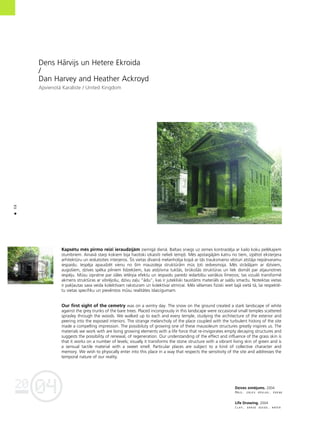
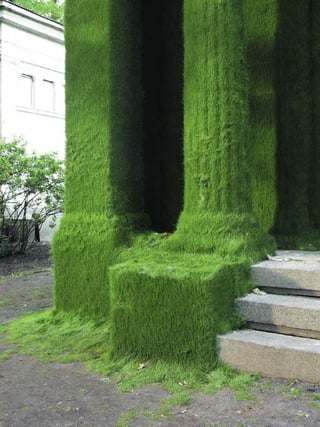
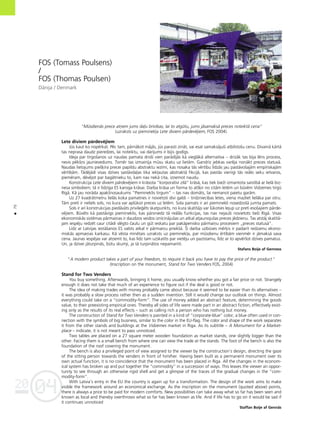
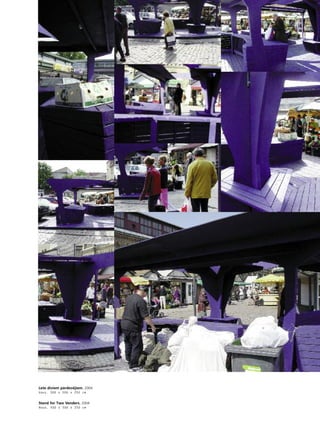
2
0
0
4
European
Space
Sculpture
Quadrennial
RÈga
2
0
0
4
Eiropas
telpa
Télniecîbas
kvadriennåle
3
•
RÈga 2 0 0 4
Eiropas telpa
Télniecîbas kvadriennåle
Rîga 2004
S/o Måkslas menedΩmenta un informåcijas centrs (MMIC)
Centre for Art Management and Information
4
•
04
20
5
•
Télniecîbas kvadriennåle
“Rîga 2004 – EIROPAS TELPA”
PASÅKUMI
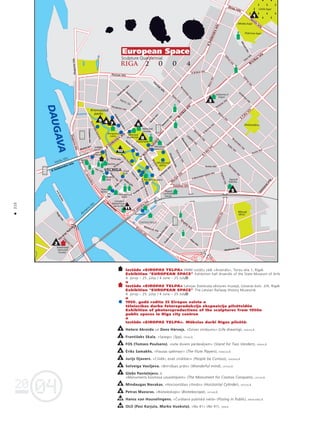
EIROPAS TELPA
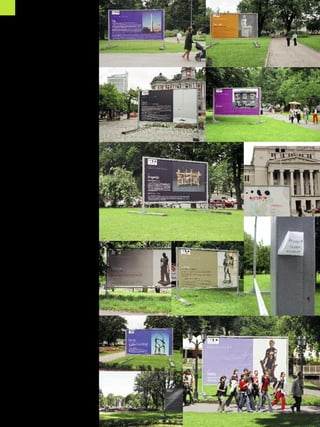
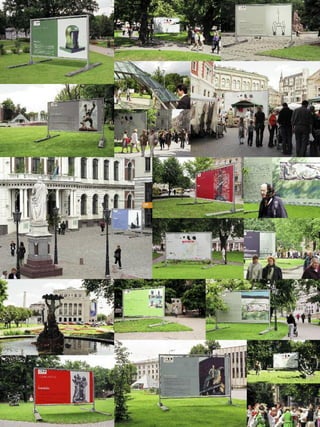
1950. gada télniecîbas darbu
fotoreprodukciju izståde Rîgas pilsétvidé
2004. gada 1. maijs – 1. augusts
Müsdienu télniecîbas darbu izståde
2004. gada 4. jünijs – 25. jülijs
Valsts Måkslas muzeja izståΩu zåle “Arsenåls”
Latvijas Dzelzce¬a véstures muzejs
Rîgas pilsétvide
KOLONIZ‰TÅ TELPA
2004. gada 5.–6. jünijs
Starptautiska konference
Rîgas Ekonomikas augstskola
ATÍIRÈGÅS REALITÅTES I, II, III, IV, V
Starptautiski seminåri
Vi¬ña, Lietuva – 2004. gada 26.marts
Helsinki, Somija – 2004. gada 24. aprîlis
Tallina, Igaunija – 2004. gada 25. aprîlis
Londona, Lielbritånija – 2004. gada 10. maijs
Stokholma, Zviedrija – 2004. gada 24. maijs
N TELPA
2004. gada 3. jünijs
Starptautiska radoßa darbnîca
Latvijas Måkslas akadémija sadarbîbå ar
Vi¬ñas,Tallinas un Helsinku Måkslas akadémijåm
Latvijas Måkslas akadémija
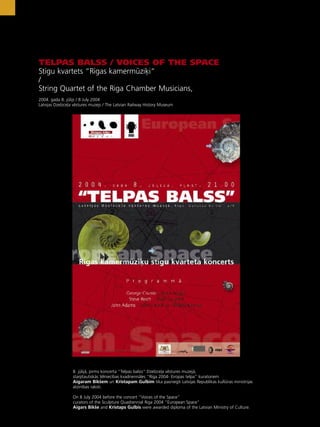
TELPAS BALSS
Koncerts izståΩu zålé
Stîgu kvartets “Rîgas kamermüzi˚i“
2004. gada 8. jülijs
Latvijas Dzelzce¬a véstures muzejs
ATÍIRÈGAS REALITÅTES
Forums un web radio
Re:Baltic
2004. gada 2.–26. jünijs
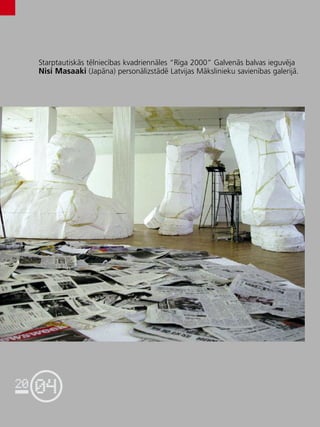
Starptautiskås télniecîbas kvadriennåles
“Rîga 2000” Galvenås balvas ieguvéja
Nisi MASAAKI personålizståde
Latvijas Måkslinieku savienîbas galerija
Sculpture Quadrennial
Riga 2004 “EUROPEAN SPACE”
EVENTS:
EUROPEAN SPACE
Exhibition of photoreproductions
of the sculptures from 1950
1 May –1 August 2004
Public spaces in Riga city centre
Contemporary sculpture exhibition
4 June – 25 July 2004
Exhibition hall Arsenåls of the State Museum of Art
The Latvian Railway History Museum
Public spaces in Riga city centre
COLONIZED SPACE
5–6 June 2004
International conference
Stockholm School of Economics in Riga
DIVERGENT REALITIES I, II, III, IV, V
International seminars
26 March 2004 – Vilnius, Lithuania
24 April 2004 – Helsinki, Finland
25 April 2004 – Tallinn, Estonia
10 May 2004 – London, Great Britain
24 May 2004 – Stockholm, Sweden
N SPACE
3 June 2004
International sculpture workshop
Latvian Academy of Art
in collaboration with
Vilnius, Tallinn and Helsinki Art academies
VOICES OF THE SPACE
Concert at the exhibition halls
String Quartet of the Riga Chamber Musicians,
8 July 2004
The Latvian Railway History Museum
DIVERGENT REALITIES
Forum and web radio
Re:Baltic
2–26 June 2004
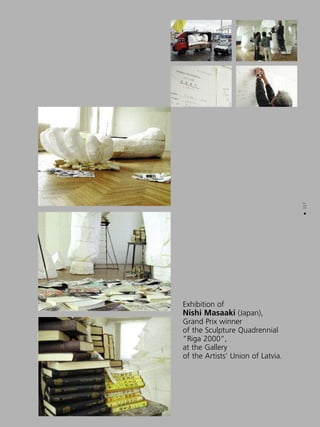
Nishi MASAAKI solo exhibition
Grand Prix-winner of the International Sculpture
Quadrennial Riga 2000
Gallery of the Artists’ Union of Latvia
6
•
Télniecîbas kvadriennåli “Rîga 2004 – EIROPAS TELPA”
rîko Måkslas menedΩmenta un informåcijas centrs un Latvijas Kultüras ministrija
sadarbîbå ar dalîbvalstu profesionålåm radoßåm organizåcijåm.
Sculpture Quadrennial Riga 2004 “EUROPEAN SPACE”
is organised by the Centre for Art Management and Information and the Latvian Ministry of Culture
in collaboration with the professional creative organisations of the participating countries.
Kuratori / Curators
Aigars Bikße
Kristaps Gulbis
Projekta direktore / Project director
Måra Ådiña
Darba grupa / Workgroup
Projekta starptautiskie koordinatori / International project coordinators
Elîna Düce, Ilze Egle, Juha van Ingens (Somija / Finland)
Sabiedrisko attiecîbu koordinatore / Public relations coordinator
Ilze Ítåla
Måkslinieks / Designer
Artis Rutks
Web måkslinieks / Web designer
Andris Dinsbergs
Tehniskais direktori / Technical directors
Måris Grosbahs, Gatis Eglîtis
Izstådes iekårtotåjs / Exhibition designer
Holgers Elers
Seminåru koordinatore / Seminars coordinator
Iréna BuΩinska
Konferences vadîtåjs / Conference moderator
Anders Kreugers (Zviedrija / Sweden)
Radoßås darbnîcas vadîtåji / Creative workshop coordinators
Barbara Åbele, G¬ebs Pante¬ejevs, Bruno Strautiñß
Lîdzorganizatori ES Kultüra 2000 ietvaros / Co-organizers within EU Culture 2000:
British Council Latvia,
Contemporary Art Information Center of the State Art Museum (CAIC),
Estonian Sculptors Union, Riksutställningar, The Association of Finnish Sculptors
Kataloga redaktore / Catalogue editor
Gundega Cébere
Måkslinieks / Designer
Artis Rutks
Tulkotåji / Translators
No ang¬u valodas / From English
Stella Pelße, Kristiåna Åbele, Eduards Liniñß, Viktors Freibergs
No latvießu valodas / From Latvian
Valdis Bérziñß, Kårlis Streips
Korektores / Proof-readers
Iveta Boiko (ang¬u val. / English), Måra ˆikitina (latvießu val. / Latvian)
Izdevéjs / Publisher
S/o MMIC – Måkslas menedΩmenta un informåcijas centrs
mmic@latnet.lv
© Autori, organizåcijas un måkslinieki, 2004
© Ilgvara Gradovska, Kristapa Gulbja un autoru foto, 2004
Iespiests / Printed
McÅbols
Våks iespiests uz Arctic Volume 300 g/m2
, iekßlapas uz Arctic Volume 150 g/m2
un Munken Print 115 g/m2
no Arctic Paper
7
•
Latvijas Kultüras ministrija
Måkslas menedΩmenta un informåcijas centrs
Sponsori un atbalstîtåji / Sponsors and support
Culture 2000
Valsts Kultürkapitåla fonds
Rîgas dome
Valsts Måkslas muzejs
Rautakesko
Air Baltic
Latnet
Zieme¬u Ministru padomes informåcijas centrs Rîgå
Trials
Latvijas Måkslas akadémija
SSE Rîga
3 M
Objekts
Pieci ezeri
Valmieras stikla ß˚iedra
Dai¬rade Expo
Arctic Paper
Casablanka
DFDS Transport
AFAA
Centre Culturel Francais Riga
Caloouste Gulbenkian Foundatin (Portugal)
Luso-American Foundation (Portugal)
Ministry of Culture of Portugal
Institute of Arts (Portugal)
Arts Council of Finland
Department for Communication and Culture,
Ministry for Foreign Affairs of Finland
Kordelin Foundation
Embassy of Finland in Latvia
Nordic Cultural Fund
FRAME Finnish Fund for Art Exchange
Ministry of Culture of the Republic of Lithuania
Fundation Culture and Sport (Lithuania)
Embassy of the Republic of Lithuania to the Republic of Latvia
Polijas Republikas véstniecîba Latvijå
Prohelvetia Arts Council of Switzerland
Nîderlandes Publiskås telpas måkslas fonds / The Dutch
Foundation For Art and Public Space (SKOR)
Informatîvais atbalsts / Information support
Diena
IB Media
Radio III
Divi putni
Rîgas Laiks
Una
Studija
Måksla Plus
Müzikas Saule
The Baltic Times
Riga this Week
Ças
Subbota
Pateicîba brîvpråtîgajiem
palîgiem /
We extend our thanks
to volunteers
Raivis Austriñß
Jana Borisova
Vita Breda
Edgars Burtnieks
Sanita Çevere
Toms Çivlis
Ivars Drulle
Jana Duhovska
Kaspars Endols
Krißs Erdmanis
Marts Erdmanis
Eduards Feoktistovs
Pauls Gailîtis
Karîna Gluhova
Liene Gréviña
Zane Gromulsone
Linda Igolniece
Kristîne Ivanova
Velga Jékabsone
Elîna Kalniña
Liene ikute
Edgars K¬aviñß
Sandis Kondråts
Andris Konoßonoks
Dina Konstantinova
Marika Kozlovska
Jånis Kudiñß
Jana Kukaine
Inese Kurzemniece
Inga Låce
Iveta Lapsiña
Ieva Lauriña
Zîle Liepiña
Ieva Lindenbauma
Ilze Litavniece
Kristîna Lukjanska
Sandra Madelåne
Santa Mazika
Anda Mendri˚e
Iveta Ozoliña
Kristîne Paeglîte
Katrîna Pakalniete
Marianna Piçula
Ilze Prikaßa
U©is Pucens
Dace Resele
Liene Rubane
Elîna Ruka
Roberts Salaks
Ieva Saulîte
Anita Sedliña
Elîna Simsone
Baiba Íime
Dårta Íñi˚e
Karîna Sîmane
Kristaps Strauts
Dairis Tiesnesis
Karîna Timofejeva
Ingmårs Usas
Evita Vasi¬jeva
Inese Valtere
Ilze Va¬ka
Gunta Vaska
Anitra Velde
Johanna Vîtanena
Uldis Zariñß
Zane Zilberte
Evija Zujeva
Starptautiskås télniecîbas kvadriennåles
“Rîga 2004 – Eiropas telpa”
Grand prix laureåti – ungåru måkslinieku
Andråßa Gålika un Bålinta Havaßa
radoßais tandéms Little Warsaw
par darbu Marmora iela,
kas eksponéts Dzelzce¬a véstures muzejå
Sculpture Quadrennial Riga 2004
“European Space” Grand Prix
Little Warsaw
(Balint Havas, Andras Galik), Hungary,
for the work “Marble Street”
Kvadriennåles Ωürijas komisija /
Jury of the Sculpture Quadrennial:
Ûürijas priekßsédétåjs / Chairman of the Jury
Gundars Bojårs,
Rîgas Domes priekßsédétåjs /
Chairman, Riga City Council
Dainis Èvåns,
Rîgas Domes Kultüras, måkslas un
reli©ijas lietu komitejas priekßsédétåjs /
Chairman of the Committee of Culture,
Art and Religion of the Riga City Council
Diåna Çivle,
Rîgas Domes Kultüras pårvaldes priekßniece /
Head of the Culture Department
of the Riga City Council
Ieva Kalniña,
Rîgas Domes Kultüras pårvaldes
Kultürpolitikas noda¬as vadîtåja,
måkslas zinåtniece /
Head of the Culture Policy Section,
Culture Department of the Riga City Council,
art historian
Nishi Masaaki (Japåna / Japan),
starptautiskås télniecîbas kvadriennåles
“Rîga 2000” Grand prix ieguvéjs /
Grand Prix winner of the
Sculpture Quadrennial “Riga 2000”
Aigars Bikße, Kristaps Gulbis,
starptautiskås télniecîbas kvadriennåles
“Rîga 2004 – Eiropas telpa” kuratori /
curators of the Sculpture Quadrennial
Riga 2004 “European Space”
04
20
8
•
Eiropas telpas sarunu objekti
Hanno Soansa saruna ar Rîgas
Télniecîbas kvadriennåles Eiropas telpa
kuratoriem Aigaru Bikßi un Kristapu Gulbi
notika Tallinå 2004. gada 13. jünijå. Tå
bija otrå divu Eiropas telpai veltîto
interviju ciklå, un tås téma no vis-
påréjiem jautåjumiem, kas tika aplükoti
pirmajå intervijå, aizvirzîjås pie
konkrétajiem kvadriennåles darbiem un to
izraisîtås rezonanses sabiedrîbå.
Hanno Soanss: Varbüt jüs gribétu aplükot konkré-
tus darbus kå daΩådu izstådes izveides aspektu piemé-
rus? Es îpaßi vélétos pievérsties 50. gadu darbu attélu
izstådîßanai uz årtelpu stendiem un skulptüråm publiska-
jå telpå. Vai jüs varétu nosaukt tos darbus, kuru izstå-
dîßana, jüsupråt, bija seviß˚i izdevusies rezultåta vai
interesanta procesa ziñå?
Kristaps Gulbis: Man seviß˚i interesants ß˚iet tas,
kas saistås ar årpus izståΩu telpåm izvietotajiem darbiem.
To autoriem bija iespéja ierasties Rîgå jau iepriekß, lai
iepazîtos ar izstådîßanås vietåm, tå ka viñi bija privile©étå
situåcijå attiecîbå pret påréjiem. Publiskajå telpå ir izvieto-
ti vairåki interesanti, ßeit pieminéßanas vérti darbi. Viens
tåds ir ‰rika Samaha saules bateriju darbinåtais skañu
objekts, kas nomaskéts parkå. Tad man vél bütu jåmin
dåña Tomasa Poulsena veidotais darbs, kas izvietots vienå
no Rîgas tirgiem. Abi darbi ir labs piemérs tam, kådu
vietéjås publikas reakciju izraisa ßådi måkslas objekti.
Jåsaka, Tomasa Poulsena darbs ¬audîm patîk. Darba pa-
matå ir ideja par to, ka cilvéki ßajå pasaules da¬å ir ¬oti lieli
individuålisti, kuri domå galvenokårt par savu mazo
pasaulîti. Tad nu måkslinieks véléjås tos apvienot zem
viena jumta, padarot viñu savstarpéjo komunikåciju
aktîvåku. Viñß izgatavoja jaunu tirgus stendu ar kopéju
jumtu un nokråsoja to koßåku salîdzinåjumå ar påréjo tir-
gus iekårtu – létåm koka konstrukcijåm ar nelieliem plas-
tikåta jumtiñiem. Un més vienojåmies ar zemniekiem, ka
péc Poulsena darba pabeigßanas viñi ar savåm precém
ievåksies viña stendå. Tomér jau nåkamajå dienå viñi paz-
iñoja, ka pårcelßoties atpaka¬, jo pircéji såkußi pårmest, ka
viñi izlikußi preci uz skulptüras. Redziet – pie darba ir
maza plåksnîte ar autora vårdu un nosaukumu.
Aigars Bikße: Nosaukums ir Lete diviem pårde-
véjiem.
KG: Tad nu pircéji pårmeta: kå nav kauna – tirgoties
uz måkslas darba, uz skulptüras; vai tad jums nemaz nav
cieñas pret måkslu? Pie tam izrådîjås, ka arî pati kon-
strukcija nav seviß˚i izdevusies, jo, kå Ωélojås tirgotåji, tå
neaizsargå dårzeñus no saules. Jumta konstrukcija bija
tåda, ka lietus laikå üdens, ja arî nelija uz dårzeñiem, tad
pircéjiem virsü gan. Més ar Aigaru apsvéråm – varbüt
mums vajadzétu mé©inåt piedabüt tirgus direktoru
samazinåt ßî stenda îres maksu. Tomér nolémåm, ka
mums nevajadzétu mé©inåt iespaidot viñu lémumus.
HS: Ja darbs pretendé veidot interaktîvus reålås
dzîves procesus, vienojot cilvékus un iespaidojot viñu uz-
vedîbu, tad vienmér ir jåbüt arî neveiksmes iespéjai. Ja tå
9
•
nav, tad darbs ir jau iepriekß nodroßinåts un nespéj pildît
pats savus nosacîjumus. Tas padarîtu labu ieceri bezjé-
dzîgu. Tad arî citos gadîjumos, kad tå ir noticis, jums diez
vai ir tiesîbas vértét projekta panåkumus. Un jüsu tagad
ståstîtais – par reakciju, kådu izraisîja tirgoßanås uz skulp-
türas, – labi atklåj kontekstu. Dånijå ¬audis bütu zinåmå
mérå sagatavotåki formåli uztvert müsdienu sociålås
skulptüras nosacîjumus – tur tådéjådi risks bütu mazåks.
Manupråt, tas ir interesants aspekts, kurå måkslinieks var
risinåt domu tålåk. Es gribétu atgådinåt Kléras Bißopas
sacîto Telpas kolonizåcijas konferencé. BieΩi ßis sociålås
skulptüras veids, kas tießi strådå ar cilvékiem un viñu
dzîves vidi, deklaré savu orientåciju uz aktîvu sabiedrîbas
pårveidi. Tomér bieΩi diskurss ap ßådiem måkslas darbiem
tiek veidots pårlieku sargåjoßs, cenßoties slépt, ka tas
neiedarbojas visos aspektos un vienmér, par spîti labåm
iecerém. Es domåju, jüsu lémums bija pareizs, jo kuratori
nereti mé©ina slépt k¬üdas. Tålåkå perspektîvå tas tikai
mazina ßådas måkslas patieso nozîmîbas potenciålu.
KG: No vienas puses, tirgotåju attieksme bija ¬oti
pozitîva. Viñi teica, ka viñiem objekts patîkot un viñi to
izmantotu, ja vien sédekli varétu atvirzît drusku tålåk un
jumtu nedaudz pårtaisît. Te proceså såk iejaukties daΩi
lokåli noteikumi, lokåli paradumi. Årpusnieks tos
neizprot. Arî latvießu måkslinieks varéja pie¬aut tås paßas
k¬üdas – jo måkslinieki jau nepieder pie tiem ¬audîm, kas
tirgojas ßajos tirgos, més arî neesam zemnieki. Zemnieki
bütîbå apdzîvo ßo tirgu un ir izveidojußi paßi savu – viñu
biznesam nozîmîgu lietu hierarhiju. Viñi var nedaudz
atbalstît arî måkslu – nekådu problému! – tikai ja tas såk
kaitét viñu noietam, tad tas vairs nav pieñemami.
AB: Konkurencé starp ierastajåm vienkårßajåm kon-
strukcijåm, uz kuråm viñi bija pieradußi tirgoties, un ßo
jauno stendu standarta konstrukcijas uzvaréja arî tåpéc,
ka, pircéjupråt, precei vecajos stendos jåbüt létåkai. Viñi
bija nåkußi pirkt dabiskus, îstus lauku produktus un sprie-
da, ka parastajos stendos ir vecå labå prece – îsti lauku
raΩojumi. Savukårt måkslas darba estétika izrådîjås tuvå-
ka prezentåciju letém, kådas ßeit tiek izmantotas tikai
tirdzniecîbas centros.
KG: Òaudis domåja – ja jau ir jauns stends, tad arî
cenas droßi vien ir augståkas. Tå viñi ir ieradinåti. Tå ir
parasta prakse – tirdzniecîbas vieta tiek labiekårtota un
tad atkal atvérta jau ar augståkåm cenåm.
HS: Tas ir saistîts arî ar tému, kuru més såkåm ap-
spriest jau iepriekßéjå intervijå, – par elitårismu, måkslu
måksliniekiem. Lai jüsu måkslas centieni iegütu nozîmi,
jums vajadzîga publika. Ja jüs mé©inåt modificét
rezultéjoßo måkslinieka iespaidu uz publiku, padarît to
“efektîvåku”, såk zust tå sasaiste ar realitåti. Lai gan man
patießåm patîk Tomasa Poulsena ideja, ßajå darbîbas fåzé
man tås îstenojumå nebütu jåjaucas. Müsu pirmå saruna
bija par “mums un viñiem” – un tas pats ß˚îrums darbo-
jas ßeit. Misék¬i noråda uz tåm atß˚irîbåm, kas paståv
starp måkslinieka iedomåto tirgu un to, kå tas funkcioné
ikdienas realitåté. Jaucoties proceså, més varétu galu galå
nonåkt pie naivås pårliecîbas, ka més varam radît ßiem tir-
gotåjiem labåkus stendus, neko îsti nezinot par tir-
goßanos – tå ir vél viena elitårås pieejas forma, labu gri-
boßs, bet aprobeΩots elitårisms.
AB: Viens no galvenajiem pretendentiem uz Ωürijas
balvu bija Hårvija un Ekroidas darbs. Kad måkslinieki pir-
moreiz ieradås Rîgå izpétes braucienå, viñi apsvéra daΩå-
das iespéjas. Viens no iespéjamiem variantiem bija lielfor-
måta attéli, kas tiktu veidoti, izmantojot fotosintézi. Viñi
izvieto uz sienas tumßå telpå audzétu zåli un projicé uz
tås fotogråfiju – milzîgu, lîdz 10 metriem augstumå.
Pateicoties fotosintézei, divu nedé¬u laikå attéls atveidojas
dabiskajå materiålå. Tad viñi zåli nomérdé, tå konservéjot
darbu. Rezultåtå tiek iegüts milzîgs dabiskas izcelsmes
gobeléns ar fotogråfijas negatîvu. Més viñiem atradåm
trîs daΩådas potenciålås vietas, trîs arhitektoniskus objek-
tus, kurus viñi varéja izmantot savai instalåciju sérijai –
padarît tos za¬us, apaudzéjot ar zåli. Efekts, protams, ir
fantastisks. Arhitektüra, éka zaudé savu materialitåti un it
kå pazüd. Jo garåka aug zåle, jo nearhitektoniskåka k¬üst
éka – tai züd visas deta¬as, un tå såk funkcionét vidé kå
vienota za¬a masa. Rîgå måkslinieki to realizé graustå,
postaΩå, un tur tas darbojas seviß˚i labi.
KG: Tai vietå uz katra so¬a ir narkomånu izmétåtas
߬irces...
AB: Måkslinieki strådåja påris dienas, kamér sakopa
to vietu. Tad éku pårklåja ar måla maisîjumu, kam pie-
jauktas zåles séklas. Kad tås såka dîgt, éka pamazåm
pårvértås za¬å maså. Bija ¬oti interesanti vérot, kå tas
maina müsu apkårtéjås vides uztveri.
KG: Vizuåli, man ß˚iet, tas bija ¬oti spécîgi, ¬oti ie-
spaidîgi. Bet més baΩîjåmies par to ¬auΩu iespéjamo
rîcîbu, kuri tur ierodas, lai apreibinåtos ar narkotikåm vai
alkoholu, un daΩkårt pavada nakti. Lîdzås ir cietums, tå
ka vieta nav pati droßåkå. Més baidîjåmies, kas ßådos
apståk¬os var notikt ar måkslas darbu. Såkumå uz pår-
klåtås sienas tießåm kåds kaut ko uzrakstîja. Taçu, kad cil-
véki ievéroja, ka dîgst zåle, kad viñi såka nojaust gaidåmo
rezultåtu, attieksme k¬uva daudz saudzîgåka, nekå
ierasts.
HS: Tåtad jums izdevås sasniegt rezultåtu, kas lîdzi-
nås Tomasa Hirßhorna îstenotajam ar viña Bataija pie-
minekli (Bataille Monument) pédéjå Documenta, kad
måkslinieks kaut kå iefiltréjås turku imigrantu kopienå un
panåca savstarpéju uzticéßanos ar tås locek¬iem, tå ka
varéja pat atståt tur dårgu televîzijas studijas aprîkojumu
bez apsardzes.
KG: Tas ir interesants fenomens. Més ar Aigaru ap-
spriedåm iespéju veidot måkslas centru kådå no trü-
cîgåkajiem rajoniem, jo tur dzîvojoßo cilvéku attieksme ir
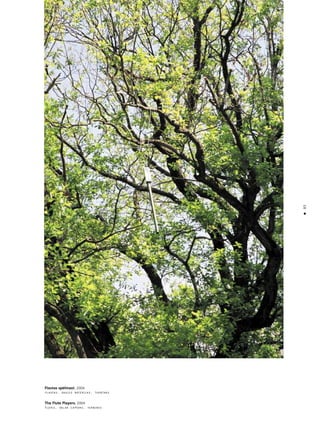
daudz pretimnåkoßåka. Es domåju, arî ‰riks Samahs uz-
ñémås lielu risku, izvietojot ar saules ener©iju darbinåmås
flautas. Vai jüs tås redzéjåt?
HS: Jå, es biju paßa måkslinieka vadîtajå ekskursijå uz
ßo objektu. Taisnîbu sakot – brîniß˚îgs darbs. Kad spîd
saule, flautas såk spélét, bet, kad ir måkoñains, darbs –
kas ir rüpîgi noslépts – apklust un k¬üst pilnîgi nepa-
manåms!
KG: Tas ir tas, kas man måkslinieka veikumå ¬oti pa-
tîk – tas nav uzkrîtoßi nolikts pilsétas centrå, nav masîvs
skulpturåls veidojums, kas sev pieprasa milzumu telpas.
Man patîk ßî diskrétå saskarsme ar publiku. Viña darbs ir
¬oti delikåts, savukårt tå publiskoßanas metode – ne gluΩi.
Uzturoties Rîgå, måkslinieks katru dienu pårvietojås pa
pilsétu ar savu saules flautu rokå un ståstîja par to katram
sastaptajam.
HS: Ar instrumentu rokå viñß izskatîjås kå mags, kå
Oza zemes burvis... Bija diezgan aizraujoßi uzzinåt, kå tas
darbojas, uzskañojoties péc saules gaismas.
KG: Vai zinåt, ka to skañu var arî ierakstît? Instru-
mentå ir mikrofons. Íîs instalåcijas nav måkslinieka vienî-
gais darbîbas virziens, taçu viens no tiem, ko viñß paståvî-
gi attîsta. Bet, ja jüs salîdzinåtu viña darbu ar, pieméram,
to, kuru veidoja Navaks, tås ir divas daΩådas pieejas. Un
Rîgå tie izvietoti viens no otra kådus 300 metrus
attålumå.
10
•
HS: Tomér, es domåju, abas metodes ir vitåli svarîgas
müsdienu skulptürai. Joprojåm ir daudz darbu, kuri operé
ar masu un materialitåti, un arî darbi, kuri ir jau gluΩi vai
pie nepamanåmîbas robeΩas, bet arî ¬oti iedarbîgi,
vérotåju aktîvi iesaistoßi. Tie bieΩi pårsteidz cilvékus ne-
sagatavotus. Labåkais rezultåts tiek sasniegts, kad ¬audis,
kas katru dienu dodas cauri ßim parkam, pékßñi pamana
kådas ¬oti smalkas pårmaiñas.
KG: Navaks man ståstîja, ka darba uzstådîßanas laikå
garåm gåjis kåds vecs krievs un noprasîjis: “A ti kto
takoi?”1 Navaks kådu laiku vilcinåjies ar atbildi un tad
paziñojis: “Ja ñemec.”2 Tad vecis arî kådu brîdi kluséjis,
apsverot dzirdéto. Galu galå viñß atteicis: “ˆemec – eto
vsjo taki luçße çem latiß.”3
HS: Un arî to var paveikt tikai publiskås telpas skulp-
türa. Tå var atklåt problému samezglojumus publikas
apziñå, kuri tur ir paståvîgi un iespaido lémumus, bet reti
tiek formuléti vårdos. BieΩi vien tiem ir sakars ar nacionå-
lo piederîbu un sociålo statusu. No vecåka krievu stråd-
nieka visnota¬ var sagaidît låstu “jüs – faßisti tådi”, un
viñam tas izskan apméram tåpat kå “jüs – våcießi tådi”,
kaut arî tas jau ne tuvu nav viens un tas pats. Un tad viñß
pauΩ: “Våcießi tomér ir labåki nekå jüs – latvießi tådi.”
KG: Un ko jüs domåjat par Hansa Houvelingena
darbu?
HS: Varbüt man nedaudz apßaubåmas ß˚iet viña ide-
jas Eiropas telpas importa sakarå – it kå Latvija lîdz ßim
nebütu bijusi Eiropas da¬a, un viñß tagad ir atvedis ßurp
kaut ko no holandießu modernisma, lai ßo telpu ßeit iedi-
binåtu. Tomér man patîk, ka modernisma vésture tiek
uzskatîta par vértîbu, par kaut ko vispåreiropeisku. Kåpéc
lai holandießu modernisma darbu nepårbaudîtu, ievieto-
jot citå kontekstå un laika ietvarå? Ja to varétu turpinåt,
uzce¬ot îstu éku – iespéjams, pirmo vadoßa holandießu
müsdienu arhitekta projektétu celtni Austrumeiropå –,
tas bütu patießåm lieliski.
KG: No vienas puses – ir interesanti sekot arhitekta
domai par to, vai ßeit ir vai nav Eiropas telpa. No ßåda
viedok¬a tas jau atkal ir jautåjums par “mums un viñiem”.
No otras puses – bütu interesanti vérot rîdzinieku attieks-
mi.
AB: Manupråt, tas büs viens no darbiem, kas
nedaudz provocés. Såkotnéji ß˚ita, ka arî Ekroidas un
Hårvija darbs provocés cilvékus. Bija ¬oti grüti sañemt
at¬auju, jo instalåcijas vieta bija kådreizéjås kapsétas teri-
torijå, un kapela ir arhitektüras piemineklis. Tomér atbil-
dîgås institücijas direktors ir diezgan müsdienîgi domå-
joßs – viñß labi saprot, ka ir svarîgi veidot saikni ar ßodie-
nas aktuålo kultüru. Ja nedarbojas nekas aktuåls, bet tikai
atmiñas, tad nekas nepaliek no ßodienas, no müsu laikam
atbilstoßiem simboliem. Rîgå joprojåm smagi jåcînås pret
¬audîm, kuri uzskata, ka visam nozîmîgajam pagåtnes
mantojumam jåtiek iebalzamétam vai butaforiski atdari-
nåtam – kå Melngalvju nama gadîjumå.
HS: Bet kå måkslinieki iedomåjås savu darbu kåd-
reizéjås kapsétas kontekstå? Tå kå identisku darbu viñi
veidojußi arî citå vidé, tad tas k¬üst par atß˚irîgu konteks-
tu testu arî viñiem paßiem...
AB: Savu instalåciju viñi veidoja pamestå baznîcå un
tådéjådi it kå atgrieza dzîvîbu ßajå vietå. Pirms tam éka
netika izmantota un bija pak¬auta izpostîßanai. Viñu måk-
sla rosinåja tås nozîmîbas atjaunoßanos. Tå arî atklåja ßajå
apkårtné dzîvojoßajiem, tiem, kas ir pie ßîs ékas pieradußi,
jaunu pieeju vecajai baznîcai. Pamestå vietå neviens vairs
nerüpéjas par vides ståvokli – ßis måkslas darbs orientéjas
tießi uz ßo rüpju rosinåßanu. Kaut vai tikai tas, ka viena
celtne ßajå vietå tiek iztîrîta, palîdz citådi uztvert apkårtni,
tas izsaka citådas esamîbas iespéjamîbu.
HS: Íî nolaistå vietå esoßås ékas iztîrîßana un måkslas
darba veidoßana tajå ir visai interesants piemérs, kå ¬oti
poétisks darbs, klasiska instalåcija, var reizém radît spécî-
gåku sociålo efektu nekå tießi sociåli vérsts, programma-
tiski sociåls darbs.
KG: Bet ir vél kåds interesants aspekts – ja to darîtu
jüs vai kåds cits no vietéjiem måksliniekiem, reakcija bütu
atß˚irîga. Manupråt, Latvijas sabiedrîbå kopumå ir ¬oti po-
zitîva attieksme pret årzemniekiem. Ja årzemju måkslinie-
ki ierodas Rîgå un pievérß uzmanîbu ßai vietai, tad te jåbüt
kaut kam patießåm vértîgam.
AB: Tas gan attiecas uz ¬audîm, kam ir kåda såkot-
néjå informåcija, bet ßî rajona iemîtnieki... Més baidîjå-
mies no vanda¬u postîjumiem. Tomér ¬audis, kuriem par
måkslu nav nekåda priekßstata, nepavisam nebija agresîvi
noskañoti pret ßo darbu.
KG: Nepavisam. Viñi visi gribéja ar tur strådåjoßajiem
måksliniekiem aprunåties.
AB: Tå kå tas nav pilsétas centrs, tad tur uzturas vieni
un tie paßi cilvéki. Viñi sazinås savå starpå. Ja viens pazi-
ño, ka, redziet, ßis puisis no Anglijas te taisa kaut ko
forßu, tas darbojas kå bezdråts telegråfs un piesaista
uzmanîbu. Izrådîjås, ka vietéjais informåcijas lauks iedar-
bojas ¬oti labvélîgi.
HS: Kå ir ar vidusméra auditorijas interesi – vai tå
vairåk fokuséta uz darbiem publiskajå telpå vai uz izstå-
di?
KG: Praktisku apsvérumu dé¬ vairåk cilvéku ir ap-
skatîjußi darbus izståΩu zålé – nav jåpårvietojas pa visu pil-
sétu ar karti rokå. Més jau visi esam slinki un domåjam,
ka to taçu var paspét rît vai nåkamnedé¬, kamér ir jau par
vélu. Bet kåda ir Latvijas måkslas profesionå¬u attieksme
pret ßo notikumu – kå tev ß˚iet, Aigar?
AB: Kad Ωurnålisti izråda véléßanos ar mums ap-
runåties, tad man ß˚iet, ka viñus vairåk interesé publiskås
telpas måksla.
HS: Bet varbüt tas tå ir tießi tåpéc, ka vairåk nekå
desmit gadus ir bijis vérojams tåds müsdienu måkslas
deficîts publiskajå telpå? Tagad viñi var arî novértét
starpîbu.
KG: Òoti bieΩi uzdots jautåjums ir – kå ßie darbi
mijiedarbojas ar to publiskås telpas måkslu, kas Rîgå ir, ar
pieminek¬iem? Tomér es nekad agråk neesmu Latvijå
vérojis tådu kultüras jomå nespecializéto mediju interesi.
Kad més izsütîjåm preses relîzes un uzaicinåjåm viñus uz
akreditåciju, sañémåm atbildi, ka viñus tas neinteresé.
Tagad viñi müs uzmeklé un paziño, ka ir mainîjußi savu
viedokli un vélas rakstît par ßo notikumu. Viñu skatîjums
uz ßo notikumu un tas, kå viñi izsakås par måkslu, ir visai
interesanti. Tas nepårprotami atß˚iras no müsu redzéju-
ma, taçu iesåkumam, protams, nav slikti.
AB: Kas attiecas uz atsauksmém medijos, 50. gadu
måkslas darbi funkcioné ¬oti sekmîgi un skulptüras pub-
liskajå telpå arî. Savukårt par ekspozîcijåm izståΩu zålés –
kaut arî tas ir müsu svarîgåkais elements – publikas
interese ir ierobeΩota, lielåko tiesu intereséjas profe-
sionå¬i.
KG: Í˚iet, ar vienu darbu mums ir izdevies pievérst
gluΩi neceréta publikas segmenta uzmanîbu – ar Dena
Íipsaidsa darbu. Man piezvanîja no alpînisma biedrîbas
un lüdza, vai nevarot izmé©inåt to veidojumu Arsenålå,
kas taisîts no alpînisma treniñiem domåta materiåla.
Vispirms viñi ieradås skulptüru apskatît, péc tam tajå
uzråpties. Tas ir paradoksåli – tirgü pircéjus mulsinåja tas,
ka zemnieki tirgo savu preci uz skulptü-
ras, kas taçu bija domåta tirgoßanai, bet
ßie puißi ieradås paßi, lai izmé©inåtu sa-
vas spéjas izståΩu zålé! Viñi nepavisam
nemulsa. Protams, es teicu, ka man
prieks par viñu lémumu. Viñi savukårt
mums pateicås par alpînisma propagan-
déßanu.
AB: Tåda jau arî bija ßî darba ori©i-
nålå iecere – såkotnéji més plånojåm to
izvietot lielveikalå, taçu nevaréjåm vieno-
ties ar veikalu par deta¬u pienåcîgu nos-
tiprinåßanu. Bet visinteresantåkais ir tas,
ka alpînisti paßi ievéroja ßo darbu izståΩu
zålé un nekautréjås palügt at¬auju tajå
uzkåpt.
BieΩi vien tießi ßådas mazas sa-
biedrîbas grupas atklåj måkslas darbus
kådå patießåm interesantå aspektå,
iedzîvina tos kontekstå un sniedz intere-
santu vielu vélåkai apsprießanai. Tå ir ma-
zo nißu publika, kas padara skulptüras
par sarunu objektu, veidojot sociålo
diskursu.
KG: Runåjot par izstådi kopumå
mums ar Aigaru daudzi pårmetußi “vés-
tîjuma” neesamîbu. Måkslas profe-
sionå¬u aprindås ir pierasts ßåds “kura-
toru véstîjums tautai”. Més abi esam
måkslinieki un ßo izstådi esam büvéjußi
uz citiem, mums interesantiem princi-
piem: uz situåcijas fikséßanu, uz to, kas
konkrétå laikå – 1950. un 2004. gadå –
daΩådås kultürtelpås tiek uzskatîts par
vértîbu. Un atkal esam nonåkußi pie
“més un jüs”.
Tießi ßî robeΩlînija man arî ß˚iet tå
interesantåkå – tas, kådé¬ vispår bija
vérts pasåkumu “Eiropas telpa” orga-
nizét. Tådé¬ atbilde, ko sañémåm no Rî-
gas Galvenås policijas pårvaldes ar attei-
kumu ierosinåt kriminållietu par Lielajos
kapos izvietotå måkslas darba uz-
turéßanai nepiecießamå tehniskå inven-
tåra zådzîbu, ir pårliecinoßa liecîba, ka
måkslas, måkslas profesionå¬u un sa-
biedrîbas attiecîbås vél daudz daråms, lai
més kaut vai såktu mé©inåt sarunåties,
ja ne vienå, tad vismaz lîdzîgå, visiem
saprotamå valodå.
1, 2, 3 Krievu val.
•
11
12
•
The Conversation Pieces
of “European Space”
The interview with the curators of
Riga Sculpture Quadrennial, “European
Space”, Aigars Bikße and Kristaps Gulbis,
took place in Tallinn, on 13
th
June 2004.
As it was the second one from the set of
two interviews relating to “European
Space”, the focus was shifted from the
general issues addressed in the first
interview to concrete artworks at the
Sculpture Quadrennial and the resonance
they provoke in public.
Hanno Soans: Maybe you would like to choose
some works as examples of different aspects building up
the exhibition. I would particularly like to mention the
works from the 1950s installed on billboards and the
sculptures in public space. Could you address the works,
which in your opinion have been a particular success or
interesting as a process?
Kristaps Gulbis: I found very interesting the issues
concerning the works exhibited outside the exhibition
halls. These artists could come to Riga beforehand for the
research visits, so they were in a privileged position com-
pared to the others. In public space there are some works
particularly interesting to address here. One is by Erik
Samakh, a sound piece feeding on solar energy and dis-
creetly situated in a park. Then I should mention the
work by FOS, Thomas Poulsen from Denmark, whose
work is situated in one of Riga’s marketplaces. These are
both good examples of how local people can react to the
artwork. Actually people like Thomas Poulsen’s work. His
initial idea about people in this part of the world was that
they are very individual, thinking mostly about their own
small worlds. So he wanted to connect them under one
roof, making communication between them more active.
He made a new stand with a common roof and painted
it to look nice if you compare it with the existing struc-
tures in the market, which are cheap wooden things with
some plastic for the roof. We agreed with the farmers
who are selling there, that after Poulsen’s work is fin-
ished, they will move to this new stand. But as they
moved there for one day they told us they are going to
move back because some customers started to complain
that they sell their stuff on a sculpture. There is a tiny sign
with the artist’s name and the title attached to the stand,
you know.
Aigars Bikße: The title is “Stand for Two Venders”.
KG: So their question was, how dare you trade on an
artwork, on a sculptural object, don’t you have any
respect for art? It also came out that the construction
itself was not too good as the guys selling complained
that it doesn’t protect vegetables from the sun. The roof
was constructed in a way that even if the water doesn’t
get on vegetables, it drops on customers, when it is rain-
ing. We discussed with Aigars weather we have to influ-
ence the director of the market, make him to reduce the
rent for this stand? But we came to the conclusion that
we shouldn’t try to influence their decisions.
HS: If there is a work, intended at building up real-
life interactive processes connecting people and influenc-
ing their behaviour, there must always be the possibility
to fail. If it is not there the work is pre-protected and can-
not fulfill its own preconditions. It makes good effort
meaningless. You can then hardly claim to measure the
success of another occasion, when it might have hap-
pened. And what you told me now is revealing a lot
about the context, this reaction to trading on a piece of
sculpture. In Denmark people would have been pre-
pared, to a certain extent, to formally accept the condi-
tions of contemporary social sculpture – thus there would
have been less risk. I think this is an interesting aspect for
the artist to consider further. I wanted to recall here what
Claire Bishop addressed in “Colonising Space” confer-
ence. Often this kind of social sculpture, working direct-
ly with people and their environment, claims to be orien-
tated to actively changing society. But often discourse
around this kind of work is overprotective trying to hide
that it might not work in every aspect every time, despite
good intentions. I think you made the right decision,
because often curators are trying to mask failures. In
longer terms that is reducing the actual potential of the
importance of that type of work.
KG: From one hand there was very positive attitude
from the guys selling in the market. They told us that
they like the stand and that they would use it, only if this
seat could be moved a little bit further and this roof re-
done a bit. There are some local rules, local habits step-
ping in. They cannot be understood by someone who is
from outside. The artist from Latvia might have made the
same mistake. Because artists don’t belong to this group
of people who are trading goods in markets, we are not
farmers. They basically inhabit the market and they have
developed their own hierarchy of things important for
their business. They can support artwork a little, no prob-
lem, but if their sales are deteriorating, they cannot
accept it.
AB: In the competition between the traditional
rough structures they were used to be trading on and the
new stand, the rough basic structures won also because
customers expected that the price on the old stands
would be cheaper. As they came there for authentic raw
peasant food they believed that rough stands mean the
good old thing and the product will really be from the
countryside. The aesthetics of this artwork thus was clos-
er to the aesthetics of presentation, which here is used
only in the shopping malls.
KG: People thought that if you buy from new stands
the price probably is also higher.
That is how they have been trained. It is a usual prac-
tice to refurbish a place to open up with higher prices.
HS: This is related to the topic we started to discuss
in the previous interview, concerning elitism, art for art-
ists only. You need public to make your effort meaning-
ful. If you try to modify the result of artists’ impact on
public, to make it more “efficient”, it looses its touch
with reality. Although I really like the idea of Thomas
Poulsen I shouldn’t interfere with it in this phase. Our first
conversation was about Us and Them – the same distinc-
tion works here. The drawbacks are addressing these dif-
ferences, which exist between artists’ imagination of a
market place and the very practicalities of it operating. By
interfering we might end up in a naïve conclusion that
we might do better stands for people trading there with-
out any experience about trading, which is another form
of an elitist approach, benevolent but narrow minded
elitism.
AB: Harvey and Ackroyd’s piece was one of the
favourites of the Jury. When the artists came first time to
Riga, for a research trip, they were thinking of various
possibilities. They also make huge pictures using photo-
synthesis as a process. So that was one possible variant.
They take a dark room, grow grass on the wall there and
project a huge photography on it, up to 10 meters. And
with the help of photosynthesis taking place within 2
weeks the picture is transformed on the natural material.
And they then kill the grass, conserving the picture. The
result is a big naturally grown tapestry with an image in
negative. We found for them three different places as
potential sites for the series of installations they do with
architectural objects, which they turn green by growing
grass on them. The effect, of course, is fabulous. The
architecture, the building loses its materiality and sort of
disappears. The more the grass grows the less architec-
tural the building seems, all details are reduced and it
starts to work in the environment as a green mass. The
place they are doing it in Riga is a desolate area, a rough
place, and this works particularly well there.
KG: It was a place with a lot of needles left behind
by junkies...
AB: The artists cleaned the place, working for a cou-
ple of days. The building was covered with the mixture of
clay containing seeds of grass. When it started to grow
the building turned into a green mass. It is very interest-
ing how our perception of environment around it
changes.
KG: Visually, I think it is very powerful, very impres-
sive. But we were worried about the attitude of those
people who go there and use drugs or drink there and
sometimes stay overnight. It is close to jail, so this neigh-
borhood is not very safe. We were concerned what will
happen to the work in these circumstances. Something
was indeed written on the building in the beginning. But
when people started to notice the grass growing and
anticipated the result, the attitude became more caring
than it is usually.
HS: So you could get the same result like Thomas
Hirschhorn got at the last Documenta with his “Bataille
Monument”, that he could somehow enter a Turkish
emigrant community and establish a trust relationship
between himself and the community so that he even
could leave there expensive TV studio equipment without
guard.
KG: This is an interesting phenomenon. We were dis-
cussing with Aigars the possibility of establishing an art
center in some kind of depressed area, because the atti-
tude of people living there is more generous. Erik
Samakh, I think, also did take big risk with his flutes oper-
ating on the solar energy. Did you see that one?
HS: Yeah, I was at the excursion the artist gave about
the piece. It is marvelous, actually. When it is sunshine
the flutes start to play and when it is cloudy the piece,
which is sort of invisible anyway, turns silent and disap-
pears completely.
KG: That is something that I very much like in his
work – it is not something rudely put in the city center as
a massive piece of sculpture claiming a lot of space for
itself. I like his discreet way of dealing with the public. His
work is very sensitive, but at the same time the way he is
promoting his work is quite different. When he was here,
he was every day walking through Riga with his solar
flute in his hand talking about it to everyone.
HS: He looked like a magician, the Wizard of Oz,
with that thing... It was quite impressive to get to know
how his instruments work, making a tune out of light.
KG: Did you know that you could also record that
sound? There is a microphone inside. He is not working
only with this type of installations all the time, but this is
one branch of his activities he is developing constantly.
But if you for example compare his work with the work
of Navakas, these are two different approaches. And in
Riga they are exhibited maybe 300 meters from each
other.
HS: But I think both methods are vital for contem-
porary sculpture. You still see a lot of work dealing with
mass and materiality and also pieces, which are on the
border of hardly being noticeable but work very strong-
ly, engaging the viewer actively. They often get the peo-
ple unprepared. So best of all the result is realized by
people who pass this park every day and suddenly notice
that something very subtle has changed.
KG: Navakas told me that when he was installing his
piece there was an old Russian guy passing by and ask-
ing: ‘A ti kto takoi?’* Navakas took some time and then
answering back he claimed: ‘Ja nemets.’** The old man
was also silent for a while, taking his time for thinking.
Finally he responded: ‘Nemets eto vsjotaki lutshe tshem
latish.’***
HS: And this is also one thing that only public sculp-
ture can do. It can bring up problematic knots in public
consciousness always there to influence our decisions,
but seldom verbalized. Often these are things to do with
national identity or social status. You could expect an
older worker guy of Russian origin to curse “you fas-
cists”, which equals to him with something like “you
Germans”, but which of course is not the same thing at
all. And then you get a thing like “Germans are still bet-
ter than “Latvians”.
KG: So what do you think of Hans van
Houwelingen’s work.
HS: Maybe I have some doubts about his ideas con-
cerning importing European space, as if Latvia were not
a part of European Space and he is bringing a bit of
Dutch modernism over to establish it. But I like how his-
tory of modernism is considered as something valuable
and trans-European. Why not to put a legendary piece of
Dutch modernism in another context and time frame to
test it? If this can be continued into carrying out the actu-
al building, probably the first building of a leading Dutch
modern architect in Eastern Europe, it would be great.
KG: On the one hand it is interesting to follow the
artist considering if this is European space here or not. It
is once again the question of Us and Them from his point
of view. And on the other side it would be interesting to
see the attitude of people in Riga.
AB: I think this will be one of the works, which is a
bit provocative. At first it seemed that also the piece by
Ackroyd and Harvey provokes people. It was very hard to
get the permission for the work, as the installation site
was a former cemetery. And also as this chapel is part of
architectural heritage. But the director of this institution
is quite an advanced in his attitudes. He well understands
the importance of creating links with living culture of our
days. If there is no present involved but only reminis-
cences, nothing remains from the present day, no sym-
13
•
04
20
14
•
bolism adequate to our age. There is a big battle in Riga
between people who have an attitude that everything
important from the past has to be mummified or pre-
sented as a fake show, like the House of Blackheads, for
example.
HS: But how did the artists think of working in the
context of a former cemetery? As they have done similar
work in another context the piece is like a test for differ-
ent contexts for them too...
AB: They did an installation in a former church,
which sort of woke up the place. Earlier it was planned
to demolish the church, as it was not a functioning
space. Their art gave a new push to the meaning of the
place. It also showed another way of drawing nearer the
old edifice to people who live there, who are accustomed
to that building. In a desolate place nobody pays atten-
tion to the environment any more. Their work focuses on
getting this attention. Just cleaning up one building in
this area helps to think of all the surrounding houses dif-
ferently, it makes difference as a potentiality articulated.
HS: To clean one building in a desolate environment
and make a work there is quite an interesting lesson of
how a very poetic piece, a classical installation work can
sometimes carry a stronger social effect than a directly
social work, a programmatically social piece.
KG: But there is also another interesting aspect – if
you would have done it or someone from the local artists
the reaction would have been different. I think in Latvia
in general we have a very positive attitude towards for-
eigners. If foreign artists are coming to Riga and paying
attention to this place there must be something really
valuable there.
AB: This mainly goes for people who have some
background information, but the inhabitants of this
area... We were afraid of the possible damage by van-
dals. But the people who are coming without knowing
anything about art were not aggressive about the work.
KG: No. They were all very eager to talk with the
artists working and so on...
AB: As it is not a central area the local people are
used to communicate between each other. If one of
them says this is a guy from England doing something
nice there, it works like post without letters drawing
attention. The local field of information has luckily turned
out to be favourable.
HS: What about the interest of the popular audi-
ence, is it more focused on the public artworks or the
exhibition.
KG: If you look at it from the practical point of view
more spectators have seen indoor works: people in gen-
eral are lazy to walk around through the whole city with
a map in one’s hand. We think we can do it next day or
next week until it is too late. But what is the attitude of
art professionals in Latvia towards the event, what do
you think, Aigars?
AB: Journalists who are willing to speak with us,
seem to have more interest in public art.
HS: But maybe it is exactly because there has been
such a deficit of public contemporary art for more than a
decade. And now they also can recognize the difference.
KG: A very usual question is how these works inter-
act with public art we have in the city of Riga, like mon-
uments? But at the same time I have never noticed in
Latvia such an interest from media not specialized in cul-
ture. When we sent press releases and invited them for
accreditation for the event they told us that they are not
interested. And now they approach us and say that they
have changed their mind and want to make an article on
the event. Their perspective on the event and how they
talk about art is interesting. It obviously differs from our
point of view, but that’s a good start indeed.
AB: Judging from the media resonance the works
from the 1950s work very good and also the public
sculpture. But the exhibition halls, although they are the
central ones, have a limited number of public with most-
ly professional interest.
KG: There is one example showing that we managed
to rouse interest of an unexpected section of public – this
is the piece by Dan Shipsides. I got a call from a moun-
tain climbing society as they wanted to test out this piece
in the Arsenåls Hall, which was built from the props of
mountain climbing. They first came to look at the sculp-
ture and then to try it out. It is a paradox as in the mar-
ket place the customers were insulted by the fact the
farmers are trading on a piece of sculpture, which really
was made for trading, but these guys came to us to test
out their skills in the exhibition hall. They were not afraid
to take initiative. Of course I told them that it is very good
that they made the decision to try it. They thanked us for
popularizing the mountain climbing.
AB: That was the original idea when we planned to
install it in a supermarket initially. But we couldn’t reach
an agreement on security measures. The most interesting
is that they did find this work at the exhibition and were
not shy to ask permission.
It is often these small communities, which sort of
open the works up in a really interesting way, make them
live in context and give something really interesting to
talk about later. It is the niche audiences, which turn the
sculptures into conversation pieces, molding the social
discourse.
KG: With regard to the exhibition as a whole, many
have accused Aigars and me of the absence of any “mes-
sage”. Among art professionals, a “message to the peo-
ple from the curator” is customary. We are both artists
and have built this exhibition around other principles,
which interest us: to record the situation and show what
was regarded as valuable in different cultural milieus in
the particular time period: 1950. un 2004. And again, we
have reached a situation of “us and them”.
This boundary line in particular seems the most inter-
esting to me: it was the reason why it was worth organ-
ising the “European Space” event at all. Thus, the answer
we received from the Riga Main Administration of Police
regarding its refusal to initiate a criminal case concerning
the theft of technical equipment necessary for maintain-
ing a work of art placed in the Great Cemetery repre-
sents clear evidence that there is still a great deal to do in
the realm of relations between art professionals and soci-
ety before we can even begin to try to communicate, if
not in the same language then at least in a mutually intel-
ligible fashion.
* Who are you?
** I am German.
*** German is still better than Latvian.
15
•
Decision No 90.
On refusal to initiate a criminal case
In accordance with Article 109 of the Criminal Process Code, I, A. Íurko, District Inspector of Riga City Main Police
Administration, reviewed material ENÛ-1524 of 09.07.2004, and in the course my investigation established that:
On 09.07.2004, the Chairperson of the Board of the public organisation Art Management and Information Centre
Måra Ådiña made a submission to the 28th Police Department of the Riga City Main Police Administration, regarding the
fact of the disappearance of a plastic water container. In her submission, M. Ådiña explained that the public organisation
Art Management Centre had been undertaking activities in the Riga Great Cemetery. For the purpose of these activities, a
water container of 2000 l in volume had been procured, left in the territory of the Great Cemetery from 21.05.2004.
Intensive work was conducted on preparing the art object up to 19.06.2004. On 09.07.2004, it was found that the water
container had disappeared.
In view of the above, it is concluded that the water container, left unattended, may have been regarded by some
unknown person as abandoned, ownerless property, and, without knowledge of the ownership of the container, someone
may have collected it as a chance find. Thus, the action of this unknown person may not be regarded as a criminal act, as
envisaged by Section 1, Article 175 of the Criminal Law of Latvia, and so, in accordance with Article 5, Section 2 of the
Criminal Process Code of Latvia and Article 112 of the Criminal Process Code, I decided:
1. To refuse to initiate a criminal case.
2. To send a copy of this decision to the Prosecutor’s Office of Vidzeme District of the City of Riga.
District Inspector A.Íurko
kastas par gluku
17
•
Valsts
Måkslas
muzeja
izståΩu
zåle
“Arsenåls”
Exhibition
hall
Arsenåls
of
the
State
Museum
of
Art
04
20
18
•
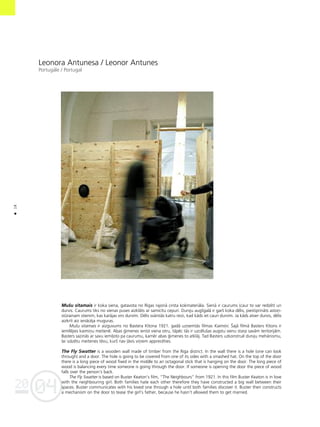
Leonora Antunesa / Leonor Antunes
Portugåle / Portugal
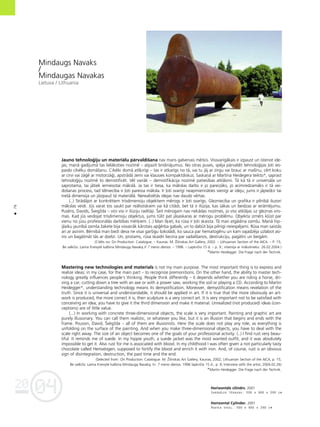
Mußu sitamais ir koka siena, gatavota no Rîgas rajonå cirsta kokmateriåla. Sienå ir caurums (caur to var redzét) un
durvis. Caurums tiks no vienas puses aizklåts ar samîcîtu cepuri. Durvju augßgalå ir garß koka délis, piestiprinåts astoñ-
stürainam stienim, kas karåjas virs durvîm. Délis svårstås katru reizi, kad kåds iet cauri durvîm. Ja kåds atver durvis, délis
aizkrît aiz ienåcéja muguras.
Mußu sitamais ir aizguvums no Bastera Kîtona 1921. gadå uzñemtås filmas Kaimiñi. Íajå filmå Basters Kîtons ir
iemîléjies kaimiñu meitené. Abas ©imenes ienîst viena otru, tåpéc tås ir uzcélußas augstu sienu starp savåm teritorijåm.
Basters sazinås ar savu iemî¬oto pa caurumu, kamér abas ©imenes to atklåj. Tad Basters uzkonstrué durvju mehånismu,
lai izåzétu meitenes tévu, kurß nav ¬åvis viñiem apprecéties.
The Fly Swatter is a wooden wall made of timber from the Riga district. In the wall there is a hole (one can look
through) and a door. The hole is going to be covered from one of its sides with a smashed hat. On the top of the door
there is a long piece of wood fixed in the middle to an octagonal stick that is hanging on the door. The long piece of
wood is balancing every time someone is going through the door. If someone is opening the door the piece of wood
falls over the person’s back.
The Fly Swatter is based on Buster Keaton’s film, “The Neighbours” from 1921. In this film Buster Keaton is in love
with the neighbouring girl. Both families hate each other therefore they have constructed a big wall between their
spaces. Buster communicates with his loved one through a hole until both families discover it. Buster then constructs
a mechanism on the door to tease the girl’s father, because he hasn’t allowed them to get married.
19
•
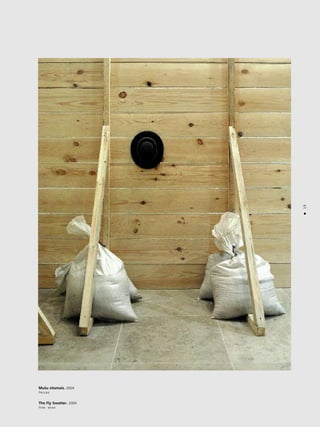
Mußu sitamais. 2004
Priede
The Fly Swatter. 2004
Pine wood
04
20
20
•
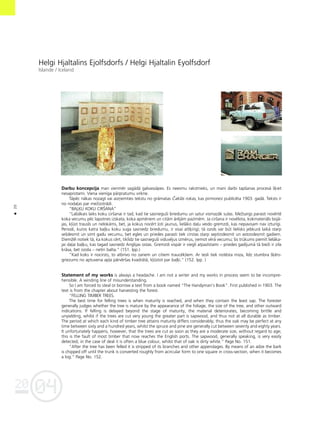
Helgi Hjaltalins Ejolfsdorfs / Helgi Hjaltalin Eyolfsdorf
Islande / Iceland
Darbu koncepcija man vienmér sagådå galvassåpes. Es neesmu rakstnieks, un mani darbi tapßanas proceså ß˚iet
nesaprotami. Viena vienîga pårpratumu virkne.
Tåpéc nåkas nozagt vai aizñemties tekstu no gråmatas Çaklås rokas, kas pirmoreiz publicéta 1903. gadå. Teksts ir
no noda¬as par meΩizstrådi.
“BAÒU KOKU CIRÍANA”
“Labåkais laiks koku cirßanai ir tad, kad tie sasniegußi briedumu un satur vismazåk sulas. MeΩsargs parasti novérté
koka vecumu péc lapotnes izskata, koka apmériem un citåm åréjåm pazîmém. Ja cirßana ir novélota, kokmateriåls bojå-
jas, k¬üst trausls un nelokåms, bet, ja kokus nocért ¬oti jaunus, lielåko da¬u veido gremzdi, kas nepavisam nav izturîgi.
Periodi, kuros katra ba¬˚u koku suga sasniedz briedumu, ir visai atß˚irîgi; tå ozols var büt lielisks jebkurå laikå starp
seßdesmit un simt gadu vecumu, bet egles un priedes parasti tiek cirstas starp septiñdesmit un astoñdesmit gadiem.
DiemΩél notiek tå, ka kokus cért, tiklîdz tie sasniegußi viduvéjus izmérus, ñemot vérå vecumu; ßis trükums piemît lielåka-
jai da¬ai ba¬˚u, kas tagad sasniedz Anglijas ostas. Gremzdi vispår ir viegli atpazîstami – priedes gadîjumå tå bieΩi ir zila
kråsa, bet ozola – netîri balta.” (151. lpp.)
“Kad koks ir nocirsts, to atbrîvo no zariem un citiem traucék¬iem. Ar tesli tiek notésta miza, lîdz stumbra ß˚érs-
griezums no aptuvena ap¬a pårvérßas kvadråtå, k¬üstot par ba¬˚i.” (152. lpp. )
Statement of my works is always a headache. I am not a writer and my works in process seem to be incompre-
hensible. A winding line of misunderstanding.
So I am forced to steal or borrow a text from a book named “The Handyman’s Book”. First published in 1903. The
text is from the chapter about harvesting the forest.
“FELLING TIMBER TREES.
The best time for felling trees is when maturity is reached, and when they contain the least sap. The forester
generally judges whether the tree is mature by the appearance of the foliage, the size of the tree, and other outward
indications. If felling is delayed beyond the stage of maturity, the material deteriorates, becoming brittle and
unyielding, whilst if the trees are cut very young the greater part is sapwood, and thus not at all durable as timber.
The period at which each kind of timber tree attains maturity differs considerably; thus the oak may be perfect at any
time between sixty and a hundred years, whilst the spruce and pine are generally cut between seventy and eighty years.
It unfortunately happens, however, that the trees are cut as soon as they are a moderate size, without regard to age;
this is the fault of most timber that now reaches the English ports. The sapwood, generally speaking, is very easily
detected; in the case of deal it is often a blue colour, whilst that of oak is dirty white.” Page No. 151.
“After the tree has been felled it is stripped of its branches and other appendages. By means of an adze the bark
is chipped off until the trunk is converted roughly from acircular form to one square in cross-section, when it becomes
a log.” Page No. 152.
21
•
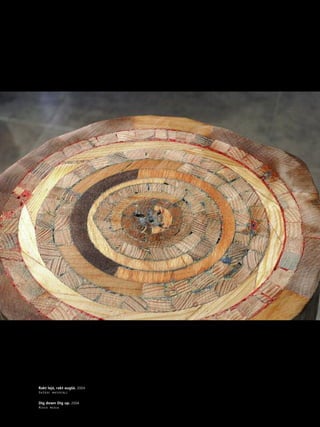
Rakt lejå, rakt augßå. 2004
DaΩådi materiåli
Dig down Dig up. 2004
Mixed media
04
20
22
•
Rißårs Fogé / Richard Fauguet
Francija / France
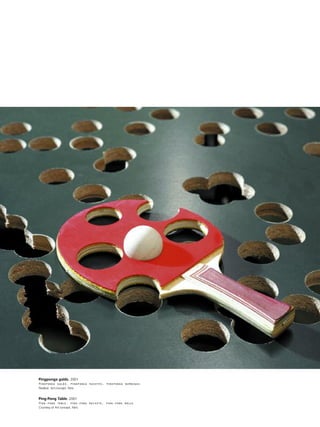
Kopß 2000. gada un izstådes La beauté du geste qui associait Vasivjérå, péc aizraußanås sportu un müsdienu
måkslu, Fogé ˚éries pie pingponga galdiem. Izskatås, ka pédéjos apsédußas izbadéjußåm molekulåm lîdzîgas trakas
bumbiñas. Galdi ir kå îsti kaujas lauki ar vietu manevriem un sadursmém, kå virtuålas ainavas ar izteiktu reljefu. Tie ir
gatavi jebkuram scenårijam: tå bumbiñas, kuras saliedétas savå trajektorijå ar liektu metåla stiebru palîdzîbu, atsauc
atmiñå fotogråfu, pirmåm kårtåm Marija un MaibridΩa, iemüΩinåtos mirk¬us. Tas ir kå drudΩainas, burleskai lîdzîgas
dienas steigas apstådinåßana. Rißåram Fogé pingponga galds atjauno saikni ar skulptüras pamatprincipiem, t.i., måkslas
akadémijas pirmå kursa studentiem måcîto samazinoßo un saskaitåmo metodi. Gludajå, neitrålajå telpå (zilie naftas
kråsas panno) iezîméjas méms posts (katastrofa, nelaime), nepårliecinoßs, nedroßs îslaicîgums.
(Citéts no kataloga: Decron Benoæt, Richard Fauguet.
Mus‚e de l’Abbaye Sainte-Croix, Les Sables d’Olonnes, 23 juin – 22 septembre 2002.)
Since 2000 and the exhibition “La beaut‚ du geste qui associait” at Vassivière, following on his earlier fasci-
nation with sport and contemporary art, Fauguet has turned to ping pong tables. The latter appear beset with crazy lit-
tle balls resembling hungry molecules. The tables are like real battlefields, a scene of manoeuvres and clashes, like vir-
tual landscapes with marked relief. They are ready for any scenario: balls whose trajectories are connected by means
of curved metal rods, recalling the moments captured by photographers such as Marey and Muybridge. The freezing
of a feverish, burlesque daily rush. For Richard Fauguet, the ping pong table restores a link with the basic principles of
sculpture, i.e., the method of reduction and counting taught to first-year art students. The smooth, neutral space (pan-
els in crude-oil blue) becomes a setting for mute destruction (catastrophe, calamity), with an unpersuasive, insecure
impermanence.
Quoted from the catalogue
“Decron Benoæt, Richard Fauguet (Mus‚e de l’Abbaye Sainte-Croix, Les Sables d’Olonnes, 23 juin – 22 septembre 2002)”
23
•
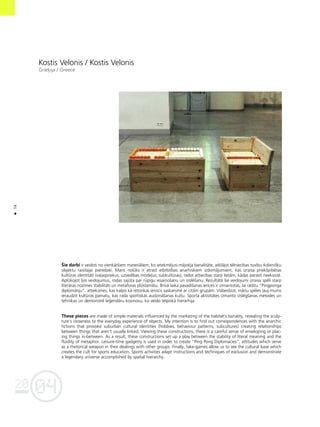
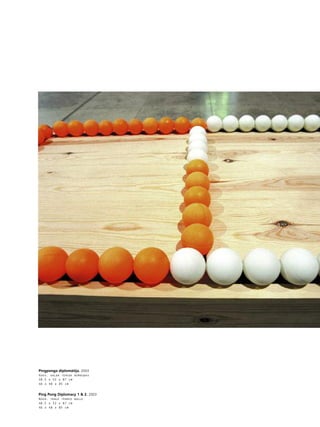
Pingponga galds. 2001
Pingponga galds, pingponga raketes, pingponga bumbiñas
Piedåvå: Art:concept, Paris
Ping-Pong Table. 2001
Ping-pong table, ping-pong rackets, ping-pong balls
Courtesy of Art:concept, Paris
04
20
24
•
Gints Gabråns / Gint Gabran
Latvija / Latvia
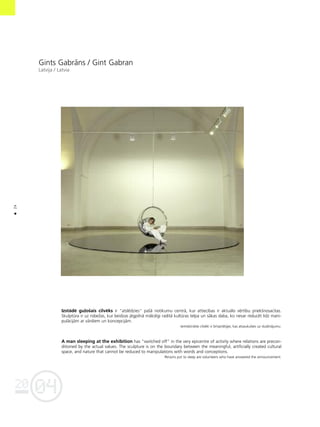
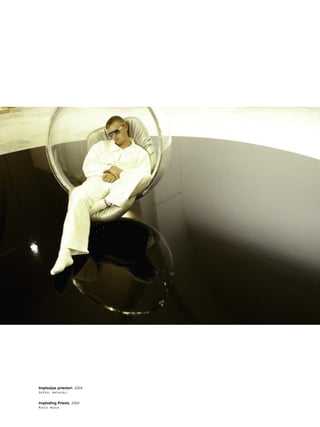
Izstådé gu¬oßais cilvéks ir "atslédzies" paßå notikumu centrå, kur attiecîbas ir aktuålo vértîbu priekßnosacîtas.
Skulptüra ir uz robeΩas, kur beidzas jégpilnå måkslîgi radîtå kultüras telpa un såkas daba, ko nevar reducét lîdz mani-
pulåcijåm ar vårdiem un koncepcijåm.
Iemidzinåtie cilvéki ir brîvpråtîgie, kas atsaukußies uz sludinåjumu.
A man sleeping at the exhibition has "switched off" in the very epicentre of activity where relations are precon-
ditioned by the actual values. The sculpture is on the boundary between the meaningful, artificially created cultural
space, and nature that cannot be reduced to manipulations with words and conceptions.
Persons put to sleep are volunteers who have answered the announcement.
25
•
Implozijas priesteri. 2004
DaΩådi materiåli
Imploding Priests. 2004
Mixed media
04
20
26
•
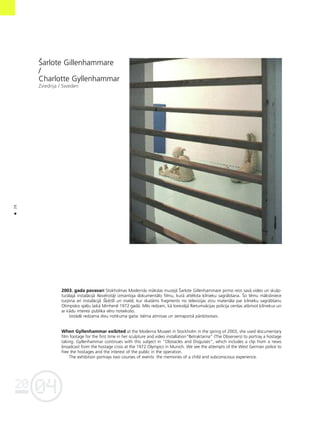
Íarlote Gillenhammare
/
Charlotte Gyllenhammar
Zviedrija / Sweden
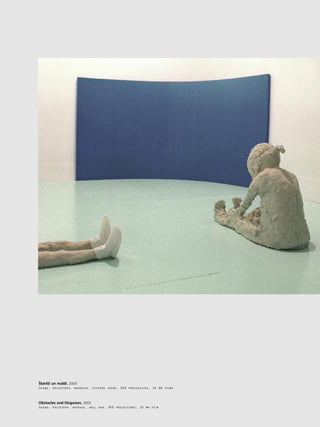
2003. gada pavasarî Stokholmas Modernås måkslas muzejå Íarlote Gillenhammare pirmo reizi savå video un skulp-
turålajå instalåcijå Novérotåji izmantoja dokumentålo filmu, kurå attélota ˚îlnieku sagråbßana. Ío tému måksliniece
turpina arî instalåcijå Í˚é®ßli un maldi, kur skatåms fragments no televîzijas ziñu materiåla par ˚îlnieku sagråbßanu
Olimpisko spé¬u laikå Minhené 1972 gadå. Més redzam, kå toreizéjå Rietumvåcijas policija cenßas atbrîvot ˚îlniekus un
ar kådu interesi publika véro notiekoßo.
Izstådé redzama divu notikuma gaita: bérna atmiñas un zemapziñå pårdzîvotais.
When Gyllenhammar exibited at the Moderna Museet in Stockholm in the spring of 2003, she used documentary
film footage for the first time in her sculpture and video installation”Betraktarna” (The Observers) to portray a hostage
taking. Gyllenhammar continues with this subject in “Obstacles and Disguises”, which includes a clip from a news
broadcast from the hostage crisis at the 1972 Olympics in Munich. We see the attempts of the West German police to
free the hostages and the interest of the public in the operation.
The exhibition portrays two courses of events: the memories of a child and subconscious experience.
27
•
Í˚ér߬i un maldi. 2003
Skaña, poliesters, matracis, zviedru siena, DVD projekcijas, 16 mm filma
Obstacles and Disguises. 2003
Sound, polyester, matrass, wall bar, DVD projections, 16 mm film
04
20
28
•
Jons Gundersens / Jon Gundersen
Norvé©ija / Norway
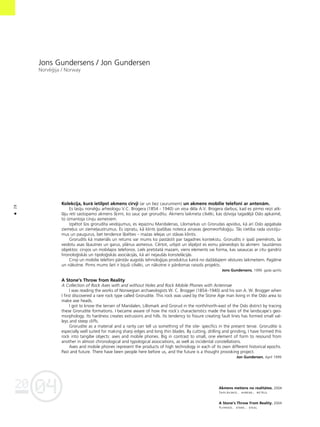
Kolekcija, kurå ietilpst akmens cirvji (ar un bez caurumiem) un akmens mobilie telefoni ar antenåm.
Es lasîju norvé©u arheologu V.C. Brogera (1854 - 1940) un viña déla A.V. Brogera darbus, kad es pirmo reizi atk-
låju reti sastopamo akmens ß˚irni, ko sauc par grorudîtu. Akmens laikmeta cilvéki, kas dzîvoja tagadéjå Oslo apkaimé,
to izmantoja cirvju asmeñiem.
Izpétot ßos grorudîta veidojumus, es iepazinu Maridalenas, Lilomarkas un Grorudas apvidus, kå arî Oslo apgabala
zieme¬us un zieme¬austrumus. Es izpratu, kå klints îpaßîbas noteica ainavas ©eomeorfolo©iju. Tås cietîba rada izvirzîju-
mus un paugurus, bet tendence ß˚elties – mazas ielejas un ståvas klintis.
Grorudîts kå materiåls un retums var mums ko paståstît par tagadnes kontekstu. Grorudîts ir îpaßi piemérots, lai
veidotu asas ß˚autnes un garus, plånus asmeñus. Cértot, urbjot un slîpéjot es esmu pårveidojis ßo akmeni tauståmos
objektos: cirvjos un mobilajos telefonos. Liels pretstatå mazam, viens elements vai forma, kas sasaucas ar citu gandrîz
hronolo©iskås un tipolo©iskås asociåcijås, kå arî nejaußås konstelåcijås.
Cirvji un mobilie telefoni pårståv augstås tehnolo©ijas produktus katrå no daΩådajiem véstures laikmetiem. Pagåtne
un nåkotne. Pirms mums ßeit ir bijußi cilvéki, un nåkotne ir pårdomas raisoßs projekts.
Jons Gundersens, 1999. gada aprîlis
A Stone’s Throw from Reality
A Collection of Rock Axes with and without Holes and Rock Mobile Phones with Antennae
I was reading the works of Norwegian archaeologists W. C. Brogger (1854–1940) and his son A. W. Brogger when
I first discovered a rare rock type called Grorudite. This rock was used by the Stone Age man living in the Oslo area to
make axe heads.
I got to know the terrain of Maridalen, Lillomark and Grorud in the north/north-east of the Oslo district by tracing
these Grorudite formations. I became aware of how the rock`s characteristics made the basis of the landscape`s geo-
morphology. Its hardness creates extrusions and hills. Its tendency to fissure creating fault lines has formed small val-
leys and steep cliffs.
Grorudite as a material and a rarity can tell us something of the site- specifics in the present tense. Grorudite is
especially well suited for making sharp edges and long thin blades. By cutting, drilling and grinding, I have formed this
rock into tangibe objects: axes and mobile phones. Big in contrast to small, one element of form to resound from
another in almost chronological and typological associations, as well as incidental constellations.
Axes and mobile phones represent the products of high technology in each of its own different historical epochs.
Past and future. There have been people here before us, and the future is a thought provoking project.
Jon Gundersen, April 1999
Akmens metiens no realitåtes. 2004
Saplåksnis, akmens, metåls
A Stone’s Throw From Reality. 2004
Plywood, stone, steal
29
•
04
20
30
•
Aksels Lîbers / Axel Lieber
Våcija / Germany
Aksela Lîbera darbi ir saistîti ar daΩådiem mérogu palielinåßanas un samazinåßanas veidiem, mérîßanu un jaunu izvi-
etojumu radîßanu. Viñß péta attiecîbas starp ˚ermeni un atmiñu. Jaunajå izståΩu zålé, kas pårsniedz jebkurus sapråtîgus
izmérus, viñß uzstådîja savu télniecisko mérogu.
Skulptüras Die ErfŸllung såkumpunkts bija ideja par ß˚autñainu T kreklu. Lîbers pårvérta T kreklu no bezformîga
ap©érba gabala par paßpietiekamu minimålistisku torsu. Viñß palielinåja tå mérogus un pagrieza to augßpédus. Moder-
nisma arhitektüra un cilvéka ˚ermenis apvienoti hibrîdå formå. Såkotnéjais ˚ermeniskais apjoms pårcelts nelielas, vie-
nai personai domåtas ékas mérogå. Måjas årpusi un iekßpusi veido sienas, kas klåtas ar divkårßu celtniecîbas putu slåni,
radot siltuma, viegluma un gaisîguma iespaidu. Måjå var ieiet; tajå müs sagaida objekti, kas saistås ar iedzîvi un ap©ér-
bu. Télnieciskås pårveides proceså tie ir fragmentéti, samazinåti, palielinåti, radikåli izmainîti vai ieguvußi jaunu bütîbu.
Måjas mérogi un izcelsme kopå ar “elpojoßajåm” sienåm maina müsu sajütas. Dzîvîbas acumirklîgais potenciåls ir
pårveidots telpisko attiecîbu sistémå, jütîgå materiåla izpratné un cilvéciskajå atmiñå.
Ar skices palîdzîbu jüs varat stådîties priekßå skulptüru izvietojumu. Attéli var sniegt aptuvenu priekßstatu par
sareΩ©îto saspéli starp årpusi un iekßpusi.
Axel Lieber’s work is concerned with different modes of up- and down-scaling, taking measurings and creating new
positionings. He explores the relations between living, body and memory. In the new fair hall of a size beyond any
reasonable dimension he set up his own sculptural scale.
The starting point of the sculpture “Die ErfŸllung” has been the idea about an angular T-shirt. Lieber transformed
the T-shirt from a shapeless body-covering into an independent minimalist torso. He has scaled it up and turned it on
its back. Modernist architecture and the human body are combined to create a hybrid form. The original volume of the
body is transposed to the size of a small one-person house. The outside and the inside of the house is covered with
walls of double layered styrofoam which create a feeling of warmth, lightness and breathing. The house can be entered
for a journey inwards, where objects with reference to the world of living and clothing await us. In the process of their
sculptural creation they have been fragmented, compressed, enlarged, de-cored or formed into new substancies.
With relation to the scale and the origin of the house together with the “breathing” walls they transform to organs
of feeling. The immediate potential of life is turned into a system of spatial relations, sensitive materiality and human
memory.
31
•
Pieminek¬i (Rîga). 2004
Segas, lîme
Memorials (Riga). 2004
Blankets, glue
04
20
32
•
DeAnna Maganiasa / DeAnna Maganias
Grie˚ija / Greece
Manos darbos atkårtojas ideja par pazîstamu lietu uztveri no sånskata, kad objekta interpretåcija svårstås kaut kur
starp kaut ko tauståmu un kaut ko abstraktu.
Daudzi téli rodas no nemiera sajütas, ko raisa draudîgi notikumi, kuri tiek uztverti kå neizbégami un nekontroléja-
mi. Citi atveido iztélotu interjeru fragmentus, vietas, kur nav iespéjams pårvietoties vai elpot un kas varétu bütu uz
sabrukuma robeΩas.
Daudzos darbos es izmantoju mérogu mode¬us, lai manipulétu ar mikrokosmu, kas grauj ß˚ietami paredzamo real-
itåti. Íî “realitåte” samazinåtå mérogå sniedz skatîtåjam neiespéjamu skatpunktu, kas atrodas årpus un virs ierastås
arhitektoniskås pozîcijas.
Aténas–Rîga ir trîsdimensionåla karte, kas konstruéta péc atmiñas, un atveido salu, kurå es nekad neesmu bijusi.
Tå ir vieta, ko es zinu péc skata, vidü ir jüra, un attålums ir mazliet par lielu, lai varétu aizpeldét. Reiz, lidojot virs
Peloponésas, es redzéju salu no gaisa un ilgojos péc ßîs vietas, kas ir vienlaikus pazîstama un nezinåma. Darbs ir par
ainavu, kas ir påråk tålu, lai bütu sasniedzama, par attålumu, kas ir pietiekami liels, lai apgrütinåtu nok¬üßanu.
A recurring idea in my work is about the oblique perception of familiar things, where the interpretation of an
object falters somewhere between something tangible and something abstract.
Many images arise out of a sense of unrest towards events which are imminent, which are felt to be inescapable
and beyond one’s control. Others depict fragments of dreamscape interiors, places that are impossible to move
around, breathe in and which may be on the brink of collapse.
In many works I use scale models to manipulate a microcosm that undermines an ostensibly predictable reality. This
‘reality’ in small scale gives the spectator an impossible point of view outside and above a familiar architectural
situation.
“Athens–Riga” is a 3 dimensional map, constructed from memory, of an island I have never been to. It is a place
that I know in a view, separated by the sea from a distance that would be barely too far to swim. Once, flying over the
Peloponnesus, I saw the island from the air and I longed for this place that is at the same time familiar and unknown.
The piece is about a landscape that is too far to access, about a distance that is just great enough to frustrate your
passage.
33
•
Aténas–Rîga. 2004
DaΩådi materiåli
500 x 700 x 300 cm
210 x 100 x 75 cm
Athens–Riga. 2004
Mixed media
500 x 700 x 300 cm
210 x 100 x 75 cm
04
20
34
•
Marija Mîsenbergere / Maria Miesenberger
Zviedrija / Sweden
Savå instalåcijå Rotéjoßås smadzenes Marija Mîsenbergere rota¬îgi un pårsteidzoßi apvieno jautåjumus par cilvéka
personisko identitåti ar visspécîgåko cilvéka pråta simbolu – smadzeném.
Kå cilvéciskas bütnes més uzticamies savåm sajütåm, ticot, ka tås atspogu¬o realitåti. Mariju Mîsenbergeri interesé
situåcijas, kurås smadzenes müs pievi¬. Viña pati ir ßådas situåcijas piedzîvojusi. Iespéjams, ka årpasaule, ko més uztve-
ram, patiesîbå neeksisté, bet ir tikai smadzeñu radîta; nejaußi elektriskie impulsi, kas dod mums iespéju redzét un
piedzîvot lietas, kas îstenîbå nepaståv. Izmantojot gaistoßus, nevértîgus materiålus – daΩi no tiem ir kiçîgi, bet citi vairåk
atgådina grîdas lupatas –, Marija Mîsenbergere rada skulptüras, kas veido paßas savu, personîbu apdzîvotu, pasauli. Tå
ir portretu galerija, kas demonstré emocionålus ståvok¬us un attieksmi pret sevi un citiem.
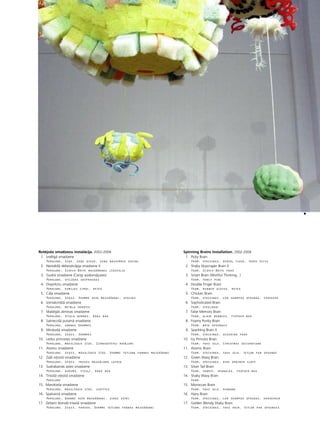
In her installation “Spinning Brains”, Maria Miesenberger playfully and surprisingly couples together questions
pertaining to the human subject and personal identity with the most potent symbol of human rationality – the brain.
As human beings we trust the evidence of our senses, believing that they are a reflection of reality. Maria
Miesenberger is interested in situations when the brain deludes us. She has an experience of such situations herself. It
is possible that the outside world that is communicated to us does not actually exist but that it is a construction of the
brain itself; stray electrical impulses that make it possible for us to see and experience things that do not really exist.
Using transient, worthless materials – some of them kitschy while others more reminiscent of floor cloths – Maria
Miesenberger creates sculptures that form a world of their own, populated by personalities. A portrait gallery of states
of mind and approaches to ourselves and to each other.
35
•
Spinning Brains Installation. 2002-2004
1. Picky Brain
Foam, stockings, dental floss, tooth picks
2. Shaky Skyscraper Brain II
Foam, Scotch-Brite pads
3. Smart Brain (Wishful Thinking...)
Foam, fancy pins
4. Double Finger Brain
Foam, rubber gloves, wetex
5. Chicken Brain
Foam, stockings, car shampoo spounge, feathers
6. Sophisticated Brain
Foam, steelwool
7. False Memory Brain
Foam, glass bubbles, feather-boa
8. Foamy Punky Brain
Foam, bath spounges
9. Sparkling Brain II
Foam, stockings, scouring pads
10. Icy Princess Brian
Foam, fake silk, Christmas decorations
11. Atomic Brain
Foam, stockings, fake silk, teflon pan spounge
12. Green Wavy Brain
Foam, stockings, dish drainer cloth
13. Silver Tail Brain
Foam, fabric, spangles, feather-boa
14. Shaky Wavy Brain
Foam
15. Moroccan Brain
Foam, fake silk, ribbons
16. Hairy Brain
Foam, stockings, car shampoo spounge, horsehair
17. Golden Blondy Shaky Brain
Foam, stockings, fake hair, teflon pan spounges
Rotéjoßo smadzeñu instalåcija. 2002-2004
1. Izvélîgå smadzene
Porolons, ze˚e, zobu diegs, zobu bakståmie kociñi
2. Nestabilå debesskråpja smadzene II
Porolons, Scotch-Brite mazgåßanas lîdzeklis
3. Gudrå smadzene (Cerîgi aizdomåjusies)
Porolons, stilîgas saspraudes
4. Divpirkstu smadzene
Porolons, gumijas cimdi, wetex
5. Cå¬a smadzene
Porolons, ze˚es, ßvamme auto mazgåßanai, spalvas
6. Izsmalcinåtå smadzene
Porolons, metåla skråpis
7. Maldîgås atmiñas smadzene
Porolons, stikla bumbas, ådas boa
8. Satriecoßå putainå smadzene
Porolons, vannas ßvammes
9. Mirdzoßå smadzene
Porolons, ze˚es, ßvammes
10. Ledus princeses smadzene
Porolons, måkslîgais zîds, Ziemassvétku rotåjumi
11. Atomu smadzene
Porolons, ze˚es, måkslîgais zîds, ßvamme teflona pannas mazgåßanai
12. Za¬å vi¬ñotå smadzene
Porolons, ze˚es, trauku mazgåjamå lupata
13. Sudrabainås astes smadzene
Porolons, audums, vizu¬i, ådas boa
14. Trîsoßå vi¬ñotå smadzene
Porolons
15. Marokießa smadzene
Porolons, måkslîgais zîds, lentîtes
16. Spalvainå smadzene
Porolons, ßvamme auto mazgåßanai, zirgu astri
17. Zeltaini blondå trîsoßå smadzene
Porolons, ze˚es, parüka, ßvamme teflona pannas mazgåßanai
04
20
36
•
Karlußs Nogveira / Carlos Nogueira
Portugåle / Portugal
About “Construction for Nowhere at all” I wrote:
a man was walking in search of himself
when he noticed that the fields had been set on fire
the sea was out of control
and the sun burned in a different way
with willing hands he worked at joining together stones
and whatever else he could find
to build a geometric house that opened at the top
opposite to the houses and landscapes
he had known before
and with the remaining light
he made a floor
Par Konstrukciju nekurienei es rakstîju:
cilvéks gåja meklédams sevi
kad viñß pamanîja ka lauki ir aizdedzinåti
jüra bija nekontroléjama
un saule dedzinåja citådi
viñß labpråt strådåja sastiprinådams akmeñus
un visu citu ko vien varéja atrast
lai uzceltu ©eometrisku måju kas atveras augßå
pretî måjåm un ainavåm
ko viñß pazina iepriekß
un ar atlikußo gaismu
viñß izveidoja grîdu
37
•
Konstrukcija nekurienei. 2002–2003
Koks, stikls, dzelzs
Construction for Nowhere at all. 2002–2003
Wood, glass, iron
04
20
38
•
Naiema O'Melija / Niamh O'Malley
Èrija / Ireland
Darbå parådîta atß˚irîba starp attéloßanas mehånismiem un to piedåvåto izpratni, ßai gadîjumå starp videoprojek-
ciju un trîsdimensionålu objektu.
Es vélos såkt diskusiju par ainavas skatîtåja fizisko novietojumu. Ainava tiek definéta kå dabas “ieråméßana”. Tå ir
lîdzeklis, lai aptvertu un fiksétu müsu dabisko pieredzi. Íåda ieråméßana arî deformé un izjauc “reålo”, jo péc bütîbas
tikai daΩi pieredzes aspekti var tikt formuléti. Kontrolétais télojums, kas izvélas pieredzes elementus, ko ietvert fokuså,
ir veids, kå saprast vietas neizmérojamo plaßumu dabå. Ar norobeΩojuma palîdzîbu arî periférå “citådîba” k¬üst redza-
ma. Klåt neesoßå daba arî veido da¬u no jebkuras ainavas télojuma pieredzes.
Projekcija piedåvå figüru dabiskå lielumå, kura pieskaras gleznotam objektam priekßplånå. Í˚iet, ka starp figüru un
ßo reålo objektu trîsdimensiju telpå notiek mijiedarbîba. Ar digitålo apstrådi no videoieraksta ir izdzésts viens taisnstüris,
tådé¬ tas projekcijå redzams balts. Èstais délis ir atsliets savå vietå pie galerijas sienas.
Darbs atgådina gleznu, kura léni kustas un kurå mijiedarbe starp reålo un attéloto raisa apjukumu. Te rodas vizuåla
spriedze starp déli kå “reålu” objektu un attélu un “reålu” videoieraksta telpu, kurå figüra cenßas izk¬üt no divdimen-
siju telpas. Tiek pieñemts, ka skatîtåjiem (atß˚irîbå no video redzamås figüras) ir tießa pieeja attélam, kas redzams dé¬a
priekßpusé.
Es vélos apcerét skatîßanås grütîbas, jautåjot par skatîßanås aktu un par to, vai jebkurß mé©inåjums dot apzinåtu,
“informétu” vértéjumu noliedz autentiskas pieredzes iespéju. Måkslas darbiem bieΩi piemît dubults ieråméjums, citiem
vårdiem, akcentéta un apzinåta reålas radîßanas reproducéßana; attélojuma apzinåta attéloßana. Mani interesé distance
starp såkotnéjo pieredzi un tås vélåko izpausmi télå. Íî distance var ß˚ietami likvidét katru îstas pieredzes iespéju, bet
varbüt ßî “distance” patiesîbå kalpo tam, lai pastiprinåtu såkotnéjå momenta auru.
The work deals with the disparity between representational devices and the understanding they propose, in this case
a video projection and a three dimensional object.
I am proposing a discussion on the physical positioning of a landscape viewer. Landscape is defined as a “framing”
of nature. It provides us with a tool for the containment and location of our natural experiences. Such framing also dis-
torts and disturbs the “real” since by its nature only some aspects of the experience can be articulated. The controlled
representation that selects elements of experience for focus is a way of comprehending the vast natural site. Through
its demarcation, the peripheral “other” is also made visible. The absent nature also constitutes part of any experience
of landscape representation.
A projection presents a figure (life-size) touching a painted object in the foreground. The figure`s interaction
appears to be with this real object in three-dimensional space. Through digital post-production, one rectangle has been
deleted from the video so that it is displayed white when projected. A real board leans against the gallery wall in its
place.
The work resembles a slowly moving painting where the interaction between the real and the represented becomes
confused. There is a visual tension between the board as a “real” object and image and the “real” space of the video
where the figure tries to negotiate a way out of its two dimensional space. The audience is directly implicated to as
they (unlike the figure in the video) have access to the image depicted on the front of the board.
I want to consider the difficulties of viewing and pose a question whether any attempt at a deliberate, “knowing”
appreciation negates the attempted authentic experience. There is often a double framing within the artworks, in other
words, a marked and intended reproduction of the real production: an acknowledged representation of a representa-
tion. I am interested in the distance between the original experience and its final representation as an image. This dis-
tance may appear to negate any possibility of a real experience but perhaps this “distance” actually serves to intensify
the aura of the original moment.
ˆem vérå... 2004
DaΩådi materiåli
Consider this... 2004
Mixed media
39
•
04
20
40
•
Hosé Alvaro Perdisess / Jos‚ Álvaro Perdices
Spånija / Spain
1998. gadå manu acu priekßå norisinåjås interesants incidents. Tas notika pamatskolas klasé LosandΩelosas centra
dienvidda¬å, kur es tai laikå strådåju.
Piecgadîgs bérns no papîra saspraudes izveidoja bîstamu ieroci, iedurot kådai no meiteném. Tas man bija pirmais
gadîjums ar vardarbîbu måjås /akadémiskajå vidé tik agrînå vecumå. Bet patiesîbå mani vairåk fascinéja ideja par
nodomu un to iedvesmojußo morålo impulsu. Papîra saspraude ir tikai papîra saspraude, metåla gabaliñß, kas péc
noteiktåm locîßanas manipulåcijåm k¬üst par traumu avotu……bet…….ßis saliektais un gandrîz abstraktais metåla
gabaliñß man atgådina kaut ko citu……T‰LNIECÈBA……locîßana…….nodomi…….izgatavoßana……darbs
metålå…….sabiedriski mierîgas un nekaitîgas formas. Péc nedé¬as es uzsåku projektu, cenßoties izpétît morålås iespé-
jas un to, kå tås izpauΩas fiziskås un tauståmås formås, faktiskajå pieredzé. Galu galå es iedevu 20 bérniem 20 papîra
saspraudes. Més apspriedåm vardarbîbas, negåciju, agresîvas uzvedîbas un tamlîdzîgus jautåjumus. Sarunas beigås es
viñiem palüdzu aizståt domåßanu ar saspraudes locîßanu, mé©inot pårdzîvot figuratîvos, mentålos télus formålu, tél-
niecisku abstrakciju valodå. Uzdevuma noslégumå es savåcu radîtos veidojumus.
DaΩas dienas vélåk es atkårtoju to paßu vingrinåjumu, bet izmainîju tému. Diskusija ievirzîjås par laimi, bai¬u
neesamîbu, maigumu, labestîbu…..un beigås es atkal savåcu izlocîtås formas.
1999. gadå es izveidoju skulptüru grupu cilvéka augumå, kas ir tießi atvasinåjumi no såkotnéjåm saspraudém. Tås
tika radîtas no nerüséjoßå térauda un tika traktétas kå formålas télniecîbas paraugs, kas atdarina ˚émîgu 70. gadu for-
målismu.
Kad 2003. gadå sañému piedåvåjumu iesniegt projektu Rîgas Télniecîbas kvadriennålei, 7 dienu periodå es izlému
izvértét savu darbu, mekléjot måjienus un norådes. Péc vélåko skulptüru apsvérßanas es atgriezos pie såkotnéjåm papîra
saspraudém un såku tås uzlükot kå tîri skulpturålus veidojumus, kas, protams, nav célußies no tîri estétiskas pieredzes,
bet no PIEREDZES gan.
Skatîßanås uz ßiem sîkajiem veidojumiem lika man pårdomåt to vértîbu no Ωesta viedok¬a, kå arî to politisko vértîbu
ßodienas supermuzeju un monumentålås produkcijas kontekstå.
Vai es varétu sacensties ar ßiem gigantiskajiem, nomåcoßajiem izmériem, visiem ßiem superpopa paraugiem vai
supervésturiskajåm bronzas patinåm? Kådå mérå es gribu piedalîties un spélét paßreizéjå måkslas izrådé?
Es paliku pie sekojoßå projekta, kurå es izmantoju ori©inålås, sîkås un gandrîz neredzamås papîra saspraudes, ko
locîja un pårdzîvoja 20 bérni LosandΩeloså. Tås ir sîki un nenozîmîgi metåla stieples gabaliñi. Kå lai es tos demonstréju
pasaulei? Kå lai tos padara publiski nozîmîgus, vienlaikus saglabåjot to såkotnéjo ståvokli?
Viens no maniem pirmajiem izaicinoßajiem piedzîvojumiem ar måkslas raΩojumiem kultüras jomå bija Panza kolek-
cijas izståde Reina Sofia muzejå Madridé. Kopß tå laika minimålisms bija patiesais atskaites punkts. Tas bija ne tikai
atß˚irîgs veids, kå traktét popårta otru pusi un industriålos darinåjumus (ßeit es runåju par lîgumiem, kartém un instruk-
cijåm), bet tas bija flirta pilnu attiecîbu såkums, kur notiek svårstîbas starp pielügsmi un pretestîbu.
Ori©inålo sasprauΩu izmérs ir visai mazs; bütîbå tås k¬üst gandrîz par formålås un Ωesta télniecîbas parodiju. Es esmu
ieceréjis nepråtîgu instalåciju, kurå 16 superminimålistiskas, superdΩadiskas un formålas taisnstüra prizmas no mak-
simåli noslîpéta granîta vai balta ©ipßa kalpo par ßo sîko Ωestu pjedeståliem.
Katra no sîkajåm saspraudém tiks novietota kvadråtveida pjedeståla vidü. Katra pjedeståla izméri büs 127 cm augs-
tumå un 70 x 70cm. Pjedestålu augstumu nosaka attålums starp mazo skulptüru un aci (apméram 127 cm).
Pjedestålu kopéjais skaits ir 16 un tie tiks novietoti reΩ©î, atståjot ap 40 cm atstarpi, lai skatîtåjs varétu piek¬üt. Ío
ßauro telpu ir ieceréts atståt publikai caurstaigåßanai.
Skulptüras tiks piestiprinåtas pie pjedeståliem caur diviem maziem caurumiñiem pjedeståla virsmå, pießujot tos ar
caurspîdîgu makß˚erauklu un acumirklîgas iedarbîbas lîmi. Tådå veidå més novérsîsim zådzîbas, bet mazås skulptüras
netiks nosegtas ar organisko stiklu vai ko tamlîdzîgu.
41
•
In 1998, an interesting incident happened in front of my eyes. It took place in the clasroom of an elementary
school, in South Central Los Angeles where I was working at the time.
A 5 year old boy designed a bloody weapon with a paper clip, stabbing one of the girls. I attended for the first
time to a case of domestic/academic violence at such early age. But in fact I was more fascinated with the idea of design
behind the original paper clip, a piece of metal, that under certain bending manoeuvres becomes the origin of trau-
ma... but... that bended and quasi abstract piece of metal reminded me of something else... SCULPTURE... bending...
designs... crafting... metal work... public inoffensive and innocuous forms.
A week later I came up with a project trying to investigate moral possibilities and how those arrived as substitutes
in physical and tangible forms, in factual experiences. I ended giving 20 paper clips to 20 children. Issues on violence,
negativity, aggressive behavior and related issues were discussed. At the end of the talk I asked them to substitute their
thinking bending the clip, a try of experiencing figurative mental images into formal and sculptural abstractions.
Afterwards I collected the pieces.
Few days later I did the same exercise but changing the subject. The discussion went into happines, absence of
fear, fondness, kindness... and at the end I collected the bended forms again.
In 1999 I developed a group of human/life size sculpture which are direct translation of the original clips. They were
manufactured in stainless steal and they were very much presented as formal sculpture emulating a fucked up 70`camp
formalism.
In 2003, being asked to come up with a project for the Riga Sculpture Quadrennial, within a 7 days window peri-
od I decided to look back at my work looking for tips and references. After checking at the later sculptures my mind
went back to the original paper clips and I started looking at them just as pure sculpture production that of course
didn`t come from a full aesthetic experience but ultimate from an EXPERIENCE.
Looking at these tiny creatures made me reconsider their gestural value and furthermore their political value in the
context of today`s super museum and monumental productions.
Could I compete with those gigantic and overwhelming sizes, with all those super pop or super historical bronze
patins? How did I want to be part of or to play within the current art spectacle?
I came up with the following project where I am using the original, tiny and almost invisible paper clips- the ones
that were bended and experienced by 20 children in Los Angeles, the ones that are just a short and insignificant pieces
of metal wire. How would I present them to the world? How would I make them public keeping at the time their orig-
inal status?
One of my first challenging experiences with cultural art production was the exhibition of the Panza Collection at
the Reina Sofia Museum in Madrid. Minimalism was since then a true reference. It was not only a different way of
dealing with the other side of pop art and industrial, not hand signed manufacture(I am talking about contracts, maps
and instructions) but it was furthermore the beginning of a flirtatious relationship, where issues of admiration and
resistance GO back and forth.
The size of the original clips is quite tiny; in fact they become almost a parody of formal and gestural sculpture. I
have designed a frenetic installation where 16 super minimal, super JUDD and formal rectangular prisms of ultra
polished granite or white plaster become the pedestals of these tiny gestures.
Each of the tiny clips will be set in the middle of a square pedestal. The dimensions of each pedestal should be 127
cmx 70cm x 70 cm. The height of pedestals is determined by the distance between the tiny sculpture and the eye,
(about 127 cm). The total number of pedestals is 16 and they will be distributed in a grid, leaving 40 cm in between
each pedestal for public access. It is intended to leave to leave that tight space for the audience to walk through.
The sculptures will be fastened to the pedestal making two tiny holes in themiddle on the top part of the pedestal,
fixing them with transparent fishing line and instant glue. That way we will avoid any theft BUT the tiny sculpture will
never be covered with Plexiglas or similar.
04
20
42
•
90015 LosandΩelosa: DaΩas sirdis un påris ieroçu
(16 sliktas un labas abstraktas skulptüras). 1999–2004
Koks, ©ipsis, metåls
90015 Los Angeles: Some Hearts and Few Guns
(16 Bad and Good Abstract Sculptures). 1999–2004
Wood, plaster, metal
43
•
04
20
44
•
Nadîne Rennerte / Nadine Rennert
Våcija / Germany
Nosaukums ir tikpat konkréts, cik maldinoßs: Funkcionålås ainavas. Tas ß˚iet norådåm uz faktu, ka pat visattålåkås
ainavas ir saistîtas ar funkcijåm kå nåkotné izmantojamas teritorijas: daba ir vienådojama ar tås izmantoßanu. Formu
vi¬ñainie liekumi neatklåj nekådu noteiktu funkciju, kam tås varétu kalpot. Tås ir veidotas no sulîgi za¬as måkslîgås zåles,
kas ir rüpîgi norobeΩota ar stingru plastmasas apmali un pårvérßas måjîgå plîßa oderéjumå.
Funkcionålås ainavas ir spéles laukumi ar spogu¬iem. Íie atspîdumu punkti pastiprina darbu daudznozîmîbu. Katrs
no tiem ir arî hortus deliciarium, kas ietver izklaidi ar daΩådåm spraugåm un cilpåm, malåm un caurumiem. Burgundießa
kråsas måkslîgås ådas materiåls akcenté daudzveidîbu darbu fragmentétås poézijas ietvaros.
Maikls Habls
The title is as definite as misleading: “Functional Landscapes”. It seems to be a reference to the fact that even the
most remote landscapes are attached to functions, as a prospective area of exploitation: nature`s equal utilization. The
wavy curvatures of the forms indicate no immediate function of which they could serve. They are built of lush green
artificial grass, which is carefully lined with a detailed piping of sharp plastic brim and turns into a cozy plush lining.
The “Functional Landscapes” are playgrounds with mirrrors. These spots of reflection enhance the diverse
meaning of the works. Each of them is also a hortus deliciarium, which implies diversion with various slits and loops,
lips and perforations. The fabrication of burgundy artificial leather stresses the multiplicity within the fragmented poet-
ry of the works.
Michael Hubl
45
•
Funkcionåla ainava 2. 2001
Måkslîgå zåle, måkslîgå åda, plîßa sega
Funkcionåla ainava 3. 2001
Måkslîgå zåle, måkslîgå åda, plîßa sega, spogu¬i
Treniñbikses. 2003
Måkslîgå koΩokåda, metåls, poliestera tapséjums, treniñbikses
Kapuce. 2003
Måkslîgå åda, tinte uz auduma
Zieds ir akls. 2003
Måkslîgais zieds, spogulis
Bez nosaukuma. 2000
Måkslîgå koΩokåda, måkslîgå åda, poliestera tapséjums
Functional Landscape 2. 2001
Artificial grass, artificial leather, plush blanket
Functional Landscape 3. 2001
Artificial grass, artificial leather, plush blanket, mirrors
Jogging Trouser. 2003
Artificial fur, metal, polyester filling, jogging trouser
Hood. 2003
Artificial leather, inkjet on canvas
The Flower is Blind. 2003
Artificial flower, mirror
Without Title. 2000
Artificial fur, artificial leather, Polyester filling
04
20
46
•
Pols un Anne Daniela RodΩersi
/
Paul and Anne Daniela Rodgers
Igaunija / Estonia
Karuselis. 2004
DaΩådi materiåli
Carousel. 2004
Mixed media
Tradicionåls karuselis, kurå zirgi sédvietås aizståti ar kazåm. Sédvietas pirmajå mirklî ß˚iet parastas, bet, karuselim
grieΩoties, atklåjas, ka tå ir tikai fasåde, aiz kuras atrodas formu mutåcijas un konstrukcijas karkass, pildîjums, stieples
un saites. Viss kopumå dekoréts atklåti kiçîgå manieré, izgaismots ar kråsainåm spuldzém un mazliet neveikli grieΩas
tradicionåli sparîgas karuse¬a müzikas ritmå.
Tå ir savveida metafora par Eiropas Savienîbu, kur katrs cenßas nok¬üt zirgå, pat ja nepietiek vietas un nav îsti
zinåms, kåds büs rezultåts. “Visi dzîvnieki ir vienlîdzîgi, bet daΩi ir vienlîdzîgåki par citiem,” – tå DΩordΩs Orvels. Kazas
simbolizé veidu, kå nåcijas maina savu situåciju, årieni un identitåti vai vismaz izliekas, ka to dara, lai tikai ieléktu
“pédéjå vagonå”. Bet, aplükojot tuvåk, viss nav tå, kå izskatås.
A traditional carousel in which the places for sitting, traditionally horses, are replaced by goats. It will seem normal
at first glance but as the carousel goes round it becomes evident that the goats themselves are a façade, mutating
forms, revealing the carcass, stuffing, wires and string of their construction. The whole piece is highly decorated in an
overly kitsch manner, illuminated with coloured bulbs and revolving somewhat clumsily to traditional oompah music of
the fairground.
A kind of metaphor for the EU itself, with everyone trying to get onto the ride even though there may not be
enough room, without really knowing what the outcome will be. “All animals are equal but some are more equal than
others”, George Orwell. The goats symbolize the way the nations are changing there condition, appearance and iden-
tity, or at least pretending to, just in order to join the “bandwagon”. But on close examination it is not at all the way
it seems to be.
47
•
04
20
48
•
Dens Íipsaidss
/
Dan Shipsides
Èrija / Ireland
Dena Íipsaidsa måksla bieΩi ietver kåpßanu klintîs, lai izpétîtu pieredzes un jaunrades attiecîbas ar telpu. Tå attîstås
no performatîvas saiknes starp ˚ermeni un telpu un piedåvå ainavu jaunås formås, jaunus domåßanas veidus par radoßo
darbu un telpisko véstîjumu. Koncentréjoties uz klintîm Fontenblo meΩå Francijå, darbå Fontenblo klintis (Rochers à
Fontainebleau) izmantots video, animåcija, foto un teksts, lai izvértétu radoßo un étisko saistîbu starp 19. gs. Barbizonas
måksliniekiem un ßodienas klinßu kåpéjiem. Projekts ietver vésturisku atsauci uz poétiskiem klinßu aprakstiem, glezno-
jumiem un zîméjumiem, kuru autori ir tådi Barbizonas måkslinieki kå Ié, Karuels d’Aliñî, Denuajé un Koro, kå arî vélåk
Sezans. Barbizonas måkslinieki atsaucås uz Lielås françu revolücijas ideålu balstîto sociålo radikålismu, lai attîstîtu
ainavu glezniecîbu – måkslu, kas ataino ß˚ietami nenozîmîgas vietas, tuvinoties dabai, zemei, – un tådéjådi vérstos pret
Måkslas akadémijas iedibinåto hierarhiju. Lielå mérå viñi izveidoja paßreizéjo eiropeisko priekßstatu par ainavu måkslå
un ieviesa novatorisko plenéra glezniecîbu – gleznoßanu brîvå dabå izvélétå motîvå tießå klåtbütné. Kå råda gleznu
nosaukumi, pieméram, Fontenblo klintis, klintis bija centrålå viñu darbu téma. Fontenblo klintis atklåj paraléli starp
gleznotåja jaunradi un kåpéja (kurß kåpj tajås paßås klintîs) izdomu, veidojot jaunus kåpßanas marßrutus jeb “problé-
mas”. Attiecîbas starp måkslinieku un motîvu tiek analizétas, paplaßinot radoßås aktivitåtes jédzienu. Fontenblo kåpéjs
pårståv un attîsta Barbizonas måkslinieku vélmi dabiskot dzîvi pilsétå, uzturot tießu un nereti apséstîbai lîdzîgu saikni ar
zemi – iedzi¬inoties dabas smalkåkajås niansés un rezultåtå radot jaunas kultüras formas.
Kultüras formas jédziens tiek praktizéts, izmantojot kåpßanas marßrutu kå jaunrades formu. Darbs mé©ina parådît,
kå marßruts atklåj telpisku véstîjumu, rada vai padara iespéjamu ekspresiju, satur autorîbu, vårdu un izplatîbu kultüras
laukå. Marßruts, kas radîts ar prasmi, aizrautîbu un izteiksmi, lîdzinås måkslas darbam, kuru citi nåk skatîties, pétît,
izmé©inåt un patérét noteiktå secîbå.
40. un 50. gados klinßu kåpßanas aktivitåtes meΩå radås kå treniñß kåpßanai Alpos. Kopß tå laika kåpßana ir
attîstîjusies kå neatkarîga nodarbe pasaules mérogå. Vienkårßîbas un tießuma dé¬ tå bieΩi aprakstîta kå vistîråkå
kåpßanas forma un salîdzinåta ar dejas precizitåti, atkårtojumiem un secîgumu. Kåpßanas bütîba slépjas tås apséstîbå
ar mér˚i. Tå ir filozofiska rakstura aizrautîba ar problémåm (marßrutiem), kas pårbauda kåpéja spéju galéjås robeΩas
salîdzinoßi droßås, nelielås klintîs. Marßruts var saståvét tikai no pieciem vai seßiem gåjieniem, kuros izdoma un preci-
zitåte bieΩi vien k¬üst izß˚iroßa. Lai izveidotu marßrutu un sasaistîtu gåjienus, kåpéja ˚ermenim jådarbojas un jåkustas
precîzi, saskañå ar klints telpisko dabu.
Attiecîbå uz tému vai motîvu kåpßana sniedz interesantu iespéju salîdzinåjumam ar plenéra glezniecîbu, jo abas
aktivitåtes prasa radoßu un bieΩi vien empåtisku jütîgumu telpas un formas uztveré, kå arî aizrautîgu nodoßanos tießai
saiknei ar vidi un tås nosacîjumiem. Attiecîbas ar reålo un iztéloto, individuålo un kolektîvo telpu k¬üst konkrétas, gan-
drîz skulpturålas, jo gan kåpéji, gan måkslinieki pieß˚ir formu savai telpiskajai vîzijai. Tas mums var atgådinåt Merlo-
Pontî ideju par måkslas darbu kå måkslinieka eksistences veidu.
Ar Fontenblo meΩa saikni un nozîmi Francijas politiskajå, konceptuålajå un vizuålajå laukå (paplaßinot – Eiropas
kultüras laukå) ßis darbs var likt atgriezties pie diskusijas par ˚ermeña radoßajåm aktivitåtém telpå.
Fontenblo klintis. 2003
Fotogråfijas, zîméjumi, konstrukcija, video
Rochers à Fontainebleau. 2003
Photography, drawing, construction, video
49
•
Dan Shipsides’ art practice often engages rock climbing to
explore an experimental and creative relationship to space. It
develops out of a performative nature – relating to the body and
space – and proposes new forms of landscape, new ways of
thinking about creativity and spatial narrative.
Focusing on the boulders in the Forest of Fontainebleau in
France, the artist in Rochers à Fontainebleau uses video, anima-
tion, photography and text to examine a creative and ethical lin-
eage between the Barbizon artists of the 19th century and
today’s boulder-climber.
The project makes historical reference to poetic descriptions,
paintings and drawings of the rocks by the Barbizon artists such
as Huet, Caruelle d’Aligny, Desnoyer and Corot and of a later
period C‚zanne. The Barbizon artists responded to the social rad-
icalism founded in the ideals of the French Revolution to develop
a self-sufficient landscape painting, i.e., art depicting seemingly
insignificant sites as a way of becoming closer to “nature” or the
land and reacting against the hierarchy of the established art
academy. Grounding much in what we today in Europe think of
as “landscape art” their innovation lies in the development of
plein-air painting – working outside, directly in front of their sub-
ject. As the titles of many of the paintings indicate, e.g. Rochers
à Fontainebleau, rocks were the central feature or motif of their
work.
Rochers à Fontainebleau develops a parallel between the
painters’ creativity and that of the climbers’ (who now climb the
same boulders), in developing new climbing routes or ”prob-
lems”. The relationships between the artist and the “motif” is
examined and expanded within a broadened notion of creative
activity. The Fontainebleau climber shares and develops the
Barbizon artists’ desire to simplify the urban existence through a
direct and often obsessive engagement with the land, performing
a relationship with the subtleties and nuances of “nature” and
creating new cultural forms from that engagement.
The notion of the cultural form is exercised through the pro-
posal of the bouldering “route” as a creative form. The work
aims to show how the “route” presents spatial narrative, engen-
ders or enables expression, has authorship, a title and cultural
currency. Created with skill, passion and expression the route is
akin to an artwork where others come to watch, view, study,
practice and pursue the move sequences in an act of consump-
tion.
During the 1940s’ and 50s’ the activity of bouldering
emerged in the forest as a training method for alpine climbing. It
has since developed into a world-wide pursuit in its own right.
Because of its simplicity and directness it is often described as the
purest form of climbing and in terms of precision, repetition and
sequencing is often compared to dance. The essence of boulder-
ing lies in obsessive focus. It is a philosophical pursuit where prob-
lems (routes) are posed which push the climbers’ ability to the
extreme in the relative safety of the low-level rocks. A route may
consist of just five or six moves where invention and precision
often becomes crucial in “unlocking” the problem. To create the
route and link the moves, the climbers’ body must act and move
with precision, faithfully in relation to the spatiality and nature of
the rock.
In relation to the subject or motif, bouldering presents an
interesting comparison to plein-air painting in that both require a
creative and often empathetic sensitivity to space and form and a
committed engagement with the demands of a direct connection
with the immediate environment. The relationship to real and
imagined space, individual and collective, is made concrete, in
fact almost sculptural, as the climbers and artists shape their
vision of their space. It might remind us of Merleau-Pontys’ idea
that the work of art is the artist’s manner of existing.
With the relationship and role of the Forest of Fontainebleau
to a political, conceptual and visual sense of France (and by impli-
cation to a wider sense of European culture) this work may return
discussion back to the creative acts of the engaged body in space.
04
20
50
•
Mustafa Skop¬aks / Mustafa Skopljak
Bosnija un Hercegovina / Bosnia and Herzegovina
Darbi, ko esmu veidojis Sarajevå kara laikå, paliekot aplenktajå pilsétå, ir vizuåli lîdzîgi jaunajiem darbiem, kas top
paßlaik. Kara laikå es radîju instalåcijas, kas pievérsås eksistenciåliem jautåjumiem, kurus raisîja Sarajevå notiekoßå kara
brutalitåte un absurds.
Péckara instalåcijås ir aplükota lîdzîga probléma – to bég¬u likteñi, kuri atgrieΩas savå tévzemé. Tå ir téma, kas ne-
apzinåti atspogu¬ojas manå darbå – no kastém veidotå instalåcijå. Íîs instalåcijas saturs liecina par Bosnijas un Herce-
govinas realitåti. Kastes iekßiene atgådina par to, kas bija un kas büs (ßrapne¬i un naglas, kå arî séklas). Paßas kastes un
to salikums veido vizuåli tveramu sajütu, un ßådi es turpinu savu ståstu, izmantojot instalåciju måkslu.
The works I have produced during the war in Sarajevo as an artist who stayed in the city under the siege, have a
similar visual language as the new works I am making now. During the war I have created installations that were
dealing with existential questions, witnessing the brutality and the absurdity of the war in Sarajevo.
In the post-war art installations there is a similar problem – I am dealing with the destinies of the refugees who are
returning to their homeland. This is something that is subconsciously reflected in my work, in my installation of the art
boxes. The content of the installation witnesses the reality of Bosnia and Herzegovina. The content within the boxes
reminds one of what was and what will be (shrapnel and nails but also the seeds). The boxes themselves and their
installation form visual sensation and with such content and visual elements, I continue to narrate my story through art
installations.
51
•
Måksla no kastes. 2002
DaΩådi materiåli
Art From the Box. 2002
Mixed media
04
20
52
•
Hanne Tirmi / Hanne Tyrmi
Norvé©ija / Norway
Vårds tapa teikums
Henije Onstad Kunstsenter. 2001. gada 29. novembris–2002. gada 6. janvåris
Gavins Jantjess, HOK måkslinieciskais direktors
Rakstniece Rozi Braidoti ir savveida lingvistiskå poliglote, un viñas aprakstîtais veids, kå vårdi darbojas, saskaroties ar
izcelsmju daudzveidîbu, var tikt attiecinåts uz Hannes Tirmi darbos sastopamajiem téliem.
“Vårdiem (téliem) piemît spéja nepalikt mierå, bet pårvietoties pa sev vien zinåmiem ce¬iem. Tie nåk un iet, dzenoties
péc jau paståvoßiem semantiskiem pierådîjumiem, atståjot aiz sevis akustiskas, grafiskas vai zemapziñå mîtoßas pédas (..)
Poliglots zina, ka vårds (téls) ir simboliska lîme, kas savieno müs smalkå, tomér lietojamå pastarpinåtas nesapraßanås tîklo-
jumå, kuru més saucam par civilizåciju.”1
Hanne Tirmi ir måksliniece, kas nebaidås izmantot vizuålo izpausmju daudzveidîbu, lai pateiktu savu sakåmo. Viña ir
vizuåla poliglote, kura veido skulptüras, instalåcijas, video un fotogråfijas, kas iedarbojas uz emocijåm kå labdabîgs vîruss.
Hannes Tirmi darbi ir lipîgi, un saskarsme ar tiem ierosina metamorfozi, kas izraisa veselîgu pretestîbu müsdienu emo-
cionålajåm likståm. Viñas darbos mît arî piedzîvojumu gars. Tas ir kaut kas, ko viña iemåcîjusies bezbailîgå un atklåtå
saskarsmé ar pasauli. Måksliniece gadiem ilgi dzîvoja Sanpaulu, Brazîlijå, un nesen viña pårvietoja savu darbnîcu no Oslo uz
Johannesburgu, lai strådåtu ar Soweto måksliniekiem un iedzîvotåjiem. Viña ir iesaistîjusies måkslas pasaulé, nebaidoties no
tås konvenciju kanoniem un pievérßoties témåm, kas daudziem måksliniekiem liktu novérsties. Hannes Tirmi interese ir vérs-
ta uz to, kå cilvéka pråts un ˚ermenis rea©é, sastopoties ar noteiktiem téliem un situåcijåm. Kas notiek ar skatîtåja emoci-
jåm? Bérna gultiña, kas darinåta no stikla caurulém, kuras izstaro ledus aukstu, zilu neona gaismu, ir viens no ßiem téliem.
Cits piemérs ir virkne estétiski tîkamu stikla objektu, kas izrådås iekßéjo orgånu atveidi. Vél jåmin telefons, kas uzdod derî-
gus jautåjumus par dzîvi bez numura sastådîßanas, un telefona büda, kuras tehniskais aprîkojums atrodas årpusé. Íåds ir
Tirmi poétiskais veids, kå padarît jégpilnu savu pasauli. Viñas måksla izce¬ specifisko müsu dzîvé vai kultürå, liekot ieraudzît
konvencionålås lietås kaut ko jaunu. Viña ir dzejniece, kas savieno vienkårßus vårdus ma©iskå teikumå.
Hanne Tirmi nonåca pie ßådas jaunrades izpratnes ar amata palîdzîbu – ar rokåm radoßi veidojot objektus, kam ir
nozîme vai mér˚is praktiskajå dzîvé. Taktilå mijiedarbe ar materiålu formas ieguves proceså atklåja viñai, ka gan objekts, gan
materiåls ir emociju neséji. Hanne Tirmi iztirzå materiålus, ar kuriem viña strådå, lai ieslégtu tajos nozîmi.
Skatîtåji to sajüt vai nu zemapziñå, vai arî tießi – kå norvé©u psihologs Türs Endestads:
“Gultiña ir manas vientulîbas spogu¬attéls. Viegla rokas kustîba var to salauzt. Vienlaikus tå ir nesalauΩama kå térauda
cietoksnis. Es nevaru no tås aizbégt. Tå man atgådina manas bailes no cießa kontakta ar citiem cilvékiem. Manas ilgas péc
dzi¬åkas tuvîbas un neveiksmîgos mé©inåjumus to sasniegt (..) Es atceros dzeltenajå presé izplatîtos virsrakstus “Uzlabo savu
seksuålo dzîvi”, “10 likumi attiecîbu uzturéßanai”, “Kå atrast draugu”, “Kå saprast sievietes”(..)”2
Tirmi darbu téma bütîbå ir saskarsme, diskurss starp skatîtåju un måkslinieku, ko pastarpina måkslas darbs. Runa ir par
to, ko viens saka otram un ko viñi iemåcås runåjot un klausoties. Bet – kå jau veiksmîgas komunikåcijas gadîjumå – ir
jådomå måksliniecei lîdzi, lai gütu baudu no viñas radoßajiem mekléjumiem. Tå ir pieeja, ko brazîließu pedagogs Paulu
Freire3 uzskatîtu par svarîgu jaunå un neparastå dzi¬åkai izpratnei. Måcîßanås nav hierarhiska, tå ir savstarpéjas mijiedarbes
process, kas noris arénå, kur més apmainåmies ar domåm un viedok¬iem. Galerija pieß˚ir Tirmi ßo telpu. Viñas måksla ir
starpnieks starp måkslinieka un skatîtåja viedok¬iem. Komunikåcijas kanåli ir neverbåli. Müsu emocijas ir ieslégtas vizuålå
télainîbå, akustiskås skañås, videoierakstos un tehnolo©iskås vienîbås. Més no burtiem veidojam vårdus, teikumus un jég-
pilnas rindkopas, iztulkojam zîmju polifoniju un mainåm savu izpratni par nezinåmo. Labdabîgais vîruss ir iedarbojies. Tas ir
k¬uvis par pårmaiñu procesa katalizatoru. Stikla un metåla vitrînå uz plaukta atrodas vairåki objekti, kas veidoti no biezu,
melnu matu ß˚ipsnåm. Tie ir ˚irur©iskie un ginekolo©iskie instrumenti, ko lieto dzemdîbås un sterilizåcijas vajadzîbåm. Íis
darbs atgådina vienu no sirreålisma télniecîbas vadmotîviem – Meretas Openheimas 1936. gada darbu Le D‚jeuner en
Fourre. Taçu Openheimas slavenå kaΩokådas krüzîte un karote radås no sirreålås sapñu pasaules. Tå atspogu¬oja zemapz-
iñu un starpkaru Francijas fetißizéto dekadenci. Tirmi darbs Terrarium izauga no citas realitåtes – ikvienas jaunas sievietes
atskårsmes, ka kådå dzîves brîdî ßie instrumenti var iejaukties viñas ˚ermenî. Tie ir rîki, kas ir gan glåbußi dzîvîbu, gan to
iznîcinåjußi. Vecmodîgå slimnîcas vitrîna ieslédz ßo télu pagåtné, atgådinot sievietes ˚ermeniskås pieredzes sareΩ©îto vésturi.
Lîdzîgi kå Openheimas kaΩokådas krüzîte, darba mazie izméri un klusais atmiñu raisîjums atbrîvo dinamisku un divéjådu
emocionålo lådiñu. Materiålu kontrasts sievietes psihi dara nemierîgu. Necaurlaidîgå stikla vitrîna liedz tießu saskari,
aizsargåjot no acîmredzamas inficéßanås vai bîstama dzîvnieka. Bet tå var aizkavét infekciju, tikai parådot, no kå bütu
jåizsargåjas. Íådi tiek pasvîtrota darba ambivalence, uzdodot vairåk jautåjumu nekå sniedzot atbilΩu.
Dårgakmeñi un citi sapñi ir ne mazåk intri©éjoßs darbs. Tajå ietverto dåmu rokassomiñu paråde liek sadurties augstås
måkslas un modes pasaulei ar türisma un nabadzîbas sféru. Tirmi somiñas darinåtas no patérétåjsabiedrîbas pårpalikumiem,
atrastiem objektiem un atkritumiem. Tas viss ir pårveidots neiegüstamu preçu klåstå. Tirmi mér˚is nav ßokét ar jauno. Viña
neatdarina Koko Íaneli, kas savåm slavenajåm rokassomiñåm kå materiålu izmantoja vîrießu apakßve¬u. Tirmi veido katru
objektu kå vårdu poétiskå teikumå, kas pauΩ ßoku par cilvécisko emociju un vélmju ieslégtîbu pirkßanas maßinérijå un sta-
tuså. DaΩiem ir privilé©ija iegüt savu sapñu objektu, pateicoties bagåtîbai, bet citi to nevar nabadzîbas dé¬. Tå ir sajüta, kas
rodas laikmetîgås måkslas galerijå, skatoties uz labu måkslas darbu, – gribétos to pirkt, bet nevar at¬auties. Tå ir vainas sajü-
ta, kas pårñem kürortu lidostu uzgaidåmås telpås, kuru årpusé valda galéja nabadzîba.
1 Braidotti R. Nomads in a transformed Europe: Figurations for an alternative consciousness // Cultural diversity in the Arts /
Ed. by Ria Lavrijsen. – Holland: Royal Tropical Institute, 1993. – P.32.
2 Citéts no kataloga Halls of White –, Trondelag Contemporary Art Centre, 1999.
3 Paulu Freire ir sarakstîjis darbus “Pedago©ija apspiestajiem” un “Kultüras rîcîba brîvîbai”, kur izteica viedokli par izglîtîbu kå atbrîvojoßu un
riskantu spéku, kurß rada iespéju mainît pasaules uzskatu.
53
•
Metaforas. 2001–2004
DaΩådi materiåli
Metaphors. 2001–2004
Mixed materials
04
20
54
•
The Word Became a Sentence
Henie Onstad Kunstsenter. 29th November 2001– 6th January 2002
Gavin Jantjes, Artistic Director HOK
The writer Rosi Braidotti is something of a language polyglot and her description of the way words work when they
harbour a multiplicity of origins, can be adopted to the images in Hanne Tyrmi’s work.
“Words (images) have a way of not standing still, of following their own ways. They come and go, pursuing pre-set
semantic trials, leaving behind acoustic, graphic or unconscious traces... The polyglot knows that the word (image) is the
symbolic glue that links us together in a tenuous and yet workable web of mediated misunderstanding, which we call civ-
ilization. The polyglot knows that language (visual)... is the site of symbolic exchange”1
Hanne Tyrmi is an artist who is unafraid of using a variety of visual languages to make her point. She is a visual poly-
glot who has a reputation for making sculptures, installations, videos and photographic works that invade the emotions
like a benign virus. Her work is infectious and contact with it sets in motion a metamorphosis that brings about a healthy
resistance to the emotional malaise of our time. There is also a sense of adventure in her work. Something she learnt from
going out into the world without fear and with an open mind. For years she lived in Sao Paulo, Brazil and more recently
she moved her studio from Oslo to Johannesburg, in order to work with artists and people in Soweto. She has ventured
into the world of art unafraid of its conventional canons and she is willing to address issues many artists would shy away
from. Her curiosity is focussed on how one’s mind and body react when confronted with certain images and environments,
on what happens to the viewer emotionally. A child’s cot made of glass tubes emitting an ice cold, electric blue neon glow
is one of these images. Another is a row of aesthetically pleasing glass objects that turn out to be representations of one’s
inner organs. Yet another is a telephone that asks pertinent questions about one’s life, without one having dialled a num-
ber and a telephone box whose technical innards hang outside. This is Tyrmi’s poetic way of making sense of her world.
Her art configures something specific from our lives or culture, making us read the conventional as something novel. She
is a poet stitching simple words into a magical sentence.
Hanne Tyrmi arrived at this way of making art through craft – through the inventive making of objects by hand that
have a meaning or purpose in life. The hand-made and tactile interaction with the material in the process of its becoming
a form, revealed to her that both object and material are vehicles for one’s emotions. She questions the materials she works
with to locate meanings within them.
Viewers sense this either subconsciously or directly, as the Norwegian psychologist Tor Endestad does.
“The cot is the mirror image of my loneliness. A slight movement of the hand will break it. All the same it is unbreak-
able, like a steel prison. I cannot escape from it. It reminds me of my own fear of close contact with other people. My long-
ing for more intimacy and my own inadequacy in trying to achieve it... I am reminded of the headlines in the tabloid press
“Improve your sex life”, “10 rules to maintain a relationship”, “How to make a friend”, “How to understand women”...”2
Essentially Tyrmi’s work is about communication, a discourse between viewer and artist mediated by the work. It is
about what each says to the other and what they learn by saying and listening. But like all good communication, one has
to think with her to reap the enjoyment of her artistic research. An approach the Brazilian educationalist Paulo Freire3
would applaud as essential to a deeper understanding of the unfamiliar and new. Learning is not hierarchical, it is a recip-
rocal process that takes place in an arena where we exchange thoughts and trade opinions. The gallery provides Tyrmi with
this space. Her art mediates the opinions of both the artist and the viewer. The lines of communication are non-verbal. Our
emotions are plugged into visual imagery, acoustic sounds, video recordings and bits of technology. We are shaping letters
into words, making sentences, constructing meaningful paragraphs, translating a polyphony of signs, and changing our
understanding of the unknown. The benign virus has taken effect. It has become a catalyst in the process of change.
On a shelf in a glass and metal vitrine lie a number of objects made from strands of thick, black hair. They are surgical
and gynaecological instruments used in childbirth and sterilisation. The work echoes one of the leitmotifs of Surrealist sculp-
ture, “Le D‚jeuner en Fourre” of 1936 by Meret Oppenheim. But Oppenheim’s famous fur tea cup and spoon arose from
the surreal world of dreams. It reflected the subconscious, the fetishised decadence of France between the world wars.
Tyrmi’s “Terrarium” arose from a different reality - from every young woman’s recognition that at some point in her life
these instruments may intrude her body. They are tools that have saved and destroyed life. The old fashioned hospital vit-
rine locks the image in a time past, recalling and uneasy history of what happened to female bodies. Like Oppenheim’s fur
tea cup, the work’s diminutive scale and quiet evocation releases a dynamic and ambiguous emotional message. The con-
trast of materials to subject unsettles the female psyche. The impervious glass vitrine cancels direct contact, shields and pro-
tects one from an apparent contagion or dangerous animal. But it can only prevent contamination by showing what one
should be protected from. In so doing, it underlines its ambivalence, posing more questions than providing answers.
“Gems and other dreams” is no less intriguing. Its display of ladies’ handbags collides the worlds of high art and fash-
ion with tourist art and poverty. Tyrmi’s bags are crafted from consumer society’s detritus, from found objects and garbage.
They are re-fashioned to enter the world as unobtainable goods. The shock of the new is not Tyrmi’s purpose. She does
not emulate Coco Chanel, who used men’s underwear material to fashion her now famous hand bags. Tyrmi fashions each
object as a word in a poetic sentence that conveys the shock that human emotion and desire are contained by purchasing
power and status. Some have the privilege to obtain the object of their dreams because of their wealth and others do not,
because they are poor. It’s the feeling that arises in the contemporary art gallery when looking at a good work of art that
one wants to buy but cannot ever afford. It’s the sense of guilt that pervades the airport lobbies in holiday resorts where
abject poverty reigns outside.
1 Rosi Braidotti “Nomads in a transformed Europe: Figurations for an alternative consciousness”. In: “Cultural diversity in the Arts”.
Edited by Ria Lavrijsen.- Holland: Royal Tropical Institute, 1993, p. 32.
2 Norwegian psychologist Tor Endestad in the catalogue “Halls of White”, 1999, Trøndelag Contemporary Art Centre.
3 Paulo Freire is the author of “Pedagogy of the Oppressed” and “Cultural Action for Freedom”, two works that proposed a view
of education as a liberating and hazardous force that enables one to change one’s world view.
55
•
04
20
56
•
Eke Veli / Ekke Väli
Igaunija / Estonia
Izståde ir atvérta vienu ménesi. Cik ilgs ir viens ménesis? Es rakstu ßo tekstu 7. novembrî, izstådes vél nav, tå nav
såkusies. Tå es sapñoju. Tomér liela da¬a no darba ir izdarîta. Ir iecere sarîkot izstådi ar ßådu nosaukumu; organiza-
toriskais darbs ir paveikts, eksponåti ir izdomåti, realizéti un izstådîti. Tåtad izståde jau ir pagåtne. Kaut arî måksliniekam
var büt daΩådi nåkotnes nodomi (komerciåla veiksme), viña måksla jau pieder pagåtnei. Tagad ienåk skatîtåjs, kuram
izståde ir nåkotne, kas soli pa solim pårvérßas pagåtné. Saskaitot laiku, ko skatîtåji pavada izstådé, un laiku, ko måk-
slinieks pavadîjis strådåjot, més iegüstam izstådes laiku. Ko més ar to varam darît? Bet né, ßis laiks vairs nepaståv. Vai
arî paståv? Tas ir k¬uvis par müsu kopîgo pagåtni.
The exhibition is open for one month. How long does that one month take? I am writing this piece on 7th
November, the exhibition is not on view yet, has not started yet. So I am dreaming. A lot of work is done. There is a
thought to arrange an exhibition named like that, the work of organizing is done, the exhibits are thought out, carried
through and exhibited. So the exhibition has already a past. Although an artist might have several ambitions in future
(sale dominations) his art is already a past. Now enters a viewer to whom the exhibition is a future, which step by step,
turns the exhibition into a past. Summing up, the time the viewers spent at the exhibition and the time the artist spent
working we have the exhibition time. What can we do with it? But no, this time does not exist anymore. Or does it?
It has become our joint past.
57
•
Vårti. 2004
DaΩådi materiåli
Gate. 2004
Mixed media
04
20
58
•
Kostis Velonis / Kostis Velonis
Grie˚ija / Greece
Íie darbi ir veidoti no vienkårßiem materiåliem, ko ietekméjusi måjok¬a banalitåte, atklåjot télniecîbas tuvîbu ikdieniß˚u
objektu raisîtajai pieredzei. Mans nolüks ir atrast atbilstîbas anarhiskiem izdomåjumiem, kas izraisa priekßpilsétas
kultüras identitåti (va¬aspriekus, uzvedîbas mode¬us, subkultüras), radot attiecîbas starp lietåm, kådas parasti neeksisté.
Aplükojot ßos veidojumus, rodas sajüta par rüpîgu iesaiñoßanu un izoléßanu. Rezultåtå ßie veidojumi izraisa spéli starp
literåras nozîmes stabilitåti un metaforas plüstamîbu. Brîvå laika pavadîßanas ierîces ir izmantotas, lai radîtu “Pingponga
diplomåtiju”, attieksmes, kas kalpo kå retorikas ierocis saskarsmé ar citåm grupåm. Visbeidzot, måñu spéles ¬auj mums
ieraudzît kultüras pamatu, kas rada sportiskås audzinåßanas kultu. Sporta aktivitåtes izmanto izslégßanas metodes un
tehnikas un demonstré le©endåru kosmosu, ko veido telpiskå hierarhija.
These pieces are made of simple materials influenced by the marketing of the habitat’s banality, revealing the sculp-
ture’s closeness to the everyday experience of objects. My intention is to find out correspondences with the anarchic
fictions that provoke suburban cultural identities (hobbies, behaviour patterns, subcultures) creating relationships
between things that aren’t usually linked. Viewing these constructions, there is a careful sense of enveloping or plac-
ing things in-between. As a result, these constructions set up a play between the stability of literal meaning and the
fluidity of metaphor. Leisure-time gadgetry is used in order to create “Ping Pong Diplomacies”, attitudes which serve
as a rhetorical weapon in their dealings with other groups. Finally, fake-games allow us to see the cultural base which
creates the cult for sports education. Sports activities adapt instructions and techniques of exclusion and demonstrate
a legendary universe accomplished by spatial hierarchy.
59
•
Pingponga diplomåtija. 2003
Koks, galda tenisa bumbiñas
48,5 x 52 x 87 cm
40 x 48 x 85 cm
Ping Pong Diplomacy 1 & 2. 2003
Wood, table tennis balls
48,5 x 52 x 87 cm
40 x 48 x 85 cm
04
20
60
•
SEXYZ. 2003
2 gaisa ßautenes, munîcija, 200 papîra rozes, 3 koka pane¬i, apßüti ar tapetém,
balta neona gaisma, metåla konstrukcija
Íautuve veidota Buryzone klubam Bratislavå, un tika instaléta 14.02.2003. – Valentîndienå
SEXYZ. 2003
military folding table, 2 air guns, ammunition, 200 hand made paper roses,
3 wooden panels covered with wallpaper, white neon light, metal construction
Shooting gallery created for Buryzone club in Bratislava, installed on Valentine’s day, February 14, 2003
XYZ (Matejs Gavula, Milans Titels)
/
XYZ (Matej Gavula, Milan Tittel)
Slovåkija / Slovakia
Måkslas darbs SEXYZ ir interaktîva instalåcija, kas izveidota Burizone klubam Bratislavå un pirmo reizi demonstréta
2003. gada 14. februårî. Tås pamatå ir vienkårßs princips: apmeklétåjiem ir at¬auts par simbolisku samaksu ßaut ar gaisa
ßauteni vai nu uz papîra rozi, vai létu cigåru un iegüt mantu sev, ja tråpîts.
The artwork SEXYZ is an interactive installation made for the Burizone Club, Bratislava and first showed on 14
February 2003, which is based on a simple principle: visitors are permitted, for a symbolic fee, to shoot with an airgun
either at a paper rose or a cheap cigar and take it if the shot has been successful.
61
•
04
20
62
•
Vlasta Zaniça / Vlasta Zanic
Horvåtija / Croatia
Godbijîgais apmeklétåj! Laipni lüdzam apsésties uz ßî krésla. Kad jüs to izdarîsiet, tas såks kustéties atpaka¬ par aptu-
veni 30 grådiem. Jüsu vizuålå un psiholo©iskå uztvere acumirklî mainîsies.
Kaut arî tas ir ieceréts kå pårsteigums, jüs esat brîdinåts, tåtad pårmaiñåm nevajadzétu jüs pårbiedét.
Pårmaiñu pretstats ir ieradums; més esam pieradußi, ka krésls nekustas no vietas, kad més uz tå séΩam. Més esam
pieradußi pie tik daudzåm lietåm un neiebilstam pret tåm. Íis krésls ir sacelßanås pret ieradumu, pret müsu izredzétîbu,
dogmatismu un to, ko esam iemåcîjußies.
Tas müs iedroßina apßaubît viedok¬us un daudzas citas lietas, pakåpties såñus un palükoties no cita skatpunkta. Tas
ir vingrinåjums pårmaiñu akceptéßanå.
“Chair of a personal revolution”- Respectful visitor! You are invited to sit on this chair. When you do it, it will move
backward for about 30 degrees. Your visual and mental perception will be momentarily changed.
Although it is supposed to be surprise, you are warned so you wouldn`t be frightend of the change.
The opposite of the change is habit, we are accustomed that the chair remains still when we sit on it. We are accus-
tomed to so many things and we don`t object.
This chair is a rebel against the habit, against our own exclusivism, dogmatism, of what we have learned.
It encourages us to question the opinions, to put various things under the question mark, to step aside and look
from the other angle. This is an exercise in acceptance of the change.
63
•
63
•
Krésls. 2002
Koka krésls, mehåniska konstrukcija
Chair. 2002
Wooden chair, mechanical construction
04
20
64
•
Gorki Zuvela / Gorki Zuvela
Horvåtija / Croatia
Man vésture ir labvélîga. Tas, ko més iemåcåmies, måcoties vésturi, nav vésturiski attaisnots. Tådéjådi vésture ir fab-
rika, kas producé slépñus un pazemes tune¬us tiem, kas ir paslépußies no vésturiskå. Es nezinu un es zinu, ka labåk ir
dzîvot katakombås, nav svarîgi, kam un kad. Bet es esmu pårliecinåts, ka daΩu indivîdu vésture ir bîstama, un, véstures
måcîbu sañémis, es apståjos un jautåju sev, kåpéc.
Mana izvéle ir svinîgs solîjums: viss var tikt atlikts. Tießi tåpéc atlikßana ir veidojusi vésturi tiem, kas ir tikußi atlikti;
noslépums bai¬u labå.
Bai¬u vésture ir padarîjusi iespéjamu to, ko més ßodien saucam par GESCHICHTE un HISTORIE. Gan individuåli, gan
kolektîvi saistîtas sistémas un neskaitåmi krustojumi nepiecießamîbas un brîvîbas ce¬å nes sevî pacietîbu attieksmé pret
nepatikßanåm.
Vienîgås pozitîvås atmiñas par demokråtijas primårajåm vértîbåm ir tikumi, kas atklåjas uz binåra pamata, bet
démoni ir müΩîgi.
“Konstitucionålais patriotisms ir vienîgå patiesas uzticîbas forma pret iztélotajåm dzimteném.” Tas, kurß zina, runå
ar to, kas zina. Masu mediju upurétå saskarsme mums dod iespéju izvéléties dzîves globålos pamatus.
Vai més varam izlasît...?
Es veltu katru no 1001 lapas müsu vésturisko sapñu prombütnes noslépumiem, åtråk vai vélåk, un vispirms jau
nolükam aizståt realitåti ar sapñiem. Bet sapñi pretojas, man çukst mans apakßnomnieks, ONLIE BEGETTER.
My history is benevolent. What we learn, when we learn history, is not historically justified. Therefore, history is a
factory which produces hiding-places and subterranean tunnels for those who have hidden themselves from the histo-
ry. I don`t know and I know that it`s better to live in catacombs, no matter for whom and when. But I am certain that
the history of some individuals is dangerous, and taught by history I stop and ask myself why.
My choice is a solemn vow: everything can be postponed. For that very reason postponing made the history of
those who were being postponed; mistery in favor of fear.
The history of fears made possible what we today call GESCHICHTE and HISTORIE. Both individually and collective-
ly networked systems and innumerable junctions on the road of necessity and freedom bear in themselves a tolerance
of trouble.
The only positive recollections of primary values of democracy are virtues, which reveal themselves on a binary basis,
but demons last forever.
“Constitutional patriotism is the only form of a genuine devotion to imaginary homelands.” The one who knows
talks to the one who knows. Sacrificed communication of the mass media gives us a choice of global causes of living.
Can we read...?
I dedicate each of 1001 sheets to the secrets of absence of our historical dreams, sooner or later, and above all to
the intention of substituting the reality by dreams. But dreams are resistant, my subtenant whispers to me, ONLIE
BEGETTER.
65
•
1001 nakts. 2004
Kokvilnas palagi
1001 Nights. 2004
Cotton sheets
66
•
67
•
Rîgas
pilsétvide
/
Public
spaces
04
20
68
•
Dzîves zîméjums. 2004
Måls, zåles séklas, üdens
Life Drawing. 2004
Clay, grass seeds, water
Dens Hårvijs un Hetere Ekroida
/
Dan Harvey and Heather Ackroyd
Apvienotå Karaliste / United Kingdom
Kapsétu més pirmo reizi ieraudzîjåm ziemîgå dienå. Baltais sniegs uz zemes kontrastéja ar kailo koku pelékajiem
stumbriem. Ainavå starp kokiem bija haotiski izkaisîti nelieli temp¬i. Més apstaigåjåm katru no tiem, izpétot eksterjera
arhitektüru un ieskatoties interjeros. Íîs vietas dîvainå melanholija kopå ar tås trauksmaino vésturi atståja nepårvaramu
iespaidu. Iespéja apaudzét vienu no ßîm mauzoleja struktüråm müs ¬oti iedvesmoja. Més strådåjam ar dzîviem,
augoßiem, dzîves spéka pilniem lîdzek¬iem, kas atdzîvina tukßås, brükoßås struktüras un liek domåt par atjaunotnes
iespéju. Müsu izpratne par zåles ietérpa efektu un iespaidu paredz iedarbîbu vairåkos lîmeños; tas vizuåli transformé
akmens struktüras ar vibréjoßu, dzîvu za¬u “ådu”, kas ir jutekliski tauståms materiåls ar saldu smarΩu. Noteiktas vietas
ir pak¬autas sava veida kolektîvam raksturam un kolektîvai atmiñai. Més vélamies fiziski ieiet ßajå vietå tå, lai respekté-
tu vietas specifiku un pievérstos müsu realitåtes îslaicîgumam.
Our first sight of the cemetry was on a wintry day. The snow on the ground created a stark landscape of white
against the grey trunks of the bare trees. Placed incongrously in this landscape were occasional small temples scattered
sprasley through the woods. We walked up to each and every temple, studying the architecture of the exterior and
peering into the exposed interiors. The strange melancholy of the place coupled with the turbulent history of the site
made a compelling impression. The possibiluty of growing one of these mausoleum structures greatly inspires us. The
materials we work with are living growing elements with a life force that re-invigorates empty decaying structures and
suggests the possibility of renewal, of regeneration. Our understanding of the effect and influence of the grass skin is
that it works on a number of levels; visually it transforms the stone structure with a vibrant living skin of green and is
a sensual tactile material with a sweet smell. Particular places are subject to a kind of collective character and
memory. We wish to physically enter into this place in a way that respects the sensitivity of the site and addresses the
temporal nature of our reality.
69
•
04
20
70
•
FOS (Tomass Poulsens)
/
FOS (Thomas Poulsen)
Dånija / Denmark
“Müsdienås prece atñem jums da¬u brîvîbas; lai to atgütu, jums jåsamakså preces noteiktå cena”
(uzraksts uz pieminek¬a Lete diviem pårdevéjiem, FOS 2004).
Lete diviem pårdevéjiem
Jüs kaut ko nopérkat. Péc tam, pårnåkot måjås, jüs parasti zinåt, vai esat samaksåjußi atbilstoßu cenu. Dîvainå kårtå
tas neprasa daudz pieredzes, lai noteiktu, vai darîjums ir bijis godîgs.
Ideja par tirgoßanos uz naudas pamata droßi vien parådîjås kå vieglåkå alternatîva – drîzåk tas bija léns process,
nevis pékßñs jaunievedums. Tomér tas izmainîja müsu skatu uz lietåm. Gandrîz jebkas varéja nonåkt preces statuså.
Naudas lietojums pieß˚îra precei papildu abstraktu iezîmi, kas nosaka tås vértîbu lîdzås jau paståvoßajåm empîriskajåm
vértîbåm. Tådéjådi visas dzîves saståvda¬as tika iek¬autas abstraktå fikcijå, kas paståv vienîgi tås reålo seku ietvaros,
pieméram, dévéjot par bagåtnieku to, kam nav nekå cita, izñemot naudu.
Konstrukcija Lete diviem pårdevéjiem ir kråsota “korporatîvi zilå” kråså, kas tiek bieΩi izmantota saistîbå ar lielå biz-
nesa simboliem; tå ir lîdzîga ES karoga kråsai. Darba kråsa un forma to atß˚ir no citåm letém un büvém Vidzemes tirgü
Rîgå. Kå jau noråda apakßnosaukums “Piemineklis tirgum” – tas nav domåts, lai nemanot paietu garåm.
Uz 27 kvadråtmetru lielås koka pamatnes ir novietoti divi galdi – tirdzniecîbas letes, viena mazliet lielåka par otru.
Tåm pretî ir neliels sols, no kura var aplükot preces uz letém. Sola pamats ir arî pieminekli nosedzoßå jumta pamats.
Sols ir arî konstrukcijas piedåvåts privile©éts skatpunkts, no kura skatîtåjs var lükoties lejup uz pretî esoßajiem pårde-
véjiem. Büvéts kå paståvîgs piemineklis, kas pårsniedz tå reålås funkcijas, tas nav nejaußi novietots tießi Rîgå. Visas
ekonomiskås sistémas pårmaiñas ir daudzos veidos iznîcinåjußas un atkal atjaunojußas preces jédzienu. Tas atståj skatîtå-
jam iespéju redzét caur citådi slégto çaulu un güt ieskatu par pakåpenisko pårmaiñu procesiem „preces statuså”.
Lîdz ar Latvijas ieståßanos ES valsts atkal ir pårmaiñu priekßå. Íî darba uzbüves mér˚is ir padarît redzamu ekono-
miskås apmaiñas karkasu. Kå vésta minétais uzraksts uz pieminek¬a, par müsdienu értîbåm vienmér ir jåmakså sava
cena. Jaunas iespéjas var atñemt to, kas lîdz tam uzskatîts par vietéju un pazîstamu, lîdz ar to apvérßot dzîves pamatus.
Un, ja dzîvei jåturpinås, bütu skumji, ja tå turpinåtos nepamanîti.
Stafans Boije af Genness
”A modern product takes a part of your freedom, to require it back you have to pay the price of the product.”
(Inscription on the monument, Stand for Two Venders FOS, 2004)
Stand for Two Venders
You buy something. Afterwards, bringing it home, you usually know whether you got a fair price or not. Strangely
enough it does not take that much of an experience to figure out if the deal is good or not.
The idea of making trades with money probably came about because it seemed to be easier than its alternatives –
it was probably a slow process rather then as a sudden invention. Still it would change our outlook on things. Almost
everything could take on a “commodity-form”. The use of money added an abstract feature, determining the goods
value, to their preexisting empirical ones. Thereby all sides of life were made part in an abstract fiction, effectively exist-
ing only as the results of its real effects – such as calling rich a person who has nothing but money.
The construction of Stand for Two Venders is painted in a kind of “corporate-blue” color, a blue often used in con-
nection with the symbols of big business, similar to the color in the EU-flag. The color and shape of the work separates
it from the other stands and buildings at the Vidzemes market in Riga. As its subtitle – A Monument for a Market-
place – indicate, it is not meant to pass unnoticed.
Two tables are placed on a 27 square meter wooden foundation as market stands, one slightly bigger than the
other. Facing them is a small bench from where one can view the trade at the stands. The foot of the bench is also the
foundation of the roof covering the monument.
The bench is also a privileged point of view assigned to the viewer by the construction’s design, directing the gaze
of the sitting person towards the venders in front of him/her. Having been built as a permanent monument over its
own actual function, it is no coincidence that the monument has been placed in Riga. All the changes in the econom-
ical system has broken up and put together the “commodity” in a succession of ways. This leaves the viewer an oppor-
tunity to see through an otherwise rigid shell and get a glimpse of the traces of the gradual changes in the “com-
modity-form”.
With Latvia’s entry in the EU the country is again up for a transformation. The design of the work aims to make
visible the framework around an economical exchange. As the inscription on the monument (quoted above) points,
there is always a price to be paid for modern comforts. New possibilities can take away what so far has been seen and
known as local and thereby overthrows what so far has been known as life. And if life has to go on it would be sad if
it continues unnoticed
Staffan Boije af Gennäs
71
•
Lete diviem pårdevéjiem. 2004
Koks. 500 x 500 x 250 cm
Stand for Two Venders. 2004
Wood. 500 x 500 x 250 cm
04
20
72
•
Hanss van Houvelingens
/
Hans van Houwelingen
Nîderlandes Karaliste / The Netherlands
73
•
Çuråßana publiskå vietå. 2004
Metåla råmis, apdrukåts audekls
400 x 300 x 350 cm
Pissing in Public. 2004
Metal frame, printed canvas
400 x 300 x 350 cm
04
20
74
•
Petrs Mazürs / Petras Mazüras
Lietuva / Lithuania
Tehnolo©ijas uzdevums ir måkslîgi atkårtot procesus, kas notiek dabiskå vidé. Íeit izmantotå tehnolo©ija
nerada télniecîbu, tå pati par sevi ir izteiksmes lîdzeklis, un tådéjådi radîtais produkts ir reåls un skaists.
Augi dzîvo un mirst klusumå. Bioteleskops ir elektromehåniska un automåtiska ierîce, kam jånodroßina biolo©iskås
funkcijas ekstremålos apståk¬os. Tå mér˚is ir zieme¬u klimatiskajå zonå sniegt tropiskajiem augiem siltumu un gaismu,
kå arî pårveidot augus ar gravitåcijas spéka palîdzîbu. Konstrukcijas pamatå ir parabolisks reflektors, kas var tikt atvérts
vai aizvérts; augs ievietots reflektora centrå otrådi, lai lapotne bütu vérsta pret vislabåk apgaismoto reflektora da¬u.
Paraboliskais reflektors kopå ar augu piestiprinåts pie vertikåla stieña, kas nostiprinåts uz rotéjoßa horizontåla pamata.
Trîs balsti un pontons var noturét ßo pamatu virs üdens. Pontons ir da¬éji piepildîts un ne¬auj konstrukcijai apgåzties.
Tåpat kå radioteleskops vai saulespu˚es, bioteleskops seko saules gaitai, lai uzkråtu maksimåli daudz saules
ener©ijas.
(Citéts no: On Production: Catalogue. – Kaunas: M. Ûilinskas Art Gallery, – 2002. – Lithuanian Section of the AICA. – P. 13.)
Technology is designed to artificially repeat the processes that take place in natural environment.
The technology used here does not create sculpture, it is itself a means of expression,
and thus the created product is real and beautiful.
The plants live and die in silence. A bio-telescope is an electromechanical and automatic device designed to ensure
the biological functions in extreme conditions. It aims to supply tropical plants with warmth and light in the northern
climatic zone, as well as to modify the plants with the help of the force of gravity.
The base of the construction is a parabolic reflector that can be opened or closed; the plant is mounted upside
down in the centre of the reflector, so that the foliage is directed to the best-lit part of the reflector. The parabolic
reflector together with the plant is mounted on a vertical rod that is fixed to the revolving horizontal basement. Three
supports and a pontoon can keep the basement on the water. The pontoon is half filled and does not allow the sys-
tem to overturn.
In the same way as a radio telescope or sunflowers, the bio-telescope traces the sun in the sky in order to accu-
mulate the maximum amount of solar energy.
(In: On Production. Catalogue. M. Ûilinskas Art Gallery, Kaunas, 2002, Lithuanian Section of the AICA, p. 13)
75
•
Bioteleskops. 2004
Térauds, saules baterija,
mehåniska konstrukcija, greifrütkoks
800 x 900 x 1000 cm
Biotelescope. 2004
Steel, solar powered mechanical construction,
grapefruit tree
800 x 900 x 1000 cm
04
20
76
•
Horizontåls cilindrs. 2001
Sarüséjis térauds. 500 x 900 x 290 cm
Horizontal Cylinder. 2001
Rusted steel. 500 x 900 x 290 cm
Mindaugs Navaks
/
Mindaugas Navakas
Lietuva / Lithuania
Jauno tehnolo©iju un materiålu pårvaldîßana nav mans galvenais mér˚is. Vissvarîgåkais ir izpaust un îstenot ide-
jas; manå gadîjumå tas lielåkoties nozîmé – atpazît brîdinåjumus. No otras puses, spéja pårvaldît tehnolo©ijas ¬oti ies-
paido cilvéku domåßanu. Cilvéki domå atß˚irîgi – tas ir atkarîgs no tå, vai tu jåj ar zirgu vai brauc ar maßînu, cért koku
ar cirvi vai zå©é ar motorzå©i, apstrådå zemi vai klausies kompaktdiskus. Saskañå ar Martîna Heidegera teikto*, saprast
tehnolo©iju nozîmé to demistificét. Vél vairåk – demistifikåcija nozîmé patiesîbas atklåsmi. Tå kå tå ir universåla un
saprotama, tai jåtiek iemiesotai måkslå. Ja tas ir tiesa, ka måkslas darbs ir jo pareizåks, jo acîmredzamåks ir tå vei-
doßanas process, tad télniecîba ir ¬oti pareiza måksla. Ir ¬oti svarîgi neapmierinåties vienîgi ar ideju; jums ir jåpieß˚ir tai
treßå dimensija un jåizpauΩ tå materiålå. Nerealizétås idejas nav daudz vértas.
(..) Strådåjot ar konkrétiem trîsdimensiju objektiem mérogs ir ¬oti svarîgs. Glezniecîba un grafika ir pilnîbå iluzori
måkslas veidi. Jüs varat tos saukt par reålistiskiem vai kå citådi, bet tå ir ilüzija, kas såkas un beidzas ar ieråméjumu.
Puséns, Davids, ÍvegΩda – viñi visi ir ilüziju radîtåji. Íeit mérogam nav nekådas nozîmes, jo viss atklåjas uz gleznas virs-
mas. Kad jüs veidojat trîsdimensiju objektus, jums tülît pat jåsaskaras ar mérogu problému. Objekta izmérs k¬üst par
vienu no jüsu profesionålås darbîbas mér˚iem. (..) Man ß˚iet, ka rüsa ir ¬oti skaista. Tå man atgådina zamßu. Manå hip-
ijlaiku jaunîbå zamßa Ωakete bija visvairåk kårotais ap©érba gabals, un to dabüt bija pilnîgi neiespéjami. Rüsa man saistås
arî ar asinîm. Bérnîbå man bieΩi deva ne visai garßîgu ßokolådi, ko sauca par hematogénu un kam vajadzéja uzlabot asi-
nis un bagåtinåt tås ar dzelzi. Un, protams, rüsa skaidri liecina par sadalîßanos, destrukciju, pagåtni un beigåm.
(Citéts no: On Production: Catalogue. – Kaunas: M. Ûilinskas Art Gallery, 2002. – Lithuanian Section of the AICA. – P. 15;
Be valkçio. Laima Kreivyt‚ kalbina Mindauga̧ Navaka̧ // 7 meno dienos. – 1996. – Lapkriçio 15 d. – p. 9.; intervija ar måkslinieku 26.02.2004.)
*Martin Heidegger. Die Frage nach der Technik.
Mastering new technologies and materials is not my main purpose. The most important thing is to express and
realize ideas; in my case, for the main part – to recognize premonitions. On the other hand, the ability to master tech-
nology greatly influences people’s thinking. People think differently – it depends whether you are riding a horse, dri-
ving a car, cutting down a tree with an axe or with a power saw, working the soil or playing a CD. According to Martin
Heidegger*, understanding technology means its demystification. Moreover, demystification means revelation of the
truth. Since it is universal and understandable, it should be applied in art. If it is true that the more obviously an art-
work is produced, the more correct it is, then sculpture is a very correct art. It is very important not to be satisfied with
conceiving an idea; you have to give it the third dimension and make it material. Unrealized (not produced) ideas (con-
ceptions) are of little value.
(...) In working with concrete three-dimensional objects, the scale is very important. Painting and graphic art are
purely illusionary. You can call them realistic, or whatever you like, but it is an illusion that begins and ends with the
frame. Poussin, David, Ív‚gΩda – all of them are illusionists. Here the scale does not play any role, as everything is
unfolding on the surface of the painting. And when you make three-dimensional objects, you have to deal with the
scale right away. The size of an object becomes one of the goals of your professional activity. (..) I find rust very beau-
tiful. It reminds me of suede. In my hippie youth, a suede jacket was the most wanted outfit, and it was absolutely
impossible to get it. Also rust for me is associated with blood. In my childhood I was often given a not particularly tasty
chocolate called Hematogen, supposed to fortify the blood and enrich it with iron. And, of course, rust is an obvious
sign of disintegration, destruction, the past time and the end.
(Selected from: On Production. Catalogue. M. Ûilinskas Art Gallery, Kaunas, 2002, Lithuanian Section of the AICA, p. 15;
Be valkçio. Laima Kreivyt‚ kalbina Mindauga̧ Navaka̧. In: 7 meno dienos. 1996 lapkriçio 15 d., p. 9; Interview with the artist, 2004.02.26)
*Martin Heidegger. Die Frage nach der Technik.
77
•
04
20
78
•
Cilvéki, esiet zinåtkåri. 2004
DaΩådi materiåli
People be Curious. 2004
Mixed media
Jiri Ojavers / JŸri Ojaver
Igaunija / Estonia
79
•
04
20
80
•
No 41. 2004
Koks / Wood
OLO (Pasi Karjula and Marko Vuokola)
Somija / Finland
81
•
Èsa rokasgråmata par OLO un Visumu
Labåkais veids, kå aprakstît OLO, ir novilkt lîniju. Tå såkas
ar Pasi Karjulu un beidzas ar Marko Vuokolu. Viñi ir OLO dib-
inåtåji un vienîgie biedri. Jebkuri citi skait¬i büs radußies no
nepareizas informåcijas vai sliktas redzes. Varbüt no abiem.
Apkårt ßai lînijai jüs varétu novilkt apli. Tie ir Helsinki,
vieta, kur viñi pårsvarå dzîvo un strådå.
Apkårt ßim aplim varétu izveidot kvadråtu. Tå ir pasaule.
Visu, kas atrodas årpus ßî kvadråta, sauc par Visumu, un tas
ir neizmérojami liels.
Naktîs OLO daΩreiz satiekas un raugås spoΩajås
zvaigznés.
– Cik to ir daudz, – saka Marko.
– Jå, patießåm, – saka Pasi.
Visuma neizmérojamîbas apstulbinåti, viñi abi nolaiΩ ska-
tienu lejup, lai neapjuktu müΩîgajos jautåjumos “kåpéc”,
“kå” un “kurp”. No tiem tåpat nav jégas. Viñu minéjumi nav
labåki kå jebkura cita minéjumi. Tie ir jautåjumi teologiem un
ménessérdzîgajiem, nevis måksliniekiem.
Bet plaßås debesis kaut kådå ziñå joprojåm atspogu¬ojas
OLO sadarbîbas projektos. Jå, “atspogu¬ojas” ir îstais vårds.
Pasaule un Visums atspogu¬ojas nerüséjoßå térauda lodés,
kas izvietotas Hietalahti skvérå un ap Helsinki ostu; tås
izskatås kå daΩådu izméru marmora gabali, ko nometis milzis
(lai gan daΩas no tåm nav lielåkas par sniega piku. Tas ir OLO
N:o 22). Pasaule un Visums spogu¬ojas arî gludi nopulétå
térauda sniegavîra véderå Tamperes pilsétå (OLO N:o 39). Tie
skatås uz jums no puslodes, kas piestiprinåta pie sienas
izståΩu zålé muzejå Kiasma Helsinkos (OLO N:o 23). Í˚iet, ka
més pårvietojamies ap¬os vai lodés.
Tas mums dod pamatu pårcelt uz papîra uzzîméto apli
årpus kvadråta. Vienkårßi uzzîmét jaunu. Tå ir cieñas izrådî-
ßana faktam, ka bailes no tukßuma, kuras rodas no skatî-
ßanås debesîs, tiek veiksmîgi lîdzsvarotas ar smagumu, kas
ne¬auj OLO nejaußi identificét ar tîru garîgumu. Smagumu
OLO parasti izjüt Helsinkos, un no ßî viedok¬a pasaule ir tik-
pat apa¬a kå jebkurå citå vietå.
Helsinku apkårtné un arî visur citur Somijå ir atrodami
meΩi. Tur aug priedes, egles, bérzi un daudzas citas skaistu
un eksotisku koku sugas. Lüdzu, pievienojiet savam zîméju-
mam kokus un daΩas zvaigznes virs koku galotném.
– Uzcelsim kaut ko, – saka Pasi.
– Tev taisnîba, – saka Marko.
Tå viñi ce¬. Pasi zina visu par koku zå©éßanu un greb-
ßanu, jo tas parasti ir viña kå télnieka darbs. Marko zina visu
par pareizajiem leñ˚iem, viñß ir vairåk konceptuålists. Viñi ne-
pagurußi büvé lielas instalåcijas no milzîgiem ba¬˚iem un
dé¬iem, kas kontrasté ar galeriju baltajåm telpåm, kurås viñi
ir izstådîjußi darbus viså pasaulé. Íie darbi daΩreiz ir smagas,
aptauståmas büves, kas akcenté drîzåk struktüru nekå prak-
tisko pielietojumu. Skulptüras, kurås izmantoti arhitektüras
materiåli un formålå gramatika.
Reizém viñi büvé saunas. Í˚iet, viñiem savå ziñå patîk
veidot tradicionålås somu pirts vienkårßås pamatformas.
Klépis garu nüju un caurspîdîgs sintétisks materiåls ir viss, kas
vajadzîgs, lai apjumtu nelielu ugunskuru un akmeñus, kurus
sakarsé degoßå malka (pieméram, OLO N:o 23).
– Man ß˚iet, tagad ir laiks, – saka Marko.
Pasi tikai pamåj.
Dümi tiek izlaisti årå, un ogles tiek apraktas ar pelniem.
Uz akmeñiem tiek uz߬akstîts üdens, kas momentå iztvaiko.
OLO tagad ir saunå, un esmu droßs, ka viñi neiebilstu, ja jüs
pievienotos.
Bet, pirms jüs ieejat saunå, jums jåpagrieΩ papîra otra
puse. Tur jüs varat uzzîmét, ko vien vélaties. Pieméram, jüs
varat uzzîmét OLO viñu caurspîdîgajå saunå. Tas ir grüti, jo
sintétika ir klåta ar tvaiku un kondenséto üdeni. Tomér jüs
varat mé©inåt.
Pontuss Kianders
A Short Manual to OLO and The Universe
The best way to describe OLO is by drawing a line. It
starts at Pasi Karjula and ends at Marko Vuokola. These are
the founders and only members of OLO. Any other numbers
are due to false information or bad eyesight. Maybe both.
Around this line, you could draw a circle. That’s Helsinki,
the place where they mostly live and work.
Around the circle, you could continue by making a
square. That’s the world. Everything outside of that square is
called The Universe and is immensely big.
At nights, OLO sometimes get together and stare at the
bright stars.
– How plentiful they are, says Marko.
– They sure are, says Pasi.
Stupefied by the immenseness of The Universe, they
both turn their faces down to avoid being perplexed by the
eternal questions about why and how and whereto. It’s of
no use anyhow. Their guesses are not better than anyone
else’s. These are questions for theologists and lunatics, not
for artists.
But somehow the vast sky is still reflected in the collab-
orative works of OLO. Yes, “reflected” is the right word. The
world and the Universe are mirrored in the stainless steel
balls spread around the Hietalahti square and harbour in
Helsinki, that look like marbles of various sizes dropped by a
giant (though some of them are no bigger than a snowball.
This is OLO N:o 22). They are also reflected on the belly of a
well polished steel snowman in the city of Tampere (OLO N:o
39). They looked back at you from a semisphere attached to
a wall in an exhibition space in the Kiasma Museum in
Helsinki (OLO N:o 23). We seem to be moving in circles, or
spheres.
That gives us reason to move the circle, we drew on the
paper, outside of the square. Simply make a new one. This is
a tribute to the fact, that the horror vacui experienced while
looking out on the sky is fortunately counterbalanced by
gravity, which prevents OLO from being unwillingly united
with sheer sublimity. Gravity is usually experienced by OLO in
Helsinki, and from this viewpoint the world is as round as
from any other point.
Around Helsinki and everywhere in Finland there are
woods. There you find pine and spruce and birch-trees and
many other beautiful and exotic trees. Please add also these
to your drawing, and put some stars above the tree-tops.
– Let’s build something, says Pasi.
– Right you are, says Marko.
So they build. Pasi knows everything about how to saw
and carve in wood, because this is what he normally does as
a sculptor. Marko knows everything about right angles,
being more of a conceptualist. From huge logs and boards
they tirelessly build big installations, contrasting to the white
gallery spaces where they have exhibited around the world.
These works are sometimes heavy and tangible buildings,
emphasising structure more than their practical use.
Sculptures, using the materials and formal grammar of
architecture.
Occasionally they build saunas. Somehow they seem to
like producing the most basic forms of this traditional Finnish
bath house. An armful of long sticks and transparent plastic
is enough, surrounding a small fire and stones that are heat-
ed by the burning wood (OLO N:o 23, for instance).
– I think it’s time now, says Marko.
Pasi just nods.
The smoke is let out and the coals and ashes are buried.
Water is splashed on the stones and immediately vaporises.
OLO are now in the sauna, and I’m sure they won’t disap-
prove if you join them.
But before you enter the sauna, you should turn up the
other side of the paper. There you can draw whatever you
like. You could for instance make a drawing of OLO in their
transparent sauna. It’s difficult, because of the steam and
condensated water on the plastic. Still, you could try.
Pontus Kyander
04
20
82
•
G¬ebs Pante¬ejevs / Gleb Pantelejev
Latvija / Latvia
Darbs veltîts tiem, kas grib uzzinåt par apkårtéjo pasauli vairåk, nekå piedåvå ikdiena. Tas uzdod jautåjumus par
îstiem un maldîgiem izziñas ce¬iem, par to, vai fiziskå pårvietoßanås telpå un åtrums ir noteicoßåkie faktori Visuma
izpétes proceså. Vai kosmoss vispår ir izprotams?
Objekta centrålajå da¬å ir Jurija Gagarina vésturiski falsificéts portrets – pasaules pirmais kosmonauts un cilvéces
patiesi gaißå cerîba krietni padzîvojußa cilvéka izskatå, it kå viñß 2004. gadå bütu dzîvs. Krievijas aviåcijas galvenais
marßals, Valsts domes deputåts nedé¬as nogalés vasarnîcas mazdårziñå ståda redîsus, neraugoties uz årstu aizliegu-
miem, iedzer degvînu… Kosmiskås éras vakars…
Skatoties izcilo Stenlija Kubrika filmu 2001. Kosmiskå odiseja, konstatéju, cik daΩådi uztverams skaitlis 2001 Artura
Klårka seßdesmito gadu fantåzijå un müsdienås. Lielå cilvéces Cerîba nav attaisnojusies, un nemainîgs un vienaldzîgs
kosmoss gaida jaunu uzdrîkstéßanos.
The work is dedicated to those who want to know more about the surrounding world than everyday life permits.
It puts questions about true and delusive ways of cognition; whether the physical movement in space and its speed are
the decisive factors in the process of research of the Universe. Is Cosmos realizable at all?
In the central part of the object there is a historically falsified portrait of Yuri Gagarin – the world’s first cosmonaut
and a truly bright hope of the mankind – depicted as an aged man, as if he were alive in 2004. Marshal of the Russian
aviation, Deputy of the Parliament planting radishes during weekends in the garden plot of his summer cottage, drink-
ing vodka in spite of doctors’ prohibitions... The evening of the cosmic era...
While watching Stanley Kubrik’s outstanding film “2001. Cosmic Odyssey” I came to realization how differently
the number 2001 is perceived in Arthur Clark’s fantasy of the 1960s and nowadays. The Big Hope of the Mankind has
not justified itself and the unchangeable and indifferent Cosmos waits for a new challenge.
83
•
Monuments kosmosa uzvarétåjiem. 2004
Bronza, térauds, granîts, akrils
Monument to Space Conquerors. 2004
Bronze, steel, granit, acrylic
04
20
84
•
‰riks Samahs / Erik Samakh
Francija / France
Flautas spélmañi (1997–2004) ir projekts ar skañas instalåciju nomadu stilå un darbinåms ar saules ener©iju, domåts
parkiem, dårziem, ainavåm, meΩiem.
Kad saules flauta izdod skañu meΩå, més acumirklî iztélojamies flautistu un mainåm virzienu, vai nu lai atrastu spél-
mani, vai aizbégtu no skañas.
Bet, kad més aptveram, ka flautu spélé saule vai koks, més apjükam, dzenoties paka¬ énas un gaismas skañåm.
Katrs gadîjums rada citådu skañas faktüru un frekvenci atkarîbå no caurules garuma, materiåla tipa (bambuss,
metåls u.c.), elektriskås stråvas aprîkojuma, flautu izvietojuma un vietas akustikas.
Iegüto skañu iespéjas iedroßina müs domåt muzikålas kompozîcijas kategorijås.
Bütîbå saule izmanto sava veida ér©eles, kuru stabules ir izkaisîtas vidé (multifoniskas), ieñemot akustisko telpu lîdzî-
gi korim ar sareΩ©îtu harmonisku mijiedarbîbu.
Vienlaikus ßis “koncerts” atkarîbå no vietas drîzåk izklausås péc putnu vai varΩu kora.
Ne tikai skañas plüst un cirkulé ap mums, bet paßas flautas, iekårtas kokos, pastiprina ßo sajütu un audio materiåla
specifisko raksturu.
“The Flute Players”, 1997-2004, a project for a sound installation, solar-powered and nomadic, for parks, gardens,
landscapes, forests...
When a solar flute gives out a sound in the forest we immediately imagine a flute player and change direction either
to look for the player or to get away from the sound.
But when we realise that the flute player is the sun, or the tree, we get lost, chasing after sounds of shade and
light.
Each experience gives a different sound texture and frequence depending on the length of the tube, the type of
material (bamboo, metal, pyc, etc.), the settings of the electronic circuit, the layout of the flutes and the acoustics of
the site.
The possibilities and sounds obtained encourage us to think in terms of musical composition.
In fact, the sun is using a kind of organ whose pipes are scattered over the site (multiphonic), occupying the audio
space like a choir with the complexity of the harmonic interplay.
At the same time this “concert” sounds more like a choir of birdsong or of frogs, depending on the site.
Not only do the sounds float and circulate around us, but the flutes themselves suspended in trees, amplify this
feeling and the specific character of the audio material.
85
•
Flautas spélmañi. 2004
flautas, saules baterijas, turbînas
The Flute Players. 2004
Flutes, solar captors, turbines
04
20
86
•
Spiegs. 2004
Metåls. 210 x 879 x 216 cm
SPY. 2004
Metal. 210 x 879 x 216 cm
Frantißeks Skala
/
Frantisek Skala
Çehijas Republika / Czech Republic
“Uzmanîbu! Drîz jüsu pilsétå ieradîsies spiegs. Viñß centîsies büt neuzkrîtoßs, tomér izméru dé¬ viñu büs grüti nepa-
manît. Iespéjams, viñß pårvietosies un parådîsies pilsétå daΩådås negaidîtås vietås. Saglabåjiet mieru, bet esiet modri!”
“Attention! A spy will come soon to your city. He will try to be inconspicuous, although because of his size, he will
hardly be invisible. Maybe he will move around and will appear at different unexpected places of the city. Keep calm,
but be alert!”
87
•
04
20
88
•
Brîniß˚ais pråts. 2004
metåls, stikls, betons
750 x 230 x 50 cm
Wonderful Mind. 2004
metal, glass, concrete
750 x 230 x 50 cm
Solveiga Vasi¬jeva
/
Solveiga Vasiljeva
Latvija / Latvia
Atsaucoties visiem civilizåciju mîtiem, Dieva pirmå kustîba radîja struktüru, kas ir dzîvîba.
Dieva otrå kustîba bija sféras VISICA PISCIS (zivju burbulis) radîßana. Íis téls ir gaisma. Sféra ir arî acs uzbüves
pamatå. Gaisma un acs ir jauns skatîjums uz Eiropu tås pårmaiñu brîdî.
In response to all myths of civilisations the first movement of God created a structure that is life.
The second movement of God was creation of the sphere VISICA PISCIS (Fish bubble). This image is light. The sphere
is also at the basis of the eye structure. Light and eye is a new view on Europe in the moment of its change.
89
•
90
•
91
•
92
•
93
•
Latvijas
Dzelzce¬a
véstures
muzejs
/
The
Latvian
Railway
History
Museum
04
20
94
•
Magdalena Abakanoviça
/
Magdalena Abakanowicz
Polija / Poland
Pirmås skulptüras no cikla Kara spéles tika izveidotas 1987. gadå Mazüru meΩos. Kå materiålu es izmantoju atrastus
koku stumbrus, ko atståjußi meΩa cirtéji. Atgådinot ievainoto ˚ermeñus ar amputétiem locek¬iem, tiem piemita izteikts
dramatisms un izaicinåjums tos transformét. Metåla da¬as, ko pievienoju, izgaismo to brüces, vai nu tås pårsienot, vai
pårvérßot stumbrus noslépumainås kaujas maßînås.
Nosaukums Kara spéles pieñemts Budapeßtå 1988. gadå, kad es tås pirmo reizi eksponéju izståΩu zålé MŸcsarnok,
kur notika liela manu darbu retrospekcija. Tie bija komunistu reΩîma pédéjie gadi. Politiskå spriedze Ungårijå ¬åva cil-
vékiem saskatît Kara spé¬u simbolisko jégu saistîbå ar tå brîΩa vésturisko situåciju. Péc Ungårijas Kara spéles izstådîtas
Íveicé, Våcijå un citås vietås. 90. gadu såkumå ßie objekti ietilpa manå izstådé ˆujorkå un vélåk retrospekcijå Japånå –
çetros centrålajos muzejos Tokijå, Kioto, Mito un Hirosimå. 1993. gadå ˆujorkå P.S.1 muzejå notika izståde, kas bija
pilnîbå veltîta Kara spélém. Katrai ßî cikla skulptürai ir savs nosaukums. Divas ßeit parådîtås skulptüras sauc RUNA un
UKON, un tås veidotas Oronsko pilsétå 1994.–1995. gadå. Dî˚i bija aizsalußi, un ledus lüza brakß˚édams. Més strådåjåm
årå un darbnîcå, kuras durvis bija atvértas, jo motorzå©is dümoja un stumbru koksne bija cieta un grüti apstrådåjama
pat ar visasåkajiem darbarîkiem.
Péc manas lielås izstådes Oronsko 1995. gadå RUNA un UKON bija skatåmas manå retrospekcijå Laikmetîgås måk-
slas centrå Ujazdovsku pilî Varßavå, 1996. gadå Íarlotenburgas zålés Kopenhågenå un Stokholmas Pilsétas galerijå.
Péc ßîs izstådes UKON uz visiem laikiem paliks Oronsko, kur tiks novietota parkå. Íobrîd tai projektéju stikla namiñu.
RUNA dosies uz ˆujorku.
The first sculptures from the cycle “War Games” were created in 1987 in the Masurian forests. For material I used
found tree trunks, abandoned by those who had cut them down. These, as if wounded bodies with amputated limbs,
possessed a strong dramatic personality provoking to transform them. Metal parts which I added highlight their
wounds, either bandage them or turn the bodies into mysterious machines, into a weapon for battles.
The name “War Games” was coined in Budapest in 1988 where I displayed them for the first time in the Exhibition
Palace MŸcsarnok, during a large retrospective of my works. These were the last years of the communist regime. The
political tension felt in Hungary allowed people the see the symbolism of the “War Games” in relation to that histori-
cal moment. After Hungary, “War Games” were shown in Switzerland and Germany. New places followed. At the
beginning of the 1990s they were part of my exhibition in New York and later in my retrospective shown in Japan, in
the four main museums in Tokyo, Kyoto, Mito and Hirosima.
In New York, 1993, there was an exhibition devoted entirely to “War Games”, housed in P.S.1 Museum. Each
sculpture from this cycle has its own name. The two shown here are RUNA and UKON, both produced in Oronsko in
1994–1995. It was winter. The ponds were frozen and the ice was breaking with a boom. We were working outdoors
and in a studio whose door remained open because the chain saw was smoking and the wood of those trunks was
hard, unwillingly yielding to even the sharpest tools.
After my big exhibition in Oronsko in 1995, RUNA and UKON took part in my retrospective at the CCA Ujazdowski
Castle in Warsaw, then in 1996 in the Charlottenburg halls in Copenhagen and in the City Gallery in Stockholm.
After this show, UKON will remain forever in Oronsko where it will stand in the park. Now I am designing a glass
house for it. RUNA will go to New York.
95
•
Kara spéles. 1996
Koks, metåls. 520 x 240 x 170 cm
War Games. 1996
Wood, metal. 520 x 240 x 170 cm
04
20
96
•
BankMalbekRau (Lone Banka, Kristîne Malbeka, Taña Rau)
/
BankMalbekRau (Lone Bank, Christina Malbek, Tanja Rau)
Dånija / Denmark
BankMalbekRau ir måkslinieçu grupa, kurå ietilpst Lona Banka, Kristîne Malbeka un Taña Rau. Grupa strådå kopå
kopß 1999. gada un izmanto pieticîgus materiålus, tådus kå papîrs, kartons, MDF, lai radîtu pedantiski izpildîtus un
vizuåli skaistus objektus, karogus, reljefus un kolåΩas.
BankMalbekRau grupu nodarbina attélojuma problémas, pievérßoties ikonogråfijai un måkslinieciskai inscenéßanai.
Måkslinieces interesé vésturiskie attélojuma veidi, îpaßi baroka parådîbas un renesanses brînumu istabas. No formas
viedok¬a viñu darbi bieΩi tiek demonstréti saskañå ar ßiem nehierarhiskajiem mentålo asociåciju vai lîdzîbu mode¬iem.
Darbi izspélé optiskus trikus un bieΩi izaicina skatîtåja uztveres spéjas, izmantojot citådu skatpunktu un grafiskus jaun-
ievedumus.
Darbs Brînumgalds ir 160x120x120 cm liels galds ar objektiem, veidotiem no 57 grieztåm un apgleznotåm MDF
platém. Objektu sérija veido ikonogråfisku norådi uz pusdienåm baroka stilå. Darbs ir trîsdimensiju reljefs, kas vizuåli
pieblîvéts ar visdaΩådåkiem ornamentiem ar kultüras un reli©ijas nozîmi. BankMalbekRau rota¬åjas ar pasaules brînu-
miem, transforméjot materiålu sociåli kulturålos ekstravagances un skaistuma simbolos.
BankMalbekRau consists of Lone Bank, Christina Malbek and Tanja Rau. The group is working together since 1999.
The group uses “modest” materials, e.g. print, paper, cardboard, MDF, for their meticulous and visually beautiful
objects, banners, reliefs and collages.
BankMalbekRau work with representational issues, focusing on iconography and the staging of art. The group is
interested in the historical modes of representations, especially the Baroque and the cabinets of wonder from the
Renaissance. Formally, their works are often displayed according to these modes in non-hierarchical patterns of men-
tal associations or likenesses. The pieces play optical tricks and often challenge the spectator’s perceptual capabilities
by means of their altered perspective and graphical innovation.
The piece “Wunderkammer” is a 160x120x120 cm large table with objects, composed of 57 carved and painted
MDF plates. A series of objects constitutes an iconographic mark of a dinner party, resembling the Baroque style. The
piece is a relief in three dimensions, visually overwhelming with all kinds of ornaments of cultural and religious
content. BankMalbekRau plays with the wonders of the world by transforming the material into socio-cultural emblems
of extravaganza and beauty.
97
•
Brînumgalds. 2003–2004
MDF plåksnes. 160 x 120 x 120 cm
Wundertisch. 2003–2004
MDF plates. 160 x 120 x 120 cm
04
20
98
•
Roza El-Hasana / Roza El-Hassan
Ungårija / Hungary
Kåds ir teicis, ka mani darbi ir destruktîvi, ka tie cenßas panåkt pårmaiñas par katru cenu, kaut arî jaunå situåcija izrådî-
tos sliktåka par iepriekßéjo.1 Íis jautåjums patiesi ir svarîgs: vai destruktîvs spéks galu galå nav radoßå procesa saståv-
da¬a? Avangarda tradîcija uzståjîgi sludinåja, ka destrukcija ietver atbrîvojoßu aizrautîbu, jo tå attîra ce¬u jaunajam; vél
vairåk, – H¬ebñikovs vai Majakovskis apgalvoja, ka vienîgi kårtîbas sagraußana var atbrîvot ©éniju. Íie vårdi tika teikti ar
tådu vieglumu – pirms Otrå pasaules kara.
Íovasar es patießåm atståju skulptüru publiskå vietå, pak¬aujot to laukuma sabiedrîbas dusmåm un sagaidot inter-
aktivitåti agresijas veidå.
Man par pårsteigumu laukuma parastie iemîtnieki – Budapeßtas un Transilvånijas bezdarbnieki, kas ßeit uzkavéjås,
gaidot nelegåla darba iespéjas, sabiedrîbas atstumtie, bezpajumtnieki, alkoholi˚i un nabagi – såka sargåt novietotos
objektus. Viñi aizsargåja trauslo skulptüru no visiem bojåjumiem, daΩreiz izmantojot to ubagoßanai. Viñi to aukléja, bieΩi
ietérpjot savos plastikåta maisos nésåtajås drébés. Viñi novietoja plastmasas krüzîti starp skulptüras ce¬galiem un apvi-
ja tos ar roΩukroni. Piedzéries vîrs guléja tai blakus un sarunåjås ar to. Tomér vasaras beigås katru nakti parådîjås vanda¬i.
Kådå naktî ap vieniem policijas iecirknî tika nogådåts vandalis ar skulptürai norautu kåju. Viña dusmu izvirduma attais-
nojums bija nepatika pret måkslas darbu. Tå kå man nebija at¬auts satikt ¬aundari, péc daΩu minüßu pårdomåm es augst-
pråtîgå devîbå paziñoju, ka izpostîtajam måkslas darbam nav vértîbas. Patiesîbå man ß˚ita, ka, pasakot policijai darba
îsto muzejisko vértîbu, man bütu jåiesüdz tieså noΩélojams alkoholi˚is un bezpajumtnieks un jåmé©ina piedzît ap simt
tükstoß ungåru forintu kå zaudéjuma atlîdzîbu.
Tomér péc daΩåm nedé¬åm policija atklåja notikuma deta¬as, un es noskaidroju, ka viñß bija 22 gadus vecs, sanik-
nots un spékpilns jaunietis no RoΩu kalna, netålå Budapeßtas jaunbagåtnieku rajona. Protams, es neapgalvoju, ka ßie
fakti jåvérté kå sociolo©isks pétîjums.
Kådå rîtå jülija beigås skulptüra pazuda pavisam. Tå kå tå nav atradusies, par spîti piesolîtajai atlîdzîbai un mek-
léjumiem, måkslas darba uzdevums paliek nepabeigts. Ikviens, kas skulptüru ir redzéjis, var man piezvanît pa telefonu
(+36302712784), sañemot atlîdzîbu 120 000 HUF.
Visbeidzot, es gribétu atskatoties piebilst, ka mans Maskavas laukuma projekts nenesa gaidîto, t.i., konceptuålu,
atbrîvojoßu destruktîvu aizrautîbu un sociålu agresiju. Satikßanås ar publiku izvértås par siltu un sirsnîgu pårdzîvojumu.
Roza El-Hasana, 2003. gada 26. decembris
1 Cf. Julia Fabenyi. Grenzleben: Catalogue Ed. by G. Schmidt. – Graz, 2002.
Someone claimed once that my works were destructive, that they attempted to bring about changes at any cost,
even at the price of the new condition turning out to be worse than the previous one.* The issue is important indeed:
doesn’t the destructive force, after all, belong to the creative process? The avant-garde tradition emphatically claimed
that a liberating rapture is implied in destruction, since it made room for the new to come; moreover, Khlebnikov or
Mayakovsky declared that it was solely through eliminating order that genius could be liberated. These words had been
uttered with much ease before World War II.
Anyway, this summer I placed a sculpture in the square, exposing it to the public anger, and anticipating an inter-
activity of aggression.
To my surprise, the usual inhabitants of the square – unemployed people from Budapest and Transsylvania stand-
ing there in expectation of some illegal work, pariahs of the society, the homeless, alcoholics and the poor – set them-
selves to guard the object placed out there. They protected the fragile sculpture against any harm, occasionally utilis-
ing it in begging. They nursed it, often dressing it in clothes they carried in their plastic bags. They put a plastic cup
between its knees, encircled the knees with a rosary. A drunken man laid down by its side, engaging in conversation
with it. By the end of the summer, however, vandals started to appear night after night. One night, at 1 a.m., a van-
dal, together with the sculpture`s torn-off leg, was taken to the police station. His justification for the misdeed was
that he didn’t like the artwork. Since I was not allowed to see the perpetrator, after a few minutes of consideration, I
declared, with a certain sense of arrogant benevolence, that the ruined artwork had no value. Actually, I believed that
if I had declared the actual museum value of the work to the police, I would have had to appear in court, suing the
miserable homeless alcoholic for a sum of around one hundred thousand Hungarian Forints.
A few weeks later, however, the police disclosed the particulars of the perpetrator in a police record, and I found
out that he was a 22-year-old, angry and energetic young man from “Rose Hill”, the nearby neighbourhood of the
Budapest nouveau riche. I do not mean to suggest, of course, that this would qualify as a sociological survey.
One morning in late July, the sculpture finally disappeared completely. As it has never turned up since, despite the
offer of a reward, the search effort and the action of the artwork itself remain uncompleted. Anyone who has seen the
sculpture may call my phone number (+36302712784), in return for a HUF 120,000 reward.
Lastly, I would like to note that in retrospect, my Moscow Square project eventually was not involved with what I
had expected from it, i.e., the sort of conceptually implied liberating destructive rapture and social aggression. More
than anything else, the encounter with the public turned out to be a heart-warming experience.
Roza El-Hassan, 26 December 2003
* Cf. Julia Fabenyi. Grenzleben: Catalogue. – Medienfabrik Graz: Gue Schmidt, ed., 2002.
99
•
Apdomåjot / izsapñojot pårapdzîvotîbu. 2004
Priede. 80 x 60 x 52 cm
R. Thinking / Dreaming About Overpopulation. 2004
Pine Wood. 80 x 60 x 52 cm
04
20
100
•
Ce¬ojuma kaste. 2001
DaΩådi materiåli. 150 x 150 x 110 cm
Wayaway. 2001
Mixed media. 150 x 150 x 110 cm
El Perro (“Suns”) / El Perro (The Dog)
Spånija / Spain
Wayaway ir projekts, kurå paredzéts izstådît ce¬ojumu kasti.
Ce¬ojumu kaste ir iepakojums, lîdzîgs tam, kådu izmanto måkslas darbu transportéßanai, tikai ßai gadîjumå
piemérots cilvéku pårvadåßanai. Kaste ir darinåta no koka, tås izméri – 150x150x110 cm. Iekßiené ir poliestera kabîne,
kas domåta cilvéku transportéßanai. Íis prototips, kas izmanto kultüras apritei lîdzîgu ekonomisku atbalstu, jau ir
apce¬ojis Spåniju (Madride), Argentînu (Buenosairesa, Kordova), Paragvaju (Asunsjona), Urugvaju (Montevideo),
Gvatemalu (Gvatemala), Kolumbiju (Bogota), atkal Spåniju (Madride). Tas ir aprîkots ar elektrisko akumulatoru, kurß dod
tekoßu üdeni, apgaismojumu un ventilåciju, kas var tikt izmantoti, kamér droßîbas apsvérumi to at¬auj. Vidusméra iespé-
ja indivîdu pårvadåßanai, slépta, bet lietojama ierîce, lai kontrolétu migråciju.
Wayaway is a proposal to exhibit a Travelbox.
Travelbox is a packing, similar to that in which they are used to transport works of art, only this time equipped for
trip of human beings. A packing is constructed of wood, its measures being 150x150x110 cm. The interior has a poly-
ester cockpit designed for human transport. This prototype that now appears, taking advantage of the economic sup-
port like a cultural circuit, already has had the following itinerary: Spain (Madrid), Argentina (Buenos Aires, Córdoba),
Paraguay (Asuncion), Uruguay (Montevideo), Guatemala (Guatemala), Colombia (Bogotá). It is equipped with an elec-
trical battery that provides running water, illumination and ventilation which can be used up to the time that security
precautions allow. An average one for transport of individuals sets out, secret but suitable for becoming a tool for the
migratory flow control.
101
•
04
20
102
•
Ûans Damjéns Flerî
/
Jean-Damien Fleury
Íveice / Switzerland
Vani¬a / Íokolåde apvieno daΩådu Ûana Damjéna Flerî plakåtu vizuålo atklåsmi un sociologa Ûana Zîglera ßokéjoßo
interviju par badu pasaulé un sabiedrîbas atjégßanos.
“Vanilla / Chocolate” associe le d‚ballage visuel de diverses affiches de Jean-Damien Fleury et une interview
poignante du sociologue Jean Ziegler sur la faim dans le monde et le r‚veil de la soci‚t‚ civile.
103
•
Vani¬a / Íokolåde. 2004
Fotogråfijas, skaña
Vanilla / Chocolate. 2004
Photo images, sound
04
20
104
•
Peters Jeça / Peter Jecza
Rumånija / Romania
105
•
Lodes saß˚elßana. 1998
Bronza. 21 x 40 x 21 cm
The Breaking of the Sphere. 1998
Bronze. 21 x 40 x 21 cm
04
20
106
•
Rudolfs Koçiss / Rudolf Kocsis
Rumånija / Romania
Savå ciklå Kontrasti es cenßos parådît attiecîbas starp télniecîbu un arhitektüru, såkot ar cilvéciskajåm dimensijåm,
t.i., måjokli. Relikvårijs jeb sarkofågs ir primårais elements, kas k¬uvis par tipveida modeli. Manas skulptüras pulétås virs-
mas mijas ar grebtåm vai raupjåm, ar smilts palîdzîbu veidotåm virsmåm; koka un vara apvienojums, kå arî slånis, kas
atgådina vara rüsu, ir daΩas no deta¬åm, kuras pieß˚ir pagåtnei raksturîgu vértîbu nianses. Íî skulptüra var tikt uzskatî-
ta par monumentåla méroga projektu, kas atklåj attiecîbas starp télniecîbu un arhitektüru, kurås pirmais elements ß˚iet
tikai skatuve tålåkajiem sasniegumiem.
In my ”Contrasts“ series I try to realize one relationship between sculpture and arhitecture, starting from the human
dimensions, that is, habitation. The relic-schelter, the sarcophagus, as a primary element of habitation which has
become an examplary model. Surfaces of my sculpture are polished and alternating with others, that are carved or
rugged using sand; the combination of wood and copper or applying of the screen layer reminding of the copper-rust
are some of many details which increase the precious nuances reminiscent of the past. This sculpture can be conside-
red as a project for the monumental scale, evincing the relationship between sculpture and architecture, in which the
first element seems to be only one stage for the subsequent achievements.
107
•
Kontrasti. 2003
Patinéts koks
Contrasts. 2003
Patinated wood
04
20
108
•
Little Warsaw (Andråßs Gåliks un Bålints Havaßs)
/
Little Warsaw (Andras Galik and Balint Havas)
Ungårija / Hungary
Kis Varsó (Mazå Varßava) ir sadarbîbas projekts, ko pirms pieciem gadiem uzsåka Andråßs Gåliks un Bålints Havaßs.
Savos kopîgajos projektos abi pårbauda “sabiedriskå télnieka” darbîbas jaunås nozîmes. Viñu monumentålå skulptüra
Marmora iela ir poétiska iejaukßanås Budapeßtas pilsétas vésturé un sapñiem lîdzîga heroiskås pagåtnes pårvértéßana,
izmantojot arhitektürå ietverto patosu.
Barnabåßs Bençiks.
Citéts péc: September Horse. KŸnstlerhaus Bethanien. Berlin, 2003. –S. 40.
“Kis Varsó (Little Warsaw) is a collaborative project by András Gálik and Bálint Havas established five years ago. In
their collaborations, the duo tests new meanings for the job of “public sculptor”. Their monumental sculpture “Marble
Street” (2000) is a poetic intervention into the history of the city of Budapest and a dreamlike re-interpretation of a
heroic past through pathos in architecture.”
Barnabás Bencsik. In: September Horse. KŸnstlerhaus Bethanien, Berlin, 2003, p. 40.
109
•
Marmora iela. 2000
Silikona reljefs. 500 x 50 x 800 cm
Marble Street. 2000
Silicon Rubber Relief. 500 x 50 x 800 cm
04
20
110
•
Dalibors Nikoliçs / Dalibor Nikolić
Bosnija un Hercegovina / Bosnia and Herzegovina
Krésla estétiskå nozîme tiek anuléta. Uzmanîbas centrå ir tå metaforiskå nozîme. Viså véstures gaitå iecelt kådu
tronî nozîméjis iecelßanu noteiktå statuså, kas apzîmé atbildîbu, svarîgumu un stabilitåti.
Íai gadîjumå stabilitåte ir pilnîbå marginalizéta. Tikai viens krésls upuré savu stabilitåti, lai pasargåtu påréjo telpå
sastingußo kréslu pievilkßanas spéku. Kréslu nestabilitåte un sastingums noråda uz status quo müsu dzîvé un Bosnijas
un Hercegovinas realitåti. Tukßie krésli simbolizé jaunu cilvéku trükumu müsu sabiedrîbå. Arvien vairåk jauno cilvéku
dodas prom no valsts, mekléjot labåkus dzîves apståk¬us un iespéjas, tådéjådi atståjot tukßus kréslus Mostaras bårå, kur
viñi médza tikties un apmainîties idejåm.
Íîs instalåcijas galamér˚is ir atspogu¬ot nekårtîbu sabiedrîbå, kas balstås uz spriedzi, tukßumu un jégas zudumu, un
parådît tås funkcionålo mazspéju. Gan ßîs sabiedrîbas, gan instalåcijas vienîgå noteiktîba ir nedabiskå veidojuma
nenoteiktîba un vienîgå funkcija – tås trükums.
The aesthetic value of the chair is being taken away. The focus is on its metaphorical meaning. Throughout the his-
tory, to enthrone someone means to place him at a particular position, a position that signifies responsibility, impor-
tance and stability.
The stability in this case is completely marginalized. Only one chair sacrifices its stability in order to protect the
gravity of other chairs “frozen” in space. The instability and frozenness of the chairs refer to the status quo in our cur-
rent living situation and reality in Bosnia and Herzegovina. The empty chairs refer to the deficiency of young people in
our society. More and more young people are leaving the country in search for better living conditions and opportu-
nities thus leaving the chairs of the bar in Mostar, where they would usually meet to communicate and exchange ideas,
empty.
The final aim of this installation is to reflect the disorder of the society based on tension, emptiness, meaningless-
ness and finally, to reflect its disfunctionality. The only certainty in the latter and in case of this installation is uncer-
tainty of this unnatural composition and in function of its disfunctionality.
111
•
Sistéma nedarbojas. 2003
Alumînijs
Sistem Fails. 2003
Aluminium
04
20
112
•
Tilai Íakira / TŸlay Schakir
Somija/Finland
Çetri kupoli atdarina debesu velves un çetras daΩådas debespuses (zieme¬us, dienvidus, austrumus, rietumus).
TV monitors ir novietots precîzå optiskå attiecîbå pret katru no kupoliem. No ßî punkta monitors pilnîbå izgaismo
kupolu. Tomér skatîtåjam ir no jauna jåatrod cits skatpunkts, lai redzétu kupolu pilnå kråsainå apgaismojumå. Skatoties
no såniem, gaismas efekts izzüd. Tådéjådi kupoli kopå ar skatîtåju veido slégtu, intîmu telpu.
Såkotnéjå versijå debesu velves tika izgaismotas ar novéroßanas kameråm, kas pavérstas pret debesîm. Ío kameru
fiksétais attéls tika pårraidîts lejå uz iekßtelpas kupoliem. Tos izgaismoja debesu toñu daΩådås nokråsas, daΩådos
virzienos radot “atvérumu” uz îstajåm debesîm.
Four cupolas are simulating sky domes and the four different directions (N, S, E, W).
A TV- monitor is set precisely to a certain optical spot in relation to each of the cupolas. From this spot the cupo-
la is fully lighted by the monitor. However, the viewer has to again find another precise optical spot to be able to see
the fully colour-lighted cupola. From a side view the light effect disappears. The cupola thus makes a closed, intimate
space together with the spectator.
In the original version the sky domes were lighted via surveillance cameras aimed at the sky. The picture of these
cameras were tranferred downstairs to the domes located indoors. The domes were now lighted by the different
shades of sky colors in different directions making an “opening” to the real-time sky.
Debesu velves (Saulrieta kråsas). 2001–2004
DaΩådi materiåli
Sky Domes (Sunset Colours). 2001–2004
Mixed media
113
•
04
20
114
•
Svajone un Pau¬us Stanikas
/
Svajone and Paulius Stanikas
Lietuva / Lithuania
Lai demonstrétu savus darbus més mekléjam vidi, ko apdzîvo pagåtnes pieredze, kura paplaßinåtu müsu ståstu
nozîmi. Instalåcija ar mizanscénu Dzelzce¬a véstures muzejå turpina müsu ståstus par ˚ermeña spéju/nespéju, kas tika
demonstréti 50. Venécijas biennålé (Pasaules karß, Fortuny muzejs, 2003) un Parîzé (Elle, galerija VU, 2004).
Tikai nedaudzi måkslinieki ßodien tik spécîgi apliecina sava redzéjuma vizuålo pusi. Tikai daΩiem veicas pretoties
pasaules tukßumam, kas dienas beigås atñem spéju paust, aprakstît vai izskaidrot redzéjumu, kurß balstås spriegumå
starp neparasti lokanu plüsmu un robustu iedvesmojoßå noslépuma aizsardzîbu.
Ja jüs ßim valdzinoßajam pårim, kas strådå saskanîgå unisonå, norådîsiet, ka viñu darbs bütîbå ir vardarbîbas
ietonéts, viñi atbildés, ka “tåda galu galå ir dzîve”.
Ja jüs jautåjat par tehnisko prasmi uzzîmét seksuålus télus, kas atvasinåti no anatomijas traktåtiem, lai izvérstos
milzîgos, itå¬u klasicismu atgådinoßos zîméjumos, vai arî radît skulptüras, kuras atståj perfektu 19. gadsimta atléjumu
un patinas iespaidu, viñi, izmantojot savus darbus, ar reti sastopamu precizitåti ståsta par ßodienu un laikmetîgås måk-
slas jautåjumiem. Vérßoties pret klißejåm, pornogråfiju, banalitåti, komercializåciju, viñi péta jütu dabu. Viñi izmanto
vardarbîbu, lai novérstos no tås jutekliskajåm kvalitåtém un iztaujåtu tås paßus pamatus.
Kristiåns KoΩols
(Citéts no: Svajon‚ & Paulius Stanikas. World War // The 50th Venice Biennale, Museo Fortuny. – Venice, 2003. – P. 5)
For the presentation of our works, we are looking for spaces inhabited by past experiences, expanding the mean-
ings of the plots that we are directing. The installation of the mise-en-scene composition The Hall at the Railway
Museum continues our stories of the ability/disability of the body narrated at the 50th Venice Biennale (World War,
Museo Fortuny, 2003) and Paris (Inferno, Gallery VU, 2004).
Few artists today declare with such force the essentially visual side of their vision. Few succeed in resisting the
emptiness of the world, and at the end of the day being incapable of stating, describing or explaining a vision which
is based on the tension between an unusually pliant fluency and a robust protection of the mystery which infuses them.
If you point to this charming couple, who so clearly work in unison with each other, that, basically, their work is tinged
with violence, they will reply that this is “after all, what life is like”.
When you ask them about their technical skills, which allow them to draw sexual images that are rooted in trea-
tises on anatomy, in order to present us with huge drawings that evoke Italian High Classicism, or which allow them
to create sculptures which convey the perfection of casts and patinas from the 19th century, they are talking, using
their work to speak, with rare precision, about today and the issues in contemporary art. Against clich‚, against pornog-
raphy, against platitudes, against commercialism, they investigate the nature of feelings. They use violence precisely to
divert it from its sensational qualities, and to question its very foundations.
Christian Caujolle
(In: Svajon‚ & Paulius Stanikas. World War. In the 50th Venice Biennale, Museo Fortuny. 2003, p. 5)
115
•
Elle. 2004
Terakota, fotogråfijas
Hell. 2004
Terracotta, photography
04
20
116
•
Starptautiskås télniecîbas kvadriennåles “Rîga 2000” Galvenås balvas ieguvéja
Nisi Masaaki (Japåna) personålizstådé Latvijas Måkslinieku savienîbas galerijå.
117
•
Exhibition of
Nishi Masaaki (Japan),
Grand Prix winner
of the Sculpture Quadrennial
“Riga 2000”,
at the Gallery
of the Artists’ Union of Latvia.
118
•
TELPAS BALSS / VOICES OF THE SPACE
Stîgu kvartets “Rîgas kamermüzi˚i“
/
String Quartet of the Riga Chamber Musicians,
2004. gada 8. jülijs / 8 July 2004
Latvijas Dzelzce¬a véstures muzejs / The Latvian Railway History Museum
8. jülijå, pirms koncerta “Telpas balsis” Dzelzce¬a véstures muzejå,
starptautiskås télniecîbas kvadriennåles “Rîga 2004- Eiropas telpa” kuratoriem
Aigaram Bikßem un Kristapam Gulbim tika pasniegti Latvijas Republikas kultüras ministrijas
atzinîbas raksti.
On 8 July 2004 before the concert “Voices of the Space”
curators of the Sculpture Quadrennial Riga 2004 “European Space”
Aigars Bikße and Kristaps Gulbis were awarded diploma of the Latvian Ministry of Culture.
119
•
04
20
120
•
121
•
KOLONIZ‰TÅ
TELPA
/
COLONISING
SPACE
04
20
122
•
Starptautiska konference Kolonizétå telpa
notika
Stokholmas Ekonomikas augstskolå
Rîgå
5. jünijå;
to organizéja un vadîja Anderss Kreugers
Rîgas Télniecîbas kvadriennåle ir periodisks notikums Latvijas galvaspilsétas måkslas dzîvé, kas aizsåcies 70. gadu såkumå. Íajå
laikå, kad trîs Baltijas republikas – Igaunija, Latvija un Lietuva – vél bija Padomju savienîbas saståvå, viñu sadarbîba vizuålås måkslas jomå
bija bütisks re©ionålås kultüras apliecinåjums Eiråzijas impérijas rietumu nomalé.
9. Rîgas Télniecîbas kvadriennåles Rîga 2004 – EIROPAS TELPA kuratori uzaicinåja mani kå neatkarîgu kuratoru un pétnieku orga-
nizét starptautisku konferenci nedé¬as nogalé. Lai radîtu netießu saikni starp konferenci un izstådi, kå arî norådîtu ce¬us, kå izjautåt un
paplaßinåt Eiropas un telpas jédzienus, es piedåvåju nosaukt ßo konferenci par Kolonizéto telpu.
Kolonizétå telpa var radoßi asociéties ar vairåkåm lietåm.
Pirmå noråde attiecas uz politisko zemes kolonizåcijas praksi, ko véstures gaitå izkopa daudzas impérijas. Termins “kolonizåcija” ir
radies no latîñu valodas vårda colonus (zemkopis). Kolonizåcija bieΩi tiek uzskatîta par pagåtnei piederîgu, jo més ß˚ietami dzîvojam
postkoloniålisma laikmetå. Bet ßodienas pasaule pårdzîvo tikai tülîtéjås kolonizåcijas sekas. Patiesi, daΩas teritorijas jåuzskata par jopro-
jåm kolonizétåm vai pat no jauna kolonizétåm – arî Eiropå, no kurienes ir såkußies visneΩélîgåkie kolonizåcijas vi¬ñi. Ir tiesa, ka Eiropas
Savienîbas paplaßinåßanås dos labumu gan jaunajåm, gan vecajåm dalîbvalstîm, bet tå arî radîs jaunas robeΩas, ko centîsies pårvarét
årpusé palikußie.
Nåkamå noråde attiecas uz kultüras praksi. Jebkuram pårskatam par telpas kolonizéßanu jåiek¬auj radoßa piepüle no arhitektu,
darbu îstenotåju, vizuålo måkslinieku vai måkslas dzîves organizatoru puses, lai ieviestu idejas fiziskajå un sociålajå realitåté un pår-
liecinåtos, ka viñu projekti iesakñojas. No ßåda skatpunkta telpas kolonizéßana ietver gan virtuålas, gan reålas aktivitåtes. DaΩreiz
izß˚iroßais komponents ir telpiskå domåßana. Citos gadîjumos prioritåte ir ßådas domåßanas realizåcijai daudzås dimensijås. Måkslas
pårståvju iniciatîva un vériens allaΩ ir uz spéles, kad viñi dodas publiskajå telpå. Gan måkslå, gan politikå telpas kolonizéßana nozîmé
arî citu cilvéku pråta kolonizéßanu: izmantot to saviem “kultivåcijas” mér˚iem un atkåpjoties atståt savu nospiedumu – ja jüs atkåp-
jaties.
Ievietojot ßos divus vårdus interneta mekléßanas programmås, iegüstam vienkårßu, utopisku kolonizétås telpas interpretåciju. Ne
mazåk vardarbîga salîdzinåjumå ar zemes un pråta kolonizéßanu ir cilvéces tiekßanås kosmiskajå telpå, kas tiek pasniegta kå vienîgå
iespéja risinåt pårapdzîvotîbas problému. Íajå gadîjumå, ß˚iet, notiek interesanta pårklåßanås starp plaßajåm zinåtniskås fantastikas un
datorspé¬u jomåm un ¬oti labi nodroßinåtajåm oficiålajåm kosmosa izpétes programmåm. Íai sakarå vienmér nåk pråtå ‰rika Bergausta
gråmata Kolonizétå telpa (1978), kas labi aptver noteiktu periodu. Astronauti savås interneta lapås to iesaka bérniem.
Kå metafora telpas kolonizåcija tiek lietota arî biolo©ijas un medicînas zinåtniskajå Ωargonå. Íådas kolonizåcijas a©ents parasti ir
baktériju populåcija, kas piek¬üst sava saimnieka organismam. Bet nevajag arî aizmirst to, kå més, cilvéki, kolonizéjam paßi savu iekßéjo
telpu. Klasiskajå psihoanalîtiskajå literatürå netrükst kolonizåcijas metaforu. Analîzes mér˚is ir atkarot zemapziñai péc iespéjas lielåku
teritoriju. Freids pat runå par zemapziñas saturu kå “aborigénu populåciju pråta robeΩås”.
Konference notika sestdien 5. jünijå, Rîgas Ekonomikas augstskolas DΩordΩa Sorosa auditorijå. Es darbojos kå moderators,
bet man nevajadzéja bieΩi iejaukties. Tå kå gan es, gan kvadriennåles kuratori véléjås, lai konferenci veidotu daudzi atß˚irîgi priekßlasîju-
mi, més ielüdzåm diezgan lielu skaitu dalîbnieku. Viñiem tika dotas 20 minütes referåtam un péc tam bija jåbüt gataviem atbildét uz
jautåjumiem. Íîs garås dienas gaitå (konference såkås 10.30 un beidzås 19.30) bija daudz interesantu un rosinoßu repliku no auditori-
jas, daΩas no kuråm ir iek¬autas ßajå publikåcijå.
Tålåk seko konferences dalîbnieku uzståßanås dokumentåcija. Lielåkå da¬a tekstu ir tapußi tießi ßim katalogam, un daΩi ir balstîti uz
audioierakstiem, kas ierakstîti konferences gaitå.
Es vélos pateikties visiem konferences dalîbniekiem par viñu klåtbütni Rîgå 5. jünijå, par viñu ieguldîjumu un pacietîbu redi©éßanas
procesa laikå, gatavojot tekstus publicéßanai. Es arî vélos pateikties kuratoriem un 9. Rîgas Télniecîbas kvadriennåles organizétåjiem par
ielügumu rîkot ßo konferenci un par visa veida atbalstu ßim notikumam. Visbeidzot saku paldies visiem brîvpråtîgajiem un tehniskajam
personålam, kas palîdzéja vérst ßo konferenci par raitu un mums visiem tîkamu.
Vi¬ña, 2004. gada 16. jülijs
Anderss Kreugers
123
•
Colonising Space International conference
in the auditorium
of the Stockholm School of Economics
in Riga
on 5 June 2004,
organised and moderated by Anders Kreuger
The Riga Sculpture Quadrennial is a periodical art event in Latvia’s capital, a tradition started in the early 1970s. At that time, when
the three Baltic republics of Estonia, Latvia and Lithuania were still involuntary members of the Soviet Union, their collaboration in visu-
al art was an important statement about regional cultural identity on the Western fringes of the Eurasian Empire.
As an independent contemporary art curator and researcher, I was asked by the curators of European Space, the 9th Riga Sculpture
Quadrennial in 2004, to organise an international conference for the opening weekend. To create an indirect link between the con-
ference and the exhibition, but also to indicate ways of questioning and expanding the notions of “Europe” and “Space”, I proposed
to name the conference Colonising Space.
“Colonising Space” can refer to several things that are connectable through creative association:
The first reference is to the hands-on political practice of colonising land that was elaborated by many aspiring empires through-
out history. The term colonisation derives from the Latin colonus (“a farmer, a settler”). Colonisation is often thought of as a thing of
the past, and we are supposed to live in the age of post-colonialism. But today’s world is only experiencing the immediate aftermath
of colonisation. Indeed, some territories must be regarded as still colonised or even newly colonised – also on the European continent,
from which the most ferocious waves of colonisation originated. It’s true that the enlargement of the European Union will benefit the
new and the old members, but it will also create new frontiers that will come under attack from those kept outside.
The next reference is to cultural practice. Any survey of colonising space must include creative efforts – by architects, performers,
visual artists, theoreticians or organisers of artistic events – to introduce ideas into physical and social reality and to make sure their
projects take place. Seen like this, colonising space comprises virtual and actual activities. Sometimes, spatial thinking is the crucial com-
ponent. In other cases, the multi-dimensional realisation of such thinking takes precedence. The initiative and expansiveness of art prac-
titioners is always at stake when they launch themselves into public space. In both art and politics, colonising space also means colonis-
ing other people’s minds: making use of them for your own purposes of ‘cultivation’ and leaving your own imprint as you withdraw –
if you withdraw.
A straightforwardly utopian interpretation of colonising space is what dominates when you run the juxtaposition of these two
words through the Internet search engines. No less violent than the colonisation of land and mind, mankind’s expansion into outer
space is presented as the only solution for the problem of overpopulation. On this particular issue, there seems to be a curious over-
lap between the sprawling areas of science-fiction literature or computer games and the over-funded official scientific space pro-
grammes. One thing that always comes up is Erik Bergaust’s book Colonising Space from 1978, with its nice period cover. On their
websites, astronauts recommend it to children.
Colonising space is also used, as a metaphor, in the scientific jargon of biology and medicine. The agent of such colonisation would
typically be a population of bacteria gaining access to a host organism. But let’s also not forget the colonisation, by humans, of our
own inner space. There is no lack of colonial metaphors in the classic literature of psychoanalysis. The objective of analysis is to con-
quer as much territory as possible from the unconscious. Freud even speaks of the content of the unconscious as “an aboriginal pop-
ulation in the mind”.
The conference took place on Saturday June 5 in the George Soros auditorium of the Stockholm School of Economics in
Riga. I functioned as the moderator, but I did not have to intervene much. Since I and the Quadrennial curators wanted the confer-
ence to consist of a plurality of multiform contributions, we had invited a rather large amount of speakers. They were all asked to give
a 20 minute presentation and be prepared to answer questions afterwards. During this long day (the conference started at 10:30 and
ended at 19:30) there were many interesting and thought-provoking interventions from the audience, some of which have been writ-
ten up for this publication.
The following is a documentation of the conference participants’ presentations. Most texts have been written specially for this cat-
alogue, and some are based on transcripts of the audio recordings that were made in the auditorium.
I wish to take this opportunity to thank all the conference participants for their presence in Riga on 5 June, for their contributions
and for their patience in the process of editing the papers for this publication. I also wish to thank the curators and organisers of the
9th Riga Sculpture Quadrennial for inviting me to organise the conference and for supporting this event in every possible way. Last but
not least, I wish to thank all the volunteers and the technical experts who helped us to make the conference a smooth and enjoyable
experience for everyone involved.
Vilnius, 16 July 2004
Anders Kreuger
04
20
04
20
124
•
Konferences Kolonizétå telpa programma
I. séde
Aigara Bikßes, Kristapa Gulbja (Eiropas telpa) un Andersa Kreugera (Kolonizétå telpa) îsas apsveikuma uzrunas.
Karstens Hellers, måkslinieks, Våcija / Zviedrija
Diskusija ar Andersu Kreugeru par ßaubu nozîmîbu.
Antons Vidokls, måkslinieks, Krievija / ASV
Populårå ©eometrija.
Kå modernisma publiskås måkslas abstraktå, utopiskå ©eometrija tiek projicéta ßodienas sociålajå telpå.
Hanno Soanss, måkslinieks un kurators, Igaunija, Igaunijas Måkslas muzeja kurators Tallinå
Radikålå lojalitåte.
Par sadarbîbå balstîtu télniecîbas projektu Jervakandi, Igaunijå, ko aizsåka skotu måkslinieks Kriss Evanss.
II. séde
Ute Meta Bauere, kuratore, Våcija; Laikmetîgås måkslas biroja vadîtåja Oslo, ßîgada Berlînes biennåles kuratore,
viena no Documenta 11 kuratoriem
Ielas atgüßana.
Par attiecîbåm starp måkslu un politisko aktîvismu, konkréti par Tomasa Hirßhorna
Bataille Monument izstådei Documenta 11.
Solvita Krese, kuratore, Latvija; Latvijas Laikmetîgås måkslas centra direktore Rîgå
Dialoga veidoßana vai publiskås telpas kolonizåcija?
Par to, kas patiesi notiek, kad måkslinieki “iejaucas” publiskajå telpå, balstoties uz Rîgas pieredzi.
Annija Fleçere, neatkarîgå kuratore, Èrija / Nîderlande
Måkslas telpa?
Par bieΩi vien saspringtajåm attiecîbåm starp måkslas projektiem un to okupéto telpu
ar piemériem no Belfåstas, Dublinas un Roterdamas.
III. séde
Kléra Bißopa, måkslas vésturniece un kriti˚e, Anglija,
Londonas Karaliskås måkslas koledΩas laikmetîgås måkslas kuratoru ma©istra programmas vadîtåja vietniece
Politiski angaΩéta måksla vai estétiski angaΩéta politika?
Kritisks pårskats par attiecîbåm starp laikmetîgo måkslu un politiku.
Apolonija Sustersiça, måksliniece, Slovénija / Nîderlande,
Stokholmas Karaliskås universitåtes Måkslas koledΩas profesore
Sabiedrîbas izpétes birojs.
Londonas austrumda¬as sociålås labiekårtoßanas pétîjums, veikts sadarbîbå ar
lietuvießu kuratoru Òutauru Pßibilski un galeriju IBID Projects Londonå.
Paula Topila, kuratore, Somija, kuratore Somijas Måkslas apmaiñas fondå FRAME Helsinkos
Mekléjot jégpilnu lîdzåspaståvéßanu.
Par kuratora darba pieredzi nepazîstamås teritorijås, konkréti par izstådi PRO2 (En Ruta) Puertoriko.
IV. séde
Sérens Grammels, kurators, Våcija
Tauriñi. Par Esras Ersenas projektu “Ja jüs prastu zviedriski...”
Ersenas video Ja tu spétu runåt zviedriski analîze, pievérßoties imigrantu “integråcijai” Zviedrijas sabiedrîbå.
Arturs Raila, måkslinieks, Lietuva
Primitîvås debesis.
Digitåla rekonstrukcija dîvainåm debesu parådîbåm virs Lietuvas pilsétas Telßiem 1980. gadå.
Dejans Sretenoviçs, kriti˚is un kurators, Serbija, Belgradas Laikmetîgås måkslas muzeja galvenais kurators
Iezîméjot nepievienojußos telpu.
Dienvidslåvijas lîdera marßala Tito 60. un 70. gadu Åfrikas ce¬ojumos tapußo fotogråfiju analîze.
125
•
Programme for the Colonising Space conference
Session I
Short welcome addresses by Aigars Bikße and Kristaps Gulbis (European Space)
and Anders Kreuger (Colonising Space)
Carsten Höller, artist, Germany/Sweden: Discussion with Anders Kreuger about the importance of doubt
Anton Vidokle, artist, Russia / US
Popular Geometry.
About how the abstract, utopian geometry of Modernist public art is projected onto today’s social space
Hanno Soans, artist and curator, Estonia, curator at the Art Museum of Estonia in Tallinn
Waiting for Starbucks in Järvakandi.
About a collaborative sculptural project Radical Loyalty at Järvakandi in Estonia, initiated by Scottish artist Chris Evans
Session II
Ute Meta Bauer, curator, Germany; Director of Office for Contemporary Art Norway in Oslo,
curator of this year’s Berlin Biennial, co-curator of Documenta 11
Reclaim the Street.
About the relation between art and political activism, particularly Thomas Hirschhorn’s Bataille Monument at Documenta 11
Solvita Krese, curator, Latvia; Director of the Latvian Centre for Contemporary Art in Riga
Dialogue Building or Colonisation of Public Space?
About what actually happens when artists make ‘interventions’ into public space, based on experience from Riga
Annie Fletcher, independent curator, Ireland/The Netherlands
Art Space?
About the often fraught relationship between art projects and the space they occupy, with examples
from Belfast, Dublin and Rotterdam
Session III
Claire Bishop, art historian and critic, England;
Deputy Director of the MA Curating Contemporary Art at the Royal College of Art in London:
Politically Engaged Art or Aesthetically Engaged Politics?
A critical review of the relation between contemporary art and politics
Apolonija Sustersic, artist, Slovenia/The Netherlands,
Professor at the Royal University College of Art in Stockholm:
Community Research Office.
An investigation into the gentrification of London’s East End, conducted in collaboration with
Lithuanian curator Liutauras Psibilskis and the gallery IBID Projects in London
Paula Toppila, curator, Finland; curator at FRAME, The Finnish Fund for Art Exchange in Helsinki:
Looking for Meaningful Coexistence. About curating exhibitions in unfamiliar territories, with particular reference
to the exhbition PR02 (En Ruta) in Puerto Rico
Session IV
Sören Grammel, curator, Germany
Butterflies. On Esra Ersen’s Project “If You Could Speak Swedish...”.
A joint analysis of Ersen’s video If You Could Speak Swedish, about the “integration” of immigrants
into Swedish society
Arturas Raila, artist, Lithuania:
Primitive Sky.
A digital recontruction of strange celestial phenomena over the Lithuanian town of Telsiai in 1980
Dejan Sretenovic, critic and curator, Serbia, chief curator at the Museum of Contemporary Art in Belgrade:
Mapping the Non-Aligned Space.
An analysis of a series of photographs from the Yugoslav leader Marshal Tito’s visits to African countries
in the 1960s and 1970s
04
20
04
20
126
•
Andersa Kreugera
saruna ar
Karstenu Helleru
Anderss Kreugers: Priecåjos jüs iepazîstinåt ar Karstenu
Helleru, ar kuru mums büs îsa diskusija, ievadot ßo konferenci.
Labrît. Òoti jauki jüs satikt ßeit Rîgå. Kådi ir jüsu pirmie ie-
spaidi par pilsétu?
Karstens Hellers: Ío vietu nemaz nav tik viegli aptvert.
DaΩas vietas var izprast ¬oti viegli. Pieméram, Briseli – manu dzim-
to pilsétu. Tur ir viegli sajust pilsétå dominéjoßo noskañu, bet
ßeit – es nezinu. Mums vél ir vairåkas stundas, un més büsim ßeit
arî rît, tad redzésim.
AK: Un jüsu pirmais iespaids?
KH: Mans pirmais iespaids ir trîsstüri. Tie såkas lidostå, un
ßeit to ir vairåk nekå citur. Patiesîbå tie nav tik izplatîti.
Arhitektürå tos tik bieΩi nelieto.
AK: Es zinu, ka viens no jüsu darba mér˚iem ir atsegt
nenoteiktîbas jédzienu. Jüs noß˚irat daΩådus veidus, kå uztvert
nenoteiktîbu. Pieméram, jüs apgalvojat, ka paståv atß˚irîba starp
ßaubåm un skepticismu?
KH: Jå, es tå esmu teicis. Nu, vispirms droßi vien jåpasaka,
kåpéc man ßaubas ß˚iet interesantas. Tam ir liels sakars ar situå-
ciju, kådå atrodas måkslinieks, un ar måkslas darbu publisku
demonstréßanu. Tå ir interesanta lieta: jüs radåt kaut ko, kas, péc
jüsu domåm, ir tå vérts, lai parådîtu citiem cilvékiem, jo jüs to
uzskatåt par nozîmîgu vai aizraujoßu. Bet kå tas patiesîbå darbo-
jas? Parasti te ir darîßana ar sava veida valdzinåjumu; kaut kas liek
jums ticét savam darbam vai vismaz jüs savi¬ño – kåda noturîga
ideja vai kaut kas cits, kas jüs mudina domåt un darît.
Íis jautåjums man k¬uva ¬oti aktuåls 1999. gadå Antverpené
notikußås izstådes Laboratorium kontekstå. Tur es kopå ar ku-
ratoriem piedalîjos ideju ©eneréßanas grupå skates såkumda¬å. Es
tik ¬oti aizråvos ar izstådes koncepciju, ka k¬uvu arvien nedroßåks
par to, ko vélos darît kå måkslinieks ßajå izstådé. Nonåca lîdz
tam, ka es kå ideju ©eneréßanas dalîbnieks nolému nedarît neko.
Anders Kreuger
in conversation with
Carsten Höller
Anders Kreuger: It’s my pleasure to introduce Carsten
Höller with whom I’ll have a short discussion as an introduction
to this conference.
Good morning. It’s very nice to have you here in Riga. What
is your first impression of the city?
Carsten Höller: This place isn’t so easy to grasp really.
Some places you can understand very easily. Like Brussels, my
hometown. You can easily get the main feeling of the town
there, but here I don’t know. We have a few more hours and
we’re here tomorrow, so we’ll see.
AK: And your first impression?
CH: My first impression is triangles. They start at the airport
and there are more of them here than elsewhere. They are not
so common really. They are not so often used in architecture.
AK: I know something you do in your work is to “unpack”
the notion of uncertainty. You distinguish between different
ways of looking at uncertainty. In particular, you say one must
make a difference between doubt and scepticism?
CH: Yes, I have said that. Well, perhaps I should start by
telling you why I find doubts interesting. It’s a lot to do with the
situation of being an artist and showing your works in public.
This is an interesting thing to do: you produce something that
you think is worth showing to other people, because you think
it’s meaningful or entertaining. But how does this really work?
Normally some kind of fascination is involved; something that
makes you believe in what you do or at least feel thrilled about
it, some kind of obsessive idea you have, or something that
drives you to think and to do things.
This question presented itself to me very strongly in the con-
text of an exhibition in 1999, the Laboratorium in Antwerp.
There I was a part of a brainstorming group, together with the
curators, at the beginning of the show. I was so involved with
127
•
Bet tad es iedomåjos, ka tå ir påråk viegla izeja. Es domåju, ka
bütu interesanti apsvért “nezinu, ko darît” ideju; mé©inåt
iesaistît ßo neziñu reålajå eksponéjamo darbu jaunrades proceså.
Es to uzskatîju par ¬oti interesantu iespéju, bet es arî sapratu,
ka ßai pieejai ir vajadzîgs neliels ievads. Tas nav kaut kas, ko
iespéjams izdarît vienå izstådé. Ar to ir jåstrådå ilgåku laika peri-
odu. Pirmais uzdevums bütu radît pieméru, kå ßî ideja nevarétu
darboties – kå tai vienmér vajadzétu izgåzties tådå vai citådå
veidå. Man bija jåatrod kåds téls, kas iemiesotu manas ßaubas. To
paveicot, ßaubas tiktu likvidétas. Es domåju, ka ßaubu iemieso-
ßanas brîdî tås izzustu, jo atrastu savu formu. Galvenais ir atrast
formu ßaubåm vai arî neatrast vai – kå es teicu iepriekß – atrast
formu tam, ko vélétos darît izstådé…
Més izveidojåm nelielu filmu ar nosaukumu Viens ßaubu
mirklis. Tå bija filméta no augßas, rådot maßînu plaßå teritorijå,
kur citas maßînas brauc no visåm pusém. Visas citas maßînas zinå-
ja, kur braukt, bet vidü esoßå maßîna (tas nebija apkårtce¬ß, bet
atklåta vieta) brauca uz riñ˚i. Es gribéju izmantot ßo filmu, lai at-
rastu ßaubîgas situåcijas télu, bet vienlaikus es tikai apgalvoju, ka
ßådå veidå to nevar izdarît. Tå bija jauka maza filmiña, jauks téls
un viss cits, un tad viss – ßaubas ir galå. Bet ir daudz svarîgåk tås
uzturét dzîvas… Tå patiesîbå nav atbilde uz jüsu jautåjumu,
bet…
AK: Bet tas tießi noved pie paßas idejas par lietu vizualizåci-
ju, par to, kå més formuléjam un ilustréjam lietas, nelikvidéjot
motivåciju un stimulu ßai nodarbei. Jo daΩreiz müs jau garlaiko
müsu domas, tiklîdz esam tås formuléjußi vai pat vél pirms tam –
brîdî, kad més zinåm, kå tås formulésim. Formuléßana satur
nåkamå projekta aizmetñus, tå noved müs pie kaut kå cita. Man
ß˚iet, jüs runåjat tießi par to – kå més reåli pauΩam ßaubas, tås
neformuléjot?
KH: Jå, es domåju, ka visinteresantåkå lieta ir mé©inåt ienest
ßaubas savå darbå. Tåtad mirklî, kad jums ir kaut kas demonstré-
jams publikai, tas tomér satur ideju par savas nepiecießamîbas
apßaubîßanu un vienlaikus atklåj citådas esamîbas iespéjas.
Ir interesanti to salîdzinåt ar apziñu vispår, kas analizéta
daΩådås nozarés, pieméram, zinåtné un filozofijå. Apziñas
pamatå ir paståvîgs izslégßanas mehånisms, funkcija, kas skené
visu ienåkoßo informåciju. Íobrîd tiek apgalvots, ka apziña dar-
bojas ar åtrumu 7 baiti sekundé, kas nav îpaßi daudz. Acîmredzot
notiek tå, ka apziña – centrålais operators – paståvîgi izmet laukå
lielåko da¬u müsu uztverto lietu. Tådéjådi més varam paturét tås
lietas, ko ienesam sistémå un izmantojam kådam mér˚im.
Tå ir interesanta analo©ija ar måkslinieka jaunrades procesu.
Müsu apziña atpazîst neizmérojamas iespéjas: lietas, ko varétu
izdarît, un formuléjumus, kas ir atrodami noteiktåm müs intere-
séjoßåm lietåm. Tåtad kå jüs nonåkat pie tå, kas liek domåt “Te
tas ir”; kå jüs galu galå varat pieñemt lémumu? Man ß˚iet, tas ir
lîdzîgi kå ar restoråna izvéli vakariñåm, jo paståv taçu tik daudz
iespéju. Lémums ir kompromiss starp vélamo brauciena attålu-
mu, patéréjamo naudas daudzumu un pirmkårt ieguldåmås
ener©ijas apjomu. Måkslinieciskås jaunrades gadîjumå lémumu
pieñemßana bieΩi ir ¬oti vientu¬ß process, îpaßi tad, kad jåizß˚iras
par noslégumu. Man ß˚iet interesanti strådåt ar atvértåm definî-
cijåm, kas neizslédz citas iespéjas.
AK: Un jüsu måkslas projekti pievérßas ßîm témåm lîdzîgi kå
nupat aprakstîtais piemérs? Es arî gribétu, lai jüs pateiktu daΩus
vårdus par projektu The Boudewijn Experiment Briselé. Í˚iet, ka
jüsu projekti ir paståvîgi centréti uz nenoteiktîbas jédzienu, kaut
arî tos ir iespéjams demonstrét?
KH: Manu projektu mér˚is ir iznîcinåt paßiem sevi. Tiem ir
jåbüt ßeit fiziskå nozîmé un jåbüt iespaidîgiem, bet vienlaikus tos
nosaka vélme atkåpties un sagraut savas paståvéßanas
nepiecießamîbu. To ir ¬oti grüti izdarît. Filma, par kuru es runåju,
patiesi bija izgåßanås. No paßa såkuma, protams, tå nebija domå-
ta kå izgåßanås, jo tå bija domåta… Tas bija tikai piemérs, kå,
the exhibition concept that I became more and more insecure
about what to do as an artist in the show. It came to the point
where I figured I shouldn’t do anything, because I was part of the
brainstorming group. But then I thought this was a too easy way
out. I thought it would be interesting to consider the notion of
not knowing what to do; to try to introduce the not knowing
into the actual production process for what is going to be
shown.
I found this very interesting, but I also realised that it is an
approach that requires a little bit of an introduction. It’s not
something you can do in one show. You have to work with it
over a longer period of time. The first thing to do would be to
produce an example of how it wouldn’t work, how it must
always fail in some way. What I needed was, if you like, to find
an image for the doubts that I had. If I do this, it would take my
doubts away. The moment I implement doubt, I think it would
be gone. Because it would find its form. The main thing is find-
ing a form for doubt, or not finding it, or as I said before: find-
ing the form for what you want to do in the show...
We made a little film called One Moment of Doubt. It was
just filmed from above, showing a car in a big place where other
cars are coming in from all sides. All the other cars know where
to go, but the car in the middle (it wasn’t a roundabout, but an
open place) is driving around in circles. I wanted to use this film
as a way to find an image of a doubtful situation, and at the
same time I was just making the statement that this is not the
way to do it. It was a nice little film and a nice image and every-
thing, and then that’s it and the doubt is gone. But it’s more
important to keep it alive... It’s not really an answer to your ques-
tion, but...
AK: But this precisely leads on to the whole idea of how we
visualise things, how we articulate things and illustrate them,
without removing the reason and stimulation for doing so.
Because sometimes when we have formulated our thoughts
we’re bored with them already, or even before we formulate
them, the moment we know how we’re going to formulate
them. Formulation contains the seed of the next project, it leads
us on to something else. I guess this is what you were talking
about, how we actually convey doubt without articulating it?
CH: Yes, I think the most interesting thing is to try to bring
doubt into what you do. So that when you have something to
show in public, it still contains the notion that it’s not necessari-
ly this, that it’s still doubting its own necessity, and also at the
same time opening up possibilities for what else it could be.
It’s interesting to compare this to consciousness as such,
which has been discussed in different fields like the cognitive sci-
ences and philosophy. Consciousness is basically something very
redundant, a mechanism for constant exclusion, a function that
scans what comes in. At the moment people are saying that con-
sciousness operates at 7 bytes per second, which is not very
much. Apparently, what happens is that most of the things we
take in are constantly thrown out by our consciousness as a main
operator. This makes it possible for us to retain those things that
we can bring into our system and do something with.
This is an interesting analogy to the productive process of an
artist. Our consciousness recognises immense possibilities: things
that can be done and particularly formulations that can be found
for certain things we are interested in. So how do you come up
with something that makes you think, ‘This is it’; how can you
finally make a decision? I guess it’s the same when you think
about which restaurant you will go to in the evening, because
there are so many possibilities. The decision has to be a compro-
mise of how far you want to travel, how much money you want
to spend, and how much you want to bother about the whole
question in the first place. In the case of artistic production deci-
sion-making is often a very lonely process, particularly when you
04
20
04
20
128
•
manupråt, nevajadzétu rîkoties.
Projekts The Boudewijn Experiment bija tikai cits veids, kå
atklåt neziñas procesu – nezinåt, ko darît, un arî nedarît neko,
kas ir nåkamais solis apcerei. Vispirms jüs piemeklé ßis mirklis,
kurå nezinåt, ko darît, un nåkamais punkts ir padomåt, kådé¬ vis-
pår jums vajadzétu kaut ko darît. Tas ir viens veids, kå uz to
palükoties. Cits veids ir sacît: “Kåpéc gan neiek¬aut nekå nedarî-
ßanas mirkli jaunrades proceså?” Projekts The Boudewijn
Experiment norisinåjås ékå, ko sauc par Atomiumu; tå ir celta
1958. gadå un atgådina gigantisku molekulu. Tur ir deviñas
lodes, ko savieno caurules. Lodes ir ¬oti lielas. Més iegåjåm vidéjå
lodé, lai pavadîtu tur 24 stundas, un ielüdzåm vél 100 cilvéku,
kas atnåktu un kopå ar påréjiem nedarîtu neko, apzinåti
nolemjot “izkåpt” no sava ierastå dzîves ritma uz 24 stundåm.
Tå bija ¬oti savdabîga situåcija psiholo©iskå nozîmé, jo mums
tießåm nebija nekå, ko darît. Bet vienlaikus par visu bija gådåts:
mums bija pårtika, daΩi laikraksti, gultas guléßanai. Ir grüti aprak-
stît, kådu iespaidu tas patiesîbå uz mani atståja. Tas nebija gar-
laicîgi. Tas vairåk atgådinåja ce¬oßanu, kad jüs dodaties no vienas
vietas uz citu un kaut ko gaidåt. Péc 24 stundåm jums ß˚iet, ka
viss notika påråk åtri un varéja turpinåties ilgåk. Tå teica lielåkå
da¬a cilvéku, un neviens îsti nevéléjås doties prom. Visi gaidîja, ka
no tå kaut kas iznåks, ka kaut kas notiks, bet îstenîbå nekas
nenotika. Protams, kåpéc gan lai notiktu? Bet gaidas arvien
pieauga, un tießi tås k¬uva par galarezultåtu. Es gribétu atkårtot
ßo eksperimentu 48 stundas vai pat vél ilgåk.
AK: Vai trîsstürî?
KH: Trîsstüra situåcijå, jå, kåpéc ne? Tas ir ¬oti svarîgs
moments, jo lode ir pilnîgi apa¬a, bet trîsstüris radîtu vél vairåk
gaidu.
AK: Es dzirdéju baumas, ka Lietuvå ¬audis dodas uz pirti un
péc tam kådu laiku gu¬ zem stikla piramîdas, jo tå koncentré viñu
ener©iju…
KH: Varbüt tießi par to arî ir runa.
AK: Es arî nesen dzirdéju par meditåcijas kustîbu Rumånijå,
kas saucas “Kustîba gara integråcijai Absolütå”. Varbüt, ja pro-
jekts notiktu trîsstürî, ¬audîm bütu vairåk asociåciju un mazåk
ßaubu?
KH: Nu, es nemaz tik daudz nezinu par trîsstüriem, es nekad
neesmu par tiem domåjis formas aspektå. Trîsstürî ir kaut kas ¬oti
dialektisks. Protams, tå ir jauka lieta, ja runa ir par perfektu
trîsstüri kå Pitagora trîsstüra gadîjumå, bet nav skaidrs, kådå
virzienå noråda dialektikas rezultåts, jo paståv trîs iespéjamie
virzieni…
AK: Manupråt, lielåkais risks, ko apsvért pirms projekta The
Boudewijn Experiment uzsåkßanas, – ¬audis, kas tikußi ielügti
neko nedarît, uzskatîtu to par pagodinåjumu büt kopå un neko
nedarît. Viñi pat varétu to ierakstît savå autobiogråfijå – ka bijußi
kopå ar Karstenu Helleru Atomiumå un nav darîjußi neko. Tådå
veidå projekts tiktu sabojåts, pårtopot par sistémas projektu.
KH: Nu, mums bija tikai viens noteikums: nekådu fotogråfi-
ju. Més negribéjåm atgriezties måjås ar videoierakstiem un sacît:
“O, vai zinåt, tur bija tå, un skatieties, cik tas bija jautri.” Bütîbå
tas bija kopîgu atmiñu radîßanas pasåkums. Dokumentåcija to
bütu iznîcinåjusi. Tå mums nav nekådu apskatåmu liecîbu.
AK: Kåds bija nolüks, izmantojot ielügumus? Vai tas savå
ziñå nepagodina cilvékus, kas tiek ielügti?
KH: Né, ar to tam nebija nekåda sakara. Més ievietojåm
laikrakstos sludinåjumus, aicinot cilvékus pievienoties. Man ß˚iet,
ka mums bija pårståvéts viss sabiedrîbas spektrs. Bija ©imenes,
veci cilvéki. DaΩi atnåca pilnîgi vieni, citi pañéma lîdzi 15 draugus.
Varbüt tas ir tipiski tießi Be¬©ijai, ka ßeit nav tådas sociålas
noslåñoßanås kå Våcijå, kur, pieméram, gandrîz katrs bårs ir
domåts noteiktai klientu kategorijai. Briseles kafejnîcå vai bårå
var redzét pilnu sabiedrîbas slåñu spektru. Íîs lietas patiesi ir
atkarîgas tikai no jums – no tå, kå jüs veidojat savu projektu un
have to bring it to a conclusion. I find it interesting to operate
with definitions that are not closed and do not exclude other
possibilities.
AK: And your art projects deal with this, like the one you
just described? I would also ask you to say a few words about
The Boudewijn Experiment in Brussels. Your projects seem to
hold on to the notion of indecisiveness, although they are also
presentable?
CH: My projects want to undermine themselves. They want
to be there, to be physically present and be something strong,
but at the same time they want to take themselves back and ruin
their own necessity. This is a very difficult thing to do. The film I
was talking about, really meant it to be a failure. From the begin-
ning, of course, it wasn’t supposed to be a failure, because it was
meant to be one... It was just an example of how I think things
shouldn’t be done.
The Boudewijn Experiment was just another way to imple-
ment the process of not knowing what to do and also of not
doing anything at all, which is the next step you reflect upon.
First you have this not-knowing-what-to-do moment, and the
next point is to think about why you should do anything at all.
This is one way of looking at it. The other way to look is to say:
‘why not include the moment of not doing as part of the pro-
duction process?’ The Boudewijn Experiment took place in a
building called Atomium, which was built in 1958 and looks like
a giant molecule. There are nine spheres connected by tubes.
The spheres are very big. We went into the middle sphere for 24
hours and invited 100 people to come and to do nothing, or
rather to do not-doing, together with other people who had also
deliberately decided to step out of what they would do in these
24 hours of their life.
It was a very peculiar psychological situation, because we
didn’t have anything to do really. But at the same time every-
thing was taken care of: we had a catering service, and a few
newspapers, and there were beds for sleeping, and that was it.
It’s hard to describe what effect it really produced on me. It
wasn’t boring. It felt more like travelling, when you’re going
from one place to another and you’re expecting something.
After 24 hours you feel that it was too short and that it should
have gone on for longer. Most people said so, and nobody
really wanted to leave. There was the expectation that some-
thing would come out of it, that something would happen, but
nothing really happened. Of course, why should it? But the
expectation was getting bigger and bigger so the expectation
was what came out of it in the end. I’d love to do this experiment
once again for 48 hours or maybe even more.
AK: In a triangle?
CH: In a tri-angled situation, yes, why not? This is a very
important point, because the sphere is totally round, but a trian-
gle would give rise to even more expectations.
AK: I have heard rumors that in Lithuania people go to the
sauna, and afterwards they spend some time lying under a glass
pyramid, because that concentrates their energy...
CH: Maybe that’s what it’s all about.
AK: And I also recently heard about a meditation movement
in Romania called ‘The Movement for Integration of the Spiritual
into the Absolute’. Maybe if you do this in a triangle people will
have more associations and fewer doubts?
CH: Well, I’m not so good at triangles really, I never really
thought about them as a form. There is something very dialecti-
cal about a triangle. It’s nice thing, of course, if it’s a perfect tri-
angle like a Pythagorean triangle, but it’s unclear in what direc-
tion the dialectical outcome points, because there are three pos-
sible directions...
AK: The biggest risk I would have considered before start-
ing The Boudewijn Experiment project is that the people who
129
•
kå atrodat tos cilvékus, kas vélétos piedalîties. Mums varbüt ap
30% bija ¬auΩu no måkslas aprindåm, varbüt mazliet vairåk, bet
påréjie nebija saistîti ar måkslu.
AK: Un tas patiesi, kå man ß˚iet, ir svarîgi, lai atceltu ßîs
konkrétås ßaubas…
KH: Jå.
AK: Varbüt jüs mazliet paskaidrotu ideju par noß˚îrumu
starp ßaubåm un skepticismu?
KH: Skepticisms ir filozofijas virziens, un es neesmu filozofs,
tådé¬ negribu par to runåt. Es vélos runåt par radîßanas procesu.
Man pråtå ir ßaubas kå îpaßs mér˚is, lai radîtu telpu neparedza-
måm akcijåm un to rezultåtiem. Bet es negribu, lai man bütu
skeptisks skats uz dzîvi.
Péc ßî izß˚iroßå momenta 1999. gadå es joprojåm radu dar-
bus, bet tie ir mainîjußies un k¬uvußi vairåk lîdzîgi maßînåm,
ierîcém vai darbarîkiem. Tås ir lietas, kas paredzétas noteiktas
vides veidoßanai un iedarbîbai uz skatîtåju, lai stimulétu viñu
iesaistîties ar savåm idejåm un sajütåm. Íådå veidå darbi k¬üst
personiski. Radît vidi, kas liek jums domåt par sevi: tå man ß˚iet
¬oti interesanta ievirze, ko vérts turpinåt. Íîs ßaubas jüs noved pie
sevis paßa. Kad jüs kaut ko daråt, jums vienmér jåpieñem lémums
un jånonåk lîdz punktam, kurå jüs sacîtu: “Es gribu iet pa kreisi,
es gribu iet pa labi.” Ir tik daudz iespéju izvéléties, ko darît. Jums
ir ßie savi iedomu téli – citi “es”. Jüs esat dialoga proceså. Es
gribu koncentréties uz lémuma pieñemßanas problému un
izmantot to, lai redzétu, kur tå müs noved.
AK: Vai jüs gribat teikt, ka skepticisms ir tåda attieksme pret
dzîvi, kas nogalina ßo situåciju? Proti, ja jüs esat a priori skeptiski
noskañots, jüs nespéjat uztvert ßaubu produktîvo aspektu?
KH: Né, es tå nevaru teikt. Skepticisms arî ir ¬oti produktîvs.
AK: Es gribéju teikt – skepticisms var mudinåt pieñemt
pårsteidzîgus lémumus, balstoties uz negatîvu attieksmi. Jüs savå
atturîbå nepamanåt noteiktas iespéjas.
KH: Tas saistås ar manis iepriekß teikto par situåciju, kurå
måkslinieks saka: “OK, tas, ko es daru, ir pietiekami svarîgs, lai
tiktu parådîts.” Galu galå runa ir par idejåm, kådas jums ir par
sevi. Tomér vienmér paståv aizdomas, ka ßîs idejas ir galîgi apla-
mas, un jüs varat nonåkt pie secinåjuma, ka neesat nekas. Tås,
manupråt, ir nozîmîgåkås ßaubas, kas saistås ar skepticismu.
Kad jüs nonåkat pie neesamîbas punkta, kurå viss tiek
reducéts tådå mérå, ka nekådu atbilΩu nav vispår, tad jüs varat
sasniegt ¬oti interesantu skepticisma paveidu, bet es nedomåju,
ka to vajadzétu darît paßå såkumå. Ir interesanti palükoties uz to
no pragmatiska viedok¬a un sacît, ka situåcija, kådå atrodos,
nosaka zinåmu apståk¬u kopumu un ßajos apståk¬os es varu
pieñemt lémumus. Un tad man ir jåjautå sev: “Ko es darîßu?” Un
tas ir labs noslégums, vai jums tå neß˚iet?
were invited to do nothing would see it as an honour to be together and
to do nothing. They could even put in into their CVs, that they were there
with Carsten Höller in Atomium and did nothing. In this way the project
could be corrupted into a network event.
CH: Well, we had only one rule: no photographs. We didn’t want to
come home with some kind of video documentation and be able to say:
‘oh, you know, this is what it was all about, and look how much fun it
was.’ It was really about producing common memories. Documentation
would have taken that away. So we don’t have any visuals.
AK: What’s the point in doing this by invitations? Doesn’t that in a
way upgrade the people who are invited?
CH: No, it was nothing to do with that. We placed announcements
in the newspapers asking people to join in. We had a full spectrum of soci-
ety, I think. We had families, old people. Some came totally alone, others
came with 15 friends. Maybe it is something very Belgian that you don’t
see such social stratification as in Germany, for example, where almost
every bar is for a certain kind of customer. In a caf‚ or a bar in Brussels
you can see a full presentation of what society is made up of. For sure,
these things really depend on you and how you organise your project;
how you make it public and how you find the people who would like to
participate. With us maybe 30% were art people, maybe a bit more, but
the rest were not art people.
AK: And that’s important, I think, in order to really remove this par-
ticular doubt...
CH: Yes.
AK: So, if it’s possible, maybe you could elaborate on the idea of how
to make a distinction between doubt and scepticism?
CH: Scepticism is a philosophical movement and I am not a philoso-
pher so I don’t want to speak about it. What I want to talk about is to do
with the production process. What I have in mind is doubt as a special
objective to produce space for undefined actions and their outcomes. But
I don’t want to have a sceptical look at life.
After that crucial moment in 1999 I have still produced works, but
they have changed and have become more like machines or devices or
tools. They are things that are there to produce a certain environment and
are meant to act upon you, to stimulate you to bring yourself in with your
own ideas and feelings. In this way, the works become personal.
Producing environments that make you think about yourself: this I found
a very interesting way to continue. These doubts bring you to yourself.
When you do something you must always make a decision and you always
come to the point where you would say: ‘I want to go left, I want to go
right.’ There are so many possibilities, so many choices of what to do. You
have these phantoms of yourself, these other yours. You are in a dialogue.
I want to focus on the problem of making a decision and use it in order to
see where it brings us.
AK: Do you want to say that scepticism is an attitude to life that kills
this situation? That if you are a priori sceptical you don’t open up for the
productive aspect of doubt?
CH: No, I can’t say so. Scepticism is very productive too.
AK: What I mean is that scepticism can induce you to make your
decisions too fast, based on a negative attitude. You are aloof and you dis-
regard certain possibilities.
CH: This is to do with what I said before about being an artist and
saying: ‘OK, what I do is important enough to be seen.’ In the end it’s
about the ideas you have about yourself. However, there is always the sus-
picion that these ideas are totally wrong, and you may come to the con-
clusion that you’re not really something, that you’re nothing. This, I think,
is the main doubt that can be related to scepticism.
When you reach a point of nothingness where everything is reduced
to the extent that there’s absolutely no answer anymore, then you can
achieve a very interesting variety of scepticism, but I don’t think you
should do that in the very beginning. It’s interesting to look at this from a
pragmatist point of view and to say that the situation I’m in presents me
with a certain set of conditions and that under this set of conditions I can
make my decisions. And then I have to ask myself: ‘what shall I do?’ And
that’s a good ending point, don’t you think?
04
20
04
20
130
•
ANTONS VIDOKLS
Populårå ©eometrija
Mums visapkårt ir deradikalizétas revolucionåras, grafiskas,
ikonogråfiskas un arhitekturålas shémas, ko atståjis 20. gadsim-
ta såkums – laiks, kad aktîvas kustîbas politiskajå, sociålajå un
måkslas jomå izvirzîja sev vienu mér˚i: mainît pasauli. Laikmeta
estétiskå izjüta sakñojås utopiskås cerîbås, kuru paliekas – arte-
faktu un modernistisko abstrakciju veidå – joprojåm caurstråvo
müsu vizuålo lauku. Tås joprojåm mé©ina funkcionét kå attîstîbas
un progresa, tåtad – nåkotnes zîmes.
Popular Geometry (Populårå ©eometrija) ir publikåciju sérija
laikraksta formåtå, kuru més ar DΩuljetu Arandu aizsåkåm pagå-
jußogad. Katru nåkamo numuru més publicéjam ar jaunu lokålo
saturu un vietéjå valodå, bet arî ar starptautisko laidienu anglis-
ki. Pédéjais numurs iznåca Meksikå 2004. gada maijå, un kopå
més lîdz ßim esam izdevußi trîs numurus çetrås daΩådås valodås.
Pirmais tika radîts izstådei Stambulå, kas saucås Bez tevis es
neesmu nekas. Tås ietvaros publiskajå telpå tika izstådîti îslaicîgi
måkslas darbi, kuru pabeigßana tika realizéta, iesaistot auditoriju
darîjumos – tirdznieciskå apmaiñå, kas notika galerijas årpusé.
Ne es, ne DΩuljeta pirms tam nebijåm bijußi Stambulå. Tobrîd
spriedze starp Turciju un ASV sakarå ar Iråkas karu bija sasniegusi
apogeju – tas mani, cilvéku no ˆujorkas, nenoliedzami iespaido-
ja. Pråtojot, kådam projektam varétu büt jéga ßajå sveßajå pilsétå
ar man nezinåmo auditoriju, es uzdüros 1973. gadå nelielå
Pensilvånijas ßtata re©ionålå laikrakstå publicétam rakstam par
amerikåñu skulptora Tonija Smita darbu. Raksts ar nosaukumu
Més zaudéjåm atspogu¬oja vietéja méroga konfliktu, kas bija
izvérties sakarå ar Smita darba – liela izméra skulptüras, kas bija
veltîta Amerikas zaudéjumam Vjetnamas karå, – iegådi par no-
dok¬u naudu. Protams, més tüda¬ gribéjåm to kaut kå pårpubli-
cét, – pat tad, ja tas nozîmétu tikai producét Stambulai avîzi ar
nosaukumu Més zaudéjåm lieliem burtiem.
Skulptüra Més zaudéjåm ir melna ©eometriska figüra –
apgåzta térauda arka; savå ziñå antitriumfa arka. Raksts ir visai
dîvains un våji uzrakstîts, autors nepårprotami nav laikmetîgås
måkslas lietpratéjs. Viñß cité vietéjo iedzîvotåju viedok¬us par
darbu, un arî tajos atspogu¬ojås nepårprotams zinåßanu trükums.
Tomér tas, ko raksts izrådîjås visskaidråk atklåjam, bija tik zîmîgå
nespéja uztvert un izprast, kas ß˚îra darbu, tå auditoriju un
Ωurnålistu, kurß bija nolémis par to uzrakstît. Tas bija dîvains
sapratnes pårråvums, un to bija ¬oti interesanti papétît dzi¬åk.
Vélåk més atradåm vél daudzus citus rakstus, publicétus daΩådos
laikos no 1960. gada lîdz müsdienåm daΩådu valstu vietéjos laik-
rakstos. Tie visi atkal un atkal no jauna apliecinåja to paßu nepa-
tiku, neizpratni un naidîgumu, kuru vietéjå sabiedrîba un prese
izjüt pret ßo Ωanru – abstraktas ©eometriskas formas publiskajiem
måkslas darbiem. Müsu avîze Populårå ©eometrija ir ßî diskursa
neilgmüΩîgs arhîvs. Tå nekådå ziñå nav ieceréta kå publiskås vai
abstraktås måkslas kritika – tå ir tikai nesapratnes hronika.
Nuevo
2001. gadå es kådu laiku pavadîju Mehiko centrå. Jau pir-
majås påris dienås péc ieraßanås es ievéroju metro ékas. Íîs büves
tüda¬ pievérsa manu uzmanîbu – tås bija tik årkårtîgi ikdieniß˚as
un parastas un tajå paßå laikå savå dizainå superekscentriskas,
ekspresîvas un eksperimentålas. Tobrîd es daudz domåju par
urbånå dizaina dialektiem un kå tie sasaistås ar modernistu
abstrakto vizuålo valodu.
ANTON VIDOKLE
Popular Geometry
We are surrounded by the de-radicalised revolutionary,
graphic, iconographic and architectural schemes of the early
20th century, a period of political, social and artistic activity,
which set itself the mission of changing the world. At the root of
the period’s aesthetic sensibilities lay utopian hopes whose ves-
tiges, in the form of the artifacts of modernist abstraction, still
permeate our visual field. They still attempt to function as signs
of advancement and progress, and thus of the future.
Popular Geometry is an ongoing newspaper publication I
started with Julieta Aranda last year. Each of the successive issues
of the newspaper incorporates new local content and is pub-
lished in a local language, but always also with an international
edition in English. The latest edition was published in Mexico in
May 2004. To date we have produced 3 editions of the newspa-
per in 4 different languages. The first of these was made for a
show in Istanbul entitled Without You I Am Nothing, which
involved ephemeral public works that were to be completed
through a transaction with the audience, in a series of mercan-
tile exchanges taking place outside the gallery space.
Neither Julieta nor myself had been to Istanbul previously.
This was at the height of tensions between the US and Turkey
over the war in Iraq, and this of course affected me as someone
from New York. While thinking about what would make sense in
this unfamiliar city with its unknown audience, I came across an
article about a sculpture by American artist Tony Smith published
in 1973 in a small regional newspaper in Pennsylvania. The arti-
cle, called We Lost, described a local controversy about the pub-
lic acquisition of a large-scale sculpture by Smith that celebrated
America’s losing the Vietnam War. Of course we immediately
wanted to somehow republish this, even if it meant only pro-
ducing a newspaper for Istanbul with the phrase ‘We Lost’ as the
title in large letters.
The sculpture We Lost is a black geometric form made of
steel in the shape of an up-side-down arc; a kind of anti-tri-
umphal arc. The article was very strange and badly written by
someone who was, no doubt, not an expert in contemporary art.
It included samples of the local residents’ opinions about this
work, and they were equally misinformed. Somehow what it
indicated most was the peculiar misperception and incompre-
hension between the work, its audience and the journalist who
decided to write about it. This was a strange gap in understand-
ing, and it was very interesting to explore it further. Subsequently
we found many more articles published during different
decades, from the late 1960s until now, in local newspapers
from different countries. Basically, these articles stated over and
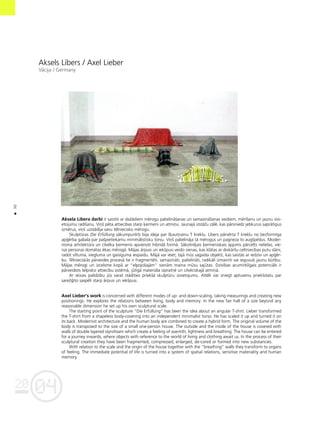
over again a similar degree of dislike, incomprehension and anta-
gonism on the part of the communities and the press towards
artworks of this genre: abstract geometric public artworks. Our
newspaper, Popular Geometry, is an ephemeral archive of this
discourse. It is in no way intended as a criticism of public or
abstract art, it is merely a chronicle of misunderstanding.
Nuevo
In 2001 I spent a period of time in the centre of Mexico City.
During the first few days after I arrived I noticed the Metro build-
ings. These structures immediately caught my attention, because
they were extremely mundane and ordinary, and at the same
131
•
Kå es vélåk uzzinåju, ßîs ékas tikußas pasütîtas 1966. gadå
kå daudz plaßåkas pilsétas attîstîbas programmas da¬a, un tåm
bija jåbüt gatavåm lîdz 1968. gada Mehiko olimpiskajåm spélém.
Tås ir modificéjamas, un viså pilsétå ir vairåk nekå 40 daΩådu ver-
siju. ‰kai pie Salto del Agua metro stacijas – manas filmas objek-
tam – bija jåbüt uzceltai kå vienai no pirmajåm. Í˚iet, neviens
vairs nezina, kas toreiz atbildéja par ßo büvju dizainu, – es taujåju
péc ßîs informåcijas metro sindikåta arhivåram, bet viñß tå arî
neko neatrada. Lielåkais, ko izdevås noskaidrot, bija, ka tås
pasütîtas nevis arhitektam, bet gan inΩenieru grupai – Civilo inΩe-
nieru asociåcijas biedriem. Lîdz olimpiskajåm spélémi éka tå arî
nebija gatava – to pabeidza gadu vélåk, 1969. gadå. Ori©inålajå
ieceré fasådes betonam bija jåpaliek kailam, nekråsotam.
Kad es pirmo reizi ieraudzîju Salto del Agua metro éku, tå
bija neapdzîvota. Logu iekßpusé bija uzkråjusies bieza putek¬u
kårta, pårvérßot tos spogu¬os. Tå kå logi bija novietoti slîpå leñ˚î
pret lejå esoßo ielu, tajos atspogu¬ojås cilvéku un maßînu kustîba,
kioski un ielu tirgoñi, måkoñu formu, gaismu un kråsu mija. Tas
bija ¬oti gleznieciski, un, kad mani aicinåja izstådît kådu publisku
darbu izstådé, kuru organizéja viens no Mehiko muzejiem, es
piedåvåju nokråsot ßîs ékas fasådi spilgti sarkanu.
Íåda iecere balstîjås vairåkos apsvérumos. Tas ir mé©inåjums
atrast dzîvotspéjîgu metodi, kå laikmetîgå glezniecîba var ieñemt
savu vietu dinamiskajå pilsétas vidé – ne kå tîri estétisks Ωests, ne
arî didaktiska uzmåkßanås, bet – gribétos cerét – kå lietderîga
darbîba. Tåpat tas ir mé©inåjums uzsvért sakaru starp modernå
laika agrînajåm utopiskajåm sakném un tå pédåm müsu (¬oti
neutopiskajå) pilsétas dzîves ikdienå. Visbeidzot, tas ir eksperi-
ments: vai måkslinieka piedalîßanås var tießi un labvélîgi iespaidot
cilvéku eksistenci konkrétajå situåcijå (ßajå gadîjumå – pie ¬oti
dzîva transporta mezgla un komerciålå rajonå)? Pirms daΩiem
desmitiem gadu tika pieñemts, ka – jå, protams, – måksla,
arhitektüra un dizains var mainît un uzlabot cilvéku dzîvi un
paßus cilvékus. Íobrîd més – måkslinieki – ß˚iet, apmierinåmies ar
sava veida “sociålo komentétåju” atviegloto lomu. Ar ßo darbu
es véléjos no jauna pårdomåt ßos jautåjumus.
Nuevo pirmajå fåzé ékas fasådes pårkråsoßana sarkanå kråså
notika kå pakåpeniski moduléta (step-by-modular-step) perfor-
mance, kas notika no 2003. gada 4. lîdz 17. augustam. Kråsoßa-
na tika organizéta kå sabiedrisks pagaiddarbs, kas savå ziñå at-
bilst meksikåñu sienu apgleznoßanas tradîcijåm un saistås arî ar
agrînå utopiskå modernisma måkslas straté©ijåm, kuras bija vérs-
tas uz sabiedrîbas pårveidi ar vides estétiskas pårbüves lîdzek-
¬iem. Pakåpeniskais kråsoßanas process rosinåja performances
idejas paplaßinåßanu lîdz lendårta mérogiem (gan pilsétas kon-
tekstå).
‰kai – kas nu jau drîzåk funkcionéja kå performétåja ˚erme-
nis – tika pieß˚irts fragmentétajai un daudzveidîgajai pilsétas
publikai adresétas sociålas, estétiskas un politiskas akcijas saturs.
Kråsoßanas gaitå tika uzñemta arî 16 mm filma, kuras montåΩu
vélåk veica DΩuljeta Aranda. Filmas skañas fonam izmantots
Kristiana Mancuto autentiskajå norises vietå 2001. gada septem-
brî veikts ieraksts.
time super-eccentric, expressive and experimental in design. At
this time I was starting to think a lot about the urban design ver-
nacular and how it is connected to the modernist abstract visual
language.
As I found out later, these buildings were commissioned in
1966 to be completed for the Olympic Games of 1968, as part
of a much larger urban development programme. The buildings
are modular and there are more than 40 different versions of
them throughout the city. The one located at the Salto del Agua
metro station, the subject of my film, was one of the first to be
built. No one seems to know who was responsible for the design
of these structures, I have inquired about this with the archivist
of the Metro Syndicate but he found no record about this. The
best we were able to find out is that it was commissioned not
from an architect but from a group of engineers who belonged
to the Association of Civic Engineers. The building was not com-
pleted in time for the Olympic Games, but finished one year
later, in 1969. Originally the concrete of the facade was exposed,
not painted.
When I first saw it, the Salto del Agua metro building was
vacant. The inside of the windows had accumulated a thick layer
of dust, transforming them into mirrors. Since they were tilted at
an angle towards the street below, they reflected the movement
of people and cars, the kiosks of street merchants, changes in
cloud formations, light and colour. It was very pictorial, and
when I was invited to present a public work for an exhibition
organised by one of the museums in Mexico City, I proposed to
repaint the facade of this building bright red.
This project was motivated by several considerations. It is an
attempt to find a viable way for contemporary painting to take
place in a dynamic urban situation; neither as a purely aesthetic
gesture, nor as a didactic imposition, but hopefully as a useful
act. It is also an attempt to underline a connection between the
early utopian roots of modernity and the presence of its traces in
our (very un-utopian) urban daily life. Finally, it is an experiment:
can an artist’s intervention have a direct and beneficial effect on
people’s life in a particular situation (in this case a very busy
transportation junction and a mercantile area)? A few decades
ago the assumption was that yes indeed, art, architecture and
design can change and improve people’s lives and people them-
selves. Presently, as artists, we seem to be content with the
reduced role of being “social commentators” of a kind. With this
work I wanted to rethink these questions.
In the first phase of Nuevo the facade of the building was
repainted red in a step-by-modular-step performance, which
took place from 4 to 17 August 2003. The painting constitutes a
temporary public work, perhaps in the tradition of Mexican
mural painting, and also relating to the strategies of early utopi-
an modernist art that aimed at transforming society through aes-
thetic reconstruction. The gradual process of painting suggested
an expanded idea of performance on a scale of land art (albeit
within an urban context).
The building, much like the body of a performer, was made
to contain a social, aesthetic and political act for a diverse and
manifold urban public. Throughout the duration of the painting
a 16 mm film was shot, and later edited, by Julieta Aranda. The
sound track for the film was recorded by Cristian Manzutto in
the same location in September 2001.
04
20
04
20
132
•
HANNO SOANSS
Uz Starbucks atvérßanu Jervakandi gaidot
Radikålå lojalitåte (Radical Loyalty) ir britu måkslinieka Krisa
Evansa ßobrîd realizéjamais projekts, kura centrålå norise ir skulp-
türu parka izveide postindustriålajå Jervakandi pilsétiñå Igaunijå.
Evansa radîtais oksimorons kalpo par nosaukumu Rîkotåj-
direktoru aliansei – tås paståvéßanas vienîgais nolüks ir formulét
idejas, kurås varétu balstîties “radikålås lojalitåtes” nojégums,
atklåjot, kå korporatîvå biznesa lîderi iztélojas ßî tik ambivalentå
vårdu savienojuma jégu, péc tam vizualizéjot viñu izpratni skulp-
türu parka formå. Mana kå kuratora loma büs mé©inåt paredzét
un fiksét ßî projekta iek¬außanos lokålajå kultüras telpå. Man
jåapsver iespéjamo Igaunijas sponsoru domåßanas veids,
padomju perioda monumentålo skulptoru attieksme pret ßådu
jaunu un mér˚tiecîgi perversu pasütîjumu, Igaunijas Måkslas
muzeja iesaiste un Jervakandi vietéjås sabiedrîbas reakcija. Tomér
såksim ar galveno: ar nelielu informåciju par projektu un tå fizis-
ko kontekstu, lai padarîtu to izprotamåku konferences Kolonizé-
tå telpa dalîbniekiem.
Kriss Evanss lüdza katru no pieciem viña alianses locek¬iem,
kuri pårståv mazumtirdzniecîbas, telekomunikåciju, ener©étikas,
reklåmas un finanßu nozaru korporatîvo sektoru, dalîties tajå,
kåda ir viña – vairåk indivîda nekå korporatîva profesionå¬a –
lojalitåtes izjüta un kådå nozîmé viña individuålais skatîjums bütu
uzlükojams par radikålu. Jau no paßa såkuma visiem tika pazi-
ñots, ka viñu idejas tiks attîstîtas par skulpturålu objektu metiem.
Íajå projektå radoßais impulss vizuålajai formai tiek atrasts biz-
nesa vidé, kas apvérß ierastås attiecîbas starp måkslu un
uzñéméjdarbîbu. Dialoga laikå ar Kari Vaihu – Sonera Telia
Telecom vides nozares vadîtåju – iezîméjås izdzîvoßanas ideja, un
Vaiha negaidîti ierosinåja radît Pielågojies un izdzîvo – pieminek-
li Ωurkai un tarakånam, divåm vienîgajåm dzîvajåm radîbåm,
kuråm ir izredzes izdzîvot cilvéka izraisîtå ekolo©iskå katastrofå.
Ío un lîdzîgas sociålå darvinisma idejas, kuras aktualizé problé-
mu – biznesa skolu lietiß˚ås étikas izvirzîßanås dominéjoßå lomå
kultüras dzîvé –, Evanss ßobrîd ir vizualizéjis grafiku sérijå. Íîs
grafikas kalpos par skicém igauñu måkslinieku grupai, kuri
nodarbojußies ar monumentu veidoßanu padomju okupåcijas
laikå un tagad ir Evansa angaΩéti, lai îstenotu viña alianses skulp-
türu parka projektu.
Tiek veidota intri©éjoßa paraléle starp Rietumu korporatîvås
skulptüras tradîciju un Austrumeiropas monumentålo propagan-
du, savienojot ßos divus Igaunijas piedzîvotås åréjås ietekmes
slåñus. Jåpiekrît Neilam Malholandam, kurß savå rakstå par pro-
jekta paßreizéjo attîstîbas stadiju, ko parådîja Glåzgovas Tramway
notikusî izståde, saka: “Evansa skiçu skaistums un gaisîgums
apliecina sevi, par spîti atmirstoßajåm komerciålajåm klißejåm,
kuras tås ilustré.” Evansa darbi bez pülém ir atdalåmi no ¬oti
specifiskås to tapßanas situåcijas in situ Igaunijå. Es gan rîkoßos
pretéji un centîßos raksturot Jervakandi veidoto kontekstu, kaut
bütîbå Evansa darbi tikpat labi iederétos ikvienå Austrumeiropas
mazpilsétå ar lîdzîgu ekonomiskås attîstîbas vésturi.
HANNO SOANS
Waiting for Starbucks in Järvakandi
Radical Loyalty is an ongoing project by British artist Chris
Evans. It centres on the construction of a sculpture park in the
post-industrial town of Järvakandi in Estonia. Radical Loyalty is an
oxymoron created by Evans, an Alliance of Managing Directors.
Its sole purpose is to express the ideas behind the concept of
“radical loyalty”, investigating what corporate business leaders
imagine to be the meaning of this highly ambivalent phrase and
then visualising their understanding in the format of a sculpture
park. My role as a curator will be to try to anticipate and map the
cultural enfolding this project could have on the local level. I
must consider the mind-frame of possible sponsors from Estonia,
the attitude of Soviet-era monumental sculptors towards this
new type of deliberately perverse commission, the involvement
of the Art Museum of Estonia and the reactions from the local
community in Järvakandi. But first things first: here is a bit of
information about the project and its physical context, to help
making it understandable for participants of the Colonising
Space conference.
Chris Evans has asked each of his 5 Alliance members,
brought together from the corporate sectors of retail, telecom-
munications, energy, advertising and finance, to relate to their
individual feelings rather than their corporate position as they
think about loyalty and about how their personal perspective
could be seen as radical. It was stated from the beginning that
their ideas would be developed into sculptural design proposals.
In this project, the creative impulse for visual form is sought from
the business community, which reverses the usual relation
between art and business. During the dialogue that Evans had
with Kari Vaiha, the environmental manager of Sonera Telia
Telecom, the notion of sustainability came up, and Vaiha sud-
denly suggested Adapt and Survive, a monument to a rat and a
cockroach, the only creatures likely to survive a man-made envi-
ronmental catastrophe. This and other Social Darwinist ideas,
that bring forward the problem of how no-nonsense business
school ethics comes to dominate cultural life, have so far been
visualised in a series of prints by Evans. These prints will serve as
models for a collective of Estonian artists who were responsible
for building the country’s monuments during the Soviet occupa-
tion and who have been enlisted by Evans to realise the
Alliance’s sculpture park.
An intriguing parallel is created between the Western tradi-
tion of corporate sculpture and Eastern European monumental
propaganda, linking two layers of foreign influence in Estonia. As
Neil Mulholland rightly claims in his article about the current
state of the project, based on an exhibition at Tramway in
Glasgow: “the beauty and lightness of the designs by Evans
assert themselves over the moribund entrepreneurial clich‚s that
they illustrate.” They can easily be detached from the very spe-
cific production situation in situ in Estonia. I will do the opposite,
and try to describe the context of Järvakandi, although in
133
•
Jervakandi ar tås 9000 iedzîvotåju, kuriem bija savs kultüras
nams, boulinga klubs, bezmaksas brîvdabas peldbaseins un plaßa
amatieru dai¬dårzniecîbas skola, kalpoja Igaunijas PSR par
reprezentåcijas fasådi – vietu, kurp izrådîßanås nolükå bieΩi tika
vesti årzemju viesi. Kå jau tipiska industriåla pilsétiñå, kuras iz-
augsmi uzturéja vienas rüpnîcas darbîba, padomju ekonomikai
sabrükot, Jervakandi ieståjås dzi¬a krîze. Relatîvo domas atvértîbu
un brîvîbas garu, kas bija raksturîgi ßim netipiskajam padomju tel-
pas nostürim, nomainîja strauja dzîves lejupslîde. Izmisîgå
vajadzîba péc årvalstu investîcijåm guvusi nepårprotamu atveidu
spodrpapîra prezentåcijas broßürå, kuru publicéjusi paßvaldîbas
padome, apzinoties drümås nåkotnes perspektîvas, bezdarbu un
jaunatnes aizplüßanu. Íeit kontrasts starp paßreizéjo situåciju un
padomju laika dzîves lîmeni ir seviß˚i ilustratîvs. Íî pilsétiña, izvei-
dota ap plaukstoßu stikla rüpniecîbas uzñémumu, bija perfekts
iemiesojums tam, ko vietéjie iedzîvotåji ar lepnumu dévéja par
“Padomju Rietumiem” un kas müsu padomju kaimiñiem lielåko
tiesu ß˚ita ¬oti vilinoßa apmeßanås vieta. Íî ideolo©iskå konstruk-
cija, kas raksturoja Igauniju – iespéjams, pamatoti – kå visrietum-
nieciskåko no PSRS republikåm, kalpoja arî klusai apolitiskai
pretestîbai pret piespiedu rusifikåcijas politiku. Tå no jauna
iedarbinåja iepriekßéjo paßkolonizåcijas lîmeni – 20. gadsimta
såkuma modernistu lozungu “Paliksim igauñi, bet k¬üsim
eiropießi”. Tiesa, tå bija arî ilüzija, kas radîja månîgu mierinåju-
mu ticîbå, ka arî padomju sistémå var dzîvot pa savam. Protams,
tas, ko ßî måkslîgi konstruétå vesternizåcijas ideja nekad neatzi-
na, bija politiskå un ekonomiskå båze, kura nodroßinåja visus ßos
labumus un apståk¬us apmaiñå pret zinåmiem pakalpojumiem,
kas ¬åva Jervakandi k¬üt par Potjomkina sådΩu.
No vietéjås sabiedrîbas skatpunkta pédéjå Radikålås lojali-
tåtes projekta fåze, kurai vél jåtiek realizétai, ir vérsta uz diviem
ekonomiskås integråcijas slåñiem: sekmîgu pielågoßanos
padomju sistémai un lîdz ßim nesekmîgiem mé©inåjumiem pielå-
goties jaunajam liberålismam un tå priekßstatiem par kultüru. Bet
tå ir arî ¬oti precîzi mér˚éta uz paßkolonizåcijas jédzienu, kas ir tik
plaßi attiecinåms uz ßodienas Austrumeiropu. Ievérojot to visu,
vairs neß˚iet tik nelo©isks fakts, ka Tîna Meisa – viena no
Igaunijas bagåtåkajåm sievietém un lielåkås privåtpersonai piede-
roßås Hansabankas akciju paketes îpaßniece – ir uzaugusi ßajå reiz
tik pårticîgajå Padomju Igaunijas pilsétiñå. Íî faktolo©iskå nianse
var izrådîties pat ¬oti noderîga, lai spertu nåkamo soli pretî skulp-
türu parka projekta pilnîgam îstenojumam. Lîdzek¬u piesaiste
projektam, kas tiek îstenots tålå nostürî, kurß vél varbüt 20 gadus
gaidîs uz savas pirmås Starbucks kafejnîcas atvérßanu, iespéjams,
ir pats radikålåkais Krisa Evansa projekta aspekts – vismaz igauñu
auditorijas skatîjumå. Projekts iztirzå – un gluΩi atklåti – tos
ekonomiskos parametrus, kuri nosaka paßkolonizåcijas procesu.
essence Evans’ project would work just as well in any Eastern
European small town with a similar economic history.
With its cultural house, bowling club, free open-air swim-
ming pool and large gardening school for its 9 000 inhabitants,
Järvakandi served as a representational façade for Soviet Estonia,
the kind of a spot visiting foreign politicians were often taken to
for a little show-off. As a typical industrial town built around the
resources provided by one single factory, Järvakandi entered a
period of deep crisis when the Soviet market collapsed. The rel-
ative open-mindedness and freedom that characterised this off-
key spot on the Soviet map was replaced with quickly deterio-
rating conditions. The desperate urge for foreign investment is
now manifested in the glossy presentation brochure published
by the municipal council in the face of bleak future prospects,
unemployment and the exodus of younger people. The contrast
between the present situation and Soviet-era living conditions is
particularly illustrative here. This small town, constructed around
a prospering glass industry, used to be the perfect epitome for
what the locals proudly called the “Soviet West”, and it was
generally considered by our Soviet neighbours to be a very
attractive place to live. This ideological construct, the probably
correct description of Estonia as the most westernised of the
Soviet republics, also served as an inspiration for quiet political
resistance to the policy of forced Russification. It reaffirmed the
previous layer of self-colonisation, from the days of the early
20th century modernists and their slogan “Let’s stay Estonians,
but let’s become Europeans”. However, it was also an illusion
that offered the false comfort of believing that you could still
have things your own way inside the Soviet system. Of course,
what this constructed idea of westernisation always denied was
the political and economic fundament that provided the benefits
and the conditions for exchanging favours that made it possible
for Järvakandi to become a Potyomkin village.
From the perspective of the local community the last phase
of the Radical Loyalty project, still to be realised, addresses the
two layers of economic integration: the successful adaptation to
the Soviet system and the so far failed attempts at adapting to
the neo-liberals and their ideas about culture. But it also pin-
points the notion of self-colonisation that is so widely applicable
in Eastern Europe today. With that in mind, it may not be total-
ly irrelevant that the richest woman in Estonia, Tiina Mõis, who
is the biggest individual shareholder of Hansabank, grew up in
this small and once well-to-do Soviet town. This little fact may
even turn out to be very helpful for making the next move
towards finalising the sculpture park project. Raising funds for a
project carried out in a distant place, which even in 20 years time
will probably not have its first Starbucks, is probably the most
radical aspect of Chris Evans’s project, at least for the Estonian
audience. The project discusses, absolutely openly, the economic
parameters that determine the processes of self-colonisation.
04
20
04
20
134
•
UTE META BAUERE
Ielas atgüßana
Es runåßu par attiecîbåm starp måkslas institücijåm un to, ko
parasti sauc par aktîvismu måkslå. Konferences ievadå ir minéts,
ka es esmu kriti˚e, bet tas tå nav. Es esmu kuratore. Domåju, ka
te ir svarîgi uzsvért ßo atß˚irîbu. Es nerakstu recenzijas. Ceru, ka
man piemît kritiska pieeja, bet es neesmu kriti˚e.
Kå måkslas institücijåm vai kuratoriem vajadzétu traktét
daΩådus måkslas projektus, nemé©inot tos piesavinåties vai
funkcionalizét? Kå més, kuratori, varam izrådît cieñu teritorijåm,
ko måksla uzskata par savåm? Ko îsti ßodien nozîmé “publiskå
teritorija” vai “publiskå telpa”, kad tik daudzas lietas tiek priva-
tizétas? Es domåju, ka ßîm problémåm vajadzétu büt svarîgåm arî
pécpadomju situåcijå. Uz ko noråda mana referåta virsraksts? Vai
més runåjam par ielas atgüßanu vai atklåßanu no jauna? Sasto-
poties ar laikmetîgo aktîvismu måkslas praksé, daudzi cilvéki
saka: “Ak, tå ir tikai atgrießanås 70. gados”. Bet es nedomåju, ka
tas tå ir. Man ß˚iet, ka mums jårunå par atgüßanu, nevis atklå-
ßanu, jo publiskå telpa tiek paståvîgi saßaurinåta, arî juridiskå
nozîmé. Kå jüs varbüt zinåt, “Ielas atgüßana” bija aktîvisma kustî-
ba Lielbritånijå 90. gadu vidü un beigås. Tå såkås kå reiva pårti-
jas, kolonizéjot publisko teritoriju ¬oti neparastos veidos un ap-
vienojot populåro kultüru ar politisko aktîvismu.
Es jüs iepazîstinåßu ar 4 projektiem, kas ir saistîti ar izstådi
Documenta 11, vispirms jau tåpéc, ka Tomass Hirßhorns bija
uzaicinåts ßeit ierasties. Ûél, ka viñß nevaréja piedalîties. Bütu
interesanti apspriest ßos jautåjumus ar viñu. Viñß såka savu dar-
bîbu kå aktîvists un tad k¬uva par måkslinieku, kamér citi såka ar
måkslu un vélåk noléma k¬üt par aktîvistiem. Mums ir jåredz
atß˚irîba starp ßiem darbîbas veidiem.
Es såku ar grupu Park Fiction. Íî grupa saståv no daΩådu
nozaru pårståvjiem: arhitektiem, ¬audîm no sociålo dienestu un
kopienu grupåm. Viñi satikås, jo visiem bija kopîga interese par
St. Pauli, kådreizéjo Hamburgas strådnieku rajonu netålu no
ostas. Tagad Hamburgas piejüras rajons tiek uzskatîts par
vispievilcîgåko vietu dzîvok¬u celtniecîbai. Pilséta ir privatizéjusi
da¬u no sava publiskå îpaßuma, un tas noveda pie situåcijas, kad
80. gados måjas tika patva¬îgi ieñemtas. Kopß tå laika ir uzceltas
daudzas jaunas ékas. Tika atståta neliela piekrastes josla, un ßie
cilvéki teica: “Vél vienas jaunas måjas vietå, kas aizsedz skatu uz
UTE META BAUER
Reclaim the Street
I’ll speak about the relations between the art institution and
what is usually called artistic activism. It is mentioned in the con-
ference introduction that I’m a critic, but this is not the case. I’m
a curator. I think it’s important to make this distinctions here. I
don’t write reviews. Hopefully I’m critical, but I’m not a critic.
How can art institutions or curators deal with different art
practices without appropriating them or functionalising them?
How can we as curators show respect for the territories that art
practices claim for themselves? Also, what does ‘public territory’
or ‘public space’ mean today, when so many things are being
privatised? I think these issues must also be relevant in a post-
Soviet situation. What does my title imply? Are we talking about
reclaiming the street or about rediscovering it? When they are
confronted with contemporary activist art practice, many people
say: “Oh, it’s just the 1970s once again.” But I don’t think that’s
the case. I think we must be talking about reclaiming, not redis-
covering, because public space is continuously being shrunk, also
in legal terms. As you may know, Reclaim the Street was an
active movement in Britain in the mid-to-late 1990s. It started
with rave parties that colonised public territory in very innovative
ways, combining popular culture with political activism.
I’ll talk you through 4 projects that relate to Documenta 11,
first of all because Thomas Hirschhorn was invited to come here.
It’s a pity he wasn’t able to participate. It would have been inter-
esting to discuss these things with him. He started out as an
activist and then became an artist, while others have started in
art and then decided to be more activist. We need to see the dis-
tinction between these practices.
I’ll begin with Park Fiction. This group consists of people
from different backgrounds: architects, people from social net-
works and neighbourhood groups. They came together because
of a shared interest for St Pauli, which used to be a working-class
area near the harbour in Hamburg. The Hamburg waterfront is
now considered the most attractive territory for building flats.
The city has privatised parts of its public property, and this creat-
ed the situation with squatted houses in the 1980s. In the mean-
time, many new buildings have been put up. A small part of the
waterfront was left, and these people said: “Instead of having
135
•
ostu, més gribétu mazliet za¬as vides ßejienes iedzîvotåjiem.” Lai
atbalstîtu vietéjås sabiedrîbas vajadzîbas, tika apvienotas daΩåda
veida prasmes un spéjas. Måkslas joma varéja piedåvåt sim-
bolisku kapitålu – spéju radît publicitåti. Ir interesanti aplükot, kå
tas tika darîts. No pilsétas programmas ar nosaukumu “Måksla
un publiskå telpa” ßî grupa dabüja zinåmus lîdzek¬us, lai finansé-
tu un popularizétu ßo projektu, ko apkaimes grupas nebütu
paveikußas saviem spékiem. Park Fiction vispirms izveidoja
“Vélmju arhîvu” par to, kåds parks ßeit varétu büt, un tad viñi
strådåja ar daΩådåm intereßu grupåm, arî ar bérniem, lai attîstîtu
iedzîvotåju idejas parka izveidei.
Prostitücija ßajå rajonå ir reducéta. St. Pauli bija daudz
sarkano lukturu båru, bet tie ir pårveidoti jaunießu izklaides
vietås. Tagad ßeit darbojas daudzas müzikas grupas. Més
redzam, kå vispirms parks tika improvizéts. Viñi izveidoja lidojoßo
paklåju un daudzas citas lietas bérniem. Tas izskatås péc jaukas
sociålas aktivitåtes, bet policija nemitîgi véroja, vai kaut kas
nenotiek. Tur bija narkotikas, un tika ieñemtas måjas. Diezgan
raibi. Bez tam St. Pauli rajonå bija arî lielas turku, horvåtu un
serbu diasporas, lîdz ar to viñu vajadzîbas arî bija jåñem vérå.
Parkam attîstoties, Park Fiction grupå iesaistîjas Margita
Çenki. Viña izveidoja filmu par to, kå cilvékiem ar savåm vélmém
vajadzéja iziet ielås, lai kaut kas notiktu. Filmas veidoßanå
piedalîjås daudz cilvéku, arî våcu müzikas grupas, pieméram, The
Golden Lemon.
Mums kå kuratoriem bija sev jåjautå, kådå veidå ßådu grupu
parådît izstådé Documenta. Projekta norises vieta ir Hamburga,
nevis Kasele, un mums nebija nodoma radît måkslîgu situåciju.
Galu galå més ielüdzåm grupu Park Fiction un kopå ar viñiem
radîjåm îpaßas mébeles, sava veida atlîdzîbu, ko viñi vélåk varéja
aizvest måjås. Park Fiction grupas cîña prasîja ilgstoßu iesaistîßa-
nos. Lai saglabåtu dårgo Hamburgas piekrasti neapbüvétu, nepi-
etiek rîkot izstådes. Park Fiction nebija parasts måkslas projekts,
bet tådas îslaicîgas situåcijas kå izstådes varéja radît ßai lietai
jauna veida publicitåti un vienlaikus atvieglot apceri un debates.
Tådé¬ grupa såka darboties ar konteineriem improvizétå veidå.
Såkumå viñus finanséja Hamburgas pilséta, bet tad mainîjås
valdîba un finanséjums apståjås. Tomér viñiem izdevås dabüt
atbalstu no Bundeskulturstiftung (Federålå kultüras fonda). Man
ß˚iet, tie bija 500 000 eiro parka izbüves uzsåkßanai, un péc
deviñu gadu cîñas da¬a no tå patiesi bija îstenota…
Nåkamå projekta autors ir Tomass Hirßhorns. Viñß vélas
uzcelt çetrus pieminek¬us. Viens no tiem, veltîts Ûilam Delézam,
tika izveidots Aviñonå. Piemineklis Spinozam tika radîts
Amsterdamå, bet piemineklis Antonio Gramßi joprojåm nav
uzcelts. Izstådei Documenta 11 Kaselé Hirßhorns plånoja îslaicîgu
pieminekli ÛorΩam Bataijam. Tas noteikti bija ieceréts tikai simts
izstådes dienåm. Viñß to neuzskata par sociålu iejaukßanos kopi-
enas dzîvé. Tå katrå ziñå ir da¬a no viña måkslinieciskås darbîbas,
bet viñß nevélas to padarît par måkslas institücijas saståvda¬u.
Viñam ir vajadzîgs måkslas institücijas finanséjums un auditorija,
bet viñß vélas savu projektu lokalizét citå vietå.
Hirßhorns neuzskata sevi par sociålo darbinieku, kå nereti
k¬üdaini minéts publikåcijås. Dzîvojamais rajons Friedrich Wohler
Siedlung, ko viñß izvéléjås piemineklim, ir sociålo måju projekts
årpus Kaseles centra. Bezdarba lîmenis ßeit ir augsts, bet tas nav
graustu rajons. Tas ir gluΩi parasts strådnieku rajons, kådi ir katrå
Våcijas pilsétå un parasti aizñem lielu da¬u no pilsétas dzîvojamå
fonda. Noteikti jåpaskaidro, ka ßådas teritorijas nepårståv müsu
sabiedrîbas minoritåtes. Hirßhorns nopirka daΩus vecus tak-
sometrus un izveidoja Bataija satiksmes dienestu no Documenta
izstådes tå vietå, lai måkslas publikas pilni autobusi ierastos ßajå
rajonå. Es paliku Kaselé gandrîz visas 100 izstådes dienas, un
såkumå arî biju skeptiska par to, ko visi ßie Documenta apmek-
létåju tükstoßi nodarîs konkrétajai vietai. Bet man jåsaka, ka îstu
another house that blocks the view to the harbour, we’d like to
have a little bit of green space for the people living there.” To
meet the needs of the local community, different skills and
potentials were brought together. The art field could contribute
the symbolic capital of being able to create publicity. It’s inter-
esting to see how that was done. From a city programme called
“Art and Public Space” the group got some money to finance
and publicise this project, which the neighbourhood groups
wouldn’t have managed on their own. Park Fiction first created
an ‘Archive of Wishes’ for what a park there could be, and then
they worked with different interest groups, also with children, to
develop the residents’ idea for the park.
Prostitution has been cut back in the area. St Pauli used to
have many red light bars, but they have been transformed for
youth culture. There are many music groups there now. We see
how the park was improvised at first. They built a flying carpet,
and a lot of other things for children. It looks like a nice social
enterprise, but the police was always watching, in case some-
thing would happen. There were drugs, and squatted houses.
Quite a mix. Also, there were big Turkish, Croatian and Serbian
populations in St Pauli, so their requirements also had to be met.
As the park was being developed Margit Czenki was
involved in the Park Fiction group. She created a film about how
people’s desires had to hit the street in order for something to
happen. Many people collaborated on the film, also German
music groups like The Golden Lemon.
As curators we had to ask ourselves how we could present
this kind of group in Documenta. The location of the project is
Hamburg and not Kassel, and we had no intention to create an
artificial situation. We ended up inviting Park Fiction and creating
specific furniture together with them, as a kind of payback that
they could take home later. Park Fiction’s struggle required a
long-term commitment. Keeping a part of the highly-priced
Hamburg waterfront open is nothing you can achieve with just
exhibitions. Park Fiction was not an ordinary art project, but tem-
porary situations like exibitions could create new kinds of public-
ity for the cause, and at the same time facilitate reflection and
debate. Therefore, the group started working in improvised ways
with containers. First they had money from the city of Hamburg,
but then there was a change of government there and the fund-
ing stopped. However, they managed to get support from the
Bundeskulturstiftung (the Federal Cultural Endowment) instead.
I think it was 500 000 euro to start building the park, and after
nine years of fighting some parts of it were actually realised.
The next project is by Thomas Hirschhorn. He wants to
build four monuments. One of them, to Gilles Deleuze, was
realised in Avignon. The Spinoza Monument was created in
Amsterdam, and the monument to Antonio Gramsci is still unre-
alised. For Documenta 11 in Kassel, Hirschhorn planned a tem-
porary monument to Georges Bataille. It was always meant to
last only for the hundred days of the exhibition. He doesn’t see
it as a social intervention in the community. It’s very clearly part
of his artistic practice, but he doesn’t want it to be in the middle
of an art institution. He needs the funding of the art institution.
He needs the audience of the art institution, but he wants his
project to be localised at a different spot.
Hirschhorn doesn’t see himself as a social worker, which the
press often mistakenly assumed. The residential area he chose
for realising the monument, the Friedrich Wohler Siedlung, is a
social housing project outside central Kassel. Unemployment fig-
ures are high there, but it’s not a run-down ghetto. It’s a very
normal working-class area, of the kind that exists in every
German city and usually accounts for a large portion of urban liv-
ing space. One thing has to be made clear: areas like this one
don’t represent a minority in our society. Hirschhorn bought
04
20
04
20
136
•
türistu uzplüdu nebija. Tikai noteikts skaits måkslas pasaules pår-
ståvju devås uz turieni. Pieminekli Bataijam visvairåk izmantoja
vietéjie iedzîvotåji.
Piemineklis saståvéja no daΩådiem pakårtotiem elementiem:
Bataija taksometriem, Imbiss kioska (kurå cilvéki varéja ne tikai
paést, bet arî satikties – ßai rajonå nebija tådu iespéju; diemΩél
turku ©imenei, kas vadîja kiosku, nedeva at¬auju turpinåt darbu
péc izstådes beigåm), Bataija bibliotékas (ko izveidoja françu
måkslinieks, kas specializéjas Bataija izpété, iedalot to tådås
témås kå sports, sekss un måksla, un man jåatzîstas, ka seksa
bibliotéka bija ¬oti populåra. Daudzås soft-porn filmas, protams,
raisîja debates, bet patiesîbå turku kopiena tåpat tås skatås…),
Bataija skulptüras årtelpå (ieskaitot spuldΩu virknes kå brîvdabas
svétkos), tîkla kameras, lai pårraidîtu projekta télus internetå un
visbeidzot televîzijas studijas (kurå 6 cilvéku grupa katru darba
dienu veidoja 10 minüßu programmu valsts méroga sabiedriska-
jam kanålam, sasniedzot skatîtåju miljonus).
Bataija pieminek¬a projektå bija iesaistîti ap 26 vietéjie
iedzîvotåji. Bibliotéku, kiosku un visu påréjo vadîja vietéjie.
Tomass Hirßhorns viñiem maksåja un vienmér 1 eiro vairåk, nekå
par to paßu darbu maksåtu Documenta. Projekts radîja darba
iespéjas visu vasaru 4 méneßu garumå. Hirßhorns uzturéjås
Friedrich Wohler Siedlung visu projekta laiku. Paßå såkumå vél
pirms projekta atklåßanas kåds ielauzås viña dzîvoklî un nozaga
visu televîzijas aparatüru. Viñß sacîja, ka, ja 5 dienu laikå nozag-
tais netiks atdots, viñß atcels visu projektu. Un viss tika atdots, jo
tie bija vietéjie. Viñi saprata situåciju, un péc tam nekas vairs neti-
ka nozagts, pat ja aparatüra atradås kopienas vidé, büdå ar
atvértiem logiem. Iedzîvotåji aizsargåja pieminekli. Documenta
pårståvji baΩîjås, ka projekta vértîgås saståvda¬as kopienå nozags
vai sabojås.
Daudzi måkslas vides pårståvji un amerikåñu kolekcionåri
iemîléja Hirßhorna darbu. Daudzi citi teica: “Ak, tas izskatås tå, jo
tas ir nabadzîgs rajons…” Bet iedzîvotåji sacîja: “Ak Dievs, ja
Tomass bütu ¬åvis mums palîdzét, viss izskatîtos patießåm skaisti
un ne tik nolaisti, bet jåbüt måkslinieciski...” Hirßhorns vienmér
strådå ar létiem materiåliem no DIY veikaliem. Viñß negrib, lai cil-
véki uzskatîtu viña darbus par nelietojamiem un to komponenti
tiktu nozagti, tåpéc viñß visu veido ikdieniß˚u un cer, ka tas paliks
savå vietå. Íoreiz tå arî bija.
Íeit més arî redzam Markusu Íteinvegu, filozofu no Berlînes,
kas bija rezidéjoßais teoréti˚is ßajå apkaimé. Péc projekta
nosléguma tika publicétas divas gråmatas: vienas autors bija
Tomass Hirßhorns, kas runåja par måkslinieciskajiem aspektiem,
un otru sarakstîja Markuss Íteinvegs par teorétiskajiem jautåju-
miem.
Izstådé Documenta 11 piedalîjås arî Austrijas un Våcijas
fotogråfe Lisla Pongere. Austrijas laikraksti viñai pasütîja
materiålu par notikumiem DΩenovå 2001. gadå, kad policija
nekårtîbu laikå nogalinåja antiglobålistu demonstråcijas dalîb-
nieku Karlo DΩuljiåni, un daΩas nedé¬as péc G8 samita viña devås
uz turieni. Viña fotograféja protestu liecîbas, slégtås kanalizåcijas
lükas un grafiti. Viñas projekts ir interesants pats par sevi, bet arî
tåpéc, ka tas saistås ar grupas Volkstheater Karavane aktivitåtém.
Tå ir ielas teåtra grupa, kas saståv no aktieriem, aktîvistiem, sce-
nåristiem un måksliniekiem. DΩenovå viñi îstenoja projektu ar
nosaukumu DΩenovas aktîvå måksla, un atpaka¬ce¬å tikai 100
kilometru pirms Austrijas robeΩas viñus aizturéja policija un ielika
cietumå uz 3 nedé¬åm. Viñus apsüdzéja par piederîbu “melnajam
blokam”. Policija vienu meiteni saß˚aidîja pret sienu. Viñai tika
izsisti zobi un salauzta roka. Taçu bütîbå viñi ir tikai nekaitîga ielas
teåtra trupa… Te atkal ir redzams, ka, tiklîdz més izejam årpus
institücijåm un nok¬üstam politiskå zonå, lietas k¬üst reålas. DaΩi
no ßiem ¬audîm varbüt ir naivi, bet péc Géteborgas un DΩenovas
naivitåtei ir ierådîta îstå vieta.
some old taxis and created a Bataille Shuttle Service from
Documenta instead of having whole busloads of the arts crowd
invading the area. I stayed in Kassel for almost the entire 100
days of Documenta 11, and in the beginning I was also quite
skeptical about what all the thousands of Documenta visitors
would do to the area. But I must say that there was never a
tourist situation really. Only a certain number of art world peo-
ple made their way there. The Bataille Monument was mostly
used by the local residents.
The monument consisted of different sub-elements: the
Bataille Shuttle, the Imbiss kiosk (which was not only to feed
people but also functioned as a meeting place, since that was
missing in the area, and unfortunately the Turkish family that ran
the kiosk didn’t get permission to continue it after the exhibition
period), the Bataille Library (which was put together by a French
artist who specialises in Bataille and organised around themes
like sport, sex and art, and I must admit that the sex library was
very popular, with a lot of soft-porn films, which of course
created a debate, but the fact is that the Turkish community
watches soft-porn anyway...), an outdoor sculpture of Bataille
(including light bulbs hanging in rows like in outdoor festivals), a
webcam for broadcasting images of the project on the Internet,
and finally a TV studio (where a group of 6 people produced 10
minutes of programming every weekday for a nationwide public
service channel, reaching millions of viewers).
The Bataille Monument involved around 26 people in the
area. The library, the kiosk, everything was run by the local resi-
dents. Thomas Hirschhorn paid them, and always 1 Euro more
than Documenta would have paid for a similar job. The project
created jobs that lasted 4 months, during the summer.
Hirschhorn stayed in the Friedrich Wohler Siedlung for the whole
duration of the project. In the very beginning, before the project
opened, someone broke into his flat and stole the whole TV edi-
ting equipment. He said that unless it’s back within 5 days, he
would cancel the whole project. And everything was returned,
because these were people from the group. They understood the
situation, and afterwards nothing was ever stolen, even if the
editing equipment was there in the middle of the community in
a shack with open windows. The people living there protected
the monument. This had been a concern of Documenta as an
institution, that the expensive equipment would be stolen or
ruined by the community.
Many people in the art world, and many American collec-
tors, loved Hirschhorn’s work. Many others said: “Oh, it looks
the way it does because this is a poor area...” But the residents
said: “My goodness, if Thomas would let us help, the whole
thing would look really proper and not so trashy, but this must
be artistic...” Hirschhorn always works with cheep materials from
DIY stores. He doesn’t want people to think his works aren’t
meant to be used, and he doesn’t want the components to be
stolen, so he keeps everything casual and hopes it will stay in
place. This time it did, actually.
Here we also see Markus Steinweg, a philosopher from
Berlin who was a kind of theoretician-in-residence in the area.
After the project two books were published: one by Thomas
Hirschhorn about the artistic aspects, another by Markus
Steinweg about the theoretical implications.
The Austro-German photographer Lisl Ponger also partici-
pated in Documenta 11. She was commissioned by Austrian
newspapers to go to Genova a few weeks after the G8 summit
in 2001, when the anti-globalisation demonstrator Carlo Giuliani
was killed by the riot police. She photographed the traces of the
protests, sealed manholes and graffiti. Her project is interesting
in itself, but also because it connects to the activities of the
group Volkstheater Karavane. This is a street theatre collective
137
•
Lisla gribéja strådåt ar liecîbåm, un tas Documenta ietvaros
ir izdaråms. Més kå måkslas institücija neesam aktîvisma
aizsåcéji. Tam ir jånotiek paßam no sevis. Un, mums par
pårsteigumu, tas kådå dienå notika arî Kaselé, kad Volkstheater
Karavane un citas aktîvistu grupas, kå Intermedia Italy, parådîjas
un såka büvét savu “BezrobeΩu apmetni”. Tika pårbaudîtas
institücijas robeΩas. Documenta, kas simpatizéja akciju iedves-
mojußajåm idejåm, lika aktîvistiem aizvåkties. Viñi bija uzstådîjußi
publisku virtuvi, un, ja kåds saslimtu, atbildîba ar visåm
apdroßinåßanas lietåm un iespéjamiem tiesu darbiem tiktu
uzvelta Documenta organizétåjiem. Viñi izlüdzås at¬auju palikt
24 stundas, un més spéjåm pårliecinåt Documenta administråci-
ju ne¬aut nojaukt apmetni ar policijas spékiem, kas jau gaidîja
tuvumå. Okvui Envezors sacîja, ka aktîvisti katrå ziñå nelüdz
at¬auju, un, ja atnåk policija un viñus aizved, tas ir paredzams
akcijas rezultåts un rada publicitåti, kas, iespéjams, arî bija akci-
jas mér˚is.
Situåcija tomér bija tåda, ka vairåki no ßiem cilvékiem bija
redzami videoierakstå no DΩenovas, un viñiem tika liegts iebraukt
Itålijå. Ja viñus arestétu otru reizi, nåktos iet cietumå. DaΩi no
viñiem bija müsu akadémijas studenti Vîné. Lîdz ar to manas
baΩas bija mazliet citådas. Íî apmetne tika uzcelta, lai atbalstîtu
400 çigånu un serbu ©imenes, kam tajå laikå draudéja deportå-
cija atpaka¬ uz Serbiju, jo bija mainîjusies tiesiskå situåcija un
Våcija gribéja sütît patvéruma meklétåjus atpaka¬. DaΩi no viñiem
bija ßeit uzturéjußies 13 gadus, viñu bérni apmekléja våcu skolas,
un viñi vairs pat nerunåja serbu vai çigånu valodå. AtgrieΩoties
Serbijå, viñi nespétu atrast darbu. Bet våcu iestådes diennakts
laikå izléma, ka viñiem 20 minüßu laikå jåsakravå çemodåni un
jådodas atpaka¬. DaΩiem Våcijå bija labs darbs, un viñi pat
nepaguva informét savus darba devéjus un draugus par ßo
deportåciju. Apmetne bija demonstråcija ßo 400 ©imeñu
aizståvîbai. Tådéjådi mums bija daΩådi apsvérumi par iespéjamo
pretdarbîbu akcijai, bet tas tikai pårbaudîja müs un müsu spéju
rîkoties saskañå ar moråles un étikas principiem. Protams, tas
müs ¬oti iespaidoja no emocionålå viedok¬a.
Galu galå ßie 4 projekti izraisîja diezgan atß˚irîgas reakcijas
un tika turpinåti daΩådos veidos. Kå rea©ét uz savu pieredzi un
tai sekot, manupråt, ir müsu ziñå. Tomér tå ir arî pårdomu téma
visa veida intelektuå¬iem: måksliniekiem, rakstniekiem u.c. Viñi
parasti daudz ce¬o, un viñiem ir pieejamas daudzas lietas. Es
domåju, ka viñiem vienmér jådomå par vårda brîvîbu un
izpausmes brîvîbu. Vienmér ir svarîgi, lai måkslinieki kolonizétu
telpu, paturot pråtå ßos motîvus.
that consists of actors, activists, scriptwriters and artists. In
Genova, they performed a project called Genova Acting Art, and
on their way back they were captured just 100 kilometres before
the Austrian border and put in jail for 3 weeks. They were
accused of belonging to the ‘black block’. One girl was smashed
against the wall by the police. She lost her teeth and broke her
arm. And basically they’re just a harmless artistic street theatre
group... Again, we see that as soon as we leave the institution,
as soon as we enter into political territory, things get real. Some
of these people may be naïve but after Gothenburg and Genova
naïvet‚ has been shown its place.
Lisl wanted to work with traces, and this is what Documenta
can do. We, the art institution, don’t start activism. It has to hap-
pen by itself. And to our surprise it also happened in Kassel one
day, when Volkstheater Karavane and other activist groups, like
Intermedia Italy, showed up and started building their No-Border
Camp. The limits of the institution were tested. Documenta,
which basically was sympathetic to the ideas behind the action,
ordered the activists to leave. They had set up a public kitchen,
and if some people were fallen ill Documenta would be held
responsible, with all that entails in terms of insurance and possi-
ble legal action. They negotiated permission to stay for 24 hours,
and we could convince the Documenta administration not to get
the camp torn down by the police who were waiting around.
Okwui Enwezor said that anyway, if you’re an activist, you don’t
ask for permission, and if the police come and take you away
that’s an anticipated outcome of your action and it creates the
publicity you may be looking for.
The situation, however, was that several of these people
had been recorded on video in Genova and weren’t allowed to
travel to Italy anymore. If they were arrested a second time,
they’d have to go to prison. Some of them were students at our
Academy in Vienna. Therefore, my concerns were slightly differ-
ent. This camp was set up to support 400 Roma and Serbian
families who at the time were threatened with deportation back
to Serbia, because the legal conditions had changed and
Germany wanted to send asylum-seekers back. Some of them
had been there for 13 years, the children had gone to German
schools, and they didn’t even speak Serbian or Romani anymore.
They would not be able to find jobs back in Serbia. But the
German authorities decided overnight that they had to pack their
suitcases in 20 minutes and go back. Some had good jobs in
Germany, and sometimes weren’t even able to inform their
employers or friends about the deportation. The camp demon-
stration was for these 400 families. So we had different concerns
about whether to action against it, but that only tested us and
what we were able to do about our morality, our ethics. Of
course we were very emotionally involved.
In the end these 4 projects provoked rather different reac-
tions, and they were extended in different ways. How to react
and how to follow up what we experience is, I think, our own
responsibility. It is, however, also a matter of concern for all kinds
of intellectuals: artists, writers etc. They usually do a lot of trav-
elling, and they have access to many things. I think they should
always be concerned with freedom of speech and freedom of
expression. It’s always important for artists to colonise space with
these causes in mind.
04
20
04
20
138
•
Diskusija péc Utes Metas Baueres
priekßlasîjuma
Apolonija Sustersiça: Es gribu pajautåt par Tomasa
Hirßhorna projektu. Vai viñam ir vajadzîga måkslas publika? Man
ß˚iet, ka es atceros uzrakstu uz viena no Bataija taksometriem.
Varbüt tas nebija gluΩi tik rupjß kå “izdråzt måkslas publiku”,
bet…
Ute Meta Bauere: Tas bija britu måkslinieka citåts.
Apolonija Sustersiça: Tåtad to nebija rakstîjis Tomass?
Ute Meta Bauere: Tas droßi vien bija tikai grafiti, bet tas
nav svarîgi. Tomér tas ir interesants jautåjums. Tomasam ir
vajadzîga måkslas institücija, lai sañemtu finanséjumu saviem
projektiem. Måkslinieka statuss viñam dod diezgan labus ienåku-
mus. Íim nolükam ir vajadzîgi vai nu kolekcionåri, vai sabiedris-
kais pasütîjums. Par ßîm lietåm jåbüt skaidrîbå, pat ja neviens îsti
negrib par to runåt. Kådi ir jaunrades nosacîjumi? Tas ir îpaßi sva-
rîgi, ja jüs darbojaties publiskå telpå, kas bieΩi vien saistås ar
juridiskiem ß˚ér߬iem. Måkslai ir arî vajadzîgs atbalsts. Kas måksli-
niekiem var palîdzét ßajå ziñå?
Varbüt måkslas institücija varétu mainît savas prioritåtes un
vairåk atbalstît noteiktas lietas. Es domåju, ka ir svarîgi to integrét
måkslas institücijas diskurså, un, manupråt, arî institücijai ir bütis-
ki kritiski izvértét aktivitåtes, ar kuråm tå ir saistîta. DaΩreiz ßîs
måkslinieku akcijas var büt diezgan naivas, un tad, manupråt, ir
svarîgi to apspriest, pat ja daΩi cilvéki saka “izdråzt jüs, publiku”.
Pieméram, situåcija ar Volkstheater Karavane. Kad viñus apcie-
tinåja, viñi, protams, lüdza, lai més kå Documenta organizatori
rakstîtu Austrijas valdîbai atbalsta véstules. Bet daΩi biedri sacîja:
“Né, més negribam nekå kopîga ar ßiem måkslas pårståvjiem.”
Savå veidå viñi izmantoja müs, lai paustu to, cik paßi ir labi. Te ir
lieli konflikti, un ir svarîgi tos apspriest.
Apolonija Sustersiça: Es piekrîtu jüsu teiktajam par måk-
slas kontekstu un vårda brîvîbu. Manupråt, ir svarîgi domåt par
müsu aktivitåßu formuléjumu attiecîbå pret måkslas publiku, kå
arî pret to, ko més varétu saukt par nemåkslas (vai neprofe-
sionålo) publiku. Par to varétu domåt kå par eksperimentålas
sociålas platformas veidoßanu, bet, protams, tas arî var tikt aps-
priests. Taçu es nesaprotu, kåpéc Tomass ir tik ¬oti pret “sociålo
zîmogu”. Ko tas nozîmé?
Ute Meta Bauere: Viña darbam ir sociåla nokråsa, bet viña
måkslinieciskå iejaukßanås ßajå sférå neaizståj sociålo darbu.
Cilvéki ¬oti bieΩi sajüsminås par måksliniekiem, kuri “strådå ko-
pienå”. Institücijåm bieΩi ir tendence uzaicinåt måksliniekus ris-
inåt problémas, kas bütu jårisina ar labu sociålo palîdzîbas sisté-
mu, medicînas aprüpi un daΩreiz ar garîgås veselîbas veicinåßanas
pasåkumiem. DaΩreiz runa ir par cilvékiem krîzes situåcijås, un
måksliniekiem nav nepiecießamås izglîtîbas, lai viñiem palîdzétu.
Vienai lietai jåbüt skaidrai: måksla nevar aizståt cita veida infra-
struktüru. Institücijas bieΩi domå, ka måksla ir létåks veids, kå ris-
inåt savas problémas.
90. gadu såkumå es strådåju måkslinieku vadîtå telpå, un
¬audis sacîja: “Jums vajadzétu vairåk sadarboties ar apkaimes
iedzîvotåjiem.” Un es atbildéju: “Es sadarbojos ar apkaimi: ar
måkslas lîdzek¬iem, un tas ir viss.” Més neesam rajona sociålie
darbinieki, bet mums tomér ir sociåla ideja, kaut arî tå ir citåda
ideja.” Sociålå sféra var tikt izprasta kå måkslinieciskas
iejaukßanås zona, bet ko ßåda iejaukßanås nozîmé? Un atgrie-
Ωoties pie vårda brîvîbas: més visi esam pieredzéjußi, ka vårda
brîvîbai ir savas robeΩas, proti, institucionålas.
Discussion after Ute Meta Bauer’s
presentation
Apolonija Sustersic: I want to ask about Thomas
Hirschhorn’s project. Does he need the art audience? I seem to
remember something that was written on one of the taxis in the
Bataille Shuttle. Perhaps it wasn’t quite as rude as “fuck the art
audience”, but...
Ute Meta Bauer: It was a quote from a British artist.
Apolonija Sustersic: So it wasn’t by Thomas?
Ute Meta Bauer: It was probably just graffiti, but it
doesn’t matter. It’s still an interesting question. Thomas needs
the art institution to get financing for his projects. He makes a
rather good income from being an artist. For that you need
either collectors or public funding. One has to be clear about
these things, even if noone really wants to talk about them.
What are the conditions of production? This is particularly impor-
tant if you do things in public space, which very often involves
legal complications. Art also needs promotion. Who can help
artists with that?
Maybe the art institution could shift its priorities, and
become more of an agent for supporting certain things. I think
it’s important to integrate this into the discourse of the art insti-
tution, and I also think it’s important for the institution to criti-
cally reflect the practices it engages with. Sometimes these
actions by artists can be rather naïve, and then I think it’s impor-
tant to discuss this, even if some people say ‘fuck you’ out there
in the audience. Take the whole situation with Volkstheater
Karavane. When they were put in jail they of course asked us, as
organisers of Documenta, to write letters of support to the
Austrian government. But some of the members said: “No, we
don’t want anything to do with these artistic people.” In a way
they just used us to claim they themselves are such good people.
These are big conflicts, and it’s important to debate them.
Apolonija Sustersic: I agree with what you say about the
art context and freedom of speech. I, too, believe it’s important
to think about how we formulate our activity in relation to the
art audience, but also in relation to what we could call a non-art
(or non-professional) audience. This could be thought of as
building an experimental social platform, but of course it can also
be debated. But I don’t understand why Thomas is so much
against the ‘social stamp’. What does that mean?
Ute Meta Bauer: His work has social implications, but he’s
not replacing a social worker with his artistic interventions in
these areas. Very often people become enthusiastic about artists
who work ‘in the community’. Institutions often tend to invite
artists to solve problems they should solve with good social net-
works, with health care and sometimes with mental-health sup-
port measures. Sometimes it’s to do with people in a crisis, and
artists don’t have the appropriate training to help them. One
must be clear: art can’t replace other infrastructure. Institutions
often think art is a cheaper way to solve their problems.
I was working in an artist-run space in the early 1990s, and
people said: ‘You should engage more with the neigbourhood.’
And I answered: ‘I do engage in the neighbourhood: with art,
and that’s it.’ We’re not social workers in the area, but we still
have a social idea, although it’s a different idea. The social can
be thought of as a field of artistic intervention, but what does
this intervention mean? And coming back to freedom of speech:
we have all experienced that freedom of speech has its limits,
139
•
Sérens Grammels: Mans jautåjums ir saistîts ar Park
Fiction projektu. Kåda jéga îsti ir no ßåda projekta tådai institüci-
jai kå Documenta, ja projekts tiek îstenots kopß 1994. gada,
iesaistot tik daudzus cilvékus? No vienas puses, jüs to nemaz
nevarat parådît, bet, no otras puses, varbüt ir lieliski, ka
Documenta dod marginålam projektam ßådu lielu publicitåti. Tas
var radît plaßåku atbalstu un vairåk lîdzek¬u. Documenta 11 bija
pirmå reize, kad Park Fiction tika prezentéts lielåkai auditorijai.
Kå jüs risinåt ßîs lietas? Ir îpaßi interesanti to dzirdét no jums, jo
Berlînes biennålé jüs iepazîstinåjåt ar daudzåm aktivitåtém, kas
notiek “uz ielas”. Galu galå tåm jåtiek kaut kådi parådîtåm,
nosauktåm un izstådîtåm…
Ute Meta Bauere: Esmu nobaΩîjusies par daΩåda veida
aktivitåßu piesavinåßanos. Bet es pati esmu uzsåkusi darboties
tådås kustîbås kå Park Fiction, un man ir visai svarîgi saprast, ko
tås nozîmé. Måkslas vésture ir institüciju vésture, bet daudzas no
ßîm aktivitåtém ir izslégtas no tåm. Ío paßu izslégßanu més
piedzîvojåm feminisma kustîbå. Daudzas måkslas aktivitåtes tiek
izslégtas, un mums vienmér ir jåcînås par to tiesîbåm paståvét arî
årpus institücijåm…
Més bieΩi aizmirstam, ko pårståv muzeji. Més vienmér
domåjam, ka tie veicina türismu, måkslas parådîßanu plaßåkai
publikai, bet tå ir arî uzglabåßanas un izpétes vieta. Íî måkslas
institücijas zinåtniskå misija ir ¬oti svarîga. Man muzejs ir måkslas
véstures un kultüras maßinérija. Es atzîstu, ka izståde måkslas
institücijå ir kas cits nekå måkslas aktivitåtes ielås, bet tießi tåpéc
institücija ir labs instruments refleksijai un daΩådu prakses veidu
un to sféru pårvértéßanai. Vienlaikus årpus måkslas institücijåm
teorija un prakse ¬oti cießi savijas, jo måksliniekiem un aktîvistiem
ir spécîga teorétiskå båze.
Jüs pieminéjåt citu måkslas institücijas aspektu. Tå pårståv
simbolisku kapitålu, vai nu mums tas patîk vai ne. DaΩi måksli-
nieki var sacît: “Né, mums nav pieñemams k¬üt par institücijas
saståvda¬u.” Un tad viñiem to vienkårßi nevajag darît. Bet ir citi,
kå, pieméram, Park Fiction grupa, kam ir savas idejas par to,
kåpéc viñi piedalås. Finansétåji, kå Bundeskulturstiftung, arî güst
labumu no ßådas dalîbas Documenta. Tiek celta viñu finanséjuma
vértîba. Ja måkslinieki to zina, viñi tåpat güst labumu.
Sérens Grammels: Kå jüs domåjat, vai institüciju ietvaros
notiekoßås izstådes izplata aktîvistu politiskås nostådnes publikå
vai arî notiek pretéjais – viñu politisko ener©iju absorbé estétiskå
vai kultüras maßinérija, kå jüs teicåt? Vai jüs uzskatåt, ka politisku
jautåjumu aplükoßana muzejos mainîs sabiedrîbas nosacîjumus
un funkcionéßanas veidu?
Ute Meta Bauere: Es domåju, ka jüsu minétå prakse ir
marginåla. Lielåkå da¬a no måkslas institücijåm nodarbojas ar
citiem jautåjumiem. Bet es piekrîtu: ienåkot måkslas institücijå ar
ßådu praksi, jums jårisina arî estétiskas problémas. Nav ßaubu, ka
måkslas prakse vienmér ietver estétikas jautåjumus. Es neteiktu,
ka vienîgå politiskå prakse måkslå ir iesaistîties politikå. Pat ¬oti
ejoßas glezniecîbas praktizéßana ir politiska, jo tå ir saistîta ar
noteiktu måkslas jomas jédzienu. Manå skatîjumå estétika un
politika måkslå ir cießi saistîtas, un es neapgalvotu, ka viens
aspekts dominétu pår otru.
particularly in institutions.
Sören Grammel: My question is to do with Park Fiction.
What is actually the use, for an institution like Documenta, of a
project like this that has been going on since 1994 and involved
so many people? On the one hand, you can’t really exhibit it, but
maybe on the other hand it’s great that Documenta gives a mar-
ginal project such a big shop window. That can bring wider
acceptance and more money. Documenta 11 was the first time
Park Fiction was presented to a larger audience. How do you deal
with these things? It’s particularly interesting to ask you this,
because in the Berlin Biennial you often presented practices that
take place ‘in the street’. And in the end they have to be repre-
sented somehow, labeled and put on display...
Ute Meta Bauer: I’m concerned about the appropriation
of different kinds of practice. But I myself come out of move-
ments similar to Park Fiction and for me it is quite important to
understand what they mean. Art history is written about institu-
tions, but many of these practices are excluded from it. We expe-
rienced the same exclusion in the feminist movement. Many
artistic practices are excluded, and we always have to fight for
their right to exist, also outside of the institutions...
We often forget what the museum stands for. We always
think it’s good for tourism, good for showing art to a large audi-
ence, but it’s also a place for archiving and research. This scien-
tific mission of the art institution is very important. For me the
museum is an art history machine, a cultural machine. I appreci-
ate that an exhibition in an art institution is something else than
art activities on the street, but the institution is, precisely for that
reason, a good tool for reflecting on or re-evaluating different
practices and their domains. At the same time, theory and prac-
tice are increasingly intertwined outside of the art institution by
artists and activists with strong theoretical backgrounds.
You mentioned another aspect of the art institution. It rep-
resents symbolic capital, whether we like it or not. Some artists
may say: “No, it’s not appropriate for us to participate in the
institution.” And then they just shouldn’t do it. But there are
others, like Park Fiction, who have their own ideas about why
they participate. Funding agencies like the Bundeskulturstiftung
also benefit from participating in Documenta in this way. The
value of their investment is raised. If artists know that, they can
benefit as well.
Sören Grammel: Do you think the exhibitions that take
place in institutions are spreading activist political practices to the
public, or do you think it’s the opposite, that their political ener-
gy is absorbed by the aesthetic machine or cultural machine as
you said? Do you think that dealing with political issues in
museums will change conditions and practices in society?
Ute Meta Bauer: I think what you talk about is a marginal
practice. The majority of art institutions deal with other issues.
But I agree: if you enter into art institutions with this kind of
practices you’re also dealing with aesthetic issues. To be sure,
artistic practice always involves aesthetic issues. I wouldn’t say
that the only political practice in art is to engage in politics. Even
doing very upmarket painting is political, because it’s to do with
a certain notion of the artistic field. The way I see it, aesthetics
and politics are all intertwined in art, and I wouldn’t talk about
one aspect dominating over the other.
04
20
04
20
140
•
SOLVITA KRESE
Dialoga veidoßana
vai publiskås telpas kolonizåcija?
Viens no visizplatîtåkajiem telpas kolonizåcijas variantiem ir
måkslinieku iejaukßanås publiskajå telpå, îpaßi, ja tas notiek insti-
tucionålas programmas ietvaros. Nesagatavoti skatîtåji tiek tießi
konfrontéti ar måkslas straté©ijåm, kad måkslas objekti parådås
pilsétas laukumos vai sociåli angaΩéti projekti notiek viñu tuvåka-
jå apkaimé.
Institucionåli måkslas projekti pilsétvidé bieΩi tiek pamatoti
ar vélmi uzrunåt jaunu auditoriju un uzsåkt dialogu ar vietéjo
kopienu, ielüdzot viñus k¬üt par måkslas darbu lîdzautoriem.
Plånotais rezultåts, ko dotu ßåds dialogs starp måksliniekiem un
vietéjiem iedzîvotåjiem, abåm pusém bütu saistoßs un bagåti-
noßs.
Tomér Mivona Kvona ir norådîjusi risku, kådam ir pak¬auti
projekti, kas balstås uz interaktîvu sadarbîbu ar nemåksliniekiem.
Viña saka: “Måkslinieki, kuru kabatås ir bi¬etes atpaka¬ce¬am,
ierodas “kopienås” kå eksperti no årpuses, lai k¬ütu par starp-
niekiem starp zemåko sociålo grupu ikdieniß˚o dzîvi un måkslu.
Savukårt ßîs “kopienas”, uzskatîtas par sadarbîbas mér˚i, kuras
ietvaros kopienas locek¬i darbotos kå sevis piesavinåßanås sub-
jekti un lîdzautori, nereti tiek traktétas kå gatavas un noslégtas
sistémas, nevis kå plüstoßas un daudzveidîgas vides.”
Mums Latvijas Laikmetîgås måkslas centrå arî bija pamats
pårdomåm par reålajåm iespéjåm îstenot dialogu un mijiedarbi ar
vietéjåm kopienåm, péc tam kad pagåjußajå rudenî més sarîko-
jåm projektu re:publika Rîgas nomalés. 20 måkslinieki tika ielügti
radît kontekstuålus darbus ar komunikatîvu un interaktîvu poten-
ciålu. Més gribéjåm, lai måkslinieki iesaista vietéjås kopienas
måkslas proceså un komenté lokålo kontekstu.
DaΩi no pasåkumiem, kas izveidojås ßî projekta ietvaros,
bütu îpaßas pieminéßanas vérti. Grupa bio.codes sadarbojås ar
vietéjo çigånu kopienu, organizéjot hiphopa un grafiti pasåku-
mus vienå no Rîgas priekßpilsétåm, kur dzîvo daudz çigånu.
Somu måksliniece Tellervo Kaleinena piedåvåja pilsétas iedzîvo-
tåjiem k¬üt par savu filmu reΩisoriem, sniedzot nepiecießamo
palîdzîbu.
Vairåki måkslinieki våca vietéjo iedzîvotåju ståstus, pétîja
vietéjo mitolo©iju un centås atveidot vietéjo ainu caur saviem
uzdotajiem jautåjumiem. Projekta re: publika ietvaros Katrîna
Neiburga strådåja par taksometra ßoferi, iztaujåjot savus
pasaΩierus un ierakstot viñu ståstus ar slépto kameru. Viña arî
sarunåjås ar taksometru vadîtåjåm – sievietém par viñu pieredzi
gadu gaitå. Bolderåjas grupa savåca ¬auΩu atbildes uz jautåjumu
“Kas Bolderåjå ir skaists?”. Tå bieΩi tiek uzskatîta par vienu no
SOLVITA KRESE
Dialogue Building
or Colonisation of Public Space?
One of the most widespread varieties of ‘colonising space’ is
when artists invade public space, especially if this is carried out
within the framework of an institutional programme.
Unprepared spectators find themselves directly exposed to artis-
tic strategies when object-based art works are placed in city
squares, or when socially engaged art projects take place in their
neighbourhood.
Institutional art projects in urban environments often are
motivated by a wish to address a new audience and to start a
dialogue with the local community by inviting them to become
co-authors of artworks. The planned outcome of such a dialogue
between artists and the local community is that it will be mutu-
ally engaging and productive.
Miwon Kwon, however, has indicated the risk of the pro-
jects that claim to be created through an interactive process with
non-artists. She says: “With return tickets in their back pockets,
artists enter “communities” as outside experts to mediate
between the daily lives of underprivileged social groups and Art.
In turn, these “communities”, identified as targets for collabora-
tion in which its members will perform as subjects and co-pro-
ducers of their own appropriation, are often conceived of as
ready-made and fixed entities rather then as fluid and multiple.”
At the Latvian Centre for Contemporary Art we have also
had reason to reflect upon the real possibilities of achieving dia-
logue and interaction with local communities, after we organised
the re:public project in the suburbs of Riga last autumn. 20 artists
were invited to create site-specific works with communicative or
interactive potential. We wanted the artists to involve local com-
munities in the artistic process and to comment on the local con-
text.
Some of the art projects that came out of the re:public pro-
ject should be specially mentioned. The group bio.codes collabo-
rated with the local Roma-Gypsy community to organize a
hip-hop and graffiti event in one of the districts of Riga, inhabi-
ted by Roma-Gypsies. The Finnish artist Tellervo Kalleinen offered
city residents the opportunity to direct their own films, and pro-
vided assistance if necessary.
Several artists collected stories from local people, investigat-
ing local mythology and attempting to portray the local scene
through the questions they asked. Within the framework of
re:public, Katrîna Neiburga worked as a taxi driver, questioning
her passengers and recording their narratives with a hidden cam-
era. She also talked to female taxi drivers about their experiences
141
•
nepievilcîgåkajiem Rîgas rajoniem. Cilvékiem tika palügts nofo-
tografét to, kas, péc viñu domåm, ßeit ir skaists. Fotogråfijas péc
tam tika izvietotas starp pårdodamajåm precém skatlogos un
kioskos Bolderåjas tirgü.
Citi projektå iesaistîtie måkslinieki izmantoja atß˚irîgas
komunikåcijas straté©ijas, lai pievérstos skatîtåjiem / patérétåjiem
viñiem pazîstamå valodå, lietojot reklåmas un sabiedrisko attie-
cîbu instrumentus. Måkslinieku grupa ma1z3 izplatîja preces par
brîvu pie ieejas vairåkos populåråkajos supermårketos. Izolde
Césniece izvietoja plakåtus ar ugunsdzéséju komandu grupas
portretiem uz Rîgas reklåmas stabiem. Gints Gabråns organizéja
videolektoriju priekßpilsétas kultüras centrå. Òaudis bez kådiem
îpaßiem talantiem tika apmåcîti, kå iek¬üt televîzijå, balstoties uz
projekta Starix pieméru, kurå dzelzce¬a stacijas ubags pårtop
mediju zvaigzné.
Kå novértét ßo projektu rezultåtus? Kå ñemt vérå atgrie-
zenisko saikni? Varbüt vietéjie iedzîvotåji redz ßîs måkslinieciskås
aktivitåtes kå sava veida kolonizåciju, kå iejaukßanos viñu rutînas
telpå vai pat kå kaut ko traucéjoßu, kas neizraisa nekådu intere-
si? Vai tåds projekts kå re:publika var påraugt savstarpéjå dialogå
starp tå veidotåjiem un tiem, kurus tas iespaido? Vai vispår ir
iespéjams radît ßådu dialogu ar vietéjo kopienu, ja jüs esat ienå-
céjs no årpuses un mé©inåt uzrunåt iztélotu auditoriju?
Latvijas måkslinieki ir bijußi diezgan pasîvi sociåli politiskå
diskursa problému risinåßanå. Lîdz ar to iespéja, ka viñi varétu
k¬üt par vietéjås kopienas runasvîriem vai raisît personiski motivé-
tu interesi par savåm aktivitåtém no “parasto” iedzîvotåju puses,
ir samérå minimåla. Varbüt nozîmîgåkais projekta re:publika
rezultåts ir, ka zviedru måkslinieks Luka Freis joprojåm turpina
sadarboties ar båreñiem no internåtskolas vai çigåni no Maskavas
ielas rajona ir izveidojußi paßi savu hiphopa grupu?
Ja komunikåcija tiek uzskatîta par laikmetîgås måkslas
bütiskåko saståvda¬u un tås pamatå ir dialogs, måkslai arî jåbüt
balstîtai uz dialogu. Protams, dialogs ir tikai viena publiskås måk-
slas straté©ija lîdzås citåm. DaΩi måkslas darbi vai procesi ir vei-
doti kå dialogs, bet es ticu, ka gandrîz visi darbi rada telpu
dialogam, pat ja ßis dialogs ir par publiskås telpas kolonizåciju...
over the years. The Bolderåja group collected people’s answers
to the question “what is beautiful in the Bolderåja area?” This,
incidentally, is considered to be one of the least attractive parts
of Riga. People were asked to take photographs of what they
thought of as the most beautiful sites there. The pictures were
then placed among the goods in shop windows and in the kiosks
at the Bolderåja market place.
Other artists in the project used different communication
strategies to address the spectators/consumers in a language
familiar to them, by using the tools of advertising and PR. The
artist group ma1z3 distributed goods for free in front of several
most popular supermarkets. Izolde Césniece placed posters with
photos of firemen teams on advertising billboards all over Riga.
Gints Gabråns organised video sessions in a suburban cultural
centre. People without any special talents were advised on how
to get oneself on TV, with examples from the project Starix
where a railway station beggar is transformed into a media star.
How does one evaluate the outcome of these projects?
How does one take into account the feedback received? Perhaps
local residents see such artistic activities as a kind of colonisation,
as an interference with their routine space or even as something
troublesome that evokes no interest? Does a project like re:pub-
lic grow into a mutual dialogue between those who develop it
and those who are ‘affected’ by it? Is it possible at all to create
this kind of dialogue with a local community, if you are para-
chuted in from the outside and try to address an imagined audi-
ence?
Latvian artists have been rather passively involved with the
discourse of socio-political problems. Therefore, the probability
that they should become spokespersons of the local community
or provoke personally motivated interest about their activities
among the ‘ordinary’ inhabitants of the city is rather minimal.
Perhaps the main result after the re:public project is that the
Swedish artist Luca Frei is still continuing his cooperation with
the orphans of a boarding school, or that the Roma-Gypsies in
the Moscow Street area have founded their own hip-hop group?
If communication is considered to be an essential compo-
nent of contemporary art, and if it can be stated that all com-
munication is dialogical, then art should also be based on dia-
logue. Dialogue, of course, is only one strategy for public art
among others. Some art works or processes are designed
through dialogue, but I believe that almost all of them create
spaces for dialogue, even if this dialogue is about the colonisa-
tion of public space...
04
20
04
20
142
•
ANNIJA FLEÇERE
Måkslas telpa?
Vai ir iespéjams izmantot ßo plaßo kultüras aktivitåtes
kåpumu kam citam, izñemot türismu, patériñu un kolektîvu cil-
vécisko emociju un uzmanîbas apstrådi?
Braiens Holmss,
www.republicart.net
Íajå apceré es vélos izpétît telpas kolonizéßanas ideju,
aplükojot projektu sériju, kas ir apzinåti veidota saistîbå ar
konkrétu laiku un vietu. Es piedåvåßu 2001. gadå radîtos darbus,
kas domåti publiskajai telpai, proti, Asjera Peresa Gonsalesa
darbu Kissarama un Laiema Gilika darbu “Lai ierobeΩotu domu,
mums jåspéj domåt par abåm robeΩas pusém… Mums jåbüt
spéjîgiem domåt to, kas nav domåjams.”
Es vélétos apcerét kolonizåcijas jédzienu. Laikmetîgås måk-
slas küréßanas kontekstå tam ir negatîva pieskaña. Pråtå nåk
vairåki jautåjumi, un tie var sniegt daΩus kritérijus kontekstuålu
måkslas projektu novértéßanai. Kas okupé telpu? Kå informåcija
tiek kooptéta, izmantota un izplatîta? Vai atveidojumam var ticét
konteksta specifikas ietvaros? Pagåtné îstenotu projektu pår-
lükoßana varbüt varétu dot iespéju apdomåt ßos jautåjumus un
kritiski izvértét ßo projektu funkcijas. Vai varbüt tie nemaz
nefunkcionéja påråk labi, un tådå gadîjumå ir interesanti saprast,
kådé¬.
Kå kuratoru mani interesé ne tikai måkslinieka radîtais. Es arî
pievérßu uzmanîbu måkslas iedarbîbai, kad tå nostiprina noteik-
tas konvencijas un domåßanas veidus. Vai måksla ar tås klåt-
bütnes mehånismiem daΩreiz izdzéß citas realitåtes? Kas notiek,
kad sastopas citådas reakcijas un atß˚irîgi pretestîbas punkti?
Viens no kritérijiem, ko es paturu pråtå, veidojot savu kuratora
attieksmi pret konkréto situåciju, ir ticamîba. Ar to es domåju
atpazîßanas un interpretåcijas veidus, kas iesaistås spélé, kad
måkslas prakse apzinåti vérßas pie lielåkas un plaßåkas auditori-
jas. Kas notiek, kad måksla ienåk plaßåkå sabiedriskå telpå (kas
ßeit tiek diskutéta kå publiskå telpa) un vérßas pie plaßåkas
sabiedrîbas da¬as nekå tå, kas parasti identificé sevi kå laik-
metîgås måkslas auditoriju?
Kissarama bija projekts, ko Asjers Peress Gonsaless îstenoja
Belfåstå ar mér˚i labot Ginesa rekordu gråmatå re©istréto påru
vienlaicîgas sküpstîßanås rekordu konkrétå vietå. Peresa
Gonsalesa formulétais mér˚is bija saaicinåt starptautisko presi
Belfåstå, lai tå ziñotu par neikdieniß˚iem notikumiem, proti,
nesaistîtiem ar daΩådiem spridzinåßanas un slepkavîbu aktiem,
kas ßeit notikußi 30 gadu ilgå posmå. Tå bija da¬a no lielåka kura-
toru projekta ar nosaukumu “Starptautiskå valoda”. To orga-
nizéja Grassy Knoll Productions, piedaloties desmit måkslinie-
kiem, kas veidoja jaunus publiskus projektus, atbildot uz paß-
reizéjo politisko un ekonomisko pårmaiñu situåciju Belfåstå.
Pirmo reizi 30 gadu laikå Zieme¬îrijå bija funkcionéjoßa valdîba,
abu pußu paramilitårie grupéjumi bija noslégußi pamieru un pati
pilséta ß˚ita attîståmies un mainåmies. Es kopå ar savu kolé©i
kuratoru Filu Kolinsu, aicinåjåm Asjeru Peresu Gonsalesu radît
projektu, kas varétu kaut kå komentét ßo situåciju.
Man joprojåm ir ¬oti interesanti pårdomåt ßo projektu, jo
man ß˚iet, ka tas apspéléja bütiskus jautåjumus par Belfåstas
télu, mediju darbu un måkslas uztveri publiskajå telpå. Darbå pie
projekta ¬oti åtri noskaidrojås, ka pilsétas komerciålås un pil-
soniskås aprindas bija sajüsmå par ßo ideju. Més îstenojåm pro-
jektu jaunajå izklaides centrå Odiseja paviljonå. Tas ßeit bija pir-
mais publiskais notikums. Vietéjais laikraksts The Irish News
piekrita veidot îpaßu Kissarama numuru, pilsétas transports par
ANNIE FLETCHER
Art Space?
Is it possible to use this vast development of cultural activity for
anything other than the promotion of tourism, consumption,
and the batch processing of human attention and emotion?
Brian Holmes,
www.republicart.net
In this paper I want to examine the idea of colonising space
through a series of projects that are consciously produced in rela-
tion to particular times and places. I will present works produced
in 2001 for what is known as public space, namely Kissarama by
Asier Perez Gonzales and In order to be able to draw a limit to
thought we should have to find both sides of the limit
thinkable... We would have to be able to think what cannot be
thought by Liam Gillick
I would like to reflect on the notion of colonising. In the
context of contemporary art curating it carries negative associa-
tions. Colonising suggests a clear and totalising occupation of
space. Several questions come to mind, and they may provide
some criteria for evaluating context-specific art projects. Who is
occupying space? How is information co-opted, used and dis-
seminated? Is representation credible within the specifics of the
context? Revisiting a series of past projects will perhaps make it
possible to think through these questions and to critically review
how these projects functioned. Or perhaps they didn’t function
very well, and in that case it’s interesting to find out why.
As a curator I’m interested not only in what is produced by
the artist. I also look at what happens when art operates by rein-
forcing particular conventions and modes of understanding.
Does art, with its mechanics of presentation, sometimes erase
other realities? What happens when other reactions and differ-
ent sites of resistance occur? One of the criteria I try to have in
mind when I form my own curatorial response to a particular sit-
uation is credibility. By that I mean the modes of recognition and
interpretation that come in to play when art practice is con-
sciously addressing a larger and wider audience. What happens
when art enters into a broader social space (what is being dis-
cussed here as public space) and addresses itself to a wider seg-
ment of society than those who conventionally identify them-
selves as an audience for contemporary art?
Kissarama was a project developed by Asier Perez Gonzales
in Belfast with the aim of breaking the world record, quoted by
the Guinness Book of Records, for couples kissing simultaneous-
ly in the same place. Perez Gonzales’s stated aim was to draw the
international press to Belfast for “different-than-usual-reasons”:
precisely, not the weekly reporting on various bombings or killing
that have taken place over the 30-year period of “the troubles”.
This was part of a larger curatorial project called International
Language. It was organised by Grassy Knoll Productions, and fea-
tured ten artists who developed new public projects in response
to the current state of political and economic flux in Belfast. For
the first time in 30 years there was a functioning government in
Northern Ireland, the paramilitaries on both sides had agreed to
a cease-fire and the city itself seemed to be in the throws of
development and change. I and my co-curator Phil Collins asked
Asier Perez Gonzales to make a project that could somehow
comment on this situation.
For me it’s still very interesting to think about this project,
because I think it addressed important issues of how Belfast is
represented, how the media work and indeed how art is read
within public space. What became clear very quickly as we were
143
•
brîvu piedåvåja autobusus, lai atvestu sküpsta dalîbniekus, un
müsu viesis pat bija slavenîba no hokeja komandas Giants.
Kissarama ß˚ita ¬oti atbilstoßs projekts pilsétas téla izmainîßanai.
Savå ziñå tas darbojås kå tå brîΩa pilsétas politisko un
ekonomisko intereßu skatlogs. Bija televîzijas reportåΩas no
notikuma vietas, un tajås piedalîjås daudzi Belfåstas avîΩu kores-
pondenti, kas bija radußi pievérsties lielajai politikai. Tomér pub-
lika nebija atsaucîga. Mums kopå bija ap 400 påru, un bija
nepiecießams vél vismaz 1000, lai pårspétu rekordu. Vélåk, kad
vilßanås izgaisa, bija visai interesanti pårrunåt projektu un to, kå
notikuma veiksme un ticamîba tika novértéta ¬oti daΩådi no
atß˚irîgu ¬auΩu puses. Kå måkslas darbs tas bija interesants no
daΩådiem aspektiem, bet kå izklaides pasåkums tas bija izgåzies.
Gonsalesa darbå man vienmér ir patikusi viña apñémîba
nodarboties ar kapitålisma struktüråm un nosacîjumiem. Viñß
atsakås ticét, ka måksla var tikt kaut kå noß˚irta no ekonomikas.
Viñß apgalvo, ka jums ir jåielec tießi vissareΩ©îtåkajås idejås par
izklaidi un servisu, sakot, ka ir iespéjams piedåvåt auditorijai kaut
ko un vienlaikus saglabåt kritisku pozîciju. Viñß uzdod ¬oti tießus
jautåjumus par ticamîbu. Viñß prasa no saviem milzîgajiem pro-
jektiem, lai tie darbotos vairåkos lîmeños un izturétu komercijas
neΩélîgo spriedumu. Patiesi, ßî projekta pamatå bija tå definé-
ßanas jautåjums veiksmes vai neveiksmes kategorijås. Projektu
Kissarama ¬oti atß˚irîgi novértéja måkslas publika un plaßåka
sabiedrîba. Íåda spriedze, manupråt, ¬åva pårskatît müsu kritikas
un vértéßanas principus attiecîbå uz ßåda veida laikmetîgås måk-
slas projektiem un jautåt, kas îsti var tikt radîts publiskå telpå.
Otru projektu, ko es gribétu apspriest ßajå kontekstå, veido-
ja Laiems Giliks, kas arî bija ielügts uz “Starptautiskås valodas”
pasåkumu. Viña priekßlikums bija izvietot pilsétå teorétiskås
fizikas jautåjumus, ko 2001. gadå laikraksts New York Times bija
atzinis par svarîgåkajiem. Mums ß˚ita interesanti, ka ßajå laikå
Zieme¬îrijå, kur tika apspriesti sarunu un vienoßanås jautåjumi,
måkslinieks piedåvåja gluΩi citu problému klåstu. Íie jautåjumi
bija fundamentåli, un tiem bija sakars ar to, kå darbojas pasaule
(var sacît, ka måksla nodarbojas ar to paßu, tikai droßi vien citå
lîmenî). Viens no piemériem bija: “Kå kvantu gravitåte izskaidro
Visuma izcelßanos?” Cits jautåjums: “Kåda fizikas nozare
izskaidro milzîgo atß˚irîbu starp gravitåcijas mérogu un elemen-
tårda¬iñu masai raksturîgo mérogu?”
Íie jautåjumi tika izvietoti viså pilsétå ar daΩådiem
lîdzek¬iem: kå plåksnes, plakåti, projekcijas vietéjå kino. Divi no
tiem tika uzkråsoti uz éku zelmiñiem, kur Zieme¬îrijå parasti izvi-
working on the project was how the commercial and civic inter-
ests in the city just loved the idea. We launched the project in the
brand new Odyssey pavilion, a leisure centre. It was the first pub-
lic event there. The Irish News, a local paper agreed to do a spe-
cial Kissarama issue, the city transport provided free busses to
transport the kissers out there, and we even had the star player
from the Giants, an ice hockey team, as our celebrity guest.
Kissarama seemed to absolutely correspond with their desire to
repackage the city. In a way it functioned as a shop window for
the political and economic drive of the city at that moment.
There were television spots, and many of the Belfast newspaper
correspondents accustomed to focusing on mainstream politics
came to report. However, the public didn’t buy it. We only had
a grand total of about 400 couples and we needed at least 1000
more to have a chance of breaking the record. Later, when the
disappointment faded, it was quite interesting how we all talked
about the project and how its success and credibility was evalu-
ated in very different ways by different people. As an artwork it
was interesting on all kind of levels, but as a piece of entertain-
ment it was a disaster.
What I always like about Gonzales’s work is his insistence on
engaging with the structures and demands of capitalism. He
refuses to believe that art can somehow disassociate itself from
the economy. He contends that you should jump right into the
trickiest ideas about entertainment and service, arguing that it’s
possible to offer something to your audience and engage criti-
cally at the same time. He asks very direct questions about cred-
ibility. He demands of his own huge projects that they should
function on many levels and stand up to the merciless judgement
of tough commercialism. Indeed, the very core of this project
was how it must be defined in terms of success or failure.
Kissarama was judged in very different ways by the art audience
and by the wider audience. Such tensions, I think, make it possi-
ble to reconsider how we critique and evaluate contemporary art
practice of this kind, and to ask what can really be produced in
public space.
The second project I would like to discuss in this context was
by Liam Gillick, who was also invited to International Language.
His proposal was to disseminate what had been listed in the New
York Times in 2001 as the most important questions in theoreti-
cal physics. It seemed interesting to us that at this time in
Northern Ireland, when the issues debated were negotiation and
resolution and agreement, that the artist suggested a totally dif-
04
20
04
20
144
•
eto politiskus sienu gleznojumus. Més pat rotåjåm küku glazüras
ar ßiem jautåjumiem. Kvînsas universitåtes Fizikas noda¬a pat
uztraucås par müsu nodarbi, izplatot ßos ¬oti specifiskos jautåju-
mus, jo viñi juta, kas tas var atraut cilvékus no tießå darba! Més
kopå nolémåm, ka rîkosim diskusiju vienas dienas garumå, kur
apspriedîsim ßos jautåjumus, izejot no savas daΩådås pieredzes
måkslas un fizikas jomås. Tå bija neparasta diena, kurå més
apmainîjåmies ar idejåm par to, kå un kåpéc uzdodam jautåju-
mus.
Tagad, kad es atskatos uz ßo projektu, domåju, ka tå bija
droßi vien interesantåkå da¬a, jo més ¬audîm devåm iespéju
dialogam, ne tikai viñus uzrunåjåm. Projekta izplatîßana bija savå
ziñå påråk viegla, un tådé¬ Belfåstai bija jåiek¬aujas müsu radîtå
metaforiskå téla ietvaros. Kaut arî es domåju, ka tå ir måkslinieka
prerogatîva un nav nepiecießamîbas péc jebkåda cita efekta,
neesmu pårliecinåta, ka ßo konkréto projektu bija nepiecießams
îstenot publiskajå, nevis izståΩu telpå. Varbüt projektå bija ietver-
tas visas netießås problémas, saistîtas ar ieraßanos pilsétå un iz-
lemßanu, kå to apskatît. Mani joprojåm ¬oti saista ßî ideja, bet
müsu izdarîtå patiesais iespaids sociålajå telpå bütu jåskaidro,
domåjot par nåkotni.
Vélreiz pievérßoties ßiem diviem projektiem kådu laiku péc to
îstenoßanas sakarå ar konferenci “Kolonizétå telpa” un izvértéjot
tos cik iespéjams, godîgi, es redzu, ka to radîtås problémas un
pårpratumi veidoja telpu auglîgai kritikai. Laikmetîgås måkslas
praksei ir izvirzîtas augstas prasîbas, un tås paståvîgi mainås.
Tåpat mainås müsu måkslas izpratnes ce¬i. Man ß˚iet, ka jautåju-
mi par to, kurß ieñem måkslas telpu, kurß izplata måkslu un kå
måksla tiek uztverta un saprasta, k¬üst vél akütåki, ja tiek uzdoti
situåcijå, kurå sarunu biedri nav apzinåti piekritußi piedalîties
dialogå, t.i., publiskå telpå.
ferent set of questions. These questions were fundamental, and
they were to do with how the world works (which one could
argue that art does as well, but perhaps on a different level).
“How does quantum gravity explain the origin of the universe?”
was one. Another was: “What physics explains the enormous
disparity between the gravitational scale and the typical mass
scale of elementary particles?”
These questions were spread throughout the city in a vari-
ety of ways: as plaques, as posters, as projections in a local cine-
ma. Two of them were painted onto house gables, a place nor-
mally reserved for political murals in Northern Ireland. We even
iced cakes with these questions. The Physics department of
Queens University were in a way quite worried about our dis-
seminating these very specific specialist questions as they felt it
might put people off studying! We decided together that we
would have a one-day discussion where we would, from our var-
ious backgrounds in art and physics, discuss our interest in these
questions. This was an extraordinary day of exchanging ideas
about how and why we ask questions.
Now, when I look back at the project, I think this was prob-
ably the most interesting part, because we found people to dia-
logue with rather than to just address. Disseminating the project
was a little too easy somehow, and it required Belfast to fit into
the metaphorical image we had produced for it. Although I do
think that this is the prerogative of the artist, and that there is no
need for any other ‘effect’, I’m not sure now whether it was nec-
essary to do this particular project in public space rather than in
an exhibition space. Perhaps the project contained all the implic-
it problematics of arriving in a city and deciding how to view it. I
am still hugely attracted to it as an idea, but what our imprint
really expressed in social space should be clarified with the future
in mind.
Revisiting these two projects some time after they were pro-
duced, in the context of the Colonising Space conference, and
reinterpreting them as honestly as I can, I can see that the prob-
lems and mistranslations they produced provided space for fruit-
ful critique. Great demands are placed on contemporary art prac-
tice, and they constantly change. So do our ways of understand-
ing art. I think questions about who occupies the space of art,
who disseminates art and how art is received and understood
become even more acute if they are posed in a situation where
there are no interlocutors conscious of having assented to the
dialogue, i.e. in public space.
145
•
Kléra Bißopa
Sociåli angaΩéta måksla vai estétiski
angaΩéta politika?
Var apgalvot, ka måksla 20. gadsimta 90. gados piedzîvoja
nepieredzétu “sociåli angaΩétas måkslas” lomas uzplaukumu. Tå
ir tåda måksla, kuru vairåk raksturo sadarbîba ar vietu, ar sa-
biedrîbu, kur tå notiek, ar vietéjiem iedzîvotåjiem, vides vai
sociålajåm a©entüråm, nevis darbîba tikai måkslas muzejå vai
galerijå. Protams, måksla ar sociålo un politisko sirdsapziñu nav
jauna parådîba: atceramies kaut vai 60. gadu aktîvistu måkslu,
Jozefa Boisa “sociålås skulptüras” un “jauna Ωanra sabiedriskas
måkslas” parådîßanos 80. gados. Íîs måkslas jauna iezîme 90.
gados ir darbu pamanåmîba un pieejamîba: no måkslas dzîves
periférijas tå pårvietojusies uz centru, güstot institucionålu
apstiprinåjumu, jo sañem pasütîjumus prestiΩu måkslas izståΩu
atklåßanai un jaunu muzeju pirmatklåßanas programmåm. Íeit es
domåju projektus N 55, Superflex, Vito Akonçi darbus, Rirkrita
Tiravanijas projektu Zeme, Diasu un Ridvigu, Lüsiju Ortu, Ellu
Gibsu, Annu Bestu un daudzus citus, kas palikußi mazåk pamanîti
årpus meinstrîma.
Lielåkå da¬a ßo “sociåli angaΩétås måkslas” projektu tiek vei-
doti müsdienu måkslas diskursa ietvaros, bet vienlîdz tiecas
panåkt sociåla darba, måkslas terapijas vai politiska aktîvisma
ietekmi. Parasti müsdienu måksla, kas iesaistås ßådås jomås,
apgalvo, ka ir “atvérta”, jo tås rezultåts nav pak¬auts zinåtniskai
analîzei. Íådi darbi tiek minéti un recenzéti måkslas Ωurnålos un
biennå¬u katalogos – bet nekad ne detalizéti dzi¬i un nekad ne
tådå veidå, kas ¬autu priekßplånå izvirzît problému par to, kå
mums vajadzétu apspriest, salîdzinåt un vértét ßådus darbus.
Påråk bieΩi par sociåli angaΩétu måkslu tiek rakstîts kritiska vaku-
uma apståk¬os, apzinåti pamatojot spriedumus ar atseviß˚iem
izteikumiem. Pieméram, Mollija Nezbita apsprieΩ Edi Ramas pro-
jektu, kurå Tirånas dzîvojamo éku fasådes tika pårkråsotas
spilgtås kråsås (projektu tålåk attîstîja Hanss Ulrihs Obrists un
Anri Sala 2. Tirånas biennålé pagåjußajå gadå), un apgalvo, ka
nodoms ir veiksmîgs, jo “kråsai piemita tåds spéks, kas apslåpé-
ja gaumi un negatîvismu”1. Íim apgalvojumam seko anekdotisks
pierådîjums, to autorei paståstîjis pats Edi Rama, pilsétas mérs un
biennåles direktors”. Mérs izståstîja ståstu par kådu cilvéku, kurß
atnåca pie viña, lai runåtu par måtes balkonu, kas, îstenojot pro-
jektu, tika nokråsots melnå kråså. Tas sievieti bija satraucis, un
viña sütîja savu délu pateikt, lai balkons tiktu pårkråsots citå tonî.
Protams, sacîja mérs. Més to varam mainît. Pirms tas tika izdarîts,
vîrietis atgriezås un pateica, ka måte ir pårdomåjusi. Tagad viña
bija nolémusi, ka viñas balkons tai ¬auj redzét pasauli tå, kå viña
to bütu uztvérusi no sava kapa. Tå gaißums viñu sveicinåßot.
Dzîve esot gaißa.”2
Nezbitas pårståsts ir tipisks veids, kå tiek rakstîts par sociåli
angaΩétu måkslu, jo tiek piesauktas subjektîvas liecîbas un piede-
våm visai emocionålas, lai pieß˚irtu kritiskajam spriedumam
nozîmîbu. Tomér ßåda afektéta kritika ne visai saderas ar projek-
ta robustajiem mér˚iem – uzcelt dzîves kvalitåti Tirånå. Jåpiebilst,
ka tas ir arî panaivs politisks veids, kå uzlabot méra slavu.
Daudzus lîdzîgus piemérus var atrast kritiskajå literatürå par
dåñu måkslinieku kolektîvu Superflex. Çårlzs Eßs, apspriezdams
ßîs grupas superkanåla TV staciju kådas nolaistas daudzståvu
dzîvojamås ékas iemîtniekiem Liverpülé (tas bija projekts, kas tika
Claire Bishop
Socially-Engaged Art or Aesthetically-Engaged
Politics?
It can be argued that contemporary art in the 1990s has wit-
nessed an unprecedented rise in ‘socially-engaged art’, a type of
work that centres its practice on collaborations with the commu-
nity, environmental or social agencies rather than inside the art
museum or gallery. Of course, interactive art with a social and
political conscience is not a new phenomenon: activist art prece-
dents in the 1970s come to mind, as do Joseph Beuys’s “Social
Sculpture” and the emergence of “new genre public art” in the
1980s. What is new in the latter half of the 90s is the visibility
of this work: its relocation from margin to centre, and its institu-
tional endorsement in the form of off-site commissions for pres-
tigious international exhibitions and for the pre-opening pro-
grammes of new museums. I’m thinking here of work by N55,
Superflex, Vito Acconci, Rirkrit Tiravanija’s project “The Land”,
Dias and Riedweg, Lucy Orta, Ella Gibbs, Anna Best, and many
others with less visibility outside the mainstream art world cir-
cuits.
Most of these projects exist within the discourse of contem-
porary art, but equally aspire to the impact of social work, art
therapy or political activism. Unlike these latter activities, howev-
er, contemporary art that engages with such issues argues that
it is “open-ended”, since the outcome is not subject to scientif-
ic analysis. Such works are mentioned and reviewed in art mag-
azines and biennale catalogues – but never in depth, and never
in a way that foregrounds the problem of how we are to discuss,
compare and evaluate this work. Too often, writing about social-
ly-engaged art exists in a critical vacuum, wilfully basing its judg-
ments on word of mouth. For example, Molly Nesbit, discussing
Edi Rama’s project to repaint in bright colours the facades of
apartment blocks in Tirana (a project that went on to be devel-
oped by Hans-Ulrich Obrist and Anri Sala for the 2nd Tirana
Biennial last year), argues that the scheme is successful because
‘colour... had a power that overran taste and negativity’.1 Her
evidence for this is anecdotal, relayed to her by the mayor and
director of the Biennial, Edi Rama himself:
The mayor told a story about a man who came to see him
about the colour of his mother’s balcony, which, because of the
scheme, had been painted black. This upset her and she had
sent her son to see about changing the colour to something else.
Of course, said the mayor, we can change it. Before this could
happen, the man returned to say that his mother had changed
her mind. She now felt that her balcony was showing her the
world as she would see it from the depths of her tomb. Its bright-
ness would greet her. Life was bright.2
Nesbit’s account is typical of writing about socially-engaged
art in its recourse to subjective testimony, and a rather emotive
one, to carry the weight of critical judgment. Yet this type of
affective criticism sits uncomfortably with the robust social aims
of the project – to improve the quality of life in Tirana. It could
also be said that it remains naïve to a reading of the scheme as
a political tool to raise the profile of the mayor.
04
20
04
20
146
•
organizéts pilsétas pirmajai biennålei 2000. gadå), savå rakstå
iestarpina garus citåtus no valdîbas ziñojumiem par britu paß-
valdîbu éku ståvokli. Tomér Eßa stingrîba våjinås, kad viñß apgal-
vo, ka Superflex projekts ir “instruments”, kas “var izmainît gan
daudzståvu ékas, gan tås iedzîvotåju télu”3. Péc Eßa apgalvoju-
ma, ßå darba galvenais sasniegums ir tas, ka tas ”nostiprinåjis
ékas iemîtnieku kopîbas izjütu”.4 Kaut arî Eßa apgalvojumiem
par britu dzîvojamo augstceltñu ståvok¬a pasliktinåßanos tekstå ir
vairåkas atsauces, viña apgalvojums, ka Superflex projekts ir
veicinåjis ”kopîbas izjütas nostiprinåßanos”, pamatu pamatos ir
intuitîvs. (Vél vairåk – tas balstås uz pieñémumu, ka nepårprota-
mi labi ir tas, ka måksla veicina “spécîgu kopîbas izjütu”, – ßådu
apgalvojumu es vélétos apßaubît.) Es mé©inu norådît uz to, ka ßo
problému rada Superflex darba filozofiskais pamats un diskurss
ap to. Ja Superflex vélas, lai viñu darbi funkcionétu komplekså
sociålå starplaukå, tådéjådi radot pozitîvas pårmaiñas, tad kritikai
vajadzétu novértét ßådu viñu mér˚i ar atbilstoßi lietiß˚u analîzi.
Superflex mér˚is ir mainît sabiedrîbu, tådé¬ viñu projektus
vajadzétu aplükot ne tikai no måkslas kritikas pozîcijas, bet arî no
attiecîgi piesaistîto jomu diskursa kritériju pozîcijåm: sociålå
darba, labdarîbas un valdîbu iniciatîvåm.
Vél kåds piemérs: Artforum 2004. gada marta numurå
Karloss Basualdo un Reinaldo Ladaga apsprieΩ nesenos måkslas
projektus, kas veltîti sociålajåm pårmaiñåm. Viñu rakstå Kaujas
pañémieni tiek aprakstîti Marjetikas Potrças, Ûannas van
Héjsvikas un Tomasa Hirßhorna projekti 2002. gada izstådei
Documenta XI. Visi darbi tiek aprakstîti pozitîvi, pamatojoties uz
diviem apgalvojumiem. Pirmais no tiem ir tik pazîstams, ka nav
gandrîz nekådas vajadzîbas to formulét: sociåli angaΩéts darbs
atsakås no måkslas objekta autonomijas par labu paståvîgai
sadarbîbai ar sabiedrîbu.5 Otrs arguments ir tåds, ka ßådi projek-
ti ir vértîgi savu praktisko sasniegumu dé¬, jo veido kopîgu iden-
titåti: kå apgalvo Basualdo, darbi rada “apmaiñas sadarbîbas tîk-
lus starp cilvékiem”, kas veido “jaunas pårståvniecîbas formas un
kopienu identitåtes”. Tåpat kå apceréjumos par Superflex un Edi
Ramu Tirånå, måksla tiek uztverta kå spéks, kas neglåbjami
paaugstina paßapziñu un vieno cilvékus; tas ir identificéßanås
mér˚is un paßnoteikßanås avots. Íåds apgalvojums izklausås
gana sapråtîgs (sirds dzi¬umos més visi vélamies, lai måksla mainî-
tu pasauli), bet, ja to analizé politiskås filozofijas par sabiedrîbu,
demokråtiju un sabiedrîbas subjektivitåti kontekstå, ßådi izteiku-
mi k¬üst nestabilåki. Kritika par sociåli angaΩétu måkslu balstås uz
pieñémumu, ka subjekti véro måkslas objektus, apzinoties kaut
kådas kopîgas lietas ar citiem cilvékiem. Citiem vårdiem sakot,
diskursa par sociåli angaΩétas måkslas pamatvértîbåm pamatå
vienmér ir apstiprinoßo un identificéjoßo vértîbu piesaukßana,
nevis atziña, ka identitåte ir pak¬auta neindetificéßanås
nejaußîbai, kur tas, kas es neesmu, ir tikpat lielå mérå svarîgs kå
tas, kas es esmu.6 Kriti˚i neapßauba arî utopisko pieñémumu, ka
kultüras kapitåls var tikt vienlîdzîgi sadalîts starp visiem
sabiedrîbas sektoriem, un ignoré varas dinamiku starp sañéméju
un sniedzéju. Ío retoriku var atståt pilnîgi mierå vai gluΩi
pretéji – pak¬aut vél spécîgåkai analîzei.
Ja sociåli angaΩétu måkslu motivé vélme radît reålas sekas
pasaulé un ja tå meklé politisku un étisku le©itimitåti ßådam
apgalvojumam, tad tai vajadzîgs jauns kritisks diskurss.7 Íåds
diskurss ¬autu gan skatîtåjiem, gan dalîbniekiem vértét ßos pro-
jektus péc tådiem nosacîjumiem, kå måkslinieki vélas, proti, kå
sociålu praksi. Anekdotiskås liecîbas un vélmju projekcijas, kas
raksturo ßîs måkslas ßîbrîΩa kritiku, nopietni apdraud tås ambîci-
jas (kaut arî es, kå jau norådîju, esmu skeptiski noskañota pret
ßîm ambîcijåm). Varu minét kådu izñémumu ßajå likumå:
ma©istra darbu, kurå Superflex projekts Tanzånijå Biogas tika
novértéts gan no måkslas véstures, gan büvattîstîbas darbu per-
spektîvas. Studente (Liza Rehema) intervéja kådu zinåtnieku
(Iedzîvotåju un attîstîbas pétniecîbas direktoru Kårdifas universi-
tåté Tomu Gabrielu) un Åfrikas palîdzîbas organizåcijas vadîtåju
(Jankubu Dibu no Gambijas ©imenes plånoßanas asociåcijas). Abi
eksperti kritiski vértéja Superflex projektu, bet atß˚irîgu iemeslu
Many similar examples are to be found in the critical litera-
ture on Danish artist-collective Superflex. Charles Esche, dis-
cussing their “Superchannel” TV station for the inhabitants of a
run-down tower block in Liverpool (a project organised for the
city’s first Biennial in 2000), intersperses his article with long
quotes from governmental reports about the state of British
council housing. Yet Esche’s rigour falters when he asserts that
Superflex’s project is a ‘tool’ that can ‘change the image of both
the tower block itself and the residents’.3 The major achieve-
ment of this work, Esche claims, is that it has forged a “stronger
sense of community in the building”.4 For all the footnoted evi-
dence underpinning Esche’s assertions about the decline of
British tower blocks, his claim that Superflex’s project has
prompted a ‘stronger sense of community’ is fundamentally intu-
itive. (Moreover, it rests on the assumption that for art to pro-
mote a “strong sense of community” is an unequivocally good
thing – an assertion I would wish to question). What I’m trying
to point out is that this problem resides both in the philosophi-
cal basis of Superflex’s work and the discourse that surrounds it.
If Superflex wish their work to function in a complex social inter-
stice, and to bring about positive change, then critical writing
should do justice to this ambition with equally hard-headed
analyses. Superflex aim to change society: their projects should
therefore be subject not simply to art criticism, but also to the
discursive criteria of comparable fields: social work, charity aid
and government initiatives.
One more example: in the March 2004 issue of Artforum,
Carlos Basualo and Reinaldo Laddaga discuss recent art projects
dedicated to social change. Their article, entitled “Rules of
Engagement”, describes projects by Marjetica Potrc, Jeanne van
Heeswijk and Thomas Hirschhorn’s Bataille Monument for
Documenta XI, 2002. All the work is described positively, and in
terms that revolve around two claims. The first of these is so
familiar that it hardly needs to be articulated: socially-engaged
work breaks with the autonomous art object in favour of ongo-
ing collaboration with communities.5 The second argument is
that such projects are valuable for their practical achievements in
terms of constructing shared identity: the works, argue
Basualdo, create “exchange networks between groups of peo-
ple” that serve to produce “new representational forms and
community identities”. As with the literature on Superflex and
Edi Rama in Tirana, art is perceived as a force that necessarily
builds self-esteem and brings people together; it is a focus for
identification and a source of self-determination. This argument
sounds reasonable enough (deep down we all want art to
change the world), but if analysed in the light of debates in poli-
tical philosophy about community, democracy and subjectivity,
its premises appear more shaky. Critical writing on socially-
engaged art rests on the assumption that viewing subjects are
self-realised by sharing something-in-common with other peo-
ple. In other words, the core values underpinning the discourse
on socially engaged art always default to the values of affirma-
tion and identification – rather than acknowledging that identity
is just as contingent upon non-identification: what I am not as
much as what I am.6 Critics also fail to question the utopian
premise that cultural capital can be equally distributed amongst
all sectors of society, and ignore the dynamic of power between
recipient and giver.
One can either leave this rhetoric in place, or subject it to
more rigorous scrutiny. If socially-engaged art is motivated by the
desire to have real effects in the world, and seeks political and
ethical legitimacy from this claim, then it needs a new critical dis-
course.7 This discourse would allow both viewers and partici-
pants to evaluate these projects in the terms that the artists
desire, that is, as social praxis. The anecdotal evidence and wish-
ful projections that characterise current critical writing on this art
147
•
dé¬. Studente secinåja: kaut arî Biogas atkritumu iznîcinåtåjs bija
ar ekolo©isku vértîbu, kad tas nonåca sabiedrîbå, tas pirmkårt
kalpoja par privilé©iju indikatoru. Kaut arî îstermiñå tas uzlaboja
cilvéku dzîvi, Superflex iejaukßanås tomér bija spekulatîva un
retoriska, viñi izmantoja to, ka måkslas vidé ir niecîgas vai pat nav
vispår zinåßanu ßajå jomå.
Vajadzîba péc kritikas, kas balstîta pétîjumu praksé, nav tikai
metodikas probléma, bet arî probléma, kådå veidå informåcija
par sociåli angaΩétu praksi tiek izplatîta. Nav nejaußîba, ka visi
manis lîdz ßim citétie autori ir kuratori. Nopietna probléma cil-
vékiem, kas vélas saprast ßådus projektus ir tå, ka lielåko da¬u
apskatu ir sarakstîjußi kuratori–cilvéki, kuri ir profesionåli iein-
tereséti parådît måkslinieku darbus pozitîvå gaismå. 90. gados
kuratoru loma k¬uva ievérojami nozîmîgåka, un tie pårtapa par
ietekmîgåkajiem müsdienu måkslas starpniekiem, ßåda loma
agråk bija kriti˚iem. Kuratoru atbalsts var veicinåt vai iznîcinåt
måkslinieka karjeru, un kritiskå diskursa trücîgums par ambi-
cioziem starpdisciplinåriem måkslas darbiem apliecina ßådu varas
nobîdi. Aizvien vairåk kurators k¬üst par autoru, kas ar savas dar-
bîbas rokrakstu, izteiktu måkslinieku repertuåru un meklétåjpro-
grammai lîdzîgo mentalitåti tiecas iegüt måkslinieka radoßo sta-
tusu, nevis büt vienkårßi par måkslas vidutåju. Taçu ßådas prakses
rezultåts ir vienpråtîbas måksla, kuras pamatå ir paståvîga darbu
izplatîßanas veicinåßana, nevis atspogu¬oßana, salîdzinåßana un
diskusijas.
Íåda kritiskuma trükumu jo vairåk apliecina fakts, ka daudzi
sociåli angaΩéti måkslas projekti tiek realizéti sabiedrîbås, kas tiek
uzskatîtas par nabadzîgåm: Åfrikas ciematå, Liverpüles stråd-
nieku dzîvojamå rajonå, panîkußå Austrumeiropas galvaspilsétå.
Visos ßajos gadîjumos kuratori nonåk saskaré ar “citådîbu” un
vienmér noståjas måkslinieka pusé. (Galu galå dialogs ar tiem,
kas uztver ßo darbu, prasîtu citu valodu – gan burtiskå, gan
pårnestå nozîmé.) Måkslas vésturniece Mivona Kvona, kas raksta
par sociåli angaΩétu måkslu, ir novérojusi, ka ßådas prakses
bütiska probléma ir fakts, ka izvélétås norises vietas – daΩådås
sabiedrîbas – tiek jau iepriekß uztvertas kå “pilnîbå izveidotas
vienîbas, kas gaida iesaisti no årpuses”.8 Viña apgalvo, ka sociåli
angaΩéta måksla tå vietå, lai radîtu uzlabojumus, varétu büt
aprakstoßa un saliedéjoßa, saglabåjot sociålås grupas iepriekß
definétos ietvarus (imigranti, pensionåri, bezdarbnieki utt.), kas
savukårt tiek apvienoti ar kådu vispårîgu ideju( trükumcietéji,
tauta, kråsainås sievietes utt.). Cini˚is varétu apgalvot, ka vienîgå
ideja, kas ßîs kategorijas patießåm satur kopå, ir to “citådîba”
attiecîbå pret måkslinieku un kuratoru.9
Mani tomér måc baΩas, ka liela da¬a uzlabojoßas un politis-
ki pareizas sociåli angaΩétas måkslas darbojas lîdzîgi kå Biogas
projekts, pirmåm kårtåm kå retorika un kå tåda pak¬auj sevi
“reålås” politikas uzbrukumiem. Íådos måkslas darbos piesaukti
tådi jédzieni kå “iek¬außana”, “aktivizåcija”, “lîdzdalîba’” un
“demokråtija”, lai radîtu politiskas angaΩétîbas iespaidu, un to-
mér tie visi paliek nedefinéti. Íåda terminolo©ija prasa komplek-
su definéßanu, nemaz jau nerunåjot par zinåßanåm par paßrei-
zéjåm sociålajåm, ekonomiskajåm un politiskajåm debatém.
Måksla nav neitråla vértîba, kas visΩélîgi ievietojama tik daudzvei-
dîgos kontekstos kå Liverpüles daudzståvu nams, Amazones
müΩmeΩi un Åfrikas ciemats. Tas ir kultüras kapitåls, kas vienlîdz
noderîgs måksliniekiem un politi˚iem. Lielbritånijå sociåli angaΩé-
tu måkslu atbalsta valdîba (îpaßa valsts finanséjuma veidå), jo tå
palîdz atainot valdîbas iesaisti sociålås iek¬außanas politikå.
Panåkumu indikatori – tådi kå apmeklétåju skaits, to etniskå
piederîba, invaliditåte un ß˚iriskais statuss – ßobrîd iegüst aizvien
lielåku lomu finanséjuma pieß˚irßanå. Anglijas måkslas padome
ir uzsåkusi programmu, lai veicinåtu etnisko “daudzveidîbu”, bet
ßåda politika robeΩojas ar pozitîvu rasu diskriminåciju.10 Tåpat kå
liela da¬a sociåli angaΩétas måkslas, ßåda politika pastiprina
“citådîbu” un rezultåtå reducé rasismu lîdz pårståvniecîbai
kultürå, noß˚irot to no lielåkåm sociålåm un ekonomiskåm prob-
lémåm (tådåm kå nabadzîba un izglîtîba), kuras jårisina valdîbai.
Iespéjamås briesmas, kådas paståv attieksmé “måkslu
severely undermine its ambitions (even though, as I have indica-
ted, I am also sceptical about these ambitions). I should mention
one of the few exceptions to this rule: an MA dissertation in
which Superflex’s Biogas project in Tanzania was assessed from
the perspectives of both art history and development work. The
student (Liz Rackham) interviewed an academic (the Director of
Population and Development Studies at Cardiff University, Tom
Gabriel) and the chief executive of an African aid organisation
(Yankuba Dibba of the Gambian Family Planning Association).
Both experts turned out to be critical of Superflex’s project, but
for differering reasons. The student concluded that although the
Biogas waste digester was of ecological value, once it entered
the community it served primarily as an indicator of privilege.
Although it made a short-term difference to people’s lives,
Superflex’s intervention was also speculative, rhetorical, and took
advantage of the art community having little or no expertise in
this field.
This is not just a problem of methodology – the need for a
research-based criticism to match a research-based practice – but
also a problem of how information about socially-engaged prac-
tice is disseminated. It is no coincidence that all the writers I have
quoted so far are curators. A major problem for people who wish
to understand these projects is that the majority of accounts are
written by curators – those who have a professional interest in
presenting the artists’ work in a favourable light. The 1990s have
seen the rise of the curator as the most influential mediator of
contemporary art – a role formerly held by the critic. Curatorial
endorsement can make or break an artist’s career, and the pauci-
ty of critical discourse around ambitious interdisciplinary art tes-
tifies to this shift in power. Increasingly the auteur curator – with
his/her signature style, distinctive repertoire of artists, and
search-engine mentality – aspires to the creative status of the
artist, rather than to the discretion of an effective mediator. The
result is a culture of consensus, underpinned by a constant activ-
ity of promotion – rather than reflection, comparison, and
debate.
This lack of criticality is further reflected in the fact that so
many socially-engaged art projects take place in locations and
communities that are viewed as underprivileged: an African vil-
lage, a working-class Liverpool housing estate, a run-down eas-
tern European capital. In each of these instances, curators are
confronted with their “other” and come down on the side of the
artist. (After all, dialogue with the recipients would require
another language – both literally and figuratively.) The art histo-
rian Miwon Kwon, writing on socially-engaged art, has observed
that a fundamental problem underlying this mode of practice is
the fact that the chosen diverse particular communities are pre-
supposed as “fully formed entities, awaiting engagement from
the outside”.8 She argues that rather than being ameliorative,
socially-engaged art can be descriptive and consolidating, keep-
ing social groups contained in pre-established categories (immi-
grants, pensioners, the unemployed, etc) that in turn are held
together by a broader unifying ideal (The Underprivileged, The
People, Women of Colour, etc.). A cynic might suggest that the
only idea that really holds these categories together is their “oth-
erness” to the artist and curator.9
My anxiety is that much ameliorative or politically-correct
socially-engaged art operates, like the Biogas project, primarily as
rhetoric, and as such opens itself to abuse by “real” politics.
Terms like “inclusivity”, “activation”, “participation” and “de-
mocracy” are invoked to create an impression of political enga-
gement, yet remain undefined. Such terminology requires com-
plex definition, not to mention a familiarity with current social,
economic and political debates. Art is not a neutral value –
benignly inserted into contexts as diverse as a Liverpool tower
block, the Amazonian rainforest, and an African village. It is cul-
04
20
04
20
148
•
dzîvé” (vai otrådi – “dzîvi måkslå”), ir tas, ka abos gadîjumos var
tikt zaudéta estétiskå kategorija kå specifisks diskurss ar savu
paßvértîbu. Liekas, ka aizvien vairåk nepiecießams pårvértét måk-
slas diskursa specifisko raksturu un to, ko tas var nozîmét mums
ßodien – ßåds uzdevums ß˚iet årkårtîgi svarîgs, ja müsdienu måk-
sla un humanitårås nozares vispår grib saglabåt savu iedarbîbas
spéju ßodienas kultüras administréßanas, birokråtijas un statis-
tikas apståk¬os.
Es gribétu noslégumå raksturot britu måkslinieka Maika
Nelsona darbu, ko viñß veidoja 2003. gada Stambulas biennålei.
Nelsona instalåcija ar nosaukumu Magazine bija nemanåmi izvie-
tota vecå iebraucamå vietå ar darbnîcåm, dzîvå Stambulas vecpil-
sétas tirdzniecîbas rajonå. Biennåles ce¬vedî darba atraßanås vieta
bija tîßåm aprakstîta neskaidri, tådé¬ jums nåkas uzdot daudz
jautåjumu, riñ˚ojot pa tirgus zonu. Kad jüs beidzot atrodat
iebraucamo vietu, priekßå ir neskaitåmas durvis; daΩas no tåm ir
aizvértas, daΩas – pusvirus, atklåjot darbnîcas un raΩoßanas pro-
cesus. Nelsona instalåcija atradås aiz vienåm no ßîm durvîm.
Ieejot tumßå telpå, jüs saprotat, ka atrodaties fotogråfa
darbnîcå. Gaisma ir sarkana, radio spélé drudΩainu Balkånu pop-
müziku, un griestus daΩådos virzienos ß˚érso auklas. Uz tåm
tumßsarkanajå gaismå Ωåvéjas simtiem fotogråfiju. Aiz ßîs istabas
ir cita, kurå ß˚érsåm griestiem novilktas vél vairåk auklu ar
fotogråfijåm. Katra no tåm attélo kådu celtni: veikala skatlogu,
éku, durvis, logu. Instalåcija turpinås kåpnés, kas ved uz pagrabu;
tur ir vél cita sarkana istaba ar vél vairåkiem simtiem fotogråfiju,
kas karåjas uz auklåm. Skatoties ßos attélus, rodas iespaidîgs
pårdzîvojums: te bija visas celtnes un durvis, kuråm iziets cauri
måkslas darba mekléjumos, tikai tås ir tukßas, cilvéku pamestas.
Fotogråfijas ß˚ita kå iepriekßéjå izpéte biennåles projektam årpus
måkslas telpåm, tomés tås bija sastingußas sagatavoßanås darba
lîmenî. Tås ß˚ita liecinåm par kåda indivîda aktivitåtém, ko ¬oti
ietekméja pilséta, laika limits un måkslas darbu potenciåls; ßis
kåds iepazina ßo vietu vienatné ar kameras automåtiskå mehånis-
ma palîdzîbu.
Magazine atgådinåja refleksiju par pilsétas telpas kolonizé-
ßanas nozîmi, sañemot pasütîjumu veidot darbu starptautiskai
biennålei, kas bütu novietots årpus måkslas zonas. Kaut arî ßis
darbs iepazîstinåja jüs ar pilsétas îpaßo amatnieku rajonu un tå
iemîtniekiem, atståjot instalåciju, jüs tülît sagråbs maza auguma
puisis un ievilks sava drauga kafejnîcå uz téju un tad aizvedîs uz
iebraucamås vietas jumtu. Tådéjådi projekts pretojås jebkådiem
sociålås labdarîbas centieniem. Iek¬außanas vietå tas radîja klusas
baΩas un nemieru. Varbüt vissvarîgåk ir tas, kas notika, runåjot
par måkslu: fotogråfiju, instalåciju, izpéti, darbnîcu. Í˚iet, ka tas
norådîja uz vienîgo iespéju, kas mums ir dota konkrétås situåci-
jås – aptvert savu atraßanås vietu, mé©inåt to izpétît, izprast kon-
tekstu, novérot un pårdomåt.
Nelsona instalåcija lika man secinåt, ka måkslai nav jåbüt
sociåli angaΩétai vai burtiskå nozîmé interaktîvai, lai tå darbotos
kå kritisks spéks, kas piesavinås un pårmaina vértîbas, novirzot
müsu domas no dominéjoßå un paståvoßå konsensusa. Vairs nav
pietiekami sacît, ka sociåli angaΩéta måksla automåtiski ir demo-
kråtiska, jo katrs måkslas darbs, pat “visatvértåkais” un “iek¬au-
joßåkais”, jau iepriekß nosaka skatîtåja iespéjamås lîdzdalîbas
daudzumu un kvalitåti. Laba måksla uzrunå daΩådus cilvékus bez
gataviem priekßstatiem par to, kas un kådi viñi ir. Müsu ßodienas
uzdevums ir izprast kultüras vértîbu globalizétås ekonomikas
kontekstå un saglabåt kritisku modrîbu attiecîbå uz politikas
mé©inåjumiem kolonizét måkslu vai otrådi.
tural capital, of use to artists and politicians alike. In Britain,
socially-engaged art receives endorsement by the government (in
the form of special state funding), because it gives visibility to
their policies of social inclusion. Performance indicators – such as
the number of visitors, their ethnicity, disability and class status –
now play an ever more significant role in the allocation of fun-
ding. Arts Council England has introduced a programme to pro-
mote ethnic “diversity”, but such policies verge on positive racial
discrimination.10 Like much socially-engaged art, such a policy
reinforces otherness and ultimately reduces racism to a question
of representation in culture, divorcing it from larger social and
economic problems (such as poverty and education) that should
be addressed directly by the government.
The danger of this easy adoption of the art-into-life attitude
(and conversely, of the life-into-art attitude) is that both risk los-
ing sight of the aesthetic as a specific discourse in its own right.
It seems increasingly urgent to reassess art’s discourse-specificity
and what it might mean for us today – a task that seems press-
ing if contemporary art, and the humanities in general, are to
retain any potency in the face of today’s culture of administra-
tion, bureaucracy and number-crunching.
I’d like to conclude by describing a work by the British artist
Mike Nelson that he made for the 2003 Istanbul Bienali.
Nelson’s installation, entitled Magazine, was discreetly located in
an old caravanserai of workshops in the bustling market centre
of old Istanbul. The Bienali guide contained deliberately hazy
instructions on how to find it, so you were forced to keep asking
directions as you circled the market area. Once you’d found the
caravanserai, you encountered a series of doorways; some of
which were shut, some of which were ajar – revealing workshops
and industrious activity. Nelson’s installation was located behind
one of these doors.
As you entered a dark space, you realised that you were in
a photographer’s darkroom. The light was red, a radio played
frenzied Balkan pop music, and there were strings criss-crossing
the ceiling, hung with hundreds of photographs drying in the
dark red light. Beyond this room was another, with more strings
woven across the ceiling, each one hung with photographs. Each
image showed a building: a shop front, a house, a doorway, a
window. The installation continued via a ladder into the base-
ment, where a further red room was filled with hundreds more
photographs hanging from strings. As you looked at the images,
the experience was overwhelming: these were all the buildings
and doorways you had passed on your search for the work – but
this time deserted and empty of people. The photographs felt
like preparatory research for an off-site biennale project, yet
were frozen at the level of preliminary investigation. They
seemed to evidence the activity of someone overwhelmed by the
city, by the pressure of time, by potential works of art; someone
who was coming to terms with the site via solo exploration and
the automatic apparatus of the camera.
Magazine seemed to reflect on what it means to be invited
to “colonise space” in a city – to be commissioned to produce an
off-site work for an international biennale. Although the piece
introduced you to a specific, artisanal area of the city and its
inhabitants – immediately after leaving the installation you were
collared by a short guy who elbowed you into having a tea in his
friend’s caf‚ and then a tour of the caravanserai’s rooftop – it
resisted any pretensions to ameliorative social-engagement.
Instead of inclusivity, it generated a quiet apprehension and
unease. Perhaps most importantly, it did this while speaking
about art: photography, installation, research, the studio. It
seemed to suggest that perhaps all that is possible for us to do
in situations is to begin to locate ourselves, embark upon
research, understand our context, observe, reflect.
Nelson’s installation left me thinking that art does not have
149
•
1 Nesbit M. The choices before us Anri Sala entre chien et loup.
Paris: Musee d`Art Moderne de la Ville de Paris, 2004.–P.17.
2 Turpat. 171. lpp.
3 Charles Esche,
Superhighrise: Community, Technology, Self-Organisation,
http://superflex.net/textlarticles/superhighrise.shtms/
4 Turpat.
5 “Tie neorganizé konkrétus notikumus vai performances, kas ier-
obeΩotas konkrétå laikå un telpå, bet drîzåk piedåvå atvértus
projektus, kuru mér˚is ir veicinåt eksperimentålu sabiedrîbas
kopu veidoßanos: tås bütu uz laiku veidotas bet izturîgas asociå-
cijas, kurås ietilptu måkslinieki un arî tie, kas nav måkslinieki, ko
vieno kopîga mér˚a sasniegßana”. – Basualdo C., Laddaga R.,
Rules of Engagement. Artforum, 2004.–March,–P. 166.
6 Íî doma nåk no politisko filozofu Ernesto Laklau un Íantåla
Mofa darbiem, kas pårdefiné demokråtiju kå drîzåk “antagonis-
mu” nekå vienotu viedokli. Viñi raksta :”Cita klåtbütne ne¬auj
man büt pilnîbå paßam par sevi. Attiecîbas rodas nevis no pilnî-
ga kopuma, bet no neiespéjamîbas tådus veidot” (Hegemony
and Socialist Strategy. – 1985. p. 125). Citiem vårdiem sakot, tå
klåtbütne, kas neesmu es pats, padara manu identitåti nesta-
bilåku un vieglåk aizskaramu, un ßie draudi, ko pårståv” cits”,
pårveido manis paßa izpratni par to, kas es esmu, par apßaubå-
mu. Kad antagonisms tiek izspéléts sociålå lîmenî, to var uztvert
kå sabiedrîbas iespéjas pilnîbå veidot sevi, lai kas bütu pie
sociålås (un identitåtes) robeΩas; mé©inot to definét, tas arî noår-
da tås ambîcijas veidot sevis pilnu klåtbütni: ”Kå plurålistiskas
demokråtijas paståvéßanas nosacîjumi konflikti un antagonismi
tai paßå laikå veido tås pabeigtîbas neiespéjamîbas nosacîjumu.”
(Mouffe Ch. “Introduction” Deconstruction and Pragmatism,
Ed. by Mouffe Ch. – 1996. P. 11.)
7 Grants Kestlers arî izteicis nepiecießamîbu péc ßåda diskursa,
kaut gan spécîgi kritizéjis esoßos darbus par sociåli angaΩétu
måkslu. Viña pieeja, ko tas dévé par “dialo©isko estétisku”, ir
mé©inåjums radît diskursîvåkås attiecîbas starp måkslu un citåm
disciplînåm, bet viñß saglabå pilnîgu pårliecîbu, ka måksla spéj
un tai jåizraisa sociålas pårmaiñas. Sk. Kester G. Dialogical
Aesthetics: A Critical Framework For Littoral Art. – Variant. –
No. 9. – Winter 1999/Spring 2000:
http://www. variant.randomstate.org/events_archive.htm/
8 Kwon M. One Place After Another. – 2002. – P. 148.
9 Izñémums ßai ziñå varétu büt Tomasa Hirßhorna veidotais piemi-
neklis Bataijam un Santjago Serras darbs, abi tiks plaßi apspriesti
manå rakstå Antagonisms un attieksmes estétika 2004. gada
rudenî (October, No. 110).
10 Es ßeit domåju Anglijas måkslas padomes “decibelu” program-
mu, par ko Art Monthly marta numurå rakstîja Riçards Hiltons.
to be socially-engaged or literally interactive in order to be a crit-
ical force that appropriates and reassigns value, decentralising
our thoughts from the predominant and pre-existing consensus.
It is no longer enough to say that socially-engaged art is auto-
matically democratic, for every artwork – even the most “open-
ended” and “inclusive” – determines in advance the amount and
quality of participation that the viewer may have within it. Good
art speaks to a diversity of people without pre-conceptualising
who and what they are. The task facing us today is to under-
stand the value of culture in a globalised economy, and to
remain critically vigilant to the colonisation of art by politics, and
politics by art.
1 Molly Nesbit, “The choices before us”, in Anri Sala: entre chien
et loup, Paris: Mus‚e d’Art Moderne de la Ville de Paris,
2004, p. 171.
2 Nesbit, “The choices before us”, p. 171.
3 Charles Esche,
“Superhighrise: Community, Technology, Self-Organisation”,
http://www.superflex.net/text/articles/superhighrise.shtml
4 Esche, “Superhighrise”, op cit.
5 “They do not produce specific events or performances confined
to a particular place or time, but rather, they propose open-
ended projects aimed at fostering experimental communities:
temporary but durable associations composed of artists and
nonartists united in their mutual endeavour”, (Carlos Basualdo
and Reinaldo Laddaga, “Rules of Engagement”, Artforum,
March 2004, p. 166.)
6 This idea derives from writing by political philosophers Ernesto
Laclau and Chantal Mouffe, who redefine democracy as “antag-
onism” rather than consensus. They write: “the presence of the
“Other” prevents me from being totally myself. The relation aris-
es not from full totalities, but from the impossibility of their con-
stitution” (Hegemony and Socialist Strategy, 1985, p. 125).
In other words, the presence of what is not-me renders my iden-
tity precarious and vulnerable, and this threat that the other rep-
resents transforms my own sense of self into something ques-
tionable. When played out on a social level, antagonism can be
viewed as the limits of society’s ability to fully constitute itself;
whatever is at the boundary of the social (and of identity), seek-
ing to define it, also destroys its ambition to constitute a full
presence: “As conditions of possibility for the existence of a plu-
ralist democracy, conflicts and antagonisms constitute at the
same time the condition of impossibility of its final achieve-
ment.” (Chantal Mouffe, “Introduction”, in Mouffe (ed),
Deconstruction and Pragmatism, 1996, p. 11.)
7 Grant Kester has also called for such a discourse, while strongly
criticising extant writing on socially-engaged art. His proposed
approach, which he terms “dialogical aesthetics” attempts to
create a more discursive relationship between art and other dis-
ciplines, but he remains fundamentally convinced that art can
and should be responsible for social change. See Kester,
“Dialogical Aesthetics: A Critical Framework For Littoral Art”,
Variant no. 9 (Winter 1999/Spring 2000), downloadable at
http://www.variant.randomstate.org/events_archive.html
8 Miwon Kwon, One Place After Another, 2002, p. 148.
9 An exception to this might be Thomas Hirschhorn’s Bataille
Monument (2002) and the work of Santiago Sierra, both dis-
cussed at length in my forthcoming article “Antagonism and
Relational Aesthetics”, October, no.110 (Fall 2004).
10 I am referring to Arts Council England’s “decibel” project, dis-
cussed by Richard Hylton in the March issue of Art Monthly
(2004).
04
20
04
20
150
•
Diskusija péc Kléras Bißopas priekßlasîjuma
Annija Fleçere: Jüsu referåts ir interesants, un tas raisa
daudzus jautåjumus. Pieméram, vai tad tas vienmér nav kriti˚a
darbs – veidot precîzu diskursu? Í˚iet, ka probléma slépjas
apståklî, ka nepietiek labu kritisku apceru par jüsu aprakstîtajiem
projektiem.
Kléra Bißopa: Es piekrîtu. Bet kå gan es kå kriti˚e varu
iegüt precîzu informåciju par ßiem projektiem? Tas, ko es gribu
teikt, ir, ka ßodien ßî informåcija ir allaΩ iegüstama tikai ar kura-
tora starpniecîbu. Es patießåm gribu uzzinåt vairåk par ßîm
lietåm, bet es vienmér atrodu tikai kuratora sacîto, kas domåts
projekta atbalstam.
Apolonija Sustersiça: Íie jautåjumi bieΩi tiek apspriesti,
un termins “sociåli angaΩéta måksla” ir plaßi izplatîts, bet man
allaΩ ß˚iet problemåtiski to saistît ar estétiku.
Kléra Bißopa: Bet es vélos to noß˚irt no attiecîbåm ar
estétisko.
Apolonija Sustersiça: Es zinu, bet tas nenotiek. Ir daudzi
måkslinieki, kuri veic pamatîgu izpéti par témåm, kas neietilpst
måkslas vai måkslas véstures kontekstå, bet saistås ar citåm pro-
fesijåm. Es domåju, ka kriti˚iem arî vajadzétu mé©inåt sadar-
boties ar citiem profesionå¬iem, kuri varétu spriest par témåm,
kam pievérßas måkslinieki. Es nezinu, vai ir iespéjams izveidot
ßådu dialogu, bet måkslinieki katrå ziñå cenßas iziet årpus kon-
vencionålås måkslas platformas vai måkslas konteksta.
Kléra Bißopa: Jå, es to atzîstu. Tas ir sareΩ©îti, jo diskurss,
kas saistås ar måkslinieku darbu, paståv vienîgi måkslas ietvaros
un tas nav pietiekami starpdisciplinårs, lai atspogu¬otu pasauli,
kas ir ap måkslu.
Apolonija Sustersiça: Jå. Runåjot par sevi, es daΩreiz vélé-
tos drîzåk iegüt kådu atbildi no pilsétplånotåjiem vai arhitektiem,
kas rea©étu uz maniem darbiem, nekå no pavirßa kriti˚a. Bet
paståv arî lielas baΩas par måkslas ietekmi, it kå sociåli angaΩétai
måkslai katrå ziñå vajadzétu noteiktå veidå iedarboties. Bet vai
més tießåm gribam sasniegt ßo iedarbîbu? Un, ja més apsprieΩam
iedarbîbu, més lietojam valodu, kas ir ¬oti tuva ekonomistu un
menedΩeru valodai.
Kléra Bißopa: Bet tas ir iespaids, ko es iegüstu no izlasîtå,
proti, ka lielåkå da¬a måkslinieku vélas panåkt noteiktu efektu,
kad viñi iziet årå no galerijas telpas un darbojas ar kopienåm un
sabiedrîbu.
Apolonija Íusterßiça: Varbüt runa vairåk ir par ziñkårîbu
nekå par efekta sasniegßanu. Es neesmu pårliecinåta, ka es gribu,
lai noteikts procents cilvéku tiktu pékßñi iespaidoti manu projek-
tu rezultåtå. Ja daΩi no viñiem ierauga manu projektu un uzska-
Discussion after Claire Bishop’s presentation
Annie Fletcher: Your paper is interesting, and it raises
many questions. For example, isn’t it always the critic’s job to
create a precise discourse? The problem seems to be that there’s
not enough good critical writing about the kind of projects you
describe.
Claire Bishop: I agree. But how can I, as a critic, get hold
of accurate information about these projects? What I’m saying is
that nowadays this information is always mediated by the cura-
tor. I really want to find out more about these things, but I keep
coming across only promotional talk by the curator.
Apolonija Sustersic: These issues are often discussed, and
the term ‘socially engaged art’ is used a lot, but I always find it
problematic when it’s tied up with aesthetics.
Claire Bishop: But I wanted to divorce it from its relation
to the aesthetic.
Apolonija Sustersic: I know, but that’s not happening.
There are many artists who do a lot of research on subjects that
don’t belong to the art context or to art history but are related
to other professions. I think critics should also look for collabo-
rations with other professionals who could reflect on the subjects
that artists are dealing with. I don’t know if it’s possible to cre-
ate such a dialogue, but artists are obviously trying to reach
beyond the conventional art platform or art context.
Claire Bishop: Yes, I recognise this. It’s a difficult thing,
because the discourse around artists’ work exists purely within
art, and it’s not interdisciplinary enough to reflect the world
around art.
Apolonija Sustersic: Yes. If I talk about myself, I some-
times wish I’d get some response from urban planners or archi-
tects on the subjects I’m dealing with, rather than from a critic
who may be writing superficially about my work. But there’s also
a lot of concern about effects, as if socially engaged art must
necessarily produce certain effects. But do we really want this
effect? And if we are discussing effect, we’re using a language
that is very close to that of economists and management people.
Claire Bishop: But that’s the feeling I get from what I read,
that most artists want an effect of some kind when they step out
of the gallery and operate with communities or with people.
Apolonija Sustersic: Maybe it’s more about curiosity than
about achieving effect. I’m not sure that I want a certain percen-
tage of people to be suddenly affected by my projects. If some
of them come across my project and find it interesting, and if
that’s only one person, it’s still fantastic. But I’m making a speach
already...
151
•
ta to par interesantu, pat ja tas ir tikai viens cilvéks, tas tomér ir
fantastiski. Bet es jau esmu aizrunåjusies...
Ute Meta Bauere: Esmu ¬oti pateicîga par jüsu uzståßanos.
Tas saistås ar manis ßorît sacîto – ka mums jåbüt ¬oti uzmanîgiem,
noß˚irot daΩådas aktivitåtes. Pieméram, es uzsvéru, ka Tomass
Hirßhorns vélas izpétît pieminek¬a jégu daΩådås vidés. Viñu nein-
teresé sociåli angaΩéta måksla. No otras puses, Park Fiction pro-
jekts ir interesants, jo viñi dzîvoja konkrétajå rajonå un véléjås
redzét, ko ßejienes kopiena, ieskaitot måksliniekus, varétu kopîgi
radît.
Kléra Bißopa: Bet tas padara diskusiju par Park Fiction vél
grütåku.
Ute Meta Bauere: Par to visu ir grüti diskutét. Kå es jau
teicu, galvenais ir kritiska diskursa trükums. Man tomér jåatzîst,
ka man pietrükst ßî diskursa ne tikai par sociåli angaΩétu måkslu.
Man trükst kritiska diskursa vispår. Es nepiekrîtu, ka radît ßo kri-
tisko diskursu ir tikai kriti˚u un måkslinieku uzdevums; mums
visiem ir jåveido kritisks diskurss ar visu, ko més daråm.
Es tomér domåju, ka te ir probléma: runåjot par “sociåli
angaΩétu måkslu”, jüs sajaucåt kopå vairåkus projektus, kuros
pieeja ir ¬oti atß˚irîga. Es pilnîbå piekrîtu tiem, kuri oponé ßåda
veida måkslas funkcionålai izpratnei, kas to trakté kå létåku ce¬u
sociålu problému risinåßanai. Patiesîbå ßo problému atrisinåßanai
ir vajadzîga gluΩi cita veida angaΩétîba. Mums arî nevajadzétu
domåt, ka tas måkslas veids, par ko jüs runåjåt, ir dominéjoßs.
Attiecîbå uz måkslas tirgu tå joprojåm ir marginåla prakse. Pietiek
palükoties uz Ameriku. Ja arî Ωurnålå Art Forum parådås raksts
par ßo måkslas formu, nåkamajå numurå tå jau tiek noliegta…
Mums jåbüt ¬oti precîziem, citådi més aizvérsim durvis, kuru
atvérßana prasîja tik ilgu laiku. Runåjot par projektiem, kas
pievérßas kultüru daudzveidîbai, ir daudzi pasütîjumi, kuri tiek cil-
vékiem uzspiesti un pieprasa citam ar citu sadarboties. Bet ir arî
projekti, ko atbalsta kopienas un kas izriet no kopienu prakses.
Kléra Bißopa: Es pilnîbå apzinos, ka jaucu kopå daudzas
lietas…
Hanss van Houvelingens: Es domåju, ka piekrîtu lielåka-
jai da¬ai no jüsu teiktå, bet varbüt notiek arî kaut kas cits.
Manupråt, tas ir vismaz da¬éji saistîts ar faktu, ka måkslas institü-
cijas vélas büt neatkarîgas vai autonomas, un, ja angaΩétus måk-
sliniekus atbalsta institücijas, viñu projekti pårvérßas par sava
veida politisku samierinåßanu. Institücijas, kas atbalsta måksli-
niekus, tå sakot, nevélas situåcijas no reålås dzîves. Måkslas
institücijas bütîbå nav angaΩétas, un es domåju, ka tåm bütu
laiks darboties politiskå un sociålå virzienå.
Kléra Bißopa: No mana skatpunkta ir tießi otrådi, jo institü-
cijas daudzéjådi stimulé radît darbus, kas apelé pie saprotamîbas
un daudzveidîbas, un lîdz ar to tiek atbalstîts noteikts måkslas
veids. Londonå ir vieglåk atrast finanséjumu sociåli angaΩétam
kopienu projektam nekå télniecîbas izstådes sarîkoßanai.
Hanss van Houvelingens: Ja måkslinieki turpina dar-
boties jüsu apspriesto konstrukciju ietvaros, viñu darbs vienmér
tiks kritizéts jüsu ieskicétajå veidå. Es varu dot pieméru. Mums
ßeit ir Télniecîbas kvadriennåle, un, ja jüs pievérstos tai no poli-
tiskå aspekta, tå bütu diezgan sareΩ©îta izståde. Tå cenßas atrast
jaunu fokusu valstî, kas ir piedzîvojusi daudz politisko pårmaiñu
pédéjo 15 gadu laikå un tagad pievienojas Eiropas Savienîbai.
Daudzi politiski un sociåli komponenti jau ir priekßå. Més varétu
pievérsties ßim jautåjumam saistîbå ar izstådi, bet tas nenotiek.
Un es domåju, ka mums vajadzétu pievérsties arî tam, ja més
patiesi gribam nopietnu diskusiju.
Mindaugs Navaks: Sakiet – kåds ir jüsu viedoklis: vai
demokråtija ir politiska griba vai né?
Kléra Bißopa: Nu, demokråtija ir kaut kas radniecîgs. Tiek
pieñemts, ka viss, kas pie¬auj dialogu, ir demokråtija. Es esmu
tikko uzrakstîjusi patießåm garu pétîjumu par ßo tému. Demo-
kråtija tiek uzskatîta par vienlîdzîbas platformu, bet es to labåk
Ute Meta Bauer: I’m very grateful for your paper. It relates
to what I tried to say this morning, that we have to be very care-
ful to distinguish between different practices. For example, I
stressed that Thomas Hirschhorn is intersted in what constitutes
a monument in different environments. He’s not interested in
socially engaged art. On the other hand, Park Fiction is interest-
ing because they lived in this neighbourhood and wanted to see
what the community there, including artists, could create
together.
Claire Bishop: But it makes Park Fiction much more diffi-
cult to discuss.
Ute Meta Bauer: All of this is difficult to discuss. As I said,
what’s really missing is critical discourse. I must admit, however,
that I miss this discourse not only when it comes to socially
engaged art. I miss critical discourse at large. I wouldn’t agree
that it’s only up to critics and artists to create this critical dis-
course; we should all create critical discourse through what we
do.
I do, however, think it’s a problem that when you talked
about ‘socially engaged art’ you mixed in quite a number of proj-
ects that are very different in approach. I myself totally agree
with those who oppose the functionalisation of this kind of art
as a cheaper way to solve social problems. Actually solving these
problems needs quite a different kind of engagement. We also
shouldn’t think that the kind of art you’re talking about repre-
sents the mainstream. It’s still a marginal practice as far as the art
market is concerned. Just look at America. If there is an article
about this art form in Artforum, the next issue already declines
it...
We have to be very distinct, otherwise we close the doors
that took so long to open. If we speak about cultural diversity
projects, there are many commissions that are imposed on peo-
ple and require them to engage with each other. But there are
also projects that are powered by community work, that come
out of the community.
Claire Bishop: No, I’m completely aware that I’m putting
many things together...
Hans van Houwellingen: I think I agree with most of
what you’re saying, but maybe something else is going on as
well. I think it’s at least partly to do with the fact that art institu-
tions want to be independent or autonomous, and if engaged
artists are backed by institutions, then their projects develop into
some kind of political conciliation. The institutions that support
artists are reluctant to have situations that take place in real life,
so to speak. Art institutions aren’t really engaged, and I think it’s
time for them to operate politically and socially.
Claire Bishop: From my perspective it’s a complete oppo-
site, because the institutions are giving so many incentives to
produce work that appeals to accessibility and diversity, and this
is leading to the promotion of a certain kind of art. In London,
it’s easier to get funding for a socially engaged community proj-
ect than for putting up a sculpture show.
Hans van Houwellingen: If artists continue operating
inside the constructions you’re debating, their work will always
end up being criticised the way you’re outlining. I can give you
an example. We have the Sculpture Quadrennial here, and if you
focus on it from a political point of view it’s quite a difficult exhi-
bition. It’s trying to find a new focus, in a country that has seen
a lot of political change over the past 15 years and is now joining
the European Union. Many political and social ingredients are
already there. We could address this in relation to the exhibition
here, but it doesn’t happen. And I think we should also focus on
that, if we really want to have a serious discussion.
Mindaugas Navakas: Tell me your opinion: is democracy
a political wish or not?
Claire Bishop: Well, democracy is kind of thrown around.
04
20
04
20
152
•
traktétu kå pretestîbas un konflikta veidu. Tåpéc es domåju, ka
Hirßhorna pieminek¬a projekts bija labs. Tas uzturéja antagonis-
mu dzîvu. Tas piedåvåja savstarpéju fokusa attåluma efektu gan
vietéjiem iedzîvotåjiem, gan apmeklétåjiem no måkslas pasaules.
Doties turp un to redzét bija patiesi nekomfortabla pieredze. Un
es domåju, ka ßådas attiecîbas ir daudz interesantåkas, politiski
noslogotas un dinamiskas.
Anderss Kreugers: Es pieñemu, ka Hanss un varbüt arî
Mindaugs aicina diskusijas dalîbniekus vairåk pievérsties témai,
kas ir télniecîbas skates pamatå, t.i., eiropeiskuma jédzienam un
netießi arî ES paplaßinåßanas sekåm. Kas notiek, kad ßîs desmit
jaunås valstis pievienojas ES, un kådas iespéjamås sekas tas var
atståt uz kultüru un måkslu, konkréti – uz vizuålo måkslu un tél-
niecîbu? Més varétu to apspriest, un zinåmå mérå man ß˚iet, ka
més to jau daråm. Més runåjam par projektiem no daΩådåm
Eiropas valstîm, par pieredzi, kas radusies, strådåjot daΩådos
apståk¬os ßîs kultüras sféras robeΩås. Més nerunåjam par Dakåru,
Kabulu vai Kairu, pat ja més ßodien veicåm daΩus ekskursus ßajå
virzienå. Savå ziñå tas, ko més ßodien daråm, ir ilustråcija
izstådei…
Hanss van Houvelingens: Tas arî ir tiesa, bet tas nav tas,
ko es véléjos sacît. Es sekoju ßai diskusijai jau desmit gadus, un
ß˚iet, ka tå nav tikusi nekur tålåk. Un es domåju, ka tam ir sakars
ar situåciju, ka netiek diskutéts par måkslas priekßnoteikumiem.
Mums patîk diskutét par måkslu, bet ne par tås priekßnoteiku-
miem. Íî Télniecîbas kvadriennåle varétu tikt apspriesta tådå
veidå, ka tå k¬ütu ¬oti interesanta no sociolo©iskå, politiskå un
måkslinieciskå viedok¬a. SprieΩot kritiski, es teiktu, ka tåda veida
kritika un måksla, kådu jüs ßodien apsprieΩat, ir atkårtoti diskuté-
ta vismaz pédéjos piecus gadus. Manupråt, mums vajadzétu
mé©inåt tikt uz priekßu un padomåt par nåkamo soli.
Sérens Grammels: Man mazliet jåpasmaida par ßo ideju –
atkårtot to paßu vismaz piecus gadus. Tas ir jocîgi, bet gandrîz vai
ß˚iet, ka müsu ßodien apspriestie måkslas projekti veido lielåko
da¬u no måkslas. Patiesîbå tie ir niecîgs mazåkums. Bet ßis
nelielais laikmetîgås måkslas segments joprojåm spéj padarît
¬audis agresîvus vai vismaz tik ¬oti garîgi iesaistîtus, ka viñi k¬üst
augståkå mérå kritiski. Es piekrîtu Utes teiktajam; més runåjam
par lietåm, kas ir ¬oti marginålas.
Es vélos arî ko sacît par t.s. Superflex diskusiju, par kuru
esmu tik daudz dzirdéjis. Es to nesaku, lai aizståvétu Superflex
måkslinieku grupu. Es neesmu kriti˚is un nekad neesmu bijis viñu
darba kurators. Es tomér esmu bijis iesaistîts diskusijå par viñu
projektu Biogas, un vienmér kåds atsaucås uz kådu citu, kurß
zinåja par palîdzîbu Åfrikai vides jomå un sacîja, ka ßis projekts
nebija seviß˚i efektîvs ieguldîjums attîstîbå un tåtad Superflex
måkslas projekts ir ¬oti slikts. Es domåju, ka ir nepareizi spriest par
projektu péc tå, vai biogåzes ideja ir produktîva vai ne. Kad vien
måkslinieks gatavo édienu, jüs noteikti atradîsiet pavåru, kurß
sacîs, ka måkslinieks manå restorånå gatavo ¬oti nemåkulîgi.
Bet runa jau nav par to, ka måkslinieks atdarina pavåru vai
attîstîbas a©entüru. Es nedomåju, ka ßie projekti bütu jåvérté no
ßåda aspekta. Piepeßi måkslinieki, kas strådå ar biogåzi, tiek
salîdzinåti ar cilvékiem, kas strådå ar biogåzi kå profesionå¬i. Bet
es domåju, ka tås ir divas pilnîgi atß˚irîgas lietas. Måkslinieki vélas
noskaidrot, vai kaut kas darbojas nozaré, kas viñiem ir sveßa.
Katrå ziñå nav jégas spriest par måkslas kvalitåti, salîdzinot to ar
citåm paståvoßajåm profesijåm.
Kléra Bißopa: Vienîgi es kå kriti˚e to nezinu… Kå lai es to
uzzinu par Superflex, ja viss viñiem veltîtais diskurss ir balstîts uz
tådiem spriedumiem kå “O, tie ir labi måkslinieki, jo viñi dara
kaut ko îstu, viñi patießåm nes pårmaiñas Åfrikai”?
Sérens Grammels: Es nedomåju, ka ßî izjüta katrå ziñå
vienmér ir da¬a no viñu prakses prezentåcijas. Hirßhorns arî
nevértétu savu darbu kå sociålå darbinieka sekmes vai izgåßanos.
Tå vietå, manupråt, viñß izmanto sava darba sociålos aspektus kå
It’s assumed that anything that permits dialogue is democracy.
I’ve just written a really long paper on this subject. Democracy is
seen as a platform for equality, but I prefer to think of it as a kind
of resistance and conflict. That’s why I think Hirschhorn’s monu-
ment project was good. It kept antagonism alive. It provides a
mutual zoom effect, for local residents as well as for art world
visitors. It was a really uncomfortable experience to go there and
see it. And I think that kind of relationship is far more interest-
ing, more political and dynamic.
Anders Kreuger: I guess Hans and maybe Mindaugas are
calling for more engagement in the discussion here today with
the theme that is proposed for the sculpture show, which is the
concept of European-ness and at least by extension the conse-
quences of the EU accession. What happens when these 10 new
countries join the EU and what possible implications can this
have for culture and art, and for visual art and sculpture in par-
ticular? We could be discussing this, and to some extent I think
we are. We’re talking about projects from different European
countries, about experiences of working in different situations
within this cultural sphere. We’re not talking about Dakar, Kabul
or Cairo, even if we have made some excursions there today. In
a sense what we’re doing here today does illustrate the exhibi-
tion...
Hans van Houwellingen: That’s also true, but it’s not the
point I wanted to make. I’ve been following this discussion for 10
years already, and it seems never to get any further. And I think
it’s to do with the situation that the premises for art aren’t being
discussed. We like to discuss art, but not its premises. What I
wanted to say is that this Sculpture Quadrennial could be dis-
cussed in such a way that it would become very interesting from
a sociological, political and artistic point of view. If I can be criti-
cal, I’d say that the kind of critique and the kind of art you’re
engaging with today has been repeatedly addressed for the last
5 years at least. And I think we should try and get further and
think about what the next step could be.
Sören Grammel: I have to smile a little about this idea of
repeating the same thing for at least 5 years. It’s funny, but it
almost seems as if the majority of art projects were of the kind
we’re discussing today. If fact, they are a small minority. But this
small portion of contemporary art production still has the poten-
tial of making people somehow aggressive, or at least feeling
mentally so close to it that they become highly critical. I agree
with what Ute says; we’re talking about things that are really
very marginal.
I also want to say something about the so-called ‘Superflex
Discussion’ that I’ve heard so much about. I’m not saying this in
order to defend Superflex. I’m not a critic, and I never dealt with
their work as a curator. I have, however, dealt with the discus-
sion of their Biogas project, and it always ended with someone
referring to someone else who knew about environmental assis-
tance to Africa, and who said that this wasn’t very effective in
developmental terms, and therefore the Superflex artistic project
is very bad. I think it’s wrong to judge the project along the cri-
teria of whether the biogas thing is productive or not. Whenever
an artist is cooking you’ll inevitably find a cook who says that
he’s cooking very ineffectively in my restaurant.
But it’s not about the artist imitating a cook, or the artist,
imitating a development agency. I don’t think these projects
should be judged from that point of view. Suddenly artists who
work with biogas are being compared to people who work pro-
fessionally with biogas. But I think these are two totally different
things. The artists want to find out if something is working, in a
field that is new to them. It’s definitely not about judging the
quality of art by comparing it to other existing professions.
Claire Bishop: Except that I as a critic don’t know this...
How am I supposed to know that about Superflex, when the
153
•
sava veida Ωanru vai formåtu, lai kaut ko izmé©inåtu.
Kléra Bißopa: Jå, bet Hirßhorns ßai ziñå ir izteicies nepår-
protami: “Es neesmu sociålais darbinieks.”
Sérens Grammels: Es negaidu, ka måkslinieki vienmér ßai
ziñå büs tik precîzi. Man ir svarîgåk, vai es kaut ko saskatu viñu
darbîbås vai arî ne. Varbüt Hirßhorns påråk lielå mérå ir sociålais
darbinieks, un tießi tåpéc viñß atkal un atkal atkårto: “Es neesmu
sociålais darbinieks...”
Kléra Bißopa: Tå ir probléma, ko es centos formulét. Ir
patießåm grüti diskutét par måkslu, iztiekot bez kuratoru starp-
niecîbas diskursa. Tas ir tik noslogots.
Apolonija Sustersiça: Tad jums vajadzétu apspriest to ar
måksliniekiem, jo nepietiek labu rakstisku vértéjumu par viñu
paveikto. Tåtad jåiet un jårunå ar viñiem tießi.
Annija Fleçere: Es atbalstu domu, ka mums visiem ir
nepiecießams kritisks ieskats, bet es arî saprotu, cik ßodien tam ir
maz vietas. DaΩreiz més mé©inåm büt visu varoßi, un rezultåts ir
pavåjß, bet tas nav attaisnojums. Més visi cenßamies radît telpu
kritiskai domai un uzmanîgi apieties ar to. Tåpéc es tik ¬oti augstu
vértéju jüsu uzståßanos.
Kléra Bißopa: Es zinu, ka ir ¬oti grüti uzturét kritisku dis-
tanci attiecîbå pret lietåm, kurås tu esi dzi¬i iekßå. Tåpéc man bija
interesanti dzirdét jüsu domas par Laiema Gilika projektu: ßobrîd
atskatoties jådomå, ka tas nebija påråk veiksmîgs. Ir pårsteidzoßi,
cik reti jüs kå kuratori atzîstat ßådas lietas…
whole discourse about them is based on statements like “wow,
these are good artists, because they’re doing something about
things, they’re really into bringing change to Africa”?
Sören Grammel: I don’t think this feeling is necessarily
always part of how their practice is presented. Hirschhorn would
also not judge himself according to whether he failed or suc-
ceeded as a social worker. Instead, I think he uses the social
aspects of his work as a kind of genre or a format for trying
something out.
Claire Bishop: Yes, but Hirschhorn is so explicit about this:
“I’m not a social worker.”
Sören Grammel: I don’t expect artists to always be that
well articulated. For me it’s more about whether I see something
in their practice or not. Maybe Hirschhorn is too much of a social
worker, and maybe that’s why he is saying it again and again:
“I’m not a social worker”...
Claire Bishop: This is the problem I was trying to articulate.
It’s really hard to discuss the art without the discourse mediated
by the curators. It’s so loaded.
Apolonija Sustersic: You should discuss this with artists
then, because they’re not good enough in writing about what
they do. So you should go and speak with them directly.
Annie Fletcher: I appreciate that we must all have critical
insight, but I’m also really aware of how little space there is for
criticality today. Sometimes we’re trying to be “jacks of all
trades”, and what is produced becomes kind of sloppy, but
that’s not to make an excuse. All of us try to make space for crit-
icality, and to be very careful about it. That’s why I value your talk
so much.
Claire Bishop: I know it’s hard to have a critical distance to
things you’re heavily involved in. That’s why I was interested in
what you said about the Liam Gillick project: now when you look
back, you think that it wasn’t very successful. It’s amazing how
seldom you, as curators, confess to these things...
04
20
04
20
154
•
APOLONIJA SUSTERSIÇA
Mikrorajona izpétes birojs
Community
Galvenais ß˚irklis: com·mu·ni·ty
Funkcija: lietvårds
Fleksîvås formas: plural -ties
Lietojums: bieΩi atributîvs
Etimolo©ija: vidusang¬u comunete, no vidusfrançu
comuneté, no latîñu communitat-, communitas,
no communis
Datéjums: 14. gadsimts
1: indivîdu kopums
a: valsts, sabiedrîba
b: cilvéki ar kopîgåm interesém, kas dzîvo vienå mikrora-
jonå; plaßi: pats mikrorajons (“liela mikrorajona problémas”)
c: daΩådu indivîdu (sugu) populåcija, kas mijiedarbojas vien-
as teritorijas ietvaros
d: cilvéku grupa ar kopîgåm iezîmém vai interesém, kuri
dzîvo kopå lielåkas sabiedrîbas ietvaros (“atva¬inåto (virsnieku)
kopiena”)
e: grupa, ko apvieno kopîga politika
f: personu vai nåciju kopîba, kam ir kopîga vésture vai kopî-
gas sociålas, ekonomiskas un politiskas intereses (“starptautiskå
sabiedrîba”)
g: personu grupa, kam ir kopîgas intereses, îpaßi profe-
sionålas intereses, un kas izkaisîta plaßåkas sabiedrîbas ietvaros
(“akadémiskå sabiedrîba”).
2: sabiedrîba vispår
3: a: kopîgs îpaßums vai lîdzdalîba (“kopîga manta”)
b: kopîga iezîme: lîdzîba (“intereßu kopîba”)
e: sociåla aktivitåte: piederîba
d: sociålais statuss vai ståvoklis
Research
Galvenais ß˚irklis: re·search
Izruna: ri’s :t∫
Funkcija: lietvårds
Etimolo©ija: vidusfrançu recerche, no recerchier
pamatîgi izpétît, no senfrançu,
no re-+cerchier meklét
Datéjums: 1577
1: rüpîga vai centîga mekléßana
2: cîtîga iztaujåßana vai izpéte; îpaßi: pétîjums vai eksperiments
ar mér˚i izdarît atklåjumus un interpretét faktus, pårskatît akcep-
tétas teorijas vai likumus jaunu faktu gaismå, vai praktisks ßo
jauno vai pårskatîto teoriju vai likumu pielietojums
3: informåcijas våkßana par konkrétu tému
Office
Galvenais ß˚irklis: of·fice
Izruna: ‘ fıs
Funkcija: lietvårds
Etimolo©ija: vidusang¬u, no vidusfrançu,
no latîñu officium, dienests, pienåkums, birojs,
no opus + facere veidot, darît
Datéjums: 13. gadsimts
APOLONIJA SUSTERSIC
Community Research Office
Community
Main Entry: com·mu·ni·ty
Function: noun
Inflected Form(s): plural -ties
Usage: often attributive
Etymology: Middle English comunete,
from Middle French comunet‚, from Latin communitat-,
communitas, from communis
Date: 14th century
1: a unified body of individuals: as
a: state, commonwealth
b: the people with common interests living in a particular
area; broadly: the area itself (“the problems of a large commu-
nity”)
c: an interacting population of various kinds of individuals
(as species) in a common location
d: a group of people with a common characteristic or inte-
rest living together within a larger society (“a community of
retired persons”)
e: a group linked by a common policy
f: a body of persons or nations having a common history
or common social, economic, and political interests (“the inter-
national community”)
g: a body of persons of common and especially professio-
nal interests scattered through a larger society (“the academic
community”)
2: society at large
3: a: joint ownership or participation (“community of goods”)
b: common character: likeness (“community of interests”)
c: social activity: fellowship
d: a social state or condition
Research
Main Entry: re·search
Pronunciation: ri’s :t∫
Function: noun
Etymology: Middle French recerche, from recerchier
to investigate thoroughly, from Old French,
from re- + cerchier to search
Date: 1577
1: careful or diligent search
2: studious inquiry or examination; especially: investigation or
experimentation aimed at the discovery and interpretation of
facts, revision of accepted theories or laws in the light of new
facts, or practical application of such new or revised theories or
laws
3: the collecting of information about a particular subject
Office
Main Entry: of·fice
Pronunciation: ‘ fıs
Function: noun
Etymology: Middle English, from Middle French,
from Latin officium service, duty, office, from opus work
+ facere to make, do
Date: 13th century
1: a: a special duty, charge, or position conferred by an exer-
e
e
c
c
155
•
1: a: îpaßs pienåkums, amats vai postenis, kurå iece¬ ar valdîbas
lémumu sabiedrisku mér˚u vårdå: varas postenis sabiedrisku
funkciju izpildei, sañemot attiecîgu atalgojumu
b: noteikta lîmeña izpildvaras atbildîgs postenis
2: [vidusang¬u, no senfrançu, no jaunlatîñu officium, no latîñu]:
noteikta dievkalpojuma vai lügßanas forma; îpaßi ar lielajiem
burtiem: dievkalpojums
3: reli©iska vai sociåla rakstura ceremonija: rituåls
4: a: kaut kas, ko vajag, ir nepiecießams izdarît: uzdots vai
akceptéts pienåkums, uzdevums vai loma
b: pienåcîga vai ierasta kaut kå paveikßana: funkcija
c: kaut kas izdarîts cita vietå: pakalpojums
5: vieta, kur risinås noteikta veida darîjumi vai tiek sniegti
pakalpojumi
a: vieta, kur tiek izpildîti amatpersonas pienåkumi
b: uzñémuma vai organizåcijas galvenais birojs
c: vieta, kur profesionålis veic savu biznesu
6: daudzskaitlî, galvenokårt britu: telpas, palîgbüves vai
piebüves, kurås notiek måjas saimnieciskie darbi
7: a: centrålå administratîvå vienîba daΩås valdîbås (“Britu
årzemju birojs”)
b: apakßvienîba
Definîcijas citétas no Vebstera online vårdnîcas
Projekts
Es îstenoju projektu Mikrorajona izpétes birojs kopå ar
neatkarîgo kuratoru Òutauru Pßibilski privåtå måkslas galerijå IBID
Projects Londonas austrumos. Tas bija 2003. gada janvårî un
februårî. Tas tika aizsåkts kå izpétes projekts, kas iek¬auts måk-
slas kontekstå, pievérßoties iespéjamajam måkslas galerijas
“baltå kuba” iespaidam uz pilsétas attîstîbu.
Müsu pétîjuma galvenå téma bija sociålås augßupejas
process. Íî parådîba, kad nolaistas pilsétas teritorijas ar naba-
dzîgiem iedzîvotåjiem pårñem nesen bagåtnieku statuså iek¬uvusi
elite, ir raksturîga lielåkajai da¬ai Rietumu pilsétu, un Londona ir
labs piemérs. Måkslinieku darbnîcas, måkslas galerijas un måks-
linieki bieΩi ir vieni no pirmajiem vides uzlabotåjiem, patiesîbå
neapzinoties savu lomu pilsétas attîstîbå. Viñi vienmér meklé
lielas un létas telpas, ko pårvérst darbnîcås, galerijås, projektu
telpås utt.
Nåkamajås augßupejas procesa fåzés måkslas telpas parasti
aizståj biznesa biroji un mainås visas teritorijas raksturs.
Pieméram, tießi tas vairåk vai mazåk notika Berlînes centrålajå
daŒ 90. gados.
Konteksts
Londonas austrumda¬a piedzîvo ekstensîvu un pamatîgu pil-
sétas attîstîbu. Pårmaiñas ßai teritorijå nosaka vairåki faktori.
Viens no svarîgiem iemesliem ir tuvums Londonas Sitijai, vienam
no pasaules finanßu centriem. Måkslas sabiedrîba bija viena no
pirmajåm, kas såka attîstît ßo rajonu. Tagad ßeit ir diezgan liela
jaunu måkslas galeriju koncentråcija – Vaitçepelå, Íordiçå,
cise of governmental authority and for a public purpose: a posi-
tion of authority to exercise a public function and to receive
whatever emoluments may belong to it
b: a position of responsibility or some degree of executive
authority
2: [Middle English, from Old French, from Late Latin officium,
from Latin]: a prescribed form or service of worship; specifically
capitalized: divine office
3: a religious or social ceremonial observance: rite
4: a: something that one ought to do or must do: an assigned
or assumed duty, task, or role
b: the proper or customary action of something: function
c: something done for another: service
5: a place where a particular kind of business is transacted or
a service is supplied: as
a: a place in which the functions of a public officer are per-
formed
b: the directing headquarters of an enterprise or organiza-
tion
c: the place in which a professional person conducts busi-
ness
6: plural, chiefly British: the apartments, attached buildings, or
outhouses in which the activities attached to the service of a
house are carried on
7: a: a major administrative unit in some governments (‘British
Foreign Office’)
b: a subdivision of some
Definitions quoted from the Webster online dictionary
The Project
I carried out Community Research Office together with the
independent curator Liutauras Psibilskis at IBID Projects, a private
art space in East London, in January and February 2003. It was
initiated as a research project placed in the art context, focusing
on the possible impact of the white-cube art gallery on urban
development.
The main theme for our research was the process of gentri-
fication. This phenomenon, the gradual takeover of run down,
low-income urban areas by new moneyed elites, can be studied
in most western cities, and London is a case in point. Art spaces,
art galleries and artists are often among the first gentrifiers, wit-
hout really being aware of their important role in urban develop-
ment. They are always looking for big and cheap accommoda-
tion that they convert into studios, galleries, project spaces etc.
In subsequent stages of the gentrification process art spaces
are usually replaced by commercial offices, and the whole cha-
racter of the area changes.
The Context
East London is undergoing extensive and thorough urban
development. The transformation of the area is caused by sever-
al factors. The proximity to the City of London, one of the
04
20
04
20
156
•
Hokstonå, Betnalgrînå un Bovå – , un tikai daΩu gadu laikå
viñiem ir izdevies radît regulåru apmeklétåju loku.
Mikrorajona izpétes birojs apmetås IBID Projects galerijas un
biroja telpås, kas atrodas KembridΩas Hîtroudå, uz robeΩas ar
Heknijas un Tower Hamlets rajoniem. Galerija tika uz laiku pår-
vérsta par izpétes moduli ar mér˚i studét urbåno un sociålo
transformåciju procesus, kas notiek ßajå apkaimé.
Publika
Projekta såkumå més izjaucåm galerijas “balto kubu” un
pårveidojåm to par biroju. Íî biroja telpa péc tam pakåpeniski
atguva daΩas tipiskåkås galeriju telpas iezîmes. Bet tå vietå, lai
piedåvåtu apmeklétåjiem vizuålo baudu, ko rada izstådîtie
eksponåti, més aicinåjåm viñus sniegt informåciju par savu apkai-
mi, par savåm attiecîbåm ar ßo vietu.
Tas nav parastais galerijas projekta scenårijs. Uzvedîbas
noteikumi måkslas vidé parasti ir krietni atß˚irîgi. Laikmetîgås
måkslas prakse tomér bieΩi cenßas lauzt konvencionålos noteiku-
mus un uzsvért auditorijas aktîvu lîdzdalîbu. Protams, apmeklétå-
jam jåbüt iespéjai palikt anonîmam un neredzamam, ja viñß tå
vélas, bet jåbüt arî patiesam mudinåjumam iesaistîties.
Lîdz ar müsu projekta attîstîbu un izmaiñåm més piedåvåjåm
da¬u savas izpétes rezultåtu, un tas k¬uva par projekta vizuålo
materiålu. Més arî organizéjam atklåtus un da¬éji atklåtus
pasåkumus saistîbå ar sociålås augßupejas procesu un iek¬aujam
savus apmeklétåjus izpétes proceså.
Galerija
IBID Projects atrodas Londonas austrumda¬å kå daudzas
citas måkslas galerijas ar baltåm sienåm, kas mé©ina sekot mo-
dernisma “baltå kuba” vecajåm, labajåm tradîcijåm. Lielåkå da¬a
no ßîm telpåm såka darboties tikai pirms daΩiem gadiem. Tås
visas cenßas péc iespéjas atbalstît jaunus un parasti vietéjas
izcelsmes måksliniekus. IerobeΩotajå laikmetîgås måkslas tirgü
nav viegli güt panåkumus. Krasi kontrastéjot ar laikmetîgås måk-
slas praksi, måkslas tirgus kopumå parasti ir nemainîgs un kon-
vencionåls, un izdabå konservatîvajiem, bagåtajiem pircéjiem.
Lîdz ar to ir gandrîz neiespéjami büt par aktîvu un veiksmîgu
spélétåju lielstraumes måkslas tirgü un piedåvåt izaicinoßus laik-
metîgås måkslas produktus.
Ikvienå bizneså, kura ienåkumi ir tik neprognozéjami, såku-
ma fåzé nedrîkst påråk daudz lîdzek¬u ieguldît infrastruktürå.
Tåpéc visas jaunås galerijas un måkslinieki meklé létas telpas, kas
var tikt viegli pielågotas måkslas objektu demonstréßanai un
apmeklétåju uzñemßanai.
Kaut arî laikmetîgå måksla ir visai krietni mainîjusies pédéjo
50 gadu laikå, “baltå kuba” galerijas iekårtojums un pozîcija ir
pielågota pårmaiñåm visai minimåli. Arvien vairåk måkslinieku
izjüt problémas izstådîties ßajå “nekontekstuålajå” telpå, kas
sniedz ¬oti ierobeΩotas komunikåcijas iespéjas ar publikas lielåko
da¬u. No otras puses, galerijas kå izståΩu telpas korporatîvais téls
ir k¬uvis tik spécîgs, ka tikai nedaudzi måkslinieki vélétos laist
garåm ßo iespéju. Parasti viñi tur eksponé maza méroga
surogåtversijas, kas atspogu¬o vértîgåkos darbus.
Un ko més ßodien Londonas austrumda¬å iegüstam?
Modernisma telpas télu bez tås reålå satura, kas lielåkoties atro-
das pretrunå ar eksponétajiem produktiem un artefaktiem. Bet ir
vél lielåka probléma. Jauna galerija, kas iekårtota létås telpås pil-
sétas létåkajå galå, nesadarbojas ar apkaimi un nesekmé tås
augßupeju, bet ¬oti cenßas dabüt pie sevis bagåto måkslas eliti no
pilsétas otra gala, jo tikai viñi varétu at¬auties ieguldît naudu nez-
inåmas, jaunas måkslas zvaigznes atbalstam.
world’s finacial centres, is one important reason. The art com-
munity was among the first to start developing the area. By now
there is quite a concentration of young art galleries in
Whitechapel, Shoreditch, Hoxton, Bethnal Green and Bow, and
in just a few years they have managed to create a network of
regular visitors.
Community Research Office inhabited the gallery and office
spaces of IBID Projects, situated at the Cambridge Heath Road,
on the border of the Hackney and Tower Hamlets boroughs. The
gallery was temporarily turned into a module for studying the
process of urban and social transformation that is happening in
these areas.
The Public
The project started with deconstructing the gallery white
cube and transforming it into an office space. This office space
then gradually re-adopted some conventional characteristics of a
gallery space. But instead of offering the public the visual pleas-
ure of exhibited artifacts, we asked visitors for information about
the area, about their relationship to the place.
This isn’t the usual scenario for a gallery project. The rules of
behaviour in an art space are usually quite different.
Contemporary art practice, however, is often trying to break up
conventional rules of engagement, and to emphasise the active
participation of the audience. Of course the visitor must be able
to remain anonymous and invisible if he wants to, but there must
also be real incentives to participatory action.
As our project developed and changed we could therefore
present some results of our research, and this became the “visu-
al material” of the project. We also organised public and semi-
public events that related to the process of gentrification and
included our visitors into the process of research.
The Gallery
IBID Projects is located in East London, like many other
white-walled art spaces that try to follow the tradition of the
good old modernist white cube. Most of the spaces started just
few years ago. They are all trying their best to promote young
and usually local artists. It’s not easy to be successful on the lim-
ited market for contemporary art. In stark contrast to contempo-
rary art practice as such, the art market is usually unchanging
and conventional, catering for conservative wealthy clients.
Being an active and successful player on the mainstream art mar-
ket and offering cutting-edge contemporary art products is
therefore almost a contradiction in terms.
In any business where profit is so unpredictable one must
take care not to invest too heavily in infrastructure in the initial
phase. That’s why all young galleries and artists are looking for
cheep housing, which can easily be adopted for exhibiting arti-
facts and receiving visitors.
Although contemporary art production has changed quite a
lot in the last 50 years, there has been very little adjustment of
the design and position of the white-cube gallery. More and
more artists experience problems with showing in this ‘non-con-
textual’ space, which offers very poor systems for communicat-
ing with the general public. On the other hand, the corporate
image of the gallery as a place to show has become so strong
that few artists want to let go of this opportunity. What they
usually show there are surrogate (small-scale) versions of their
more valuable production.
And what do we get in East London now? The image of a
modernist space without its real content, most of the time in
contradiction with the products/artifacts on display. But what is
even more problematic is that the young gallery running a cheep
space in the cheapest part of the town is not there to regenarate
or communicate with the area, but instead it’s trying very hard
to invite the rich art elite ‘from the other side of the town’, those
who could afford to risk investing in the unknown, young artist
star.
157
•
Måkslinieks
Íodien måksliniekam vairs nav lielas darbnîcas. Måkslinie-
ciskå prakse ir mainîjusies, un daudzi tikpat labi iztiek ar nelielu
biroja telpu, kurå ir dators ar interneta pieslégumu un telefons.
Òoti bieΩi ßî telpa atrodas paßa måkslinieka dzîvesvietå. Péc kåda
laika, iespéjams, aktivitåtes pieaug un radîtå k¬üst vairåk, tad ir
vajadzîga lielåka telpa. Un, tå kå ekonomiskå situåcija måkslas
bizneså nav seviß˚i stabila, lielåkå da¬a måkslinieku nevar
at¬auties biroju vai darbnîcu pilsétas attîstîtåkajå rajonå. Viñi arî
vienmér nemaz to negrib! Måkslinieki parasti labpråt dzîvo un
strådå “problemåtiskås” teritorijås, ne tikai tåpéc, ka nevarétu
at¬auties ko labåku, bet arî tåpéc, ka ßîs vietas, kurås parasti ir ¬oti
daΩåds iedzîvotåju saståvs, ir daudz interesantåkas.
Es domåju, ka ßî iemesla dé¬ måkslinieki parasti ir pirmie, kas
sekmé sociålo integråciju sareΩ©îtå urbånå vidé. Bet te ir
paradokss – måkslas kopiena pievelk citus “årpusniekus” ßîm
vietåm, kurås tie agråk nespertu kåju; lîdz ar to ce¬as îres maksa
un cilvékiem, kas såkußi ßo atjaunotnes procesu, proti, paßiem
måksliniekiem tur k¬üst par dårgu. Ío procesu jau virza nekus-
tamå îpaßuma måkleri, un tas ir k¬uvis par oficiålu politisku
straté©iju pilsétas attîstîbå. Måkslinieki tiek aizvilinåti uz noteik-
tåm pilsétas da¬åm, lai uzsåktu ßo re©eneråcijas procesu (tas ir
sociålås augßupejas eifémisms).
Daudzos gadîjumos måkslinieki noslédz nomas lîgumu par
létåm, nolaiståm telpåm uz noteiktu laiku, parasti tikai uz daΩiem
gadiem. Viñi ar savu darbu padara ßo telpu apdzîvojamu. Un ja
viñiem veicas dabüt uz ßejieni “îstos cilvékus”, bet vienlaikus
paßiem savå darbå nav îstas komerciålas veiksmes, paståv draudi,
ka péc lîguma beigåm viñi ßîs telpas zaudés. Èpaßuma cenas pa to
laiku büs célußås, un måkslinieki nespés samaksåt îri. Tåds ir
ståsts, ko més Londonas austrumda¬å dzirdéjåm neskaitåmas
reizes, protams, ne jau tikai no måksliniekiem.
The Artist
Today’s artist no longer has a big studio space. Artistic prac-
tice has changed, and many are just as happy to have a small
office space with a computer, an Internet connection and a tele-
phone. Very often this space is accommodated in the artist’s own
apartment. After a while, perhaps, when the practice develops
and production expands, there is need for a bigger space. And
since the economic situation in the ‘art business’ isn’t very stable
most artists can’t afford an office or a workshop in a developed
part of the town. Not that they even always want it! Artists
usually prefer to live and work in ‘problematic’ areas, not only
because they can’t afford anything better but also because they
find those areas, which usually have a very mixed population,
much more interesting.
That, I think, is why artists are usually among the pioneers
of social integration in complex urban environments. But the par-
adox is that art communities attract other outsiders to previous-
ly no-go areas, which inflates the rents and makes them unaf-
fordable to the people who started the process of rejuvenation,
the artists themselves. This process is already factored in by real
estate dealers, and it has become part of the official political
strategies for urban development. Artists are lured into certain
parts of the town as part of starting the process of regeneration
(which is often little else than a euphemism for gentrification).
In many cases artists would get a lease or a contract for a
cheep run-down space for a limited period, usually just a few
years. They would work on the space to make it inhabitable. And
if they are successful in bringing the ‘right people’ to the area,
but at the same time not really commercially successful in their
own practice, the danger is that they will lose the space after the
contract is over. The price of the real estate has then gone up
and the artists won’t be able to afford the rent.
The Prospect?
This scenario, of course, applies not only to the art world but
to any ‘transitory activities’ that begin as individual initiatives
based on personal interest and joy and take place in the grey
area of the alternative economy.
Our intention with the Community Research Office was to
highlight a contradiction between the concepts of Society and
Development (at the beginning of the end of the Welfare State)
as it is reflected within the process of gentrification. We particu-
larly focused on the role and position of contemporary art prac-
tice in gentrification.
Gentrification is not a new phenomenon in urban develop-
ment, but we wanted to see new models for city development.
Wouldn’t it be possible to find acceptable alternatives to gentri-
fication? Couldn’t programmes be deviced that would counter-
act social cleansing and help create a constructive and complex
society?
Although we all like Cappuccino very much, Turkish coffee
could just as well become a trend!
04
20
04
20
158
•
Diskusija
péc Apolonijas Sustersiças priekßlasîjuma
Roza El-Hasana: Man ir garß jautåjums. Man ß˚iet, ka
apsvért, kas jüs ielüdza un kas sponsoréja projektu, ir visai svarî-
gi. Varbüt es büßu ¬oti kritiska, atvainojiet, bet sakarå ar ßiem
måkslas projektiem man vienmér ir pråtå viena probléma. Tie
rada ¬oti kautrîgus måksliniekus, un es to pamatoßu ar daΩiem
piemériem. Viens gadîjums – pilsétas dome vai valsts var pasütît
kuratoram sociålu projektu veidoßanu. Tad måksliniekiem ir poli-
tiska atbildîba darît kaut ko sabiedrîbas labå. Un, tiklîdz jüs
k¬üstat atbildîgi citu priekßå étiskå vai politiskå nozîmé, jüs neva-
rat radît autonomus vai brîvus måkslas darbus. Måkslinieki rada
vidi, kas pilsétas domes acîs lîdzinås birojiem, un viñi neuz-
droßinås uzstådît kådu paliekoßu måkslas darbu.
Íorît Antons sacîja, ka viñß nevéléjås veidot paståvîgu
instalåciju Mehiko pilsétå, jo viñß bija norüpéjies par savu spécî-
go aizmuguri. Viñß nåk no ASV un negribéja radît ASV interven-
ci pilsétå. Viñß jutås atbildîgs pilsétnieku priekßå, un viña darba
pasütîtåji droßi vien bija ASV politiskås struktüras. Tas ir mans
viedoklis par kautrîgajiem måksliniekiem. Viñiem nåkas maksåt
citu vietå ar savu atbildîbu.
Apolonija Sustersiça: Varbüt es neizteicos pietiekami
skaidri. Es nevélos uzñemties atbildîbu. Un patiesîbå manu pro-
jektu nepasütîja kurators. Kurators atradås tajå paßå situåcijå kå
es. Mikrorajona izpétes birojs tika finanséts no IBID Projects privå-
tajiem lîdzek¬iem. Tajå laikå viñi noléma, ka pietiek prasît naudu
no sabiedriskiem fondiem, un tå més nesañémåm nekådus
sabiedriskos lîdzek¬us, izñemot grantu no Nîderlandes. Més visi
strådåjåm, balstoties uz dåvinåjumiem, un neviens man nelika
radît sociåli angaΩétu måkslu, vai kå arî jüs to sauktu. Man tas îsti
nepatîk.
Kas man bija interesanti – te bija ßis baltais kubs un tad
vairåku baltu kubu tîklojums Londonas austrumda¬å, un to
atraßanås radîja noteiktu situåciju. Tie sekméja to, ko dévé par
sociålås vides augßupejas procesu, un es domåju, ka varbüt to
vajadzétu apzinåties.
Roza El-Hasana: Bet tad jüsu darba devéji bija vietéjie poli-
ti˚i, kas véléjås uzlabot savu teritoriju?
Apolonija Sustersiça: Viñi to sauktu par re©eneråciju, un
tajå tika nodarbinåti daudzi måkslinieki, kas daΩådi mé©ina
iesaistît publiku. Bet es pievérßos augßupejai kå sociålai
plånoßanai, ne tik daudz re©eneråcijai. Tas ir daudz grütåk. Ar
savu projektu es veicinu ßo augßupeju. Més visi esam ßî procesa
da¬a, un mans projekts ir par iespéjåm, kå to veikt. Més to ap-
sprieΩam; tas büs arî gråmatå, kas dokumentés Mikrorajona
izpétes biroju.
Roza El-Hasana: Tas bija mans otrais jautåjums, ja jüs vei-
dosiet kådu atskaiti par jüsu projektu. Tas attiecas arî uz måkslas
brîvîbu. Kas notiek, kad jüs atrodat kaut ko ne tik jauku, kas
neiek¬aujas sociålajås konstrukcijås?
Varbüt tas nav måkslinieku uzdevums – dot ieteikumus poli-
tisko struktüru jomå. Aplükojot teritorijas augßupeju – ja jüs esat
sociålais darbinieks vai psihiatrs, jüs patiesi varat kaut ko darît cil-
véku labå daudz funkcionålåk un efektîvåk. Kas man patika jüsu
teiktajå – jüsu projekts ir izpétes process un jüs îsti nezinåt, kåds
büs rezultåts.
Apolonija Sustersiça: Es domåju, ka més kå måkslinieki
varbüt påråk slépjamies aiz idejas, ka neko daudz izdarît nespé-
jam. Kaut ko més varam darît, un varbüt tåpéc Ute runå par
aktîvismu måkslå. Man nåktos domåt par sevi aktîvisma konteks-
tå, bet es neesmu aktîviste, man tikai patîk ßî aktîvisma ideja.
Efekts, ko jüs varat sasniegt, ir pårmaiñas, jo jüsu darbs vienmér
maina kådu status quo situåciju.
Discussion
after Apolonija Sustersic’s presentation
Róza El-Hassan: I have a long question. I think the issue of
who invited you and who sponsored the project is quite impor-
tant. I may be very critical, I’m sorry, but I always have one con-
cern about these art projects. They produce very shy artists, and
I’ll give you some reasons for that. One is that the city council or
the state may commission a curator to make social projects.
Artists are then given the political responsibility to do something
for the community. And as soon as you have responsibility for
others, ethical or political responsibilities, you can’t make very
autonomous or free art works. Artists create environments that
look like offices for the city council, and they don’t dare to make
any permanently installed work.
This morning Anton said that he didn’t want to place per-
manent installation in Mexico City, because he was concerned of
his power background. He comes from the US, and he didn’t
want to make any US intervention in the city. He felt responsibil-
ity for the people there, and he was commissioned by political
structures in the US probably. This is my point about shy artists.
They have to pay for others with their responsibility.
Apolonija Sustersic: Maybe I wasn’t clear enough. I do
want to take responsibility. And in fact my project wasn’t com-
missioned by a curator. The curator was in the same situation as
I. Community Research Office was supported by private money
from IBID Projects. At that time they decided they were fed up
with asking for money from public funds, so we didn’t receive
any public money, except for a grant from The Netherlands. We
were all working in a kind of gift economy, and no one asked me
to do socially engaged art, or however you’d call it. I don’t real-
ly like that thing.
What was interesting for me was that there was this white
cube, and then a network of several white cubes in East London
and the effect of them being there created a certain situation.
They triggered what is called a gentrification process, and I
thought that perhaps they should become aware of this.
Róza El-Hassan: Yes, but then you’re employed by local
politicians, to upgrade their area?
Apolonija Sustersic: No, they’d call it regeneration and
under regeneration they employ many artists who are trying to
engage the public in different ways. But I’m looking at gentrifi-
cation, at social planning, rather than regeneration. That’s much
more difficult. I’m contributing to gentrification myself, with my
project. We’re all part of this process, and my project is about
different ways of dealing with it. We’re debating this, also in the
book that will document the Community Research Office pro-
ject.
Róza El-Hassan: That was my second question, if you’ll
produce some kind of report about your project. It’s also about
the freedom of art. What happens if you find out something that
isn’t so nice, and that doesn’t fit into the social constructions?
Maybe it isn’t the role of artists to suggest political struc-
tures. If you want to look at how an area is gentrified, then if
you’re a social worker or a psychiatrist you can really do some-
thing for the people in a much more functional or effective way.
What I liked about what you said is that your project is a research
process, and that you don’t exactly know what the output will
be.
Apolonija Sustersic: I think that as artists we may be hid-
ing too much behind the idea that we’re not able to do much.
We can do something, and maybe that’s why Ute is talking
about activism in art. I would have to think about being an
activist, but I’m not, I just like this idea of activism. The effect that
you can try to impose is change, because your work always
changes some status quo situation.
159
•
PAULA TOPILA
Mekléjot jégpilnu lîdzåspaståvéßanu
Projekts, ko es izvéléjos kå pieméru savam darbam un müsu
centieniem radît jégpilnu lîdzåspaståvéßanu sveßas kultüras kon-
tekstå, bija îpaßi bagåtinoßs. Tas notika publiskå telpå Puertoriko
salå Karîbu jürå, un kultüras konteksts pilnîbå atß˚îrås no manas
lîdzßinéjås darba pieredzes.
Ielügums no MM Proyectos, adreséts PRO2 (En Ruta)
2002. gada Puertoriko biennålé, noteikti ieteica eksperimentålu
pieeju laikmetîgås måkslas demonstréßanai un måkslinieku inte-
gréßanai jaunå kontekstå. Organizatoru izvirzîtie priekßnoteikumi
bija:
1) projektam bija jånotiek noteiktu marßrutu ietvaros
Puertoriko vidé;
2) darbam bija jåbüt redzamam un izbaudåmam årpus
måkslas institücijåm – telpå, kas labåk atbilst publiskås
telpas jédzienam;
3) izstådes kopéjais ilgums tika noteikts vienas dienas
robeΩås.
Man uzreiz iepatikås ßî ideja par årvalstu viesu, t.i., måksli-
nieka un kuratora, koncentrétu klåtbütni jaunå sociålå konteks-
tå. Lai arî cik daudz informåcijas par Puertoriko, Sanhuanu vai
Bajamonu més iepriekß sameklétu internetå vai gråmatås, reålais
projekta îstenoßanas brîdis tik un tå bütu pirmå îstå iepazîßanås
ar vietéjo sabiedrîbu.
Visi manis ielügtie somu måkslinieki – Jans ‰riks Andeßons,
Kasagrande & Rintala un Laura Horelli – apzinåti veido savus dar-
bus kå dialogu ar sabiedrîbu, atspogu¬ojot to un sadarbojoties ar
daΩåda veida kopienåm, bet katrs no vieñiem izmanto ¬oti atß˚irî-
gus skatpunktus. Viñi izvéléjås izmantot Bajamonas pilsétainavu.
Procesa mér˚is bütu iepazît ßo vietu un vienlaikus samérot to ar
savu årzemnieka skatîjumu. Tådé¬ més nolémåm nosaukt savu
dalîbu par “Bajamonas iepazîßana, Helsinku atspulgs”. Projekts
saståvéja no eksperimentiem, îslaicîgiem demonstréjumiem un
situåcijåm Bajamonå, kas bija orientéti uz nejaußi sastaptu daΩå-
du auditoriju.
Jans ‰riks Andeßons ir ilgi un daudzveidîgi darbojies kå
télnieks, performançu måkslinieks un grupas Rose Garden dalîb-
nieks, strådåjot pie ilgstoßiem arhitektüras un interjera apdares
projektiem kopå ar arhitektu Erki Pitkerantu. Pieméram, Somijå
viñi ir projektéjußi un uzcélußi ekolo©isko fermu Cummin Teuvå,
dårzkopîbas skolu “Gerbera” Kîpulå un veidojußi jaunu apdari
divåm baznîcåm Kirkonummi un Espo. Viñi ir arî îstenojußi
daudzus citus intri©éjoßus vizuålus projektus, kas saistås ar
ståstîjumu un cießu sadarbîbu ar pasütîtåjiem, vai tie bütu skolo-
tåji, skoléni, måcîtåji vai draudzes kopiena.
Grupas Rose Garden misija ir pieß˚irt arhitektürai iztéli rosi-
noßu, juteklisku un priecîgu noskañu, un tå pati attieksme
uzskatåmi izpauΩas Andeßona individuålajos projektos. ‰dienam
ir bijusi liela nozîme viña darbos kopß 1991. gada, kad viñß
PAULA TOPPILA
Looking for Meaningful Coexistence
The project I have chosen as an example of my practice and
of our search for meaningful co-existence in a foreign cultural
context was an especially enriching one. It took place in public
space and in a cultural context totally different from those I had
worked in before, namely on the island of Puerto Rico in the
Caribbean.
The invitation from MM Proyectos to PR02 (En Ruta), the
Puerto Rico Biennial in 2002, strongly suggested an experimental
way of presenting contemporary art and integrating artists in a
new context. The premises established by the organisers were:
1) the project was to happen along certain routes in
the Puerto Rican landscape;
2) the work was to be viewed and experienced
outside art spaces, in spaces that conform better
with the definition of public space;
3) the duration of the whole exhibition was limited
to one day.
I immediately liked this idea of “compressed” presence in a
new social context for the foreign visitor, i.e. the visiting artist
and also the guest curator. No matter how much research we
would do beforehand on Puerto Rico, San Juan or Bayamón on
the internet or through books, the actual moment of realising
the project would be the first and tangible contact with the local
community.
The Finnish artists that I invited, Jan-Erik Andersson,
Casagrande & Rintala and Laura Horelli, all work consciously in
conversation with society, reflecting it and working in collabora-
tion with different kinds of community, but each from very dif-
ferent angles. They chose to situate themselves in the urban
landscape of Bayamón. Their process would be about getting to
know this location, and at the same time adapt it to their own
foreign mode of seeing. This is why we decided to name our par-
ticipation Introducing Bayamón, Mirroring Helsinki. It consisted
of experiments, of temporary appearances and situations in
Bayamón that were aimed at spontaneous audiences of different
kinds.
Jan-Erik Andersson has had a long and diverse career as
a sculptor, performance artist and member of the group Rose
Garden, working on long-term architectural and interior decora-
tion projects together with architect Erkki Pitkäranta. They have,
for example, planned and constructed an ecological farm,
Cummin, in Teuva, and the Gardener School Gerbera in Kiipula,
and redecorated two churches in Kirkkonummi and Espoo, all in
Finland. They have also carried out many other intriguing visual
projects involving narratives and close collaboration with clients,
whether they are teachers, school children, priests or a parish
community.
Rose Garden’s mission is to bring imagination, sensuality
04
20
04
20
160
•
îstenoja savu pirmo éßanas performanci kopå ar måkslinieku Kari
Jütilainenu, kam vélåk pievienojås arî måkslinieks un pavårs Perti
Toikanens. Vairåkus gadus viña sapnis bija radît “Pasaules pus-
dienu galdu” – projektu kopîgåm pusdienåm, kurås piedalîtos
viens pårståvis no katras pasaules valsts. Íis projekts joprojåm ir
sapnis, bet vairåki citi ir îstenoti. Viñi arî saaicina kopå ¬audis no
daΩådåm pasaules malåm, bieΩi izmantojot situåcijas, kas saistås
ar éßanu. Pédéjo påris gadu laikå Andeßons ir iedzi¬inåjies jauno
tehnolo©iju pasaulé un strådåjis pie projektiem ar nosaukumu
“Pasaules ßokolådes sirds”, sasaistot vispirms Helsinkus ar Briseli,
péc tam ar Malmi Zviedrijå.
Viña iecere Bajamonai bija ßajos projektos îstenoto ideju
turpinåjums. Notikums risinåjås Plaza del Sol iepirkßanås centrå,
kas atrodas tuvu Zinåtnes parkam un lîdzinås (vismaz péc
maniem Skandinåvijas priekßstatiem) drîzåk izpriecu parkam
nekå iepirkßanås centram – tajå ñirbéja gaismas, kråsaini logo un
tematiska kafejnîcas zona. Tika izveidota reålå laika interneta
saikne starp Plaza del Sol un laikmetîgås måkslas muzeju Kiasma
Helsinkos. Piedalîßanås darbå bija rituåls: vispirms jüs nofoto-
graféjat sevi ar tîkla kameru un uzrakståt pavadoßu véstuli, tad ar
e-pastu nosütåt uz interneta sakaru otru punktu. Péc tam jüs aic-
ina izvéléties kådu Helsinku iedzîvotåja attélu, kas uzdrukåts uz
sirdsveida rîspapîra, un apést to kopå ar dzérveñu sulu vai sarka-
no vînu. Andeßona darbs ietver daudzas norådes uz reli©isko
praksi: komüniju, véstîjuma nematerialitåti, kas lîdzinås lügßanai,
utt. Bez tam notikuma vietas – iepirkßanås centrs un muzejs – ,
ß˚iet, ieñémußas baznîcas vietu müsdienu cilvéka dzîvé. Turklåt
datoru un citu tehnolo©isko ierîçu manipulétås lietas rada
“brînumus”. Més maz zinåm, kå îsti darbojas tådas ikdieniß˚as
ierîces kå telefoni, faksi vai datori, un lîdz ar to var ß˚ist, ka
neredzami mistiski spéki mums ¬auj tos lietot.
Lauras Horelli darbi ir bieΩi pievérsußies sociåliem un poli-
tiskiem jautåjumiem, parasti ar privåtas pétniecîbas palîdzîbu.
Viña ir darbojusies ar sociålås distances jédzienu, pétîjusi mobilo
telefonu lietoßanu un to ietekmi uz daΩådiem cilvéciskås saskars-
mes veidiem. 2001. gada Venécijas biennålei viña piedåvåja
vizuålu pétîjumu par prezidentém pasaulé, izpétot viñu atspo-
gu¬ojumu internetå: oficiålajås interneta lapås, baumu lapås un
Ωurnålistiskås reportåΩås. Viña ir pétîjusi un salîdzinåjusi daΩådas
parådîbas no indivîda, valstiskås un etniskås piederîbas, kå arî
mediju viedok¬a. Horelli atskaites punkts bieΩi ir bijis paßas
somiskå izcelsme un Somijas sabiedrîbas realitåte. Viñas pirmais
projekts, kurå notika sadarbîba ar konkrétu kopienu, bija
“Kultüras biedrîbas Frankfurté” (2001). Tajå tika aplükotas daΩå-
das kultüras biedrîbas un asociåcijas, ko vadîja nevåcu izcelsmes
cilvéki. Viña piedåvåja asociåcijåm vietu, kur paståstît par savu
darbîbu, aktivitåtém un mér˚iem tå, kå viñi paßi to véléjås – brî-
vas formas publikåcijå, kas piedåvåtu citådu Frankfurti gan
türistiem, gan parastajiem pilsétniekiem.
Lauras Horelli projekta pieteikums PRO2 (En Ruta) bija pétît
kruîza ku©i kå zîmi. Pétniecîbas laikå Puertoriko viña atklåja, ka
daudzi kruîzu ku©i, kas braukå pa Karîbu jüru, ir büvéti Helsinkos
un Turku Somijå. Viña noléma izmantot ßo saikni starp divåm
tålåm zemém kå tému turpmåkåm studijåm. Darbs tika îstenots
divu videoierakstu formå, kas skatåmi divos monitoros, ieskaitot
Somijå un Puertoriko ierakstîtås intervijas. Procesa laikå, kura
rezultåtå tapa ieraksti vairåku stundu garumå, måksliniece sapra-
ta, ka kruîza ku©u industrija piedåvå daudzas témas: kruîza ku©is
kå darbavieta, kå izklaides vieta, ka vides problému radîtåjs utt.
Projektå PRO2 viña pievérsås ¬audîm, kas pelna sev iztiku ßajå
sférå: no vienas puses, ku©u büvétåjiem, darbu vadîtåjiem, inΩe-
nieriem un dizaineriem Helsinku un Turku ku©ubüvétavås; no
otras puses, türistu gidiem, sabiedrisko attiecîbu speciålistiem,
ce¬ojumu a©entiem, dårglietu tirgotåjiem un tamlîdzîgu profesiju
pårståvjiem uz ku©u klåjiem un Sanhuanas piekrasté. Visbeidzot
Horelli instalåcija uz diviem monitoriem tika divas dienas demon-
and joy to architecture, and the same attitude is also easy to find
in Andersson’s solo projects. Food has been an important part of
his work since 1991, when he did his first eating performance,
together with artist Kari Juutilainen who was later also joined by
the artist and chef Pertti Toikkanen. For several years his dream
has been to create a World Wide Dinner Table, which would be
his own design for a huge dinner shared by one representative
from each country in the world. This project is still a dream, but
several others have been realised. They also bring together peo-
ple from different parts of the world, often in situations involv-
ing food. During the last couple of years, Andersson has been
delving into the world of new technologies and has worked on
projects called World Wide Chocolate Heart, linking Helsinki first
with Brussels and then with Malmö in Sweden.
His project for Bayamón was a continuation of the ideas
realised in these projects. The event took place at the Plaza del
Sol shopping mall, close to the Science Park and looking (at least
to my Scandinavian eyes) more like an amusement park than a
shopping centre, with flashing lights, colourful logos and a
space-themed cafeteria area. A real-time Internet connection
was set up between the Plaza del Sol and the Museum of
Contemporary Art Kiasma in Helsinki. Participation in the work is
a ritual: first you take a photograph of yourself with a web ca-
mera and write a message to accompany it, then you send it by
e-mail to the other end of the Internet link. After that, you are
invited to choose a picture of a person in Helsinki, printed on
heart-shaped rice paper, and eat it with a glass of cranberry juice
or red wine. Andersson’s work incorporates many religious refer-
ences: communion, the prayer-like immateriality of the messages
etc. Not least, the venues where the event takes place, a shop-
ping mall and a museum, are both sites that seem to have taken
the place of the church in contemporary people’s lives. Also,
things operated by computers and other technological equip-
ment create ‘miracles’. We seldom know how everyday devices
like phones, faxes or computers actually function, and therefore
it might seem as if invisible mystical powers are at work when we
use them.
Laura Horelli’s works have often dealt with social and po-
litial issues, usually through private investigations and research.
She has worked with notions of social distance. She has explored
the use of mobile phones and what they do to various modes of
communication between people. She carried out a visual study
of the world’s current female presidents for the 2001 Venice
Biennale, by examining how they are represented on the
Internet: on official websites, in gossip columns or journalistic
reports. She has studied and compared different phenomena
from the point of view of the individual, nationality, ethnicity and
the media. Her starting point has often been her own back-
ground as a Finn and the realities of Finnish society. The first
project in which she collaborated with a particular community
was Cultural Groups in Frankfurt (2001), which dealt with diffe-
rent cultural groups and associations run by people of non-
German origin. She offered a space for the associations to tell
about their practise, activities and aims in the way they them-
selves wanted in a free publication that would present another
Frankfurt both to the tourists and the regular city dwellers.
Laura Horelli’s project proposal PR02 (En Ruta) was to study
the cruise ship as a sign. While doing research on Puerto Rico,
she found out that many cruise ships sailing around the
Caribbean are built in Helsinki and Turku in Finland. She decided
to make this link between the two remote countries her topic
and subject of further study. The work was to take the form of
two videos presented on two monitors, including interviews
made in Finland and in Puerto Rico. During the process, which
generated many hours of footage, she realised that the cruise
ship industry offers many topics: the cruise ship as a working
161
•
stréta restorånå Sanhuanas vecpilsétå. Restoråns ir gandrîz vai
sléptuve, ko zina galvenokårt ¬audis, kas strådå uz ku©iem un
pavada ßeit savu brîvo laiku, lai zvanîtu pa telefonu un pårbaudî-
tu e-pastu. Projekts atklåja citu realitåti aiz kruîza ku©u industri-
jas un biznesa divås atß˚irîgås pasaules da¬ås.
Es piedåvåju, lai treßo pieteikumu iesniedz Sami Rintala un
Marko Kasagrande, kas péc izglîtîbas ir arhitekti, bet darbo-
jußies kå måkslinieki gan Somijå, gan starptautiskos måkslas pro-
jektos kopß 1999. gada. Viñi ir galvenokårt strådåjußi pie projek-
tiem årpus parastajåm izståΩu telpåm, vienmér uzsåkot sadar-
bîbas procesu ar vietéjiem iedzîvotåjiem. Pieméram, viñu projekts
2001. gada Jokohamas triennålei bija instalåcija ar nosaukumu
“Putnu büris”. Kopå ar japåñu arhitektüras studentiem viñi to
uzbüvéja no dzelzs karkasa un kañepju virvém. Katru dienu viså
izstådes laikå no büra pacélås hélija balons un sasniedza lîdz pat
10 kilometru augstumu. Pie tå bija piestiprinåts koka putns, kas
nesa piecu daΩådu édamu augu séklas, un véstîjums, kas lüdza
¬audis kontaktéties ar Kasagrandi un Rintalu, lai varétu atzîmét
balona nolaißanås vietu. “Seßdesmit minüßu cilvéks” bija ßo måk-
slinieku projekts 2000. gada Venécijas arhitektüras biennålei, kur
vecu ozolu birzs tika iestådîta tirdzniecîbas ku©a iekßpusé virs
atkritumiem, kas radîti Venécijå 60 minüßu laikå. Íis spécîgais
ekolo©iskais komentårs tika veidots sadarbîbå ar ainavu arhitek-
türas studentiem no Helsinkiem.
Puertoriko Kasagrande un Rintala atkal darbojås kopå ar
arhitektüras studentiem, ßoreiz no Sanhuanas Politehnikuma
Jaunås arhitektüras skolas, kur svarîgåkais seminårs tika izman-
tots ideju ©eneréßanai par pilsétbüvniecîbas situåciju Bajamonå.
Drîz noskaidrojås, ka lielåkås problémas saistås ar nepietiekamo
vai daudzviet pat neeksistéjoßo kåjåmgåjéju un sabiedriskå trans-
porta infrastruktüru. Seminåra såkumå studenti un arhitekti
kåjåm nogåja visu ce¬u no Sanhuanas lîdz Bajamonai (15 kilo-
metrus) pa marßrutu Nr. 2, visnoslogotåko ßoseju, kas savieno
divas pilsétas, lai izprastu kåjåmgåjéja situåciju un gütu motivåci-
ju meklét iespéjamos risinåjumus. 13 dienu ilgå procesa laikå stu-
denti pavadîja daudz laika klasé, studéjot kartes, veidojot
mode¬us un zîméjumus un mé©inot noskaidrot iespéjas ierîkot
elektriskå vilciena lîniju utt.
Bütiska seminåra saståvda¬a bija arî prezentåcijas plånoßana,
lai demonstrétu projektu publikai. Viñi izplånoja vél vienu pub-
lisku akciju, procesiju, marßu vai demonstråciju, kas arî bija
gåjiens, ßoreiz no Bajamonas uz Izraélu Hatorejå. Procesijas laikå
11 studenti un Kasagrande apståjås 12 reizes, katru reizi izveido-
jot Zen dårzu autoståvvietas lielumå, izmantojot augsni, granti
un nederîgas automaßînu deta¬as. Tas varéja notikt gan ce¬a
malå, gan arî ielas vidü, pårtraucot satiksmi. Studenti bija ©érbu-
ßies melnås biksés, melnos T kreklos un melnås cepurés un gåja
ar sarkaniem lietussargiem rokås. Kasagrande bija ©érbts baltå,
nesa baltu lietussargu, spéléjot Ernando lomu – tas bija seminåra
laikå radies tipåΩs, sastapts daudzas reizes pirmå gåjiena laikå:
mazs, balts vîriñß, kas Puertoriko luksoforos dod at¬auju iet påri.
Publikai ß˚ita paßsaprotami, ka ßî bija sava veida demonstrå-
cija vai performance, lai veicinåtu étiskåku pilsétbüvniecîbu,
dabas aizsardzîbu, vérstos pret automaßînåm un satiksmes radîto
piesårñojumu. Bet es sapratu, ka daΩi cilvéki to uztvéra arî kå
reli©iski noslogotu pasåkumu. DaΩi sekoja performances dalîb-
niekiem ilgu laiku, atrodoties reli©iskam transam lîdzîgå ståvoklî.
Antonio Saja, kurators, redaktors un Santerijas guru, palîdzéja
man izprast daΩas zîmes un simbolus, kas ¬oti lielå mérå ß˚ita
sakrîtam ar Santerijas priekßstatiem: ap©érba kråsas, dalîbnieku
skaits, materiåli, kas izmantoti Zen dårzu kompozîcijås utt. Pékßñi
es arî sapratu, ka manas rokas klåj zosåda, un atmosféra man pil-
nîbå izmainîjås. Paståvéja neticama sinhronitåte, un darbs k¬uva
par kaut ko daudz vairåk, nekå bija plånots såkumå, – izejot
vispirms no lietiß˚a, praktiska, étiska uzstådîjuma, tika sasniegta
daudz dzi¬åka dzîves izpratne un interpretåcija.
environment, as an environment for leisure, a cause of environ-
mental problems, etc. For PR02 she chose to concentrate on the
people who earn their living from the industry: on the one hand
the shipbuilders, contractors, engineers or designers in the ship-
yards of Helsinki and Turku, and on the other hand the tourist
guides, PR people, travel agents, diamond sellers and represen-
tatives of other related businesses on board the ships and on
shore in San Juan. In the end, Horelli’s two-monitor installation
was shown in Old San Juan for two days at Diner’s restaurant.
The restaurant is almost a hideaway in the city, known mainly by
people who work on the ships, who spend their leisure hours
there making phone calls and checking e-mails. The work
revealed another reality behind the cruise ship industry and busi-
ness in two different parts of the world.
I asked for the third proposal from Sami Rintala and
Marco Casagrande, who are trained as architects, but have
been working as artists both in the Finnish and international art
contexts since 1999. They have primarily worked on projects sit-
uated outside regular exhibition spaces, always initiating a
process and collaboration with the local people. For example,
their project for the Yokohama Triennial 2001 was an installation
called Birdcage. They built this, together with Japanese architec-
ture students, out of an iron structure and hemp rope. Every day
throughout the exhibition period, a helium balloon would escape
(and travel up to 10 kilometres) from the cage. Attached to it
was a balsa wood bird carrying seeds of five different edible
plants, together with a message that asked people to contact
Casagrande & Rintala so that the place where it landed could be
recorded. Sixty Minute Man was their project for the Venice
Architectural Biennial in 2000, where an archaic oak grove was
planted inside a cargo ship on top of 60 minutes worth of
human waste from the city of Venice. This powerful ecological
comment was created in collaboration with landscape architec-
ture students from Helsinki.
In Puerto Rico Casagrande & Rintala were again to collabo-
rate with architecture students, this time from the New School of
Achitecture at San Juan Polytechnic, where the opportunity of
holding the essential workshop with the students was used for
brainstorming about the realities of city planning in Bayamón. It
soon became clear that the biggest problems had to do with the
defective or largely non-existent infrastructure for pedestrians
and public transportation. At the beginning of the workshop the
students and the architects walked all the way from San Juan to
Bayamón (15 kilometres) along Route 2, the most hectic highway
connecting the two towns, in order to realise the position of a
pedestrian and motivate themselves to look for feasible solutions
to this situation. The students spent long days in class during the
13 days the process lasted, studying maps, making models and
drawings, trying to figure out the possibilities of constructing a
commuter train line, etc.
An essential part of the workshop was also planning the
presentation of the project to the audience. They arranged
another public appearance, a procession, march or demonstra-
tion, again a walk but this time from Bayamón to Israel in Hato
Rey. During the procession, the 11 students and Marco
Casagrande would stop 12 times, each time to make a Zen gar-
den the size of a parking space out of soil, gravel and abandoned
car parts. This could take place along the side of the road, but
also in the middle of the street, disrupting the traffic. The stu-
dents were dressed in black cargo pants, black T-shirts and black
caps, and walked carrying red umbrellas. Casagrande was
dressed in white, carrying a white umbrella, playing the role of
Hernando, a character invented during the workshop and
encountered many times during the first practice walk: the little
white man who gives you permission to walk at Puerto Rican
traffic lights.
04
20
04
20
162
•
Íis projekts, iespéjams, bija viens no visriskantåkajiem
pasåkumiem, kådos esmu piedalîjusies; vienlaikus tas arî sniedza
vislielåko gandarîjumu. Parasti savå kuratora darbå es cenßos
sagatavot katru sîkumu, cik labi vien iespéjams, pirms vél izståde
vai projekts tiek atklåts publikai. Íoreiz tas nebija iespéjams, jo
més bijåm ielügti piedalîties atklåtå projektu realizåcijas proceså
publiskajå telpå, kurå katrs projekts attîstîtos un notiktu uz vietas
Sanhuanå un Bajamonå. Turklåt divi no müsu projektiem bija
performances “dzîvå” izpildîjumå. Mums nåcås pilnîbå uzticéties
saviem vietéjiem sadarbîbas partneriem, un daudz kas bija
atkarîgs no viñu iesaistîßanås un ieguldîjuma. Organizatori M&M
Proyectos bija ¬oti neoficiåli, spontåni un nepretenciozi, bet vien-
laikus pilnîbå lietas kurså par visiem projektiem un savu atbildîbu
un dalîbu to realizéßanå. Viss notika, kå plånots, un katra îslaicîgå
projekta skaistums slépås apståklî, ka més varéjåm izjust pasåku-
ma dzîves mirk¬us un arî savåm acîm redzét to uztveri no vietéjo
¬auΩu puses.
Es gribétu beigt ar citådu telpas definîciju, kam ir sakars ar
sadarbîbas attiecîbåm starp måkslinieku un kuratoru. Bez måks-
linieku projektiem bütiska PRO2 saståvda¬a bija pane¬diskusija,
kurå man bija liels prieks piedalîties un attîstît idejas kopå ar
Mériju DΩeinu DΩeikobu un Ernesto Puholu. Müsu téma
“Redakcionålås attiecîbas starp måkslinieku un kuratoru” ¬åva
mums izvérst vispirms intensîvu e-pasta saraksti augustå un tad
tikties oktobrî Sanhuanå. Desmit dienu ilgås e-pasta sarakstes
laikå més apspriedåm müsu kuratoru pieredzi, izvéloties un redi-
©éjot måkslinieka darbu, kå arî dialo©iska procesa gaitå attîstot
un veidojot darbu kopå ar måksliniekiem. Turpinåjumå més ap-
spriedåm kuratoru brîvîbas un neatkarîbas nozîmi kå teorijå, tå
praksé, kå arî saikni ar konkréta projekta ekonomisko aspektu.
Més arî nonåcåm pie dzi¬åkiem filozofiskiem jautåjumiem par
sadarbîbu starp måkslinieku un kuratoru. Mérija DΩeina
DΩeikoba izteica intri©éjoßu domu, kas saistås ar vårdu “at¬auja”.
Viña runåja par to, kå kurators rada “tukßu” telpu domåßanai un
jaunradei. Tik daudz no kuratoru veiktå nodroßinåßanas darba
(rakstot projektu pieteikumus utt.) kalpo tam, lai saglabåtu atvér-
tu telpu måkslas radîßanai, aplükoßanai un refleksijai. Íajå telpå
més dodam måksliniekiem at¬auju strådåt labi. Tåpat kå mums
paßiem.
To the audience it seemed obvious that this was some kind
of demonstration or performance for more ethical city planning,
for preserving nature, or a demonstration against cars and traf-
fic pollution. But I realised that some people also took it as some-
how being a religiously charged event. Some followed the per-
formers for a long way in a religious trance-like state. Antonio
Zaya, curator, editor and himself a Santería guru, helped me
understand some of the signs and symbols that on an excep-
tionally large scale seemed to match with those of Santería: the
colours of the clothes, the number of participants, the materials
used in the Zen garden compositions etc. Suddenly I too realised
that my arms had come out in goose bumps and the atmosphere
changed totally for me. There was an incredible synchronicity
and the work became much more than was planned from its pri-
mary earthbound, practical, ethical starting point, and its mean-
ing to a more profound understanding and interpretation of life.
This was perhaps the most risky project I have ever been part
of, but at the same time it was the most rewarding as well.
Normally in my work as a curator I tend to prepare every detail
as well as I can before an exhibition or a project is opened to the
public. This time it was not possible, since we, the artists and
myself, were invited to an open process of realising projects in
public space when each project would only develop and take
place on spot in San Juan and Bayamón. In addition, two of our
projects were live performances. We had to place complete trust
in our local collaborators, and a lot depended on their commit-
ment and input. The organisers, M&M Proyectos, were very
unofficial, spontaneous and unpretentious, but at the same time
fully aware of all the projects as well as their responsibility and
share in realising them. Everything happened as planned and the
beauty of the short time-span of each project was that we could
experience the moment and the life of each project and also see
their reception among the local people with our own eyes.
I would like to finish with another kind of definition of
space, which is to do with the collaborative relationship between
the artist and the curator. In addition to the artists’ projects an
essential part of PR02 was the panel discussions where I had a
great pleasure to share and develop thoughts with Mary Jane
Jacob and Ernesto Pujol. Our topic, “the editorial relationship
between the artist and the curator”, allowed us to embark on an
intensive journey first via e-mail conversations in August and
then live in October in San Juan. During the ten days of e-mail
conversations we discussed our own curatorial practices: as
selecting and editing the artist and the work, but also as a dia-
logical process of developing and shaping the work together
with the artists. We continued with discussing the meaning of
curatorial freedom and independence both in thought and in
action and how it relates to the economics of the project at
hand. We also ventured into more philosophical issues about the
collaboration between artist and curator. Mary Jane Jacob
launched an intriguing thought, expressed by the word “permis-
sion”. She spoke about how the curator creates an “empty”
space for thinking and creating. So much of the logistical work
curators take on (writing grants applications etc.) is intended to
preserve an open space for making and viewing and reflecting
on art. In that space we give artists the permission to work well.
As we do to ourselves, too.
163
•
S‰RENS GRAMMELS
Tauriñi. Par Esras Ersenas projektu
Ja jüs prastu runåt zviedriski...
Skola
Projekta Ja jüs prastu runåt zviedriski... aizsåkums bija
Ersenas trîs méneßus ilga uzturéßanås Stokholmå. Nolükå vairåk
uzzinåt par valodas apmåcîbu, kas tiek organizéta Zviedrijas imi-
gråcijas politikas ietvaros, Ersena re©istréjås InfoKomp – skolå,
kas péc Zviedrijas Migråcijas pårvaldes un paßvaldîbu pasütîjuma
apmåca patvéruma meklétåjus un imigrantus. SFI (Swedish for
Immigrants – “Zviedru valoda imigrantiem”) kurss paredzéts
tiem, kuri sañémußi pozitîvu atbildi uz iesniegumu par vélmi inte-
gréties zviedru sabiedrîbå. Patvéruma meklétåjiem, kuru
pieteikums vél tiek izskatîts vai kuriem at¬auta tikai îslaicîga uztu-
réßanås, ir citi kursi. Jau pie paßas skolas ieejas norådes sadala
“daΩådos” dalîbniekus tajos, kuriem ßie kursi nåkotné noteikti
büs noderîgi, un tajos, kuriem tålåkå perspektîvå no tiem nav
nekådas jégas, jo viñiem var büt jåatståj valsts. Péc tam vieni un
otri atkal sastopas édnîcå. Gandrîz visi kursu dalîbnieki, kurus
Ersena sastapa projekta îstenoßanas laikå, mitinås Stokholmas
dienvidu piepilsétås. Viñiem visiem ir kopîga pieredze: valodas
måcîßanås viñiem nav türisma vai darîjumu intereßu noteiktas
ce¬oßanas blakusefekts. Imigrantiem jaunas valodas apguve
nozîmé integråcijas procesu pilnîgi jaunå kultüras sistémå. Tikai
¬oti retos gadîjumos procesa pamatå ir brîvpråtîgs lémums.
Lielåko tiesu tas ir tießi saistîts ar dzimtenes, draugu, ©imenes un
darba zaudéßanu. Veidojot savu projektu “Ja jüs prastu runåt
zviedriski...” vienå no valodas skolåm, Ersena to noståda situåci-
jå ar lielåko konflikta potenciålu. Un tas nav tîri zviedrisks kon-
flikts, tas jåuzlüko un jåtrakté kå absolüti vispåreiropeisks
jautåjums.
Integråcija un produktivitåte
1997. gada decembrî Zviedrijas parlaments – Riksdags – ar
nelielåm debatém pieñéma lémumu turpmåk neizdalît imigran-
tus kå atseviß˚u sociålu grupu, pamatojoties tikai uz imigréßanas
faktu. Neatkarîgi no imigranta vai imigrantes lîdzßinéjås kultüras
pieredzes ikvienam tiek dotas vienådas tiesîbas un iespéjas – ßåda
pieeja ieguva integråcijas politikas (pretéji imigråcijas politikai)
nosaukumu. Netiek apstrîdéts fakts, ka nopietns ß˚érslis imi-
grantu integråcijai ir darba iespéju trükums. Gandrîz visu imi-
grantus uzñemoßo Eiropas valstu – tåtad arî Zviedrijas – politiskås
programmas uzsver nepiecießamîbu nodroßinåt imigrantiem
darbu, garantéjot adekvåtu valodas apmåcîbu un arodsagatavo-
ßanu. Zviedrijå ßis lémums tiek uztverts ¬oti nopietni. 1998. gadå
tika izveidota Zviedrijas Integråcijas pårvalde – jauna valsts struk-
türa, kas îsteno vispåréjo atbildîbu par minétås integråcijas poli-
tikas îstenoßanu. Viens no rezultåtiem ir tas, ka tagad katras
Zviedrijas paßvaldîbas pienåkums ir piedåvåt zviedru valodas
apmåcîbas iespéjas un sniegt pamatzinåßanas par zviedru
sabiedrîbu.
Íåda plaßa valodas kursu un arodsagatavoßanas program-
ma, pirmkårt, sakñojas Zviedrijas kå ßobrîd un vésturiski imi-
grantiem labvélîgas zemes lomå, un, otrkårt, noråda uz viså
SÖREN GRAMMEL
Butterflies. On Esra Ersen’s Project
“If You Could Speak Swedish...”
The School
The starting point for the project If You Could Speak
Swedish... was Ersen’s three-month stay in Stockholm. In order
to find out more about the language training that is organised as
part of Sweden’s immigration policy, Ersen registered at
InfoKomp, a school that teaches asylum-seekers and immigrants
on commission from the Swedish Migration Board and various
municipalities. The SFI course (Swedish for Immigrants) is
reserved for those whose application for integration into the
Swedish community has been accepted. For asylum-seekers
whose application has not yet been decided on, or who are only
allowed a limited stay, there are other courses. Directly at the
entrance to the school a sign divides the ‘different’ participants
into those who will profit from such a course and those for
whom the long-term benefit makes no sense since they may
have to leave the country. They all meet up again in the canteen.
Almost all the course participants whom Ersen met during
the project live in the suburbs south of Stockholm. The people at
the school share a common experience: for them learning a new
language is not the side effect of travel occasioned by tourism or
business interests. For immigrants the acquiring of a new lan-
guage stands for a process of integration into a completely new
cultural system. In very few cases, the process is based on a vol-
untary decision. For the most part, it is directly coupled with a
loss of homeland, friends, family and vocation. By developing her
work If You Could Speak Swedish... in one of the language
schools, Ersen locates it directly in a situation with the greatest
potential for conflict. And the conflict is not one restricted to
Sweden, but should be seen and treated as an eminently
European topic.
Integration and Productivity
In December 1997, with few dissensions, the Swedish
Parliament, the Riksdag, agreed not to classify immigrants as a
distinctive group solely because they were immigrants.
Accordingly, regardless of his or her ethnic or cultural back-
ground, everyone receives the same rights and the same
chances, a so-called integration (not immigration) policy. There is
no disputing the fact that joblessness is a serious hindrance to
the integration of immigrants. Almost all the political pro-
grammes of the European countries that take in immigrants, also
Sweden, emphasise the need to promote employment for immi-
grants by assuring them adequate language teaching and voca-
tional training. This resolve is taken very seriously in Sweden. In
1998 the Swedish Integration Board was founded, a new autho-
rity with comprehensive responsibility for this integration policy.
One result is that every municipality in Sweden is responsible for
offering educational possibilities in the Swedish language and for
providing a basic knowledge of Swedish society.
The extensive programme of language courses and voca-
tional training in Sweden derives, firstly, from its role and its his-
04
20
04
20
164
•
Eiropå ieturéto kursu uz produktivitåti un efektivitåti. Íî politikas
orientéßanås uz modernås vadîbas principiem ir simptomåtiska
industriåli attîstîtas nåcijas politiskajai programmai un uzspieΩ
savu zîmogu arî tås imigråcijas politikas mér˚iem un mehånis-
miem. Atklåti ksenofobiska un izolacionistiska politika ir vienkårßi
neefektîva, tåpéc ir nolikta patålåkå kaktå, to aizståjot – un
pirmkårt jau sociåldemokråtijas pårvaldîtajås Eiropas zemés – ar
tå sauktajåm integråcijas programmåm. Tas, kas lîdz ßim ticis
argumentéts ar “humåniem” un étiskiem principiem, tagad imi-
gråcijas diskursam k¬uvis iespéjams bez tießa sakara ar tiem – ar
efektivitåtes un produktivitåtes birku.
Gribot izteikties citå vietå
Ar projektu Ja jüs prastu runåt zviedriski... var iepazîties 23
minüßu videofilmå, kas ir pilnîgi neatkarîgs kinomateriåls un arî
dokumenté projekta gaitu vienå no Stokholmas vietéjåm valodas
skolåm 2001. gada rudenî. Tå tapßanas pamatå ir Esras Ersenas
kopdarbs ar kursu dalîbniekiem. Kå jau iepriekß minéts, ßie kursi
paredzéti tikai imigrantiem un patvéruma meklétåjiem. Ersenas
mudinåti, kursu dalîbnieki uzrakstîja to, ko viñi sacîtu zviedriski,
ja pietiekami labi runåtu ßajå valodå. Protams, viñiem to nåcås
darît savå dzimtajå valodå, jo zviedriski viñi vél neprata tik labi
izteikties. Nebija nekådu norådîjumu par teksta saturu vai apjo-
mu – tam vienîgi bija jåbüt personiskam un konkrétå momenta
izjütå balstîtam. Visai daΩådås atbildes – daΩas emocionålas,
daΩas politiskas, vienas îsas, citas plaßas – tika pårtulkotas
zviedriski (cita starpå, no ˚înießu, aråbu, krievu, spåñu, bengå¬u
valodas). Jau ßajå videofilmas posmå k¬üst nepårprotami skaidrs,
ka vélmé îstenot integråciju ir saskatåma praktiskå nepiecießamî-
ba péc politikas, kam jårea©é uz pasaules méroga izmaiñåm
(modes vårdiñß: globalizåcija) un fenomeniem, kurus plaßi veici-
na politiskie lémumi industriålajås valstîs (modes vårdiñß: imigrå-
cija). Rezultåts ir tåds, ka 90. gadu beigås 19% no Zviedrijas
iedzîvotåjiem ir dzimußi årpus Zviedrijas vai arî vecåkiem, no
kuriem vismaz viens nav dzimis Zviedrijå (salîdzinåjumam ASV ßis
skaitlis ir 25%). Tådu iedzîvotåju skaits, kuri nav dzimußi nevienå
no Zieme¬valstîm – Zviedrijå, Norvé©ijå, Dånijå, Islandé vai Somi-
jå –, ir vairåk nekå dubultojies kopß 1980. gada.
Íîs attîstîbas izskaidrojums ir neeiropeiskas izcelsmes bég¬u
pieplüdums un tam sekojoßå viñu ©imeñu ieraßanås. Imigrantu
iespéjas darba tirgü ir visai nevienådas un – saskañå ar statisti-
ku – relatîvi atkarîgas no izcelsmes. Pilsoñiem, kuri nav no
Zieme¬valstîm, ir vislielåkås grütîbas, seviß˚i jau tiem, kuru
izcelsme nav saistîta ar Eiropu vai Zieme¬ameriku. Attiecîgi arî
nezieme¬valstu izcelsmes pilsoñu situåcija Zviedrijas darba tirgü ir
visvairåk diskutétais jautåjums. Ir uzkrîtoßi, ka ståvoklis ßajå jomå
neatbilst ekonomikas kopainai. Kaut arî darba tirgü 80. gados tas
bija labvélîgs, nodarbinåtîbas lîmenis nezieme¬valstu izcelsmes
pilsoñu vidü kopß 1980. gada faktiski ir krities. 50. gadu såkumå
imigrantu nodarbinåtîbas lîmenis bija par apm. 20% augståks
nekå zviedriem, bet 90. gadu beigås tas par 40% atpalika no
zviedru lîmeña. No 1990. lîdz 1998. gadam bezdarba lîmenis
zviedru izcelsmes pilsoñiem pieauga no nepilniem 2% lîdz
apméram 6%. Tajå paßå periodå bezdarbs nezieme¬valstu
izcelsmes pilsoñu vidü pieauga no 5% lîdz 27%. (Avots:
Zviedrijas statistika.)
Zviedru valoda imigrantiem
Daudzkårt minéts imigrantu bezdarbu veicinoßs faktors ir
nepietiekama jaunås mîtnes zemes valodas prasme. Papildu fak-
tori ir citu nepiecießamo valodu, profesionålo iemañu, kultüras
zinåßanu trükums, pieejas trükums sociålå nodroßinåjuma sisté-
mai, kå arî sareΩ©îjumi kvalifikåcijas noteikßanå. BieΩi imigrantu
valodas prasme tiek nepårdomåti attiecinåta uz viñu vispåréjo
izglîtîbas lîmeni. Tådéjådi tiek pausts arguments, ka imigrantu
darbam salîdzinåjumå ar Zieme¬valstu pilsoñiem ir zemåka pro-
tory as an immigration country, and secondly points to a wide-
spread programme in Europe for productivity and efficiency. This
orientation of politics towards modern management is sympto-
matic for the industrial nation’s political programme and also
marks the aims and mechanisms of their immigration policy.
Politics that are openly xenophobic and isolationist are simply
inefficient and have therefore become fossilised, which – above
all in the social-democratically governed countries in Europe –
were replaced by so-called integrative programmes. Under the
sign of efficiency and productivity, an immigration discourse has
become possible that is argued on ‘humanitarian’ and ethical
principles, without being primarily derived from them.
Wanting to Say Something Elsewhere
The project If You Could Speak Swedish... is available as a
23-minute video that can be presented on its own, and which
also documents the process of the project that took place in one
of Stockholm’s local language schools in the autumn of 2001. It
is based on the collaboration between Esra Ersen and the course
participants. As noted previously, the school courses are exclu-
sive to immigrants and asylum-seekers. At Ersen’s instigation the
participants wrote down what they would say in Swedish if they
could speak the language adequately. Naturally they had to do
this in their respective native tongues, since they could not yet
speak enough Swedish. There were no guidelines as to the con-
tent or the length of the texts, only that the statement should be
personally and urgently felt. The very different replies – some
emotional, some political, sometimes brief, sometimes long –
were translated into Swedish (from Chinese, Arabic, Russian,
Spanish, Bengali, among others). Already at this point in the
video it becomes clear that the desire for integration shows the
practical need for a policy that has to react to world-wide
changes (catch phrase: globalisation) and the phenomena (catch
phrase: immigration) that are being uninhibitedly promoted by
political decisions in these industrial states. The result has been
that, by the end of the 1990s, 19 percent of Sweden’s popula-
tion was either born outside of Sweden or were children of at
least one foreign-born parent (compared to 25 percent in the
USA). The number of people who are not from any of the Nordic
countries, i.e., who are not from Sweden, Norway, Denmark,
Iceland, or Finland, has more than doubled since 1980.
This development is explained by the increase in non-
European refugees and by the consequential immigration of
their kin. For immigrants the chances on the job market are very
varied and, according to statistics, break down relative to origin.
Those citizens who are not from one of the Nordic countries
have the greatest difficulty, especially those with no European or
North American nationality. Consequently the job market situa-
tion for non-Nordic citizens in Sweden is much debated. It is
striking that the situation is not analogous to the overall eco-
nomic picture. Whereas the job market in the 1980s was more
favourable, the employment rate for non-Nordic citizens has
actually fallen since 1980. While at the beginning of the 1950s
immigrants had an employment rate of about 20 percent higher
than that of Swedes, it was about 40 percent lower than that of
Swedes by the end of the nineties. Between 1990 and 1998 the
unemployment figures for Swedish citizens have risen from less
than 2 percent to about 6 percent. In the same time period,
unemployment jumped from 5 percent to 27 percent for non-
Nordic citizens. (Source: Statistics Sweden.)
Swedish for Immigrants
The factor leading to unemployment among immigrants
that is repeatedly named is the lack of proficiency in the lan-
guage of the new country. Others are a deficiency in other
required languages, of professional skills, of cultural compe-
165
•
duktivitåte viñu våjåkås izglîtîbas un/vai slikto zviedru valodas
zinåßanu dé¬. Íîs sociålås grupas valodas prasme ir galvenais
arguments, ar kuru tiek skaidrota tås sociålå situåcija kopumå.
Protams, nåkas ßaubîties, vai integråcijas problému skaidroju-
mam uzskaitîtie argumenti ir izsme¬oßi, jo imigrantu bezdarbs ir
audzis apgriezti proporcionåli imigråcijas tempam.
“Nekvalificéto årzemnieku” shéma neder arî nezieme¬valstu
izcelsmes cilvéku izglîtîbas lîmeña raksturojumam salîdzinåjumå
ar valsts nodarbinåtîbas a©entüras re©istrétajiem zviedru bez-
darbniekiem. Lai arî to personu proporcija, kuråm ir tikai obligåtå
pamatizglîtîba, starp nezieme¬valstu izcelsmes bezdarbniekiem ir
augståka (40%) nekå starp zviedru darba meklétåjiem (gandrîz
30%), arî tie, kuru izglîtîba ir augståka par vidusskolas lîmeni,
starp pirmajiem ir lielåkå proporcijå (16%) nekå starp zviedru
bezdarbniekiem (12%). Arî vidusskolas izglîtîbas ilgums
nezieme¬valstu izcelsmes pilsoñiem ir lielåks (vismaz trîs gadi), ko
nosaka austrumeiropießu îpatsvars starp imigrantiem. Tas
nozîmé, ka nezieme¬valstu imigrantiem visumå nav zemåks
izglîtîbas lîmenis kå zviedriem, ja arî viñi dominé tajå darba mek-
létåju grupå, kuras izglîtîbas lîmenis atbilst tikai obligåtajai pa-
matizglîtîbai. (Avoti: Paståvîgå darba tirgus komisija, Nacionålå
darba tirgus administråcija, Nacionålå darba tirgus pårvalde,
Zviedrijas statistika.)
Balstoties ßeit îsi izklåstîtajos faktos, var teikt – årzemnieku
un imigrantu valodas skolu un arodsagatavoßanas kursu sistémai
tiek pieß˚irta nozîmîga funkcija kå “eñ©ei” starp tå saukto sek-
mîgo un nesekmîgo vai da¬éjo naturalizåcijas procesu, resp. inte-
gråciju. Gandrîz visi nezieme¬valstu izcelsmes bezdarbnieki
Zviedrijå piedalås vienå vai otrå izglîtîbas papildinåßanas pro-
grammå. Tas nozîmé, ka daudzu cilvéku ikdieniß˚ajai valodas
skolas rutînai ir tießa saistîba ar viñu integråcijas procedüru un
problémåm, ar procesu, kas nereti tiek uzlükots kå piespiedu
asimilåcija kultüras sistémå, kas ir pretrunå ar paßa vértîbåm un
normåm. Viena treßda¬a no ßiem ¬audîm apmeklé kursus pro-
grammas Zviedru valoda imigrantiem ietvaros. Paredzétais kursa
apjoms ir 525 akadémiskås stundas (pa 45 minütém katra),
tomér ßis lielums var svårstîties. Vairåk nekå 50% dalîbnieku
nokårto eksåmenu divu gadu laikå. No tiem, kuri uzsåka måcîbas
1993./94. gadå, tikai 37% apméram péc gada nokårtoja ekså-
menu. Tå nav specifiska Zviedrijas probléma. Arî Nîderlandé,
kuras integråcijas modelis tåpat balstås uz valodas un arodap-
måcîbu, tikai ap 15% dalîbnieku pabeidz apméram 600 stundu
valodas kursu. Arî Nîderlandé valodas (ne)zinåßana ir galvenais
arguments – un paßreizéjais noskañojums valstî ¬auj to seviß˚i
skaidri konstatét –, kas tiek minéts, pamatojot imigrantu
nevéléßanos adaptéties, un arî izskaidrojums viñu grütîbåm
iek¬auties darba tirgü; tas pats arguments tiek minéts arî, skaidro-
jot imigrantu it kå nenovérßamo nonåkßanu kriminålajå vidé.
Íåds vértéjums, no vienas puses, padara valodu par
nozîmîgu lîdzekli dzîvei kulturålå vidé, bet tajå paßå laikå reducé
to lîdz integréties (ne)véléßanås vai pat likuma (ne)respektéßanas
simptoma statusam. Valoda bieΩi tiek izmantota kå attaisnojums
dominéjoßo sabiedrîbas grupu nepatikai pret årzemnieku, kam
faktiski ir cits iemesls (nauda, reli©ija, ådas kråsa, etniskå
izcelsme, dzimums u.tml.). Ja francüziete Berlîné runå lauzîtå
våcu valodå, visiem tas ß˚iet ßarmanti. Ja ˚înießu imigrants
ˆujorkå tiek pie turîbas, pateicoties sava restoråna pe¬ñai, tad
viña lauzîtå ang¬u valoda tiek citéta kå apliecinåjums viña auten-
tiskås ˚înießu virtuves kvalitåtei. Ío problému atspogu¬o paßas
Ersenas – péc izcelsmes turcietes – daudzkårtéjie vérojumi viñas
neskaitåmajos ce¬ojumos un apmeßanås vietås Eiropå. “Ja jüs
esat no kådas Eiropas valsts un ce¬ojat pa Eiropu, tad valodai nav
tådas nozîmes kå tad, ja jüs nåkat, pieméram, no Iråkas, Irånas
vai Peru. Zviedriem, iespéjams, ß˚itîs jauki, ja jüs, våcietis büdams,
centîsieties runåt lauzîtå zviedru valodå. Iråkietis ßådu toleranci
nesastop.” Rakstot ßo tekstu, es pieñému, ka aiz valodas argu-
tence, of access to the social network, as well as the difficulty of
comparing qualifications. The language competence of the
immigrants is often unthinkingly linked to their basic education-
al level. It is thus argued that immigrants are less productive than
Nordic citizens because of their poor education and/or poor
knowledge of Swedish. The language ability of the group is the
main argument for explaining the overall social situation. It is
indeed questionable if the arguments listed to explain the prob-
lems of integration are sufficient, because immigrant unemploy-
ment has risen in reverse proportion to actual immigration.
Also the education level of non-Nordic as compared to
Swedish citizens registered with the state employment agency is
not explained by the model of “unqualified foreigners”.
Although the proportion of those who had only a compulsory
grade school education as their maximum educational level was
higher among the non-Nordic population (40 percent) than
among Swedish job-seekers (almost 30 percent), a greater pro-
portion of the former (16 percent) had an education beyond sec-
ondary school in comparison to unemployed Swedes (12 per-
cent). Also the non-Nordic citizens had a longer period (at least
three years) of secondary schooling, whereby the East Europeans
make up the greatest share of these. This means that immigrants
from non-Nordic countries do not, in general, have a lower edu-
cational level than Swedes do, even if they are over-represented
among the group of job-seekers with a maximum of what cor-
responds to only compulsory school education. (Sources: The
Standing Committee on the Labour Market; AMS, The National
Labour Market Board; and Statistics Sweden.)
Based on this brief explanation, the system of language
schools and vocational training courses for foreigners and immi-
grants is given the important function of a ‘hinge’ between a so-
called successful and an unsuccessful or incomplete naturalisa-
tion process, i.e., integration. Almost all unemployed people
with non-Nordic citizenship in Sweden are in some kind of pro-
gramme for further education. This means that for a large group
of people, the daily routine of the language school is linked
directly to the procedures and problems of one’s own integra-
tion, a process that is not seldom seen as the compulsory assim-
ilation into a cultural system that stands in contradiction to one’s
own values and norms. One third of these people are taking
courses within the framework of the ‘Swedish for Immigrants’
programme. The guideline for the course is an average of 525
teaching periods (one period being 45 minutes), but its duration
may vary. Less than 50 percent of the participants pass the final
exam within a two-year period. Of those who began a scheduled
course in 1993/94, only 37 percent passed the final exam after
an average of one year. This is not a specifically Swedish prob-
lem. In the Netherlands, whose integration model is similarly
based on language and training, only 15 percent of participants
pass the language course of approximately 600 hours of teach-
ing. Also in the Netherlands, language (in)competence – which
in the country’s current mood is clearly registered – is the main
argument for proving immigrants’ unwillingness to adapt, as
well as an explanation for their difficulty in entering the labour
market; it is also enlisted to explain an allegedly inevitable decline
into criminality.
This assessment raises language, on the one hand, to an
important instrument for living in a culture, but at the same time
reduces it to a supposed indication of integration (un)willingness
or even of law (un)awareness. Language is often used as an alibi
for a dominant groups’ dislike of something about the foreigner
(money, religion, skin colour, ethnicity, gender, etc.). If a French
woman in Berlin speaks broken German, everyone thinks it
charming. If a Chinese immigrant in New York earns a lot of
money with his restaurant, his broken English is cited as a guar-
antee for the quality of his authentically Chinese cuisine. This
04
20
04
20
166
•
menta slépjas dzi¬i sakñota, bet tajå paßå laikå iracionåla preten-
zija uz kulturålo hegemoniju, “pamatiedzîvotåju” uzstådîtå prasî-
ba “imigrantam” vispusîgi kulturåli adaptéties.
Iztulkot un nolasît pareizå intonåcijå
Video dokumentétå projekta otrå fåze råda atseviß˚us kursu
dalîbniekus skolotåja vadîbå apgüstam paßu uzrakstîto tekstu
pareizu izrunu. Skolotåja balss skan aizkadrå – jüs redzat tikai
skolnieku runåjam kameras priekßå. Tådéjådi kamera ieñem
skolotåja skatu punktu. Íådi uzñemtais videosiΩets sniedz véroju-
mus vismaz divos lîmeños. No vienas puses, tie ir teksti, ko kur-
santi radîjußi, individuåli atsaucoties Esras Ersenas mudinåjumam,
un kas tagad k¬uvußi par måcîbu materiålu. No otras puses,
videoieraksts veido institücijas ikonogråfiju, kursantiem ståvot
filméjoßås kameras priekßå daΩådås skolas vietås uz tås interjera
elementu un aprîkojuma fona.
K¬üst skaidrs, ka valodas skola nevienå aspektå neatståj
“nejaußu” iespaidu un ka arî interjera noforméjums viscaur norå-
da uz ßîs vietas funkciju jeb, precîzåk, doktrînu; vietas, kuras
paståvéßanas mér˚is – valodas apmåcîba – ietver arî plånoto
“sveßinieku” iek¬außanu jau eksistéjoßå kopienå. Mijiedarbé starp
diviem ieraksta lîmeñiem – kursantu izteikumiem un skolas inter-
jeriem, kas veido viñu teiktajam råmi, – atklåjas kursu dalîbnieku
individuålå skatîjuma un institücijas sociålå un ideolo©iskå kon-
teksta attiecîbas. Un arî ßo divu lîmeñu pårklåßanås atspogu¬ojas
Ersenas kameras fokuså, kas, lai arî råda kursantus no fikséta
kameras ståvok¬a, maina perspektîvu, paståvîgi pietuvinot un
attålinot un tå mainot runåtåju ietvaru telpå. Skolas vizuålå kon-
tekstualizåcija runåtåjiem ir izveidota par institücijas portretu,
kurå skaidri iezîméts, kådus ßî institücija plåno padarît savus
“klientus”; tiek sniegts ieskats skolas koncepcijå un ideolo©ijå.
Photoshop
Sjamaks no Irånas jüsmo par savu ieraßanos Zviedrijå: “Es
redzéju skaistus meΩus, upes un ezerus, kas man atgådinåja
skaistu måkslas darbu, kuru radîjis prasmîgs måkslinieks ar
daΩådåm kråsåm uz milzu audekla.” Viñß ståv pie Stokholmas
aerofotouzñémuma, kurå redzamas måjas un zili üdeñi. Plakåts
apzinåti uzsver debesu un üdeñu dabiskås kråsas, kamér éku
fasådes mirdz saulé. Sjamaka vårdi ß˚iet rodam atbilstoßu atvei-
du. Ne tikai tåpéc, ka pilsétu kå “skaistu” télo gan viñß, gan
plakåts, bet arî tåpéc, ka ßajå gleznainajå Stokholmas attéla
salîdzinåjumå ar “måkslas darbu” ir måjiens uz estétisku kon-
strukciju. “Prasmîgais måkslinieks”, par kuru viñß runå kå par
“radîtåju” un kura darbu teic, galu galå taçu izrådås – uz zinåmå
plakåta fona – kåds Stokholmas türisma birojs.
Absurdå kårtå trîs plakåta pamattoñi – gaißi zilås debesis, zil-
imelnie üdeñi un bronzas dzeltenîgås måju fasådes – atspogu-
¬ojas Sjamaka ap©érba un sejas kråså. Í˚iet, ka imigrantam pie-
mît hameleona spéja pieñemt apkårtnes kråsu, lai sevi pasargå-
tu, nepievérßot lieku uzmanîbu. Sjamaka dabas salîdzinåjumu ar
audeklu gandrîz vai var attiecinåt uz viñu paßu – nepårprotamu
pielågoties spéjîga imigranta iemiesojumu. Salîdzinåjums liek
atceréties, ka Eiropas valstu imigråcijas vai (tå sauktås) integråci-
jas politikas ietvaros allaΩ top arî noteikts ideålå imigranta – tå,
kas labpråtîgi pielågojas, – téls. Spilgtåkais “sasniegums” ßajå
diskusijå ir Våcijas KDS politi˚a Frîdriha Merca paustais “vadoßås
kultüras” koncepts. Íim årzemnieka uzvedîbas kodeksam ir
jåpårvérß realitåté sapnis par “patvéruma meklétåju no
Photoshop” – tådu, kurß kå balts audekls vélas tikt apgleznots ar
attiecîgås imigråcijas valsts kultüras vértîbåm un normåm.
Ikreiz, kad mums sagribas uzrådît daudzus valodas skolu
nepabeigußos un, jo seviß˚i, apspriest imigrantu (ne)spéju
måcîties, més apstiprinåm paståvoßo, arvien pamanåmåko,
paßapmierinåto un nacionålistiski orientéto Eiropas domåßanu. Íî
téma prasa daudz plaßåk analizét årzemnieku valodas skolas
problem is mirrored in an observation that Ersen has noted
repeatedly as a native Turk during her countless travels and stays
in Europe. “If you come from a European country and travel
through Europe, language does not have the same significance
as if you come, for instance, from Iraq, Iran or Peru. To Swedes it
may seem nice when you as a German try to speak Swedish and
make mistakes. The same tolerance is not shown to an Iraqi.” In
this text I assume that behind the language argument lurks a
deeply rooted and, at the same time, irrational claim of cultural
hegemony, the demand of “residents” for a comprehensive cul-
tural adaptation on the part of the ‘immigrant’.
Translate and Intonate Correctly
The second phase of the project documented on the video
shows how the individual participants study the right pronuncia-
tion of their texts with the help of the teacher. The teacher’s
voice comes from off-screen. You only see the respective student
speaking frontally to the camera. The camera thus takes over the
teacher’s perspective. The resulting video offers observations on
at least two levels. On the one hand, there are the texts spoken
by the students that are the result of their personal reaction to
Esra Ersen’s stimulus, the content of which becomes the didactic
material. On the other, the video develops an iconography of the
institute, in which the students who speak in front of a rolling
camera are standing at different locations in the school with
details of its furnishings and equipment as background.
It becomes clear that no aspect of the language school
appears to be “arbitrary”, and that at every point, the interior
decoration also refers to the function, or rather doctrine, of the
place, whose aim – language teaching – also includes the projec-
ted integration of “strangers” into an already existing communi-
ty. In the interface between the two levels of the video – the stu-
dents’ remarks and the school interiors that provide a frame for
what they say – it becomes clear how the individual perspectives
of the participants relate to the social and ideological context of
the institution. The overlap of these two levels is also reflected in
Ersen’s camera focus, which, although showing the students
from a fixed perspective, changes the relations by constantly
zooming in and out, thus changing the way the speakers’ faces
and figures are framed within the rooms. The school’s visual con-
textualisation of the speakers is made into a portrait of the insti-
tution, in which the picture that the institution projects of its
‘users’ is articulated, providing an insight into the concept and
ideology of the school.
Photoshop
Siamak from Iran raves about his arrival in Sweden: “I saw
beautiful forests, rivers and lakes that resembled a beautiful
work of art created by a skilful artist, using different colours on
a large canvas.” He is standing in front of an aerial photograph
of Stockholm, with houses and blue waters. The poster con-
sciously underlines the natural colours of the sky and the water,
while the facades of the houses sparkle in the sun. Siamak’s
words seem to find their corresponding image in this depiction
of Stockholm. Not only because the city is portrayed both by him
and the poster as “beautiful”, but also because the painterly
comparison of this image of Stockholm with a “work of art” has
overtones of an aesthetic construction. The “skilful artist” he
speaks of as a “creator” and whose work he praises, appears to
be, against the background of the poster, the Stockholm tourist
office.
Absurdly, the three basic colours of the poster – light blue
sky, dark blue to black water and yellow-bronze house fronts –
are mirrored in Siamak’s clothing and facial complexion. It looks
as if the immigrant possesses the ability of a chameleon to take
on the colours of its surroundings, in order to protect itself by
167
•
fenomenu, tå mehånismu un valstiski politiskås, kå arî ideolo-
©iskås saiknes ar Zviedrijas naturalizåcijas institücijåm. Iesais-
tîßana valodå vienmér ir savienota ar iesaistîßanu kultürå. Ersena,
îstenojot savu projektu, ß˚iet uzdod jautåjumu, vai “vadoßås kul-
türas” ambîcija ir formuléta arî metaforås un zîmés, kuras pro-
ducé valodas skola imigrantiem.
Pazîstamais/Eksotiskais
Skola, kas ieceréta, respektîvi – apzinåti iekårtota, patvéru-
ma meklétåjiem un imigrantiem, Ersenas videofilmå ir nolasåma
kå attéls, kas paståvîgi rada “eksotiskå” un “pazîstamå” diho-
tomiju. Mahirs Kadifa, pieméram, atbild uz Ersenas jautåjumu,
aprakstot iemeslus, kas viñam likußi bégt no Iråkas: “Kad viñß
mé©inåja padarît mani par vienu no saviem apspießanas rîkiem,
es atteicos. Viñß mé©inåja mani pataisît par nevainîgu un neap-
bruñotu cilvéku slepkavu... Es pametu draugus un ©imeni un ier-
ados Zviedrijå.” Kamér skolotåjs måca viñam pareizo vårdu
izrunu, Kadifa séΩ uz kråsaina plakåta – daΩådu aug¬u un
dårzeñu attéla – fona. Viña krekla baltums liek vél spoΩåk
atmirdzét ßo kulinårijas objektu piesåtinåtajåm kråsåm. Lielåko
plakåta laukumu aizñem sagriezts arbüzs. Íis auglis zieme¬u
zemés tiek uzskatîts par eksotisku un simbolizé ilgas péc neaiz-
sniegtåm tålém. Plakåtå ir gribéts uzsvért aug¬a eksotisko rakstu-
ru, padarot to sarkanåku, nekå jebkad varétu büt dabîgs arbüzs.
No attéla radîtåja viedok¬a arbüzs ir “uzlabots”. Taçu mums
jåkonstaté grafi˚a veidotajå arbüzå nevis uzlabojumi, bet pår-
spîléjums. Pie tam dekoratîvais izvietojums klusajå dabå ar
aug¬iem un dårzeñiem ir klißejisks. Arbüza koßais sarkanums
sasaucas ar koßi sarkano ugunsdroßîbas piktogrammu, kas arî
izvietota pie sienas aiz Kadifas muguras. Piktogrammå attélota
liesma kå briesmu avots un kå abstrakta zîme. Lîdzîgi kå stilizétå
liesma, arî arbüza attéls var tikt nolasîts kå “dabas” zîme, kas tås
attéloßanas proceså jau tiek ierakstîta kontroles sistémå. Eksotiski
pompozo arbüzu starp citiem – da¬éji paßmåju – aug¬iem imig-
rants ßajå situåcijå var nolasît kå metaforu pretenzijai uz kul-
tivéßanu – ne tikai uzzîmétå aug¬a, bet arî viña paßa.
Tas, kas ßoké viså videofilmas skatîßanås gaitå, ir skolå izvie-
totie dekoratîvie savådu augu vai dzîvnieku stilizétie veidoli – gan
attélos, gan ornamentos. Azüls Alilü no Irånas savu izrunas stun-
du pavada pie aizkara ar fantastisku gliemeΩvåku dizainu. Alilü
izteikums attiecas uz viña saskarsmi ar Zviedrijas pilsoñiem,
uzsverot kå pozitîvu viñu atsaucîbu, kas gan viñam liek justies
nedaudz nepiederîgam: “.. pieméram, kad jüs sakåt zviedram
(ßajå gadîjumå – skolotåjam), ka jums ir probléma, viñß izturas ¬oti
lîdzcietîgi. Zviedrs lîdzjütîgi nopütîsies pat tad, ja teiksiet, ka jums
ir salüzusi pildspalva.” Íis teksts noråda uz atß˚irîbu lîmeños, kad
kaut kas tiek uztverts kå probléma. Tajå paßå laikå tas ir arî
noliegums kultüru saskarsmei kå labi domåtai, bet bezjédzîgai
lîdzjütîbas izpausmei. Nav skaidrs, vai labi iecerétås sveßzemju
gliemeΩvåku formas aizkarå noråda uz to izcelsmes vietu tålås
jürås vai arî tå ir vairåk fantåzijas un “radoßås brîvîbas” izpausme.
Aizkars varétu büt nåcis no kådas IKEA interjera kolekcijas, un tå
eksotiskums domåts zieme¬eiropießu dzîvojamås istabas dai-
¬oßanai.
Paradîzes
Pretstatå eksotisko motîvu stilizåcijai Zieme¬eiropas flora un
fauna allaΩ tiek attélota, cik naturålistiski vien iespéjams. Kad
Hada Al DudΩaili salîdzina savu bégßanu no Iråkas ar Ådama
izraidîßanu no Paradîzes, viñam aiz muguras neskaidri vîd plakåts,
kurå redzami zieme¬u meΩa iemîtnieki – ß˚iet, lüsis un våvere –
sniegå: “Ak, mî¬å Bagdåde... Kad es to pametu, jutos kå Ådams,
kad viñam bija jåpamet debesu valstîba.” Tikmér fona attéls råda
Zviedriju kå paradîzi, kå neskartu dabisku ainavu. Íådi videofilma
uzsver arî konstruktîvos lîdzek¬us, kådi tiek likti lietå, lai parådîtu
savu dzimteni, – un tie ir vienlîdz spékå kå skolas, tå imigrantu
attracting less attention. Siamak’s comparison of nature with a
“canvas” can almost be carried over to himself, apparently
embodying the adaptable immigrant. The comparison brings to
mind the fact that European immigration or (so-called) integra-
tion policies always compose a certain ideal picture of an immi-
grant who adapts voluntarily. A negative highpoint of this dis-
cussion is represented by the concept that the German CDU
politician Friedrich Merz expressed: “leading culture”. This
behaviour codex for foreigners is meant to turn the dream of a
“photoshop asylum-seeker” into reality, one who – like a can-
vas – is willing to be painted over with the respective values and
norms of the immigration country’s culture.
In any willingness to trace the failure of many language
school students, especially the learning (dis)ability of the immi-
grants, we would be endorsing the current, increasingly notice-
able, self-asserted and nationalist-oriented thinking in Europe.
The subject demands a more complex analysis of the phenome-
non of a language school for foreigners, its mechanisms and its
power-political as well as ideological networking with the state
institutions of naturalisation. Imparting a language is also always
linked to imparting a culture. With her project Ersen seems to be
interested in the question of whether the claim of a “leading cul-
ture” is being formulated in the metaphors and signs produced
by the institution of the language school for immigrants.
Familiar/Exotic
The school that has been conceived, i.e., consciously fur-
nished for asylum-seekers and immigrants, is in Ersen’s video
readable as a picture that constantly produces a dichotomy of
the “exotic” and the “familiar”. Mahir Kadifa, for example,
answers Ersen’s question with a description of the reasons for his
flight from Iraq: “When he sought to make me one of his tools
of oppression I declined. He sought to make out of me a mur-
derer of innocent and unarmed people... I left my friends and
family and came to Sweden.” While Kadifa is learning the cor-
rect pronunciation of the words from the teacher, he is seated
before a colourful poster of different fruits and vegetables. The
white colour of his shirt makes the saturated colours of the culi-
nary objects shine more brightly. The largest portion of the
poster is filled by a sliced watermelon. The fruit is considered
exotic in northern countries and expresses a longing for far-off
places. The poster wants to stress the exotic aspect of the fruit
by making the red of the melon brighter than a melon would
naturally be. The melon shows traces of “improvement” from
the viewpoint of whoever produced the picture. Instead of
speaking here of improvement, we note that the picture of the
melon has been overstated by the graphic designer. In addition,
the decorative arrangement of the still life of fruits and vegeta-
bles is a clich‚. The bright red of the melon corresponds to the
bright red of a fire protection pictograph, which is also mounted
on the wall behind Kadifa. The pictograph depicts a flame as a
danger and as an abstract sign. Similar to the stylised flame, the
image of the melon is readable as a sign of “nature” that, in the
process of its depiction, is already being inscribed into a system
of control. The exotically inflated melon in a circle of partly
home-grown fruit can be read by the immigrant in his situation
as a metaphor for a claim of domestication, not only of the pic-
tured fruit but also of himself.
What is striking in the entire video is that the school displays
decorative images of strange plants or animals in stylised form –
as a surrogate or pattern. For his pronunciation lesson Asoul
Alilou from Iran is seated in front of a curtain printed with a
design of fictitious sea shells. Alilou’s statement refers to his rela-
tionship to Swedish citizens, whose sympathy he underlines as
positive, but which makes him feel somewhat marginalized:
“... for example, when one says to a Swede (in this case a
04
20
04
20
168
•
gadîjumå: katrs savu dzimteni télo kå “paradîzi”.
Uz ßî fona rodas jautåjums – vai plakåti un citi attéli ir veidoti
îpaßi naturalizåcijas iestådém, tådåm kå ßî skola, vai arî tie ßeit
parådîjußies nejaußi, teiksim, aiz skolotåju vélmes izdai¬ot savu
klaßu telpas. Bet pat pédéjå gadîjumå bütu aplam runåt par tîru
nejaußîbu, jo attélu izvietoßana allaΩ balstås apzinåtå vai neapzi-
nåtå izvélé. Drîzåk jau daΩådo sveßzemju un paßmåju ainu virkne
ir nolasåma kå noråde uz institücijas cenßanos lietot savas zîmes,
lai paståvîgi apliecinåtu tås kultüru – ne tikai nolükå izglîtot müs
par Zviedrijas dabu un civilizåciju, bet lai strikti atdalîtu institüciju
no citåm kultüras telpåm, kuras tå attiecîgi stilizé eksotiski.
Måcîbu lîdzek¬i
Citå epizodé visu kadru gandrîz pilnîbå aizñem ©imenes
fotogråfija. Vîrießa balss vairåkas reizes atkårto vårdu “©imene”,
un ikreiz skolotåjs labo izrunu. Tas atkal ir DudΩaili, kurß ßoreiz
neséΩ vis pretî kamerai, bet gan nodarbîbu starpbrîdî råda tai
savas Iråkå pamestås ©imenes foto. Cînîßanås ar vårda “©imene”
pareizo intonåciju padara neiespéjamu jebkådu personîgu
véstîjumu par ßo ©imeni. Kameras ståvoklis ir tåds, kas skolas sola
malai liek funkcionét kå trükstoßajam foto råmîtim. Sola ieråmé-
ta, fotogråfija signalizé par to, kådas milzu pårvértîbas skolå
piedzîvo personîgais ståsts: cilvéka biogråfija k¬üst par lasåmga-
balu un tiek reducéta lîdz fonétikas vingrinåjumam. Íis kadrs ir
viens no veselas îsu epizoΩu virknes, kurås Ersena fikséjusi daΩå-
das deta¬as individuålo lasîßanas vingrinåjumu starpbrîΩos. Cita
deta¬a – zviedru teksts vårdu pa vårdam tiek transkribéts aråbu
rakstîbå. Lîdzîga ir vél viena aina, kurå jauna sieviete meklé vård-
nîcå noteiktu vårdu un allaΩ pårlec uz nepareizu rindiñu. Més
redzam rådîtåjpirkstu slîdam ßurpu turpu pa vårdnîcas lapu.
Visas ßîs ainas råda, cik grüti padodas valodas materiåls un
cik smagi ir ikdienas klejojumi sveßas valodas jürå. Starp jauno
afgåni Muhamedu Azimu un valodas skolotåju (kadrå neredza-
mu) pat nobriest tåda kå agresija, kad audzéknis atkal un atkal
izrunå vårdu nepareizå intonåcijå un tiek lügts mé©inåt vélreiz.
Viña nepacietîba ir gluΩi vai fiziski sajütama un – ievérojot viña
sev izvirzîto mér˚i – arî saprotama. Viñß gribétu dzîvot tå, lai dotu
kådu labumu nåkamajåm paaudzém: “Es gribétu pateikt, ka
bütu labi, ja mums lîdzîgi citiem cilvékiem citås valstîs nebütu
nekådu problému. Més varétu iegüt to, ko vélamies, lai paßi bütu
derîgi nåkamåm paaudzém.” Kamér viñß maldås savos pareizas
izrunas vingrinåjumos, viña teiktå saturs izplén un zaudé pår-
liecîbas spéku, kas nepaliek nepamanîts pat viñam paßam. Arî
ßeit Ersena izmanto kameras ståvok¬a komentéjoßås iespéjas,
rådot Azimu no lejas – uz nospiedoßas situåcijas fona. Íajå epi-
zodé klase ß˚iet saspiesta maza un tås slîpås plaknes sasaucas ar
fonå izkårtås Skandinåvijas kartes koordinåtåm.
Tauriñi
Probléma, kas videofilmå k¬üst divkårt iezîmîga, ir tulkojums.
Pirmkårt tas, ka kursantu personîgie ståsti ir jåpårliek zviedriski,
atklåj starp viñu lîdzßinéjo biogråfiju un jaunås dzîves kontekstu
paståvoßo plaisu. Tas k¬üst diezgan skaidri vérojams, kad
iztulkotie teksti pékßñi ß˚iet kursantiem sveßi un ne¬aujas viñu
izrunai. No otras puses, tulkojuma probléma spilgti konfronté
imigrantus ar viñu situåciju: vai identitåti un indivîda pasauli var
tå vienkårßi “pårtulkot” jaunå kultüras kontekstå? Vai indivîds
var turpinåt dzîvot tålåk pavisam citådå zîmju sistémå? Atbildei
uz ßo jautåjumu, PedΩmans – jauns irånis – sniedz tekstu par tau-
riñiem. Irånå tauriñß simbolizé pacietîbu. Ståsta mér˚is ir
uzmundrinåt draugus un citus imigrantus, kuri ir tålu no måjåm.
K¬üt par tauriñu nozîmé no kåpura pårtapt küniñå. Tas ietver
spéju mainîties. Kåpura eksistencé tauriñß ir viegli ievainojams –
tå simbolizé dzîves cîñu. Nonåkot küniñas formå, tauriñam jåbüt
pacietîgam, pirms tas varés såkt jaunu dzîvi: “.. tas k¬üst par
kokonu. Kokons ir daudzu dienu smaga darba rezultåts... Beigås,
teacher) that one has a problem, one is met with empathy. The
Swede responds with an emotional sigh even when one says
that, for example, one’s pen has got broken.” His text points to
the different degrees at which something is felt as a problem. At
the same time there is a rejection here of the idea of cultural
interaction as a well-meant but meaningless phrase of sympathy.
It is unclear if the well-meant foreign shapes of the shells on the
curtain point to their origin in far-off seas or whether it is more
a case of fantasy and “artistic licence”. The curtain could stem
from an IKEA collection and its exoticism is intended to beautify
northern living-rooms.
Paradises
In contrast to the stylisation of exotic motifs, the northern
flora and fauna are always portrayed as naturally as possible.
While Hada Al Dujaily compares his flight from Iraq to Adam’s
expulsion from paradise, a poster looms behind him showing
northern wood creatures – probably a lynx and squirrel – in the
snow: “Ah, beloved Baghdad... When I left it I felt like Adam did
when he was forced to leave the kingdom of heaven.”
Meanwhile the background pictures show Sweden as a paradise,
as an unspoilt natural landscape. In this way the video also
underlines the constructive means used to represent the home-
land, which are valid both for the school and the immigrants:
one’s own native country is depicted as a “paradise”.
Against this background the question arises as to whether
the posters and other pictures were deliberately designed for
institutions of naturalisation such as the school, or whether they
turned up by chance, say, via the teachers’ wish to decorate their
classrooms. Even then it would be a mistake to speak of this as
pure chance, since putting up pictures is always based on con-
scious and unconscious choices. Rather the range of different
depictions of foreign and native places can be read as an indica-
tion of an institution’s use of its signs to constantly assert its cul-
ture, not only in order to enlighten us on Swedish nature and
civilisation, but to separate the institution clearly from other cul-
tural spaces, which it then stylises to exoticism.
Teaching Material
In another sequence, a family photograph almost complete-
ly fills the video frame. A man’s voice repeats the word “family”
several times, and is corrected each time. This is once again
Dujaily, who is not himself seated before the camera, but during
a break holds up a photo of the family he left behind in Iraq. The
struggle to intone the word “family” correctly defeats any
attempt at a personal narrative of his family. The camera angle is
such that the edge of a school desk is made to function as the
photo’s missing picture frame. Framed by the desk the photo sig-
nals the fact that a personal story undergoes a sea change in
school: one’s own biography becomes reading material and is
reduced to a phonetic exercise. This take is part of a whole series
of short sequences of details Ersen shot in the breaks between
the individual reading exercises. Another detail shows a Swedish
text being transcribed word for word into Arabic characters.
Similar to this is another scene in which a young woman looking
up a certain word in the dictionary repeatedly skips to the wrong
line. We see a detail of the index finger gliding back and forth in
the dictionary.
All these pictures show how unyielding the language mate-
rial is and how painstaking the daily navigation in the foreign
language. Between the young Afghan Muhammed Azim and the
language teacher (not visible here), a kind of aggression is built
up while he again and again pronounces a word with the wrong
intonation and is repeatedly asked to try again. His impatience is
palpable and, in consideration of the goal he has set himself,
understandable. He would like to live in such a way as to achieve
169
•
kad tas ir pietiekami ilgi cînîjies, brîniß˚îga meditåcija pårvérß to
no bezroku un bezkåju radîjuma skaistå tauriñå ar spårniem, kas
spéj lidot.”
PedΩmans savu tekstu lasa pie liela måcîbu plakåta ar tau-
riñu attéliem. DaΩådu sugu tauriñi ir “kartograféti” atbilstoßi
biolo©ijas metodei – kå vitrînå izkårtoti un ar kniepadatu
piesprausti. Ar objektîvu aprakstu un klasifikåciju apgådåts,
plakåts simbolizé erudîciju un pårtulko dabu eksakti izsveramå
modelî. Jådomå, PedΩmans pats izvéléjies ßo plakåtu par fonu, lai
pieß˚irtu izteiksmîbu savai personîgajai emocionålajai situåcijai
skolå. Tauriñß – viñam paßam pacietîbas metafora, kas apzîmé arî
püles, kuras imigranti velta, lai iegütu sev jaunu patståvîbu
(“Tagad tauriñß ir neatkarîgs.”), – skolå ir sastopams dabas vés-
tures kataloga formå. Ar ßo asociåciju – kurai vielu sniedz pati
skola – videofilma paråda minéto institüciju kå vietu, kur
zinåßanu un måcîßanås koncepti ir paståvîgi saistîti ar kontroles
metodém, ar (grafiski attélojamu) sistematizåciju un arî “uzla-
boßanu”, resp., kultivéßanu. Pie tam plakåts ir problemåtisks arî
tießi tådé¬, ka PedΩmana tauriña metaforu nav izgudrojis viñß
pats; tå ir plaßi izplatîta imigrantu vidé – psiholo©isks amortiza-
tors, kas nevarétu büt nezinåms arî skolotåjiem. “Íis îsais ståsts
ir rakstîts nesen atbraukußajiem draugiem. Tiem, kuri raugås uz
dzîvi bez cerîbåm.”
Måcîbu priekßmets
Palmas un papardes podos, lielå vairumå izvietotas pa visu
skolu un atgådina tropu meΩu, izskatås kå ar datoru maketétas –
tik pårsteidzoßi za¬as un apkoptas tås ir. Ne lapiñai ne¬auj
nodzeltét, ne insektam iedzîvoties. Vairåki no ßiem augiem ielenc
etiopießu meiteni Adanelu Bertu, kura saka: “Ja sniedzaties, lai
satvertu vairåk, izkritîs tas, kas jums jau ir padusé.” Augi ir labi
sakårtoti dabas surogåti. Kårtîgi iestådîti podos un nolikti katrs
savå vietå, tie simbolizé to dabu, kåda sastopama banku un
apdroßinåßanas kompåniju birojos. Arî ßajå epizodé attiecîbas
starp attélu un tekstu ir interpretéjamas: kå katram augam
pietiek ar savu pu˚upodu, arî no katra imigranta tiek sagaidîts,
ka viñß büs pieticîgs un nepieprasîs par daudz. Tas, ka skola ir
greznota ar tropu zemju augiem, papildina ainu, ko arvien
uzståjîgåk zîmé videofilma – ka skola ir vieta, kuras mér˚is
lîdztekus valodas apmåcîbai ir pieß˚irt audzékñiem sociålu
“lomu”, t.i., iedvest ßai lomai pieméroto uzvedîbas modeli kå
visai dabisku. Tådéjådi ßî institücija (ar visiem tås rîcîbå esoßajiem
lîdzek¬iem) vispirms definé imigrantus kå citådos, bet péc tam
atkal – kå derîgus integråcijai, pielågojoties kopîgajam vértîbu un
normu – vispårpieñemtås, nacionålås un vadoßås kultüras –
kanonam. Skolas interjeros, te izvietotajos objektos un attélos vîd
ideålais “labå imigranta” téls.
Video ¬auj mums uzdot jautåjumu – vai valodas skolu pro-
bléma, resp., integråcijas ideja nav melîga tai ziñå, ka indivîds
netiek pieñemts kå “citåds”. GluΩi tåpat kå valoda kalpo – apzi-
nåti vai neapzinåti – par attaisnojumu vai ventili daudz funda-
mentålåkam kulturålam diskomfortam attieksmé pret imig-
rantiem un viñu kultüras vértîbåm, arî valodas – måcîbu
priekßmeta – apguve ßajås skolås ir tikai apmåcîbas åréjais saturs.
Í˚iet, ka patiesîbå runa ir par audzékñu kultüras identitåtes
adaptåciju imigråcijas zemes vértîbåm vai padarîßanu par kaut ko
ar ßîm vértîbåm iespéjami savietojamu. Antropolo©ijå un etno-
lo©ijå var atrast piemérus, kå cilvéces agrînajås attîstîbas fåzés
sveßinieku pieñemßana klanå vai ciltî tika îstenota ar sareΩ©îtu rit-
uålu. Esra Ersena piedåvå simbolisku un politisku skatîjumu uz
valodas skolu imigrantiem, kas padara to par pétîjumu vértu kå
vietu un arî kå instrumentu ßåda rituåla veikßanai müsdienu
pasaulé, atklåjot mums eiropeisko integråcijas ideju kå div-
domîgu.
(Pirmoreiz publicéts Esras Ersenas projekta katalogå,
Museet Projekt, Stokholma, 2002)
something useful for future generations: “I would like to say that
it would be good if we, like other people in other countries, did
not have any problems. We could have what we wished for in
order to be useful for coming generations.” While he loses him-
self in the practice of the correct pronunciation, the content of
his words is lost and suffers a lack of conviction, noticeable even
to himself. Here, too, Ersen uses the camera angle as a possibili-
ty for comment, by showing Azim from below against the back-
drop of an oppressive situation. In this sequence, the classroom
seems constricted and its receding planes correspond to the
coordinates on the map of Scandinavia hanging in the back-
ground.
Butterflies
The problem that becomes doubly recognisable in the video
is that of the translation. For one, the fact that the personal story
of the students must be retold in Swedish shows the gap that
exists between their own biography and the context of their new
life. This becomes quite clear when the translated texts sudden-
ly seem strange to the students and resist their pronunciation.
On the other hand, the translation problem is a vivid confronta-
tion of the immigrants with their situation: can identity and an
individual’s world be so simply ‘translated’ into a new cultural
context? Can a person live on under completely different signs?
In answer to this question Pejman, a young Iranian, reacts with a
text on butterflies. In Iran the butterfly is a symbol for patience.
The story is meant to encourage friends and other immigrants
who are far from home. Becoming a butterfly means turning
from a caterpillar into a chrysalis. It possesses the potential to
change. Its existence as a caterpillar makes it vulnerable and sym-
bolises life’s struggle. Once in chrysalis form it must be patient
before it can begin another life: “... it becomes a pupa. The pupa
is a result of many days of hard work... In the end, when it has
struggled enough, it is transformed through lovely meditation
from a creature without arms and legs to a beautiful butterfly
with wings to fly with.”
Pejman recites his text in front of a large scientific poster of
butterflies. The different kinds of butterflies are “cartographed”
according to a biological method – lined up and pinned as
though in a showcase. By means of an objective description and
classification, the poster represents expertise and translates
nature into an assessable model. Presumably Pejman himself
chose the poster as a background to lend expression to his per-
sonal emotional situation in the school. The butterfly, for him a
metaphor of his own patience that also stands for the efforts
immigrants make to achieve a new autonomy (“Now the butter-
fly is independent”), is encountered in the school as a natural
history catalogue. By means of such associations, provided by the
school itself, the video shows the institution to be a place that
links its concept of knowledge and learning permanently to
methods of control, of (graphically portrayable) systematisation
as well as of “improvement”, i.e., domestication. In addition, the
poster is problematic for the very fact that Pejman’s butterfly
metaphor was not invented by him; it is a widespread document
among immigrants – a psychological prop that must also be
known to the teachers: ‘This short story is written for friends who
have recently come here. To those who look at life from a hope-
less perspective.’
The Object of Instruction
The potted palms and ferns, which are scattered around the
school en masse and recall the rain forest and the tropics, could
well have been designed on the computer: they are so strikingly
green and well-cared for. Not a leaf is allowed to turn brown, no
bug allowed to prosper. Several of these plants frame Adanelh
Berta, a young woman from Ethiopia, when she states: “If you
04
20
04
20
170
•
reach up for more, you will drop what you had under your arm.”
The plants are well-placed surrogates of nature. Planted orderly
in pots and individually aligned, they stand for the way nature is
represented in the lobbies of banks or insurance companies. Also
in this sequence the relationship between image and text is inter-
pretable: just as each plant makes do with its flowerpot, so is
each immigrant expected to be content and not ask too much.
The way the institution is furnished with plants from tropical
lands contributes to the picture that is ever more insistently
expressed in the video, that the school is a place that, along with
language teaching, has the goal of permanently assigning the
students a social “role”, i.e., of suggesting as quite natural a
conduct that is suitable to this role. Whereby the institution (with
all the means available to it) defines the immigrants, for one, as
different, but, then again, as possible to integrate by an adapta-
tion to the common canon of values and norms, i.e., those of a
diffuse, national and leading culture. From the perspective of the
school’s interior decoration, its objects and depictions, one can
discern an ideal image of the “good immigrant”.
The video enables us to pose the question whether the
problem of the language schools, i.e., the idea of integration,
does not lie in the fact that the individuals are not accepted as
“different”. Just as the language – whether consciously or
unconsciously – serves as an alibi or outlet for a more profound
cultural uneasiness vis-à-vis foreigners and their cultural values,
so is also the object taught in the schools – language – only a
superficial object of instruction. The actual object in question
seems to be the adaptation of the students’ cultural identity to
the values of the immigration country or making it into some-
thing as compatible as possible. Examples can be found in
anthropology and ethnology of how in earlier stages of develop-
ment the acceptance of strangers into a clan or tribe was carried
out by means of a complicated ritual. Esra Ersen presents a sym-
bolic and political perspective on the language school for immi-
grants that makes it into an object of study as a place, as well as
an instrument, of just such a ritual in today’s world, conveying to
us the European idea of integration as ambiguous.
(First published in the catalogue for Esra Ersen’s project
by Moderna Museet Projekt, Stockholm, 2002)
171
•
ARTURS RAILA
Primitîvås debesis
Komentårs darbam ar tådu paßu nosaukumu (2002), kas
saståv no digitåli apstrådåtåm vizuålåm rekonstrukcijåm. Tås
atveido dîvainas parådîbas debesîs virs Lietuvas pilsétas Telßiem,
ko måkslinieks novérojis 1980. gadå. Viñß raksta:
“Telßu pilsétå Lietuvas rietumda¬å es reiz novéroju rozîgus
gaismas plankumus, kas traucås pa debesîm. To åtrums un tra-
jektorijas lika domåt par kustîbas likumiem, kas nav no ßîs
pasaules. Tas notika 1980. gada vélå rudenî, kad tikko såkås
ziema.
Pirmoreiz, kad tas notika, es biju tikko izgåjis no måjas, kur
îréju istabu. Pékßñi nejaußi ieraudzîju kaut ko intensîvi spoΩu
tumßajås rudens debesîs, kas citådi bija tikai monotonu zvaigΩñu
izraibinåtas. Es iedomåjos, ka tie varétu büt putni, kas atstaro
nelielås pilsétiñas gaismas. Bet ßie gaismas punkti kustéjås ¬oti
åtri, cits péc cita pilnîgå klusumå, veidojot perfekti regulåru,
©eometrisku vi¬ñveida kustîbu. Tos nevar saukt par objektiem, jo
tiem nebija apjoma un saredzamas kontüras. Tie bija skaidri, rozî-
gi gaismas punkti, kuru intensitåte pieauga, tuvojoties centram.
Katrs punkts spécîgi vibréja savå atseviß˚ajå, ©eometriskajå tra-
jektorijå. Es tur ståvéju, apstulbis no brînumiem, un skatîjos, kå
tie izzüd tålumå. Es tos nesaskaitîju, bet vi¬ñveida kustîbas
garums liecinåja, ka tie bija skaitå pieci, seßi vai septiñi.
Péc tam es vienmér skatîjos debesîs, staigåjot naktîs pa
mazpilsétu ielåm. Otro reizi redzéju spietu no gaißiem punktiem.
Tas pagåja garåm ¬oti lielå augstumå, un to veidoja milzums spî-
doßu punktu, kas visi kustéjås ©eometriskås trajektorijås. No spi-
eta visos virzienos tika izsviesti atseviß˚i punkti, bet tas neie-
spaidoja spieta ovålo formu un skaidro kontüru.
Treßo reizi es redzéju çetrus gaismas plankumus tießi virs
manis – ¬oti zemu. Izskatîjås, ka tie dzenas cits citam paka¬,
sacenßoties taisnos virzienos un veicot pagriezienus leñ˚î, it kå tie
bütu ©eometriski saistîti. Tad tie izkusa un pazuda tukßajå
izplatîjumå.
Ceturtais gadîjums bija îpaßs vienå aspektå. Kad es atkal ier-
audzîju kustîgo gaismas spietu, spéju formulét kaut ko lîdzîgu
domai vai jautåjumam: vai tas, ko es redzu, tießåm ir tas, ko
redzu? Bet tad spiets apståjås. Gaismu kustîba spieta iekßiené
turpinåjås, bet plankumi vairs neatdalîjås no spieta daΩådos
virzienos. Tå vietå tie såka pamest ovålo formu pa påriem.
Kustoties regulåri vienå virzienå, ßie påri transforméja spietu
©eometriski noteiktå vi¬ñveida kustîbå.
Piekto reizi es redzéju vienu rozîgu gaismas punktu kustoties
pa debesîm ¬oti augstu virs horizonta pa neregulåru leñ˚veida
trajektoriju. Es to norådîju draugam, kurß gåja kopå ar mani, bet
viñß nepaguva tik åtri aptvert debesu labo pusi. Tå es zaudéju
iespéju iegüt neatkarîgu liecinieku saviem redzéjumiem.
Pagåja daudzi gadi, iekams apståk¬i ¬åva dokumentét ßîs
parådîbas. 2002. gadå es atkal apmekléju tießi tås paßas vietas
Telßos. Es uzstådîju videokameru tådå veidå, lai tå ietvertu péc
iespéjas vairåk vélå rudens debesu. Ilgstoßa un darbietilpîga
procesa rezultåtå es papildinåju videoierakstu ar daudzslåñainu,
animétu debesu parådîbu rekonstrukciju. Rekonstrukcija tika
veikta ar 3D datorprogrammas palîdzîbu.”
ARTURAS RAILA
Primitive Sky
An account of the work with the same name (2002), which
consists of digitally engineered visual reconstructions of strange
celestial phenomena over the Lithuanian town of Telsiai,
observed by the artist in the autumn of 1980. The artist writes:
In the town of Telsiai in western Lithuania, I once witnessed
some pinkish spots of light sweeping over the sky. Their speed
and their trajectories suggested laws of movement that do not
belong to this world. This was in the late autumn of 1980, as the
winter was just beginning.
The first time, I had just stepped out of the house where I
was renting a room. By chance, I suddenly noticed something
intensely alive on the dark autumn sky, which was otherwise
monotonously pierced with stars. I thought it might be birds
reflecting the lights from the small town. But these light spots
were moving very fast, one after the other in complete silence,
and they were describing a perfectly regular and geometrical
wave-movement. They could not be called objects, since they
had no volume and no discernible outline. They were clear, pink-
ish spots of light that was more intensive towards the centre.
Each of the spots was vibrating strongly in its own, separate,
angular trajectory. I stood there, dumbstruck with wonder, and
watched them disappear far away. I did not count them, but the
length of the wave-movement indicated there were five or six or
seven of them.
After this, I always looked up at the sky when I was walking
the small-town streets at night. The second time, I saw a swarm
of light spots. It passed by at a very high altitude, and it was
made up of a multitude of shining spots that were all moving in
angular trajectories. Singular spots were being ejected from the
swarm in all directions, but this did not affect the oval shape and
distinct outline of the swarm.
The third time, I saw four light spots right above me, at a
very low altitude. They seemed to be chasing each other, racing
in straight lines and making angular turns as if they were being
geometrically interlaced. Then they dissolved and disappeared
into empty space.
The fourth time was special in one sense. As I spotted the
moving light swarm again, I managed to formulate something
like a thought or a question: is what I am seeing really what I am
seeing? But then the swarm became still. The movement of spots
on the inside continued, but the spots were no longer separated
from the swarm to gain different directions. Instead, they started
to exit the oval shape in pairs. Moving regularly in one direction,
these pairs transformed the swarm into a geometrically defined
wave-movement.
The fifth time, I saw one pinkish spot of light rushing across
the sky very high above the horizon in an irregular angular tra-
jectory. I pointed this out to a friend who was walking with me,
but he did not manage to focus fast enough on the righ part of
the sky. That is how I lost the opportunity to have my experiences
corroborated by independent bystanders.
It took many years before the circumstances were right for
documenting these phenomena. In 2002 I revisited exactly the
same places in Telsiai. I installed my video camera in such a way
that it would capture as much of the late autumn sky as possi-
ble. In a time-consuming and labour-intensive process, I added a
multi-layered animated reconstruction of the celestial phenome-
na to the video footage. The reconstruction was made in the 3D
Softimage programme.
04
20
04
20
Biographies
of
artists Måkslinieku biogråfijas
172
•
APVIENOTÅ KARALISTE / UNITED KINGDOM
HEATHER ACKROYD and DAN HARVEY
Heather Ackroyd
Dzimusi / Born
1959 in Huddersfield, Yorkshire, England
Izglîtîba / Education
1980 B.A.Honours in Combiend Arts, Crewe&Alsager College, England
Dan Harvey
Dzimis / Born
1959 in Dorking, Surrey, England
Personålizstådes / Solo Exhibitions
2004 Green brick, green back, Rice Gallery, Houston, Texas, USA
2003 Dilston Grove, LIFT, Café Gallery Projects and Artsadmin,
Bermondsey, London,UK
Supernatural (after di Cosimo) and Specific Natures,
Chicago Public Art Program, Department of Cultural Affairs,
Chicago, USA
Field Study, Special Commission, National Eisteddfod, Wales, UK
2002 Sunbatheres, Aberystwyth Arts Centre, Aberwyth, Wales, UK
2001 Presence, Isabella Stewart Gardner Museum, Boston, USA
Afterlife, Beaconsfield, London, England
1999 Blasted Oak, Secret Gardens series, Salisbury Arts Festival,
England
1998 Photosynthesis (Testament), The Icehouse, Photo 98 and HTBA,
Hull, England
1996 Host, collaboration with D`Avoine Architects,
Nuova Icona and PACA, Venice, Italy
The Divide, New Zealand International Festival of Arts,
Wellington, New Zeland
1995 Reversing Fields, Hammoniale Festival der Frauen,
Hamburg, Germany
Portrait of Ernesta, Artigianato Vivo, Chiesa San Vito,
Cison di Valmarino, Italy
Le Ruisseau du malard, Le Mois de la Photo, Dazibao Gallery,
Montreal, Canada
1994 89-91 Lake Street, Festival of Perth, Australia
1993 Theaterhaus Gessnerallee, Zurich, Switzerland
Forcefield, Galway Arts Festival, Ireland
1991 Grass House, Hull Time Based Arts, England
1990 The Other Side, Laboratorio Aperto, Bussana Vecchia, Italy
Nozîmîgåkås grupu izstådes /
Selected Group Exhibitions
2004 Je t`envisage: La Dispraition du Portrait, Musee de l`Elysee,
Lausanne, Switzerland
2003 Cara a Cara, Culturgest, Lisbon, Portugal
Agitate: Nehotiating the Photographic Process,
SF Camerawork, San Francisco, USA
2002 Traits of Lofe, Exploratorium, San francisco, USA
2001 Ex Machina, Neue Gesellschaft fur Bildende Kunst, Berlin;
Galerie Schuppenhauer, Cologne, Germany
Precious, V&A collection at The Millennium Galleries,
Sheffield, England
The Unexpected, Sotheby`s, New York, USA
Paradise Now, Tang Teaching Museum, Skidmore, USA;
University of Michigan Museum of Art, USA
2000 Paradise Now, Exit Art, New York, USA
Creating Sparks, Victoria&Albert Museum, London, England
Breathless! Photography and Time,
Victoria&Albert Museum, London, England
1999 Natura Photographica, Musee de l`Elysee, Lausanne,
Switzerland
Out of Sight, Santa Barbara Museum of Art, California, USA
1994 UK Today - La Nuova Scena Inglese, Palazzo delle Esposizioni,
Rome, Italy
1992 The Undertaking, Les Arts Etonnants 2, Palais de Chaillot,
Paris, France
Living Skins, Heatwave 2, Serpentine Gallery, London, England
Prima Materia, Arte Domani 3, Spoleto, Italy
1991 Implanted Spirit, Les Arts Etonnants 1, Le Fresnoy,
Tourcoing, France
Apbalvojumi, lîgumdarbi, rezidences /
Awards, Commissions, Residencies
2002 Residency at the Exploratorium, Life Sciences, San Francisco, USA
2001 Residency at the Isabella Stewart Gardner Museum, Boston,USA
Molecular Pools, courtyard sculptural design for the William
Dunn School of Pathology, (Oxford University, England
2000 L`Oreal Art and Science of Colour Grand Prize
1999 NESTA Innovation/Invention pioneer research award in
collaboration with scientists from the Institute of Environmental
Research, Aberystwyth, Wales, UK
Ellipsiod in Void, collaboration with Simon Corder,
The Regent Theatre, Hanley Cultural Quarter, Stoke-on-Trent,
England
1998 Slate Circle Line, Victoria Hall Atrium, Hanley Cultural Quarter,
Stoke on Trent, UK
RSA Art for Architecture design award; in consultation with
Llewellyn Davies Associates, the William Dunn School of
Pathology, Oxford, England
Live Art travel grant to The Exploratorium, San francisco, USA
1997 Art for Architecture design award; public art consultants in
collaboration with Levitt Bernstein Architects,
Hanley Cultural Quarter, Stoke-on-Trent, England
Sci-Art Wellcome research award in collaboration with scientists
from IGER Floating Field, installation and residency,
Akerby Sculpture Park, Sweden
BOSNIJA un HERCEGOVINA /
BOSNIA and HERZEGOVINA
Dalibor Nikolić
Dzimis / Born
1974 in Mostar, Bosnia and Herzegovina
Izglîtîba / Education
2002 Academy of Fine Arts, Íiroki Brijeg in 2000, class of professor
Nikola Vuçković
Darbîbas jomas / Fields of Activity
Association of Visual Artists of Bosnia and Herzegovina (ULUBIH),
Sarajevo
Association of Croatian Visual Artists of Bosnia and Herzegovina, Mostar
International Artists Association “Whatisart-Whatissound”, Seattle, USA
Association of Visual Artists of Croatia, Zagreb, Croatia
Personålizstådes / Solo Exhibitions
2004 Franciscan gallery, Íiroki Brijeg, Bosnia and Herzegovina
Public sculpture, group of sculptures “stećak” in cooperation with
Aluminium factory, Mostar, Bosnia and Herzegovina
2003 Photo club Akt, Mostar, Bosnia and Herzegovina
2001 Slide projections installation, Dubrovnik – Old Town, Croatia
1998 The fire, performance, city square, Mostar, Bosnia and Herzegovina
Nozîmîgåkås grupu izstådes /
Selected Group Exhibitions
2003 Art camp “Between...”, Ars Aevi exhibition of young artists from
Bosnia and Herzegovina, terrain of the future Ars Aevi
Museum/Centre of Contemporary Art, Sarajevo,
Bosnia and Herzegovina
Whatisart, international contemporary art exhibition,
Mannheim Louisen park, Germany
173
•
2002 New fragments, exhibition of young contemporary artist from
Croatia, Student gallery center, Zagreb, Croatia;
Juraj Íporer Gallery, Opatija, Croatia; Art club Gal, Rijeka, Croatia
Center for Cultural Decontamination, Belgrade, Serbia
Institute for Contemporary Art (ICA), video projection,
London, England-Exhibition of the Academy of Fine Arts, Íiroki
Brijeg, Collegium artisticum, Sarajevo, Bosnia and Herzegovina
Out of Bosnia Fest, Riverside Studios, London, England
Annual exhibition of Croatian Association of Visual Artists of
Bosnia and Herzegovina, H.S.Kosaça, Mostar,
Bosnia and Herzegovina
Grand Prix Mostar, Association of Visual Artists of Bosnia and
Herzegovina, Mostar Cultural Center, Bosnia and Herzegovina
2001 Grand Prix Mostar, Exhibition of the Association of Visual Artists of
Bosnia and Herzegovina, Mostar Cultural Center,
Bosnia and Herzegovina
11th Biennale of young Mediterranean artists, Sarajevo,
Bosnia and Herzegovina
2000 Exhibition of graduating students from the Academy of Fine Arts,
Franciscan Gallery, Íiroki Brijeg, Bosnia and Herzegovina
Grand Prix, exhibition of the Association of Visual Artists of Bosnia
and Herzegovina, Mostar Cultural Center, Bosnia and Herzegovina
Autumn Salon, Gallery Calamus, Mostar, Bosnia and Herzegovina
1999 Annual exhibition of Croatian Association of Visual Artists of
Bosnia and Herzegovina, H. S. Kosaça, Mostar,
Bosnia and Herzegovina
Apbalvojumi / Awards
2003 Award for sculpture, Association of Croatian Visual Artists of Bosnia
and Herzegovina
2002 Award for drawing, Association of Visual Artists of Bosnia and
Herzegovina
2002 Special award for drawing, Association of Visual Artists of
Bosnia and Herzegovina
2000 Special award for drawing, Association of Visual Artists of
Bosnia and Herzegovina
Mustafa Skopljak
Dzimis / Born
1947 in Kotor Varoß, Bosnia and Herzegovina
Dzîvo un strådå / Lives and works
Sarajevo, Bosnia and Herzegovina
Izglîtîba / Education
1988 Post-graduate studies with the professor Alija Kuçukalic
1977 Academy of Fine Arts in Sarajevo in the class of
Professor Alija Kuçukalic
1970 Sarajevo High School for the Arts
Darbîbas jomas / Fields of Activity
Professor at the Sarajevo Academy of Fine Arts, Sculpture Department,
at the Pedagogical Academy in Mostar
1993–1998 created puppets, sets and costumes for the puppet shows
for Youth Theater in Sarajevo
From 1972 a member of the Association of Visual Artists of Bosnia
and Herzegovina
Personålizstådes / Solo Exhibitions
2003 City gallery, Pançevo, Serbia
Galerija grafiçkog kolektiva, Belgrade, Serbia
Work on Paper and Terracotta, Gallery “Grafiçki kolektiv”,
Belgrade, Serbia
Work on Paper and Terracotta, Gallery Negotion, Negotion, Serbia
2002 Exhibition of Sculptures and Collages, Kikinda Gallery, Serbia
Tera, Subotica galerija likovnog susreta, Serbia
2001 With Light, installation, Gallery of the Bosnian Center,
Tuzla, Bosnia and Herzegovina
2000 City Gallery - Bihaç, Bosnia and Herzegovina
Egg Chicken, installation, public space of the Sarajevo Market,
Sarajevo
1999 Exhibition of paintings, Buybook bookstore, Sarajevo,
Bosnia and Herzegovina
1998 With Light and Dark, installation, Obala Art Center Gallery,
Sarajevo, Bosnia and Herzegovina
1996 Exhibition of drawings and aquarelles, Ilirska Bistrica,
Sezana, Slovenia
1994 Exhibition of sculptures with “Sarajevo ‘92”,
The National Gallery of Bosnia and Herzegovina, Sarajevo
Exhibitions of sculptures and paintings,
Zvono Café Gallery, Sarajevo
1993 Sarajevo ‘91,’92,’93,’94, installation, ruins of Sutjeska cinema,
Sarajevo, Bosnia and Herzegovina
1992 Drawings and sculptures, Gallery Collegium Artisticum, Sarajevo,
Bosnia and Herzegovina
1989 Una Gallery, Bihaç, Bosnia and Herzegovina Cultural Center,
Cazin, Bosnia and Herzegovina
Cultural Center, Titov Drvar, Bosnia And Herzegovina
1987 Youth Center, Belgrade, Serbia
1985 Roman Petroviç Gallery, Sarajevo, Bosnia and Herzegovina
1983 Olga Petrov Small Gallery, Pançevo, Yugoslavia
1982 Juraj Kloviç Gallery, Rijeka, Croatia
1980 Razstavni Salon Rotov`, Maribor, Slovenia
1979 National University, Kotor Varoß, Bosnia and Herzegovina
National University, Skender Vakuf, Bosnia and Herzegovina
1978 National University, Kotor Varoß, Bosnia and Herzegovina
Nozîmîgåkås grupu izstådes /
Selected Group Exhibitions
2004 Telephone Conversations, Gallery IPC, Sarajevo,
Bosnia and Herzegovina
XXII Biennale D’ Alexandrie des Pays de la Mediterranée, Greece
2002 B&H Miniature 2002, Collegium Artisticum, Sarajevo,
Bosnia and Herzegovina
Hundred Faces, Gallery Heidelberg Castel, Heidelberg, Germany
Art from the Box, State Museum Cetinje, Montenegro;
Gallery of Library Banjaluka, Bosnia and Herzegovina
National Gallery of Bosnia and Herzegovina, Sarajevo,
Bosnia and Herzegovina;
City Gallery, Bihaç, Bosnia and Herzegovina
2001 Exhibition of Visual Artists from Bosnia and Herzegovina,
Kurßumli medresa, Sarajevo
2000 Sculpture and installation in the past twenty years,
The National Gallery of Bosnia and Herzegovina, Sarajevo
Contemporary Bosnian Art, Kurßumli medresa, Sarajevo
1999 2nd Exhibition of Visual Artists from Bosnia and Herzegovina,
Kurßumli medresa, Sarajevo
Annual Exhibition of drawings, Bosnian Cultural Center,
Mostar, Bosnia and Herzegovina
ARS AEVI, collection of the future Museum of Contemporary Arts,
KSC Skenderija, Sarajevo
9th International Biennial Festival of Portrait graphics and
drawings, Portrait Gallery, Tuzla, Bosnia and Herzegovina
Grands et jeunes d’Aujourd’hui, Espace Eiffel – Branly Paris
1998 A ciel ouvert Sarajevo, Caisse D’Epargne de Medi-Pyrénées,
Espace Ecurevil, Toulous; Montpeller
Exhibition of Visual Artists from Bosnia and Herzegovina,
Kurßumli medresa, Sarajevo
Mostar ‘98, Annual exhibition of drawings, Bosnian Cultural
Center, Mostar, Bosnia and Herzegovina
The Spirit of Light, performance, Second Annual Exhibition of
the SCCA Sarajevo,
Beyond the Mirror, Sarajevo
1996 Grizija ‘96, Open Air exhibition, Rovinj, Croatia
Park and Sculpture, Park At Mejdan, Sarajevo
Sarajevo ‘92, ‘93, ‘94, exhibition of collection of graphic prints,
Istanbul, Ankara, Vienna
13th International Biennial of Small Platic, Murska Sobota, Slovenia
Witnesses of Existence, Kunsthalle Innsbruck;
Millitary Historical Museum, Prague; Muchamok, Budapest
Sarajevo hat uberlebt, Munich, Zurich, Hamburg
1994 Witnesses of Existence, Kunsthalle New York; Gallery
Pasquart, Biel; Demarco European Art Gallery, Edinburgh
Sarajevo ‘92, Exhibition of Collection of Graphic Prints,
New York, Barcelona, Paris
Exhibition of drawings and prints of Sarajevo Artists,
Bosnian Cultural Center, Zagreb, Frankfurt
Witnesses of Existence, Sutjeska cinema; The National Gallery
of Bosnia and Herzegovina, Sarajevo, Bosnia and Herzegovina
War Expression 1992/93, Gallery Gabriel, Sarajevo,
Bosnia and Herzegovina
Exhibition of Visual Artists, The National Gallery of Bosnia
and Herzegovina, Sarajevo
Homage to Alija Kuçukaliç, Gallery Mak, Sarajevo
Exhibition of French and Sarajevo Artists, Portrait Gallery,
04
20
04
20
174
•
Tuzla Bosnia and Herzegovina
Barcelona per Sarajevo; Collegi d’Arquitectes de Catalunya,
Barcelona, Spain
Woodcuts Sarajevo ‘93, Gallery Mak, Sarajevo
1992 Small Format ‘92, Gallery Gornji Milanovac,
Gornji Milanovac, Yugoslavia
Sarajevo ‘92, Exhibition of Collection of Graphic Prints,
The National Gallery of Bosnia and Herzegovina, Sarajevo
1991 24th Herceg Novi Winter Salon, Gallery Herceg Novi, Yugoslavia
ZAVNOBIH, Exhibition of the Colono, Cultural Center,
Mrkonjç Grad; Rizah Ítetiç Gallery, Brçko,
Bosnia and Herzegovina;
VI Exhibition of Yugoslav Sculpture, Pançevo, Yugoslavia
3rd Exhibition of Sculpture in Bosnia and Herzegovina, Skenderija,
2nd Ecology Art Salon, Gallery of the Serbian Academy of
Science and Art, Belgrade
Exhibition of Sculpture of Bosnia and Herzegovina,
Skenderija, Sarajevo
Bakar-Bor, Gallery of the Student’s Cultural Centar, Beograd
Exhibition of the Sarajevo Society of Visual Artists,
Art Gallery, Dubrovnik, Croatia; Art Gallery, Titograd
Yugoslav Documenta ‘89, KSC Skenderija, Sarajevo,
Bosnia and Herzegovina
Terra 82-89, Gallery of the Cultural Center of the City of Belgrade,
Belgrade
1988 Samotnjaci, 13th Autumn Salon, Art Gallery Banjaluka,
Bosnia and Herzegovina
Exhibition of Sculpture of Bosnia and Herzegovina, Olympic Center
Skenderija, Sarajevo, Bosnia and Herzegovina
1987 IV Exhibition of Yugoslav Sculpture, Pançevo, Yugoslavia
Yugoslav Dokumenta ‘87, KSC Skenderija, Sarajevo,
Bosnia and Herzegovina
VIII Yugoslav Biennial of Small Plastic, Murska Sobota,
Ljubljana, Slovenia
Exhibition of sculptures of the symposium “Terra ‘87”,
Gallery Novi Hram, Sarajevo, Bosnia and Herzegovina
Exhibition of Visual Artists from Bosnia and Herzegovina, Gallery of
the Cultural Center of the City of Belgrade, Belgrade, Serbia
Exhibition of the group “Space and Form”, The National Gallery of
Bosnia and Herzegovina, Sarajevo, Bosnia and Herzegovina
Contemporary Yugoslav Drawing and Small Sculpture,
La Valeta, Cairo
We and Peace, International Fine Arts Exhibition,
Slovenj Gradec, Slovenia
Yugoslav Drawing and Small Sculpture, Nikozija; Bucharest
Jump aside, The National Gallery of Bosnia and Herzegovina,
Sarajevo; Fine Arts Gallery Zenica, Bosnia and Herzegovina
Sculpture of Bosnia and Herzegovina ‘85,
Gallery Collegium Artisticum, Sarajevo, Bosnia and Herzegovina
III Pançevo Exhibition of Yugoslav Sculpture, Pançevo, Yugoslavia
1984 Art of Bosnia and Herzegovina 1974-1984 Cankarjev Hall,
Ljubljana; Contemporary Gallery, Skoplje;
National Museum, Belgrade
1983 Young Fine Art of Yugoslavia, Budapest; Lodz; Poznanj;
II Pançevo Exhibition of Yugoslav Sculpture, Pançevo, Yugoslavia
VI Yugoslav Biennial of Small Plastic, Murska Sobota, Slovenia
Contemporary Yugoslav Fine Art 1978–1983 Gallery Collegium
Artisticum, Sarajevo, Art Gallery Dubrovnik, Croatia
1982 Space and Form, The National Gallery of Bosnia and Herzegovina,
Sarajevo
May Youth Exhibition, Gallery Collegium Artisticum,
Sarajevo, Bosnia and Herzegovina
XVI Exhibition of the Fine Arts Salon “13 Novembar”,
Art Museum of Montenegro, Cetinje
Drawing and Prints of Bosnia and Herzegovina,
Gallery Collegium Artisticum, Sarajevo, Bosnia and Herzegovina
1981 Art in Bosnia and Herzegovina 1941–1981,
The National Gallery of Bosnia and Herzegovina, Sarajevo
XI Youth Biennial, Modern Gallery, Rijeka, Croatia
I Pançevo Exhibition of Yugoslav Sculpture, Pançevo, Yugoslavia
III Dubrovaçki Salon, The National Gallery, Dubrovnik, Croatia
X Autumn Salon, Cultural Center, Banjaluka,
Bosnia and Herzegovina
1980 Contemporary Visual Arts in BiH, Boro and Ramiz Hall, Prißtina
Yugoslavia; Gallery of Contemporary Art, Skopje, FYR Macedonia;
on the occasion of the annual UNESCO conference, Sava Centar,
Belgrade
Visual Artists from Banja Luka and Rijeka, Cultural Center,
Banjaluka, Bosnia and Herzegovina
Exhibition of three young artists, Art Gallery, Banjaluka;
Rizah Ítetiç Gallery, Brçko, Bosnia and Herzegovina
1977 Generation I Rizah Ítetiç Gallery, Brçko, Bosnia and Herzegovina
2nd May Salon of Youth BiH, Former Student Cultural Center,
Sarajevo, Bosnia and Herzegovina
1973 1st May Salon of Youth BiH, Youth Center, Sarajevo,
Bosnia and Herzegovina
1972 Group 1+1+1, Art Pavilion, Sarajevo; Gallery of Fine Arts,
Zenica, Bosnia and Herzegovina
Apbalvojumi / Awards
2002 Award for Painting at the exhibition “Biennale of Miniature” Tuzla,
Bosnia and Herzegovina
1999 Award for sculpture, Collegium Artisticum ‘99, Sarajevo
1998 Grand Prix, exhibition of drawings “Mostar ‘98”, Mostar
Award for painting, Collegium Artisticum ‘98, Sarajevo
Award for sculpture at the exhibition ULUBIH from the Ministry for
Science, Culture and Sport, Sarajevo
Award, International Association of Art Critics for
“Witnesses of Exestence”
1984 Award for sculpture, Collegium Artisticum, Sarajevo
Purchase Award of the Museum of the City of Sarajevo at the
exhibition
Collegium Artisticum, Sarajevo
1982 Dußan Simiç Award at the exhibition of the Association of Visual
Artists of Banjaluka, Bosnia and Hercogovina
1981 Award for sculpture, Collegium Artisticum ’81, Sarajevo
Award for sculpture at III Dubrovnik Salon, Dubrovnik
Award at I Pançevo Exhibition of Yugoslav sculpture, Pançevo
1974 Behaudin Selmanoviç Award for the best performance at the
2nd May Salon of Youth, Sarajevo
1972 First prize for sculpture at 1st May Salon of Youth of Bosnia and
Herzegovina, Sarajevo
1970 Prize for sculpture at the Exhibition of Youth of Bosnia and
Herzegovina, Sarajevo
ÇEHIJAS REPUBLIKA / THE CZECH REPUBLIC
Frantißek Skála Jr.
Dzimis / Born
1956 in Praha
Izglîtîba / Education
1976–1982 Academy of Applied Arts, Prague - Film and
TV Graphics Studio
1971–1975 Secondary School of Applied Arts, Prague
1976–1982 Academy of Applied Arts, Prague – Film and
TV Graphics Studio
Member of the art group The Stubborn from 1987 till 1991
Commander of the Green Lady Bird Order since 1985
A Real Member of B. K. S. organization since 1974
Nozîmîgåkås personålizstådes /
Selected Solo Exhibitions
2002 Rhythm of Time, Sucharda House, City museum, Nová Paka
Czech Centre, Brusell, Belgium
2001 Frantißek Skála, Objects, Czech Budĕjovice
Divine Substances
2000 Sokolská 26, Ostrava
Czech Centre London
1997 Figures and Tropics, Gallery of Visual Arts, Karlovy Vary
Men’s Alphabet, Pecka Gallery, Prague
White Beggar, Gallery at the White Unicorn, Klato
1996 Ken Luymes - Frantißek Skála, Fronta Gallery, Prague
Unfinished Story, Akropolis Palace (foyer of the theater), Prague
Frantisek Skala, Portikus Gallery, Frankfurt am Main, Germany
Frantißek Skála, Nová sín̆– Gallery, Prague
1995 Journey to Venezia, Gallery Pecka, Prague
Window Gallery, The British Council, Prague
Gallery of Young Artists, Brno
1994 Prisoners of Art (with Çestmír Sußka), Hall under Pleçnik’s Stairs,
Prague Castle
Works from Headlands, Emil Filla Gallery, Ústí nad Labem,
Biographies
of
artists Måkslinieku biogråfijas
175
•
Works from Headlands, Caesar Gallery, Olomouc
1993 Headlands Sea-Heads, Southern Exposure, San Francisco, USA
The Czech Pavilion, the 45th Venice Biennial, Italy
1992 Old and New Works, Prague City Gallery – House at the Stone Bell
1989 Gallery of the Cultural House, Pelhr̆imov
The Gallery of Young Artists, Brno
1987 Exhibition Hall of the Semafor Theater, Prague
1986 Institute of Macromolecular Chemistry, Prague
Nozîmîgåkås grupu izstådes /
Selected Group Exhibitions
2002 Comics, Czech Museum of Fine Arts, Prague
Icing, Spala Gallery, Prague
5° under Equator, Gallery of Critics, Prague
Wilderness (Nature, Soul, Language), Gallery, Klatovy
Czech Puppet, Prague Castle
2000 New conections, National Gallery Prague, National Gallery
Bratislava, The World Financial Center, New York
Helping Constructions of ikebana – erotic aids of B.K.S.,
Gallery Jelení, Prague
Object, Czech Museum of Fine Art Prague, Prazak Palace Brno
Akcion Prague, Universal Nod, Prague
Stubborn and Erotic, Stubborn Gallery Prague
Place of Deed, Museum of Applied Art, Brno
2001 Stories from the Mid-Land, Kulturhuset USF Gallery, Bergen
Time timeless, Egon Schiele Art Centrum, Çeský Krumlov
The Fairy-Tale World of Comics, Gallery Caesar, Olomouc
The End of the World, National Gallery in Prague
Actual infinity, Prague City Gallery
2000 Go Away, Royal College of Art, London, Great Britain
The Stubborn 1999, National Gallery in Prague - Wallenstein
Riding School
Travelling South, Municipal House, Prague
The Nineties, Vyßehrad Railway Station, Prague
Nests of games, Gallery Rudolfinum Prague
1999 Badischen Kunstwerein, Karlsruhe, Germany,
Le Centre d’Art Contemporain, Rethymnon, Crete
1998 About Nature, Czech Museum of Visual Arts, Prague
1997 Through Arcimboldo’s Eyes, National Gallery in Prague –
VeletrΩní Palace
Cetinjski Biennial III (B. K. S.), Contemporary Art from Western
and Eastern Europe, Cetinje, Montenegro
1996 Fineart ‘96, Wallenstein Riding School, Prague
Un-frieden, sabotage von Wirklichkeiten, Kunstverein und
Kunsthaus in Hamburg, Germany
1995 Meeting of The Stubborn, Gallery Klatovy - Klenová
1994 After the Spring, Contemporary Czech and Slovak Art, Museum of
Contemporary Art, Sydney, Australia
Artcircolo, Mělnik and Hořín castles
Impermanent Places: Seven Installations from Prague, The World
Financial Center, New York, USA
1993 Flash, Den frie udstillingsbygning, Copenhagen, Denmark
Landscape, Center for Contemporary Arts Prague,
House at the Stone Bell, Prague
1992 Jindřich Chalupecký Prize Winner Exhibition,
Václav Ípála Gallery, Prague
Frontiera 1/92, Arte giovane di Europa Messen halle, Bozen, Italy
1991 Seventeen Years of the Secret Organization B. K. S.
(documents, uniforms, weapons, artifacts), Çs. spisovatel, Prague
Flash, Den frie udstillingsbygning, Copenhagen, Denmark
The Stubborn, Sovinec
The Stubborn III, National Gallery in Prague – Municipal Library
1990 Description of One Struggle, Gallery of Visual Arts,
Roudnice nad Labem
Ways to Post-Modernism, Museum of Applied Arts, Prague
The Stubborn, Arhus Kunstbygning, Arhus, Denmark
The Stubborn, Théatre national de Bretagne, Rennes, France
Czech and Slovak Art 1960-1990, Paris, France
1989 The Stubborn II, ULUV Prague, House of Culture, Litvûnov
1988 Fifteen Artists (generation of the 1980’s), Prague City Gallery –
The Old Town Hall
1987 The Stubborn, Lidový du
°m, Prague
Arhitektüras projekti / Architectural Realizations
1993–1997 Interior design and decoration of ARKOPOLIS Palace,
Prague (restaurant, theater, bar and café)
1989 Stone Fortress, children’s playground, palace gardens,
Dolní Poçernice
1980 Sculpture for palace gardens in Veltrusy
Kino un teåtra projekti /
Film and Theater Realizations
1987 Cyclop, a trick film for the performance Ulysses,
Laterna Magica, Prague
Rezidences, lekcijas, prezentåcijas /
Residencies, Lectures, Presentations
1996 Columbia University, New York, USA, lecture entitled Shark
Ohio University Athens, USA, artist-in-residence,
one month residency
1994 University of Western Sydney, Australia, artist-in-residence,
one month residency
College of Fine Arts, Sydney, Australia, presentation of his work
University of Technology, Brisbane, Australia, presentation of
his work
Institute of Modern Art, Brisbane, Australia, presentation of
his work
1992 Headlands Center for the Arts, CA, USA, three-month residency
Apbalvojumi / Awards
1991 Jindřich Chalupecký Prize Winner
I. Prize Arte Giovane di Europa, Bozen, Italy
1990 Jindřich Chalupecký Prize, honorable mention
1989 The Most Beautiful Book of the Year Prize,
awarded by the Ministry of Culture, CR
Honorable Mention for IIlustration, IBBY
1988 Annual Prize of the Albatros Publishing House
1984 The Most Beautiful Book of the Year Prize,
awarded by the Ministry of Culture, CR
Darbi kolekcijås / Works in Collections
Museum of Applied Arts and National Gallery in Prague
Czech museum of Fine Art Prague
Museum of Visual Arts in Olomouc
North Bohemia Museum in Litomerice
Regional Gallery in Liberec
Foundation for Contemporary Art Prague
Private collections in the Czech Republic and abroad
DÅNIJA / DENMARK
BankMalbekRau
Lone Bank
Dzimusi / Born
1970
Izglîtîba / Education
1996–2002 The Royal Danish Art Academy
Christina Malbek
Dzimusi / Born
1971
Izglîtîba / Education
1996–2003 The Royal Danish Art Academy
Tanja Ray
Dzimusi / Born
1970
Izglîtîba / Education
1995–2001 The Royal Danish Art Academy
1991–1995 The Art Academy in Jutland
Izstådes / Exhibitions
2004 Apparatur, Magazine insert
Boys&Girls, Zacheta National Gallery, Warsaw, Poland
Opening Show, Kirkhoff, Copenhagen, Denmark
Paintbox Extensions, Copenhagen, Denmark
European Space, Sculpture Quadrennial Riga, Latvia
Group show at Trapholt Museum
Solo show at Kirkhoff
04
20
04
20
176
•
2003 Midlertidige Rum (Temporary Spaces), Charlottenborg,
Copenhagen, Denmark
Kunsthistoriens lange nase No 3. Charlottenborg,
Copenhagen, Denmark
2002 The toons are loose, G7, Berlin, Germany
Alibi. Den Frie. Copenhagen, Denmark
Brol. The Zoo. Copenhagen, Denmark
Reaktion. I-n-k. Copenhagen, Denmark
Mirakler 3. Gallery Nicolai Wallner. Copenhagen, Denmark
Refleksioner, Magazine insert, Denmark
Mirakler 2. Efterarsudstillingen, Charlottenborg.
Copenhagen, Denmark
1999 Mirakler 1. BSA. Copenhagen, Denmark
Lîgumdarbi / Private commissions
2003 Novo Nordisk Nykredit
Apbalvojumi / Awards
2001 Statens Kunstfond
Thomas Poulsen – FOS
Dzimis / Born
1971 in Copenhagen, Denmark
Dzîvo un strådå / Lives and works
Copenhagen, Denmark
Izglîtîba / Education
1993–1999 The Danish Royal Art Academy, Copenhagen, Denmark
Nozîmîgåkås personålizstådes /
Selected Solo Exhibitions
Forthcoming: MW ProFjects, London, Great Britain
: where Scandinavias health is considered,
Vigelands Museet, Oslo, Norway
Liquid Chain – into the Vapour Wall,
Galleri Christina Wilson, Copenhagen
Inhaling human suffering exhaling well being,
Mikael Andersen Gallery, Copenhagen
Sociality as the Shell, the person as Liquid, VTO Gallery, London
Between the black house, gallery oneone, Reykjavik, Iceland
Oslo – a social pavilion, on Israel Square in Copenhagen
In Out, Amaliegade 13, Copenhagen
Nozîmîgåkås grupu izstådes /
Selected Group Exhibitions
2002 What is Design? Dansk Design Center, Copenhagen
The Fall, Galleri Christina Wilson, Copenhagen, Denmark
2000 Social Design Vs. The Bitch of Accidents, Artprimur, Holland
Ambassade, with Kørner’s Office, Copenhagen
The vessel of Paint, 16-bit color Gallery Newart, Copenhagen
Cities on the Move, (Nasubi Gallery),
Louisiana, Museum of Modern Art, Humlebaek, Denmark
Hello I’m Your Son, Capital Art, Hamburg
Pizza, (Street Sharks), Kørner’s Office at Magasin du Nord
Warehouse, Copenhagen
Big Red (organized by FOS & Tal R)
Mikael Andersen Gallery
Opening Show, Galleri Nicolai Wallner, Copenhagen
Social Design 3: Oslo – A Social Pavillon (organized be
FOS), Israel’s Square, Copenhagen
Pizza with the Social Design, Gallery 1%, Copenhagen
The Accomplished Consultants, Hallo Gallery, Copenhagen
Flora Fobi, Sophienholm, Lyngby, Denmark
Túmbula Túmbula, (Pars Elctronic), Aarhus Festival, Denmark
1997 The New Neighbourhood, (Pars Electronic),
Charlottenborg’s Autumn Exhibition, Copenhagen
”hurray Artist party”, Torbjørn Beckman Weekend Gallery,
Copenhagen
Shop-ping, Kunstforeningen, Copenhagen
White Loop, (Homelamps, Pars Electronic), Arkipelag, Stockholm
Underground, Gallery Asbæk Basement, Copenhagen
1996 Smile Now – Cry later, The Turbine Halls, Copenhagen
Update, The Turbine Halls, Copenhagen
Dust Sculpture (Pars Electronic), Zúrich
The Site of the Crime, The Police Yard, Copenhagen
Notes from the Anthropomorph Figures of the Existence,
Forum Gallery, Malmoe
Inter Hotel, Inter Hotel, Istanbul, Billund Sculpture Park,
Billund, Denmark
Charlottenborg’s Autumn Exhibition, Copenhagen
Videodarbi / Video works
2000 The Bitch
Two Brothers
Müzika / Music
1997 Shop-ping (Pars Electronic), (CD)
White Loop (Homelamps, Pars Electronic), (CD)
DJ FOS, Performances at different clubs, Copenhagen
1996 The New Neighbourhood (Pars Electronic), (CD)
Interjera dizains (paståvîgas instalåcijas) /
Interior Design (Permanent installations)
2002 Buttrunner, Vega Bar, Copenhagen
Future Archive, Rooseum, Malmoe
Social Design 1: Stereo Bar, Copenhagen
Social Design 2: Ideal Bar (Little Vega), Copenhagen
Interjera dizains un müzika (pasåkumi) / Interior
Design & Music (Events)
10 minutes later, a collaboration between Joachim Hamou
video art and different music styles
1995 UNICEF’s 50 year Anniversary Celebration
Oslo Bar, A social club project
(in collaboration with Peter Leth), Malmoe; Royal Park in
Copenhagen, Le Kitch
FRANCIJA / FRANCE
Richard Fauguet
Dzimis / Born
Né en 1963 à la Châtre
Vit et travaille à Châteauroux
Personålizstådes / Solo Exhibitions
2003 La Salle Polyvalente est aux normes, Galerie Artem,
Quimper (21 mars - 26 avril)
Galerie Art : Concept, Paris
2002 La Chaufferie, Strasbourg
Musée de l’Abbaye Sainte - Croix, Les Sables d’Olonne (cat.)
La Box, Bourges
2001 Château de Jau, Cases de Pene, cur. Sabine Dauré
Galerie Thomas Taubert, Düsseldorf, Allemagne
2000 Institut Français de Thessalonique, (cat.)
FIAC, (avec Daniel Schlier), Stand Art:Concept, Paris
1999 Galerie Art : Concept, Paris
Ausstellungsraum Thomas Taubert, Düsseldorf, Allemagne
1998 Galeria Giorgio Persano, Turin, (cat.)
Institut Français de Turin, (cat.)
1997 Galerie de la Villa, Villa Arson, Nice
Art : Concept, Paris
Ausstellungsraum Thomas Taubert, Düsseldorf, Allemagne
1996 Förder programm, stand Art : Concept, Art Cologne, Cologne,
Allemagne
Centre d’Art Contemporain de Vassivière en Limousin
1995 Château de la Falgalariè, Aussillon
Espace Jules Verne, Bretigny sur Orge;
L’image dans la sculpture, Institut Français, Florence, Italie
1994 Aquarelle=jus de fille, Le Creux de l’enfer, Thiers
1993 FRAC Limousin, Limoges
(avec Claude Closky & Jean-Jacques Rullier)
1991 Galerie Jean-François Dumont, Bordeaux
1990 Espace Artpool, Lauret
1989 Galerie Jean-François Dumont, Bordeaux
1987 Centre Régional d’Art Contemporain, Châteauroux
Grupu izstådes / Group Exhibitions
2003 Plus, si affinités..., FRAC Poitou-Charentes, Angoulême
En forme la forme, Le Quartier,
Centre d’Art contemporain de Quimper
Biographies
of
artists Måkslinieku biogråfijas
177
•
Qu’est-ce que la photo sculpture?, Collection Frac Limousin,
Frac Limousin, Limoges
Le Maître des Ombres, Fonds d’art moderne et contemporain,
Montluçon
Special dédicace, Musée de Rochechouart
(commissaires Matthieu mercier et Saadane Afif)
Colocataires, Centre d’art contemporain, Castres
(18 juin - 10 décembre)
Lee 3 Tau Ceti Central Armory Show, Villa Arson, Nice
(6 juillet - 12 octobre)
Une collection de “chefs d’oeuvre”, emprunts, pastiches, copies,
citations et interprétations, Frac Limousin, Limoges
(du 3 juillet 18 octobre)
Partimoine du Futur : le FRAC en résidence à La Souterraine,
La Souterraine, exposition du FRAC Limousin
(19 septembre - 11 novembre)
2002 Ivresse, Maison de la Deviniére, Seuilly
A bas la société marchande spéculaire, Espace Gustave Fayet,
Serignan
Stand Thomas Taubert, Foire de Bruxelles
Domaine en oeuvres, Château de Chamarande
(23 juin – 17 novembre)
La vie , au fond, se rit du vrai, CAPC, Musée d’Art Contemporain,
Bordeaux
Nouvelles collections: Des oeuvres à vivre, Les Abattoirs,
Toulouse (20 juin – 22 septembre)
Kitschen cuisine, Galerie de la friche Belle de Mai, Marseille
Le 19, Centre régional d’art contemporain, Montbéliard
(du 6 déc. à février)
La cuite, Galerie Martagnon, Malaucéne
2001 Collection du Frac Rhône- Alpes, Les Subsistances, Lyon
Sculpture contemporaine, Oeuvres de la collection Frac Rhône-Alpes,
Les Subsistances, Lyon
Passions partagées, collections privées d’art contemporain en Isère,
ancien musée de peinture de Grenoble (cat.)
Coupé-collé, Frac Limousin, Les Coopérateurs, Limoges
Connexion Deconnexion, 7ème Édition d’Art dans la ville, Hôtel
Colcombet, Saint Etienne, invité par Bruno Henry (cat.)
Over, Galerie Unlimited, Athènes
Excentriques de gravité, exposition itinérante en Slovaquie,
(Trnava, Banska Bystrica), cur. Etienne Cornevin, avec l’aide de
l’A.F.A.A. (cat.)
Manipuler/Jouer, organisée par le Frac Paca, 3 Bis F,
Hôpital Montperrin, Aix-en-Provence
*Bonjour chez vous, Espace Jules Verne, Centre d’Art de Brétigny
sur Orge, Brétigny s/Orge
Stand Thomas Taubert, Art Cologne
Kunsthalle, Nuremberg
2000 Le fou dédoublé, exposition itinérante en Russie,
(Moscou et Nijni-Novgorod) et en France (château d’Oiron),
organisée par Apollonia, curator : Dimitri Konstantinidis
La beauté du geste, Centre D’art Contemporain de Vassivière en
Limousin, Ile de Vassivière, curator : Jean-Marc Huitorel
L’art dans le vent, Château de Chamarande,
cur. Dominique Marches
Bibliothèque Nationale, Paris, cur. Didier Mathieu
Vue imprenable sur la scène, Écuries de Chazerat,
Clermont-Ferrand
Une suite décorative : 3ème mouvement, FRAC Limousin, Limoges
1999 L’idéal grotesque, Frac Provence Alpes Côte d ‘Azur, Marseille,
invité par Christian Joschke
Un jardin d’hiver, collection Frac Rhóne-Alpes, Salle des Fêtes,
Bourg-en-Bresse
Rue Louise Weiss, Abbaye Saint-André Centre d’art Contemporain,
Meymac
Histoires naturelles, Galerie Guy Bäertschi, invité par Philippe
Piguet, Genève, Suisse
1998 Bilan/actualité, Centre d’Art Contemporain de Vassivière en
Limousin. Ile de Vassivière
Entre Fictions, Commissaire d’expo : Stéphane Carrayou,
Centre d’Art de Rueil-Malmaison, Rueil-Malmaison (cat.)
1997 Drôle dñhistoire, Halle de Pont en Royan, Pont en Royan
Austerlitz @utrement, galerie J.F. Dumont, 41 rue Cantagrel, Paris
Transit, Oeuvres du Fnac, Ecole Nationale Supérieure des Beaux
Arts, Paris (cat.)
Ici et maintenant, Grande Halle de la Villette, Parc de la Villette
(cat.), invité par Yves Jammet
Histoire de voir, Château Pichon Longueville, Pauillac.
Organisée par Mécenart Aquitaine & la Fondation Cartier pour l’art
contemporain, Paris
L’Arche de Noé, Villa du parc, Annemasse
Coïncidences, Fondation Cartier pour l’art contemporain, Paris
1996 Consommation/Contemplation, Le Carré, Musée Bonnat, Bordeaux
Condamnés à la liberté, Espace de l’Art Concret, Château de
Mouans-Sartoux, Mouans-Sartoux
1995 Féminin-Masculin, Le sexe de l’art, Centre Georges Pompidou,
Paris
L’effet cinéma, Palais du Luxembourg, Paris
Dessine moi une montagne, Galerie de l’Ecole des Beaux-Arts,
Quimper
Collection fin XX ème, Frac Poitou Charentes, Poitier
Collections, Frac Limousin, Limoges
Cosmos, des fragments futurs, CNAC, Magasin, Grenoble,
invité par Frank Perrin.
Nouvelles oeuvres, Art : Concept, Nice
My bloody valentine, Real Art Foundation, Barcelone, Espagne
Moi et quelqu’un d’autre, Galerie du progrès, Lauret
Aubry, Fauguet, Mogarra, Talec, Galerie Jean-François Dumont,
Bordeaux
1994 Snark, Galerie Pierre Nouvion, Monaco
Galerie Jean-François Dumont, Paris
Hypercentre d’art, La Criée, Rennes
1993 FRAC Limousin, Limoges
Blazy-Fauguet-Hybert, Art : Concept, Nice
Art 24’93, Galerie J.F. Dumont, Bâle, Suisse.)
1992 Il faut construire l’hacienda, C.C.C., Tours
I love you, Frac Poitou Charentes, Angoulème
1991 Nouvelles acquisitions, C.A.P.C., Bordeaux
Fauguet-Poitevin, Galerie J.F. Dumont, Bordeaux
Frac Poitou Charentes, Angoulème
Top 50, Elac, Lyon
1990 Xmas show, Air de Paris, Nice
1989 Fond Régional d’Art Contemporain Limousin, Limoges
Galerie Jean-François Dumont, Bordeaux
1988 Ateliers, C.C.C., Tours
1987 Château des Ducs d’Epernon, Cadillac-sur-Garonne
1986 La Serre, Saint Etienne
Video / Vid‚o
I love you (Richard Fauguet, Pierre Joseph, Philippe Parreno,
David Renaud, Lily van der Stockker, Georges Stroll, Xavier
Veilhan), réalisation Catie de Balmann et Fred Ollereau,
production Frac Poitou-Charentes, Angoulême, 1992
Erik Samakh
Dzimis / Born
1959 in St Georges de Didonne, France
Dzîvo un strådå / Lives and works
Serres (Hautes-Alpes)
Izglîtîba / Education
Cergy-Pontoise at the National Art School
Nozîmîgåkås izstådes / Selected Exhibitions
2004 Les flûtes des arbres rois. Le sentier des Lauzes.
Saint-Mélany Éclaireurs (30 flûtes solaires). Centre national d’art
et du paysage, Vassivière en Limousin
2003 Territoires nomades. Espace d’arts. Lycée agricole xavier bernard.
Rouillé
Les Rêves de Tijuca, après la tempête, le lac et graines de lumières.
Intervention in situ, Centre national d’art et du paysage,
Vassivière en Limousin
Feu de bois & troncs d’écoute. De mémoires d’arbres. Château de
Kerjean Saint Vougay
Les joueurs de flûte (2003). Ecomusée du Véron. Savigny-en-Véron
2002 Résidence et étude au Centre d’Art de l’Ile de Vassivière
Radeau (2002). La voie abstraite. Fondation Guerlain
Les joueurs de flûtes (2002). Gorges du Riou. Saint Genis.
Hautes-Alpes
Les joueurs de flûtes (2001). Kunstsommer 2002. IBA.
Fürstlich Drehna. Allemagne
Les Flûtes de la Masca. Ecomuseo Regionale Basso Monferrato
Astigiano. San Tonco. Italie
Les joueurs de flûtes 2001 & installation in-situ. Casona dos
Olivera. Buenos Aires. Argentine
04
20
04
20
178
•
Crapauds et flûtes de nuit. Domaine de Lacroix-Laval. Lyon.
2001 Les Flûtes de la Masca. Ecomuseo Regionale Basso Monferrato
Astigiano
La forêt qui chante. La maison de la Masca. San Tonco. Italie
Joueurs de flütes et petites voix. Musée National Archéologique et
Anthropologique. Lima. Pérou
30 joueurs de flûtes (2001). Acquisition. Domaine de Chamarande.
Chamarande
Les joueurs de flûtes (2001). Gorges du Riou. Saint Genis.
Hautes-Alpes.
Oeuvres d’Arbres. Musée des Beaux-arts de Pau.
Pièce d’eau & joueurs de flûtes 2001. MAC de Santiago du
Chili & Parc Metropolitane. Chili
Animal en Cage. PARADE.1901-2001. Collections du centre
Pompidou. SaoPaulo. Brésil
Les joueurs de flûtes (2001). Forêt de Tijuca. Museo d’açude.
Rio de Janeiro. Brésil
2000 Les joueurs de flûtes (1999). “Les Environnementales”.
TECOMAH. Jouy-en-josas
10 joueurs de flûtes (1999). Acquisition de la Réserve géologique
naturelle de haute-provence. Digne
Les joueurs de flûtes (1999). Chemin de grande randonnée.
Gorges du Riou
Lucioles (performance sur “Pièce d’eau”).
Les jardins de Barbirey sur ouche
Zone de silence (jardin de pierres et bambous). I.U.T.
de Mantes la jolie. 1% artistique. Académie de Versaille
1999 Boucles étranges. Espace d’Art Contemporain de Colmar Ruche et
joueurs de flüte. “Demeures”, Muzée Zadkine. Paris
Les joueurs de flûte (1999). Réserve géologique naturelle de haute
provence. Digne
Les joueurs de flûte (1999) et fontaînes solaires. Chroniques
sonores. Parc naturel régional de lorraine
Les joueurs de flûte (1999). Chemin de grande randonnée.
Gorges du Riou. Hautes Alpes.
Les joueurs de flûte (1999). Zoo de Mulhouse
Les grillons. Dard’ Art, Musée Réatu. Arles
Les joueurs de flûte (1999). Parc de la villa Noaille. Hyères
1998 Zone de silence N¡3 & boîtes de rêves. Centre d’Art Contemporain,
Le Creux de l’Enfer, Thiers, France
Les joueurs de flûte (prototype). Une installation sonore dans les
jardins du château du Terral, Saint-Jean de Védas, France,
organisée par le FRAC Languedoc-Roussillon
Les joueurs de flûte N°1. Eaux de Là, Deuxième Biennale d’Art
Contemporain, Enghien Les Bains
Fontaine solaire. Ecole des Beaux Arts de Nîmes, France
Pierre qui tourne et Zone de bambou. Maison des Sciences de
l’Homme et de la Société, Poitiers
Le radeau. Apex center & clinica esthética, New York
Les joueurs de flûte N°2. Mediterranéa, Le Botanique, Bruxelles
Le radeau (nouvelle version). ARSLAB, Lingotto, Turin
1997 Pièce d’Eau. Jardin du château de Barbirey-sur-Ouche, Dijon,
France
In situ, in visu. Espace Apollo, Mazamet, France
Quatre flûtes solaires. Caisse d’Epargne Ile de France Nord.
Cergy Pontoise, France
L’Arche de Noé. Villa du Parc, Annemasse, France
Traces de coléoptères. “L’Empreinte”, musée national d’art
moderne-Centre G. Pompidou, Paris
Les joueurs de flûte (prototype). Quoi de plus naturel!,
Galerie Catherine Issert et jardin de François Lippens,
Saint-Paul-de-Vence, France
1996 Paris by Night. Fondation Cartier, Paris
Zone de Silence (prototype). Galerie des Archives, Paris
Territoire Occupé (prototype). Installation au Parc de la Courneuve,
La Courneuve
Zone de silence N°1 et Entre chiens et loups N°2.
Galerie du Dourven, Tedrez Locquemeau, Côtes d’Armor
Micromodules (territoires occupés). Arte Sella 1996,
Borgo (Trento), Italie
Zone de Silence N°2. Ecole d’architecture de Normandie. Invité par
la galerie Duchamp d’Yvetot
Animal en cage. Made in France, Centre Georges Pompidou, Paris
1995 Pierre. Première biennale de Johannesburg. Selection du FRAC
Réunion, Afrique du sud
Entre chiens et loups. Crestet Centre d’Art, Le Crestet
Entre chiens et loups (2 modules). Murs du son murmures,
Villa Arson, Nice
Entre chiens et loups (2 modules). Klangskulpturen Augenmusik,
Ludwig Museum, Koblenz, Allemagne
Pierre sonore et 5 solar chimes. 9 propositions, Sonje Museum of
Contemporary Art, Kyongju, Corée
1994 Pond and Frogs. Musée Het Kruithuis. ‘s-Hertogenbosch, Hollande
Il segno della natura, Progetto Firenze per l’arte moderna,
Florence, Italie
Diferents Natures, visions de l’art contemporani, Barcelone
Animal en Cage. Acquisition du FNAC. Centre Georges Pompidou,
Paris
Fontaines solaires. Villa 5, Villa Médicis, Rome, Italie puis Villa
Lemot, Gétigné-Clisson
Exploreur (prototype). C.I.A.C., Saint-Julien - Beychevelle
1993 Fenêtre sur petit bois. Installation sonore dans la chapelle de Flaine
Grand Prix d’Art Contemporain de Flaine. Acquisition
Conversation secrète. Théâtre du Cercle de l’Arsenal,
Biennale de Venise
Pierre. Installation sonore et sensible. Galerie des Archives, Paris
Résidence d’été, Fondation Beychevelle, C.I.A.C.,
Saint-Julien-Beychevelle
Séjour d’un an à la Villa Médicis 1993/94, Rome
Viennese Story.Wiener Secession, Vienne
Exploreur (prototype). C.I.A.C., Saint-Julien-Beychevelle
1992 Animal en cage. Arslab, Turin
Installation sonore dans le Jardin de Bambou. Acquisition du Parc
de la Villette, Paris
Expo 3011, Galerie des Archives
Strategy of Disappearence, YYZ Gallery, Toronto
Octave le Canari. Parcours Privés, Paris
Lentilles. Galerie des Archives, Paris
Capteur (prototype). Galerie des Archives, Fiac, Paris
1991 Le rossignol de Heinz 2. Module acoustique à disque laser.
Acquisition de la Ville de Paris
La logique du serpent. Ars Electronica, Out of Control, Linz,
Autriche
Modules et grenouilles communicantes (Modules acoustiques
autonomes en aquavivarium). Machines à Communiquer,
Cité des Sciences et de l’ Industrie, Paris
1990 Le rossignol de Heinz 1 (prototype). Nuit Paris Beaubourg,
Hôtel d’Albret, Paris
Oasis acoustique. Modules acoustiques à anémomètres.
Château de Talcy (juin 1990-juin 1994). Enregistrements réalisés
dans le désert de Judée, Israël
Grenouilles électroniques. Modules acoustiques,
Jardin de Bambous, Parc de la Villette, Paris
1989 Images du Futur, Cité des Arts et des Nouvelles technologies de
Montréal, Québec
Ile aux oiseaux. Prototypes des Modules acoustiques autonomes,
installation acoustique de nuit sur une île de la Sèvre, Niort.
Enregistrements réalisés en Guyane
Equilibre d’un lézard sur une pierre. Lézard et pierre. Biennale de
Barcelone, Espagne
Bonzaï acoustique. Acoustique miniature, maquette de l’île aux
oiseaux
Europe des créateurs, Grand Palais, Paris
1988 Animal en cage, prototype. Cage de 2x2x2m. Un ordinateur central
gère les bruits d’un animal virtuel en fonction du public.
Artware, Hannover
Messe et Cebit 88, Kunst und Electronik, Siemens AG,
Hannovre, RFA
Lézard électronique. Installation vidéo. CREDAC, Ivry sur Seine
Animal en cage. Festival des Arts Electroniques de Rennes,
Théâtre de la Parcheminerie, et Musée de Hagen, exposition
Artware, Hagen, RFA
Prison de sel. Installation acoustique in-situ.
Tours des Faux Sauniers, Thouars Crocodiles et grillons. Egouts et
pelouses du parc de la Villette, Paris
1987 Présentation du prototype de l’installation Animal. Installation
informatique et acoustique avec des sons d’animaux gérés et
diffusés par un ordinateur central en fonction du climat
Grande Halle de la Villette, Micro Bull3, Paris et Bull 87,
Parc des Expositions de Villepinte
Animal 1. Festival d’Avignon, petit cloître de la chartreuse de
Villeneuve-lès-Avignon
Animal 2. ABC Bull, Saö Paulo, Bresil
Tas de pierres. Pierres, radars et magnétophone. Animal Art,
Steirischer Herbst, Graz, Autriche
Pierre à Lézard (Travaux silencieux). Première présentation de
lézards vivants sur une pierre. Chez Eric Brenner, Paris
Biographies
of
artists Måkslinieku biogråfijas
179
•
Izglîtîba / Education
1999–2000 Master of Research, Cultural Studies and Humanities,
University of London (Birkbeck College, ICA, AA, Tate Gallery),
London
1996–1997 D.E.A, Esthetiques et Technologies,
University Paris VIII-Vincennes, Paris
1994–1995 MAITRISE, Arts Plastiques,
University Paris VIII-Vincennes, Paris
1987–1990 Film Studies, Stavrakos School of Cinema
Nozîmîgåkås grupu izstådes–performances /
Selected Goup Exhibitions–Performances
2004 Domestic Alien, Ileana Tounta Gallery, (curatorial), Athens (June)
Arco 04, Alpha Delta Gallery, Madrid
Breakthrough, (cur. by K.Gregos, D.Zacharopoulos, S.Papa),
Arcala 31, Madrid
2003 so much... so great..., (cur. by X.Kalpaktsoglou), Center of
Contemporary Art, Larisa
AIDS, Hellenic American Union, Athens
Belief Systems, (co-curatorial), Alpha Delta Gallery, Athens
Scanning Istanbul, Nylon Gallery, Istanbul
Against Bureaucracy, (cur. O.Miliaresi), Ministry of Internal
Affairs, Athens
Sculpture we Love (co-curatorial with M.Athanasiadou),
Lab Art Projects
Haml+ET, Alpha Delta Gallery, Athens, (solo)
Collections 2001–2002, National Museum of Modern Art, Athens
2002 Sleep Matters (curatorial), Cheap Art, Athens
Scandinavia”, the Breeder Basement projects, Athens (solo)
Swedish Flying Carpet, project for the Rumbling Museum,
Omonoia Square
2000 The Private Engagement of Communication, performance for the
London Biennale, Architectural Association Library,
Bethnal Green Library, St-martins Library
Nelson to Nelson, Architectural Association, London
1999 Do you want to see my room?, Center of Contemporary Art , Ileana
Tounta Athens (Art Apotek 3)
1998 Building of Fine Arts,
(co-curatorial with N. Yiakoumaki-Art Apotek 2)
1997 Mona Lisa is delicious, performance with N. Yiakoumaki,
Louvre Museum, Paris (Art Apotek 1)
1996 Counter narratives in a fur-tent, performance, Rovaniemi, Finland
1995 A Love that dare not speak its Gnome, Le Monde de l’Art Galerie,
Paris
Le Corps-Abri, Procreat Galerie, Paris
Mauvaises Nouvelles pour la Sante, Paris VIII, Saint-Denis
Darbîbas jomas / Fields of Activity
2003–2004 Grant from Fulbright Foundation for the International
Studio & Curatorial Program (ISCP), New York
2003 PhD candidate at the National University of Athens (N.T.U.A),
department of architecture, Athens
2000–2003 Editor with Kostas Bassanos of the web magazine
www.art-omma.org
1996–2000 Founder with Nayia Yakoumakis of the Group Art Apotek
1999–2000 BTEC – Fine Art Management and Professional Practise –
Kensington and Chelsea College, London
K.Wodiczsko workshop on public sculpture ,
Architectural Association, London
1996–1997 Scholarship from Onasis Foundation for the academic year
1996–1997 D.E.A, Esthetiques et Technologies, Paris VIII-
Vincennes/Saint Denis
HORVÅTIJA / CROATIA
Vlasta Zaniç
Dzimusi / Born
1966 in Zagreb, Croatia
Izglîtîba / Education
1990 degree in the class of Professor Miroslav Kutej
1985 graduated from the School of Applied Art in Zagreb and
in the same year enrolled in the Academy of Fine Arts
in Zagreb, in the sculpture course
Since 1992 Member of the Croatian Association of Visual Artists
1986 Performance autour d’un minitel. ARTCOM 86,
Ecole des Beaux-Arts de Paris
Photographies et bruits d’avion. Centre Léonard de Vinci, ENAC,
Toulouse
Bourse de séjour et de recherche du FIACRE pour une résidence au
CIRCA à la Chartreuse de Villeneuve les Avignon
1985 Asticots. Salon de la jeune sculpture, Paris
1984 Le grillon du violon. Vivant et Artificiel, Festival d’Avignon
Performance, installation. Festival de Performances de Paris,
galerie Donguy
Graffitis sonores. Station de métro Louvre, Paris (Vidéo TF1)
1983 Lieu d’écoute. Symposium de sculptures en granit du Limousin,
Ile de Vassivière
GRIEIJA / GREECE
DeAnna Maganias
Dzimusi / Born
1967 in Washington D.C., USA
Dzîvo un strådå / Lives and works
Athens, Greece
Izglîtîba / Education
1984–1989 Rhode Island School of Design, Providence RI, USA
1988 The Cooper Union, New York N.Y., USA
Izstådes / Exhibitions
2004 ARCO Greece 2004: Contemporary perspectives in the visual arts.
Curated by Katerina Gregos, Sania Papa and Denys Zacharopoulos.
Madrid, Spain
2003 Outlook: the international exhibit for contemporary art, Athens.
Artistic director: Christos Joachimides
8th International Istanbul Biennial. Curated by Dan Cameron.
Istanbul, Turkey
2001 Vaguely Familiar Places (solo exhibition), Rebecca Camhi gallery.
Athens, Greece
2000 Kiss from Greece, curated by Hariklia Hari, Birgit Hoffmeister and
Maria Papadimitriou. Galerie Wohnmaschine Berlin, Germany
1999 METRO: New Trends in Contemporary Greek Art, DESTE
Foundation. Curated by Dan Cameron, Athens, Greece
1997 TAKE OFF, Galerie Krinzinger, Benger Fabrik, Bregenz, Austria
Bibliogråfija / Bibliography
2002 Cafopoulos, Catherine. – Artforum, Summer 2002, p. 182
Sotiriadi, Tina. – Art in America, May 2002, p.159
Papadimitriou, Maria. – TAMA Catalogue 25th Bienal De Sao Paulo,
2002, p. 99
2001 Tzirzilakis, Giorgos. “Are chairs harmful?”. – High Lights, Greece,
September 2001, p. 18
2000 Kotionis, Zissis. – The World of Buildings, Vol. 20, Greece,
The irony of interior space, pp. 190-196
Kostis Velonis
Dzimis / Born
Athens, Greece
Dzîvo un strådå / Lives and Works
Athens, Greece
04
20
04
20
180
•
Darbîbas jomas / Fields of Activity
sculpture, installation, video-installation,
video works and performance
1991 First solo exhibition
Since then she has made 14 solo exhibitions and taken part
in numerous group exhibitions in Europe and South America
Gorki Zuvela
Dzimis / Born
1946 in Nasice, Croatia
Dzîvo un strådå / Lives and Works
Split, Croatia
Izglîtîba / Education
1995 Full Professor at the Arts Academy, Split University, Croatia
1970 Academy of Fine Arts in Zagreb, Croatia,
Miljenko Stancic’s class
Personålizstådes / Solo Exhibitions
2003 Latentno, Galerija Madrigal, Sibenik
Statut grad, Salon Galic, Split
2002 Dijalog (s Zvonimirom Pliskavcem), Galerija Juraj Klovic,Rijeka
Sibenik, Galerija Krsevan, 10 recenica + 12 recenica
1999 Svakodnevno zalijevam cvijece, Galerija umjetnina, Split
Svakodnevno zalijevam cvijece, Muzej suvremene
umjetnosti, Zagreb
Doba dana, Galerija umjetnina, Split
1996 Moje filozofiranje, Palaca Milesi, Split
(s K. Hrastom), Crkva Sv. Duha, Omis
Zavicajni muzej, Rovinj
1990 Ventus, Galerija Protiron, Split
Dall’ opposto ed oltre, Progetto Volpini, Milano
1988 Flotta di Spalato, Galleria Gandini, Milano
Ostendere Cryphios, Galerija Protiron, Split
Portreti (s K. Hrastom), Dugi Rat
1987 Dijalog (s Deanom Jokanovicem Touminom),
Gliptoteka HAZU, Zagreb
1986 Skala u nebo, Galerija Krsevan, Sibenik
1985 Za moje prijatelje, Galerija Protiron, Split
1983 Mikrokomunikacija, Opatija
Plakati (with A. Midzorom), Salon Galic, Split
1982 Portreti + nerazumno, Salon Galic HDLU, Split
Mikrokomunikacija, Salon Galerije Karas, Zagreb
1981 Portreti, Galerija Nova, Zagreb
1980 Proslo, Hotel Medena, Trogir
1979 Klasno-lijepo, Galerija umjetnina, Split
1976 Nezaposlenima ulaz zabranjen, Galerija suvremene
umjetnosti, Zagreb
1975 Red, Radionica Brace Borozan, Split
1971 Niz, Galerija Studentskog centra, Zagreb
Nozîmîgåkås grupu izstådes /
Selected Group Exhibitions
2003 ARCI, Ancona, Italia
ARCI, Podrumi Dioklecijanove palaçe, Split
2002 Nada, Robna kuca Prima, Split
Art Waterfront, New House Centar for Contemporary Art
Snug Harbor, New York
Risba, Galerija likovnih umetnosti, Slovenj Gradec, Slovenia
2001 Vukovarski Salon, Vukovar
Ispricati Pricu, Muzej suvremene umjetnosti, Zagreb
1999 Alexandria Biennale, Alexandria
1998 Nuevo Arte De Croacia, Museo de Arte Contemporanea
da Universiade de Sao Paolo, Sao Paolo
1997 Split - du Palais a la Ville, Maison de ‘l UNESCO, Paris
Nuevo Arte de Croacia, Museo de Arte Contemporaneo,
Santiago de Chile
Nuevo Arte de Croacia, Museo de Arte Contemporaneo,
Valdivia
Cochabamba, Museo Nacional, Nuevo Arte de Croacia
Buenos Aires, Museo Nacional de Belles Artes,
Nuevo Arte de Croacia
Slovenj Gradec, Galerija likovnih umjetnosti, International
Association of Peace-Messenger Cities
Croatian Spring 97, Ward Nasse Gallery, New York
Borders / Rubno / Ffiniau, Moderna galerija, Zagreb
Borders / Rubno / Ffiniau, Split
Borders / Rubno / Ffiniau, University of Wales Institute,
Cardiff
1995 A casa / At home 2, 46. Biennale di Venezia, Venezia
Venecijanski Bienalle, Moderna galerija, Zagreb
1994 Rijeci i slike / Words and Images, Muzej suvremene
umjetnosti (org. SCCA-Zagreb), Zagreb
1993 Nova hrvatska umjetnost, Moderna galerija, Zagreb
A casa / At home, Calle dei Botteri, Venezia
1992 Suvremena hrvatska umjetnost, Ernst Muzeum, Budapest
Chorvatsko ‘91, Stredoceske Galerie, Prag
Aiutiamo Croazia, Expo 92, Genova
1987 Jugoslavenska Dokumenta ‘87, OC Skenderija – Collegium
artisticum, Sarajevo
Kiparska radionica, Art-Ljeto/Grad Split, Split
1986 U susret Muzeju suvremene umjetnosti,
Muzejski prostor/Galerija suvremene umjetnosti, Zagreb
1983 Mladi hrvatski kipari, Galerija Karas, Zagreb
1982 Inovacije u hrvatskoj umjetnosti sedamdesetih godina,
Galerija suvremene umjetnosti, Zagreb
1981 Trigon 81, Neue Galerie, Graz
1980 Das Moderne Künstler-Plakat in Jugoslawien, Deutsches
Plakat-Museum, Essen
2. dubrovacki salon, Umjetnicka Galerija, Dubrovnik
1977 12. Zagrebacki Salon, Umjenicki paviljon, Muzej za
umjetnost i obrt, Centar za kulturu i informiranje, Zagreb
1975 Aspects 75 - Contemporary Yugoslav Art, The Richard
Demarco Gallery, Edinbourgh
Aspekte - Gegenwärtige Künst aus Jugoslawien, Akademie der
Bildenden Künste, Wien
1971 Mogucnosti za 71, Galerija suvremene umjetnosti, Zagreb
7e Biennale des Jeunes de Paris, Musee d’art moderne, Paris
Trigon 71, Künstlerhaus, Graz
IGAUNIJA / ESTONIA
JŸri Ojaver
Dzimis / Born
1955 in Jõhvi, Estonia
Izglîtîba / Education
Paßmåcîba / self-taught
Personålizstådes / Solo Exhibitions
2003 Estonian Arcitectural Museum (with Raivo Puusepp)
City Gallery (with Terje Ojaver). Kuressaare, Estonia
Deco Gallery,Tallinn, Estonia
2002 City Gallery, Rakvere, Estonia
2000 City Gallery (with Mati Rautso), Tallinn, Estonia
1998 Peri Gallery (with Paul Rodgers), Turku, Finland
1996 Communion, Tallinn Art Hall Gallery, Estonia
Strawberry-eaters, M6 Gallery, Riga, Latvia
Outsider (with Juhan Kubu), Sammas Gallery, Tallinn, Estonia
1995 Web of Lies (with Mart Viljus), Vaal Gallery, Tallinn, Estonia
1993 National Library of Estonia (with Tiit Jaanson), Tallinn
Sammas Gallery (with Mati Rautso), Tallinn, Estonia
1992 Contemporary Art Center, Vilnius, Lithuania
Biographies
of
artists Måkslinieku biogråfijas
181
•
Nozîmîgåkås grupu un starptautiskås izstådes /
Selected Group and International Exhibitions
2003 Me and another, Art Hall, Tallinn, Estonia
2002 Tempo di Sculptura, Art Hall, Tallinn, Estonia
Hafnarborg Museum Rejkjavik, Island
Gooseflesh, Haapsalu, Estonia
2001 Gooseflesh, Rakvere, Estonia
Baltic security!, Stockholm Arlanda Airport, Sweden
Estonian Energies – Estnische Energien, Exnergasse Art Halle,
Vienna, Austria
2000 Red, The White Salon of the Blackheads House, Tallinn, Estonia
1999 48th International Exhibition of Contemporary Art,
Venice Biennial, Palazzo Querini, Italy
1998 Freedom of Choice, Exhibition of Estonian art in 1990s,
Tallinn Art Hall, Estonia
Forest Camp, Workshop, Punkaharju, Finland
12 Estonian Artists. Randers Art Museum, Randers, Denmark
1997 Time, Space, Movement. Festival of action art. Paide, Estonia
Estonian sculpture. Tretjakow Gallery, Moscow, Russia
1996 Space and Water. The 3rd Nordic and Baltic Architecture Triennial,
Tallinn Harbor, Estonia
Figure. Annual exhibition of the Association of Estonian Sculptors,
Tallinn Art Hall, Estonia
1995 1st Kwangju Biennial, Kwangju, South-Korea
Wait, we’re loading. Group exhibition of Estonian Artists.
Gothenburg Art Museum, Sweden
Fabrique d”Histoire. Saaremaa Biennial, Kuressaare, Estonia
Self-Portrait. Group exhibition of Estonian artists curated by
Johannes Saar. Moscow Gallery, Russia
Dionysia. Festival of visual arts, Tartu, Estonia
Horizoneline. 3rd Festival of the Union of the Baltic Cities,
Szczecin, Poland
Mobile 1. Exhibition of Estonian kinetic art. Tallinn Art Hall,
Tallinn, Estonia
Creations. International exhibition, Mariestad, Sweden
1994 Trailer. International exhibition, Mariestad-Lidköping, Sweden
Korrespondenz. Group exhibition of Estonian artists,
Schwerin, Germany
1993, 1994, 1995, 1996, 1997 annual exhibition of the SCCA,
Estonia, Tallinn
1993 Tallinn. Norwich. Workshop and group exhibition of Estonian
artists. Norwich, Great Britain
1992, 1994, 1996 Exhibition of 10 Estonian Sculptors. Tallinn Art Hall,
Tallinn, Estonia
1990 Idea, Space, Material. Tallinn Art Hall, Tallinn, Estonia
1988 I’ve Never Been in New York. Exhibition of young artists.
Tallinn, Estonia
Youth of the Earth. Exhibition of young Soviet artists, Manege,
Moscow, Russia
1988, 1992 Baltic Sculpture Quadrennial, Riga, Latvia
Triennial of Young Baltic Art, Vilnius, Lithuania
1987 Object in Art. Tallinn Art Hall, Tallinn, Estonia
1986 International sculpture workshop, Grodno, Belarus
1988–1994 Estonian annual art exhibitions, Tallinn Art Hall,
Tallinn, Estonia
1984–1988 Annual exhibitions of young artists. Tallinn Art Hall,
Tallinn, Estonia
Apbalvojumi / Awards
1995 Annual prize of the Cultural Endownment of Estonia
1994 The 2nd annual exhibition of the SCCA, Estonia – Grand Prix
1993 The 1st annual exhibition of the SCCA, Estonian Grand Prix
1992 1st Prize Baltic Sculpture Quadrennial, Riga, Latvia
1991 Prize of the Jury – Wood’91. International sculpture workshop,
Võru-Kiidi
1988 Young Artists Annual Prize, awarded by Estonian Artists Union
Darbi kolekcijås / Works in collections
The Art Museum of Estonia, Tallinn
Tartu Art Museum, Estonia
Tallinn Art Hall, Estonia
Paul and Anne Daniela Rodgers
Paul Rodgers
Dzimis / Born
1953 in Kingston-Upon-Hull, UK
Darbîbas jomas / Fields of activity
Sculpture, installations and video works usually site specific in origin
Curator of a number of international exhibitions and pleinairs in the Baltic
States and Europe
Lecturer at the Estonian Academy of Arts
Personålizstådes / Solo Exhibitions
2002 Art Hall Gallery, Tallinn, Estonia
Hansapank Gallery, Tallinn
(with Anne Daniela Rodgers)
2000 Zebra Gallery, Tartu, Estonia
Kohila High School, Estonia
1999 Kütiorg Sculpture Park, Estonia
1998 Peri Gallery, Turku, Finland (with Jüri Ojaver)
1997 Botanic Gardens, Tallinn, Estonia
1995 Sammas Gallery, Tallinn, Estonia
1993 Sammas Gallery, Tallinn, Estonia
Collective Gallery, Edinburgh UK
1991 Windsor Art Centre, UK
1989 Midlands Art Centre, Birmingham UK
1987 Lanchester Gallery, Coventry. UK
Nozîmîgåkås grupu izstådes /
Selected Group Exhibitions
2002 Sculpture at Flowers East, London
Circus of Life, Tallinn, Estonia
Eesti Energiad - Kuu, Hafnarborg, Iceland
Gooseflesh 3, Haapsalu, Estonia (with Anne Daniela Rodgers)
Evidence, Essor Gallery, London
Kuu, Hafnarborg Museum, Iceland
2001 Eesti Energia, WUK, Vienna, Austria
Koostöö, Rakvere Museum, Estonia
Library of Unpublished Works, House Gallery, London
Groundrush, Tartu, Estonia
2000 Construction in Process, Lodz, Poland
Aids in Culture, Rotterman Art Museum, Tallinn
Gooseflesh, Rakvere, Estonia
View Assistance, Boswil, Switzerland
1999 Rottermann Art Museum, Estonia
Tartu Athena, Tartu, Estonia
Estonian Energy, RottermanArt Museum,Tallinn
Ulappa Biennale, Finland
1996 Forgotten Present, Vilnius, Lithuania
1995 Auto-portree, Moscow, Russia
Fabrique d’Histoire, Saaremaa, Estonia
Dionysis Festival, Tartu, Estonia
Baltic S.E.A.S., Norwich
1994 Tallinn – Norwich Exchange, Estonia
Talking to Walls, Vilnius, Lithuania
Barcelona, Spain
1993 Bethune, France
Tournai, Belgium
Sculpture Symposium, Otepää, Estonia
London, England
1992 East-South, Norwich, Canterbury
Acte de Naissance, Titre a Venir
1991 Norwich Arts Festival
Leicestershire Collection, Leicester
Eastern Open, Kings Lynn
Photofusion, London
Anglian Photography Now, Norwich
1989 Mohni, Mohni Island, Estonia
European Art Schools Biennial
Into the Nineties, Mall Gallery London
Contemporary Art Fair, London
1988 Ousden Sculpture Workshop
1987 Sculpture in Anglia, Ipswich Museum
The Sculpture Show, Scarborough
Kürétås izstådes / Curated exhibitions
2004 Viinistu, Estonia
2003 Mohni Island, Estonia
04
20
04
20
182
•
2002 Gooseflesh3, Haapsalu, Estonia
2001 Eesti Energiad, Vienna, Austria
Gooseflesh2, Rakvere, Estonia
Dependency, non-dependency, Tallinn, Estonia
1999 Anatoomikum, Tartu, Estonia
1998 Earthly Delights, Tallinn Botanic Gardens
1996 Forgotten Present, Vilnius, Lithuania
1995 Miranda Housden, Fertile, Tallinn Estonia
Baltic SEAS, England
1994 Tallinn Norwich Kunstikontakt, England
1993 Tallinn Norwich Kunstikontakt, Estonia
Anne Daniela Rodgers
Dzimusi / Born
1975
Izglîtîba / Education
Since 2001 Estonian Academy of Arts, MA
1993-1997 Estonian Academy of Arts, sculpture
Personålizstådes (ar Laurentsius) /
Solo Exhibitions (together with Laurentsius)
2000 Turku Artmuseum, Turku, Finland
1999, 2000 Sebra Gallery, Tartu, Estonia
1999 City Gallery, Tallinn, Estonia
1998 Raatuse Gallery, Tallinn, Estonia
(kopå ar Polu RodΩersu / together with Paul Rodgers)
2002 Hansapanga Gallery, Tallinn, Estonia
2001 Tallinn Arthall Gallery, Estonia
Nozîmîgåkås grupu izstådes /
Selected Goup Exhibitions
2002 Closing the distance, Gdansk, Poland
Gooseflesh, Haapsalu, Estonia
2000 Baltic Art New York, Washington, Los Angeles, Chicago,
Houston, USA
Duchamp’s Suitcase, Arnolfini Gallery, Bristol, England
1999 Sotheby’s Baltic Young Art Berlin, Rostock, Germany
1998 Estonian Lithuanian Artists Vilnius, Lithuania
1997, 1998, 1999, 2000 Overview exhibitions in Tallinn Art Hall and
Rotermann’s Salt Storage
1997 Archaeology of Dreams, PaneveΩys, Lithuania
1996 OUT 96, Tallinn Old Town
Apbalvojumi / Awards
1999 Annual prize of the Estonian Painters’ Association
Kunstivaramu wallpainting prize
Konrad Mägi prize
Ekke Vali
Dzimusi / Born
1952 in Tallinn, Estonia
Izglîtîba / Education
1973–1979 Estonian Academy of Arts, sculpture
1971–1973 Estonian Academy of Arts, architekture
Personålizstådes / Solo Exhibitions
1995 Lovisa, Finland
Nozîmîgåkås grupu izstådes /
Selected Group Exhibitions
2002 Tallinn, Estonia
2001 Tallinn, Estonia
1999 Tallinn, Estonia
1998 Stockholm, Sweden
Tallinn, Estonia
1997 Tallinn, Estonia
Moscow, Russia
1996 Tallinn, Estonia
1995 Porvoo, Finland
1994 Stockholm, Sweden
Since 1979 has participated in group exhibitions in Estonia, Lithuania,
Latvia, Russia, Sweden, Finland and workshops in Austria, Sweden,
Finland, France, Wales, Estonia.
ÈRIJA / IRELAND
Niamh O’Malley
Dzimusi/ Born
1975 in Co. Mayo, Ireland
Izglîtîba / Education
PhD, Split studio and theoretical research, University of Ulster,
Belfast
“Repositioning the Landscape Viewer; Investigating Models of
Appreciation and Visual Representation”
1993–1996 BA Hons. Combined Studies in Art and Design,
University of Ulster, Belfast
Nozîmîgåkås izståde un pasåkumi /
Selected Exhibitions and Events
2005 Biz Art, Shanghai, residency and exhibition (forthcoming)
2004 Land Research Group, Dean Clough Gallery, Halifax, England
Seven Irish Artists, Horse Head Projects, Florida
European Space, Riga Sculpture Quadrennial, Irish representative,
Latvia
PS1 International Artists in Residence, P.S.1. Contemporary Art
Center, MOMA affiliate, New York
No particular place to go, Apt Gallery, London
2003 Affinity Archive, Sarah Pierce’s Studio, Dublin
EV+A Exhibition of Visual+Art, Limerick City Gallery,
(www.eva.ie)
2002 Open House, Casino Luxembourg, Forum D’Art Contemporain,
Luxembourg (www.casino-luxembourg.lu)
Strictly Personnel, Engine Room Gallery, Belfast
2001 Hohere Wesen Befahlen: Anders Malen, Smart Project Space,
Amsterdam (www.smartprojectspace.net)
Claremorris Open Exhibition, Co Mayo, Ireland
On a Clear Day, Solo Exhibition, Ormeau Baths Gallery, Belfast
2000 Stardust, Context Gallery, Derry
International Exhibition, Rialto Occupato, Al’Sant Ambrogo, Rome
Rosa, Niamh O’Malley, Rose Frain, Kit Wise, Pino Casagrande
Gallery, Rome
Villa Crispi, Naples, Group Show
The British School at Rome, Catalogue and Exhibition
Emporio Maraini, Grande Mercato D’arte, Swiss Acadamy, Rome
1999 Niamh O’Malley, Eamon O’Kane, Joanna Fursman,
Context Gallery, Derry
Claremorris Open Exhibition, Claremorris Public Library,
Co Mayo, Ireland
Horsehead International Sculpture Project, site specific works,
Belfast
Convergence II, Permanent Public Art Commission, The Granary,
Waterford
EV+A Exhibition of Visual+Art, Limerick City Hall
1998 Glimpse, group drawing show, touring, Queen St. Studios, Belfast
Forty Shades & Notions, Exchange exhibition, Kingston, New York
NI Gulp, Theo Sims, Peter Richards, Amanda Dunsmore, Niamh
O’Malley, Plug-In Gallery, Winnipeg, Canada
Art from Belfast, four person exhibition, Idao Gallery, Chicago
Voice/Over, Catalyst Arts residency at IMMA, Dublin,
group project
1997 Catalyst Arts, installation and performance at the Art Exchange
Show, New York Alternative Art fair
Selected exhibition of Irish/Scottish art in the Art Club Burgwedel
e.V, Hannover, Germany
Directors Show, Catalyst Arts, Belfast
1996 Art Site, artists billboard project for the Belfast Festival at Queens
Splatter, Haunted House exhibition, Crawfordsburn, Co. Down
Mapping Space, Solo exhibition of paintings, Foxford Exhibition
Centre, Co. Mayo
Iontas, National Small Works Exhibition, Sligo, Limerick, Dublin,
Derry
1995 Na Ceithre Gaoithe, Foxford Exhibition Centre, Co.Mayo
Fix, Performance Art week, Catalyst Arts, Belfast
Kuratora projekti / Curation
1996–1998 Management Committee of Catalyst Arts, artist run gallery,
Belfast
1997 Forty Shades & Notions, exhibition of 12 Northern Irish artists,
Ulster County, New York
Co-ordination Committee, Fix 98, festival of time-based arts,
Catalyst Arts
Biographies
of
artists Måkslinieku biogråfijas
183
•
Ground, exhibition and seminar on contemporary painting
1997 Reading Rooms, an exhibition of Artists Books, Catalyst Arts
Apbalvojumi / Awards
2003/2004 PS1 Fellowship, New York, The Arts Council, Ireland
1999–2001 Arts Council of Northern Ireland, Individual Award
1998–2001 The Arts Council, Ireland Individual Award
1999/2000 The British School at Rome, Northern Irish Fellow
1997–1998 Aer Lingus Arts Flight
1998 Belfast City Council, Travel and Catalogue Grant
1998 Department of Foreign Affairs, Travel Award
1996 Spectrum Oil Colour Award, University of Ulster
Dan Shipsides
Dzimis / Born
1972 in Lancashire, England
Izglîtîba / Education
1996–1997 MFA. Fine Art. Belfast. Distinction
1995–1996 PGDip. Fine Art. Belfast. Distinction
1990–1993 BA Hon. Fine Art. Leeds
1988–1990 Blackpool College of Art
Pedago©iskå darbîba / Teaching
1997–2004 Research Fellow and Visiting lecturer, University of Ulster.
MFA Fine Art and BA
2004 External examiner Limerick Inst. Design and technology
2002 Visiting Lecturer UNSW Sydney, Australia
2000 Canberra School of Art. Australia
Visiting lecturer NCAD, Dublin
1997–2000 Visiting Lecturer Limerick College of Art
1997 Visiting lecturer Sligo college of Art
Rezidences / Residencies
2003 TBG&S Dublin
2002 Network North Residency. Faroe Isles
2001 AHRB Fellowship University of Ulster
2000 MCA / Sydney Rock Climbing Club, Australia
1998 Catalyst Arts @ IMMA Artist Works Programme, Dublin
Nozîmîgåkås izstådes un projekti /
Selected Exhibitions and Projects
2004 Lateral practice and climbing. AHRB Fellowship.
University of Ulster
Beta. Golden Thread Gallery, Belfast. Solo show
Rochers á Fontainebleau. Hedah. Maastricht. Holland. Solo show
The Short Span. Millennium Court Gallery. Portadown. N. Ireland.
Solo show
European Space. International Sculpture Quadrennial.
Riga, Latvia. Group show
Can Serrat. Project residency, Barcelona, Catalunya. Solo show
Beyond Landscape? Dean Clough, Halifax. Lan2d. Group show
Rochers á Fontainebleau. Hedah. Maastricht. Holland. Solo show
The Short Span. Millennium Court Gallery. Portadown. N. Ireland
Solo show
Beta. Golden Thread Gallery. Belfast. Solo show
Rogues Gallery. Catalyst Arts, Belfast. Group show
2003 Rochers á Fontainebleau. Context Gallery, Derry. Solo show
Radio Radio. Radio broadcast curated by Bruce Haines & Dominic
Chennell. London
Think Over. Rialto Santambrogio. Rome. Group show
Pioneers. Temple Bar Gallery. Dublin. Solo show
Pioneers. Source photographic magazine. Inc. audio CD
Bridges. Lan2d. University of Western England. Group show
Vacuum - Raffle. Fundraising photography exhibition. Belfast
Exposed. Group show
Edelweiss. Centre Chorégraphic National de Montpellier, France
New additions. National Self-Portrait Collection. Limerick. Ireland.
Group show
Videoserver. Smart project space Liste03 Basel, Switzerland.
Group show
Factotum presents. Context Gallery, Derry. Group show
The National Gallery. Return Gallery, Goethe Institute, Dublin.
Group show
The Quest of the Golden Fleece. Vacuum issue 3. Publication,
Belfast
2002 Art + Mountains conquistadors of the useless. The Alpine Club.
London. Group show
Endure. Smart Project Space, Amsterdam. Group show
20/20. Group show. Temple Bar Gallery. Dublin
Cluster. Bowes Bar, Temple Bar Gallery project, Dublin
NIFCA / Network North Residency. Faroe Isles
Appropriation. OBG, Belfast. Group show
Precinct. Billboard project. Catalyst Arts. Belfast. Group show
Cast. Oriel Mostyn Open, Llandudno, Wales. Group show
09061337770 Proposition Gallery, Belfast. Solo show
EV+A. Limerick, Ireland. Group show
It’s all over, again. Proposition Gallery, Belfast
The way to Cold Mountain. Morning Star publications. Edinburgh
Place in the Market. Transfer Market. Beyond. St. Georges Market,
Belfast
National Live Art Review platform. Catalyst Arts, Belfast
2000 Sporting Life. 2000 Sydney Olympics Arts Festival. MCA,
Sydney, Australia
Sydney Rock Climbing Club. 50th Anniversary after dinner talk.
Katoomba, Australia
Bamboo Support. Nissan Art Project for the Millenium.
IMMA. Dublin. Solo show
The notice day in this factory is Thursday. Consortium, Amsterdam.
Group show
Perspective 2000. OBG. Belfast. Group show
Same as last year. Proposition Gallery, Belfast. Group show
Dopplarity. Bank Tube Station and Hiscox Gallery. London.
Group show
The notice day in this factory is Thursday. Group show. The Golden
Thread Gallery. Belfast
1999 barbie on the beach. Group show. Proposition Gallery, Belfast
Performing generations. Art Gallery of Victoria, Canada
Passport. Morning Star publication, Edinburgh
Culture / Nature. Gimpel Fils Gallery, London. Group show
Culture / Nature. Hales Gallery, London. Group show
HorseHead. International public art project. Belfast
Signs of Life. Melbourne International Biennial, Australia
The Grotesquesness of Desire. insideART Gallery, Chicago, USA.
Group Show
Performing generations. Art Gallery of Mississuaga,
Toronto, Canada. Group show
Studio Doodles. University of Ulster. Belfast.
Group show of ex-MFA students
1998 Perspective 98. Ormeau Baths Gallery, Belfast. Group show
MUU festival video screening. Helsinki
V/O. Catalyst Arts collaborative work from IMMA artists residency
programme, Dublin
Hardline. Catalyst Arts, Belfast. Group exhibition
Fables of Desire. Video screening Fix 98. Belfast
Radar @ Generator. Dundee. Collaboration with R. McKinley
Trek. R.A.P. Limerick
Reverend Tods Full House. Grassy Knoll, Belfast
Still to Real Transmission Gallery, Glasgow
Inca Trail. Slide exhibition. Transmission Gallery.
Stockholm Art Fair. Sweden
1997 Under a frogs arse at the bottom of a coalmine. Catalyst Arts,
Belfast. 2 person show
No.11 John Cabot Close. Moving. City Projects. Bristol.
Group show
Northern gallery for Contemporary art, as part of Connected.
Sunderland. Group show
In from the outside. Site gallery, performance as part of Elastic
frontiers. Sheffield
The last minute. Time based festival video screenings.
Cooper Gallery, Dundee
Between margin and the main. Context Gallery, Derry. Solo show
Burgwedel e.v. Irish & Scottish art. Hannover, Germany. Group show
04
20
04
20
184
•
Phooey!! 3 Month Gallery. Video installation. Liverpool.
Two person show
Bivouac. Belfast Exposed Gallery. Belfast. Solo exhibition
Tutor with an idea. 3 Month Gallery. Liverpool. Group show
21/2
years from now. MFA. Belfast. Group show
Antimatter. 3 Month Gallery. Video screenings. Liverpool
Video cats – Catalyst Arts. Video artists - touring compilation
show. Belfast
Art 97. London art fair. Representing / presenting Catalyst Arts.
London
Proposition. Proposition Gallery, Belfast. 3 person show
1996 Open plan. Catalyst Arts, group members show. Belfast
Splatter. Site specific group exhibition.
Crawfordsburn Hse. N. Ireland
Tangled. Ross’ Court Gallery, 3 week performance. Belfast.
Group show
House Style. Bedroom Gallery, Belfast. Group show
Disinformation project. Leeds
Stain. Bedroom Gallery, Installation. Belfast. Solo show
Oceanic. Chat Noir Gallery, London. 3 person show
1995 Chat Noir Gallery. London. Group show
Letherby Gallery. Printmakers Council. London Group show
Scarborough Art Gallery. Printmakers Council. Cresent Art Gallery,
Scarborough
Granary Wharf Gallery, Leeds. Two person show
Granary Wharf Gallery, Leeds, Studio group show
1993 Barbican Gallery, London. London Group open-submission
group show
Leeds Metro Gallery. BA show
Apbalvojumi / Awards
2001 4 AHRB Fellowship
2003 New Projects award, Arts Council of Ireland
ACNI Travel Awards, Rome, 2002 – Faroes
2001 Paul Hamlyn Foundation nomination
2000 Nissan Art Award. IMMA. Dublin
Artflight award – Amsterdam
1999 Visual arts bursary, Arts Council of Ireland
Material / documentation award, The Arts Council of Ireland
1998 Perspective Award. OBG Belfast
1998, 2001, 2003 ACNI Individual Artist Award
1998 Go See Award, Arts Council Of Ireland
1997 Artflight award – New York
ISLANDE / ICELAND
Helgi Hjaltalin Eyjolfsson
Dzimis / Born
1968 in Reykjavik, Iceland
Izglîtîba / Education
1994–1995 San Francisko Art Institude. MFA program
1992–1994 A K I, Akademie voor Beldende kunst, Enschede, Holland
1991–1992 Kunstakademie Düsseldorf, Germany
1988–1991 Icelandic School of Art and Crafts, Reykjavik
1984–1988 Breidholt Comprehensive School, specializing in art
Personålizstådes / Solo Exhibitions
2004 Aim, Gallery Hlemmur, in collaboration with Petur Orn Fridriksson
2003 Ornament (Favorable circumstances), Gerdarsafn
2001 Aim, Gallery Saevar Karl, in collaboration with Petur Orn
Fridriksson
Aim, Gallery Wyspa, Gydansk, Polland, in collaboration with
Petur Orn Fridriksson
2000 Aim, Deiglan, Akureyri, in collaboration with Petur Orn Fridrikson
Markimo, Gallery Hlemmur, in collaboration with
Petur Orn Fridrikson
1999 Favorable circumstances, Gallery ASI
1998 Favorable circumstances, Gallery Anddyri
Nothing, Gallery Corridor
Favorable circumstances, Twenty Square Meters
Bread and games, Gallery Saevar Karl, in collaboration with
Bjarni Sigurbjorns
1997 Favorable circumstances, Gallery Sjonarholl
Imaginary friends, The Living Art Museum
1996 Gallery Vid Hamarinn, in collaboration with Gunnar J.Sraumland
Gallery+, Akureyri
Gallery Vid Hamarinn
1994 Barracks, Enschede, Holland
Gallery Belstraar, Enchede, Holland
1993 Gallery Belstraat, Enchede, Holland
Gallery Belstraat, Enchede, Holland
Nozîmîgåkås grupu izstådes /
Selected Group Exhibitions
2002 Gallery Hlemmur, Gerdarsafni
2001 Icelandic Art 1980–2002. Icelandic National Museum
New Phurcase, Reykjavik Municipal Art Museum
The artist on the corner, Reykjavik
2000 Open/Close, Gallery Hlemmur
25th anniversary exhibition FB
Millenium generation, Icelandic National Gallery
1999 Mistic garden, ASI Art Museum
Firma 99, National Library, Icelandic Schulpture Junion
1998 –30/60+, Reykjavik Municipal Art Museum
Het Groene Boek, Stichting de Bank, Enschede, Holland
The Living Art Museum 20 th birthday
Yong Artists, Listaskalin Hveragerdi
New Phurcese, Icelandic National Gallery
1996 The final show, Gallery Greip
Cultur Central,Grindavik
1995 Gemeenjk Kunstceentrum M 17, Enchede, Holland
1994 Cultureel Centrum Enchede, Holland
Oudlawed, Shad Thames, London, England
1993 Noorderiljke verbeeding Iceland, Gallery Den Haag, Holland
JAPÅNA / JAPAN
Masaaki Nishi
Dzimis / Born
1946 in Hiroshima
Izglîtîba / Education
1972 Graduated from Musashino Art University, Dept. of Sculpture
Radoßås darbnîcas / Workshops
2000 Gammel Dok Pakhus, Denmark
1999 Hollufgard, Denmark
1989–1990 Cite International des Arts, Paris, France
1979–1980 Vermont, U.S.A.
Personålizstådes / Solo Exhibitions
2004 Mizunokuni Museam 104, Simane
2003 Art Document 2003 KANAZU FOREST of CREATION, Fukui
2000 Shimada Shigeru Gallery, Tokyo
1999 Shimada Shigeru Gallery, Tokyo
Gallery Q, Tokyo
1998 Hiroshima City Museum of Contemporary Art, Hiroshima
1996 Kanagawa Prefectural Gallery, Kanagawa
Akiyama Gallery, Tokyo
1995 Sano pier Gallery, Kagawa
1994 Hillside Gallery, Art Front Gallery, Tokyo
Sano pier Gallery, Kagawa
1993 Shimada Shigeru Gallery, Tokyo
1992 Temporary space #018, Hokkaido
Concept Space / Concept Space R2, Gunma
Biographies
of
artists Måkslinieku biogråfijas
185
•
1990 Shimada Shigeru Gallery, Tokyo
1989 Kitakyushu Municipal Museum of Art, Fukuoka
Akiyama Gallery, Tokyo
1988 Esses Gallery, Tokyo
1987 Spiral Garden, Tokyo
1986 Esses Gallery, Tokyo
Root Gallery, Tokyo
Akiyama Gallery, Tokyo
1980 Gallery Frame of Mind, Burlington, U.S.A
Nozîmîgåkås grupu izstådes /
Selected Group Exhibitions
2004 Art Document 2004 KINTAIKYO Project, Yamaguchi
2003 6th Kurayoshi Sculpture Award Memorial Exhibition, Tottori
2000 “TRANSIT”, Charlottenborg, Denmark
Helsinki 2000, Finland
International Sculpture Quadrennial Riga 2000, Riga,
Latvia (1st Prize)
ECHIGO-TSUMARI ART TRIENNIAL 2000, Niigata
1999 Masaaki Nishi + Aigars Bikße, Hollfugard, Denmark
Open-Air Sculpture Symposium, Hollufgard, Denmark
1998 Masaaki Nishi + Hiroshi Furugori, Sagacho Exhibit Space, Tokyo
1996 New Art from Japan, China and Korea, The Museum of Modern
Art, Saitama
1995 “Circulating Currents”, Japanese and Korean Contemporary Art,
Nagoya City Art Museum; The Museum of Art, Aichi
“After Hiroshima” - Message from Contemporary Art, Hiroshima
City Museum of Contemporary Art, Hiroshima
50 Years After: The Artists who have no experience about the war,
Tokushima Modern Art Museum, Tokushima
1994 ART CAMP Hakushu `94, Hakushu, Yamanashi
`94 Beijing International Contemporaru Art, Beijing, China
FARET TACHKAWA Project, Tachikawa, Tokyo
1993 2nd Kitakyushu Biennale, Kitakyushu Municipal Museum of Art,
Fukuoka
Artists in Hiroshima, Hiroshima City Museum of Contemporary
Art, Hiroshima
15th Contemporary Japanese Sculpture, Tokiwa Park,
Yamaguchi (Grand Prix)
`93 COM-ART SHOW “NOW, DREAM OF EAST”,
Suwon, Korea
1992 13th Contemporary Sculpture Exhibition, Kobe City,
Suma Rikyu Park, Hyogo
Awarded the Prize of the Museum of Modern Art, Kanagawa
Awarded the Prize of the National Museum of Modern Art, Tokyo
Metal Sculpture Today, Tokyo Metropolitan Art Museum, Tokyo
28th Contemporary Art Exhibition, Yokohama Citizen`s Gallery,
Kanagawa
1991 21st Bienal Internacional de Sao Paulo, Sao Paulo, Brazil
1990 3rd Contemporary Sculpture Exhibition in Japan, Kanagawa
Prefectural Gallery, Kanagawa
1989 Fukuyama Sculpture Project, Fukuyama City, Hiroshima
Group Exhibition, Cite International des Arts, Paris, France
1988 Fundamental Images of Postwar Iwaki, Municipal Art Museum,
Fukushima
1987 Exhibition “OBJECT”, Seibu Tsukasin Hall, Hyogo
Triennial Exhibition of Contemporary Sculpture `87,
Shibukawa City Park, Gunma
International Iron Sculpture Symposium Yahata`87, Fukuoka
1986 2nd Tokyo Open-Air Contemporary Sculpture Exhibition,
Kinuta Park, Tokyo (Prize for Excellence)
1985 Shibukawa Open-Air Exhibition, Shibukawa City Park, Gunma
1984 15th International Art Exhibition of Japan, Tokyo Metropolitan Art
Museum, Tokyo; Kyoto Municipal Museum of Art, Kyoto
Lake Biwa Contemporary Sculpture Exhibition and Symposium,
Moriyama City, Nagisa Park, Shiga
Open-air Sculpture Exhibition, Sagamihara Park,
Kanagawa (Grand Prix)
1983 16th Contemporary Art Exhibition of Japan, Tokyo Metropolitan
Art Museum, Tokyo; Kyoto Municipal Museum of Art, Kyoto
Wood and Art Exhibition, Ryujin Art Village, Ryujinmura,
Wakayama
1977 13th Contemporary Art Exhibition of Japan, Tokyo Metropolitan
Art Museum, Tokyo; Kyoto Municipal Museum of Art, Kyoto
1976 12th Contemporary Art Exhibition of Japan, Tokyo Metropolitan
Art Museum, Tokyo; Kyoto Municipal Museum of Art, Kyoto
11th Japan Art Festival, Tokyo; Los Angeles; Seatle
LATVIJA / LATVIA
Gints Gabråns
Dzimis /Born
1970 in Valmiera, Latvija
Izglîtîba / Education
1995 Latvian Academy of Art, Dept. of Scenography
1989 Liepåja Secondary School of Applied Art
Darbîbas jomas / Fields of activity
installations, objects, videoart, painting, stage design, net.art, action art
Personålizstådes / Solo Exhibitions
2000 Riga Dating Agency, Baltic Art Center C/O Galleri Enkehuset,
Stockholm, Sweden; together with Monika I.Pormale
1994 Smé˚é! Nesmé˚é! Izstådes “Valsts” ietvaros, galerija “Bastejs”,
Rîga, Latvija
MG6, Galerija “M6”, Rîga, Latvija
1993 Galerija “Roma”, Liepåja, Latvija
Grupu izstådes / Group Exhibitions
2004 Faster than History, Contemporary Art Museum Kiasma, Helsinki,
Finland
2003 Re:publika, Starptautisks måkslas un kultüras projekts
Rîgas priekßpilsétås, I¬©uciema kultüras nams, Rîga, Latvija
2002 Centre of Attraction, The 8th Baltic Triennial of International Art,
Contemporary Art Center, Vilnius, Lithuania
Fundamentalisms of the New Order, Charlottenburg Exhibition Hall,
Copenhagen, Denmark
Pilséta. Ståsti par Rîgu, Valsts Måkslas muzejs, Rîga, Latvija
The Baltic Times, Galerie im Taxispalais, Innsbruck, Austria
2001 The Baltic Times, Contemporary Art Museum, Zagreb, Croatia
Metronome, Contemporary Art Museum, Barcelona, Spain
Contemporary Utopia, City space of Riga, Latvija
2000/2001 Baltic Security!, Arlanda Airport, Stockholm
2000 The Human Project, Ilean Tount Gallery, Athens, Greece
After the Wall, Ludwig Museum Budapest, Hungary;
Hamburger Bahnhoff, Berlin, Germany
-lietas, Galerija “Noass”, Rîga, Latvija
Bleibe, as a part of the Exhibition “Z 2000”.- Akademie der Kunste,
Berlin, Germany
Sociålais un personiskais. 1984–2000, Måkslas muzejs “Arsenåls”,
Rîga, Latvija
1999 After the Wall, Moderna Museet, Stockholm, Sweden
Grammar, Rotermann Salt Storage, Tallinn, Estonia
1998 Ventspils Tranzîts Terminåls, Måkslas a©itvilciens,
Ventspils novada véstures un måkslas muzejs, Ventspils, Latvija
2. Vispåréjå latvießu måkslas izståde, Valsts Måkslas muzejs;
IzståΩu zåle “Latvija”, Rîga, Latvija
ArtGENDA ’98, Contemporary Art Biennale, Stockholm, Sweden
ArtGENDA ’98 Rîgå c/o ArtGENDA ’98 Stokholmå,
Kongresu nams, Rîga, Latvija
1997 Xchange, interneta projekts konferences “Måksla un komunikåcijas”
ietvaros, Rîga, Latvija
Ostranenie ‘97, Bauhaus, Desau, Germany
Baltic Ikonopresss ’97, Zamek KsieΩat Pomorskich, Sczeczin, Poland
Opera, Latvijas Dailes teåtris, Rîga, Latvija
Balets, Rîgas Fondu birΩas Lielå zåle, Rîga, Latvija
Panoråma, Klubs “Pulkvedim neviens neraksta”, Rîga, Latvija
1996 Riga Fresh, interneta måkslas projekts tîkla projekta Refresh
ietvaros, jauno mediju festivåls “Måksla + komunikåcijas”,
Riga, Latvija
Biosports, skañas un vides måkslas projekts, Rîga, Latvija
Geo–Ìeo, Briñ˚u muiΩa, Pedvåles måkslas parks, Sabile, Latvija
17. Latvijas akvare¬u izståde, IzståΩu zåle “Latvija”, Rîga, Latvija
Art GENDA ‘96, Young Artists’ Biennial, Oksnehallen,
Copenhagen, Denmark
1995 Piemineklis, Latvijas Fotogråfijas muzejs, Rîga, Latvija
Pedvålisms ’95, Pedvåles måkslas parks, Sabile, Latvija
Måja, jauno måkslinieku projektu videoversijas biennålei
ArtGENDA ’96, Galerija “M6”, Rîga, Latvija
Misfits, the 6th Triennial of Young Baltic Art, Contemporary Art
Centre, Vilnius, Lithuania
1994 Dzîves kultüra, Rîgas Fondu birΩas nams, Rîga, Latvija
New Visions 94, International Festival of Film, Video and Media,
Glasgow, UK
1993 Sajüta Nr. 30, Måkslas muzejs “Arsenåls”, Rîga, Latvija
04
20
04
20
Biographies
of
artists Måkslinieku biogråfijas
186
•
Videofilma Protams, jums taisnîba, 2. Francijas-Baltijas
videomåkslas festivåla ietvaros, Måkslas muzejs “Arsenåls”,
Rîga, Latvija
1992 New Generation, Museum of History, Tallinn, Estonia
Scenogråfija / Stage Design
2002 Antoine de Saint-Exupery “The Litthe Prince”, Liepåjas teåtris,
reΩ. Juris Rijnieks
2001 Patrick Marber “Closer”, Latvijas Dailes teåtris,
reΩ. O¬©erts Kroders
Enda Walsh “Disco Pig”, Liepåjas teåtris, reΩ. Juris Rijnieks
2000 Wiliam Shakespeare “Othello”, Liepåjas teåtris, reΩ. Måra imele
1999 Wiliam Shakespeare “Midsummer Night Dream”,
Nacionålå teåtra lielå zåle, Rîga, reΩ. Måra imele
1998 Oscar Wilde “Salome”, Jaunå Rîgas teåtra mazå zåle, Rîga,
reΩ. Regnårs Vaivars
Jean Genet “The Maids”, Latvijas Nacionålais teåtris,
reΩ. Regnårs Vaivars
G¬ebs Pante¬ejevs
Dzimis / Born
1965 in Riga, Latvija
Izglîtîba / Education
1991 graduated from the Latvian Academy of Art, Dept. of Sculpture
Works as a lecturer at the Latvian Academy of Art
Darbîbas jomas / Fields of Activity
sculpture, design
Personålizstådes / Solo Exhibitions
2002 Small Form Subjects, Journal Novij Mir Iskusstv (NoMI)
exhibition hall, St Petersburg, Russia
2001 Ce¬a piezîmes, Latvijas Måkslinieku savienîbas galerija,
Rîga, Latvija
2000 Viegeland Museum (together with Ilmårs Blumbergs),
Oslo, Norway
1999 Agrå rüsa, Galerija Daugava, Rîga, Latvija
1997 Viena otra sajüta, Galerija Daugava, Rîga, Latvija
1996 Galerija Daugava, Rîga, Latvija
1995 Priekßmeti, Galerija Daugava, Rîga, Latvija
1994 Medusménesis, kopå ar Olgu Íilovu, Galerija Daugava,
Rîga, Latvija
1993 Zemüdene, Télnieku nams, Rîga, Latvija
Nozîmîgåkås grupu izstådes un projekti /
Selected Group Exhibitions and Projects
2003 Toyamura International Sculpture Biennial, Toyamura,
Hokkaido, Japan
Virnwy Group International Sculpture Symposium, Llanwddyn,
Wales, Great Britain
2002 International Design Biennial, Saint-Etienne, France
Måkslas projekts Jüras zirgs, Jürmala, Latvija
2001 Stage design for the performance Black Over Red, collaboration of
Theatre Cryptic (Scotland) and Latvian Radio Choir
Multimediåla måkslas izståde Metropole. Rîga,
Rîgas Fondu birΩas nams, Rîga, Latvija
Rîgas domes atbalstîtå télnieku grupas izståde, Rîgas dome,
Rîga, Latvija
Tilts 2000, Starptautiskais simpozijs Zvårtavas måkslas centrå,
Latvija
2000 Starptautiskå télniecîbas kvadriennåle Rîga-2000, Måkslas muzejs
Arsenåls, Rîga, Latvija
1999 15 Artists from Latvia, Gallery J&B, Copenhagen, Denmark
1998 Latvian Contemporary Art, Travelling Exhibition, Newcastle,
Edinburgh, London (Great Britain), Lille, Tours, Lorient (France)
Latvian Contemporary Art, Municipality Building, Architects Hall,
Prague, Czech Republic
1997 Art Letton, Latvian Art Exhibition, Grande Salle de l’Aubette,
Strasbourg; Maison du Danemark, Paris, France
4 Latvian Sculptors (together with A. Gulbis, K. Gulbis, A. Vårpa),
Tartu Art Museum, Tartu, Estonia
Latvian Artists Exhibition, Kulturcentrum, Ronneby, Sweden
Konkursizståde Rîga müsdienu måkslå, A.Sünas galerija,
Rîga, Latvija
1996 Starptautiskå télniecîbas kvadriennåle Rîga-96, Måkslas muzejs
Arsenåls, Rîga
Les journees baltes (Baltijas valstu måkslas izståde), UNESCO,
Espace Miro, Paris, France
Eirope in Montmartre, Art Festival, Paris, France
1995 Artists from All Over the World, Exhibition of the 14th General
Assembly and Congress of theIAA/AIAP (UNESCO),
Tlaxcala Culture Palace, Mexico
1994 Contemporary Ar from Latvia, Morphy Gallery, Limassol, Cyprus
Lettische KŸnstler stellen sich vor, Contemporary Art from Latvia,
Deutsche Aerospace, Munich, Germany
1993 Sajüta Nr.30, Måkslas muzejs Arsenåls, Rîga, Latvija
1992 Starptautiskå télniecîbas kvadriennåle Rîga-92, IzståΩu zåle Latvija,
Rîga, Latvija
1991 4. jauno télnieku izståde, Télnieku nams, Rîga, Latvija
Darbi kolekcijås / Works in Collections
Valsts Måkslas muzejs, Rîga, Latvija
Latvijas Kultüras ministrija
Latvijas banka
Latvijas Nacionålå Opera
Deutsche Aerospace, Munich, Germany
Hansabanka, Rîga, Latvija
Ventspils nafta, Ventspils, Latvija
Aeronavigåcijas serviss, Rîga, Latvija
Vereinsbank, Rîga, Latvija
Gertsev Gallery, Moscow, Russia
Private collections
Godalgas / Awards
2004 Gada balva arhitektürå nominåcijå veiksmîgåkais vides dizains
2003 Latvijas Kultüras fonda Spîdolas balva måkslå
Pirmå vieta konkurså par pieminek¬a izveidi pulkvedim
Oskaram Kalpakam
2001 Lielå Gada balva vizuålajå måkslå
1999 Pirmå vieta Ventspils pilsétas konkurså par strüklaku izveidi
1998 Treßå vieta konkurså Komunistiskå terora upuru piemiñas zîme
Rîgas domes prémija programmas Rîga-800 ietvaros
1997 Rîgas domes prémija konkursizstådé Rîga müsdienu måkslå
Latvijas Kultüras ministrijas prémija par personålizstådi
1996 Pirmå vieta konkurså par piemiñas zîmes izveidi
Krißjånim Valdemåram
Publiskas skulptüras / Public Sculptures
2003 Objekts Melnais slieksnis pie bij. VDK ékas Rîgå
2002 Objekts Cunami, Blome, Latvija
2001 Skulptüru grupa Lielupes tiltam Jelgavå (kopå ar arhitektu
Jåni Kazlovski), Latvija
Skulptüra Rihards Vågners, Latvijas Nacionålås operas Mazå zåle,
Rîga, Latvija
2000 Skulpturåla strüklaka pie Ventspils augstskolas (kopå ar arhitektu
Andri Veidemani), Ventspils, Latvija
1997 Piemiñas zîme télniekam Augustam Bijam (kopå ar Olgu Íilovu),
Jürmala, Latvija
Piemiñas zîme Krißjånim Valdemåram
(kopå ar arhitektu Andri Veidemani), Rîga, Latvija
Solveiga Vasi¬jeva
Dzimusi / Born
1954 in Sigulda, Latvija
Izglîtîba / Education
1978 Riga Technical University, Dept. of Architecture
Since 1989 member of the Artists’ Union of Latvia
Personålizstådes / Solo Exhibitions
2004 Valsts Måkslas Muzejs, Rîga, Latvija
2003 Méles sajüta, galerija “Laipa”, Valmiera, Latvija
Méles sajüta, Ivonnas Veihertes galerija, Rîga, Latvija
2002 Straumes, Ivonnas Veihertes galerija, Rîga, Latvija
2001 Eksistences lauki, Latvijas Måkslinieku savienîbas galerija,
Rîga, Latvija
Pu˚es, Ivonnas Veihertes galerija, Rîga, Latvija
Muzejs muzejå, måkslas akcija, Valsts Måkslas muzejs,
Rîga, Latvija
2000 Struktüras, galerija “Laipa”, Valmiera, Latvija
Måkoñu anatomija, Ivonnas Veihertes galerija, Rîga, Latvija
Struktüras, Dizaina nams, Rîga, Latvija
Turaidas muzejs, Latvija
187
•
1999 Ce¬å, galerija “Bastejs”, Rîga, Latvija
Galerija “Laipa”, Valmiera, Latvija
Pedvåles brîvdabas måkslas muzejs, Sabile, Latvija
1998 Galerija “Laipa”, Valmiera, Latvija
Måkslas un véstures muzejs, Liepåja, Latvija
Virs Peru, Ivonnas Veihertes galerija, Rîga, Latvija
1996 Cita pasaule, galerija “Bastejs”, Rîga, Latvija
1994 Dieva smaids, Télnieku nams, Rîga, Latvija
1991 Galerija “Stalla”, Rîga, Latvija
1989 Télnieku nams, Rîga, Latvija
Nozîmîgåkås grupu izstådes /
Selected Group Exhibitons
2003 Savva¬as fotogråfi, Sapñu fabrika, Rîga, Latvija
2002 Latvian Textile, Central Exhibiton Hall, Moscow, Russia
Rudens 2001, Valsts Måkslas muzeja izståΩu zåle “Arsenåls”,
Rîga, Latvija
2001 Omori Bellport Art Exhibition, Tokio, Japan
Metropole Rîga, Rîgas Fondu birΩas nams, Latvija
Osaka Triennial, 10th International Contemporary Art Exhibition,
Osaka, Japan
Télniecîba pilsétvidé, Rîga, Latvija
Télniecîba Rîgas domé, Rîga, Latvija
Starplaiks, Valsts Måkslas muzeja izståΩu zåle “Arsenåls”,
Rîga, Latvija
2000 Rudens 2000, Valsts Måkslas muzeja izståΩu zåle “Arsenåls”,
Rîga, Latvija
Starptautiskå télniecîbas kvadriennåle Rîga 2000, Rîga, Latvija
Glezna uz délîßa, galerija “Bastejs”, Rîga, Latvija
1999 Måjas kolekcija, galerija “Bastejs”, Rîga, Latvija
Véstîjums uz pastkartém, galerija “Bastejs”, Rîga, Latvija
Rudens ‘99, Måkslas muzejs “Arsenåls”, Rîga, Latvija
1998 Måkslinieki pilsétai, Sv. Pétera baznîca, Rîga, Latvija
2. Vispåréjå latvießu måkslas izståde, Rîga, Latvija
Rudens ‘98, Måkslas muzejs “Arsenåls”, Rîga, Latvija
Biroja izståde, galerija “Bastejs”, Rîga, Latvija
înas stabule, Årzemju måkslas muzejs, Rîga, Latvija
Grupas izståde, Unibanka, Rîga, Latvija
1997 International Art Fair, Gent, Belgium
International Art Fair, Düsseldorf, Germany
International Art Fair, Frankfurt, Germany
1996 International Art Fair, Frankfurt, Germany
International Art Fair, Düsseldorf, Germany
Rudens ‘96, Rîga, Latvija
Starptautiskå télniecîbas kvadriennåle, Måkslas muzejs “Arsenåls”,
Rîga, Latvija
4th International Drawing Exhibition, Budapest, Hungary
1995 International Art Fair, Frankfurt, Germany
International Art Fair, Düsseldorf, Germany
International Art Fair, Cannes, France
1994 International Art Fair, Sollentun, Sweden
International Art Fair, Frankfurt, Germany
International Art Fair, Düsseldorf, Germany
International Art Fair, Zurich, Switzerland
1991 1. Vispåréjå latvießu måkslas izståde, Rîga, Latvija
1989 Télniecîbas mazås formas, Årzemju måkslas muzejs, Rîga, Latvija
Abrene, télniecîbas izståde, Rîga, Latvija
1988 Télniecîbas kvadriennåle Rîga-88, Rîga
International Sculpture Exhibition, Gdansk, Poland
Triennial of Young Baltic Art, Vilnius, Lithuania
1980 Sport in Art, International Art Exhibition, Moscow, Russia
Simpoziji / Symposia
2002 International Lime Symposium, Vana, Turkey
2000 Starptautiskais simpozijs “Tilts”, Zvårtava, Latvija
Global Sculpture Symposium, Blokhus, Denmark
Starptautisks télniecîbas simpozijs, Rîga, Latvija
1999 Starptautisks télniecîbas simpozijs, Sigulda, Latvija
International Sculpture Symposium, Holain, Belgium
Starptautisks télniecîbas simpozijs, Zvårtava, Latvija
International Marble Sculpture Symposium, Antalya, Turkey
Culture and Art Festival, Logstor, Denmark
International Wooden Sculpture Symposium, Hoyer, Denmark
Starptautisks koka skulptüru simpozijs, Rîga
Starptautisks koka skulptüru simpozijs, Sigulda, Latvija
International Marble Sculpture Symposium, Navoi
Granîta skulptüru simpozijs, Valmiera, Latvija
Granîta skulptüru simpozijs, Inciems, Latvija
Starptautisks granîta skulptüru simpozijs, Valmiera, Latvija
Granîta skulptüru simpozijs, Valmiera, Latvija
Atzinîbas / Awards
2001 Balva par augstvértîgu måksliniecisko sniegumu
2000 Air Baltic konkursa “Måksla gaiså” balva
Prémija konkurså “Staburaga piemiñas zîme”
Starptautiskås télniecîbas kvadriennåles diploms
1998 1. prémija konkursa izstådé “Måkslinieki pilsétai”, Rîga
LIETUVA / LITHUANIA
PETRAS MAZËRAS
Dzimis / Born
1949 in Íiaulaiçiai v. (Radvilißkis r.), Lithuania
Dzîvo un strådå / Lives and works
Vilnius, Lithuania
Izglîtîba / Education
1967–1973 State Art Institute (Vilnius), Department of Sculpture
Darba pieredze / Work Experience
Since 2001 participates in the Postmodernist Farmers movement
with the center in Washington D.C.
Since 1989 teaches at the Vilnius Art Academy, since 2001 heads
the Sculpture Chair
Since 1973 teaches at the M.K.Çiurlionis Art Gymnasium
Personålizstådes / Solo Exhibitions
2000 Garden in Autum. Gallery Academia, Vilnius, Lithuania
1998 Side Effect. Academia Gallery Academia, Vilnius, Lithuania
1994-1995 Sculpture and Drawings. CAC, Vilnius, Lithuania
Nozîmîgåkås grupu izstådes /
Selected Group Exhibitions
2003 Sculpture on the River Neris, Vilnius, Lithuania
2002 Balts: Soviet Nonconformist and Modern Art.
Zimmerly Art Museum, New Jersey, USA
On Production. M. Ûilinskas Art Gallery, Kaunas, Lithuania
2000 Tradition and Future. CAC, Vilnius, Lithuania
1997 Quiet Modernism in Lithuania. 1962-1982. CAC, Vilnius, Lithuania
1995 International Biennial of Small Sculpture. Murska Sobota Gallery,
Murska Sobota, Slovenia
1995: Art in Lithuania. CAC, Vilnius, Lithuania
1990 Exibition of Artists‘ Bronze Castings. Gallery Arka,
Vilnius, Lithuania
1989 Small Scale Sculpture from Lithuania. City Gallery,
Salzburg, Austria
Image: From Figure to Sign. Exibition of Lithuanian Sculpture. Pirita
Flower Pavilion, Tallinn, Estonia
Exibition of Lithuanian Art. Gallery Ankoget, Gothenburg, Sweden
1984 Jaroßevaitè, Kuzma, Mazüras, Navakas, Urbanaviçius, VildΩiünas.
Small Plastics, Drawings. Lithuanian Art Museum,
Vilnius, Lithuania
1985 Sculptors‘ House, Riga, Latvia; Art Fund Exibition Hall,
Tallinn, Estonia
Exibition of Lithuanian Medals. Exibition Palace, Vilnius;
Exibition Palace, Klaipéda, Lithuania
1979 Triennial of Young Baltic Artists. Exibition Palace,
Vilnius, Lithuania
1976, 1980, 1984, 1988 Baltic Sculpture Quadrennial, Riga, Latvia
Nozîmîgåkie simpoziji / Selected Symposia
1984-1985, 1986 Symposium of Granite Sculpture in Smiltyné,
Klaipéda, Lithuania
Skulptüras publiskå vidé (izlase) /
Selected Sculptures in Public Space
1999 A Monument for the Independence Fighters. Radvilißkis, Lithuania
1994 Monument of Vincas Krévé. Merkiné, Lithuania
1991 Cross to the Defenders of the TV Tower. Vilnius, Lithuania
1989 Man. M. Ûilinskas Art Gallery, Kaunas , Lithania
1986 Generations. House of Schoolchildren, Vilnius
1982 Wolf. Property of Varéna Forest Administration, Varéna Lithuania
1981 Genius. Alytus Children Art School, Alytus, Lithuania
04
20
04
20
Biographies
of
artists Måkslinieku biogråfijas
188
•
MINDAUGAS NAVAKAS
Dzimis / Born
1952 in Kaunas, Lithuania
Dzîvo un strådå / Lives and works
Vilnius, Lithuania
Izglîtîba / Education
1970-1971 State Art Institute (Vilnius), Departments of Architecture
and Sculpture
Darba pieredze / Work Experience
Since 1990 teaches at the Vilnius Art Academy
Apbalvojumi / Awards
1999 National Prize for Culture and Art of the Lithuanian Republic
1995 Herder Prize (Alfred Toepfer Stiftung F. V. S. Hamburg
and Vienna University)
Nozîmîgåkås personålizstådes /
Selected Solo Exhibitions
2004 Galerie Nemo, Eckernförde, Germany
2003 Rustling. Gallery O11, Vilnius, Lithuania
2002 On the Walls. Gallery O11, Vilnius, Lithuania
Cats. Gallery O11, Vilnius, Lithuania
2001 Landmarks. Breanas Kulturhuset, Sweden
(together with Paul Svensson)
2000 Swan. Gallery Noass, Riga, Latvia
1999 Lithuanian National Pavilion. 48th Venice Biennial, Venice
(together with Eglé Rakauskaité)
The Hare and Fox. Gallery Academia, Vilnius, Lithuania
150W. Gallery Jutempus, Vilnius, Lithuania
1996 Waltzing Matilda. Gallery M 6, Riga, Latvia
Various. Gallery Jutempus, Vilnius, Lithuania
1994 Good Steel. Gallery Íiaurés Aténai, Vilnius, Lithuania
1993 Matinee Litauen. Park Rittergut, Birkhof, Germany
Mindaugas Navakas in the Contemporary Art Centre. CAC,
Vilnius, Lithuania
1991 Sculpture, drawings, artist‘s books. Exibition Palace,
Klaipéda, Lithuania
1987 Sculpture, drawings. Artists‘ Palace, Vilnius, Lithuania
1986 Vilnius notebook I. Association of Architects, Vilnius, Lithuania
2003 Rustling. Gallery O11, Vilnius, Lithuania
Nozîmîgåkås grupu izstådes /
Selected Group Exhibitions
2003 Choice: Lithuanian History, Culture and Art. European Council,
Strasbourg, France
2002 On Production. M. Ûilinskas Art Gallery, Kaunas, Lithuania
2001 Walls for NATO. CAC, Vilnius, Lithuania
Four Decades in the Garden. Vladas VildΩiünas Gallery,
Vilnius, Lithuania
Self-esteem. Lithuanian Art 01. CAC, Vilnius, Lithuania
Balts: Soviet Nonconformist and Modern Art.
Zimmerly Art Museum, New Jersey, USA
2000 Later, You will come in. Gallery of Stuttgart Art Academy,
Stuttgart, Germany
Baltic Security! Arlanda airport, Stockholm, Sweden
1999 Lithuanian Art. 1989-1999: The Ten Years. CAC, Vilnius, Lithuania
1998 It Takes 10 Minutes To Be On Time. Gallery Academia,
Vilnius, Lithuania
Twilight. CAC, Vilnius, Lithuania
1997 Quiet Modernism in Lithuania. 1962-1982. CAC, Vilnius, Lithuania
The Great Düsseldorf Art Exhibition. Kunstpalast,
Düsseldorf, Germany
1996 Change of Rules. Tools. Södertälje Art Hall, Södertälje, Sweden
Personal Time. Art of Estonia, Latvia and Lithuania 1945-1996.
Zacheta Gallery of Contemporary Art, Warsaw, Poland;
Central Exibition Hall Manezh, St. Petersburg, Russia
1995 Europe: Creation – Recreation. Müczarnock, Budapest, Hungary
Port of Art. Kotka, Finland
Kwangju Biennale 95. Kwangju, Korea
Prospects. Saltsjobaden, Stockholm, Sweden
Creations, Art in the Church Environment. Flamslat kirka,
Skaraborg, Sweden
1993 Sculpture and Photography. Tallinn Art Hall, Tallinn, Estonia
Mare Balticum. 13th Stckholm Art Fair, Sollentuna, Sweden
Lidz-svars. Like-vekt. Equi-librium. Baltic-Nordic Contemporary
Art Exibition. Exhibition Hall Latvija, Riga, Latvia
Between Sculpture and Object – in Lithuanian. CAC,
Vilnius, Lithuania
Vilnius/Oslo. UKS, Oslo, Norway
Rauma Biennale Balticum 94. Rauma Art Museum, Rauma, Finland
Bread and Salt. CAC, Vilnius; 1995 – Edinburgh College of Art;
1996 – Cornerhouse Gallery, Manchester, Great Britain
D. Jankauskas, D. Narkeviçius, M. Navakas, V.Umbrasas.
Gallery of the Association of Polish Architects, Warsaw, Poland
1992 Ostsee Biennale 92. Das steinerne Licht. Rostock, Germany
Concrete Sculpture. Artists‘ Palace Park, Vilnius
1990 Concrete Sculpture. Artists‘ Palace Park, Vilnius, Lithuania
International Art Exhibition Radar. Kotka, Finland
1989 Small Scale Sculpture from Lithuania. City Gallery,
Salzburg, Austria
1988 Signs of Man. Sculpture, Drawings, Photography. Exibition Palace,
Klaipéda, Lithuania
Tradition of Folk Art in Modern Lithuanian Art of the 20th Century.
CAC, Vilnius, Lithuania
1987 Concrete sculptures by Mindaugas Navakas, photography by
Alvydas Lukys and Gintautas Trimakas, University courtyard,
Vilnius, Lithuania
1984 Jaroßevaité, Kuzma, Mazüras, Navakas, Urbanaviçius, VildΩiünas.
Small Plastics, Drawings. Lithuanian Art Museum, Vilnius; 1985 –
Sculptors‘ House, Riga; Art Fund Exibition Hall, Tallinn
1980, 1984, 1988 (prize) Baltic Sculpture Quadrennial, Riga, Latvia
Nozîmîgåkie simpoziji / Selected Symposia
2003 Sculpture zone. Kaunas, Lithuania
2001 Symposium of Sculpture. Molétai, Lithuania
1999 Juodkranté Symposium of Sculpture. Juodkranté, Curonian spit,
Lithuania
1998 Road of Art. Pori-Yvaskyla highways, Finland
1995 Stone Symposium, Kankaampaa, Finland
1977, 1978, 1980, 1981, 1982, 1989, 1990 Symposium of Granite
Sculpture in Smiltyné, Klaipéda, Lithuania
Skulptüras publiskå vidé (izlase) /
Selected Sculptures in Public Space
2000 J Shelters. Pusan Olympic Park, Korea
1997–1998 Reconnaissance. Hellersdorf, Berlin, Germany
1995 Instaliation for Granite Rock. Kotka, Finland
1994 The Hook. Meno lyga, Vilnius, Lithuania
1992 Axis. Eckernförde, Germany
Scenogråfija / Stage Design
2000 Opera Bear, composer B. Kutaviçius, libretto by A. M. Sluckaité-
Juraßiené. National Opera and Ballet Theatre, Vilnius
1997 Opera Per Gynt, composers K. Antanelis and A. Navakas. National
Opera and Ballet Theatre, Vilnius (together with Lars Wellejus)
S&P STANIKAS
Svajone
.
Stanikas
Dzimusi / Born
1961 in Vilnius, Lithuania
Dzîvo un strådå / Lives and works
Vilnius and Paris
189
•
Izglîtîba / Education
1982-1987 State Art Institute, Department of Ceramics,
Vilnius, Lithuania
Paulius Stanikas
Dzimis / Born
1962 in Vilnius
Dzîvo un strådå / Lives and works
Vilnius and Paris
Izglîtîba / Education
1980-1985 Vilnius State University, Department of Economics, Vilnius
Apbalvojumi / Awards
2004 Culture and Arts Award of the Government
of the Lithuanian Republic
Nozîmîgåkås personålizstådes /
Selected Solo Exhibitions
2004 White Box. New York, USA
Inferno. Galerie Vu, Paris, France
2003 World War. 50th Venice Biennial. Palazzo Fortuny, Venice, Italy
2001 Eternal Motherhood. Windows, Fenetre d’art, Paris, France
S&P Stanikas. CAC, Vilnius, Lithuania
Kristianstad Landsmuseum, Sweden
Observatory. Molétai Sculpture Park, Molétai, Lithuania
1999 Sketches. Winter 1999. Art League, Vilnius, Lithuania
1998 Your Father, Your Sons and Your Daughter.
Gallery Lietuvos Aidas, Vilnius, Lithuania
7th Sense. Cinema Nova, Brussels, Belgium
1997 Galerie Giedre Bartelt, Berlin, Germany
1996 Visions. Gallery Jutempus,Vilnius, Lithuania
Change of Rules: Frames. Vasteras Art Museum, Vasteras, Sweden
Gallery Wyspa, Gdansk, Poland
Will-o’-the-wisp. CAC, Vilnius, Lithuania
1995 2000 of Angels. Gallery Paménkalnio, Vilnius, Lithuania
Poems of Fire. Gallery Jutempus, Vilnius, Lithuania
1994 Sonnets. CAC, Vilnius, Lithuania
Nozîmîgåkås grupu izstådes /
Selected Group Exhibitions
2004 Inventaire contemporain.II. Galerie Nationale du Jeu de Paume,
Paris, France
Panorama 4. Le Fresnoy, Tourcoing, France
2003 Brussels Art Fair. Galerie Vu, Brussels, Belgium
Rencontres Arles . Galierie Vu, Arles, France
2002 Paris Photo 2002. Galerie Vu, Paris, France
Rencontres Arles . Galerie Vu, Arles, France
Salamanca Art Museum, Salamanca, Spain
Public Relations. Art Moscow, Moscow, Russia
Gallerie Giedre Bartelt , Berlin
Airborne. Midlanda Konsthalle, Timra, Sweden
The Great Düsseldorf Art Exhibition. Kunstpalast,
Düsseldorf, Germany
2001 Models. Modelles. Casino Luxembourg, Luxembourg
WFUNA , New York, USA
D.I.S.T.I.L.L.E.D., Paris, France
Human Image. Ministry of Foreign Affairs, Berlin, Germany
Self-esteem. CAC, Vilnius, Lithuania
Gallery Haus, Tallinn, Estonia
2000 Innocent Life. CAC, Vilnius, Lithuania
Articulation. O.K. Center for Contemporary Art, Linz, Austria
1999 Lithuanian Art. 1989-1999: The Ten Years. CAC, Vilnius, Lithuania
1998 Gallery Lietuvos Aidas, Vilnius, Lithuania
The Different. The Same. Kunstforening, Bergen, Norway
1997 Nordica. Site Specific Project of the Nordic Countries.
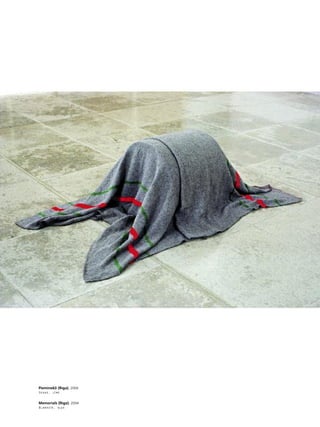
Helsinki, Finland
1996 For Beauty. CAC, Vilnius, Lithuania
1994 Vilnius/Oslo. UKS Gallery, Oslo, Norway
NÈDERLANDE / THE NETHERLANDS
Hans van Houwelingen
Dzimis / Born
1957 in Harlingen
Izglîtîba / Education
1985–1988 Rijksacademie van Beeldende Kunsten, Amsterdam
1978–1984 ABK Minerva, Groningen
Izstådes / Exhibitions
2003/2004 Maria, Brunnen des Lebens, oplevering permanent werk
in Petuelpark, München
waarin tevens werken van R. Graham, Kiki Smith, B. Bluhm,
H. Klingelholler e.a., Munchen
De Fenomenaleweg, Nederlandse Architectuur Biënale,
NAI, Rotterdam
2002 Commitment een keuze uit drie jaar Fonds BKVB (catalogus),
Rotterdam
Pioneri con tutti (catalogus), Hoofddorp
Zuil van Lely oplevering Stadhuisplein (brochure), Lelystad
2001 Toegepast Centraal Museum Utrecht, Utrecht
Hiroshima document 2001 Creative Union Hiroshima, Hiroshima
2001 : a Public Space Odyssey Arti et Amiticiae (catalogus), Amsterdam
2000 10 in het groen, 20 onder dak, Noorderplantsoen (catalogus krant),
Groningen
Ieder z’n voetba’, Kunsthal (catalogus), Rotterdam
Annie / Barbie oplevering mozaïekvloer kinderwinkelcentrum
Mooiersplein, Amersfoort
Beelden van Banken De Zonnehof, Amersfoort
Aussendienst Kunstverein Hamburg (catalogus), Hamburg
1999 Unlimited. NL, De Appel, Amsterdam
Waar het landschap begint/new landscape frontiers, Nederlands
Architectuurinstituut, Rotterdam
Real time @Zoersel ‘99 (catalogus), Zoersel
Een beeld van een tuin, Gemeentemuseum Het Hannemahuis,
Harlingen
Doel zonder oorzaak, W 139, Amsterdam
1998 Power Up, Museum voor Moderne Kunst Arnhem (catalogus),
Arnhem
Pictures for the Blue Room, Vigeland museet (catalogus), Oslo
De droom van een fontein, De kabinetten van de vleeshal,
Middelburg
1997 Ujamaa IV, de Zonnehof, Amersfoort
Patrons of Art, Meetings and Dialogues, Pushkin State Museum of
Fine Arts, Moskou
Individual religious acts, Begane grond, Utrecht
Hora est, Stedelijk museum Het Domein, Sittard
Bouwvak, Uden-zuid (katalogus), Uden
In the ditch..., Out of the ditch, Stedelijk Museum Amsterdam
(catalogus), Amsterdam
The lights, oplevering Kerkplein (brochure), Arnhem
1996 In eigen beheer, HCAK (publicatie), Den Haag
Host, Otto Berchem’s house, Amsterdam
Ujamaa IV, Gate Foundation, Amsterdam
Dag van de Architectuur, stadsschouwburg/Aorta, Utrecht
Blik, de Vleeshal, Middelburg
1995 Kunstrai 1995, Amsterdam
Psycho, Riagg Westelijk Utrecht (brochure), Utrecht
Warm of koud, Stroom HCBK, Den Haag
Casa de Cossa, restauratie huis van Pedro Cossa, Maputo
Ujamaa IV Moçambique ‘95, exposição, Centro Cultural Franco-
Moçambicano, Maputo
1994 Tentoonstelling ontwerp Kleine Gartman Plantsoen, Amsterdam,
Zuiderkerk, Amsterdam
Het Tapijt, oplevering Amerhof, Utrecht (brochure), Utrecht
Koeien denken heel diep na, Theater Artemis, Predikheerenpoort,
s’Hertogenbosch (brochure), Den Bosch
Blauw Jan, oplevering Kleine Gartmanplantsoen,
Leidseplein Amsterdam (brochure), Amsterdam
In twee delen gegoten, deel 1, Galerie Tanya Rumpff, Haarlem
In twee delen gegoten, deel 2, Galerie Tanya Rumpff, Haarlem
1993 Vrij spel, Gemeente Museum Arnhem, Arnhem
Wunderkammer, Arti et Amicitiae (video-katalogus), Amsterdam
Portrait Stilllife Landscape, Robert Wilson.
Museum Boymans van Beuningen (katalogus), Rotterdam
Dieren, Museum De Wieger (katalogus), Deurne
1992 Capital Gains, Galerie Tanya Rumpff, Haarlem
04
20
04
20
Biographies
of
artists Måkslinieku biogråfijas
190
•
Multiple Difference, Galerie Fons Welters, Amsterdam
Tentoonstelling ontwerpen Kleine Gartman Plantsoen Amsterdam
en Amerhof Utrecht, Centraal Museum Utrecht, Utrecht
Peiling 92, Museum Boymans van Beuningen (katalogus),
Rotterdam
1991 Fons voor Binnen, Galerie Fons Welters, Amsterdam
Pas de Deux, HCAK (katalogus), Den Haag
1990 Gemeentelijke kunstaankopen 1989, Museum Fodor (katalogus),
Amsterdam
1989 Galerie 175, Brussel
Galerie Hans Gieles (solo), Amsterdam
Tekens van Verzet, Museum Fodor (katalogus), Amsterdam
Vision and Revision, Danforth Museum of Art (katalogus), Boston
Capital Gains, Museum Fodor, Amsterdam
1988 Crossing Borders, USF Art Museum, Tampa; Glassell Art Gallery,
Houston;
Visual Art Gallery (katalogus), New York
5 Major Pieces, Galerie Hans Gieles, Amsterdam
Beelden voor blinden en zienden (katalogus), Kortenhoef
Lineart, Gent
Nobody’s Fools, de Appel, Amsterdam
Uit de Rijksacademie, Museum Fodor (katalogus), Amsterdam
1987 A priori sculptuur, Makkom (katalogus), Amsterdam
Capital Gains, Galerie ’t Venster, Rotterdam
Prix de Rome, Stopera (katalogus), Amsterdam
1986 Strik, van Houwelingen, Rijksacademie van Beeldende Kunsten,
Amsterdam
Capital Gains, De Zaak, Groningen
NORV‰ÌIJA / NORWAY
Jon Gundersen
Dzimis / Born
1942 in Oslo, Norway
Izglîtîba / Education
1967 Diploma SHKS
Personålizstådes / Solo Exhibitions
2003 Kunstnerforbundet, Oslo
1999 Kunstnerforbundet, Oslo
1991 Kunstnerforbundet, Oslo
1989 Galleri K, Oslo
1985 Galleri K, Oslo
1981 Galleri Tanum, Oslo
Nozîmîgåkås grupu izstådes /
Selected Group Exhibitions
2001 The Scream`s Echo, Munch Museum, Oslo
1999 The Norwegian Sculpture Biennial 1999, Oslo
1997 Silver HiTech, Kongsberg, Norway
1995 TAPCO, Copenhagen, Denmark
1991 The Worst of 25 Years, F 15, Moss, Norway
1990 Portes Oivertes a la Scandinavie, Paris, France
1989 Look Sound, Hear the Picture, Galleri F 15
1987–1988 SPOR, Sculptor Group, Kristiansand/Trondheim
Kunstforening
1987 Norwegian Sculpture, Gothenburg, F 15, Moss
1985 Lindau, Germany
1983 Session, Kunstnernes Hus, Oslo
1982 Junior Exhibition, Kunstnerforbundet, Oslo
Tendencies, F 15, Moss
1981 Norwegian Visual Art, Helsingfors
1980 Jubilee Exhibition, Kunstnernes Hus, Oslo
Sculpture Under Way, Oslo, Trondheim, Bergen
1979 The Annual Autumn Exhibition (also 81, 83, 85, 86, 89), Oslo
Lîgumdarbi / Commissions
2002 Idrettshallen, Stavanger
2001 Radhus, Hamar
2001 Rikshospitalet,Oslo (1999)
1996 Hardanger Vidda Nature Centre
1995 Universitetet, Oslo
1992 Lillehammer OL
NRK, Hordaland, Bergen
1988 Kulturhuset, Tromso
1987 M/S Bkack Prince
1984 Central Hospital, Forde
1982 The National Veterinary College, Oslo
1973 Royal Viking Sea
1972 Philips Building, London
1970 Nordenfjeldske National Museum of Decorative Arts
Hanne Tyrmi
Dzimusi / Born
1954 in Norway
Izglîtîba / Education
1981–1985 Statens Handtverks – og Kunstindustriskole, Oslo
Personålizstådes / Solo Exhibitions
2001 Henie-Onstad kunstesenter
2000 Speedy Bag. Johannesburg, Sor.Afroka
Galleri III, Oslo
1999 Pangea, Sao Paulo
Trondelag senter for samtidskunst, Trondheim
1998 Oslo kunstforening
1996 Sandefjord Kunstforening
1995 Bergen Kunstforening
Museu de Arte Moderna, Sao Paulo, Brasil
Galerie Abef de Oliveira, Parati, Brasil
1991 Gallerie 25, Helsinki
Ha gamle prestegard, Ha
1990 Galleri Ismene, Trondheim
1989 Galleri Stampen, Fredrikstad
1988 Gallerie Fayner, Oslo
Nozîmîgåkås grupu izstådes /
Selected Group Exhibitions
2003 Skulpturbiennale, Vigelandsmuseet, Oslo
Gold Hospits, Galleri G.U.N., Oslo
Rest-in-Space, Kunstnernes Hus, Oslo
2002 Rest in Space, Kunstnernes Hus, Oslo
2000 Temp, Bergen
Skoqbruksmuseet, Elverum
1999 Skulpturbiennalen, Stenersenmuseet, Oslo
1998 Shelter, Nordenfjeldske kunstindustrimuseum, Trh
Sandefjorf kunstforening
1996 Seljord Kunstforaning, Seljord
Buskerud Kunstnersentr, Drammen
1994 Studio 999, Rio de Janeiro
1993 Nedre Eiker Kunstforening, Hokksund
Krustifiks, Fredrikstad
Rognan Kunstforening, Roqnan
1991 Reqion Norge, Galleri F15, Jelaya
Sommerutstillingen, Seljord
Nedre Eiker Kunstforening, Hokksund
Stavanger Kunstforening, Stavanger
1989 Galleri Fosskeleiva, Berger
1988 Tjome Kunstforening, Hvasser
Kvinneuniversitetet, Loten
1987 Juniutstillingen, Kunstnerforbundet, Oslo
Kollektive utstillinger
1986, 87, 88, 90, 92, 97, 99, 02 Hostutstillingen, Oslo
1991, 92 Otlandsutstillingen
1989 Kunstnerforbundet, Oslo
Norske Miniatyrer, Tromse
1989 Galeri NoteBene, Oslo
POLIJA / POLAND
Magdalena Abakanowicz
Dzimusi / Born
1930 in Falenty, Poland
Izglîtîba / Education
1950–1954 Studies at the Academy of Fine Arts, Warsaw, Poland
Darbîbas jomas / Fields of Activity
Honoris causa doctorates of:
2002 Academy of Fine Arts in Poznan, Poland
191
•
School of the Art Institute of Chicago, Chicago, USA
2001 Massachusettes College of Art, Boston, USA
2000 Pratt Institute, New York, USA
1998 Academy of Fine Arts in Lodz, Poland
1992 Rhode Island School of Design, USA
1974 Royal College of Art in London, UK
Ievéléta par goda locekli /
Elected an honorary member
2000 Orden Pour le merite fur Wissenschaften und Kunste,
Berlin, Germany
1998 Sachsische Akademie der Kunste in Dresden, Germany
1996 American Academy of Arts and Letters, USA
1994 Akademie der Kunste in Berlin, Germany
Izstådes un projekti / Exhibitions and Projects
2003–2004 Coexistence, a cycle of human figures with metaphorical
animal faces
A group of 20 figures, Princeton University, USA
2003 Space of Stone, 22 granite blocks at “Grounds for Sculpture”,
Hamilton, New Jersey, USA
Open Air Aquarium, 30 stainless steel welded fish near a river in
Philadelphia, USA
2002 Unrecognised, 112 iron cast as a permanent display, Citadel Park,
Poznan, Poland
1999 Space to experience, International Park of Sculptures near Vilnius,
Lithuania
1995–1997 Animals in burlap, later in bronze and welded stainless steel.
Birds out of iron wire, other birds cast in bronze, also in aluminium,
finally welded in stainless steel.
Designs and choreographs dances performed as a single experience
by Japanese and Polish young people in Hiroshima and Warsaw.
First groups of walking figures in burlap. Other groups made
directly in the foundry were cast in bronze after plaster and
styrofoam models.
Crowd of 95 figures, walking and standing, adults and children as a
statement about human condition, bronze cast.
1991–1994 Retrospective in Japanese museums
Becalmed Beings, a commission for the Hiroshima City Museum,
Japan
Hand-like Trees, a cycle created directly in the foundry
Arboreal Architecture, a concept of a modern ecological city in
which buildings organic in shape are vertical gardens (upon the
invitation of the Paris authorities concerning the enlargement
of the Great Axis of Paris)
1988–1989 War Games, a cycle of tree trunks armed with steel,
the Mazury forests in Poland
A group of 50 standing headless figures in burlap
A group of 36 standing figures in bronze
Sagacious Heads, several metaphoric huge animal heads
A cycle of 150 self portraits deriving from imprints of her own
face in lost wax
Hoofed Mammals, animal heads
1985 Permanent outdoor installations - spaces to contemplate, spaces to
experience, Italy, Israel, Korea
1982–1983 Travels to America to arrange each of her exhibitions as
a separate statement
The first cast of human figure in aluminium and in bronze
with students of American Universities
1981–1982 Solo exhibition, Musee d’Art Moderne de la Ville de Paris,
France
The tour of retrospective in eight museums of the USA
The Abakano - Kai Association, Japan
1980 Alteration, solo exhibition in the Polish Pavilion, Venice Bienniale,
Italy
1970 The first human figure in burlap
Alterations, huge cycles of figurative and non-figurative sculptures
out of burlap and resin
1960 Abakans, monumental three-dimensional forms in author’s
technique
1954-1960 A series of large gouache paintings on paper and canvas
Nozîmîgåkie apbalvojumi / Selected Awards
2000 Cavaliere nell Ordine Al Merito della Republica Italiana
1999 Officier de L’ Ordre des Arts et des Lettres, Paris
1998 Comandor Cross with Star of the Order of Polonia Restituta
1993 Distinction in Sculpture, granted by the Sculpture Center,
New York
1965 Grand Prix of the Sao Paolo Biennale, Brazil
PORTUGÅLE / PORTUGAL
Leonor Antunes
Dzimusi / Born
1972 in Lisbon, Portugal
Dzîvo un strådå / Lives and Works
Lisbon, Portugal
Izglîtîba / Education
1998 Staatliche Akademie der Bildenden Kunste, Karlsruhe, Germany
1993–1998 Diploma in Fine Arts-Sculpture, at the Faculty of Fine Arts
of the University of Lisbon
1992–1993 Scenario studies at the Superior School of Cinema and
Theatre in Lisbon
Nozîmîgåkås personålizstådes /
Selected Solo Exhibitions
2003 fichet, Culturgest, Edificio Sede da Caixa Geral de Depositos,
Oporto, Portugal
objectos assim dispersos, Lisaboa 20 contemporary art,
Lisbon, Portugal
2002 0, Calcada da Estrela, front door, Lisboa 20, Lisbon, Portugal
ante-sala, Museum of Antique Art, Lisbon, Portugal
2000 Home is where you are, public art insatllation. Norwich, UK
the city walker, edition of 350, book conceived and printed in
Norwich, UK
1998 circus rope, Staatliche Akademie der Bildenden Kunst,
Karlsruhe, Germany
step by step, Staatliche Akademie der Bildenden Kunst,
Karlsruhe, Germany
Nozîmîgåkås grupu izstådes /
Selected Group Exhibitions
2002 Tabaqueira Art Prize, Bicos House, Lisbon, Portugal
a dois, Francisco Tavares Proenca Junior Museum,
Castelo Branco, Portugal
continuacao 5, alguns fragmentos do universo,
Centro Cultural de Sines, Sines, Portugal
Bienal da Maia, Maia, Portugal
portuguese presentation, Vigo Museum, Spain
2001 Disseminacoes, Culturgest, Caixa Geral de Depositos,
Lisbon, Portugal
City Desk Prize, Cascais Cultural Centre, Cascais, Portugal
Arte Publico, Publico daily newspaper
Uniao Latina Prize, Calouste Gulbenkin Foundation,
Lisbon, Portugal
Squatters/Ocupacoes, Porto 2001, Serralves House,
Oporto, Portugal
Introducao, Electricity Museum, EDP, Lisbon, Portugal
Situation zero, Yerba Buena Center for the Arts,
San Francisco, USA
Lisboa Capital do Nada, public art in Marvila, Lisbon, Portugal
2000 Noah is going to London, Norwich Gallery, Norwich, UK
Microart, book shops Assirio Liquida, Bulhosa e Livreiros, Barata,
Bucholz, Lisbon, Portugal
O impulso pedestre, Arte Iberica magazine, Reality Check,
Year 4 n 35, May 2000
Microart, Expo 2000, Hannover, Germany
Olhar da Contemporaneidade, Lisbon Ceremonies, Art Attack
project in Lisbon, Rosa palace, Lisbon, Portugal
Alquimias das Artes, S.Francisco Monastery, Coimbra, Portugal
04
20
04
20
Biographies
of
artists Måkslinieku biogråfijas
192
•
Southern Exposure, ZDB gallery, San Francisco, EUA
Plano XXI, Glasgow, United Kingdom
Contaminantes Comunicantes, 10 artists + 10 architects, Fine Arts
National Society, Lisbon, Portugal
Deposito, Fernando Pessoa House, Lisbon, Portugal
1998 FootNotes, Caldas da Rainha Ceramic Museum, Art Attack,
Caldas da Rainha, Portugal
Wc Container, Oporto, Portugal
Bienal da Maia, Maia, Portugal
7 artistas ao 10e mes, Calouste Gulbenkian Foundation,
Lisbon, Portugal
Os electricos que vao para Antuerpia (the tram that goues to
Antuerp) Public art installation, conceived for a tram stop in Rua
da Conceicao, tram line No 28, Lisbon, Portugal
Outro Manual de Uso, Numero magazine, No 4
Apbalvojumi / Awards
2000 Sculpture in public space, Afonso Henriques`s Foundation,
Oporto
Artist award / Young Artist.EDP Company, Portugal
1998 2nd prize, Pharmacy National Association, for the arwork
Soap banister
1999 Pepinieres europeenes pour jeunes artistes en Europe. Artist
resident in the city of Norwich, October 1999 – February 2000
1998 Erasmus program, Staatliche Akademie der Bildenden Kunste,
Karlsruhe, Germany
Carlos Nogueira
Dzimis / Born
1947 in Moçambique
Nozîmîgåkås personålizstådes un projekti /
Selected Solo Exhibitions and Interventions
2003 desenhos.de casas, Galeria Premontório, Lisboa
construção para lugar nenhum, Galeria Luis Serpa/Projectos, Lisboa
2002 paisagem(s) de (man)dar / fragmento, Pahldata, Lisboa
nem sombra nem vento, Sintra Museu de Arte Moderna/Colecção
Berardo, Sintra
a parar a luz, Centro Cultural de Belém, Lisboa
longe e brilha, Centro Cultural Emérico Nunes, Capela de Sines,
Sines
a ver, Centro de Arte Moderna, José de Azeredo
Perdigão/Fundação Calouste Gulbenkian, Lisboa
2000 objectos com luz própria, Galeria 30 dias, Caldas da Rainha.
a noite e branco, Museu da Cidade, Lisboa
1999 beyond the very edge of the earth, Universidade de Brighton,
Bighton
1998 beyond the very edge of the earth, The Economist Plaza, Londres
construção com chão branco a partir de dentro, escultura realizada
a convite, no âmbito da exposição Cristino da Silva,
Fundação Calouste Gulbenkian, Lisboa
1997 olhou para ele durante muito tempo; continuou então a desenhar,
Galeria Canvas & Companhia, Porto
o mar, o céu e outros labirintos, Centro Cultural Camões, Brasûlia
o mar, a mar e outros labirintos, Museu de Belas Artes do
Rio de Janeiro, Rio de Janeiro
1996 o mar, a pedra e outros labirintos, Centro Cultural de Belém,
Lisboa
as portas do rio te estão abertas, Livraria Assûrio & Alvim, Lisboa
1994 chão de cal, Museu Nacional de História Natural, Lisboa
até ao fim das terras todas, Teatro Nacional São João, Porto
1993 uma floresta como um rio, Avenida Gulbenkian, Lisboa
permanência da êgua, Galeria Évora-Arte, Évora
1992 entre duas êguas, Museu Nacional de Évora, Évora
1989 desenhos, Galeria Diferença, Lisboa
1986 das nascentes, Cooperativa Árvore, Porto
1985 paisagens das terras do monte e da pele, Galeria Diferença, Lisboa
1983 6 ensaios sobre um céu de pintar e outro de brincar, Cûrculo de
Artes Plêsticas de Coimbra, Coimbra
do céu / o sal, instala_ão e ac_ão, Sociedade Nacional de
Belas-Artes, Lisboa
paisagem(s) de (man)dar, Sociedade Nacional de Belas-Artes,
Lisboa
boa viagem / e escreve, acção por correio, Portugal
1981 conjunto de mesa e pintura a condizer e outros fragmentos de um
discurso sobre o comum e o quotidiano (ou a primeira fruta com
as primeiras chuvas), Centro Nacional de Cultura, Lisboa
1980 gosto muito de ti, acção de rua Oeiras e Lisboa a Camões e a ti
II Bienal de Cerveira, Vila Nova de Cerveira
se eu pudesse dava-te um piano, acção por correio, Portugal
1979 os dias cinzentos / lêpis de pintar dias cinzentos, Galeria Diferença,
Lisboa
1978 do branco branco ao espa_o (homenagem azul a Malevitch) ciclo
de encontros sobre Malevitch, Museu Nacional de Arte Antiga,
Lisboa
homenagem a Bosch, Dia Internacional dos Museus,
Museu Nacional de Arte Antiga, Lisboa
Nozîmîgåkås grupu izstådes /
Selected Group Exhibitions
2002 100 Anos – 100 Artistas, Sociedade Nacional de Belas-Artes,
Lisboa
Territórios Singulares, Sintra Museu de Arte Moderna/Colecção
Berardo, Sintra
2001 Alquimias – Al berto, as Imagens como Desejo de Poesia,
Centro Cultural Emérico Nunes, Sines
1999 Fórum de Macau, Macau
1998 Hong Kong Museum of Art, Hong Kong
1997 Slusser Gallery, University of Michigan, Ann Arbor
1996 19å Trienal de Arquitectura de Milão (representação oficial
portuguesa), Milão
The Urban Center, The Architectural League, Nova Iorque
1995 Bienal Internacional de Escultura e Desenho, Caldas da Rainha
1992 A secreta vida das imagens, Galeria Atlântica, Lisboa
A secreta vida das imagens, Galeria Atlântica, Porto
1990 Os bêrbaros, Galeria Pedro e o Lobo, Lisboa
1988 Lisbonne Aujourd’hui, Museu de Arte Contemporânea de Toulon,
Toulon
Fotoporto, Casa de Serralves, Porto
1987 Exposição Nacional de Arte Moderna, Casa de Serralves, Porto
MARCA, Feira de Arte da Madeira, Funchal
1986 III Exposi_ão de Artes Plêsticas, Fundação Calouste Gulbenkian,
Lisboa
Sinfonia em Branco, Festival de Mûsica dos Capuchos, Caparica
XLII Bienal de Veneza (representação oficial portuguesa), Veneza
Exposição AICA”, Sociedade Nacional de Belas-Artes, Lisboa
1985 Exposição AICA, Sociedade Nacional de Belas-Artes, Lisboa
Diferença / Diêlogo, Galeria Diferença, Lisboa
1984 Heróis, Galeria Quadrum, Lisboa
1983 A História Trêgico-Marûtima, Sociedade Nacional de Belas-Artes,
Lisboa
Livros de Artista, Galeria Diferença, Lisboa
1982 II Trienal Internacional de Desenho, Nuremberga e Lausanne
O papel como suporte, Sociedade Nacional de Belas-Artes, Lisboa
Exposi_ão de Arte Moderna, Sociedade Nacional de Belas-Artes,
Lisboa
Desenhos/ Projecto SEMA, Edifûcio Mobil, Lisboa
1981 Lis’81 (artista seleccionado), Lisboa
25 artistas portugueses hoje, Museu de Arte ContemporŒnea
de São Paulo, São Paulo
1980 II Bienal de Cerveira, Vila Nova de Cerveira
A caixa, Galeria Diferença, Lisboa
Arte Portuguesa Hoje, Sociedade Nacional de Belas-Artes, Lisboa
Panorama das Galerias, Galeria Nacional de Arte Moderna, Lisboa
193
•
1979 Lis’79, Galeria Nacional de Arte Moderna, Lisboa
1978 Outras formas, outra comunica_ão, Sociedade Nacional
de Belas-Artes, Lisboa
1977 O papel como suporte, Sociedade Nacional de Belas-Artes, Lisboa
1976 Exposi_ão de Arte Moderna Portuguesa, Museu de Arte Moderna
de Lunds, Lunds
1975 Colagem-Montagem, Sociedade Nacional de Belas-Artes, Lisboa
Darbi kolekcijås / Works in Collections
Ministério da Cultura, Lisboa
Fundação Mêrio Soares, Lisboa
Fundação Calouste Gulbenkian (CAM JAP), Lisboa
Universidade de Brighton, Brighton
CŒmara Municipal de Lisboa, Lisboa
Depósito Museu de Serralves, Porto
Colecção Berardo
Centro Cultural de Belém, Lisboa
Centro Cultural Emérico Nunes, Sines
RUMÅNIJA / ROMANIA
Peter Jecza
Dzimis / Born
October 16, 1939, Sf. Gheorghe, Romania
Izglîtîba / Education
1963 “Ion Andreescu” Institute of Fine Arts, Cluj
(Professors: Kos Andras, Virgil Fulicea, Romul Ladea)
Pedago©iskå pieredze / Teaching Experience
Professor at the Department of Plastic Arts, Faculty of Fine Arts,
University of Timişoara
Personålizstådes / Solo Exhibitions
Wuppertal/Germany, Bucharest/Romania, Hofgeismar/Germany,
Aeugsterthal-Zürich/Switzerland, Olten/Switzerland, Berlin/Germany,
Warburg/Germany, Cluj/Romania, Herne/Germany,
Brockdorff/Germany, Düsseldorf/Germany, Köln/Germany,
Bad Salzuflen/Germany, Fraubrunnen/Switzerland, Arosa/Switzerland,
Basel/Switzerland, Lugoj/Romania, Essen/Germany,
Lübbecke/Germany, Mannheim/Germany, Timişoara/Romania,
Bamberg/Germany, Aachen/Germany, Ettlingen-Spessart/Germany,
Münich/Germany, Heidelberg/Germany, Hamburg/Germany,
Budapest/Hungary
Starptautiskas izstådes / International Exhibitions
Wuppertal/Germany,
Barcelona Biennial/Spain,
“Dante” Biennial, Ravenna/Italy,
Anvers-Middelheim Art Biennial/Belgium,
Venice Art Biennial/Italy,
Exhibition of small sculpture Milano/Italy,
International Exhibition Düsseldorf/Germany,
International Art Exhibition Essen/Germany,
International Exhibition Cologne/Germany,
Ente Fiera di Vicenza/Italy,
Eurosculpture Festival Carhaix/France,
International Exhibition Budapest/Hungary,
Small Sculpture Biennial Ljubljana/Slovenia,
International Exhibition Ingolstadt/Germany
Rumåñu måkslas izstådes årvalstîs /
Romanian Art Exhibitions Abroad
Yugoslavia, Germany, Italy, USSR, Austria, Switzerland, Bulgaria,
Finland, Egypt, Czechoslovakia, Jordan, Iraq, Brazil, Sweden, Greece,
Spain, Hungary, Denmark, Norway, USA
Monumentålå måksla / Monumental Art
Busts, bas-relief, ambient art, memorials in Timişoara, Arad, Dalnoc,
Covasna, Orşova, Caransebeş, Sf.Gheorghe, Dumbrãviţa, Buziaş, Pecica,
Belini/Romania, Bad Salzuflen/Germany, Stuttgart/Germany
Apbalvojumi / Awards
“Dr.Ludwig Lindner” International Prize (Wuppertal/Germany),
Golden Medal of the President of Italy (“Dante” Biennial, Ravenna/Italy),
Golden Medal of the President of the Council of Ministers
(“Dante” Biennial, Ravenna/Italy),
First Prize (International Art Exhibition, Reşita),
Second Prize (Small Sculpture National Exhibition, Arad),
Order of Merit, Officer Rank, of the President of the Republic (Bucharest)
Darbi publiskås kolekcijås /
Works in Public Collections
National Art Museum Bucharest, Banat Museum Timişoara,
Modern Art Museum Galaţi, Art Museum Drobeta Turnu-Severin,
Seckler Museum Sf.Gheorghe, Petculescu Art Museum Tg.Jiu,
Röderhaus Museum Wuppertal/Germany,
Concrete Art Museum Ingolstadt/Germany,
Contemporary Art Museum Rio de Janeiro/Brazil
Rudolf Kocsis
Dzimis / Born
1963 in Chişineu-Criş, Romania
Izglîtîba / Education
1988 George Enescu Fine Arts Academy, sculpture
Darbîbas jomas / Fields of activity
Member of Fine Artists’ Union, Romania, and International
Association of Art (aiap), France;
2002 Doctor of Liberal Arts-University of Pecs (H), Visual Arts Faculty
1996 Universitary lecturer at University of Timisoara, Romania,
Fine Arts Faculty, sculpture
1990 Working as a teacher at The College of Arts in Arad
Personålizstådes / Solo Exhibitions
2004 Triade Foundation, Gallery, Timisoara, Romania
2002 Melnikow Gallery, Heidelberg, Germany
2001 Galleria 28, Timisoara, Romania
1999 Erkel Ferenc Museum, Gyula, Hungary
1997 First Gallery, Timisoara, Romania
1996 Delta Gallery, Arad, Romania
Slovac Institute, Bucharest, Romania
1995 Cultural Center of Hungary, Bucharest, Romania
1994 Art Gallery, Sfantu-Gheorghe, Romania
1993 Helios Gallery, Timisoara, Romania
1991 Ildiko Risse Gallery, Wessling, Germany
1990 Arta Gallery, Arad, Romania
1988 Trianon Gallery – Iasi, Romania
Nozîmîgåkås grupu izstådes /
Selected Group Exhibitions
2003 Madonna, Melnikow Gallery-Heidelberg, Germany
2002 Homunculus, Melnikow Gallery-Heidelberg, Germany
2001 Itinerance, Espace Belleville, Paris, France
2000 Fine art union (Arad branch) expozition,
Kunstler Gallery-Heidelberg, Germany
1999 The Ten Group show, Cultural Center of Romania,
Budapest, Hungary
1998 Fine art union (Arad branch) expozition, Chiara Maria,
Rimini, Italy
Om – Man – Ember, County Art Museum, Bistrita-Násáud,
Romania
1997 Freedom of Movement, County Art Museum – Bistrita-Násáud,
Romania
1996, 98, 00, 02 Small Sculpture Biennial, Delta Gallery, Arad, Romania
1995 Oriens ‘95, Békéscsaba, Hungary
1995, 97, 99, 01, 03 Drawing Biennial, Delta Gallery, Arad, Romania
1994 Group’81, Cultural Center of Romania, Vienna, Austria
The Rabbit, Cultural Center of Hungary, Bucharest, Romania
01010101...exhibition, The Romanian Peasant’s Museum,
Bucharest, Romania
Medium 3, Sfântu-Gheorghe, Romania
Art Unlimited ltd., Art Museum, Arad, Romania
1992 The Earth, Art Museum, Timişoara, Romania
1991 Medium 2, Sfântu-Gheorghe, Romania
1988 Picture and Sculpture Biennale, Bucharest, Romania
Starptautiskas izstådes / International Exhibitions
2002 International Mini-Print Triennial-Tama Art University Museum-
Tokyo, Japan
2001 The International Festival of Graphic Arts, Cluj-Napoca, Romania
International Art Biennial, Sharjah, (U.A.E.)
International Triennial of Small-Size Sculpture,
Murska-Sobota (SL)
04
20
04
20
Biographies
of
artists Måkslinieku biogråfijas
194
•
1998 Sall Graphic Forms – Újpest Gallery – Budapest, Hungary
International Exhibition Telefax – Kaposvár,
Hungary 1998 - International Triennial Exhibition Mini - Print,
Tokio, Japan
1997 5th International Triennial of Youngs Talents, Charleroi (B)
1996 12th Cleveland International Drawing Biennale, Great Britain
1995 12th International Biennial of small Sculpture, Murska-Sobota (SL)
1993-94 1st and 2nd Annual International exhibition of Miniature Art,
Stockholm, Sweden
1994 3rd International Sculptural Drawings Biennial, Budapest, Hungary
1993 International Sculpture Biennale, Toyamura, Japan
1991-93 1st and 2nd International Biennial of Graphic, Györ, Hungary
Apbalvojumi / Awards
2000 Arad Fine Arts Association’s – award for sculpture
1999 Romanian Fine Arts Association’s – award for sculpture
Art Foundation (ConstanΩa) – award for sculpture
Simpoziji / Simposia
1996 Cluj-Napoca – stone, Romania; Zalkód – stone, Hungary;
Lenti – wood, Hungary; 2000 International Sculpture Symposium –
L’art pour la sante – Dudince – marble (SK); 2002 Selye – wood,
Hungary
Publikåcijas / Publications
2003 Rudolf Kocsis Obiectul si Sculptura, book, Triade Foundation,
Timisoara, Romania
2002 Kocsis Rodolf Tárgy és Szobrászat, book, Idea Publishing House,
Cluj-Napoca, Romania
1999 Fragments, catalogue – sculpture
1997 Traces, catalogue – objects sculpture
SLOVÅKIJA / SLOVAKIA
Matej Gavula
Dzimis / Born
1972 in Bratislava, Slovakia
Izglîtîba / Education
1990–1996 Academy of Fine Arts and Design, Bratislava, Dept. of Glass
in architecture
1986–1990 Secondary School of Applied Arts, Dept. of Stone Carving
Darbîbas jomas / Fields of activity
objects, installations, video, action, theater settings, glass design
Member of the artistic group XYZ, since 1998
Grupas XYZ izstådes un akcijas /
Exhibitions and Actions of the XYZ Group
It could be Gallery called Panoráma, súkromnýdom, Bratislava
2003 SEXYZ II, action, Buryzone club, Bratislava
2002 SEXYZ, action, Buryzone club, Bratislava
Praha-XYZ, Galéria Display, Praha
2001 XYZWAR, Galéria Priestor, Bratislava
2000 Opening, Galéria C. Majerníka, Bratislava
Gavula, Ondrußek, Tittel, Galéria Marat Art, Bratislava
1998 Yule, CC centrum, Bratislava
Exhibition XYZ, UBS, Bratislava
Personålizståde / Solo Exhibition
1999 “VKV“, galéria Akcent, Bratislava
Nozîmîgåkås grupu izstådes /
Selected Group Exhibitions
2003 Çeskoslovensko, Slovak National Museum, Bratislava
2002 Neokonstructivism in Slovak visual arts, Umělecko – pru
° myslové
muzeum Praha
“New“ Slovak Art 1936–2001, Kunsthalle Exnergasse, Wien
2001 (nové) umenie 1936–2001, ÍG, Banská Bystrica
Lighthouse, PGU, Ûilina
Moja srdcová záleΩitost’, Buryzone club, Bratislava
2000 Manipulating art II, ÍG Nitra
Opening, Galéria C. Majerníka, Bratislava
20. Century, Slovak National Gallery (SNG), Bratislava
Manipulating art, PGU, Ûilina
Neokonstructivism in Slovak visual arts, Galéria Jána Koniarka,
Trnava
1999 P.F. 2000, SNG, Bratislava
Ad Laudem Artificis, SNG, Bratislava
Slovak Art for Free, Slovak Pavillion, Biennale di Venezia
1998 World between, SNG, Bratislava
1997 Jas Lesk Odraz, ÍG Banská Bystrica
Kamarádßoft ist gút, NOC Bratislava, OG Dolný Kubín,
Elektráreň Poprad
1994 Disperzia, Du
° m Umění Ostrava, SNG Bratislava
Glass sculpture 93, Galéria Jána Koniarka, Trnava
Prototyp, SNM Bratislava
1993 Young Slovak Culture, Arnhem, Netherlands
Students show, Galéria Médium, Bratislav
Radoßås darbnîcas un simpoziji /
Workshops and Symposia
2002 Strih na krajinu, OG Dolný Kubín
1996 Contemporary crystal and glass, Colle Val d’Elsa, Italy
Dypol, sculptural workshop, Berlin, Germany
Scenogråfija / Theater settings
2003 Samuel Beckett “Three one-act plays“, Studio 12, Bratislava;
Peter Handke “Kaspar“, Studio 12, Bratislava, both pieces
directed by Martin Hvißç
Milan Tittel
Dzimis / Born
1966 in Litomyßl
Izglîtîba / Education
1987–1993 VÍVU, Bratislava, Kateder Skulpturei
1980–1984 SUPÍ, Bratislava, Skulptur
Grupas XYZ izstådes un akcijas /
Exhibitions and Actions of the XYZ Group
2003 Mohla by to byù galéria Panoráma, súkromný dom, Bratislava
SEXYZ II, akcia v klube Buryzone, Bratislava
2002 SEXYZ, akcia v klube Buryzone, Bratislava
Praha-XYZ, Galéria Display, Praha
2001 XYZWAR, Galéria Priestor, Bratislava
2000 Opening, Galéria C. Majerníka, Bratislava
Gavula, Ondrußek, Tittel, Galéria Marat Art, Bratislava
1998 Yule, CC centrum, Bratislava
Výstava XYZ, UBS, Bratislava
Personålizståde / Solo Exhibition
1996 Tittel, Tittlová, Galéria Tatrasoft, Bratislava
Nozîmîgåkås grupu izstådes /
Selected Group Exhibitions
2003 Çeskoslovensko, SNM, Bratislava
Nevesta, synagóga Trnava
2002 Artforum Berlín, prezentácia galérie Priestor, Berlín
Strih na krajinu, OG Dolný Kubín
Lighthouse, Galéria J. Koniarka Trnava
“New“ Slovak Art 1936–2001, Kunsthalle Exnergasse, Wien
2001 Súçasné slovenské výtvarné umenie, velvyslanectvo SR,
Washington DC
Csölle, Sobiecka, Tittel, Galéria Rzasa, Zakopane, Polsko
(nové) umenie 1936–2001, ÍG Banská Bystrica
Lighthouse, PGU, Ûilina
2000 Manipulujûce umenie II, ÍG Nitra
Manipulujúce umenie, PGU, Ûilina
1999 PF 2000, SNG, Bratislava
Ad Laudem Artificis, SNG, Bratislava
Socha a objekt, Pálfyho palác, Bratislava
1998 Medzisvet, SNG, Bratislava
1997 Premostenie, Ostrihom
Bienále drobnej plastiky, Murská Sobota, Ingoldstadt
Jas-Lesk-Odraz, ÍG, Banská Bystrica
1996 Homage á Havel, Divadlo Archa
1995 Výber zo súçasneho slovenského sochárstva, Galéria
M.A.Bazovského, Trençín
Priestory duße, UBS, Bratislava
1994 Disperzia, Du
°m Umění, Ostrava, SNG, Bratislava
Prototyp, SNM, Bratislava
1993 Csölle, Tittel, Venerçanová, Íarißská Galéria, Preßov
195
•
SOMIJA / FINLAND
OLO
Pasi Karjula and Marko Vuokola
2004 No: 41 European Space Sculpture Quadrennial, Riga, Latvia
No: 40 Book of OLO projects
2002 No: 39 Karonen elementary school, public work, Tampere, Finland
No: 38 Arabianranta, public work, Helsinki, Finland
No: 37 Rohto Art for Young Men, Helsinki City Art Museum,
Finland
2001 No: 36Mänttä Art Festival Mänttä, Finland
No: 35 Ikuinen paluu Helsinki Zoo, Finland
2000 No: 34 100 VR Magazines, Helsinki, Finland
No: 33 Töölönlahti Art Gardens 2000 Helsinki, Finland
No: 32 Norden Kunsthalle Wien, Vienna, Austria
No: 31 MOMENTUM Nordic Festival of Contemporary Art Moss,
Norway
No: 30 Arts Space 1%, Copenhagen, Denmark
1999 No: 29 Finnish Line: Starting Point Musées de Strasbourg, France
No: 28 Art in the City of Tampere Tampere, Finland
No: 27 Melbourne International Biennial 1999 Melbourne,
Australia
No: 26 4th Mänttä Art Festival Mänttä, Finland
1998 No: 25 Cool Places The 7th Triennal of Young Baltic Art,
Contemporary Art Centre, Vilnius
No: 24 Cool Places The 7 th Triennal of Young Baltic Art,
Contemporary Art Centre, Vilnius
No: 23 This side of the ocean Kiasma, Helsinki, Finland
1997 No: 22 Hietalahti / Helsinki, public work, Finland (model) - 2000
No: 21 Catch’n release Galleria Kari Kenetti, Finland
No: 20 Catch’n release Teerijärvi, Orivesi, Finland
1996 No: 19 Hviträsk 96 Kirkkonummi, Finland
No: 18 Bothnia Ice Scape Oulu, Finland
1995 No: 17 Myötätuuleen II Hanko, Finland
No: 16 Galleria Artina, Helsinki, Finland
No: 15 Institute of Orivesi, Finland
No: 14 Smart Show Stockholm, Sweden
1994 No: 13 Myötätuuleen I Hanko, Finland
No: 12 Big Oslo, Norway
1993 No: 11 Stichting de Bank, Enschede, Holland
No: 10 Gallery of Academy of Fine Arts, Helsinki, Finland
1992 No: 9 TimeSpace Nordic Arts Centre, Suomenlinna, Finland
No: 8 Young Artists Exhibition Kunsthalle, Helsinki, Finland
1991 No: 7 Notoro Multimedia Symposium, Oronsko, Poland
No: 6 Notoro Multimedia Symposium, Oronsko, Poland
No: 5 Otso Gallery, Espoo, Finland
No: 4 Academy of Fine Arts, Helsinki, Finland
No: 3 Sveagalleriet, Stockholm, Sweden
1990 No: 2 Art Centre Mältinranta, Tampere, Finland
No: 1 The Museum Contemporary Art, Tampere, Finland
TŸlay Schakir
Dzimusi / Born
1968 in Helsinki
Izglîtîba / Education
1999 Spring term, Kunsthochschule für Medien, Köln;
Academy of Media Arts, Cologne, studies in holography and laser
1992–1999 Theatre Academy, Department of Sound and Lighting
Design. MA of Theatre Arts
1991–1995 Tampere School of Art and Media, Diploma in Visual Arts
1989–1991 Art School MAA
Darbîbas jomas / Fields of activity
Association of Finnish Sculptors (aspirant member)
Finnish Artist Association MUU
Finnish Lighting Technical Association
Association of Finnish Sound and Lighting Designers
Board member of Foundation for Environmental Art
Nozîmîgåkås izstådes / Selected Exhibitions
2002 OFF, solo exhibition, Helsinki Festival, Profounders Gallery
2001 Young Artist of the Year 2001, solo exhibition,
Tampere Art Museum
Kylmä, kuuma, hyvä, huono (Cold, Hot, Good, Bad), solo exhibition
in Kluuvi Gallery, Helsinki
1999 Kohtaamisia (Encounters) group exhibition, Pornainen
105th annual exhibition of the Artists´ Assosiation of Finland,
Kunsthalle Helsinki
Kunsthochschule für Medien, spring exhibition, work group,
Cologne, Germany
Pala sateenkaarta ja muita jäljitelmiä (Fragment of Rainbow and
other Copies) solo exhibition, Jangva-Gallery, Helsinki
Se jokin (That Special Something), group exhibition, Into Gallery,
Helsinki
1997 Hetken jäljennös (Reproduction of a Moment), solo exhibition,
MUU Gallery, Helsinki
1996 101st annual exhibition of the Artists´Association of Finland,
Hyvinkää
1995 Tilan muisti (Spaces Memory) diploma work, Tampere School of
Art and Media, Finlayson Gallery, Tampere
Naisen Nauru (Woman´s Laughter), group exhibition, Turku
Prague Quadrennial, work group White Lies, Czech Republic
1994 Shop window images, work group, Tampere Museum of
Contemporary Art
Nozîmîgåkie gaismas dizaina projekti /
Selected Lighting Designs
2004 Lighting, set design and videos in Arja Raatikainen´s dance work
Musta, Helsniki
2003 Lighting design in Jorma Uotinens dance work La chut du cheval
for Introdans, Arnhem, The Netherlands
2002 Lighting, projections and set design in Arja Raatikainen´s dance
work Tunneli (The Tunnel), Helsinki City Theatre
2000 Set design (together with Kimmo Koskela) and lighting design in
dance work Opal-D, choreography by Arja Raatikainen Stoa,
Helsinki
1999 Lighting and set design in dance work Kuolema Venetsiassa
(Death in Venice), choreography by Sanna Kekäläinen,
Finnish National Opera, Almi Hall, Helsinki
Lighting design to a designed electric high voltage pole
(design by Antti Nurmesniemi), comissioners Fingrid Oyj and
Hämeenlinna Energy co.
Lighting design in dance work Enne (Omen), choreography
and dance: Arja Raatikainen, Stoa Helsinki
Lighting design in installation Ice Station Fingrid in a high-voltage
line portal tower in Hyvinkää, ice design by Reio Perko,
comissioner Fingrid Oyj
1998 Lighting design and projections in dance work Kommentteja
(Comments), choreography by Arja Raatikainen, Stoa, Helsinki
Lighting design plan for Häme Polytechnic entrance lobby
and courtyard (Perko Oy Architects)
Lighting design in Mikko Kallinen´s dance work copycopycopy,
Stoa, Helsinki
1997 Lighting and set design in dancework Walkman, choreography
and dance by Jyrki Karttunen, Stoa, Helsinki
Lighting design and visualisation in dance work Unettomat
(Sleepless), choreography by Katri Soini, Theatre Academy
Lighting and set design in a poetry reading, Kyljet jäätä raapien,
poems by Aila Meriluoto, Sotku, Kuopio, Kuopio City Theatre
1996 Lighting design in dance work Missä Jallu luuraa?, choreography
by Harri Kuorelahti, The Full Moon Festival, Pyhäjärvi
Lighting design in dance work Valoa-valoa (Light-light),
choreography by Soile Lahdenperä, Zodiak – centre for new dance,
The Cable Factory, Helsinki
1995 Lighting, projections and set design in dance work Näkymätön mies
(Invisible Man), choreography and dance by Jyrki Karttunen, Stoa,
Helsinki
Jaunåkie projekti / Current Projects
2004 Group exhibition, Mänttä Finland
Lighting and light art to a school, Kalvola
2003 Commissioned work for the Technical Bureau in Marianhamina,
Åland
Lighting and environmental art for Oulu´s Madetojanraitti-area
Lighting design in Petri Kokoni´s dance work
Darbi publiskå telpå / Public Works of Art
Tampere Polytechnic, implementation phase 2002–2003
Aurinkolahti School, Helsinki
Apbalvojumi un stipendijas / Awards and grants
2003 1st prize in invitation competition for architectural design
and environmental art for Oulu´s Madetojanraitti-area (work group)
04
20
04
20
Biographies
of
artists Måkslinieku biogråfijas
196
•
2000 Palokärki prize of the Artists´ Association of Finland (AAF)
States Art Award / Art Council of Finland
2001 1st prize in competition for an artwork to be situated
in the Tampere Polytechnic
The Young artist of the Year 2001
Finnish Cultural Foundation /one year working grant
SPÅNIJA / SPAIN
J.Alvaro Perdices
Dzimis / Born
1971 in Madrid
Lives and works in Los Angeles and Madrid
Izglîtîba / Education
1995-1997 MFA University of California, Los Angeles
(visiting scholar)
1994 MA, California State University, Los Angeles
1993 BFA, Complutense, University, Madrid
Nozîmîgåkås personålizstådes /
Selected Solo Exhibitions
2004 La Casa Encendida, Madrid, Spain
2003 Galeria Espacio Minimo, Madrid, Spain
2001 IMAGO, Palacio de Abrantes, Salamanca, Spain
1999 Galeria Marta Cervera, Madrid, Spain
Egia/Casa de Kultura.DAE, Donostia-San-Sebastian, Spain
1998 Sin Duda Exhibitions, Los Angeles, CA, USA
1997 Galeria Marta Cervera, Madrid, Spain
Special K Exhibitions, Los Angeles, CA, USA
Nozîmîgåkås grupu izstådes /
Selected Group Exhibitions
2004 Museo de Nuoro, Sardinia, Italy
European Space - Sculpture Quadrennial Riga, Latvia
2003 KIDS, Centro de Arte de Salamanca
2000 Insumisiones, Fundacion Marcelino Botin, Santander
Fissure, STAFF USA/AC project room, New York, USA
Muestra de Arte Joven, Circulo de bellas Artes, Madrid, Spain
1999 FUTUROPRESENTE, Comunidad de Madrid-Plza de Espana,
Madrid, Spain
1998 Grammercy Park, New York 98, Galeria Marta Cervera,
New York, USA
Frankfurt Art Fair`98, Galerie Susanne Vielmeter,
Frankfurt, Germany
ARCO`98, Galerie Marta Cervera, Madrid, Spain
L.A.Cultural Net, Neighborhood Views, http://www.lanc.org//,
Getty Sites Projects
Different Looks, Sweeney Art Gallery, University of California
Riverside, CA, USA
La Voladura del Maine, Sala PEMASA, Madrid, Spain (catalog)
The Comestible Compost, Gallery 207, Los Angeles, CA, USA
Beyond the Matter of Space, Beyond Baroque, Venice, Italy
1997 Malibu Sex party, Purple Fine Art, Venice, CA
Los Angeles Juried Exhibition, Municipal Art Gallery,
Los Angeles, CA, USA
UCLA MFA Thesis Exhibition Wight Gallery, UCLA,
Los Angeles, CA, USA
1996 Moviment Intercie Reales Atarazanas, Valencia/Brentangerie,
Brussels, Belgium
1994 Tom Tiddler Show, Pasadena Plaza, Pasadena, CA
Projekti / Projects
1996 Curator: Cruising LA.
Galeria Soledad Lorenzo, Madrid, Spain
1994 Curator: Walking Behind the Glass
Los Angeles Center for Photographic Studies, Resolution Gallery
El Perro
Måkslinieku grupa / Group of artists
Ramón Mateos (1968),
Iván López (1970) and
Pablo Espan
~a (1970)
Dzîvo un strådå / Live and work
Madrid, Spain
Personålizstådes / Solo Exhibitions
2004 Díaz. Madrid, Spain
Exposición documental El Perro Centro Párraga. La Fragua,
Murcia, Spain
2003 EX Teresa Arte Actual. México DF, Mexico
Lo importante es participar, Galeria Salvador
2001 Wayaway. Sala Amadûs, Injuve, Madrid, Spain
Nozîmîgåkås grupu izstådes /
Selected Group Exhibitions
2004 AIRE INCONDICIONAL. Schedhalle. Zurich, Switzerland
The Real Royal Trip by the arts. El Retorno
Museo Patio Herreriano. Valladolid, Spain
MADRID ABIERTO. Proyecto de arte pûblico. Madrid, Spain
ARCO ‘04. Galerûa Salvador Dûaz. Madrid. Spain
GENERACIÓN 2004. La Casa Encendida. Madrid, Spain
2003 The Real Royal Trip by the arts. PS1-MOMA. New York, USA
Indisciplinados. Marco, Vigo, Spain
Printemps de Septembre. Ecole de Baux Arts. Toulouse. France
Cruzados. CCCB. Barcelona, Spain
Nuevas Cartografias de Madrid. Casa de America. Madrid, Spain
Blanc.Instituto de Mexico. Washington DC. USA,
Design District. Miami, USA
Antirrealismos: Spanish Photomedia Now. Australian Center of
Photography, Sidney, Australia
Doble Seducción. Sala Amadís, Injuve. Madrid, Spain
La Muestra del Déficit. Metronom. Barcelona, Spain
Al Limit. 22a. Barcelona, Spain
Co+lec+ti+vos. ADN GALERIA. Barcelona, Spain
Deluxe. Monasterio de Prado Valladolid, Spain
Monocanal. Museo Nacional Centro de Arte Reina Sofía,
Madrid, Spain
Sala Díaz Cassou de Murcia, Spain
Centro Galego de Arte Contemporànea de Santiago de Compostela,
Spain
Museo Patio Herreriano de Valladolid, Spain
Art in General, New York, USA
Proyecto Boda. MEIAC, Badajoz
2002 Deluxe Miami. Casas Reigner Gallery, Miami, USA
Art Basel Miami Beach 2002
Galería Salvador Díaz, Miami, USA
Madrid al descubierto. Sala de exposiciones de Alcala 31,
Madrid, Spain
BIG TORINO 2002. Bienal de arte joven, Torino, Italy
Ninguna persona es ilegal. INÉDITOS. La casa encendida,
Madrid, Spain
Deluxe. Sala de exposiciones de Plaza de España, Madrid, Spain
Advertising. Proyecto de arte público, Mataró, Spain
XXVII Bienal de Pontevedra. Pazo de la Cultura. Pontevedra, Spain
2001 Periferias 2001. Sala de exposiciones de la Diputación de Huesca.
Huesca, Spain
Media Ambientes. Mad 2001, Madrid, Spain
Puntos de encuentro. Cruce, Madrid, Spain
Arte joven. Programa Nexo. Sala de exposiciones del convenio
Andrés Bello, Bogotá, Colombia
Beca para proyectos, nuevas tendencias. Generación 2001.
Premios de Caja de Madrid, Spain
Open Spaces. Arco 2001. Galería Salvador Díaz, Madrid, Spain
Programa Nexo. Museo Sofûa Imber, Caracas, Venezuela
El Perro kürétås izstådes /
Exhibitions curated by El Perro
2003 MAD’03. Segundo Encuentro Internacional de Arte Experimental
de Madrid, Spain
Public Spaces. Deluxe (in collaboration with con Paco Barragán).
Monasterio de Prado, Valladolid, Spain
197
•
2002 Deluxe Miami (in collaboration with con Paco Barragán).
Casas Reigner Gallery, Miami, USA
Quién es el arte. La Fabrica de Pan, Madrid, Spain
Deluxe (in collaboration with con Paco Barragán). Sala de
exposiciones de Plaza de España, Madrid, Spain
Capital confort. Public spaces. Alcorcón, Madrid, Spain
2001 Capital confort. Public spaces. Alcorcón, Madrid, Spain
2000 Capital confort. Public spaces. Alcorcón, Madrid, Spain
ÍVEICE / SWITZERLAND
Jean-Damien Fleury
Dzimis / Born
1960 in Berne
Izglîtîba / Education
Etudes en philosophie et en histoire de l’art à l’Université de Fribourg
(1982–1984) puis en philosophie esthétique à Paris I (1984–1986)
Nozîmîgåkås izstådes /
Expositions rÈcentes, sélection,
(c) collectives / grupu
FICEP: Je t’aime... de loin, CCS Paris (c)
2003 M.Pistoletto, Cittadellarte, MHKA, Anwerpen (c)
REV Suisse, Batofar, Paris (c)
Plakatinstallation, Stadtgalerie Bern (Echanges-Projekt)
Task force training, Galerie Imoberdorf, Murten
Critique is not enough, Shedhalle, Zurich (c)
Impacts # 5, VEO (Valencia Escena Oberta) Valencia
Mursollaici, Centre culturel Suisse, Paris (c)
2002 Small is OK, (Nasubi galleries, Tsuyoshi Ozawa), Fri-Art
Impacts # 4, La Bâtie Festival, Genève
Fribourg (c)
Impacts # 3, In Motion, CCCB Barcelone
Gourmand, avec Jean Ziegler, Cittadellarte Fondazione Pistoletto,
Biella (c)
Impacts # 2, In Folge, Baden
2001 Bone 4, Szene Schweiz, Schlachthaus Theater, Berne
Impacts, attraction, avec Nika Spalinger, BBI, Fribourg
Larger Than Life, Bunkier Sztuki, Cracovie (c)
Zum Kotze, avec Olivier Suter, Lokalzeit, Basel (c)
Obstacle, Pièce collective de V. Marbacher, C. Hamacher,
N. Spalinger et JDF,Observatoire 4, Montréal
Hors sol, Künstlerische Plakat-Interventionen 1960–2000,
Plakatsammlung, Museum für Gestaltung, Zurich (c)
2000 Drôles de danses, Achat de la ville, accès MAHF, Fribourg
Public Subject, Pro Helvetia, Bratislava (c)
Special Guest: Fri-Art Liste 2000, Bâle (c)
Transfert, Art dans l’espace urbain, 10e biennale, Bienne (c)
1999 Au-delà du réel, Kunsthalle Palazzo, Liestal
Kinofoyer, Kunsthalle, Basel
1998 Independing Loop, Swiss Institute, New York (c)
Morphing system, Klinik, Zurich (c)
1Pain, 2Prix Belluard Bollwerk International, Fribourg
CAN (c) + studio, Neuchâtel
UNGÅRIJA / HUNGARY
Roza El-Hassan
Dzimusi / Born
1966 in Budapest, Hungary
Dzîvo un strådå / Lives and works
Budapest, Hungary
Personålizstådes / Solo exhibitions
2003 Roza El-Hassan, Drawings, Drawing Center, New York, USA
R. thinking/dreaming about overpopulation, ETH, Eidgenoessische
Tehn.Hochschule, Zurich, Germany
R.thinking/dreaming about overpopulation, Galerie Barbara
Claassen-Schmal, Bremen, Germany
2000 Objekte, Secession, Vienna, Austria
1999 Image Engine, project Room, Ludwig Museum Budapest – Museum
of Contemporary Art
Image Engine, Knoll Gallery, Budapest
Extra-Territorial (No.1), in cooperation with Milica Tomic,
Café Karmin, Belgrade
1998 Galerie Barbara Claassen-Schmal, Bremen, Germany
UNDO, DeVleeshal, Middelburg
Kunstverein, Ulm
Patika Muzeum, Szekesfehervar, Hungary
1997 Lichtmahl/Gleaming Fruits, Studio Gallery, Budapest
Venice Biennale, Hungarian Pavilion, Venice, Italy
Mala Galerija, Ljubljana, Slovenia
Gallery by Night in cooperation with Luchezar Boyadjiev,
Studio Gallery, Budapest
1996 Stretched Objects, Knoll Gallery, Vienna, Austria
1995 Goethe Institute, Budapest (with Attila Csorgo)
Stretched Objects, Neue Galerie am Landesmuseum Joanneum,
Graz, Austria
1994 Secured Space, Knoll Gallery, Vienna, Austria
Galerie A4, Wels, Austria
Sadarbîbas projekti, neatkarîgie projekti /
Cooperations, Independent Projects
2001–2003 KMKK Attention Recycling-Budapest, with Dora Hegy,
Janos Sugar, Emese Suvecz
R.thinking/dreaming about overpopulation, actions on Red Cross
Territories, Belgrade, Budapest, Zurich
2002 Roza`s Money with Suzanne Treister and Simona Barney,
Budapest-Sydney
1999–2002 Extra-Territoria, series of actions with Milica Tomic,YU
2001 Leseraum, curatorial project, Secession, Vienna, (Luchezar
Boyadjiev (BG), Milica Tomic (YU) and Beata Weszely (HU,GB)
Nozîmîgåkås grupu izstådes /
Selected Group Exhibitions
2002 Disorientation, Haus der Kulturen der Welt, Berlin
Female Geographies, Austrian Cultural Forum, London
Gravitation – Moscow Square, Moszkva ter, Budapest
Aura, Millenaris (C3 project), Budapest
Prophetic Corners, Iasi Biennial, Romanis
Budapest Box, Ludwig Museum Budapest –
Museum of Contemporary Art
Utas es Holdvilag ( Moonlight and Traveller), Ludwig Museum
Budapest – Museum of Conetmporary Art
2001 Konverzacije, Museum of Contemporary Art, Belgrade
Menschenbilder, Steirischer Herbst, Graz
Small Talk, Museum of Contemporary Art, Skopje
Vertigo, Ursula Blickle Stiftung, Unterowisheim, Germany
Fassadenprojekt, Billboard-project with Milica Tomic, Secession,
Vienna
Comunication, Kunstverein Aschersleben, Knoll Gallery, Budapest
Hochstleistung, Frauenfeld, Switzerland
Offnen-Sichern-Speichern, Tony Wutrich Gallery, Basel
2000 L`autre Moitie de l`Europe, Jeu de Paume, Paris
Aspects/Positions, Ludwig Museum Budapest – Museum
of Contemporary Art
Zeitwenden, Kunsthalle der Bundesrepublik Deutschland, Bonn
Museum Moderner Kunst Stiftung Ludwig Wien
After the Wall, Ludwig Museum Budapest – Museum of
Contemporary Art; Hamburger Banhof, Berlin; Kooperativ,
Stadhaus Ulm,
Art-East Collection 2000, Metelkova, Ljubljana
04
20
04
20
Biographies
of
artists Måkslinieku biogråfijas
198
•
Lelki fuleimmel (With My Spiritual Ears), Trafo Contemporary
Art Centre, Budapest
1999 After the Wall, Moderna Museet, Stockholm
Aspekte-Positionen, Museum Moderner Kunst Stiftung Ludwig,
Wien
1998 Bienal de Sao Paulo, Parque Ibirapuera, Sao Paulo
1996 The Butterfly Effect, Mucsarnok/Kunsthalle (SCCA project)
Budapest Manifesta 1, Witte de With, Rotterdam
1995 Beyond Belief, Museum of Contemporary Art, Chicago
Kwangju Bienial, South Korea
1993 Aperto 93, Venice Biennale, Arsenale, Venice
Poliphony, SCCA public art project, Budapest
LITTLE WARSAW (KIS VARSO) /
Andras Galik and Balint Havas
Andras Galik
Dzimis / Born
1970 in Budapest, Hungary
Dzîvo un strådå / Lives and works
Budapest, Hungary
Balint Havas
Dzimis / Born
1971 in Budapest, Hungary
Dzîvo un strådå / Lives and works
Budapest, Hungary
Little Warsaw projekti / Little Warsaw Projects
2004 Little Warsaw is Dead, Display Gallery, Prague
2003 Good Soil, Meo Art Fair, Budapest
Presentation on Little Warsaw, Buro Friedrich, Berlin
The Body of Nefertiti, 50. Venice Biennale, Hungarian Pavilion,
Venice
Portrait Gallery, Divatcsarnok, Budapest
Monitor-Public Talks on National Pavilion 2003, Divatcsarnok,
Budapest
Little Warsaw exhibition hall IV:(Divatcsarnok, Budapest)
Presentation on Little Warsaw, Artfair, Moscow
Presentation on Little Warsaw, American University, Cairo
2002 Presentation on Little Warsaw, Artforum, Berlin
Presentation on Little Warsaw, Tent, Rotterdam
Flag, Polish Institute, Budapest
The Monument of the last Biennale, Budapest-Frankfurt
2001 Side, Little Warsaw, Hajos utca, Budapest
Qualities, Little Warsaw, Hajos utca, Budapest
Artwork of the Week – Public Conversations on Contemporary Art,
Hajos utca, Budapest
2000 Crosstalk, Mucsarnok/Kunsthalle, Budapest
Little Warsaw exhibition hall III( Hajos utca, Budapest)
1999 Element, Little Warsaw, Paulay Ede utca, Budapest
Little Warsaw exhibition hall II (Paulay Ede utca, Budapest)
1998 Norm, Little Warsaw, Hegedus Gyula utca, Budapest
Little Warsaw exhibition hall I ( Hegedus Gyula utca, Budapest)
1997 Horizon, Academy of Art, Bucharest
1996 Little Warsaw, Polish Institute, Budapest
1995 Test Pattern, parking lot Mozsar utca, Budapest
Nozîmîgåkås grupu izstådes /
Selected Group Exhibitions
2004 Interrupted Game, Galerie fur Zeitgenossische Kunst, Leipzig
Marginal Destiny, House of Art, Brno
Access, cz.hu.pl.sk., Display Gallery, Prague
2002 Cruising Danubio, Sala de Exposiciones de la Consejeria
de las Arstes, Madrid
Hungary Unplagged, Cotthem Gallery, Brussel
1st Prague Biennale, National Gallery, Prague
Dreams and Conflicts, 50th Venice Biennale, Venice
Moszkva ter, Ludwig Museum, Budapest
2001 September Horse, Kunstlerhaus Bethanien, Berlin
Utas es holdvilag, Ludwig Museum Budapest – Museum
of Contemporary Art
2000 Krem, MEO, Budapest
2nd Berlin Biennale, Jannowitzbrucke, Berlin
1998 Crosstalk, Mucsarnok Kunsthalle, Budapest
VÅCIJA / GERMANY
Axel Lieber
Dzimis / Born
1960 Düsseldorf, West Germany
Izglîtîba / Education
1994 Living and working in Malmö, Sweden and Berlin, Germany
1992 Founding of the group inges idee (Art in Public Space) together
with Hans Hemmert, Thomas Schmidt, Georg Zey
1985 Moved to Berlin
1978–1984 Staatliche Kunstakademie Düsseldorf, sculptureclass,
Master of Fine Arts, (M.A.)
Darba pieredze / Work Experience
2004 Workshop at the Art Academy of Malmö, Sweden
2003 Workshop and lecture at the Odense Art Academy, Denmark
2000–2003 Academy teacher at the Art of Malmö, Sweden
1999 Teacher at the Jyske Kunstakademie, Århus, Danmark
1995–1998 Teacher at the Art Academy of Malmö, Sweden
1995 Workshop and lecture at the Kongelige Kunstakademi Kopenhagen,
Fotohögskolan Göteborg and the Jyske Kunstakademi, Århus,
Danmark
1991–1993 Teacher for sculpture at the Kunstakademie Düsseldorf,
Germany
Basketball Court, National Garden Show, Potsdam, D (Inges Idee)
Personålizstådes / Solo Exhibitions
2004 Dina4 Projekte, München, Germany
Philip Feldman Gallery at PNCA, Portland, OR, USA
Henry Art Gallery, Seattle, WA, USA
2003 Verbraucher, Loop Raum für aktuelle Kunst, Berlin, Germany
25 Jahre Führerschein, Galerie Mark Müller, Zürich, Switzerland
Galleri Engström, Stockholm, Sweden
Release, Art Unlimited, Art Basel, Switzerland
Räume für Neue Kunst, Rolf Hengesbach, Wuppertal, Germany
2002 Elvis, Bremerhaven und ich, Kunsthalle Bremerhaven, Germany
Beef Anatomico, Torreao, Porto Alegre, Brazilia
Die Erfüllung, Art Unlimited, Basel, Switzerland
Uppfyllelse, Malmö Konsthall, Sweden
2001 Räume für Neue Kunst, Rolf Hengesbach, Wuppertal, Germany
2000 Zimmer mit Frühstück, Galerie Mark Müller, Zürich, Switzerland
FÅGEL FISK ELLER MITTEMELLAN, Konstföreningen Aura,
Lund, Sweden
Abnehmen, Loop Raum für aktuelle Kunst, Berlin, Germany
Basis und Überbau, Städt. Galerie Villa Zanders,
Bergisch-Gladbach, Germany
Galleri Engström, Stockholm, Sweden
Galerie Schneiderei, Köln, Germany
199
•
1999 Abstraktes Plastik, Kunstverein Bochum, Germany
Galerie Haus Schneider, Karlsruhe (mit Jochem Hendricks),
Germany
Künstlerhaus Bregenz, Palais Thurn u.Taxis, Bregenz, Austria
Braunstein/Quay Gallery, San Francisco, USA
1998 UNDERGROUND, Städtische Galerie Bern, Switzerland
single, Räume für Neue Kunst, Rolf Hengesbach, Wuppertal,
Germany
1997 Gross und klein ist beides unten, Lagerraum, Frankfurt/M, Germany
private function in progress, Kulturforum Alte Post Neuss,
Germany
Organische Chemie, Förderverein für aktuelle Kunst, Münster,
Germany
Ich brauche keinen Winnebago, Pavillon an der Volksbühne,
Berlin, Germany
1996 Make my day, Galerie Vinzenz Sala, Brüssel, Belgium
POOL, Kunstmuseum Heidenheim, Germany
Thousand Islands, Galleri Engström, Stockholm, Sweden
1995 Mellanrummet, Malmö Konsthall, Sweden
Heimarbeiten, Kunstverein Freiburg, Germany
Galerie Terbrüggen, Heidelberg, Germany
1994 Im Aussendienst, Galerie Schneiderei , Köln, Germany
Ordentliche Verhältnisse, Institut für moderne Kunst,
SchmidtBank Galerie, Nürnberg, Germany
Landesmuseum Mainz, Germany
Skulpturen (u.a. mit 1 u. 3), Räume für neue Kunst, R.Hengesbach,
Wuppertal
1993 Galerie Vincenz Sala, Berlin, Germany
Dortmunder Kunstverein, Germany
Kunstverein Heinsberg
1992 Galleria Raucci/Santamaria, Napoli, Italy
1991 Galerie Schneiderei, Köln, Germany
Neuer Berliner Kunstverein, Berlin, Germany
Galleri Wallner, Malmö, Sweden
1990 Galleri Engström, Stockholm, Sweden
1989 Galerie Christa Schübbe, Düsseldorf-Mettmann, Germany
1988 Galleri Engström, Stockholm, Sweden
Galleri Wallner, Malmö, Sweden
1987 Galerie Christa Schübbe, Düsseldorf-Mettmann, Germany
Auswärtsspiel, Künstlerhaus Bethanien, Berlin, Germany
1984 Ausstellung der Förderpreisträger der Stadt Düsseldorf,
Städt. (Keller) Galerie , Düsseldorf (mit Michael Irmer), Germany
Grupu izstådes / Group Exhibitions
2004 Reopening of the Moderna Museum, Stockholm, Sweden
European Space - Sculpture Quadrennial Riga, Latvia
2003 Kunsthistoriens Lange Naese No 1, Charlottenborg,
Kopenhagen, Denmark
2000 Now is the Time, Dorsky Curational Projects, New York City, USA
Artist imagine Architecture, ICA Boston, USA
Reloop, Loop, Berlin, Germany
September Horse, Künstlerhaus Bethanien, Berlin, Germany
Big Nothing, Staatl. Kunsthalle Baden-Baden, Germany
Berlin-London 01, ICA, London,UK
Achrochage, Galerie Schneiderei, Köln
Mischlyvska, Kunstamt Kreuzberg, Berlin, Germany
Engström light, Galleri Engström, Stockholm, Sweden
temp mit (Inges Idee), Linköpings Konsthall, Sweden
wash & wear, Kunsthaus Hamburg, Germany
Randori, Loop Raum für aktuelle Kunst, Berlin, Germany
Book & Body, Ystads Konstmusem, Sweden
1999 Die Innenwelt der Außenwelt der Innenwelt, Salzburger
Kunstverein, Austria
Euro Ride, Transmission Gallery Glasgow, UK
Open House, Headlands Center for the Arts, San Francisco, USA
Hitchcock, Kunsthalle Tirol, Austria
wash & wear, Kubus Hannover, Leopold-Hösch-Museum Düren
1998 sehen sehen berlin 98, Loop-Raum für aktuelle Kunst,
Berlin, Germany
Heimat, Kunstverein Eislingen, Germany
The Pineapple goes Goody Bar, Malmö, Sweden
M.I.E.L., Chateau d Órion, France
Stadtgalerie Bern, Switzerland
The Pineapple, Malmö, Sweden
1997 Holz, Nassauischer Kunstverein Wiesbaden, Germany
fishing for shapes, Künstlerhaus Bethanien, Berlin, Germany
Sitzen, Hygienemuseum Dresden, Germany
Schuhwerk, Neue Galerie Dachau, Germany
privat absurdities, Galerie Gebauer, Berlin, Germany
1996 Auch wenn keiner was sagt, es wird gespielt, Podewill,
Berlin, Germany
Noch nie gezeigt, Berlinische Galerie im Gropiusbau,
Berlin, Germany
Disneyland after dark, Kunstamt Kreuzberg, Berlin, Germany
Missing links, Galerie Klaus Fischer, Berlin, Germany
Northstate, Galleri Engström, Stockholm, Sweden
Efterårsudstillingen, Charlottenborg, Kopenhagen, Denmark
fishing for shapes, Projektraum Voltmerstr., Hannover, Germany
Sternkarte, Städtische Galerie Bern, Switzerland
1995 Under i Juni, Galleri Engström, Stockholm, Sweden
Disneyland after dark, Uppsala Konstmuseum, Sweden
Synthetic Art, Galerie Klaus Fischer, Berlin, ID Galerie,
Düsseldorf, Germany
Seid spontan, Städt. Galerie Schwaz, Tirol, Austria
Interno II, Galleria Raucci/Santamaria, Naples, Italy
1994 Arthuts, Baltic Jubilee, Malmö, Sweden
Schnittstellen, 125jährige Jubiläumsausstellung des Heidelberger
KV, Germany
Multiples, NBK Berlin, D Galleri Engström, Stockholm, Sweden
5 Berliner Künstler zwischen Objekt und Skulptur, Gal. V.Diehl,
Berlin, Germany
1993 privat, Kunstweke Berlin, Germany
a billion trash, Gallerie Gruppe Grün, Bremen, Germany
Brandenburgische Kunstsammlungen, Cottbus, Germany
Exchange 2, Shedhalle, Zürich, Switzerland
1992 z.B., Galerie Schneiderei, Köln, Germany
1991 CALCULI, Neuer Berliner Kunstverein, Germany
Galerie Vincenz Sala, Berlin, Germany
1990 Museum für das Fürstentum Lüneburg, Germany
Jetzt Berlin, Malmö Konsthall, Sweden
1989 Kunstpreis Junger Westen, Kunsthalle Recklinghausen, Germany
Fußball in der Kunst, Pfalzgalerie Kaiserslautern, Leopold-Hoesch-
Museum, Düren, Germany
1988 6 RICHTIGE, Katakomben Monumentenstraße, Berlin, Germany
1987 Haus Waende - memory, Salon am Burgplatz,
Düsseldorf, Germany
1986 Galerie Vincenz Sala, Berlin, Germany
interVIEW, The Artists Museum, Lodz, Poland
Saarlandmuseum, Saarbrücken, Germany
1985 “ars viva / farbige Plastik, Skulpturenmuseum Marl, Kunstverein
Flensburg, Kunsthalle Wilhelmshaven, Frankfurter Kunstverein,
Germany
Die sich verselbstständigenden Möbel, von der Heydt Museum,
Wuppertal, Germany
Wiedereröffnung Haus Waende, Altes Museum Mönchengladbach,
Germany
Sculpture now, Galerie Wintersberger, Köln, Germany
Wandelhalle, Köln, Germany
Forum junger Kunst 85, Museum Bochum,
Städtische Galerie Wolfsburg, Germany
1984 Galerie Gugu Ernesto, Köln, Germany
Haus Waende, Münsterstr. 446, Düsseldorf, Germany
ars viva/ farbige Plastik, Bad. KV Karlsruhe, Kölnischer
Kunstverein, Germany
Treppen, Galerie Gugu Ernesto, Köln, Germany
1983 Wachsfabrik, Köln, Germany
Kurt Schleuder-Giesser empfiehlt, Münsterstr. 446,
Düsseldorf, Germany
1982 Skulpturenpark Seestern, Düsseldorf, Germany
Stipendijas, apbalvojumi / Grants, Awards
2001-2002 Grant from the Swedish Art Council (Konstnärsnämnden)
1999 Scholarship from IASPIS (Sweden) for the Headlands Centre
for the Arts, San Francisco, CA
1997 Grant from the Edstranska Foundation, Lund
1995 Catalogue Grant from Alfried Krupp von Bohlen und
Halbach Stiftung
1992 Project grant from the Senator of Cultural Affairs, Berlin
First prize of the Saar Ferngas Förderpreis, Saarbrücken
1991 Scholarship of the county of Berlin for the Cité des Arts, Paris
1990 Phillip Morris Grant for the sculptureshop Berlin
1986 Scholarship from the KUNSTFONDS, e.V, Bonn, Germany
Studio grant for the Künstlerhaus Bethanien, Berlin
1988 Scholarship of the county of Niedersachsen for Schloss Bleckede
1984 Travelling grant (USA) from the Kunstakademie Düsseldorf
Award ”Sculpture and colour”, BDI, Germany
Award of the Fine Arts from the city of Düsseldorf
04
20
04
20
Biographies
of
artists Måkslinieku biogråfijas
200
•
Nadine Rennert
Dzimusi / Born
1965
Dzîvo un strådå / Lives and Works
Berlin, Germany
Izglîtîba / Education
1984–1990 Hochschule der Kuenste, Berlin
Rezidences, stipendijas / Residencies, Grants
2004 Artist in residence, Centro Cultural Andratx, Mallorca
2003 Grant from the Senat of Cultural Affairs, Berlin
2003 Stay in New York
2000 Stay in Kuenstlerhaus Schloss Plueschow
1997 Grant of Kunstfond, Bonn
Stay in New York
1996 Grant from the Senat of Cultural Affairs, Berlin
1994–1995 Grant at the Cite des Arts International, Paris
1993 Grant for Women Artists, Senat of Berlin
1990–1991 Grant for Young Artists, Senat of Berlin
1990 Goldrauschl, Grant for Women Artists
Nozîmîgåkås izstådes / Selected Exhibitions
2004 Rohstoff, Wasserspeicher, Berlin, Germany
Europen Space, Sculpture Quadrennial, Riga, Latvia
Between Spaces,Galerie Asbaek, Kopenhagen, Denmark
Flucht auf der Stelle, Kunstbank, Berlin, Germany
2003 Digital Power, Digital Art Museum, Berlin, Germany
One Xiantiandi, Shanghai, China
Kunst im Flux, Ausstellungsprojekt an der Donau, Oesterreich
2002 Passive Portraits, Kunsthaus Erfurt
2001 Funktionslandschaften, Kunstverein Schering, Berlin, Germany
Intime Expenditionen, Das Intime, das Schoene und die
Neugierde, Badischer Kunstverein, Karlsruhe, Haus am Waldsee,
Berlin, Germany
2000 Schwerer werden. Leichter sein, Kunsthalle Erfurt, Germany
1999 Textil, Das Material des Bildhauers, Nassauischer Kunstverein,
Wiesbaden, Germany
1997 Robinson hat Sonntag, Lehnin
Ausstellungsprojekt im Stadraum, Koepenick
1995 Der innere Raum, ACC Galerie, Weimar, Germany
1994 Standpunkte, Galerie Rafael Vostell, Berlin, Germany
1993 Klassiche Konstanten, Galerie am Fischmarkt, Erfurt, Germany
1992 I.V. Galerie Weiss, Berlin, Germany
1990 So oder So, Goldrausch 1, Kuenstlerhaus Bethanien, Germany
1989–1990 Germinations 5, Lyon, Bonn, Breda
ZVIEDRIJA / SWEDEN
Charlotte Gyllenhammar
Dzimusi / Born
1963 in Gothenburg, Sweden
Dzîvo un strådå / Lives and Works
Stockholm, Sweden
Izglîtîba / Education
1990–1991 Royal College of Art, London, sculpture
1983–1989 Royal Academy of Art, Stockholm, painting
Personålizstådes / Solo Exhibitions
2004 Kulturhuset, Stockholm, Sweden
Dunkers kulturhus, Helsingborg, Sweden
2003 The Spectators, Odd weeks, Moderna Museet, Stockholm, Sweden
Obstacles and Disguises, Galleri Charlotte Lund,
Stockholm, Sweden
2002 Vertigo, The Wanås Foundation, Knisslinge
2001 Fall, Göteborgs konstmuseum, Gothenburg, Sweden
1999 Fall, Galleri Charlotte Lund, Stockholm, Sweden
Belle, Millesgården, Stockholm, Sweden
1998 Disobedience, Galleri Rix, Linköping, Sweden
Belle, Caisse des dépóts et consignations, Paris, France
1993 Haunted, Millesgården, Stockholm, Sweden
1991 Sprängning, Galleri Krister Fahl, Stockholm, Sweden
Nozîmîgåkås grupu izstådes /
Selected Group Exhibitions
2004 Åntligen hemma, curator Carl-Fredrk Hårleman, Konsthallen
Bohusläns Museum, Uddevalla; Nacka konsthall;
Skövde konstmuseum
European Space, The Sculpture Quadrennial, Riga, Latvia
Umedalen Skulptur, Umeå, Sweden
2003 Le songe d’une nuit d’été, Centre Culturel Suédois, Paris, France
Contemporary Art from Sweden, European Central Bank,
Frankfurt, Germany
2001 Présence Balte, Ileana Tounta Contemporary Art Center,
Athens, Greece
2000 Fall, “The Edstrand Foundation Art Prize”, Rooseum,
Malmö, Sweden
1999 So Far Away, So Close, Encore, Brussels, Belgium
Officina Europa, Bologna, Italy
1998 Start ‘98, The Culture Capital Year, Stockholm, Sweden
Icegarden, Berry House, London, England
1995 Streets, Kunsthalle Helsinki, Helsinki, Finland
1993 Innervärlden är yttervärlden är innervärlden, Lunds konsthall,
Lund, Sweden
Spelets regler, Stockholm, Sweden
Apbalvojumi / Awards
2000 The Edstrand Foundation Art Prize
1993 Prix UNESCO pour la promotion des arts 1993
Maria Miesenberger
Izglîtîba / Education
1995–1996 Student at MFA Sculpture Program, Parsons School of
Design, New York, USA
1994–1995 Special Student, Painting Department, The University
College of Arts, Crafts and Design (Konstfack), Stockholm,
Sweden
1991–1994 Post Graduate Degree, Academy of Photography,
The University College of Arts, Crafts and Design (Konstfack),
Stockholm, Sweden
Nozîmîgåkås personålizstådes /
Selected Solo Exhibitions
2004 Passagen, Linköping, Sweden
2000–2003 Robert Mann Gallery, New York, USA
1999–2003 Arnstedt & Kullgren Gallery, Östra Karup, Sweden
2002 Lunds Konsthall, Lund, Sweden
1998–2001 Galleri Lars Bohman, Stockholm, Sweden
2001 Jönköpings Läns Museum, Jönköping, Sweden
1999 Galeri Anhava, Helsinki, Finland
Norrköpings Konstmuseum, Norrköping, Sweden
1998 Hasselblad Center, Gothenburg, Sweden
Nozîmîgåkås grupu izstådes /
Selected Group Exhibitions
2002–2004 History Now: The Presence of the Past in Contemporary
Photography, Liljevalchs Konsthall/Riksutställningar, Sweden
(touring exhibition)
2002 Tanken Flyger (Thoughts Flies – an Art and Science Exhibition),
Kulturhuset, Stockholm, Sweden
2001 Atttitude of Mind and Imagination, M.K.Ciurlions National
Museum, Kaunas, Lithuania
Hypnosis – Seven Swedish Stories, Art Moscow, Central House of
Artists, Moscow, Russia
2000 Together and Apart, Kleipeda Art Exhibition Hall and Baroti
Gallery, Kleipeda, Lithuania
DAK ART, Art Biennal , Dakar, Senegal
Syndrom/Disappear: Internatioal Group Exhibition, IASPIS
Gallery, Stockholm, Sweden
1996 På:Tiden / On:Time, Moderna Museet, Stockholm, Sweden
201
•
1993–1995 Prospect - Contemporary Swedish Photography, Moderna
Museet, Stockholm, Sweden (touring exhibition)
Darbi publiskås kolekcijås /
Selected Public Collections
Moderna Museet, Stockholm, Sweden
Norrköpings Konstmuseum, Norrköping, Sweden
Malmö Museum, Malmö, Sweden
Sundsvalls Museum, Sundsvall, Sweden
The National Fine Arts Commision of Sweden
The Art Museum of Bosnia and Herzegovina, Sarajevo
Hasselblad Center, Gothenburg, Sweden
Skövde Konstmuseum, Skövde, Sweden
Jönköpings Läns Museum, Jönköping, Sweden
Borås Konstmuseum, Borås, Sweden
M.K. Ciurlions National Museum, Kaunas, Lithuania
Nozîmîgåkie apbalvojumi un stipendijas /
Selected Awards and Grants
2002 Ljunggrenska Artist Award , Stockholm, Sweden
1999 IASPIS - Aritist-in-Residence , Stockholm, Sweden
1995, 1997–1998 The Swedish Art Council Grant, Stockholm, Sweden
1996 The American Scandinavian Society Cultural Award,
New York, USA
1995 The Sweden-American Foundation Grant, Stockholm, Sweden
202
•
203
•
204
•
Embassy of Finland in Latvia
Kordelin Foundation
Ministry of Culture of the Republic of Lithuania
POLIJAS REPUBLIKAS V‰STNIECÈBA
AMBASADA RZECZYPOSPOLITEJ POLSKIEJ
LIETUVOS RESPUBLIKOS AMBASADA
205
•
206
•
207
•
208
•
209
•
04
20
04
20
Izståde «EIROPAS TELPA» VMM izståΩu zålé «Arsenåls», Torñu iela 1, Rîga
Exhibition "EUROPEAN SPACE" Exhibition hall Arsenåls of the State Museum of Art
4. jünijs – 25. jülijs / 4 June – 25 July
Izståde «EIROPAS TELPA» Latvijas Dzelzce¬a véstures muzejå, Uzvaras bulv. 2/4, Rîga
Exhibition "EUROPEAN SPACE" The Latvian Railway History Museum
4. jünijs – 25. jülijs / 4 June – 25 July
1950. gadå radîtu 25 Eiropas valstu
télniecîbas darbu fotoreprodukciju ekspozîcija pilsétvidé
Exhibition of photoreproductions of the sculptures from 1950
public spaces in Riga city centre
Izståde «EIROPAS TELPA». Måkslas darbi Rîgas pilsétå
Hetere Akroida un Dens Hårvejs. «Dzîves zîméjums» (Life drawing), ANGLIJA;
Frantißeks Skala. «Spiegs» (Spy), ÇEHIJA;
FOS (Tomass Poulsens). «Lete diviem pårdevéjiem» (Stand for Two Venders), DÅNIJA;
‰riks Samakhs. «Flautas spélmañi» (The Flute Players), FRANCIJA;
Jurijs Ojavers. «Cilvéki, esiet zinåtkåri» (People be Curious), IGAUNIJA;
Solveiga Vasi¬jeva. «Brîniß˚ais pråts» (Wonderful mind), LATVIJA;
G¬ebs Pante¬ejevs.
«Monuments kosmosa uzvarétåjiem» (The Monument for Cosmos Conquers), LATVIJA;
Mindaugas Navakas. «Horizontålais cilindrs» (Horizontal Cylinder), LIETUVA;
Petras Mazüras. «Bioteleskops» (Biotelescope), LIETUVA;
Hanss van Houvelingens. «Çuråßana publiskå vietå» (Pissing in Public), NÈDERLANDE;
OLO (Pasi Karjula, Marko Vuokola). «No 41» (No 41), SOMIJA
1
2
3
4
5
6
7
8
9
10
11
210
•
ZAUSALA
Uzvaras
bulvåris
Kronvalda
parks
Esplanåde
Vérmanes
dårzs
Miera
dårzs
Ziedoñdårzs
Lielie kapi
Jékaba kapi
Pokrova kapi
M
ü
k
u
s
a
l
a
s
i
e
l
a
K.Valdemåra iela
K.Valdem
åra
iela
B
r
î
v
î
b
a
s
i
e
l
a
Brîvîbas iela
B
r
î
v
î
b
a
s
b
u
l
v
å
r
i
s
K
.
V
a
l
d
e
m
å
r
a
i
e
l
a
Zirñu iela
Sençu
iela
Vanßu tilts
Akm
ens tilts
S
a
l
u
t
i
l
t
s
Valgum
a
iela
K
u
©
u
i
e
l
a
Eks
po
rta
iela
E
k
s
p
o
r
t
a
ie
la
1
1
.
n
o
v
e
m
b
r
a
krastm
ala
Krasta
iela
13. janvåra iela
Satekles iela
V
a
l
m
i
e
r
a
s
i
e
l
a
Gogo¬a
iela
M
arijas iela
A
.Çaka
iela
A
.Çaka
iela
Hanzas iela
Hanzas iela
Elizabetes iela
Citadel
es
iela
Muitas iela
Torña iela
V
a
¬
ñ
u
i
e
l
a
Pils iela
Smilßu iela
Jé
ka
b
a
ie
la
K
r
o
n
v
a
l
d
a
b
u
l
v
å
r
i
s
K
a
l
p
a
k
a
b
u
l
v
å
r
i
s
Raiña
bulvåris
B
a
s
t
e
j
a
b
u
l
v
å
r
i
s
R
a
i
ñ
a
b
u
l
v
å
r
i
s
K
a
¬
˚
u
i
e
l
a
Audéju
iela
K.Barona
iela
K.Barona
iela
Térbatas iela
E
li
z
a
b
e
t
e
s
ie
la
D
z
i
r
n
a
v
u
i
e
l
a
E.Birznieka-Upîßa iela
Avotu iela
Avotu iela
M
e
r
˚
e
¬
a
i
e
l
a
Í
˚
ü
ñ
u
i
e
l
a
Kaléju
iela
Maskavas iela
Maskavas iela
P
u
ß
k
i
n
a
i
e
l
a
Elijas iela
T
u
r
g
e
ñ
e
v
a
i
e
l
a
A
s
p
a
z
ij
a
s
b
u
lv
å
r
is
Dzirnavu
iela
Strélnieku
iela
Antonijas iela
B
a
z
n
î
c
a
s
i
e
l
a
S
k
o
l
a
s
i
e
l
a
Låçpléßa
iela
L
å
ç
p
lé
ß
a
ie
la
L
å
ç
p
l
é
ß
a
i
e
l
a
B
l
a
u
m
a
ñ
a
i
e
l
a
Ì
e
r
t
r
ü
d
e
s
i
e
l
a
Ì
e
r
t
r
ü
d
e
s
i
e
l
a
Stabu
iela
Bruñinieku
iela
M
atîsa
iela
M
ie
r
a
ie
la
Artilérijas iela
T
a
l
l
i
n
a
s
i
e
l
a
T
a
l
l
i
n
a
s
i
e
l
a
A.Briåna iela
Césu
iela
M
é
n
e
s
s
i
e
l
a
Térbatas iela
Stabu
iela
B
r
u
ñ
i
n
i
e
k
u
i
e
l
a
A
-
B
d
a
m
b
i
s
D
A
U
G
A
V
A
Dzelzce¬a
véstures
muzejs
Måkslas
muzejs
Ministru
kabinets
Måkslas
akadémija
Rîgas
pils
Nacionålå opera
Rîgas
centrålå
stacija
Sapñu
Fabrika
Vidzemes
tirgus
CENTRÅLTIRGUS
Autoosta
Melngalvju
nams
Rîgas
dome
Latvijas
Måkslinieku
savienîba
Lîvu
lauk.
Doma
lauk.
Saeima
Kongresu
nams
VMM
izståΩu
zåle
Arsenåls
VECRÈGA
1
4 7
9
10
11
6
8
5
2
3
Who knows where inspiration really comes from? In this city it is born by chance.
From the rush and play of wind, from the murmur of the waves. It’s been eight hundred years. Rulers,
epochs came and went, Inspiration stayed with us. Turned it all into the music of stones. To inspire means
to breathe in deeply the spirit of medieval streets, the Art Nouveau of boulevards, the elegance of cafe’
culture. Inspiration is born. At this very moment. You, too, are welcome to our city.
W e l o o k f o r w a r d t o i n s p i r i n g y o u .
Kas zina, kå îsti rodas iedvesma? Íajå pilsétå tå dzimst no nejaußîbas. No véja spélém, no
vi¬ñu sarunåm. Tå tas bijis astoñus gadu simtus. Valdnieki, laikmeti ir nåkußi un gåjußi, iedvesma ir
palikusi ar mums. Pårvérßot visu akmens müzikå. Iedvesmoties nozîmé ieelpot dzi¬i gaisu vecpilsétas ielås,
jügenda bulvåros, kådå kafejnîcå. Iedvesma ir dzimusi. Íajå paßå mirklî. Arî tu esi gaidîts müsu pilsétå.
G a i d î t s , l a i i e d v e s m o t o s .
R È G A
RÈga 2 0 0 4 Eiropas telpa
Télniecîbas kvadriennåle Riga 2 0 0 4 European Space
Sculpture Quadrennial

Sculpture Quadrennial Riga 2004

  • 1.
  • 3.
    3 • RÈga 2 00 4 Eiropas telpa Télniecîbas kvadriennåle Rîga 2004 S/o Måkslas menedΩmenta un informåcijas centrs (MMIC) Centre for Art Management and Information
  • 4.
  • 5.
    5 • Télniecîbas kvadriennåle “Rîga 2004– EIROPAS TELPA” PASÅKUMI EIROPAS TELPA 1950. gada télniecîbas darbu fotoreprodukciju izståde Rîgas pilsétvidé 2004. gada 1. maijs – 1. augusts Müsdienu télniecîbas darbu izståde 2004. gada 4. jünijs – 25. jülijs Valsts Måkslas muzeja izståΩu zåle “Arsenåls” Latvijas Dzelzce¬a véstures muzejs Rîgas pilsétvide KOLONIZ‰TÅ TELPA 2004. gada 5.–6. jünijs Starptautiska konference Rîgas Ekonomikas augstskola ATÍIRÈGÅS REALITÅTES I, II, III, IV, V Starptautiski seminåri Vi¬ña, Lietuva – 2004. gada 26.marts Helsinki, Somija – 2004. gada 24. aprîlis Tallina, Igaunija – 2004. gada 25. aprîlis Londona, Lielbritånija – 2004. gada 10. maijs Stokholma, Zviedrija – 2004. gada 24. maijs N TELPA 2004. gada 3. jünijs Starptautiska radoßa darbnîca Latvijas Måkslas akadémija sadarbîbå ar Vi¬ñas,Tallinas un Helsinku Måkslas akadémijåm Latvijas Måkslas akadémija TELPAS BALSS Koncerts izståΩu zålé Stîgu kvartets “Rîgas kamermüzi˚i“ 2004. gada 8. jülijs Latvijas Dzelzce¬a véstures muzejs ATÍIRÈGAS REALITÅTES Forums un web radio Re:Baltic 2004. gada 2.–26. jünijs Starptautiskås télniecîbas kvadriennåles “Rîga 2000” Galvenås balvas ieguvéja Nisi MASAAKI personålizståde Latvijas Måkslinieku savienîbas galerija Sculpture Quadrennial Riga 2004 “EUROPEAN SPACE” EVENTS: EUROPEAN SPACE Exhibition of photoreproductions of the sculptures from 1950 1 May –1 August 2004 Public spaces in Riga city centre Contemporary sculpture exhibition 4 June – 25 July 2004 Exhibition hall Arsenåls of the State Museum of Art The Latvian Railway History Museum Public spaces in Riga city centre COLONIZED SPACE 5–6 June 2004 International conference Stockholm School of Economics in Riga DIVERGENT REALITIES I, II, III, IV, V International seminars 26 March 2004 – Vilnius, Lithuania 24 April 2004 – Helsinki, Finland 25 April 2004 – Tallinn, Estonia 10 May 2004 – London, Great Britain 24 May 2004 – Stockholm, Sweden N SPACE 3 June 2004 International sculpture workshop Latvian Academy of Art in collaboration with Vilnius, Tallinn and Helsinki Art academies VOICES OF THE SPACE Concert at the exhibition halls String Quartet of the Riga Chamber Musicians, 8 July 2004 The Latvian Railway History Museum DIVERGENT REALITIES Forum and web radio Re:Baltic 2–26 June 2004 Nishi MASAAKI solo exhibition Grand Prix-winner of the International Sculpture Quadrennial Riga 2000 Gallery of the Artists’ Union of Latvia
  • 6.
    6 • Télniecîbas kvadriennåli “Rîga2004 – EIROPAS TELPA” rîko Måkslas menedΩmenta un informåcijas centrs un Latvijas Kultüras ministrija sadarbîbå ar dalîbvalstu profesionålåm radoßåm organizåcijåm. Sculpture Quadrennial Riga 2004 “EUROPEAN SPACE” is organised by the Centre for Art Management and Information and the Latvian Ministry of Culture in collaboration with the professional creative organisations of the participating countries. Kuratori / Curators Aigars Bikße Kristaps Gulbis Projekta direktore / Project director Måra Ådiña Darba grupa / Workgroup Projekta starptautiskie koordinatori / International project coordinators Elîna Düce, Ilze Egle, Juha van Ingens (Somija / Finland) Sabiedrisko attiecîbu koordinatore / Public relations coordinator Ilze Ítåla Måkslinieks / Designer Artis Rutks Web måkslinieks / Web designer Andris Dinsbergs Tehniskais direktori / Technical directors Måris Grosbahs, Gatis Eglîtis Izstådes iekårtotåjs / Exhibition designer Holgers Elers Seminåru koordinatore / Seminars coordinator Iréna BuΩinska Konferences vadîtåjs / Conference moderator Anders Kreugers (Zviedrija / Sweden) Radoßås darbnîcas vadîtåji / Creative workshop coordinators Barbara Åbele, G¬ebs Pante¬ejevs, Bruno Strautiñß Lîdzorganizatori ES Kultüra 2000 ietvaros / Co-organizers within EU Culture 2000: British Council Latvia, Contemporary Art Information Center of the State Art Museum (CAIC), Estonian Sculptors Union, Riksutställningar, The Association of Finnish Sculptors Kataloga redaktore / Catalogue editor Gundega Cébere Måkslinieks / Designer Artis Rutks Tulkotåji / Translators No ang¬u valodas / From English Stella Pelße, Kristiåna Åbele, Eduards Liniñß, Viktors Freibergs No latvießu valodas / From Latvian Valdis Bérziñß, Kårlis Streips Korektores / Proof-readers Iveta Boiko (ang¬u val. / English), Måra ˆikitina (latvießu val. / Latvian) Izdevéjs / Publisher S/o MMIC – Måkslas menedΩmenta un informåcijas centrs mmic@latnet.lv © Autori, organizåcijas un måkslinieki, 2004 © Ilgvara Gradovska, Kristapa Gulbja un autoru foto, 2004 Iespiests / Printed McÅbols Våks iespiests uz Arctic Volume 300 g/m2 , iekßlapas uz Arctic Volume 150 g/m2 un Munken Print 115 g/m2 no Arctic Paper
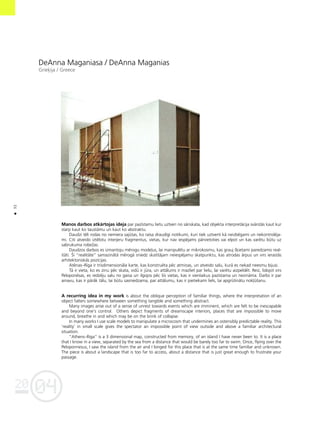
  • 7.
    7 • Latvijas Kultüras ministrija MåkslasmenedΩmenta un informåcijas centrs Sponsori un atbalstîtåji / Sponsors and support Culture 2000 Valsts Kultürkapitåla fonds Rîgas dome Valsts Måkslas muzejs Rautakesko Air Baltic Latnet Zieme¬u Ministru padomes informåcijas centrs Rîgå Trials Latvijas Måkslas akadémija SSE Rîga 3 M Objekts Pieci ezeri Valmieras stikla ß˚iedra Dai¬rade Expo Arctic Paper Casablanka DFDS Transport AFAA Centre Culturel Francais Riga Caloouste Gulbenkian Foundatin (Portugal) Luso-American Foundation (Portugal) Ministry of Culture of Portugal Institute of Arts (Portugal) Arts Council of Finland Department for Communication and Culture, Ministry for Foreign Affairs of Finland Kordelin Foundation Embassy of Finland in Latvia Nordic Cultural Fund FRAME Finnish Fund for Art Exchange Ministry of Culture of the Republic of Lithuania Fundation Culture and Sport (Lithuania) Embassy of the Republic of Lithuania to the Republic of Latvia Polijas Republikas véstniecîba Latvijå Prohelvetia Arts Council of Switzerland Nîderlandes Publiskås telpas måkslas fonds / The Dutch Foundation For Art and Public Space (SKOR) Informatîvais atbalsts / Information support Diena IB Media Radio III Divi putni Rîgas Laiks Una Studija Måksla Plus Müzikas Saule The Baltic Times Riga this Week Ças Subbota Pateicîba brîvpråtîgajiem palîgiem / We extend our thanks to volunteers Raivis Austriñß Jana Borisova Vita Breda Edgars Burtnieks Sanita Çevere Toms Çivlis Ivars Drulle Jana Duhovska Kaspars Endols Krißs Erdmanis Marts Erdmanis Eduards Feoktistovs Pauls Gailîtis Karîna Gluhova Liene Gréviña Zane Gromulsone Linda Igolniece Kristîne Ivanova Velga Jékabsone Elîna Kalniña Liene ikute Edgars K¬aviñß Sandis Kondråts Andris Konoßonoks Dina Konstantinova Marika Kozlovska Jånis Kudiñß Jana Kukaine Inese Kurzemniece Inga Låce Iveta Lapsiña Ieva Lauriña Zîle Liepiña Ieva Lindenbauma Ilze Litavniece Kristîna Lukjanska Sandra Madelåne Santa Mazika Anda Mendri˚e Iveta Ozoliña Kristîne Paeglîte Katrîna Pakalniete Marianna Piçula Ilze Prikaßa U©is Pucens Dace Resele Liene Rubane Elîna Ruka Roberts Salaks Ieva Saulîte Anita Sedliña Elîna Simsone Baiba Íime Dårta Íñi˚e Karîna Sîmane Kristaps Strauts Dairis Tiesnesis Karîna Timofejeva Ingmårs Usas Evita Vasi¬jeva Inese Valtere Ilze Va¬ka Gunta Vaska Anitra Velde Johanna Vîtanena Uldis Zariñß Zane Zilberte Evija Zujeva Starptautiskås télniecîbas kvadriennåles “Rîga 2004 – Eiropas telpa” Grand prix laureåti – ungåru måkslinieku Andråßa Gålika un Bålinta Havaßa radoßais tandéms Little Warsaw par darbu Marmora iela, kas eksponéts Dzelzce¬a véstures muzejå Sculpture Quadrennial Riga 2004 “European Space” Grand Prix Little Warsaw (Balint Havas, Andras Galik), Hungary, for the work “Marble Street” Kvadriennåles Ωürijas komisija / Jury of the Sculpture Quadrennial: Ûürijas priekßsédétåjs / Chairman of the Jury Gundars Bojårs, Rîgas Domes priekßsédétåjs / Chairman, Riga City Council Dainis Èvåns, Rîgas Domes Kultüras, måkslas un reli©ijas lietu komitejas priekßsédétåjs / Chairman of the Committee of Culture, Art and Religion of the Riga City Council Diåna Çivle, Rîgas Domes Kultüras pårvaldes priekßniece / Head of the Culture Department of the Riga City Council Ieva Kalniña, Rîgas Domes Kultüras pårvaldes Kultürpolitikas noda¬as vadîtåja, måkslas zinåtniece / Head of the Culture Policy Section, Culture Department of the Riga City Council, art historian Nishi Masaaki (Japåna / Japan), starptautiskås télniecîbas kvadriennåles “Rîga 2000” Grand prix ieguvéjs / Grand Prix winner of the Sculpture Quadrennial “Riga 2000” Aigars Bikße, Kristaps Gulbis, starptautiskås télniecîbas kvadriennåles “Rîga 2004 – Eiropas telpa” kuratori / curators of the Sculpture Quadrennial Riga 2004 “European Space”
  • 8.
    04 20 8 • Eiropas telpas sarunuobjekti Hanno Soansa saruna ar Rîgas Télniecîbas kvadriennåles Eiropas telpa kuratoriem Aigaru Bikßi un Kristapu Gulbi notika Tallinå 2004. gada 13. jünijå. Tå bija otrå divu Eiropas telpai veltîto interviju ciklå, un tås téma no vis- påréjiem jautåjumiem, kas tika aplükoti pirmajå intervijå, aizvirzîjås pie konkrétajiem kvadriennåles darbiem un to izraisîtås rezonanses sabiedrîbå. Hanno Soanss: Varbüt jüs gribétu aplükot konkré- tus darbus kå daΩådu izstådes izveides aspektu piemé- rus? Es îpaßi vélétos pievérsties 50. gadu darbu attélu izstådîßanai uz årtelpu stendiem un skulptüråm publiska- jå telpå. Vai jüs varétu nosaukt tos darbus, kuru izstå- dîßana, jüsupråt, bija seviß˚i izdevusies rezultåta vai interesanta procesa ziñå? Kristaps Gulbis: Man seviß˚i interesants ß˚iet tas, kas saistås ar årpus izståΩu telpåm izvietotajiem darbiem. To autoriem bija iespéja ierasties Rîgå jau iepriekß, lai iepazîtos ar izstådîßanås vietåm, tå ka viñi bija privile©étå situåcijå attiecîbå pret påréjiem. Publiskajå telpå ir izvieto- ti vairåki interesanti, ßeit pieminéßanas vérti darbi. Viens tåds ir ‰rika Samaha saules bateriju darbinåtais skañu objekts, kas nomaskéts parkå. Tad man vél bütu jåmin dåña Tomasa Poulsena veidotais darbs, kas izvietots vienå no Rîgas tirgiem. Abi darbi ir labs piemérs tam, kådu vietéjås publikas reakciju izraisa ßådi måkslas objekti. Jåsaka, Tomasa Poulsena darbs ¬audîm patîk. Darba pa- matå ir ideja par to, ka cilvéki ßajå pasaules da¬å ir ¬oti lieli individuålisti, kuri domå galvenokårt par savu mazo pasaulîti. Tad nu måkslinieks véléjås tos apvienot zem viena jumta, padarot viñu savstarpéjo komunikåciju aktîvåku. Viñß izgatavoja jaunu tirgus stendu ar kopéju jumtu un nokråsoja to koßåku salîdzinåjumå ar påréjo tir- gus iekårtu – létåm koka konstrukcijåm ar nelieliem plas- tikåta jumtiñiem. Un més vienojåmies ar zemniekiem, ka péc Poulsena darba pabeigßanas viñi ar savåm precém ievåksies viña stendå. Tomér jau nåkamajå dienå viñi paz- iñoja, ka pårcelßoties atpaka¬, jo pircéji såkußi pårmest, ka viñi izlikußi preci uz skulptüras. Redziet – pie darba ir maza plåksnîte ar autora vårdu un nosaukumu. Aigars Bikße: Nosaukums ir Lete diviem pårde- véjiem. KG: Tad nu pircéji pårmeta: kå nav kauna – tirgoties uz måkslas darba, uz skulptüras; vai tad jums nemaz nav cieñas pret måkslu? Pie tam izrådîjås, ka arî pati kon- strukcija nav seviß˚i izdevusies, jo, kå Ωélojås tirgotåji, tå neaizsargå dårzeñus no saules. Jumta konstrukcija bija tåda, ka lietus laikå üdens, ja arî nelija uz dårzeñiem, tad pircéjiem virsü gan. Més ar Aigaru apsvéråm – varbüt mums vajadzétu mé©inåt piedabüt tirgus direktoru samazinåt ßî stenda îres maksu. Tomér nolémåm, ka mums nevajadzétu mé©inåt iespaidot viñu lémumus. HS: Ja darbs pretendé veidot interaktîvus reålås dzîves procesus, vienojot cilvékus un iespaidojot viñu uz- vedîbu, tad vienmér ir jåbüt arî neveiksmes iespéjai. Ja tå
  • 9.
    9 • nav, tad darbsir jau iepriekß nodroßinåts un nespéj pildît pats savus nosacîjumus. Tas padarîtu labu ieceri bezjé- dzîgu. Tad arî citos gadîjumos, kad tå ir noticis, jums diez vai ir tiesîbas vértét projekta panåkumus. Un jüsu tagad ståstîtais – par reakciju, kådu izraisîja tirgoßanås uz skulp- türas, – labi atklåj kontekstu. Dånijå ¬audis bütu zinåmå mérå sagatavotåki formåli uztvert müsdienu sociålås skulptüras nosacîjumus – tur tådéjådi risks bütu mazåks. Manupråt, tas ir interesants aspekts, kurå måkslinieks var risinåt domu tålåk. Es gribétu atgådinåt Kléras Bißopas sacîto Telpas kolonizåcijas konferencé. BieΩi ßis sociålås skulptüras veids, kas tießi strådå ar cilvékiem un viñu dzîves vidi, deklaré savu orientåciju uz aktîvu sabiedrîbas pårveidi. Tomér bieΩi diskurss ap ßådiem måkslas darbiem tiek veidots pårlieku sargåjoßs, cenßoties slépt, ka tas neiedarbojas visos aspektos un vienmér, par spîti labåm iecerém. Es domåju, jüsu lémums bija pareizs, jo kuratori nereti mé©ina slépt k¬üdas. Tålåkå perspektîvå tas tikai mazina ßådas måkslas patieso nozîmîbas potenciålu. KG: No vienas puses, tirgotåju attieksme bija ¬oti pozitîva. Viñi teica, ka viñiem objekts patîkot un viñi to izmantotu, ja vien sédekli varétu atvirzît drusku tålåk un jumtu nedaudz pårtaisît. Te proceså såk iejaukties daΩi lokåli noteikumi, lokåli paradumi. Årpusnieks tos neizprot. Arî latvießu måkslinieks varéja pie¬aut tås paßas k¬üdas – jo måkslinieki jau nepieder pie tiem ¬audîm, kas tirgojas ßajos tirgos, més arî neesam zemnieki. Zemnieki bütîbå apdzîvo ßo tirgu un ir izveidojußi paßi savu – viñu biznesam nozîmîgu lietu hierarhiju. Viñi var nedaudz atbalstît arî måkslu – nekådu problému! – tikai ja tas såk kaitét viñu noietam, tad tas vairs nav pieñemami. AB: Konkurencé starp ierastajåm vienkårßajåm kon- strukcijåm, uz kuråm viñi bija pieradußi tirgoties, un ßo jauno stendu standarta konstrukcijas uzvaréja arî tåpéc, ka, pircéjupråt, precei vecajos stendos jåbüt létåkai. Viñi bija nåkußi pirkt dabiskus, îstus lauku produktus un sprie- da, ka parastajos stendos ir vecå labå prece – îsti lauku raΩojumi. Savukårt måkslas darba estétika izrådîjås tuvå- ka prezentåciju letém, kådas ßeit tiek izmantotas tikai tirdzniecîbas centros. KG: Òaudis domåja – ja jau ir jauns stends, tad arî cenas droßi vien ir augståkas. Tå viñi ir ieradinåti. Tå ir parasta prakse – tirdzniecîbas vieta tiek labiekårtota un tad atkal atvérta jau ar augståkåm cenåm. HS: Tas ir saistîts arî ar tému, kuru més såkåm ap- spriest jau iepriekßéjå intervijå, – par elitårismu, måkslu måksliniekiem. Lai jüsu måkslas centieni iegütu nozîmi, jums vajadzîga publika. Ja jüs mé©inåt modificét rezultéjoßo måkslinieka iespaidu uz publiku, padarît to “efektîvåku”, såk zust tå sasaiste ar realitåti. Lai gan man patießåm patîk Tomasa Poulsena ideja, ßajå darbîbas fåzé man tås îstenojumå nebütu jåjaucas. Müsu pirmå saruna bija par “mums un viñiem” – un tas pats ß˚îrums darbo- jas ßeit. Misék¬i noråda uz tåm atß˚irîbåm, kas paståv starp måkslinieka iedomåto tirgu un to, kå tas funkcioné ikdienas realitåté. Jaucoties proceså, més varétu galu galå nonåkt pie naivås pårliecîbas, ka més varam radît ßiem tir- gotåjiem labåkus stendus, neko îsti nezinot par tir- goßanos – tå ir vél viena elitårås pieejas forma, labu gri- boßs, bet aprobeΩots elitårisms. AB: Viens no galvenajiem pretendentiem uz Ωürijas balvu bija Hårvija un Ekroidas darbs. Kad måkslinieki pir- moreiz ieradås Rîgå izpétes braucienå, viñi apsvéra daΩå- das iespéjas. Viens no iespéjamiem variantiem bija lielfor- måta attéli, kas tiktu veidoti, izmantojot fotosintézi. Viñi izvieto uz sienas tumßå telpå audzétu zåli un projicé uz tås fotogråfiju – milzîgu, lîdz 10 metriem augstumå. Pateicoties fotosintézei, divu nedé¬u laikå attéls atveidojas dabiskajå materiålå. Tad viñi zåli nomérdé, tå konservéjot darbu. Rezultåtå tiek iegüts milzîgs dabiskas izcelsmes gobeléns ar fotogråfijas negatîvu. Més viñiem atradåm trîs daΩådas potenciålås vietas, trîs arhitektoniskus objek- tus, kurus viñi varéja izmantot savai instalåciju sérijai – padarît tos za¬us, apaudzéjot ar zåli. Efekts, protams, ir fantastisks. Arhitektüra, éka zaudé savu materialitåti un it kå pazüd. Jo garåka aug zåle, jo nearhitektoniskåka k¬üst éka – tai züd visas deta¬as, un tå såk funkcionét vidé kå vienota za¬a masa. Rîgå måkslinieki to realizé graustå, postaΩå, un tur tas darbojas seviß˚i labi. KG: Tai vietå uz katra so¬a ir narkomånu izmétåtas ߬irces... AB: Måkslinieki strådåja påris dienas, kamér sakopa to vietu. Tad éku pårklåja ar måla maisîjumu, kam pie- jauktas zåles séklas. Kad tås såka dîgt, éka pamazåm pårvértås za¬å maså. Bija ¬oti interesanti vérot, kå tas maina müsu apkårtéjås vides uztveri. KG: Vizuåli, man ß˚iet, tas bija ¬oti spécîgi, ¬oti ie- spaidîgi. Bet més baΩîjåmies par to ¬auΩu iespéjamo rîcîbu, kuri tur ierodas, lai apreibinåtos ar narkotikåm vai alkoholu, un daΩkårt pavada nakti. Lîdzås ir cietums, tå ka vieta nav pati droßåkå. Més baidîjåmies, kas ßådos apståk¬os var notikt ar måkslas darbu. Såkumå uz pår- klåtås sienas tießåm kåds kaut ko uzrakstîja. Taçu, kad cil- véki ievéroja, ka dîgst zåle, kad viñi såka nojaust gaidåmo rezultåtu, attieksme k¬uva daudz saudzîgåka, nekå ierasts. HS: Tåtad jums izdevås sasniegt rezultåtu, kas lîdzi- nås Tomasa Hirßhorna îstenotajam ar viña Bataija pie- minekli (Bataille Monument) pédéjå Documenta, kad måkslinieks kaut kå iefiltréjås turku imigrantu kopienå un panåca savstarpéju uzticéßanos ar tås locek¬iem, tå ka varéja pat atståt tur dårgu televîzijas studijas aprîkojumu bez apsardzes. KG: Tas ir interesants fenomens. Més ar Aigaru ap- spriedåm iespéju veidot måkslas centru kådå no trü- cîgåkajiem rajoniem, jo tur dzîvojoßo cilvéku attieksme ir daudz pretimnåkoßåka. Es domåju, arî ‰riks Samahs uz- ñémås lielu risku, izvietojot ar saules ener©iju darbinåmås flautas. Vai jüs tås redzéjåt? HS: Jå, es biju paßa måkslinieka vadîtajå ekskursijå uz ßo objektu. Taisnîbu sakot – brîniß˚îgs darbs. Kad spîd saule, flautas såk spélét, bet, kad ir måkoñains, darbs – kas ir rüpîgi noslépts – apklust un k¬üst pilnîgi nepa- manåms! KG: Tas ir tas, kas man måkslinieka veikumå ¬oti pa- tîk – tas nav uzkrîtoßi nolikts pilsétas centrå, nav masîvs skulpturåls veidojums, kas sev pieprasa milzumu telpas. Man patîk ßî diskrétå saskarsme ar publiku. Viña darbs ir ¬oti delikåts, savukårt tå publiskoßanas metode – ne gluΩi. Uzturoties Rîgå, måkslinieks katru dienu pårvietojås pa pilsétu ar savu saules flautu rokå un ståstîja par to katram sastaptajam. HS: Ar instrumentu rokå viñß izskatîjås kå mags, kå Oza zemes burvis... Bija diezgan aizraujoßi uzzinåt, kå tas darbojas, uzskañojoties péc saules gaismas. KG: Vai zinåt, ka to skañu var arî ierakstît? Instru- mentå ir mikrofons. Íîs instalåcijas nav måkslinieka vienî- gais darbîbas virziens, taçu viens no tiem, ko viñß paståvî- gi attîsta. Bet, ja jüs salîdzinåtu viña darbu ar, pieméram, to, kuru veidoja Navaks, tås ir divas daΩådas pieejas. Un Rîgå tie izvietoti viens no otra kådus 300 metrus attålumå.
  • 10.
    10 • HS: Tomér, esdomåju, abas metodes ir vitåli svarîgas müsdienu skulptürai. Joprojåm ir daudz darbu, kuri operé ar masu un materialitåti, un arî darbi, kuri ir jau gluΩi vai pie nepamanåmîbas robeΩas, bet arî ¬oti iedarbîgi, vérotåju aktîvi iesaistoßi. Tie bieΩi pårsteidz cilvékus ne- sagatavotus. Labåkais rezultåts tiek sasniegts, kad ¬audis, kas katru dienu dodas cauri ßim parkam, pékßñi pamana kådas ¬oti smalkas pårmaiñas. KG: Navaks man ståstîja, ka darba uzstådîßanas laikå garåm gåjis kåds vecs krievs un noprasîjis: “A ti kto takoi?”1 Navaks kådu laiku vilcinåjies ar atbildi un tad paziñojis: “Ja ñemec.”2 Tad vecis arî kådu brîdi kluséjis, apsverot dzirdéto. Galu galå viñß atteicis: “ˆemec – eto vsjo taki luçße çem latiß.”3 HS: Un arî to var paveikt tikai publiskås telpas skulp- türa. Tå var atklåt problému samezglojumus publikas apziñå, kuri tur ir paståvîgi un iespaido lémumus, bet reti tiek formuléti vårdos. BieΩi vien tiem ir sakars ar nacionå- lo piederîbu un sociålo statusu. No vecåka krievu stråd- nieka visnota¬ var sagaidît låstu “jüs – faßisti tådi”, un viñam tas izskan apméram tåpat kå “jüs – våcießi tådi”, kaut arî tas jau ne tuvu nav viens un tas pats. Un tad viñß pauΩ: “Våcießi tomér ir labåki nekå jüs – latvießi tådi.” KG: Un ko jüs domåjat par Hansa Houvelingena darbu? HS: Varbüt man nedaudz apßaubåmas ß˚iet viña ide- jas Eiropas telpas importa sakarå – it kå Latvija lîdz ßim nebütu bijusi Eiropas da¬a, un viñß tagad ir atvedis ßurp kaut ko no holandießu modernisma, lai ßo telpu ßeit iedi- binåtu. Tomér man patîk, ka modernisma vésture tiek uzskatîta par vértîbu, par kaut ko vispåreiropeisku. Kåpéc lai holandießu modernisma darbu nepårbaudîtu, ievieto- jot citå kontekstå un laika ietvarå? Ja to varétu turpinåt, uzce¬ot îstu éku – iespéjams, pirmo vadoßa holandießu müsdienu arhitekta projektétu celtni Austrumeiropå –, tas bütu patießåm lieliski. KG: No vienas puses – ir interesanti sekot arhitekta domai par to, vai ßeit ir vai nav Eiropas telpa. No ßåda viedok¬a tas jau atkal ir jautåjums par “mums un viñiem”. No otras puses – bütu interesanti vérot rîdzinieku attieks- mi. AB: Manupråt, tas büs viens no darbiem, kas nedaudz provocés. Såkotnéji ß˚ita, ka arî Ekroidas un Hårvija darbs provocés cilvékus. Bija ¬oti grüti sañemt at¬auju, jo instalåcijas vieta bija kådreizéjås kapsétas teri- torijå, un kapela ir arhitektüras piemineklis. Tomér atbil- dîgås institücijas direktors ir diezgan müsdienîgi domå- joßs – viñß labi saprot, ka ir svarîgi veidot saikni ar ßodie- nas aktuålo kultüru. Ja nedarbojas nekas aktuåls, bet tikai atmiñas, tad nekas nepaliek no ßodienas, no müsu laikam atbilstoßiem simboliem. Rîgå joprojåm smagi jåcînås pret ¬audîm, kuri uzskata, ka visam nozîmîgajam pagåtnes mantojumam jåtiek iebalzamétam vai butaforiski atdari- nåtam – kå Melngalvju nama gadîjumå. HS: Bet kå måkslinieki iedomåjås savu darbu kåd- reizéjås kapsétas kontekstå? Tå kå identisku darbu viñi veidojußi arî citå vidé, tad tas k¬üst par atß˚irîgu konteks- tu testu arî viñiem paßiem... AB: Savu instalåciju viñi veidoja pamestå baznîcå un tådéjådi it kå atgrieza dzîvîbu ßajå vietå. Pirms tam éka netika izmantota un bija pak¬auta izpostîßanai. Viñu måk- sla rosinåja tås nozîmîbas atjaunoßanos. Tå arî atklåja ßajå apkårtné dzîvojoßajiem, tiem, kas ir pie ßîs ékas pieradußi, jaunu pieeju vecajai baznîcai. Pamestå vietå neviens vairs nerüpéjas par vides ståvokli – ßis måkslas darbs orientéjas tießi uz ßo rüpju rosinåßanu. Kaut vai tikai tas, ka viena celtne ßajå vietå tiek iztîrîta, palîdz citådi uztvert apkårtni, tas izsaka citådas esamîbas iespéjamîbu. HS: Íî nolaistå vietå esoßås ékas iztîrîßana un måkslas darba veidoßana tajå ir visai interesants piemérs, kå ¬oti poétisks darbs, klasiska instalåcija, var reizém radît spécî- gåku sociålo efektu nekå tießi sociåli vérsts, programma- tiski sociåls darbs. KG: Bet ir vél kåds interesants aspekts – ja to darîtu jüs vai kåds cits no vietéjiem måksliniekiem, reakcija bütu atß˚irîga. Manupråt, Latvijas sabiedrîbå kopumå ir ¬oti po- zitîva attieksme pret årzemniekiem. Ja årzemju måkslinie- ki ierodas Rîgå un pievérß uzmanîbu ßai vietai, tad te jåbüt kaut kam patießåm vértîgam. AB: Tas gan attiecas uz ¬audîm, kam ir kåda såkot- néjå informåcija, bet ßî rajona iemîtnieki... Més baidîjå- mies no vanda¬u postîjumiem. Tomér ¬audis, kuriem par måkslu nav nekåda priekßstata, nepavisam nebija agresîvi noskañoti pret ßo darbu. KG: Nepavisam. Viñi visi gribéja ar tur strådåjoßajiem måksliniekiem aprunåties. AB: Tå kå tas nav pilsétas centrs, tad tur uzturas vieni un tie paßi cilvéki. Viñi sazinås savå starpå. Ja viens pazi- ño, ka, redziet, ßis puisis no Anglijas te taisa kaut ko forßu, tas darbojas kå bezdråts telegråfs un piesaista uzmanîbu. Izrådîjås, ka vietéjais informåcijas lauks iedar- bojas ¬oti labvélîgi. HS: Kå ir ar vidusméra auditorijas interesi – vai tå vairåk fokuséta uz darbiem publiskajå telpå vai uz izstå- di? KG: Praktisku apsvérumu dé¬ vairåk cilvéku ir ap- skatîjußi darbus izståΩu zålé – nav jåpårvietojas pa visu pil- sétu ar karti rokå. Més jau visi esam slinki un domåjam, ka to taçu var paspét rît vai nåkamnedé¬, kamér ir jau par vélu. Bet kåda ir Latvijas måkslas profesionå¬u attieksme pret ßo notikumu – kå tev ß˚iet, Aigar? AB: Kad Ωurnålisti izråda véléßanos ar mums ap- runåties, tad man ß˚iet, ka viñus vairåk interesé publiskås telpas måksla. HS: Bet varbüt tas tå ir tießi tåpéc, ka vairåk nekå desmit gadus ir bijis vérojams tåds müsdienu måkslas deficîts publiskajå telpå? Tagad viñi var arî novértét starpîbu. KG: Òoti bieΩi uzdots jautåjums ir – kå ßie darbi mijiedarbojas ar to publiskås telpas måkslu, kas Rîgå ir, ar pieminek¬iem? Tomér es nekad agråk neesmu Latvijå vérojis tådu kultüras jomå nespecializéto mediju interesi. Kad més izsütîjåm preses relîzes un uzaicinåjåm viñus uz akreditåciju, sañémåm atbildi, ka viñus tas neinteresé. Tagad viñi müs uzmeklé un paziño, ka ir mainîjußi savu viedokli un vélas rakstît par ßo notikumu. Viñu skatîjums uz ßo notikumu un tas, kå viñi izsakås par måkslu, ir visai interesanti. Tas nepårprotami atß˚iras no müsu redzéju- ma, taçu iesåkumam, protams, nav slikti. AB: Kas attiecas uz atsauksmém medijos, 50. gadu måkslas darbi funkcioné ¬oti sekmîgi un skulptüras pub- liskajå telpå arî. Savukårt par ekspozîcijåm izståΩu zålés – kaut arî tas ir müsu svarîgåkais elements – publikas interese ir ierobeΩota, lielåko tiesu intereséjas profe- sionå¬i. KG: Í˚iet, ar vienu darbu mums ir izdevies pievérst gluΩi neceréta publikas segmenta uzmanîbu – ar Dena Íipsaidsa darbu. Man piezvanîja no alpînisma biedrîbas un lüdza, vai nevarot izmé©inåt to veidojumu Arsenålå, kas taisîts no alpînisma treniñiem domåta materiåla. Vispirms viñi ieradås skulptüru apskatît, péc tam tajå uzråpties. Tas ir paradoksåli – tirgü pircéjus mulsinåja tas,
  • 11.
    ka zemnieki tirgosavu preci uz skulptü- ras, kas taçu bija domåta tirgoßanai, bet ßie puißi ieradås paßi, lai izmé©inåtu sa- vas spéjas izståΩu zålé! Viñi nepavisam nemulsa. Protams, es teicu, ka man prieks par viñu lémumu. Viñi savukårt mums pateicås par alpînisma propagan- déßanu. AB: Tåda jau arî bija ßî darba ori©i- nålå iecere – såkotnéji més plånojåm to izvietot lielveikalå, taçu nevaréjåm vieno- ties ar veikalu par deta¬u pienåcîgu nos- tiprinåßanu. Bet visinteresantåkais ir tas, ka alpînisti paßi ievéroja ßo darbu izståΩu zålé un nekautréjås palügt at¬auju tajå uzkåpt. BieΩi vien tießi ßådas mazas sa- biedrîbas grupas atklåj måkslas darbus kådå patießåm interesantå aspektå, iedzîvina tos kontekstå un sniedz intere- santu vielu vélåkai apsprießanai. Tå ir ma- zo nißu publika, kas padara skulptüras par sarunu objektu, veidojot sociålo diskursu. KG: Runåjot par izstådi kopumå mums ar Aigaru daudzi pårmetußi “vés- tîjuma” neesamîbu. Måkslas profe- sionå¬u aprindås ir pierasts ßåds “kura- toru véstîjums tautai”. Més abi esam måkslinieki un ßo izstådi esam büvéjußi uz citiem, mums interesantiem princi- piem: uz situåcijas fikséßanu, uz to, kas konkrétå laikå – 1950. un 2004. gadå – daΩådås kultürtelpås tiek uzskatîts par vértîbu. Un atkal esam nonåkußi pie “més un jüs”. Tießi ßî robeΩlînija man arî ß˚iet tå interesantåkå – tas, kådé¬ vispår bija vérts pasåkumu “Eiropas telpa” orga- nizét. Tådé¬ atbilde, ko sañémåm no Rî- gas Galvenås policijas pårvaldes ar attei- kumu ierosinåt kriminållietu par Lielajos kapos izvietotå måkslas darba uz- turéßanai nepiecießamå tehniskå inven- tåra zådzîbu, ir pårliecinoßa liecîba, ka måkslas, måkslas profesionå¬u un sa- biedrîbas attiecîbås vél daudz daråms, lai més kaut vai såktu mé©inåt sarunåties, ja ne vienå, tad vismaz lîdzîgå, visiem saprotamå valodå. 1, 2, 3 Krievu val. • 11
  • 12.
    12 • The Conversation Pieces of“European Space” The interview with the curators of Riga Sculpture Quadrennial, “European Space”, Aigars Bikße and Kristaps Gulbis, took place in Tallinn, on 13 th June 2004. As it was the second one from the set of two interviews relating to “European Space”, the focus was shifted from the general issues addressed in the first interview to concrete artworks at the Sculpture Quadrennial and the resonance they provoke in public. Hanno Soans: Maybe you would like to choose some works as examples of different aspects building up the exhibition. I would particularly like to mention the works from the 1950s installed on billboards and the sculptures in public space. Could you address the works, which in your opinion have been a particular success or interesting as a process? Kristaps Gulbis: I found very interesting the issues concerning the works exhibited outside the exhibition halls. These artists could come to Riga beforehand for the research visits, so they were in a privileged position com- pared to the others. In public space there are some works particularly interesting to address here. One is by Erik Samakh, a sound piece feeding on solar energy and dis- creetly situated in a park. Then I should mention the work by FOS, Thomas Poulsen from Denmark, whose work is situated in one of Riga’s marketplaces. These are both good examples of how local people can react to the artwork. Actually people like Thomas Poulsen’s work. His initial idea about people in this part of the world was that they are very individual, thinking mostly about their own small worlds. So he wanted to connect them under one roof, making communication between them more active. He made a new stand with a common roof and painted it to look nice if you compare it with the existing struc- tures in the market, which are cheap wooden things with some plastic for the roof. We agreed with the farmers who are selling there, that after Poulsen’s work is fin- ished, they will move to this new stand. But as they moved there for one day they told us they are going to move back because some customers started to complain that they sell their stuff on a sculpture. There is a tiny sign with the artist’s name and the title attached to the stand, you know. Aigars Bikße: The title is “Stand for Two Venders”. KG: So their question was, how dare you trade on an artwork, on a sculptural object, don’t you have any respect for art? It also came out that the construction itself was not too good as the guys selling complained that it doesn’t protect vegetables from the sun. The roof was constructed in a way that even if the water doesn’t get on vegetables, it drops on customers, when it is rain- ing. We discussed with Aigars weather we have to influ- ence the director of the market, make him to reduce the rent for this stand? But we came to the conclusion that we shouldn’t try to influence their decisions. HS: If there is a work, intended at building up real- life interactive processes connecting people and influenc- ing their behaviour, there must always be the possibility to fail. If it is not there the work is pre-protected and can- not fulfill its own preconditions. It makes good effort meaningless. You can then hardly claim to measure the success of another occasion, when it might have hap- pened. And what you told me now is revealing a lot about the context, this reaction to trading on a piece of sculpture. In Denmark people would have been pre- pared, to a certain extent, to formally accept the condi- tions of contemporary social sculpture – thus there would have been less risk. I think this is an interesting aspect for the artist to consider further. I wanted to recall here what Claire Bishop addressed in “Colonising Space” confer- ence. Often this kind of social sculpture, working direct- ly with people and their environment, claims to be orien- tated to actively changing society. But often discourse around this kind of work is overprotective trying to hide that it might not work in every aspect every time, despite good intentions. I think you made the right decision, because often curators are trying to mask failures. In longer terms that is reducing the actual potential of the importance of that type of work. KG: From one hand there was very positive attitude from the guys selling in the market. They told us that they like the stand and that they would use it, only if this seat could be moved a little bit further and this roof re- done a bit. There are some local rules, local habits step- ping in. They cannot be understood by someone who is from outside. The artist from Latvia might have made the same mistake. Because artists don’t belong to this group of people who are trading goods in markets, we are not farmers. They basically inhabit the market and they have developed their own hierarchy of things important for their business. They can support artwork a little, no prob- lem, but if their sales are deteriorating, they cannot accept it. AB: In the competition between the traditional rough structures they were used to be trading on and the new stand, the rough basic structures won also because customers expected that the price on the old stands would be cheaper. As they came there for authentic raw peasant food they believed that rough stands mean the good old thing and the product will really be from the countryside. The aesthetics of this artwork thus was clos- er to the aesthetics of presentation, which here is used only in the shopping malls. KG: People thought that if you buy from new stands the price probably is also higher. That is how they have been trained. It is a usual prac- tice to refurbish a place to open up with higher prices. HS: This is related to the topic we started to discuss in the previous interview, concerning elitism, art for art- ists only. You need public to make your effort meaning- ful. If you try to modify the result of artists’ impact on public, to make it more “efficient”, it looses its touch with reality. Although I really like the idea of Thomas Poulsen I shouldn’t interfere with it in this phase. Our first conversation was about Us and Them – the same distinc- tion works here. The drawbacks are addressing these dif- ferences, which exist between artists’ imagination of a market place and the very practicalities of it operating. By interfering we might end up in a naïve conclusion that
  • 13.
    we might dobetter stands for people trading there with- out any experience about trading, which is another form of an elitist approach, benevolent but narrow minded elitism. AB: Harvey and Ackroyd’s piece was one of the favourites of the Jury. When the artists came first time to Riga, for a research trip, they were thinking of various possibilities. They also make huge pictures using photo- synthesis as a process. So that was one possible variant. They take a dark room, grow grass on the wall there and project a huge photography on it, up to 10 meters. And with the help of photosynthesis taking place within 2 weeks the picture is transformed on the natural material. And they then kill the grass, conserving the picture. The result is a big naturally grown tapestry with an image in negative. We found for them three different places as potential sites for the series of installations they do with architectural objects, which they turn green by growing grass on them. The effect, of course, is fabulous. The architecture, the building loses its materiality and sort of disappears. The more the grass grows the less architec- tural the building seems, all details are reduced and it starts to work in the environment as a green mass. The place they are doing it in Riga is a desolate area, a rough place, and this works particularly well there. KG: It was a place with a lot of needles left behind by junkies... AB: The artists cleaned the place, working for a cou- ple of days. The building was covered with the mixture of clay containing seeds of grass. When it started to grow the building turned into a green mass. It is very interest- ing how our perception of environment around it changes. KG: Visually, I think it is very powerful, very impres- sive. But we were worried about the attitude of those people who go there and use drugs or drink there and sometimes stay overnight. It is close to jail, so this neigh- borhood is not very safe. We were concerned what will happen to the work in these circumstances. Something was indeed written on the building in the beginning. But when people started to notice the grass growing and anticipated the result, the attitude became more caring than it is usually. HS: So you could get the same result like Thomas Hirschhorn got at the last Documenta with his “Bataille Monument”, that he could somehow enter a Turkish emigrant community and establish a trust relationship between himself and the community so that he even could leave there expensive TV studio equipment without guard. KG: This is an interesting phenomenon. We were dis- cussing with Aigars the possibility of establishing an art center in some kind of depressed area, because the atti- tude of people living there is more generous. Erik Samakh, I think, also did take big risk with his flutes oper- ating on the solar energy. Did you see that one? HS: Yeah, I was at the excursion the artist gave about the piece. It is marvelous, actually. When it is sunshine the flutes start to play and when it is cloudy the piece, which is sort of invisible anyway, turns silent and disap- pears completely. KG: That is something that I very much like in his work – it is not something rudely put in the city center as a massive piece of sculpture claiming a lot of space for itself. I like his discreet way of dealing with the public. His work is very sensitive, but at the same time the way he is promoting his work is quite different. When he was here, he was every day walking through Riga with his solar flute in his hand talking about it to everyone. HS: He looked like a magician, the Wizard of Oz, with that thing... It was quite impressive to get to know how his instruments work, making a tune out of light. KG: Did you know that you could also record that sound? There is a microphone inside. He is not working only with this type of installations all the time, but this is one branch of his activities he is developing constantly. But if you for example compare his work with the work of Navakas, these are two different approaches. And in Riga they are exhibited maybe 300 meters from each other. HS: But I think both methods are vital for contem- porary sculpture. You still see a lot of work dealing with mass and materiality and also pieces, which are on the border of hardly being noticeable but work very strong- ly, engaging the viewer actively. They often get the peo- ple unprepared. So best of all the result is realized by people who pass this park every day and suddenly notice that something very subtle has changed. KG: Navakas told me that when he was installing his piece there was an old Russian guy passing by and ask- ing: ‘A ti kto takoi?’* Navakas took some time and then answering back he claimed: ‘Ja nemets.’** The old man was also silent for a while, taking his time for thinking. Finally he responded: ‘Nemets eto vsjotaki lutshe tshem latish.’*** HS: And this is also one thing that only public sculp- ture can do. It can bring up problematic knots in public consciousness always there to influence our decisions, but seldom verbalized. Often these are things to do with national identity or social status. You could expect an older worker guy of Russian origin to curse “you fas- cists”, which equals to him with something like “you Germans”, but which of course is not the same thing at all. And then you get a thing like “Germans are still bet- ter than “Latvians”. KG: So what do you think of Hans van Houwelingen’s work. HS: Maybe I have some doubts about his ideas con- cerning importing European space, as if Latvia were not a part of European Space and he is bringing a bit of Dutch modernism over to establish it. But I like how his- tory of modernism is considered as something valuable and trans-European. Why not to put a legendary piece of Dutch modernism in another context and time frame to test it? If this can be continued into carrying out the actu- al building, probably the first building of a leading Dutch modern architect in Eastern Europe, it would be great. KG: On the one hand it is interesting to follow the artist considering if this is European space here or not. It is once again the question of Us and Them from his point of view. And on the other side it would be interesting to see the attitude of people in Riga. AB: I think this will be one of the works, which is a bit provocative. At first it seemed that also the piece by Ackroyd and Harvey provokes people. It was very hard to get the permission for the work, as the installation site was a former cemetery. And also as this chapel is part of architectural heritage. But the director of this institution is quite an advanced in his attitudes. He well understands the importance of creating links with living culture of our days. If there is no present involved but only reminis- cences, nothing remains from the present day, no sym- 13 •
  • 14.
    04 20 14 • bolism adequate toour age. There is a big battle in Riga between people who have an attitude that everything important from the past has to be mummified or pre- sented as a fake show, like the House of Blackheads, for example. HS: But how did the artists think of working in the context of a former cemetery? As they have done similar work in another context the piece is like a test for differ- ent contexts for them too... AB: They did an installation in a former church, which sort of woke up the place. Earlier it was planned to demolish the church, as it was not a functioning space. Their art gave a new push to the meaning of the place. It also showed another way of drawing nearer the old edifice to people who live there, who are accustomed to that building. In a desolate place nobody pays atten- tion to the environment any more. Their work focuses on getting this attention. Just cleaning up one building in this area helps to think of all the surrounding houses dif- ferently, it makes difference as a potentiality articulated. HS: To clean one building in a desolate environment and make a work there is quite an interesting lesson of how a very poetic piece, a classical installation work can sometimes carry a stronger social effect than a directly social work, a programmatically social piece. KG: But there is also another interesting aspect – if you would have done it or someone from the local artists the reaction would have been different. I think in Latvia in general we have a very positive attitude towards for- eigners. If foreign artists are coming to Riga and paying attention to this place there must be something really valuable there. AB: This mainly goes for people who have some background information, but the inhabitants of this area... We were afraid of the possible damage by van- dals. But the people who are coming without knowing anything about art were not aggressive about the work. KG: No. They were all very eager to talk with the artists working and so on... AB: As it is not a central area the local people are used to communicate between each other. If one of them says this is a guy from England doing something nice there, it works like post without letters drawing attention. The local field of information has luckily turned out to be favourable. HS: What about the interest of the popular audi- ence, is it more focused on the public artworks or the exhibition. KG: If you look at it from the practical point of view more spectators have seen indoor works: people in gen- eral are lazy to walk around through the whole city with a map in one’s hand. We think we can do it next day or next week until it is too late. But what is the attitude of art professionals in Latvia towards the event, what do you think, Aigars? AB: Journalists who are willing to speak with us, seem to have more interest in public art. HS: But maybe it is exactly because there has been such a deficit of public contemporary art for more than a decade. And now they also can recognize the difference. KG: A very usual question is how these works inter- act with public art we have in the city of Riga, like mon- uments? But at the same time I have never noticed in Latvia such an interest from media not specialized in cul- ture. When we sent press releases and invited them for accreditation for the event they told us that they are not interested. And now they approach us and say that they have changed their mind and want to make an article on the event. Their perspective on the event and how they talk about art is interesting. It obviously differs from our point of view, but that’s a good start indeed. AB: Judging from the media resonance the works from the 1950s work very good and also the public sculpture. But the exhibition halls, although they are the central ones, have a limited number of public with most- ly professional interest. KG: There is one example showing that we managed to rouse interest of an unexpected section of public – this is the piece by Dan Shipsides. I got a call from a moun- tain climbing society as they wanted to test out this piece in the Arsenåls Hall, which was built from the props of mountain climbing. They first came to look at the sculp- ture and then to try it out. It is a paradox as in the mar- ket place the customers were insulted by the fact the farmers are trading on a piece of sculpture, which really was made for trading, but these guys came to us to test out their skills in the exhibition hall. They were not afraid to take initiative. Of course I told them that it is very good that they made the decision to try it. They thanked us for popularizing the mountain climbing. AB: That was the original idea when we planned to install it in a supermarket initially. But we couldn’t reach an agreement on security measures. The most interesting is that they did find this work at the exhibition and were not shy to ask permission. It is often these small communities, which sort of open the works up in a really interesting way, make them live in context and give something really interesting to talk about later. It is the niche audiences, which turn the sculptures into conversation pieces, molding the social discourse. KG: With regard to the exhibition as a whole, many have accused Aigars and me of the absence of any “mes- sage”. Among art professionals, a “message to the peo- ple from the curator” is customary. We are both artists and have built this exhibition around other principles, which interest us: to record the situation and show what was regarded as valuable in different cultural milieus in the particular time period: 1950. un 2004. And again, we have reached a situation of “us and them”. This boundary line in particular seems the most inter- esting to me: it was the reason why it was worth organ- ising the “European Space” event at all. Thus, the answer we received from the Riga Main Administration of Police regarding its refusal to initiate a criminal case concerning the theft of technical equipment necessary for maintain- ing a work of art placed in the Great Cemetery repre- sents clear evidence that there is still a great deal to do in the realm of relations between art professionals and soci- ety before we can even begin to try to communicate, if not in the same language then at least in a mutually intel- ligible fashion. * Who are you? ** I am German. *** German is still better than Latvian.
  • 15.
    15 • Decision No 90. Onrefusal to initiate a criminal case In accordance with Article 109 of the Criminal Process Code, I, A. Íurko, District Inspector of Riga City Main Police Administration, reviewed material ENÛ-1524 of 09.07.2004, and in the course my investigation established that: On 09.07.2004, the Chairperson of the Board of the public organisation Art Management and Information Centre Måra Ådiña made a submission to the 28th Police Department of the Riga City Main Police Administration, regarding the fact of the disappearance of a plastic water container. In her submission, M. Ådiña explained that the public organisation Art Management Centre had been undertaking activities in the Riga Great Cemetery. For the purpose of these activities, a water container of 2000 l in volume had been procured, left in the territory of the Great Cemetery from 21.05.2004. Intensive work was conducted on preparing the art object up to 19.06.2004. On 09.07.2004, it was found that the water container had disappeared. In view of the above, it is concluded that the water container, left unattended, may have been regarded by some unknown person as abandoned, ownerless property, and, without knowledge of the ownership of the container, someone may have collected it as a chance find. Thus, the action of this unknown person may not be regarded as a criminal act, as envisaged by Section 1, Article 175 of the Criminal Law of Latvia, and so, in accordance with Article 5, Section 2 of the Criminal Process Code of Latvia and Article 112 of the Criminal Process Code, I decided: 1. To refuse to initiate a criminal case. 2. To send a copy of this decision to the Prosecutor’s Office of Vidzeme District of the City of Riga. District Inspector A.Íurko
  • 16.
  • 17.
  • 18.
    04 20 18 • Leonora Antunesa /Leonor Antunes Portugåle / Portugal Mußu sitamais ir koka siena, gatavota no Rîgas rajonå cirsta kokmateriåla. Sienå ir caurums (caur to var redzét) un durvis. Caurums tiks no vienas puses aizklåts ar samîcîtu cepuri. Durvju augßgalå ir garß koka délis, piestiprinåts astoñ- stürainam stienim, kas karåjas virs durvîm. Délis svårstås katru reizi, kad kåds iet cauri durvîm. Ja kåds atver durvis, délis aizkrît aiz ienåcéja muguras. Mußu sitamais ir aizguvums no Bastera Kîtona 1921. gadå uzñemtås filmas Kaimiñi. Íajå filmå Basters Kîtons ir iemîléjies kaimiñu meitené. Abas ©imenes ienîst viena otru, tåpéc tås ir uzcélußas augstu sienu starp savåm teritorijåm. Basters sazinås ar savu iemî¬oto pa caurumu, kamér abas ©imenes to atklåj. Tad Basters uzkonstrué durvju mehånismu, lai izåzétu meitenes tévu, kurß nav ¬åvis viñiem apprecéties. The Fly Swatter is a wooden wall made of timber from the Riga district. In the wall there is a hole (one can look through) and a door. The hole is going to be covered from one of its sides with a smashed hat. On the top of the door there is a long piece of wood fixed in the middle to an octagonal stick that is hanging on the door. The long piece of wood is balancing every time someone is going through the door. If someone is opening the door the piece of wood falls over the person’s back. The Fly Swatter is based on Buster Keaton’s film, “The Neighbours” from 1921. In this film Buster Keaton is in love with the neighbouring girl. Both families hate each other therefore they have constructed a big wall between their spaces. Buster communicates with his loved one through a hole until both families discover it. Buster then constructs a mechanism on the door to tease the girl’s father, because he hasn’t allowed them to get married.
  • 19.
    19 • Mußu sitamais. 2004 Priede TheFly Swatter. 2004 Pine wood
  • 20.
    04 20 20 • Helgi Hjaltalins Ejolfsdorfs/ Helgi Hjaltalin Eyolfsdorf Islande / Iceland Darbu koncepcija man vienmér sagådå galvassåpes. Es neesmu rakstnieks, un mani darbi tapßanas proceså ß˚iet nesaprotami. Viena vienîga pårpratumu virkne. Tåpéc nåkas nozagt vai aizñemties tekstu no gråmatas Çaklås rokas, kas pirmoreiz publicéta 1903. gadå. Teksts ir no noda¬as par meΩizstrådi. “BAÒU KOKU CIRÍANA” “Labåkais laiks koku cirßanai ir tad, kad tie sasniegußi briedumu un satur vismazåk sulas. MeΩsargs parasti novérté koka vecumu péc lapotnes izskata, koka apmériem un citåm åréjåm pazîmém. Ja cirßana ir novélota, kokmateriåls bojå- jas, k¬üst trausls un nelokåms, bet, ja kokus nocért ¬oti jaunus, lielåko da¬u veido gremzdi, kas nepavisam nav izturîgi. Periodi, kuros katra ba¬˚u koku suga sasniedz briedumu, ir visai atß˚irîgi; tå ozols var büt lielisks jebkurå laikå starp seßdesmit un simt gadu vecumu, bet egles un priedes parasti tiek cirstas starp septiñdesmit un astoñdesmit gadiem. DiemΩél notiek tå, ka kokus cért, tiklîdz tie sasniegußi viduvéjus izmérus, ñemot vérå vecumu; ßis trükums piemît lielåka- jai da¬ai ba¬˚u, kas tagad sasniedz Anglijas ostas. Gremzdi vispår ir viegli atpazîstami – priedes gadîjumå tå bieΩi ir zila kråsa, bet ozola – netîri balta.” (151. lpp.) “Kad koks ir nocirsts, to atbrîvo no zariem un citiem traucék¬iem. Ar tesli tiek notésta miza, lîdz stumbra ß˚érs- griezums no aptuvena ap¬a pårvérßas kvadråtå, k¬üstot par ba¬˚i.” (152. lpp. ) Statement of my works is always a headache. I am not a writer and my works in process seem to be incompre- hensible. A winding line of misunderstanding. So I am forced to steal or borrow a text from a book named “The Handyman’s Book”. First published in 1903. The text is from the chapter about harvesting the forest. “FELLING TIMBER TREES. The best time for felling trees is when maturity is reached, and when they contain the least sap. The forester generally judges whether the tree is mature by the appearance of the foliage, the size of the tree, and other outward indications. If felling is delayed beyond the stage of maturity, the material deteriorates, becoming brittle and unyielding, whilst if the trees are cut very young the greater part is sapwood, and thus not at all durable as timber. The period at which each kind of timber tree attains maturity differs considerably; thus the oak may be perfect at any time between sixty and a hundred years, whilst the spruce and pine are generally cut between seventy and eighty years. It unfortunately happens, however, that the trees are cut as soon as they are a moderate size, without regard to age; this is the fault of most timber that now reaches the English ports. The sapwood, generally speaking, is very easily detected; in the case of deal it is often a blue colour, whilst that of oak is dirty white.” Page No. 151. “After the tree has been felled it is stripped of its branches and other appendages. By means of an adze the bark is chipped off until the trunk is converted roughly from acircular form to one square in cross-section, when it becomes a log.” Page No. 152.
  • 21.
    21 • Rakt lejå, raktaugßå. 2004 DaΩådi materiåli Dig down Dig up. 2004 Mixed media
  • 22.
    04 20 22 • Rißårs Fogé /Richard Fauguet Francija / France Kopß 2000. gada un izstådes La beauté du geste qui associait Vasivjérå, péc aizraußanås sportu un müsdienu måkslu, Fogé ˚éries pie pingponga galdiem. Izskatås, ka pédéjos apsédußas izbadéjußåm molekulåm lîdzîgas trakas bumbiñas. Galdi ir kå îsti kaujas lauki ar vietu manevriem un sadursmém, kå virtuålas ainavas ar izteiktu reljefu. Tie ir gatavi jebkuram scenårijam: tå bumbiñas, kuras saliedétas savå trajektorijå ar liektu metåla stiebru palîdzîbu, atsauc atmiñå fotogråfu, pirmåm kårtåm Marija un MaibridΩa, iemüΩinåtos mirk¬us. Tas ir kå drudΩainas, burleskai lîdzîgas dienas steigas apstådinåßana. Rißåram Fogé pingponga galds atjauno saikni ar skulptüras pamatprincipiem, t.i., måkslas akadémijas pirmå kursa studentiem måcîto samazinoßo un saskaitåmo metodi. Gludajå, neitrålajå telpå (zilie naftas kråsas panno) iezîméjas méms posts (katastrofa, nelaime), nepårliecinoßs, nedroßs îslaicîgums. (Citéts no kataloga: Decron Benoæt, Richard Fauguet. Mus‚e de l’Abbaye Sainte-Croix, Les Sables d’Olonnes, 23 juin – 22 septembre 2002.) Since 2000 and the exhibition “La beaut‚ du geste qui associait” at Vassivière, following on his earlier fasci- nation with sport and contemporary art, Fauguet has turned to ping pong tables. The latter appear beset with crazy lit- tle balls resembling hungry molecules. The tables are like real battlefields, a scene of manoeuvres and clashes, like vir- tual landscapes with marked relief. They are ready for any scenario: balls whose trajectories are connected by means of curved metal rods, recalling the moments captured by photographers such as Marey and Muybridge. The freezing of a feverish, burlesque daily rush. For Richard Fauguet, the ping pong table restores a link with the basic principles of sculpture, i.e., the method of reduction and counting taught to first-year art students. The smooth, neutral space (pan- els in crude-oil blue) becomes a setting for mute destruction (catastrophe, calamity), with an unpersuasive, insecure impermanence. Quoted from the catalogue “Decron Benoæt, Richard Fauguet (Mus‚e de l’Abbaye Sainte-Croix, Les Sables d’Olonnes, 23 juin – 22 septembre 2002)”
  • 23.
    23 • Pingponga galds. 2001 Pingpongagalds, pingponga raketes, pingponga bumbiñas Piedåvå: Art:concept, Paris Ping-Pong Table. 2001 Ping-pong table, ping-pong rackets, ping-pong balls Courtesy of Art:concept, Paris
  • 24.
    04 20 24 • Gints Gabråns /Gint Gabran Latvija / Latvia Izstådé gu¬oßais cilvéks ir "atslédzies" paßå notikumu centrå, kur attiecîbas ir aktuålo vértîbu priekßnosacîtas. Skulptüra ir uz robeΩas, kur beidzas jégpilnå måkslîgi radîtå kultüras telpa un såkas daba, ko nevar reducét lîdz mani- pulåcijåm ar vårdiem un koncepcijåm. Iemidzinåtie cilvéki ir brîvpråtîgie, kas atsaukußies uz sludinåjumu. A man sleeping at the exhibition has "switched off" in the very epicentre of activity where relations are precon- ditioned by the actual values. The sculpture is on the boundary between the meaningful, artificially created cultural space, and nature that cannot be reduced to manipulations with words and conceptions. Persons put to sleep are volunteers who have answered the announcement.
  • 25.
    25 • Implozijas priesteri. 2004 DaΩådimateriåli Imploding Priests. 2004 Mixed media
  • 26.
    04 20 26 • Íarlote Gillenhammare / Charlotte Gyllenhammar Zviedrija/ Sweden 2003. gada pavasarî Stokholmas Modernås måkslas muzejå Íarlote Gillenhammare pirmo reizi savå video un skulp- turålajå instalåcijå Novérotåji izmantoja dokumentålo filmu, kurå attélota ˚îlnieku sagråbßana. Ío tému måksliniece turpina arî instalåcijå Í˚é®ßli un maldi, kur skatåms fragments no televîzijas ziñu materiåla par ˚îlnieku sagråbßanu Olimpisko spé¬u laikå Minhené 1972 gadå. Més redzam, kå toreizéjå Rietumvåcijas policija cenßas atbrîvot ˚îlniekus un ar kådu interesi publika véro notiekoßo. Izstådé redzama divu notikuma gaita: bérna atmiñas un zemapziñå pårdzîvotais. When Gyllenhammar exibited at the Moderna Museet in Stockholm in the spring of 2003, she used documentary film footage for the first time in her sculpture and video installation”Betraktarna” (The Observers) to portray a hostage taking. Gyllenhammar continues with this subject in “Obstacles and Disguises”, which includes a clip from a news broadcast from the hostage crisis at the 1972 Olympics in Munich. We see the attempts of the West German police to free the hostages and the interest of the public in the operation. The exhibition portrays two courses of events: the memories of a child and subconscious experience.
  • 27.
    27 • Í˚ér߬i un maldi.2003 Skaña, poliesters, matracis, zviedru siena, DVD projekcijas, 16 mm filma Obstacles and Disguises. 2003 Sound, polyester, matrass, wall bar, DVD projections, 16 mm film
  • 28.
    04 20 28 • Jons Gundersens /Jon Gundersen Norvé©ija / Norway Kolekcija, kurå ietilpst akmens cirvji (ar un bez caurumiem) un akmens mobilie telefoni ar antenåm. Es lasîju norvé©u arheologu V.C. Brogera (1854 - 1940) un viña déla A.V. Brogera darbus, kad es pirmo reizi atk- låju reti sastopamo akmens ß˚irni, ko sauc par grorudîtu. Akmens laikmeta cilvéki, kas dzîvoja tagadéjå Oslo apkaimé, to izmantoja cirvju asmeñiem. Izpétot ßos grorudîta veidojumus, es iepazinu Maridalenas, Lilomarkas un Grorudas apvidus, kå arî Oslo apgabala zieme¬us un zieme¬austrumus. Es izpratu, kå klints îpaßîbas noteica ainavas ©eomeorfolo©iju. Tås cietîba rada izvirzîju- mus un paugurus, bet tendence ß˚elties – mazas ielejas un ståvas klintis. Grorudîts kå materiåls un retums var mums ko paståstît par tagadnes kontekstu. Grorudîts ir îpaßi piemérots, lai veidotu asas ß˚autnes un garus, plånus asmeñus. Cértot, urbjot un slîpéjot es esmu pårveidojis ßo akmeni tauståmos objektos: cirvjos un mobilajos telefonos. Liels pretstatå mazam, viens elements vai forma, kas sasaucas ar citu gandrîz hronolo©iskås un tipolo©iskås asociåcijås, kå arî nejaußås konstelåcijås. Cirvji un mobilie telefoni pårståv augstås tehnolo©ijas produktus katrå no daΩådajiem véstures laikmetiem. Pagåtne un nåkotne. Pirms mums ßeit ir bijußi cilvéki, un nåkotne ir pårdomas raisoßs projekts. Jons Gundersens, 1999. gada aprîlis A Stone’s Throw from Reality A Collection of Rock Axes with and without Holes and Rock Mobile Phones with Antennae I was reading the works of Norwegian archaeologists W. C. Brogger (1854–1940) and his son A. W. Brogger when I first discovered a rare rock type called Grorudite. This rock was used by the Stone Age man living in the Oslo area to make axe heads. I got to know the terrain of Maridalen, Lillomark and Grorud in the north/north-east of the Oslo district by tracing these Grorudite formations. I became aware of how the rock`s characteristics made the basis of the landscape`s geo- morphology. Its hardness creates extrusions and hills. Its tendency to fissure creating fault lines has formed small val- leys and steep cliffs. Grorudite as a material and a rarity can tell us something of the site- specifics in the present tense. Grorudite is especially well suited for making sharp edges and long thin blades. By cutting, drilling and grinding, I have formed this rock into tangibe objects: axes and mobile phones. Big in contrast to small, one element of form to resound from another in almost chronological and typological associations, as well as incidental constellations. Axes and mobile phones represent the products of high technology in each of its own different historical epochs. Past and future. There have been people here before us, and the future is a thought provoking project. Jon Gundersen, April 1999 Akmens metiens no realitåtes. 2004 Saplåksnis, akmens, metåls A Stone’s Throw From Reality. 2004 Plywood, stone, steal
  • 29.
  • 30.
    04 20 30 • Aksels Lîbers /Axel Lieber Våcija / Germany Aksela Lîbera darbi ir saistîti ar daΩådiem mérogu palielinåßanas un samazinåßanas veidiem, mérîßanu un jaunu izvi- etojumu radîßanu. Viñß péta attiecîbas starp ˚ermeni un atmiñu. Jaunajå izståΩu zålé, kas pårsniedz jebkurus sapråtîgus izmérus, viñß uzstådîja savu télniecisko mérogu. Skulptüras Die ErfŸllung såkumpunkts bija ideja par ß˚autñainu T kreklu. Lîbers pårvérta T kreklu no bezformîga ap©érba gabala par paßpietiekamu minimålistisku torsu. Viñß palielinåja tå mérogus un pagrieza to augßpédus. Moder- nisma arhitektüra un cilvéka ˚ermenis apvienoti hibrîdå formå. Såkotnéjais ˚ermeniskais apjoms pårcelts nelielas, vie- nai personai domåtas ékas mérogå. Måjas årpusi un iekßpusi veido sienas, kas klåtas ar divkårßu celtniecîbas putu slåni, radot siltuma, viegluma un gaisîguma iespaidu. Måjå var ieiet; tajå müs sagaida objekti, kas saistås ar iedzîvi un ap©ér- bu. Télnieciskås pårveides proceså tie ir fragmentéti, samazinåti, palielinåti, radikåli izmainîti vai ieguvußi jaunu bütîbu. Måjas mérogi un izcelsme kopå ar “elpojoßajåm” sienåm maina müsu sajütas. Dzîvîbas acumirklîgais potenciåls ir pårveidots telpisko attiecîbu sistémå, jütîgå materiåla izpratné un cilvéciskajå atmiñå. Ar skices palîdzîbu jüs varat stådîties priekßå skulptüru izvietojumu. Attéli var sniegt aptuvenu priekßstatu par sareΩ©îto saspéli starp årpusi un iekßpusi. Axel Lieber’s work is concerned with different modes of up- and down-scaling, taking measurings and creating new positionings. He explores the relations between living, body and memory. In the new fair hall of a size beyond any reasonable dimension he set up his own sculptural scale. The starting point of the sculpture “Die ErfŸllung” has been the idea about an angular T-shirt. Lieber transformed the T-shirt from a shapeless body-covering into an independent minimalist torso. He has scaled it up and turned it on its back. Modernist architecture and the human body are combined to create a hybrid form. The original volume of the body is transposed to the size of a small one-person house. The outside and the inside of the house is covered with walls of double layered styrofoam which create a feeling of warmth, lightness and breathing. The house can be entered for a journey inwards, where objects with reference to the world of living and clothing await us. In the process of their sculptural creation they have been fragmented, compressed, enlarged, de-cored or formed into new substancies. With relation to the scale and the origin of the house together with the “breathing” walls they transform to organs of feeling. The immediate potential of life is turned into a system of spatial relations, sensitive materiality and human memory.
  • 31.
    31 • Pieminek¬i (Rîga). 2004 Segas,lîme Memorials (Riga). 2004 Blankets, glue
  • 32.
    04 20 32 • DeAnna Maganiasa /DeAnna Maganias Grie˚ija / Greece Manos darbos atkårtojas ideja par pazîstamu lietu uztveri no sånskata, kad objekta interpretåcija svårstås kaut kur starp kaut ko tauståmu un kaut ko abstraktu. Daudzi téli rodas no nemiera sajütas, ko raisa draudîgi notikumi, kuri tiek uztverti kå neizbégami un nekontroléja- mi. Citi atveido iztélotu interjeru fragmentus, vietas, kur nav iespéjams pårvietoties vai elpot un kas varétu bütu uz sabrukuma robeΩas. Daudzos darbos es izmantoju mérogu mode¬us, lai manipulétu ar mikrokosmu, kas grauj ß˚ietami paredzamo real- itåti. Íî “realitåte” samazinåtå mérogå sniedz skatîtåjam neiespéjamu skatpunktu, kas atrodas årpus un virs ierastås arhitektoniskås pozîcijas. Aténas–Rîga ir trîsdimensionåla karte, kas konstruéta péc atmiñas, un atveido salu, kurå es nekad neesmu bijusi. Tå ir vieta, ko es zinu péc skata, vidü ir jüra, un attålums ir mazliet par lielu, lai varétu aizpeldét. Reiz, lidojot virs Peloponésas, es redzéju salu no gaisa un ilgojos péc ßîs vietas, kas ir vienlaikus pazîstama un nezinåma. Darbs ir par ainavu, kas ir påråk tålu, lai bütu sasniedzama, par attålumu, kas ir pietiekami liels, lai apgrütinåtu nok¬üßanu. A recurring idea in my work is about the oblique perception of familiar things, where the interpretation of an object falters somewhere between something tangible and something abstract. Many images arise out of a sense of unrest towards events which are imminent, which are felt to be inescapable and beyond one’s control. Others depict fragments of dreamscape interiors, places that are impossible to move around, breathe in and which may be on the brink of collapse. In many works I use scale models to manipulate a microcosm that undermines an ostensibly predictable reality. This ‘reality’ in small scale gives the spectator an impossible point of view outside and above a familiar architectural situation. “Athens–Riga” is a 3 dimensional map, constructed from memory, of an island I have never been to. It is a place that I know in a view, separated by the sea from a distance that would be barely too far to swim. Once, flying over the Peloponnesus, I saw the island from the air and I longed for this place that is at the same time familiar and unknown. The piece is about a landscape that is too far to access, about a distance that is just great enough to frustrate your passage.
  • 33.
    33 • Aténas–Rîga. 2004 DaΩådi materiåli 500x 700 x 300 cm 210 x 100 x 75 cm Athens–Riga. 2004 Mixed media 500 x 700 x 300 cm 210 x 100 x 75 cm
  • 34.
    04 20 34 • Marija Mîsenbergere /Maria Miesenberger Zviedrija / Sweden Savå instalåcijå Rotéjoßås smadzenes Marija Mîsenbergere rota¬îgi un pårsteidzoßi apvieno jautåjumus par cilvéka personisko identitåti ar visspécîgåko cilvéka pråta simbolu – smadzeném. Kå cilvéciskas bütnes més uzticamies savåm sajütåm, ticot, ka tås atspogu¬o realitåti. Mariju Mîsenbergeri interesé situåcijas, kurås smadzenes müs pievi¬. Viña pati ir ßådas situåcijas piedzîvojusi. Iespéjams, ka årpasaule, ko més uztve- ram, patiesîbå neeksisté, bet ir tikai smadzeñu radîta; nejaußi elektriskie impulsi, kas dod mums iespéju redzét un piedzîvot lietas, kas îstenîbå nepaståv. Izmantojot gaistoßus, nevértîgus materiålus – daΩi no tiem ir kiçîgi, bet citi vairåk atgådina grîdas lupatas –, Marija Mîsenbergere rada skulptüras, kas veido paßas savu, personîbu apdzîvotu, pasauli. Tå ir portretu galerija, kas demonstré emocionålus ståvok¬us un attieksmi pret sevi un citiem. In her installation “Spinning Brains”, Maria Miesenberger playfully and surprisingly couples together questions pertaining to the human subject and personal identity with the most potent symbol of human rationality – the brain. As human beings we trust the evidence of our senses, believing that they are a reflection of reality. Maria Miesenberger is interested in situations when the brain deludes us. She has an experience of such situations herself. It is possible that the outside world that is communicated to us does not actually exist but that it is a construction of the brain itself; stray electrical impulses that make it possible for us to see and experience things that do not really exist. Using transient, worthless materials – some of them kitschy while others more reminiscent of floor cloths – Maria Miesenberger creates sculptures that form a world of their own, populated by personalities. A portrait gallery of states of mind and approaches to ourselves and to each other.
  • 35.
    35 • Spinning Brains Installation.2002-2004 1. Picky Brain Foam, stockings, dental floss, tooth picks 2. Shaky Skyscraper Brain II Foam, Scotch-Brite pads 3. Smart Brain (Wishful Thinking...) Foam, fancy pins 4. Double Finger Brain Foam, rubber gloves, wetex 5. Chicken Brain Foam, stockings, car shampoo spounge, feathers 6. Sophisticated Brain Foam, steelwool 7. False Memory Brain Foam, glass bubbles, feather-boa 8. Foamy Punky Brain Foam, bath spounges 9. Sparkling Brain II Foam, stockings, scouring pads 10. Icy Princess Brian Foam, fake silk, Christmas decorations 11. Atomic Brain Foam, stockings, fake silk, teflon pan spounge 12. Green Wavy Brain Foam, stockings, dish drainer cloth 13. Silver Tail Brain Foam, fabric, spangles, feather-boa 14. Shaky Wavy Brain Foam 15. Moroccan Brain Foam, fake silk, ribbons 16. Hairy Brain Foam, stockings, car shampoo spounge, horsehair 17. Golden Blondy Shaky Brain Foam, stockings, fake hair, teflon pan spounges Rotéjoßo smadzeñu instalåcija. 2002-2004 1. Izvélîgå smadzene Porolons, ze˚e, zobu diegs, zobu bakståmie kociñi 2. Nestabilå debesskråpja smadzene II Porolons, Scotch-Brite mazgåßanas lîdzeklis 3. Gudrå smadzene (Cerîgi aizdomåjusies) Porolons, stilîgas saspraudes 4. Divpirkstu smadzene Porolons, gumijas cimdi, wetex 5. Cå¬a smadzene Porolons, ze˚es, ßvamme auto mazgåßanai, spalvas 6. Izsmalcinåtå smadzene Porolons, metåla skråpis 7. Maldîgås atmiñas smadzene Porolons, stikla bumbas, ådas boa 8. Satriecoßå putainå smadzene Porolons, vannas ßvammes 9. Mirdzoßå smadzene Porolons, ze˚es, ßvammes 10. Ledus princeses smadzene Porolons, måkslîgais zîds, Ziemassvétku rotåjumi 11. Atomu smadzene Porolons, ze˚es, måkslîgais zîds, ßvamme teflona pannas mazgåßanai 12. Za¬å vi¬ñotå smadzene Porolons, ze˚es, trauku mazgåjamå lupata 13. Sudrabainås astes smadzene Porolons, audums, vizu¬i, ådas boa 14. Trîsoßå vi¬ñotå smadzene Porolons 15. Marokießa smadzene Porolons, måkslîgais zîds, lentîtes 16. Spalvainå smadzene Porolons, ßvamme auto mazgåßanai, zirgu astri 17. Zeltaini blondå trîsoßå smadzene Porolons, ze˚es, parüka, ßvamme teflona pannas mazgåßanai
  • 36.
    04 20 36 • Karlußs Nogveira /Carlos Nogueira Portugåle / Portugal About “Construction for Nowhere at all” I wrote: a man was walking in search of himself when he noticed that the fields had been set on fire the sea was out of control and the sun burned in a different way with willing hands he worked at joining together stones and whatever else he could find to build a geometric house that opened at the top opposite to the houses and landscapes he had known before and with the remaining light he made a floor Par Konstrukciju nekurienei es rakstîju: cilvéks gåja meklédams sevi kad viñß pamanîja ka lauki ir aizdedzinåti jüra bija nekontroléjama un saule dedzinåja citådi viñß labpråt strådåja sastiprinådams akmeñus un visu citu ko vien varéja atrast lai uzceltu ©eometrisku måju kas atveras augßå pretî måjåm un ainavåm ko viñß pazina iepriekß un ar atlikußo gaismu viñß izveidoja grîdu
  • 37.
    37 • Konstrukcija nekurienei. 2002–2003 Koks,stikls, dzelzs Construction for Nowhere at all. 2002–2003 Wood, glass, iron
  • 38.
    04 20 38 • Naiema O'Melija /Niamh O'Malley Èrija / Ireland Darbå parådîta atß˚irîba starp attéloßanas mehånismiem un to piedåvåto izpratni, ßai gadîjumå starp videoprojek- ciju un trîsdimensionålu objektu. Es vélos såkt diskusiju par ainavas skatîtåja fizisko novietojumu. Ainava tiek definéta kå dabas “ieråméßana”. Tå ir lîdzeklis, lai aptvertu un fiksétu müsu dabisko pieredzi. Íåda ieråméßana arî deformé un izjauc “reålo”, jo péc bütîbas tikai daΩi pieredzes aspekti var tikt formuléti. Kontrolétais télojums, kas izvélas pieredzes elementus, ko ietvert fokuså, ir veids, kå saprast vietas neizmérojamo plaßumu dabå. Ar norobeΩojuma palîdzîbu arî periférå “citådîba” k¬üst redza- ma. Klåt neesoßå daba arî veido da¬u no jebkuras ainavas télojuma pieredzes. Projekcija piedåvå figüru dabiskå lielumå, kura pieskaras gleznotam objektam priekßplånå. Í˚iet, ka starp figüru un ßo reålo objektu trîsdimensiju telpå notiek mijiedarbîba. Ar digitålo apstrådi no videoieraksta ir izdzésts viens taisnstüris, tådé¬ tas projekcijå redzams balts. Èstais délis ir atsliets savå vietå pie galerijas sienas. Darbs atgådina gleznu, kura léni kustas un kurå mijiedarbe starp reålo un attéloto raisa apjukumu. Te rodas vizuåla spriedze starp déli kå “reålu” objektu un attélu un “reålu” videoieraksta telpu, kurå figüra cenßas izk¬üt no divdimen- siju telpas. Tiek pieñemts, ka skatîtåjiem (atß˚irîbå no video redzamås figüras) ir tießa pieeja attélam, kas redzams dé¬a priekßpusé. Es vélos apcerét skatîßanås grütîbas, jautåjot par skatîßanås aktu un par to, vai jebkurß mé©inåjums dot apzinåtu, “informétu” vértéjumu noliedz autentiskas pieredzes iespéju. Måkslas darbiem bieΩi piemît dubults ieråméjums, citiem vårdiem, akcentéta un apzinåta reålas radîßanas reproducéßana; attélojuma apzinåta attéloßana. Mani interesé distance starp såkotnéjo pieredzi un tås vélåko izpausmi télå. Íî distance var ß˚ietami likvidét katru îstas pieredzes iespéju, bet varbüt ßî “distance” patiesîbå kalpo tam, lai pastiprinåtu såkotnéjå momenta auru. The work deals with the disparity between representational devices and the understanding they propose, in this case a video projection and a three dimensional object. I am proposing a discussion on the physical positioning of a landscape viewer. Landscape is defined as a “framing” of nature. It provides us with a tool for the containment and location of our natural experiences. Such framing also dis- torts and disturbs the “real” since by its nature only some aspects of the experience can be articulated. The controlled representation that selects elements of experience for focus is a way of comprehending the vast natural site. Through its demarcation, the peripheral “other” is also made visible. The absent nature also constitutes part of any experience of landscape representation. A projection presents a figure (life-size) touching a painted object in the foreground. The figure`s interaction appears to be with this real object in three-dimensional space. Through digital post-production, one rectangle has been deleted from the video so that it is displayed white when projected. A real board leans against the gallery wall in its place. The work resembles a slowly moving painting where the interaction between the real and the represented becomes confused. There is a visual tension between the board as a “real” object and image and the “real” space of the video where the figure tries to negotiate a way out of its two dimensional space. The audience is directly implicated to as they (unlike the figure in the video) have access to the image depicted on the front of the board. I want to consider the difficulties of viewing and pose a question whether any attempt at a deliberate, “knowing” appreciation negates the attempted authentic experience. There is often a double framing within the artworks, in other words, a marked and intended reproduction of the real production: an acknowledged representation of a representa- tion. I am interested in the distance between the original experience and its final representation as an image. This dis- tance may appear to negate any possibility of a real experience but perhaps this “distance” actually serves to intensify the aura of the original moment. ˆem vérå... 2004 DaΩådi materiåli Consider this... 2004 Mixed media
  • 39.
  • 40.
    04 20 40 • Hosé Alvaro Perdisess/ Jos‚ Álvaro Perdices Spånija / Spain 1998. gadå manu acu priekßå norisinåjås interesants incidents. Tas notika pamatskolas klasé LosandΩelosas centra dienvidda¬å, kur es tai laikå strådåju. Piecgadîgs bérns no papîra saspraudes izveidoja bîstamu ieroci, iedurot kådai no meiteném. Tas man bija pirmais gadîjums ar vardarbîbu måjås /akadémiskajå vidé tik agrînå vecumå. Bet patiesîbå mani vairåk fascinéja ideja par nodomu un to iedvesmojußo morålo impulsu. Papîra saspraude ir tikai papîra saspraude, metåla gabaliñß, kas péc noteiktåm locîßanas manipulåcijåm k¬üst par traumu avotu……bet…….ßis saliektais un gandrîz abstraktais metåla gabaliñß man atgådina kaut ko citu……T‰LNIECÈBA……locîßana…….nodomi…….izgatavoßana……darbs metålå…….sabiedriski mierîgas un nekaitîgas formas. Péc nedé¬as es uzsåku projektu, cenßoties izpétît morålås iespé- jas un to, kå tås izpauΩas fiziskås un tauståmås formås, faktiskajå pieredzé. Galu galå es iedevu 20 bérniem 20 papîra saspraudes. Més apspriedåm vardarbîbas, negåciju, agresîvas uzvedîbas un tamlîdzîgus jautåjumus. Sarunas beigås es viñiem palüdzu aizståt domåßanu ar saspraudes locîßanu, mé©inot pårdzîvot figuratîvos, mentålos télus formålu, tél- niecisku abstrakciju valodå. Uzdevuma noslégumå es savåcu radîtos veidojumus. DaΩas dienas vélåk es atkårtoju to paßu vingrinåjumu, bet izmainîju tému. Diskusija ievirzîjås par laimi, bai¬u neesamîbu, maigumu, labestîbu…..un beigås es atkal savåcu izlocîtås formas. 1999. gadå es izveidoju skulptüru grupu cilvéka augumå, kas ir tießi atvasinåjumi no såkotnéjåm saspraudém. Tås tika radîtas no nerüséjoßå térauda un tika traktétas kå formålas télniecîbas paraugs, kas atdarina ˚émîgu 70. gadu for- målismu. Kad 2003. gadå sañému piedåvåjumu iesniegt projektu Rîgas Télniecîbas kvadriennålei, 7 dienu periodå es izlému izvértét savu darbu, mekléjot måjienus un norådes. Péc vélåko skulptüru apsvérßanas es atgriezos pie såkotnéjåm papîra saspraudém un såku tås uzlükot kå tîri skulpturålus veidojumus, kas, protams, nav célußies no tîri estétiskas pieredzes, bet no PIEREDZES gan. Skatîßanås uz ßiem sîkajiem veidojumiem lika man pårdomåt to vértîbu no Ωesta viedok¬a, kå arî to politisko vértîbu ßodienas supermuzeju un monumentålås produkcijas kontekstå. Vai es varétu sacensties ar ßiem gigantiskajiem, nomåcoßajiem izmériem, visiem ßiem superpopa paraugiem vai supervésturiskajåm bronzas patinåm? Kådå mérå es gribu piedalîties un spélét paßreizéjå måkslas izrådé? Es paliku pie sekojoßå projekta, kurå es izmantoju ori©inålås, sîkås un gandrîz neredzamås papîra saspraudes, ko locîja un pårdzîvoja 20 bérni LosandΩeloså. Tås ir sîki un nenozîmîgi metåla stieples gabaliñi. Kå lai es tos demonstréju pasaulei? Kå lai tos padara publiski nozîmîgus, vienlaikus saglabåjot to såkotnéjo ståvokli? Viens no maniem pirmajiem izaicinoßajiem piedzîvojumiem ar måkslas raΩojumiem kultüras jomå bija Panza kolek- cijas izståde Reina Sofia muzejå Madridé. Kopß tå laika minimålisms bija patiesais atskaites punkts. Tas bija ne tikai atß˚irîgs veids, kå traktét popårta otru pusi un industriålos darinåjumus (ßeit es runåju par lîgumiem, kartém un instruk- cijåm), bet tas bija flirta pilnu attiecîbu såkums, kur notiek svårstîbas starp pielügsmi un pretestîbu. Ori©inålo sasprauΩu izmérs ir visai mazs; bütîbå tås k¬üst gandrîz par formålås un Ωesta télniecîbas parodiju. Es esmu ieceréjis nepråtîgu instalåciju, kurå 16 superminimålistiskas, superdΩadiskas un formålas taisnstüra prizmas no mak- simåli noslîpéta granîta vai balta ©ipßa kalpo par ßo sîko Ωestu pjedeståliem. Katra no sîkajåm saspraudém tiks novietota kvadråtveida pjedeståla vidü. Katra pjedeståla izméri büs 127 cm augs- tumå un 70 x 70cm. Pjedestålu augstumu nosaka attålums starp mazo skulptüru un aci (apméram 127 cm). Pjedestålu kopéjais skaits ir 16 un tie tiks novietoti reΩ©î, atståjot ap 40 cm atstarpi, lai skatîtåjs varétu piek¬üt. Ío ßauro telpu ir ieceréts atståt publikai caurstaigåßanai. Skulptüras tiks piestiprinåtas pie pjedeståliem caur diviem maziem caurumiñiem pjedeståla virsmå, pießujot tos ar caurspîdîgu makß˚erauklu un acumirklîgas iedarbîbas lîmi. Tådå veidå més novérsîsim zådzîbas, bet mazås skulptüras netiks nosegtas ar organisko stiklu vai ko tamlîdzîgu.
  • 41.
    41 • In 1998, aninteresting incident happened in front of my eyes. It took place in the clasroom of an elementary school, in South Central Los Angeles where I was working at the time. A 5 year old boy designed a bloody weapon with a paper clip, stabbing one of the girls. I attended for the first time to a case of domestic/academic violence at such early age. But in fact I was more fascinated with the idea of design behind the original paper clip, a piece of metal, that under certain bending manoeuvres becomes the origin of trau- ma... but... that bended and quasi abstract piece of metal reminded me of something else... SCULPTURE... bending... designs... crafting... metal work... public inoffensive and innocuous forms. A week later I came up with a project trying to investigate moral possibilities and how those arrived as substitutes in physical and tangible forms, in factual experiences. I ended giving 20 paper clips to 20 children. Issues on violence, negativity, aggressive behavior and related issues were discussed. At the end of the talk I asked them to substitute their thinking bending the clip, a try of experiencing figurative mental images into formal and sculptural abstractions. Afterwards I collected the pieces. Few days later I did the same exercise but changing the subject. The discussion went into happines, absence of fear, fondness, kindness... and at the end I collected the bended forms again. In 1999 I developed a group of human/life size sculpture which are direct translation of the original clips. They were manufactured in stainless steal and they were very much presented as formal sculpture emulating a fucked up 70`camp formalism. In 2003, being asked to come up with a project for the Riga Sculpture Quadrennial, within a 7 days window peri- od I decided to look back at my work looking for tips and references. After checking at the later sculptures my mind went back to the original paper clips and I started looking at them just as pure sculpture production that of course didn`t come from a full aesthetic experience but ultimate from an EXPERIENCE. Looking at these tiny creatures made me reconsider their gestural value and furthermore their political value in the context of today`s super museum and monumental productions. Could I compete with those gigantic and overwhelming sizes, with all those super pop or super historical bronze patins? How did I want to be part of or to play within the current art spectacle? I came up with the following project where I am using the original, tiny and almost invisible paper clips- the ones that were bended and experienced by 20 children in Los Angeles, the ones that are just a short and insignificant pieces of metal wire. How would I present them to the world? How would I make them public keeping at the time their orig- inal status? One of my first challenging experiences with cultural art production was the exhibition of the Panza Collection at the Reina Sofia Museum in Madrid. Minimalism was since then a true reference. It was not only a different way of dealing with the other side of pop art and industrial, not hand signed manufacture(I am talking about contracts, maps and instructions) but it was furthermore the beginning of a flirtatious relationship, where issues of admiration and resistance GO back and forth. The size of the original clips is quite tiny; in fact they become almost a parody of formal and gestural sculpture. I have designed a frenetic installation where 16 super minimal, super JUDD and formal rectangular prisms of ultra polished granite or white plaster become the pedestals of these tiny gestures. Each of the tiny clips will be set in the middle of a square pedestal. The dimensions of each pedestal should be 127 cmx 70cm x 70 cm. The height of pedestals is determined by the distance between the tiny sculpture and the eye, (about 127 cm). The total number of pedestals is 16 and they will be distributed in a grid, leaving 40 cm in between each pedestal for public access. It is intended to leave to leave that tight space for the audience to walk through. The sculptures will be fastened to the pedestal making two tiny holes in themiddle on the top part of the pedestal, fixing them with transparent fishing line and instant glue. That way we will avoid any theft BUT the tiny sculpture will never be covered with Plexiglas or similar.
  • 42.
    04 20 42 • 90015 LosandΩelosa: DaΩassirdis un påris ieroçu (16 sliktas un labas abstraktas skulptüras). 1999–2004 Koks, ©ipsis, metåls 90015 Los Angeles: Some Hearts and Few Guns (16 Bad and Good Abstract Sculptures). 1999–2004 Wood, plaster, metal
  • 43.
  • 44.
    04 20 44 • Nadîne Rennerte /Nadine Rennert Våcija / Germany Nosaukums ir tikpat konkréts, cik maldinoßs: Funkcionålås ainavas. Tas ß˚iet norådåm uz faktu, ka pat visattålåkås ainavas ir saistîtas ar funkcijåm kå nåkotné izmantojamas teritorijas: daba ir vienådojama ar tås izmantoßanu. Formu vi¬ñainie liekumi neatklåj nekådu noteiktu funkciju, kam tås varétu kalpot. Tås ir veidotas no sulîgi za¬as måkslîgås zåles, kas ir rüpîgi norobeΩota ar stingru plastmasas apmali un pårvérßas måjîgå plîßa oderéjumå. Funkcionålås ainavas ir spéles laukumi ar spogu¬iem. Íie atspîdumu punkti pastiprina darbu daudznozîmîbu. Katrs no tiem ir arî hortus deliciarium, kas ietver izklaidi ar daΩådåm spraugåm un cilpåm, malåm un caurumiem. Burgundießa kråsas måkslîgås ådas materiåls akcenté daudzveidîbu darbu fragmentétås poézijas ietvaros. Maikls Habls The title is as definite as misleading: “Functional Landscapes”. It seems to be a reference to the fact that even the most remote landscapes are attached to functions, as a prospective area of exploitation: nature`s equal utilization. The wavy curvatures of the forms indicate no immediate function of which they could serve. They are built of lush green artificial grass, which is carefully lined with a detailed piping of sharp plastic brim and turns into a cozy plush lining. The “Functional Landscapes” are playgrounds with mirrrors. These spots of reflection enhance the diverse meaning of the works. Each of them is also a hortus deliciarium, which implies diversion with various slits and loops, lips and perforations. The fabrication of burgundy artificial leather stresses the multiplicity within the fragmented poet- ry of the works. Michael Hubl
  • 45.
    45 • Funkcionåla ainava 2.2001 Måkslîgå zåle, måkslîgå åda, plîßa sega Funkcionåla ainava 3. 2001 Måkslîgå zåle, måkslîgå åda, plîßa sega, spogu¬i Treniñbikses. 2003 Måkslîgå koΩokåda, metåls, poliestera tapséjums, treniñbikses Kapuce. 2003 Måkslîgå åda, tinte uz auduma Zieds ir akls. 2003 Måkslîgais zieds, spogulis Bez nosaukuma. 2000 Måkslîgå koΩokåda, måkslîgå åda, poliestera tapséjums Functional Landscape 2. 2001 Artificial grass, artificial leather, plush blanket Functional Landscape 3. 2001 Artificial grass, artificial leather, plush blanket, mirrors Jogging Trouser. 2003 Artificial fur, metal, polyester filling, jogging trouser Hood. 2003 Artificial leather, inkjet on canvas The Flower is Blind. 2003 Artificial flower, mirror Without Title. 2000 Artificial fur, artificial leather, Polyester filling
  • 46.
    04 20 46 • Pols un AnneDaniela RodΩersi / Paul and Anne Daniela Rodgers Igaunija / Estonia Karuselis. 2004 DaΩådi materiåli Carousel. 2004 Mixed media Tradicionåls karuselis, kurå zirgi sédvietås aizståti ar kazåm. Sédvietas pirmajå mirklî ß˚iet parastas, bet, karuselim grieΩoties, atklåjas, ka tå ir tikai fasåde, aiz kuras atrodas formu mutåcijas un konstrukcijas karkass, pildîjums, stieples un saites. Viss kopumå dekoréts atklåti kiçîgå manieré, izgaismots ar kråsainåm spuldzém un mazliet neveikli grieΩas tradicionåli sparîgas karuse¬a müzikas ritmå. Tå ir savveida metafora par Eiropas Savienîbu, kur katrs cenßas nok¬üt zirgå, pat ja nepietiek vietas un nav îsti zinåms, kåds büs rezultåts. “Visi dzîvnieki ir vienlîdzîgi, bet daΩi ir vienlîdzîgåki par citiem,” – tå DΩordΩs Orvels. Kazas simbolizé veidu, kå nåcijas maina savu situåciju, årieni un identitåti vai vismaz izliekas, ka to dara, lai tikai ieléktu “pédéjå vagonå”. Bet, aplükojot tuvåk, viss nav tå, kå izskatås. A traditional carousel in which the places for sitting, traditionally horses, are replaced by goats. It will seem normal at first glance but as the carousel goes round it becomes evident that the goats themselves are a façade, mutating forms, revealing the carcass, stuffing, wires and string of their construction. The whole piece is highly decorated in an overly kitsch manner, illuminated with coloured bulbs and revolving somewhat clumsily to traditional oompah music of the fairground. A kind of metaphor for the EU itself, with everyone trying to get onto the ride even though there may not be enough room, without really knowing what the outcome will be. “All animals are equal but some are more equal than others”, George Orwell. The goats symbolize the way the nations are changing there condition, appearance and iden- tity, or at least pretending to, just in order to join the “bandwagon”. But on close examination it is not at all the way it seems to be.
  • 47.
  • 48.
    04 20 48 • Dens Íipsaidss / Dan Shipsides Èrija/ Ireland Dena Íipsaidsa måksla bieΩi ietver kåpßanu klintîs, lai izpétîtu pieredzes un jaunrades attiecîbas ar telpu. Tå attîstås no performatîvas saiknes starp ˚ermeni un telpu un piedåvå ainavu jaunås formås, jaunus domåßanas veidus par radoßo darbu un telpisko véstîjumu. Koncentréjoties uz klintîm Fontenblo meΩå Francijå, darbå Fontenblo klintis (Rochers à Fontainebleau) izmantots video, animåcija, foto un teksts, lai izvértétu radoßo un étisko saistîbu starp 19. gs. Barbizonas måksliniekiem un ßodienas klinßu kåpéjiem. Projekts ietver vésturisku atsauci uz poétiskiem klinßu aprakstiem, glezno- jumiem un zîméjumiem, kuru autori ir tådi Barbizonas måkslinieki kå Ié, Karuels d’Aliñî, Denuajé un Koro, kå arî vélåk Sezans. Barbizonas måkslinieki atsaucås uz Lielås françu revolücijas ideålu balstîto sociålo radikålismu, lai attîstîtu ainavu glezniecîbu – måkslu, kas ataino ß˚ietami nenozîmîgas vietas, tuvinoties dabai, zemei, – un tådéjådi vérstos pret Måkslas akadémijas iedibinåto hierarhiju. Lielå mérå viñi izveidoja paßreizéjo eiropeisko priekßstatu par ainavu måkslå un ieviesa novatorisko plenéra glezniecîbu – gleznoßanu brîvå dabå izvélétå motîvå tießå klåtbütné. Kå råda gleznu nosaukumi, pieméram, Fontenblo klintis, klintis bija centrålå viñu darbu téma. Fontenblo klintis atklåj paraléli starp gleznotåja jaunradi un kåpéja (kurß kåpj tajås paßås klintîs) izdomu, veidojot jaunus kåpßanas marßrutus jeb “problé- mas”. Attiecîbas starp måkslinieku un motîvu tiek analizétas, paplaßinot radoßås aktivitåtes jédzienu. Fontenblo kåpéjs pårståv un attîsta Barbizonas måkslinieku vélmi dabiskot dzîvi pilsétå, uzturot tießu un nereti apséstîbai lîdzîgu saikni ar zemi – iedzi¬inoties dabas smalkåkajås niansés un rezultåtå radot jaunas kultüras formas. Kultüras formas jédziens tiek praktizéts, izmantojot kåpßanas marßrutu kå jaunrades formu. Darbs mé©ina parådît, kå marßruts atklåj telpisku véstîjumu, rada vai padara iespéjamu ekspresiju, satur autorîbu, vårdu un izplatîbu kultüras laukå. Marßruts, kas radîts ar prasmi, aizrautîbu un izteiksmi, lîdzinås måkslas darbam, kuru citi nåk skatîties, pétît, izmé©inåt un patérét noteiktå secîbå. 40. un 50. gados klinßu kåpßanas aktivitåtes meΩå radås kå treniñß kåpßanai Alpos. Kopß tå laika kåpßana ir attîstîjusies kå neatkarîga nodarbe pasaules mérogå. Vienkårßîbas un tießuma dé¬ tå bieΩi aprakstîta kå vistîråkå kåpßanas forma un salîdzinåta ar dejas precizitåti, atkårtojumiem un secîgumu. Kåpßanas bütîba slépjas tås apséstîbå ar mér˚i. Tå ir filozofiska rakstura aizrautîba ar problémåm (marßrutiem), kas pårbauda kåpéja spéju galéjås robeΩas salîdzinoßi droßås, nelielås klintîs. Marßruts var saståvét tikai no pieciem vai seßiem gåjieniem, kuros izdoma un preci- zitåte bieΩi vien k¬üst izß˚iroßa. Lai izveidotu marßrutu un sasaistîtu gåjienus, kåpéja ˚ermenim jådarbojas un jåkustas precîzi, saskañå ar klints telpisko dabu. Attiecîbå uz tému vai motîvu kåpßana sniedz interesantu iespéju salîdzinåjumam ar plenéra glezniecîbu, jo abas aktivitåtes prasa radoßu un bieΩi vien empåtisku jütîgumu telpas un formas uztveré, kå arî aizrautîgu nodoßanos tießai saiknei ar vidi un tås nosacîjumiem. Attiecîbas ar reålo un iztéloto, individuålo un kolektîvo telpu k¬üst konkrétas, gan- drîz skulpturålas, jo gan kåpéji, gan måkslinieki pieß˚ir formu savai telpiskajai vîzijai. Tas mums var atgådinåt Merlo- Pontî ideju par måkslas darbu kå måkslinieka eksistences veidu. Ar Fontenblo meΩa saikni un nozîmi Francijas politiskajå, konceptuålajå un vizuålajå laukå (paplaßinot – Eiropas kultüras laukå) ßis darbs var likt atgriezties pie diskusijas par ˚ermeña radoßajåm aktivitåtém telpå. Fontenblo klintis. 2003 Fotogråfijas, zîméjumi, konstrukcija, video Rochers à Fontainebleau. 2003 Photography, drawing, construction, video
  • 49.
    49 • Dan Shipsides’ artpractice often engages rock climbing to explore an experimental and creative relationship to space. It develops out of a performative nature – relating to the body and space – and proposes new forms of landscape, new ways of thinking about creativity and spatial narrative. Focusing on the boulders in the Forest of Fontainebleau in France, the artist in Rochers à Fontainebleau uses video, anima- tion, photography and text to examine a creative and ethical lin- eage between the Barbizon artists of the 19th century and today’s boulder-climber. The project makes historical reference to poetic descriptions, paintings and drawings of the rocks by the Barbizon artists such as Huet, Caruelle d’Aligny, Desnoyer and Corot and of a later period C‚zanne. The Barbizon artists responded to the social rad- icalism founded in the ideals of the French Revolution to develop a self-sufficient landscape painting, i.e., art depicting seemingly insignificant sites as a way of becoming closer to “nature” or the land and reacting against the hierarchy of the established art academy. Grounding much in what we today in Europe think of as “landscape art” their innovation lies in the development of plein-air painting – working outside, directly in front of their sub- ject. As the titles of many of the paintings indicate, e.g. Rochers à Fontainebleau, rocks were the central feature or motif of their work. Rochers à Fontainebleau develops a parallel between the painters’ creativity and that of the climbers’ (who now climb the same boulders), in developing new climbing routes or ”prob- lems”. The relationships between the artist and the “motif” is examined and expanded within a broadened notion of creative activity. The Fontainebleau climber shares and develops the Barbizon artists’ desire to simplify the urban existence through a direct and often obsessive engagement with the land, performing a relationship with the subtleties and nuances of “nature” and creating new cultural forms from that engagement. The notion of the cultural form is exercised through the pro- posal of the bouldering “route” as a creative form. The work aims to show how the “route” presents spatial narrative, engen- ders or enables expression, has authorship, a title and cultural currency. Created with skill, passion and expression the route is akin to an artwork where others come to watch, view, study, practice and pursue the move sequences in an act of consump- tion. During the 1940s’ and 50s’ the activity of bouldering emerged in the forest as a training method for alpine climbing. It has since developed into a world-wide pursuit in its own right. Because of its simplicity and directness it is often described as the purest form of climbing and in terms of precision, repetition and sequencing is often compared to dance. The essence of boulder- ing lies in obsessive focus. It is a philosophical pursuit where prob- lems (routes) are posed which push the climbers’ ability to the extreme in the relative safety of the low-level rocks. A route may consist of just five or six moves where invention and precision often becomes crucial in “unlocking” the problem. To create the route and link the moves, the climbers’ body must act and move with precision, faithfully in relation to the spatiality and nature of the rock. In relation to the subject or motif, bouldering presents an interesting comparison to plein-air painting in that both require a creative and often empathetic sensitivity to space and form and a committed engagement with the demands of a direct connection with the immediate environment. The relationship to real and imagined space, individual and collective, is made concrete, in fact almost sculptural, as the climbers and artists shape their vision of their space. It might remind us of Merleau-Pontys’ idea that the work of art is the artist’s manner of existing. With the relationship and role of the Forest of Fontainebleau to a political, conceptual and visual sense of France (and by impli- cation to a wider sense of European culture) this work may return discussion back to the creative acts of the engaged body in space.
  • 50.
    04 20 50 • Mustafa Skop¬aks /Mustafa Skopljak Bosnija un Hercegovina / Bosnia and Herzegovina Darbi, ko esmu veidojis Sarajevå kara laikå, paliekot aplenktajå pilsétå, ir vizuåli lîdzîgi jaunajiem darbiem, kas top paßlaik. Kara laikå es radîju instalåcijas, kas pievérsås eksistenciåliem jautåjumiem, kurus raisîja Sarajevå notiekoßå kara brutalitåte un absurds. Péckara instalåcijås ir aplükota lîdzîga probléma – to bég¬u likteñi, kuri atgrieΩas savå tévzemé. Tå ir téma, kas ne- apzinåti atspogu¬ojas manå darbå – no kastém veidotå instalåcijå. Íîs instalåcijas saturs liecina par Bosnijas un Herce- govinas realitåti. Kastes iekßiene atgådina par to, kas bija un kas büs (ßrapne¬i un naglas, kå arî séklas). Paßas kastes un to salikums veido vizuåli tveramu sajütu, un ßådi es turpinu savu ståstu, izmantojot instalåciju måkslu. The works I have produced during the war in Sarajevo as an artist who stayed in the city under the siege, have a similar visual language as the new works I am making now. During the war I have created installations that were dealing with existential questions, witnessing the brutality and the absurdity of the war in Sarajevo. In the post-war art installations there is a similar problem – I am dealing with the destinies of the refugees who are returning to their homeland. This is something that is subconsciously reflected in my work, in my installation of the art boxes. The content of the installation witnesses the reality of Bosnia and Herzegovina. The content within the boxes reminds one of what was and what will be (shrapnel and nails but also the seeds). The boxes themselves and their installation form visual sensation and with such content and visual elements, I continue to narrate my story through art installations.
  • 51.
    51 • Måksla no kastes.2002 DaΩådi materiåli Art From the Box. 2002 Mixed media
  • 52.
    04 20 52 • Hanne Tirmi /Hanne Tyrmi Norvé©ija / Norway Vårds tapa teikums Henije Onstad Kunstsenter. 2001. gada 29. novembris–2002. gada 6. janvåris Gavins Jantjess, HOK måkslinieciskais direktors Rakstniece Rozi Braidoti ir savveida lingvistiskå poliglote, un viñas aprakstîtais veids, kå vårdi darbojas, saskaroties ar izcelsmju daudzveidîbu, var tikt attiecinåts uz Hannes Tirmi darbos sastopamajiem téliem. “Vårdiem (téliem) piemît spéja nepalikt mierå, bet pårvietoties pa sev vien zinåmiem ce¬iem. Tie nåk un iet, dzenoties péc jau paståvoßiem semantiskiem pierådîjumiem, atståjot aiz sevis akustiskas, grafiskas vai zemapziñå mîtoßas pédas (..) Poliglots zina, ka vårds (téls) ir simboliska lîme, kas savieno müs smalkå, tomér lietojamå pastarpinåtas nesapraßanås tîklo- jumå, kuru més saucam par civilizåciju.”1 Hanne Tirmi ir måksliniece, kas nebaidås izmantot vizuålo izpausmju daudzveidîbu, lai pateiktu savu sakåmo. Viña ir vizuåla poliglote, kura veido skulptüras, instalåcijas, video un fotogråfijas, kas iedarbojas uz emocijåm kå labdabîgs vîruss. Hannes Tirmi darbi ir lipîgi, un saskarsme ar tiem ierosina metamorfozi, kas izraisa veselîgu pretestîbu müsdienu emo- cionålajåm likståm. Viñas darbos mît arî piedzîvojumu gars. Tas ir kaut kas, ko viña iemåcîjusies bezbailîgå un atklåtå saskarsmé ar pasauli. Måksliniece gadiem ilgi dzîvoja Sanpaulu, Brazîlijå, un nesen viña pårvietoja savu darbnîcu no Oslo uz Johannesburgu, lai strådåtu ar Soweto måksliniekiem un iedzîvotåjiem. Viña ir iesaistîjusies måkslas pasaulé, nebaidoties no tås konvenciju kanoniem un pievérßoties témåm, kas daudziem måksliniekiem liktu novérsties. Hannes Tirmi interese ir vérs- ta uz to, kå cilvéka pråts un ˚ermenis rea©é, sastopoties ar noteiktiem téliem un situåcijåm. Kas notiek ar skatîtåja emoci- jåm? Bérna gultiña, kas darinåta no stikla caurulém, kuras izstaro ledus aukstu, zilu neona gaismu, ir viens no ßiem téliem. Cits piemérs ir virkne estétiski tîkamu stikla objektu, kas izrådås iekßéjo orgånu atveidi. Vél jåmin telefons, kas uzdod derî- gus jautåjumus par dzîvi bez numura sastådîßanas, un telefona büda, kuras tehniskais aprîkojums atrodas årpusé. Íåds ir Tirmi poétiskais veids, kå padarît jégpilnu savu pasauli. Viñas måksla izce¬ specifisko müsu dzîvé vai kultürå, liekot ieraudzît konvencionålås lietås kaut ko jaunu. Viña ir dzejniece, kas savieno vienkårßus vårdus ma©iskå teikumå. Hanne Tirmi nonåca pie ßådas jaunrades izpratnes ar amata palîdzîbu – ar rokåm radoßi veidojot objektus, kam ir nozîme vai mér˚is praktiskajå dzîvé. Taktilå mijiedarbe ar materiålu formas ieguves proceså atklåja viñai, ka gan objekts, gan materiåls ir emociju neséji. Hanne Tirmi iztirzå materiålus, ar kuriem viña strådå, lai ieslégtu tajos nozîmi. Skatîtåji to sajüt vai nu zemapziñå, vai arî tießi – kå norvé©u psihologs Türs Endestads: “Gultiña ir manas vientulîbas spogu¬attéls. Viegla rokas kustîba var to salauzt. Vienlaikus tå ir nesalauΩama kå térauda cietoksnis. Es nevaru no tås aizbégt. Tå man atgådina manas bailes no cießa kontakta ar citiem cilvékiem. Manas ilgas péc dzi¬åkas tuvîbas un neveiksmîgos mé©inåjumus to sasniegt (..) Es atceros dzeltenajå presé izplatîtos virsrakstus “Uzlabo savu seksuålo dzîvi”, “10 likumi attiecîbu uzturéßanai”, “Kå atrast draugu”, “Kå saprast sievietes”(..)”2 Tirmi darbu téma bütîbå ir saskarsme, diskurss starp skatîtåju un måkslinieku, ko pastarpina måkslas darbs. Runa ir par to, ko viens saka otram un ko viñi iemåcås runåjot un klausoties. Bet – kå jau veiksmîgas komunikåcijas gadîjumå – ir jådomå måksliniecei lîdzi, lai gütu baudu no viñas radoßajiem mekléjumiem. Tå ir pieeja, ko brazîließu pedagogs Paulu Freire3 uzskatîtu par svarîgu jaunå un neparastå dzi¬åkai izpratnei. Måcîßanås nav hierarhiska, tå ir savstarpéjas mijiedarbes process, kas noris arénå, kur més apmainåmies ar domåm un viedok¬iem. Galerija pieß˚ir Tirmi ßo telpu. Viñas måksla ir starpnieks starp måkslinieka un skatîtåja viedok¬iem. Komunikåcijas kanåli ir neverbåli. Müsu emocijas ir ieslégtas vizuålå télainîbå, akustiskås skañås, videoierakstos un tehnolo©iskås vienîbås. Més no burtiem veidojam vårdus, teikumus un jég- pilnas rindkopas, iztulkojam zîmju polifoniju un mainåm savu izpratni par nezinåmo. Labdabîgais vîruss ir iedarbojies. Tas ir k¬uvis par pårmaiñu procesa katalizatoru. Stikla un metåla vitrînå uz plaukta atrodas vairåki objekti, kas veidoti no biezu, melnu matu ß˚ipsnåm. Tie ir ˚irur©iskie un ginekolo©iskie instrumenti, ko lieto dzemdîbås un sterilizåcijas vajadzîbåm. Íis darbs atgådina vienu no sirreålisma télniecîbas vadmotîviem – Meretas Openheimas 1936. gada darbu Le D‚jeuner en Fourre. Taçu Openheimas slavenå kaΩokådas krüzîte un karote radås no sirreålås sapñu pasaules. Tå atspogu¬oja zemapz- iñu un starpkaru Francijas fetißizéto dekadenci. Tirmi darbs Terrarium izauga no citas realitåtes – ikvienas jaunas sievietes atskårsmes, ka kådå dzîves brîdî ßie instrumenti var iejaukties viñas ˚ermenî. Tie ir rîki, kas ir gan glåbußi dzîvîbu, gan to iznîcinåjußi. Vecmodîgå slimnîcas vitrîna ieslédz ßo télu pagåtné, atgådinot sievietes ˚ermeniskås pieredzes sareΩ©îto vésturi. Lîdzîgi kå Openheimas kaΩokådas krüzîte, darba mazie izméri un klusais atmiñu raisîjums atbrîvo dinamisku un divéjådu emocionålo lådiñu. Materiålu kontrasts sievietes psihi dara nemierîgu. Necaurlaidîgå stikla vitrîna liedz tießu saskari, aizsargåjot no acîmredzamas inficéßanås vai bîstama dzîvnieka. Bet tå var aizkavét infekciju, tikai parådot, no kå bütu jåizsargåjas. Íådi tiek pasvîtrota darba ambivalence, uzdodot vairåk jautåjumu nekå sniedzot atbilΩu. Dårgakmeñi un citi sapñi ir ne mazåk intri©éjoßs darbs. Tajå ietverto dåmu rokassomiñu paråde liek sadurties augstås måkslas un modes pasaulei ar türisma un nabadzîbas sféru. Tirmi somiñas darinåtas no patérétåjsabiedrîbas pårpalikumiem, atrastiem objektiem un atkritumiem. Tas viss ir pårveidots neiegüstamu preçu klåstå. Tirmi mér˚is nav ßokét ar jauno. Viña neatdarina Koko Íaneli, kas savåm slavenajåm rokassomiñåm kå materiålu izmantoja vîrießu apakßve¬u. Tirmi veido katru objektu kå vårdu poétiskå teikumå, kas pauΩ ßoku par cilvécisko emociju un vélmju ieslégtîbu pirkßanas maßinérijå un sta- tuså. DaΩiem ir privilé©ija iegüt savu sapñu objektu, pateicoties bagåtîbai, bet citi to nevar nabadzîbas dé¬. Tå ir sajüta, kas rodas laikmetîgås måkslas galerijå, skatoties uz labu måkslas darbu, – gribétos to pirkt, bet nevar at¬auties. Tå ir vainas sajü- ta, kas pårñem kürortu lidostu uzgaidåmås telpås, kuru årpusé valda galéja nabadzîba. 1 Braidotti R. Nomads in a transformed Europe: Figurations for an alternative consciousness // Cultural diversity in the Arts / Ed. by Ria Lavrijsen. – Holland: Royal Tropical Institute, 1993. – P.32. 2 Citéts no kataloga Halls of White –, Trondelag Contemporary Art Centre, 1999. 3 Paulu Freire ir sarakstîjis darbus “Pedago©ija apspiestajiem” un “Kultüras rîcîba brîvîbai”, kur izteica viedokli par izglîtîbu kå atbrîvojoßu un riskantu spéku, kurß rada iespéju mainît pasaules uzskatu.
  • 53.
  • 54.
    04 20 54 • The Word Becamea Sentence Henie Onstad Kunstsenter. 29th November 2001– 6th January 2002 Gavin Jantjes, Artistic Director HOK The writer Rosi Braidotti is something of a language polyglot and her description of the way words work when they harbour a multiplicity of origins, can be adopted to the images in Hanne Tyrmi’s work. “Words (images) have a way of not standing still, of following their own ways. They come and go, pursuing pre-set semantic trials, leaving behind acoustic, graphic or unconscious traces... The polyglot knows that the word (image) is the symbolic glue that links us together in a tenuous and yet workable web of mediated misunderstanding, which we call civ- ilization. The polyglot knows that language (visual)... is the site of symbolic exchange”1 Hanne Tyrmi is an artist who is unafraid of using a variety of visual languages to make her point. She is a visual poly- glot who has a reputation for making sculptures, installations, videos and photographic works that invade the emotions like a benign virus. Her work is infectious and contact with it sets in motion a metamorphosis that brings about a healthy resistance to the emotional malaise of our time. There is also a sense of adventure in her work. Something she learnt from going out into the world without fear and with an open mind. For years she lived in Sao Paulo, Brazil and more recently she moved her studio from Oslo to Johannesburg, in order to work with artists and people in Soweto. She has ventured into the world of art unafraid of its conventional canons and she is willing to address issues many artists would shy away from. Her curiosity is focussed on how one’s mind and body react when confronted with certain images and environments, on what happens to the viewer emotionally. A child’s cot made of glass tubes emitting an ice cold, electric blue neon glow is one of these images. Another is a row of aesthetically pleasing glass objects that turn out to be representations of one’s inner organs. Yet another is a telephone that asks pertinent questions about one’s life, without one having dialled a num- ber and a telephone box whose technical innards hang outside. This is Tyrmi’s poetic way of making sense of her world. Her art configures something specific from our lives or culture, making us read the conventional as something novel. She is a poet stitching simple words into a magical sentence. Hanne Tyrmi arrived at this way of making art through craft – through the inventive making of objects by hand that have a meaning or purpose in life. The hand-made and tactile interaction with the material in the process of its becoming a form, revealed to her that both object and material are vehicles for one’s emotions. She questions the materials she works with to locate meanings within them. Viewers sense this either subconsciously or directly, as the Norwegian psychologist Tor Endestad does. “The cot is the mirror image of my loneliness. A slight movement of the hand will break it. All the same it is unbreak- able, like a steel prison. I cannot escape from it. It reminds me of my own fear of close contact with other people. My long- ing for more intimacy and my own inadequacy in trying to achieve it... I am reminded of the headlines in the tabloid press “Improve your sex life”, “10 rules to maintain a relationship”, “How to make a friend”, “How to understand women”...”2 Essentially Tyrmi’s work is about communication, a discourse between viewer and artist mediated by the work. It is about what each says to the other and what they learn by saying and listening. But like all good communication, one has to think with her to reap the enjoyment of her artistic research. An approach the Brazilian educationalist Paulo Freire3 would applaud as essential to a deeper understanding of the unfamiliar and new. Learning is not hierarchical, it is a recip- rocal process that takes place in an arena where we exchange thoughts and trade opinions. The gallery provides Tyrmi with this space. Her art mediates the opinions of both the artist and the viewer. The lines of communication are non-verbal. Our emotions are plugged into visual imagery, acoustic sounds, video recordings and bits of technology. We are shaping letters into words, making sentences, constructing meaningful paragraphs, translating a polyphony of signs, and changing our understanding of the unknown. The benign virus has taken effect. It has become a catalyst in the process of change. On a shelf in a glass and metal vitrine lie a number of objects made from strands of thick, black hair. They are surgical and gynaecological instruments used in childbirth and sterilisation. The work echoes one of the leitmotifs of Surrealist sculp- ture, “Le D‚jeuner en Fourre” of 1936 by Meret Oppenheim. But Oppenheim’s famous fur tea cup and spoon arose from the surreal world of dreams. It reflected the subconscious, the fetishised decadence of France between the world wars. Tyrmi’s “Terrarium” arose from a different reality - from every young woman’s recognition that at some point in her life these instruments may intrude her body. They are tools that have saved and destroyed life. The old fashioned hospital vit- rine locks the image in a time past, recalling and uneasy history of what happened to female bodies. Like Oppenheim’s fur tea cup, the work’s diminutive scale and quiet evocation releases a dynamic and ambiguous emotional message. The con- trast of materials to subject unsettles the female psyche. The impervious glass vitrine cancels direct contact, shields and pro- tects one from an apparent contagion or dangerous animal. But it can only prevent contamination by showing what one should be protected from. In so doing, it underlines its ambivalence, posing more questions than providing answers. “Gems and other dreams” is no less intriguing. Its display of ladies’ handbags collides the worlds of high art and fash- ion with tourist art and poverty. Tyrmi’s bags are crafted from consumer society’s detritus, from found objects and garbage. They are re-fashioned to enter the world as unobtainable goods. The shock of the new is not Tyrmi’s purpose. She does not emulate Coco Chanel, who used men’s underwear material to fashion her now famous hand bags. Tyrmi fashions each object as a word in a poetic sentence that conveys the shock that human emotion and desire are contained by purchasing power and status. Some have the privilege to obtain the object of their dreams because of their wealth and others do not, because they are poor. It’s the feeling that arises in the contemporary art gallery when looking at a good work of art that one wants to buy but cannot ever afford. It’s the sense of guilt that pervades the airport lobbies in holiday resorts where abject poverty reigns outside. 1 Rosi Braidotti “Nomads in a transformed Europe: Figurations for an alternative consciousness”. In: “Cultural diversity in the Arts”. Edited by Ria Lavrijsen.- Holland: Royal Tropical Institute, 1993, p. 32. 2 Norwegian psychologist Tor Endestad in the catalogue “Halls of White”, 1999, Trøndelag Contemporary Art Centre. 3 Paulo Freire is the author of “Pedagogy of the Oppressed” and “Cultural Action for Freedom”, two works that proposed a view of education as a liberating and hazardous force that enables one to change one’s world view.
  • 55.
  • 56.
    04 20 56 • Eke Veli /Ekke Väli Igaunija / Estonia Izståde ir atvérta vienu ménesi. Cik ilgs ir viens ménesis? Es rakstu ßo tekstu 7. novembrî, izstådes vél nav, tå nav såkusies. Tå es sapñoju. Tomér liela da¬a no darba ir izdarîta. Ir iecere sarîkot izstådi ar ßådu nosaukumu; organiza- toriskais darbs ir paveikts, eksponåti ir izdomåti, realizéti un izstådîti. Tåtad izståde jau ir pagåtne. Kaut arî måksliniekam var büt daΩådi nåkotnes nodomi (komerciåla veiksme), viña måksla jau pieder pagåtnei. Tagad ienåk skatîtåjs, kuram izståde ir nåkotne, kas soli pa solim pårvérßas pagåtné. Saskaitot laiku, ko skatîtåji pavada izstådé, un laiku, ko måk- slinieks pavadîjis strådåjot, més iegüstam izstådes laiku. Ko més ar to varam darît? Bet né, ßis laiks vairs nepaståv. Vai arî paståv? Tas ir k¬uvis par müsu kopîgo pagåtni. The exhibition is open for one month. How long does that one month take? I am writing this piece on 7th November, the exhibition is not on view yet, has not started yet. So I am dreaming. A lot of work is done. There is a thought to arrange an exhibition named like that, the work of organizing is done, the exhibits are thought out, carried through and exhibited. So the exhibition has already a past. Although an artist might have several ambitions in future (sale dominations) his art is already a past. Now enters a viewer to whom the exhibition is a future, which step by step, turns the exhibition into a past. Summing up, the time the viewers spent at the exhibition and the time the artist spent working we have the exhibition time. What can we do with it? But no, this time does not exist anymore. Or does it? It has become our joint past.
  • 57.
  • 58.
    04 20 58 • Kostis Velonis /Kostis Velonis Grie˚ija / Greece Íie darbi ir veidoti no vienkårßiem materiåliem, ko ietekméjusi måjok¬a banalitåte, atklåjot télniecîbas tuvîbu ikdieniß˚u objektu raisîtajai pieredzei. Mans nolüks ir atrast atbilstîbas anarhiskiem izdomåjumiem, kas izraisa priekßpilsétas kultüras identitåti (va¬aspriekus, uzvedîbas mode¬us, subkultüras), radot attiecîbas starp lietåm, kådas parasti neeksisté. Aplükojot ßos veidojumus, rodas sajüta par rüpîgu iesaiñoßanu un izoléßanu. Rezultåtå ßie veidojumi izraisa spéli starp literåras nozîmes stabilitåti un metaforas plüstamîbu. Brîvå laika pavadîßanas ierîces ir izmantotas, lai radîtu “Pingponga diplomåtiju”, attieksmes, kas kalpo kå retorikas ierocis saskarsmé ar citåm grupåm. Visbeidzot, måñu spéles ¬auj mums ieraudzît kultüras pamatu, kas rada sportiskås audzinåßanas kultu. Sporta aktivitåtes izmanto izslégßanas metodes un tehnikas un demonstré le©endåru kosmosu, ko veido telpiskå hierarhija. These pieces are made of simple materials influenced by the marketing of the habitat’s banality, revealing the sculp- ture’s closeness to the everyday experience of objects. My intention is to find out correspondences with the anarchic fictions that provoke suburban cultural identities (hobbies, behaviour patterns, subcultures) creating relationships between things that aren’t usually linked. Viewing these constructions, there is a careful sense of enveloping or plac- ing things in-between. As a result, these constructions set up a play between the stability of literal meaning and the fluidity of metaphor. Leisure-time gadgetry is used in order to create “Ping Pong Diplomacies”, attitudes which serve as a rhetorical weapon in their dealings with other groups. Finally, fake-games allow us to see the cultural base which creates the cult for sports education. Sports activities adapt instructions and techniques of exclusion and demonstrate a legendary universe accomplished by spatial hierarchy.
  • 59.
    59 • Pingponga diplomåtija. 2003 Koks,galda tenisa bumbiñas 48,5 x 52 x 87 cm 40 x 48 x 85 cm Ping Pong Diplomacy 1 & 2. 2003 Wood, table tennis balls 48,5 x 52 x 87 cm 40 x 48 x 85 cm
  • 60.
    04 20 60 • SEXYZ. 2003 2 gaisaßautenes, munîcija, 200 papîra rozes, 3 koka pane¬i, apßüti ar tapetém, balta neona gaisma, metåla konstrukcija Íautuve veidota Buryzone klubam Bratislavå, un tika instaléta 14.02.2003. – Valentîndienå SEXYZ. 2003 military folding table, 2 air guns, ammunition, 200 hand made paper roses, 3 wooden panels covered with wallpaper, white neon light, metal construction Shooting gallery created for Buryzone club in Bratislava, installed on Valentine’s day, February 14, 2003 XYZ (Matejs Gavula, Milans Titels) / XYZ (Matej Gavula, Milan Tittel) Slovåkija / Slovakia Måkslas darbs SEXYZ ir interaktîva instalåcija, kas izveidota Burizone klubam Bratislavå un pirmo reizi demonstréta 2003. gada 14. februårî. Tås pamatå ir vienkårßs princips: apmeklétåjiem ir at¬auts par simbolisku samaksu ßaut ar gaisa ßauteni vai nu uz papîra rozi, vai létu cigåru un iegüt mantu sev, ja tråpîts. The artwork SEXYZ is an interactive installation made for the Burizone Club, Bratislava and first showed on 14 February 2003, which is based on a simple principle: visitors are permitted, for a symbolic fee, to shoot with an airgun either at a paper rose or a cheap cigar and take it if the shot has been successful.
  • 61.
  • 62.
    04 20 62 • Vlasta Zaniça /Vlasta Zanic Horvåtija / Croatia Godbijîgais apmeklétåj! Laipni lüdzam apsésties uz ßî krésla. Kad jüs to izdarîsiet, tas såks kustéties atpaka¬ par aptu- veni 30 grådiem. Jüsu vizuålå un psiholo©iskå uztvere acumirklî mainîsies. Kaut arî tas ir ieceréts kå pårsteigums, jüs esat brîdinåts, tåtad pårmaiñåm nevajadzétu jüs pårbiedét. Pårmaiñu pretstats ir ieradums; més esam pieradußi, ka krésls nekustas no vietas, kad més uz tå séΩam. Més esam pieradußi pie tik daudzåm lietåm un neiebilstam pret tåm. Íis krésls ir sacelßanås pret ieradumu, pret müsu izredzétîbu, dogmatismu un to, ko esam iemåcîjußies. Tas müs iedroßina apßaubît viedok¬us un daudzas citas lietas, pakåpties såñus un palükoties no cita skatpunkta. Tas ir vingrinåjums pårmaiñu akceptéßanå. “Chair of a personal revolution”- Respectful visitor! You are invited to sit on this chair. When you do it, it will move backward for about 30 degrees. Your visual and mental perception will be momentarily changed. Although it is supposed to be surprise, you are warned so you wouldn`t be frightend of the change. The opposite of the change is habit, we are accustomed that the chair remains still when we sit on it. We are accus- tomed to so many things and we don`t object. This chair is a rebel against the habit, against our own exclusivism, dogmatism, of what we have learned. It encourages us to question the opinions, to put various things under the question mark, to step aside and look from the other angle. This is an exercise in acceptance of the change.
  • 63.
    63 • 63 • Krésls. 2002 Koka krésls,mehåniska konstrukcija Chair. 2002 Wooden chair, mechanical construction
  • 64.
    04 20 64 • Gorki Zuvela /Gorki Zuvela Horvåtija / Croatia Man vésture ir labvélîga. Tas, ko més iemåcåmies, måcoties vésturi, nav vésturiski attaisnots. Tådéjådi vésture ir fab- rika, kas producé slépñus un pazemes tune¬us tiem, kas ir paslépußies no vésturiskå. Es nezinu un es zinu, ka labåk ir dzîvot katakombås, nav svarîgi, kam un kad. Bet es esmu pårliecinåts, ka daΩu indivîdu vésture ir bîstama, un, véstures måcîbu sañémis, es apståjos un jautåju sev, kåpéc. Mana izvéle ir svinîgs solîjums: viss var tikt atlikts. Tießi tåpéc atlikßana ir veidojusi vésturi tiem, kas ir tikußi atlikti; noslépums bai¬u labå. Bai¬u vésture ir padarîjusi iespéjamu to, ko més ßodien saucam par GESCHICHTE un HISTORIE. Gan individuåli, gan kolektîvi saistîtas sistémas un neskaitåmi krustojumi nepiecießamîbas un brîvîbas ce¬å nes sevî pacietîbu attieksmé pret nepatikßanåm. Vienîgås pozitîvås atmiñas par demokråtijas primårajåm vértîbåm ir tikumi, kas atklåjas uz binåra pamata, bet démoni ir müΩîgi. “Konstitucionålais patriotisms ir vienîgå patiesas uzticîbas forma pret iztélotajåm dzimteném.” Tas, kurß zina, runå ar to, kas zina. Masu mediju upurétå saskarsme mums dod iespéju izvéléties dzîves globålos pamatus. Vai més varam izlasît...? Es veltu katru no 1001 lapas müsu vésturisko sapñu prombütnes noslépumiem, åtråk vai vélåk, un vispirms jau nolükam aizståt realitåti ar sapñiem. Bet sapñi pretojas, man çukst mans apakßnomnieks, ONLIE BEGETTER. My history is benevolent. What we learn, when we learn history, is not historically justified. Therefore, history is a factory which produces hiding-places and subterranean tunnels for those who have hidden themselves from the histo- ry. I don`t know and I know that it`s better to live in catacombs, no matter for whom and when. But I am certain that the history of some individuals is dangerous, and taught by history I stop and ask myself why. My choice is a solemn vow: everything can be postponed. For that very reason postponing made the history of those who were being postponed; mistery in favor of fear. The history of fears made possible what we today call GESCHICHTE and HISTORIE. Both individually and collective- ly networked systems and innumerable junctions on the road of necessity and freedom bear in themselves a tolerance of trouble. The only positive recollections of primary values of democracy are virtues, which reveal themselves on a binary basis, but demons last forever. “Constitutional patriotism is the only form of a genuine devotion to imaginary homelands.” The one who knows talks to the one who knows. Sacrificed communication of the mass media gives us a choice of global causes of living. Can we read...? I dedicate each of 1001 sheets to the secrets of absence of our historical dreams, sooner or later, and above all to the intention of substituting the reality by dreams. But dreams are resistant, my subtenant whispers to me, ONLIE BEGETTER.
  • 65.
    65 • 1001 nakts. 2004 Kokvilnaspalagi 1001 Nights. 2004 Cotton sheets
  • 66.
  • 67.
  • 68.
    04 20 68 • Dzîves zîméjums. 2004 Måls,zåles séklas, üdens Life Drawing. 2004 Clay, grass seeds, water Dens Hårvijs un Hetere Ekroida / Dan Harvey and Heather Ackroyd Apvienotå Karaliste / United Kingdom Kapsétu més pirmo reizi ieraudzîjåm ziemîgå dienå. Baltais sniegs uz zemes kontrastéja ar kailo koku pelékajiem stumbriem. Ainavå starp kokiem bija haotiski izkaisîti nelieli temp¬i. Més apstaigåjåm katru no tiem, izpétot eksterjera arhitektüru un ieskatoties interjeros. Íîs vietas dîvainå melanholija kopå ar tås trauksmaino vésturi atståja nepårvaramu iespaidu. Iespéja apaudzét vienu no ßîm mauzoleja struktüråm müs ¬oti iedvesmoja. Més strådåjam ar dzîviem, augoßiem, dzîves spéka pilniem lîdzek¬iem, kas atdzîvina tukßås, brükoßås struktüras un liek domåt par atjaunotnes iespéju. Müsu izpratne par zåles ietérpa efektu un iespaidu paredz iedarbîbu vairåkos lîmeños; tas vizuåli transformé akmens struktüras ar vibréjoßu, dzîvu za¬u “ådu”, kas ir jutekliski tauståms materiåls ar saldu smarΩu. Noteiktas vietas ir pak¬autas sava veida kolektîvam raksturam un kolektîvai atmiñai. Més vélamies fiziski ieiet ßajå vietå tå, lai respekté- tu vietas specifiku un pievérstos müsu realitåtes îslaicîgumam. Our first sight of the cemetry was on a wintry day. The snow on the ground created a stark landscape of white against the grey trunks of the bare trees. Placed incongrously in this landscape were occasional small temples scattered sprasley through the woods. We walked up to each and every temple, studying the architecture of the exterior and peering into the exposed interiors. The strange melancholy of the place coupled with the turbulent history of the site made a compelling impression. The possibiluty of growing one of these mausoleum structures greatly inspires us. The materials we work with are living growing elements with a life force that re-invigorates empty decaying structures and suggests the possibility of renewal, of regeneration. Our understanding of the effect and influence of the grass skin is that it works on a number of levels; visually it transforms the stone structure with a vibrant living skin of green and is a sensual tactile material with a sweet smell. Particular places are subject to a kind of collective character and memory. We wish to physically enter into this place in a way that respects the sensitivity of the site and addresses the temporal nature of our reality.
  • 69.
  • 70.
    04 20 70 • FOS (Tomass Poulsens) / FOS(Thomas Poulsen) Dånija / Denmark “Müsdienås prece atñem jums da¬u brîvîbas; lai to atgütu, jums jåsamakså preces noteiktå cena” (uzraksts uz pieminek¬a Lete diviem pårdevéjiem, FOS 2004). Lete diviem pårdevéjiem Jüs kaut ko nopérkat. Péc tam, pårnåkot måjås, jüs parasti zinåt, vai esat samaksåjußi atbilstoßu cenu. Dîvainå kårtå tas neprasa daudz pieredzes, lai noteiktu, vai darîjums ir bijis godîgs. Ideja par tirgoßanos uz naudas pamata droßi vien parådîjås kå vieglåkå alternatîva – drîzåk tas bija léns process, nevis pékßñs jaunievedums. Tomér tas izmainîja müsu skatu uz lietåm. Gandrîz jebkas varéja nonåkt preces statuså. Naudas lietojums pieß˚îra precei papildu abstraktu iezîmi, kas nosaka tås vértîbu lîdzås jau paståvoßajåm empîriskajåm vértîbåm. Tådéjådi visas dzîves saståvda¬as tika iek¬autas abstraktå fikcijå, kas paståv vienîgi tås reålo seku ietvaros, pieméram, dévéjot par bagåtnieku to, kam nav nekå cita, izñemot naudu. Konstrukcija Lete diviem pårdevéjiem ir kråsota “korporatîvi zilå” kråså, kas tiek bieΩi izmantota saistîbå ar lielå biz- nesa simboliem; tå ir lîdzîga ES karoga kråsai. Darba kråsa un forma to atß˚ir no citåm letém un büvém Vidzemes tirgü Rîgå. Kå jau noråda apakßnosaukums “Piemineklis tirgum” – tas nav domåts, lai nemanot paietu garåm. Uz 27 kvadråtmetru lielås koka pamatnes ir novietoti divi galdi – tirdzniecîbas letes, viena mazliet lielåka par otru. Tåm pretî ir neliels sols, no kura var aplükot preces uz letém. Sola pamats ir arî pieminekli nosedzoßå jumta pamats. Sols ir arî konstrukcijas piedåvåts privile©éts skatpunkts, no kura skatîtåjs var lükoties lejup uz pretî esoßajiem pårde- véjiem. Büvéts kå paståvîgs piemineklis, kas pårsniedz tå reålås funkcijas, tas nav nejaußi novietots tießi Rîgå. Visas ekonomiskås sistémas pårmaiñas ir daudzos veidos iznîcinåjußas un atkal atjaunojußas preces jédzienu. Tas atståj skatîtå- jam iespéju redzét caur citådi slégto çaulu un güt ieskatu par pakåpenisko pårmaiñu procesiem „preces statuså”. Lîdz ar Latvijas ieståßanos ES valsts atkal ir pårmaiñu priekßå. Íî darba uzbüves mér˚is ir padarît redzamu ekono- miskås apmaiñas karkasu. Kå vésta minétais uzraksts uz pieminek¬a, par müsdienu értîbåm vienmér ir jåmakså sava cena. Jaunas iespéjas var atñemt to, kas lîdz tam uzskatîts par vietéju un pazîstamu, lîdz ar to apvérßot dzîves pamatus. Un, ja dzîvei jåturpinås, bütu skumji, ja tå turpinåtos nepamanîti. Stafans Boije af Genness ”A modern product takes a part of your freedom, to require it back you have to pay the price of the product.” (Inscription on the monument, Stand for Two Venders FOS, 2004) Stand for Two Venders You buy something. Afterwards, bringing it home, you usually know whether you got a fair price or not. Strangely enough it does not take that much of an experience to figure out if the deal is good or not. The idea of making trades with money probably came about because it seemed to be easier than its alternatives – it was probably a slow process rather then as a sudden invention. Still it would change our outlook on things. Almost everything could take on a “commodity-form”. The use of money added an abstract feature, determining the goods value, to their preexisting empirical ones. Thereby all sides of life were made part in an abstract fiction, effectively exist- ing only as the results of its real effects – such as calling rich a person who has nothing but money. The construction of Stand for Two Venders is painted in a kind of “corporate-blue” color, a blue often used in con- nection with the symbols of big business, similar to the color in the EU-flag. The color and shape of the work separates it from the other stands and buildings at the Vidzemes market in Riga. As its subtitle – A Monument for a Market- place – indicate, it is not meant to pass unnoticed. Two tables are placed on a 27 square meter wooden foundation as market stands, one slightly bigger than the other. Facing them is a small bench from where one can view the trade at the stands. The foot of the bench is also the foundation of the roof covering the monument. The bench is also a privileged point of view assigned to the viewer by the construction’s design, directing the gaze of the sitting person towards the venders in front of him/her. Having been built as a permanent monument over its own actual function, it is no coincidence that the monument has been placed in Riga. All the changes in the econom- ical system has broken up and put together the “commodity” in a succession of ways. This leaves the viewer an oppor- tunity to see through an otherwise rigid shell and get a glimpse of the traces of the gradual changes in the “com- modity-form”. With Latvia’s entry in the EU the country is again up for a transformation. The design of the work aims to make visible the framework around an economical exchange. As the inscription on the monument (quoted above) points, there is always a price to be paid for modern comforts. New possibilities can take away what so far has been seen and known as local and thereby overthrows what so far has been known as life. And if life has to go on it would be sad if it continues unnoticed Staffan Boije af Gennäs
  • 71.
    71 • Lete diviem pårdevéjiem.2004 Koks. 500 x 500 x 250 cm Stand for Two Venders. 2004 Wood. 500 x 500 x 250 cm
  • 72.
    04 20 72 • Hanss van Houvelingens / Hansvan Houwelingen Nîderlandes Karaliste / The Netherlands
  • 73.
    73 • Çuråßana publiskå vietå.2004 Metåla råmis, apdrukåts audekls 400 x 300 x 350 cm Pissing in Public. 2004 Metal frame, printed canvas 400 x 300 x 350 cm
  • 74.
    04 20 74 • Petrs Mazürs /Petras Mazüras Lietuva / Lithuania Tehnolo©ijas uzdevums ir måkslîgi atkårtot procesus, kas notiek dabiskå vidé. Íeit izmantotå tehnolo©ija nerada télniecîbu, tå pati par sevi ir izteiksmes lîdzeklis, un tådéjådi radîtais produkts ir reåls un skaists. Augi dzîvo un mirst klusumå. Bioteleskops ir elektromehåniska un automåtiska ierîce, kam jånodroßina biolo©iskås funkcijas ekstremålos apståk¬os. Tå mér˚is ir zieme¬u klimatiskajå zonå sniegt tropiskajiem augiem siltumu un gaismu, kå arî pårveidot augus ar gravitåcijas spéka palîdzîbu. Konstrukcijas pamatå ir parabolisks reflektors, kas var tikt atvérts vai aizvérts; augs ievietots reflektora centrå otrådi, lai lapotne bütu vérsta pret vislabåk apgaismoto reflektora da¬u. Paraboliskais reflektors kopå ar augu piestiprinåts pie vertikåla stieña, kas nostiprinåts uz rotéjoßa horizontåla pamata. Trîs balsti un pontons var noturét ßo pamatu virs üdens. Pontons ir da¬éji piepildîts un ne¬auj konstrukcijai apgåzties. Tåpat kå radioteleskops vai saulespu˚es, bioteleskops seko saules gaitai, lai uzkråtu maksimåli daudz saules ener©ijas. (Citéts no: On Production: Catalogue. – Kaunas: M. Ûilinskas Art Gallery, – 2002. – Lithuanian Section of the AICA. – P. 13.) Technology is designed to artificially repeat the processes that take place in natural environment. The technology used here does not create sculpture, it is itself a means of expression, and thus the created product is real and beautiful. The plants live and die in silence. A bio-telescope is an electromechanical and automatic device designed to ensure the biological functions in extreme conditions. It aims to supply tropical plants with warmth and light in the northern climatic zone, as well as to modify the plants with the help of the force of gravity. The base of the construction is a parabolic reflector that can be opened or closed; the plant is mounted upside down in the centre of the reflector, so that the foliage is directed to the best-lit part of the reflector. The parabolic reflector together with the plant is mounted on a vertical rod that is fixed to the revolving horizontal basement. Three supports and a pontoon can keep the basement on the water. The pontoon is half filled and does not allow the sys- tem to overturn. In the same way as a radio telescope or sunflowers, the bio-telescope traces the sun in the sky in order to accu- mulate the maximum amount of solar energy. (In: On Production. Catalogue. M. Ûilinskas Art Gallery, Kaunas, 2002, Lithuanian Section of the AICA, p. 13)
  • 75.
    75 • Bioteleskops. 2004 Térauds, saulesbaterija, mehåniska konstrukcija, greifrütkoks 800 x 900 x 1000 cm Biotelescope. 2004 Steel, solar powered mechanical construction, grapefruit tree 800 x 900 x 1000 cm
  • 76.
    04 20 76 • Horizontåls cilindrs. 2001 Sarüséjistérauds. 500 x 900 x 290 cm Horizontal Cylinder. 2001 Rusted steel. 500 x 900 x 290 cm Mindaugs Navaks / Mindaugas Navakas Lietuva / Lithuania Jauno tehnolo©iju un materiålu pårvaldîßana nav mans galvenais mér˚is. Vissvarîgåkais ir izpaust un îstenot ide- jas; manå gadîjumå tas lielåkoties nozîmé – atpazît brîdinåjumus. No otras puses, spéja pårvaldît tehnolo©ijas ¬oti ies- paido cilvéku domåßanu. Cilvéki domå atß˚irîgi – tas ir atkarîgs no tå, vai tu jåj ar zirgu vai brauc ar maßînu, cért koku ar cirvi vai zå©é ar motorzå©i, apstrådå zemi vai klausies kompaktdiskus. Saskañå ar Martîna Heidegera teikto*, saprast tehnolo©iju nozîmé to demistificét. Vél vairåk – demistifikåcija nozîmé patiesîbas atklåsmi. Tå kå tå ir universåla un saprotama, tai jåtiek iemiesotai måkslå. Ja tas ir tiesa, ka måkslas darbs ir jo pareizåks, jo acîmredzamåks ir tå vei- doßanas process, tad télniecîba ir ¬oti pareiza måksla. Ir ¬oti svarîgi neapmierinåties vienîgi ar ideju; jums ir jåpieß˚ir tai treßå dimensija un jåizpauΩ tå materiålå. Nerealizétås idejas nav daudz vértas. (..) Strådåjot ar konkrétiem trîsdimensiju objektiem mérogs ir ¬oti svarîgs. Glezniecîba un grafika ir pilnîbå iluzori måkslas veidi. Jüs varat tos saukt par reålistiskiem vai kå citådi, bet tå ir ilüzija, kas såkas un beidzas ar ieråméjumu. Puséns, Davids, ÍvegΩda – viñi visi ir ilüziju radîtåji. Íeit mérogam nav nekådas nozîmes, jo viss atklåjas uz gleznas virs- mas. Kad jüs veidojat trîsdimensiju objektus, jums tülît pat jåsaskaras ar mérogu problému. Objekta izmérs k¬üst par vienu no jüsu profesionålås darbîbas mér˚iem. (..) Man ß˚iet, ka rüsa ir ¬oti skaista. Tå man atgådina zamßu. Manå hip- ijlaiku jaunîbå zamßa Ωakete bija visvairåk kårotais ap©érba gabals, un to dabüt bija pilnîgi neiespéjami. Rüsa man saistås arî ar asinîm. Bérnîbå man bieΩi deva ne visai garßîgu ßokolådi, ko sauca par hematogénu un kam vajadzéja uzlabot asi- nis un bagåtinåt tås ar dzelzi. Un, protams, rüsa skaidri liecina par sadalîßanos, destrukciju, pagåtni un beigåm. (Citéts no: On Production: Catalogue. – Kaunas: M. Ûilinskas Art Gallery, 2002. – Lithuanian Section of the AICA. – P. 15; Be valkçio. Laima Kreivyt‚ kalbina Mindauga̧ Navaka̧ // 7 meno dienos. – 1996. – Lapkriçio 15 d. – p. 9.; intervija ar måkslinieku 26.02.2004.) *Martin Heidegger. Die Frage nach der Technik. Mastering new technologies and materials is not my main purpose. The most important thing is to express and realize ideas; in my case, for the main part – to recognize premonitions. On the other hand, the ability to master tech- nology greatly influences people’s thinking. People think differently – it depends whether you are riding a horse, dri- ving a car, cutting down a tree with an axe or with a power saw, working the soil or playing a CD. According to Martin Heidegger*, understanding technology means its demystification. Moreover, demystification means revelation of the truth. Since it is universal and understandable, it should be applied in art. If it is true that the more obviously an art- work is produced, the more correct it is, then sculpture is a very correct art. It is very important not to be satisfied with conceiving an idea; you have to give it the third dimension and make it material. Unrealized (not produced) ideas (con- ceptions) are of little value. (...) In working with concrete three-dimensional objects, the scale is very important. Painting and graphic art are purely illusionary. You can call them realistic, or whatever you like, but it is an illusion that begins and ends with the frame. Poussin, David, Ív‚gΩda – all of them are illusionists. Here the scale does not play any role, as everything is unfolding on the surface of the painting. And when you make three-dimensional objects, you have to deal with the scale right away. The size of an object becomes one of the goals of your professional activity. (..) I find rust very beau- tiful. It reminds me of suede. In my hippie youth, a suede jacket was the most wanted outfit, and it was absolutely impossible to get it. Also rust for me is associated with blood. In my childhood I was often given a not particularly tasty chocolate called Hematogen, supposed to fortify the blood and enrich it with iron. And, of course, rust is an obvious sign of disintegration, destruction, the past time and the end. (Selected from: On Production. Catalogue. M. Ûilinskas Art Gallery, Kaunas, 2002, Lithuanian Section of the AICA, p. 15; Be valkçio. Laima Kreivyt‚ kalbina Mindauga̧ Navaka̧. In: 7 meno dienos. 1996 lapkriçio 15 d., p. 9; Interview with the artist, 2004.02.26) *Martin Heidegger. Die Frage nach der Technik.
  • 77.
  • 78.
    04 20 78 • Cilvéki, esiet zinåtkåri.2004 DaΩådi materiåli People be Curious. 2004 Mixed media Jiri Ojavers / JŸri Ojaver Igaunija / Estonia
  • 79.
  • 80.
    04 20 80 • No 41. 2004 Koks/ Wood OLO (Pasi Karjula and Marko Vuokola) Somija / Finland
  • 81.
    81 • Èsa rokasgråmata parOLO un Visumu Labåkais veids, kå aprakstît OLO, ir novilkt lîniju. Tå såkas ar Pasi Karjulu un beidzas ar Marko Vuokolu. Viñi ir OLO dib- inåtåji un vienîgie biedri. Jebkuri citi skait¬i büs radußies no nepareizas informåcijas vai sliktas redzes. Varbüt no abiem. Apkårt ßai lînijai jüs varétu novilkt apli. Tie ir Helsinki, vieta, kur viñi pårsvarå dzîvo un strådå. Apkårt ßim aplim varétu izveidot kvadråtu. Tå ir pasaule. Visu, kas atrodas årpus ßî kvadråta, sauc par Visumu, un tas ir neizmérojami liels. Naktîs OLO daΩreiz satiekas un raugås spoΩajås zvaigznés. – Cik to ir daudz, – saka Marko. – Jå, patießåm, – saka Pasi. Visuma neizmérojamîbas apstulbinåti, viñi abi nolaiΩ ska- tienu lejup, lai neapjuktu müΩîgajos jautåjumos “kåpéc”, “kå” un “kurp”. No tiem tåpat nav jégas. Viñu minéjumi nav labåki kå jebkura cita minéjumi. Tie ir jautåjumi teologiem un ménessérdzîgajiem, nevis måksliniekiem. Bet plaßås debesis kaut kådå ziñå joprojåm atspogu¬ojas OLO sadarbîbas projektos. Jå, “atspogu¬ojas” ir îstais vårds. Pasaule un Visums atspogu¬ojas nerüséjoßå térauda lodés, kas izvietotas Hietalahti skvérå un ap Helsinki ostu; tås izskatås kå daΩådu izméru marmora gabali, ko nometis milzis (lai gan daΩas no tåm nav lielåkas par sniega piku. Tas ir OLO N:o 22). Pasaule un Visums spogu¬ojas arî gludi nopulétå térauda sniegavîra véderå Tamperes pilsétå (OLO N:o 39). Tie skatås uz jums no puslodes, kas piestiprinåta pie sienas izståΩu zålé muzejå Kiasma Helsinkos (OLO N:o 23). Í˚iet, ka més pårvietojamies ap¬os vai lodés. Tas mums dod pamatu pårcelt uz papîra uzzîméto apli årpus kvadråta. Vienkårßi uzzîmét jaunu. Tå ir cieñas izrådî- ßana faktam, ka bailes no tukßuma, kuras rodas no skatî- ßanås debesîs, tiek veiksmîgi lîdzsvarotas ar smagumu, kas ne¬auj OLO nejaußi identificét ar tîru garîgumu. Smagumu OLO parasti izjüt Helsinkos, un no ßî viedok¬a pasaule ir tik- pat apa¬a kå jebkurå citå vietå. Helsinku apkårtné un arî visur citur Somijå ir atrodami meΩi. Tur aug priedes, egles, bérzi un daudzas citas skaistu un eksotisku koku sugas. Lüdzu, pievienojiet savam zîméju- mam kokus un daΩas zvaigznes virs koku galotném. – Uzcelsim kaut ko, – saka Pasi. – Tev taisnîba, – saka Marko. Tå viñi ce¬. Pasi zina visu par koku zå©éßanu un greb- ßanu, jo tas parasti ir viña kå télnieka darbs. Marko zina visu par pareizajiem leñ˚iem, viñß ir vairåk konceptuålists. Viñi ne- pagurußi büvé lielas instalåcijas no milzîgiem ba¬˚iem un dé¬iem, kas kontrasté ar galeriju baltajåm telpåm, kurås viñi ir izstådîjußi darbus viså pasaulé. Íie darbi daΩreiz ir smagas, aptauståmas büves, kas akcenté drîzåk struktüru nekå prak- tisko pielietojumu. Skulptüras, kurås izmantoti arhitektüras materiåli un formålå gramatika. Reizém viñi büvé saunas. Í˚iet, viñiem savå ziñå patîk veidot tradicionålås somu pirts vienkårßås pamatformas. Klépis garu nüju un caurspîdîgs sintétisks materiåls ir viss, kas vajadzîgs, lai apjumtu nelielu ugunskuru un akmeñus, kurus sakarsé degoßå malka (pieméram, OLO N:o 23). – Man ß˚iet, tagad ir laiks, – saka Marko. Pasi tikai pamåj. Dümi tiek izlaisti årå, un ogles tiek apraktas ar pelniem. Uz akmeñiem tiek uz߬akstîts üdens, kas momentå iztvaiko. OLO tagad ir saunå, un esmu droßs, ka viñi neiebilstu, ja jüs pievienotos. Bet, pirms jüs ieejat saunå, jums jåpagrieΩ papîra otra puse. Tur jüs varat uzzîmét, ko vien vélaties. Pieméram, jüs varat uzzîmét OLO viñu caurspîdîgajå saunå. Tas ir grüti, jo sintétika ir klåta ar tvaiku un kondenséto üdeni. Tomér jüs varat mé©inåt. Pontuss Kianders A Short Manual to OLO and The Universe The best way to describe OLO is by drawing a line. It starts at Pasi Karjula and ends at Marko Vuokola. These are the founders and only members of OLO. Any other numbers are due to false information or bad eyesight. Maybe both. Around this line, you could draw a circle. That’s Helsinki, the place where they mostly live and work. Around the circle, you could continue by making a square. That’s the world. Everything outside of that square is called The Universe and is immensely big. At nights, OLO sometimes get together and stare at the bright stars. – How plentiful they are, says Marko. – They sure are, says Pasi. Stupefied by the immenseness of The Universe, they both turn their faces down to avoid being perplexed by the eternal questions about why and how and whereto. It’s of no use anyhow. Their guesses are not better than anyone else’s. These are questions for theologists and lunatics, not for artists. But somehow the vast sky is still reflected in the collab- orative works of OLO. Yes, “reflected” is the right word. The world and the Universe are mirrored in the stainless steel balls spread around the Hietalahti square and harbour in Helsinki, that look like marbles of various sizes dropped by a giant (though some of them are no bigger than a snowball. This is OLO N:o 22). They are also reflected on the belly of a well polished steel snowman in the city of Tampere (OLO N:o 39). They looked back at you from a semisphere attached to a wall in an exhibition space in the Kiasma Museum in Helsinki (OLO N:o 23). We seem to be moving in circles, or spheres. That gives us reason to move the circle, we drew on the paper, outside of the square. Simply make a new one. This is a tribute to the fact, that the horror vacui experienced while looking out on the sky is fortunately counterbalanced by gravity, which prevents OLO from being unwillingly united with sheer sublimity. Gravity is usually experienced by OLO in Helsinki, and from this viewpoint the world is as round as from any other point. Around Helsinki and everywhere in Finland there are woods. There you find pine and spruce and birch-trees and many other beautiful and exotic trees. Please add also these to your drawing, and put some stars above the tree-tops. – Let’s build something, says Pasi. – Right you are, says Marko. So they build. Pasi knows everything about how to saw and carve in wood, because this is what he normally does as a sculptor. Marko knows everything about right angles, being more of a conceptualist. From huge logs and boards they tirelessly build big installations, contrasting to the white gallery spaces where they have exhibited around the world. These works are sometimes heavy and tangible buildings, emphasising structure more than their practical use. Sculptures, using the materials and formal grammar of architecture. Occasionally they build saunas. Somehow they seem to like producing the most basic forms of this traditional Finnish bath house. An armful of long sticks and transparent plastic is enough, surrounding a small fire and stones that are heat- ed by the burning wood (OLO N:o 23, for instance). – I think it’s time now, says Marko. Pasi just nods. The smoke is let out and the coals and ashes are buried. Water is splashed on the stones and immediately vaporises. OLO are now in the sauna, and I’m sure they won’t disap- prove if you join them. But before you enter the sauna, you should turn up the other side of the paper. There you can draw whatever you like. You could for instance make a drawing of OLO in their transparent sauna. It’s difficult, because of the steam and condensated water on the plastic. Still, you could try. Pontus Kyander
  • 82.
    04 20 82 • G¬ebs Pante¬ejevs /Gleb Pantelejev Latvija / Latvia Darbs veltîts tiem, kas grib uzzinåt par apkårtéjo pasauli vairåk, nekå piedåvå ikdiena. Tas uzdod jautåjumus par îstiem un maldîgiem izziñas ce¬iem, par to, vai fiziskå pårvietoßanås telpå un åtrums ir noteicoßåkie faktori Visuma izpétes proceså. Vai kosmoss vispår ir izprotams? Objekta centrålajå da¬å ir Jurija Gagarina vésturiski falsificéts portrets – pasaules pirmais kosmonauts un cilvéces patiesi gaißå cerîba krietni padzîvojußa cilvéka izskatå, it kå viñß 2004. gadå bütu dzîvs. Krievijas aviåcijas galvenais marßals, Valsts domes deputåts nedé¬as nogalés vasarnîcas mazdårziñå ståda redîsus, neraugoties uz årstu aizliegu- miem, iedzer degvînu… Kosmiskås éras vakars… Skatoties izcilo Stenlija Kubrika filmu 2001. Kosmiskå odiseja, konstatéju, cik daΩådi uztverams skaitlis 2001 Artura Klårka seßdesmito gadu fantåzijå un müsdienås. Lielå cilvéces Cerîba nav attaisnojusies, un nemainîgs un vienaldzîgs kosmoss gaida jaunu uzdrîkstéßanos. The work is dedicated to those who want to know more about the surrounding world than everyday life permits. It puts questions about true and delusive ways of cognition; whether the physical movement in space and its speed are the decisive factors in the process of research of the Universe. Is Cosmos realizable at all? In the central part of the object there is a historically falsified portrait of Yuri Gagarin – the world’s first cosmonaut and a truly bright hope of the mankind – depicted as an aged man, as if he were alive in 2004. Marshal of the Russian aviation, Deputy of the Parliament planting radishes during weekends in the garden plot of his summer cottage, drink- ing vodka in spite of doctors’ prohibitions... The evening of the cosmic era... While watching Stanley Kubrik’s outstanding film “2001. Cosmic Odyssey” I came to realization how differently the number 2001 is perceived in Arthur Clark’s fantasy of the 1960s and nowadays. The Big Hope of the Mankind has not justified itself and the unchangeable and indifferent Cosmos waits for a new challenge.
  • 83.
    83 • Monuments kosmosa uzvarétåjiem.2004 Bronza, térauds, granîts, akrils Monument to Space Conquerors. 2004 Bronze, steel, granit, acrylic
  • 84.
    04 20 84 • ‰riks Samahs /Erik Samakh Francija / France Flautas spélmañi (1997–2004) ir projekts ar skañas instalåciju nomadu stilå un darbinåms ar saules ener©iju, domåts parkiem, dårziem, ainavåm, meΩiem. Kad saules flauta izdod skañu meΩå, més acumirklî iztélojamies flautistu un mainåm virzienu, vai nu lai atrastu spél- mani, vai aizbégtu no skañas. Bet, kad més aptveram, ka flautu spélé saule vai koks, més apjükam, dzenoties paka¬ énas un gaismas skañåm. Katrs gadîjums rada citådu skañas faktüru un frekvenci atkarîbå no caurules garuma, materiåla tipa (bambuss, metåls u.c.), elektriskås stråvas aprîkojuma, flautu izvietojuma un vietas akustikas. Iegüto skañu iespéjas iedroßina müs domåt muzikålas kompozîcijas kategorijås. Bütîbå saule izmanto sava veida ér©eles, kuru stabules ir izkaisîtas vidé (multifoniskas), ieñemot akustisko telpu lîdzî- gi korim ar sareΩ©îtu harmonisku mijiedarbîbu. Vienlaikus ßis “koncerts” atkarîbå no vietas drîzåk izklausås péc putnu vai varΩu kora. Ne tikai skañas plüst un cirkulé ap mums, bet paßas flautas, iekårtas kokos, pastiprina ßo sajütu un audio materiåla specifisko raksturu. “The Flute Players”, 1997-2004, a project for a sound installation, solar-powered and nomadic, for parks, gardens, landscapes, forests... When a solar flute gives out a sound in the forest we immediately imagine a flute player and change direction either to look for the player or to get away from the sound. But when we realise that the flute player is the sun, or the tree, we get lost, chasing after sounds of shade and light. Each experience gives a different sound texture and frequence depending on the length of the tube, the type of material (bamboo, metal, pyc, etc.), the settings of the electronic circuit, the layout of the flutes and the acoustics of the site. The possibilities and sounds obtained encourage us to think in terms of musical composition. In fact, the sun is using a kind of organ whose pipes are scattered over the site (multiphonic), occupying the audio space like a choir with the complexity of the harmonic interplay. At the same time this “concert” sounds more like a choir of birdsong or of frogs, depending on the site. Not only do the sounds float and circulate around us, but the flutes themselves suspended in trees, amplify this feeling and the specific character of the audio material.
  • 85.
    85 • Flautas spélmañi. 2004 flautas,saules baterijas, turbînas The Flute Players. 2004 Flutes, solar captors, turbines
  • 86.
    04 20 86 • Spiegs. 2004 Metåls. 210x 879 x 216 cm SPY. 2004 Metal. 210 x 879 x 216 cm Frantißeks Skala / Frantisek Skala Çehijas Republika / Czech Republic “Uzmanîbu! Drîz jüsu pilsétå ieradîsies spiegs. Viñß centîsies büt neuzkrîtoßs, tomér izméru dé¬ viñu büs grüti nepa- manît. Iespéjams, viñß pårvietosies un parådîsies pilsétå daΩådås negaidîtås vietås. Saglabåjiet mieru, bet esiet modri!” “Attention! A spy will come soon to your city. He will try to be inconspicuous, although because of his size, he will hardly be invisible. Maybe he will move around and will appear at different unexpected places of the city. Keep calm, but be alert!”
  • 87.
  • 88.
    04 20 88 • Brîniß˚ais pråts. 2004 metåls,stikls, betons 750 x 230 x 50 cm Wonderful Mind. 2004 metal, glass, concrete 750 x 230 x 50 cm Solveiga Vasi¬jeva / Solveiga Vasiljeva Latvija / Latvia Atsaucoties visiem civilizåciju mîtiem, Dieva pirmå kustîba radîja struktüru, kas ir dzîvîba. Dieva otrå kustîba bija sféras VISICA PISCIS (zivju burbulis) radîßana. Íis téls ir gaisma. Sféra ir arî acs uzbüves pamatå. Gaisma un acs ir jauns skatîjums uz Eiropu tås pårmaiñu brîdî. In response to all myths of civilisations the first movement of God created a structure that is life. The second movement of God was creation of the sphere VISICA PISCIS (Fish bubble). This image is light. The sphere is also at the basis of the eye structure. Light and eye is a new view on Europe in the moment of its change.
  • 89.
  • 90.
  • 91.
  • 92.
  • 93.
  • 94.
    04 20 94 • Magdalena Abakanoviça / Magdalena Abakanowicz Polija/ Poland Pirmås skulptüras no cikla Kara spéles tika izveidotas 1987. gadå Mazüru meΩos. Kå materiålu es izmantoju atrastus koku stumbrus, ko atståjußi meΩa cirtéji. Atgådinot ievainoto ˚ermeñus ar amputétiem locek¬iem, tiem piemita izteikts dramatisms un izaicinåjums tos transformét. Metåla da¬as, ko pievienoju, izgaismo to brüces, vai nu tås pårsienot, vai pårvérßot stumbrus noslépumainås kaujas maßînås. Nosaukums Kara spéles pieñemts Budapeßtå 1988. gadå, kad es tås pirmo reizi eksponéju izståΩu zålé MŸcsarnok, kur notika liela manu darbu retrospekcija. Tie bija komunistu reΩîma pédéjie gadi. Politiskå spriedze Ungårijå ¬åva cil- vékiem saskatît Kara spé¬u simbolisko jégu saistîbå ar tå brîΩa vésturisko situåciju. Péc Ungårijas Kara spéles izstådîtas Íveicé, Våcijå un citås vietås. 90. gadu såkumå ßie objekti ietilpa manå izstådé ˆujorkå un vélåk retrospekcijå Japånå – çetros centrålajos muzejos Tokijå, Kioto, Mito un Hirosimå. 1993. gadå ˆujorkå P.S.1 muzejå notika izståde, kas bija pilnîbå veltîta Kara spélém. Katrai ßî cikla skulptürai ir savs nosaukums. Divas ßeit parådîtås skulptüras sauc RUNA un UKON, un tås veidotas Oronsko pilsétå 1994.–1995. gadå. Dî˚i bija aizsalußi, un ledus lüza brakß˚édams. Més strådåjåm årå un darbnîcå, kuras durvis bija atvértas, jo motorzå©is dümoja un stumbru koksne bija cieta un grüti apstrådåjama pat ar visasåkajiem darbarîkiem. Péc manas lielås izstådes Oronsko 1995. gadå RUNA un UKON bija skatåmas manå retrospekcijå Laikmetîgås måk- slas centrå Ujazdovsku pilî Varßavå, 1996. gadå Íarlotenburgas zålés Kopenhågenå un Stokholmas Pilsétas galerijå. Péc ßîs izstådes UKON uz visiem laikiem paliks Oronsko, kur tiks novietota parkå. Íobrîd tai projektéju stikla namiñu. RUNA dosies uz ˆujorku. The first sculptures from the cycle “War Games” were created in 1987 in the Masurian forests. For material I used found tree trunks, abandoned by those who had cut them down. These, as if wounded bodies with amputated limbs, possessed a strong dramatic personality provoking to transform them. Metal parts which I added highlight their wounds, either bandage them or turn the bodies into mysterious machines, into a weapon for battles. The name “War Games” was coined in Budapest in 1988 where I displayed them for the first time in the Exhibition Palace MŸcsarnok, during a large retrospective of my works. These were the last years of the communist regime. The political tension felt in Hungary allowed people the see the symbolism of the “War Games” in relation to that histori- cal moment. After Hungary, “War Games” were shown in Switzerland and Germany. New places followed. At the beginning of the 1990s they were part of my exhibition in New York and later in my retrospective shown in Japan, in the four main museums in Tokyo, Kyoto, Mito and Hirosima. In New York, 1993, there was an exhibition devoted entirely to “War Games”, housed in P.S.1 Museum. Each sculpture from this cycle has its own name. The two shown here are RUNA and UKON, both produced in Oronsko in 1994–1995. It was winter. The ponds were frozen and the ice was breaking with a boom. We were working outdoors and in a studio whose door remained open because the chain saw was smoking and the wood of those trunks was hard, unwillingly yielding to even the sharpest tools. After my big exhibition in Oronsko in 1995, RUNA and UKON took part in my retrospective at the CCA Ujazdowski Castle in Warsaw, then in 1996 in the Charlottenburg halls in Copenhagen and in the City Gallery in Stockholm. After this show, UKON will remain forever in Oronsko where it will stand in the park. Now I am designing a glass house for it. RUNA will go to New York.
  • 95.
    95 • Kara spéles. 1996 Koks,metåls. 520 x 240 x 170 cm War Games. 1996 Wood, metal. 520 x 240 x 170 cm
  • 96.
    04 20 96 • BankMalbekRau (Lone Banka,Kristîne Malbeka, Taña Rau) / BankMalbekRau (Lone Bank, Christina Malbek, Tanja Rau) Dånija / Denmark BankMalbekRau ir måkslinieçu grupa, kurå ietilpst Lona Banka, Kristîne Malbeka un Taña Rau. Grupa strådå kopå kopß 1999. gada un izmanto pieticîgus materiålus, tådus kå papîrs, kartons, MDF, lai radîtu pedantiski izpildîtus un vizuåli skaistus objektus, karogus, reljefus un kolåΩas. BankMalbekRau grupu nodarbina attélojuma problémas, pievérßoties ikonogråfijai un måkslinieciskai inscenéßanai. Måkslinieces interesé vésturiskie attélojuma veidi, îpaßi baroka parådîbas un renesanses brînumu istabas. No formas viedok¬a viñu darbi bieΩi tiek demonstréti saskañå ar ßiem nehierarhiskajiem mentålo asociåciju vai lîdzîbu mode¬iem. Darbi izspélé optiskus trikus un bieΩi izaicina skatîtåja uztveres spéjas, izmantojot citådu skatpunktu un grafiskus jaun- ievedumus. Darbs Brînumgalds ir 160x120x120 cm liels galds ar objektiem, veidotiem no 57 grieztåm un apgleznotåm MDF platém. Objektu sérija veido ikonogråfisku norådi uz pusdienåm baroka stilå. Darbs ir trîsdimensiju reljefs, kas vizuåli pieblîvéts ar visdaΩådåkiem ornamentiem ar kultüras un reli©ijas nozîmi. BankMalbekRau rota¬åjas ar pasaules brînu- miem, transforméjot materiålu sociåli kulturålos ekstravagances un skaistuma simbolos. BankMalbekRau consists of Lone Bank, Christina Malbek and Tanja Rau. The group is working together since 1999. The group uses “modest” materials, e.g. print, paper, cardboard, MDF, for their meticulous and visually beautiful objects, banners, reliefs and collages. BankMalbekRau work with representational issues, focusing on iconography and the staging of art. The group is interested in the historical modes of representations, especially the Baroque and the cabinets of wonder from the Renaissance. Formally, their works are often displayed according to these modes in non-hierarchical patterns of men- tal associations or likenesses. The pieces play optical tricks and often challenge the spectator’s perceptual capabilities by means of their altered perspective and graphical innovation. The piece “Wunderkammer” is a 160x120x120 cm large table with objects, composed of 57 carved and painted MDF plates. A series of objects constitutes an iconographic mark of a dinner party, resembling the Baroque style. The piece is a relief in three dimensions, visually overwhelming with all kinds of ornaments of cultural and religious content. BankMalbekRau plays with the wonders of the world by transforming the material into socio-cultural emblems of extravaganza and beauty.
  • 97.
    97 • Brînumgalds. 2003–2004 MDF plåksnes.160 x 120 x 120 cm Wundertisch. 2003–2004 MDF plates. 160 x 120 x 120 cm
  • 98.
    04 20 98 • Roza El-Hasana /Roza El-Hassan Ungårija / Hungary Kåds ir teicis, ka mani darbi ir destruktîvi, ka tie cenßas panåkt pårmaiñas par katru cenu, kaut arî jaunå situåcija izrådî- tos sliktåka par iepriekßéjo.1 Íis jautåjums patiesi ir svarîgs: vai destruktîvs spéks galu galå nav radoßå procesa saståv- da¬a? Avangarda tradîcija uzståjîgi sludinåja, ka destrukcija ietver atbrîvojoßu aizrautîbu, jo tå attîra ce¬u jaunajam; vél vairåk, – H¬ebñikovs vai Majakovskis apgalvoja, ka vienîgi kårtîbas sagraußana var atbrîvot ©éniju. Íie vårdi tika teikti ar tådu vieglumu – pirms Otrå pasaules kara. Íovasar es patießåm atståju skulptüru publiskå vietå, pak¬aujot to laukuma sabiedrîbas dusmåm un sagaidot inter- aktivitåti agresijas veidå. Man par pårsteigumu laukuma parastie iemîtnieki – Budapeßtas un Transilvånijas bezdarbnieki, kas ßeit uzkavéjås, gaidot nelegåla darba iespéjas, sabiedrîbas atstumtie, bezpajumtnieki, alkoholi˚i un nabagi – såka sargåt novietotos objektus. Viñi aizsargåja trauslo skulptüru no visiem bojåjumiem, daΩreiz izmantojot to ubagoßanai. Viñi to aukléja, bieΩi ietérpjot savos plastikåta maisos nésåtajås drébés. Viñi novietoja plastmasas krüzîti starp skulptüras ce¬galiem un apvi- ja tos ar roΩukroni. Piedzéries vîrs guléja tai blakus un sarunåjås ar to. Tomér vasaras beigås katru nakti parådîjås vanda¬i. Kådå naktî ap vieniem policijas iecirknî tika nogådåts vandalis ar skulptürai norautu kåju. Viña dusmu izvirduma attais- nojums bija nepatika pret måkslas darbu. Tå kå man nebija at¬auts satikt ¬aundari, péc daΩu minüßu pårdomåm es augst- pråtîgå devîbå paziñoju, ka izpostîtajam måkslas darbam nav vértîbas. Patiesîbå man ß˚ita, ka, pasakot policijai darba îsto muzejisko vértîbu, man bütu jåiesüdz tieså noΩélojams alkoholi˚is un bezpajumtnieks un jåmé©ina piedzît ap simt tükstoß ungåru forintu kå zaudéjuma atlîdzîbu. Tomér péc daΩåm nedé¬åm policija atklåja notikuma deta¬as, un es noskaidroju, ka viñß bija 22 gadus vecs, sanik- nots un spékpilns jaunietis no RoΩu kalna, netålå Budapeßtas jaunbagåtnieku rajona. Protams, es neapgalvoju, ka ßie fakti jåvérté kå sociolo©isks pétîjums. Kådå rîtå jülija beigås skulptüra pazuda pavisam. Tå kå tå nav atradusies, par spîti piesolîtajai atlîdzîbai un mek- léjumiem, måkslas darba uzdevums paliek nepabeigts. Ikviens, kas skulptüru ir redzéjis, var man piezvanît pa telefonu (+36302712784), sañemot atlîdzîbu 120 000 HUF. Visbeidzot, es gribétu atskatoties piebilst, ka mans Maskavas laukuma projekts nenesa gaidîto, t.i., konceptuålu, atbrîvojoßu destruktîvu aizrautîbu un sociålu agresiju. Satikßanås ar publiku izvértås par siltu un sirsnîgu pårdzîvojumu. Roza El-Hasana, 2003. gada 26. decembris 1 Cf. Julia Fabenyi. Grenzleben: Catalogue Ed. by G. Schmidt. – Graz, 2002. Someone claimed once that my works were destructive, that they attempted to bring about changes at any cost, even at the price of the new condition turning out to be worse than the previous one.* The issue is important indeed: doesn’t the destructive force, after all, belong to the creative process? The avant-garde tradition emphatically claimed that a liberating rapture is implied in destruction, since it made room for the new to come; moreover, Khlebnikov or Mayakovsky declared that it was solely through eliminating order that genius could be liberated. These words had been uttered with much ease before World War II. Anyway, this summer I placed a sculpture in the square, exposing it to the public anger, and anticipating an inter- activity of aggression. To my surprise, the usual inhabitants of the square – unemployed people from Budapest and Transsylvania stand- ing there in expectation of some illegal work, pariahs of the society, the homeless, alcoholics and the poor – set them- selves to guard the object placed out there. They protected the fragile sculpture against any harm, occasionally utilis- ing it in begging. They nursed it, often dressing it in clothes they carried in their plastic bags. They put a plastic cup between its knees, encircled the knees with a rosary. A drunken man laid down by its side, engaging in conversation with it. By the end of the summer, however, vandals started to appear night after night. One night, at 1 a.m., a van- dal, together with the sculpture`s torn-off leg, was taken to the police station. His justification for the misdeed was that he didn’t like the artwork. Since I was not allowed to see the perpetrator, after a few minutes of consideration, I declared, with a certain sense of arrogant benevolence, that the ruined artwork had no value. Actually, I believed that if I had declared the actual museum value of the work to the police, I would have had to appear in court, suing the miserable homeless alcoholic for a sum of around one hundred thousand Hungarian Forints. A few weeks later, however, the police disclosed the particulars of the perpetrator in a police record, and I found out that he was a 22-year-old, angry and energetic young man from “Rose Hill”, the nearby neighbourhood of the Budapest nouveau riche. I do not mean to suggest, of course, that this would qualify as a sociological survey. One morning in late July, the sculpture finally disappeared completely. As it has never turned up since, despite the offer of a reward, the search effort and the action of the artwork itself remain uncompleted. Anyone who has seen the sculpture may call my phone number (+36302712784), in return for a HUF 120,000 reward. Lastly, I would like to note that in retrospect, my Moscow Square project eventually was not involved with what I had expected from it, i.e., the sort of conceptually implied liberating destructive rapture and social aggression. More than anything else, the encounter with the public turned out to be a heart-warming experience. Roza El-Hassan, 26 December 2003 * Cf. Julia Fabenyi. Grenzleben: Catalogue. – Medienfabrik Graz: Gue Schmidt, ed., 2002.
  • 99.
    99 • Apdomåjot / izsapñojotpårapdzîvotîbu. 2004 Priede. 80 x 60 x 52 cm R. Thinking / Dreaming About Overpopulation. 2004 Pine Wood. 80 x 60 x 52 cm
  • 100.
    04 20 100 • Ce¬ojuma kaste. 2001 DaΩådimateriåli. 150 x 150 x 110 cm Wayaway. 2001 Mixed media. 150 x 150 x 110 cm El Perro (“Suns”) / El Perro (The Dog) Spånija / Spain Wayaway ir projekts, kurå paredzéts izstådît ce¬ojumu kasti. Ce¬ojumu kaste ir iepakojums, lîdzîgs tam, kådu izmanto måkslas darbu transportéßanai, tikai ßai gadîjumå piemérots cilvéku pårvadåßanai. Kaste ir darinåta no koka, tås izméri – 150x150x110 cm. Iekßiené ir poliestera kabîne, kas domåta cilvéku transportéßanai. Íis prototips, kas izmanto kultüras apritei lîdzîgu ekonomisku atbalstu, jau ir apce¬ojis Spåniju (Madride), Argentînu (Buenosairesa, Kordova), Paragvaju (Asunsjona), Urugvaju (Montevideo), Gvatemalu (Gvatemala), Kolumbiju (Bogota), atkal Spåniju (Madride). Tas ir aprîkots ar elektrisko akumulatoru, kurß dod tekoßu üdeni, apgaismojumu un ventilåciju, kas var tikt izmantoti, kamér droßîbas apsvérumi to at¬auj. Vidusméra iespé- ja indivîdu pårvadåßanai, slépta, bet lietojama ierîce, lai kontrolétu migråciju. Wayaway is a proposal to exhibit a Travelbox. Travelbox is a packing, similar to that in which they are used to transport works of art, only this time equipped for trip of human beings. A packing is constructed of wood, its measures being 150x150x110 cm. The interior has a poly- ester cockpit designed for human transport. This prototype that now appears, taking advantage of the economic sup- port like a cultural circuit, already has had the following itinerary: Spain (Madrid), Argentina (Buenos Aires, Córdoba), Paraguay (Asuncion), Uruguay (Montevideo), Guatemala (Guatemala), Colombia (Bogotá). It is equipped with an elec- trical battery that provides running water, illumination and ventilation which can be used up to the time that security precautions allow. An average one for transport of individuals sets out, secret but suitable for becoming a tool for the migratory flow control.
  • 101.
  • 102.
    04 20 102 • Ûans Damjéns Flerî / Jean-DamienFleury Íveice / Switzerland Vani¬a / Íokolåde apvieno daΩådu Ûana Damjéna Flerî plakåtu vizuålo atklåsmi un sociologa Ûana Zîglera ßokéjoßo interviju par badu pasaulé un sabiedrîbas atjégßanos. “Vanilla / Chocolate” associe le d‚ballage visuel de diverses affiches de Jean-Damien Fleury et une interview poignante du sociologue Jean Ziegler sur la faim dans le monde et le r‚veil de la soci‚t‚ civile.
  • 103.
    103 • Vani¬a / Íokolåde.2004 Fotogråfijas, skaña Vanilla / Chocolate. 2004 Photo images, sound
  • 104.
    04 20 104 • Peters Jeça /Peter Jecza Rumånija / Romania
  • 105.
    105 • Lodes saß˚elßana. 1998 Bronza.21 x 40 x 21 cm The Breaking of the Sphere. 1998 Bronze. 21 x 40 x 21 cm
  • 106.
    04 20 106 • Rudolfs Koçiss /Rudolf Kocsis Rumånija / Romania Savå ciklå Kontrasti es cenßos parådît attiecîbas starp télniecîbu un arhitektüru, såkot ar cilvéciskajåm dimensijåm, t.i., måjokli. Relikvårijs jeb sarkofågs ir primårais elements, kas k¬uvis par tipveida modeli. Manas skulptüras pulétås virs- mas mijas ar grebtåm vai raupjåm, ar smilts palîdzîbu veidotåm virsmåm; koka un vara apvienojums, kå arî slånis, kas atgådina vara rüsu, ir daΩas no deta¬åm, kuras pieß˚ir pagåtnei raksturîgu vértîbu nianses. Íî skulptüra var tikt uzskatî- ta par monumentåla méroga projektu, kas atklåj attiecîbas starp télniecîbu un arhitektüru, kurås pirmais elements ß˚iet tikai skatuve tålåkajiem sasniegumiem. In my ”Contrasts“ series I try to realize one relationship between sculpture and arhitecture, starting from the human dimensions, that is, habitation. The relic-schelter, the sarcophagus, as a primary element of habitation which has become an examplary model. Surfaces of my sculpture are polished and alternating with others, that are carved or rugged using sand; the combination of wood and copper or applying of the screen layer reminding of the copper-rust are some of many details which increase the precious nuances reminiscent of the past. This sculpture can be conside- red as a project for the monumental scale, evincing the relationship between sculpture and architecture, in which the first element seems to be only one stage for the subsequent achievements.
  • 107.
  • 108.
    04 20 108 • Little Warsaw (AndråßsGåliks un Bålints Havaßs) / Little Warsaw (Andras Galik and Balint Havas) Ungårija / Hungary Kis Varsó (Mazå Varßava) ir sadarbîbas projekts, ko pirms pieciem gadiem uzsåka Andråßs Gåliks un Bålints Havaßs. Savos kopîgajos projektos abi pårbauda “sabiedriskå télnieka” darbîbas jaunås nozîmes. Viñu monumentålå skulptüra Marmora iela ir poétiska iejaukßanås Budapeßtas pilsétas vésturé un sapñiem lîdzîga heroiskås pagåtnes pårvértéßana, izmantojot arhitektürå ietverto patosu. Barnabåßs Bençiks. Citéts péc: September Horse. KŸnstlerhaus Bethanien. Berlin, 2003. –S. 40. “Kis Varsó (Little Warsaw) is a collaborative project by András Gálik and Bálint Havas established five years ago. In their collaborations, the duo tests new meanings for the job of “public sculptor”. Their monumental sculpture “Marble Street” (2000) is a poetic intervention into the history of the city of Budapest and a dreamlike re-interpretation of a heroic past through pathos in architecture.” Barnabás Bencsik. In: September Horse. KŸnstlerhaus Bethanien, Berlin, 2003, p. 40.
  • 109.
    109 • Marmora iela. 2000 Silikonareljefs. 500 x 50 x 800 cm Marble Street. 2000 Silicon Rubber Relief. 500 x 50 x 800 cm
  • 110.
    04 20 110 • Dalibors Nikoliçs /Dalibor Nikolić Bosnija un Hercegovina / Bosnia and Herzegovina Krésla estétiskå nozîme tiek anuléta. Uzmanîbas centrå ir tå metaforiskå nozîme. Viså véstures gaitå iecelt kådu tronî nozîméjis iecelßanu noteiktå statuså, kas apzîmé atbildîbu, svarîgumu un stabilitåti. Íai gadîjumå stabilitåte ir pilnîbå marginalizéta. Tikai viens krésls upuré savu stabilitåti, lai pasargåtu påréjo telpå sastingußo kréslu pievilkßanas spéku. Kréslu nestabilitåte un sastingums noråda uz status quo müsu dzîvé un Bosnijas un Hercegovinas realitåti. Tukßie krésli simbolizé jaunu cilvéku trükumu müsu sabiedrîbå. Arvien vairåk jauno cilvéku dodas prom no valsts, mekléjot labåkus dzîves apståk¬us un iespéjas, tådéjådi atståjot tukßus kréslus Mostaras bårå, kur viñi médza tikties un apmainîties idejåm. Íîs instalåcijas galamér˚is ir atspogu¬ot nekårtîbu sabiedrîbå, kas balstås uz spriedzi, tukßumu un jégas zudumu, un parådît tås funkcionålo mazspéju. Gan ßîs sabiedrîbas, gan instalåcijas vienîgå noteiktîba ir nedabiskå veidojuma nenoteiktîba un vienîgå funkcija – tås trükums. The aesthetic value of the chair is being taken away. The focus is on its metaphorical meaning. Throughout the his- tory, to enthrone someone means to place him at a particular position, a position that signifies responsibility, impor- tance and stability. The stability in this case is completely marginalized. Only one chair sacrifices its stability in order to protect the gravity of other chairs “frozen” in space. The instability and frozenness of the chairs refer to the status quo in our cur- rent living situation and reality in Bosnia and Herzegovina. The empty chairs refer to the deficiency of young people in our society. More and more young people are leaving the country in search for better living conditions and opportu- nities thus leaving the chairs of the bar in Mostar, where they would usually meet to communicate and exchange ideas, empty. The final aim of this installation is to reflect the disorder of the society based on tension, emptiness, meaningless- ness and finally, to reflect its disfunctionality. The only certainty in the latter and in case of this installation is uncer- tainty of this unnatural composition and in function of its disfunctionality.
  • 111.
  • 112.
    04 20 112 • Tilai Íakira /TŸlay Schakir Somija/Finland Çetri kupoli atdarina debesu velves un çetras daΩådas debespuses (zieme¬us, dienvidus, austrumus, rietumus). TV monitors ir novietots precîzå optiskå attiecîbå pret katru no kupoliem. No ßî punkta monitors pilnîbå izgaismo kupolu. Tomér skatîtåjam ir no jauna jåatrod cits skatpunkts, lai redzétu kupolu pilnå kråsainå apgaismojumå. Skatoties no såniem, gaismas efekts izzüd. Tådéjådi kupoli kopå ar skatîtåju veido slégtu, intîmu telpu. Såkotnéjå versijå debesu velves tika izgaismotas ar novéroßanas kameråm, kas pavérstas pret debesîm. Ío kameru fiksétais attéls tika pårraidîts lejå uz iekßtelpas kupoliem. Tos izgaismoja debesu toñu daΩådås nokråsas, daΩådos virzienos radot “atvérumu” uz îstajåm debesîm. Four cupolas are simulating sky domes and the four different directions (N, S, E, W). A TV- monitor is set precisely to a certain optical spot in relation to each of the cupolas. From this spot the cupo- la is fully lighted by the monitor. However, the viewer has to again find another precise optical spot to be able to see the fully colour-lighted cupola. From a side view the light effect disappears. The cupola thus makes a closed, intimate space together with the spectator. In the original version the sky domes were lighted via surveillance cameras aimed at the sky. The picture of these cameras were tranferred downstairs to the domes located indoors. The domes were now lighted by the different shades of sky colors in different directions making an “opening” to the real-time sky. Debesu velves (Saulrieta kråsas). 2001–2004 DaΩådi materiåli Sky Domes (Sunset Colours). 2001–2004 Mixed media
  • 113.
  • 114.
    04 20 114 • Svajone un Pau¬usStanikas / Svajone and Paulius Stanikas Lietuva / Lithuania Lai demonstrétu savus darbus més mekléjam vidi, ko apdzîvo pagåtnes pieredze, kura paplaßinåtu müsu ståstu nozîmi. Instalåcija ar mizanscénu Dzelzce¬a véstures muzejå turpina müsu ståstus par ˚ermeña spéju/nespéju, kas tika demonstréti 50. Venécijas biennålé (Pasaules karß, Fortuny muzejs, 2003) un Parîzé (Elle, galerija VU, 2004). Tikai nedaudzi måkslinieki ßodien tik spécîgi apliecina sava redzéjuma vizuålo pusi. Tikai daΩiem veicas pretoties pasaules tukßumam, kas dienas beigås atñem spéju paust, aprakstît vai izskaidrot redzéjumu, kurß balstås spriegumå starp neparasti lokanu plüsmu un robustu iedvesmojoßå noslépuma aizsardzîbu. Ja jüs ßim valdzinoßajam pårim, kas strådå saskanîgå unisonå, norådîsiet, ka viñu darbs bütîbå ir vardarbîbas ietonéts, viñi atbildés, ka “tåda galu galå ir dzîve”. Ja jüs jautåjat par tehnisko prasmi uzzîmét seksuålus télus, kas atvasinåti no anatomijas traktåtiem, lai izvérstos milzîgos, itå¬u klasicismu atgådinoßos zîméjumos, vai arî radît skulptüras, kuras atståj perfektu 19. gadsimta atléjumu un patinas iespaidu, viñi, izmantojot savus darbus, ar reti sastopamu precizitåti ståsta par ßodienu un laikmetîgås måk- slas jautåjumiem. Vérßoties pret klißejåm, pornogråfiju, banalitåti, komercializåciju, viñi péta jütu dabu. Viñi izmanto vardarbîbu, lai novérstos no tås jutekliskajåm kvalitåtém un iztaujåtu tås paßus pamatus. Kristiåns KoΩols (Citéts no: Svajon‚ & Paulius Stanikas. World War // The 50th Venice Biennale, Museo Fortuny. – Venice, 2003. – P. 5) For the presentation of our works, we are looking for spaces inhabited by past experiences, expanding the mean- ings of the plots that we are directing. The installation of the mise-en-scene composition The Hall at the Railway Museum continues our stories of the ability/disability of the body narrated at the 50th Venice Biennale (World War, Museo Fortuny, 2003) and Paris (Inferno, Gallery VU, 2004). Few artists today declare with such force the essentially visual side of their vision. Few succeed in resisting the emptiness of the world, and at the end of the day being incapable of stating, describing or explaining a vision which is based on the tension between an unusually pliant fluency and a robust protection of the mystery which infuses them. If you point to this charming couple, who so clearly work in unison with each other, that, basically, their work is tinged with violence, they will reply that this is “after all, what life is like”. When you ask them about their technical skills, which allow them to draw sexual images that are rooted in trea- tises on anatomy, in order to present us with huge drawings that evoke Italian High Classicism, or which allow them to create sculptures which convey the perfection of casts and patinas from the 19th century, they are talking, using their work to speak, with rare precision, about today and the issues in contemporary art. Against clich‚, against pornog- raphy, against platitudes, against commercialism, they investigate the nature of feelings. They use violence precisely to divert it from its sensational qualities, and to question its very foundations. Christian Caujolle (In: Svajon‚ & Paulius Stanikas. World War. In the 50th Venice Biennale, Museo Fortuny. 2003, p. 5)
  • 115.
  • 116.
    04 20 116 • Starptautiskås télniecîbas kvadriennåles“Rîga 2000” Galvenås balvas ieguvéja Nisi Masaaki (Japåna) personålizstådé Latvijas Måkslinieku savienîbas galerijå.
  • 117.
    117 • Exhibition of Nishi Masaaki(Japan), Grand Prix winner of the Sculpture Quadrennial “Riga 2000”, at the Gallery of the Artists’ Union of Latvia.
  • 118.
    118 • TELPAS BALSS /VOICES OF THE SPACE Stîgu kvartets “Rîgas kamermüzi˚i“ / String Quartet of the Riga Chamber Musicians, 2004. gada 8. jülijs / 8 July 2004 Latvijas Dzelzce¬a véstures muzejs / The Latvian Railway History Museum 8. jülijå, pirms koncerta “Telpas balsis” Dzelzce¬a véstures muzejå, starptautiskås télniecîbas kvadriennåles “Rîga 2004- Eiropas telpa” kuratoriem Aigaram Bikßem un Kristapam Gulbim tika pasniegti Latvijas Republikas kultüras ministrijas atzinîbas raksti. On 8 July 2004 before the concert “Voices of the Space” curators of the Sculpture Quadrennial Riga 2004 “European Space” Aigars Bikße and Kristaps Gulbis were awarded diploma of the Latvian Ministry of Culture.
  • 119.
  • 120.
  • 121.
  • 122.
    04 20 122 • Starptautiska konference Kolonizétåtelpa notika Stokholmas Ekonomikas augstskolå Rîgå 5. jünijå; to organizéja un vadîja Anderss Kreugers Rîgas Télniecîbas kvadriennåle ir periodisks notikums Latvijas galvaspilsétas måkslas dzîvé, kas aizsåcies 70. gadu såkumå. Íajå laikå, kad trîs Baltijas republikas – Igaunija, Latvija un Lietuva – vél bija Padomju savienîbas saståvå, viñu sadarbîba vizuålås måkslas jomå bija bütisks re©ionålås kultüras apliecinåjums Eiråzijas impérijas rietumu nomalé. 9. Rîgas Télniecîbas kvadriennåles Rîga 2004 – EIROPAS TELPA kuratori uzaicinåja mani kå neatkarîgu kuratoru un pétnieku orga- nizét starptautisku konferenci nedé¬as nogalé. Lai radîtu netießu saikni starp konferenci un izstådi, kå arî norådîtu ce¬us, kå izjautåt un paplaßinåt Eiropas un telpas jédzienus, es piedåvåju nosaukt ßo konferenci par Kolonizéto telpu. Kolonizétå telpa var radoßi asociéties ar vairåkåm lietåm. Pirmå noråde attiecas uz politisko zemes kolonizåcijas praksi, ko véstures gaitå izkopa daudzas impérijas. Termins “kolonizåcija” ir radies no latîñu valodas vårda colonus (zemkopis). Kolonizåcija bieΩi tiek uzskatîta par pagåtnei piederîgu, jo més ß˚ietami dzîvojam postkoloniålisma laikmetå. Bet ßodienas pasaule pårdzîvo tikai tülîtéjås kolonizåcijas sekas. Patiesi, daΩas teritorijas jåuzskata par jopro- jåm kolonizétåm vai pat no jauna kolonizétåm – arî Eiropå, no kurienes ir såkußies visneΩélîgåkie kolonizåcijas vi¬ñi. Ir tiesa, ka Eiropas Savienîbas paplaßinåßanås dos labumu gan jaunajåm, gan vecajåm dalîbvalstîm, bet tå arî radîs jaunas robeΩas, ko centîsies pårvarét årpusé palikußie. Nåkamå noråde attiecas uz kultüras praksi. Jebkuram pårskatam par telpas kolonizéßanu jåiek¬auj radoßa piepüle no arhitektu, darbu îstenotåju, vizuålo måkslinieku vai måkslas dzîves organizatoru puses, lai ieviestu idejas fiziskajå un sociålajå realitåté un pår- liecinåtos, ka viñu projekti iesakñojas. No ßåda skatpunkta telpas kolonizéßana ietver gan virtuålas, gan reålas aktivitåtes. DaΩreiz izß˚iroßais komponents ir telpiskå domåßana. Citos gadîjumos prioritåte ir ßådas domåßanas realizåcijai daudzås dimensijås. Måkslas pårståvju iniciatîva un vériens allaΩ ir uz spéles, kad viñi dodas publiskajå telpå. Gan måkslå, gan politikå telpas kolonizéßana nozîmé arî citu cilvéku pråta kolonizéßanu: izmantot to saviem “kultivåcijas” mér˚iem un atkåpjoties atståt savu nospiedumu – ja jüs atkåp- jaties. Ievietojot ßos divus vårdus interneta mekléßanas programmås, iegüstam vienkårßu, utopisku kolonizétås telpas interpretåciju. Ne mazåk vardarbîga salîdzinåjumå ar zemes un pråta kolonizéßanu ir cilvéces tiekßanås kosmiskajå telpå, kas tiek pasniegta kå vienîgå iespéja risinåt pårapdzîvotîbas problému. Íajå gadîjumå, ß˚iet, notiek interesanta pårklåßanås starp plaßajåm zinåtniskås fantastikas un datorspé¬u jomåm un ¬oti labi nodroßinåtajåm oficiålajåm kosmosa izpétes programmåm. Íai sakarå vienmér nåk pråtå ‰rika Bergausta gråmata Kolonizétå telpa (1978), kas labi aptver noteiktu periodu. Astronauti savås interneta lapås to iesaka bérniem. Kå metafora telpas kolonizåcija tiek lietota arî biolo©ijas un medicînas zinåtniskajå Ωargonå. Íådas kolonizåcijas a©ents parasti ir baktériju populåcija, kas piek¬üst sava saimnieka organismam. Bet nevajag arî aizmirst to, kå més, cilvéki, kolonizéjam paßi savu iekßéjo telpu. Klasiskajå psihoanalîtiskajå literatürå netrükst kolonizåcijas metaforu. Analîzes mér˚is ir atkarot zemapziñai péc iespéjas lielåku teritoriju. Freids pat runå par zemapziñas saturu kå “aborigénu populåciju pråta robeΩås”. Konference notika sestdien 5. jünijå, Rîgas Ekonomikas augstskolas DΩordΩa Sorosa auditorijå. Es darbojos kå moderators, bet man nevajadzéja bieΩi iejaukties. Tå kå gan es, gan kvadriennåles kuratori véléjås, lai konferenci veidotu daudzi atß˚irîgi priekßlasîju- mi, més ielüdzåm diezgan lielu skaitu dalîbnieku. Viñiem tika dotas 20 minütes referåtam un péc tam bija jåbüt gataviem atbildét uz jautåjumiem. Íîs garås dienas gaitå (konference såkås 10.30 un beidzås 19.30) bija daudz interesantu un rosinoßu repliku no auditori- jas, daΩas no kuråm ir iek¬autas ßajå publikåcijå. Tålåk seko konferences dalîbnieku uzståßanås dokumentåcija. Lielåkå da¬a tekstu ir tapußi tießi ßim katalogam, un daΩi ir balstîti uz audioierakstiem, kas ierakstîti konferences gaitå. Es vélos pateikties visiem konferences dalîbniekiem par viñu klåtbütni Rîgå 5. jünijå, par viñu ieguldîjumu un pacietîbu redi©éßanas procesa laikå, gatavojot tekstus publicéßanai. Es arî vélos pateikties kuratoriem un 9. Rîgas Télniecîbas kvadriennåles organizétåjiem par ielügumu rîkot ßo konferenci un par visa veida atbalstu ßim notikumam. Visbeidzot saku paldies visiem brîvpråtîgajiem un tehniskajam personålam, kas palîdzéja vérst ßo konferenci par raitu un mums visiem tîkamu. Vi¬ña, 2004. gada 16. jülijs Anderss Kreugers
  • 123.
    123 • Colonising Space Internationalconference in the auditorium of the Stockholm School of Economics in Riga on 5 June 2004, organised and moderated by Anders Kreuger The Riga Sculpture Quadrennial is a periodical art event in Latvia’s capital, a tradition started in the early 1970s. At that time, when the three Baltic republics of Estonia, Latvia and Lithuania were still involuntary members of the Soviet Union, their collaboration in visu- al art was an important statement about regional cultural identity on the Western fringes of the Eurasian Empire. As an independent contemporary art curator and researcher, I was asked by the curators of European Space, the 9th Riga Sculpture Quadrennial in 2004, to organise an international conference for the opening weekend. To create an indirect link between the con- ference and the exhibition, but also to indicate ways of questioning and expanding the notions of “Europe” and “Space”, I proposed to name the conference Colonising Space. “Colonising Space” can refer to several things that are connectable through creative association: The first reference is to the hands-on political practice of colonising land that was elaborated by many aspiring empires through- out history. The term colonisation derives from the Latin colonus (“a farmer, a settler”). Colonisation is often thought of as a thing of the past, and we are supposed to live in the age of post-colonialism. But today’s world is only experiencing the immediate aftermath of colonisation. Indeed, some territories must be regarded as still colonised or even newly colonised – also on the European continent, from which the most ferocious waves of colonisation originated. It’s true that the enlargement of the European Union will benefit the new and the old members, but it will also create new frontiers that will come under attack from those kept outside. The next reference is to cultural practice. Any survey of colonising space must include creative efforts – by architects, performers, visual artists, theoreticians or organisers of artistic events – to introduce ideas into physical and social reality and to make sure their projects take place. Seen like this, colonising space comprises virtual and actual activities. Sometimes, spatial thinking is the crucial com- ponent. In other cases, the multi-dimensional realisation of such thinking takes precedence. The initiative and expansiveness of art prac- titioners is always at stake when they launch themselves into public space. In both art and politics, colonising space also means colonis- ing other people’s minds: making use of them for your own purposes of ‘cultivation’ and leaving your own imprint as you withdraw – if you withdraw. A straightforwardly utopian interpretation of colonising space is what dominates when you run the juxtaposition of these two words through the Internet search engines. No less violent than the colonisation of land and mind, mankind’s expansion into outer space is presented as the only solution for the problem of overpopulation. On this particular issue, there seems to be a curious over- lap between the sprawling areas of science-fiction literature or computer games and the over-funded official scientific space pro- grammes. One thing that always comes up is Erik Bergaust’s book Colonising Space from 1978, with its nice period cover. On their websites, astronauts recommend it to children. Colonising space is also used, as a metaphor, in the scientific jargon of biology and medicine. The agent of such colonisation would typically be a population of bacteria gaining access to a host organism. But let’s also not forget the colonisation, by humans, of our own inner space. There is no lack of colonial metaphors in the classic literature of psychoanalysis. The objective of analysis is to con- quer as much territory as possible from the unconscious. Freud even speaks of the content of the unconscious as “an aboriginal pop- ulation in the mind”. The conference took place on Saturday June 5 in the George Soros auditorium of the Stockholm School of Economics in Riga. I functioned as the moderator, but I did not have to intervene much. Since I and the Quadrennial curators wanted the confer- ence to consist of a plurality of multiform contributions, we had invited a rather large amount of speakers. They were all asked to give a 20 minute presentation and be prepared to answer questions afterwards. During this long day (the conference started at 10:30 and ended at 19:30) there were many interesting and thought-provoking interventions from the audience, some of which have been writ- ten up for this publication. The following is a documentation of the conference participants’ presentations. Most texts have been written specially for this cat- alogue, and some are based on transcripts of the audio recordings that were made in the auditorium. I wish to take this opportunity to thank all the conference participants for their presence in Riga on 5 June, for their contributions and for their patience in the process of editing the papers for this publication. I also wish to thank the curators and organisers of the 9th Riga Sculpture Quadrennial for inviting me to organise the conference and for supporting this event in every possible way. Last but not least, I wish to thank all the volunteers and the technical experts who helped us to make the conference a smooth and enjoyable experience for everyone involved. Vilnius, 16 July 2004 Anders Kreuger
  • 124.
    04 20 04 20 124 • Konferences Kolonizétå telpaprogramma I. séde Aigara Bikßes, Kristapa Gulbja (Eiropas telpa) un Andersa Kreugera (Kolonizétå telpa) îsas apsveikuma uzrunas. Karstens Hellers, måkslinieks, Våcija / Zviedrija Diskusija ar Andersu Kreugeru par ßaubu nozîmîbu. Antons Vidokls, måkslinieks, Krievija / ASV Populårå ©eometrija. Kå modernisma publiskås måkslas abstraktå, utopiskå ©eometrija tiek projicéta ßodienas sociålajå telpå. Hanno Soanss, måkslinieks un kurators, Igaunija, Igaunijas Måkslas muzeja kurators Tallinå Radikålå lojalitåte. Par sadarbîbå balstîtu télniecîbas projektu Jervakandi, Igaunijå, ko aizsåka skotu måkslinieks Kriss Evanss. II. séde Ute Meta Bauere, kuratore, Våcija; Laikmetîgås måkslas biroja vadîtåja Oslo, ßîgada Berlînes biennåles kuratore, viena no Documenta 11 kuratoriem Ielas atgüßana. Par attiecîbåm starp måkslu un politisko aktîvismu, konkréti par Tomasa Hirßhorna Bataille Monument izstådei Documenta 11. Solvita Krese, kuratore, Latvija; Latvijas Laikmetîgås måkslas centra direktore Rîgå Dialoga veidoßana vai publiskås telpas kolonizåcija? Par to, kas patiesi notiek, kad måkslinieki “iejaucas” publiskajå telpå, balstoties uz Rîgas pieredzi. Annija Fleçere, neatkarîgå kuratore, Èrija / Nîderlande Måkslas telpa? Par bieΩi vien saspringtajåm attiecîbåm starp måkslas projektiem un to okupéto telpu ar piemériem no Belfåstas, Dublinas un Roterdamas. III. séde Kléra Bißopa, måkslas vésturniece un kriti˚e, Anglija, Londonas Karaliskås måkslas koledΩas laikmetîgås måkslas kuratoru ma©istra programmas vadîtåja vietniece Politiski angaΩéta måksla vai estétiski angaΩéta politika? Kritisks pårskats par attiecîbåm starp laikmetîgo måkslu un politiku. Apolonija Sustersiça, måksliniece, Slovénija / Nîderlande, Stokholmas Karaliskås universitåtes Måkslas koledΩas profesore Sabiedrîbas izpétes birojs. Londonas austrumda¬as sociålås labiekårtoßanas pétîjums, veikts sadarbîbå ar lietuvießu kuratoru Òutauru Pßibilski un galeriju IBID Projects Londonå. Paula Topila, kuratore, Somija, kuratore Somijas Måkslas apmaiñas fondå FRAME Helsinkos Mekléjot jégpilnu lîdzåspaståvéßanu. Par kuratora darba pieredzi nepazîstamås teritorijås, konkréti par izstådi PRO2 (En Ruta) Puertoriko. IV. séde Sérens Grammels, kurators, Våcija Tauriñi. Par Esras Ersenas projektu “Ja jüs prastu zviedriski...” Ersenas video Ja tu spétu runåt zviedriski analîze, pievérßoties imigrantu “integråcijai” Zviedrijas sabiedrîbå. Arturs Raila, måkslinieks, Lietuva Primitîvås debesis. Digitåla rekonstrukcija dîvainåm debesu parådîbåm virs Lietuvas pilsétas Telßiem 1980. gadå. Dejans Sretenoviçs, kriti˚is un kurators, Serbija, Belgradas Laikmetîgås måkslas muzeja galvenais kurators Iezîméjot nepievienojußos telpu. Dienvidslåvijas lîdera marßala Tito 60. un 70. gadu Åfrikas ce¬ojumos tapußo fotogråfiju analîze.
  • 125.
    125 • Programme for theColonising Space conference Session I Short welcome addresses by Aigars Bikße and Kristaps Gulbis (European Space) and Anders Kreuger (Colonising Space) Carsten Höller, artist, Germany/Sweden: Discussion with Anders Kreuger about the importance of doubt Anton Vidokle, artist, Russia / US Popular Geometry. About how the abstract, utopian geometry of Modernist public art is projected onto today’s social space Hanno Soans, artist and curator, Estonia, curator at the Art Museum of Estonia in Tallinn Waiting for Starbucks in Järvakandi. About a collaborative sculptural project Radical Loyalty at Järvakandi in Estonia, initiated by Scottish artist Chris Evans Session II Ute Meta Bauer, curator, Germany; Director of Office for Contemporary Art Norway in Oslo, curator of this year’s Berlin Biennial, co-curator of Documenta 11 Reclaim the Street. About the relation between art and political activism, particularly Thomas Hirschhorn’s Bataille Monument at Documenta 11 Solvita Krese, curator, Latvia; Director of the Latvian Centre for Contemporary Art in Riga Dialogue Building or Colonisation of Public Space? About what actually happens when artists make ‘interventions’ into public space, based on experience from Riga Annie Fletcher, independent curator, Ireland/The Netherlands Art Space? About the often fraught relationship between art projects and the space they occupy, with examples from Belfast, Dublin and Rotterdam Session III Claire Bishop, art historian and critic, England; Deputy Director of the MA Curating Contemporary Art at the Royal College of Art in London: Politically Engaged Art or Aesthetically Engaged Politics? A critical review of the relation between contemporary art and politics Apolonija Sustersic, artist, Slovenia/The Netherlands, Professor at the Royal University College of Art in Stockholm: Community Research Office. An investigation into the gentrification of London’s East End, conducted in collaboration with Lithuanian curator Liutauras Psibilskis and the gallery IBID Projects in London Paula Toppila, curator, Finland; curator at FRAME, The Finnish Fund for Art Exchange in Helsinki: Looking for Meaningful Coexistence. About curating exhibitions in unfamiliar territories, with particular reference to the exhbition PR02 (En Ruta) in Puerto Rico Session IV Sören Grammel, curator, Germany Butterflies. On Esra Ersen’s Project “If You Could Speak Swedish...”. A joint analysis of Ersen’s video If You Could Speak Swedish, about the “integration” of immigrants into Swedish society Arturas Raila, artist, Lithuania: Primitive Sky. A digital recontruction of strange celestial phenomena over the Lithuanian town of Telsiai in 1980 Dejan Sretenovic, critic and curator, Serbia, chief curator at the Museum of Contemporary Art in Belgrade: Mapping the Non-Aligned Space. An analysis of a series of photographs from the Yugoslav leader Marshal Tito’s visits to African countries in the 1960s and 1970s
  • 126.
    04 20 04 20 126 • Andersa Kreugera saruna ar KarstenuHelleru Anderss Kreugers: Priecåjos jüs iepazîstinåt ar Karstenu Helleru, ar kuru mums büs îsa diskusija, ievadot ßo konferenci. Labrît. Òoti jauki jüs satikt ßeit Rîgå. Kådi ir jüsu pirmie ie- spaidi par pilsétu? Karstens Hellers: Ío vietu nemaz nav tik viegli aptvert. DaΩas vietas var izprast ¬oti viegli. Pieméram, Briseli – manu dzim- to pilsétu. Tur ir viegli sajust pilsétå dominéjoßo noskañu, bet ßeit – es nezinu. Mums vél ir vairåkas stundas, un més büsim ßeit arî rît, tad redzésim. AK: Un jüsu pirmais iespaids? KH: Mans pirmais iespaids ir trîsstüri. Tie såkas lidostå, un ßeit to ir vairåk nekå citur. Patiesîbå tie nav tik izplatîti. Arhitektürå tos tik bieΩi nelieto. AK: Es zinu, ka viens no jüsu darba mér˚iem ir atsegt nenoteiktîbas jédzienu. Jüs noß˚irat daΩådus veidus, kå uztvert nenoteiktîbu. Pieméram, jüs apgalvojat, ka paståv atß˚irîba starp ßaubåm un skepticismu? KH: Jå, es tå esmu teicis. Nu, vispirms droßi vien jåpasaka, kåpéc man ßaubas ß˚iet interesantas. Tam ir liels sakars ar situå- ciju, kådå atrodas måkslinieks, un ar måkslas darbu publisku demonstréßanu. Tå ir interesanta lieta: jüs radåt kaut ko, kas, péc jüsu domåm, ir tå vérts, lai parådîtu citiem cilvékiem, jo jüs to uzskatåt par nozîmîgu vai aizraujoßu. Bet kå tas patiesîbå darbo- jas? Parasti te ir darîßana ar sava veida valdzinåjumu; kaut kas liek jums ticét savam darbam vai vismaz jüs savi¬ño – kåda noturîga ideja vai kaut kas cits, kas jüs mudina domåt un darît. Íis jautåjums man k¬uva ¬oti aktuåls 1999. gadå Antverpené notikußås izstådes Laboratorium kontekstå. Tur es kopå ar ku- ratoriem piedalîjos ideju ©eneréßanas grupå skates såkumda¬å. Es tik ¬oti aizråvos ar izstådes koncepciju, ka k¬uvu arvien nedroßåks par to, ko vélos darît kå måkslinieks ßajå izstådé. Nonåca lîdz tam, ka es kå ideju ©eneréßanas dalîbnieks nolému nedarît neko. Anders Kreuger in conversation with Carsten Höller Anders Kreuger: It’s my pleasure to introduce Carsten Höller with whom I’ll have a short discussion as an introduction to this conference. Good morning. It’s very nice to have you here in Riga. What is your first impression of the city? Carsten Höller: This place isn’t so easy to grasp really. Some places you can understand very easily. Like Brussels, my hometown. You can easily get the main feeling of the town there, but here I don’t know. We have a few more hours and we’re here tomorrow, so we’ll see. AK: And your first impression? CH: My first impression is triangles. They start at the airport and there are more of them here than elsewhere. They are not so common really. They are not so often used in architecture. AK: I know something you do in your work is to “unpack” the notion of uncertainty. You distinguish between different ways of looking at uncertainty. In particular, you say one must make a difference between doubt and scepticism? CH: Yes, I have said that. Well, perhaps I should start by telling you why I find doubts interesting. It’s a lot to do with the situation of being an artist and showing your works in public. This is an interesting thing to do: you produce something that you think is worth showing to other people, because you think it’s meaningful or entertaining. But how does this really work? Normally some kind of fascination is involved; something that makes you believe in what you do or at least feel thrilled about it, some kind of obsessive idea you have, or something that drives you to think and to do things. This question presented itself to me very strongly in the con- text of an exhibition in 1999, the Laboratorium in Antwerp. There I was a part of a brainstorming group, together with the curators, at the beginning of the show. I was so involved with
  • 127.
    127 • Bet tad esiedomåjos, ka tå ir påråk viegla izeja. Es domåju, ka bütu interesanti apsvért “nezinu, ko darît” ideju; mé©inåt iesaistît ßo neziñu reålajå eksponéjamo darbu jaunrades proceså. Es to uzskatîju par ¬oti interesantu iespéju, bet es arî sapratu, ka ßai pieejai ir vajadzîgs neliels ievads. Tas nav kaut kas, ko iespéjams izdarît vienå izstådé. Ar to ir jåstrådå ilgåku laika peri- odu. Pirmais uzdevums bütu radît pieméru, kå ßî ideja nevarétu darboties – kå tai vienmér vajadzétu izgåzties tådå vai citådå veidå. Man bija jåatrod kåds téls, kas iemiesotu manas ßaubas. To paveicot, ßaubas tiktu likvidétas. Es domåju, ka ßaubu iemieso- ßanas brîdî tås izzustu, jo atrastu savu formu. Galvenais ir atrast formu ßaubåm vai arî neatrast vai – kå es teicu iepriekß – atrast formu tam, ko vélétos darît izstådé… Més izveidojåm nelielu filmu ar nosaukumu Viens ßaubu mirklis. Tå bija filméta no augßas, rådot maßînu plaßå teritorijå, kur citas maßînas brauc no visåm pusém. Visas citas maßînas zinå- ja, kur braukt, bet vidü esoßå maßîna (tas nebija apkårtce¬ß, bet atklåta vieta) brauca uz riñ˚i. Es gribéju izmantot ßo filmu, lai at- rastu ßaubîgas situåcijas télu, bet vienlaikus es tikai apgalvoju, ka ßådå veidå to nevar izdarît. Tå bija jauka maza filmiña, jauks téls un viss cits, un tad viss – ßaubas ir galå. Bet ir daudz svarîgåk tås uzturét dzîvas… Tå patiesîbå nav atbilde uz jüsu jautåjumu, bet… AK: Bet tas tießi noved pie paßas idejas par lietu vizualizåci- ju, par to, kå més formuléjam un ilustréjam lietas, nelikvidéjot motivåciju un stimulu ßai nodarbei. Jo daΩreiz müs jau garlaiko müsu domas, tiklîdz esam tås formuléjußi vai pat vél pirms tam – brîdî, kad més zinåm, kå tås formulésim. Formuléßana satur nåkamå projekta aizmetñus, tå noved müs pie kaut kå cita. Man ß˚iet, jüs runåjat tießi par to – kå més reåli pauΩam ßaubas, tås neformuléjot? KH: Jå, es domåju, ka visinteresantåkå lieta ir mé©inåt ienest ßaubas savå darbå. Tåtad mirklî, kad jums ir kaut kas demonstré- jams publikai, tas tomér satur ideju par savas nepiecießamîbas apßaubîßanu un vienlaikus atklåj citådas esamîbas iespéjas. Ir interesanti to salîdzinåt ar apziñu vispår, kas analizéta daΩådås nozarés, pieméram, zinåtné un filozofijå. Apziñas pamatå ir paståvîgs izslégßanas mehånisms, funkcija, kas skené visu ienåkoßo informåciju. Íobrîd tiek apgalvots, ka apziña dar- bojas ar åtrumu 7 baiti sekundé, kas nav îpaßi daudz. Acîmredzot notiek tå, ka apziña – centrålais operators – paståvîgi izmet laukå lielåko da¬u müsu uztverto lietu. Tådéjådi més varam paturét tås lietas, ko ienesam sistémå un izmantojam kådam mér˚im. Tå ir interesanta analo©ija ar måkslinieka jaunrades procesu. Müsu apziña atpazîst neizmérojamas iespéjas: lietas, ko varétu izdarît, un formuléjumus, kas ir atrodami noteiktåm müs intere- séjoßåm lietåm. Tåtad kå jüs nonåkat pie tå, kas liek domåt “Te tas ir”; kå jüs galu galå varat pieñemt lémumu? Man ß˚iet, tas ir lîdzîgi kå ar restoråna izvéli vakariñåm, jo paståv taçu tik daudz iespéju. Lémums ir kompromiss starp vélamo brauciena attålu- mu, patéréjamo naudas daudzumu un pirmkårt ieguldåmås ener©ijas apjomu. Måkslinieciskås jaunrades gadîjumå lémumu pieñemßana bieΩi ir ¬oti vientu¬ß process, îpaßi tad, kad jåizß˚iras par noslégumu. Man ß˚iet interesanti strådåt ar atvértåm definî- cijåm, kas neizslédz citas iespéjas. AK: Un jüsu måkslas projekti pievérßas ßîm témåm lîdzîgi kå nupat aprakstîtais piemérs? Es arî gribétu, lai jüs pateiktu daΩus vårdus par projektu The Boudewijn Experiment Briselé. Í˚iet, ka jüsu projekti ir paståvîgi centréti uz nenoteiktîbas jédzienu, kaut arî tos ir iespéjams demonstrét? KH: Manu projektu mér˚is ir iznîcinåt paßiem sevi. Tiem ir jåbüt ßeit fiziskå nozîmé un jåbüt iespaidîgiem, bet vienlaikus tos nosaka vélme atkåpties un sagraut savas paståvéßanas nepiecießamîbu. To ir ¬oti grüti izdarît. Filma, par kuru es runåju, patiesi bija izgåßanås. No paßa såkuma, protams, tå nebija domå- ta kå izgåßanås, jo tå bija domåta… Tas bija tikai piemérs, kå, the exhibition concept that I became more and more insecure about what to do as an artist in the show. It came to the point where I figured I shouldn’t do anything, because I was part of the brainstorming group. But then I thought this was a too easy way out. I thought it would be interesting to consider the notion of not knowing what to do; to try to introduce the not knowing into the actual production process for what is going to be shown. I found this very interesting, but I also realised that it is an approach that requires a little bit of an introduction. It’s not something you can do in one show. You have to work with it over a longer period of time. The first thing to do would be to produce an example of how it wouldn’t work, how it must always fail in some way. What I needed was, if you like, to find an image for the doubts that I had. If I do this, it would take my doubts away. The moment I implement doubt, I think it would be gone. Because it would find its form. The main thing is find- ing a form for doubt, or not finding it, or as I said before: find- ing the form for what you want to do in the show... We made a little film called One Moment of Doubt. It was just filmed from above, showing a car in a big place where other cars are coming in from all sides. All the other cars know where to go, but the car in the middle (it wasn’t a roundabout, but an open place) is driving around in circles. I wanted to use this film as a way to find an image of a doubtful situation, and at the same time I was just making the statement that this is not the way to do it. It was a nice little film and a nice image and every- thing, and then that’s it and the doubt is gone. But it’s more important to keep it alive... It’s not really an answer to your ques- tion, but... AK: But this precisely leads on to the whole idea of how we visualise things, how we articulate things and illustrate them, without removing the reason and stimulation for doing so. Because sometimes when we have formulated our thoughts we’re bored with them already, or even before we formulate them, the moment we know how we’re going to formulate them. Formulation contains the seed of the next project, it leads us on to something else. I guess this is what you were talking about, how we actually convey doubt without articulating it? CH: Yes, I think the most interesting thing is to try to bring doubt into what you do. So that when you have something to show in public, it still contains the notion that it’s not necessari- ly this, that it’s still doubting its own necessity, and also at the same time opening up possibilities for what else it could be. It’s interesting to compare this to consciousness as such, which has been discussed in different fields like the cognitive sci- ences and philosophy. Consciousness is basically something very redundant, a mechanism for constant exclusion, a function that scans what comes in. At the moment people are saying that con- sciousness operates at 7 bytes per second, which is not very much. Apparently, what happens is that most of the things we take in are constantly thrown out by our consciousness as a main operator. This makes it possible for us to retain those things that we can bring into our system and do something with. This is an interesting analogy to the productive process of an artist. Our consciousness recognises immense possibilities: things that can be done and particularly formulations that can be found for certain things we are interested in. So how do you come up with something that makes you think, ‘This is it’; how can you finally make a decision? I guess it’s the same when you think about which restaurant you will go to in the evening, because there are so many possibilities. The decision has to be a compro- mise of how far you want to travel, how much money you want to spend, and how much you want to bother about the whole question in the first place. In the case of artistic production deci- sion-making is often a very lonely process, particularly when you
  • 128.
    04 20 04 20 128 • manupråt, nevajadzétu rîkoties. ProjektsThe Boudewijn Experiment bija tikai cits veids, kå atklåt neziñas procesu – nezinåt, ko darît, un arî nedarît neko, kas ir nåkamais solis apcerei. Vispirms jüs piemeklé ßis mirklis, kurå nezinåt, ko darît, un nåkamais punkts ir padomåt, kådé¬ vis- pår jums vajadzétu kaut ko darît. Tas ir viens veids, kå uz to palükoties. Cits veids ir sacît: “Kåpéc gan neiek¬aut nekå nedarî- ßanas mirkli jaunrades proceså?” Projekts The Boudewijn Experiment norisinåjås ékå, ko sauc par Atomiumu; tå ir celta 1958. gadå un atgådina gigantisku molekulu. Tur ir deviñas lodes, ko savieno caurules. Lodes ir ¬oti lielas. Més iegåjåm vidéjå lodé, lai pavadîtu tur 24 stundas, un ielüdzåm vél 100 cilvéku, kas atnåktu un kopå ar påréjiem nedarîtu neko, apzinåti nolemjot “izkåpt” no sava ierastå dzîves ritma uz 24 stundåm. Tå bija ¬oti savdabîga situåcija psiholo©iskå nozîmé, jo mums tießåm nebija nekå, ko darît. Bet vienlaikus par visu bija gådåts: mums bija pårtika, daΩi laikraksti, gultas guléßanai. Ir grüti aprak- stît, kådu iespaidu tas patiesîbå uz mani atståja. Tas nebija gar- laicîgi. Tas vairåk atgådinåja ce¬oßanu, kad jüs dodaties no vienas vietas uz citu un kaut ko gaidåt. Péc 24 stundåm jums ß˚iet, ka viss notika påråk åtri un varéja turpinåties ilgåk. Tå teica lielåkå da¬a cilvéku, un neviens îsti nevéléjås doties prom. Visi gaidîja, ka no tå kaut kas iznåks, ka kaut kas notiks, bet îstenîbå nekas nenotika. Protams, kåpéc gan lai notiktu? Bet gaidas arvien pieauga, un tießi tås k¬uva par galarezultåtu. Es gribétu atkårtot ßo eksperimentu 48 stundas vai pat vél ilgåk. AK: Vai trîsstürî? KH: Trîsstüra situåcijå, jå, kåpéc ne? Tas ir ¬oti svarîgs moments, jo lode ir pilnîgi apa¬a, bet trîsstüris radîtu vél vairåk gaidu. AK: Es dzirdéju baumas, ka Lietuvå ¬audis dodas uz pirti un péc tam kådu laiku gu¬ zem stikla piramîdas, jo tå koncentré viñu ener©iju… KH: Varbüt tießi par to arî ir runa. AK: Es arî nesen dzirdéju par meditåcijas kustîbu Rumånijå, kas saucas “Kustîba gara integråcijai Absolütå”. Varbüt, ja pro- jekts notiktu trîsstürî, ¬audîm bütu vairåk asociåciju un mazåk ßaubu? KH: Nu, es nemaz tik daudz nezinu par trîsstüriem, es nekad neesmu par tiem domåjis formas aspektå. Trîsstürî ir kaut kas ¬oti dialektisks. Protams, tå ir jauka lieta, ja runa ir par perfektu trîsstüri kå Pitagora trîsstüra gadîjumå, bet nav skaidrs, kådå virzienå noråda dialektikas rezultåts, jo paståv trîs iespéjamie virzieni… AK: Manupråt, lielåkais risks, ko apsvért pirms projekta The Boudewijn Experiment uzsåkßanas, – ¬audis, kas tikußi ielügti neko nedarît, uzskatîtu to par pagodinåjumu büt kopå un neko nedarît. Viñi pat varétu to ierakstît savå autobiogråfijå – ka bijußi kopå ar Karstenu Helleru Atomiumå un nav darîjußi neko. Tådå veidå projekts tiktu sabojåts, pårtopot par sistémas projektu. KH: Nu, mums bija tikai viens noteikums: nekådu fotogråfi- ju. Més negribéjåm atgriezties måjås ar videoierakstiem un sacît: “O, vai zinåt, tur bija tå, un skatieties, cik tas bija jautri.” Bütîbå tas bija kopîgu atmiñu radîßanas pasåkums. Dokumentåcija to bütu iznîcinåjusi. Tå mums nav nekådu apskatåmu liecîbu. AK: Kåds bija nolüks, izmantojot ielügumus? Vai tas savå ziñå nepagodina cilvékus, kas tiek ielügti? KH: Né, ar to tam nebija nekåda sakara. Més ievietojåm laikrakstos sludinåjumus, aicinot cilvékus pievienoties. Man ß˚iet, ka mums bija pårståvéts viss sabiedrîbas spektrs. Bija ©imenes, veci cilvéki. DaΩi atnåca pilnîgi vieni, citi pañéma lîdzi 15 draugus. Varbüt tas ir tipiski tießi Be¬©ijai, ka ßeit nav tådas sociålas noslåñoßanås kå Våcijå, kur, pieméram, gandrîz katrs bårs ir domåts noteiktai klientu kategorijai. Briseles kafejnîcå vai bårå var redzét pilnu sabiedrîbas slåñu spektru. Íîs lietas patiesi ir atkarîgas tikai no jums – no tå, kå jüs veidojat savu projektu un have to bring it to a conclusion. I find it interesting to operate with definitions that are not closed and do not exclude other possibilities. AK: And your art projects deal with this, like the one you just described? I would also ask you to say a few words about The Boudewijn Experiment in Brussels. Your projects seem to hold on to the notion of indecisiveness, although they are also presentable? CH: My projects want to undermine themselves. They want to be there, to be physically present and be something strong, but at the same time they want to take themselves back and ruin their own necessity. This is a very difficult thing to do. The film I was talking about, really meant it to be a failure. From the begin- ning, of course, it wasn’t supposed to be a failure, because it was meant to be one... It was just an example of how I think things shouldn’t be done. The Boudewijn Experiment was just another way to imple- ment the process of not knowing what to do and also of not doing anything at all, which is the next step you reflect upon. First you have this not-knowing-what-to-do moment, and the next point is to think about why you should do anything at all. This is one way of looking at it. The other way to look is to say: ‘why not include the moment of not doing as part of the pro- duction process?’ The Boudewijn Experiment took place in a building called Atomium, which was built in 1958 and looks like a giant molecule. There are nine spheres connected by tubes. The spheres are very big. We went into the middle sphere for 24 hours and invited 100 people to come and to do nothing, or rather to do not-doing, together with other people who had also deliberately decided to step out of what they would do in these 24 hours of their life. It was a very peculiar psychological situation, because we didn’t have anything to do really. But at the same time every- thing was taken care of: we had a catering service, and a few newspapers, and there were beds for sleeping, and that was it. It’s hard to describe what effect it really produced on me. It wasn’t boring. It felt more like travelling, when you’re going from one place to another and you’re expecting something. After 24 hours you feel that it was too short and that it should have gone on for longer. Most people said so, and nobody really wanted to leave. There was the expectation that some- thing would come out of it, that something would happen, but nothing really happened. Of course, why should it? But the expectation was getting bigger and bigger so the expectation was what came out of it in the end. I’d love to do this experiment once again for 48 hours or maybe even more. AK: In a triangle? CH: In a tri-angled situation, yes, why not? This is a very important point, because the sphere is totally round, but a trian- gle would give rise to even more expectations. AK: I have heard rumors that in Lithuania people go to the sauna, and afterwards they spend some time lying under a glass pyramid, because that concentrates their energy... CH: Maybe that’s what it’s all about. AK: And I also recently heard about a meditation movement in Romania called ‘The Movement for Integration of the Spiritual into the Absolute’. Maybe if you do this in a triangle people will have more associations and fewer doubts? CH: Well, I’m not so good at triangles really, I never really thought about them as a form. There is something very dialecti- cal about a triangle. It’s nice thing, of course, if it’s a perfect tri- angle like a Pythagorean triangle, but it’s unclear in what direc- tion the dialectical outcome points, because there are three pos- sible directions... AK: The biggest risk I would have considered before start- ing The Boudewijn Experiment project is that the people who
  • 129.
    129 • kå atrodat toscilvékus, kas vélétos piedalîties. Mums varbüt ap 30% bija ¬auΩu no måkslas aprindåm, varbüt mazliet vairåk, bet påréjie nebija saistîti ar måkslu. AK: Un tas patiesi, kå man ß˚iet, ir svarîgi, lai atceltu ßîs konkrétås ßaubas… KH: Jå. AK: Varbüt jüs mazliet paskaidrotu ideju par noß˚îrumu starp ßaubåm un skepticismu? KH: Skepticisms ir filozofijas virziens, un es neesmu filozofs, tådé¬ negribu par to runåt. Es vélos runåt par radîßanas procesu. Man pråtå ir ßaubas kå îpaßs mér˚is, lai radîtu telpu neparedza- måm akcijåm un to rezultåtiem. Bet es negribu, lai man bütu skeptisks skats uz dzîvi. Péc ßî izß˚iroßå momenta 1999. gadå es joprojåm radu dar- bus, bet tie ir mainîjußies un k¬uvußi vairåk lîdzîgi maßînåm, ierîcém vai darbarîkiem. Tås ir lietas, kas paredzétas noteiktas vides veidoßanai un iedarbîbai uz skatîtåju, lai stimulétu viñu iesaistîties ar savåm idejåm un sajütåm. Íådå veidå darbi k¬üst personiski. Radît vidi, kas liek jums domåt par sevi: tå man ß˚iet ¬oti interesanta ievirze, ko vérts turpinåt. Íîs ßaubas jüs noved pie sevis paßa. Kad jüs kaut ko daråt, jums vienmér jåpieñem lémums un jånonåk lîdz punktam, kurå jüs sacîtu: “Es gribu iet pa kreisi, es gribu iet pa labi.” Ir tik daudz iespéju izvéléties, ko darît. Jums ir ßie savi iedomu téli – citi “es”. Jüs esat dialoga proceså. Es gribu koncentréties uz lémuma pieñemßanas problému un izmantot to, lai redzétu, kur tå müs noved. AK: Vai jüs gribat teikt, ka skepticisms ir tåda attieksme pret dzîvi, kas nogalina ßo situåciju? Proti, ja jüs esat a priori skeptiski noskañots, jüs nespéjat uztvert ßaubu produktîvo aspektu? KH: Né, es tå nevaru teikt. Skepticisms arî ir ¬oti produktîvs. AK: Es gribéju teikt – skepticisms var mudinåt pieñemt pårsteidzîgus lémumus, balstoties uz negatîvu attieksmi. Jüs savå atturîbå nepamanåt noteiktas iespéjas. KH: Tas saistås ar manis iepriekß teikto par situåciju, kurå måkslinieks saka: “OK, tas, ko es daru, ir pietiekami svarîgs, lai tiktu parådîts.” Galu galå runa ir par idejåm, kådas jums ir par sevi. Tomér vienmér paståv aizdomas, ka ßîs idejas ir galîgi apla- mas, un jüs varat nonåkt pie secinåjuma, ka neesat nekas. Tås, manupråt, ir nozîmîgåkås ßaubas, kas saistås ar skepticismu. Kad jüs nonåkat pie neesamîbas punkta, kurå viss tiek reducéts tådå mérå, ka nekådu atbilΩu nav vispår, tad jüs varat sasniegt ¬oti interesantu skepticisma paveidu, bet es nedomåju, ka to vajadzétu darît paßå såkumå. Ir interesanti palükoties uz to no pragmatiska viedok¬a un sacît, ka situåcija, kådå atrodos, nosaka zinåmu apståk¬u kopumu un ßajos apståk¬os es varu pieñemt lémumus. Un tad man ir jåjautå sev: “Ko es darîßu?” Un tas ir labs noslégums, vai jums tå neß˚iet? were invited to do nothing would see it as an honour to be together and to do nothing. They could even put in into their CVs, that they were there with Carsten Höller in Atomium and did nothing. In this way the project could be corrupted into a network event. CH: Well, we had only one rule: no photographs. We didn’t want to come home with some kind of video documentation and be able to say: ‘oh, you know, this is what it was all about, and look how much fun it was.’ It was really about producing common memories. Documentation would have taken that away. So we don’t have any visuals. AK: What’s the point in doing this by invitations? Doesn’t that in a way upgrade the people who are invited? CH: No, it was nothing to do with that. We placed announcements in the newspapers asking people to join in. We had a full spectrum of soci- ety, I think. We had families, old people. Some came totally alone, others came with 15 friends. Maybe it is something very Belgian that you don’t see such social stratification as in Germany, for example, where almost every bar is for a certain kind of customer. In a caf‚ or a bar in Brussels you can see a full presentation of what society is made up of. For sure, these things really depend on you and how you organise your project; how you make it public and how you find the people who would like to participate. With us maybe 30% were art people, maybe a bit more, but the rest were not art people. AK: And that’s important, I think, in order to really remove this par- ticular doubt... CH: Yes. AK: So, if it’s possible, maybe you could elaborate on the idea of how to make a distinction between doubt and scepticism? CH: Scepticism is a philosophical movement and I am not a philoso- pher so I don’t want to speak about it. What I want to talk about is to do with the production process. What I have in mind is doubt as a special objective to produce space for undefined actions and their outcomes. But I don’t want to have a sceptical look at life. After that crucial moment in 1999 I have still produced works, but they have changed and have become more like machines or devices or tools. They are things that are there to produce a certain environment and are meant to act upon you, to stimulate you to bring yourself in with your own ideas and feelings. In this way, the works become personal. Producing environments that make you think about yourself: this I found a very interesting way to continue. These doubts bring you to yourself. When you do something you must always make a decision and you always come to the point where you would say: ‘I want to go left, I want to go right.’ There are so many possibilities, so many choices of what to do. You have these phantoms of yourself, these other yours. You are in a dialogue. I want to focus on the problem of making a decision and use it in order to see where it brings us. AK: Do you want to say that scepticism is an attitude to life that kills this situation? That if you are a priori sceptical you don’t open up for the productive aspect of doubt? CH: No, I can’t say so. Scepticism is very productive too. AK: What I mean is that scepticism can induce you to make your decisions too fast, based on a negative attitude. You are aloof and you dis- regard certain possibilities. CH: This is to do with what I said before about being an artist and saying: ‘OK, what I do is important enough to be seen.’ In the end it’s about the ideas you have about yourself. However, there is always the sus- picion that these ideas are totally wrong, and you may come to the con- clusion that you’re not really something, that you’re nothing. This, I think, is the main doubt that can be related to scepticism. When you reach a point of nothingness where everything is reduced to the extent that there’s absolutely no answer anymore, then you can achieve a very interesting variety of scepticism, but I don’t think you should do that in the very beginning. It’s interesting to look at this from a pragmatist point of view and to say that the situation I’m in presents me with a certain set of conditions and that under this set of conditions I can make my decisions. And then I have to ask myself: ‘what shall I do?’ And that’s a good ending point, don’t you think?
  • 130.
    04 20 04 20 130 • ANTONS VIDOKLS Populårå ©eometrija Mumsvisapkårt ir deradikalizétas revolucionåras, grafiskas, ikonogråfiskas un arhitekturålas shémas, ko atståjis 20. gadsim- ta såkums – laiks, kad aktîvas kustîbas politiskajå, sociålajå un måkslas jomå izvirzîja sev vienu mér˚i: mainît pasauli. Laikmeta estétiskå izjüta sakñojås utopiskås cerîbås, kuru paliekas – arte- faktu un modernistisko abstrakciju veidå – joprojåm caurstråvo müsu vizuålo lauku. Tås joprojåm mé©ina funkcionét kå attîstîbas un progresa, tåtad – nåkotnes zîmes. Popular Geometry (Populårå ©eometrija) ir publikåciju sérija laikraksta formåtå, kuru més ar DΩuljetu Arandu aizsåkåm pagå- jußogad. Katru nåkamo numuru més publicéjam ar jaunu lokålo saturu un vietéjå valodå, bet arî ar starptautisko laidienu anglis- ki. Pédéjais numurs iznåca Meksikå 2004. gada maijå, un kopå més lîdz ßim esam izdevußi trîs numurus çetrås daΩådås valodås. Pirmais tika radîts izstådei Stambulå, kas saucås Bez tevis es neesmu nekas. Tås ietvaros publiskajå telpå tika izstådîti îslaicîgi måkslas darbi, kuru pabeigßana tika realizéta, iesaistot auditoriju darîjumos – tirdznieciskå apmaiñå, kas notika galerijas årpusé. Ne es, ne DΩuljeta pirms tam nebijåm bijußi Stambulå. Tobrîd spriedze starp Turciju un ASV sakarå ar Iråkas karu bija sasniegusi apogeju – tas mani, cilvéku no ˆujorkas, nenoliedzami iespaido- ja. Pråtojot, kådam projektam varétu büt jéga ßajå sveßajå pilsétå ar man nezinåmo auditoriju, es uzdüros 1973. gadå nelielå Pensilvånijas ßtata re©ionålå laikrakstå publicétam rakstam par amerikåñu skulptora Tonija Smita darbu. Raksts ar nosaukumu Més zaudéjåm atspogu¬oja vietéja méroga konfliktu, kas bija izvérties sakarå ar Smita darba – liela izméra skulptüras, kas bija veltîta Amerikas zaudéjumam Vjetnamas karå, – iegådi par no- dok¬u naudu. Protams, més tüda¬ gribéjåm to kaut kå pårpubli- cét, – pat tad, ja tas nozîmétu tikai producét Stambulai avîzi ar nosaukumu Més zaudéjåm lieliem burtiem. Skulptüra Més zaudéjåm ir melna ©eometriska figüra – apgåzta térauda arka; savå ziñå antitriumfa arka. Raksts ir visai dîvains un våji uzrakstîts, autors nepårprotami nav laikmetîgås måkslas lietpratéjs. Viñß cité vietéjo iedzîvotåju viedok¬us par darbu, un arî tajos atspogu¬ojås nepårprotams zinåßanu trükums. Tomér tas, ko raksts izrådîjås visskaidråk atklåjam, bija tik zîmîgå nespéja uztvert un izprast, kas ß˚îra darbu, tå auditoriju un Ωurnålistu, kurß bija nolémis par to uzrakstît. Tas bija dîvains sapratnes pårråvums, un to bija ¬oti interesanti papétît dzi¬åk. Vélåk més atradåm vél daudzus citus rakstus, publicétus daΩådos laikos no 1960. gada lîdz müsdienåm daΩådu valstu vietéjos laik- rakstos. Tie visi atkal un atkal no jauna apliecinåja to paßu nepa- tiku, neizpratni un naidîgumu, kuru vietéjå sabiedrîba un prese izjüt pret ßo Ωanru – abstraktas ©eometriskas formas publiskajiem måkslas darbiem. Müsu avîze Populårå ©eometrija ir ßî diskursa neilgmüΩîgs arhîvs. Tå nekådå ziñå nav ieceréta kå publiskås vai abstraktås måkslas kritika – tå ir tikai nesapratnes hronika. Nuevo 2001. gadå es kådu laiku pavadîju Mehiko centrå. Jau pir- majås påris dienås péc ieraßanås es ievéroju metro ékas. Íîs büves tüda¬ pievérsa manu uzmanîbu – tås bija tik årkårtîgi ikdieniß˚as un parastas un tajå paßå laikå savå dizainå superekscentriskas, ekspresîvas un eksperimentålas. Tobrîd es daudz domåju par urbånå dizaina dialektiem un kå tie sasaistås ar modernistu abstrakto vizuålo valodu. ANTON VIDOKLE Popular Geometry We are surrounded by the de-radicalised revolutionary, graphic, iconographic and architectural schemes of the early 20th century, a period of political, social and artistic activity, which set itself the mission of changing the world. At the root of the period’s aesthetic sensibilities lay utopian hopes whose ves- tiges, in the form of the artifacts of modernist abstraction, still permeate our visual field. They still attempt to function as signs of advancement and progress, and thus of the future. Popular Geometry is an ongoing newspaper publication I started with Julieta Aranda last year. Each of the successive issues of the newspaper incorporates new local content and is pub- lished in a local language, but always also with an international edition in English. The latest edition was published in Mexico in May 2004. To date we have produced 3 editions of the newspa- per in 4 different languages. The first of these was made for a show in Istanbul entitled Without You I Am Nothing, which involved ephemeral public works that were to be completed through a transaction with the audience, in a series of mercan- tile exchanges taking place outside the gallery space. Neither Julieta nor myself had been to Istanbul previously. This was at the height of tensions between the US and Turkey over the war in Iraq, and this of course affected me as someone from New York. While thinking about what would make sense in this unfamiliar city with its unknown audience, I came across an article about a sculpture by American artist Tony Smith published in 1973 in a small regional newspaper in Pennsylvania. The arti- cle, called We Lost, described a local controversy about the pub- lic acquisition of a large-scale sculpture by Smith that celebrated America’s losing the Vietnam War. Of course we immediately wanted to somehow republish this, even if it meant only pro- ducing a newspaper for Istanbul with the phrase ‘We Lost’ as the title in large letters. The sculpture We Lost is a black geometric form made of steel in the shape of an up-side-down arc; a kind of anti-tri- umphal arc. The article was very strange and badly written by someone who was, no doubt, not an expert in contemporary art. It included samples of the local residents’ opinions about this work, and they were equally misinformed. Somehow what it indicated most was the peculiar misperception and incompre- hension between the work, its audience and the journalist who decided to write about it. This was a strange gap in understand- ing, and it was very interesting to explore it further. Subsequently we found many more articles published during different decades, from the late 1960s until now, in local newspapers from different countries. Basically, these articles stated over and over again a similar degree of dislike, incomprehension and anta- gonism on the part of the communities and the press towards artworks of this genre: abstract geometric public artworks. Our newspaper, Popular Geometry, is an ephemeral archive of this discourse. It is in no way intended as a criticism of public or abstract art, it is merely a chronicle of misunderstanding. Nuevo In 2001 I spent a period of time in the centre of Mexico City. During the first few days after I arrived I noticed the Metro build- ings. These structures immediately caught my attention, because they were extremely mundane and ordinary, and at the same
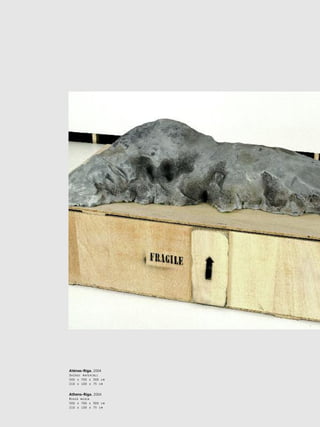
  • 131.
    131 • Kå es vélåkuzzinåju, ßîs ékas tikußas pasütîtas 1966. gadå kå daudz plaßåkas pilsétas attîstîbas programmas da¬a, un tåm bija jåbüt gatavåm lîdz 1968. gada Mehiko olimpiskajåm spélém. Tås ir modificéjamas, un viså pilsétå ir vairåk nekå 40 daΩådu ver- siju. ‰kai pie Salto del Agua metro stacijas – manas filmas objek- tam – bija jåbüt uzceltai kå vienai no pirmajåm. Í˚iet, neviens vairs nezina, kas toreiz atbildéja par ßo büvju dizainu, – es taujåju péc ßîs informåcijas metro sindikåta arhivåram, bet viñß tå arî neko neatrada. Lielåkais, ko izdevås noskaidrot, bija, ka tås pasütîtas nevis arhitektam, bet gan inΩenieru grupai – Civilo inΩe- nieru asociåcijas biedriem. Lîdz olimpiskajåm spélémi éka tå arî nebija gatava – to pabeidza gadu vélåk, 1969. gadå. Ori©inålajå ieceré fasådes betonam bija jåpaliek kailam, nekråsotam. Kad es pirmo reizi ieraudzîju Salto del Agua metro éku, tå bija neapdzîvota. Logu iekßpusé bija uzkråjusies bieza putek¬u kårta, pårvérßot tos spogu¬os. Tå kå logi bija novietoti slîpå leñ˚î pret lejå esoßo ielu, tajos atspogu¬ojås cilvéku un maßînu kustîba, kioski un ielu tirgoñi, måkoñu formu, gaismu un kråsu mija. Tas bija ¬oti gleznieciski, un, kad mani aicinåja izstådît kådu publisku darbu izstådé, kuru organizéja viens no Mehiko muzejiem, es piedåvåju nokråsot ßîs ékas fasådi spilgti sarkanu. Íåda iecere balstîjås vairåkos apsvérumos. Tas ir mé©inåjums atrast dzîvotspéjîgu metodi, kå laikmetîgå glezniecîba var ieñemt savu vietu dinamiskajå pilsétas vidé – ne kå tîri estétisks Ωests, ne arî didaktiska uzmåkßanås, bet – gribétos cerét – kå lietderîga darbîba. Tåpat tas ir mé©inåjums uzsvért sakaru starp modernå laika agrînajåm utopiskajåm sakném un tå pédåm müsu (¬oti neutopiskajå) pilsétas dzîves ikdienå. Visbeidzot, tas ir eksperi- ments: vai måkslinieka piedalîßanås var tießi un labvélîgi iespaidot cilvéku eksistenci konkrétajå situåcijå (ßajå gadîjumå – pie ¬oti dzîva transporta mezgla un komerciålå rajonå)? Pirms daΩiem desmitiem gadu tika pieñemts, ka – jå, protams, – måksla, arhitektüra un dizains var mainît un uzlabot cilvéku dzîvi un paßus cilvékus. Íobrîd més – måkslinieki – ß˚iet, apmierinåmies ar sava veida “sociålo komentétåju” atviegloto lomu. Ar ßo darbu es véléjos no jauna pårdomåt ßos jautåjumus. Nuevo pirmajå fåzé ékas fasådes pårkråsoßana sarkanå kråså notika kå pakåpeniski moduléta (step-by-modular-step) perfor- mance, kas notika no 2003. gada 4. lîdz 17. augustam. Kråsoßa- na tika organizéta kå sabiedrisks pagaiddarbs, kas savå ziñå at- bilst meksikåñu sienu apgleznoßanas tradîcijåm un saistås arî ar agrînå utopiskå modernisma måkslas straté©ijåm, kuras bija vérs- tas uz sabiedrîbas pårveidi ar vides estétiskas pårbüves lîdzek- ¬iem. Pakåpeniskais kråsoßanas process rosinåja performances idejas paplaßinåßanu lîdz lendårta mérogiem (gan pilsétas kon- tekstå). ‰kai – kas nu jau drîzåk funkcionéja kå performétåja ˚erme- nis – tika pieß˚irts fragmentétajai un daudzveidîgajai pilsétas publikai adresétas sociålas, estétiskas un politiskas akcijas saturs. Kråsoßanas gaitå tika uzñemta arî 16 mm filma, kuras montåΩu vélåk veica DΩuljeta Aranda. Filmas skañas fonam izmantots Kristiana Mancuto autentiskajå norises vietå 2001. gada septem- brî veikts ieraksts. time super-eccentric, expressive and experimental in design. At this time I was starting to think a lot about the urban design ver- nacular and how it is connected to the modernist abstract visual language. As I found out later, these buildings were commissioned in 1966 to be completed for the Olympic Games of 1968, as part of a much larger urban development programme. The buildings are modular and there are more than 40 different versions of them throughout the city. The one located at the Salto del Agua metro station, the subject of my film, was one of the first to be built. No one seems to know who was responsible for the design of these structures, I have inquired about this with the archivist of the Metro Syndicate but he found no record about this. The best we were able to find out is that it was commissioned not from an architect but from a group of engineers who belonged to the Association of Civic Engineers. The building was not com- pleted in time for the Olympic Games, but finished one year later, in 1969. Originally the concrete of the facade was exposed, not painted. When I first saw it, the Salto del Agua metro building was vacant. The inside of the windows had accumulated a thick layer of dust, transforming them into mirrors. Since they were tilted at an angle towards the street below, they reflected the movement of people and cars, the kiosks of street merchants, changes in cloud formations, light and colour. It was very pictorial, and when I was invited to present a public work for an exhibition organised by one of the museums in Mexico City, I proposed to repaint the facade of this building bright red. This project was motivated by several considerations. It is an attempt to find a viable way for contemporary painting to take place in a dynamic urban situation; neither as a purely aesthetic gesture, nor as a didactic imposition, but hopefully as a useful act. It is also an attempt to underline a connection between the early utopian roots of modernity and the presence of its traces in our (very un-utopian) urban daily life. Finally, it is an experiment: can an artist’s intervention have a direct and beneficial effect on people’s life in a particular situation (in this case a very busy transportation junction and a mercantile area)? A few decades ago the assumption was that yes indeed, art, architecture and design can change and improve people’s lives and people them- selves. Presently, as artists, we seem to be content with the reduced role of being “social commentators” of a kind. With this work I wanted to rethink these questions. In the first phase of Nuevo the facade of the building was repainted red in a step-by-modular-step performance, which took place from 4 to 17 August 2003. The painting constitutes a temporary public work, perhaps in the tradition of Mexican mural painting, and also relating to the strategies of early utopi- an modernist art that aimed at transforming society through aes- thetic reconstruction. The gradual process of painting suggested an expanded idea of performance on a scale of land art (albeit within an urban context). The building, much like the body of a performer, was made to contain a social, aesthetic and political act for a diverse and manifold urban public. Throughout the duration of the painting a 16 mm film was shot, and later edited, by Julieta Aranda. The sound track for the film was recorded by Cristian Manzutto in the same location in September 2001.
  • 132.
    04 20 04 20 132 • HANNO SOANSS Uz Starbucksatvérßanu Jervakandi gaidot Radikålå lojalitåte (Radical Loyalty) ir britu måkslinieka Krisa Evansa ßobrîd realizéjamais projekts, kura centrålå norise ir skulp- türu parka izveide postindustriålajå Jervakandi pilsétiñå Igaunijå. Evansa radîtais oksimorons kalpo par nosaukumu Rîkotåj- direktoru aliansei – tås paståvéßanas vienîgais nolüks ir formulét idejas, kurås varétu balstîties “radikålås lojalitåtes” nojégums, atklåjot, kå korporatîvå biznesa lîderi iztélojas ßî tik ambivalentå vårdu savienojuma jégu, péc tam vizualizéjot viñu izpratni skulp- türu parka formå. Mana kå kuratora loma büs mé©inåt paredzét un fiksét ßî projekta iek¬außanos lokålajå kultüras telpå. Man jåapsver iespéjamo Igaunijas sponsoru domåßanas veids, padomju perioda monumentålo skulptoru attieksme pret ßådu jaunu un mér˚tiecîgi perversu pasütîjumu, Igaunijas Måkslas muzeja iesaiste un Jervakandi vietéjås sabiedrîbas reakcija. Tomér såksim ar galveno: ar nelielu informåciju par projektu un tå fizis- ko kontekstu, lai padarîtu to izprotamåku konferences Kolonizé- tå telpa dalîbniekiem. Kriss Evanss lüdza katru no pieciem viña alianses locek¬iem, kuri pårståv mazumtirdzniecîbas, telekomunikåciju, ener©étikas, reklåmas un finanßu nozaru korporatîvo sektoru, dalîties tajå, kåda ir viña – vairåk indivîda nekå korporatîva profesionå¬a – lojalitåtes izjüta un kådå nozîmé viña individuålais skatîjums bütu uzlükojams par radikålu. Jau no paßa såkuma visiem tika pazi- ñots, ka viñu idejas tiks attîstîtas par skulpturålu objektu metiem. Íajå projektå radoßais impulss vizuålajai formai tiek atrasts biz- nesa vidé, kas apvérß ierastås attiecîbas starp måkslu un uzñéméjdarbîbu. Dialoga laikå ar Kari Vaihu – Sonera Telia Telecom vides nozares vadîtåju – iezîméjås izdzîvoßanas ideja, un Vaiha negaidîti ierosinåja radît Pielågojies un izdzîvo – pieminek- li Ωurkai un tarakånam, divåm vienîgajåm dzîvajåm radîbåm, kuråm ir izredzes izdzîvot cilvéka izraisîtå ekolo©iskå katastrofå. Ío un lîdzîgas sociålå darvinisma idejas, kuras aktualizé problé- mu – biznesa skolu lietiß˚ås étikas izvirzîßanås dominéjoßå lomå kultüras dzîvé –, Evanss ßobrîd ir vizualizéjis grafiku sérijå. Íîs grafikas kalpos par skicém igauñu måkslinieku grupai, kuri nodarbojußies ar monumentu veidoßanu padomju okupåcijas laikå un tagad ir Evansa angaΩéti, lai îstenotu viña alianses skulp- türu parka projektu. Tiek veidota intri©éjoßa paraléle starp Rietumu korporatîvås skulptüras tradîciju un Austrumeiropas monumentålo propagan- du, savienojot ßos divus Igaunijas piedzîvotås åréjås ietekmes slåñus. Jåpiekrît Neilam Malholandam, kurß savå rakstå par pro- jekta paßreizéjo attîstîbas stadiju, ko parådîja Glåzgovas Tramway notikusî izståde, saka: “Evansa skiçu skaistums un gaisîgums apliecina sevi, par spîti atmirstoßajåm komerciålajåm klißejåm, kuras tås ilustré.” Evansa darbi bez pülém ir atdalåmi no ¬oti specifiskås to tapßanas situåcijas in situ Igaunijå. Es gan rîkoßos pretéji un centîßos raksturot Jervakandi veidoto kontekstu, kaut bütîbå Evansa darbi tikpat labi iederétos ikvienå Austrumeiropas mazpilsétå ar lîdzîgu ekonomiskås attîstîbas vésturi. HANNO SOANS Waiting for Starbucks in Järvakandi Radical Loyalty is an ongoing project by British artist Chris Evans. It centres on the construction of a sculpture park in the post-industrial town of Järvakandi in Estonia. Radical Loyalty is an oxymoron created by Evans, an Alliance of Managing Directors. Its sole purpose is to express the ideas behind the concept of “radical loyalty”, investigating what corporate business leaders imagine to be the meaning of this highly ambivalent phrase and then visualising their understanding in the format of a sculpture park. My role as a curator will be to try to anticipate and map the cultural enfolding this project could have on the local level. I must consider the mind-frame of possible sponsors from Estonia, the attitude of Soviet-era monumental sculptors towards this new type of deliberately perverse commission, the involvement of the Art Museum of Estonia and the reactions from the local community in Järvakandi. But first things first: here is a bit of information about the project and its physical context, to help making it understandable for participants of the Colonising Space conference. Chris Evans has asked each of his 5 Alliance members, brought together from the corporate sectors of retail, telecom- munications, energy, advertising and finance, to relate to their individual feelings rather than their corporate position as they think about loyalty and about how their personal perspective could be seen as radical. It was stated from the beginning that their ideas would be developed into sculptural design proposals. In this project, the creative impulse for visual form is sought from the business community, which reverses the usual relation between art and business. During the dialogue that Evans had with Kari Vaiha, the environmental manager of Sonera Telia Telecom, the notion of sustainability came up, and Vaiha sud- denly suggested Adapt and Survive, a monument to a rat and a cockroach, the only creatures likely to survive a man-made envi- ronmental catastrophe. This and other Social Darwinist ideas, that bring forward the problem of how no-nonsense business school ethics comes to dominate cultural life, have so far been visualised in a series of prints by Evans. These prints will serve as models for a collective of Estonian artists who were responsible for building the country’s monuments during the Soviet occupa- tion and who have been enlisted by Evans to realise the Alliance’s sculpture park. An intriguing parallel is created between the Western tradi- tion of corporate sculpture and Eastern European monumental propaganda, linking two layers of foreign influence in Estonia. As Neil Mulholland rightly claims in his article about the current state of the project, based on an exhibition at Tramway in Glasgow: “the beauty and lightness of the designs by Evans assert themselves over the moribund entrepreneurial clich‚s that they illustrate.” They can easily be detached from the very spe- cific production situation in situ in Estonia. I will do the opposite, and try to describe the context of Järvakandi, although in
  • 133.
    133 • Jervakandi ar tås9000 iedzîvotåju, kuriem bija savs kultüras nams, boulinga klubs, bezmaksas brîvdabas peldbaseins un plaßa amatieru dai¬dårzniecîbas skola, kalpoja Igaunijas PSR par reprezentåcijas fasådi – vietu, kurp izrådîßanås nolükå bieΩi tika vesti årzemju viesi. Kå jau tipiska industriåla pilsétiñå, kuras iz- augsmi uzturéja vienas rüpnîcas darbîba, padomju ekonomikai sabrükot, Jervakandi ieståjås dzi¬a krîze. Relatîvo domas atvértîbu un brîvîbas garu, kas bija raksturîgi ßim netipiskajam padomju tel- pas nostürim, nomainîja strauja dzîves lejupslîde. Izmisîgå vajadzîba péc årvalstu investîcijåm guvusi nepårprotamu atveidu spodrpapîra prezentåcijas broßürå, kuru publicéjusi paßvaldîbas padome, apzinoties drümås nåkotnes perspektîvas, bezdarbu un jaunatnes aizplüßanu. Íeit kontrasts starp paßreizéjo situåciju un padomju laika dzîves lîmeni ir seviß˚i ilustratîvs. Íî pilsétiña, izvei- dota ap plaukstoßu stikla rüpniecîbas uzñémumu, bija perfekts iemiesojums tam, ko vietéjie iedzîvotåji ar lepnumu dévéja par “Padomju Rietumiem” un kas müsu padomju kaimiñiem lielåko tiesu ß˚ita ¬oti vilinoßa apmeßanås vieta. Íî ideolo©iskå konstruk- cija, kas raksturoja Igauniju – iespéjams, pamatoti – kå visrietum- nieciskåko no PSRS republikåm, kalpoja arî klusai apolitiskai pretestîbai pret piespiedu rusifikåcijas politiku. Tå no jauna iedarbinåja iepriekßéjo paßkolonizåcijas lîmeni – 20. gadsimta såkuma modernistu lozungu “Paliksim igauñi, bet k¬üsim eiropießi”. Tiesa, tå bija arî ilüzija, kas radîja månîgu mierinåju- mu ticîbå, ka arî padomju sistémå var dzîvot pa savam. Protams, tas, ko ßî måkslîgi konstruétå vesternizåcijas ideja nekad neatzi- na, bija politiskå un ekonomiskå båze, kura nodroßinåja visus ßos labumus un apståk¬us apmaiñå pret zinåmiem pakalpojumiem, kas ¬åva Jervakandi k¬üt par Potjomkina sådΩu. No vietéjås sabiedrîbas skatpunkta pédéjå Radikålås lojali- tåtes projekta fåze, kurai vél jåtiek realizétai, ir vérsta uz diviem ekonomiskås integråcijas slåñiem: sekmîgu pielågoßanos padomju sistémai un lîdz ßim nesekmîgiem mé©inåjumiem pielå- goties jaunajam liberålismam un tå priekßstatiem par kultüru. Bet tå ir arî ¬oti precîzi mér˚éta uz paßkolonizåcijas jédzienu, kas ir tik plaßi attiecinåms uz ßodienas Austrumeiropu. Ievérojot to visu, vairs neß˚iet tik nelo©isks fakts, ka Tîna Meisa – viena no Igaunijas bagåtåkajåm sievietém un lielåkås privåtpersonai piede- roßås Hansabankas akciju paketes îpaßniece – ir uzaugusi ßajå reiz tik pårticîgajå Padomju Igaunijas pilsétiñå. Íî faktolo©iskå nianse var izrådîties pat ¬oti noderîga, lai spertu nåkamo soli pretî skulp- türu parka projekta pilnîgam îstenojumam. Lîdzek¬u piesaiste projektam, kas tiek îstenots tålå nostürî, kurß vél varbüt 20 gadus gaidîs uz savas pirmås Starbucks kafejnîcas atvérßanu, iespéjams, ir pats radikålåkais Krisa Evansa projekta aspekts – vismaz igauñu auditorijas skatîjumå. Projekts iztirzå – un gluΩi atklåti – tos ekonomiskos parametrus, kuri nosaka paßkolonizåcijas procesu. essence Evans’ project would work just as well in any Eastern European small town with a similar economic history. With its cultural house, bowling club, free open-air swim- ming pool and large gardening school for its 9 000 inhabitants, Järvakandi served as a representational façade for Soviet Estonia, the kind of a spot visiting foreign politicians were often taken to for a little show-off. As a typical industrial town built around the resources provided by one single factory, Järvakandi entered a period of deep crisis when the Soviet market collapsed. The rel- ative open-mindedness and freedom that characterised this off- key spot on the Soviet map was replaced with quickly deterio- rating conditions. The desperate urge for foreign investment is now manifested in the glossy presentation brochure published by the municipal council in the face of bleak future prospects, unemployment and the exodus of younger people. The contrast between the present situation and Soviet-era living conditions is particularly illustrative here. This small town, constructed around a prospering glass industry, used to be the perfect epitome for what the locals proudly called the “Soviet West”, and it was generally considered by our Soviet neighbours to be a very attractive place to live. This ideological construct, the probably correct description of Estonia as the most westernised of the Soviet republics, also served as an inspiration for quiet political resistance to the policy of forced Russification. It reaffirmed the previous layer of self-colonisation, from the days of the early 20th century modernists and their slogan “Let’s stay Estonians, but let’s become Europeans”. However, it was also an illusion that offered the false comfort of believing that you could still have things your own way inside the Soviet system. Of course, what this constructed idea of westernisation always denied was the political and economic fundament that provided the benefits and the conditions for exchanging favours that made it possible for Järvakandi to become a Potyomkin village. From the perspective of the local community the last phase of the Radical Loyalty project, still to be realised, addresses the two layers of economic integration: the successful adaptation to the Soviet system and the so far failed attempts at adapting to the neo-liberals and their ideas about culture. But it also pin- points the notion of self-colonisation that is so widely applicable in Eastern Europe today. With that in mind, it may not be total- ly irrelevant that the richest woman in Estonia, Tiina Mõis, who is the biggest individual shareholder of Hansabank, grew up in this small and once well-to-do Soviet town. This little fact may even turn out to be very helpful for making the next move towards finalising the sculpture park project. Raising funds for a project carried out in a distant place, which even in 20 years time will probably not have its first Starbucks, is probably the most radical aspect of Chris Evans’s project, at least for the Estonian audience. The project discusses, absolutely openly, the economic parameters that determine the processes of self-colonisation.
  • 134.
    04 20 04 20 134 • UTE META BAUERE Ielasatgüßana Es runåßu par attiecîbåm starp måkslas institücijåm un to, ko parasti sauc par aktîvismu måkslå. Konferences ievadå ir minéts, ka es esmu kriti˚e, bet tas tå nav. Es esmu kuratore. Domåju, ka te ir svarîgi uzsvért ßo atß˚irîbu. Es nerakstu recenzijas. Ceru, ka man piemît kritiska pieeja, bet es neesmu kriti˚e. Kå måkslas institücijåm vai kuratoriem vajadzétu traktét daΩådus måkslas projektus, nemé©inot tos piesavinåties vai funkcionalizét? Kå més, kuratori, varam izrådît cieñu teritorijåm, ko måksla uzskata par savåm? Ko îsti ßodien nozîmé “publiskå teritorija” vai “publiskå telpa”, kad tik daudzas lietas tiek priva- tizétas? Es domåju, ka ßîm problémåm vajadzétu büt svarîgåm arî pécpadomju situåcijå. Uz ko noråda mana referåta virsraksts? Vai més runåjam par ielas atgüßanu vai atklåßanu no jauna? Sasto- poties ar laikmetîgo aktîvismu måkslas praksé, daudzi cilvéki saka: “Ak, tå ir tikai atgrießanås 70. gados”. Bet es nedomåju, ka tas tå ir. Man ß˚iet, ka mums jårunå par atgüßanu, nevis atklå- ßanu, jo publiskå telpa tiek paståvîgi saßaurinåta, arî juridiskå nozîmé. Kå jüs varbüt zinåt, “Ielas atgüßana” bija aktîvisma kustî- ba Lielbritånijå 90. gadu vidü un beigås. Tå såkås kå reiva pårti- jas, kolonizéjot publisko teritoriju ¬oti neparastos veidos un ap- vienojot populåro kultüru ar politisko aktîvismu. Es jüs iepazîstinåßu ar 4 projektiem, kas ir saistîti ar izstådi Documenta 11, vispirms jau tåpéc, ka Tomass Hirßhorns bija uzaicinåts ßeit ierasties. Ûél, ka viñß nevaréja piedalîties. Bütu interesanti apspriest ßos jautåjumus ar viñu. Viñß såka savu dar- bîbu kå aktîvists un tad k¬uva par måkslinieku, kamér citi såka ar måkslu un vélåk noléma k¬üt par aktîvistiem. Mums ir jåredz atß˚irîba starp ßiem darbîbas veidiem. Es såku ar grupu Park Fiction. Íî grupa saståv no daΩådu nozaru pårståvjiem: arhitektiem, ¬audîm no sociålo dienestu un kopienu grupåm. Viñi satikås, jo visiem bija kopîga interese par St. Pauli, kådreizéjo Hamburgas strådnieku rajonu netålu no ostas. Tagad Hamburgas piejüras rajons tiek uzskatîts par vispievilcîgåko vietu dzîvok¬u celtniecîbai. Pilséta ir privatizéjusi da¬u no sava publiskå îpaßuma, un tas noveda pie situåcijas, kad 80. gados måjas tika patva¬îgi ieñemtas. Kopß tå laika ir uzceltas daudzas jaunas ékas. Tika atståta neliela piekrastes josla, un ßie cilvéki teica: “Vél vienas jaunas måjas vietå, kas aizsedz skatu uz UTE META BAUER Reclaim the Street I’ll speak about the relations between the art institution and what is usually called artistic activism. It is mentioned in the con- ference introduction that I’m a critic, but this is not the case. I’m a curator. I think it’s important to make this distinctions here. I don’t write reviews. Hopefully I’m critical, but I’m not a critic. How can art institutions or curators deal with different art practices without appropriating them or functionalising them? How can we as curators show respect for the territories that art practices claim for themselves? Also, what does ‘public territory’ or ‘public space’ mean today, when so many things are being privatised? I think these issues must also be relevant in a post- Soviet situation. What does my title imply? Are we talking about reclaiming the street or about rediscovering it? When they are confronted with contemporary activist art practice, many people say: “Oh, it’s just the 1970s once again.” But I don’t think that’s the case. I think we must be talking about reclaiming, not redis- covering, because public space is continuously being shrunk, also in legal terms. As you may know, Reclaim the Street was an active movement in Britain in the mid-to-late 1990s. It started with rave parties that colonised public territory in very innovative ways, combining popular culture with political activism. I’ll talk you through 4 projects that relate to Documenta 11, first of all because Thomas Hirschhorn was invited to come here. It’s a pity he wasn’t able to participate. It would have been inter- esting to discuss these things with him. He started out as an activist and then became an artist, while others have started in art and then decided to be more activist. We need to see the dis- tinction between these practices. I’ll begin with Park Fiction. This group consists of people from different backgrounds: architects, people from social net- works and neighbourhood groups. They came together because of a shared interest for St Pauli, which used to be a working-class area near the harbour in Hamburg. The Hamburg waterfront is now considered the most attractive territory for building flats. The city has privatised parts of its public property, and this creat- ed the situation with squatted houses in the 1980s. In the mean- time, many new buildings have been put up. A small part of the waterfront was left, and these people said: “Instead of having
  • 135.
    135 • ostu, més gribétumazliet za¬as vides ßejienes iedzîvotåjiem.” Lai atbalstîtu vietéjås sabiedrîbas vajadzîbas, tika apvienotas daΩåda veida prasmes un spéjas. Måkslas joma varéja piedåvåt sim- bolisku kapitålu – spéju radît publicitåti. Ir interesanti aplükot, kå tas tika darîts. No pilsétas programmas ar nosaukumu “Måksla un publiskå telpa” ßî grupa dabüja zinåmus lîdzek¬us, lai finansé- tu un popularizétu ßo projektu, ko apkaimes grupas nebütu paveikußas saviem spékiem. Park Fiction vispirms izveidoja “Vélmju arhîvu” par to, kåds parks ßeit varétu büt, un tad viñi strådåja ar daΩådåm intereßu grupåm, arî ar bérniem, lai attîstîtu iedzîvotåju idejas parka izveidei. Prostitücija ßajå rajonå ir reducéta. St. Pauli bija daudz sarkano lukturu båru, bet tie ir pårveidoti jaunießu izklaides vietås. Tagad ßeit darbojas daudzas müzikas grupas. Més redzam, kå vispirms parks tika improvizéts. Viñi izveidoja lidojoßo paklåju un daudzas citas lietas bérniem. Tas izskatås péc jaukas sociålas aktivitåtes, bet policija nemitîgi véroja, vai kaut kas nenotiek. Tur bija narkotikas, un tika ieñemtas måjas. Diezgan raibi. Bez tam St. Pauli rajonå bija arî lielas turku, horvåtu un serbu diasporas, lîdz ar to viñu vajadzîbas arî bija jåñem vérå. Parkam attîstoties, Park Fiction grupå iesaistîjas Margita Çenki. Viña izveidoja filmu par to, kå cilvékiem ar savåm vélmém vajadzéja iziet ielås, lai kaut kas notiktu. Filmas veidoßanå piedalîjås daudz cilvéku, arî våcu müzikas grupas, pieméram, The Golden Lemon. Mums kå kuratoriem bija sev jåjautå, kådå veidå ßådu grupu parådît izstådé Documenta. Projekta norises vieta ir Hamburga, nevis Kasele, un mums nebija nodoma radît måkslîgu situåciju. Galu galå més ielüdzåm grupu Park Fiction un kopå ar viñiem radîjåm îpaßas mébeles, sava veida atlîdzîbu, ko viñi vélåk varéja aizvest måjås. Park Fiction grupas cîña prasîja ilgstoßu iesaistîßa- nos. Lai saglabåtu dårgo Hamburgas piekrasti neapbüvétu, nepi- etiek rîkot izstådes. Park Fiction nebija parasts måkslas projekts, bet tådas îslaicîgas situåcijas kå izstådes varéja radît ßai lietai jauna veida publicitåti un vienlaikus atvieglot apceri un debates. Tådé¬ grupa såka darboties ar konteineriem improvizétå veidå. Såkumå viñus finanséja Hamburgas pilséta, bet tad mainîjås valdîba un finanséjums apståjås. Tomér viñiem izdevås dabüt atbalstu no Bundeskulturstiftung (Federålå kultüras fonda). Man ß˚iet, tie bija 500 000 eiro parka izbüves uzsåkßanai, un péc deviñu gadu cîñas da¬a no tå patiesi bija îstenota… Nåkamå projekta autors ir Tomass Hirßhorns. Viñß vélas uzcelt çetrus pieminek¬us. Viens no tiem, veltîts Ûilam Delézam, tika izveidots Aviñonå. Piemineklis Spinozam tika radîts Amsterdamå, bet piemineklis Antonio Gramßi joprojåm nav uzcelts. Izstådei Documenta 11 Kaselé Hirßhorns plånoja îslaicîgu pieminekli ÛorΩam Bataijam. Tas noteikti bija ieceréts tikai simts izstådes dienåm. Viñß to neuzskata par sociålu iejaukßanos kopi- enas dzîvé. Tå katrå ziñå ir da¬a no viña måkslinieciskås darbîbas, bet viñß nevélas to padarît par måkslas institücijas saståvda¬u. Viñam ir vajadzîgs måkslas institücijas finanséjums un auditorija, bet viñß vélas savu projektu lokalizét citå vietå. Hirßhorns neuzskata sevi par sociålo darbinieku, kå nereti k¬üdaini minéts publikåcijås. Dzîvojamais rajons Friedrich Wohler Siedlung, ko viñß izvéléjås piemineklim, ir sociålo måju projekts årpus Kaseles centra. Bezdarba lîmenis ßeit ir augsts, bet tas nav graustu rajons. Tas ir gluΩi parasts strådnieku rajons, kådi ir katrå Våcijas pilsétå un parasti aizñem lielu da¬u no pilsétas dzîvojamå fonda. Noteikti jåpaskaidro, ka ßådas teritorijas nepårståv müsu sabiedrîbas minoritåtes. Hirßhorns nopirka daΩus vecus tak- sometrus un izveidoja Bataija satiksmes dienestu no Documenta izstådes tå vietå, lai måkslas publikas pilni autobusi ierastos ßajå rajonå. Es paliku Kaselé gandrîz visas 100 izstådes dienas, un såkumå arî biju skeptiska par to, ko visi ßie Documenta apmek- létåju tükstoßi nodarîs konkrétajai vietai. Bet man jåsaka, ka îstu another house that blocks the view to the harbour, we’d like to have a little bit of green space for the people living there.” To meet the needs of the local community, different skills and potentials were brought together. The art field could contribute the symbolic capital of being able to create publicity. It’s inter- esting to see how that was done. From a city programme called “Art and Public Space” the group got some money to finance and publicise this project, which the neighbourhood groups wouldn’t have managed on their own. Park Fiction first created an ‘Archive of Wishes’ for what a park there could be, and then they worked with different interest groups, also with children, to develop the residents’ idea for the park. Prostitution has been cut back in the area. St Pauli used to have many red light bars, but they have been transformed for youth culture. There are many music groups there now. We see how the park was improvised at first. They built a flying carpet, and a lot of other things for children. It looks like a nice social enterprise, but the police was always watching, in case some- thing would happen. There were drugs, and squatted houses. Quite a mix. Also, there were big Turkish, Croatian and Serbian populations in St Pauli, so their requirements also had to be met. As the park was being developed Margit Czenki was involved in the Park Fiction group. She created a film about how people’s desires had to hit the street in order for something to happen. Many people collaborated on the film, also German music groups like The Golden Lemon. As curators we had to ask ourselves how we could present this kind of group in Documenta. The location of the project is Hamburg and not Kassel, and we had no intention to create an artificial situation. We ended up inviting Park Fiction and creating specific furniture together with them, as a kind of payback that they could take home later. Park Fiction’s struggle required a long-term commitment. Keeping a part of the highly-priced Hamburg waterfront open is nothing you can achieve with just exhibitions. Park Fiction was not an ordinary art project, but tem- porary situations like exibitions could create new kinds of public- ity for the cause, and at the same time facilitate reflection and debate. Therefore, the group started working in improvised ways with containers. First they had money from the city of Hamburg, but then there was a change of government there and the fund- ing stopped. However, they managed to get support from the Bundeskulturstiftung (the Federal Cultural Endowment) instead. I think it was 500 000 euro to start building the park, and after nine years of fighting some parts of it were actually realised. The next project is by Thomas Hirschhorn. He wants to build four monuments. One of them, to Gilles Deleuze, was realised in Avignon. The Spinoza Monument was created in Amsterdam, and the monument to Antonio Gramsci is still unre- alised. For Documenta 11 in Kassel, Hirschhorn planned a tem- porary monument to Georges Bataille. It was always meant to last only for the hundred days of the exhibition. He doesn’t see it as a social intervention in the community. It’s very clearly part of his artistic practice, but he doesn’t want it to be in the middle of an art institution. He needs the funding of the art institution. He needs the audience of the art institution, but he wants his project to be localised at a different spot. Hirschhorn doesn’t see himself as a social worker, which the press often mistakenly assumed. The residential area he chose for realising the monument, the Friedrich Wohler Siedlung, is a social housing project outside central Kassel. Unemployment fig- ures are high there, but it’s not a run-down ghetto. It’s a very normal working-class area, of the kind that exists in every German city and usually accounts for a large portion of urban liv- ing space. One thing has to be made clear: areas like this one don’t represent a minority in our society. Hirschhorn bought
  • 136.
    04 20 04 20 136 • türistu uzplüdu nebija.Tikai noteikts skaits måkslas pasaules pår- ståvju devås uz turieni. Pieminekli Bataijam visvairåk izmantoja vietéjie iedzîvotåji. Piemineklis saståvéja no daΩådiem pakårtotiem elementiem: Bataija taksometriem, Imbiss kioska (kurå cilvéki varéja ne tikai paést, bet arî satikties – ßai rajonå nebija tådu iespéju; diemΩél turku ©imenei, kas vadîja kiosku, nedeva at¬auju turpinåt darbu péc izstådes beigåm), Bataija bibliotékas (ko izveidoja françu måkslinieks, kas specializéjas Bataija izpété, iedalot to tådås témås kå sports, sekss un måksla, un man jåatzîstas, ka seksa bibliotéka bija ¬oti populåra. Daudzås soft-porn filmas, protams, raisîja debates, bet patiesîbå turku kopiena tåpat tås skatås…), Bataija skulptüras årtelpå (ieskaitot spuldΩu virknes kå brîvdabas svétkos), tîkla kameras, lai pårraidîtu projekta télus internetå un visbeidzot televîzijas studijas (kurå 6 cilvéku grupa katru darba dienu veidoja 10 minüßu programmu valsts méroga sabiedriska- jam kanålam, sasniedzot skatîtåju miljonus). Bataija pieminek¬a projektå bija iesaistîti ap 26 vietéjie iedzîvotåji. Bibliotéku, kiosku un visu påréjo vadîja vietéjie. Tomass Hirßhorns viñiem maksåja un vienmér 1 eiro vairåk, nekå par to paßu darbu maksåtu Documenta. Projekts radîja darba iespéjas visu vasaru 4 méneßu garumå. Hirßhorns uzturéjås Friedrich Wohler Siedlung visu projekta laiku. Paßå såkumå vél pirms projekta atklåßanas kåds ielauzås viña dzîvoklî un nozaga visu televîzijas aparatüru. Viñß sacîja, ka, ja 5 dienu laikå nozag- tais netiks atdots, viñß atcels visu projektu. Un viss tika atdots, jo tie bija vietéjie. Viñi saprata situåciju, un péc tam nekas vairs neti- ka nozagts, pat ja aparatüra atradås kopienas vidé, büdå ar atvértiem logiem. Iedzîvotåji aizsargåja pieminekli. Documenta pårståvji baΩîjås, ka projekta vértîgås saståvda¬as kopienå nozags vai sabojås. Daudzi måkslas vides pårståvji un amerikåñu kolekcionåri iemîléja Hirßhorna darbu. Daudzi citi teica: “Ak, tas izskatås tå, jo tas ir nabadzîgs rajons…” Bet iedzîvotåji sacîja: “Ak Dievs, ja Tomass bütu ¬åvis mums palîdzét, viss izskatîtos patießåm skaisti un ne tik nolaisti, bet jåbüt måkslinieciski...” Hirßhorns vienmér strådå ar létiem materiåliem no DIY veikaliem. Viñß negrib, lai cil- véki uzskatîtu viña darbus par nelietojamiem un to komponenti tiktu nozagti, tåpéc viñß visu veido ikdieniß˚u un cer, ka tas paliks savå vietå. Íoreiz tå arî bija. Íeit més arî redzam Markusu Íteinvegu, filozofu no Berlînes, kas bija rezidéjoßais teoréti˚is ßajå apkaimé. Péc projekta nosléguma tika publicétas divas gråmatas: vienas autors bija Tomass Hirßhorns, kas runåja par måkslinieciskajiem aspektiem, un otru sarakstîja Markuss Íteinvegs par teorétiskajiem jautåju- miem. Izstådé Documenta 11 piedalîjås arî Austrijas un Våcijas fotogråfe Lisla Pongere. Austrijas laikraksti viñai pasütîja materiålu par notikumiem DΩenovå 2001. gadå, kad policija nekårtîbu laikå nogalinåja antiglobålistu demonstråcijas dalîb- nieku Karlo DΩuljiåni, un daΩas nedé¬as péc G8 samita viña devås uz turieni. Viña fotograféja protestu liecîbas, slégtås kanalizåcijas lükas un grafiti. Viñas projekts ir interesants pats par sevi, bet arî tåpéc, ka tas saistås ar grupas Volkstheater Karavane aktivitåtém. Tå ir ielas teåtra grupa, kas saståv no aktieriem, aktîvistiem, sce- nåristiem un måksliniekiem. DΩenovå viñi îstenoja projektu ar nosaukumu DΩenovas aktîvå måksla, un atpaka¬ce¬å tikai 100 kilometru pirms Austrijas robeΩas viñus aizturéja policija un ielika cietumå uz 3 nedé¬åm. Viñus apsüdzéja par piederîbu “melnajam blokam”. Policija vienu meiteni saß˚aidîja pret sienu. Viñai tika izsisti zobi un salauzta roka. Taçu bütîbå viñi ir tikai nekaitîga ielas teåtra trupa… Te atkal ir redzams, ka, tiklîdz més izejam årpus institücijåm un nok¬üstam politiskå zonå, lietas k¬üst reålas. DaΩi no ßiem ¬audîm varbüt ir naivi, bet péc Géteborgas un DΩenovas naivitåtei ir ierådîta îstå vieta. some old taxis and created a Bataille Shuttle Service from Documenta instead of having whole busloads of the arts crowd invading the area. I stayed in Kassel for almost the entire 100 days of Documenta 11, and in the beginning I was also quite skeptical about what all the thousands of Documenta visitors would do to the area. But I must say that there was never a tourist situation really. Only a certain number of art world peo- ple made their way there. The Bataille Monument was mostly used by the local residents. The monument consisted of different sub-elements: the Bataille Shuttle, the Imbiss kiosk (which was not only to feed people but also functioned as a meeting place, since that was missing in the area, and unfortunately the Turkish family that ran the kiosk didn’t get permission to continue it after the exhibition period), the Bataille Library (which was put together by a French artist who specialises in Bataille and organised around themes like sport, sex and art, and I must admit that the sex library was very popular, with a lot of soft-porn films, which of course created a debate, but the fact is that the Turkish community watches soft-porn anyway...), an outdoor sculpture of Bataille (including light bulbs hanging in rows like in outdoor festivals), a webcam for broadcasting images of the project on the Internet, and finally a TV studio (where a group of 6 people produced 10 minutes of programming every weekday for a nationwide public service channel, reaching millions of viewers). The Bataille Monument involved around 26 people in the area. The library, the kiosk, everything was run by the local resi- dents. Thomas Hirschhorn paid them, and always 1 Euro more than Documenta would have paid for a similar job. The project created jobs that lasted 4 months, during the summer. Hirschhorn stayed in the Friedrich Wohler Siedlung for the whole duration of the project. In the very beginning, before the project opened, someone broke into his flat and stole the whole TV edi- ting equipment. He said that unless it’s back within 5 days, he would cancel the whole project. And everything was returned, because these were people from the group. They understood the situation, and afterwards nothing was ever stolen, even if the editing equipment was there in the middle of the community in a shack with open windows. The people living there protected the monument. This had been a concern of Documenta as an institution, that the expensive equipment would be stolen or ruined by the community. Many people in the art world, and many American collec- tors, loved Hirschhorn’s work. Many others said: “Oh, it looks the way it does because this is a poor area...” But the residents said: “My goodness, if Thomas would let us help, the whole thing would look really proper and not so trashy, but this must be artistic...” Hirschhorn always works with cheep materials from DIY stores. He doesn’t want people to think his works aren’t meant to be used, and he doesn’t want the components to be stolen, so he keeps everything casual and hopes it will stay in place. This time it did, actually. Here we also see Markus Steinweg, a philosopher from Berlin who was a kind of theoretician-in-residence in the area. After the project two books were published: one by Thomas Hirschhorn about the artistic aspects, another by Markus Steinweg about the theoretical implications. The Austro-German photographer Lisl Ponger also partici- pated in Documenta 11. She was commissioned by Austrian newspapers to go to Genova a few weeks after the G8 summit in 2001, when the anti-globalisation demonstrator Carlo Giuliani was killed by the riot police. She photographed the traces of the protests, sealed manholes and graffiti. Her project is interesting in itself, but also because it connects to the activities of the group Volkstheater Karavane. This is a street theatre collective
  • 137.
    137 • Lisla gribéja strådåtar liecîbåm, un tas Documenta ietvaros ir izdaråms. Més kå måkslas institücija neesam aktîvisma aizsåcéji. Tam ir jånotiek paßam no sevis. Un, mums par pårsteigumu, tas kådå dienå notika arî Kaselé, kad Volkstheater Karavane un citas aktîvistu grupas, kå Intermedia Italy, parådîjas un såka büvét savu “BezrobeΩu apmetni”. Tika pårbaudîtas institücijas robeΩas. Documenta, kas simpatizéja akciju iedves- mojußajåm idejåm, lika aktîvistiem aizvåkties. Viñi bija uzstådîjußi publisku virtuvi, un, ja kåds saslimtu, atbildîba ar visåm apdroßinåßanas lietåm un iespéjamiem tiesu darbiem tiktu uzvelta Documenta organizétåjiem. Viñi izlüdzås at¬auju palikt 24 stundas, un més spéjåm pårliecinåt Documenta administråci- ju ne¬aut nojaukt apmetni ar policijas spékiem, kas jau gaidîja tuvumå. Okvui Envezors sacîja, ka aktîvisti katrå ziñå nelüdz at¬auju, un, ja atnåk policija un viñus aizved, tas ir paredzams akcijas rezultåts un rada publicitåti, kas, iespéjams, arî bija akci- jas mér˚is. Situåcija tomér bija tåda, ka vairåki no ßiem cilvékiem bija redzami videoierakstå no DΩenovas, un viñiem tika liegts iebraukt Itålijå. Ja viñus arestétu otru reizi, nåktos iet cietumå. DaΩi no viñiem bija müsu akadémijas studenti Vîné. Lîdz ar to manas baΩas bija mazliet citådas. Íî apmetne tika uzcelta, lai atbalstîtu 400 çigånu un serbu ©imenes, kam tajå laikå draudéja deportå- cija atpaka¬ uz Serbiju, jo bija mainîjusies tiesiskå situåcija un Våcija gribéja sütît patvéruma meklétåjus atpaka¬. DaΩi no viñiem bija ßeit uzturéjußies 13 gadus, viñu bérni apmekléja våcu skolas, un viñi vairs pat nerunåja serbu vai çigånu valodå. AtgrieΩoties Serbijå, viñi nespétu atrast darbu. Bet våcu iestådes diennakts laikå izléma, ka viñiem 20 minüßu laikå jåsakravå çemodåni un jådodas atpaka¬. DaΩiem Våcijå bija labs darbs, un viñi pat nepaguva informét savus darba devéjus un draugus par ßo deportåciju. Apmetne bija demonstråcija ßo 400 ©imeñu aizståvîbai. Tådéjådi mums bija daΩådi apsvérumi par iespéjamo pretdarbîbu akcijai, bet tas tikai pårbaudîja müs un müsu spéju rîkoties saskañå ar moråles un étikas principiem. Protams, tas müs ¬oti iespaidoja no emocionålå viedok¬a. Galu galå ßie 4 projekti izraisîja diezgan atß˚irîgas reakcijas un tika turpinåti daΩådos veidos. Kå rea©ét uz savu pieredzi un tai sekot, manupråt, ir müsu ziñå. Tomér tå ir arî pårdomu téma visa veida intelektuå¬iem: måksliniekiem, rakstniekiem u.c. Viñi parasti daudz ce¬o, un viñiem ir pieejamas daudzas lietas. Es domåju, ka viñiem vienmér jådomå par vårda brîvîbu un izpausmes brîvîbu. Vienmér ir svarîgi, lai måkslinieki kolonizétu telpu, paturot pråtå ßos motîvus. that consists of actors, activists, scriptwriters and artists. In Genova, they performed a project called Genova Acting Art, and on their way back they were captured just 100 kilometres before the Austrian border and put in jail for 3 weeks. They were accused of belonging to the ‘black block’. One girl was smashed against the wall by the police. She lost her teeth and broke her arm. And basically they’re just a harmless artistic street theatre group... Again, we see that as soon as we leave the institution, as soon as we enter into political territory, things get real. Some of these people may be naïve but after Gothenburg and Genova naïvet‚ has been shown its place. Lisl wanted to work with traces, and this is what Documenta can do. We, the art institution, don’t start activism. It has to hap- pen by itself. And to our surprise it also happened in Kassel one day, when Volkstheater Karavane and other activist groups, like Intermedia Italy, showed up and started building their No-Border Camp. The limits of the institution were tested. Documenta, which basically was sympathetic to the ideas behind the action, ordered the activists to leave. They had set up a public kitchen, and if some people were fallen ill Documenta would be held responsible, with all that entails in terms of insurance and possi- ble legal action. They negotiated permission to stay for 24 hours, and we could convince the Documenta administration not to get the camp torn down by the police who were waiting around. Okwui Enwezor said that anyway, if you’re an activist, you don’t ask for permission, and if the police come and take you away that’s an anticipated outcome of your action and it creates the publicity you may be looking for. The situation, however, was that several of these people had been recorded on video in Genova and weren’t allowed to travel to Italy anymore. If they were arrested a second time, they’d have to go to prison. Some of them were students at our Academy in Vienna. Therefore, my concerns were slightly differ- ent. This camp was set up to support 400 Roma and Serbian families who at the time were threatened with deportation back to Serbia, because the legal conditions had changed and Germany wanted to send asylum-seekers back. Some of them had been there for 13 years, the children had gone to German schools, and they didn’t even speak Serbian or Romani anymore. They would not be able to find jobs back in Serbia. But the German authorities decided overnight that they had to pack their suitcases in 20 minutes and go back. Some had good jobs in Germany, and sometimes weren’t even able to inform their employers or friends about the deportation. The camp demon- stration was for these 400 families. So we had different concerns about whether to action against it, but that only tested us and what we were able to do about our morality, our ethics. Of course we were very emotionally involved. In the end these 4 projects provoked rather different reac- tions, and they were extended in different ways. How to react and how to follow up what we experience is, I think, our own responsibility. It is, however, also a matter of concern for all kinds of intellectuals: artists, writers etc. They usually do a lot of trav- elling, and they have access to many things. I think they should always be concerned with freedom of speech and freedom of expression. It’s always important for artists to colonise space with these causes in mind.
  • 138.
    04 20 04 20 138 • Diskusija péc UtesMetas Baueres priekßlasîjuma Apolonija Sustersiça: Es gribu pajautåt par Tomasa Hirßhorna projektu. Vai viñam ir vajadzîga måkslas publika? Man ß˚iet, ka es atceros uzrakstu uz viena no Bataija taksometriem. Varbüt tas nebija gluΩi tik rupjß kå “izdråzt måkslas publiku”, bet… Ute Meta Bauere: Tas bija britu måkslinieka citåts. Apolonija Sustersiça: Tåtad to nebija rakstîjis Tomass? Ute Meta Bauere: Tas droßi vien bija tikai grafiti, bet tas nav svarîgi. Tomér tas ir interesants jautåjums. Tomasam ir vajadzîga måkslas institücija, lai sañemtu finanséjumu saviem projektiem. Måkslinieka statuss viñam dod diezgan labus ienåku- mus. Íim nolükam ir vajadzîgi vai nu kolekcionåri, vai sabiedris- kais pasütîjums. Par ßîm lietåm jåbüt skaidrîbå, pat ja neviens îsti negrib par to runåt. Kådi ir jaunrades nosacîjumi? Tas ir îpaßi sva- rîgi, ja jüs darbojaties publiskå telpå, kas bieΩi vien saistås ar juridiskiem ß˚ér߬iem. Måkslai ir arî vajadzîgs atbalsts. Kas måksli- niekiem var palîdzét ßajå ziñå? Varbüt måkslas institücija varétu mainît savas prioritåtes un vairåk atbalstît noteiktas lietas. Es domåju, ka ir svarîgi to integrét måkslas institücijas diskurså, un, manupråt, arî institücijai ir bütis- ki kritiski izvértét aktivitåtes, ar kuråm tå ir saistîta. DaΩreiz ßîs måkslinieku akcijas var büt diezgan naivas, un tad, manupråt, ir svarîgi to apspriest, pat ja daΩi cilvéki saka “izdråzt jüs, publiku”. Pieméram, situåcija ar Volkstheater Karavane. Kad viñus apcie- tinåja, viñi, protams, lüdza, lai més kå Documenta organizatori rakstîtu Austrijas valdîbai atbalsta véstules. Bet daΩi biedri sacîja: “Né, més negribam nekå kopîga ar ßiem måkslas pårståvjiem.” Savå veidå viñi izmantoja müs, lai paustu to, cik paßi ir labi. Te ir lieli konflikti, un ir svarîgi tos apspriest. Apolonija Sustersiça: Es piekrîtu jüsu teiktajam par måk- slas kontekstu un vårda brîvîbu. Manupråt, ir svarîgi domåt par müsu aktivitåßu formuléjumu attiecîbå pret måkslas publiku, kå arî pret to, ko més varétu saukt par nemåkslas (vai neprofe- sionålo) publiku. Par to varétu domåt kå par eksperimentålas sociålas platformas veidoßanu, bet, protams, tas arî var tikt aps- priests. Taçu es nesaprotu, kåpéc Tomass ir tik ¬oti pret “sociålo zîmogu”. Ko tas nozîmé? Ute Meta Bauere: Viña darbam ir sociåla nokråsa, bet viña måkslinieciskå iejaukßanås ßajå sférå neaizståj sociålo darbu. Cilvéki ¬oti bieΩi sajüsminås par måksliniekiem, kuri “strådå ko- pienå”. Institücijåm bieΩi ir tendence uzaicinåt måksliniekus ris- inåt problémas, kas bütu jårisina ar labu sociålo palîdzîbas sisté- mu, medicînas aprüpi un daΩreiz ar garîgås veselîbas veicinåßanas pasåkumiem. DaΩreiz runa ir par cilvékiem krîzes situåcijås, un måksliniekiem nav nepiecießamås izglîtîbas, lai viñiem palîdzétu. Vienai lietai jåbüt skaidrai: måksla nevar aizståt cita veida infra- struktüru. Institücijas bieΩi domå, ka måksla ir létåks veids, kå ris- inåt savas problémas. 90. gadu såkumå es strådåju måkslinieku vadîtå telpå, un ¬audis sacîja: “Jums vajadzétu vairåk sadarboties ar apkaimes iedzîvotåjiem.” Un es atbildéju: “Es sadarbojos ar apkaimi: ar måkslas lîdzek¬iem, un tas ir viss.” Més neesam rajona sociålie darbinieki, bet mums tomér ir sociåla ideja, kaut arî tå ir citåda ideja.” Sociålå sféra var tikt izprasta kå måkslinieciskas iejaukßanås zona, bet ko ßåda iejaukßanås nozîmé? Un atgrie- Ωoties pie vårda brîvîbas: més visi esam pieredzéjußi, ka vårda brîvîbai ir savas robeΩas, proti, institucionålas. Discussion after Ute Meta Bauer’s presentation Apolonija Sustersic: I want to ask about Thomas Hirschhorn’s project. Does he need the art audience? I seem to remember something that was written on one of the taxis in the Bataille Shuttle. Perhaps it wasn’t quite as rude as “fuck the art audience”, but... Ute Meta Bauer: It was a quote from a British artist. Apolonija Sustersic: So it wasn’t by Thomas? Ute Meta Bauer: It was probably just graffiti, but it doesn’t matter. It’s still an interesting question. Thomas needs the art institution to get financing for his projects. He makes a rather good income from being an artist. For that you need either collectors or public funding. One has to be clear about these things, even if noone really wants to talk about them. What are the conditions of production? This is particularly impor- tant if you do things in public space, which very often involves legal complications. Art also needs promotion. Who can help artists with that? Maybe the art institution could shift its priorities, and become more of an agent for supporting certain things. I think it’s important to integrate this into the discourse of the art insti- tution, and I also think it’s important for the institution to criti- cally reflect the practices it engages with. Sometimes these actions by artists can be rather naïve, and then I think it’s impor- tant to discuss this, even if some people say ‘fuck you’ out there in the audience. Take the whole situation with Volkstheater Karavane. When they were put in jail they of course asked us, as organisers of Documenta, to write letters of support to the Austrian government. But some of the members said: “No, we don’t want anything to do with these artistic people.” In a way they just used us to claim they themselves are such good people. These are big conflicts, and it’s important to debate them. Apolonija Sustersic: I agree with what you say about the art context and freedom of speech. I, too, believe it’s important to think about how we formulate our activity in relation to the art audience, but also in relation to what we could call a non-art (or non-professional) audience. This could be thought of as building an experimental social platform, but of course it can also be debated. But I don’t understand why Thomas is so much against the ‘social stamp’. What does that mean? Ute Meta Bauer: His work has social implications, but he’s not replacing a social worker with his artistic interventions in these areas. Very often people become enthusiastic about artists who work ‘in the community’. Institutions often tend to invite artists to solve problems they should solve with good social net- works, with health care and sometimes with mental-health sup- port measures. Sometimes it’s to do with people in a crisis, and artists don’t have the appropriate training to help them. One must be clear: art can’t replace other infrastructure. Institutions often think art is a cheaper way to solve their problems. I was working in an artist-run space in the early 1990s, and people said: ‘You should engage more with the neigbourhood.’ And I answered: ‘I do engage in the neighbourhood: with art, and that’s it.’ We’re not social workers in the area, but we still have a social idea, although it’s a different idea. The social can be thought of as a field of artistic intervention, but what does this intervention mean? And coming back to freedom of speech: we have all experienced that freedom of speech has its limits,
  • 139.
    139 • Sérens Grammels: Mansjautåjums ir saistîts ar Park Fiction projektu. Kåda jéga îsti ir no ßåda projekta tådai institüci- jai kå Documenta, ja projekts tiek îstenots kopß 1994. gada, iesaistot tik daudzus cilvékus? No vienas puses, jüs to nemaz nevarat parådît, bet, no otras puses, varbüt ir lieliski, ka Documenta dod marginålam projektam ßådu lielu publicitåti. Tas var radît plaßåku atbalstu un vairåk lîdzek¬u. Documenta 11 bija pirmå reize, kad Park Fiction tika prezentéts lielåkai auditorijai. Kå jüs risinåt ßîs lietas? Ir îpaßi interesanti to dzirdét no jums, jo Berlînes biennålé jüs iepazîstinåjåt ar daudzåm aktivitåtém, kas notiek “uz ielas”. Galu galå tåm jåtiek kaut kådi parådîtåm, nosauktåm un izstådîtåm… Ute Meta Bauere: Esmu nobaΩîjusies par daΩåda veida aktivitåßu piesavinåßanos. Bet es pati esmu uzsåkusi darboties tådås kustîbås kå Park Fiction, un man ir visai svarîgi saprast, ko tås nozîmé. Måkslas vésture ir institüciju vésture, bet daudzas no ßîm aktivitåtém ir izslégtas no tåm. Ío paßu izslégßanu més piedzîvojåm feminisma kustîbå. Daudzas måkslas aktivitåtes tiek izslégtas, un mums vienmér ir jåcînås par to tiesîbåm paståvét arî årpus institücijåm… Més bieΩi aizmirstam, ko pårståv muzeji. Més vienmér domåjam, ka tie veicina türismu, måkslas parådîßanu plaßåkai publikai, bet tå ir arî uzglabåßanas un izpétes vieta. Íî måkslas institücijas zinåtniskå misija ir ¬oti svarîga. Man muzejs ir måkslas véstures un kultüras maßinérija. Es atzîstu, ka izståde måkslas institücijå ir kas cits nekå måkslas aktivitåtes ielås, bet tießi tåpéc institücija ir labs instruments refleksijai un daΩådu prakses veidu un to sféru pårvértéßanai. Vienlaikus årpus måkslas institücijåm teorija un prakse ¬oti cießi savijas, jo måksliniekiem un aktîvistiem ir spécîga teorétiskå båze. Jüs pieminéjåt citu måkslas institücijas aspektu. Tå pårståv simbolisku kapitålu, vai nu mums tas patîk vai ne. DaΩi måksli- nieki var sacît: “Né, mums nav pieñemams k¬üt par institücijas saståvda¬u.” Un tad viñiem to vienkårßi nevajag darît. Bet ir citi, kå, pieméram, Park Fiction grupa, kam ir savas idejas par to, kåpéc viñi piedalås. Finansétåji, kå Bundeskulturstiftung, arî güst labumu no ßådas dalîbas Documenta. Tiek celta viñu finanséjuma vértîba. Ja måkslinieki to zina, viñi tåpat güst labumu. Sérens Grammels: Kå jüs domåjat, vai institüciju ietvaros notiekoßås izstådes izplata aktîvistu politiskås nostådnes publikå vai arî notiek pretéjais – viñu politisko ener©iju absorbé estétiskå vai kultüras maßinérija, kå jüs teicåt? Vai jüs uzskatåt, ka politisku jautåjumu aplükoßana muzejos mainîs sabiedrîbas nosacîjumus un funkcionéßanas veidu? Ute Meta Bauere: Es domåju, ka jüsu minétå prakse ir marginåla. Lielåkå da¬a no måkslas institücijåm nodarbojas ar citiem jautåjumiem. Bet es piekrîtu: ienåkot måkslas institücijå ar ßådu praksi, jums jårisina arî estétiskas problémas. Nav ßaubu, ka måkslas prakse vienmér ietver estétikas jautåjumus. Es neteiktu, ka vienîgå politiskå prakse måkslå ir iesaistîties politikå. Pat ¬oti ejoßas glezniecîbas praktizéßana ir politiska, jo tå ir saistîta ar noteiktu måkslas jomas jédzienu. Manå skatîjumå estétika un politika måkslå ir cießi saistîtas, un es neapgalvotu, ka viens aspekts dominétu pår otru. particularly in institutions. Sören Grammel: My question is to do with Park Fiction. What is actually the use, for an institution like Documenta, of a project like this that has been going on since 1994 and involved so many people? On the one hand, you can’t really exhibit it, but maybe on the other hand it’s great that Documenta gives a mar- ginal project such a big shop window. That can bring wider acceptance and more money. Documenta 11 was the first time Park Fiction was presented to a larger audience. How do you deal with these things? It’s particularly interesting to ask you this, because in the Berlin Biennial you often presented practices that take place ‘in the street’. And in the end they have to be repre- sented somehow, labeled and put on display... Ute Meta Bauer: I’m concerned about the appropriation of different kinds of practice. But I myself come out of move- ments similar to Park Fiction and for me it is quite important to understand what they mean. Art history is written about institu- tions, but many of these practices are excluded from it. We expe- rienced the same exclusion in the feminist movement. Many artistic practices are excluded, and we always have to fight for their right to exist, also outside of the institutions... We often forget what the museum stands for. We always think it’s good for tourism, good for showing art to a large audi- ence, but it’s also a place for archiving and research. This scien- tific mission of the art institution is very important. For me the museum is an art history machine, a cultural machine. I appreci- ate that an exhibition in an art institution is something else than art activities on the street, but the institution is, precisely for that reason, a good tool for reflecting on or re-evaluating different practices and their domains. At the same time, theory and prac- tice are increasingly intertwined outside of the art institution by artists and activists with strong theoretical backgrounds. You mentioned another aspect of the art institution. It rep- resents symbolic capital, whether we like it or not. Some artists may say: “No, it’s not appropriate for us to participate in the institution.” And then they just shouldn’t do it. But there are others, like Park Fiction, who have their own ideas about why they participate. Funding agencies like the Bundeskulturstiftung also benefit from participating in Documenta in this way. The value of their investment is raised. If artists know that, they can benefit as well. Sören Grammel: Do you think the exhibitions that take place in institutions are spreading activist political practices to the public, or do you think it’s the opposite, that their political ener- gy is absorbed by the aesthetic machine or cultural machine as you said? Do you think that dealing with political issues in museums will change conditions and practices in society? Ute Meta Bauer: I think what you talk about is a marginal practice. The majority of art institutions deal with other issues. But I agree: if you enter into art institutions with this kind of practices you’re also dealing with aesthetic issues. To be sure, artistic practice always involves aesthetic issues. I wouldn’t say that the only political practice in art is to engage in politics. Even doing very upmarket painting is political, because it’s to do with a certain notion of the artistic field. The way I see it, aesthetics and politics are all intertwined in art, and I wouldn’t talk about one aspect dominating over the other.
  • 140.
    04 20 04 20 140 • SOLVITA KRESE Dialoga veidoßana vaipubliskås telpas kolonizåcija? Viens no visizplatîtåkajiem telpas kolonizåcijas variantiem ir måkslinieku iejaukßanås publiskajå telpå, îpaßi, ja tas notiek insti- tucionålas programmas ietvaros. Nesagatavoti skatîtåji tiek tießi konfrontéti ar måkslas straté©ijåm, kad måkslas objekti parådås pilsétas laukumos vai sociåli angaΩéti projekti notiek viñu tuvåka- jå apkaimé. Institucionåli måkslas projekti pilsétvidé bieΩi tiek pamatoti ar vélmi uzrunåt jaunu auditoriju un uzsåkt dialogu ar vietéjo kopienu, ielüdzot viñus k¬üt par måkslas darbu lîdzautoriem. Plånotais rezultåts, ko dotu ßåds dialogs starp måksliniekiem un vietéjiem iedzîvotåjiem, abåm pusém bütu saistoßs un bagåti- noßs. Tomér Mivona Kvona ir norådîjusi risku, kådam ir pak¬auti projekti, kas balstås uz interaktîvu sadarbîbu ar nemåksliniekiem. Viña saka: “Måkslinieki, kuru kabatås ir bi¬etes atpaka¬ce¬am, ierodas “kopienås” kå eksperti no årpuses, lai k¬ütu par starp- niekiem starp zemåko sociålo grupu ikdieniß˚o dzîvi un måkslu. Savukårt ßîs “kopienas”, uzskatîtas par sadarbîbas mér˚i, kuras ietvaros kopienas locek¬i darbotos kå sevis piesavinåßanås sub- jekti un lîdzautori, nereti tiek traktétas kå gatavas un noslégtas sistémas, nevis kå plüstoßas un daudzveidîgas vides.” Mums Latvijas Laikmetîgås måkslas centrå arî bija pamats pårdomåm par reålajåm iespéjåm îstenot dialogu un mijiedarbi ar vietéjåm kopienåm, péc tam kad pagåjußajå rudenî més sarîko- jåm projektu re:publika Rîgas nomalés. 20 måkslinieki tika ielügti radît kontekstuålus darbus ar komunikatîvu un interaktîvu poten- ciålu. Més gribéjåm, lai måkslinieki iesaista vietéjås kopienas måkslas proceså un komenté lokålo kontekstu. DaΩi no pasåkumiem, kas izveidojås ßî projekta ietvaros, bütu îpaßas pieminéßanas vérti. Grupa bio.codes sadarbojås ar vietéjo çigånu kopienu, organizéjot hiphopa un grafiti pasåku- mus vienå no Rîgas priekßpilsétåm, kur dzîvo daudz çigånu. Somu måksliniece Tellervo Kaleinena piedåvåja pilsétas iedzîvo- tåjiem k¬üt par savu filmu reΩisoriem, sniedzot nepiecießamo palîdzîbu. Vairåki måkslinieki våca vietéjo iedzîvotåju ståstus, pétîja vietéjo mitolo©iju un centås atveidot vietéjo ainu caur saviem uzdotajiem jautåjumiem. Projekta re: publika ietvaros Katrîna Neiburga strådåja par taksometra ßoferi, iztaujåjot savus pasaΩierus un ierakstot viñu ståstus ar slépto kameru. Viña arî sarunåjås ar taksometru vadîtåjåm – sievietém par viñu pieredzi gadu gaitå. Bolderåjas grupa savåca ¬auΩu atbildes uz jautåjumu “Kas Bolderåjå ir skaists?”. Tå bieΩi tiek uzskatîta par vienu no SOLVITA KRESE Dialogue Building or Colonisation of Public Space? One of the most widespread varieties of ‘colonising space’ is when artists invade public space, especially if this is carried out within the framework of an institutional programme. Unprepared spectators find themselves directly exposed to artis- tic strategies when object-based art works are placed in city squares, or when socially engaged art projects take place in their neighbourhood. Institutional art projects in urban environments often are motivated by a wish to address a new audience and to start a dialogue with the local community by inviting them to become co-authors of artworks. The planned outcome of such a dialogue between artists and the local community is that it will be mutu- ally engaging and productive. Miwon Kwon, however, has indicated the risk of the pro- jects that claim to be created through an interactive process with non-artists. She says: “With return tickets in their back pockets, artists enter “communities” as outside experts to mediate between the daily lives of underprivileged social groups and Art. In turn, these “communities”, identified as targets for collabora- tion in which its members will perform as subjects and co-pro- ducers of their own appropriation, are often conceived of as ready-made and fixed entities rather then as fluid and multiple.” At the Latvian Centre for Contemporary Art we have also had reason to reflect upon the real possibilities of achieving dia- logue and interaction with local communities, after we organised the re:public project in the suburbs of Riga last autumn. 20 artists were invited to create site-specific works with communicative or interactive potential. We wanted the artists to involve local com- munities in the artistic process and to comment on the local con- text. Some of the art projects that came out of the re:public pro- ject should be specially mentioned. The group bio.codes collabo- rated with the local Roma-Gypsy community to organize a hip-hop and graffiti event in one of the districts of Riga, inhabi- ted by Roma-Gypsies. The Finnish artist Tellervo Kalleinen offered city residents the opportunity to direct their own films, and pro- vided assistance if necessary. Several artists collected stories from local people, investigat- ing local mythology and attempting to portray the local scene through the questions they asked. Within the framework of re:public, Katrîna Neiburga worked as a taxi driver, questioning her passengers and recording their narratives with a hidden cam- era. She also talked to female taxi drivers about their experiences
  • 141.
    141 • nepievilcîgåkajiem Rîgas rajoniem.Cilvékiem tika palügts nofo- tografét to, kas, péc viñu domåm, ßeit ir skaists. Fotogråfijas péc tam tika izvietotas starp pårdodamajåm precém skatlogos un kioskos Bolderåjas tirgü. Citi projektå iesaistîtie måkslinieki izmantoja atß˚irîgas komunikåcijas straté©ijas, lai pievérstos skatîtåjiem / patérétåjiem viñiem pazîstamå valodå, lietojot reklåmas un sabiedrisko attie- cîbu instrumentus. Måkslinieku grupa ma1z3 izplatîja preces par brîvu pie ieejas vairåkos populåråkajos supermårketos. Izolde Césniece izvietoja plakåtus ar ugunsdzéséju komandu grupas portretiem uz Rîgas reklåmas stabiem. Gints Gabråns organizéja videolektoriju priekßpilsétas kultüras centrå. Òaudis bez kådiem îpaßiem talantiem tika apmåcîti, kå iek¬üt televîzijå, balstoties uz projekta Starix pieméru, kurå dzelzce¬a stacijas ubags pårtop mediju zvaigzné. Kå novértét ßo projektu rezultåtus? Kå ñemt vérå atgrie- zenisko saikni? Varbüt vietéjie iedzîvotåji redz ßîs måkslinieciskås aktivitåtes kå sava veida kolonizåciju, kå iejaukßanos viñu rutînas telpå vai pat kå kaut ko traucéjoßu, kas neizraisa nekådu intere- si? Vai tåds projekts kå re:publika var påraugt savstarpéjå dialogå starp tå veidotåjiem un tiem, kurus tas iespaido? Vai vispår ir iespéjams radît ßådu dialogu ar vietéjo kopienu, ja jüs esat ienå- céjs no årpuses un mé©inåt uzrunåt iztélotu auditoriju? Latvijas måkslinieki ir bijußi diezgan pasîvi sociåli politiskå diskursa problému risinåßanå. Lîdz ar to iespéja, ka viñi varétu k¬üt par vietéjås kopienas runasvîriem vai raisît personiski motivé- tu interesi par savåm aktivitåtém no “parasto” iedzîvotåju puses, ir samérå minimåla. Varbüt nozîmîgåkais projekta re:publika rezultåts ir, ka zviedru måkslinieks Luka Freis joprojåm turpina sadarboties ar båreñiem no internåtskolas vai çigåni no Maskavas ielas rajona ir izveidojußi paßi savu hiphopa grupu? Ja komunikåcija tiek uzskatîta par laikmetîgås måkslas bütiskåko saståvda¬u un tås pamatå ir dialogs, måkslai arî jåbüt balstîtai uz dialogu. Protams, dialogs ir tikai viena publiskås måk- slas straté©ija lîdzås citåm. DaΩi måkslas darbi vai procesi ir vei- doti kå dialogs, bet es ticu, ka gandrîz visi darbi rada telpu dialogam, pat ja ßis dialogs ir par publiskås telpas kolonizåciju... over the years. The Bolderåja group collected people’s answers to the question “what is beautiful in the Bolderåja area?” This, incidentally, is considered to be one of the least attractive parts of Riga. People were asked to take photographs of what they thought of as the most beautiful sites there. The pictures were then placed among the goods in shop windows and in the kiosks at the Bolderåja market place. Other artists in the project used different communication strategies to address the spectators/consumers in a language familiar to them, by using the tools of advertising and PR. The artist group ma1z3 distributed goods for free in front of several most popular supermarkets. Izolde Césniece placed posters with photos of firemen teams on advertising billboards all over Riga. Gints Gabråns organised video sessions in a suburban cultural centre. People without any special talents were advised on how to get oneself on TV, with examples from the project Starix where a railway station beggar is transformed into a media star. How does one evaluate the outcome of these projects? How does one take into account the feedback received? Perhaps local residents see such artistic activities as a kind of colonisation, as an interference with their routine space or even as something troublesome that evokes no interest? Does a project like re:pub- lic grow into a mutual dialogue between those who develop it and those who are ‘affected’ by it? Is it possible at all to create this kind of dialogue with a local community, if you are para- chuted in from the outside and try to address an imagined audi- ence? Latvian artists have been rather passively involved with the discourse of socio-political problems. Therefore, the probability that they should become spokespersons of the local community or provoke personally motivated interest about their activities among the ‘ordinary’ inhabitants of the city is rather minimal. Perhaps the main result after the re:public project is that the Swedish artist Luca Frei is still continuing his cooperation with the orphans of a boarding school, or that the Roma-Gypsies in the Moscow Street area have founded their own hip-hop group? If communication is considered to be an essential compo- nent of contemporary art, and if it can be stated that all com- munication is dialogical, then art should also be based on dia- logue. Dialogue, of course, is only one strategy for public art among others. Some art works or processes are designed through dialogue, but I believe that almost all of them create spaces for dialogue, even if this dialogue is about the colonisa- tion of public space...
  • 142.
    04 20 04 20 142 • ANNIJA FLEÇERE Måkslas telpa? Vaiir iespéjams izmantot ßo plaßo kultüras aktivitåtes kåpumu kam citam, izñemot türismu, patériñu un kolektîvu cil- vécisko emociju un uzmanîbas apstrådi? Braiens Holmss, www.republicart.net Íajå apceré es vélos izpétît telpas kolonizéßanas ideju, aplükojot projektu sériju, kas ir apzinåti veidota saistîbå ar konkrétu laiku un vietu. Es piedåvåßu 2001. gadå radîtos darbus, kas domåti publiskajai telpai, proti, Asjera Peresa Gonsalesa darbu Kissarama un Laiema Gilika darbu “Lai ierobeΩotu domu, mums jåspéj domåt par abåm robeΩas pusém… Mums jåbüt spéjîgiem domåt to, kas nav domåjams.” Es vélétos apcerét kolonizåcijas jédzienu. Laikmetîgås måk- slas küréßanas kontekstå tam ir negatîva pieskaña. Pråtå nåk vairåki jautåjumi, un tie var sniegt daΩus kritérijus kontekstuålu måkslas projektu novértéßanai. Kas okupé telpu? Kå informåcija tiek kooptéta, izmantota un izplatîta? Vai atveidojumam var ticét konteksta specifikas ietvaros? Pagåtné îstenotu projektu pår- lükoßana varbüt varétu dot iespéju apdomåt ßos jautåjumus un kritiski izvértét ßo projektu funkcijas. Vai varbüt tie nemaz nefunkcionéja påråk labi, un tådå gadîjumå ir interesanti saprast, kådé¬. Kå kuratoru mani interesé ne tikai måkslinieka radîtais. Es arî pievérßu uzmanîbu måkslas iedarbîbai, kad tå nostiprina noteik- tas konvencijas un domåßanas veidus. Vai måksla ar tås klåt- bütnes mehånismiem daΩreiz izdzéß citas realitåtes? Kas notiek, kad sastopas citådas reakcijas un atß˚irîgi pretestîbas punkti? Viens no kritérijiem, ko es paturu pråtå, veidojot savu kuratora attieksmi pret konkréto situåciju, ir ticamîba. Ar to es domåju atpazîßanas un interpretåcijas veidus, kas iesaistås spélé, kad måkslas prakse apzinåti vérßas pie lielåkas un plaßåkas auditori- jas. Kas notiek, kad måksla ienåk plaßåkå sabiedriskå telpå (kas ßeit tiek diskutéta kå publiskå telpa) un vérßas pie plaßåkas sabiedrîbas da¬as nekå tå, kas parasti identificé sevi kå laik- metîgås måkslas auditoriju? Kissarama bija projekts, ko Asjers Peress Gonsaless îstenoja Belfåstå ar mér˚i labot Ginesa rekordu gråmatå re©istréto påru vienlaicîgas sküpstîßanås rekordu konkrétå vietå. Peresa Gonsalesa formulétais mér˚is bija saaicinåt starptautisko presi Belfåstå, lai tå ziñotu par neikdieniß˚iem notikumiem, proti, nesaistîtiem ar daΩådiem spridzinåßanas un slepkavîbu aktiem, kas ßeit notikußi 30 gadu ilgå posmå. Tå bija da¬a no lielåka kura- toru projekta ar nosaukumu “Starptautiskå valoda”. To orga- nizéja Grassy Knoll Productions, piedaloties desmit måkslinie- kiem, kas veidoja jaunus publiskus projektus, atbildot uz paß- reizéjo politisko un ekonomisko pårmaiñu situåciju Belfåstå. Pirmo reizi 30 gadu laikå Zieme¬îrijå bija funkcionéjoßa valdîba, abu pußu paramilitårie grupéjumi bija noslégußi pamieru un pati pilséta ß˚ita attîståmies un mainåmies. Es kopå ar savu kolé©i kuratoru Filu Kolinsu, aicinåjåm Asjeru Peresu Gonsalesu radît projektu, kas varétu kaut kå komentét ßo situåciju. Man joprojåm ir ¬oti interesanti pårdomåt ßo projektu, jo man ß˚iet, ka tas apspéléja bütiskus jautåjumus par Belfåstas télu, mediju darbu un måkslas uztveri publiskajå telpå. Darbå pie projekta ¬oti åtri noskaidrojås, ka pilsétas komerciålås un pil- soniskås aprindas bija sajüsmå par ßo ideju. Més îstenojåm pro- jektu jaunajå izklaides centrå Odiseja paviljonå. Tas ßeit bija pir- mais publiskais notikums. Vietéjais laikraksts The Irish News piekrita veidot îpaßu Kissarama numuru, pilsétas transports par ANNIE FLETCHER Art Space? Is it possible to use this vast development of cultural activity for anything other than the promotion of tourism, consumption, and the batch processing of human attention and emotion? Brian Holmes, www.republicart.net In this paper I want to examine the idea of colonising space through a series of projects that are consciously produced in rela- tion to particular times and places. I will present works produced in 2001 for what is known as public space, namely Kissarama by Asier Perez Gonzales and In order to be able to draw a limit to thought we should have to find both sides of the limit thinkable... We would have to be able to think what cannot be thought by Liam Gillick I would like to reflect on the notion of colonising. In the context of contemporary art curating it carries negative associa- tions. Colonising suggests a clear and totalising occupation of space. Several questions come to mind, and they may provide some criteria for evaluating context-specific art projects. Who is occupying space? How is information co-opted, used and dis- seminated? Is representation credible within the specifics of the context? Revisiting a series of past projects will perhaps make it possible to think through these questions and to critically review how these projects functioned. Or perhaps they didn’t function very well, and in that case it’s interesting to find out why. As a curator I’m interested not only in what is produced by the artist. I also look at what happens when art operates by rein- forcing particular conventions and modes of understanding. Does art, with its mechanics of presentation, sometimes erase other realities? What happens when other reactions and differ- ent sites of resistance occur? One of the criteria I try to have in mind when I form my own curatorial response to a particular sit- uation is credibility. By that I mean the modes of recognition and interpretation that come in to play when art practice is con- sciously addressing a larger and wider audience. What happens when art enters into a broader social space (what is being dis- cussed here as public space) and addresses itself to a wider seg- ment of society than those who conventionally identify them- selves as an audience for contemporary art? Kissarama was a project developed by Asier Perez Gonzales in Belfast with the aim of breaking the world record, quoted by the Guinness Book of Records, for couples kissing simultaneous- ly in the same place. Perez Gonzales’s stated aim was to draw the international press to Belfast for “different-than-usual-reasons”: precisely, not the weekly reporting on various bombings or killing that have taken place over the 30-year period of “the troubles”. This was part of a larger curatorial project called International Language. It was organised by Grassy Knoll Productions, and fea- tured ten artists who developed new public projects in response to the current state of political and economic flux in Belfast. For the first time in 30 years there was a functioning government in Northern Ireland, the paramilitaries on both sides had agreed to a cease-fire and the city itself seemed to be in the throws of development and change. I and my co-curator Phil Collins asked Asier Perez Gonzales to make a project that could somehow comment on this situation. For me it’s still very interesting to think about this project, because I think it addressed important issues of how Belfast is represented, how the media work and indeed how art is read within public space. What became clear very quickly as we were
  • 143.
    143 • brîvu piedåvåja autobusus,lai atvestu sküpsta dalîbniekus, un müsu viesis pat bija slavenîba no hokeja komandas Giants. Kissarama ß˚ita ¬oti atbilstoßs projekts pilsétas téla izmainîßanai. Savå ziñå tas darbojås kå tå brîΩa pilsétas politisko un ekonomisko intereßu skatlogs. Bija televîzijas reportåΩas no notikuma vietas, un tajås piedalîjås daudzi Belfåstas avîΩu kores- pondenti, kas bija radußi pievérsties lielajai politikai. Tomér pub- lika nebija atsaucîga. Mums kopå bija ap 400 påru, un bija nepiecießams vél vismaz 1000, lai pårspétu rekordu. Vélåk, kad vilßanås izgaisa, bija visai interesanti pårrunåt projektu un to, kå notikuma veiksme un ticamîba tika novértéta ¬oti daΩådi no atß˚irîgu ¬auΩu puses. Kå måkslas darbs tas bija interesants no daΩådiem aspektiem, bet kå izklaides pasåkums tas bija izgåzies. Gonsalesa darbå man vienmér ir patikusi viña apñémîba nodarboties ar kapitålisma struktüråm un nosacîjumiem. Viñß atsakås ticét, ka måksla var tikt kaut kå noß˚irta no ekonomikas. Viñß apgalvo, ka jums ir jåielec tießi vissareΩ©îtåkajås idejås par izklaidi un servisu, sakot, ka ir iespéjams piedåvåt auditorijai kaut ko un vienlaikus saglabåt kritisku pozîciju. Viñß uzdod ¬oti tießus jautåjumus par ticamîbu. Viñß prasa no saviem milzîgajiem pro- jektiem, lai tie darbotos vairåkos lîmeños un izturétu komercijas neΩélîgo spriedumu. Patiesi, ßî projekta pamatå bija tå definé- ßanas jautåjums veiksmes vai neveiksmes kategorijås. Projektu Kissarama ¬oti atß˚irîgi novértéja måkslas publika un plaßåka sabiedrîba. Íåda spriedze, manupråt, ¬åva pårskatît müsu kritikas un vértéßanas principus attiecîbå uz ßåda veida laikmetîgås måk- slas projektiem un jautåt, kas îsti var tikt radîts publiskå telpå. Otru projektu, ko es gribétu apspriest ßajå kontekstå, veido- ja Laiems Giliks, kas arî bija ielügts uz “Starptautiskås valodas” pasåkumu. Viña priekßlikums bija izvietot pilsétå teorétiskås fizikas jautåjumus, ko 2001. gadå laikraksts New York Times bija atzinis par svarîgåkajiem. Mums ß˚ita interesanti, ka ßajå laikå Zieme¬îrijå, kur tika apspriesti sarunu un vienoßanås jautåjumi, måkslinieks piedåvåja gluΩi citu problému klåstu. Íie jautåjumi bija fundamentåli, un tiem bija sakars ar to, kå darbojas pasaule (var sacît, ka måksla nodarbojas ar to paßu, tikai droßi vien citå lîmenî). Viens no piemériem bija: “Kå kvantu gravitåte izskaidro Visuma izcelßanos?” Cits jautåjums: “Kåda fizikas nozare izskaidro milzîgo atß˚irîbu starp gravitåcijas mérogu un elemen- tårda¬iñu masai raksturîgo mérogu?” Íie jautåjumi tika izvietoti viså pilsétå ar daΩådiem lîdzek¬iem: kå plåksnes, plakåti, projekcijas vietéjå kino. Divi no tiem tika uzkråsoti uz éku zelmiñiem, kur Zieme¬îrijå parasti izvi- working on the project was how the commercial and civic inter- ests in the city just loved the idea. We launched the project in the brand new Odyssey pavilion, a leisure centre. It was the first pub- lic event there. The Irish News, a local paper agreed to do a spe- cial Kissarama issue, the city transport provided free busses to transport the kissers out there, and we even had the star player from the Giants, an ice hockey team, as our celebrity guest. Kissarama seemed to absolutely correspond with their desire to repackage the city. In a way it functioned as a shop window for the political and economic drive of the city at that moment. There were television spots, and many of the Belfast newspaper correspondents accustomed to focusing on mainstream politics came to report. However, the public didn’t buy it. We only had a grand total of about 400 couples and we needed at least 1000 more to have a chance of breaking the record. Later, when the disappointment faded, it was quite interesting how we all talked about the project and how its success and credibility was evalu- ated in very different ways by different people. As an artwork it was interesting on all kind of levels, but as a piece of entertain- ment it was a disaster. What I always like about Gonzales’s work is his insistence on engaging with the structures and demands of capitalism. He refuses to believe that art can somehow disassociate itself from the economy. He contends that you should jump right into the trickiest ideas about entertainment and service, arguing that it’s possible to offer something to your audience and engage criti- cally at the same time. He asks very direct questions about cred- ibility. He demands of his own huge projects that they should function on many levels and stand up to the merciless judgement of tough commercialism. Indeed, the very core of this project was how it must be defined in terms of success or failure. Kissarama was judged in very different ways by the art audience and by the wider audience. Such tensions, I think, make it possi- ble to reconsider how we critique and evaluate contemporary art practice of this kind, and to ask what can really be produced in public space. The second project I would like to discuss in this context was by Liam Gillick, who was also invited to International Language. His proposal was to disseminate what had been listed in the New York Times in 2001 as the most important questions in theoreti- cal physics. It seemed interesting to us that at this time in Northern Ireland, when the issues debated were negotiation and resolution and agreement, that the artist suggested a totally dif-
  • 144.
    04 20 04 20 144 • eto politiskus sienugleznojumus. Més pat rotåjåm küku glazüras ar ßiem jautåjumiem. Kvînsas universitåtes Fizikas noda¬a pat uztraucås par müsu nodarbi, izplatot ßos ¬oti specifiskos jautåju- mus, jo viñi juta, kas tas var atraut cilvékus no tießå darba! Més kopå nolémåm, ka rîkosim diskusiju vienas dienas garumå, kur apspriedîsim ßos jautåjumus, izejot no savas daΩådås pieredzes måkslas un fizikas jomås. Tå bija neparasta diena, kurå més apmainîjåmies ar idejåm par to, kå un kåpéc uzdodam jautåju- mus. Tagad, kad es atskatos uz ßo projektu, domåju, ka tå bija droßi vien interesantåkå da¬a, jo més ¬audîm devåm iespéju dialogam, ne tikai viñus uzrunåjåm. Projekta izplatîßana bija savå ziñå påråk viegla, un tådé¬ Belfåstai bija jåiek¬aujas müsu radîtå metaforiskå téla ietvaros. Kaut arî es domåju, ka tå ir måkslinieka prerogatîva un nav nepiecießamîbas péc jebkåda cita efekta, neesmu pårliecinåta, ka ßo konkréto projektu bija nepiecießams îstenot publiskajå, nevis izståΩu telpå. Varbüt projektå bija ietver- tas visas netießås problémas, saistîtas ar ieraßanos pilsétå un iz- lemßanu, kå to apskatît. Mani joprojåm ¬oti saista ßî ideja, bet müsu izdarîtå patiesais iespaids sociålajå telpå bütu jåskaidro, domåjot par nåkotni. Vélreiz pievérßoties ßiem diviem projektiem kådu laiku péc to îstenoßanas sakarå ar konferenci “Kolonizétå telpa” un izvértéjot tos cik iespéjams, godîgi, es redzu, ka to radîtås problémas un pårpratumi veidoja telpu auglîgai kritikai. Laikmetîgås måkslas praksei ir izvirzîtas augstas prasîbas, un tås paståvîgi mainås. Tåpat mainås müsu måkslas izpratnes ce¬i. Man ß˚iet, ka jautåju- mi par to, kurß ieñem måkslas telpu, kurß izplata måkslu un kå måksla tiek uztverta un saprasta, k¬üst vél akütåki, ja tiek uzdoti situåcijå, kurå sarunu biedri nav apzinåti piekritußi piedalîties dialogå, t.i., publiskå telpå. ferent set of questions. These questions were fundamental, and they were to do with how the world works (which one could argue that art does as well, but perhaps on a different level). “How does quantum gravity explain the origin of the universe?” was one. Another was: “What physics explains the enormous disparity between the gravitational scale and the typical mass scale of elementary particles?” These questions were spread throughout the city in a vari- ety of ways: as plaques, as posters, as projections in a local cine- ma. Two of them were painted onto house gables, a place nor- mally reserved for political murals in Northern Ireland. We even iced cakes with these questions. The Physics department of Queens University were in a way quite worried about our dis- seminating these very specific specialist questions as they felt it might put people off studying! We decided together that we would have a one-day discussion where we would, from our var- ious backgrounds in art and physics, discuss our interest in these questions. This was an extraordinary day of exchanging ideas about how and why we ask questions. Now, when I look back at the project, I think this was prob- ably the most interesting part, because we found people to dia- logue with rather than to just address. Disseminating the project was a little too easy somehow, and it required Belfast to fit into the metaphorical image we had produced for it. Although I do think that this is the prerogative of the artist, and that there is no need for any other ‘effect’, I’m not sure now whether it was nec- essary to do this particular project in public space rather than in an exhibition space. Perhaps the project contained all the implic- it problematics of arriving in a city and deciding how to view it. I am still hugely attracted to it as an idea, but what our imprint really expressed in social space should be clarified with the future in mind. Revisiting these two projects some time after they were pro- duced, in the context of the Colonising Space conference, and reinterpreting them as honestly as I can, I can see that the prob- lems and mistranslations they produced provided space for fruit- ful critique. Great demands are placed on contemporary art prac- tice, and they constantly change. So do our ways of understand- ing art. I think questions about who occupies the space of art, who disseminates art and how art is received and understood become even more acute if they are posed in a situation where there are no interlocutors conscious of having assented to the dialogue, i.e. in public space.
  • 145.
    145 • Kléra Bißopa Sociåli angaΩétamåksla vai estétiski angaΩéta politika? Var apgalvot, ka måksla 20. gadsimta 90. gados piedzîvoja nepieredzétu “sociåli angaΩétas måkslas” lomas uzplaukumu. Tå ir tåda måksla, kuru vairåk raksturo sadarbîba ar vietu, ar sa- biedrîbu, kur tå notiek, ar vietéjiem iedzîvotåjiem, vides vai sociålajåm a©entüråm, nevis darbîba tikai måkslas muzejå vai galerijå. Protams, måksla ar sociålo un politisko sirdsapziñu nav jauna parådîba: atceramies kaut vai 60. gadu aktîvistu måkslu, Jozefa Boisa “sociålås skulptüras” un “jauna Ωanra sabiedriskas måkslas” parådîßanos 80. gados. Íîs måkslas jauna iezîme 90. gados ir darbu pamanåmîba un pieejamîba: no måkslas dzîves periférijas tå pårvietojusies uz centru, güstot institucionålu apstiprinåjumu, jo sañem pasütîjumus prestiΩu måkslas izståΩu atklåßanai un jaunu muzeju pirmatklåßanas programmåm. Íeit es domåju projektus N 55, Superflex, Vito Akonçi darbus, Rirkrita Tiravanijas projektu Zeme, Diasu un Ridvigu, Lüsiju Ortu, Ellu Gibsu, Annu Bestu un daudzus citus, kas palikußi mazåk pamanîti årpus meinstrîma. Lielåkå da¬a ßo “sociåli angaΩétås måkslas” projektu tiek vei- doti müsdienu måkslas diskursa ietvaros, bet vienlîdz tiecas panåkt sociåla darba, måkslas terapijas vai politiska aktîvisma ietekmi. Parasti müsdienu måksla, kas iesaistås ßådås jomås, apgalvo, ka ir “atvérta”, jo tås rezultåts nav pak¬auts zinåtniskai analîzei. Íådi darbi tiek minéti un recenzéti måkslas Ωurnålos un biennå¬u katalogos – bet nekad ne detalizéti dzi¬i un nekad ne tådå veidå, kas ¬autu priekßplånå izvirzît problému par to, kå mums vajadzétu apspriest, salîdzinåt un vértét ßådus darbus. Påråk bieΩi par sociåli angaΩétu måkslu tiek rakstîts kritiska vaku- uma apståk¬os, apzinåti pamatojot spriedumus ar atseviß˚iem izteikumiem. Pieméram, Mollija Nezbita apsprieΩ Edi Ramas pro- jektu, kurå Tirånas dzîvojamo éku fasådes tika pårkråsotas spilgtås kråsås (projektu tålåk attîstîja Hanss Ulrihs Obrists un Anri Sala 2. Tirånas biennålé pagåjußajå gadå), un apgalvo, ka nodoms ir veiksmîgs, jo “kråsai piemita tåds spéks, kas apslåpé- ja gaumi un negatîvismu”1. Íim apgalvojumam seko anekdotisks pierådîjums, to autorei paståstîjis pats Edi Rama, pilsétas mérs un biennåles direktors”. Mérs izståstîja ståstu par kådu cilvéku, kurß atnåca pie viña, lai runåtu par måtes balkonu, kas, îstenojot pro- jektu, tika nokråsots melnå kråså. Tas sievieti bija satraucis, un viña sütîja savu délu pateikt, lai balkons tiktu pårkråsots citå tonî. Protams, sacîja mérs. Més to varam mainît. Pirms tas tika izdarîts, vîrietis atgriezås un pateica, ka måte ir pårdomåjusi. Tagad viña bija nolémusi, ka viñas balkons tai ¬auj redzét pasauli tå, kå viña to bütu uztvérusi no sava kapa. Tå gaißums viñu sveicinåßot. Dzîve esot gaißa.”2 Nezbitas pårståsts ir tipisks veids, kå tiek rakstîts par sociåli angaΩétu måkslu, jo tiek piesauktas subjektîvas liecîbas un piede- våm visai emocionålas, lai pieß˚irtu kritiskajam spriedumam nozîmîbu. Tomér ßåda afektéta kritika ne visai saderas ar projek- ta robustajiem mér˚iem – uzcelt dzîves kvalitåti Tirånå. Jåpiebilst, ka tas ir arî panaivs politisks veids, kå uzlabot méra slavu. Daudzus lîdzîgus piemérus var atrast kritiskajå literatürå par dåñu måkslinieku kolektîvu Superflex. Çårlzs Eßs, apspriezdams ßîs grupas superkanåla TV staciju kådas nolaistas daudzståvu dzîvojamås ékas iemîtniekiem Liverpülé (tas bija projekts, kas tika Claire Bishop Socially-Engaged Art or Aesthetically-Engaged Politics? It can be argued that contemporary art in the 1990s has wit- nessed an unprecedented rise in ‘socially-engaged art’, a type of work that centres its practice on collaborations with the commu- nity, environmental or social agencies rather than inside the art museum or gallery. Of course, interactive art with a social and political conscience is not a new phenomenon: activist art prece- dents in the 1970s come to mind, as do Joseph Beuys’s “Social Sculpture” and the emergence of “new genre public art” in the 1980s. What is new in the latter half of the 90s is the visibility of this work: its relocation from margin to centre, and its institu- tional endorsement in the form of off-site commissions for pres- tigious international exhibitions and for the pre-opening pro- grammes of new museums. I’m thinking here of work by N55, Superflex, Vito Acconci, Rirkrit Tiravanija’s project “The Land”, Dias and Riedweg, Lucy Orta, Ella Gibbs, Anna Best, and many others with less visibility outside the mainstream art world cir- cuits. Most of these projects exist within the discourse of contem- porary art, but equally aspire to the impact of social work, art therapy or political activism. Unlike these latter activities, howev- er, contemporary art that engages with such issues argues that it is “open-ended”, since the outcome is not subject to scientif- ic analysis. Such works are mentioned and reviewed in art mag- azines and biennale catalogues – but never in depth, and never in a way that foregrounds the problem of how we are to discuss, compare and evaluate this work. Too often, writing about social- ly-engaged art exists in a critical vacuum, wilfully basing its judg- ments on word of mouth. For example, Molly Nesbit, discussing Edi Rama’s project to repaint in bright colours the facades of apartment blocks in Tirana (a project that went on to be devel- oped by Hans-Ulrich Obrist and Anri Sala for the 2nd Tirana Biennial last year), argues that the scheme is successful because ‘colour... had a power that overran taste and negativity’.1 Her evidence for this is anecdotal, relayed to her by the mayor and director of the Biennial, Edi Rama himself: The mayor told a story about a man who came to see him about the colour of his mother’s balcony, which, because of the scheme, had been painted black. This upset her and she had sent her son to see about changing the colour to something else. Of course, said the mayor, we can change it. Before this could happen, the man returned to say that his mother had changed her mind. She now felt that her balcony was showing her the world as she would see it from the depths of her tomb. Its bright- ness would greet her. Life was bright.2 Nesbit’s account is typical of writing about socially-engaged art in its recourse to subjective testimony, and a rather emotive one, to carry the weight of critical judgment. Yet this type of affective criticism sits uncomfortably with the robust social aims of the project – to improve the quality of life in Tirana. It could also be said that it remains naïve to a reading of the scheme as a political tool to raise the profile of the mayor.
  • 146.
    04 20 04 20 146 • organizéts pilsétas pirmajaibiennålei 2000. gadå), savå rakstå iestarpina garus citåtus no valdîbas ziñojumiem par britu paß- valdîbu éku ståvokli. Tomér Eßa stingrîba våjinås, kad viñß apgal- vo, ka Superflex projekts ir “instruments”, kas “var izmainît gan daudzståvu ékas, gan tås iedzîvotåju télu”3. Péc Eßa apgalvoju- ma, ßå darba galvenais sasniegums ir tas, ka tas ”nostiprinåjis ékas iemîtnieku kopîbas izjütu”.4 Kaut arî Eßa apgalvojumiem par britu dzîvojamo augstceltñu ståvok¬a pasliktinåßanos tekstå ir vairåkas atsauces, viña apgalvojums, ka Superflex projekts ir veicinåjis ”kopîbas izjütas nostiprinåßanos”, pamatu pamatos ir intuitîvs. (Vél vairåk – tas balstås uz pieñémumu, ka nepårprota- mi labi ir tas, ka måksla veicina “spécîgu kopîbas izjütu”, – ßådu apgalvojumu es vélétos apßaubît.) Es mé©inu norådît uz to, ka ßo problému rada Superflex darba filozofiskais pamats un diskurss ap to. Ja Superflex vélas, lai viñu darbi funkcionétu komplekså sociålå starplaukå, tådéjådi radot pozitîvas pårmaiñas, tad kritikai vajadzétu novértét ßådu viñu mér˚i ar atbilstoßi lietiß˚u analîzi. Superflex mér˚is ir mainît sabiedrîbu, tådé¬ viñu projektus vajadzétu aplükot ne tikai no måkslas kritikas pozîcijas, bet arî no attiecîgi piesaistîto jomu diskursa kritériju pozîcijåm: sociålå darba, labdarîbas un valdîbu iniciatîvåm. Vél kåds piemérs: Artforum 2004. gada marta numurå Karloss Basualdo un Reinaldo Ladaga apsprieΩ nesenos måkslas projektus, kas veltîti sociålajåm pårmaiñåm. Viñu rakstå Kaujas pañémieni tiek aprakstîti Marjetikas Potrças, Ûannas van Héjsvikas un Tomasa Hirßhorna projekti 2002. gada izstådei Documenta XI. Visi darbi tiek aprakstîti pozitîvi, pamatojoties uz diviem apgalvojumiem. Pirmais no tiem ir tik pazîstams, ka nav gandrîz nekådas vajadzîbas to formulét: sociåli angaΩéts darbs atsakås no måkslas objekta autonomijas par labu paståvîgai sadarbîbai ar sabiedrîbu.5 Otrs arguments ir tåds, ka ßådi projek- ti ir vértîgi savu praktisko sasniegumu dé¬, jo veido kopîgu iden- titåti: kå apgalvo Basualdo, darbi rada “apmaiñas sadarbîbas tîk- lus starp cilvékiem”, kas veido “jaunas pårståvniecîbas formas un kopienu identitåtes”. Tåpat kå apceréjumos par Superflex un Edi Ramu Tirånå, måksla tiek uztverta kå spéks, kas neglåbjami paaugstina paßapziñu un vieno cilvékus; tas ir identificéßanås mér˚is un paßnoteikßanås avots. Íåds apgalvojums izklausås gana sapråtîgs (sirds dzi¬umos més visi vélamies, lai måksla mainî- tu pasauli), bet, ja to analizé politiskås filozofijas par sabiedrîbu, demokråtiju un sabiedrîbas subjektivitåti kontekstå, ßådi izteiku- mi k¬üst nestabilåki. Kritika par sociåli angaΩétu måkslu balstås uz pieñémumu, ka subjekti véro måkslas objektus, apzinoties kaut kådas kopîgas lietas ar citiem cilvékiem. Citiem vårdiem sakot, diskursa par sociåli angaΩétas måkslas pamatvértîbåm pamatå vienmér ir apstiprinoßo un identificéjoßo vértîbu piesaukßana, nevis atziña, ka identitåte ir pak¬auta neindetificéßanås nejaußîbai, kur tas, kas es neesmu, ir tikpat lielå mérå svarîgs kå tas, kas es esmu.6 Kriti˚i neapßauba arî utopisko pieñémumu, ka kultüras kapitåls var tikt vienlîdzîgi sadalîts starp visiem sabiedrîbas sektoriem, un ignoré varas dinamiku starp sañéméju un sniedzéju. Ío retoriku var atståt pilnîgi mierå vai gluΩi pretéji – pak¬aut vél spécîgåkai analîzei. Ja sociåli angaΩétu måkslu motivé vélme radît reålas sekas pasaulé un ja tå meklé politisku un étisku le©itimitåti ßådam apgalvojumam, tad tai vajadzîgs jauns kritisks diskurss.7 Íåds diskurss ¬autu gan skatîtåjiem, gan dalîbniekiem vértét ßos pro- jektus péc tådiem nosacîjumiem, kå måkslinieki vélas, proti, kå sociålu praksi. Anekdotiskås liecîbas un vélmju projekcijas, kas raksturo ßîs måkslas ßîbrîΩa kritiku, nopietni apdraud tås ambîci- jas (kaut arî es, kå jau norådîju, esmu skeptiski noskañota pret ßîm ambîcijåm). Varu minét kådu izñémumu ßajå likumå: ma©istra darbu, kurå Superflex projekts Tanzånijå Biogas tika novértéts gan no måkslas véstures, gan büvattîstîbas darbu per- spektîvas. Studente (Liza Rehema) intervéja kådu zinåtnieku (Iedzîvotåju un attîstîbas pétniecîbas direktoru Kårdifas universi- tåté Tomu Gabrielu) un Åfrikas palîdzîbas organizåcijas vadîtåju (Jankubu Dibu no Gambijas ©imenes plånoßanas asociåcijas). Abi eksperti kritiski vértéja Superflex projektu, bet atß˚irîgu iemeslu Many similar examples are to be found in the critical litera- ture on Danish artist-collective Superflex. Charles Esche, dis- cussing their “Superchannel” TV station for the inhabitants of a run-down tower block in Liverpool (a project organised for the city’s first Biennial in 2000), intersperses his article with long quotes from governmental reports about the state of British council housing. Yet Esche’s rigour falters when he asserts that Superflex’s project is a ‘tool’ that can ‘change the image of both the tower block itself and the residents’.3 The major achieve- ment of this work, Esche claims, is that it has forged a “stronger sense of community in the building”.4 For all the footnoted evi- dence underpinning Esche’s assertions about the decline of British tower blocks, his claim that Superflex’s project has prompted a ‘stronger sense of community’ is fundamentally intu- itive. (Moreover, it rests on the assumption that for art to pro- mote a “strong sense of community” is an unequivocally good thing – an assertion I would wish to question). What I’m trying to point out is that this problem resides both in the philosophi- cal basis of Superflex’s work and the discourse that surrounds it. If Superflex wish their work to function in a complex social inter- stice, and to bring about positive change, then critical writing should do justice to this ambition with equally hard-headed analyses. Superflex aim to change society: their projects should therefore be subject not simply to art criticism, but also to the discursive criteria of comparable fields: social work, charity aid and government initiatives. One more example: in the March 2004 issue of Artforum, Carlos Basualo and Reinaldo Laddaga discuss recent art projects dedicated to social change. Their article, entitled “Rules of Engagement”, describes projects by Marjetica Potrc, Jeanne van Heeswijk and Thomas Hirschhorn’s Bataille Monument for Documenta XI, 2002. All the work is described positively, and in terms that revolve around two claims. The first of these is so familiar that it hardly needs to be articulated: socially-engaged work breaks with the autonomous art object in favour of ongo- ing collaboration with communities.5 The second argument is that such projects are valuable for their practical achievements in terms of constructing shared identity: the works, argue Basualdo, create “exchange networks between groups of peo- ple” that serve to produce “new representational forms and community identities”. As with the literature on Superflex and Edi Rama in Tirana, art is perceived as a force that necessarily builds self-esteem and brings people together; it is a focus for identification and a source of self-determination. This argument sounds reasonable enough (deep down we all want art to change the world), but if analysed in the light of debates in poli- tical philosophy about community, democracy and subjectivity, its premises appear more shaky. Critical writing on socially- engaged art rests on the assumption that viewing subjects are self-realised by sharing something-in-common with other peo- ple. In other words, the core values underpinning the discourse on socially engaged art always default to the values of affirma- tion and identification – rather than acknowledging that identity is just as contingent upon non-identification: what I am not as much as what I am.6 Critics also fail to question the utopian premise that cultural capital can be equally distributed amongst all sectors of society, and ignore the dynamic of power between recipient and giver. One can either leave this rhetoric in place, or subject it to more rigorous scrutiny. If socially-engaged art is motivated by the desire to have real effects in the world, and seeks political and ethical legitimacy from this claim, then it needs a new critical dis- course.7 This discourse would allow both viewers and partici- pants to evaluate these projects in the terms that the artists desire, that is, as social praxis. The anecdotal evidence and wish- ful projections that characterise current critical writing on this art
  • 147.
    147 • dé¬. Studente secinåja:kaut arî Biogas atkritumu iznîcinåtåjs bija ar ekolo©isku vértîbu, kad tas nonåca sabiedrîbå, tas pirmkårt kalpoja par privilé©iju indikatoru. Kaut arî îstermiñå tas uzlaboja cilvéku dzîvi, Superflex iejaukßanås tomér bija spekulatîva un retoriska, viñi izmantoja to, ka måkslas vidé ir niecîgas vai pat nav vispår zinåßanu ßajå jomå. Vajadzîba péc kritikas, kas balstîta pétîjumu praksé, nav tikai metodikas probléma, bet arî probléma, kådå veidå informåcija par sociåli angaΩétu praksi tiek izplatîta. Nav nejaußîba, ka visi manis lîdz ßim citétie autori ir kuratori. Nopietna probléma cil- vékiem, kas vélas saprast ßådus projektus ir tå, ka lielåko da¬u apskatu ir sarakstîjußi kuratori–cilvéki, kuri ir profesionåli iein- tereséti parådît måkslinieku darbus pozitîvå gaismå. 90. gados kuratoru loma k¬uva ievérojami nozîmîgåka, un tie pårtapa par ietekmîgåkajiem müsdienu måkslas starpniekiem, ßåda loma agråk bija kriti˚iem. Kuratoru atbalsts var veicinåt vai iznîcinåt måkslinieka karjeru, un kritiskå diskursa trücîgums par ambi- cioziem starpdisciplinåriem måkslas darbiem apliecina ßådu varas nobîdi. Aizvien vairåk kurators k¬üst par autoru, kas ar savas dar- bîbas rokrakstu, izteiktu måkslinieku repertuåru un meklétåjpro- grammai lîdzîgo mentalitåti tiecas iegüt måkslinieka radoßo sta- tusu, nevis büt vienkårßi par måkslas vidutåju. Taçu ßådas prakses rezultåts ir vienpråtîbas måksla, kuras pamatå ir paståvîga darbu izplatîßanas veicinåßana, nevis atspogu¬oßana, salîdzinåßana un diskusijas. Íåda kritiskuma trükumu jo vairåk apliecina fakts, ka daudzi sociåli angaΩéti måkslas projekti tiek realizéti sabiedrîbås, kas tiek uzskatîtas par nabadzîgåm: Åfrikas ciematå, Liverpüles stråd- nieku dzîvojamå rajonå, panîkußå Austrumeiropas galvaspilsétå. Visos ßajos gadîjumos kuratori nonåk saskaré ar “citådîbu” un vienmér noståjas måkslinieka pusé. (Galu galå dialogs ar tiem, kas uztver ßo darbu, prasîtu citu valodu – gan burtiskå, gan pårnestå nozîmé.) Måkslas vésturniece Mivona Kvona, kas raksta par sociåli angaΩétu måkslu, ir novérojusi, ka ßådas prakses bütiska probléma ir fakts, ka izvélétås norises vietas – daΩådås sabiedrîbas – tiek jau iepriekß uztvertas kå “pilnîbå izveidotas vienîbas, kas gaida iesaisti no årpuses”.8 Viña apgalvo, ka sociåli angaΩéta måksla tå vietå, lai radîtu uzlabojumus, varétu büt aprakstoßa un saliedéjoßa, saglabåjot sociålås grupas iepriekß definétos ietvarus (imigranti, pensionåri, bezdarbnieki utt.), kas savukårt tiek apvienoti ar kådu vispårîgu ideju( trükumcietéji, tauta, kråsainås sievietes utt.). Cini˚is varétu apgalvot, ka vienîgå ideja, kas ßîs kategorijas patießåm satur kopå, ir to “citådîba” attiecîbå pret måkslinieku un kuratoru.9 Mani tomér måc baΩas, ka liela da¬a uzlabojoßas un politis- ki pareizas sociåli angaΩétas måkslas darbojas lîdzîgi kå Biogas projekts, pirmåm kårtåm kå retorika un kå tåda pak¬auj sevi “reålås” politikas uzbrukumiem. Íådos måkslas darbos piesaukti tådi jédzieni kå “iek¬außana”, “aktivizåcija”, “lîdzdalîba’” un “demokråtija”, lai radîtu politiskas angaΩétîbas iespaidu, un to- mér tie visi paliek nedefinéti. Íåda terminolo©ija prasa komplek- su definéßanu, nemaz jau nerunåjot par zinåßanåm par paßrei- zéjåm sociålajåm, ekonomiskajåm un politiskajåm debatém. Måksla nav neitråla vértîba, kas visΩélîgi ievietojama tik daudzvei- dîgos kontekstos kå Liverpüles daudzståvu nams, Amazones müΩmeΩi un Åfrikas ciemats. Tas ir kultüras kapitåls, kas vienlîdz noderîgs måksliniekiem un politi˚iem. Lielbritånijå sociåli angaΩé- tu måkslu atbalsta valdîba (îpaßa valsts finanséjuma veidå), jo tå palîdz atainot valdîbas iesaisti sociålås iek¬außanas politikå. Panåkumu indikatori – tådi kå apmeklétåju skaits, to etniskå piederîba, invaliditåte un ß˚iriskais statuss – ßobrîd iegüst aizvien lielåku lomu finanséjuma pieß˚irßanå. Anglijas måkslas padome ir uzsåkusi programmu, lai veicinåtu etnisko “daudzveidîbu”, bet ßåda politika robeΩojas ar pozitîvu rasu diskriminåciju.10 Tåpat kå liela da¬a sociåli angaΩétas måkslas, ßåda politika pastiprina “citådîbu” un rezultåtå reducé rasismu lîdz pårståvniecîbai kultürå, noß˚irot to no lielåkåm sociålåm un ekonomiskåm prob- lémåm (tådåm kå nabadzîba un izglîtîba), kuras jårisina valdîbai. Iespéjamås briesmas, kådas paståv attieksmé “måkslu severely undermine its ambitions (even though, as I have indica- ted, I am also sceptical about these ambitions). I should mention one of the few exceptions to this rule: an MA dissertation in which Superflex’s Biogas project in Tanzania was assessed from the perspectives of both art history and development work. The student (Liz Rackham) interviewed an academic (the Director of Population and Development Studies at Cardiff University, Tom Gabriel) and the chief executive of an African aid organisation (Yankuba Dibba of the Gambian Family Planning Association). Both experts turned out to be critical of Superflex’s project, but for differering reasons. The student concluded that although the Biogas waste digester was of ecological value, once it entered the community it served primarily as an indicator of privilege. Although it made a short-term difference to people’s lives, Superflex’s intervention was also speculative, rhetorical, and took advantage of the art community having little or no expertise in this field. This is not just a problem of methodology – the need for a research-based criticism to match a research-based practice – but also a problem of how information about socially-engaged prac- tice is disseminated. It is no coincidence that all the writers I have quoted so far are curators. A major problem for people who wish to understand these projects is that the majority of accounts are written by curators – those who have a professional interest in presenting the artists’ work in a favourable light. The 1990s have seen the rise of the curator as the most influential mediator of contemporary art – a role formerly held by the critic. Curatorial endorsement can make or break an artist’s career, and the pauci- ty of critical discourse around ambitious interdisciplinary art tes- tifies to this shift in power. Increasingly the auteur curator – with his/her signature style, distinctive repertoire of artists, and search-engine mentality – aspires to the creative status of the artist, rather than to the discretion of an effective mediator. The result is a culture of consensus, underpinned by a constant activ- ity of promotion – rather than reflection, comparison, and debate. This lack of criticality is further reflected in the fact that so many socially-engaged art projects take place in locations and communities that are viewed as underprivileged: an African vil- lage, a working-class Liverpool housing estate, a run-down eas- tern European capital. In each of these instances, curators are confronted with their “other” and come down on the side of the artist. (After all, dialogue with the recipients would require another language – both literally and figuratively.) The art histo- rian Miwon Kwon, writing on socially-engaged art, has observed that a fundamental problem underlying this mode of practice is the fact that the chosen diverse particular communities are pre- supposed as “fully formed entities, awaiting engagement from the outside”.8 She argues that rather than being ameliorative, socially-engaged art can be descriptive and consolidating, keep- ing social groups contained in pre-established categories (immi- grants, pensioners, the unemployed, etc) that in turn are held together by a broader unifying ideal (The Underprivileged, The People, Women of Colour, etc.). A cynic might suggest that the only idea that really holds these categories together is their “oth- erness” to the artist and curator.9 My anxiety is that much ameliorative or politically-correct socially-engaged art operates, like the Biogas project, primarily as rhetoric, and as such opens itself to abuse by “real” politics. Terms like “inclusivity”, “activation”, “participation” and “de- mocracy” are invoked to create an impression of political enga- gement, yet remain undefined. Such terminology requires com- plex definition, not to mention a familiarity with current social, economic and political debates. Art is not a neutral value – benignly inserted into contexts as diverse as a Liverpool tower block, the Amazonian rainforest, and an African village. It is cul-
  • 148.
    04 20 04 20 148 • dzîvé” (vai otrådi– “dzîvi måkslå”), ir tas, ka abos gadîjumos var tikt zaudéta estétiskå kategorija kå specifisks diskurss ar savu paßvértîbu. Liekas, ka aizvien vairåk nepiecießams pårvértét måk- slas diskursa specifisko raksturu un to, ko tas var nozîmét mums ßodien – ßåds uzdevums ß˚iet årkårtîgi svarîgs, ja müsdienu måk- sla un humanitårås nozares vispår grib saglabåt savu iedarbîbas spéju ßodienas kultüras administréßanas, birokråtijas un statis- tikas apståk¬os. Es gribétu noslégumå raksturot britu måkslinieka Maika Nelsona darbu, ko viñß veidoja 2003. gada Stambulas biennålei. Nelsona instalåcija ar nosaukumu Magazine bija nemanåmi izvie- tota vecå iebraucamå vietå ar darbnîcåm, dzîvå Stambulas vecpil- sétas tirdzniecîbas rajonå. Biennåles ce¬vedî darba atraßanås vieta bija tîßåm aprakstîta neskaidri, tådé¬ jums nåkas uzdot daudz jautåjumu, riñ˚ojot pa tirgus zonu. Kad jüs beidzot atrodat iebraucamo vietu, priekßå ir neskaitåmas durvis; daΩas no tåm ir aizvértas, daΩas – pusvirus, atklåjot darbnîcas un raΩoßanas pro- cesus. Nelsona instalåcija atradås aiz vienåm no ßîm durvîm. Ieejot tumßå telpå, jüs saprotat, ka atrodaties fotogråfa darbnîcå. Gaisma ir sarkana, radio spélé drudΩainu Balkånu pop- müziku, un griestus daΩådos virzienos ß˚érso auklas. Uz tåm tumßsarkanajå gaismå Ωåvéjas simtiem fotogråfiju. Aiz ßîs istabas ir cita, kurå ß˚érsåm griestiem novilktas vél vairåk auklu ar fotogråfijåm. Katra no tåm attélo kådu celtni: veikala skatlogu, éku, durvis, logu. Instalåcija turpinås kåpnés, kas ved uz pagrabu; tur ir vél cita sarkana istaba ar vél vairåkiem simtiem fotogråfiju, kas karåjas uz auklåm. Skatoties ßos attélus, rodas iespaidîgs pårdzîvojums: te bija visas celtnes un durvis, kuråm iziets cauri måkslas darba mekléjumos, tikai tås ir tukßas, cilvéku pamestas. Fotogråfijas ß˚ita kå iepriekßéjå izpéte biennåles projektam årpus måkslas telpåm, tomés tås bija sastingußas sagatavoßanås darba lîmenî. Tås ß˚ita liecinåm par kåda indivîda aktivitåtém, ko ¬oti ietekméja pilséta, laika limits un måkslas darbu potenciåls; ßis kåds iepazina ßo vietu vienatné ar kameras automåtiskå mehånis- ma palîdzîbu. Magazine atgådinåja refleksiju par pilsétas telpas kolonizé- ßanas nozîmi, sañemot pasütîjumu veidot darbu starptautiskai biennålei, kas bütu novietots årpus måkslas zonas. Kaut arî ßis darbs iepazîstinåja jüs ar pilsétas îpaßo amatnieku rajonu un tå iemîtniekiem, atståjot instalåciju, jüs tülît sagråbs maza auguma puisis un ievilks sava drauga kafejnîcå uz téju un tad aizvedîs uz iebraucamås vietas jumtu. Tådéjådi projekts pretojås jebkådiem sociålås labdarîbas centieniem. Iek¬außanas vietå tas radîja klusas baΩas un nemieru. Varbüt vissvarîgåk ir tas, kas notika, runåjot par måkslu: fotogråfiju, instalåciju, izpéti, darbnîcu. Í˚iet, ka tas norådîja uz vienîgo iespéju, kas mums ir dota konkrétås situåci- jås – aptvert savu atraßanås vietu, mé©inåt to izpétît, izprast kon- tekstu, novérot un pårdomåt. Nelsona instalåcija lika man secinåt, ka måkslai nav jåbüt sociåli angaΩétai vai burtiskå nozîmé interaktîvai, lai tå darbotos kå kritisks spéks, kas piesavinås un pårmaina vértîbas, novirzot müsu domas no dominéjoßå un paståvoßå konsensusa. Vairs nav pietiekami sacît, ka sociåli angaΩéta måksla automåtiski ir demo- kråtiska, jo katrs måkslas darbs, pat “visatvértåkais” un “iek¬au- joßåkais”, jau iepriekß nosaka skatîtåja iespéjamås lîdzdalîbas daudzumu un kvalitåti. Laba måksla uzrunå daΩådus cilvékus bez gataviem priekßstatiem par to, kas un kådi viñi ir. Müsu ßodienas uzdevums ir izprast kultüras vértîbu globalizétås ekonomikas kontekstå un saglabåt kritisku modrîbu attiecîbå uz politikas mé©inåjumiem kolonizét måkslu vai otrådi. tural capital, of use to artists and politicians alike. In Britain, socially-engaged art receives endorsement by the government (in the form of special state funding), because it gives visibility to their policies of social inclusion. Performance indicators – such as the number of visitors, their ethnicity, disability and class status – now play an ever more significant role in the allocation of fun- ding. Arts Council England has introduced a programme to pro- mote ethnic “diversity”, but such policies verge on positive racial discrimination.10 Like much socially-engaged art, such a policy reinforces otherness and ultimately reduces racism to a question of representation in culture, divorcing it from larger social and economic problems (such as poverty and education) that should be addressed directly by the government. The danger of this easy adoption of the art-into-life attitude (and conversely, of the life-into-art attitude) is that both risk los- ing sight of the aesthetic as a specific discourse in its own right. It seems increasingly urgent to reassess art’s discourse-specificity and what it might mean for us today – a task that seems press- ing if contemporary art, and the humanities in general, are to retain any potency in the face of today’s culture of administra- tion, bureaucracy and number-crunching. I’d like to conclude by describing a work by the British artist Mike Nelson that he made for the 2003 Istanbul Bienali. Nelson’s installation, entitled Magazine, was discreetly located in an old caravanserai of workshops in the bustling market centre of old Istanbul. The Bienali guide contained deliberately hazy instructions on how to find it, so you were forced to keep asking directions as you circled the market area. Once you’d found the caravanserai, you encountered a series of doorways; some of which were shut, some of which were ajar – revealing workshops and industrious activity. Nelson’s installation was located behind one of these doors. As you entered a dark space, you realised that you were in a photographer’s darkroom. The light was red, a radio played frenzied Balkan pop music, and there were strings criss-crossing the ceiling, hung with hundreds of photographs drying in the dark red light. Beyond this room was another, with more strings woven across the ceiling, each one hung with photographs. Each image showed a building: a shop front, a house, a doorway, a window. The installation continued via a ladder into the base- ment, where a further red room was filled with hundreds more photographs hanging from strings. As you looked at the images, the experience was overwhelming: these were all the buildings and doorways you had passed on your search for the work – but this time deserted and empty of people. The photographs felt like preparatory research for an off-site biennale project, yet were frozen at the level of preliminary investigation. They seemed to evidence the activity of someone overwhelmed by the city, by the pressure of time, by potential works of art; someone who was coming to terms with the site via solo exploration and the automatic apparatus of the camera. Magazine seemed to reflect on what it means to be invited to “colonise space” in a city – to be commissioned to produce an off-site work for an international biennale. Although the piece introduced you to a specific, artisanal area of the city and its inhabitants – immediately after leaving the installation you were collared by a short guy who elbowed you into having a tea in his friend’s caf‚ and then a tour of the caravanserai’s rooftop – it resisted any pretensions to ameliorative social-engagement. Instead of inclusivity, it generated a quiet apprehension and unease. Perhaps most importantly, it did this while speaking about art: photography, installation, research, the studio. It seemed to suggest that perhaps all that is possible for us to do in situations is to begin to locate ourselves, embark upon research, understand our context, observe, reflect. Nelson’s installation left me thinking that art does not have
  • 149.
    149 • 1 Nesbit M.The choices before us Anri Sala entre chien et loup. Paris: Musee d`Art Moderne de la Ville de Paris, 2004.–P.17. 2 Turpat. 171. lpp. 3 Charles Esche, Superhighrise: Community, Technology, Self-Organisation, http://superflex.net/textlarticles/superhighrise.shtms/ 4 Turpat. 5 “Tie neorganizé konkrétus notikumus vai performances, kas ier- obeΩotas konkrétå laikå un telpå, bet drîzåk piedåvå atvértus projektus, kuru mér˚is ir veicinåt eksperimentålu sabiedrîbas kopu veidoßanos: tås bütu uz laiku veidotas bet izturîgas asociå- cijas, kurås ietilptu måkslinieki un arî tie, kas nav måkslinieki, ko vieno kopîga mér˚a sasniegßana”. – Basualdo C., Laddaga R., Rules of Engagement. Artforum, 2004.–March,–P. 166. 6 Íî doma nåk no politisko filozofu Ernesto Laklau un Íantåla Mofa darbiem, kas pårdefiné demokråtiju kå drîzåk “antagonis- mu” nekå vienotu viedokli. Viñi raksta :”Cita klåtbütne ne¬auj man büt pilnîbå paßam par sevi. Attiecîbas rodas nevis no pilnî- ga kopuma, bet no neiespéjamîbas tådus veidot” (Hegemony and Socialist Strategy. – 1985. p. 125). Citiem vårdiem sakot, tå klåtbütne, kas neesmu es pats, padara manu identitåti nesta- bilåku un vieglåk aizskaramu, un ßie draudi, ko pårståv” cits”, pårveido manis paßa izpratni par to, kas es esmu, par apßaubå- mu. Kad antagonisms tiek izspéléts sociålå lîmenî, to var uztvert kå sabiedrîbas iespéjas pilnîbå veidot sevi, lai kas bütu pie sociålås (un identitåtes) robeΩas; mé©inot to definét, tas arî noår- da tås ambîcijas veidot sevis pilnu klåtbütni: ”Kå plurålistiskas demokråtijas paståvéßanas nosacîjumi konflikti un antagonismi tai paßå laikå veido tås pabeigtîbas neiespéjamîbas nosacîjumu.” (Mouffe Ch. “Introduction” Deconstruction and Pragmatism, Ed. by Mouffe Ch. – 1996. P. 11.) 7 Grants Kestlers arî izteicis nepiecießamîbu péc ßåda diskursa, kaut gan spécîgi kritizéjis esoßos darbus par sociåli angaΩétu måkslu. Viña pieeja, ko tas dévé par “dialo©isko estétisku”, ir mé©inåjums radît diskursîvåkås attiecîbas starp måkslu un citåm disciplînåm, bet viñß saglabå pilnîgu pårliecîbu, ka måksla spéj un tai jåizraisa sociålas pårmaiñas. Sk. Kester G. Dialogical Aesthetics: A Critical Framework For Littoral Art. – Variant. – No. 9. – Winter 1999/Spring 2000: http://www. variant.randomstate.org/events_archive.htm/ 8 Kwon M. One Place After Another. – 2002. – P. 148. 9 Izñémums ßai ziñå varétu büt Tomasa Hirßhorna veidotais piemi- neklis Bataijam un Santjago Serras darbs, abi tiks plaßi apspriesti manå rakstå Antagonisms un attieksmes estétika 2004. gada rudenî (October, No. 110). 10 Es ßeit domåju Anglijas måkslas padomes “decibelu” program- mu, par ko Art Monthly marta numurå rakstîja Riçards Hiltons. to be socially-engaged or literally interactive in order to be a crit- ical force that appropriates and reassigns value, decentralising our thoughts from the predominant and pre-existing consensus. It is no longer enough to say that socially-engaged art is auto- matically democratic, for every artwork – even the most “open- ended” and “inclusive” – determines in advance the amount and quality of participation that the viewer may have within it. Good art speaks to a diversity of people without pre-conceptualising who and what they are. The task facing us today is to under- stand the value of culture in a globalised economy, and to remain critically vigilant to the colonisation of art by politics, and politics by art. 1 Molly Nesbit, “The choices before us”, in Anri Sala: entre chien et loup, Paris: Mus‚e d’Art Moderne de la Ville de Paris, 2004, p. 171. 2 Nesbit, “The choices before us”, p. 171. 3 Charles Esche, “Superhighrise: Community, Technology, Self-Organisation”, http://www.superflex.net/text/articles/superhighrise.shtml 4 Esche, “Superhighrise”, op cit. 5 “They do not produce specific events or performances confined to a particular place or time, but rather, they propose open- ended projects aimed at fostering experimental communities: temporary but durable associations composed of artists and nonartists united in their mutual endeavour”, (Carlos Basualdo and Reinaldo Laddaga, “Rules of Engagement”, Artforum, March 2004, p. 166.) 6 This idea derives from writing by political philosophers Ernesto Laclau and Chantal Mouffe, who redefine democracy as “antag- onism” rather than consensus. They write: “the presence of the “Other” prevents me from being totally myself. The relation aris- es not from full totalities, but from the impossibility of their con- stitution” (Hegemony and Socialist Strategy, 1985, p. 125). In other words, the presence of what is not-me renders my iden- tity precarious and vulnerable, and this threat that the other rep- resents transforms my own sense of self into something ques- tionable. When played out on a social level, antagonism can be viewed as the limits of society’s ability to fully constitute itself; whatever is at the boundary of the social (and of identity), seek- ing to define it, also destroys its ambition to constitute a full presence: “As conditions of possibility for the existence of a plu- ralist democracy, conflicts and antagonisms constitute at the same time the condition of impossibility of its final achieve- ment.” (Chantal Mouffe, “Introduction”, in Mouffe (ed), Deconstruction and Pragmatism, 1996, p. 11.) 7 Grant Kester has also called for such a discourse, while strongly criticising extant writing on socially-engaged art. His proposed approach, which he terms “dialogical aesthetics” attempts to create a more discursive relationship between art and other dis- ciplines, but he remains fundamentally convinced that art can and should be responsible for social change. See Kester, “Dialogical Aesthetics: A Critical Framework For Littoral Art”, Variant no. 9 (Winter 1999/Spring 2000), downloadable at http://www.variant.randomstate.org/events_archive.html 8 Miwon Kwon, One Place After Another, 2002, p. 148. 9 An exception to this might be Thomas Hirschhorn’s Bataille Monument (2002) and the work of Santiago Sierra, both dis- cussed at length in my forthcoming article “Antagonism and Relational Aesthetics”, October, no.110 (Fall 2004). 10 I am referring to Arts Council England’s “decibel” project, dis- cussed by Richard Hylton in the March issue of Art Monthly (2004).
  • 150.
    04 20 04 20 150 • Diskusija péc KlérasBißopas priekßlasîjuma Annija Fleçere: Jüsu referåts ir interesants, un tas raisa daudzus jautåjumus. Pieméram, vai tad tas vienmér nav kriti˚a darbs – veidot precîzu diskursu? Í˚iet, ka probléma slépjas apståklî, ka nepietiek labu kritisku apceru par jüsu aprakstîtajiem projektiem. Kléra Bißopa: Es piekrîtu. Bet kå gan es kå kriti˚e varu iegüt precîzu informåciju par ßiem projektiem? Tas, ko es gribu teikt, ir, ka ßodien ßî informåcija ir allaΩ iegüstama tikai ar kura- tora starpniecîbu. Es patießåm gribu uzzinåt vairåk par ßîm lietåm, bet es vienmér atrodu tikai kuratora sacîto, kas domåts projekta atbalstam. Apolonija Sustersiça: Íie jautåjumi bieΩi tiek apspriesti, un termins “sociåli angaΩéta måksla” ir plaßi izplatîts, bet man allaΩ ß˚iet problemåtiski to saistît ar estétiku. Kléra Bißopa: Bet es vélos to noß˚irt no attiecîbåm ar estétisko. Apolonija Sustersiça: Es zinu, bet tas nenotiek. Ir daudzi måkslinieki, kuri veic pamatîgu izpéti par témåm, kas neietilpst måkslas vai måkslas véstures kontekstå, bet saistås ar citåm pro- fesijåm. Es domåju, ka kriti˚iem arî vajadzétu mé©inåt sadar- boties ar citiem profesionå¬iem, kuri varétu spriest par témåm, kam pievérßas måkslinieki. Es nezinu, vai ir iespéjams izveidot ßådu dialogu, bet måkslinieki katrå ziñå cenßas iziet årpus kon- vencionålås måkslas platformas vai måkslas konteksta. Kléra Bißopa: Jå, es to atzîstu. Tas ir sareΩ©îti, jo diskurss, kas saistås ar måkslinieku darbu, paståv vienîgi måkslas ietvaros un tas nav pietiekami starpdisciplinårs, lai atspogu¬otu pasauli, kas ir ap måkslu. Apolonija Sustersiça: Jå. Runåjot par sevi, es daΩreiz vélé- tos drîzåk iegüt kådu atbildi no pilsétplånotåjiem vai arhitektiem, kas rea©étu uz maniem darbiem, nekå no pavirßa kriti˚a. Bet paståv arî lielas baΩas par måkslas ietekmi, it kå sociåli angaΩétai måkslai katrå ziñå vajadzétu noteiktå veidå iedarboties. Bet vai més tießåm gribam sasniegt ßo iedarbîbu? Un, ja més apsprieΩam iedarbîbu, més lietojam valodu, kas ir ¬oti tuva ekonomistu un menedΩeru valodai. Kléra Bißopa: Bet tas ir iespaids, ko es iegüstu no izlasîtå, proti, ka lielåkå da¬a måkslinieku vélas panåkt noteiktu efektu, kad viñi iziet årå no galerijas telpas un darbojas ar kopienåm un sabiedrîbu. Apolonija Íusterßiça: Varbüt runa vairåk ir par ziñkårîbu nekå par efekta sasniegßanu. Es neesmu pårliecinåta, ka es gribu, lai noteikts procents cilvéku tiktu pékßñi iespaidoti manu projek- tu rezultåtå. Ja daΩi no viñiem ierauga manu projektu un uzska- Discussion after Claire Bishop’s presentation Annie Fletcher: Your paper is interesting, and it raises many questions. For example, isn’t it always the critic’s job to create a precise discourse? The problem seems to be that there’s not enough good critical writing about the kind of projects you describe. Claire Bishop: I agree. But how can I, as a critic, get hold of accurate information about these projects? What I’m saying is that nowadays this information is always mediated by the cura- tor. I really want to find out more about these things, but I keep coming across only promotional talk by the curator. Apolonija Sustersic: These issues are often discussed, and the term ‘socially engaged art’ is used a lot, but I always find it problematic when it’s tied up with aesthetics. Claire Bishop: But I wanted to divorce it from its relation to the aesthetic. Apolonija Sustersic: I know, but that’s not happening. There are many artists who do a lot of research on subjects that don’t belong to the art context or to art history but are related to other professions. I think critics should also look for collabo- rations with other professionals who could reflect on the subjects that artists are dealing with. I don’t know if it’s possible to cre- ate such a dialogue, but artists are obviously trying to reach beyond the conventional art platform or art context. Claire Bishop: Yes, I recognise this. It’s a difficult thing, because the discourse around artists’ work exists purely within art, and it’s not interdisciplinary enough to reflect the world around art. Apolonija Sustersic: Yes. If I talk about myself, I some- times wish I’d get some response from urban planners or archi- tects on the subjects I’m dealing with, rather than from a critic who may be writing superficially about my work. But there’s also a lot of concern about effects, as if socially engaged art must necessarily produce certain effects. But do we really want this effect? And if we are discussing effect, we’re using a language that is very close to that of economists and management people. Claire Bishop: But that’s the feeling I get from what I read, that most artists want an effect of some kind when they step out of the gallery and operate with communities or with people. Apolonija Sustersic: Maybe it’s more about curiosity than about achieving effect. I’m not sure that I want a certain percen- tage of people to be suddenly affected by my projects. If some of them come across my project and find it interesting, and if that’s only one person, it’s still fantastic. But I’m making a speach already...
  • 151.
    151 • ta to parinteresantu, pat ja tas ir tikai viens cilvéks, tas tomér ir fantastiski. Bet es jau esmu aizrunåjusies... Ute Meta Bauere: Esmu ¬oti pateicîga par jüsu uzståßanos. Tas saistås ar manis ßorît sacîto – ka mums jåbüt ¬oti uzmanîgiem, noß˚irot daΩådas aktivitåtes. Pieméram, es uzsvéru, ka Tomass Hirßhorns vélas izpétît pieminek¬a jégu daΩådås vidés. Viñu nein- teresé sociåli angaΩéta måksla. No otras puses, Park Fiction pro- jekts ir interesants, jo viñi dzîvoja konkrétajå rajonå un véléjås redzét, ko ßejienes kopiena, ieskaitot måksliniekus, varétu kopîgi radît. Kléra Bißopa: Bet tas padara diskusiju par Park Fiction vél grütåku. Ute Meta Bauere: Par to visu ir grüti diskutét. Kå es jau teicu, galvenais ir kritiska diskursa trükums. Man tomér jåatzîst, ka man pietrükst ßî diskursa ne tikai par sociåli angaΩétu måkslu. Man trükst kritiska diskursa vispår. Es nepiekrîtu, ka radît ßo kri- tisko diskursu ir tikai kriti˚u un måkslinieku uzdevums; mums visiem ir jåveido kritisks diskurss ar visu, ko més daråm. Es tomér domåju, ka te ir probléma: runåjot par “sociåli angaΩétu måkslu”, jüs sajaucåt kopå vairåkus projektus, kuros pieeja ir ¬oti atß˚irîga. Es pilnîbå piekrîtu tiem, kuri oponé ßåda veida måkslas funkcionålai izpratnei, kas to trakté kå létåku ce¬u sociålu problému risinåßanai. Patiesîbå ßo problému atrisinåßanai ir vajadzîga gluΩi cita veida angaΩétîba. Mums arî nevajadzétu domåt, ka tas måkslas veids, par ko jüs runåjåt, ir dominéjoßs. Attiecîbå uz måkslas tirgu tå joprojåm ir marginåla prakse. Pietiek palükoties uz Ameriku. Ja arî Ωurnålå Art Forum parådås raksts par ßo måkslas formu, nåkamajå numurå tå jau tiek noliegta… Mums jåbüt ¬oti precîziem, citådi més aizvérsim durvis, kuru atvérßana prasîja tik ilgu laiku. Runåjot par projektiem, kas pievérßas kultüru daudzveidîbai, ir daudzi pasütîjumi, kuri tiek cil- vékiem uzspiesti un pieprasa citam ar citu sadarboties. Bet ir arî projekti, ko atbalsta kopienas un kas izriet no kopienu prakses. Kléra Bißopa: Es pilnîbå apzinos, ka jaucu kopå daudzas lietas… Hanss van Houvelingens: Es domåju, ka piekrîtu lielåka- jai da¬ai no jüsu teiktå, bet varbüt notiek arî kaut kas cits. Manupråt, tas ir vismaz da¬éji saistîts ar faktu, ka måkslas institü- cijas vélas büt neatkarîgas vai autonomas, un, ja angaΩétus måk- sliniekus atbalsta institücijas, viñu projekti pårvérßas par sava veida politisku samierinåßanu. Institücijas, kas atbalsta måksli- niekus, tå sakot, nevélas situåcijas no reålås dzîves. Måkslas institücijas bütîbå nav angaΩétas, un es domåju, ka tåm bütu laiks darboties politiskå un sociålå virzienå. Kléra Bißopa: No mana skatpunkta ir tießi otrådi, jo institü- cijas daudzéjådi stimulé radît darbus, kas apelé pie saprotamîbas un daudzveidîbas, un lîdz ar to tiek atbalstîts noteikts måkslas veids. Londonå ir vieglåk atrast finanséjumu sociåli angaΩétam kopienu projektam nekå télniecîbas izstådes sarîkoßanai. Hanss van Houvelingens: Ja måkslinieki turpina dar- boties jüsu apspriesto konstrukciju ietvaros, viñu darbs vienmér tiks kritizéts jüsu ieskicétajå veidå. Es varu dot pieméru. Mums ßeit ir Télniecîbas kvadriennåle, un, ja jüs pievérstos tai no poli- tiskå aspekta, tå bütu diezgan sareΩ©îta izståde. Tå cenßas atrast jaunu fokusu valstî, kas ir piedzîvojusi daudz politisko pårmaiñu pédéjo 15 gadu laikå un tagad pievienojas Eiropas Savienîbai. Daudzi politiski un sociåli komponenti jau ir priekßå. Més varétu pievérsties ßim jautåjumam saistîbå ar izstådi, bet tas nenotiek. Un es domåju, ka mums vajadzétu pievérsties arî tam, ja més patiesi gribam nopietnu diskusiju. Mindaugs Navaks: Sakiet – kåds ir jüsu viedoklis: vai demokråtija ir politiska griba vai né? Kléra Bißopa: Nu, demokråtija ir kaut kas radniecîgs. Tiek pieñemts, ka viss, kas pie¬auj dialogu, ir demokråtija. Es esmu tikko uzrakstîjusi patießåm garu pétîjumu par ßo tému. Demo- kråtija tiek uzskatîta par vienlîdzîbas platformu, bet es to labåk Ute Meta Bauer: I’m very grateful for your paper. It relates to what I tried to say this morning, that we have to be very care- ful to distinguish between different practices. For example, I stressed that Thomas Hirschhorn is intersted in what constitutes a monument in different environments. He’s not interested in socially engaged art. On the other hand, Park Fiction is interest- ing because they lived in this neighbourhood and wanted to see what the community there, including artists, could create together. Claire Bishop: But it makes Park Fiction much more diffi- cult to discuss. Ute Meta Bauer: All of this is difficult to discuss. As I said, what’s really missing is critical discourse. I must admit, however, that I miss this discourse not only when it comes to socially engaged art. I miss critical discourse at large. I wouldn’t agree that it’s only up to critics and artists to create this critical dis- course; we should all create critical discourse through what we do. I do, however, think it’s a problem that when you talked about ‘socially engaged art’ you mixed in quite a number of proj- ects that are very different in approach. I myself totally agree with those who oppose the functionalisation of this kind of art as a cheaper way to solve social problems. Actually solving these problems needs quite a different kind of engagement. We also shouldn’t think that the kind of art you’re talking about repre- sents the mainstream. It’s still a marginal practice as far as the art market is concerned. Just look at America. If there is an article about this art form in Artforum, the next issue already declines it... We have to be very distinct, otherwise we close the doors that took so long to open. If we speak about cultural diversity projects, there are many commissions that are imposed on peo- ple and require them to engage with each other. But there are also projects that are powered by community work, that come out of the community. Claire Bishop: No, I’m completely aware that I’m putting many things together... Hans van Houwellingen: I think I agree with most of what you’re saying, but maybe something else is going on as well. I think it’s at least partly to do with the fact that art institu- tions want to be independent or autonomous, and if engaged artists are backed by institutions, then their projects develop into some kind of political conciliation. The institutions that support artists are reluctant to have situations that take place in real life, so to speak. Art institutions aren’t really engaged, and I think it’s time for them to operate politically and socially. Claire Bishop: From my perspective it’s a complete oppo- site, because the institutions are giving so many incentives to produce work that appeals to accessibility and diversity, and this is leading to the promotion of a certain kind of art. In London, it’s easier to get funding for a socially engaged community proj- ect than for putting up a sculpture show. Hans van Houwellingen: If artists continue operating inside the constructions you’re debating, their work will always end up being criticised the way you’re outlining. I can give you an example. We have the Sculpture Quadrennial here, and if you focus on it from a political point of view it’s quite a difficult exhi- bition. It’s trying to find a new focus, in a country that has seen a lot of political change over the past 15 years and is now joining the European Union. Many political and social ingredients are already there. We could address this in relation to the exhibition here, but it doesn’t happen. And I think we should also focus on that, if we really want to have a serious discussion. Mindaugas Navakas: Tell me your opinion: is democracy a political wish or not? Claire Bishop: Well, democracy is kind of thrown around.
  • 152.
    04 20 04 20 152 • traktétu kå pretestîbasun konflikta veidu. Tåpéc es domåju, ka Hirßhorna pieminek¬a projekts bija labs. Tas uzturéja antagonis- mu dzîvu. Tas piedåvåja savstarpéju fokusa attåluma efektu gan vietéjiem iedzîvotåjiem, gan apmeklétåjiem no måkslas pasaules. Doties turp un to redzét bija patiesi nekomfortabla pieredze. Un es domåju, ka ßådas attiecîbas ir daudz interesantåkas, politiski noslogotas un dinamiskas. Anderss Kreugers: Es pieñemu, ka Hanss un varbüt arî Mindaugs aicina diskusijas dalîbniekus vairåk pievérsties témai, kas ir télniecîbas skates pamatå, t.i., eiropeiskuma jédzienam un netießi arî ES paplaßinåßanas sekåm. Kas notiek, kad ßîs desmit jaunås valstis pievienojas ES, un kådas iespéjamås sekas tas var atståt uz kultüru un måkslu, konkréti – uz vizuålo måkslu un tél- niecîbu? Més varétu to apspriest, un zinåmå mérå man ß˚iet, ka més to jau daråm. Més runåjam par projektiem no daΩådåm Eiropas valstîm, par pieredzi, kas radusies, strådåjot daΩådos apståk¬os ßîs kultüras sféras robeΩås. Més nerunåjam par Dakåru, Kabulu vai Kairu, pat ja més ßodien veicåm daΩus ekskursus ßajå virzienå. Savå ziñå tas, ko més ßodien daråm, ir ilustråcija izstådei… Hanss van Houvelingens: Tas arî ir tiesa, bet tas nav tas, ko es véléjos sacît. Es sekoju ßai diskusijai jau desmit gadus, un ß˚iet, ka tå nav tikusi nekur tålåk. Un es domåju, ka tam ir sakars ar situåciju, ka netiek diskutéts par måkslas priekßnoteikumiem. Mums patîk diskutét par måkslu, bet ne par tås priekßnoteiku- miem. Íî Télniecîbas kvadriennåle varétu tikt apspriesta tådå veidå, ka tå k¬ütu ¬oti interesanta no sociolo©iskå, politiskå un måkslinieciskå viedok¬a. SprieΩot kritiski, es teiktu, ka tåda veida kritika un måksla, kådu jüs ßodien apsprieΩat, ir atkårtoti diskuté- ta vismaz pédéjos piecus gadus. Manupråt, mums vajadzétu mé©inåt tikt uz priekßu un padomåt par nåkamo soli. Sérens Grammels: Man mazliet jåpasmaida par ßo ideju – atkårtot to paßu vismaz piecus gadus. Tas ir jocîgi, bet gandrîz vai ß˚iet, ka müsu ßodien apspriestie måkslas projekti veido lielåko da¬u no måkslas. Patiesîbå tie ir niecîgs mazåkums. Bet ßis nelielais laikmetîgås måkslas segments joprojåm spéj padarît ¬audis agresîvus vai vismaz tik ¬oti garîgi iesaistîtus, ka viñi k¬üst augståkå mérå kritiski. Es piekrîtu Utes teiktajam; més runåjam par lietåm, kas ir ¬oti marginålas. Es vélos arî ko sacît par t.s. Superflex diskusiju, par kuru esmu tik daudz dzirdéjis. Es to nesaku, lai aizståvétu Superflex måkslinieku grupu. Es neesmu kriti˚is un nekad neesmu bijis viñu darba kurators. Es tomér esmu bijis iesaistîts diskusijå par viñu projektu Biogas, un vienmér kåds atsaucås uz kådu citu, kurß zinåja par palîdzîbu Åfrikai vides jomå un sacîja, ka ßis projekts nebija seviß˚i efektîvs ieguldîjums attîstîbå un tåtad Superflex måkslas projekts ir ¬oti slikts. Es domåju, ka ir nepareizi spriest par projektu péc tå, vai biogåzes ideja ir produktîva vai ne. Kad vien måkslinieks gatavo édienu, jüs noteikti atradîsiet pavåru, kurß sacîs, ka måkslinieks manå restorånå gatavo ¬oti nemåkulîgi. Bet runa jau nav par to, ka måkslinieks atdarina pavåru vai attîstîbas a©entüru. Es nedomåju, ka ßie projekti bütu jåvérté no ßåda aspekta. Piepeßi måkslinieki, kas strådå ar biogåzi, tiek salîdzinåti ar cilvékiem, kas strådå ar biogåzi kå profesionå¬i. Bet es domåju, ka tås ir divas pilnîgi atß˚irîgas lietas. Måkslinieki vélas noskaidrot, vai kaut kas darbojas nozaré, kas viñiem ir sveßa. Katrå ziñå nav jégas spriest par måkslas kvalitåti, salîdzinot to ar citåm paståvoßajåm profesijåm. Kléra Bißopa: Vienîgi es kå kriti˚e to nezinu… Kå lai es to uzzinu par Superflex, ja viss viñiem veltîtais diskurss ir balstîts uz tådiem spriedumiem kå “O, tie ir labi måkslinieki, jo viñi dara kaut ko îstu, viñi patießåm nes pårmaiñas Åfrikai”? Sérens Grammels: Es nedomåju, ka ßî izjüta katrå ziñå vienmér ir da¬a no viñu prakses prezentåcijas. Hirßhorns arî nevértétu savu darbu kå sociålå darbinieka sekmes vai izgåßanos. Tå vietå, manupråt, viñß izmanto sava darba sociålos aspektus kå It’s assumed that anything that permits dialogue is democracy. I’ve just written a really long paper on this subject. Democracy is seen as a platform for equality, but I prefer to think of it as a kind of resistance and conflict. That’s why I think Hirschhorn’s monu- ment project was good. It kept antagonism alive. It provides a mutual zoom effect, for local residents as well as for art world visitors. It was a really uncomfortable experience to go there and see it. And I think that kind of relationship is far more interest- ing, more political and dynamic. Anders Kreuger: I guess Hans and maybe Mindaugas are calling for more engagement in the discussion here today with the theme that is proposed for the sculpture show, which is the concept of European-ness and at least by extension the conse- quences of the EU accession. What happens when these 10 new countries join the EU and what possible implications can this have for culture and art, and for visual art and sculpture in par- ticular? We could be discussing this, and to some extent I think we are. We’re talking about projects from different European countries, about experiences of working in different situations within this cultural sphere. We’re not talking about Dakar, Kabul or Cairo, even if we have made some excursions there today. In a sense what we’re doing here today does illustrate the exhibi- tion... Hans van Houwellingen: That’s also true, but it’s not the point I wanted to make. I’ve been following this discussion for 10 years already, and it seems never to get any further. And I think it’s to do with the situation that the premises for art aren’t being discussed. We like to discuss art, but not its premises. What I wanted to say is that this Sculpture Quadrennial could be dis- cussed in such a way that it would become very interesting from a sociological, political and artistic point of view. If I can be criti- cal, I’d say that the kind of critique and the kind of art you’re engaging with today has been repeatedly addressed for the last 5 years at least. And I think we should try and get further and think about what the next step could be. Sören Grammel: I have to smile a little about this idea of repeating the same thing for at least 5 years. It’s funny, but it almost seems as if the majority of art projects were of the kind we’re discussing today. If fact, they are a small minority. But this small portion of contemporary art production still has the poten- tial of making people somehow aggressive, or at least feeling mentally so close to it that they become highly critical. I agree with what Ute says; we’re talking about things that are really very marginal. I also want to say something about the so-called ‘Superflex Discussion’ that I’ve heard so much about. I’m not saying this in order to defend Superflex. I’m not a critic, and I never dealt with their work as a curator. I have, however, dealt with the discus- sion of their Biogas project, and it always ended with someone referring to someone else who knew about environmental assis- tance to Africa, and who said that this wasn’t very effective in developmental terms, and therefore the Superflex artistic project is very bad. I think it’s wrong to judge the project along the cri- teria of whether the biogas thing is productive or not. Whenever an artist is cooking you’ll inevitably find a cook who says that he’s cooking very ineffectively in my restaurant. But it’s not about the artist imitating a cook, or the artist, imitating a development agency. I don’t think these projects should be judged from that point of view. Suddenly artists who work with biogas are being compared to people who work pro- fessionally with biogas. But I think these are two totally different things. The artists want to find out if something is working, in a field that is new to them. It’s definitely not about judging the quality of art by comparing it to other existing professions. Claire Bishop: Except that I as a critic don’t know this... How am I supposed to know that about Superflex, when the
  • 153.
    153 • sava veida Ωanruvai formåtu, lai kaut ko izmé©inåtu. Kléra Bißopa: Jå, bet Hirßhorns ßai ziñå ir izteicies nepår- protami: “Es neesmu sociålais darbinieks.” Sérens Grammels: Es negaidu, ka måkslinieki vienmér ßai ziñå büs tik precîzi. Man ir svarîgåk, vai es kaut ko saskatu viñu darbîbås vai arî ne. Varbüt Hirßhorns påråk lielå mérå ir sociålais darbinieks, un tießi tåpéc viñß atkal un atkal atkårto: “Es neesmu sociålais darbinieks...” Kléra Bißopa: Tå ir probléma, ko es centos formulét. Ir patießåm grüti diskutét par måkslu, iztiekot bez kuratoru starp- niecîbas diskursa. Tas ir tik noslogots. Apolonija Sustersiça: Tad jums vajadzétu apspriest to ar måksliniekiem, jo nepietiek labu rakstisku vértéjumu par viñu paveikto. Tåtad jåiet un jårunå ar viñiem tießi. Annija Fleçere: Es atbalstu domu, ka mums visiem ir nepiecießams kritisks ieskats, bet es arî saprotu, cik ßodien tam ir maz vietas. DaΩreiz més mé©inåm büt visu varoßi, un rezultåts ir pavåjß, bet tas nav attaisnojums. Més visi cenßamies radît telpu kritiskai domai un uzmanîgi apieties ar to. Tåpéc es tik ¬oti augstu vértéju jüsu uzståßanos. Kléra Bißopa: Es zinu, ka ir ¬oti grüti uzturét kritisku dis- tanci attiecîbå pret lietåm, kurås tu esi dzi¬i iekßå. Tåpéc man bija interesanti dzirdét jüsu domas par Laiema Gilika projektu: ßobrîd atskatoties jådomå, ka tas nebija påråk veiksmîgs. Ir pårsteidzoßi, cik reti jüs kå kuratori atzîstat ßådas lietas… whole discourse about them is based on statements like “wow, these are good artists, because they’re doing something about things, they’re really into bringing change to Africa”? Sören Grammel: I don’t think this feeling is necessarily always part of how their practice is presented. Hirschhorn would also not judge himself according to whether he failed or suc- ceeded as a social worker. Instead, I think he uses the social aspects of his work as a kind of genre or a format for trying something out. Claire Bishop: Yes, but Hirschhorn is so explicit about this: “I’m not a social worker.” Sören Grammel: I don’t expect artists to always be that well articulated. For me it’s more about whether I see something in their practice or not. Maybe Hirschhorn is too much of a social worker, and maybe that’s why he is saying it again and again: “I’m not a social worker”... Claire Bishop: This is the problem I was trying to articulate. It’s really hard to discuss the art without the discourse mediated by the curators. It’s so loaded. Apolonija Sustersic: You should discuss this with artists then, because they’re not good enough in writing about what they do. So you should go and speak with them directly. Annie Fletcher: I appreciate that we must all have critical insight, but I’m also really aware of how little space there is for criticality today. Sometimes we’re trying to be “jacks of all trades”, and what is produced becomes kind of sloppy, but that’s not to make an excuse. All of us try to make space for crit- icality, and to be very careful about it. That’s why I value your talk so much. Claire Bishop: I know it’s hard to have a critical distance to things you’re heavily involved in. That’s why I was interested in what you said about the Liam Gillick project: now when you look back, you think that it wasn’t very successful. It’s amazing how seldom you, as curators, confess to these things...
  • 154.
    04 20 04 20 154 • APOLONIJA SUSTERSIÇA Mikrorajona izpétesbirojs Community Galvenais ß˚irklis: com·mu·ni·ty Funkcija: lietvårds Fleksîvås formas: plural -ties Lietojums: bieΩi atributîvs Etimolo©ija: vidusang¬u comunete, no vidusfrançu comuneté, no latîñu communitat-, communitas, no communis Datéjums: 14. gadsimts 1: indivîdu kopums a: valsts, sabiedrîba b: cilvéki ar kopîgåm interesém, kas dzîvo vienå mikrora- jonå; plaßi: pats mikrorajons (“liela mikrorajona problémas”) c: daΩådu indivîdu (sugu) populåcija, kas mijiedarbojas vien- as teritorijas ietvaros d: cilvéku grupa ar kopîgåm iezîmém vai interesém, kuri dzîvo kopå lielåkas sabiedrîbas ietvaros (“atva¬inåto (virsnieku) kopiena”) e: grupa, ko apvieno kopîga politika f: personu vai nåciju kopîba, kam ir kopîga vésture vai kopî- gas sociålas, ekonomiskas un politiskas intereses (“starptautiskå sabiedrîba”) g: personu grupa, kam ir kopîgas intereses, îpaßi profe- sionålas intereses, un kas izkaisîta plaßåkas sabiedrîbas ietvaros (“akadémiskå sabiedrîba”). 2: sabiedrîba vispår 3: a: kopîgs îpaßums vai lîdzdalîba (“kopîga manta”) b: kopîga iezîme: lîdzîba (“intereßu kopîba”) e: sociåla aktivitåte: piederîba d: sociålais statuss vai ståvoklis Research Galvenais ß˚irklis: re·search Izruna: ri’s :t∫ Funkcija: lietvårds Etimolo©ija: vidusfrançu recerche, no recerchier pamatîgi izpétît, no senfrançu, no re-+cerchier meklét Datéjums: 1577 1: rüpîga vai centîga mekléßana 2: cîtîga iztaujåßana vai izpéte; îpaßi: pétîjums vai eksperiments ar mér˚i izdarît atklåjumus un interpretét faktus, pårskatît akcep- tétas teorijas vai likumus jaunu faktu gaismå, vai praktisks ßo jauno vai pårskatîto teoriju vai likumu pielietojums 3: informåcijas våkßana par konkrétu tému Office Galvenais ß˚irklis: of·fice Izruna: ‘ fıs Funkcija: lietvårds Etimolo©ija: vidusang¬u, no vidusfrançu, no latîñu officium, dienests, pienåkums, birojs, no opus + facere veidot, darît Datéjums: 13. gadsimts APOLONIJA SUSTERSIC Community Research Office Community Main Entry: com·mu·ni·ty Function: noun Inflected Form(s): plural -ties Usage: often attributive Etymology: Middle English comunete, from Middle French comunet‚, from Latin communitat-, communitas, from communis Date: 14th century 1: a unified body of individuals: as a: state, commonwealth b: the people with common interests living in a particular area; broadly: the area itself (“the problems of a large commu- nity”) c: an interacting population of various kinds of individuals (as species) in a common location d: a group of people with a common characteristic or inte- rest living together within a larger society (“a community of retired persons”) e: a group linked by a common policy f: a body of persons or nations having a common history or common social, economic, and political interests (“the inter- national community”) g: a body of persons of common and especially professio- nal interests scattered through a larger society (“the academic community”) 2: society at large 3: a: joint ownership or participation (“community of goods”) b: common character: likeness (“community of interests”) c: social activity: fellowship d: a social state or condition Research Main Entry: re·search Pronunciation: ri’s :t∫ Function: noun Etymology: Middle French recerche, from recerchier to investigate thoroughly, from Old French, from re- + cerchier to search Date: 1577 1: careful or diligent search 2: studious inquiry or examination; especially: investigation or experimentation aimed at the discovery and interpretation of facts, revision of accepted theories or laws in the light of new facts, or practical application of such new or revised theories or laws 3: the collecting of information about a particular subject Office Main Entry: of·fice Pronunciation: ‘ fıs Function: noun Etymology: Middle English, from Middle French, from Latin officium service, duty, office, from opus work + facere to make, do Date: 13th century 1: a: a special duty, charge, or position conferred by an exer- e e c c
  • 155.
    155 • 1: a: îpaßspienåkums, amats vai postenis, kurå iece¬ ar valdîbas lémumu sabiedrisku mér˚u vårdå: varas postenis sabiedrisku funkciju izpildei, sañemot attiecîgu atalgojumu b: noteikta lîmeña izpildvaras atbildîgs postenis 2: [vidusang¬u, no senfrançu, no jaunlatîñu officium, no latîñu]: noteikta dievkalpojuma vai lügßanas forma; îpaßi ar lielajiem burtiem: dievkalpojums 3: reli©iska vai sociåla rakstura ceremonija: rituåls 4: a: kaut kas, ko vajag, ir nepiecießams izdarît: uzdots vai akceptéts pienåkums, uzdevums vai loma b: pienåcîga vai ierasta kaut kå paveikßana: funkcija c: kaut kas izdarîts cita vietå: pakalpojums 5: vieta, kur risinås noteikta veida darîjumi vai tiek sniegti pakalpojumi a: vieta, kur tiek izpildîti amatpersonas pienåkumi b: uzñémuma vai organizåcijas galvenais birojs c: vieta, kur profesionålis veic savu biznesu 6: daudzskaitlî, galvenokårt britu: telpas, palîgbüves vai piebüves, kurås notiek måjas saimnieciskie darbi 7: a: centrålå administratîvå vienîba daΩås valdîbås (“Britu årzemju birojs”) b: apakßvienîba Definîcijas citétas no Vebstera online vårdnîcas Projekts Es îstenoju projektu Mikrorajona izpétes birojs kopå ar neatkarîgo kuratoru Òutauru Pßibilski privåtå måkslas galerijå IBID Projects Londonas austrumos. Tas bija 2003. gada janvårî un februårî. Tas tika aizsåkts kå izpétes projekts, kas iek¬auts måk- slas kontekstå, pievérßoties iespéjamajam måkslas galerijas “baltå kuba” iespaidam uz pilsétas attîstîbu. Müsu pétîjuma galvenå téma bija sociålås augßupejas process. Íî parådîba, kad nolaistas pilsétas teritorijas ar naba- dzîgiem iedzîvotåjiem pårñem nesen bagåtnieku statuså iek¬uvusi elite, ir raksturîga lielåkajai da¬ai Rietumu pilsétu, un Londona ir labs piemérs. Måkslinieku darbnîcas, måkslas galerijas un måks- linieki bieΩi ir vieni no pirmajiem vides uzlabotåjiem, patiesîbå neapzinoties savu lomu pilsétas attîstîbå. Viñi vienmér meklé lielas un létas telpas, ko pårvérst darbnîcås, galerijås, projektu telpås utt. Nåkamajås augßupejas procesa fåzés måkslas telpas parasti aizståj biznesa biroji un mainås visas teritorijas raksturs. Pieméram, tießi tas vairåk vai mazåk notika Berlînes centrålajå da¬å 90. gados. Konteksts Londonas austrumda¬a piedzîvo ekstensîvu un pamatîgu pil- sétas attîstîbu. Pårmaiñas ßai teritorijå nosaka vairåki faktori. Viens no svarîgiem iemesliem ir tuvums Londonas Sitijai, vienam no pasaules finanßu centriem. Måkslas sabiedrîba bija viena no pirmajåm, kas såka attîstît ßo rajonu. Tagad ßeit ir diezgan liela jaunu måkslas galeriju koncentråcija – Vaitçepelå, Íordiçå, cise of governmental authority and for a public purpose: a posi- tion of authority to exercise a public function and to receive whatever emoluments may belong to it b: a position of responsibility or some degree of executive authority 2: [Middle English, from Old French, from Late Latin officium, from Latin]: a prescribed form or service of worship; specifically capitalized: divine office 3: a religious or social ceremonial observance: rite 4: a: something that one ought to do or must do: an assigned or assumed duty, task, or role b: the proper or customary action of something: function c: something done for another: service 5: a place where a particular kind of business is transacted or a service is supplied: as a: a place in which the functions of a public officer are per- formed b: the directing headquarters of an enterprise or organiza- tion c: the place in which a professional person conducts busi- ness 6: plural, chiefly British: the apartments, attached buildings, or outhouses in which the activities attached to the service of a house are carried on 7: a: a major administrative unit in some governments (‘British Foreign Office’) b: a subdivision of some Definitions quoted from the Webster online dictionary The Project I carried out Community Research Office together with the independent curator Liutauras Psibilskis at IBID Projects, a private art space in East London, in January and February 2003. It was initiated as a research project placed in the art context, focusing on the possible impact of the white-cube art gallery on urban development. The main theme for our research was the process of gentri- fication. This phenomenon, the gradual takeover of run down, low-income urban areas by new moneyed elites, can be studied in most western cities, and London is a case in point. Art spaces, art galleries and artists are often among the first gentrifiers, wit- hout really being aware of their important role in urban develop- ment. They are always looking for big and cheap accommoda- tion that they convert into studios, galleries, project spaces etc. In subsequent stages of the gentrification process art spaces are usually replaced by commercial offices, and the whole cha- racter of the area changes. The Context East London is undergoing extensive and thorough urban development. The transformation of the area is caused by sever- al factors. The proximity to the City of London, one of the
  • 156.
    04 20 04 20 156 • Hokstonå, Betnalgrînå unBovå – , un tikai daΩu gadu laikå viñiem ir izdevies radît regulåru apmeklétåju loku. Mikrorajona izpétes birojs apmetås IBID Projects galerijas un biroja telpås, kas atrodas KembridΩas Hîtroudå, uz robeΩas ar Heknijas un Tower Hamlets rajoniem. Galerija tika uz laiku pår- vérsta par izpétes moduli ar mér˚i studét urbåno un sociålo transformåciju procesus, kas notiek ßajå apkaimé. Publika Projekta såkumå més izjaucåm galerijas “balto kubu” un pårveidojåm to par biroju. Íî biroja telpa péc tam pakåpeniski atguva daΩas tipiskåkås galeriju telpas iezîmes. Bet tå vietå, lai piedåvåtu apmeklétåjiem vizuålo baudu, ko rada izstådîtie eksponåti, més aicinåjåm viñus sniegt informåciju par savu apkai- mi, par savåm attiecîbåm ar ßo vietu. Tas nav parastais galerijas projekta scenårijs. Uzvedîbas noteikumi måkslas vidé parasti ir krietni atß˚irîgi. Laikmetîgås måkslas prakse tomér bieΩi cenßas lauzt konvencionålos noteiku- mus un uzsvért auditorijas aktîvu lîdzdalîbu. Protams, apmeklétå- jam jåbüt iespéjai palikt anonîmam un neredzamam, ja viñß tå vélas, bet jåbüt arî patiesam mudinåjumam iesaistîties. Lîdz ar müsu projekta attîstîbu un izmaiñåm més piedåvåjåm da¬u savas izpétes rezultåtu, un tas k¬uva par projekta vizuålo materiålu. Més arî organizéjam atklåtus un da¬éji atklåtus pasåkumus saistîbå ar sociålås augßupejas procesu un iek¬aujam savus apmeklétåjus izpétes proceså. Galerija IBID Projects atrodas Londonas austrumda¬å kå daudzas citas måkslas galerijas ar baltåm sienåm, kas mé©ina sekot mo- dernisma “baltå kuba” vecajåm, labajåm tradîcijåm. Lielåkå da¬a no ßîm telpåm såka darboties tikai pirms daΩiem gadiem. Tås visas cenßas péc iespéjas atbalstît jaunus un parasti vietéjas izcelsmes måksliniekus. IerobeΩotajå laikmetîgås måkslas tirgü nav viegli güt panåkumus. Krasi kontrastéjot ar laikmetîgås måk- slas praksi, måkslas tirgus kopumå parasti ir nemainîgs un kon- vencionåls, un izdabå konservatîvajiem, bagåtajiem pircéjiem. Lîdz ar to ir gandrîz neiespéjami büt par aktîvu un veiksmîgu spélétåju lielstraumes måkslas tirgü un piedåvåt izaicinoßus laik- metîgås måkslas produktus. Ikvienå bizneså, kura ienåkumi ir tik neprognozéjami, såku- ma fåzé nedrîkst påråk daudz lîdzek¬u ieguldît infrastruktürå. Tåpéc visas jaunås galerijas un måkslinieki meklé létas telpas, kas var tikt viegli pielågotas måkslas objektu demonstréßanai un apmeklétåju uzñemßanai. Kaut arî laikmetîgå måksla ir visai krietni mainîjusies pédéjo 50 gadu laikå, “baltå kuba” galerijas iekårtojums un pozîcija ir pielågota pårmaiñåm visai minimåli. Arvien vairåk måkslinieku izjüt problémas izstådîties ßajå “nekontekstuålajå” telpå, kas sniedz ¬oti ierobeΩotas komunikåcijas iespéjas ar publikas lielåko da¬u. No otras puses, galerijas kå izståΩu telpas korporatîvais téls ir k¬uvis tik spécîgs, ka tikai nedaudzi måkslinieki vélétos laist garåm ßo iespéju. Parasti viñi tur eksponé maza méroga surogåtversijas, kas atspogu¬o vértîgåkos darbus. Un ko més ßodien Londonas austrumda¬å iegüstam? Modernisma telpas télu bez tås reålå satura, kas lielåkoties atro- das pretrunå ar eksponétajiem produktiem un artefaktiem. Bet ir vél lielåka probléma. Jauna galerija, kas iekårtota létås telpås pil- sétas létåkajå galå, nesadarbojas ar apkaimi un nesekmé tås augßupeju, bet ¬oti cenßas dabüt pie sevis bagåto måkslas eliti no pilsétas otra gala, jo tikai viñi varétu at¬auties ieguldît naudu nez- inåmas, jaunas måkslas zvaigznes atbalstam. world’s finacial centres, is one important reason. The art com- munity was among the first to start developing the area. By now there is quite a concentration of young art galleries in Whitechapel, Shoreditch, Hoxton, Bethnal Green and Bow, and in just a few years they have managed to create a network of regular visitors. Community Research Office inhabited the gallery and office spaces of IBID Projects, situated at the Cambridge Heath Road, on the border of the Hackney and Tower Hamlets boroughs. The gallery was temporarily turned into a module for studying the process of urban and social transformation that is happening in these areas. The Public The project started with deconstructing the gallery white cube and transforming it into an office space. This office space then gradually re-adopted some conventional characteristics of a gallery space. But instead of offering the public the visual pleas- ure of exhibited artifacts, we asked visitors for information about the area, about their relationship to the place. This isn’t the usual scenario for a gallery project. The rules of behaviour in an art space are usually quite different. Contemporary art practice, however, is often trying to break up conventional rules of engagement, and to emphasise the active participation of the audience. Of course the visitor must be able to remain anonymous and invisible if he wants to, but there must also be real incentives to participatory action. As our project developed and changed we could therefore present some results of our research, and this became the “visu- al material” of the project. We also organised public and semi- public events that related to the process of gentrification and included our visitors into the process of research. The Gallery IBID Projects is located in East London, like many other white-walled art spaces that try to follow the tradition of the good old modernist white cube. Most of the spaces started just few years ago. They are all trying their best to promote young and usually local artists. It’s not easy to be successful on the lim- ited market for contemporary art. In stark contrast to contempo- rary art practice as such, the art market is usually unchanging and conventional, catering for conservative wealthy clients. Being an active and successful player on the mainstream art mar- ket and offering cutting-edge contemporary art products is therefore almost a contradiction in terms. In any business where profit is so unpredictable one must take care not to invest too heavily in infrastructure in the initial phase. That’s why all young galleries and artists are looking for cheep housing, which can easily be adopted for exhibiting arti- facts and receiving visitors. Although contemporary art production has changed quite a lot in the last 50 years, there has been very little adjustment of the design and position of the white-cube gallery. More and more artists experience problems with showing in this ‘non-con- textual’ space, which offers very poor systems for communicat- ing with the general public. On the other hand, the corporate image of the gallery as a place to show has become so strong that few artists want to let go of this opportunity. What they usually show there are surrogate (small-scale) versions of their more valuable production. And what do we get in East London now? The image of a modernist space without its real content, most of the time in contradiction with the products/artifacts on display. But what is even more problematic is that the young gallery running a cheep space in the cheapest part of the town is not there to regenarate or communicate with the area, but instead it’s trying very hard to invite the rich art elite ‘from the other side of the town’, those who could afford to risk investing in the unknown, young artist star.
  • 157.
    157 • Måkslinieks Íodien måksliniekam vairsnav lielas darbnîcas. Måkslinie- ciskå prakse ir mainîjusies, un daudzi tikpat labi iztiek ar nelielu biroja telpu, kurå ir dators ar interneta pieslégumu un telefons. Òoti bieΩi ßî telpa atrodas paßa måkslinieka dzîvesvietå. Péc kåda laika, iespéjams, aktivitåtes pieaug un radîtå k¬üst vairåk, tad ir vajadzîga lielåka telpa. Un, tå kå ekonomiskå situåcija måkslas bizneså nav seviß˚i stabila, lielåkå da¬a måkslinieku nevar at¬auties biroju vai darbnîcu pilsétas attîstîtåkajå rajonå. Viñi arî vienmér nemaz to negrib! Måkslinieki parasti labpråt dzîvo un strådå “problemåtiskås” teritorijås, ne tikai tåpéc, ka nevarétu at¬auties ko labåku, bet arî tåpéc, ka ßîs vietas, kurås parasti ir ¬oti daΩåds iedzîvotåju saståvs, ir daudz interesantåkas. Es domåju, ka ßî iemesla dé¬ måkslinieki parasti ir pirmie, kas sekmé sociålo integråciju sareΩ©îtå urbånå vidé. Bet te ir paradokss – måkslas kopiena pievelk citus “årpusniekus” ßîm vietåm, kurås tie agråk nespertu kåju; lîdz ar to ce¬as îres maksa un cilvékiem, kas såkußi ßo atjaunotnes procesu, proti, paßiem måksliniekiem tur k¬üst par dårgu. Ío procesu jau virza nekus- tamå îpaßuma måkleri, un tas ir k¬uvis par oficiålu politisku straté©iju pilsétas attîstîbå. Måkslinieki tiek aizvilinåti uz noteik- tåm pilsétas da¬åm, lai uzsåktu ßo re©eneråcijas procesu (tas ir sociålås augßupejas eifémisms). Daudzos gadîjumos måkslinieki noslédz nomas lîgumu par létåm, nolaiståm telpåm uz noteiktu laiku, parasti tikai uz daΩiem gadiem. Viñi ar savu darbu padara ßo telpu apdzîvojamu. Un ja viñiem veicas dabüt uz ßejieni “îstos cilvékus”, bet vienlaikus paßiem savå darbå nav îstas komerciålas veiksmes, paståv draudi, ka péc lîguma beigåm viñi ßîs telpas zaudés. Èpaßuma cenas pa to laiku büs célußås, un måkslinieki nespés samaksåt îri. Tåds ir ståsts, ko més Londonas austrumda¬å dzirdéjåm neskaitåmas reizes, protams, ne jau tikai no måksliniekiem. The Artist Today’s artist no longer has a big studio space. Artistic prac- tice has changed, and many are just as happy to have a small office space with a computer, an Internet connection and a tele- phone. Very often this space is accommodated in the artist’s own apartment. After a while, perhaps, when the practice develops and production expands, there is need for a bigger space. And since the economic situation in the ‘art business’ isn’t very stable most artists can’t afford an office or a workshop in a developed part of the town. Not that they even always want it! Artists usually prefer to live and work in ‘problematic’ areas, not only because they can’t afford anything better but also because they find those areas, which usually have a very mixed population, much more interesting. That, I think, is why artists are usually among the pioneers of social integration in complex urban environments. But the par- adox is that art communities attract other outsiders to previous- ly no-go areas, which inflates the rents and makes them unaf- fordable to the people who started the process of rejuvenation, the artists themselves. This process is already factored in by real estate dealers, and it has become part of the official political strategies for urban development. Artists are lured into certain parts of the town as part of starting the process of regeneration (which is often little else than a euphemism for gentrification). In many cases artists would get a lease or a contract for a cheep run-down space for a limited period, usually just a few years. They would work on the space to make it inhabitable. And if they are successful in bringing the ‘right people’ to the area, but at the same time not really commercially successful in their own practice, the danger is that they will lose the space after the contract is over. The price of the real estate has then gone up and the artists won’t be able to afford the rent. The Prospect? This scenario, of course, applies not only to the art world but to any ‘transitory activities’ that begin as individual initiatives based on personal interest and joy and take place in the grey area of the alternative economy. Our intention with the Community Research Office was to highlight a contradiction between the concepts of Society and Development (at the beginning of the end of the Welfare State) as it is reflected within the process of gentrification. We particu- larly focused on the role and position of contemporary art prac- tice in gentrification. Gentrification is not a new phenomenon in urban develop- ment, but we wanted to see new models for city development. Wouldn’t it be possible to find acceptable alternatives to gentri- fication? Couldn’t programmes be deviced that would counter- act social cleansing and help create a constructive and complex society? Although we all like Cappuccino very much, Turkish coffee could just as well become a trend!
  • 158.
    04 20 04 20 158 • Diskusija péc Apolonijas Sustersiçaspriekßlasîjuma Roza El-Hasana: Man ir garß jautåjums. Man ß˚iet, ka apsvért, kas jüs ielüdza un kas sponsoréja projektu, ir visai svarî- gi. Varbüt es büßu ¬oti kritiska, atvainojiet, bet sakarå ar ßiem måkslas projektiem man vienmér ir pråtå viena probléma. Tie rada ¬oti kautrîgus måksliniekus, un es to pamatoßu ar daΩiem piemériem. Viens gadîjums – pilsétas dome vai valsts var pasütît kuratoram sociålu projektu veidoßanu. Tad måksliniekiem ir poli- tiska atbildîba darît kaut ko sabiedrîbas labå. Un, tiklîdz jüs k¬üstat atbildîgi citu priekßå étiskå vai politiskå nozîmé, jüs neva- rat radît autonomus vai brîvus måkslas darbus. Måkslinieki rada vidi, kas pilsétas domes acîs lîdzinås birojiem, un viñi neuz- droßinås uzstådît kådu paliekoßu måkslas darbu. Íorît Antons sacîja, ka viñß nevéléjås veidot paståvîgu instalåciju Mehiko pilsétå, jo viñß bija norüpéjies par savu spécî- go aizmuguri. Viñß nåk no ASV un negribéja radît ASV interven- ci pilsétå. Viñß jutås atbildîgs pilsétnieku priekßå, un viña darba pasütîtåji droßi vien bija ASV politiskås struktüras. Tas ir mans viedoklis par kautrîgajiem måksliniekiem. Viñiem nåkas maksåt citu vietå ar savu atbildîbu. Apolonija Sustersiça: Varbüt es neizteicos pietiekami skaidri. Es nevélos uzñemties atbildîbu. Un patiesîbå manu pro- jektu nepasütîja kurators. Kurators atradås tajå paßå situåcijå kå es. Mikrorajona izpétes birojs tika finanséts no IBID Projects privå- tajiem lîdzek¬iem. Tajå laikå viñi noléma, ka pietiek prasît naudu no sabiedriskiem fondiem, un tå més nesañémåm nekådus sabiedriskos lîdzek¬us, izñemot grantu no Nîderlandes. Més visi strådåjåm, balstoties uz dåvinåjumiem, un neviens man nelika radît sociåli angaΩétu måkslu, vai kå arî jüs to sauktu. Man tas îsti nepatîk. Kas man bija interesanti – te bija ßis baltais kubs un tad vairåku baltu kubu tîklojums Londonas austrumda¬å, un to atraßanås radîja noteiktu situåciju. Tie sekméja to, ko dévé par sociålås vides augßupejas procesu, un es domåju, ka varbüt to vajadzétu apzinåties. Roza El-Hasana: Bet tad jüsu darba devéji bija vietéjie poli- ti˚i, kas véléjås uzlabot savu teritoriju? Apolonija Sustersiça: Viñi to sauktu par re©eneråciju, un tajå tika nodarbinåti daudzi måkslinieki, kas daΩådi mé©ina iesaistît publiku. Bet es pievérßos augßupejai kå sociålai plånoßanai, ne tik daudz re©eneråcijai. Tas ir daudz grütåk. Ar savu projektu es veicinu ßo augßupeju. Més visi esam ßî procesa da¬a, un mans projekts ir par iespéjåm, kå to veikt. Més to ap- sprieΩam; tas büs arî gråmatå, kas dokumentés Mikrorajona izpétes biroju. Roza El-Hasana: Tas bija mans otrais jautåjums, ja jüs vei- dosiet kådu atskaiti par jüsu projektu. Tas attiecas arî uz måkslas brîvîbu. Kas notiek, kad jüs atrodat kaut ko ne tik jauku, kas neiek¬aujas sociålajås konstrukcijås? Varbüt tas nav måkslinieku uzdevums – dot ieteikumus poli- tisko struktüru jomå. Aplükojot teritorijas augßupeju – ja jüs esat sociålais darbinieks vai psihiatrs, jüs patiesi varat kaut ko darît cil- véku labå daudz funkcionålåk un efektîvåk. Kas man patika jüsu teiktajå – jüsu projekts ir izpétes process un jüs îsti nezinåt, kåds büs rezultåts. Apolonija Sustersiça: Es domåju, ka més kå måkslinieki varbüt påråk slépjamies aiz idejas, ka neko daudz izdarît nespé- jam. Kaut ko més varam darît, un varbüt tåpéc Ute runå par aktîvismu måkslå. Man nåktos domåt par sevi aktîvisma konteks- tå, bet es neesmu aktîviste, man tikai patîk ßî aktîvisma ideja. Efekts, ko jüs varat sasniegt, ir pårmaiñas, jo jüsu darbs vienmér maina kådu status quo situåciju. Discussion after Apolonija Sustersic’s presentation Róza El-Hassan: I have a long question. I think the issue of who invited you and who sponsored the project is quite impor- tant. I may be very critical, I’m sorry, but I always have one con- cern about these art projects. They produce very shy artists, and I’ll give you some reasons for that. One is that the city council or the state may commission a curator to make social projects. Artists are then given the political responsibility to do something for the community. And as soon as you have responsibility for others, ethical or political responsibilities, you can’t make very autonomous or free art works. Artists create environments that look like offices for the city council, and they don’t dare to make any permanently installed work. This morning Anton said that he didn’t want to place per- manent installation in Mexico City, because he was concerned of his power background. He comes from the US, and he didn’t want to make any US intervention in the city. He felt responsibil- ity for the people there, and he was commissioned by political structures in the US probably. This is my point about shy artists. They have to pay for others with their responsibility. Apolonija Sustersic: Maybe I wasn’t clear enough. I do want to take responsibility. And in fact my project wasn’t com- missioned by a curator. The curator was in the same situation as I. Community Research Office was supported by private money from IBID Projects. At that time they decided they were fed up with asking for money from public funds, so we didn’t receive any public money, except for a grant from The Netherlands. We were all working in a kind of gift economy, and no one asked me to do socially engaged art, or however you’d call it. I don’t real- ly like that thing. What was interesting for me was that there was this white cube, and then a network of several white cubes in East London and the effect of them being there created a certain situation. They triggered what is called a gentrification process, and I thought that perhaps they should become aware of this. Róza El-Hassan: Yes, but then you’re employed by local politicians, to upgrade their area? Apolonija Sustersic: No, they’d call it regeneration and under regeneration they employ many artists who are trying to engage the public in different ways. But I’m looking at gentrifi- cation, at social planning, rather than regeneration. That’s much more difficult. I’m contributing to gentrification myself, with my project. We’re all part of this process, and my project is about different ways of dealing with it. We’re debating this, also in the book that will document the Community Research Office pro- ject. Róza El-Hassan: That was my second question, if you’ll produce some kind of report about your project. It’s also about the freedom of art. What happens if you find out something that isn’t so nice, and that doesn’t fit into the social constructions? Maybe it isn’t the role of artists to suggest political struc- tures. If you want to look at how an area is gentrified, then if you’re a social worker or a psychiatrist you can really do some- thing for the people in a much more functional or effective way. What I liked about what you said is that your project is a research process, and that you don’t exactly know what the output will be. Apolonija Sustersic: I think that as artists we may be hid- ing too much behind the idea that we’re not able to do much. We can do something, and maybe that’s why Ute is talking about activism in art. I would have to think about being an activist, but I’m not, I just like this idea of activism. The effect that you can try to impose is change, because your work always changes some status quo situation.
  • 159.
    159 • PAULA TOPILA Mekléjot jégpilnulîdzåspaståvéßanu Projekts, ko es izvéléjos kå pieméru savam darbam un müsu centieniem radît jégpilnu lîdzåspaståvéßanu sveßas kultüras kon- tekstå, bija îpaßi bagåtinoßs. Tas notika publiskå telpå Puertoriko salå Karîbu jürå, un kultüras konteksts pilnîbå atß˚îrås no manas lîdzßinéjås darba pieredzes. Ielügums no MM Proyectos, adreséts PRO2 (En Ruta) 2002. gada Puertoriko biennålé, noteikti ieteica eksperimentålu pieeju laikmetîgås måkslas demonstréßanai un måkslinieku inte- gréßanai jaunå kontekstå. Organizatoru izvirzîtie priekßnoteikumi bija: 1) projektam bija jånotiek noteiktu marßrutu ietvaros Puertoriko vidé; 2) darbam bija jåbüt redzamam un izbaudåmam årpus måkslas institücijåm – telpå, kas labåk atbilst publiskås telpas jédzienam; 3) izstådes kopéjais ilgums tika noteikts vienas dienas robeΩås. Man uzreiz iepatikås ßî ideja par årvalstu viesu, t.i., måksli- nieka un kuratora, koncentrétu klåtbütni jaunå sociålå konteks- tå. Lai arî cik daudz informåcijas par Puertoriko, Sanhuanu vai Bajamonu més iepriekß sameklétu internetå vai gråmatås, reålais projekta îstenoßanas brîdis tik un tå bütu pirmå îstå iepazîßanås ar vietéjo sabiedrîbu. Visi manis ielügtie somu måkslinieki – Jans ‰riks Andeßons, Kasagrande & Rintala un Laura Horelli – apzinåti veido savus dar- bus kå dialogu ar sabiedrîbu, atspogu¬ojot to un sadarbojoties ar daΩåda veida kopienåm, bet katrs no vieñiem izmanto ¬oti atß˚irî- gus skatpunktus. Viñi izvéléjås izmantot Bajamonas pilsétainavu. Procesa mér˚is bütu iepazît ßo vietu un vienlaikus samérot to ar savu årzemnieka skatîjumu. Tådé¬ més nolémåm nosaukt savu dalîbu par “Bajamonas iepazîßana, Helsinku atspulgs”. Projekts saståvéja no eksperimentiem, îslaicîgiem demonstréjumiem un situåcijåm Bajamonå, kas bija orientéti uz nejaußi sastaptu daΩå- du auditoriju. Jans ‰riks Andeßons ir ilgi un daudzveidîgi darbojies kå télnieks, performançu måkslinieks un grupas Rose Garden dalîb- nieks, strådåjot pie ilgstoßiem arhitektüras un interjera apdares projektiem kopå ar arhitektu Erki Pitkerantu. Pieméram, Somijå viñi ir projektéjußi un uzcélußi ekolo©isko fermu Cummin Teuvå, dårzkopîbas skolu “Gerbera” Kîpulå un veidojußi jaunu apdari divåm baznîcåm Kirkonummi un Espo. Viñi ir arî îstenojußi daudzus citus intri©éjoßus vizuålus projektus, kas saistås ar ståstîjumu un cießu sadarbîbu ar pasütîtåjiem, vai tie bütu skolo- tåji, skoléni, måcîtåji vai draudzes kopiena. Grupas Rose Garden misija ir pieß˚irt arhitektürai iztéli rosi- noßu, juteklisku un priecîgu noskañu, un tå pati attieksme uzskatåmi izpauΩas Andeßona individuålajos projektos. ‰dienam ir bijusi liela nozîme viña darbos kopß 1991. gada, kad viñß PAULA TOPPILA Looking for Meaningful Coexistence The project I have chosen as an example of my practice and of our search for meaningful co-existence in a foreign cultural context was an especially enriching one. It took place in public space and in a cultural context totally different from those I had worked in before, namely on the island of Puerto Rico in the Caribbean. The invitation from MM Proyectos to PR02 (En Ruta), the Puerto Rico Biennial in 2002, strongly suggested an experimental way of presenting contemporary art and integrating artists in a new context. The premises established by the organisers were: 1) the project was to happen along certain routes in the Puerto Rican landscape; 2) the work was to be viewed and experienced outside art spaces, in spaces that conform better with the definition of public space; 3) the duration of the whole exhibition was limited to one day. I immediately liked this idea of “compressed” presence in a new social context for the foreign visitor, i.e. the visiting artist and also the guest curator. No matter how much research we would do beforehand on Puerto Rico, San Juan or Bayamón on the internet or through books, the actual moment of realising the project would be the first and tangible contact with the local community. The Finnish artists that I invited, Jan-Erik Andersson, Casagrande & Rintala and Laura Horelli, all work consciously in conversation with society, reflecting it and working in collabora- tion with different kinds of community, but each from very dif- ferent angles. They chose to situate themselves in the urban landscape of Bayamón. Their process would be about getting to know this location, and at the same time adapt it to their own foreign mode of seeing. This is why we decided to name our par- ticipation Introducing Bayamón, Mirroring Helsinki. It consisted of experiments, of temporary appearances and situations in Bayamón that were aimed at spontaneous audiences of different kinds. Jan-Erik Andersson has had a long and diverse career as a sculptor, performance artist and member of the group Rose Garden, working on long-term architectural and interior decora- tion projects together with architect Erkki Pitkäranta. They have, for example, planned and constructed an ecological farm, Cummin, in Teuva, and the Gardener School Gerbera in Kiipula, and redecorated two churches in Kirkkonummi and Espoo, all in Finland. They have also carried out many other intriguing visual projects involving narratives and close collaboration with clients, whether they are teachers, school children, priests or a parish community. Rose Garden’s mission is to bring imagination, sensuality
  • 160.
    04 20 04 20 160 • îstenoja savu pirmoéßanas performanci kopå ar måkslinieku Kari Jütilainenu, kam vélåk pievienojås arî måkslinieks un pavårs Perti Toikanens. Vairåkus gadus viña sapnis bija radît “Pasaules pus- dienu galdu” – projektu kopîgåm pusdienåm, kurås piedalîtos viens pårståvis no katras pasaules valsts. Íis projekts joprojåm ir sapnis, bet vairåki citi ir îstenoti. Viñi arî saaicina kopå ¬audis no daΩådåm pasaules malåm, bieΩi izmantojot situåcijas, kas saistås ar éßanu. Pédéjo påris gadu laikå Andeßons ir iedzi¬inåjies jauno tehnolo©iju pasaulé un strådåjis pie projektiem ar nosaukumu “Pasaules ßokolådes sirds”, sasaistot vispirms Helsinkus ar Briseli, péc tam ar Malmi Zviedrijå. Viña iecere Bajamonai bija ßajos projektos îstenoto ideju turpinåjums. Notikums risinåjås Plaza del Sol iepirkßanås centrå, kas atrodas tuvu Zinåtnes parkam un lîdzinås (vismaz péc maniem Skandinåvijas priekßstatiem) drîzåk izpriecu parkam nekå iepirkßanås centram – tajå ñirbéja gaismas, kråsaini logo un tematiska kafejnîcas zona. Tika izveidota reålå laika interneta saikne starp Plaza del Sol un laikmetîgås måkslas muzeju Kiasma Helsinkos. Piedalîßanås darbå bija rituåls: vispirms jüs nofoto- graféjat sevi ar tîkla kameru un uzrakståt pavadoßu véstuli, tad ar e-pastu nosütåt uz interneta sakaru otru punktu. Péc tam jüs aic- ina izvéléties kådu Helsinku iedzîvotåja attélu, kas uzdrukåts uz sirdsveida rîspapîra, un apést to kopå ar dzérveñu sulu vai sarka- no vînu. Andeßona darbs ietver daudzas norådes uz reli©isko praksi: komüniju, véstîjuma nematerialitåti, kas lîdzinås lügßanai, utt. Bez tam notikuma vietas – iepirkßanås centrs un muzejs – , ß˚iet, ieñémußas baznîcas vietu müsdienu cilvéka dzîvé. Turklåt datoru un citu tehnolo©isko ierîçu manipulétås lietas rada “brînumus”. Més maz zinåm, kå îsti darbojas tådas ikdieniß˚as ierîces kå telefoni, faksi vai datori, un lîdz ar to var ß˚ist, ka neredzami mistiski spéki mums ¬auj tos lietot. Lauras Horelli darbi ir bieΩi pievérsußies sociåliem un poli- tiskiem jautåjumiem, parasti ar privåtas pétniecîbas palîdzîbu. Viña ir darbojusies ar sociålås distances jédzienu, pétîjusi mobilo telefonu lietoßanu un to ietekmi uz daΩådiem cilvéciskås saskars- mes veidiem. 2001. gada Venécijas biennålei viña piedåvåja vizuålu pétîjumu par prezidentém pasaulé, izpétot viñu atspo- gu¬ojumu internetå: oficiålajås interneta lapås, baumu lapås un Ωurnålistiskås reportåΩås. Viña ir pétîjusi un salîdzinåjusi daΩådas parådîbas no indivîda, valstiskås un etniskås piederîbas, kå arî mediju viedok¬a. Horelli atskaites punkts bieΩi ir bijis paßas somiskå izcelsme un Somijas sabiedrîbas realitåte. Viñas pirmais projekts, kurå notika sadarbîba ar konkrétu kopienu, bija “Kultüras biedrîbas Frankfurté” (2001). Tajå tika aplükotas daΩå- das kultüras biedrîbas un asociåcijas, ko vadîja nevåcu izcelsmes cilvéki. Viña piedåvåja asociåcijåm vietu, kur paståstît par savu darbîbu, aktivitåtém un mér˚iem tå, kå viñi paßi to véléjås – brî- vas formas publikåcijå, kas piedåvåtu citådu Frankfurti gan türistiem, gan parastajiem pilsétniekiem. Lauras Horelli projekta pieteikums PRO2 (En Ruta) bija pétît kruîza ku©i kå zîmi. Pétniecîbas laikå Puertoriko viña atklåja, ka daudzi kruîzu ku©i, kas braukå pa Karîbu jüru, ir büvéti Helsinkos un Turku Somijå. Viña noléma izmantot ßo saikni starp divåm tålåm zemém kå tému turpmåkåm studijåm. Darbs tika îstenots divu videoierakstu formå, kas skatåmi divos monitoros, ieskaitot Somijå un Puertoriko ierakstîtås intervijas. Procesa laikå, kura rezultåtå tapa ieraksti vairåku stundu garumå, måksliniece sapra- ta, ka kruîza ku©u industrija piedåvå daudzas témas: kruîza ku©is kå darbavieta, kå izklaides vieta, ka vides problému radîtåjs utt. Projektå PRO2 viña pievérsås ¬audîm, kas pelna sev iztiku ßajå sférå: no vienas puses, ku©u büvétåjiem, darbu vadîtåjiem, inΩe- nieriem un dizaineriem Helsinku un Turku ku©ubüvétavås; no otras puses, türistu gidiem, sabiedrisko attiecîbu speciålistiem, ce¬ojumu a©entiem, dårglietu tirgotåjiem un tamlîdzîgu profesiju pårståvjiem uz ku©u klåjiem un Sanhuanas piekrasté. Visbeidzot Horelli instalåcija uz diviem monitoriem tika divas dienas demon- and joy to architecture, and the same attitude is also easy to find in Andersson’s solo projects. Food has been an important part of his work since 1991, when he did his first eating performance, together with artist Kari Juutilainen who was later also joined by the artist and chef Pertti Toikkanen. For several years his dream has been to create a World Wide Dinner Table, which would be his own design for a huge dinner shared by one representative from each country in the world. This project is still a dream, but several others have been realised. They also bring together peo- ple from different parts of the world, often in situations involv- ing food. During the last couple of years, Andersson has been delving into the world of new technologies and has worked on projects called World Wide Chocolate Heart, linking Helsinki first with Brussels and then with Malmö in Sweden. His project for Bayamón was a continuation of the ideas realised in these projects. The event took place at the Plaza del Sol shopping mall, close to the Science Park and looking (at least to my Scandinavian eyes) more like an amusement park than a shopping centre, with flashing lights, colourful logos and a space-themed cafeteria area. A real-time Internet connection was set up between the Plaza del Sol and the Museum of Contemporary Art Kiasma in Helsinki. Participation in the work is a ritual: first you take a photograph of yourself with a web ca- mera and write a message to accompany it, then you send it by e-mail to the other end of the Internet link. After that, you are invited to choose a picture of a person in Helsinki, printed on heart-shaped rice paper, and eat it with a glass of cranberry juice or red wine. Andersson’s work incorporates many religious refer- ences: communion, the prayer-like immateriality of the messages etc. Not least, the venues where the event takes place, a shop- ping mall and a museum, are both sites that seem to have taken the place of the church in contemporary people’s lives. Also, things operated by computers and other technological equip- ment create ‘miracles’. We seldom know how everyday devices like phones, faxes or computers actually function, and therefore it might seem as if invisible mystical powers are at work when we use them. Laura Horelli’s works have often dealt with social and po- litial issues, usually through private investigations and research. She has worked with notions of social distance. She has explored the use of mobile phones and what they do to various modes of communication between people. She carried out a visual study of the world’s current female presidents for the 2001 Venice Biennale, by examining how they are represented on the Internet: on official websites, in gossip columns or journalistic reports. She has studied and compared different phenomena from the point of view of the individual, nationality, ethnicity and the media. Her starting point has often been her own back- ground as a Finn and the realities of Finnish society. The first project in which she collaborated with a particular community was Cultural Groups in Frankfurt (2001), which dealt with diffe- rent cultural groups and associations run by people of non- German origin. She offered a space for the associations to tell about their practise, activities and aims in the way they them- selves wanted in a free publication that would present another Frankfurt both to the tourists and the regular city dwellers. Laura Horelli’s project proposal PR02 (En Ruta) was to study the cruise ship as a sign. While doing research on Puerto Rico, she found out that many cruise ships sailing around the Caribbean are built in Helsinki and Turku in Finland. She decided to make this link between the two remote countries her topic and subject of further study. The work was to take the form of two videos presented on two monitors, including interviews made in Finland and in Puerto Rico. During the process, which generated many hours of footage, she realised that the cruise ship industry offers many topics: the cruise ship as a working
  • 161.
    161 • stréta restorånå Sanhuanasvecpilsétå. Restoråns ir gandrîz vai sléptuve, ko zina galvenokårt ¬audis, kas strådå uz ku©iem un pavada ßeit savu brîvo laiku, lai zvanîtu pa telefonu un pårbaudî- tu e-pastu. Projekts atklåja citu realitåti aiz kruîza ku©u industri- jas un biznesa divås atß˚irîgås pasaules da¬ås. Es piedåvåju, lai treßo pieteikumu iesniedz Sami Rintala un Marko Kasagrande, kas péc izglîtîbas ir arhitekti, bet darbo- jußies kå måkslinieki gan Somijå, gan starptautiskos måkslas pro- jektos kopß 1999. gada. Viñi ir galvenokårt strådåjußi pie projek- tiem årpus parastajåm izståΩu telpåm, vienmér uzsåkot sadar- bîbas procesu ar vietéjiem iedzîvotåjiem. Pieméram, viñu projekts 2001. gada Jokohamas triennålei bija instalåcija ar nosaukumu “Putnu büris”. Kopå ar japåñu arhitektüras studentiem viñi to uzbüvéja no dzelzs karkasa un kañepju virvém. Katru dienu viså izstådes laikå no büra pacélås hélija balons un sasniedza lîdz pat 10 kilometru augstumu. Pie tå bija piestiprinåts koka putns, kas nesa piecu daΩådu édamu augu séklas, un véstîjums, kas lüdza ¬audis kontaktéties ar Kasagrandi un Rintalu, lai varétu atzîmét balona nolaißanås vietu. “Seßdesmit minüßu cilvéks” bija ßo måk- slinieku projekts 2000. gada Venécijas arhitektüras biennålei, kur vecu ozolu birzs tika iestådîta tirdzniecîbas ku©a iekßpusé virs atkritumiem, kas radîti Venécijå 60 minüßu laikå. Íis spécîgais ekolo©iskais komentårs tika veidots sadarbîbå ar ainavu arhitek- türas studentiem no Helsinkiem. Puertoriko Kasagrande un Rintala atkal darbojås kopå ar arhitektüras studentiem, ßoreiz no Sanhuanas Politehnikuma Jaunås arhitektüras skolas, kur svarîgåkais seminårs tika izman- tots ideju ©eneréßanai par pilsétbüvniecîbas situåciju Bajamonå. Drîz noskaidrojås, ka lielåkås problémas saistås ar nepietiekamo vai daudzviet pat neeksistéjoßo kåjåmgåjéju un sabiedriskå trans- porta infrastruktüru. Seminåra såkumå studenti un arhitekti kåjåm nogåja visu ce¬u no Sanhuanas lîdz Bajamonai (15 kilo- metrus) pa marßrutu Nr. 2, visnoslogotåko ßoseju, kas savieno divas pilsétas, lai izprastu kåjåmgåjéja situåciju un gütu motivåci- ju meklét iespéjamos risinåjumus. 13 dienu ilgå procesa laikå stu- denti pavadîja daudz laika klasé, studéjot kartes, veidojot mode¬us un zîméjumus un mé©inot noskaidrot iespéjas ierîkot elektriskå vilciena lîniju utt. Bütiska seminåra saståvda¬a bija arî prezentåcijas plånoßana, lai demonstrétu projektu publikai. Viñi izplånoja vél vienu pub- lisku akciju, procesiju, marßu vai demonstråciju, kas arî bija gåjiens, ßoreiz no Bajamonas uz Izraélu Hatorejå. Procesijas laikå 11 studenti un Kasagrande apståjås 12 reizes, katru reizi izveido- jot Zen dårzu autoståvvietas lielumå, izmantojot augsni, granti un nederîgas automaßînu deta¬as. Tas varéja notikt gan ce¬a malå, gan arî ielas vidü, pårtraucot satiksmi. Studenti bija ©érbu- ßies melnås biksés, melnos T kreklos un melnås cepurés un gåja ar sarkaniem lietussargiem rokås. Kasagrande bija ©érbts baltå, nesa baltu lietussargu, spéléjot Ernando lomu – tas bija seminåra laikå radies tipåΩs, sastapts daudzas reizes pirmå gåjiena laikå: mazs, balts vîriñß, kas Puertoriko luksoforos dod at¬auju iet påri. Publikai ß˚ita paßsaprotami, ka ßî bija sava veida demonstrå- cija vai performance, lai veicinåtu étiskåku pilsétbüvniecîbu, dabas aizsardzîbu, vérstos pret automaßînåm un satiksmes radîto piesårñojumu. Bet es sapratu, ka daΩi cilvéki to uztvéra arî kå reli©iski noslogotu pasåkumu. DaΩi sekoja performances dalîb- niekiem ilgu laiku, atrodoties reli©iskam transam lîdzîgå ståvoklî. Antonio Saja, kurators, redaktors un Santerijas guru, palîdzéja man izprast daΩas zîmes un simbolus, kas ¬oti lielå mérå ß˚ita sakrîtam ar Santerijas priekßstatiem: ap©érba kråsas, dalîbnieku skaits, materiåli, kas izmantoti Zen dårzu kompozîcijås utt. Pékßñi es arî sapratu, ka manas rokas klåj zosåda, un atmosféra man pil- nîbå izmainîjås. Paståvéja neticama sinhronitåte, un darbs k¬uva par kaut ko daudz vairåk, nekå bija plånots såkumå, – izejot vispirms no lietiß˚a, praktiska, étiska uzstådîjuma, tika sasniegta daudz dzi¬åka dzîves izpratne un interpretåcija. environment, as an environment for leisure, a cause of environ- mental problems, etc. For PR02 she chose to concentrate on the people who earn their living from the industry: on the one hand the shipbuilders, contractors, engineers or designers in the ship- yards of Helsinki and Turku, and on the other hand the tourist guides, PR people, travel agents, diamond sellers and represen- tatives of other related businesses on board the ships and on shore in San Juan. In the end, Horelli’s two-monitor installation was shown in Old San Juan for two days at Diner’s restaurant. The restaurant is almost a hideaway in the city, known mainly by people who work on the ships, who spend their leisure hours there making phone calls and checking e-mails. The work revealed another reality behind the cruise ship industry and busi- ness in two different parts of the world. I asked for the third proposal from Sami Rintala and Marco Casagrande, who are trained as architects, but have been working as artists both in the Finnish and international art contexts since 1999. They have primarily worked on projects sit- uated outside regular exhibition spaces, always initiating a process and collaboration with the local people. For example, their project for the Yokohama Triennial 2001 was an installation called Birdcage. They built this, together with Japanese architec- ture students, out of an iron structure and hemp rope. Every day throughout the exhibition period, a helium balloon would escape (and travel up to 10 kilometres) from the cage. Attached to it was a balsa wood bird carrying seeds of five different edible plants, together with a message that asked people to contact Casagrande & Rintala so that the place where it landed could be recorded. Sixty Minute Man was their project for the Venice Architectural Biennial in 2000, where an archaic oak grove was planted inside a cargo ship on top of 60 minutes worth of human waste from the city of Venice. This powerful ecological comment was created in collaboration with landscape architec- ture students from Helsinki. In Puerto Rico Casagrande & Rintala were again to collabo- rate with architecture students, this time from the New School of Achitecture at San Juan Polytechnic, where the opportunity of holding the essential workshop with the students was used for brainstorming about the realities of city planning in Bayamón. It soon became clear that the biggest problems had to do with the defective or largely non-existent infrastructure for pedestrians and public transportation. At the beginning of the workshop the students and the architects walked all the way from San Juan to Bayamón (15 kilometres) along Route 2, the most hectic highway connecting the two towns, in order to realise the position of a pedestrian and motivate themselves to look for feasible solutions to this situation. The students spent long days in class during the 13 days the process lasted, studying maps, making models and drawings, trying to figure out the possibilities of constructing a commuter train line, etc. An essential part of the workshop was also planning the presentation of the project to the audience. They arranged another public appearance, a procession, march or demonstra- tion, again a walk but this time from Bayamón to Israel in Hato Rey. During the procession, the 11 students and Marco Casagrande would stop 12 times, each time to make a Zen gar- den the size of a parking space out of soil, gravel and abandoned car parts. This could take place along the side of the road, but also in the middle of the street, disrupting the traffic. The stu- dents were dressed in black cargo pants, black T-shirts and black caps, and walked carrying red umbrellas. Casagrande was dressed in white, carrying a white umbrella, playing the role of Hernando, a character invented during the workshop and encountered many times during the first practice walk: the little white man who gives you permission to walk at Puerto Rican traffic lights.
  • 162.
    04 20 04 20 162 • Íis projekts, iespéjams,bija viens no visriskantåkajiem pasåkumiem, kådos esmu piedalîjusies; vienlaikus tas arî sniedza vislielåko gandarîjumu. Parasti savå kuratora darbå es cenßos sagatavot katru sîkumu, cik labi vien iespéjams, pirms vél izståde vai projekts tiek atklåts publikai. Íoreiz tas nebija iespéjams, jo més bijåm ielügti piedalîties atklåtå projektu realizåcijas proceså publiskajå telpå, kurå katrs projekts attîstîtos un notiktu uz vietas Sanhuanå un Bajamonå. Turklåt divi no müsu projektiem bija performances “dzîvå” izpildîjumå. Mums nåcås pilnîbå uzticéties saviem vietéjiem sadarbîbas partneriem, un daudz kas bija atkarîgs no viñu iesaistîßanås un ieguldîjuma. Organizatori M&M Proyectos bija ¬oti neoficiåli, spontåni un nepretenciozi, bet vien- laikus pilnîbå lietas kurså par visiem projektiem un savu atbildîbu un dalîbu to realizéßanå. Viss notika, kå plånots, un katra îslaicîgå projekta skaistums slépås apståklî, ka més varéjåm izjust pasåku- ma dzîves mirk¬us un arî savåm acîm redzét to uztveri no vietéjo ¬auΩu puses. Es gribétu beigt ar citådu telpas definîciju, kam ir sakars ar sadarbîbas attiecîbåm starp måkslinieku un kuratoru. Bez måks- linieku projektiem bütiska PRO2 saståvda¬a bija pane¬diskusija, kurå man bija liels prieks piedalîties un attîstît idejas kopå ar Mériju DΩeinu DΩeikobu un Ernesto Puholu. Müsu téma “Redakcionålås attiecîbas starp måkslinieku un kuratoru” ¬åva mums izvérst vispirms intensîvu e-pasta saraksti augustå un tad tikties oktobrî Sanhuanå. Desmit dienu ilgås e-pasta sarakstes laikå més apspriedåm müsu kuratoru pieredzi, izvéloties un redi- ©éjot måkslinieka darbu, kå arî dialo©iska procesa gaitå attîstot un veidojot darbu kopå ar måksliniekiem. Turpinåjumå més ap- spriedåm kuratoru brîvîbas un neatkarîbas nozîmi kå teorijå, tå praksé, kå arî saikni ar konkréta projekta ekonomisko aspektu. Més arî nonåcåm pie dzi¬åkiem filozofiskiem jautåjumiem par sadarbîbu starp måkslinieku un kuratoru. Mérija DΩeina DΩeikoba izteica intri©éjoßu domu, kas saistås ar vårdu “at¬auja”. Viña runåja par to, kå kurators rada “tukßu” telpu domåßanai un jaunradei. Tik daudz no kuratoru veiktå nodroßinåßanas darba (rakstot projektu pieteikumus utt.) kalpo tam, lai saglabåtu atvér- tu telpu måkslas radîßanai, aplükoßanai un refleksijai. Íajå telpå més dodam måksliniekiem at¬auju strådåt labi. Tåpat kå mums paßiem. To the audience it seemed obvious that this was some kind of demonstration or performance for more ethical city planning, for preserving nature, or a demonstration against cars and traf- fic pollution. But I realised that some people also took it as some- how being a religiously charged event. Some followed the per- formers for a long way in a religious trance-like state. Antonio Zaya, curator, editor and himself a Santería guru, helped me understand some of the signs and symbols that on an excep- tionally large scale seemed to match with those of Santería: the colours of the clothes, the number of participants, the materials used in the Zen garden compositions etc. Suddenly I too realised that my arms had come out in goose bumps and the atmosphere changed totally for me. There was an incredible synchronicity and the work became much more than was planned from its pri- mary earthbound, practical, ethical starting point, and its mean- ing to a more profound understanding and interpretation of life. This was perhaps the most risky project I have ever been part of, but at the same time it was the most rewarding as well. Normally in my work as a curator I tend to prepare every detail as well as I can before an exhibition or a project is opened to the public. This time it was not possible, since we, the artists and myself, were invited to an open process of realising projects in public space when each project would only develop and take place on spot in San Juan and Bayamón. In addition, two of our projects were live performances. We had to place complete trust in our local collaborators, and a lot depended on their commit- ment and input. The organisers, M&M Proyectos, were very unofficial, spontaneous and unpretentious, but at the same time fully aware of all the projects as well as their responsibility and share in realising them. Everything happened as planned and the beauty of the short time-span of each project was that we could experience the moment and the life of each project and also see their reception among the local people with our own eyes. I would like to finish with another kind of definition of space, which is to do with the collaborative relationship between the artist and the curator. In addition to the artists’ projects an essential part of PR02 was the panel discussions where I had a great pleasure to share and develop thoughts with Mary Jane Jacob and Ernesto Pujol. Our topic, “the editorial relationship between the artist and the curator”, allowed us to embark on an intensive journey first via e-mail conversations in August and then live in October in San Juan. During the ten days of e-mail conversations we discussed our own curatorial practices: as selecting and editing the artist and the work, but also as a dia- logical process of developing and shaping the work together with the artists. We continued with discussing the meaning of curatorial freedom and independence both in thought and in action and how it relates to the economics of the project at hand. We also ventured into more philosophical issues about the collaboration between artist and curator. Mary Jane Jacob launched an intriguing thought, expressed by the word “permis- sion”. She spoke about how the curator creates an “empty” space for thinking and creating. So much of the logistical work curators take on (writing grants applications etc.) is intended to preserve an open space for making and viewing and reflecting on art. In that space we give artists the permission to work well. As we do to ourselves, too.
  • 163.
    163 • S‰RENS GRAMMELS Tauriñi. ParEsras Ersenas projektu Ja jüs prastu runåt zviedriski... Skola Projekta Ja jüs prastu runåt zviedriski... aizsåkums bija Ersenas trîs méneßus ilga uzturéßanås Stokholmå. Nolükå vairåk uzzinåt par valodas apmåcîbu, kas tiek organizéta Zviedrijas imi- gråcijas politikas ietvaros, Ersena re©istréjås InfoKomp – skolå, kas péc Zviedrijas Migråcijas pårvaldes un paßvaldîbu pasütîjuma apmåca patvéruma meklétåjus un imigrantus. SFI (Swedish for Immigrants – “Zviedru valoda imigrantiem”) kurss paredzéts tiem, kuri sañémußi pozitîvu atbildi uz iesniegumu par vélmi inte- gréties zviedru sabiedrîbå. Patvéruma meklétåjiem, kuru pieteikums vél tiek izskatîts vai kuriem at¬auta tikai îslaicîga uztu- réßanås, ir citi kursi. Jau pie paßas skolas ieejas norådes sadala “daΩådos” dalîbniekus tajos, kuriem ßie kursi nåkotné noteikti büs noderîgi, un tajos, kuriem tålåkå perspektîvå no tiem nav nekådas jégas, jo viñiem var büt jåatståj valsts. Péc tam vieni un otri atkal sastopas édnîcå. Gandrîz visi kursu dalîbnieki, kurus Ersena sastapa projekta îstenoßanas laikå, mitinås Stokholmas dienvidu piepilsétås. Viñiem visiem ir kopîga pieredze: valodas måcîßanås viñiem nav türisma vai darîjumu intereßu noteiktas ce¬oßanas blakusefekts. Imigrantiem jaunas valodas apguve nozîmé integråcijas procesu pilnîgi jaunå kultüras sistémå. Tikai ¬oti retos gadîjumos procesa pamatå ir brîvpråtîgs lémums. Lielåko tiesu tas ir tießi saistîts ar dzimtenes, draugu, ©imenes un darba zaudéßanu. Veidojot savu projektu “Ja jüs prastu runåt zviedriski...” vienå no valodas skolåm, Ersena to noståda situåci- jå ar lielåko konflikta potenciålu. Un tas nav tîri zviedrisks kon- flikts, tas jåuzlüko un jåtrakté kå absolüti vispåreiropeisks jautåjums. Integråcija un produktivitåte 1997. gada decembrî Zviedrijas parlaments – Riksdags – ar nelielåm debatém pieñéma lémumu turpmåk neizdalît imigran- tus kå atseviß˚u sociålu grupu, pamatojoties tikai uz imigréßanas faktu. Neatkarîgi no imigranta vai imigrantes lîdzßinéjås kultüras pieredzes ikvienam tiek dotas vienådas tiesîbas un iespéjas – ßåda pieeja ieguva integråcijas politikas (pretéji imigråcijas politikai) nosaukumu. Netiek apstrîdéts fakts, ka nopietns ß˚érslis imi- grantu integråcijai ir darba iespéju trükums. Gandrîz visu imi- grantus uzñemoßo Eiropas valstu – tåtad arî Zviedrijas – politiskås programmas uzsver nepiecießamîbu nodroßinåt imigrantiem darbu, garantéjot adekvåtu valodas apmåcîbu un arodsagatavo- ßanu. Zviedrijå ßis lémums tiek uztverts ¬oti nopietni. 1998. gadå tika izveidota Zviedrijas Integråcijas pårvalde – jauna valsts struk- türa, kas îsteno vispåréjo atbildîbu par minétås integråcijas poli- tikas îstenoßanu. Viens no rezultåtiem ir tas, ka tagad katras Zviedrijas paßvaldîbas pienåkums ir piedåvåt zviedru valodas apmåcîbas iespéjas un sniegt pamatzinåßanas par zviedru sabiedrîbu. Íåda plaßa valodas kursu un arodsagatavoßanas program- ma, pirmkårt, sakñojas Zviedrijas kå ßobrîd un vésturiski imi- grantiem labvélîgas zemes lomå, un, otrkårt, noråda uz viså SÖREN GRAMMEL Butterflies. On Esra Ersen’s Project “If You Could Speak Swedish...” The School The starting point for the project If You Could Speak Swedish... was Ersen’s three-month stay in Stockholm. In order to find out more about the language training that is organised as part of Sweden’s immigration policy, Ersen registered at InfoKomp, a school that teaches asylum-seekers and immigrants on commission from the Swedish Migration Board and various municipalities. The SFI course (Swedish for Immigrants) is reserved for those whose application for integration into the Swedish community has been accepted. For asylum-seekers whose application has not yet been decided on, or who are only allowed a limited stay, there are other courses. Directly at the entrance to the school a sign divides the ‘different’ participants into those who will profit from such a course and those for whom the long-term benefit makes no sense since they may have to leave the country. They all meet up again in the canteen. Almost all the course participants whom Ersen met during the project live in the suburbs south of Stockholm. The people at the school share a common experience: for them learning a new language is not the side effect of travel occasioned by tourism or business interests. For immigrants the acquiring of a new lan- guage stands for a process of integration into a completely new cultural system. In very few cases, the process is based on a vol- untary decision. For the most part, it is directly coupled with a loss of homeland, friends, family and vocation. By developing her work If You Could Speak Swedish... in one of the language schools, Ersen locates it directly in a situation with the greatest potential for conflict. And the conflict is not one restricted to Sweden, but should be seen and treated as an eminently European topic. Integration and Productivity In December 1997, with few dissensions, the Swedish Parliament, the Riksdag, agreed not to classify immigrants as a distinctive group solely because they were immigrants. Accordingly, regardless of his or her ethnic or cultural back- ground, everyone receives the same rights and the same chances, a so-called integration (not immigration) policy. There is no disputing the fact that joblessness is a serious hindrance to the integration of immigrants. Almost all the political pro- grammes of the European countries that take in immigrants, also Sweden, emphasise the need to promote employment for immi- grants by assuring them adequate language teaching and voca- tional training. This resolve is taken very seriously in Sweden. In 1998 the Swedish Integration Board was founded, a new autho- rity with comprehensive responsibility for this integration policy. One result is that every municipality in Sweden is responsible for offering educational possibilities in the Swedish language and for providing a basic knowledge of Swedish society. The extensive programme of language courses and voca- tional training in Sweden derives, firstly, from its role and its his-
  • 164.
    04 20 04 20 164 • Eiropå ieturéto kursuuz produktivitåti un efektivitåti. Íî politikas orientéßanås uz modernås vadîbas principiem ir simptomåtiska industriåli attîstîtas nåcijas politiskajai programmai un uzspieΩ savu zîmogu arî tås imigråcijas politikas mér˚iem un mehånis- miem. Atklåti ksenofobiska un izolacionistiska politika ir vienkårßi neefektîva, tåpéc ir nolikta patålåkå kaktå, to aizståjot – un pirmkårt jau sociåldemokråtijas pårvaldîtajås Eiropas zemés – ar tå sauktajåm integråcijas programmåm. Tas, kas lîdz ßim ticis argumentéts ar “humåniem” un étiskiem principiem, tagad imi- gråcijas diskursam k¬uvis iespéjams bez tießa sakara ar tiem – ar efektivitåtes un produktivitåtes birku. Gribot izteikties citå vietå Ar projektu Ja jüs prastu runåt zviedriski... var iepazîties 23 minüßu videofilmå, kas ir pilnîgi neatkarîgs kinomateriåls un arî dokumenté projekta gaitu vienå no Stokholmas vietéjåm valodas skolåm 2001. gada rudenî. Tå tapßanas pamatå ir Esras Ersenas kopdarbs ar kursu dalîbniekiem. Kå jau iepriekß minéts, ßie kursi paredzéti tikai imigrantiem un patvéruma meklétåjiem. Ersenas mudinåti, kursu dalîbnieki uzrakstîja to, ko viñi sacîtu zviedriski, ja pietiekami labi runåtu ßajå valodå. Protams, viñiem to nåcås darît savå dzimtajå valodå, jo zviedriski viñi vél neprata tik labi izteikties. Nebija nekådu norådîjumu par teksta saturu vai apjo- mu – tam vienîgi bija jåbüt personiskam un konkrétå momenta izjütå balstîtam. Visai daΩådås atbildes – daΩas emocionålas, daΩas politiskas, vienas îsas, citas plaßas – tika pårtulkotas zviedriski (cita starpå, no ˚înießu, aråbu, krievu, spåñu, bengå¬u valodas). Jau ßajå videofilmas posmå k¬üst nepårprotami skaidrs, ka vélmé îstenot integråciju ir saskatåma praktiskå nepiecießamî- ba péc politikas, kam jårea©é uz pasaules méroga izmaiñåm (modes vårdiñß: globalizåcija) un fenomeniem, kurus plaßi veici- na politiskie lémumi industriålajås valstîs (modes vårdiñß: imigrå- cija). Rezultåts ir tåds, ka 90. gadu beigås 19% no Zviedrijas iedzîvotåjiem ir dzimußi årpus Zviedrijas vai arî vecåkiem, no kuriem vismaz viens nav dzimis Zviedrijå (salîdzinåjumam ASV ßis skaitlis ir 25%). Tådu iedzîvotåju skaits, kuri nav dzimußi nevienå no Zieme¬valstîm – Zviedrijå, Norvé©ijå, Dånijå, Islandé vai Somi- jå –, ir vairåk nekå dubultojies kopß 1980. gada. Íîs attîstîbas izskaidrojums ir neeiropeiskas izcelsmes bég¬u pieplüdums un tam sekojoßå viñu ©imeñu ieraßanås. Imigrantu iespéjas darba tirgü ir visai nevienådas un – saskañå ar statisti- ku – relatîvi atkarîgas no izcelsmes. Pilsoñiem, kuri nav no Zieme¬valstîm, ir vislielåkås grütîbas, seviß˚i jau tiem, kuru izcelsme nav saistîta ar Eiropu vai Zieme¬ameriku. Attiecîgi arî nezieme¬valstu izcelsmes pilsoñu situåcija Zviedrijas darba tirgü ir visvairåk diskutétais jautåjums. Ir uzkrîtoßi, ka ståvoklis ßajå jomå neatbilst ekonomikas kopainai. Kaut arî darba tirgü 80. gados tas bija labvélîgs, nodarbinåtîbas lîmenis nezieme¬valstu izcelsmes pilsoñu vidü kopß 1980. gada faktiski ir krities. 50. gadu såkumå imigrantu nodarbinåtîbas lîmenis bija par apm. 20% augståks nekå zviedriem, bet 90. gadu beigås tas par 40% atpalika no zviedru lîmeña. No 1990. lîdz 1998. gadam bezdarba lîmenis zviedru izcelsmes pilsoñiem pieauga no nepilniem 2% lîdz apméram 6%. Tajå paßå periodå bezdarbs nezieme¬valstu izcelsmes pilsoñu vidü pieauga no 5% lîdz 27%. (Avots: Zviedrijas statistika.) Zviedru valoda imigrantiem Daudzkårt minéts imigrantu bezdarbu veicinoßs faktors ir nepietiekama jaunås mîtnes zemes valodas prasme. Papildu fak- tori ir citu nepiecießamo valodu, profesionålo iemañu, kultüras zinåßanu trükums, pieejas trükums sociålå nodroßinåjuma sisté- mai, kå arî sareΩ©îjumi kvalifikåcijas noteikßanå. BieΩi imigrantu valodas prasme tiek nepårdomåti attiecinåta uz viñu vispåréjo izglîtîbas lîmeni. Tådéjådi tiek pausts arguments, ka imigrantu darbam salîdzinåjumå ar Zieme¬valstu pilsoñiem ir zemåka pro- tory as an immigration country, and secondly points to a wide- spread programme in Europe for productivity and efficiency. This orientation of politics towards modern management is sympto- matic for the industrial nation’s political programme and also marks the aims and mechanisms of their immigration policy. Politics that are openly xenophobic and isolationist are simply inefficient and have therefore become fossilised, which – above all in the social-democratically governed countries in Europe – were replaced by so-called integrative programmes. Under the sign of efficiency and productivity, an immigration discourse has become possible that is argued on ‘humanitarian’ and ethical principles, without being primarily derived from them. Wanting to Say Something Elsewhere The project If You Could Speak Swedish... is available as a 23-minute video that can be presented on its own, and which also documents the process of the project that took place in one of Stockholm’s local language schools in the autumn of 2001. It is based on the collaboration between Esra Ersen and the course participants. As noted previously, the school courses are exclu- sive to immigrants and asylum-seekers. At Ersen’s instigation the participants wrote down what they would say in Swedish if they could speak the language adequately. Naturally they had to do this in their respective native tongues, since they could not yet speak enough Swedish. There were no guidelines as to the con- tent or the length of the texts, only that the statement should be personally and urgently felt. The very different replies – some emotional, some political, sometimes brief, sometimes long – were translated into Swedish (from Chinese, Arabic, Russian, Spanish, Bengali, among others). Already at this point in the video it becomes clear that the desire for integration shows the practical need for a policy that has to react to world-wide changes (catch phrase: globalisation) and the phenomena (catch phrase: immigration) that are being uninhibitedly promoted by political decisions in these industrial states. The result has been that, by the end of the 1990s, 19 percent of Sweden’s popula- tion was either born outside of Sweden or were children of at least one foreign-born parent (compared to 25 percent in the USA). The number of people who are not from any of the Nordic countries, i.e., who are not from Sweden, Norway, Denmark, Iceland, or Finland, has more than doubled since 1980. This development is explained by the increase in non- European refugees and by the consequential immigration of their kin. For immigrants the chances on the job market are very varied and, according to statistics, break down relative to origin. Those citizens who are not from one of the Nordic countries have the greatest difficulty, especially those with no European or North American nationality. Consequently the job market situa- tion for non-Nordic citizens in Sweden is much debated. It is striking that the situation is not analogous to the overall eco- nomic picture. Whereas the job market in the 1980s was more favourable, the employment rate for non-Nordic citizens has actually fallen since 1980. While at the beginning of the 1950s immigrants had an employment rate of about 20 percent higher than that of Swedes, it was about 40 percent lower than that of Swedes by the end of the nineties. Between 1990 and 1998 the unemployment figures for Swedish citizens have risen from less than 2 percent to about 6 percent. In the same time period, unemployment jumped from 5 percent to 27 percent for non- Nordic citizens. (Source: Statistics Sweden.) Swedish for Immigrants The factor leading to unemployment among immigrants that is repeatedly named is the lack of proficiency in the lan- guage of the new country. Others are a deficiency in other required languages, of professional skills, of cultural compe-
  • 165.
    165 • duktivitåte viñu våjåkåsizglîtîbas un/vai slikto zviedru valodas zinåßanu dé¬. Íîs sociålås grupas valodas prasme ir galvenais arguments, ar kuru tiek skaidrota tås sociålå situåcija kopumå. Protams, nåkas ßaubîties, vai integråcijas problému skaidroju- mam uzskaitîtie argumenti ir izsme¬oßi, jo imigrantu bezdarbs ir audzis apgriezti proporcionåli imigråcijas tempam. “Nekvalificéto årzemnieku” shéma neder arî nezieme¬valstu izcelsmes cilvéku izglîtîbas lîmeña raksturojumam salîdzinåjumå ar valsts nodarbinåtîbas a©entüras re©istrétajiem zviedru bez- darbniekiem. Lai arî to personu proporcija, kuråm ir tikai obligåtå pamatizglîtîba, starp nezieme¬valstu izcelsmes bezdarbniekiem ir augståka (40%) nekå starp zviedru darba meklétåjiem (gandrîz 30%), arî tie, kuru izglîtîba ir augståka par vidusskolas lîmeni, starp pirmajiem ir lielåkå proporcijå (16%) nekå starp zviedru bezdarbniekiem (12%). Arî vidusskolas izglîtîbas ilgums nezieme¬valstu izcelsmes pilsoñiem ir lielåks (vismaz trîs gadi), ko nosaka austrumeiropießu îpatsvars starp imigrantiem. Tas nozîmé, ka nezieme¬valstu imigrantiem visumå nav zemåks izglîtîbas lîmenis kå zviedriem, ja arî viñi dominé tajå darba mek- létåju grupå, kuras izglîtîbas lîmenis atbilst tikai obligåtajai pa- matizglîtîbai. (Avoti: Paståvîgå darba tirgus komisija, Nacionålå darba tirgus administråcija, Nacionålå darba tirgus pårvalde, Zviedrijas statistika.) Balstoties ßeit îsi izklåstîtajos faktos, var teikt – årzemnieku un imigrantu valodas skolu un arodsagatavoßanas kursu sistémai tiek pieß˚irta nozîmîga funkcija kå “eñ©ei” starp tå saukto sek- mîgo un nesekmîgo vai da¬éjo naturalizåcijas procesu, resp. inte- gråciju. Gandrîz visi nezieme¬valstu izcelsmes bezdarbnieki Zviedrijå piedalås vienå vai otrå izglîtîbas papildinåßanas pro- grammå. Tas nozîmé, ka daudzu cilvéku ikdieniß˚ajai valodas skolas rutînai ir tießa saistîba ar viñu integråcijas procedüru un problémåm, ar procesu, kas nereti tiek uzlükots kå piespiedu asimilåcija kultüras sistémå, kas ir pretrunå ar paßa vértîbåm un normåm. Viena treßda¬a no ßiem ¬audîm apmeklé kursus pro- grammas Zviedru valoda imigrantiem ietvaros. Paredzétais kursa apjoms ir 525 akadémiskås stundas (pa 45 minütém katra), tomér ßis lielums var svårstîties. Vairåk nekå 50% dalîbnieku nokårto eksåmenu divu gadu laikå. No tiem, kuri uzsåka måcîbas 1993./94. gadå, tikai 37% apméram péc gada nokårtoja ekså- menu. Tå nav specifiska Zviedrijas probléma. Arî Nîderlandé, kuras integråcijas modelis tåpat balstås uz valodas un arodap- måcîbu, tikai ap 15% dalîbnieku pabeidz apméram 600 stundu valodas kursu. Arî Nîderlandé valodas (ne)zinåßana ir galvenais arguments – un paßreizéjais noskañojums valstî ¬auj to seviß˚i skaidri konstatét –, kas tiek minéts, pamatojot imigrantu nevéléßanos adaptéties, un arî izskaidrojums viñu grütîbåm iek¬auties darba tirgü; tas pats arguments tiek minéts arî, skaidro- jot imigrantu it kå nenovérßamo nonåkßanu kriminålajå vidé. Íåds vértéjums, no vienas puses, padara valodu par nozîmîgu lîdzekli dzîvei kulturålå vidé, bet tajå paßå laikå reducé to lîdz integréties (ne)véléßanås vai pat likuma (ne)respektéßanas simptoma statusam. Valoda bieΩi tiek izmantota kå attaisnojums dominéjoßo sabiedrîbas grupu nepatikai pret årzemnieku, kam faktiski ir cits iemesls (nauda, reli©ija, ådas kråsa, etniskå izcelsme, dzimums u.tml.). Ja francüziete Berlîné runå lauzîtå våcu valodå, visiem tas ß˚iet ßarmanti. Ja ˚înießu imigrants ˆujorkå tiek pie turîbas, pateicoties sava restoråna pe¬ñai, tad viña lauzîtå ang¬u valoda tiek citéta kå apliecinåjums viña auten- tiskås ˚înießu virtuves kvalitåtei. Ío problému atspogu¬o paßas Ersenas – péc izcelsmes turcietes – daudzkårtéjie vérojumi viñas neskaitåmajos ce¬ojumos un apmeßanås vietås Eiropå. “Ja jüs esat no kådas Eiropas valsts un ce¬ojat pa Eiropu, tad valodai nav tådas nozîmes kå tad, ja jüs nåkat, pieméram, no Iråkas, Irånas vai Peru. Zviedriem, iespéjams, ß˚itîs jauki, ja jüs, våcietis büdams, centîsieties runåt lauzîtå zviedru valodå. Iråkietis ßådu toleranci nesastop.” Rakstot ßo tekstu, es pieñému, ka aiz valodas argu- tence, of access to the social network, as well as the difficulty of comparing qualifications. The language competence of the immigrants is often unthinkingly linked to their basic education- al level. It is thus argued that immigrants are less productive than Nordic citizens because of their poor education and/or poor knowledge of Swedish. The language ability of the group is the main argument for explaining the overall social situation. It is indeed questionable if the arguments listed to explain the prob- lems of integration are sufficient, because immigrant unemploy- ment has risen in reverse proportion to actual immigration. Also the education level of non-Nordic as compared to Swedish citizens registered with the state employment agency is not explained by the model of “unqualified foreigners”. Although the proportion of those who had only a compulsory grade school education as their maximum educational level was higher among the non-Nordic population (40 percent) than among Swedish job-seekers (almost 30 percent), a greater pro- portion of the former (16 percent) had an education beyond sec- ondary school in comparison to unemployed Swedes (12 per- cent). Also the non-Nordic citizens had a longer period (at least three years) of secondary schooling, whereby the East Europeans make up the greatest share of these. This means that immigrants from non-Nordic countries do not, in general, have a lower edu- cational level than Swedes do, even if they are over-represented among the group of job-seekers with a maximum of what cor- responds to only compulsory school education. (Sources: The Standing Committee on the Labour Market; AMS, The National Labour Market Board; and Statistics Sweden.) Based on this brief explanation, the system of language schools and vocational training courses for foreigners and immi- grants is given the important function of a ‘hinge’ between a so- called successful and an unsuccessful or incomplete naturalisa- tion process, i.e., integration. Almost all unemployed people with non-Nordic citizenship in Sweden are in some kind of pro- gramme for further education. This means that for a large group of people, the daily routine of the language school is linked directly to the procedures and problems of one’s own integra- tion, a process that is not seldom seen as the compulsory assim- ilation into a cultural system that stands in contradiction to one’s own values and norms. One third of these people are taking courses within the framework of the ‘Swedish for Immigrants’ programme. The guideline for the course is an average of 525 teaching periods (one period being 45 minutes), but its duration may vary. Less than 50 percent of the participants pass the final exam within a two-year period. Of those who began a scheduled course in 1993/94, only 37 percent passed the final exam after an average of one year. This is not a specifically Swedish prob- lem. In the Netherlands, whose integration model is similarly based on language and training, only 15 percent of participants pass the language course of approximately 600 hours of teach- ing. Also in the Netherlands, language (in)competence – which in the country’s current mood is clearly registered – is the main argument for proving immigrants’ unwillingness to adapt, as well as an explanation for their difficulty in entering the labour market; it is also enlisted to explain an allegedly inevitable decline into criminality. This assessment raises language, on the one hand, to an important instrument for living in a culture, but at the same time reduces it to a supposed indication of integration (un)willingness or even of law (un)awareness. Language is often used as an alibi for a dominant groups’ dislike of something about the foreigner (money, religion, skin colour, ethnicity, gender, etc.). If a French woman in Berlin speaks broken German, everyone thinks it charming. If a Chinese immigrant in New York earns a lot of money with his restaurant, his broken English is cited as a guar- antee for the quality of his authentically Chinese cuisine. This
  • 166.
    04 20 04 20 166 • menta slépjas dzi¬isakñota, bet tajå paßå laikå iracionåla preten- zija uz kulturålo hegemoniju, “pamatiedzîvotåju” uzstådîtå prasî- ba “imigrantam” vispusîgi kulturåli adaptéties. Iztulkot un nolasît pareizå intonåcijå Video dokumentétå projekta otrå fåze råda atseviß˚us kursu dalîbniekus skolotåja vadîbå apgüstam paßu uzrakstîto tekstu pareizu izrunu. Skolotåja balss skan aizkadrå – jüs redzat tikai skolnieku runåjam kameras priekßå. Tådéjådi kamera ieñem skolotåja skatu punktu. Íådi uzñemtais videosiΩets sniedz véroju- mus vismaz divos lîmeños. No vienas puses, tie ir teksti, ko kur- santi radîjußi, individuåli atsaucoties Esras Ersenas mudinåjumam, un kas tagad k¬uvußi par måcîbu materiålu. No otras puses, videoieraksts veido institücijas ikonogråfiju, kursantiem ståvot filméjoßås kameras priekßå daΩådås skolas vietås uz tås interjera elementu un aprîkojuma fona. K¬üst skaidrs, ka valodas skola nevienå aspektå neatståj “nejaußu” iespaidu un ka arî interjera noforméjums viscaur norå- da uz ßîs vietas funkciju jeb, precîzåk, doktrînu; vietas, kuras paståvéßanas mér˚is – valodas apmåcîba – ietver arî plånoto “sveßinieku” iek¬außanu jau eksistéjoßå kopienå. Mijiedarbé starp diviem ieraksta lîmeñiem – kursantu izteikumiem un skolas inter- jeriem, kas veido viñu teiktajam råmi, – atklåjas kursu dalîbnieku individuålå skatîjuma un institücijas sociålå un ideolo©iskå kon- teksta attiecîbas. Un arî ßo divu lîmeñu pårklåßanås atspogu¬ojas Ersenas kameras fokuså, kas, lai arî råda kursantus no fikséta kameras ståvok¬a, maina perspektîvu, paståvîgi pietuvinot un attålinot un tå mainot runåtåju ietvaru telpå. Skolas vizuålå kon- tekstualizåcija runåtåjiem ir izveidota par institücijas portretu, kurå skaidri iezîméts, kådus ßî institücija plåno padarît savus “klientus”; tiek sniegts ieskats skolas koncepcijå un ideolo©ijå. Photoshop Sjamaks no Irånas jüsmo par savu ieraßanos Zviedrijå: “Es redzéju skaistus meΩus, upes un ezerus, kas man atgådinåja skaistu måkslas darbu, kuru radîjis prasmîgs måkslinieks ar daΩådåm kråsåm uz milzu audekla.” Viñß ståv pie Stokholmas aerofotouzñémuma, kurå redzamas måjas un zili üdeñi. Plakåts apzinåti uzsver debesu un üdeñu dabiskås kråsas, kamér éku fasådes mirdz saulé. Sjamaka vårdi ß˚iet rodam atbilstoßu atvei- du. Ne tikai tåpéc, ka pilsétu kå “skaistu” télo gan viñß, gan plakåts, bet arî tåpéc, ka ßajå gleznainajå Stokholmas attéla salîdzinåjumå ar “måkslas darbu” ir måjiens uz estétisku kon- strukciju. “Prasmîgais måkslinieks”, par kuru viñß runå kå par “radîtåju” un kura darbu teic, galu galå taçu izrådås – uz zinåmå plakåta fona – kåds Stokholmas türisma birojs. Absurdå kårtå trîs plakåta pamattoñi – gaißi zilås debesis, zil- imelnie üdeñi un bronzas dzeltenîgås måju fasådes – atspogu- ¬ojas Sjamaka ap©érba un sejas kråså. Í˚iet, ka imigrantam pie- mît hameleona spéja pieñemt apkårtnes kråsu, lai sevi pasargå- tu, nepievérßot lieku uzmanîbu. Sjamaka dabas salîdzinåjumu ar audeklu gandrîz vai var attiecinåt uz viñu paßu – nepårprotamu pielågoties spéjîga imigranta iemiesojumu. Salîdzinåjums liek atceréties, ka Eiropas valstu imigråcijas vai (tå sauktås) integråci- jas politikas ietvaros allaΩ top arî noteikts ideålå imigranta – tå, kas labpråtîgi pielågojas, – téls. Spilgtåkais “sasniegums” ßajå diskusijå ir Våcijas KDS politi˚a Frîdriha Merca paustais “vadoßås kultüras” koncepts. Íim årzemnieka uzvedîbas kodeksam ir jåpårvérß realitåté sapnis par “patvéruma meklétåju no Photoshop” – tådu, kurß kå balts audekls vélas tikt apgleznots ar attiecîgås imigråcijas valsts kultüras vértîbåm un normåm. Ikreiz, kad mums sagribas uzrådît daudzus valodas skolu nepabeigußos un, jo seviß˚i, apspriest imigrantu (ne)spéju måcîties, més apstiprinåm paståvoßo, arvien pamanåmåko, paßapmierinåto un nacionålistiski orientéto Eiropas domåßanu. Íî téma prasa daudz plaßåk analizét årzemnieku valodas skolas problem is mirrored in an observation that Ersen has noted repeatedly as a native Turk during her countless travels and stays in Europe. “If you come from a European country and travel through Europe, language does not have the same significance as if you come, for instance, from Iraq, Iran or Peru. To Swedes it may seem nice when you as a German try to speak Swedish and make mistakes. The same tolerance is not shown to an Iraqi.” In this text I assume that behind the language argument lurks a deeply rooted and, at the same time, irrational claim of cultural hegemony, the demand of “residents” for a comprehensive cul- tural adaptation on the part of the ‘immigrant’. Translate and Intonate Correctly The second phase of the project documented on the video shows how the individual participants study the right pronuncia- tion of their texts with the help of the teacher. The teacher’s voice comes from off-screen. You only see the respective student speaking frontally to the camera. The camera thus takes over the teacher’s perspective. The resulting video offers observations on at least two levels. On the one hand, there are the texts spoken by the students that are the result of their personal reaction to Esra Ersen’s stimulus, the content of which becomes the didactic material. On the other, the video develops an iconography of the institute, in which the students who speak in front of a rolling camera are standing at different locations in the school with details of its furnishings and equipment as background. It becomes clear that no aspect of the language school appears to be “arbitrary”, and that at every point, the interior decoration also refers to the function, or rather doctrine, of the place, whose aim – language teaching – also includes the projec- ted integration of “strangers” into an already existing communi- ty. In the interface between the two levels of the video – the stu- dents’ remarks and the school interiors that provide a frame for what they say – it becomes clear how the individual perspectives of the participants relate to the social and ideological context of the institution. The overlap of these two levels is also reflected in Ersen’s camera focus, which, although showing the students from a fixed perspective, changes the relations by constantly zooming in and out, thus changing the way the speakers’ faces and figures are framed within the rooms. The school’s visual con- textualisation of the speakers is made into a portrait of the insti- tution, in which the picture that the institution projects of its ‘users’ is articulated, providing an insight into the concept and ideology of the school. Photoshop Siamak from Iran raves about his arrival in Sweden: “I saw beautiful forests, rivers and lakes that resembled a beautiful work of art created by a skilful artist, using different colours on a large canvas.” He is standing in front of an aerial photograph of Stockholm, with houses and blue waters. The poster con- sciously underlines the natural colours of the sky and the water, while the facades of the houses sparkle in the sun. Siamak’s words seem to find their corresponding image in this depiction of Stockholm. Not only because the city is portrayed both by him and the poster as “beautiful”, but also because the painterly comparison of this image of Stockholm with a “work of art” has overtones of an aesthetic construction. The “skilful artist” he speaks of as a “creator” and whose work he praises, appears to be, against the background of the poster, the Stockholm tourist office. Absurdly, the three basic colours of the poster – light blue sky, dark blue to black water and yellow-bronze house fronts – are mirrored in Siamak’s clothing and facial complexion. It looks as if the immigrant possesses the ability of a chameleon to take on the colours of its surroundings, in order to protect itself by
  • 167.
    167 • fenomenu, tå mehånismuun valstiski politiskås, kå arî ideolo- ©iskås saiknes ar Zviedrijas naturalizåcijas institücijåm. Iesais- tîßana valodå vienmér ir savienota ar iesaistîßanu kultürå. Ersena, îstenojot savu projektu, ß˚iet uzdod jautåjumu, vai “vadoßås kul- türas” ambîcija ir formuléta arî metaforås un zîmés, kuras pro- ducé valodas skola imigrantiem. Pazîstamais/Eksotiskais Skola, kas ieceréta, respektîvi – apzinåti iekårtota, patvéru- ma meklétåjiem un imigrantiem, Ersenas videofilmå ir nolasåma kå attéls, kas paståvîgi rada “eksotiskå” un “pazîstamå” diho- tomiju. Mahirs Kadifa, pieméram, atbild uz Ersenas jautåjumu, aprakstot iemeslus, kas viñam likußi bégt no Iråkas: “Kad viñß mé©inåja padarît mani par vienu no saviem apspießanas rîkiem, es atteicos. Viñß mé©inåja mani pataisît par nevainîgu un neap- bruñotu cilvéku slepkavu... Es pametu draugus un ©imeni un ier- ados Zviedrijå.” Kamér skolotåjs måca viñam pareizo vårdu izrunu, Kadifa séΩ uz kråsaina plakåta – daΩådu aug¬u un dårzeñu attéla – fona. Viña krekla baltums liek vél spoΩåk atmirdzét ßo kulinårijas objektu piesåtinåtajåm kråsåm. Lielåko plakåta laukumu aizñem sagriezts arbüzs. Íis auglis zieme¬u zemés tiek uzskatîts par eksotisku un simbolizé ilgas péc neaiz- sniegtåm tålém. Plakåtå ir gribéts uzsvért aug¬a eksotisko rakstu- ru, padarot to sarkanåku, nekå jebkad varétu büt dabîgs arbüzs. No attéla radîtåja viedok¬a arbüzs ir “uzlabots”. Taçu mums jåkonstaté grafi˚a veidotajå arbüzå nevis uzlabojumi, bet pår- spîléjums. Pie tam dekoratîvais izvietojums klusajå dabå ar aug¬iem un dårzeñiem ir klißejisks. Arbüza koßais sarkanums sasaucas ar koßi sarkano ugunsdroßîbas piktogrammu, kas arî izvietota pie sienas aiz Kadifas muguras. Piktogrammå attélota liesma kå briesmu avots un kå abstrakta zîme. Lîdzîgi kå stilizétå liesma, arî arbüza attéls var tikt nolasîts kå “dabas” zîme, kas tås attéloßanas proceså jau tiek ierakstîta kontroles sistémå. Eksotiski pompozo arbüzu starp citiem – da¬éji paßmåju – aug¬iem imig- rants ßajå situåcijå var nolasît kå metaforu pretenzijai uz kul- tivéßanu – ne tikai uzzîmétå aug¬a, bet arî viña paßa. Tas, kas ßoké viså videofilmas skatîßanås gaitå, ir skolå izvie- totie dekoratîvie savådu augu vai dzîvnieku stilizétie veidoli – gan attélos, gan ornamentos. Azüls Alilü no Irånas savu izrunas stun- du pavada pie aizkara ar fantastisku gliemeΩvåku dizainu. Alilü izteikums attiecas uz viña saskarsmi ar Zviedrijas pilsoñiem, uzsverot kå pozitîvu viñu atsaucîbu, kas gan viñam liek justies nedaudz nepiederîgam: “.. pieméram, kad jüs sakåt zviedram (ßajå gadîjumå – skolotåjam), ka jums ir probléma, viñß izturas ¬oti lîdzcietîgi. Zviedrs lîdzjütîgi nopütîsies pat tad, ja teiksiet, ka jums ir salüzusi pildspalva.” Íis teksts noråda uz atß˚irîbu lîmeños, kad kaut kas tiek uztverts kå probléma. Tajå paßå laikå tas ir arî noliegums kultüru saskarsmei kå labi domåtai, bet bezjédzîgai lîdzjütîbas izpausmei. Nav skaidrs, vai labi iecerétås sveßzemju gliemeΩvåku formas aizkarå noråda uz to izcelsmes vietu tålås jürås vai arî tå ir vairåk fantåzijas un “radoßås brîvîbas” izpausme. Aizkars varétu büt nåcis no kådas IKEA interjera kolekcijas, un tå eksotiskums domåts zieme¬eiropießu dzîvojamås istabas dai- ¬oßanai. Paradîzes Pretstatå eksotisko motîvu stilizåcijai Zieme¬eiropas flora un fauna allaΩ tiek attélota, cik naturålistiski vien iespéjams. Kad Hada Al DudΩaili salîdzina savu bégßanu no Iråkas ar Ådama izraidîßanu no Paradîzes, viñam aiz muguras neskaidri vîd plakåts, kurå redzami zieme¬u meΩa iemîtnieki – ß˚iet, lüsis un våvere – sniegå: “Ak, mî¬å Bagdåde... Kad es to pametu, jutos kå Ådams, kad viñam bija jåpamet debesu valstîba.” Tikmér fona attéls råda Zviedriju kå paradîzi, kå neskartu dabisku ainavu. Íådi videofilma uzsver arî konstruktîvos lîdzek¬us, kådi tiek likti lietå, lai parådîtu savu dzimteni, – un tie ir vienlîdz spékå kå skolas, tå imigrantu attracting less attention. Siamak’s comparison of nature with a “canvas” can almost be carried over to himself, apparently embodying the adaptable immigrant. The comparison brings to mind the fact that European immigration or (so-called) integra- tion policies always compose a certain ideal picture of an immi- grant who adapts voluntarily. A negative highpoint of this dis- cussion is represented by the concept that the German CDU politician Friedrich Merz expressed: “leading culture”. This behaviour codex for foreigners is meant to turn the dream of a “photoshop asylum-seeker” into reality, one who – like a can- vas – is willing to be painted over with the respective values and norms of the immigration country’s culture. In any willingness to trace the failure of many language school students, especially the learning (dis)ability of the immi- grants, we would be endorsing the current, increasingly notice- able, self-asserted and nationalist-oriented thinking in Europe. The subject demands a more complex analysis of the phenome- non of a language school for foreigners, its mechanisms and its power-political as well as ideological networking with the state institutions of naturalisation. Imparting a language is also always linked to imparting a culture. With her project Ersen seems to be interested in the question of whether the claim of a “leading cul- ture” is being formulated in the metaphors and signs produced by the institution of the language school for immigrants. Familiar/Exotic The school that has been conceived, i.e., consciously fur- nished for asylum-seekers and immigrants, is in Ersen’s video readable as a picture that constantly produces a dichotomy of the “exotic” and the “familiar”. Mahir Kadifa, for example, answers Ersen’s question with a description of the reasons for his flight from Iraq: “When he sought to make me one of his tools of oppression I declined. He sought to make out of me a mur- derer of innocent and unarmed people... I left my friends and family and came to Sweden.” While Kadifa is learning the cor- rect pronunciation of the words from the teacher, he is seated before a colourful poster of different fruits and vegetables. The white colour of his shirt makes the saturated colours of the culi- nary objects shine more brightly. The largest portion of the poster is filled by a sliced watermelon. The fruit is considered exotic in northern countries and expresses a longing for far-off places. The poster wants to stress the exotic aspect of the fruit by making the red of the melon brighter than a melon would naturally be. The melon shows traces of “improvement” from the viewpoint of whoever produced the picture. Instead of speaking here of improvement, we note that the picture of the melon has been overstated by the graphic designer. In addition, the decorative arrangement of the still life of fruits and vegeta- bles is a clich‚. The bright red of the melon corresponds to the bright red of a fire protection pictograph, which is also mounted on the wall behind Kadifa. The pictograph depicts a flame as a danger and as an abstract sign. Similar to the stylised flame, the image of the melon is readable as a sign of “nature” that, in the process of its depiction, is already being inscribed into a system of control. The exotically inflated melon in a circle of partly home-grown fruit can be read by the immigrant in his situation as a metaphor for a claim of domestication, not only of the pic- tured fruit but also of himself. What is striking in the entire video is that the school displays decorative images of strange plants or animals in stylised form – as a surrogate or pattern. For his pronunciation lesson Asoul Alilou from Iran is seated in front of a curtain printed with a design of fictitious sea shells. Alilou’s statement refers to his rela- tionship to Swedish citizens, whose sympathy he underlines as positive, but which makes him feel somewhat marginalized: “... for example, when one says to a Swede (in this case a
  • 168.
    04 20 04 20 168 • gadîjumå: katrs savudzimteni télo kå “paradîzi”. Uz ßî fona rodas jautåjums – vai plakåti un citi attéli ir veidoti îpaßi naturalizåcijas iestådém, tådåm kå ßî skola, vai arî tie ßeit parådîjußies nejaußi, teiksim, aiz skolotåju vélmes izdai¬ot savu klaßu telpas. Bet pat pédéjå gadîjumå bütu aplam runåt par tîru nejaußîbu, jo attélu izvietoßana allaΩ balstås apzinåtå vai neapzi- nåtå izvélé. Drîzåk jau daΩådo sveßzemju un paßmåju ainu virkne ir nolasåma kå noråde uz institücijas cenßanos lietot savas zîmes, lai paståvîgi apliecinåtu tås kultüru – ne tikai nolükå izglîtot müs par Zviedrijas dabu un civilizåciju, bet lai strikti atdalîtu institüciju no citåm kultüras telpåm, kuras tå attiecîgi stilizé eksotiski. Måcîbu lîdzek¬i Citå epizodé visu kadru gandrîz pilnîbå aizñem ©imenes fotogråfija. Vîrießa balss vairåkas reizes atkårto vårdu “©imene”, un ikreiz skolotåjs labo izrunu. Tas atkal ir DudΩaili, kurß ßoreiz neséΩ vis pretî kamerai, bet gan nodarbîbu starpbrîdî råda tai savas Iråkå pamestås ©imenes foto. Cînîßanås ar vårda “©imene” pareizo intonåciju padara neiespéjamu jebkådu personîgu véstîjumu par ßo ©imeni. Kameras ståvoklis ir tåds, kas skolas sola malai liek funkcionét kå trükstoßajam foto råmîtim. Sola ieråmé- ta, fotogråfija signalizé par to, kådas milzu pårvértîbas skolå piedzîvo personîgais ståsts: cilvéka biogråfija k¬üst par lasåmga- balu un tiek reducéta lîdz fonétikas vingrinåjumam. Íis kadrs ir viens no veselas îsu epizoΩu virknes, kurås Ersena fikséjusi daΩå- das deta¬as individuålo lasîßanas vingrinåjumu starpbrîΩos. Cita deta¬a – zviedru teksts vårdu pa vårdam tiek transkribéts aråbu rakstîbå. Lîdzîga ir vél viena aina, kurå jauna sieviete meklé vård- nîcå noteiktu vårdu un allaΩ pårlec uz nepareizu rindiñu. Més redzam rådîtåjpirkstu slîdam ßurpu turpu pa vårdnîcas lapu. Visas ßîs ainas råda, cik grüti padodas valodas materiåls un cik smagi ir ikdienas klejojumi sveßas valodas jürå. Starp jauno afgåni Muhamedu Azimu un valodas skolotåju (kadrå neredza- mu) pat nobriest tåda kå agresija, kad audzéknis atkal un atkal izrunå vårdu nepareizå intonåcijå un tiek lügts mé©inåt vélreiz. Viña nepacietîba ir gluΩi vai fiziski sajütama un – ievérojot viña sev izvirzîto mér˚i – arî saprotama. Viñß gribétu dzîvot tå, lai dotu kådu labumu nåkamajåm paaudzém: “Es gribétu pateikt, ka bütu labi, ja mums lîdzîgi citiem cilvékiem citås valstîs nebütu nekådu problému. Més varétu iegüt to, ko vélamies, lai paßi bütu derîgi nåkamåm paaudzém.” Kamér viñß maldås savos pareizas izrunas vingrinåjumos, viña teiktå saturs izplén un zaudé pår- liecîbas spéku, kas nepaliek nepamanîts pat viñam paßam. Arî ßeit Ersena izmanto kameras ståvok¬a komentéjoßås iespéjas, rådot Azimu no lejas – uz nospiedoßas situåcijas fona. Íajå epi- zodé klase ß˚iet saspiesta maza un tås slîpås plaknes sasaucas ar fonå izkårtås Skandinåvijas kartes koordinåtåm. Tauriñi Probléma, kas videofilmå k¬üst divkårt iezîmîga, ir tulkojums. Pirmkårt tas, ka kursantu personîgie ståsti ir jåpårliek zviedriski, atklåj starp viñu lîdzßinéjo biogråfiju un jaunås dzîves kontekstu paståvoßo plaisu. Tas k¬üst diezgan skaidri vérojams, kad iztulkotie teksti pékßñi ß˚iet kursantiem sveßi un ne¬aujas viñu izrunai. No otras puses, tulkojuma probléma spilgti konfronté imigrantus ar viñu situåciju: vai identitåti un indivîda pasauli var tå vienkårßi “pårtulkot” jaunå kultüras kontekstå? Vai indivîds var turpinåt dzîvot tålåk pavisam citådå zîmju sistémå? Atbildei uz ßo jautåjumu, PedΩmans – jauns irånis – sniedz tekstu par tau- riñiem. Irånå tauriñß simbolizé pacietîbu. Ståsta mér˚is ir uzmundrinåt draugus un citus imigrantus, kuri ir tålu no måjåm. K¬üt par tauriñu nozîmé no kåpura pårtapt küniñå. Tas ietver spéju mainîties. Kåpura eksistencé tauriñß ir viegli ievainojams – tå simbolizé dzîves cîñu. Nonåkot küniñas formå, tauriñam jåbüt pacietîgam, pirms tas varés såkt jaunu dzîvi: “.. tas k¬üst par kokonu. Kokons ir daudzu dienu smaga darba rezultåts... Beigås, teacher) that one has a problem, one is met with empathy. The Swede responds with an emotional sigh even when one says that, for example, one’s pen has got broken.” His text points to the different degrees at which something is felt as a problem. At the same time there is a rejection here of the idea of cultural interaction as a well-meant but meaningless phrase of sympathy. It is unclear if the well-meant foreign shapes of the shells on the curtain point to their origin in far-off seas or whether it is more a case of fantasy and “artistic licence”. The curtain could stem from an IKEA collection and its exoticism is intended to beautify northern living-rooms. Paradises In contrast to the stylisation of exotic motifs, the northern flora and fauna are always portrayed as naturally as possible. While Hada Al Dujaily compares his flight from Iraq to Adam’s expulsion from paradise, a poster looms behind him showing northern wood creatures – probably a lynx and squirrel – in the snow: “Ah, beloved Baghdad... When I left it I felt like Adam did when he was forced to leave the kingdom of heaven.” Meanwhile the background pictures show Sweden as a paradise, as an unspoilt natural landscape. In this way the video also underlines the constructive means used to represent the home- land, which are valid both for the school and the immigrants: one’s own native country is depicted as a “paradise”. Against this background the question arises as to whether the posters and other pictures were deliberately designed for institutions of naturalisation such as the school, or whether they turned up by chance, say, via the teachers’ wish to decorate their classrooms. Even then it would be a mistake to speak of this as pure chance, since putting up pictures is always based on con- scious and unconscious choices. Rather the range of different depictions of foreign and native places can be read as an indica- tion of an institution’s use of its signs to constantly assert its cul- ture, not only in order to enlighten us on Swedish nature and civilisation, but to separate the institution clearly from other cul- tural spaces, which it then stylises to exoticism. Teaching Material In another sequence, a family photograph almost complete- ly fills the video frame. A man’s voice repeats the word “family” several times, and is corrected each time. This is once again Dujaily, who is not himself seated before the camera, but during a break holds up a photo of the family he left behind in Iraq. The struggle to intone the word “family” correctly defeats any attempt at a personal narrative of his family. The camera angle is such that the edge of a school desk is made to function as the photo’s missing picture frame. Framed by the desk the photo sig- nals the fact that a personal story undergoes a sea change in school: one’s own biography becomes reading material and is reduced to a phonetic exercise. This take is part of a whole series of short sequences of details Ersen shot in the breaks between the individual reading exercises. Another detail shows a Swedish text being transcribed word for word into Arabic characters. Similar to this is another scene in which a young woman looking up a certain word in the dictionary repeatedly skips to the wrong line. We see a detail of the index finger gliding back and forth in the dictionary. All these pictures show how unyielding the language mate- rial is and how painstaking the daily navigation in the foreign language. Between the young Afghan Muhammed Azim and the language teacher (not visible here), a kind of aggression is built up while he again and again pronounces a word with the wrong intonation and is repeatedly asked to try again. His impatience is palpable and, in consideration of the goal he has set himself, understandable. He would like to live in such a way as to achieve
  • 169.
    169 • kad tas irpietiekami ilgi cînîjies, brîniß˚îga meditåcija pårvérß to no bezroku un bezkåju radîjuma skaistå tauriñå ar spårniem, kas spéj lidot.” PedΩmans savu tekstu lasa pie liela måcîbu plakåta ar tau- riñu attéliem. DaΩådu sugu tauriñi ir “kartograféti” atbilstoßi biolo©ijas metodei – kå vitrînå izkårtoti un ar kniepadatu piesprausti. Ar objektîvu aprakstu un klasifikåciju apgådåts, plakåts simbolizé erudîciju un pårtulko dabu eksakti izsveramå modelî. Jådomå, PedΩmans pats izvéléjies ßo plakåtu par fonu, lai pieß˚irtu izteiksmîbu savai personîgajai emocionålajai situåcijai skolå. Tauriñß – viñam paßam pacietîbas metafora, kas apzîmé arî püles, kuras imigranti velta, lai iegütu sev jaunu patståvîbu (“Tagad tauriñß ir neatkarîgs.”), – skolå ir sastopams dabas vés- tures kataloga formå. Ar ßo asociåciju – kurai vielu sniedz pati skola – videofilma paråda minéto institüciju kå vietu, kur zinåßanu un måcîßanås koncepti ir paståvîgi saistîti ar kontroles metodém, ar (grafiski attélojamu) sistematizåciju un arî “uzla- boßanu”, resp., kultivéßanu. Pie tam plakåts ir problemåtisks arî tießi tådé¬, ka PedΩmana tauriña metaforu nav izgudrojis viñß pats; tå ir plaßi izplatîta imigrantu vidé – psiholo©isks amortiza- tors, kas nevarétu büt nezinåms arî skolotåjiem. “Íis îsais ståsts ir rakstîts nesen atbraukußajiem draugiem. Tiem, kuri raugås uz dzîvi bez cerîbåm.” Måcîbu priekßmets Palmas un papardes podos, lielå vairumå izvietotas pa visu skolu un atgådina tropu meΩu, izskatås kå ar datoru maketétas – tik pårsteidzoßi za¬as un apkoptas tås ir. Ne lapiñai ne¬auj nodzeltét, ne insektam iedzîvoties. Vairåki no ßiem augiem ielenc etiopießu meiteni Adanelu Bertu, kura saka: “Ja sniedzaties, lai satvertu vairåk, izkritîs tas, kas jums jau ir padusé.” Augi ir labi sakårtoti dabas surogåti. Kårtîgi iestådîti podos un nolikti katrs savå vietå, tie simbolizé to dabu, kåda sastopama banku un apdroßinåßanas kompåniju birojos. Arî ßajå epizodé attiecîbas starp attélu un tekstu ir interpretéjamas: kå katram augam pietiek ar savu pu˚upodu, arî no katra imigranta tiek sagaidîts, ka viñß büs pieticîgs un nepieprasîs par daudz. Tas, ka skola ir greznota ar tropu zemju augiem, papildina ainu, ko arvien uzståjîgåk zîmé videofilma – ka skola ir vieta, kuras mér˚is lîdztekus valodas apmåcîbai ir pieß˚irt audzékñiem sociålu “lomu”, t.i., iedvest ßai lomai pieméroto uzvedîbas modeli kå visai dabisku. Tådéjådi ßî institücija (ar visiem tås rîcîbå esoßajiem lîdzek¬iem) vispirms definé imigrantus kå citådos, bet péc tam atkal – kå derîgus integråcijai, pielågojoties kopîgajam vértîbu un normu – vispårpieñemtås, nacionålås un vadoßås kultüras – kanonam. Skolas interjeros, te izvietotajos objektos un attélos vîd ideålais “labå imigranta” téls. Video ¬auj mums uzdot jautåjumu – vai valodas skolu pro- bléma, resp., integråcijas ideja nav melîga tai ziñå, ka indivîds netiek pieñemts kå “citåds”. GluΩi tåpat kå valoda kalpo – apzi- nåti vai neapzinåti – par attaisnojumu vai ventili daudz funda- mentålåkam kulturålam diskomfortam attieksmé pret imig- rantiem un viñu kultüras vértîbåm, arî valodas – måcîbu priekßmeta – apguve ßajås skolås ir tikai apmåcîbas åréjais saturs. Í˚iet, ka patiesîbå runa ir par audzékñu kultüras identitåtes adaptåciju imigråcijas zemes vértîbåm vai padarîßanu par kaut ko ar ßîm vértîbåm iespéjami savietojamu. Antropolo©ijå un etno- lo©ijå var atrast piemérus, kå cilvéces agrînajås attîstîbas fåzés sveßinieku pieñemßana klanå vai ciltî tika îstenota ar sareΩ©îtu rit- uålu. Esra Ersena piedåvå simbolisku un politisku skatîjumu uz valodas skolu imigrantiem, kas padara to par pétîjumu vértu kå vietu un arî kå instrumentu ßåda rituåla veikßanai müsdienu pasaulé, atklåjot mums eiropeisko integråcijas ideju kå div- domîgu. (Pirmoreiz publicéts Esras Ersenas projekta katalogå, Museet Projekt, Stokholma, 2002) something useful for future generations: “I would like to say that it would be good if we, like other people in other countries, did not have any problems. We could have what we wished for in order to be useful for coming generations.” While he loses him- self in the practice of the correct pronunciation, the content of his words is lost and suffers a lack of conviction, noticeable even to himself. Here, too, Ersen uses the camera angle as a possibili- ty for comment, by showing Azim from below against the back- drop of an oppressive situation. In this sequence, the classroom seems constricted and its receding planes correspond to the coordinates on the map of Scandinavia hanging in the back- ground. Butterflies The problem that becomes doubly recognisable in the video is that of the translation. For one, the fact that the personal story of the students must be retold in Swedish shows the gap that exists between their own biography and the context of their new life. This becomes quite clear when the translated texts sudden- ly seem strange to the students and resist their pronunciation. On the other hand, the translation problem is a vivid confronta- tion of the immigrants with their situation: can identity and an individual’s world be so simply ‘translated’ into a new cultural context? Can a person live on under completely different signs? In answer to this question Pejman, a young Iranian, reacts with a text on butterflies. In Iran the butterfly is a symbol for patience. The story is meant to encourage friends and other immigrants who are far from home. Becoming a butterfly means turning from a caterpillar into a chrysalis. It possesses the potential to change. Its existence as a caterpillar makes it vulnerable and sym- bolises life’s struggle. Once in chrysalis form it must be patient before it can begin another life: “... it becomes a pupa. The pupa is a result of many days of hard work... In the end, when it has struggled enough, it is transformed through lovely meditation from a creature without arms and legs to a beautiful butterfly with wings to fly with.” Pejman recites his text in front of a large scientific poster of butterflies. The different kinds of butterflies are “cartographed” according to a biological method – lined up and pinned as though in a showcase. By means of an objective description and classification, the poster represents expertise and translates nature into an assessable model. Presumably Pejman himself chose the poster as a background to lend expression to his per- sonal emotional situation in the school. The butterfly, for him a metaphor of his own patience that also stands for the efforts immigrants make to achieve a new autonomy (“Now the butter- fly is independent”), is encountered in the school as a natural history catalogue. By means of such associations, provided by the school itself, the video shows the institution to be a place that links its concept of knowledge and learning permanently to methods of control, of (graphically portrayable) systematisation as well as of “improvement”, i.e., domestication. In addition, the poster is problematic for the very fact that Pejman’s butterfly metaphor was not invented by him; it is a widespread document among immigrants – a psychological prop that must also be known to the teachers: ‘This short story is written for friends who have recently come here. To those who look at life from a hope- less perspective.’ The Object of Instruction The potted palms and ferns, which are scattered around the school en masse and recall the rain forest and the tropics, could well have been designed on the computer: they are so strikingly green and well-cared for. Not a leaf is allowed to turn brown, no bug allowed to prosper. Several of these plants frame Adanelh Berta, a young woman from Ethiopia, when she states: “If you
  • 170.
    04 20 04 20 170 • reach up formore, you will drop what you had under your arm.” The plants are well-placed surrogates of nature. Planted orderly in pots and individually aligned, they stand for the way nature is represented in the lobbies of banks or insurance companies. Also in this sequence the relationship between image and text is inter- pretable: just as each plant makes do with its flowerpot, so is each immigrant expected to be content and not ask too much. The way the institution is furnished with plants from tropical lands contributes to the picture that is ever more insistently expressed in the video, that the school is a place that, along with language teaching, has the goal of permanently assigning the students a social “role”, i.e., of suggesting as quite natural a conduct that is suitable to this role. Whereby the institution (with all the means available to it) defines the immigrants, for one, as different, but, then again, as possible to integrate by an adapta- tion to the common canon of values and norms, i.e., those of a diffuse, national and leading culture. From the perspective of the school’s interior decoration, its objects and depictions, one can discern an ideal image of the “good immigrant”. The video enables us to pose the question whether the problem of the language schools, i.e., the idea of integration, does not lie in the fact that the individuals are not accepted as “different”. Just as the language – whether consciously or unconsciously – serves as an alibi or outlet for a more profound cultural uneasiness vis-à-vis foreigners and their cultural values, so is also the object taught in the schools – language – only a superficial object of instruction. The actual object in question seems to be the adaptation of the students’ cultural identity to the values of the immigration country or making it into some- thing as compatible as possible. Examples can be found in anthropology and ethnology of how in earlier stages of develop- ment the acceptance of strangers into a clan or tribe was carried out by means of a complicated ritual. Esra Ersen presents a sym- bolic and political perspective on the language school for immi- grants that makes it into an object of study as a place, as well as an instrument, of just such a ritual in today’s world, conveying to us the European idea of integration as ambiguous. (First published in the catalogue for Esra Ersen’s project by Moderna Museet Projekt, Stockholm, 2002)
  • 171.
    171 • ARTURS RAILA Primitîvås debesis Komentårsdarbam ar tådu paßu nosaukumu (2002), kas saståv no digitåli apstrådåtåm vizuålåm rekonstrukcijåm. Tås atveido dîvainas parådîbas debesîs virs Lietuvas pilsétas Telßiem, ko måkslinieks novérojis 1980. gadå. Viñß raksta: “Telßu pilsétå Lietuvas rietumda¬å es reiz novéroju rozîgus gaismas plankumus, kas traucås pa debesîm. To åtrums un tra- jektorijas lika domåt par kustîbas likumiem, kas nav no ßîs pasaules. Tas notika 1980. gada vélå rudenî, kad tikko såkås ziema. Pirmoreiz, kad tas notika, es biju tikko izgåjis no måjas, kur îréju istabu. Pékßñi nejaußi ieraudzîju kaut ko intensîvi spoΩu tumßajås rudens debesîs, kas citådi bija tikai monotonu zvaigΩñu izraibinåtas. Es iedomåjos, ka tie varétu büt putni, kas atstaro nelielås pilsétiñas gaismas. Bet ßie gaismas punkti kustéjås ¬oti åtri, cits péc cita pilnîgå klusumå, veidojot perfekti regulåru, ©eometrisku vi¬ñveida kustîbu. Tos nevar saukt par objektiem, jo tiem nebija apjoma un saredzamas kontüras. Tie bija skaidri, rozî- gi gaismas punkti, kuru intensitåte pieauga, tuvojoties centram. Katrs punkts spécîgi vibréja savå atseviß˚ajå, ©eometriskajå tra- jektorijå. Es tur ståvéju, apstulbis no brînumiem, un skatîjos, kå tie izzüd tålumå. Es tos nesaskaitîju, bet vi¬ñveida kustîbas garums liecinåja, ka tie bija skaitå pieci, seßi vai septiñi. Péc tam es vienmér skatîjos debesîs, staigåjot naktîs pa mazpilsétu ielåm. Otro reizi redzéju spietu no gaißiem punktiem. Tas pagåja garåm ¬oti lielå augstumå, un to veidoja milzums spî- doßu punktu, kas visi kustéjås ©eometriskås trajektorijås. No spi- eta visos virzienos tika izsviesti atseviß˚i punkti, bet tas neie- spaidoja spieta ovålo formu un skaidro kontüru. Treßo reizi es redzéju çetrus gaismas plankumus tießi virs manis – ¬oti zemu. Izskatîjås, ka tie dzenas cits citam paka¬, sacenßoties taisnos virzienos un veicot pagriezienus leñ˚î, it kå tie bütu ©eometriski saistîti. Tad tie izkusa un pazuda tukßajå izplatîjumå. Ceturtais gadîjums bija îpaßs vienå aspektå. Kad es atkal ier- audzîju kustîgo gaismas spietu, spéju formulét kaut ko lîdzîgu domai vai jautåjumam: vai tas, ko es redzu, tießåm ir tas, ko redzu? Bet tad spiets apståjås. Gaismu kustîba spieta iekßiené turpinåjås, bet plankumi vairs neatdalîjås no spieta daΩådos virzienos. Tå vietå tie såka pamest ovålo formu pa påriem. Kustoties regulåri vienå virzienå, ßie påri transforméja spietu ©eometriski noteiktå vi¬ñveida kustîbå. Piekto reizi es redzéju vienu rozîgu gaismas punktu kustoties pa debesîm ¬oti augstu virs horizonta pa neregulåru leñ˚veida trajektoriju. Es to norådîju draugam, kurß gåja kopå ar mani, bet viñß nepaguva tik åtri aptvert debesu labo pusi. Tå es zaudéju iespéju iegüt neatkarîgu liecinieku saviem redzéjumiem. Pagåja daudzi gadi, iekams apståk¬i ¬åva dokumentét ßîs parådîbas. 2002. gadå es atkal apmekléju tießi tås paßas vietas Telßos. Es uzstådîju videokameru tådå veidå, lai tå ietvertu péc iespéjas vairåk vélå rudens debesu. Ilgstoßa un darbietilpîga procesa rezultåtå es papildinåju videoierakstu ar daudzslåñainu, animétu debesu parådîbu rekonstrukciju. Rekonstrukcija tika veikta ar 3D datorprogrammas palîdzîbu.” ARTURAS RAILA Primitive Sky An account of the work with the same name (2002), which consists of digitally engineered visual reconstructions of strange celestial phenomena over the Lithuanian town of Telsiai, observed by the artist in the autumn of 1980. The artist writes: In the town of Telsiai in western Lithuania, I once witnessed some pinkish spots of light sweeping over the sky. Their speed and their trajectories suggested laws of movement that do not belong to this world. This was in the late autumn of 1980, as the winter was just beginning. The first time, I had just stepped out of the house where I was renting a room. By chance, I suddenly noticed something intensely alive on the dark autumn sky, which was otherwise monotonously pierced with stars. I thought it might be birds reflecting the lights from the small town. But these light spots were moving very fast, one after the other in complete silence, and they were describing a perfectly regular and geometrical wave-movement. They could not be called objects, since they had no volume and no discernible outline. They were clear, pink- ish spots of light that was more intensive towards the centre. Each of the spots was vibrating strongly in its own, separate, angular trajectory. I stood there, dumbstruck with wonder, and watched them disappear far away. I did not count them, but the length of the wave-movement indicated there were five or six or seven of them. After this, I always looked up at the sky when I was walking the small-town streets at night. The second time, I saw a swarm of light spots. It passed by at a very high altitude, and it was made up of a multitude of shining spots that were all moving in angular trajectories. Singular spots were being ejected from the swarm in all directions, but this did not affect the oval shape and distinct outline of the swarm. The third time, I saw four light spots right above me, at a very low altitude. They seemed to be chasing each other, racing in straight lines and making angular turns as if they were being geometrically interlaced. Then they dissolved and disappeared into empty space. The fourth time was special in one sense. As I spotted the moving light swarm again, I managed to formulate something like a thought or a question: is what I am seeing really what I am seeing? But then the swarm became still. The movement of spots on the inside continued, but the spots were no longer separated from the swarm to gain different directions. Instead, they started to exit the oval shape in pairs. Moving regularly in one direction, these pairs transformed the swarm into a geometrically defined wave-movement. The fifth time, I saw one pinkish spot of light rushing across the sky very high above the horizon in an irregular angular tra- jectory. I pointed this out to a friend who was walking with me, but he did not manage to focus fast enough on the righ part of the sky. That is how I lost the opportunity to have my experiences corroborated by independent bystanders. It took many years before the circumstances were right for documenting these phenomena. In 2002 I revisited exactly the same places in Telsiai. I installed my video camera in such a way that it would capture as much of the late autumn sky as possi- ble. In a time-consuming and labour-intensive process, I added a multi-layered animated reconstruction of the celestial phenome- na to the video footage. The reconstruction was made in the 3D Softimage programme.
  • 172.
    04 20 04 20 Biographies of artists Måkslinieku biogråfijas 172 • APVIENOTÅKARALISTE / UNITED KINGDOM HEATHER ACKROYD and DAN HARVEY Heather Ackroyd Dzimusi / Born 1959 in Huddersfield, Yorkshire, England Izglîtîba / Education 1980 B.A.Honours in Combiend Arts, Crewe&Alsager College, England Dan Harvey Dzimis / Born 1959 in Dorking, Surrey, England Personålizstådes / Solo Exhibitions 2004 Green brick, green back, Rice Gallery, Houston, Texas, USA 2003 Dilston Grove, LIFT, Café Gallery Projects and Artsadmin, Bermondsey, London,UK Supernatural (after di Cosimo) and Specific Natures, Chicago Public Art Program, Department of Cultural Affairs, Chicago, USA Field Study, Special Commission, National Eisteddfod, Wales, UK 2002 Sunbatheres, Aberystwyth Arts Centre, Aberwyth, Wales, UK 2001 Presence, Isabella Stewart Gardner Museum, Boston, USA Afterlife, Beaconsfield, London, England 1999 Blasted Oak, Secret Gardens series, Salisbury Arts Festival, England 1998 Photosynthesis (Testament), The Icehouse, Photo 98 and HTBA, Hull, England 1996 Host, collaboration with D`Avoine Architects, Nuova Icona and PACA, Venice, Italy The Divide, New Zealand International Festival of Arts, Wellington, New Zeland 1995 Reversing Fields, Hammoniale Festival der Frauen, Hamburg, Germany Portrait of Ernesta, Artigianato Vivo, Chiesa San Vito, Cison di Valmarino, Italy Le Ruisseau du malard, Le Mois de la Photo, Dazibao Gallery, Montreal, Canada 1994 89-91 Lake Street, Festival of Perth, Australia 1993 Theaterhaus Gessnerallee, Zurich, Switzerland Forcefield, Galway Arts Festival, Ireland 1991 Grass House, Hull Time Based Arts, England 1990 The Other Side, Laboratorio Aperto, Bussana Vecchia, Italy Nozîmîgåkås grupu izstådes / Selected Group Exhibitions 2004 Je t`envisage: La Dispraition du Portrait, Musee de l`Elysee, Lausanne, Switzerland 2003 Cara a Cara, Culturgest, Lisbon, Portugal Agitate: Nehotiating the Photographic Process, SF Camerawork, San Francisco, USA 2002 Traits of Lofe, Exploratorium, San francisco, USA 2001 Ex Machina, Neue Gesellschaft fur Bildende Kunst, Berlin; Galerie Schuppenhauer, Cologne, Germany Precious, V&A collection at The Millennium Galleries, Sheffield, England The Unexpected, Sotheby`s, New York, USA Paradise Now, Tang Teaching Museum, Skidmore, USA; University of Michigan Museum of Art, USA 2000 Paradise Now, Exit Art, New York, USA Creating Sparks, Victoria&Albert Museum, London, England Breathless! Photography and Time, Victoria&Albert Museum, London, England 1999 Natura Photographica, Musee de l`Elysee, Lausanne, Switzerland Out of Sight, Santa Barbara Museum of Art, California, USA 1994 UK Today - La Nuova Scena Inglese, Palazzo delle Esposizioni, Rome, Italy 1992 The Undertaking, Les Arts Etonnants 2, Palais de Chaillot, Paris, France Living Skins, Heatwave 2, Serpentine Gallery, London, England Prima Materia, Arte Domani 3, Spoleto, Italy 1991 Implanted Spirit, Les Arts Etonnants 1, Le Fresnoy, Tourcoing, France Apbalvojumi, lîgumdarbi, rezidences / Awards, Commissions, Residencies 2002 Residency at the Exploratorium, Life Sciences, San Francisco, USA 2001 Residency at the Isabella Stewart Gardner Museum, Boston,USA Molecular Pools, courtyard sculptural design for the William Dunn School of Pathology, (Oxford University, England 2000 L`Oreal Art and Science of Colour Grand Prize 1999 NESTA Innovation/Invention pioneer research award in collaboration with scientists from the Institute of Environmental Research, Aberystwyth, Wales, UK Ellipsiod in Void, collaboration with Simon Corder, The Regent Theatre, Hanley Cultural Quarter, Stoke-on-Trent, England 1998 Slate Circle Line, Victoria Hall Atrium, Hanley Cultural Quarter, Stoke on Trent, UK RSA Art for Architecture design award; in consultation with Llewellyn Davies Associates, the William Dunn School of Pathology, Oxford, England Live Art travel grant to The Exploratorium, San francisco, USA 1997 Art for Architecture design award; public art consultants in collaboration with Levitt Bernstein Architects, Hanley Cultural Quarter, Stoke-on-Trent, England Sci-Art Wellcome research award in collaboration with scientists from IGER Floating Field, installation and residency, Akerby Sculpture Park, Sweden BOSNIJA un HERCEGOVINA / BOSNIA and HERZEGOVINA Dalibor Nikolić Dzimis / Born 1974 in Mostar, Bosnia and Herzegovina Izglîtîba / Education 2002 Academy of Fine Arts, Íiroki Brijeg in 2000, class of professor Nikola Vuçković Darbîbas jomas / Fields of Activity Association of Visual Artists of Bosnia and Herzegovina (ULUBIH), Sarajevo Association of Croatian Visual Artists of Bosnia and Herzegovina, Mostar International Artists Association “Whatisart-Whatissound”, Seattle, USA Association of Visual Artists of Croatia, Zagreb, Croatia Personålizstådes / Solo Exhibitions 2004 Franciscan gallery, Íiroki Brijeg, Bosnia and Herzegovina Public sculpture, group of sculptures “stećak” in cooperation with Aluminium factory, Mostar, Bosnia and Herzegovina 2003 Photo club Akt, Mostar, Bosnia and Herzegovina 2001 Slide projections installation, Dubrovnik – Old Town, Croatia 1998 The fire, performance, city square, Mostar, Bosnia and Herzegovina Nozîmîgåkås grupu izstådes / Selected Group Exhibitions 2003 Art camp “Between...”, Ars Aevi exhibition of young artists from Bosnia and Herzegovina, terrain of the future Ars Aevi Museum/Centre of Contemporary Art, Sarajevo, Bosnia and Herzegovina Whatisart, international contemporary art exhibition, Mannheim Louisen park, Germany
  • 173.
    173 • 2002 New fragments,exhibition of young contemporary artist from Croatia, Student gallery center, Zagreb, Croatia; Juraj Íporer Gallery, Opatija, Croatia; Art club Gal, Rijeka, Croatia Center for Cultural Decontamination, Belgrade, Serbia Institute for Contemporary Art (ICA), video projection, London, England-Exhibition of the Academy of Fine Arts, Íiroki Brijeg, Collegium artisticum, Sarajevo, Bosnia and Herzegovina Out of Bosnia Fest, Riverside Studios, London, England Annual exhibition of Croatian Association of Visual Artists of Bosnia and Herzegovina, H.S.Kosaça, Mostar, Bosnia and Herzegovina Grand Prix Mostar, Association of Visual Artists of Bosnia and Herzegovina, Mostar Cultural Center, Bosnia and Herzegovina 2001 Grand Prix Mostar, Exhibition of the Association of Visual Artists of Bosnia and Herzegovina, Mostar Cultural Center, Bosnia and Herzegovina 11th Biennale of young Mediterranean artists, Sarajevo, Bosnia and Herzegovina 2000 Exhibition of graduating students from the Academy of Fine Arts, Franciscan Gallery, Íiroki Brijeg, Bosnia and Herzegovina Grand Prix, exhibition of the Association of Visual Artists of Bosnia and Herzegovina, Mostar Cultural Center, Bosnia and Herzegovina Autumn Salon, Gallery Calamus, Mostar, Bosnia and Herzegovina 1999 Annual exhibition of Croatian Association of Visual Artists of Bosnia and Herzegovina, H. S. Kosaça, Mostar, Bosnia and Herzegovina Apbalvojumi / Awards 2003 Award for sculpture, Association of Croatian Visual Artists of Bosnia and Herzegovina 2002 Award for drawing, Association of Visual Artists of Bosnia and Herzegovina 2002 Special award for drawing, Association of Visual Artists of Bosnia and Herzegovina 2000 Special award for drawing, Association of Visual Artists of Bosnia and Herzegovina Mustafa Skopljak Dzimis / Born 1947 in Kotor Varoß, Bosnia and Herzegovina Dzîvo un strådå / Lives and works Sarajevo, Bosnia and Herzegovina Izglîtîba / Education 1988 Post-graduate studies with the professor Alija Kuçukalic 1977 Academy of Fine Arts in Sarajevo in the class of Professor Alija Kuçukalic 1970 Sarajevo High School for the Arts Darbîbas jomas / Fields of Activity Professor at the Sarajevo Academy of Fine Arts, Sculpture Department, at the Pedagogical Academy in Mostar 1993–1998 created puppets, sets and costumes for the puppet shows for Youth Theater in Sarajevo From 1972 a member of the Association of Visual Artists of Bosnia and Herzegovina Personålizstådes / Solo Exhibitions 2003 City gallery, Pançevo, Serbia Galerija grafiçkog kolektiva, Belgrade, Serbia Work on Paper and Terracotta, Gallery “Grafiçki kolektiv”, Belgrade, Serbia Work on Paper and Terracotta, Gallery Negotion, Negotion, Serbia 2002 Exhibition of Sculptures and Collages, Kikinda Gallery, Serbia Tera, Subotica galerija likovnog susreta, Serbia 2001 With Light, installation, Gallery of the Bosnian Center, Tuzla, Bosnia and Herzegovina 2000 City Gallery - Bihaç, Bosnia and Herzegovina Egg Chicken, installation, public space of the Sarajevo Market, Sarajevo 1999 Exhibition of paintings, Buybook bookstore, Sarajevo, Bosnia and Herzegovina 1998 With Light and Dark, installation, Obala Art Center Gallery, Sarajevo, Bosnia and Herzegovina 1996 Exhibition of drawings and aquarelles, Ilirska Bistrica, Sezana, Slovenia 1994 Exhibition of sculptures with “Sarajevo ‘92”, The National Gallery of Bosnia and Herzegovina, Sarajevo Exhibitions of sculptures and paintings, Zvono Café Gallery, Sarajevo 1993 Sarajevo ‘91,’92,’93,’94, installation, ruins of Sutjeska cinema, Sarajevo, Bosnia and Herzegovina 1992 Drawings and sculptures, Gallery Collegium Artisticum, Sarajevo, Bosnia and Herzegovina 1989 Una Gallery, Bihaç, Bosnia and Herzegovina Cultural Center, Cazin, Bosnia and Herzegovina Cultural Center, Titov Drvar, Bosnia And Herzegovina 1987 Youth Center, Belgrade, Serbia 1985 Roman Petroviç Gallery, Sarajevo, Bosnia and Herzegovina 1983 Olga Petrov Small Gallery, Pançevo, Yugoslavia 1982 Juraj Kloviç Gallery, Rijeka, Croatia 1980 Razstavni Salon Rotov`, Maribor, Slovenia 1979 National University, Kotor Varoß, Bosnia and Herzegovina National University, Skender Vakuf, Bosnia and Herzegovina 1978 National University, Kotor Varoß, Bosnia and Herzegovina Nozîmîgåkås grupu izstådes / Selected Group Exhibitions 2004 Telephone Conversations, Gallery IPC, Sarajevo, Bosnia and Herzegovina XXII Biennale D’ Alexandrie des Pays de la Mediterranée, Greece 2002 B&H Miniature 2002, Collegium Artisticum, Sarajevo, Bosnia and Herzegovina Hundred Faces, Gallery Heidelberg Castel, Heidelberg, Germany Art from the Box, State Museum Cetinje, Montenegro; Gallery of Library Banjaluka, Bosnia and Herzegovina National Gallery of Bosnia and Herzegovina, Sarajevo, Bosnia and Herzegovina; City Gallery, Bihaç, Bosnia and Herzegovina 2001 Exhibition of Visual Artists from Bosnia and Herzegovina, Kurßumli medresa, Sarajevo 2000 Sculpture and installation in the past twenty years, The National Gallery of Bosnia and Herzegovina, Sarajevo Contemporary Bosnian Art, Kurßumli medresa, Sarajevo 1999 2nd Exhibition of Visual Artists from Bosnia and Herzegovina, Kurßumli medresa, Sarajevo Annual Exhibition of drawings, Bosnian Cultural Center, Mostar, Bosnia and Herzegovina ARS AEVI, collection of the future Museum of Contemporary Arts, KSC Skenderija, Sarajevo 9th International Biennial Festival of Portrait graphics and drawings, Portrait Gallery, Tuzla, Bosnia and Herzegovina Grands et jeunes d’Aujourd’hui, Espace Eiffel – Branly Paris 1998 A ciel ouvert Sarajevo, Caisse D’Epargne de Medi-Pyrénées, Espace Ecurevil, Toulous; Montpeller Exhibition of Visual Artists from Bosnia and Herzegovina, Kurßumli medresa, Sarajevo Mostar ‘98, Annual exhibition of drawings, Bosnian Cultural Center, Mostar, Bosnia and Herzegovina The Spirit of Light, performance, Second Annual Exhibition of the SCCA Sarajevo, Beyond the Mirror, Sarajevo 1996 Grizija ‘96, Open Air exhibition, Rovinj, Croatia Park and Sculpture, Park At Mejdan, Sarajevo Sarajevo ‘92, ‘93, ‘94, exhibition of collection of graphic prints, Istanbul, Ankara, Vienna 13th International Biennial of Small Platic, Murska Sobota, Slovenia Witnesses of Existence, Kunsthalle Innsbruck; Millitary Historical Museum, Prague; Muchamok, Budapest Sarajevo hat uberlebt, Munich, Zurich, Hamburg 1994 Witnesses of Existence, Kunsthalle New York; Gallery Pasquart, Biel; Demarco European Art Gallery, Edinburgh Sarajevo ‘92, Exhibition of Collection of Graphic Prints, New York, Barcelona, Paris Exhibition of drawings and prints of Sarajevo Artists, Bosnian Cultural Center, Zagreb, Frankfurt Witnesses of Existence, Sutjeska cinema; The National Gallery of Bosnia and Herzegovina, Sarajevo, Bosnia and Herzegovina War Expression 1992/93, Gallery Gabriel, Sarajevo, Bosnia and Herzegovina Exhibition of Visual Artists, The National Gallery of Bosnia and Herzegovina, Sarajevo Homage to Alija Kuçukaliç, Gallery Mak, Sarajevo Exhibition of French and Sarajevo Artists, Portrait Gallery,
  • 174.
    04 20 04 20 174 • Tuzla Bosnia andHerzegovina Barcelona per Sarajevo; Collegi d’Arquitectes de Catalunya, Barcelona, Spain Woodcuts Sarajevo ‘93, Gallery Mak, Sarajevo 1992 Small Format ‘92, Gallery Gornji Milanovac, Gornji Milanovac, Yugoslavia Sarajevo ‘92, Exhibition of Collection of Graphic Prints, The National Gallery of Bosnia and Herzegovina, Sarajevo 1991 24th Herceg Novi Winter Salon, Gallery Herceg Novi, Yugoslavia ZAVNOBIH, Exhibition of the Colono, Cultural Center, Mrkonjç Grad; Rizah Ítetiç Gallery, Brçko, Bosnia and Herzegovina; VI Exhibition of Yugoslav Sculpture, Pançevo, Yugoslavia 3rd Exhibition of Sculpture in Bosnia and Herzegovina, Skenderija, 2nd Ecology Art Salon, Gallery of the Serbian Academy of Science and Art, Belgrade Exhibition of Sculpture of Bosnia and Herzegovina, Skenderija, Sarajevo Bakar-Bor, Gallery of the Student’s Cultural Centar, Beograd Exhibition of the Sarajevo Society of Visual Artists, Art Gallery, Dubrovnik, Croatia; Art Gallery, Titograd Yugoslav Documenta ‘89, KSC Skenderija, Sarajevo, Bosnia and Herzegovina Terra 82-89, Gallery of the Cultural Center of the City of Belgrade, Belgrade 1988 Samotnjaci, 13th Autumn Salon, Art Gallery Banjaluka, Bosnia and Herzegovina Exhibition of Sculpture of Bosnia and Herzegovina, Olympic Center Skenderija, Sarajevo, Bosnia and Herzegovina 1987 IV Exhibition of Yugoslav Sculpture, Pançevo, Yugoslavia Yugoslav Dokumenta ‘87, KSC Skenderija, Sarajevo, Bosnia and Herzegovina VIII Yugoslav Biennial of Small Plastic, Murska Sobota, Ljubljana, Slovenia Exhibition of sculptures of the symposium “Terra ‘87”, Gallery Novi Hram, Sarajevo, Bosnia and Herzegovina Exhibition of Visual Artists from Bosnia and Herzegovina, Gallery of the Cultural Center of the City of Belgrade, Belgrade, Serbia Exhibition of the group “Space and Form”, The National Gallery of Bosnia and Herzegovina, Sarajevo, Bosnia and Herzegovina Contemporary Yugoslav Drawing and Small Sculpture, La Valeta, Cairo We and Peace, International Fine Arts Exhibition, Slovenj Gradec, Slovenia Yugoslav Drawing and Small Sculpture, Nikozija; Bucharest Jump aside, The National Gallery of Bosnia and Herzegovina, Sarajevo; Fine Arts Gallery Zenica, Bosnia and Herzegovina Sculpture of Bosnia and Herzegovina ‘85, Gallery Collegium Artisticum, Sarajevo, Bosnia and Herzegovina III Pançevo Exhibition of Yugoslav Sculpture, Pançevo, Yugoslavia 1984 Art of Bosnia and Herzegovina 1974-1984 Cankarjev Hall, Ljubljana; Contemporary Gallery, Skoplje; National Museum, Belgrade 1983 Young Fine Art of Yugoslavia, Budapest; Lodz; Poznanj; II Pançevo Exhibition of Yugoslav Sculpture, Pançevo, Yugoslavia VI Yugoslav Biennial of Small Plastic, Murska Sobota, Slovenia Contemporary Yugoslav Fine Art 1978–1983 Gallery Collegium Artisticum, Sarajevo, Art Gallery Dubrovnik, Croatia 1982 Space and Form, The National Gallery of Bosnia and Herzegovina, Sarajevo May Youth Exhibition, Gallery Collegium Artisticum, Sarajevo, Bosnia and Herzegovina XVI Exhibition of the Fine Arts Salon “13 Novembar”, Art Museum of Montenegro, Cetinje Drawing and Prints of Bosnia and Herzegovina, Gallery Collegium Artisticum, Sarajevo, Bosnia and Herzegovina 1981 Art in Bosnia and Herzegovina 1941–1981, The National Gallery of Bosnia and Herzegovina, Sarajevo XI Youth Biennial, Modern Gallery, Rijeka, Croatia I Pançevo Exhibition of Yugoslav Sculpture, Pançevo, Yugoslavia III Dubrovaçki Salon, The National Gallery, Dubrovnik, Croatia X Autumn Salon, Cultural Center, Banjaluka, Bosnia and Herzegovina 1980 Contemporary Visual Arts in BiH, Boro and Ramiz Hall, Prißtina Yugoslavia; Gallery of Contemporary Art, Skopje, FYR Macedonia; on the occasion of the annual UNESCO conference, Sava Centar, Belgrade Visual Artists from Banja Luka and Rijeka, Cultural Center, Banjaluka, Bosnia and Herzegovina Exhibition of three young artists, Art Gallery, Banjaluka; Rizah Ítetiç Gallery, Brçko, Bosnia and Herzegovina 1977 Generation I Rizah Ítetiç Gallery, Brçko, Bosnia and Herzegovina 2nd May Salon of Youth BiH, Former Student Cultural Center, Sarajevo, Bosnia and Herzegovina 1973 1st May Salon of Youth BiH, Youth Center, Sarajevo, Bosnia and Herzegovina 1972 Group 1+1+1, Art Pavilion, Sarajevo; Gallery of Fine Arts, Zenica, Bosnia and Herzegovina Apbalvojumi / Awards 2002 Award for Painting at the exhibition “Biennale of Miniature” Tuzla, Bosnia and Herzegovina 1999 Award for sculpture, Collegium Artisticum ‘99, Sarajevo 1998 Grand Prix, exhibition of drawings “Mostar ‘98”, Mostar Award for painting, Collegium Artisticum ‘98, Sarajevo Award for sculpture at the exhibition ULUBIH from the Ministry for Science, Culture and Sport, Sarajevo Award, International Association of Art Critics for “Witnesses of Exestence” 1984 Award for sculpture, Collegium Artisticum, Sarajevo Purchase Award of the Museum of the City of Sarajevo at the exhibition Collegium Artisticum, Sarajevo 1982 Dußan Simiç Award at the exhibition of the Association of Visual Artists of Banjaluka, Bosnia and Hercogovina 1981 Award for sculpture, Collegium Artisticum ’81, Sarajevo Award for sculpture at III Dubrovnik Salon, Dubrovnik Award at I Pançevo Exhibition of Yugoslav sculpture, Pançevo 1974 Behaudin Selmanoviç Award for the best performance at the 2nd May Salon of Youth, Sarajevo 1972 First prize for sculpture at 1st May Salon of Youth of Bosnia and Herzegovina, Sarajevo 1970 Prize for sculpture at the Exhibition of Youth of Bosnia and Herzegovina, Sarajevo ÇEHIJAS REPUBLIKA / THE CZECH REPUBLIC Frantißek Skála Jr. Dzimis / Born 1956 in Praha Izglîtîba / Education 1976–1982 Academy of Applied Arts, Prague - Film and TV Graphics Studio 1971–1975 Secondary School of Applied Arts, Prague 1976–1982 Academy of Applied Arts, Prague – Film and TV Graphics Studio Member of the art group The Stubborn from 1987 till 1991 Commander of the Green Lady Bird Order since 1985 A Real Member of B. K. S. organization since 1974 Nozîmîgåkås personålizstådes / Selected Solo Exhibitions 2002 Rhythm of Time, Sucharda House, City museum, Nová Paka Czech Centre, Brusell, Belgium 2001 Frantißek Skála, Objects, Czech Budĕjovice Divine Substances 2000 Sokolská 26, Ostrava Czech Centre London 1997 Figures and Tropics, Gallery of Visual Arts, Karlovy Vary Men’s Alphabet, Pecka Gallery, Prague White Beggar, Gallery at the White Unicorn, Klato 1996 Ken Luymes - Frantißek Skála, Fronta Gallery, Prague Unfinished Story, Akropolis Palace (foyer of the theater), Prague Frantisek Skala, Portikus Gallery, Frankfurt am Main, Germany Frantißek Skála, Nová sín̆– Gallery, Prague 1995 Journey to Venezia, Gallery Pecka, Prague Window Gallery, The British Council, Prague Gallery of Young Artists, Brno 1994 Prisoners of Art (with Çestmír Sußka), Hall under Pleçnik’s Stairs, Prague Castle Works from Headlands, Emil Filla Gallery, Ústí nad Labem, Biographies of artists Måkslinieku biogråfijas
  • 175.
    175 • Works from Headlands,Caesar Gallery, Olomouc 1993 Headlands Sea-Heads, Southern Exposure, San Francisco, USA The Czech Pavilion, the 45th Venice Biennial, Italy 1992 Old and New Works, Prague City Gallery – House at the Stone Bell 1989 Gallery of the Cultural House, Pelhr̆imov The Gallery of Young Artists, Brno 1987 Exhibition Hall of the Semafor Theater, Prague 1986 Institute of Macromolecular Chemistry, Prague Nozîmîgåkås grupu izstådes / Selected Group Exhibitions 2002 Comics, Czech Museum of Fine Arts, Prague Icing, Spala Gallery, Prague 5° under Equator, Gallery of Critics, Prague Wilderness (Nature, Soul, Language), Gallery, Klatovy Czech Puppet, Prague Castle 2000 New conections, National Gallery Prague, National Gallery Bratislava, The World Financial Center, New York Helping Constructions of ikebana – erotic aids of B.K.S., Gallery Jelení, Prague Object, Czech Museum of Fine Art Prague, Prazak Palace Brno Akcion Prague, Universal Nod, Prague Stubborn and Erotic, Stubborn Gallery Prague Place of Deed, Museum of Applied Art, Brno 2001 Stories from the Mid-Land, Kulturhuset USF Gallery, Bergen Time timeless, Egon Schiele Art Centrum, Çeský Krumlov The Fairy-Tale World of Comics, Gallery Caesar, Olomouc The End of the World, National Gallery in Prague Actual infinity, Prague City Gallery 2000 Go Away, Royal College of Art, London, Great Britain The Stubborn 1999, National Gallery in Prague - Wallenstein Riding School Travelling South, Municipal House, Prague The Nineties, Vyßehrad Railway Station, Prague Nests of games, Gallery Rudolfinum Prague 1999 Badischen Kunstwerein, Karlsruhe, Germany, Le Centre d’Art Contemporain, Rethymnon, Crete 1998 About Nature, Czech Museum of Visual Arts, Prague 1997 Through Arcimboldo’s Eyes, National Gallery in Prague – VeletrΩní Palace Cetinjski Biennial III (B. K. S.), Contemporary Art from Western and Eastern Europe, Cetinje, Montenegro 1996 Fineart ‘96, Wallenstein Riding School, Prague Un-frieden, sabotage von Wirklichkeiten, Kunstverein und Kunsthaus in Hamburg, Germany 1995 Meeting of The Stubborn, Gallery Klatovy - Klenová 1994 After the Spring, Contemporary Czech and Slovak Art, Museum of Contemporary Art, Sydney, Australia Artcircolo, Mělnik and Hořín castles Impermanent Places: Seven Installations from Prague, The World Financial Center, New York, USA 1993 Flash, Den frie udstillingsbygning, Copenhagen, Denmark Landscape, Center for Contemporary Arts Prague, House at the Stone Bell, Prague 1992 Jindřich Chalupecký Prize Winner Exhibition, Václav Ípála Gallery, Prague Frontiera 1/92, Arte giovane di Europa Messen halle, Bozen, Italy 1991 Seventeen Years of the Secret Organization B. K. S. (documents, uniforms, weapons, artifacts), Çs. spisovatel, Prague Flash, Den frie udstillingsbygning, Copenhagen, Denmark The Stubborn, Sovinec The Stubborn III, National Gallery in Prague – Municipal Library 1990 Description of One Struggle, Gallery of Visual Arts, Roudnice nad Labem Ways to Post-Modernism, Museum of Applied Arts, Prague The Stubborn, Arhus Kunstbygning, Arhus, Denmark The Stubborn, Théatre national de Bretagne, Rennes, France Czech and Slovak Art 1960-1990, Paris, France 1989 The Stubborn II, ULUV Prague, House of Culture, Litvûnov 1988 Fifteen Artists (generation of the 1980’s), Prague City Gallery – The Old Town Hall 1987 The Stubborn, Lidový du °m, Prague Arhitektüras projekti / Architectural Realizations 1993–1997 Interior design and decoration of ARKOPOLIS Palace, Prague (restaurant, theater, bar and café) 1989 Stone Fortress, children’s playground, palace gardens, Dolní Poçernice 1980 Sculpture for palace gardens in Veltrusy Kino un teåtra projekti / Film and Theater Realizations 1987 Cyclop, a trick film for the performance Ulysses, Laterna Magica, Prague Rezidences, lekcijas, prezentåcijas / Residencies, Lectures, Presentations 1996 Columbia University, New York, USA, lecture entitled Shark Ohio University Athens, USA, artist-in-residence, one month residency 1994 University of Western Sydney, Australia, artist-in-residence, one month residency College of Fine Arts, Sydney, Australia, presentation of his work University of Technology, Brisbane, Australia, presentation of his work Institute of Modern Art, Brisbane, Australia, presentation of his work 1992 Headlands Center for the Arts, CA, USA, three-month residency Apbalvojumi / Awards 1991 Jindřich Chalupecký Prize Winner I. Prize Arte Giovane di Europa, Bozen, Italy 1990 Jindřich Chalupecký Prize, honorable mention 1989 The Most Beautiful Book of the Year Prize, awarded by the Ministry of Culture, CR Honorable Mention for IIlustration, IBBY 1988 Annual Prize of the Albatros Publishing House 1984 The Most Beautiful Book of the Year Prize, awarded by the Ministry of Culture, CR Darbi kolekcijås / Works in Collections Museum of Applied Arts and National Gallery in Prague Czech museum of Fine Art Prague Museum of Visual Arts in Olomouc North Bohemia Museum in Litomerice Regional Gallery in Liberec Foundation for Contemporary Art Prague Private collections in the Czech Republic and abroad DÅNIJA / DENMARK BankMalbekRau Lone Bank Dzimusi / Born 1970 Izglîtîba / Education 1996–2002 The Royal Danish Art Academy Christina Malbek Dzimusi / Born 1971 Izglîtîba / Education 1996–2003 The Royal Danish Art Academy Tanja Ray Dzimusi / Born 1970 Izglîtîba / Education 1995–2001 The Royal Danish Art Academy 1991–1995 The Art Academy in Jutland Izstådes / Exhibitions 2004 Apparatur, Magazine insert Boys&Girls, Zacheta National Gallery, Warsaw, Poland Opening Show, Kirkhoff, Copenhagen, Denmark Paintbox Extensions, Copenhagen, Denmark European Space, Sculpture Quadrennial Riga, Latvia Group show at Trapholt Museum Solo show at Kirkhoff
  • 176.
    04 20 04 20 176 • 2003 Midlertidige Rum(Temporary Spaces), Charlottenborg, Copenhagen, Denmark Kunsthistoriens lange nase No 3. Charlottenborg, Copenhagen, Denmark 2002 The toons are loose, G7, Berlin, Germany Alibi. Den Frie. Copenhagen, Denmark Brol. The Zoo. Copenhagen, Denmark Reaktion. I-n-k. Copenhagen, Denmark Mirakler 3. Gallery Nicolai Wallner. Copenhagen, Denmark Refleksioner, Magazine insert, Denmark Mirakler 2. Efterarsudstillingen, Charlottenborg. Copenhagen, Denmark 1999 Mirakler 1. BSA. Copenhagen, Denmark Lîgumdarbi / Private commissions 2003 Novo Nordisk Nykredit Apbalvojumi / Awards 2001 Statens Kunstfond Thomas Poulsen – FOS Dzimis / Born 1971 in Copenhagen, Denmark Dzîvo un strådå / Lives and works Copenhagen, Denmark Izglîtîba / Education 1993–1999 The Danish Royal Art Academy, Copenhagen, Denmark Nozîmîgåkås personålizstådes / Selected Solo Exhibitions Forthcoming: MW ProFjects, London, Great Britain : where Scandinavias health is considered, Vigelands Museet, Oslo, Norway Liquid Chain – into the Vapour Wall, Galleri Christina Wilson, Copenhagen Inhaling human suffering exhaling well being, Mikael Andersen Gallery, Copenhagen Sociality as the Shell, the person as Liquid, VTO Gallery, London Between the black house, gallery oneone, Reykjavik, Iceland Oslo – a social pavilion, on Israel Square in Copenhagen In Out, Amaliegade 13, Copenhagen Nozîmîgåkås grupu izstådes / Selected Group Exhibitions 2002 What is Design? Dansk Design Center, Copenhagen The Fall, Galleri Christina Wilson, Copenhagen, Denmark 2000 Social Design Vs. The Bitch of Accidents, Artprimur, Holland Ambassade, with Kørner’s Office, Copenhagen The vessel of Paint, 16-bit color Gallery Newart, Copenhagen Cities on the Move, (Nasubi Gallery), Louisiana, Museum of Modern Art, Humlebaek, Denmark Hello I’m Your Son, Capital Art, Hamburg Pizza, (Street Sharks), Kørner’s Office at Magasin du Nord Warehouse, Copenhagen Big Red (organized by FOS & Tal R) Mikael Andersen Gallery Opening Show, Galleri Nicolai Wallner, Copenhagen Social Design 3: Oslo – A Social Pavillon (organized be FOS), Israel’s Square, Copenhagen Pizza with the Social Design, Gallery 1%, Copenhagen The Accomplished Consultants, Hallo Gallery, Copenhagen Flora Fobi, Sophienholm, Lyngby, Denmark Túmbula Túmbula, (Pars Elctronic), Aarhus Festival, Denmark 1997 The New Neighbourhood, (Pars Electronic), Charlottenborg’s Autumn Exhibition, Copenhagen ”hurray Artist party”, Torbjørn Beckman Weekend Gallery, Copenhagen Shop-ping, Kunstforeningen, Copenhagen White Loop, (Homelamps, Pars Electronic), Arkipelag, Stockholm Underground, Gallery Asbæk Basement, Copenhagen 1996 Smile Now – Cry later, The Turbine Halls, Copenhagen Update, The Turbine Halls, Copenhagen Dust Sculpture (Pars Electronic), Zúrich The Site of the Crime, The Police Yard, Copenhagen Notes from the Anthropomorph Figures of the Existence, Forum Gallery, Malmoe Inter Hotel, Inter Hotel, Istanbul, Billund Sculpture Park, Billund, Denmark Charlottenborg’s Autumn Exhibition, Copenhagen Videodarbi / Video works 2000 The Bitch Two Brothers Müzika / Music 1997 Shop-ping (Pars Electronic), (CD) White Loop (Homelamps, Pars Electronic), (CD) DJ FOS, Performances at different clubs, Copenhagen 1996 The New Neighbourhood (Pars Electronic), (CD) Interjera dizains (paståvîgas instalåcijas) / Interior Design (Permanent installations) 2002 Buttrunner, Vega Bar, Copenhagen Future Archive, Rooseum, Malmoe Social Design 1: Stereo Bar, Copenhagen Social Design 2: Ideal Bar (Little Vega), Copenhagen Interjera dizains un müzika (pasåkumi) / Interior Design & Music (Events) 10 minutes later, a collaboration between Joachim Hamou video art and different music styles 1995 UNICEF’s 50 year Anniversary Celebration Oslo Bar, A social club project (in collaboration with Peter Leth), Malmoe; Royal Park in Copenhagen, Le Kitch FRANCIJA / FRANCE Richard Fauguet Dzimis / Born Né en 1963 à la Châtre Vit et travaille à Châteauroux Personålizstådes / Solo Exhibitions 2003 La Salle Polyvalente est aux normes, Galerie Artem, Quimper (21 mars - 26 avril) Galerie Art : Concept, Paris 2002 La Chaufferie, Strasbourg Musée de l’Abbaye Sainte - Croix, Les Sables d’Olonne (cat.) La Box, Bourges 2001 Château de Jau, Cases de Pene, cur. Sabine Dauré Galerie Thomas Taubert, Düsseldorf, Allemagne 2000 Institut Français de Thessalonique, (cat.) FIAC, (avec Daniel Schlier), Stand Art:Concept, Paris 1999 Galerie Art : Concept, Paris Ausstellungsraum Thomas Taubert, Düsseldorf, Allemagne 1998 Galeria Giorgio Persano, Turin, (cat.) Institut Français de Turin, (cat.) 1997 Galerie de la Villa, Villa Arson, Nice Art : Concept, Paris Ausstellungsraum Thomas Taubert, Düsseldorf, Allemagne 1996 Förder programm, stand Art : Concept, Art Cologne, Cologne, Allemagne Centre d’Art Contemporain de Vassivière en Limousin 1995 Château de la Falgalariè, Aussillon Espace Jules Verne, Bretigny sur Orge; L’image dans la sculpture, Institut Français, Florence, Italie 1994 Aquarelle=jus de fille, Le Creux de l’enfer, Thiers 1993 FRAC Limousin, Limoges (avec Claude Closky & Jean-Jacques Rullier) 1991 Galerie Jean-François Dumont, Bordeaux 1990 Espace Artpool, Lauret 1989 Galerie Jean-François Dumont, Bordeaux 1987 Centre Régional d’Art Contemporain, Châteauroux Grupu izstådes / Group Exhibitions 2003 Plus, si affinités..., FRAC Poitou-Charentes, Angoulême En forme la forme, Le Quartier, Centre d’Art contemporain de Quimper Biographies of artists Måkslinieku biogråfijas
  • 177.
    177 • Qu’est-ce que laphoto sculpture?, Collection Frac Limousin, Frac Limousin, Limoges Le Maître des Ombres, Fonds d’art moderne et contemporain, Montluçon Special dédicace, Musée de Rochechouart (commissaires Matthieu mercier et Saadane Afif) Colocataires, Centre d’art contemporain, Castres (18 juin - 10 décembre) Lee 3 Tau Ceti Central Armory Show, Villa Arson, Nice (6 juillet - 12 octobre) Une collection de “chefs d’oeuvre”, emprunts, pastiches, copies, citations et interprétations, Frac Limousin, Limoges (du 3 juillet 18 octobre) Partimoine du Futur : le FRAC en résidence à La Souterraine, La Souterraine, exposition du FRAC Limousin (19 septembre - 11 novembre) 2002 Ivresse, Maison de la Deviniére, Seuilly A bas la société marchande spéculaire, Espace Gustave Fayet, Serignan Stand Thomas Taubert, Foire de Bruxelles Domaine en oeuvres, Château de Chamarande (23 juin – 17 novembre) La vie , au fond, se rit du vrai, CAPC, Musée d’Art Contemporain, Bordeaux Nouvelles collections: Des oeuvres à vivre, Les Abattoirs, Toulouse (20 juin – 22 septembre) Kitschen cuisine, Galerie de la friche Belle de Mai, Marseille Le 19, Centre régional d’art contemporain, Montbéliard (du 6 déc. à février) La cuite, Galerie Martagnon, Malaucéne 2001 Collection du Frac Rhône- Alpes, Les Subsistances, Lyon Sculpture contemporaine, Oeuvres de la collection Frac Rhône-Alpes, Les Subsistances, Lyon Passions partagées, collections privées d’art contemporain en Isère, ancien musée de peinture de Grenoble (cat.) Coupé-collé, Frac Limousin, Les Coopérateurs, Limoges Connexion Deconnexion, 7ème Édition d’Art dans la ville, Hôtel Colcombet, Saint Etienne, invité par Bruno Henry (cat.) Over, Galerie Unlimited, Athènes Excentriques de gravité, exposition itinérante en Slovaquie, (Trnava, Banska Bystrica), cur. Etienne Cornevin, avec l’aide de l’A.F.A.A. (cat.) Manipuler/Jouer, organisée par le Frac Paca, 3 Bis F, Hôpital Montperrin, Aix-en-Provence *Bonjour chez vous, Espace Jules Verne, Centre d’Art de Brétigny sur Orge, Brétigny s/Orge Stand Thomas Taubert, Art Cologne Kunsthalle, Nuremberg 2000 Le fou dédoublé, exposition itinérante en Russie, (Moscou et Nijni-Novgorod) et en France (château d’Oiron), organisée par Apollonia, curator : Dimitri Konstantinidis La beauté du geste, Centre D’art Contemporain de Vassivière en Limousin, Ile de Vassivière, curator : Jean-Marc Huitorel L’art dans le vent, Château de Chamarande, cur. Dominique Marches Bibliothèque Nationale, Paris, cur. Didier Mathieu Vue imprenable sur la scène, Écuries de Chazerat, Clermont-Ferrand Une suite décorative : 3ème mouvement, FRAC Limousin, Limoges 1999 L’idéal grotesque, Frac Provence Alpes Côte d ‘Azur, Marseille, invité par Christian Joschke Un jardin d’hiver, collection Frac Rhóne-Alpes, Salle des Fêtes, Bourg-en-Bresse Rue Louise Weiss, Abbaye Saint-André Centre d’art Contemporain, Meymac Histoires naturelles, Galerie Guy Bäertschi, invité par Philippe Piguet, Genève, Suisse 1998 Bilan/actualité, Centre d’Art Contemporain de Vassivière en Limousin. Ile de Vassivière Entre Fictions, Commissaire d’expo : Stéphane Carrayou, Centre d’Art de Rueil-Malmaison, Rueil-Malmaison (cat.) 1997 Drôle dñhistoire, Halle de Pont en Royan, Pont en Royan Austerlitz @utrement, galerie J.F. Dumont, 41 rue Cantagrel, Paris Transit, Oeuvres du Fnac, Ecole Nationale Supérieure des Beaux Arts, Paris (cat.) Ici et maintenant, Grande Halle de la Villette, Parc de la Villette (cat.), invité par Yves Jammet Histoire de voir, Château Pichon Longueville, Pauillac. Organisée par Mécenart Aquitaine & la Fondation Cartier pour l’art contemporain, Paris L’Arche de Noé, Villa du parc, Annemasse Coïncidences, Fondation Cartier pour l’art contemporain, Paris 1996 Consommation/Contemplation, Le Carré, Musée Bonnat, Bordeaux Condamnés à la liberté, Espace de l’Art Concret, Château de Mouans-Sartoux, Mouans-Sartoux 1995 Féminin-Masculin, Le sexe de l’art, Centre Georges Pompidou, Paris L’effet cinéma, Palais du Luxembourg, Paris Dessine moi une montagne, Galerie de l’Ecole des Beaux-Arts, Quimper Collection fin XX ème, Frac Poitou Charentes, Poitier Collections, Frac Limousin, Limoges Cosmos, des fragments futurs, CNAC, Magasin, Grenoble, invité par Frank Perrin. Nouvelles oeuvres, Art : Concept, Nice My bloody valentine, Real Art Foundation, Barcelone, Espagne Moi et quelqu’un d’autre, Galerie du progrès, Lauret Aubry, Fauguet, Mogarra, Talec, Galerie Jean-François Dumont, Bordeaux 1994 Snark, Galerie Pierre Nouvion, Monaco Galerie Jean-François Dumont, Paris Hypercentre d’art, La Criée, Rennes 1993 FRAC Limousin, Limoges Blazy-Fauguet-Hybert, Art : Concept, Nice Art 24’93, Galerie J.F. Dumont, Bâle, Suisse.) 1992 Il faut construire l’hacienda, C.C.C., Tours I love you, Frac Poitou Charentes, Angoulème 1991 Nouvelles acquisitions, C.A.P.C., Bordeaux Fauguet-Poitevin, Galerie J.F. Dumont, Bordeaux Frac Poitou Charentes, Angoulème Top 50, Elac, Lyon 1990 Xmas show, Air de Paris, Nice 1989 Fond Régional d’Art Contemporain Limousin, Limoges Galerie Jean-François Dumont, Bordeaux 1988 Ateliers, C.C.C., Tours 1987 Château des Ducs d’Epernon, Cadillac-sur-Garonne 1986 La Serre, Saint Etienne Video / Vid‚o I love you (Richard Fauguet, Pierre Joseph, Philippe Parreno, David Renaud, Lily van der Stockker, Georges Stroll, Xavier Veilhan), réalisation Catie de Balmann et Fred Ollereau, production Frac Poitou-Charentes, Angoulême, 1992 Erik Samakh Dzimis / Born 1959 in St Georges de Didonne, France Dzîvo un strådå / Lives and works Serres (Hautes-Alpes) Izglîtîba / Education Cergy-Pontoise at the National Art School Nozîmîgåkås izstådes / Selected Exhibitions 2004 Les flûtes des arbres rois. Le sentier des Lauzes. Saint-Mélany Éclaireurs (30 flûtes solaires). Centre national d’art et du paysage, Vassivière en Limousin 2003 Territoires nomades. Espace d’arts. Lycée agricole xavier bernard. Rouillé Les Rêves de Tijuca, après la tempête, le lac et graines de lumières. Intervention in situ, Centre national d’art et du paysage, Vassivière en Limousin Feu de bois & troncs d’écoute. De mémoires d’arbres. Château de Kerjean Saint Vougay Les joueurs de flûte (2003). Ecomusée du Véron. Savigny-en-Véron 2002 Résidence et étude au Centre d’Art de l’Ile de Vassivière Radeau (2002). La voie abstraite. Fondation Guerlain Les joueurs de flûtes (2002). Gorges du Riou. Saint Genis. Hautes-Alpes Les joueurs de flûtes (2001). Kunstsommer 2002. IBA. Fürstlich Drehna. Allemagne Les Flûtes de la Masca. Ecomuseo Regionale Basso Monferrato Astigiano. San Tonco. Italie Les joueurs de flûtes 2001 & installation in-situ. Casona dos Olivera. Buenos Aires. Argentine
  • 178.
    04 20 04 20 178 • Crapauds et flûtesde nuit. Domaine de Lacroix-Laval. Lyon. 2001 Les Flûtes de la Masca. Ecomuseo Regionale Basso Monferrato Astigiano La forêt qui chante. La maison de la Masca. San Tonco. Italie Joueurs de flütes et petites voix. Musée National Archéologique et Anthropologique. Lima. Pérou 30 joueurs de flûtes (2001). Acquisition. Domaine de Chamarande. Chamarande Les joueurs de flûtes (2001). Gorges du Riou. Saint Genis. Hautes-Alpes. Oeuvres d’Arbres. Musée des Beaux-arts de Pau. Pièce d’eau & joueurs de flûtes 2001. MAC de Santiago du Chili & Parc Metropolitane. Chili Animal en Cage. PARADE.1901-2001. Collections du centre Pompidou. SaoPaulo. Brésil Les joueurs de flûtes (2001). Forêt de Tijuca. Museo d’açude. Rio de Janeiro. Brésil 2000 Les joueurs de flûtes (1999). “Les Environnementales”. TECOMAH. Jouy-en-josas 10 joueurs de flûtes (1999). Acquisition de la Réserve géologique naturelle de haute-provence. Digne Les joueurs de flûtes (1999). Chemin de grande randonnée. Gorges du Riou Lucioles (performance sur “Pièce d’eau”). Les jardins de Barbirey sur ouche Zone de silence (jardin de pierres et bambous). I.U.T. de Mantes la jolie. 1% artistique. Académie de Versaille 1999 Boucles étranges. Espace d’Art Contemporain de Colmar Ruche et joueurs de flüte. “Demeures”, Muzée Zadkine. Paris Les joueurs de flûte (1999). Réserve géologique naturelle de haute provence. Digne Les joueurs de flûte (1999) et fontaînes solaires. Chroniques sonores. Parc naturel régional de lorraine Les joueurs de flûte (1999). Chemin de grande randonnée. Gorges du Riou. Hautes Alpes. Les joueurs de flûte (1999). Zoo de Mulhouse Les grillons. Dard’ Art, Musée Réatu. Arles Les joueurs de flûte (1999). Parc de la villa Noaille. Hyères 1998 Zone de silence N¡3 & boîtes de rêves. Centre d’Art Contemporain, Le Creux de l’Enfer, Thiers, France Les joueurs de flûte (prototype). Une installation sonore dans les jardins du château du Terral, Saint-Jean de Védas, France, organisée par le FRAC Languedoc-Roussillon Les joueurs de flûte N°1. Eaux de Là, Deuxième Biennale d’Art Contemporain, Enghien Les Bains Fontaine solaire. Ecole des Beaux Arts de Nîmes, France Pierre qui tourne et Zone de bambou. Maison des Sciences de l’Homme et de la Société, Poitiers Le radeau. Apex center & clinica esthética, New York Les joueurs de flûte N°2. Mediterranéa, Le Botanique, Bruxelles Le radeau (nouvelle version). ARSLAB, Lingotto, Turin 1997 Pièce d’Eau. Jardin du château de Barbirey-sur-Ouche, Dijon, France In situ, in visu. Espace Apollo, Mazamet, France Quatre flûtes solaires. Caisse d’Epargne Ile de France Nord. Cergy Pontoise, France L’Arche de Noé. Villa du Parc, Annemasse, France Traces de coléoptères. “L’Empreinte”, musée national d’art moderne-Centre G. Pompidou, Paris Les joueurs de flûte (prototype). Quoi de plus naturel!, Galerie Catherine Issert et jardin de François Lippens, Saint-Paul-de-Vence, France 1996 Paris by Night. Fondation Cartier, Paris Zone de Silence (prototype). Galerie des Archives, Paris Territoire Occupé (prototype). Installation au Parc de la Courneuve, La Courneuve Zone de silence N°1 et Entre chiens et loups N°2. Galerie du Dourven, Tedrez Locquemeau, Côtes d’Armor Micromodules (territoires occupés). Arte Sella 1996, Borgo (Trento), Italie Zone de Silence N°2. Ecole d’architecture de Normandie. Invité par la galerie Duchamp d’Yvetot Animal en cage. Made in France, Centre Georges Pompidou, Paris 1995 Pierre. Première biennale de Johannesburg. Selection du FRAC Réunion, Afrique du sud Entre chiens et loups. Crestet Centre d’Art, Le Crestet Entre chiens et loups (2 modules). Murs du son murmures, Villa Arson, Nice Entre chiens et loups (2 modules). Klangskulpturen Augenmusik, Ludwig Museum, Koblenz, Allemagne Pierre sonore et 5 solar chimes. 9 propositions, Sonje Museum of Contemporary Art, Kyongju, Corée 1994 Pond and Frogs. Musée Het Kruithuis. ‘s-Hertogenbosch, Hollande Il segno della natura, Progetto Firenze per l’arte moderna, Florence, Italie Diferents Natures, visions de l’art contemporani, Barcelone Animal en Cage. Acquisition du FNAC. Centre Georges Pompidou, Paris Fontaines solaires. Villa 5, Villa Médicis, Rome, Italie puis Villa Lemot, Gétigné-Clisson Exploreur (prototype). C.I.A.C., Saint-Julien - Beychevelle 1993 Fenêtre sur petit bois. Installation sonore dans la chapelle de Flaine Grand Prix d’Art Contemporain de Flaine. Acquisition Conversation secrète. Théâtre du Cercle de l’Arsenal, Biennale de Venise Pierre. Installation sonore et sensible. Galerie des Archives, Paris Résidence d’été, Fondation Beychevelle, C.I.A.C., Saint-Julien-Beychevelle Séjour d’un an à la Villa Médicis 1993/94, Rome Viennese Story.Wiener Secession, Vienne Exploreur (prototype). C.I.A.C., Saint-Julien-Beychevelle 1992 Animal en cage. Arslab, Turin Installation sonore dans le Jardin de Bambou. Acquisition du Parc de la Villette, Paris Expo 3011, Galerie des Archives Strategy of Disappearence, YYZ Gallery, Toronto Octave le Canari. Parcours Privés, Paris Lentilles. Galerie des Archives, Paris Capteur (prototype). Galerie des Archives, Fiac, Paris 1991 Le rossignol de Heinz 2. Module acoustique à disque laser. Acquisition de la Ville de Paris La logique du serpent. Ars Electronica, Out of Control, Linz, Autriche Modules et grenouilles communicantes (Modules acoustiques autonomes en aquavivarium). Machines à Communiquer, Cité des Sciences et de l’ Industrie, Paris 1990 Le rossignol de Heinz 1 (prototype). Nuit Paris Beaubourg, Hôtel d’Albret, Paris Oasis acoustique. Modules acoustiques à anémomètres. Château de Talcy (juin 1990-juin 1994). Enregistrements réalisés dans le désert de Judée, Israël Grenouilles électroniques. Modules acoustiques, Jardin de Bambous, Parc de la Villette, Paris 1989 Images du Futur, Cité des Arts et des Nouvelles technologies de Montréal, Québec Ile aux oiseaux. Prototypes des Modules acoustiques autonomes, installation acoustique de nuit sur une île de la Sèvre, Niort. Enregistrements réalisés en Guyane Equilibre d’un lézard sur une pierre. Lézard et pierre. Biennale de Barcelone, Espagne Bonzaï acoustique. Acoustique miniature, maquette de l’île aux oiseaux Europe des créateurs, Grand Palais, Paris 1988 Animal en cage, prototype. Cage de 2x2x2m. Un ordinateur central gère les bruits d’un animal virtuel en fonction du public. Artware, Hannover Messe et Cebit 88, Kunst und Electronik, Siemens AG, Hannovre, RFA Lézard électronique. Installation vidéo. CREDAC, Ivry sur Seine Animal en cage. Festival des Arts Electroniques de Rennes, Théâtre de la Parcheminerie, et Musée de Hagen, exposition Artware, Hagen, RFA Prison de sel. Installation acoustique in-situ. Tours des Faux Sauniers, Thouars Crocodiles et grillons. Egouts et pelouses du parc de la Villette, Paris 1987 Présentation du prototype de l’installation Animal. Installation informatique et acoustique avec des sons d’animaux gérés et diffusés par un ordinateur central en fonction du climat Grande Halle de la Villette, Micro Bull3, Paris et Bull 87, Parc des Expositions de Villepinte Animal 1. Festival d’Avignon, petit cloître de la chartreuse de Villeneuve-lès-Avignon Animal 2. ABC Bull, Saö Paulo, Bresil Tas de pierres. Pierres, radars et magnétophone. Animal Art, Steirischer Herbst, Graz, Autriche Pierre à Lézard (Travaux silencieux). Première présentation de lézards vivants sur une pierre. Chez Eric Brenner, Paris Biographies of artists Måkslinieku biogråfijas
  • 179.
    179 • Izglîtîba / Education 1999–2000Master of Research, Cultural Studies and Humanities, University of London (Birkbeck College, ICA, AA, Tate Gallery), London 1996–1997 D.E.A, Esthetiques et Technologies, University Paris VIII-Vincennes, Paris 1994–1995 MAITRISE, Arts Plastiques, University Paris VIII-Vincennes, Paris 1987–1990 Film Studies, Stavrakos School of Cinema Nozîmîgåkås grupu izstådes–performances / Selected Goup Exhibitions–Performances 2004 Domestic Alien, Ileana Tounta Gallery, (curatorial), Athens (June) Arco 04, Alpha Delta Gallery, Madrid Breakthrough, (cur. by K.Gregos, D.Zacharopoulos, S.Papa), Arcala 31, Madrid 2003 so much... so great..., (cur. by X.Kalpaktsoglou), Center of Contemporary Art, Larisa AIDS, Hellenic American Union, Athens Belief Systems, (co-curatorial), Alpha Delta Gallery, Athens Scanning Istanbul, Nylon Gallery, Istanbul Against Bureaucracy, (cur. O.Miliaresi), Ministry of Internal Affairs, Athens Sculpture we Love (co-curatorial with M.Athanasiadou), Lab Art Projects Haml+ET, Alpha Delta Gallery, Athens, (solo) Collections 2001–2002, National Museum of Modern Art, Athens 2002 Sleep Matters (curatorial), Cheap Art, Athens Scandinavia”, the Breeder Basement projects, Athens (solo) Swedish Flying Carpet, project for the Rumbling Museum, Omonoia Square 2000 The Private Engagement of Communication, performance for the London Biennale, Architectural Association Library, Bethnal Green Library, St-martins Library Nelson to Nelson, Architectural Association, London 1999 Do you want to see my room?, Center of Contemporary Art , Ileana Tounta Athens (Art Apotek 3) 1998 Building of Fine Arts, (co-curatorial with N. Yiakoumaki-Art Apotek 2) 1997 Mona Lisa is delicious, performance with N. Yiakoumaki, Louvre Museum, Paris (Art Apotek 1) 1996 Counter narratives in a fur-tent, performance, Rovaniemi, Finland 1995 A Love that dare not speak its Gnome, Le Monde de l’Art Galerie, Paris Le Corps-Abri, Procreat Galerie, Paris Mauvaises Nouvelles pour la Sante, Paris VIII, Saint-Denis Darbîbas jomas / Fields of Activity 2003–2004 Grant from Fulbright Foundation for the International Studio & Curatorial Program (ISCP), New York 2003 PhD candidate at the National University of Athens (N.T.U.A), department of architecture, Athens 2000–2003 Editor with Kostas Bassanos of the web magazine www.art-omma.org 1996–2000 Founder with Nayia Yakoumakis of the Group Art Apotek 1999–2000 BTEC – Fine Art Management and Professional Practise – Kensington and Chelsea College, London K.Wodiczsko workshop on public sculpture , Architectural Association, London 1996–1997 Scholarship from Onasis Foundation for the academic year 1996–1997 D.E.A, Esthetiques et Technologies, Paris VIII- Vincennes/Saint Denis HORVÅTIJA / CROATIA Vlasta Zaniç Dzimusi / Born 1966 in Zagreb, Croatia Izglîtîba / Education 1990 degree in the class of Professor Miroslav Kutej 1985 graduated from the School of Applied Art in Zagreb and in the same year enrolled in the Academy of Fine Arts in Zagreb, in the sculpture course Since 1992 Member of the Croatian Association of Visual Artists 1986 Performance autour d’un minitel. ARTCOM 86, Ecole des Beaux-Arts de Paris Photographies et bruits d’avion. Centre Léonard de Vinci, ENAC, Toulouse Bourse de séjour et de recherche du FIACRE pour une résidence au CIRCA à la Chartreuse de Villeneuve les Avignon 1985 Asticots. Salon de la jeune sculpture, Paris 1984 Le grillon du violon. Vivant et Artificiel, Festival d’Avignon Performance, installation. Festival de Performances de Paris, galerie Donguy Graffitis sonores. Station de métro Louvre, Paris (Vidéo TF1) 1983 Lieu d’écoute. Symposium de sculptures en granit du Limousin, Ile de Vassivière GRIEIJA / GREECE DeAnna Maganias Dzimusi / Born 1967 in Washington D.C., USA Dzîvo un strådå / Lives and works Athens, Greece Izglîtîba / Education 1984–1989 Rhode Island School of Design, Providence RI, USA 1988 The Cooper Union, New York N.Y., USA Izstådes / Exhibitions 2004 ARCO Greece 2004: Contemporary perspectives in the visual arts. Curated by Katerina Gregos, Sania Papa and Denys Zacharopoulos. Madrid, Spain 2003 Outlook: the international exhibit for contemporary art, Athens. Artistic director: Christos Joachimides 8th International Istanbul Biennial. Curated by Dan Cameron. Istanbul, Turkey 2001 Vaguely Familiar Places (solo exhibition), Rebecca Camhi gallery. Athens, Greece 2000 Kiss from Greece, curated by Hariklia Hari, Birgit Hoffmeister and Maria Papadimitriou. Galerie Wohnmaschine Berlin, Germany 1999 METRO: New Trends in Contemporary Greek Art, DESTE Foundation. Curated by Dan Cameron, Athens, Greece 1997 TAKE OFF, Galerie Krinzinger, Benger Fabrik, Bregenz, Austria Bibliogråfija / Bibliography 2002 Cafopoulos, Catherine. – Artforum, Summer 2002, p. 182 Sotiriadi, Tina. – Art in America, May 2002, p.159 Papadimitriou, Maria. – TAMA Catalogue 25th Bienal De Sao Paulo, 2002, p. 99 2001 Tzirzilakis, Giorgos. “Are chairs harmful?”. – High Lights, Greece, September 2001, p. 18 2000 Kotionis, Zissis. – The World of Buildings, Vol. 20, Greece, The irony of interior space, pp. 190-196 Kostis Velonis Dzimis / Born Athens, Greece Dzîvo un strådå / Lives and Works Athens, Greece
  • 180.
    04 20 04 20 180 • Darbîbas jomas /Fields of Activity sculpture, installation, video-installation, video works and performance 1991 First solo exhibition Since then she has made 14 solo exhibitions and taken part in numerous group exhibitions in Europe and South America Gorki Zuvela Dzimis / Born 1946 in Nasice, Croatia Dzîvo un strådå / Lives and Works Split, Croatia Izglîtîba / Education 1995 Full Professor at the Arts Academy, Split University, Croatia 1970 Academy of Fine Arts in Zagreb, Croatia, Miljenko Stancic’s class Personålizstådes / Solo Exhibitions 2003 Latentno, Galerija Madrigal, Sibenik Statut grad, Salon Galic, Split 2002 Dijalog (s Zvonimirom Pliskavcem), Galerija Juraj Klovic,Rijeka Sibenik, Galerija Krsevan, 10 recenica + 12 recenica 1999 Svakodnevno zalijevam cvijece, Galerija umjetnina, Split Svakodnevno zalijevam cvijece, Muzej suvremene umjetnosti, Zagreb Doba dana, Galerija umjetnina, Split 1996 Moje filozofiranje, Palaca Milesi, Split (s K. Hrastom), Crkva Sv. Duha, Omis Zavicajni muzej, Rovinj 1990 Ventus, Galerija Protiron, Split Dall’ opposto ed oltre, Progetto Volpini, Milano 1988 Flotta di Spalato, Galleria Gandini, Milano Ostendere Cryphios, Galerija Protiron, Split Portreti (s K. Hrastom), Dugi Rat 1987 Dijalog (s Deanom Jokanovicem Touminom), Gliptoteka HAZU, Zagreb 1986 Skala u nebo, Galerija Krsevan, Sibenik 1985 Za moje prijatelje, Galerija Protiron, Split 1983 Mikrokomunikacija, Opatija Plakati (with A. Midzorom), Salon Galic, Split 1982 Portreti + nerazumno, Salon Galic HDLU, Split Mikrokomunikacija, Salon Galerije Karas, Zagreb 1981 Portreti, Galerija Nova, Zagreb 1980 Proslo, Hotel Medena, Trogir 1979 Klasno-lijepo, Galerija umjetnina, Split 1976 Nezaposlenima ulaz zabranjen, Galerija suvremene umjetnosti, Zagreb 1975 Red, Radionica Brace Borozan, Split 1971 Niz, Galerija Studentskog centra, Zagreb Nozîmîgåkås grupu izstådes / Selected Group Exhibitions 2003 ARCI, Ancona, Italia ARCI, Podrumi Dioklecijanove palaçe, Split 2002 Nada, Robna kuca Prima, Split Art Waterfront, New House Centar for Contemporary Art Snug Harbor, New York Risba, Galerija likovnih umetnosti, Slovenj Gradec, Slovenia 2001 Vukovarski Salon, Vukovar Ispricati Pricu, Muzej suvremene umjetnosti, Zagreb 1999 Alexandria Biennale, Alexandria 1998 Nuevo Arte De Croacia, Museo de Arte Contemporanea da Universiade de Sao Paolo, Sao Paolo 1997 Split - du Palais a la Ville, Maison de ‘l UNESCO, Paris Nuevo Arte de Croacia, Museo de Arte Contemporaneo, Santiago de Chile Nuevo Arte de Croacia, Museo de Arte Contemporaneo, Valdivia Cochabamba, Museo Nacional, Nuevo Arte de Croacia Buenos Aires, Museo Nacional de Belles Artes, Nuevo Arte de Croacia Slovenj Gradec, Galerija likovnih umjetnosti, International Association of Peace-Messenger Cities Croatian Spring 97, Ward Nasse Gallery, New York Borders / Rubno / Ffiniau, Moderna galerija, Zagreb Borders / Rubno / Ffiniau, Split Borders / Rubno / Ffiniau, University of Wales Institute, Cardiff 1995 A casa / At home 2, 46. Biennale di Venezia, Venezia Venecijanski Bienalle, Moderna galerija, Zagreb 1994 Rijeci i slike / Words and Images, Muzej suvremene umjetnosti (org. SCCA-Zagreb), Zagreb 1993 Nova hrvatska umjetnost, Moderna galerija, Zagreb A casa / At home, Calle dei Botteri, Venezia 1992 Suvremena hrvatska umjetnost, Ernst Muzeum, Budapest Chorvatsko ‘91, Stredoceske Galerie, Prag Aiutiamo Croazia, Expo 92, Genova 1987 Jugoslavenska Dokumenta ‘87, OC Skenderija – Collegium artisticum, Sarajevo Kiparska radionica, Art-Ljeto/Grad Split, Split 1986 U susret Muzeju suvremene umjetnosti, Muzejski prostor/Galerija suvremene umjetnosti, Zagreb 1983 Mladi hrvatski kipari, Galerija Karas, Zagreb 1982 Inovacije u hrvatskoj umjetnosti sedamdesetih godina, Galerija suvremene umjetnosti, Zagreb 1981 Trigon 81, Neue Galerie, Graz 1980 Das Moderne Künstler-Plakat in Jugoslawien, Deutsches Plakat-Museum, Essen 2. dubrovacki salon, Umjetnicka Galerija, Dubrovnik 1977 12. Zagrebacki Salon, Umjenicki paviljon, Muzej za umjetnost i obrt, Centar za kulturu i informiranje, Zagreb 1975 Aspects 75 - Contemporary Yugoslav Art, The Richard Demarco Gallery, Edinbourgh Aspekte - Gegenwärtige Künst aus Jugoslawien, Akademie der Bildenden Künste, Wien 1971 Mogucnosti za 71, Galerija suvremene umjetnosti, Zagreb 7e Biennale des Jeunes de Paris, Musee d’art moderne, Paris Trigon 71, Künstlerhaus, Graz IGAUNIJA / ESTONIA JŸri Ojaver Dzimis / Born 1955 in Jõhvi, Estonia Izglîtîba / Education Paßmåcîba / self-taught Personålizstådes / Solo Exhibitions 2003 Estonian Arcitectural Museum (with Raivo Puusepp) City Gallery (with Terje Ojaver). Kuressaare, Estonia Deco Gallery,Tallinn, Estonia 2002 City Gallery, Rakvere, Estonia 2000 City Gallery (with Mati Rautso), Tallinn, Estonia 1998 Peri Gallery (with Paul Rodgers), Turku, Finland 1996 Communion, Tallinn Art Hall Gallery, Estonia Strawberry-eaters, M6 Gallery, Riga, Latvia Outsider (with Juhan Kubu), Sammas Gallery, Tallinn, Estonia 1995 Web of Lies (with Mart Viljus), Vaal Gallery, Tallinn, Estonia 1993 National Library of Estonia (with Tiit Jaanson), Tallinn Sammas Gallery (with Mati Rautso), Tallinn, Estonia 1992 Contemporary Art Center, Vilnius, Lithuania Biographies of artists Måkslinieku biogråfijas
  • 181.
    181 • Nozîmîgåkås grupu unstarptautiskås izstådes / Selected Group and International Exhibitions 2003 Me and another, Art Hall, Tallinn, Estonia 2002 Tempo di Sculptura, Art Hall, Tallinn, Estonia Hafnarborg Museum Rejkjavik, Island Gooseflesh, Haapsalu, Estonia 2001 Gooseflesh, Rakvere, Estonia Baltic security!, Stockholm Arlanda Airport, Sweden Estonian Energies – Estnische Energien, Exnergasse Art Halle, Vienna, Austria 2000 Red, The White Salon of the Blackheads House, Tallinn, Estonia 1999 48th International Exhibition of Contemporary Art, Venice Biennial, Palazzo Querini, Italy 1998 Freedom of Choice, Exhibition of Estonian art in 1990s, Tallinn Art Hall, Estonia Forest Camp, Workshop, Punkaharju, Finland 12 Estonian Artists. Randers Art Museum, Randers, Denmark 1997 Time, Space, Movement. Festival of action art. Paide, Estonia Estonian sculpture. Tretjakow Gallery, Moscow, Russia 1996 Space and Water. The 3rd Nordic and Baltic Architecture Triennial, Tallinn Harbor, Estonia Figure. Annual exhibition of the Association of Estonian Sculptors, Tallinn Art Hall, Estonia 1995 1st Kwangju Biennial, Kwangju, South-Korea Wait, we’re loading. Group exhibition of Estonian Artists. Gothenburg Art Museum, Sweden Fabrique d”Histoire. Saaremaa Biennial, Kuressaare, Estonia Self-Portrait. Group exhibition of Estonian artists curated by Johannes Saar. Moscow Gallery, Russia Dionysia. Festival of visual arts, Tartu, Estonia Horizoneline. 3rd Festival of the Union of the Baltic Cities, Szczecin, Poland Mobile 1. Exhibition of Estonian kinetic art. Tallinn Art Hall, Tallinn, Estonia Creations. International exhibition, Mariestad, Sweden 1994 Trailer. International exhibition, Mariestad-Lidköping, Sweden Korrespondenz. Group exhibition of Estonian artists, Schwerin, Germany 1993, 1994, 1995, 1996, 1997 annual exhibition of the SCCA, Estonia, Tallinn 1993 Tallinn. Norwich. Workshop and group exhibition of Estonian artists. Norwich, Great Britain 1992, 1994, 1996 Exhibition of 10 Estonian Sculptors. Tallinn Art Hall, Tallinn, Estonia 1990 Idea, Space, Material. Tallinn Art Hall, Tallinn, Estonia 1988 I’ve Never Been in New York. Exhibition of young artists. Tallinn, Estonia Youth of the Earth. Exhibition of young Soviet artists, Manege, Moscow, Russia 1988, 1992 Baltic Sculpture Quadrennial, Riga, Latvia Triennial of Young Baltic Art, Vilnius, Lithuania 1987 Object in Art. Tallinn Art Hall, Tallinn, Estonia 1986 International sculpture workshop, Grodno, Belarus 1988–1994 Estonian annual art exhibitions, Tallinn Art Hall, Tallinn, Estonia 1984–1988 Annual exhibitions of young artists. Tallinn Art Hall, Tallinn, Estonia Apbalvojumi / Awards 1995 Annual prize of the Cultural Endownment of Estonia 1994 The 2nd annual exhibition of the SCCA, Estonia – Grand Prix 1993 The 1st annual exhibition of the SCCA, Estonian Grand Prix 1992 1st Prize Baltic Sculpture Quadrennial, Riga, Latvia 1991 Prize of the Jury – Wood’91. International sculpture workshop, Võru-Kiidi 1988 Young Artists Annual Prize, awarded by Estonian Artists Union Darbi kolekcijås / Works in collections The Art Museum of Estonia, Tallinn Tartu Art Museum, Estonia Tallinn Art Hall, Estonia Paul and Anne Daniela Rodgers Paul Rodgers Dzimis / Born 1953 in Kingston-Upon-Hull, UK Darbîbas jomas / Fields of activity Sculpture, installations and video works usually site specific in origin Curator of a number of international exhibitions and pleinairs in the Baltic States and Europe Lecturer at the Estonian Academy of Arts Personålizstådes / Solo Exhibitions 2002 Art Hall Gallery, Tallinn, Estonia Hansapank Gallery, Tallinn (with Anne Daniela Rodgers) 2000 Zebra Gallery, Tartu, Estonia Kohila High School, Estonia 1999 Kütiorg Sculpture Park, Estonia 1998 Peri Gallery, Turku, Finland (with Jüri Ojaver) 1997 Botanic Gardens, Tallinn, Estonia 1995 Sammas Gallery, Tallinn, Estonia 1993 Sammas Gallery, Tallinn, Estonia Collective Gallery, Edinburgh UK 1991 Windsor Art Centre, UK 1989 Midlands Art Centre, Birmingham UK 1987 Lanchester Gallery, Coventry. UK Nozîmîgåkås grupu izstådes / Selected Group Exhibitions 2002 Sculpture at Flowers East, London Circus of Life, Tallinn, Estonia Eesti Energiad - Kuu, Hafnarborg, Iceland Gooseflesh 3, Haapsalu, Estonia (with Anne Daniela Rodgers) Evidence, Essor Gallery, London Kuu, Hafnarborg Museum, Iceland 2001 Eesti Energia, WUK, Vienna, Austria Koostöö, Rakvere Museum, Estonia Library of Unpublished Works, House Gallery, London Groundrush, Tartu, Estonia 2000 Construction in Process, Lodz, Poland Aids in Culture, Rotterman Art Museum, Tallinn Gooseflesh, Rakvere, Estonia View Assistance, Boswil, Switzerland 1999 Rottermann Art Museum, Estonia Tartu Athena, Tartu, Estonia Estonian Energy, RottermanArt Museum,Tallinn Ulappa Biennale, Finland 1996 Forgotten Present, Vilnius, Lithuania 1995 Auto-portree, Moscow, Russia Fabrique d’Histoire, Saaremaa, Estonia Dionysis Festival, Tartu, Estonia Baltic S.E.A.S., Norwich 1994 Tallinn – Norwich Exchange, Estonia Talking to Walls, Vilnius, Lithuania Barcelona, Spain 1993 Bethune, France Tournai, Belgium Sculpture Symposium, Otepää, Estonia London, England 1992 East-South, Norwich, Canterbury Acte de Naissance, Titre a Venir 1991 Norwich Arts Festival Leicestershire Collection, Leicester Eastern Open, Kings Lynn Photofusion, London Anglian Photography Now, Norwich 1989 Mohni, Mohni Island, Estonia European Art Schools Biennial Into the Nineties, Mall Gallery London Contemporary Art Fair, London 1988 Ousden Sculpture Workshop 1987 Sculpture in Anglia, Ipswich Museum The Sculpture Show, Scarborough Kürétås izstådes / Curated exhibitions 2004 Viinistu, Estonia 2003 Mohni Island, Estonia
  • 182.
    04 20 04 20 182 • 2002 Gooseflesh3, Haapsalu,Estonia 2001 Eesti Energiad, Vienna, Austria Gooseflesh2, Rakvere, Estonia Dependency, non-dependency, Tallinn, Estonia 1999 Anatoomikum, Tartu, Estonia 1998 Earthly Delights, Tallinn Botanic Gardens 1996 Forgotten Present, Vilnius, Lithuania 1995 Miranda Housden, Fertile, Tallinn Estonia Baltic SEAS, England 1994 Tallinn Norwich Kunstikontakt, England 1993 Tallinn Norwich Kunstikontakt, Estonia Anne Daniela Rodgers Dzimusi / Born 1975 Izglîtîba / Education Since 2001 Estonian Academy of Arts, MA 1993-1997 Estonian Academy of Arts, sculpture Personålizstådes (ar Laurentsius) / Solo Exhibitions (together with Laurentsius) 2000 Turku Artmuseum, Turku, Finland 1999, 2000 Sebra Gallery, Tartu, Estonia 1999 City Gallery, Tallinn, Estonia 1998 Raatuse Gallery, Tallinn, Estonia (kopå ar Polu RodΩersu / together with Paul Rodgers) 2002 Hansapanga Gallery, Tallinn, Estonia 2001 Tallinn Arthall Gallery, Estonia Nozîmîgåkås grupu izstådes / Selected Goup Exhibitions 2002 Closing the distance, Gdansk, Poland Gooseflesh, Haapsalu, Estonia 2000 Baltic Art New York, Washington, Los Angeles, Chicago, Houston, USA Duchamp’s Suitcase, Arnolfini Gallery, Bristol, England 1999 Sotheby’s Baltic Young Art Berlin, Rostock, Germany 1998 Estonian Lithuanian Artists Vilnius, Lithuania 1997, 1998, 1999, 2000 Overview exhibitions in Tallinn Art Hall and Rotermann’s Salt Storage 1997 Archaeology of Dreams, PaneveΩys, Lithuania 1996 OUT 96, Tallinn Old Town Apbalvojumi / Awards 1999 Annual prize of the Estonian Painters’ Association Kunstivaramu wallpainting prize Konrad Mägi prize Ekke Vali Dzimusi / Born 1952 in Tallinn, Estonia Izglîtîba / Education 1973–1979 Estonian Academy of Arts, sculpture 1971–1973 Estonian Academy of Arts, architekture Personålizstådes / Solo Exhibitions 1995 Lovisa, Finland Nozîmîgåkås grupu izstådes / Selected Group Exhibitions 2002 Tallinn, Estonia 2001 Tallinn, Estonia 1999 Tallinn, Estonia 1998 Stockholm, Sweden Tallinn, Estonia 1997 Tallinn, Estonia Moscow, Russia 1996 Tallinn, Estonia 1995 Porvoo, Finland 1994 Stockholm, Sweden Since 1979 has participated in group exhibitions in Estonia, Lithuania, Latvia, Russia, Sweden, Finland and workshops in Austria, Sweden, Finland, France, Wales, Estonia. ÈRIJA / IRELAND Niamh O’Malley Dzimusi/ Born 1975 in Co. Mayo, Ireland Izglîtîba / Education PhD, Split studio and theoretical research, University of Ulster, Belfast “Repositioning the Landscape Viewer; Investigating Models of Appreciation and Visual Representation” 1993–1996 BA Hons. Combined Studies in Art and Design, University of Ulster, Belfast Nozîmîgåkås izståde un pasåkumi / Selected Exhibitions and Events 2005 Biz Art, Shanghai, residency and exhibition (forthcoming) 2004 Land Research Group, Dean Clough Gallery, Halifax, England Seven Irish Artists, Horse Head Projects, Florida European Space, Riga Sculpture Quadrennial, Irish representative, Latvia PS1 International Artists in Residence, P.S.1. Contemporary Art Center, MOMA affiliate, New York No particular place to go, Apt Gallery, London 2003 Affinity Archive, Sarah Pierce’s Studio, Dublin EV+A Exhibition of Visual+Art, Limerick City Gallery, (www.eva.ie) 2002 Open House, Casino Luxembourg, Forum D’Art Contemporain, Luxembourg (www.casino-luxembourg.lu) Strictly Personnel, Engine Room Gallery, Belfast 2001 Hohere Wesen Befahlen: Anders Malen, Smart Project Space, Amsterdam (www.smartprojectspace.net) Claremorris Open Exhibition, Co Mayo, Ireland On a Clear Day, Solo Exhibition, Ormeau Baths Gallery, Belfast 2000 Stardust, Context Gallery, Derry International Exhibition, Rialto Occupato, Al’Sant Ambrogo, Rome Rosa, Niamh O’Malley, Rose Frain, Kit Wise, Pino Casagrande Gallery, Rome Villa Crispi, Naples, Group Show The British School at Rome, Catalogue and Exhibition Emporio Maraini, Grande Mercato D’arte, Swiss Acadamy, Rome 1999 Niamh O’Malley, Eamon O’Kane, Joanna Fursman, Context Gallery, Derry Claremorris Open Exhibition, Claremorris Public Library, Co Mayo, Ireland Horsehead International Sculpture Project, site specific works, Belfast Convergence II, Permanent Public Art Commission, The Granary, Waterford EV+A Exhibition of Visual+Art, Limerick City Hall 1998 Glimpse, group drawing show, touring, Queen St. Studios, Belfast Forty Shades & Notions, Exchange exhibition, Kingston, New York NI Gulp, Theo Sims, Peter Richards, Amanda Dunsmore, Niamh O’Malley, Plug-In Gallery, Winnipeg, Canada Art from Belfast, four person exhibition, Idao Gallery, Chicago Voice/Over, Catalyst Arts residency at IMMA, Dublin, group project 1997 Catalyst Arts, installation and performance at the Art Exchange Show, New York Alternative Art fair Selected exhibition of Irish/Scottish art in the Art Club Burgwedel e.V, Hannover, Germany Directors Show, Catalyst Arts, Belfast 1996 Art Site, artists billboard project for the Belfast Festival at Queens Splatter, Haunted House exhibition, Crawfordsburn, Co. Down Mapping Space, Solo exhibition of paintings, Foxford Exhibition Centre, Co. Mayo Iontas, National Small Works Exhibition, Sligo, Limerick, Dublin, Derry 1995 Na Ceithre Gaoithe, Foxford Exhibition Centre, Co.Mayo Fix, Performance Art week, Catalyst Arts, Belfast Kuratora projekti / Curation 1996–1998 Management Committee of Catalyst Arts, artist run gallery, Belfast 1997 Forty Shades & Notions, exhibition of 12 Northern Irish artists, Ulster County, New York Co-ordination Committee, Fix 98, festival of time-based arts, Catalyst Arts Biographies of artists Måkslinieku biogråfijas
  • 183.
    183 • Ground, exhibition andseminar on contemporary painting 1997 Reading Rooms, an exhibition of Artists Books, Catalyst Arts Apbalvojumi / Awards 2003/2004 PS1 Fellowship, New York, The Arts Council, Ireland 1999–2001 Arts Council of Northern Ireland, Individual Award 1998–2001 The Arts Council, Ireland Individual Award 1999/2000 The British School at Rome, Northern Irish Fellow 1997–1998 Aer Lingus Arts Flight 1998 Belfast City Council, Travel and Catalogue Grant 1998 Department of Foreign Affairs, Travel Award 1996 Spectrum Oil Colour Award, University of Ulster Dan Shipsides Dzimis / Born 1972 in Lancashire, England Izglîtîba / Education 1996–1997 MFA. Fine Art. Belfast. Distinction 1995–1996 PGDip. Fine Art. Belfast. Distinction 1990–1993 BA Hon. Fine Art. Leeds 1988–1990 Blackpool College of Art Pedago©iskå darbîba / Teaching 1997–2004 Research Fellow and Visiting lecturer, University of Ulster. MFA Fine Art and BA 2004 External examiner Limerick Inst. Design and technology 2002 Visiting Lecturer UNSW Sydney, Australia 2000 Canberra School of Art. Australia Visiting lecturer NCAD, Dublin 1997–2000 Visiting Lecturer Limerick College of Art 1997 Visiting lecturer Sligo college of Art Rezidences / Residencies 2003 TBG&S Dublin 2002 Network North Residency. Faroe Isles 2001 AHRB Fellowship University of Ulster 2000 MCA / Sydney Rock Climbing Club, Australia 1998 Catalyst Arts @ IMMA Artist Works Programme, Dublin Nozîmîgåkås izstådes un projekti / Selected Exhibitions and Projects 2004 Lateral practice and climbing. AHRB Fellowship. University of Ulster Beta. Golden Thread Gallery, Belfast. Solo show Rochers á Fontainebleau. Hedah. Maastricht. Holland. Solo show The Short Span. Millennium Court Gallery. Portadown. N. Ireland. Solo show European Space. International Sculpture Quadrennial. Riga, Latvia. Group show Can Serrat. Project residency, Barcelona, Catalunya. Solo show Beyond Landscape? Dean Clough, Halifax. Lan2d. Group show Rochers á Fontainebleau. Hedah. Maastricht. Holland. Solo show The Short Span. Millennium Court Gallery. Portadown. N. Ireland Solo show Beta. Golden Thread Gallery. Belfast. Solo show Rogues Gallery. Catalyst Arts, Belfast. Group show 2003 Rochers á Fontainebleau. Context Gallery, Derry. Solo show Radio Radio. Radio broadcast curated by Bruce Haines & Dominic Chennell. London Think Over. Rialto Santambrogio. Rome. Group show Pioneers. Temple Bar Gallery. Dublin. Solo show Pioneers. Source photographic magazine. Inc. audio CD Bridges. Lan2d. University of Western England. Group show Vacuum - Raffle. Fundraising photography exhibition. Belfast Exposed. Group show Edelweiss. Centre Chorégraphic National de Montpellier, France New additions. National Self-Portrait Collection. Limerick. Ireland. Group show Videoserver. Smart project space Liste03 Basel, Switzerland. Group show Factotum presents. Context Gallery, Derry. Group show The National Gallery. Return Gallery, Goethe Institute, Dublin. Group show The Quest of the Golden Fleece. Vacuum issue 3. Publication, Belfast 2002 Art + Mountains conquistadors of the useless. The Alpine Club. London. Group show Endure. Smart Project Space, Amsterdam. Group show 20/20. Group show. Temple Bar Gallery. Dublin Cluster. Bowes Bar, Temple Bar Gallery project, Dublin NIFCA / Network North Residency. Faroe Isles Appropriation. OBG, Belfast. Group show Precinct. Billboard project. Catalyst Arts. Belfast. Group show Cast. Oriel Mostyn Open, Llandudno, Wales. Group show 09061337770 Proposition Gallery, Belfast. Solo show EV+A. Limerick, Ireland. Group show It’s all over, again. Proposition Gallery, Belfast The way to Cold Mountain. Morning Star publications. Edinburgh Place in the Market. Transfer Market. Beyond. St. Georges Market, Belfast National Live Art Review platform. Catalyst Arts, Belfast 2000 Sporting Life. 2000 Sydney Olympics Arts Festival. MCA, Sydney, Australia Sydney Rock Climbing Club. 50th Anniversary after dinner talk. Katoomba, Australia Bamboo Support. Nissan Art Project for the Millenium. IMMA. Dublin. Solo show The notice day in this factory is Thursday. Consortium, Amsterdam. Group show Perspective 2000. OBG. Belfast. Group show Same as last year. Proposition Gallery, Belfast. Group show Dopplarity. Bank Tube Station and Hiscox Gallery. London. Group show The notice day in this factory is Thursday. Group show. The Golden Thread Gallery. Belfast 1999 barbie on the beach. Group show. Proposition Gallery, Belfast Performing generations. Art Gallery of Victoria, Canada Passport. Morning Star publication, Edinburgh Culture / Nature. Gimpel Fils Gallery, London. Group show Culture / Nature. Hales Gallery, London. Group show HorseHead. International public art project. Belfast Signs of Life. Melbourne International Biennial, Australia The Grotesquesness of Desire. insideART Gallery, Chicago, USA. Group Show Performing generations. Art Gallery of Mississuaga, Toronto, Canada. Group show Studio Doodles. University of Ulster. Belfast. Group show of ex-MFA students 1998 Perspective 98. Ormeau Baths Gallery, Belfast. Group show MUU festival video screening. Helsinki V/O. Catalyst Arts collaborative work from IMMA artists residency programme, Dublin Hardline. Catalyst Arts, Belfast. Group exhibition Fables of Desire. Video screening Fix 98. Belfast Radar @ Generator. Dundee. Collaboration with R. McKinley Trek. R.A.P. Limerick Reverend Tods Full House. Grassy Knoll, Belfast Still to Real Transmission Gallery, Glasgow Inca Trail. Slide exhibition. Transmission Gallery. Stockholm Art Fair. Sweden 1997 Under a frogs arse at the bottom of a coalmine. Catalyst Arts, Belfast. 2 person show No.11 John Cabot Close. Moving. City Projects. Bristol. Group show Northern gallery for Contemporary art, as part of Connected. Sunderland. Group show In from the outside. Site gallery, performance as part of Elastic frontiers. Sheffield The last minute. Time based festival video screenings. Cooper Gallery, Dundee Between margin and the main. Context Gallery, Derry. Solo show Burgwedel e.v. Irish & Scottish art. Hannover, Germany. Group show
  • 184.
    04 20 04 20 184 • Phooey!! 3 MonthGallery. Video installation. Liverpool. Two person show Bivouac. Belfast Exposed Gallery. Belfast. Solo exhibition Tutor with an idea. 3 Month Gallery. Liverpool. Group show 21/2 years from now. MFA. Belfast. Group show Antimatter. 3 Month Gallery. Video screenings. Liverpool Video cats – Catalyst Arts. Video artists - touring compilation show. Belfast Art 97. London art fair. Representing / presenting Catalyst Arts. London Proposition. Proposition Gallery, Belfast. 3 person show 1996 Open plan. Catalyst Arts, group members show. Belfast Splatter. Site specific group exhibition. Crawfordsburn Hse. N. Ireland Tangled. Ross’ Court Gallery, 3 week performance. Belfast. Group show House Style. Bedroom Gallery, Belfast. Group show Disinformation project. Leeds Stain. Bedroom Gallery, Installation. Belfast. Solo show Oceanic. Chat Noir Gallery, London. 3 person show 1995 Chat Noir Gallery. London. Group show Letherby Gallery. Printmakers Council. London Group show Scarborough Art Gallery. Printmakers Council. Cresent Art Gallery, Scarborough Granary Wharf Gallery, Leeds. Two person show Granary Wharf Gallery, Leeds, Studio group show 1993 Barbican Gallery, London. London Group open-submission group show Leeds Metro Gallery. BA show Apbalvojumi / Awards 2001 4 AHRB Fellowship 2003 New Projects award, Arts Council of Ireland ACNI Travel Awards, Rome, 2002 – Faroes 2001 Paul Hamlyn Foundation nomination 2000 Nissan Art Award. IMMA. Dublin Artflight award – Amsterdam 1999 Visual arts bursary, Arts Council of Ireland Material / documentation award, The Arts Council of Ireland 1998 Perspective Award. OBG Belfast 1998, 2001, 2003 ACNI Individual Artist Award 1998 Go See Award, Arts Council Of Ireland 1997 Artflight award – New York ISLANDE / ICELAND Helgi Hjaltalin Eyjolfsson Dzimis / Born 1968 in Reykjavik, Iceland Izglîtîba / Education 1994–1995 San Francisko Art Institude. MFA program 1992–1994 A K I, Akademie voor Beldende kunst, Enschede, Holland 1991–1992 Kunstakademie Düsseldorf, Germany 1988–1991 Icelandic School of Art and Crafts, Reykjavik 1984–1988 Breidholt Comprehensive School, specializing in art Personålizstådes / Solo Exhibitions 2004 Aim, Gallery Hlemmur, in collaboration with Petur Orn Fridriksson 2003 Ornament (Favorable circumstances), Gerdarsafn 2001 Aim, Gallery Saevar Karl, in collaboration with Petur Orn Fridriksson Aim, Gallery Wyspa, Gydansk, Polland, in collaboration with Petur Orn Fridriksson 2000 Aim, Deiglan, Akureyri, in collaboration with Petur Orn Fridrikson Markimo, Gallery Hlemmur, in collaboration with Petur Orn Fridrikson 1999 Favorable circumstances, Gallery ASI 1998 Favorable circumstances, Gallery Anddyri Nothing, Gallery Corridor Favorable circumstances, Twenty Square Meters Bread and games, Gallery Saevar Karl, in collaboration with Bjarni Sigurbjorns 1997 Favorable circumstances, Gallery Sjonarholl Imaginary friends, The Living Art Museum 1996 Gallery Vid Hamarinn, in collaboration with Gunnar J.Sraumland Gallery+, Akureyri Gallery Vid Hamarinn 1994 Barracks, Enschede, Holland Gallery Belstraar, Enchede, Holland 1993 Gallery Belstraat, Enchede, Holland Gallery Belstraat, Enchede, Holland Nozîmîgåkås grupu izstådes / Selected Group Exhibitions 2002 Gallery Hlemmur, Gerdarsafni 2001 Icelandic Art 1980–2002. Icelandic National Museum New Phurcase, Reykjavik Municipal Art Museum The artist on the corner, Reykjavik 2000 Open/Close, Gallery Hlemmur 25th anniversary exhibition FB Millenium generation, Icelandic National Gallery 1999 Mistic garden, ASI Art Museum Firma 99, National Library, Icelandic Schulpture Junion 1998 –30/60+, Reykjavik Municipal Art Museum Het Groene Boek, Stichting de Bank, Enschede, Holland The Living Art Museum 20 th birthday Yong Artists, Listaskalin Hveragerdi New Phurcese, Icelandic National Gallery 1996 The final show, Gallery Greip Cultur Central,Grindavik 1995 Gemeenjk Kunstceentrum M 17, Enchede, Holland 1994 Cultureel Centrum Enchede, Holland Oudlawed, Shad Thames, London, England 1993 Noorderiljke verbeeding Iceland, Gallery Den Haag, Holland JAPÅNA / JAPAN Masaaki Nishi Dzimis / Born 1946 in Hiroshima Izglîtîba / Education 1972 Graduated from Musashino Art University, Dept. of Sculpture Radoßås darbnîcas / Workshops 2000 Gammel Dok Pakhus, Denmark 1999 Hollufgard, Denmark 1989–1990 Cite International des Arts, Paris, France 1979–1980 Vermont, U.S.A. Personålizstådes / Solo Exhibitions 2004 Mizunokuni Museam 104, Simane 2003 Art Document 2003 KANAZU FOREST of CREATION, Fukui 2000 Shimada Shigeru Gallery, Tokyo 1999 Shimada Shigeru Gallery, Tokyo Gallery Q, Tokyo 1998 Hiroshima City Museum of Contemporary Art, Hiroshima 1996 Kanagawa Prefectural Gallery, Kanagawa Akiyama Gallery, Tokyo 1995 Sano pier Gallery, Kagawa 1994 Hillside Gallery, Art Front Gallery, Tokyo Sano pier Gallery, Kagawa 1993 Shimada Shigeru Gallery, Tokyo 1992 Temporary space #018, Hokkaido Concept Space / Concept Space R2, Gunma Biographies of artists Måkslinieku biogråfijas
  • 185.
    185 • 1990 Shimada ShigeruGallery, Tokyo 1989 Kitakyushu Municipal Museum of Art, Fukuoka Akiyama Gallery, Tokyo 1988 Esses Gallery, Tokyo 1987 Spiral Garden, Tokyo 1986 Esses Gallery, Tokyo Root Gallery, Tokyo Akiyama Gallery, Tokyo 1980 Gallery Frame of Mind, Burlington, U.S.A Nozîmîgåkås grupu izstådes / Selected Group Exhibitions 2004 Art Document 2004 KINTAIKYO Project, Yamaguchi 2003 6th Kurayoshi Sculpture Award Memorial Exhibition, Tottori 2000 “TRANSIT”, Charlottenborg, Denmark Helsinki 2000, Finland International Sculpture Quadrennial Riga 2000, Riga, Latvia (1st Prize) ECHIGO-TSUMARI ART TRIENNIAL 2000, Niigata 1999 Masaaki Nishi + Aigars Bikße, Hollfugard, Denmark Open-Air Sculpture Symposium, Hollufgard, Denmark 1998 Masaaki Nishi + Hiroshi Furugori, Sagacho Exhibit Space, Tokyo 1996 New Art from Japan, China and Korea, The Museum of Modern Art, Saitama 1995 “Circulating Currents”, Japanese and Korean Contemporary Art, Nagoya City Art Museum; The Museum of Art, Aichi “After Hiroshima” - Message from Contemporary Art, Hiroshima City Museum of Contemporary Art, Hiroshima 50 Years After: The Artists who have no experience about the war, Tokushima Modern Art Museum, Tokushima 1994 ART CAMP Hakushu `94, Hakushu, Yamanashi `94 Beijing International Contemporaru Art, Beijing, China FARET TACHKAWA Project, Tachikawa, Tokyo 1993 2nd Kitakyushu Biennale, Kitakyushu Municipal Museum of Art, Fukuoka Artists in Hiroshima, Hiroshima City Museum of Contemporary Art, Hiroshima 15th Contemporary Japanese Sculpture, Tokiwa Park, Yamaguchi (Grand Prix) `93 COM-ART SHOW “NOW, DREAM OF EAST”, Suwon, Korea 1992 13th Contemporary Sculpture Exhibition, Kobe City, Suma Rikyu Park, Hyogo Awarded the Prize of the Museum of Modern Art, Kanagawa Awarded the Prize of the National Museum of Modern Art, Tokyo Metal Sculpture Today, Tokyo Metropolitan Art Museum, Tokyo 28th Contemporary Art Exhibition, Yokohama Citizen`s Gallery, Kanagawa 1991 21st Bienal Internacional de Sao Paulo, Sao Paulo, Brazil 1990 3rd Contemporary Sculpture Exhibition in Japan, Kanagawa Prefectural Gallery, Kanagawa 1989 Fukuyama Sculpture Project, Fukuyama City, Hiroshima Group Exhibition, Cite International des Arts, Paris, France 1988 Fundamental Images of Postwar Iwaki, Municipal Art Museum, Fukushima 1987 Exhibition “OBJECT”, Seibu Tsukasin Hall, Hyogo Triennial Exhibition of Contemporary Sculpture `87, Shibukawa City Park, Gunma International Iron Sculpture Symposium Yahata`87, Fukuoka 1986 2nd Tokyo Open-Air Contemporary Sculpture Exhibition, Kinuta Park, Tokyo (Prize for Excellence) 1985 Shibukawa Open-Air Exhibition, Shibukawa City Park, Gunma 1984 15th International Art Exhibition of Japan, Tokyo Metropolitan Art Museum, Tokyo; Kyoto Municipal Museum of Art, Kyoto Lake Biwa Contemporary Sculpture Exhibition and Symposium, Moriyama City, Nagisa Park, Shiga Open-air Sculpture Exhibition, Sagamihara Park, Kanagawa (Grand Prix) 1983 16th Contemporary Art Exhibition of Japan, Tokyo Metropolitan Art Museum, Tokyo; Kyoto Municipal Museum of Art, Kyoto Wood and Art Exhibition, Ryujin Art Village, Ryujinmura, Wakayama 1977 13th Contemporary Art Exhibition of Japan, Tokyo Metropolitan Art Museum, Tokyo; Kyoto Municipal Museum of Art, Kyoto 1976 12th Contemporary Art Exhibition of Japan, Tokyo Metropolitan Art Museum, Tokyo; Kyoto Municipal Museum of Art, Kyoto 11th Japan Art Festival, Tokyo; Los Angeles; Seatle LATVIJA / LATVIA Gints Gabråns Dzimis /Born 1970 in Valmiera, Latvija Izglîtîba / Education 1995 Latvian Academy of Art, Dept. of Scenography 1989 Liepåja Secondary School of Applied Art Darbîbas jomas / Fields of activity installations, objects, videoart, painting, stage design, net.art, action art Personålizstådes / Solo Exhibitions 2000 Riga Dating Agency, Baltic Art Center C/O Galleri Enkehuset, Stockholm, Sweden; together with Monika I.Pormale 1994 Smé˚é! Nesmé˚é! Izstådes “Valsts” ietvaros, galerija “Bastejs”, Rîga, Latvija MG6, Galerija “M6”, Rîga, Latvija 1993 Galerija “Roma”, Liepåja, Latvija Grupu izstådes / Group Exhibitions 2004 Faster than History, Contemporary Art Museum Kiasma, Helsinki, Finland 2003 Re:publika, Starptautisks måkslas un kultüras projekts Rîgas priekßpilsétås, I¬©uciema kultüras nams, Rîga, Latvija 2002 Centre of Attraction, The 8th Baltic Triennial of International Art, Contemporary Art Center, Vilnius, Lithuania Fundamentalisms of the New Order, Charlottenburg Exhibition Hall, Copenhagen, Denmark Pilséta. Ståsti par Rîgu, Valsts Måkslas muzejs, Rîga, Latvija The Baltic Times, Galerie im Taxispalais, Innsbruck, Austria 2001 The Baltic Times, Contemporary Art Museum, Zagreb, Croatia Metronome, Contemporary Art Museum, Barcelona, Spain Contemporary Utopia, City space of Riga, Latvija 2000/2001 Baltic Security!, Arlanda Airport, Stockholm 2000 The Human Project, Ilean Tount Gallery, Athens, Greece After the Wall, Ludwig Museum Budapest, Hungary; Hamburger Bahnhoff, Berlin, Germany -lietas, Galerija “Noass”, Rîga, Latvija Bleibe, as a part of the Exhibition “Z 2000”.- Akademie der Kunste, Berlin, Germany Sociålais un personiskais. 1984–2000, Måkslas muzejs “Arsenåls”, Rîga, Latvija 1999 After the Wall, Moderna Museet, Stockholm, Sweden Grammar, Rotermann Salt Storage, Tallinn, Estonia 1998 Ventspils Tranzîts Terminåls, Måkslas a©itvilciens, Ventspils novada véstures un måkslas muzejs, Ventspils, Latvija 2. Vispåréjå latvießu måkslas izståde, Valsts Måkslas muzejs; IzståΩu zåle “Latvija”, Rîga, Latvija ArtGENDA ’98, Contemporary Art Biennale, Stockholm, Sweden ArtGENDA ’98 Rîgå c/o ArtGENDA ’98 Stokholmå, Kongresu nams, Rîga, Latvija 1997 Xchange, interneta projekts konferences “Måksla un komunikåcijas” ietvaros, Rîga, Latvija Ostranenie ‘97, Bauhaus, Desau, Germany Baltic Ikonopresss ’97, Zamek KsieΩat Pomorskich, Sczeczin, Poland Opera, Latvijas Dailes teåtris, Rîga, Latvija Balets, Rîgas Fondu birΩas Lielå zåle, Rîga, Latvija Panoråma, Klubs “Pulkvedim neviens neraksta”, Rîga, Latvija 1996 Riga Fresh, interneta måkslas projekts tîkla projekta Refresh ietvaros, jauno mediju festivåls “Måksla + komunikåcijas”, Riga, Latvija Biosports, skañas un vides måkslas projekts, Rîga, Latvija Geo–Ìeo, Briñ˚u muiΩa, Pedvåles måkslas parks, Sabile, Latvija 17. Latvijas akvare¬u izståde, IzståΩu zåle “Latvija”, Rîga, Latvija Art GENDA ‘96, Young Artists’ Biennial, Oksnehallen, Copenhagen, Denmark 1995 Piemineklis, Latvijas Fotogråfijas muzejs, Rîga, Latvija Pedvålisms ’95, Pedvåles måkslas parks, Sabile, Latvija Måja, jauno måkslinieku projektu videoversijas biennålei ArtGENDA ’96, Galerija “M6”, Rîga, Latvija Misfits, the 6th Triennial of Young Baltic Art, Contemporary Art Centre, Vilnius, Lithuania 1994 Dzîves kultüra, Rîgas Fondu birΩas nams, Rîga, Latvija New Visions 94, International Festival of Film, Video and Media, Glasgow, UK 1993 Sajüta Nr. 30, Måkslas muzejs “Arsenåls”, Rîga, Latvija
  • 186.
    04 20 04 20 Biographies of artists Måkslinieku biogråfijas 186 • VideofilmaProtams, jums taisnîba, 2. Francijas-Baltijas videomåkslas festivåla ietvaros, Måkslas muzejs “Arsenåls”, Rîga, Latvija 1992 New Generation, Museum of History, Tallinn, Estonia Scenogråfija / Stage Design 2002 Antoine de Saint-Exupery “The Litthe Prince”, Liepåjas teåtris, reΩ. Juris Rijnieks 2001 Patrick Marber “Closer”, Latvijas Dailes teåtris, reΩ. O¬©erts Kroders Enda Walsh “Disco Pig”, Liepåjas teåtris, reΩ. Juris Rijnieks 2000 Wiliam Shakespeare “Othello”, Liepåjas teåtris, reΩ. Måra imele 1999 Wiliam Shakespeare “Midsummer Night Dream”, Nacionålå teåtra lielå zåle, Rîga, reΩ. Måra imele 1998 Oscar Wilde “Salome”, Jaunå Rîgas teåtra mazå zåle, Rîga, reΩ. Regnårs Vaivars Jean Genet “The Maids”, Latvijas Nacionålais teåtris, reΩ. Regnårs Vaivars G¬ebs Pante¬ejevs Dzimis / Born 1965 in Riga, Latvija Izglîtîba / Education 1991 graduated from the Latvian Academy of Art, Dept. of Sculpture Works as a lecturer at the Latvian Academy of Art Darbîbas jomas / Fields of Activity sculpture, design Personålizstådes / Solo Exhibitions 2002 Small Form Subjects, Journal Novij Mir Iskusstv (NoMI) exhibition hall, St Petersburg, Russia 2001 Ce¬a piezîmes, Latvijas Måkslinieku savienîbas galerija, Rîga, Latvija 2000 Viegeland Museum (together with Ilmårs Blumbergs), Oslo, Norway 1999 Agrå rüsa, Galerija Daugava, Rîga, Latvija 1997 Viena otra sajüta, Galerija Daugava, Rîga, Latvija 1996 Galerija Daugava, Rîga, Latvija 1995 Priekßmeti, Galerija Daugava, Rîga, Latvija 1994 Medusménesis, kopå ar Olgu Íilovu, Galerija Daugava, Rîga, Latvija 1993 Zemüdene, Télnieku nams, Rîga, Latvija Nozîmîgåkås grupu izstådes un projekti / Selected Group Exhibitions and Projects 2003 Toyamura International Sculpture Biennial, Toyamura, Hokkaido, Japan Virnwy Group International Sculpture Symposium, Llanwddyn, Wales, Great Britain 2002 International Design Biennial, Saint-Etienne, France Måkslas projekts Jüras zirgs, Jürmala, Latvija 2001 Stage design for the performance Black Over Red, collaboration of Theatre Cryptic (Scotland) and Latvian Radio Choir Multimediåla måkslas izståde Metropole. Rîga, Rîgas Fondu birΩas nams, Rîga, Latvija Rîgas domes atbalstîtå télnieku grupas izståde, Rîgas dome, Rîga, Latvija Tilts 2000, Starptautiskais simpozijs Zvårtavas måkslas centrå, Latvija 2000 Starptautiskå télniecîbas kvadriennåle Rîga-2000, Måkslas muzejs Arsenåls, Rîga, Latvija 1999 15 Artists from Latvia, Gallery J&B, Copenhagen, Denmark 1998 Latvian Contemporary Art, Travelling Exhibition, Newcastle, Edinburgh, London (Great Britain), Lille, Tours, Lorient (France) Latvian Contemporary Art, Municipality Building, Architects Hall, Prague, Czech Republic 1997 Art Letton, Latvian Art Exhibition, Grande Salle de l’Aubette, Strasbourg; Maison du Danemark, Paris, France 4 Latvian Sculptors (together with A. Gulbis, K. Gulbis, A. Vårpa), Tartu Art Museum, Tartu, Estonia Latvian Artists Exhibition, Kulturcentrum, Ronneby, Sweden Konkursizståde Rîga müsdienu måkslå, A.Sünas galerija, Rîga, Latvija 1996 Starptautiskå télniecîbas kvadriennåle Rîga-96, Måkslas muzejs Arsenåls, Rîga Les journees baltes (Baltijas valstu måkslas izståde), UNESCO, Espace Miro, Paris, France Eirope in Montmartre, Art Festival, Paris, France 1995 Artists from All Over the World, Exhibition of the 14th General Assembly and Congress of theIAA/AIAP (UNESCO), Tlaxcala Culture Palace, Mexico 1994 Contemporary Ar from Latvia, Morphy Gallery, Limassol, Cyprus Lettische KŸnstler stellen sich vor, Contemporary Art from Latvia, Deutsche Aerospace, Munich, Germany 1993 Sajüta Nr.30, Måkslas muzejs Arsenåls, Rîga, Latvija 1992 Starptautiskå télniecîbas kvadriennåle Rîga-92, IzståΩu zåle Latvija, Rîga, Latvija 1991 4. jauno télnieku izståde, Télnieku nams, Rîga, Latvija Darbi kolekcijås / Works in Collections Valsts Måkslas muzejs, Rîga, Latvija Latvijas Kultüras ministrija Latvijas banka Latvijas Nacionålå Opera Deutsche Aerospace, Munich, Germany Hansabanka, Rîga, Latvija Ventspils nafta, Ventspils, Latvija Aeronavigåcijas serviss, Rîga, Latvija Vereinsbank, Rîga, Latvija Gertsev Gallery, Moscow, Russia Private collections Godalgas / Awards 2004 Gada balva arhitektürå nominåcijå veiksmîgåkais vides dizains 2003 Latvijas Kultüras fonda Spîdolas balva måkslå Pirmå vieta konkurså par pieminek¬a izveidi pulkvedim Oskaram Kalpakam 2001 Lielå Gada balva vizuålajå måkslå 1999 Pirmå vieta Ventspils pilsétas konkurså par strüklaku izveidi 1998 Treßå vieta konkurså Komunistiskå terora upuru piemiñas zîme Rîgas domes prémija programmas Rîga-800 ietvaros 1997 Rîgas domes prémija konkursizstådé Rîga müsdienu måkslå Latvijas Kultüras ministrijas prémija par personålizstådi 1996 Pirmå vieta konkurså par piemiñas zîmes izveidi Krißjånim Valdemåram Publiskas skulptüras / Public Sculptures 2003 Objekts Melnais slieksnis pie bij. VDK ékas Rîgå 2002 Objekts Cunami, Blome, Latvija 2001 Skulptüru grupa Lielupes tiltam Jelgavå (kopå ar arhitektu Jåni Kazlovski), Latvija Skulptüra Rihards Vågners, Latvijas Nacionålås operas Mazå zåle, Rîga, Latvija 2000 Skulpturåla strüklaka pie Ventspils augstskolas (kopå ar arhitektu Andri Veidemani), Ventspils, Latvija 1997 Piemiñas zîme télniekam Augustam Bijam (kopå ar Olgu Íilovu), Jürmala, Latvija Piemiñas zîme Krißjånim Valdemåram (kopå ar arhitektu Andri Veidemani), Rîga, Latvija Solveiga Vasi¬jeva Dzimusi / Born 1954 in Sigulda, Latvija Izglîtîba / Education 1978 Riga Technical University, Dept. of Architecture Since 1989 member of the Artists’ Union of Latvia Personålizstådes / Solo Exhibitions 2004 Valsts Måkslas Muzejs, Rîga, Latvija 2003 Méles sajüta, galerija “Laipa”, Valmiera, Latvija Méles sajüta, Ivonnas Veihertes galerija, Rîga, Latvija 2002 Straumes, Ivonnas Veihertes galerija, Rîga, Latvija 2001 Eksistences lauki, Latvijas Måkslinieku savienîbas galerija, Rîga, Latvija Pu˚es, Ivonnas Veihertes galerija, Rîga, Latvija Muzejs muzejå, måkslas akcija, Valsts Måkslas muzejs, Rîga, Latvija 2000 Struktüras, galerija “Laipa”, Valmiera, Latvija Måkoñu anatomija, Ivonnas Veihertes galerija, Rîga, Latvija Struktüras, Dizaina nams, Rîga, Latvija Turaidas muzejs, Latvija
  • 187.
    187 • 1999 Ce¬å, galerija“Bastejs”, Rîga, Latvija Galerija “Laipa”, Valmiera, Latvija Pedvåles brîvdabas måkslas muzejs, Sabile, Latvija 1998 Galerija “Laipa”, Valmiera, Latvija Måkslas un véstures muzejs, Liepåja, Latvija Virs Peru, Ivonnas Veihertes galerija, Rîga, Latvija 1996 Cita pasaule, galerija “Bastejs”, Rîga, Latvija 1994 Dieva smaids, Télnieku nams, Rîga, Latvija 1991 Galerija “Stalla”, Rîga, Latvija 1989 Télnieku nams, Rîga, Latvija Nozîmîgåkås grupu izstådes / Selected Group Exhibitons 2003 Savva¬as fotogråfi, Sapñu fabrika, Rîga, Latvija 2002 Latvian Textile, Central Exhibiton Hall, Moscow, Russia Rudens 2001, Valsts Måkslas muzeja izståΩu zåle “Arsenåls”, Rîga, Latvija 2001 Omori Bellport Art Exhibition, Tokio, Japan Metropole Rîga, Rîgas Fondu birΩas nams, Latvija Osaka Triennial, 10th International Contemporary Art Exhibition, Osaka, Japan Télniecîba pilsétvidé, Rîga, Latvija Télniecîba Rîgas domé, Rîga, Latvija Starplaiks, Valsts Måkslas muzeja izståΩu zåle “Arsenåls”, Rîga, Latvija 2000 Rudens 2000, Valsts Måkslas muzeja izståΩu zåle “Arsenåls”, Rîga, Latvija Starptautiskå télniecîbas kvadriennåle Rîga 2000, Rîga, Latvija Glezna uz délîßa, galerija “Bastejs”, Rîga, Latvija 1999 Måjas kolekcija, galerija “Bastejs”, Rîga, Latvija Véstîjums uz pastkartém, galerija “Bastejs”, Rîga, Latvija Rudens ‘99, Måkslas muzejs “Arsenåls”, Rîga, Latvija 1998 Måkslinieki pilsétai, Sv. Pétera baznîca, Rîga, Latvija 2. Vispåréjå latvießu måkslas izståde, Rîga, Latvija Rudens ‘98, Måkslas muzejs “Arsenåls”, Rîga, Latvija Biroja izståde, galerija “Bastejs”, Rîga, Latvija înas stabule, Årzemju måkslas muzejs, Rîga, Latvija Grupas izståde, Unibanka, Rîga, Latvija 1997 International Art Fair, Gent, Belgium International Art Fair, Düsseldorf, Germany International Art Fair, Frankfurt, Germany 1996 International Art Fair, Frankfurt, Germany International Art Fair, Düsseldorf, Germany Rudens ‘96, Rîga, Latvija Starptautiskå télniecîbas kvadriennåle, Måkslas muzejs “Arsenåls”, Rîga, Latvija 4th International Drawing Exhibition, Budapest, Hungary 1995 International Art Fair, Frankfurt, Germany International Art Fair, Düsseldorf, Germany International Art Fair, Cannes, France 1994 International Art Fair, Sollentun, Sweden International Art Fair, Frankfurt, Germany International Art Fair, Düsseldorf, Germany International Art Fair, Zurich, Switzerland 1991 1. Vispåréjå latvießu måkslas izståde, Rîga, Latvija 1989 Télniecîbas mazås formas, Årzemju måkslas muzejs, Rîga, Latvija Abrene, télniecîbas izståde, Rîga, Latvija 1988 Télniecîbas kvadriennåle Rîga-88, Rîga International Sculpture Exhibition, Gdansk, Poland Triennial of Young Baltic Art, Vilnius, Lithuania 1980 Sport in Art, International Art Exhibition, Moscow, Russia Simpoziji / Symposia 2002 International Lime Symposium, Vana, Turkey 2000 Starptautiskais simpozijs “Tilts”, Zvårtava, Latvija Global Sculpture Symposium, Blokhus, Denmark Starptautisks télniecîbas simpozijs, Rîga, Latvija 1999 Starptautisks télniecîbas simpozijs, Sigulda, Latvija International Sculpture Symposium, Holain, Belgium Starptautisks télniecîbas simpozijs, Zvårtava, Latvija International Marble Sculpture Symposium, Antalya, Turkey Culture and Art Festival, Logstor, Denmark International Wooden Sculpture Symposium, Hoyer, Denmark Starptautisks koka skulptüru simpozijs, Rîga Starptautisks koka skulptüru simpozijs, Sigulda, Latvija International Marble Sculpture Symposium, Navoi Granîta skulptüru simpozijs, Valmiera, Latvija Granîta skulptüru simpozijs, Inciems, Latvija Starptautisks granîta skulptüru simpozijs, Valmiera, Latvija Starptautisks granîta skulptüru simpozijs, Valmiera, Latvija Granîta skulptüru simpozijs, Valmiera, Latvija Atzinîbas / Awards 2001 Balva par augstvértîgu måksliniecisko sniegumu 2000 Air Baltic konkursa “Måksla gaiså” balva Prémija konkurså “Staburaga piemiñas zîme” Starptautiskås télniecîbas kvadriennåles diploms 1998 1. prémija konkursa izstådé “Måkslinieki pilsétai”, Rîga LIETUVA / LITHUANIA PETRAS MAZËRAS Dzimis / Born 1949 in Íiaulaiçiai v. (Radvilißkis r.), Lithuania Dzîvo un strådå / Lives and works Vilnius, Lithuania Izglîtîba / Education 1967–1973 State Art Institute (Vilnius), Department of Sculpture Darba pieredze / Work Experience Since 2001 participates in the Postmodernist Farmers movement with the center in Washington D.C. Since 1989 teaches at the Vilnius Art Academy, since 2001 heads the Sculpture Chair Since 1973 teaches at the M.K.Çiurlionis Art Gymnasium Personålizstådes / Solo Exhibitions 2000 Garden in Autum. Gallery Academia, Vilnius, Lithuania 1998 Side Effect. Academia Gallery Academia, Vilnius, Lithuania 1994-1995 Sculpture and Drawings. CAC, Vilnius, Lithuania Nozîmîgåkås grupu izstådes / Selected Group Exhibitions 2003 Sculpture on the River Neris, Vilnius, Lithuania 2002 Balts: Soviet Nonconformist and Modern Art. Zimmerly Art Museum, New Jersey, USA On Production. M. Ûilinskas Art Gallery, Kaunas, Lithuania 2000 Tradition and Future. CAC, Vilnius, Lithuania 1997 Quiet Modernism in Lithuania. 1962-1982. CAC, Vilnius, Lithuania 1995 International Biennial of Small Sculpture. Murska Sobota Gallery, Murska Sobota, Slovenia 1995: Art in Lithuania. CAC, Vilnius, Lithuania 1990 Exibition of Artists‘ Bronze Castings. Gallery Arka, Vilnius, Lithuania 1989 Small Scale Sculpture from Lithuania. City Gallery, Salzburg, Austria Image: From Figure to Sign. Exibition of Lithuanian Sculpture. Pirita Flower Pavilion, Tallinn, Estonia Exibition of Lithuanian Art. Gallery Ankoget, Gothenburg, Sweden 1984 Jaroßevaitè, Kuzma, Mazüras, Navakas, Urbanaviçius, VildΩiünas. Small Plastics, Drawings. Lithuanian Art Museum, Vilnius, Lithuania 1985 Sculptors‘ House, Riga, Latvia; Art Fund Exibition Hall, Tallinn, Estonia Exibition of Lithuanian Medals. Exibition Palace, Vilnius; Exibition Palace, Klaipéda, Lithuania 1979 Triennial of Young Baltic Artists. Exibition Palace, Vilnius, Lithuania 1976, 1980, 1984, 1988 Baltic Sculpture Quadrennial, Riga, Latvia Nozîmîgåkie simpoziji / Selected Symposia 1984-1985, 1986 Symposium of Granite Sculpture in Smiltyné, Klaipéda, Lithuania Skulptüras publiskå vidé (izlase) / Selected Sculptures in Public Space 1999 A Monument for the Independence Fighters. Radvilißkis, Lithuania 1994 Monument of Vincas Krévé. Merkiné, Lithuania 1991 Cross to the Defenders of the TV Tower. Vilnius, Lithuania 1989 Man. M. Ûilinskas Art Gallery, Kaunas , Lithania 1986 Generations. House of Schoolchildren, Vilnius 1982 Wolf. Property of Varéna Forest Administration, Varéna Lithuania 1981 Genius. Alytus Children Art School, Alytus, Lithuania
  • 188.
    04 20 04 20 Biographies of artists Måkslinieku biogråfijas 188 • MINDAUGASNAVAKAS Dzimis / Born 1952 in Kaunas, Lithuania Dzîvo un strådå / Lives and works Vilnius, Lithuania Izglîtîba / Education 1970-1971 State Art Institute (Vilnius), Departments of Architecture and Sculpture Darba pieredze / Work Experience Since 1990 teaches at the Vilnius Art Academy Apbalvojumi / Awards 1999 National Prize for Culture and Art of the Lithuanian Republic 1995 Herder Prize (Alfred Toepfer Stiftung F. V. S. Hamburg and Vienna University) Nozîmîgåkås personålizstådes / Selected Solo Exhibitions 2004 Galerie Nemo, Eckernförde, Germany 2003 Rustling. Gallery O11, Vilnius, Lithuania 2002 On the Walls. Gallery O11, Vilnius, Lithuania Cats. Gallery O11, Vilnius, Lithuania 2001 Landmarks. Breanas Kulturhuset, Sweden (together with Paul Svensson) 2000 Swan. Gallery Noass, Riga, Latvia 1999 Lithuanian National Pavilion. 48th Venice Biennial, Venice (together with Eglé Rakauskaité) The Hare and Fox. Gallery Academia, Vilnius, Lithuania 150W. Gallery Jutempus, Vilnius, Lithuania 1996 Waltzing Matilda. Gallery M 6, Riga, Latvia Various. Gallery Jutempus, Vilnius, Lithuania 1994 Good Steel. Gallery Íiaurés Aténai, Vilnius, Lithuania 1993 Matinee Litauen. Park Rittergut, Birkhof, Germany Mindaugas Navakas in the Contemporary Art Centre. CAC, Vilnius, Lithuania 1991 Sculpture, drawings, artist‘s books. Exibition Palace, Klaipéda, Lithuania 1987 Sculpture, drawings. Artists‘ Palace, Vilnius, Lithuania 1986 Vilnius notebook I. Association of Architects, Vilnius, Lithuania 2003 Rustling. Gallery O11, Vilnius, Lithuania Nozîmîgåkås grupu izstådes / Selected Group Exhibitions 2003 Choice: Lithuanian History, Culture and Art. European Council, Strasbourg, France 2002 On Production. M. Ûilinskas Art Gallery, Kaunas, Lithuania 2001 Walls for NATO. CAC, Vilnius, Lithuania Four Decades in the Garden. Vladas VildΩiünas Gallery, Vilnius, Lithuania Self-esteem. Lithuanian Art 01. CAC, Vilnius, Lithuania Balts: Soviet Nonconformist and Modern Art. Zimmerly Art Museum, New Jersey, USA 2000 Later, You will come in. Gallery of Stuttgart Art Academy, Stuttgart, Germany Baltic Security! Arlanda airport, Stockholm, Sweden 1999 Lithuanian Art. 1989-1999: The Ten Years. CAC, Vilnius, Lithuania 1998 It Takes 10 Minutes To Be On Time. Gallery Academia, Vilnius, Lithuania Twilight. CAC, Vilnius, Lithuania 1997 Quiet Modernism in Lithuania. 1962-1982. CAC, Vilnius, Lithuania The Great Düsseldorf Art Exhibition. Kunstpalast, Düsseldorf, Germany 1996 Change of Rules. Tools. Södertälje Art Hall, Södertälje, Sweden Personal Time. Art of Estonia, Latvia and Lithuania 1945-1996. Zacheta Gallery of Contemporary Art, Warsaw, Poland; Central Exibition Hall Manezh, St. Petersburg, Russia 1995 Europe: Creation – Recreation. Müczarnock, Budapest, Hungary Port of Art. Kotka, Finland Kwangju Biennale 95. Kwangju, Korea Prospects. Saltsjobaden, Stockholm, Sweden Creations, Art in the Church Environment. Flamslat kirka, Skaraborg, Sweden 1993 Sculpture and Photography. Tallinn Art Hall, Tallinn, Estonia Mare Balticum. 13th Stckholm Art Fair, Sollentuna, Sweden Lidz-svars. Like-vekt. Equi-librium. Baltic-Nordic Contemporary Art Exibition. Exhibition Hall Latvija, Riga, Latvia Between Sculpture and Object – in Lithuanian. CAC, Vilnius, Lithuania Vilnius/Oslo. UKS, Oslo, Norway Rauma Biennale Balticum 94. Rauma Art Museum, Rauma, Finland Bread and Salt. CAC, Vilnius; 1995 – Edinburgh College of Art; 1996 – Cornerhouse Gallery, Manchester, Great Britain D. Jankauskas, D. Narkeviçius, M. Navakas, V.Umbrasas. Gallery of the Association of Polish Architects, Warsaw, Poland 1992 Ostsee Biennale 92. Das steinerne Licht. Rostock, Germany Concrete Sculpture. Artists‘ Palace Park, Vilnius 1990 Concrete Sculpture. Artists‘ Palace Park, Vilnius, Lithuania International Art Exhibition Radar. Kotka, Finland 1989 Small Scale Sculpture from Lithuania. City Gallery, Salzburg, Austria 1988 Signs of Man. Sculpture, Drawings, Photography. Exibition Palace, Klaipéda, Lithuania Tradition of Folk Art in Modern Lithuanian Art of the 20th Century. CAC, Vilnius, Lithuania 1987 Concrete sculptures by Mindaugas Navakas, photography by Alvydas Lukys and Gintautas Trimakas, University courtyard, Vilnius, Lithuania 1984 Jaroßevaité, Kuzma, Mazüras, Navakas, Urbanaviçius, VildΩiünas. Small Plastics, Drawings. Lithuanian Art Museum, Vilnius; 1985 – Sculptors‘ House, Riga; Art Fund Exibition Hall, Tallinn 1980, 1984, 1988 (prize) Baltic Sculpture Quadrennial, Riga, Latvia Nozîmîgåkie simpoziji / Selected Symposia 2003 Sculpture zone. Kaunas, Lithuania 2001 Symposium of Sculpture. Molétai, Lithuania 1999 Juodkranté Symposium of Sculpture. Juodkranté, Curonian spit, Lithuania 1998 Road of Art. Pori-Yvaskyla highways, Finland 1995 Stone Symposium, Kankaampaa, Finland 1977, 1978, 1980, 1981, 1982, 1989, 1990 Symposium of Granite Sculpture in Smiltyné, Klaipéda, Lithuania Skulptüras publiskå vidé (izlase) / Selected Sculptures in Public Space 2000 J Shelters. Pusan Olympic Park, Korea 1997–1998 Reconnaissance. Hellersdorf, Berlin, Germany 1995 Instaliation for Granite Rock. Kotka, Finland 1994 The Hook. Meno lyga, Vilnius, Lithuania 1992 Axis. Eckernförde, Germany Scenogråfija / Stage Design 2000 Opera Bear, composer B. Kutaviçius, libretto by A. M. Sluckaité- Juraßiené. National Opera and Ballet Theatre, Vilnius 1997 Opera Per Gynt, composers K. Antanelis and A. Navakas. National Opera and Ballet Theatre, Vilnius (together with Lars Wellejus) S&P STANIKAS Svajone . Stanikas Dzimusi / Born 1961 in Vilnius, Lithuania Dzîvo un strådå / Lives and works Vilnius and Paris
  • 189.
    189 • Izglîtîba / Education 1982-1987State Art Institute, Department of Ceramics, Vilnius, Lithuania Paulius Stanikas Dzimis / Born 1962 in Vilnius Dzîvo un strådå / Lives and works Vilnius and Paris Izglîtîba / Education 1980-1985 Vilnius State University, Department of Economics, Vilnius Apbalvojumi / Awards 2004 Culture and Arts Award of the Government of the Lithuanian Republic Nozîmîgåkås personålizstådes / Selected Solo Exhibitions 2004 White Box. New York, USA Inferno. Galerie Vu, Paris, France 2003 World War. 50th Venice Biennial. Palazzo Fortuny, Venice, Italy 2001 Eternal Motherhood. Windows, Fenetre d’art, Paris, France S&P Stanikas. CAC, Vilnius, Lithuania Kristianstad Landsmuseum, Sweden Observatory. Molétai Sculpture Park, Molétai, Lithuania 1999 Sketches. Winter 1999. Art League, Vilnius, Lithuania 1998 Your Father, Your Sons and Your Daughter. Gallery Lietuvos Aidas, Vilnius, Lithuania 7th Sense. Cinema Nova, Brussels, Belgium 1997 Galerie Giedre Bartelt, Berlin, Germany 1996 Visions. Gallery Jutempus,Vilnius, Lithuania Change of Rules: Frames. Vasteras Art Museum, Vasteras, Sweden Gallery Wyspa, Gdansk, Poland Will-o’-the-wisp. CAC, Vilnius, Lithuania 1995 2000 of Angels. Gallery Paménkalnio, Vilnius, Lithuania Poems of Fire. Gallery Jutempus, Vilnius, Lithuania 1994 Sonnets. CAC, Vilnius, Lithuania Nozîmîgåkås grupu izstådes / Selected Group Exhibitions 2004 Inventaire contemporain.II. Galerie Nationale du Jeu de Paume, Paris, France Panorama 4. Le Fresnoy, Tourcoing, France 2003 Brussels Art Fair. Galerie Vu, Brussels, Belgium Rencontres Arles . Galierie Vu, Arles, France 2002 Paris Photo 2002. Galerie Vu, Paris, France Rencontres Arles . Galerie Vu, Arles, France Salamanca Art Museum, Salamanca, Spain Public Relations. Art Moscow, Moscow, Russia Gallerie Giedre Bartelt , Berlin Airborne. Midlanda Konsthalle, Timra, Sweden The Great Düsseldorf Art Exhibition. Kunstpalast, Düsseldorf, Germany 2001 Models. Modelles. Casino Luxembourg, Luxembourg WFUNA , New York, USA D.I.S.T.I.L.L.E.D., Paris, France Human Image. Ministry of Foreign Affairs, Berlin, Germany Self-esteem. CAC, Vilnius, Lithuania Gallery Haus, Tallinn, Estonia 2000 Innocent Life. CAC, Vilnius, Lithuania Articulation. O.K. Center for Contemporary Art, Linz, Austria 1999 Lithuanian Art. 1989-1999: The Ten Years. CAC, Vilnius, Lithuania 1998 Gallery Lietuvos Aidas, Vilnius, Lithuania The Different. The Same. Kunstforening, Bergen, Norway 1997 Nordica. Site Specific Project of the Nordic Countries. Helsinki, Finland 1996 For Beauty. CAC, Vilnius, Lithuania 1994 Vilnius/Oslo. UKS Gallery, Oslo, Norway NÈDERLANDE / THE NETHERLANDS Hans van Houwelingen Dzimis / Born 1957 in Harlingen Izglîtîba / Education 1985–1988 Rijksacademie van Beeldende Kunsten, Amsterdam 1978–1984 ABK Minerva, Groningen Izstådes / Exhibitions 2003/2004 Maria, Brunnen des Lebens, oplevering permanent werk in Petuelpark, München waarin tevens werken van R. Graham, Kiki Smith, B. Bluhm, H. Klingelholler e.a., Munchen De Fenomenaleweg, Nederlandse Architectuur Biënale, NAI, Rotterdam 2002 Commitment een keuze uit drie jaar Fonds BKVB (catalogus), Rotterdam Pioneri con tutti (catalogus), Hoofddorp Zuil van Lely oplevering Stadhuisplein (brochure), Lelystad 2001 Toegepast Centraal Museum Utrecht, Utrecht Hiroshima document 2001 Creative Union Hiroshima, Hiroshima 2001 : a Public Space Odyssey Arti et Amiticiae (catalogus), Amsterdam 2000 10 in het groen, 20 onder dak, Noorderplantsoen (catalogus krant), Groningen Ieder z’n voetba’, Kunsthal (catalogus), Rotterdam Annie / Barbie oplevering mozaïekvloer kinderwinkelcentrum Mooiersplein, Amersfoort Beelden van Banken De Zonnehof, Amersfoort Aussendienst Kunstverein Hamburg (catalogus), Hamburg 1999 Unlimited. NL, De Appel, Amsterdam Waar het landschap begint/new landscape frontiers, Nederlands Architectuurinstituut, Rotterdam Real time @Zoersel ‘99 (catalogus), Zoersel Een beeld van een tuin, Gemeentemuseum Het Hannemahuis, Harlingen Doel zonder oorzaak, W 139, Amsterdam 1998 Power Up, Museum voor Moderne Kunst Arnhem (catalogus), Arnhem Pictures for the Blue Room, Vigeland museet (catalogus), Oslo De droom van een fontein, De kabinetten van de vleeshal, Middelburg 1997 Ujamaa IV, de Zonnehof, Amersfoort Patrons of Art, Meetings and Dialogues, Pushkin State Museum of Fine Arts, Moskou Individual religious acts, Begane grond, Utrecht Hora est, Stedelijk museum Het Domein, Sittard Bouwvak, Uden-zuid (katalogus), Uden In the ditch..., Out of the ditch, Stedelijk Museum Amsterdam (catalogus), Amsterdam The lights, oplevering Kerkplein (brochure), Arnhem 1996 In eigen beheer, HCAK (publicatie), Den Haag Host, Otto Berchem’s house, Amsterdam Ujamaa IV, Gate Foundation, Amsterdam Dag van de Architectuur, stadsschouwburg/Aorta, Utrecht Blik, de Vleeshal, Middelburg 1995 Kunstrai 1995, Amsterdam Psycho, Riagg Westelijk Utrecht (brochure), Utrecht Warm of koud, Stroom HCBK, Den Haag Casa de Cossa, restauratie huis van Pedro Cossa, Maputo Ujamaa IV Moçambique ‘95, exposição, Centro Cultural Franco- Moçambicano, Maputo 1994 Tentoonstelling ontwerp Kleine Gartman Plantsoen, Amsterdam, Zuiderkerk, Amsterdam Het Tapijt, oplevering Amerhof, Utrecht (brochure), Utrecht Koeien denken heel diep na, Theater Artemis, Predikheerenpoort, s’Hertogenbosch (brochure), Den Bosch Blauw Jan, oplevering Kleine Gartmanplantsoen, Leidseplein Amsterdam (brochure), Amsterdam In twee delen gegoten, deel 1, Galerie Tanya Rumpff, Haarlem In twee delen gegoten, deel 2, Galerie Tanya Rumpff, Haarlem 1993 Vrij spel, Gemeente Museum Arnhem, Arnhem Wunderkammer, Arti et Amicitiae (video-katalogus), Amsterdam Portrait Stilllife Landscape, Robert Wilson. Museum Boymans van Beuningen (katalogus), Rotterdam Dieren, Museum De Wieger (katalogus), Deurne 1992 Capital Gains, Galerie Tanya Rumpff, Haarlem
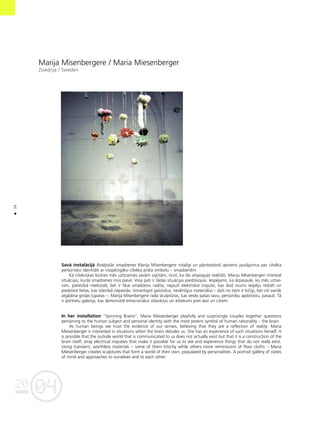
  • 190.
    04 20 04 20 Biographies of artists Måkslinieku biogråfijas 190 • MultipleDifference, Galerie Fons Welters, Amsterdam Tentoonstelling ontwerpen Kleine Gartman Plantsoen Amsterdam en Amerhof Utrecht, Centraal Museum Utrecht, Utrecht Peiling 92, Museum Boymans van Beuningen (katalogus), Rotterdam 1991 Fons voor Binnen, Galerie Fons Welters, Amsterdam Pas de Deux, HCAK (katalogus), Den Haag 1990 Gemeentelijke kunstaankopen 1989, Museum Fodor (katalogus), Amsterdam 1989 Galerie 175, Brussel Galerie Hans Gieles (solo), Amsterdam Tekens van Verzet, Museum Fodor (katalogus), Amsterdam Vision and Revision, Danforth Museum of Art (katalogus), Boston Capital Gains, Museum Fodor, Amsterdam 1988 Crossing Borders, USF Art Museum, Tampa; Glassell Art Gallery, Houston; Visual Art Gallery (katalogus), New York 5 Major Pieces, Galerie Hans Gieles, Amsterdam Beelden voor blinden en zienden (katalogus), Kortenhoef Lineart, Gent Nobody’s Fools, de Appel, Amsterdam Uit de Rijksacademie, Museum Fodor (katalogus), Amsterdam 1987 A priori sculptuur, Makkom (katalogus), Amsterdam Capital Gains, Galerie ’t Venster, Rotterdam Prix de Rome, Stopera (katalogus), Amsterdam 1986 Strik, van Houwelingen, Rijksacademie van Beeldende Kunsten, Amsterdam Capital Gains, De Zaak, Groningen NORV‰ÌIJA / NORWAY Jon Gundersen Dzimis / Born 1942 in Oslo, Norway Izglîtîba / Education 1967 Diploma SHKS Personålizstådes / Solo Exhibitions 2003 Kunstnerforbundet, Oslo 1999 Kunstnerforbundet, Oslo 1991 Kunstnerforbundet, Oslo 1989 Galleri K, Oslo 1985 Galleri K, Oslo 1981 Galleri Tanum, Oslo Nozîmîgåkås grupu izstådes / Selected Group Exhibitions 2001 The Scream`s Echo, Munch Museum, Oslo 1999 The Norwegian Sculpture Biennial 1999, Oslo 1997 Silver HiTech, Kongsberg, Norway 1995 TAPCO, Copenhagen, Denmark 1991 The Worst of 25 Years, F 15, Moss, Norway 1990 Portes Oivertes a la Scandinavie, Paris, France 1989 Look Sound, Hear the Picture, Galleri F 15 1987–1988 SPOR, Sculptor Group, Kristiansand/Trondheim Kunstforening 1987 Norwegian Sculpture, Gothenburg, F 15, Moss 1985 Lindau, Germany 1983 Session, Kunstnernes Hus, Oslo 1982 Junior Exhibition, Kunstnerforbundet, Oslo Tendencies, F 15, Moss 1981 Norwegian Visual Art, Helsingfors 1980 Jubilee Exhibition, Kunstnernes Hus, Oslo Sculpture Under Way, Oslo, Trondheim, Bergen 1979 The Annual Autumn Exhibition (also 81, 83, 85, 86, 89), Oslo Lîgumdarbi / Commissions 2002 Idrettshallen, Stavanger 2001 Radhus, Hamar 2001 Rikshospitalet,Oslo (1999) 1996 Hardanger Vidda Nature Centre 1995 Universitetet, Oslo 1992 Lillehammer OL NRK, Hordaland, Bergen 1988 Kulturhuset, Tromso 1987 M/S Bkack Prince 1984 Central Hospital, Forde 1982 The National Veterinary College, Oslo 1973 Royal Viking Sea 1972 Philips Building, London 1970 Nordenfjeldske National Museum of Decorative Arts Hanne Tyrmi Dzimusi / Born 1954 in Norway Izglîtîba / Education 1981–1985 Statens Handtverks – og Kunstindustriskole, Oslo Personålizstådes / Solo Exhibitions 2001 Henie-Onstad kunstesenter 2000 Speedy Bag. Johannesburg, Sor.Afroka Galleri III, Oslo 1999 Pangea, Sao Paulo Trondelag senter for samtidskunst, Trondheim 1998 Oslo kunstforening 1996 Sandefjord Kunstforening 1995 Bergen Kunstforening Museu de Arte Moderna, Sao Paulo, Brasil Galerie Abef de Oliveira, Parati, Brasil 1991 Gallerie 25, Helsinki Ha gamle prestegard, Ha 1990 Galleri Ismene, Trondheim 1989 Galleri Stampen, Fredrikstad 1988 Gallerie Fayner, Oslo Nozîmîgåkås grupu izstådes / Selected Group Exhibitions 2003 Skulpturbiennale, Vigelandsmuseet, Oslo Gold Hospits, Galleri G.U.N., Oslo Rest-in-Space, Kunstnernes Hus, Oslo 2002 Rest in Space, Kunstnernes Hus, Oslo 2000 Temp, Bergen Skoqbruksmuseet, Elverum 1999 Skulpturbiennalen, Stenersenmuseet, Oslo 1998 Shelter, Nordenfjeldske kunstindustrimuseum, Trh Sandefjorf kunstforening 1996 Seljord Kunstforaning, Seljord Buskerud Kunstnersentr, Drammen 1994 Studio 999, Rio de Janeiro 1993 Nedre Eiker Kunstforening, Hokksund Krustifiks, Fredrikstad Rognan Kunstforening, Roqnan 1991 Reqion Norge, Galleri F15, Jelaya Sommerutstillingen, Seljord Nedre Eiker Kunstforening, Hokksund Stavanger Kunstforening, Stavanger 1989 Galleri Fosskeleiva, Berger 1988 Tjome Kunstforening, Hvasser Kvinneuniversitetet, Loten 1987 Juniutstillingen, Kunstnerforbundet, Oslo Kollektive utstillinger 1986, 87, 88, 90, 92, 97, 99, 02 Hostutstillingen, Oslo 1991, 92 Otlandsutstillingen 1989 Kunstnerforbundet, Oslo Norske Miniatyrer, Tromse 1989 Galeri NoteBene, Oslo POLIJA / POLAND Magdalena Abakanowicz Dzimusi / Born 1930 in Falenty, Poland Izglîtîba / Education 1950–1954 Studies at the Academy of Fine Arts, Warsaw, Poland Darbîbas jomas / Fields of Activity Honoris causa doctorates of: 2002 Academy of Fine Arts in Poznan, Poland
  • 191.
    191 • School of theArt Institute of Chicago, Chicago, USA 2001 Massachusettes College of Art, Boston, USA 2000 Pratt Institute, New York, USA 1998 Academy of Fine Arts in Lodz, Poland 1992 Rhode Island School of Design, USA 1974 Royal College of Art in London, UK Ievéléta par goda locekli / Elected an honorary member 2000 Orden Pour le merite fur Wissenschaften und Kunste, Berlin, Germany 1998 Sachsische Akademie der Kunste in Dresden, Germany 1996 American Academy of Arts and Letters, USA 1994 Akademie der Kunste in Berlin, Germany Izstådes un projekti / Exhibitions and Projects 2003–2004 Coexistence, a cycle of human figures with metaphorical animal faces A group of 20 figures, Princeton University, USA 2003 Space of Stone, 22 granite blocks at “Grounds for Sculpture”, Hamilton, New Jersey, USA Open Air Aquarium, 30 stainless steel welded fish near a river in Philadelphia, USA 2002 Unrecognised, 112 iron cast as a permanent display, Citadel Park, Poznan, Poland 1999 Space to experience, International Park of Sculptures near Vilnius, Lithuania 1995–1997 Animals in burlap, later in bronze and welded stainless steel. Birds out of iron wire, other birds cast in bronze, also in aluminium, finally welded in stainless steel. Designs and choreographs dances performed as a single experience by Japanese and Polish young people in Hiroshima and Warsaw. First groups of walking figures in burlap. Other groups made directly in the foundry were cast in bronze after plaster and styrofoam models. Crowd of 95 figures, walking and standing, adults and children as a statement about human condition, bronze cast. 1991–1994 Retrospective in Japanese museums Becalmed Beings, a commission for the Hiroshima City Museum, Japan Hand-like Trees, a cycle created directly in the foundry Arboreal Architecture, a concept of a modern ecological city in which buildings organic in shape are vertical gardens (upon the invitation of the Paris authorities concerning the enlargement of the Great Axis of Paris) 1988–1989 War Games, a cycle of tree trunks armed with steel, the Mazury forests in Poland A group of 50 standing headless figures in burlap A group of 36 standing figures in bronze Sagacious Heads, several metaphoric huge animal heads A cycle of 150 self portraits deriving from imprints of her own face in lost wax Hoofed Mammals, animal heads 1985 Permanent outdoor installations - spaces to contemplate, spaces to experience, Italy, Israel, Korea 1982–1983 Travels to America to arrange each of her exhibitions as a separate statement The first cast of human figure in aluminium and in bronze with students of American Universities 1981–1982 Solo exhibition, Musee d’Art Moderne de la Ville de Paris, France The tour of retrospective in eight museums of the USA The Abakano - Kai Association, Japan 1980 Alteration, solo exhibition in the Polish Pavilion, Venice Bienniale, Italy 1970 The first human figure in burlap Alterations, huge cycles of figurative and non-figurative sculptures out of burlap and resin 1960 Abakans, monumental three-dimensional forms in author’s technique 1954-1960 A series of large gouache paintings on paper and canvas Nozîmîgåkie apbalvojumi / Selected Awards 2000 Cavaliere nell Ordine Al Merito della Republica Italiana 1999 Officier de L’ Ordre des Arts et des Lettres, Paris 1998 Comandor Cross with Star of the Order of Polonia Restituta 1993 Distinction in Sculpture, granted by the Sculpture Center, New York 1965 Grand Prix of the Sao Paolo Biennale, Brazil PORTUGÅLE / PORTUGAL Leonor Antunes Dzimusi / Born 1972 in Lisbon, Portugal Dzîvo un strådå / Lives and Works Lisbon, Portugal Izglîtîba / Education 1998 Staatliche Akademie der Bildenden Kunste, Karlsruhe, Germany 1993–1998 Diploma in Fine Arts-Sculpture, at the Faculty of Fine Arts of the University of Lisbon 1992–1993 Scenario studies at the Superior School of Cinema and Theatre in Lisbon Nozîmîgåkås personålizstådes / Selected Solo Exhibitions 2003 fichet, Culturgest, Edificio Sede da Caixa Geral de Depositos, Oporto, Portugal objectos assim dispersos, Lisaboa 20 contemporary art, Lisbon, Portugal 2002 0, Calcada da Estrela, front door, Lisboa 20, Lisbon, Portugal ante-sala, Museum of Antique Art, Lisbon, Portugal 2000 Home is where you are, public art insatllation. Norwich, UK the city walker, edition of 350, book conceived and printed in Norwich, UK 1998 circus rope, Staatliche Akademie der Bildenden Kunst, Karlsruhe, Germany step by step, Staatliche Akademie der Bildenden Kunst, Karlsruhe, Germany Nozîmîgåkås grupu izstådes / Selected Group Exhibitions 2002 Tabaqueira Art Prize, Bicos House, Lisbon, Portugal a dois, Francisco Tavares Proenca Junior Museum, Castelo Branco, Portugal continuacao 5, alguns fragmentos do universo, Centro Cultural de Sines, Sines, Portugal Bienal da Maia, Maia, Portugal portuguese presentation, Vigo Museum, Spain 2001 Disseminacoes, Culturgest, Caixa Geral de Depositos, Lisbon, Portugal City Desk Prize, Cascais Cultural Centre, Cascais, Portugal Arte Publico, Publico daily newspaper Uniao Latina Prize, Calouste Gulbenkin Foundation, Lisbon, Portugal Squatters/Ocupacoes, Porto 2001, Serralves House, Oporto, Portugal Introducao, Electricity Museum, EDP, Lisbon, Portugal Situation zero, Yerba Buena Center for the Arts, San Francisco, USA Lisboa Capital do Nada, public art in Marvila, Lisbon, Portugal 2000 Noah is going to London, Norwich Gallery, Norwich, UK Microart, book shops Assirio Liquida, Bulhosa e Livreiros, Barata, Bucholz, Lisbon, Portugal O impulso pedestre, Arte Iberica magazine, Reality Check, Year 4 n 35, May 2000 Microart, Expo 2000, Hannover, Germany Olhar da Contemporaneidade, Lisbon Ceremonies, Art Attack project in Lisbon, Rosa palace, Lisbon, Portugal Alquimias das Artes, S.Francisco Monastery, Coimbra, Portugal
  • 192.
    04 20 04 20 Biographies of artists Måkslinieku biogråfijas 192 • SouthernExposure, ZDB gallery, San Francisco, EUA Plano XXI, Glasgow, United Kingdom Contaminantes Comunicantes, 10 artists + 10 architects, Fine Arts National Society, Lisbon, Portugal Deposito, Fernando Pessoa House, Lisbon, Portugal 1998 FootNotes, Caldas da Rainha Ceramic Museum, Art Attack, Caldas da Rainha, Portugal Wc Container, Oporto, Portugal Bienal da Maia, Maia, Portugal 7 artistas ao 10e mes, Calouste Gulbenkian Foundation, Lisbon, Portugal Os electricos que vao para Antuerpia (the tram that goues to Antuerp) Public art installation, conceived for a tram stop in Rua da Conceicao, tram line No 28, Lisbon, Portugal Outro Manual de Uso, Numero magazine, No 4 Apbalvojumi / Awards 2000 Sculpture in public space, Afonso Henriques`s Foundation, Oporto Artist award / Young Artist.EDP Company, Portugal 1998 2nd prize, Pharmacy National Association, for the arwork Soap banister 1999 Pepinieres europeenes pour jeunes artistes en Europe. Artist resident in the city of Norwich, October 1999 – February 2000 1998 Erasmus program, Staatliche Akademie der Bildenden Kunste, Karlsruhe, Germany Carlos Nogueira Dzimis / Born 1947 in Moçambique Nozîmîgåkås personålizstådes un projekti / Selected Solo Exhibitions and Interventions 2003 desenhos.de casas, Galeria Premontório, Lisboa construção para lugar nenhum, Galeria Luis Serpa/Projectos, Lisboa 2002 paisagem(s) de (man)dar / fragmento, Pahldata, Lisboa nem sombra nem vento, Sintra Museu de Arte Moderna/Colecção Berardo, Sintra a parar a luz, Centro Cultural de Belém, Lisboa longe e brilha, Centro Cultural Emérico Nunes, Capela de Sines, Sines a ver, Centro de Arte Moderna, José de Azeredo Perdigão/Fundação Calouste Gulbenkian, Lisboa 2000 objectos com luz própria, Galeria 30 dias, Caldas da Rainha. a noite e branco, Museu da Cidade, Lisboa 1999 beyond the very edge of the earth, Universidade de Brighton, Bighton 1998 beyond the very edge of the earth, The Economist Plaza, Londres construção com chão branco a partir de dentro, escultura realizada a convite, no âmbito da exposição Cristino da Silva, Fundação Calouste Gulbenkian, Lisboa 1997 olhou para ele durante muito tempo; continuou então a desenhar, Galeria Canvas & Companhia, Porto o mar, o céu e outros labirintos, Centro Cultural Camões, Brasûlia o mar, a mar e outros labirintos, Museu de Belas Artes do Rio de Janeiro, Rio de Janeiro 1996 o mar, a pedra e outros labirintos, Centro Cultural de Belém, Lisboa as portas do rio te estão abertas, Livraria Assûrio & Alvim, Lisboa 1994 chão de cal, Museu Nacional de História Natural, Lisboa até ao fim das terras todas, Teatro Nacional São João, Porto 1993 uma floresta como um rio, Avenida Gulbenkian, Lisboa permanência da êgua, Galeria Évora-Arte, Évora 1992 entre duas êguas, Museu Nacional de Évora, Évora 1989 desenhos, Galeria Diferença, Lisboa 1986 das nascentes, Cooperativa Árvore, Porto 1985 paisagens das terras do monte e da pele, Galeria Diferença, Lisboa 1983 6 ensaios sobre um céu de pintar e outro de brincar, Cûrculo de Artes Plêsticas de Coimbra, Coimbra do céu / o sal, instala_ão e ac_ão, Sociedade Nacional de Belas-Artes, Lisboa paisagem(s) de (man)dar, Sociedade Nacional de Belas-Artes, Lisboa boa viagem / e escreve, acção por correio, Portugal 1981 conjunto de mesa e pintura a condizer e outros fragmentos de um discurso sobre o comum e o quotidiano (ou a primeira fruta com as primeiras chuvas), Centro Nacional de Cultura, Lisboa 1980 gosto muito de ti, acção de rua Oeiras e Lisboa a Camões e a ti II Bienal de Cerveira, Vila Nova de Cerveira se eu pudesse dava-te um piano, acção por correio, Portugal 1979 os dias cinzentos / lêpis de pintar dias cinzentos, Galeria Diferença, Lisboa 1978 do branco branco ao espa_o (homenagem azul a Malevitch) ciclo de encontros sobre Malevitch, Museu Nacional de Arte Antiga, Lisboa homenagem a Bosch, Dia Internacional dos Museus, Museu Nacional de Arte Antiga, Lisboa Nozîmîgåkås grupu izstådes / Selected Group Exhibitions 2002 100 Anos – 100 Artistas, Sociedade Nacional de Belas-Artes, Lisboa Territórios Singulares, Sintra Museu de Arte Moderna/Colecção Berardo, Sintra 2001 Alquimias – Al berto, as Imagens como Desejo de Poesia, Centro Cultural Emérico Nunes, Sines 1999 Fórum de Macau, Macau 1998 Hong Kong Museum of Art, Hong Kong 1997 Slusser Gallery, University of Michigan, Ann Arbor 1996 19å Trienal de Arquitectura de Milão (representação oficial portuguesa), Milão The Urban Center, The Architectural League, Nova Iorque 1995 Bienal Internacional de Escultura e Desenho, Caldas da Rainha 1992 A secreta vida das imagens, Galeria Atlântica, Lisboa A secreta vida das imagens, Galeria Atlântica, Porto 1990 Os bêrbaros, Galeria Pedro e o Lobo, Lisboa 1988 Lisbonne Aujourd’hui, Museu de Arte Contemporânea de Toulon, Toulon Fotoporto, Casa de Serralves, Porto 1987 Exposição Nacional de Arte Moderna, Casa de Serralves, Porto MARCA, Feira de Arte da Madeira, Funchal 1986 III Exposi_ão de Artes Plêsticas, Fundação Calouste Gulbenkian, Lisboa Sinfonia em Branco, Festival de Mûsica dos Capuchos, Caparica XLII Bienal de Veneza (representação oficial portuguesa), Veneza Exposição AICA”, Sociedade Nacional de Belas-Artes, Lisboa 1985 Exposição AICA, Sociedade Nacional de Belas-Artes, Lisboa Diferença / Diêlogo, Galeria Diferença, Lisboa 1984 Heróis, Galeria Quadrum, Lisboa 1983 A História Trêgico-Marûtima, Sociedade Nacional de Belas-Artes, Lisboa Livros de Artista, Galeria Diferença, Lisboa 1982 II Trienal Internacional de Desenho, Nuremberga e Lausanne O papel como suporte, Sociedade Nacional de Belas-Artes, Lisboa Exposi_ão de Arte Moderna, Sociedade Nacional de Belas-Artes, Lisboa Desenhos/ Projecto SEMA, Edifûcio Mobil, Lisboa 1981 Lis’81 (artista seleccionado), Lisboa 25 artistas portugueses hoje, Museu de Arte ContemporŒnea de São Paulo, São Paulo 1980 II Bienal de Cerveira, Vila Nova de Cerveira A caixa, Galeria Diferença, Lisboa Arte Portuguesa Hoje, Sociedade Nacional de Belas-Artes, Lisboa Panorama das Galerias, Galeria Nacional de Arte Moderna, Lisboa
  • 193.
    193 • 1979 Lis’79, GaleriaNacional de Arte Moderna, Lisboa 1978 Outras formas, outra comunica_ão, Sociedade Nacional de Belas-Artes, Lisboa 1977 O papel como suporte, Sociedade Nacional de Belas-Artes, Lisboa 1976 Exposi_ão de Arte Moderna Portuguesa, Museu de Arte Moderna de Lunds, Lunds 1975 Colagem-Montagem, Sociedade Nacional de Belas-Artes, Lisboa Darbi kolekcijås / Works in Collections Ministério da Cultura, Lisboa Fundação Mêrio Soares, Lisboa Fundação Calouste Gulbenkian (CAM JAP), Lisboa Universidade de Brighton, Brighton CŒmara Municipal de Lisboa, Lisboa Depósito Museu de Serralves, Porto Colecção Berardo Centro Cultural de Belém, Lisboa Centro Cultural Emérico Nunes, Sines RUMÅNIJA / ROMANIA Peter Jecza Dzimis / Born October 16, 1939, Sf. Gheorghe, Romania Izglîtîba / Education 1963 “Ion Andreescu” Institute of Fine Arts, Cluj (Professors: Kos Andras, Virgil Fulicea, Romul Ladea) Pedago©iskå pieredze / Teaching Experience Professor at the Department of Plastic Arts, Faculty of Fine Arts, University of Timişoara Personålizstådes / Solo Exhibitions Wuppertal/Germany, Bucharest/Romania, Hofgeismar/Germany, Aeugsterthal-Zürich/Switzerland, Olten/Switzerland, Berlin/Germany, Warburg/Germany, Cluj/Romania, Herne/Germany, Brockdorff/Germany, Düsseldorf/Germany, Köln/Germany, Bad Salzuflen/Germany, Fraubrunnen/Switzerland, Arosa/Switzerland, Basel/Switzerland, Lugoj/Romania, Essen/Germany, Lübbecke/Germany, Mannheim/Germany, Timişoara/Romania, Bamberg/Germany, Aachen/Germany, Ettlingen-Spessart/Germany, Münich/Germany, Heidelberg/Germany, Hamburg/Germany, Budapest/Hungary Starptautiskas izstådes / International Exhibitions Wuppertal/Germany, Barcelona Biennial/Spain, “Dante” Biennial, Ravenna/Italy, Anvers-Middelheim Art Biennial/Belgium, Venice Art Biennial/Italy, Exhibition of small sculpture Milano/Italy, International Exhibition Düsseldorf/Germany, International Art Exhibition Essen/Germany, International Exhibition Cologne/Germany, Ente Fiera di Vicenza/Italy, Eurosculpture Festival Carhaix/France, International Exhibition Budapest/Hungary, Small Sculpture Biennial Ljubljana/Slovenia, International Exhibition Ingolstadt/Germany Rumåñu måkslas izstådes årvalstîs / Romanian Art Exhibitions Abroad Yugoslavia, Germany, Italy, USSR, Austria, Switzerland, Bulgaria, Finland, Egypt, Czechoslovakia, Jordan, Iraq, Brazil, Sweden, Greece, Spain, Hungary, Denmark, Norway, USA Monumentålå måksla / Monumental Art Busts, bas-relief, ambient art, memorials in Timişoara, Arad, Dalnoc, Covasna, Orşova, Caransebeş, Sf.Gheorghe, Dumbrãviţa, Buziaş, Pecica, Belini/Romania, Bad Salzuflen/Germany, Stuttgart/Germany Apbalvojumi / Awards “Dr.Ludwig Lindner” International Prize (Wuppertal/Germany), Golden Medal of the President of Italy (“Dante” Biennial, Ravenna/Italy), Golden Medal of the President of the Council of Ministers (“Dante” Biennial, Ravenna/Italy), First Prize (International Art Exhibition, Reşita), Second Prize (Small Sculpture National Exhibition, Arad), Order of Merit, Officer Rank, of the President of the Republic (Bucharest) Darbi publiskås kolekcijås / Works in Public Collections National Art Museum Bucharest, Banat Museum Timişoara, Modern Art Museum Galaţi, Art Museum Drobeta Turnu-Severin, Seckler Museum Sf.Gheorghe, Petculescu Art Museum Tg.Jiu, Röderhaus Museum Wuppertal/Germany, Concrete Art Museum Ingolstadt/Germany, Contemporary Art Museum Rio de Janeiro/Brazil Rudolf Kocsis Dzimis / Born 1963 in Chişineu-Criş, Romania Izglîtîba / Education 1988 George Enescu Fine Arts Academy, sculpture Darbîbas jomas / Fields of activity Member of Fine Artists’ Union, Romania, and International Association of Art (aiap), France; 2002 Doctor of Liberal Arts-University of Pecs (H), Visual Arts Faculty 1996 Universitary lecturer at University of Timisoara, Romania, Fine Arts Faculty, sculpture 1990 Working as a teacher at The College of Arts in Arad Personålizstådes / Solo Exhibitions 2004 Triade Foundation, Gallery, Timisoara, Romania 2002 Melnikow Gallery, Heidelberg, Germany 2001 Galleria 28, Timisoara, Romania 1999 Erkel Ferenc Museum, Gyula, Hungary 1997 First Gallery, Timisoara, Romania 1996 Delta Gallery, Arad, Romania Slovac Institute, Bucharest, Romania 1995 Cultural Center of Hungary, Bucharest, Romania 1994 Art Gallery, Sfantu-Gheorghe, Romania 1993 Helios Gallery, Timisoara, Romania 1991 Ildiko Risse Gallery, Wessling, Germany 1990 Arta Gallery, Arad, Romania 1988 Trianon Gallery – Iasi, Romania Nozîmîgåkås grupu izstådes / Selected Group Exhibitions 2003 Madonna, Melnikow Gallery-Heidelberg, Germany 2002 Homunculus, Melnikow Gallery-Heidelberg, Germany 2001 Itinerance, Espace Belleville, Paris, France 2000 Fine art union (Arad branch) expozition, Kunstler Gallery-Heidelberg, Germany 1999 The Ten Group show, Cultural Center of Romania, Budapest, Hungary 1998 Fine art union (Arad branch) expozition, Chiara Maria, Rimini, Italy Om – Man – Ember, County Art Museum, Bistrita-Násáud, Romania 1997 Freedom of Movement, County Art Museum – Bistrita-Násáud, Romania 1996, 98, 00, 02 Small Sculpture Biennial, Delta Gallery, Arad, Romania 1995 Oriens ‘95, Békéscsaba, Hungary 1995, 97, 99, 01, 03 Drawing Biennial, Delta Gallery, Arad, Romania 1994 Group’81, Cultural Center of Romania, Vienna, Austria The Rabbit, Cultural Center of Hungary, Bucharest, Romania 01010101...exhibition, The Romanian Peasant’s Museum, Bucharest, Romania Medium 3, Sfântu-Gheorghe, Romania Art Unlimited ltd., Art Museum, Arad, Romania 1992 The Earth, Art Museum, Timişoara, Romania 1991 Medium 2, Sfântu-Gheorghe, Romania 1988 Picture and Sculpture Biennale, Bucharest, Romania Starptautiskas izstådes / International Exhibitions 2002 International Mini-Print Triennial-Tama Art University Museum- Tokyo, Japan 2001 The International Festival of Graphic Arts, Cluj-Napoca, Romania International Art Biennial, Sharjah, (U.A.E.) International Triennial of Small-Size Sculpture, Murska-Sobota (SL)
  • 194.
    04 20 04 20 Biographies of artists Måkslinieku biogråfijas 194 • 1998Sall Graphic Forms – Újpest Gallery – Budapest, Hungary International Exhibition Telefax – Kaposvár, Hungary 1998 - International Triennial Exhibition Mini - Print, Tokio, Japan 1997 5th International Triennial of Youngs Talents, Charleroi (B) 1996 12th Cleveland International Drawing Biennale, Great Britain 1995 12th International Biennial of small Sculpture, Murska-Sobota (SL) 1993-94 1st and 2nd Annual International exhibition of Miniature Art, Stockholm, Sweden 1994 3rd International Sculptural Drawings Biennial, Budapest, Hungary 1993 International Sculpture Biennale, Toyamura, Japan 1991-93 1st and 2nd International Biennial of Graphic, Györ, Hungary Apbalvojumi / Awards 2000 Arad Fine Arts Association’s – award for sculpture 1999 Romanian Fine Arts Association’s – award for sculpture Art Foundation (ConstanΩa) – award for sculpture Simpoziji / Simposia 1996 Cluj-Napoca – stone, Romania; Zalkód – stone, Hungary; Lenti – wood, Hungary; 2000 International Sculpture Symposium – L’art pour la sante – Dudince – marble (SK); 2002 Selye – wood, Hungary Publikåcijas / Publications 2003 Rudolf Kocsis Obiectul si Sculptura, book, Triade Foundation, Timisoara, Romania 2002 Kocsis Rodolf Tárgy és Szobrászat, book, Idea Publishing House, Cluj-Napoca, Romania 1999 Fragments, catalogue – sculpture 1997 Traces, catalogue – objects sculpture SLOVÅKIJA / SLOVAKIA Matej Gavula Dzimis / Born 1972 in Bratislava, Slovakia Izglîtîba / Education 1990–1996 Academy of Fine Arts and Design, Bratislava, Dept. of Glass in architecture 1986–1990 Secondary School of Applied Arts, Dept. of Stone Carving Darbîbas jomas / Fields of activity objects, installations, video, action, theater settings, glass design Member of the artistic group XYZ, since 1998 Grupas XYZ izstådes un akcijas / Exhibitions and Actions of the XYZ Group It could be Gallery called Panoráma, súkromnýdom, Bratislava 2003 SEXYZ II, action, Buryzone club, Bratislava 2002 SEXYZ, action, Buryzone club, Bratislava Praha-XYZ, Galéria Display, Praha 2001 XYZWAR, Galéria Priestor, Bratislava 2000 Opening, Galéria C. Majerníka, Bratislava Gavula, Ondrußek, Tittel, Galéria Marat Art, Bratislava 1998 Yule, CC centrum, Bratislava Exhibition XYZ, UBS, Bratislava Personålizståde / Solo Exhibition 1999 “VKV“, galéria Akcent, Bratislava Nozîmîgåkås grupu izstådes / Selected Group Exhibitions 2003 Çeskoslovensko, Slovak National Museum, Bratislava 2002 Neokonstructivism in Slovak visual arts, Umělecko – pru ° myslové muzeum Praha “New“ Slovak Art 1936–2001, Kunsthalle Exnergasse, Wien 2001 (nové) umenie 1936–2001, ÍG, Banská Bystrica Lighthouse, PGU, Ûilina Moja srdcová záleΩitost’, Buryzone club, Bratislava 2000 Manipulating art II, ÍG Nitra Opening, Galéria C. Majerníka, Bratislava 20. Century, Slovak National Gallery (SNG), Bratislava Manipulating art, PGU, Ûilina Neokonstructivism in Slovak visual arts, Galéria Jána Koniarka, Trnava 1999 P.F. 2000, SNG, Bratislava Ad Laudem Artificis, SNG, Bratislava Slovak Art for Free, Slovak Pavillion, Biennale di Venezia 1998 World between, SNG, Bratislava 1997 Jas Lesk Odraz, ÍG Banská Bystrica Kamarádßoft ist gút, NOC Bratislava, OG Dolný Kubín, Elektráreň Poprad 1994 Disperzia, Du ° m Umění Ostrava, SNG Bratislava Glass sculpture 93, Galéria Jána Koniarka, Trnava Prototyp, SNM Bratislava 1993 Young Slovak Culture, Arnhem, Netherlands Students show, Galéria Médium, Bratislav Radoßås darbnîcas un simpoziji / Workshops and Symposia 2002 Strih na krajinu, OG Dolný Kubín 1996 Contemporary crystal and glass, Colle Val d’Elsa, Italy Dypol, sculptural workshop, Berlin, Germany Scenogråfija / Theater settings 2003 Samuel Beckett “Three one-act plays“, Studio 12, Bratislava; Peter Handke “Kaspar“, Studio 12, Bratislava, both pieces directed by Martin Hvißç Milan Tittel Dzimis / Born 1966 in Litomyßl Izglîtîba / Education 1987–1993 VÍVU, Bratislava, Kateder Skulpturei 1980–1984 SUPÍ, Bratislava, Skulptur Grupas XYZ izstådes un akcijas / Exhibitions and Actions of the XYZ Group 2003 Mohla by to byù galéria Panoráma, súkromný dom, Bratislava SEXYZ II, akcia v klube Buryzone, Bratislava 2002 SEXYZ, akcia v klube Buryzone, Bratislava Praha-XYZ, Galéria Display, Praha 2001 XYZWAR, Galéria Priestor, Bratislava 2000 Opening, Galéria C. Majerníka, Bratislava Gavula, Ondrußek, Tittel, Galéria Marat Art, Bratislava 1998 Yule, CC centrum, Bratislava Výstava XYZ, UBS, Bratislava Personålizståde / Solo Exhibition 1996 Tittel, Tittlová, Galéria Tatrasoft, Bratislava Nozîmîgåkås grupu izstådes / Selected Group Exhibitions 2003 Çeskoslovensko, SNM, Bratislava Nevesta, synagóga Trnava 2002 Artforum Berlín, prezentácia galérie Priestor, Berlín Strih na krajinu, OG Dolný Kubín Lighthouse, Galéria J. Koniarka Trnava “New“ Slovak Art 1936–2001, Kunsthalle Exnergasse, Wien 2001 Súçasné slovenské výtvarné umenie, velvyslanectvo SR, Washington DC Csölle, Sobiecka, Tittel, Galéria Rzasa, Zakopane, Polsko (nové) umenie 1936–2001, ÍG Banská Bystrica Lighthouse, PGU, Ûilina 2000 Manipulujûce umenie II, ÍG Nitra Manipulujúce umenie, PGU, Ûilina 1999 PF 2000, SNG, Bratislava Ad Laudem Artificis, SNG, Bratislava Socha a objekt, Pálfyho palác, Bratislava 1998 Medzisvet, SNG, Bratislava 1997 Premostenie, Ostrihom Bienále drobnej plastiky, Murská Sobota, Ingoldstadt Jas-Lesk-Odraz, ÍG, Banská Bystrica 1996 Homage á Havel, Divadlo Archa 1995 Výber zo súçasneho slovenského sochárstva, Galéria M.A.Bazovského, Trençín Priestory duße, UBS, Bratislava 1994 Disperzia, Du °m Umění, Ostrava, SNG, Bratislava Prototyp, SNM, Bratislava 1993 Csölle, Tittel, Venerçanová, Íarißská Galéria, Preßov
  • 195.
    195 • SOMIJA / FINLAND OLO PasiKarjula and Marko Vuokola 2004 No: 41 European Space Sculpture Quadrennial, Riga, Latvia No: 40 Book of OLO projects 2002 No: 39 Karonen elementary school, public work, Tampere, Finland No: 38 Arabianranta, public work, Helsinki, Finland No: 37 Rohto Art for Young Men, Helsinki City Art Museum, Finland 2001 No: 36Mänttä Art Festival Mänttä, Finland No: 35 Ikuinen paluu Helsinki Zoo, Finland 2000 No: 34 100 VR Magazines, Helsinki, Finland No: 33 Töölönlahti Art Gardens 2000 Helsinki, Finland No: 32 Norden Kunsthalle Wien, Vienna, Austria No: 31 MOMENTUM Nordic Festival of Contemporary Art Moss, Norway No: 30 Arts Space 1%, Copenhagen, Denmark 1999 No: 29 Finnish Line: Starting Point Musées de Strasbourg, France No: 28 Art in the City of Tampere Tampere, Finland No: 27 Melbourne International Biennial 1999 Melbourne, Australia No: 26 4th Mänttä Art Festival Mänttä, Finland 1998 No: 25 Cool Places The 7th Triennal of Young Baltic Art, Contemporary Art Centre, Vilnius No: 24 Cool Places The 7 th Triennal of Young Baltic Art, Contemporary Art Centre, Vilnius No: 23 This side of the ocean Kiasma, Helsinki, Finland 1997 No: 22 Hietalahti / Helsinki, public work, Finland (model) - 2000 No: 21 Catch’n release Galleria Kari Kenetti, Finland No: 20 Catch’n release Teerijärvi, Orivesi, Finland 1996 No: 19 Hviträsk 96 Kirkkonummi, Finland No: 18 Bothnia Ice Scape Oulu, Finland 1995 No: 17 Myötätuuleen II Hanko, Finland No: 16 Galleria Artina, Helsinki, Finland No: 15 Institute of Orivesi, Finland No: 14 Smart Show Stockholm, Sweden 1994 No: 13 Myötätuuleen I Hanko, Finland No: 12 Big Oslo, Norway 1993 No: 11 Stichting de Bank, Enschede, Holland No: 10 Gallery of Academy of Fine Arts, Helsinki, Finland 1992 No: 9 TimeSpace Nordic Arts Centre, Suomenlinna, Finland No: 8 Young Artists Exhibition Kunsthalle, Helsinki, Finland 1991 No: 7 Notoro Multimedia Symposium, Oronsko, Poland No: 6 Notoro Multimedia Symposium, Oronsko, Poland No: 5 Otso Gallery, Espoo, Finland No: 4 Academy of Fine Arts, Helsinki, Finland No: 3 Sveagalleriet, Stockholm, Sweden 1990 No: 2 Art Centre Mältinranta, Tampere, Finland No: 1 The Museum Contemporary Art, Tampere, Finland TŸlay Schakir Dzimusi / Born 1968 in Helsinki Izglîtîba / Education 1999 Spring term, Kunsthochschule für Medien, Köln; Academy of Media Arts, Cologne, studies in holography and laser 1992–1999 Theatre Academy, Department of Sound and Lighting Design. MA of Theatre Arts 1991–1995 Tampere School of Art and Media, Diploma in Visual Arts 1989–1991 Art School MAA Darbîbas jomas / Fields of activity Association of Finnish Sculptors (aspirant member) Finnish Artist Association MUU Finnish Lighting Technical Association Association of Finnish Sound and Lighting Designers Board member of Foundation for Environmental Art Nozîmîgåkås izstådes / Selected Exhibitions 2002 OFF, solo exhibition, Helsinki Festival, Profounders Gallery 2001 Young Artist of the Year 2001, solo exhibition, Tampere Art Museum Kylmä, kuuma, hyvä, huono (Cold, Hot, Good, Bad), solo exhibition in Kluuvi Gallery, Helsinki 1999 Kohtaamisia (Encounters) group exhibition, Pornainen 105th annual exhibition of the Artists´ Assosiation of Finland, Kunsthalle Helsinki Kunsthochschule für Medien, spring exhibition, work group, Cologne, Germany Pala sateenkaarta ja muita jäljitelmiä (Fragment of Rainbow and other Copies) solo exhibition, Jangva-Gallery, Helsinki Se jokin (That Special Something), group exhibition, Into Gallery, Helsinki 1997 Hetken jäljennös (Reproduction of a Moment), solo exhibition, MUU Gallery, Helsinki 1996 101st annual exhibition of the Artists´Association of Finland, Hyvinkää 1995 Tilan muisti (Spaces Memory) diploma work, Tampere School of Art and Media, Finlayson Gallery, Tampere Naisen Nauru (Woman´s Laughter), group exhibition, Turku Prague Quadrennial, work group White Lies, Czech Republic 1994 Shop window images, work group, Tampere Museum of Contemporary Art Nozîmîgåkie gaismas dizaina projekti / Selected Lighting Designs 2004 Lighting, set design and videos in Arja Raatikainen´s dance work Musta, Helsniki 2003 Lighting design in Jorma Uotinens dance work La chut du cheval for Introdans, Arnhem, The Netherlands 2002 Lighting, projections and set design in Arja Raatikainen´s dance work Tunneli (The Tunnel), Helsinki City Theatre 2000 Set design (together with Kimmo Koskela) and lighting design in dance work Opal-D, choreography by Arja Raatikainen Stoa, Helsinki 1999 Lighting and set design in dance work Kuolema Venetsiassa (Death in Venice), choreography by Sanna Kekäläinen, Finnish National Opera, Almi Hall, Helsinki Lighting design to a designed electric high voltage pole (design by Antti Nurmesniemi), comissioners Fingrid Oyj and Hämeenlinna Energy co. Lighting design in dance work Enne (Omen), choreography and dance: Arja Raatikainen, Stoa Helsinki Lighting design in installation Ice Station Fingrid in a high-voltage line portal tower in Hyvinkää, ice design by Reio Perko, comissioner Fingrid Oyj 1998 Lighting design and projections in dance work Kommentteja (Comments), choreography by Arja Raatikainen, Stoa, Helsinki Lighting design plan for Häme Polytechnic entrance lobby and courtyard (Perko Oy Architects) Lighting design in Mikko Kallinen´s dance work copycopycopy, Stoa, Helsinki 1997 Lighting and set design in dancework Walkman, choreography and dance by Jyrki Karttunen, Stoa, Helsinki Lighting design and visualisation in dance work Unettomat (Sleepless), choreography by Katri Soini, Theatre Academy Lighting and set design in a poetry reading, Kyljet jäätä raapien, poems by Aila Meriluoto, Sotku, Kuopio, Kuopio City Theatre 1996 Lighting design in dance work Missä Jallu luuraa?, choreography by Harri Kuorelahti, The Full Moon Festival, Pyhäjärvi Lighting design in dance work Valoa-valoa (Light-light), choreography by Soile Lahdenperä, Zodiak – centre for new dance, The Cable Factory, Helsinki 1995 Lighting, projections and set design in dance work Näkymätön mies (Invisible Man), choreography and dance by Jyrki Karttunen, Stoa, Helsinki Jaunåkie projekti / Current Projects 2004 Group exhibition, Mänttä Finland Lighting and light art to a school, Kalvola 2003 Commissioned work for the Technical Bureau in Marianhamina, Åland Lighting and environmental art for Oulu´s Madetojanraitti-area Lighting design in Petri Kokoni´s dance work Darbi publiskå telpå / Public Works of Art Tampere Polytechnic, implementation phase 2002–2003 Aurinkolahti School, Helsinki Apbalvojumi un stipendijas / Awards and grants 2003 1st prize in invitation competition for architectural design and environmental art for Oulu´s Madetojanraitti-area (work group)
  • 196.
    04 20 04 20 Biographies of artists Måkslinieku biogråfijas 196 • 2000Palokärki prize of the Artists´ Association of Finland (AAF) States Art Award / Art Council of Finland 2001 1st prize in competition for an artwork to be situated in the Tampere Polytechnic The Young artist of the Year 2001 Finnish Cultural Foundation /one year working grant SPÅNIJA / SPAIN J.Alvaro Perdices Dzimis / Born 1971 in Madrid Lives and works in Los Angeles and Madrid Izglîtîba / Education 1995-1997 MFA University of California, Los Angeles (visiting scholar) 1994 MA, California State University, Los Angeles 1993 BFA, Complutense, University, Madrid Nozîmîgåkås personålizstådes / Selected Solo Exhibitions 2004 La Casa Encendida, Madrid, Spain 2003 Galeria Espacio Minimo, Madrid, Spain 2001 IMAGO, Palacio de Abrantes, Salamanca, Spain 1999 Galeria Marta Cervera, Madrid, Spain Egia/Casa de Kultura.DAE, Donostia-San-Sebastian, Spain 1998 Sin Duda Exhibitions, Los Angeles, CA, USA 1997 Galeria Marta Cervera, Madrid, Spain Special K Exhibitions, Los Angeles, CA, USA Nozîmîgåkås grupu izstådes / Selected Group Exhibitions 2004 Museo de Nuoro, Sardinia, Italy European Space - Sculpture Quadrennial Riga, Latvia 2003 KIDS, Centro de Arte de Salamanca 2000 Insumisiones, Fundacion Marcelino Botin, Santander Fissure, STAFF USA/AC project room, New York, USA Muestra de Arte Joven, Circulo de bellas Artes, Madrid, Spain 1999 FUTUROPRESENTE, Comunidad de Madrid-Plza de Espana, Madrid, Spain 1998 Grammercy Park, New York 98, Galeria Marta Cervera, New York, USA Frankfurt Art Fair`98, Galerie Susanne Vielmeter, Frankfurt, Germany ARCO`98, Galerie Marta Cervera, Madrid, Spain L.A.Cultural Net, Neighborhood Views, http://www.lanc.org//, Getty Sites Projects Different Looks, Sweeney Art Gallery, University of California Riverside, CA, USA La Voladura del Maine, Sala PEMASA, Madrid, Spain (catalog) The Comestible Compost, Gallery 207, Los Angeles, CA, USA Beyond the Matter of Space, Beyond Baroque, Venice, Italy 1997 Malibu Sex party, Purple Fine Art, Venice, CA Los Angeles Juried Exhibition, Municipal Art Gallery, Los Angeles, CA, USA UCLA MFA Thesis Exhibition Wight Gallery, UCLA, Los Angeles, CA, USA 1996 Moviment Intercie Reales Atarazanas, Valencia/Brentangerie, Brussels, Belgium 1994 Tom Tiddler Show, Pasadena Plaza, Pasadena, CA Projekti / Projects 1996 Curator: Cruising LA. Galeria Soledad Lorenzo, Madrid, Spain 1994 Curator: Walking Behind the Glass Los Angeles Center for Photographic Studies, Resolution Gallery El Perro Måkslinieku grupa / Group of artists Ramón Mateos (1968), Iván López (1970) and Pablo Espan ~a (1970) Dzîvo un strådå / Live and work Madrid, Spain Personålizstådes / Solo Exhibitions 2004 Díaz. Madrid, Spain Exposición documental El Perro Centro Párraga. La Fragua, Murcia, Spain 2003 EX Teresa Arte Actual. México DF, Mexico Lo importante es participar, Galeria Salvador 2001 Wayaway. Sala Amadûs, Injuve, Madrid, Spain Nozîmîgåkås grupu izstådes / Selected Group Exhibitions 2004 AIRE INCONDICIONAL. Schedhalle. Zurich, Switzerland The Real Royal Trip by the arts. El Retorno Museo Patio Herreriano. Valladolid, Spain MADRID ABIERTO. Proyecto de arte pûblico. Madrid, Spain ARCO ‘04. Galerûa Salvador Dûaz. Madrid. Spain GENERACIÓN 2004. La Casa Encendida. Madrid, Spain 2003 The Real Royal Trip by the arts. PS1-MOMA. New York, USA Indisciplinados. Marco, Vigo, Spain Printemps de Septembre. Ecole de Baux Arts. Toulouse. France Cruzados. CCCB. Barcelona, Spain Nuevas Cartografias de Madrid. Casa de America. Madrid, Spain Blanc.Instituto de Mexico. Washington DC. USA, Design District. Miami, USA Antirrealismos: Spanish Photomedia Now. Australian Center of Photography, Sidney, Australia Doble Seducción. Sala Amadís, Injuve. Madrid, Spain La Muestra del Déficit. Metronom. Barcelona, Spain Al Limit. 22a. Barcelona, Spain Co+lec+ti+vos. ADN GALERIA. Barcelona, Spain Deluxe. Monasterio de Prado Valladolid, Spain Monocanal. Museo Nacional Centro de Arte Reina Sofía, Madrid, Spain Sala Díaz Cassou de Murcia, Spain Centro Galego de Arte Contemporànea de Santiago de Compostela, Spain Museo Patio Herreriano de Valladolid, Spain Art in General, New York, USA Proyecto Boda. MEIAC, Badajoz 2002 Deluxe Miami. Casas Reigner Gallery, Miami, USA Art Basel Miami Beach 2002 Galería Salvador Díaz, Miami, USA Madrid al descubierto. Sala de exposiciones de Alcala 31, Madrid, Spain BIG TORINO 2002. Bienal de arte joven, Torino, Italy Ninguna persona es ilegal. INÉDITOS. La casa encendida, Madrid, Spain Deluxe. Sala de exposiciones de Plaza de España, Madrid, Spain Advertising. Proyecto de arte público, Mataró, Spain XXVII Bienal de Pontevedra. Pazo de la Cultura. Pontevedra, Spain 2001 Periferias 2001. Sala de exposiciones de la Diputación de Huesca. Huesca, Spain Media Ambientes. Mad 2001, Madrid, Spain Puntos de encuentro. Cruce, Madrid, Spain Arte joven. Programa Nexo. Sala de exposiciones del convenio Andrés Bello, Bogotá, Colombia Beca para proyectos, nuevas tendencias. Generación 2001. Premios de Caja de Madrid, Spain Open Spaces. Arco 2001. Galería Salvador Díaz, Madrid, Spain Programa Nexo. Museo Sofûa Imber, Caracas, Venezuela El Perro kürétås izstådes / Exhibitions curated by El Perro 2003 MAD’03. Segundo Encuentro Internacional de Arte Experimental de Madrid, Spain Public Spaces. Deluxe (in collaboration with con Paco Barragán). Monasterio de Prado, Valladolid, Spain
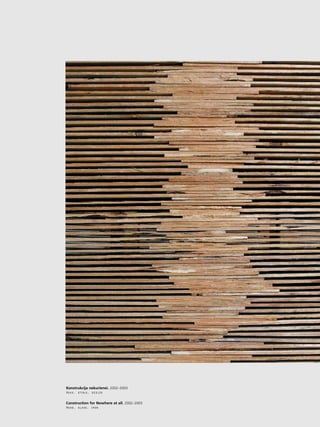
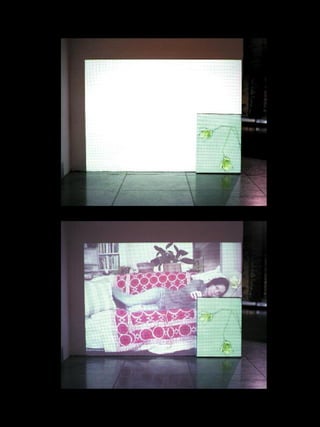
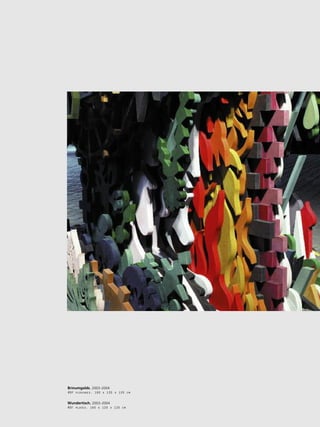
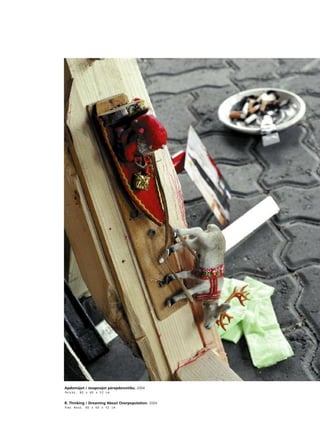
  • 197.
    197 • 2002 Deluxe Miami(in collaboration with con Paco Barragán). Casas Reigner Gallery, Miami, USA Quién es el arte. La Fabrica de Pan, Madrid, Spain Deluxe (in collaboration with con Paco Barragán). Sala de exposiciones de Plaza de España, Madrid, Spain Capital confort. Public spaces. Alcorcón, Madrid, Spain 2001 Capital confort. Public spaces. Alcorcón, Madrid, Spain 2000 Capital confort. Public spaces. Alcorcón, Madrid, Spain ÍVEICE / SWITZERLAND Jean-Damien Fleury Dzimis / Born 1960 in Berne Izglîtîba / Education Etudes en philosophie et en histoire de l’art à l’Université de Fribourg (1982–1984) puis en philosophie esthétique à Paris I (1984–1986) Nozîmîgåkås izstådes / Expositions rÈcentes, sélection, (c) collectives / grupu FICEP: Je t’aime... de loin, CCS Paris (c) 2003 M.Pistoletto, Cittadellarte, MHKA, Anwerpen (c) REV Suisse, Batofar, Paris (c) Plakatinstallation, Stadtgalerie Bern (Echanges-Projekt) Task force training, Galerie Imoberdorf, Murten Critique is not enough, Shedhalle, Zurich (c) Impacts # 5, VEO (Valencia Escena Oberta) Valencia Mursollaici, Centre culturel Suisse, Paris (c) 2002 Small is OK, (Nasubi galleries, Tsuyoshi Ozawa), Fri-Art Impacts # 4, La Bâtie Festival, Genève Fribourg (c) Impacts # 3, In Motion, CCCB Barcelone Gourmand, avec Jean Ziegler, Cittadellarte Fondazione Pistoletto, Biella (c) Impacts # 2, In Folge, Baden 2001 Bone 4, Szene Schweiz, Schlachthaus Theater, Berne Impacts, attraction, avec Nika Spalinger, BBI, Fribourg Larger Than Life, Bunkier Sztuki, Cracovie (c) Zum Kotze, avec Olivier Suter, Lokalzeit, Basel (c) Obstacle, Pièce collective de V. Marbacher, C. Hamacher, N. Spalinger et JDF,Observatoire 4, Montréal Hors sol, Künstlerische Plakat-Interventionen 1960–2000, Plakatsammlung, Museum für Gestaltung, Zurich (c) 2000 Drôles de danses, Achat de la ville, accès MAHF, Fribourg Public Subject, Pro Helvetia, Bratislava (c) Special Guest: Fri-Art Liste 2000, Bâle (c) Transfert, Art dans l’espace urbain, 10e biennale, Bienne (c) 1999 Au-delà du réel, Kunsthalle Palazzo, Liestal Kinofoyer, Kunsthalle, Basel 1998 Independing Loop, Swiss Institute, New York (c) Morphing system, Klinik, Zurich (c) 1Pain, 2Prix Belluard Bollwerk International, Fribourg CAN (c) + studio, Neuchâtel UNGÅRIJA / HUNGARY Roza El-Hassan Dzimusi / Born 1966 in Budapest, Hungary Dzîvo un strådå / Lives and works Budapest, Hungary Personålizstådes / Solo exhibitions 2003 Roza El-Hassan, Drawings, Drawing Center, New York, USA R. thinking/dreaming about overpopulation, ETH, Eidgenoessische Tehn.Hochschule, Zurich, Germany R.thinking/dreaming about overpopulation, Galerie Barbara Claassen-Schmal, Bremen, Germany 2000 Objekte, Secession, Vienna, Austria 1999 Image Engine, project Room, Ludwig Museum Budapest – Museum of Contemporary Art Image Engine, Knoll Gallery, Budapest Extra-Territorial (No.1), in cooperation with Milica Tomic, Café Karmin, Belgrade 1998 Galerie Barbara Claassen-Schmal, Bremen, Germany UNDO, DeVleeshal, Middelburg Kunstverein, Ulm Patika Muzeum, Szekesfehervar, Hungary 1997 Lichtmahl/Gleaming Fruits, Studio Gallery, Budapest Venice Biennale, Hungarian Pavilion, Venice, Italy Mala Galerija, Ljubljana, Slovenia Gallery by Night in cooperation with Luchezar Boyadjiev, Studio Gallery, Budapest 1996 Stretched Objects, Knoll Gallery, Vienna, Austria 1995 Goethe Institute, Budapest (with Attila Csorgo) Stretched Objects, Neue Galerie am Landesmuseum Joanneum, Graz, Austria 1994 Secured Space, Knoll Gallery, Vienna, Austria Galerie A4, Wels, Austria Sadarbîbas projekti, neatkarîgie projekti / Cooperations, Independent Projects 2001–2003 KMKK Attention Recycling-Budapest, with Dora Hegy, Janos Sugar, Emese Suvecz R.thinking/dreaming about overpopulation, actions on Red Cross Territories, Belgrade, Budapest, Zurich 2002 Roza`s Money with Suzanne Treister and Simona Barney, Budapest-Sydney 1999–2002 Extra-Territoria, series of actions with Milica Tomic,YU 2001 Leseraum, curatorial project, Secession, Vienna, (Luchezar Boyadjiev (BG), Milica Tomic (YU) and Beata Weszely (HU,GB) Nozîmîgåkås grupu izstådes / Selected Group Exhibitions 2002 Disorientation, Haus der Kulturen der Welt, Berlin Female Geographies, Austrian Cultural Forum, London Gravitation – Moscow Square, Moszkva ter, Budapest Aura, Millenaris (C3 project), Budapest Prophetic Corners, Iasi Biennial, Romanis Budapest Box, Ludwig Museum Budapest – Museum of Contemporary Art Utas es Holdvilag ( Moonlight and Traveller), Ludwig Museum Budapest – Museum of Conetmporary Art 2001 Konverzacije, Museum of Contemporary Art, Belgrade Menschenbilder, Steirischer Herbst, Graz Small Talk, Museum of Contemporary Art, Skopje Vertigo, Ursula Blickle Stiftung, Unterowisheim, Germany Fassadenprojekt, Billboard-project with Milica Tomic, Secession, Vienna Comunication, Kunstverein Aschersleben, Knoll Gallery, Budapest Hochstleistung, Frauenfeld, Switzerland Offnen-Sichern-Speichern, Tony Wutrich Gallery, Basel 2000 L`autre Moitie de l`Europe, Jeu de Paume, Paris Aspects/Positions, Ludwig Museum Budapest – Museum of Contemporary Art Zeitwenden, Kunsthalle der Bundesrepublik Deutschland, Bonn Museum Moderner Kunst Stiftung Ludwig Wien After the Wall, Ludwig Museum Budapest – Museum of Contemporary Art; Hamburger Banhof, Berlin; Kooperativ, Stadhaus Ulm, Art-East Collection 2000, Metelkova, Ljubljana
  • 198.
    04 20 04 20 Biographies of artists Måkslinieku biogråfijas 198 • Lelkifuleimmel (With My Spiritual Ears), Trafo Contemporary Art Centre, Budapest 1999 After the Wall, Moderna Museet, Stockholm Aspekte-Positionen, Museum Moderner Kunst Stiftung Ludwig, Wien 1998 Bienal de Sao Paulo, Parque Ibirapuera, Sao Paulo 1996 The Butterfly Effect, Mucsarnok/Kunsthalle (SCCA project) Budapest Manifesta 1, Witte de With, Rotterdam 1995 Beyond Belief, Museum of Contemporary Art, Chicago Kwangju Bienial, South Korea 1993 Aperto 93, Venice Biennale, Arsenale, Venice Poliphony, SCCA public art project, Budapest LITTLE WARSAW (KIS VARSO) / Andras Galik and Balint Havas Andras Galik Dzimis / Born 1970 in Budapest, Hungary Dzîvo un strådå / Lives and works Budapest, Hungary Balint Havas Dzimis / Born 1971 in Budapest, Hungary Dzîvo un strådå / Lives and works Budapest, Hungary Little Warsaw projekti / Little Warsaw Projects 2004 Little Warsaw is Dead, Display Gallery, Prague 2003 Good Soil, Meo Art Fair, Budapest Presentation on Little Warsaw, Buro Friedrich, Berlin The Body of Nefertiti, 50. Venice Biennale, Hungarian Pavilion, Venice Portrait Gallery, Divatcsarnok, Budapest Monitor-Public Talks on National Pavilion 2003, Divatcsarnok, Budapest Little Warsaw exhibition hall IV:(Divatcsarnok, Budapest) Presentation on Little Warsaw, Artfair, Moscow Presentation on Little Warsaw, American University, Cairo 2002 Presentation on Little Warsaw, Artforum, Berlin Presentation on Little Warsaw, Tent, Rotterdam Flag, Polish Institute, Budapest The Monument of the last Biennale, Budapest-Frankfurt 2001 Side, Little Warsaw, Hajos utca, Budapest Qualities, Little Warsaw, Hajos utca, Budapest Artwork of the Week – Public Conversations on Contemporary Art, Hajos utca, Budapest 2000 Crosstalk, Mucsarnok/Kunsthalle, Budapest Little Warsaw exhibition hall III( Hajos utca, Budapest) 1999 Element, Little Warsaw, Paulay Ede utca, Budapest Little Warsaw exhibition hall II (Paulay Ede utca, Budapest) 1998 Norm, Little Warsaw, Hegedus Gyula utca, Budapest Little Warsaw exhibition hall I ( Hegedus Gyula utca, Budapest) 1997 Horizon, Academy of Art, Bucharest 1996 Little Warsaw, Polish Institute, Budapest 1995 Test Pattern, parking lot Mozsar utca, Budapest Nozîmîgåkås grupu izstådes / Selected Group Exhibitions 2004 Interrupted Game, Galerie fur Zeitgenossische Kunst, Leipzig Marginal Destiny, House of Art, Brno Access, cz.hu.pl.sk., Display Gallery, Prague 2002 Cruising Danubio, Sala de Exposiciones de la Consejeria de las Arstes, Madrid Hungary Unplagged, Cotthem Gallery, Brussel 1st Prague Biennale, National Gallery, Prague Dreams and Conflicts, 50th Venice Biennale, Venice Moszkva ter, Ludwig Museum, Budapest 2001 September Horse, Kunstlerhaus Bethanien, Berlin Utas es holdvilag, Ludwig Museum Budapest – Museum of Contemporary Art 2000 Krem, MEO, Budapest 2nd Berlin Biennale, Jannowitzbrucke, Berlin 1998 Crosstalk, Mucsarnok Kunsthalle, Budapest VÅCIJA / GERMANY Axel Lieber Dzimis / Born 1960 Düsseldorf, West Germany Izglîtîba / Education 1994 Living and working in Malmö, Sweden and Berlin, Germany 1992 Founding of the group inges idee (Art in Public Space) together with Hans Hemmert, Thomas Schmidt, Georg Zey 1985 Moved to Berlin 1978–1984 Staatliche Kunstakademie Düsseldorf, sculptureclass, Master of Fine Arts, (M.A.) Darba pieredze / Work Experience 2004 Workshop at the Art Academy of Malmö, Sweden 2003 Workshop and lecture at the Odense Art Academy, Denmark 2000–2003 Academy teacher at the Art of Malmö, Sweden 1999 Teacher at the Jyske Kunstakademie, Århus, Danmark 1995–1998 Teacher at the Art Academy of Malmö, Sweden 1995 Workshop and lecture at the Kongelige Kunstakademi Kopenhagen, Fotohögskolan Göteborg and the Jyske Kunstakademi, Århus, Danmark 1991–1993 Teacher for sculpture at the Kunstakademie Düsseldorf, Germany Basketball Court, National Garden Show, Potsdam, D (Inges Idee) Personålizstådes / Solo Exhibitions 2004 Dina4 Projekte, München, Germany Philip Feldman Gallery at PNCA, Portland, OR, USA Henry Art Gallery, Seattle, WA, USA 2003 Verbraucher, Loop Raum für aktuelle Kunst, Berlin, Germany 25 Jahre Führerschein, Galerie Mark Müller, Zürich, Switzerland Galleri Engström, Stockholm, Sweden Release, Art Unlimited, Art Basel, Switzerland Räume für Neue Kunst, Rolf Hengesbach, Wuppertal, Germany 2002 Elvis, Bremerhaven und ich, Kunsthalle Bremerhaven, Germany Beef Anatomico, Torreao, Porto Alegre, Brazilia Die Erfüllung, Art Unlimited, Basel, Switzerland Uppfyllelse, Malmö Konsthall, Sweden 2001 Räume für Neue Kunst, Rolf Hengesbach, Wuppertal, Germany 2000 Zimmer mit Frühstück, Galerie Mark Müller, Zürich, Switzerland FÅGEL FISK ELLER MITTEMELLAN, Konstföreningen Aura, Lund, Sweden Abnehmen, Loop Raum für aktuelle Kunst, Berlin, Germany Basis und Überbau, Städt. Galerie Villa Zanders, Bergisch-Gladbach, Germany Galleri Engström, Stockholm, Sweden Galerie Schneiderei, Köln, Germany
  • 199.
    199 • 1999 Abstraktes Plastik,Kunstverein Bochum, Germany Galerie Haus Schneider, Karlsruhe (mit Jochem Hendricks), Germany Künstlerhaus Bregenz, Palais Thurn u.Taxis, Bregenz, Austria Braunstein/Quay Gallery, San Francisco, USA 1998 UNDERGROUND, Städtische Galerie Bern, Switzerland single, Räume für Neue Kunst, Rolf Hengesbach, Wuppertal, Germany 1997 Gross und klein ist beides unten, Lagerraum, Frankfurt/M, Germany private function in progress, Kulturforum Alte Post Neuss, Germany Organische Chemie, Förderverein für aktuelle Kunst, Münster, Germany Ich brauche keinen Winnebago, Pavillon an der Volksbühne, Berlin, Germany 1996 Make my day, Galerie Vinzenz Sala, Brüssel, Belgium POOL, Kunstmuseum Heidenheim, Germany Thousand Islands, Galleri Engström, Stockholm, Sweden 1995 Mellanrummet, Malmö Konsthall, Sweden Heimarbeiten, Kunstverein Freiburg, Germany Galerie Terbrüggen, Heidelberg, Germany 1994 Im Aussendienst, Galerie Schneiderei , Köln, Germany Ordentliche Verhältnisse, Institut für moderne Kunst, SchmidtBank Galerie, Nürnberg, Germany Landesmuseum Mainz, Germany Skulpturen (u.a. mit 1 u. 3), Räume für neue Kunst, R.Hengesbach, Wuppertal 1993 Galerie Vincenz Sala, Berlin, Germany Dortmunder Kunstverein, Germany Kunstverein Heinsberg 1992 Galleria Raucci/Santamaria, Napoli, Italy 1991 Galerie Schneiderei, Köln, Germany Neuer Berliner Kunstverein, Berlin, Germany Galleri Wallner, Malmö, Sweden 1990 Galleri Engström, Stockholm, Sweden 1989 Galerie Christa Schübbe, Düsseldorf-Mettmann, Germany 1988 Galleri Engström, Stockholm, Sweden Galleri Wallner, Malmö, Sweden 1987 Galerie Christa Schübbe, Düsseldorf-Mettmann, Germany Auswärtsspiel, Künstlerhaus Bethanien, Berlin, Germany 1984 Ausstellung der Förderpreisträger der Stadt Düsseldorf, Städt. (Keller) Galerie , Düsseldorf (mit Michael Irmer), Germany Grupu izstådes / Group Exhibitions 2004 Reopening of the Moderna Museum, Stockholm, Sweden European Space - Sculpture Quadrennial Riga, Latvia 2003 Kunsthistoriens Lange Naese No 1, Charlottenborg, Kopenhagen, Denmark 2000 Now is the Time, Dorsky Curational Projects, New York City, USA Artist imagine Architecture, ICA Boston, USA Reloop, Loop, Berlin, Germany September Horse, Künstlerhaus Bethanien, Berlin, Germany Big Nothing, Staatl. Kunsthalle Baden-Baden, Germany Berlin-London 01, ICA, London,UK Achrochage, Galerie Schneiderei, Köln Mischlyvska, Kunstamt Kreuzberg, Berlin, Germany Engström light, Galleri Engström, Stockholm, Sweden temp mit (Inges Idee), Linköpings Konsthall, Sweden wash & wear, Kunsthaus Hamburg, Germany Randori, Loop Raum für aktuelle Kunst, Berlin, Germany Book & Body, Ystads Konstmusem, Sweden 1999 Die Innenwelt der Außenwelt der Innenwelt, Salzburger Kunstverein, Austria Euro Ride, Transmission Gallery Glasgow, UK Open House, Headlands Center for the Arts, San Francisco, USA Hitchcock, Kunsthalle Tirol, Austria wash & wear, Kubus Hannover, Leopold-Hösch-Museum Düren 1998 sehen sehen berlin 98, Loop-Raum für aktuelle Kunst, Berlin, Germany Heimat, Kunstverein Eislingen, Germany The Pineapple goes Goody Bar, Malmö, Sweden M.I.E.L., Chateau d Órion, France Stadtgalerie Bern, Switzerland The Pineapple, Malmö, Sweden 1997 Holz, Nassauischer Kunstverein Wiesbaden, Germany fishing for shapes, Künstlerhaus Bethanien, Berlin, Germany Sitzen, Hygienemuseum Dresden, Germany Schuhwerk, Neue Galerie Dachau, Germany privat absurdities, Galerie Gebauer, Berlin, Germany 1996 Auch wenn keiner was sagt, es wird gespielt, Podewill, Berlin, Germany Noch nie gezeigt, Berlinische Galerie im Gropiusbau, Berlin, Germany Disneyland after dark, Kunstamt Kreuzberg, Berlin, Germany Missing links, Galerie Klaus Fischer, Berlin, Germany Northstate, Galleri Engström, Stockholm, Sweden Efterårsudstillingen, Charlottenborg, Kopenhagen, Denmark fishing for shapes, Projektraum Voltmerstr., Hannover, Germany Sternkarte, Städtische Galerie Bern, Switzerland 1995 Under i Juni, Galleri Engström, Stockholm, Sweden Disneyland after dark, Uppsala Konstmuseum, Sweden Synthetic Art, Galerie Klaus Fischer, Berlin, ID Galerie, Düsseldorf, Germany Seid spontan, Städt. Galerie Schwaz, Tirol, Austria Interno II, Galleria Raucci/Santamaria, Naples, Italy 1994 Arthuts, Baltic Jubilee, Malmö, Sweden Schnittstellen, 125jährige Jubiläumsausstellung des Heidelberger KV, Germany Multiples, NBK Berlin, D Galleri Engström, Stockholm, Sweden 5 Berliner Künstler zwischen Objekt und Skulptur, Gal. V.Diehl, Berlin, Germany 1993 privat, Kunstweke Berlin, Germany a billion trash, Gallerie Gruppe Grün, Bremen, Germany Brandenburgische Kunstsammlungen, Cottbus, Germany Exchange 2, Shedhalle, Zürich, Switzerland 1992 z.B., Galerie Schneiderei, Köln, Germany 1991 CALCULI, Neuer Berliner Kunstverein, Germany Galerie Vincenz Sala, Berlin, Germany 1990 Museum für das Fürstentum Lüneburg, Germany Jetzt Berlin, Malmö Konsthall, Sweden 1989 Kunstpreis Junger Westen, Kunsthalle Recklinghausen, Germany Fußball in der Kunst, Pfalzgalerie Kaiserslautern, Leopold-Hoesch- Museum, Düren, Germany 1988 6 RICHTIGE, Katakomben Monumentenstraße, Berlin, Germany 1987 Haus Waende - memory, Salon am Burgplatz, Düsseldorf, Germany 1986 Galerie Vincenz Sala, Berlin, Germany interVIEW, The Artists Museum, Lodz, Poland Saarlandmuseum, Saarbrücken, Germany 1985 “ars viva / farbige Plastik, Skulpturenmuseum Marl, Kunstverein Flensburg, Kunsthalle Wilhelmshaven, Frankfurter Kunstverein, Germany Die sich verselbstständigenden Möbel, von der Heydt Museum, Wuppertal, Germany Wiedereröffnung Haus Waende, Altes Museum Mönchengladbach, Germany Sculpture now, Galerie Wintersberger, Köln, Germany Wandelhalle, Köln, Germany Forum junger Kunst 85, Museum Bochum, Städtische Galerie Wolfsburg, Germany 1984 Galerie Gugu Ernesto, Köln, Germany Haus Waende, Münsterstr. 446, Düsseldorf, Germany ars viva/ farbige Plastik, Bad. KV Karlsruhe, Kölnischer Kunstverein, Germany Treppen, Galerie Gugu Ernesto, Köln, Germany 1983 Wachsfabrik, Köln, Germany Kurt Schleuder-Giesser empfiehlt, Münsterstr. 446, Düsseldorf, Germany 1982 Skulpturenpark Seestern, Düsseldorf, Germany Stipendijas, apbalvojumi / Grants, Awards 2001-2002 Grant from the Swedish Art Council (Konstnärsnämnden) 1999 Scholarship from IASPIS (Sweden) for the Headlands Centre for the Arts, San Francisco, CA 1997 Grant from the Edstranska Foundation, Lund 1995 Catalogue Grant from Alfried Krupp von Bohlen und Halbach Stiftung 1992 Project grant from the Senator of Cultural Affairs, Berlin First prize of the Saar Ferngas Förderpreis, Saarbrücken 1991 Scholarship of the county of Berlin for the Cité des Arts, Paris 1990 Phillip Morris Grant for the sculptureshop Berlin 1986 Scholarship from the KUNSTFONDS, e.V, Bonn, Germany Studio grant for the Künstlerhaus Bethanien, Berlin 1988 Scholarship of the county of Niedersachsen for Schloss Bleckede 1984 Travelling grant (USA) from the Kunstakademie Düsseldorf Award ”Sculpture and colour”, BDI, Germany Award of the Fine Arts from the city of Düsseldorf
  • 200.
    04 20 04 20 Biographies of artists Måkslinieku biogråfijas 200 • NadineRennert Dzimusi / Born 1965 Dzîvo un strådå / Lives and Works Berlin, Germany Izglîtîba / Education 1984–1990 Hochschule der Kuenste, Berlin Rezidences, stipendijas / Residencies, Grants 2004 Artist in residence, Centro Cultural Andratx, Mallorca 2003 Grant from the Senat of Cultural Affairs, Berlin 2003 Stay in New York 2000 Stay in Kuenstlerhaus Schloss Plueschow 1997 Grant of Kunstfond, Bonn Stay in New York 1996 Grant from the Senat of Cultural Affairs, Berlin 1994–1995 Grant at the Cite des Arts International, Paris 1993 Grant for Women Artists, Senat of Berlin 1990–1991 Grant for Young Artists, Senat of Berlin 1990 Goldrauschl, Grant for Women Artists Nozîmîgåkås izstådes / Selected Exhibitions 2004 Rohstoff, Wasserspeicher, Berlin, Germany Europen Space, Sculpture Quadrennial, Riga, Latvia Between Spaces,Galerie Asbaek, Kopenhagen, Denmark Flucht auf der Stelle, Kunstbank, Berlin, Germany 2003 Digital Power, Digital Art Museum, Berlin, Germany One Xiantiandi, Shanghai, China Kunst im Flux, Ausstellungsprojekt an der Donau, Oesterreich 2002 Passive Portraits, Kunsthaus Erfurt 2001 Funktionslandschaften, Kunstverein Schering, Berlin, Germany Intime Expenditionen, Das Intime, das Schoene und die Neugierde, Badischer Kunstverein, Karlsruhe, Haus am Waldsee, Berlin, Germany 2000 Schwerer werden. Leichter sein, Kunsthalle Erfurt, Germany 1999 Textil, Das Material des Bildhauers, Nassauischer Kunstverein, Wiesbaden, Germany 1997 Robinson hat Sonntag, Lehnin Ausstellungsprojekt im Stadraum, Koepenick 1995 Der innere Raum, ACC Galerie, Weimar, Germany 1994 Standpunkte, Galerie Rafael Vostell, Berlin, Germany 1993 Klassiche Konstanten, Galerie am Fischmarkt, Erfurt, Germany 1992 I.V. Galerie Weiss, Berlin, Germany 1990 So oder So, Goldrausch 1, Kuenstlerhaus Bethanien, Germany 1989–1990 Germinations 5, Lyon, Bonn, Breda ZVIEDRIJA / SWEDEN Charlotte Gyllenhammar Dzimusi / Born 1963 in Gothenburg, Sweden Dzîvo un strådå / Lives and Works Stockholm, Sweden Izglîtîba / Education 1990–1991 Royal College of Art, London, sculpture 1983–1989 Royal Academy of Art, Stockholm, painting Personålizstådes / Solo Exhibitions 2004 Kulturhuset, Stockholm, Sweden Dunkers kulturhus, Helsingborg, Sweden 2003 The Spectators, Odd weeks, Moderna Museet, Stockholm, Sweden Obstacles and Disguises, Galleri Charlotte Lund, Stockholm, Sweden 2002 Vertigo, The Wanås Foundation, Knisslinge 2001 Fall, Göteborgs konstmuseum, Gothenburg, Sweden 1999 Fall, Galleri Charlotte Lund, Stockholm, Sweden Belle, Millesgården, Stockholm, Sweden 1998 Disobedience, Galleri Rix, Linköping, Sweden Belle, Caisse des dépóts et consignations, Paris, France 1993 Haunted, Millesgården, Stockholm, Sweden 1991 Sprängning, Galleri Krister Fahl, Stockholm, Sweden Nozîmîgåkås grupu izstådes / Selected Group Exhibitions 2004 Åntligen hemma, curator Carl-Fredrk Hårleman, Konsthallen Bohusläns Museum, Uddevalla; Nacka konsthall; Skövde konstmuseum European Space, The Sculpture Quadrennial, Riga, Latvia Umedalen Skulptur, Umeå, Sweden 2003 Le songe d’une nuit d’été, Centre Culturel Suédois, Paris, France Contemporary Art from Sweden, European Central Bank, Frankfurt, Germany 2001 Présence Balte, Ileana Tounta Contemporary Art Center, Athens, Greece 2000 Fall, “The Edstrand Foundation Art Prize”, Rooseum, Malmö, Sweden 1999 So Far Away, So Close, Encore, Brussels, Belgium Officina Europa, Bologna, Italy 1998 Start ‘98, The Culture Capital Year, Stockholm, Sweden Icegarden, Berry House, London, England 1995 Streets, Kunsthalle Helsinki, Helsinki, Finland 1993 Innervärlden är yttervärlden är innervärlden, Lunds konsthall, Lund, Sweden Spelets regler, Stockholm, Sweden Apbalvojumi / Awards 2000 The Edstrand Foundation Art Prize 1993 Prix UNESCO pour la promotion des arts 1993 Maria Miesenberger Izglîtîba / Education 1995–1996 Student at MFA Sculpture Program, Parsons School of Design, New York, USA 1994–1995 Special Student, Painting Department, The University College of Arts, Crafts and Design (Konstfack), Stockholm, Sweden 1991–1994 Post Graduate Degree, Academy of Photography, The University College of Arts, Crafts and Design (Konstfack), Stockholm, Sweden Nozîmîgåkås personålizstådes / Selected Solo Exhibitions 2004 Passagen, Linköping, Sweden 2000–2003 Robert Mann Gallery, New York, USA 1999–2003 Arnstedt & Kullgren Gallery, Östra Karup, Sweden 2002 Lunds Konsthall, Lund, Sweden 1998–2001 Galleri Lars Bohman, Stockholm, Sweden 2001 Jönköpings Läns Museum, Jönköping, Sweden 1999 Galeri Anhava, Helsinki, Finland Norrköpings Konstmuseum, Norrköping, Sweden 1998 Hasselblad Center, Gothenburg, Sweden Nozîmîgåkås grupu izstådes / Selected Group Exhibitions 2002–2004 History Now: The Presence of the Past in Contemporary Photography, Liljevalchs Konsthall/Riksutställningar, Sweden (touring exhibition) 2002 Tanken Flyger (Thoughts Flies – an Art and Science Exhibition), Kulturhuset, Stockholm, Sweden 2001 Atttitude of Mind and Imagination, M.K.Ciurlions National Museum, Kaunas, Lithuania Hypnosis – Seven Swedish Stories, Art Moscow, Central House of Artists, Moscow, Russia 2000 Together and Apart, Kleipeda Art Exhibition Hall and Baroti Gallery, Kleipeda, Lithuania DAK ART, Art Biennal , Dakar, Senegal Syndrom/Disappear: Internatioal Group Exhibition, IASPIS Gallery, Stockholm, Sweden 1996 På:Tiden / On:Time, Moderna Museet, Stockholm, Sweden
  • 201.
    201 • 1993–1995 Prospect -Contemporary Swedish Photography, Moderna Museet, Stockholm, Sweden (touring exhibition) Darbi publiskås kolekcijås / Selected Public Collections Moderna Museet, Stockholm, Sweden Norrköpings Konstmuseum, Norrköping, Sweden Malmö Museum, Malmö, Sweden Sundsvalls Museum, Sundsvall, Sweden The National Fine Arts Commision of Sweden The Art Museum of Bosnia and Herzegovina, Sarajevo Hasselblad Center, Gothenburg, Sweden Skövde Konstmuseum, Skövde, Sweden Jönköpings Läns Museum, Jönköping, Sweden Borås Konstmuseum, Borås, Sweden M.K. Ciurlions National Museum, Kaunas, Lithuania Nozîmîgåkie apbalvojumi un stipendijas / Selected Awards and Grants 2002 Ljunggrenska Artist Award , Stockholm, Sweden 1999 IASPIS - Aritist-in-Residence , Stockholm, Sweden 1995, 1997–1998 The Swedish Art Council Grant, Stockholm, Sweden 1996 The American Scandinavian Society Cultural Award, New York, USA 1995 The Sweden-American Foundation Grant, Stockholm, Sweden
  • 202.
  • 203.
  • 204.
    204 • Embassy of Finlandin Latvia Kordelin Foundation Ministry of Culture of the Republic of Lithuania POLIJAS REPUBLIKAS V‰STNIECÈBA AMBASADA RZECZYPOSPOLITEJ POLSKIEJ LIETUVOS RESPUBLIKOS AMBASADA
  • 205.
  • 206.
  • 207.
  • 208.
  • 209.
  • 210.
    04 20 04 20 Izståde «EIROPAS TELPA»VMM izståΩu zålé «Arsenåls», Torñu iela 1, Rîga Exhibition "EUROPEAN SPACE" Exhibition hall Arsenåls of the State Museum of Art 4. jünijs – 25. jülijs / 4 June – 25 July Izståde «EIROPAS TELPA» Latvijas Dzelzce¬a véstures muzejå, Uzvaras bulv. 2/4, Rîga Exhibition "EUROPEAN SPACE" The Latvian Railway History Museum 4. jünijs – 25. jülijs / 4 June – 25 July 1950. gadå radîtu 25 Eiropas valstu télniecîbas darbu fotoreprodukciju ekspozîcija pilsétvidé Exhibition of photoreproductions of the sculptures from 1950 public spaces in Riga city centre Izståde «EIROPAS TELPA». Måkslas darbi Rîgas pilsétå Hetere Akroida un Dens Hårvejs. «Dzîves zîméjums» (Life drawing), ANGLIJA; Frantißeks Skala. «Spiegs» (Spy), ÇEHIJA; FOS (Tomass Poulsens). «Lete diviem pårdevéjiem» (Stand for Two Venders), DÅNIJA; ‰riks Samakhs. «Flautas spélmañi» (The Flute Players), FRANCIJA; Jurijs Ojavers. «Cilvéki, esiet zinåtkåri» (People be Curious), IGAUNIJA; Solveiga Vasi¬jeva. «Brîniß˚ais pråts» (Wonderful mind), LATVIJA; G¬ebs Pante¬ejevs. «Monuments kosmosa uzvarétåjiem» (The Monument for Cosmos Conquers), LATVIJA; Mindaugas Navakas. «Horizontålais cilindrs» (Horizontal Cylinder), LIETUVA; Petras Mazüras. «Bioteleskops» (Biotelescope), LIETUVA; Hanss van Houvelingens. «Çuråßana publiskå vietå» (Pissing in Public), NÈDERLANDE; OLO (Pasi Karjula, Marko Vuokola). «No 41» (No 41), SOMIJA 1 2 3 4 5 6 7 8 9 10 11 210 • ZAUSALA Uzvaras bulvåris Kronvalda parks Esplanåde Vérmanes dårzs Miera dårzs Ziedoñdårzs Lielie kapi Jékaba kapi Pokrova kapi M ü k u s a l a s i e l a K.Valdemåra iela K.Valdem åra iela B r î v î b a s i e l a Brîvîbas iela B r î v î b a s b u l v å r i s K . V a l d e m å r a i e l a Zirñu iela Sençu iela Vanßu tilts Akm ens tilts S a l u t i l t s Valgum a iela K u © u i e l a Eks po rta iela E k s p o r t a ie la 1 1 . n o v e m b r a krastm ala Krasta iela 13. janvåra iela Satekles iela V a l m i e r a s i e l a Gogo¬a iela M arijas iela A .Çaka iela A .Çaka iela Hanzas iela Hanzas iela Elizabetes iela Citadel es iela Muitas iela Torña iela V a ¬ ñ u i e l a Pils iela Smilßu iela Jé ka b a ie la K r o n v a l d a b u l v å r i s K a l p a k a b u l v å r i s Raiña bulvåris B a s t e j a b u l v å r i s R a i ñ a b u l v å r i s K a ¬ ˚ u i e l a Audéju iela K.Barona iela K.Barona iela Térbatas iela E li z a b e t e s ie la D z i r n a v u i e l a E.Birznieka-Upîßa iela Avotu iela Avotu iela M e r ˚ e ¬ a i e l a Í ˚ ü ñ u i e l a Kaléju iela Maskavas iela Maskavas iela P u ß k i n a i e l a Elijas iela T u r g e ñ e v a i e l a A s p a z ij a s b u lv å r is Dzirnavu iela Strélnieku iela Antonijas iela B a z n î c a s i e l a S k o l a s i e l a Låçpléßa iela L å ç p lé ß a ie la L å ç p l é ß a i e l a B l a u m a ñ a i e l a Ì e r t r ü d e s i e l a Ì e r t r ü d e s i e l a Stabu iela Bruñinieku iela M atîsa iela M ie r a ie la Artilérijas iela T a l l i n a s i e l a T a l l i n a s i e l a A.Briåna iela Césu iela M é n e s s i e l a Térbatas iela Stabu iela B r u ñ i n i e k u i e l a A - B d a m b i s D A U G A V A Dzelzce¬a véstures muzejs Måkslas muzejs Ministru kabinets Måkslas akadémija Rîgas pils Nacionålå opera Rîgas centrålå stacija Sapñu Fabrika Vidzemes tirgus CENTRÅLTIRGUS Autoosta Melngalvju nams Rîgas dome Latvijas Måkslinieku savienîba Lîvu lauk. Doma lauk. Saeima Kongresu nams VMM izståΩu zåle Arsenåls VECRÈGA 1 4 7 9 10 11 6 8 5 2 3
  • 211.
    Who knows whereinspiration really comes from? In this city it is born by chance. From the rush and play of wind, from the murmur of the waves. It’s been eight hundred years. Rulers, epochs came and went, Inspiration stayed with us. Turned it all into the music of stones. To inspire means to breathe in deeply the spirit of medieval streets, the Art Nouveau of boulevards, the elegance of cafe’ culture. Inspiration is born. At this very moment. You, too, are welcome to our city. W e l o o k f o r w a r d t o i n s p i r i n g y o u . Kas zina, kå îsti rodas iedvesma? Íajå pilsétå tå dzimst no nejaußîbas. No véja spélém, no vi¬ñu sarunåm. Tå tas bijis astoñus gadu simtus. Valdnieki, laikmeti ir nåkußi un gåjußi, iedvesma ir palikusi ar mums. Pårvérßot visu akmens müzikå. Iedvesmoties nozîmé ieelpot dzi¬i gaisu vecpilsétas ielås, jügenda bulvåros, kådå kafejnîcå. Iedvesma ir dzimusi. Íajå paßå mirklî. Arî tu esi gaidîts müsu pilsétå. G a i d î t s , l a i i e d v e s m o t o s . R È G A
  • 212.
    RÈga 2 00 4 Eiropas telpa Télniecîbas kvadriennåle Riga 2 0 0 4 European Space Sculpture Quadrennial