WHO IS A
CIVIL
ENGINEER?
Er. T S Rajagopalan [Dy President,. Adarsh Group]
Treasurer ACCE(I) Bangalore, KPCEA – SC
Connect @ ertsrajagopalan@gmail.com
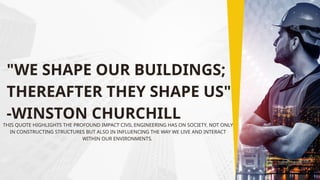
"WE SHAPE OUR BUILDINGS;
THEREAFTER THEY SHAPE US"
-WINSTON CHURCHILL
THIS QUOTE HIGHLIGHTS THE PROFOUND IMPACT CIVIL ENGINEERING HAS ON SOCIETY, NOT ONLY
IN CONSTRUCTING STRUCTURES BUT ALSO IN INFLUENCING THE WAY WE LIVE AND INTERACT
WITHIN OUR ENVIRONMENTS.
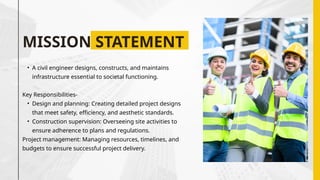
MISSION STATEMENT
• A civil engineer designs, constructs, and maintains
infrastructure essential to societal functioning.
Key Responsibilities-
• Design and planning: Creating detailed project designs
that meet safety, efficiency, and aesthetic standards.
• Construction supervision: Overseeing site activities to
ensure adherence to plans and regulations.
Project management: Managing resources, timelines, and
budgets to ensure successful project delivery.
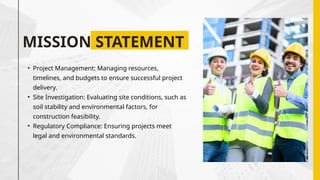
MISSION STATEMENT
• Project Management: Managing resources,
timelines, and budgets to ensure successful project
delivery.
• Site Investigation: Evaluating site conditions, such as
soil stability and environmental factors, for
construction feasibility.
• Regulatory Compliance: Ensuring projects meet
legal and environmental standards.
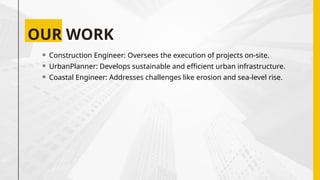
OUR WORK
Types of Civil Engineers:
- Structural Engineer: Focuses on designing safe and efficient structural
frameworks.
- Geotechnical Engineer: Specializes in soil and foundation analysis.
- Transportation Engineer: Designs transportation systems like highways and
railways.
- Water Resources Engineer: Manages water supply systems and flood control.
- Environmental Engineer: Works on eco-friendly construction and pollution control.
OUR WORK
⚬ Construction Engineer: Oversees the execution of projects on-site.
⚬ UrbanPlanner: Develops sustainable and efficient urban infrastructure.
⚬ Coastal Engineer: Addresses challenges like erosion and sea-level rise.
WORKPLACE OVERVIEW
• Work Environments:
⚬ Office: Engaged in project designs, calculations, and collaborations.
⚬ Construction Sites: Monitoring progress, ensuring compliance, and
resolving issues.
⚬ Fieldwork: Conducting site investigations and assessments to inform
design.
• Explanation: Civil engineers often work in dynamic environments, balancing
office-based design work with on-site practical problem-solving.
CIVIL ENGINEERING IN
ACTION
• Examples:
⚬ Bridges: Golden Gate Bridge as a testament to engineering brilliance.
⚬ Buildings: Skyscrapers like Burj Khalifa symbolizing innovation and
ambition.
⚬ Transportation: High-speed rail systems revolutionizing connectivity.
⚬ Water Systems: Dams and irrigation projects ensuring resource availability.
• Explanation: These examples demonstrate the diversity and societal value of
civil engineering projects.
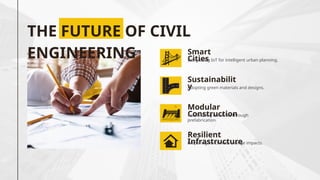
THE FUTURE OF CIVIL
ENGINEERING Smart
Cities
Integrating IoT for intelligent urban planning.
Sustainabilit
y
Adopting green materials and designs.
Modular
Construction
Accelerating timelines through
prefabrication.
Resilient
Infrastructure
Preparing for climate change impacts.
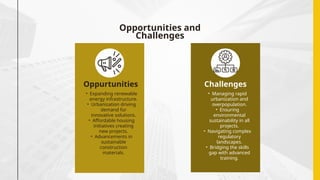
Opportunities and
Challenges
Oppurtunities
• Expanding renewable
energy infrastructure.
• Urbanization driving
demand for
innovative solutions.
• Affordable housing
initiatives creating
new projects.
• Advancements in
sustainable
construction
materials.
Challenges
• Managing rapid
urbanization and
overpopulation.
• Ensuring
environmental
sustainability in all
projects.
• Navigating complex
regulatory
landscapes.
• Bridging the skills
gap with advanced
training.
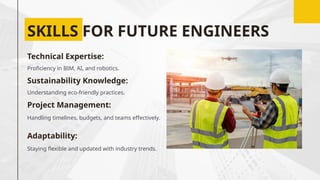
SKILLS FOR FUTURE ENGINEERS
Technical Expertise:
Proficiency in BIM, AI, and robotics.
Sustainability Knowledge:
Understanding eco-friendly practices.
Project Management:
Handling timelines, budgets, and teams effectively.
Adaptability:
Staying flexible and updated with industry trends.
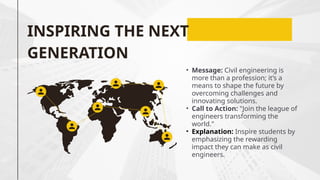
INSPIRING THE NEXT
GENERATION
• Message: Civil engineering is
more than a profession; it’s a
means to shape the future by
overcoming challenges and
innovating solutions.
• Call to Action: "Join the league of
engineers transforming the
world."
• Explanation: Inspire students by
emphasizing the rewarding
impact they can make as civil
engineers.
THANK YOU

Scope for Civil Engineering - Opportunities, Responsibilities & Challenges

  • 1.
    WHO IS A CIVIL ENGINEER? Er.T S Rajagopalan [Dy President,. Adarsh Group] Treasurer ACCE(I) Bangalore, KPCEA – SC Connect @ ertsrajagopalan@gmail.com
  • 2.
    "WE SHAPE OURBUILDINGS; THEREAFTER THEY SHAPE US" -WINSTON CHURCHILL THIS QUOTE HIGHLIGHTS THE PROFOUND IMPACT CIVIL ENGINEERING HAS ON SOCIETY, NOT ONLY IN CONSTRUCTING STRUCTURES BUT ALSO IN INFLUENCING THE WAY WE LIVE AND INTERACT WITHIN OUR ENVIRONMENTS.
  • 3.
    MISSION STATEMENT • Acivil engineer designs, constructs, and maintains infrastructure essential to societal functioning. Key Responsibilities- • Design and planning: Creating detailed project designs that meet safety, efficiency, and aesthetic standards. • Construction supervision: Overseeing site activities to ensure adherence to plans and regulations. Project management: Managing resources, timelines, and budgets to ensure successful project delivery.
  • 4.
    MISSION STATEMENT • ProjectManagement: Managing resources, timelines, and budgets to ensure successful project delivery. • Site Investigation: Evaluating site conditions, such as soil stability and environmental factors, for construction feasibility. • Regulatory Compliance: Ensuring projects meet legal and environmental standards.
  • 5.
    OUR WORK Types ofCivil Engineers: - Structural Engineer: Focuses on designing safe and efficient structural frameworks. - Geotechnical Engineer: Specializes in soil and foundation analysis. - Transportation Engineer: Designs transportation systems like highways and railways. - Water Resources Engineer: Manages water supply systems and flood control. - Environmental Engineer: Works on eco-friendly construction and pollution control.
  • 6.
    OUR WORK ⚬ ConstructionEngineer: Oversees the execution of projects on-site. ⚬ UrbanPlanner: Develops sustainable and efficient urban infrastructure. ⚬ Coastal Engineer: Addresses challenges like erosion and sea-level rise.
  • 7.
    WORKPLACE OVERVIEW • WorkEnvironments: ⚬ Office: Engaged in project designs, calculations, and collaborations. ⚬ Construction Sites: Monitoring progress, ensuring compliance, and resolving issues. ⚬ Fieldwork: Conducting site investigations and assessments to inform design. • Explanation: Civil engineers often work in dynamic environments, balancing office-based design work with on-site practical problem-solving.
  • 8.
    CIVIL ENGINEERING IN ACTION •Examples: ⚬ Bridges: Golden Gate Bridge as a testament to engineering brilliance. ⚬ Buildings: Skyscrapers like Burj Khalifa symbolizing innovation and ambition. ⚬ Transportation: High-speed rail systems revolutionizing connectivity. ⚬ Water Systems: Dams and irrigation projects ensuring resource availability. • Explanation: These examples demonstrate the diversity and societal value of civil engineering projects.
  • 9.
    THE FUTURE OFCIVIL ENGINEERING Smart Cities Integrating IoT for intelligent urban planning. Sustainabilit y Adopting green materials and designs. Modular Construction Accelerating timelines through prefabrication. Resilient Infrastructure Preparing for climate change impacts.
  • 10.
    Opportunities and Challenges Oppurtunities • Expandingrenewable energy infrastructure. • Urbanization driving demand for innovative solutions. • Affordable housing initiatives creating new projects. • Advancements in sustainable construction materials. Challenges • Managing rapid urbanization and overpopulation. • Ensuring environmental sustainability in all projects. • Navigating complex regulatory landscapes. • Bridging the skills gap with advanced training.
  • 11.
    SKILLS FOR FUTUREENGINEERS Technical Expertise: Proficiency in BIM, AI, and robotics. Sustainability Knowledge: Understanding eco-friendly practices. Project Management: Handling timelines, budgets, and teams effectively. Adaptability: Staying flexible and updated with industry trends.
  • 12.
    INSPIRING THE NEXT GENERATION •Message: Civil engineering is more than a profession; it’s a means to shape the future by overcoming challenges and innovating solutions. • Call to Action: "Join the league of engineers transforming the world." • Explanation: Inspire students by emphasizing the rewarding impact they can make as civil engineers.
  • 13.